
Mediterranean wall paint ideas bring the warmth, color, and relaxed character of Southern Europe into everyday rooms. The palette draws inspiration from sun-washed plaster, sandy beaches, terracotta rooftops, olive groves, citrus orchards, and clear coastal water. Warm whites and earthy neutrals create an inviting foundation, while blue, green, yellow, and clay tones add personality. Matte or softly textured finishes can make these colors feel especially natural and handcrafted. () The right furniture, flooring, textiles, and architectural details are equally important because they help the wall color tell a complete story. Whether you prefer a bright Greek-inspired room or a rustic Spanish interior, these complete Mediterranean wall paint ideas offer plenty of practical inspiration.

1. Warm White Mediterranean Living Room Walls
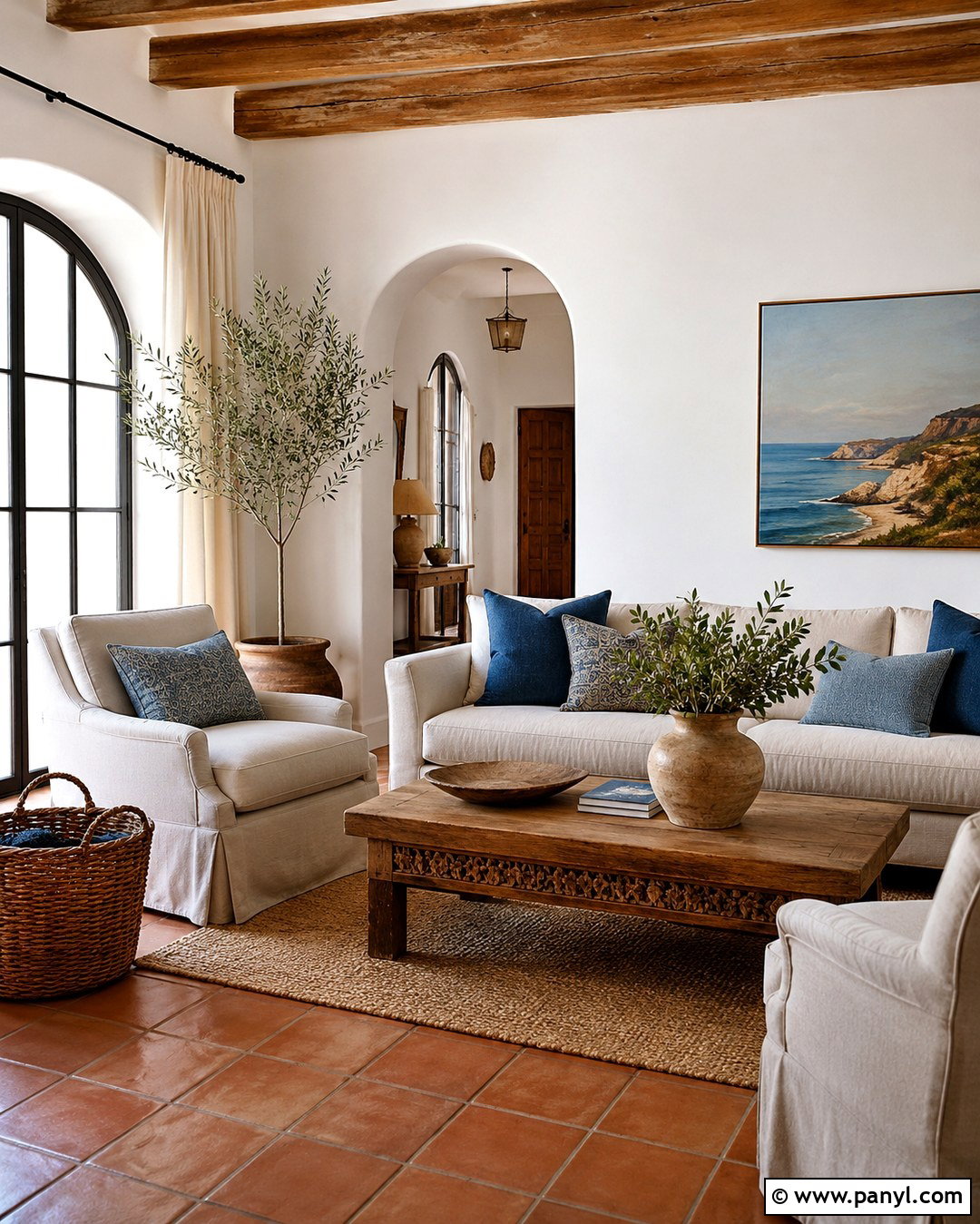
Warm white walls create a bright Mediterranean living room without making the space feel cold or unfinished. Choose an ivory white with subtle cream or golden undertones instead of a sharp blue-white. Add a relaxed oatmeal sofa, carved oak coffee table, and low linen armchairs to build warmth around the pale backdrop. Terracotta flooring or a faded rust-colored rug provides earthy contrast underfoot. Use black iron curtain rods and simple bronze lighting to define the room. Ceramic vessels, olive branches, woven baskets, and muted blue cushions complete the coastal look. If the walls have arches or alcoves, paint those surfaces the same warm white. This keeps the architecture calm, connected, and visually spacious.
2. Sandy Beige Mediterranean Dining Room Walls
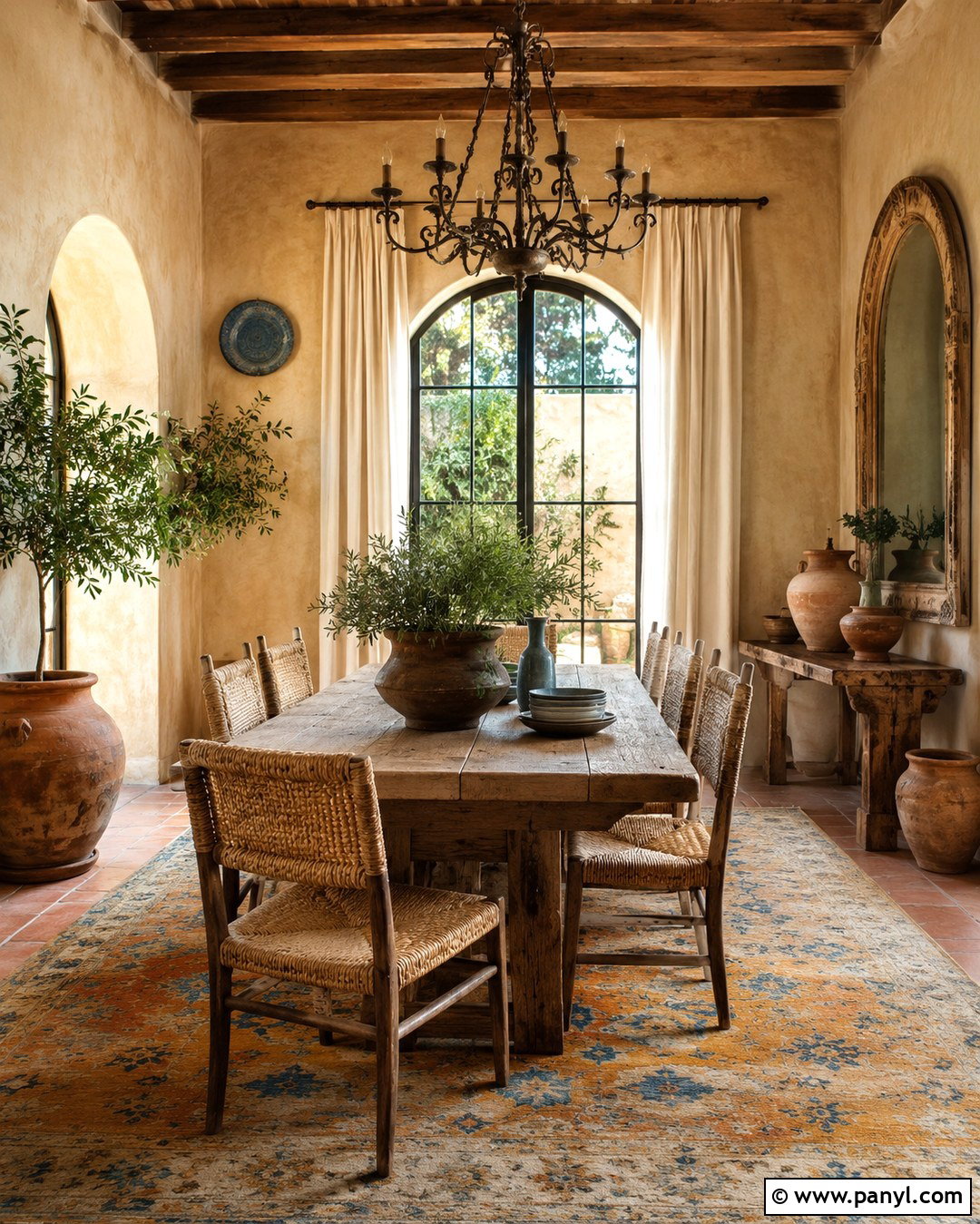
Imagine a dining room that feels sunlit even on an overcast afternoon. Sandy beige wall paint delivers that effect while creating a versatile background for natural materials. Select a soft tan with warm stone undertones rather than a beige that looks gray or muddy. Pair it with a long reclaimed-wood table, woven dining chairs, and a simple iron chandelier. Cream linen curtains soften the windows without hiding natural light. Introduce pattern through hand-painted blue and ochre ceramics or a gently faded area rug. A large antique-style mirror can reflect light and make the room feel more open. Finish the design with terracotta planters, leafy greenery, and off-white trim for a comfortable Mediterranean dining space.
3. Terracotta Mediterranean Kitchen Walls
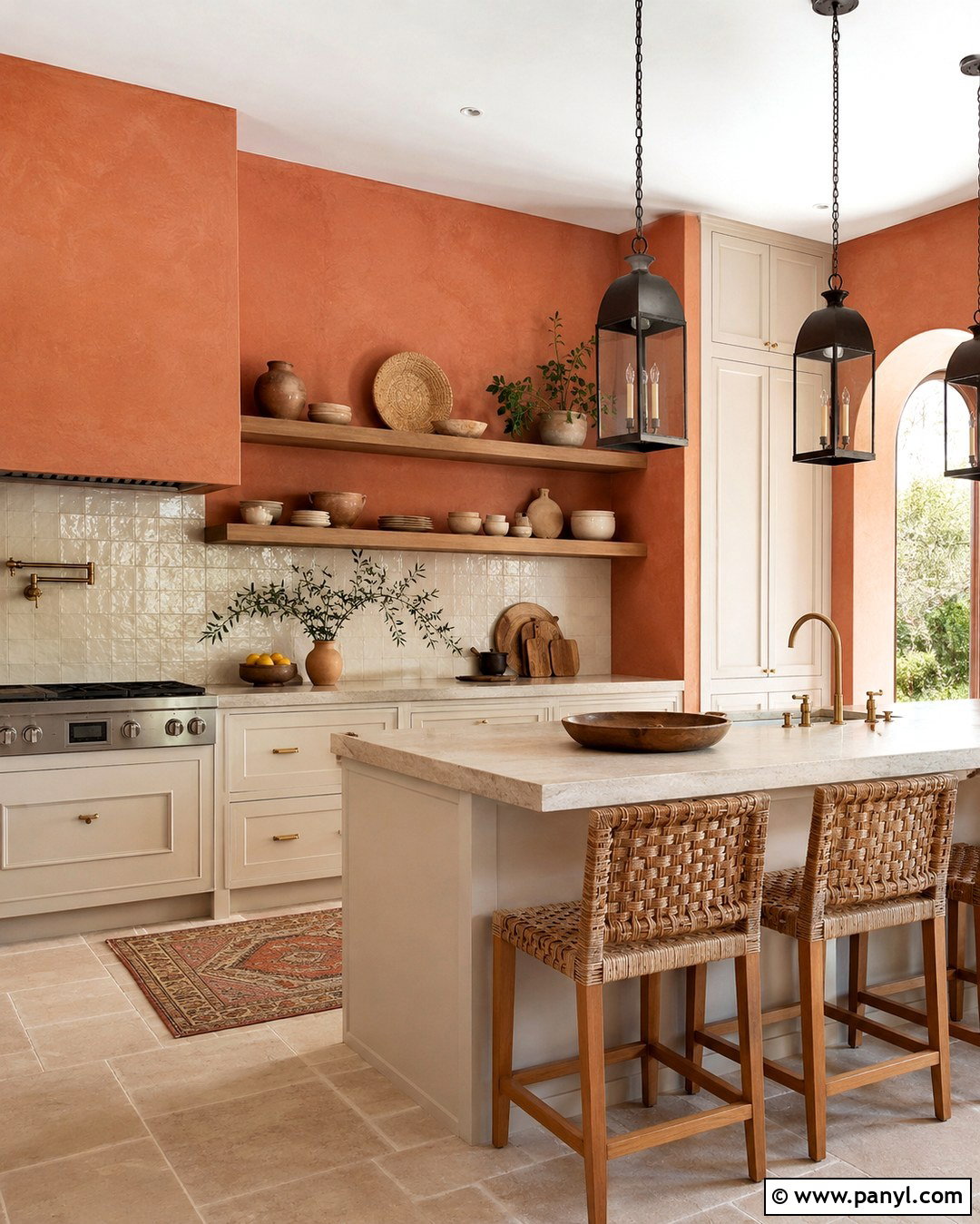
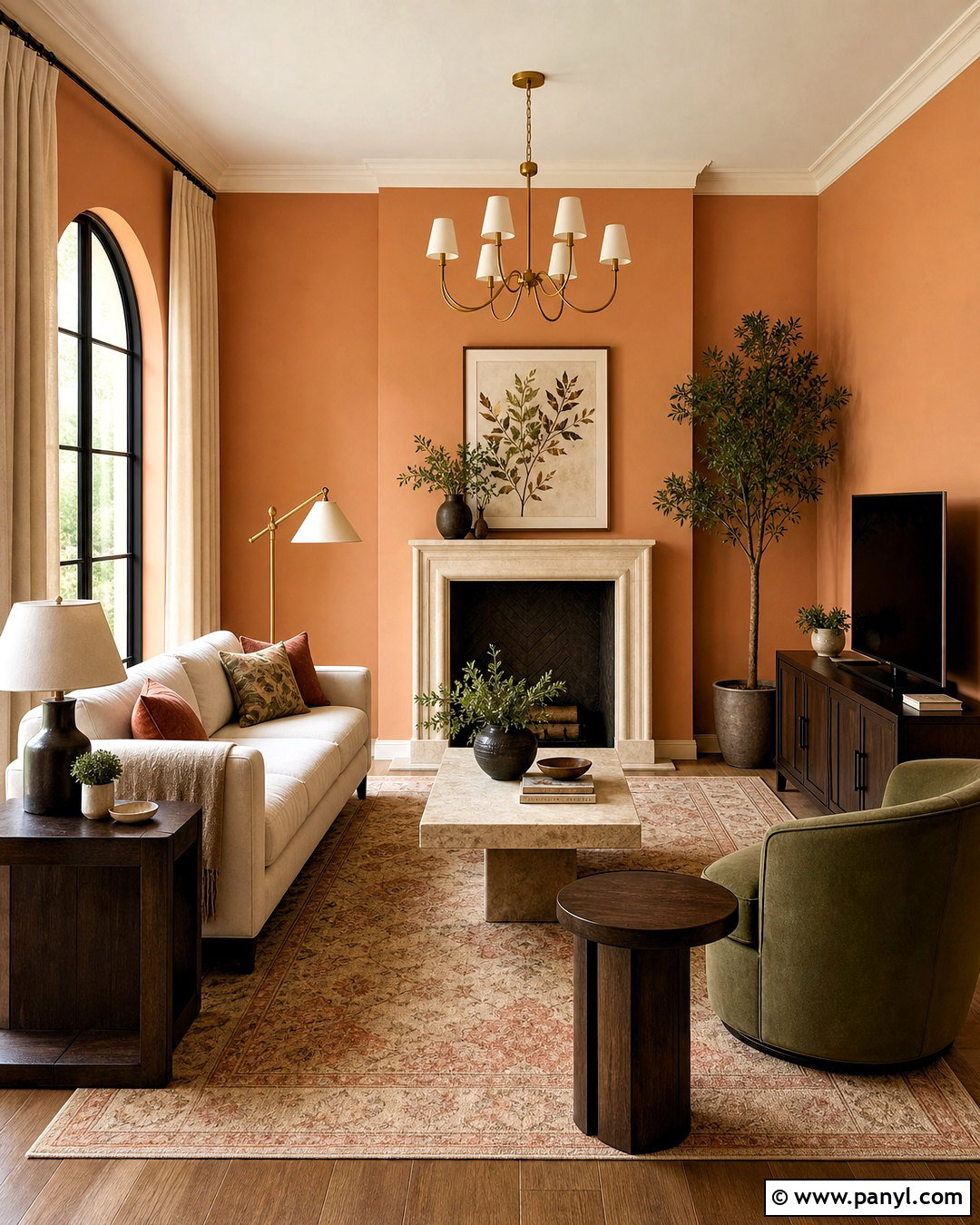
Terracotta walls can turn an ordinary kitchen into a welcoming space inspired by sunbaked clay and tiled rooftops. Use a muted, mineral-looking terracotta rather than a bright orange shade. Balance the color with cream cabinets, light limestone countertops, and an ivory backsplash made from handmade-looking tiles. Medium-toned oak shelves keep everyday dishes within reach while breaking up the painted surface. Add aged brass hardware, woven counter stools, and dark iron pendant lights for contrast. The floor could feature pale stone, patterned cement tile, or warm wood. If painting every wall feels overwhelming, use terracotta around the dining nook and keep the working area creamy white. Repeat the wall color through pottery and textiles for a connected design.
4. Golden Ochre Mediterranean Entryway Walls
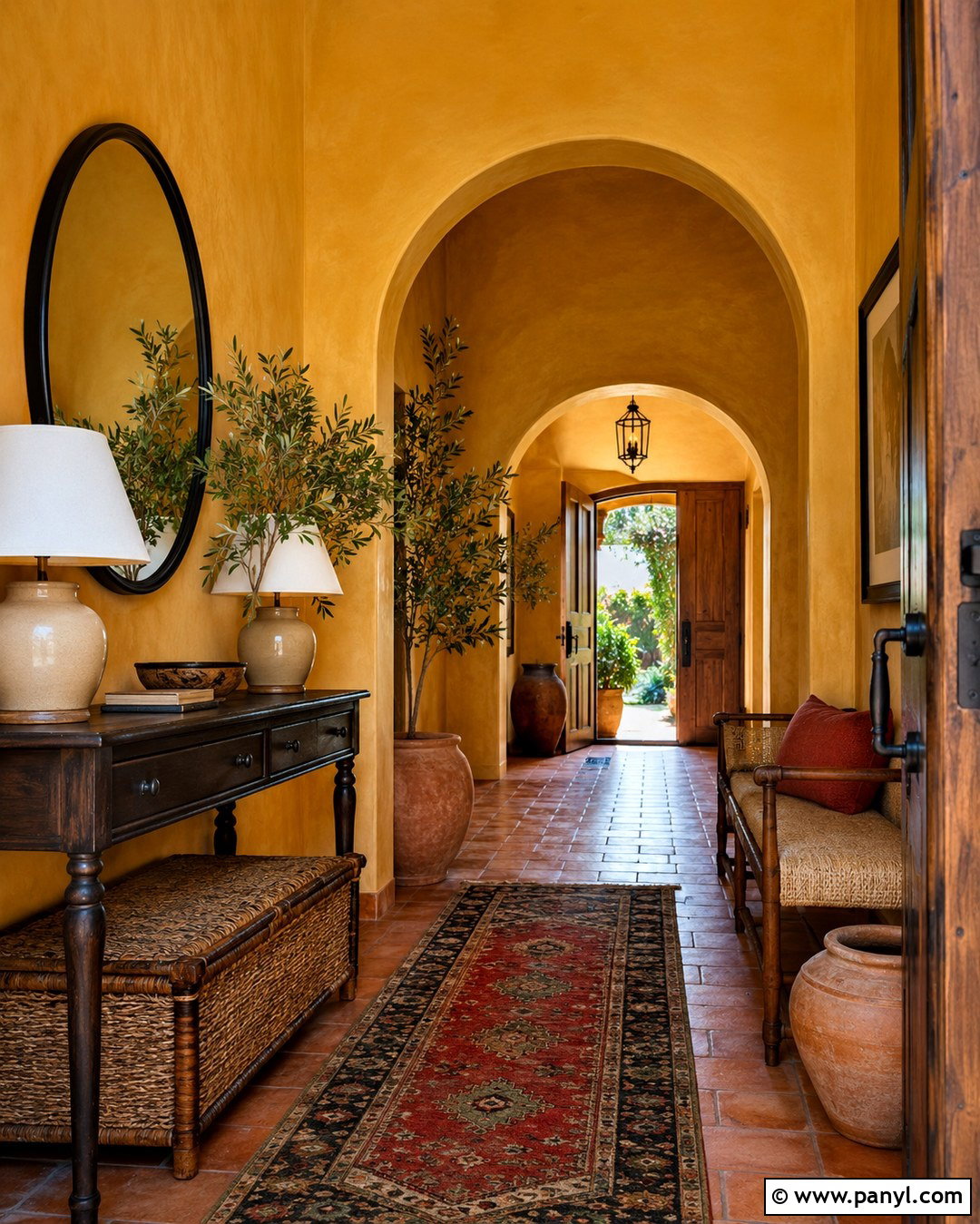
Golden ochre gives an entryway the cheerful warmth associated with Mediterranean sunlight. The best version feels earthy and softened, not neon or overly saturated. Paint the walls and any shallow archways in the same ochre tone to create a welcoming, enveloping entrance. Ground the color with a dark wood console, a distressed terracotta tile floor, and a black-framed round mirror. Add a small woven bench or rush-seat chair for practical seating. Cream ceramic lamps and natural linen shades lighten the arrangement. A vintage runner in faded red, olive, and blue can introduce subtle pattern. Keep the ceiling warm white so the entry remains open. Potted olive branches and simple clay vessels provide a natural finishing touch.
5. Olive Green Mediterranean Bedroom Walls
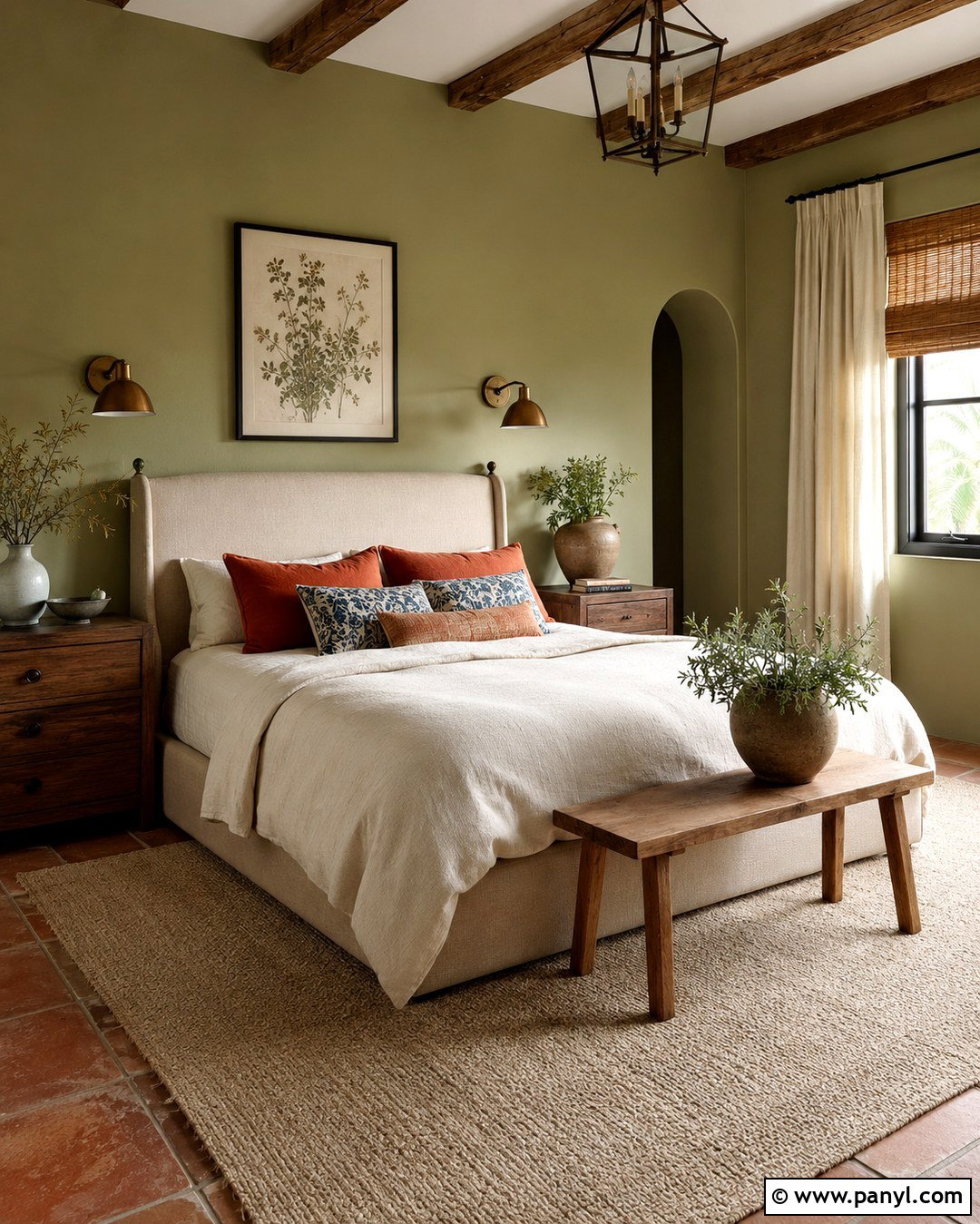
Olive green walls create a restful bedroom that feels connected to Mediterranean landscapes. Look for a softened olive with brown or gray undertones, which is easier to coordinate than a vivid yellow-green. Pair the walls with an upholstered linen bed in oatmeal or cream. Use walnut nightstands, antique brass sconces, and natural woven shades to build a warm, layered atmosphere. Ivory bedding keeps the room fresh, while rust, muted blue, and deep brown pillows provide restrained color. A light jute or wool rug will balance darker wood flooring. Keep artwork minimal, choosing one landscape or botanical piece above the bed. Matte paint is especially suitable because its low sheen complements rustic furniture, linen, pottery, and other natural finishes.
6. Soft Sage Mediterranean Bathroom Walls
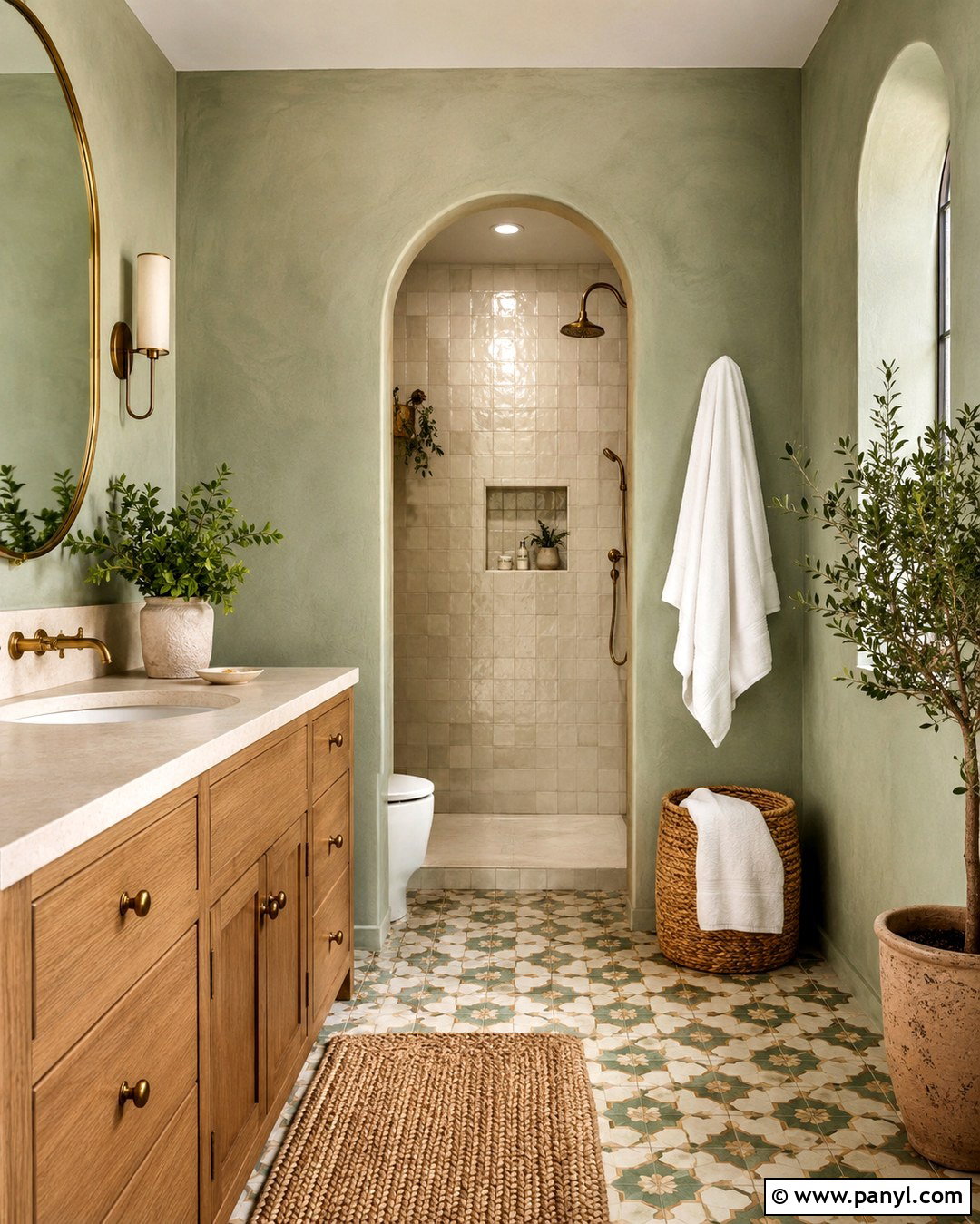
Soft sage wall paint brings a quiet garden quality to a Mediterranean bathroom. Choose a pale, dusty green that works comfortably beside cream, beige, and warm metal finishes. Pair it with a light oak vanity, an off-white stone counter, and a rounded plaster or wood-framed mirror. Handmade ivory tiles can cover the shower while allowing the painted walls to remain the main source of color. Use aged brass faucets, woven baskets, and simple glass sconces to create warmth. Patterned floor tile in muted green, tan, and black adds traditional character without overpowering the room. Complete the space with white towels and a few leafy plants. Select moisture-resistant bathroom paint in a washable matte or low-sheen finish for practical durability.
7. Aegean Blue Mediterranean Bedroom Walls
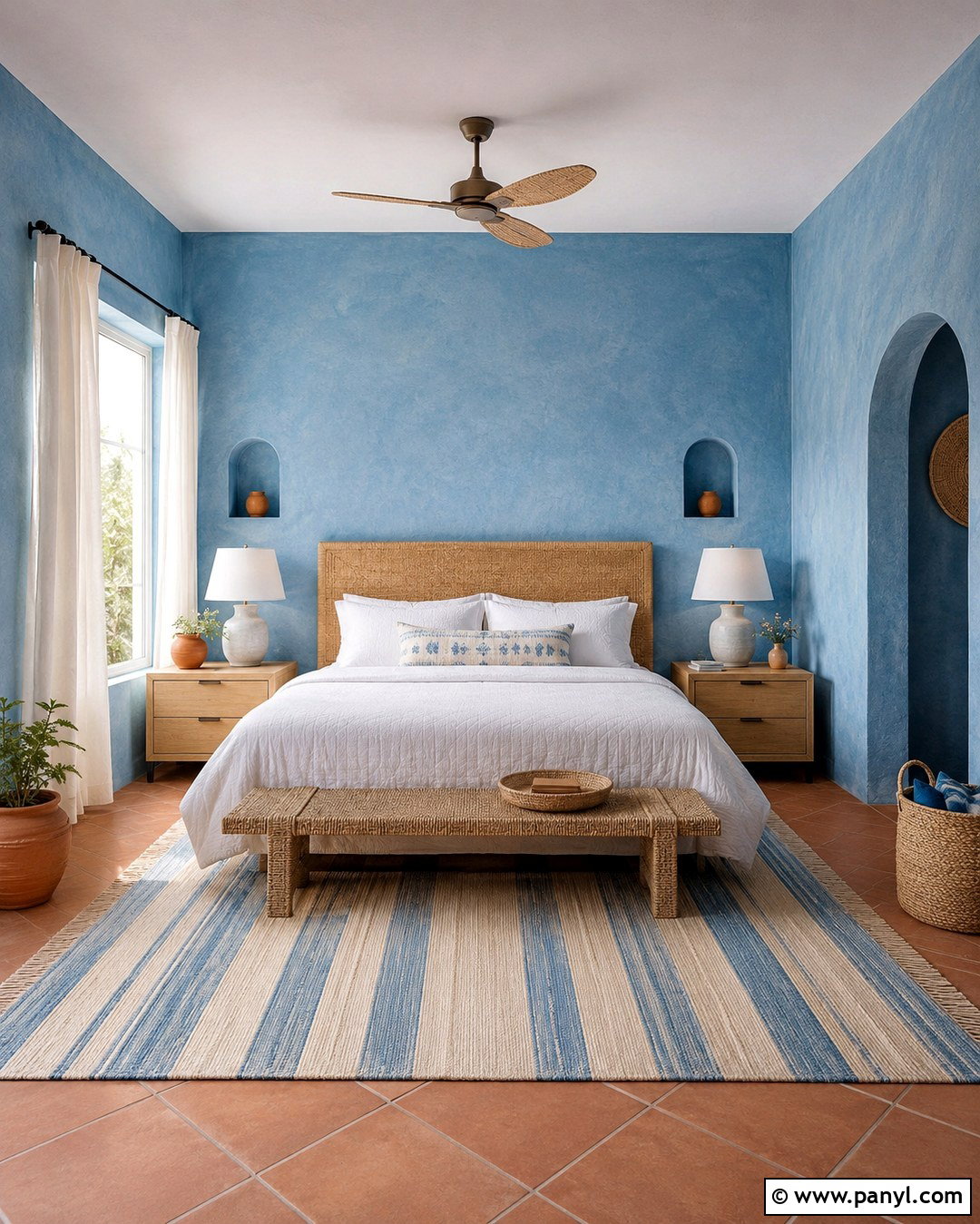
Aegean blue walls can make a bedroom feel fresh, breezy, and closely connected to the sea. Choose a medium blue with slightly softened green undertones rather than a dark navy. Warm white bedding, a natural cane headboard, and pale oak nightstands will prevent the saturated color from becoming heavy. Use gauzy ivory curtains to filter sunlight and create gentle movement. A striped beige-and-blue rug reinforces the coastal palette without making the room feel themed. Add ceramic lamps, woven baskets, and one or two terracotta accessories for earthy balance. Keep the ceiling, trim, and doors creamy white. If the room is small, limit darker furniture and use mirrors strategically so the vivid Mediterranean wall paint still feels open and relaxing.
8. Cobalt Blue Mediterranean Accent Wall
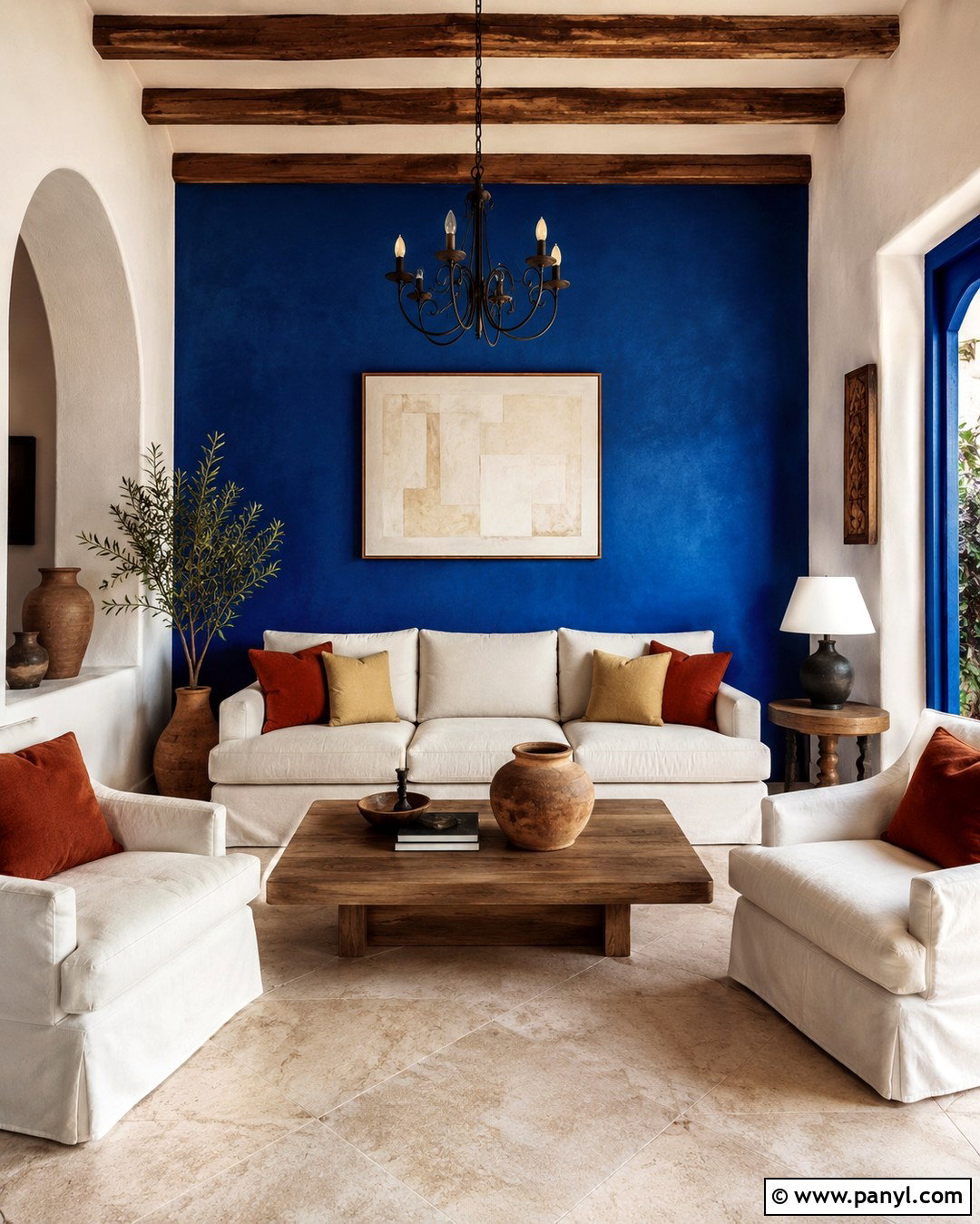
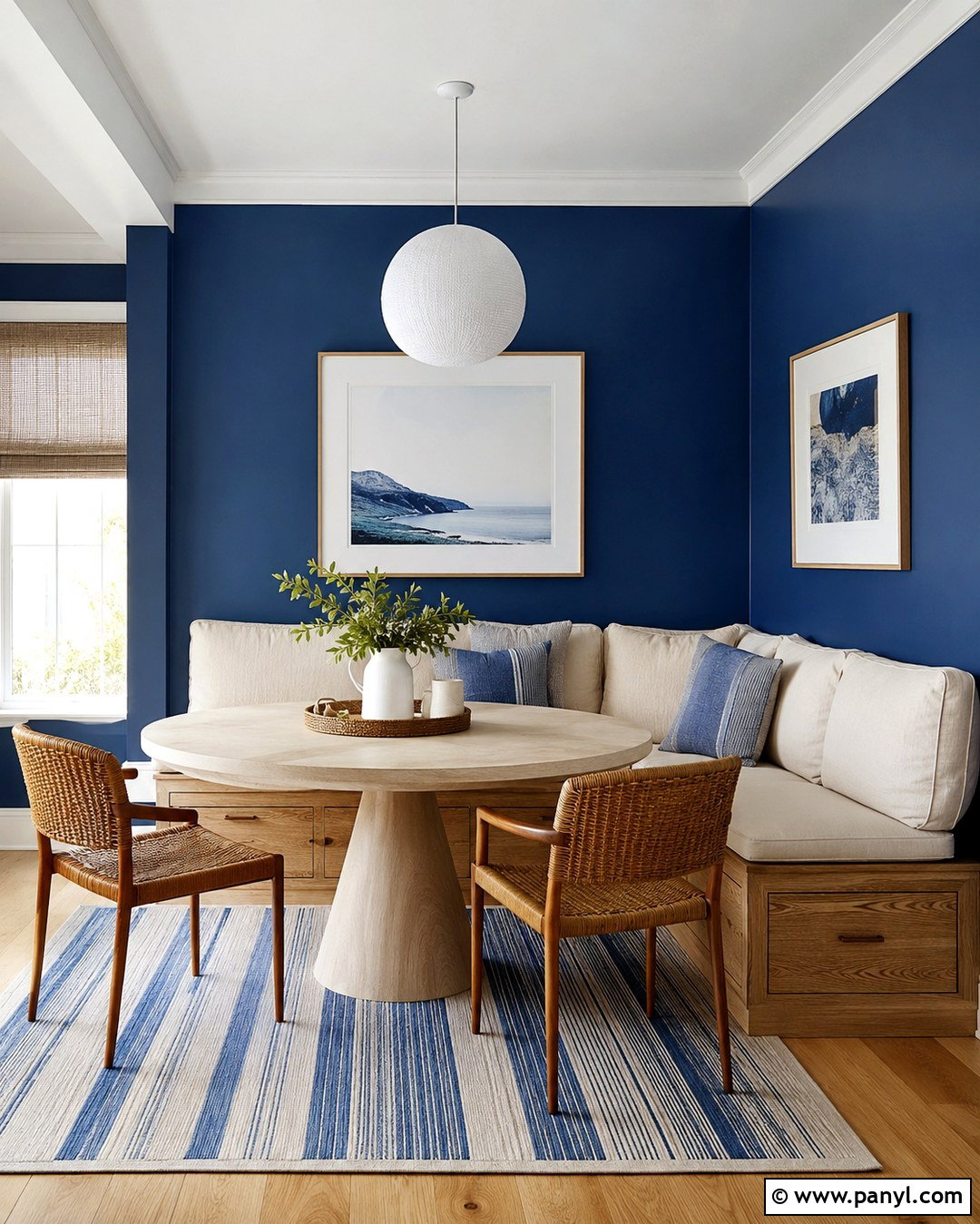
A cobalt blue accent wall works best when it anchors a complete living room rather than appearing as an isolated splash of color. Place the painted wall behind a cream sofa, fireplace, or built-in shelving so it has a clear purpose. Keep the remaining walls warm white and introduce pale stone flooring to control the intensity. Add a walnut coffee table, white linen armchairs, and black iron lighting for structure. Cushions in rust, sand, and patterned blue connect the strong wall to the seating area. Display off-white pottery and a few wooden objects against the cobalt background for crisp contrast. Choose a rich but slightly muted blue, and use a matte finish that avoids distracting reflections in bright natural light.
9. Turquoise Mediterranean Sunroom Walls
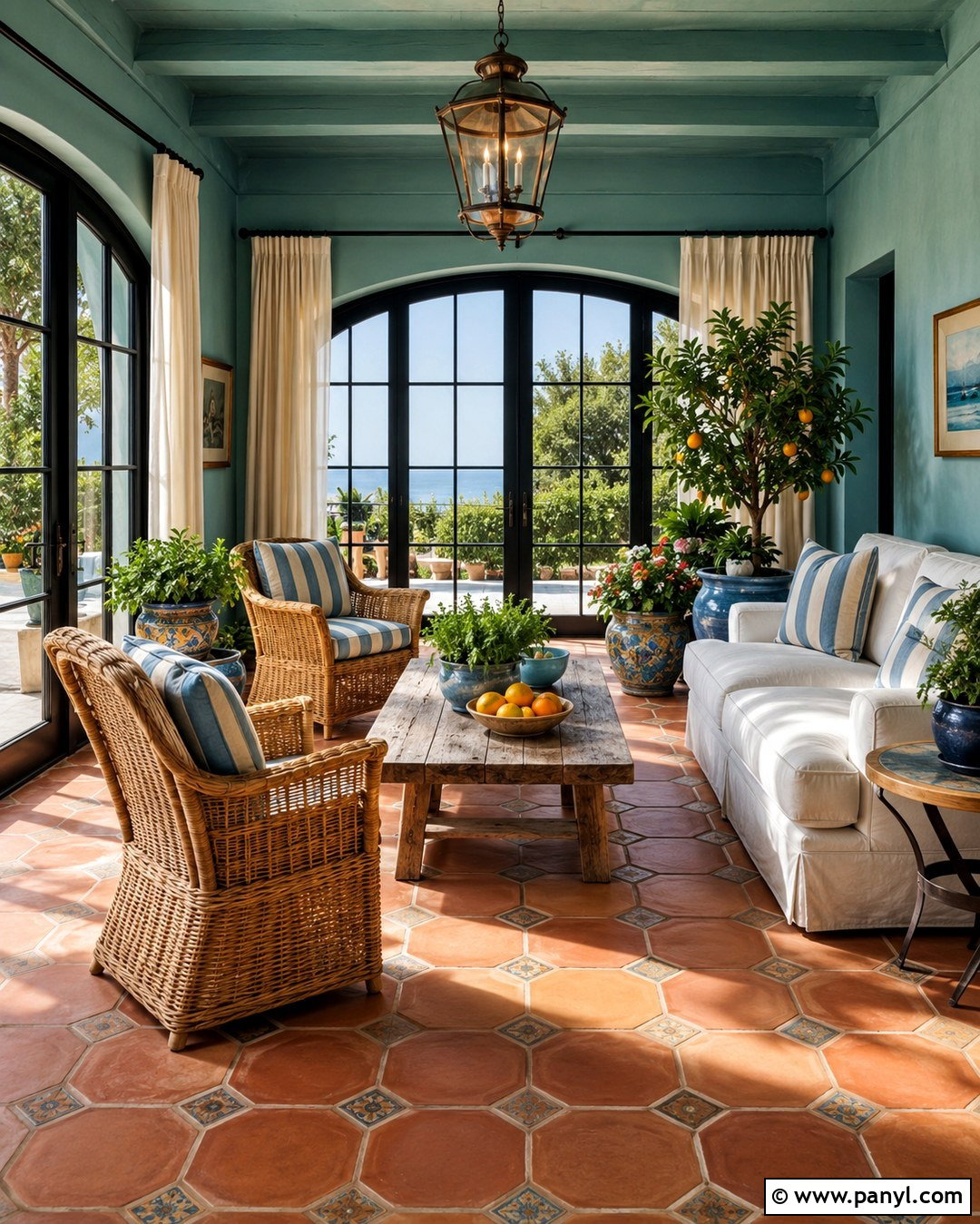
Does your sunroom need more energy without sacrificing its relaxed atmosphere? Muted turquoise walls can echo clear Mediterranean water while working beautifully with abundant daylight. Choose a blue-green shade with a slightly chalky appearance instead of a bright tropical aqua. Furnish the room with natural rattan chairs, an ivory slipcovered loveseat, and a weathered oak table. Terracotta floor tiles will warm the cool wall color and make the room feel grounded. Use cream curtains, striped cushions, and glazed ceramic planters to add softness. Black metal window frames can provide clean contrast. Complete the sunroom with citrus trees, herbs, and leafy plants. The result should feel colorful and refreshing while remaining comfortable enough for everyday reading, relaxing, or casual conversation.
10. Dusty Rose Mediterranean Guest Room Walls
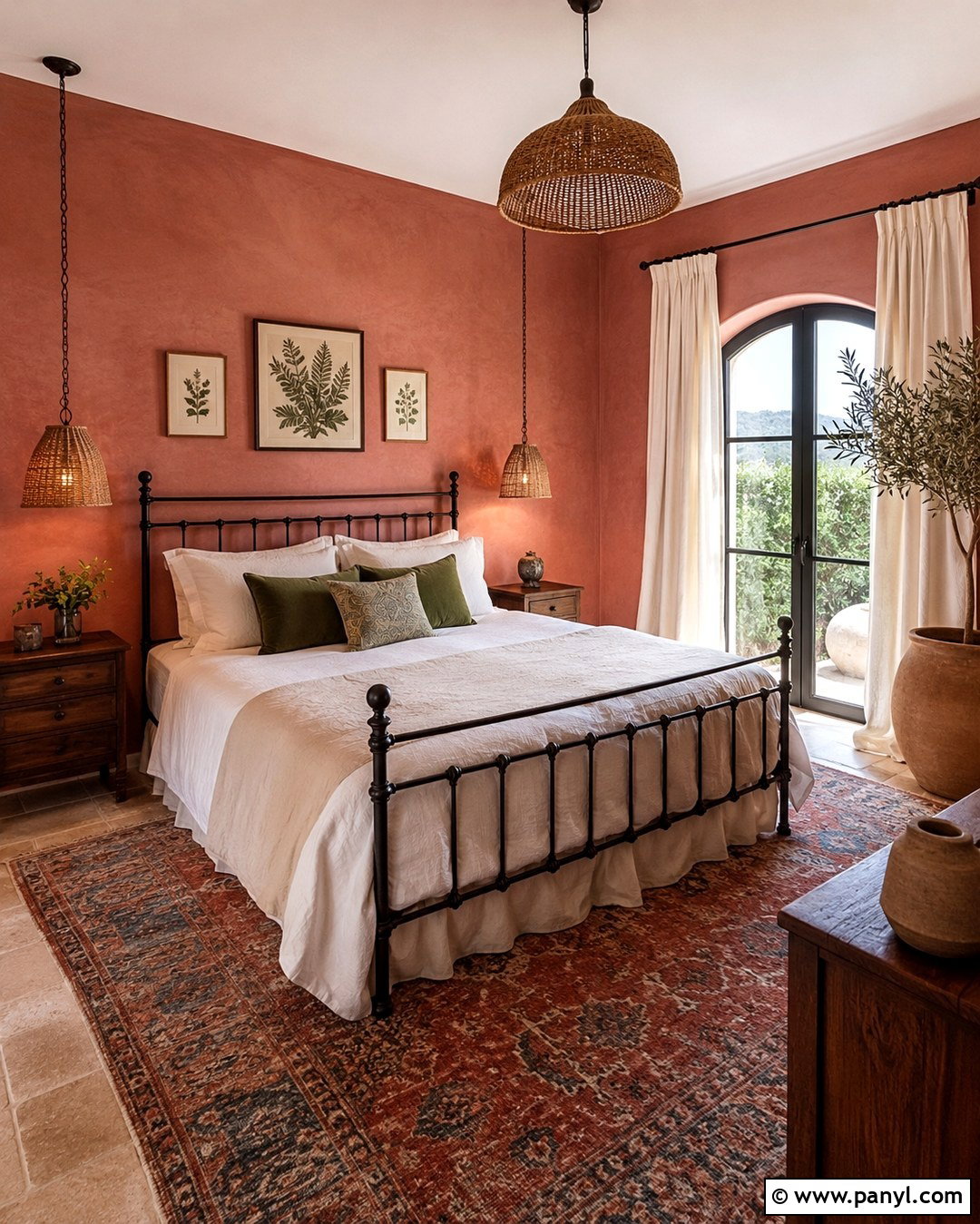
Dusty rose offers a softer interpretation of Mediterranean color inspired by faded plaster, coastal sunsets, and historic villas. Select a muted pink with earthy brown or clay undertones to keep the room mature. Pair the walls with an antique-style iron bed, crisp ivory bedding, and a faded red-and-blue rug. Warm walnut furniture adds depth, while cream curtains and a woven pendant keep the guest room airy. Introduce small olive green accents through cushions, pottery, or a bedside lamp. Avoid overly glossy finishes or heavily coordinated pink accessories. Instead, let the wall color serve as a warm backdrop for natural textures. A few framed botanical prints and a simple ceramic vase will finish the room without creating unnecessary clutter.
11. Peach Mediterranean Breakfast Nook Walls
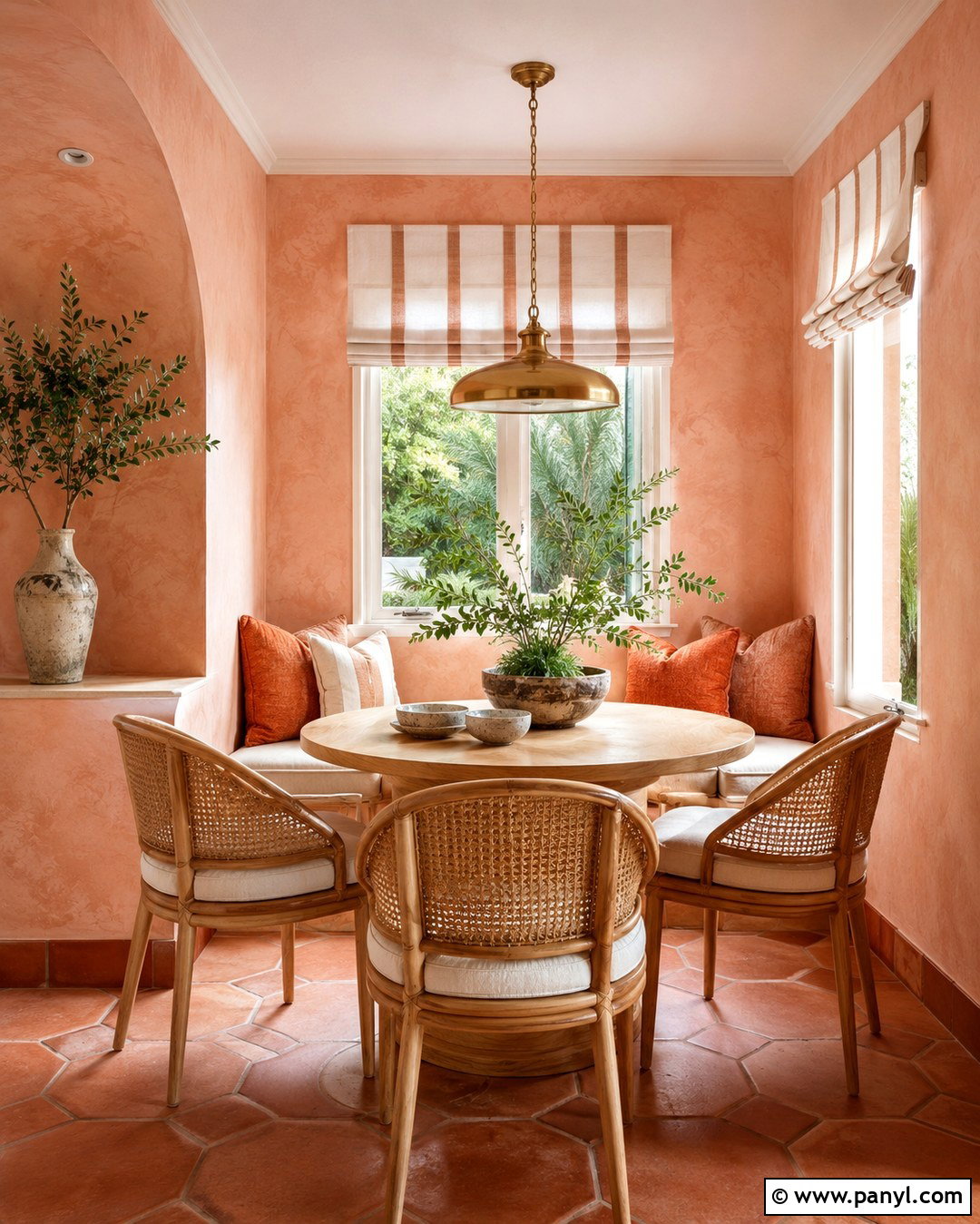
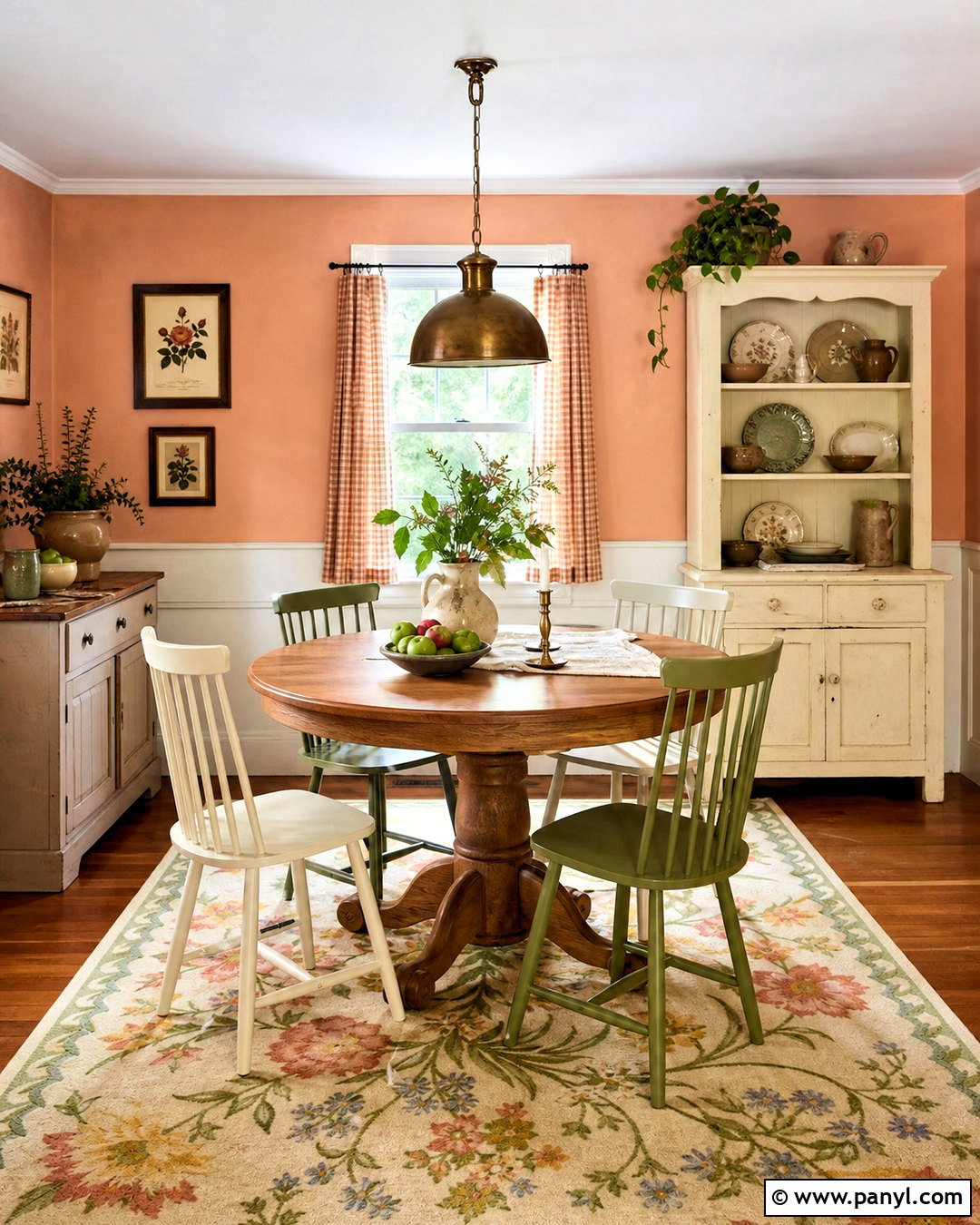
Soft peach walls can make a breakfast nook feel sunny, inviting, and ready for casual morning meals. Choose a pale peach with warm apricot undertones instead of a sugary pastel. Build the nook around a round light-wood table and comfortable woven chairs. A built-in bench with cream cushions can maximize seating in a small area. Add rust-colored pillows, striped linen shades, and a simple brass pendant to reinforce the sun-warmed palette. Terracotta or pale limestone flooring will connect the wall paint to traditional Mediterranean materials. Display a few handmade bowls or citrus-colored ceramics on open shelves. Keep adjoining kitchen walls creamy white so the peach nook feels special while still flowing naturally into the surrounding space.
12. Clay Brown Mediterranean Home Office Walls
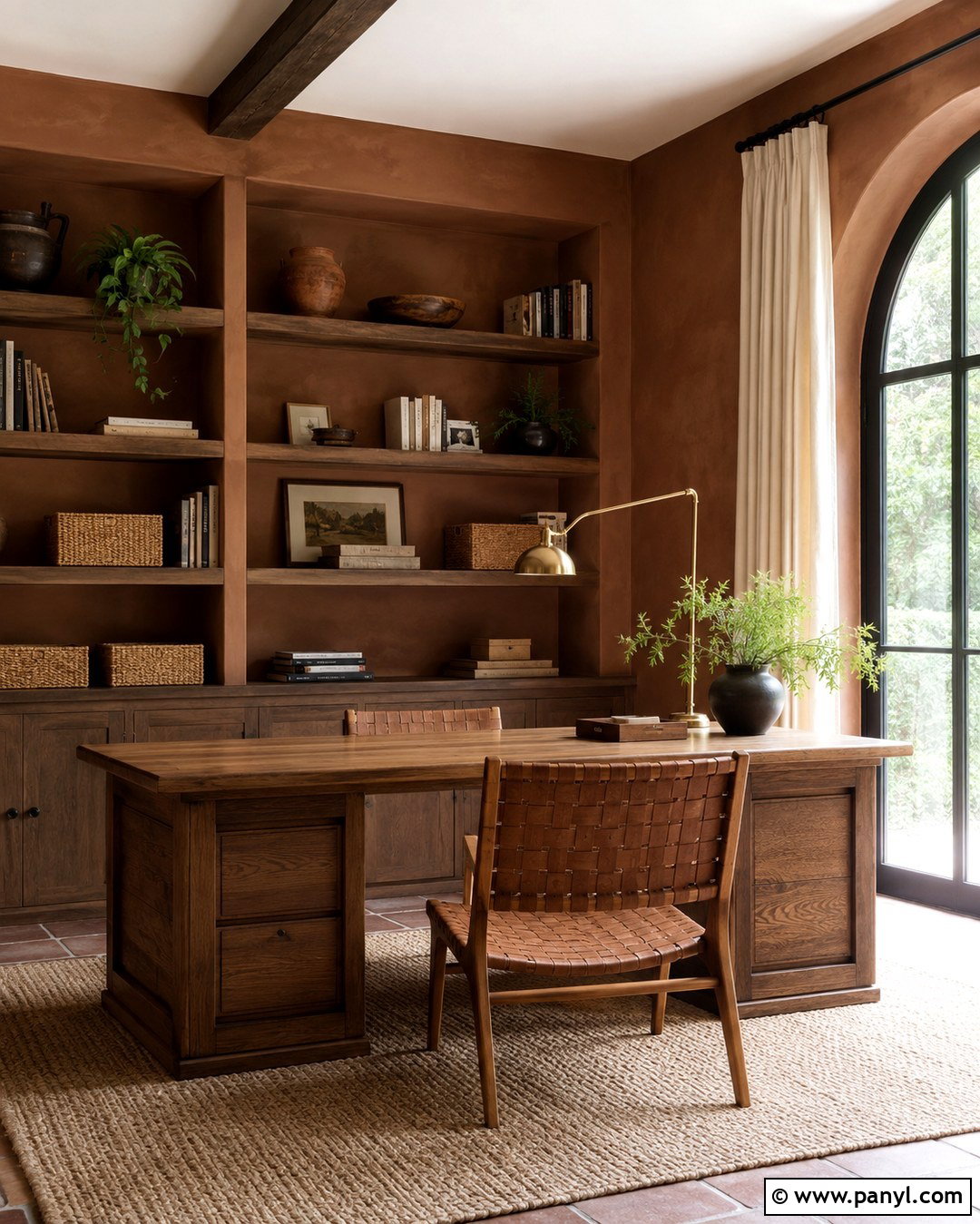
Clay brown walls can give a home office a grounded, historic character without making it feel formal. Look for a medium brown with red, tan, or mineral undertones. Pair the paint with a substantial oak desk, a woven leather chair, and tall cream curtains. Built-in shelves painted the same color can create a seamless, architectural effect. Display books, pottery, and storage baskets in an edited arrangement so the room stays practical. Add aged brass task lighting and a pale natural-fiber rug to brighten the darker palette. Warm white ceilings and trim provide a clean visual boundary. Position the desk near a window whenever possible, allowing daylight to reveal the subtle variation and earthy warmth within the Mediterranean wall color.
13. Limestone Gray Mediterranean Hallway Walls
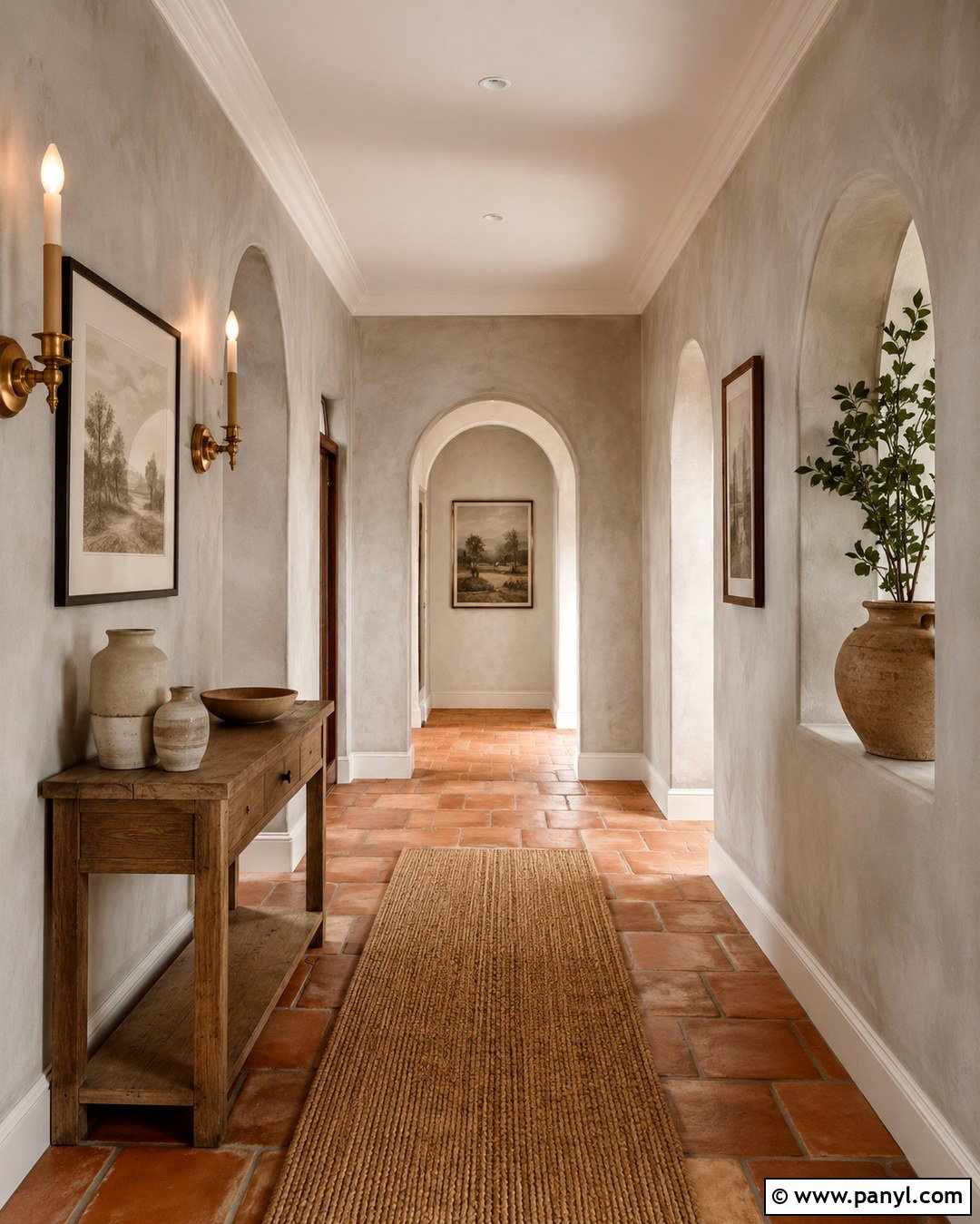
Limestone gray offers a calm wall color for hallways, stairwells, and connecting spaces. Unlike a cool industrial gray, this shade should contain warm beige or taupe undertones that resemble natural stone. Paint the walls and shallow niches in the same color to highlight arches and architectural transitions. Use warm white on the ceiling and woodwork for gentle contrast. A narrow oak console, aged brass wall lights, and a woven runner can prevent the hallway from feeling empty. Add several framed landscape sketches or small ceramic pieces, but keep the arrangement simple. Terracotta flooring works particularly well with warm gray walls. This balanced palette allows surrounding rooms with blue, green, ochre, or clay paint to flow together naturally.
14. Mushroom Taupe Mediterranean Family Room Walls
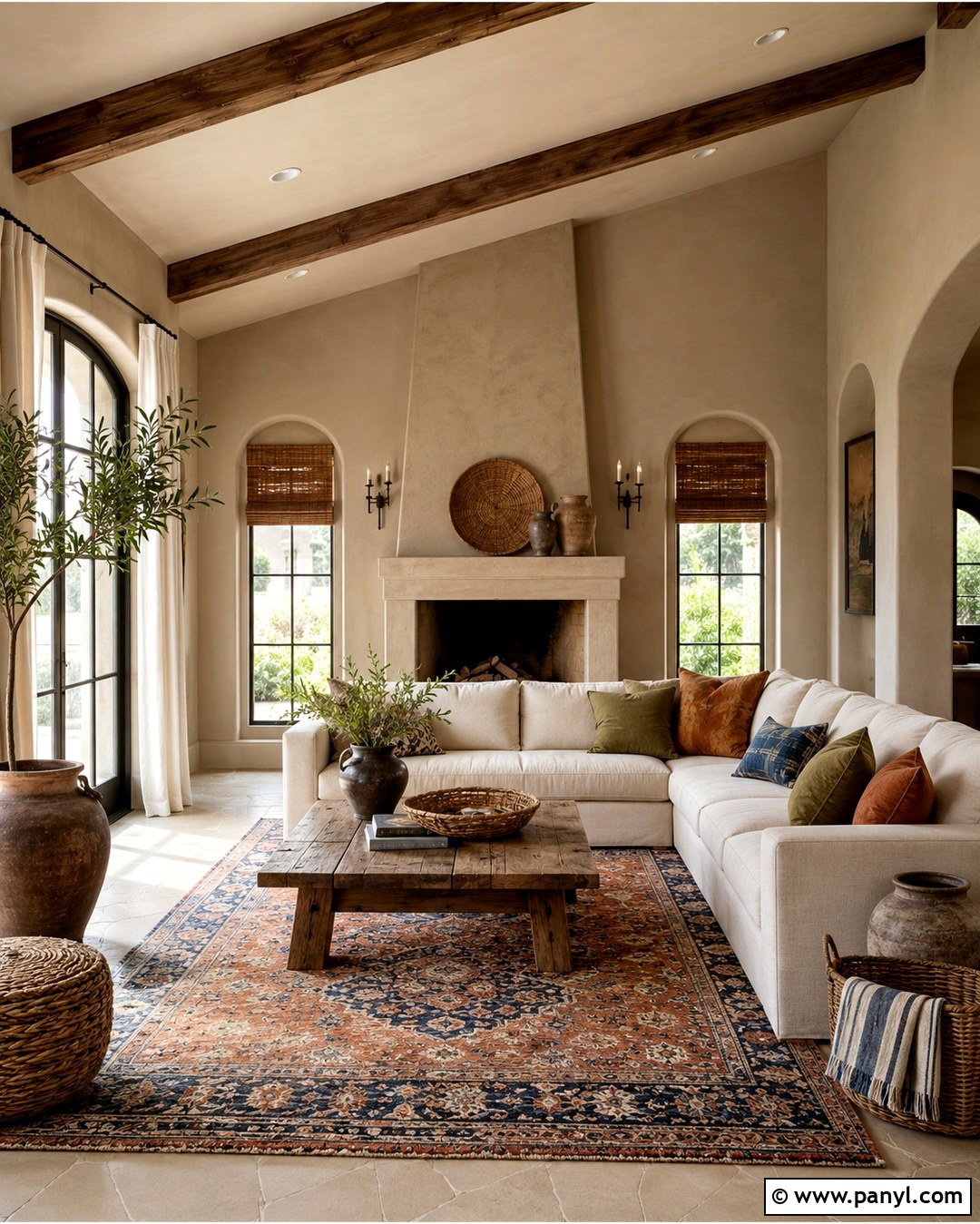
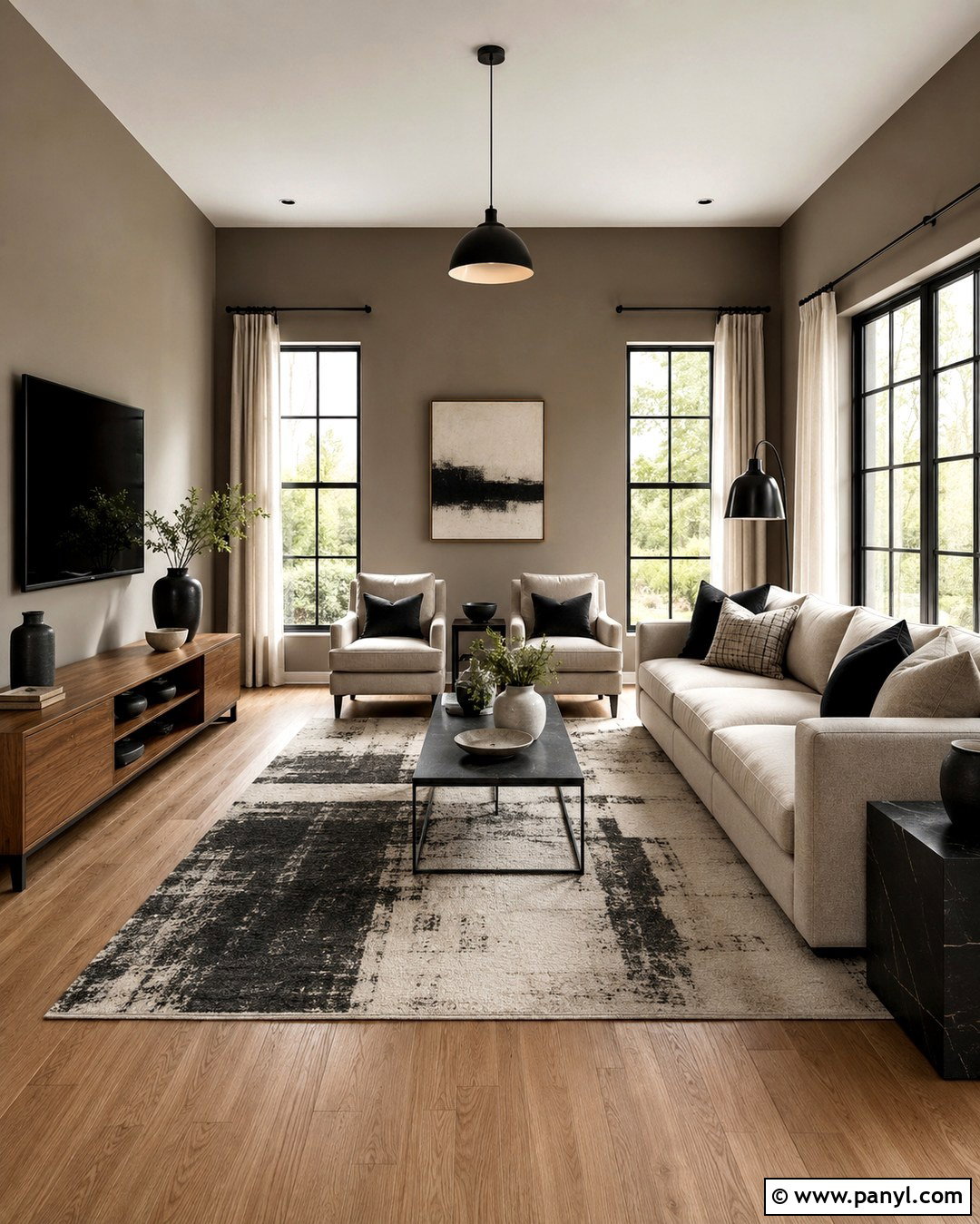
Mushroom taupe walls create an easy neutral foundation for a family room filled with comfortable furniture and durable materials. Choose a warm taupe that blends gray, beige, and a hint of brown. Arrange a deep cream sectional around a rustic wood coffee table and a simple plaster fireplace. Add olive, rust, and muted blue cushions to introduce Mediterranean color in manageable amounts. A large patterned rug can hide everyday wear while tying the palette together. Use woven shades, linen curtains, and black iron sconces for texture and definition. Shelves should hold practical baskets alongside pottery and books. The result is a relaxed room that supports daily family life while still reflecting the earthy colors, handmade finishes, and casual elegance of Mediterranean interiors.
15. Butter Yellow Mediterranean Kitchen Walls
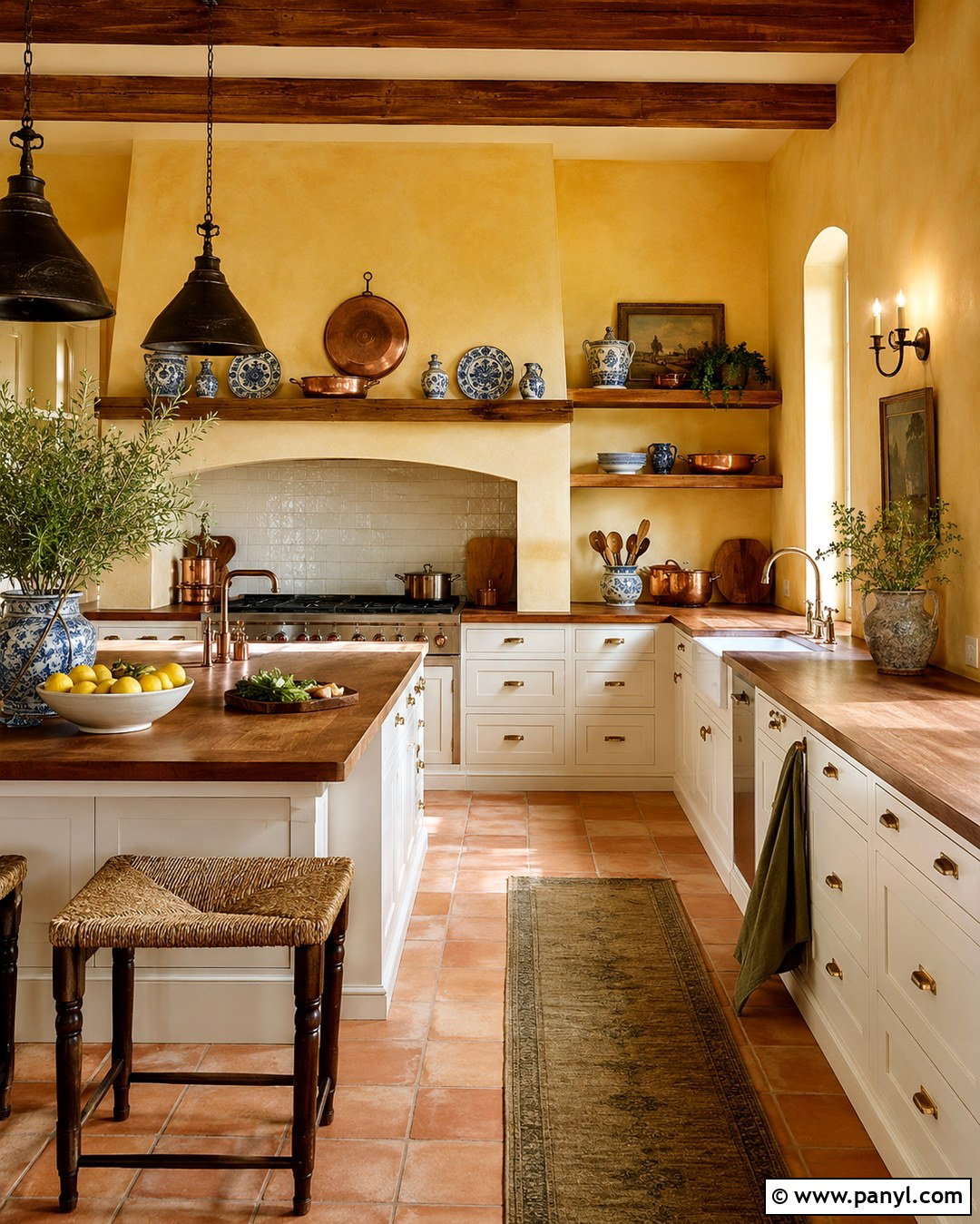
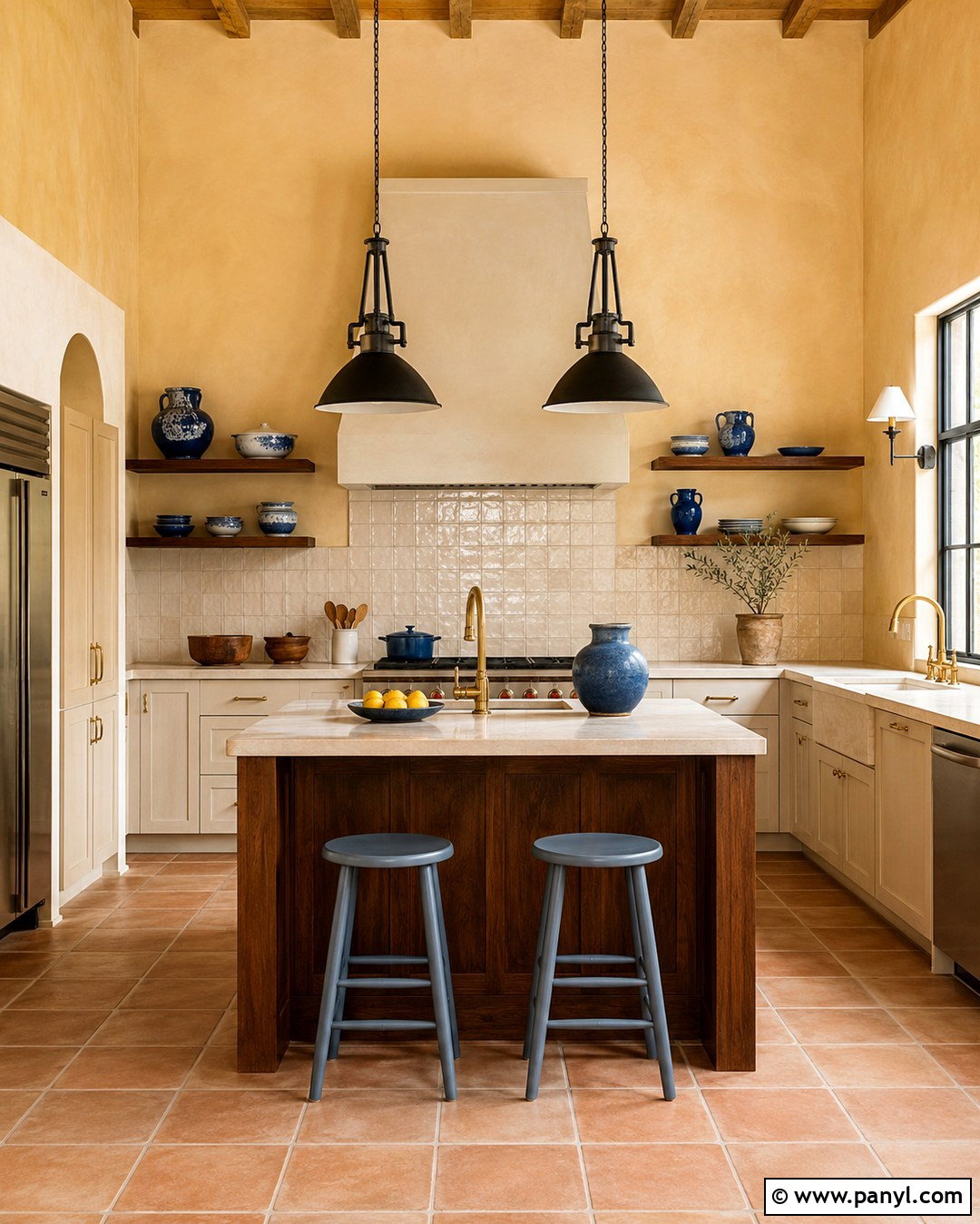
Butter yellow kitchen walls bring back the warmth of traditional Mediterranean interiors in a lighter, more updated way. Choose a creamy yellow with an ochre base rather than a sharp lemon shade. Pair it with ivory cabinets, unlacquered brass hardware, and warm wood countertops or shelving. A backsplash of handmade white tiles keeps the room bright, while terracotta flooring reinforces the rustic character. Add simple iron pendants and woven counter stools for darker contrast. Blue ceramic bowls, olive green linens, and copper cookware can supply carefully controlled accents. Paint the ceiling and trim a gentle cream instead of pure white. The finished kitchen should feel sunny and welcoming, with the wall color connecting every material rather than competing for attention. ()
16. Plaster Pink Mediterranean Dining Room Walls
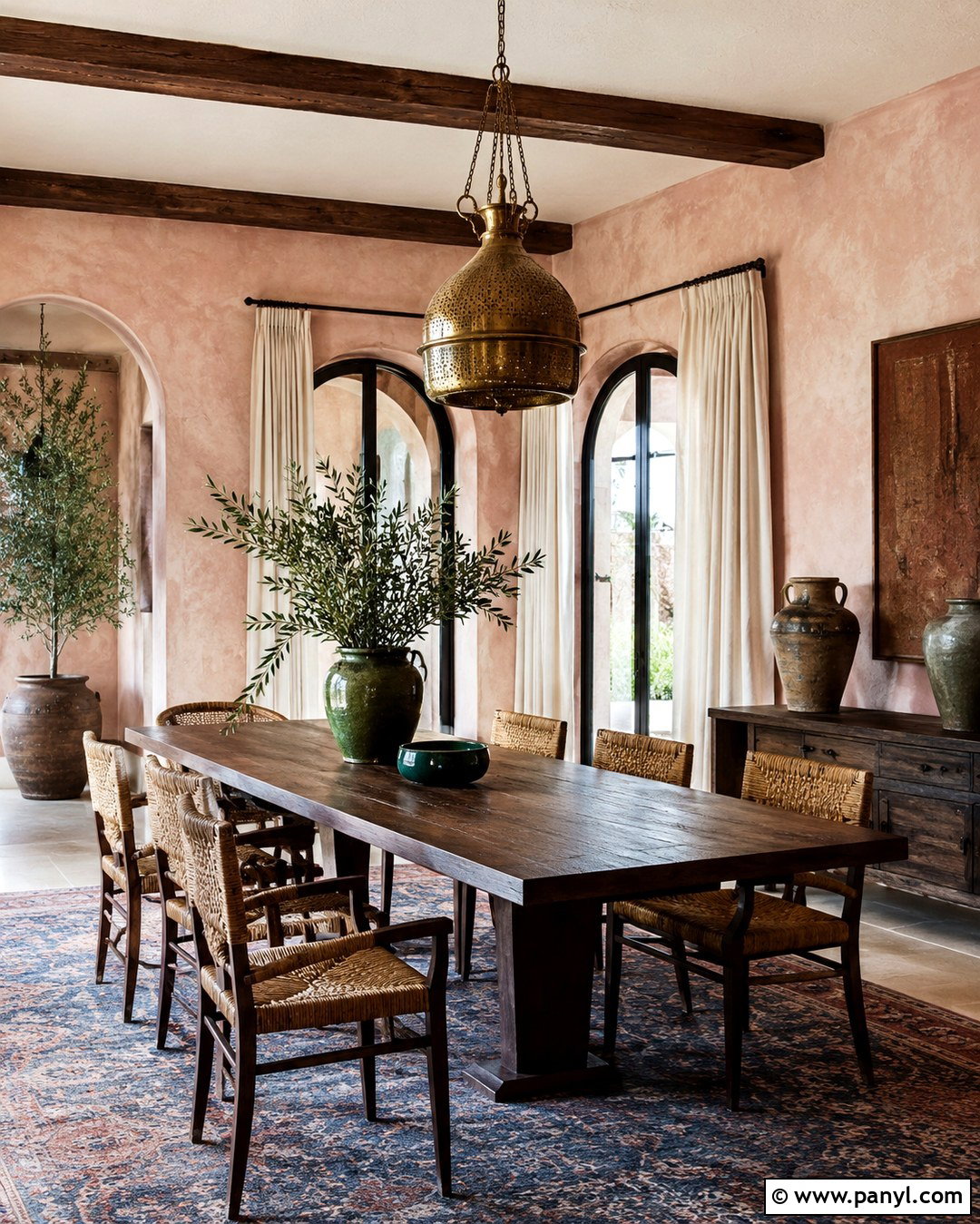
Plaster pink creates an elegant dining room when the color is treated as an earthy neutral. Select a pale pink mixed with beige, clay, or dusty peach undertones. Consider a limewash-style or softly textured finish to give the walls subtle depth and movement. A dark walnut dining table provides enough visual weight against the delicate background. Surround it with woven chairs, an antique brass pendant, and a muted patterned rug. Use cream linen curtains to soften the windows. Greenery and olive-colored ceramics create a natural contrast with the pink walls. Keep table decor uncomplicated, using a low clay bowl or a cluster of handmade vessels. The combination feels warm, collected, and Mediterranean without becoming overly feminine or decorative.
17. Deep Teal Mediterranean Powder Room Walls
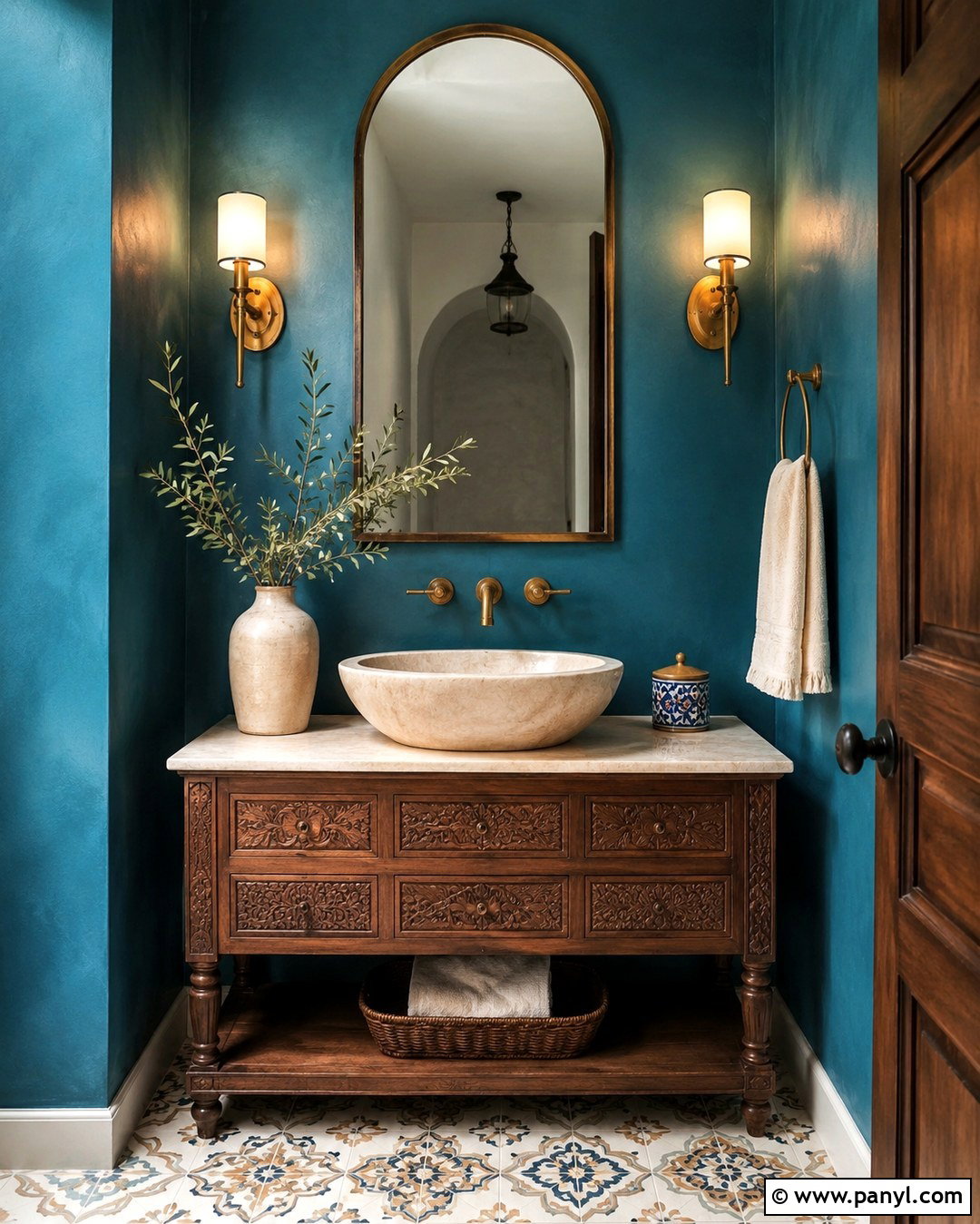
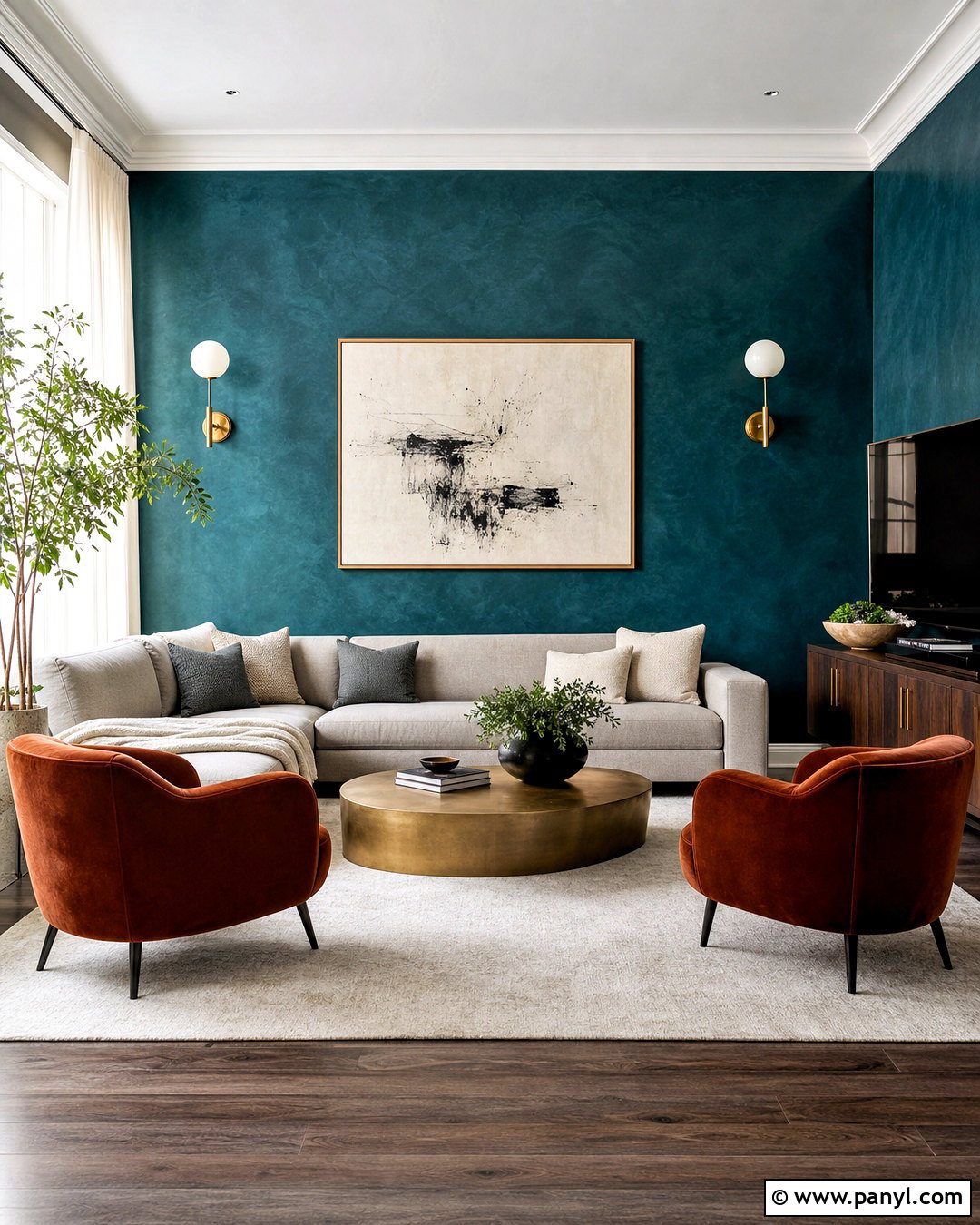
A powder room is an ideal place to use deep teal Mediterranean wall paint. The rich blue-green color can make the compact space feel intentional and jewel-like rather than cramped. Paint every wall, including the area around an arched mirror, to create a continuous backdrop. Pair the color with a carved wood vanity, creamy stone basin, and aged brass faucet. Patterned floor tiles in white, tan, and blue add detail beneath the darker walls. Use warm white for the ceiling to preserve brightness. Two simple brass sconces should provide balanced illumination on either side of the mirror. Finish the room with an ivory hand towel, small ceramic container, and leafy branch. Keep accessories limited so the strong wall color remains clear and sophisticated.
18. Ivory And Blue Mediterranean Kitchen Walls
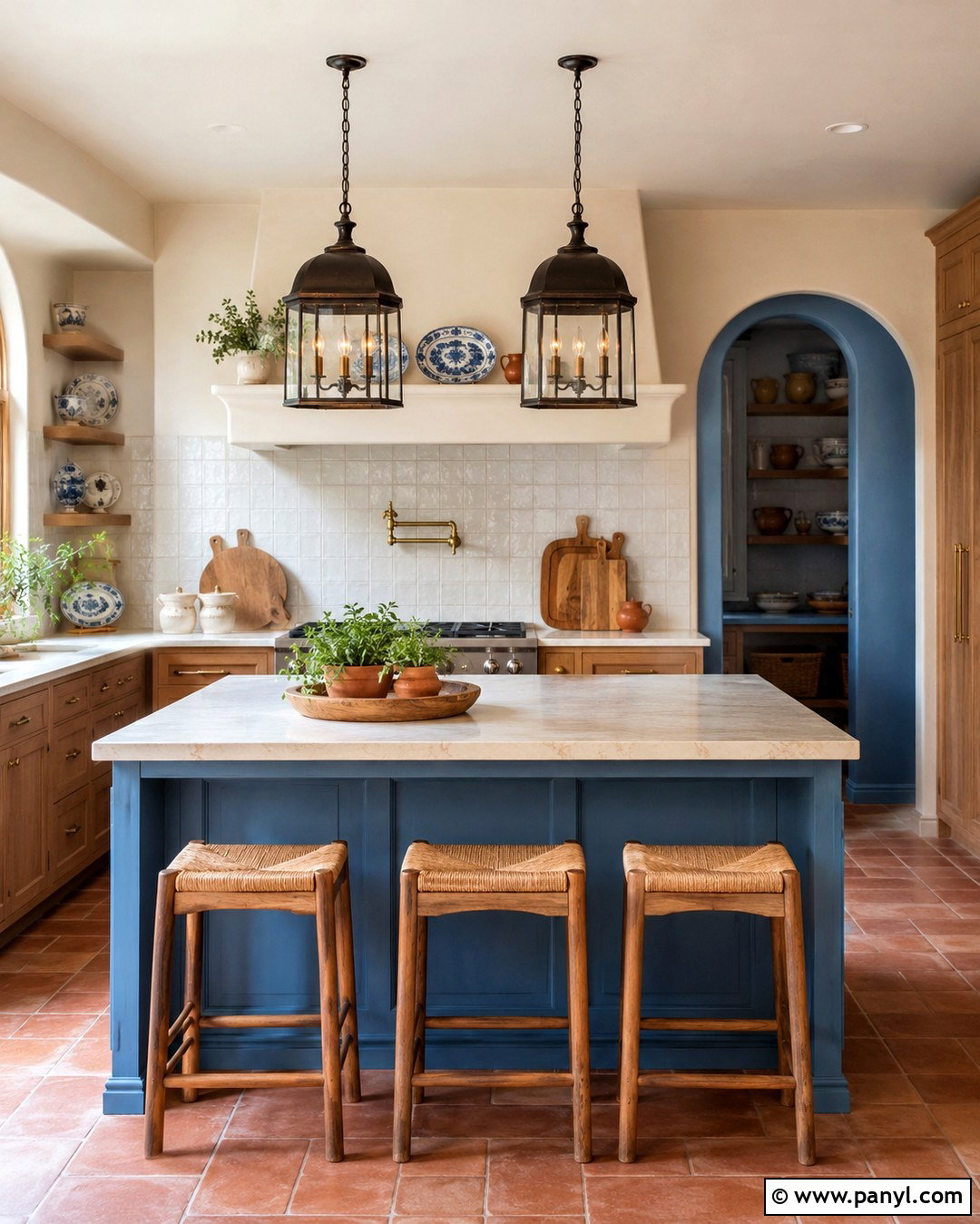
Ivory and blue create one of the clearest Mediterranean kitchen palettes, but the colors need balanced placement. Use warm ivory on the main walls to keep the room bright. Paint the island, an arched pantry entrance, or a defined breakfast area in a softened marine blue. Add light oak cabinets or open shelving, creamy stone counters, and a white handmade-tile backsplash. Terracotta floors supply essential warmth beneath the cooler blue accents. Use black iron pendants and aged brass cabinet hardware for layered metal finishes. Display a few blue-and-white dishes alongside natural cutting boards and clay pots. Repeating both colors across the room creates cohesion, while the warm wood and earthy flooring keep the kitchen from looking too crisp or nautical.
19. Rust Red Mediterranean Reading Room Walls
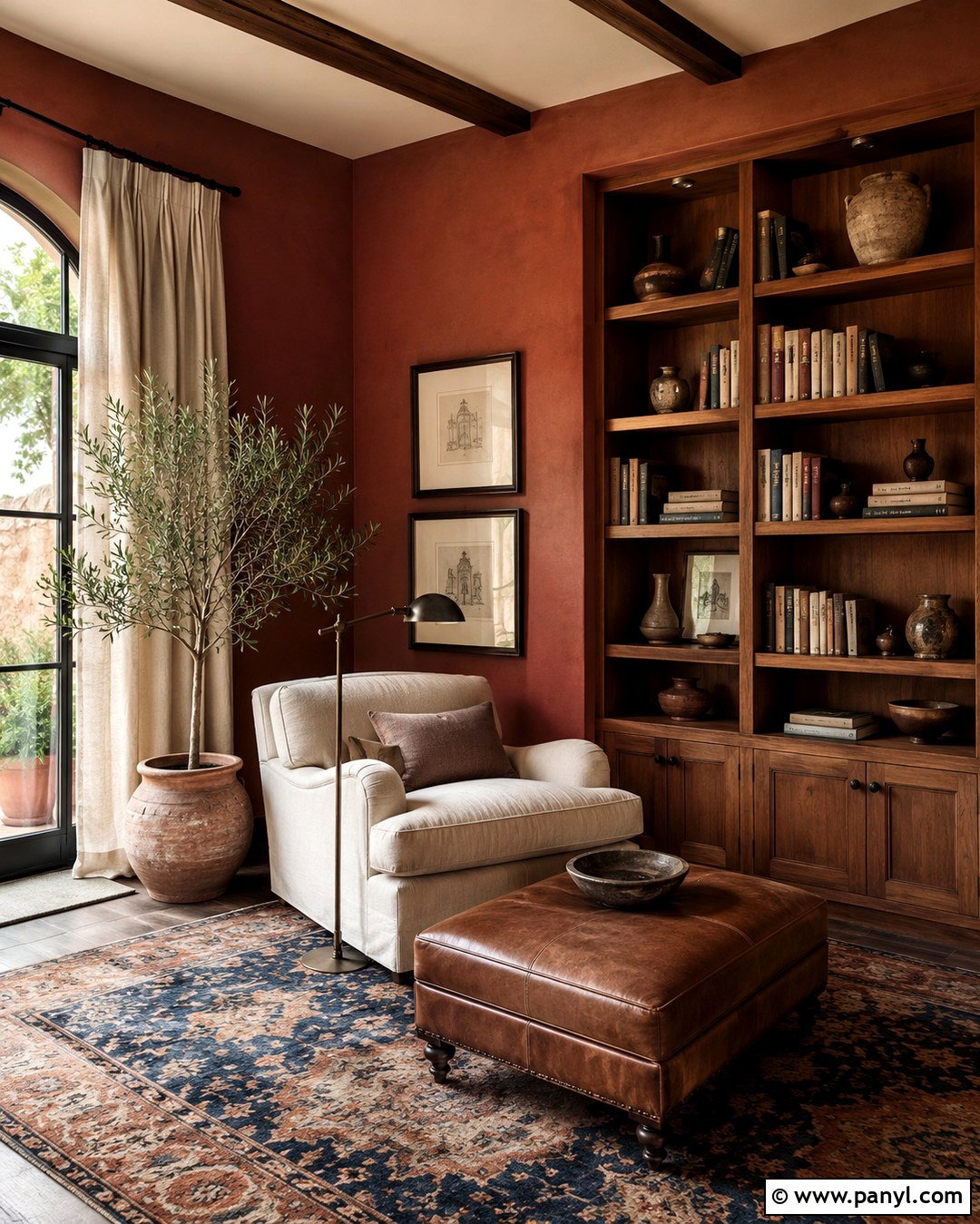
Rust red walls create an intimate reading room inspired by aged textiles, iron-rich earth, and sunbaked architecture. Choose a softened brick or red-clay shade rather than a bright primary red. Pair it with built-in walnut bookcases, a deep cream armchair, and a worn leather ottoman. A vintage-style rug containing tan, navy, and muted red will ground the seating arrangement. Add a bronze floor lamp and linen window treatments to introduce softer textures. Keep the ceiling warm white to prevent the enclosed room from feeling too dark. Pottery, framed sketches, and a small olive tree provide restrained decoration. This complete palette works especially well in a den, library nook, or quiet room designed for reading and evening relaxation.
20. Color Drenched Mediterranean Neutral Walls
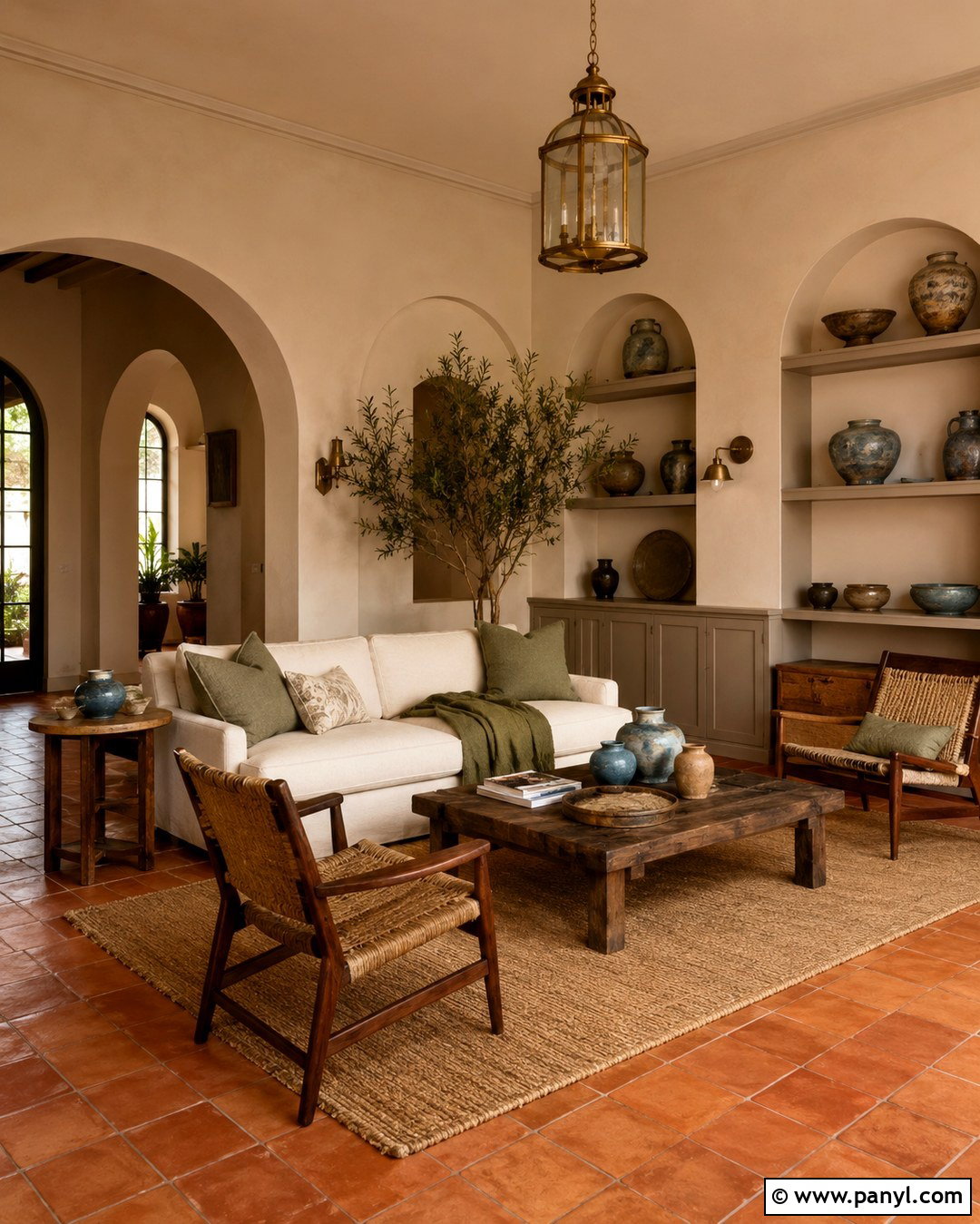
Color drenching can make a simple room feel more architectural by using one earthy neutral across walls, trim, doors, and built-ins. Choose a warm stone, soft taupe, pale clay, or creamy mushroom shade. The continuous color reduces visual interruptions and draws attention to arches, niches, and textured surfaces. Bring contrast through a cream sofa, dark wood table, woven chairs, and terracotta flooring. Add olive green textiles, faded blue pottery, and aged brass lighting for a balanced Mediterranean palette. Use slightly different paint sheens rather than different colors: matte on walls and satin on trim or cabinetry. Before committing, test the shade throughout the day because natural and artificial light can noticeably change warm mineral undertones. The completed space should feel calm, layered, and cohesive.
Conclusion:
The best Mediterranean wall paint ideas combine sun-warmed color with practical furnishings, natural materials, and simple architectural details. Warm white, sand, taupe, and limestone gray offer flexible foundations. Terracotta, olive, ochre, blue, pink, and teal create richer spaces with distinct character. Whatever shade you choose, consider the room’s natural light, flooring, fixed finishes, and connection to adjoining areas. Sample the paint on several walls and observe it during the morning, afternoon, and evening before making a final decision. Matte and softly textured finishes can strengthen the handcrafted appearance, while warmer trim colors prevent harsh contrast. Most importantly, build one complete, balanced room rather than relying on wall color alone.

Related Ideas and Inspiration:
Leave a Reply