
Pale green painted walls bring gentle color into a home without making the space feel busy or overly themed. Muted sage, soft mint, gray-green, and delicate pistachio can all function almost like neutrals when paired with thoughtful finishes. Warm white trim keeps the palette fresh, while oak, walnut, rattan, linen, and aged brass add depth. Pale green also works across many aesthetics, from traditional and cottage rooms to modern, coastal, and midcentury spaces. The key is choosing furnishings, flooring, lighting, and accent colors that support the wall color as one complete design. Always test large samples in the actual room before committing. The following full-room looks offer practical and stylish ways to decorate with **20 Pale Green Painted Walls**. ()
1. Pale Green Living Room Walls
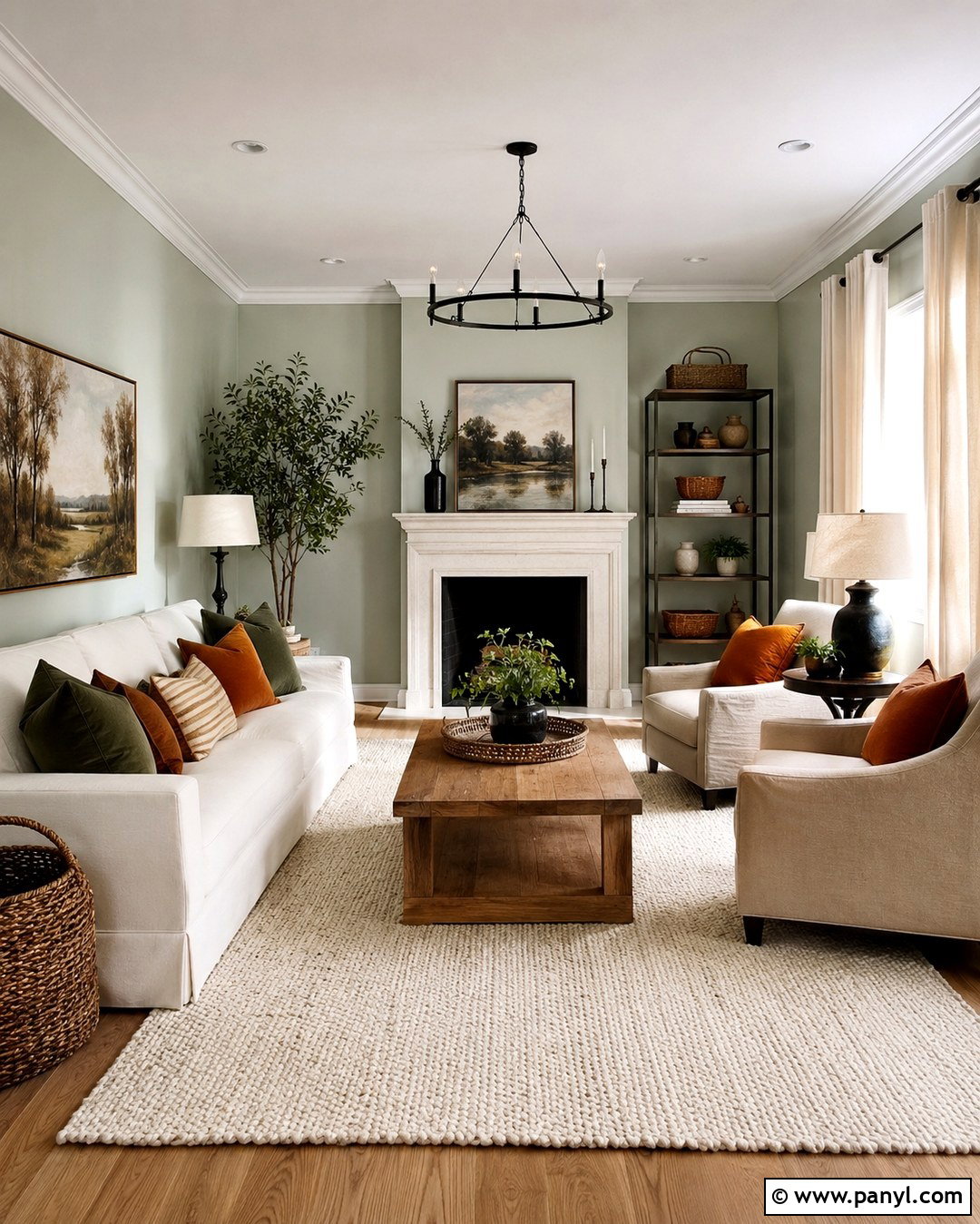
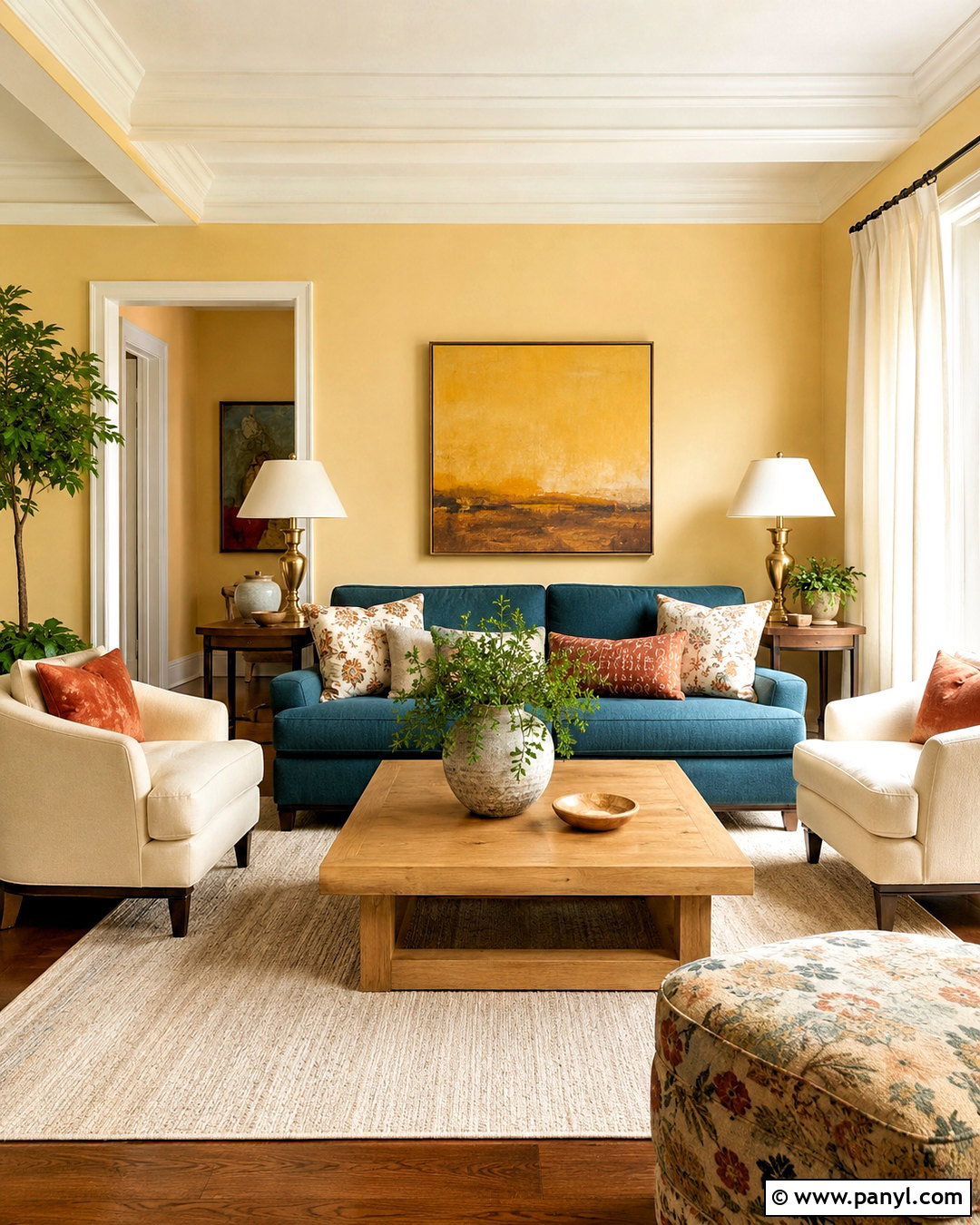
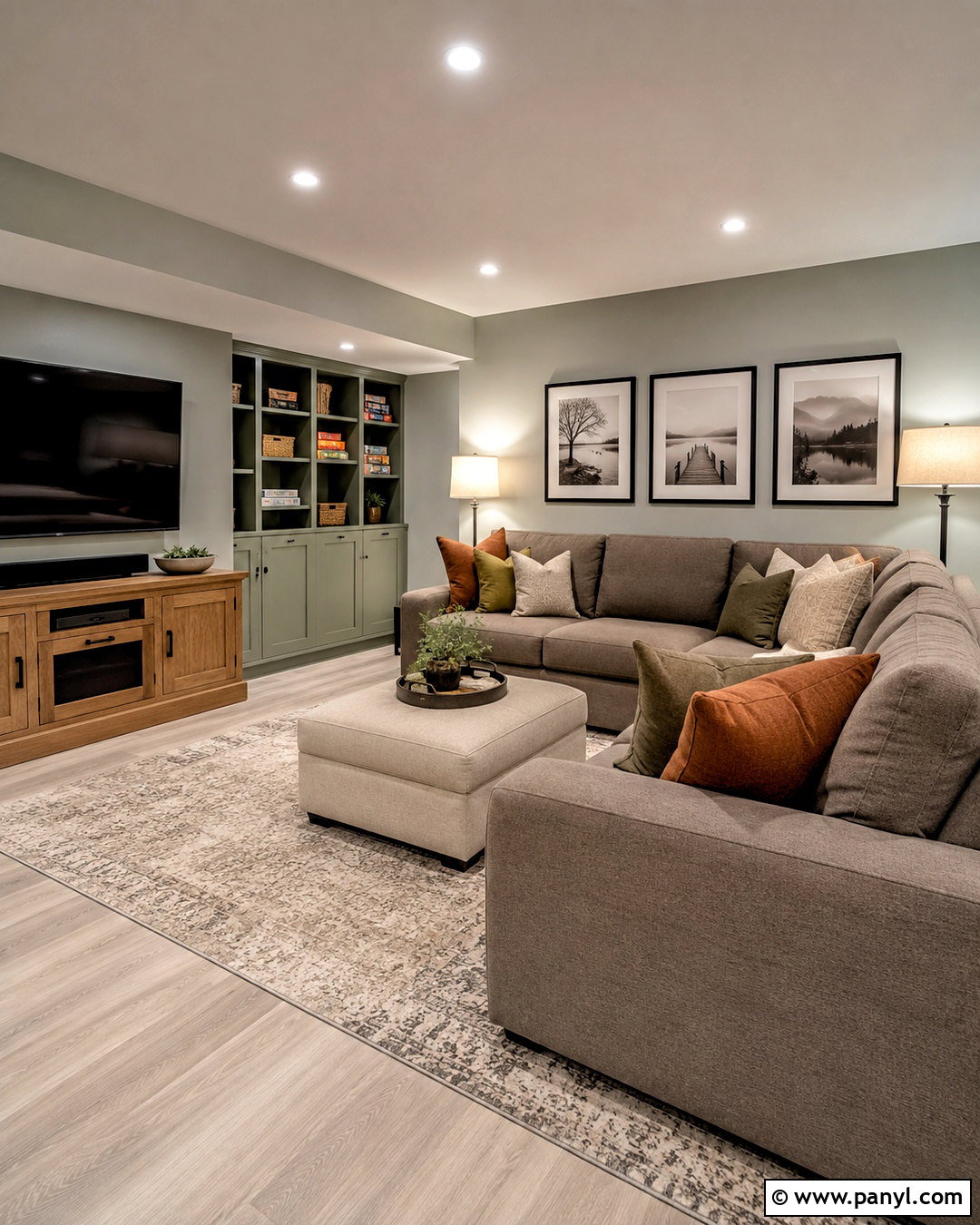
Create a relaxed living room by pairing pale sage-green walls with a warm white sofa and two oatmeal linen chairs. Use a medium-tone oak coffee table to bring natural warmth into the center of the room. A cream wool rug keeps the floor light, while muted rust and olive pillows prevent the palette from looking washed out. Hang one large landscape print above the sofa rather than several small pieces. Add full-length ivory curtains, woven baskets, and a tall leafy plant near the window. Matte black curtain rods and a simple black floor lamp provide enough contrast to define the room. This complete scheme feels comfortable, balanced, and polished without depending on bright colors or excessive decoration.
2. Pale Green Bedroom Walls
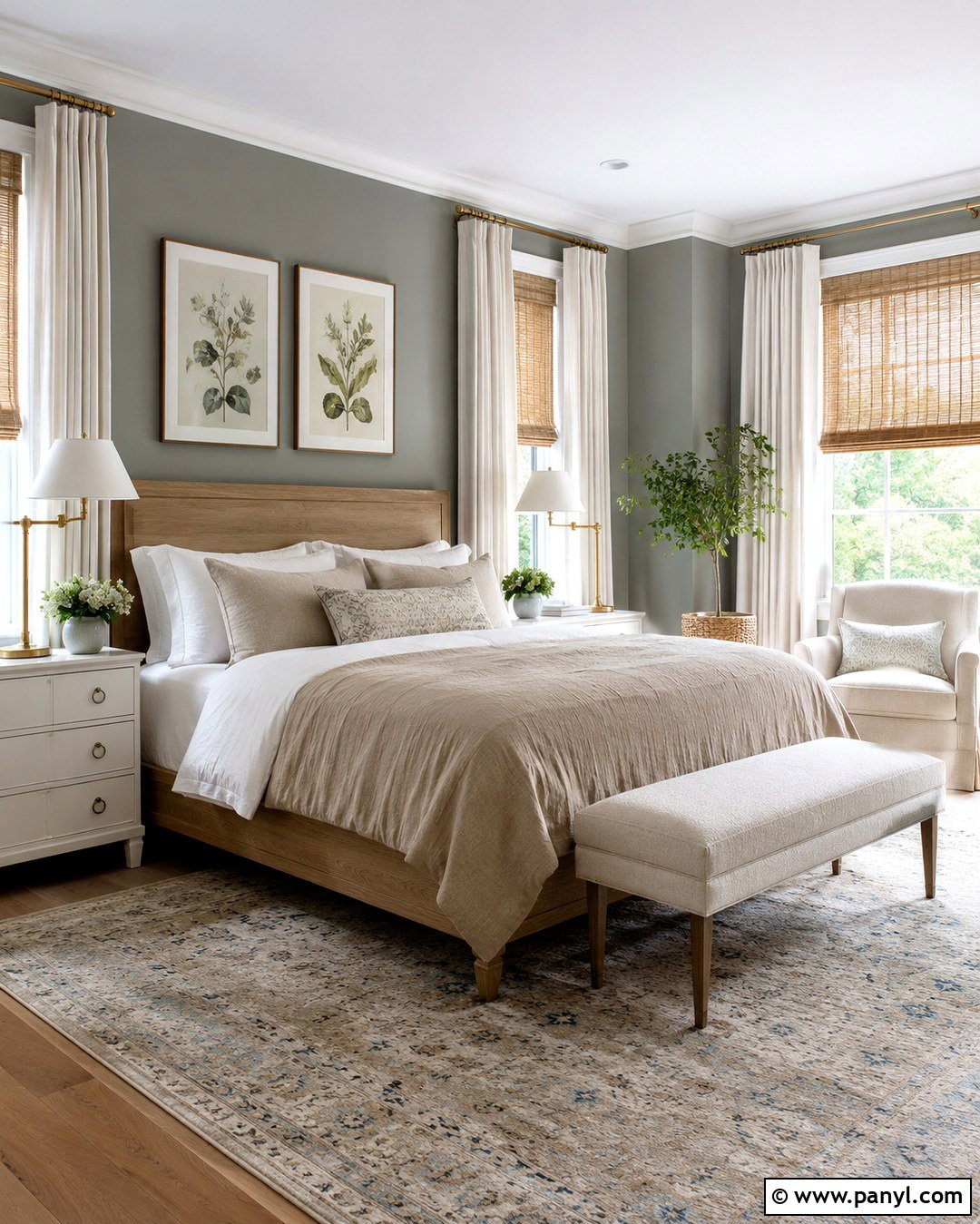
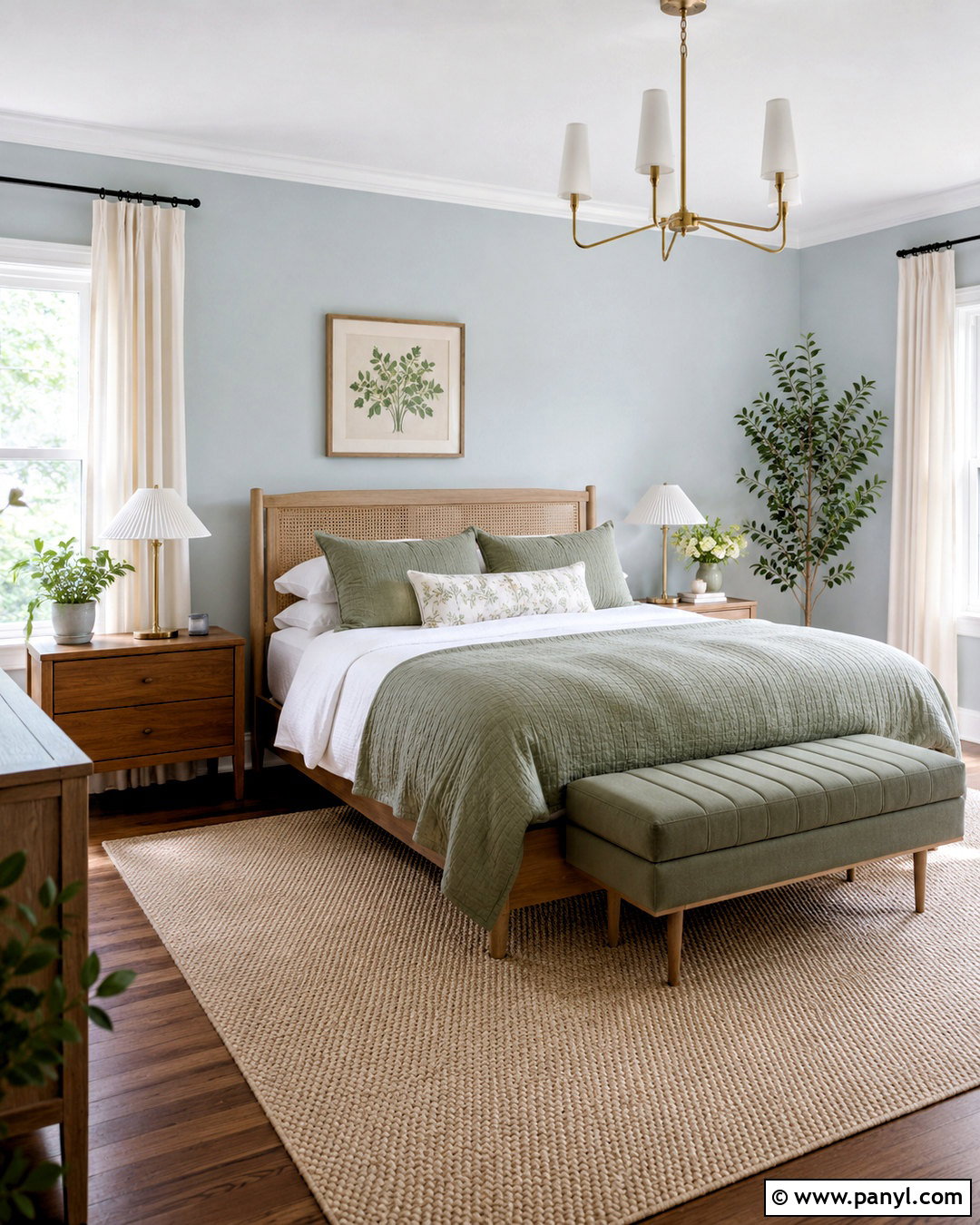
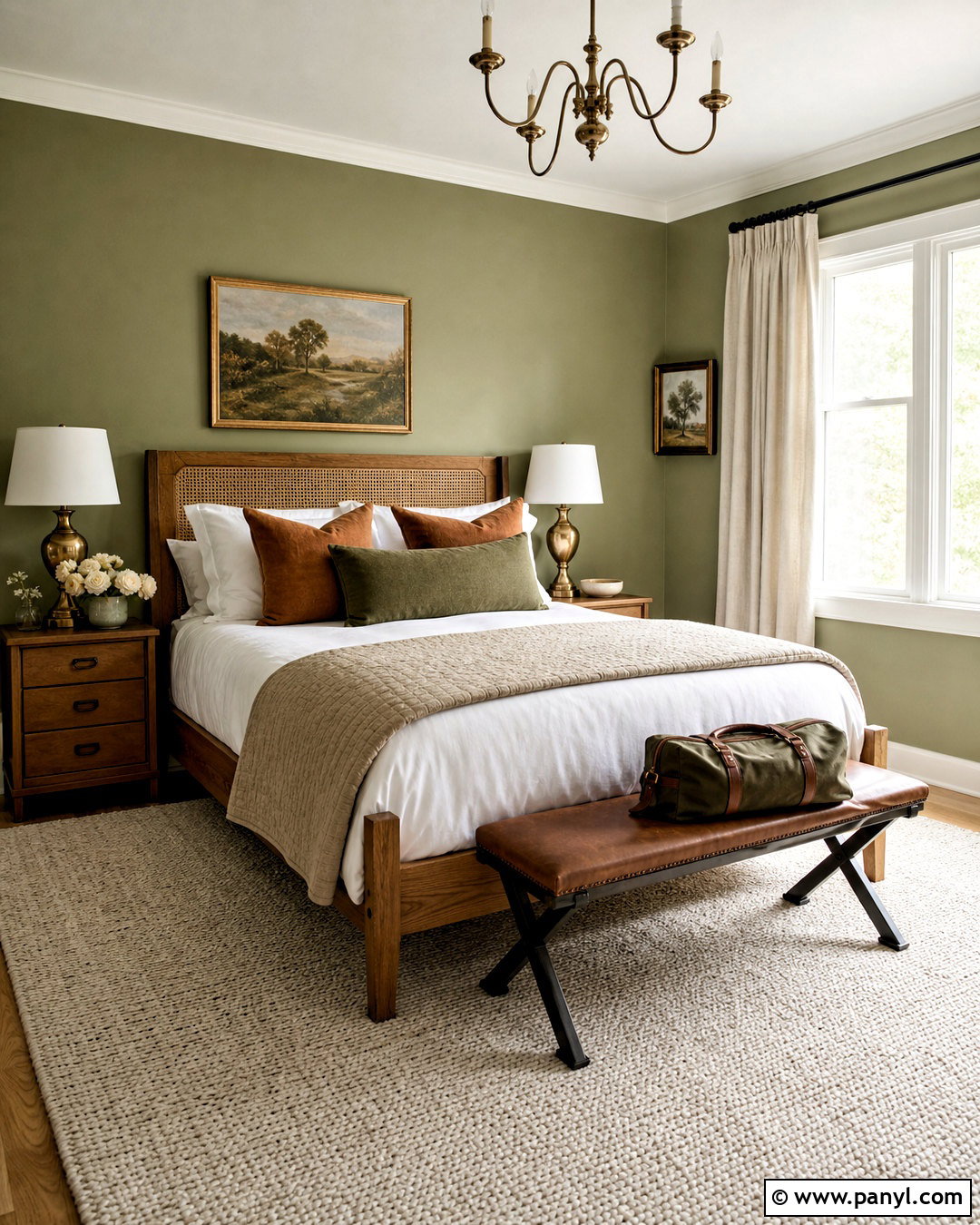
Soft gray-green bedroom walls can create a restful foundation for layered neutral bedding. Place a light oak bed against the main wall and dress it with white sheets, a flax-colored linen duvet, and two muted green accent pillows. Cream nightstands with brushed brass lamps introduce a subtle traditional touch. Choose natural woven shades beneath long ivory curtains to soften the windows and control light. A faded beige-and-blue rug adds quiet pattern under the bed without competing with the paint. Keep artwork simple, such as a pair of botanical sketches in narrow wood frames. Finish the room with an upholstered bench, a ceramic table lamp, and minimal accessories. The result feels calm and mature rather than overly pastel or childlike.
3. Pale Green Kitchen Walls
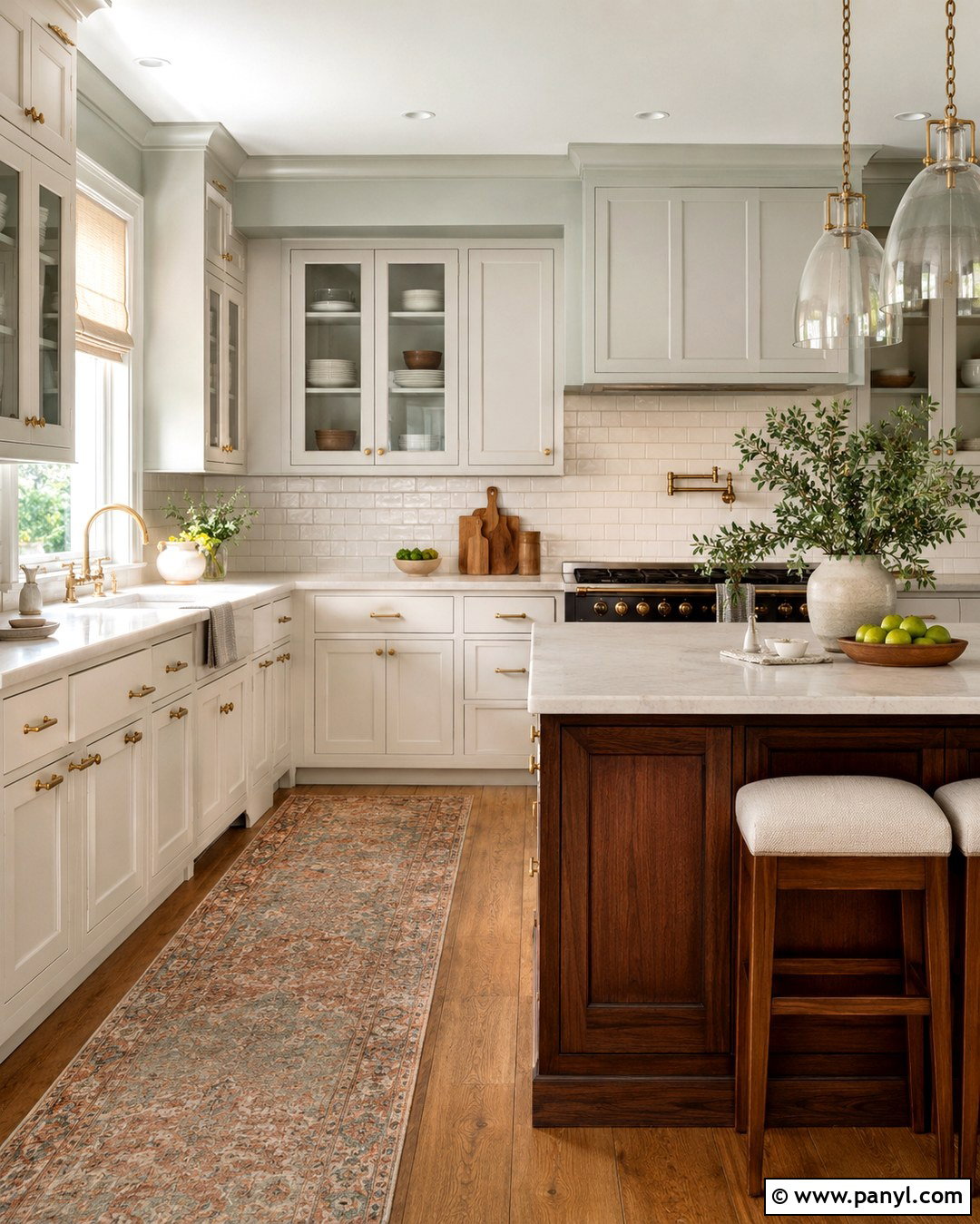
Pale green kitchen walls look especially fresh beside warm white cabinets and natural wood details. Use a muted mint-sage paint rather than a bright blue-green shade. Pair it with creamy quartz countertops, an off-white subway tile backsplash, and medium oak flooring. A walnut island or compact wood dining table adds needed contrast to the lighter surfaces. Choose aged brass cabinet pulls and clear glass pendant lights for a warm, understated finish. Display only a few practical items, such as wood cutting boards, white stoneware, and a small herb planter. Linen Roman shades can soften the windows without hiding the wall color. This combination creates a welcoming kitchen that feels colorful, functional, and easy to update as surrounding decor changes.
4. Pale Green Dining Room Walls
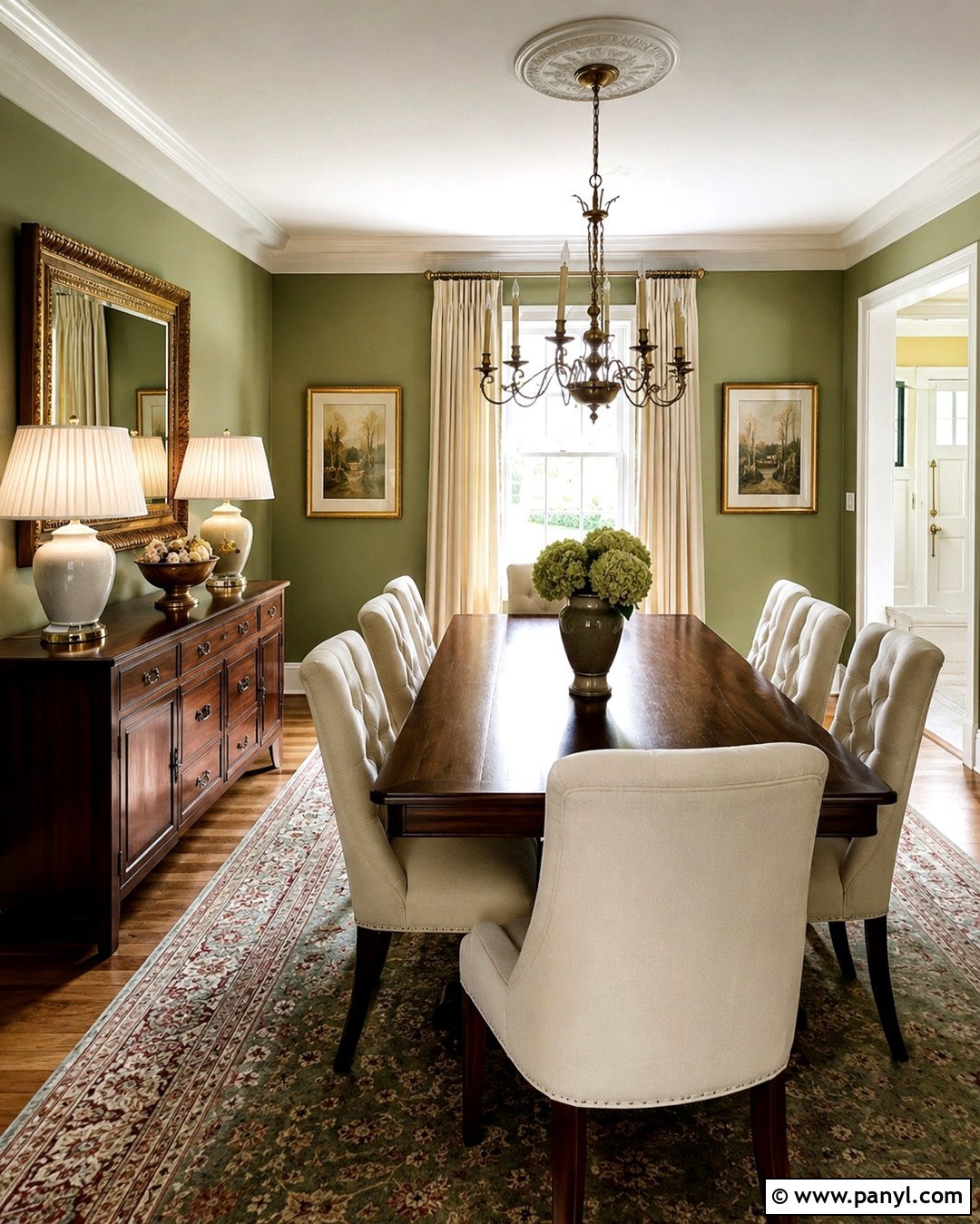
Give a dining room more character with pale olive-green walls, dark wood furniture, and crisp ivory trim. Center a rectangular walnut table beneath a simple aged brass chandelier. Surround it with cream upholstered chairs or woven-seat dining chairs for a lighter, more casual look. A patterned rug containing faded green, tan, and burgundy can anchor the arrangement and connect the wall color to the furniture. Place a dark wood buffet along one wall and hang an oversized antiqued mirror above it. Ivory drapery keeps the room bright during the day, while ceramic lamps add soft evening light. The balance of light walls and substantial furniture creates a collected dining space that works for everyday meals as well as special gatherings.
5. Pale Green Bathroom Walls
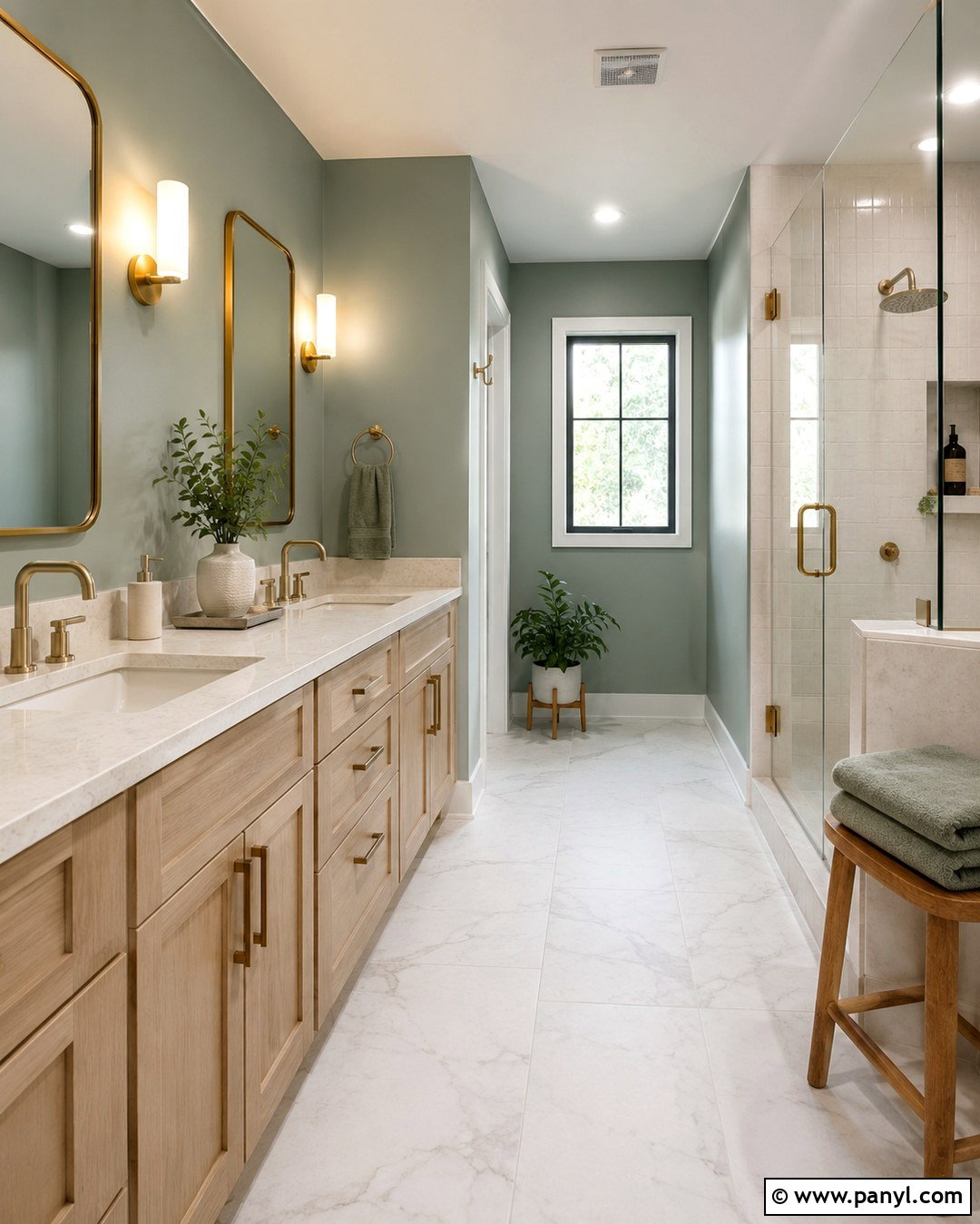
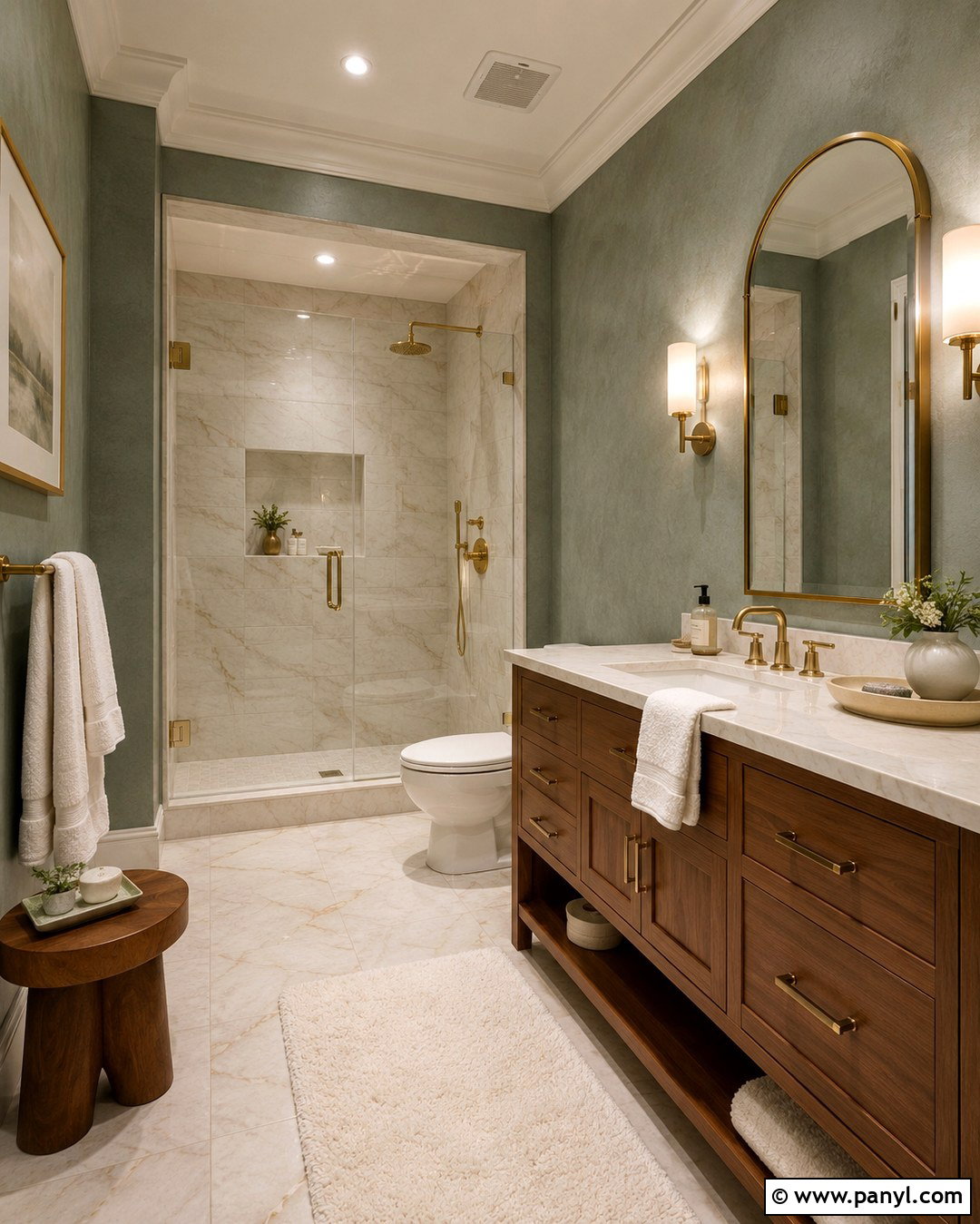
Turn pale green bathroom walls into a clean, spa-inspired backdrop with white stone and warm metal finishes. Select a muted eucalyptus green that complements marble or marble-look porcelain flooring. A white oak vanity with a pale quartz countertop adds warmth without making the room heavy. Use brushed brass faucets, framed mirrors, and sconces as consistent accents. Keep the shower tile soft white, then repeat the wall color through a few towels or a small patterned bath mat. A linen Roman shade and simple glass shower enclosure maintain an open appearance. Add one wood stool and a leafy plant if space allows. This complete palette feels refreshing and polished while remaining practical enough for an average family bathroom.
6. Pale Green Home Office Walls
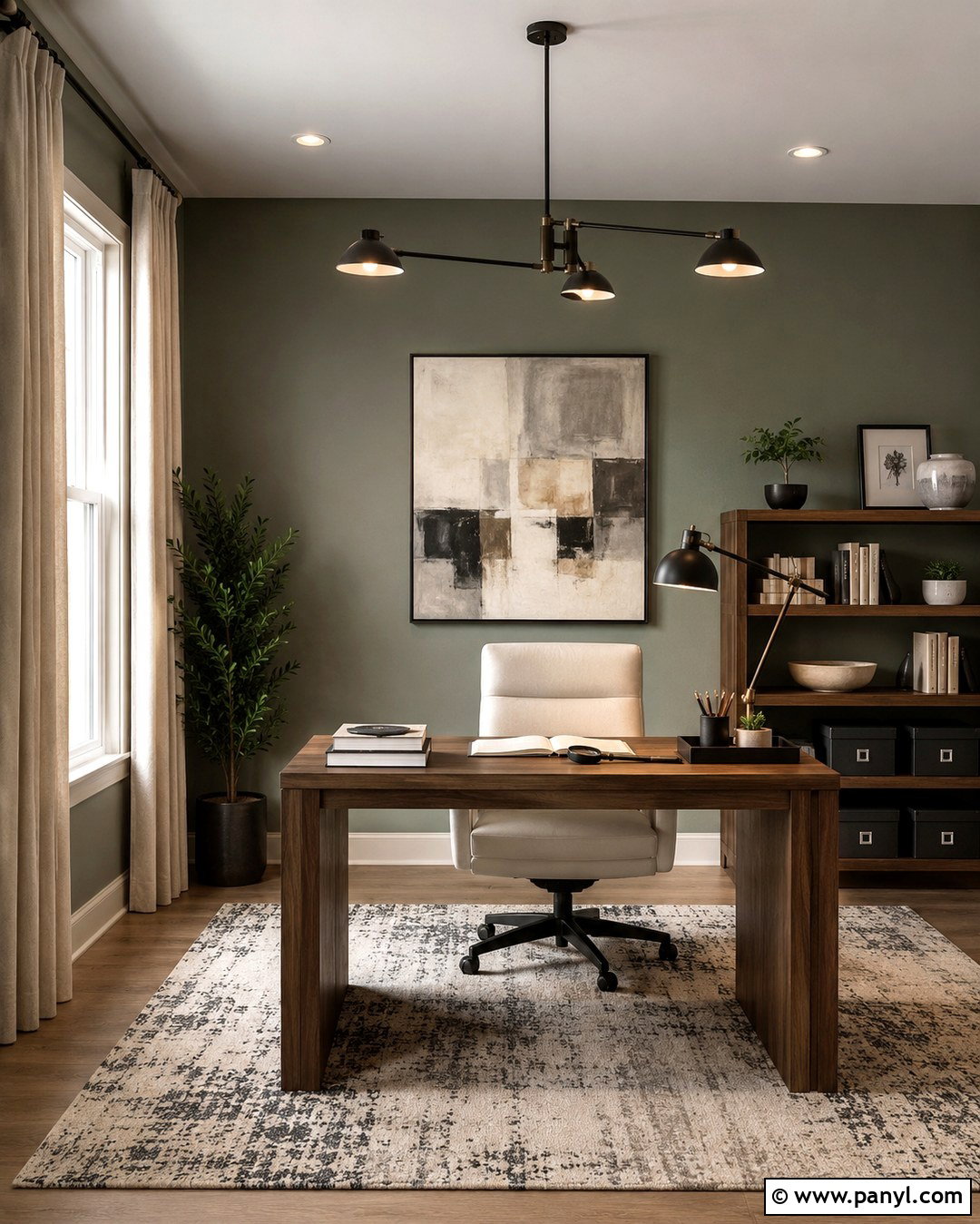
A home office with pale green walls can feel focused without looking cold or corporate. Start with a dusty gray-green paint and position a streamlined walnut desk where it receives natural light. Add a supportive cream upholstered chair and a low walnut bookcase for closed and open storage. Black metal lighting, frames, and desk accessories give the pale walls clearer definition. Use an ivory-and-charcoal rug to ground the furniture, then add full-length oatmeal curtains for softness. A large abstract artwork with cream, black, and muted ochre introduces controlled color behind the desk. Keep cables and supplies concealed in matching boxes or drawers. The finished workspace looks professional on video calls while still feeling comfortable and connected to the rest of the home.
7. Pale Green Nursery Walls
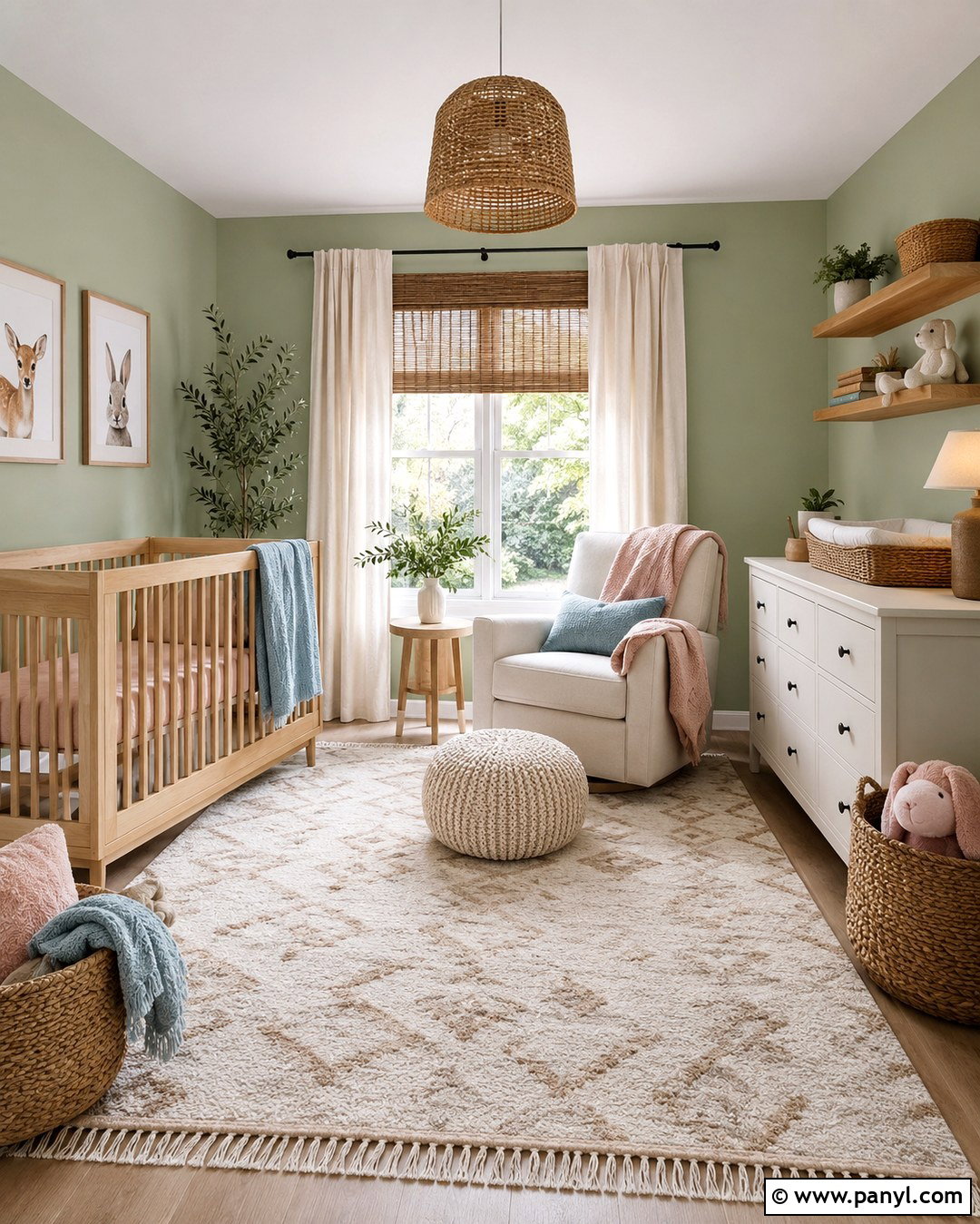
Pale pistachio-green walls offer a soft nursery palette that can adapt as a child grows. Pair them with a natural oak crib, a cream glider, and a low white dresser used as a changing station. Add a washable rug with a subtle beige geometric pattern to create a comfortable play area. Gentle blush, dusty blue, or warm yellow accents can appear in small amounts through a quilt, storage baskets, and framed illustrations. Choose cordless woven shades with ivory curtain panels for a layered window treatment. A flush-mount ceiling light and shaded floor lamp provide practical illumination without overwhelming the room. Finish with secure wall-mounted shelves and closed toy storage. The nursery will feel cheerful and youthful while avoiding a short-lived theme.
8. Pale Green Entryway Walls
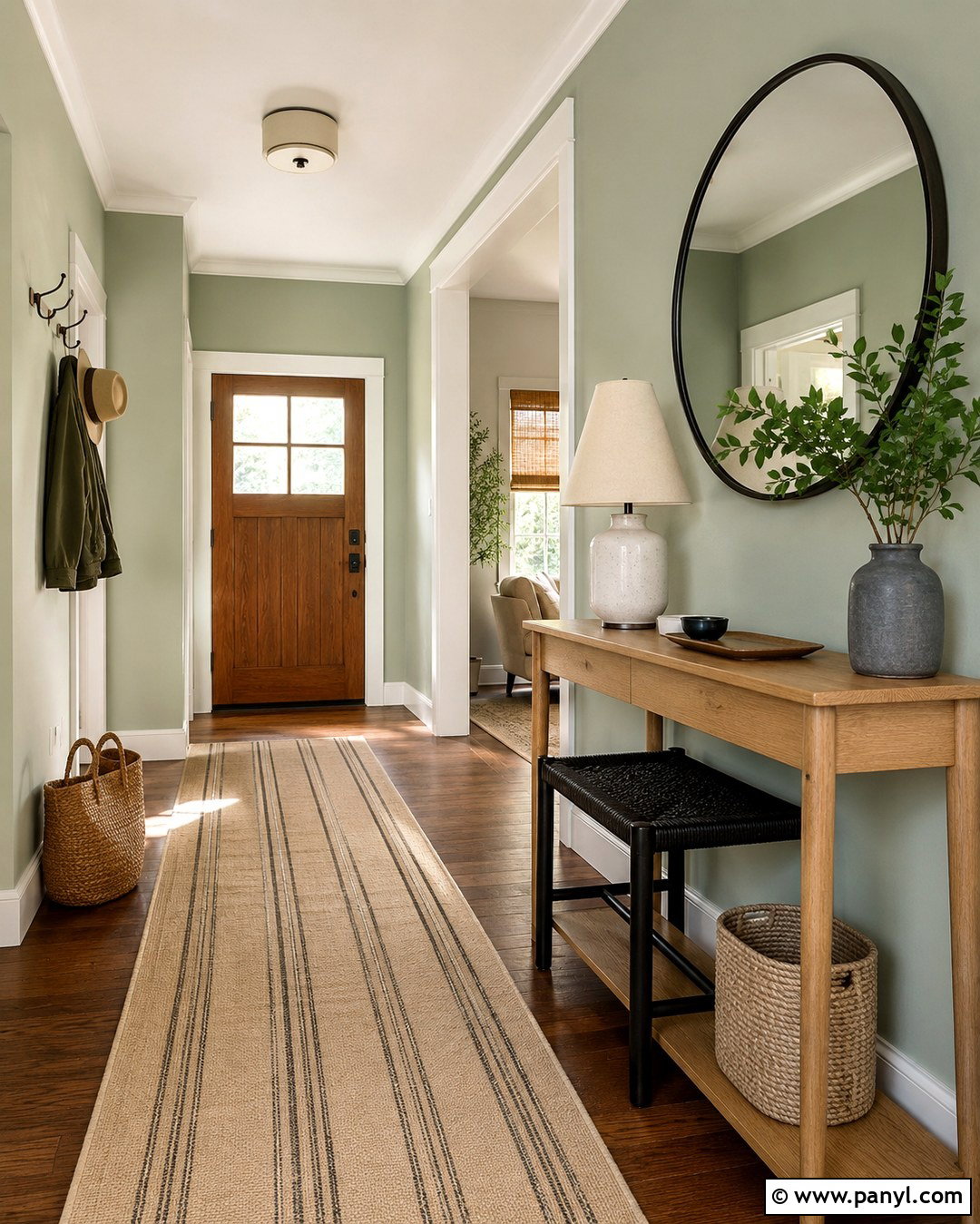
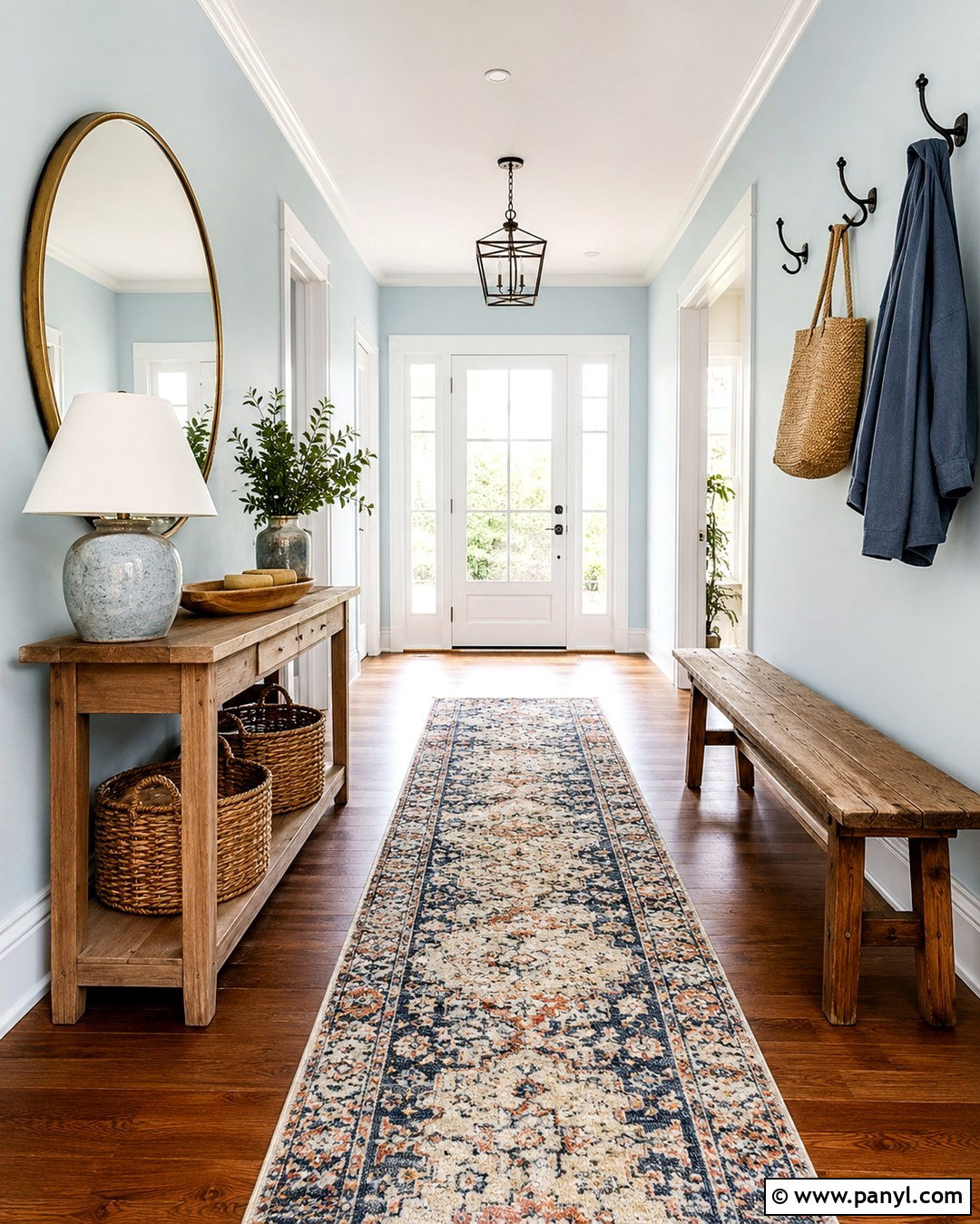
Make an entryway feel welcoming with pale green walls, warm wood, and small black accents. Choose a soft sage that provides visible color while remaining easy to coordinate with nearby rooms. Place a narrow oak console against the longest wall and hang a round black-framed mirror above it. A cream ceramic lamp, shallow catchall tray, and simple vase keep the surface functional but uncluttered. Add a striped beige runner to guide the eye through the hallway and protect high-traffic flooring. A black bench with a woven seat can provide a convenient place for shoes. Paint the trim warm white and repeat black on hooks or door hardware. This organized arrangement gives even a compact entrance a complete, intentional appearance.
9. Pale Green Laundry Room Walls
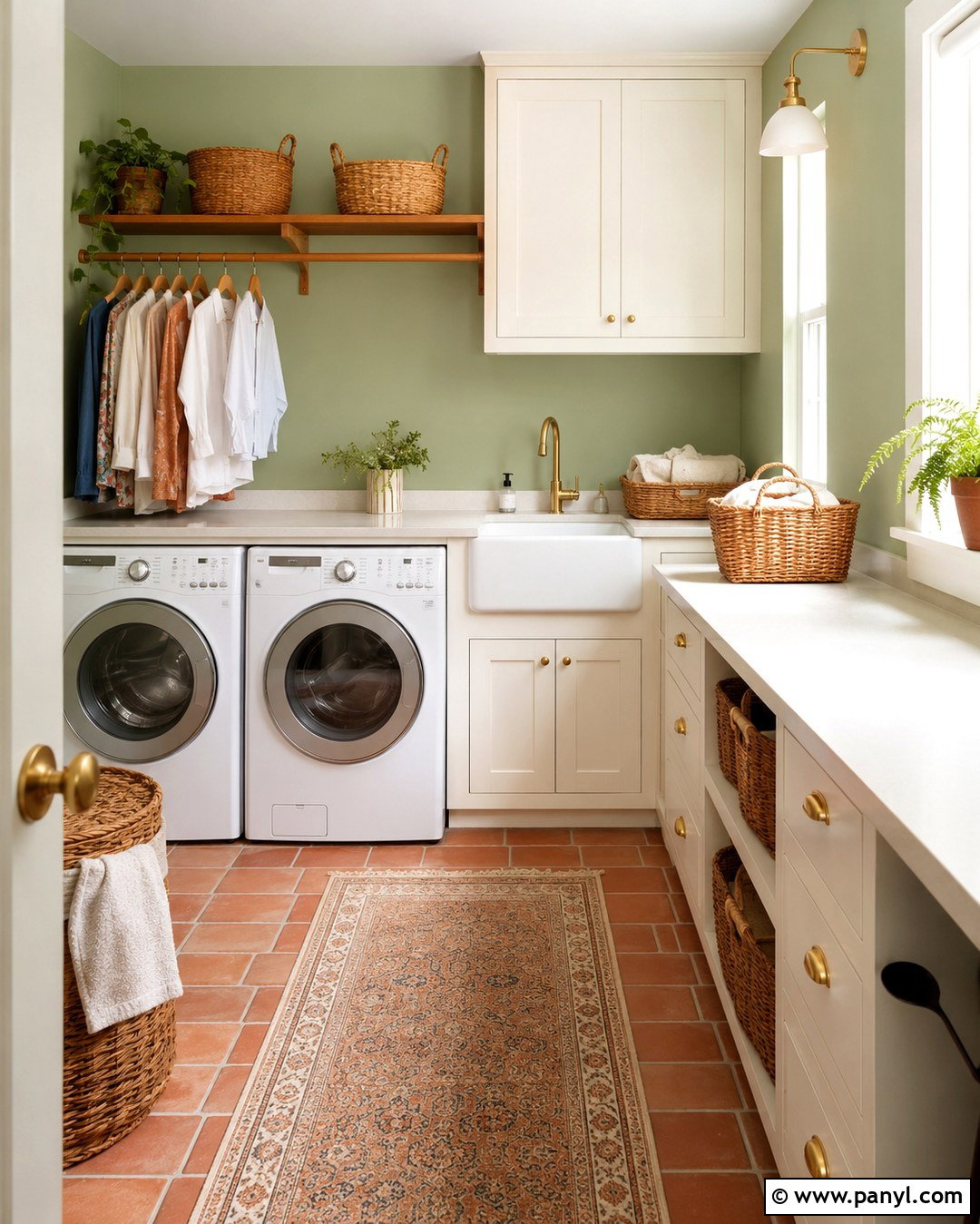
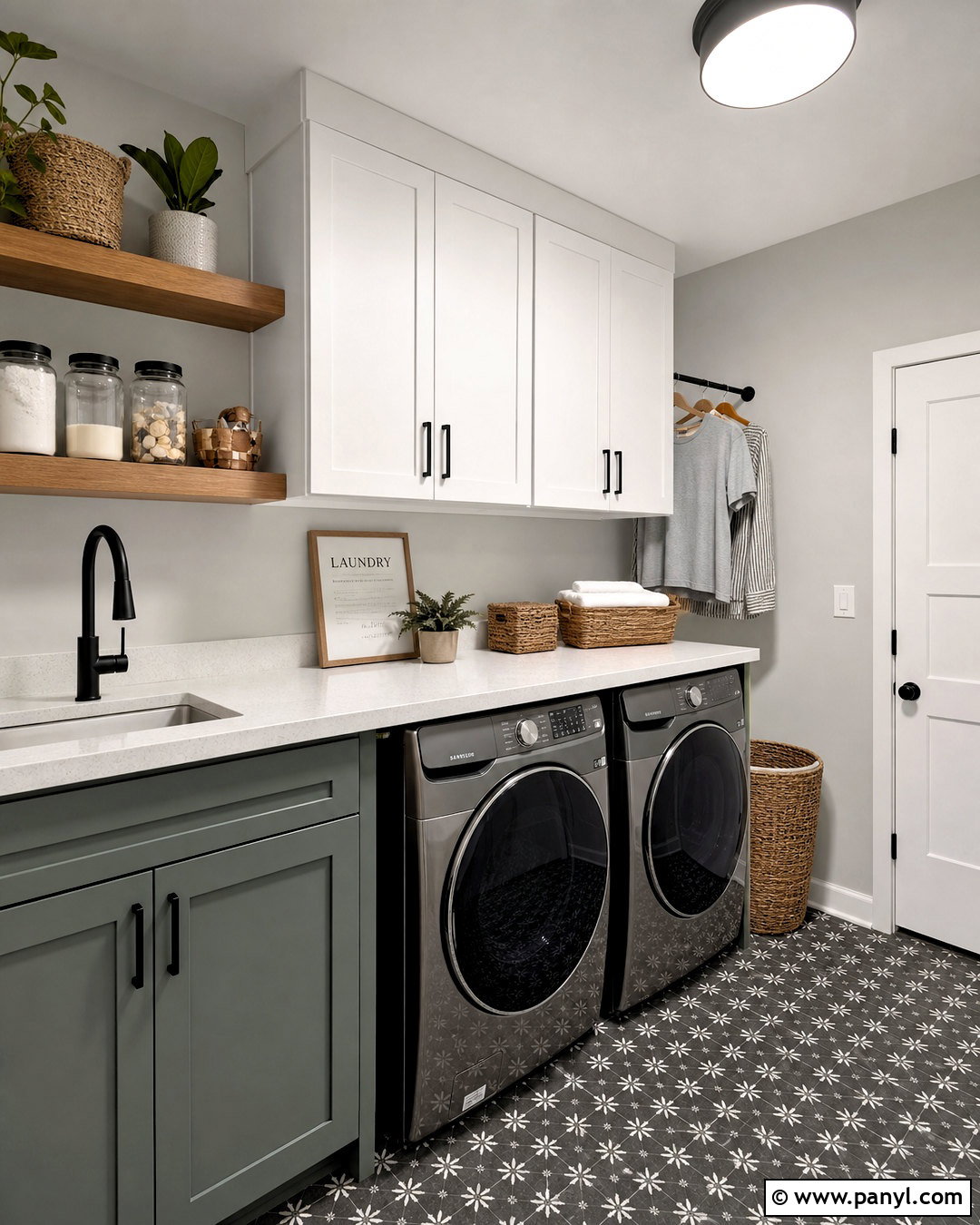
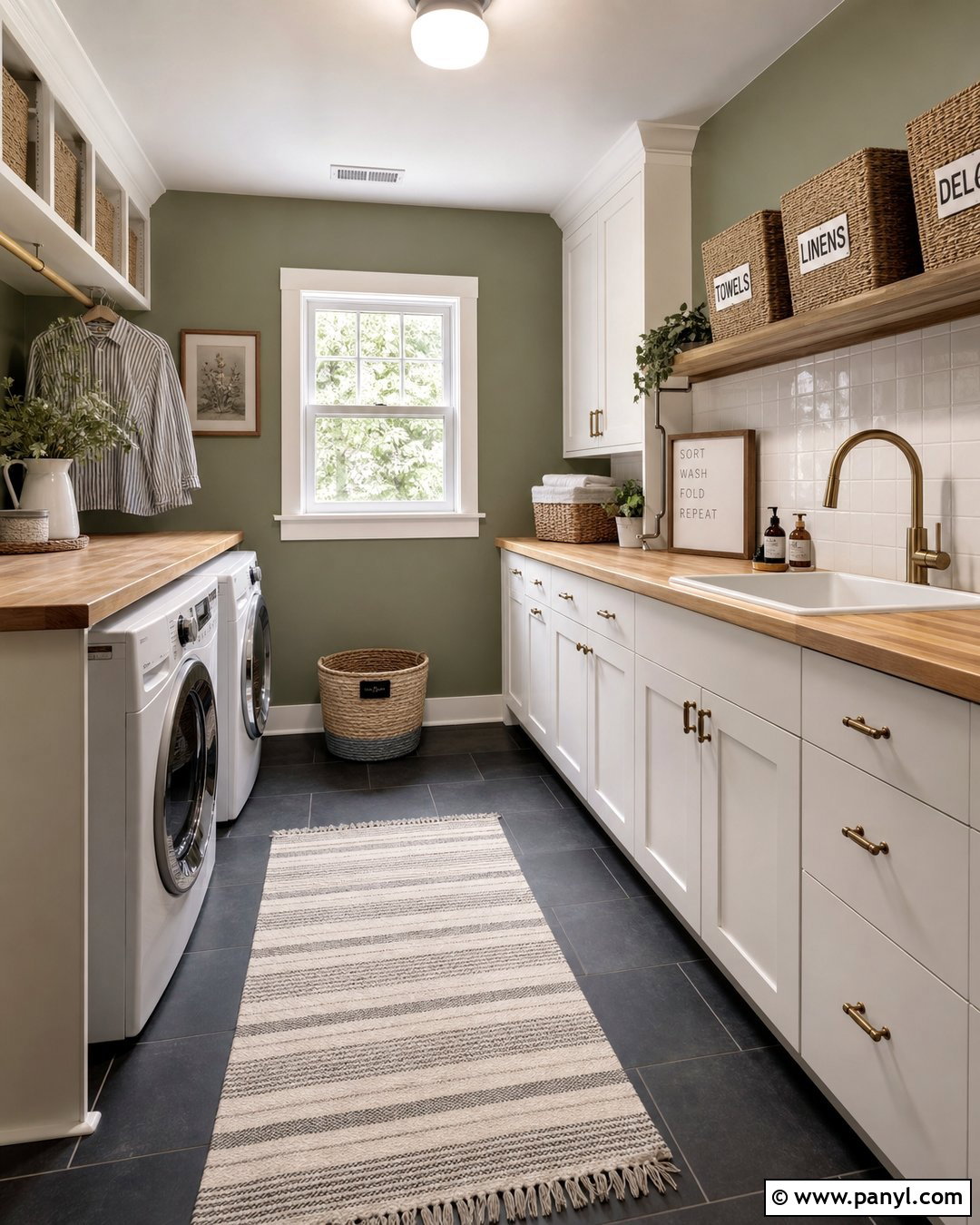
Bring warmth and personality into a laundry room with pale celery-green walls and terracotta flooring. Install warm white cabinets above the washer and dryer, leaving one open oak shelf for baskets and frequently used supplies. A light quartz folding counter creates a durable work surface while keeping the room bright. Use unlacquered brass pulls and a simple brass ceiling light to complement the earthy floor color. Natural woven baskets can conceal cleaning products, clothespins, and spare linens. If space allows, include a slim hanging rail beneath the cabinets and a small utility sink with a paneled base. The mix of green, cream, oak, and terracotta transforms a purely practical room into a coordinated space that feels cheerful and organized.
10. Pale Green Sunroom Walls
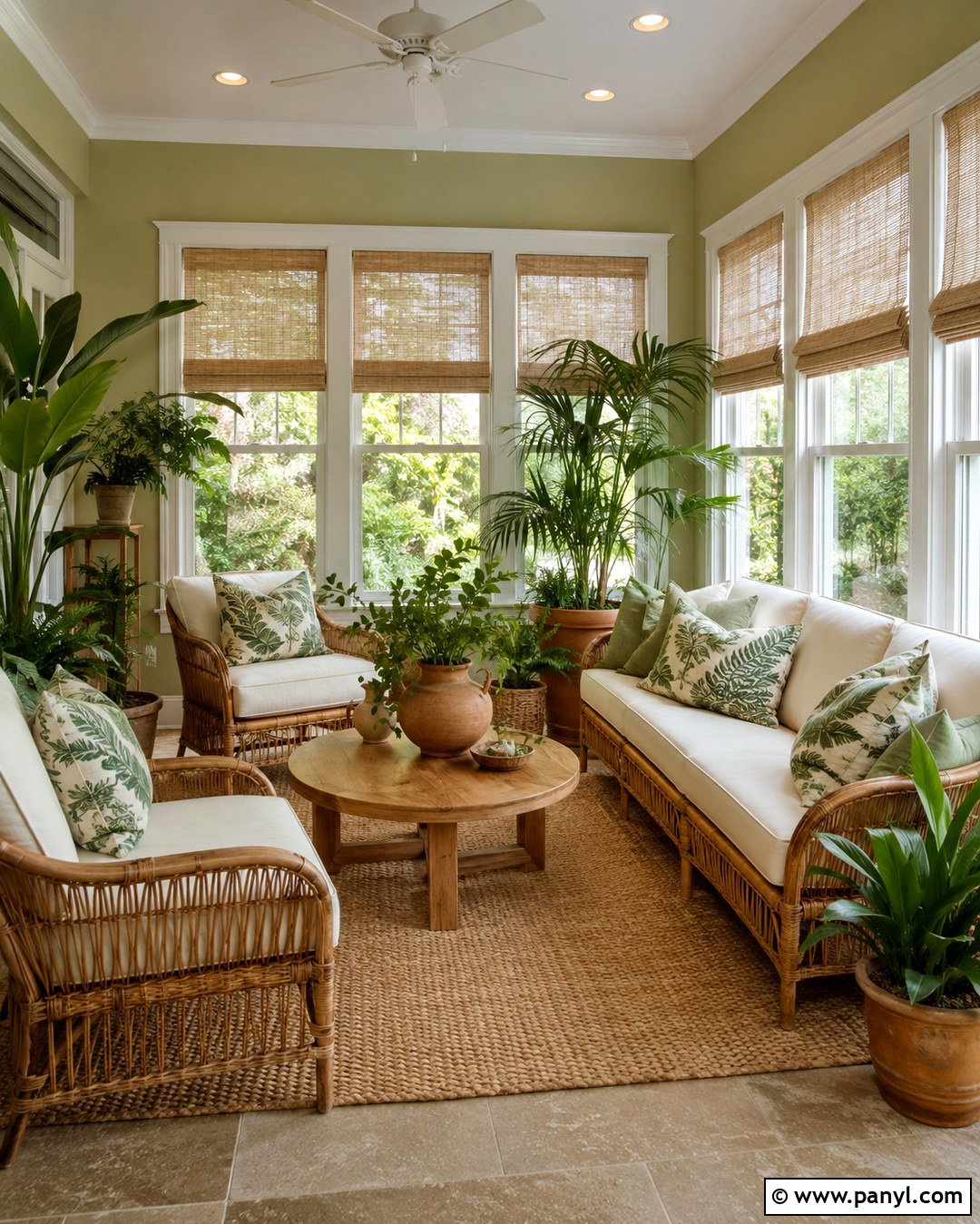
Sunlight makes pale green sunroom walls feel connected to the garden beyond the windows. Use a fresh but muted yellow-green and pair it with white-painted window trim. Arrange a natural rattan sofa and two matching lounge chairs around a round oak coffee table. Cream cushions create a neutral base, while botanical green and soft coral pillows provide restrained color. Add a woven jute rug and linen shades to balance the many hard window surfaces. Several healthy plants in terracotta and white ceramic pots will reinforce the indoor-outdoor atmosphere. Keep the furniture arrangement open so views and walkways remain clear. This complete sunroom look feels breezy and comfortable, offering a practical setting for reading, casual conversations, or morning coffee.
11. Pale Green Farmhouse Walls
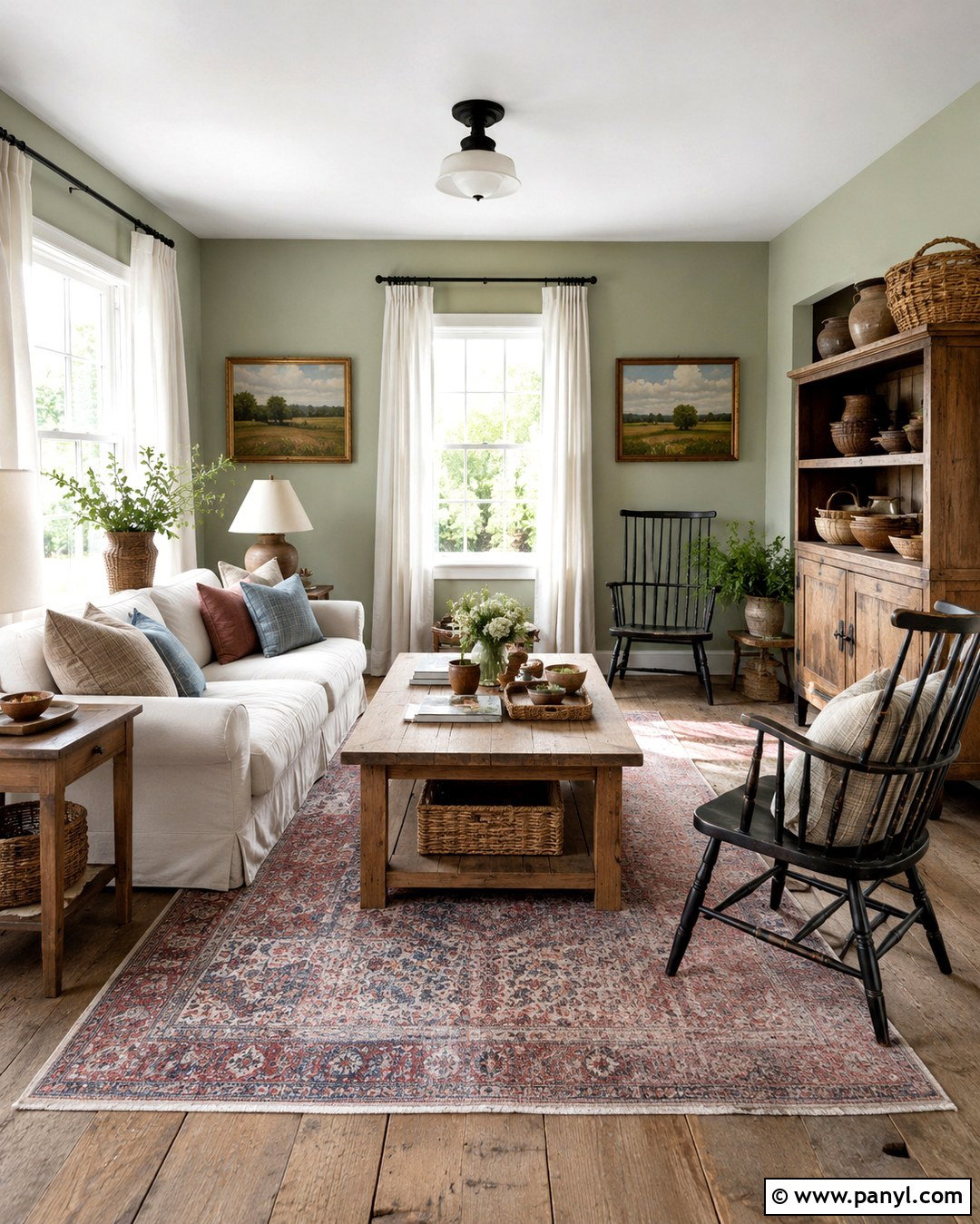
For a farmhouse-inspired room, combine pale sage-green walls with warm white upholstery and weathered wood. A slipcovered sofa, two spindle-back chairs, and a reclaimed oak coffee table create a comfortable conversational layout. Ground the seating with a faded vintage-style rug in tan, muted blue, and green. Use simple white curtains hung from black iron rods, then add black picture frames and an iron chandelier for repetition. A rustic wood cabinet can provide storage without making the design feel overly coordinated. Decorate with stoneware, woven baskets, and a few landscape prints rather than obvious themed signs. The pale green walls soften the stronger black and wood finishes, creating a farmhouse look that feels relaxed, updated, and suitable for everyday living.
12. Pale Green Modern Walls
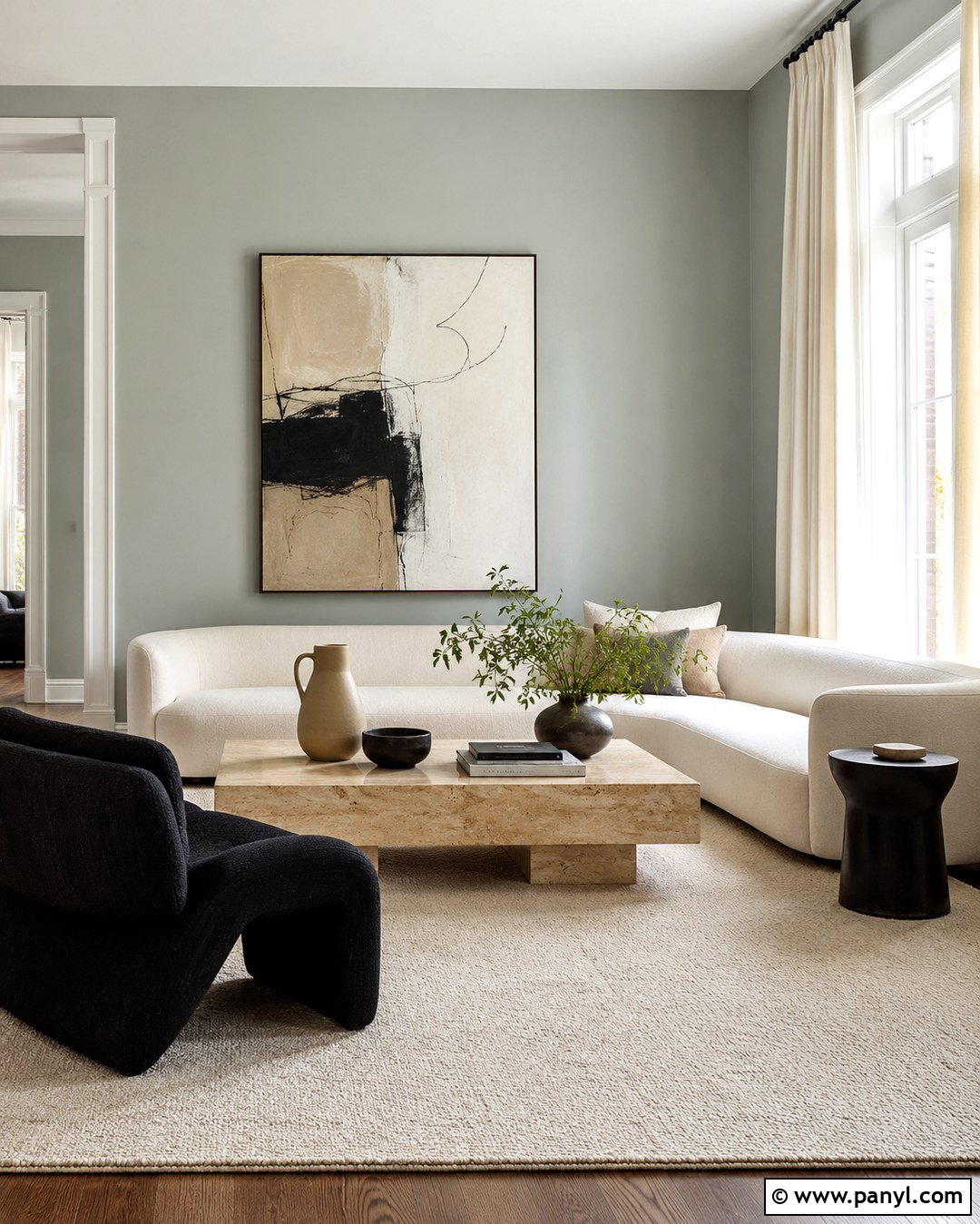
Pale green walls can support a clean modern interior when paired with simple shapes and deliberate contrast. Choose a cool, lightly grayed green and use it across all main walls. Add a low cream sectional, a sculptural black lounge chair, and a rectangular travertine coffee table. A large ivory rug will visually connect the seating while keeping attention on the furniture silhouettes. Select one oversized abstract canvas featuring black, beige, and muted green. Floor-to-ceiling off-white curtains make the windows feel taller and soften the straight lines. Keep accessories limited to a ceramic vessel, a small stack of books, and one architectural plant. This restrained palette gives the room warmth and personality without weakening the uncluttered modern aesthetic.
13. Pale Green Cottage Walls
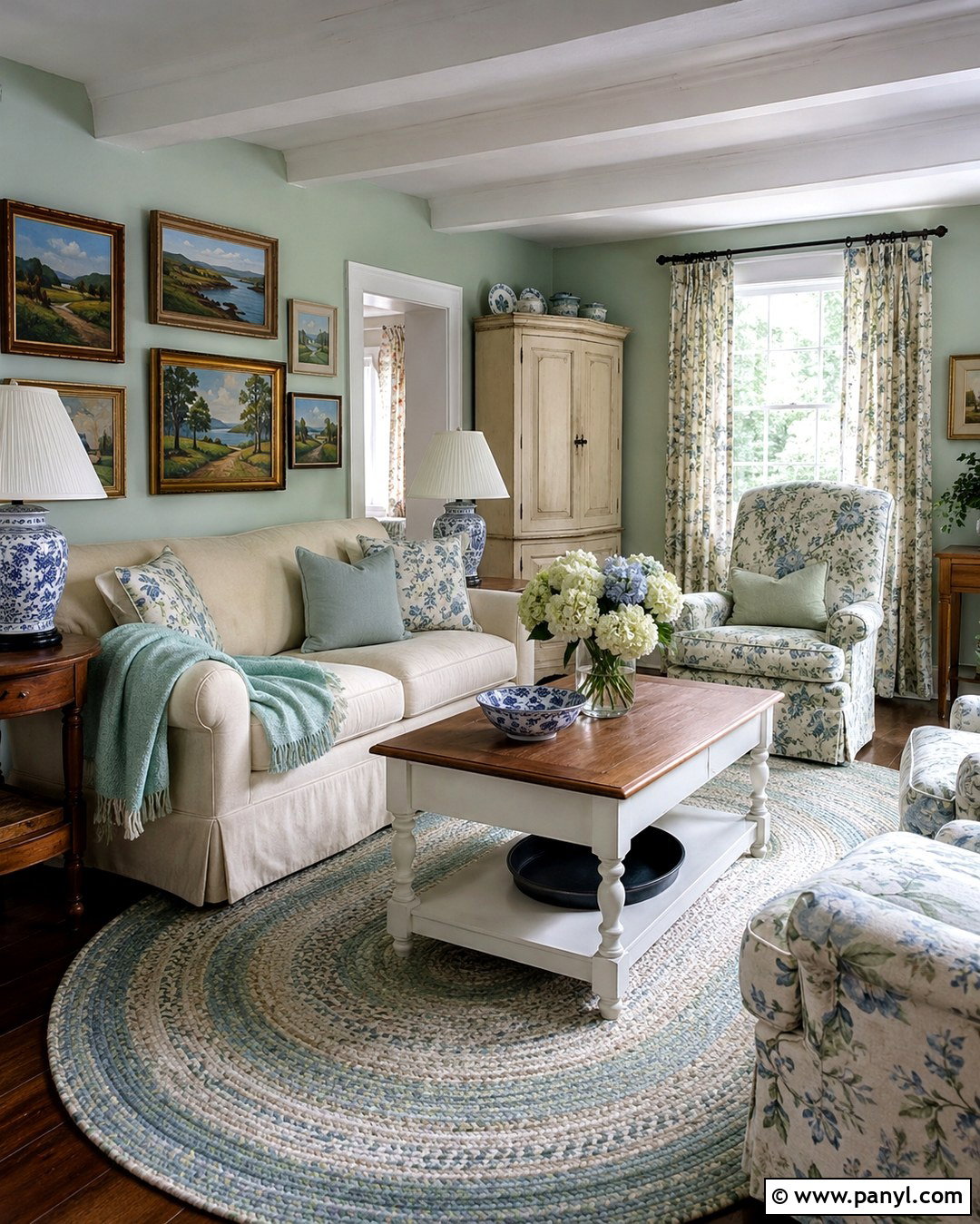
Create a cozy cottage room with pale mint-green walls, painted furniture, and carefully mixed floral patterns. Start with a cream sofa and add two small armchairs upholstered in muted blue-and-green botanical fabric. Use a white-painted coffee table with a natural wood top to keep the arrangement casual. A braided wool rug in cream and soft blue adds texture without making the room too formal. Frame the windows with small-scale floral curtains that include the wall color. Add a vintage-style cabinet, ceramic table lamps, and a collection of modest landscape paintings. Avoid filling every surface, since open space keeps cottage decorating from becoming cluttered. The finished room feels charming and personal while maintaining a light, livable sense of order.
14. Pale Green Coastal Walls
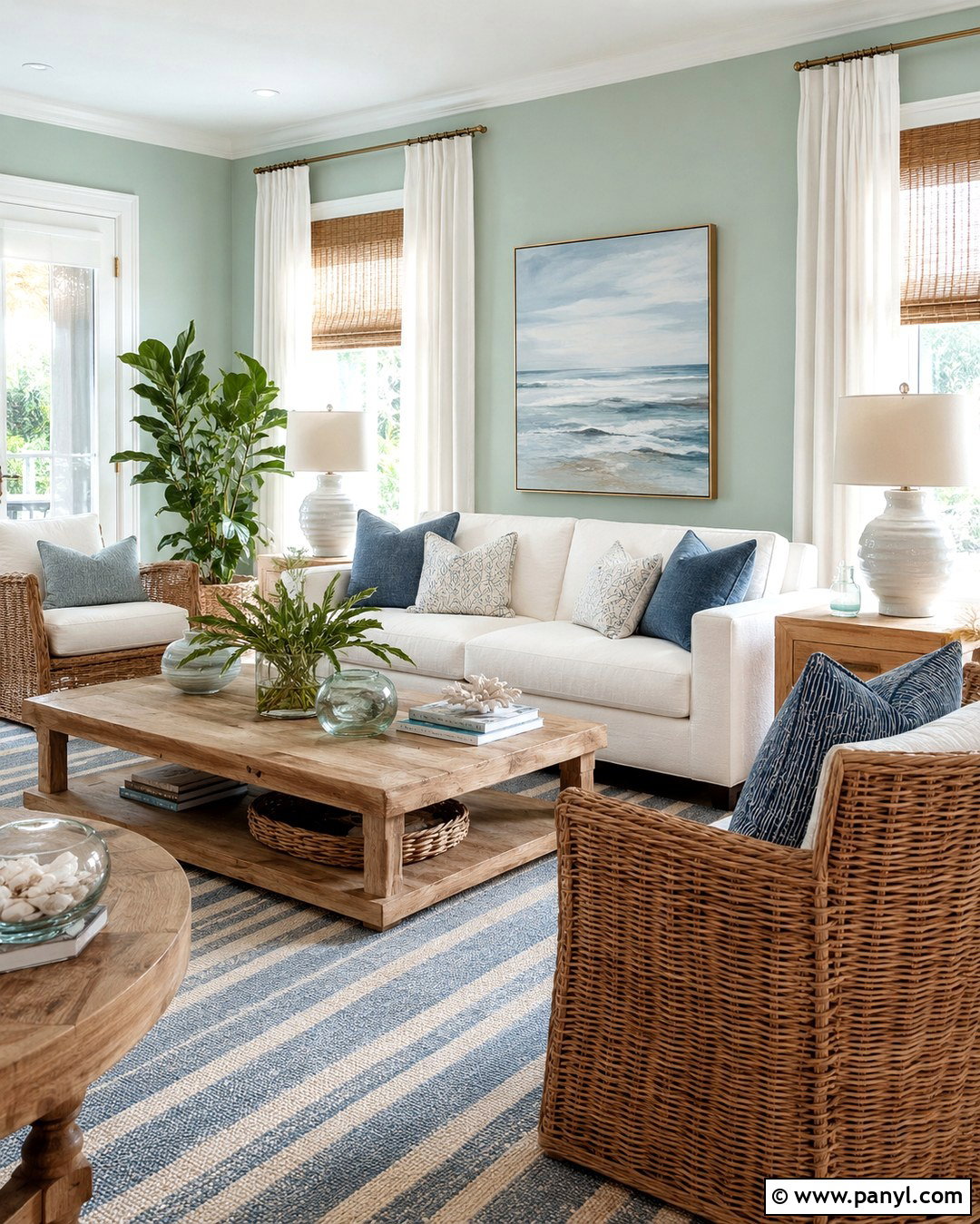
Pale sea-glass green walls provide an easy starting point for a coastal room that does not rely on obvious seaside decorations. Pair the walls with a white linen sofa, light oak tables, and woven rattan chairs. Use a flat-weave rug featuring narrow cream and faded navy stripes. Denim-blue pillows and one sandy beige throw add coastal color in a subtle way. Choose white cotton curtains and woven shades to create relaxed, practical window layers. A large abstract seascape or simple horizon photograph can serve as the primary artwork. Finish with ceramic lamps, clear glass accents, and one woven pendant light. The resulting design feels bright and casual, yet sophisticated enough for a full-time home far from the coast.
15. Pale Green Midcentury Walls
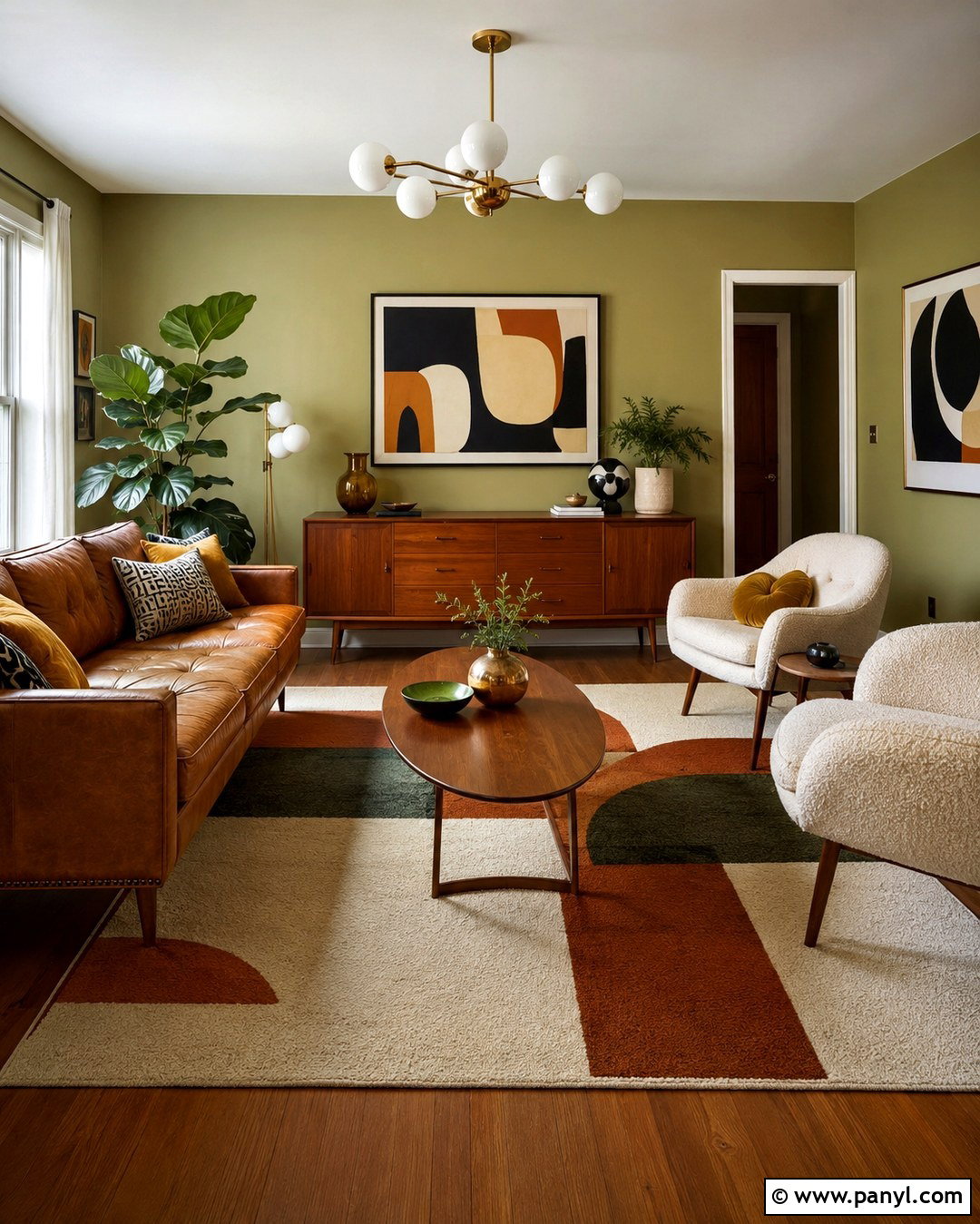
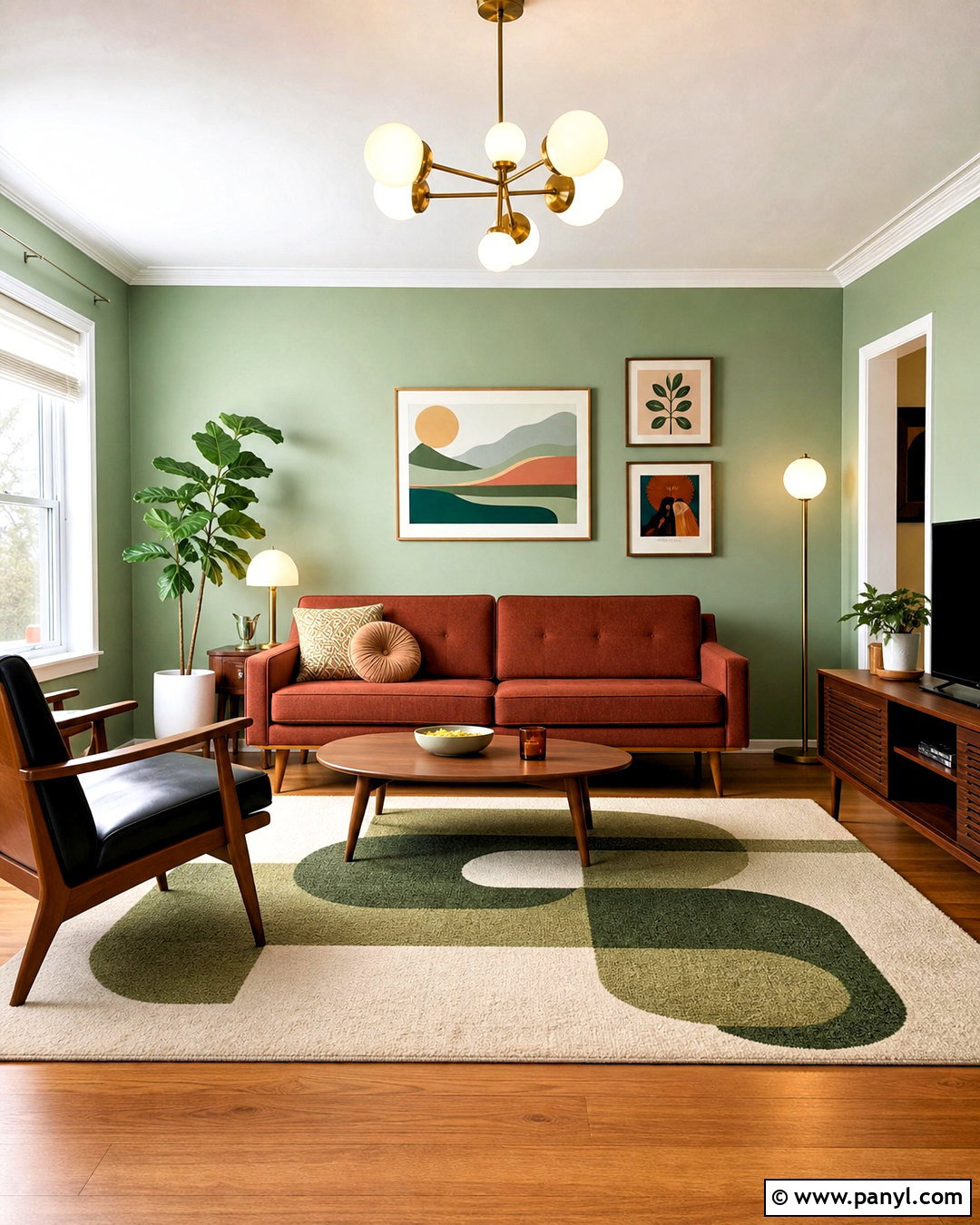
Set pale avocado-green walls against classic midcentury furniture for a room with warmth and personality. Use a streamlined walnut credenza, a caramel leather sofa, and a pair of cream bouclé chairs with tapered wood legs. Place a low oval coffee table in the center and anchor everything with a geometric rug in beige, rust, and dark green. Add mustard yellow sparingly through one pillow or ceramic lamp. A brass globe chandelier and black-framed abstract artwork strengthen the period influence without turning the room into a replica. Keep window treatments simple with full-length ivory panels. The gentle green paint connects naturally with walnut and leather, while the pale tone ensures that the overall space still feels open, current, and comfortable.
16. Pale Green Color Drenched Walls
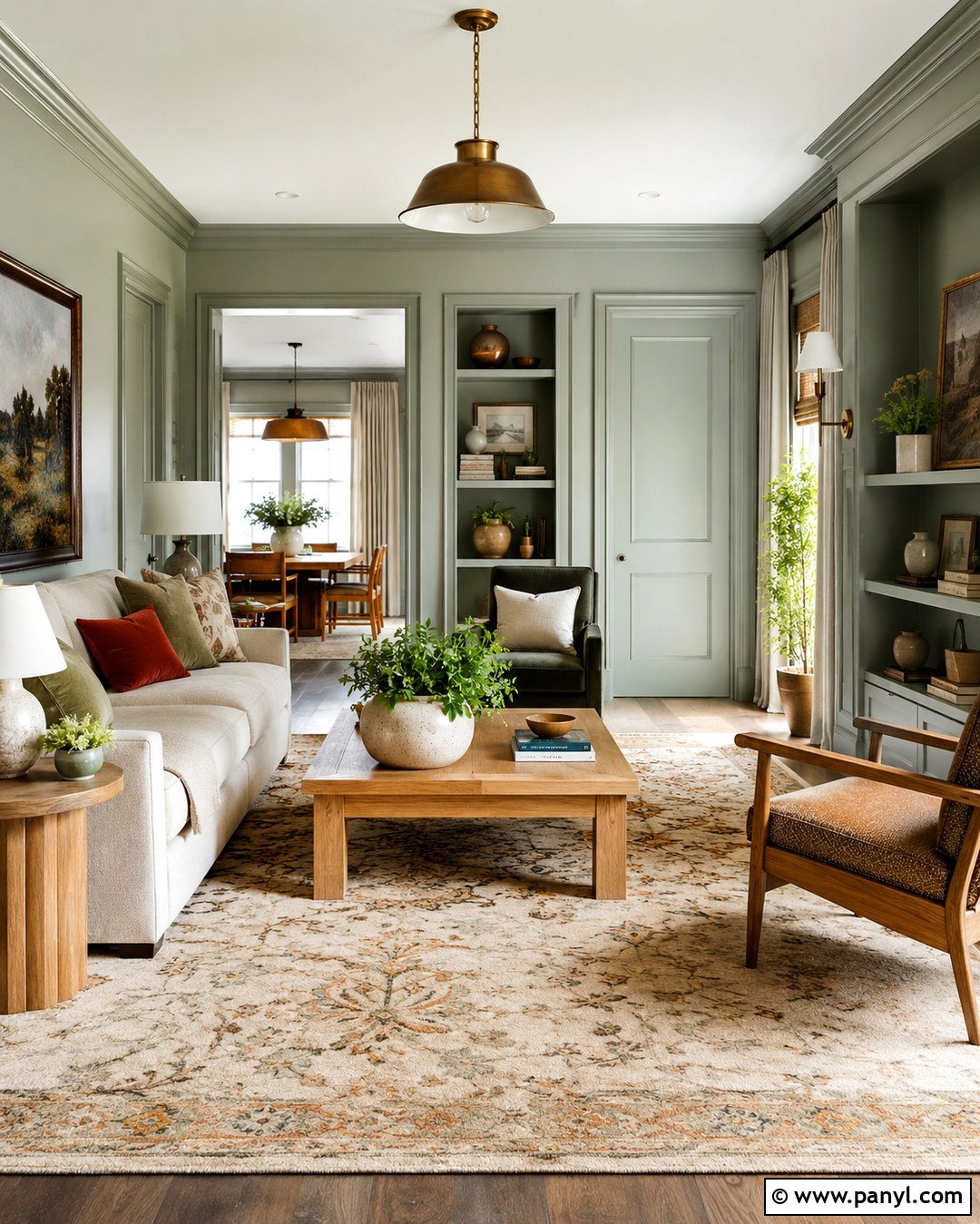
For an immersive look, paint the walls, baseboards, crown molding, doors, and built-in shelves in the same pale gray-green. Use a matte or eggshell finish on walls and a more durable satin finish on woodwork so the surfaces remain subtly distinct. Keep the ceiling warm white if the room needs extra brightness, or carry the green overhead for a more enveloping effect. Furnish the space with a cream sofa, light oak tables, and oatmeal curtains to prevent the single-color envelope from feeling flat. Add definition with bronze lighting, dark wood frames, and a patterned neutral rug. Repeating one pale shade across architectural details can make separate elements feel unified and gives an ordinary room a more intentional, finished character.
17. Two Tone Pale Green Walls
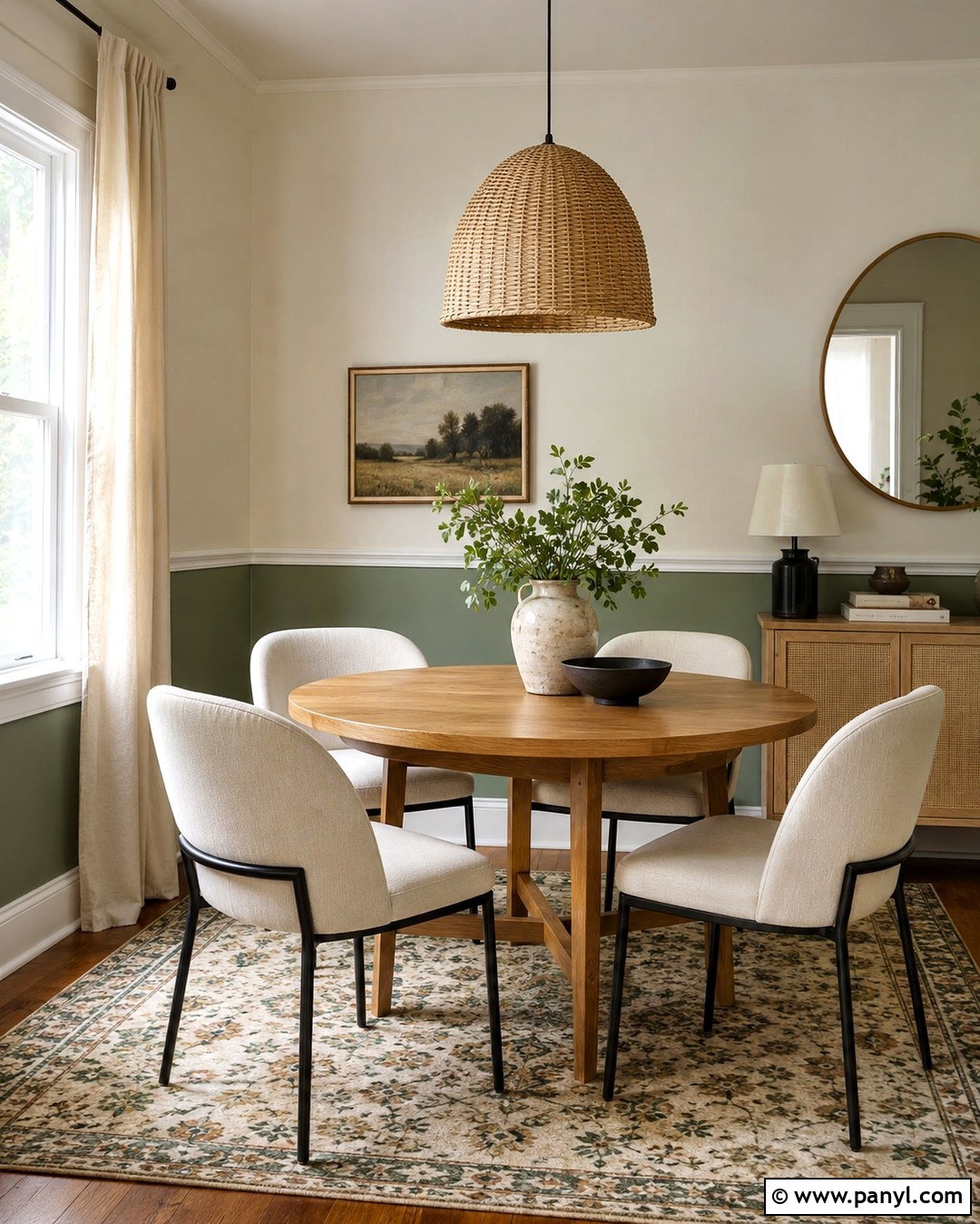
Two-tone pale green walls provide architectural interest without requiring elaborate millwork. Paint the lower third in a muted sage and the upper portion in a warm off-white, dividing the colors with a slim white chair rail. Use this treatment in a dining nook, hallway, bedroom, or compact living room. Pair it with a round oak table, cream chairs, and a woven pendant for a light, natural scheme. A beige-and-green patterned rug can connect both wall colors at floor level. Keep curtains close to the upper wall color so the room does not appear visually divided into too many sections. The darker green base adds durability and depth, while the pale upper walls maintain an airy, approachable feeling.
18. Pale Green Paneled Walls
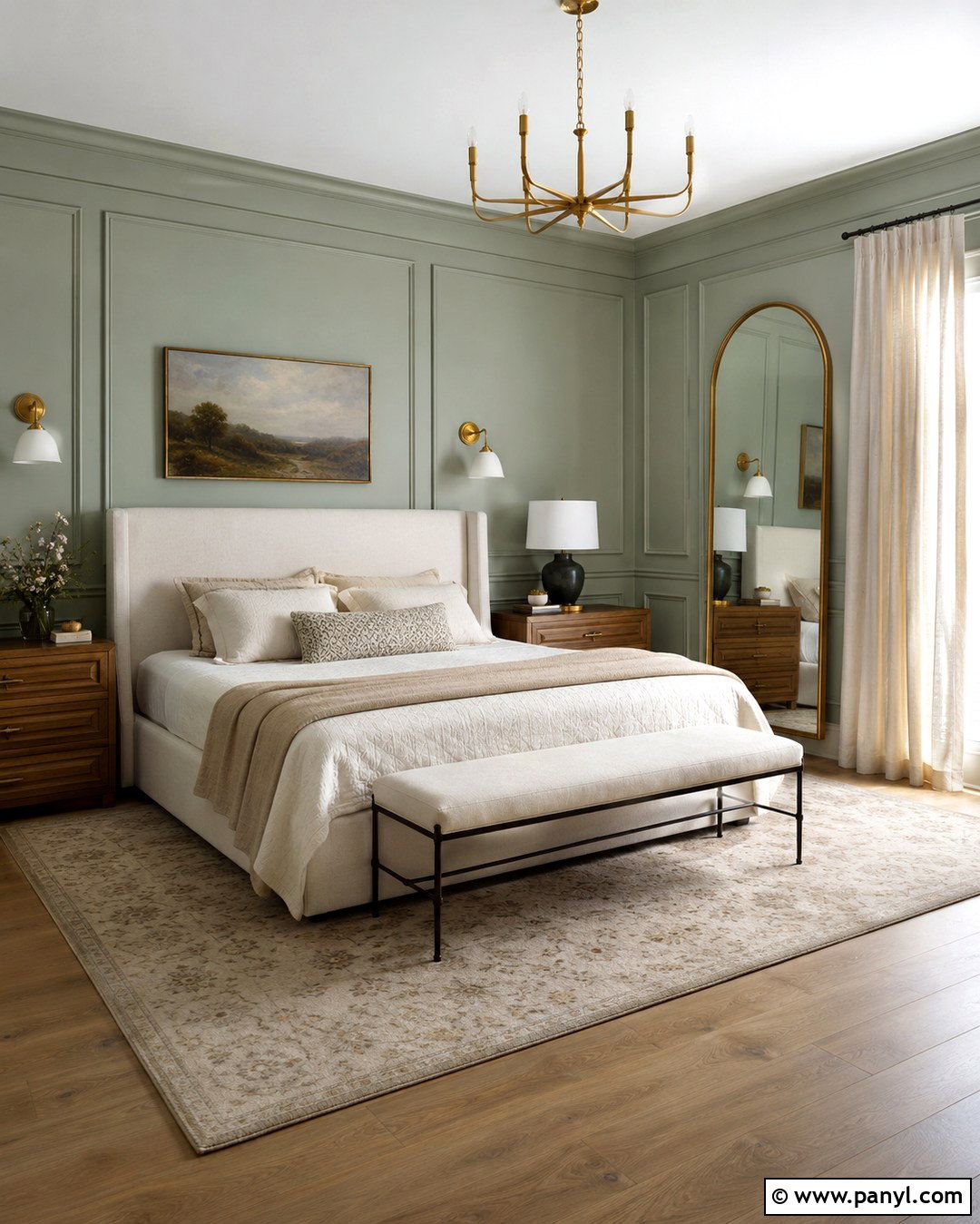
Pale green paneled walls bring depth to traditional and transitional interiors without requiring a dark paint color. Install simple rectangular molding or vertical tongue-and-groove paneling, then paint the complete wall in a dusty sage finish. Place a cream upholstered bed or sofa against the paneled surface so its outline remains clear. Incorporate medium oak side tables, warm brass sconces, and a softly patterned beige rug. Ivory linen curtains keep the design relaxed instead of overly formal. Select one or two substantial accessories, such as a large mirror and a ceramic lamp, rather than covering the molding with small art. The shadows created by the panel details allow the pale green paint to look richer as natural and artificial light moves across the room.
19. Pale Green Gallery Walls
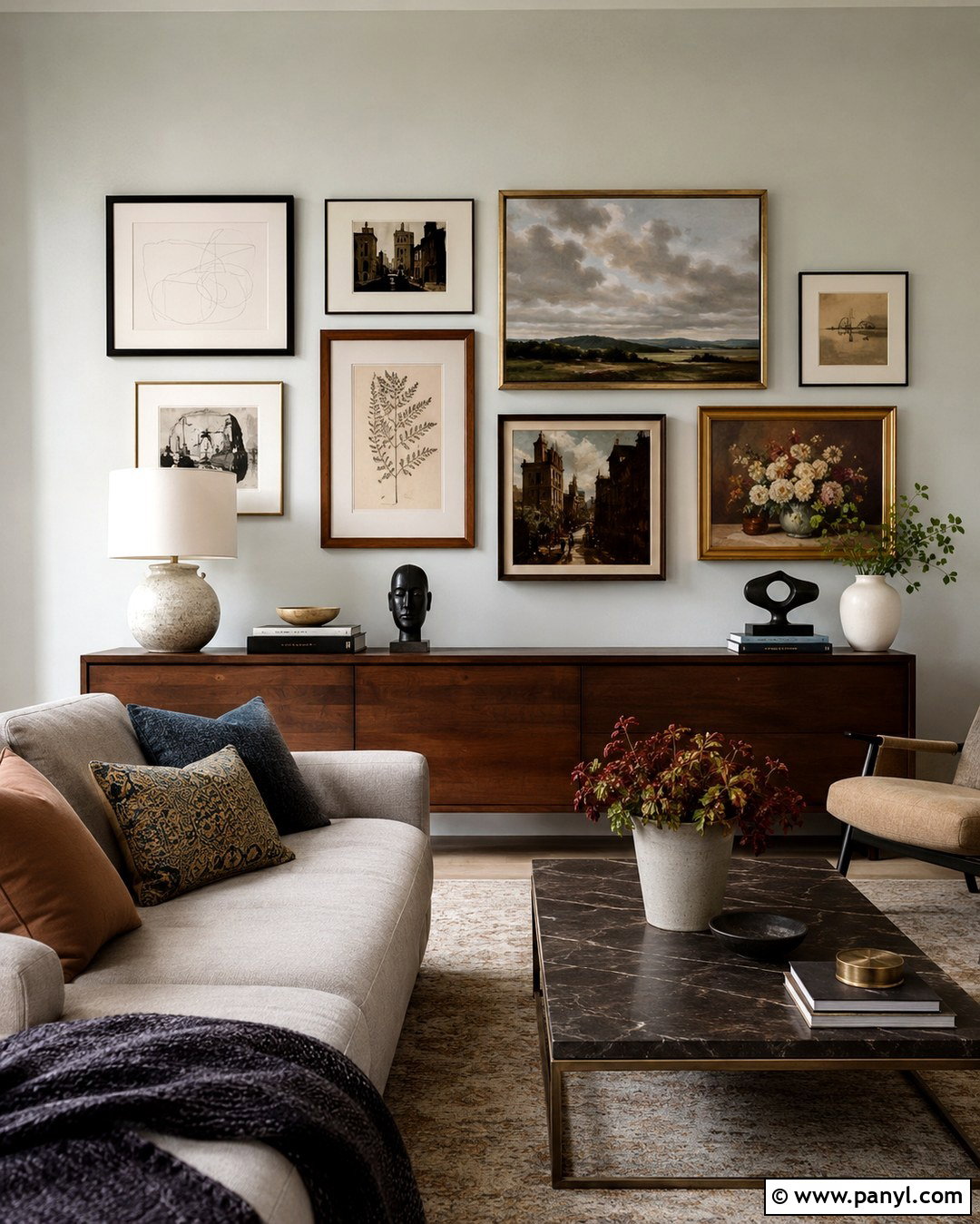
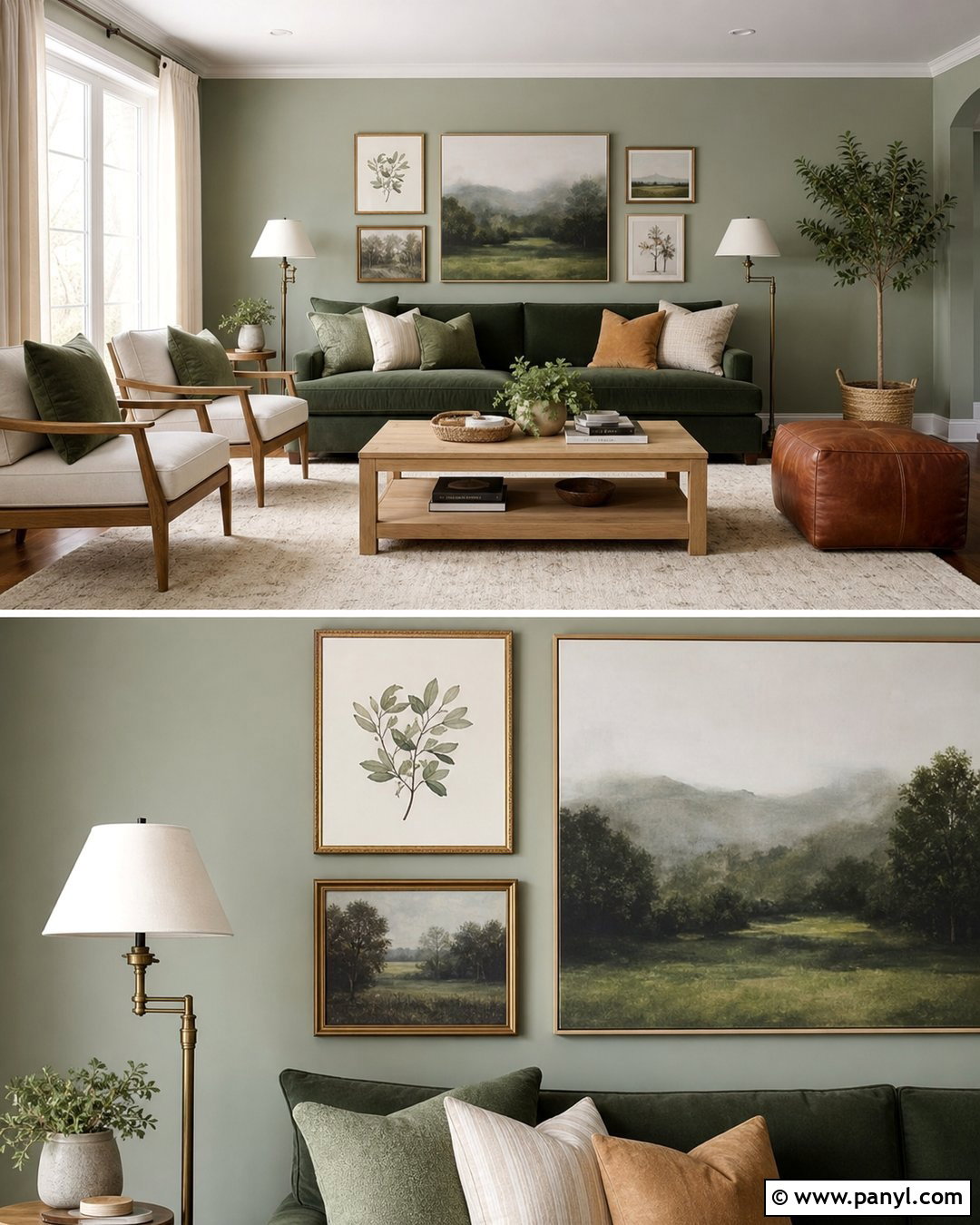
Turn pale green walls into a sophisticated backdrop for a collected gallery display. Choose a quiet gray-sage paint that will not compete with the artwork. Build the arrangement using black, walnut, brass, and ivory frames in varied sizes, but repeat each finish at least twice for visual consistency. Include landscapes, botanical prints, simple abstracts, and personal photographs with a coordinated range of cream, blue, brown, and green. Position the gallery above a low walnut console or a neutral sofa to give it a clear anchor. Add a ceramic lamp and one sculptural object beneath the art, leaving enough empty surface to prevent clutter. The soft green background adds more warmth than white while allowing each framed piece to remain distinct.
20. Pale Green Small Room Walls
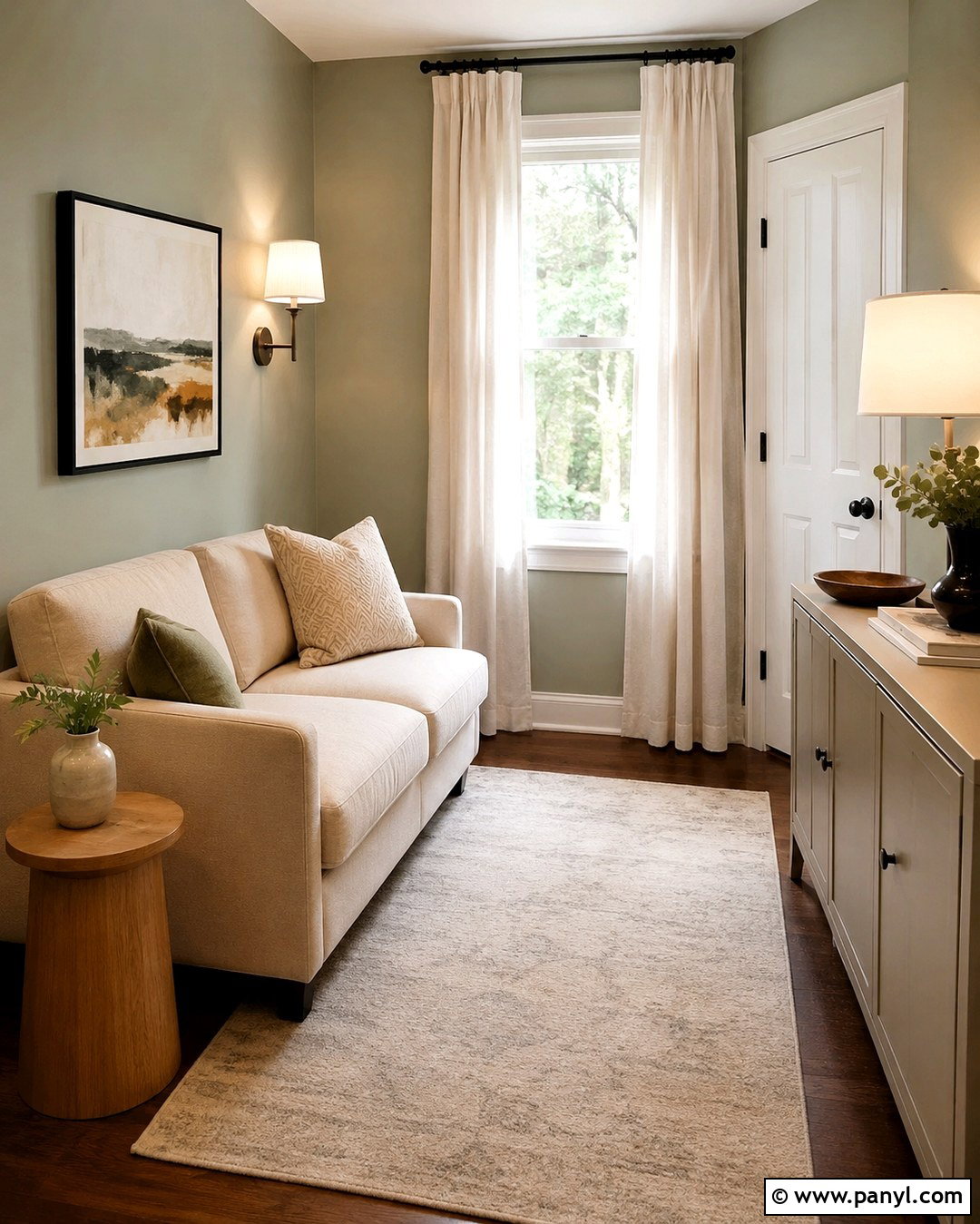
A small room can feel complete and purposeful with pale green walls, compact furniture, and carefully controlled contrast. Choose a light gray-green and continue it around every wall rather than creating a single accent wall. Add a small cream loveseat, one slender oak side table, and a wall-mounted sconce to preserve floor space. Use a pale rug close to the wall color so the room does not appear visually chopped into sections. Hang one medium-size artwork instead of several tiny frames. Ivory curtains mounted near the ceiling will create a cleaner window line. Include closed storage in a low cabinet and limit accessories to a few useful pieces. This unified approach makes the compact room feel calm, organized, and thoughtfully designed.
Conclusion:
Pale green painted walls can shape an entire room while remaining flexible enough for changing furniture and decor. The best results come from treating the paint as part of a complete palette rather than an isolated splash of color. Warm whites, wood tones, woven textures, quiet patterns, and carefully repeated metal finishes help pale green feel balanced. Cool gray-greens suit streamlined spaces, while pistachio, celery, and yellow-based sage shades work beautifully with traditional or cottage furnishings. Test the color beside flooring, trim, and fabrics in both daytime and evening light. With the right supporting elements, **20 Pale Green Painted Walls** can inspire rooms that feel fresh, comfortable, cohesive, and distinctly personal.

Related Ideas and Inspiration:
Leave a Reply