
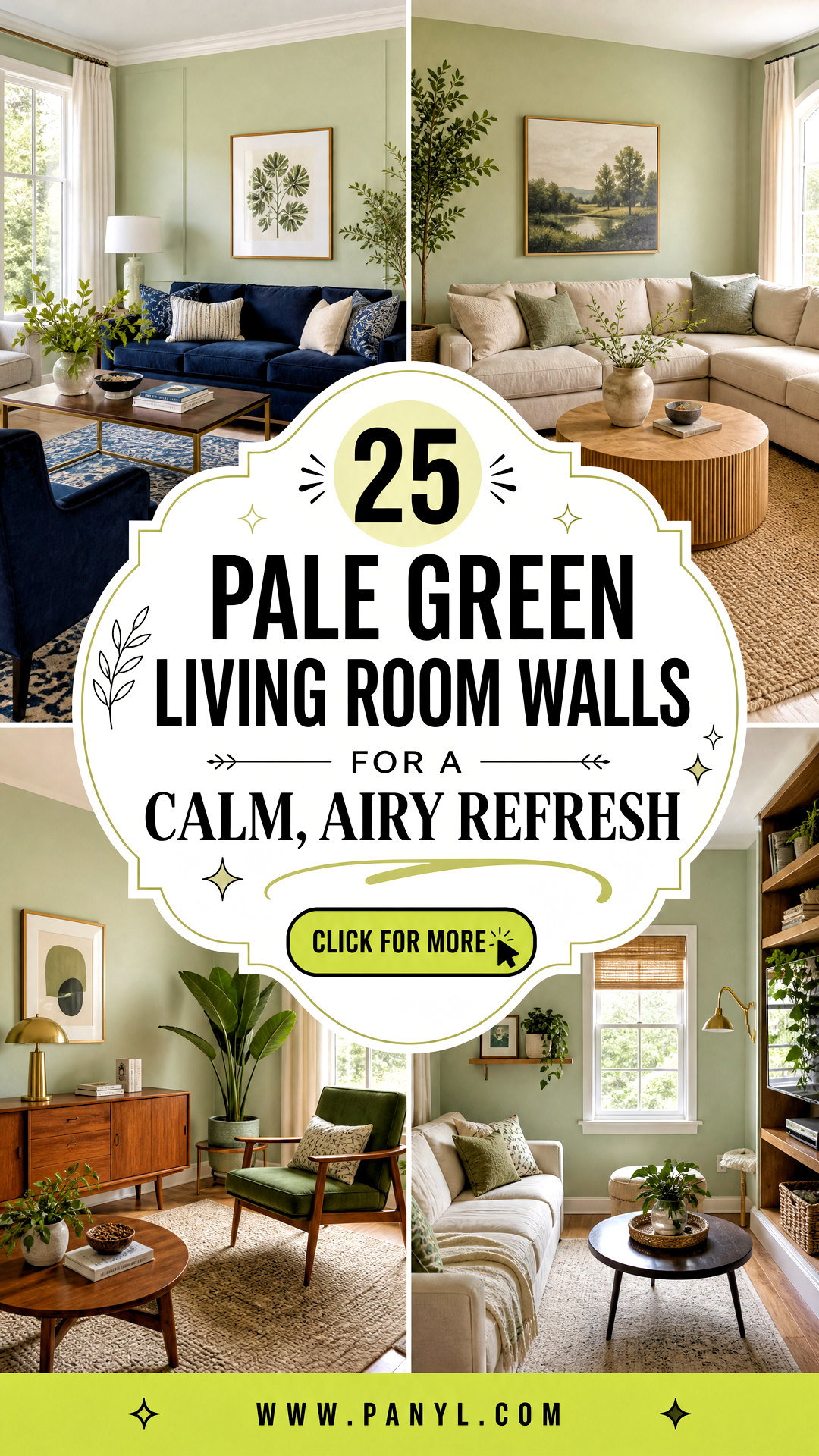
Pale green walls bring a calm, fresh backdrop to a living room without feeling cold or overly colorful. Depending on the undertone, this versatile shade can look earthy, coastal, traditional, modern, or playfully retro. The key is building a complete palette around it. Furniture scale, wood tones, flooring, window treatments, lighting, and accent colors should all support the green rather than compete with it. Warm sage works beautifully with cream and oak, while cooler mint tones benefit from gray, navy, or crisp white details. You can also introduce character through paneling, wallpaper, built-ins, or color-drenched trim. The complete room designs below offer practical inspiration for creating stylish and cohesive 25 Pale Green Living Room Walls.
1. Pale Green Living Room With Cream Sofa
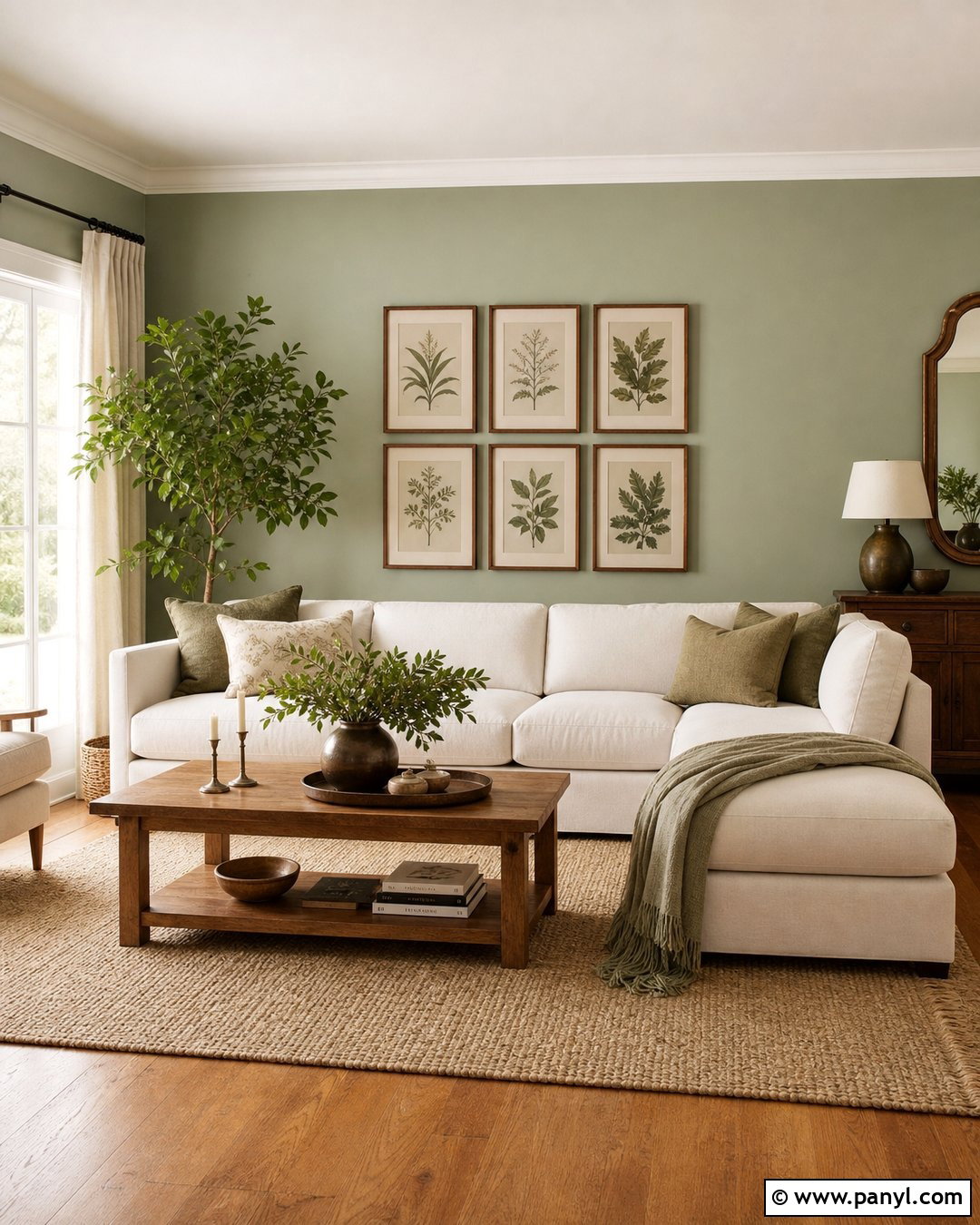
A cream sofa gives pale green living room walls a soft, balanced appearance that feels welcoming throughout the year. Choose an ivory performance-fabric sofa with simple lines, then anchor it with a textured oatmeal rug. A medium oak coffee table adds natural warmth without creating heavy contrast. Use full-length cream curtains to connect the upholstery with the windows and make the walls appear taller. Bring in muted olive pillows, a beige throw, and botanical artwork containing several green tones. A ceramic table lamp with a linen shade keeps the lighting gentle and practical. Finish with one substantial houseplant and a few dark bronze accessories. These deeper details prevent the light palette from looking washed out or unfinished.
2. Pale Green Living Room With White Trim
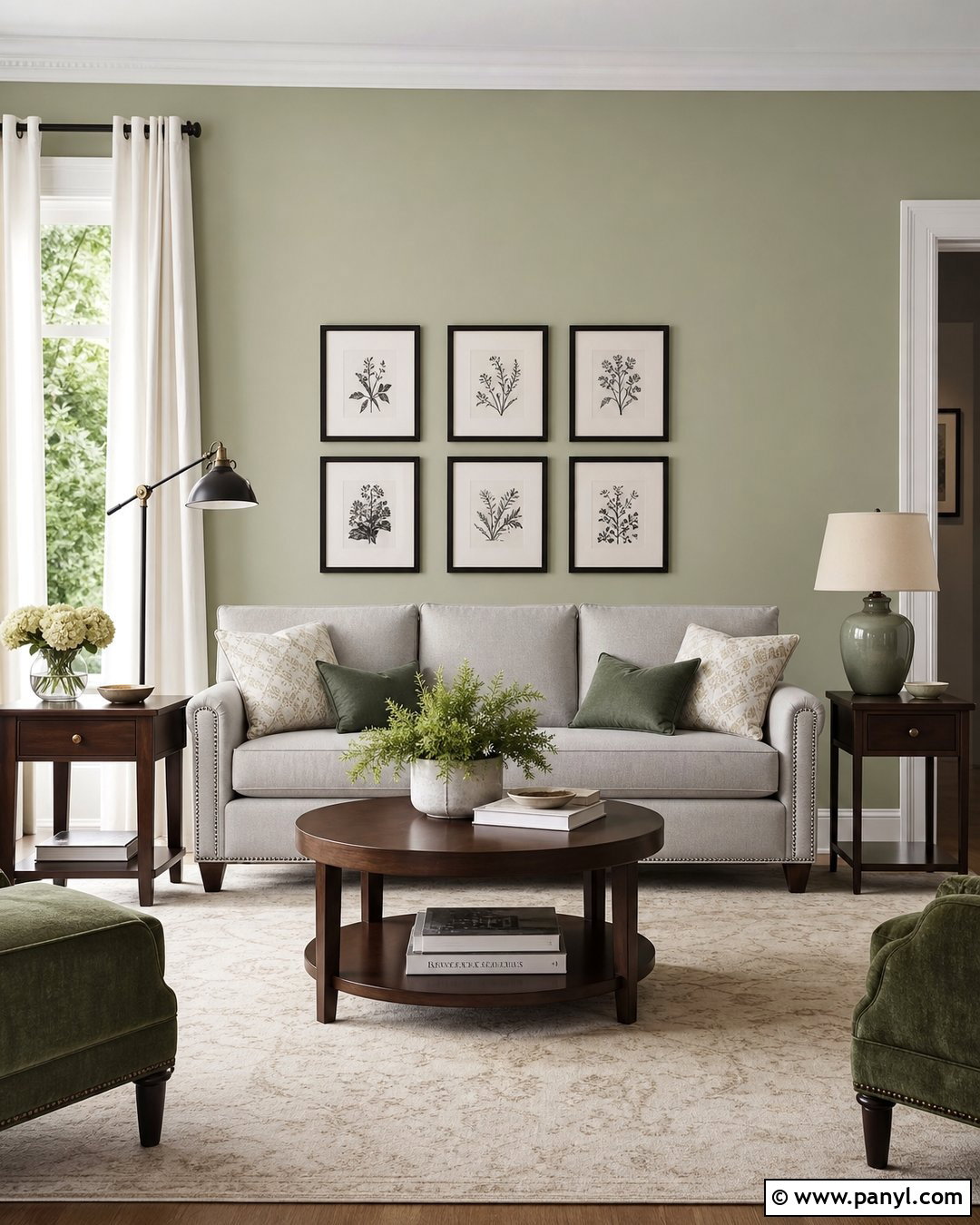
Crisp white trim gives pale green walls a clean outline and highlights attractive architectural details. Use the white on baseboards, window frames, crown molding, doors, and the fireplace surround for a connected look. A light gray sofa keeps the room neutral, while walnut side tables introduce needed warmth. Select a rug with cream, faded green, and charcoal threads to bridge the walls and furniture. Black-framed artwork and a slim black floor lamp add definition without overpowering the room. Keep curtains white or ivory so the trim remains visually consistent. This complete scheme works especially well in a living room with traditional windows or decorative molding because the contrast makes every structural feature easier to notice.
3. Pale Green Living Room With Natural Wood
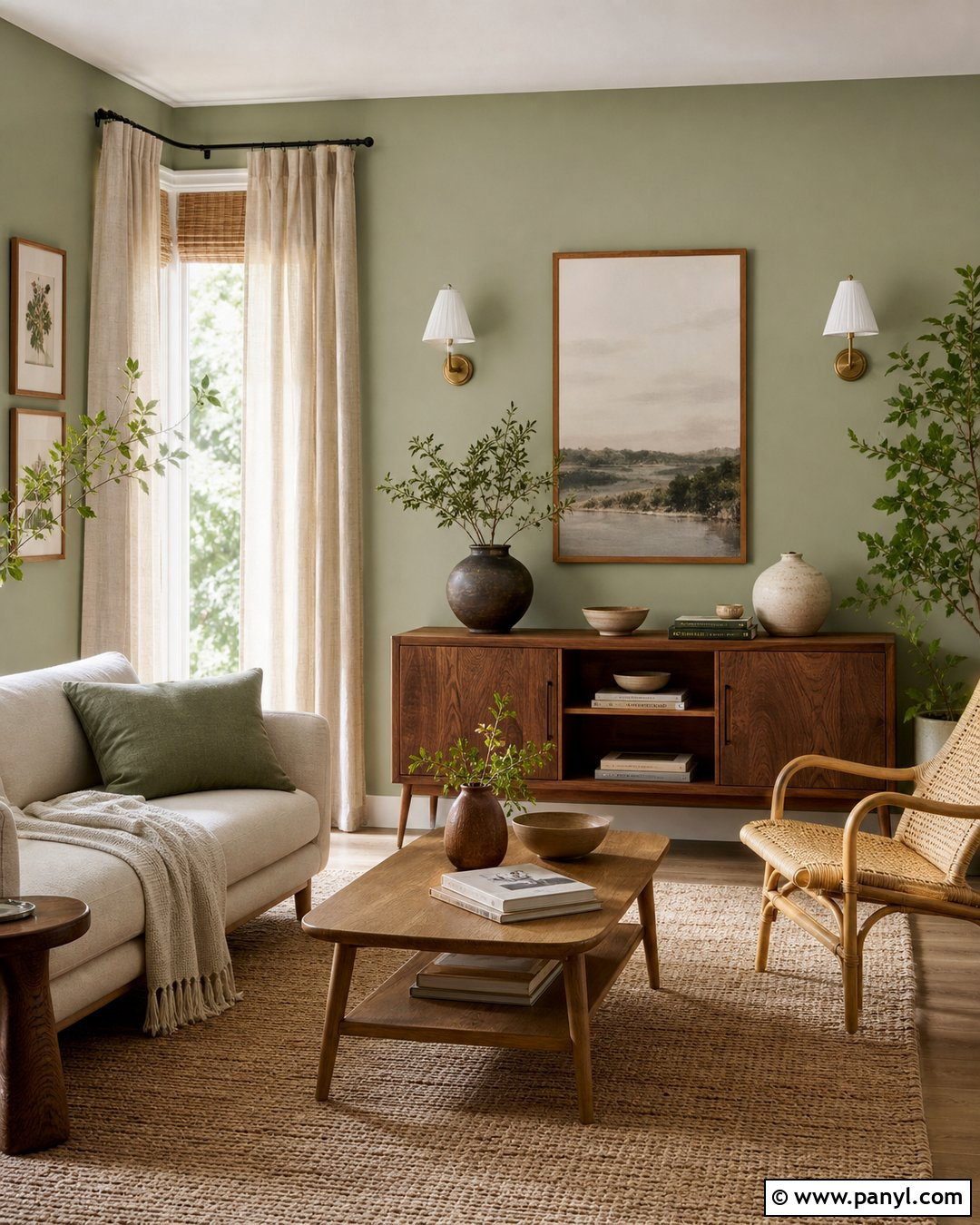
The warmth of natural wood makes pale green living room walls feel grounded and organic. Start with a low-profile sofa in warm beige, then add an oak coffee table, walnut media console, and woven rattan accent chair. Mixing two complementary wood tones creates character, but avoid adding too many unrelated finishes. A flat-woven cream rug will lighten the floor and connect the larger pieces. Choose linen curtains in a natural flax color and hang them close to the ceiling. Decorate with handmade pottery, simple landscape prints, and leafy plants in textured planters. Matte black lighting can provide a small amount of contrast. The finished room should feel collected, comfortable, and inspired by natural materials rather than heavily themed.
4. Pale Green Living Room With Gray Sofa
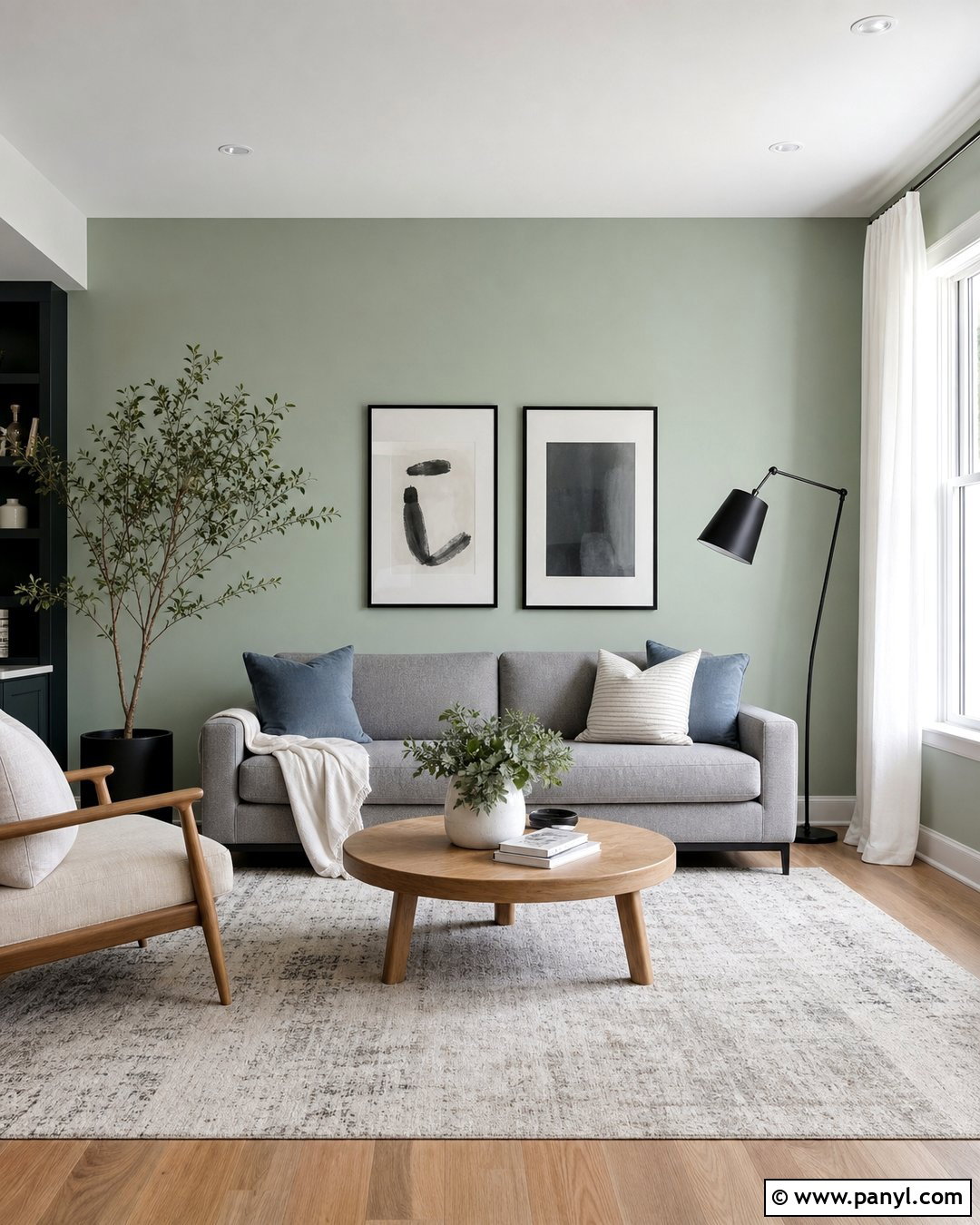
Cooler pale green walls pair naturally with a medium gray sofa, creating a modern palette that still feels relaxed. Look for upholstery with a soft woven texture so the gray does not appear flat or corporate. Place a cream-and-gray patterned rug beneath the seating area and introduce warmth through a round oak coffee table. Soft blue, sage, and off-white pillows will connect the wall color to the sofa. Add brushed nickel or matte black lighting, depending on how much contrast you prefer. White curtains maintain brightness, while charcoal picture frames sharpen the arrangement. One oversized abstract print can include green, gray, and sandy beige. This restrained combination is particularly effective in compact rooms where too many competing colors would feel busy.
5. Pale Green Living Room With Navy Accents
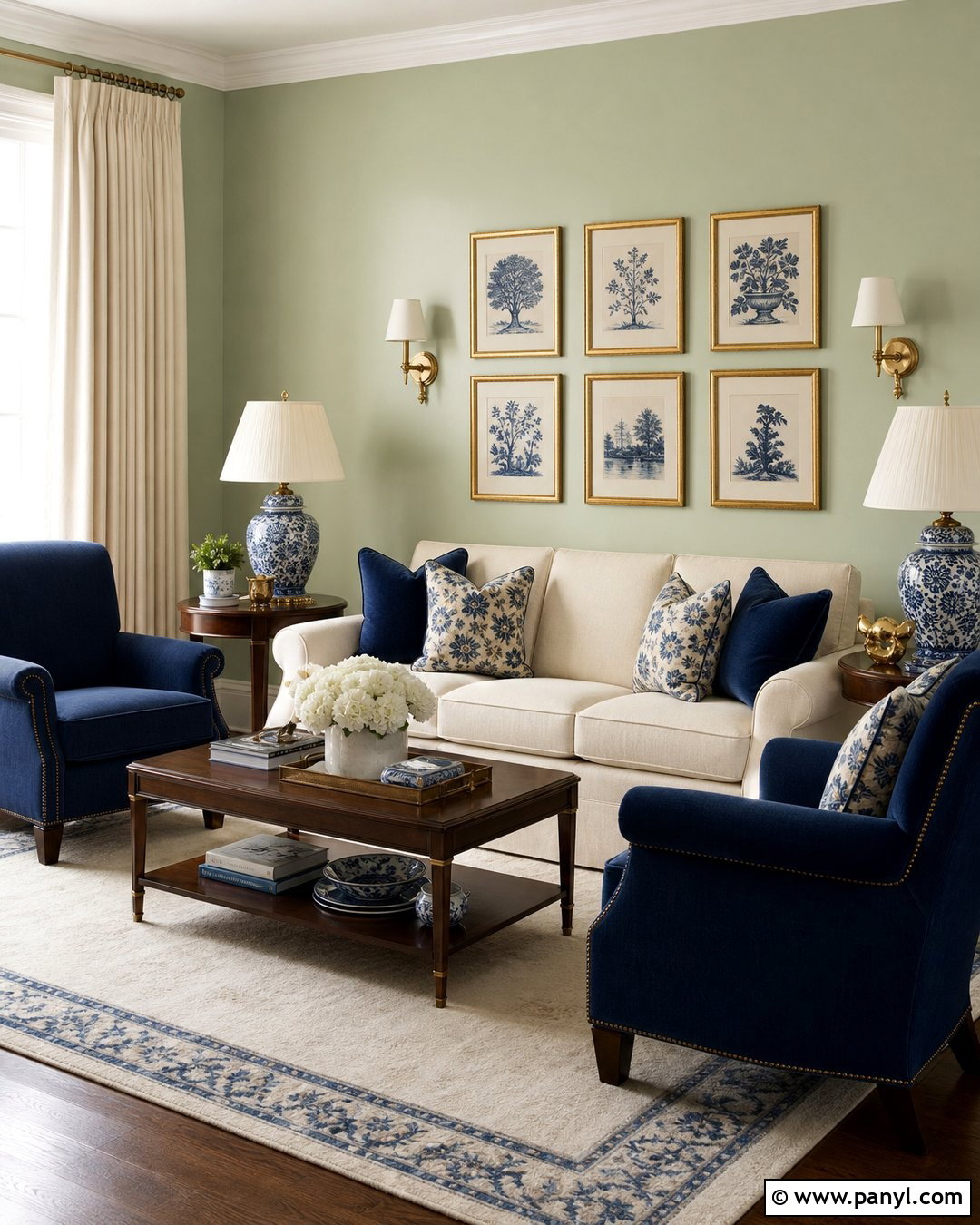
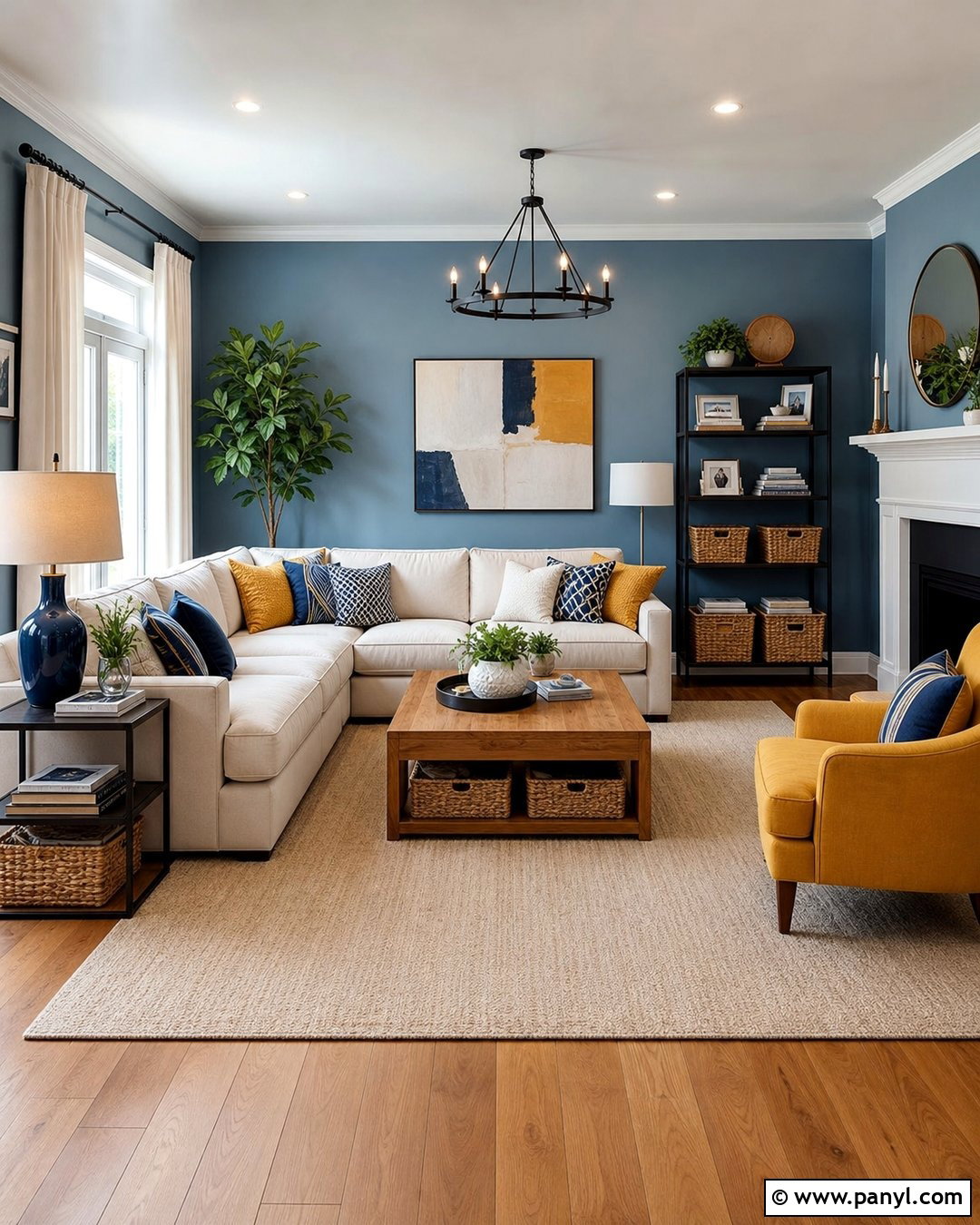
Navy accents give pale green living room walls a confident, tailored quality. Begin with a cream or light beige sofa so the darker blue remains an accent rather than the dominant color. Introduce navy through two armchairs, patterned pillows, and a bordered area rug. Warm walnut tables and aged brass lamps soften the blue-green contrast. Use pale linen curtains that closely match the sofa and allow natural light to remain part of the design. Traditional artwork, blue-and-white ceramics, and neatly arranged books can complete the polished look. Keep the ceiling and trim warm white. Because navy carries strong visual weight, distribute it across the room instead of placing every blue element on one side. This creates a balanced and intentional seating area.
6. Pale Green Living Room With Blush Pink
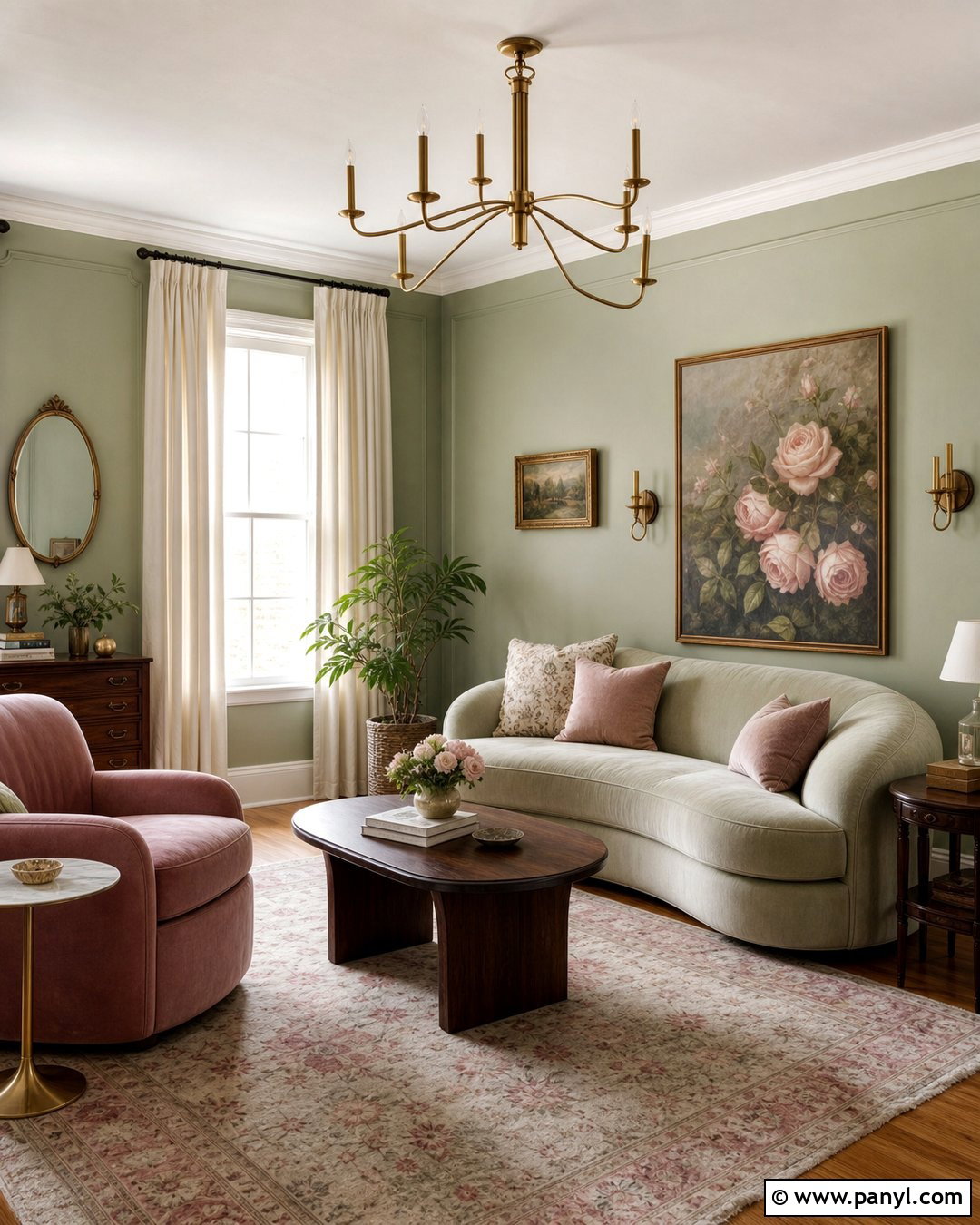
Blush pink creates a gentle contrast against pale green walls without making the room feel overly sweet. Choose a neutral sofa in cream or mushroom, then introduce pink through a curved accent chair, velvet pillows, and a faded floral rug. Walnut furniture adds depth, while brushed brass lighting gives the muted palette a warm glow. Keep window treatments simple with off-white linen panels. Artwork can combine dusty rose, sage, beige, and touches of charcoal for clearer definition. Add one dark wood cabinet or black-framed mirror to stop the pastel colors from blending together. The finished living room should use pink selectively and repeat it at different heights. That thoughtful distribution produces a grown-up, layered space with a subtle vintage influence.
7. Pale Green Living Room With Terracotta Accents
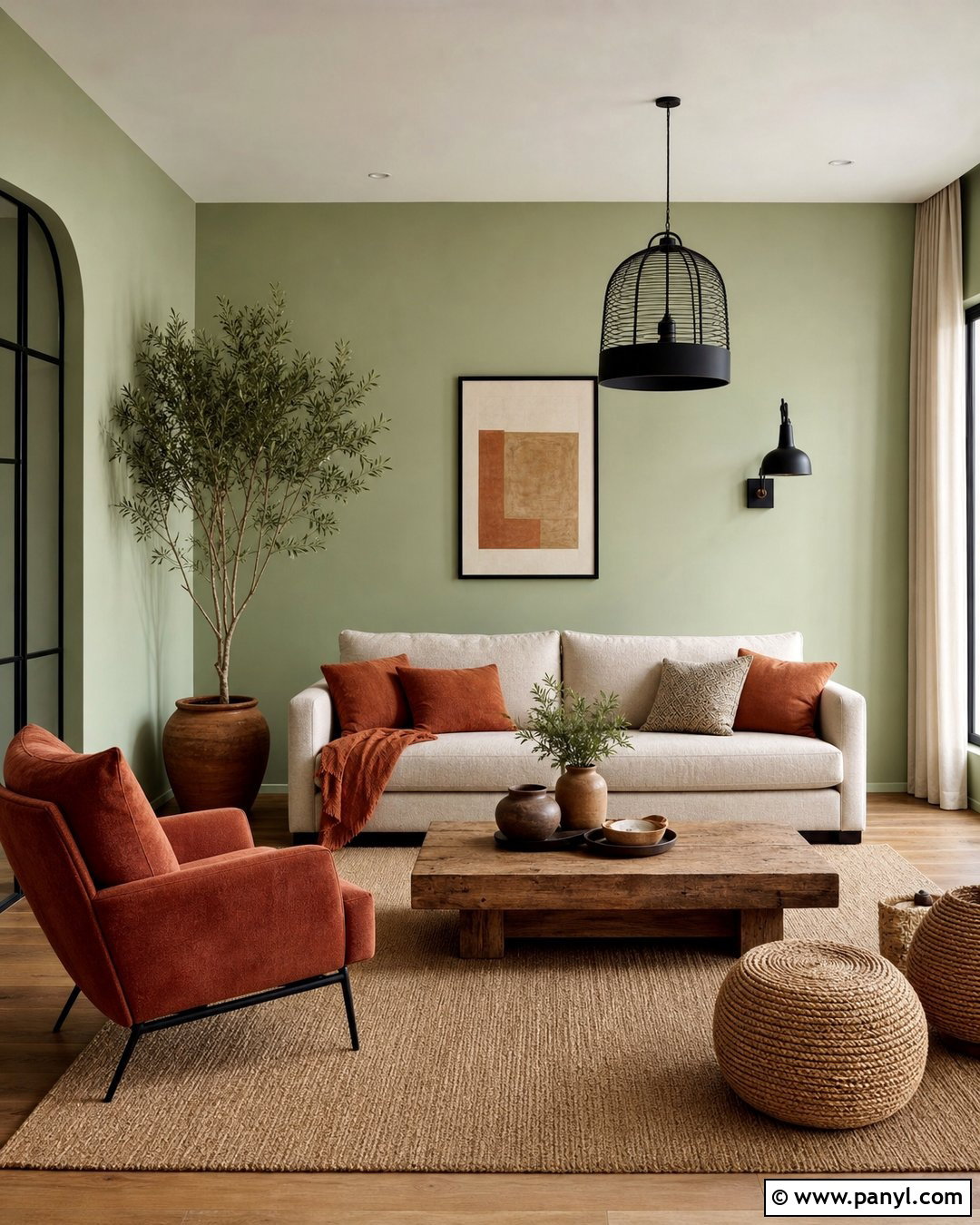
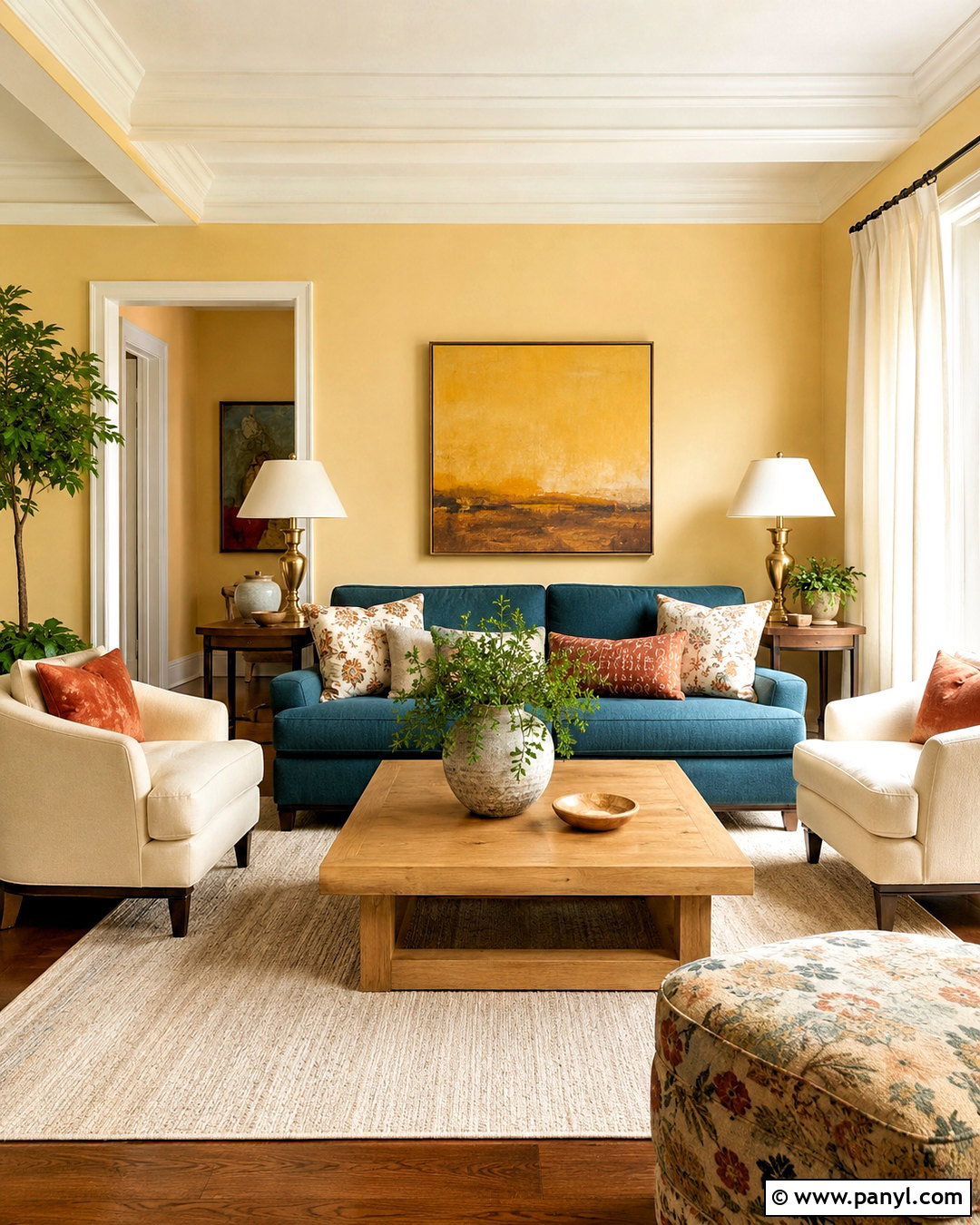
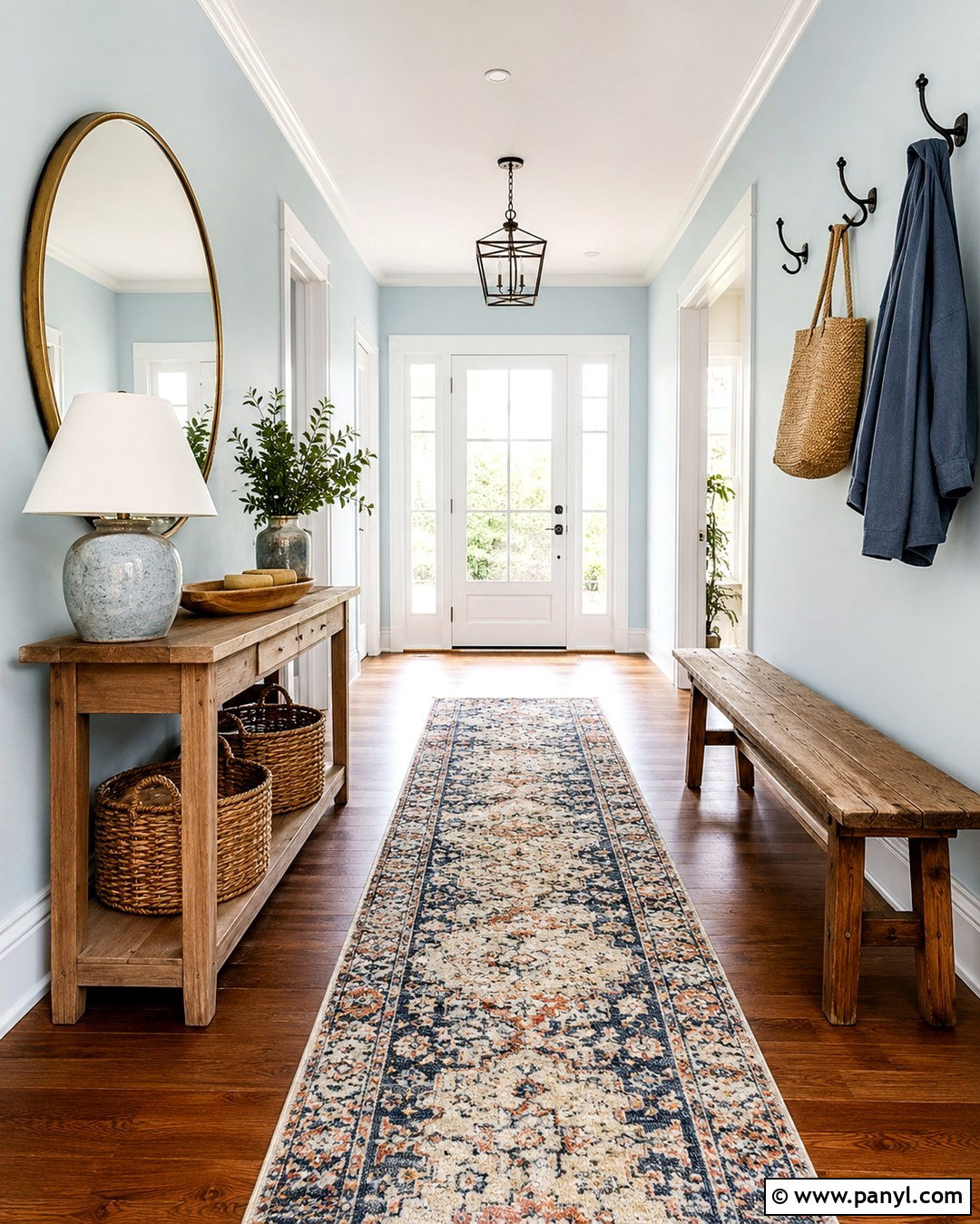
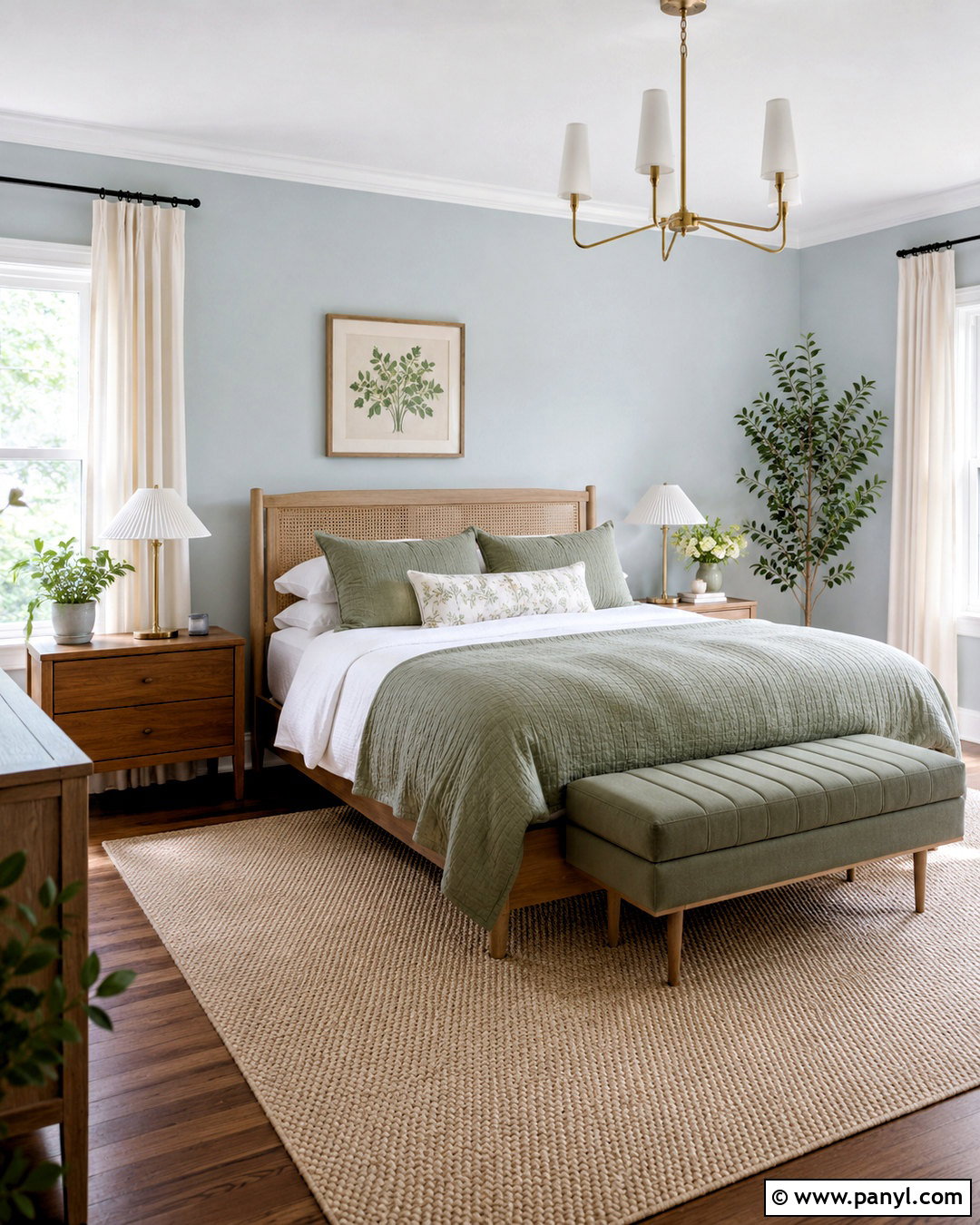
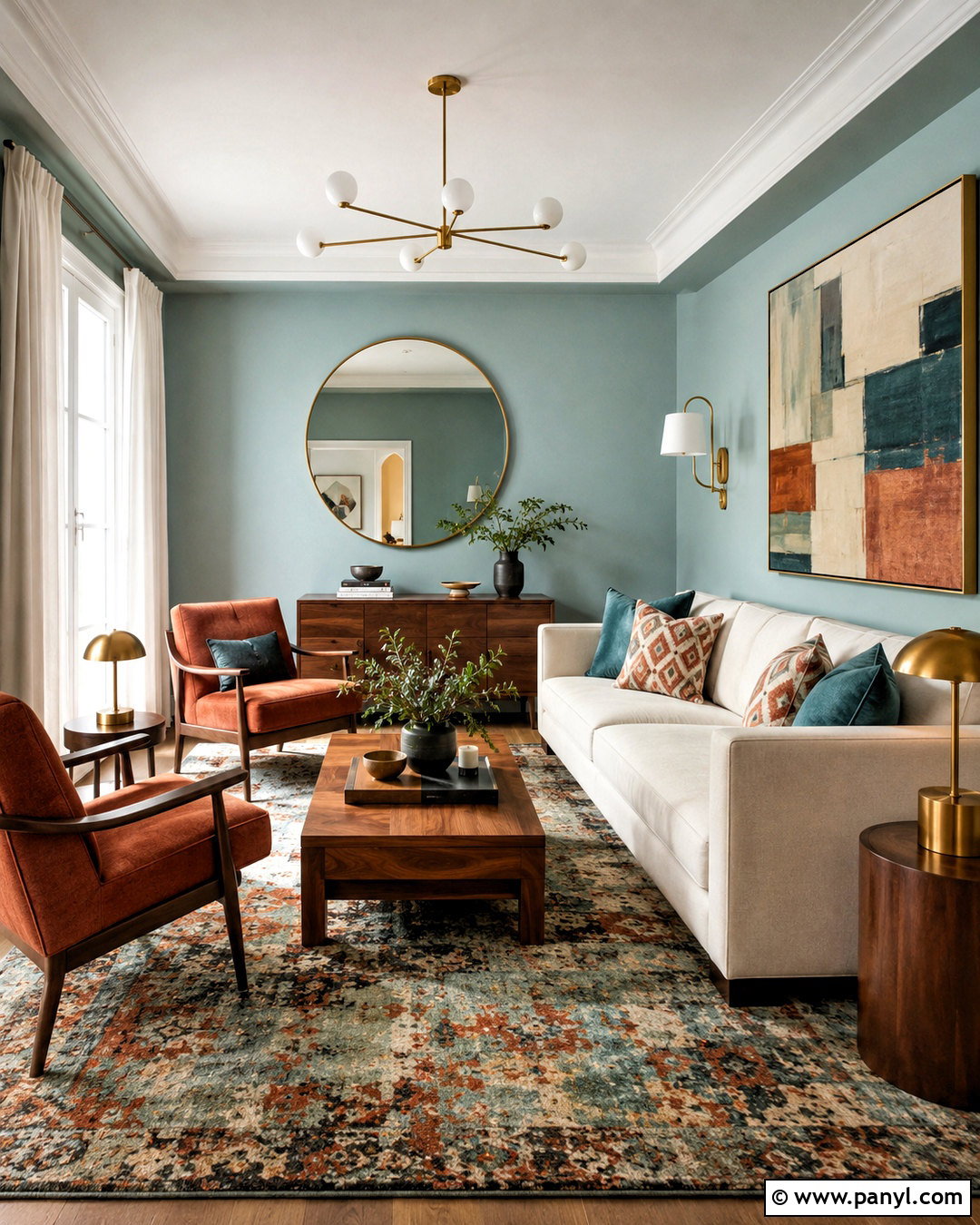
Earthy terracotta brings warmth and energy to pale green living room walls. Use a relaxed beige sofa as the central neutral, then add rust-colored pillows, a clay-toned lounge chair, and a patterned rug containing green and warm red-brown details. A reclaimed wood coffee table strengthens the natural palette, while woven baskets introduce practical storage. Choose curtains in warm ivory rather than bright white to support the earthy undertones. Black metal lighting adds a crisp edge and keeps the room from becoming too rustic. Decorate with clay pottery, abstract landscape art, and a tall indoor tree. Repeat terracotta in three or four controlled places instead of covering the room with it. This allows the green walls to remain calm and spacious.
8. Pale Green Living Room With Black Accents
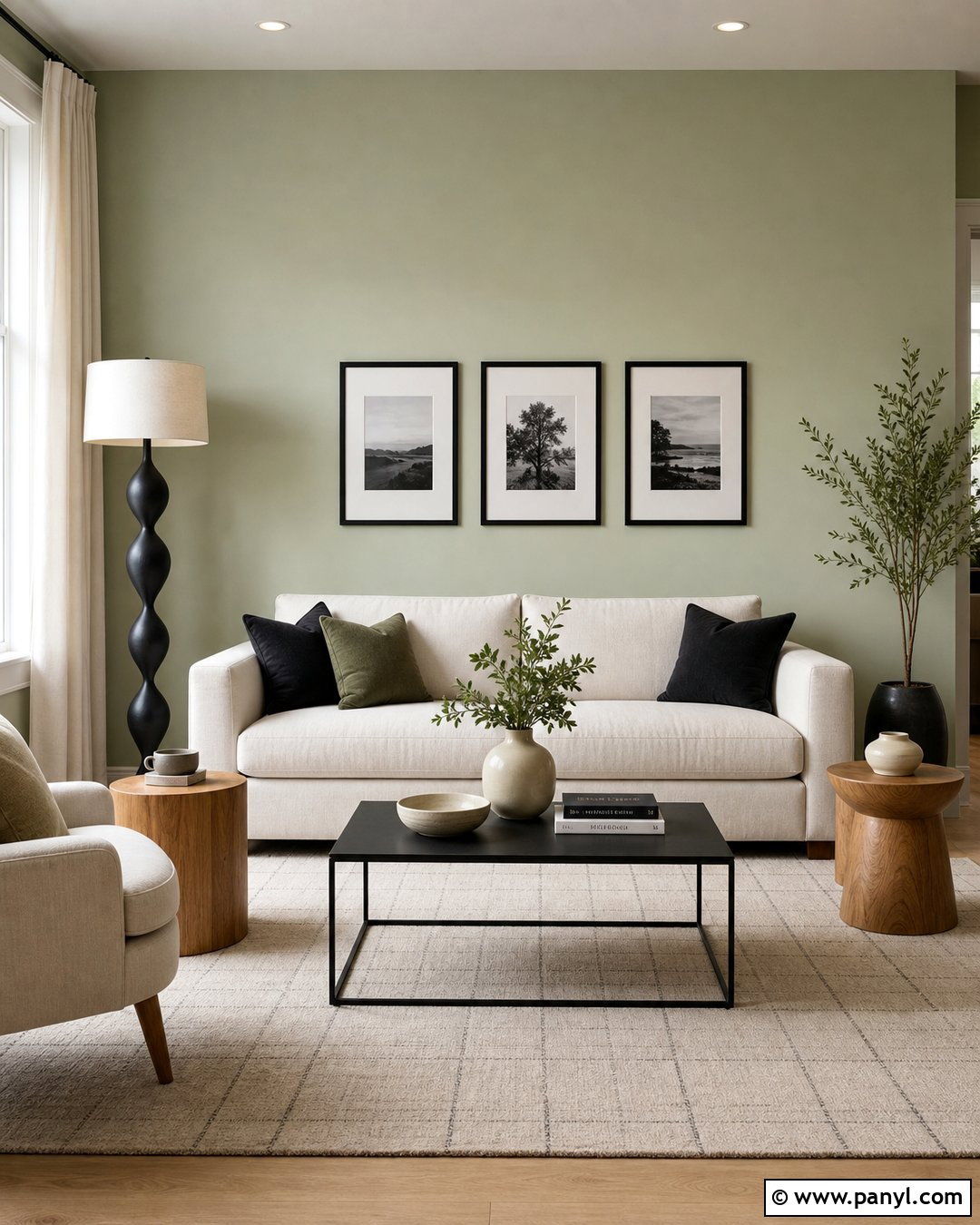
Do pale green walls feel too delicate for your taste? Black accents can give them a sharper, more contemporary structure. Place a streamlined ivory sofa against the green backdrop and add black through a metal coffee table, picture frames, curtain rods, and a sculptural floor lamp. Use a light rug with a subtle black grid or border to connect these elements at floor level. Warm oak side tables prevent the contrast from feeling severe. Curtains should be white, cream, or a close match to the walls. Keep decorative objects limited to ceramics, books, and greenery with clean silhouettes. The result is an uncluttered living room where the black details act like outlines, making the pale green walls and lighter furnishings look more intentional.
9. Pale Green Living Room With Dark Green Sofa
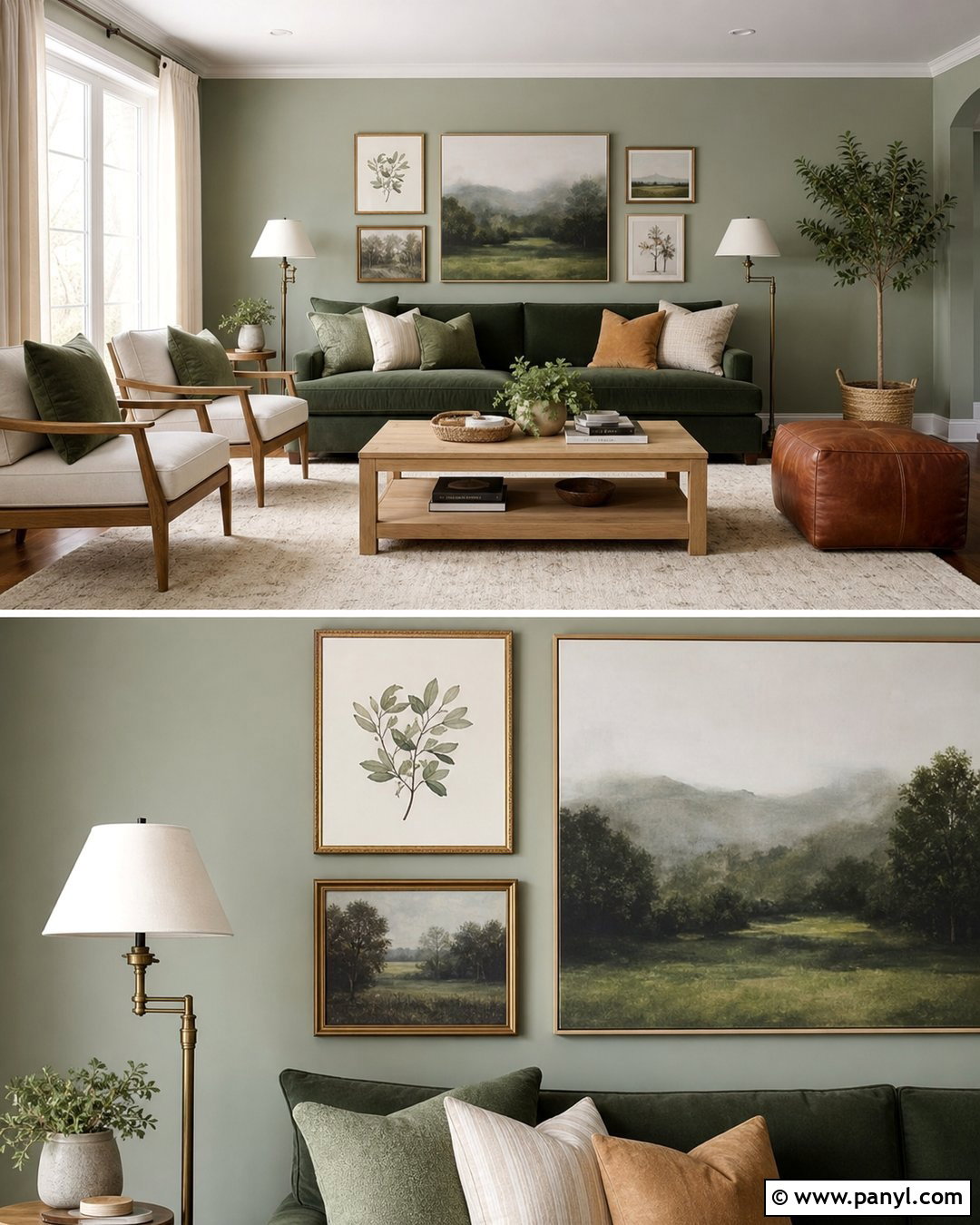
Layering a dark green sofa against pale green living room walls creates a rich monochromatic design. Select an olive, moss, or forest green sofa with enough depth to stand apart from the wall. Break up the green with a cream rug, ivory curtains, and light oak tables. Pillows in sage, tan, and muted gold can bridge the light and dark tones. Add aged brass lamps for warmth and display artwork that includes green alongside white or soft brown. Avoid matching every accessory to the sofa because subtle variation makes a monochromatic room feel dimensional. A cognac leather ottoman can introduce an earthy contrast. The finished setting feels immersive and cohesive while remaining bright enough for everyday family living.
10. Pale Green Living Room With Brown Leather Sofa
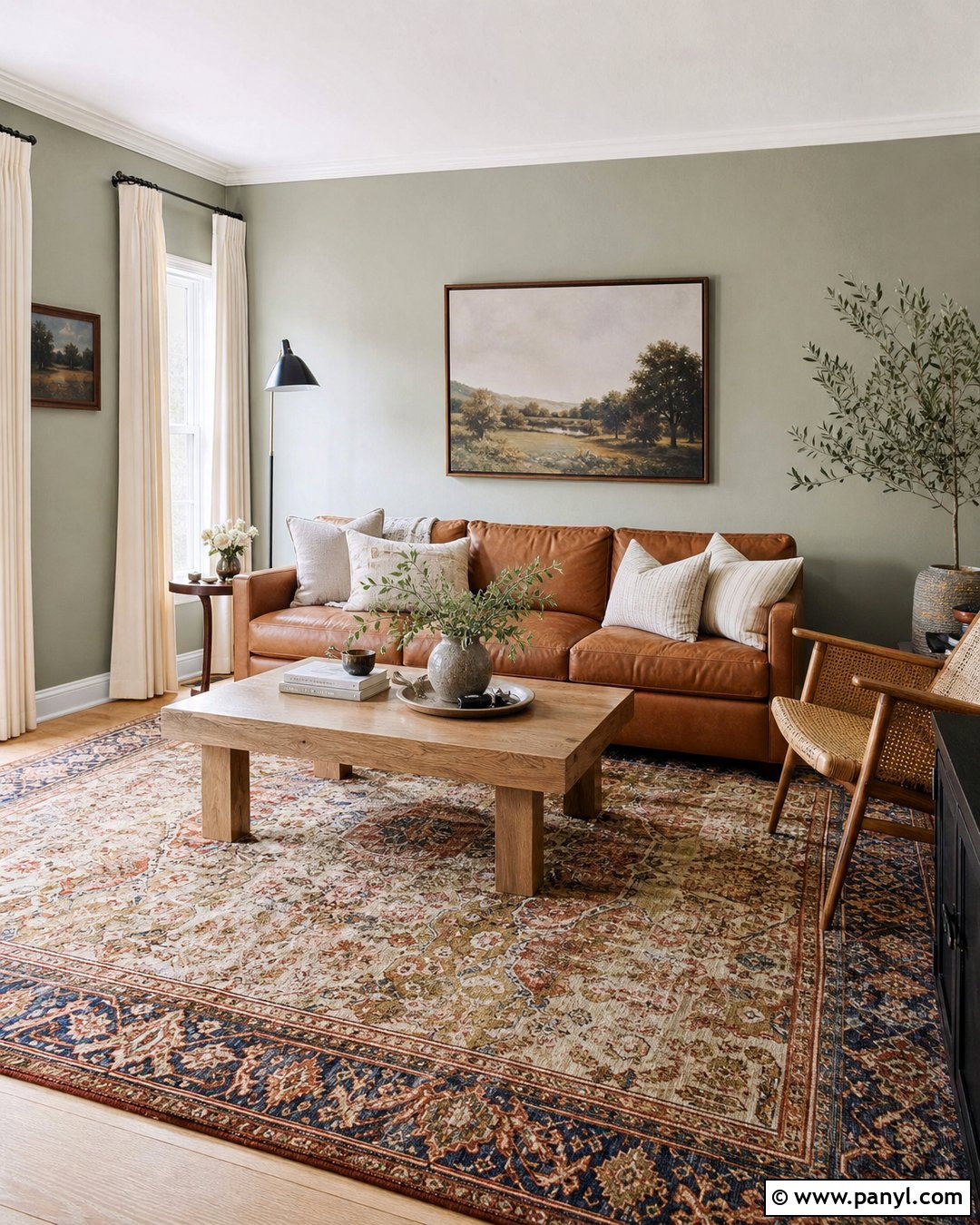
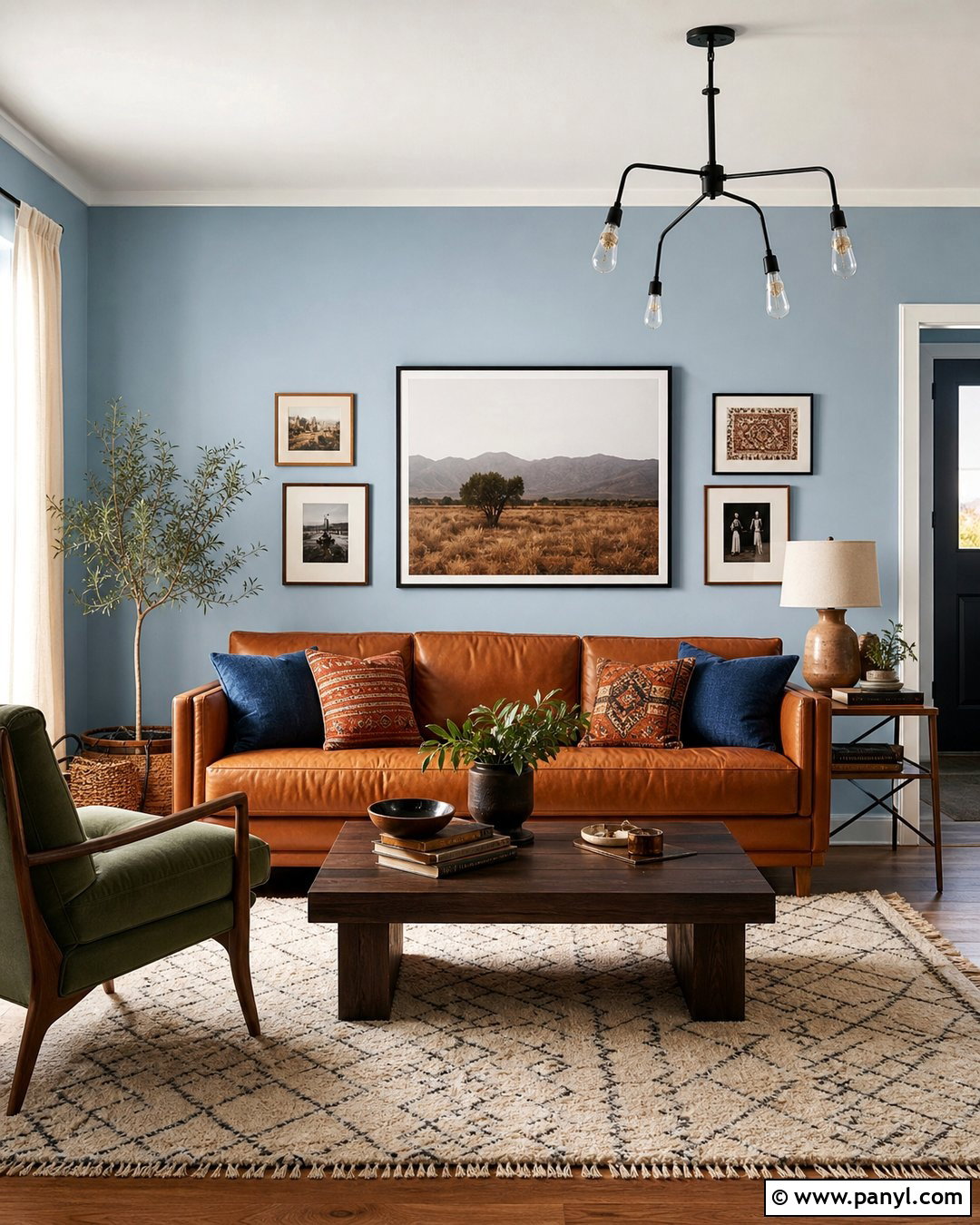
A brown leather sofa brings familiar warmth and durability to pale green walls. Cognac leather works particularly well because its orange undertones gently contrast with green. Ground the seating area with a vintage-style rug containing cream, faded rust, olive, and navy. Use a solid oak coffee table and a slim black floor lamp to create a balanced mix of traditional and modern materials. Off-white curtains keep the room bright, while linen pillows soften the leather surface. Hang landscape paintings or understated botanical prints in dark wood frames. A woven side chair can provide lighter seating without competing with the sofa. This complete room feels comfortable and established, making it suitable for casual homes, older houses, and family-centered living spaces.
11. Pale Green Living Room With Light Oak Furniture
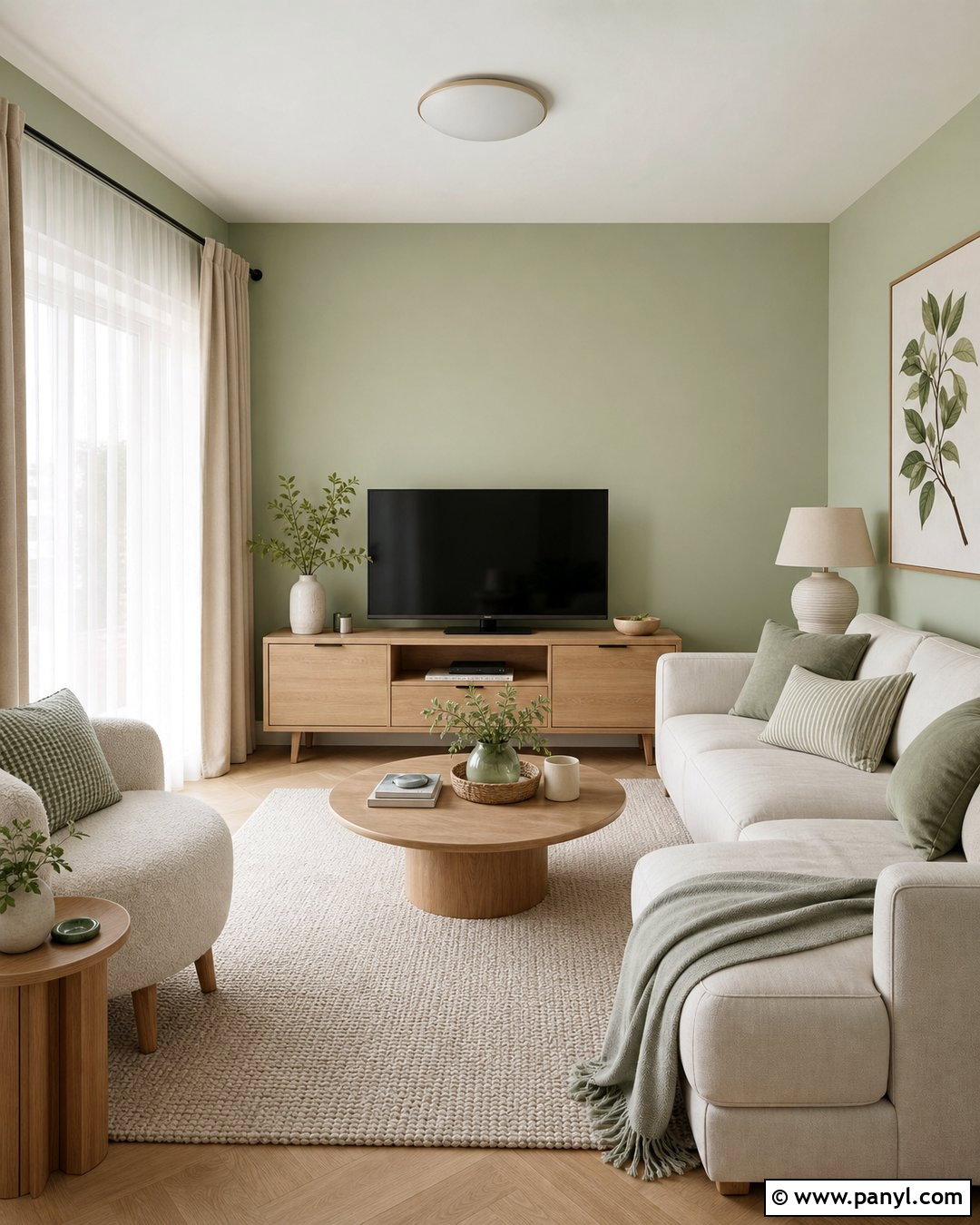
Light oak furniture supports the airy quality of pale green living room walls and works especially well in smaller rooms. Choose a compact cream sofa with exposed oak legs, a rounded coffee table, and a low media cabinet in the same light finish. A boucle armchair adds texture without introducing another strong color. Keep the floor visible around a simple ivory rug to maintain a spacious effect. Use sheer white curtains layered with pale beige drapes for flexible light control. Minimal artwork, ribbed ceramic lamps, and a few sculptural objects will create interest without clutter. Add soft gray and muted green cushions for gentle contrast. Rounded furniture corners can make the arrangement feel open, relaxed, and easy to move around.
12. Pale Green Living Room With Wall Paneling
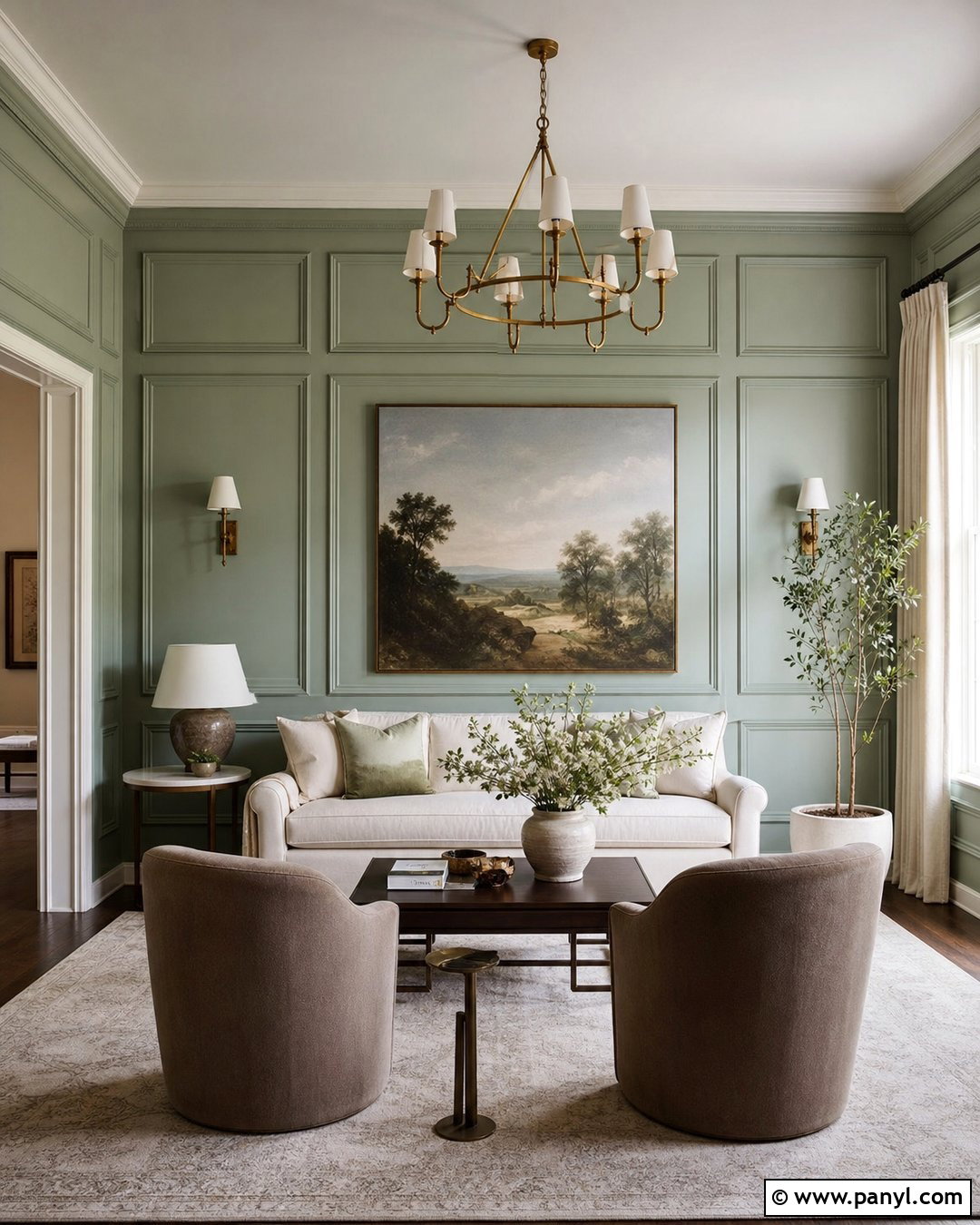
Wall paneling transforms pale green paint into an architectural feature rather than a simple background color. Install traditional box molding across every wall, then paint the panels, rails, and surrounding surfaces in one consistent pale sage finish. Pair this detailed backdrop with a clean-lined cream sofa and two curved taupe chairs. A dark wood coffee table adds weight at the center, while a large neutral rug softens the room. Use full-length ivory curtains and a brass chandelier to emphasize the taller, more formal proportions. Artwork should be large enough to sit comfortably inside the molding. Keep accessories restrained so the paneling remains visible. This combination blends traditional structure with simple modern furniture for an updated, approachable living room.
13. Pale Green Living Room With White Fireplace
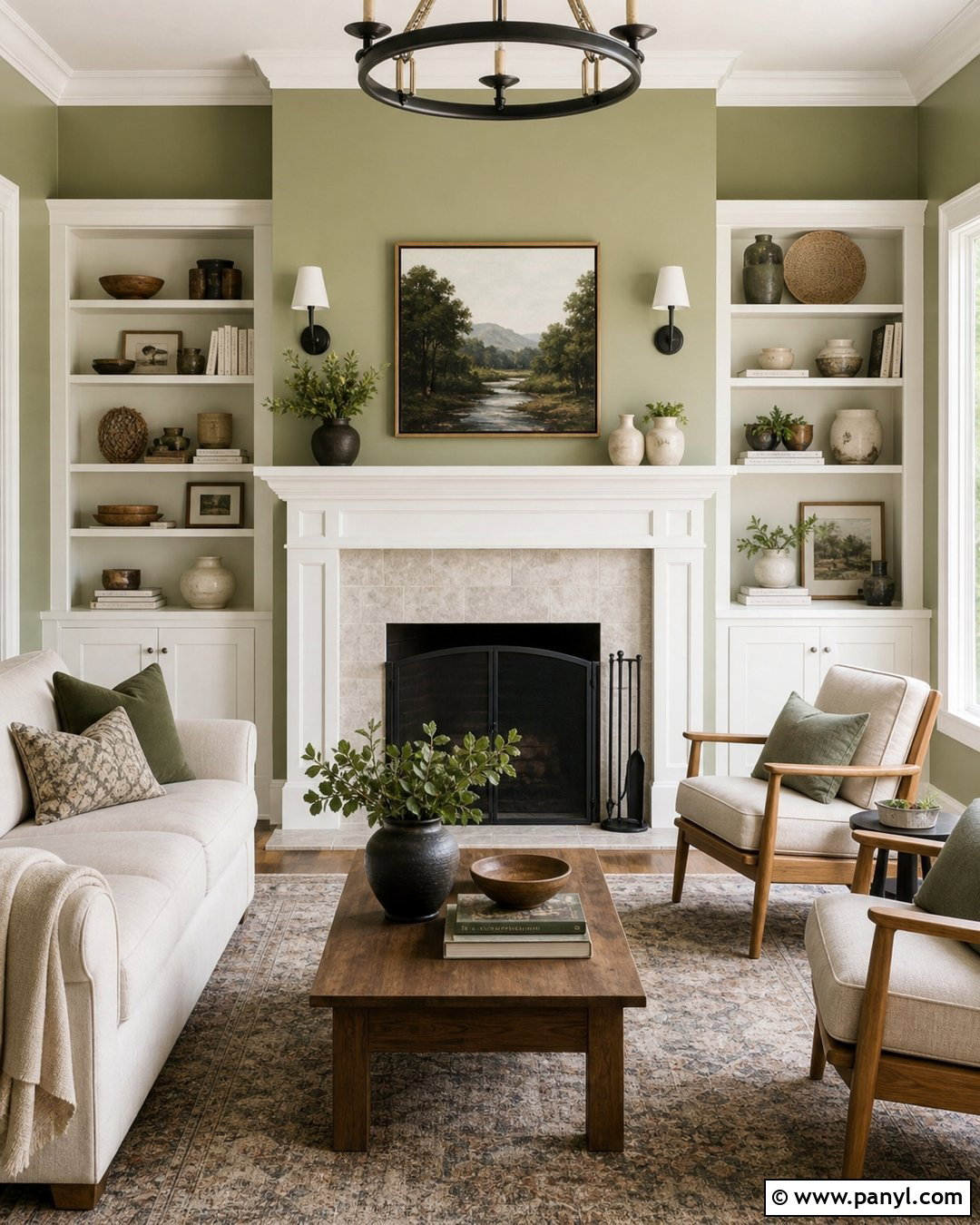
A white fireplace creates a bright focal point against pale green living room walls. Paint the mantel and surround in warm white, then use pale stone or light gray tile around the firebox. Arrange a comfortable oatmeal sofa opposite the fireplace with two light wood chairs angled toward it. A large neutral rug should connect all the seating while leaving a practical walkway. Style the mantel with one framed artwork, a ceramic vase, and a few balanced objects rather than many small decorations. Built-in shelves can repeat the white finish and hold books, baskets, and pottery. Add black fireplace tools and a black ceiling fixture for definition. The finished layout feels fresh, symmetrical, and well suited to daily conversation.
14. Pale Green Living Room With Built-In Shelves
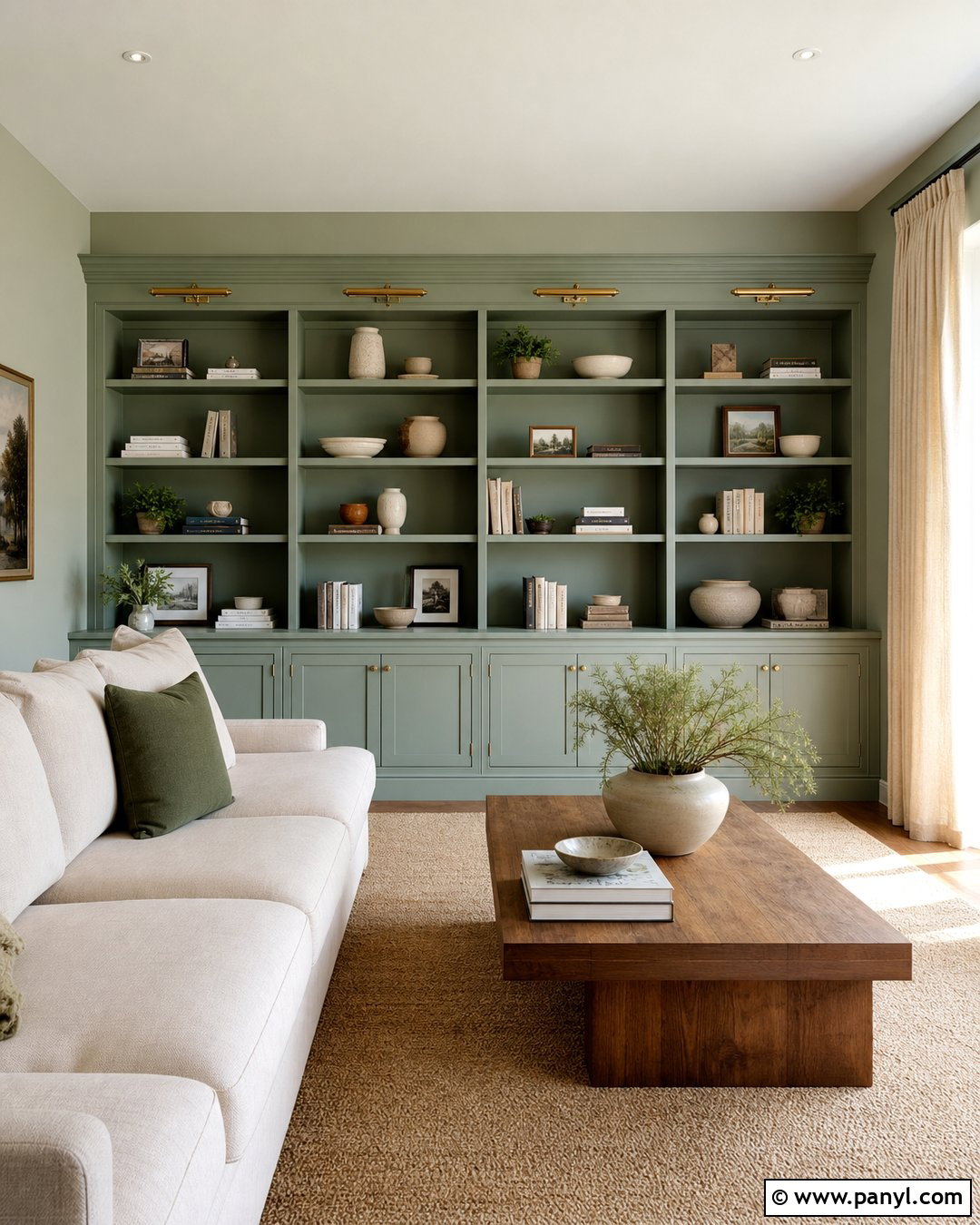
Built-in shelves painted the same pale green as the walls produce a seamless, custom look. Cover the back wall with cabinetry that combines open shelving, closed lower storage, and a central space for artwork or a television. Use antique brass knobs or slim bronze pulls for warmth. A light beige sectional can face the built-ins, while a walnut coffee table and woven rug ground the layout. Style the shelves with books, cream pottery, framed photographs, and a few dark objects for contrast. Leave open space around each grouping so the display does not feel crowded. Linen curtains and a textured ivory throw keep the room comfortable. This approach adds useful storage while allowing the green color to unify the entire feature wall.
15. Pale Green Living Room With Beige Sectional
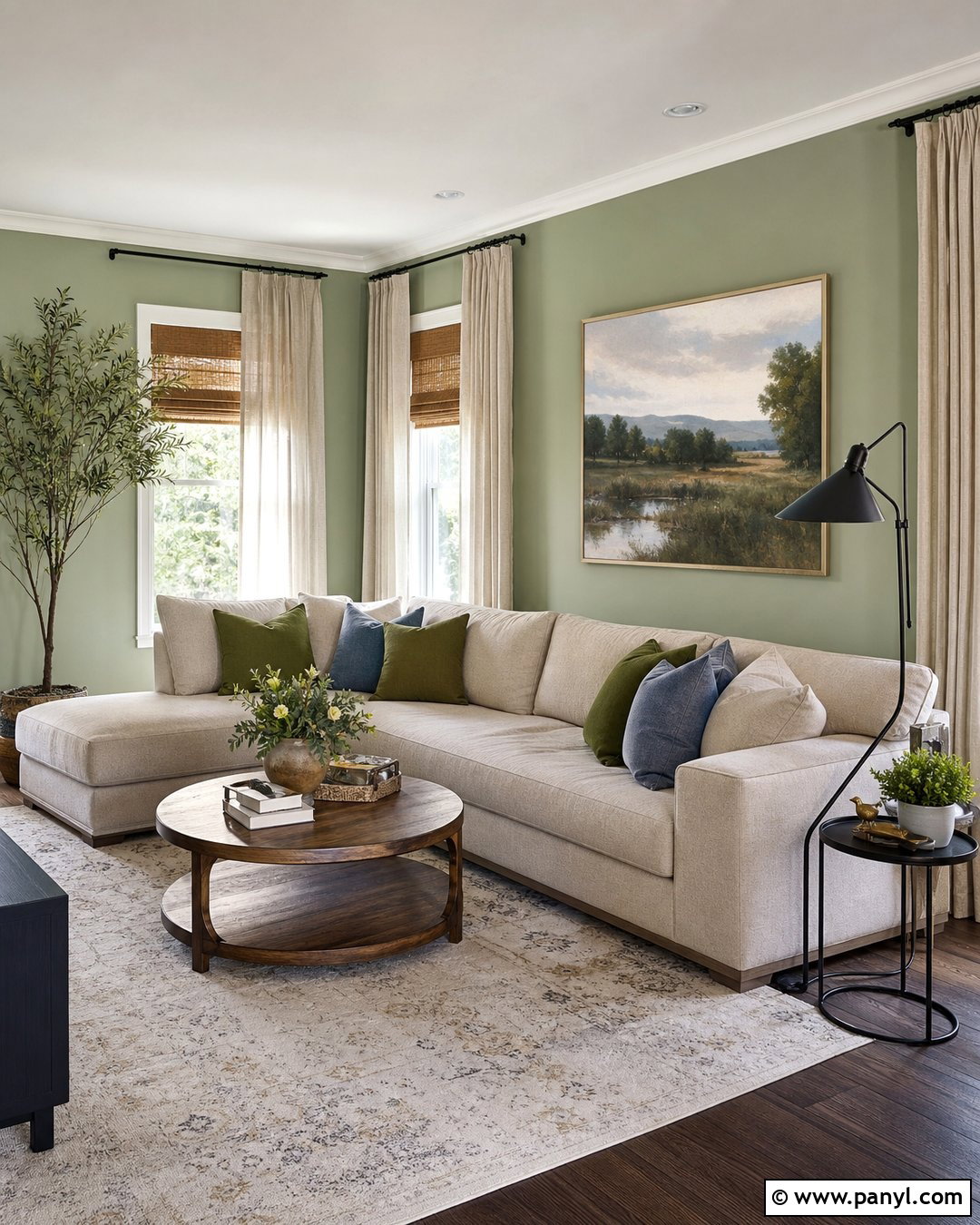
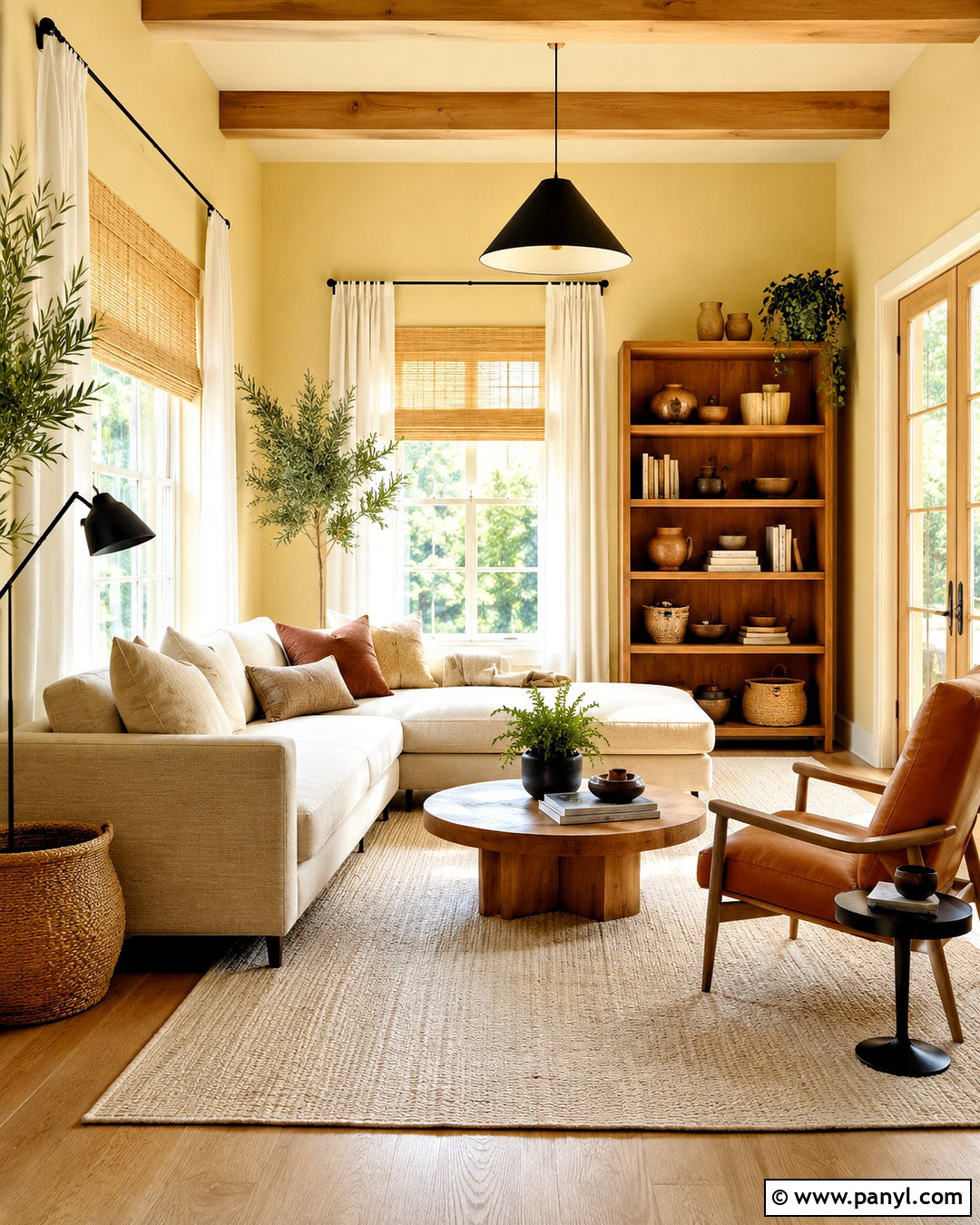
A large beige sectional can look light and inviting when surrounded by pale green walls. Choose a warm sand or oatmeal fabric rather than a yellow-toned beige. Position the sectional to define the seating zone, leaving clear paths to windows and doorways. A generously sized cream rug should extend beneath the front legs of every sectional piece. Add a round walnut coffee table to soften the sofa’s straight lines. Pillows in olive, muted blue, ivory, and subtle stripes create gentle variation. Use woven shades with full-length cream curtains for layered window coverage. A black floor lamp and oversized landscape print provide contrast. The complete room feels comfortable for families while maintaining a polished, coordinated color palette.
16. Pale Green Living Room With Coastal Decor
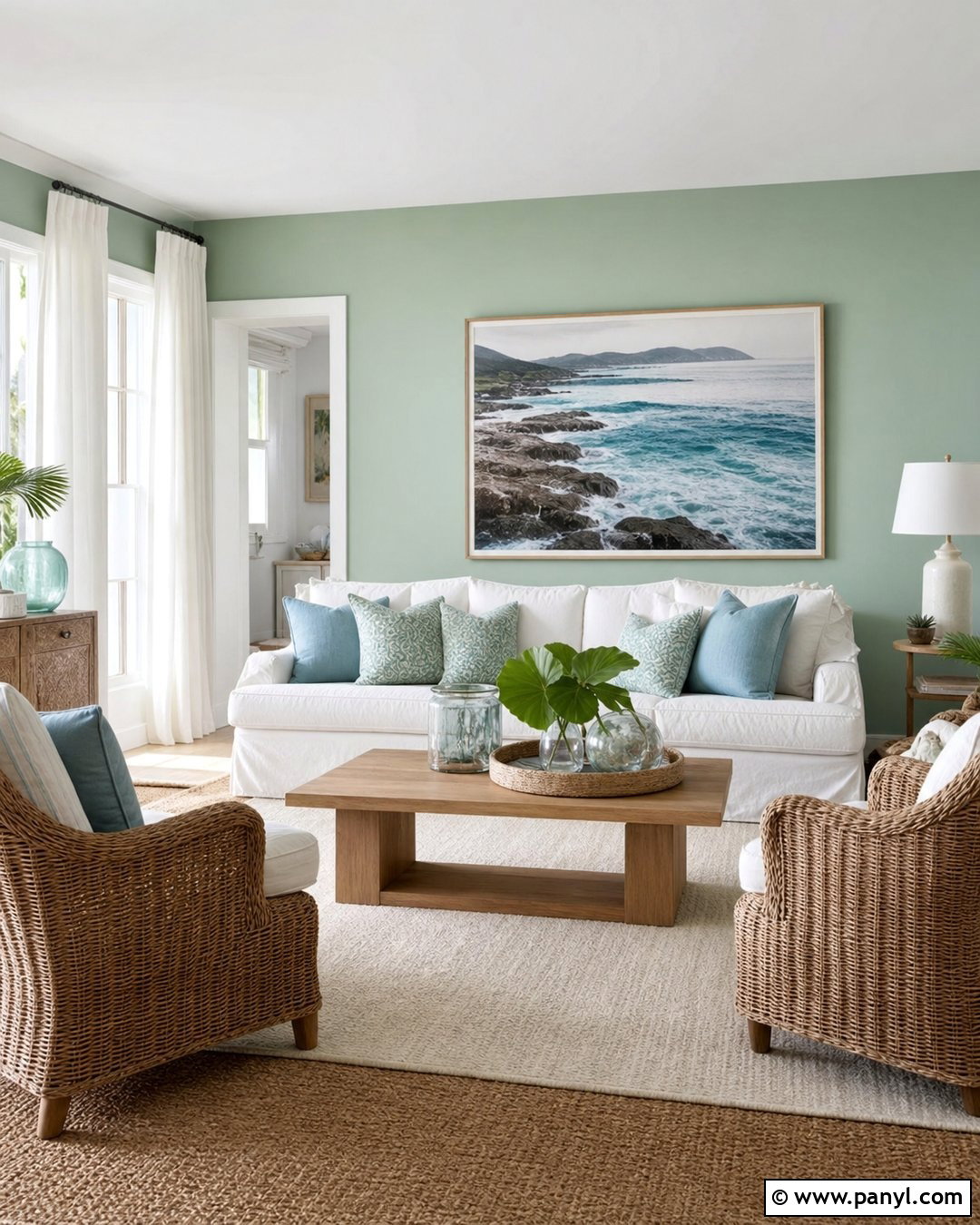
Cool pale green walls can form the foundation of a relaxed coastal living room without relying on obvious nautical decorations. Start with a slipcovered white sofa, light oak coffee table, and two woven seagrass chairs. Use a natural jute rug layered beneath a smaller cream rug for softness. Add pillows in misty blue, seafoam, and narrow neutral stripes. White linen curtains should hang loosely and allow plenty of daylight into the room. Decorate with pale ceramics, weathered wood, clear glass, and one large coastal landscape. Keep shells and themed signs out of the arrangement. The connection to the coast should come from breezy textures and sun-washed colors. The result feels clean, casual, and suitable for homes far from the water.
17. Pale Green Living Room With Farmhouse Decor
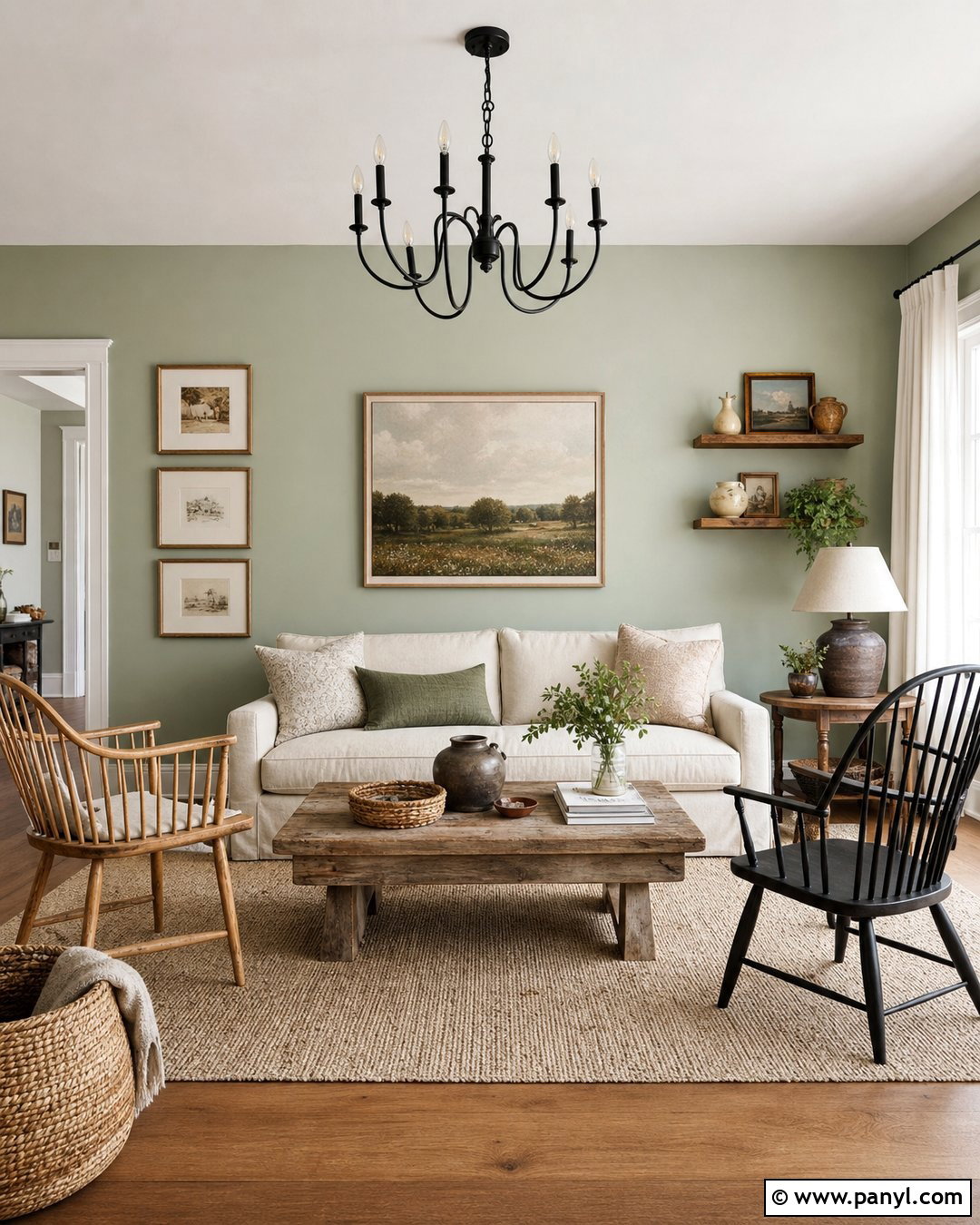
Pale green walls can soften a farmhouse living room while keeping it brighter than the usual dark rustic palette. Choose a deep cream sofa with washable upholstery, then add a pair of spindle-back chairs in natural oak or matte black. A weathered wood coffee table provides character, but its shape should remain simple and practical. Use an ivory-and-taupe rug with a subtle woven pattern. Add off-white curtains, a black iron chandelier, and landscape artwork in aged wood frames. Baskets can store blankets near a painted cream cabinet. Limit distressed finishes to one or two pieces so the room does not look overly themed. Greenery and stoneware pottery complete this comfortable, updated farmhouse setting with natural color and texture.
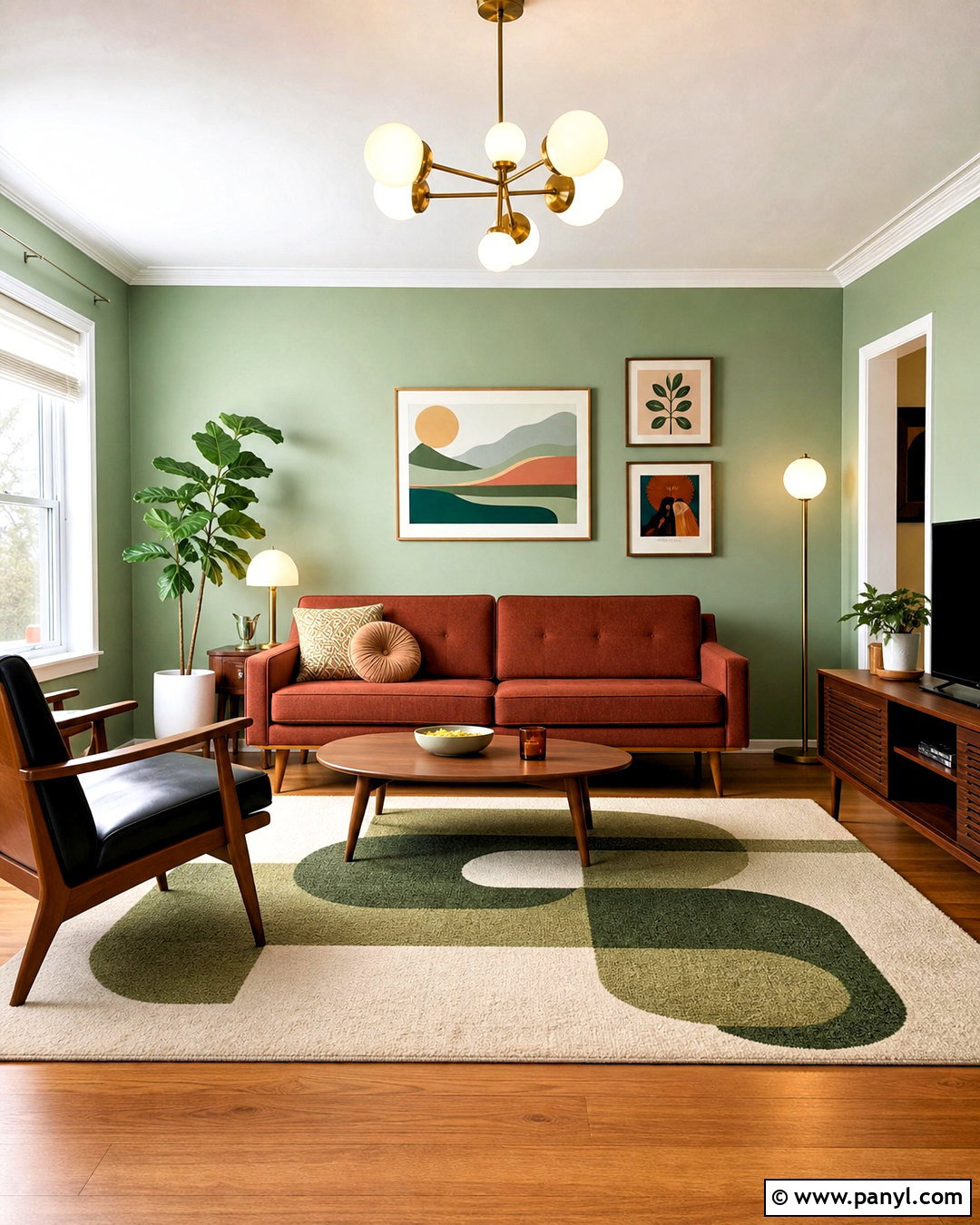
18. Pale Green Living Room With Midcentury Furniture
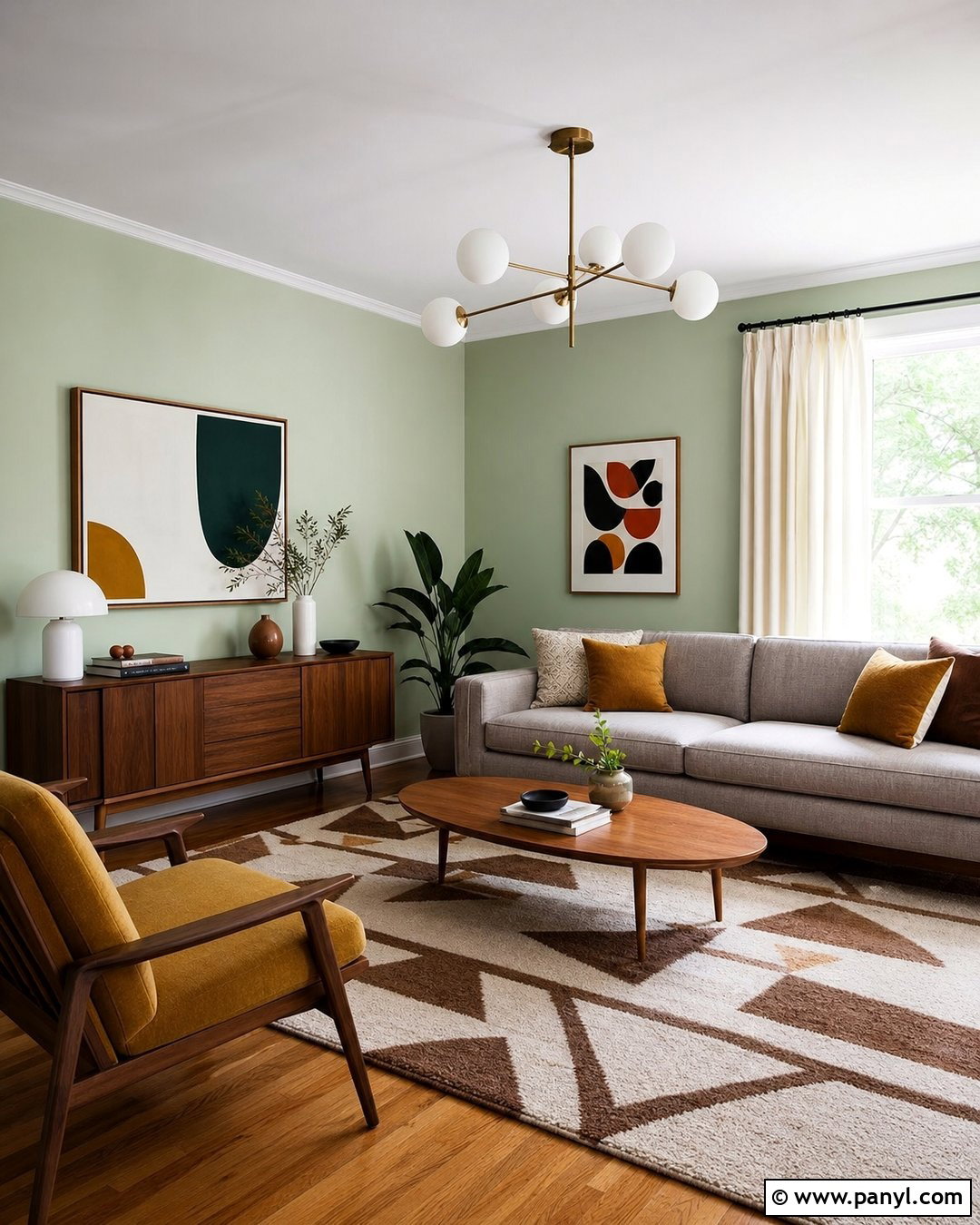
Clean-lined midcentury furniture brings warmth and definition to pale green living room walls. Select a low-profile sofa in warm gray or oatmeal, supported by tapered wood legs. Add a walnut credenza, an oval coffee table, and one sculptural lounge chair in muted mustard or cognac leather. A geometric rug containing cream, brown, and restrained green will connect the palette without overwhelming it. Hang simple abstract art in thin black or walnut frames. Globe lighting and full-length ivory curtains support the period influence while keeping the room current. Avoid filling every corner with vintage objects. A few strong furniture shapes are enough. This balanced design makes the green walls feel nostalgic, fresh, and appropriate for a modern home.
19. Pale Green Living Room With Vintage Decor
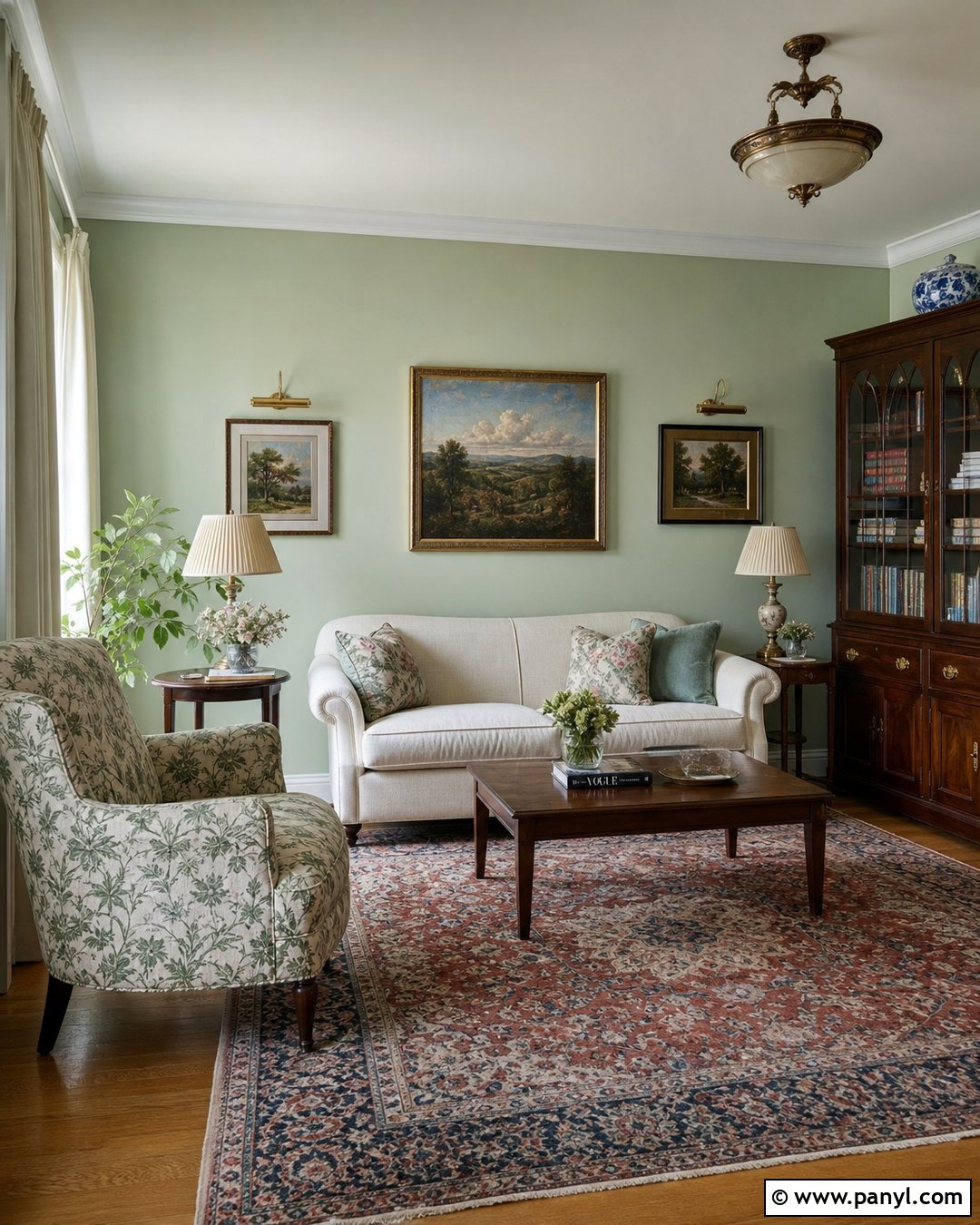
A vintage-inspired living room feels especially comfortable against softly muted green walls. Begin with a rolled-arm sofa in warm cream and pair it with an antique wood sideboard or glass-front cabinet. Add a faded Persian-style rug featuring rust, blue, beige, and olive details. An upholstered armchair in a small botanical print can introduce pattern at a manageable scale. Use pleated lampshades, brass picture lights, and framed landscapes to create layered character. Curtains in natural linen keep the room from appearing too formal. Mix older furniture with a simple modern coffee table so the design feels collected rather than staged. The pale green walls unite different periods, woods, fabrics, and artwork within one calm and coherent setting.
20. Pale Green Living Room With Color Drenched Trim
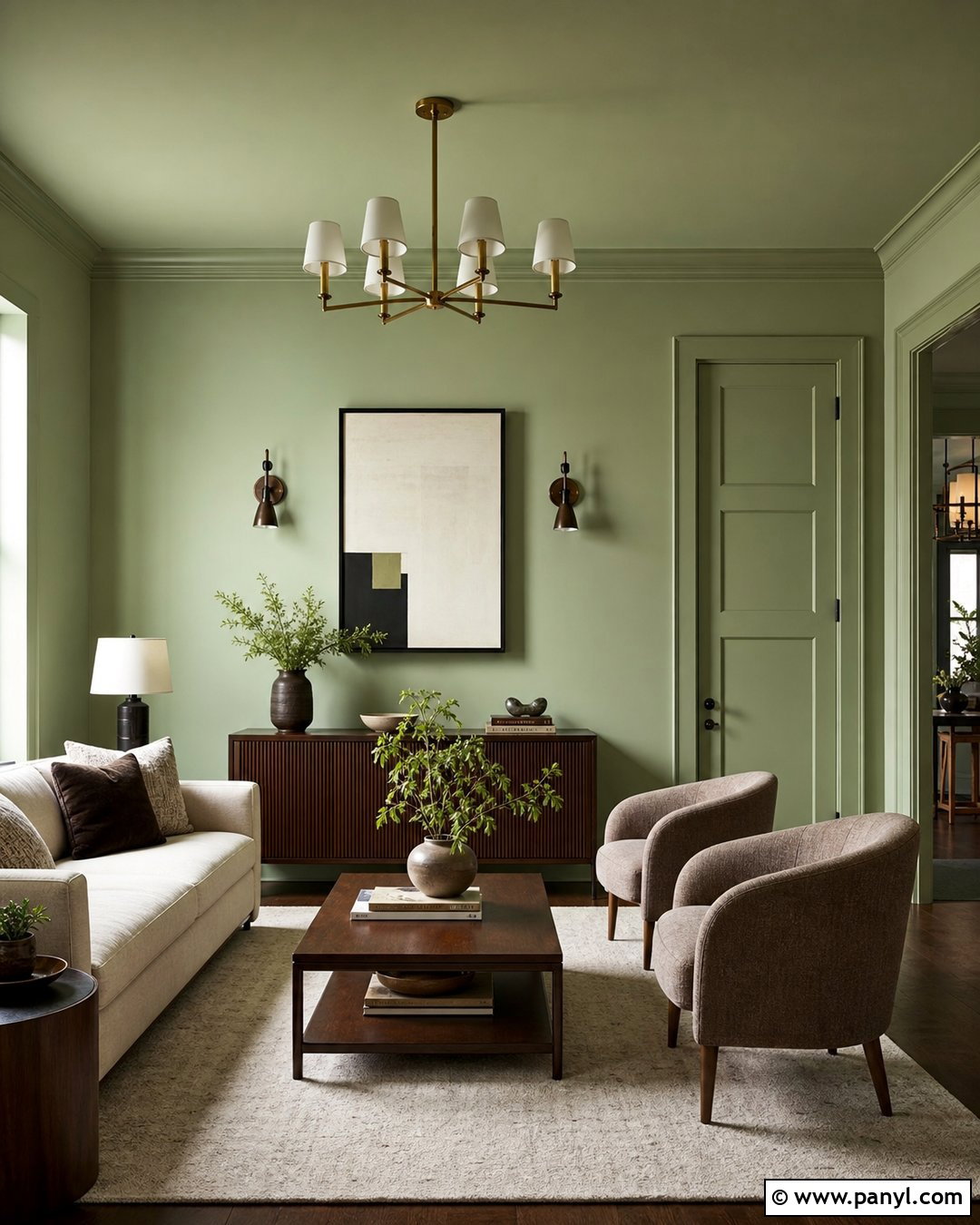
Painting the walls, trim, doors, and ceiling in related pale green tones creates an enveloping color-drenched living room. Use a slightly lighter green overhead to preserve brightness, while applying one consistent satin finish to the baseboards and doors. Furnish the room with a cream sofa, taupe armchairs, and a dark walnut coffee table. A broad ivory rug provides visual relief from the surrounding color. Introduce contrast through black-framed artwork, bronze lighting, and a few striped cushions. Window treatments can closely match the wall color for a continuous effect. Keep the furniture and decor relatively simple because the painted architecture already makes a strong statement. This approach feels cohesive, contemporary, and more dimensional than walls paired with standard white trim.
21. Pale Green Living Room With Floral Curtains
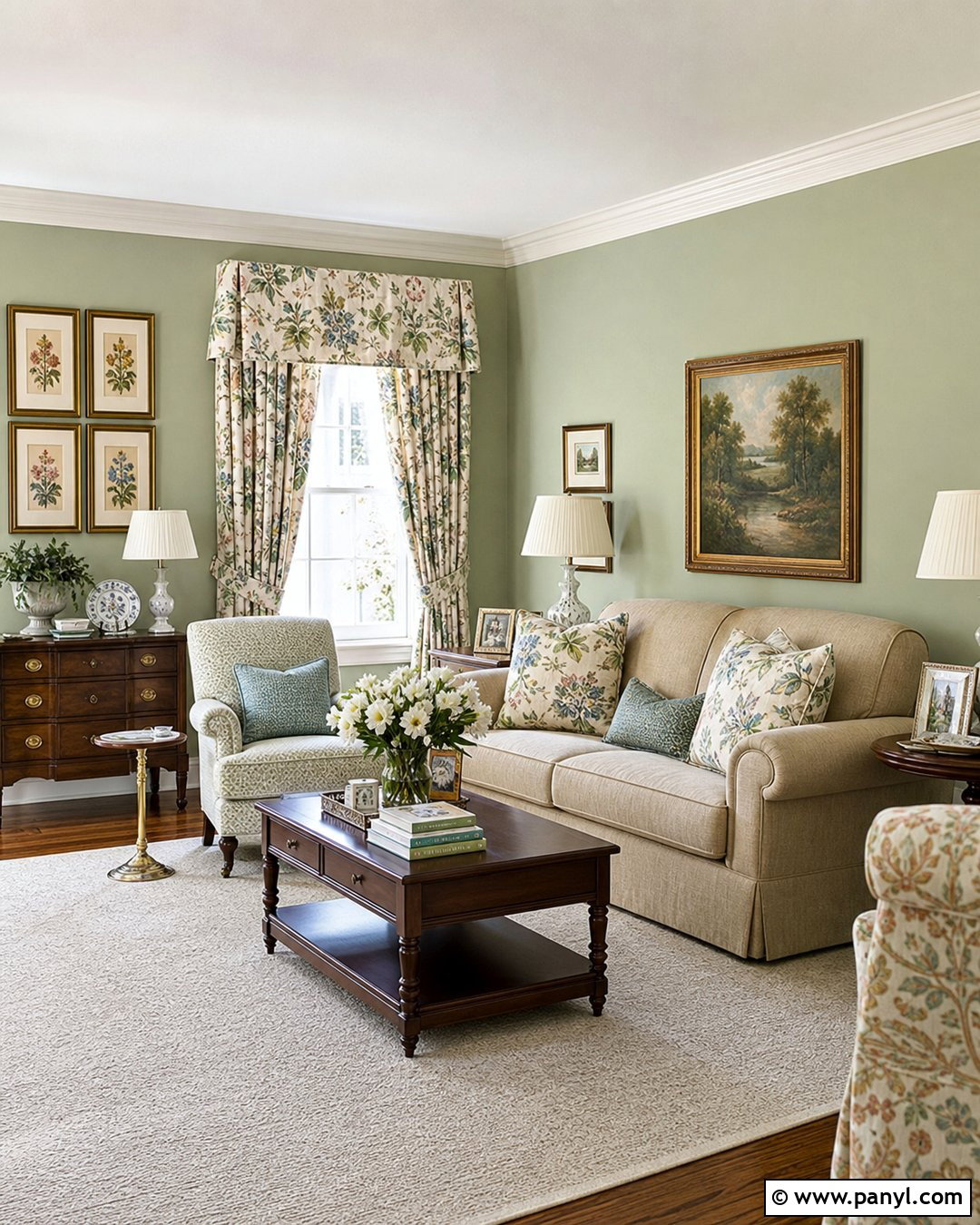
Floral curtains can bring pattern to pale green living room walls while helping the room feel traditional and cheerful. Choose a fabric with a cream background and a measured print containing sage, dusty blue, soft pink, or muted gold. Repeat only two of those colors through sofa pillows and upholstery. A plain beige sofa keeps the larger furniture calm, while a dark wood coffee table adds contrast. Place a subtle wool rug underneath the seating area rather than introducing another bold pattern. Pleated lampshades and classic framed artwork can reinforce the traditional direction. Paint the trim warm white to separate the curtains from the green walls. The finished scheme feels coordinated because the floral fabric guides every supporting color without dominating the room.
22. Pale Green Living Room With Gallery Wall
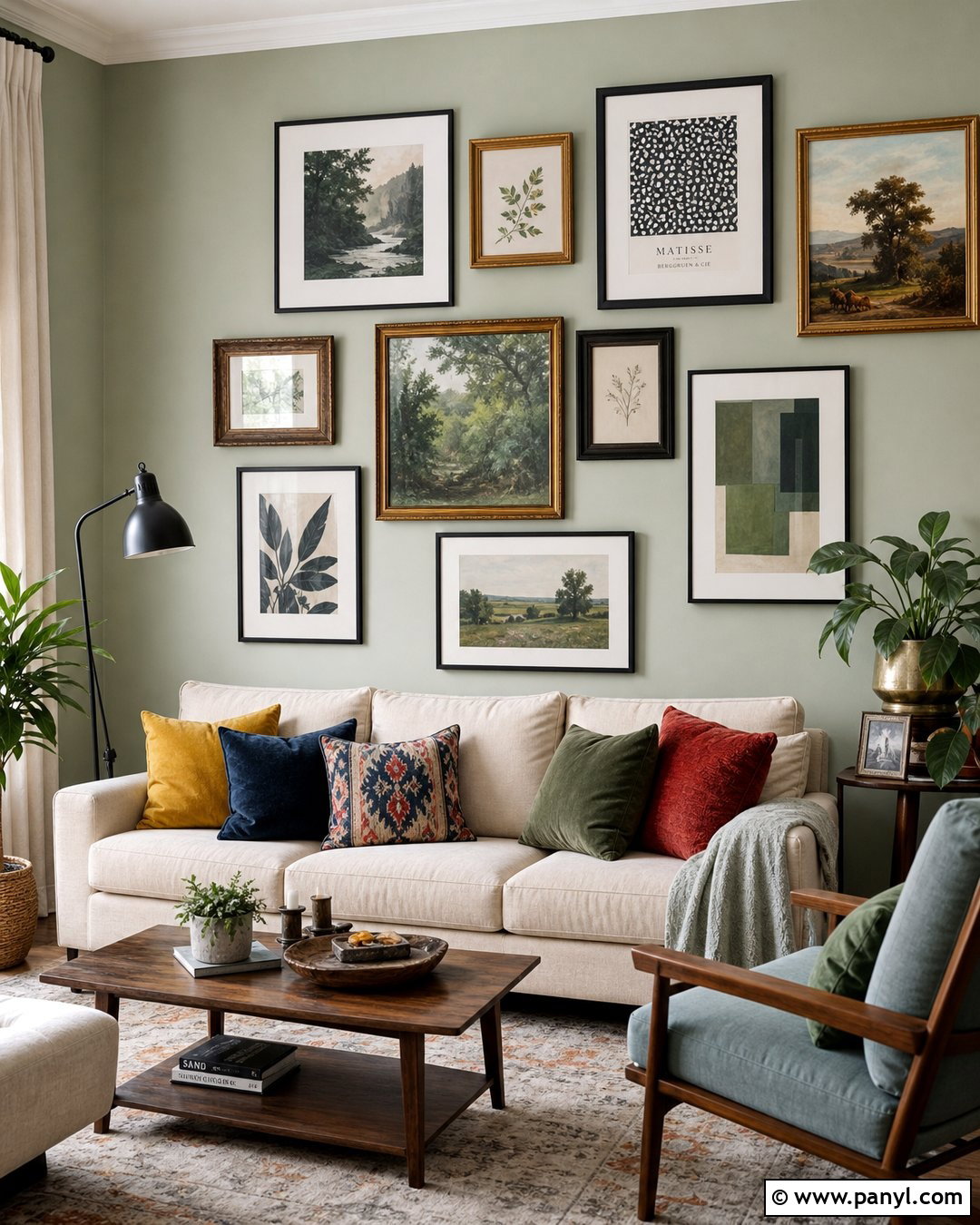
A gallery wall becomes clearer and more cohesive when displayed against a quiet pale green background. Arrange the collection above a neutral sofa using a mix of black, oak, and aged brass frames. Include landscapes, abstract prints, botanical studies, and a few personal photographs, but maintain consistent spacing between every piece. A cream sofa and light rug prevent the artwork from competing with heavy furniture colors. Use a walnut coffee table and black floor lamp to repeat the frame finishes around the room. Solid ivory curtains provide a calm window treatment. Pull muted green, rust, blue, and beige accents from the artwork into the pillows. This creates a complete living room where the display looks collected, balanced, and connected to its surroundings.
23. Pale Green Living Room With Small Space Layout
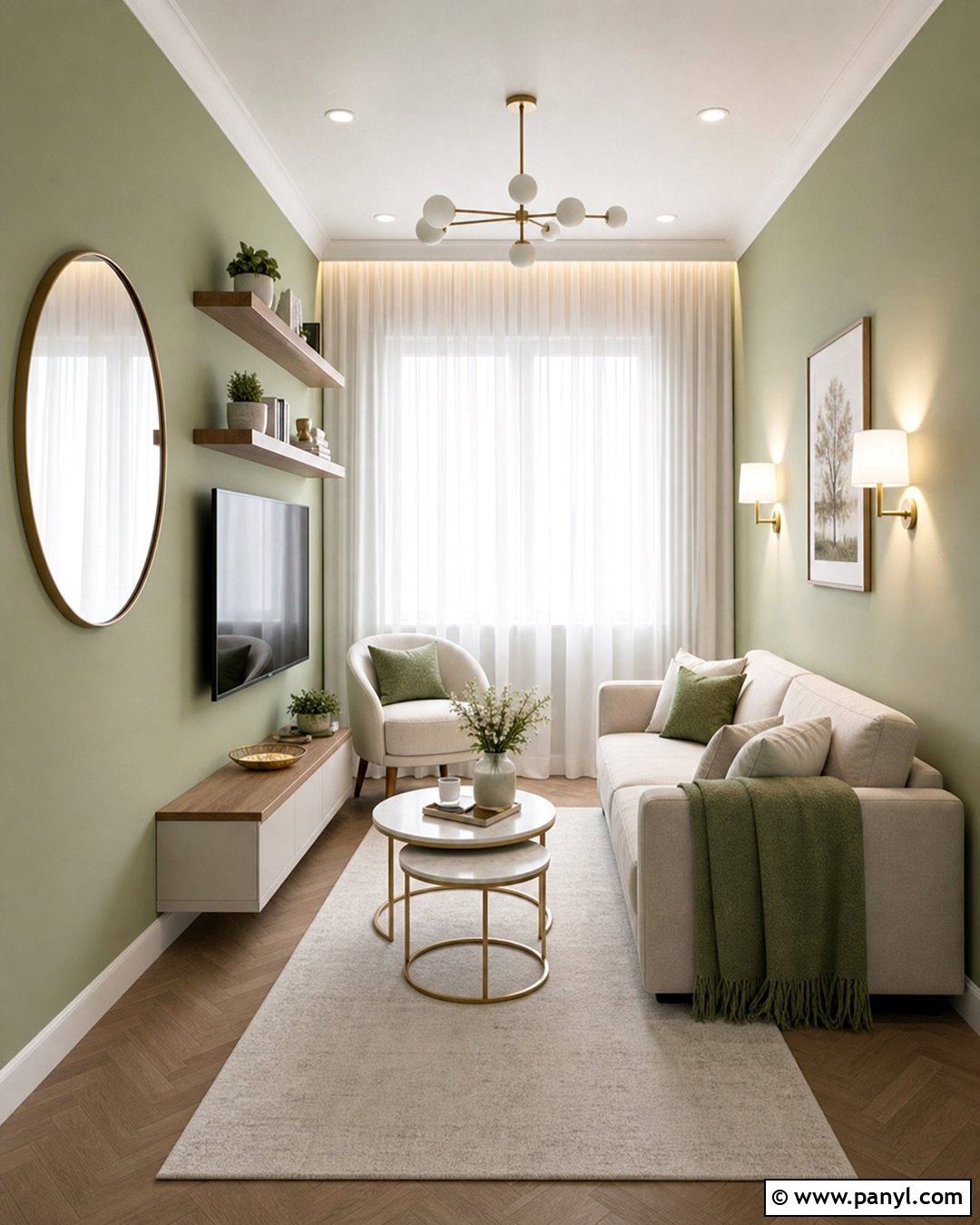
In a small living room, pale green walls provide color without visually overwhelming the limited floor area. Select an apartment-size cream sofa and place it against the longest uninterrupted wall. Add one armless accent chair that can move easily when extra floor space is needed. A round nesting coffee table takes up less visual room than a bulky rectangular design. Choose a light rug large enough to reach beneath the main furniture, which makes the arrangement appear unified. Wall-mounted lighting, floating shelves, and a slim media console preserve valuable floor space. Use pale curtains that blend with the walls and hang them high. One mirror opposite a window can distribute daylight while adding depth to the compact but complete seating area.
24. Pale Green Living Room With Open Plan Layout
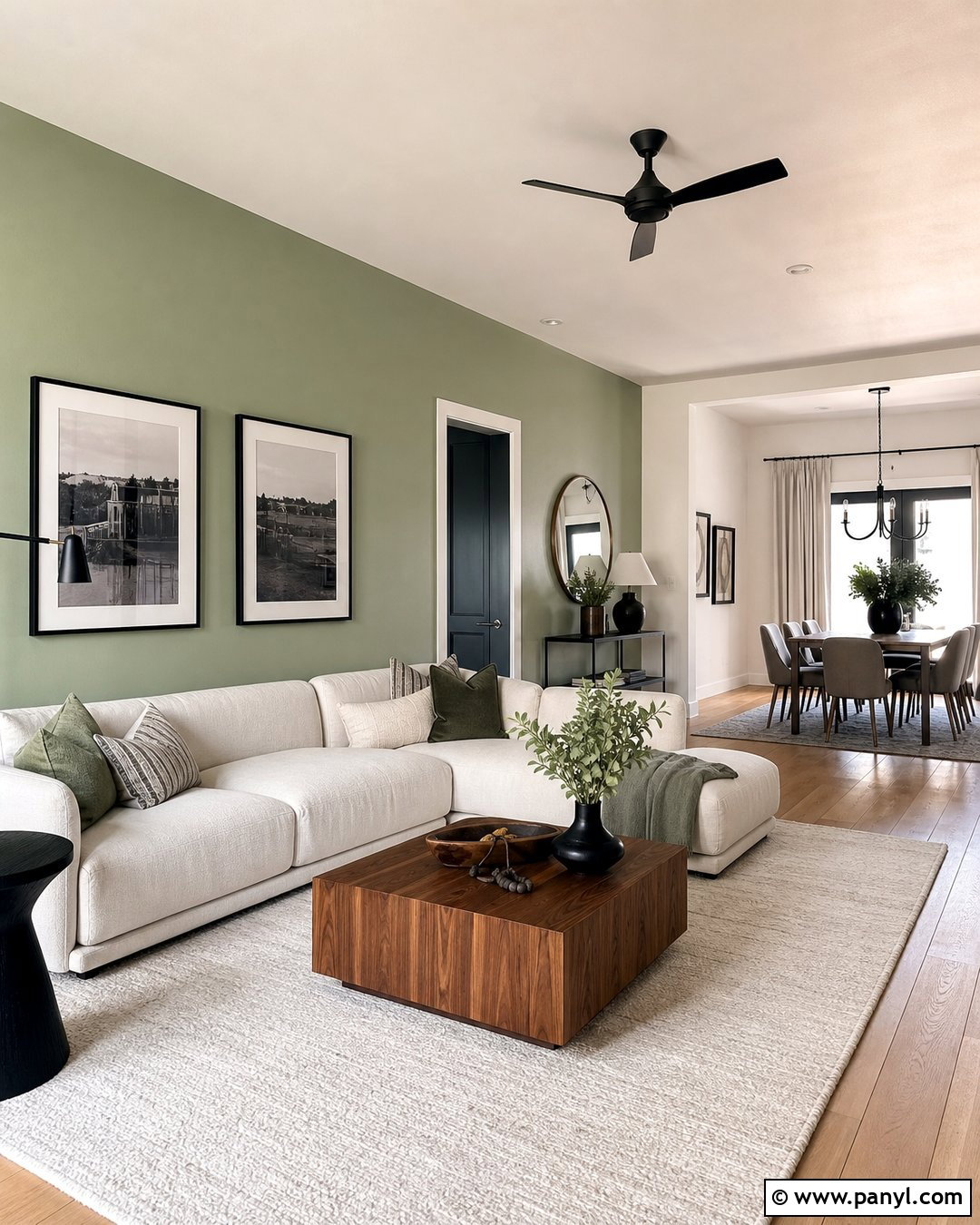
An open-plan living room needs a clearly defined palette so pale green walls connect smoothly with nearby spaces. Use the green on the living zone walls, then repeat it subtly through kitchen textiles, dining chair cushions, or artwork. A cream sectional can establish the seating boundary, with its back facing the dining area. Place a large neutral rug beneath the sectional and add a walnut coffee table for warmth. Black lighting and hardware create a consistent line through the entire open room. Keep flooring continuous whenever possible, and use related warm whites on adjoining walls. Curtains should match across visible windows. This coordinated approach gives the living area its own identity while maintaining a comfortable visual relationship with the kitchen and dining zones.
25. Pale Green Living Room With Bold Artwork
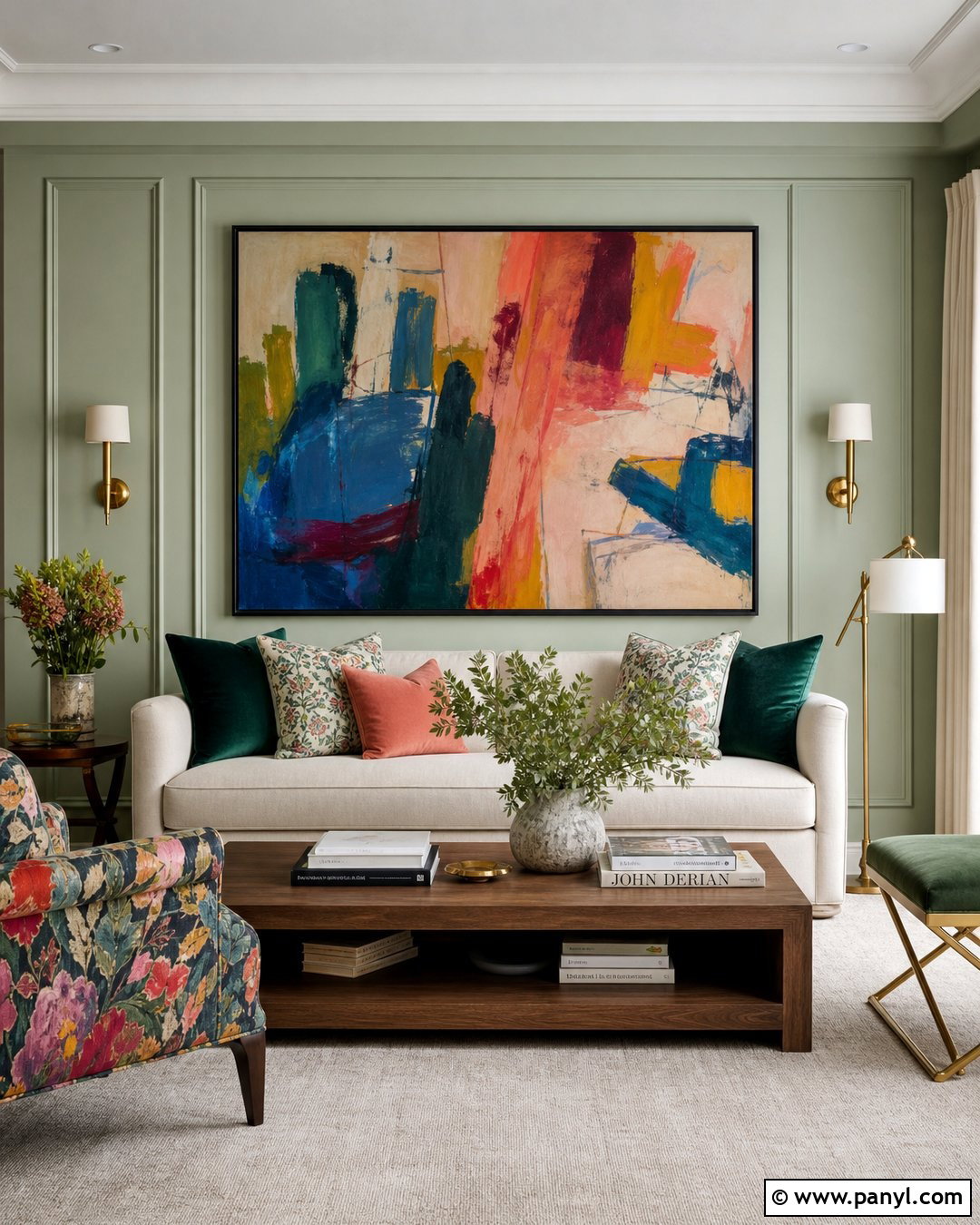
Bold artwork gives pale green living room walls a strong focal point and prevents the soft color from becoming forgettable. Choose one oversized piece containing saturated blue, coral, ochre, burgundy, or deep green. Position it above a simple cream sofa and allow generous wall space around the frame. Pull two secondary colors from the artwork into pillows, a throw, and one accent chair. Keep the rug mostly neutral so the floor does not compete for attention. A black or walnut coffee table provides visual weight, while brass lighting adds warmth. Curtains should remain solid ivory or pale beige. This complete arrangement uses the wall color as a quiet gallery backdrop, letting expressive artwork guide the room’s character and supporting accents.
Conclusion:
These 25 Pale Green Living Room Walls show how one gentle color can support many different interiors, from coastal and farmhouse rooms to tailored, vintage, and contemporary spaces. For the most successful result, identify whether your preferred green has warm, cool, gray, or yellow undertones before selecting furniture. Test paint in several areas and observe it under daylight and evening lighting. Then build a complete palette with coordinated upholstery, wood finishes, window treatments, rugs, lighting, and artwork. Pale green works best when it is supported by enough texture and a few deeper accents. Whether you favor creamy neutrals, earthy terracotta, navy blue, or dark green, thoughtful repetition will make the final living room feel balanced and intentional.

Related Ideas and Inspiration:
Leave a Reply