
Paint can transform a dated bathroom faster and more affordably than a major renovation. These 25 Painted Walls Bathroom Ideas explore complete color schemes that coordinate the walls with tile, vanities, flooring, fixtures, lighting, and decor. Current bathroom palettes range from airy whites and calming greens to earthy browns, saturated reds, and immersive color-drenched finishes. () Before choosing a shade, compare samples beside your permanent finishes throughout the day because lighting, tile, and countertops can noticeably affect how paint appears. () Also select a durable bathroom-rated formula that can handle moisture and regular cleaning. Whether you want a peaceful retreat or a bold powder room, these complete 25 Painted Walls Bathroom Ideas offer an achievable look for every space.

1. Warm White Bathroom Walls
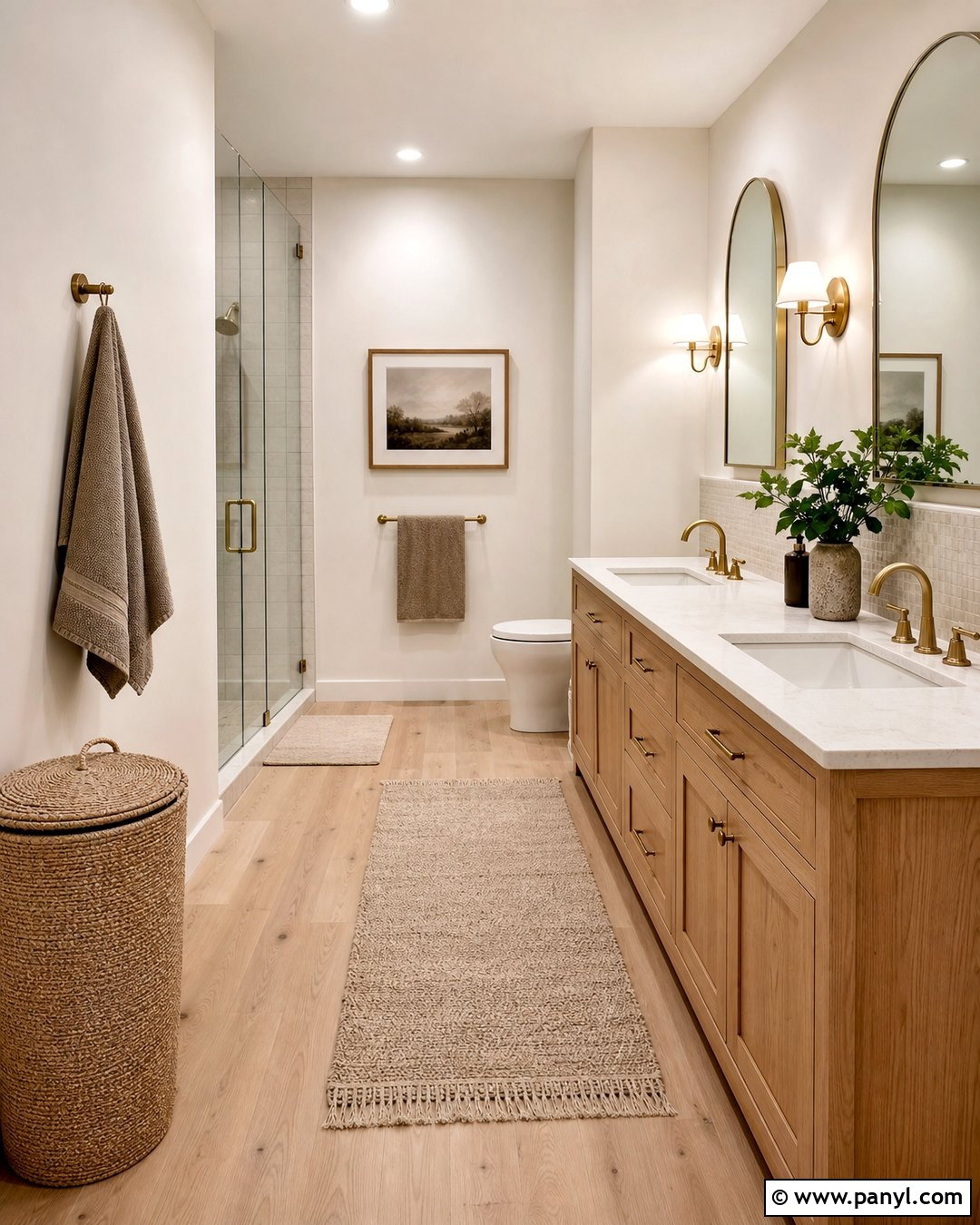
Warm white walls create a clean bathroom without the cold feeling that can come from a bright, blue-based white. Build the room around creamy painted walls, pale oak flooring, and a natural wood vanity with simple slab-front drawers. Choose a white quartz countertop and handmade ivory backsplash tile to introduce subtle texture. Brushed brass faucets, warm metal sconces, and a thin-framed mirror reinforce the inviting undertones. Add sand-colored towels, a woven hamper, and one leafy plant for gentle contrast. This palette works especially well in bathrooms with limited natural light. Keep the trim only slightly brighter than the walls so the room remains soft and connected rather than broken into several stark sections.
2. Sage Green Bathroom Walls
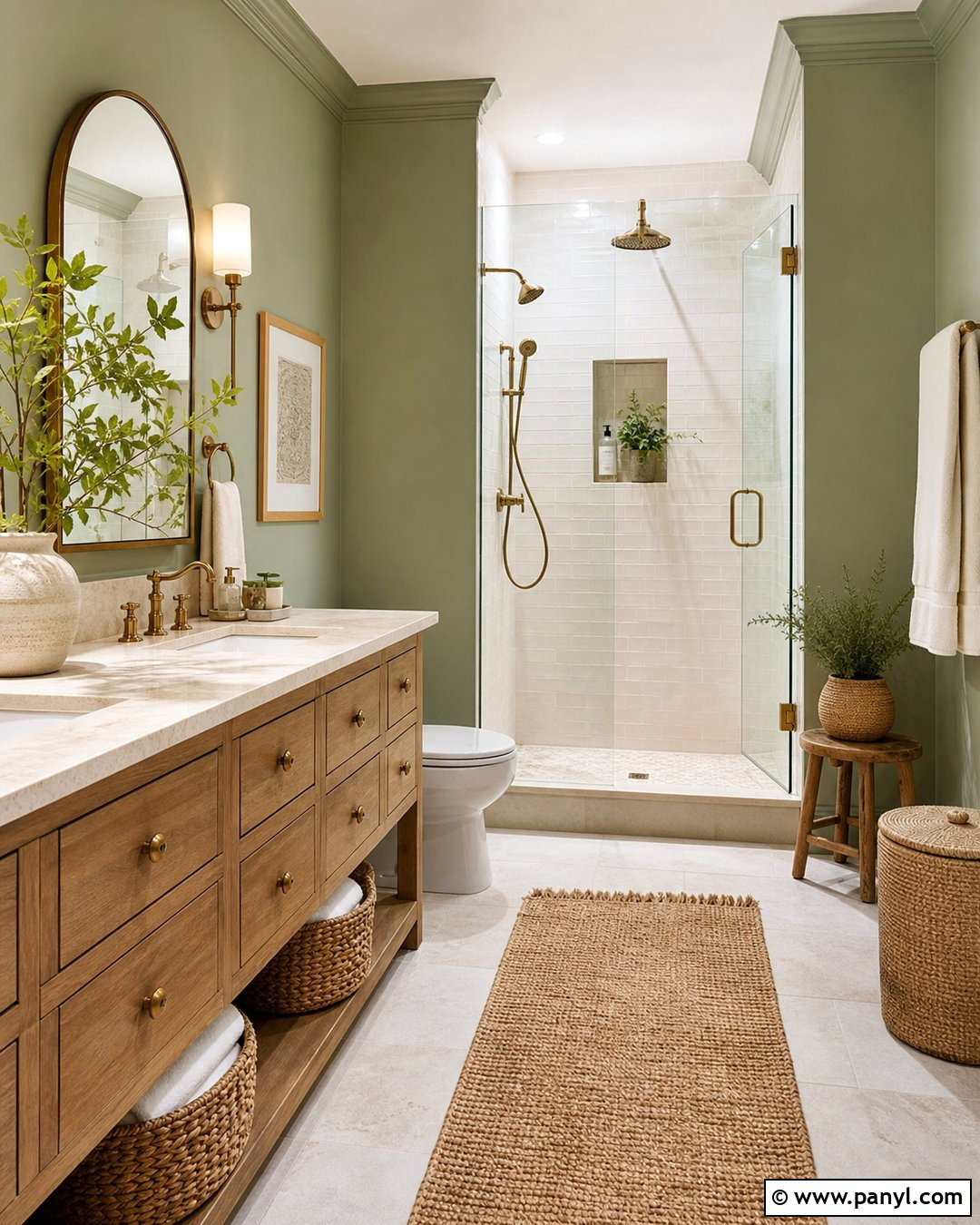
Soft sage green walls can turn an ordinary bathroom into a relaxed, nature-inspired retreat. Pair the muted color with a medium oak vanity, creamy stone countertop, and warm white shower tile. A frameless glass enclosure keeps the layout open while allowing the painted surfaces to remain visible. Choose aged brass fixtures for warmth or matte black hardware for stronger definition. Natural accessories, including a linen shower curtain, woven baskets, and small ceramic planters, complete the calming look. Use off-white towels instead of brilliant white ones to preserve the gentle palette. If the bathroom is small, carry sage onto the door and trim for fewer visual interruptions and a more spacious, thoughtfully finished appearance.
3. Navy Blue Bathroom Walls
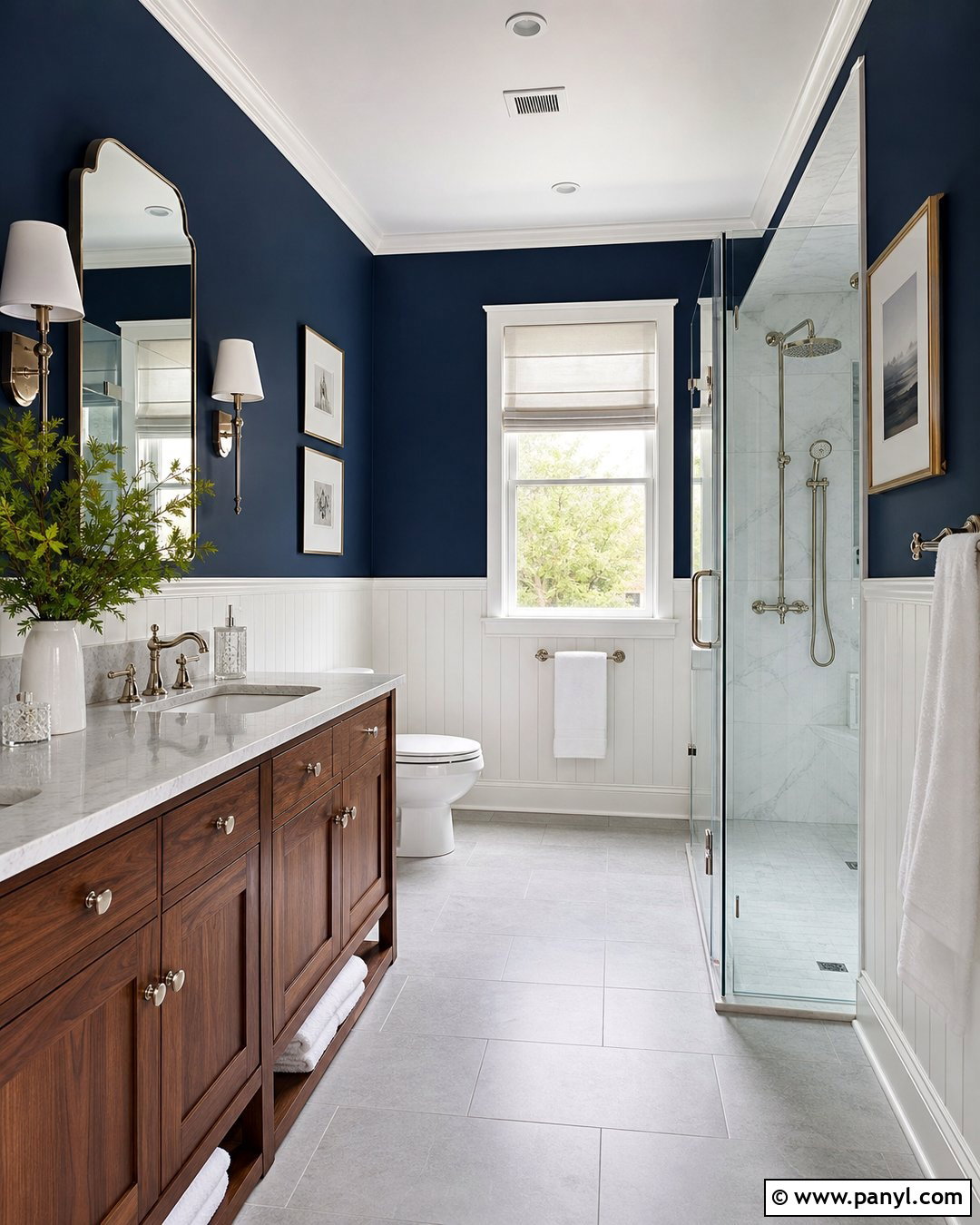
Deep navy walls give a bathroom an elegant, tailored character when balanced with enough light-colored material. Use the dark paint above white vertical wall paneling or around a large white-tiled shower. A walnut vanity brings natural warmth, while a pale marble countertop prevents the scheme from feeling heavy. Add polished nickel faucets, glass sconces, and a wide mirror to reflect light throughout the room. White towels and a light gray floor provide additional breathing room. For a compact powder room, navy can cover every wall because the dramatic scale feels intentional. In a larger primary bathroom, reserve it for the vanity area and repeat the color through framed artwork or a patterned floor runner.
4. Powder Blue Bathroom Walls
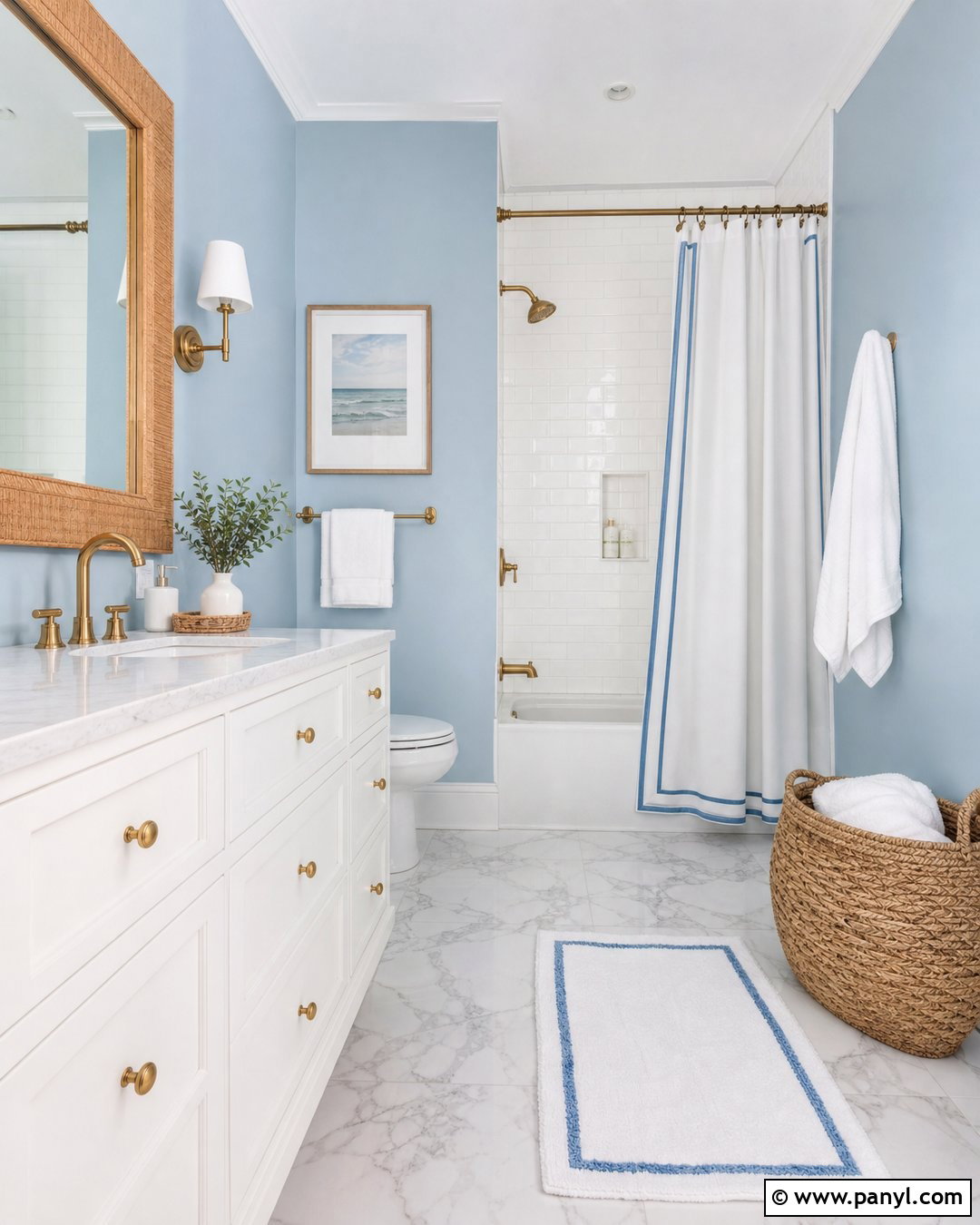
Powder blue walls make a bathroom feel fresh, airy, and quietly cheerful. Coordinate the color with crisp white trim, a white vanity, and pale gray marble flooring for a light overall scheme. Introduce warmth through brushed brass faucets, natural wood mirror frames, and woven storage baskets. A simple white shower curtain with a narrow blue border can repeat the wall color without overwhelming the room. Choose clear glass lighting and streamlined cabinet hardware to maintain an open appearance. This palette is particularly effective in a guest bathroom or small family bathroom. If the room receives strong daylight, select a slightly grayed blue so the walls remain soft rather than turning overly bright or childlike.
5. Terracotta Bathroom Walls
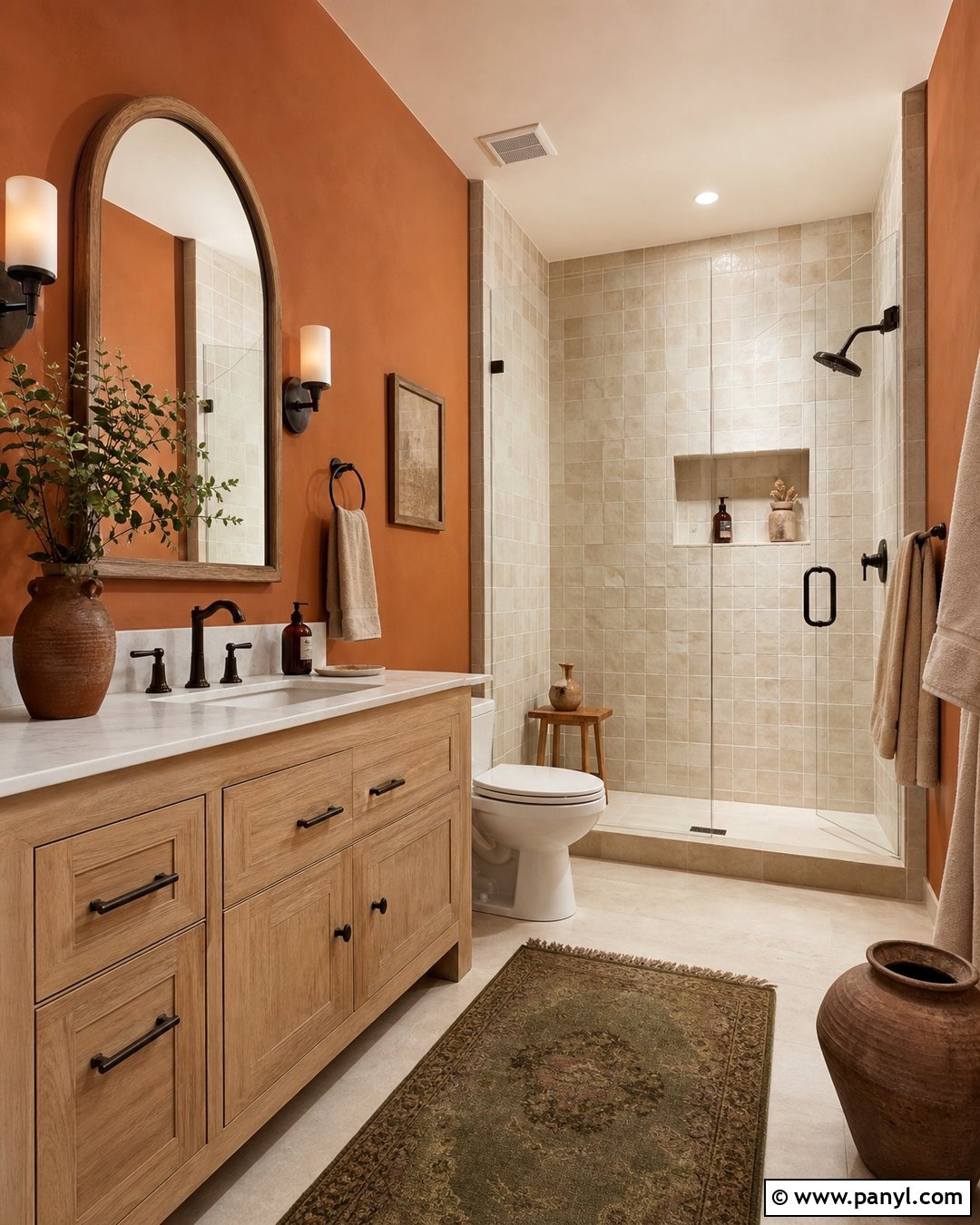
Earthy terracotta walls bring warmth and depth to bathrooms dominated by hard, cool surfaces. Pair the paint with cream zellige-style shower tile, a light oak vanity, and a beige limestone-look floor. Dark bronze faucets and cabinet pulls add definition while fitting the natural palette. Complete the room with an arched wood mirror, oatmeal towels, handmade pottery, and a small olive-toned rug. Terracotta is strongest when its red-orange base is softened with muted finishes rather than bright accent colors. In a narrow bathroom, paint the upper walls terracotta and keep the lower half tiled in warm white. The resulting contrast feels grounded, welcoming, and easier to live with than an entirely saturated room.
6. Blush Pink Bathroom Walls
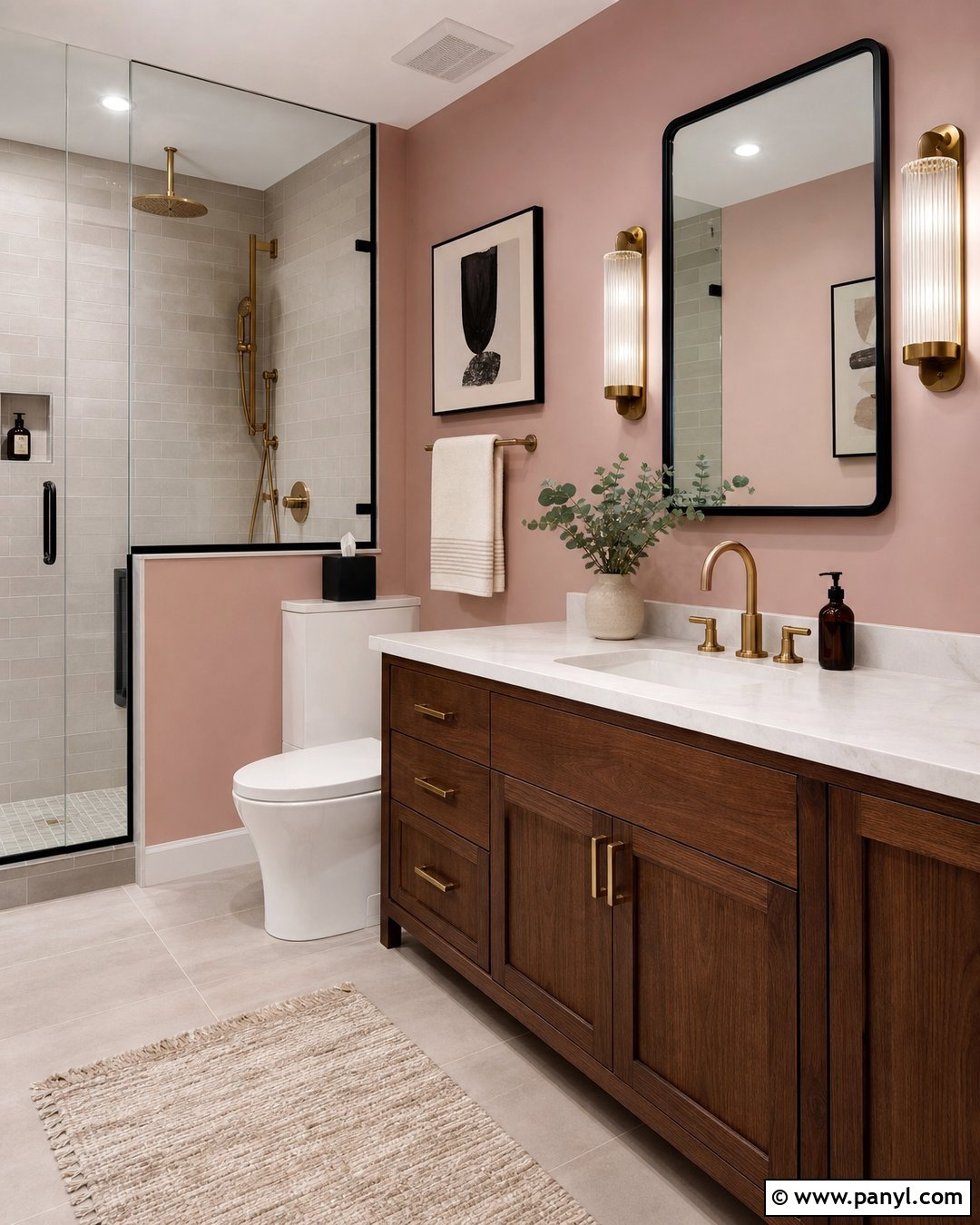
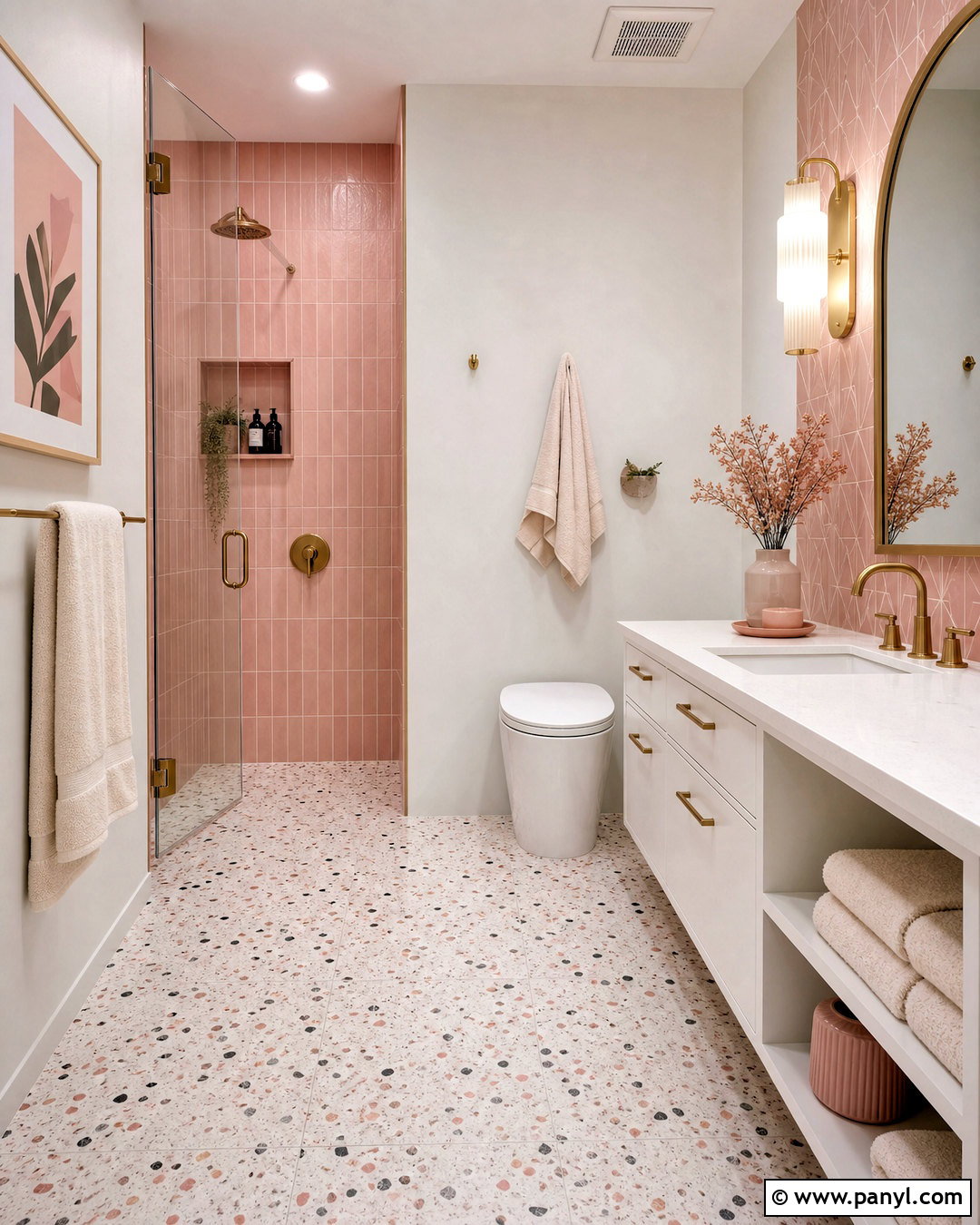
Muted blush walls can create a sophisticated bathroom when paired with restrained materials and clean shapes. Choose a dusty pink with beige or gray undertones rather than a sugary pastel. Ground it with a walnut vanity, white marble countertop, and warm gray porcelain floor tile. Brushed brass fixtures naturally complement the walls, while a simple black-framed mirror adds a modern edge. Use ivory towels, fluted glass sconces, and one piece of abstract artwork to complete the design. Blush also works beautifully with existing white, cream, or burgundy tile. Painting the ceiling a warm white will keep the room open, while matching pink trim can make a tiny powder room feel more cohesive and intentionally decorated.
7. Charcoal Gray Bathroom Walls
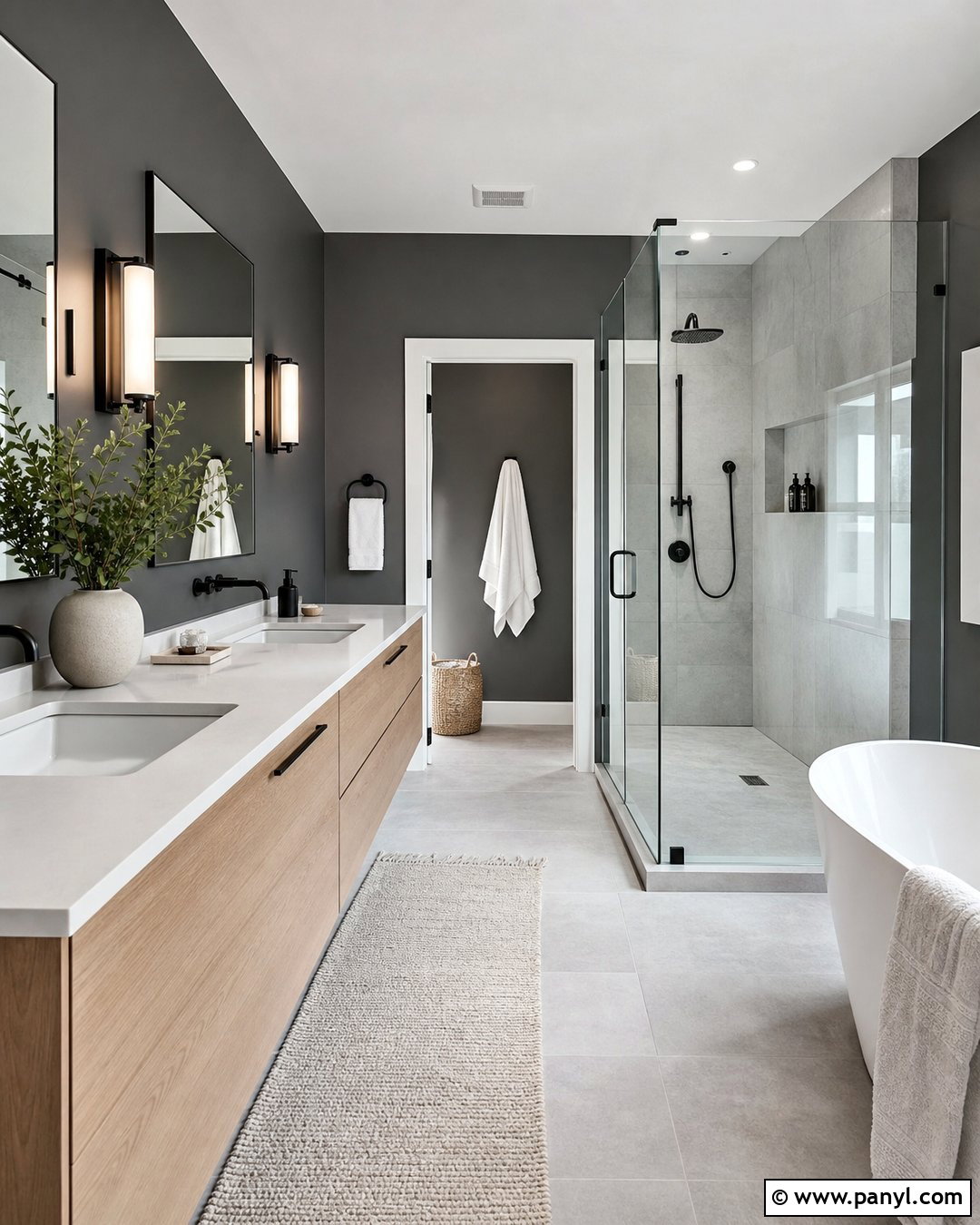
Charcoal gray walls establish a dramatic modern bathroom without requiring black on every surface. Balance the deep paint with a floating white oak vanity, white countertop, and large light-gray floor tiles. A frameless mirror and clear shower glass preserve visual space. Use matte black fixtures for a streamlined monochromatic effect, or choose brushed nickel to create a softer transition. Layer in white towels, a pale textured bath mat, and minimal ceramic accessories. Good lighting is essential, so combine bright ceiling fixtures with sconces on both sides of the mirror. In a windowless bathroom, paint one main wall charcoal and keep the remaining surfaces warm white to gain depth without making the layout feel enclosed.
8. Olive Green Bathroom Walls
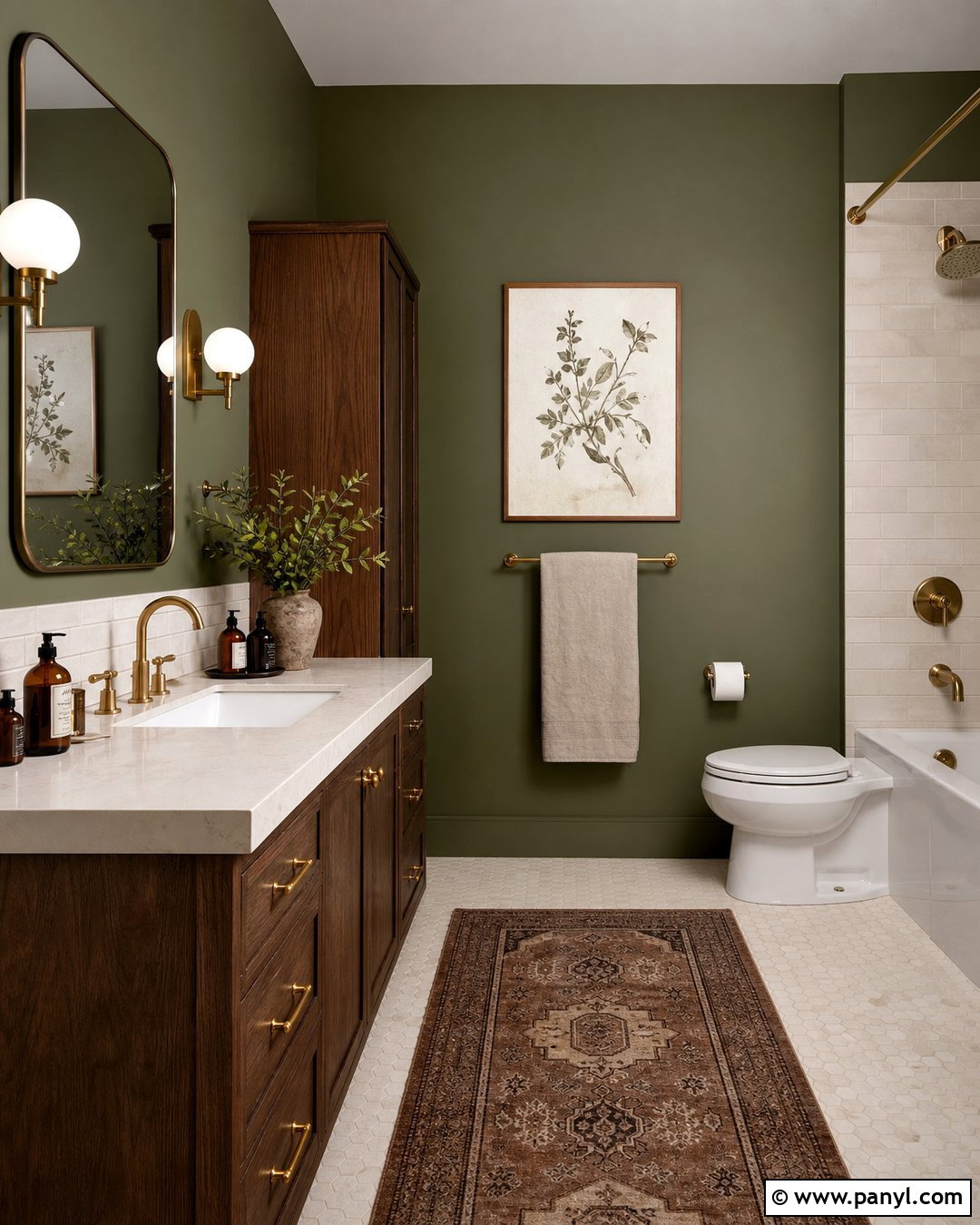
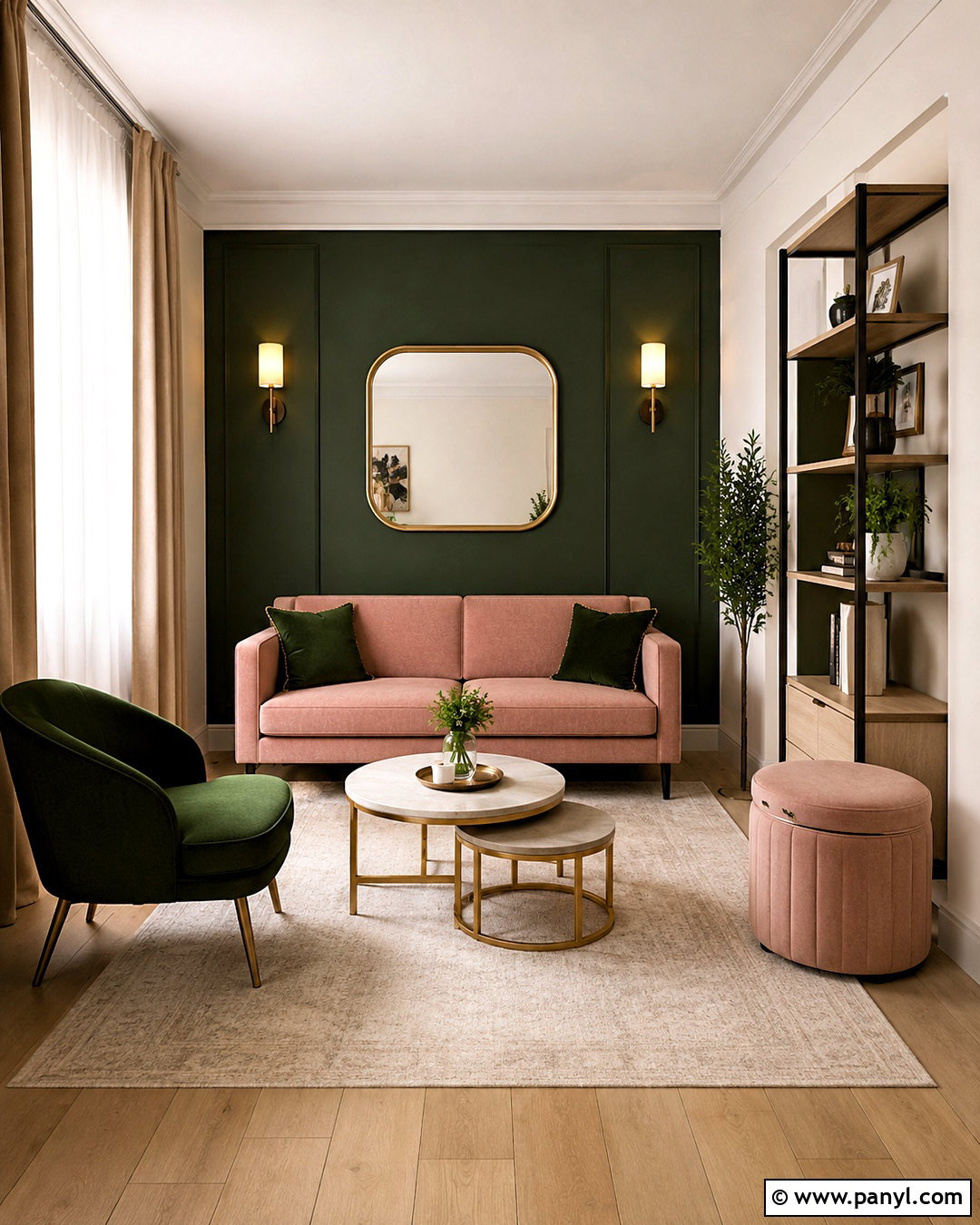
Olive green creates an earthy bathroom that feels richer and more grounded than pale sage. Use it with a walnut or dark oak vanity, creamy quartz countertop, and warm beige floor tile. A backsplash of ivory rectangular tiles brightens the sink area while allowing the painted walls to remain prominent. Antique brass hardware, amber glass bottles, and natural linen towels complement olive’s warm undertones. Add black accents sparingly through a mirror frame or shower enclosure. This scheme fits traditional, rustic, and midcentury bathrooms, depending on the shapes of the furniture and fixtures. For a balanced finish, paint the ceiling cream and repeat the olive color in a patterned rug or framed botanical print.
9. Soft Greige Bathroom Walls
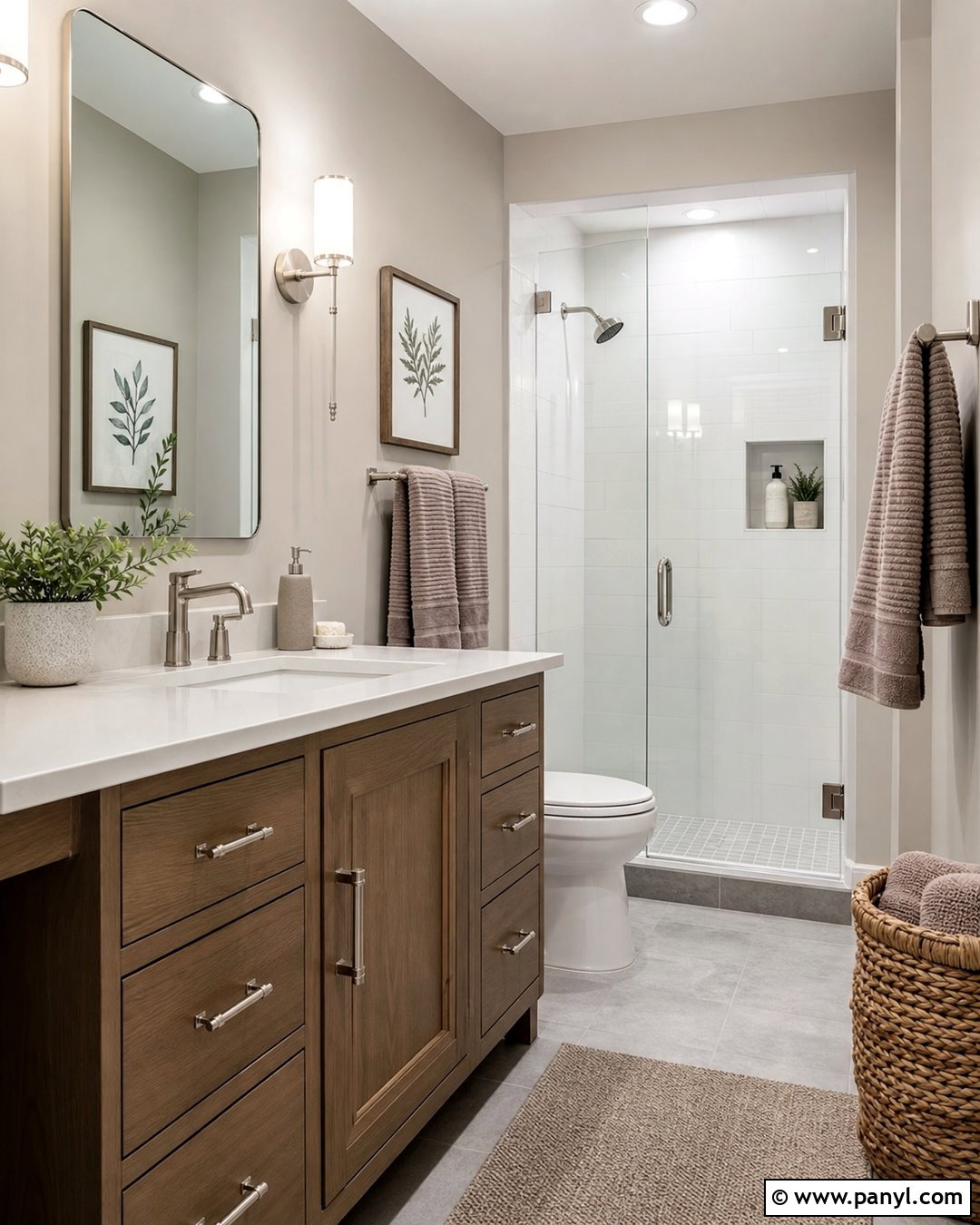
Soft greige walls provide an adaptable background for a bathroom with mixed warm and cool finishes. Select a balanced shade that connects white shower tile, gray flooring, and a wood vanity without appearing distinctly beige or gray. Add a white quartz countertop and polished nickel fixtures for a crisp but comfortable result. A frameless mirror, ribbed glass sconces, and neatly folded taupe towels create quiet texture. The walls can continue onto the trim for a low-contrast effect, especially in a compact space. Avoid filling the room with several unrelated neutrals. Instead, repeat the same greige tone through the bath mat and accessories, then introduce one natural accent, such as oak, rattan, or greenery, for warmth.
10. Black Bathroom Walls
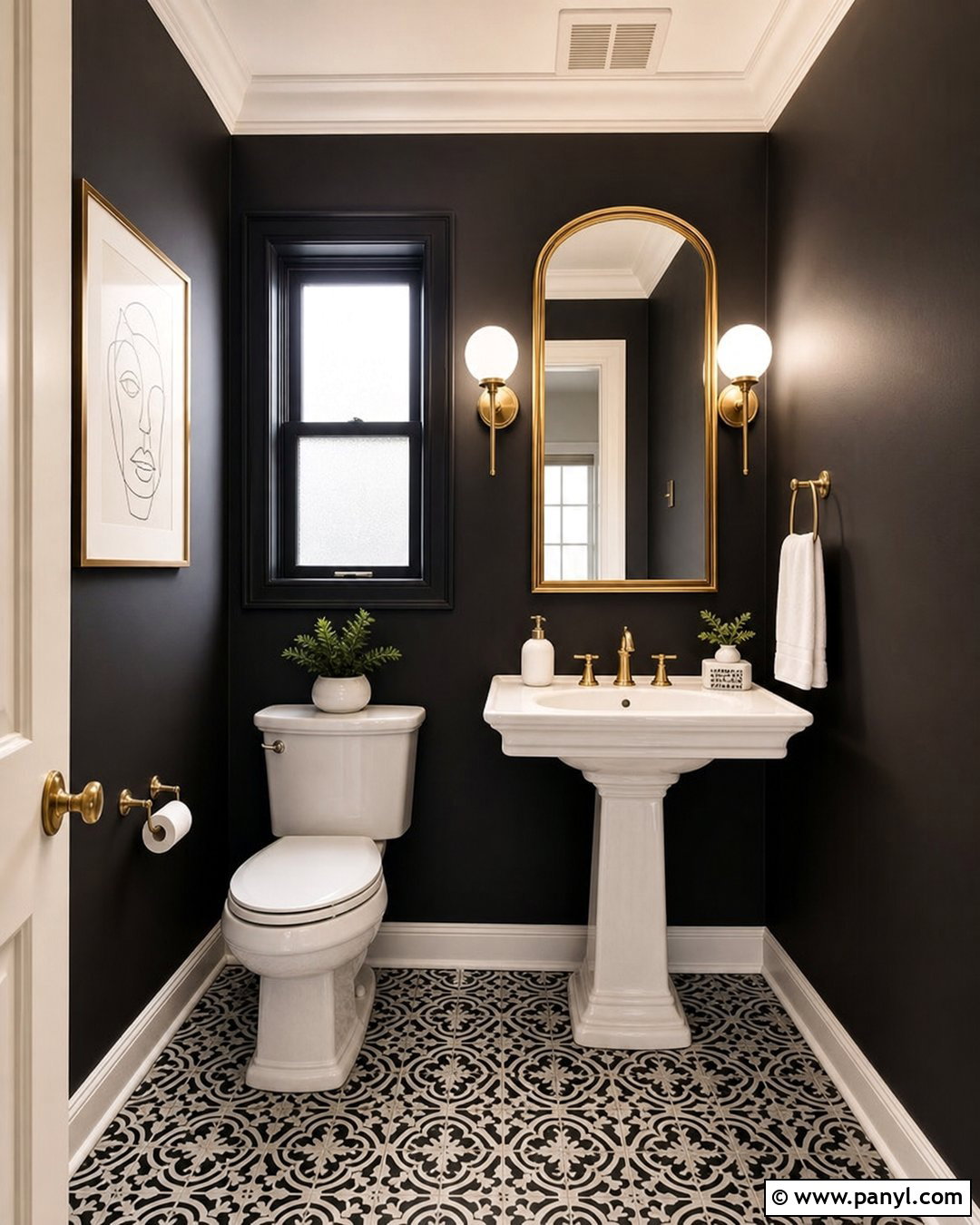
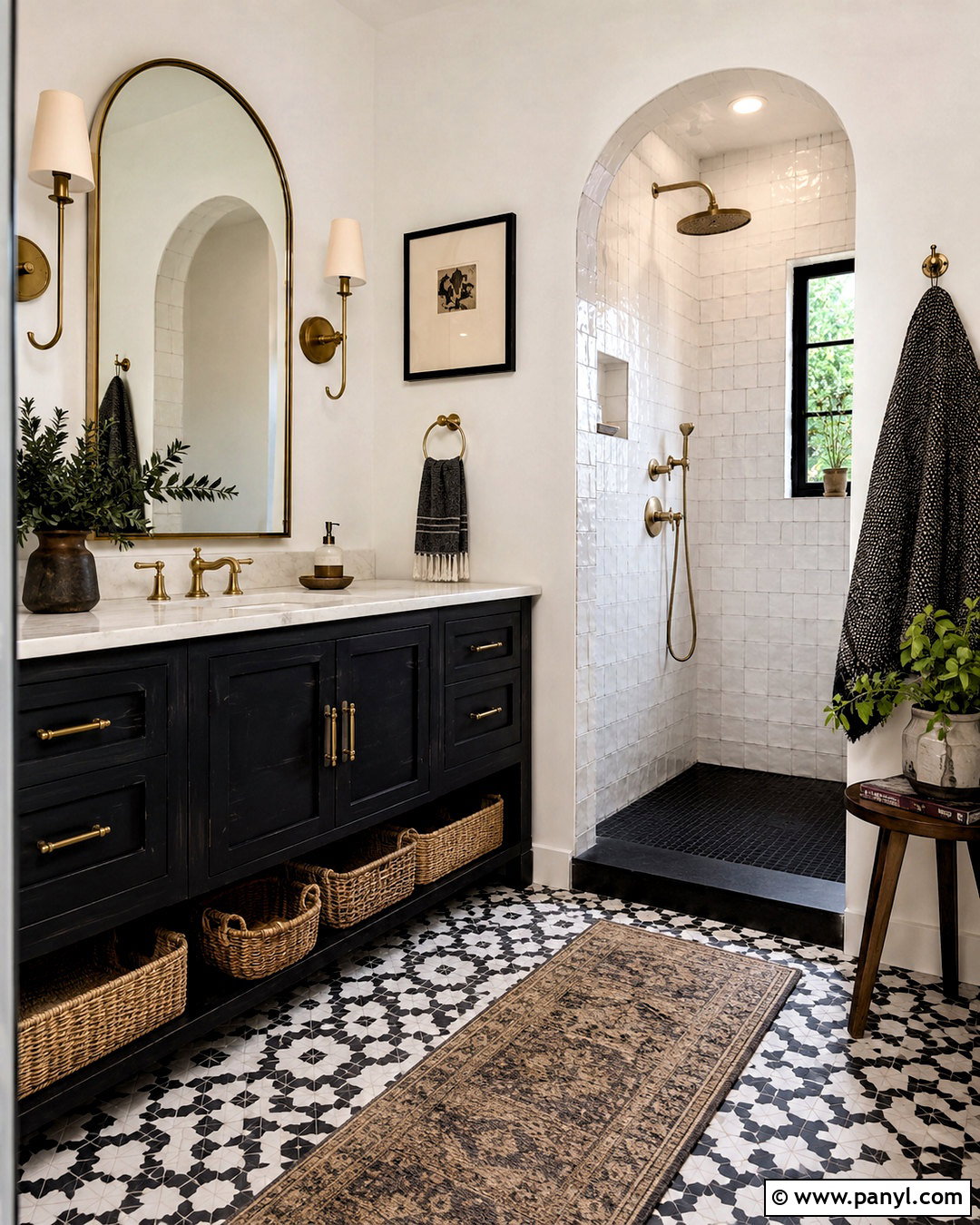
Black painted walls can make a powder room or well-lit bathroom feel striking and architectural. Keep the scheme balanced with a white pedestal sink, white ceiling, and patterned black-and-white floor tile. A large brass-framed mirror reflects light and becomes a warm focal point against the dark background. Use brass sconces with frosted shades, matching faucets, and a few white accessories for a clear, deliberate palette. In a full bathroom, restrict black paint to walls outside the direct shower area and include generous lighting. Glossy tile and polished surfaces will prevent the room from appearing flat. For greater depth, choose a softened off-black with subtle brown or charcoal undertones instead of a harsh true black.
11. Lavender Bathroom Walls
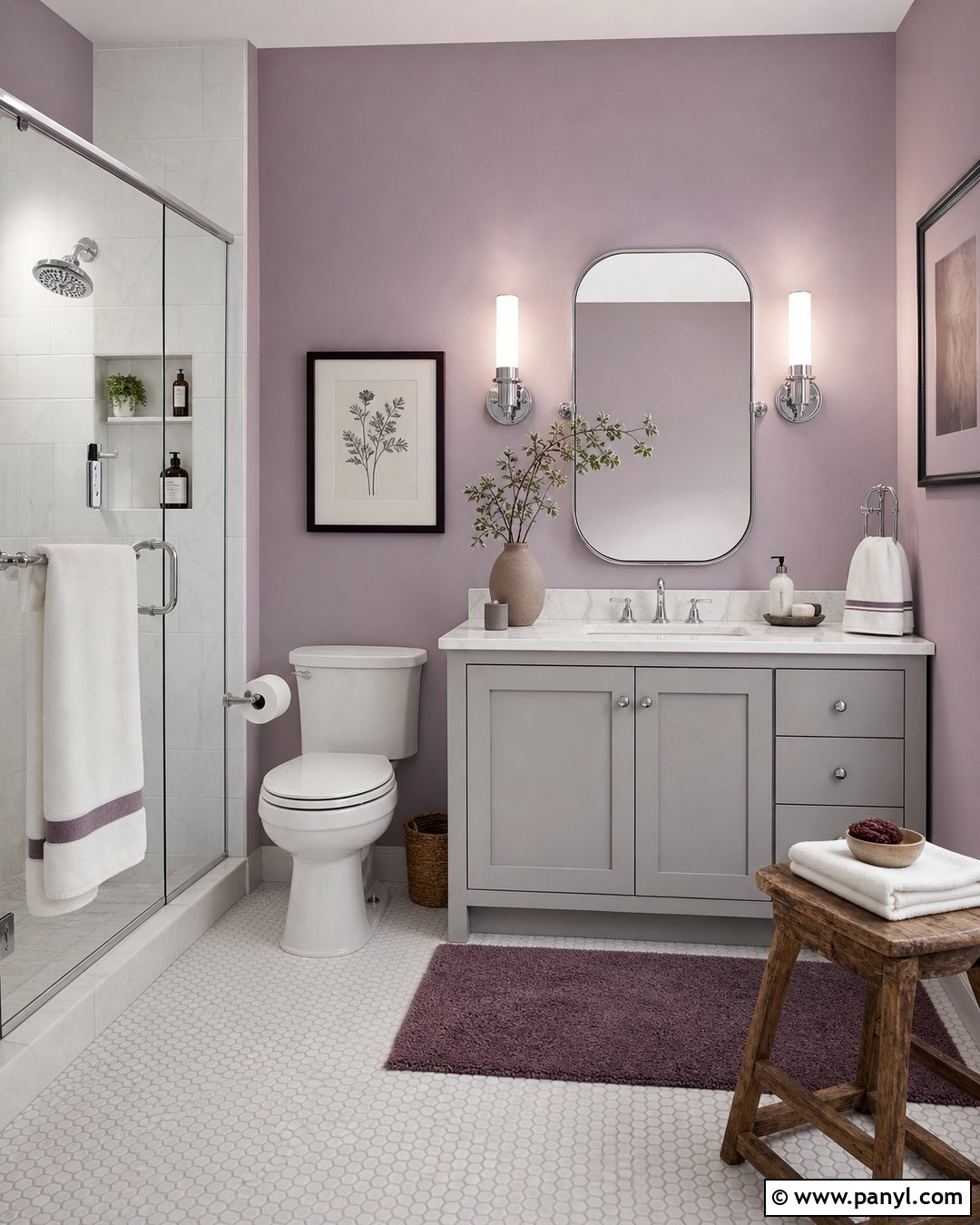
Dusty lavender walls add gentle color while maintaining the restful quality expected in a bathroom. Pair the paint with a light gray vanity, white marble-look countertop, and small white floor tiles. Polished chrome fixtures keep the palette bright, while a warm wood stool or shelf prevents the room from becoming too cool. Choose white towels with muted plum edging and display simple ceramic containers rather than heavily themed decorations. Lavender works especially well in bathrooms with soft natural light because the color shifts subtly throughout the day. For a more contemporary look, use flat-front cabinetry and a pill-shaped mirror. Traditional bathrooms can incorporate lavender through paneled walls, classic sconces, and vintage-inspired polished fixtures.
12. Butter Yellow Bathroom Walls
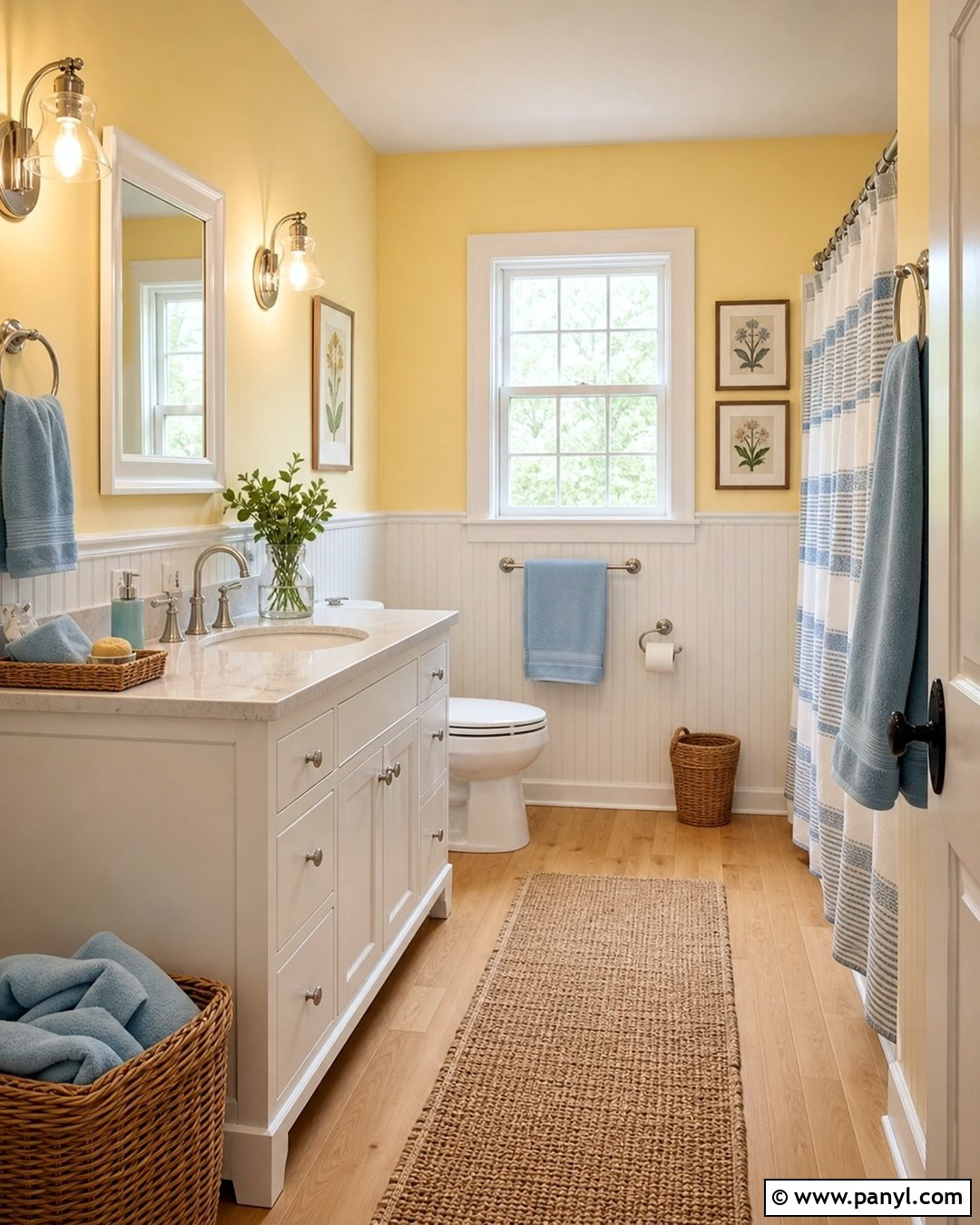
Butter yellow walls fill a bathroom with warmth and are especially helpful in a room that receives little direct sunlight. Choose a soft, creamy yellow rather than a vivid lemon shade. Combine it with white beadboard, a white vanity, and light oak flooring for a bright cottage-inspired design. Polished nickel faucets and clear glass sconces keep the room feeling fresh. Add pale blue towels, a simple striped shower curtain, and natural woven baskets for relaxed contrast. Yellow paint can amplify warm artificial light, so test the shade beside the vanity lighting before committing. A white ceiling and trim will frame the color neatly, while small botanical prints provide decoration without making the cheerful palette feel busy.
13. Deep Teal Bathroom Walls
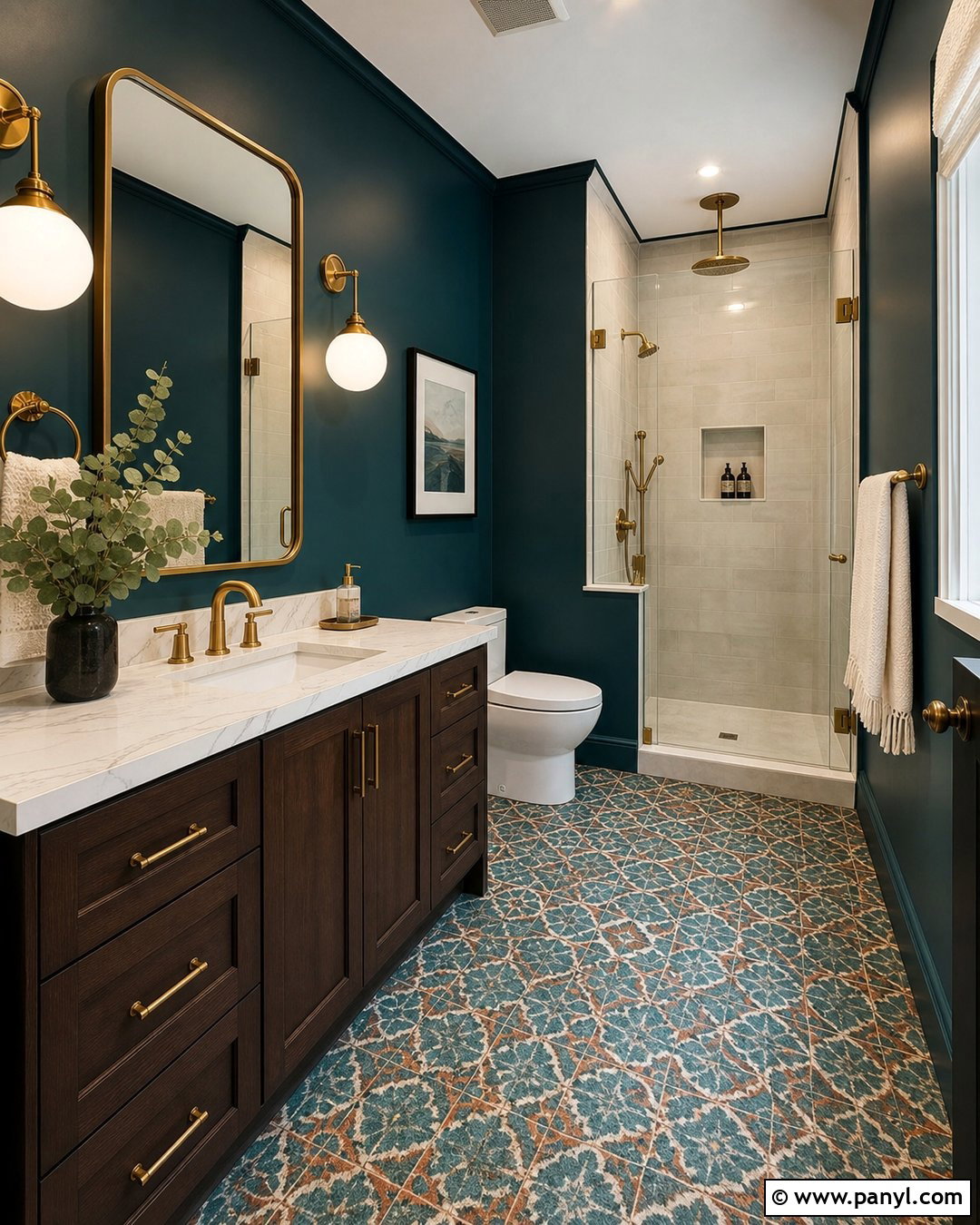
Deep teal walls create a jewel-toned bathroom that feels bold but still connected to nature. Pair them with a dark walnut vanity, veined white countertop, and creamy shower tile. Brushed brass fixtures bring out the green undertones and provide a warm contrast. Include a broad mirror and bright globe sconces to bounce light across the saturated walls. A patterned floor containing teal, cream, and muted rust can unite the entire scheme. Keep towels and countertop accessories simple so the paint remains the main feature. In a small powder room, continue teal across the trim and ceiling for an immersive effect. In a larger bathroom, use it above pale tile wainscoting to maintain visual balance.
14. Warm Taupe Bathroom Walls
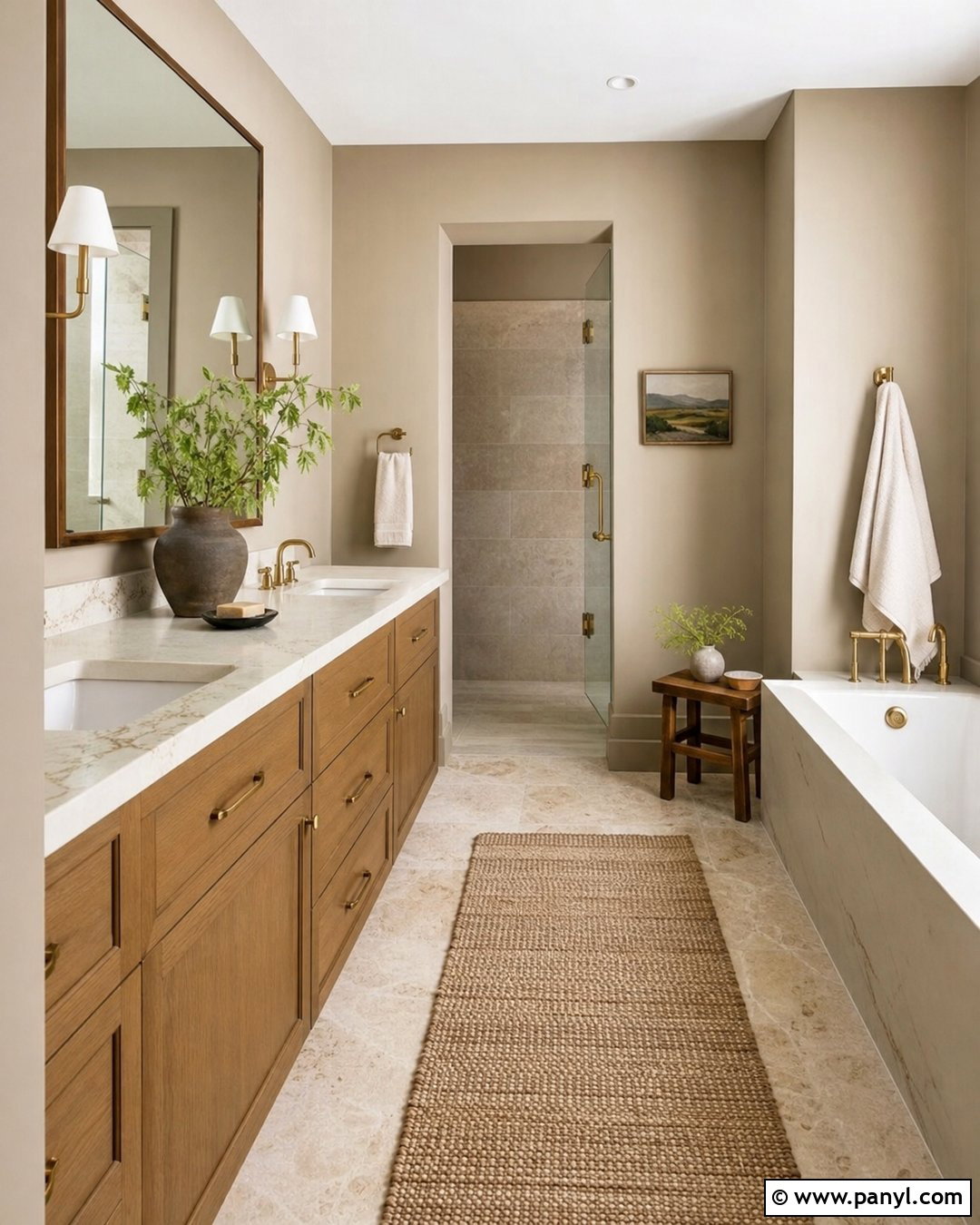
Warm taupe walls offer more depth than beige while remaining calm and easy to coordinate. Design the room with a cream stone floor, medium oak vanity, and softly veined quartz countertop. Use bronze or aged brass fixtures to reinforce the warm undertones. An oversized frameless mirror keeps the palette from feeling overly traditional, while ribbed ivory towels and a woven runner introduce texture. Taupe looks particularly cohesive beside travertine, tan tile, and other permanent finishes that can be difficult to match with cool gray paint. Carry the wall color onto the baseboards for a seamless appearance, but keep the ceiling a lighter cream. A ceramic vase and restrained landscape artwork finish the room without adding unnecessary color.
15. Coral Bathroom Walls
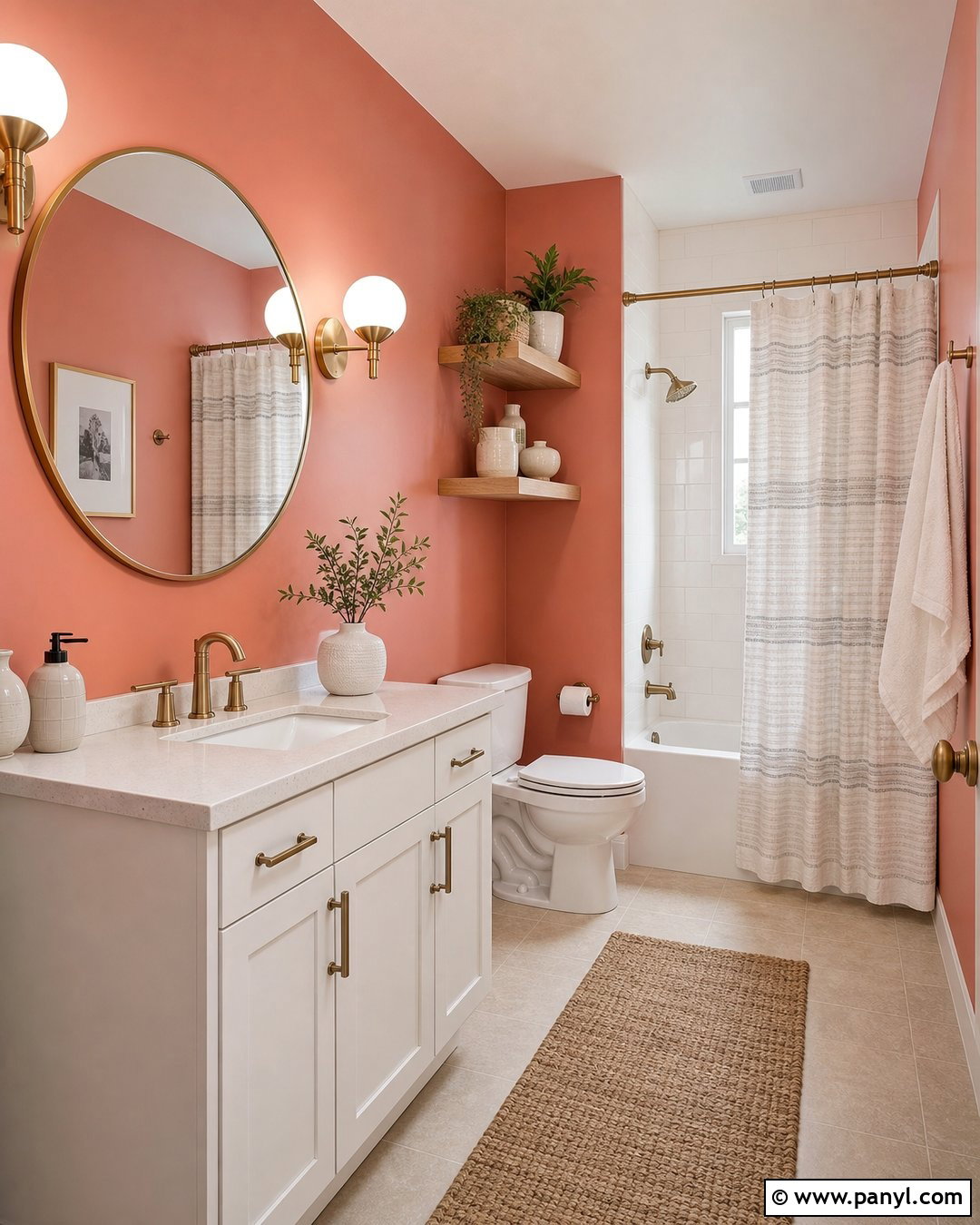
Soft coral walls give a bathroom lively warmth without the intensity of bright orange or red. Build the scheme around coral paint, a white vanity, and sandy beige floor tile. Brushed brass faucets, a rounded mirror, and simple globe lights create a polished modern look. Add white towels and a shower curtain patterned with thin coral and tan lines. Pale wood shelves can hold neatly arranged baskets and neutral ceramic containers. Coral works best when paired with limited accent colors, so avoid adding several competing brights. In a guest bathroom, paint all walls for an inviting effect. In a primary bathroom, use coral around the vanity and balance it with expansive white tile in the bathing area.
16. Red Brown Bathroom Walls
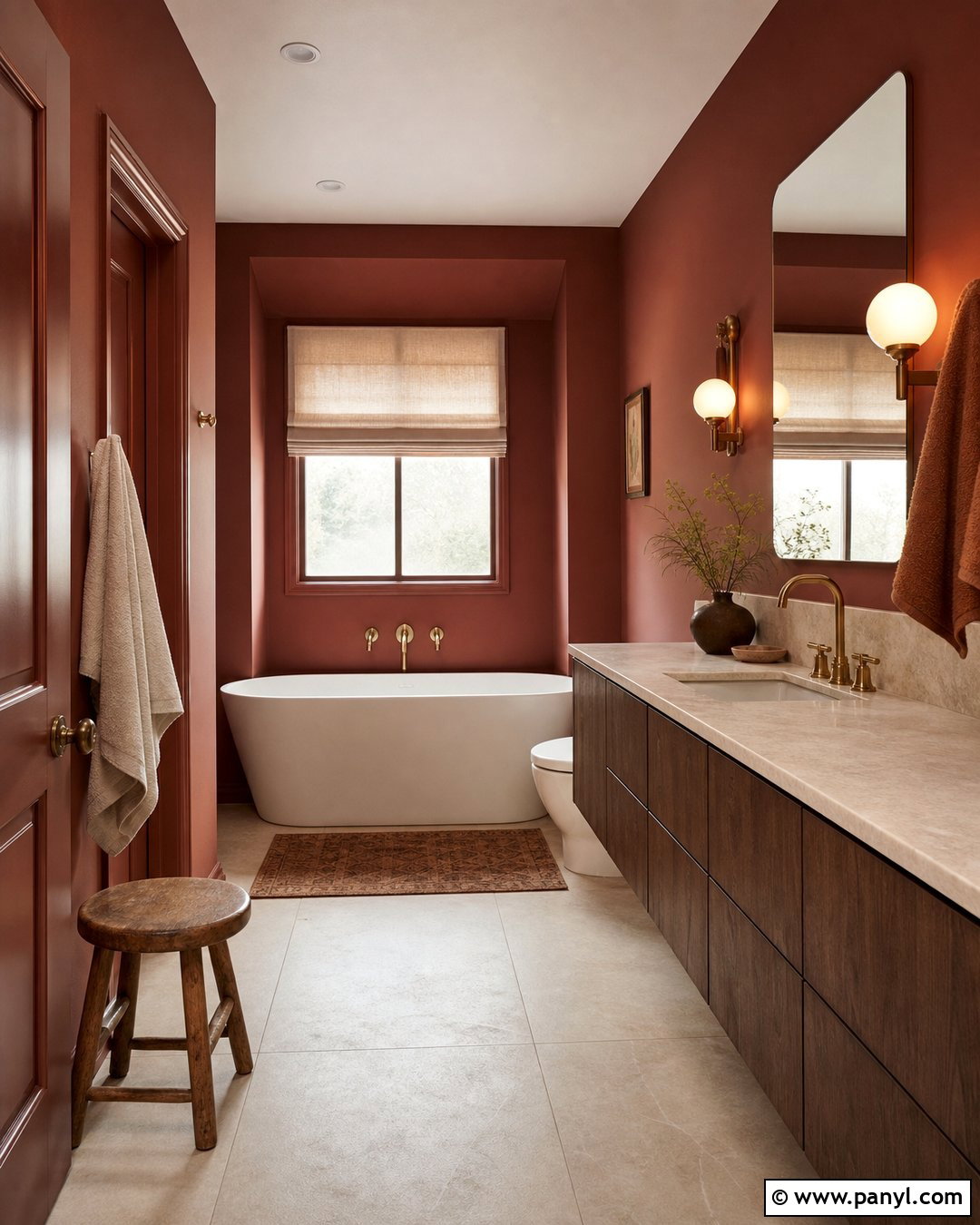
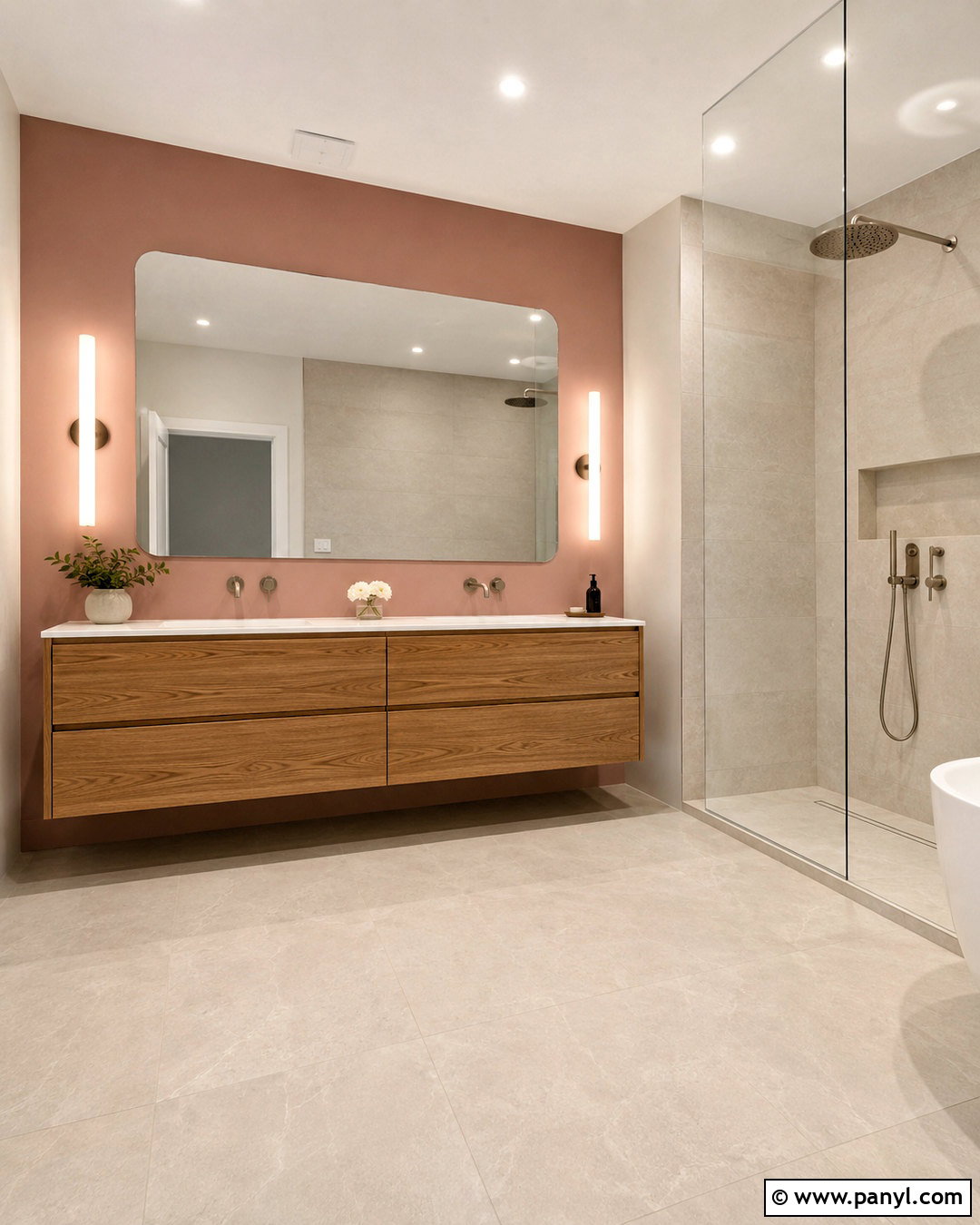
Red-brown walls produce a warm, cocooning bathroom that feels contemporary when combined with clean lines. Choose a muted clay or oxblood-leaning shade rather than a bright primary red. Pair it with a floating walnut vanity, beige stone countertop, and large cream floor tiles. Antique brass faucets and softly rounded wall lights enhance the richness of the palette. Keep the shower enclosure clear and the shower tile light to balance the darker paint. Add oatmeal towels, a rust-colored runner, and minimal pottery. This complete scheme is especially effective in powder rooms and bathrooms with strong natural light. Matching the door and trim to the walls will create a seamless, enveloping finish with fewer distracting visual boundaries.
17. Two Tone Bathroom Walls
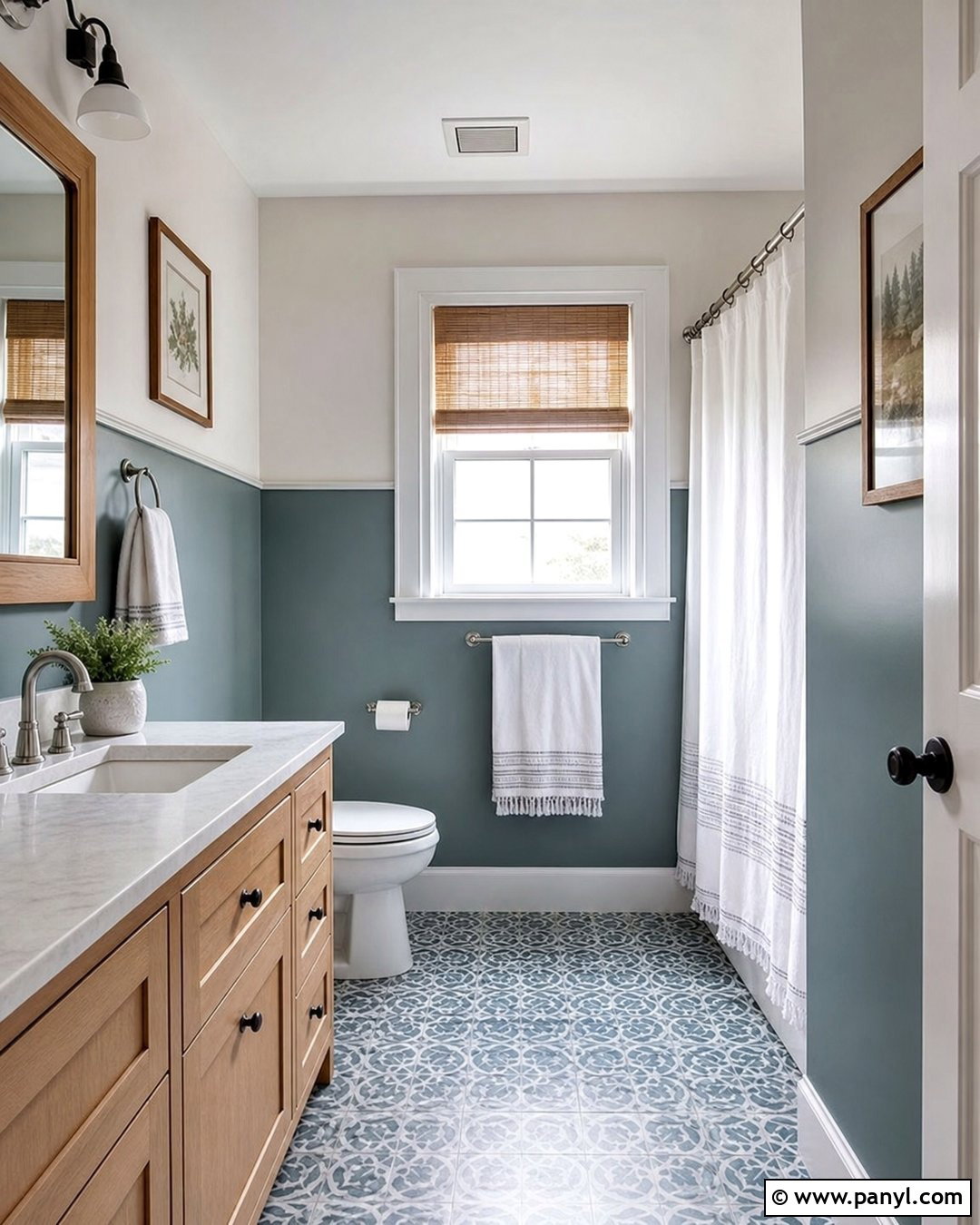
Two-tone walls bring structure to a bathroom while allowing both color and lightness. Paint the lower half in muted blue-green and the upper half in warm white, dividing the colors with a slim painted molding. Coordinate the lower shade with a white oak vanity, white countertop, and blue-gray patterned floor. Use polished nickel fixtures for a clean transition between the cool and warm elements. A white shower curtain, blue-green towels, and simple wood-framed artwork complete the room. Position the color break slightly above the vanity to avoid visually cutting through the mirror. This treatment can also make uneven walls feel more intentional and gives a family bathroom enough personality without covering every surface in a strong color.
18. Color Drenched Bathroom Walls
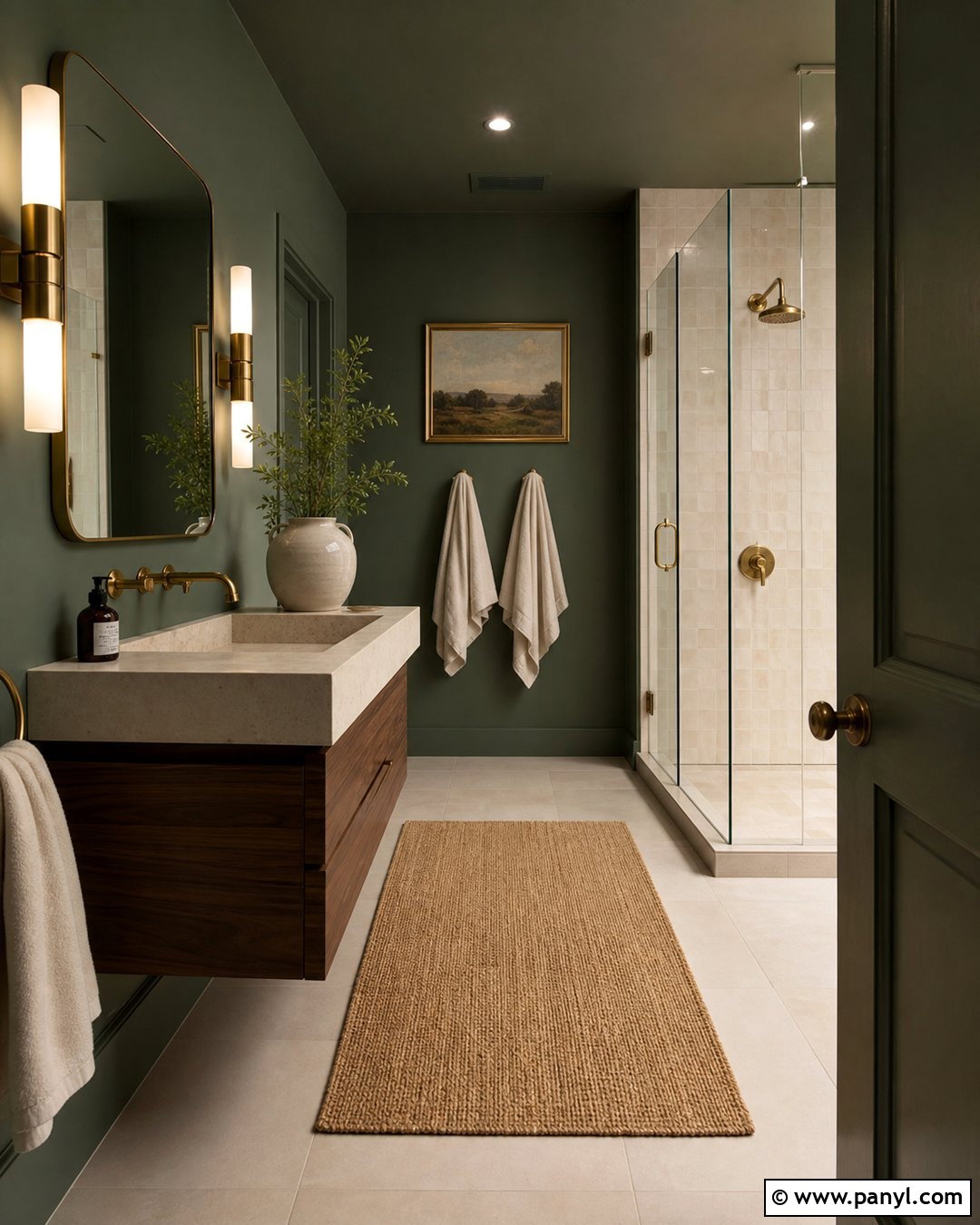
Color drenching gives a bathroom a seamless designer look by carrying one paint color across the walls, trim, door, and ceiling. A muted forest green works well for this approach because it creates depth without feeling overly bright. Pair the enveloping paint with a wall-mounted walnut vanity, pale stone sink, and aged brass fixtures. Use cream shower tile and a clear glass enclosure to provide a lighter visual break. A large mirror and bright wall sconces are important for keeping the room functional. Limit the accessories to folded ivory towels, one ceramic vase, and a natural bath mat. The continuous color reduces visual interruptions, helping a small powder room or compact bathroom appear cohesive and thoughtfully planned.
19. Painted Beadboard Bathroom Walls
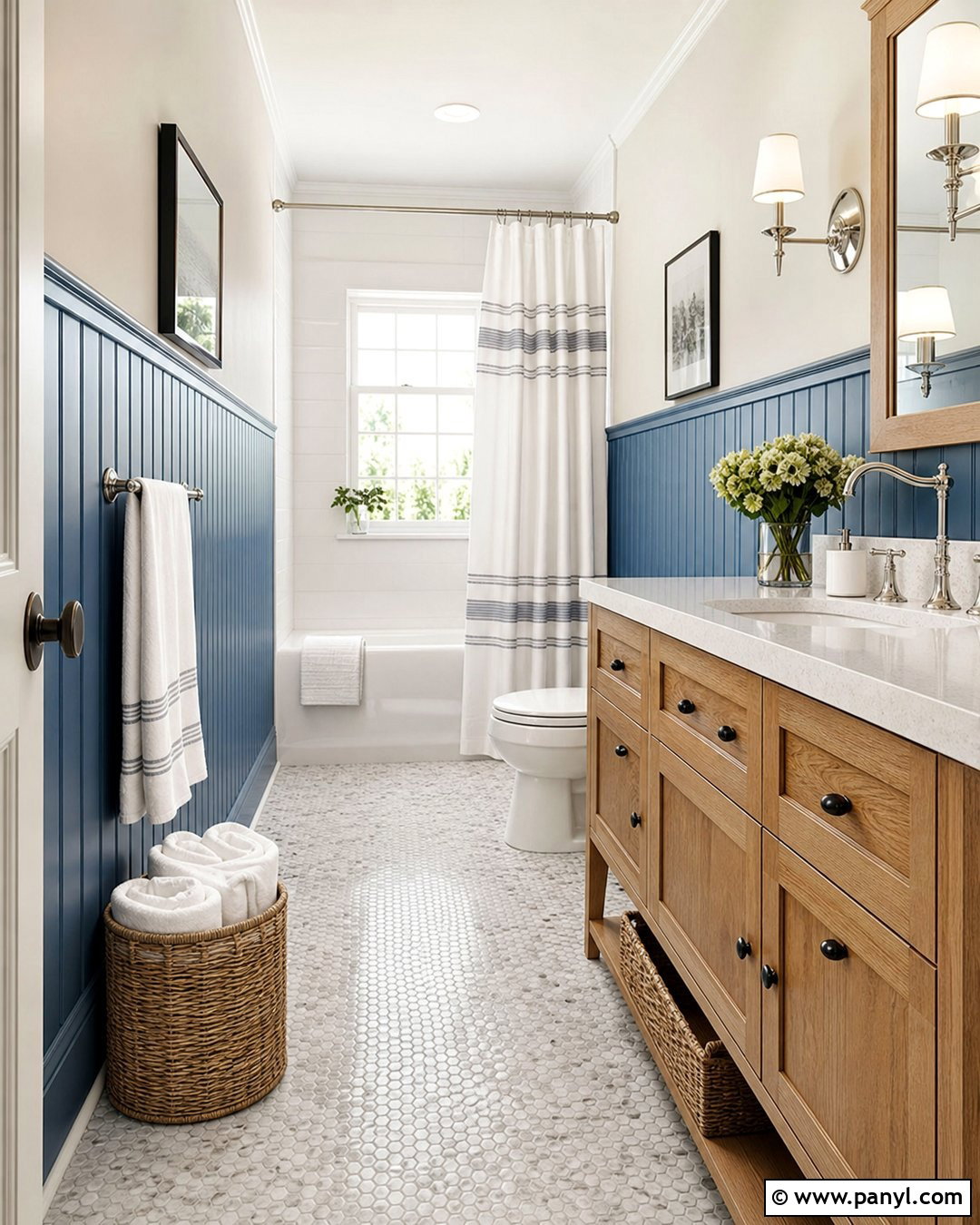
Painted beadboard adds architectural texture and practical character to a bathroom. Install it on the lower half of the walls and coat it in muted slate blue, then paint the upper walls a soft warm white. Use a white vanity with a wood countertop or a natural oak vanity with a white quartz top. Polished nickel faucets and traditional sconces support the classic look without making it feel dated. Finish the floor with small white-and-gray mosaic tile and add a striped shower curtain that repeats the wall colors. Keep the top rail simple and level with the vanity backsplash. This complete arrangement works particularly well in cottage bathrooms, family bathrooms, and older homes needing affordable architectural definition.
20. Half Painted Bathroom Walls
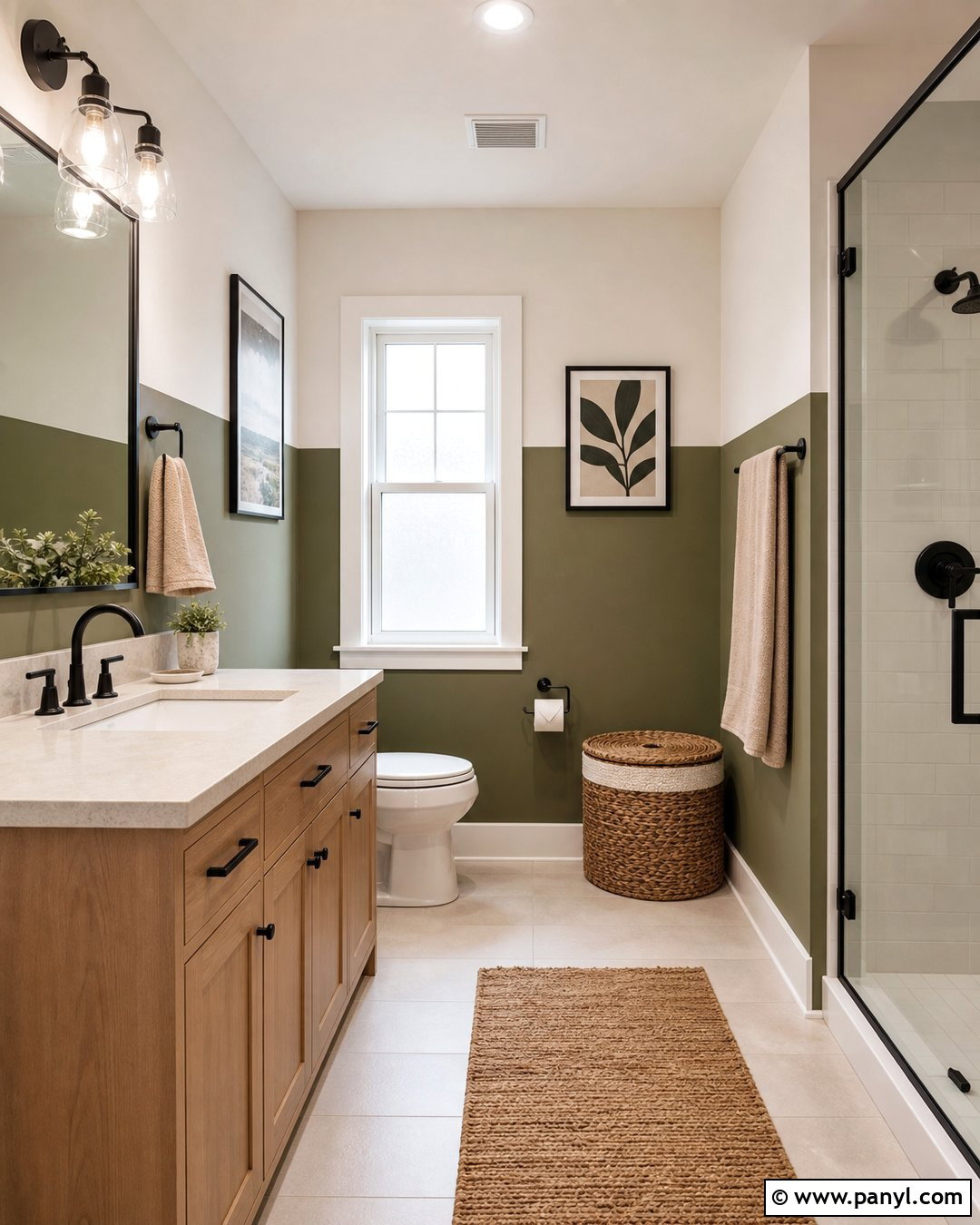
A half-painted wall treatment creates a crisp color block without requiring molding or paneling. Use earthy olive paint from the floor to approximately two-thirds of the wall height, leaving the upper section and ceiling warm white. Pair the design with a light wood vanity, cream countertop, and simple off-white floor tile. Matte black fixtures and a black-framed mirror create clear definition against both colors. Align the paint break with the top of a window or tall backsplash for a purposeful result. Add neutral towels, a woven hamper, and restrained black-and-white artwork. This approach suits modern bathrooms because it introduces graphic structure while remaining affordable, easy to repaint, and adaptable to existing fixtures and tile.
21. Limewash Effect Bathroom Walls
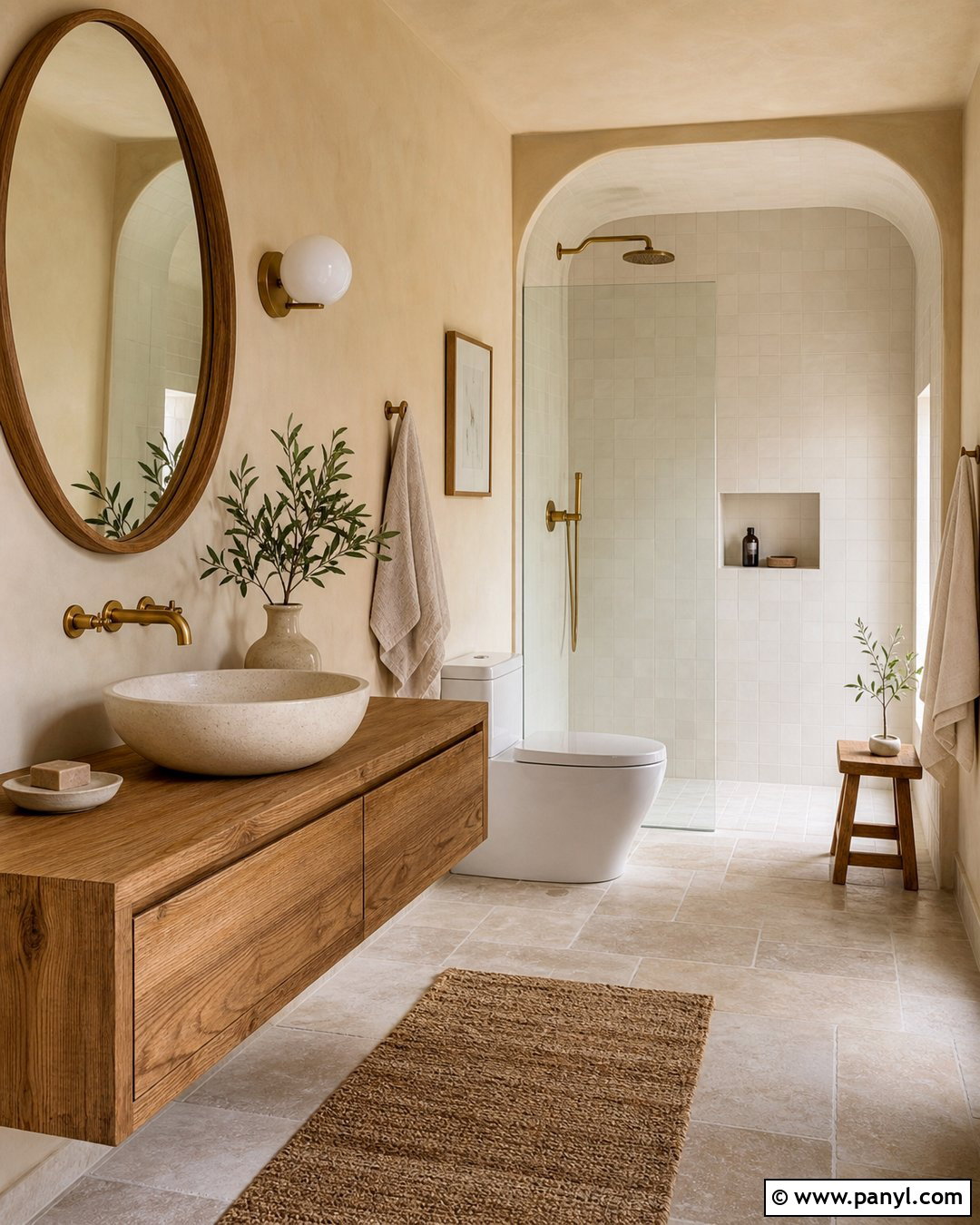
A limewash-effect finish gives bathroom walls soft movement and an aged, mineral appearance. Choose a warm beige or pale mushroom tone that complements natural stone rather than competing with it. Pair the textured walls with a floating oak vanity, cream vessel sink, and brushed brass wall-mounted faucet. Use honed limestone-look flooring and simple ivory shower tile to continue the organic palette. A rounded wood mirror, linen towels, and handmade ceramic accessories complete the restful room. Apply an appropriate bathroom-safe decorative coating outside direct splash zones and follow its preparation requirements carefully. Keep the color variation subtle so the walls look gently layered rather than heavily mottled. Bright, even lighting will reveal the texture beautifully.
22. Geometric Painted Bathroom Walls
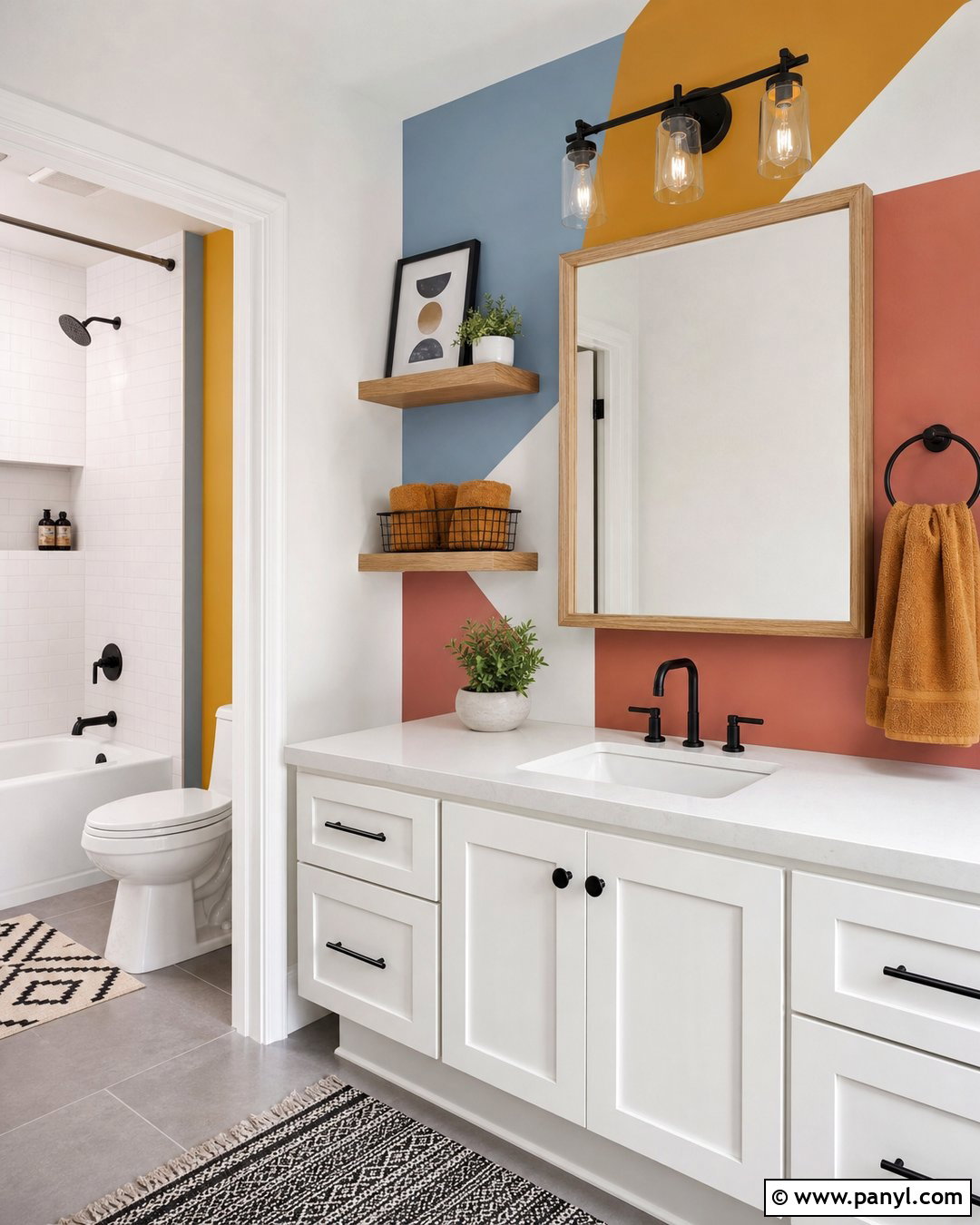
Geometric painted walls can energize a children’s or guest bathroom without relying on wallpaper. Create broad overlapping blocks in dusty blue, muted mustard, warm white, and soft terracotta on the vanity wall. Keep the other walls warm white so the pattern remains focused. A simple white vanity, pale wood mirror, and light gray floor tile provide a neutral foundation. Use matte black faucets and cabinet pulls to outline the colorful scheme. Solid towels in two colors from the mural will make the room feel coordinated. Choose large, uncomplicated shapes rather than many small angles, and place the design around the mirror instead of behind it. The finished space will feel playful, modern, and organized.
23. Painted Arch Bathroom Wall
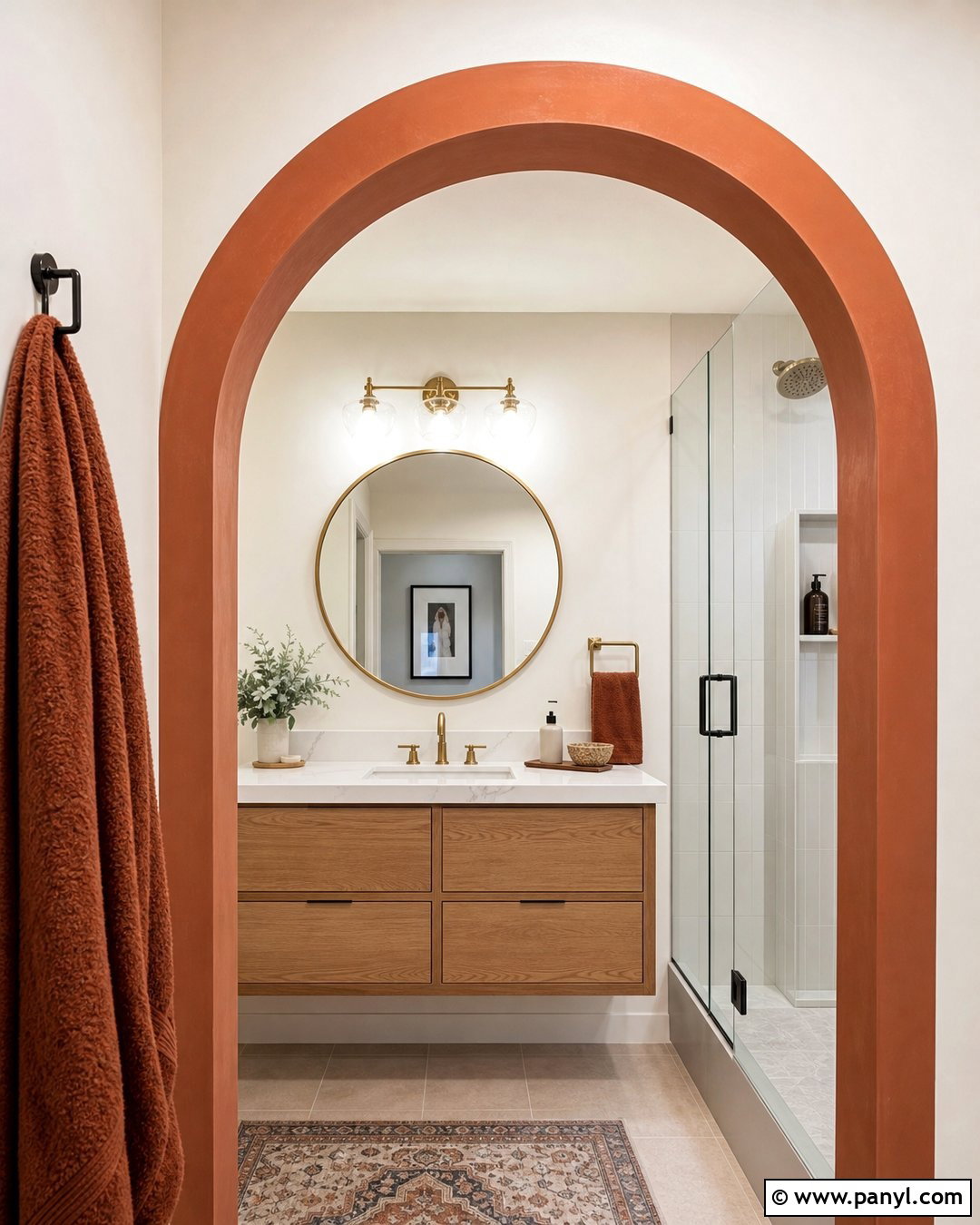
A painted arch creates a clear focal point behind the bathroom vanity and can visually frame an ordinary mirror. Paint a wide terracotta arch on a creamy white wall, extending it from just below the vanity to above the mirror. Pair it with a floating oak cabinet, white quartz countertop, and brushed brass faucet. Choose a simple round mirror that fits comfortably inside the painted shape. Beige floor tile, white shower surfaces, and rust-colored towels will connect the accent to the rest of the room. Keep surrounding decor minimal so the arch remains easy to read. This affordable treatment adds architecture to a plain bathroom while requiring less commitment than painting every wall a saturated color.
24. Striped Bathroom Walls
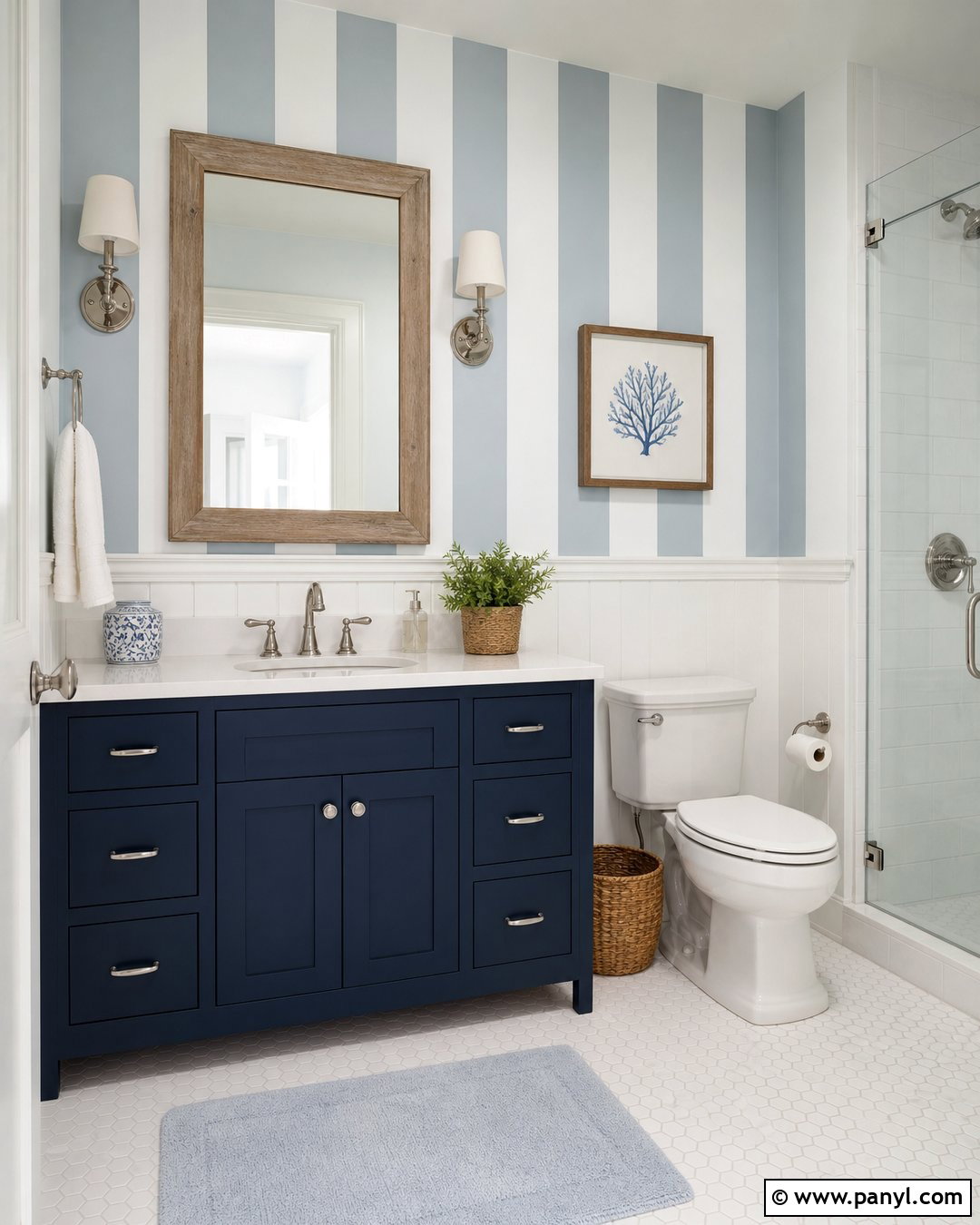
Wide painted stripes can give a bathroom a fresh coastal character without becoming overly themed. Alternate soft blue-gray and warm white vertical stripes across the upper walls, then use solid white paneling below. Pair the walls with a navy vanity, white quartz countertop, and polished nickel fixtures. A light oak mirror adds warmth, while small white hexagonal floor tiles keep the room bright. Choose solid white towels and a pale blue bath mat rather than adding more patterns. Make every stripe the same width and use clean painter’s tape for sharp edges. Vertical stripes can emphasize ceiling height, making this complete scheme particularly useful in a small guest bathroom or narrow hall bathroom.
25. Painted Bathroom Wall Mural
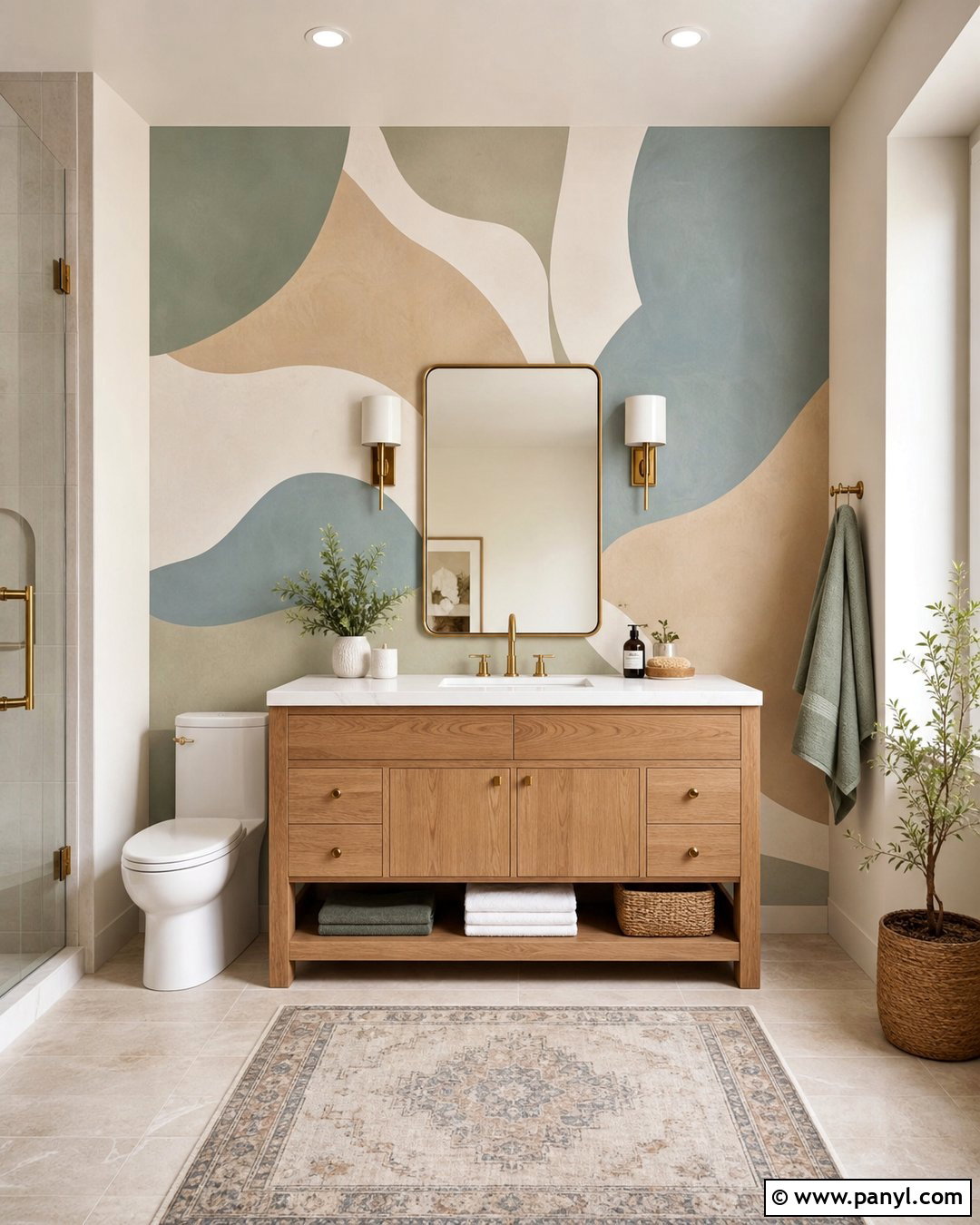
A simple painted mural can make a bathroom distinctive while preserving a practical, washable wall surface. Create an abstract landscape using broad shapes in sage green, dusty blue, sand, and warm white behind a freestanding tub or vanity. Keep the remaining walls soft cream to give the mural visual space. Combine it with a natural oak vanity, white countertop, brushed brass fixtures, and pale stone flooring. Repeat one mural color through the towels and another through a small bath rug. Avoid intricate details that could make the room feel cluttered. A matte-looking bathroom-rated finish will give the artwork a sophisticated appearance, while bright lighting and restrained accessories allow the complete composition to remain the focal point.
Conclusion:
The best bathroom paint scheme considers far more than an attractive color. Tile undertones, vanity materials, flooring, lighting, fixtures, and room size all influence the finished effect. Before painting, test large samples beside every permanent surface during daytime and under artificial light. Choose a bathroom-appropriate product, prepare the walls carefully, and maintain reliable ventilation for a longer-lasting finish. Pale neutrals can open the room, earthy colors add warmth, and saturated shades give smaller spaces memorable character. Details such as coordinated trim, towels, mirrors, and hardware help every palette feel complete. Use these 25 Painted Walls Bathroom Ideas as practical starting points, then adjust the colors and materials to suit your existing bathroom.

Related Ideas and Inspiration:
Leave a Reply