
A single painted wall can change the mood of a bathroom without requiring a full remodel. These one wall painted bathroom ideas use color to create a clear focal point while coordinating the vanity, flooring, fixtures, lighting, and decor. The best wall is often behind the vanity, bathtub, or toilet because it already attracts attention. Soft greens and warm neutrals create a restful setting, while navy, charcoal, terracotta, and teal bring stronger contrast. Always choose bathroom-friendly paint with a washable, moisture-resistant finish, and test the color beside existing tile in changing light. Whether your space is modern, coastal, farmhouse, or traditional, the following complete looks offer practical inspiration through 20 One Wall Painted Bathroom Ideas.

1. Sage Green Bathroom Wall
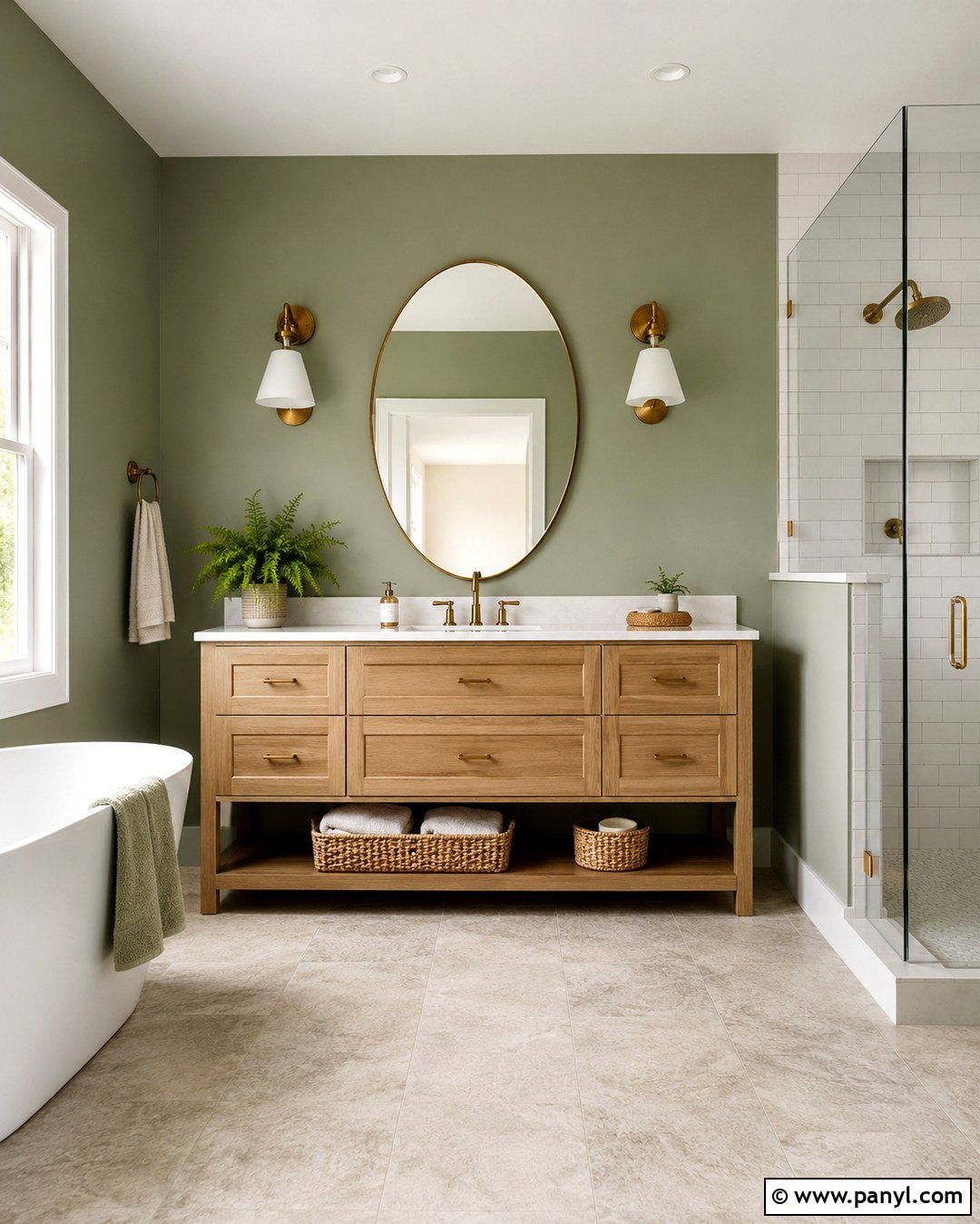
A soft sage green wall behind the vanity creates a calm focal point without overwhelming a small bathroom. Keep the remaining walls warm white so the green feels fresh and defined. Choose a light oak vanity with a white quartz counter, an oval mirror, and brushed brass sconces for gentle warmth. White subway tile around the shower provides a clean background, while pale stone-look flooring adds subtle texture. Repeat the sage color through one bath mat or hand towel rather than covering the room in matching accessories. A woven basket and a small potted fern complete the natural look. This arrangement works especially well in bathrooms with morning sunlight because the warm wood and metallic accents prevent sage paint from appearing too cool.
2. Navy Blue Bathroom Wall
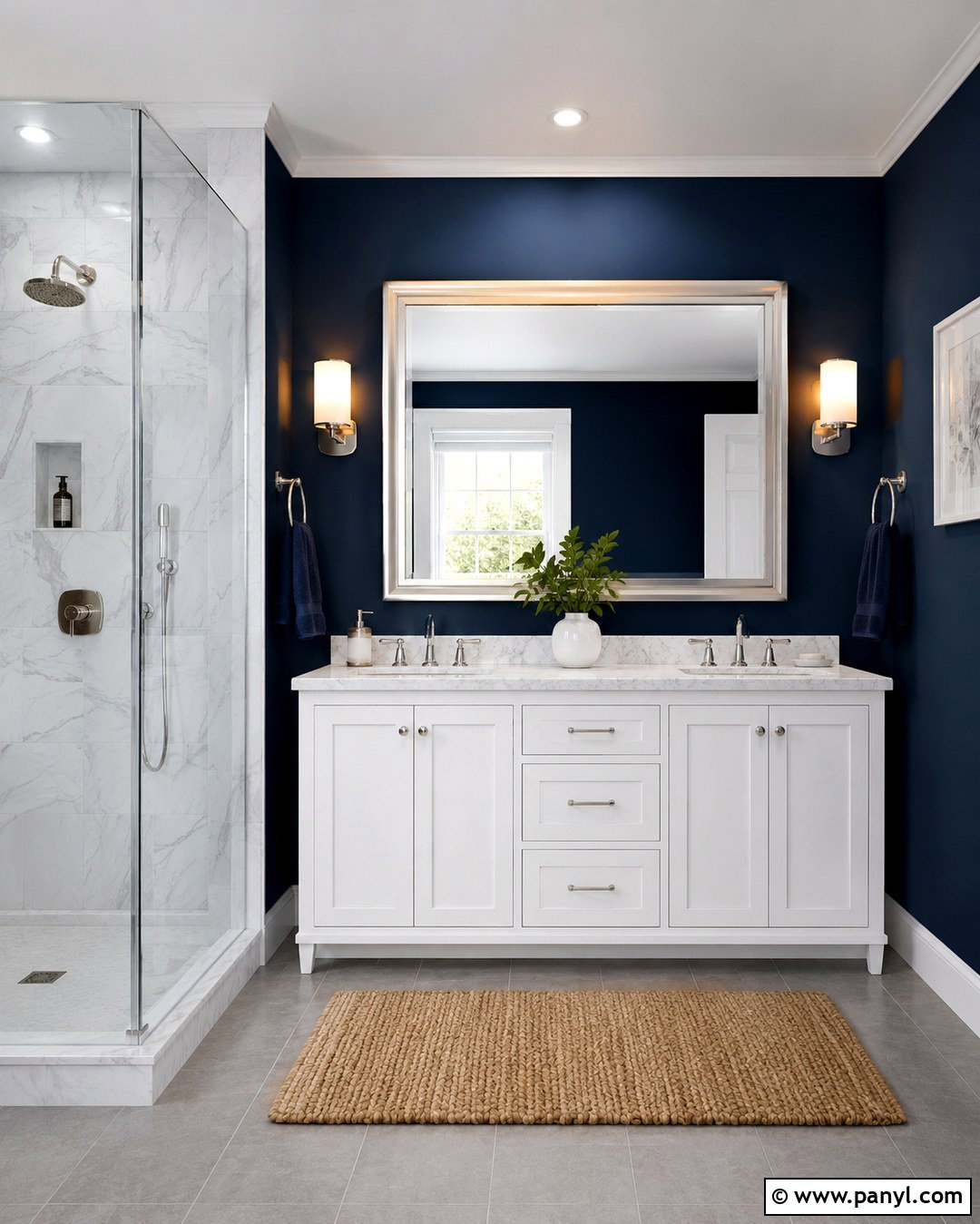
Deep navy paint can make the vanity wall look tailored and substantial, especially when surrounded by crisp white surfaces. Install a white shaker vanity with polished nickel hardware to create a sharp contrast against the painted wall. A wide framed mirror and two opal glass sconces keep the dark color from absorbing too much light. Use white marble-look tile in the shower and light gray porcelain flooring to maintain an open atmosphere. Navy towels can connect the accent wall to the rest of the room, but add a warm natural-fiber rug to soften the palette. This complete scheme suits traditional and transitional bathrooms because it combines classic colors with simple finishes. Good overhead lighting is essential for keeping the space clear, functional, and inviting.
3. Terracotta Bathroom Wall
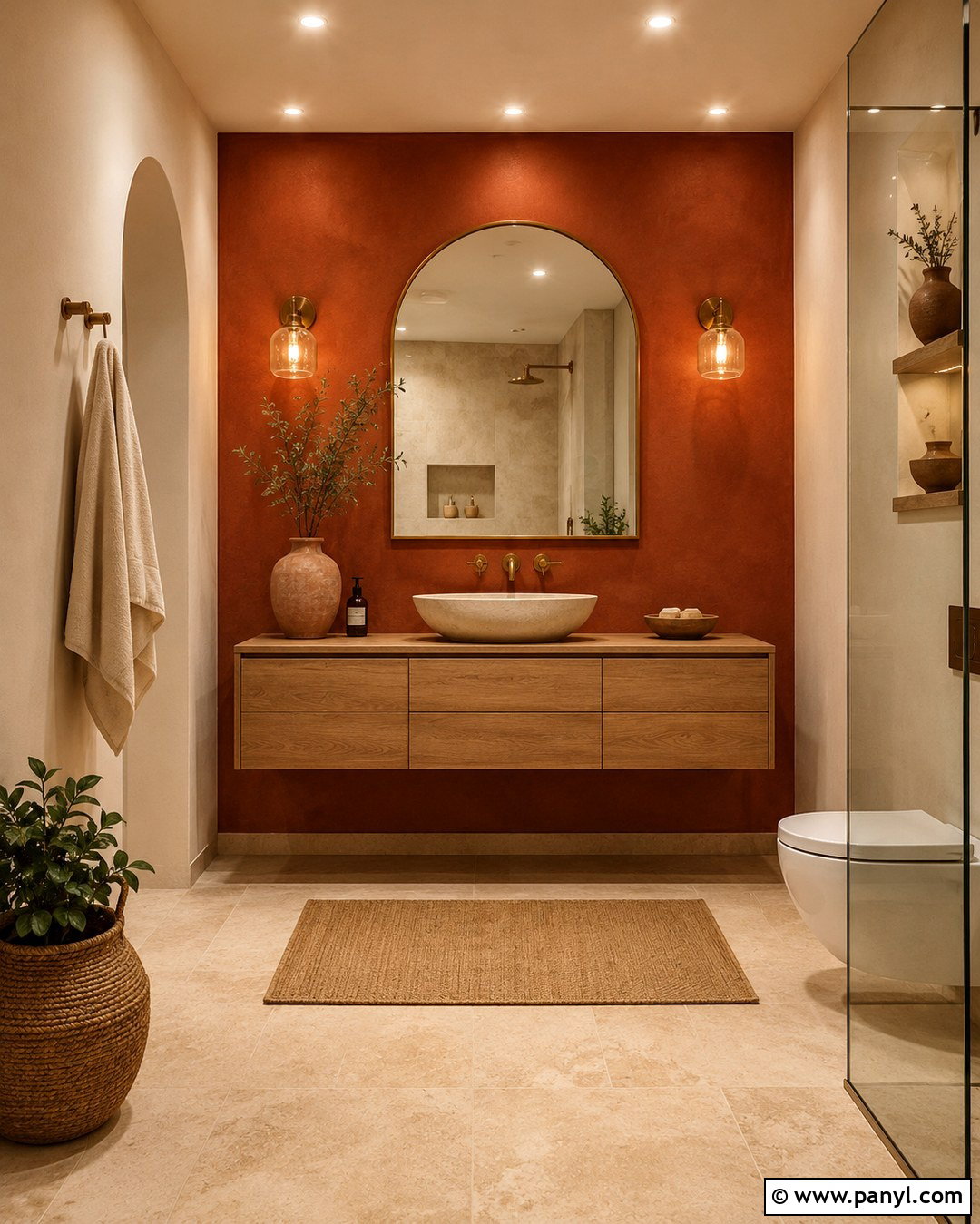
Warm terracotta gives a bathroom an earthy, sun-washed character that pairs beautifully with cream and natural wood. Paint the wall behind a floating oak vanity, then keep the other walls soft ivory to balance the stronger color. Select an off-white vessel sink, an arched mirror, and aged brass fixtures for a relaxed Mediterranean influence. Cream limestone-look floor tiles continue the warm undertones without competing with the feature wall. Finish the room with oatmeal towels, a small clay vase, and one leafy plant in a woven container. Avoid bright white accessories, which can look harsh beside terracotta. Instead, choose soft neutral materials with visible texture. The finished bathroom feels warm and layered while remaining simple enough for an average home or compact guest bath.
4. Charcoal Bathroom Wall
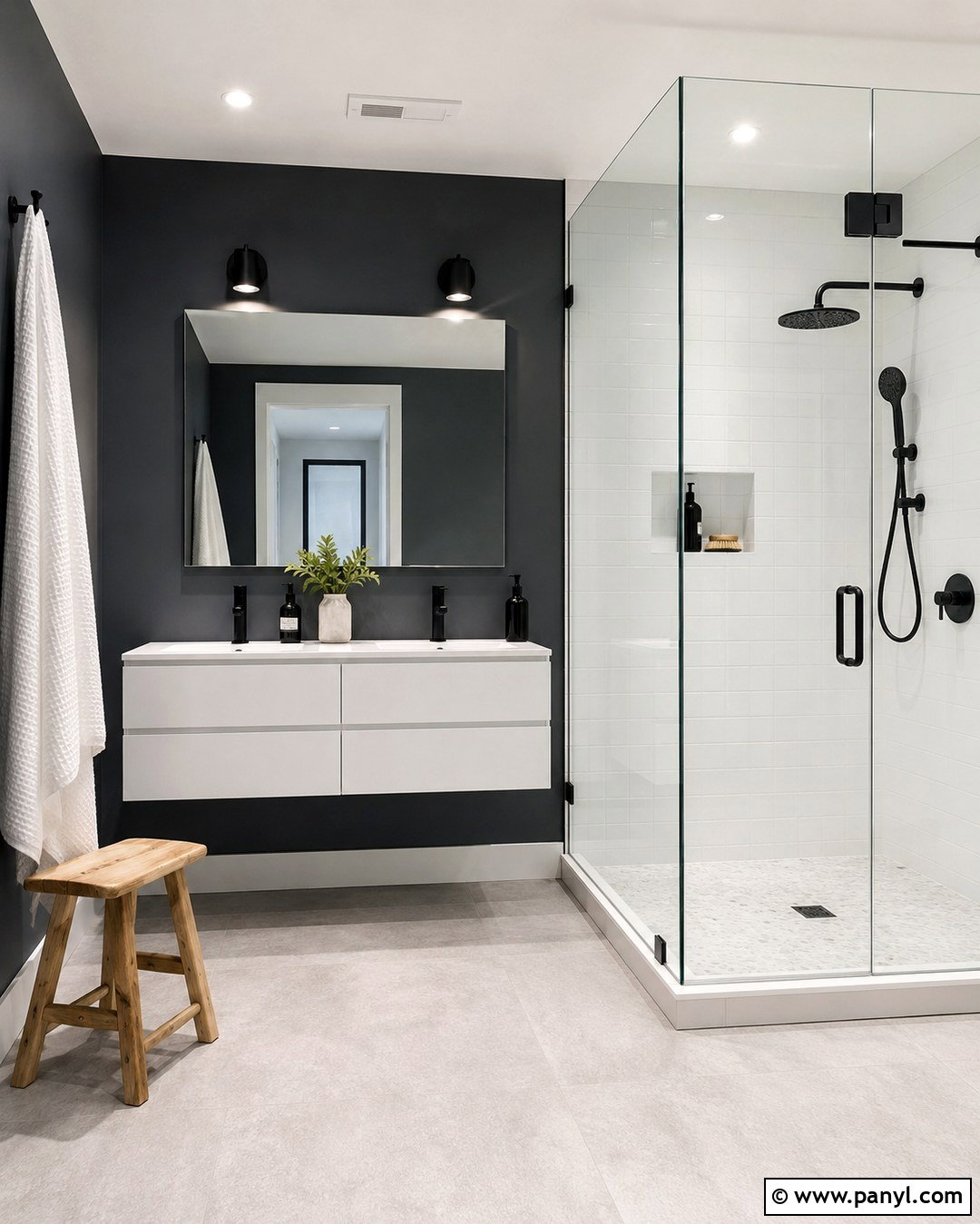
A charcoal wall can give a basic bathroom a polished modern edge when the rest of the design stays light. Position the color behind a wall-mounted white vanity with flat-front drawers and matte black pulls. Add a large frameless mirror to reflect more of the room and keep the focal wall from feeling heavy. White shower tile, pale gray flooring, and a clear glass enclosure create a clean contrast. Choose chrome faucets if you want a brighter finish, or use matte black fixtures for a seamless monochromatic effect. A white waffle shower curtain, simple towels, and one pale wood stool provide softer texture. This look works best with strong ceiling lighting and balanced vanity lights. The result is dramatic, practical, and uncluttered rather than dark or enclosed.
5. Dusty Blue Bathroom Wall
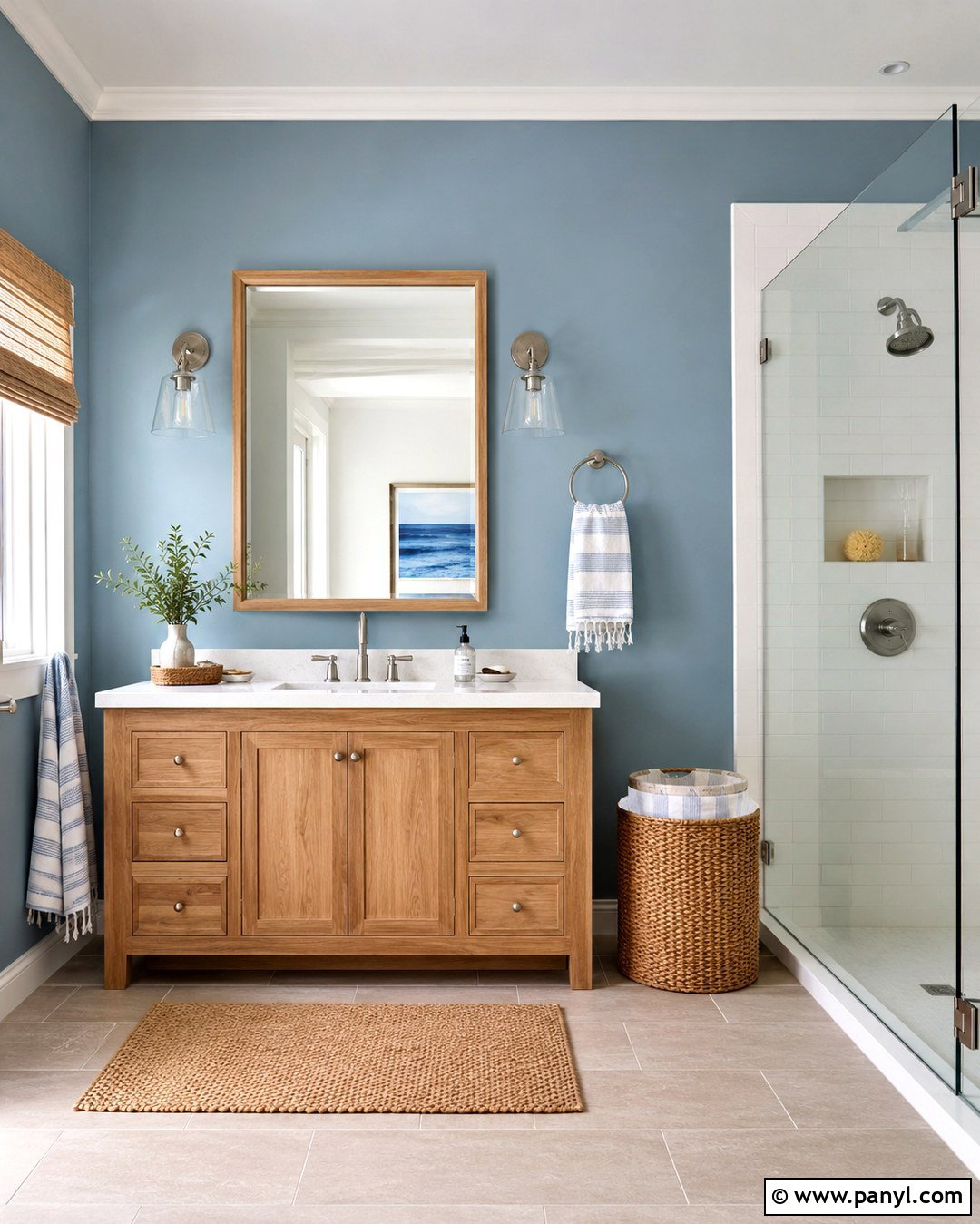
Dusty blue creates a peaceful bathroom that feels coastal without relying on themed decor. Paint the wall behind the vanity in a muted blue with gentle gray undertones, then use warm white on the surrounding walls. A natural oak vanity, white countertop, and brushed nickel faucet keep the palette light and approachable. Add a rectangular mirror with a thin wood frame and clear glass sconces for an airy finish. Pale beige floor tile introduces warmth and prevents the blue from feeling cold. Use striped white-and-blue hand towels sparingly, along with a woven hamper and a simple ceramic tray. Instead of obvious beach accessories, select organic textures and streamlined pieces. The completed space feels relaxed, clean, and suitable for either a primary bathroom or a welcoming guest bathroom.
6. Blush Pink Bathroom Wall
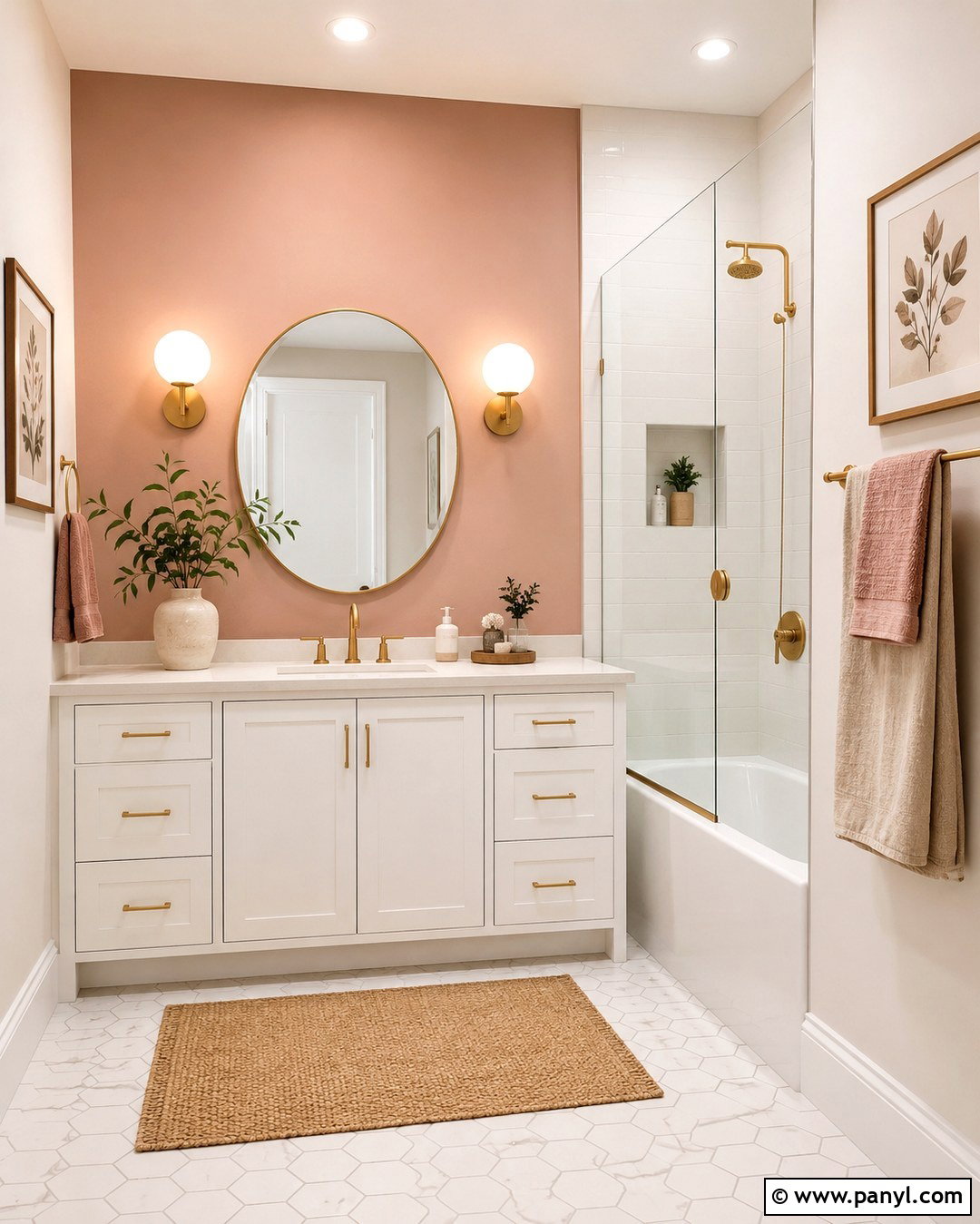
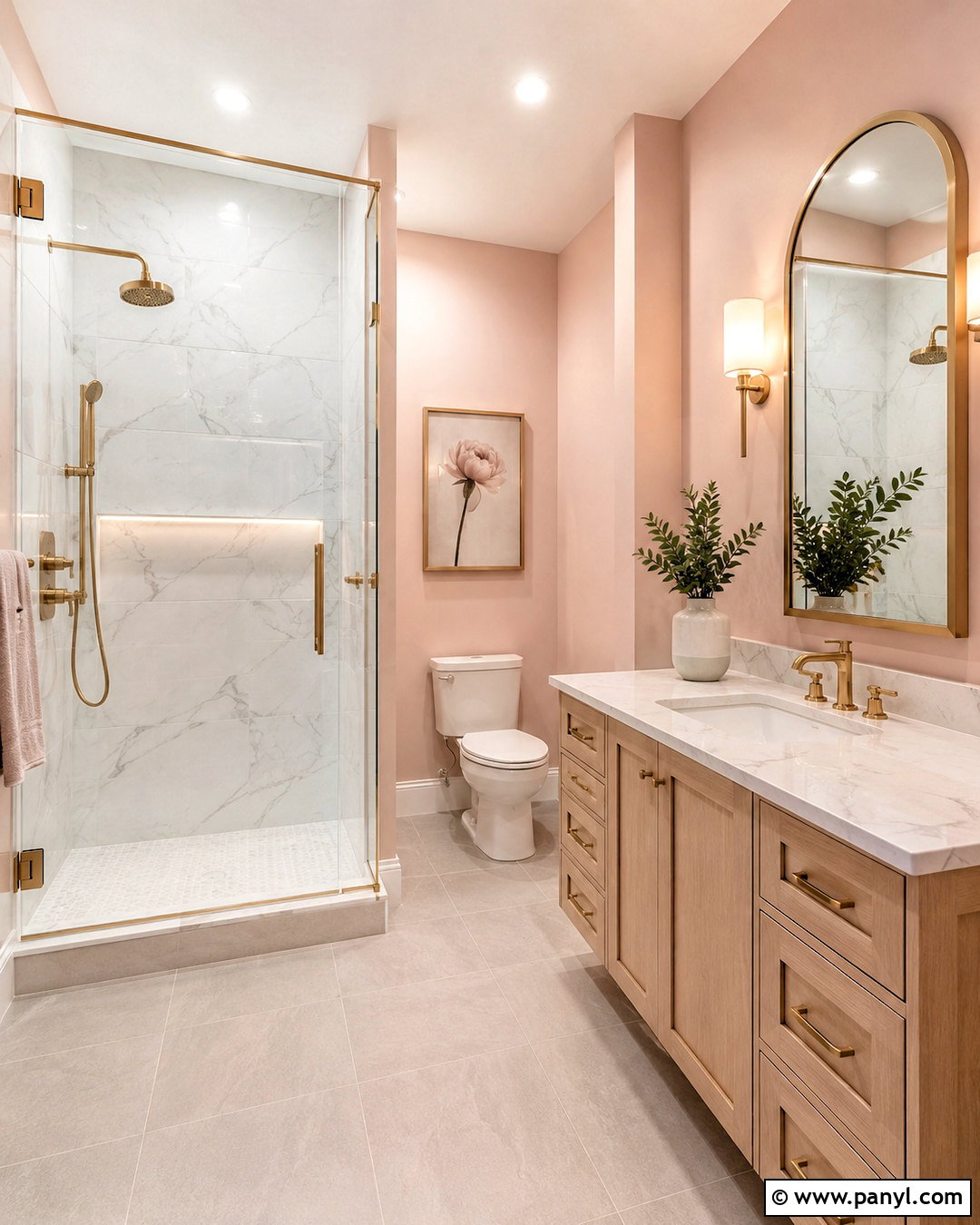
A muted blush wall brings warmth and personality to a bathroom while still feeling grown-up. Use it behind a white vanity with simple slab-front cabinets and a pale quartz surface. Brushed brass hardware, a round mirror, and globe sconces complement the warm undertones without making the room overly decorative. Keep the shower surround and remaining walls creamy white, then choose small white hexagon floor tile with light grout. Add dusty rose towels, but balance them with beige linen, light wood, and clear glass accessories. One piece of minimal botanical artwork can break up the painted surface without hiding the color. This complete scheme is especially effective in a powder room or guest bath where a gentle color statement can feel memorable, welcoming, and easy to maintain.
7. Olive Green Bathroom Wall
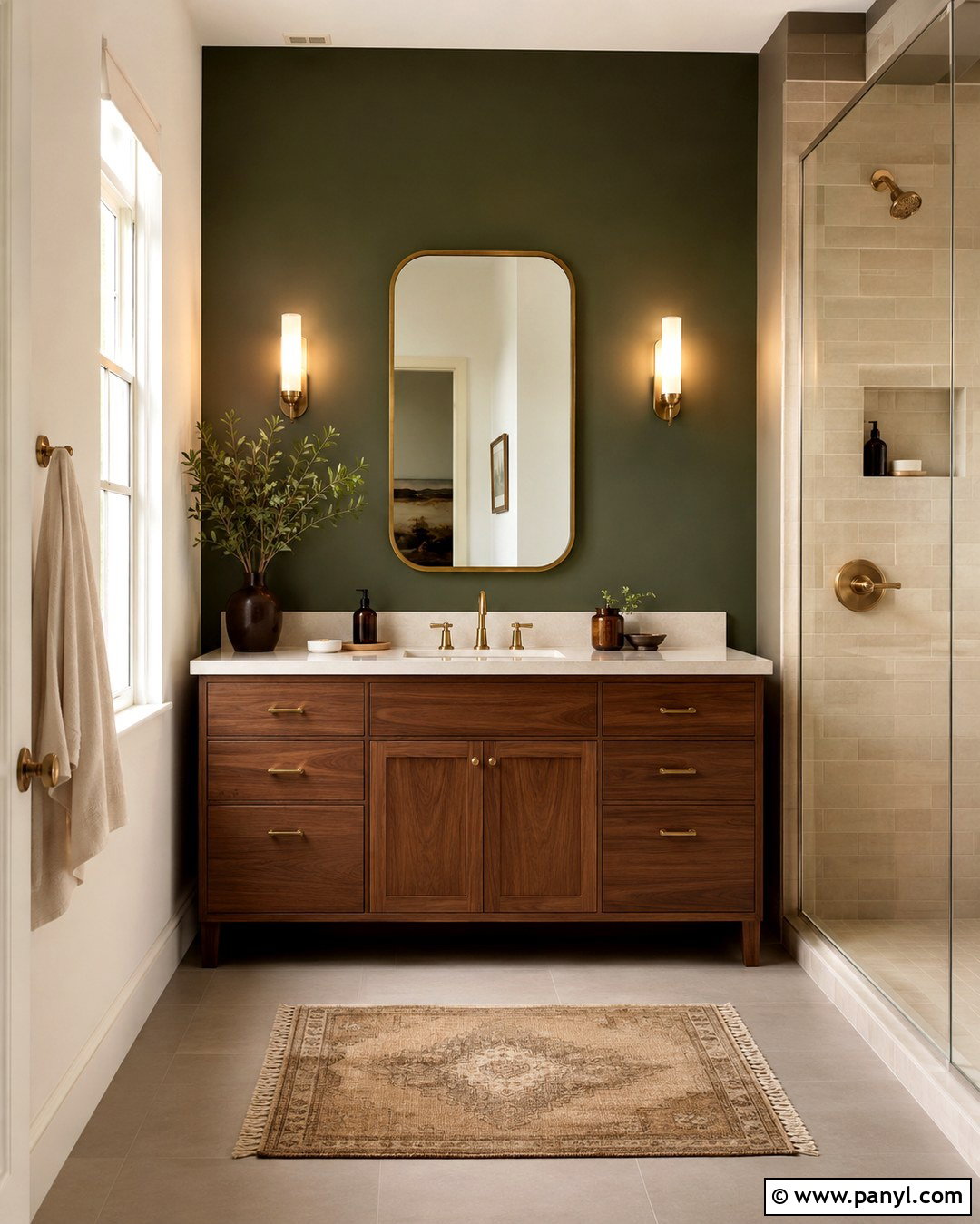
Rich olive green creates a grounded bathroom when it is paired with walnut wood and warm metal finishes. Paint the wall behind a medium-tone walnut vanity, allowing the wood grain to stand out against the earthy color. Choose a cream countertop, an antique brass faucet, and a rounded rectangular mirror with a narrow brass frame. Warm beige shower tile and taupe floor tile support the palette without producing harsh contrast. Add off-white towels, a dark brown bath mat, and amber glass containers for a cohesive finish. Because olive can shift under artificial light, use bright neutral-white bulbs rather than strongly yellow lighting. A single leafy branch in a ceramic vase adds a natural detail. The overall look feels sophisticated, comfortable, and well suited to a modern organic bathroom.
8. Black Powder Room Wall
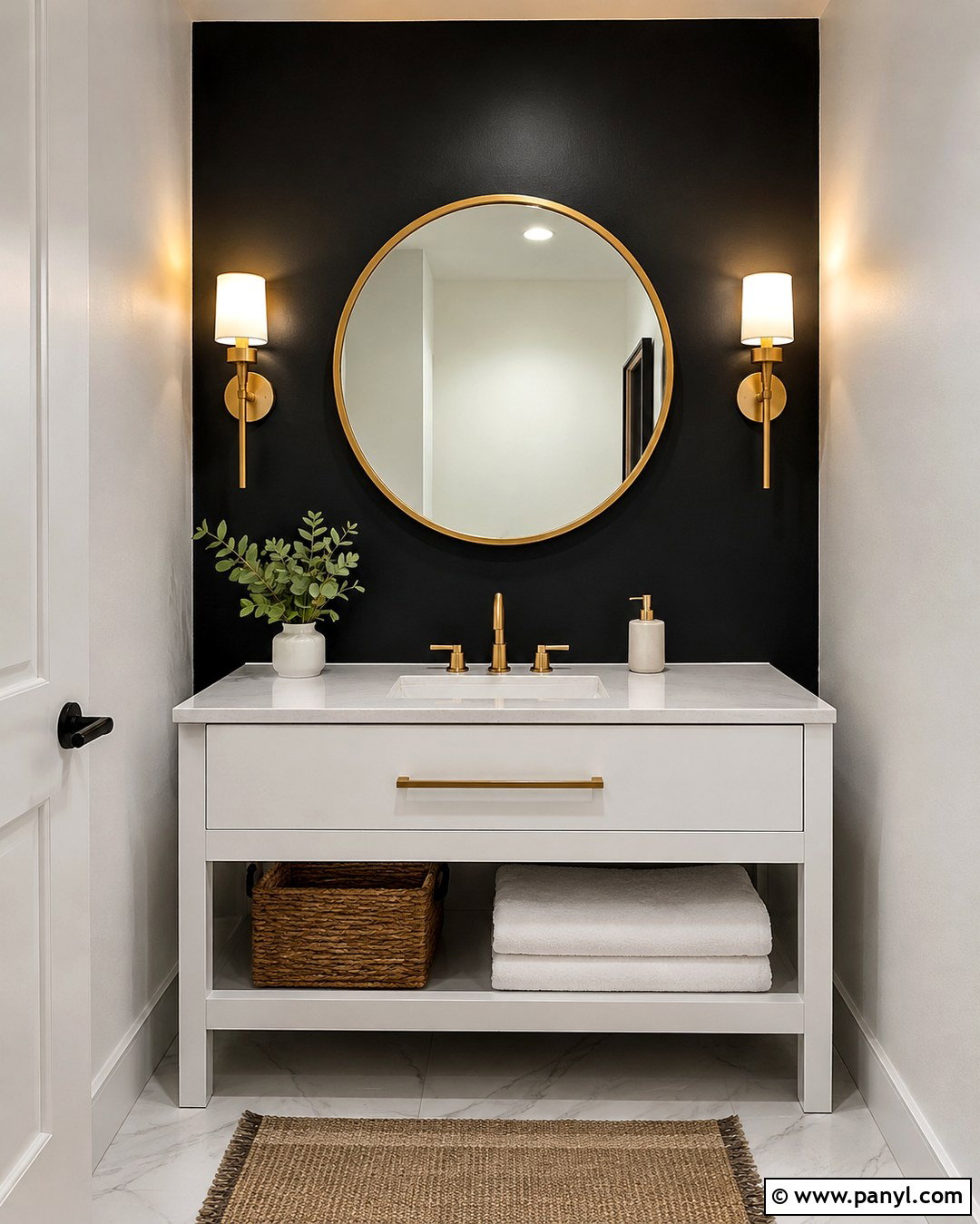
A black painted wall can make a small powder room feel intentional and striking rather than cramped. Place the color behind a compact wall-mounted sink or narrow white vanity, leaving the side walls bright white for balance. Add a large round mirror with a thin brass frame to reflect light across the dark surface. Brass sconces, a matching faucet, and a white quartz counter introduce contrast and warmth. Use light marble-look flooring to brighten the lower half of the room, then add a small neutral rug for softness. Keep wall decor minimal because the paint already provides a strong statement. A white hand towel, simple soap dispenser, and one small green plant are enough. This high-contrast design delivers character while keeping the limited floor area visually clean.
9. Warm Greige Bathroom Wall
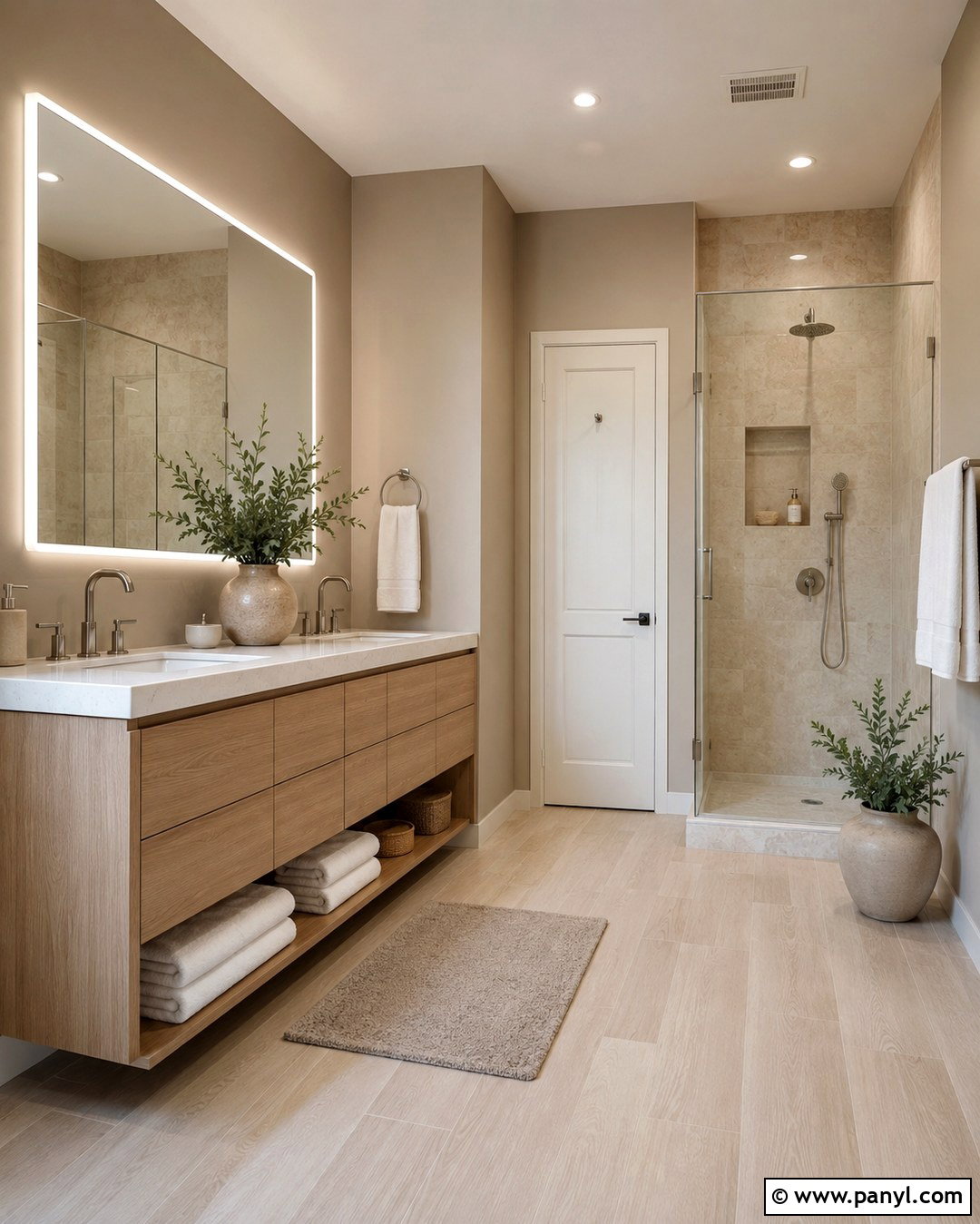
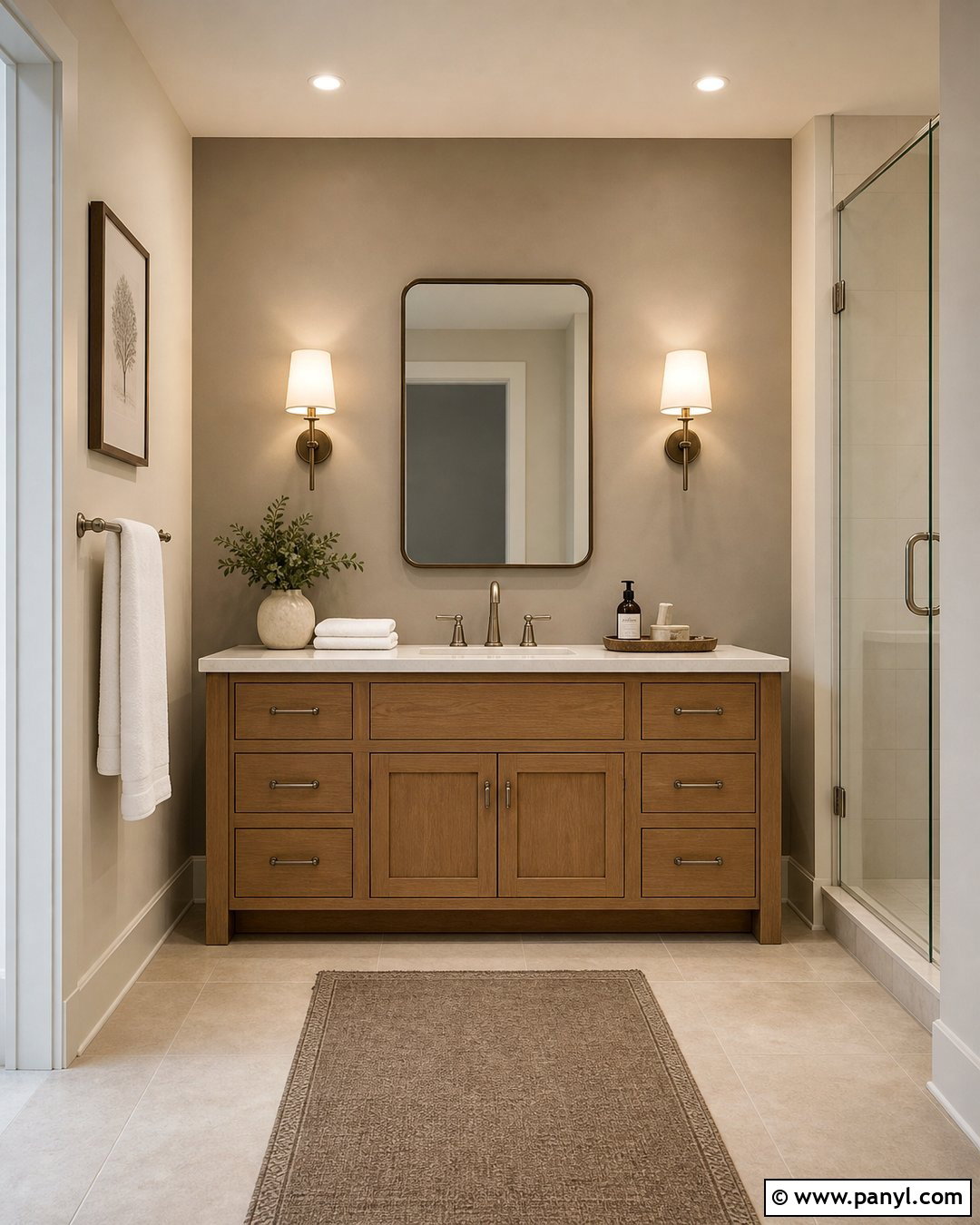
Warm greige offers a subtle focal point for homeowners who prefer a quiet, neutral bathroom. Paint the vanity wall in a medium greige that is clearly deeper than the creamy white used elsewhere. Pair it with a rift-cut oak vanity, an ivory quartz countertop, and brushed nickel fixtures. A large rectangular mirror with integrated lighting creates a streamlined look while brightening the understated paint color. Choose beige stone-look shower tile and pale oak-look porcelain flooring to build a low-contrast palette. Layer white towels with a taupe bath mat and one textured ceramic vase. Black accents are unnecessary unless the room needs a sharper detail. Instead, allow the varied neutral tones and natural-looking materials to create depth. The finished bathroom feels calm, cohesive, and easy to update over time.
10. Deep Teal Bathroom Wall
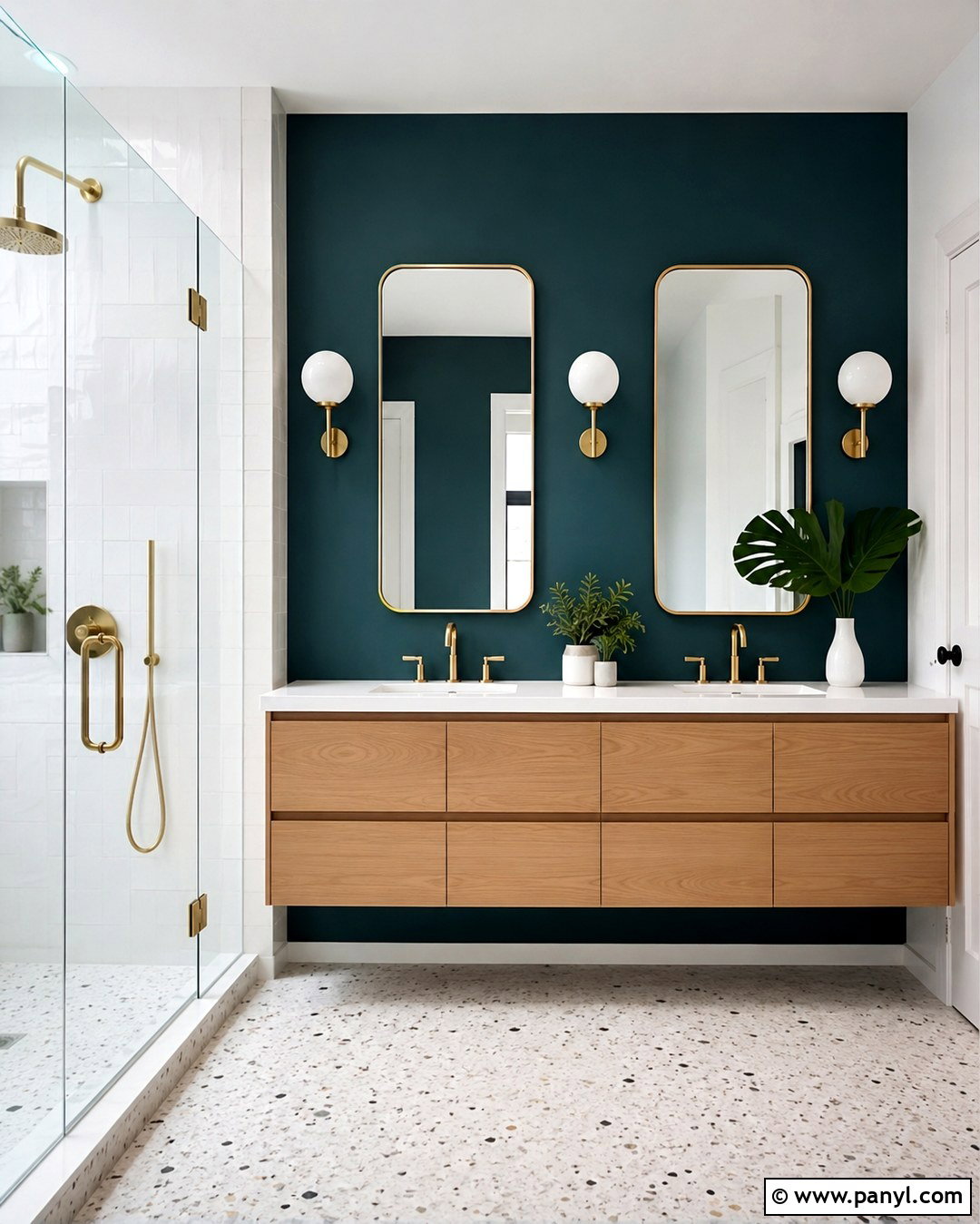
Deep teal brings saturated color to a bathroom while maintaining a relaxed, water-inspired atmosphere. Use it on the wall behind a floating white oak vanity, then paint the remaining surfaces soft white. A white quartz counter and undermount sink create a clean horizontal break against the strong color. Add brushed brass faucets, slim brass-framed mirrors, and globe lights to introduce warmth. Light terrazzo flooring with beige and gray flecks gives the room subtle pattern without distracting from the wall. Repeat teal through one folded towel or a small ceramic container only. A clear glass shower enclosure keeps sight lines open, while white shower tile brightens the opposite side. This complete look feels colorful and contemporary, making it a practical choice for a bathroom that needs personality without extensive renovation.
11. Mustard Yellow Bathroom Wall
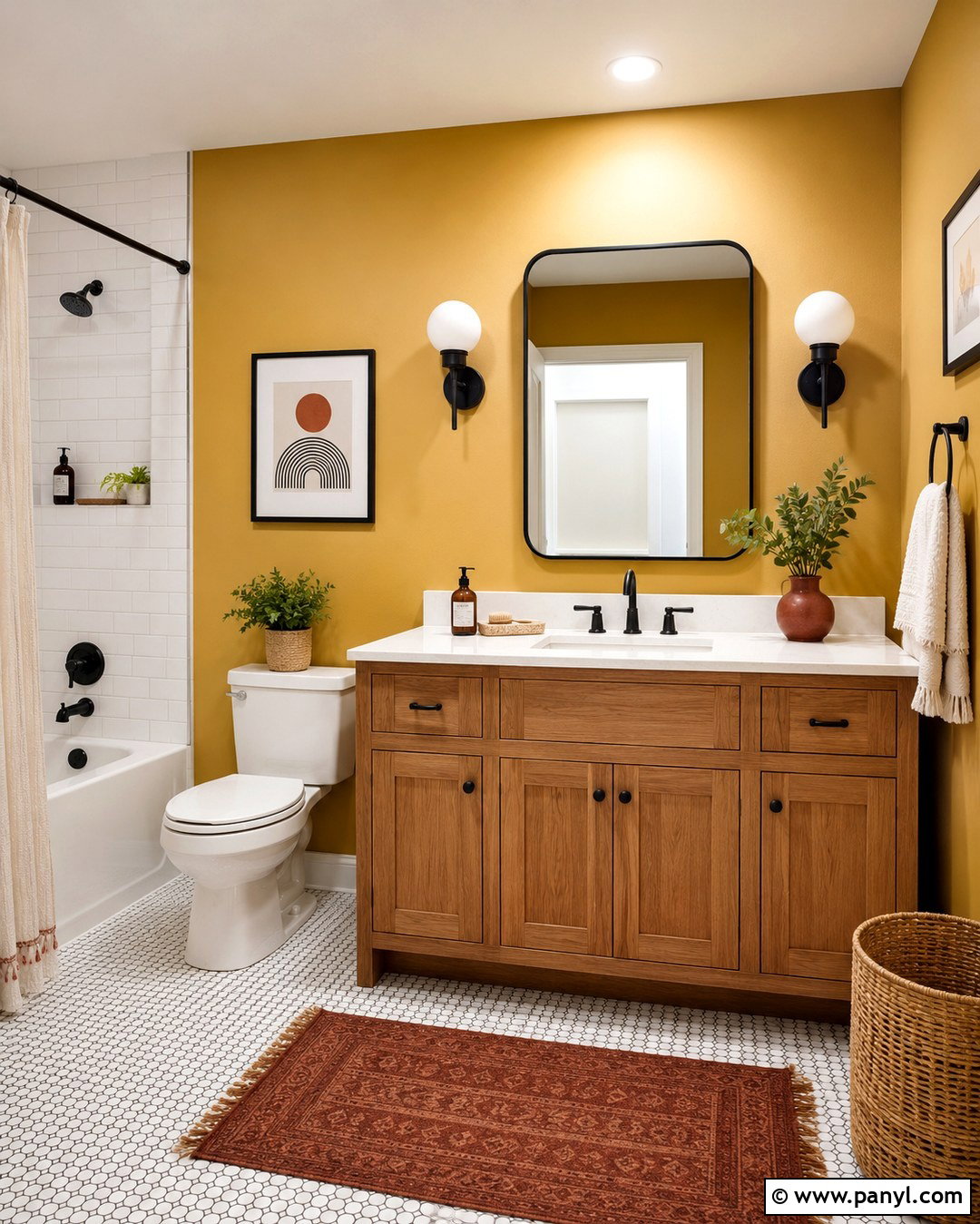
Muted mustard yellow can energize a bathroom while still feeling warm and approachable. Paint the wall behind the vanity, then surround it with soft white walls and cream tile. A medium oak vanity with a white counter grounds the cheerful color, while matte black hardware adds crisp definition. Choose a black-framed mirror and simple white globe sconces to connect the fixtures without making the room feel industrial. Small white floor tiles with dark grout offer a practical graphic detail. Finish the scheme with ivory towels, a natural woven basket, and one rust-colored hand towel for added warmth. Avoid using several other bright colors, since mustard works best as the clear focal point. The completed bathroom feels sunny, modern, and particularly suitable for a family or children’s bathroom.
12. Soft Lavender Bathroom Wall
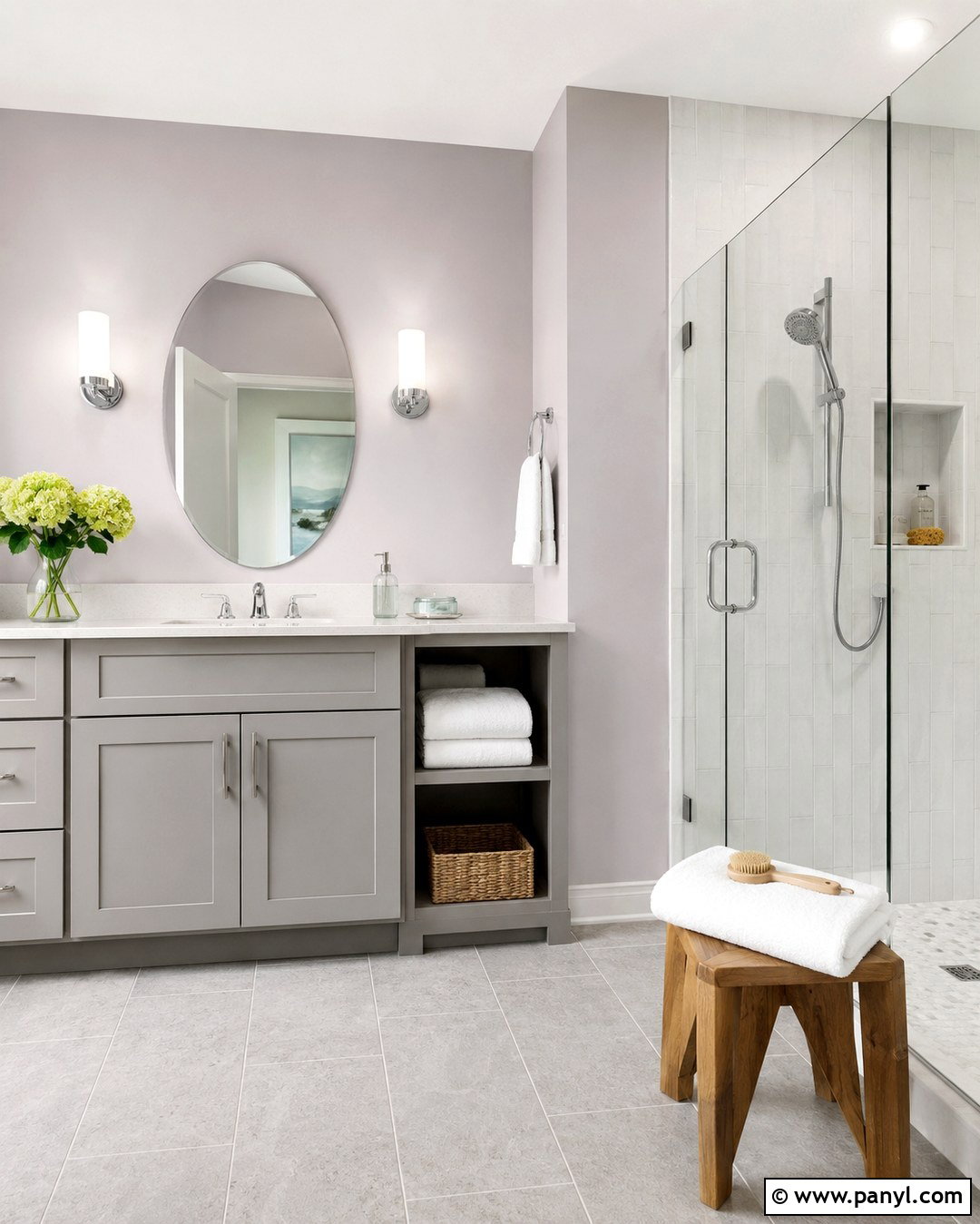
Soft lavender creates a gentle, restful bathroom when paired with clean lines and cool metallic finishes. Select a gray-toned lavender for the wall behind a pale gray vanity, keeping the surrounding walls clean white. Use a white quartz countertop, polished chrome faucet, and frameless oval mirror to maintain a bright appearance. White vertical shower tile can make the room feel taller, while light gray porcelain flooring anchors the soft palette. Add white towels with one lavender hand towel, plus a clear glass tray for everyday items. Natural wood accessories can warm the space, but keep them pale and minimal. Avoid overly floral decor that could make the design feel dated. This balanced scheme gives lavender a modern direction and works especially well in a guest bathroom with limited natural light.
13. Rust Red Bathroom Wall
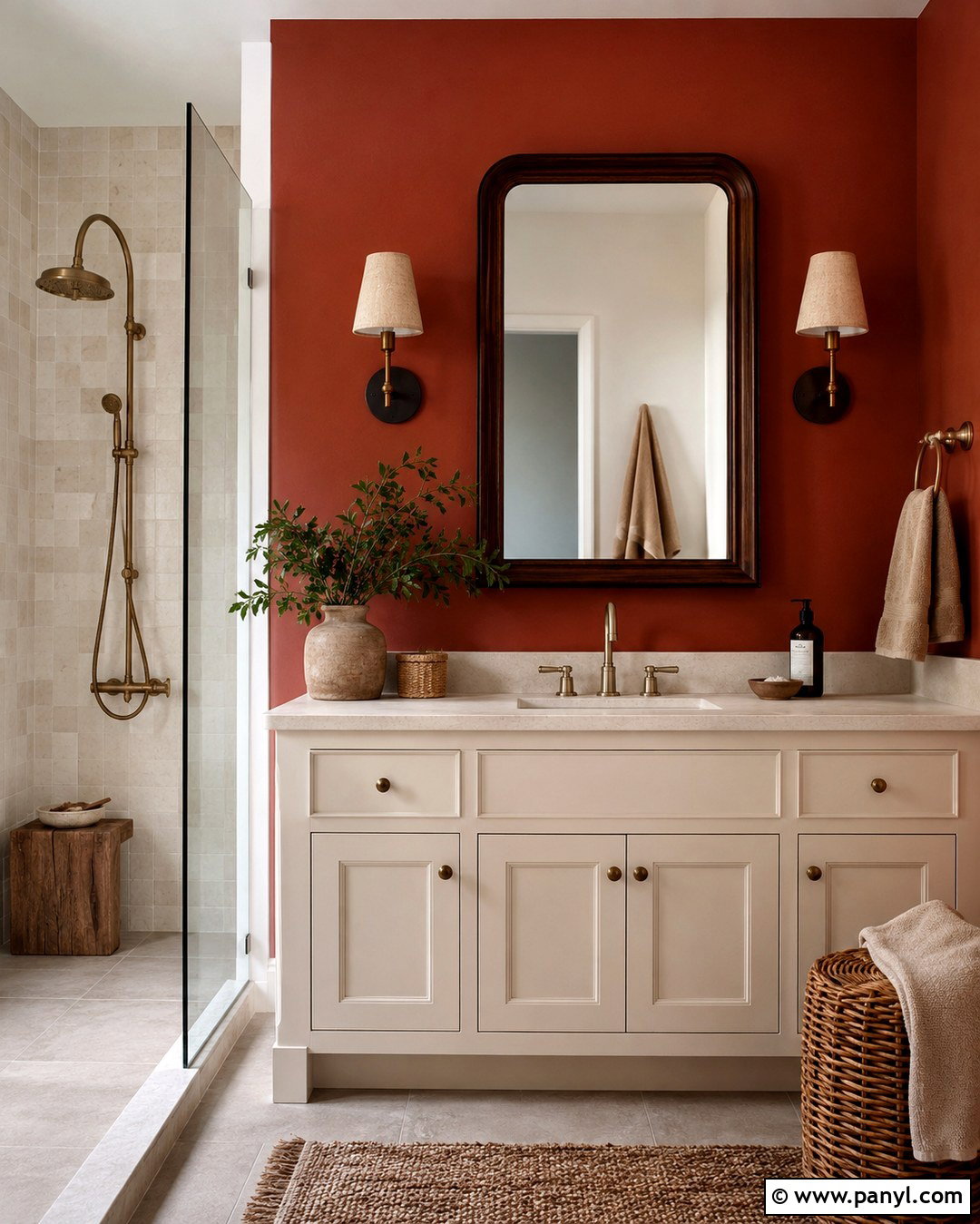
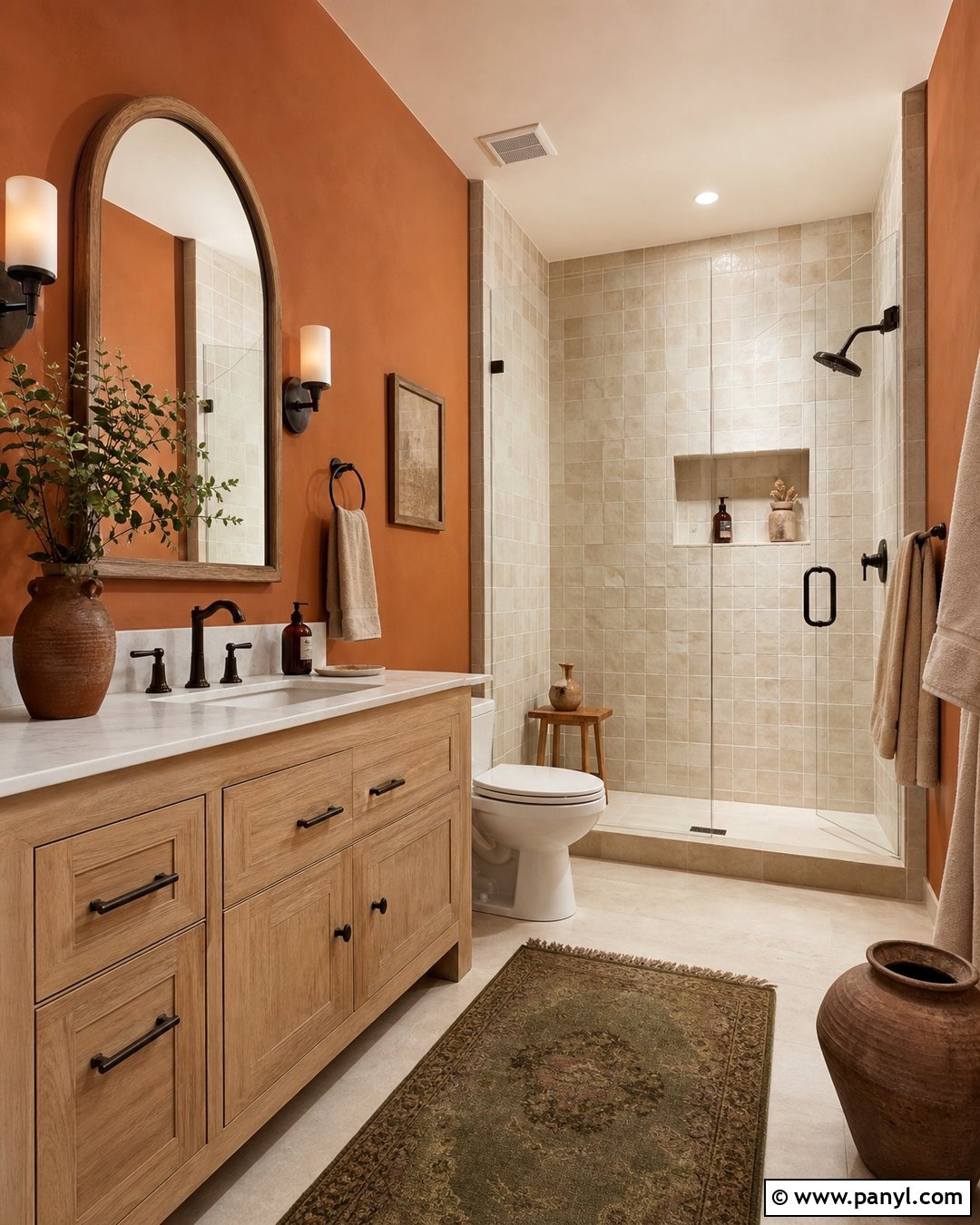
A rust red wall offers more depth than orange while giving the bathroom a warm, handcrafted quality. Apply the color behind a cream vanity with simple paneled doors and an off-white stone countertop. Use aged brass faucets, a dark wood mirror, and small linen-shaded sconces to complement the earthy paint. Cream zellige-style shower tile introduces gentle surface variation, while warm gray floor tile keeps the design grounded. Choose oatmeal towels, a narrow woven runner, and dark brown ceramic accessories instead of bright accents. A small framed landscape print can add detail without competing with the wall. Keep the remaining walls a soft warm white. The complete bathroom feels inviting and distinctive, with enough neutral material around the rust color to preserve visual balance and everyday versatility.
14. Forest Green Bathroom Wall
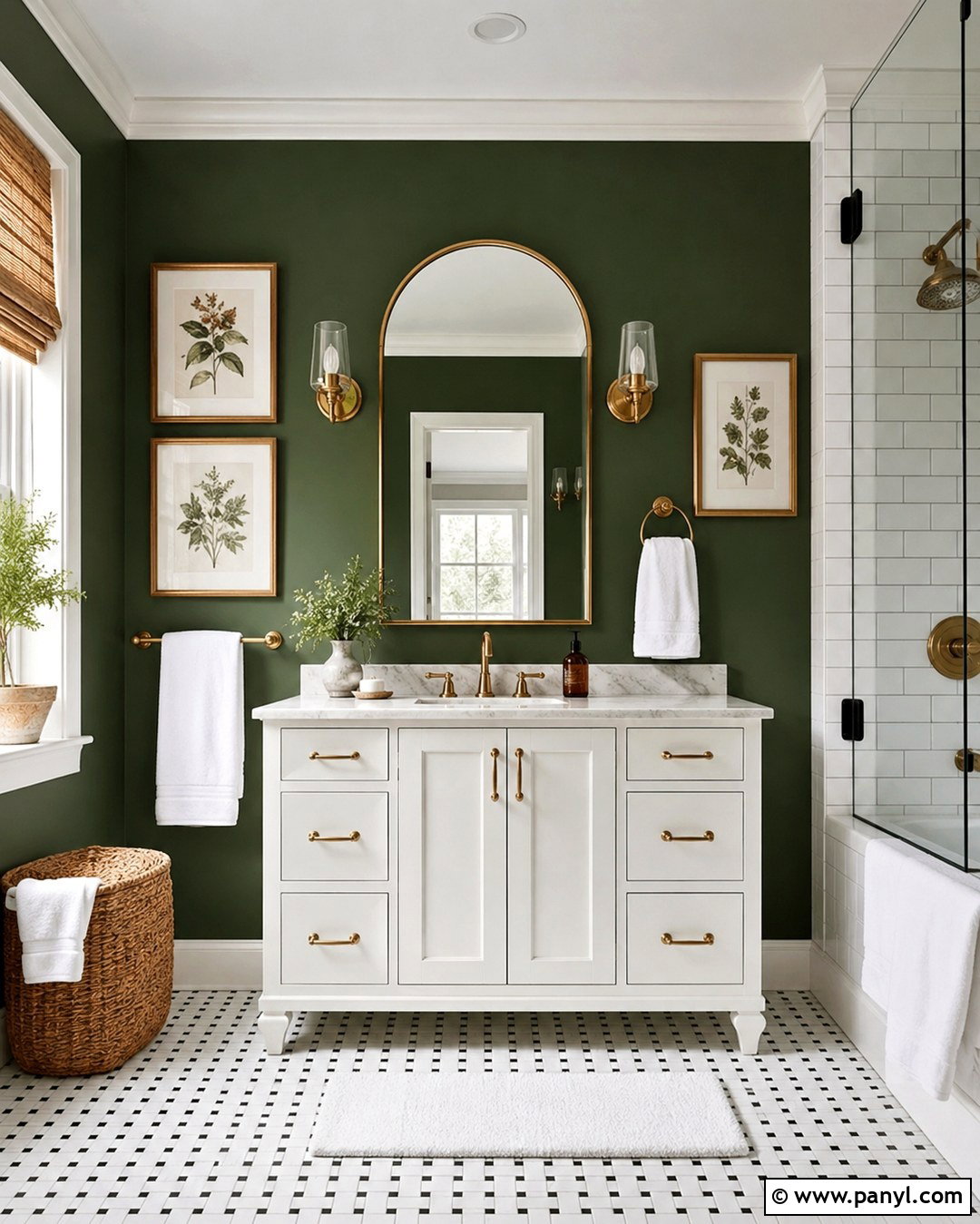
Forest green creates a dramatic backdrop for a white vanity and can make ordinary fixtures feel more architectural. Paint the main vanity wall from baseboard to ceiling, leaving adjacent walls warm white. Choose a freestanding white vanity with a marble-look counter, polished brass pulls, and an undermount sink. A tall arched brass mirror emphasizes the ceiling height, while matching sconces provide even facial lighting. Use white subway tile in the shower and small black-and-white mosaic flooring for classic contrast. Add white towels, a dark green bath mat, and one framed botanical print with a pale background. Because the wall color is intense, keep countertop accessories simple and light. This complete design works particularly well in traditional bathrooms that need stronger color without replacing existing white tile.
15. Soft Peach Bathroom Wall
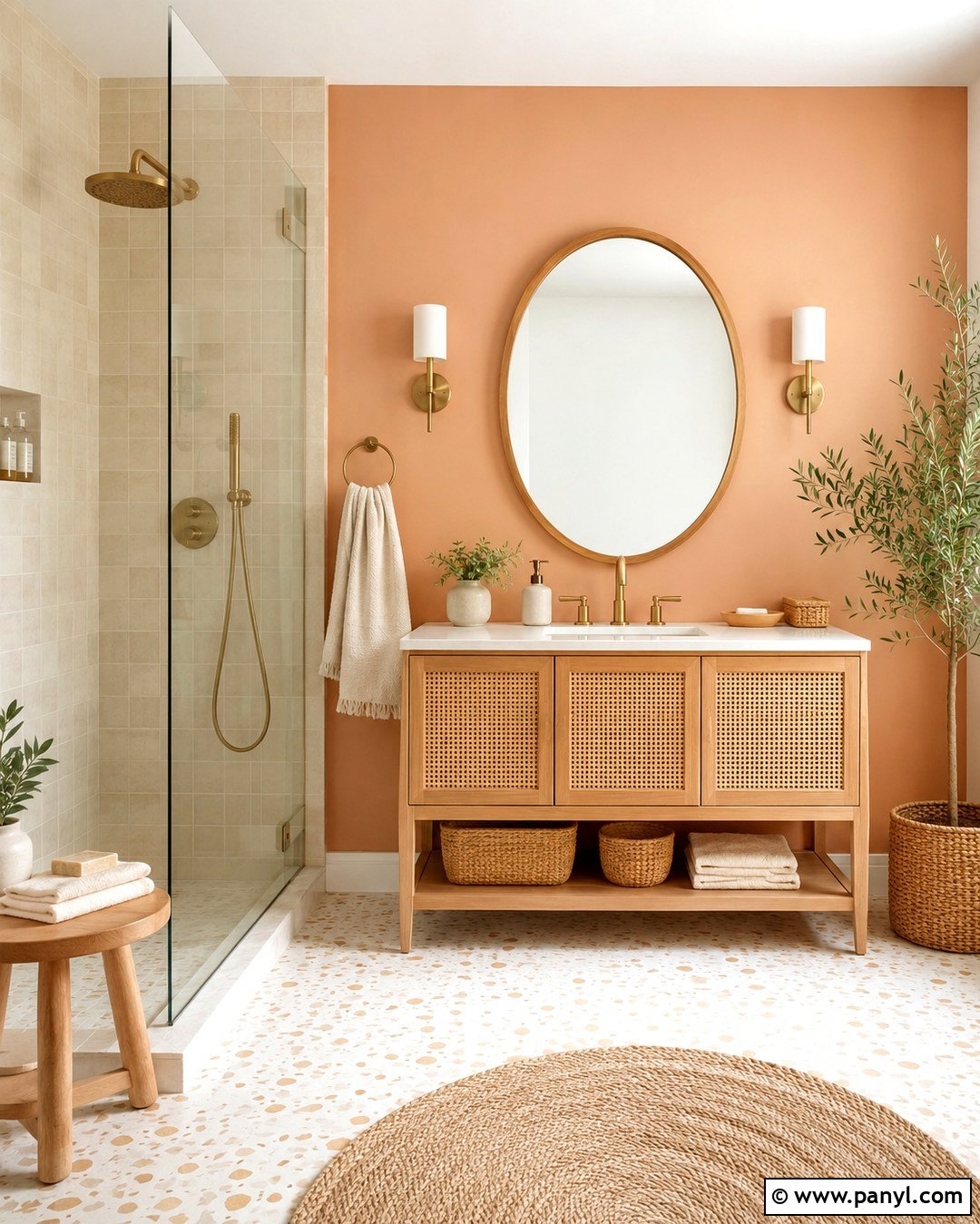
Soft peach paint can make a bathroom feel warm and flattering without becoming overly bright. Use a muted clay-peach tone behind a light wood vanity with cane-front or simple flat-panel doors. Add a white counter, brushed brass faucet, and an oval mirror with a narrow wood frame. The remaining walls should be creamy white, while the shower can feature pale beige tile with minimal grout contrast. Choose warm white terrazzo or porcelain flooring to keep the room bright. Finish the look with ivory towels, a small woven basket, and one sage green plant for gentle contrast. Avoid strong orange accessories because they can make the palette look too coordinated. The completed bathroom feels light, comfortable, and especially appealing in spaces that receive soft afternoon sunlight.
16. Painted Arch Bathroom Wall
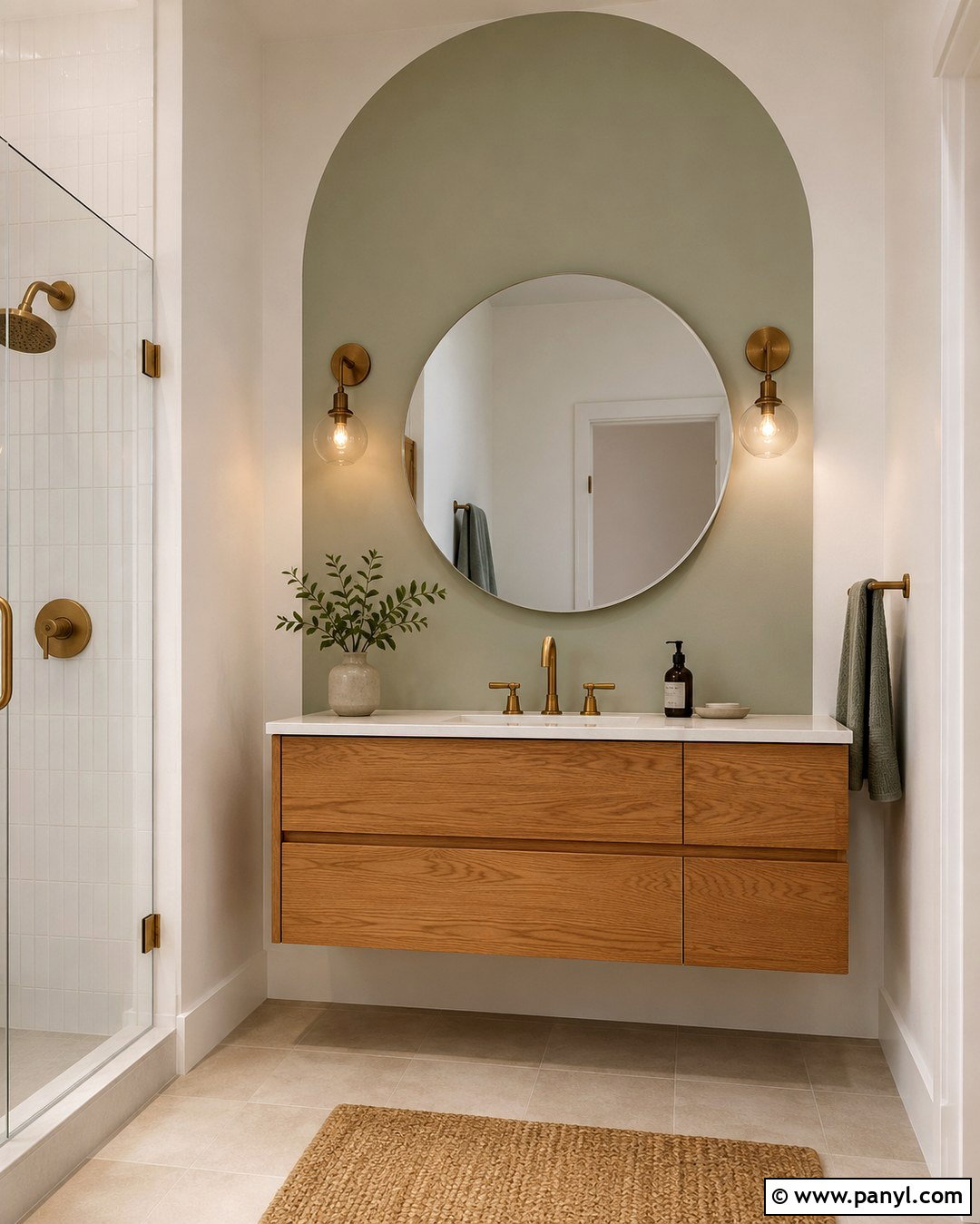
A painted arch adds shape and color to one bathroom wall without covering the entire surface. Center a wide sage, dusty blue, or terracotta arch behind the vanity, extending it above the mirror to create a framed focal point. Keep the wall background and all other walls warm white. Select a compact floating oak vanity, white countertop, and simple round mirror that fits comfortably inside the painted shape. Add two small wall sconces at the outer edges of the arch, plus brushed brass or matte black fixtures. Neutral stone-look flooring and white shower tile prevent the design from becoming busy. Use solid towels and minimal artwork. The finished room has a playful architectural effect, yet it remains practical for renters or homeowners seeking an achievable paint project.
17. Striped Bathroom Wall
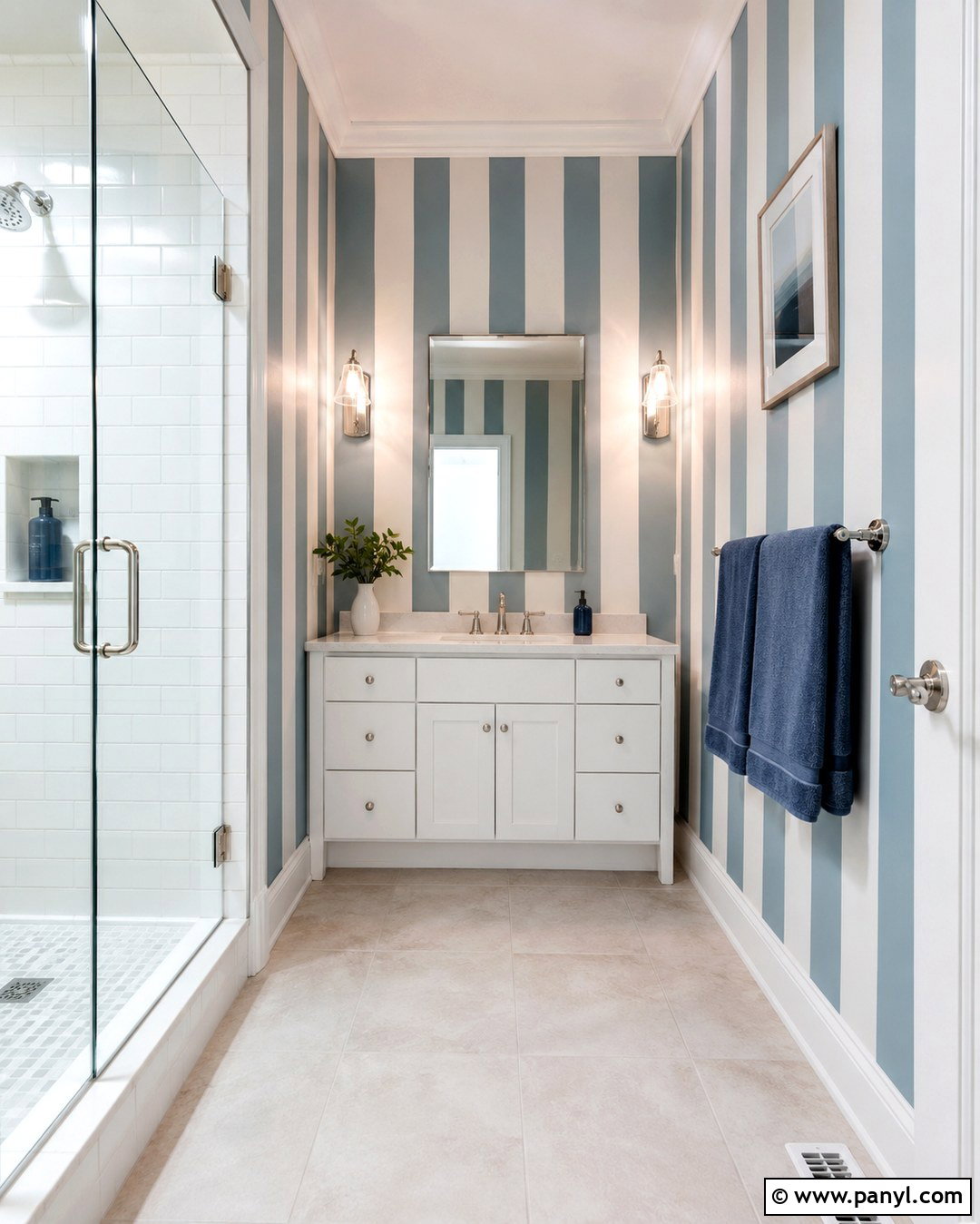
Painted vertical stripes can make a low bathroom ceiling appear taller while bringing pattern to just one wall. Use broad alternating stripes in warm white and muted blue, sage, or beige behind a simple vanity. Keep the stripe widths consistent so the design looks crisp rather than playful or chaotic. A white vanity, light quartz counter, and frameless mirror allow the pattern to remain the main feature. Choose polished nickel fixtures and clear glass sconces for a bright, uncomplicated finish. Pale neutral flooring and plain white shower tile balance the graphic wall. Repeat the stripe color through one bath mat or towel, but avoid additional patterns. Carefully taped lines and clean edges are essential. The completed look feels structured, fresh, and particularly effective in a narrow guest bathroom.
18. Two Tone Bathroom Wall
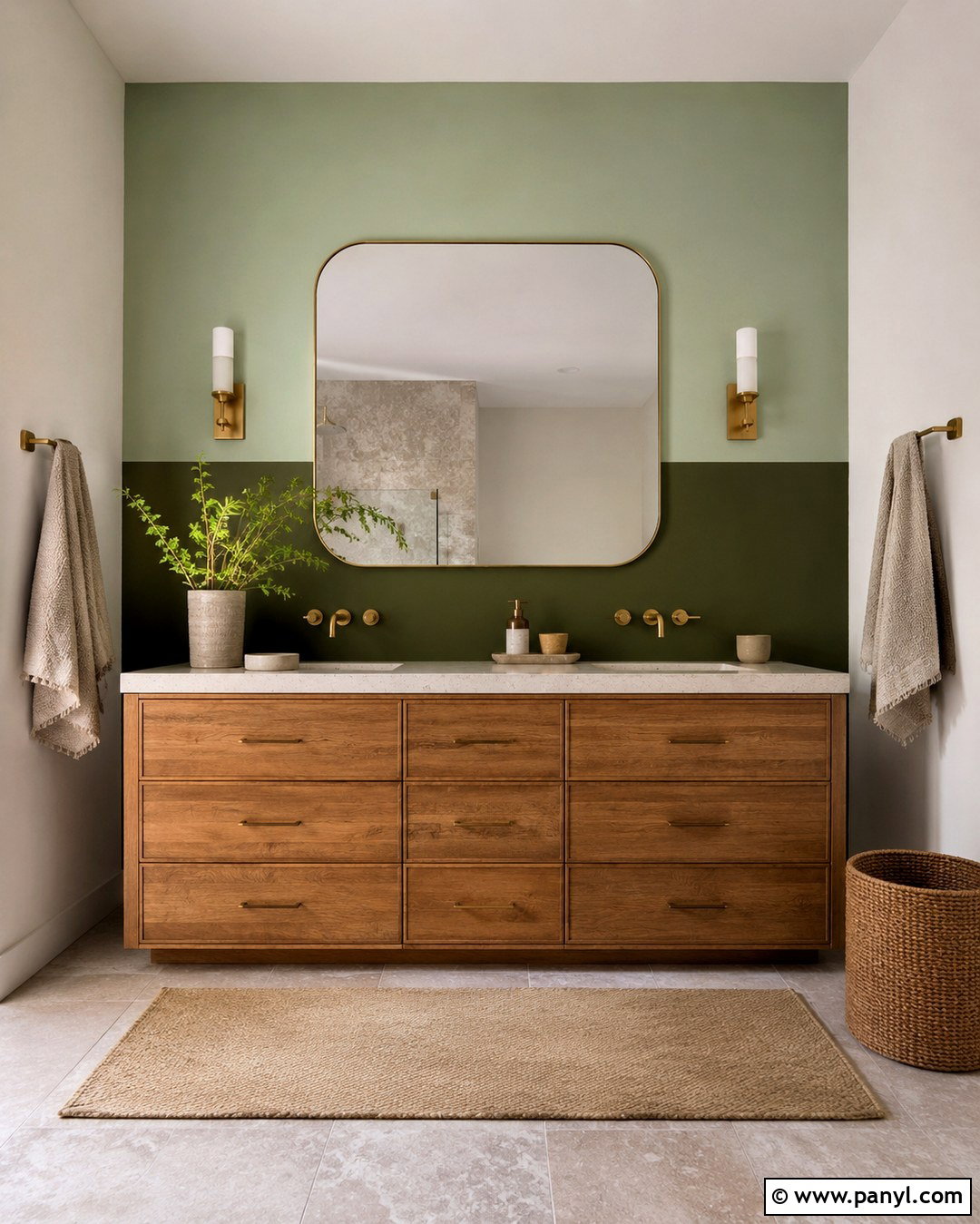
A two-tone treatment gives one bathroom wall added structure while maintaining a simple color palette. Paint the lower portion a deep blue, olive, or charcoal, then use a lighter coordinating shade above it. Position the dividing line slightly higher than the vanity counter for a balanced proportion. A white or natural wood vanity works well against the darker lower area, while a large mirror overlaps both colors and visually connects them. Add brushed brass or polished nickel fixtures based on the undertones of the paint. Keep the other walls warm white and choose understated stone-look flooring. Solid neutral towels and minimal countertop decor prevent visual clutter. This complete treatment offers more dimension than a single flat color while remaining achievable with basic paint, a level, and careful masking tape.
19. Geometric Painted Bathroom Wall
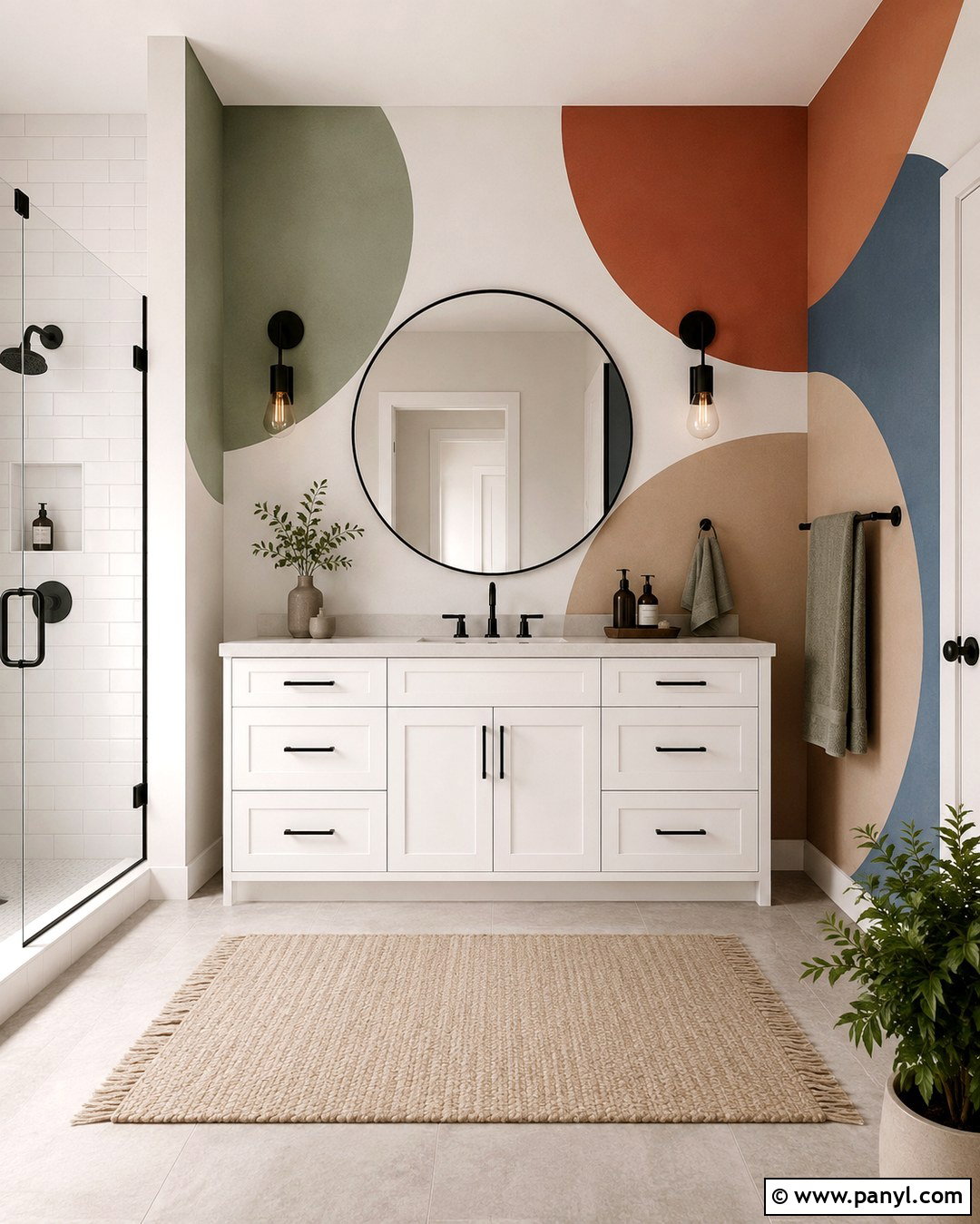
A simple geometric pattern can turn the vanity wall into artwork without requiring wallpaper or tile. Begin with a warm white background, then add large overlapping blocks or angled shapes in muted sage, terracotta, beige, and dusty blue. Limit the palette to three or four colors so the wall remains balanced. Choose a streamlined white vanity and a plain round mirror that will not compete with the painted pattern. Matte black fixtures create clean outlines, while light neutral flooring keeps attention at eye level. Use white shower tile and solid-color towels pulled from one of the wall shades. Avoid small complicated shapes, which can look busy in a compact room. The finished bathroom feels creative and personalized while still functioning as a complete, organized everyday space.
20. Coral Bathroom Wall
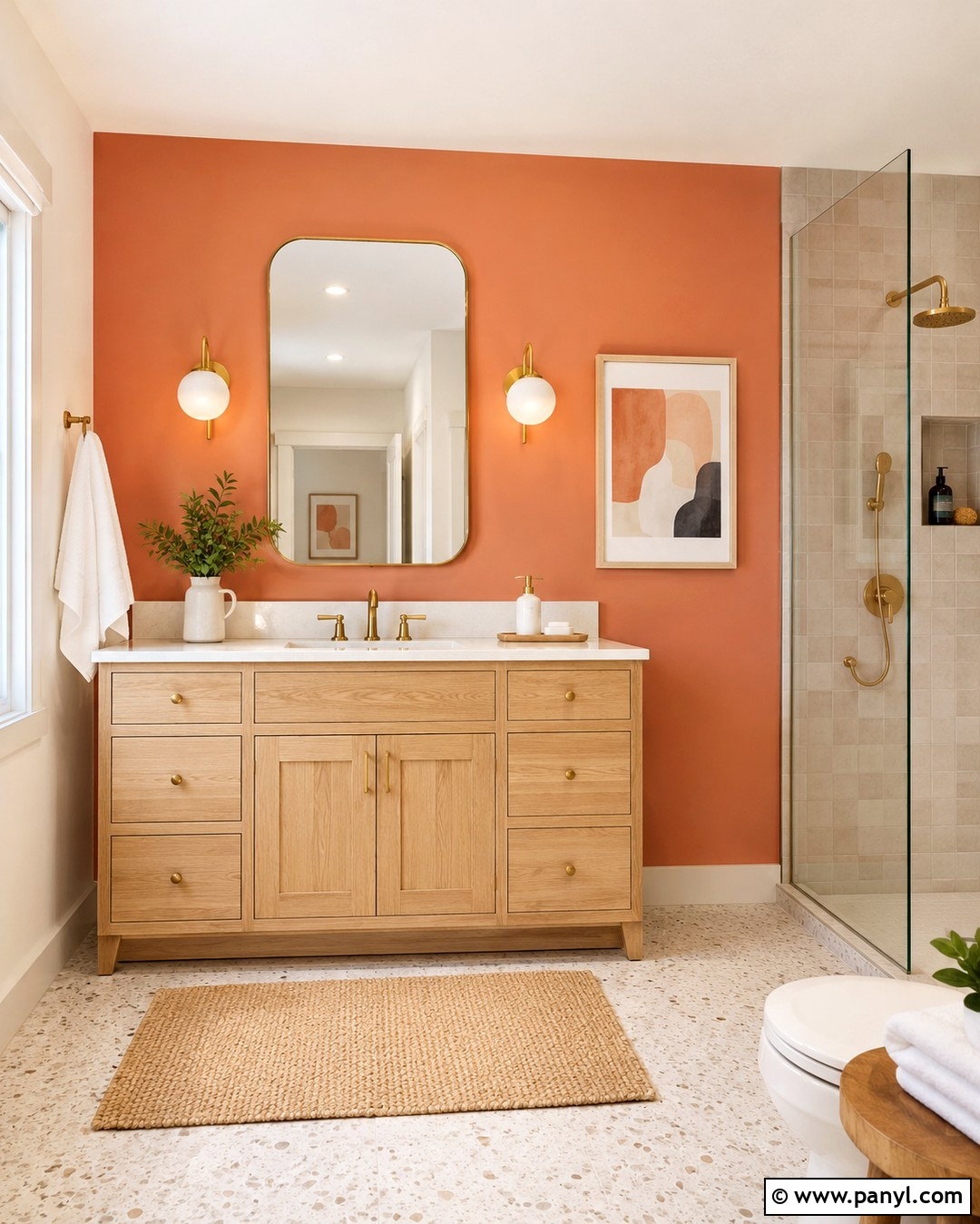
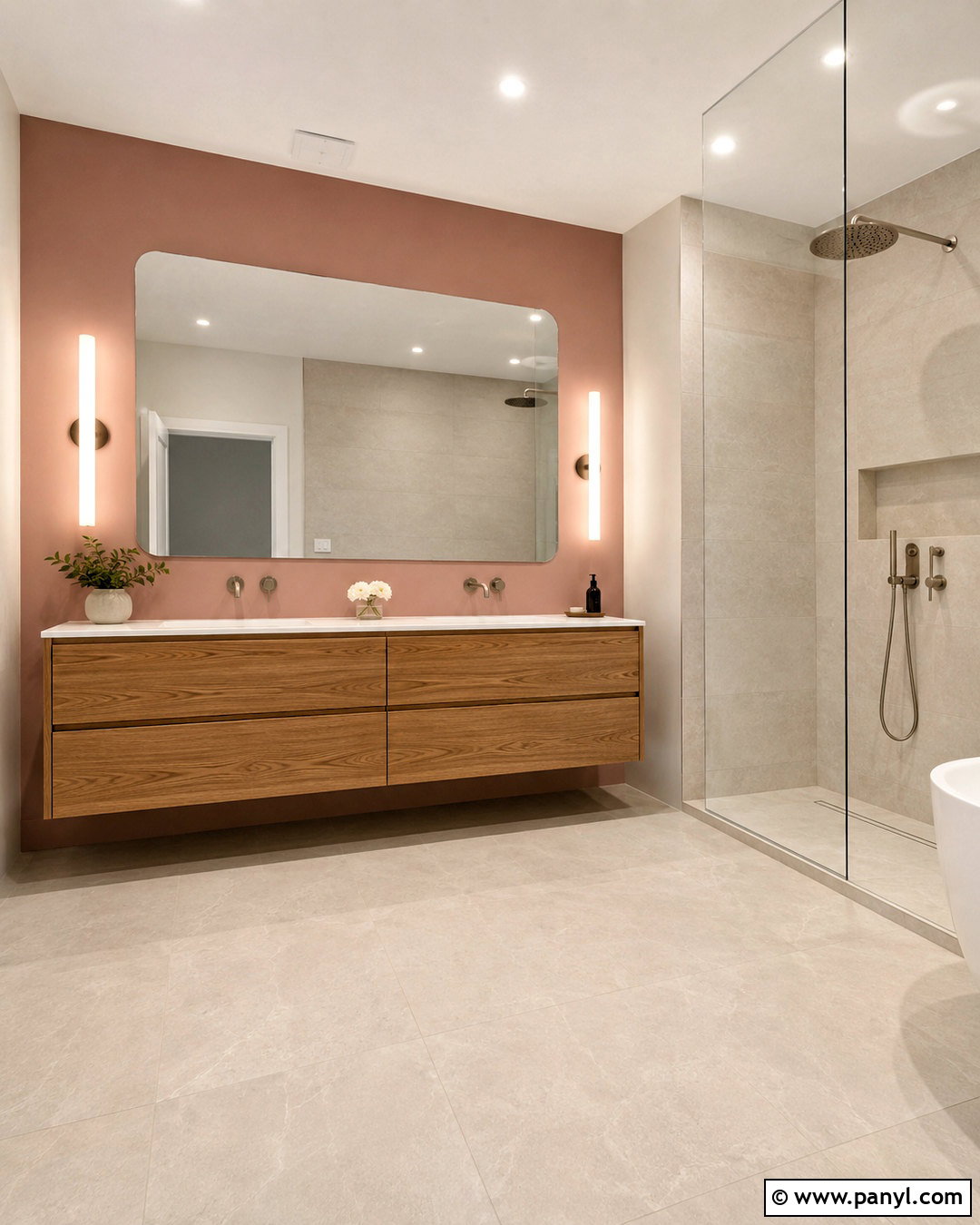
Muted coral gives a bathroom lively color while coordinating easily with white, oak, and warm brass. Paint the wall behind the vanity in a softened coral rather than a highly saturated pink-orange. Pair it with a white oak vanity, cream quartz countertop, and brushed brass hardware. A rounded mirror and simple opal sconces introduce gentle curves that complement the cheerful color. Keep the remaining walls warm white and use pale sand-colored tile in the shower. Light terrazzo flooring adds subtle movement and helps connect the coral, cream, and beige tones. Finish with white towels, a natural jute-look bath mat, and one small piece of abstract artwork. This complete scheme feels bright and welcoming, making it especially useful for a guest bath that needs a memorable but comfortable identity.
Conclusion:
The most successful 20 One Wall Painted Bathroom Ideas treat color as part of a complete room rather than an isolated decoration. Choose a wall that already holds a visual anchor, such as the vanity, bathtub, or toilet. Then connect the paint to the flooring, cabinetry, fixtures, textiles, and lighting. Dark shades work best with reflective mirrors and plenty of white, while softer colors benefit from warm wood and textured neutrals. Before painting, prepare the surface carefully and test large samples beside the existing tile. A washable bathroom-grade finish will help the new wall handle everyday moisture. With thoughtful coordination, one painted wall can make even a basic bathroom feel finished, personal, and intentionally designed.

Related Ideas and Inspiration:
Leave a Reply