
Grey walls are anything but boring when the undertone, furnishings, lighting, and materials work together. The best 50 grey wall ideas move beyond flat, cool schemes by layering natural wood, warm metals, tactile fabrics, expressive artwork, and well-placed color. Current interiors are especially embracing warmer greys, grey-green shades, tonal paint treatments, and softer contrasts that feel comfortable rather than stark. () Whether you are updating a compact bedroom, open living room, practical kitchen, or overlooked hallway, grey can create a flexible foundation for a complete look. Test samples under daylight and artificial light before deciding, since undertones can shift dramatically. Explore the following 50 grey wall ideas to find a balanced, welcoming design for every space.

1. Light Grey Living Room Walls
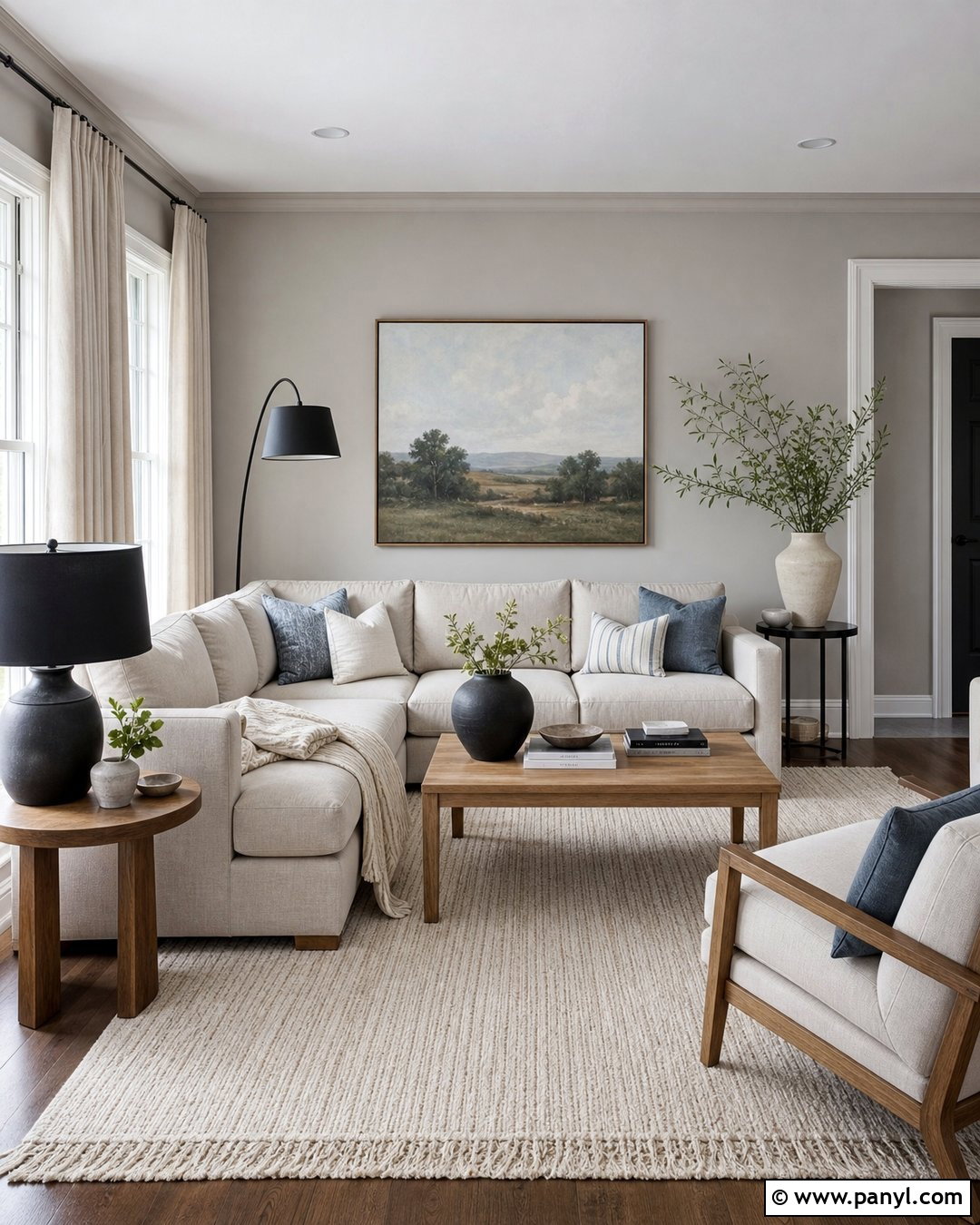
Light grey walls create an airy living room that feels softer than pure white. Choose a pale grey with a warm undertone, then add an oatmeal-colored sofa, two natural oak side tables, and a textured ivory rug. Position the sofa opposite a simple plaster fireplace or streamlined media cabinet to establish an uncluttered focal point. Linen curtains should hang close to the ceiling so the windows appear taller. Add muted blue pillows, a woven throw, and landscape artwork for gentle color without losing the calm effect. Matte black lamps provide definition, while ceramic vessels and leafy branches introduce organic shapes. This complete arrangement works especially well in smaller living rooms because every finish feels light, warm, and visually connected.
2. Warm Grey Living Room Walls
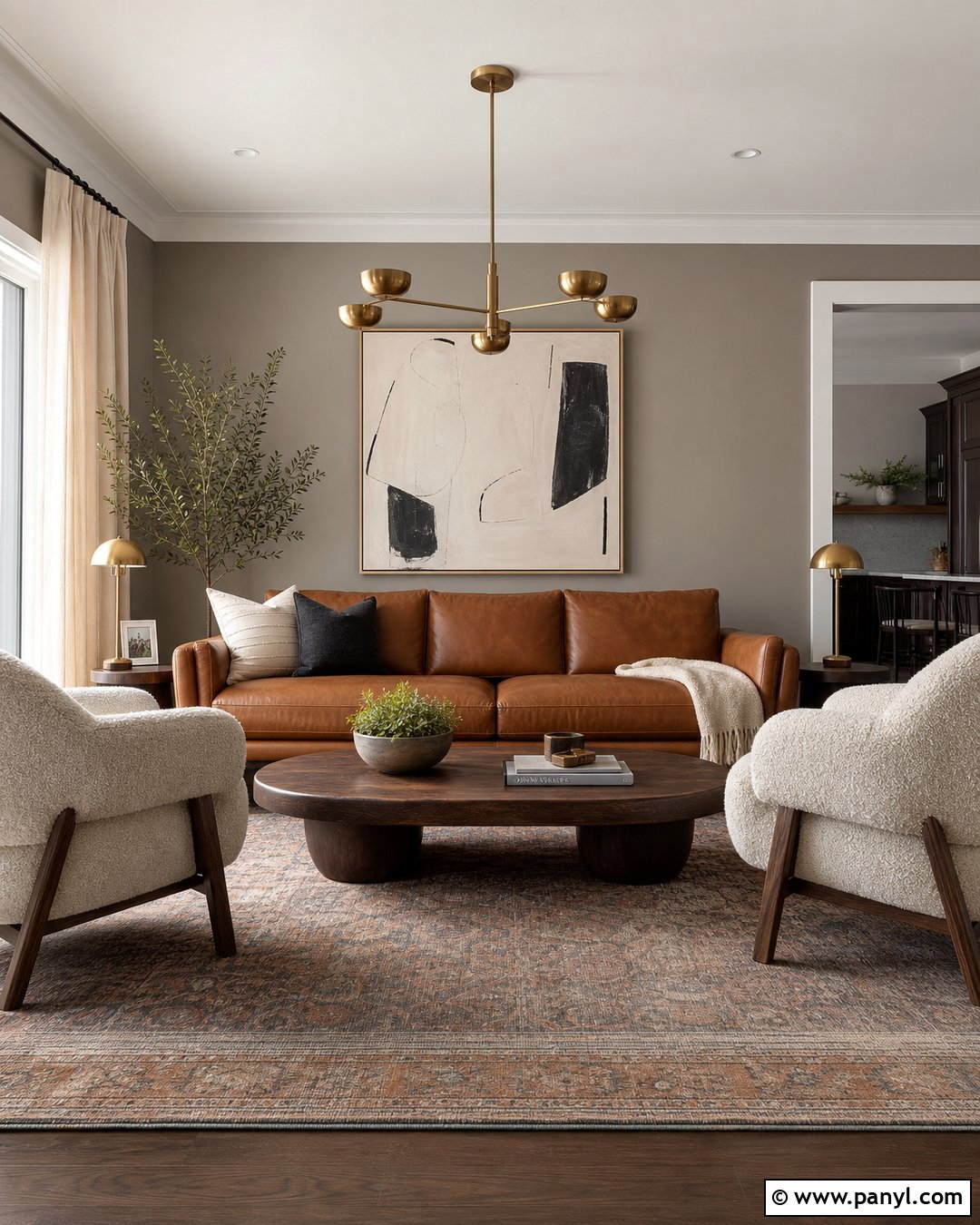
A warm grey living room offers the comfort of beige with a cleaner, more contemporary appearance. Pair mushroom-grey walls with a caramel leather sofa, walnut coffee table, and cream bouclé chairs. Arrange the seating around a large wool rug that combines taupe, rust, and charcoal in a subtle pattern. Antique brass floor lamps and picture lights reinforce the warmth without making the room overly formal. Use full-length off-white curtains to brighten the wall color and soften strong architectural lines. Above the sofa, display oversized abstract artwork featuring terracotta, black, and ivory. Finish the room with stacked books, dark pottery, and one large indoor tree. The mix of warm undertones and tactile materials keeps grey from feeling cold or builder-basic.
3. Charcoal Grey Living Room Walls
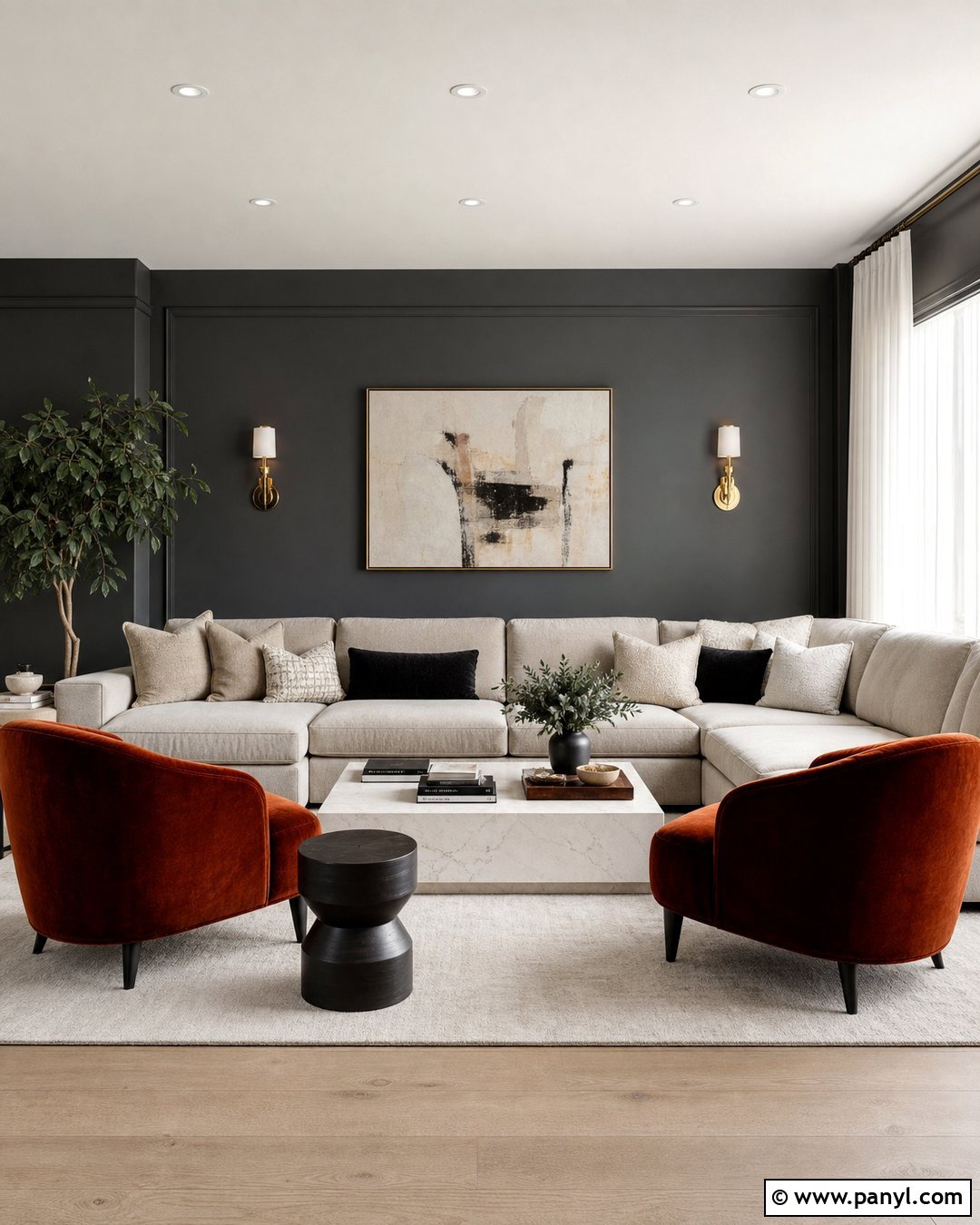
Charcoal grey walls can make a living room feel dramatic without sacrificing comfort. Balance their depth with a large cream sectional, pale oak flooring, and a generous ivory rug. Keep the main furniture low and streamlined so the room remains open. A veined white stone coffee table adds brightness, while rust-colored velvet chairs bring rich contrast. Use brushed brass sconces or picture lights to create warm highlights across the walls. Hang one large, light-toned artwork rather than several small pieces that could make the room feel busy. Sheer curtains preserve natural light, and charcoal drapes can frame the windows without disappearing completely. Greenery, linen pillows, and woven baskets finish this full design with enough softness to make the bold wall color livable.
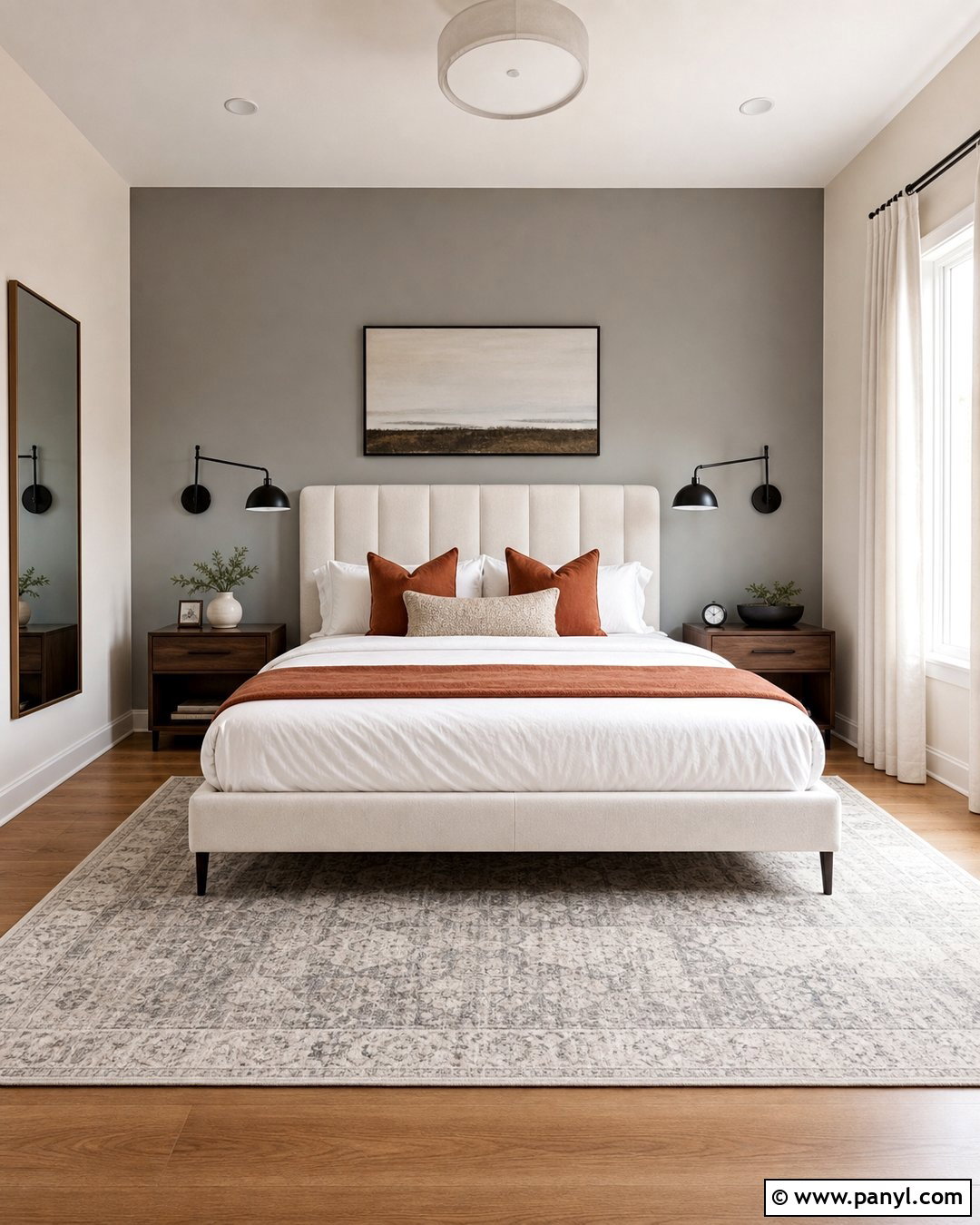
4. Blue Grey Living Room Walls
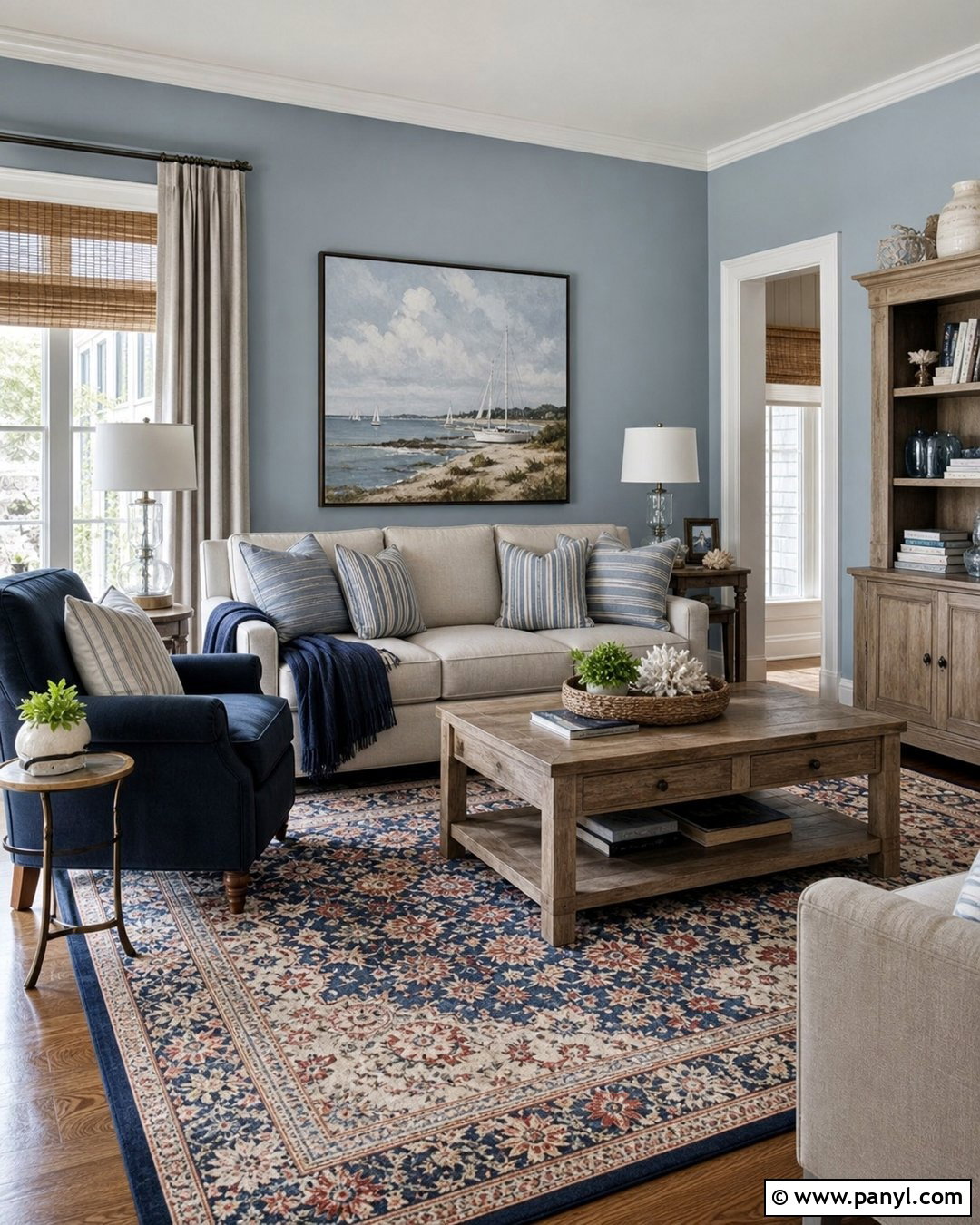
Blue-grey walls form a restful backdrop for a living room inspired by sky, water, and natural textures. Select a muted shade rather than an icy silver-blue, then combine it with a light beige sofa and weathered oak furniture. A faded vintage rug containing navy, cream, and dusty red gives the seating area warmth and character. Add striped linen pillows, a navy armchair, and white ceramic lamps for a relaxed coastal influence that does not feel themed. Woven shades can filter daylight, while simple white curtains provide softness. Use black-framed botanical prints or seascape artwork to connect the colors. A few brass accents and cognac leather details prevent the cooler palette from looking flat, completing a comfortable room suitable for everyday family living.
5. Green Grey Living Room Walls
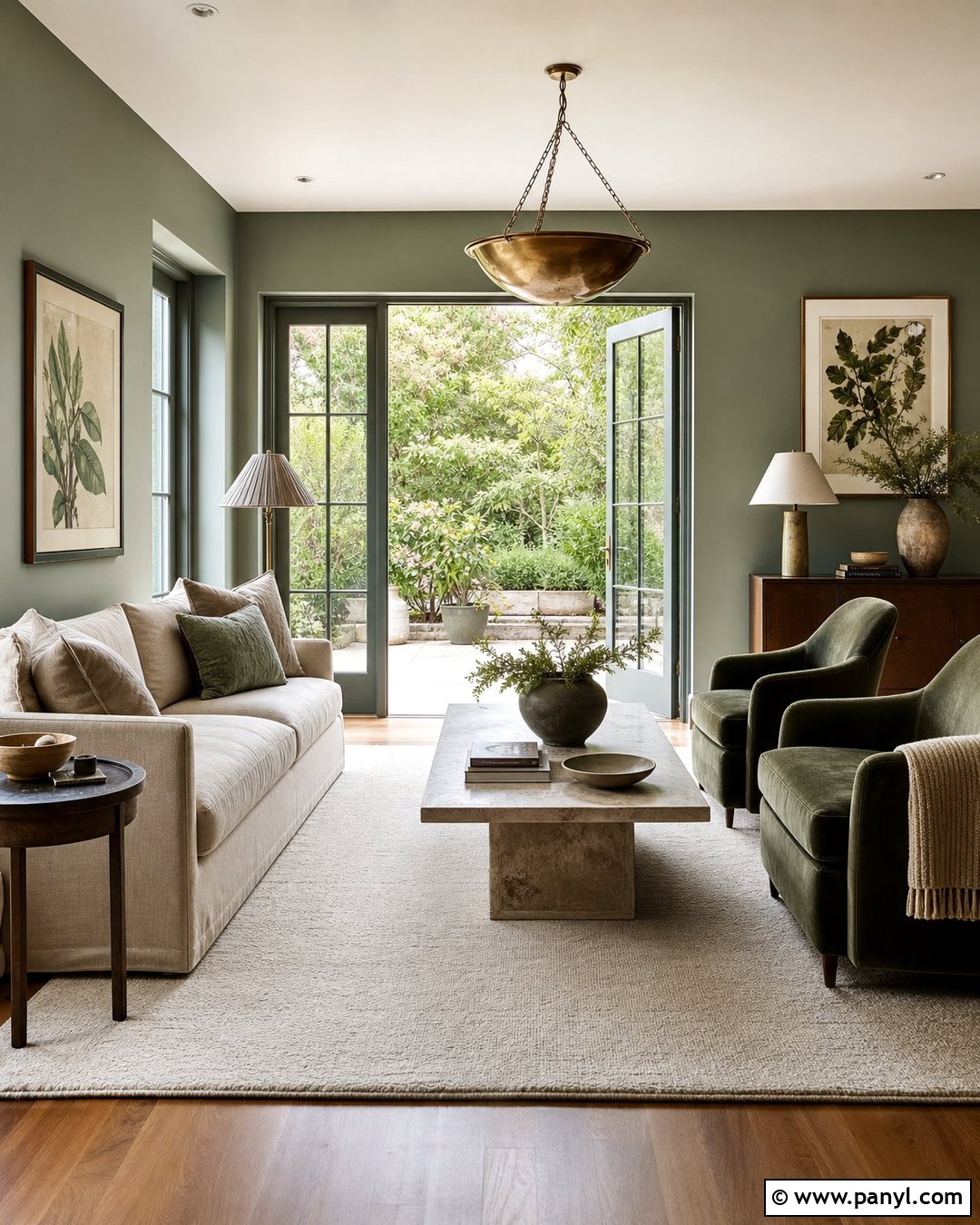
Grey-green walls bring subtle color into a living room while still functioning as a versatile neutral. Build the scheme around a flax linen sofa, walnut console, and two olive velvet chairs. A cream wool rug brightens the floor and separates the seating area from surrounding walkways. Choose curtains close to the wall color for a gentle, enveloping effect, then add aged brass lighting and dark bronze hardware for contrast. Botanical artwork, moss-colored pillows, and hand-thrown pottery reinforce the earthy palette without making everything green. Include a travertine coffee table and woven baskets to vary the textures. This complete look feels fresh and grounded, particularly in rooms overlooking trees or gardens, because the interior colors create a natural connection with the outdoor view.
6. Grey And White Living Room Walls
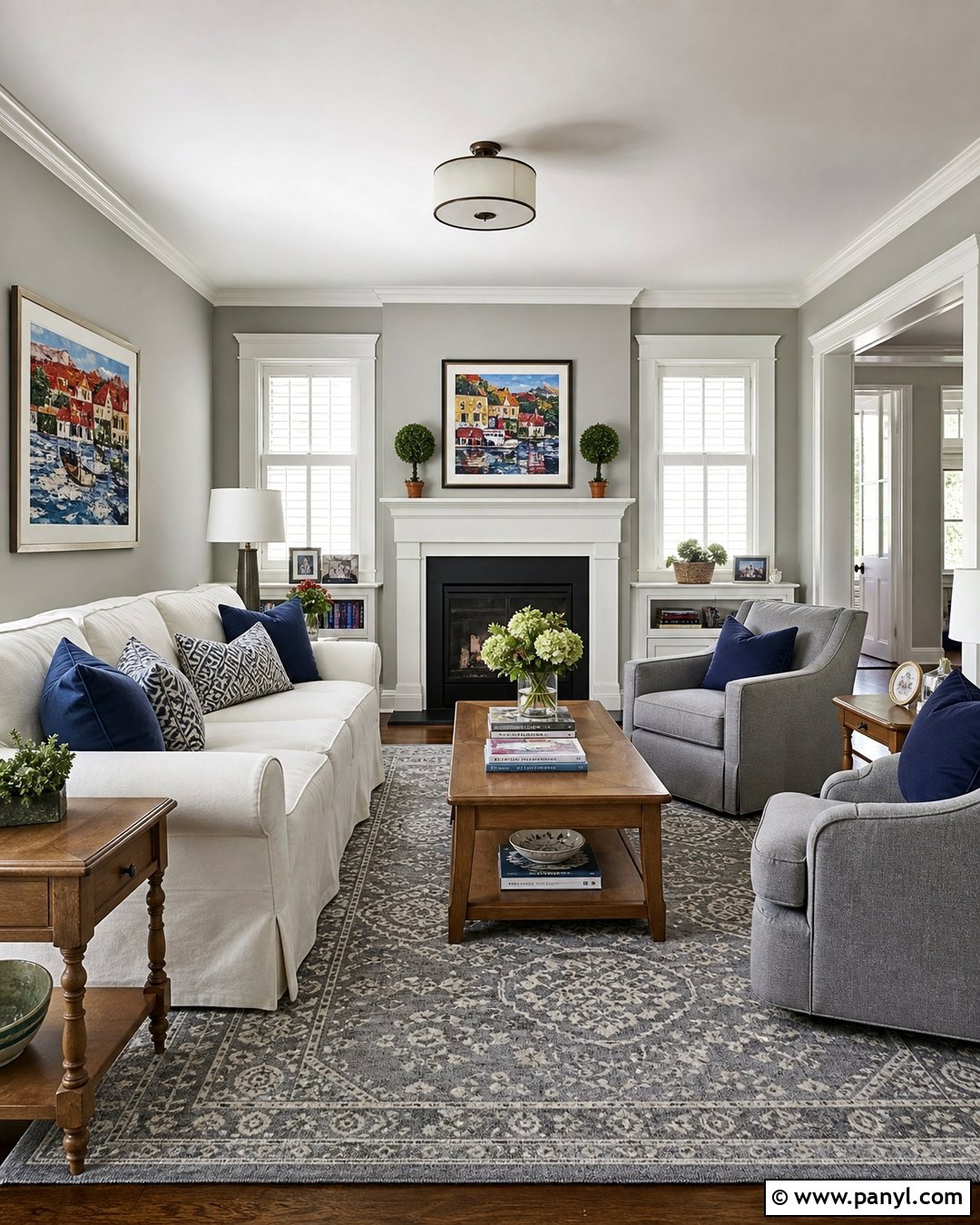
Grey and white walls can create architectural interest when the colors are distributed with purpose. Use soft grey across the main wall surfaces, then paint the ceiling, crown molding, fireplace, and window trim a warm white. Furnish the room with a white slipcovered sofa, medium-grey armchairs, and a natural oak coffee table. An ivory and grey patterned rug connects the contrasting upholstery without looking overly coordinated. Bring in navy pillows, tan leather accents, and colorful framed prints for personality. Black curtain rods and lighting fixtures add crisp outlines throughout the space. Rather than using bright white everywhere, repeat warmer whites in lampshades, curtains, and ceramics. This balanced design feels clean and timeless while retaining enough color and texture for comfortable daily use.
7. Grey Living Room Accent Wall
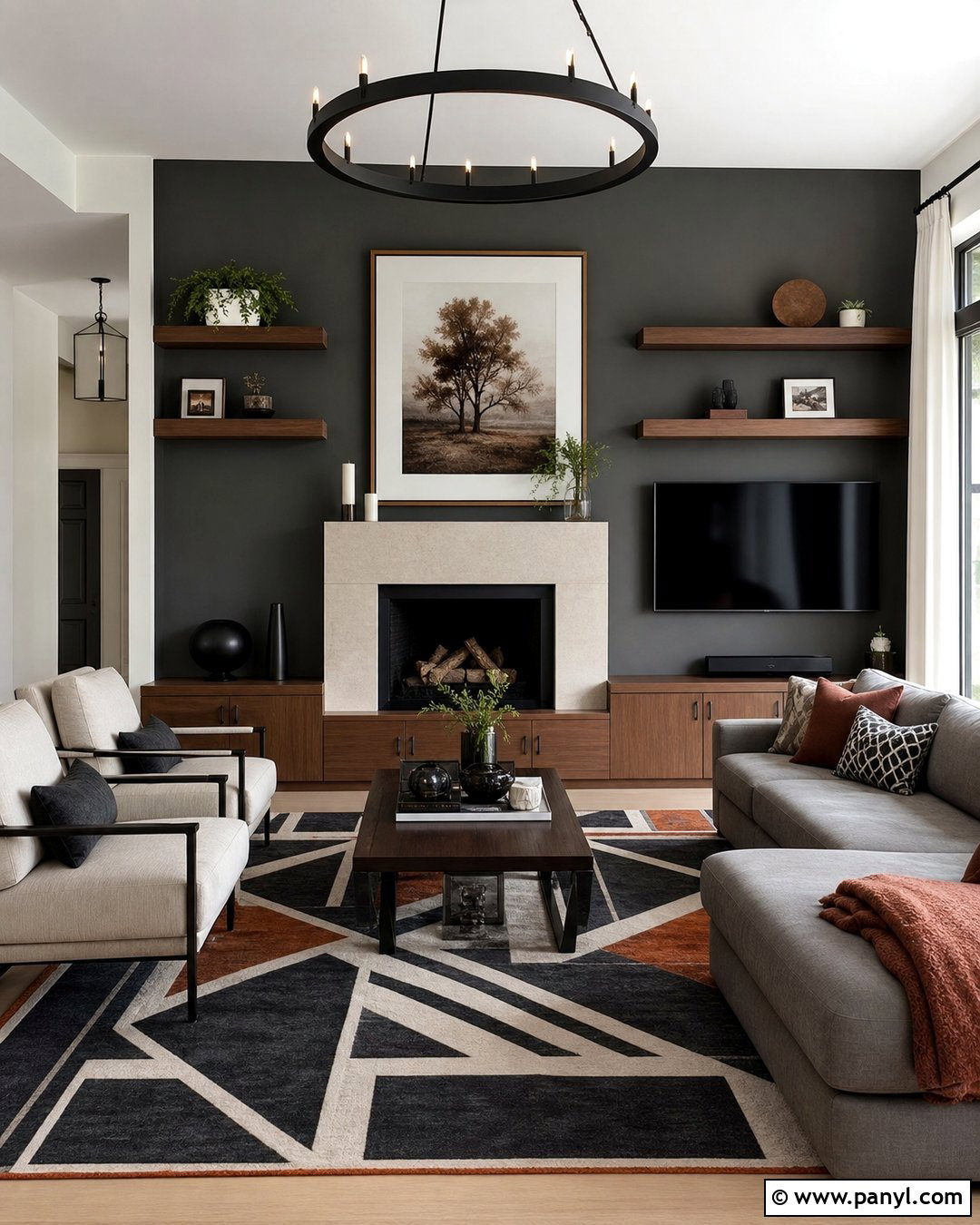
A grey accent wall works best when it anchors an important feature instead of appearing randomly placed. Paint the fireplace or television wall a deep graphite grey and keep the surrounding walls soft white. Center a low walnut media cabinet or pale stone fireplace on the darker surface. Face it with a light taupe sectional and place two oatmeal chairs at right angles to create an inviting conversation area. A geometric rug containing charcoal, cream, and rust distributes the accent color across the room. Add black metal lighting, warm wood accessories, and terracotta pillows to prevent a disconnected black-and-white effect. Slim floating shelves can display pottery and framed art without overwhelming the wall. The finished space gains depth, direction, and a clear focal point.
8. Grey Living Room With Wood Furniture
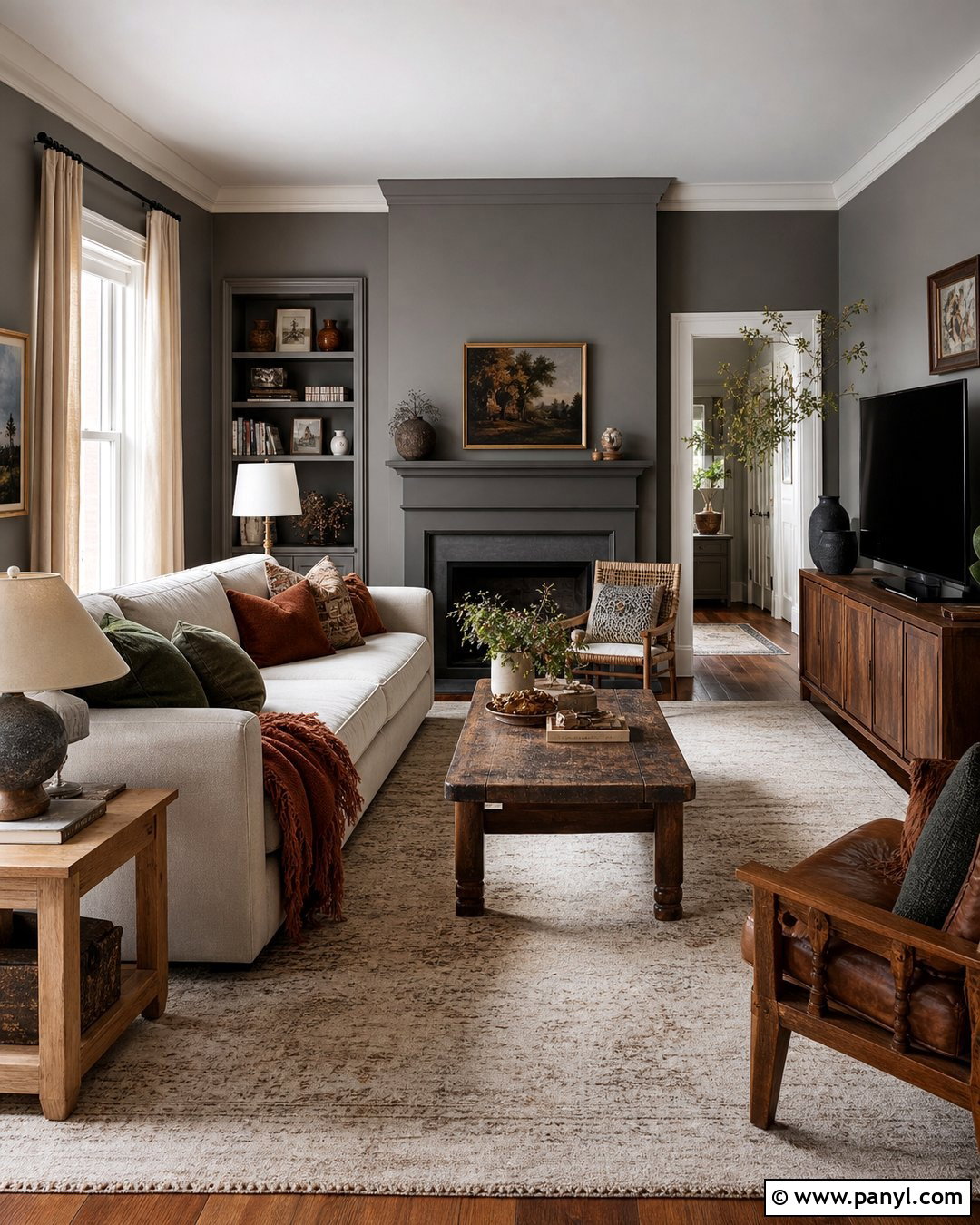
Grey walls and wood furniture make a naturally balanced combination, especially when several wood tones are repeated intentionally. Start with a medium warm-grey backdrop and position a walnut media console opposite an oatmeal sofa. Add oak side tables, a vintage chest-style coffee table, and one dark wood accent chair. The varying finishes should share warm undertones so the room feels collected rather than mismatched. Ground everything with a cream rug featuring a fine charcoal pattern. Olive pillows, rust-colored textiles, and abstract landscape art introduce quiet color. Choose linen curtains and black metal lamps to keep the arrangement from becoming overly rustic. Green plants, woven baskets, and handmade ceramics complete a relaxed living room in which the grey walls allow the natural grain to become the main visual feature.
9. Grey Living Room With Colorful Decor
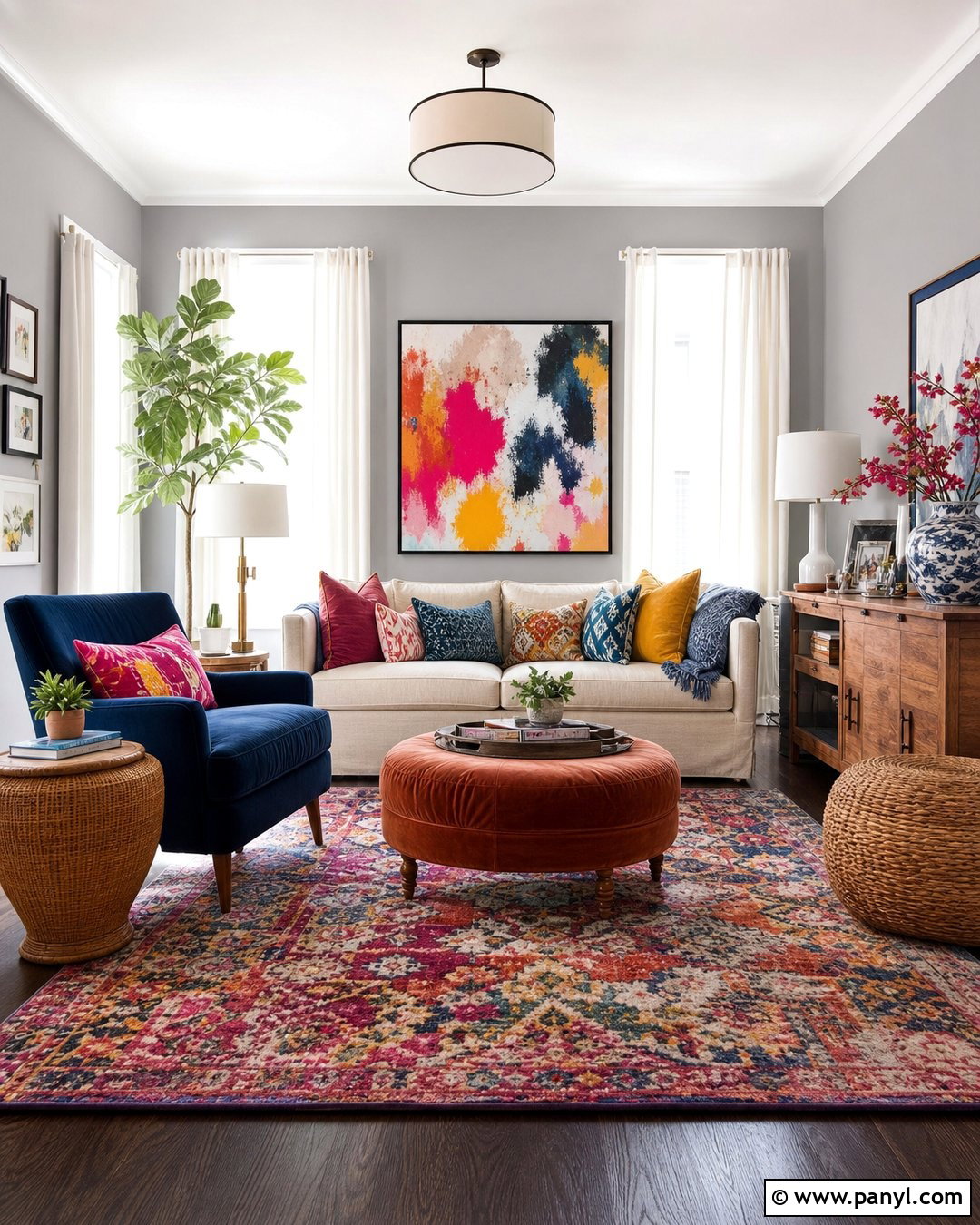
Grey walls provide a flexible foundation for color when the brighter shades are repeated across the room. Choose a soft neutral grey, then build the seating area with a cream sofa, cobalt-blue chair, and rust velvet ottoman. Use a large patterned rug containing blue, coral, mustard, and grey to connect these separate pieces. Above the sofa, arrange vibrant modern prints in simple oak frames. Pillows and throws can echo the artwork without matching every color exactly. Keep larger storage pieces in natural wood so the room still feels grounded. White curtains and pale lampshades maintain brightness, while black accents sharpen the palette. By limiting bold colors to movable furnishings and decor, this complete look can evolve easily without requiring another wall-painting project.
10. Grey Living Room With Black Accents
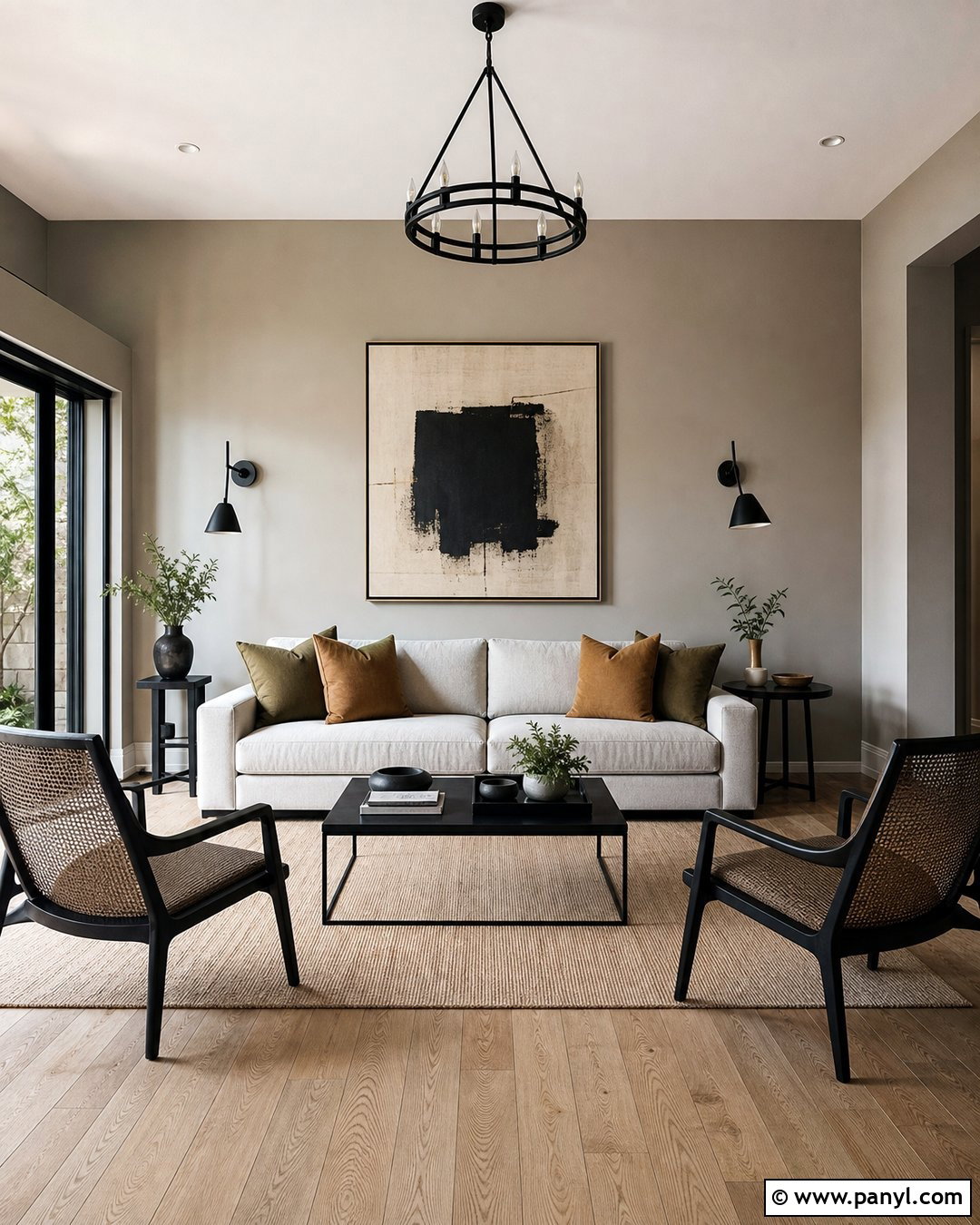
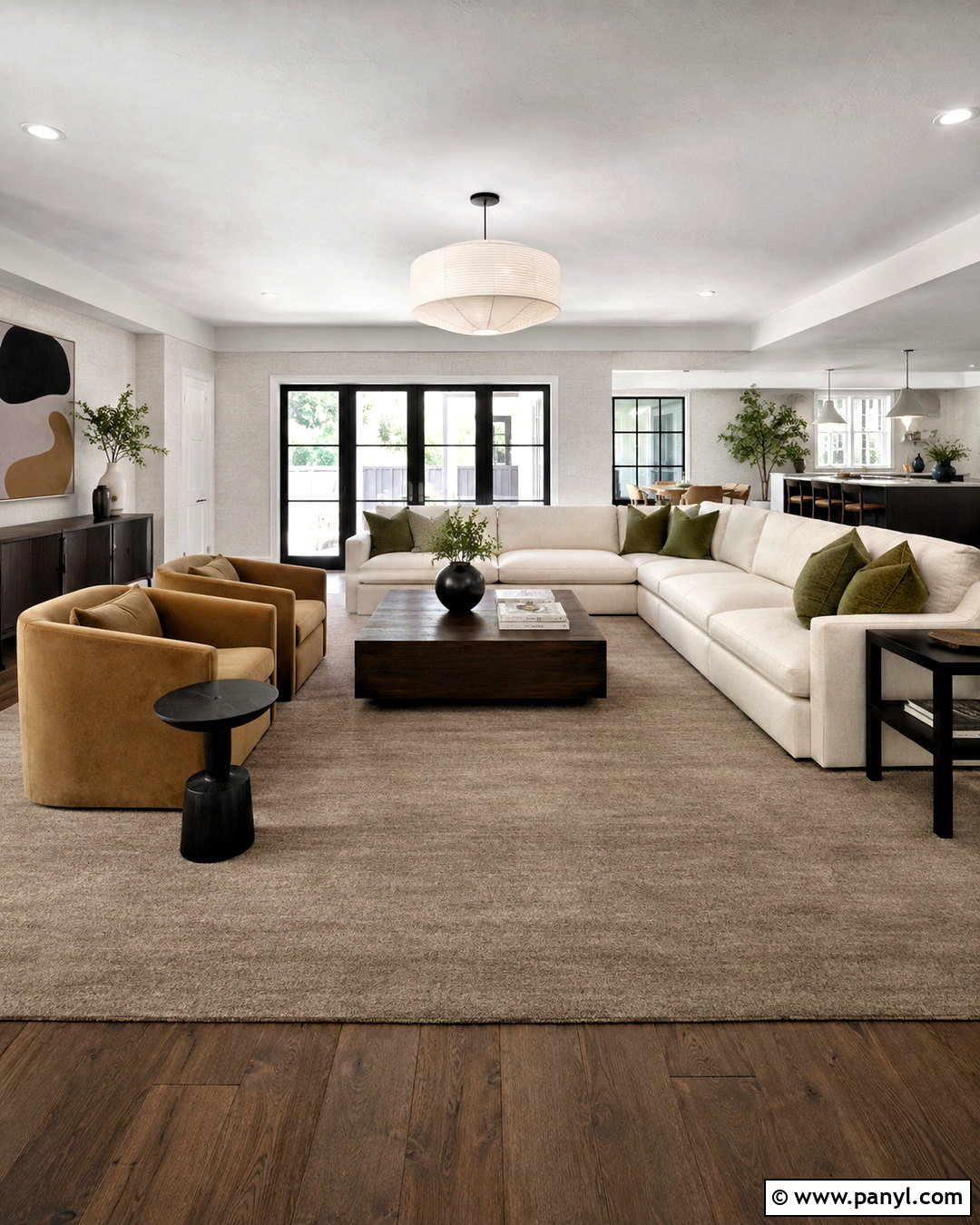
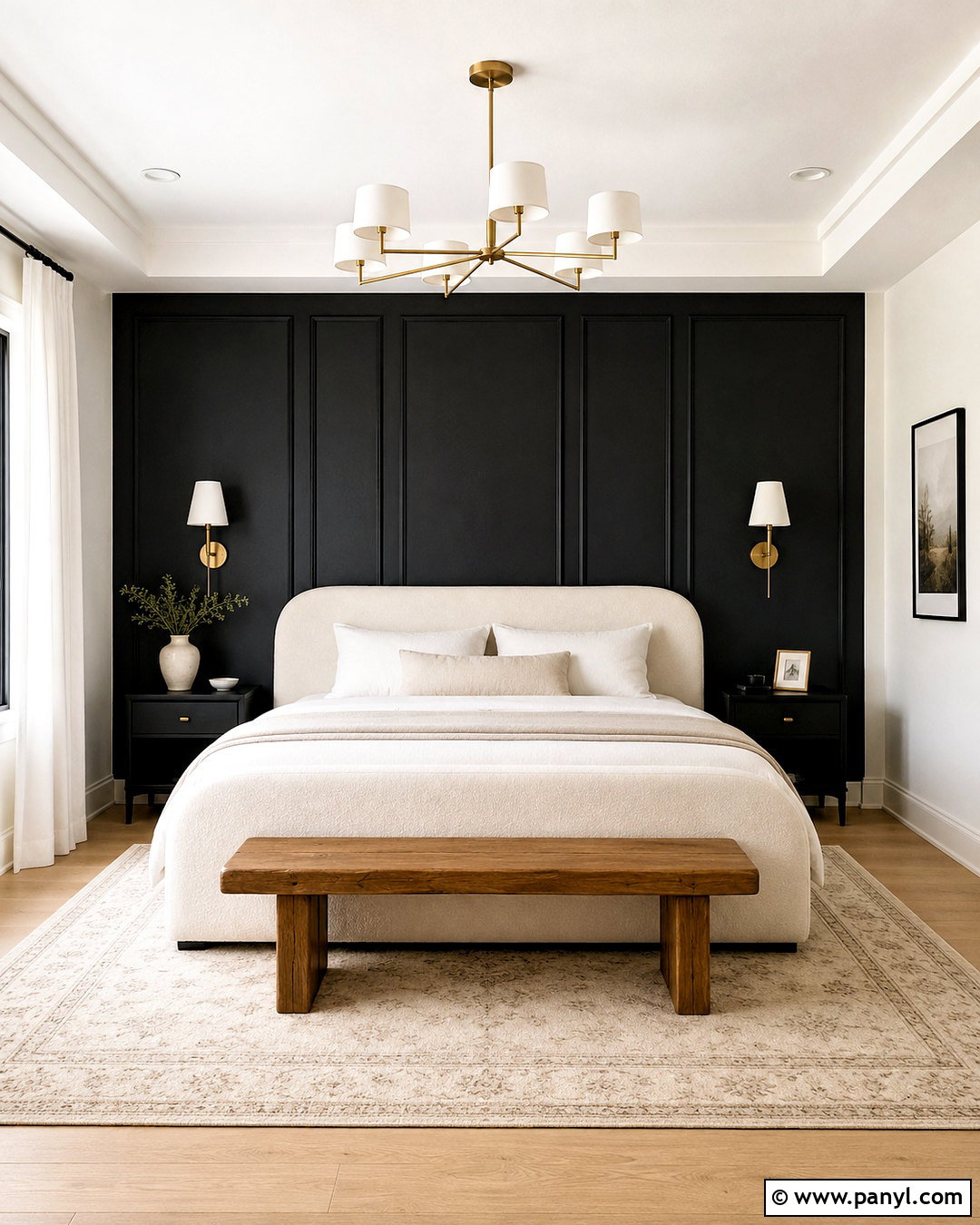
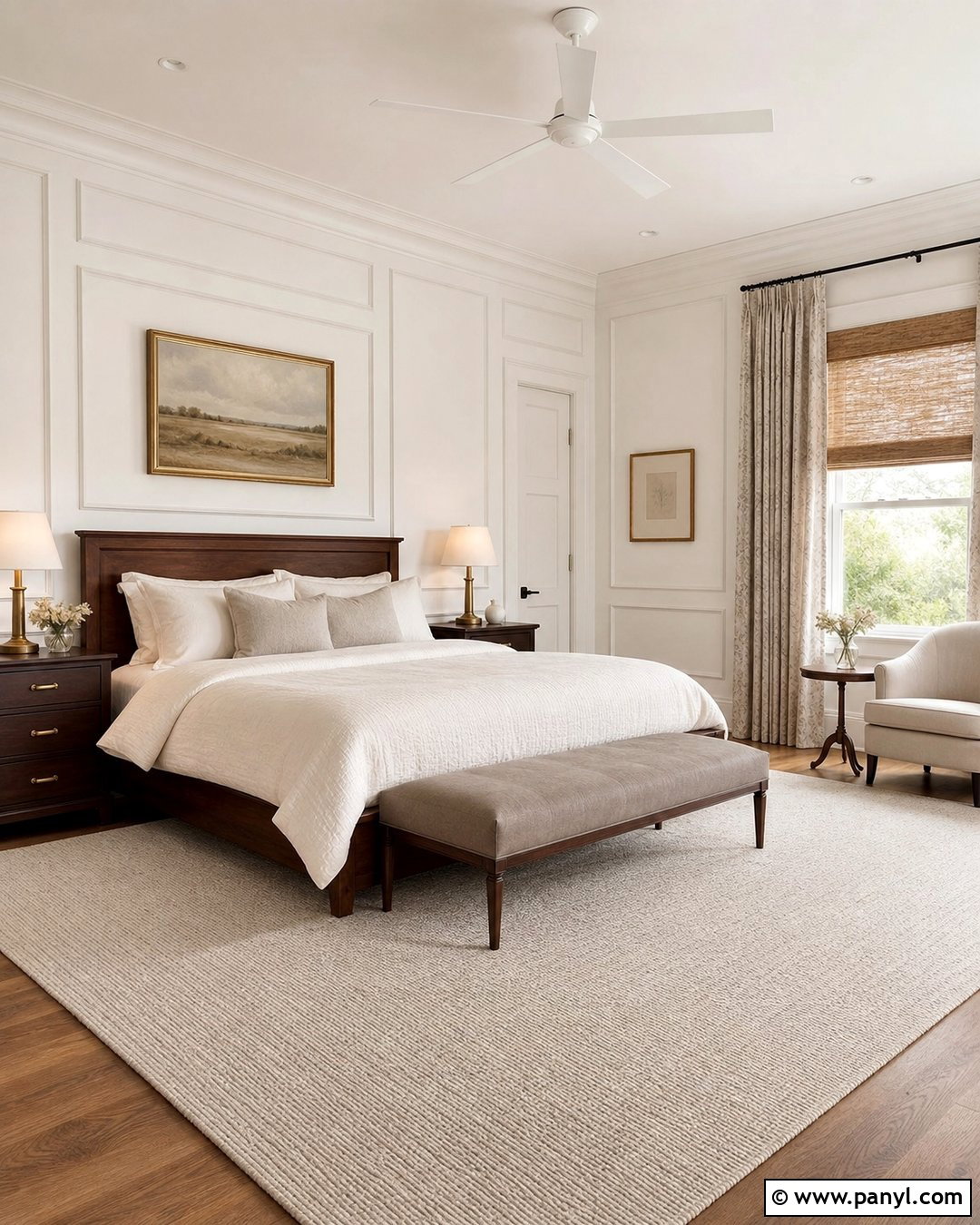
A grey and black living room can feel polished rather than severe when warm materials soften its sharp contrast. Cover the walls in a medium greige and choose an off-white sofa as the primary seating piece. Add two black-framed lounge chairs with woven cane backs and a slim black metal coffee table. Repeat black through curtain rods, picture frames, and a contemporary chandelier, but leave plenty of pale surfaces between these accents. Natural oak flooring and a sand-colored rug introduce warmth underfoot. Use camel, olive, and cream pillows instead of relying entirely on monochrome accessories. A large abstract canvas can combine black brushwork with warm beige tones. The result is a defined, modern room with strong lines, comfortable textures, and visual breathing space.
11. Pale Grey Bedroom Walls
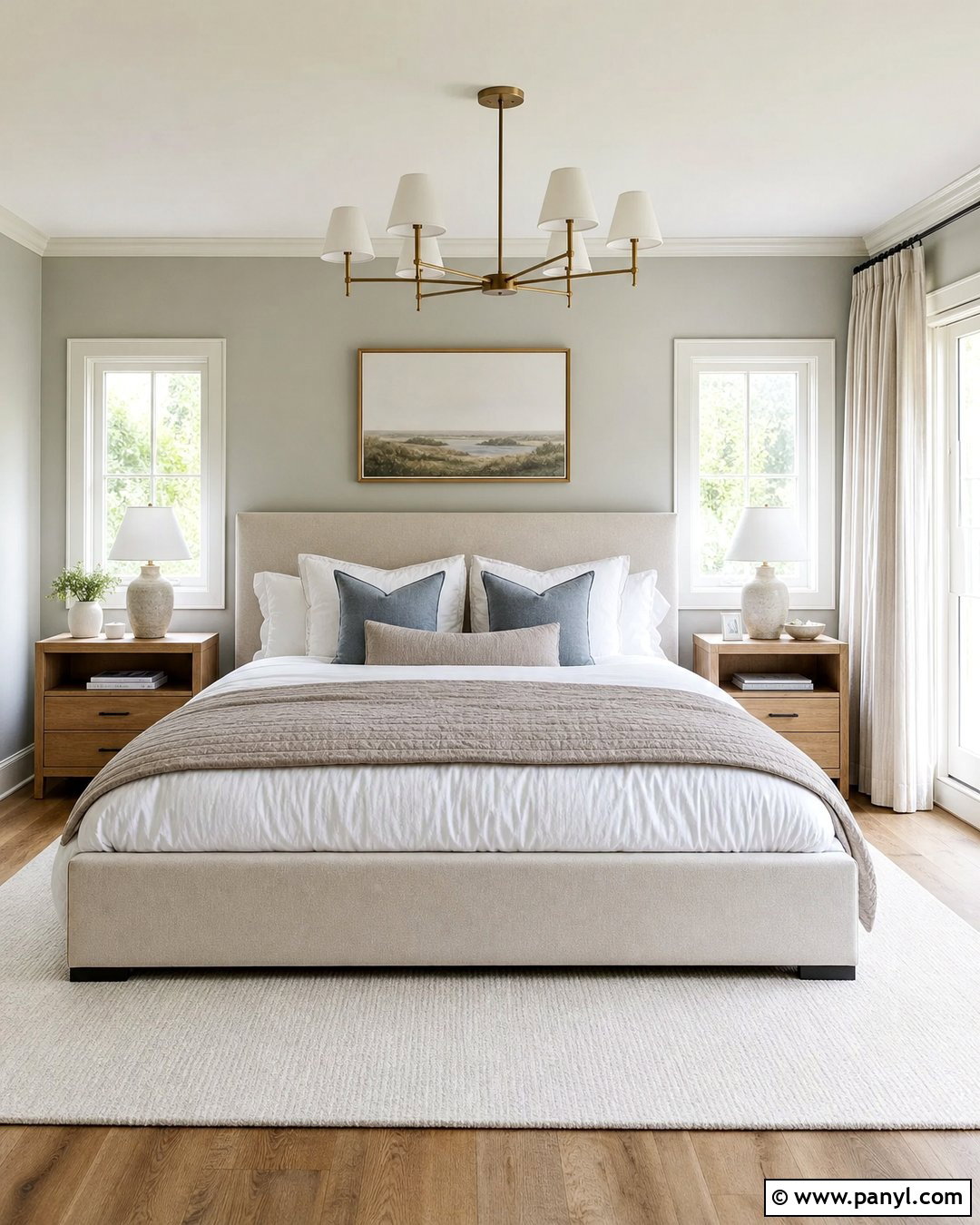
Pale grey bedroom walls create a quiet foundation that supports restful colors and soft materials. Place an upholstered oatmeal bed against the main wall and dress it with white sheets, a light taupe quilt, and muted blue pillows. Natural oak nightstands introduce warmth, while matching ceramic lamps create balance on either side. Choose a woven wool rug large enough to extend beyond the bed, making the entire arrangement feel generous. Full-length ivory curtains should soften the windows without blocking daylight. Above the headboard, hang one calming landscape or a simple pair of botanical prints. Add a light wood bench and a small reading chair if space permits. This complete bedroom feels fresh, uncluttered, and inviting without becoming plain or overly cool.
12. Warm Grey Bedroom Walls
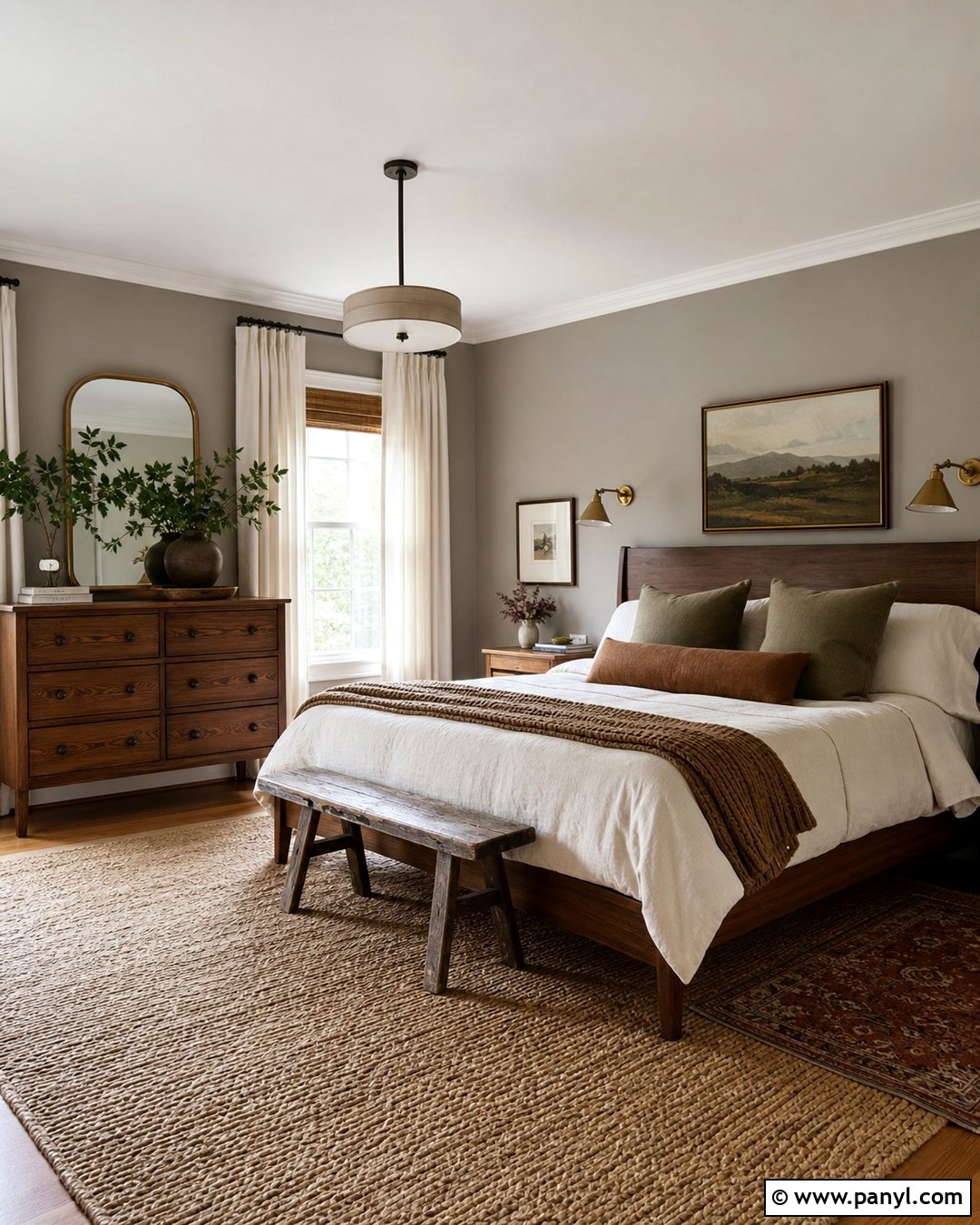
Warm grey walls can turn a basic bedroom into a cozy retreat when paired with layered neutrals. Choose a taupe-leaning grey and add a walnut bed with an upholstered linen headboard. Dress the mattress in cream bedding, a quilted camel coverlet, and chocolate-brown accent pillows. Place textured wool rugs beneath the bed and use warm white curtains to diffuse daylight. Antique brass sconces free the nightstands for books and small ceramics. A vintage wood dresser provides useful storage and gives the design a collected quality. Complete the room with sepia artwork, woven baskets, and one olive-colored throw. The combination of brown-based grey, wood grain, and tactile fabric creates warmth while preserving the peaceful simplicity expected from a well-designed bedroom.
13. Dark Grey Bedroom Walls
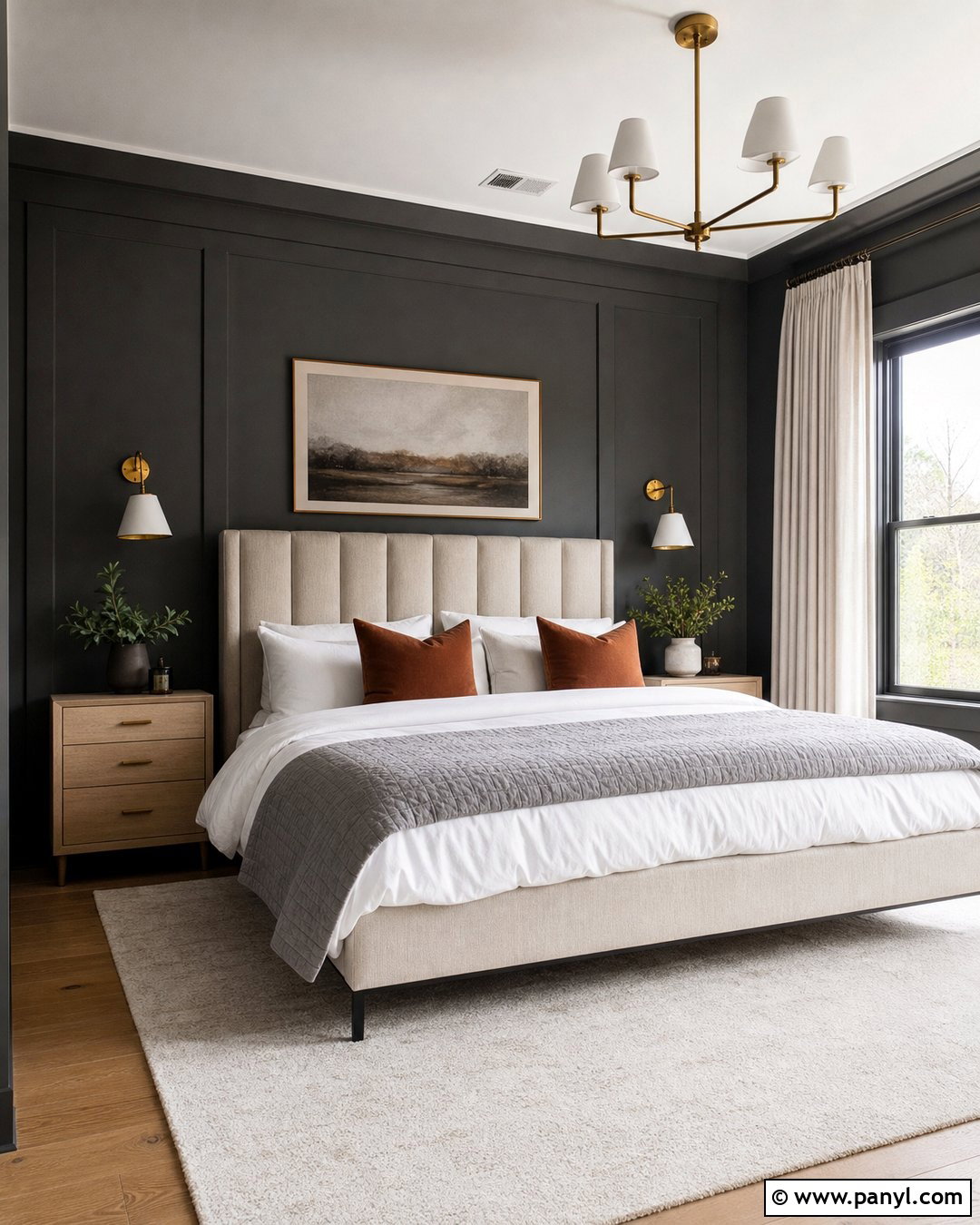
Deep grey walls create an enveloping bedroom, particularly when the ceiling and trim remain noticeably lighter. Use charcoal on all four walls, then bring in a tall cream upholstered bed to establish a bright focal point. Layer the bedding with white linen, a soft grey quilt, and rust-colored pillows. Pale oak nightstands and a matching bench add organic warmth, while brass wall lights reflect gently against the darker paint. Select an ivory rug large enough to frame the bed and brighten the lower half of the room. Hang minimal artwork with broad cream mats, keeping the wall composition calm. Sheer curtains paired with heavier neutral drapes provide flexible light control. This design feels cocooning and refined without depending on dim lighting or excessively heavy furniture.
14. Grey And Blush Bedroom Walls
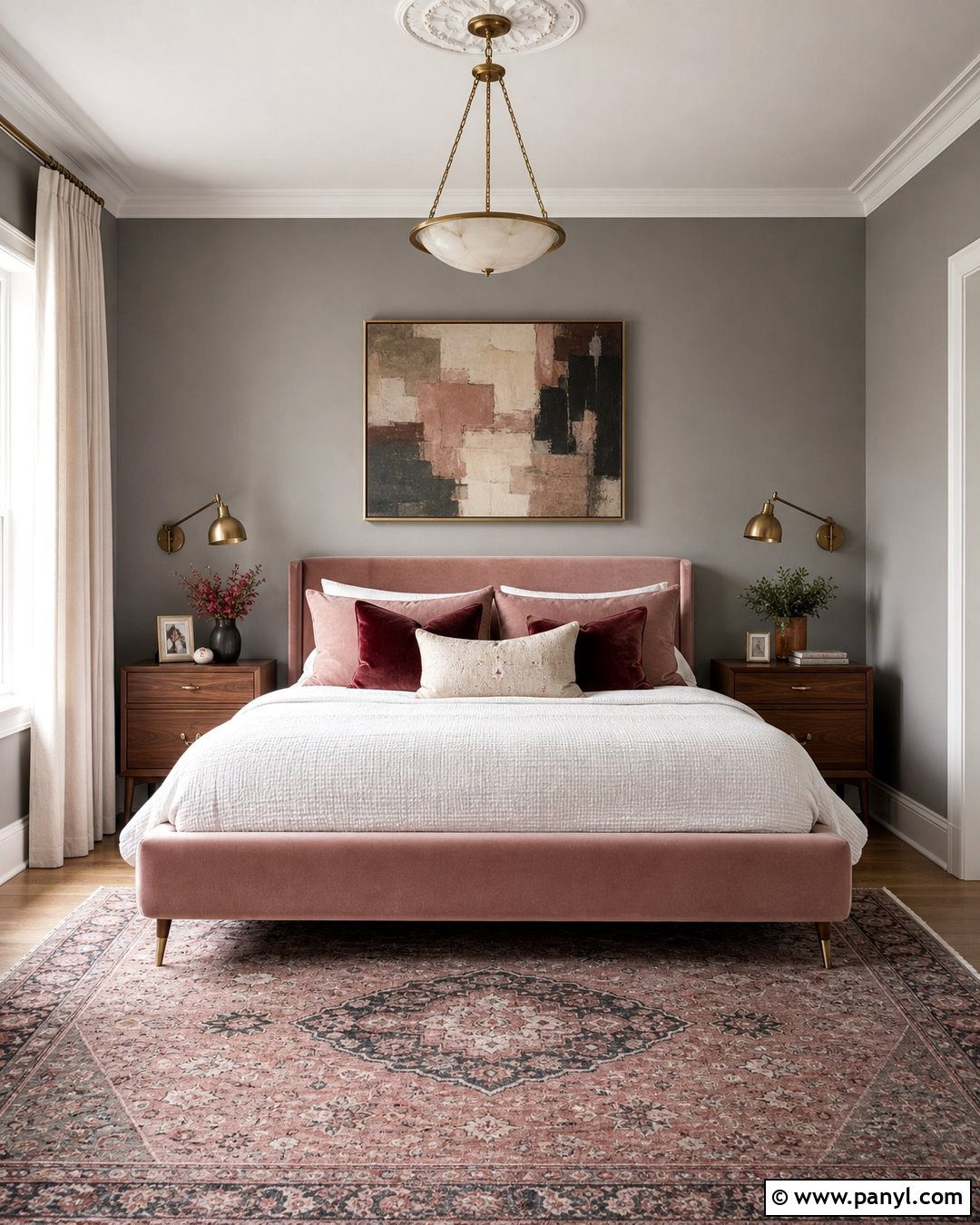
Grey and blush create a softer bedroom palette when the pink is dusty rather than sugary. Paint the walls a light dove grey and center a blush upholstered bed beneath a large abstract artwork. Use crisp white sheets, a grey quilt, and pillows combining rose, burgundy, and cream. Walnut nightstands and an aged brass pendant add depth, ensuring the room does not feel overly delicate. Ground the furniture with a faded Persian-style rug containing muted pink and charcoal details. Choose warm white curtains and add a burgundy reading chair near the window. Black frames or hardware can provide a few controlled points of contrast. The completed room feels romantic, grown-up, and balanced, with the grey walls keeping the warmer colors calm and easy to live with.
15. Grey And Navy Bedroom Walls
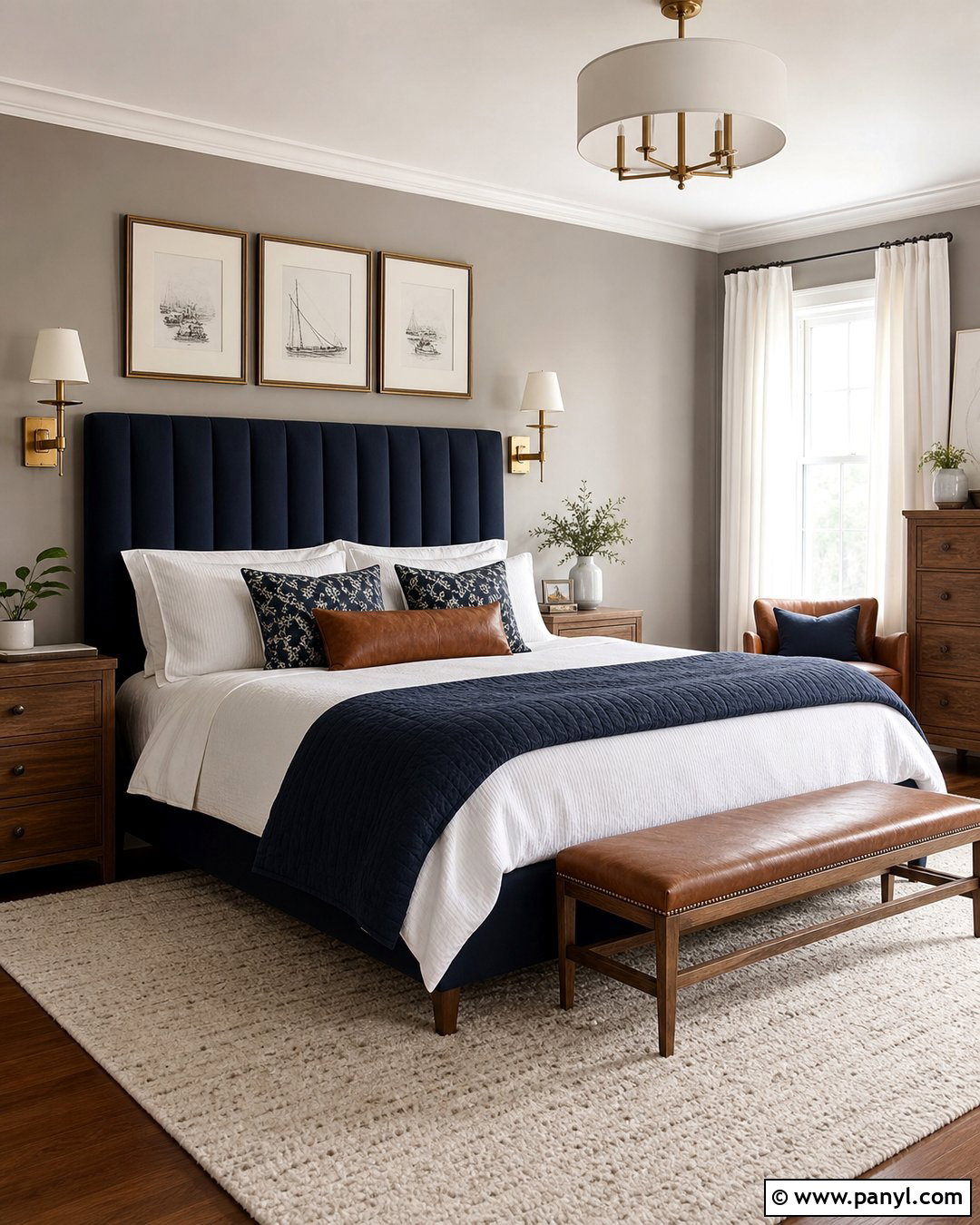
Grey walls and navy furnishings create a tailored bedroom with enough contrast to feel distinctive. Begin with a medium warm-grey paint and a navy upholstered headboard reaching above the nightstands. Layer white bedding with a navy quilt, grey striped pillows, and one cognac lumbar cushion. Add medium-tone oak furniture to warm the cool palette and choose brass sconces for subtle shine. A cream rug with a fine blue border keeps the floor light while connecting the main colors. Hang framed coastal sketches, geometric abstracts, or simple architectural prints above the bed. Soft white curtains can brighten the windows, while navy Roman shades improve privacy. This full arrangement suits modern, transitional, or coastal homes without depending on obvious nautical decorations.
16. Grey Bedroom With Wood Paneling
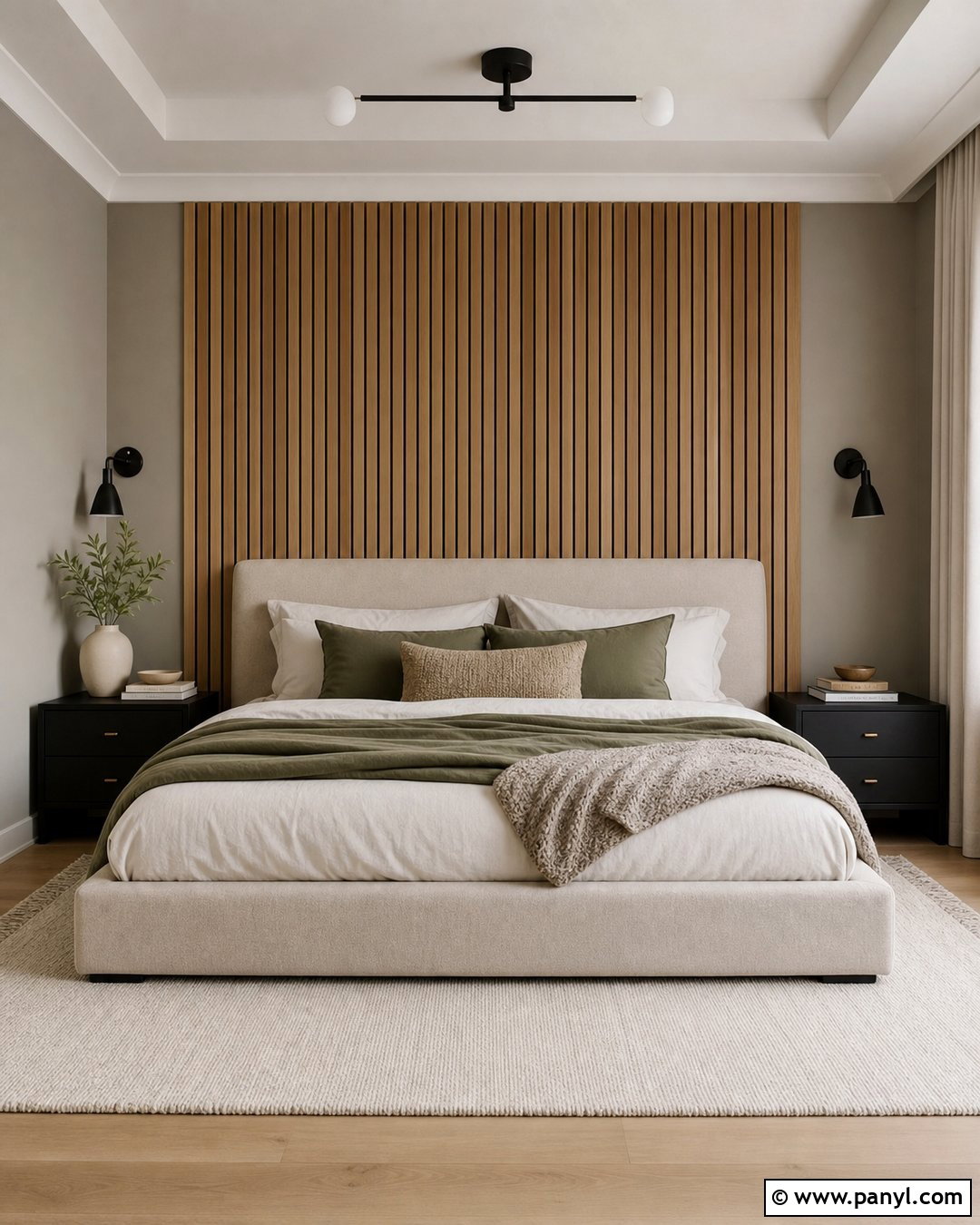
Grey walls gain warmth and dimension when combined with natural wood paneling behind the bed. Paint three walls a soft greige, then install vertical oak slats or wide walnut panels across the headboard wall. Choose a simple upholstered bed in cream so it stands apart from the wood grain. Layer the bedding in white, taupe, and olive, and place compact black nightstands on both sides. Matte black sconces reinforce the panel lines without competing with them. Use a textured ivory rug, linen curtains, and a low wood bench to soften the clean geometry. Minimal artwork is needed because the paneling already serves as the main feature. The finished bedroom feels architectural, warm, and complete rather than decorated with unrelated accent pieces.
17. Grey Color Drenched Bedroom
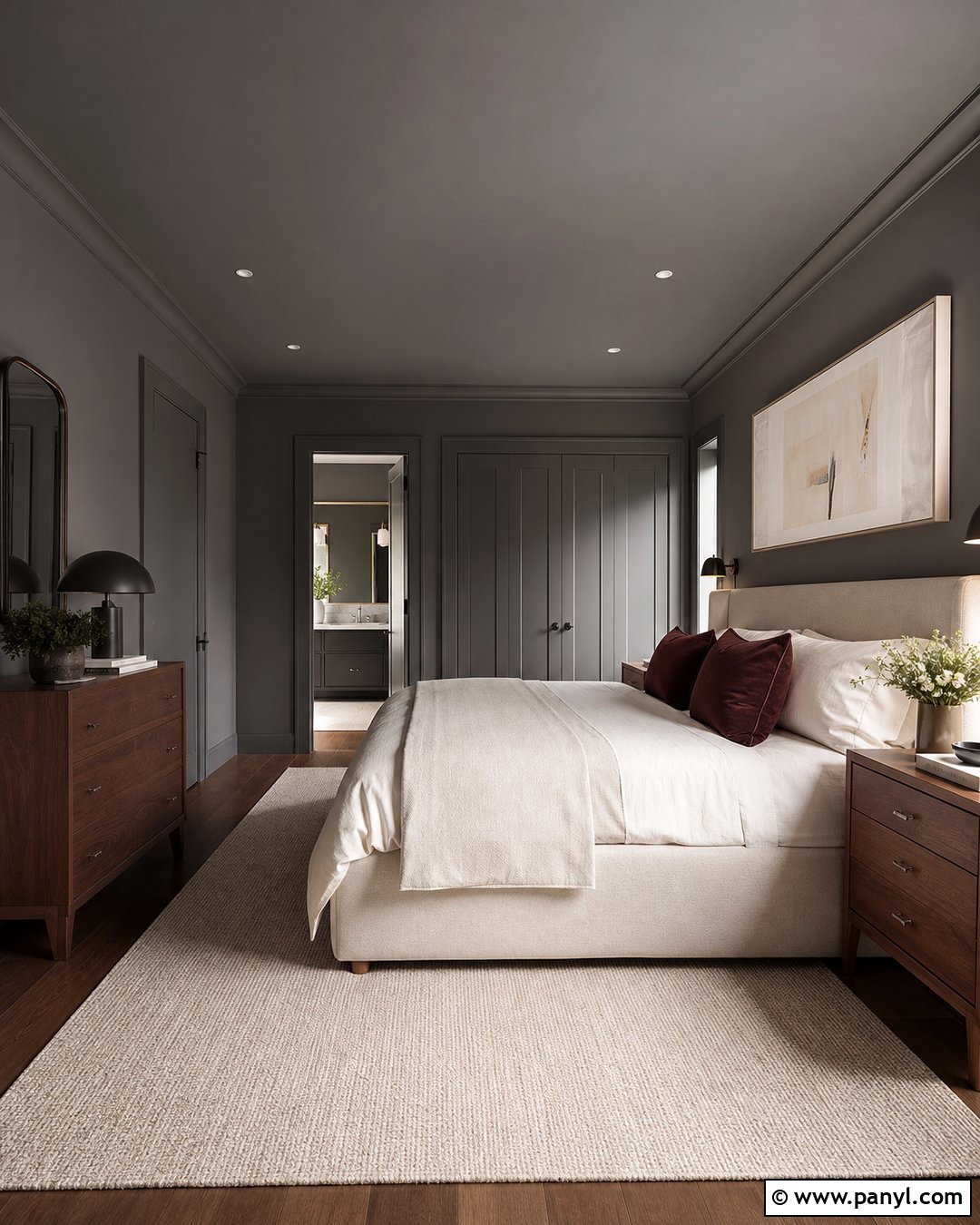
Color drenching allows grey to wrap a bedroom in a unified, calming finish. Choose a warm mid-grey and apply it to the walls, ceiling, trim, doors, and built-in wardrobes. Use different paint sheens to distinguish surfaces subtly, with matte walls and satin woodwork. Bring in a cream linen bed, ivory bedding, and a pale wool rug to brighten the continuous color. Walnut nightstands and bronze wall lights add warmth, while muted burgundy pillows provide a restrained accent. Keep window treatments close to the wall color so they blend into the architecture. A large light-toned artwork above the bed prevents the scheme from becoming visually heavy. This full-room treatment is especially effective in bedrooms with awkward angles because one color makes every surface feel intentional.
18. Grey Guest Bedroom Walls
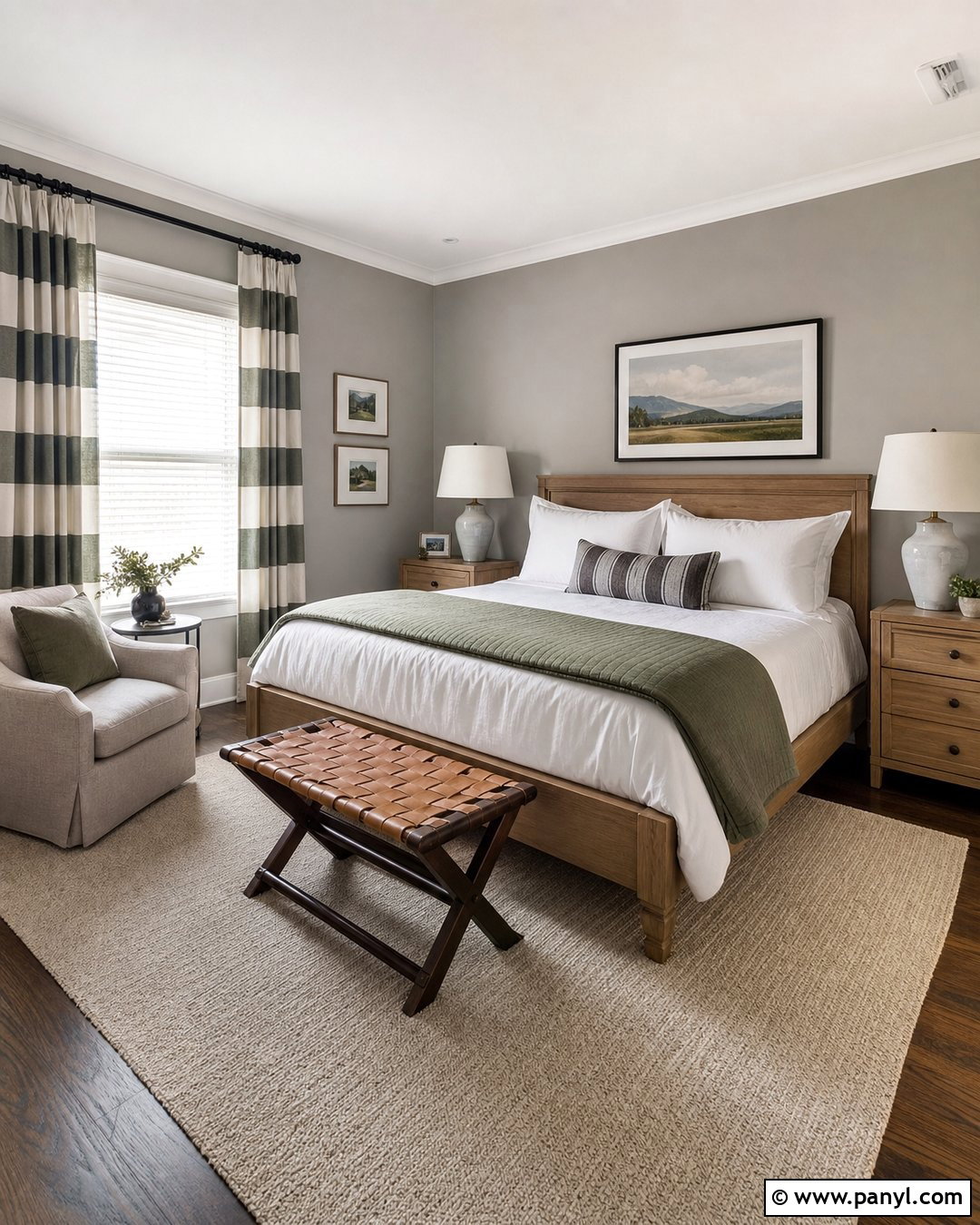
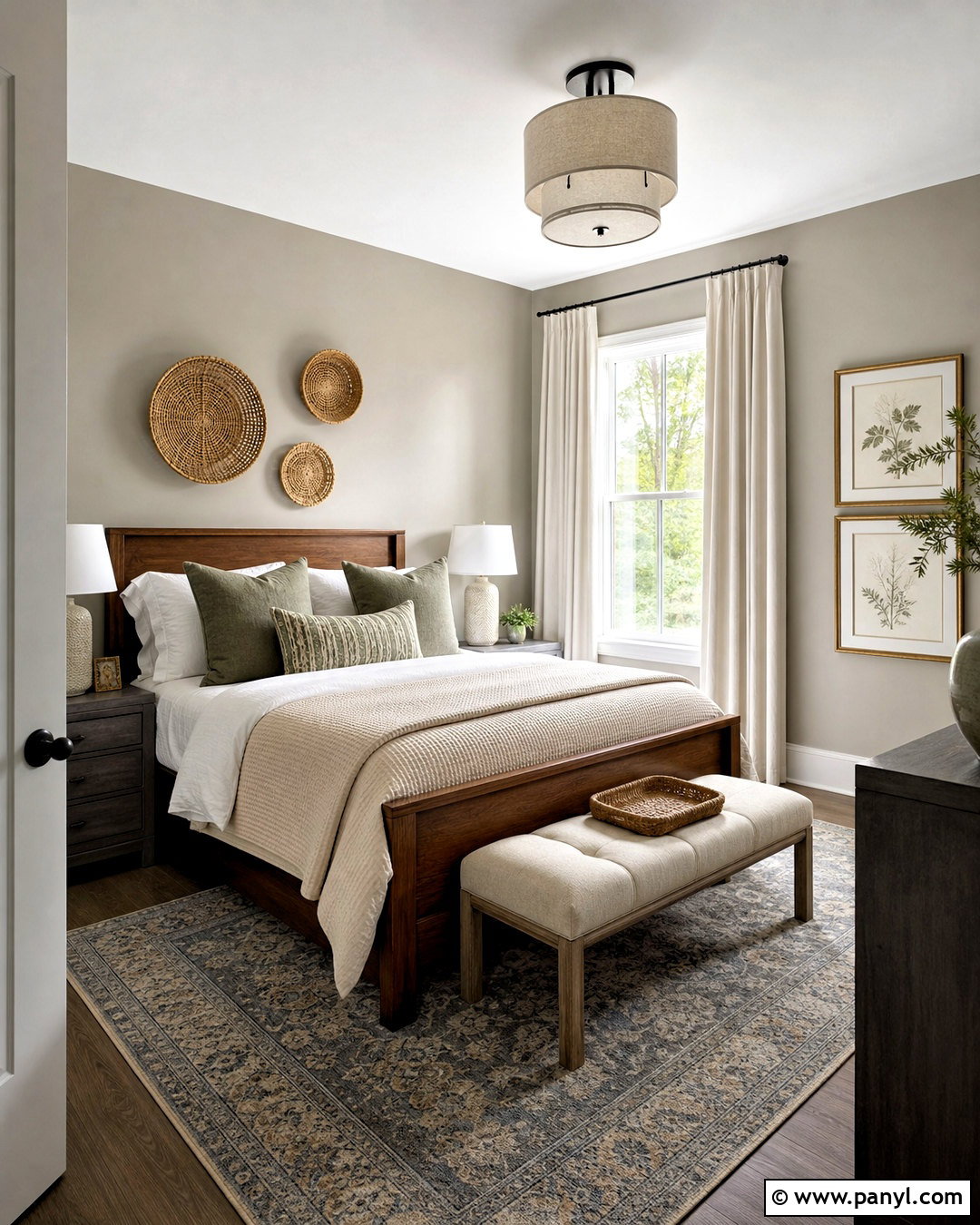
A grey guest bedroom should feel flexible, comfortable, and welcoming to visitors with different tastes. Use a light mushroom grey on the walls and position a simple oak bed against the most visible surface. Dress it with clean white linens, a quilted sage coverlet, and several supportive pillows. Include matching nightstands with easy-to-reach lamps, a luggage bench, and a small dresser or hanging rail. An ivory rug softens the floor, while striped curtains add understated pattern. Hang familiar landscape artwork rather than highly personal photographs. A comfortable reading chair, full-length mirror, and woven basket for extra blankets improve function. The overall scheme feels thoughtfully finished, with warm grey providing a neutral background for practical furniture and gentle nature-inspired color.
19. Grey Nursery Walls
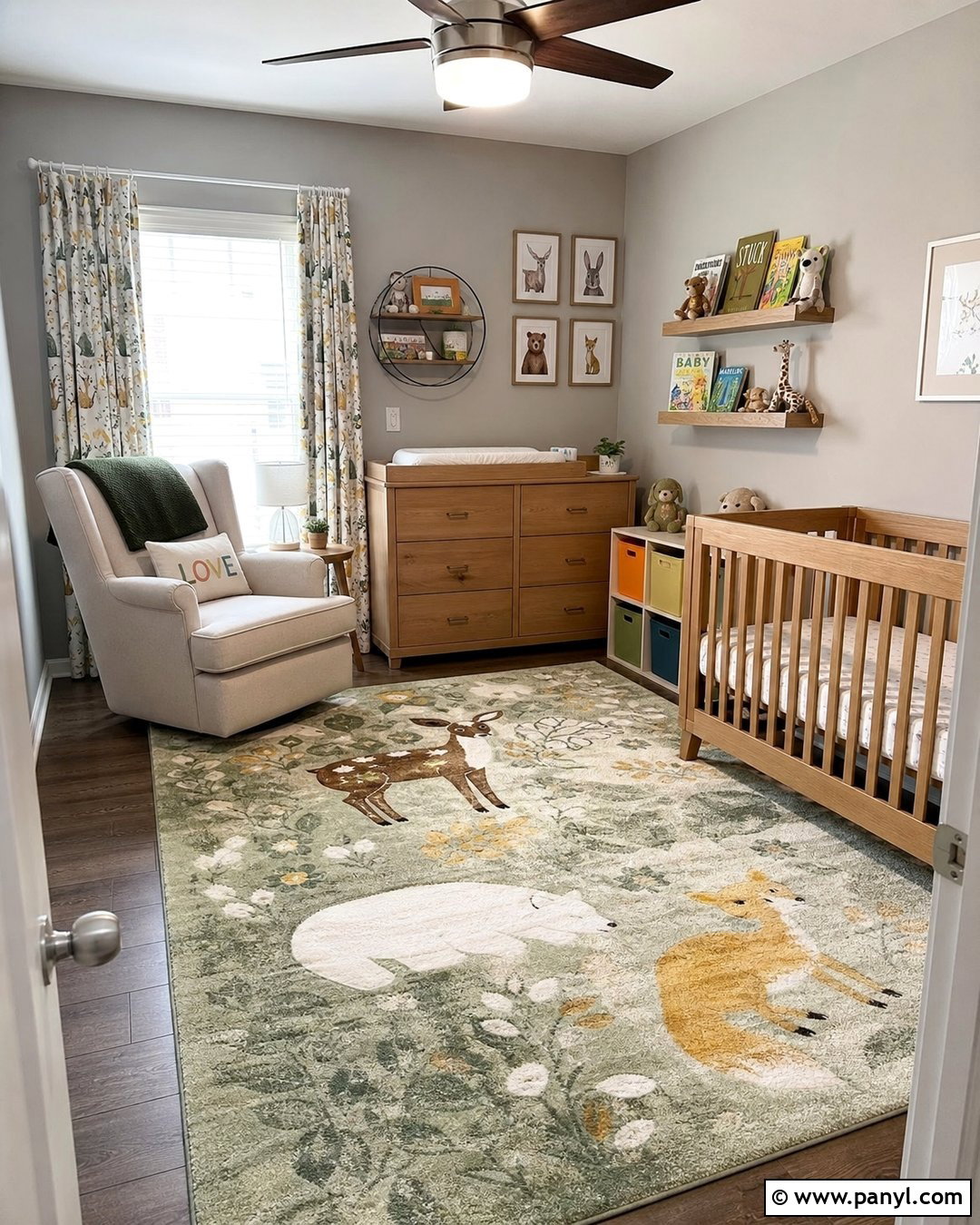
Soft grey nursery walls can support a cheerful, adaptable room when paired with warm wood and playful color. Choose a pale warm grey rather than a cool silver tone. Position a natural oak crib away from windows and add a comfortable cream glider beside a small side table. Use a washable rug featuring muted green, golden yellow, and ivory shapes. A low wood dresser can double as organized changing storage, while secure wall shelves hold lightweight decor and books. Add patterned curtains, animal illustrations, and colorful storage baskets to give the room personality. Keep pathways open and avoid overcrowding the crib area. This complete nursery feels gentle without being colorless, and the flexible grey background can transition easily as the child grows and furnishings change.
20. Grey Kids Bedroom Walls
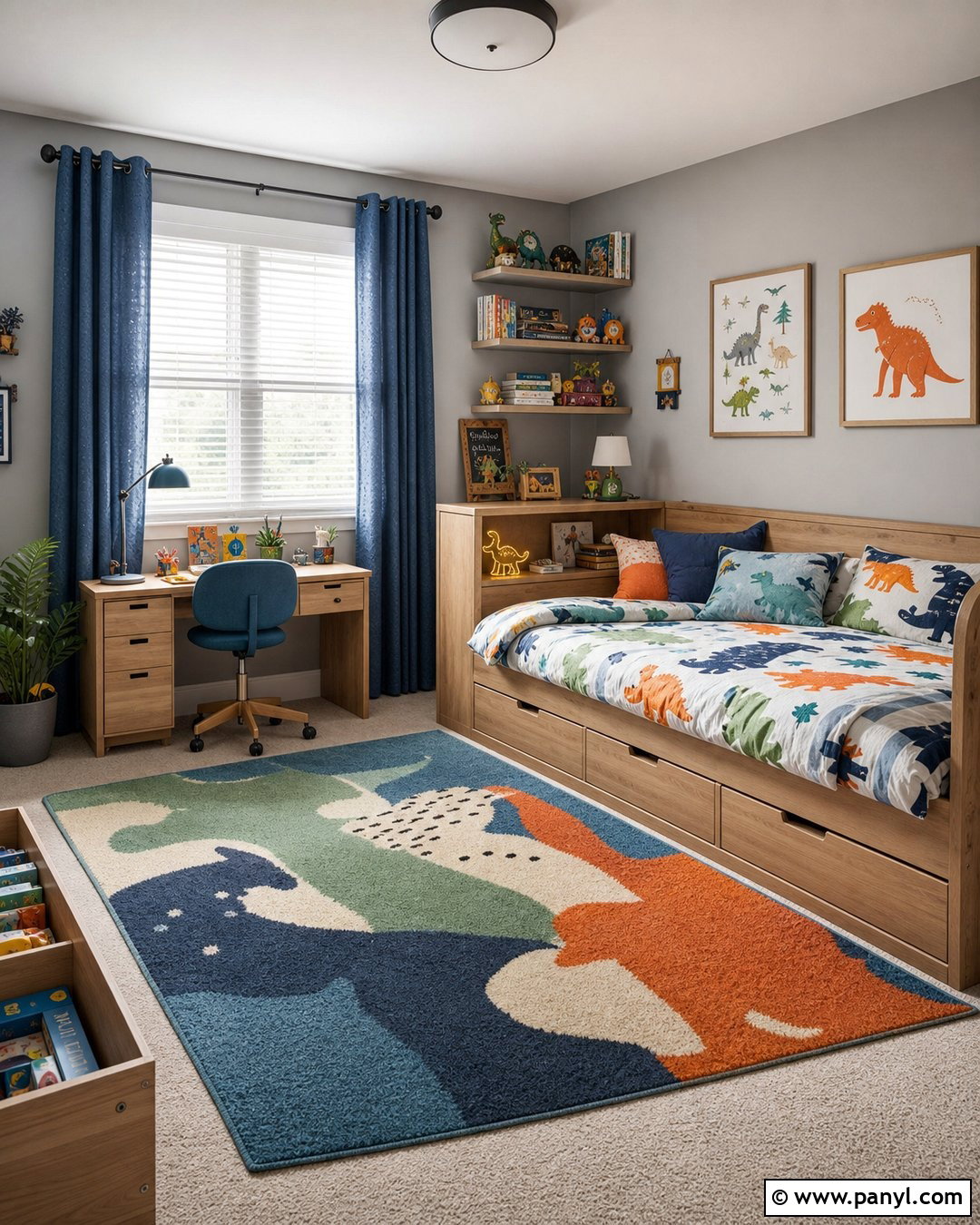
Grey walls allow a child’s bedroom to include energetic color without becoming visually chaotic. Paint the room a light neutral grey, then choose a simple white or oak bed with built-in drawers. Build the palette around a washable rug featuring blue, orange, green, and cream. Repeat those colors through bedding, storage bins, and framed illustrations. Place a compact desk near the window and use wall-mounted shelving to keep books and supplies organized. Blackout curtains in a muted blue provide practical light control while giving the windows definition. Add a corkboard or magnetic display area for changing artwork instead of attaching pieces across every wall. The completed room feels playful, practical, and cohesive, with enough flexibility to accommodate new interests over time.
21. Light Grey Kitchen Walls
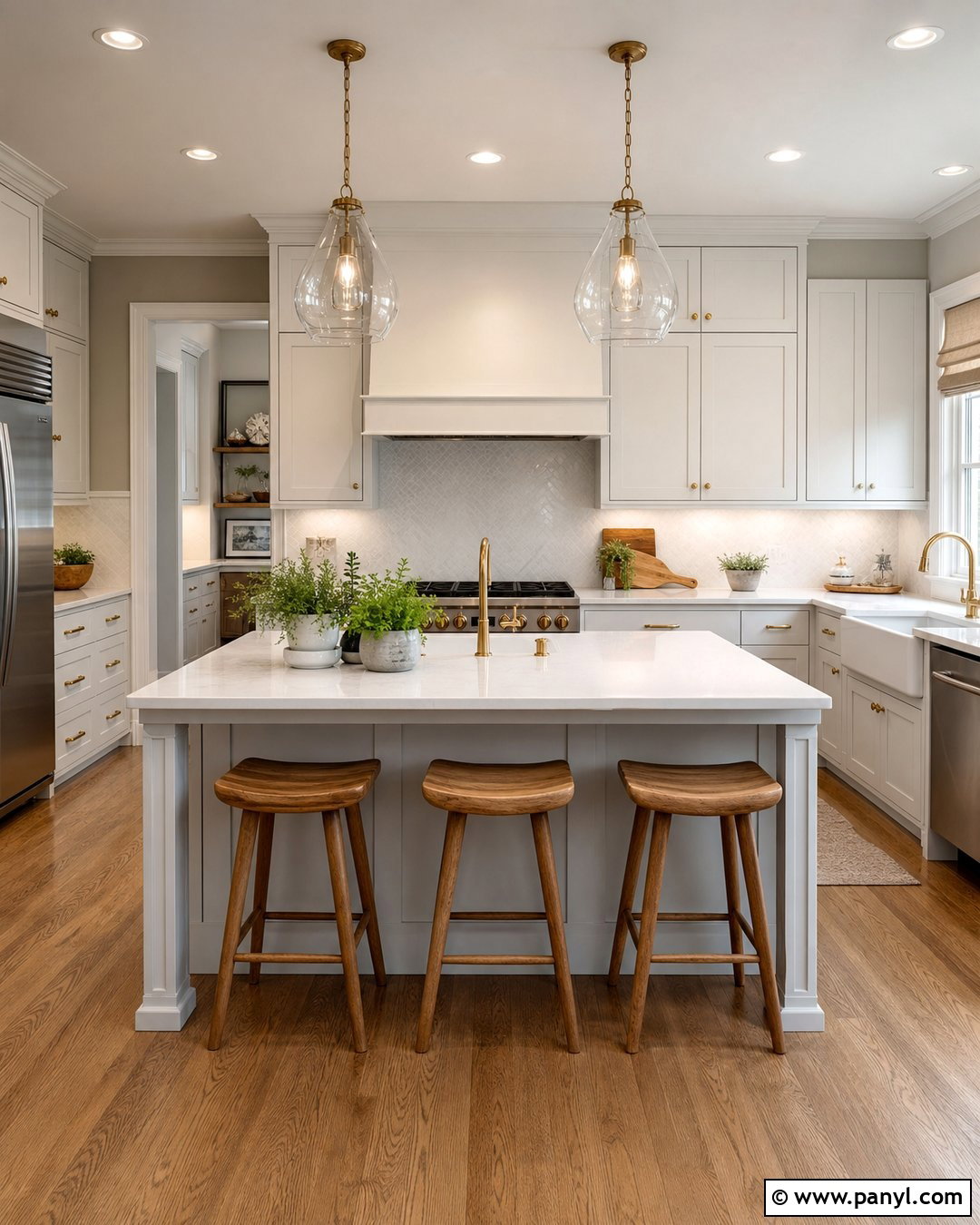
Light grey kitchen walls offer gentle contrast against white cabinets without reducing the room’s brightness. Select a warm, washable grey and combine it with shaker cabinetry, white quartz counters, and a soft white backsplash. Natural oak flooring or wood stools prevent the palette from feeling overly cool. Use brushed brass hardware and pendants to introduce warmth near eye level. A compact island can feature a muted blue-grey base for subtle variation while remaining connected to the walls. Display only a few functional pieces, such as wood cutting boards, ceramic canisters, and potted herbs. Woven shades add texture around the windows. This complete kitchen feels clean and timeless, but the layered whites, metals, and wood keep it from resembling a flat grey-and-white builder finish.
22. Grey Kitchen Walls With White Cabinets
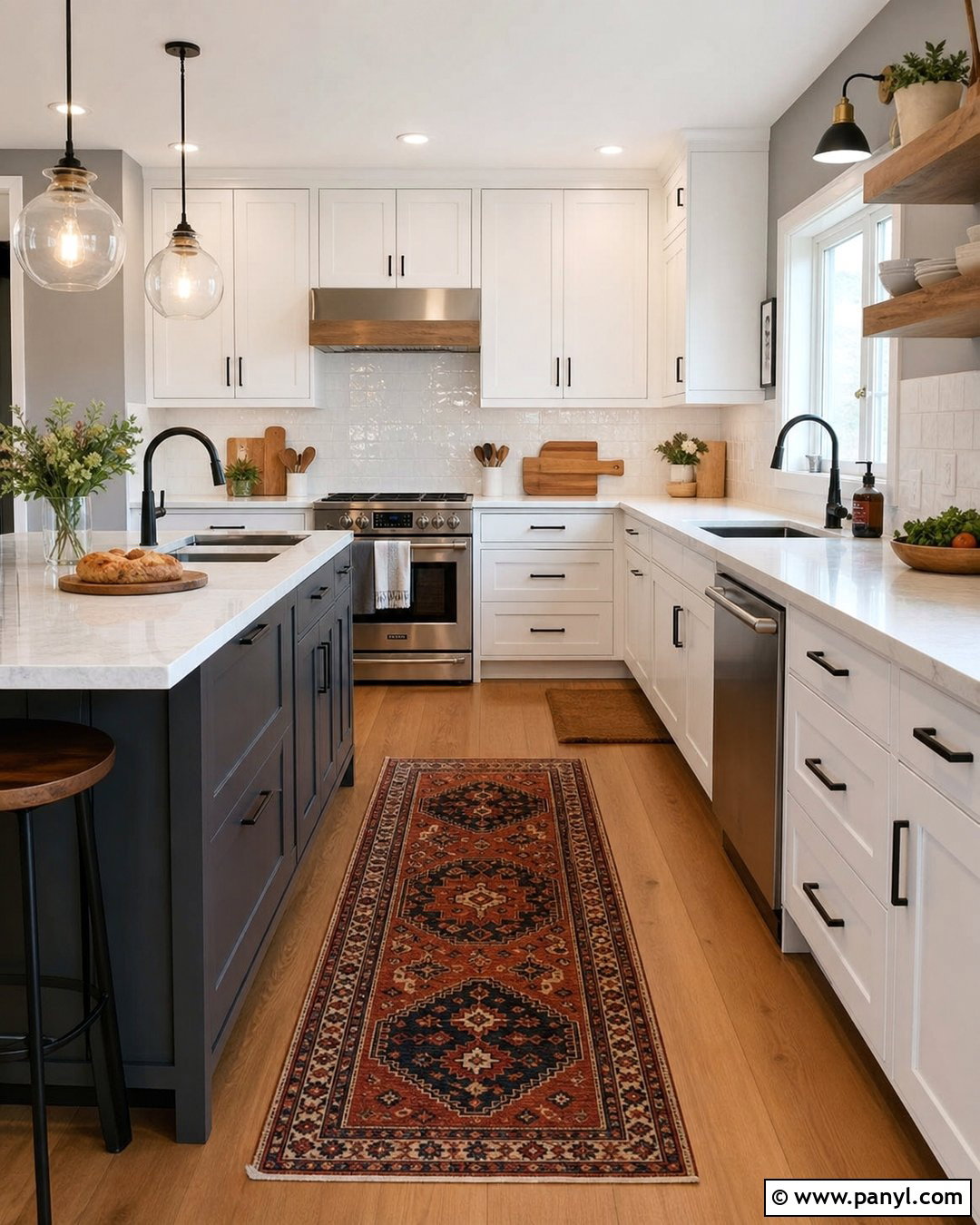
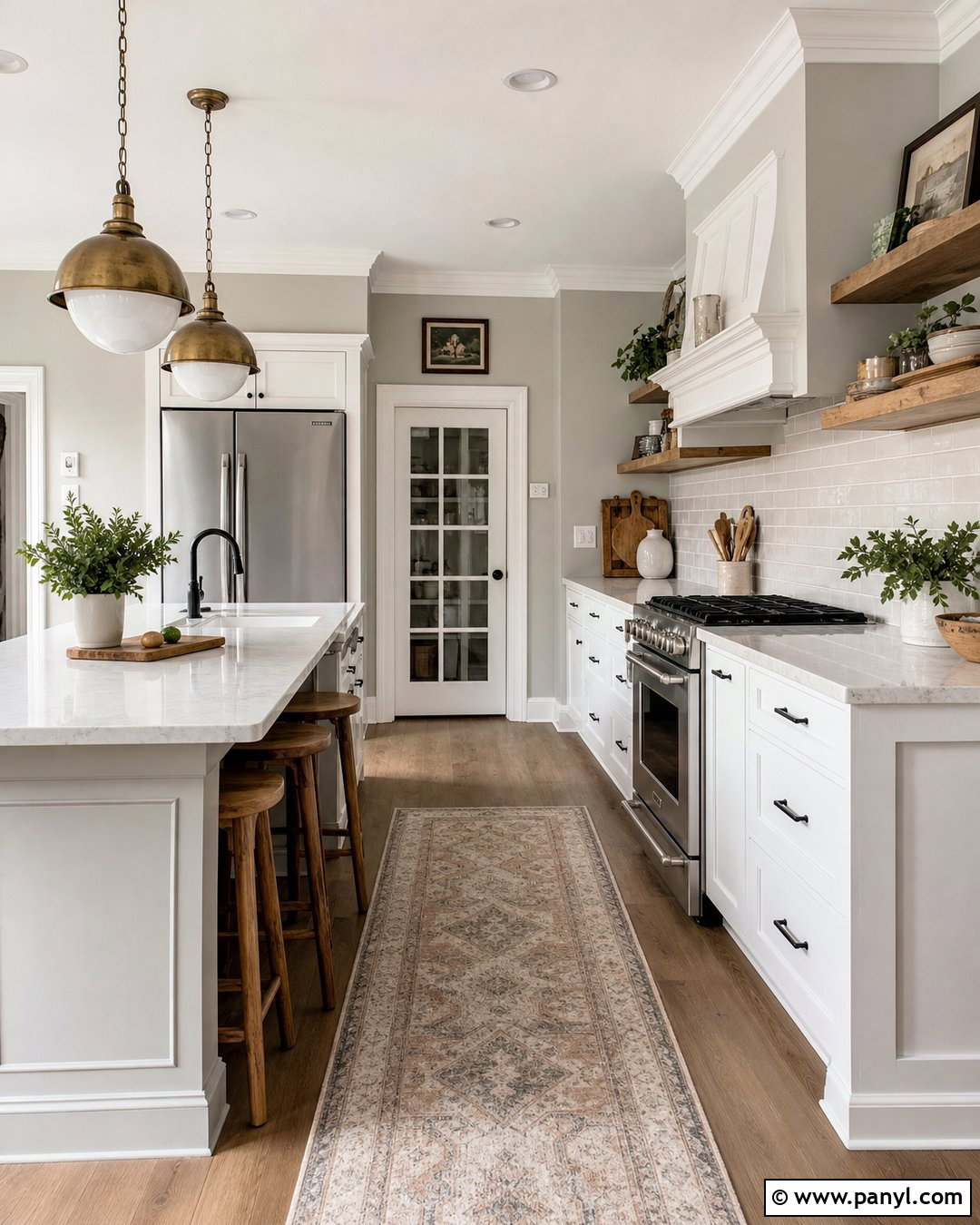
Medium grey walls can make white kitchen cabinets appear sharper and more architectural. Choose a balanced grey that complements the countertop and flooring rather than introducing an unrelated undertone. Pair the cabinets with pale quartz counters, a handmade white tile backsplash, and matte black hardware. Install warm oak flooring and repeat that wood on the island stools or open shelving. Clear glass pendants keep sightlines open while adding useful task lighting. A washable runner with rust and navy details introduces color along the main work aisle. Finish the room with a few black-framed prints, ceramic bowls, and fresh greenery. This full scheme gives a familiar white kitchen more depth, helping individual materials stand out while maintaining a practical, bright atmosphere.
23. Grey Kitchen Walls With Wood Cabinets
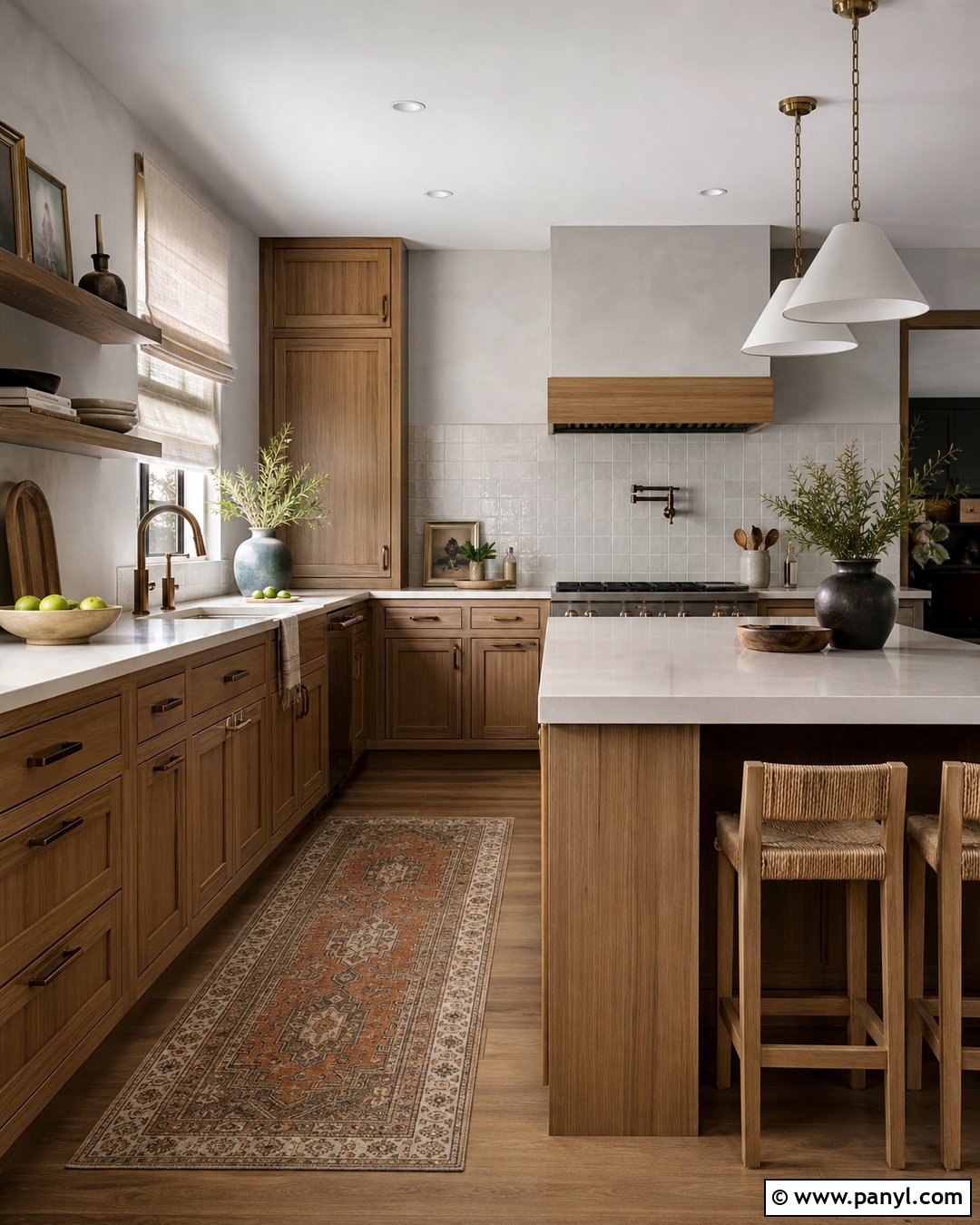
Grey walls provide a calm backdrop for wood kitchen cabinets and allow their grain to become the defining feature. Use a pale stone-grey paint with medium-tone oak or walnut cabinetry. Keep counters light with warm white quartz, then add a creamy zellige backsplash for subtle texture. Black or bronze hardware creates definition without competing with the natural finish. If space allows, choose a simple island in the same wood and pair it with woven counter stools. Under-cabinet lighting should illuminate work surfaces evenly, while linen shades soften the windows. Add a vintage-style runner containing muted rust, olive, and grey. This complete kitchen feels grounded and contemporary, balancing natural warmth with the clean, quiet character of the wall color.
24. Charcoal Grey Kitchen Walls
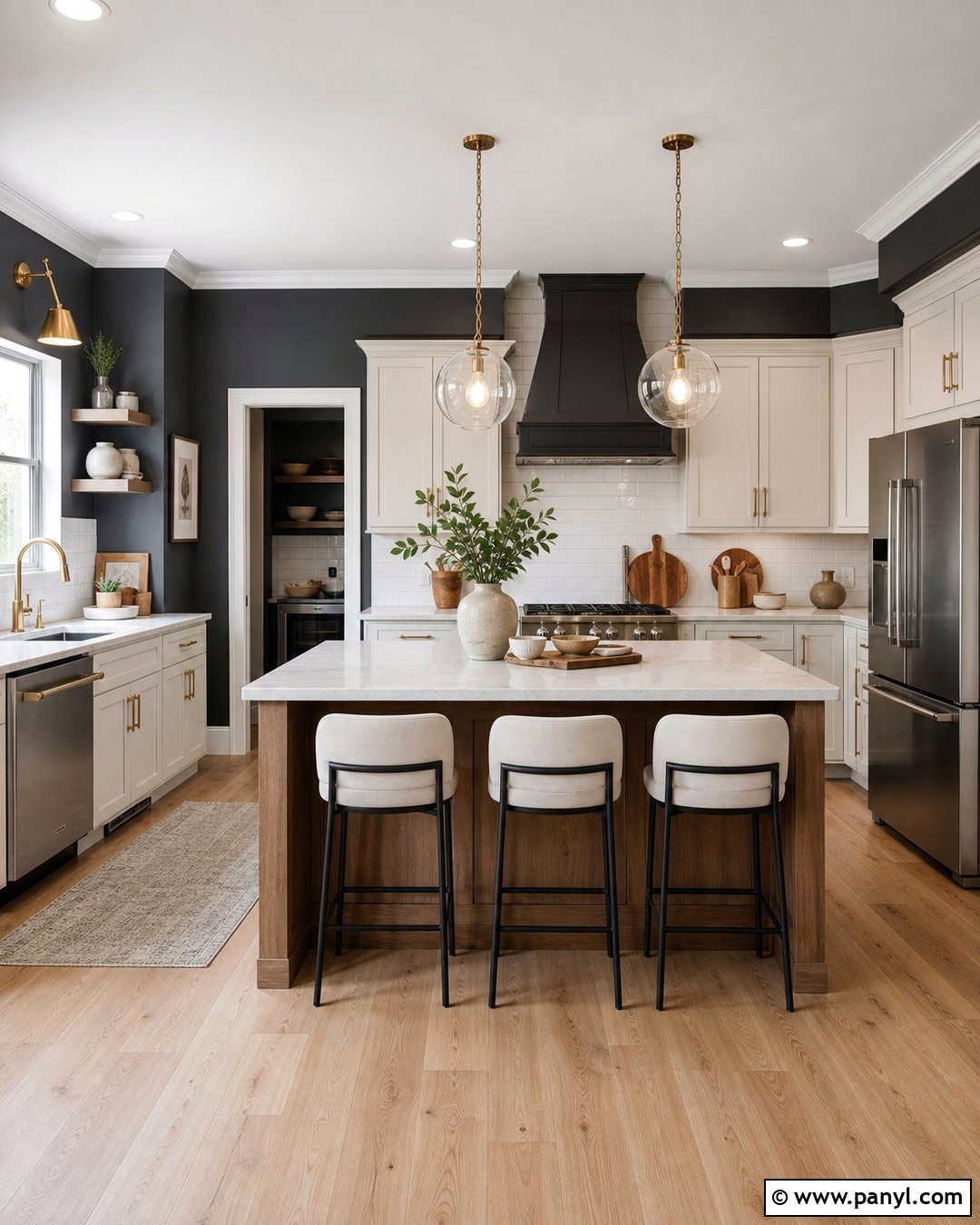
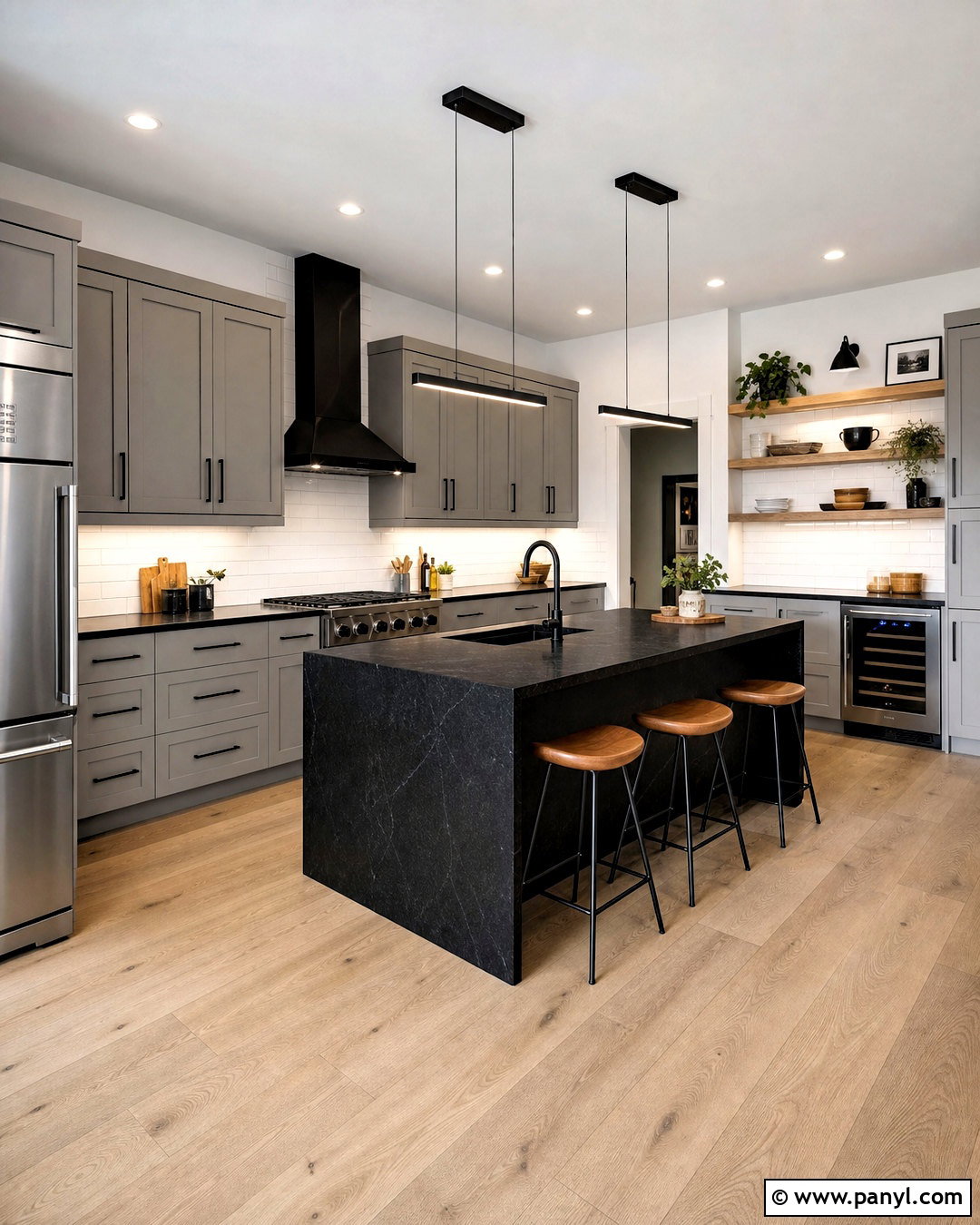
Charcoal grey walls bring depth to a kitchen when cabinetry, counters, and lighting remain bright. Use the color on open wall areas around warm white cabinets rather than covering every surface with equally deep finishes. Select pale quartz countertops, a white tile backsplash, and light oak flooring to reflect illumination. A natural wood island can become the central gathering point, paired with black metal stools and clear glass pendants. Repeat charcoal through slim window frames or a range hood for continuity. Brass hardware and wood cutting boards add warmth, while cream ceramics keep open shelves light. The finished kitchen feels bold but still practical because the darker walls frame the brighter working surfaces instead of making food preparation areas visually heavy.
25. Grey Dining Room Walls
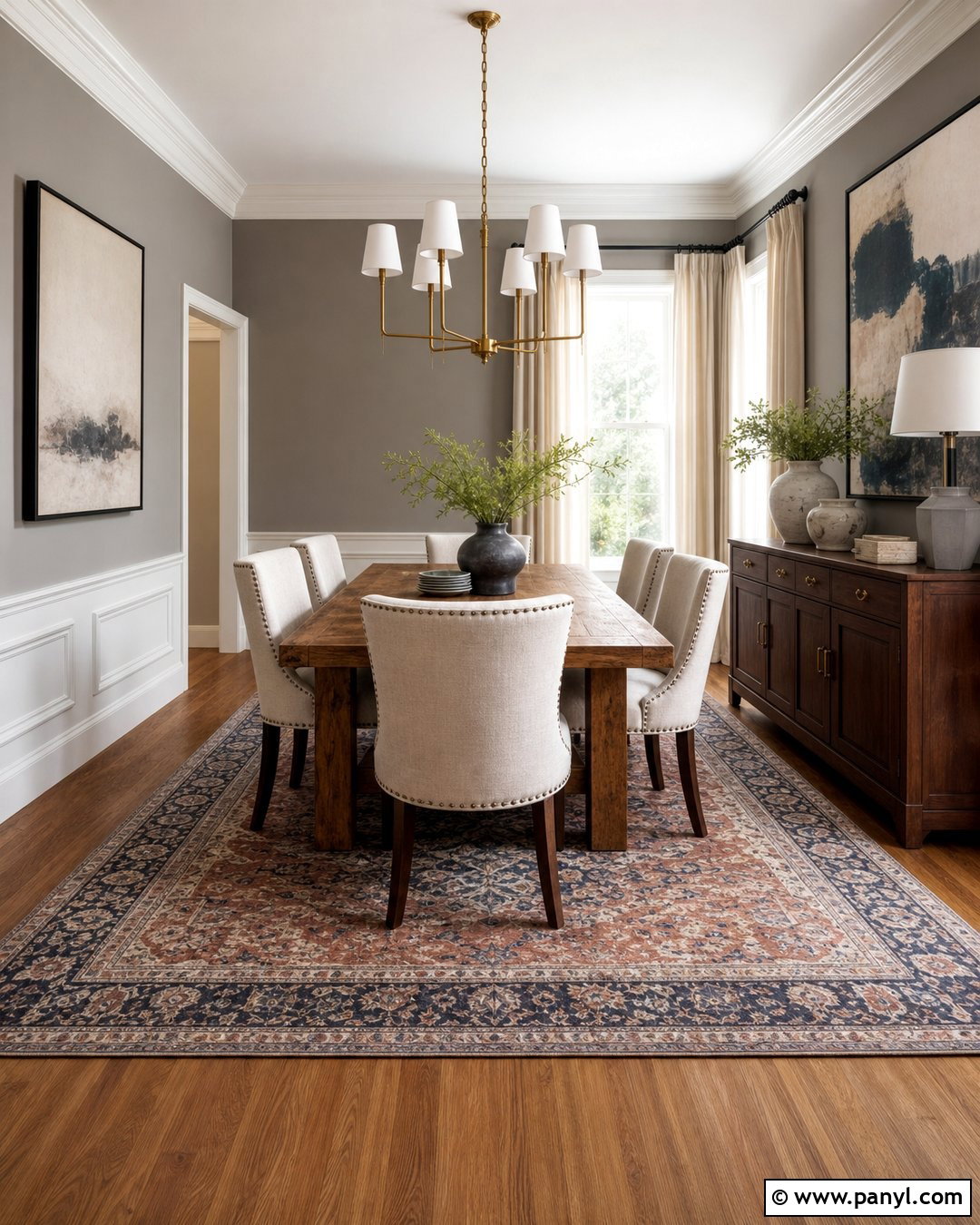
Grey dining room walls create an elegant setting that works for everyday meals and larger gatherings. Choose a warm medium grey and center a solid oak table beneath a simple black or aged brass chandelier. Surround it with upholstered cream chairs or a mix of wood and woven seating. A large patterned rug should extend beyond the pulled-out chairs, combining grey with rust, navy, or olive. Use full-length linen curtains to soften the walls and improve acoustics. A walnut sideboard can store serving pieces while supporting a lamp, ceramics, and one oversized artwork. Keep table decor low and uncomplicated. The complete room feels grounded, comfortable, and adaptable, with the grey backdrop making natural materials and carefully chosen colors appear richer.
26. Dark Grey Dining Room Walls
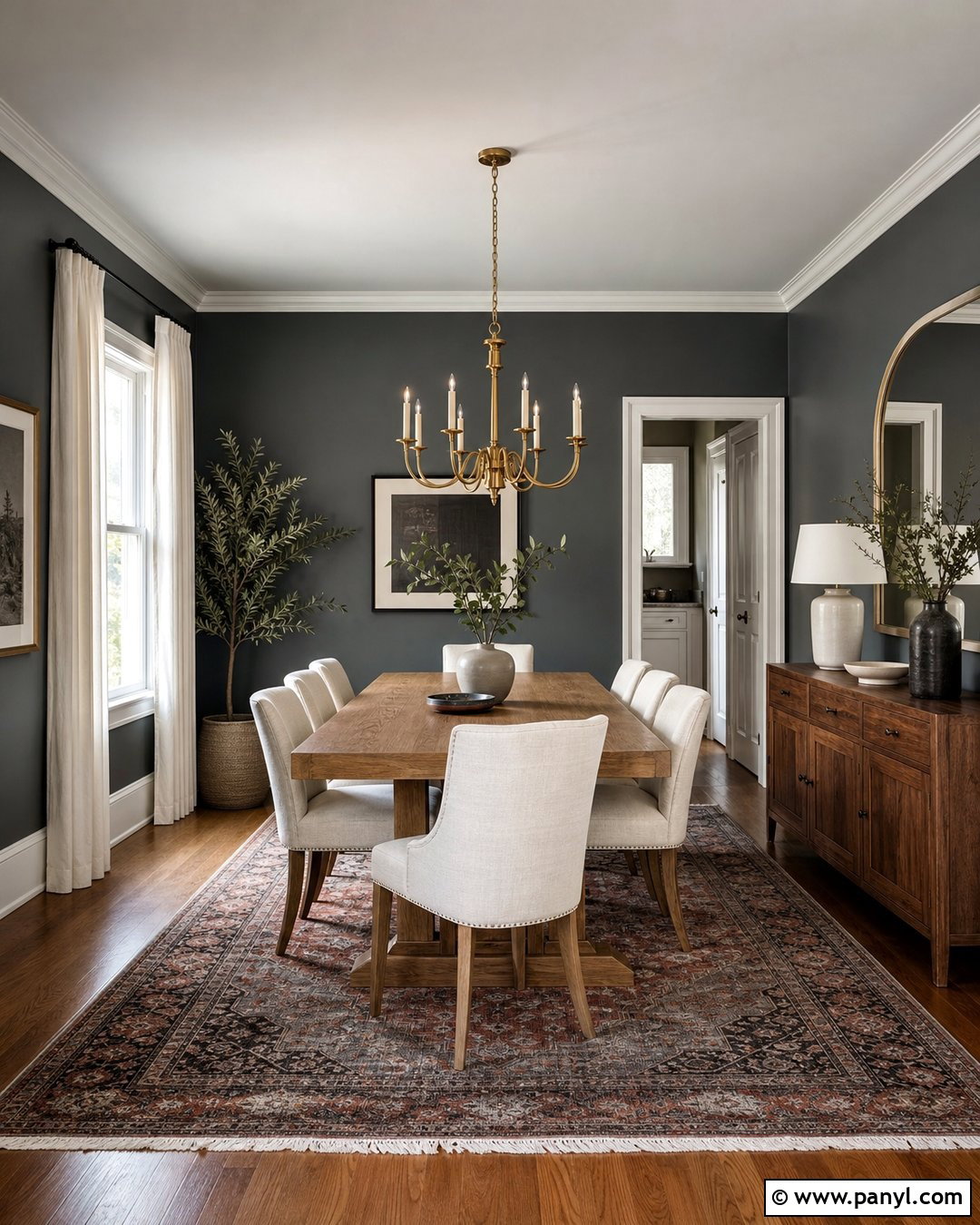
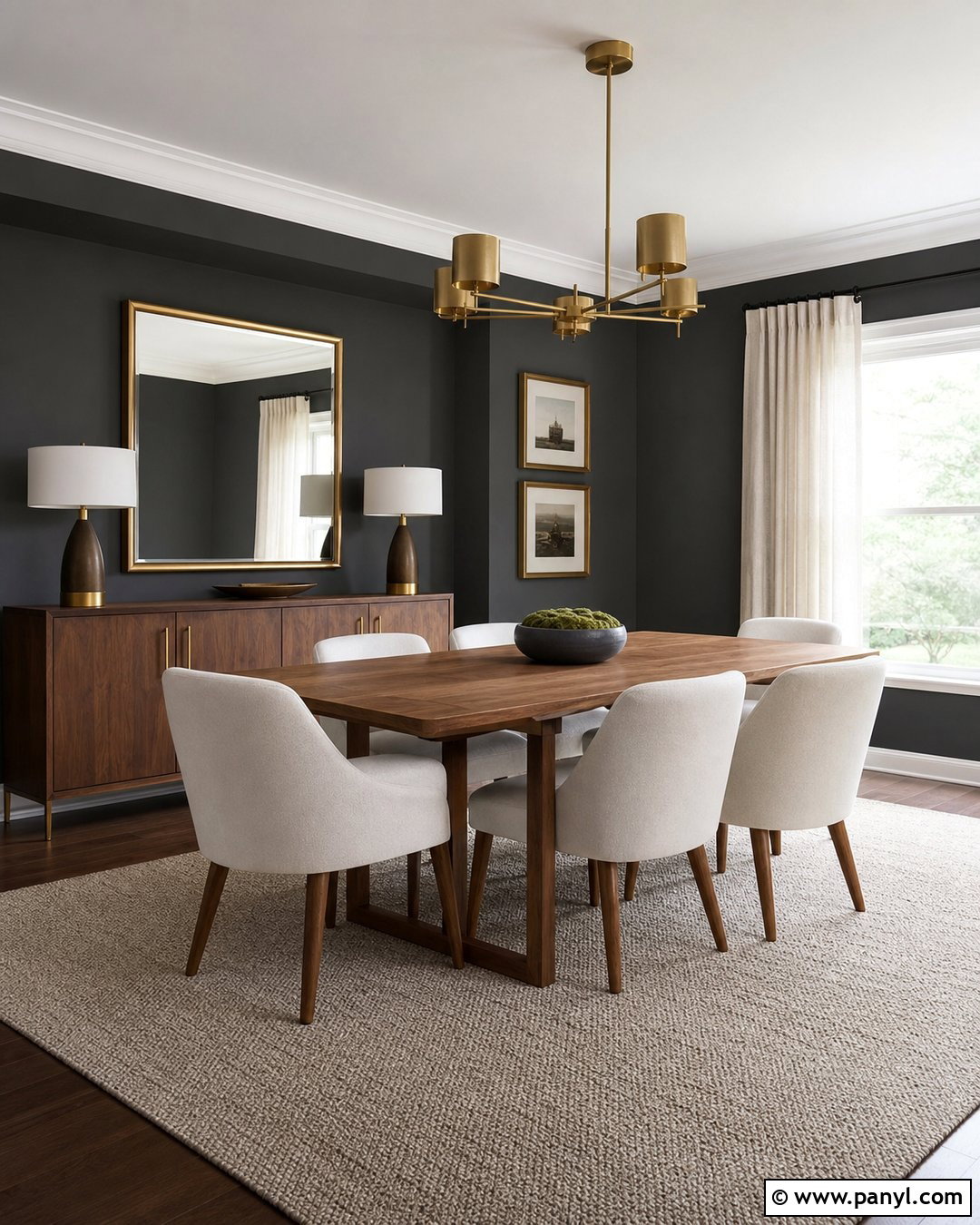
Deep grey walls can transform a dining room into a defined destination, even within an open floor plan. Paint the walls graphite and retain warm white trim for a clean boundary. Place a medium-tone oak table in the center and use cream upholstered chairs to balance the darker background. A sculptural brass chandelier provides a warm focal point above the table. Ground the arrangement with a faded rug containing ivory, burgundy, and charcoal. Add a long walnut sideboard, a large mirror, and two matching lamps to reflect light around the room. Linen curtains should remain pale and generously full. This complete scheme feels intimate and polished while avoiding excessive formality, making it suitable for family dinners as well as special occasions.
27. Grey Dining Room With Wall Molding
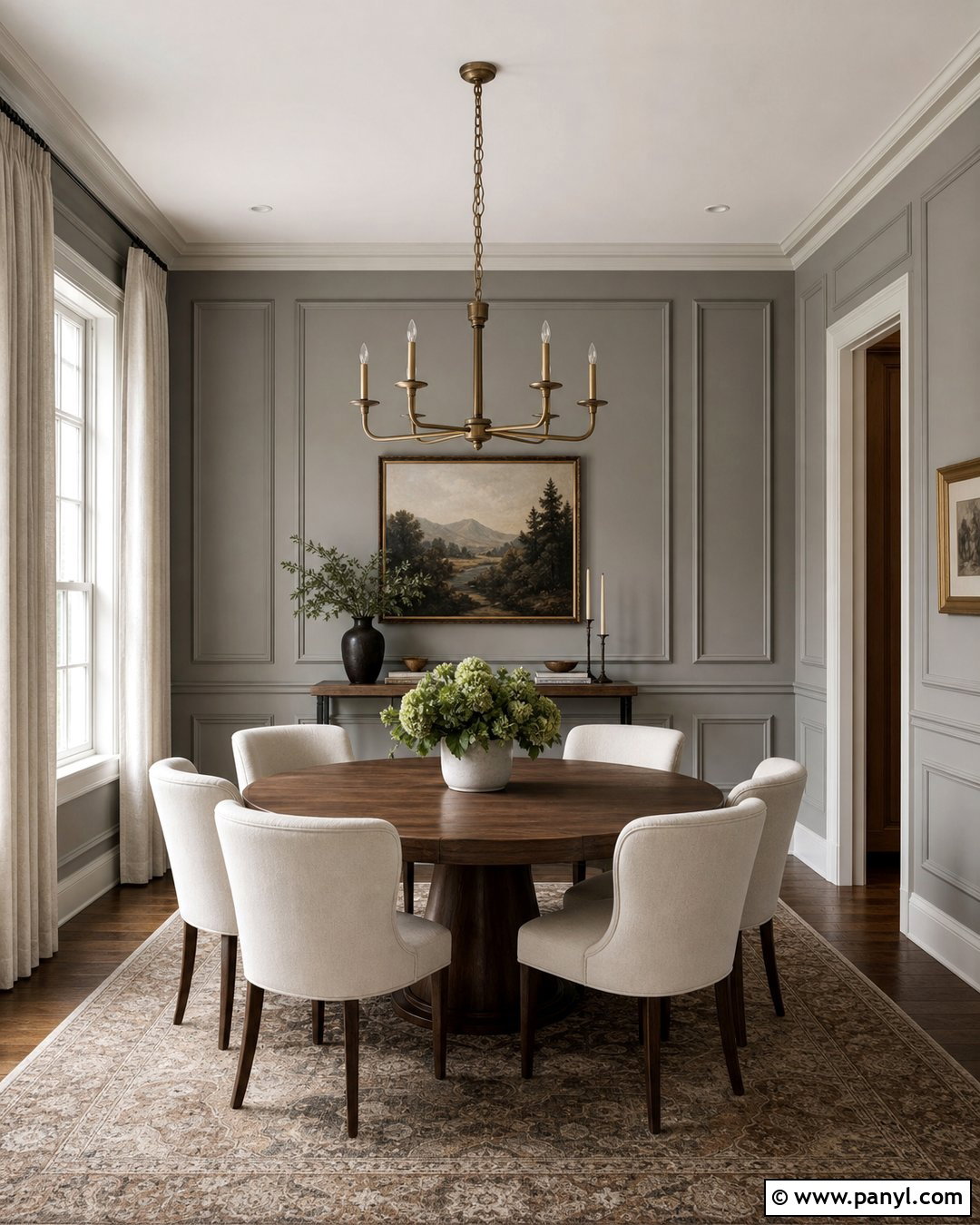
Wall molding gives grey dining room walls structure, depth, and a more finished appearance. Install evenly spaced rectangular panels from baseboard to crown molding, then paint the walls and trim in the same soft warm grey. Center a round walnut table in the room and surround it with curved cream chairs for contrast against the straight panel lines. Choose a linen drum pendant or aged brass chandelier that suits the table’s scale. A muted vintage rug adds pattern beneath the seating area. Display one large landscape painting within the central molding panel and place a slim wood console along the opposite wall. The monochromatic architectural treatment keeps the room cohesive, while warm wood, fabric, and art prevent it from feeling formal or flat.
28. Grey Bathroom Walls
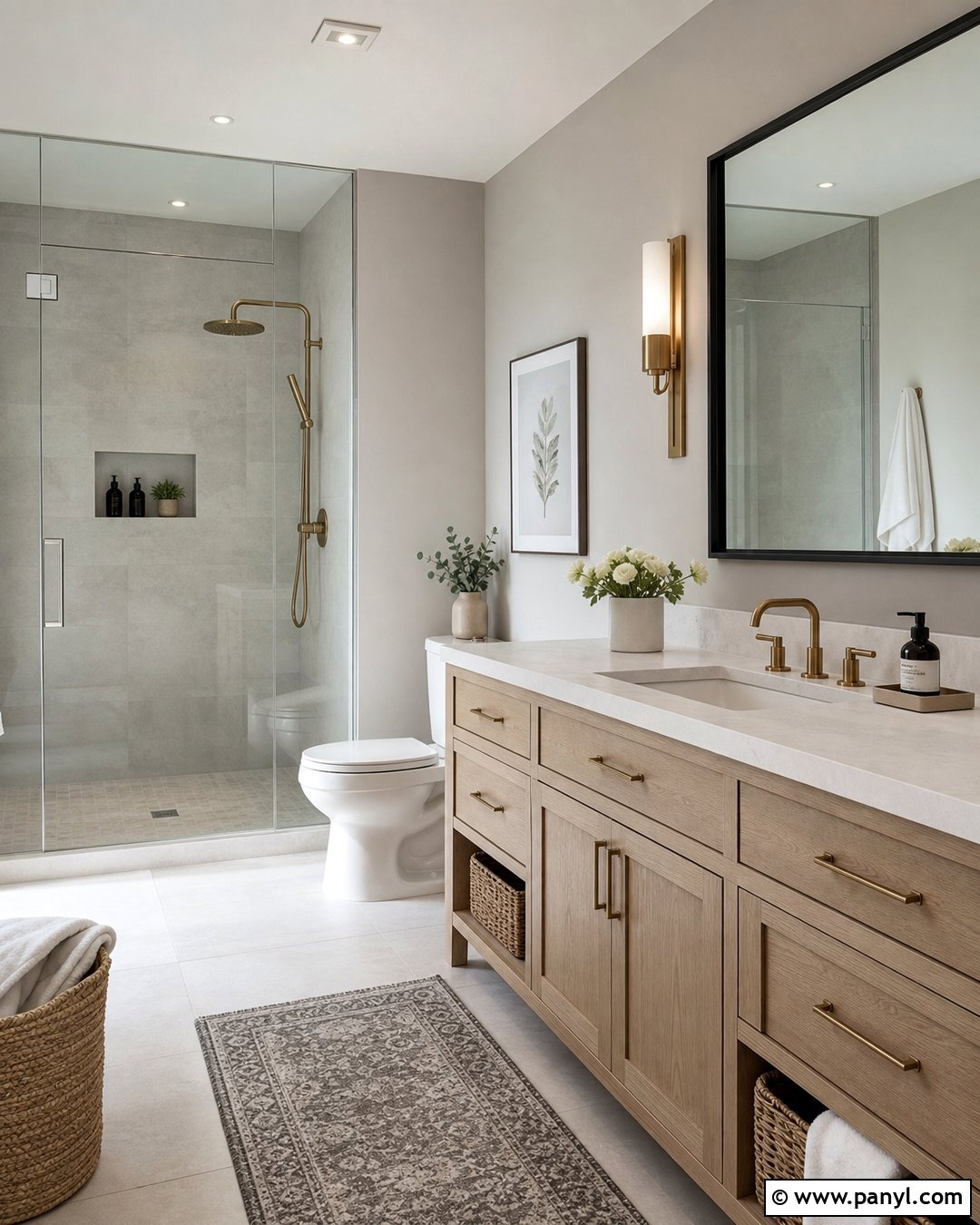
Grey bathroom walls can create a clean, spa-inspired space when combined with warm finishes and varied textures. Select a pale stone grey in a moisture-resistant finish and pair it with a white oak vanity, white quartz counter, and frameless glass shower. Use off-white porcelain or marble-look floor tile rather than matching grey on every surface. Brushed brass faucets, sconces, and cabinet pulls add warmth, while a round black-framed mirror provides definition. Hang white cotton towels and place a woven basket beneath an open shelf. A small green plant and amber-free ceramic accessories introduce natural character. The final bathroom feels fresh and relaxing because the wall color supports the fixtures instead of making the entire room appear cold or monochromatic.
29. Grey Bathroom With White Tile
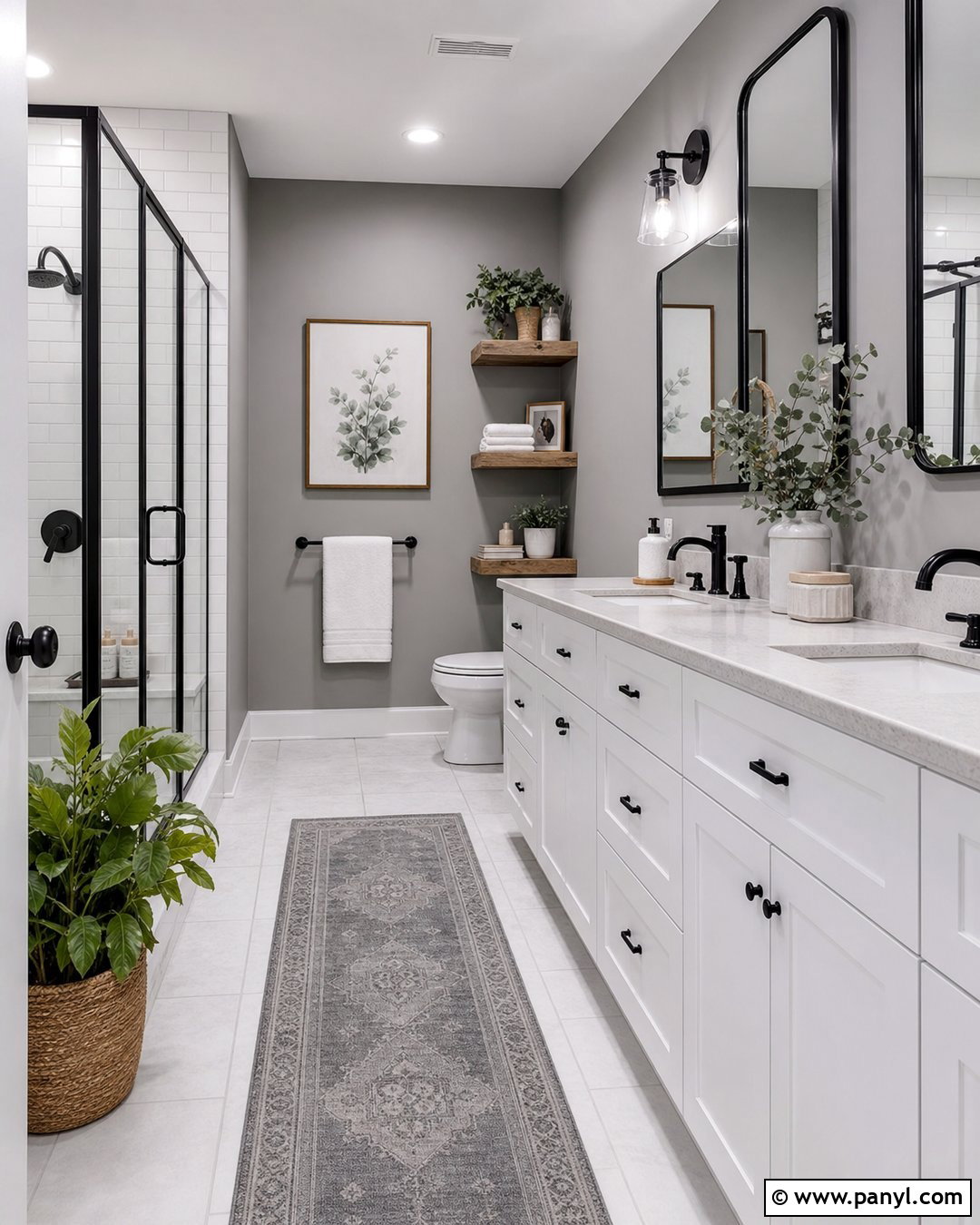
Grey walls and white tile create a crisp bathroom with enough contrast to highlight each surface. Cover the shower or lower half of the walls in glossy white subway tile, then paint the remaining areas a warm mid-grey. Choose a white vanity with a pale stone counter and add matte black hardware for clean definition. A black-framed glass shower panel can connect the metal finishes without visually closing the room. Use light oak shelving and a woven hamper to soften the high-contrast palette. White towels, a grey runner, and simple botanical art finish the design. Keep grout light for a calmer tile pattern. This complete scheme feels practical, bright, and timeless, making it suitable for primary, guest, or family bathrooms.
30. Grey Bathroom With Wood Vanity
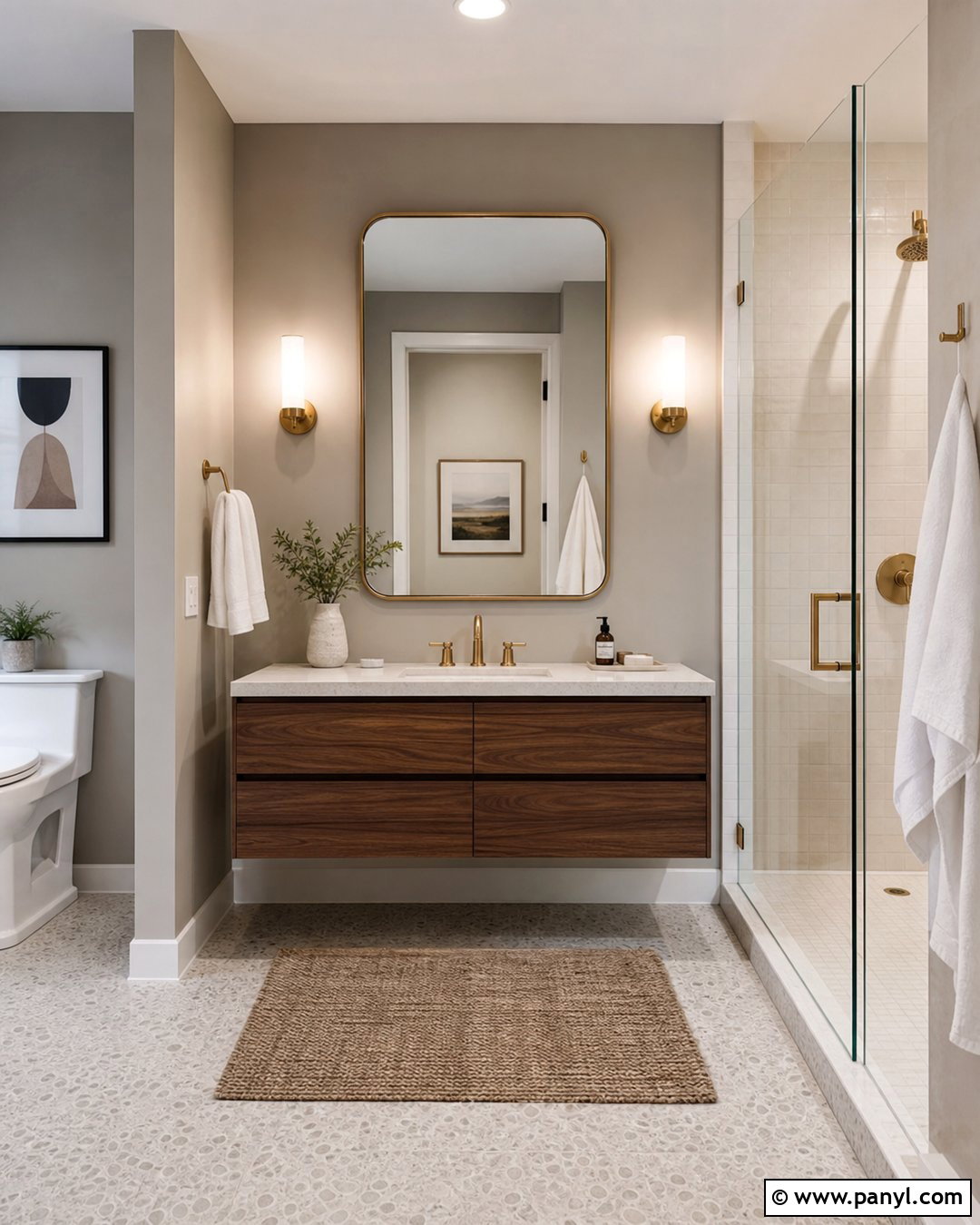
A wood vanity can immediately warm grey bathroom walls and make the room feel more custom. Paint the walls a soft greige and install a floating walnut or white oak vanity with flat-front drawers. Top it with creamy quartz and use an undermount white sink for a streamlined appearance. Add a large rounded mirror and brushed brass sconces to soften the vanity’s straight lines. Pale terrazzo or limestone-look flooring introduces quiet movement without competing with the wood grain. Keep the shower tile warm white and use clear glass to preserve an open view. White towels, pottery containers, and a small stool complete the space. The balanced combination of grey, wood, stone, and warm metal feels contemporary but still comfortable and natural.
31. Charcoal Grey Powder Room Walls
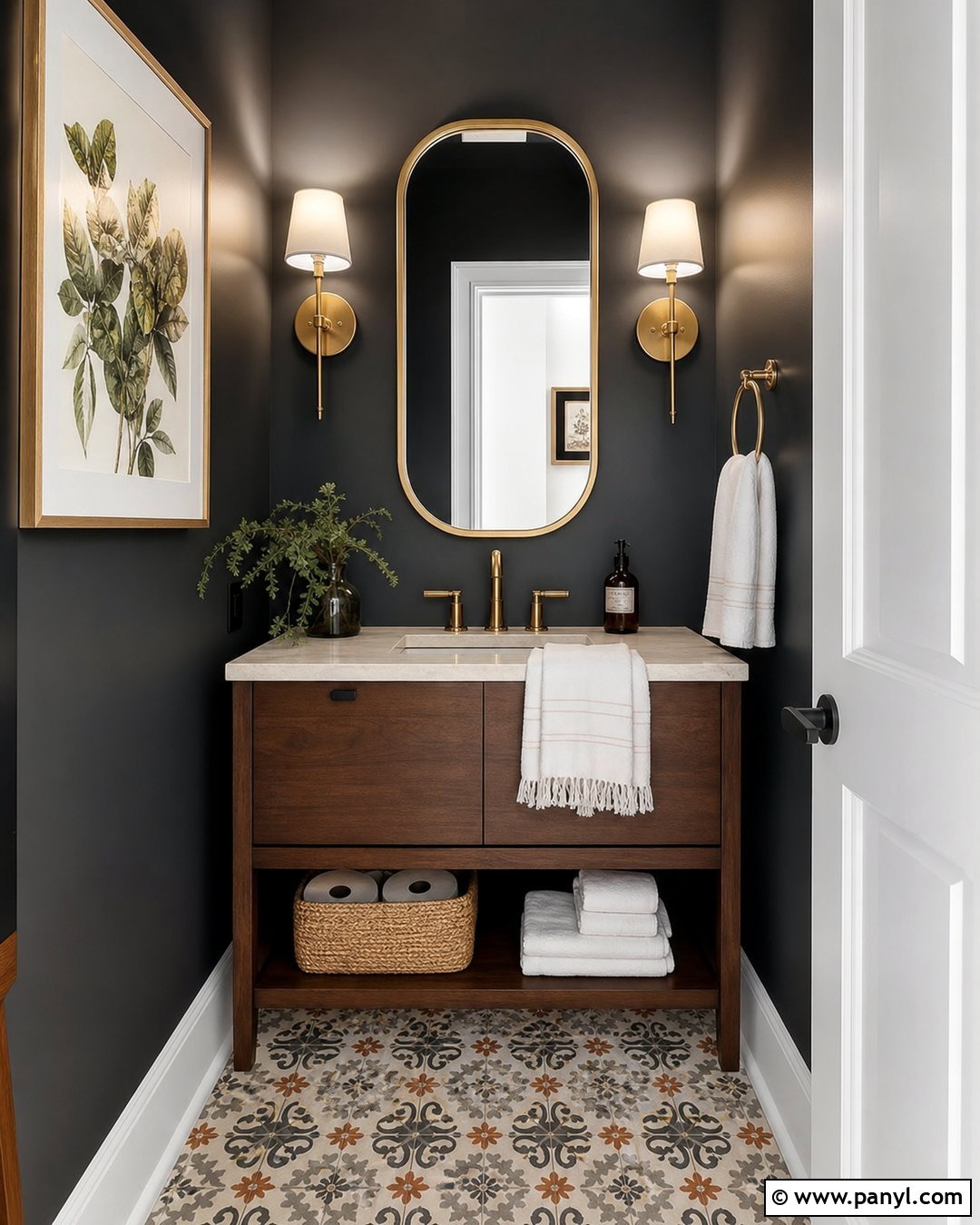
A powder room is an ideal place to use charcoal grey walls because the compact scale supports a stronger design choice. Paint every wall graphite, but keep the ceiling warm white to maintain brightness. Install a small walnut vanity with a pale stone top and pair it with a rounded brass-framed mirror. Brass sconces placed on both sides provide even illumination and decorative warmth. Use patterned encaustic-look floor tile in cream, grey, and muted rust to create visual interest below. A framed botanical print, white hand towels, and a ceramic soap dispenser add lighter notes. Avoid filling the room with tiny accessories. This complete design makes a limited footprint feel intentional, polished, and memorable without depending on complicated construction or oversized fixtures.
32. Grey Home Office Walls
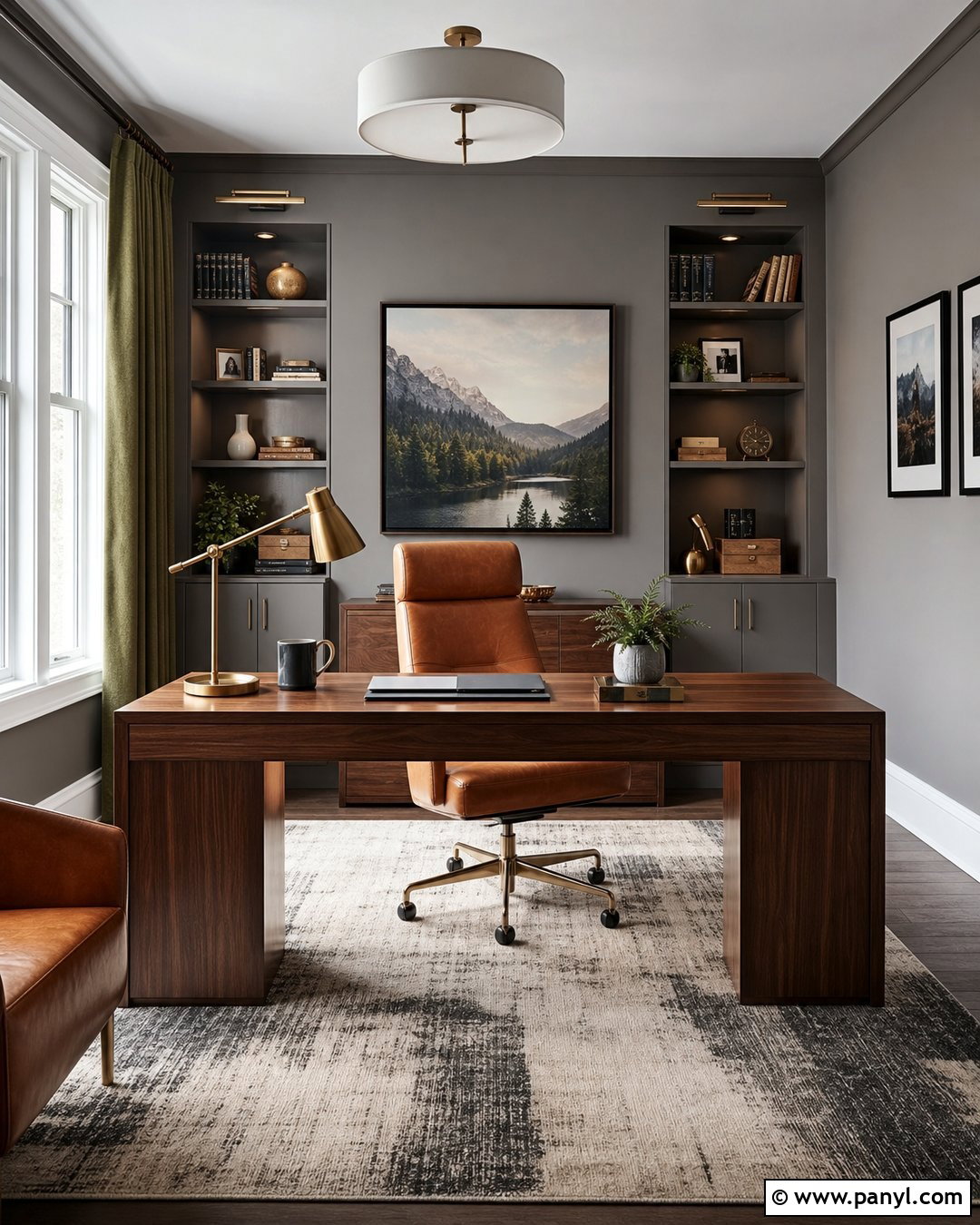
Grey home office walls create a focused background that can accommodate professional storage and personal decor. Choose a medium warm-grey paint and position a walnut desk where natural light reaches the work surface from the side. Add an ergonomic chair in black or cognac leather and place closed storage cabinets along the least prominent wall. A cream and charcoal rug softens sound and defines the work zone. Install practical shelving above a low credenza for books, boxes, and a few framed objects. Use an adjustable brass or black desk lamp, plus a larger ceiling fixture for even illumination. Olive curtains and landscape art introduce color without distraction. The finished office feels organized, comfortable, and visually polished enough for video calls.
33. Dark Grey Home Office Walls
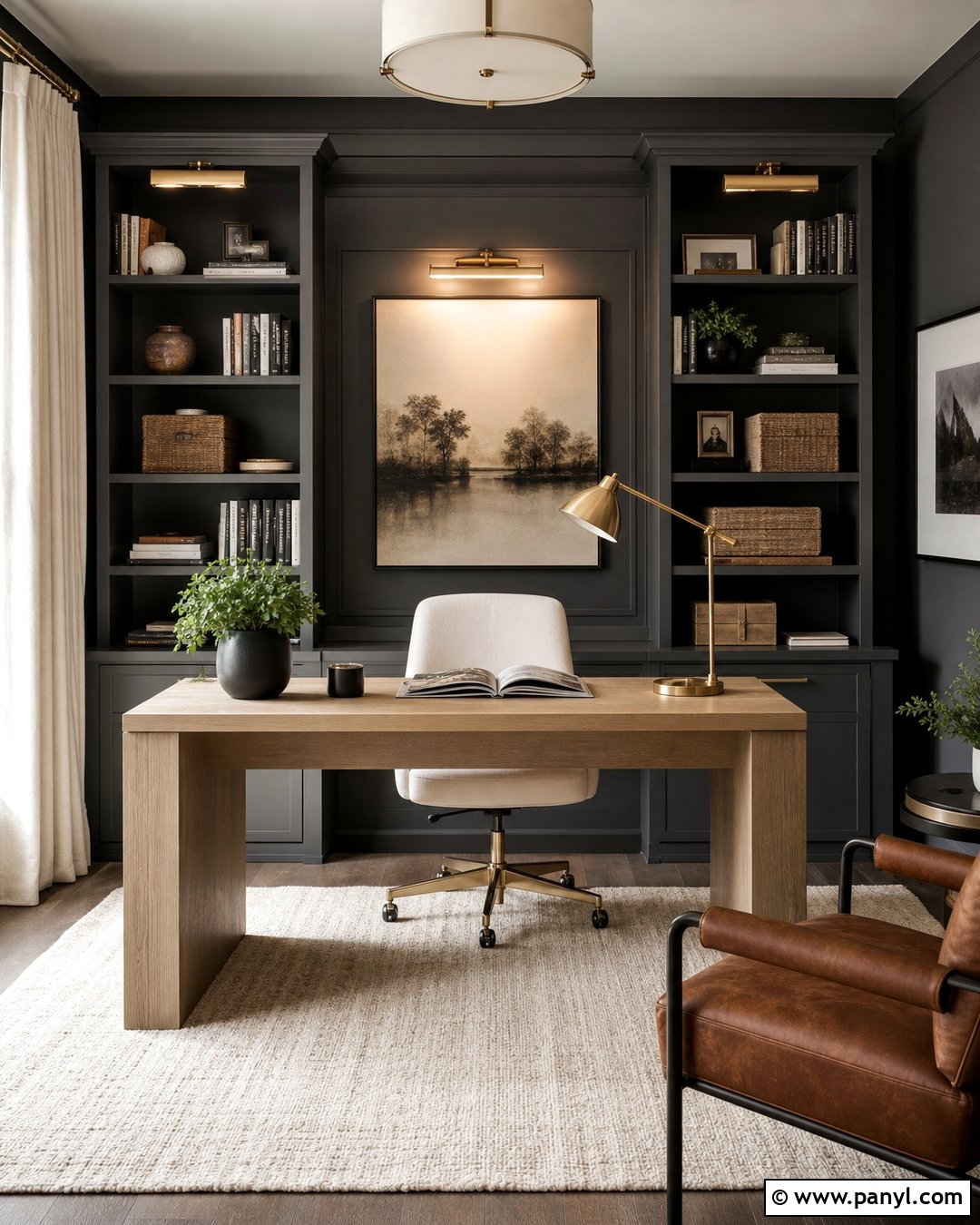
Deep grey office walls provide an impressive backdrop for work when lighter furniture and organized storage balance their weight. Paint the walls and built-in shelving a warm charcoal, then use a pale oak desk as the central feature. Choose a cream upholstered task chair or a black ergonomic model with clean lines. Fill shelves selectively with books, woven boxes, ceramics, and framed art, leaving some open space around each group. A large ivory rug and linen curtains brighten the lower and outer edges of the room. Add aged brass picture lights above the shelving and a practical desk lamp. One cognac leather guest chair completes the layout. The cohesive scheme feels focused and sophisticated rather than gloomy, cluttered, or overly corporate.
34. Grey Office With Built In Shelves
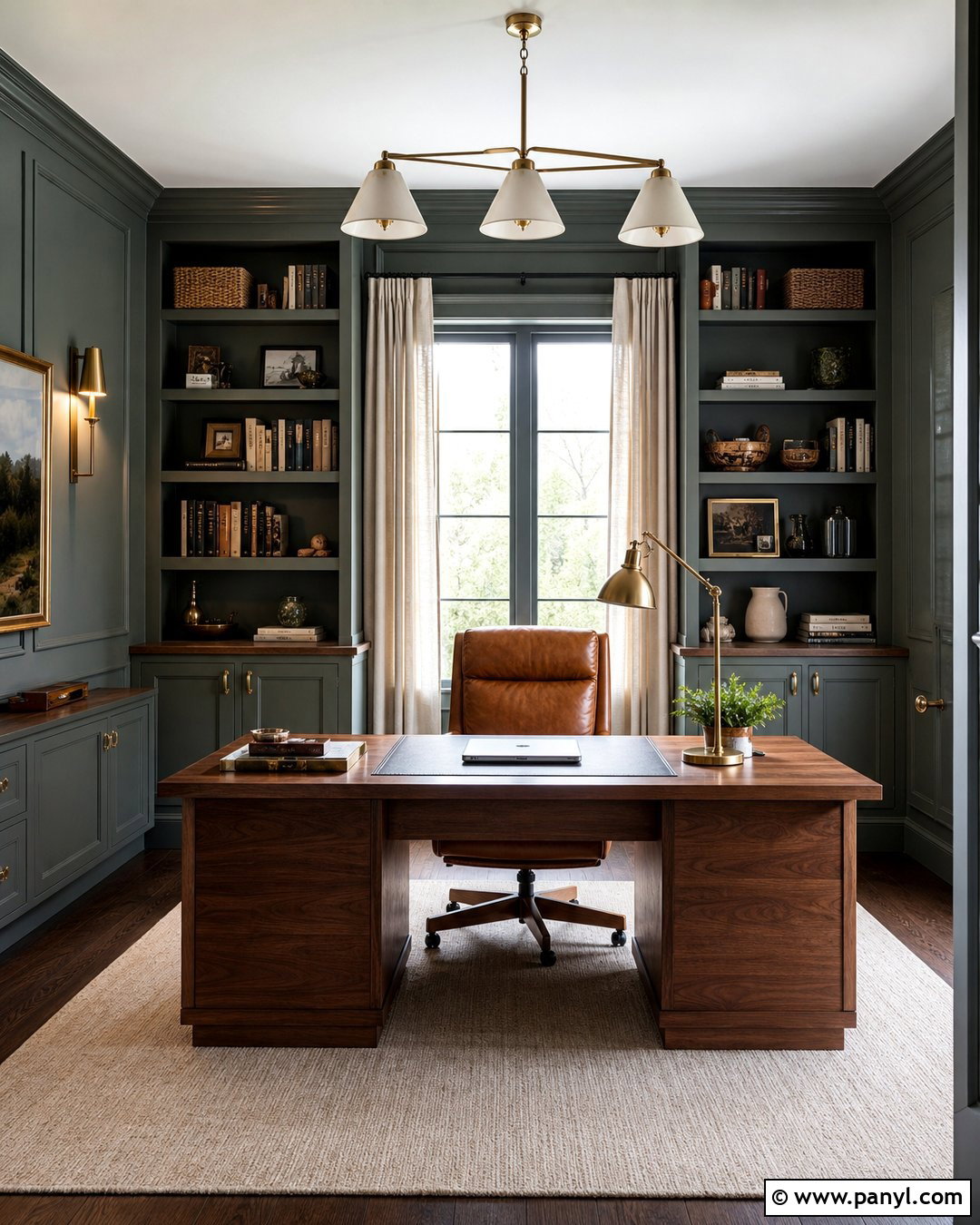
Built-in shelves painted to match grey office walls can make storage appear integrated rather than added later. Use a soft grey-green across the room, including the cabinets, shelving, trim, and window casing. Position a walnut desk in front of the built-ins or perpendicular to the window, leaving clear circulation space behind the chair. Closed lower cabinets can hide equipment and files, while upper shelves display books, baskets, and a restrained collection of artwork. Add a cream wool rug, cognac leather chair, and antique brass lighting to warm the palette. Linen curtains should coordinate with the rug rather than the walls. This complete office combines substantial storage with a calm appearance, allowing the cabinetry to become part of the architecture.
35. Grey Entryway Walls
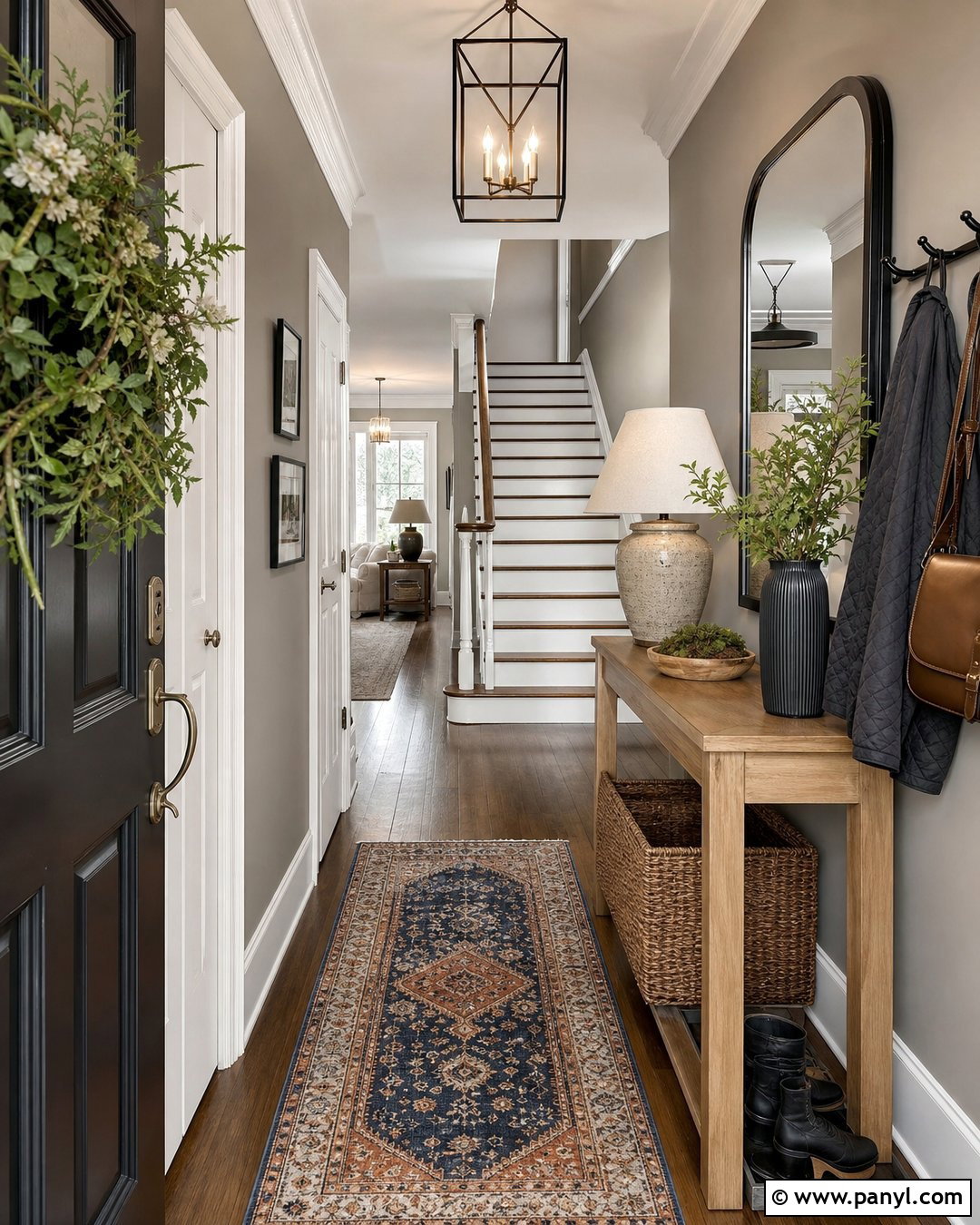
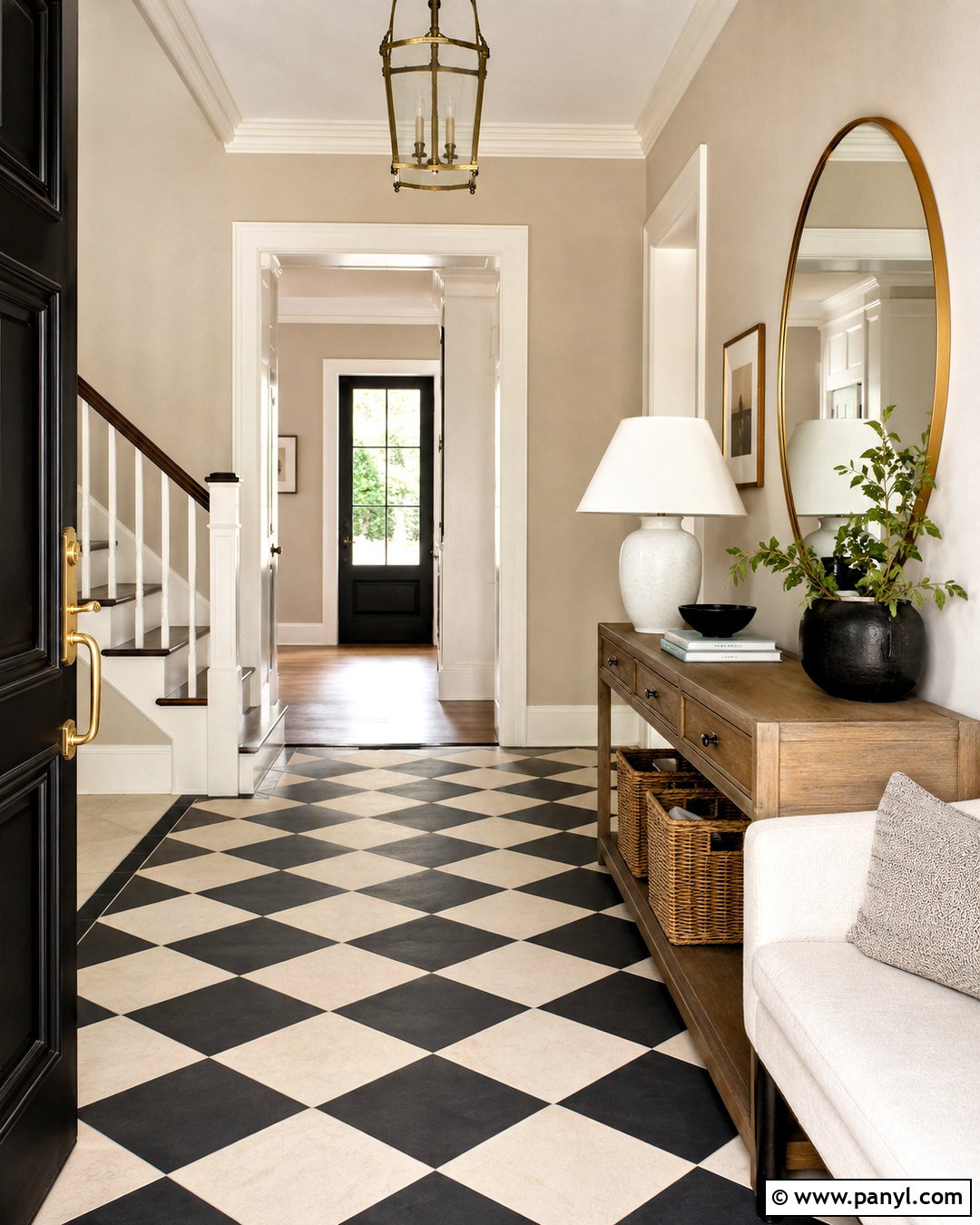
Grey entryway walls form a practical background for the materials and storage needed near the front door. Choose a warm medium grey that can conceal minor marks, then add a narrow oak console with drawers for keys and small essentials. Hang a large black-framed mirror above it to reflect daylight and provide a convenient final check. A washable runner featuring rust, cream, and navy adds color along the walkway. Install black hooks or a simple peg rail for frequently used outerwear, keeping bulkier items in closed storage. A woven basket can hold shoes or accessories, while a ceramic lamp creates a welcoming layer of illumination. The full arrangement gives even a small entrance a clear purpose, attractive proportions, and an organized first impression.
36. Grey Hallway Walls
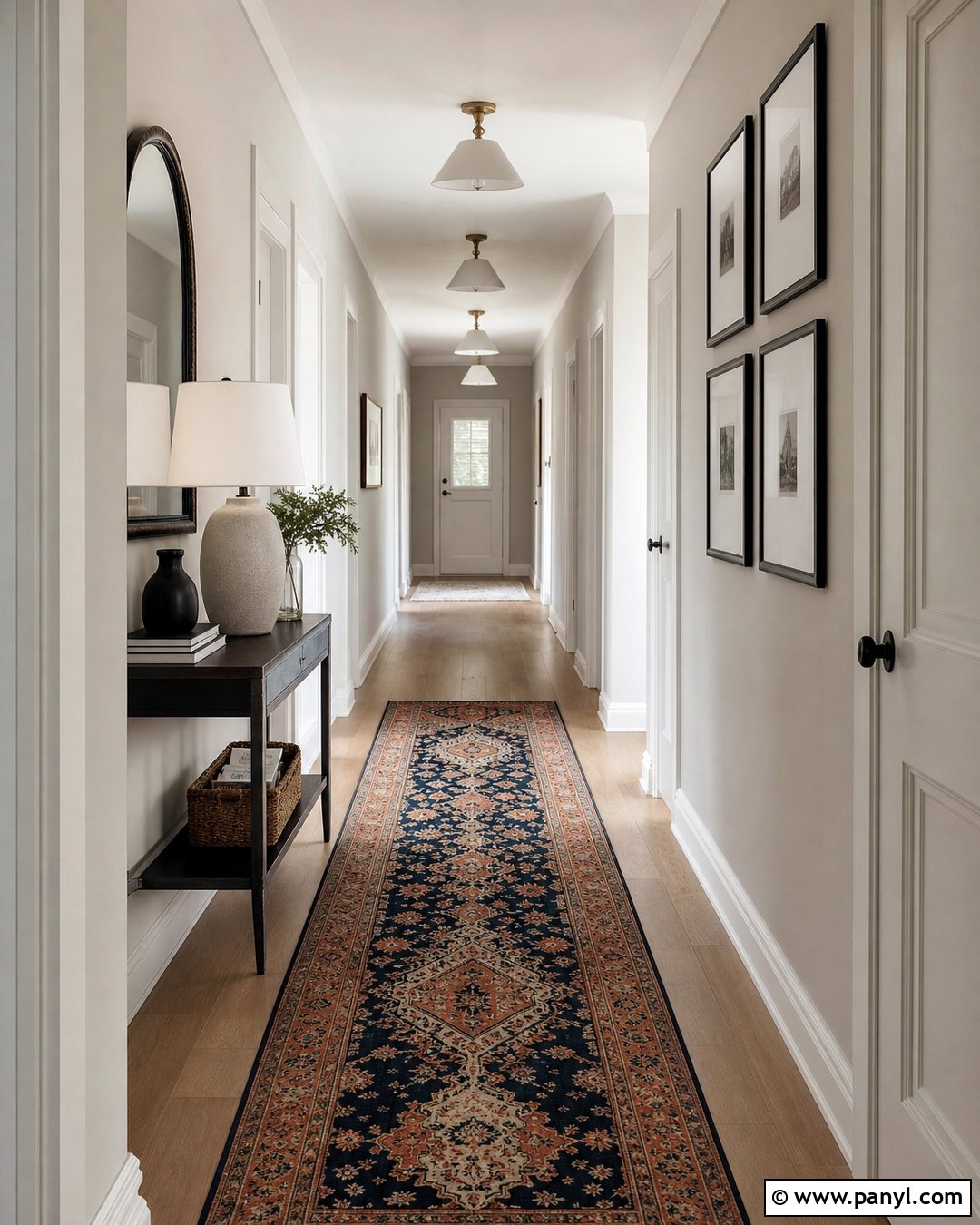
Grey hallway walls can make a narrow passage feel designed rather than forgotten. Use a pale warm grey to maintain brightness and paint doors and trim a soft white for clear architectural definition. Lay a long patterned runner that includes grey, terracotta, and navy, leaving a visible border of wood flooring on both sides. Create a measured gallery wall with matching black or oak frames, keeping the arrangement centered at eye level. Slim ceiling lights or wall sconces should provide even illumination along the route. If width allows, include a shallow console or built-in ledge for a lamp and one decorative bowl. This complete hallway design combines movement, storage, art, and light without overcrowding a space that must remain easy to navigate.
37. Grey Staircase Walls
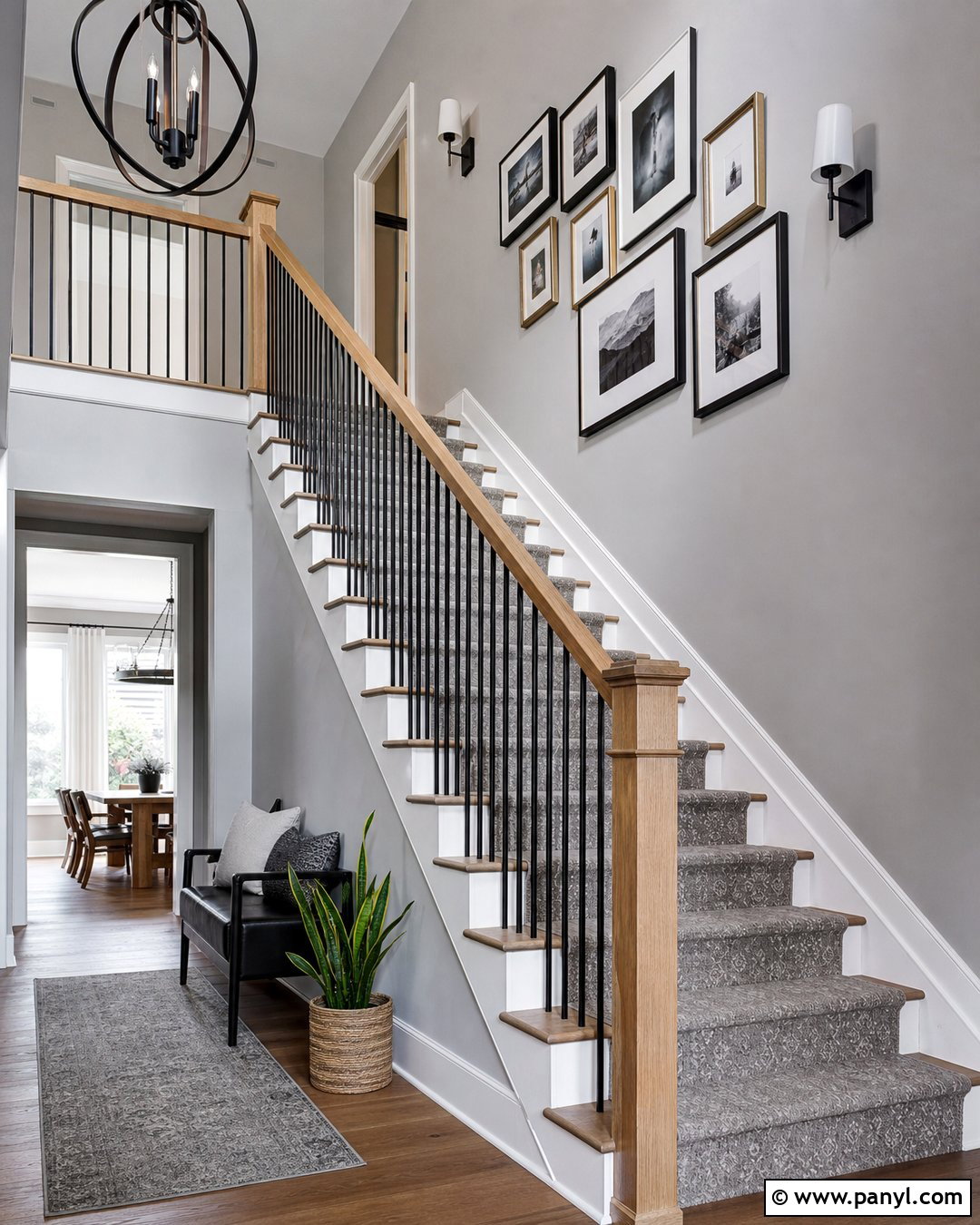
Grey staircase walls provide a strong background for railings, artwork, and changing ceiling heights. Paint the main walls a soft medium grey and use warm white on the stringers, risers, and trim. A natural oak handrail with black metal balusters creates a balanced mix of warm and crisp materials. Install a gallery arrangement that follows the upward angle of the stairs, using consistent frames and varied artwork sizes. A striped or patterned runner adds comfort and distributes accent colors across the steps. Choose a pendant that fills the vertical space without hanging too low. Wall sconces can improve illumination at landings. This cohesive design makes the staircase feel connected to nearby rooms while giving its unique architecture a clear, attractive identity.
38. Grey Mudroom Walls
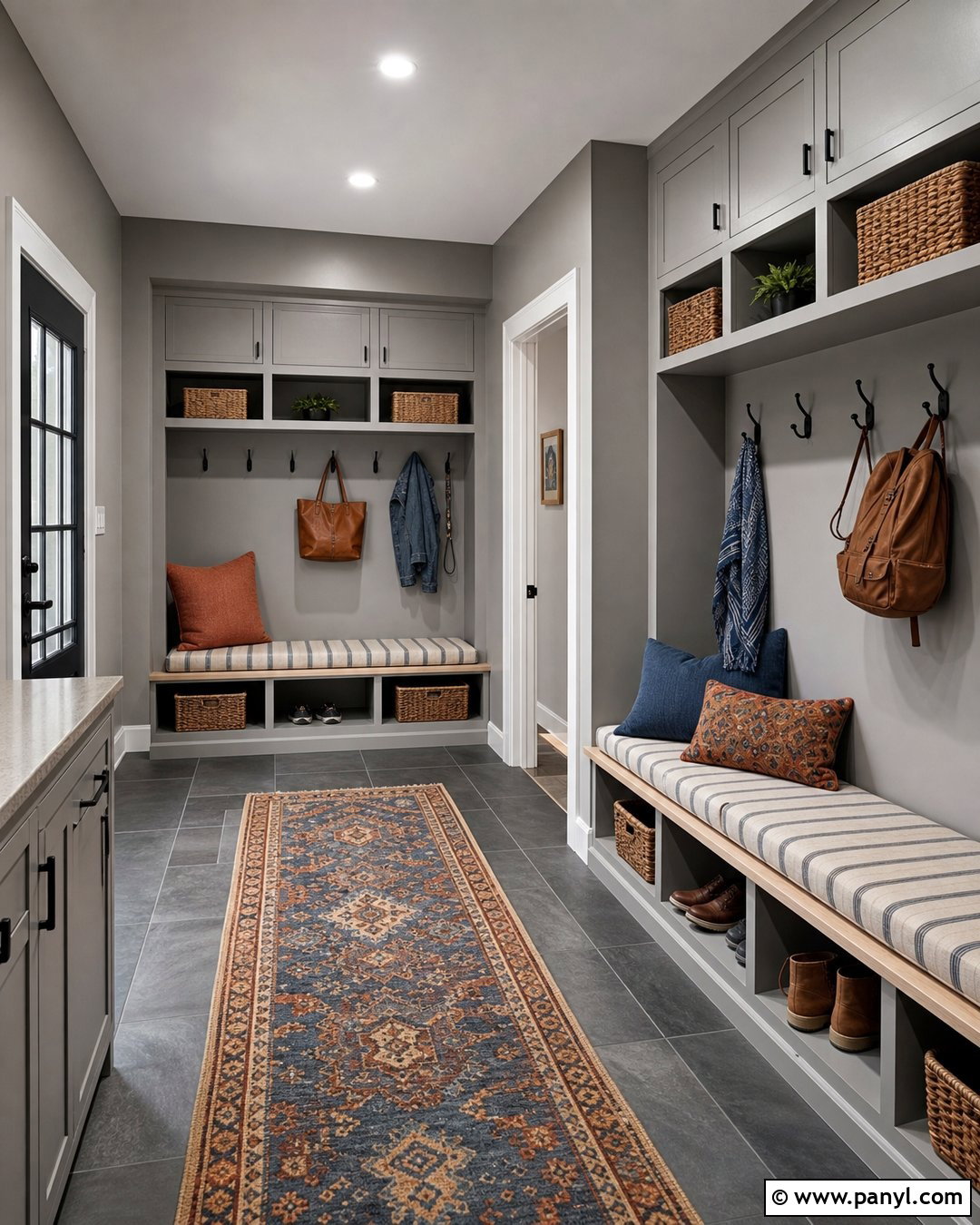
Grey mudroom walls suit a hardworking space, especially when combined with durable storage and easy-to-clean surfaces. Use a medium warm-grey paint above built-in white oak benches and cabinets. Install closed upper cupboards for seasonal items, open cubbies for daily bags, and black hooks for coats. A dark slate-look porcelain floor can handle dirt while adding useful contrast. Place washable striped cushions on the bench and use labeled woven baskets to organize smaller belongings. A sturdy indoor-outdoor runner introduces muted blue and rust. Bright ceiling lighting and a simple window shade keep the area functional throughout the day. The finished mudroom offers every item a designated place, with the grey walls visually connecting the cabinetry, flooring, and practical accessories.
39. Grey Laundry Room Walls
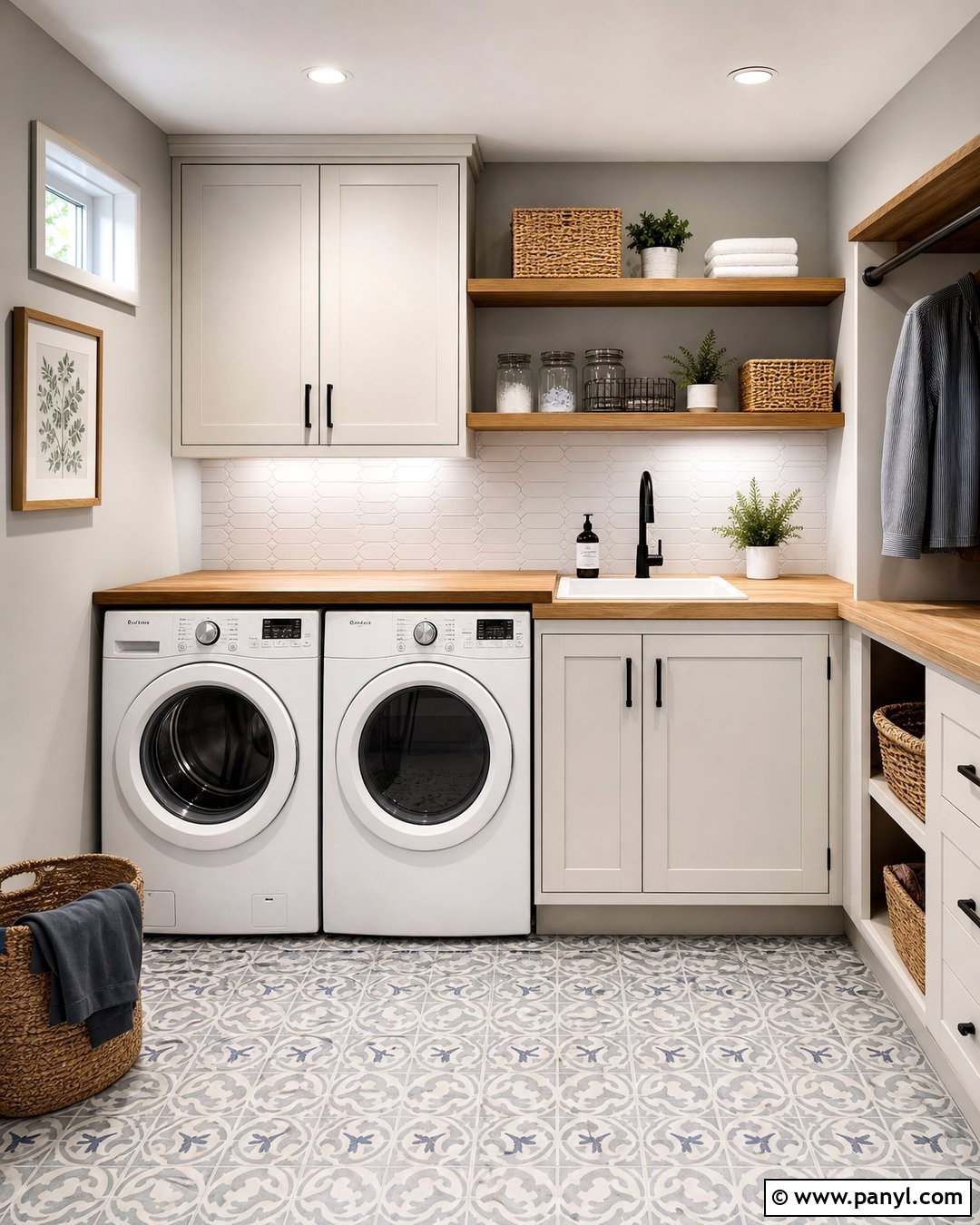
Grey laundry room walls can make a utility space feel orderly and pleasant without interfering with its practical role. Choose a light stone grey and pair it with white front-loading machines beneath a continuous butcher-block counter. Install warm white upper cabinets for detergents and household supplies, leaving one open oak shelf for baskets and glass containers. A white textured tile backsplash brightens the work zone and protects the wall. Use patterned porcelain flooring in grey, blue, and cream to add personality. Black cabinet pulls, a hanging rail, and a compact sink improve function while providing definition. Finish with a woven shade and one small framed print. This complete arrangement supports washing, folding, sorting, and storage in a visually cohesive room.
40. Grey Basement Walls
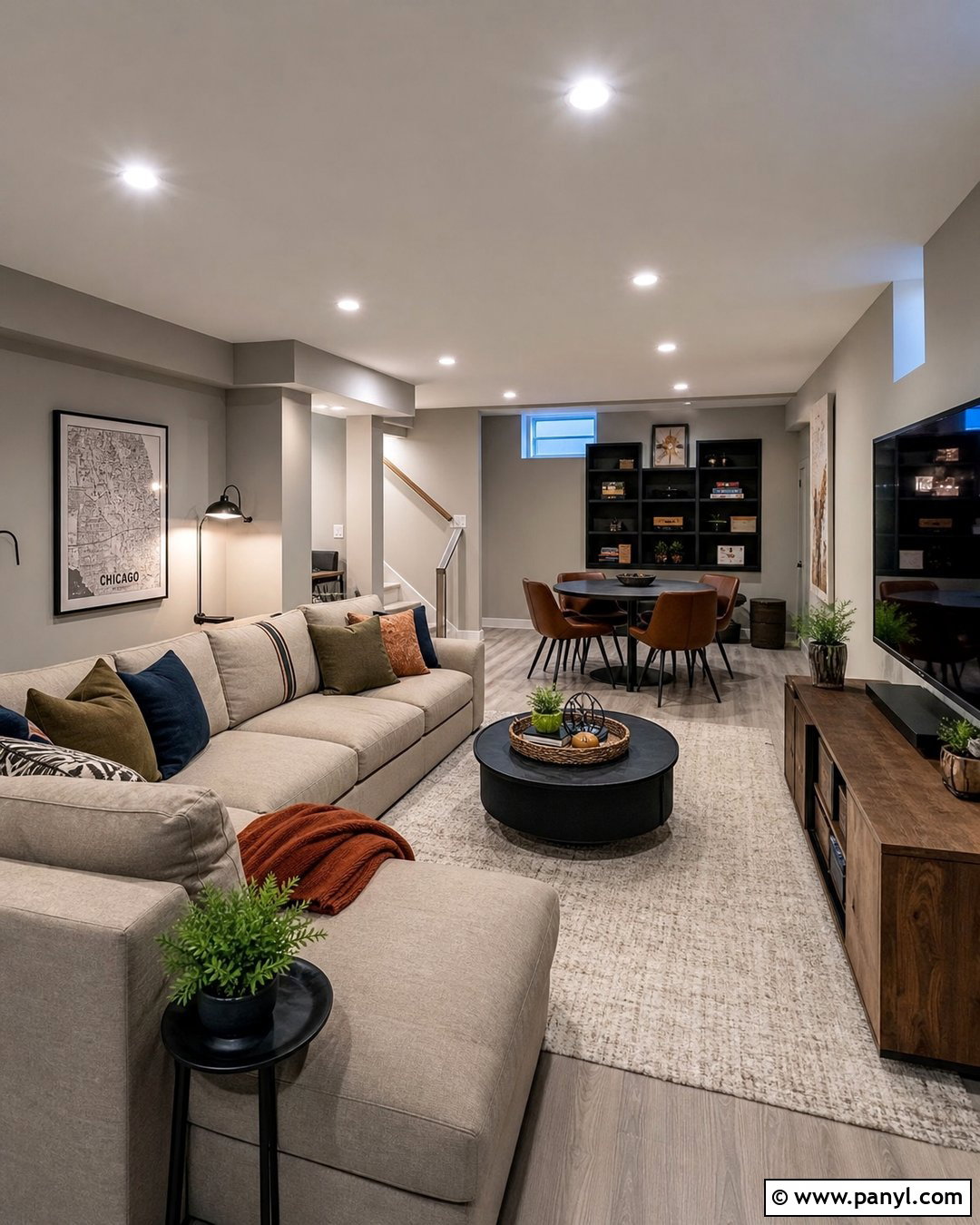
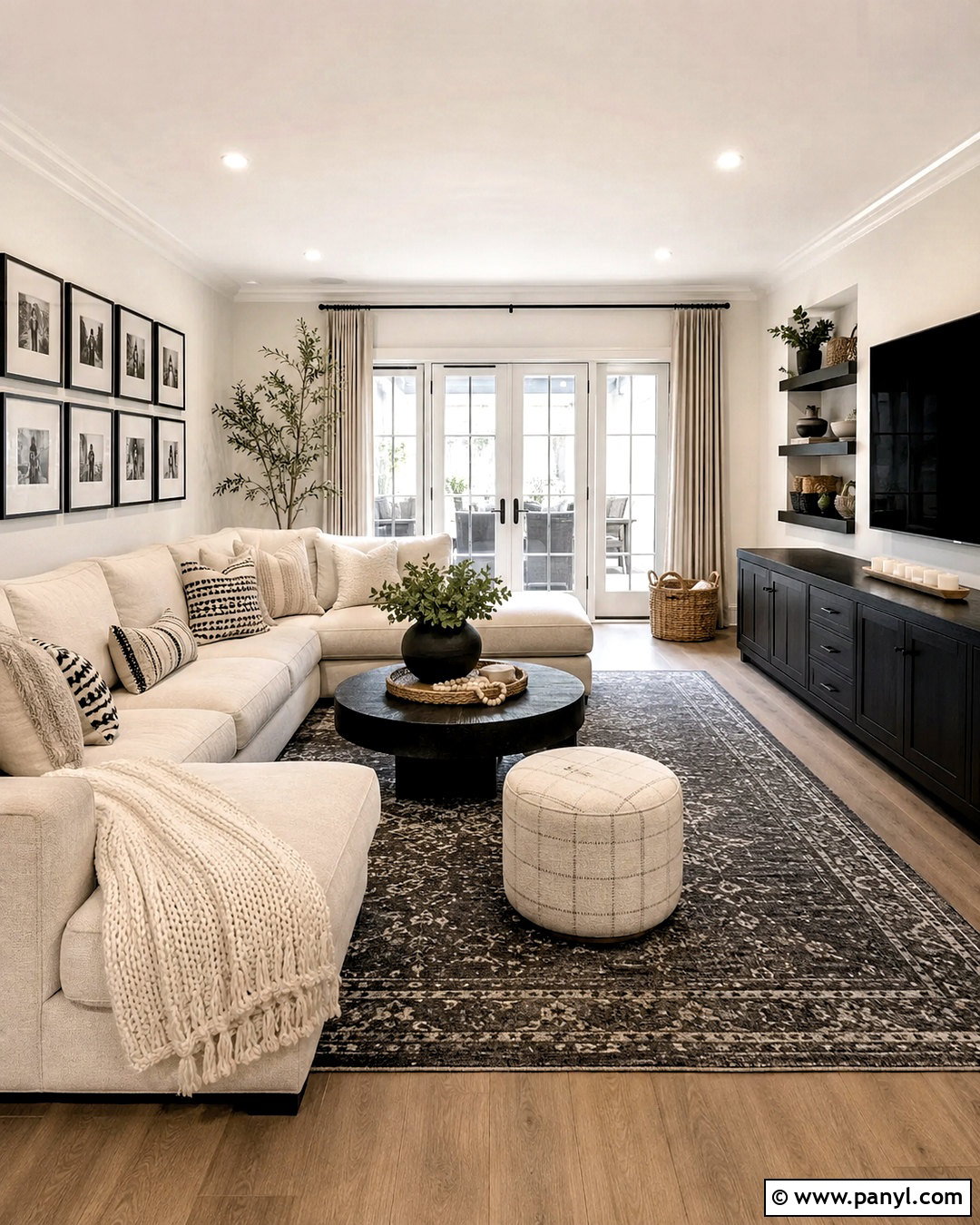
Warm grey walls can brighten a finished basement while helping separate its different activity zones. Choose a pale greige that works well under artificial and natural light. Create a family seating area with a beige sectional, walnut media cabinet, and large cream rug. Place a round game or craft table behind the sofa, using a low open shelf as a subtle divider. Add rust, navy, and olive through pillows, artwork, and washable textiles. Layer recessed ceiling lights with floor and table lamps so the room never depends on one central fixture. Light wood furniture and white trim keep the lower-level space open. The resulting basement feels like a comfortable extension of the home rather than a leftover room filled with mismatched furniture.
41. Grey Fireplace Wall
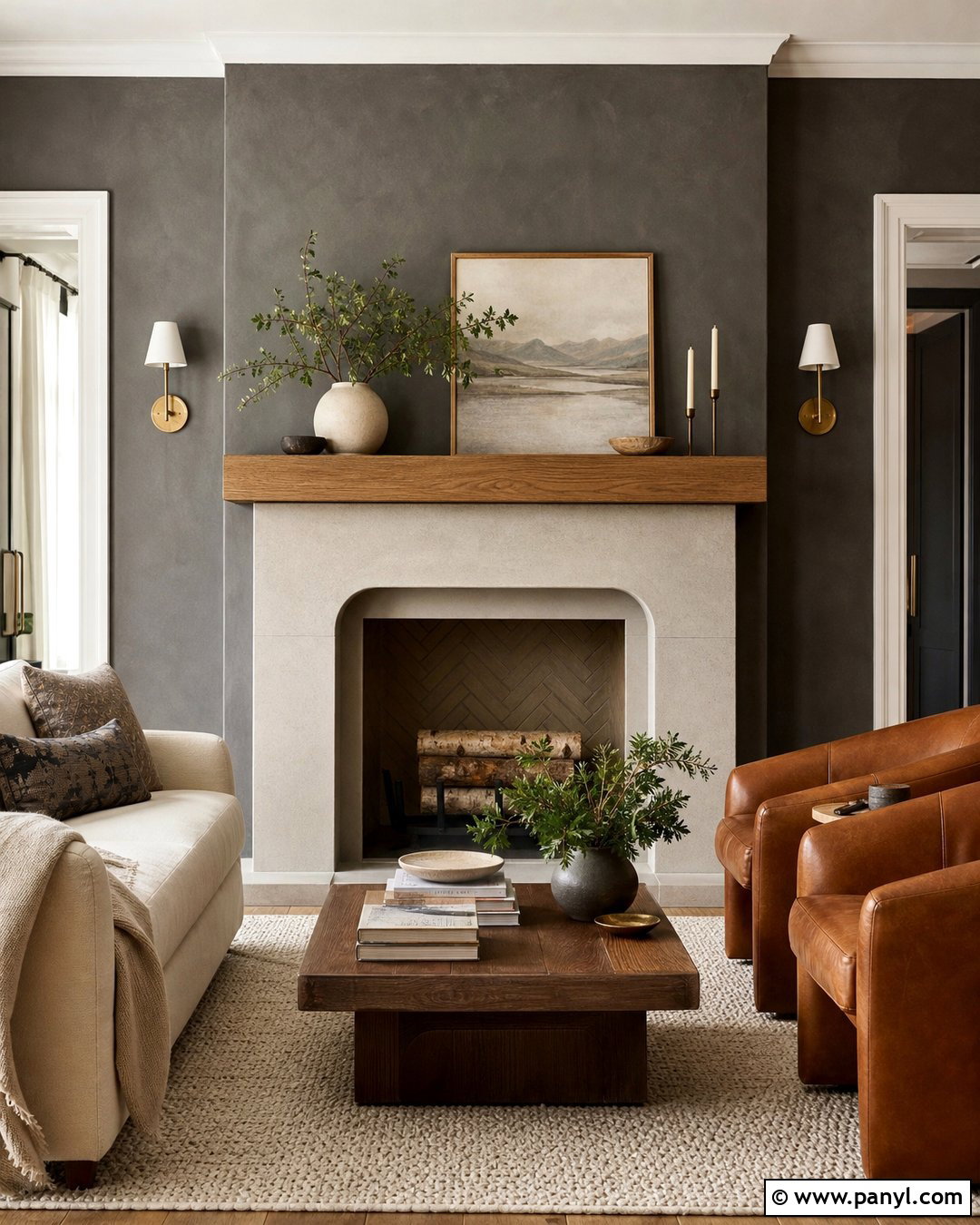
A grey fireplace wall can anchor a living room when its materials and proportions relate to the surrounding furnishings. Cover the full wall in warm charcoal paint or smooth grey plaster, then center a simple pale stone fireplace on the surface. Install a substantial oak mantel and keep the television elsewhere if possible, allowing artwork or a round mirror to become the focal point. Arrange a cream sofa and cognac chairs around a low walnut table facing the hearth. A textured ivory rug brightens the seating area, while brass sconces add symmetry beside the fireplace. Use baskets, ceramic vessels, and a few logs as restrained accessories. This complete design makes the fireplace feel architectural and connected to the room instead of appearing like an isolated feature.
42. Grey TV Wall
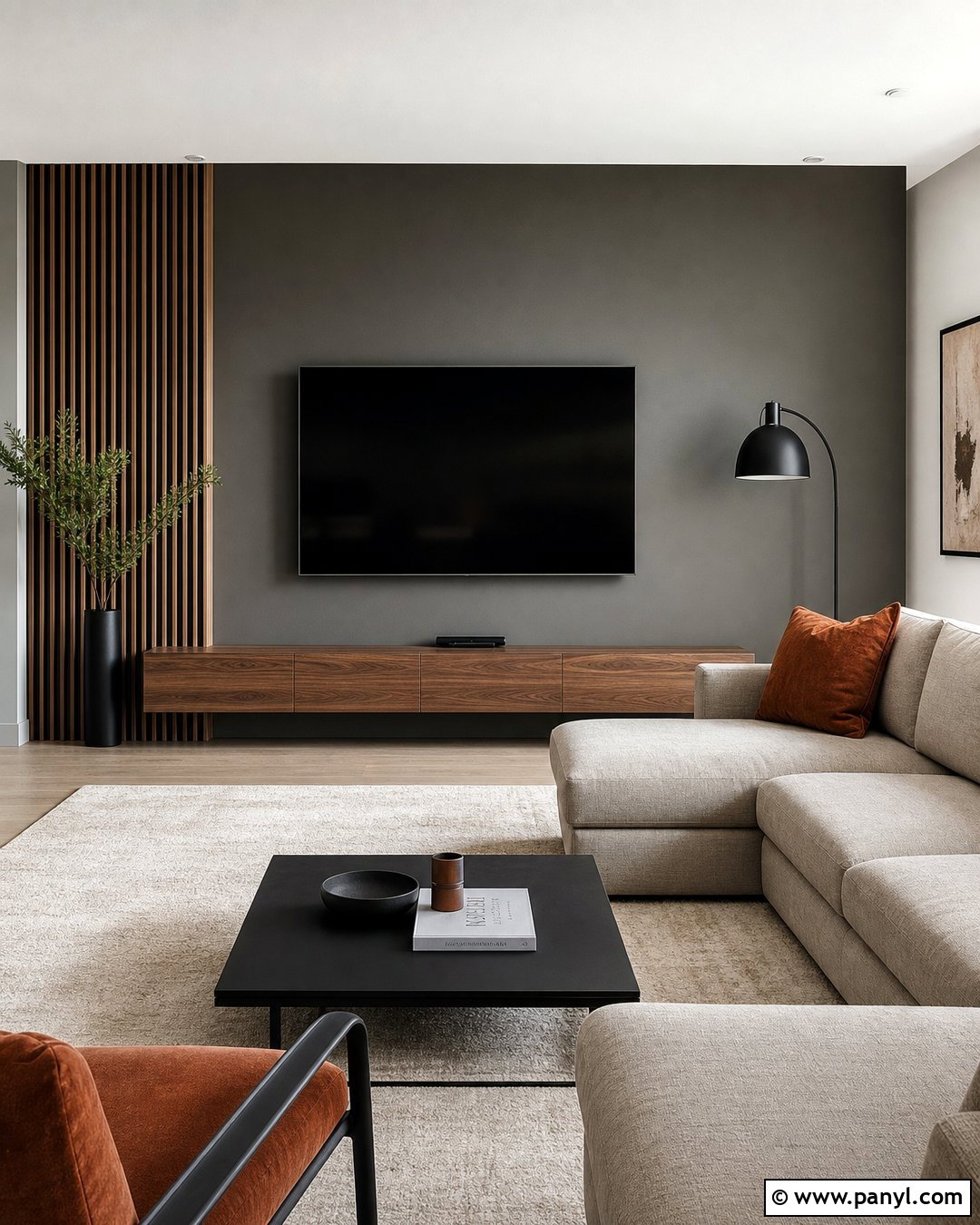
A grey TV wall can reduce the visual contrast of a black screen while adding useful storage. Paint the feature wall a deep warm grey and install a long floating walnut cabinet beneath the television. Keep surrounding walls pale to prevent the room from feeling enclosed. Conceal cords and equipment inside ventilated cabinetry for a clean appearance. Frame the television with slim shelves or vertical wood slats, but leave enough empty space so the arrangement does not look crowded. Position a light beige sectional opposite the wall and add a cream rug, rust pillows, and black metal lamps. Soft indirect lighting can illuminate the wall without reflecting on the screen. The finished setup feels integrated, balanced, and appropriate for everyday family use.
43. Grey Gallery Wall
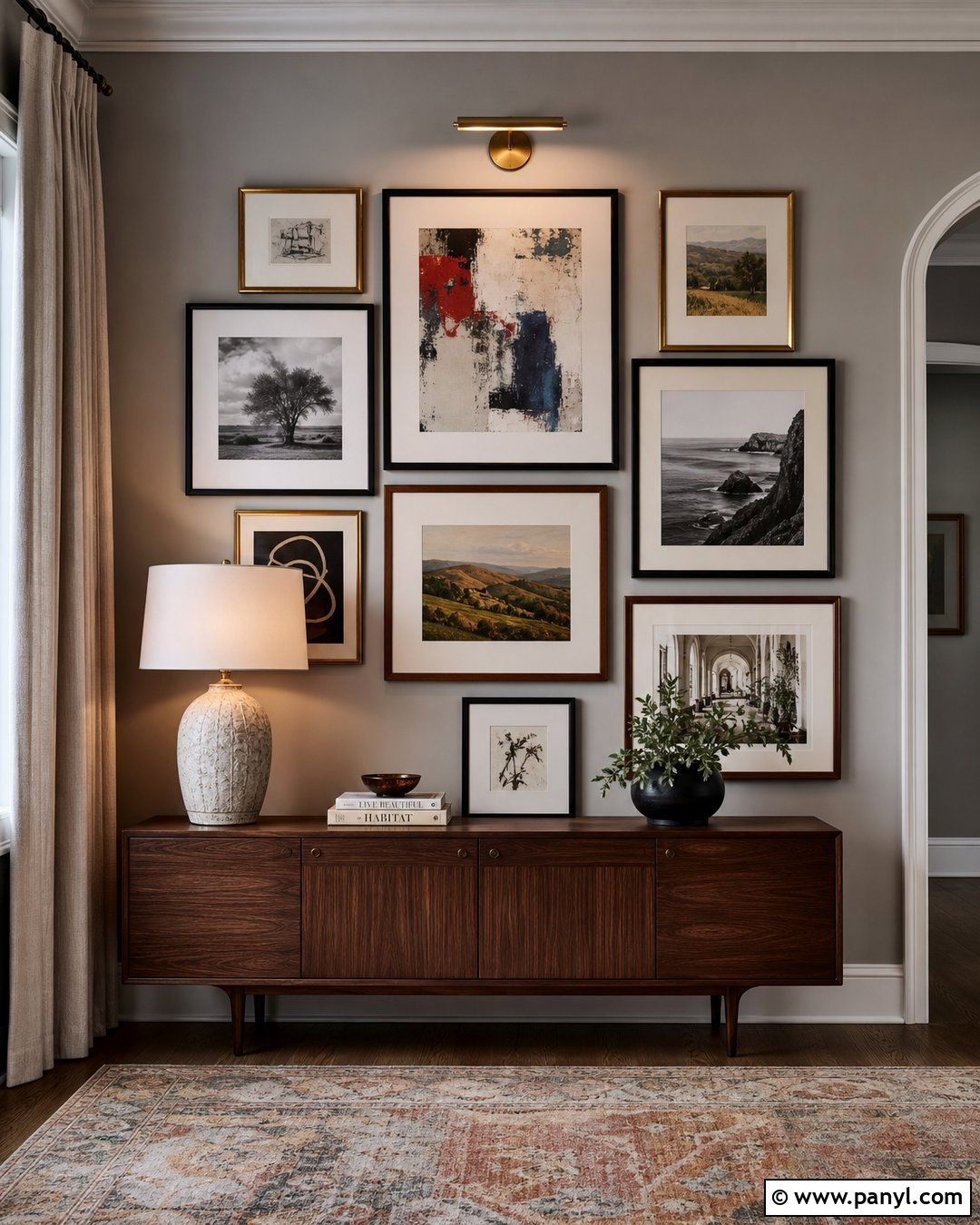
A gallery display stands out clearly against grey walls when the frame finishes and artwork share a controlled palette. Paint the living room or hallway a soft warm grey, then arrange black, oak, and antique brass frames within a measured rectangular boundary. Combine abstract prints, landscapes, line drawings, and a few personal photographs while repeating cream mats for consistency. Below the gallery, place a walnut console or neutral sofa that visually supports the composition. Add a ceramic lamp, stacked books, and one sculptural object rather than covering the entire surface. A muted patterned rug and linen curtains soften the surrounding room. This complete look gives the artwork variety without chaos, using the grey background to unite different colors, subjects, and frame materials.
44. Grey Wall With Picture Frame Molding
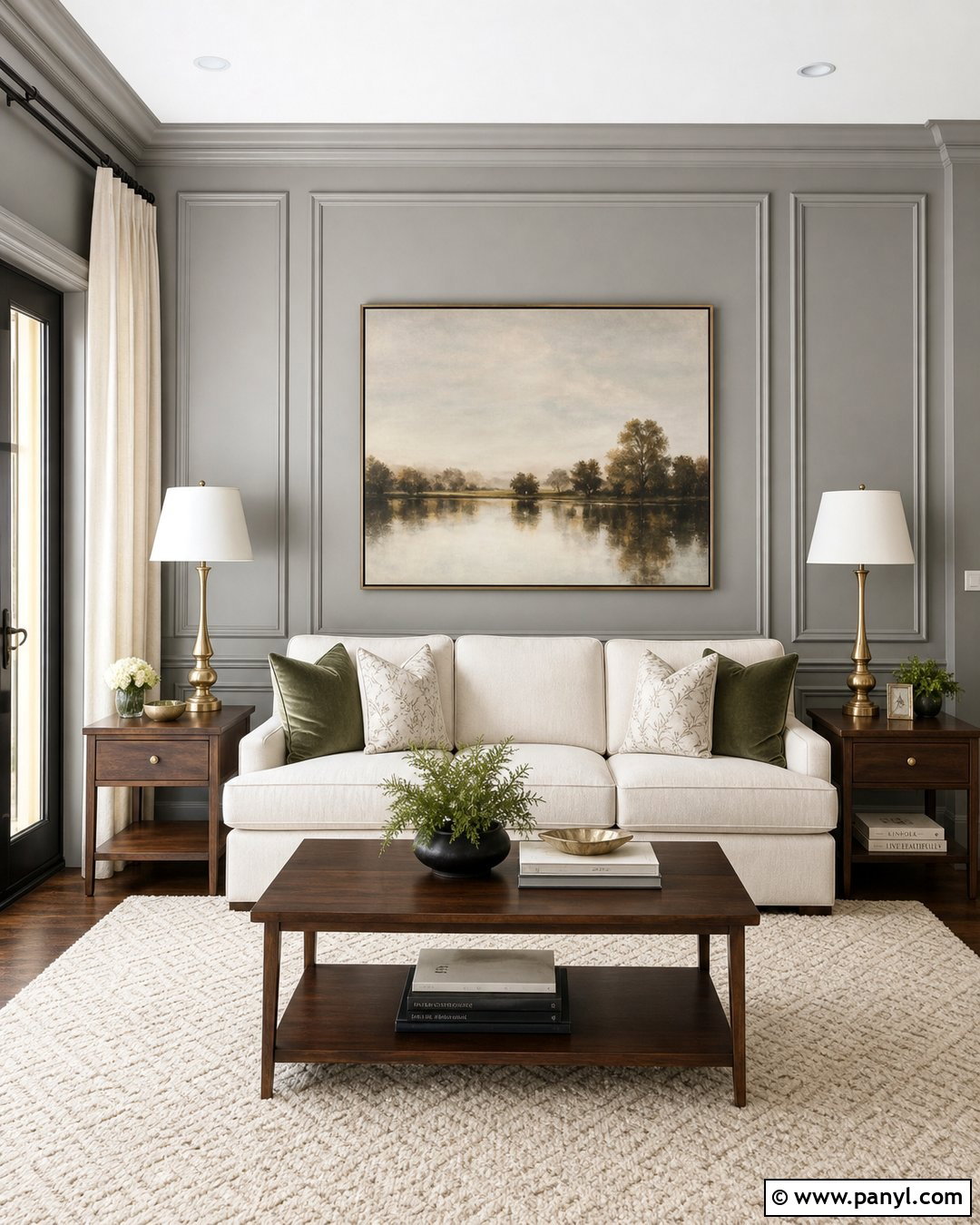
Picture frame molding turns a plain grey wall into a refined architectural feature. Apply evenly proportioned molding panels across the living room, bedroom, or dining area, then paint everything in the same warm grey finish. Position furniture symmetrically enough to respect the panel layout without making the room rigid. A cream sofa, walnut side tables, and brass lamps create a balanced living room scheme, while one large artwork can sit inside the central panel. Add a textured ivory rug, linen curtains, and muted olive pillows for warmth. Keep smaller accessories simple so the wall treatment remains visible. This full design offers depth through shadow and structure rather than strong color contrast, making it an effective upgrade for newer homes with limited architectural detail.
45. Grey Wall With Floating Shelves
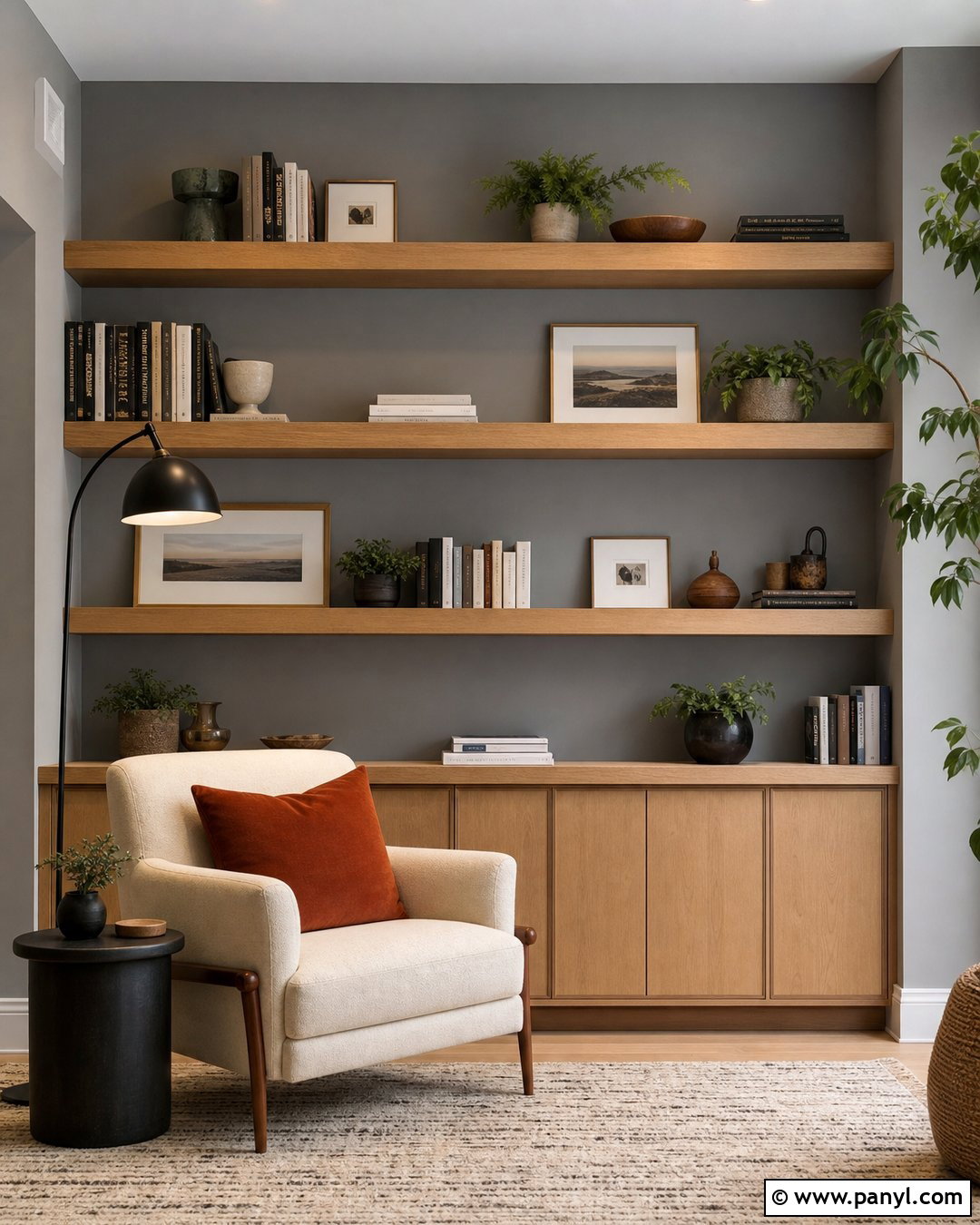
Floating shelves can make a grey wall useful and decorative when their size matches the room. Paint the wall a soft mid-grey and install two or three substantial oak shelves above a low matching cabinet. Arrange books both vertically and horizontally, then add ceramics, framed prints, and small plants with open space between groups. Keep heavier storage inside the closed cabinet so the shelves remain visually calm. In a living room, place a cream lounge chair and floor lamp nearby to create a reading corner. Use a textured rug and one rust-colored cushion to add warmth. Black shelf brackets may suit an industrial look, while concealed supports feel more minimal. The completed wall combines display, storage, furniture, and color in one cohesive composition.
46. Grey Wall With Large Artwork
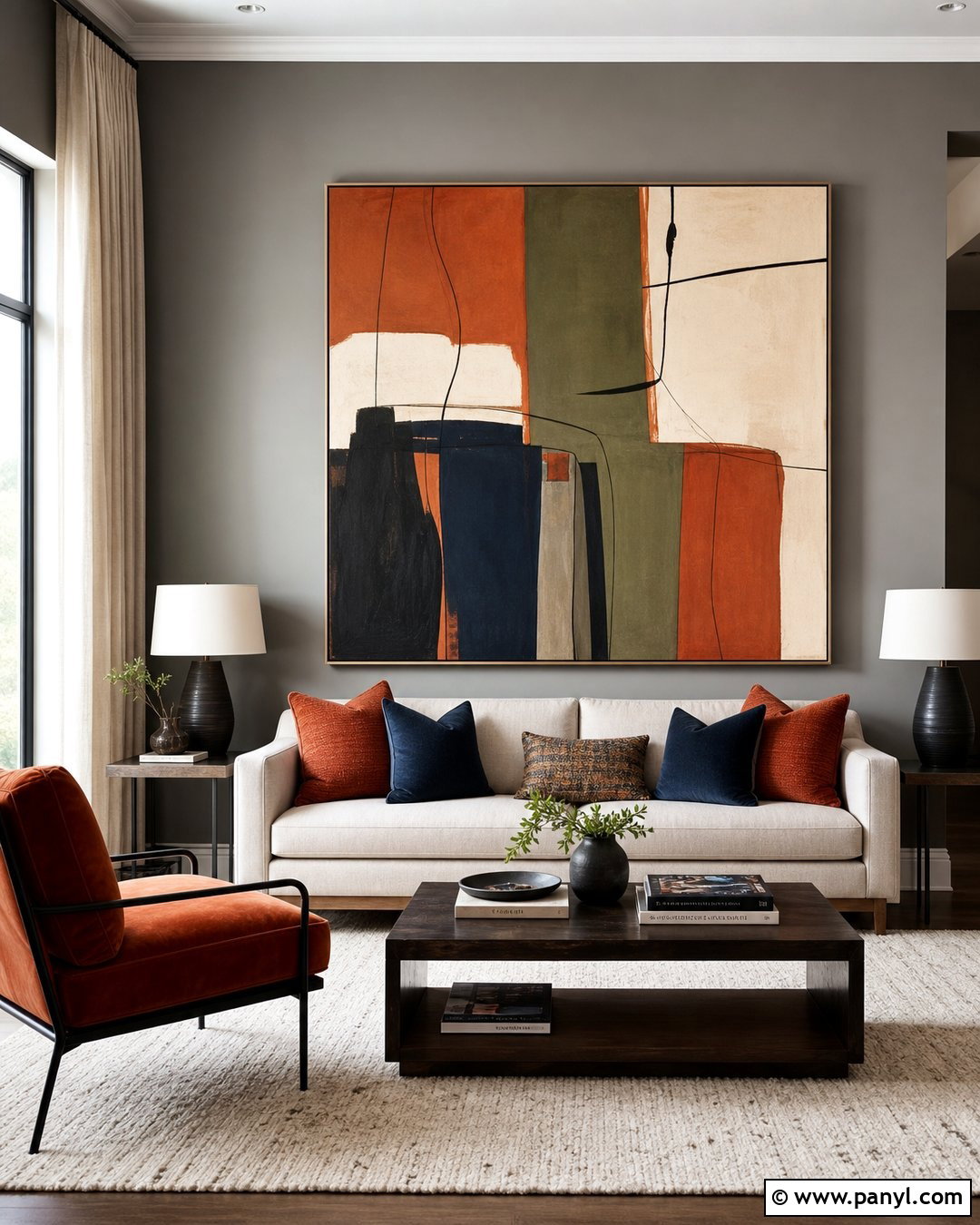
Large artwork can give grey walls a strong focal point without requiring complicated styling. Choose a warm medium grey, then hang one oversized canvas above a cream sofa or walnut sideboard. The artwork should include several colors used elsewhere in the room, such as terracotta, navy, olive, black, and ivory. Position it with enough open wall around the edges so the scale feels deliberate. Add a large neutral rug, wood coffee table, and one colored accent chair to balance the composition. Use simple lamps and minimal tabletop decor rather than competing with the canvas. Linen curtains and textured pillows complete the space. This design is particularly effective in open rooms where one confident piece can establish the entire palette and direction.
47. Grey Wall With Brick Fireplace
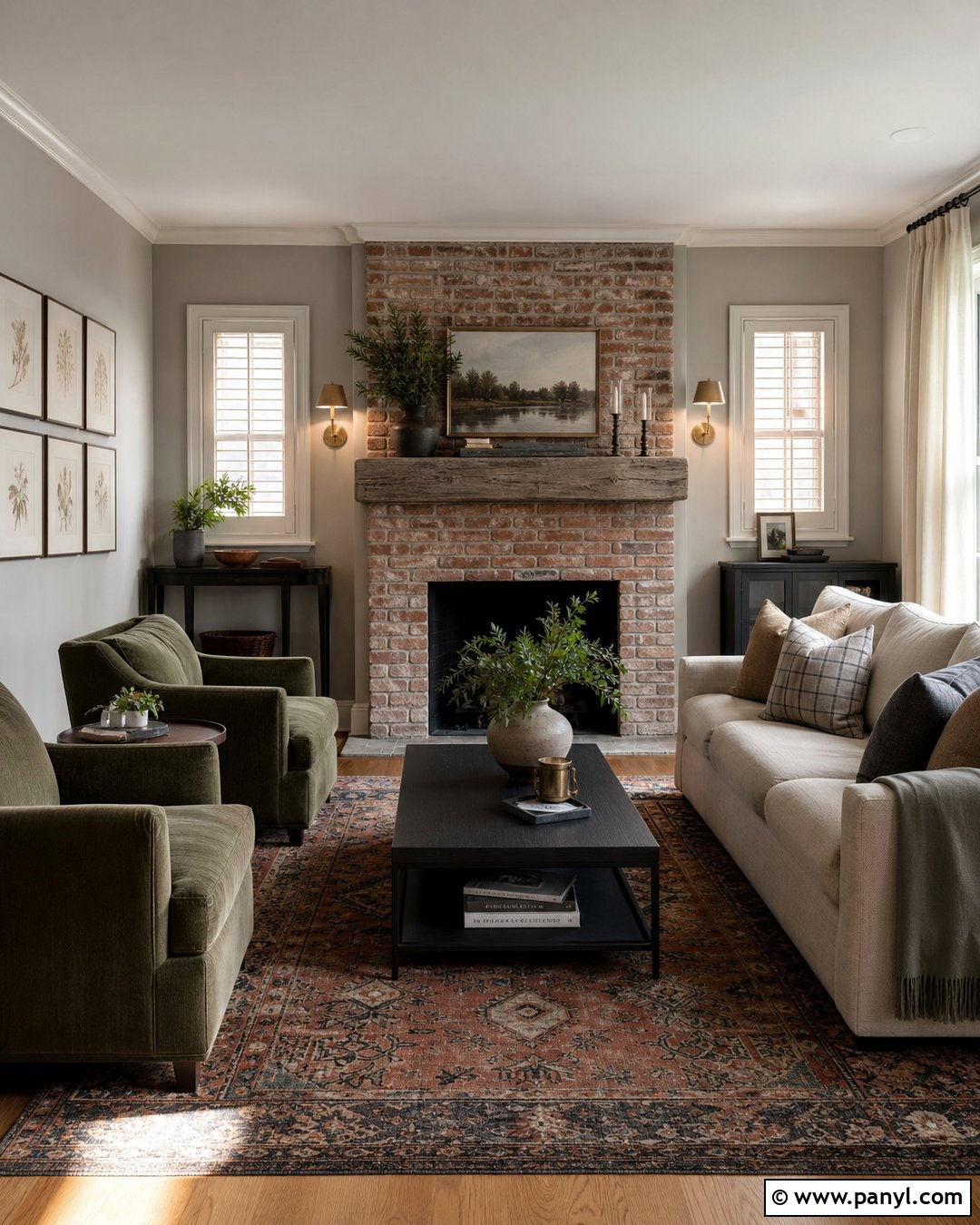
Grey walls can modernize a room with an existing brick fireplace while preserving its natural character. Select a warm pale grey that complements the brick’s red, brown, or cream undertones. Keep the brick unpainted and add a substantial reclaimed wood mantel to connect it with the room’s flooring and furniture. Arrange an oatmeal sofa and olive chairs around a black metal coffee table facing the hearth. A vintage rug containing rust, charcoal, and beige brings the brick color into the seating area. Use black curtain rods, bronze sconces, and simple landscape artwork for definition. Cream curtains and woven baskets soften the harder materials. The complete room feels updated but authentic, allowing the original fireplace to remain the central architectural feature.
48. Grey Sunroom Walls
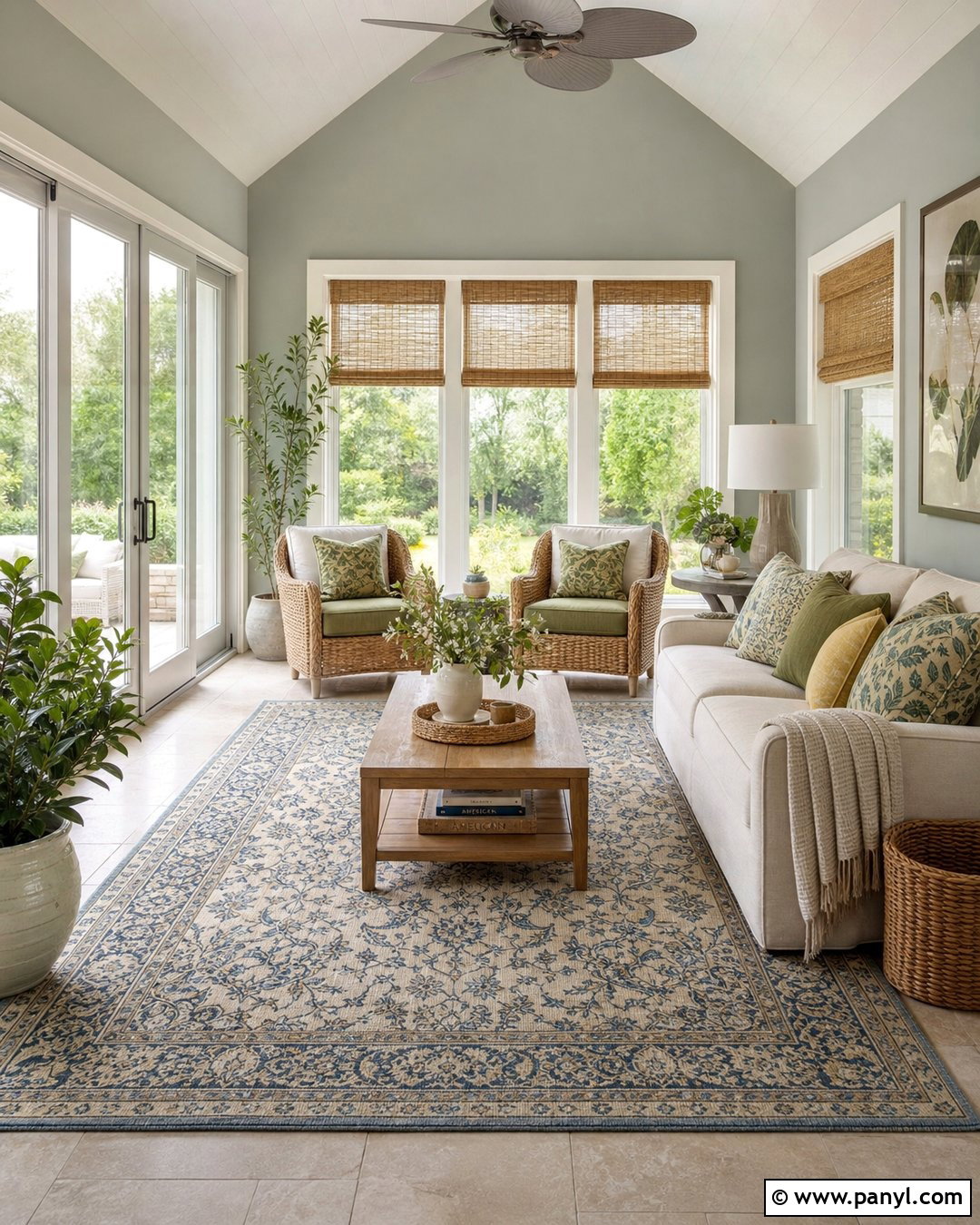
Light grey walls make a sunroom feel connected to the outdoors while reducing the starkness of bright white surfaces. Choose a soft grey-green and pair it with natural rattan chairs, a cream upholstered sofa, and a light oak coffee table. Use an indoor-outdoor rug with a subtle blue and ivory pattern to define the seating area. Linen or woven shades can control glare without hiding garden views. Add olive, sky-blue, and muted yellow cushions for natural color. Large leafy plants should sit in ceramic or woven planters at different heights. Keep window trim warm white to emphasize the surrounding light. This complete sunroom feels fresh, casual, and comfortable, with durable materials that suit a transitional indoor-outdoor living space.
49. Grey Reading Nook Walls
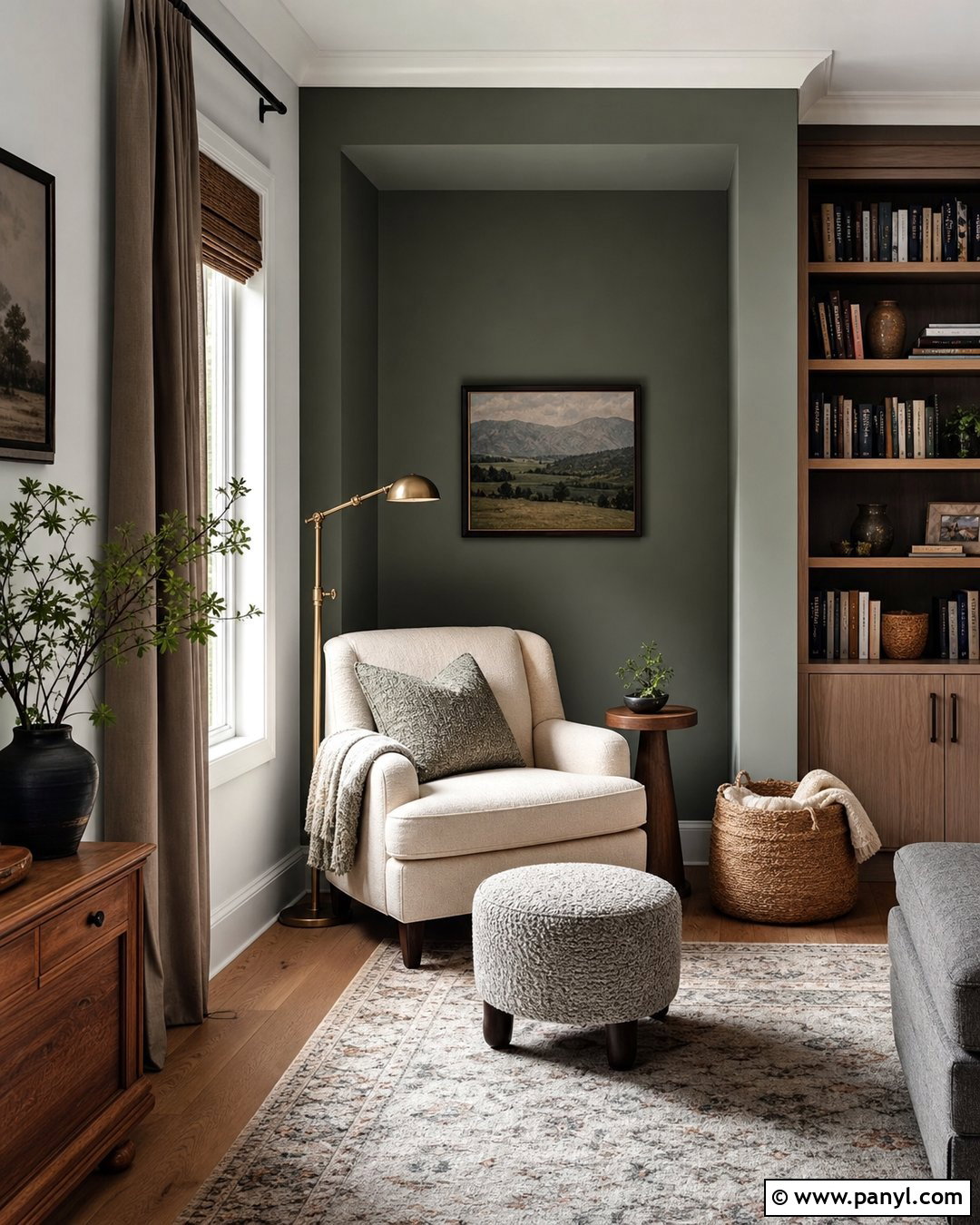
Grey walls can turn an unused corner into a comfortable reading nook with a clear sense of purpose. Paint the alcove a medium grey-green to distinguish it subtly from the surrounding room. Place a deep cream armchair at an angle beside a slim walnut table and an adjustable brass floor lamp. Add a small oak bookcase or wall-mounted shelves within easy reach. A soft wool rug defines the nook, while an ottoman and textured throw encourage longer reading sessions. Hang one framed landscape above the chair and include a woven basket for magazines or extra blankets. If the nook has a window, use a simple linen Roman shade. The finished corner feels welcoming, organized, and visually connected to the larger room.
50. Grey Open Concept Walls
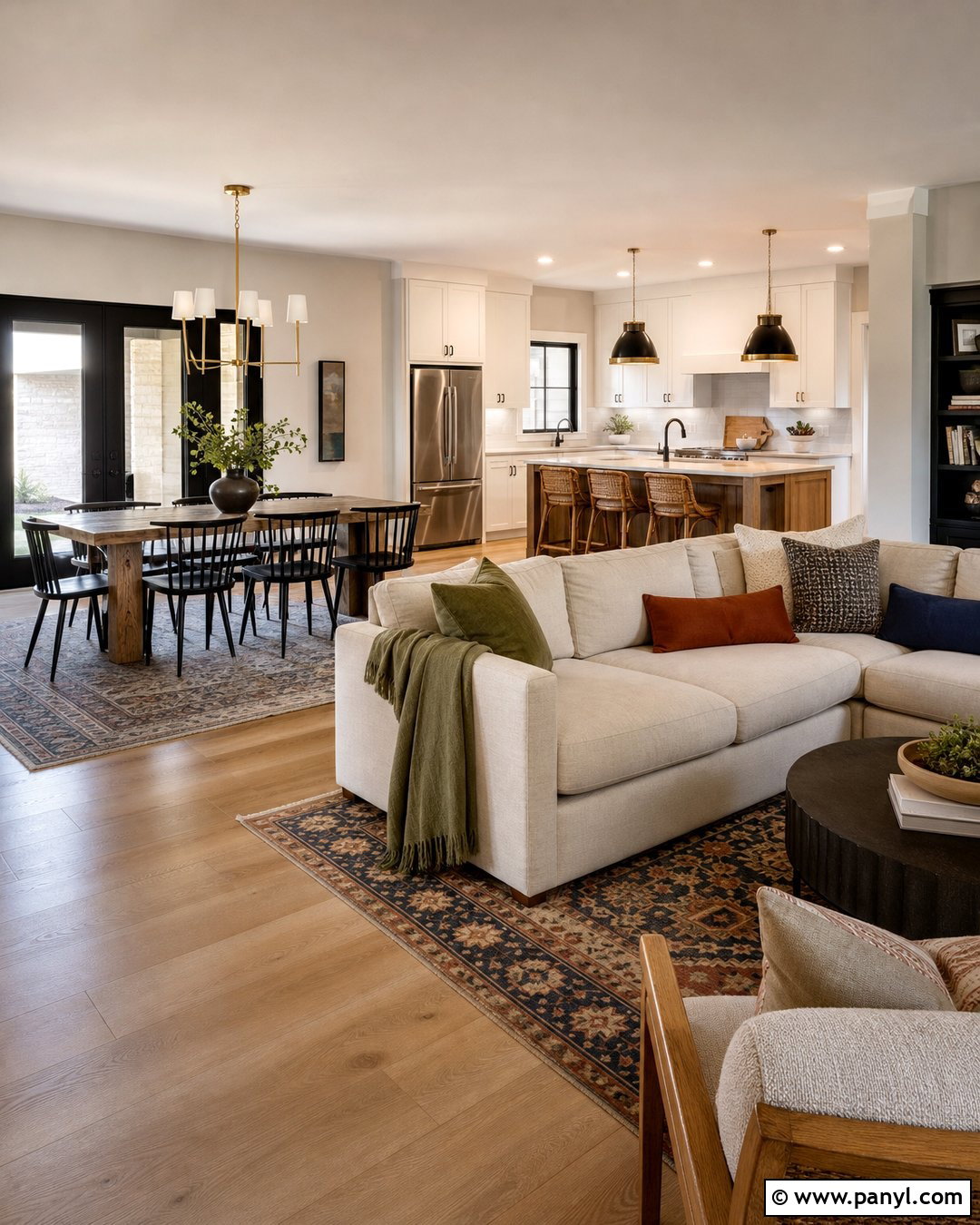
Grey walls can unify an open-concept home when one adaptable shade connects the living, dining, and kitchen areas. Choose a light warm greige that complements the flooring, cabinetry, and natural light throughout the entire space. Define the living zone with a cream sectional and large patterned rug, then position an oak dining table between the seating area and kitchen. Use white kitchen cabinets, a wood island, and black or brass fixtures to repeat finishes from nearby rooms. Accent colors such as olive, rust, and navy should appear in each zone through artwork, upholstery, and textiles. Keep trim consistent and vary lighting by function. The completed layout feels coordinated but not repetitive, allowing every area to retain its own practical identity.
Conclusion:
These 50 grey wall ideas show how varied grey can look when it is treated as part of a complete room rather than a single paint choice. Pale shades can brighten compact spaces, warm greys can support cozy wood tones, and charcoal walls can establish dramatic focal points. The key is balancing the wall color with flooring, furniture, textiles, metal finishes, artwork, and effective lighting. Always compare paint samples beside permanent surfaces and observe them at different times of day. Then repeat important colors and materials around the room to create continuity. With thoughtful undertones and enough natural texture, grey walls can feel welcoming, personal, and timeless instead of cold, flat, or unfinished.

Related Ideas and Inspiration:
Leave a Reply