
These 20 checkered design ideas show how a simple grid can bring rhythm, contrast, and personality into almost any home. Checkerboard patterns can look classic in marble, relaxed in muted textiles, playful in colorful paint, or rustic in natural wood. The latest versions often move beyond sharp black and white, using earthy neutrals, soft pastels, textured finishes, and unexpected scales for a more livable result. () The key is treating the pattern as part of a complete room rather than adding it without a plan. Balance bold checks with solid surfaces, simple furniture, and materials that complement the overall mood. From kitchens and bathrooms to bedrooms, patios, and entryways, these 20 checkered design ideas offer practical looks you can recreate.

1. Black And White Checkered Kitchen
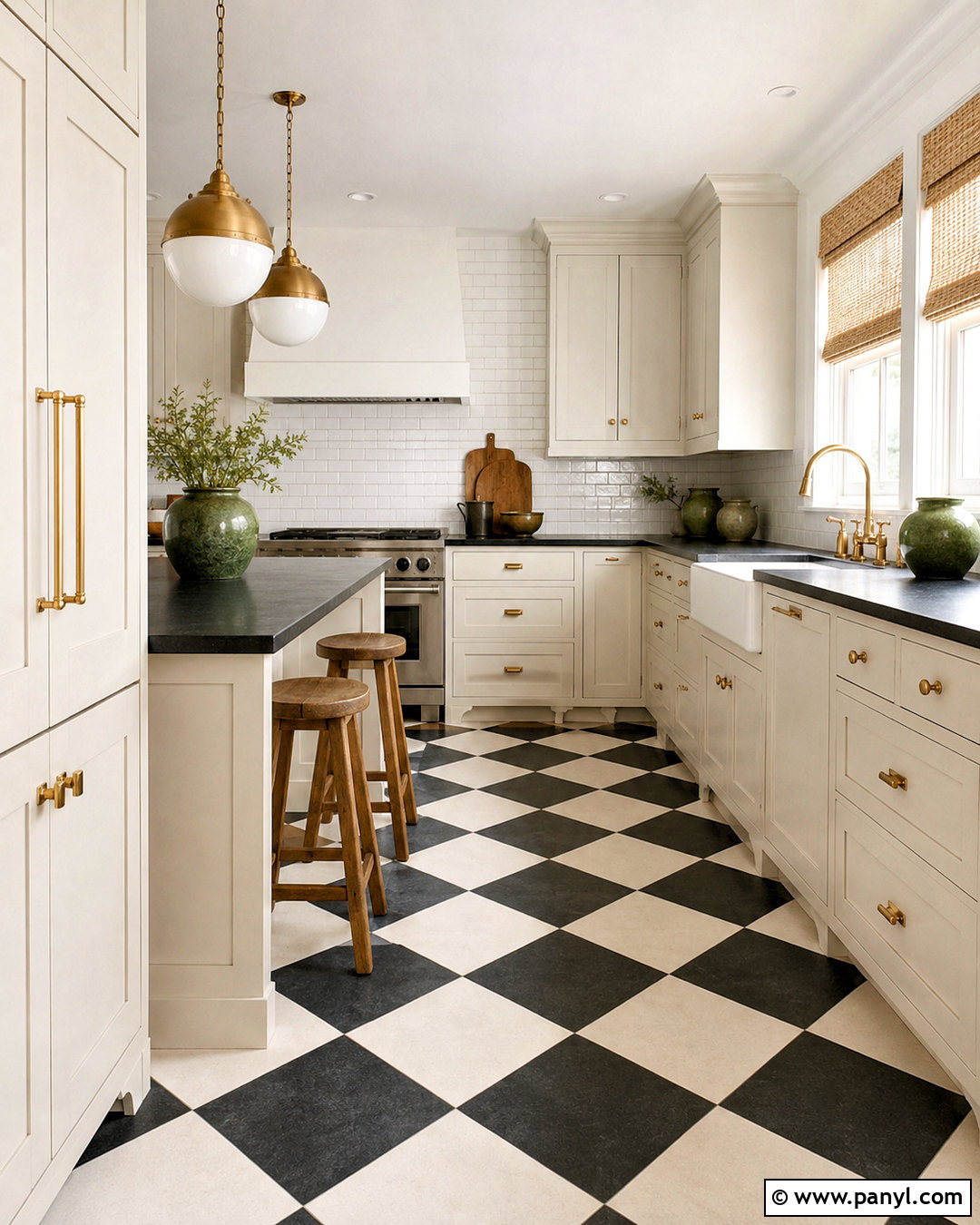
A black and white checkered floor gives a kitchen instant character while creating a crisp foundation for the entire room. Choose medium-scale porcelain tiles laid straight for a retro look or diagonally for a more traditional feel. Pair the floor with warm white shaker cabinets, honed black countertops, and a white subway tile backsplash. Unlacquered brass hardware and natural oak stools prevent the high-contrast palette from feeling cold. Keep upper cabinets minimal so the pattern has enough visual space. A farmhouse sink, simple pendant lights, and woven window shades complete the room. Add small touches of muted green through pottery or herbs, but avoid introducing another busy pattern. The finished kitchen feels timeless, welcoming, and easy to maintain.
2. Green And Cream Checkered Kitchen
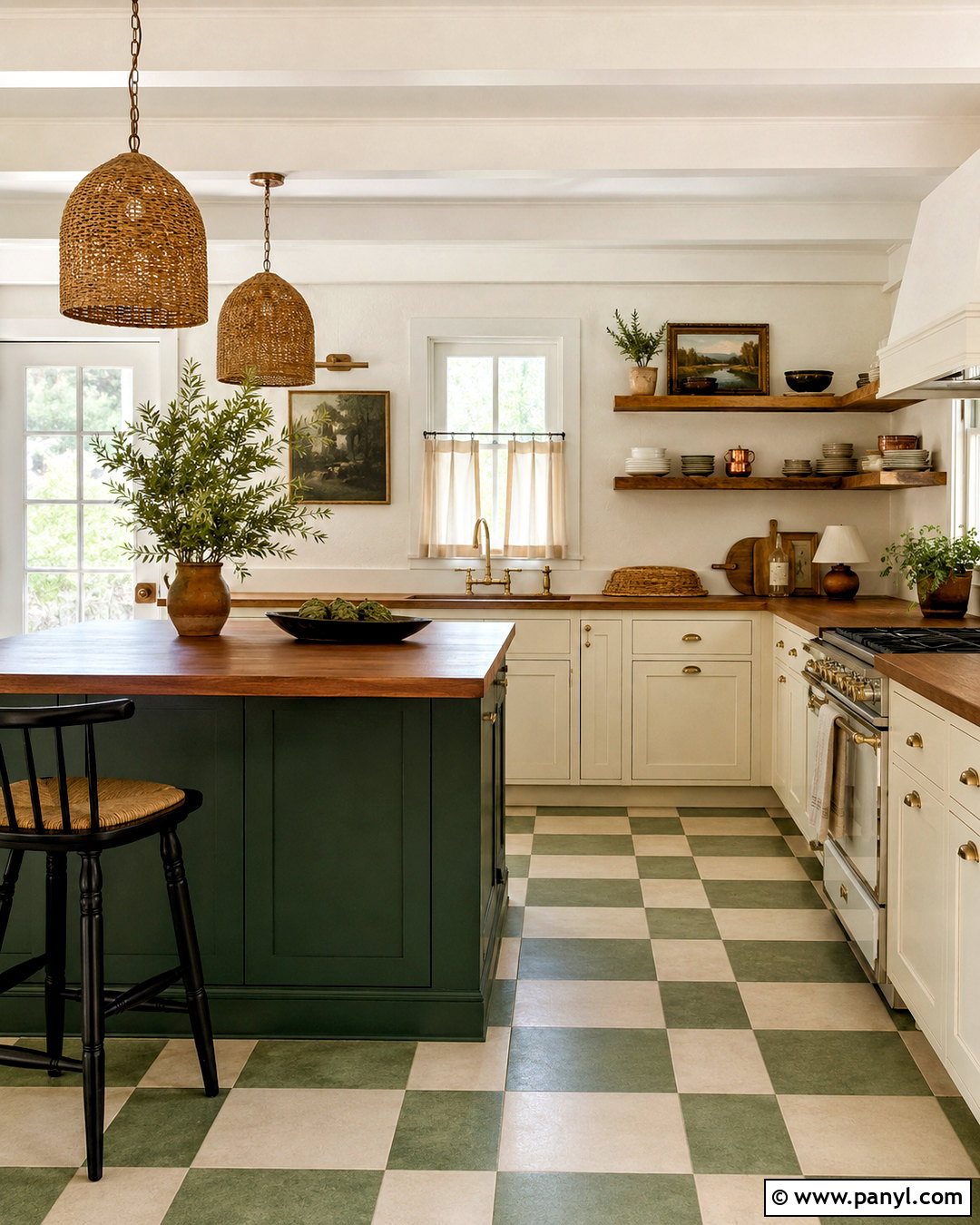
Soft green and cream checks create a warmer alternative to the classic black and white kitchen. Use durable ceramic floor tiles in muted sage green and ivory, then build the room around their gentle color contrast. Cream cabinets keep the space bright, while a deep green island makes the palette feel intentional. Add butcher-block counters, aged brass pulls, and open oak shelves for natural warmth. A simple cream backsplash allows the floor to remain the main pattern. Linen café curtains, handmade pottery, and woven pendant lights reinforce the relaxed look. Keep appliances in stainless steel or panel-ready finishes so they blend into the design. This complete scheme works especially well in cottage, farmhouse, and older kitchens where slightly imperfect materials add authentic charm.
3. Checkered Kitchen Backsplash
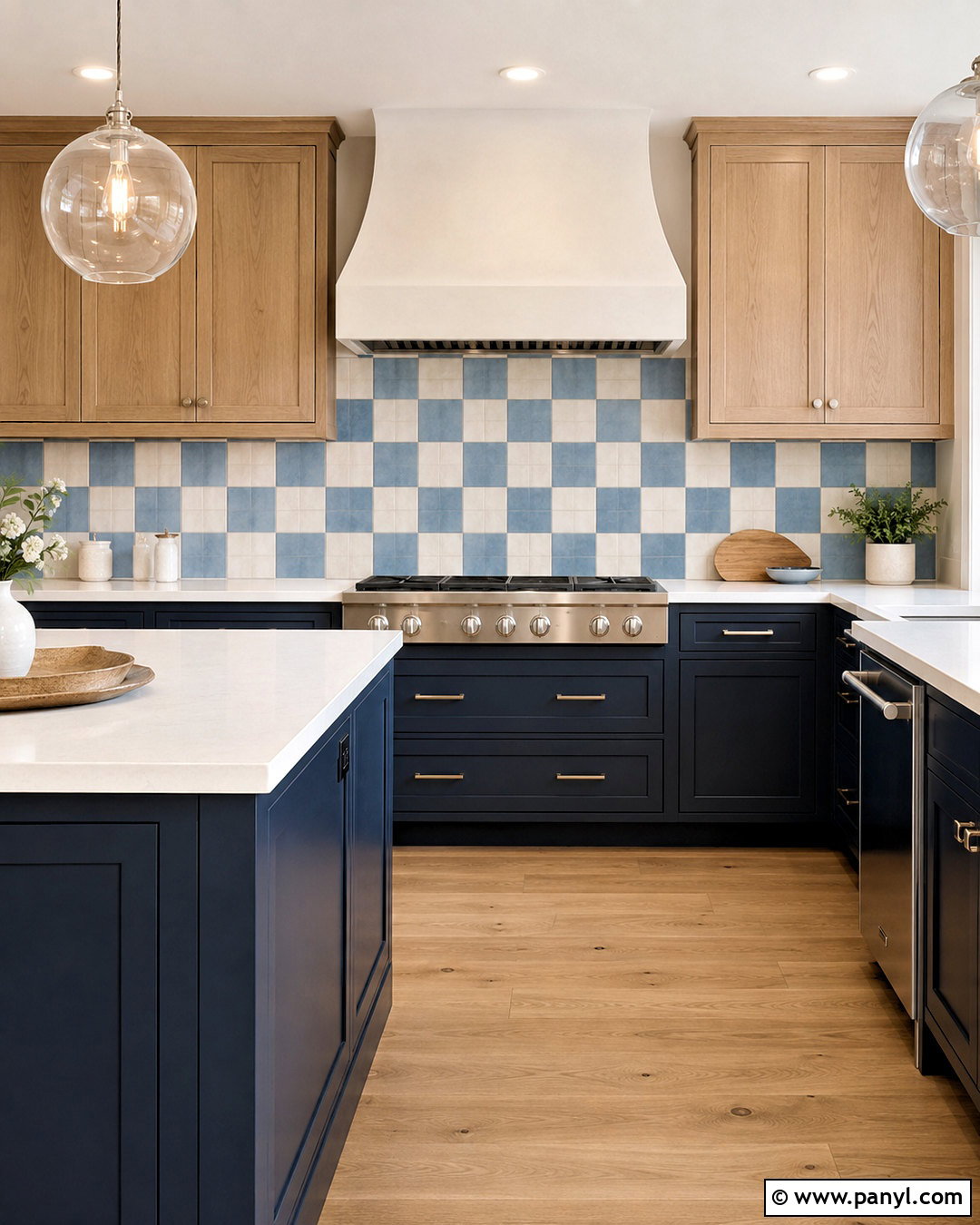
A checkered backsplash can become the main feature without covering every surface in pattern. Select small square tiles in dusty blue and warm white, extending them from the countertop to the bottom of the upper cabinets. Ground the colorful checks with navy lower cabinets and pale oak uppers. White quartz counters, brushed nickel hardware, and a simple plaster range hood keep the room fresh rather than overly retro. Continue pale oak through the flooring and bar stools to soften the tile’s geometry. Clear glass pendants maintain an open view across the kitchen. Keep countertop accessories limited to a wooden cutting board, neutral canisters, and one ceramic vase. The result is a practical, colorful kitchen with a strong but controlled focal point.
4. Painted Checkered Kitchen Floor
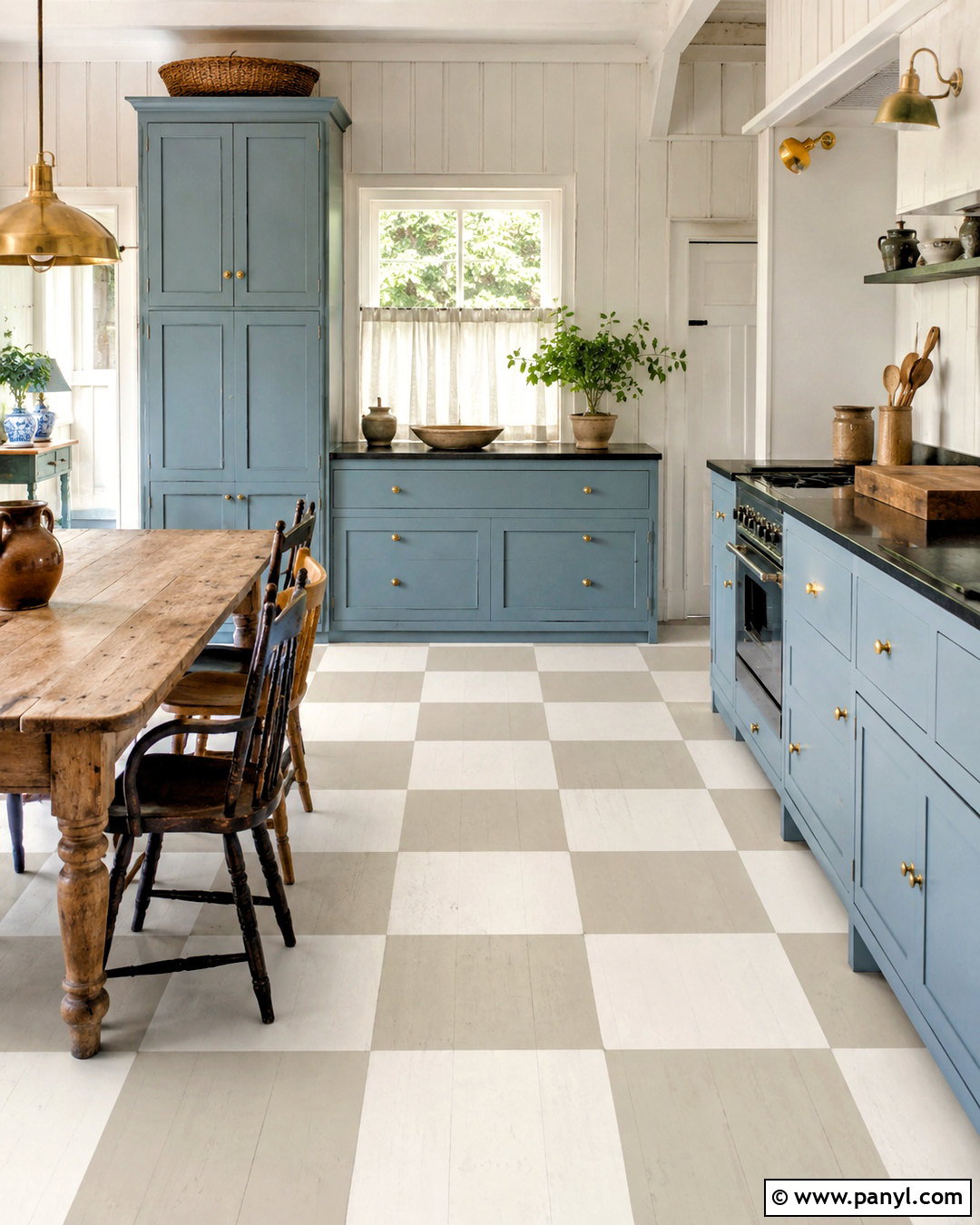
Painting an existing wood floor offers a budget-friendly way to introduce a checkered pattern. For a relaxed cottage kitchen, alternate warm white and light greige squares instead of using harsh black. Slightly oversized checks make the room feel larger and reduce visual busyness. Protect the finished pattern with a durable clear floor coating suitable for busy spaces. Complete the kitchen with pale blue cabinets, soapstone-look counters, beadboard walls, and vintage-inspired brass lighting. A pine dining table and mismatched wooden chairs add warmth without competing with the floor. Choose solid linen curtains and simple pottery rather than additional prints. Minor wear will eventually give the painted surface a soft, lived-in appearance that suits the casual design instead of making it feel damaged.
5. Checkered Bathroom Floor
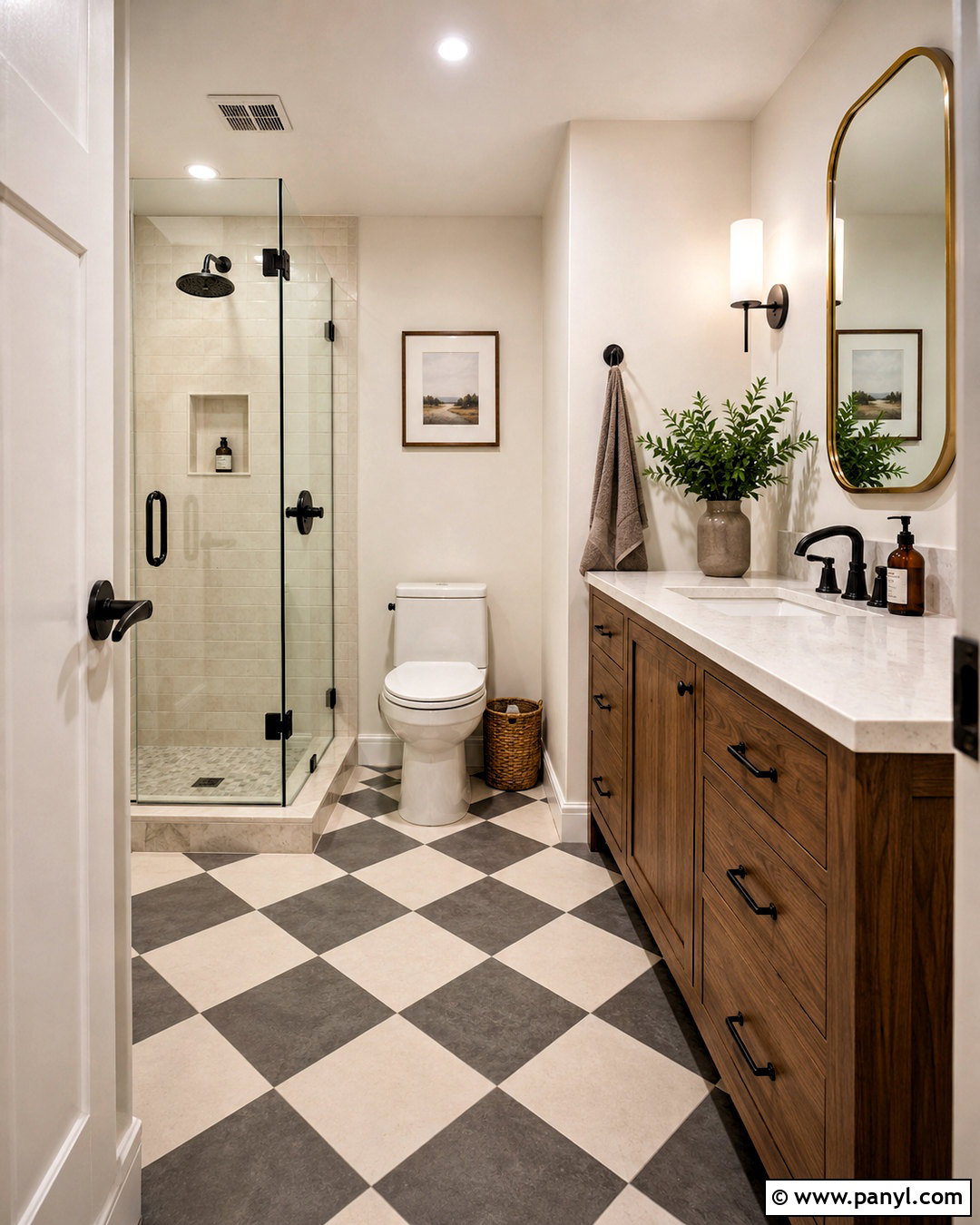
Checkerboard tile can make a compact bathroom feel carefully designed rather than purely functional. Use charcoal gray and warm white porcelain squares on the floor, positioning them diagonally to visually widen the space. Pair the pattern with a walnut vanity, creamy quartz countertop, and simple white walls. A frameless glass shower keeps the floor visible and prevents the room from appearing divided. Inside the shower, use solid off-white tile with matching charcoal grout for subtle continuity. Matte black fixtures echo the darker floor squares, while a round brass mirror introduces warmth. Finish the room with white towels, a woven basket, and one leafy plant. This balanced palette delivers graphic impact without overwhelming a small bathroom or making it difficult to decorate.
6. Blue And White Checkered Bathroom
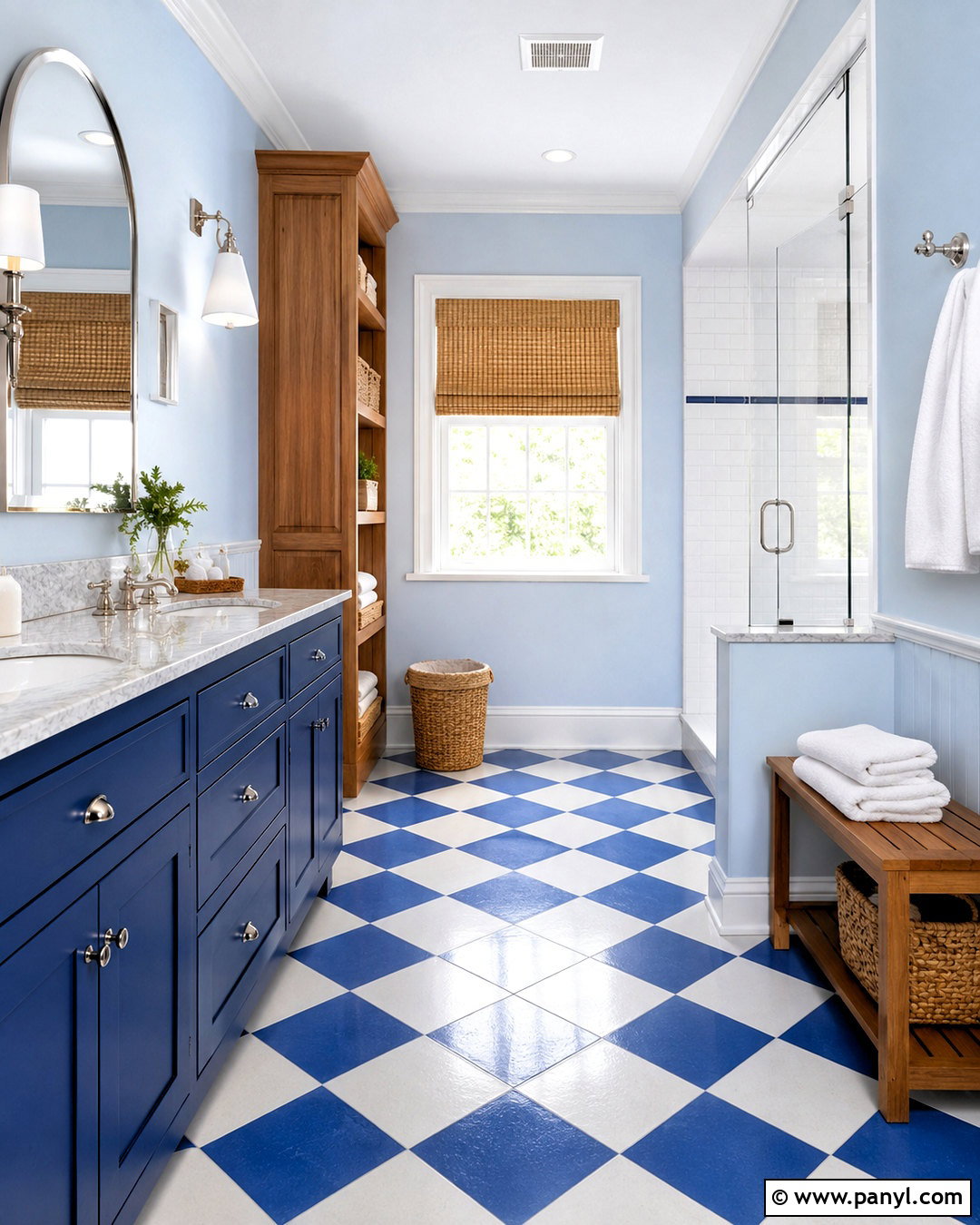
Blue and white checks give a bathroom a bright coastal character without relying on obvious themed decorations. Cover the floor with glossy cobalt blue and warm white tiles, then use simple white tile across the shower walls. A navy vanity strengthens the color story, while a pale marble countertop adds a quieter natural pattern. Choose polished nickel faucets, clear glass sconces, and a large arched mirror for a clean finish. Light oak storage and woven baskets soften the hard surfaces. Add white linen towels with narrow blue borders rather than another large print. Pale blue wall paint above the tile creates a smooth transition around the room. The final space feels crisp, colorful, and polished while remaining suitable for everyday family use.
7. Checkered Shower Tile
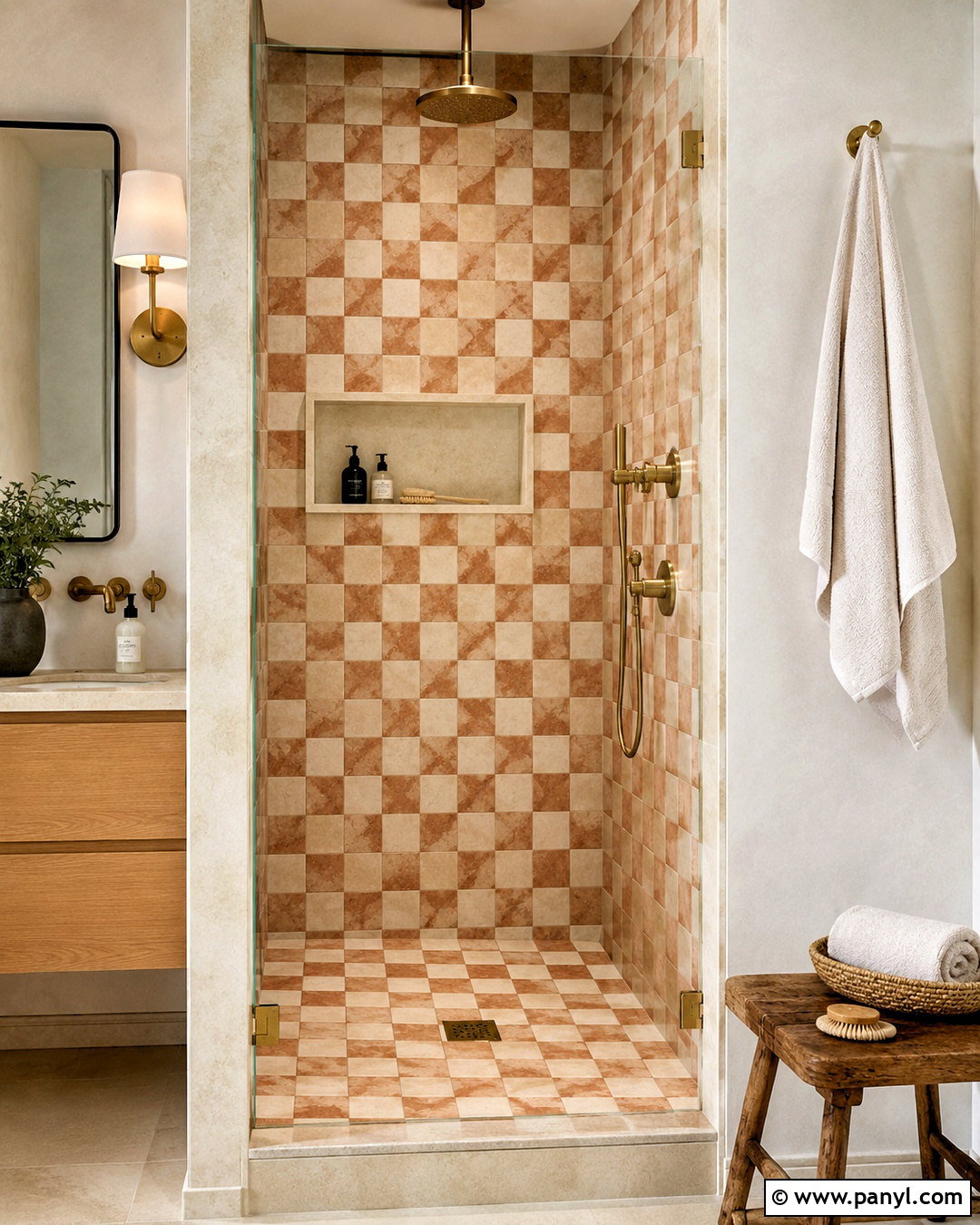
Turn a walk-in shower into the focal point by using checkerboard tile only inside the enclosure. Small terracotta and cream squares bring warmth to the shower walls and floor without making the whole bathroom feel busy. Surround the feature with limewashed ivory walls, a floating oak vanity, and a pale stone countertop. Brushed brass fixtures complement the earthy tile, while a frameless glass panel keeps the complete pattern visible. Include a tiled niche in a solid cream finish so bath products do not interrupt the checks. Natural linen towels, a low wooden stool, and handmade clay accessories reinforce the relaxed Mediterranean mood. Keeping the remaining surfaces quiet allows the shower to feel special while the bathroom stays balanced, airy, and comfortable.
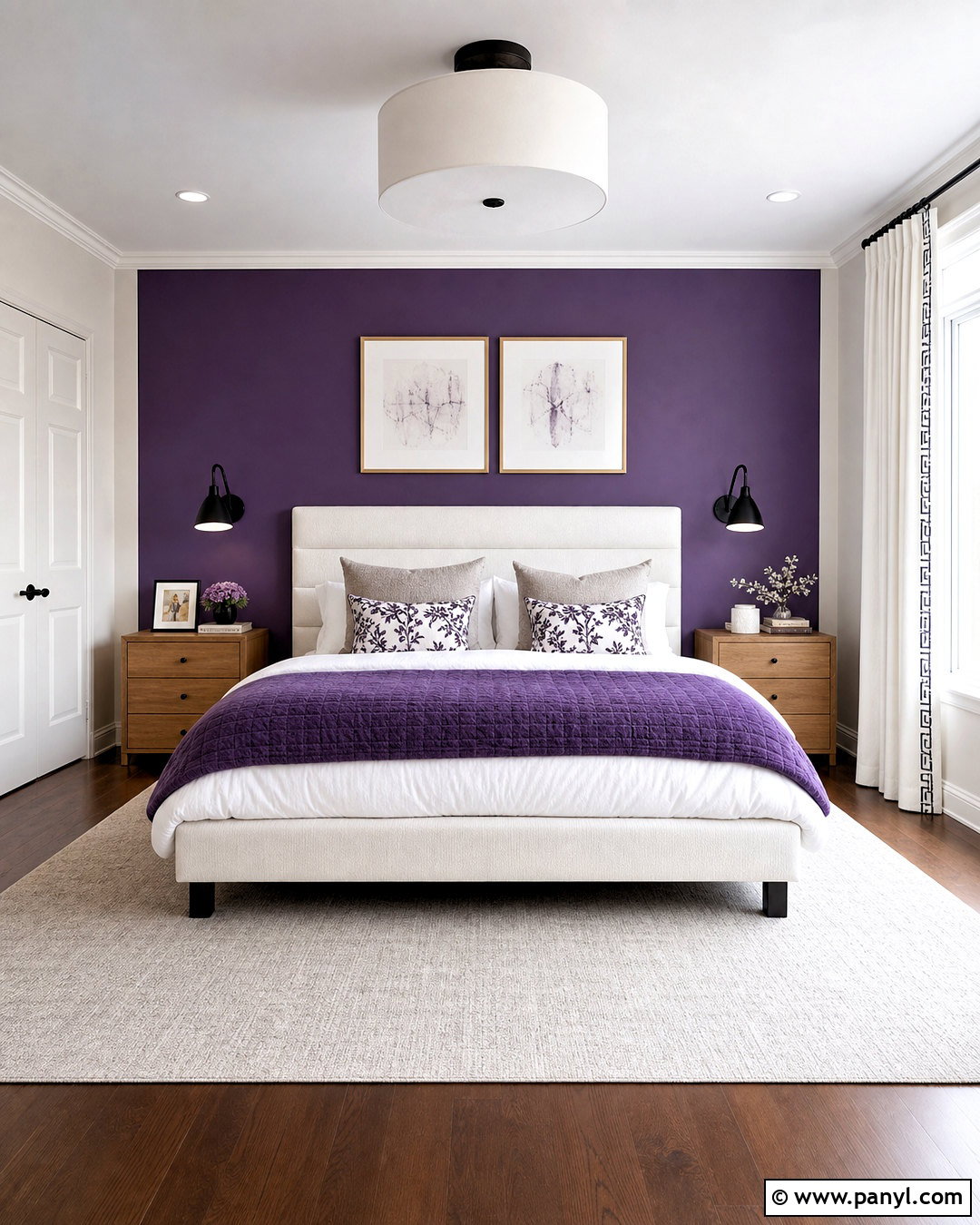
8. Checkered Living Room Rug
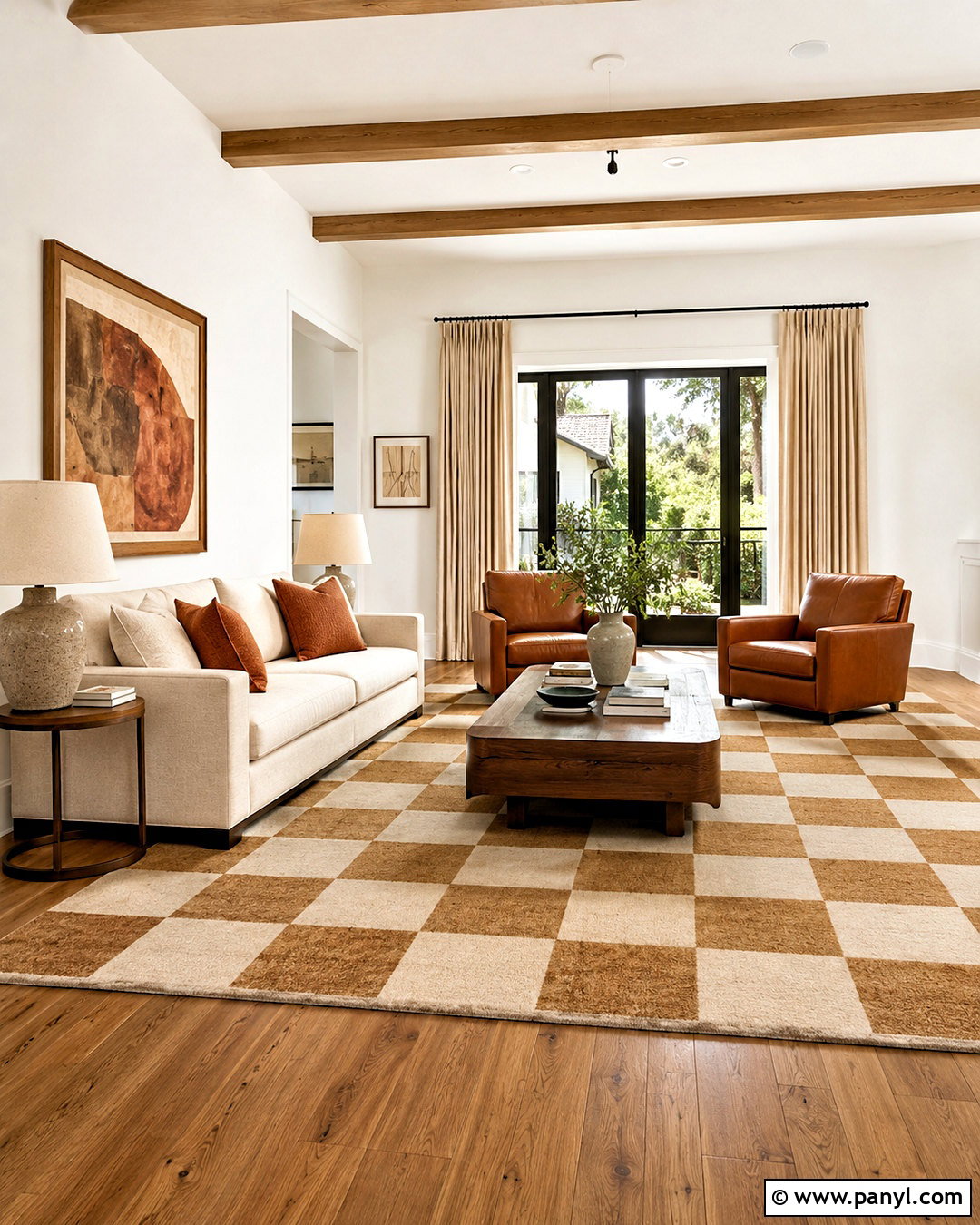
A checkered rug can organize a living room while adding pattern without permanent renovation. Choose a large wool rug in camel brown and ivory, making sure its front edge extends beneath the sofa and chairs. Build the room around a cream linen sofa, two cognac leather chairs, and a low walnut coffee table. Warm white walls and medium oak flooring create a calm background for the graphic rug. Add rust-colored pillows, a chunky neutral throw, and simple ceramic lamps for layered texture. Keep curtains solid and artwork relatively quiet so the checks remain the visual anchor. The complete layout feels collected and comfortable rather than trendy. It is also easy to update later because the strongest pattern is limited to one replaceable piece.
9. Checkered Accent Wall
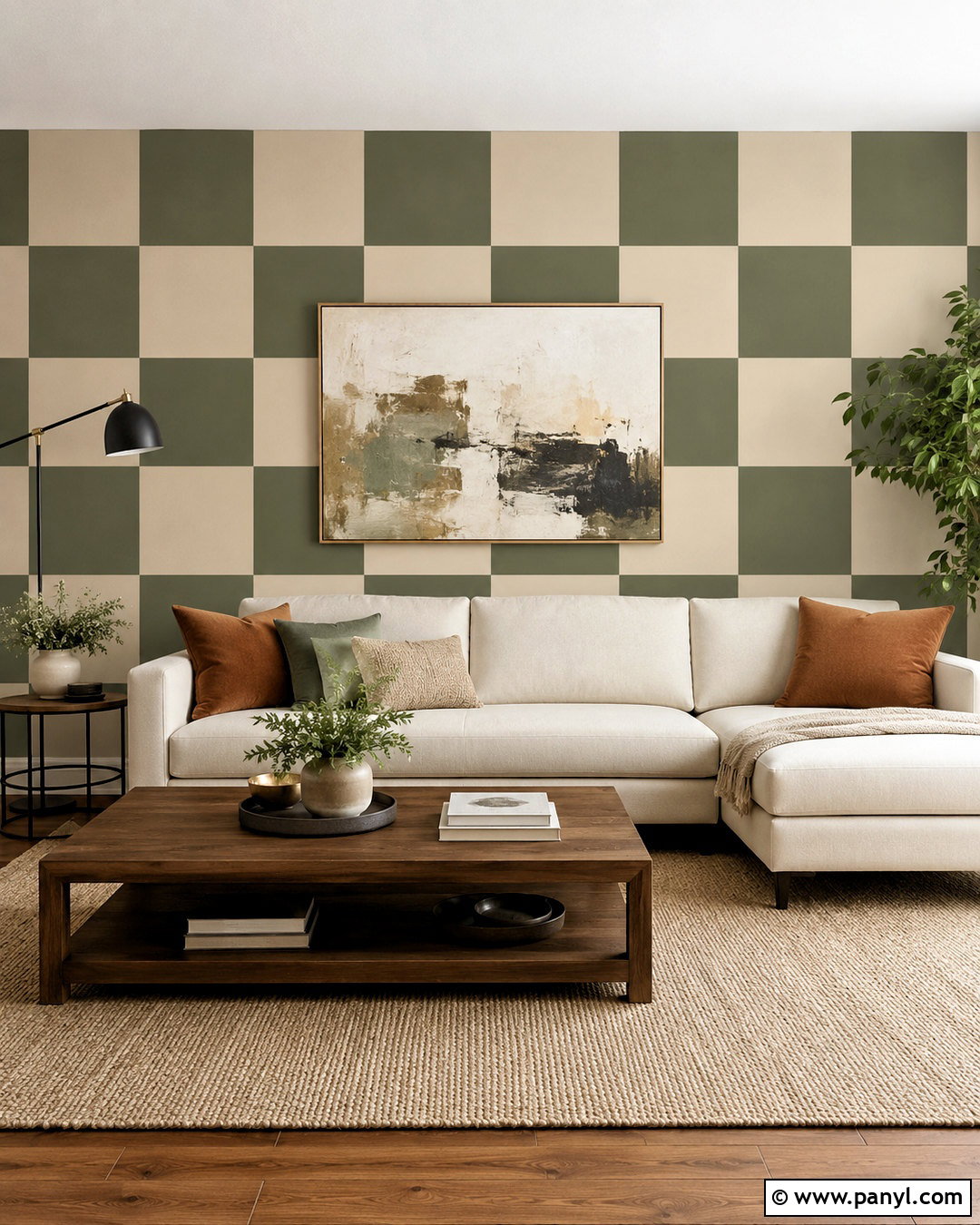
A painted checkered wall can bring structure and color to a living space at a relatively low cost. Create broad squares in muted olive green and soft beige behind a streamlined cream sofa. Carefully measure the grid and use quality painter’s tape for clean, even edges. Keep the remaining walls warm white so the feature does not enclose the room. Add a walnut media console, black metal floor lamp, and oatmeal-colored area rug to support the earthy palette. Solid rust and green cushions provide color without introducing competing prints. One oversized abstract artwork can sit in the center of the wall if its design remains simple. This full arrangement turns the checkerboard into an architectural-looking backdrop rather than a random decorative painting project.
10. Checkered Bedroom Rug
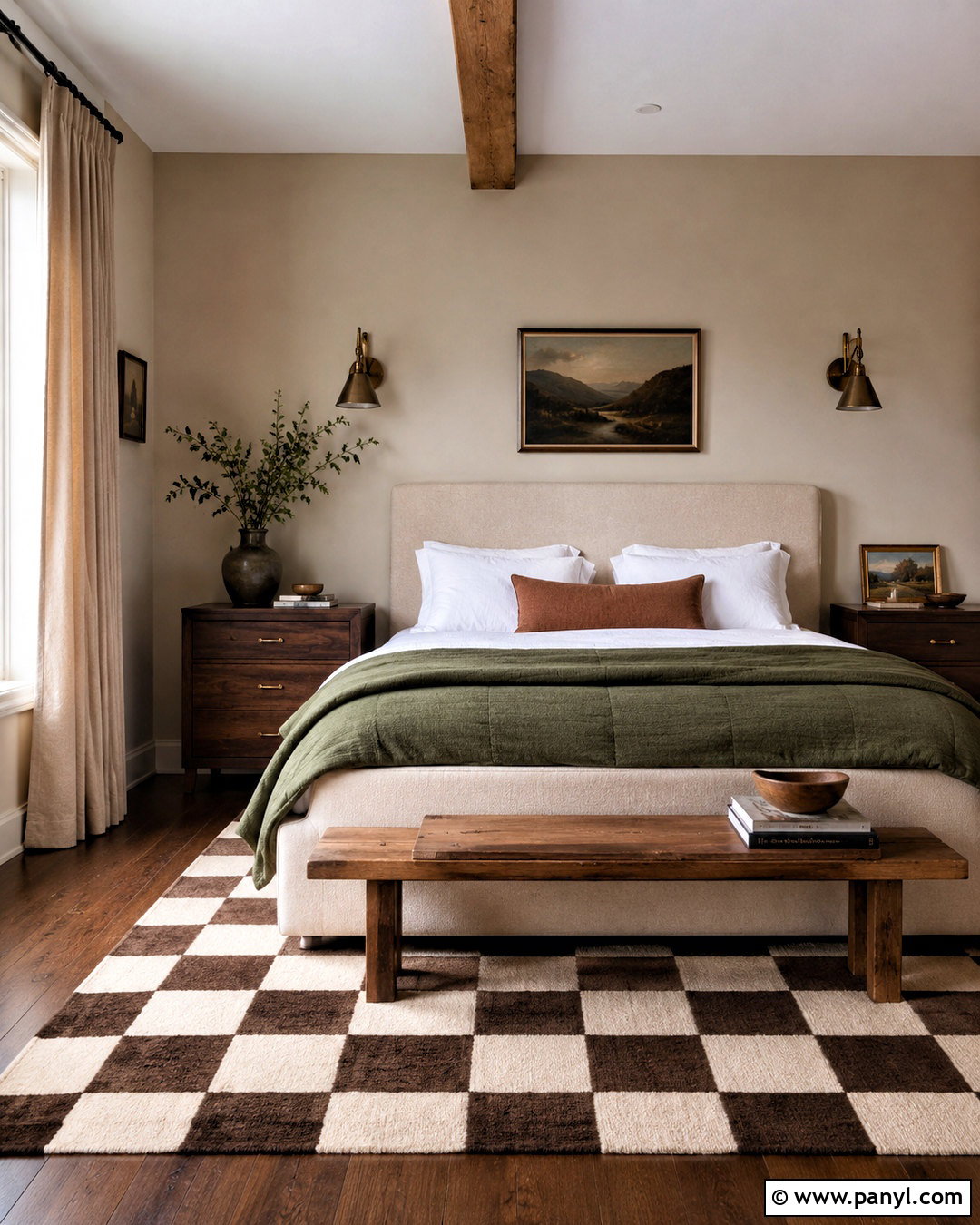
Would you like a patterned bedroom that still feels peaceful? Start with a plush checkered rug in chocolate brown and creamy beige, placing most of it beneath the bed. Choose an upholstered oatmeal headboard, crisp white bedding, and a deep forest green quilt to balance the structured pattern. Walnut nightstands and antique brass sconces introduce warmth on both sides of the bed. Keep the walls a soft mushroom color and use full-length linen curtains in a matching neutral. A simple wooden bench at the foot of the bed adds function without hiding too much of the rug. Finish with one framed landscape and a pair of solid cushions. The result is cozy and layered, with enough pattern to feel distinctive but not restless.
11. Checkered Bedroom Wall
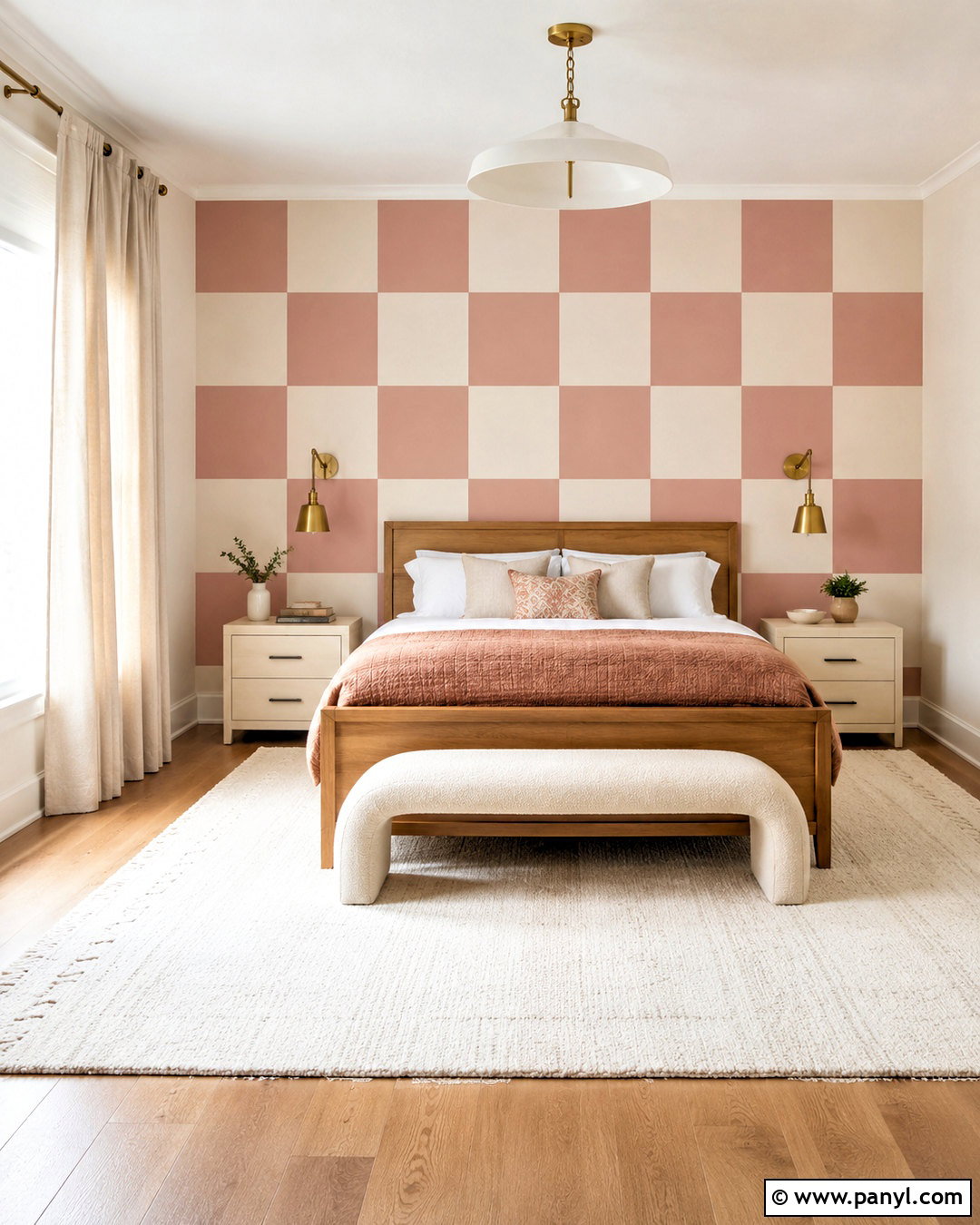
A checkered bedroom wall can feel playful and polished when the colors are soft. Paint the wall behind the bed with large dusty pink and warm cream squares, allowing the oversized scale to keep the pattern visually calm. Pair it with a natural oak bed, white cotton sheets, and a clay-colored coverlet. Small brass wall lights free up space on simple cream nightstands. Use a solid ivory rug and pale linen curtains to prevent pattern overload. A curved bench and rounded ceramic lamps can soften the straight lines found throughout the checks. Limit artwork because the wall already acts as the room’s main decorative feature. This complete bedroom works for teens, guests, or adults who want color without committing to a loud or overly youthful theme.
12. Checkered Dining Room Floor
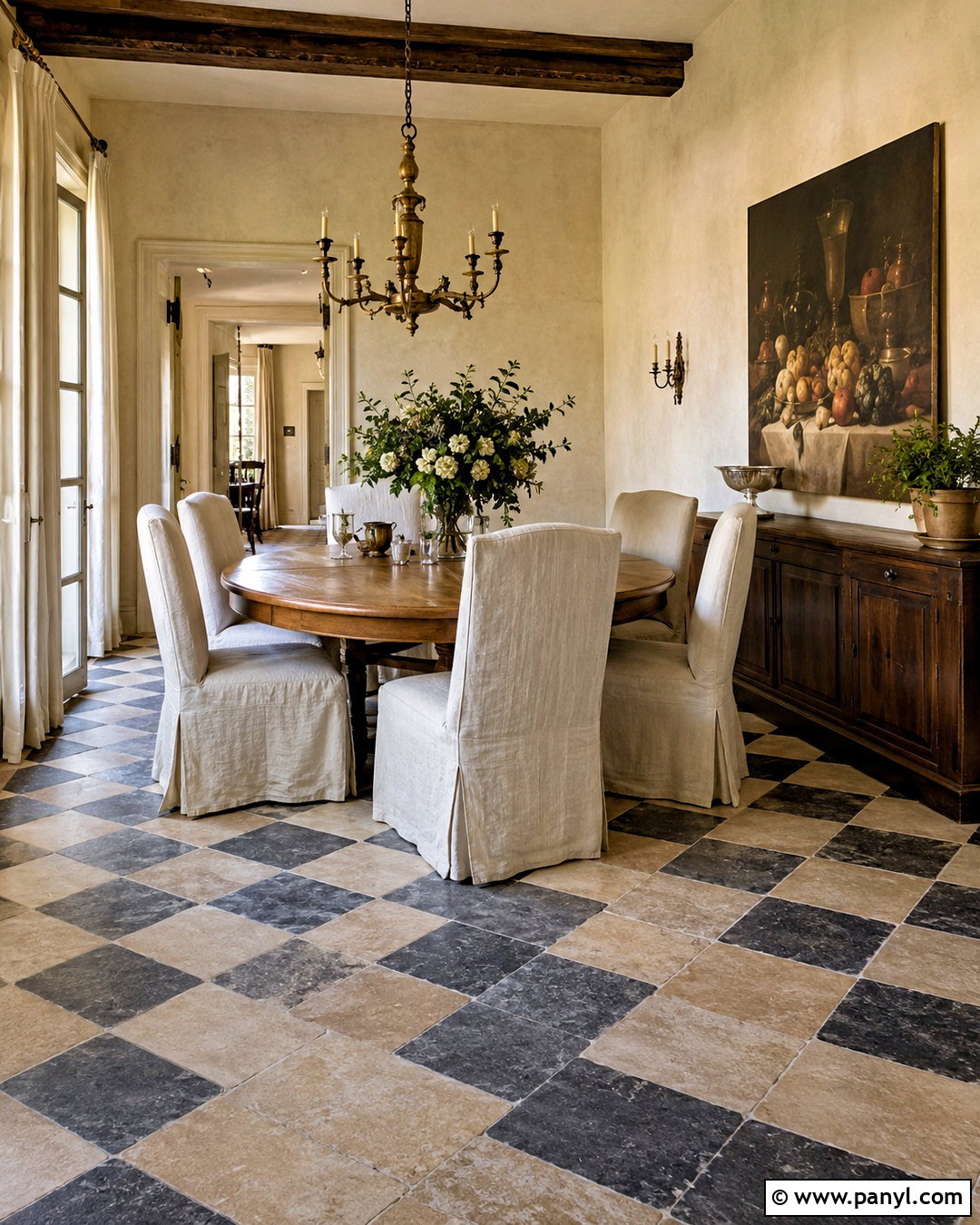
Large stone checks can give a dining room the presence of an old European home. Combine tumbled limestone tiles in warm beige and muted charcoal, laying them diagonally with narrow grout lines. Center a round medium-oak dining table over the pattern and surround it with upholstered linen chairs. Plaster-toned walls, a dark wood sideboard, and an aged brass chandelier create a comfortable traditional setting. Hang one oversized still-life painting rather than a crowded gallery wall. Natural woven shades and full-length ivory curtains frame the windows while softening the stone floor. A large bowl or simple branch arrangement is enough for the tabletop. The finished room feels elegant but relaxed, allowing the aged textures and strong floor pattern to provide most of the character.
13. Checkered Entryway Floor
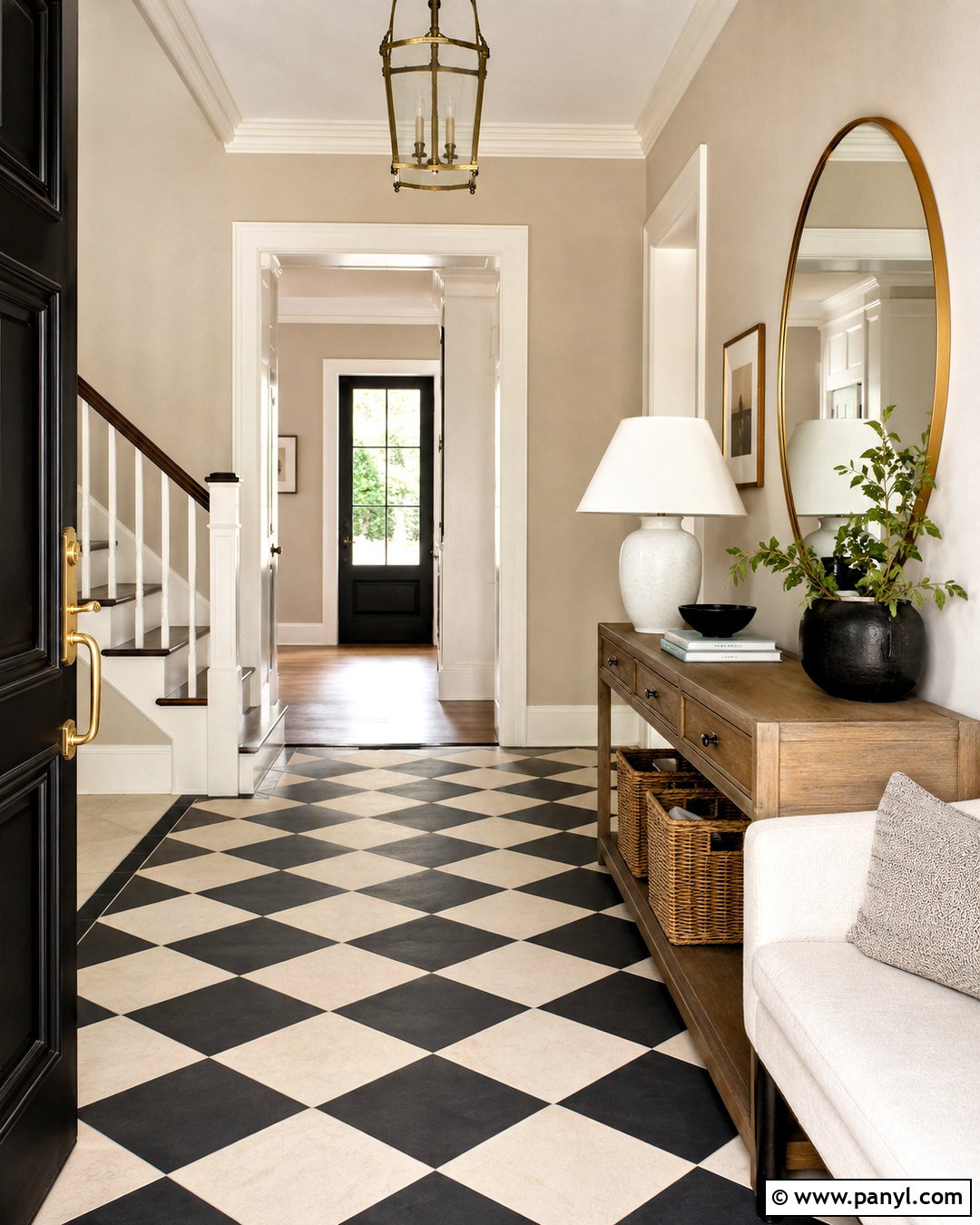
The entryway is an ideal place for a confident pattern because it creates an immediate sense of arrival. Use durable black and warm white porcelain tiles in a diagonal checkerboard layout, framed by a slim black border. Pair the floor with soft greige walls, bright white trim, and a natural oak console. A round brass mirror reflects light and balances the squares with a curved shape. Add a simple upholstered bench, woven storage baskets, and a small table lamp for practical comfort. Keep coats and shoes inside closed cabinetry whenever possible so the pattern remains visible. A solid indoor-outdoor runner can protect the busiest walkway without competing with the tile. This coordinated entrance feels classic, organized, and resilient enough for everyday traffic.
14. Checkered Hallway Floor
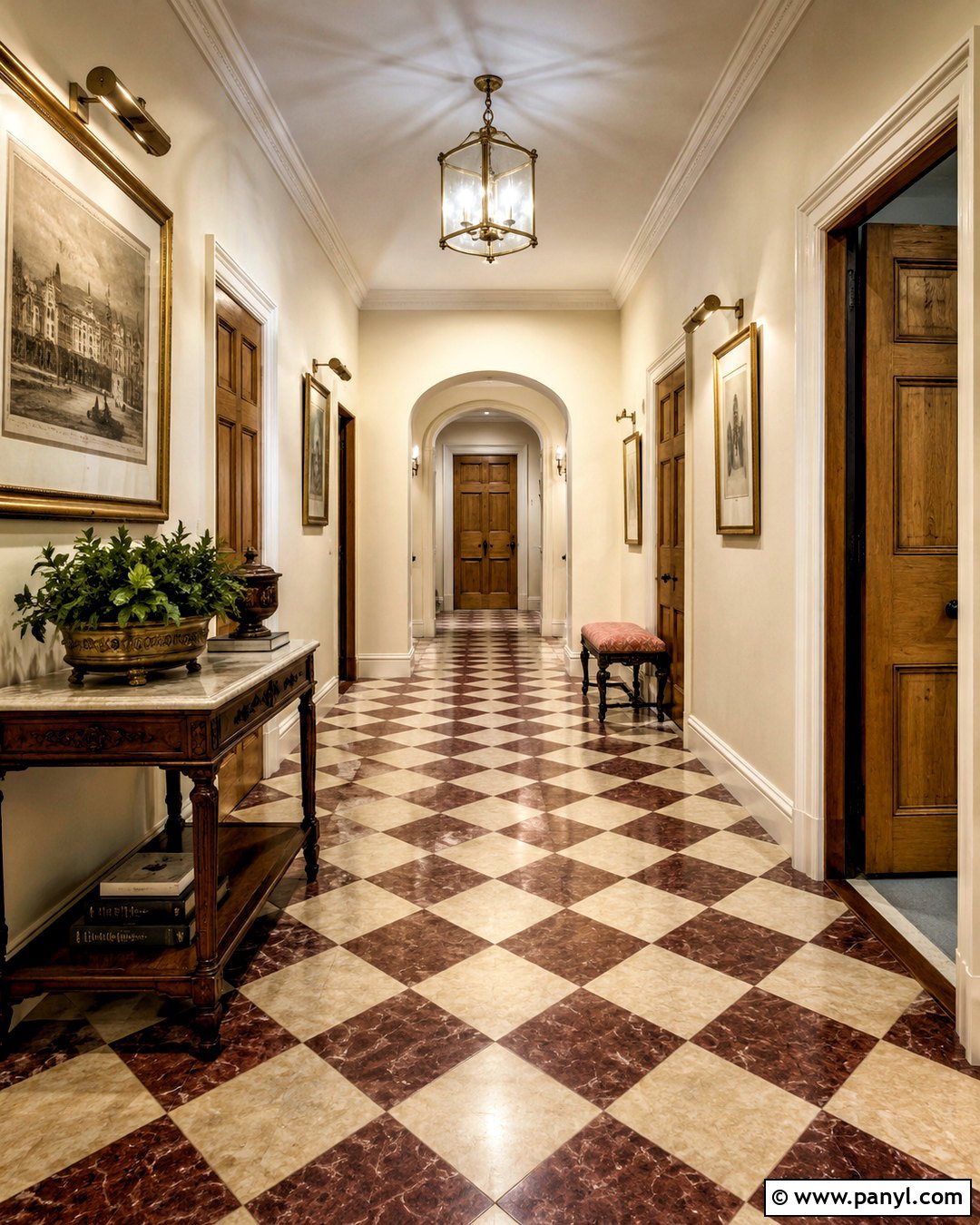
A long hallway becomes more dynamic when checkerboard flooring helps guide the eye forward. Select muted burgundy and cream tiles for a warmer interpretation of the pattern, then install them diagonally to create movement. Paint the walls a pale warm beige and use cream trim to connect with the lighter squares. A narrow antique wood console, aged brass picture lights, and evenly spaced framed artwork create a thoughtful rhythm along the walls. If the hallway is wide enough, place a small upholstered bench near the end. Keep doors in natural wood or deep burgundy for added depth. Avoid laying a patterned runner over the checks. The completed hallway feels purposeful and furnished, transforming a pass-through area into a memorable part of the home.
15. Checkered Laundry Room
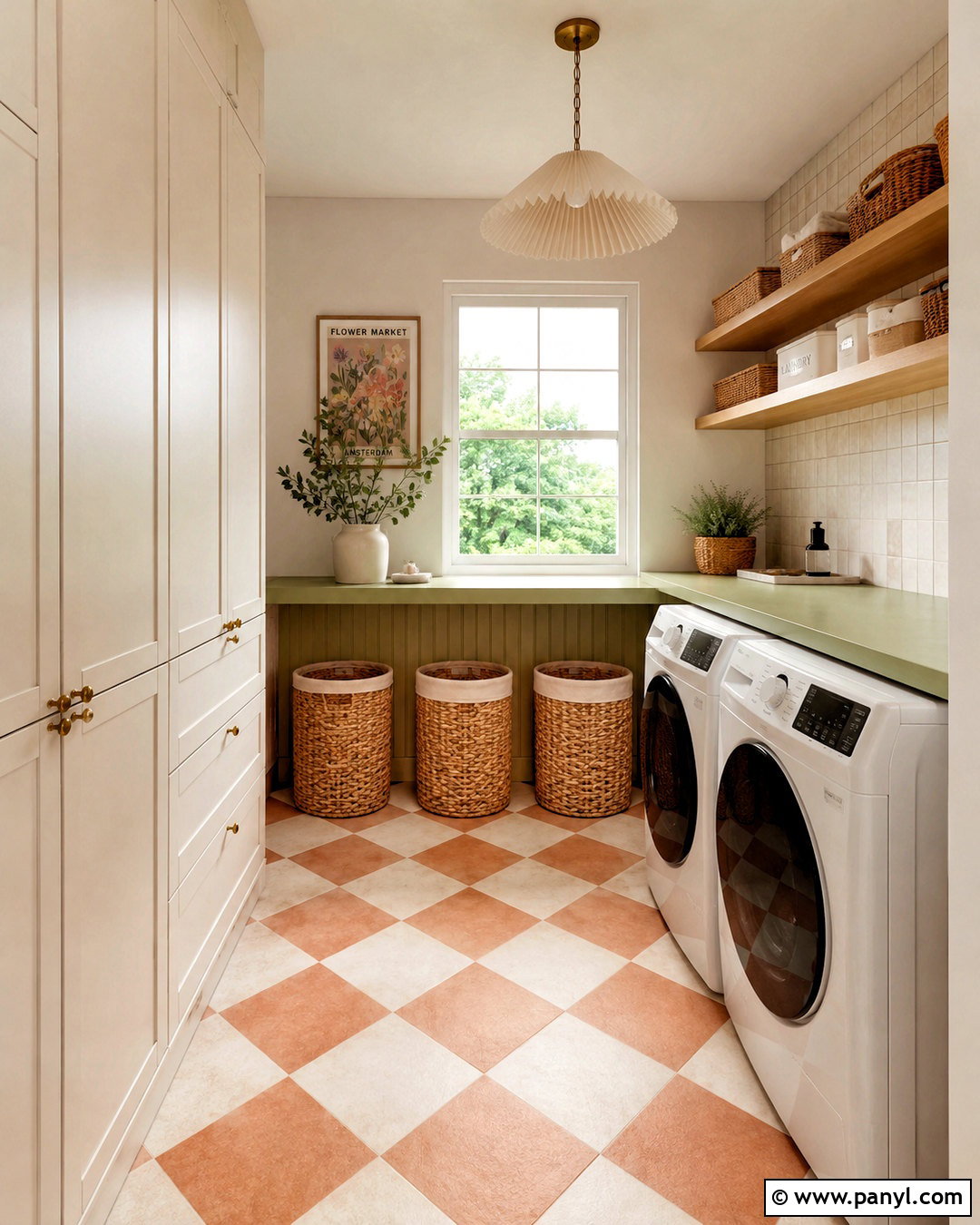
A laundry room can handle cheerful pattern because it is usually compact and task focused. Begin with durable peach and cream checkered floor tiles, then add warm white cabinetry that extends to the ceiling. A pale sage green countertop above the washer and dryer introduces another soft color while creating a useful folding station. Install a simple cream tile backsplash and open oak shelves for baskets and everyday supplies. Brushed brass knobs, a white utility sink, and a small pleated pendant make the room feel finished. Use labeled containers inside cabinets rather than displaying colorful packaging. A solid sage curtain can conceal lower storage if needed. This coordinated design turns a practical workspace into a bright, organized room that feels enjoyable to use.
16. Checkered Home Office
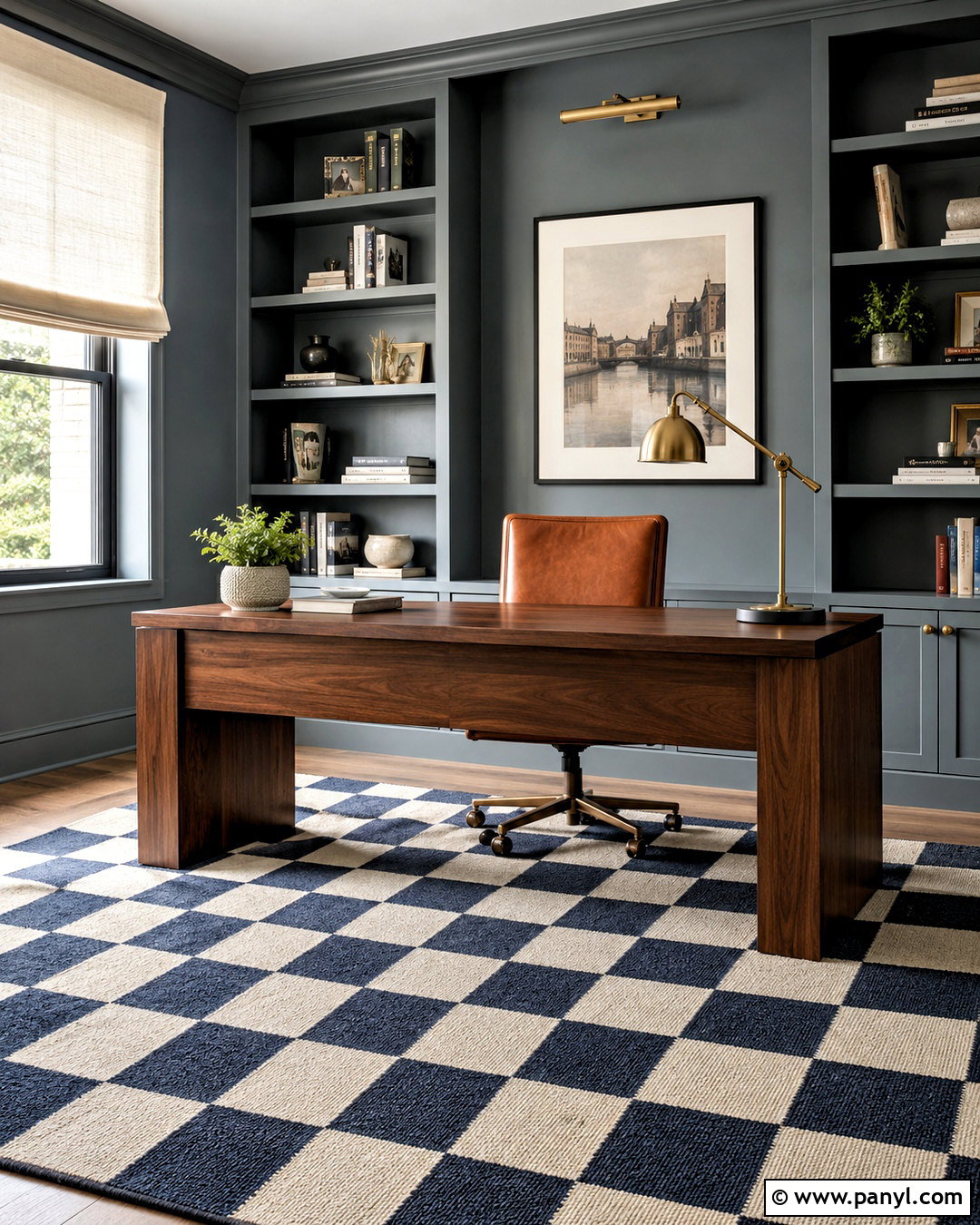
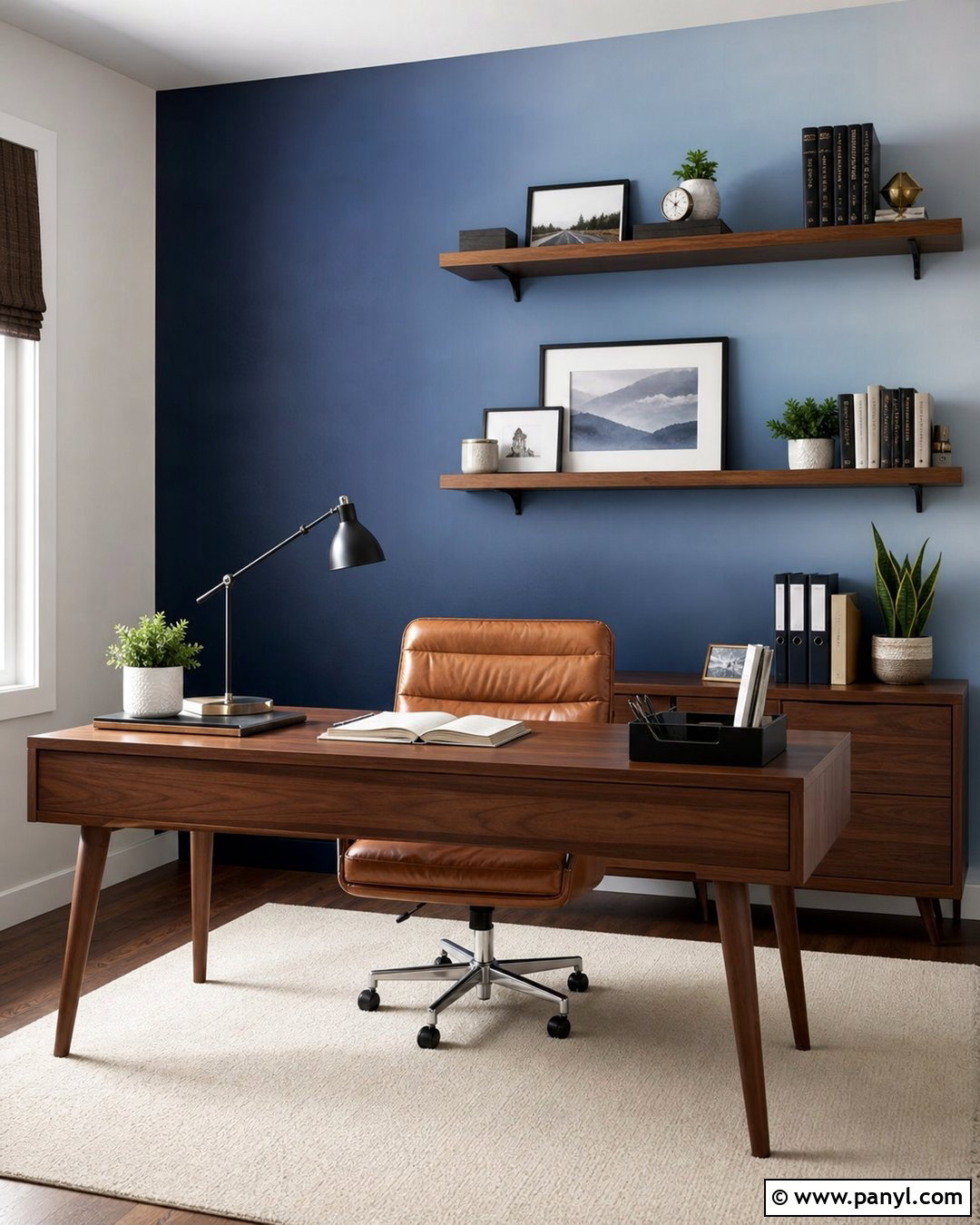
Checkerboard can energize a home office when it is used in a focused, controlled way. Place a flat-weave navy and ivory checkered rug beneath a substantial walnut desk, leaving enough space for the chair to move comfortably. Paint the walls a muted blue gray and install built-in bookcases in the same color for a seamless backdrop. A cognac leather desk chair, aged brass lamp, and cream Roman shade warm the cooler palette. Style shelves with books, neutral boxes, and a few ceramic objects rather than many tiny accessories. Hang one large framed print behind the desk to establish a clear focal point. The finished office feels orderly and creative, with the rug providing visual energy while the furniture and storage support concentration.
17. Checkered Kids Room
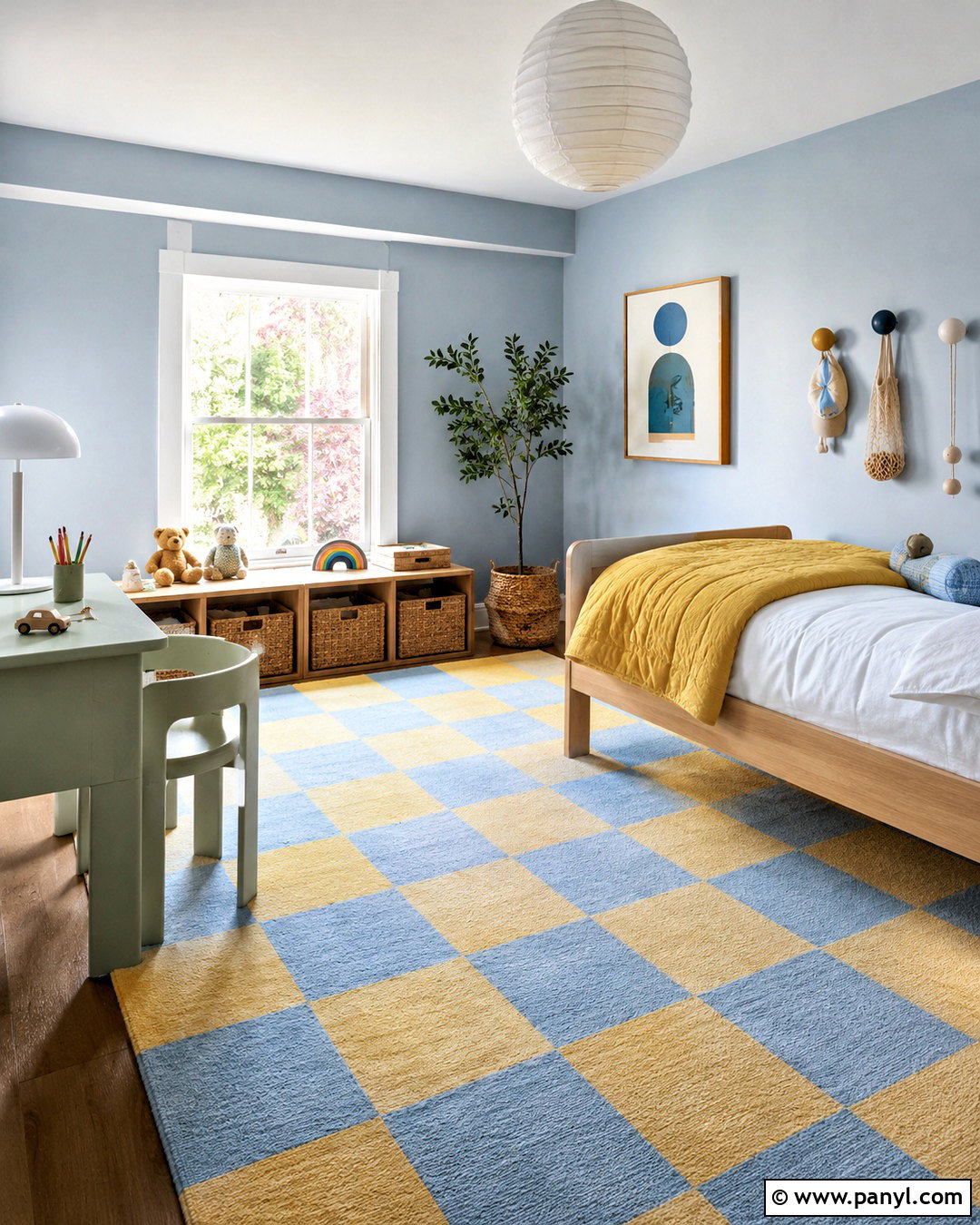
Colorful checks can create a playful kids room that still looks organized and intentional. Use a large rug with alternating sky blue and butter yellow squares as the room’s main pattern. Pair it with a white oak bed, soft blue walls, and simple white bedding topped with a yellow quilt. Add low oak storage units, rounded wall hooks, and woven baskets so toys have clear places to go. A compact desk in pale green creates a useful activity area without introducing another strong pattern. Choose solid curtains and simple graphic artwork that repeats the rug’s colors. Rounded furniture corners and washable materials make the room practical. This complete scheme feels cheerful and age-flexible, allowing smaller accessories to change as the child grows.
18. Checkered Patio Floor
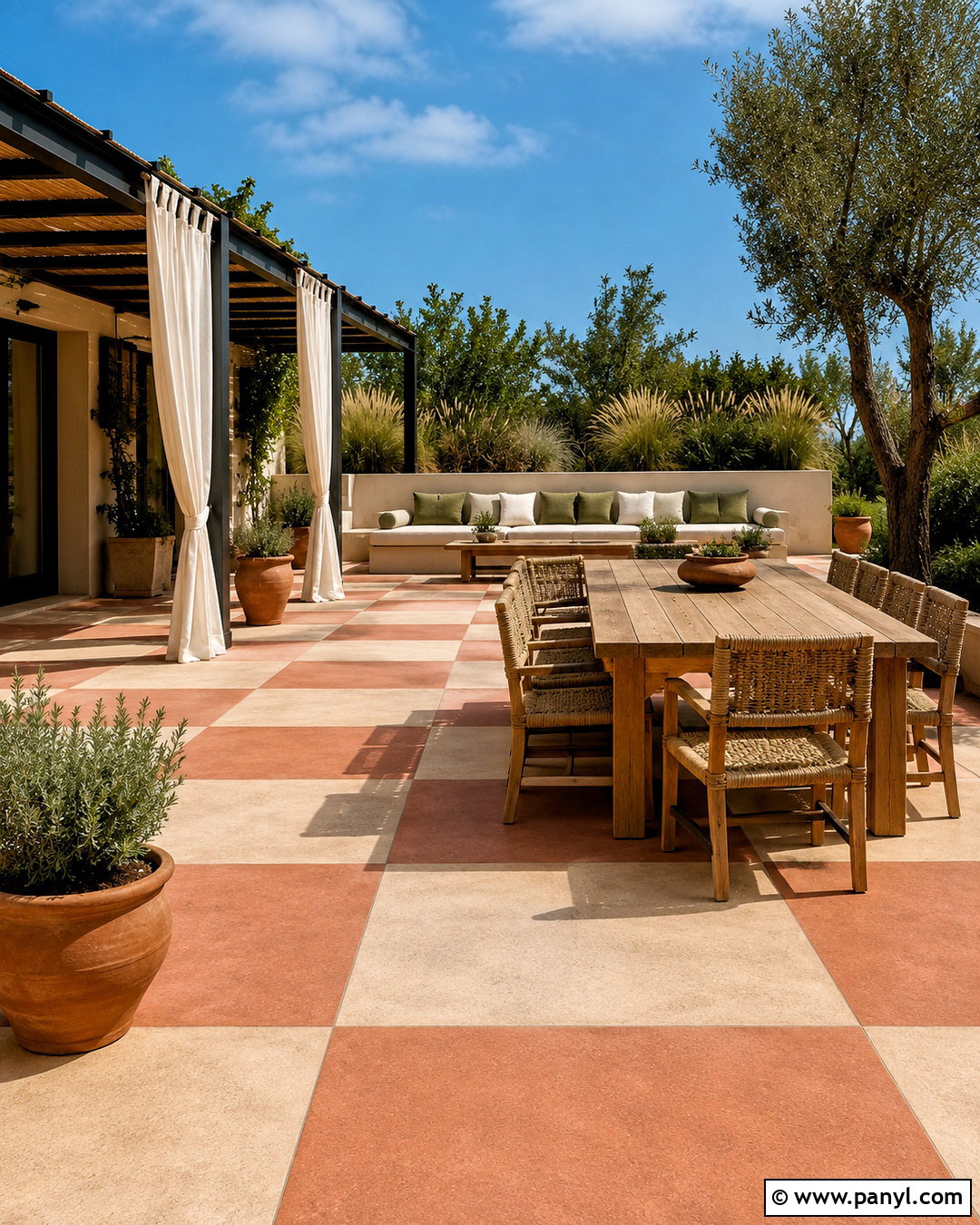
A painted checkerboard can transform a plain concrete patio into an inviting outdoor room. Use large squares in sandy beige and muted terracotta, selecting exterior masonry paint designed for foot traffic and weather exposure. Arrange a natural teak dining table with woven chairs at the center, then add a cream outdoor sofa along one edge. Olive green cushions and striped-free neutral pillows keep the floor as the main pattern. Terracotta pots filled with herbs, grasses, and drought-tolerant plants connect the colors to the surrounding landscape. A simple black pergola provides structure overhead, while white outdoor curtains add softness. The finished patio feels sunny, relaxed, and Mediterranean inspired without requiring expensive stone or a complete hardscape replacement.
19. Checkered Front Porch
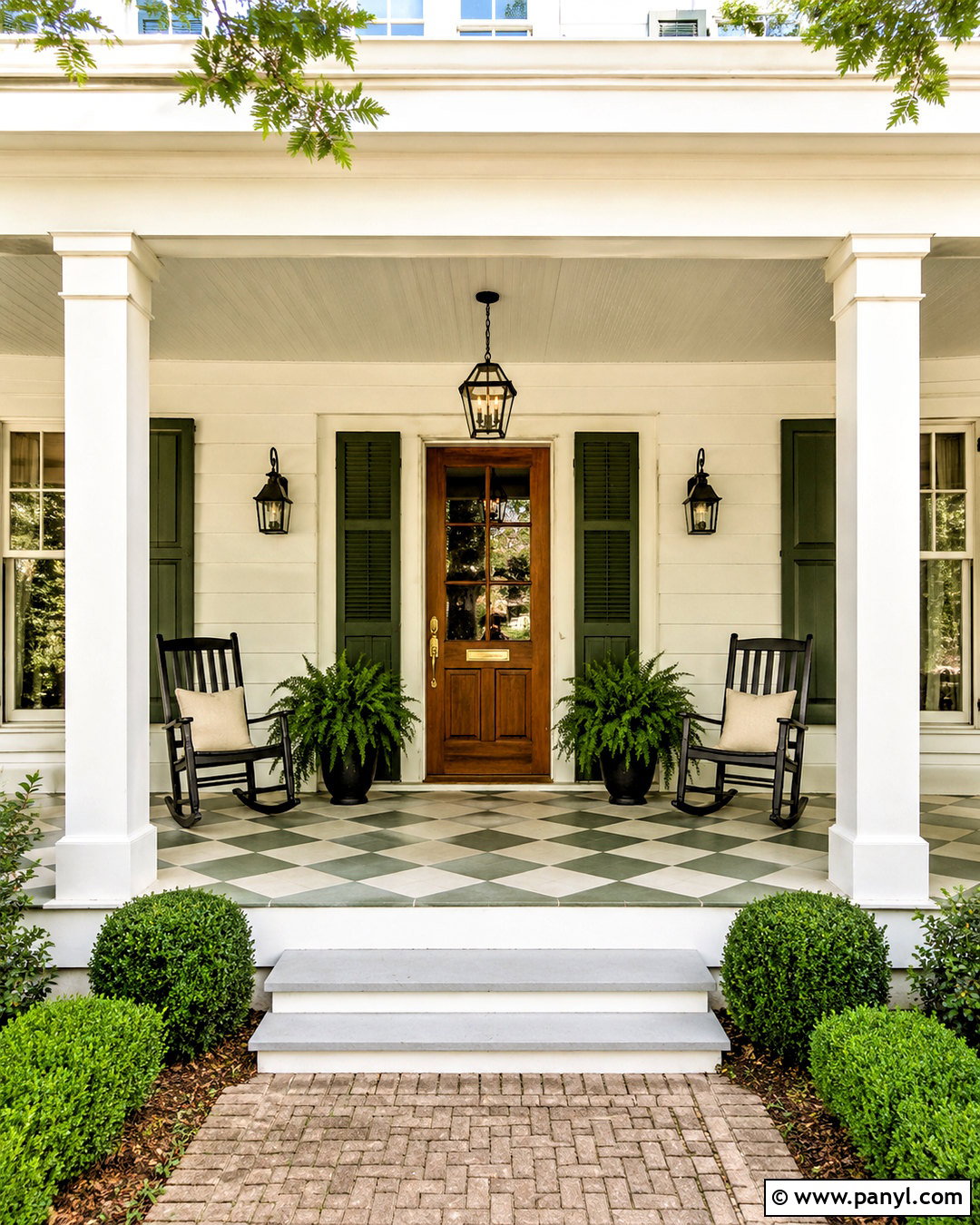
Give a covered front porch a memorable welcome with a painted sage green and cream checkered floor. Large squares work best because they remain visible beneath the furnishings and do not appear overly busy from the street. Pair the pattern with warm white siding, dark green shutters, and a natural wood front door. Add two black rocking chairs with cream cushions and place a small round table between them. Matching planters filled with ferns or seasonal greenery create symmetry near the entrance. A woven doormat can sit directly at the threshold without covering much of the painted design. Black lantern sconces and simple brass door hardware complete the palette. This porch feels classic, friendly, and connected to the home’s exterior architecture.
20. Checkered Backyard Path
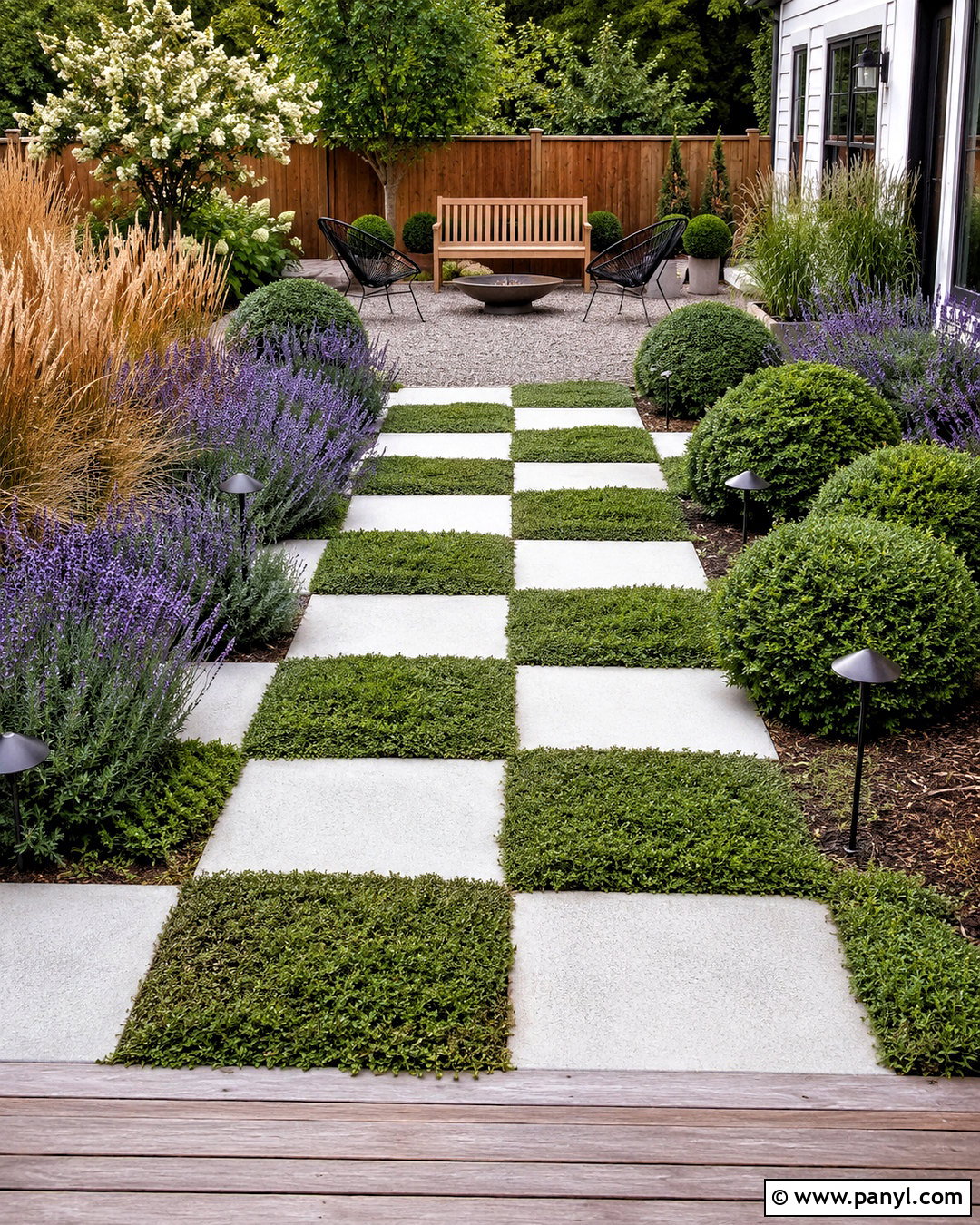
A checkered garden path offers a creative way to mix hardscape and greenery. Alternate large pale concrete pavers with low-growing thyme or dense groundcover, forming a soft checkerboard route through the backyard. Keep the grid wide enough for comfortable walking and provide solid stepping surfaces along the main path. Border the design with ornamental grasses, lavender, and rounded evergreen shrubs for structure. At the end, create a small seating area with a gravel base, teak bench, and two weather-resistant lounge chairs. A simple cedar fence and black path lights give the garden a clean framework. The finished landscape balances geometry with natural texture, making the checkerboard feel integrated into the planting rather than placed on top of it.
Conclusion:
Checkerboard patterns can be bold, subtle, traditional, or playful depending on their scale, color, and material. The strongest rooms use the pattern as part of a complete palette, balancing structured squares with solid surfaces, natural textures, and simple furniture. Permanent tile works well in hardworking kitchens, bathrooms, and entryways, while rugs, paint, and textiles offer flexible alternatives for renters or cautious decorators. Before beginning, test colors together and consider how much of the pattern will remain visible after furniture is added. Whether you prefer classic marble, earthy paint, colorful ceramic tile, or outdoor pavers, these 20 checkered design ideas can help you create a coordinated home with lasting personality.

Related Ideas and Inspiration:
Leave a Reply