
Blue can make a kitchen feel calm, classic, dramatic, or refreshingly modern. The key is choosing a shade that works with the room’s natural light, layout, countertops, flooring, and overall character. These 20 blue kitchen designs explore complete looks rather than isolated color choices. You will find deep navy cabinets balanced with marble, pale blue schemes warmed by wood, bold teal kitchens, space-saving layouts, and approachable ways to use blue on an island. Current inspiration also shows how easily blue works across farmhouse, coastal, transitional, and minimalist kitchens. () Whether you are planning a full remodel or repainting existing cabinets, use these practical and beautiful 20 blue kitchen designs.

1. Navy Blue Shaker Kitchen
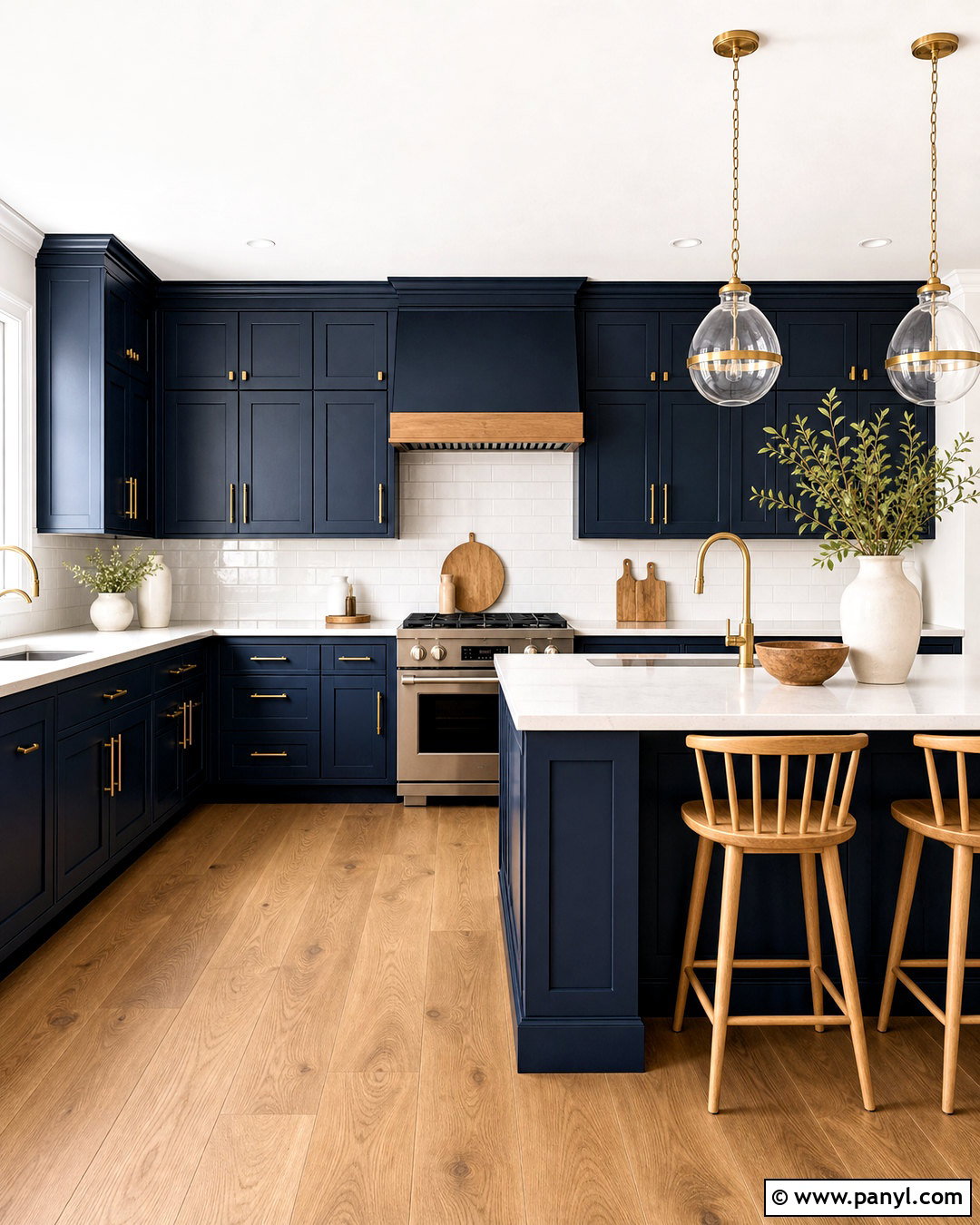
Navy Shaker cabinets create a strong foundation that feels traditional without looking dated. Use the deep blue finish on both upper and lower cabinetry, then brighten the room with white quartz countertops and a simple white backsplash. Warm white walls prevent the contrast from feeling harsh. Brushed brass pulls, a matching faucet, and two glass pendant lights introduce a polished glow. Choose medium-tone oak flooring to soften the darker cabinetry and connect the kitchen to nearby living spaces. A large island can repeat the navy finish while providing deep drawers and casual seating. Keep countertop decor limited to pale wood boards, white pottery, and one small plant so the cabinetry remains the clear focal point.
2. Light Blue Farmhouse Kitchen
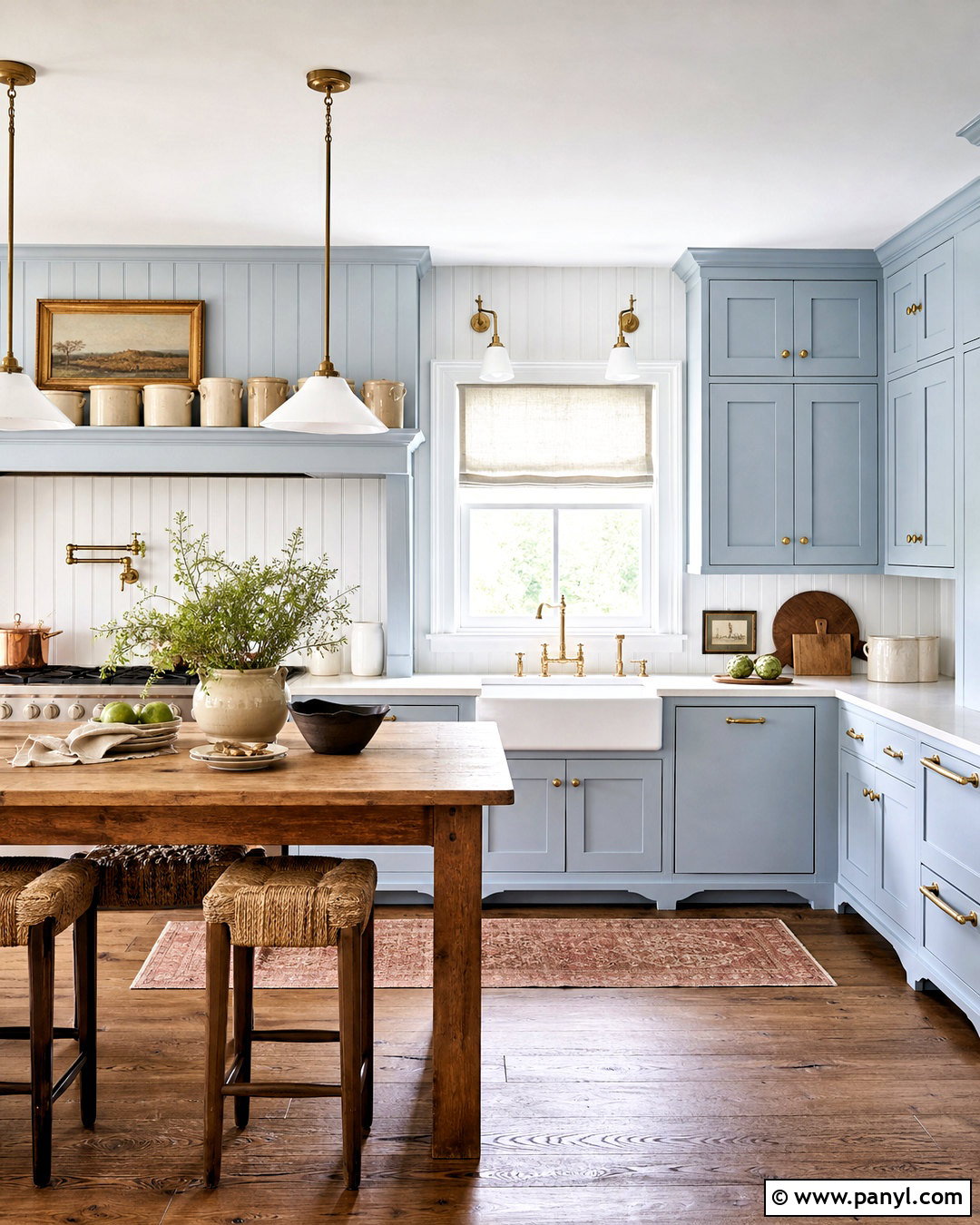
Soft blue cabinets give a farmhouse kitchen an airy personality while preserving its comfortable, familiar character. Select dusty sky blue Shaker cabinetry with subtle paneling, a white apron-front sink, and creamy quartz countertops. White beadboard or handmade subway tile creates a relaxed backsplash with gentle texture. Add a freestanding oak island or butcher-block worktable instead of a highly polished built-in island. Aged brass cup pulls, a bridge faucet, and simple milk-glass pendants reinforce the traditional look. Wide-plank natural wood flooring adds warmth beneath the pale palette. Finish the room with woven counter stools, practical ceramic crocks, and linen window shades. The result feels fresh, functional, and collected rather than overly themed.
3. Blue And White Coastal Kitchen
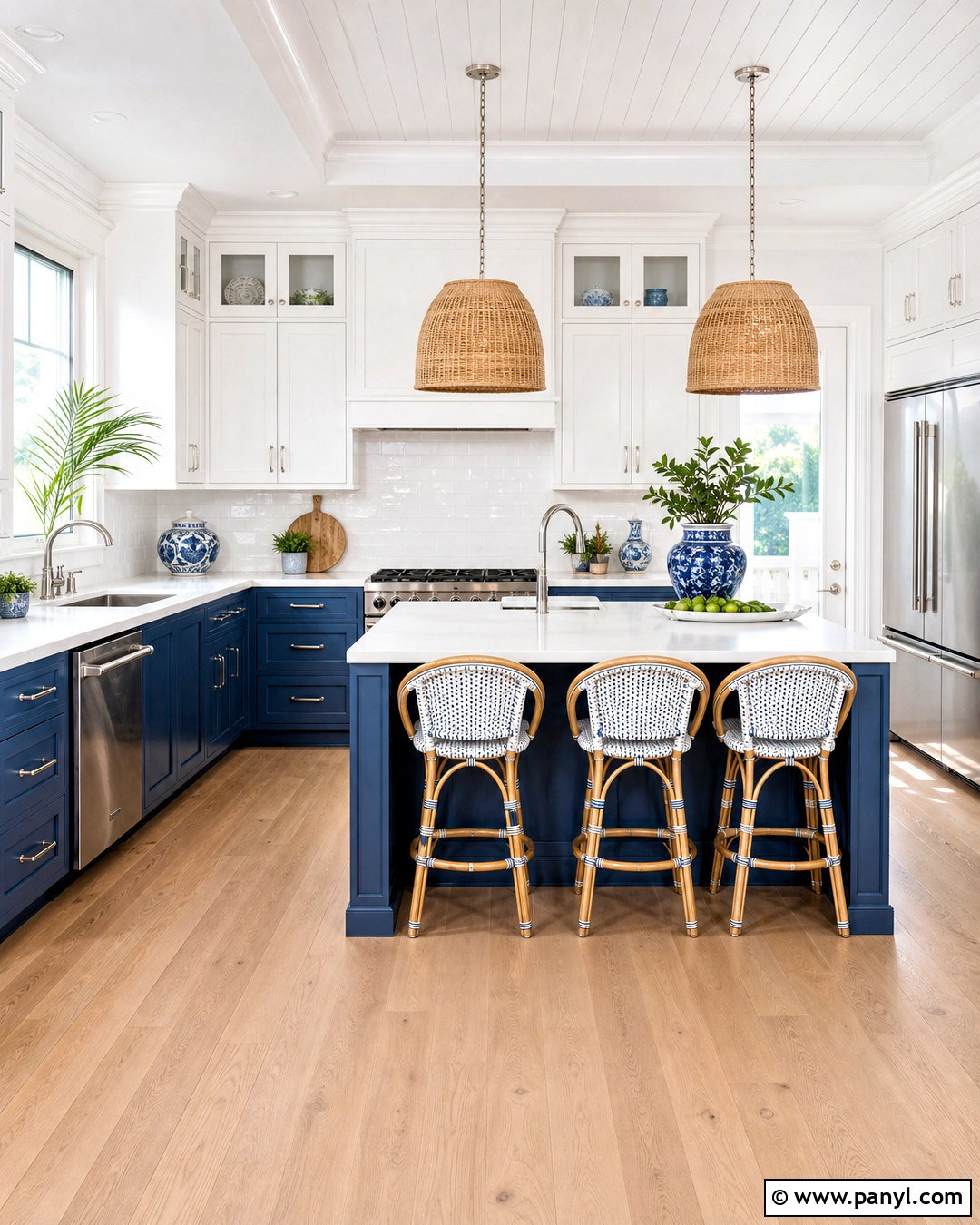
Imagine a bright kitchen where ocean blue cabinetry meets crisp white surfaces and light natural textures. Use medium blue on the base cabinets and island while keeping upper cabinets white to preserve an open feeling. White quartz countertops and glossy white tile reflect daylight throughout the room. Pale oak floors, woven rattan pendants, and backless cane stools add warmth without making the design feel heavy. Choose polished nickel hardware for a clean coastal finish that is quieter than gold. A few blue-and-white ceramics can repeat the palette on open shelves. Avoid obvious nautical decorations. Instead, rely on breezy colors, natural fibers, uncluttered counters, and wide windows to create a coastal kitchen that feels sophisticated and easygoing.
4. Two Tone Blue Kitchen
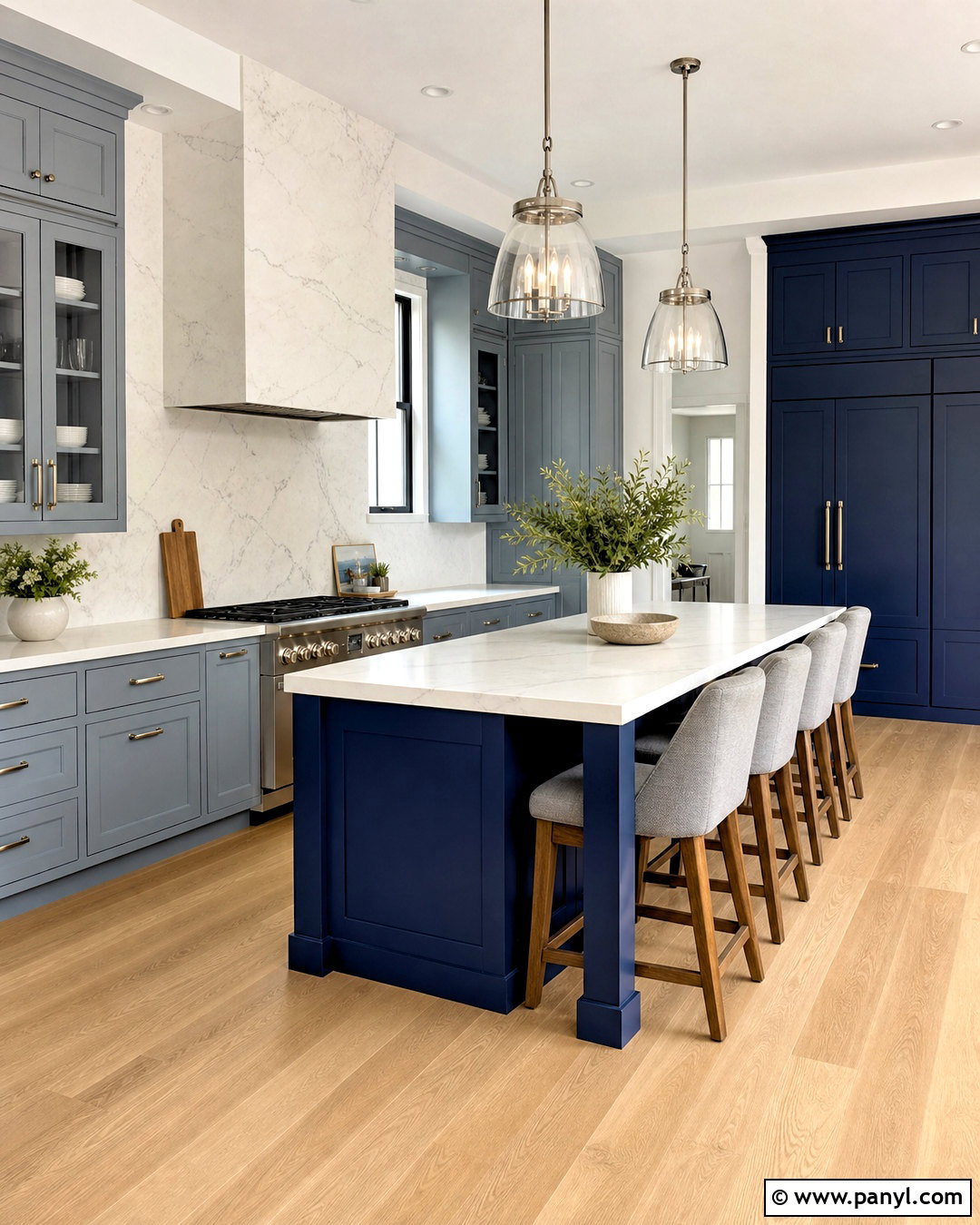
Can’t choose between light and dark blue? Use both shades in a layered two-tone kitchen. Paint the perimeter cabinets a muted blue-gray and give the island a deeper navy finish. Connect the two colors with white quartz countertops featuring soft gray veining. A full-height marble-look backsplash creates continuity and keeps the room bright. Choose satin nickel hardware because its cool finish complements both cabinet shades. Light oak flooring and upholstered counter stools introduce warmth where it is most useful. For balance, place tall navy pantry cabinets on one wall so the island does not feel like the only dark feature. This arrangement produces clear visual depth while maintaining a coordinated, calm, and practical kitchen design.
5. Blue Kitchen With Wood Cabinets
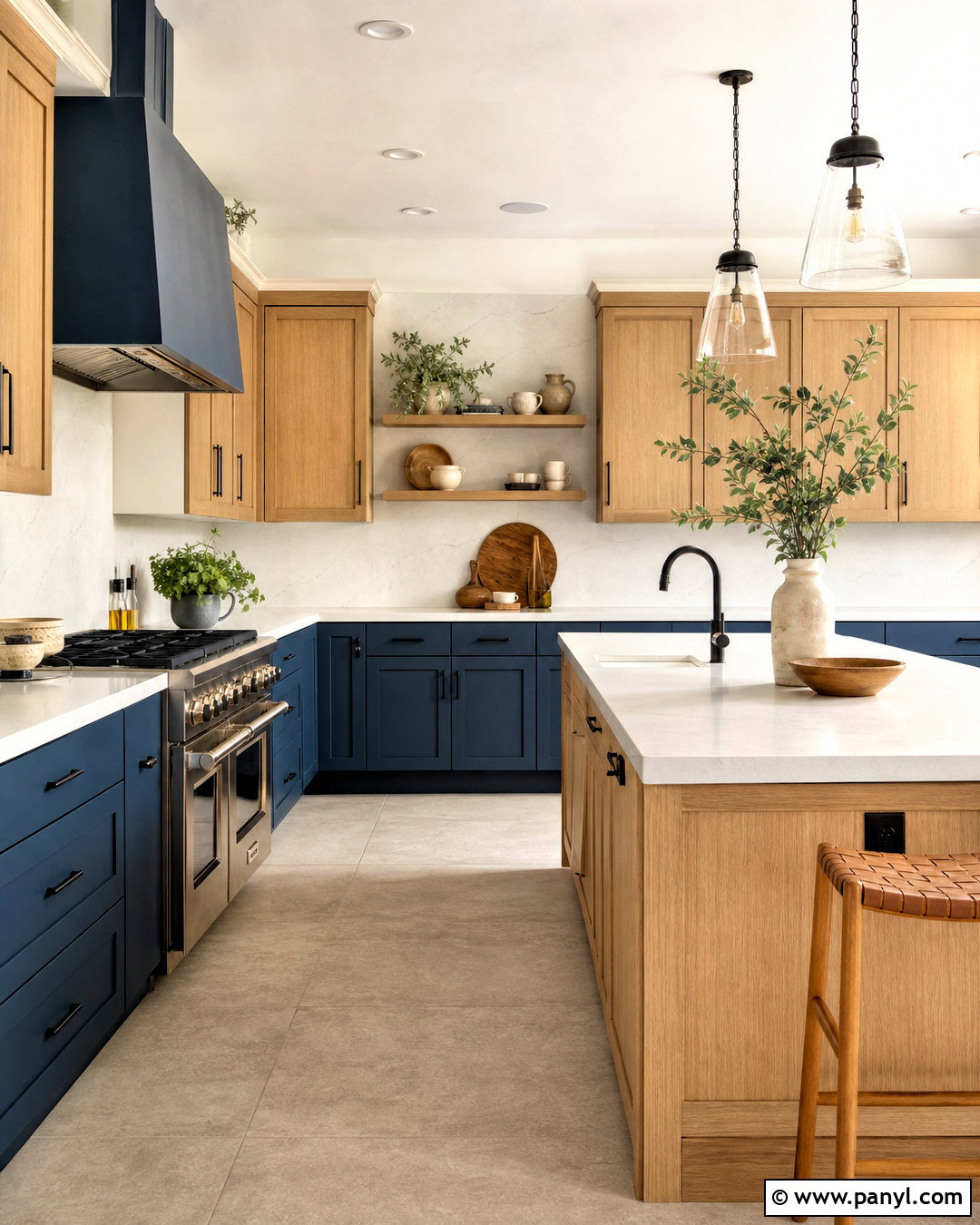
Combining blue cabinetry with natural wood creates a balanced kitchen that feels colorful but grounded. Use muted denim blue on the lower cabinets and tall pantry units, then install rift-cut white oak uppers with a clear matte finish. Warm white quartz countertops keep the mixed materials connected. Continue the countertop material up the wall for a quiet backsplash that lets the cabinetry stand out. Blackened bronze hardware and slim black pendants add definition without overpowering the softer colors. Repeat the oak on the island seating area and floating shelves. Choose a pale stone-look floor for durability and contrast. Simple cream ceramics, wooden utensils, and greenery complete this warm modern kitchen without adding unnecessary visual clutter.
6. Small Blue Galley Kitchen
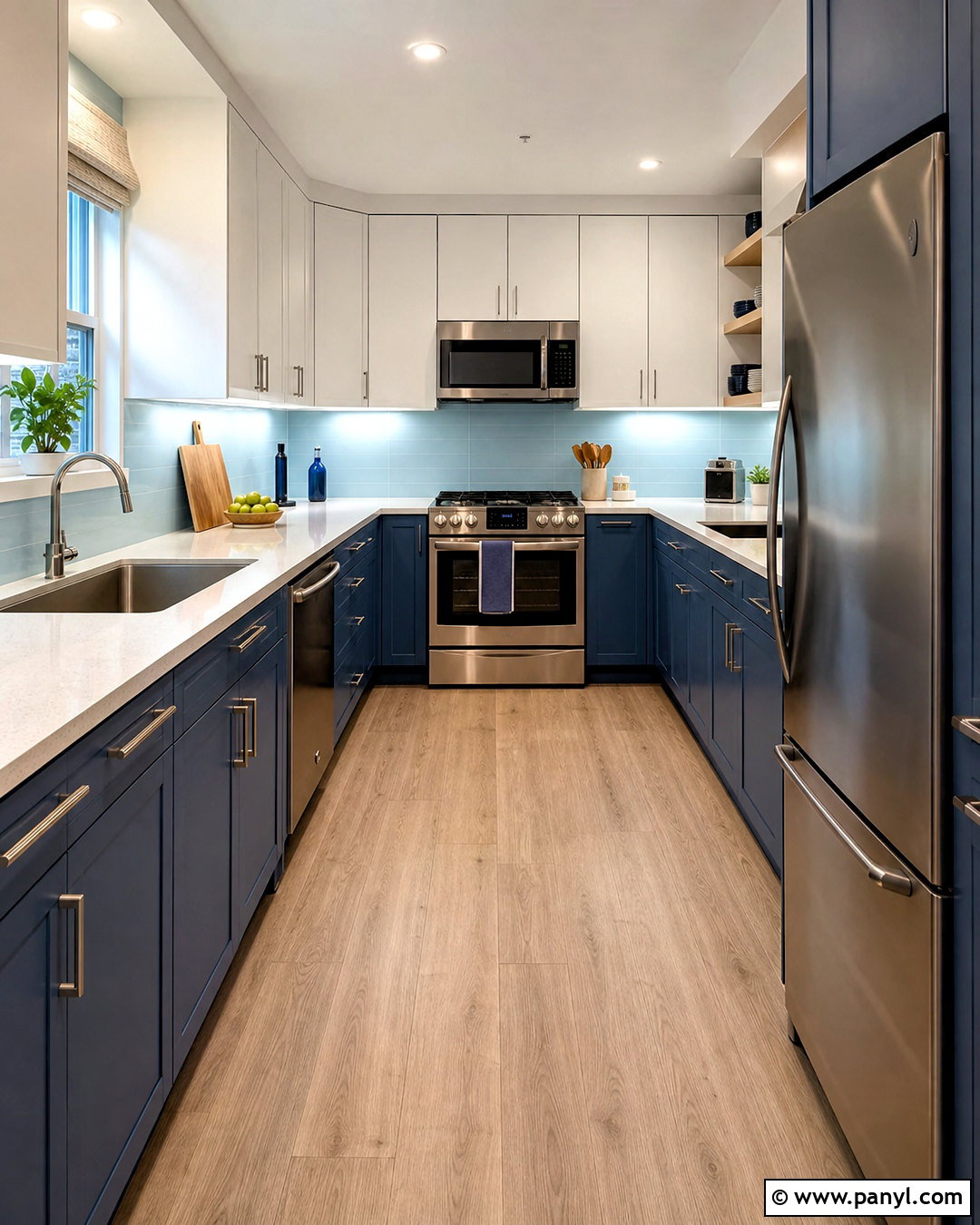
A narrow galley kitchen can handle blue when the color is placed carefully. Use medium blue flat-panel cabinets below the counters and warm white cabinets above eye level. This keeps the floor line visually grounded while helping the upper half feel spacious. Select thin white quartz countertops and a reflective pale blue glass backsplash to bounce light between the two cabinet runs. Under-cabinet lighting is essential for eliminating shadowy work areas. Choose compact stainless steel appliances, streamlined nickel pulls, and a single-bowl undermount sink to preserve useful counter space. Light wood-look flooring installed lengthwise makes the room appear longer. Keep accessories minimal, and use drawer organizers and tall pantry pullouts to maximize every available inch.
7. Modern Matte Blue Kitchen
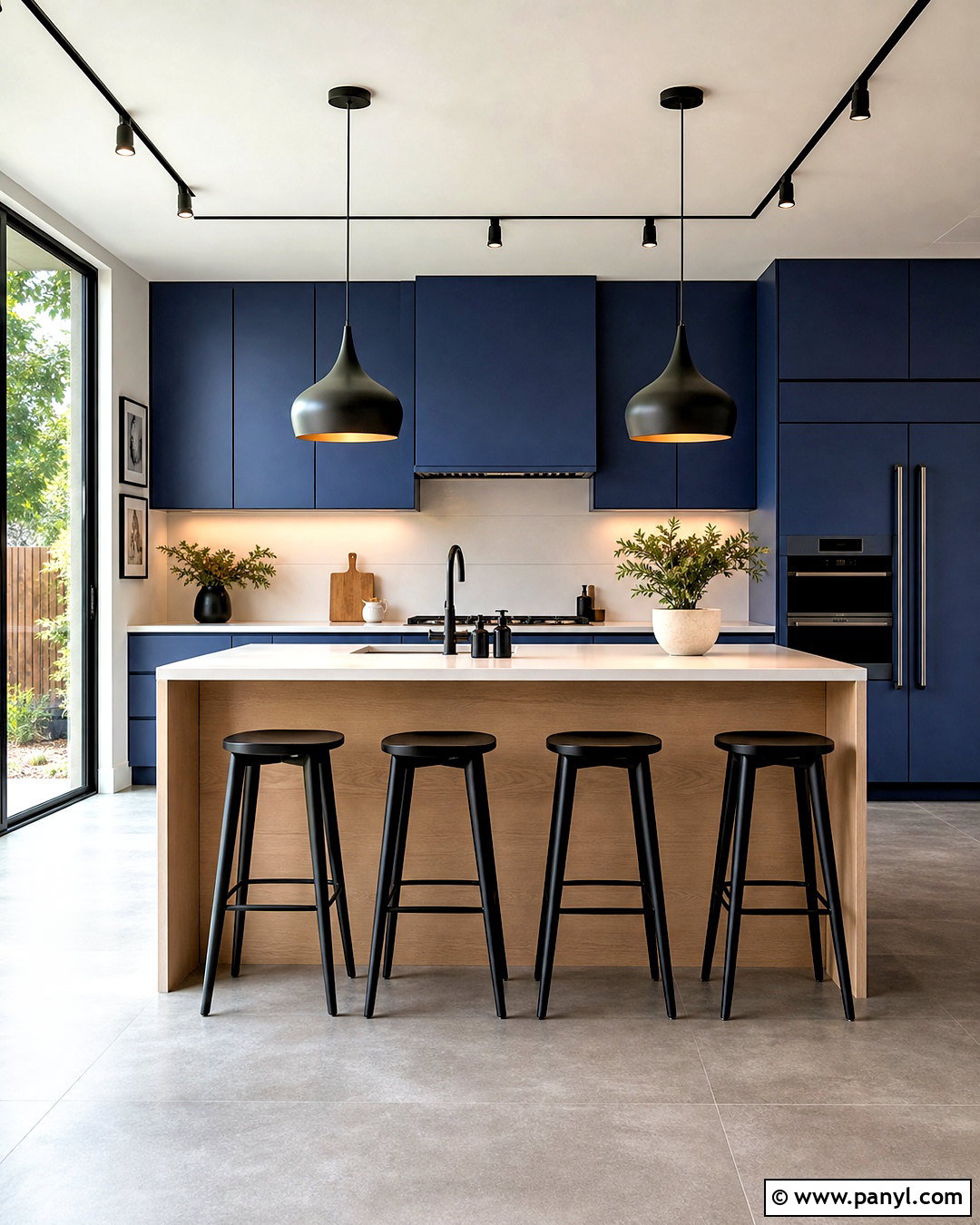
Flat-panel cabinetry in matte cobalt blue gives a modern kitchen clean lines and memorable color. Carry the same blue across the refrigerator panels and tall storage wall to create a seamless built-in appearance. Pair it with slim white quartz counters and a matching slab backsplash rather than patterned tile. A pale oak island adds warmth and keeps the saturated blue from dominating the entire space. Select handle-free doors or narrow matte black pulls for an uninterrupted profile. Black track lighting, a sculptural pendant, and backless stools sharpen the contemporary look. Large-format light gray floor tiles provide a quiet foundation. With hidden small appliances and carefully planned internal storage, the finished kitchen feels bold, efficient, and refreshingly uncluttered.
8. Blue Kitchen With Brass Hardware
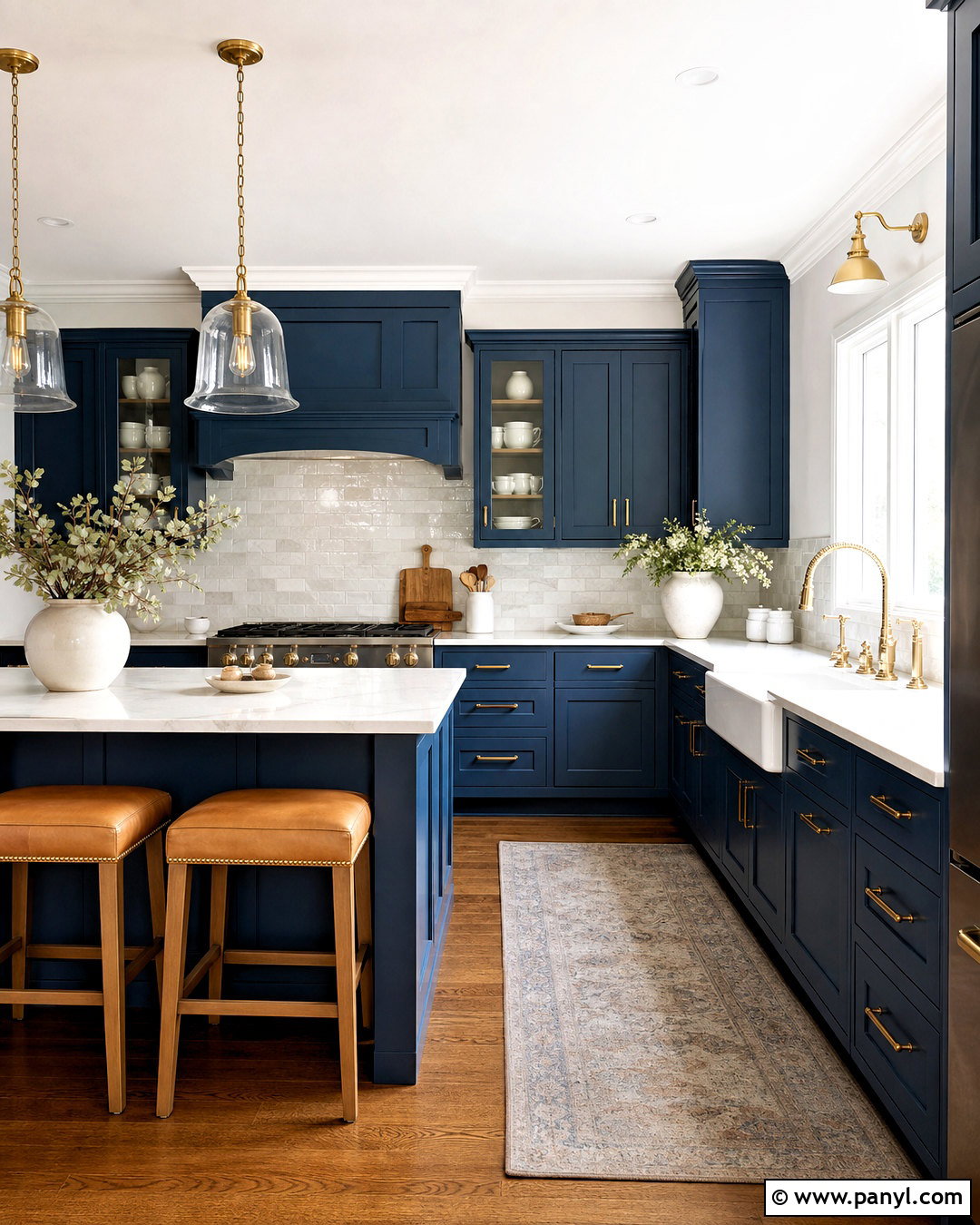
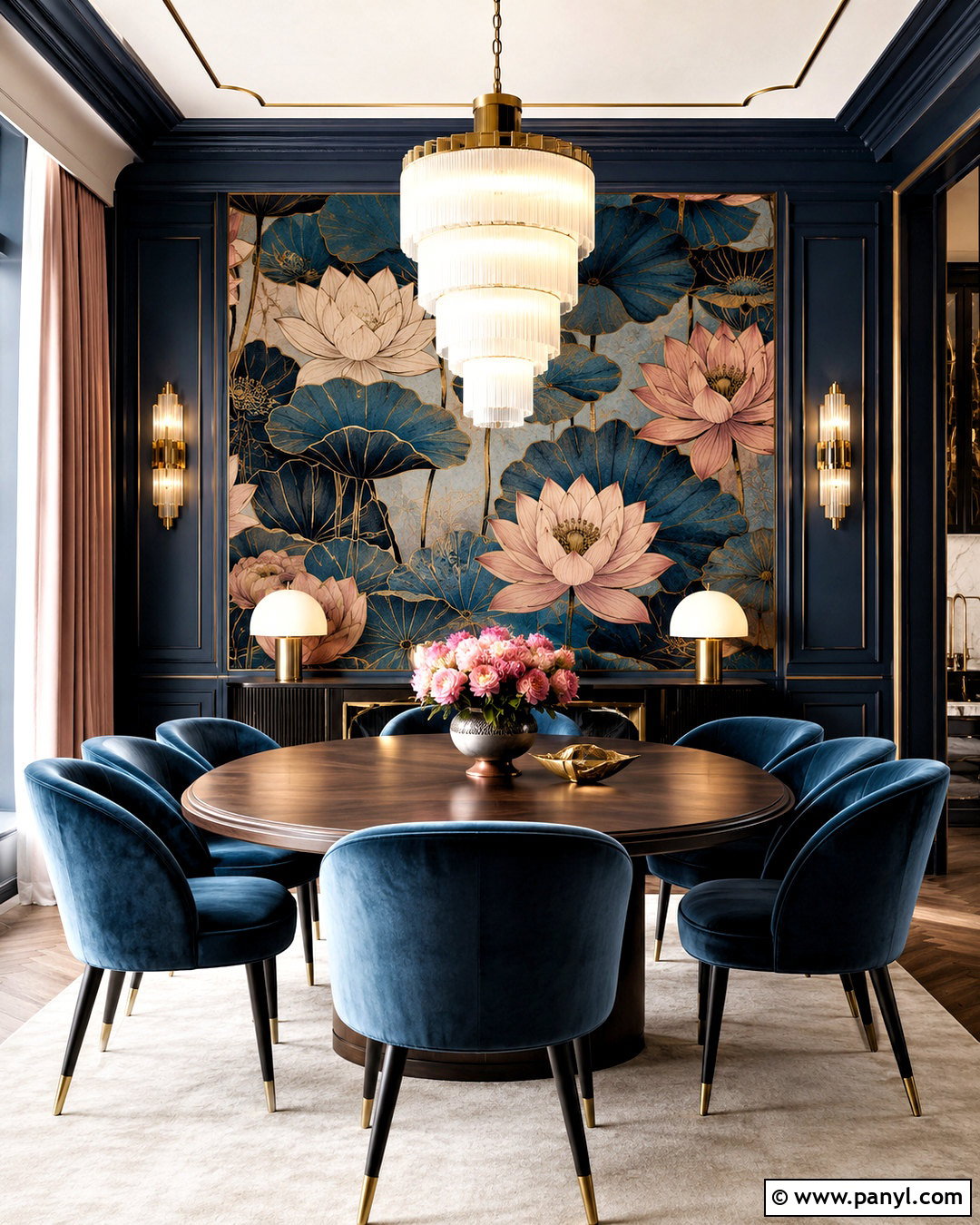
Rich blue cabinets and brass hardware form a polished combination, but the surrounding finishes determine whether the result feels balanced. Choose deep peacock blue Shaker cabinets with unlacquered brass knobs, cup pulls, and a traditional brass faucet. Add creamy white quartz counters rather than stark white ones to soften the contrast. A warm white zellige backsplash brings handmade texture and reflects the metallic details. Medium oak flooring and camel leather counter stools make the room more welcoming. Above the island, use simple brass pendants with white glass shades. Keep the ceiling, walls, and window trim warm white. This complete palette allows the brass to glow against the blue without making the kitchen appear overly formal or decorative.
9. Blue Kitchen With Marble Countertops
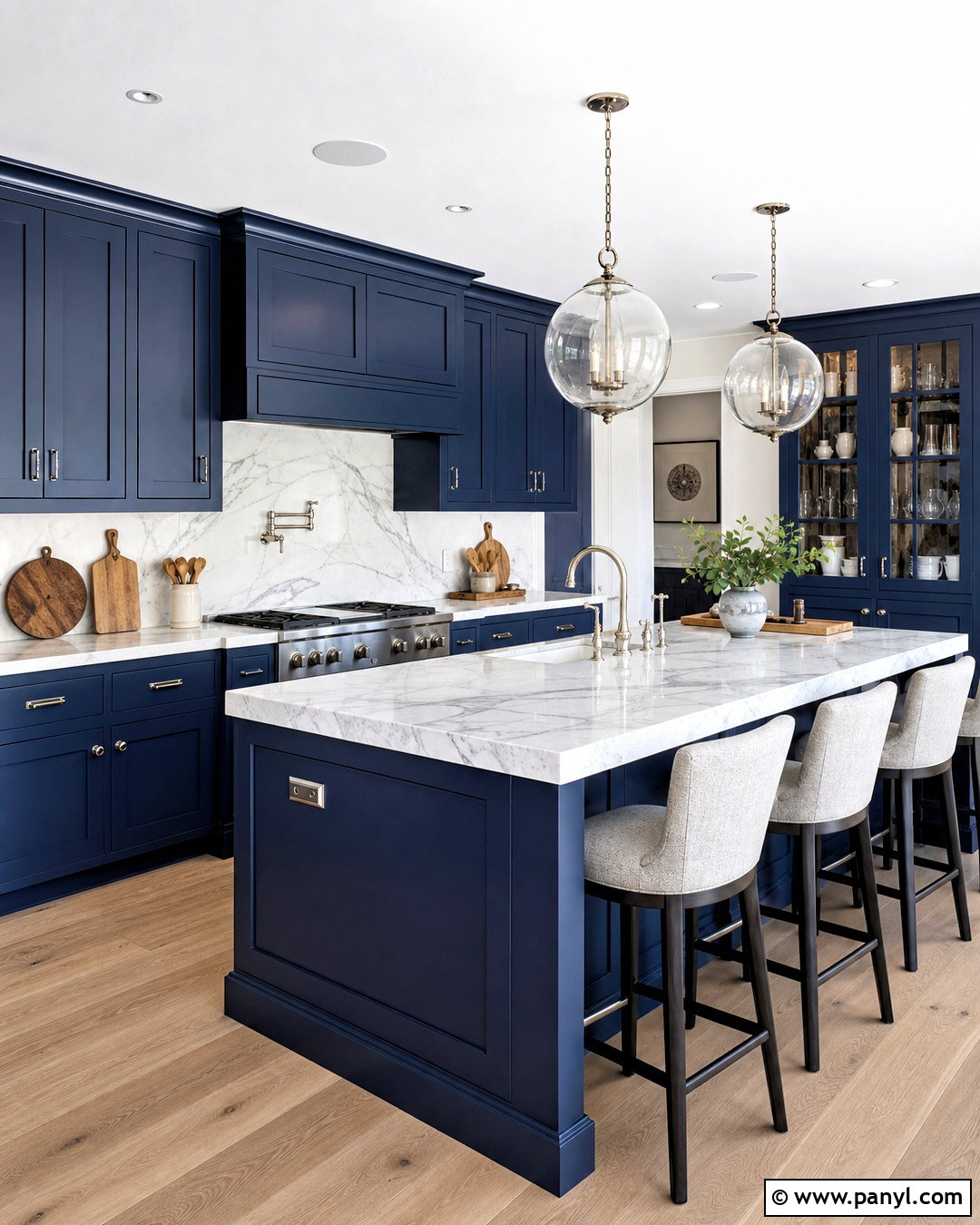
Blue cabinetry provides a striking frame for marble countertops with expressive natural veining. Use classic navy cabinets around the perimeter and on a generous central island. Select white marble with cool gray movement, then continue the stone onto the backsplash for a seamless, high-impact surface. Polished nickel hardware complements the marble’s cooler tones and gives the room a refined finish. Wide-plank white oak floors keep the blue-and-white palette from feeling cold. Add upholstered counter stools in a durable oatmeal fabric and clear glass pendant lights that do not compete with the stone. Because marble develops character with use, include large cutting boards in busy preparation zones. The completed kitchen feels elegant, practical, and visually connected.
10. Blue Kitchen With Butcher Block
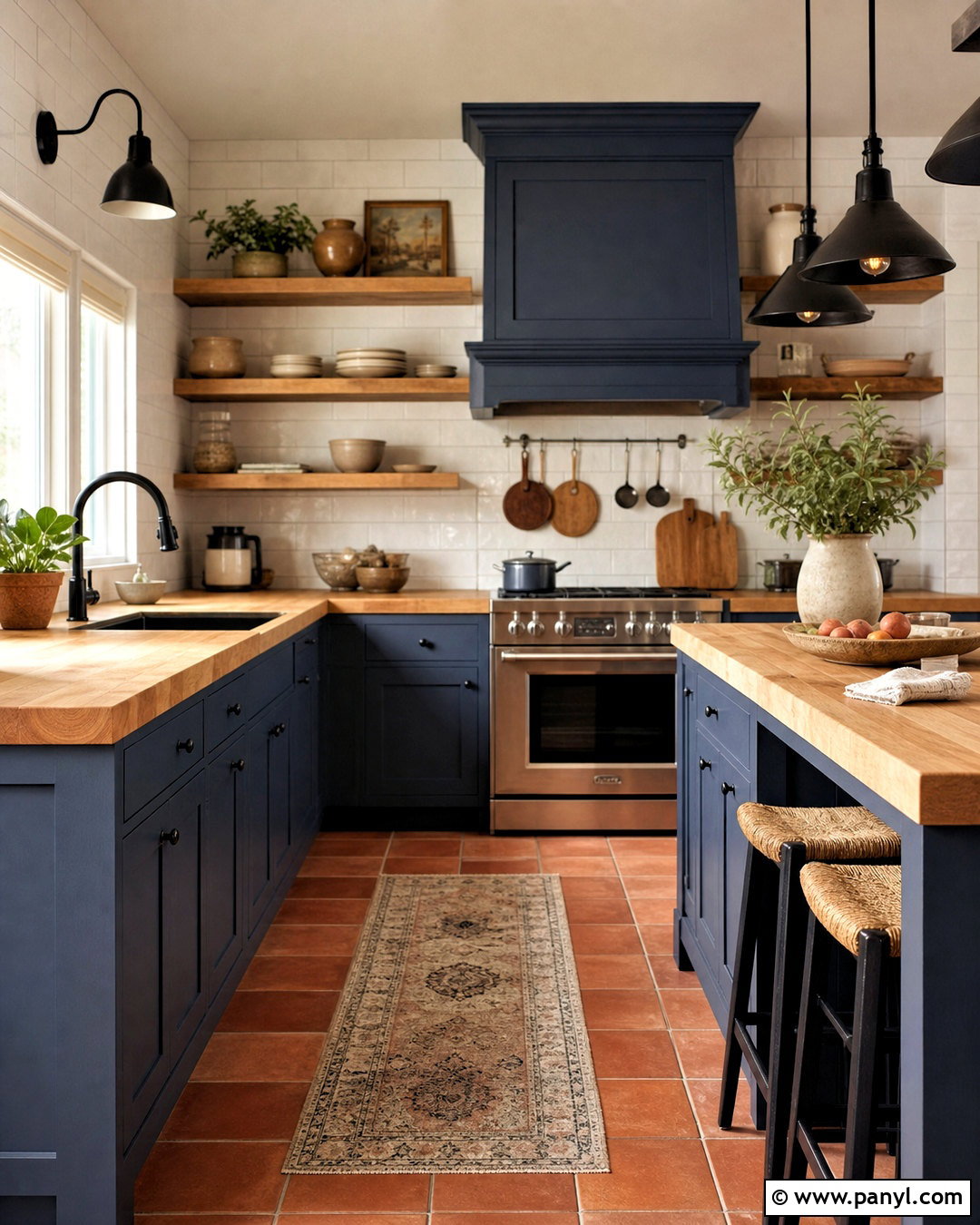
Warm butcher-block countertops make blue cabinets feel especially comfortable and approachable. Choose a medium slate blue for simple Shaker cabinetry and use thick maple or white oak counters with a natural matte finish. Protect the busiest sink area with a durable stone insert or maintain the wood with a food-safe finish. Install an off-white subway tile backsplash with matching grout for a clean background. Matte black knobs, a black pull-down faucet, and black metal pendants add crisp contrast. Terracotta-look floor tile introduces another warm material and handles daily traffic well. Complete the kitchen with open wood shelves, cream stoneware, woven counter stools, and a washable runner. The overall design feels rustic, functional, and carefully coordinated.
11. Blue Kitchen With Subway Tile
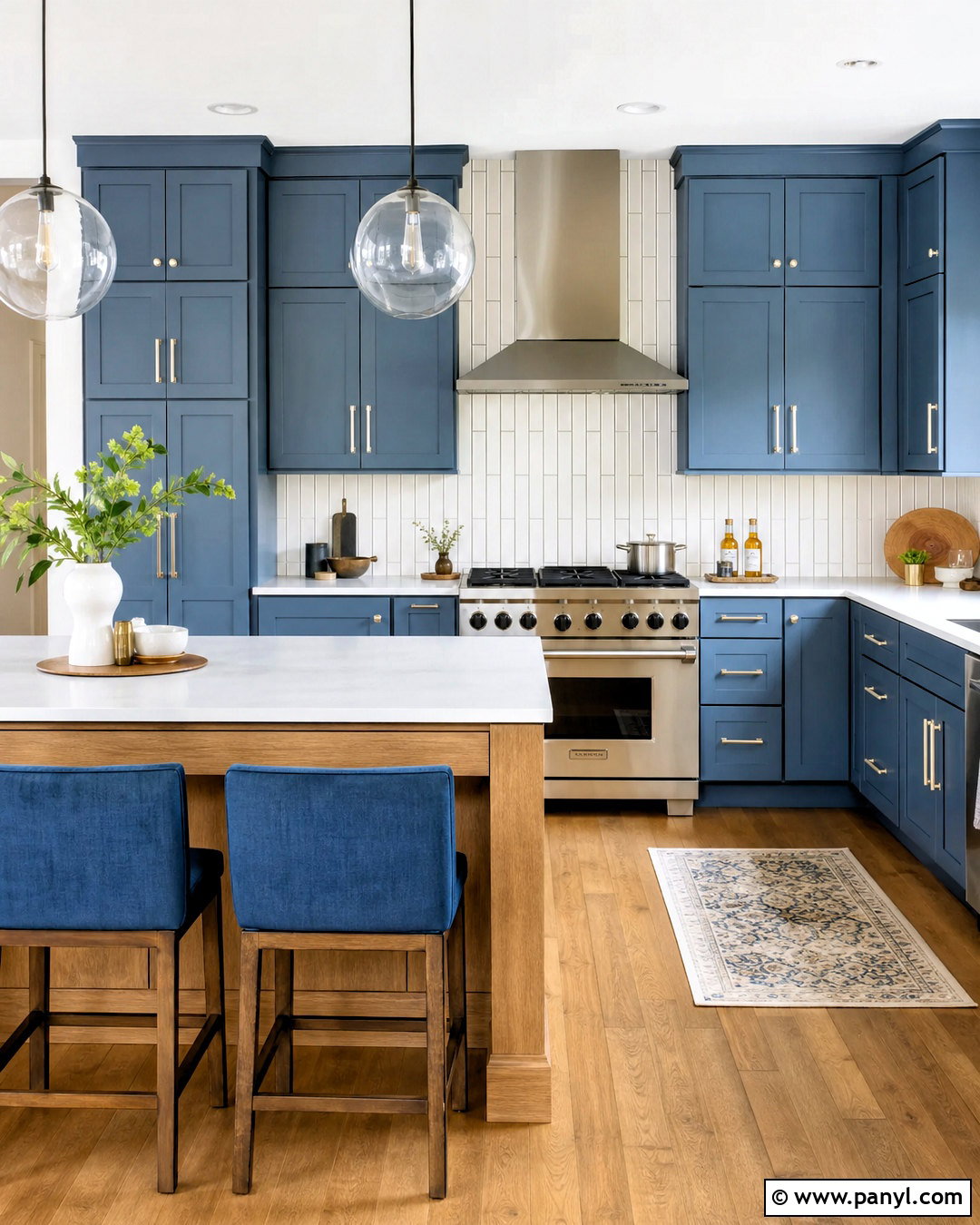
A subway tile backsplash can look distinctive when its scale, finish, and layout support the blue cabinetry. Pair muted steel blue Shaker cabinets with elongated warm white tiles installed vertically. The unexpected direction makes the walls feel taller while maintaining a simple, affordable surface. Use pale gray grout for gentle definition rather than a strong grid effect. White quartz counters, brushed nickel pulls, and a stainless steel range create a practical transitional palette. Add a medium-tone oak island with blue upholstered stools to repeat the cabinet color more subtly. Warm wood flooring keeps the cool blue and gray elements balanced. Finish with clear globe pendants and minimal counter decor so the tile pattern and cabinetry remain easy to appreciate.
12. Blue Kitchen With Patterned Backsplash
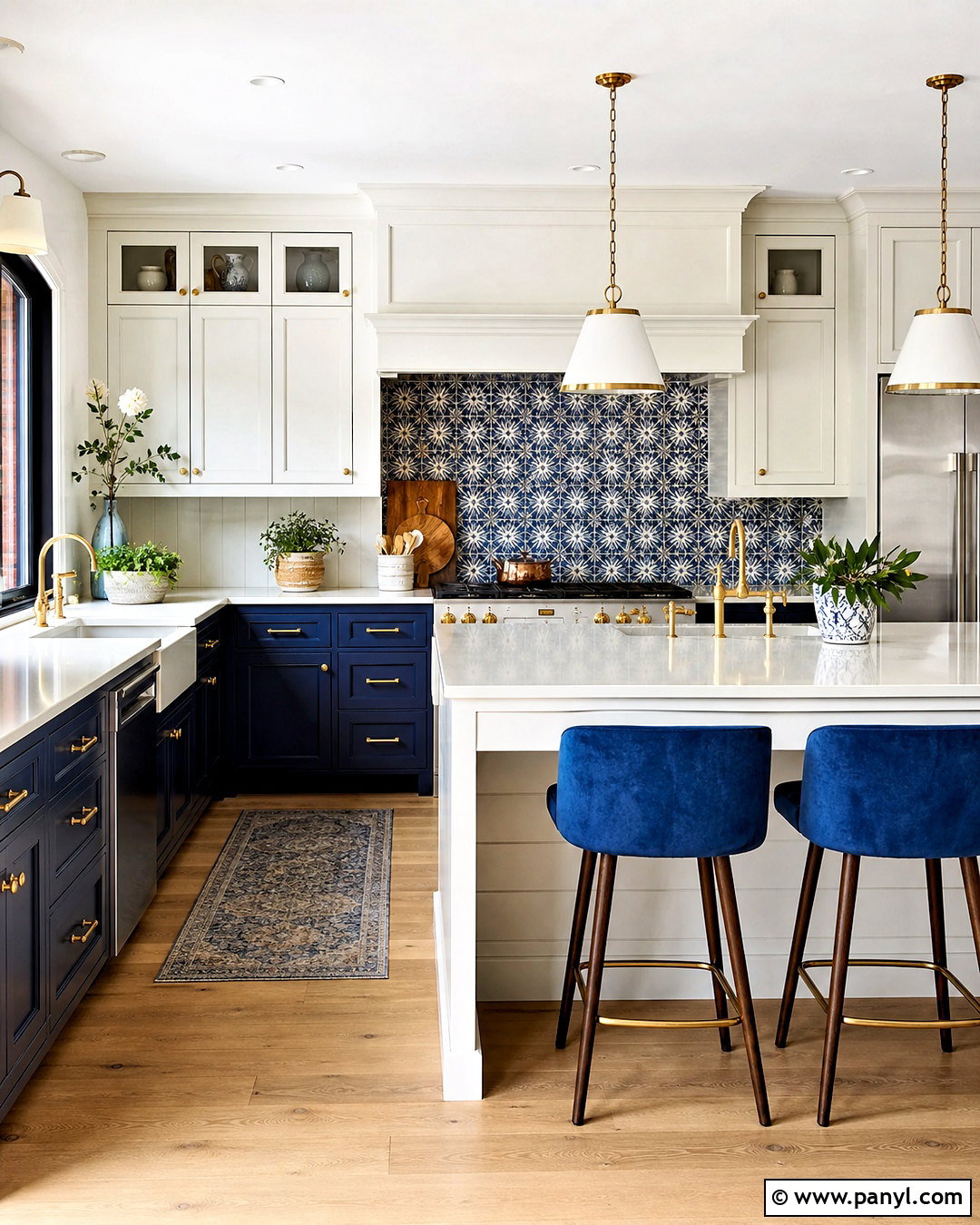
For a more expressive kitchen, combine solid blue cabinets with a patterned backsplash that repeats the cabinet color. Use inky blue lower cabinetry and creamy white uppers to prevent the room from feeling crowded. Behind the range, install blue-and-white geometric ceramic tile from the countertop to the ceiling. Continue a quieter white tile across the remaining walls so the pattern retains its focal-point status. Choose simple white quartz counters, aged brass hardware, and light oak flooring. A white island with blue stools helps distribute the colors around the room. Keep pendant lights and window treatments understated. Limiting the pattern to one defined area creates personality while allowing the kitchen to remain cohesive, functional, and comfortable for everyday use.
13. Dark Blue Kitchen With Black Accents
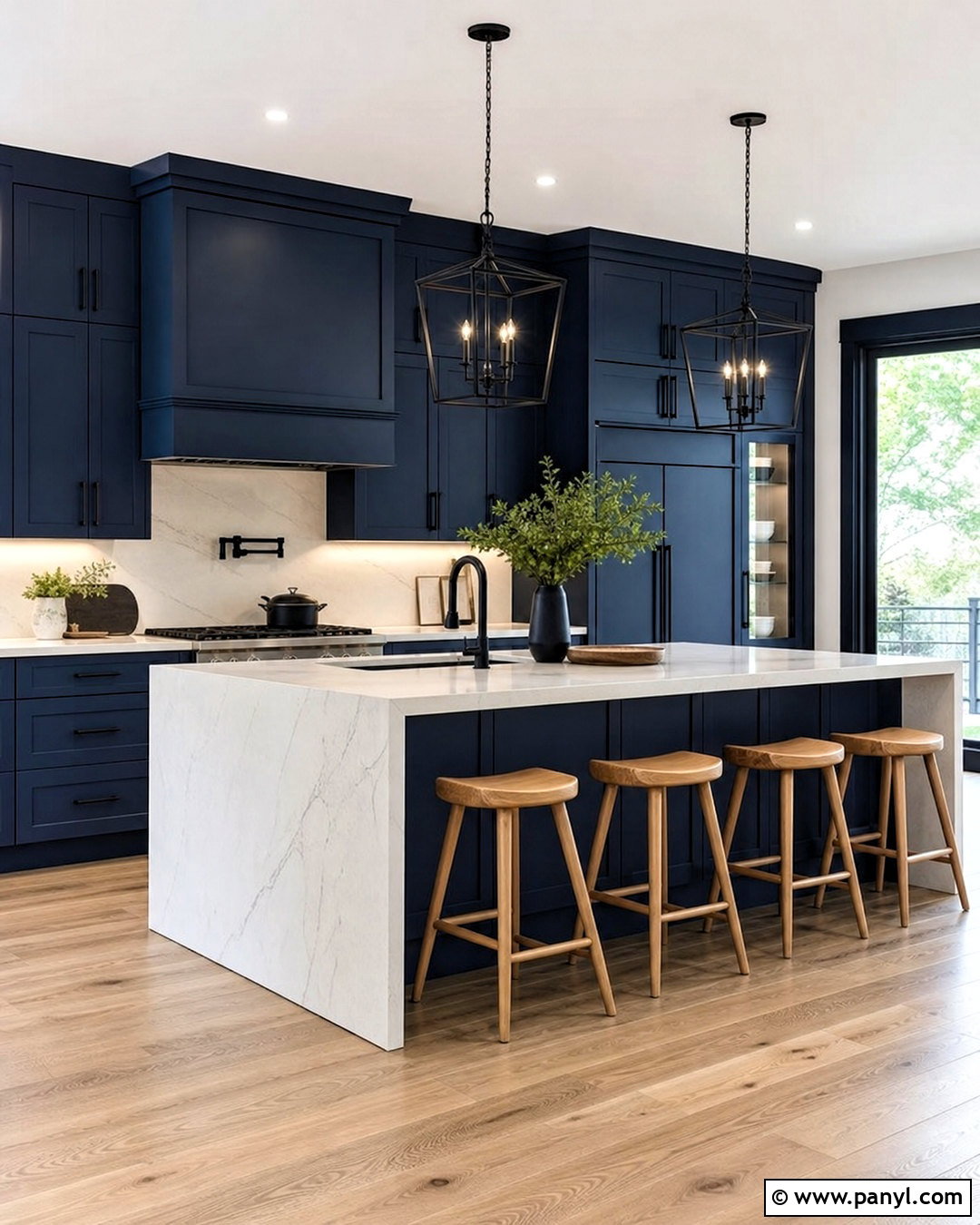
Dark blue and black can create a sophisticated kitchen when lighter materials are used generously. Paint the cabinetry a deep midnight blue and add slender matte black pulls, a black faucet, and black-framed pendant lights. Balance those strong finishes with creamy quartz countertops and a full-height warm white backsplash. Choose pale oak flooring to brighten the lower part of the room and reveal the cabinet color clearly. If the kitchen includes an island, add a waterfall countertop and natural wood stools for contrast. Large windows, recessed ceiling lights, and under-cabinet lighting are important in this darker scheme. Keep walls soft white and accessories limited. The final space feels dramatic and modern without becoming gloomy, cramped, or visually overwhelming.
14. Blue Gray Transitional Kitchen
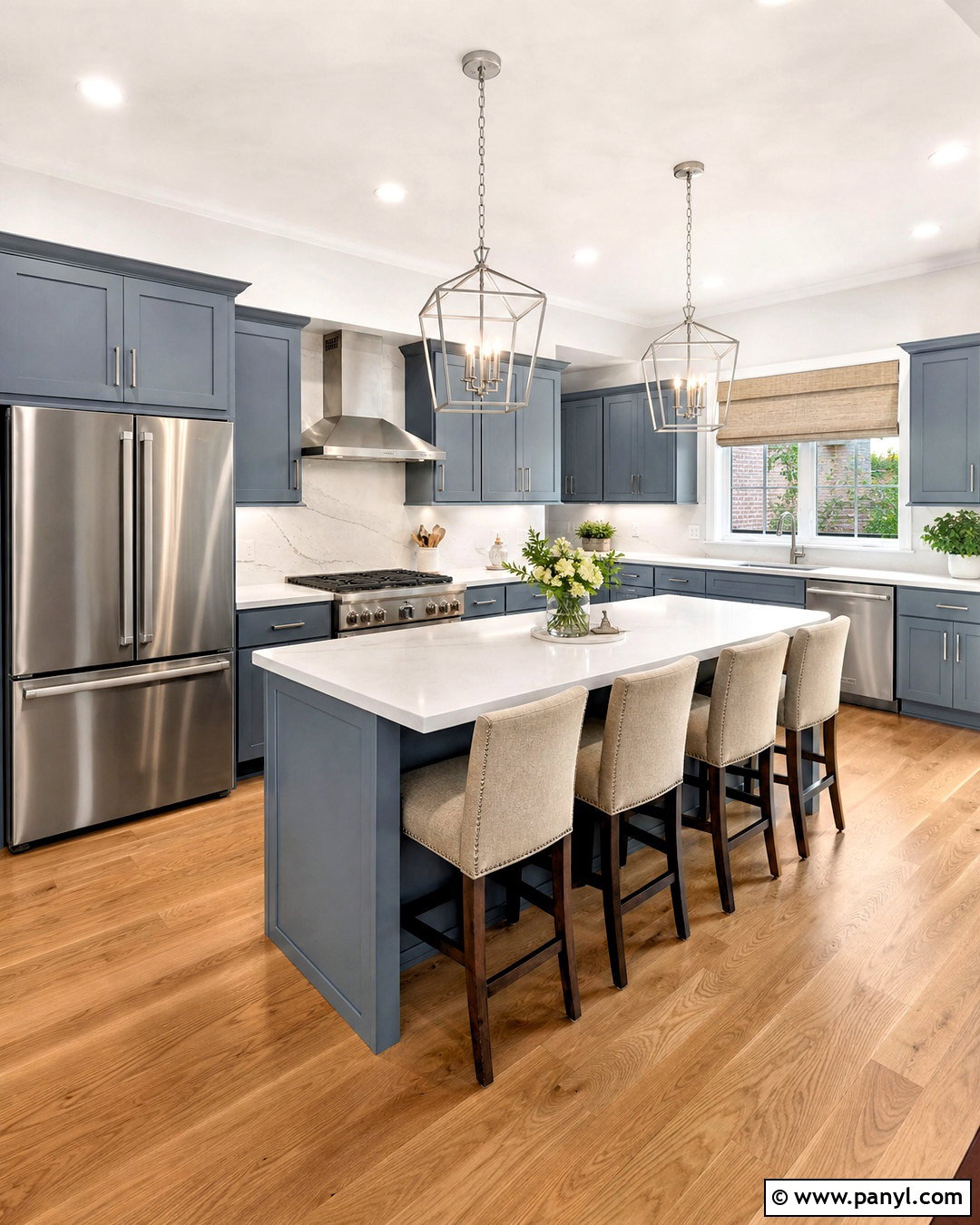
Blue-gray cabinetry offers a gentle way to introduce color while maintaining the flexibility of a neutral kitchen. Select a medium blue-gray Shaker door with clean rails and minimal detailing. Pair it with white quartz countertops, a softly veined stone backsplash, and brushed nickel hardware. Use the same cabinetry throughout the perimeter and island for a calm, continuous appearance. Warm oak floors and beige upholstered counter stools offset the cooler surfaces. Traditional lantern pendants can add character, while streamlined stainless steel appliances keep the room current. Finish with warm white walls and Roman shades in a subtle neutral pattern. This complete transitional kitchen sits comfortably between classic and contemporary design, making it easy to update with different accessories over time.
15. Teal Blue Kitchen
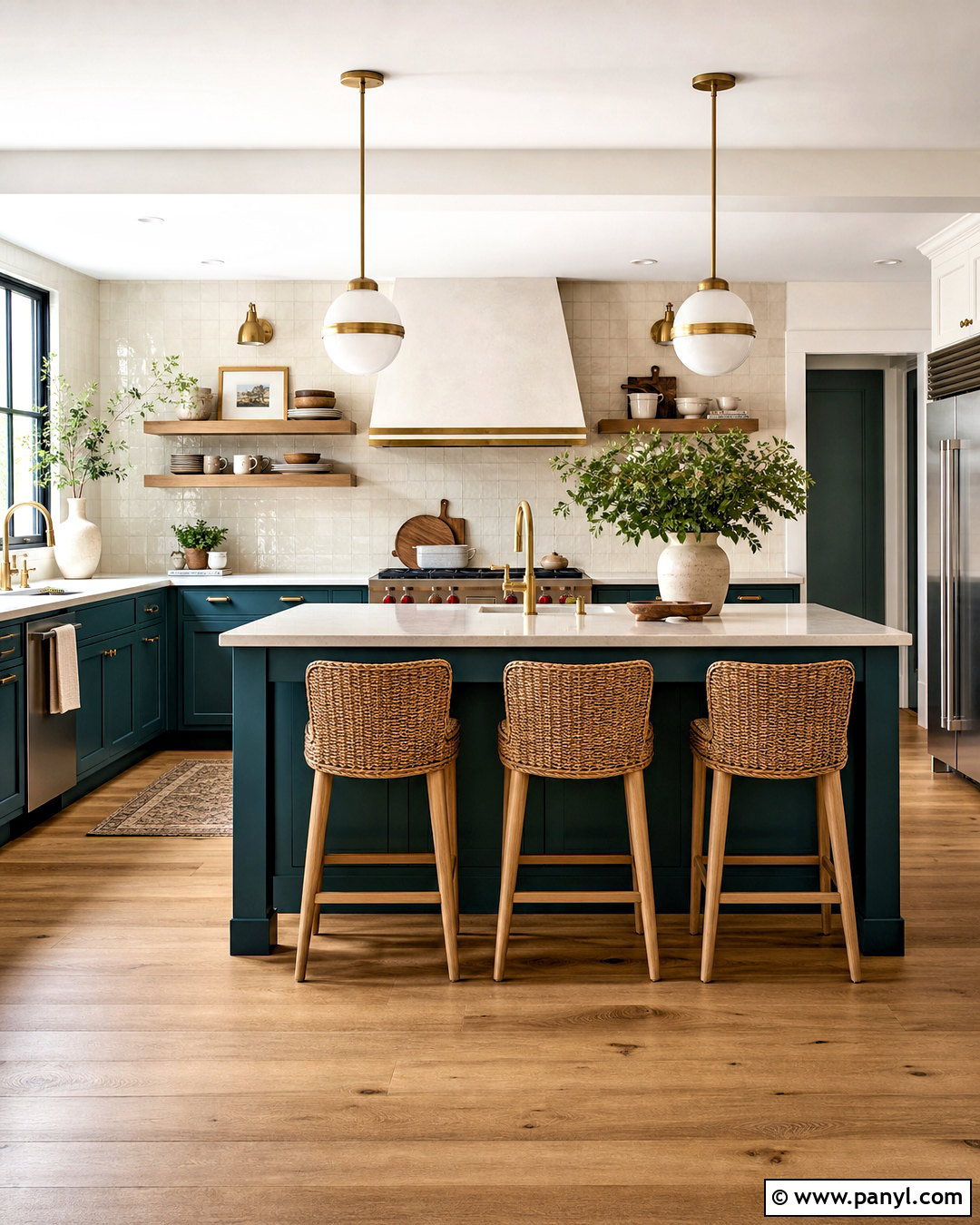
Teal cabinetry brings energetic color into a kitchen while still feeling connected to nature. Choose a deep blue-green finish for the lower cabinets, island, and one tall storage wall. Keep upper cabinetry warm white or replace part of it with oak floating shelves. Cream quartz countertops and an ivory handmade tile backsplash soften the saturated cabinet color. Use brushed brass hardware to highlight teal’s warm undertones, then repeat that warmth through honey oak floors and woven counter stools. Simple globe pendants provide clean light above the island. Add a few practical accessories in clay, cream, and natural wood rather than introducing more bright colors. The finished kitchen feels vibrant, grounded, and inviting instead of excessively bold or busy.
16. Powder Blue Cottage Kitchen
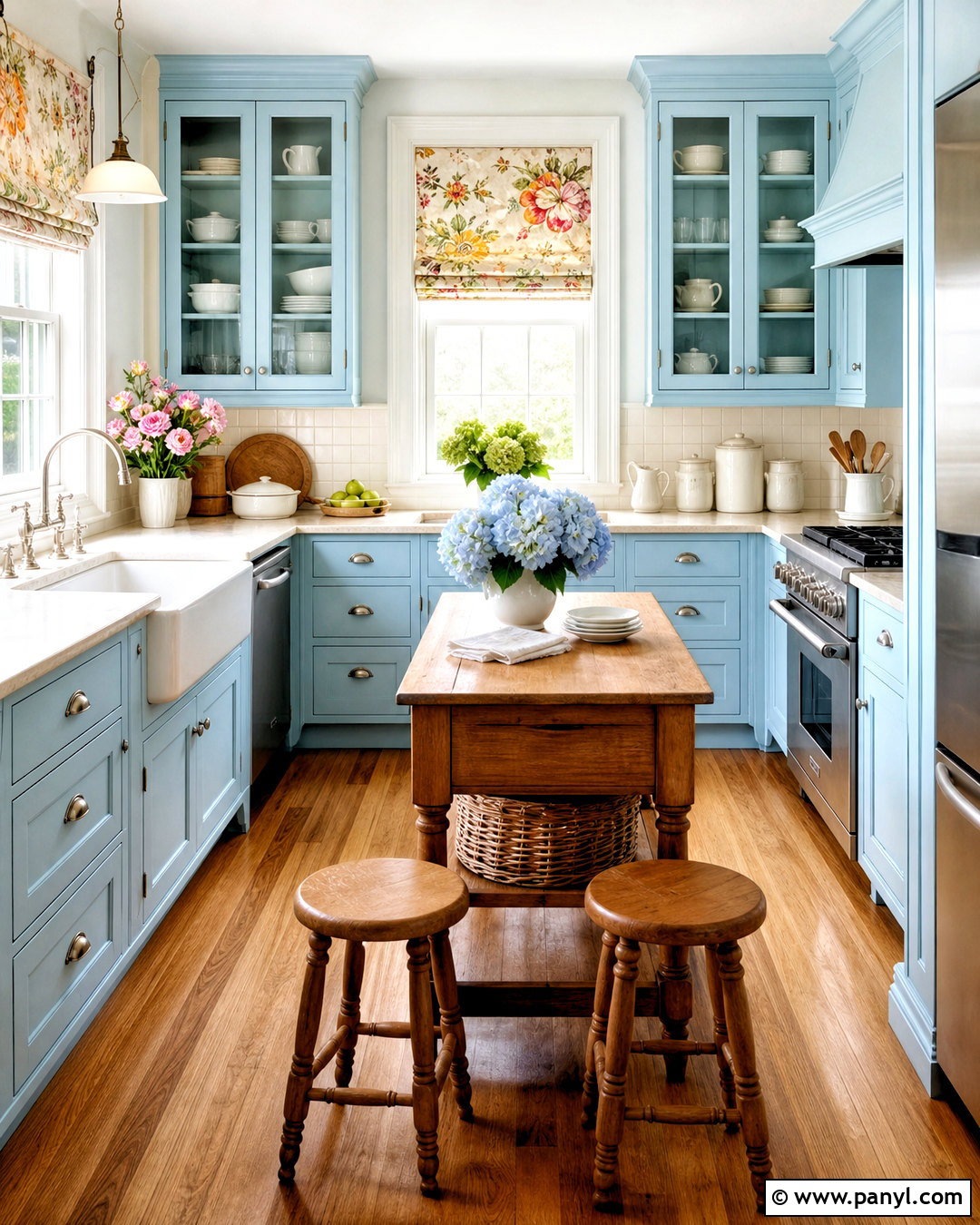
Powder blue creates a charming cottage kitchen that feels bright even within a compact layout. Use pale blue inset cabinets with small round nickel knobs and traditional cup pulls. Pair them with creamy quartz counters, a white apron-front sink, and a gently textured square tile backsplash. A narrow freestanding island in natural oak provides workspace without making the room feel overbuilt. Install warm white walls and open shelving near the window to emphasize natural light. Honey-toned wood floors, floral linen shades, and simple spindle stools introduce cottage character in controlled amounts. Glass-front upper cabinets can display white dishes while breaking up solid cabinetry. The complete room feels cheerful, practical, and personal without relying on overly rustic decorations.
17. Blue Kitchen Island
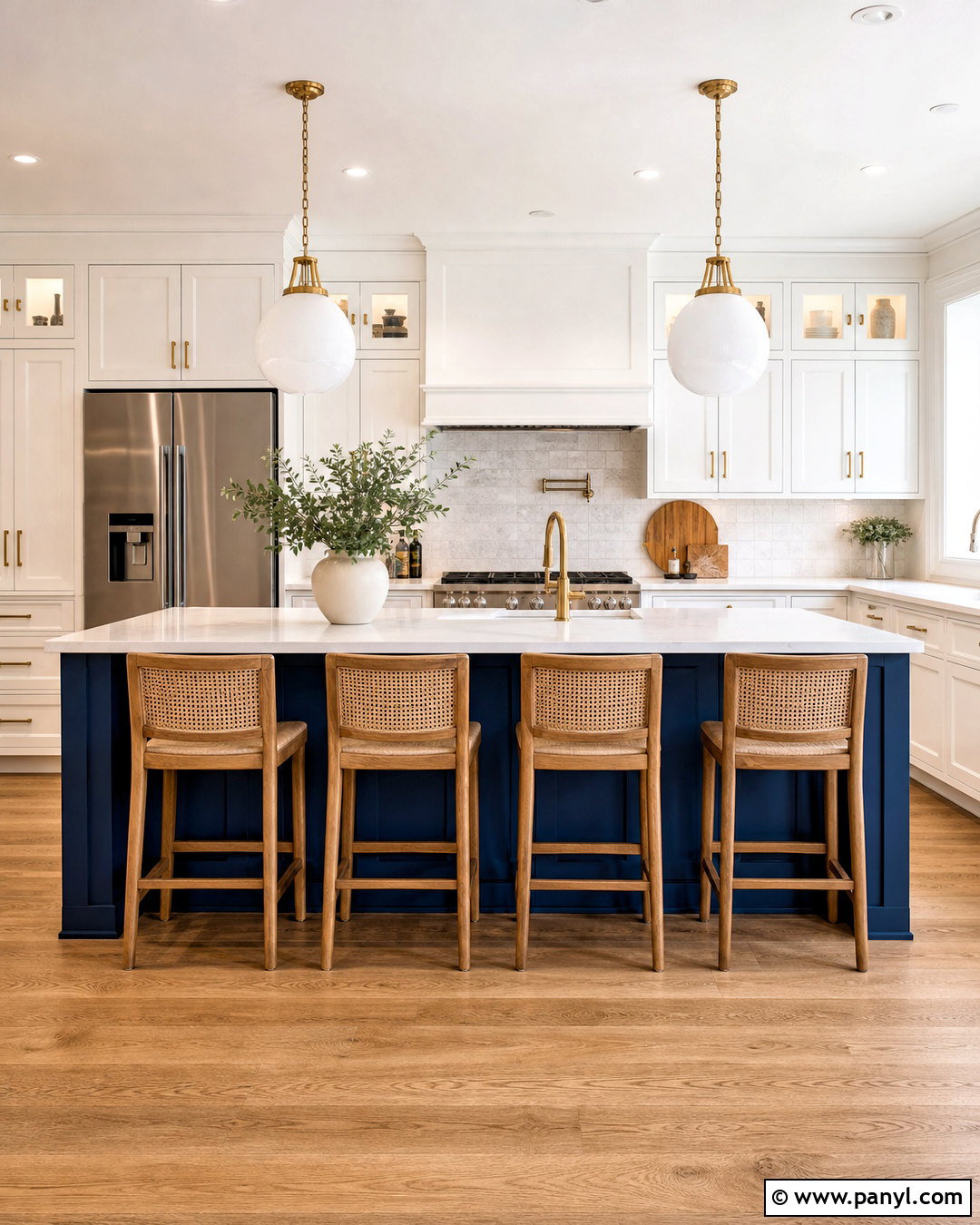
A blue island is an effective centerpiece for homeowners who prefer neutral perimeter cabinets. Keep the surrounding cabinetry warm white and paint the large central island a rich navy or marine blue. Top every cabinet with the same lightly veined white quartz to connect both finishes. Add brushed brass pulls to the island and perimeter so the room reads as one coordinated design. Three counter stools in natural oak and woven cane soften the strong island color. Install oversized white glass pendants above the seating area and use a pale stone backsplash behind the range. Medium oak flooring completes the warm palette. This layout makes blue highly visible while keeping the overall kitchen light, flexible, and easy to update.
18. Blue Kitchen With Open Shelving
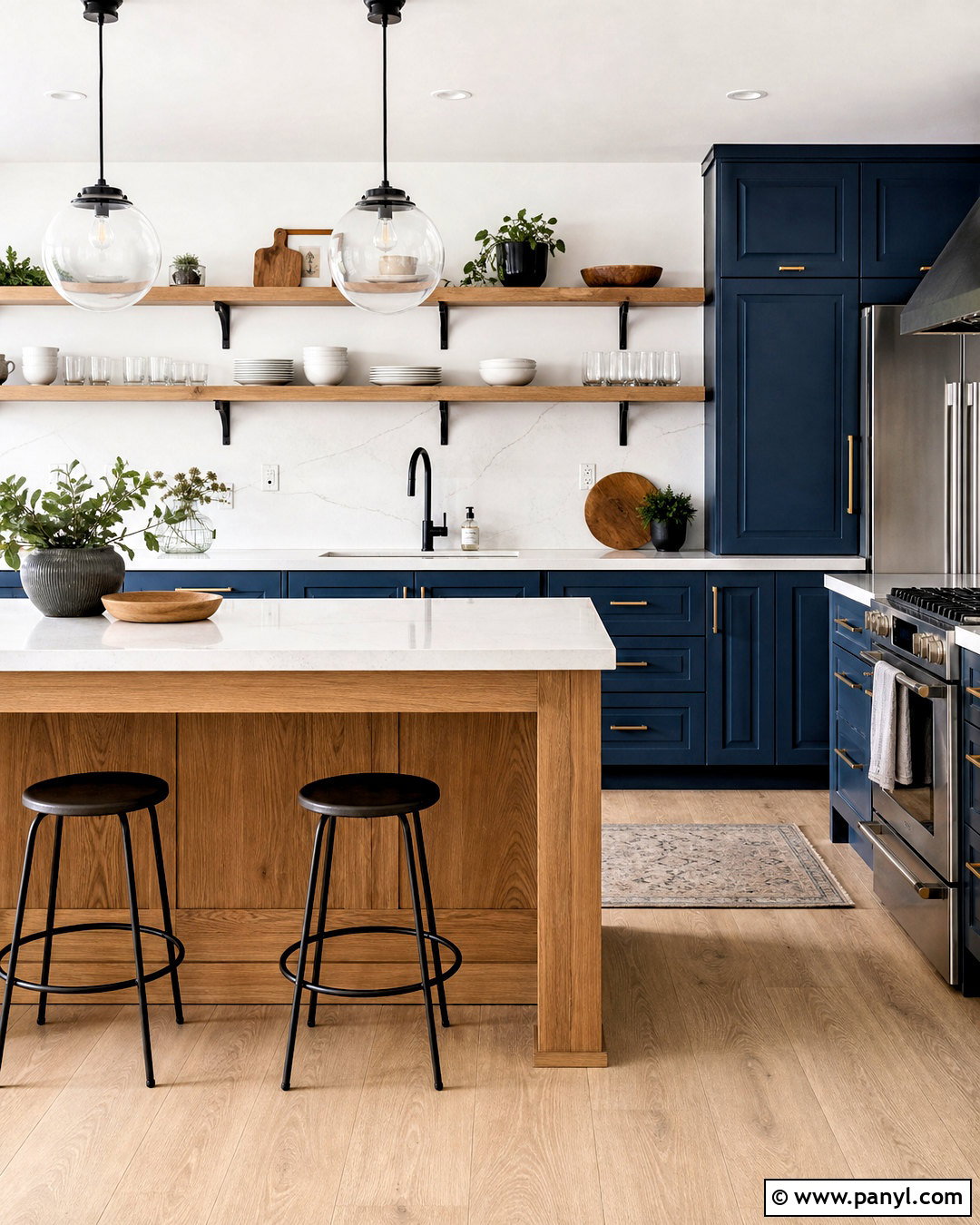
Open shelving gives a blue kitchen room to breathe and creates convenient storage for attractive everyday pieces. Use deep denim blue base cabinets along the main work wall, then replace bulky upper cabinets with thick white oak shelves. A warm white quartz counter and matching slab backsplash provide a clean setting for the wood and blue finishes. Display only frequently used white dishes, clear glasses, wooden bowls, and a few small plants. Add black metal shelf brackets, a black faucet, and simple black pendants for structure. A compact oak island can provide additional closed storage and seating. Choose pale flooring and warm white walls to reflect light. The finished kitchen feels open and organized rather than unfinished or cluttered.
19. Blue Kitchen With Natural Stone
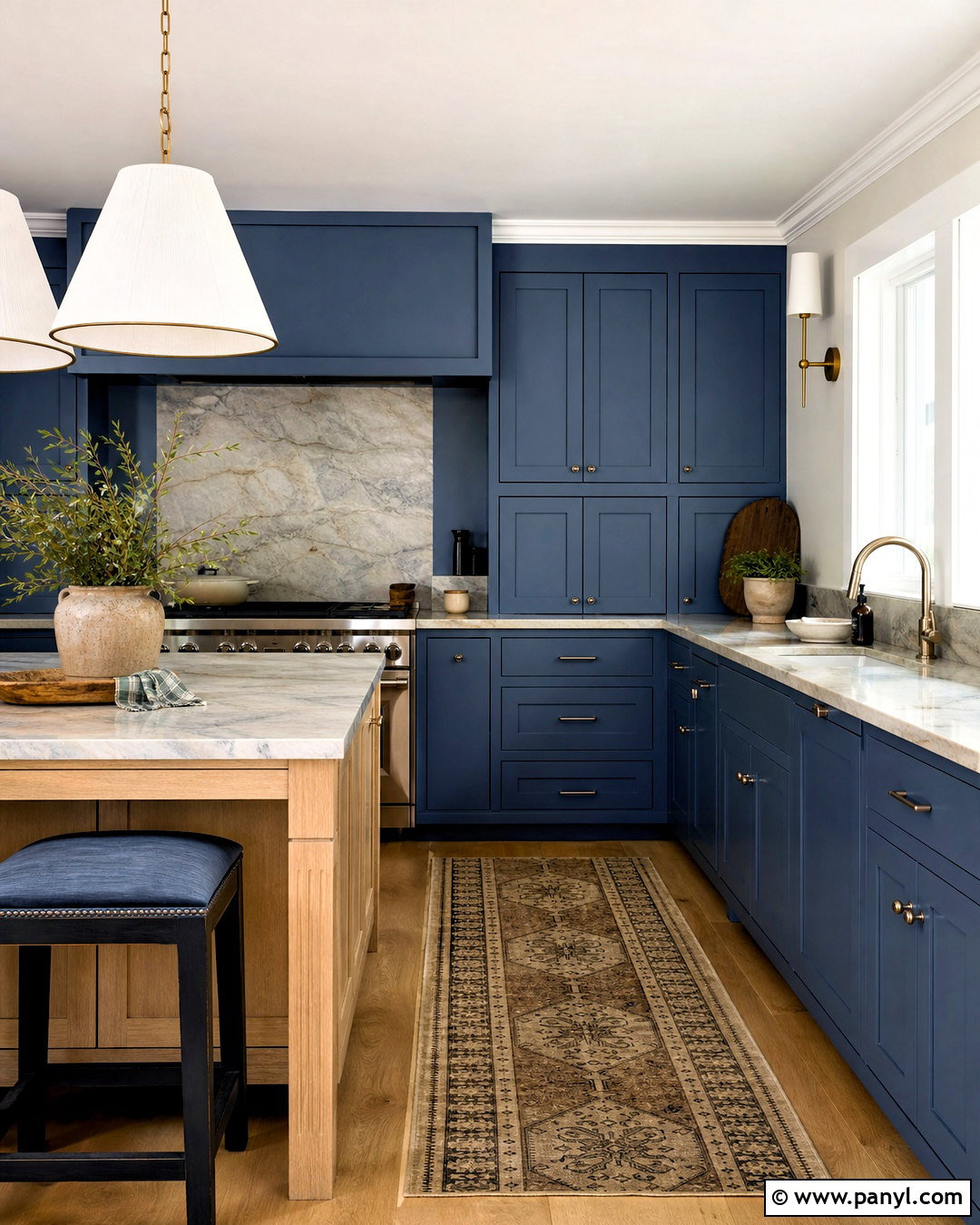
Natural stone introduces movement and earthy character to blue cabinetry. Choose a smoky ocean blue for the cabinets, then pair it with honed quartzite counters featuring soft cream, gray, and blue-green veining. Extend the quartzite behind the range to create a durable focal point. Use aged pewter hardware and a stainless steel faucet for quiet contrast. A white oak island with the same stone countertop breaks up the painted cabinetry and makes the kitchen feel warmer. Install wide-plank oak flooring and simple linen pendant shades above the island. Warm white walls keep attention on the natural materials. Minimal ceramic accessories and a stone fruit bowl complete this refined kitchen without competing with the countertop’s unique pattern and color.
20. Blue Mediterranean Kitchen
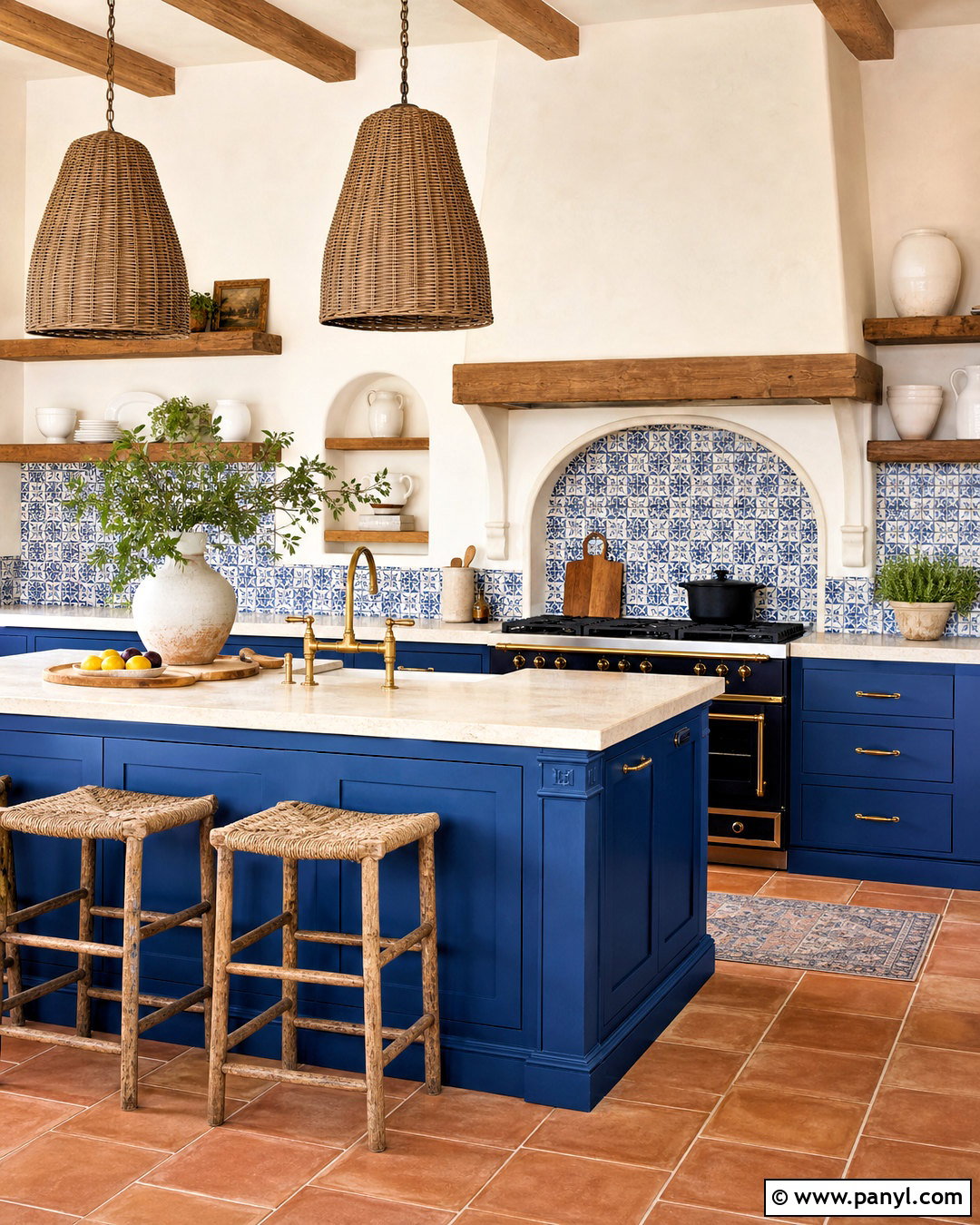
A Mediterranean blue kitchen feels lively when saturated color is paired with warm, handcrafted surfaces. Use vibrant azure blue on the base cabinets and island, then choose warm white plaster walls instead of standard upper cabinetry. Install open oak shelves and a blue-and-white patterned tile backsplash around the range. Cream limestone counters and terracotta floor tile ground the stronger colors with earthy warmth. Select aged brass hardware, a curved brass faucet, and woven pendant lights to reinforce the relaxed material palette. An arched range hood can provide an architectural focal point without requiring ornate decoration. Finish with rustic wood stools, white pottery, and small herb planters. The completed kitchen feels sunny, welcoming, and layered while remaining practical for daily cooking.
Conclusion:
The most successful blue kitchens balance color with thoughtful materials, useful storage, and the right lighting. Dark navy becomes inviting beside white stone and warm oak, while powder blue works naturally with cottage details and softer finishes. Teal, denim, cobalt, and blue-gray offer even more ways to personalize the room. Before committing, test cabinet colors beside your flooring, countertops, backsplash, and appliances at several times of day. Also consider using blue on an island or lower cabinets if you want a less permanent change. From compact galley layouts to colorful Mediterranean spaces, these 20 blue kitchen designs show how to create a cohesive kitchen that remains comfortable, functional, and distinctly your own.

Related Ideas and Inspiration:
Leave a Reply