
Blue paint can completely refresh a kitchen with natural wood cabinetry. The key is choosing a shade that works with the oak’s undertone, lighting, and stain. Honey oak often looks golden or orange, while white oak feels lighter and more neutral. Blue creates attractive contrast because it cools the warmth of the wood, but counters, flooring, hardware, and lighting must connect both finishes. () From airy powder blue to dramatic navy, each combination below creates a complete kitchen rather than relying on paint alone. If you are searching for 20 Blue Walls Oak Cabinets combinations, these practical looks offer inspiration for different layouts, budgets, and decorating preferences. Here is how to recreate 20 Blue Walls Oak Cabinets in a polished, cohesive way.
1. Navy Blue Walls With Honey Oak Cabinets
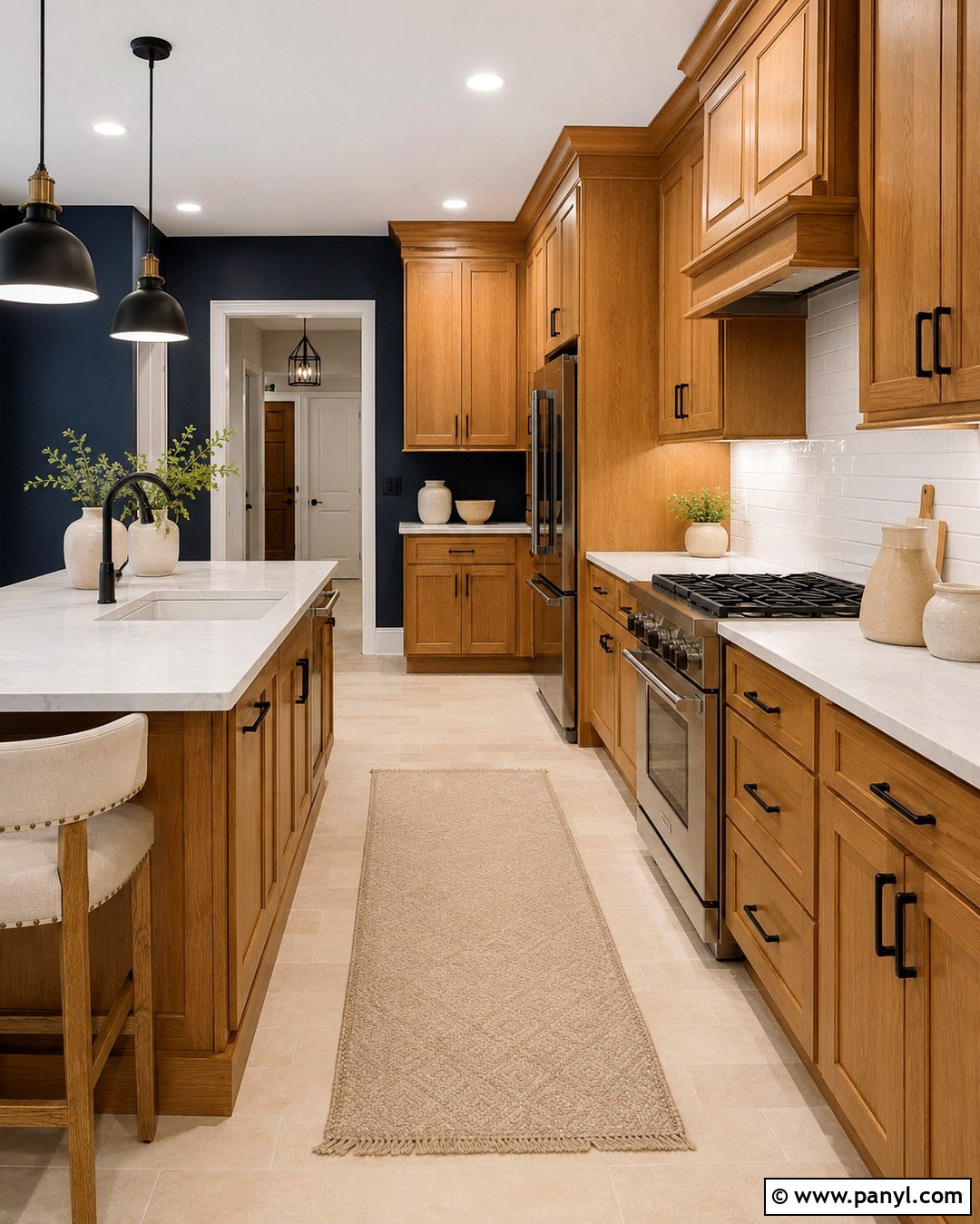
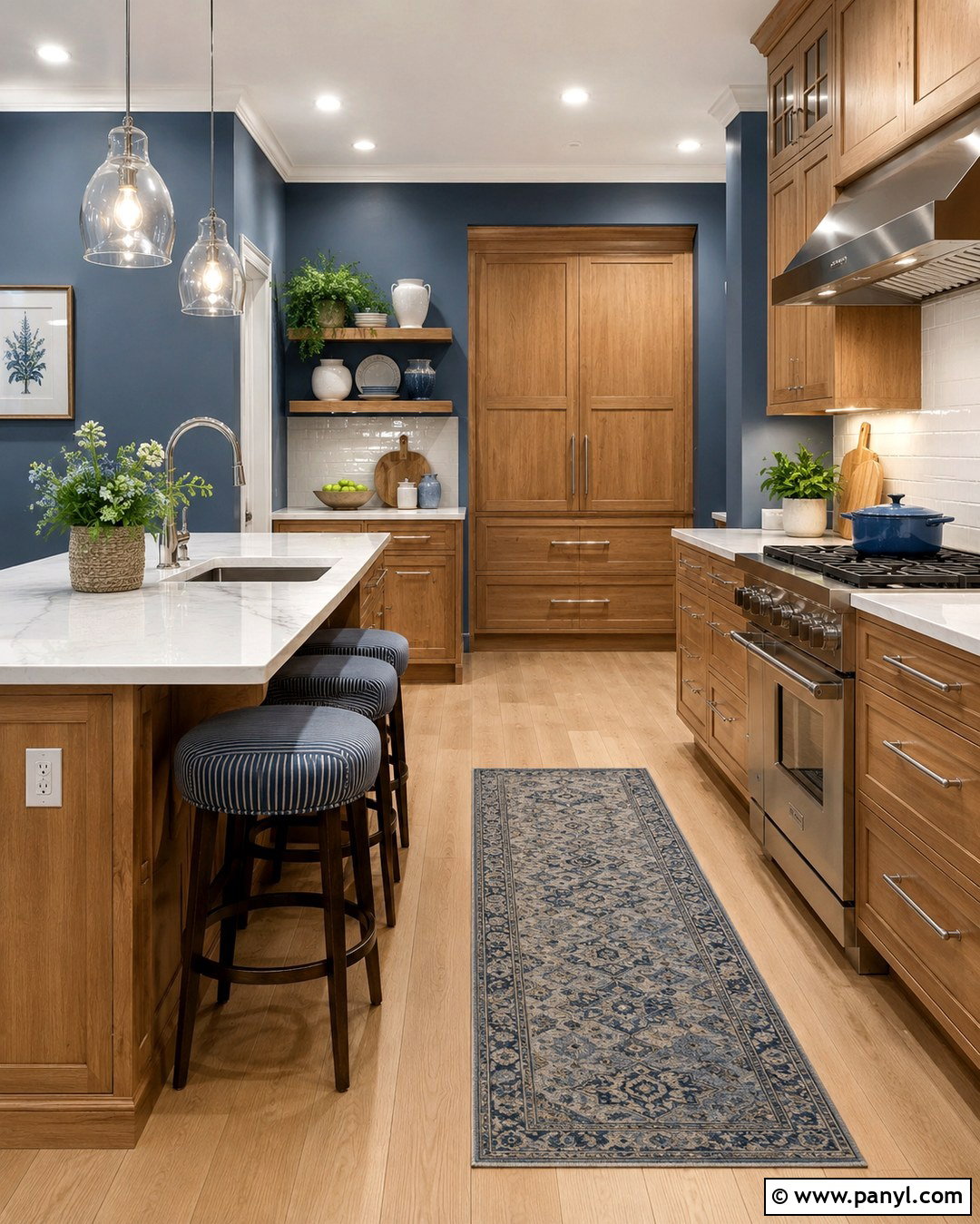
Deep navy walls can make honey oak cabinets feel intentional rather than dated. Choose a gray-based navy that balances the cabinets’ golden finish without creating an overly bright orange-and-blue contrast. White quartz countertops and a simple white subway tile backsplash keep the room open. Add matte black cabinet pulls, a black faucet, and black-framed pendant lights for definition. Medium oak flooring can work, but a warm off-white tile provides greater separation from the cabinetry. Under-cabinet lighting is especially important because navy absorbs more light than pale paint. Finish the kitchen with oatmeal counter stools, cream pottery, and a washable neutral runner. This complete palette feels grounded, classic, and comfortable while preserving the natural oak grain.
2. Pale Blue Walls With White Oak Cabinets
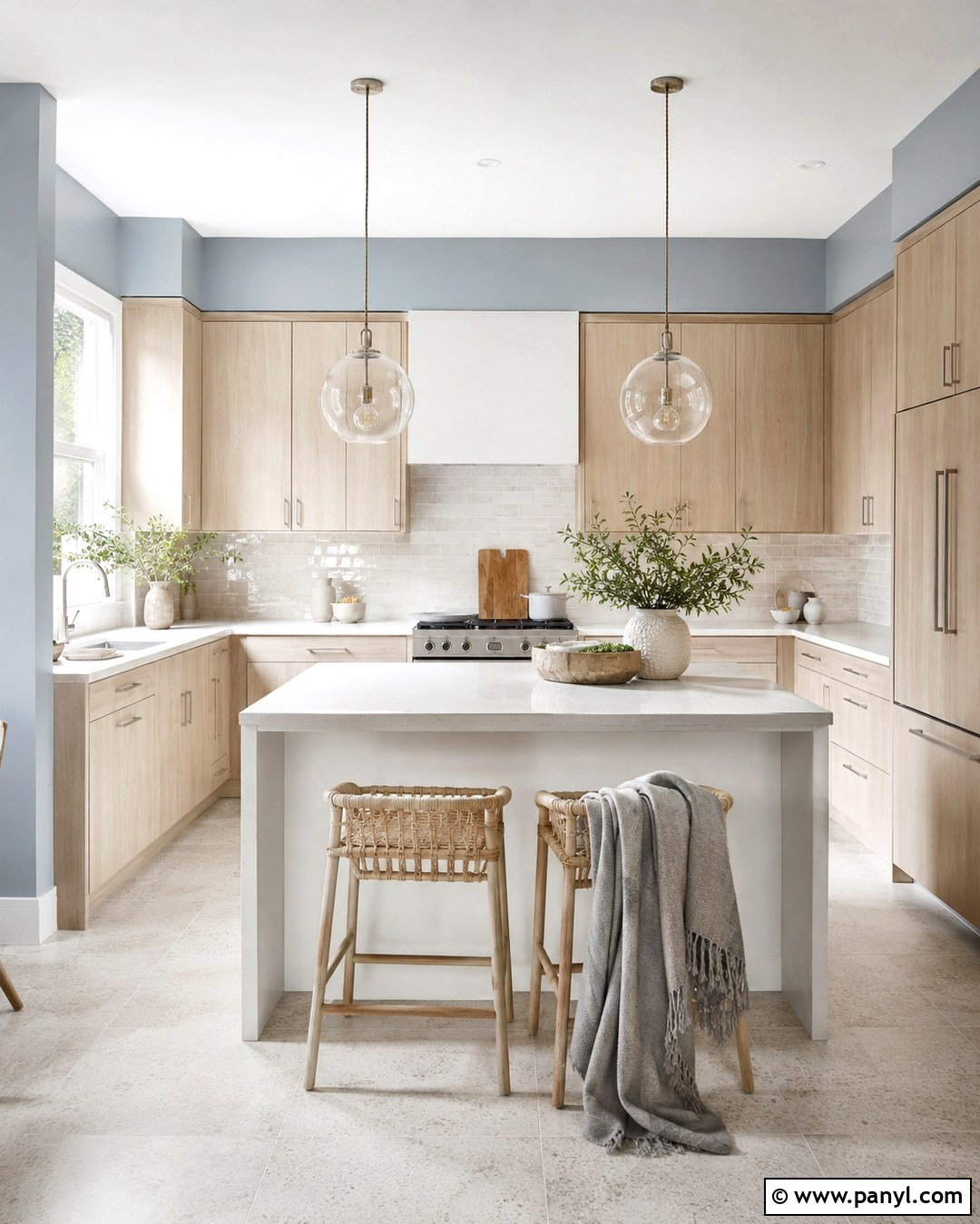
Soft pale blue creates a light, relaxed background for clean white oak cabinets. This pairing works especially well in a small kitchen or an open room with limited natural light. Select flat-panel or slim Shaker cabinets with a clear matte finish so the oak remains understated. Use creamy white quartz countertops, an off-white backsplash, and brushed nickel hardware to support the airy palette. Light oak or pale stone-look flooring keeps the space visually continuous. A simple white island can break up large amounts of wood without competing with the blue walls. Complete the room with woven counter stools, clear glass pendants, and a few soft gray textiles. The finished kitchen feels fresh and modern without becoming cold or overly minimal.
3. Dusty Blue Walls With Medium Oak Cabinets
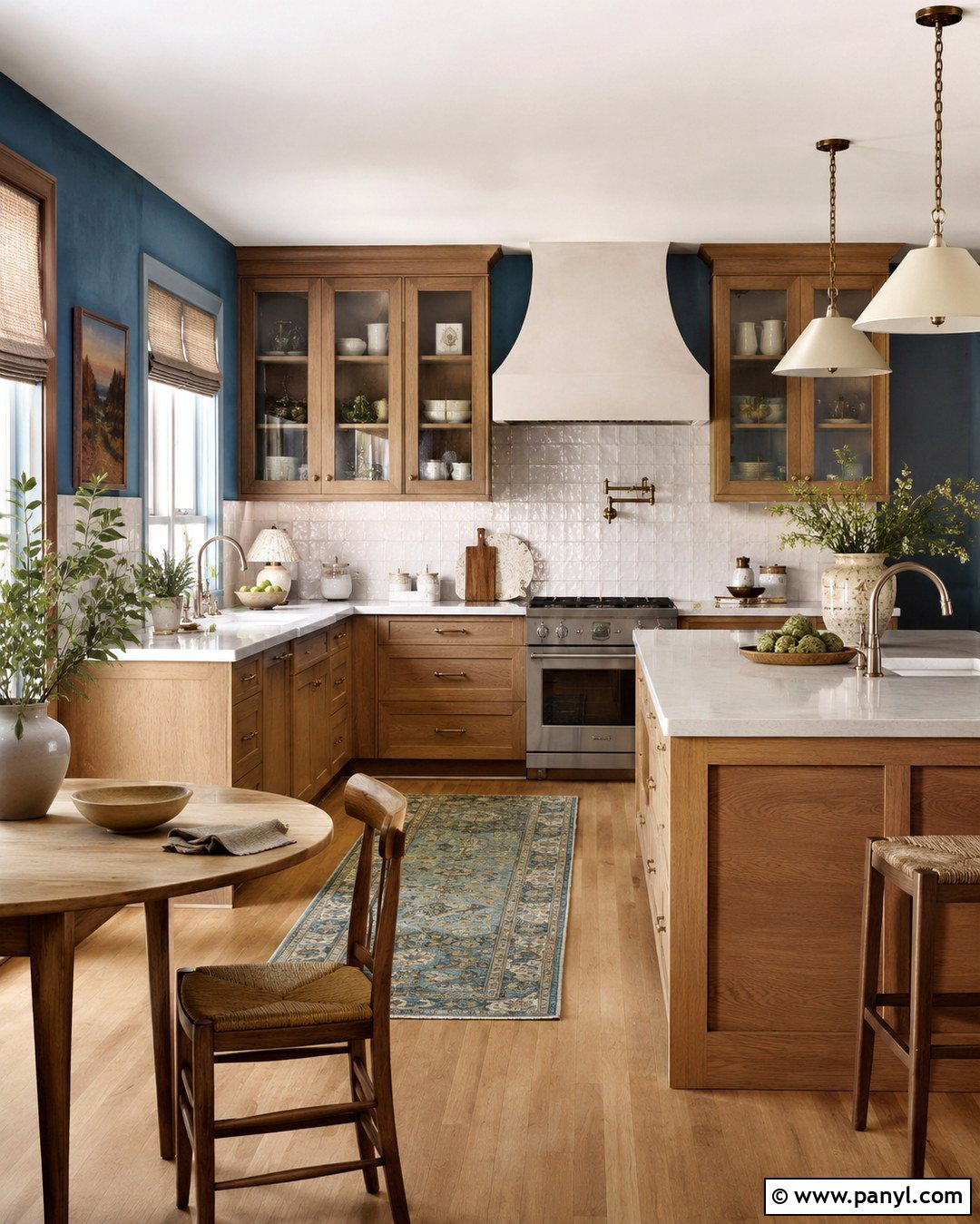
Dusty blue walls bring a soft, lived-in quality to medium oak cabinets. Look for a muted blue containing enough gray to prevent the walls from appearing overly bright. Cream quartz counters, handmade ivory backsplash tile, and aged brass hardware warm the color further. A medium-tone oak floor can remain, but introduce a faded blue and beige runner to define the work area. Choose a plaster-style range hood in warm white to provide a visual pause between cabinet sections. Glass-front upper cabinets can display simple cream dishes while helping the room feel lighter. Add linen Roman shades, ceramic pendant lights, and a compact wood breakfast table. This balanced design suits transitional, cottage, and relaxed farmhouse kitchens without relying on heavily rustic decorations.
4. Slate Blue Walls With Rift-Cut Oak Cabinets
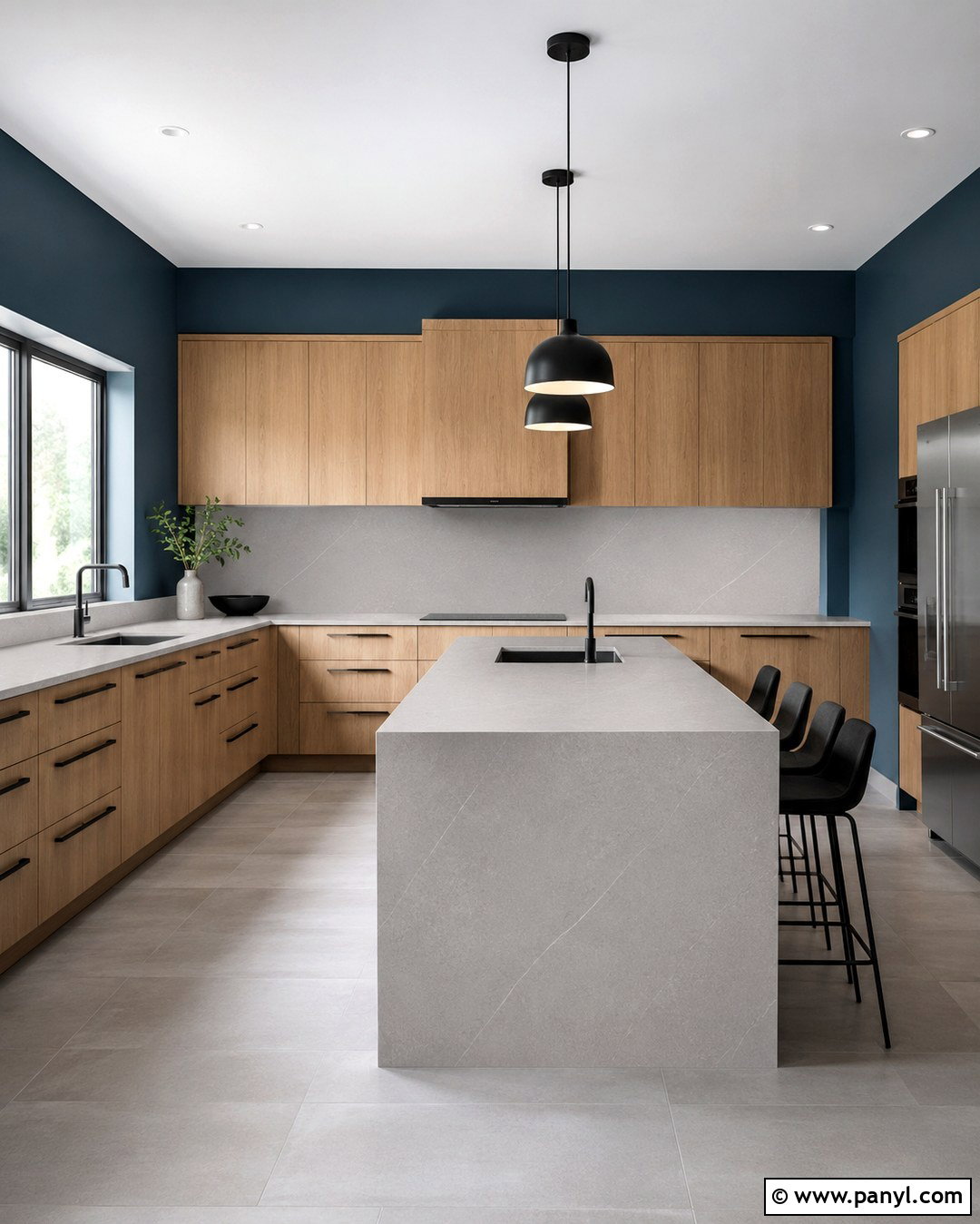
Slate blue creates a crisp architectural setting for streamlined rift-cut oak cabinetry. Keep the cabinet doors flat and minimally detailed, allowing the straight wood grain to become part of the design. Honed white or pale gray quartz countertops prevent the kitchen from feeling too dark. Continue the counter material up the backsplash for a quiet, seamless surface. Matte black pulls, a black faucet, and narrow black pendants add sharp contrast. Large-format light gray floor tile supports the contemporary look while remaining practical. On an island, waterfall countertop edges can introduce another clean line without hiding the oak base. Finish with charcoal counter stools and one sculptural ceramic bowl. The full scheme feels modern, organized, and warm rather than stark.
5. Blue-Gray Walls With Golden Oak Cabinets
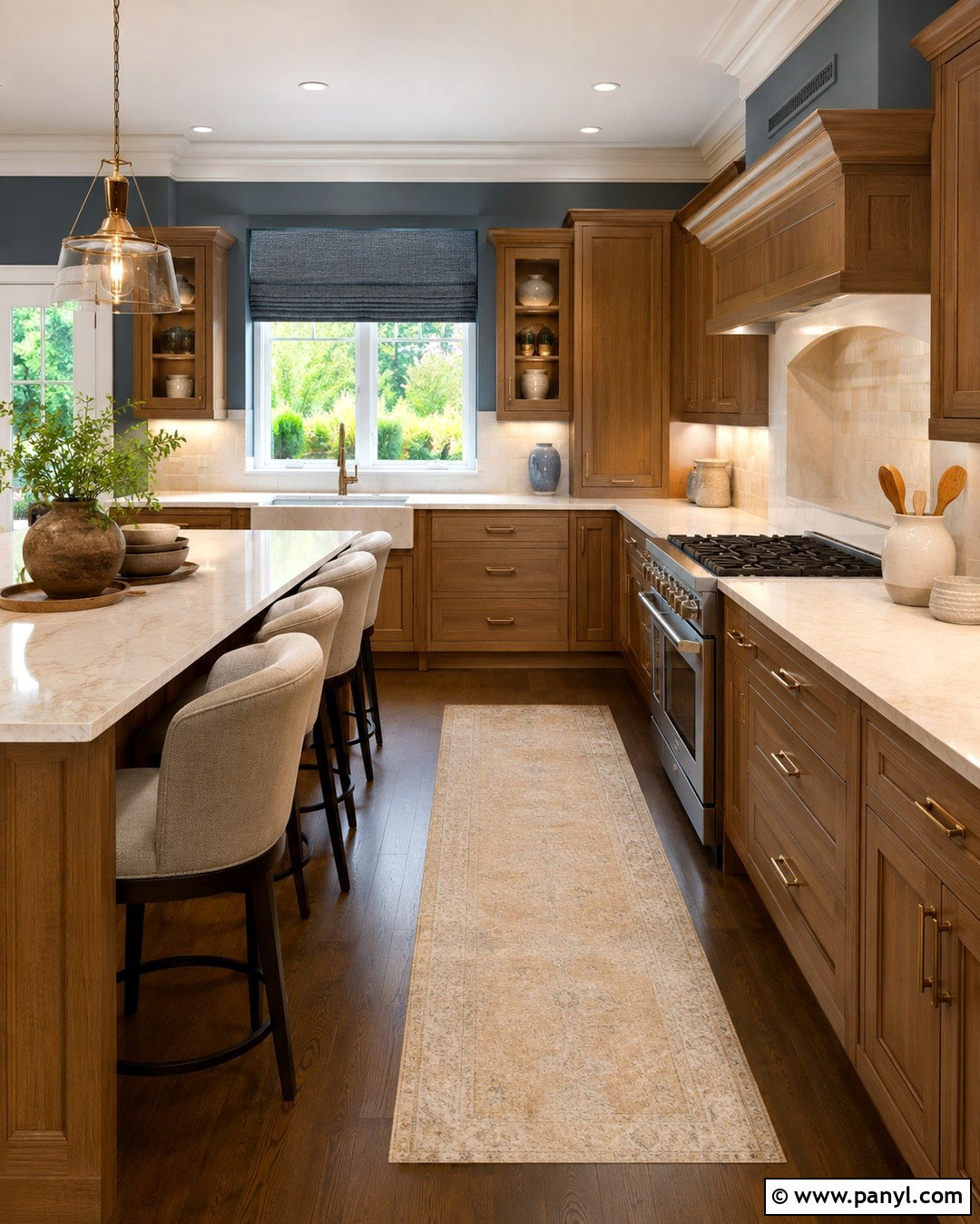
Blue-gray walls are an approachable choice when golden oak cabinets dominate the kitchen. Select a balanced shade that reads blue in daylight but becomes softly gray under evening lighting. Warm white quartz counters and a cream backsplash help bridge the cool paint and yellow-toned wood. Replace shiny brass or ornate hardware with simple brushed bronze pulls for a quieter update. If the flooring is also golden oak, use a large beige runner to reduce the amount of visible wood. Warm white ceiling paint and bright under-cabinet lights keep the palette clear. Add upholstered counter stools in textured oatmeal fabric, blue-gray window treatments, and understated pottery. This complete transitional look modernizes existing cabinetry while respecting its traditional shape, finish, and natural character.
6. Teal Blue Walls With Red Oak Cabinets
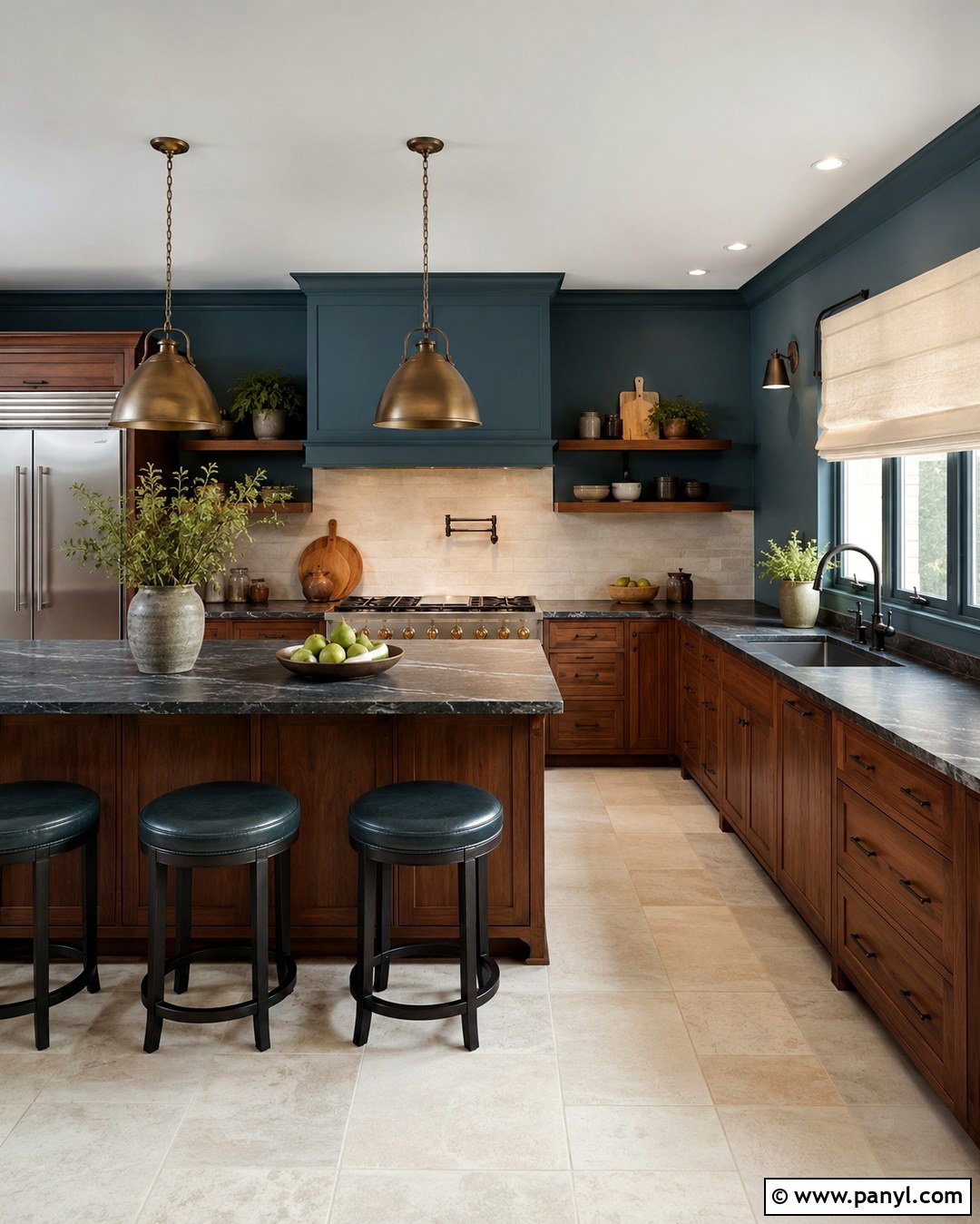
A muted teal-blue wall color can complement red oak cabinets while creating an earthy, nature-inspired kitchen. Avoid an intensely saturated turquoise. Instead, choose a deep blue-green with gray undertones. Soapstone-look quartz countertops and an ivory backsplash ground the stronger colors. Oil-rubbed bronze hardware works naturally with the richer oak grain, while warm metal pendant lights add a subtle glow. Choose pale limestone-look flooring to keep the cabinets and walls from making the room feel heavy. An oak island can remain, but dark teal stools will visually connect it to the surrounding walls. Add off-white linen shades, wooden cutting boards, and simple green plants. The finished kitchen feels layered and distinctive, with color, wood, stone, and metal working together comfortably.
7. Powder Blue Walls With Limed Oak Cabinets
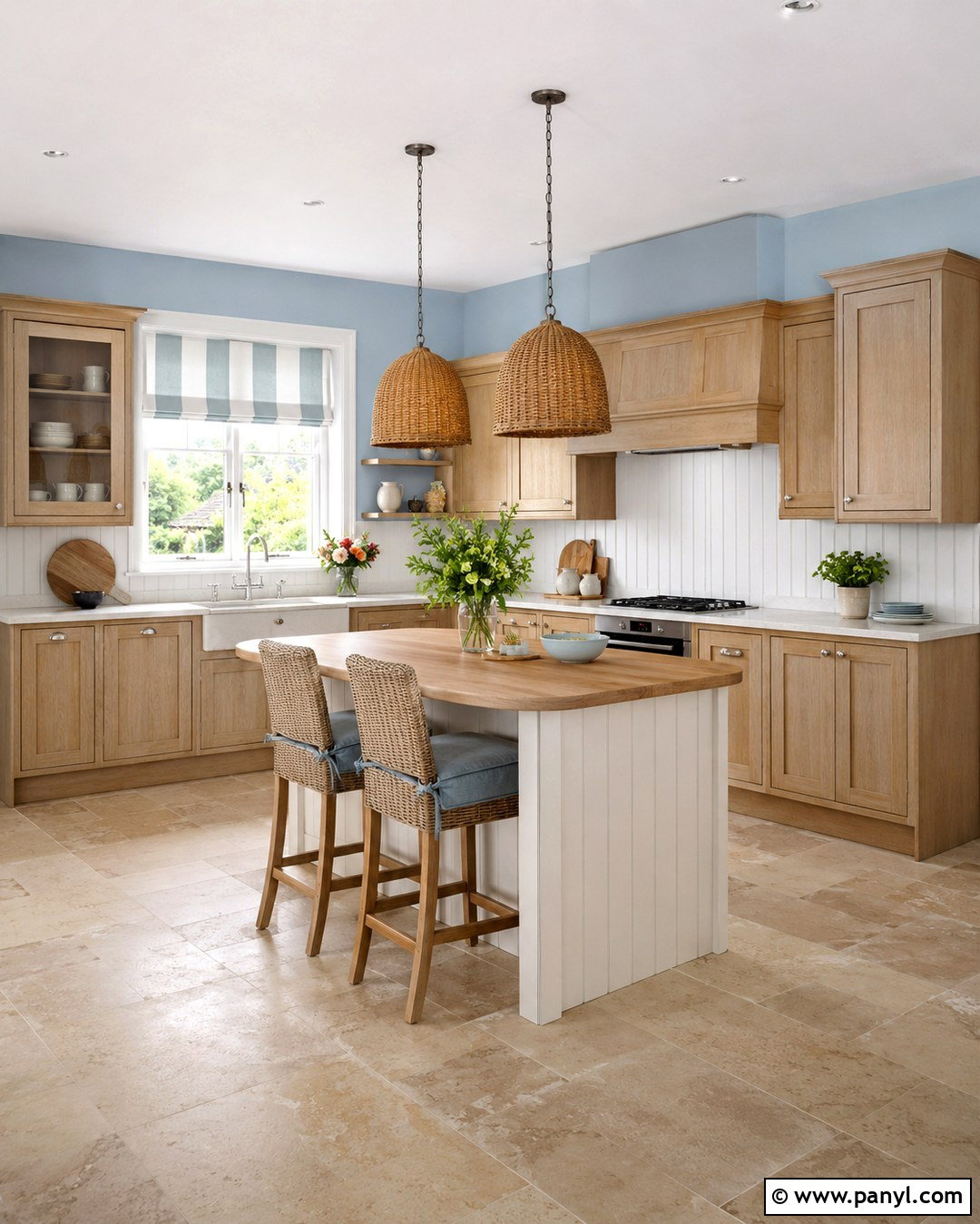
Powder blue walls and limed oak cabinets create a cheerful cottage kitchen with a light, softly weathered finish. Use Shaker cabinet doors and understated satin nickel knobs to keep the cabinetry casual. Cream marble-look quartz countertops bring gentle movement without overwhelming the pale colors. A white beadboard backsplash or small square ceramic tile adds texture around the work surfaces. Natural limestone-look flooring provides warmth and enough contrast beneath the light oak. Include a compact island painted warm white, topped with oak to connect it to the cabinets. Woven pendant lights, striped Roman shades, and pale blue seat cushions complete the room. Keep accessories simple and useful, such as white pitchers and wood boards, so the kitchen remains charming without appearing crowded or overly themed.
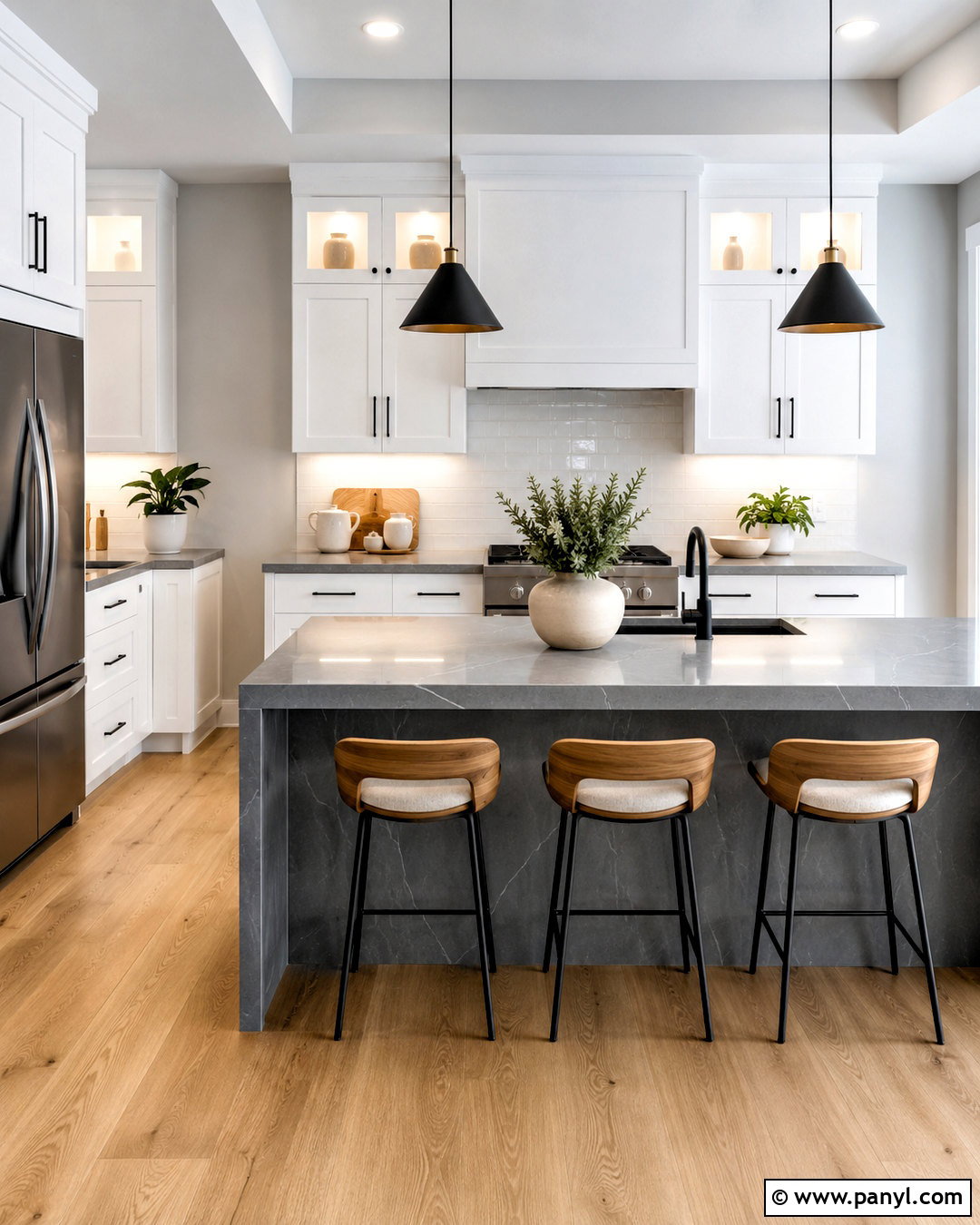
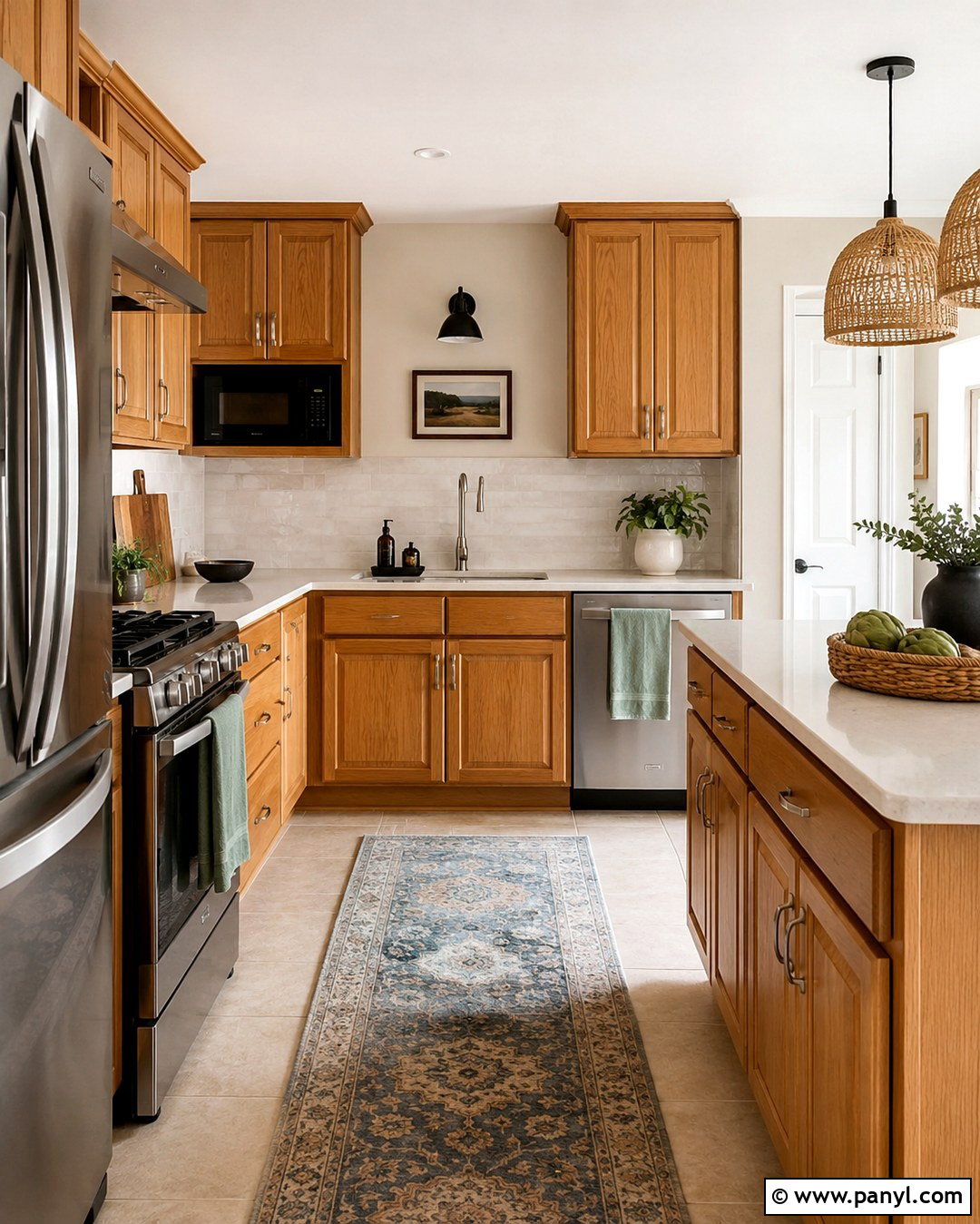
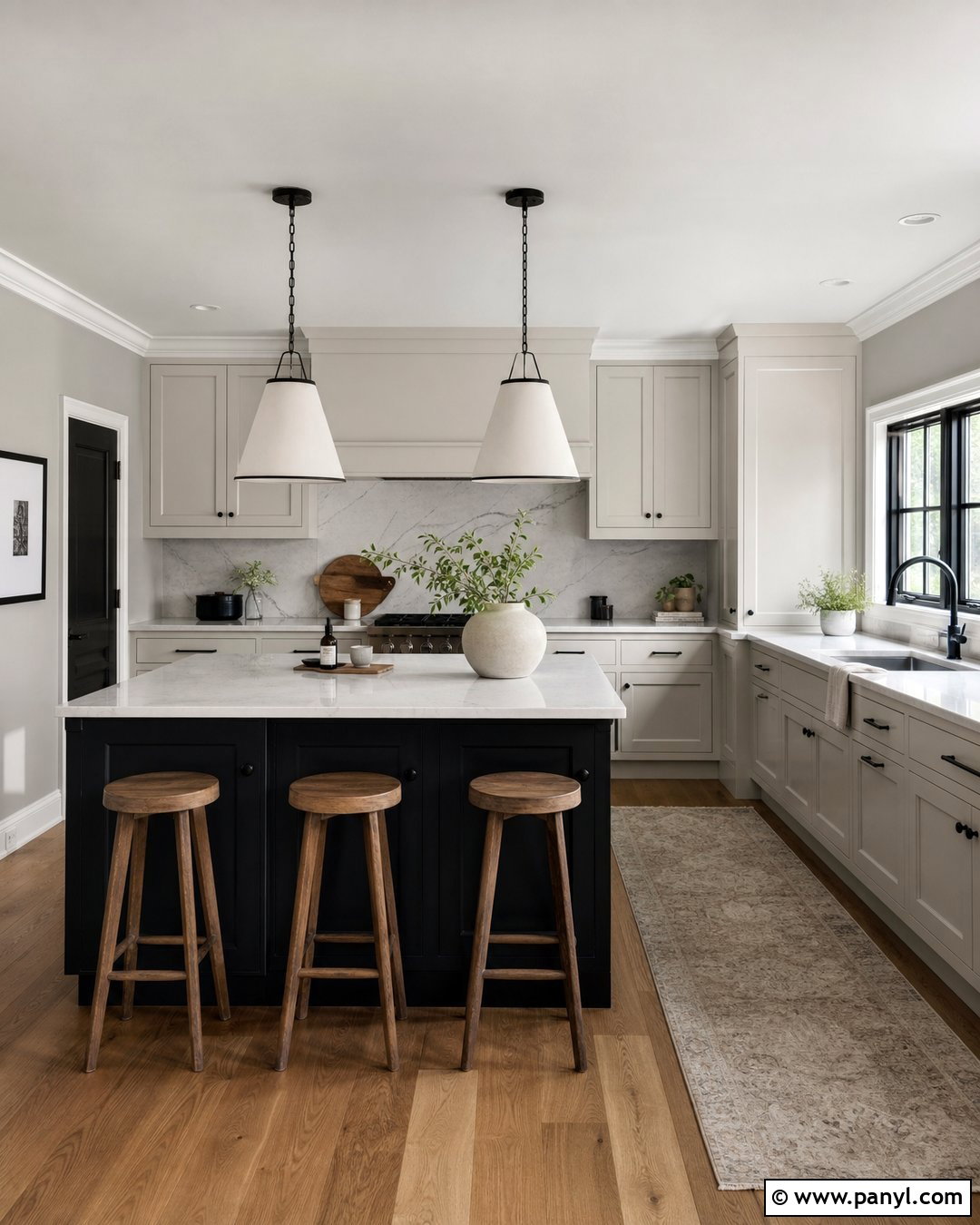
8. Denim Blue Walls With Quarter-Sawn Oak Cabinets
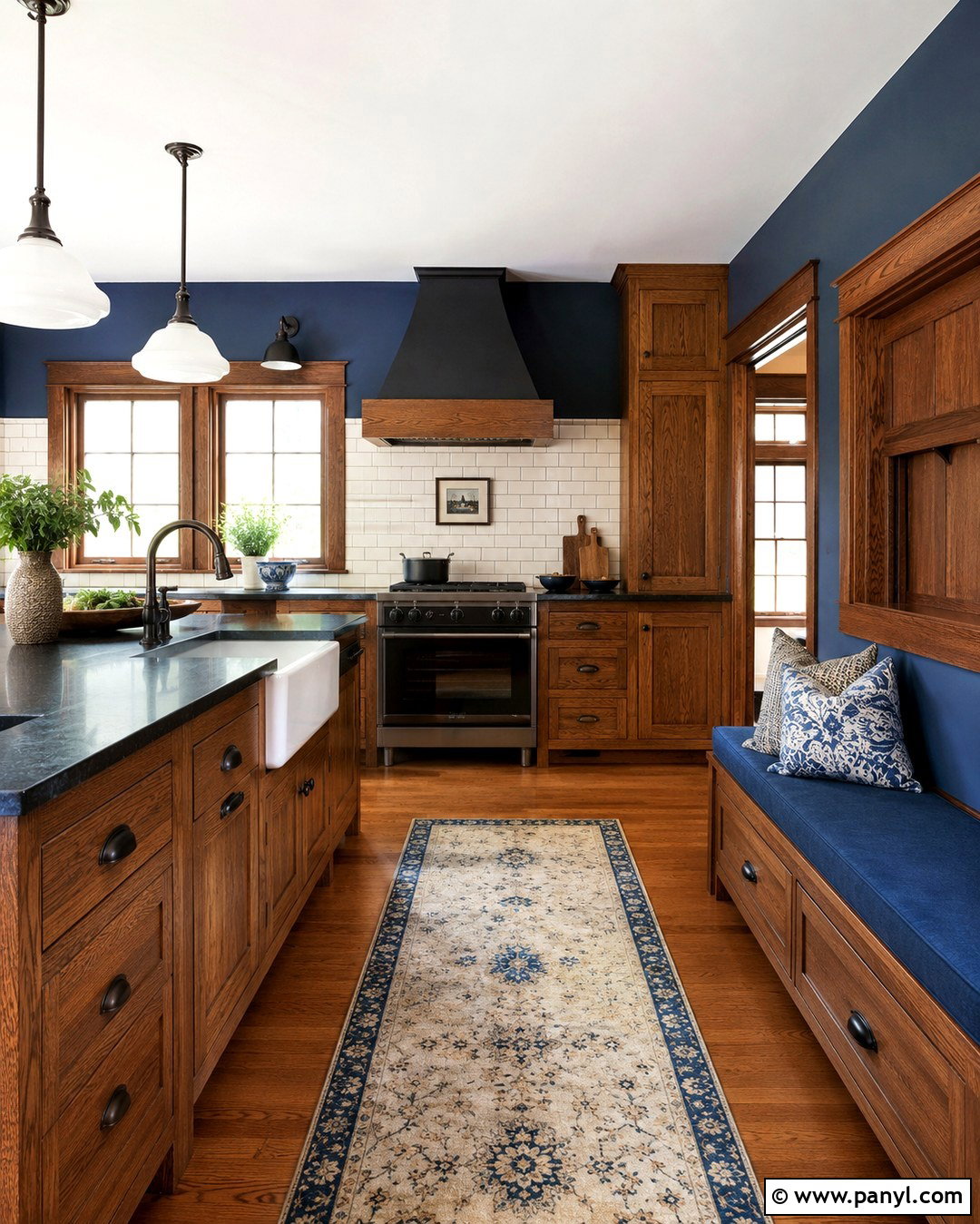
Denim blue walls enhance the visible grain and handcrafted character of quarter-sawn oak cabinets. This combination is especially effective in a Craftsman-inspired kitchen with inset doors, substantial trim, and built-in storage. Choose leathered black granite counters for depth, then soften the work area with an ivory subway tile backsplash and warm beige grout. Aged bronze bin pulls and schoolhouse pendant lights support the period influence without making the space look old-fashioned. Medium brown oak flooring can continue through the room, complemented by a patterned cream and blue runner. Add a built-in oak breakfast bench with denim cushions near a window. The overall kitchen feels sturdy, welcoming, and thoughtfully detailed, with the blue walls providing a calm backdrop for richly grained cabinetry.
9. Cobalt Blue Walls With Light Oak Cabinets
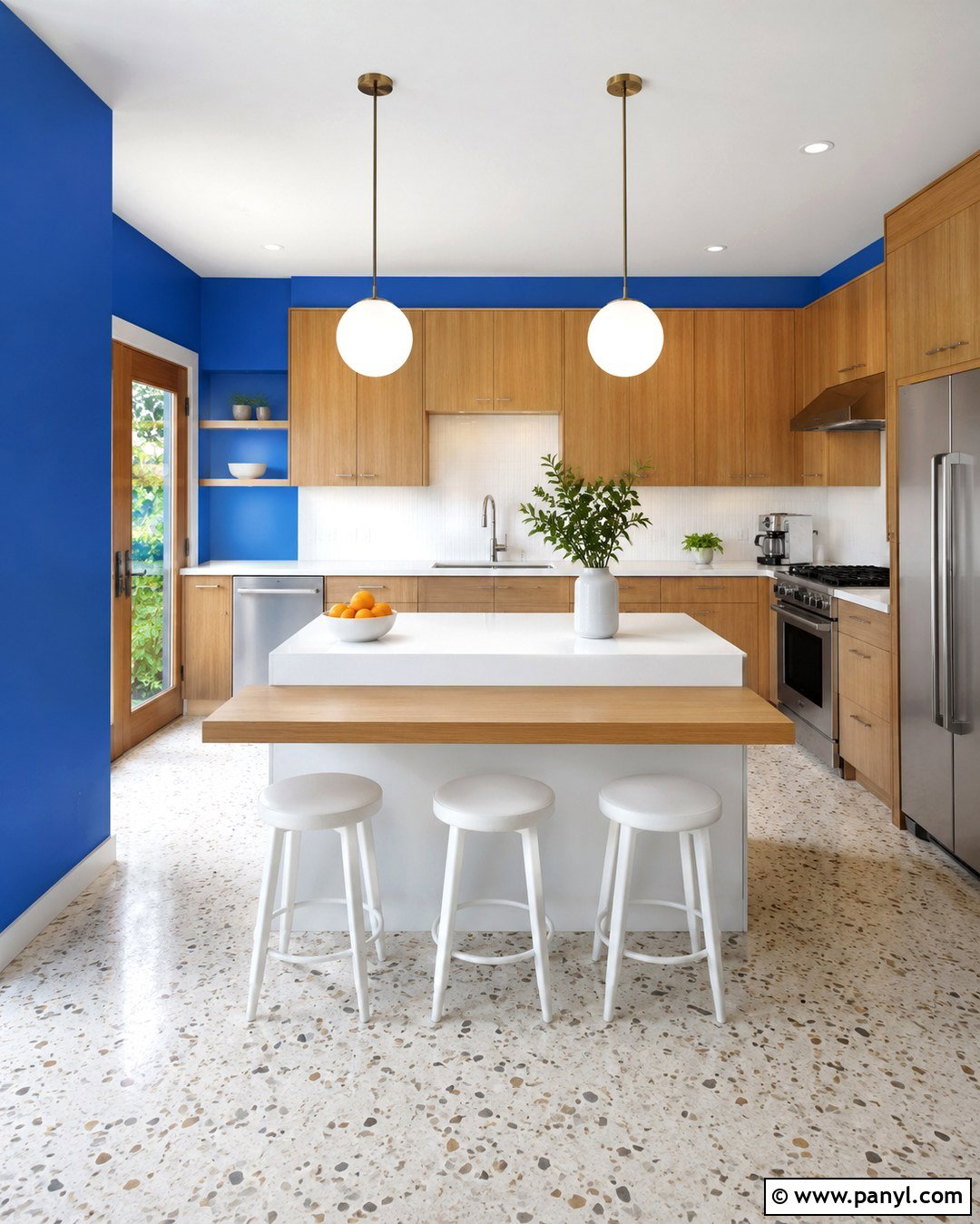
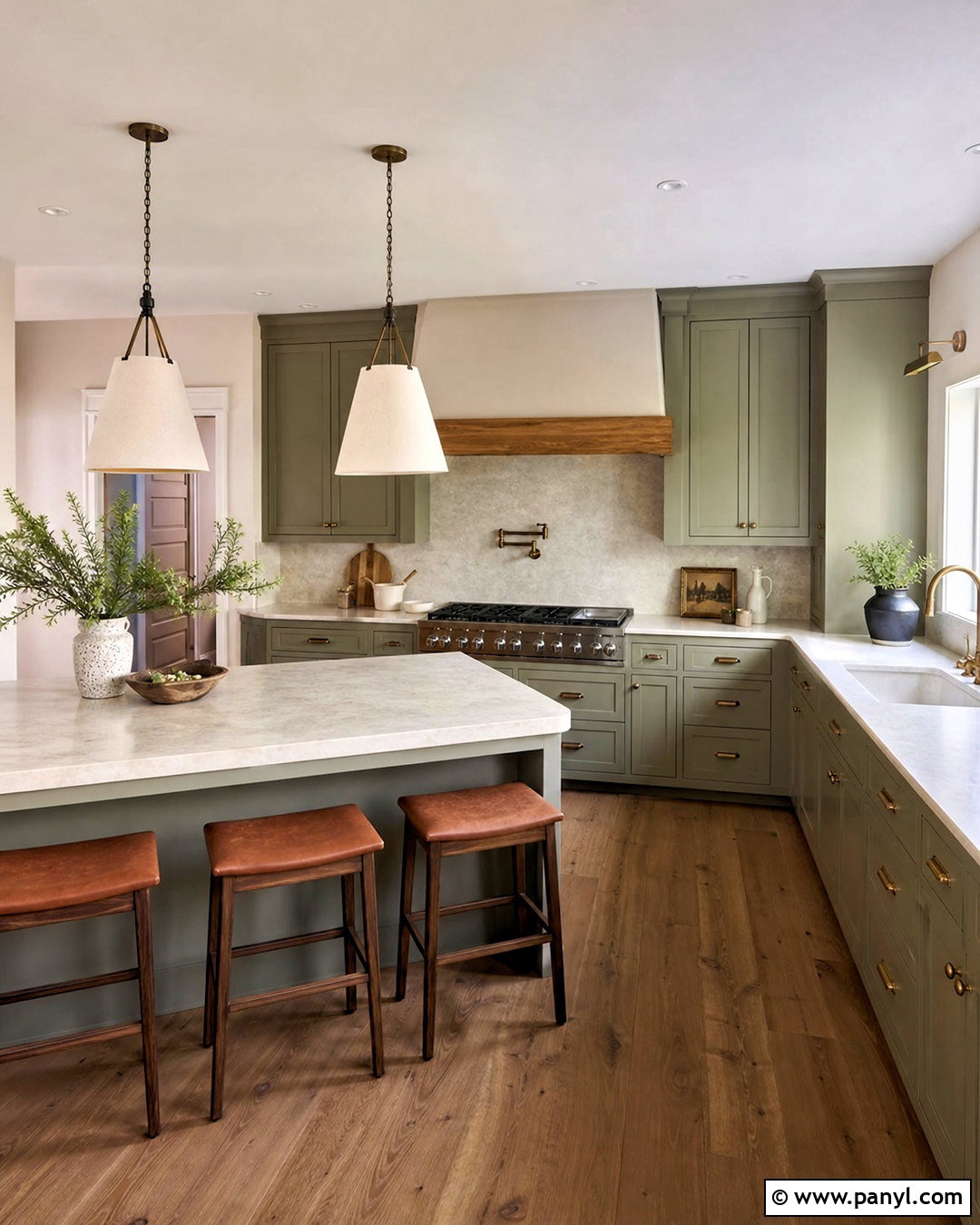
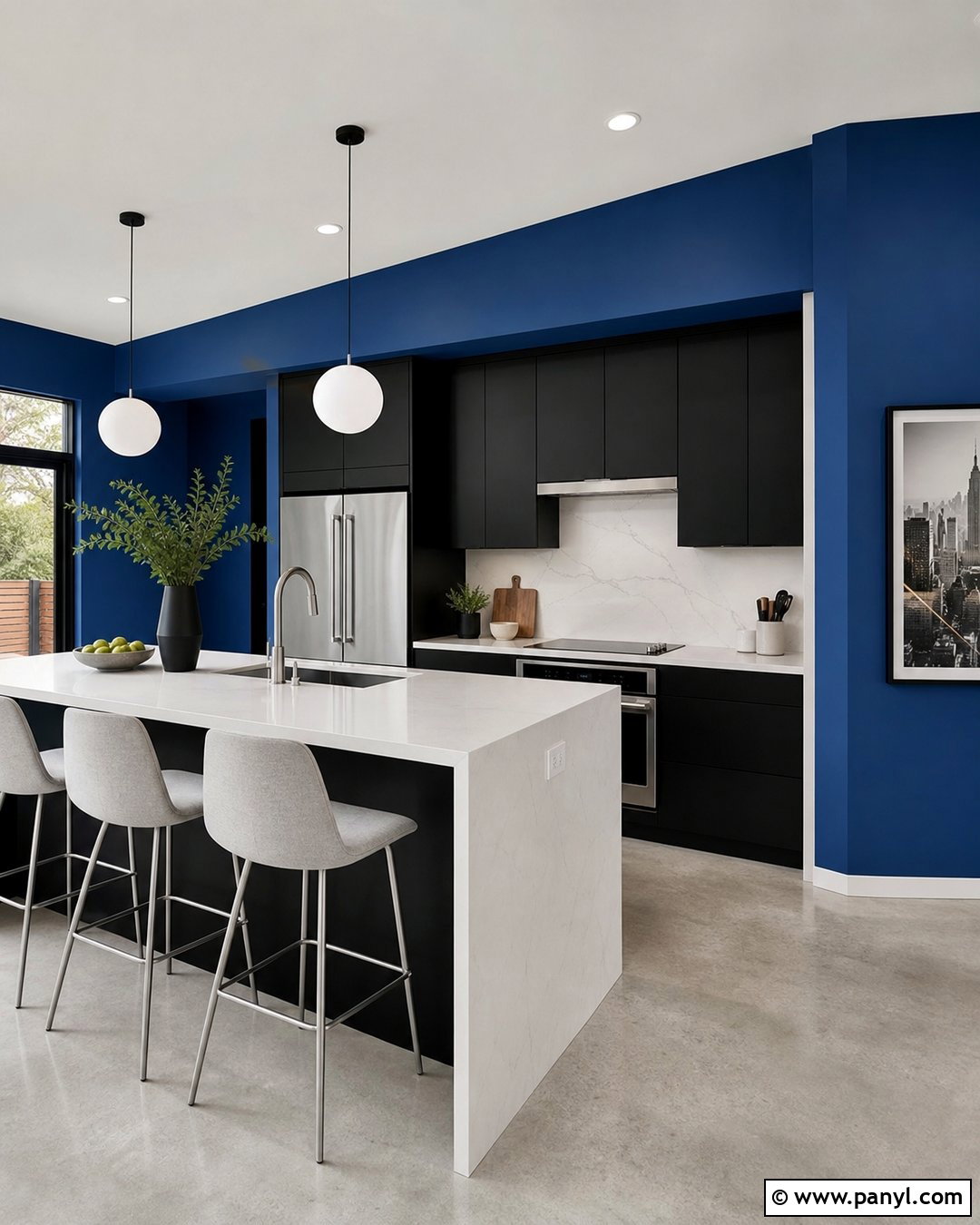
Cobalt blue can energize a kitchen when balanced with light oak cabinets and generous white surfaces. Use the bold color on the main walls while keeping the ceiling, trim, backsplash, and counters bright warm white. Flat-panel light oak doors create a clean background that can handle the stronger blue. Choose minimal brushed stainless steel hardware and streamlined appliances to prevent visual clutter. Pale terrazzo or light gray porcelain flooring introduces subtle pattern without competing with the walls. A white island with an oak seating overhang creates another useful break in the color. Complete the room with simple globe pendants, white counter stools, and a few cobalt accessories. The finished design feels colorful and contemporary, yet the natural oak prevents it from becoming too sharp or artificial.
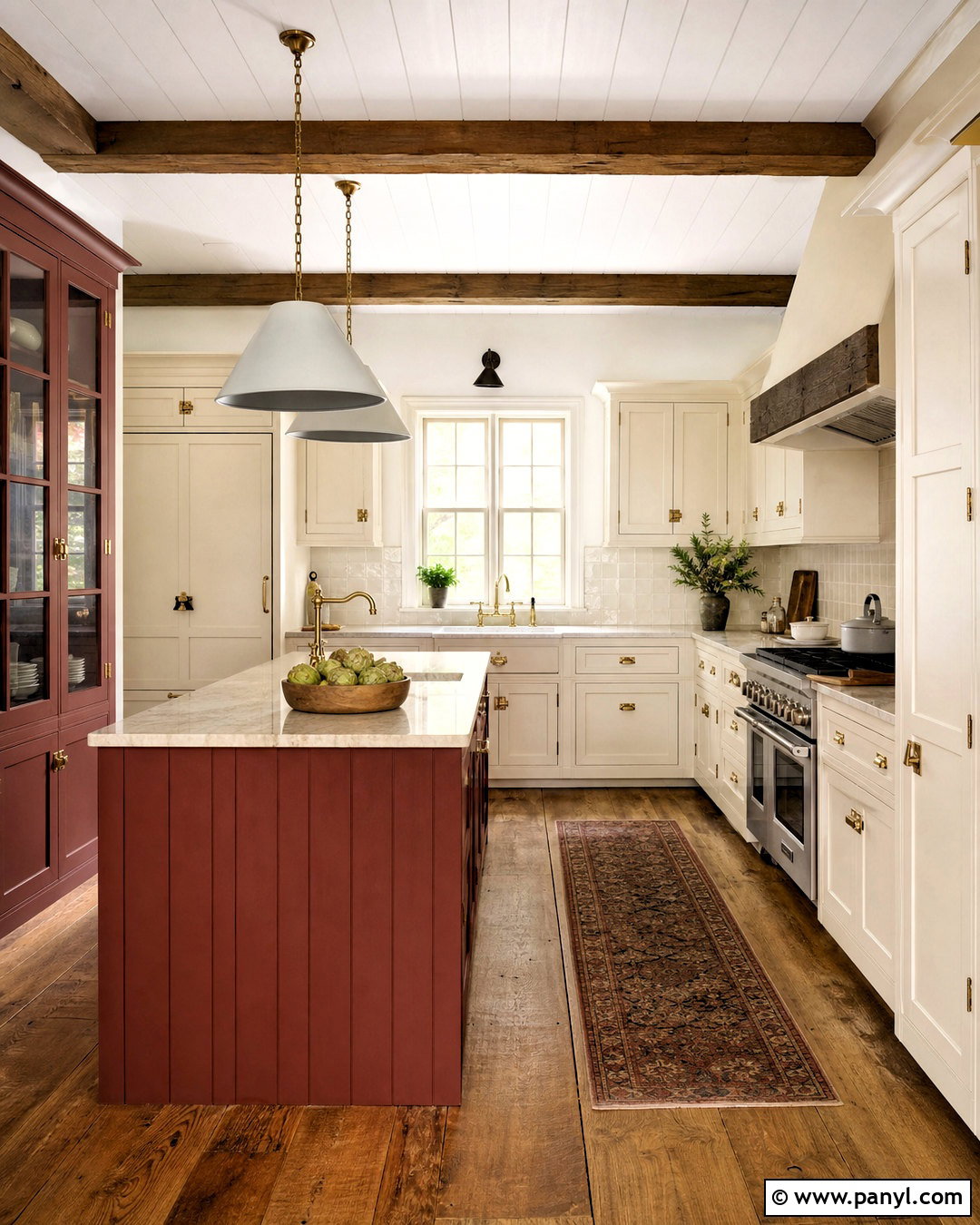
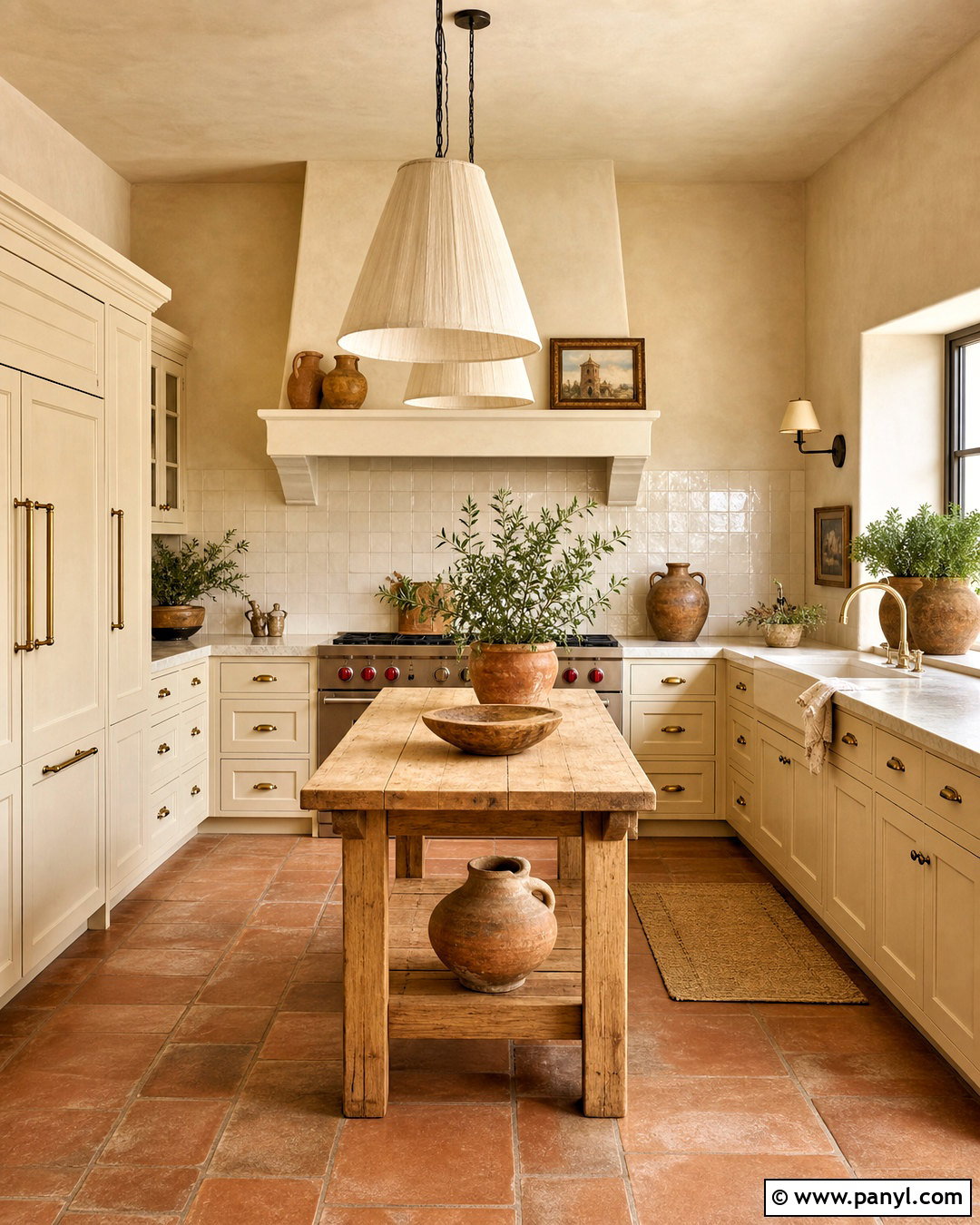
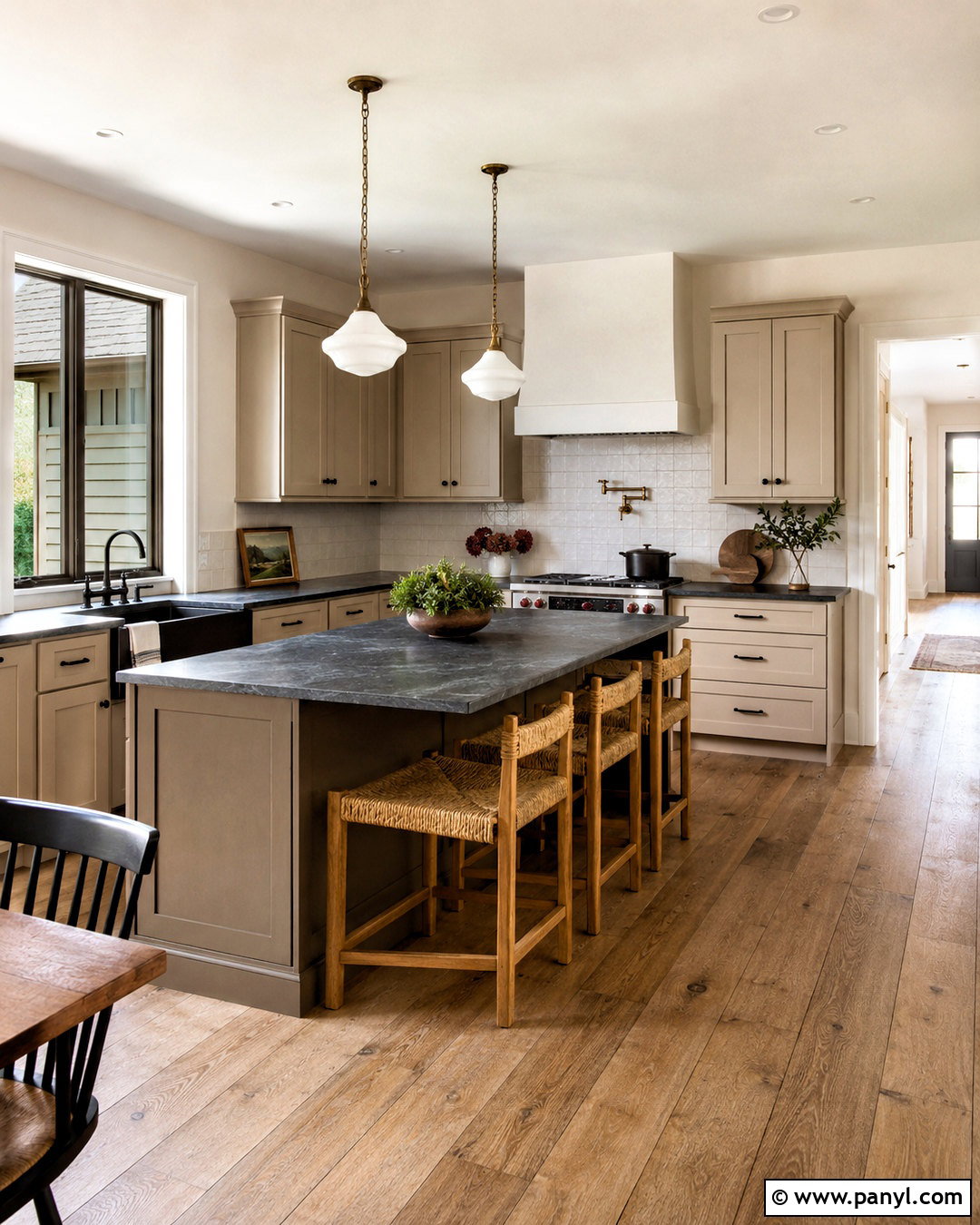
10. Coastal Blue Walls With Natural Oak Cabinets
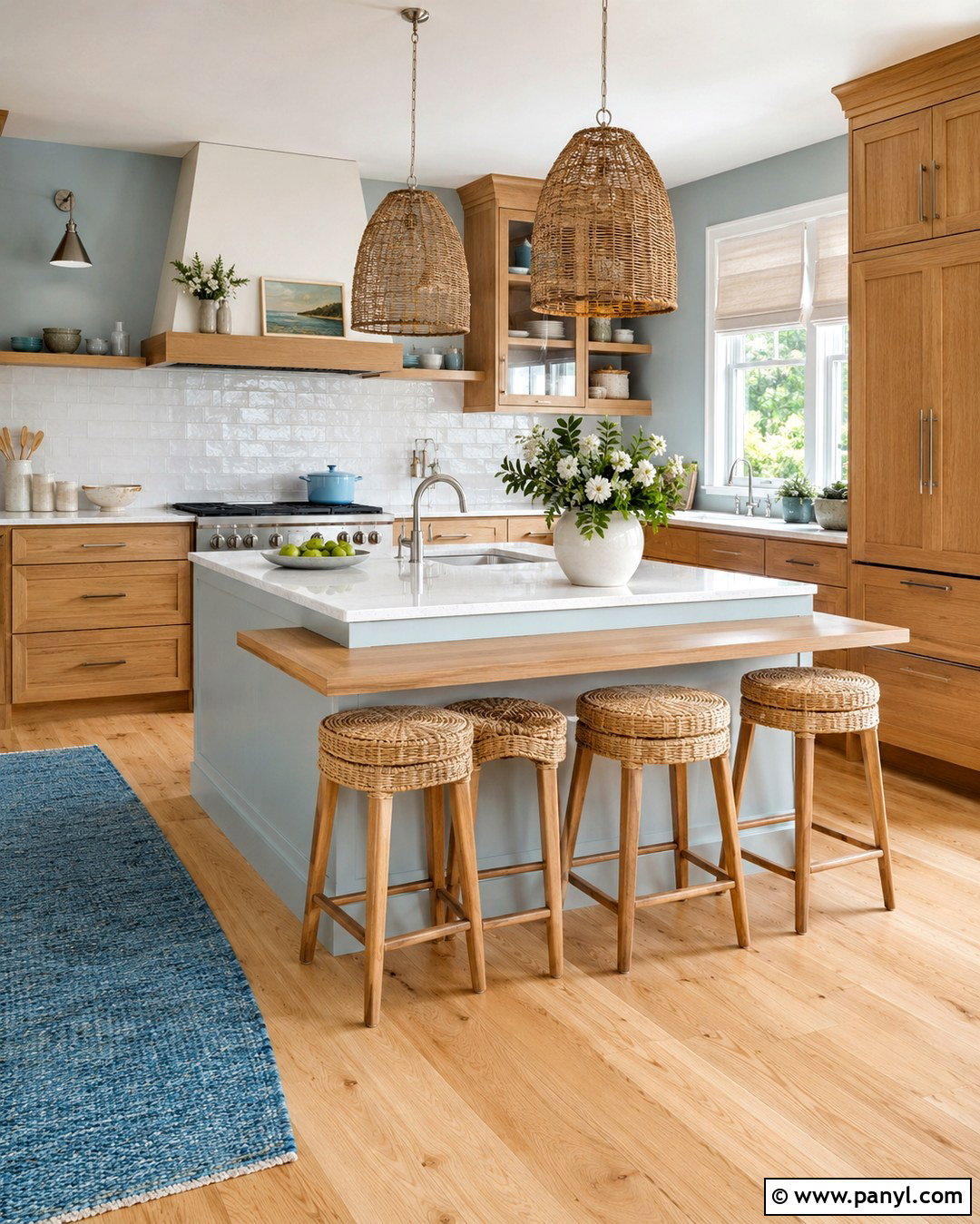
A soft coastal blue can make natural oak cabinets feel breezy without turning the kitchen into a themed beach space. Choose a muted blue with a touch of green rather than a bright tropical shade. Pair it with creamy quartz countertops, white handcrafted tile, and brushed nickel hardware. Light oak flooring can coordinate with the cabinets when a large ivory and blue runner separates the surfaces. Add a pale blue island with an oak countertop or oak seating ledge to distribute both materials across the room. Woven pendant lights and counter stools introduce natural texture, while white linen shades filter harsh sunlight. Limit decorative objects to clear glass, simple pottery, and practical wood pieces. This complete scheme feels open, casual, and suitable for everyday family living.
11. Midnight Blue Walls With White Oak Cabinets
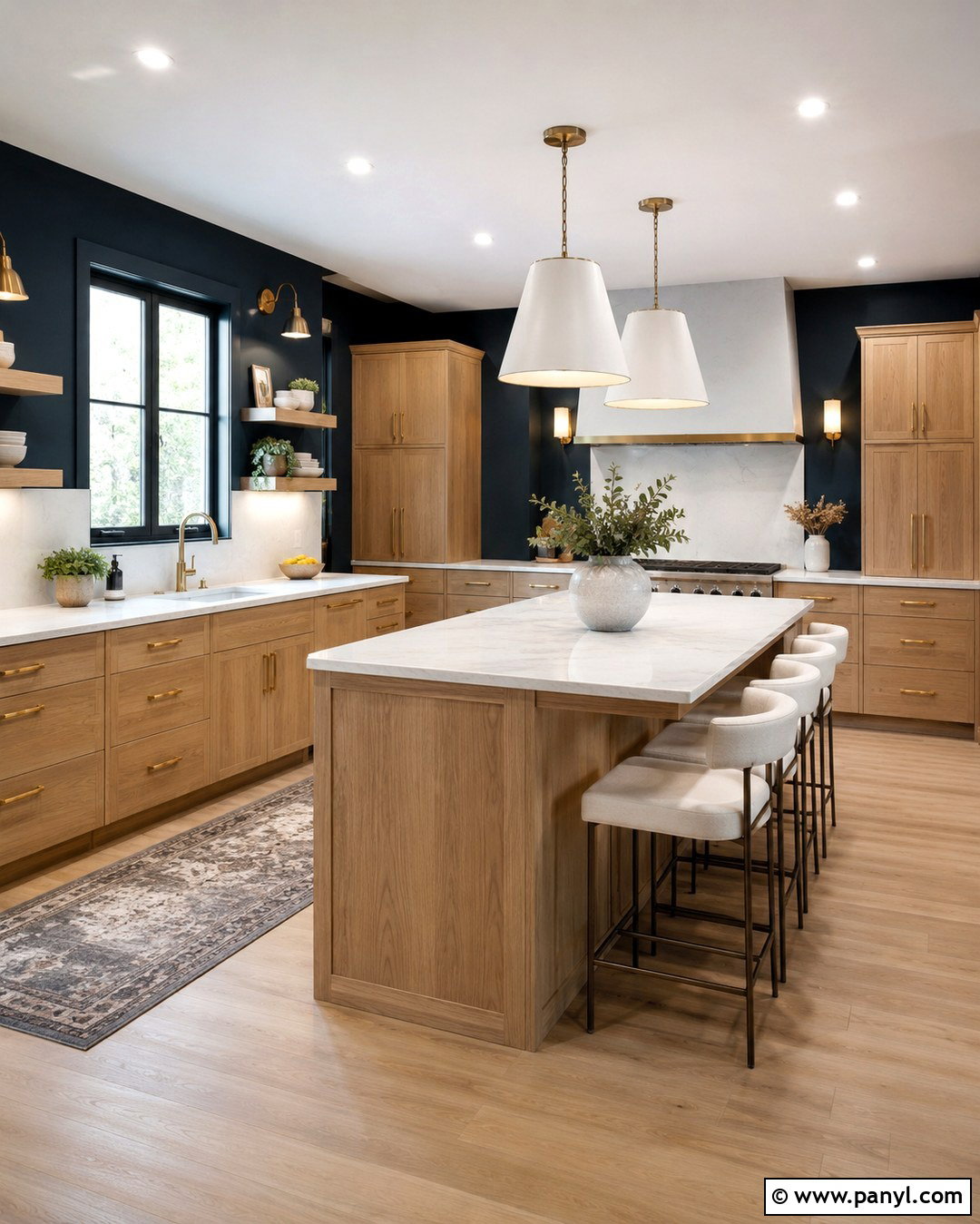
Midnight blue walls produce a dramatic contrast against pale white oak cabinets. This look works best in a kitchen with large windows, an open doorway, or layered artificial lighting. Run white quartz counters and backsplash material together to create bright horizontal surfaces between the dark walls and cabinets. Brushed brass hardware adds warmth, while slim black window frames or pendant cords keep the palette grounded. Choose pale oak flooring that closely coordinates with the cabinet finish for visual continuity. A large island can feature white oak panels and a thick white countertop, creating a bright focal point in the center. Add cream counter stools, a light neutral runner, and warm white ceiling paint. The result feels sophisticated and bold while remaining functional, inviting, and balanced.
12. Blue Shiplap Walls With Rustic Oak Cabinets
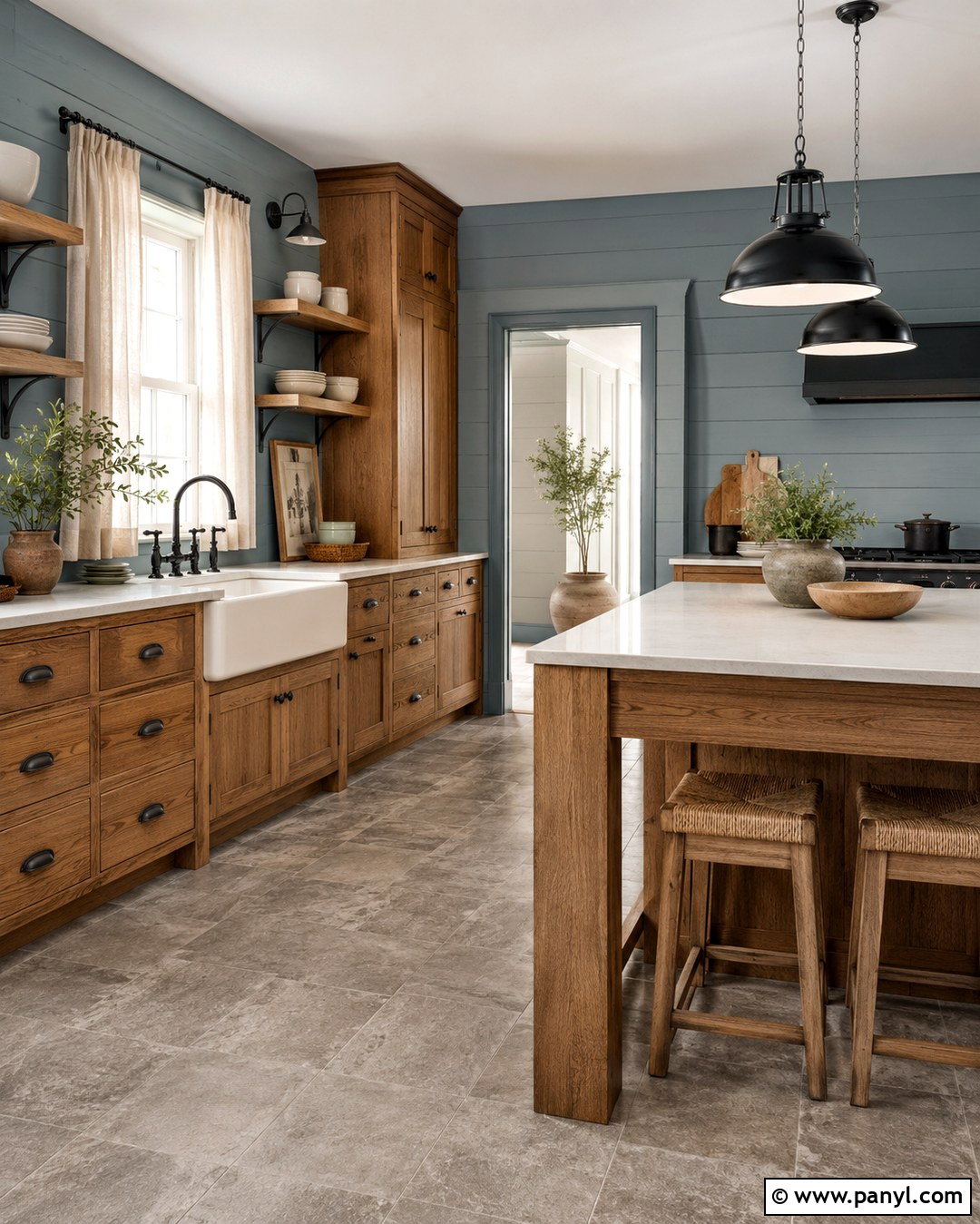
Blue-painted shiplap brings texture and color to a kitchen with rustic oak cabinets. Select a medium muted blue so the wall grooves remain visible without overpowering the wood grain. Warm white quartz countertops provide a clean update, while an ivory farmhouse sink supports the relaxed character. Use aged iron pulls, a bridge faucet, and simple black pendant lights for practical contrast. Wide-plank oak flooring can work if it differs slightly from the cabinet stain. Otherwise, choose warm gray stone-look tile to prevent an excess of wood. Include a freestanding oak island with open shelves, woven stools, and a durable light countertop. Finish with cream curtains and everyday ceramic dishes. The completed room feels casual and collected, but the limited palette keeps it from becoming cluttered.
13. Duck Egg Blue Walls With Honey Oak Cabinets
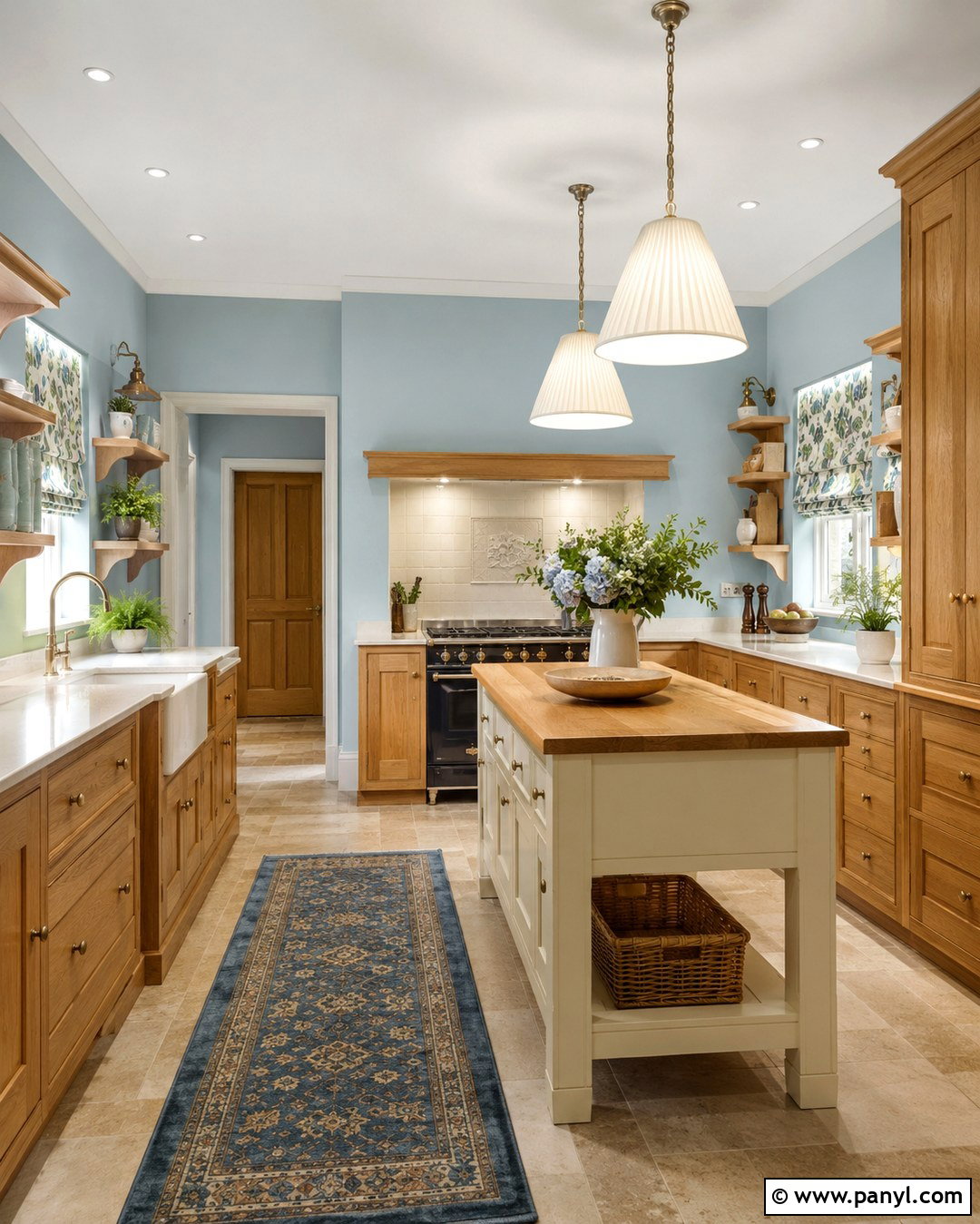
Duck egg blue introduces enough green to soften the orange appearance of honey oak cabinetry. This gentle color is particularly effective in traditional kitchens where replacing raised-panel doors is not practical. Update the room with warm white counters, an ivory backsplash, and simple antique brass knobs. A creamy stone-look floor lightens the lower half of the room and provides contrast against the cabinets. Consider removing one small upper cabinet and adding two oak shelves for frequently used dishes. A cream-painted island with an oak top creates a natural connection between old and new finishes. Add pleated white pendant shades, botanical Roman blinds, and an understated blue runner. The final kitchen feels fresh and welcoming while retaining the warmth, storage, and craftsmanship of the original oak cabinets.
14. Steel Blue Walls With Dark Oak Cabinets
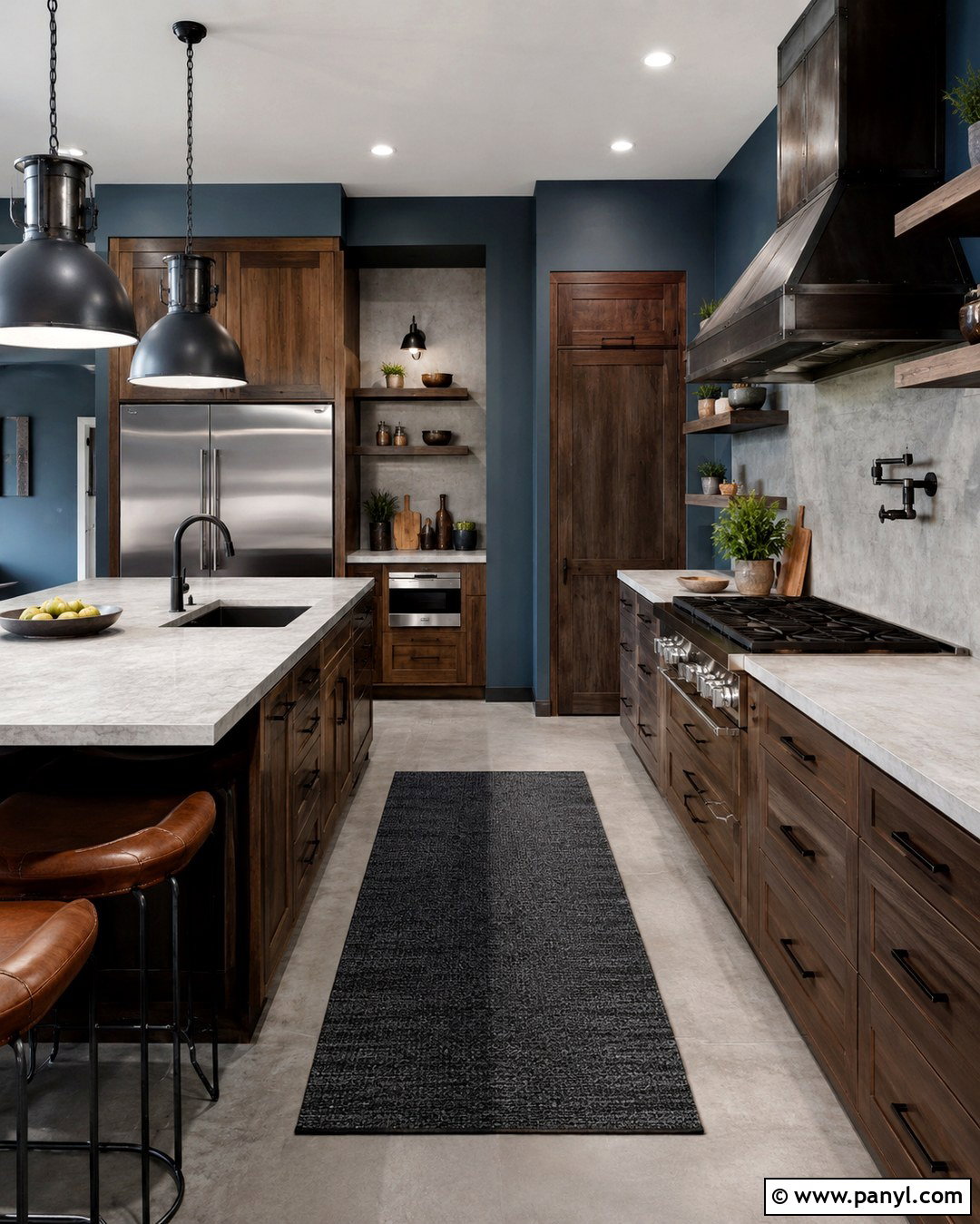
Steel blue walls can give dark oak cabinets a strong, modern industrial character. Choose a medium blue with a noticeable gray base so the contrast remains controlled. Pale concrete-look quartz counters and a matching full-height backsplash brighten the cabinetry without introducing another busy surface. Matte black bar pulls, a black pull-down faucet, and metal pendant lights reinforce the clean architectural lines. Use large warm gray porcelain floor tiles rather than dark flooring, which could make the entire kitchen feel enclosed. An island with dark oak panels and a pale countertop continues the material combination. Add cognac leather counter stools and a washable charcoal runner for warmth. This complete kitchen feels substantial and contemporary, balancing cool walls, deep wood, light work surfaces, and practical industrial accents.
15. Aqua Blue Walls With Blonde Oak Cabinets
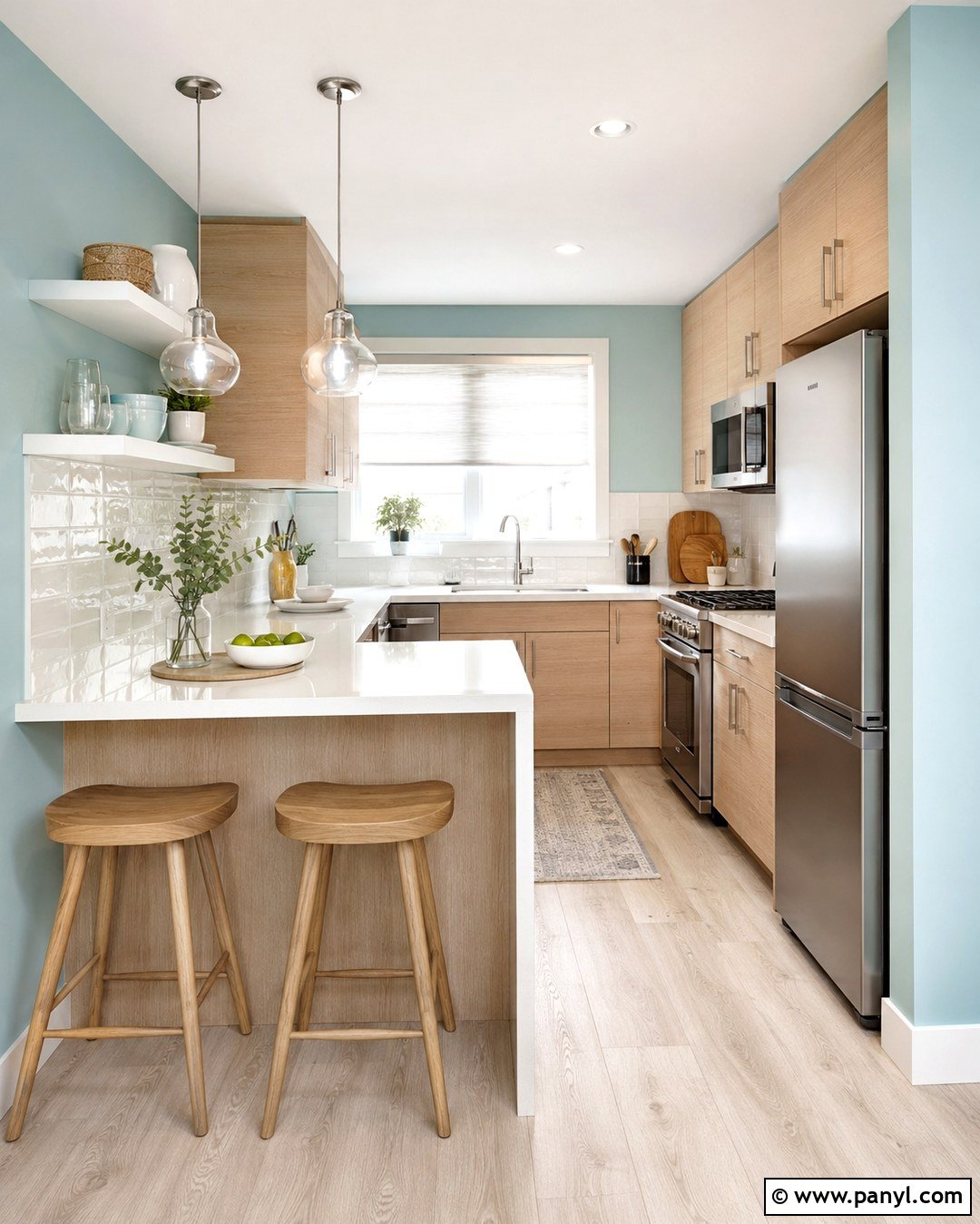
Fresh aqua walls and blonde oak cabinets can make a compact kitchen feel bright and energetic. Pick a softened aqua that contains a little gray, avoiding anything overly neon or tropical. Simple slab-front cabinets maximize the modern effect, while warm white quartz counters and glossy ivory tile reflect light around the room. Brushed nickel pulls and a matching faucet maintain a clean, quiet finish. Pale wood-look flooring can coordinate with the cabinets, creating fewer visual breaks in a narrow layout. Use white open shelves on one wall to keep the room from feeling boxed in. Complete the kitchen with compact oak stools, clear glass pendants, and light-filtering white shades. The cohesive palette adds personality while preserving the open appearance needed in smaller rooms.
16. Periwinkle Blue Walls With Natural Oak Cabinets
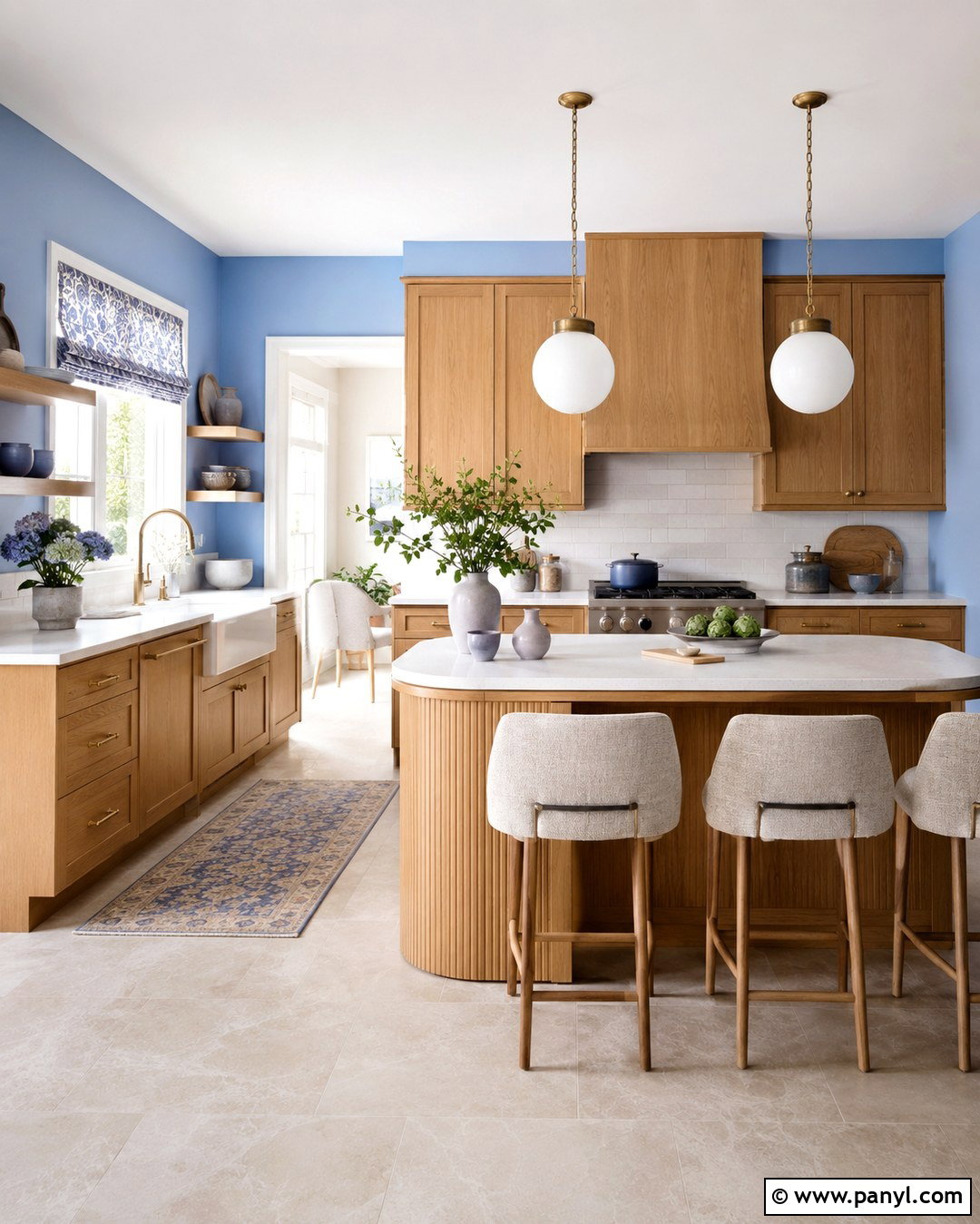
Periwinkle blue offers a playful alternative to standard navy or blue-gray walls. Because the color contains subtle violet notes, pair it with natural oak that is light to medium rather than strongly yellow. Cream quartz counters and matte white backsplash tile create a neutral transition between the two finishes. Brushed brass pulls add warmth, while white globe pendants keep the room youthful and clean. Choose pale beige porcelain flooring instead of gray, which may exaggerate the cooler wall color. A natural oak island with rounded corners can soften the overall design. Add oatmeal counter stools, patterned blue window fabric, and a few lavender-gray ceramics. The completed kitchen feels cheerful and personal, yet restrained materials prevent the unusual wall color from overwhelming the cabinetry or functional work areas.
17. Two-Tone Blue Walls With Oak Cabinets
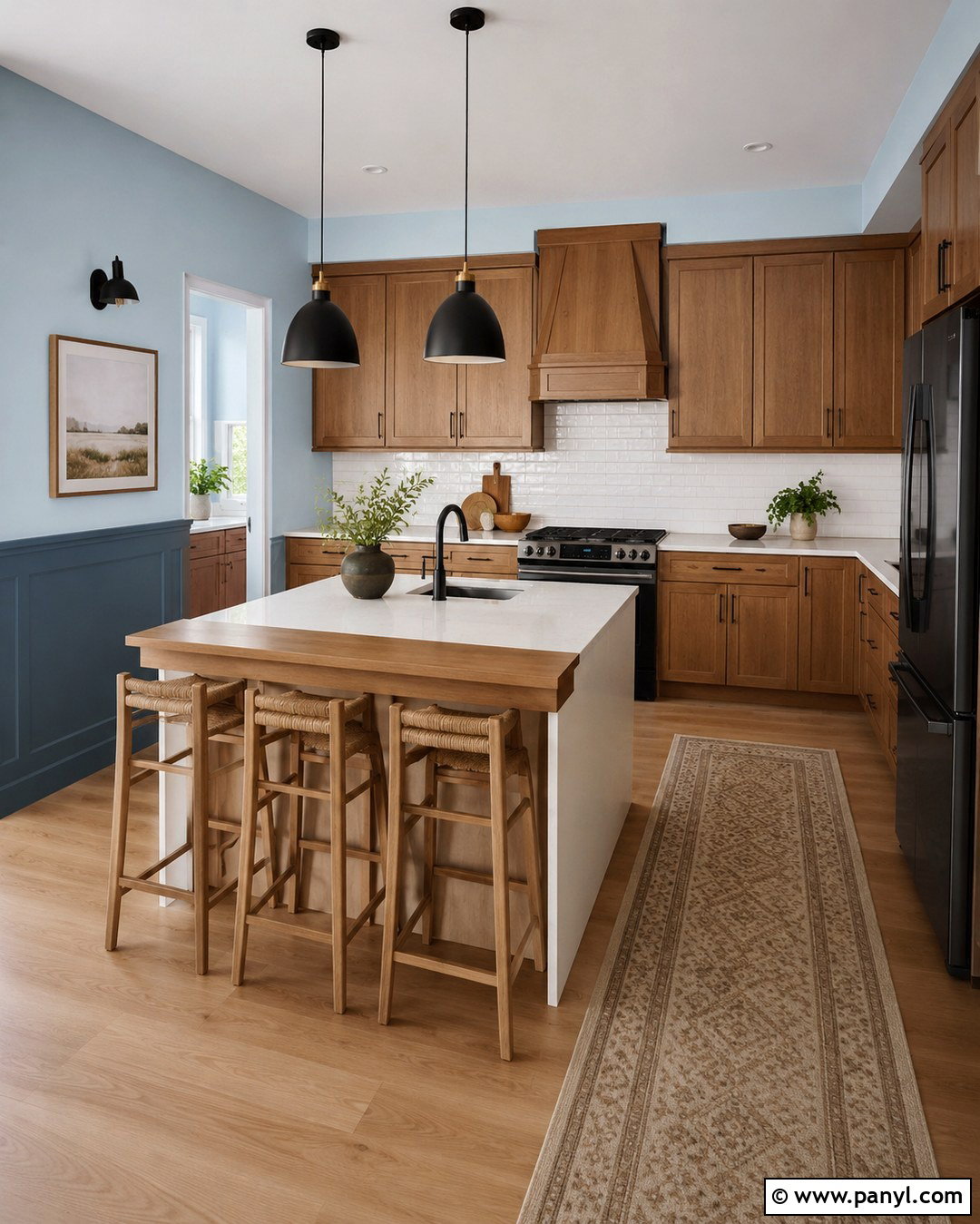
Two-tone blue walls can add dimension to a kitchen while keeping existing oak cabinets unchanged. Paint the lower wall areas or breakfast nook in medium slate blue, then use pale blue above a simple horizontal molding. This approach works best where enough exposed wall remains visible around the cabinetry. Choose creamy quartz counters and an off-white backsplash to give the eye a quiet resting place. Medium oak cabinets can be updated with matte black pulls and bright under-cabinet lighting. Continue the black finish through pendant lights and the faucet for consistency. Add a cream-painted island with an oak seating ledge, along with woven stools and a beige runner. The finished kitchen feels customized and architectural, but the coordinated blue shades keep the layered walls calm rather than busy.
18. Textured Blue Walls With White Oak Cabinets
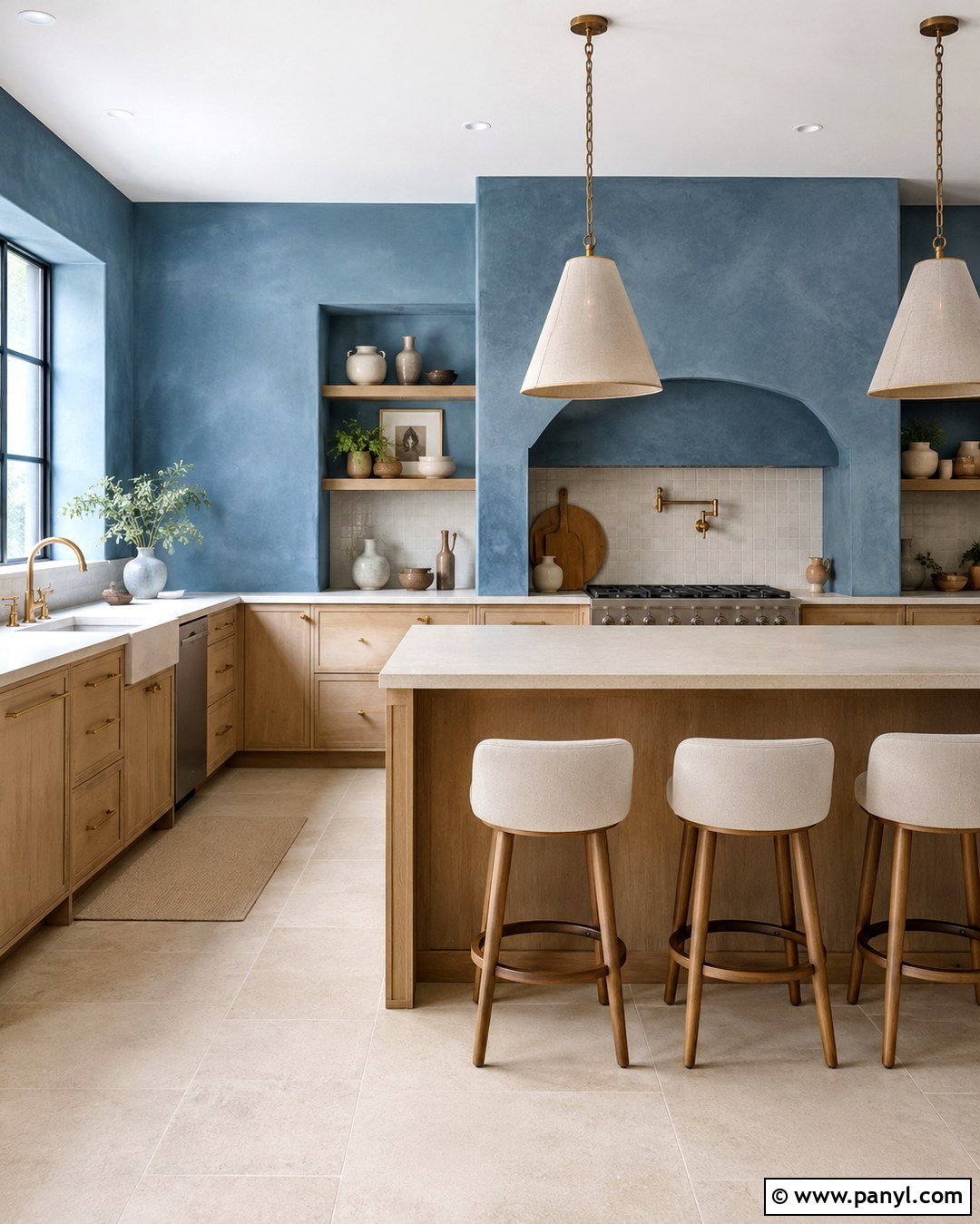
Textured blue walls create a softly aged background for smooth white oak cabinets. Use mineral paint or a plaster-style finish in muted ocean blue, with gentle tonal variation rather than heavy distressing. Keep the cabinetry flat-fronted and finished in clear matte sealer for a clean contrast. Honed cream quartz, handmade ivory tile, and unlacquered brass hardware introduce warmth and natural variation. Pale limestone flooring complements the wall texture without repeating the oak grain. Choose a substantial white oak island with simple stools upholstered in off-white fabric. Plaster pendant lights and linen window shades reinforce the tactile palette. The complete kitchen combines modern cabinet lines with handcrafted surfaces, producing a relaxed Mediterranean influence that still feels practical for an average contemporary home.
19. Muted Turquoise Walls With Oak Cabinets
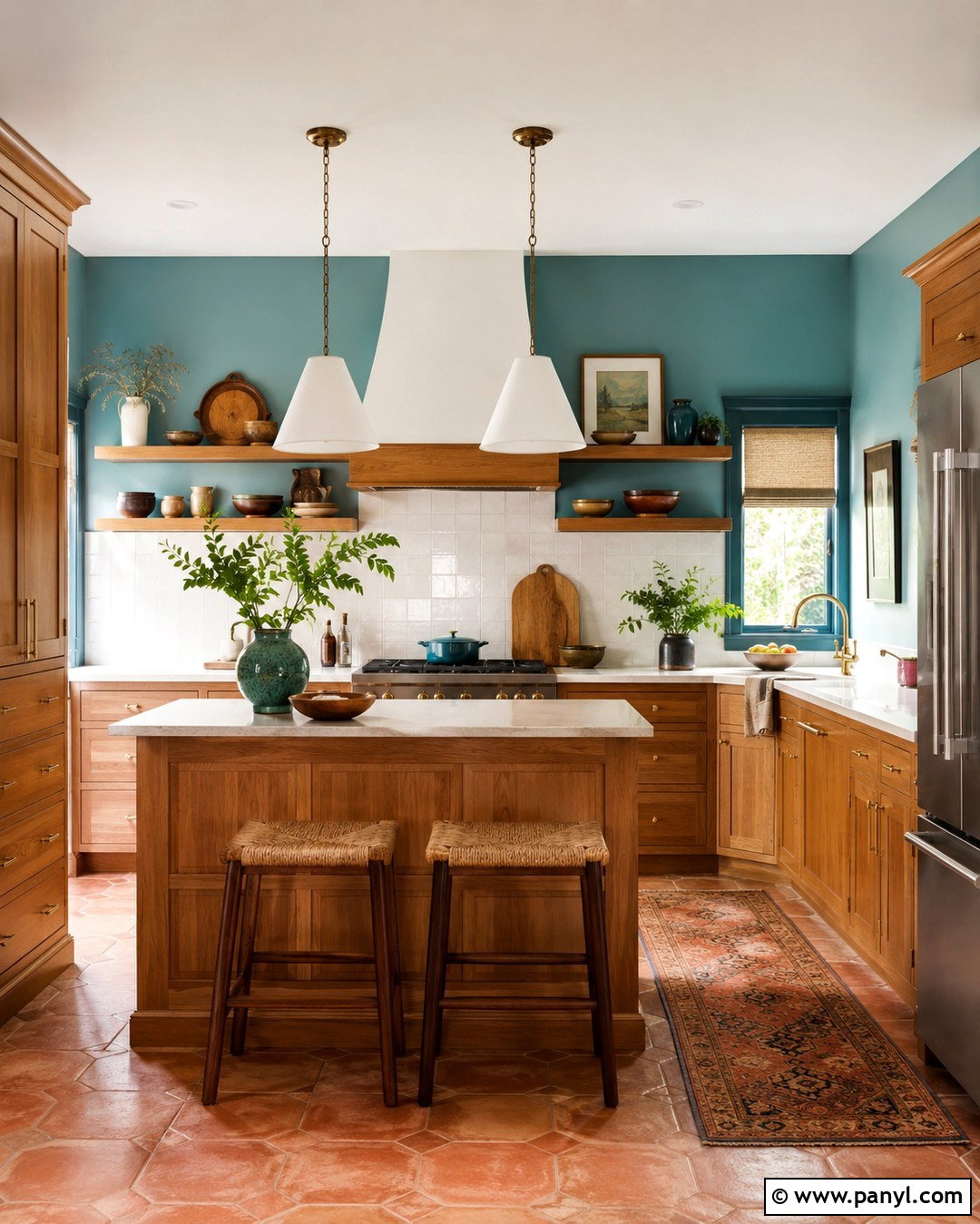
Muted turquoise walls can support an eclectic kitchen when the remaining finishes stay controlled. Pair the blue-green paint with medium oak cabinets, cream counters, and an understated white backsplash. Replace decorative hardware with simple aged brass pulls that complement the oak’s warmth. Terracotta-look floor tile adds earthy color and prevents the turquoise from feeling too cool. Use a freestanding oak island with open storage, topped by pale stone for a useful central workspace. Woven counter stools, white pendant lights, and natural linen shades create a relaxed mix of texture. Display only a few coordinated ceramics and wood accessories on open shelves. This finished design has a casual bohemian character, yet its repeated cream, oak, brass, and blue-green tones maintain order throughout the kitchen.
20. Classic Blue Walls With Oak Cabinets
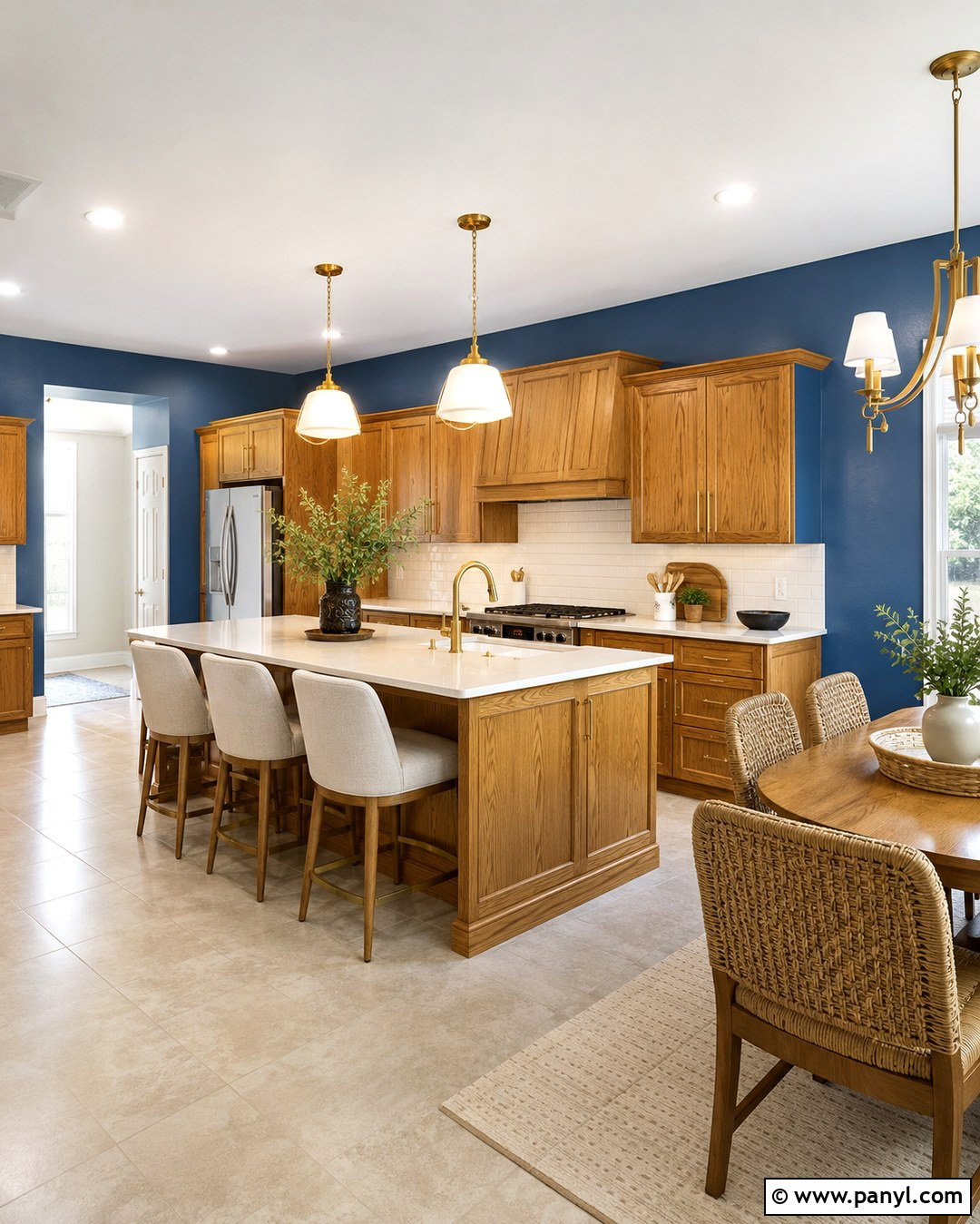
Classic medium blue provides a versatile background for oak cabinets in a family kitchen. The color is deep enough to create contrast but lighter and easier to use than navy. Pair it with natural medium oak cabinetry, warm white quartz countertops, and an ivory subway tile backsplash. Satin brass pulls and a matching bridge faucet bring out the cabinet warmth without looking overly formal. Choose a light neutral floor, especially if the kitchen lacks large windows. A central oak island can include cream upholstered stools and practical drawer storage. Continue the blue into a nearby breakfast nook with an oak table, woven chairs, and washable neutral cushions. Bright ceiling fixtures, under-cabinet lights, and simple white shades complete a comfortable kitchen designed for cooking, dining, and everyday gathering.
Conclusion:
Choosing blue walls does not mean oak cabinets must be painted, hidden, or replaced. The strongest kitchens balance the wall color with the oak’s specific stain, then use counters, flooring, backsplash tile, hardware, and lighting to connect the two. Pale blue opens a compact room, while navy or midnight blue creates richer contrast. Blue-green shades can soften strongly golden oak, and gray-based blues provide an easy transitional update. Always test paint beside the cabinetry at several times of day before making a final decision. With thoughtful undertones and supporting finishes, these 20 Blue Walls Oak Cabinets combinations can transform existing wood cabinetry into a coordinated, current, and highly personal kitchen feature.

Related Ideas and Inspiration:
Leave a Reply