
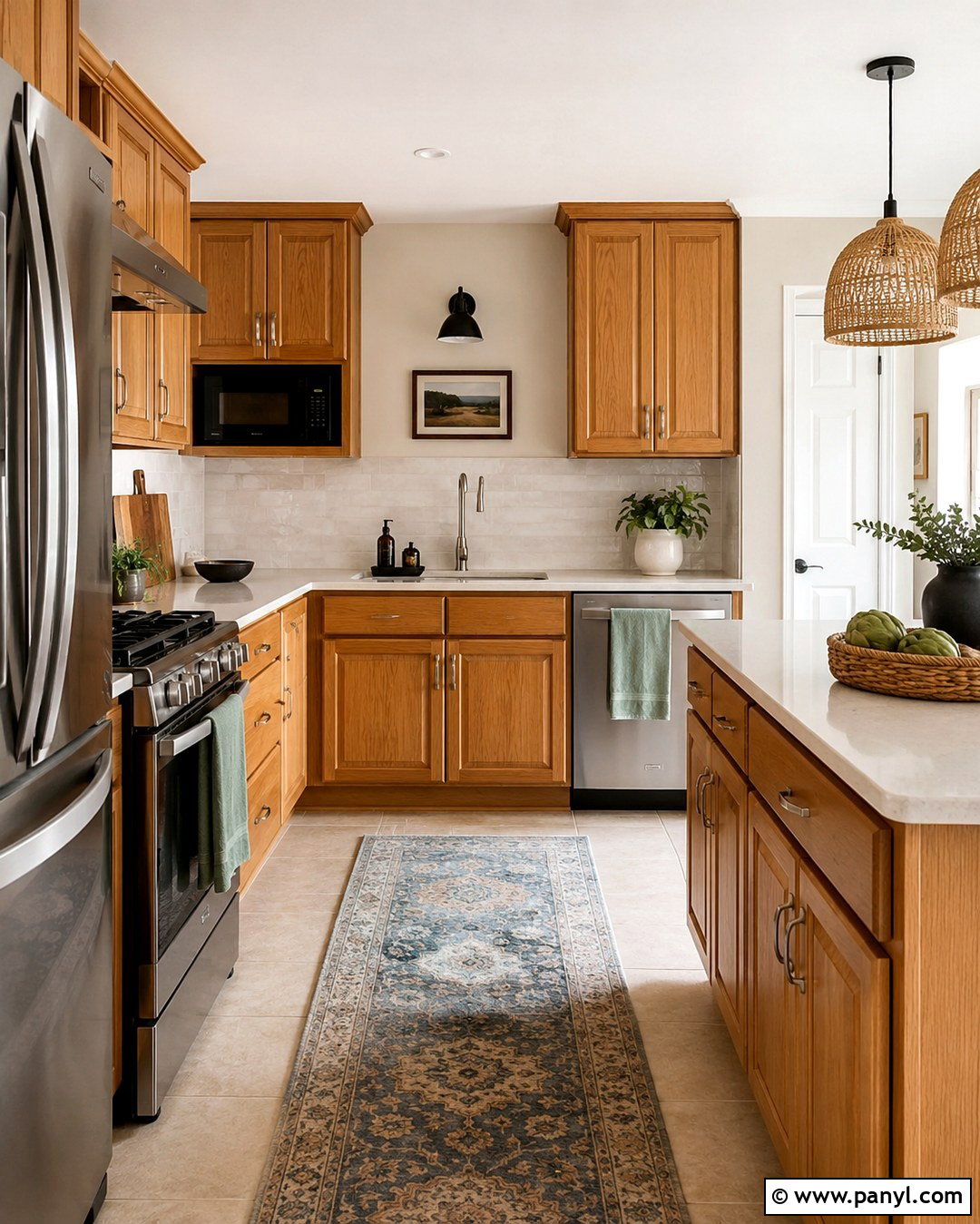
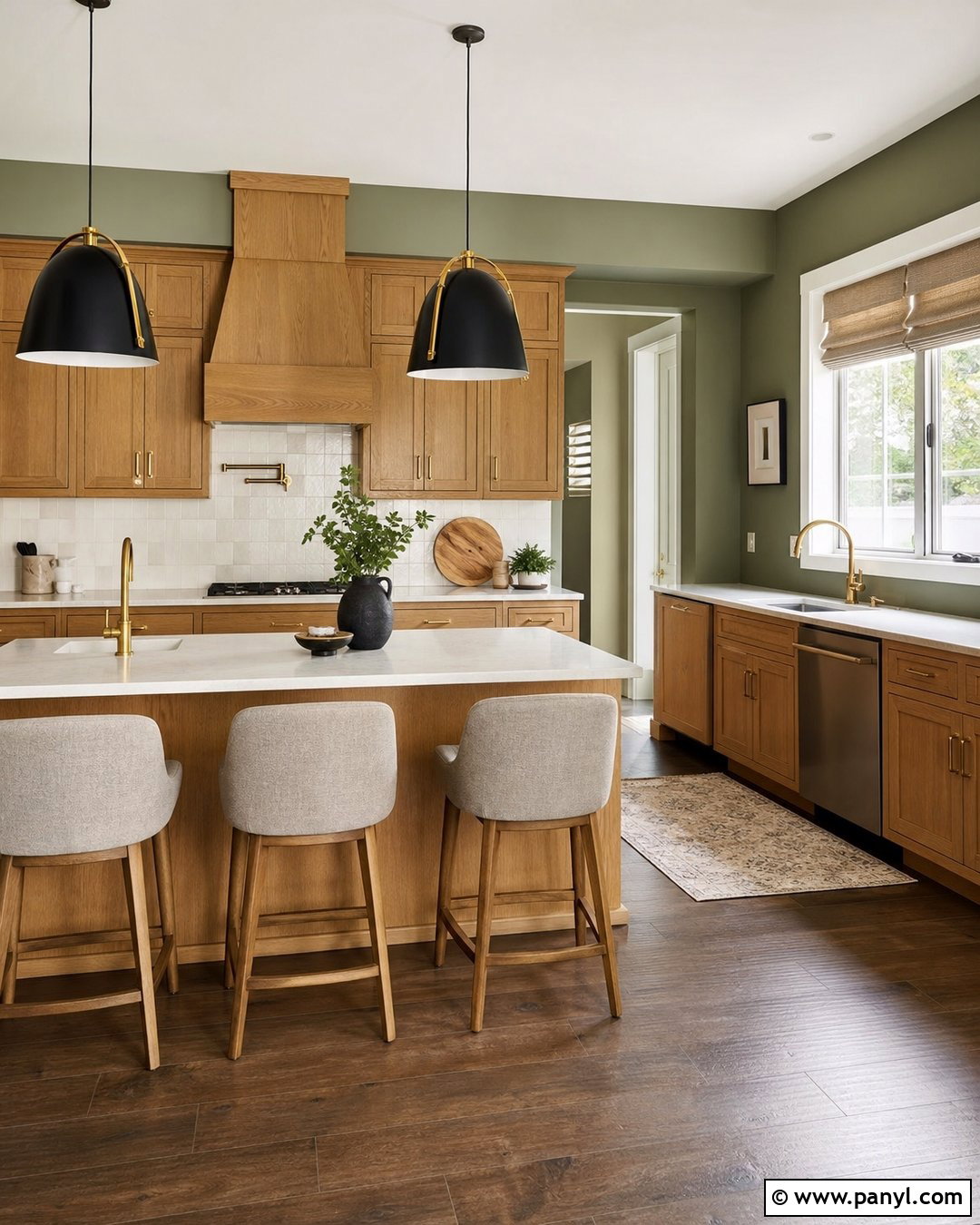
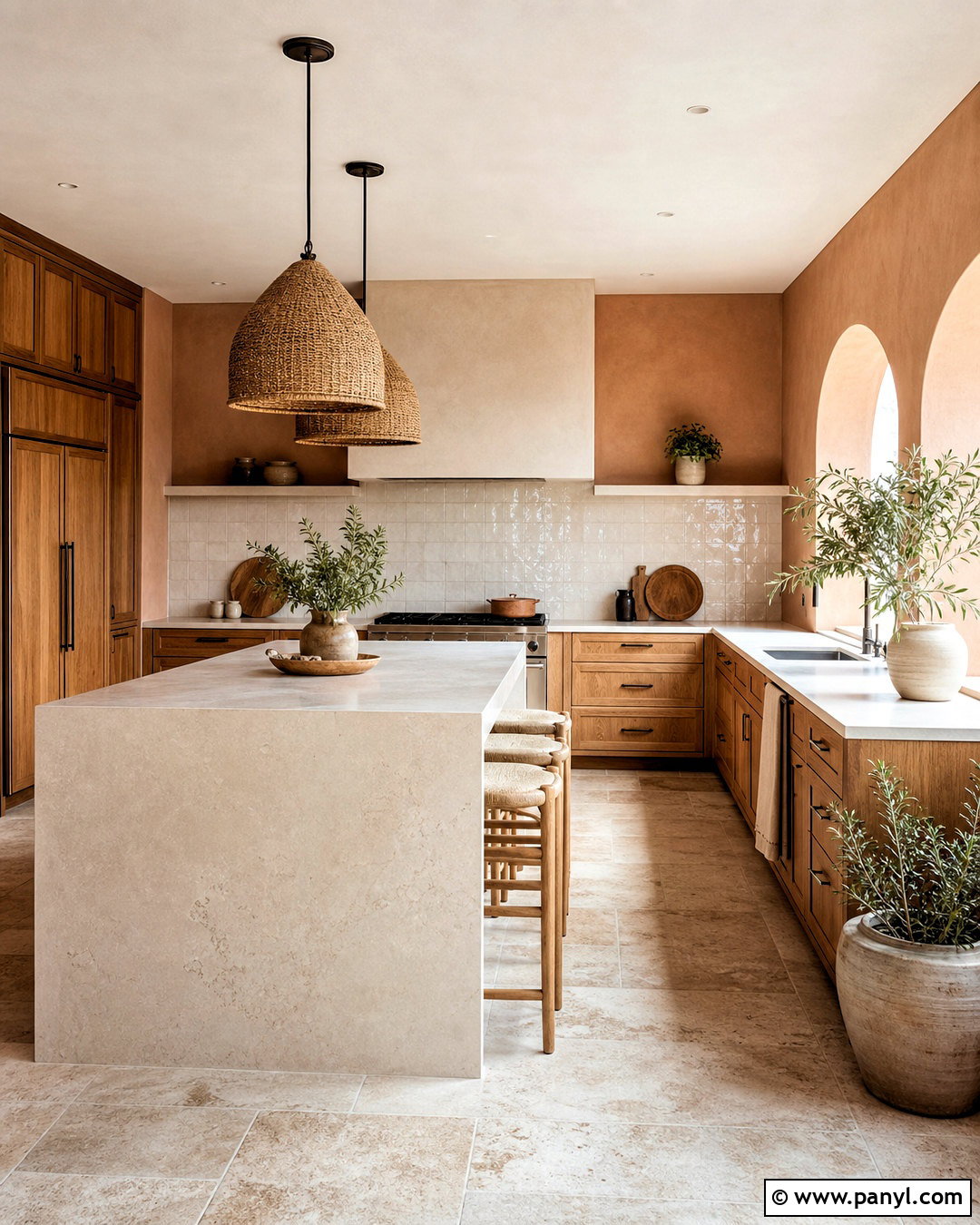
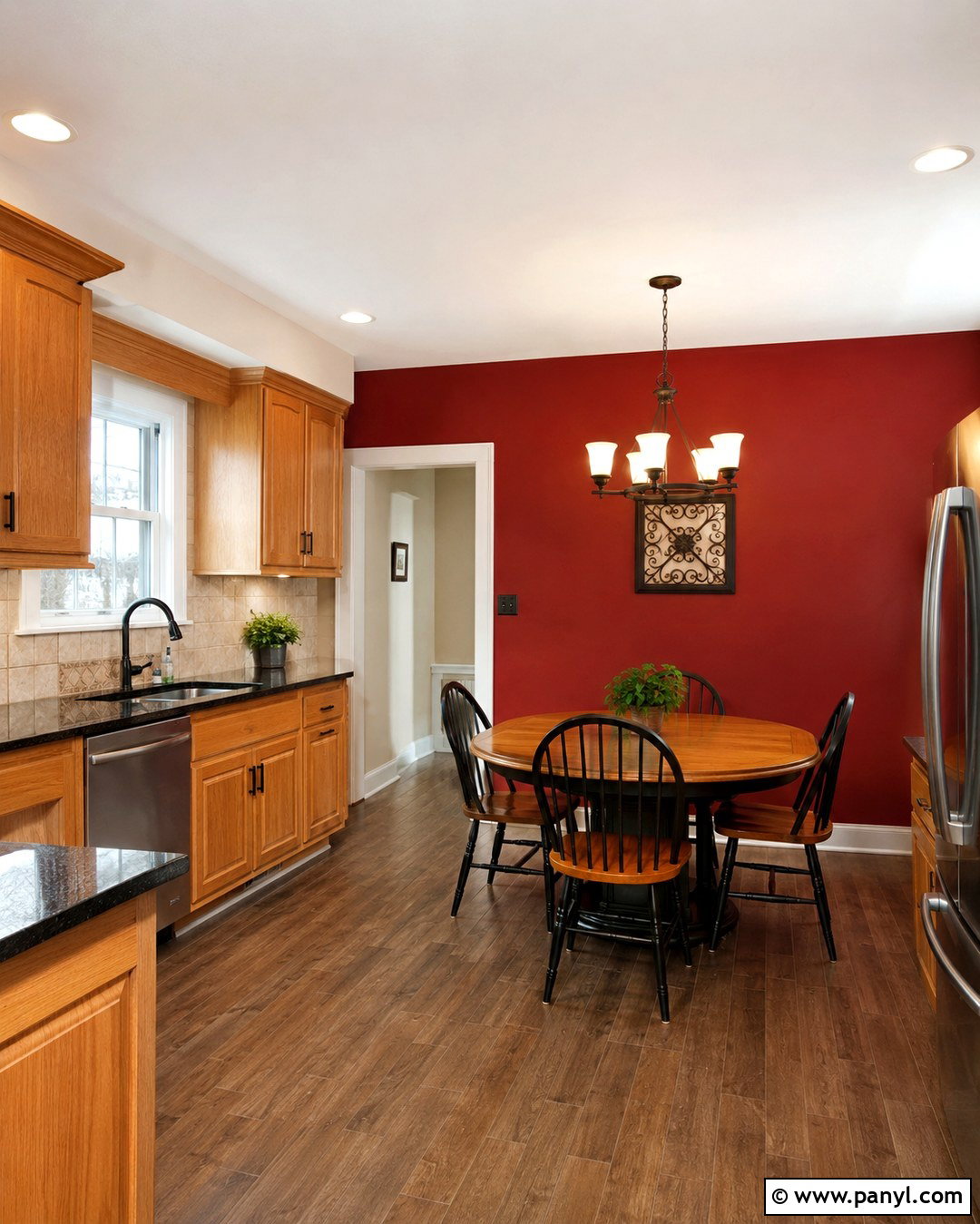
Choosing the right wall paint can completely change how oak cabinetry looks and feels. The best kitchen wall color with oak cabinets should balance the wood’s natural warmth while supporting the countertops, flooring, backsplash, hardware, and lighting. Soft warm neutrals create an easy, timeless backdrop. Muted greens and blues offer gentle contrast, while deeper shades make oak grain look richer and more intentional. Before committing, compare large painted samples beside the cabinets during the morning, afternoon, and evening. This helps reveal undertones that a small paint chip may hide. Whether your oak is pale, honey-colored, golden, or medium brown, the complete color schemes below offer practical inspiration for selecting a beautiful Kitchen Wall Color With Oak Cabinets.

1. Warm White Kitchen Wall Color
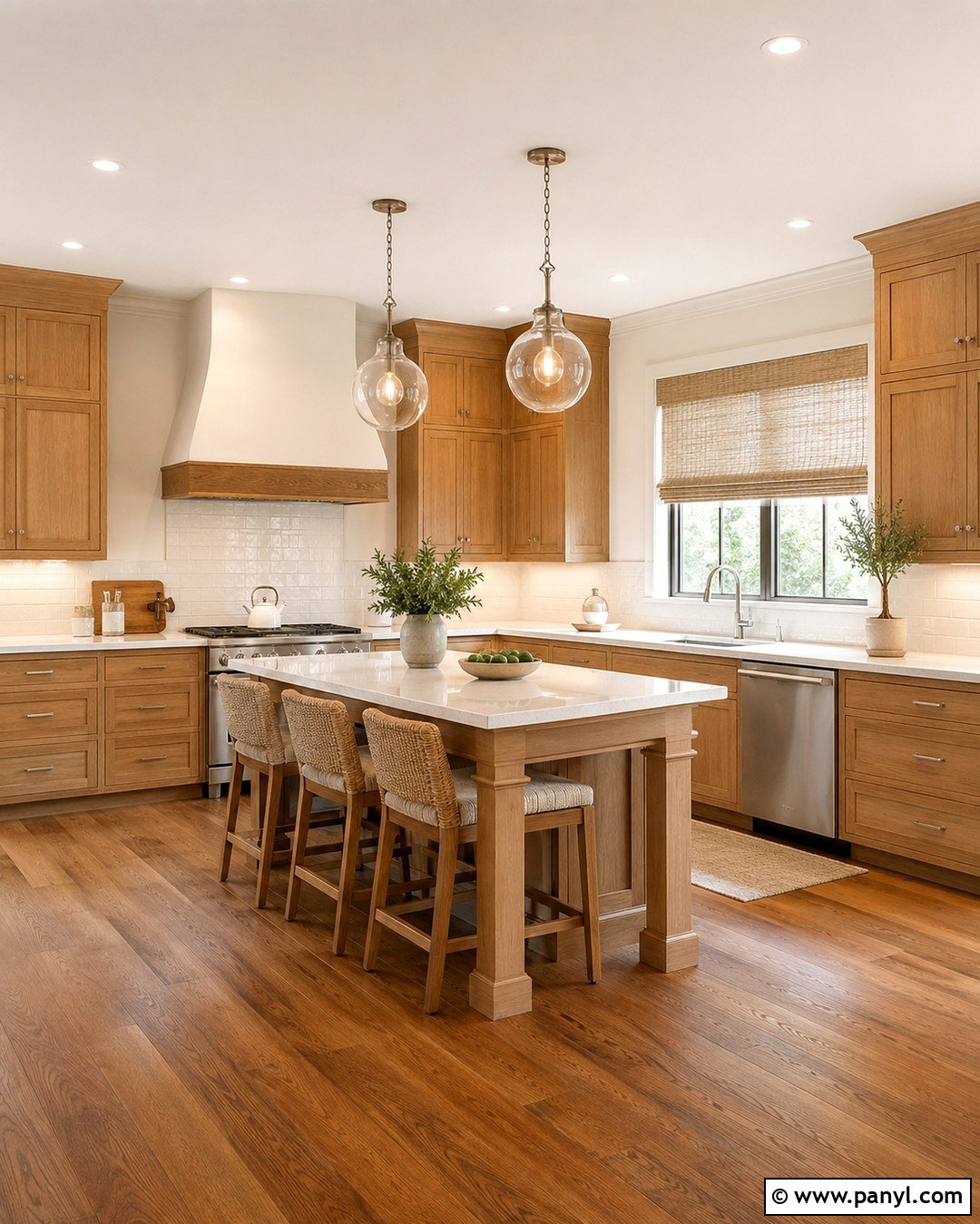
Warm white walls give oak cabinets a clean update without creating the harsh contrast of a bright, cool white. Choose a shade with soft cream or beige undertones to connect naturally with golden wood grain. Complete the kitchen with off-white quartz countertops, a simple ivory subway tile backsplash, and medium-tone oak flooring. Brushed nickel hardware keeps the palette fresh, while woven counter stools and light linen shades add relaxed texture. Use clear glass pendants above an island so the room remains open and bright. A few green plants and matte white dishes provide simple decoration. This complete scheme works especially well in small kitchens because it reflects light while allowing the oak cabinets to remain the warm focal point.
2. Soft Cream Kitchen Wall Color
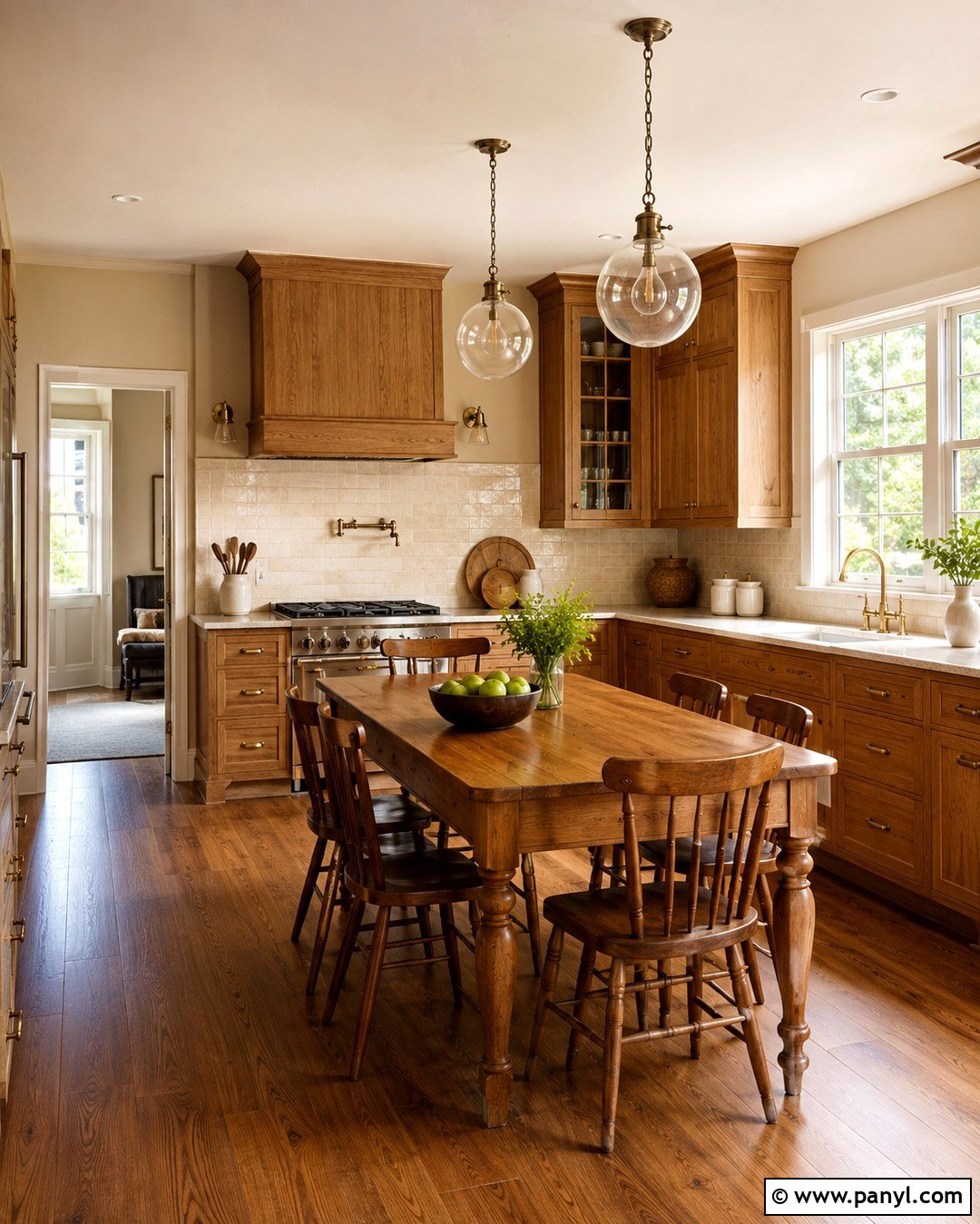
Soft cream walls bring out the cozy character of honey oak cabinets while keeping the overall kitchen light. The key is selecting a restrained cream rather than a strong yellow shade. Pair the walls with warm white countertops and a backsplash made from handmade cream tiles. Their subtle variation prevents the neutral palette from looking flat. Antique brass knobs, a traditional bridge faucet, and clear globe pendants reinforce the welcoming look. Ground the room with medium brown wood flooring or warm beige porcelain tile. A small breakfast table with spindle-back chairs can echo the oak cabinetry without overwhelming the space. Add oatmeal-colored textiles and simple ceramic accessories for a comfortable kitchen that feels coordinated, classic, and pleasantly sunlit.
3. Light Ivory Kitchen Wall Color
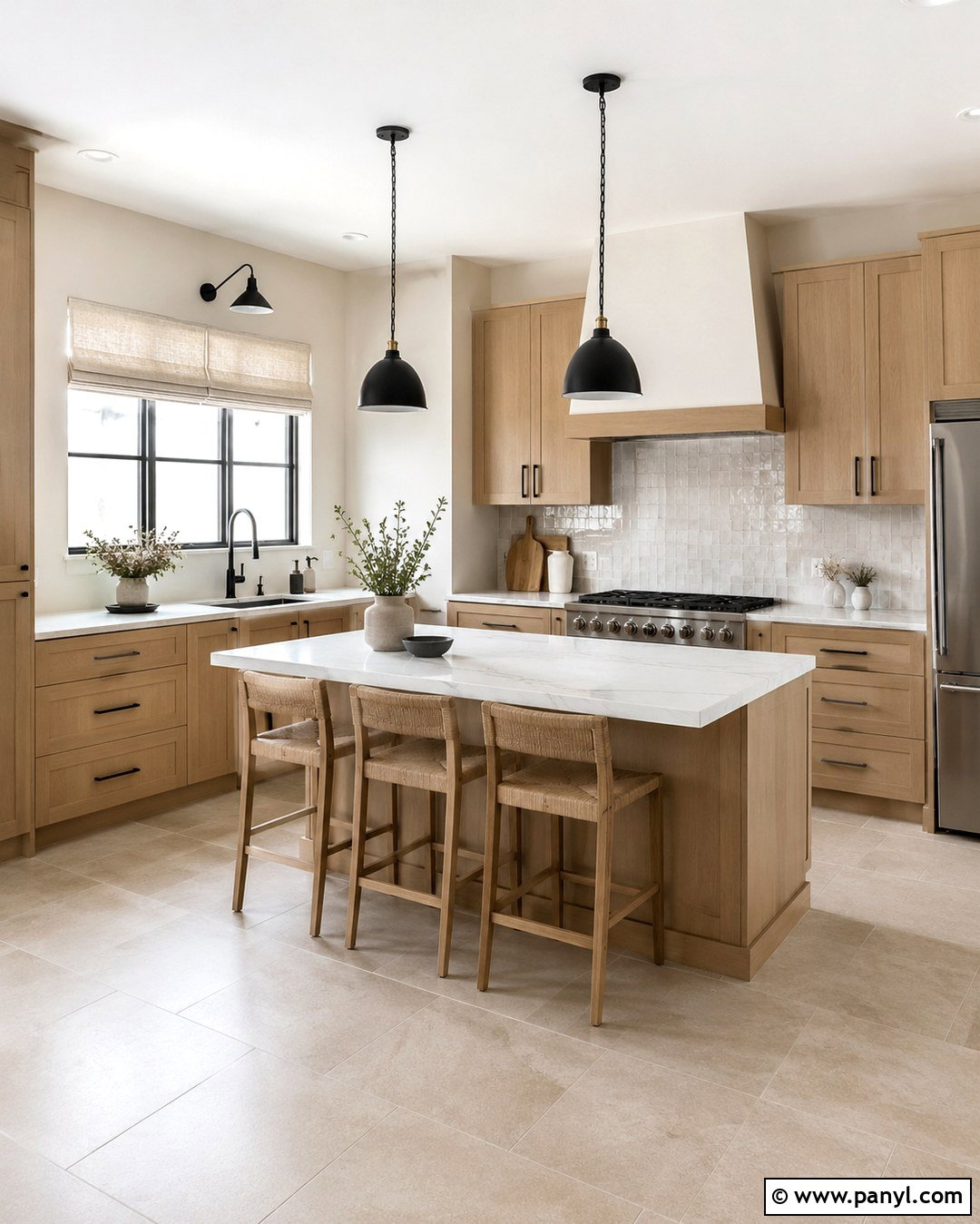
Light ivory creates a softer alternative to plain white and works beautifully with pale or medium oak cabinetry. Its gentle warmth blends with the wood rather than making orange or yellow undertones appear stronger. Continue the airy palette with creamy marble-look quartz, an ivory zellige tile backsplash, and light beige stone flooring. Matte black cabinet pulls and a matching faucet introduce definition without making the kitchen feel heavy. Over the island, choose streamlined black pendants with white interiors for balanced contrast. Natural linen Roman shades, light oak stools, and a woven runner add subtle layers of texture. This complete kitchen look suits transitional spaces where traditional oak cabinets need to feel brighter, simpler, and more current without being painted or replaced.
4. Warm Greige Kitchen Wall Color
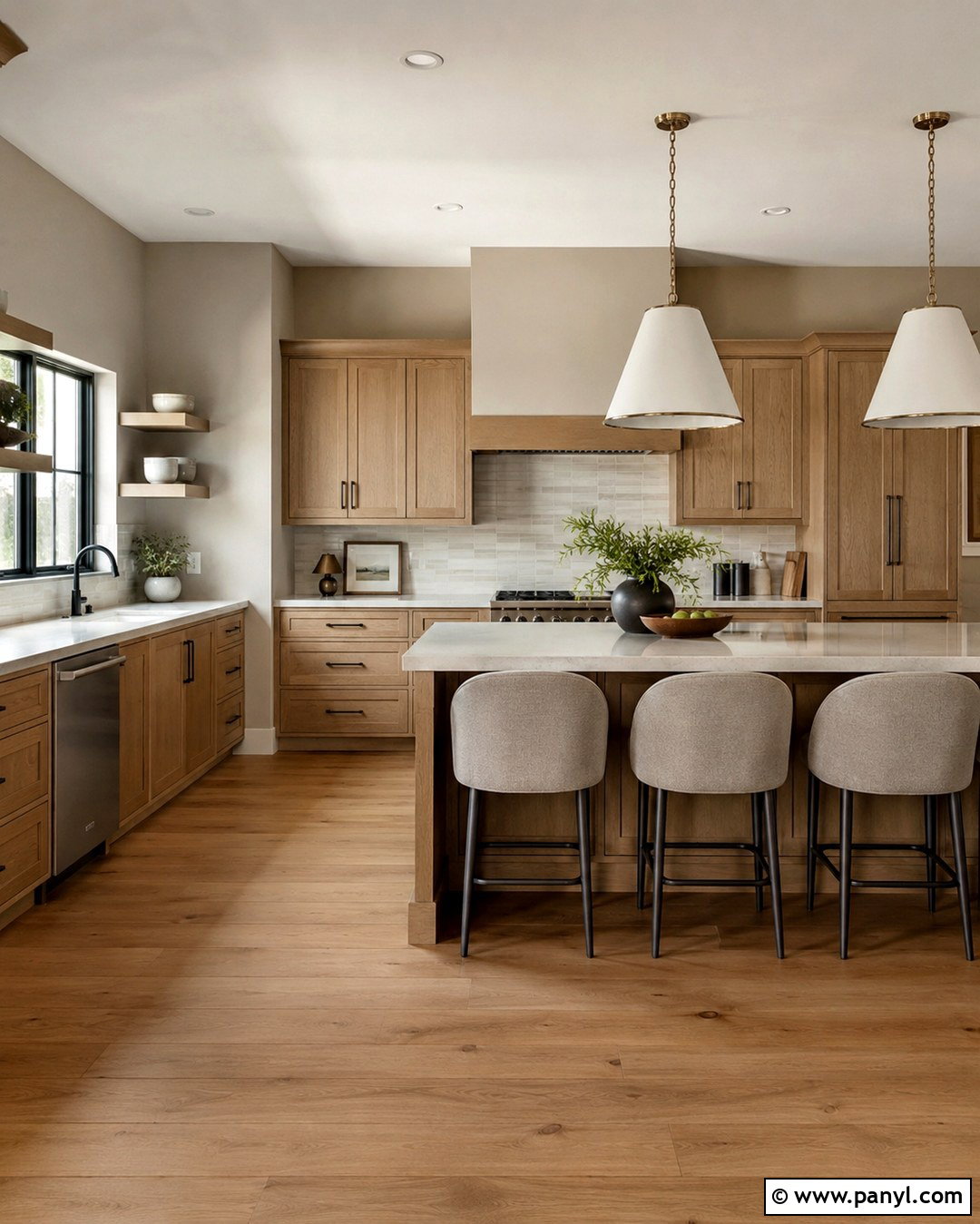
Warm greige walls can soften golden oak cabinets while giving the kitchen a more modern foundation. Look for a balanced blend of gray and beige that does not turn purple or icy beside the wood. Pair it with creamy quartz countertops and a backsplash of warm white rectangular tile set in a simple stacked pattern. Dark bronze hardware brings depth, while natural oak floors create a continuous and comfortable material story. Install oversized off-white pendants above a practical island with greige upholstered stools. Black-framed artwork and stoneware accessories add controlled contrast. Because every finish shares a warm undertone, the completed room feels calm and intentional. This scheme is particularly useful in open layouts where the kitchen connects with neutral living and dining spaces.
5. Light Taupe Kitchen Wall Color
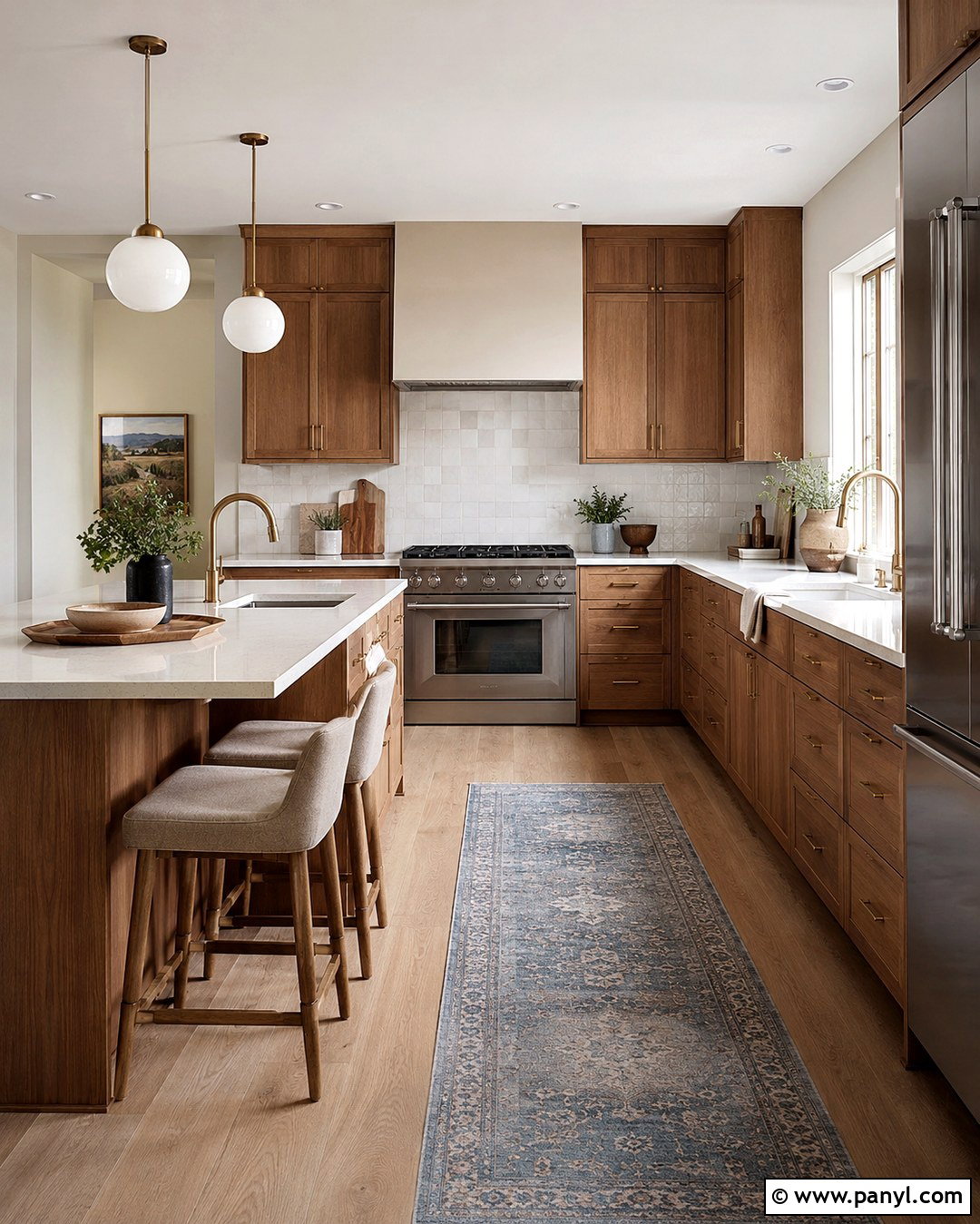
Light taupe walls provide enough depth to frame oak cabinets while remaining versatile and easy to decorate around. A taupe with warm brown undertones works especially well with medium or red oak because it quiets strong grain patterns. Complete the design with pale quartz counters, a full-height warm white backsplash, and wide-plank flooring in a muted natural finish. Choose aged brass hardware for subtle warmth, then add cream globe pendants and taupe fabric stools around the island. A washable runner containing beige, brown, and faded blue can tie the surfaces together. Keep countertop decor minimal with wooden boards, neutral pottery, and one leafy plant. The resulting kitchen looks layered and refined, yet it still feels comfortable enough for everyday family use.
6. Mushroom Kitchen Wall Color
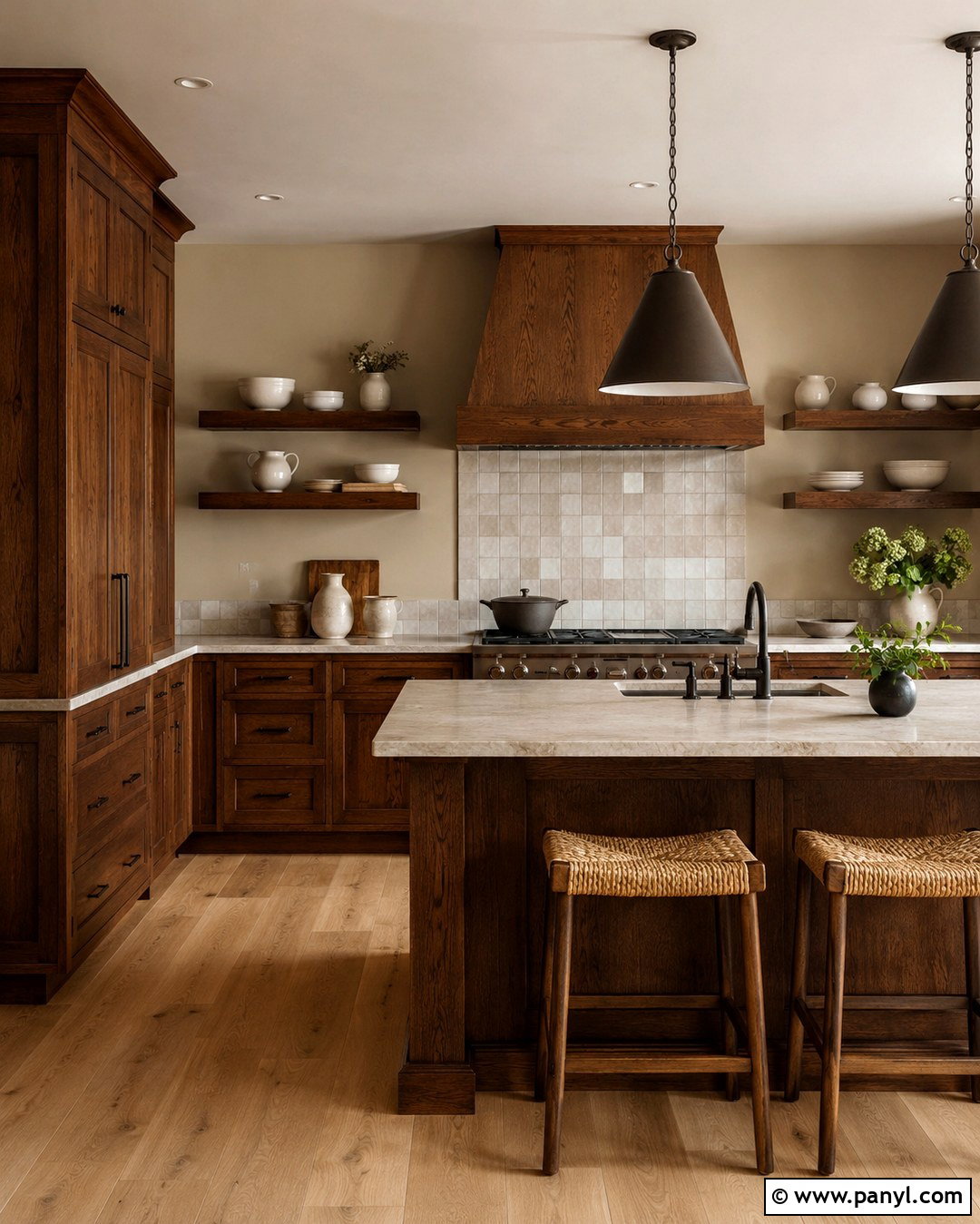
Mushroom walls combine muted beige, gray, and brown tones, making them an excellent partner for richly grained oak cabinets. This earthy neutral reduces the visual intensity of honey-colored wood without hiding its natural beauty. Use pale stone countertops with gentle taupe veining and a matte cream square-tile backsplash. Oil-rubbed bronze pulls, a dark bronze faucet, and simple cone pendants create structure throughout the room. Balance those darker details with a light oak floor, creamy ceiling, and woven counter stools. Open shelves can display white pottery, wooden bowls, and a few muted green accessories. The finished kitchen feels organic and grounded, with enough contrast to look updated. It works particularly well in homes with rustic, Craftsman, or transitional architectural details.
7. Sandy Beige Kitchen Wall Color
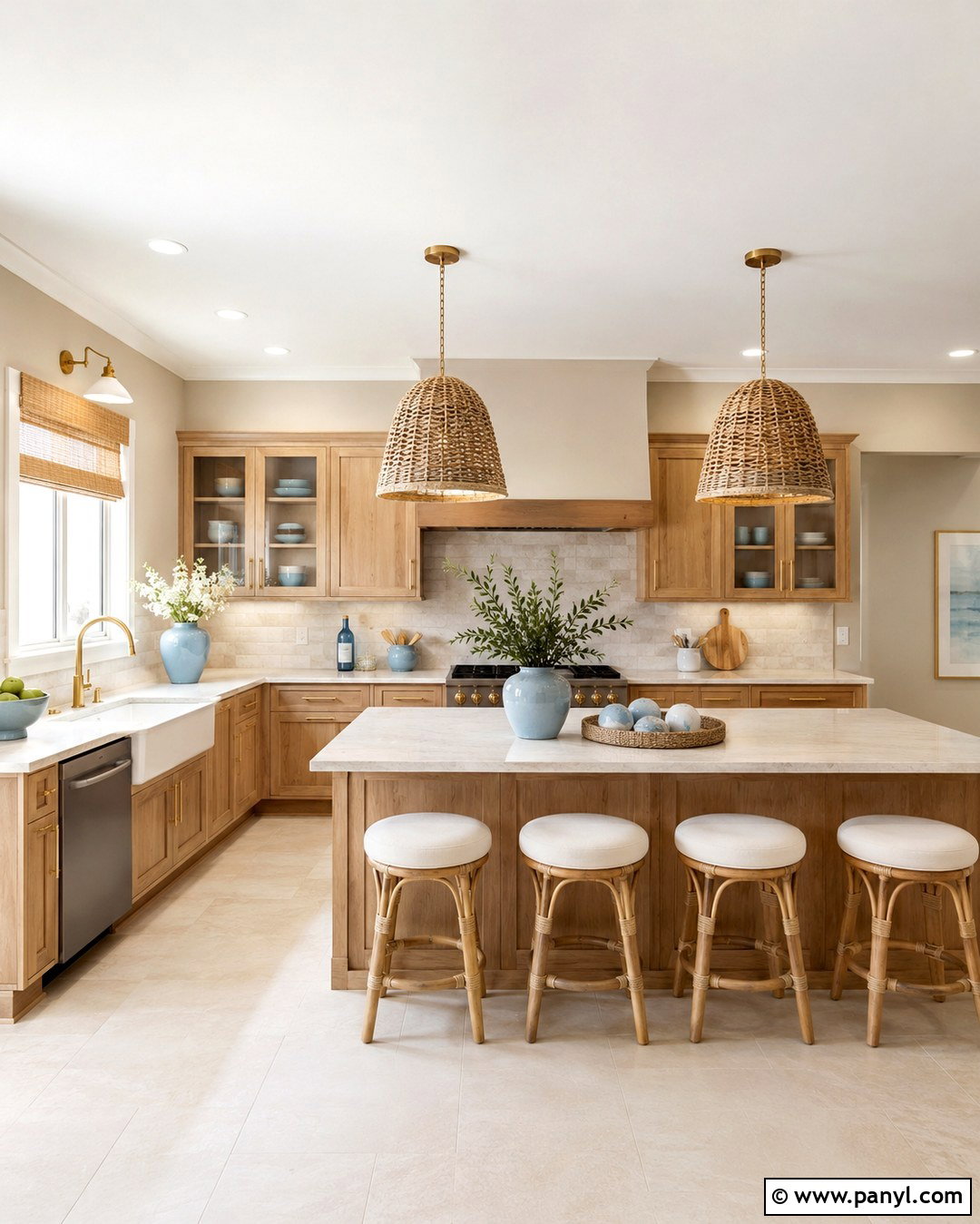
Sandy beige walls create a relaxed, sun-washed background for natural oak cabinetry. Choose a light beige with subtle tan undertones rather than a peachy finish. Pair the cabinets with honed cream countertops, a limestone-look backsplash, and light neutral floor tile for an easy coastal influence. Brushed brass pulls and a warm metal faucet complement the oak without adding excessive shine. Use woven rattan pendants above the island, along with counter stools upholstered in durable ivory fabric. Pale blue dishware, striped linen towels, and a simple bowl of citrus introduce restrained color. The entire kitchen should feel breezy rather than themed. This coordinated palette is especially effective in rooms with strong daylight, where beige walls can appear soft and dimensional throughout the day.
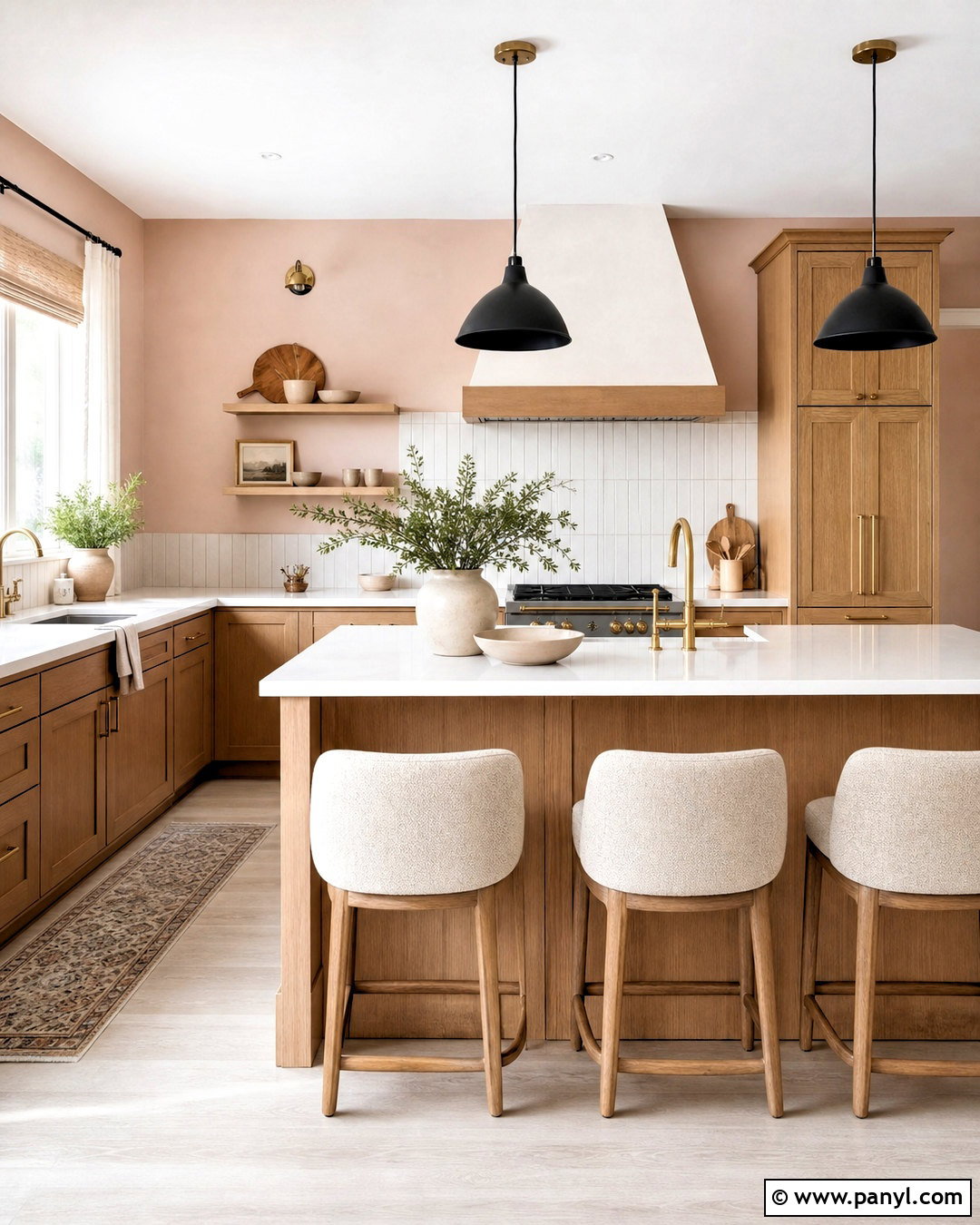
8. Pale Sage Green Kitchen Wall Color
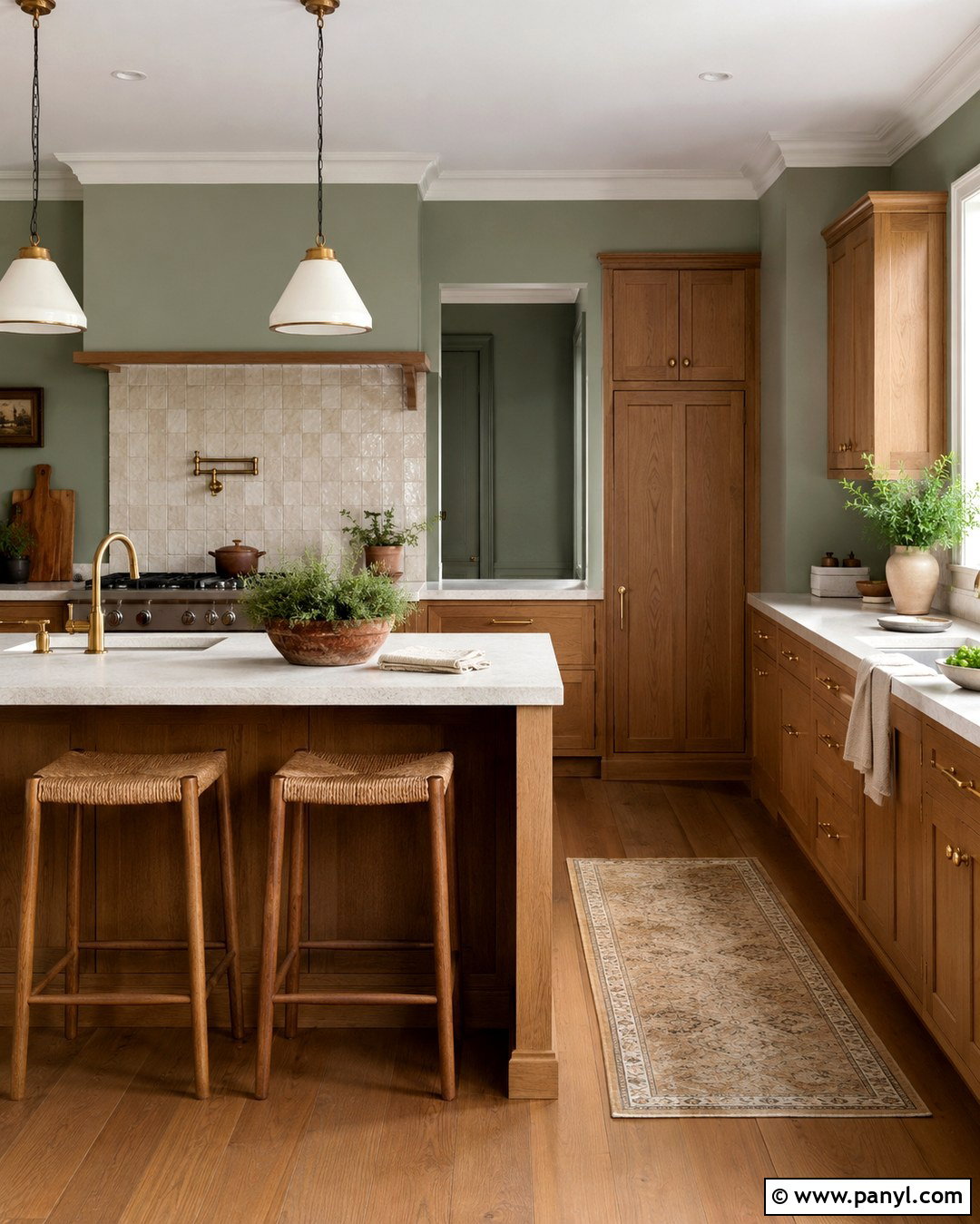
Pale sage green provides gentle contrast against golden oak while preserving a calm, nature-inspired atmosphere. Select a muted sage with gray undertones so the walls do not compete with the cabinet grain. Complete the kitchen with warm white quartz countertops, handmade ivory backsplash tile, and medium-tone wood flooring. Aged brass knobs and a matching faucet reinforce the organic warmth. Over the island, install cream metal pendants and add rush-seat stools with simple wooden frames. Display white ceramics, herbs in terracotta pots, and neutral linen towels instead of using too many green accessories. The finished room feels fresh, balanced, and connected to the outdoors. Sage is particularly attractive in kitchens overlooking a yard, garden, or tree-filled view through large windows.
9. Muted Olive Kitchen Wall Color
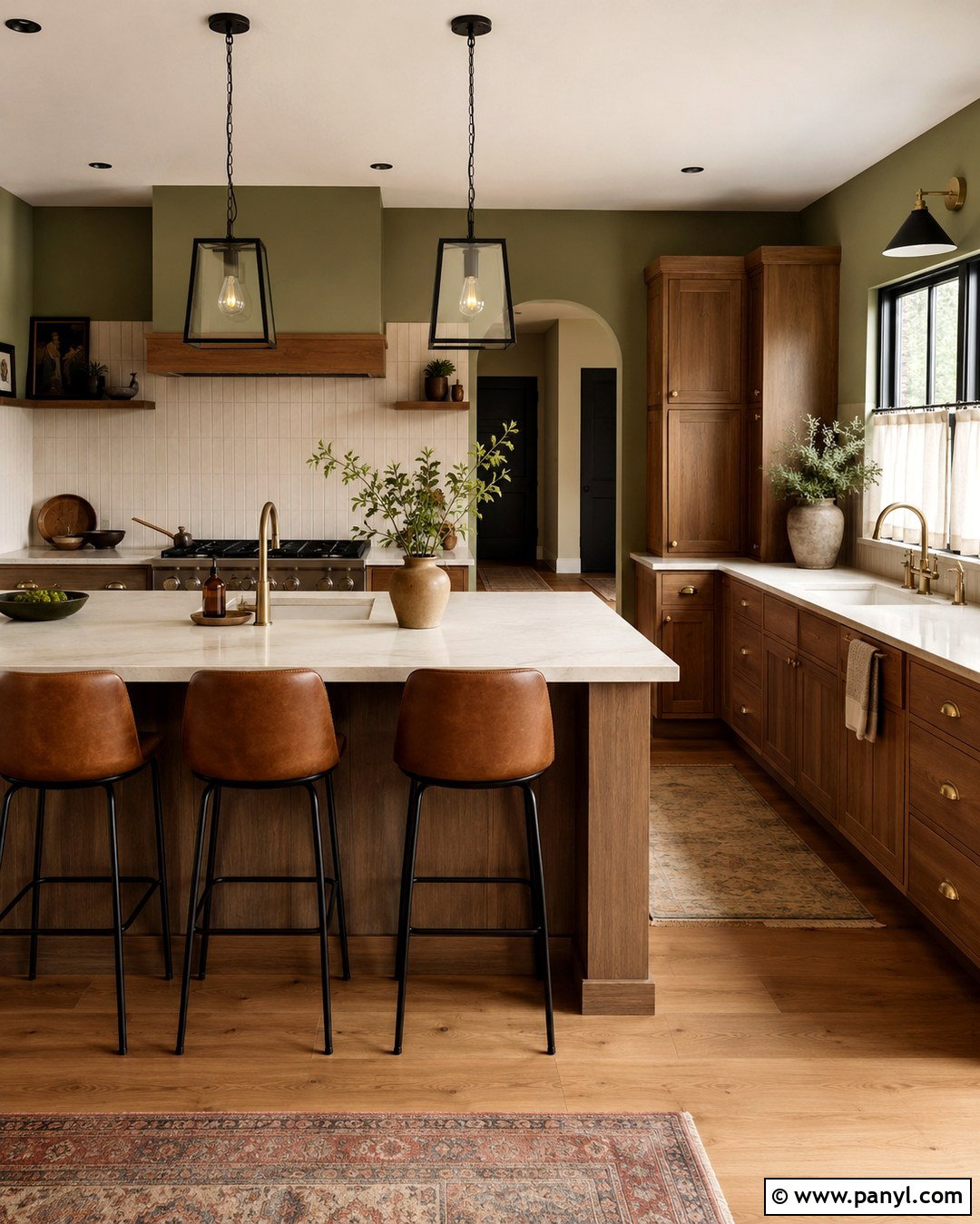
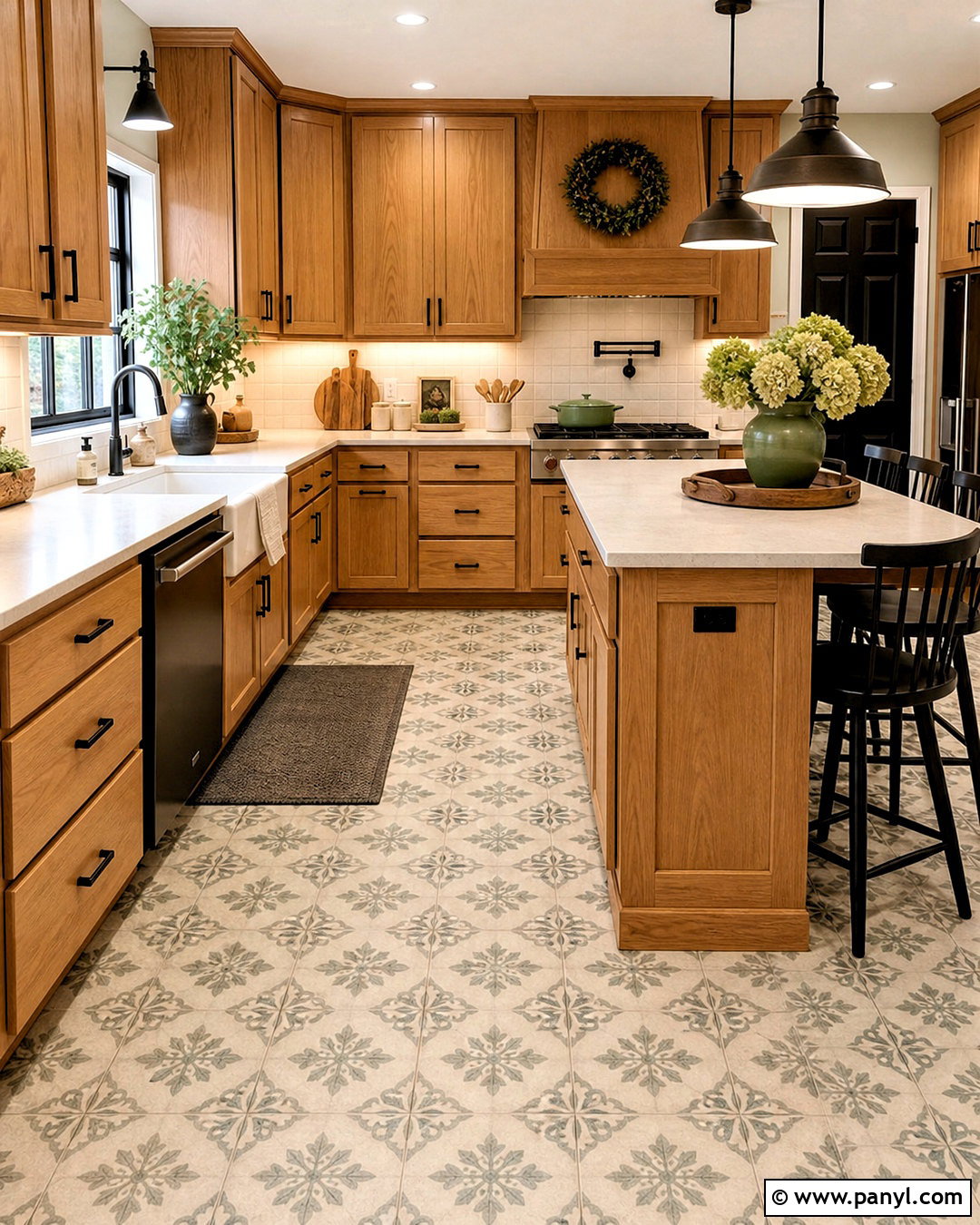
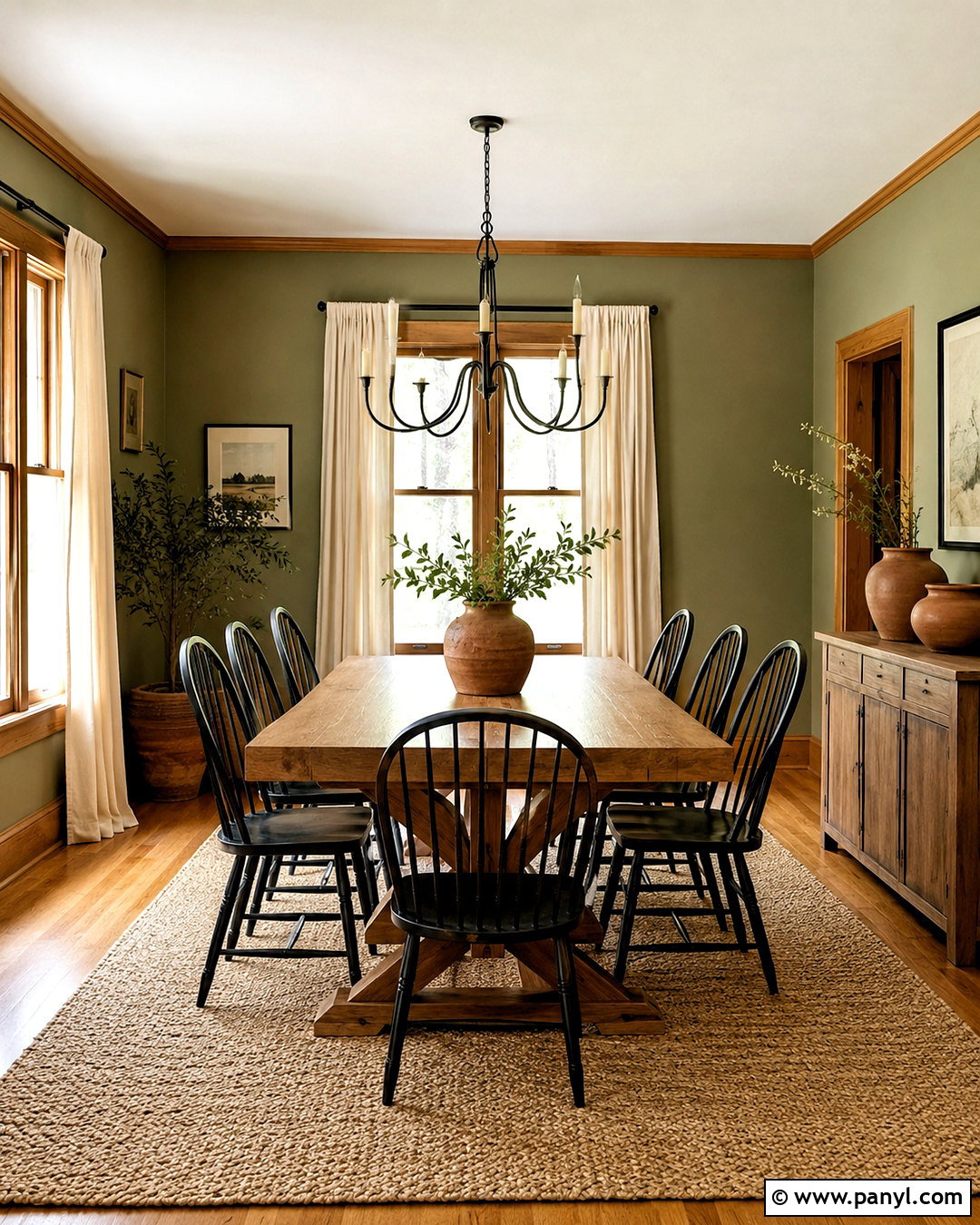
Muted olive walls create a deeper, more grounded setting for oak cabinets without making the kitchen feel overly dark. Choose an earthy olive that contains gray and brown rather than a bright yellow-green. Cream quartz counters and an off-white vertical tile backsplash help brighten the work surfaces. Add antique brass cabinet hardware, black-framed pendants, and a dark faucet for a layered mix of finishes. Natural stone flooring or warm oak planks can continue the earthy mood underfoot. At the island, use saddle-brown leather stools to connect with the wood tones. Finish with clay pottery, linen café curtains, and a few fresh herbs. This complete color scheme gives traditional oak cabinetry a sophisticated update while maintaining its welcoming, natural personality.
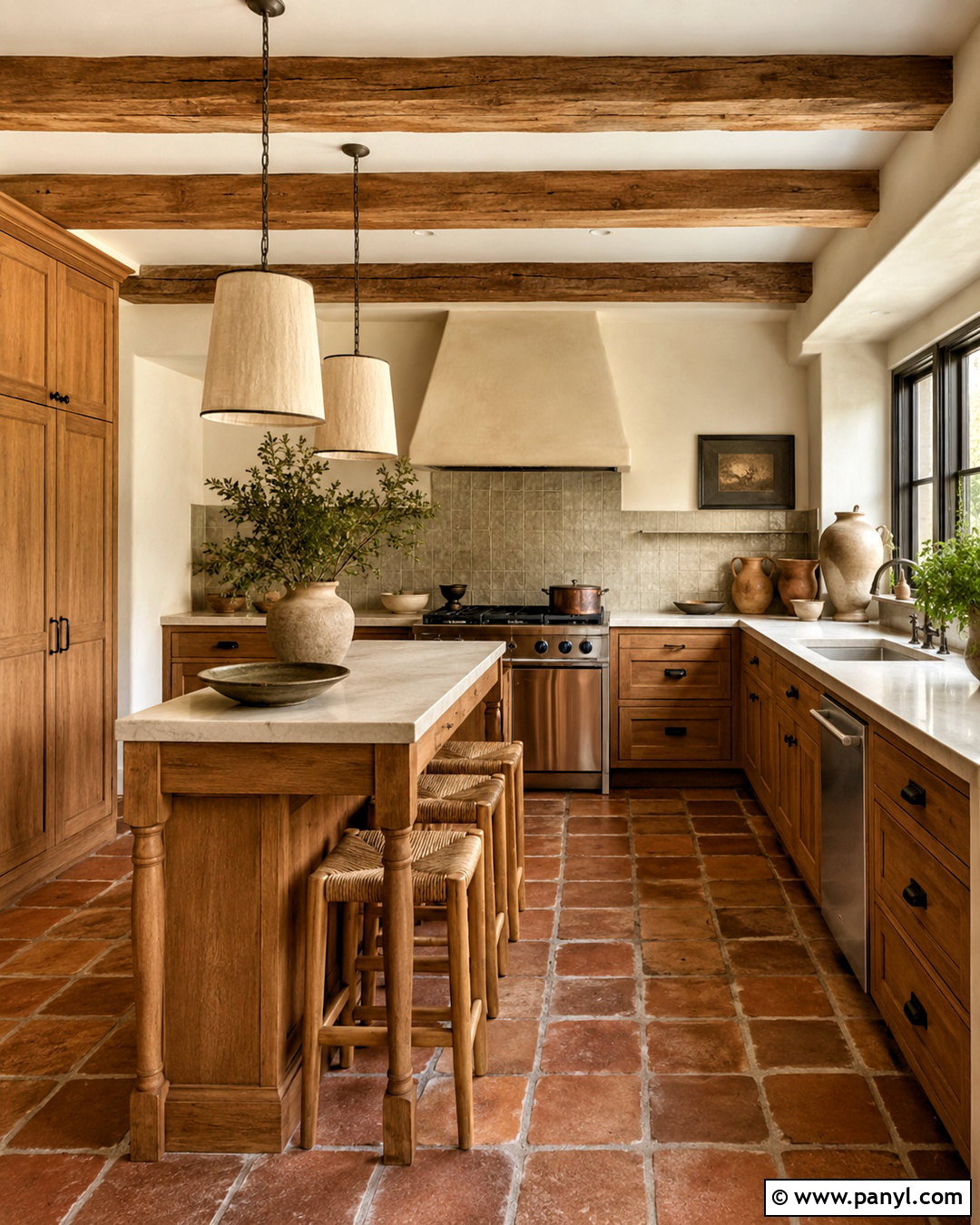
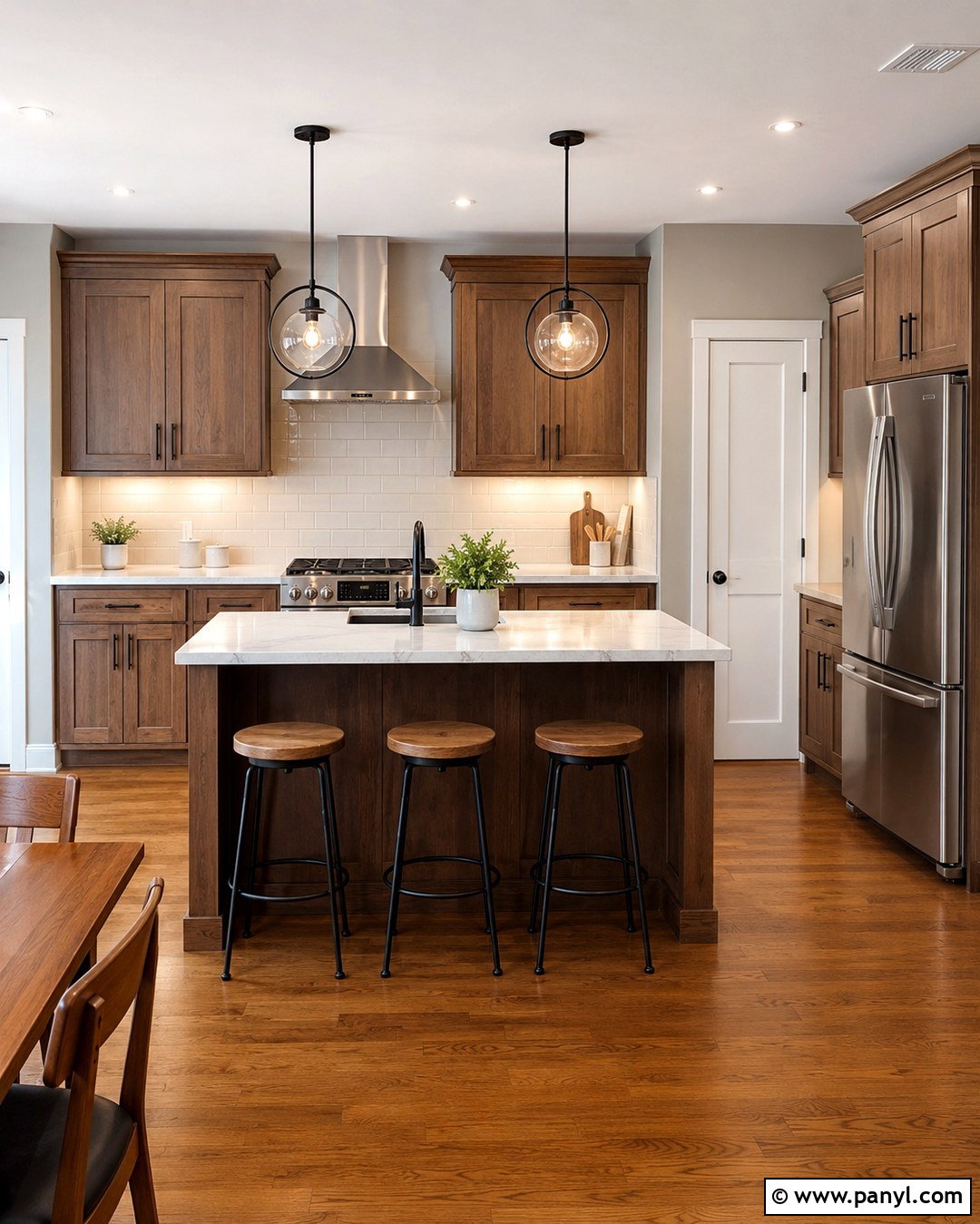
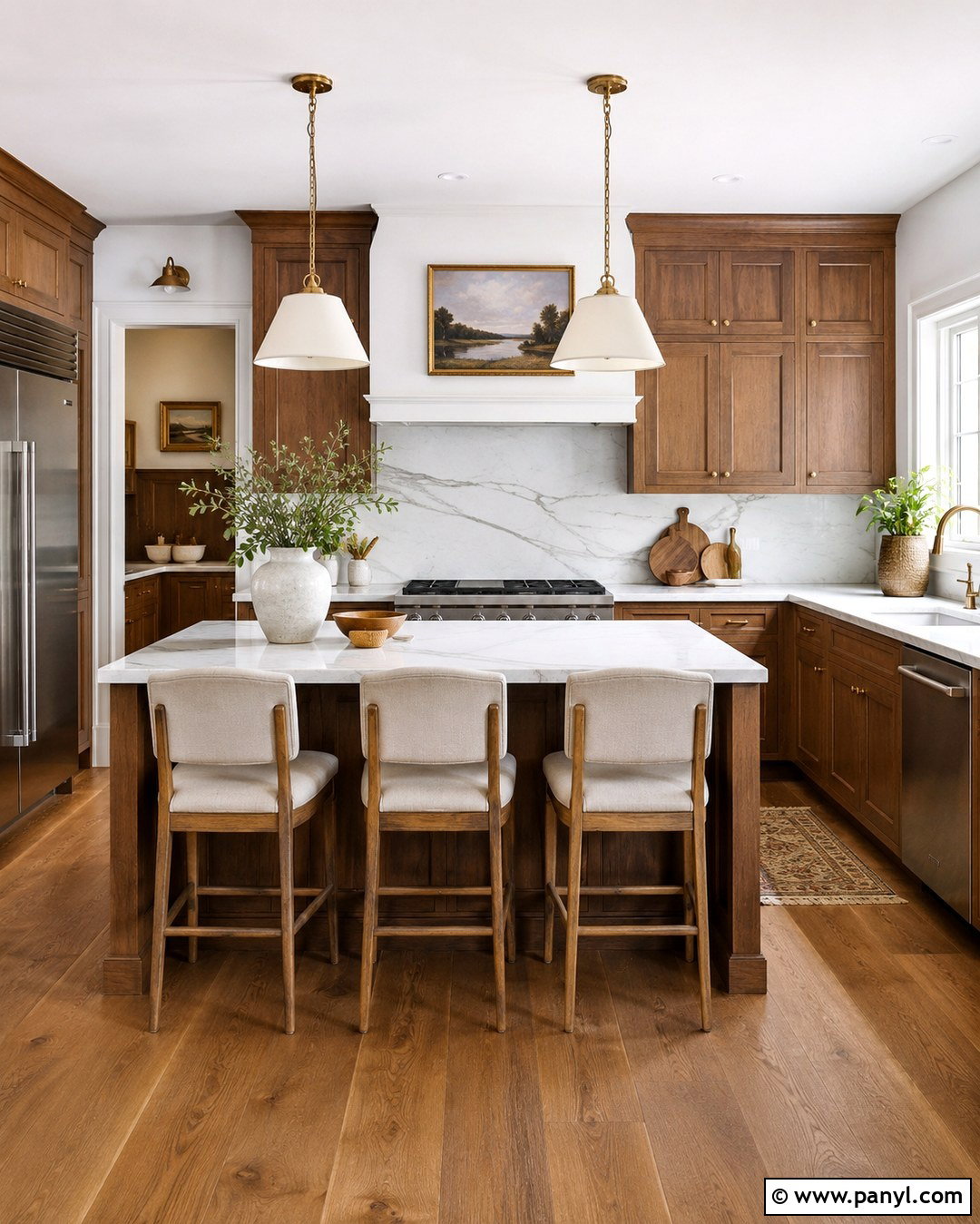
10. Soft Eucalyptus Kitchen Wall Color
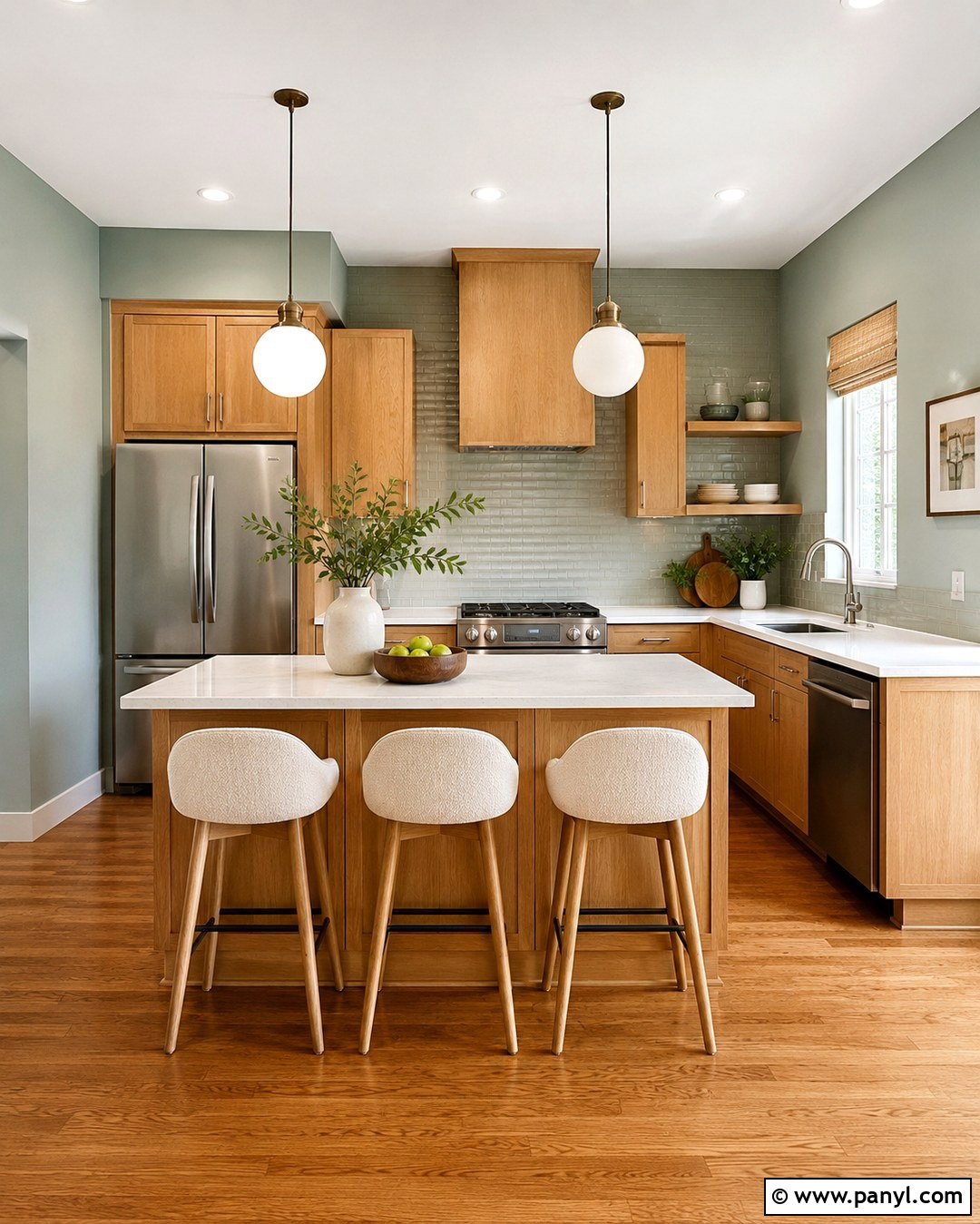
Soft eucalyptus walls introduce a blue-green note that cools the warmth of honey oak cabinets in a subtle way. The color should appear dusty and muted rather than crisp or tropical. Pair it with creamy white counters and an understated backsplash of pale green-gray tile. Brushed nickel hardware and stainless steel appliances support the cooler undertones, while oak floors maintain continuity with the cabinets. Choose white glass pendants, oatmeal-colored stools, and a natural woven shade to keep the room balanced. A small collection of pale ceramics and wooden cutting boards can decorate open surfaces without clutter. The completed kitchen feels light, restorative, and contemporary. This palette performs especially well in sunny rooms, where natural light reveals the wall color’s gentle green and blue variations.
11. Blue Gray Kitchen Wall Color
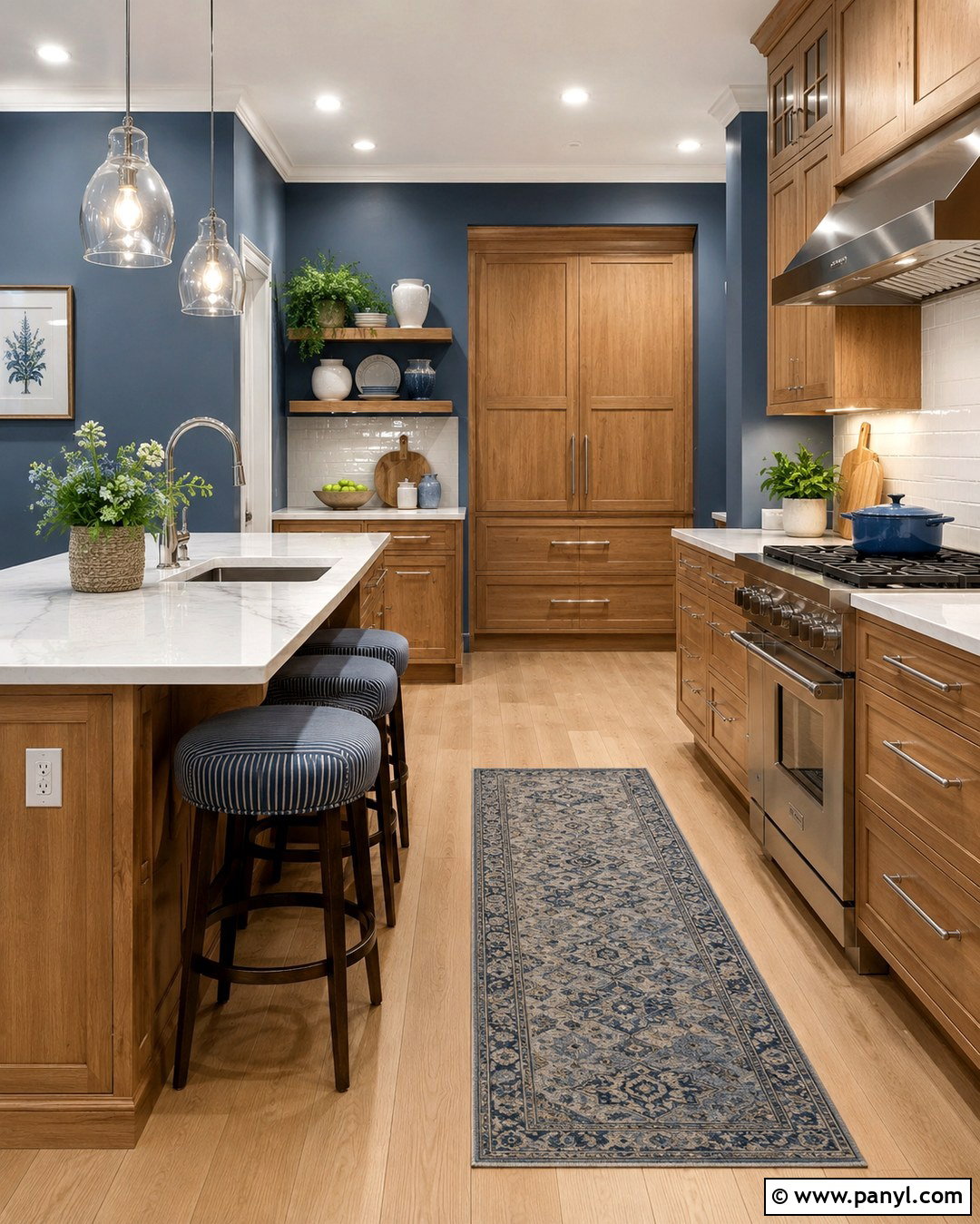
Blue-gray walls offer a crisp but comfortable contrast to warm oak cabinets. Select a medium-light shade with enough blue to feel intentional and enough gray to remain subdued. White quartz counters and a glossy warm white backsplash will keep the workspace bright. Use brushed nickel pulls, a polished chrome faucet, and stainless steel appliances for a cohesive metal finish. Light oak flooring prevents the cooler wall color from feeling disconnected from the cabinetry. Navy-striped stools, clear pendants, and a washable blue-gray runner can repeat the palette in small amounts. Keep decorative accents simple with white bowls and natural wood trays. The completed room feels clean and structured, making this scheme a useful choice for updating traditional cabinets in a casual transitional or coastal-inspired home.
12. Dusty Blue Kitchen Wall Color
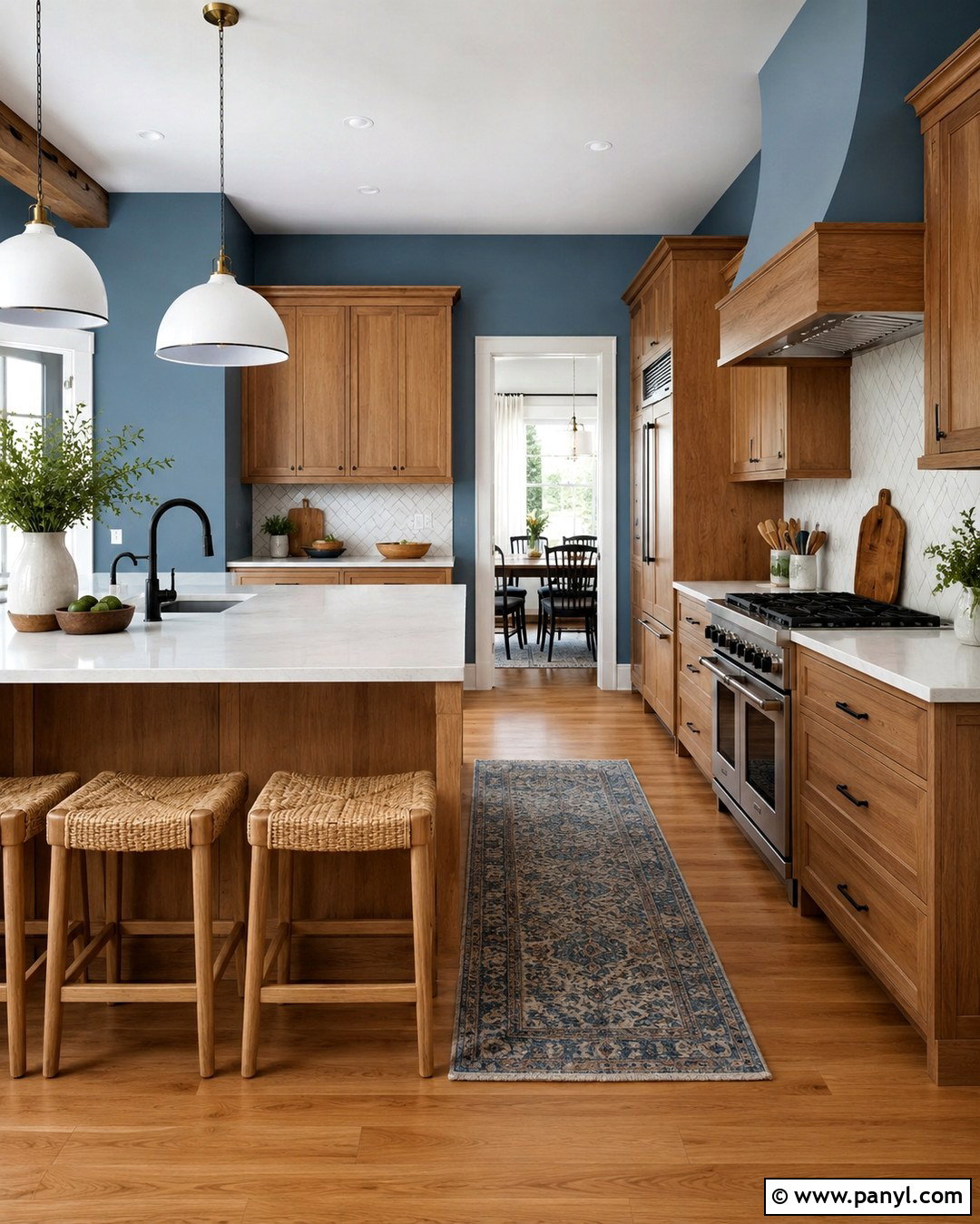
Dusty blue walls can make oak cabinets feel warmer and more distinctive through soft color contrast. Avoid bright sky blue and choose a muted shade with a touch of gray. Build the full look with ivory quartz countertops, a white herringbone tile backsplash, and warm natural wood flooring. Matte black cabinet pulls and a black gooseneck faucet add modern definition. Above a compact island, hang two white dome pendants with black details and use woven stools for extra texture. Neutral Roman shades, cream dishware, and one faded blue runner complete the room. The combination remains colorful without becoming overwhelming. Dusty blue is particularly effective in kitchens that receive warm afternoon sunlight, which brings out the beauty of both the wall paint and oak grain.
13. Deep Navy Kitchen Wall Color
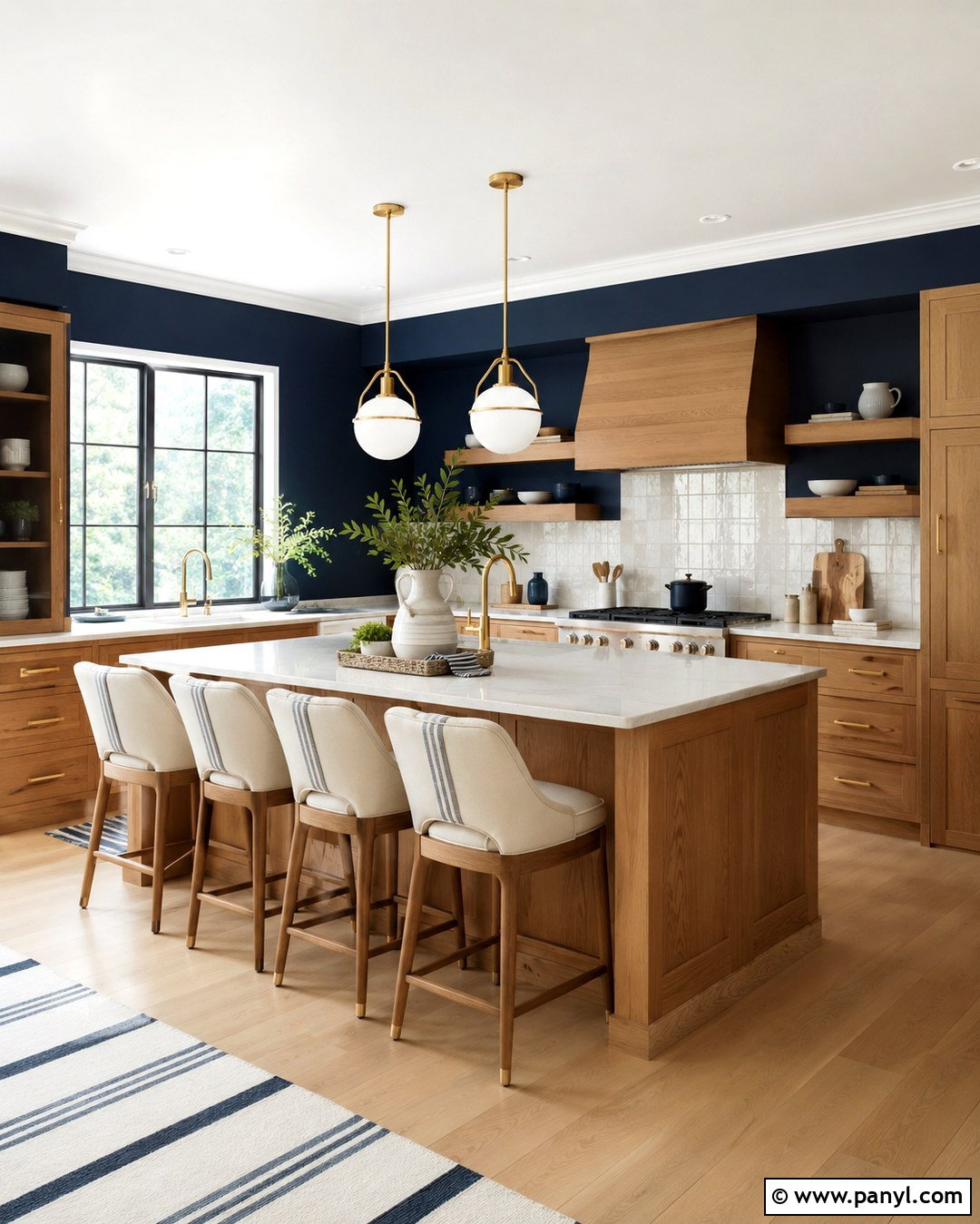
Deep navy walls turn oak cabinets into a strong architectural feature by surrounding them with bold contrast. This approach works best in a spacious kitchen with generous windows or layered lighting. Keep the counters and backsplash light by using creamy quartz and warm white tile. Brushed brass hardware, a brass faucet, and opal glass pendants add brightness against the navy background. Choose natural oak or light stone flooring so the lower half of the room does not feel too heavy. An island with oak sides and a pale countertop can reinforce the cabinetry. Finish with cream stools, striped textiles, and minimal white pottery. The complete design feels tailored and dramatic, yet the visible wood grain prevents the dark wall color from making the kitchen seem cold.
14. Pale Warm Gray Kitchen Wall Color
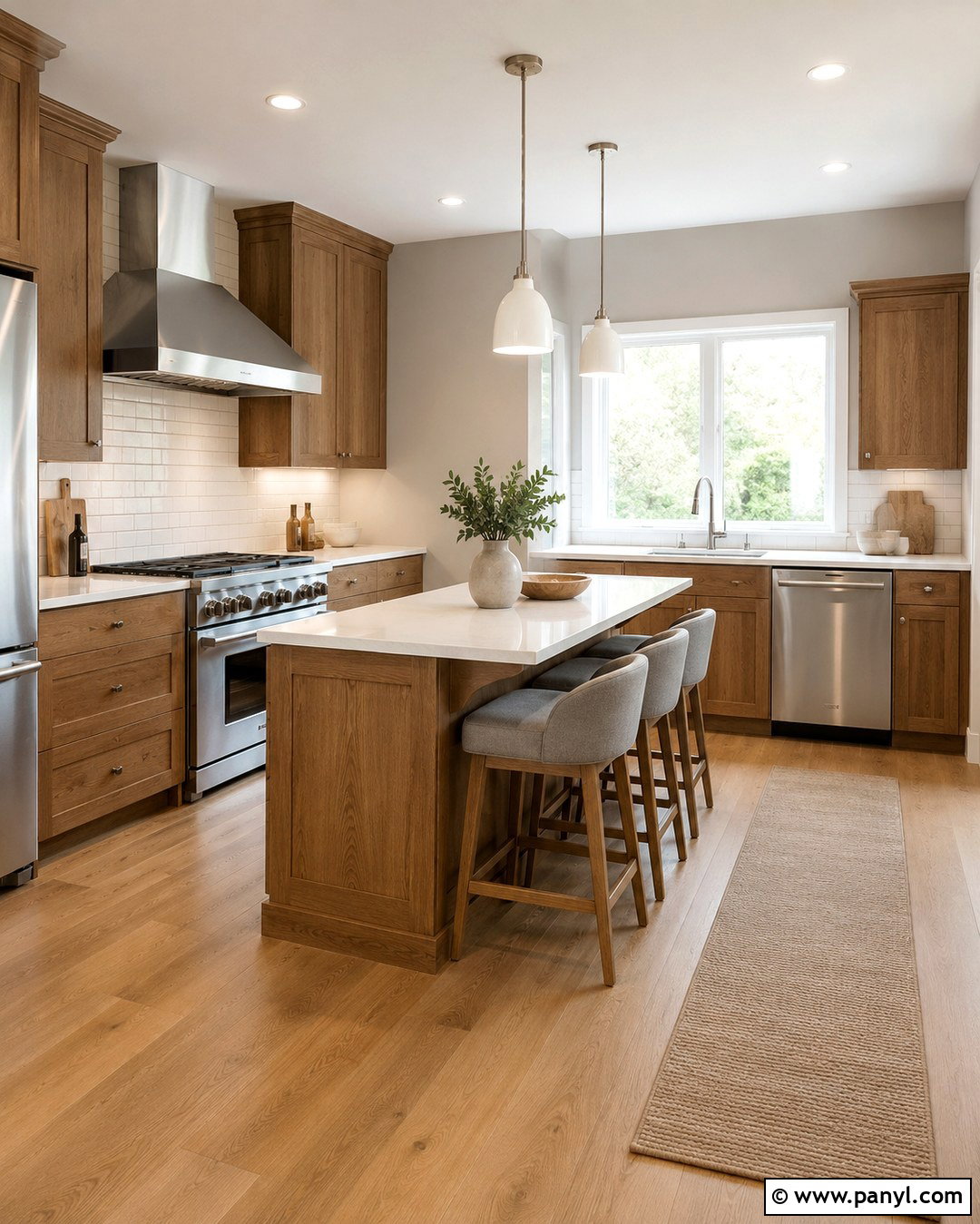
Pale warm gray walls provide a quiet backdrop that can make strongly grained oak cabinets appear more streamlined. Choose a gray with beige or subtle green undertones, since blue-violet grays may clash with golden wood. Pair the walls with white quartz counters, soft white subway tile, and a light natural oak floor. Satin nickel knobs and a stainless steel faucet create a clean, practical finish. Use simple white pendants over the island and gray upholstered stools with wooden legs. A beige runner and a few black-framed prints bring gentle contrast without distracting from the cabinetry. This complete palette is ideal for homeowners who prefer minimal color. It refreshes an older oak kitchen while remaining soft enough to flow comfortably into nearby neutral rooms.
15. Soft Charcoal Kitchen Wall Color
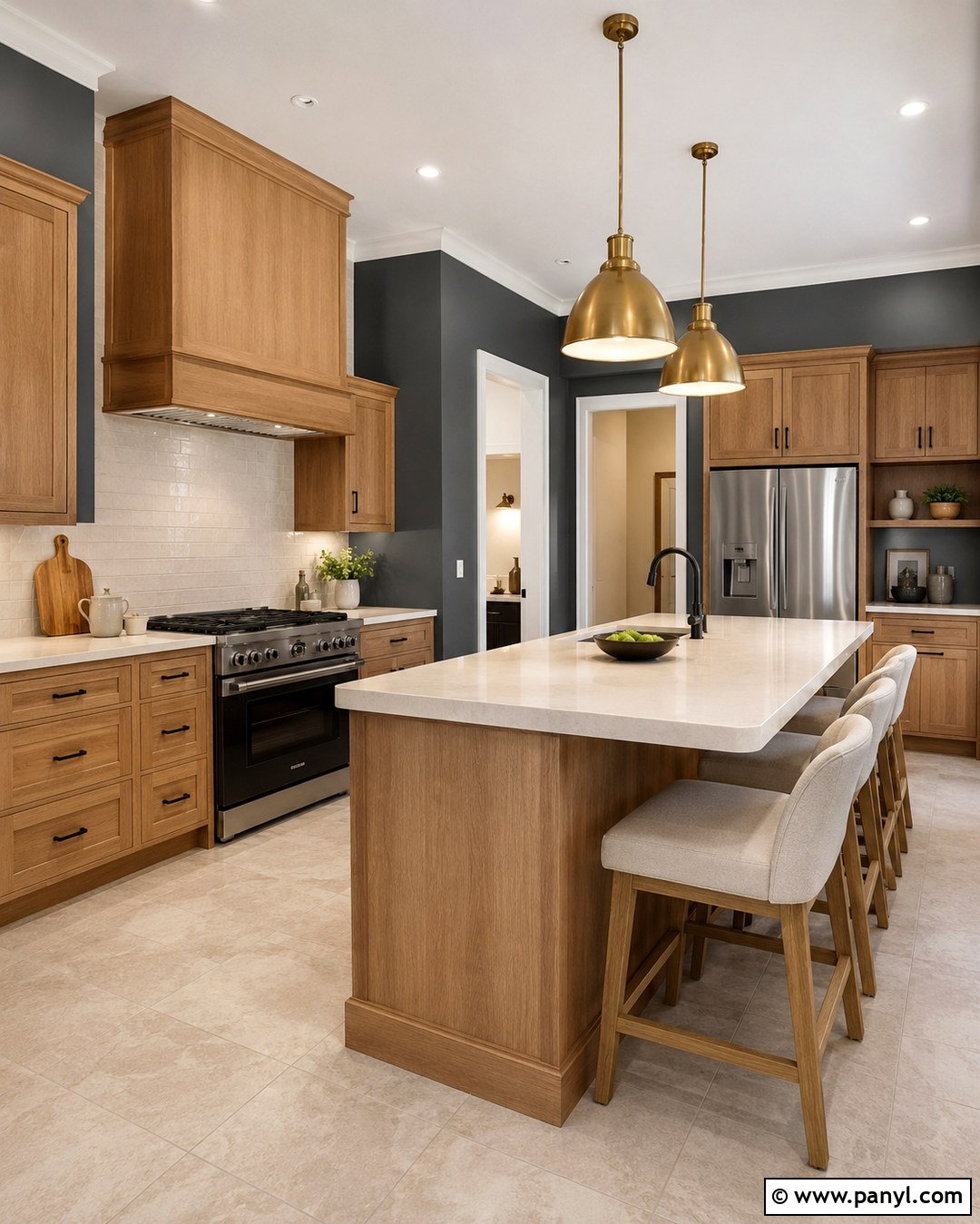
Soft charcoal walls create a striking frame around oak cabinets and can make their natural color appear richer. Instead of using a nearly black shade, select a softened charcoal with warm gray undertones. Balance the darker walls with pale quartz countertops, a glossy cream backsplash, and light wood or beige tile flooring. Matte black pulls blend into the background, while aged brass pendants and a brass faucet add controlled warmth. Use a large island with an ivory surface and light upholstered stools to brighten the center of the room. White trim and a warm white ceiling provide a clean upper boundary. With minimal pottery and natural woven accents, the completed kitchen feels modern and confident rather than dark, especially when supported by generous task lighting.
16. Muted Terracotta Kitchen Wall Color
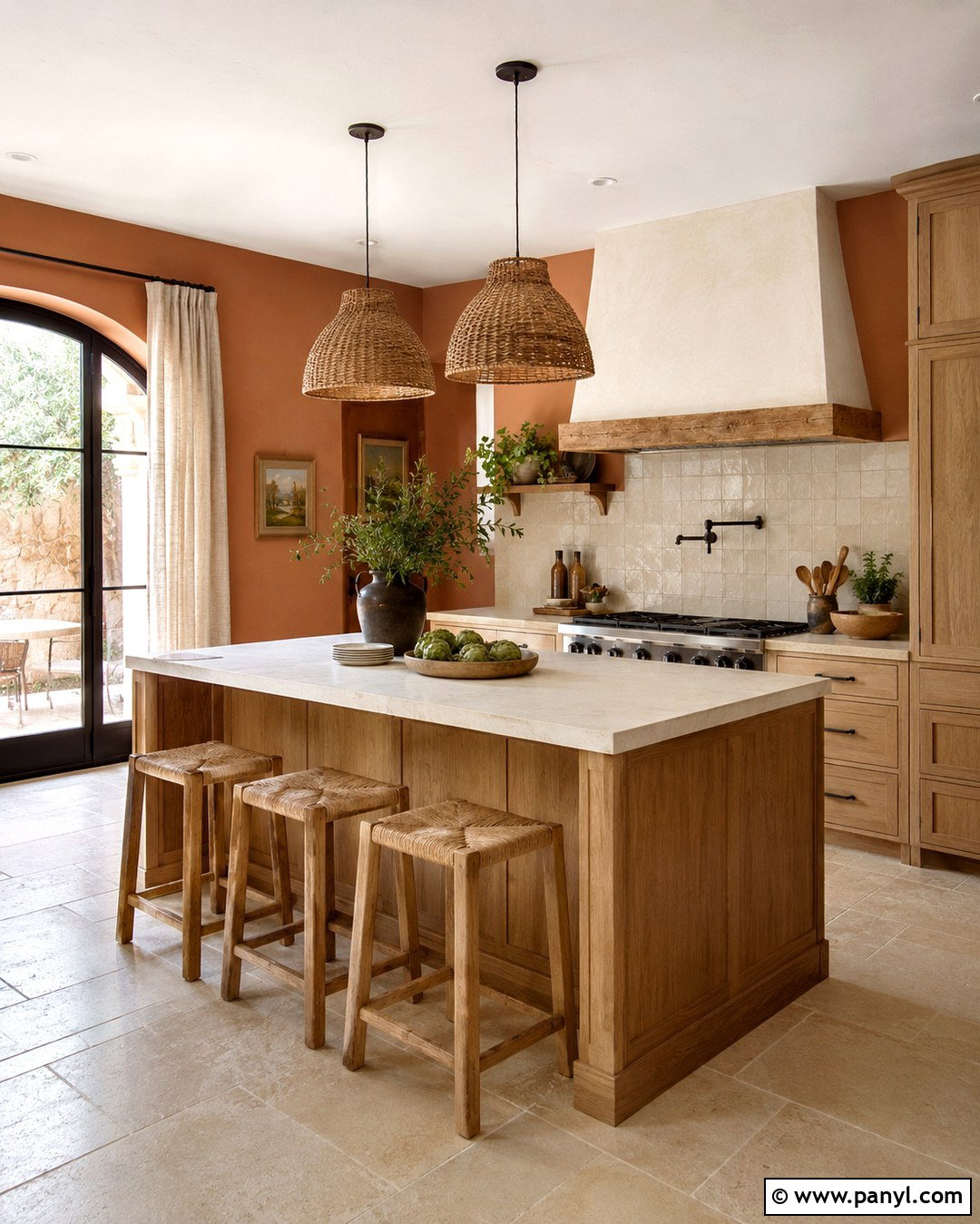
Muted terracotta walls can create a warm Southwestern or Mediterranean look with light oak cabinets. Choose a dusty clay tone instead of a saturated orange so the walls and cabinetry remain distinct. Complete the space with creamy stone countertops, handmade ivory backsplash tile, and warm beige flagstone-look flooring. Dark bronze hardware and a simple bronze faucet provide an aged, grounded finish. Woven pendants, rush-seat stools, and linen curtains support the natural material palette. Add small amounts of sage green through herbs, ceramics, or a patterned runner. The finished kitchen feels sunny and inviting without relying on excessive decoration. This wall color works especially well when the room has white ceilings and ample daylight to balance the warmth of the oak and terracotta surfaces.
17. Dusty Clay Pink Kitchen Wall Color
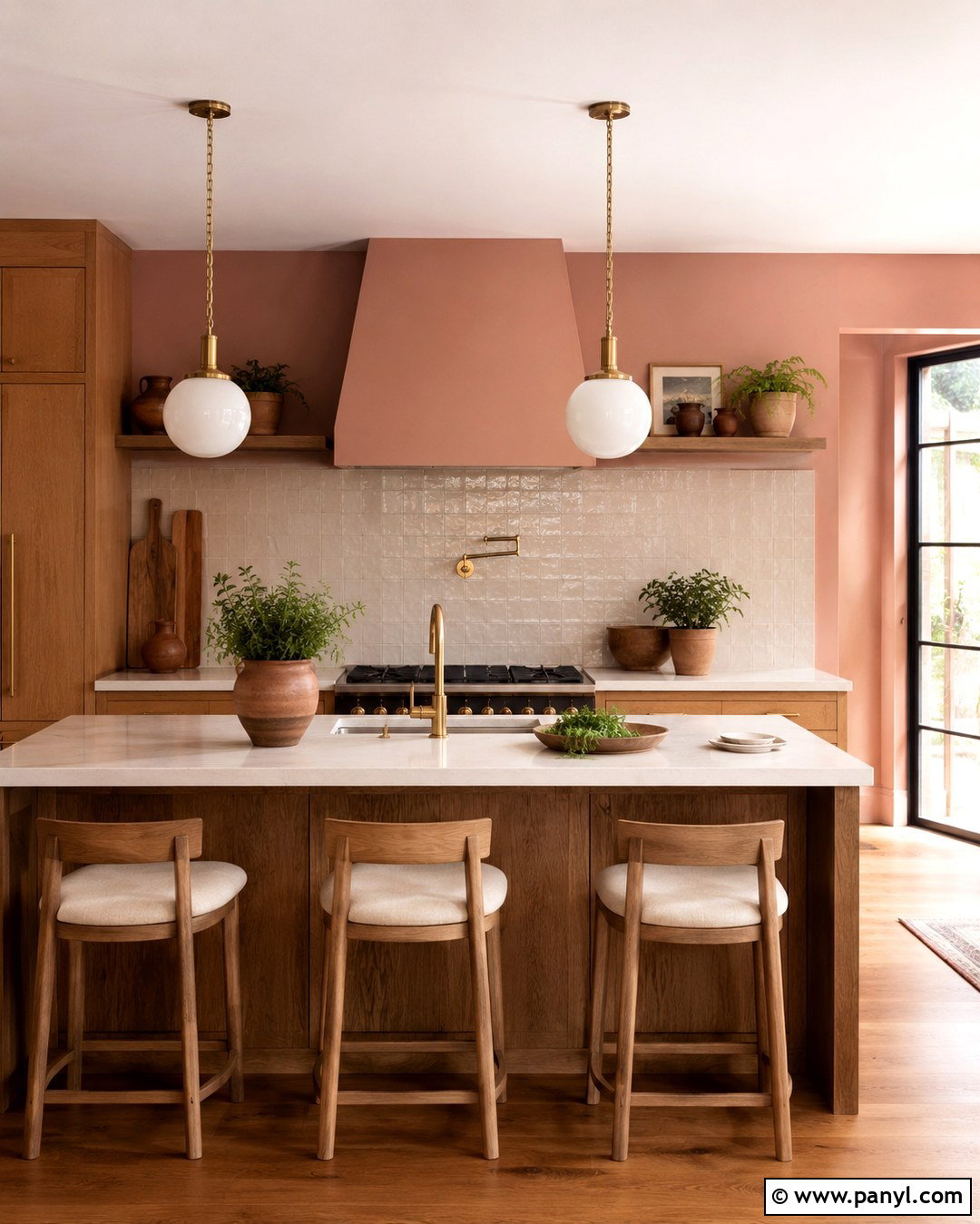
Dusty clay pink offers an unexpected but sophisticated background for oak cabinetry. Look for a muted pink with beige, brown, or gray undertones rather than a sweet pastel. Pair it with warm white quartz counters, a creamy square-tile backsplash, and medium oak flooring. Unlacquered brass knobs and matching fixtures complement the wall color while echoing the cabinets’ golden warmth. Choose ivory globe pendants and simple oak stools with oatmeal cushions for the island. Terracotta pottery, neutral linens, and dark green herbs provide restrained accent colors. The finished kitchen feels warm, personal, and softly layered. Clay pink is particularly effective in smaller kitchens or breakfast spaces where a gentle wash of color can add character without making the cabinetry or room feel visually crowded.
18. Pale Butter Yellow Kitchen Wall Color
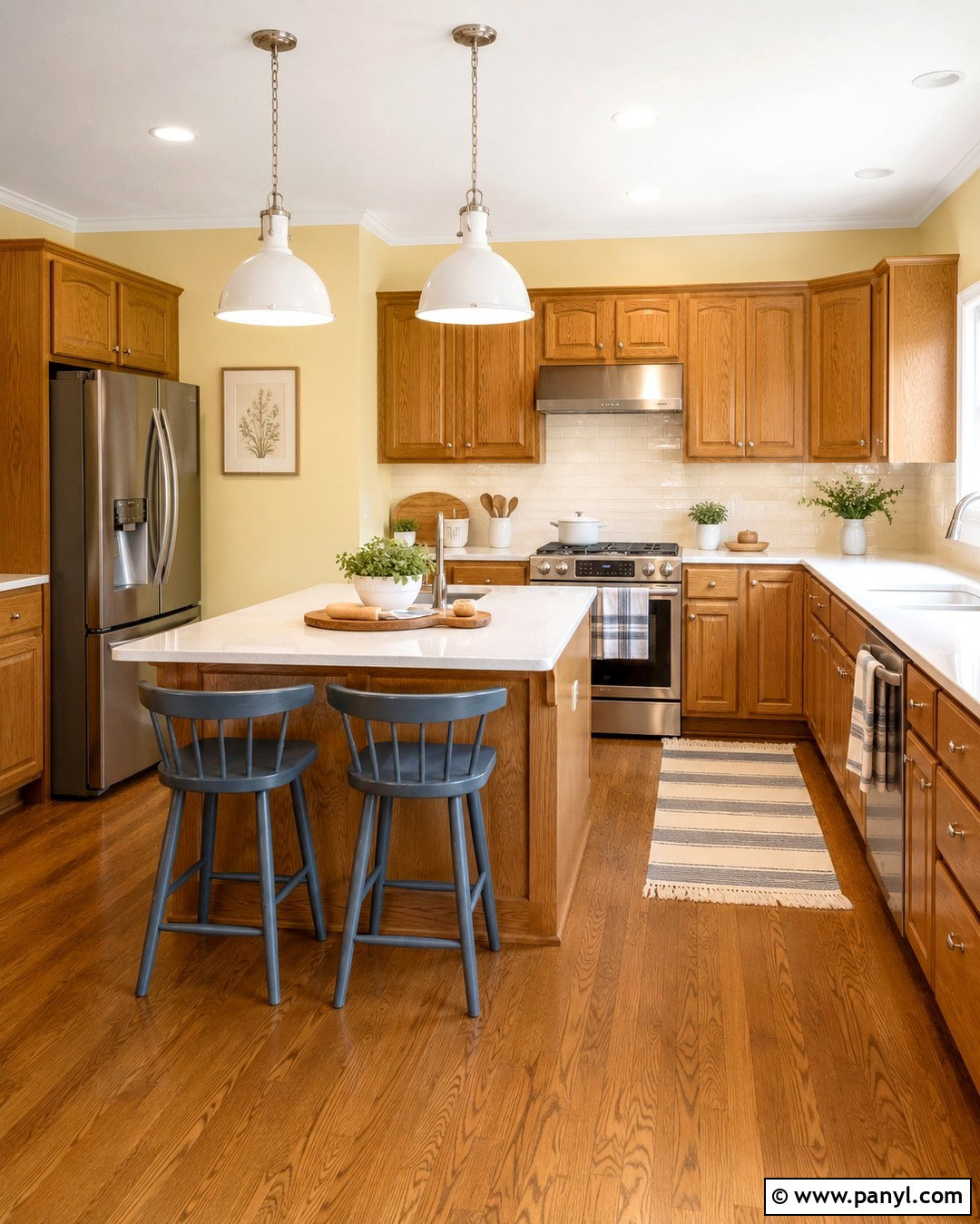
Pale butter yellow walls create a cheerful kitchen while blending naturally with honey oak cabinets. The shade should be light, creamy, and softly muted, without becoming bright lemon yellow. Balance the warmth with white quartz countertops, an ivory backsplash, and medium brown flooring that provides clear separation from the cabinetry. Brushed nickel hardware and stainless steel appliances introduce cooler details. Use white farmhouse pendants above the island and stools painted a soft blue-gray for a restrained color accent. Linen shades, striped towels, and simple white ceramics support the welcoming atmosphere. This completed scheme is well suited to traditional kitchens and casual breakfast rooms. Plenty of white trim and ceiling color keeps the yellow walls fresh, allowing the space to feel sunny rather than overly golden.
19. Muted Teal Kitchen Wall Color
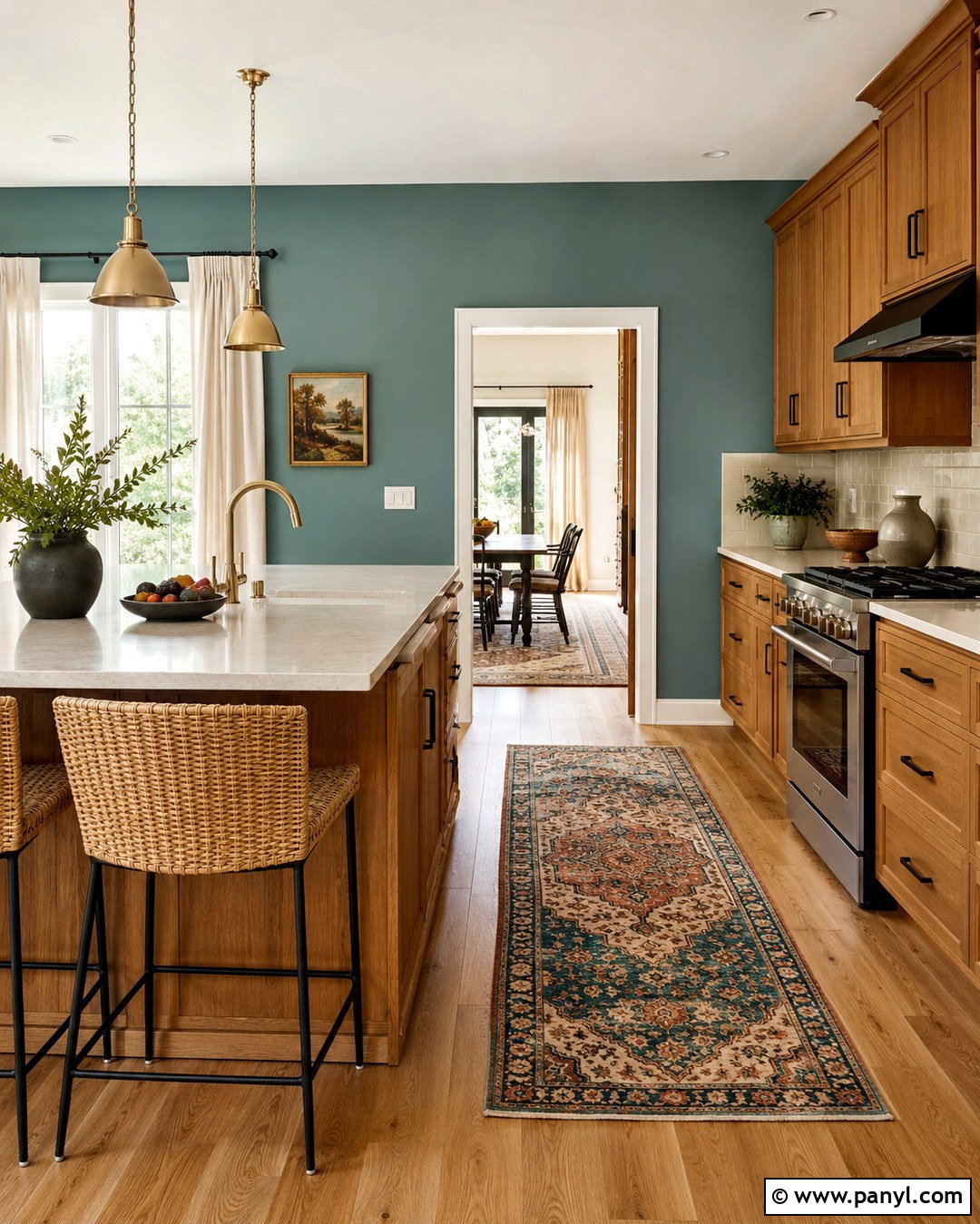
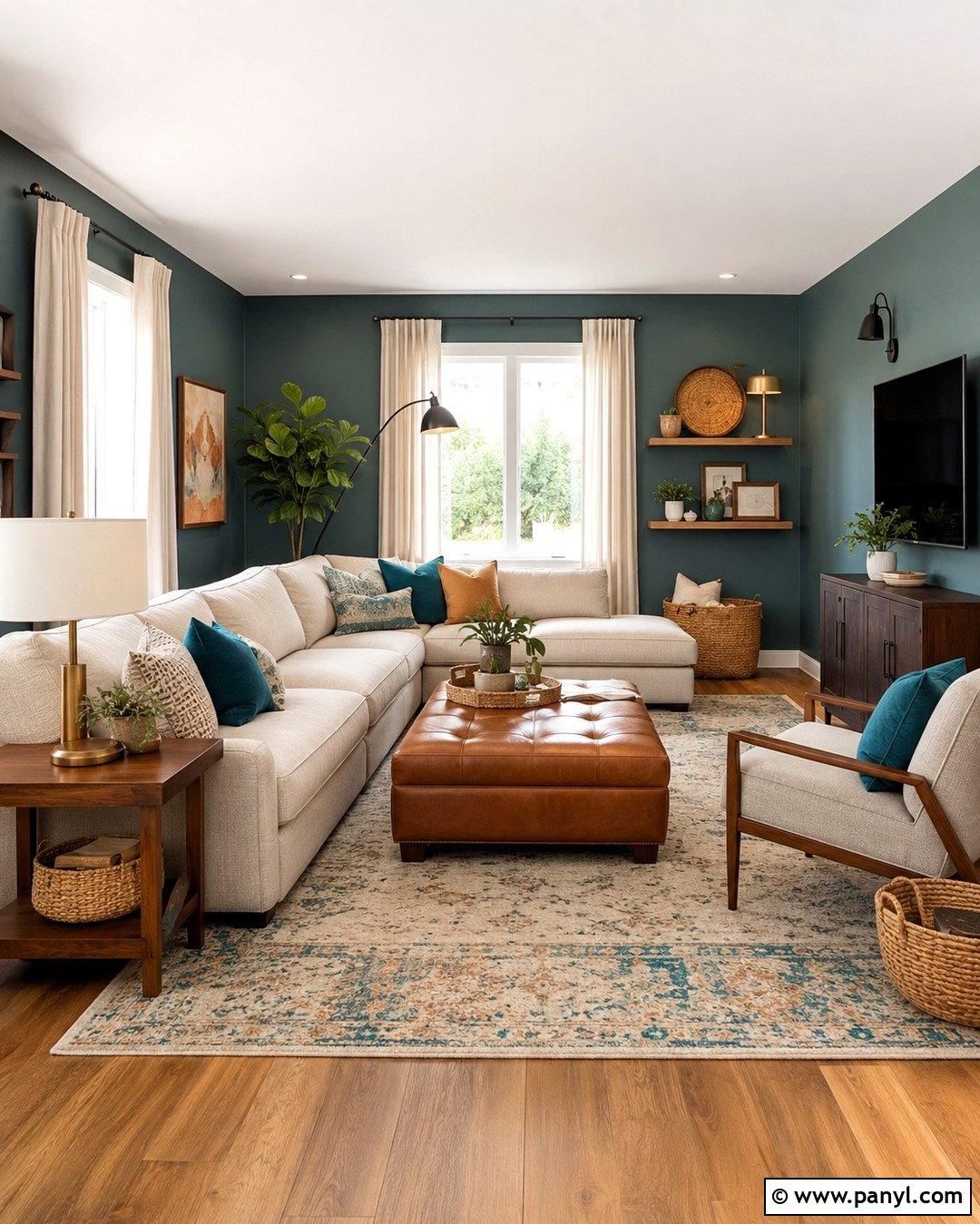
Muted teal walls provide rich blue-green contrast that can make golden oak cabinetry look intentionally warm and contemporary. Choose a grayed teal rather than a bright jewel tone for a more livable result. Keep the counters pale with creamy quartz, then install a simple off-white backsplash to create visual breathing room. Matte black pulls and a black faucet sharpen the palette, while brushed brass pendants add a second warm metal detail. Light oak flooring and woven stools connect the darker walls to the cabinets. Finish the room with ivory curtains, white stoneware, and a patterned runner containing teal, rust, and beige. The complete kitchen feels colorful but balanced. This approach is most successful in medium or large rooms with strong natural and overhead lighting.
20. Soft Black Kitchen Wall Color
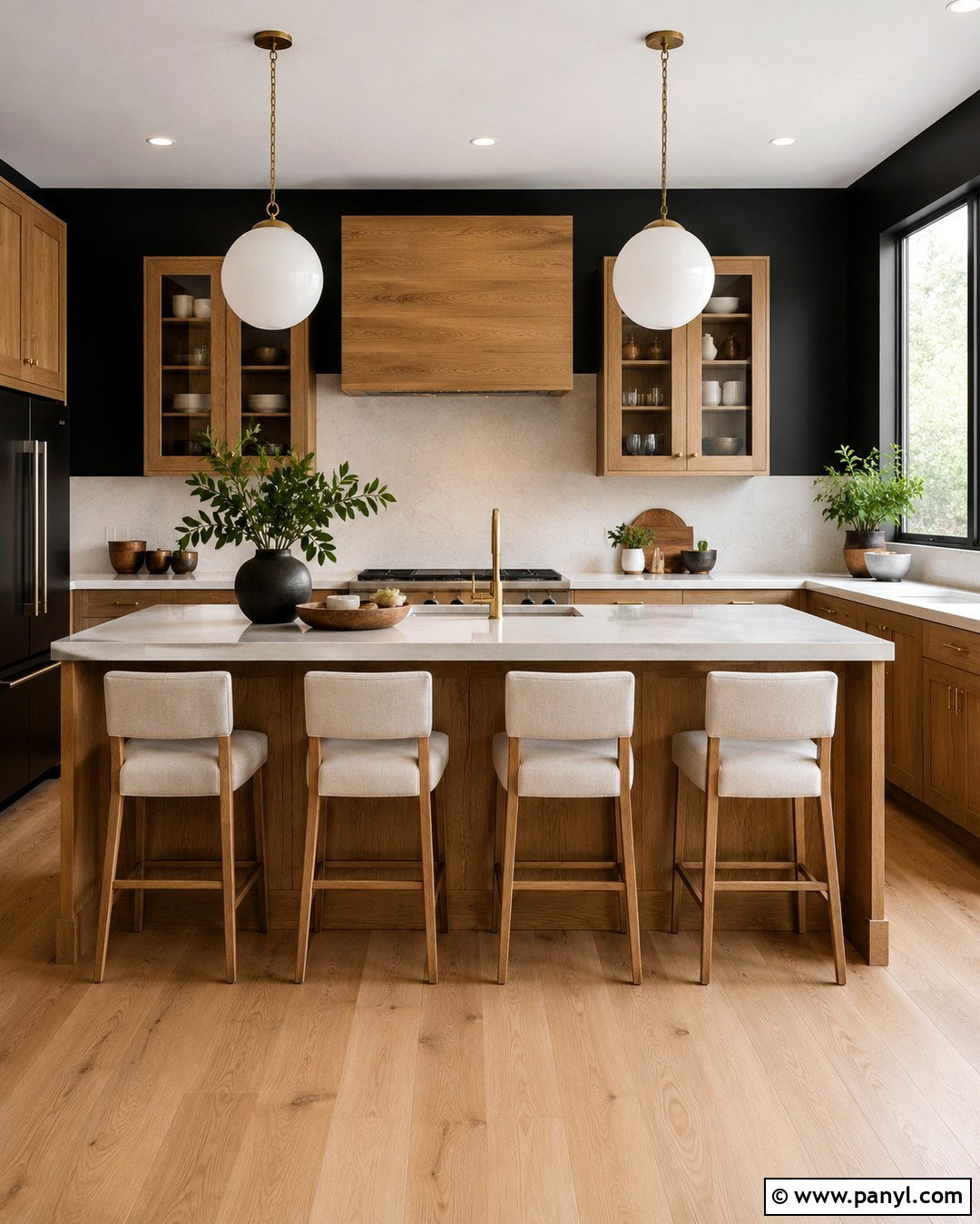
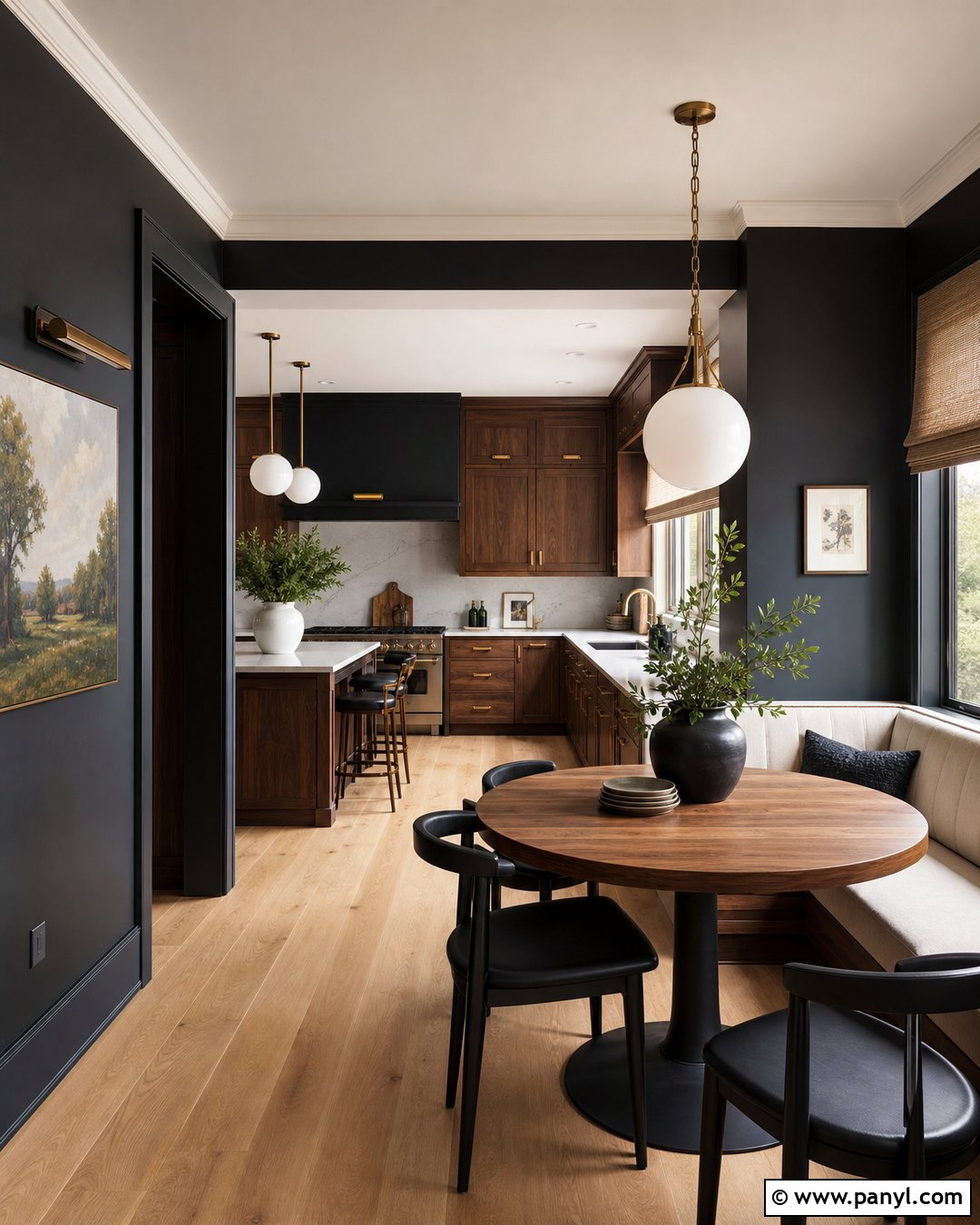
Soft black walls can transform oak cabinets into a warm, furniture-like focal point. Select a charcoal-based black rather than a flat, inky shade so the walls retain visible softness in daylight. Use this color in a kitchen with large windows, pale flooring, and excellent task lighting. Complete the room with creamy white quartz, a full-height ivory backsplash, and natural oak floorboards. Aged brass hardware and globe pendants stand out against the dark background, while an oak island reinforces the cabinetry. Choose light linen stools and keep the window treatments minimal. White dishes, green plants, and a neutral runner add just enough brightness. The completed design feels bold and modern, yet natural wood keeps it grounded, welcoming, and suitable for daily family life.
Conclusion:
Finding the best Kitchen Wall Color With Oak Cabinets becomes easier when you treat the room as one complete palette. Begin with the oak’s undertone, then compare potential wall colors with the countertop, backsplash, flooring, appliances, and hardware. Warm whites, creams, greiges, and taupes provide versatile foundations, while muted greens and blues introduce balanced contrast. Terracotta, teal, navy, charcoal, and soft black offer more dramatic alternatives for well-lit kitchens. Always test large samples directly beside several cabinet doors because oak grain can vary across the room. Observe each sample under both natural and artificial light. With thoughtful coordination, existing oak cabinetry can look warm, current, and beautifully connected to the rest of your home.

Related Ideas and Inspiration:
Leave a Reply