
Honey oak cabinets bring natural warmth, visible grain, and a welcoming character to the kitchen. The right wall paint can balance their golden-orange undertones while making the entire space feel brighter and more current. Warm whites, balanced greiges, earthy greens, and restrained blue tones remain reliable pairings because they either coordinate gently with the wood or create controlled contrast. () Before committing, place large paint samples beside the cabinet doors and observe them throughout the day. Flooring, countertops, backsplash tile, and artificial lighting can noticeably change how a color appears. The complete kitchen schemes below combine paint with complementary finishes, fixtures, and decorative details, giving you practical ways to explore these 20 Honey Oak Cabinets Wall Color Ideas.
1. Warm White Walls With Honey Oak Cabinets
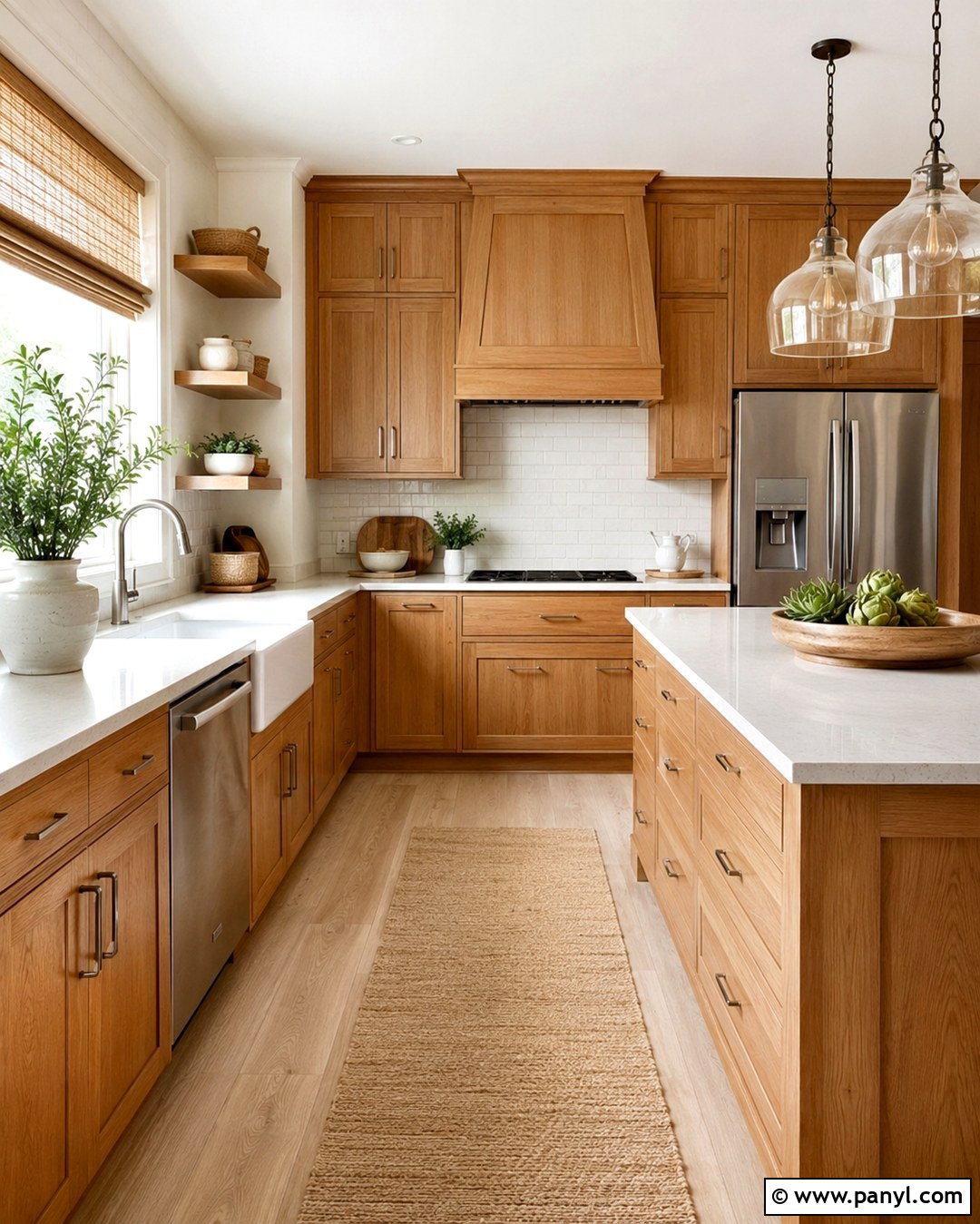
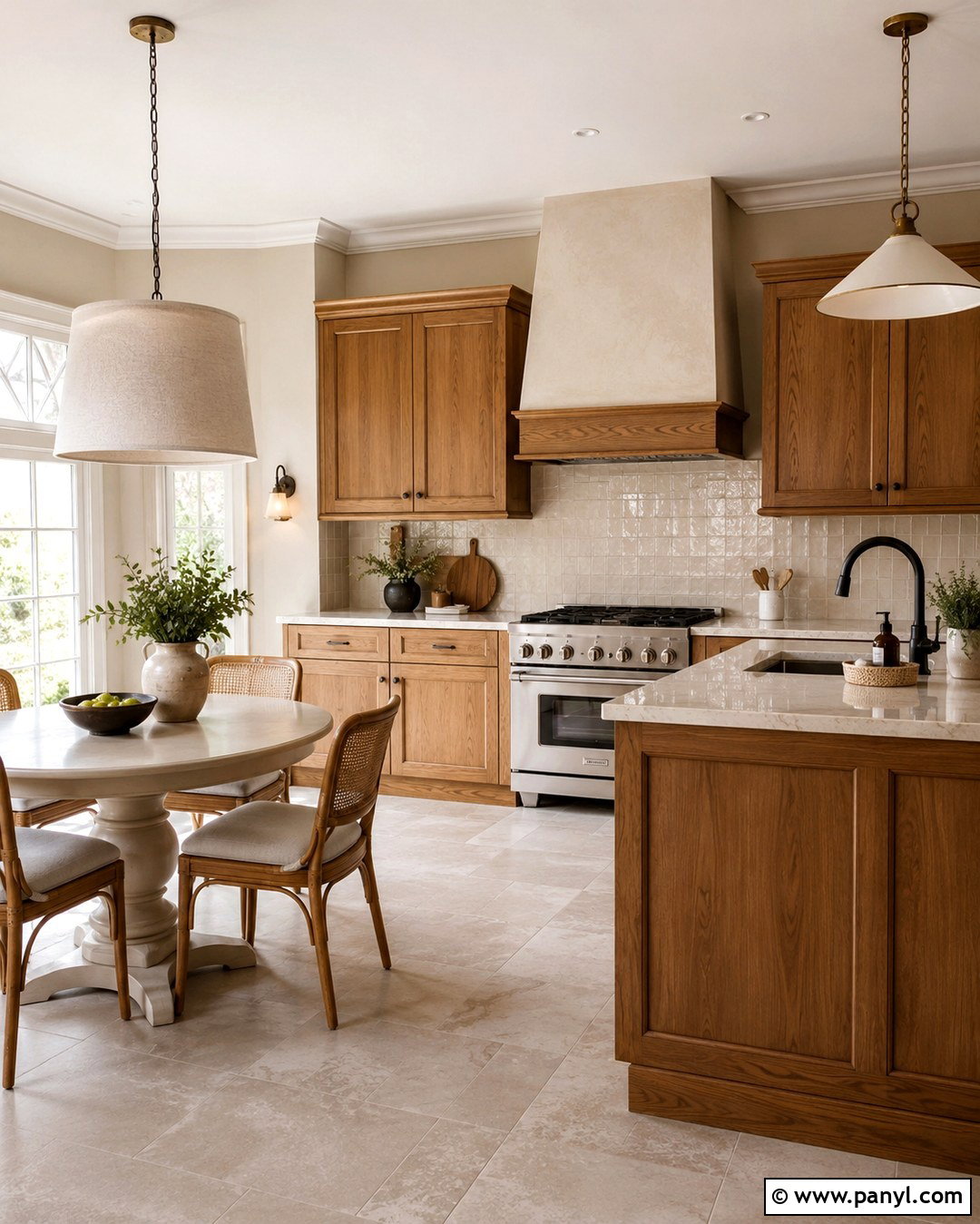
Warm white walls create a clean backdrop without making honey oak cabinets appear unusually orange. Choose an off-white with subtle cream or beige undertones rather than a sharp, blue-based white. Complete the look with an ivory quartz countertop, a handmade white subway tile backsplash, and medium brown grout. Brushed nickel hardware adds a quiet update while allowing the wood grain to remain prominent. Use a light oak-look floor if the existing kitchen feels dark, or soften brown tile with a washable beige runner. Clear glass pendants and under-cabinet lighting keep every work surface bright. Finish with cream pottery, small green plants, and woven window shades for a simple kitchen that feels fresh, warm, and balanced.
2. Soft Cream Walls With Honey Oak Cabinets
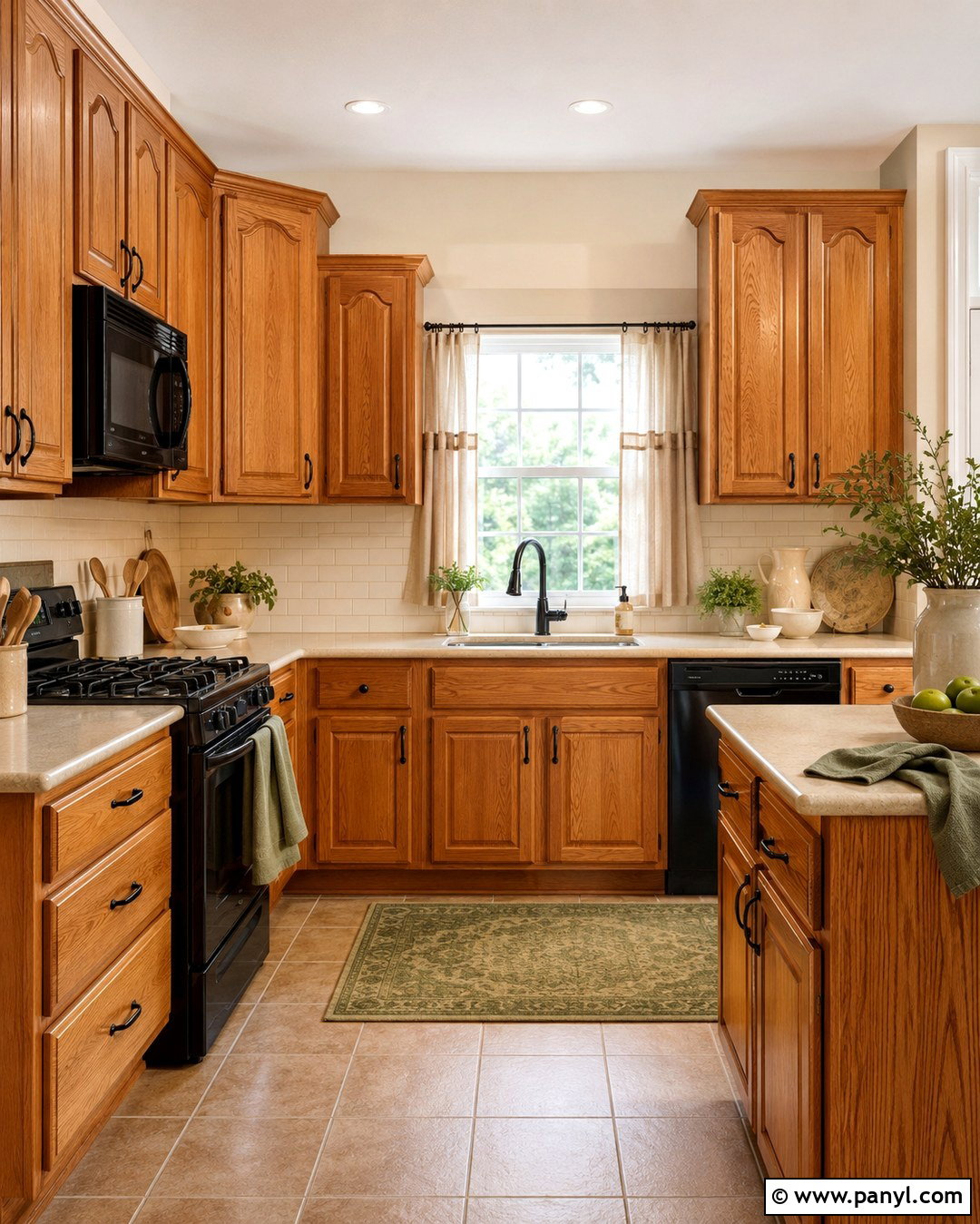
Soft cream walls lean into the warmth of honey oak without repeating its strongest yellow tones. This palette works especially well in traditional kitchens with raised-panel cabinets, beige countertops, or warm ceramic flooring. Add an ivory backsplash with slight tonal variation to give the room depth instead of using a flat, matching surface. Oil-rubbed bronze pulls provide definition, while a bronze faucet connects naturally with the cabinet color. Choose linen café curtains, warm white ceiling paint, and a cream runner with muted green details. Black counter appliances can create useful contrast, but keep decorative accessories light and restrained. The completed room feels comfortable and established, yet the coordinated finishes prevent the cream-and-oak combination from looking dated or overly golden.
3. Light Greige Walls With Honey Oak Cabinets
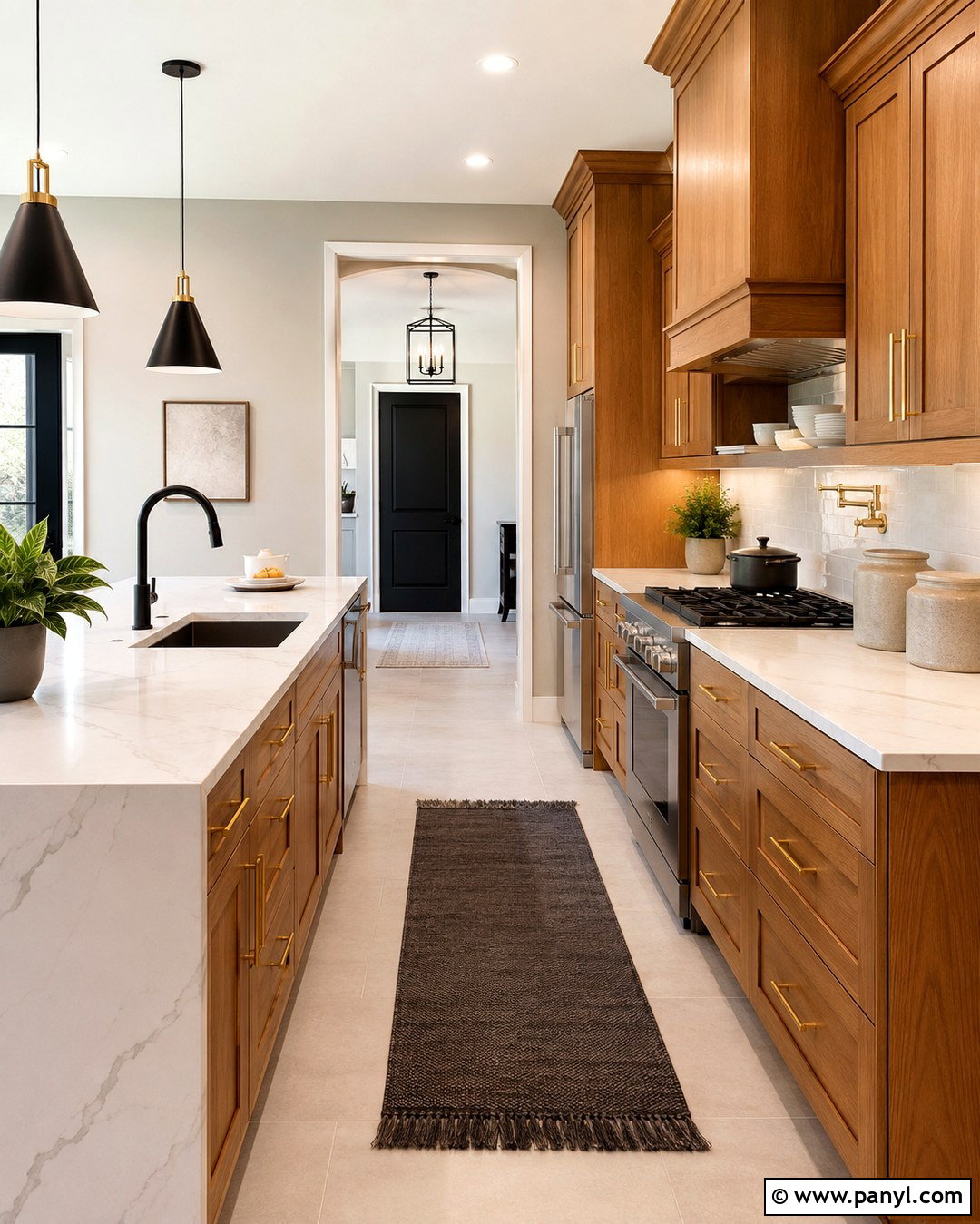
Light greige walls offer a balanced mix of gray and beige that can quiet the intensity of honey oak. Select a warm greige without obvious purple, blue, or pink undertones. Pair it with white quartz counters containing fine taupe veining and a matte ivory backsplash. Satin brass cabinet pulls echo the warmth of the oak in a more refined finish. For flooring, pale neutral tile or natural light wood keeps the scheme relaxed and connected. A charcoal runner and matte black pendant lights introduce small amounts of modern contrast. Add simple white dishes, stoneware canisters, and one leafy plant rather than filling every counter. This complete palette makes the original cabinets feel intentional while bringing a cleaner, more contemporary structure to the kitchen.
4. Warm Taupe Walls With Honey Oak Cabinets
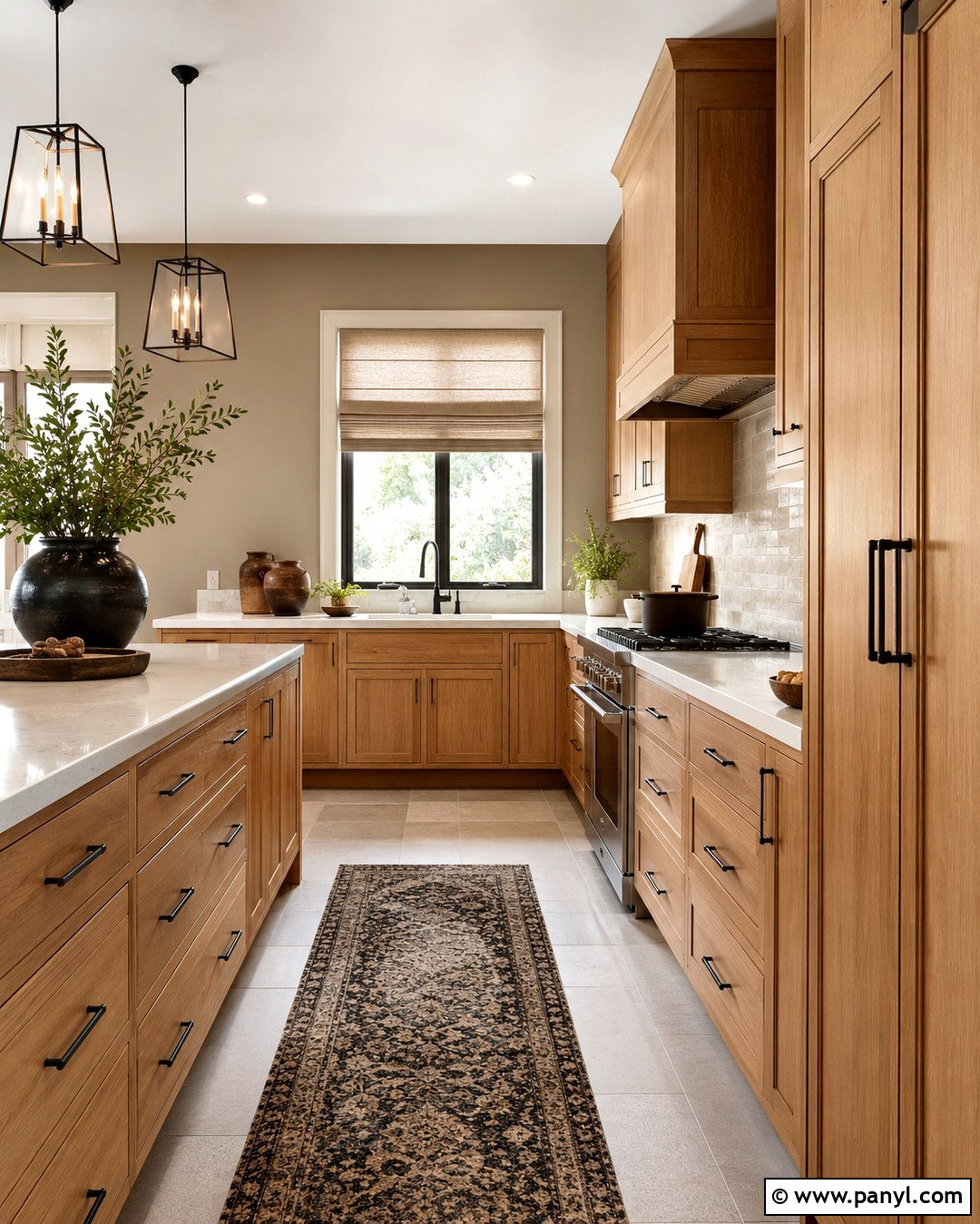
Warm taupe walls create a richer neutral kitchen with enough depth to define honey oak cabinetry. Look for a medium-light taupe that contains brown and gray rather than lavender. The darker wall value works best when the room receives generous natural light or has effective ceiling and under-cabinet fixtures. Pair the cabinets with creamy quartz, beige limestone-look backsplash tile, and warm gray porcelain flooring. Matte black hardware creates a crisp outline against the golden wood, while black-framed pendants repeat that contrast overhead. Introduce a natural linen Roman shade and a faded black-and-tan runner for softness. A few ceramic pieces in cream and deep brown complete the space. The result feels grounded, tailored, and cohesive without hiding the oak’s natural character.
5. Mushroom Beige Walls With Honey Oak Cabinets
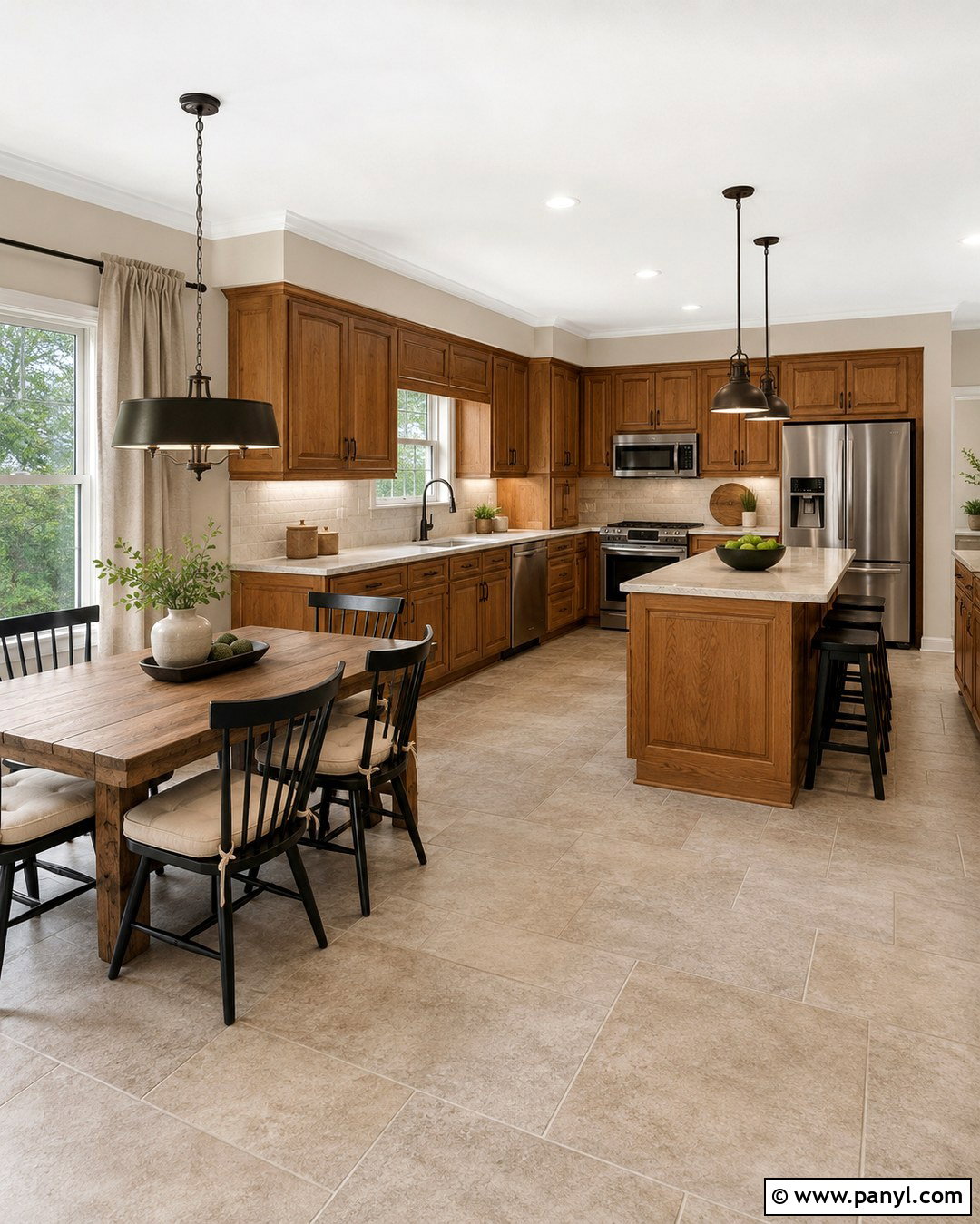
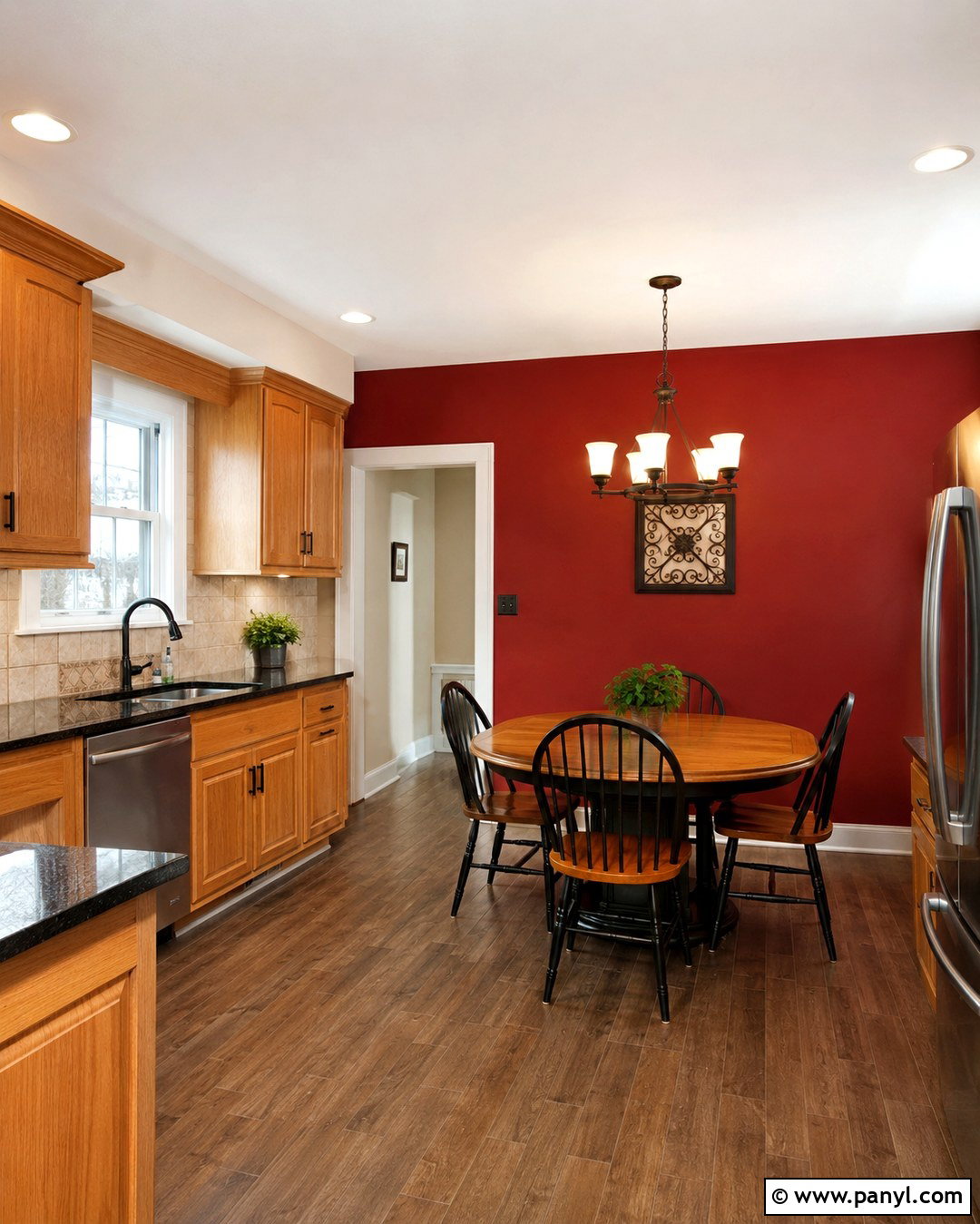
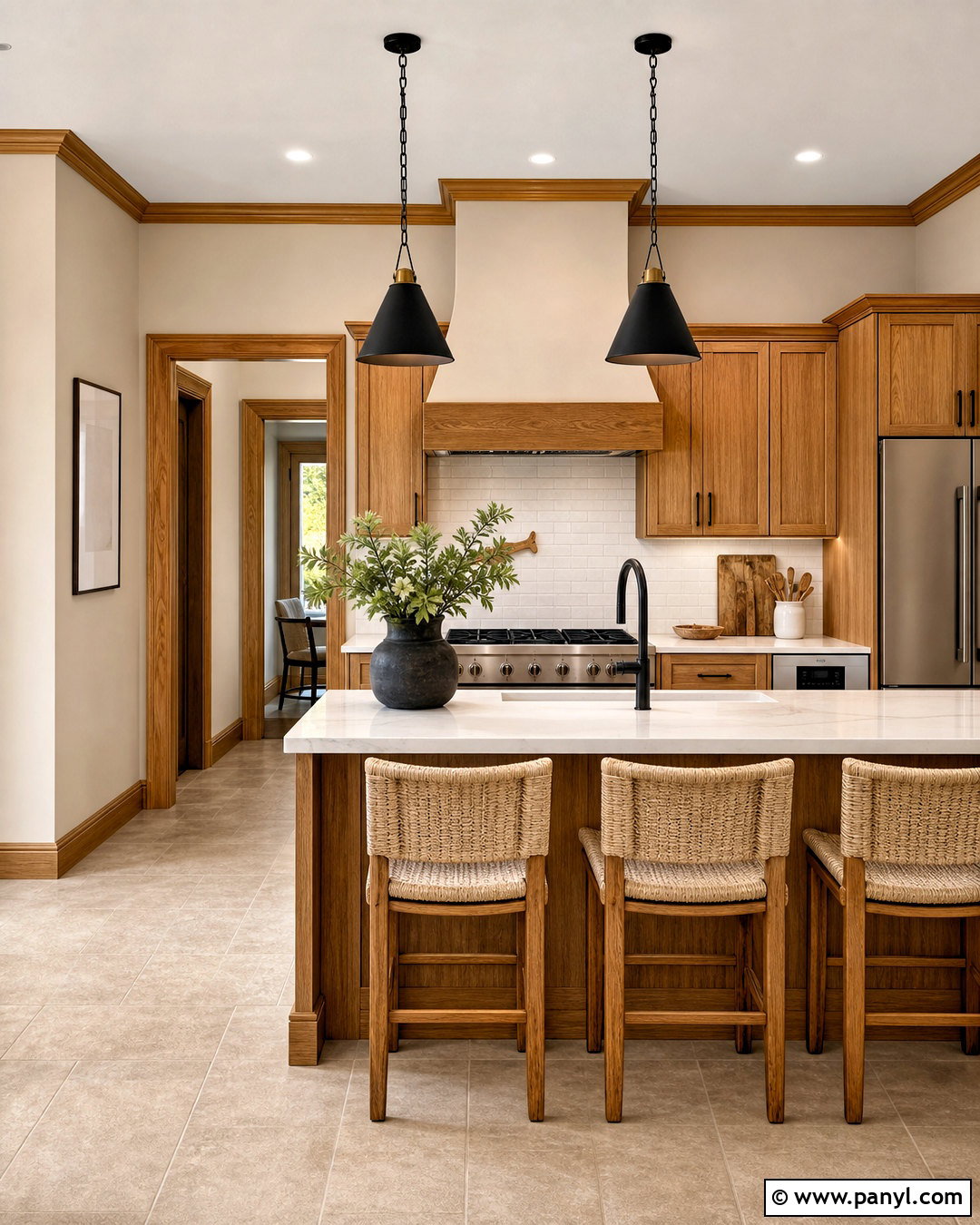
Mushroom beige sits between soft brown, taupe, and gray, making it an effective bridge between honey oak cabinets and neutral kitchen finishes. Choose a muted shade that looks earthy rather than yellow. Continue the palette with an off-white quartz countertop, mushroom-colored backsplash grout, and stone-look flooring in mixed beige and gray. Antique brass pulls complement the cabinets, while a dark bronze faucet gives the sink area stronger definition. A small wooden table with black chairs can turn an adjoining breakfast nook into part of the design. Use oatmeal curtains, cream seat cushions, and understated landscape art to reinforce the natural colors. This layered scheme feels warmer than a gray kitchen but more controlled and updated than a room filled with conventional tan surfaces.
6. Pale Sage Green Walls With Honey Oak Cabinets
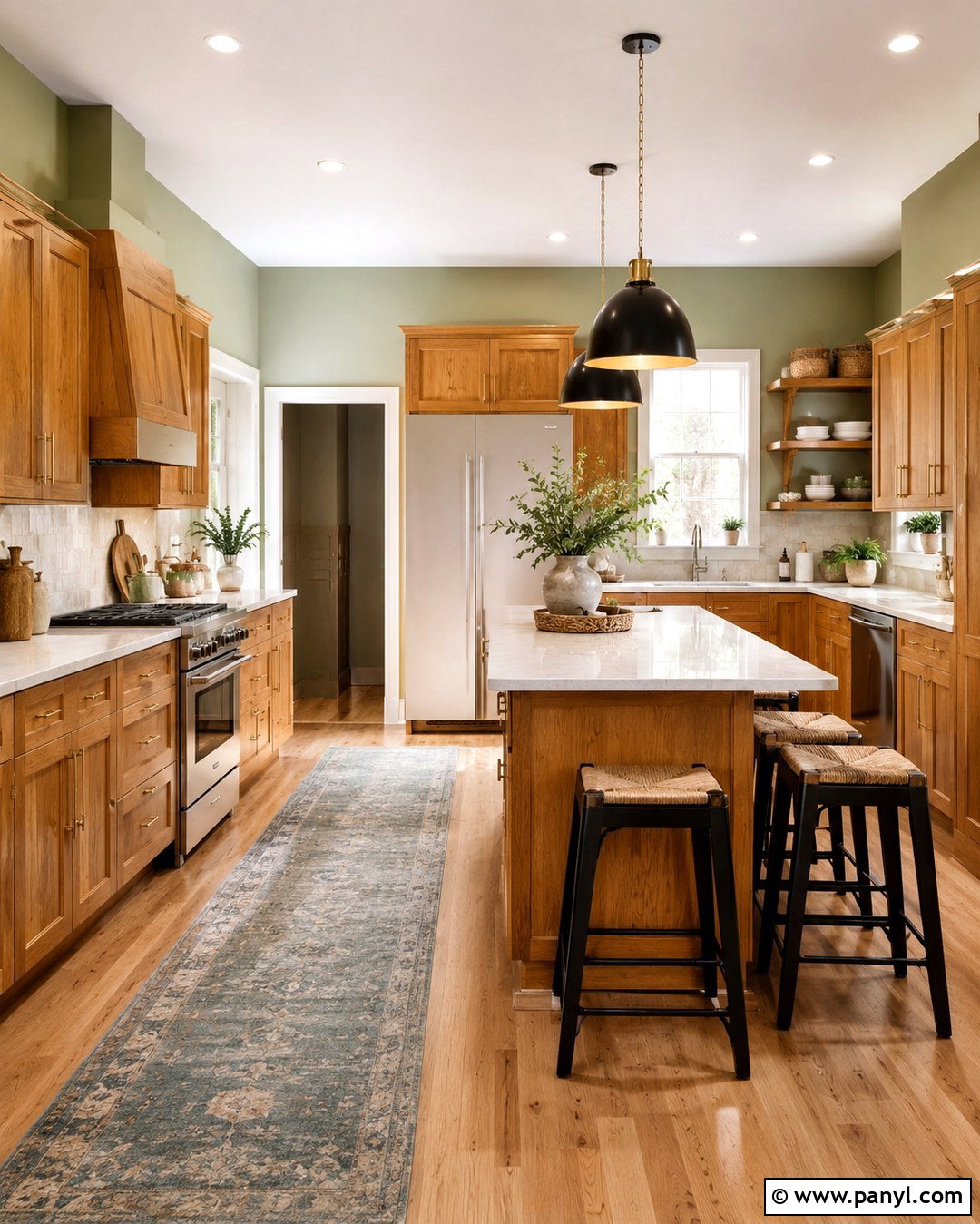
Pale sage green walls bring a soft natural contrast to the golden tones in honey oak cabinets. Select a muted green with gray undertones so the room feels calm rather than bright or themed. White quartz countertops and a creamy handmade tile backsplash keep the kitchen light, while brushed brass hardware connects the wall color to the warm cabinetry. Install natural woven shades and use a washable runner with sage, ivory, and faded blue details. Black counter stools or pendant lights can provide a small amount of structure in an open kitchen. Keep accessories simple with white stoneware, wooden cutting boards, and fresh herbs in terracotta pots. The finished space has an approachable garden-inspired character that suits traditional, farmhouse, and casual transitional homes.
7. Muted Olive Walls With Honey Oak Cabinets
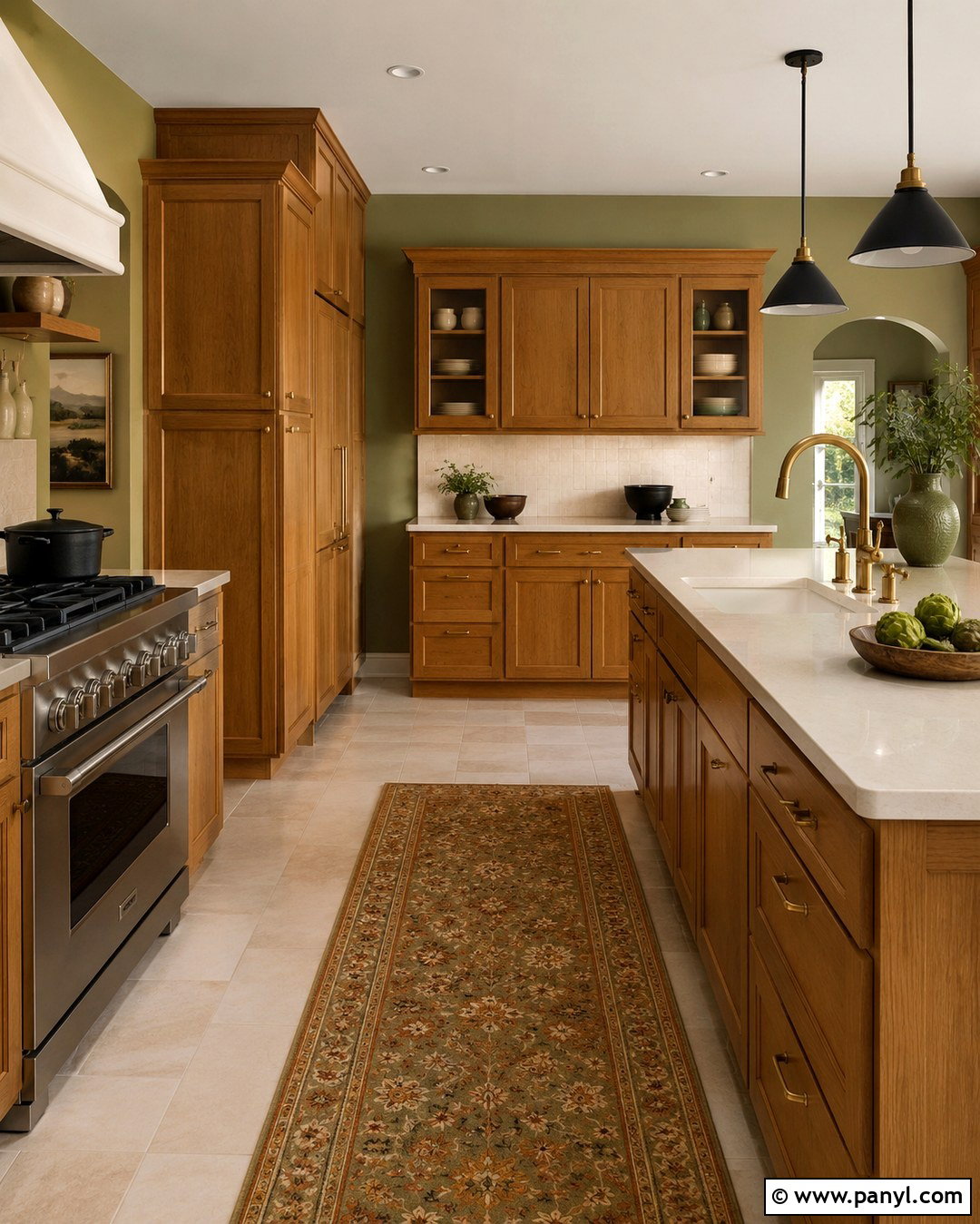
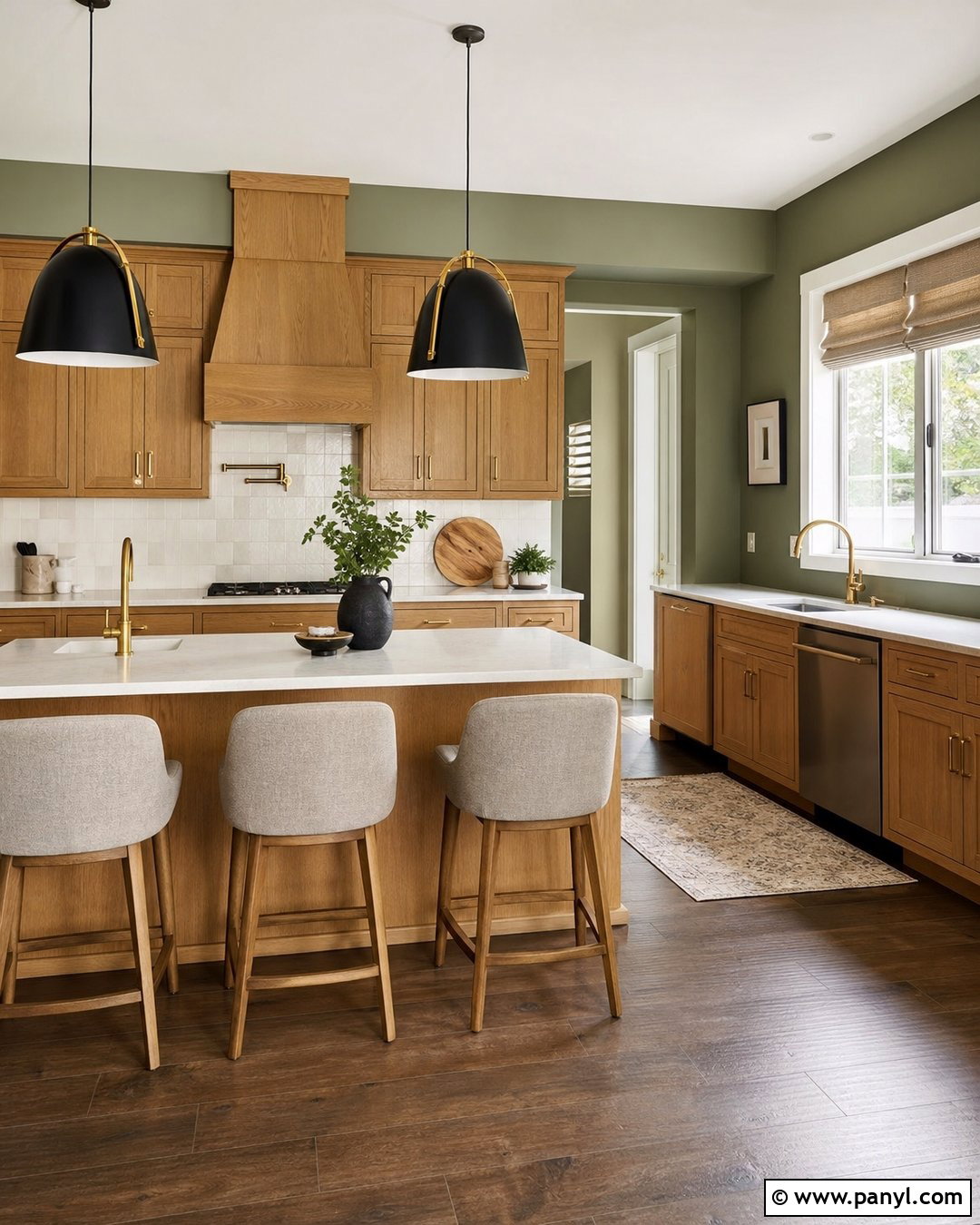
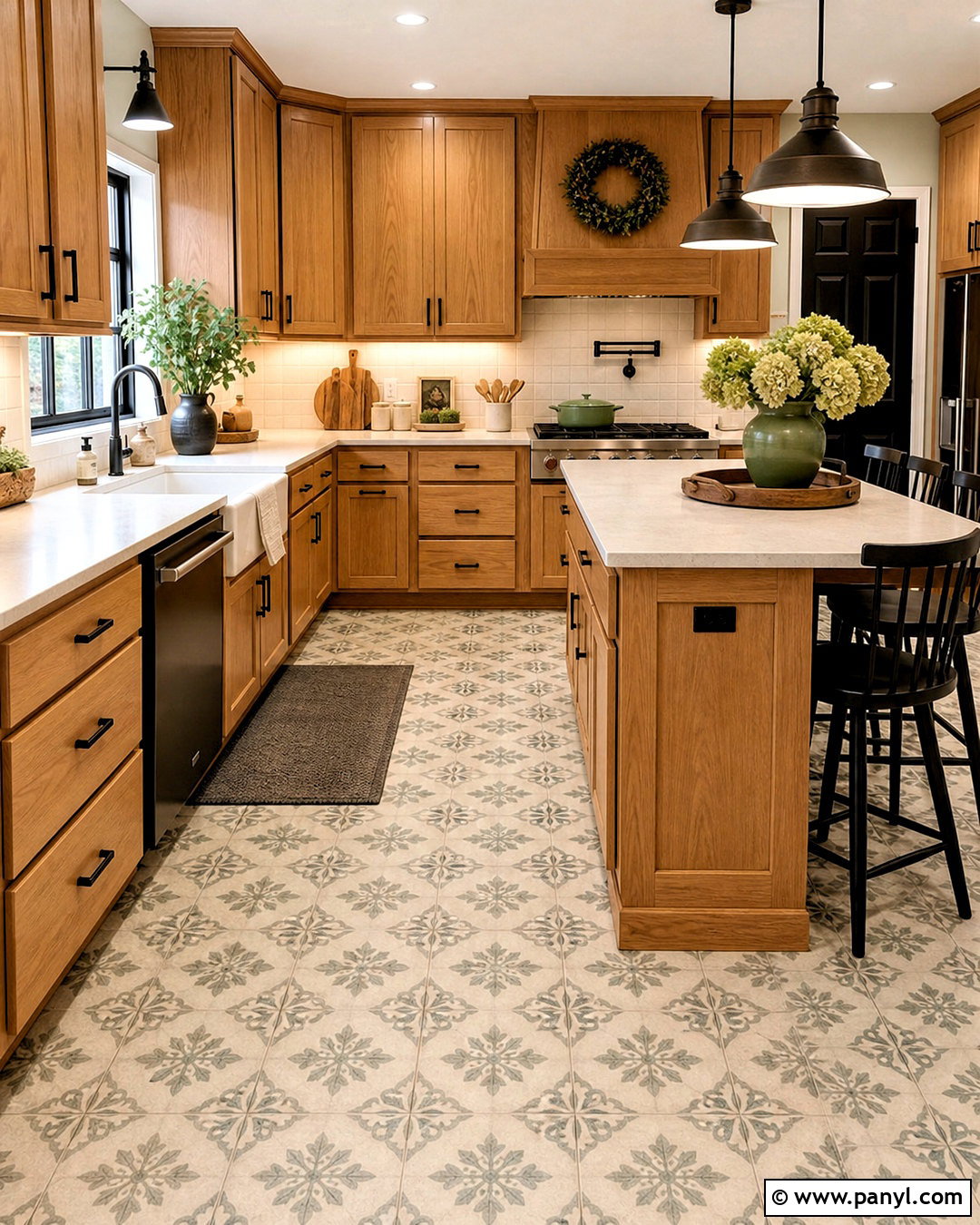
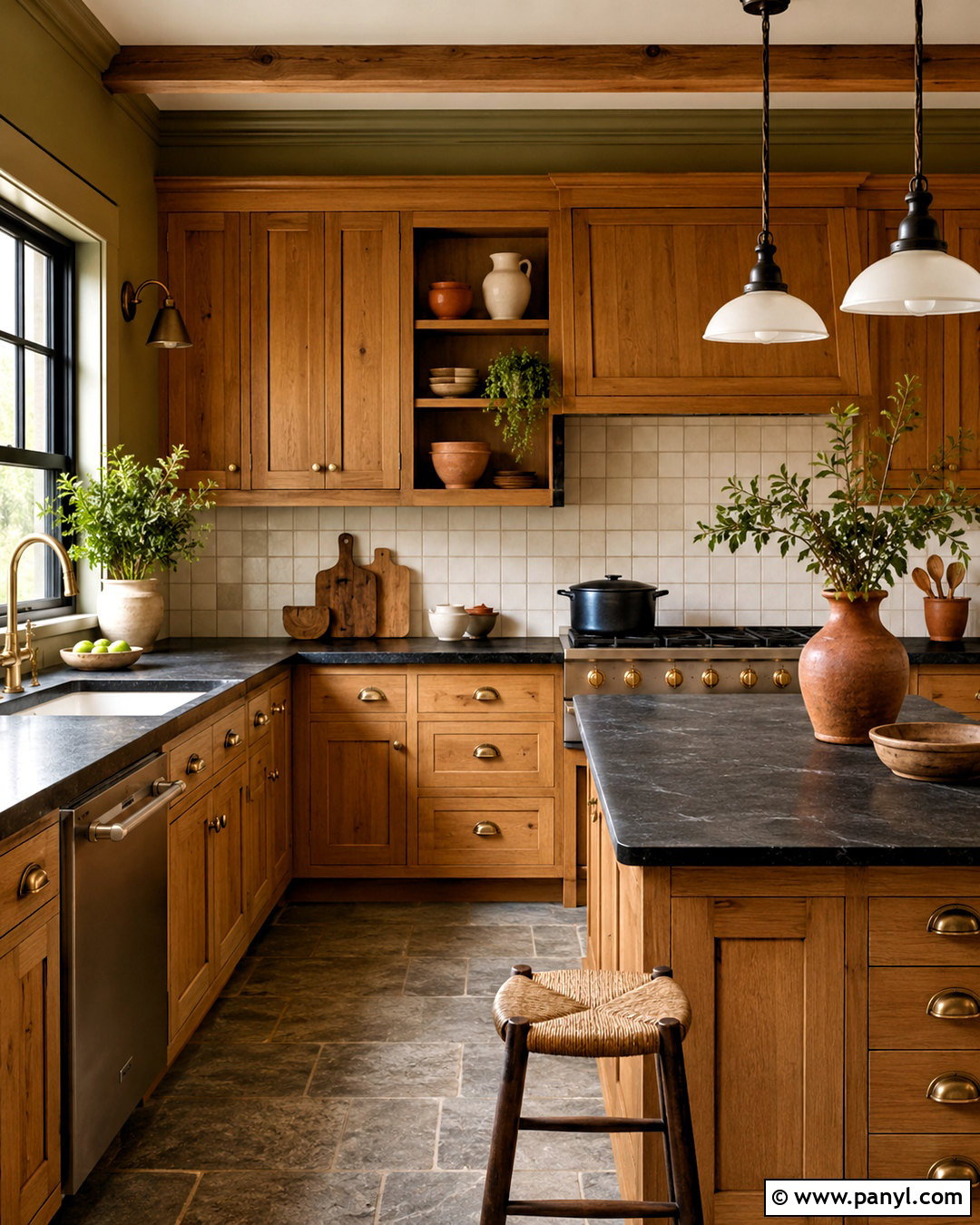
Muted olive walls produce a deeper, earthier kitchen that celebrates honey oak instead of trying to disguise it. Choose a softened olive containing gray or brown, and use it in a room with good daylight or light countertops. Cream quartz, warm white backsplash tile, and pale flooring prevent the darker walls from making the space feel enclosed. Add aged brass cabinet hardware and a matching bridge faucet for a collected traditional look. Black metal pendants can introduce sharper lines above an island or breakfast table. Style the counters with cream pottery, wooden boards, and a few dark green glass accents. A patterned runner in olive, rust, and beige ties everything together. This scheme feels organic and substantial, with the oak becoming part of a deliberate woodland-inspired palette.
8. Blue Green Walls With Honey Oak Cabinets
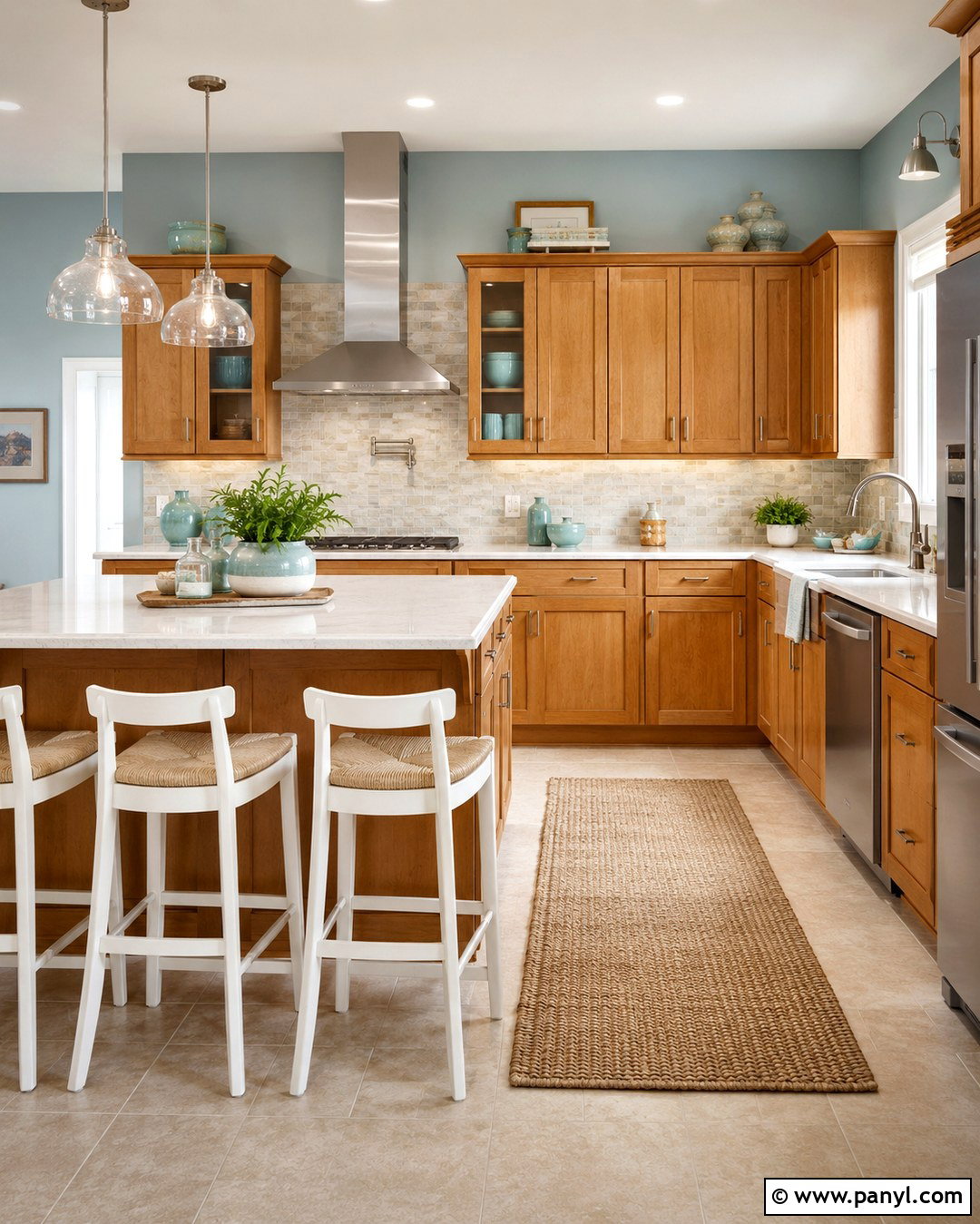
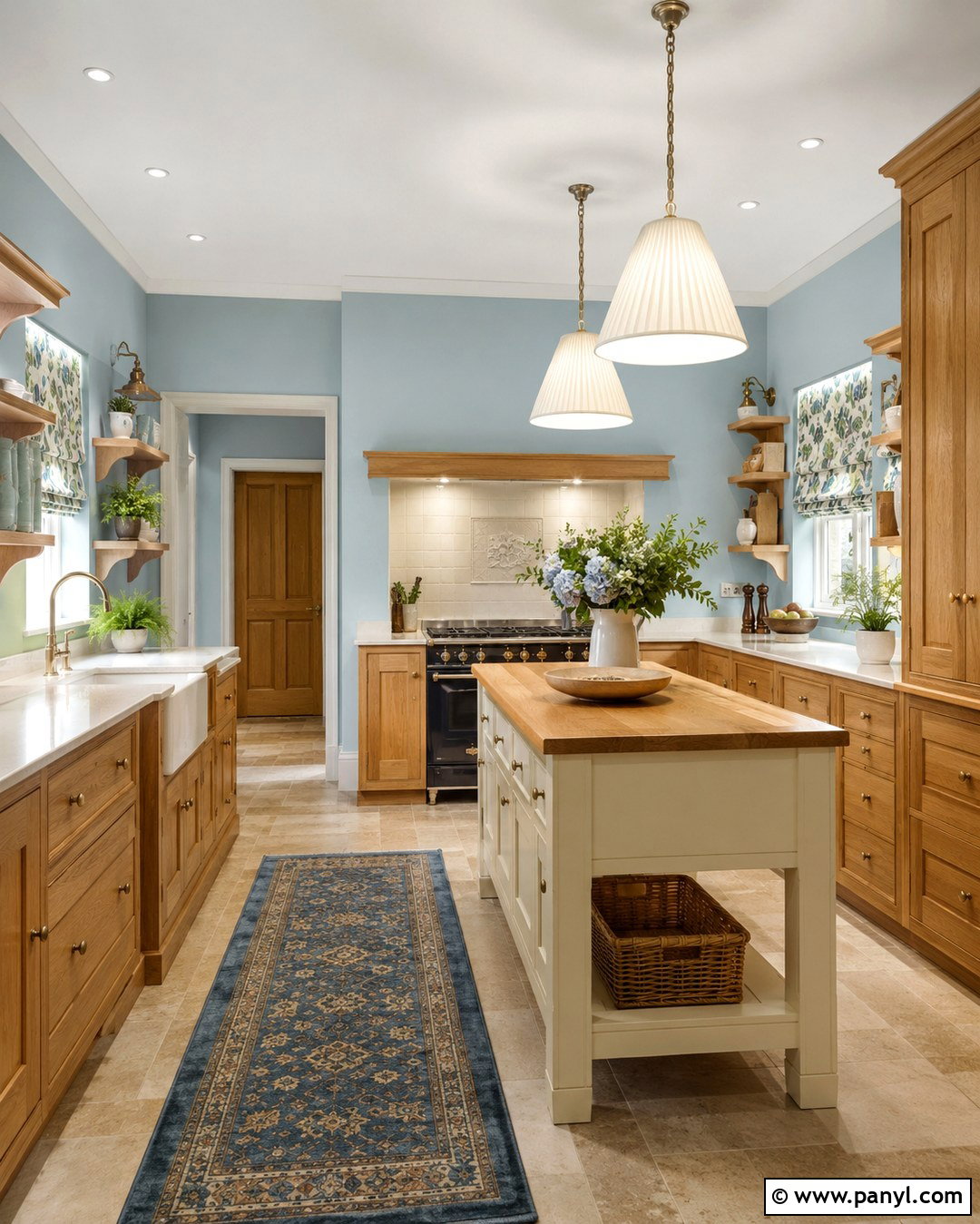
A muted blue-green wall color can balance honey oak while giving the kitchen a relaxed coastal or transitional appearance. Avoid highly saturated turquoise and select a dusty shade that contains plenty of gray. Pair the walls with creamy white counters and a backsplash of off-white tile with subtle blue-green variation. Brushed nickel hardware adds a cooler finish that coordinates with the paint without competing with the wood. Light beige flooring and a natural fiber runner keep the room grounded. Hang simple glass pendants and use white or pale wood stools to maintain an airy layout. Complete the design with sea-glass-colored pottery, linen towels, and restrained botanical decor. The final kitchen feels colorful and refreshed, but the softened tones remain practical for everyday living.
9. Soft Blue Gray Walls With Honey Oak Cabinets
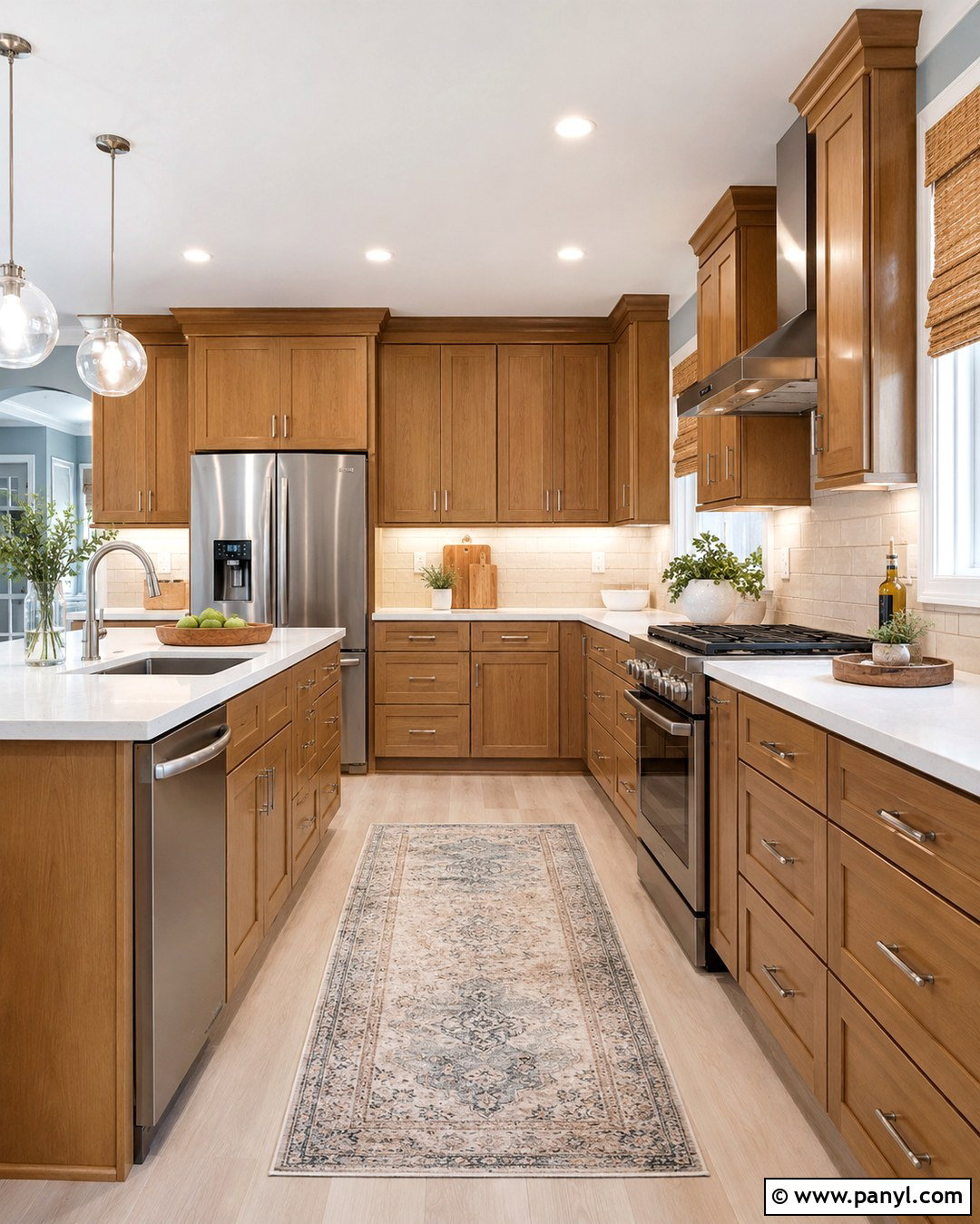
Soft blue-gray walls deliver cool contrast while remaining gentle enough for a kitchen filled with warm wood. Choose a light, slightly green blue-gray rather than one with strong icy or purple undertones. White quartz countertops and simple ivory backsplash tile help separate the paint from the cabinet finish. Use brushed nickel pulls, stainless steel appliances, and clear glass lighting to repeat the cooler side of the palette. A pale greige floor or existing neutral tile will connect the blue walls to the oak more smoothly than stark gray flooring. Add a cream runner with dusty blue details and natural woven shades for warmth. The completed kitchen looks brighter and more open, with the wall color reducing visual heaviness without making the cabinets feel disconnected.
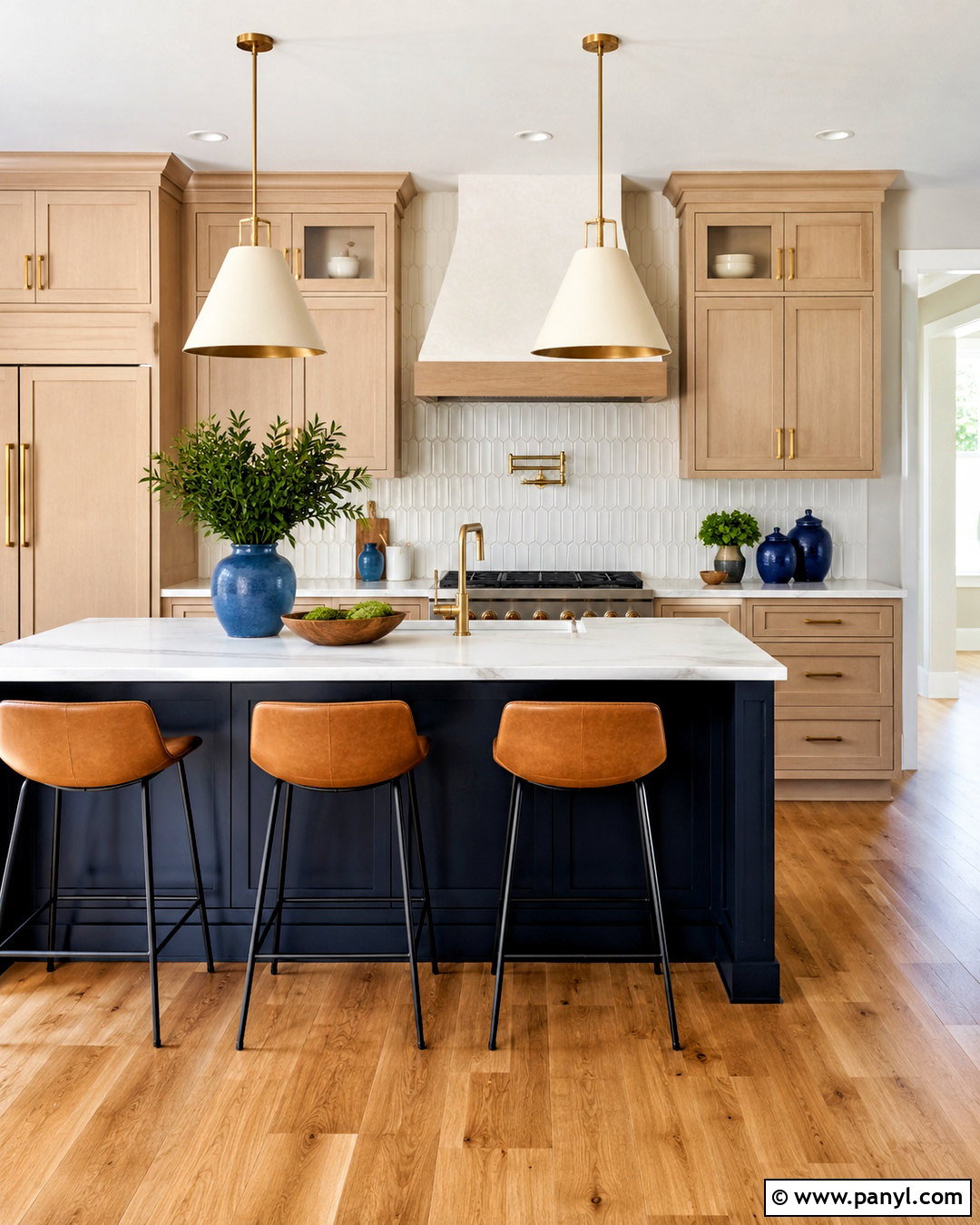
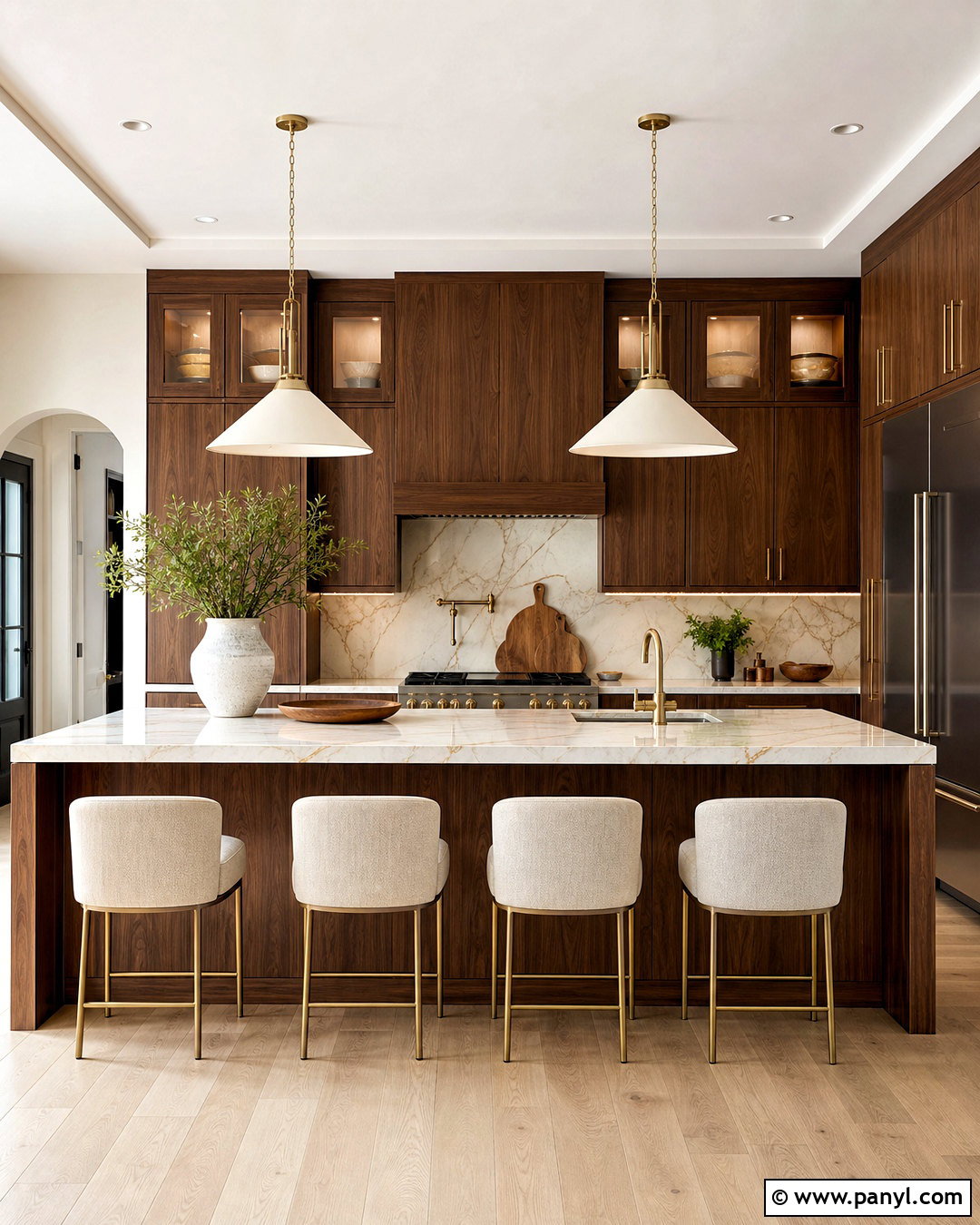
10. Dusty Navy Walls With Honey Oak Cabinets
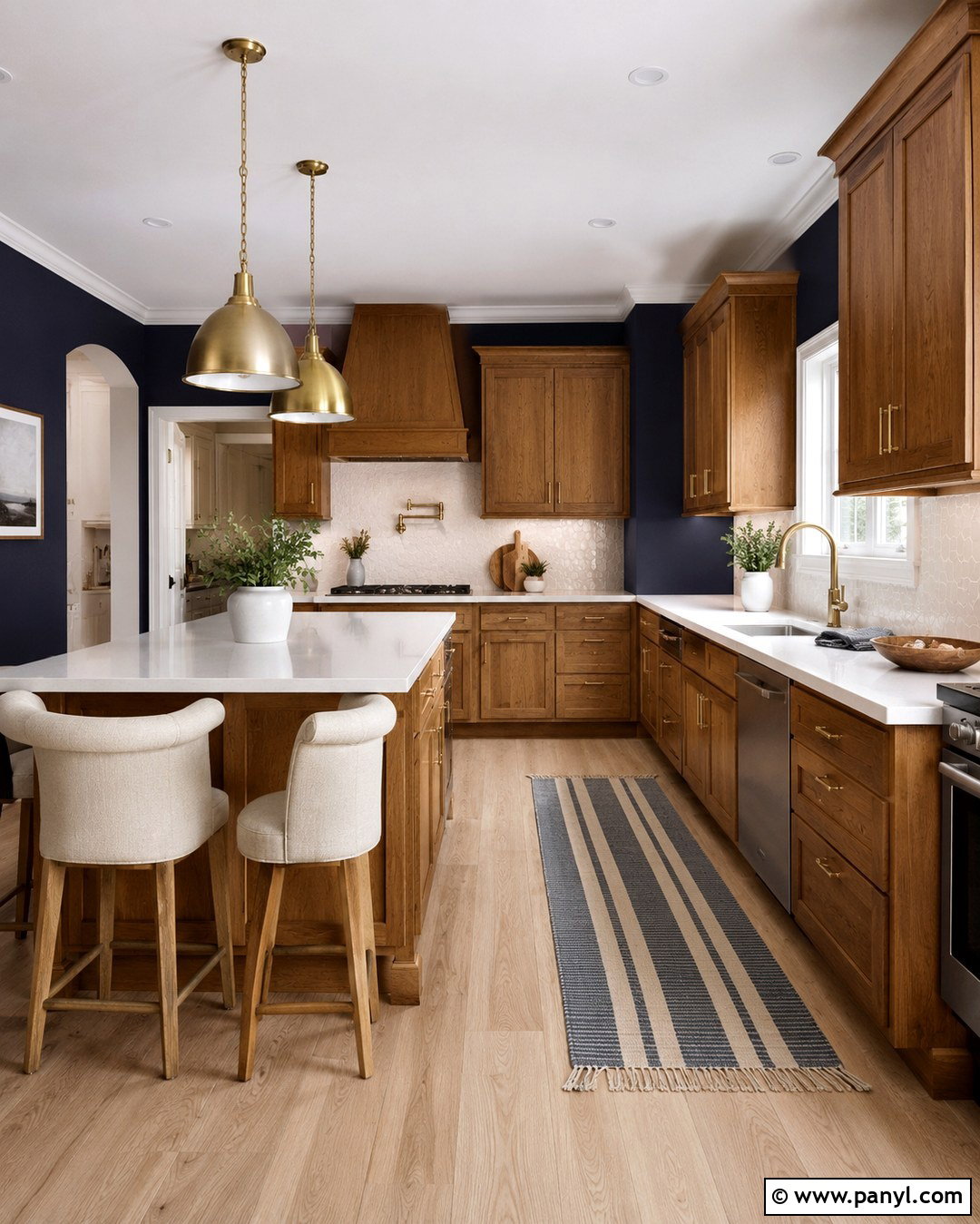
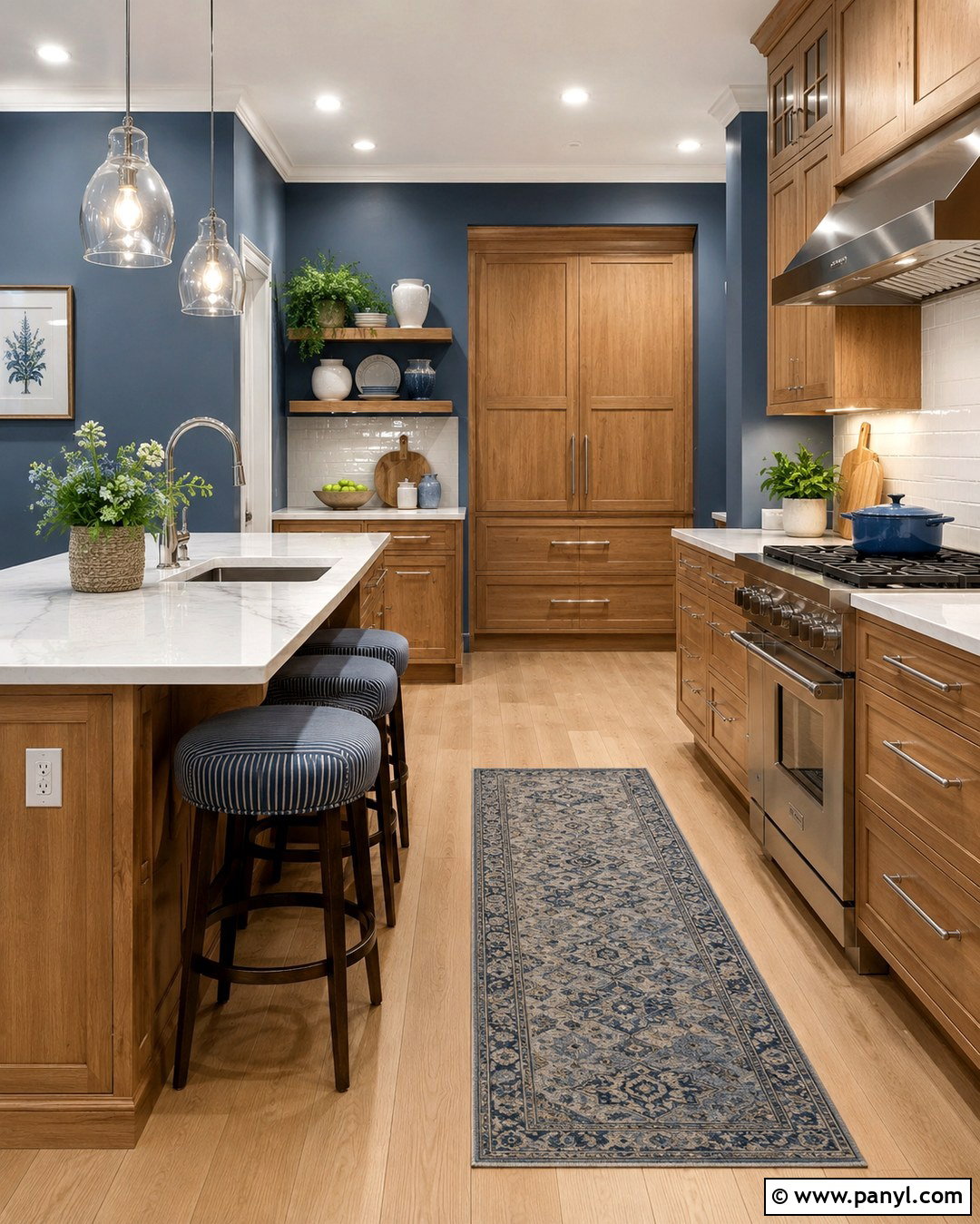
Dusty navy walls create a bold kitchen where honey oak cabinets become a warm focal point. This combination works best in larger rooms, kitchens with extensive windows, or spaces where navy appears on one main wall and a coordinated warm white covers the others. Use bright white quartz countertops and an ivory backsplash to provide visual breathing room. Satin brass pulls and pendant lights bridge the rich blue walls and golden cabinetry. Pale oak or light beige flooring keeps the lower half of the room from feeling too heavy. Add cream counter stools, a striped blue-and-beige runner, and a few white ceramic accessories. The overall design feels confident and structured, with enough light surfaces to keep the dramatic wall color comfortable and usable.
11. Warm Charcoal Walls With Honey Oak Cabinets
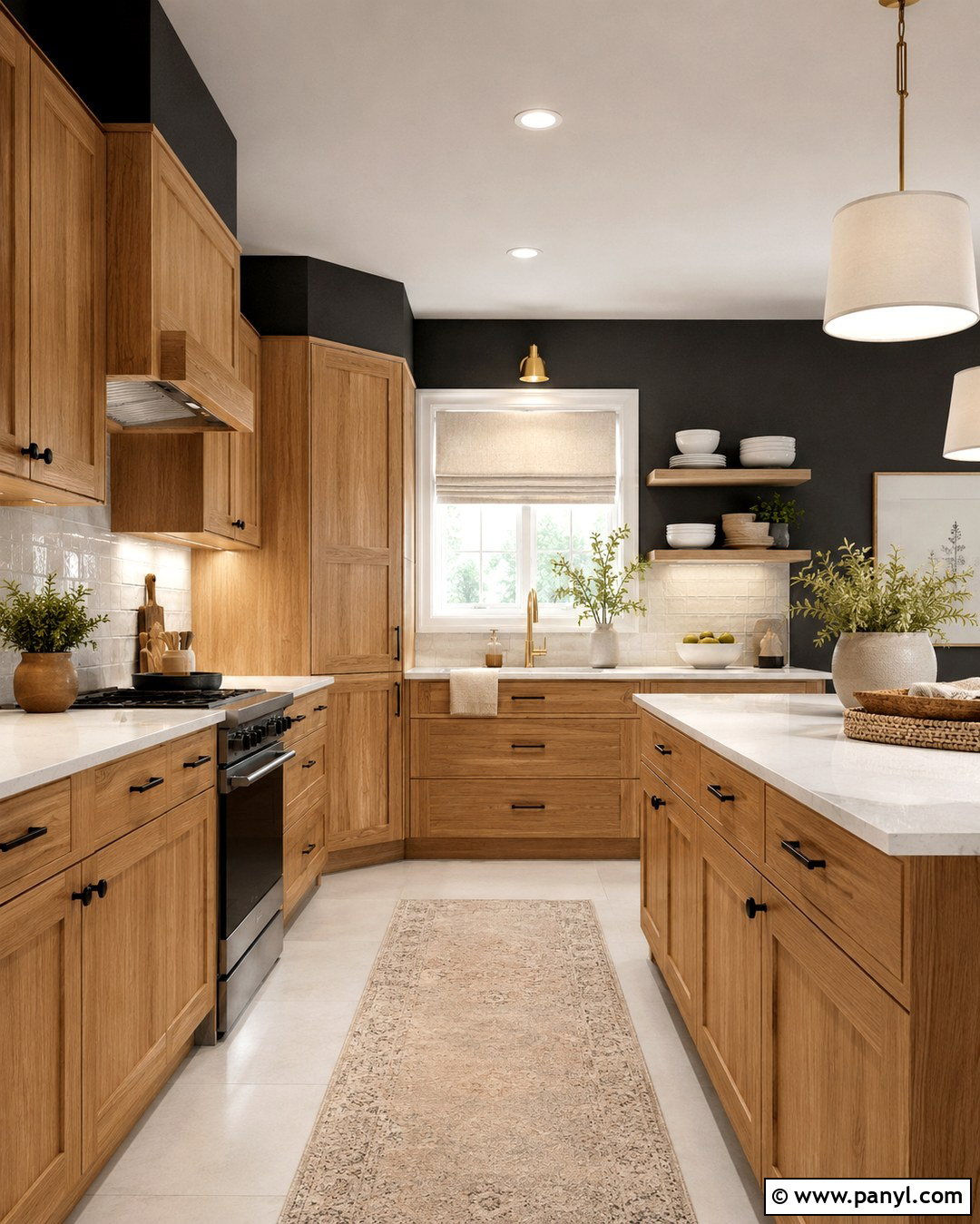
Warm charcoal walls give honey oak cabinets a sophisticated, high-contrast setting. Select charcoal with brown or green undertones instead of a cold blue-gray version. To keep the kitchen balanced, use the color in a bright room and surround it with light countertops, an off-white backsplash, and pale flooring. Matte black hardware blends subtly with the walls, allowing the cabinet grain to stand out. Brass pendant interiors or a warm metal faucet can prevent the palette from feeling flat. Bring in cream linen shades, white dishes, and a beige runner with a black border. Under-cabinet lights are essential for maintaining clear work surfaces. This complete scheme transforms ordinary oak cabinetry into a strong natural feature within a modern, tailored kitchen.
12. Pale Beige Walls With Honey Oak Cabinets
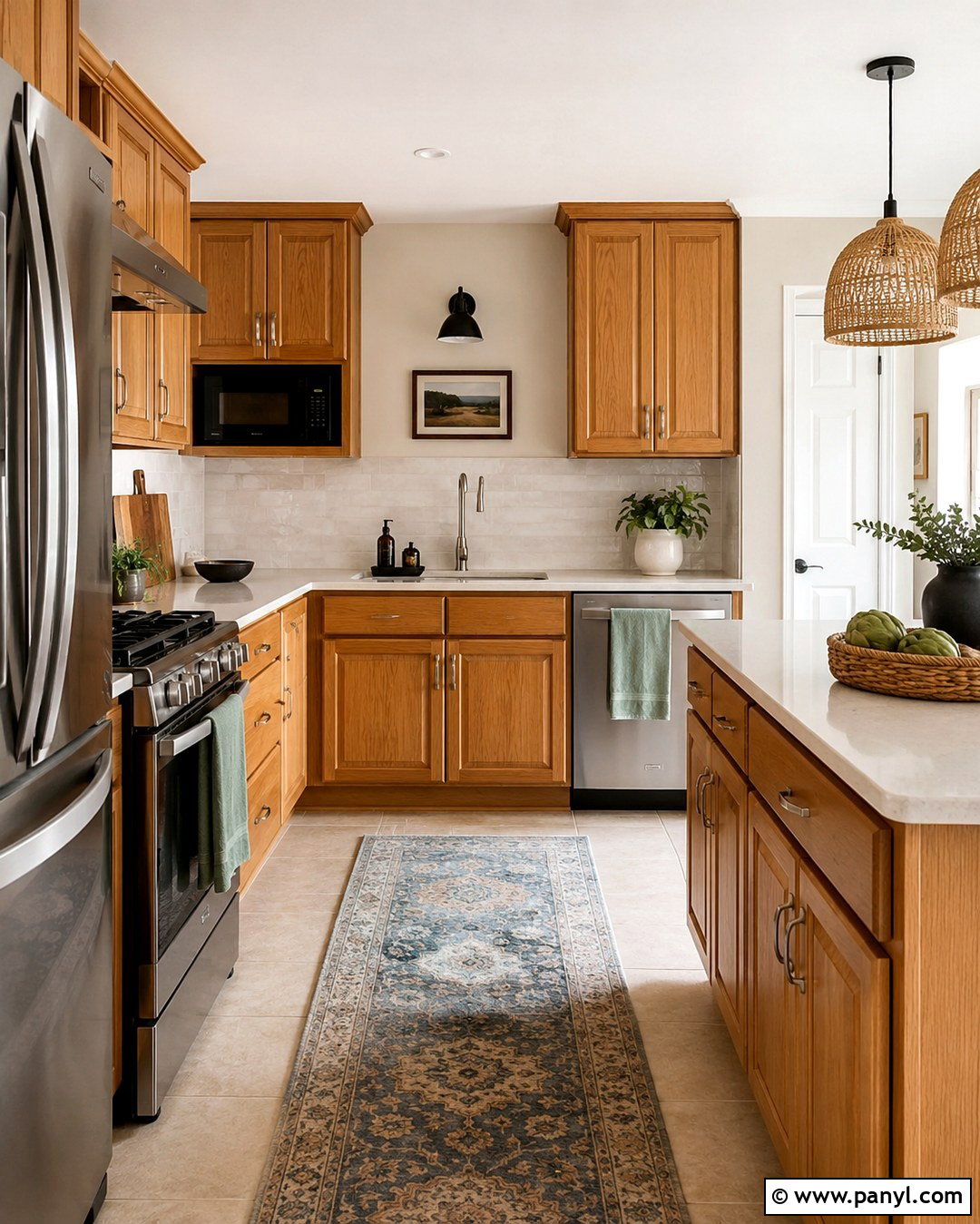
Pale beige walls create an easy, low-contrast kitchen that feels warm without becoming overwhelmingly yellow. Choose a light beige with a restrained gray or taupe base. Pair it with creamy white quartz, ivory ceramic backsplash tile, and medium-tone wood or beige stone flooring. Brushed nickel hardware introduces a clean finish, while woven pendant lights add texture above a table or island. Use white trim to define doors and windows, but select a soft white instead of a brilliant one. Sage dish towels, a faded blue runner, and small black accents provide enough color variation to keep the room interesting. The finished design feels bright, familiar, and comfortable, making it especially useful for compact kitchens or homes with traditional architectural details.
13. Oatmeal Walls With Honey Oak Cabinets
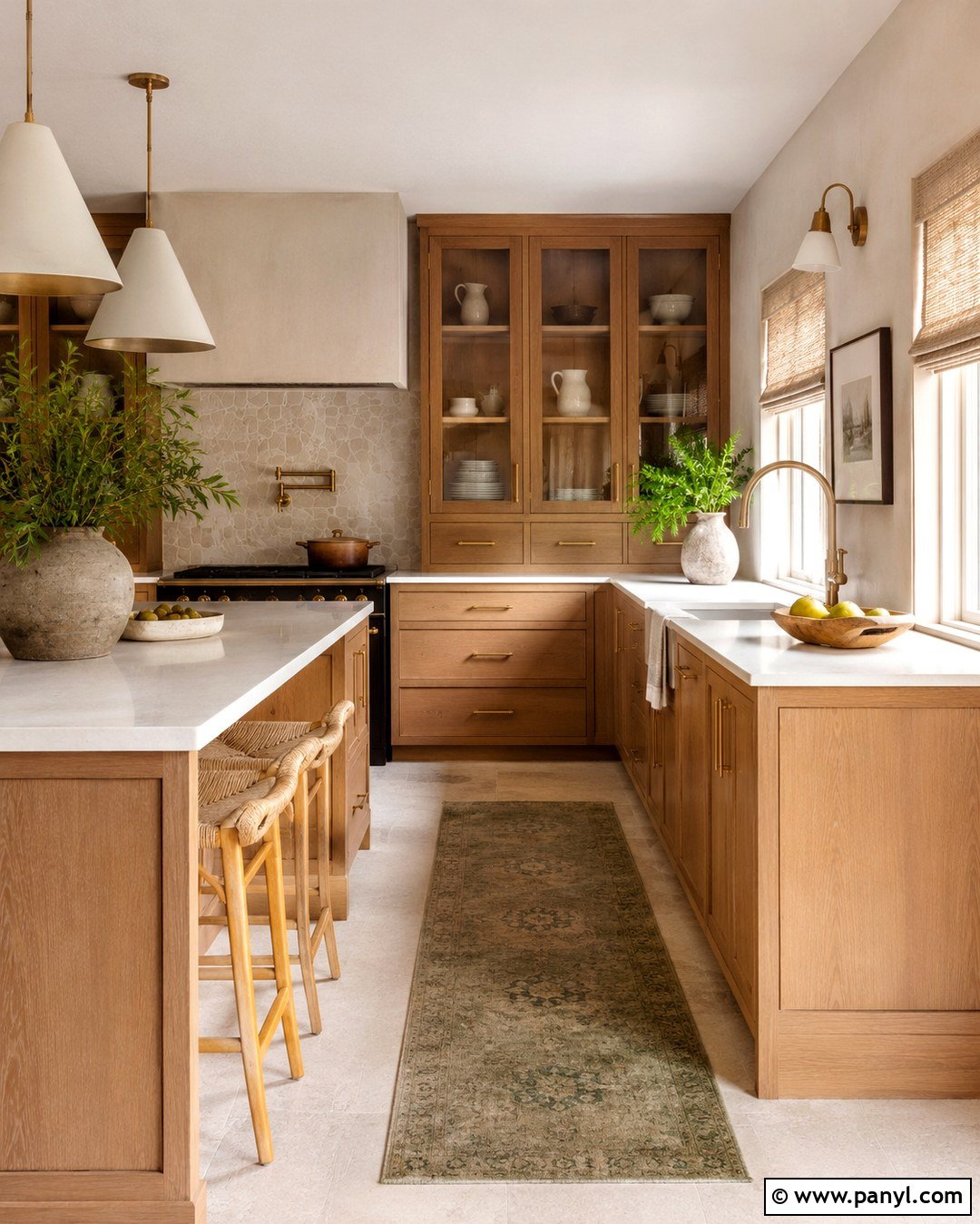
Oatmeal walls have a soft beige-gray character that complements honey oak while giving the room a calm, updated foundation. Unlike stronger cream, oatmeal offers warmth without a pronounced yellow cast. Combine it with honed off-white quartz countertops and slightly irregular ivory backsplash tile for subtle texture. Use unlacquered brass hardware if you prefer a classic look, or matte black pulls for sharper contrast. A light limestone-look floor supports the natural palette without adding more wood grain. Complete the room with linen Roman shades, woven counter stools, and simple ceramic accessories in cream and brown. A muted olive runner can bring in an earthy accent. This layered neutral kitchen feels relaxed and current while allowing the existing cabinetry to remain its most detailed feature.
14. Light Pewter Walls With Honey Oak Cabinets
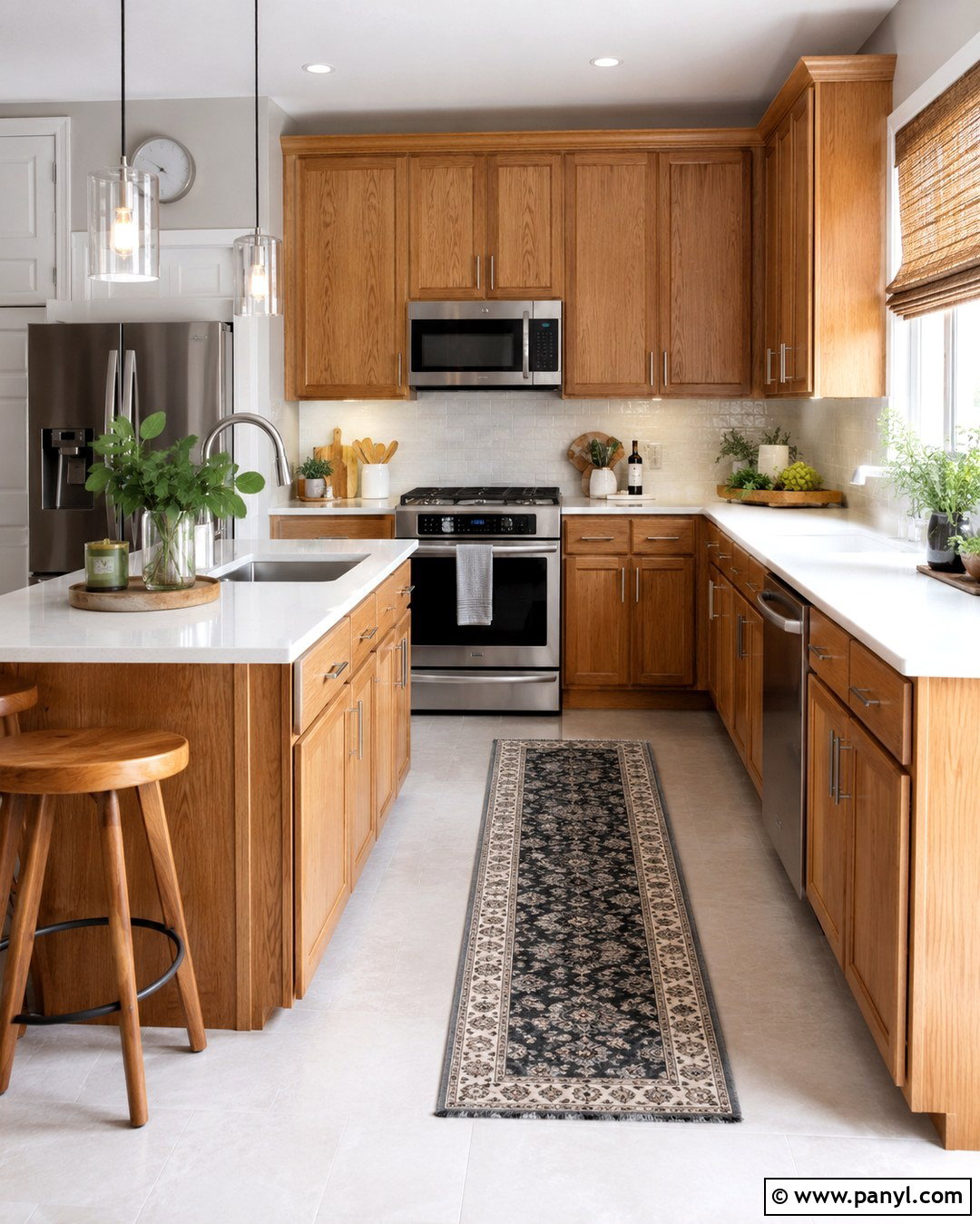
Light pewter walls offer a warm gray alternative for homeowners who want a cleaner, cooler kitchen without creating an obvious clash. The best version has beige or subtle green undertones and looks neutral beside the cabinet door. Pair it with white quartz counters, creamy grout, and a simple off-white backsplash. Stainless steel appliances and brushed nickel hardware support the pewter walls, while wooden stools or woven shades repeat the warmth of the oak. Use light neutral flooring rather than dark gray planks, which can make the palette feel disconnected. Add a charcoal-and-cream runner and a few soft green accessories for dimension. The completed space feels streamlined and practical, with a controlled blend of warm wood, soft gray walls, and crisp functional finishes.
15. Soft Celadon Walls With Honey Oak Cabinets
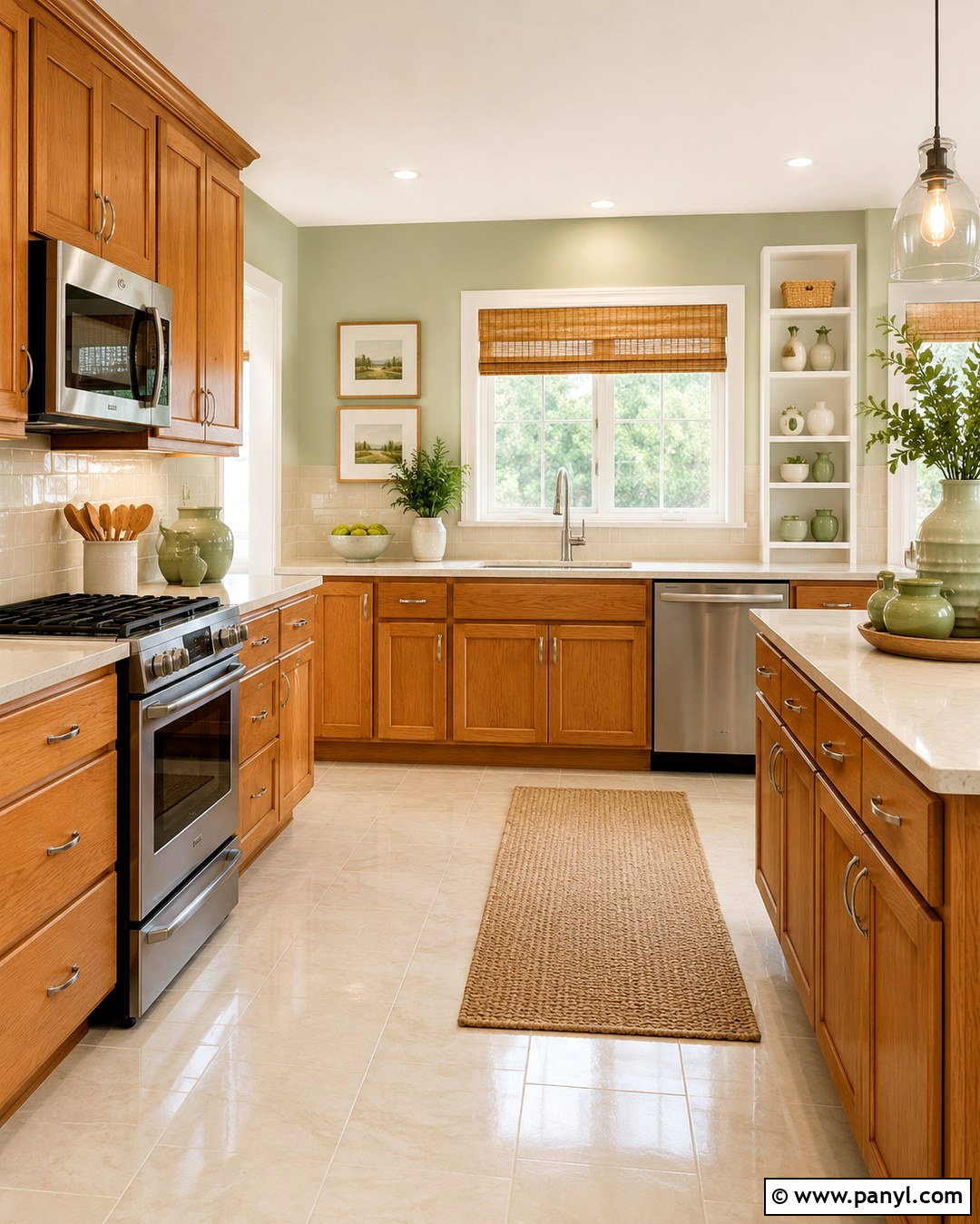
Soft celadon walls introduce a pale green-blue note that makes honey oak cabinetry feel lighter and more relaxed. Choose a subdued version that appears misty rather than minty. Install cream quartz countertops and glossy ivory tile so natural and artificial light can move around the room. Brushed nickel hardware, a polished chrome faucet, and stainless steel appliances create a clean connection to the cooler wall tone. Warm the design with natural woven shades, a beige runner, and wood-framed artwork. White open shelving can provide visual relief if the room contains a large amount of cabinetry. Finish with pale green pottery and clear glass containers. This complete palette suits sunny kitchens especially well, delivering gentle color without overpowering the oak grain or surrounding finishes.
16. Dusty Clay Walls With Honey Oak Cabinets
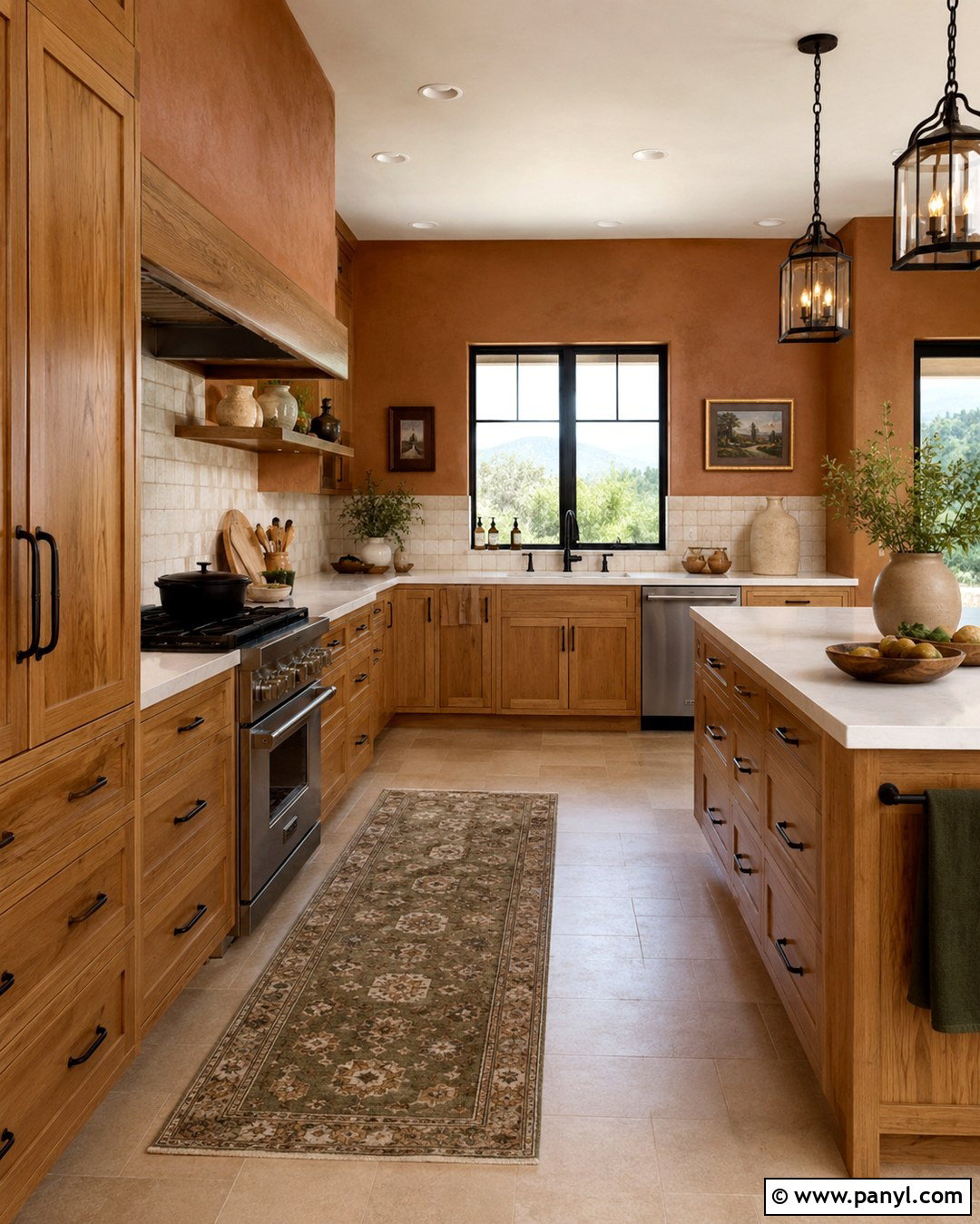
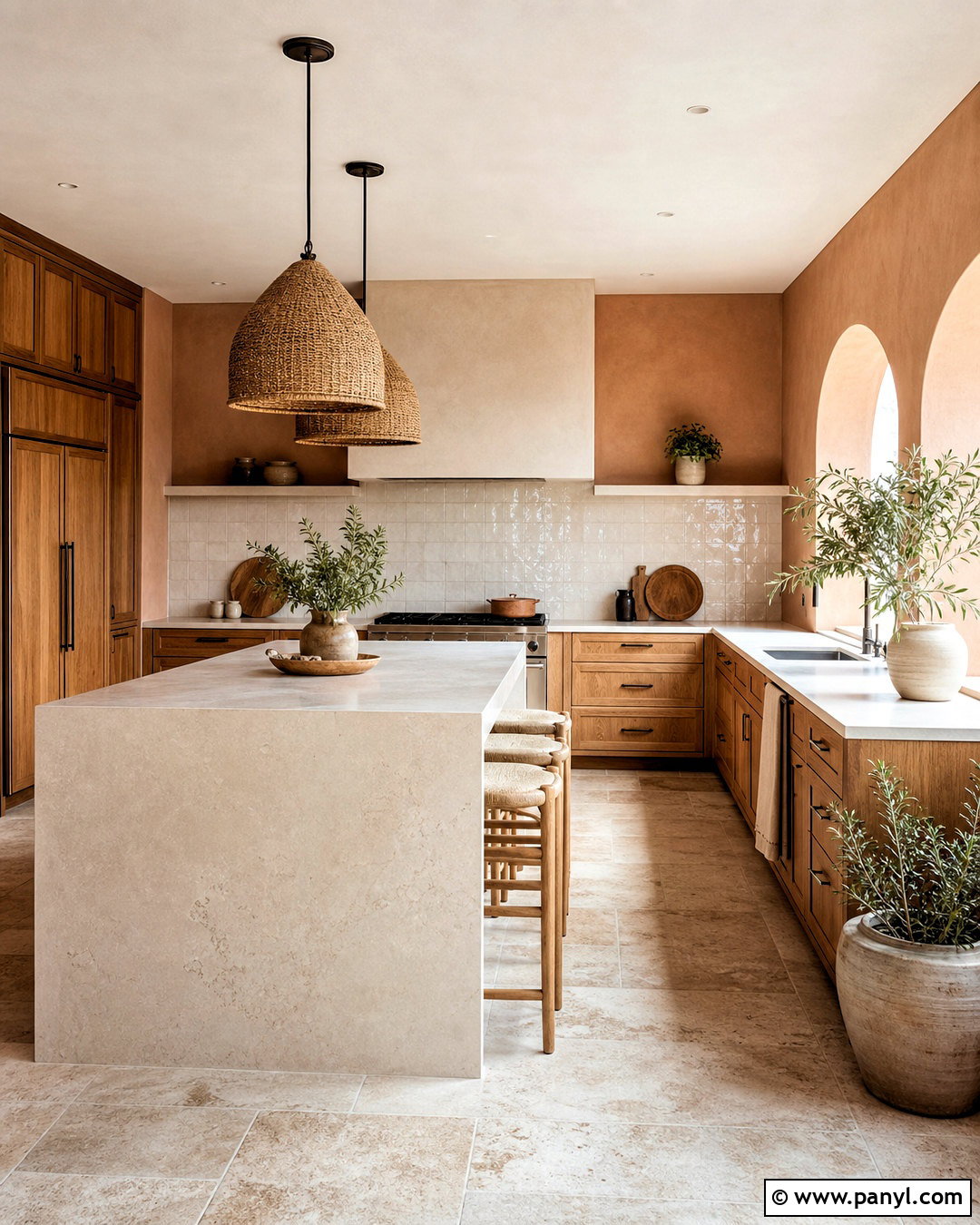
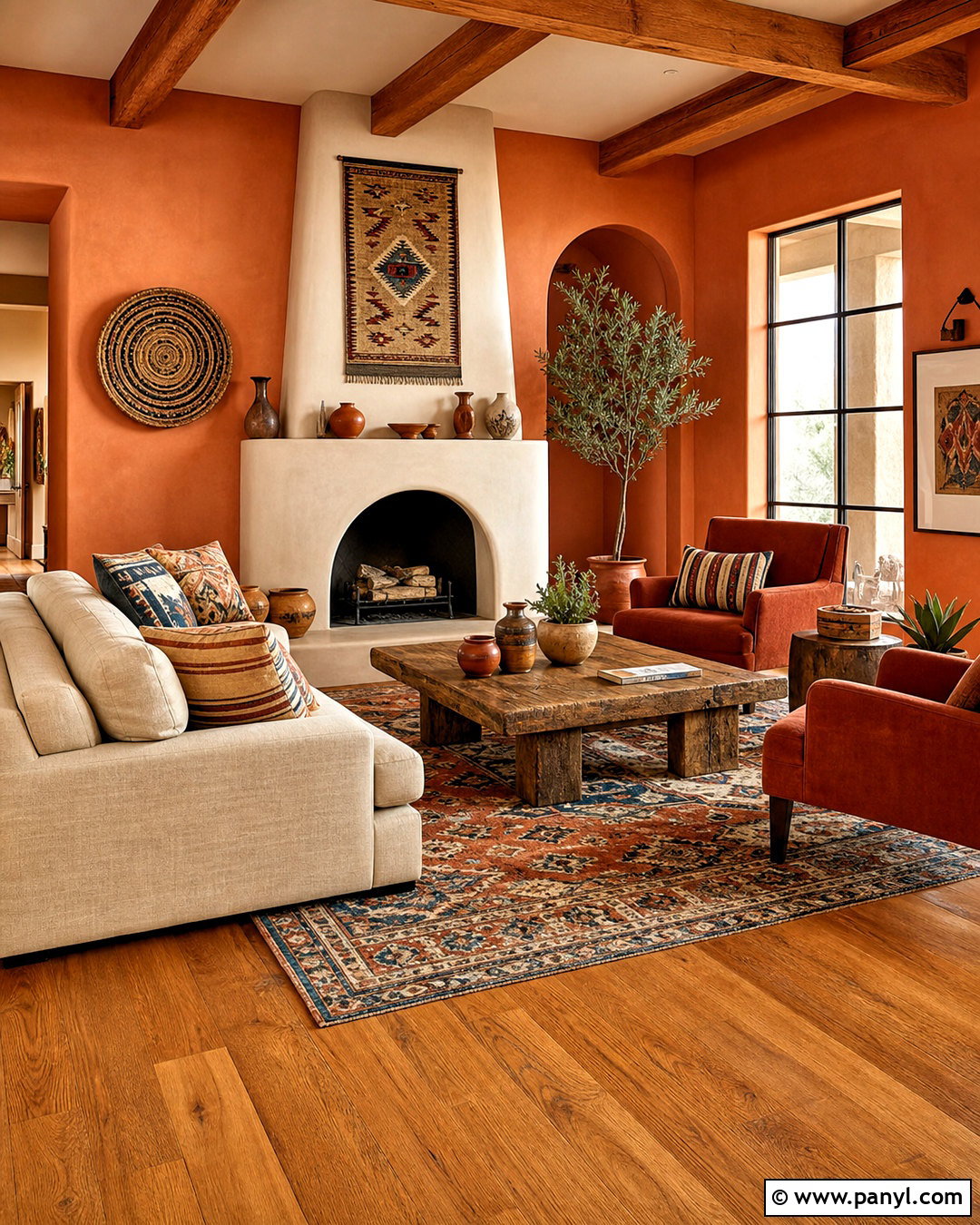
Dusty clay walls create a warm, earthy kitchen that embraces the richness of honey oak. The color should be muted and brown-based, sitting closer to soft terracotta than bright orange. Use it in a room with cream countertops, off-white tile, and plenty of bright lighting to prevent the warm surfaces from merging together. Dark bronze cabinet pulls add definition, while a black faucet and black-framed pendants provide useful contrast. Pale beige flooring keeps the room balanced from below. Introduce olive textiles, cream pottery, and a patterned runner containing clay, green, and ivory. The completed kitchen has a welcoming Southwestern or organic modern character. Careful contrast ensures the oak remains distinct rather than disappearing into an overly warm color scheme.
17. Muted Blush Walls With Honey Oak Cabinets
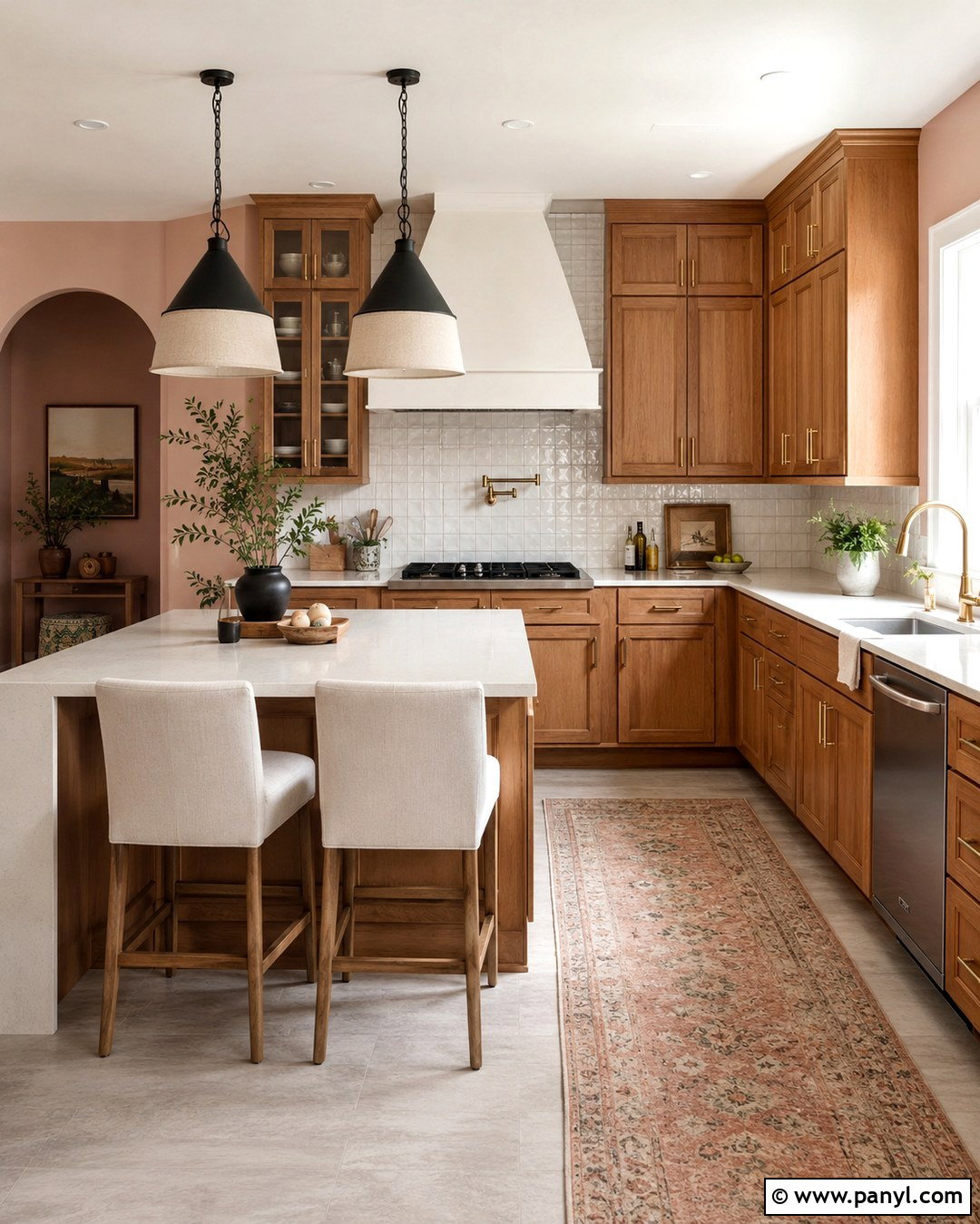
Muted blush walls can soften honey oak cabinets when the pink is dusty, beige-based, and restrained. Avoid candy pink or peach-heavy shades that may intensify the orange in the wood. Complete the room with cream quartz countertops, warm white backsplash tile, and pale greige flooring. Aged brass hardware works naturally with both the wall color and golden cabinetry, while matte black pendant lights prevent the palette from becoming overly delicate. Add oatmeal linen shades, off-white counter stools, and a faded vintage-style runner containing blush, brown, and sage. Green plants provide a fresh counterpoint to the warm surfaces. This finished scheme feels personal and inviting, offering a subtle departure from standard neutral kitchens while remaining easy to decorate and live with.
18. Deep Forest Green Walls With Honey Oak Cabinets
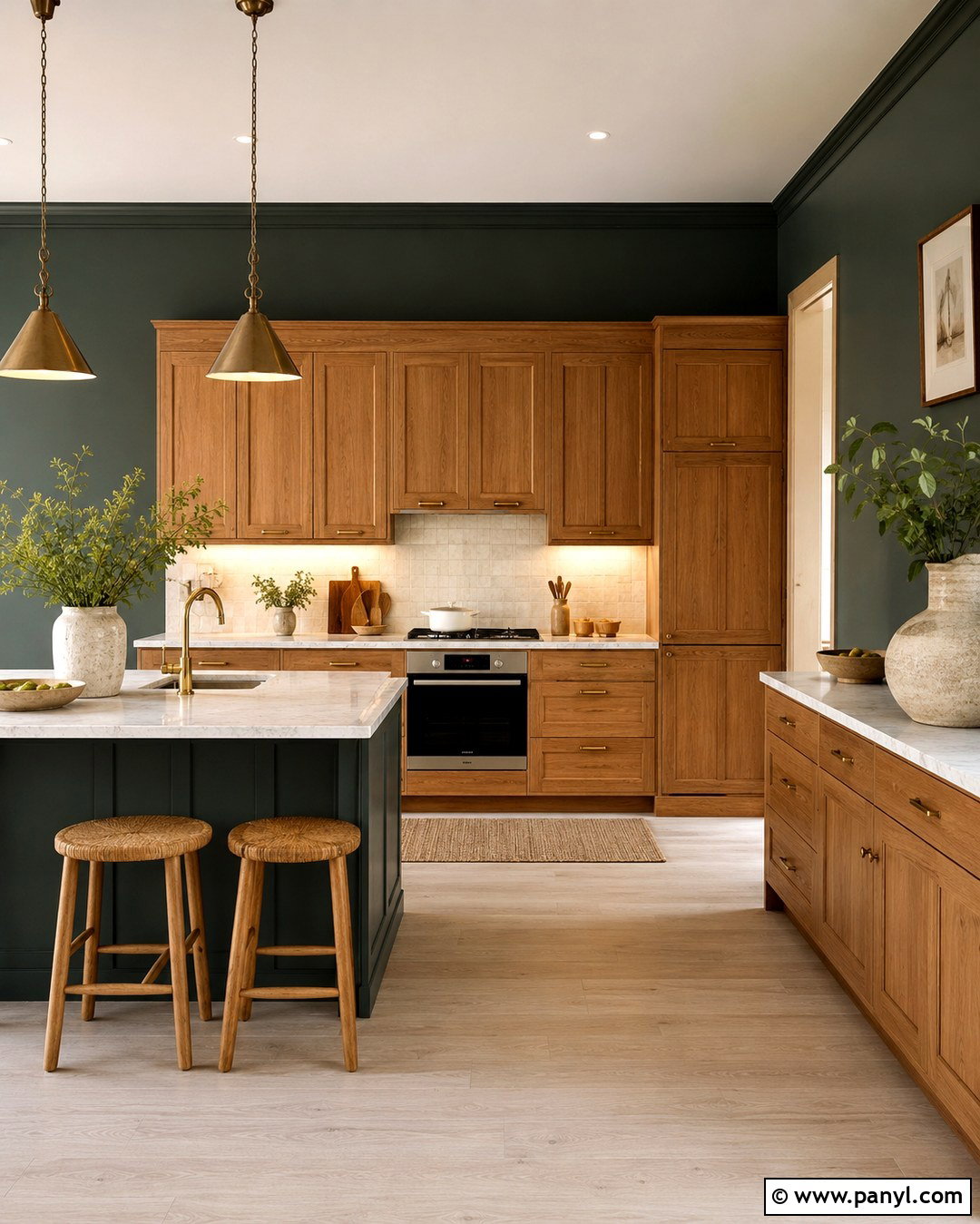
Deep forest green walls create a dramatic, nature-focused backdrop for honey oak cabinets. The rich green makes the wood grain look luminous, so balance the contrast with broad areas of cream and white. Use pale quartz countertops, an ivory backsplash, and light beige flooring to maintain brightness. Aged brass hardware and matching pendants reinforce the warm, traditional quality of the cabinetry. If the kitchen is small, apply forest green to the breakfast nook or one uninterrupted wall, then use warm white elsewhere. Add a cream runner, natural wood stools, and simple white pottery. Strong under-cabinet and ceiling lighting will keep the work zones clear. The final kitchen feels grounded, timeless, and intentionally colorful rather than dark or heavily rustic.
19. Soft Ivory Walls With Honey Oak Cabinets
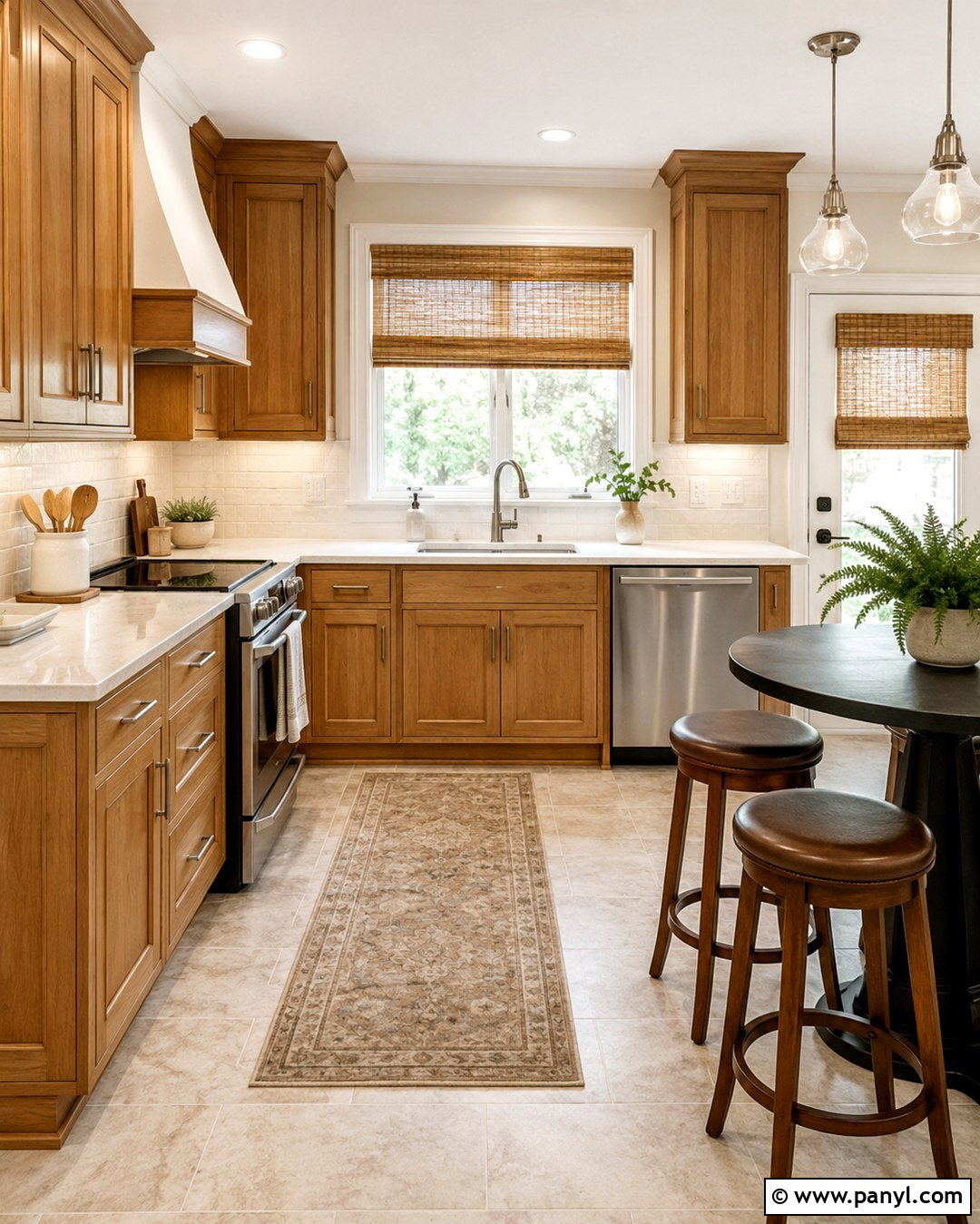
Soft ivory walls create a bright, unified kitchen with less contrast than standard white. Look for an ivory that is creamy but not strongly yellow, then compare it directly with the cabinet finish before painting. Continue the light palette with white quartz, handmade ivory backsplash tile, and warm beige flooring. Polished nickel hardware adds a small reflective detail, while clear glass pendants keep the ceiling visually open. Natural woven shades and a taupe runner bring texture to the room without adding busy patterns. Use medium brown stools or a black breakfast table to anchor the otherwise pale scheme. The completed kitchen feels spacious and calm, making soft ivory particularly helpful in small layouts, low-light rooms, and kitchens with many upper cabinets.
20. Pale Khaki Walls With Honey Oak Cabinets
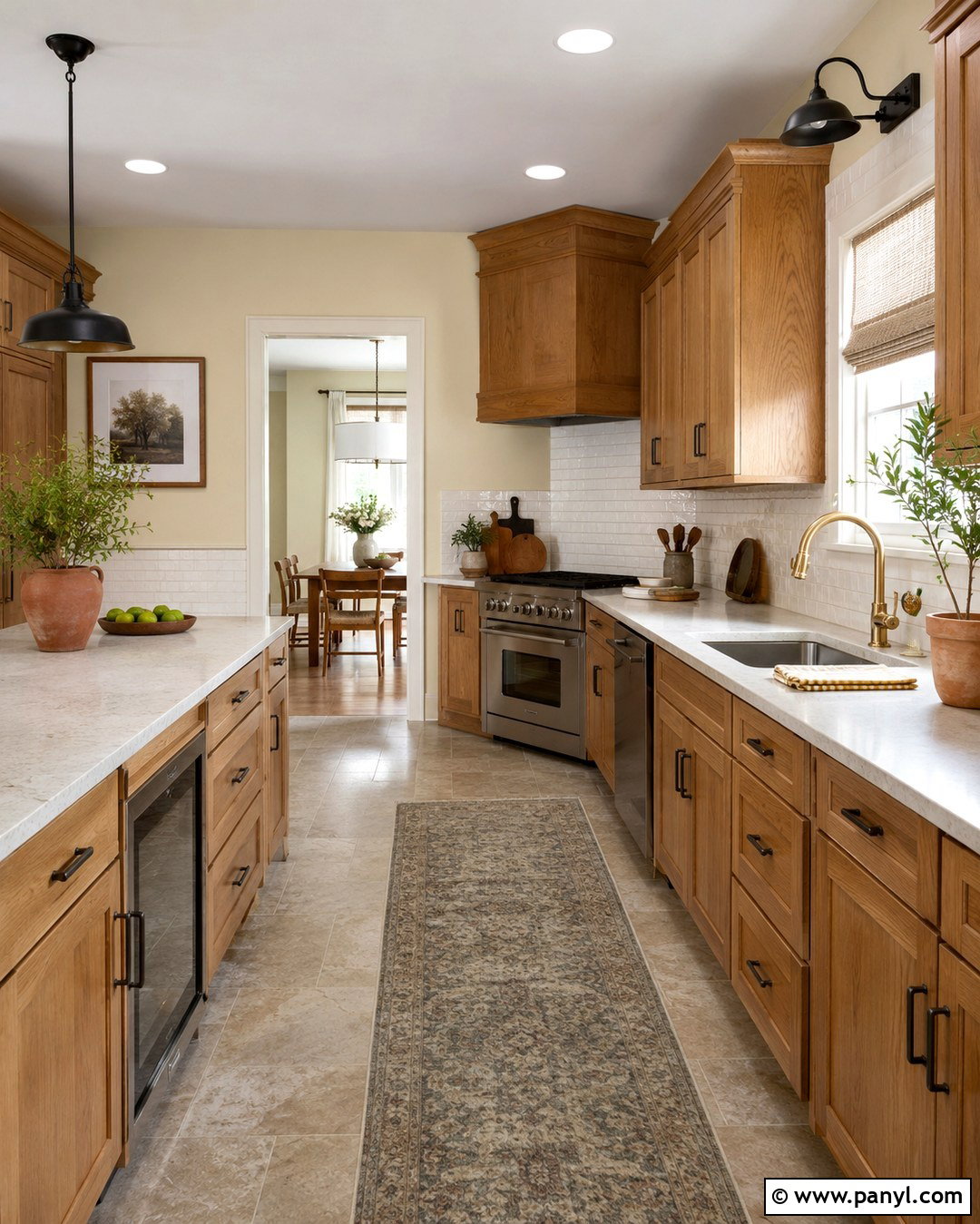
Pale khaki walls combine beige, green, and gray in a practical neutral that works naturally with honey oak cabinets. Choose a light, desaturated khaki rather than a dark military green. Pair it with creamy quartz countertops, warm white tile, and stone-look floors containing beige and muted gray. Dark bronze hardware defines the cabinet doors, while a brushed brass faucet adds a subtle warm highlight near the sink. Complete the room with linen shades, black metal pendants, and a washable runner in olive, cream, and charcoal. White dishes and simple terracotta planters keep the counters useful but welcoming. The overall kitchen feels earthy and composed, with enough green influence to balance the oak and enough beige to connect every major surface.
Conclusion:
Choosing among these 20 Honey Oak Cabinets Wall Color Ideas becomes easier when you treat the cabinetry as an important part of the room’s palette. Warm white, ivory, oatmeal, and greige create an open neutral setting. Sage, celadon, blue-green, and forest green provide natural contrast. Deeper navy, charcoal, clay, and taupe deliver a more dramatic transformation. Remember that countertops, flooring, backsplash tile, hardware, and lighting must support the wall color rather than compete with it. Test large samples beside the cabinets for several days, checking them in morning, afternoon, and evening light. A thoughtful whole-room palette can make well-built honey oak cabinetry feel attractive, purposeful, and completely at home.

Related Ideas and Inspiration:
Leave a Reply