
A House With Blue Walls can feel calm, polished, dramatic, or cheerful, depending on the shade and the surrounding finishes. Pale sky blue opens compact rooms, while navy and petrol blue create depth in larger spaces. The most successful interiors treat the wall color as part of a complete palette. Flooring, upholstery, lighting, wood tones, and metal finishes should all support it. Blue also works across many looks, including coastal, farmhouse, traditional, modern, and eclectic homes. Current interiors pair blue with warm natural materials to keep rooms welcoming rather than cold. () The following complete room schemes offer practical ways to decorate a stylish and comfortable House With Blue Walls.

1. Light Blue Living Room Walls
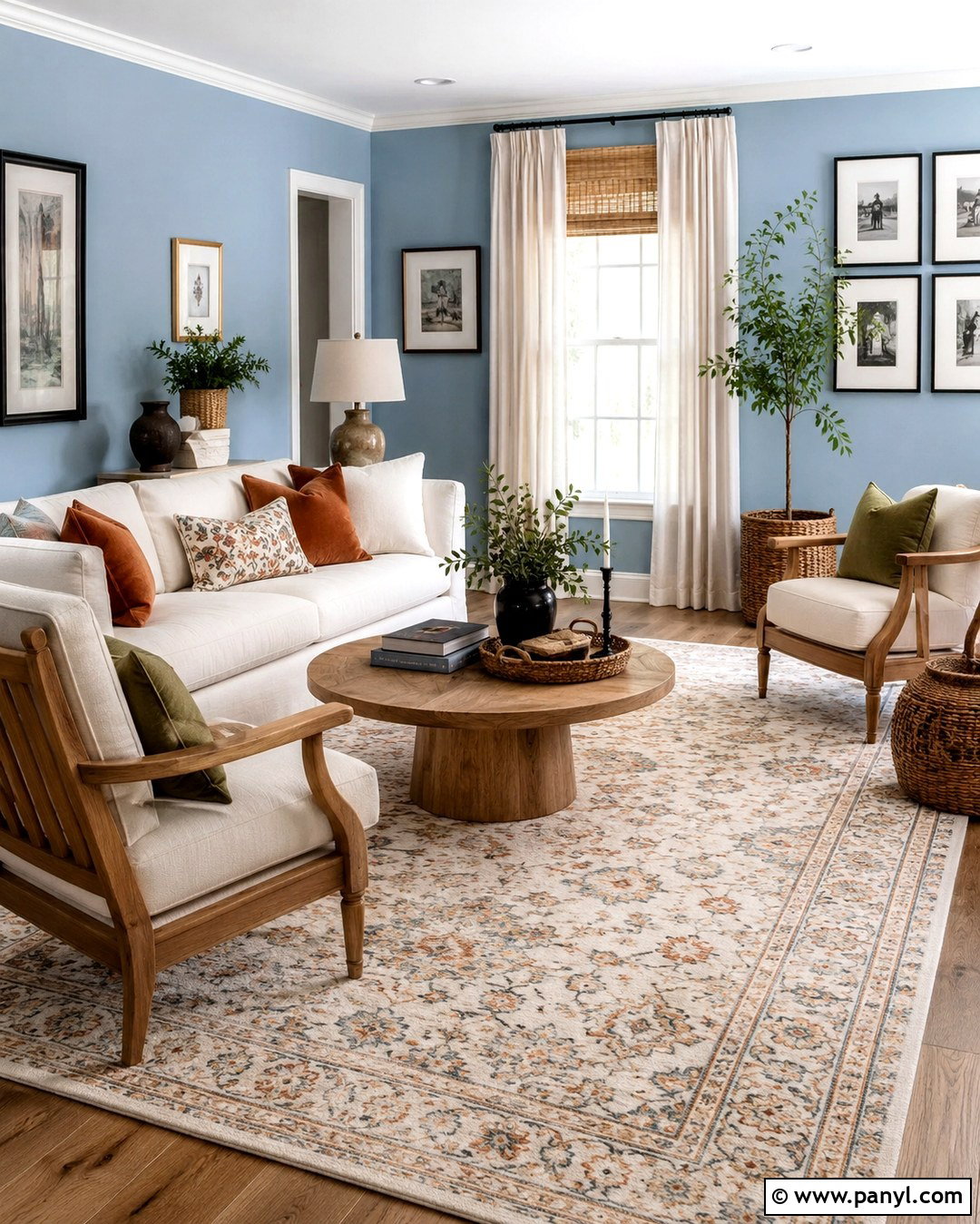
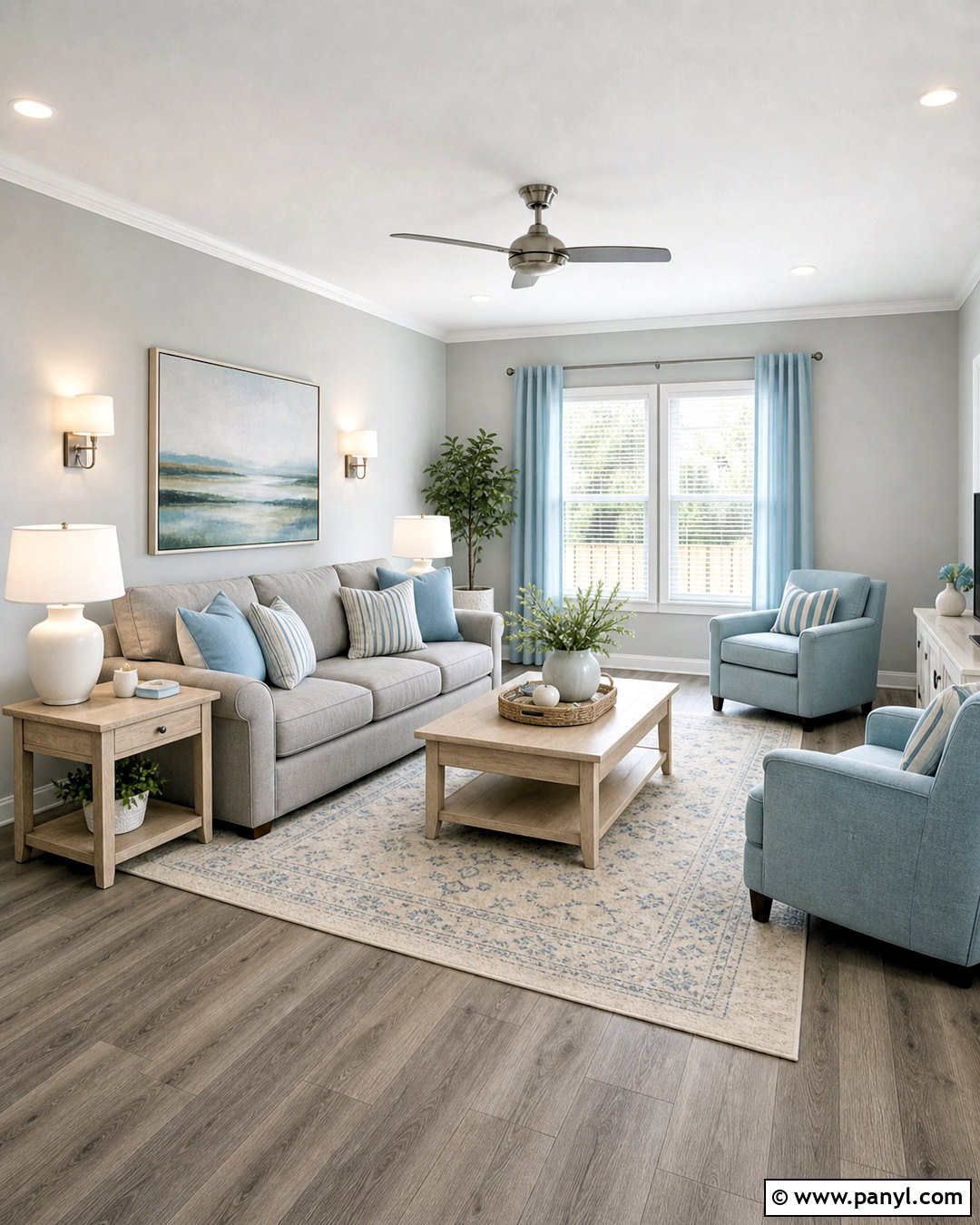
Light blue walls give a living room an open, relaxed feeling without making it look plain. Choose a soft sky blue with slightly gray undertones, then add a warm ivory sofa and two light oak armchairs. Ground the seating area with a cream-and-tan patterned rug rather than another cool color. Linen curtains, woven baskets, and a round oak coffee table introduce natural texture. Use matte black curtain rods and small black picture frames to add definition. A pair of muted rust pillows brings warmth and prevents the palette from feeling overly coastal. Finish the room with a simple ceramic lamp, leafy plants, and large artwork containing cream, blue, and earthy brown.
2. Navy Blue Living Room Walls
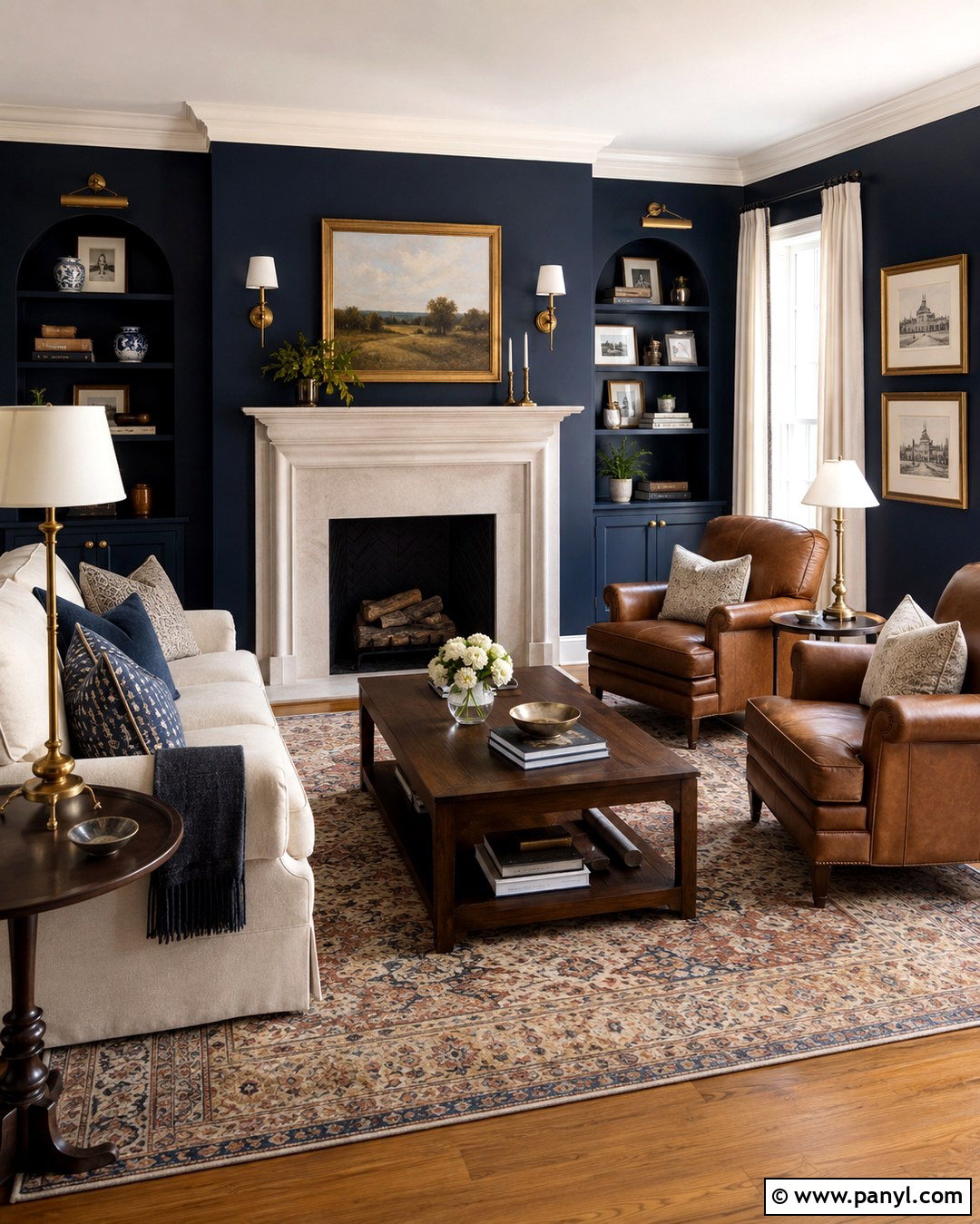
Navy blue walls create a sophisticated living room that feels intimate rather than gloomy when lighter furnishings balance the color. Paint every wall navy for a confident, continuous look, but keep the ceiling and substantial trim a crisp warm white. Place a cream performance-fabric sofa opposite a streamlined fireplace with pale stone or white-painted brick. Cognac leather chairs and a walnut coffee table introduce rich warmth. Choose a large vintage-style rug containing faded red, beige, and blue. Brass floor lamps, picture lights, and cabinet hardware add a subtle glow. Hang artwork with wide ivory mats so it remains visible against the dark background. Full-height off-white curtains will soften the room and emphasize the windows.
3. Blue Gray Open Plan Walls
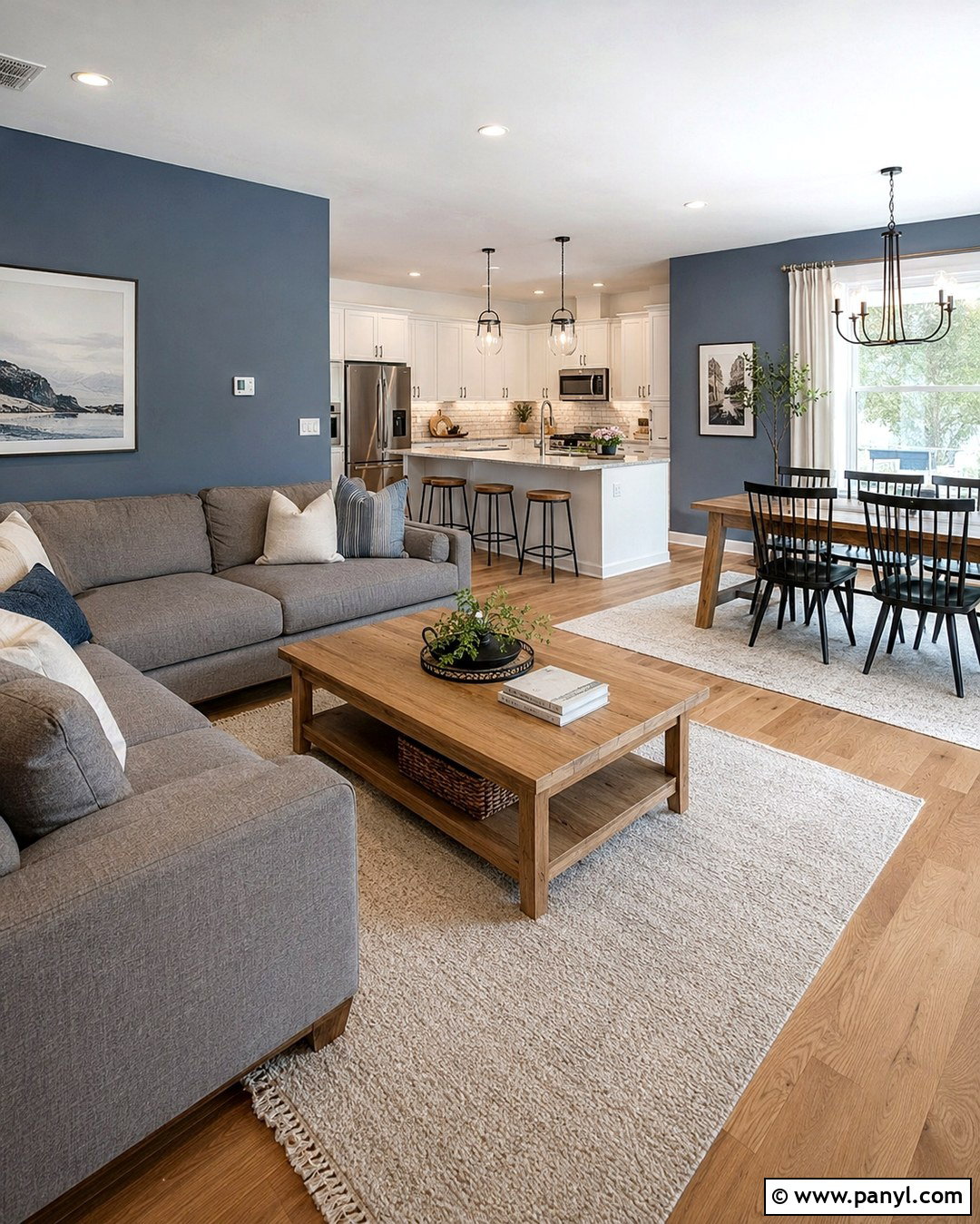
Blue-gray walls can connect an open living, dining, and kitchen area without making every zone look identical. Use one muted medium blue-gray throughout the shared walls, then define each space through furniture and lighting. In the living area, arrange a warm gray sectional around a natural oak coffee table and textured ivory rug. Choose a long wood dining table with black spindle chairs behind it. Soft white kitchen cabinets, a pale quartz backsplash, and brushed nickel hardware will keep the far end bright. Repeat blue through small accents instead of matching every large piece. Natural linen curtains and warm white bulbs prevent the cool wall shade from feeling flat. Black fixtures provide a consistent finishing detail across all three zones.
4. Coastal Blue Kitchen Walls
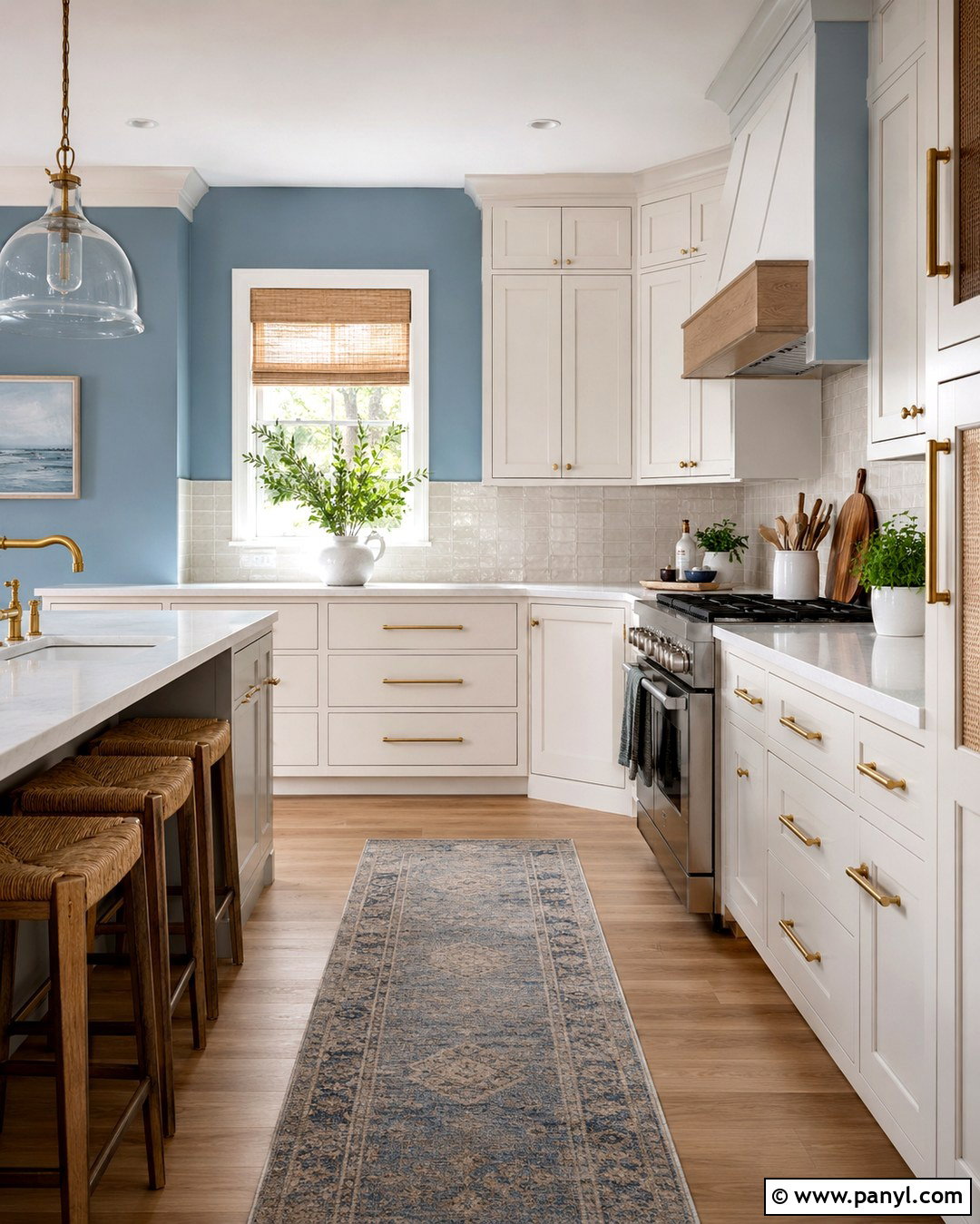
A coastal kitchen with blue walls should feel fresh and natural, not filled with obvious seaside decorations. Start with a clear ocean blue in a light-to-medium value. Pair it with creamy white Shaker cabinets, honed white quartz counters, and a backsplash of handmade off-white tile. Light oak flooring and woven counter stools add sandy warmth. Choose brushed brass hardware for a sunny contrast, then install simple glass pendants above the island. Keep appliances stainless steel and window treatments in relaxed white linen. A runner with faded blue, tan, and rust can connect the wall color to the floor. Complete the kitchen with wooden cutting boards, white ceramics, herbs, and one understated coastal landscape in a natural wood frame.
5. Deep Blue Dining Room Walls
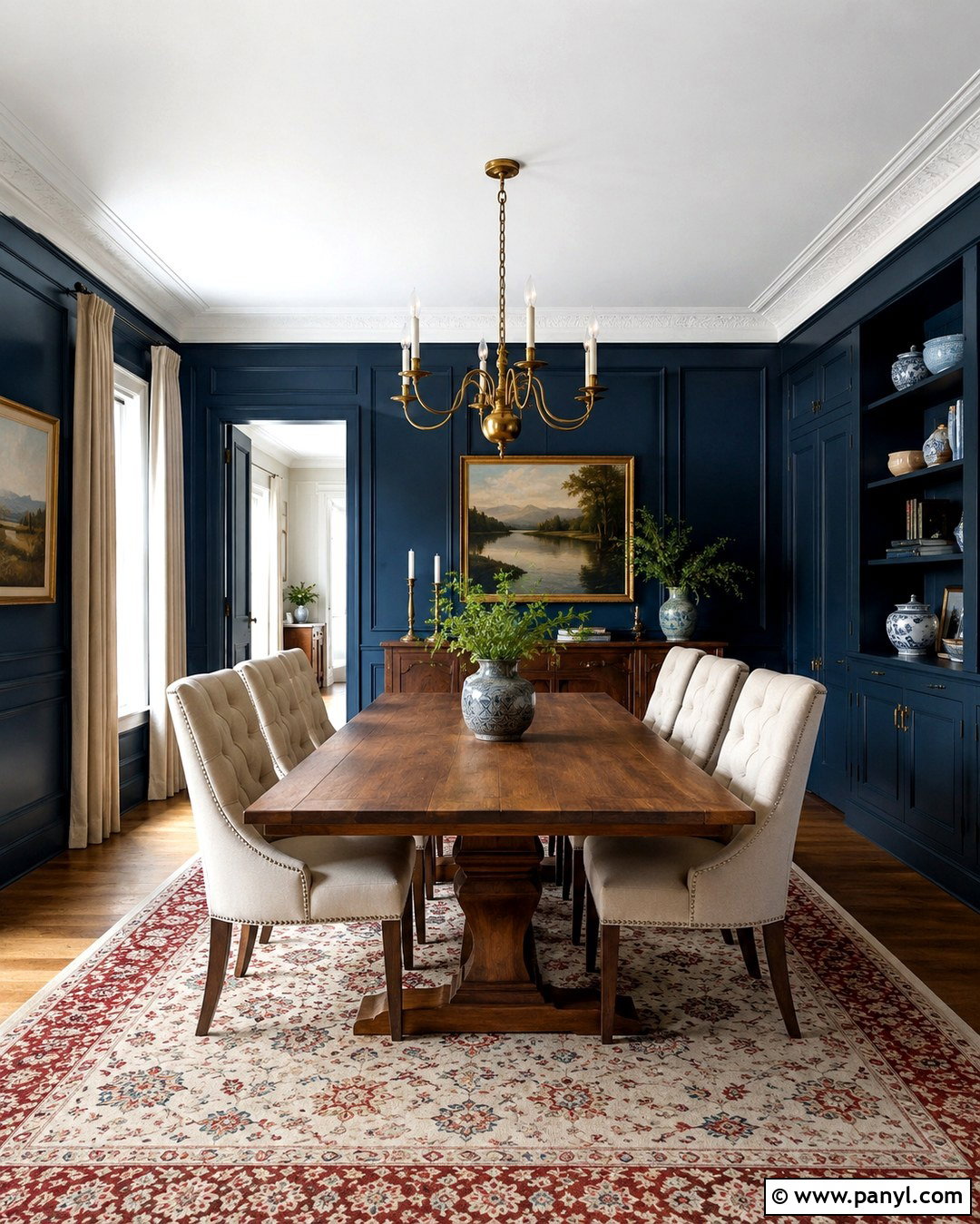
Deep blue walls turn an ordinary dining room into a defined gathering space, especially when the finish includes molding or paneling. Use a rich ink blue across the walls, trim, and built-in cabinetry for an enveloping color-drenched effect. Center a medium-toned oak table beneath a wide linen or aged-brass chandelier. Upholstered dining chairs in oatmeal fabric lighten the lower half of the room, while a patterned rug introduces muted red and cream. Hang a large traditional landscape or abstract painting with warm orange details above a simple sideboard. Cream curtains should extend from near the ceiling to the floor. Add brass candlesticks, ceramic serving pieces, and a leafy branch arrangement, keeping the tabletop polished but practical for everyday meals.
6. Powder Blue Bedroom Walls
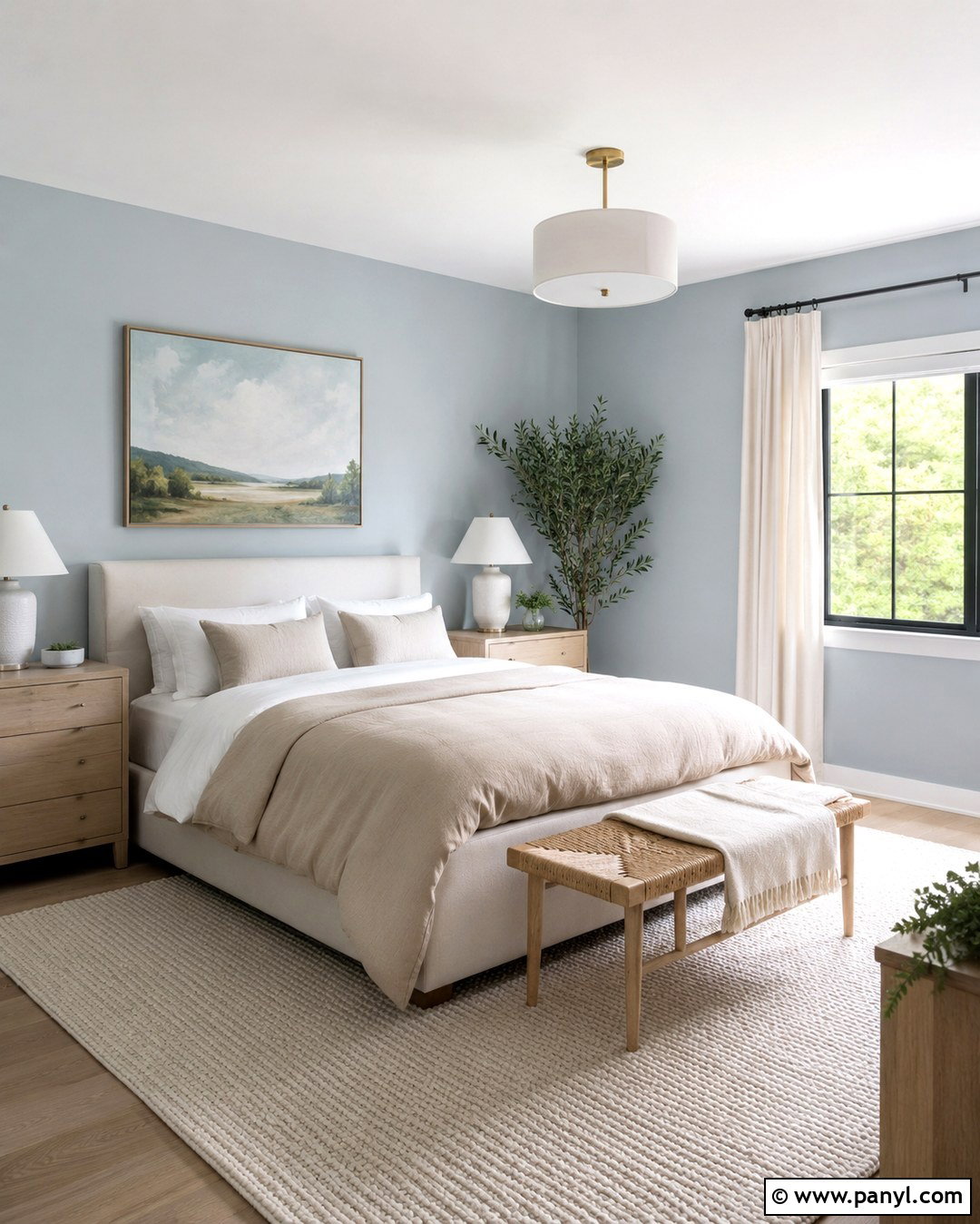
Powder blue walls create a restful bedroom when the remaining colors stay warm and gently layered. Position an upholstered oatmeal bed against the longest uninterrupted wall and dress it with white sheets, a flax-colored duvet, and dusty blue pillows. Add matching light oak nightstands with ceramic lamps in a creamy finish. A large wool rug in ivory and pale taupe will soften hardwood flooring and warm the overall palette. Choose full-length linen curtains in off-white rather than blue, allowing the wall color to remain distinct. Above the bed, hang one wide landscape with muted green, blue, and beige tones. A woven bench, small reading chair, and simple greenery complete a peaceful room that feels comfortable throughout the year.
7. Dark Blue Bedroom Walls
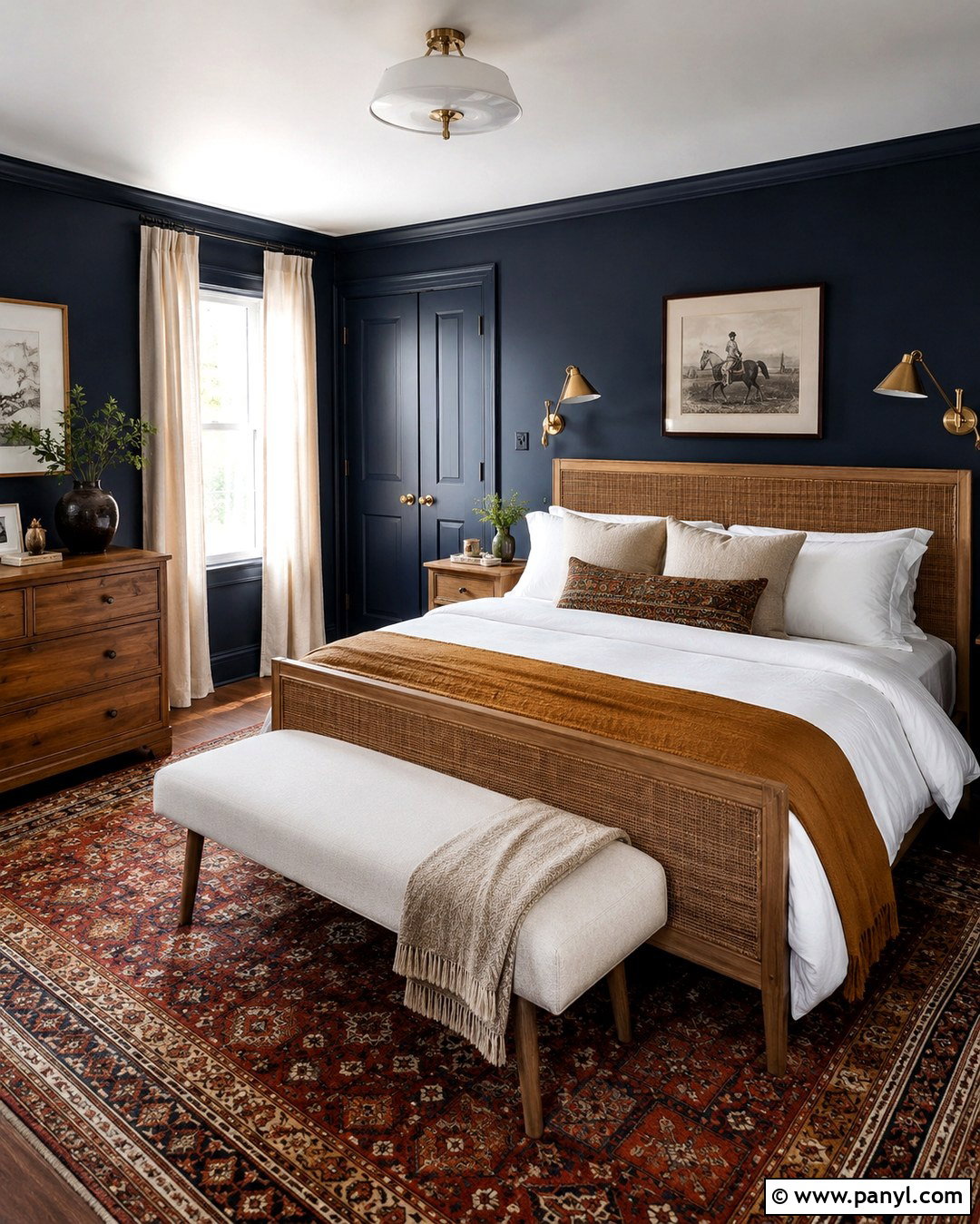
Dark blue bedroom walls work beautifully in a cozy sleep space with balanced lighting and tactile materials. Select a deep midnight blue and carry it across the walls, baseboards, and closet doors for a seamless appearance. An oak or cane bed creates a warm focal point against the saturated color. Layer it with crisp white bedding, a caramel throw, and pillows in blue, cream, and small-scale stripes. Place a vintage-inspired rug beneath the bed to bring in faded terracotta and tan. Brass wall sconces free the nightstands while adding soft contrast. Use light linen curtains at the windows and a warm white ceiling. Minimal framed art, a wood dresser, and one upholstered bench keep the dramatic bedroom calm rather than crowded.
8. Blue Home Office Walls
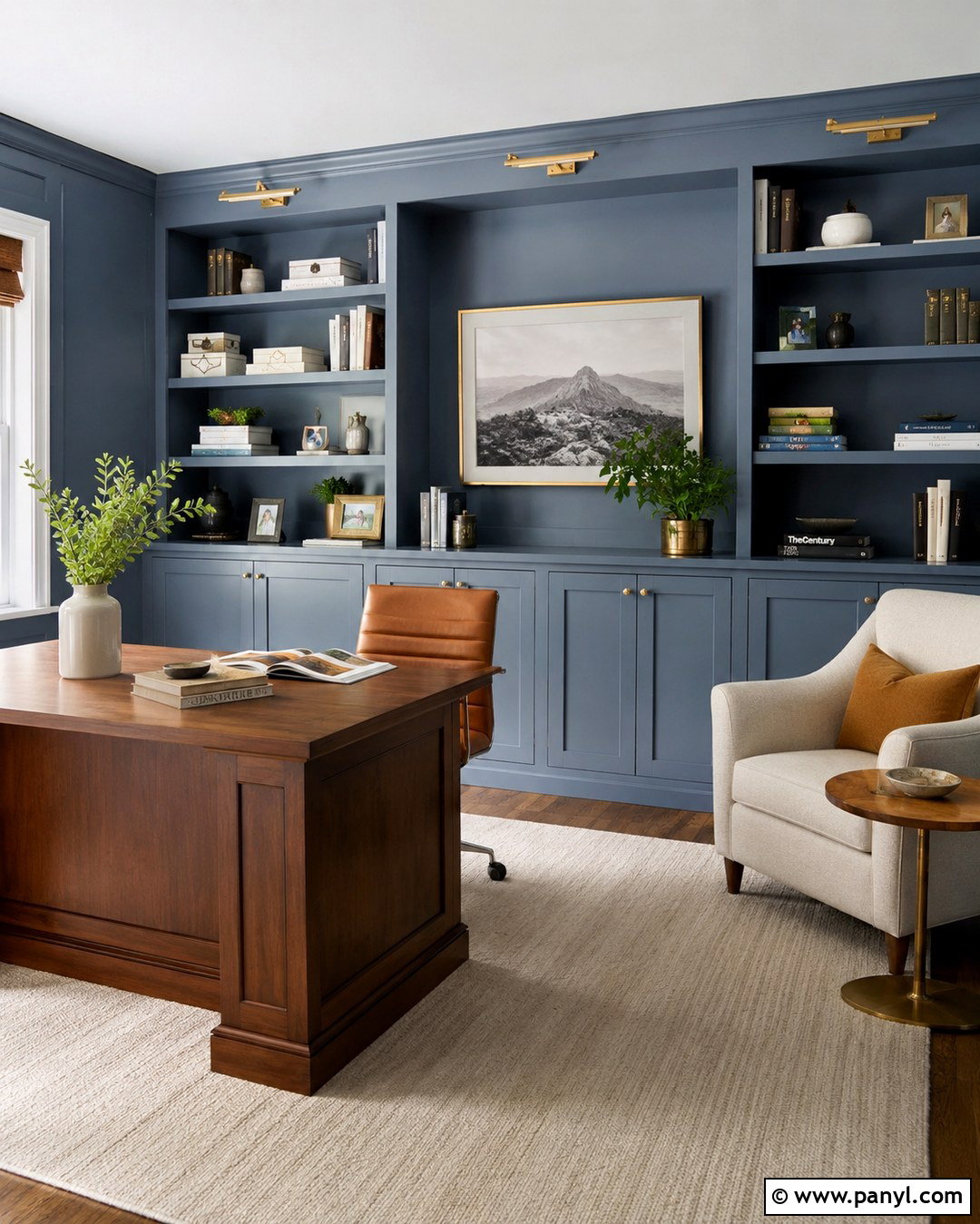
A blue home office can support concentration while still looking welcoming during video calls or daily paperwork. Choose a muted denim blue that has enough depth to frame furniture without darkening the workspace. Place a substantial walnut desk where natural light reaches the side of the work surface. Behind it, install blue-painted built-in shelves with closed lower cabinets for hidden storage. A camel leather desk chair and cream wool rug provide warmth. Add a compact reading chair beside a floor lamp if space allows. Use brushed brass picture lights above the shelves and organize books by size instead of color. Framed artwork, ceramic boxes, and a few plants create a polished background while leaving plenty of open space for practical office tasks.
9. Teal Blue Bathroom Walls
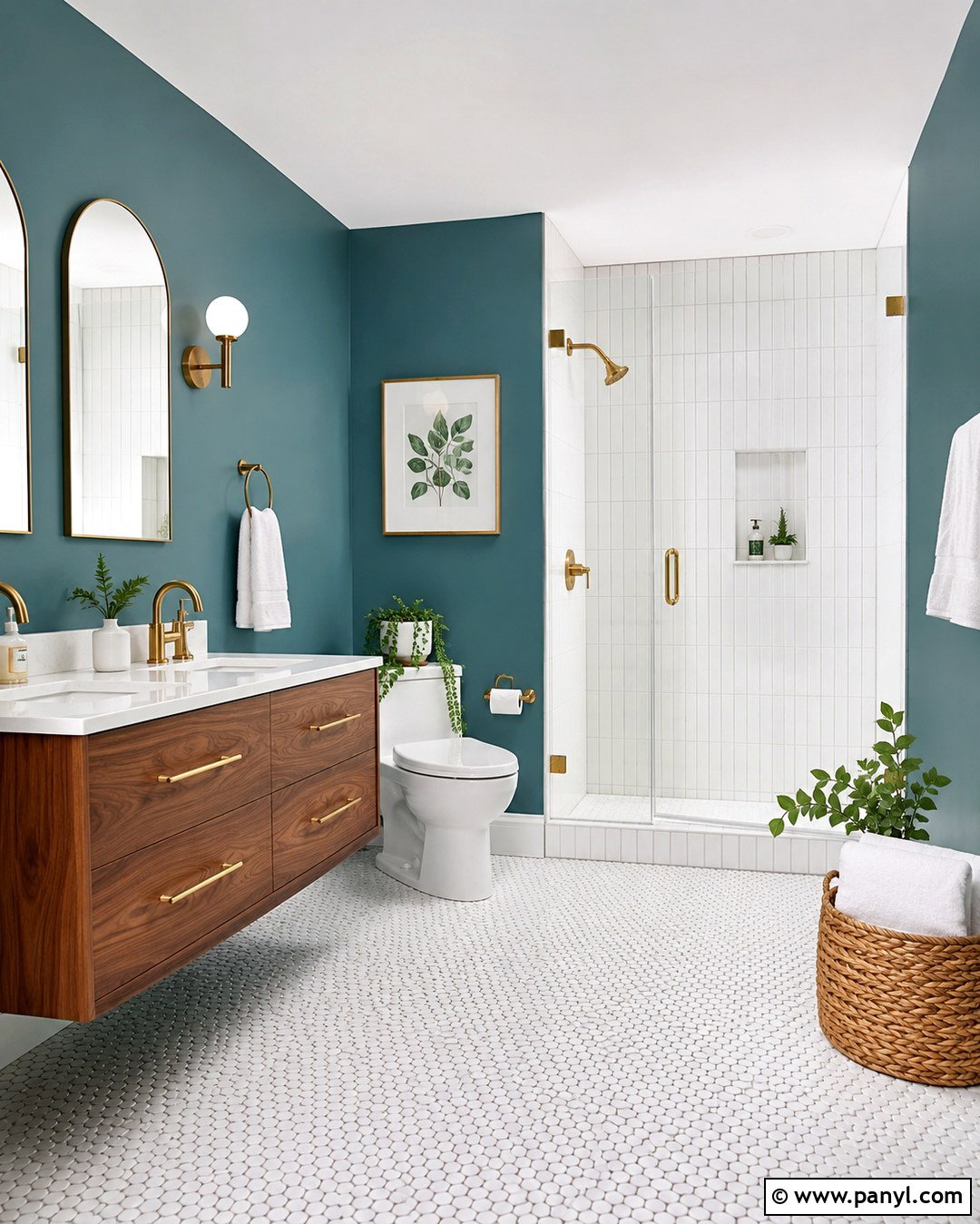
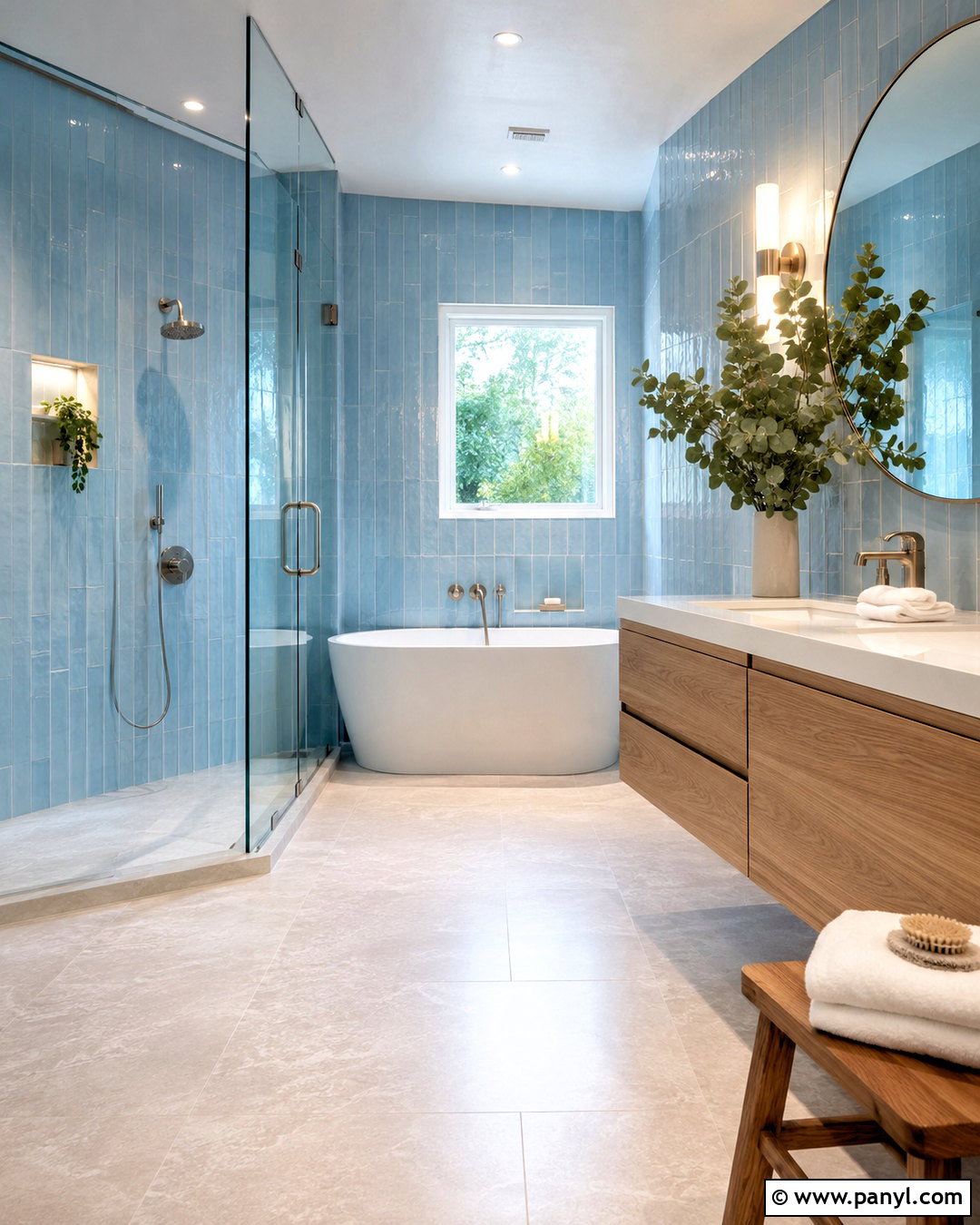
Teal blue walls bring energy to a bathroom, but the design should include enough white and natural texture to stay fresh. Use a medium teal on the upper walls and install white vertical tile around wet areas. A floating walnut vanity with a white quartz top adds warmth and keeps the floor visually open. Choose an arched brass mirror, matching sconces, and simple brass faucets for a cohesive finish. On the floor, use small white-and-gray marble-look mosaic tile or a durable geometric porcelain pattern. White towels, a natural woven basket, and a pale shower curtain prevent competing colors. Complete the room with one framed botanical print and a small plant, giving the bathroom personality without filling limited surfaces with accessories.
10. Blue Entryway Walls
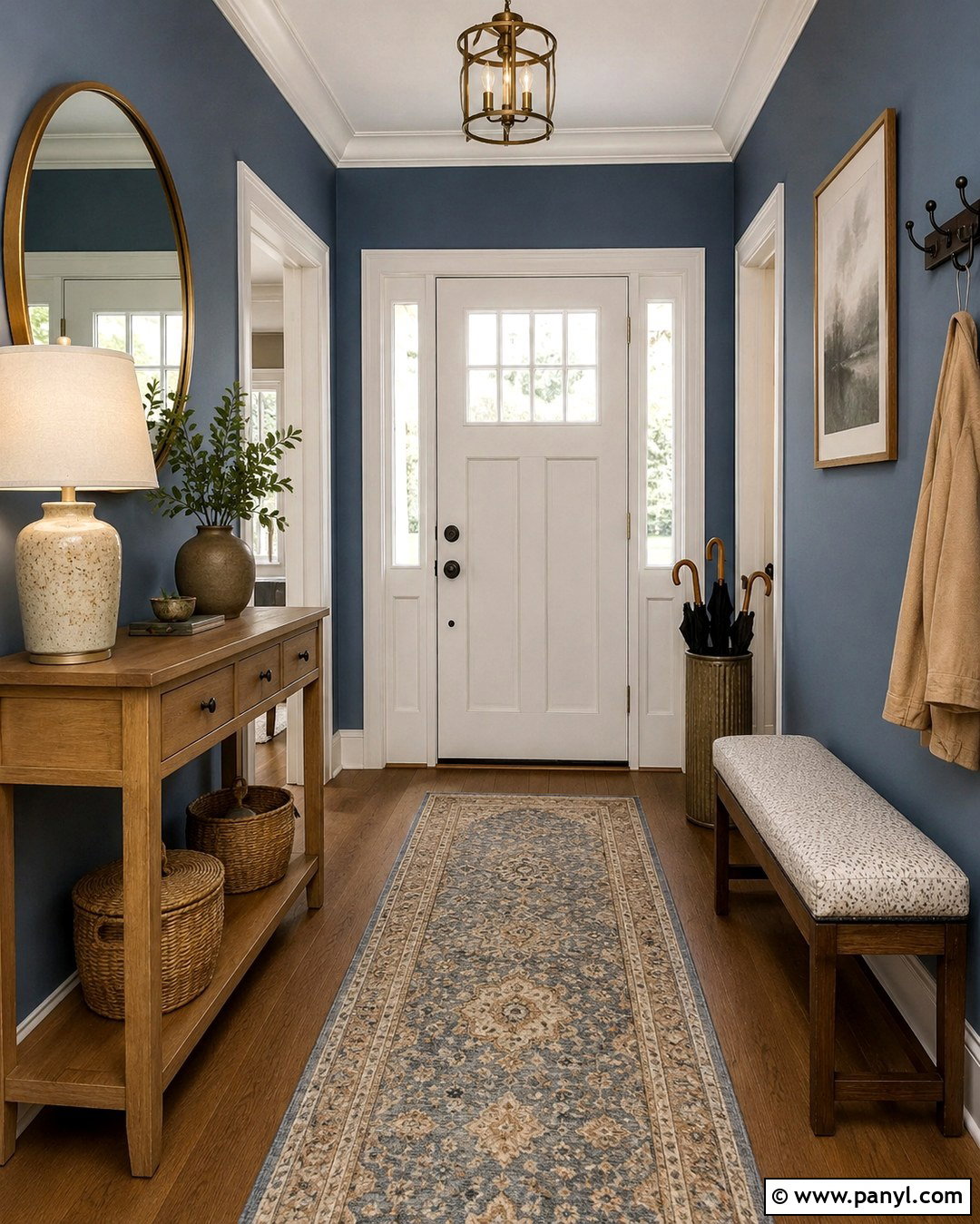
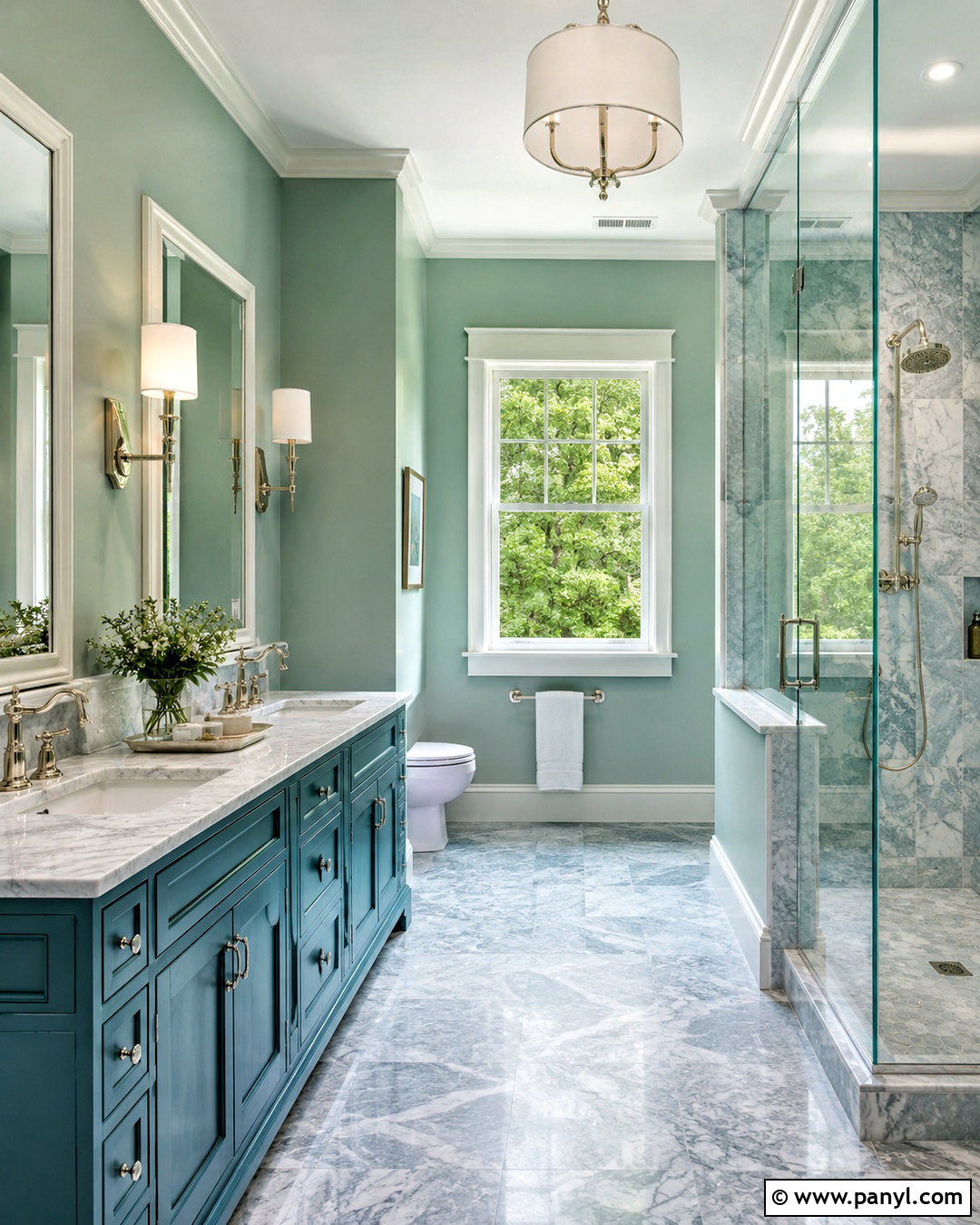
Blue entryway walls establish character as soon as someone enters the home. A mid-tone slate blue works especially well because it hides everyday marks while remaining brighter than navy. Pair the walls with warm white trim, a natural oak console, and a large round mirror in aged brass or matte black. Place a washable patterned runner along the main walking path, using tan, cream, and faded blue to connect the scheme. A narrow upholstered bench can provide seating without crowding the doorway. Add a shaded table lamp for evening warmth and a lidded basket for shoes or accessories. Simple hooks, an umbrella stand, and one ceramic bowl keep necessities organized. Finish with restrained artwork so the entry feels welcoming rather than busy.
11. Blue Hallway Walls
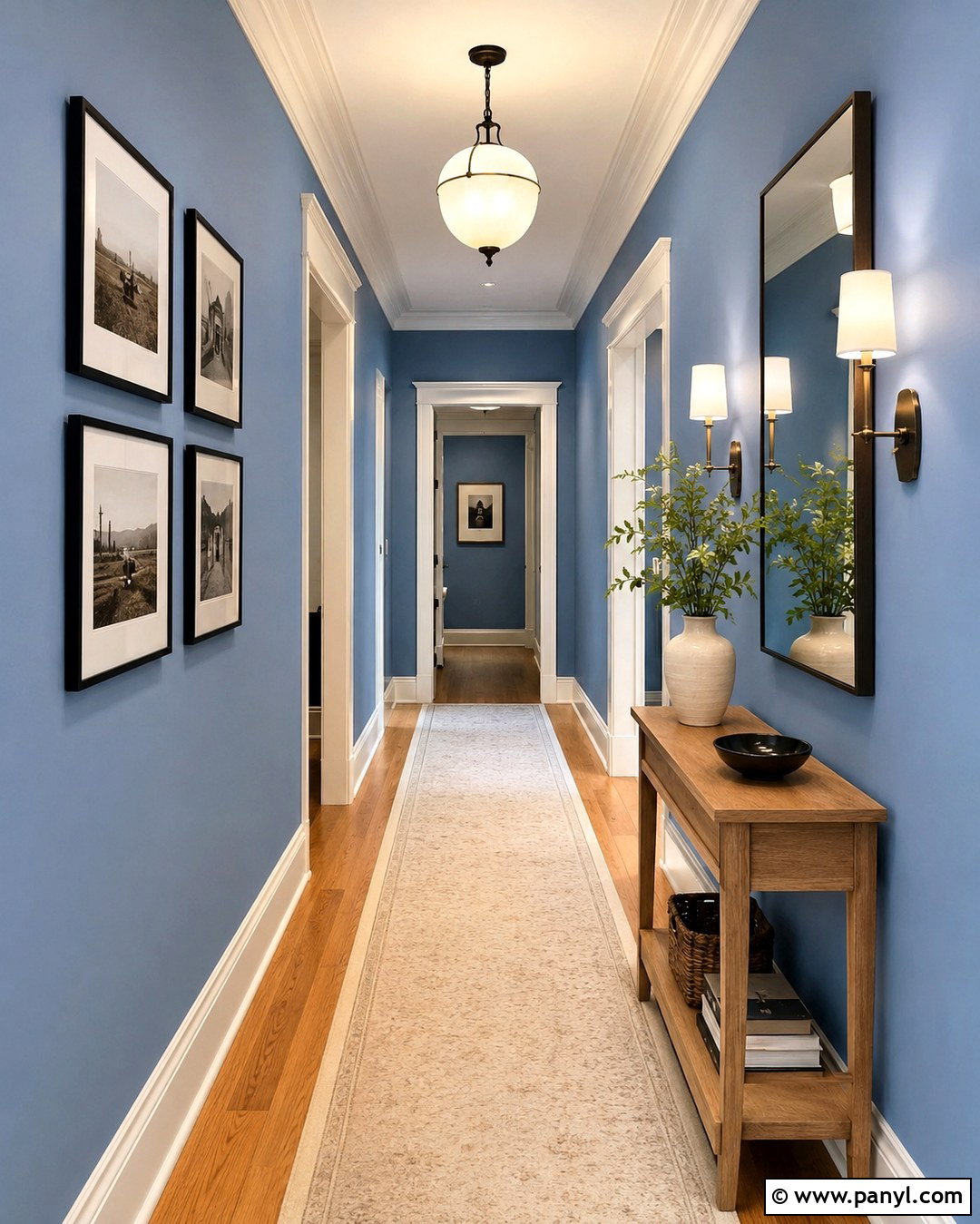
A hallway with blue walls can become a thoughtful connecting space instead of an overlooked passage. Choose a softened cornflower blue for a narrow hall, then paint the ceiling and trim warm white to reflect available light. Run a slim neutral runner through the center, leaving the flooring visible along both sides. Create a measured gallery wall using medium wood or black frames with generous white mats. If the width allows, place a shallow console or wall-mounted ledge near the end. A statement pendant with opal glass adds interest without lowering the visual ceiling. Repeat wood tones from adjoining rooms to improve flow. One mirror opposite a doorway can distribute light, while uncluttered walls around it keep the hallway from feeling compressed.
12. Blue Family Room Walls
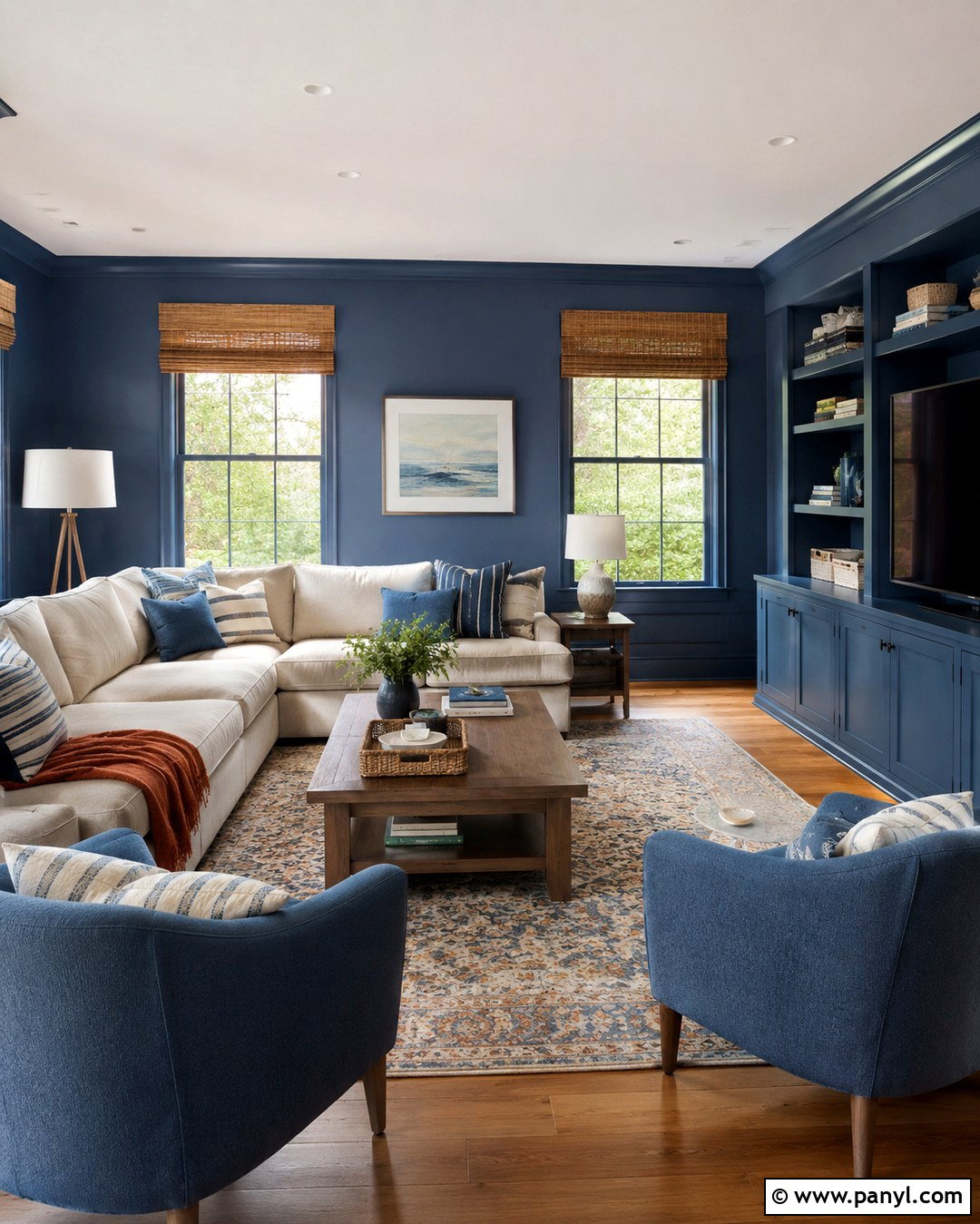
Family rooms need comfort, storage, and durable surfaces, and medium blue walls provide a forgiving backdrop for all three. Use a slightly grayed marine blue that feels colorful without dominating the room. Arrange a large oatmeal sectional and two washable accent chairs around a sturdy oak coffee table. Place closed blue cabinetry beneath the television, with open shelves reserved for books, baskets, and a few meaningful objects. A low-pile patterned rug will disguise daily wear better than solid cream. Add striped pillows, a rust-colored throw, and woven shades for warmth. Layer recessed lights with table and floor lamps so the room works for reading, games, and movies. Leave clear walking paths around the seating to maintain an easy, functional layout.
13. Blue Nursery Walls
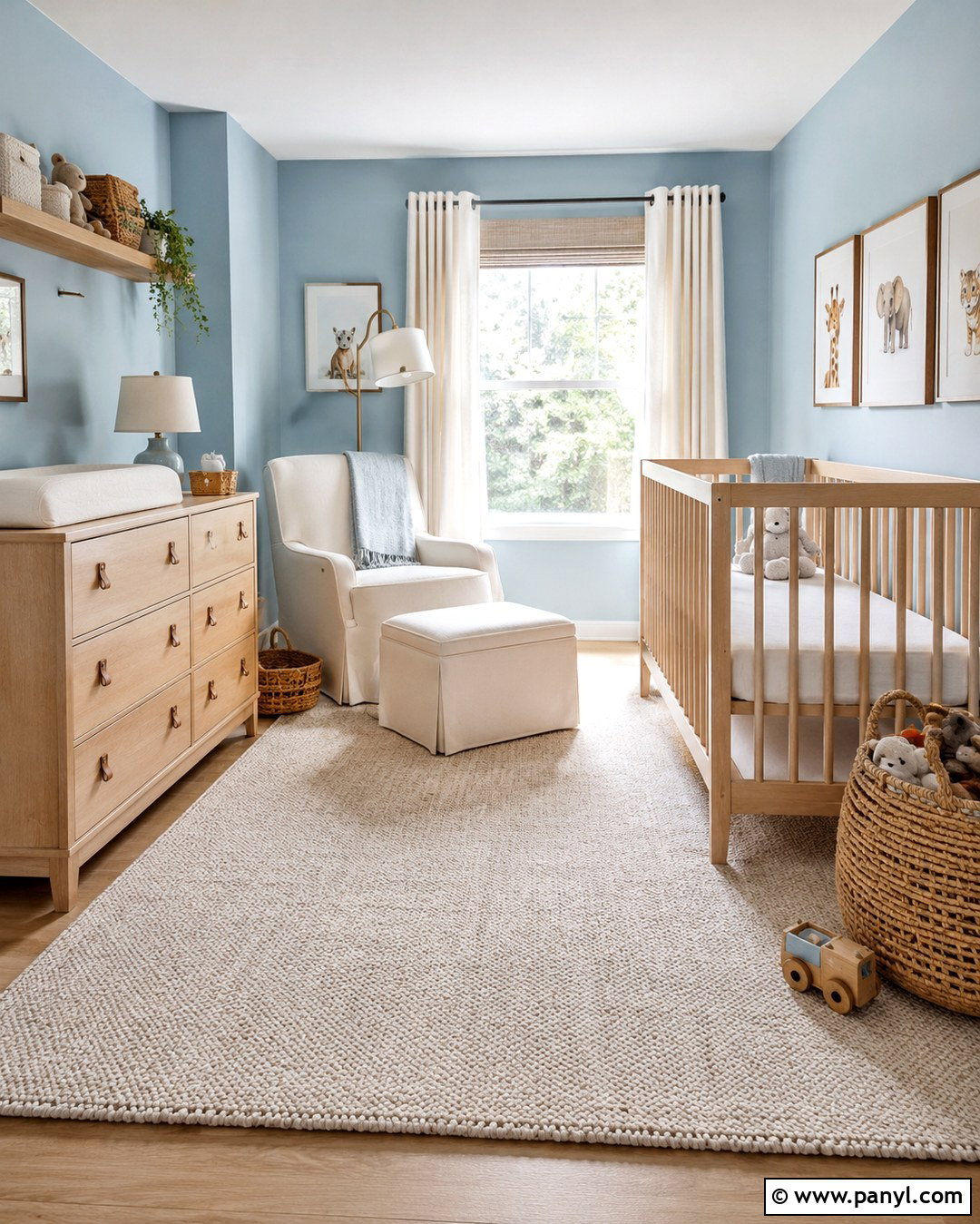
Soft blue nursery walls offer a flexible foundation that can grow with the child. Choose a pale blue with a touch of gray, avoiding shades that appear overly bright under artificial light. Position a natural maple crib against a clear wall, away from curtains and hanging decor. Add a comfortable cream glider, a washable oatmeal rug, and a practical wood dresser that doubles as a changing surface. Use blackout curtains in warm white linen for a quiet, tailored look. Artwork featuring gentle landscapes, animals, or simple shapes can introduce muted green and tan. Woven baskets provide accessible storage for blankets and toys. A dimmable ceiling fixture and shaded reading lamp complete the room, while limited accessories keep the nursery peaceful, safe, and easy to maintain.
14. Blue Kids Bedroom Walls
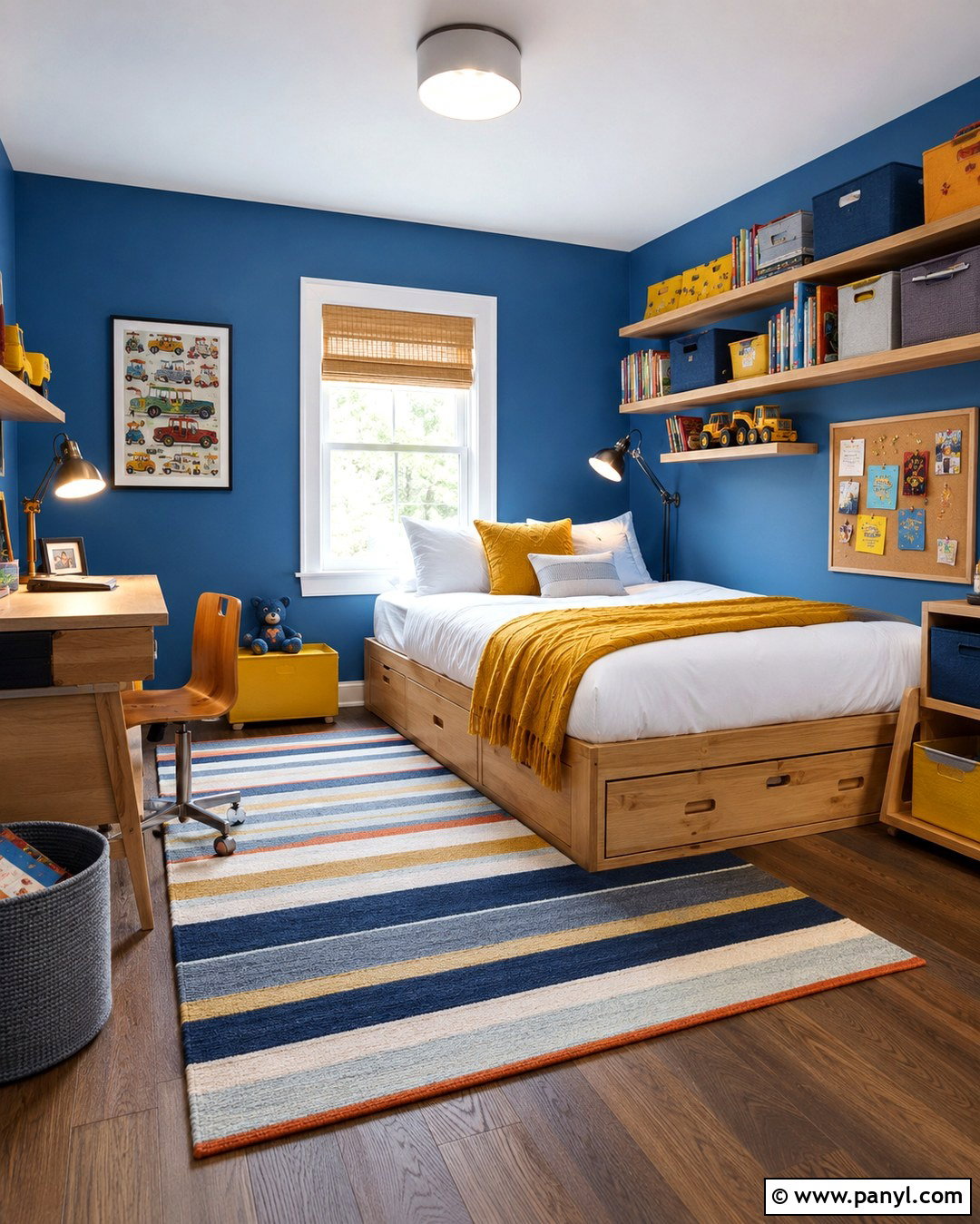
A children’s bedroom with blue walls can be colorful and playful without relying on a temporary theme. Start with a cheerful medium blue, then pair it with white or natural wood furniture that can adapt over time. Use a simple platform bed with drawers underneath and place a compact desk near the window. A washable striped rug in blue, ochre, red, and cream brings energy to the floor. Hang sturdy wall shelves for books and display items, leaving some open space so the room can change as interests develop. Bedding in white and navy creates order, while a mustard throw adds warmth. Finish with blackout curtains, labeled storage bins, a corkboard, and a bright task lamp for a complete space that supports sleeping, playing, and studying.
15. Blue Guest Bedroom Walls
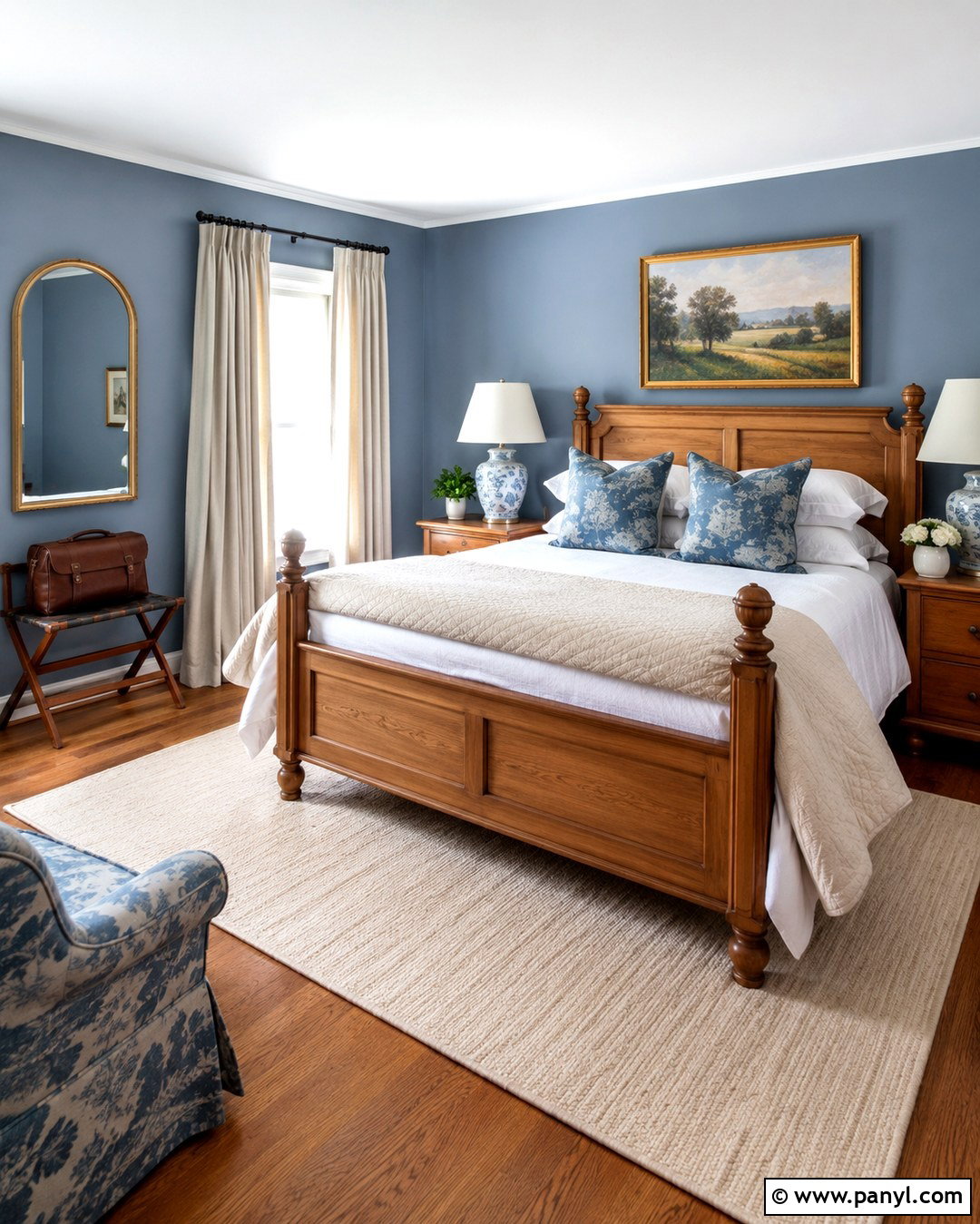
Blue guest bedroom walls should create a memorable setting while keeping the space simple and practical. Select a dusty medium blue that works in both daylight and warm evening light. Center a wood or upholstered bed between two compact nightstands, giving each side its own lamp and accessible outlet. Dress the bed in white cotton, a quilted beige coverlet, and patterned blue pillows. A bench at the foot provides space for a bag, while an empty dresser drawer and several open hangers help visitors settle in. Use an ivory rug and natural linen curtains to soften the color. Finish with a mirror, a small water carafe, and calm landscape artwork. Avoid excessive decorative objects so guests have clear surfaces for their belongings.
16. Blue Laundry Room Walls
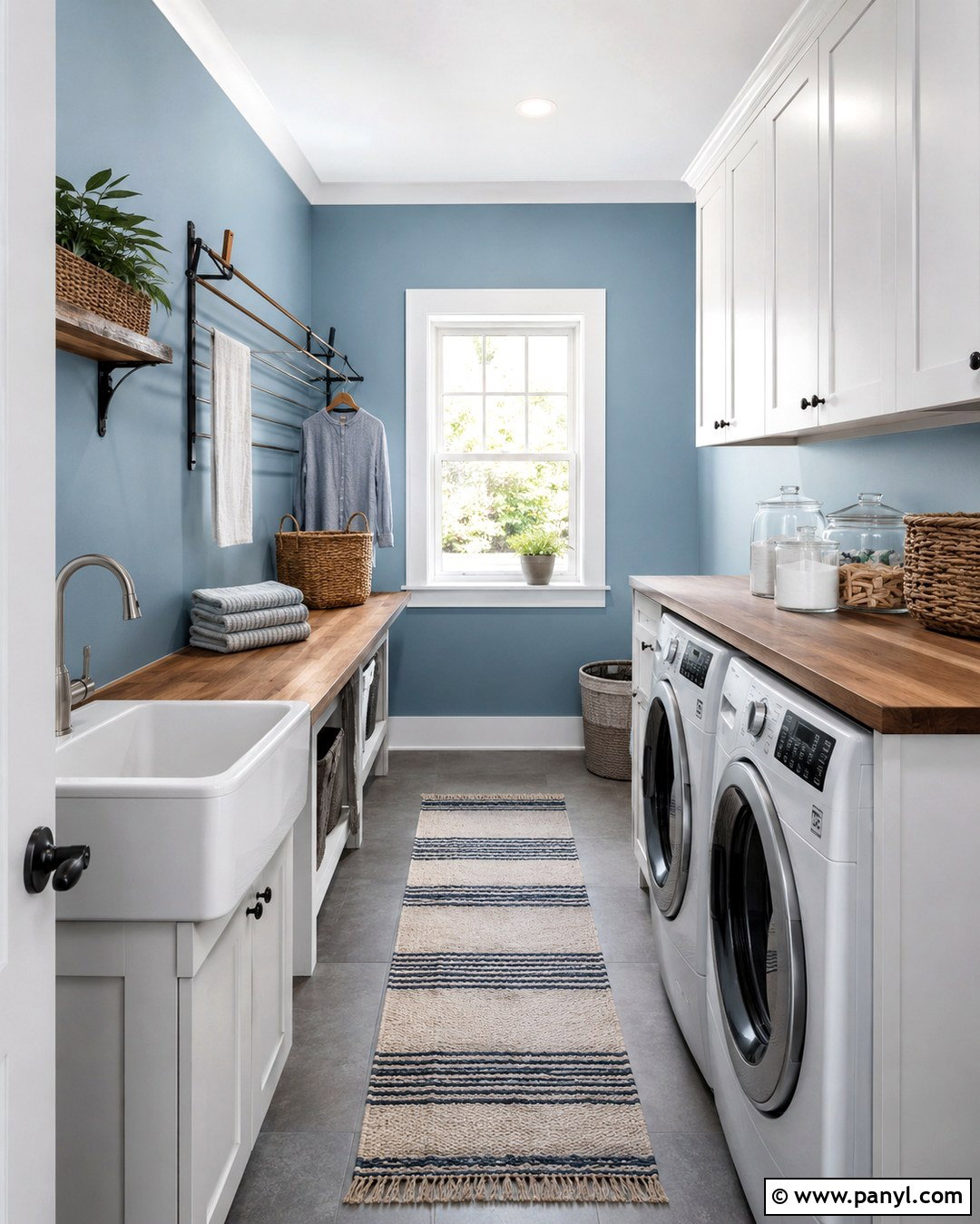
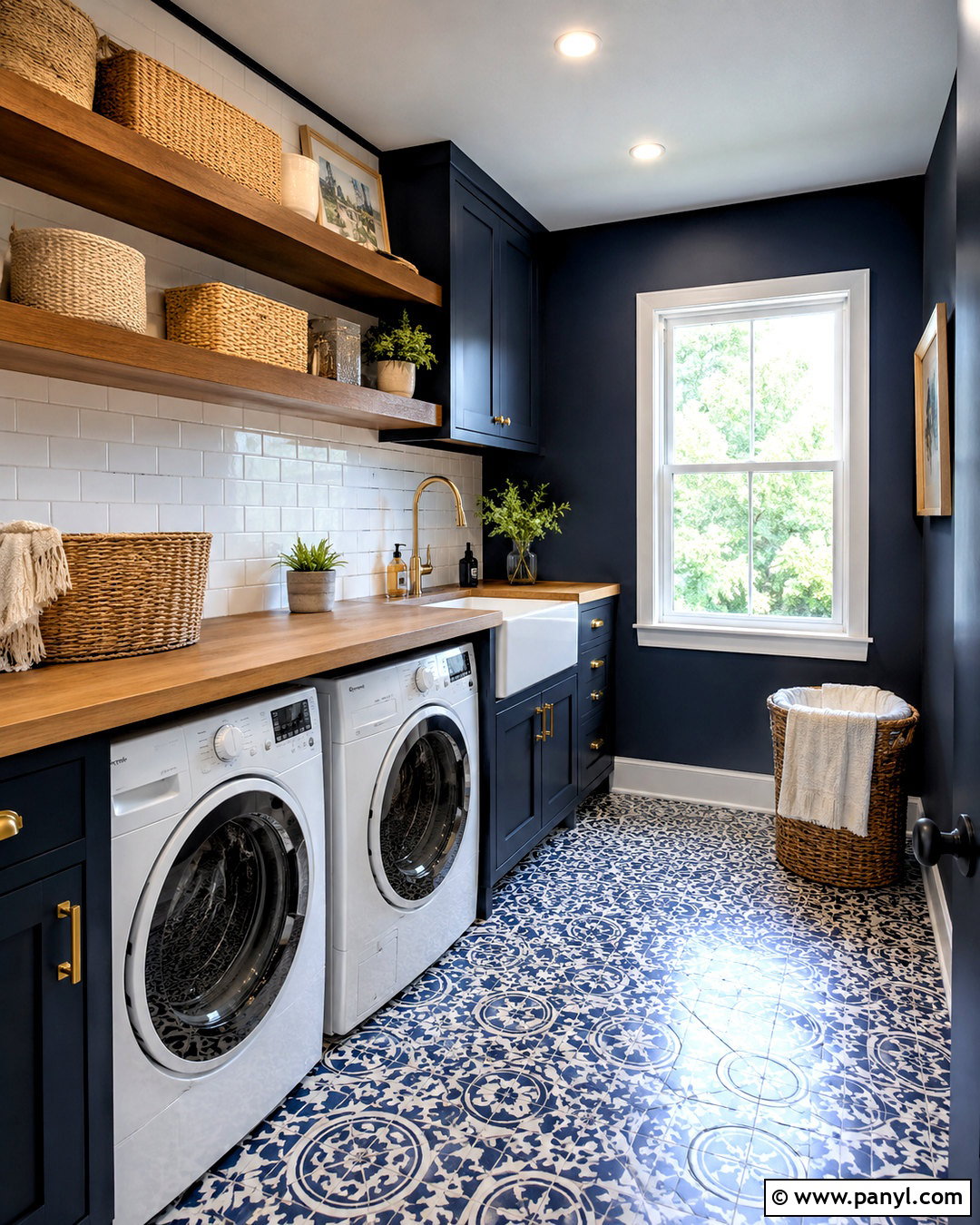
Blue laundry room walls can make a hardworking utility area feel cleaner and more intentional. Use a light robin’s-egg blue that reflects bright task lighting and contrasts gently with white appliances. Install white upper cabinets for supplies, then add a butcher-block counter above front-loading machines for folding. A deep white utility sink with a brushed nickel faucet expands the room’s function. Use durable gray porcelain tile underfoot and place a washable striped runner in the open walkway. Wall-mounted drying rails, labeled baskets, and matching glass containers keep necessities organized without visual clutter. Include a hanging rod beneath one cabinet for air-drying clothes. Natural wood shelves and a small framed print add warmth, creating a practical room that still connects with the home’s overall decor.
17. Blue Mudroom Walls
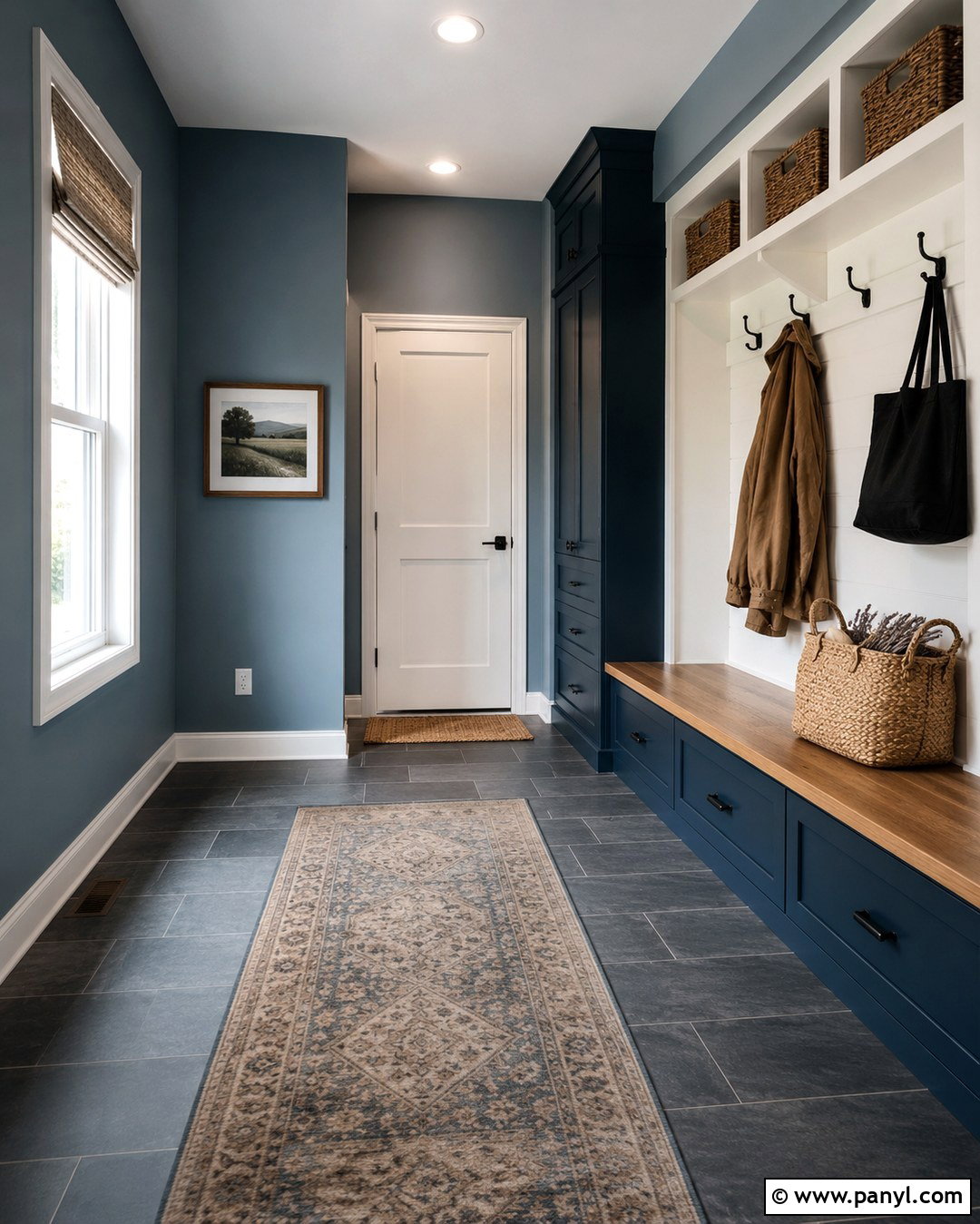
A mudroom with blue walls feels orderly when storage and durable finishes shape the complete design. Choose a medium blue-gray that can handle visual activity from coats, bags, and shoes. Install a long built-in bench with navy lower drawers and warm white upper cubbies. A natural oak seat prevents the cabinetry from looking too heavy. Use black hooks, woven baskets, and clearly assigned storage spaces for each household member. Slate-look porcelain floor tile hides dirt while providing an attractive contrast to the blue. Add a washable runner and a bright flush-mount ceiling light. If room permits, include a tall closed cabinet for cleaning tools and seasonal gear. A simple Roman shade and one framed landscape finish the space without interfering with its daily function.
18. Blue Sunroom Walls
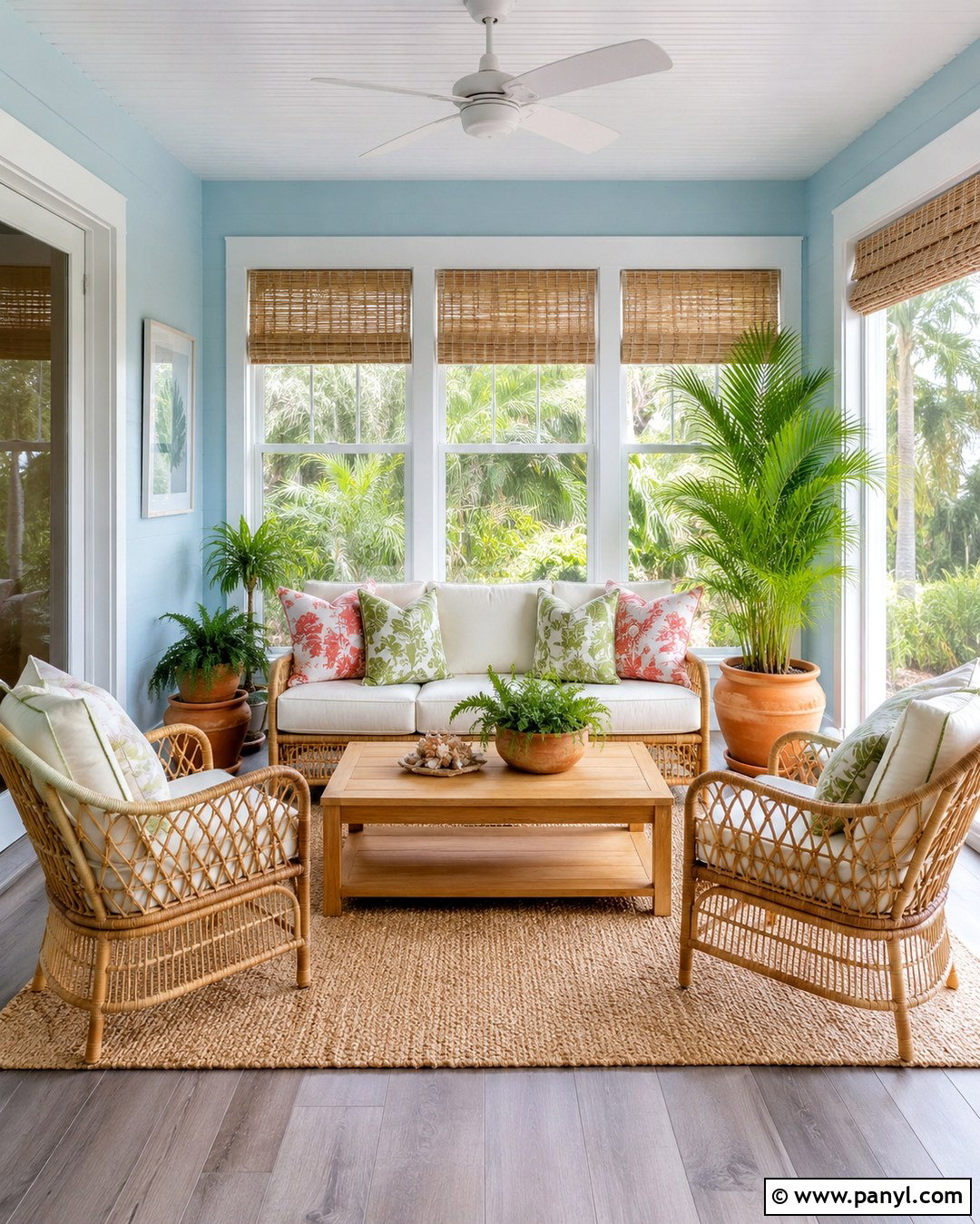
Blue sunroom walls can strengthen the connection between indoor comfort and outdoor views. Select a breezy aqua blue that remains clear in abundant natural light. Arrange a woven sofa and two rattan lounge chairs around a light wood coffee table, using performance cushions in cream. Add pillows in leafy green, blue, and subtle coral to echo the garden without creating a strict coastal theme. A natural fiber rug defines the seating zone and complements terracotta plant pots. Keep window coverings minimal with white woven shades or light linen panels. Plants of different heights can soften corners while leaving the windows unobstructed. Complete the room with a white ceiling fan, a small side table, and simple botanical artwork for a fresh, usable retreat.
19. Blue Basement Walls
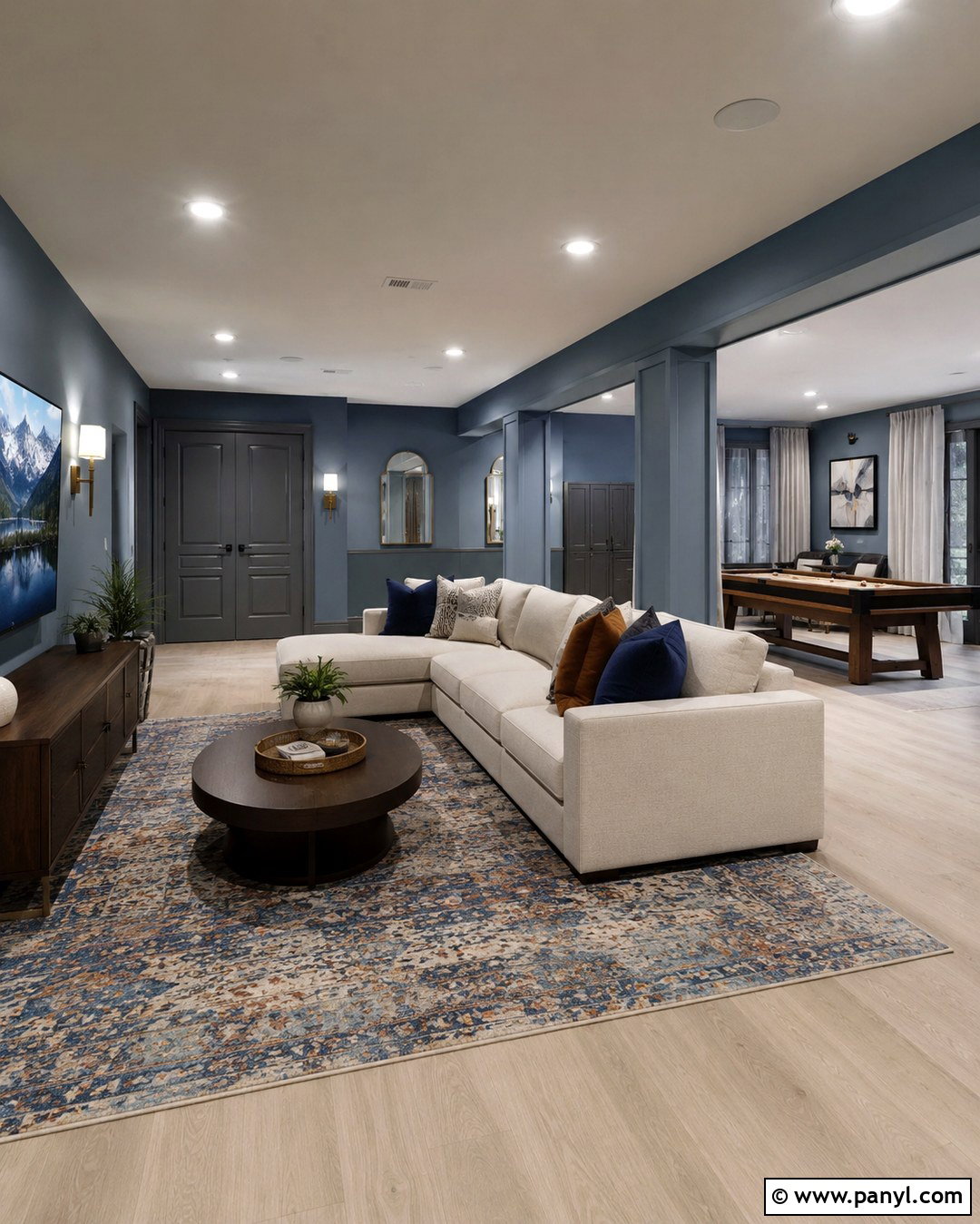
Blue basement walls can make a lower-level room feel finished and inviting when the palette accounts for limited daylight. Choose a light smoky blue rather than a deeply saturated shade. Pair it with a warm white ceiling, pale oak-look flooring, and several layers of bright neutral lighting. Arrange a compact cream sectional facing a low walnut media cabinet. Add a game table or homework station at the opposite end to give the basement more than one function. A large patterned rug containing blue, beige, and rust will define the lounge area. Use closed cabinets to reduce clutter and install wall sconces where natural light is weakest. Light curtains, mirrors, and warm wood accents prevent the cool walls from making the room feel underground or unfinished.
20. Blue Walls With Wood Trim
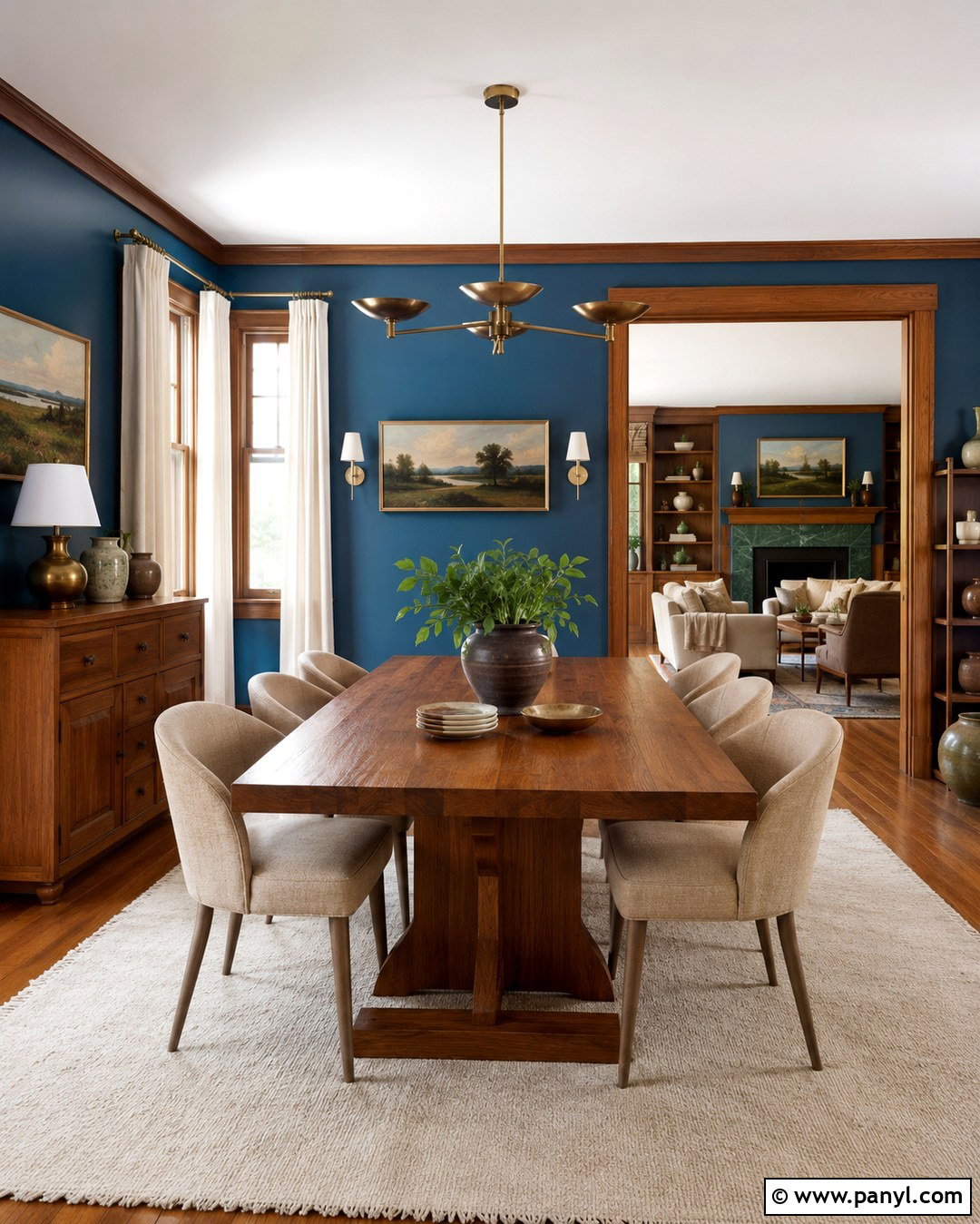
Blue walls and natural wood trim create a warm, character-rich scheme suited to Craftsman, traditional, and updated vintage homes. Choose a muted peacock or denim blue that complements the wood’s undertones instead of competing with them. Keep original oak baseboards, window casings, and doors unpainted, then repeat that wood in a dining table, console, or exposed shelving. Upholstery in oatmeal, camel, and olive adds depth without covering the architectural details. Use a cream rug and off-white curtains to introduce lighter areas around the room. Aged brass lighting works especially well with both blue and honey-colored wood. Complete the look with landscape art, handmade pottery, and restrained patterns, creating a layered interior that respects the house while still feeling current.
Conclusion:
Creating a beautiful House With Blue Walls is less about choosing one perfect shade and more about building a balanced room around it. Pale blues benefit from warm woods and grounded textiles, while navy and teal need lighter upholstery, reflective finishes, and thoughtful lighting. Repeating a few materials throughout the home can also connect rooms painted in different blue tones. Before committing, test each color on several walls and observe it throughout the day. Then coordinate furniture, flooring, trim, curtains, and decor as one complete composition. Whether the finished home feels coastal, traditional, modern, or relaxed, blue walls can provide lasting character when every supporting detail has a clear purpose.

Related Ideas and Inspiration:
Leave a Reply