
Grey cabinets can shift from cool and contemporary to warm and traditional depending on the surrounding paint. That flexibility makes **Grey Kitchen Cabinets Wall Color Ideas** useful for almost any home, but undertones matter. Blue-grey cabinetry works best with crisp, balanced shades, while greige or brown-grey cabinets pair naturally with creamier colors. Current kitchen palettes favor warm whites, earthy neutrals, muted greens, and thoughtfully layered grey schemes instead of cold, one-note combinations. () Before committing, compare large paint samples beside the cabinetry, countertop, backsplash, and flooring throughout the day. The complete room should feel connected rather than perfectly matched. Explore these practical, complete **Grey Kitchen Cabinets Wall Color Ideas** to find a palette that suits your light, layout, and decorating style.

1. Warm White Walls With Grey Kitchen Cabinets
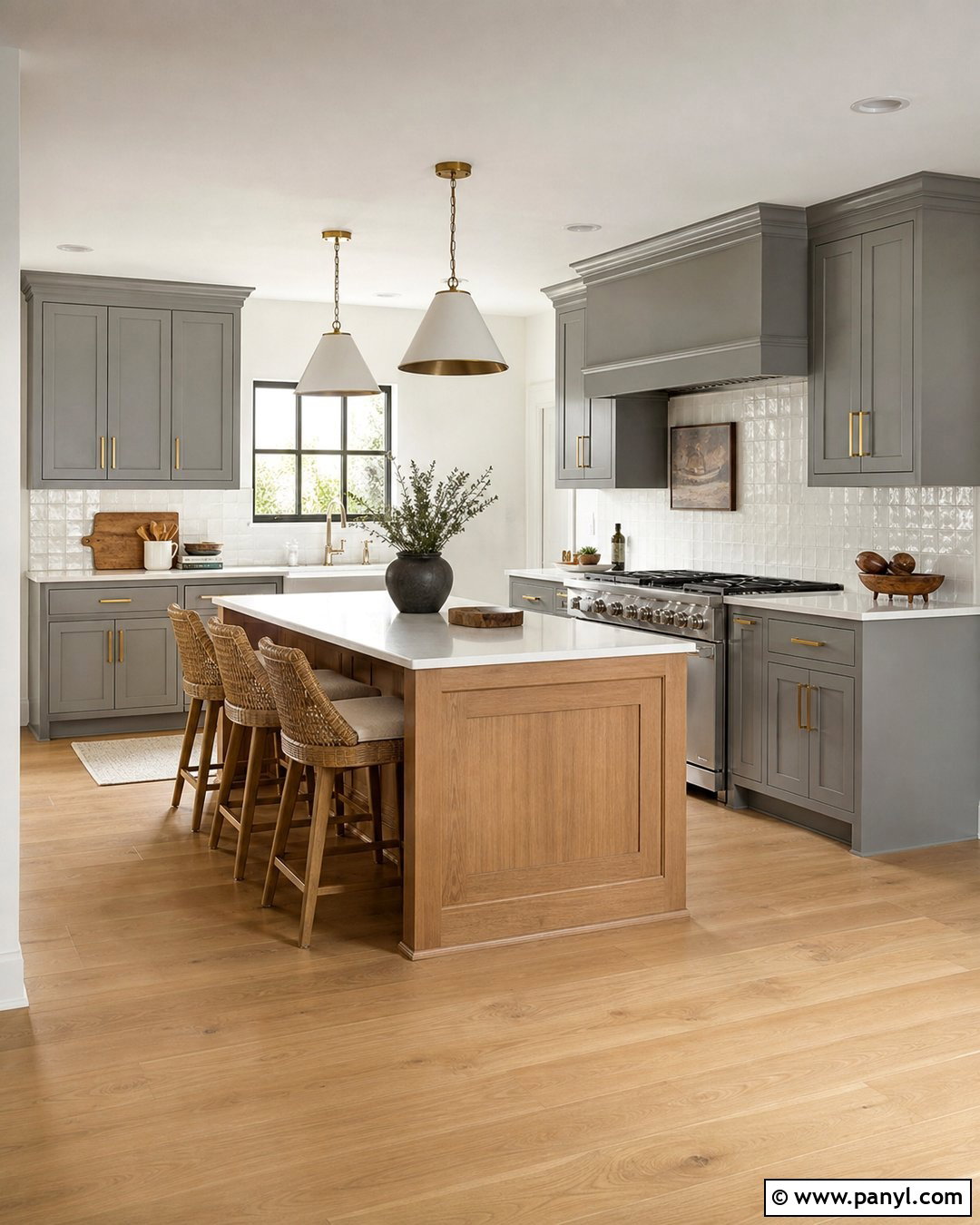
Warm white walls soften grey kitchen cabinets without making the room look yellow or dated. Choose a white with gentle cream, beige, or greige undertones, especially when the cabinetry is charcoal or cool medium grey. Complete the look with white quartz countertops, a handmade ivory tile backsplash, and light oak flooring. Brushed brass pulls introduce another layer of warmth, while simple linen Roman shades keep the windows bright. For an inviting transitional layout, place a natural wood island or breakfast table near the center and add woven counter stools. Warm white also works well in kitchens with limited daylight because it reflects light while maintaining a comfortable atmosphere. Avoid pairing it with an extremely icy backsplash, which can interrupt the balanced palette.
2. Crisp White Walls With Grey Kitchen Cabinets
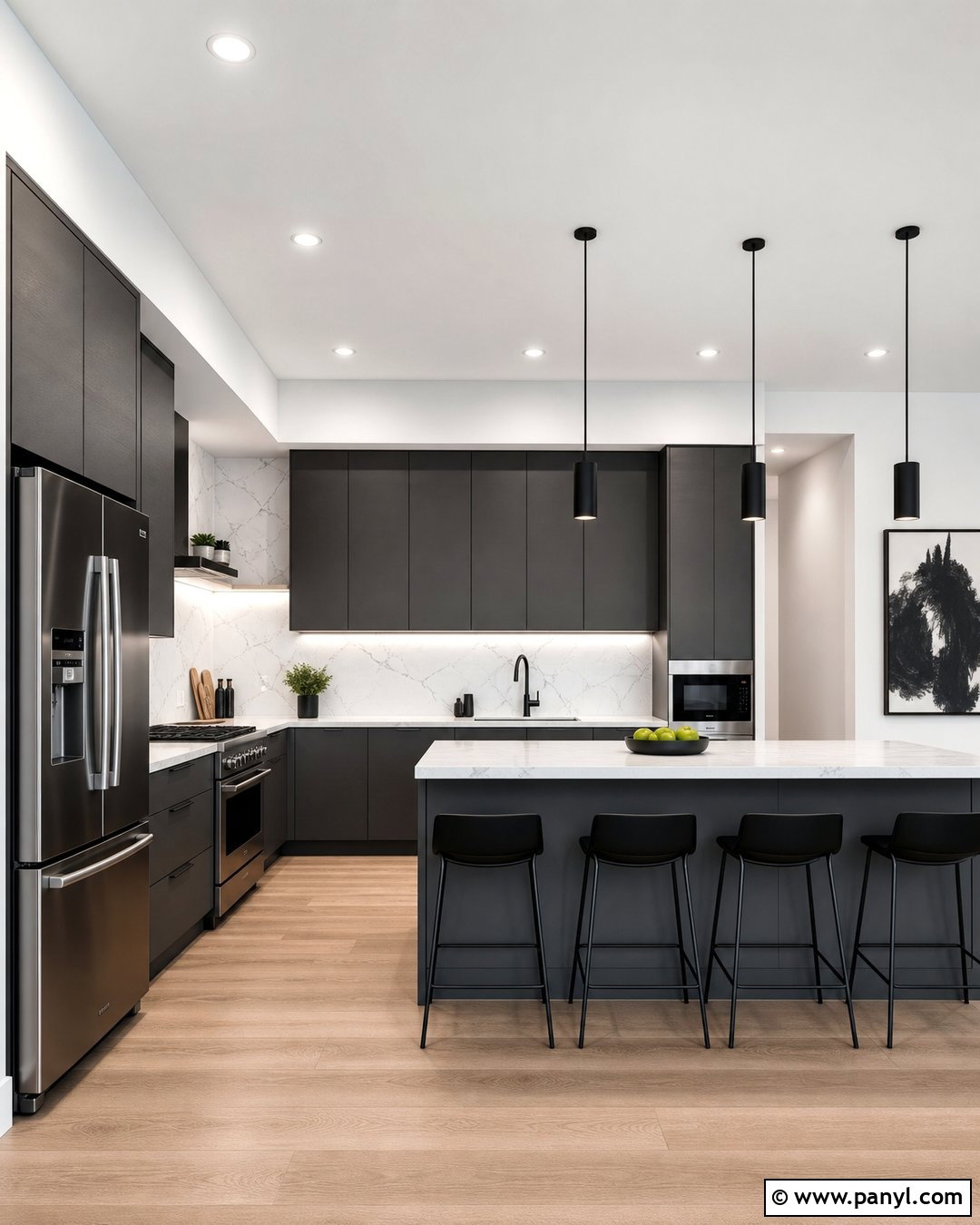
Crisp white walls create clean contrast around mid-tone or dark grey kitchen cabinets. This pairing works especially well in modern kitchens where sharp lines and an uncluttered layout are important. Carry the white onto the ceiling and select a white quartz countertop with subtle grey veining. A smooth marble slab or straight-set white tile backsplash reinforces the fresh appearance. Add matte black hardware, slim pendant lights, and stainless steel appliances for definition. Pale oak flooring prevents the black, white, and grey combination from feeling too severe. In a small kitchen, keep upper cabinets limited or include glass-front doors so the white walls remain visible. Choose a balanced white rather than a blue-white if the room receives cool northern light.
3. Cream Walls With Grey Kitchen Cabinets
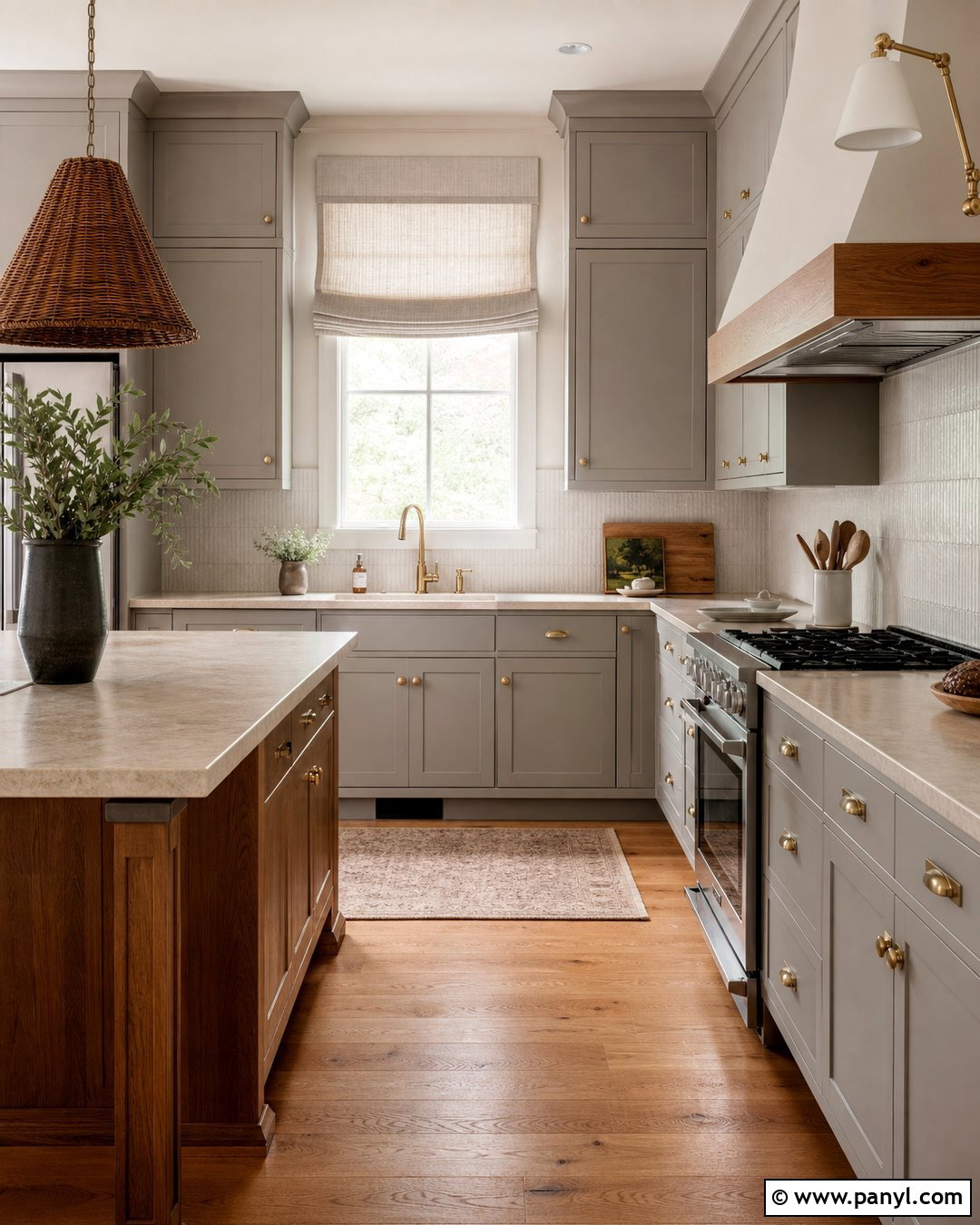
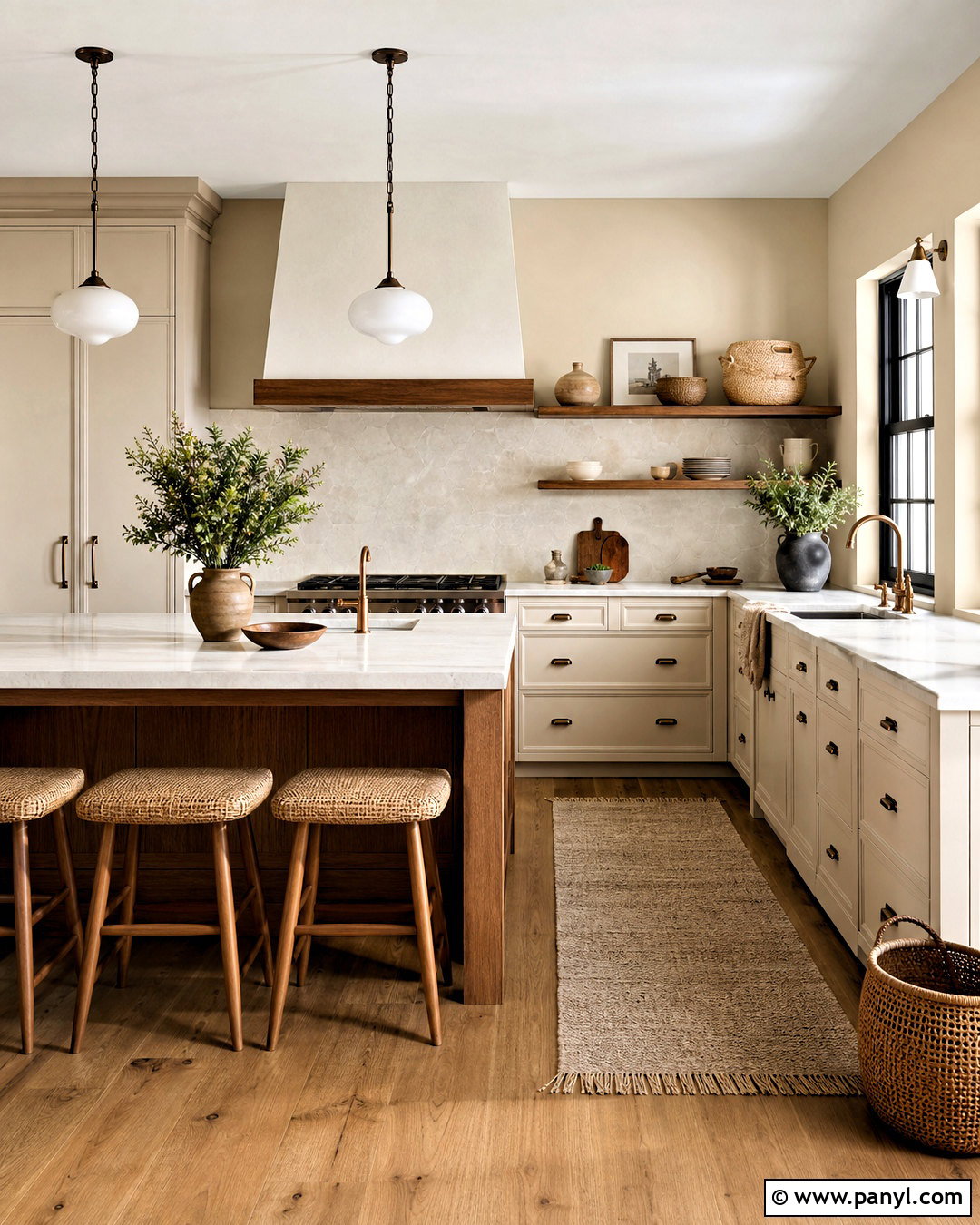
Cream walls give grey kitchen cabinets a softer, more welcoming appearance. The combination is particularly effective with warm grey, putty, or mushroom-toned cabinetry. Use creamy wall paint alongside beige quartz countertops and a lightly textured ceramic backsplash. A medium oak floor grounds the room, while aged brass knobs connect the warm surfaces to the cabinets. Consider a farmhouse table or compact wood island rather than another painted element. This breaks up the cabinetry and adds natural character. Off-white linen curtains, ceramic bowls, and warm neutral runners can complete the comfortable look without introducing clutter. If the cabinets have strong blue undertones, test the cream carefully. A shade with too much yellow may exaggerate the contrast rather than create the intended harmony.
4. Ivory Walls With Grey Kitchen Cabinets
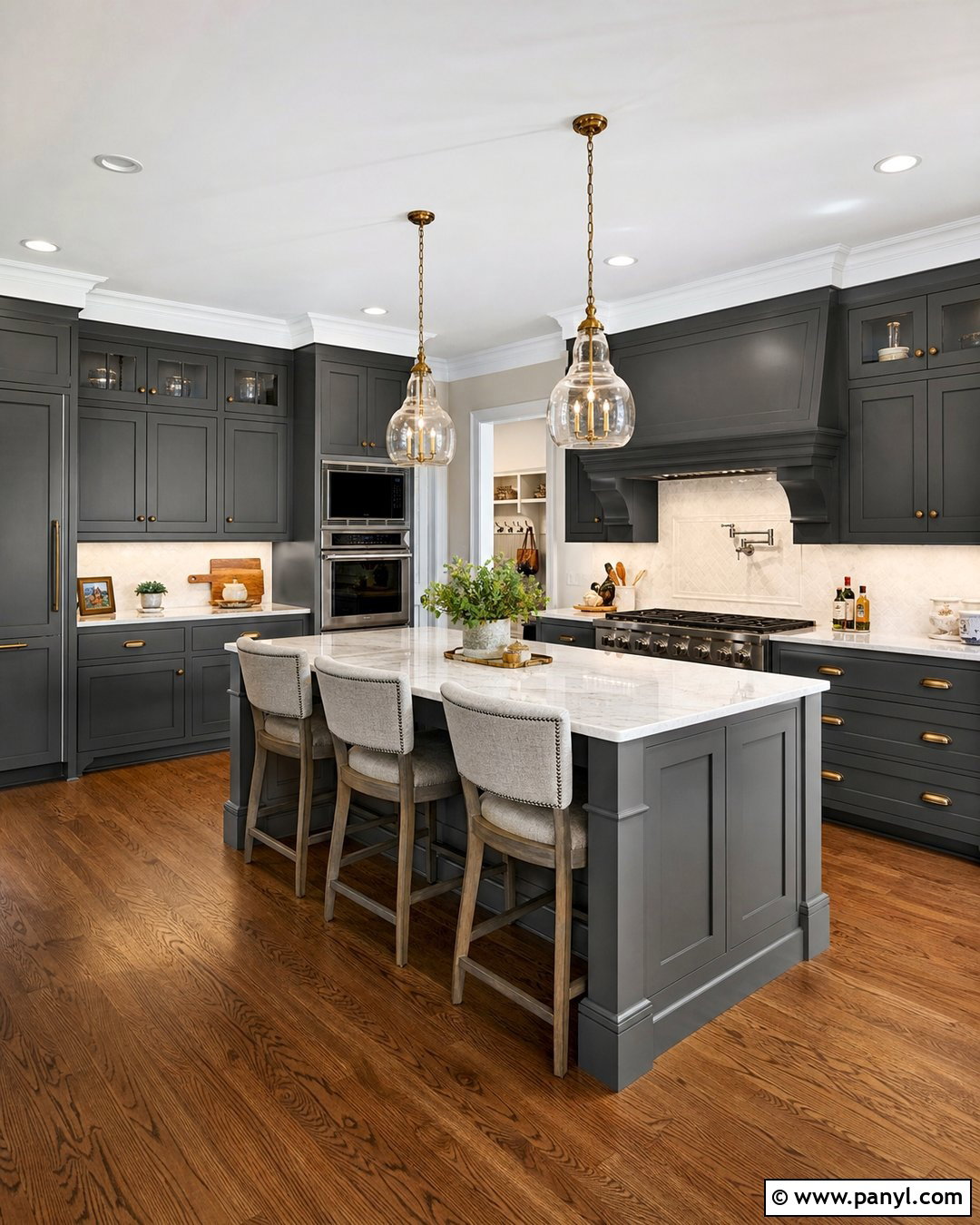
Ivory walls offer a polished alternative to plain white and pair beautifully with deep grey kitchen cabinets. The subtle warmth keeps charcoal cabinetry from appearing heavy, while the pale background makes architectural details more noticeable. Create a refined traditional kitchen with marble-look counters, an ivory backsplash, and medium walnut flooring. Use polished nickel or antique brass hardware, depending on whether the cabinet grey leans cool or warm. A grey island topped with pale stone can anchor the layout without overwhelming it. Add glass pendants, upholstered counter stools, and a washable vintage-inspired runner in ivory and muted blue. Keep trim only slightly lighter than the walls for a smooth transition. This prevents the kitchen from becoming visually busy with too many similar whites.
5. Light Greige Walls With Grey Kitchen Cabinets
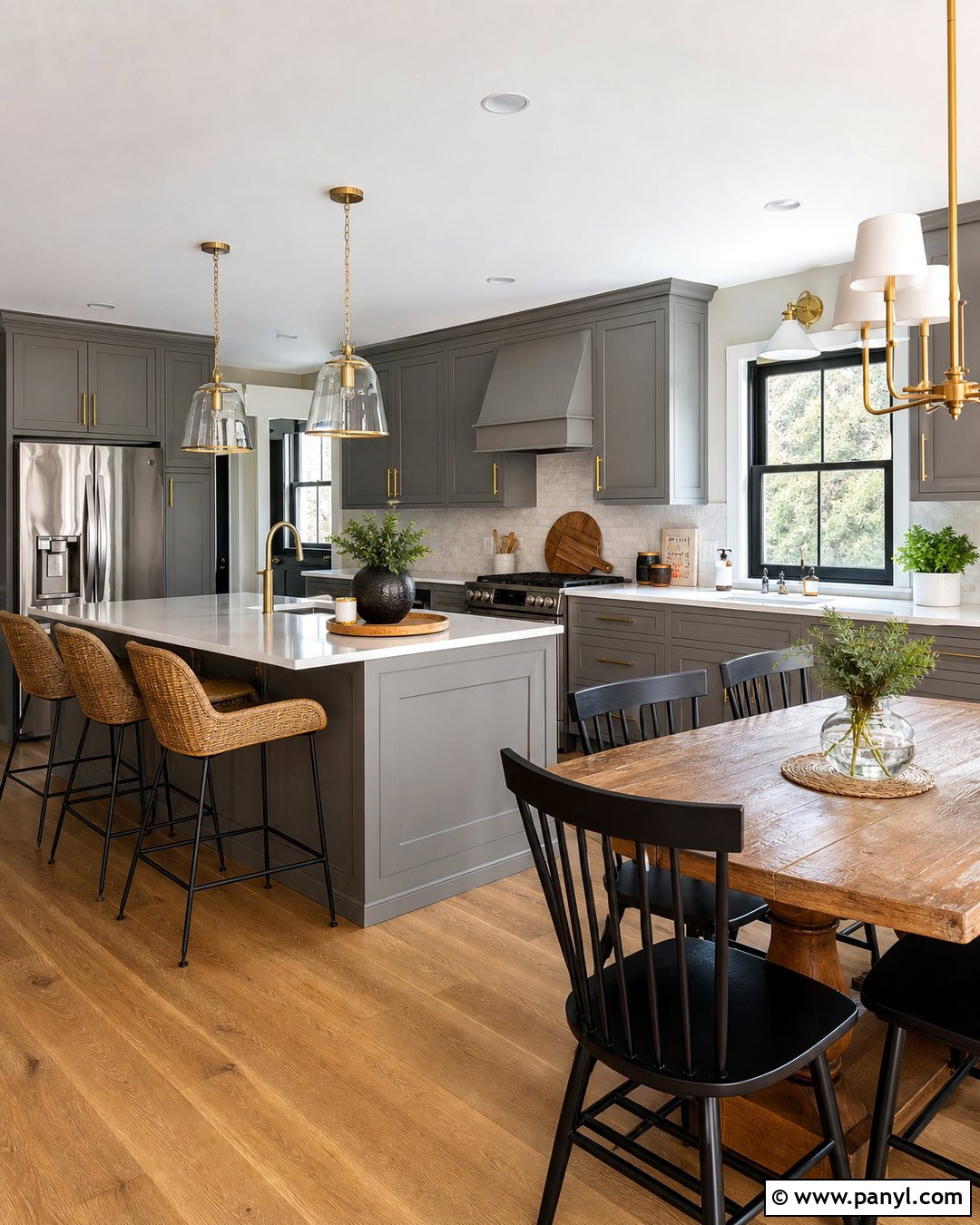
Light greige walls bridge the gap between grey cabinetry and warm materials such as wood, brass, and beige stone. For clear separation, choose wall paint that is at least two shades lighter than the cabinets. Pair the scheme with creamy quartz countertops, a soft white backsplash, and wide-plank oak flooring. Brushed brass cabinet pulls add warmth, while black-framed windows or pendants provide a small amount of contrast. This palette suits an open-plan kitchen because greige flows naturally into beige, cream, and neutral living spaces. Introduce texture through woven stools, linen shades, and handmade pottery rather than adding more grey accessories. Always compare the wall paint and cabinetry together, since mismatched violet, green, or blue undertones can make two attractive greys clash.
6. Warm Taupe Walls With Grey Kitchen Cabinets
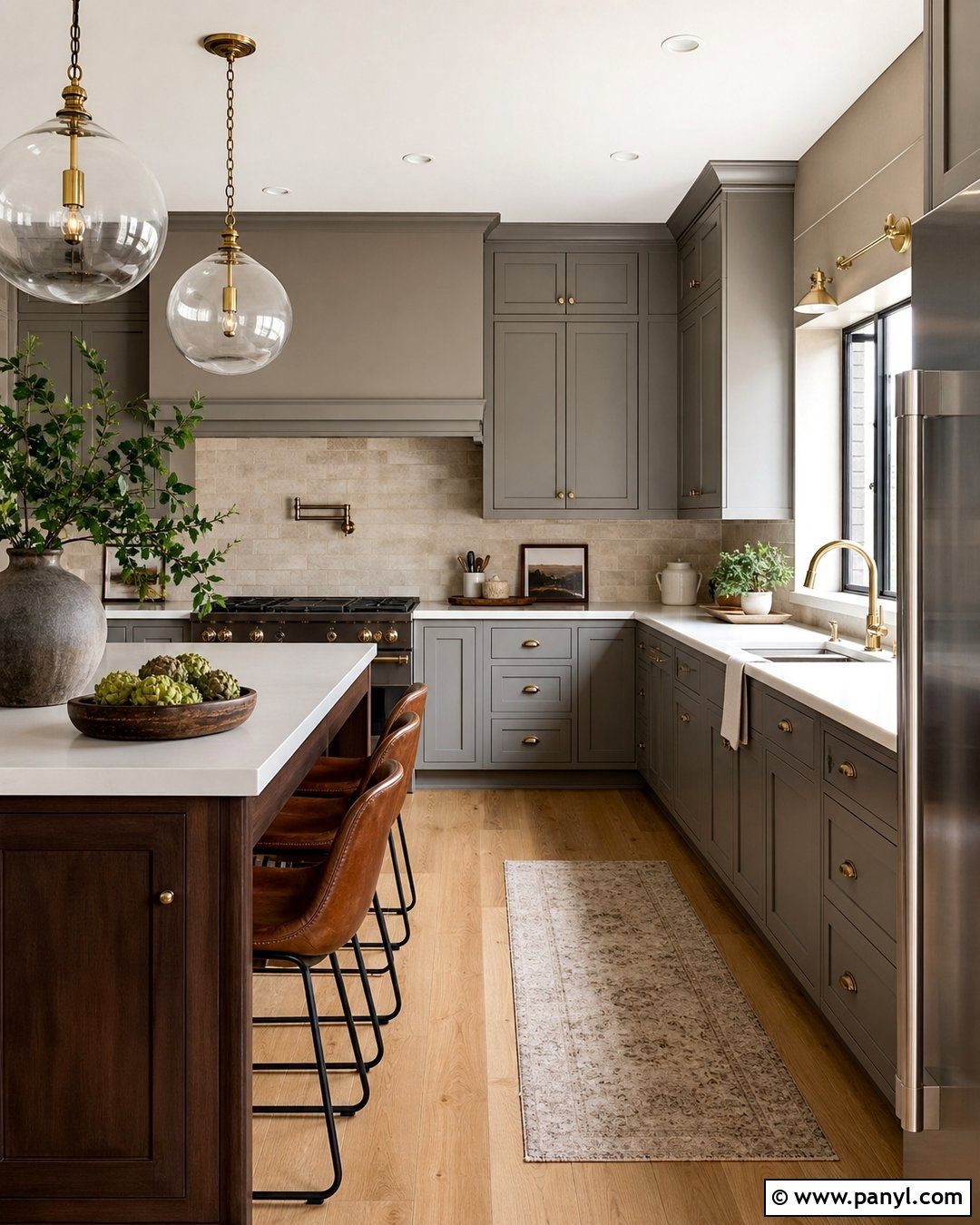
Warm taupe walls can make cool grey kitchen cabinets feel grounded and intentionally balanced. Select a pale or medium taupe with brown undertones, then repeat that warmth through oak flooring, leather counter stools, and aged brass fixtures. White quartz countertops keep the room from becoming too earthy, while a creamy stone backsplash creates a gentle transition between the walls and cabinets. In a larger kitchen, use grey cabinets around the perimeter and a stained wood island at the center. Soft globe pendants and a neutral runner add comfort without competing with the cabinetry. Taupe is especially useful in rooms that receive strong, cool daylight. Keep the ceiling and trim warm white so the wall color remains clear and sophisticated instead of looking muddy.
7. Soft Beige Walls With Grey Kitchen Cabinets
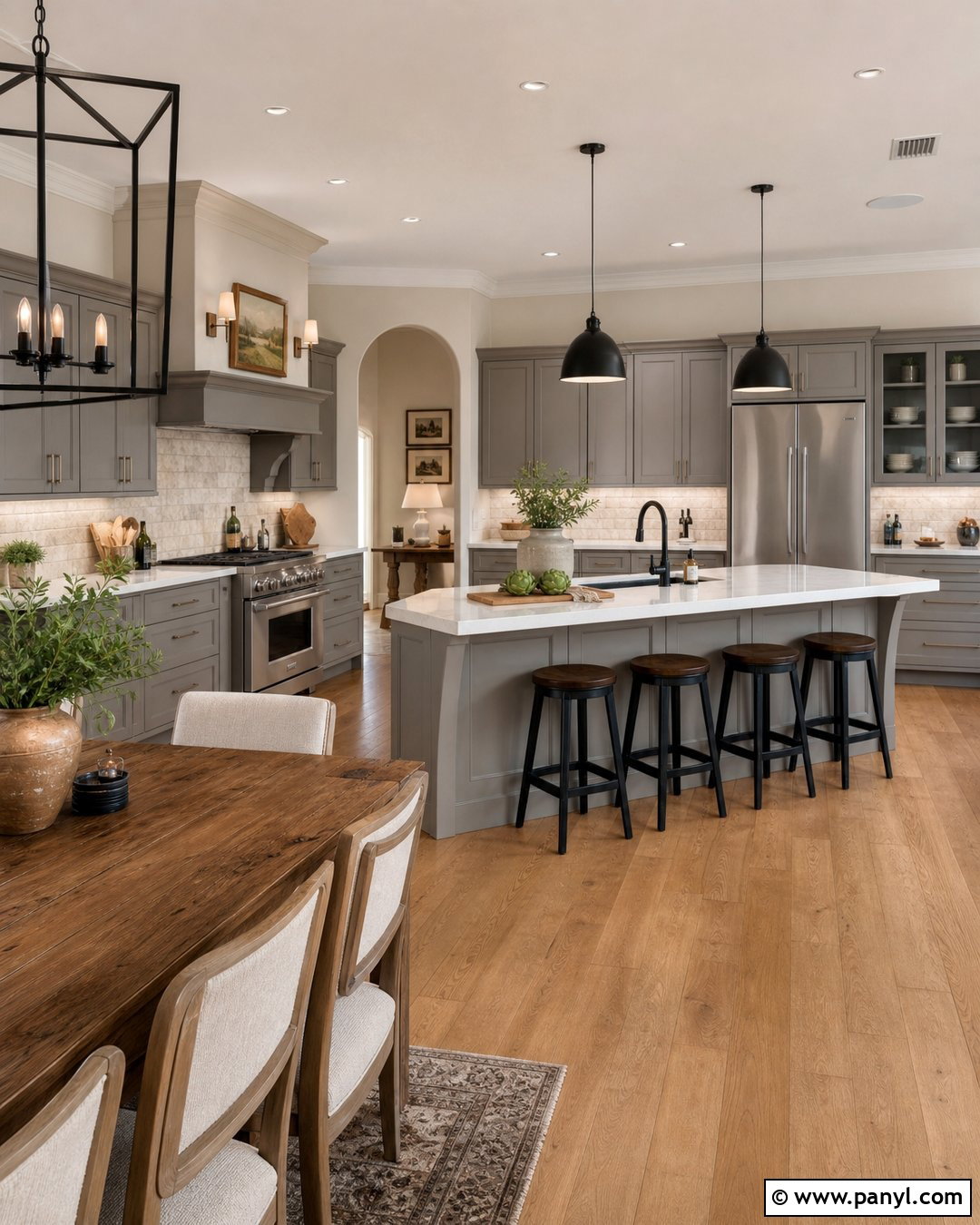
Soft beige walls create an easy, family-friendly kitchen around warm or neutral grey cabinets. Look for a sandy beige that feels light rather than golden. Combine it with white quartz counters, a tumbled limestone backsplash, and natural oak flooring for a relaxed transitional look. Bronze or aged brass hardware complements the warmth, while black pendants introduce enough contrast to define the room. A rectangular wood dining table can connect an eat-in area to the cabinetry without requiring matching furniture. Use washable cream upholstery, woven baskets, and a beige runner for practical texture. Keep decorative accents simple so the cabinetry remains the strongest feature. If the grey cabinets lean noticeably blue, select a cooler beige with subtle grey undertones to avoid an awkward yellow-blue contrast.
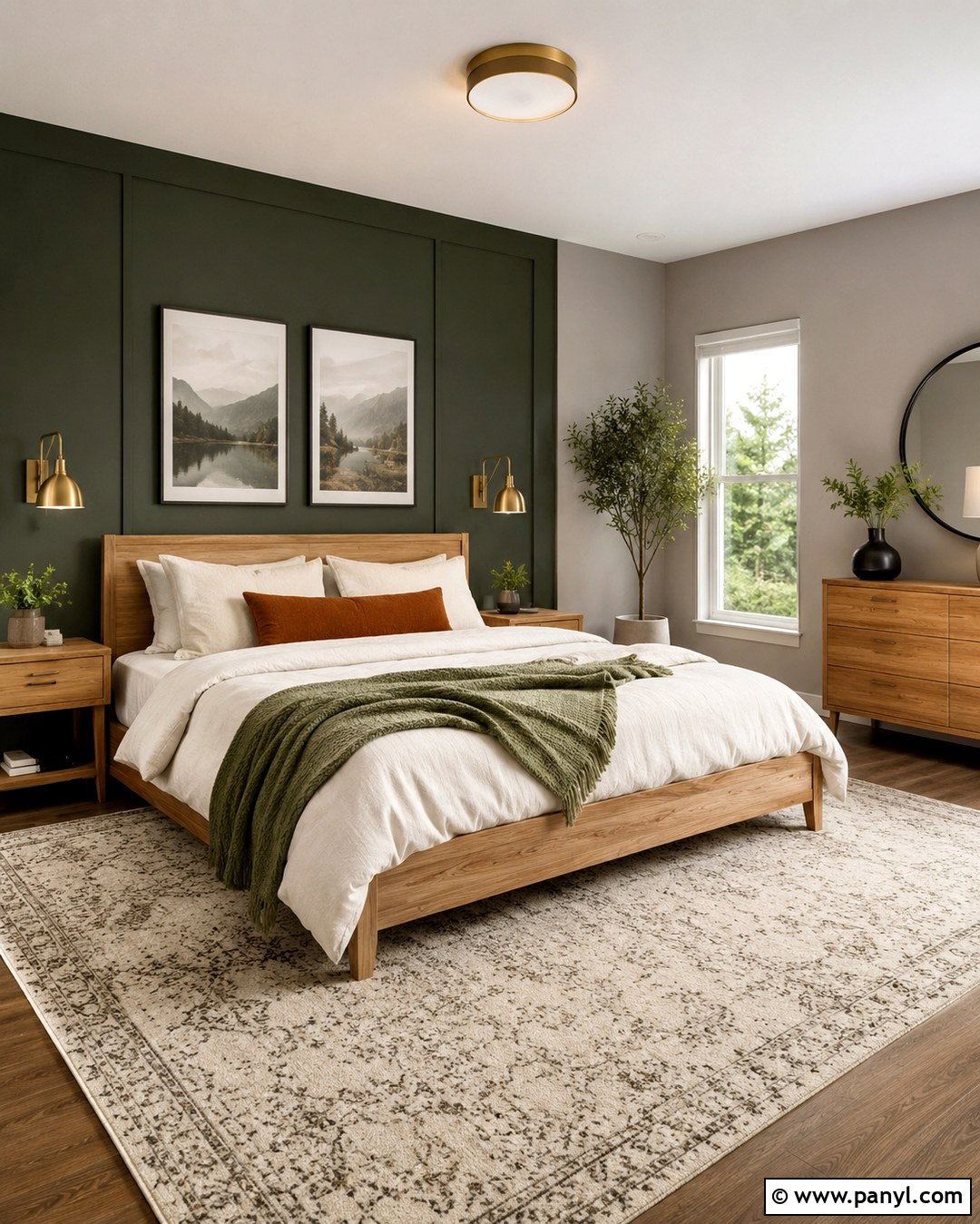
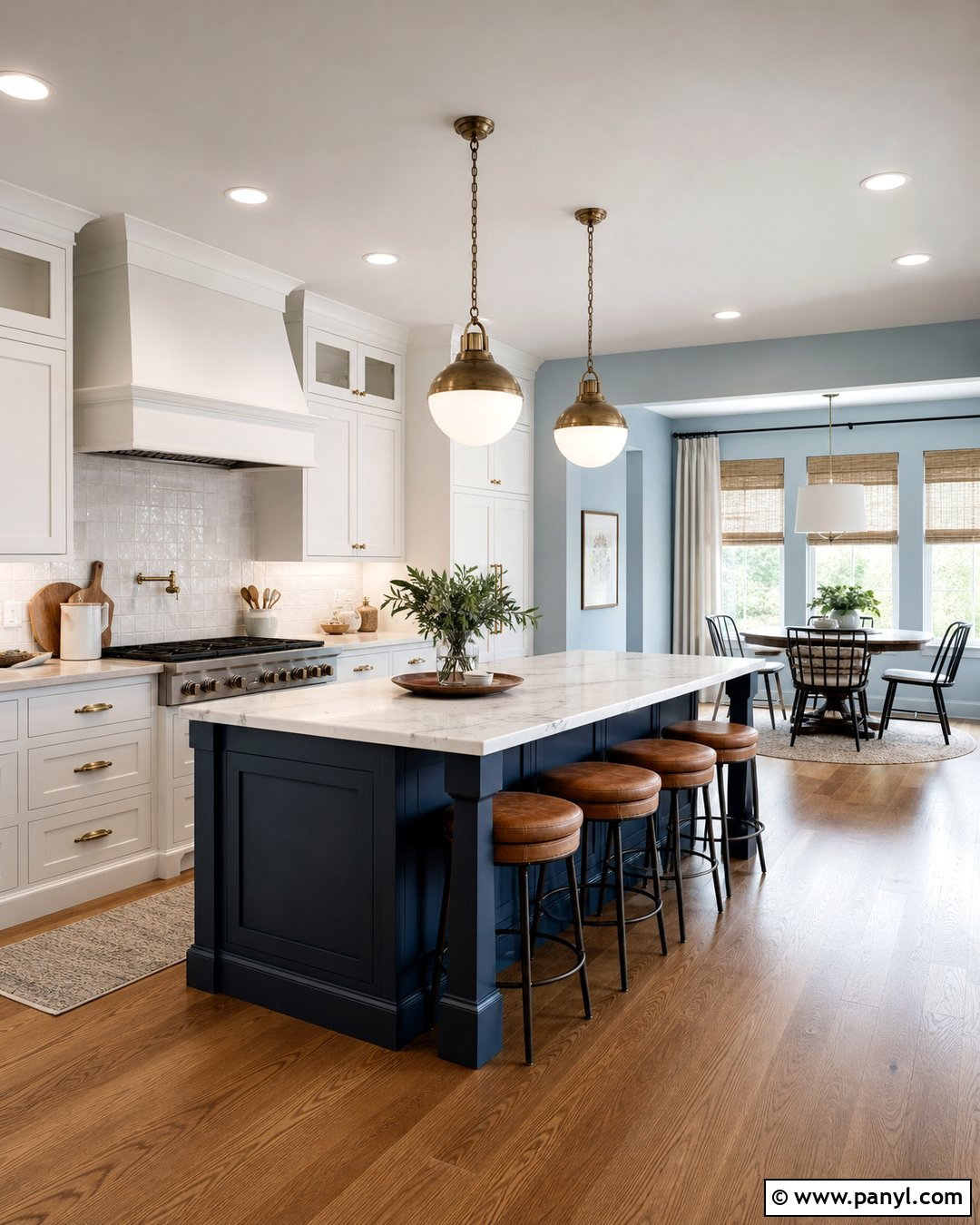
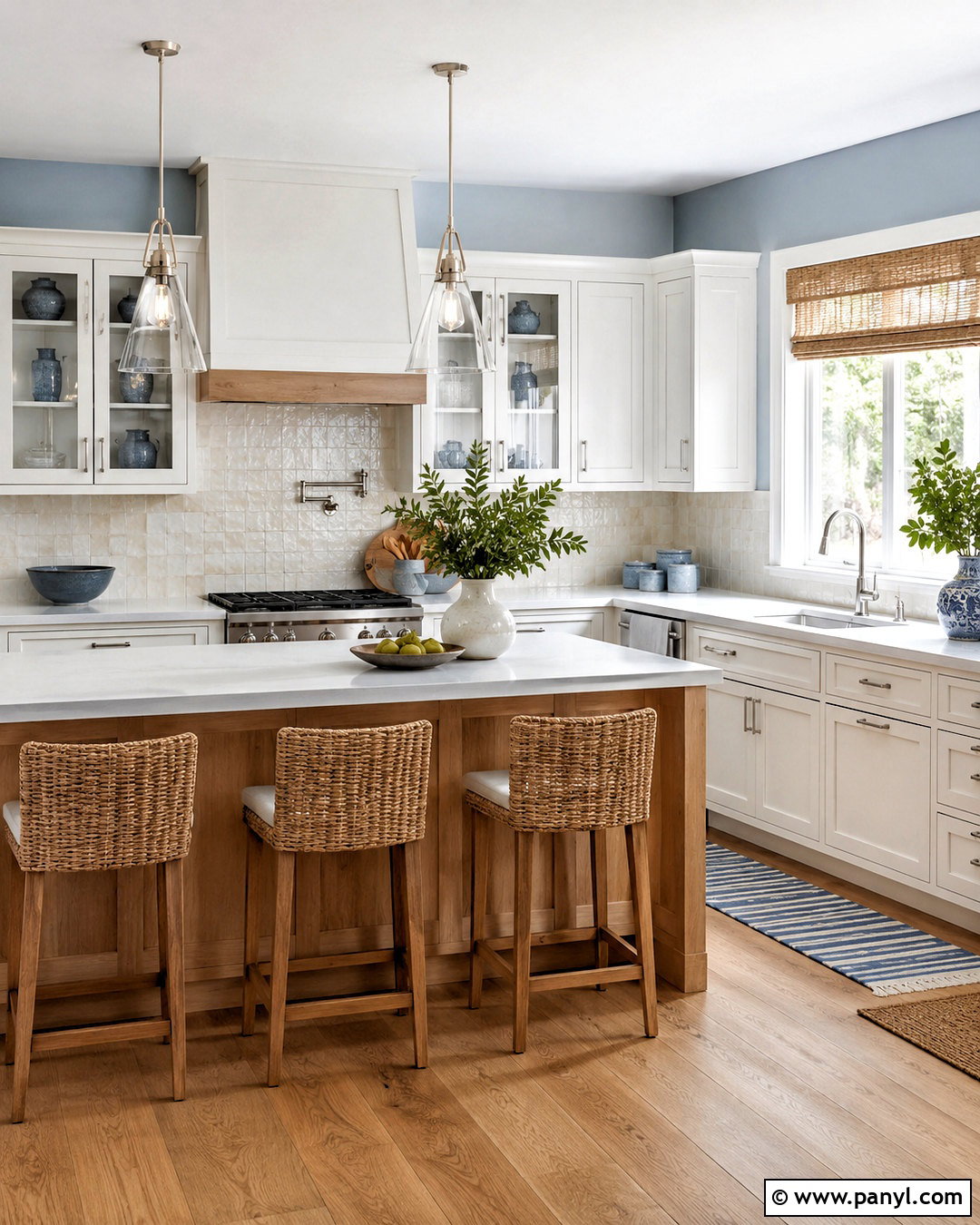
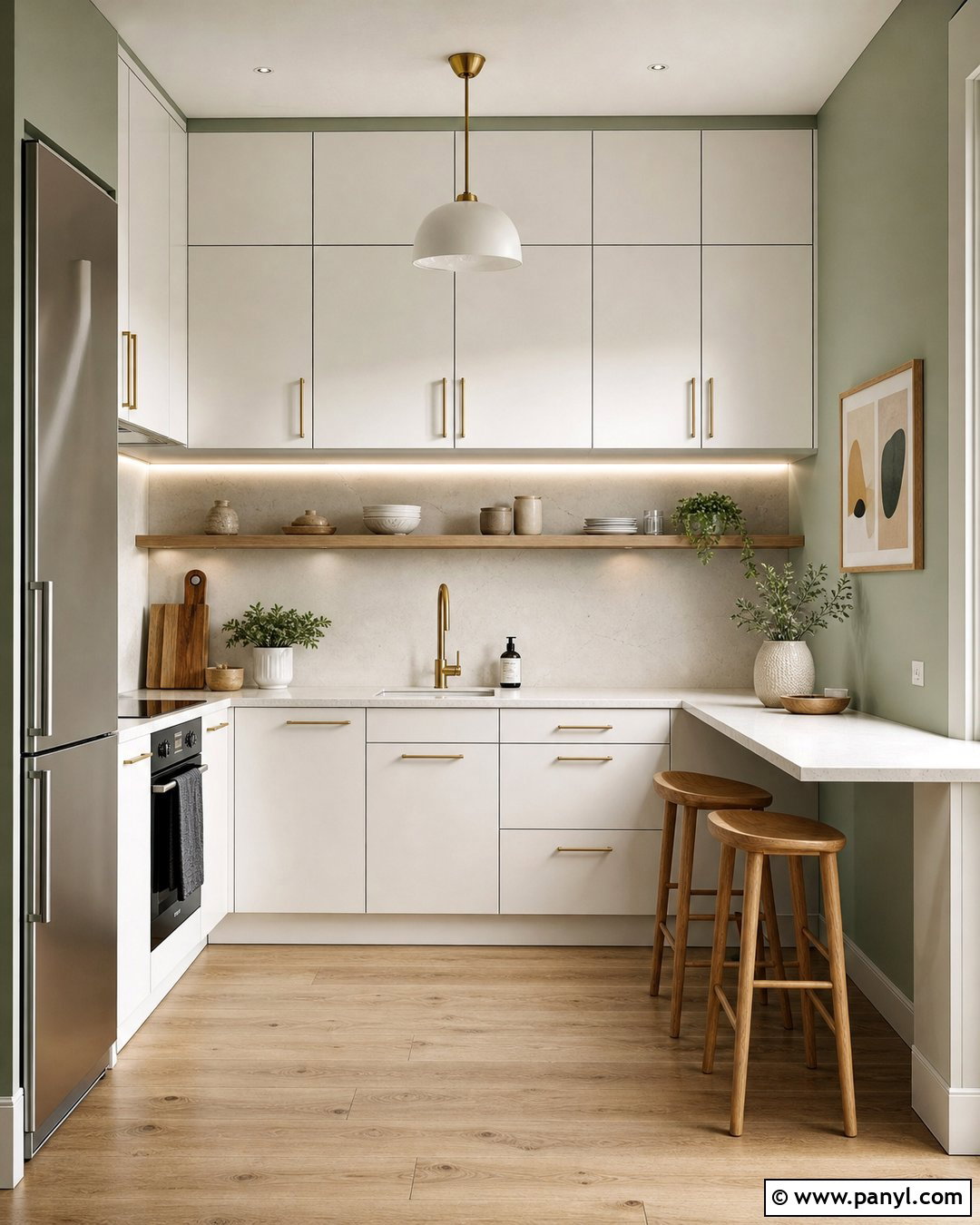
8. Mushroom Walls With Grey Kitchen Cabinets
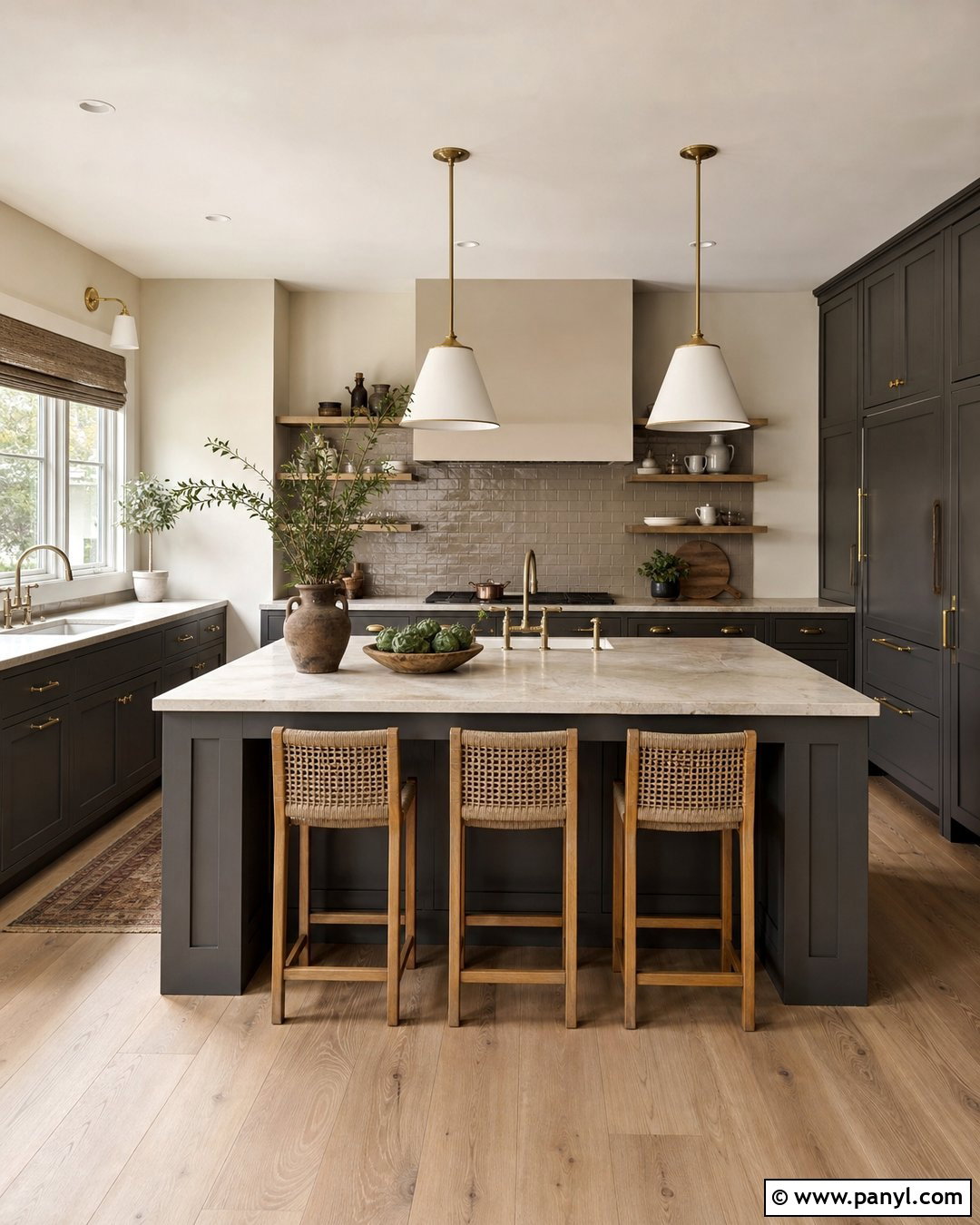
Mushroom walls create a layered neutral kitchen that feels richer than a standard grey-and-white scheme. This earthy color sits between taupe, beige, and grey, making it a natural partner for charcoal or pale grey cabinets. Pair dark lower cabinets with light mushroom walls, creamy stone countertops, and handmade taupe backsplash tiles. Warm oak open shelves and brushed brass hardware prevent the palette from becoming flat. Use a pale wood floor and simple linen window treatment to maintain brightness. For extra depth, introduce a mushroom-colored island or breakfast nook upholstery one shade darker than the walls. This look depends on texture, so combine smooth painted cabinetry with veined stone, woven seating, and softly irregular tile rather than repeating identical matte finishes everywhere.
9. Pale Sage Walls With Grey Kitchen Cabinets
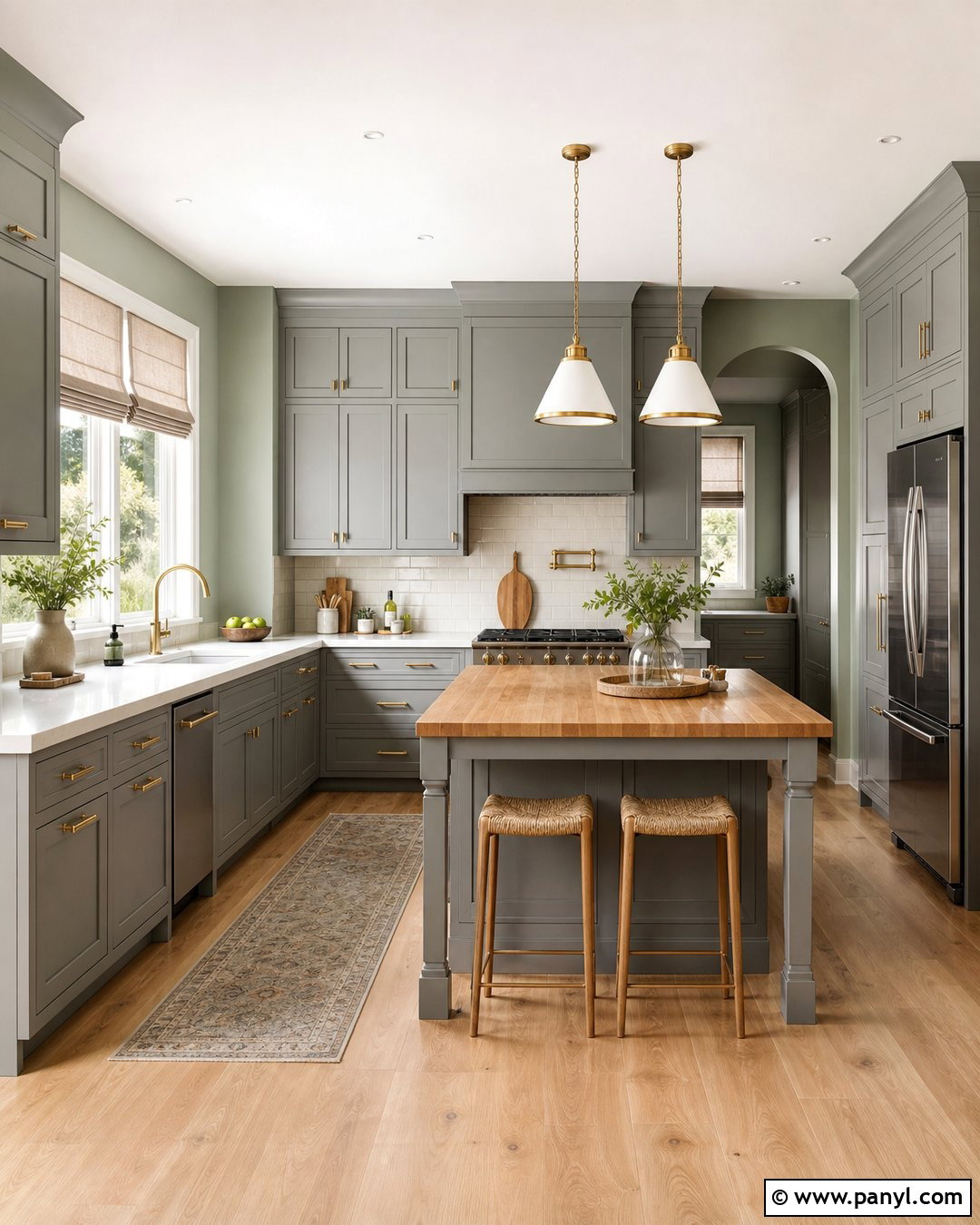
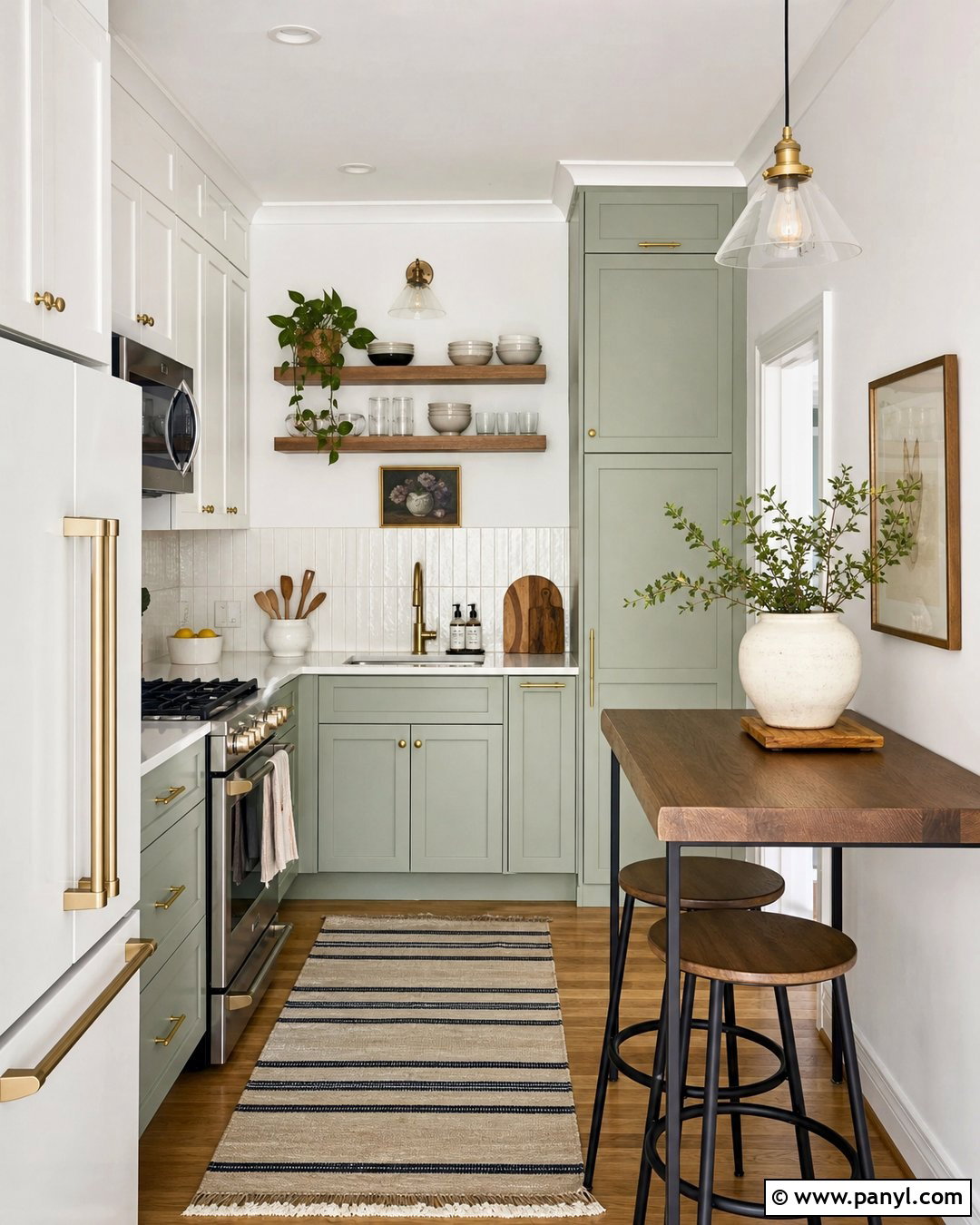
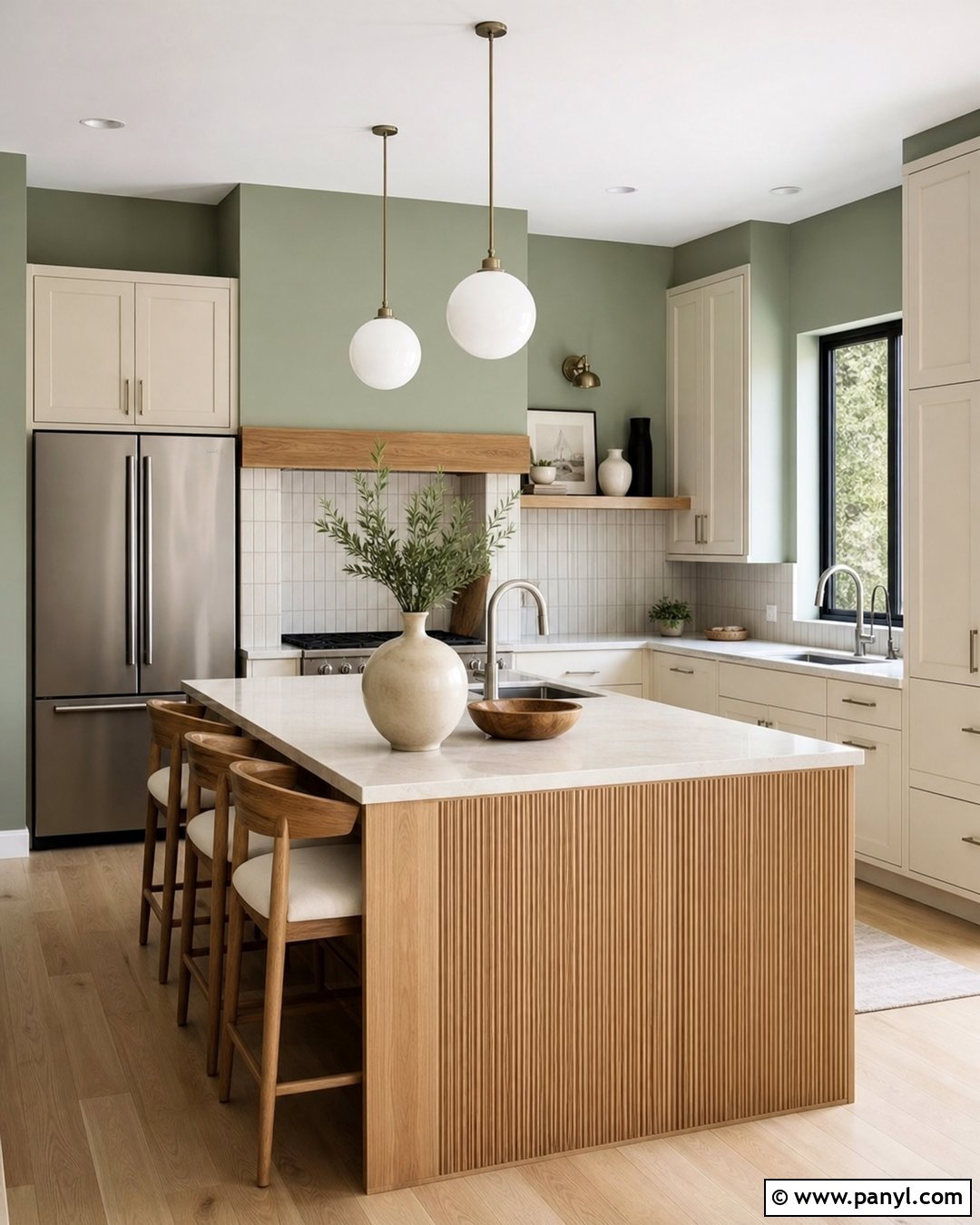
Pale sage walls add quiet color to grey kitchen cabinets while preserving a calm, natural appearance. Choose a muted green with visible grey undertones so it complements rather than competes with the cabinetry. Build the room around white quartz countertops, a warm white backsplash, and honey-toned oak flooring. Brushed brass pulls and simple dome pendants bring warmth to the green-grey palette. A wood island or butcher-block breakfast bar can make the kitchen feel more relaxed and organic. Add small amounts of cream through stools, curtains, and ceramic accessories. Pale sage works particularly well with medium grey cabinets and garden-facing windows. Avoid highly saturated green accents; natural wood, linen, stone, and restrained greenery provide enough variation for a complete, balanced design.
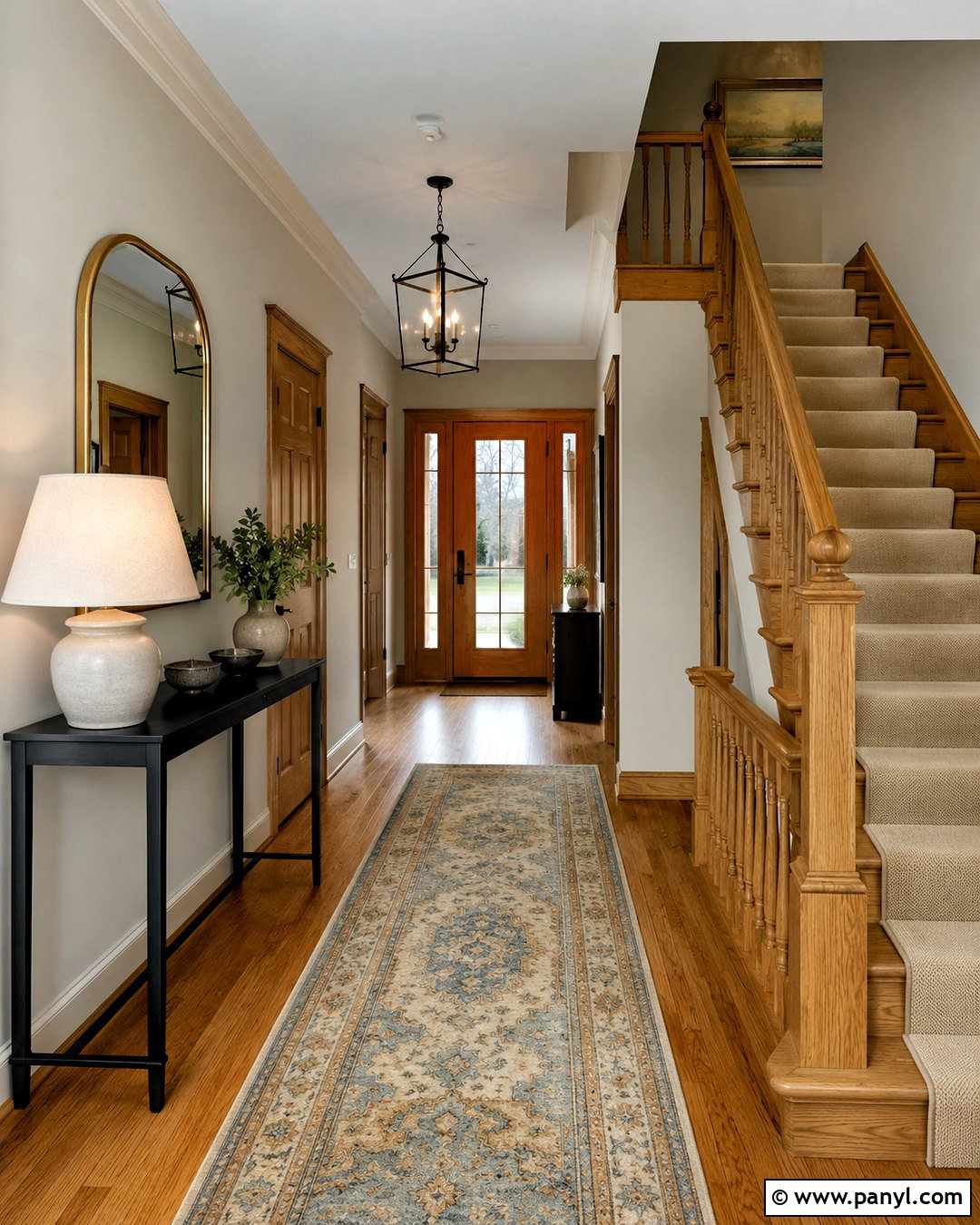
10. Olive Green Walls With Grey Kitchen Cabinets
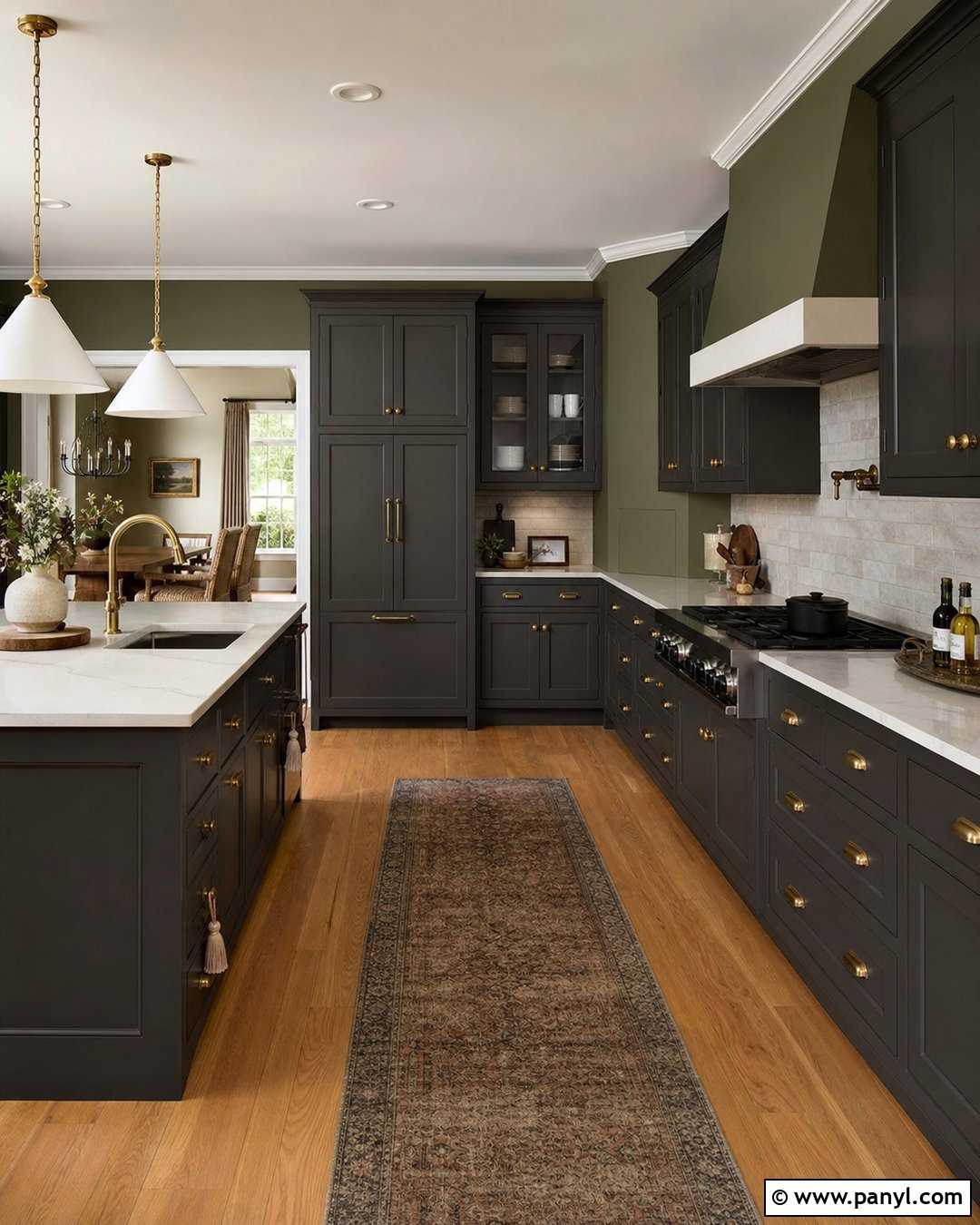
Olive green walls give grey kitchen cabinets an earthy, established character. Use a muted olive rather than a bright green, especially when the cabinetry is dark charcoal. To balance the depth, include creamy quartz or marble countertops and a pale stone backsplash. Medium oak flooring, antique brass hardware, and warm white trim reinforce the natural palette. This combination works well in a spacious kitchen with good daylight or as a dining-area accent wall in an open layout. Add a solid wood table, woven chairs, and neutral pendant lighting to complete the room. Keep appliances integrated or stainless steel so they do not interrupt the color story. If the space is small, paint only walls with generous light and leave narrow areas a coordinating warm white.
11. Eucalyptus Green Walls With Grey Kitchen Cabinets
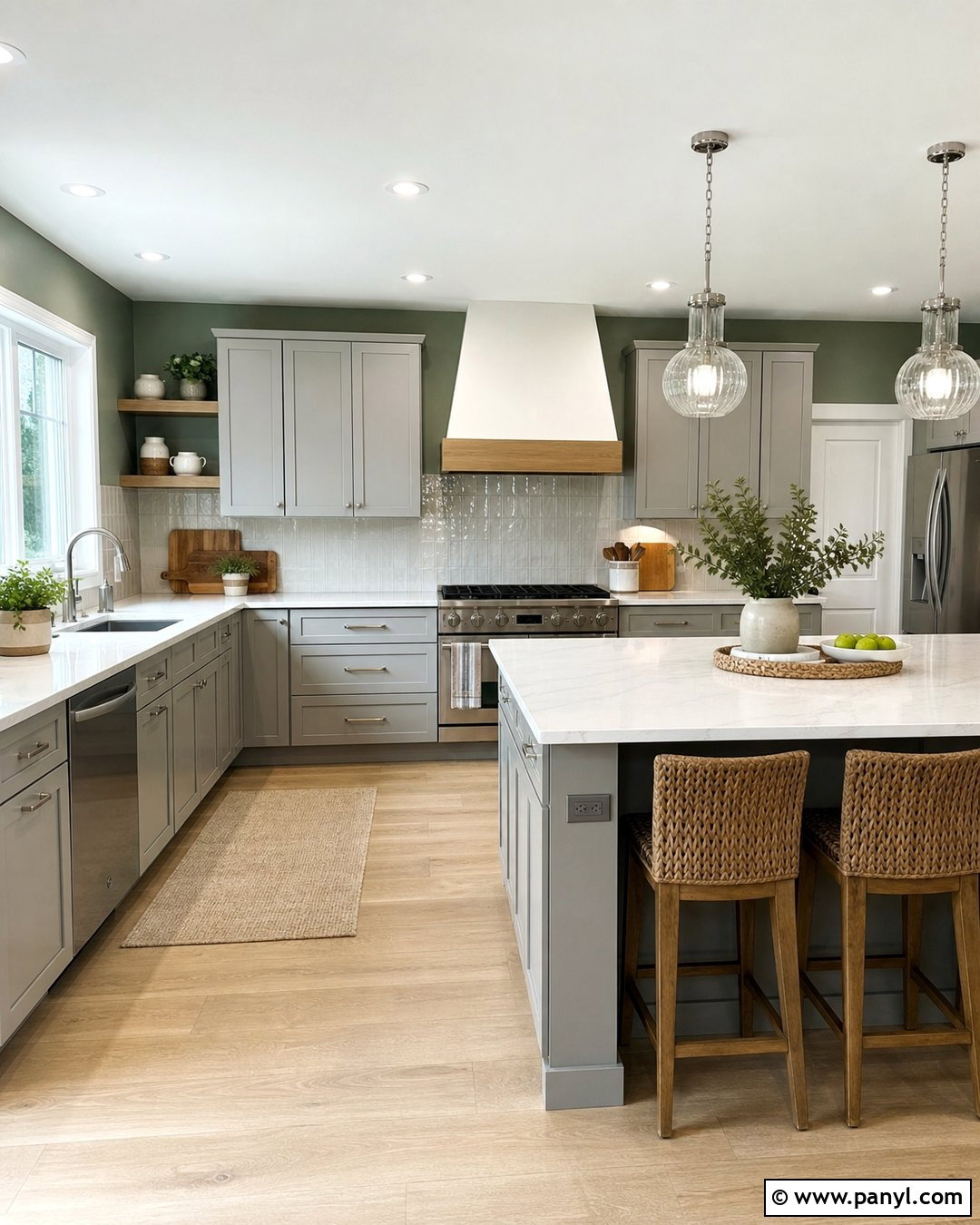
Eucalyptus green walls provide a fresher alternative to traditional sage while remaining soft enough for grey cabinetry. The slight blue undertone makes this color especially compatible with dove grey or blue-grey cabinets. Use pale quartz countertops, glossy off-white tile, and blond wood flooring to keep the design airy. Polished nickel hardware emphasizes the cooler notes, while a few natural oak shelves stop the room from feeling sterile. Complete the kitchen with light woven stools, white glass pendants, and simple botanical artwork positioned away from cooking areas. In an open-plan space, repeat eucalyptus through small textiles or dining-chair upholstery. Select a subdued, dusty version of the color rather than a minty pastel, which may look overly playful beside sophisticated grey cabinet finishes.
12. Dusty Blue Walls With Grey Kitchen Cabinets
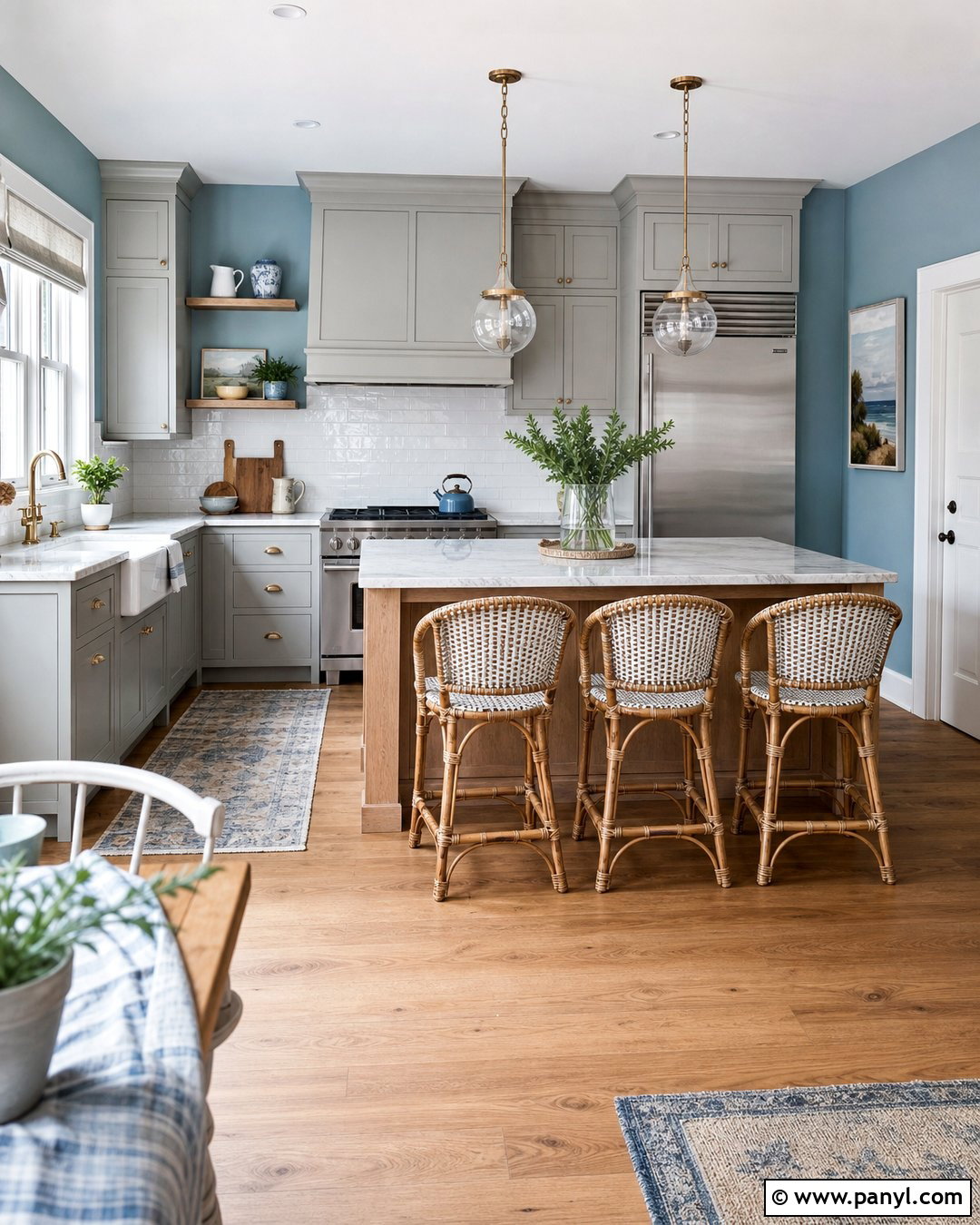
Dusty blue walls create a relaxed kitchen that works particularly well with warm grey cabinets. The blue adds gentle color, while its muted quality maintains an understated look. Combine the walls with white marble-look counters, glossy white backsplash tile, and medium oak flooring. Use polished nickel pulls for a classic finish or aged brass for a warmer coastal effect. A white or natural wood island can brighten the center of the room and separate similar cool tones. Finish the space with woven counter stools, linen shades, and a washable runner containing faded blue and cream. Dusty blue is most successful when the cabinetry is clearly darker than the wall color. Similar values may blend together and make the kitchen appear flat under artificial lighting.
13. Blue Grey Walls With Grey Kitchen Cabinets
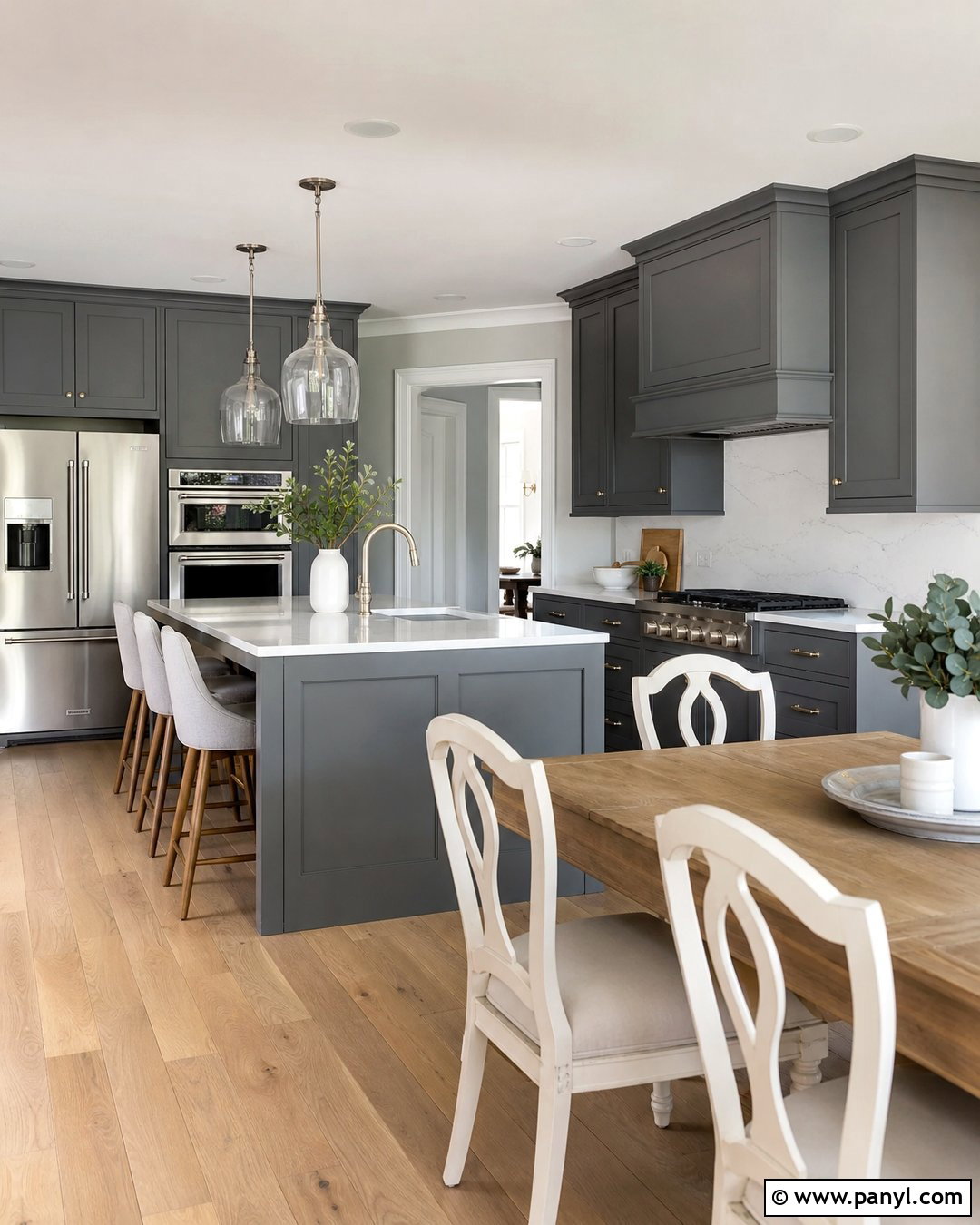
Blue-grey walls support a cohesive, tonal kitchen without relying on plain neutral paint. Pair pale blue-grey walls with darker slate cabinets so each surface remains distinct. White quartz counters and a marble backsplash provide a bright visual break between the two colors. Choose polished nickel hardware, clear glass pendants, and light oak flooring for a clean transitional finish. If the room has a breakfast area, include a natural wood table and upholstered chairs in soft cream to add warmth. Blue-grey walls often change noticeably between daylight and evening, so use layered lighting under cabinets, over the island, and near dining spaces. Avoid adding several unrelated blues. A controlled palette of slate grey, pale blue-grey, white, and natural wood feels more deliberate and easier to maintain.
14. Navy Blue Walls With Grey Kitchen Cabinets
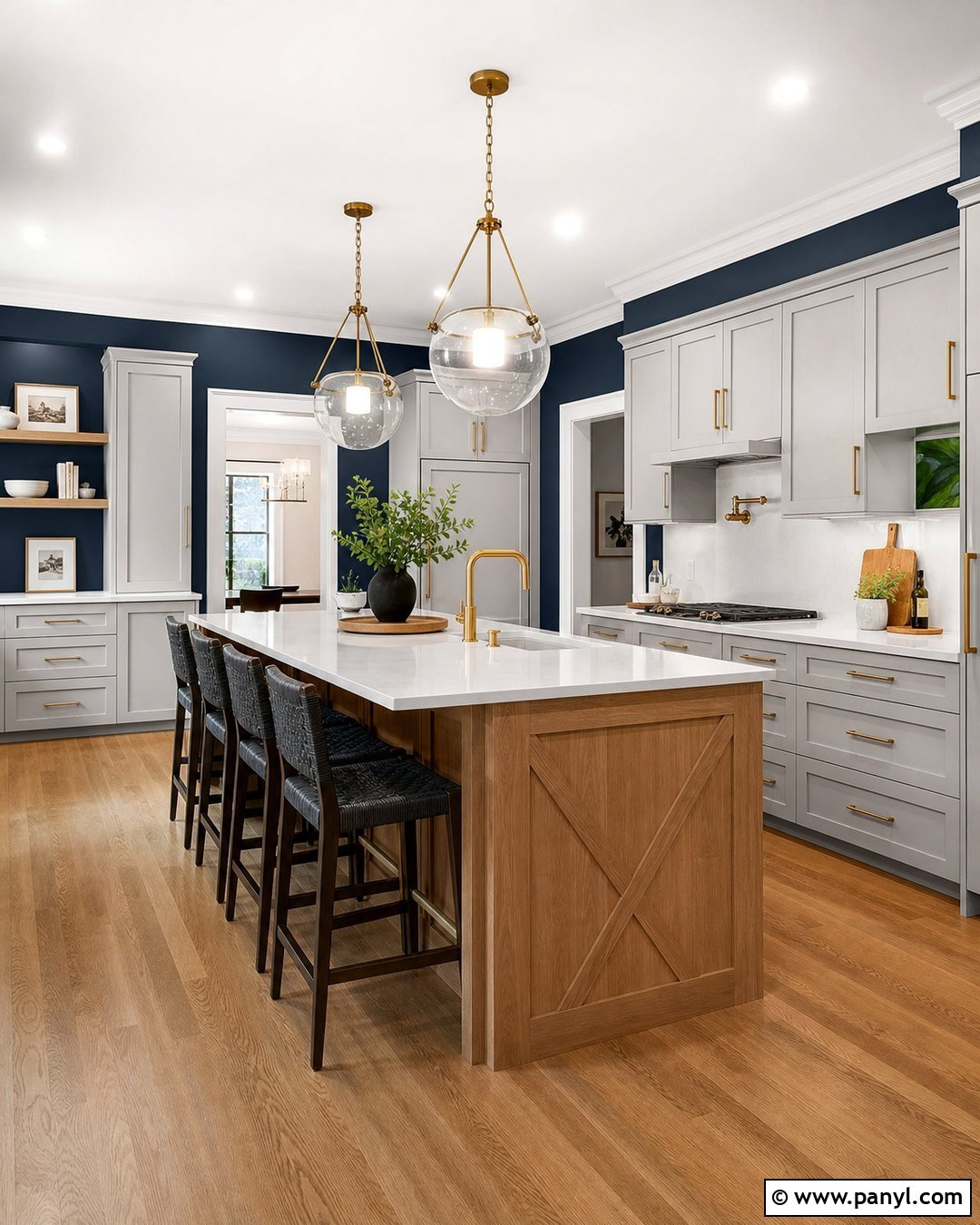
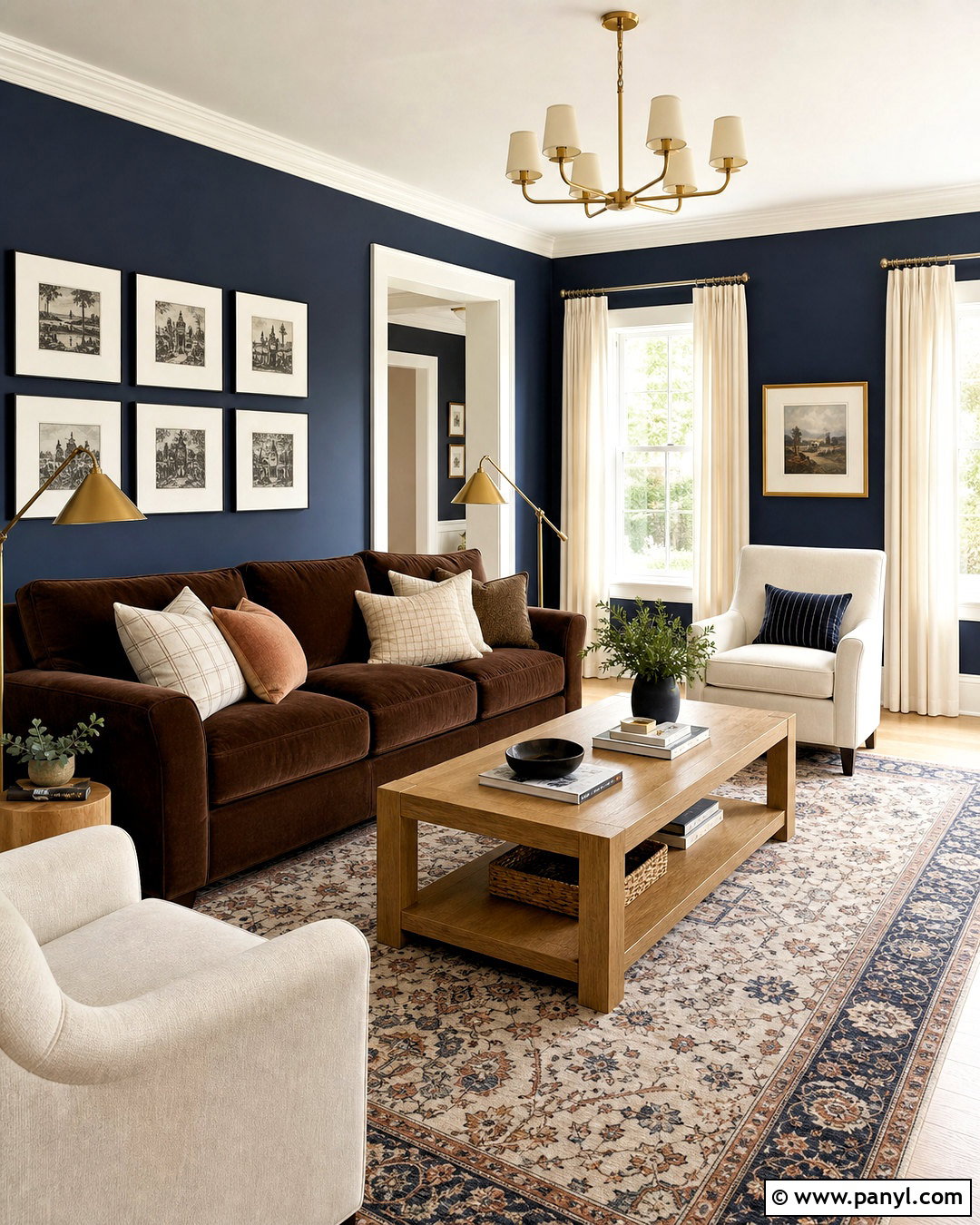
Navy walls create bold contrast with light grey kitchen cabinets and can make a large room feel more intimate. Use navy primarily on open wall areas or around a dining nook so it does not visually overpower the cabinet run. Pair the cabinetry with white quartz countertops, a full-height white backsplash, and warm oak flooring. Brushed brass pulls and pendant lights stand out clearly against both grey and blue. Add a natural wood island or dining table to soften the strong palette. White trim and a bright ceiling keep the edges crisp. This scheme performs best in a kitchen with generous windows and layered lighting. In a smaller room, use navy on one feature wall and continue a coordinating warm white throughout the remaining space.
15. Powder Blue Walls With Grey Kitchen Cabinets
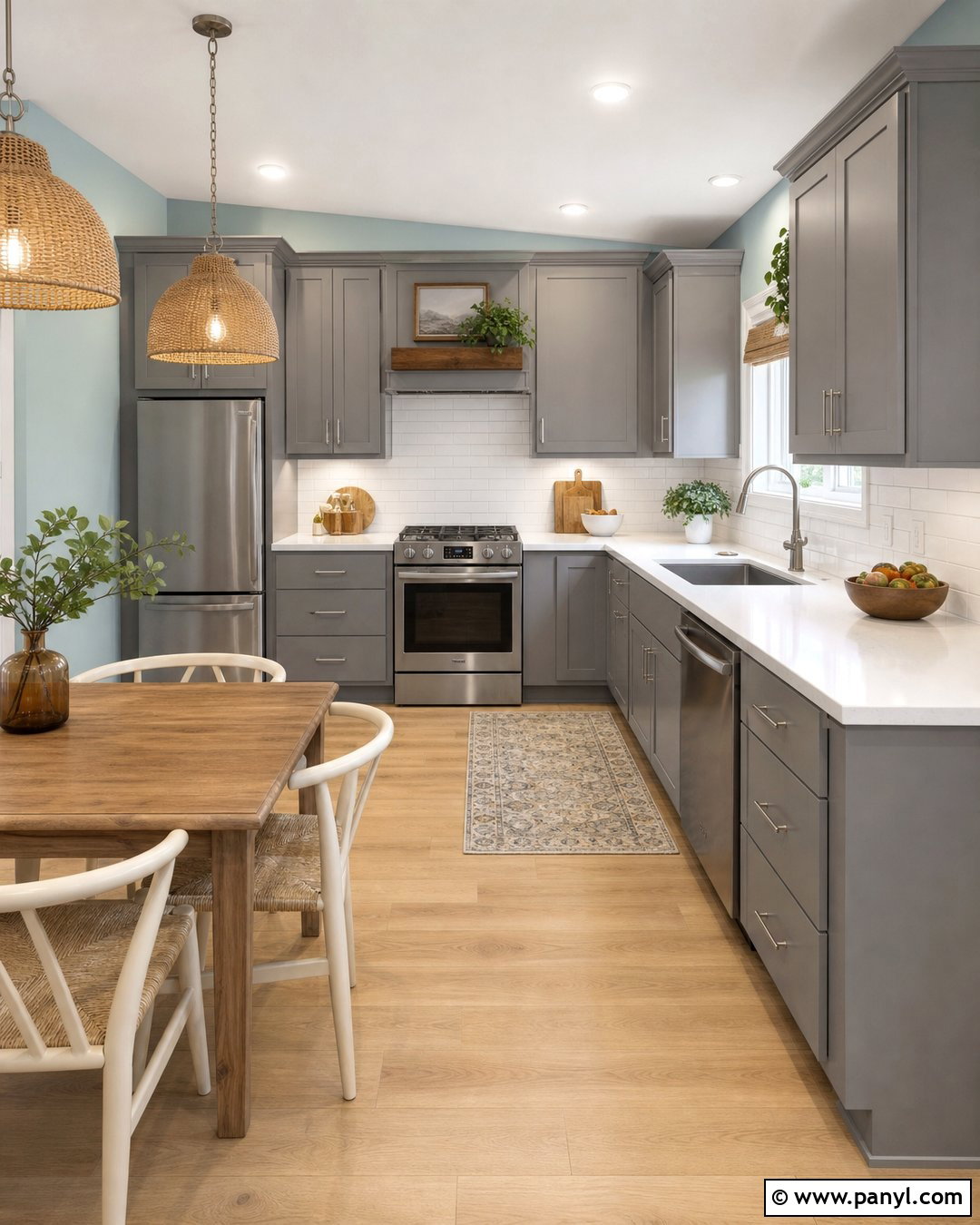
Powder blue walls can give light or medium grey kitchen cabinets a bright, comfortable character. Choose a slightly greyed blue rather than a sugary pastel for a more versatile finish. Complete the kitchen with white quartz counters, white ceramic backsplash tile, and pale oak flooring. Satin nickel hardware maintains a gentle look, while natural woven pendants introduce warmth and texture. A compact wood breakfast table and cream upholstered chairs make the room feel lived-in without adding visual weight. Powder blue works especially well in small kitchens because it introduces color while still reflecting light. Keep window treatments simple and pale. For cohesion, repeat the wall color sparingly in a runner or ceramic accessory, but avoid matching every decorative object to the paint.
16. Muted Teal Walls With Grey Kitchen Cabinets
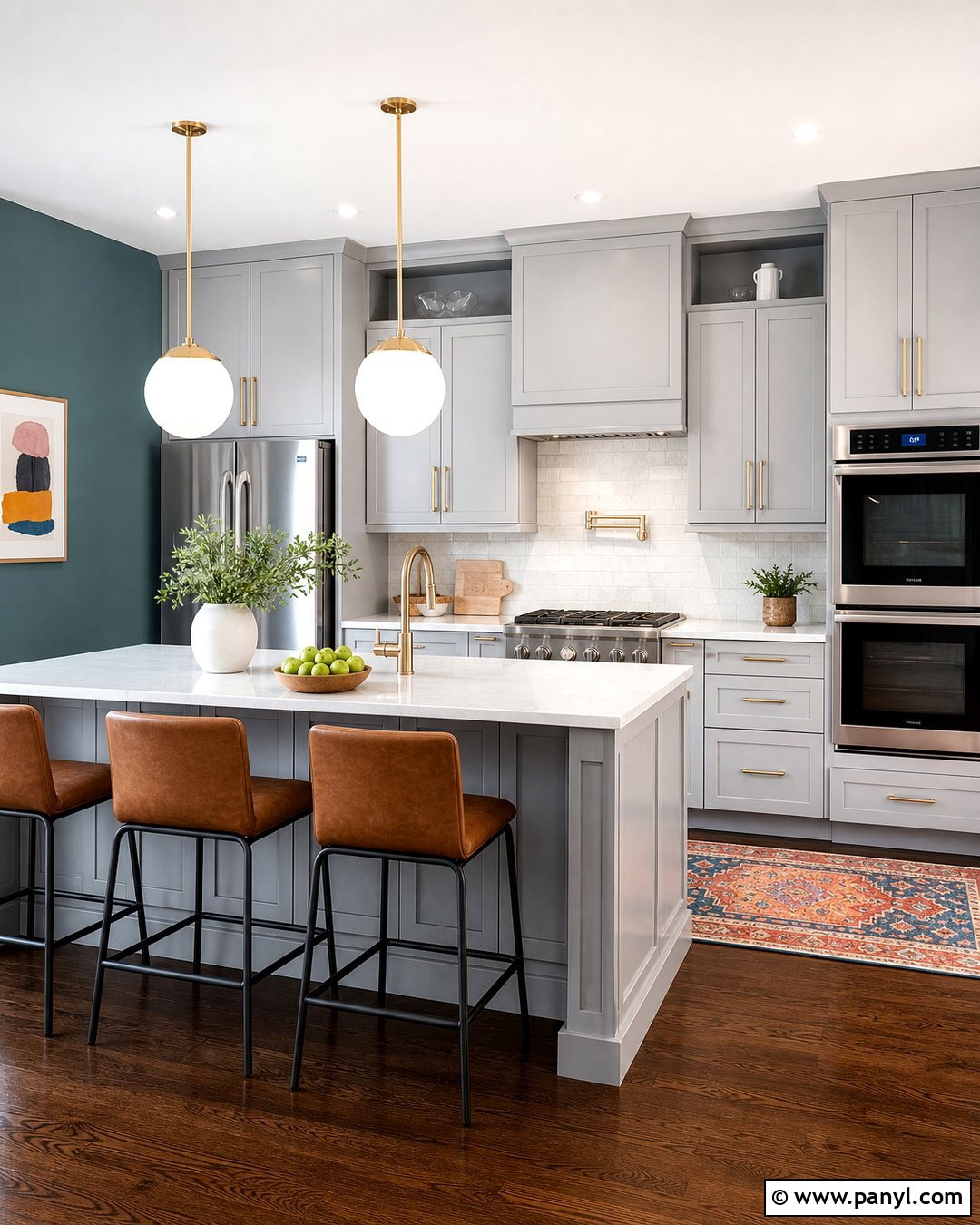
Muted teal walls bring depth and personality to pale grey kitchen cabinets. Select a teal softened with grey so the room feels sophisticated rather than overly bright. Use the color on walls surrounding a breakfast nook or along one open side of the kitchen. White stone counters and a pale backsplash will separate the teal from the cabinetry, while medium walnut flooring gives the palette warmth. Add brushed brass hardware, opal glass pendants, and leather counter stools for a balanced modern look. A light grey island can repeat the cabinetry without increasing visual heaviness. Because teal contains both blue and green, test it beside the countertops as well as the cabinets. Veined stone with warm beige details can help connect every color in the room.
17. Soft Blush Walls With Grey Kitchen Cabinets
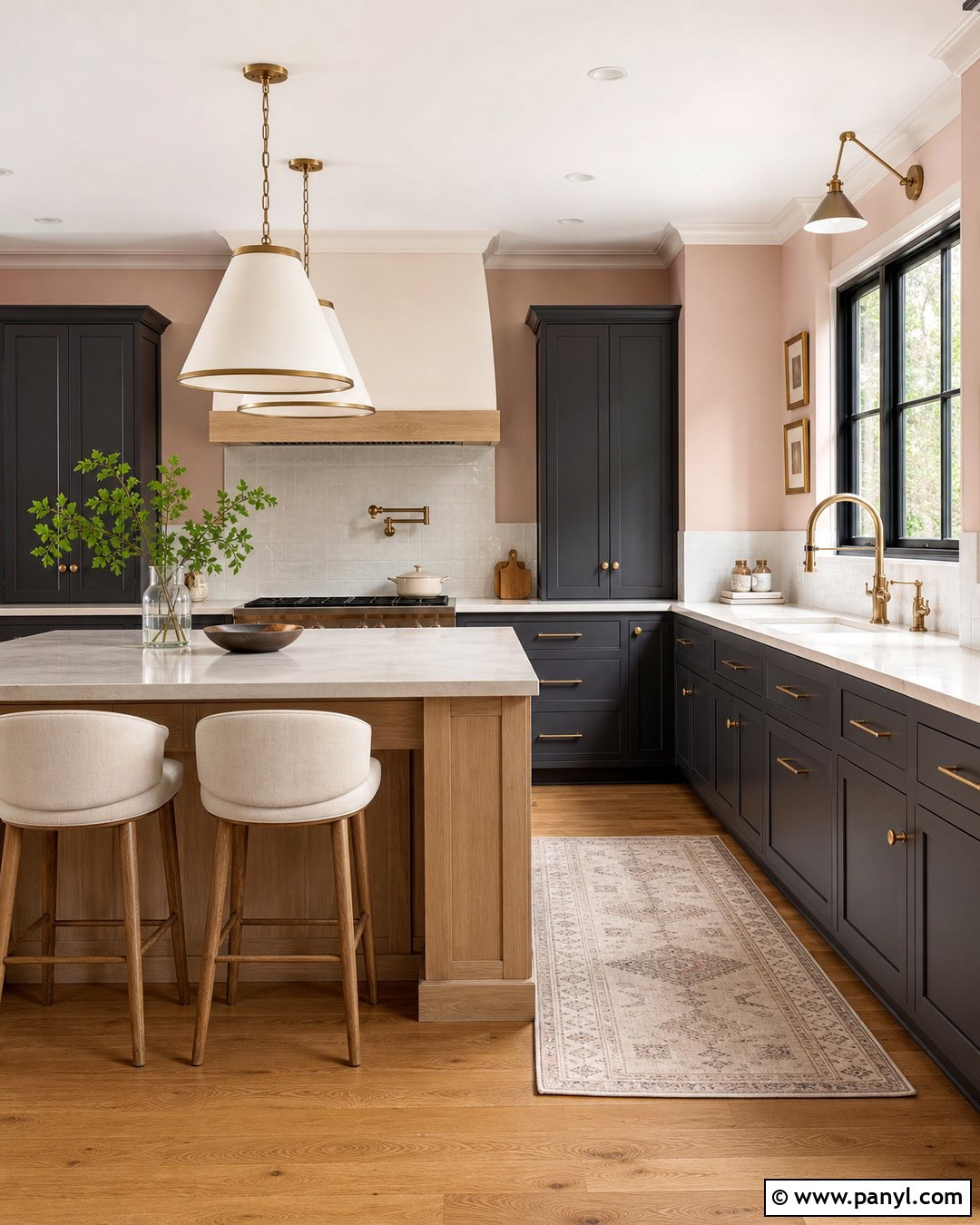
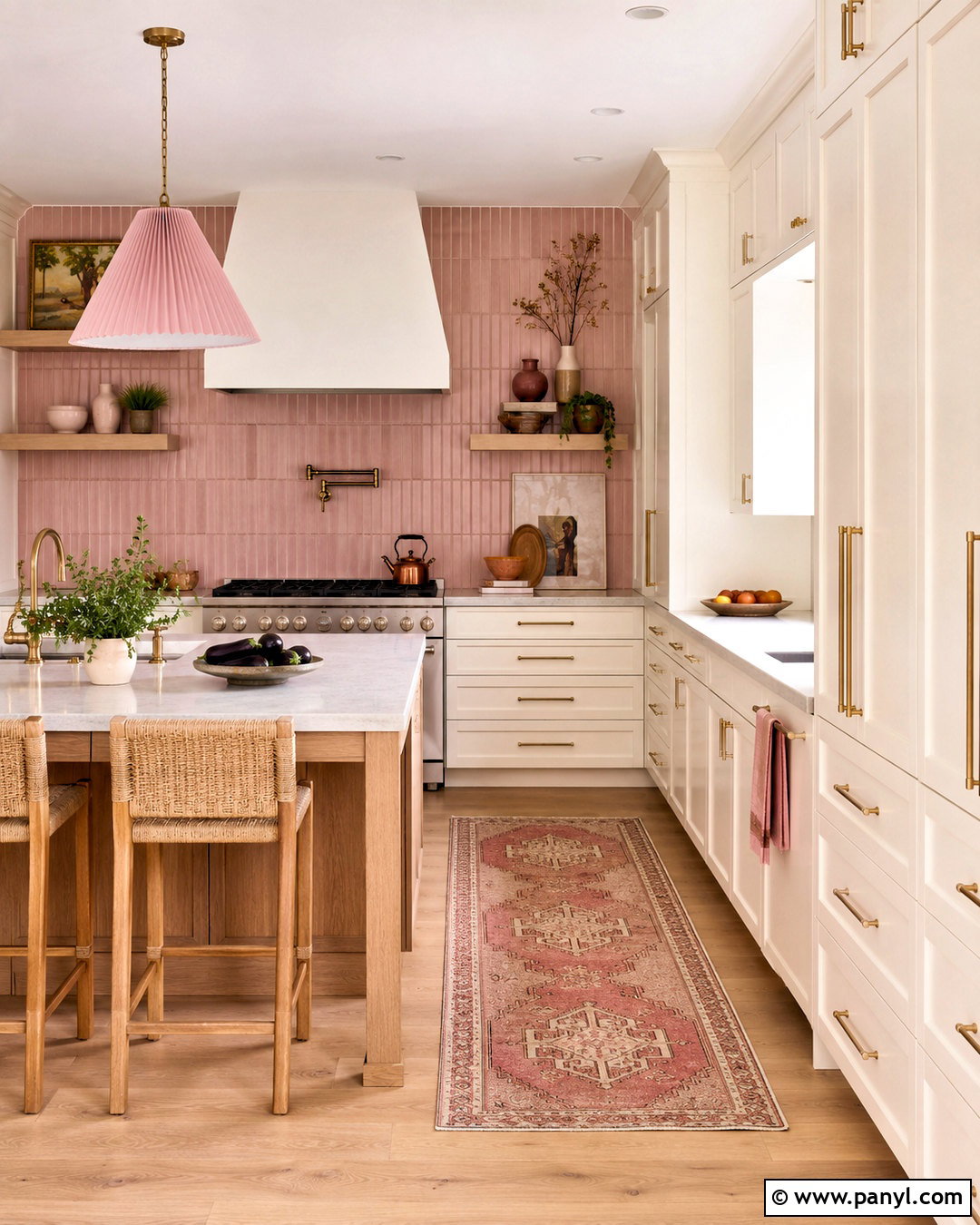
Soft blush walls warm grey kitchen cabinets with a subtle, flattering glow. Look for a dusty pink containing beige or grey undertones rather than a bright nursery pink. Pair the walls with charcoal or medium grey cabinets, creamy quartz countertops, and a white zellige-style backsplash. Natural oak flooring and brushed brass hardware strengthen the warmth without making the room overly decorative. Finish the layout with a pale wood island, cream stools, and simple globe pendants. Black window frames or a dark faucet can add a sharper contemporary note. Blush works particularly well in kitchens receiving soft natural light, where it reads almost like a warm neutral. Keep accessories restrained and rely on stone, wood, linen, and ceramics to create a mature, cohesive space.
18. Dusty Rose Walls With Grey Kitchen Cabinets
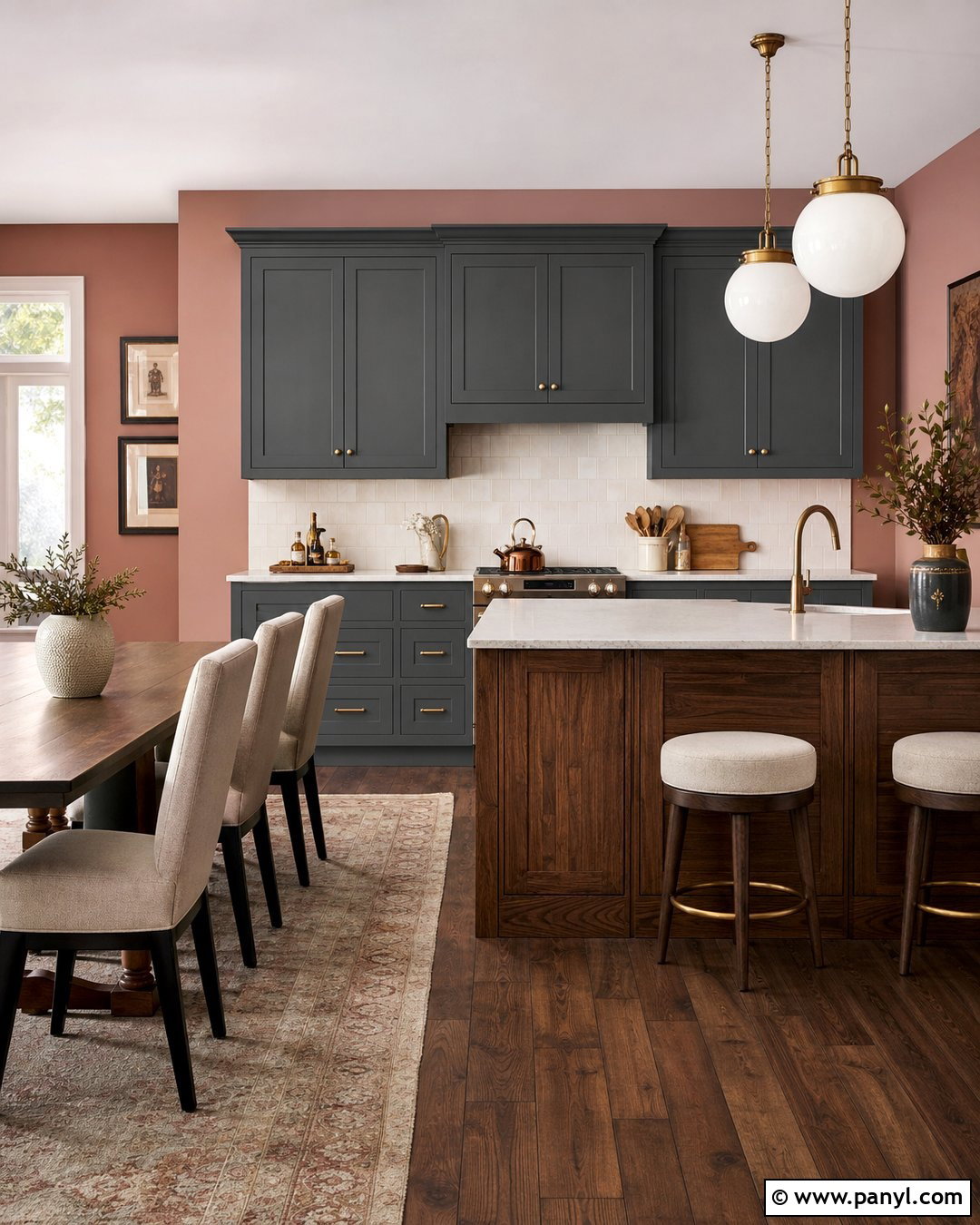
Dusty rose walls create a richer, more grounded kitchen than pale blush while still complementing grey cabinets. Choose this color for an eat-in kitchen, open dining wall, or room with plenty of natural light. Pair it with deep charcoal cabinetry, pale marble counters, and a warm white backsplash. Walnut flooring or a stained wood island adds depth, while antique brass pulls connect naturally with the muted rose. Include cream dining chairs, a neutral runner, and simple white pendant lights to balance the stronger wall color. Dusty rose is especially attractive beside warm grey cabinetry with brown or violet undertones. Avoid combining it with cool blue-grey floors, which may create a disconnected palette. Warm wood and creamy surfaces are the key supporting elements.
19. Terracotta Walls With Grey Kitchen Cabinets
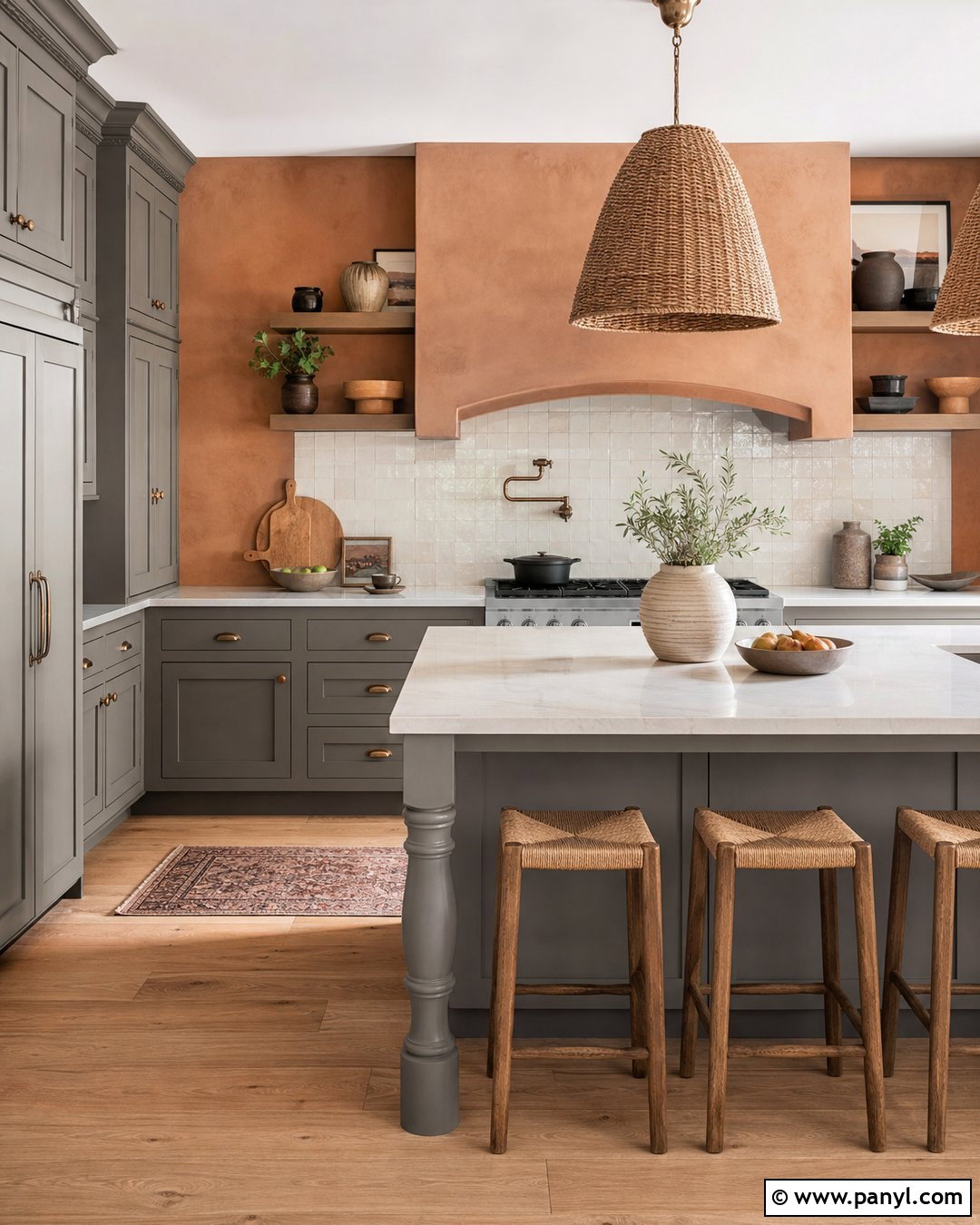
Terracotta walls can transform grey kitchen cabinets into a warm, Mediterranean-inspired feature. Select a soft baked-clay shade rather than a vivid orange. Use it on a dining wall or above a low cabinet run, then balance it with creamy plaster-colored walls elsewhere. Grey shaker cabinets, light quartz counters, and an ivory handmade tile backsplash keep the design approachable. Add oak flooring, aged brass pulls, woven pendants, and natural wood stools. A few matte ceramic vessels can echo the earthy wall color without overdecorating the counters. Terracotta is strongest beside warm medium grey or charcoal cabinets. In rooms with limited daylight, choose a lighter clay version and rely on bright undercabinet lighting so the warm paint does not make the kitchen feel enclosed.
20. Soft Clay Walls With Grey Kitchen Cabinets
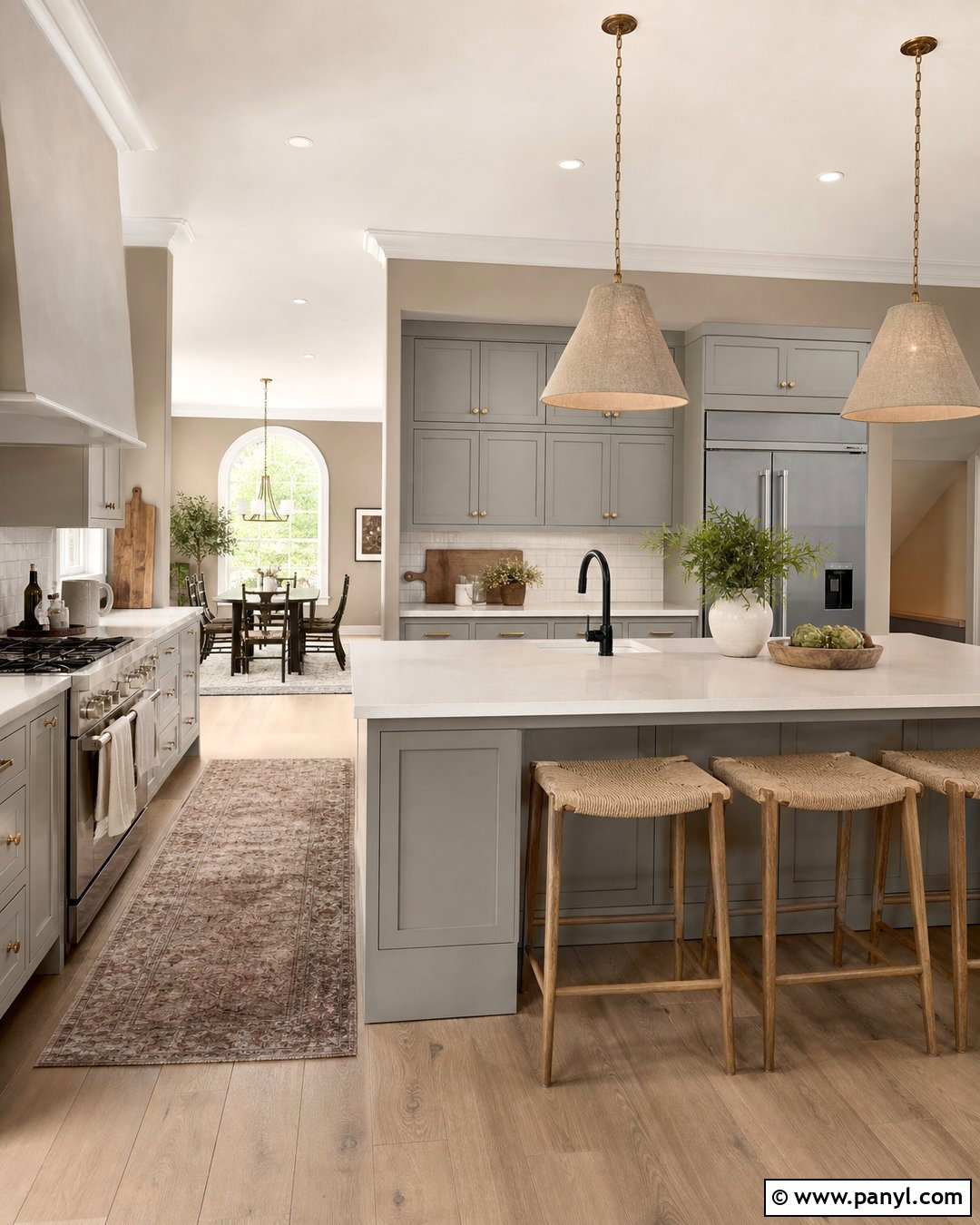
Soft clay walls introduce earthy warmth without the visual intensity of full terracotta. This muted beige-pink shade pairs naturally with warm grey kitchen cabinets and light wood features. Complete the room with creamy quartz counters, an off-white backsplash, and oak flooring with a matte finish. Brushed brass knobs, linen pendant shades, and woven counter stools add texture while staying within the restrained palette. Use a charcoal faucet or window frame to provide a small amount of structure. In an open-plan kitchen, continue the clay color into the dining area and repeat the cabinet grey through upholstered seating or a simple rug. The result should feel layered but quiet. Test several samples because clay paint can appear pinker or browner as natural light changes.
21. Muted Ochre Walls With Grey Kitchen Cabinets
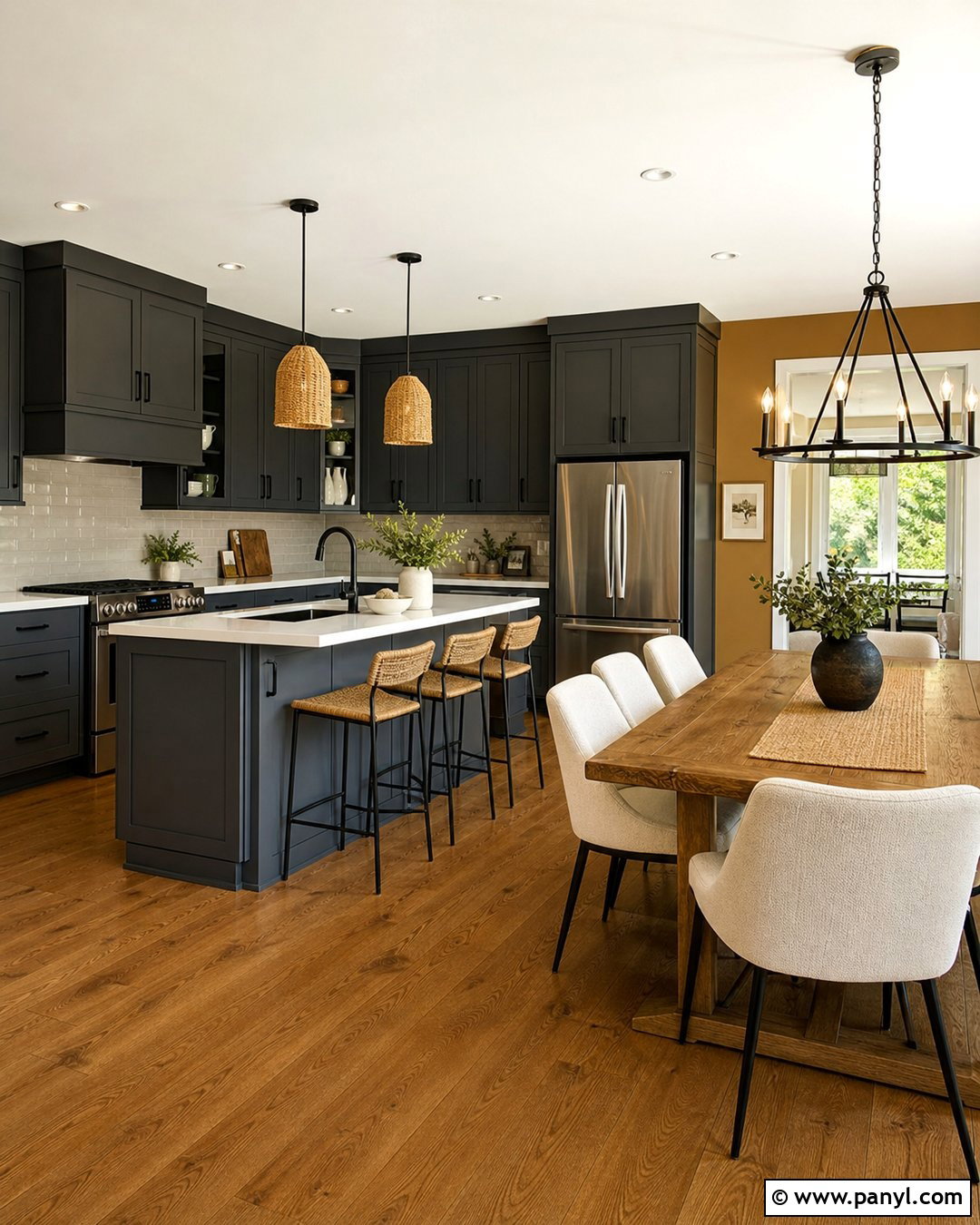
Muted ochre walls bring a sunny, earthy quality to dark grey kitchen cabinets. Choose a softened mustard shade with brown or grey undertones rather than a bright primary yellow. Apply it to a spacious dining wall or an area with strong natural light. Balance the color with white quartz countertops, creamy backsplash tile, and medium oak flooring. Matte black hardware gives the cabinetry definition, while natural woven pendants connect the warm wall to the wood surfaces. A substantial wood table with cream chairs can turn the adjoining dining area into part of the complete scheme. Keep smaller accessories neutral to avoid overwhelming the room. Ochre works particularly well with charcoal cabinets because the clear contrast makes both colors feel intentional and visually grounded.
22. Butter Yellow Walls With Grey Kitchen Cabinets
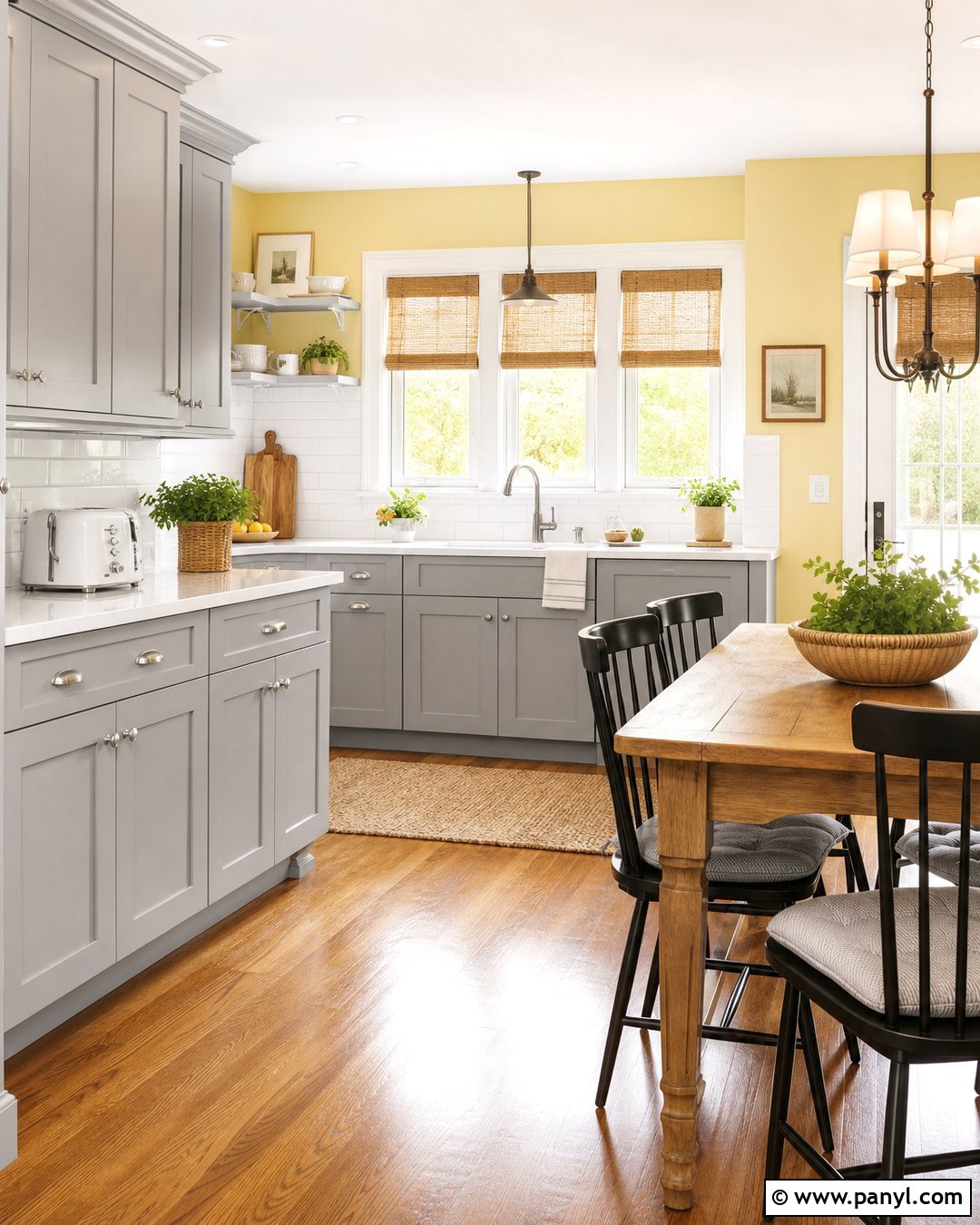
Butter yellow walls create a cheerful kitchen around cool or medium grey cabinets without introducing harsh contrast. Select a pale, creamy yellow that looks warm white in some lighting rather than a vivid lemon shade. Pair it with white quartz counters, simple white tile, and honey oak flooring. Satin nickel hardware keeps the cabinetry crisp, while woven shades and a wood breakfast table reinforce the sunny mood. Use white trim and a bright ceiling to prevent the yellow from spreading visually across every surface. This palette is useful in kitchens with modest daylight because it creates perceived warmth. Keep decorative colors limited to cream, natural wood, and small blue accents. Too many additional warm shades can make the finished room feel busy instead of fresh.
23. Pale Peach Walls With Grey Kitchen Cabinets
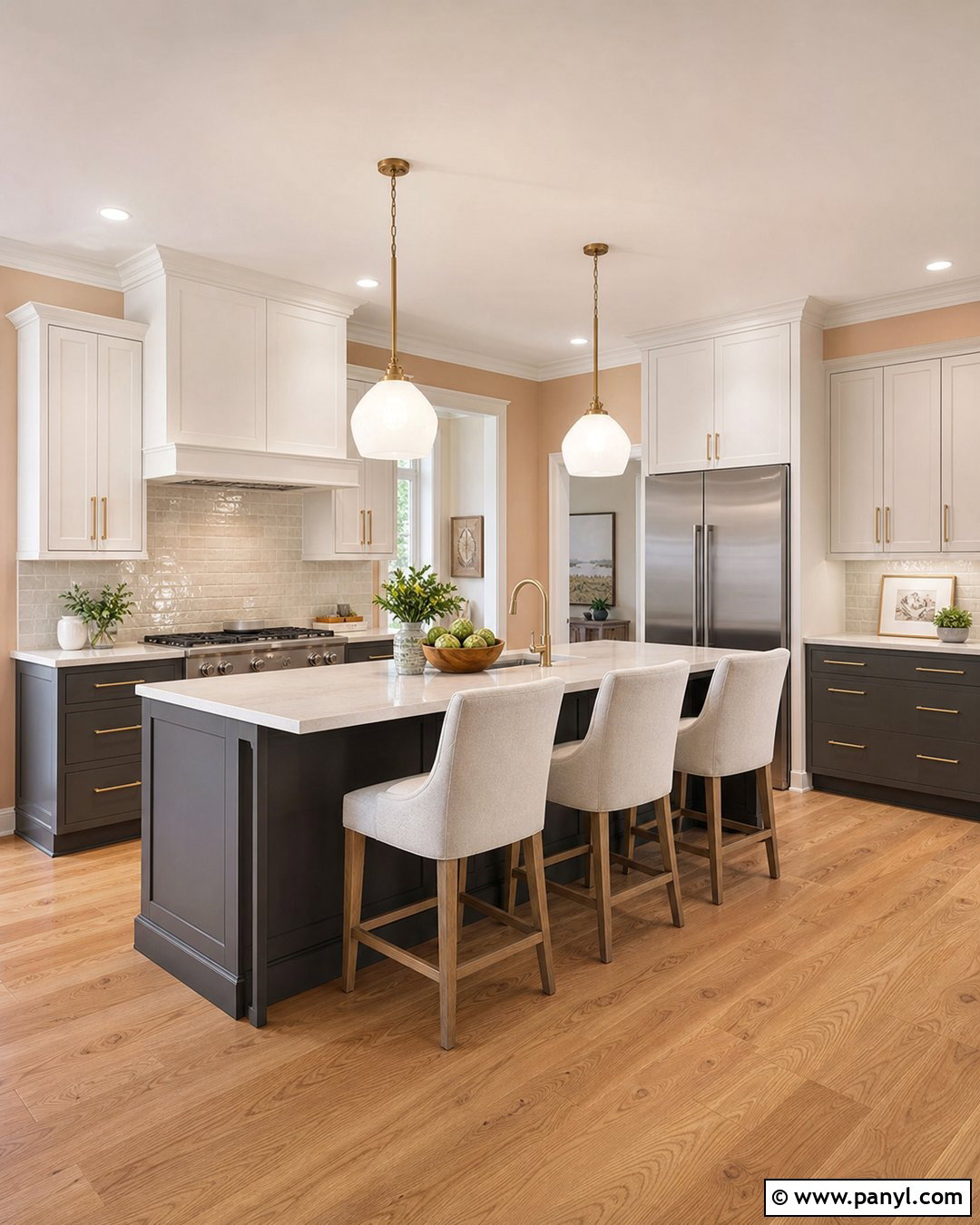
Pale peach walls soften the structured appearance of grey kitchen cabinets and create a warm, welcoming atmosphere. Choose a subdued peach with beige undertones so it behaves more like a neutral. Pair the walls with charcoal lower cabinets, warm white upper cabinets, and creamy quartz countertops for balanced contrast. An ivory backsplash and natural oak flooring keep the scheme light. Add brushed brass handles, milky glass pendants, and oatmeal-colored stools to complete the look. Pale peach works well in kitchens connected to a casual dining space because it flatters both wood furniture and soft textiles. Avoid orange-heavy peach beside blue-grey cabinets. A quieter shell or apricot-tinted neutral will connect more smoothly with the cabinetry and remain comfortable under evening lighting.
24. Soft Lavender Walls With Grey Kitchen Cabinets
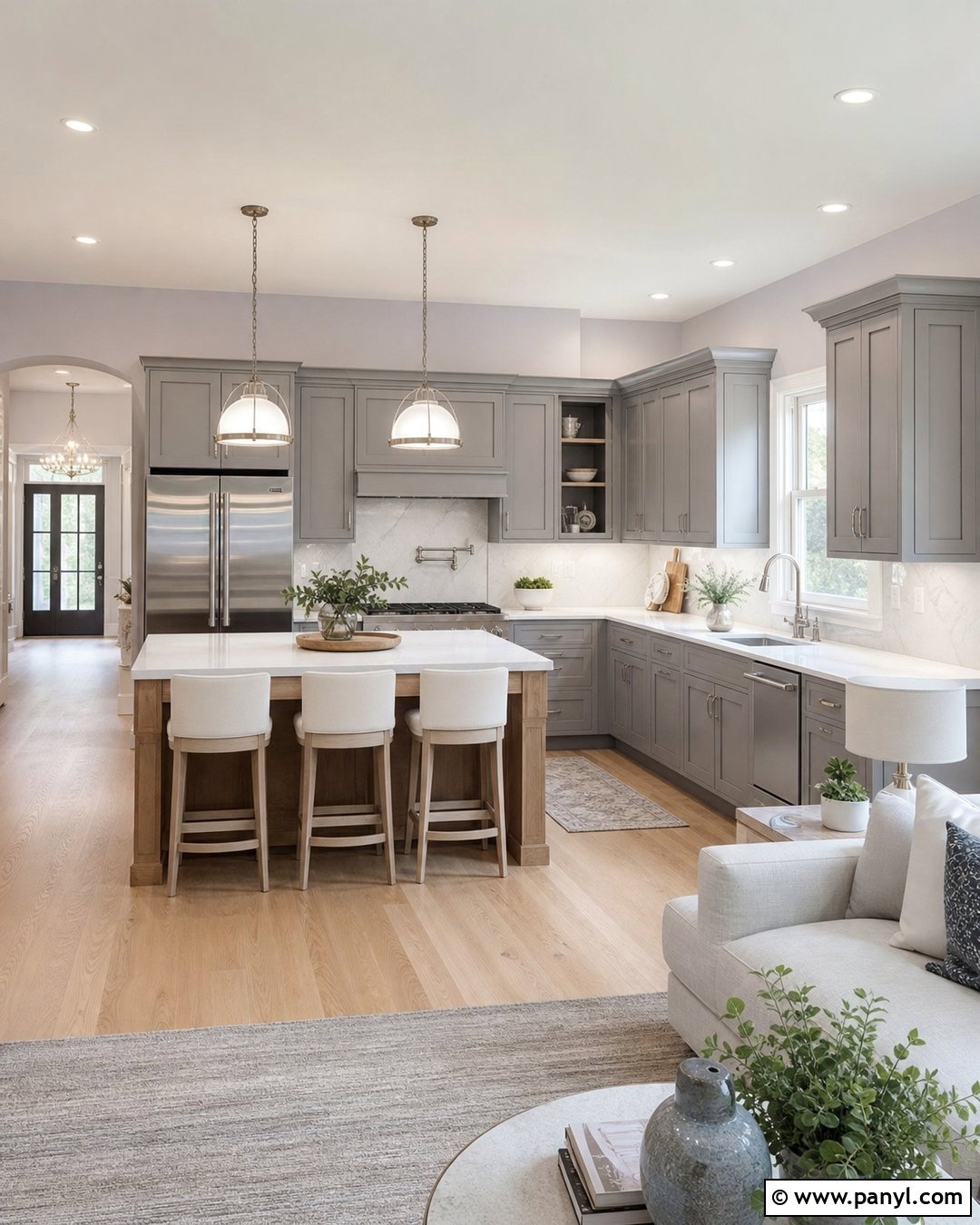
Soft lavender walls provide an unexpected but gentle partner for grey kitchen cabinets. Choose a greyed lavender with low saturation so the color remains calm throughout the day. Pair it with warm charcoal or dove grey cabinetry, white quartz countertops, and a clean marble backsplash. Pale oak flooring, polished nickel hardware, and white glass pendants prevent the purple undertone from becoming overly prominent. A wood island with cream seating can add necessary warmth. Keep window treatments neutral and introduce lavender only once more through a restrained runner or ceramic piece. This color works best when the cabinet grey already has a slight violet undertone. Always examine samples under both daylight and warm artificial lighting because lavender can shift dramatically as the light changes.
25. Muted Plum Walls With Grey Kitchen Cabinets
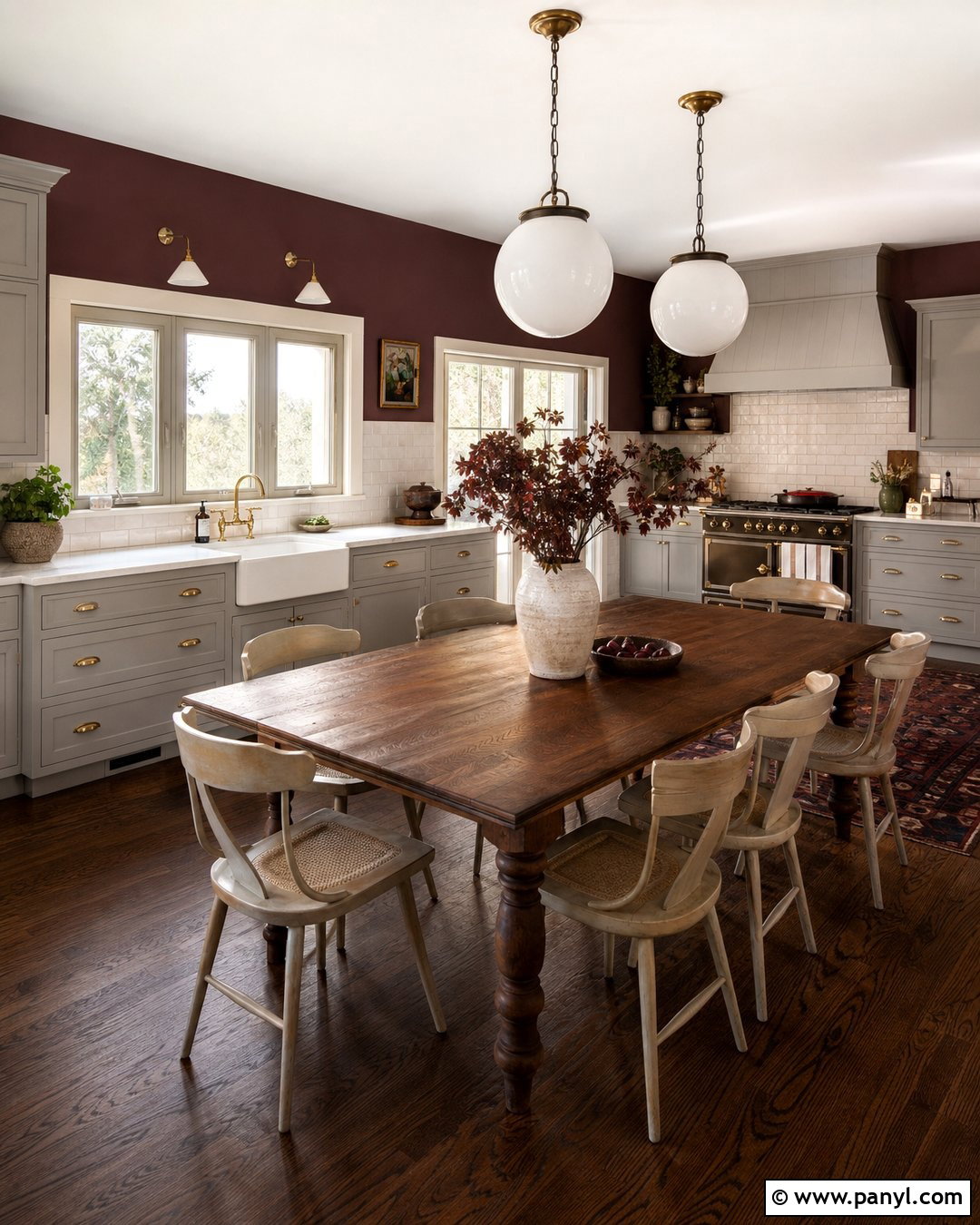
Muted plum walls create a dramatic kitchen that feels warmer than a navy or black scheme. Use plum on one open wall, around a dining nook, or above grey base cabinets rather than covering every surface. Light grey cabinetry, creamy marble counters, and an ivory backsplash provide enough contrast to keep the room balanced. Add walnut flooring, antique brass hardware, and a substantial natural wood table. Cream upholstery and white globe pendants brighten the darker palette. Choose a brown-based plum instead of a vivid purple for a more enduring appearance. This combination is most successful in medium or large kitchens with good natural light. In a compact room, use the plum wall as a focused backdrop and keep surrounding trim warm white.
26. Charcoal Walls With Grey Kitchen Cabinets
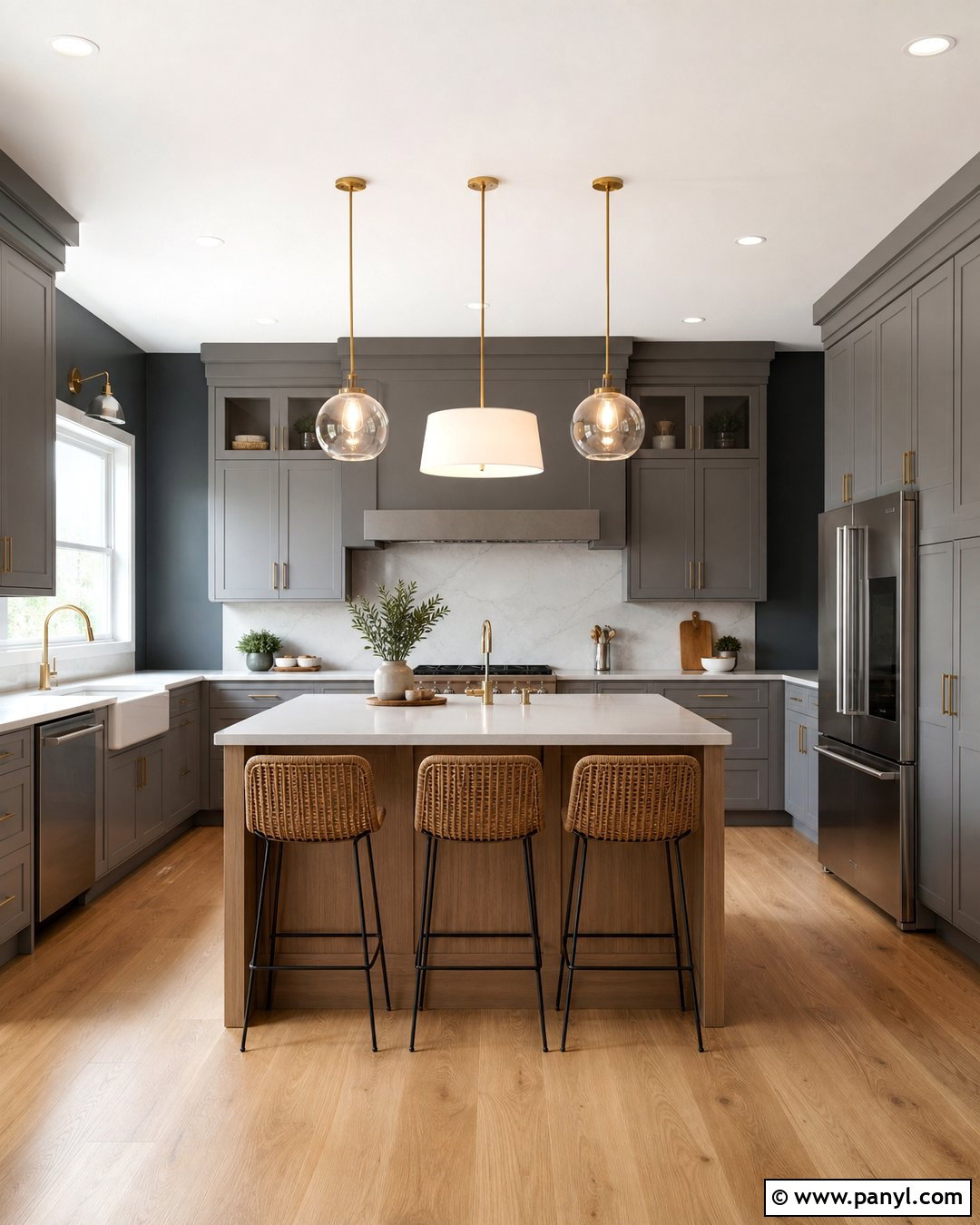
Charcoal walls can create a sophisticated tone-on-tone kitchen when paired with lighter grey cabinets. Choose a charcoal that is clearly deeper than the cabinetry, then maintain brightness through white quartz countertops and a full-height pale backsplash. Light oak flooring, a wood island, and woven stools introduce warmth against the dark surfaces. Use brass or polished nickel hardware for visible contrast, and install layered lighting beneath cabinets and above work areas. Charcoal is ideal for one large wall or a defined dining zone, particularly in an open-plan layout. Paint the ceiling warm white to preserve visual height. Avoid using charcoal walls with equally dark cabinets unless the kitchen has abundant windows. Clear differences in value help the architecture remain visible and prevent a heavy appearance.
27. Matte Black Walls With Grey Kitchen Cabinets
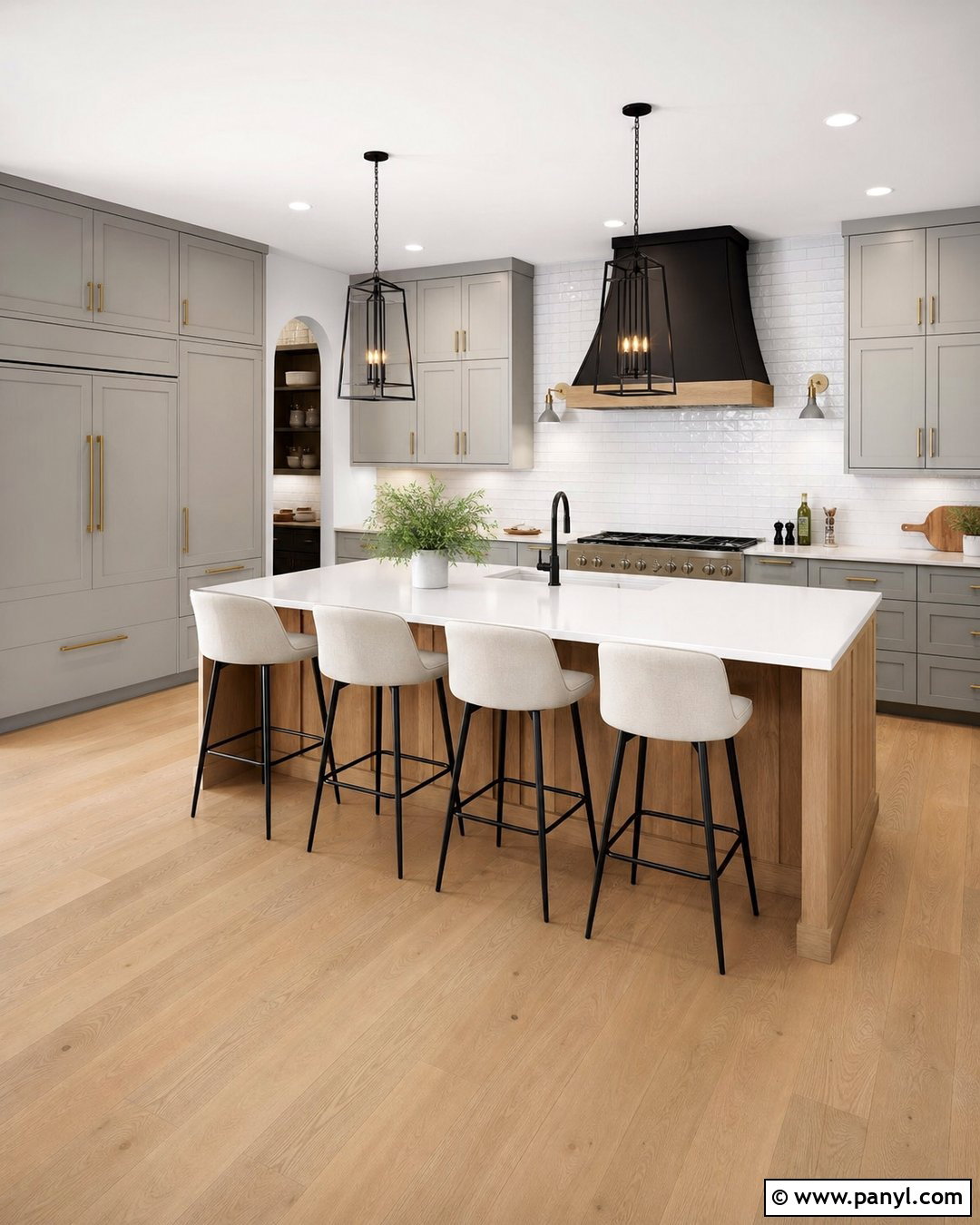
A matte black feature wall gives pale grey kitchen cabinets a sharp, architectural backdrop. Limit black to an open wall, pantry area, or breakfast nook so the complete kitchen stays bright and functional. Pair the cabinetry with white stone counters, a white backsplash, and blond oak flooring. Black-framed pendants and a matching faucet repeat the wall color, while brushed brass cabinet pulls add warmth. Include a light wood island and cream counter stools to soften the contrast. This palette suits modern and industrial kitchens, but it can also work with simple shaker cabinetry. Use a washable matte or low-sheen paint designed for active spaces. Strong daylight and carefully placed task lighting are essential for keeping the black surface crisp rather than visually flat.
28. Light Grey Walls With Grey Kitchen Cabinets
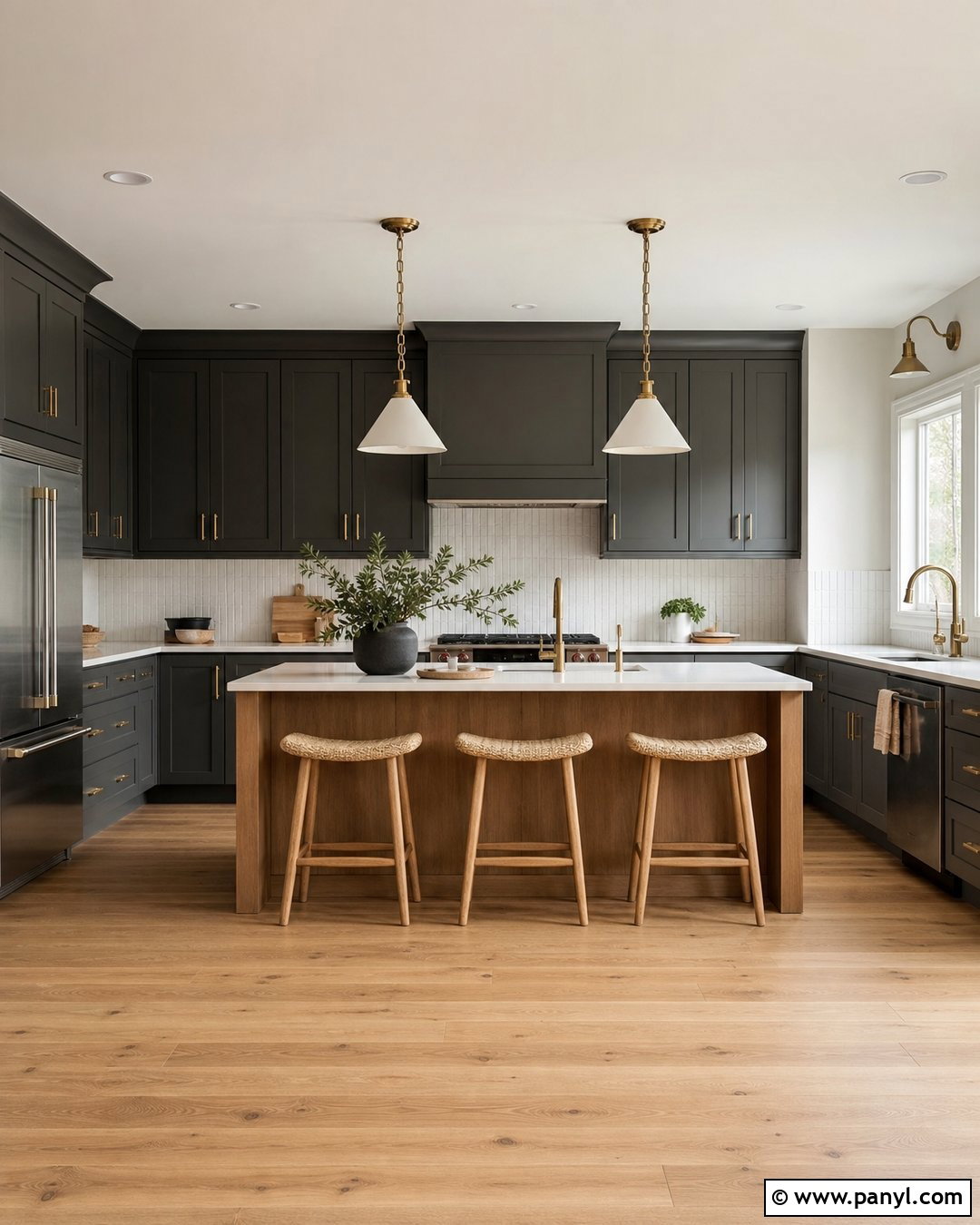
Light grey walls can complement darker grey kitchen cabinets when the undertones and values are carefully coordinated. Choose wall paint that is noticeably lighter and slightly warmer or cooler in the same direction as the cabinetry. White quartz counters and a textured white backsplash create a needed pause between grey surfaces. Introduce oak flooring, brass hardware, woven stools, and warm pendant lighting to prevent the room from becoming cold. A wood island is another effective way to add visual variety. This monochromatic approach works well in open, contemporary kitchens where a quiet background is desirable. Avoid matching the wall color too closely to the cabinets. A clear contrast, even within the same color family, makes the cabinetry look intentional rather than unfinished or accidentally blended.
29. Matching Grey Walls With Grey Kitchen Cabinets
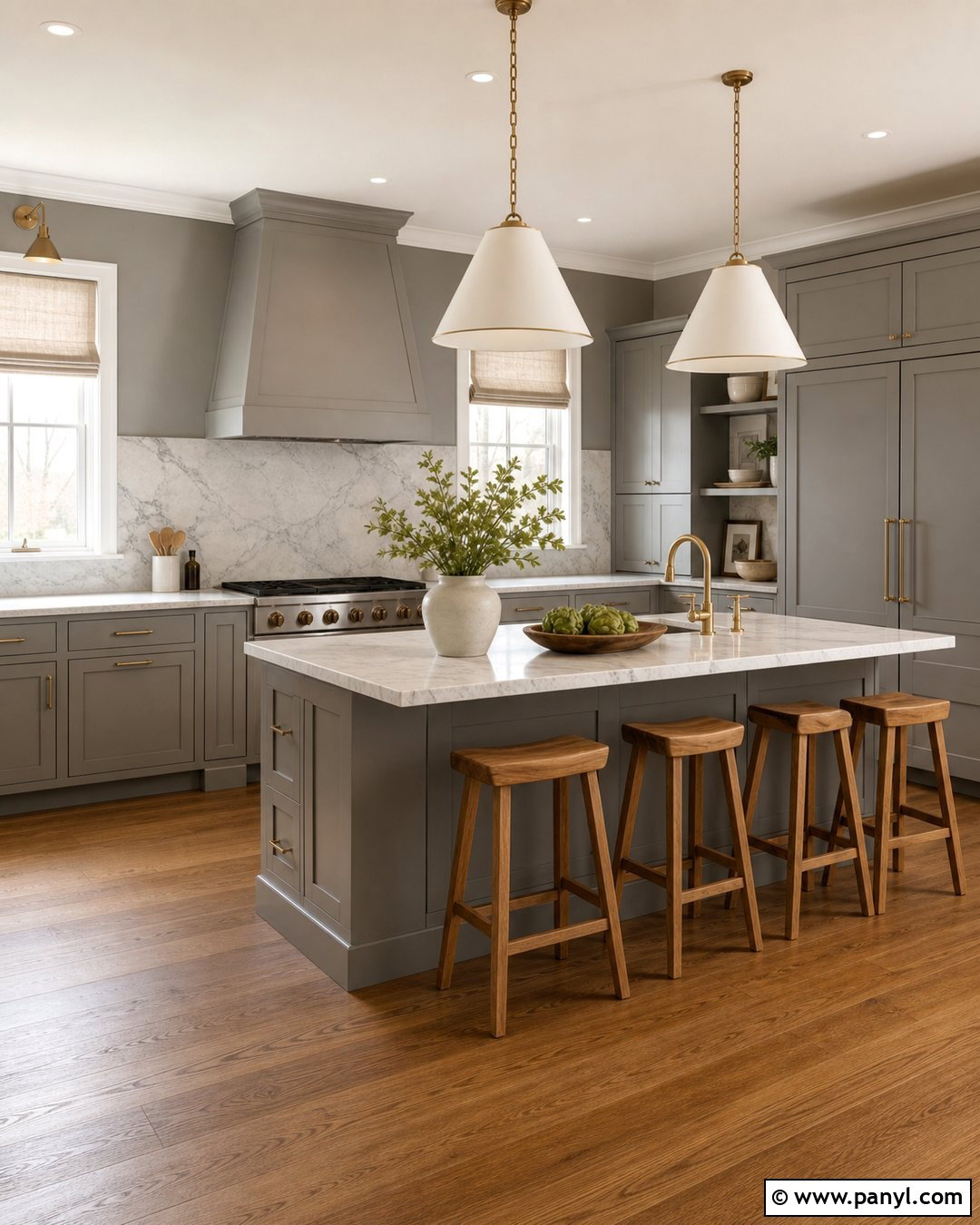
Matching grey walls and cabinets creates a seamless color-drenched kitchen with a calm, built-in appearance. The technique works best when varied finishes provide dimension. Use satin paint on the cabinetry and a durable matte finish on the walls, then add white or cream stone counters for contrast. A veined marble backsplash, warm oak floor, and aged brass hardware keep the repeated grey from feeling flat. Paint trim in the same shade for full continuity, but leave the ceiling warm white if the room is small. Natural wood stools, linen shades, and soft undercabinet lighting complete the design. Choose a warm grey or balanced greige rather than an icy blue-grey, especially if the kitchen lacks strong daylight. Texture becomes essential in this restrained palette.
30. Soft Mint Walls With Grey Kitchen Cabinets
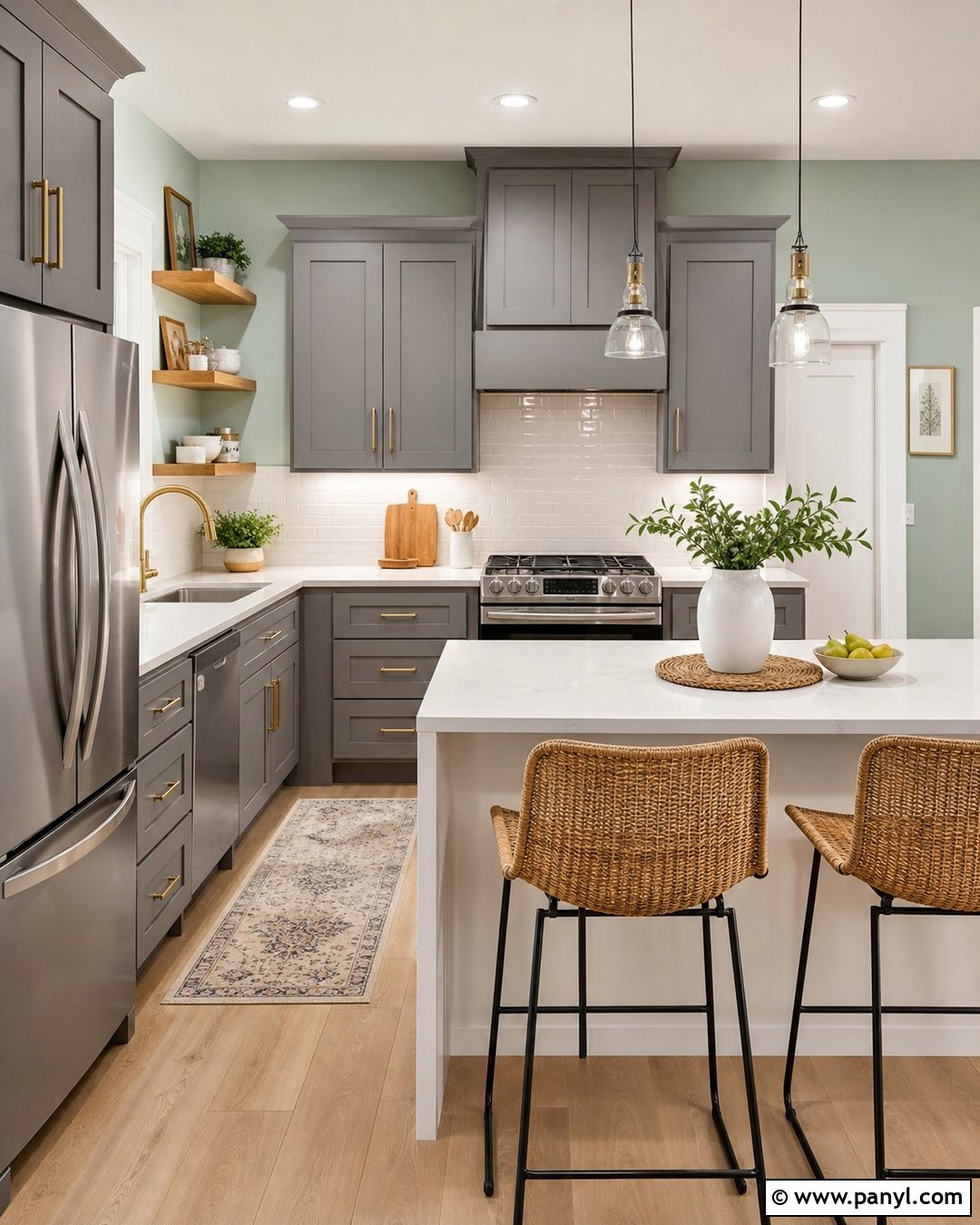
Soft mint walls bring a light, fresh quality to grey kitchen cabinets without dominating the room. Select a muted mint containing grey rather than a bright green-blue pastel. Pair it with medium grey shaker cabinets, white quartz counters, and glossy warm white backsplash tile. Pale oak flooring and natural wood shelves create a comfortable transition between the cool colors. Choose polished nickel hardware for a clean finish or brushed brass for added warmth. A white island with woven stools can keep the center of the kitchen open and bright. Repeat mint sparingly through a washable runner or small ceramic accessories. This palette is especially effective in compact kitchens and breakfast rooms where a gentle color can add character while maintaining an airy, uncluttered appearance.
Conclusion:
The best wall color should support the cabinet undertone, available daylight, flooring, countertops, and overall mood of the room. Warm whites, cream, greige, taupe, and mushroom create dependable neutral kitchens, while sage, blue, clay, blush, and ochre add controlled personality. Darker colors such as navy, plum, charcoal, and black work best when pale surfaces and strong lighting maintain balance. Before painting, place large samples beside every fixed finish and view them during the morning, afternoon, and evening. This simple step can reveal undertones that small chips hide. With thoughtful contrast, natural materials, and coordinated finishes, these **Grey Kitchen Cabinets Wall Color Ideas** can create a complete kitchen that feels layered, comfortable, and personal.

Related Ideas and Inspiration:
Leave a Reply