
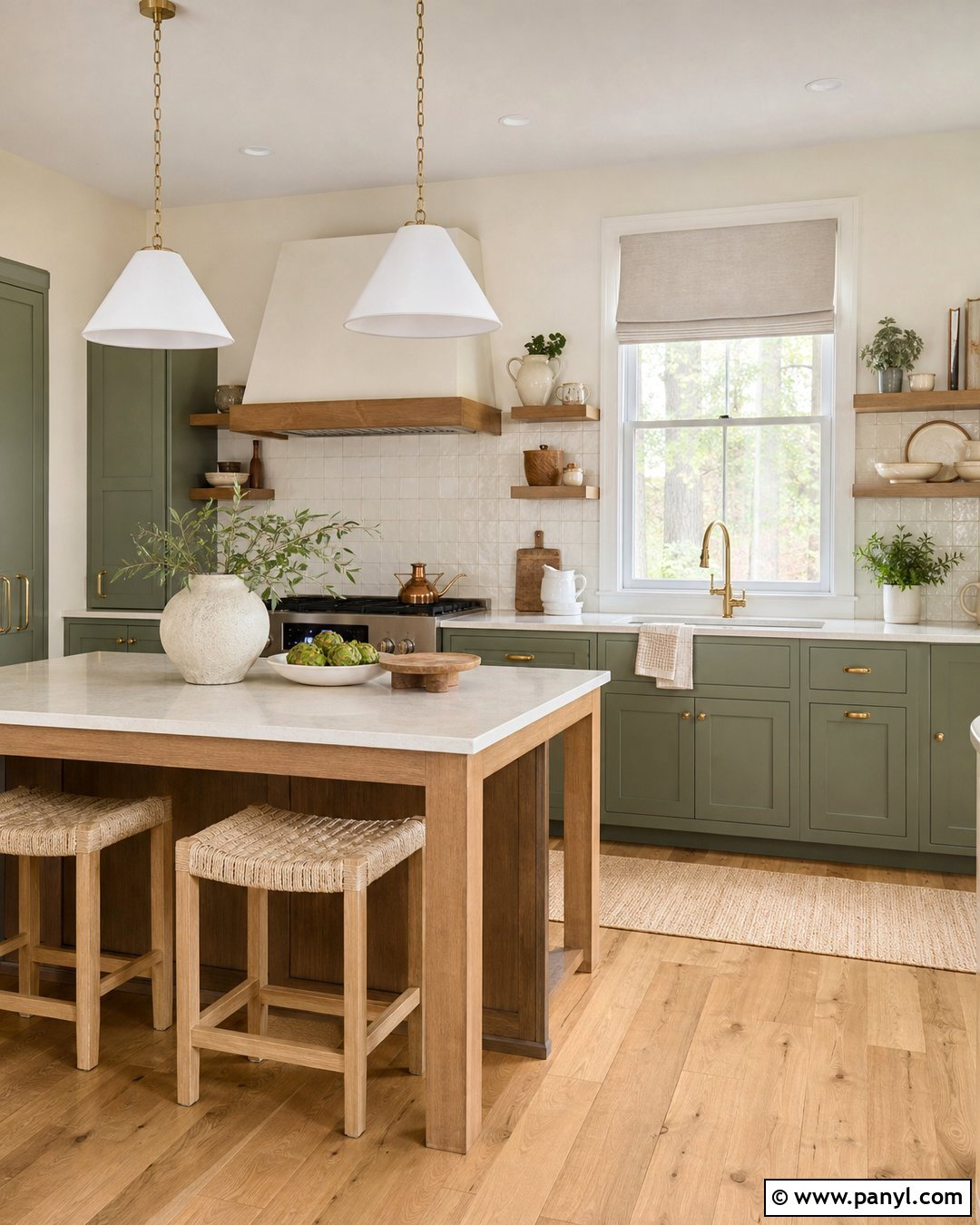
Sage green kitchen walls bring a calm, natural backdrop to one of the busiest rooms in the home. The color can feel warm, fresh, rustic, or modern depending on the cabinets, counters, backsplash, flooring, and lighting around it. Warm whites and cream create softness, while crisp white, black, or deep navy add stronger contrast. Natural oak, walnut, handmade tile, stone, and brushed metals reinforce sage’s earthy character. Because the color shifts with daylight and nearby finishes, always sample your chosen shade beside permanent surfaces before painting. Current kitchen schemes also favor tonal greens, warm woods, and tactile materials rather than flat gray combinations. () Use these complete looks to explore 45 sage green kitchen walls.
1. Sage Green Kitchen Walls With White Cabinets
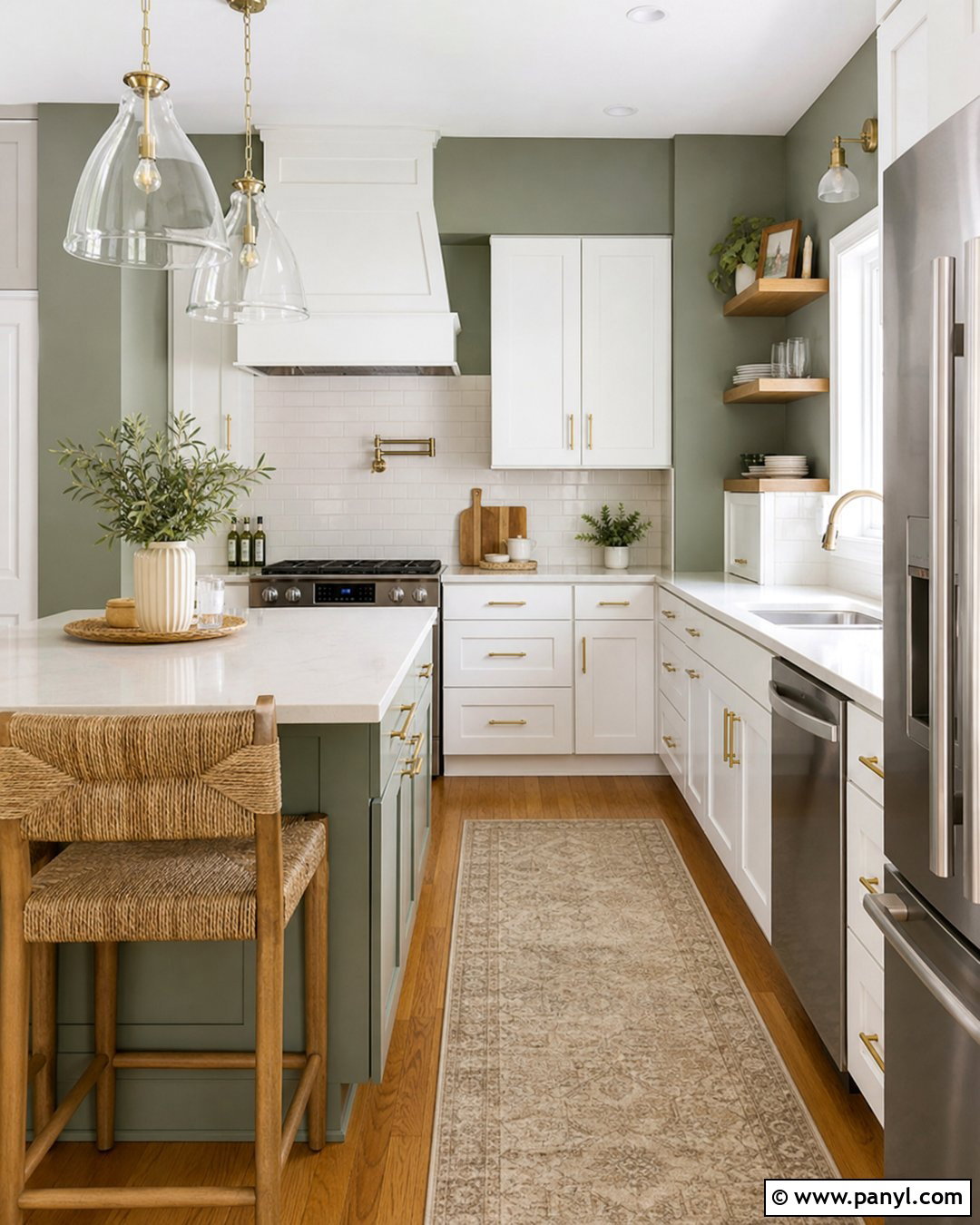
Crisp white cabinets give sage green walls a fresh, balanced appearance that works in kitchens of almost any size. Choose simple Shaker doors and warm white quartz counters to keep the room approachable rather than overly formal. A white subway backsplash can connect the cabinets and countertops, while pale gray grout adds gentle definition. Bring in medium oak flooring, woven counter stools, and brushed brass hardware for warmth. A small vintage-style runner with muted green and beige details helps the walls feel intentional. Finish the space with clear glass pendants and a few ceramic pieces near the range. Keep appliances stainless steel so the overall palette remains practical, bright, and easy to update.
2. Sage Green Kitchen Walls With Cream Cabinets
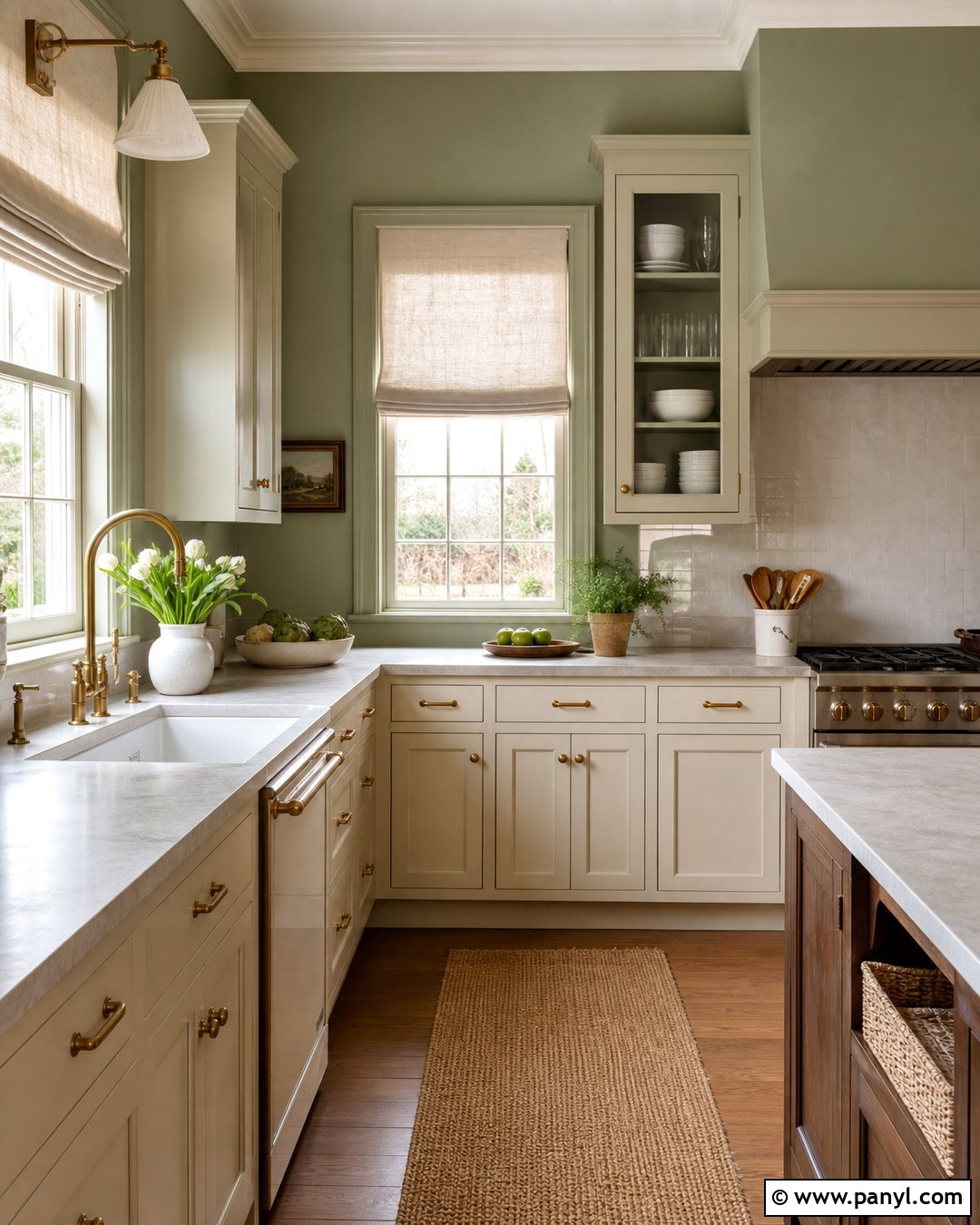
Cream cabinetry softens sage green kitchen walls and creates a welcoming palette suited to traditional or cottage homes. Select a warm sage without strong blue undertones so it harmonizes with the creamy finish. Use lightly veined quartz or honed limestone counters to continue the gentle color transition. A backsplash of ivory handmade tile will add texture without introducing a busy pattern. Antique brass knobs, an aged brass bridge faucet, and warm oak floors complete the layered look. Consider glass-front upper cabinets for displaying white dishes and simple stoneware. Linen Roman shades and a natural fiber runner provide softness. The completed kitchen should feel warm and collected, with enough contrast to prevent the cream and sage from blending together.
3. Sage Green Kitchen Walls With Natural Oak Cabinets
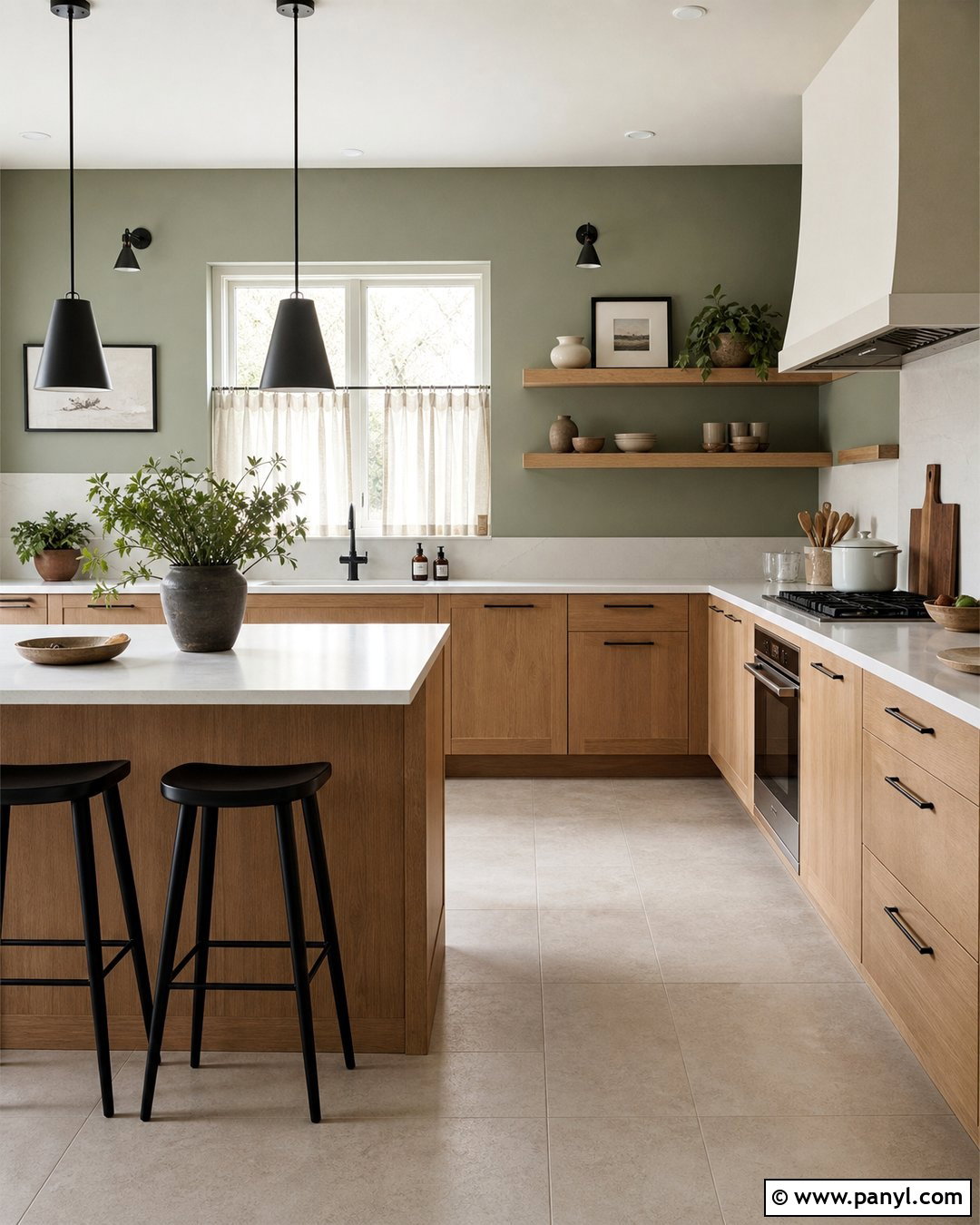
Sunlight makes sage green walls and natural oak cabinetry look especially rich and organic. Choose flat-panel or slim Shaker cabinets with a clear matte finish that allows the wood grain to remain visible. White quartz counters and an off-white backsplash keep the wood from making the room feel too heavy. Repeat the oak on open shelves or the kitchen island for continuity. Matte black pulls, a black faucet, and simple black pendants add structure to the pale palette. Use light beige porcelain flooring or warm limestone-look tile beneath the cabinetry. Finish with linen café curtains, handmade pottery, and restrained greenery. This complete scheme feels relaxed and contemporary while still celebrating the warmth and variation found in real wood.
4. Sage Green Kitchen Walls With Dark Walnut Cabinets
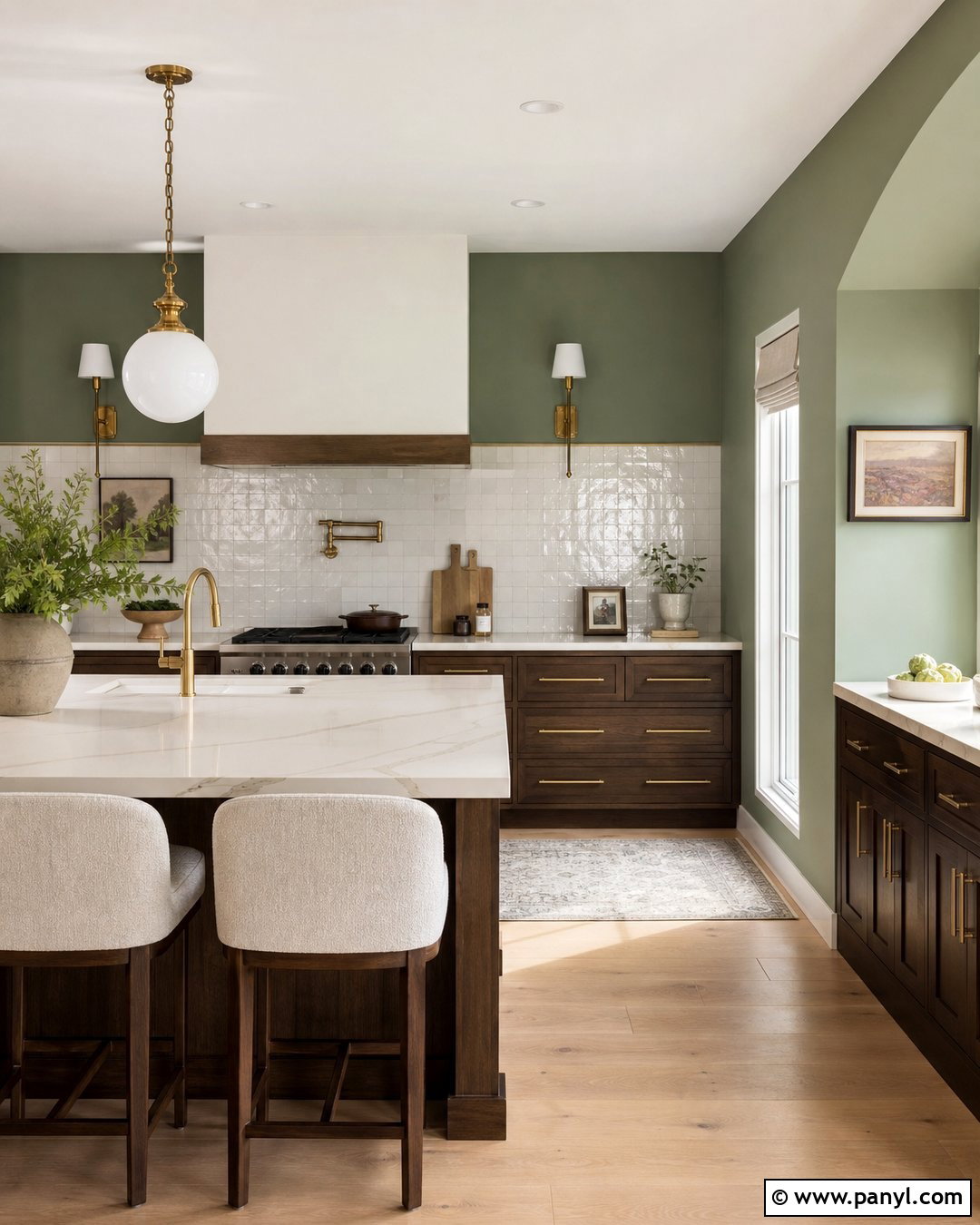
Dark walnut cabinets turn muted sage green kitchen walls into a sophisticated backdrop. The deep wood creates a stronger contrast than oak, so balance it with pale countertops and generous lighting. Choose creamy quartz with delicate brown veining rather than stark, icy white stone. A glossy off-white zellige backsplash will reflect light and introduce subtle movement. Use aged brass hardware, warm brass sconces, and a matching faucet to complement the walnut. Wide-plank light oak flooring prevents the lower half of the room from appearing too dark. Keep window treatments simple and airy. On the island, place oatmeal-colored upholstered stools to soften the straight cabinetry lines. The final look feels tailored, earthy, and comfortable rather than severe.
5. Sage Green Kitchen Walls With Black Cabinets
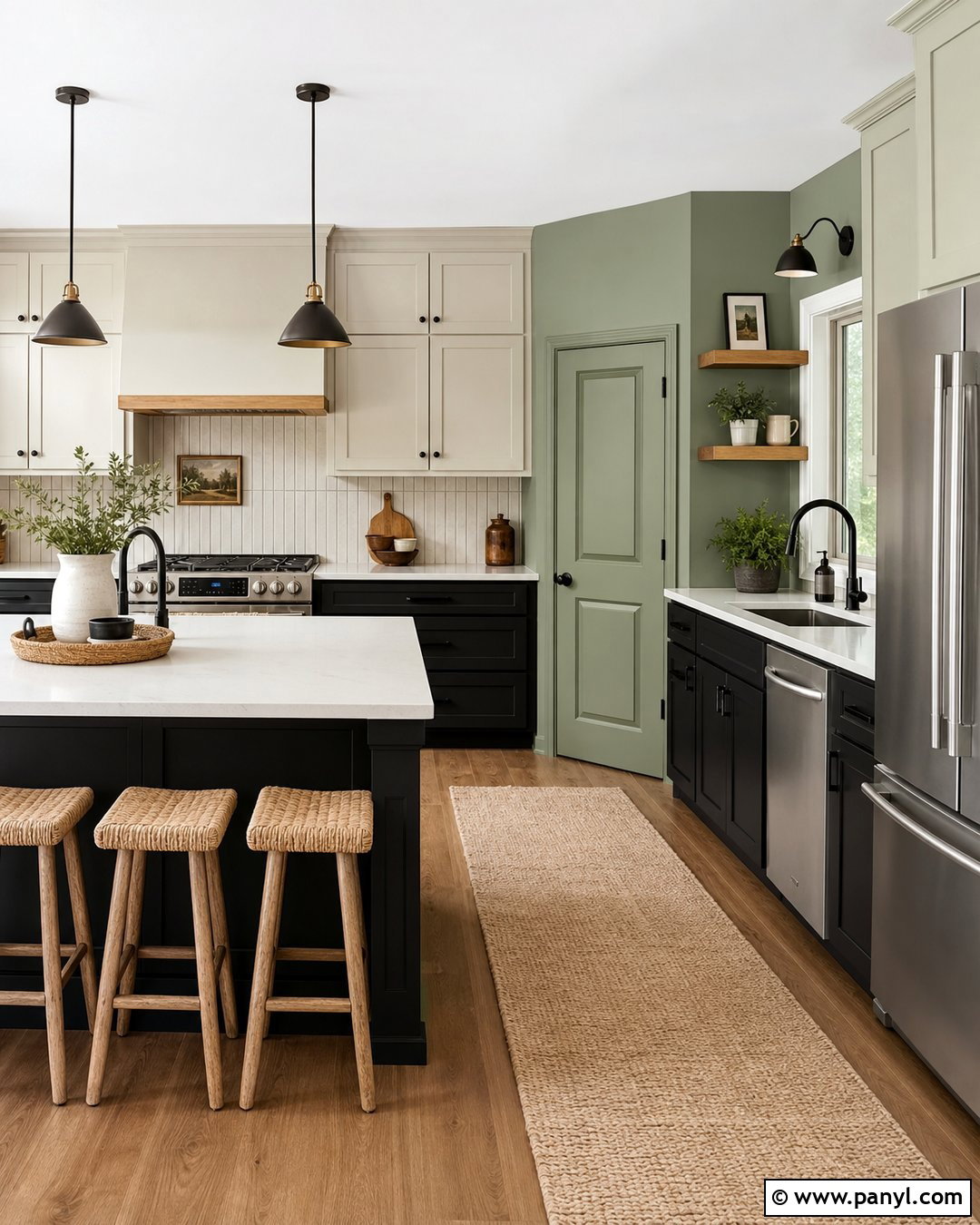
For a kitchen with clear definition, combine sage green walls with matte black lower cabinets and lighter upper storage. The black cabinetry anchors the room, while sage prevents the high-contrast palette from feeling cold. Use warm white quartz counters, an ivory vertical tile backsplash, and pale oak open shelving above the work surface. Continue the black through slender cabinet pulls, window frames, and one sculptural pendant. Light wood flooring and woven stools keep the design balanced. If the room is small, reserve black for the island and base cabinets rather than covering every elevation. Finish with white stoneware, wood cutting boards, and a muted cream runner. This complete look is bold but still calm enough for daily family use.
6. Sage Green Kitchen Walls With Gray Cabinets
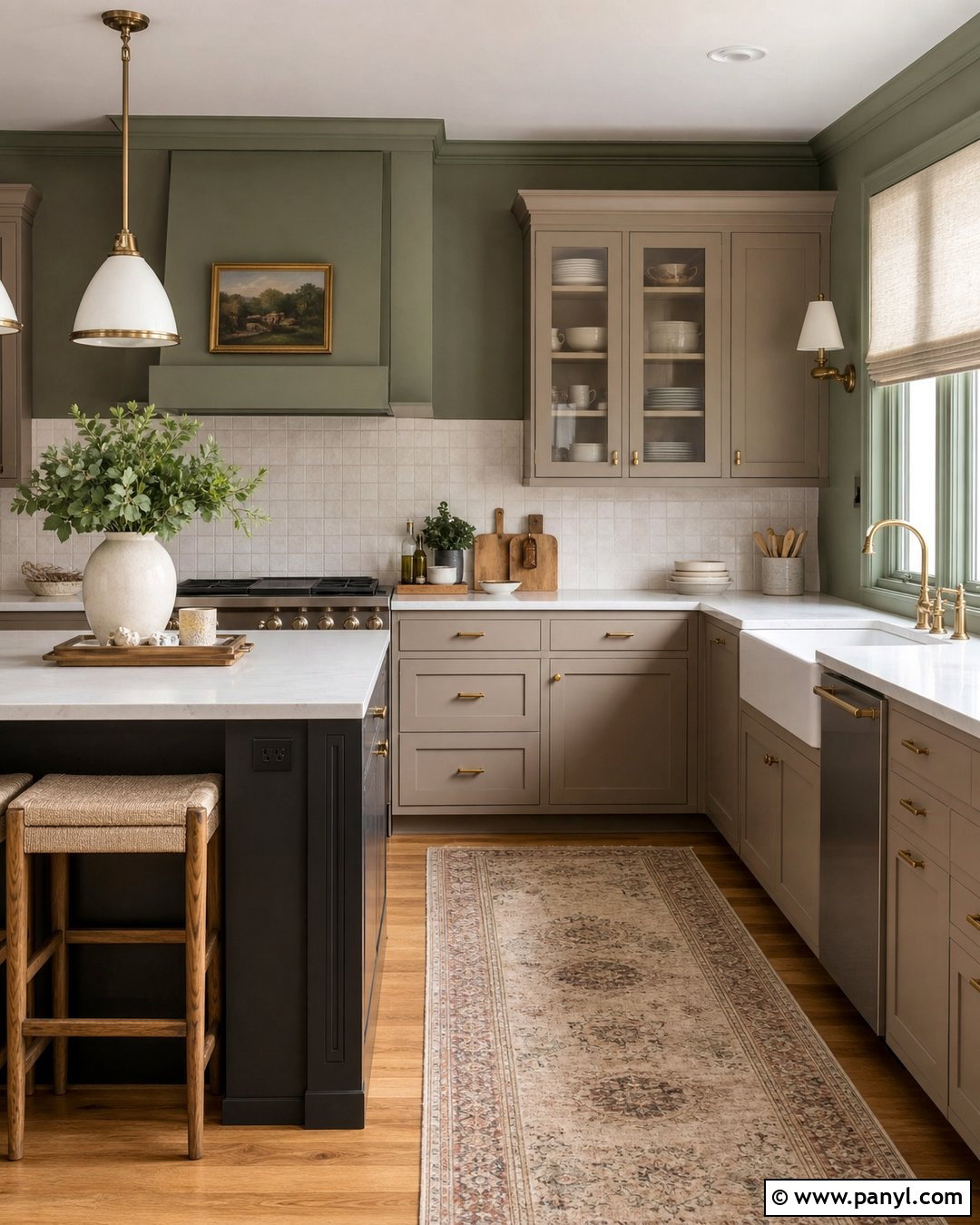
Warm gray cabinets can create a quiet, layered kitchen when paired with sage green walls. Avoid a cool blue-gray, which may make the room appear flat. Instead, use mushroom gray cabinetry with subtle brown undertones. White quartz counters and handmade cream backsplash tile brighten the combination, while medium-tone oak floors add natural contrast. Choose brushed nickel hardware if you prefer a clean look, or aged brass for a warmer finish. A charcoal island can introduce depth without overwhelming the walls. Add linen shades, a textured runner, and simple white ceramic accessories to soften the gray surfaces. The result is an understated transitional kitchen where the cabinetry supports the sage instead of competing with its gentle, earthy color.
7. Sage Green Kitchen Walls With Navy Island
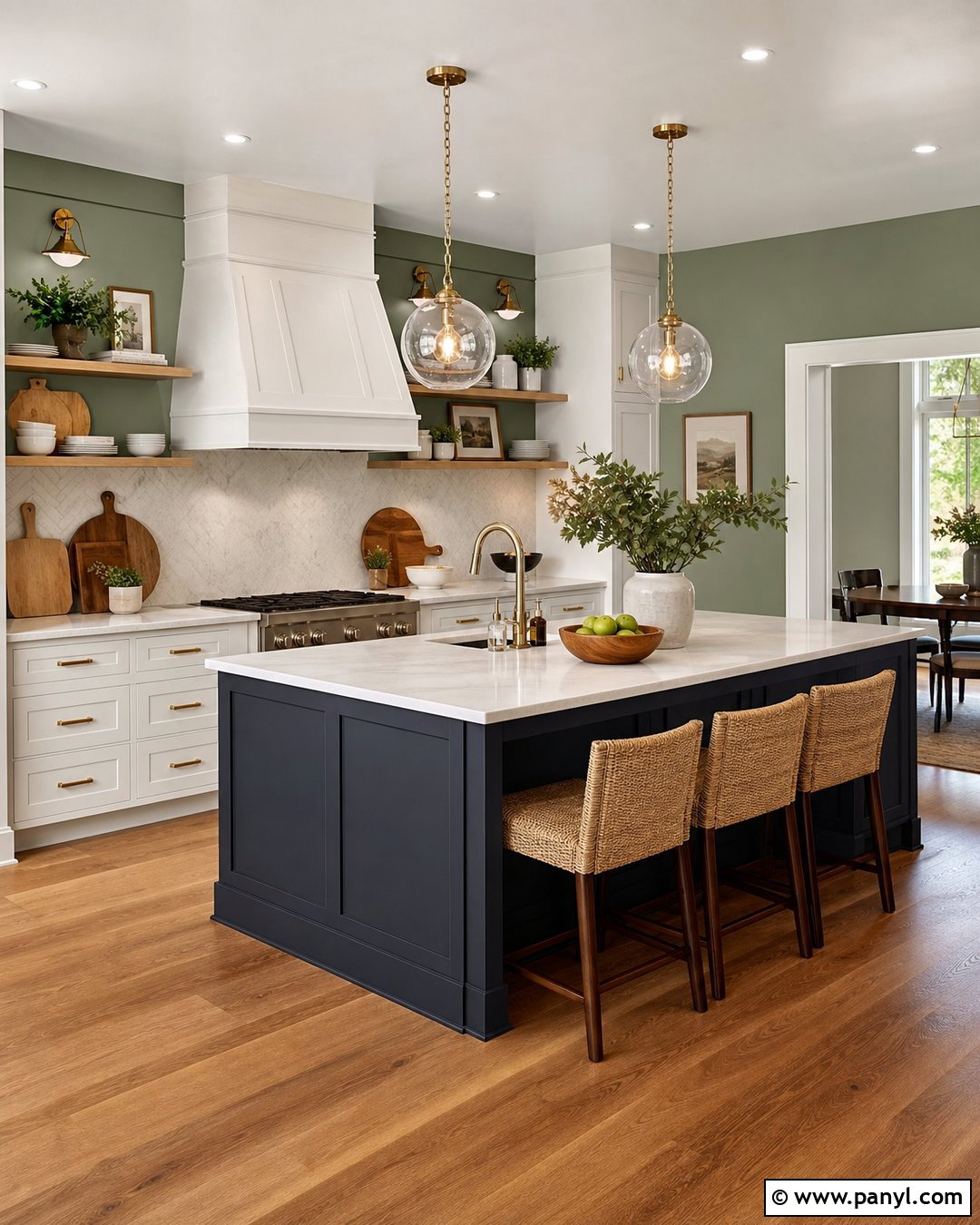
A navy island adds a confident focal point without covering the entire kitchen in dark color. Surround it with warm white perimeter cabinets, pale quartz counters, and softly muted sage green walls. The navy should have a slightly gray undertone so it feels connected to the subdued wall color. Use brushed brass hardware on both cabinet finishes to unify the design. A white marble-look backsplash can introduce delicate veining, while medium oak floors provide warmth beneath the cooler colors. Choose natural woven counter stools and simple glass pendants over the island. Keep decorative objects limited to wood boards, white bowls, and one ceramic vase. This balanced scheme feels colorful and distinctive, yet remains bright enough for an everyday family kitchen.
8. Sage Green Kitchen Walls With Butcher Block Counters
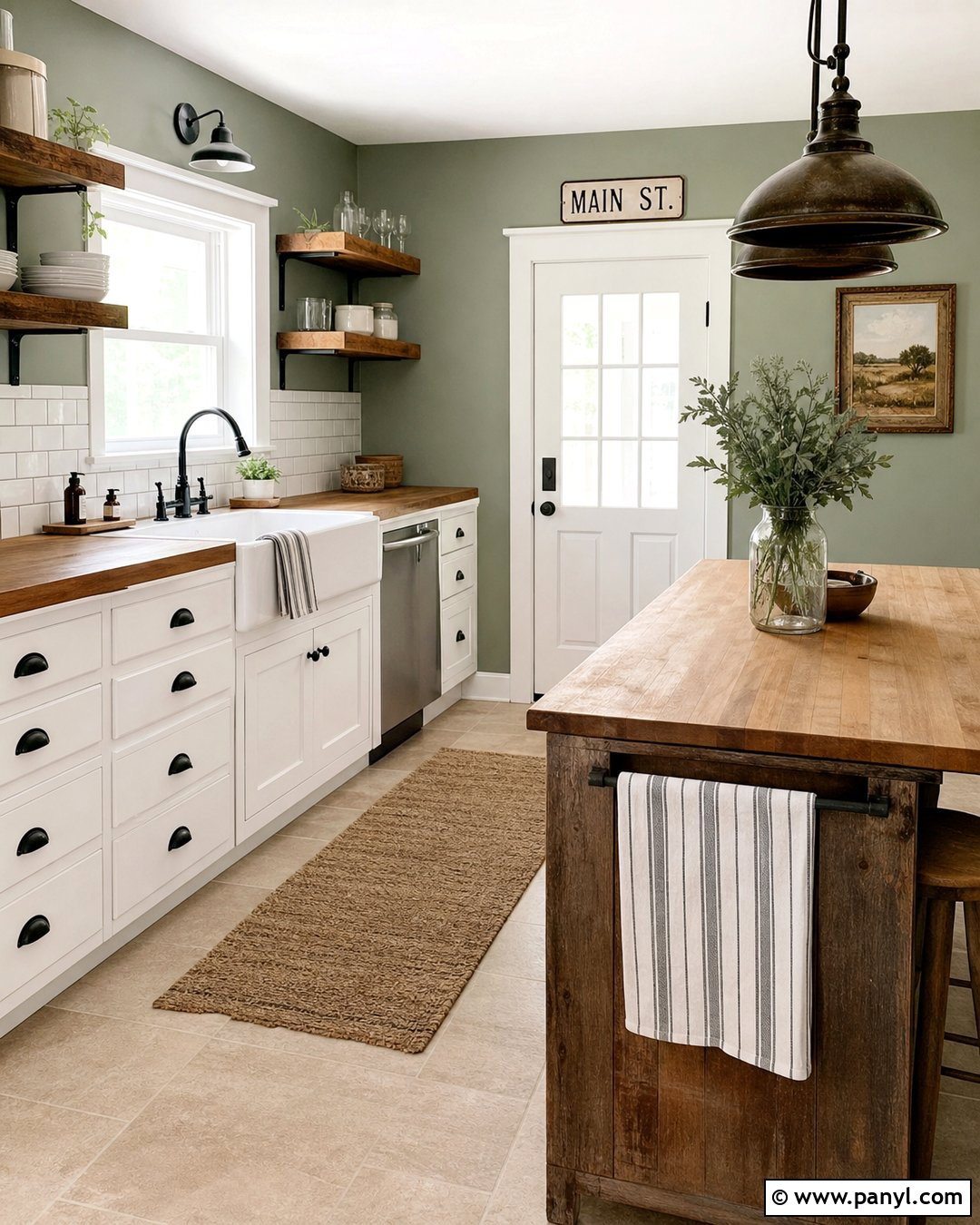
Butcher block countertops enhance the earthy quality of sage green walls and create an inviting farmhouse-inspired kitchen. Pair the wood counters with simple white cabinets so the natural surfaces remain the focus. Protect busy areas around the sink with a durable sealed finish, or use quartz there and reserve butcher block for the island. A creamy subway tile backsplash, warm gray grout, and black cup pulls add practical contrast. Continue the wood tones through open shelves, a farmhouse table, or simple counter stools. Choose aged bronze pendants and a white apron-front sink for traditional character. Soft beige floor tile and a washable striped runner finish the space. The completed kitchen feels warm, functional, and pleasantly relaxed.
9. Sage Green Kitchen Walls With White Quartz
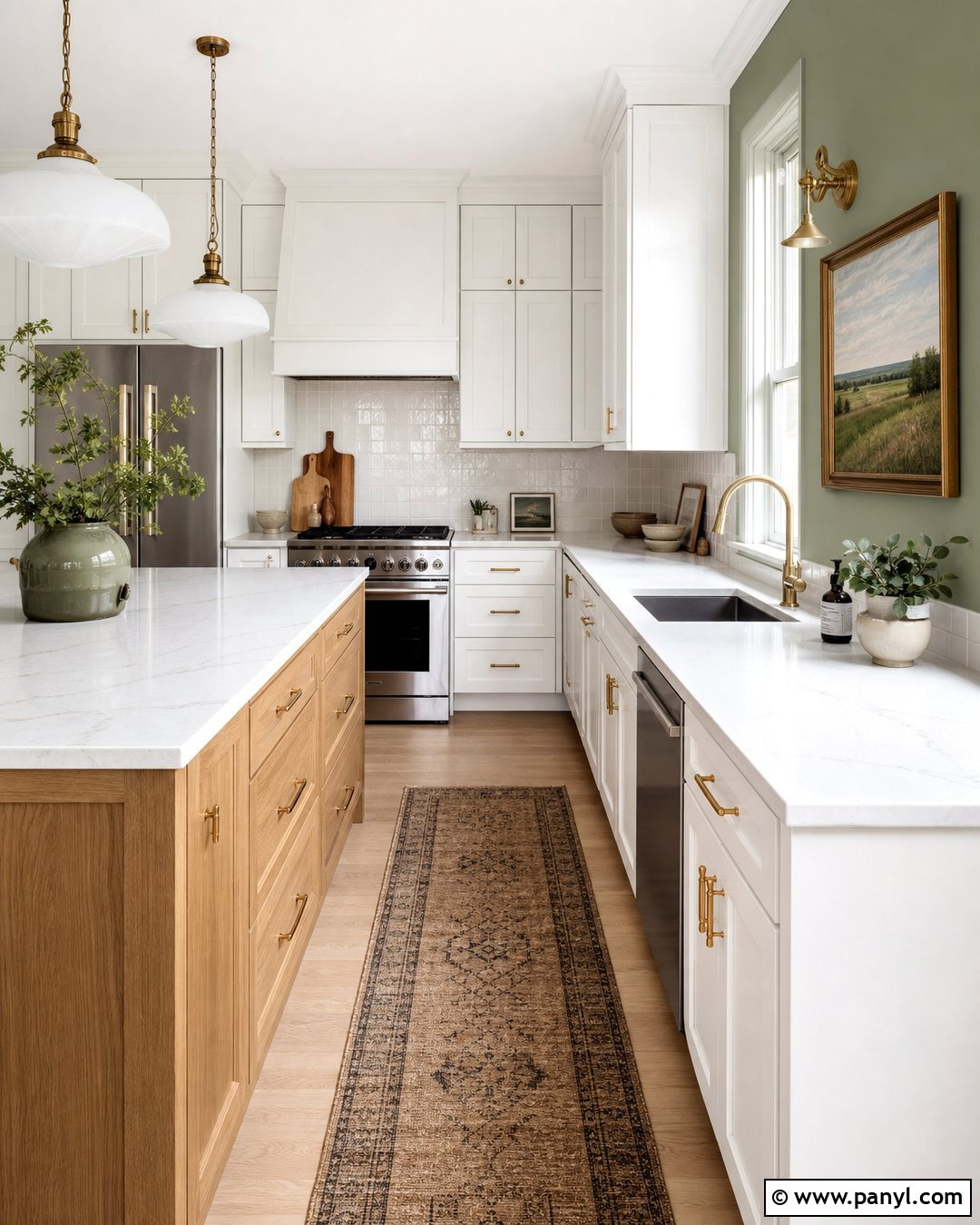
White quartz countertops make sage green kitchen walls look clear and fresh, especially in a compact or moderately lit room. Select quartz with fine warm gray or beige veining rather than dramatic patterns. Use white Shaker cabinets to create a seamless foundation, then introduce oak through the island base, shelving, or flooring. A glossy ivory backsplash will bounce light around the work area and separate the counters from the painted walls. Brushed brass pulls and milk-glass pendants add warmth without becoming overly decorative. Keep small appliances white or stainless steel for consistency. Add a woven runner and pale wood accessories for texture. This cohesive kitchen is easy to maintain visually because sage supplies color while quartz and cabinetry provide a clean, durable framework.
10. Sage Green Kitchen Walls With Marble Counters
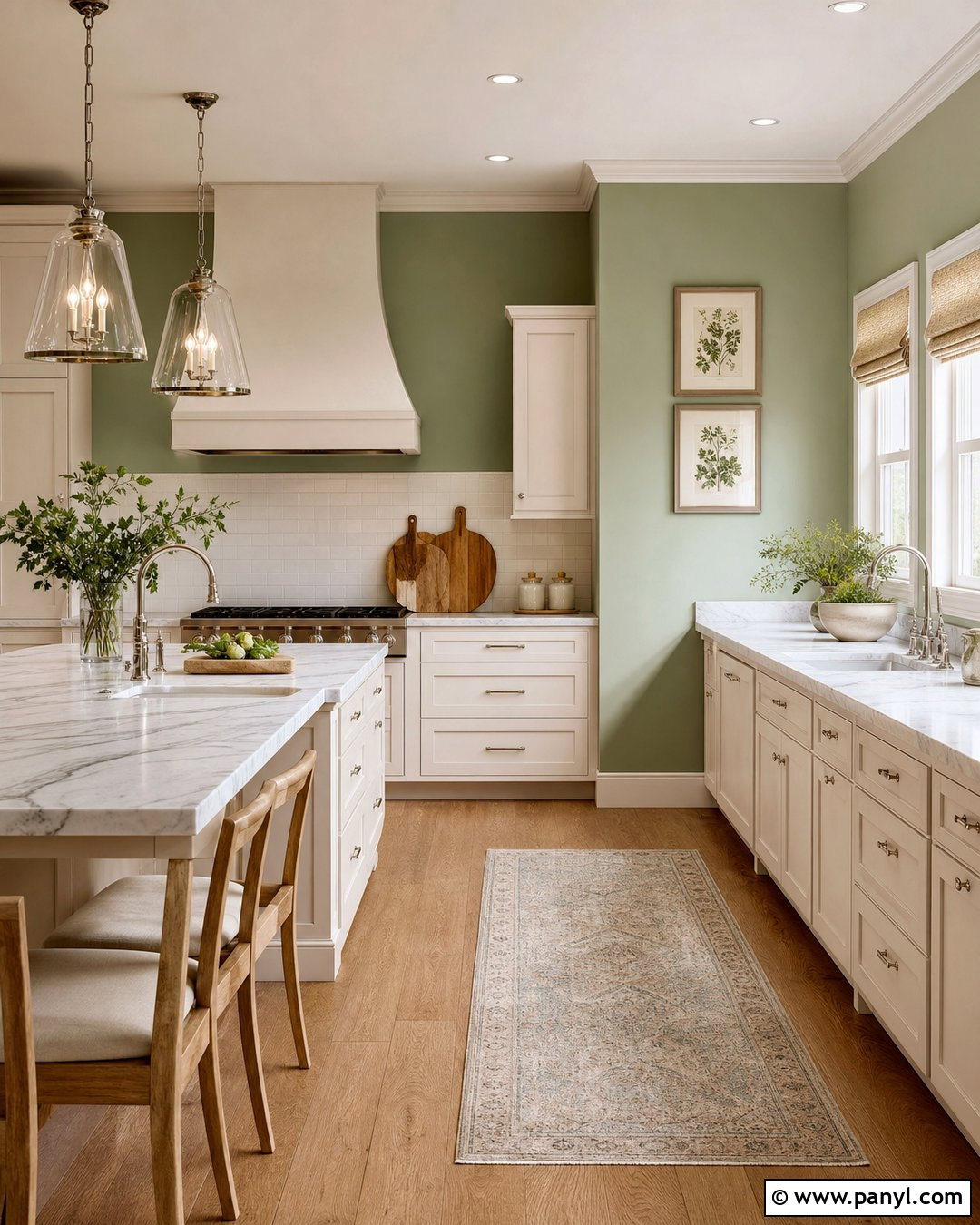
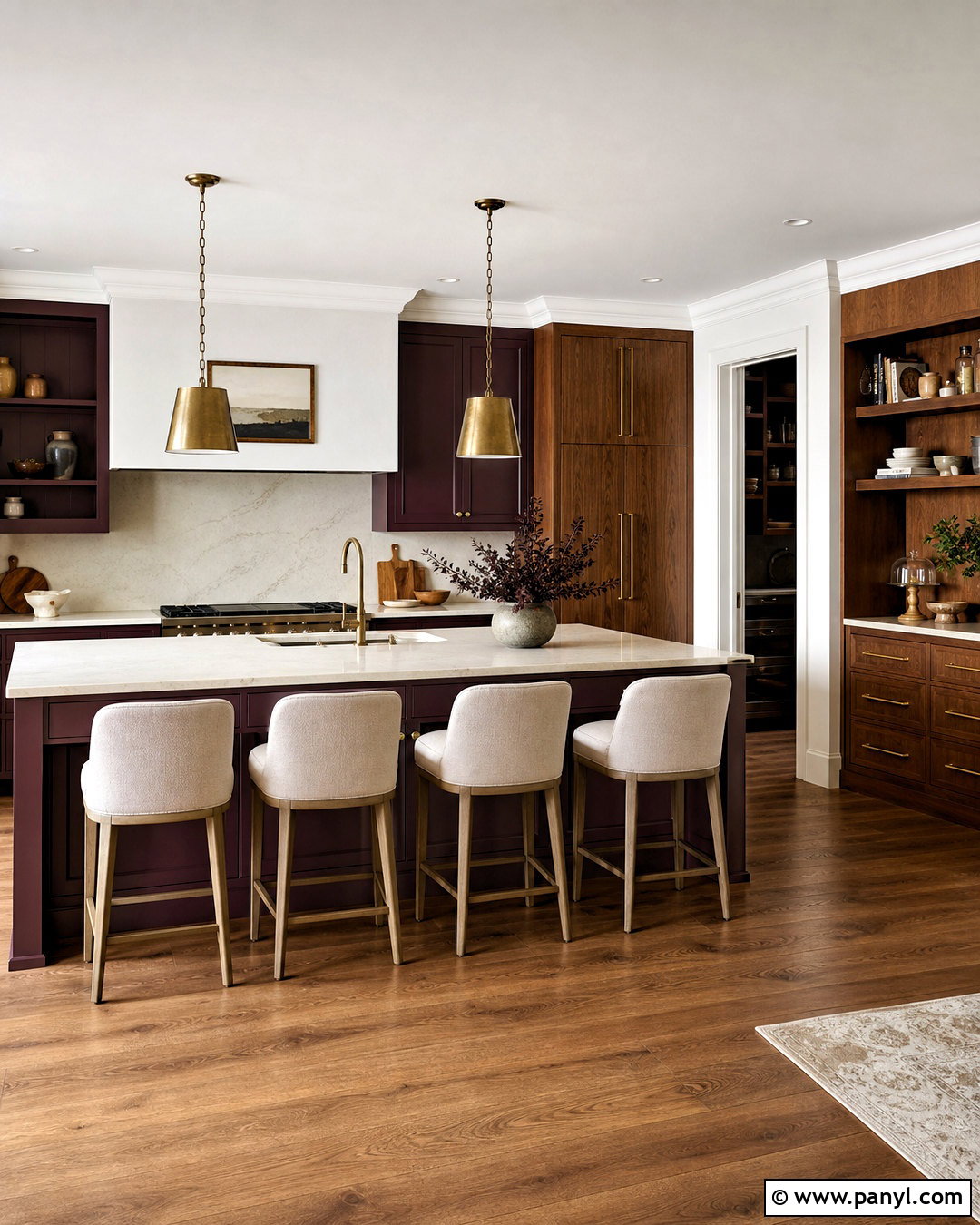
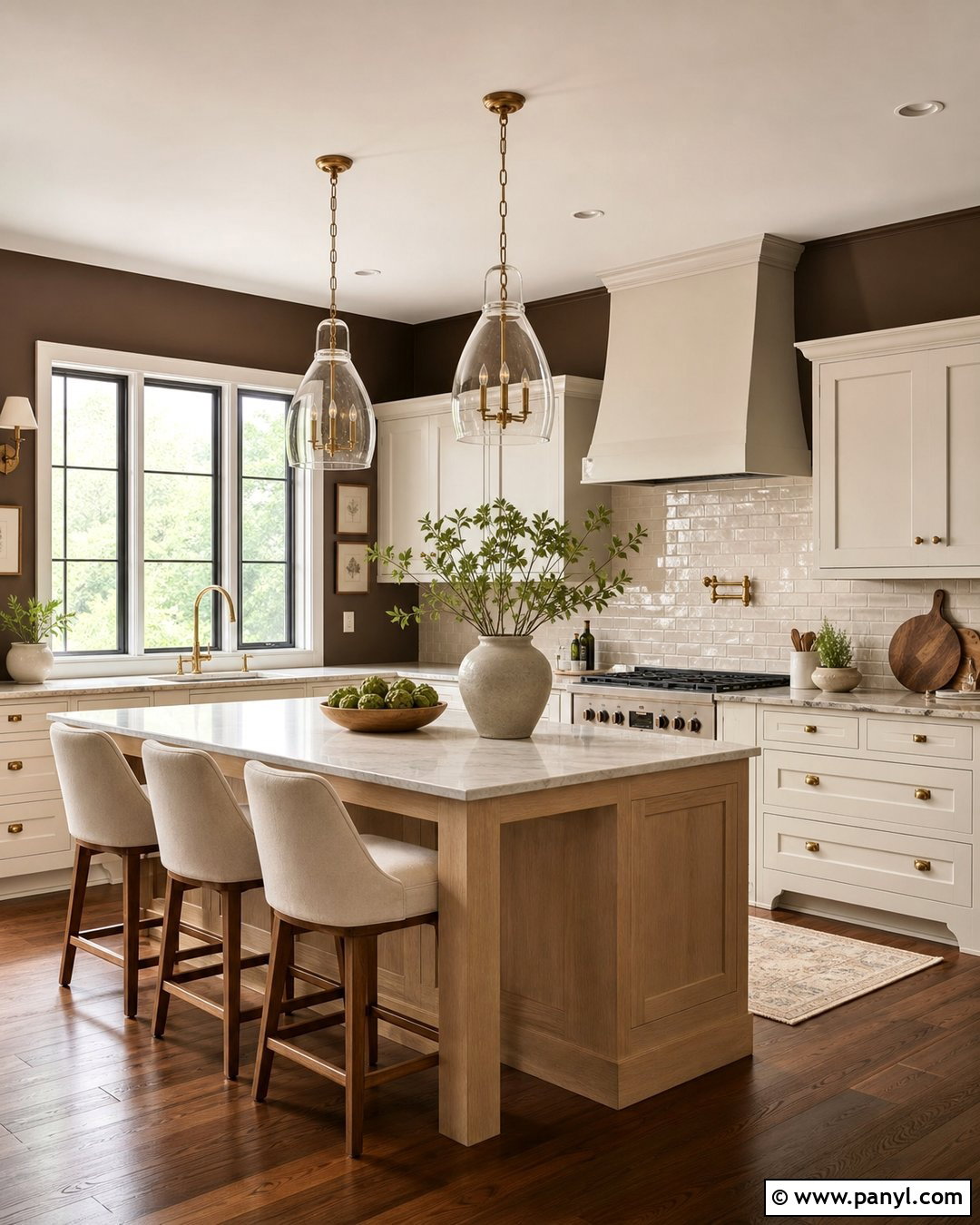
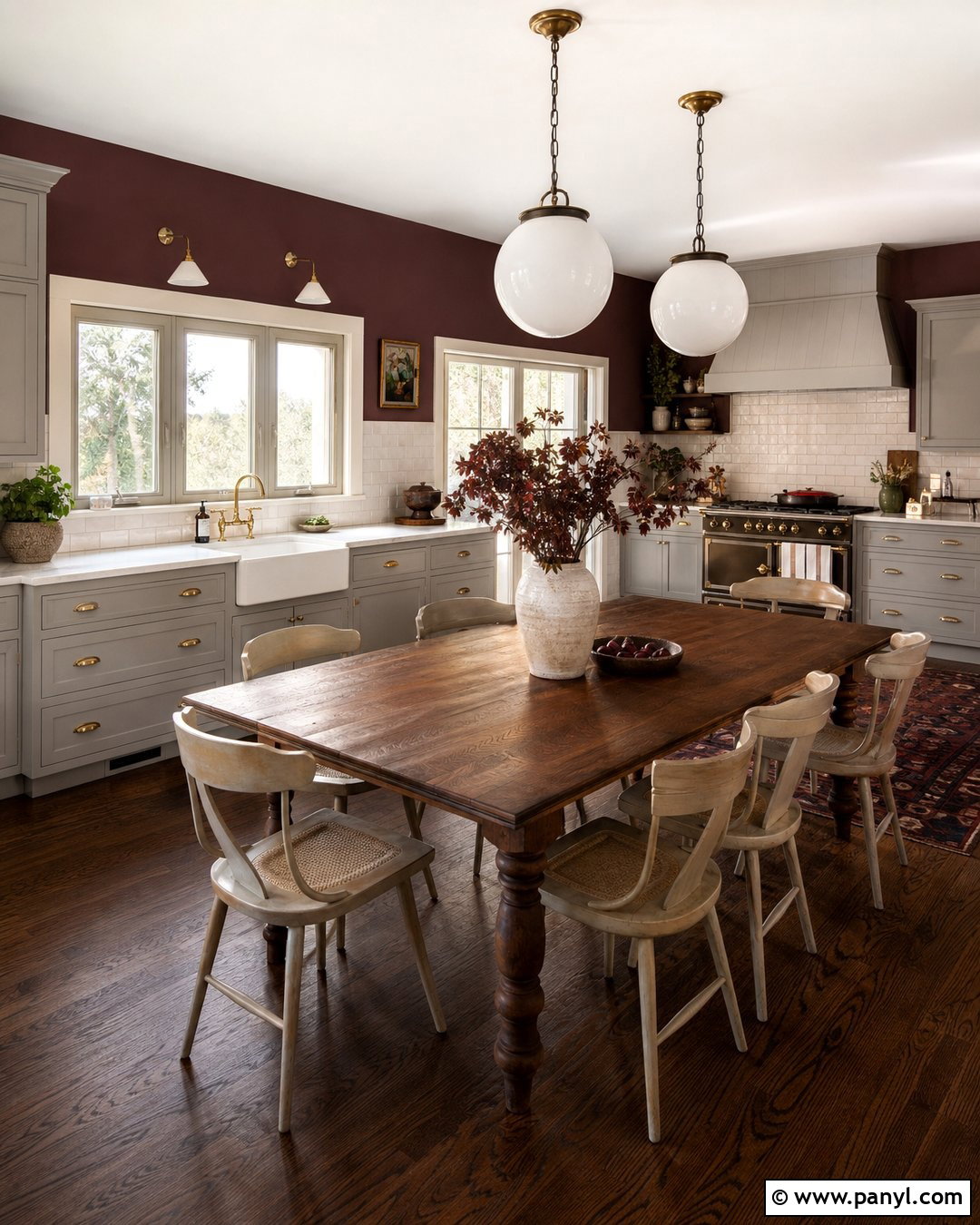
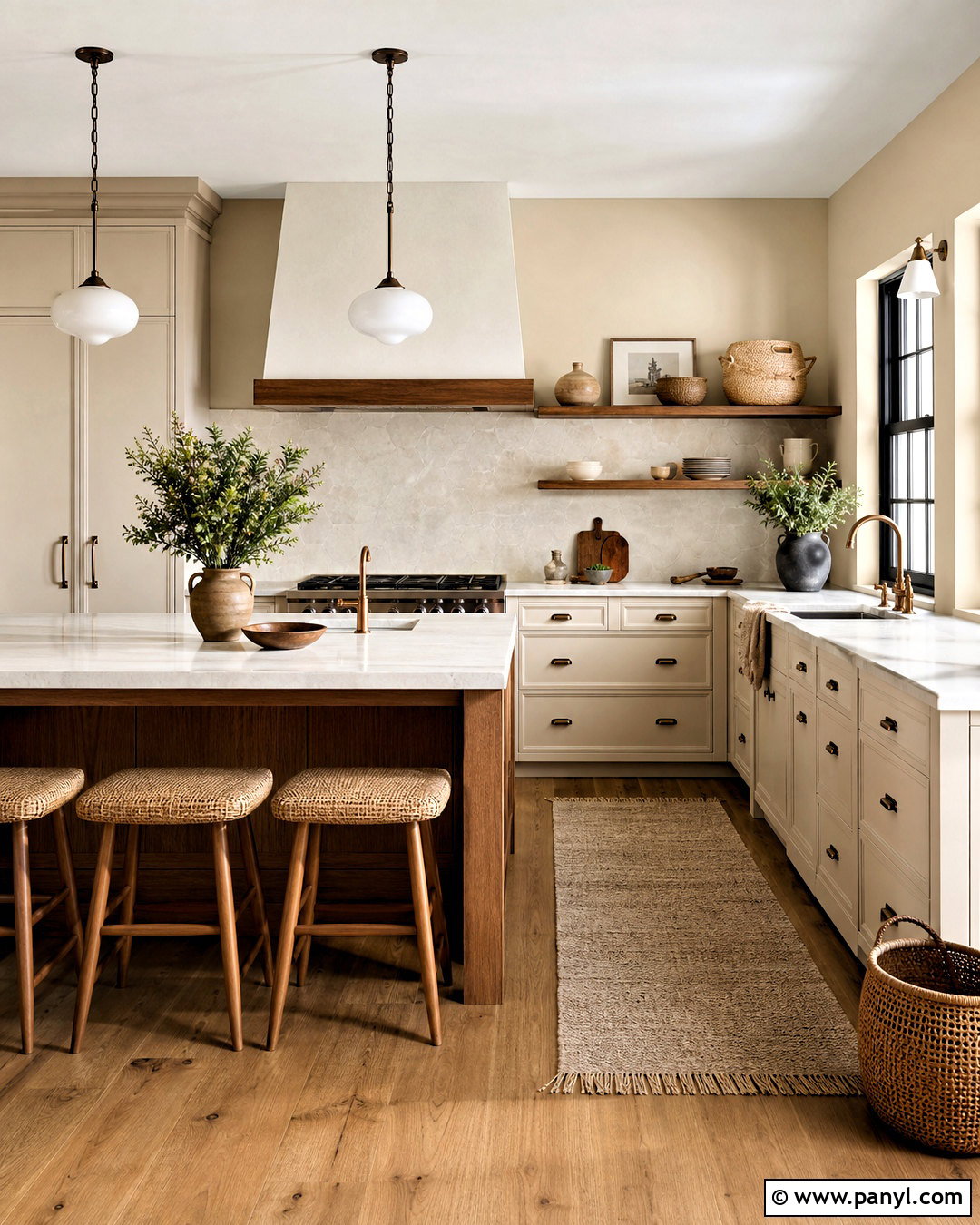
Marble counters give sage green walls a graceful, classic quality, particularly when the stone contains soft gray or muted green veining. Pair the marble with warm white inset cabinets and polished nickel hardware for a refined traditional look. Continue a restrained amount of marble onto the backsplash behind the range, then use simple ivory tile elsewhere to control cost and pattern. Medium-tone oak floors keep the room from feeling formal or cold. Add clear glass pendants, a polished nickel bridge faucet, and linen window shades. Decorative pieces should remain simple, such as white bowls, framed botanical artwork, and wood serving boards. The completed kitchen feels elegant but livable, with natural variations that make the quiet color scheme visually interesting.
11. Sage Green Kitchen Walls With Soapstone Counters
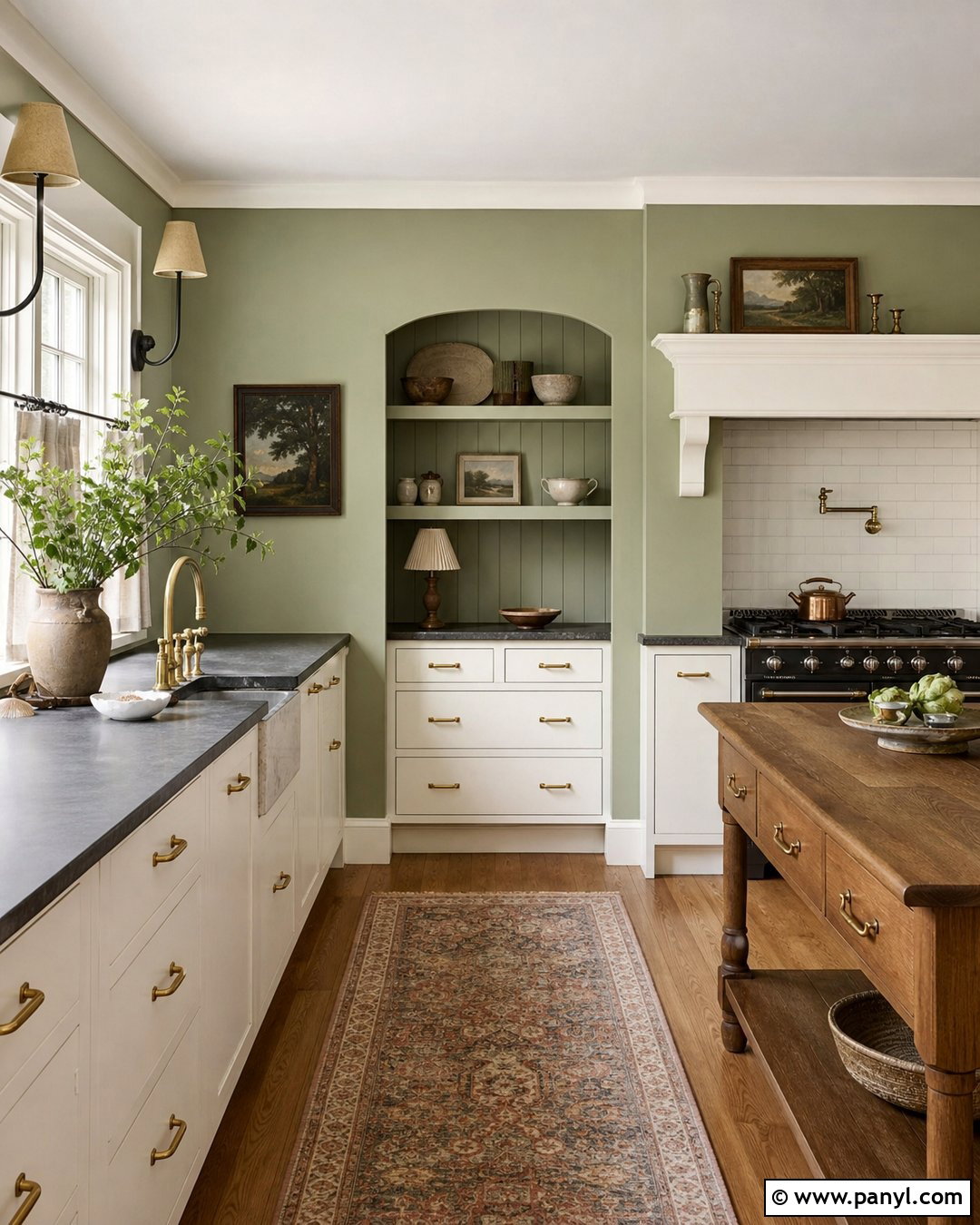
Deep soapstone countertops create a grounded contrast against sage green kitchen walls. Use warm white cabinets so the dark stone does not dominate the room, and select a soapstone slab with delicate pale veining for subtle movement. A matching short backsplash can frame the counters, while painted sage remains visible above it. Add unlacquered brass knobs, a brass faucet, and shaded wall sconces for a timeworn look. Medium oak floors and a butcher block island top introduce additional warmth. Open shelves displaying cream pottery can break up a solid wall of upper cabinets. Finish with linen café curtains and a faded neutral runner. This full scheme suits farmhouse, English country, and traditional kitchens while remaining practical and pleasantly understated.
12. Sage Green Kitchen Walls With White Subway Tile
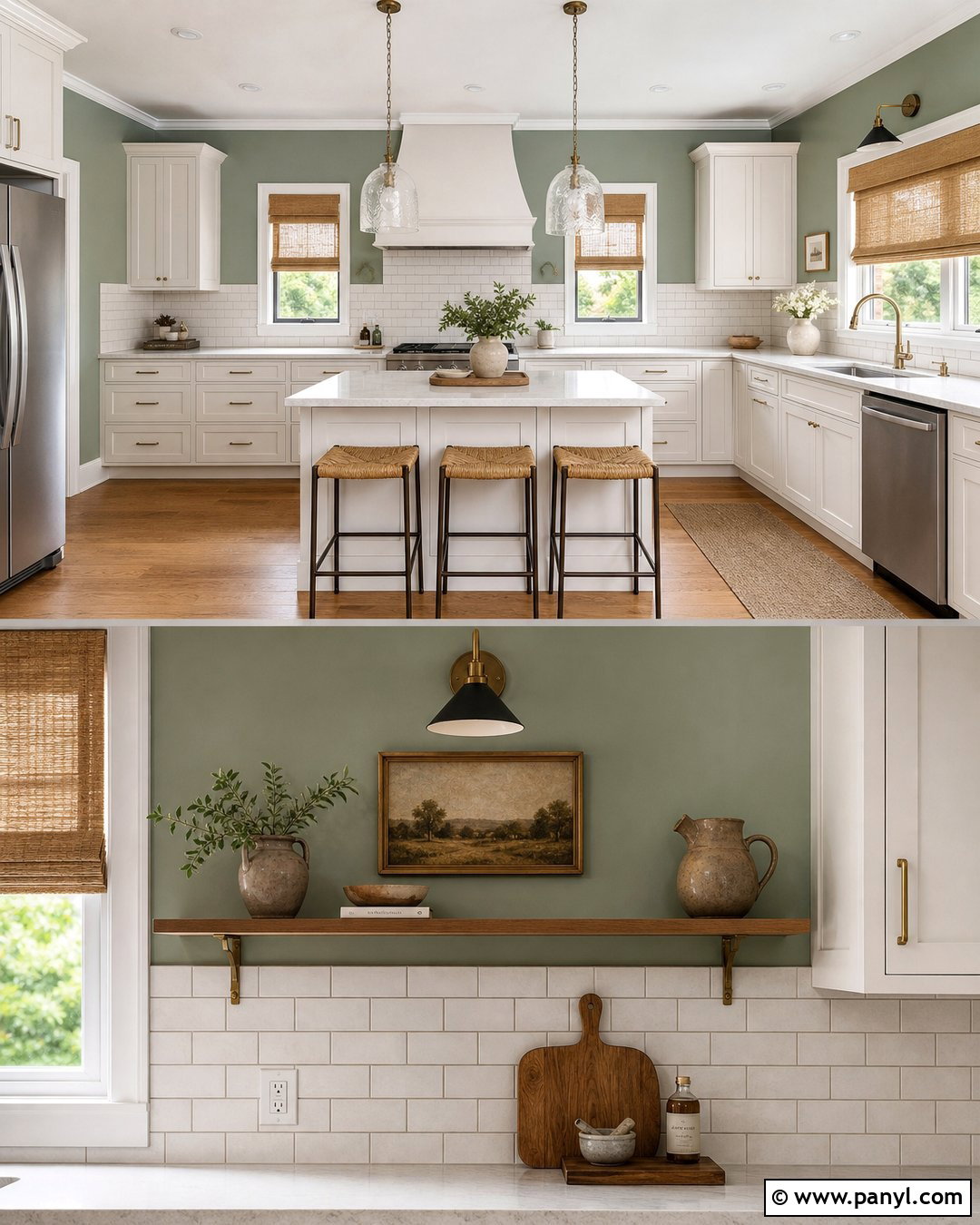
White subway tile forms a clean bridge between sage green walls and cabinetry in nearly any finish. For a classic kitchen, use warm white Shaker cabinets, pale quartz counters, and subway tile with slightly uneven edges. Lay the tile in a traditional running bond and choose light greige grout for definition without harsh lines. Extend the sage above the backsplash and around windows to frame the work zone. Brushed brass hardware, oak flooring, and natural woven shades bring warmth to the white surfaces. Add a slim wood shelf above one section of tile for everyday dishes or small pottery. Clear glass pendants keep sightlines open. The resulting kitchen feels familiar, bright, and thoughtfully layered rather than plain or predictable.
13. Sage Green Kitchen Walls With Zellige Backsplash
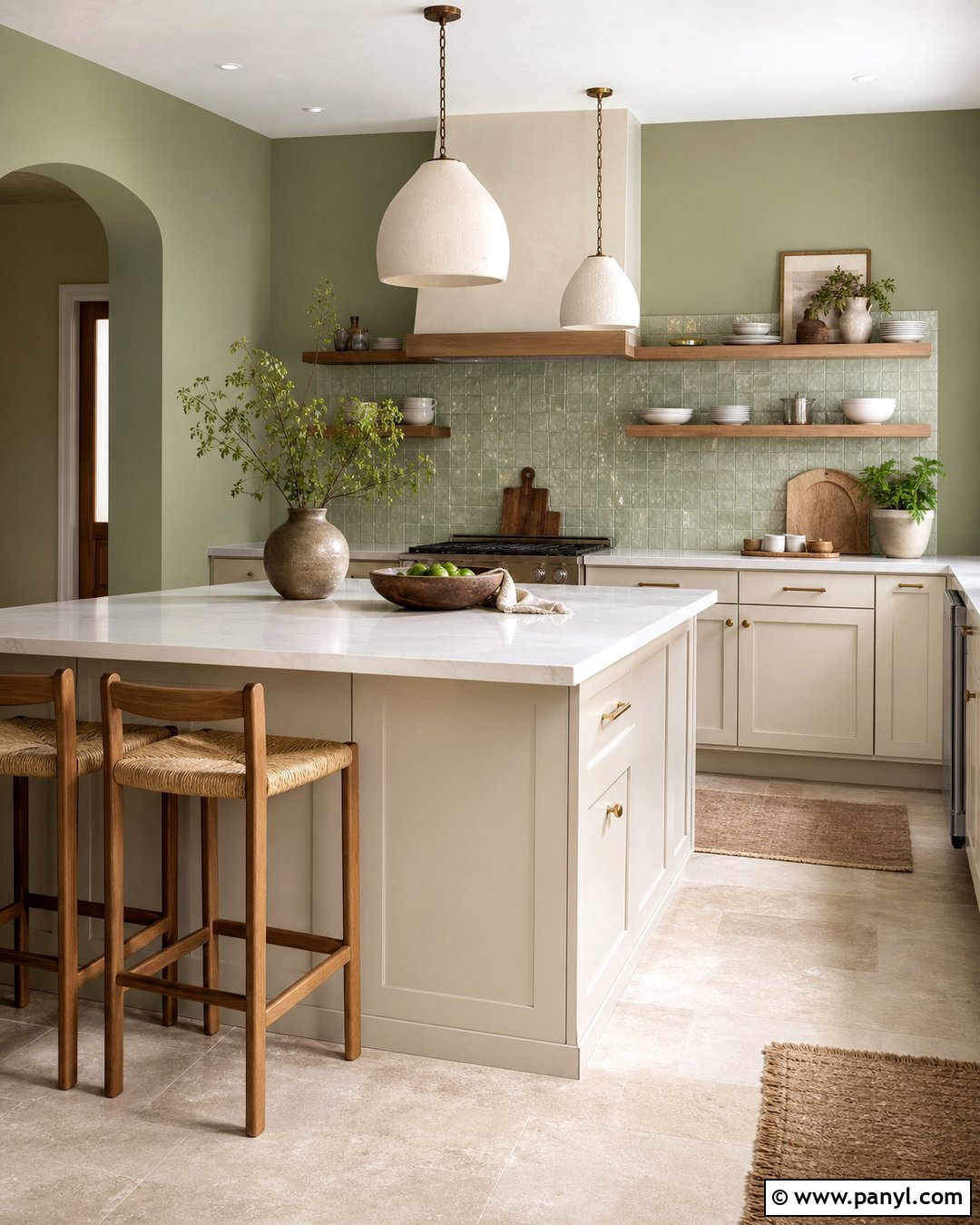
A handmade zellige backsplash gives sage green kitchen walls depth through gentle variations in tone and reflected light. Choose warm white or pale celadon tile, depending on whether you want contrast or a tonal green effect. Pair it with cream cabinets and lightly veined quartz counters to keep the handcrafted surface prominent. Natural oak shelves can replace a few upper cabinets and prevent the room from feeling too polished. Use aged brass pulls, an arched brass faucet, and simple plaster-look pendants. Limestone-look flooring supports the soft, organic palette. Keep styling restrained with white dishes, wood boards, and textured linen. The finished kitchen has a tactile, collected appearance that works particularly well in Mediterranean, cottage, and relaxed contemporary homes.
14. Sage Green Kitchen Walls With Patterned Tile
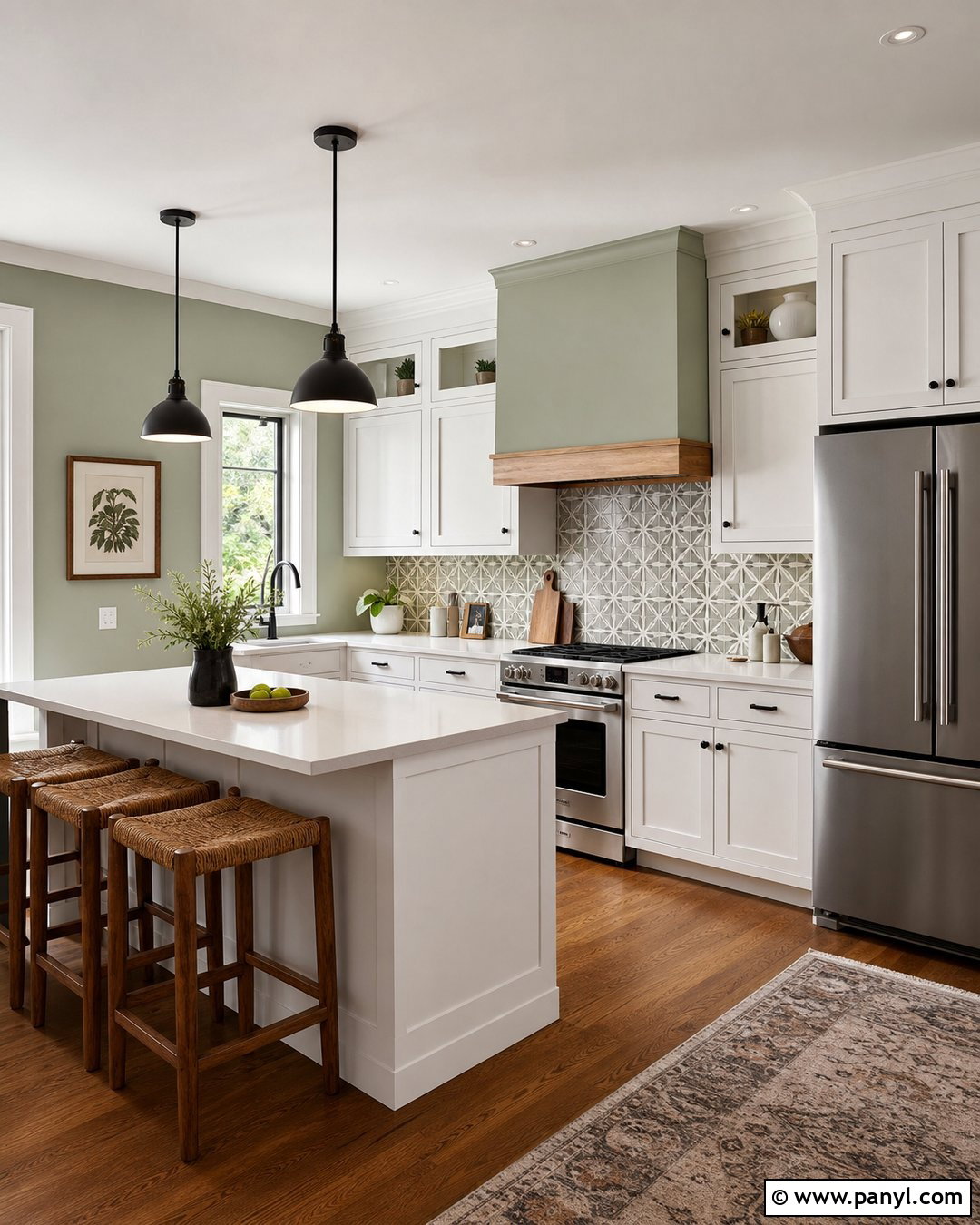
Patterned backsplash tile can live comfortably beside sage green walls when its colors repeat the surrounding palette. Choose a restrained geometric design in sage, cream, and warm gray rather than a highly contrasting multicolor pattern. Use simple white cabinets and solid warm white quartz counters so the backsplash remains clear but not overpowering. Medium oak flooring and woven counter stools add natural texture. Repeat one dark note from the tile through matte black hardware, pendants, and the faucet. Limit decorative accessories to plain ceramics and wood pieces. Keep the sage visible on upper walls, around doorways, and beside the breakfast area. The entire room will feel energetic and coordinated because every finish relates to the same controlled color story.
15. Sage Green Kitchen Walls With Brick Backsplash
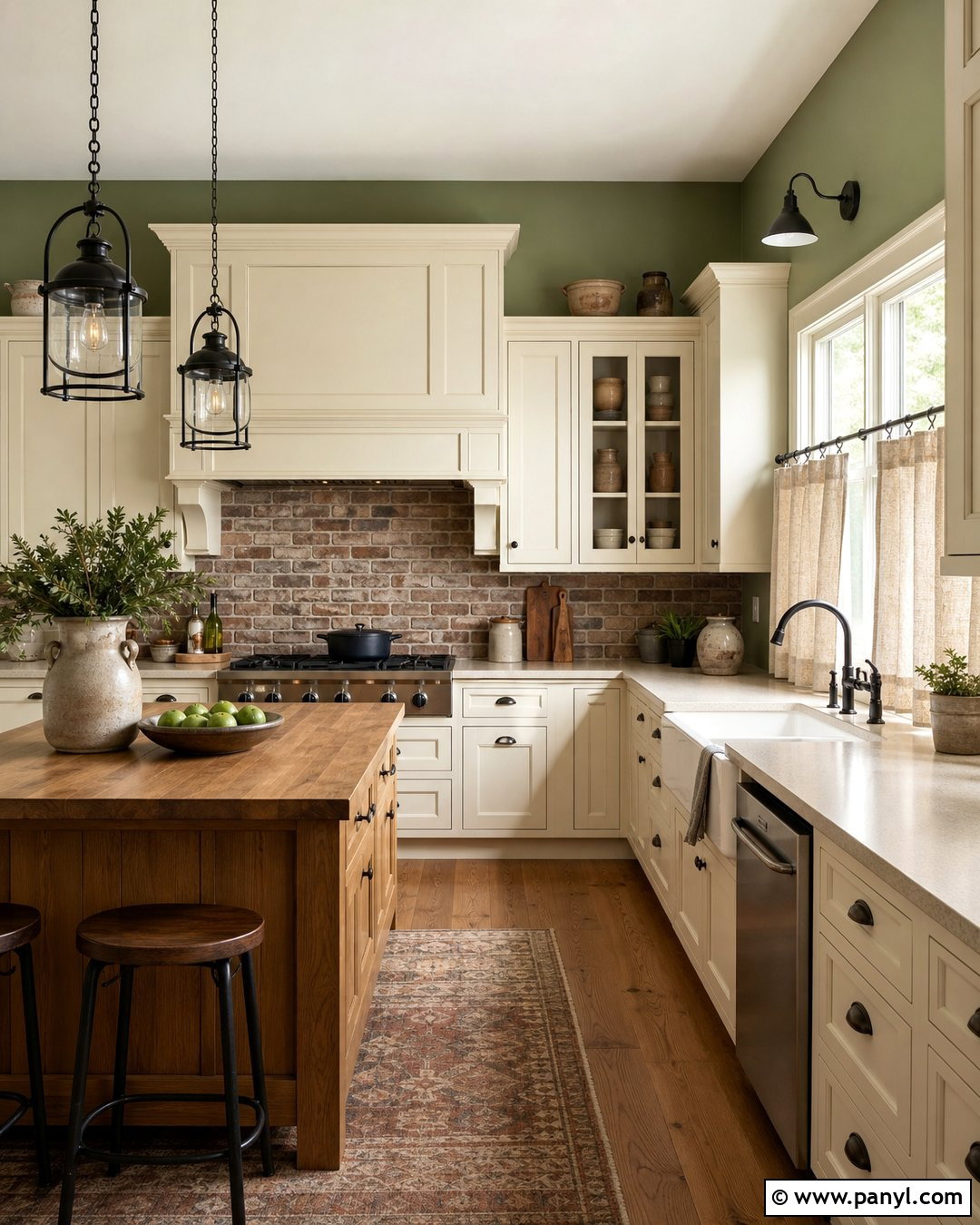
Exposed brick or thin brick veneer brings rustic warmth to sage green kitchen walls. Choose softly weathered red-brown brick with light mortar, then pair it with cream Shaker cabinets and durable beige quartz counters. The sage should be muted and warm enough to complement the earthy masonry. Use medium oak flooring and a matching oak island to continue the natural palette. Aged black hardware, iron pendants, and a dark bronze faucet provide structure without introducing shine. Add a white apron-front sink and linen café curtains for farmhouse character. Keep shelves and counters lightly styled with stoneware and practical wood boards. The completed kitchen feels established and comfortable, as though the materials have developed naturally over time rather than being installed all at once.
16. Sage Green Kitchen Walls With Beadboard
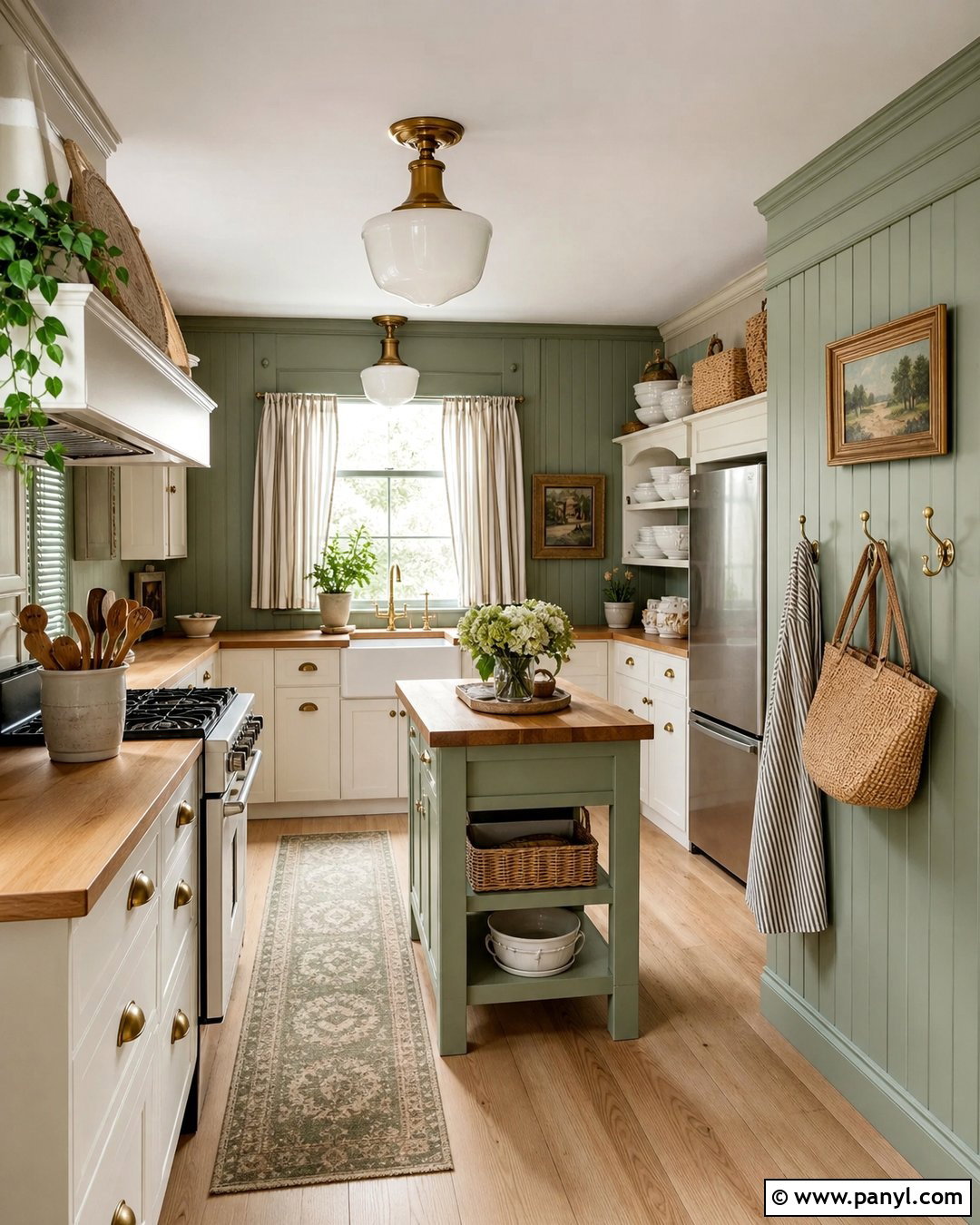
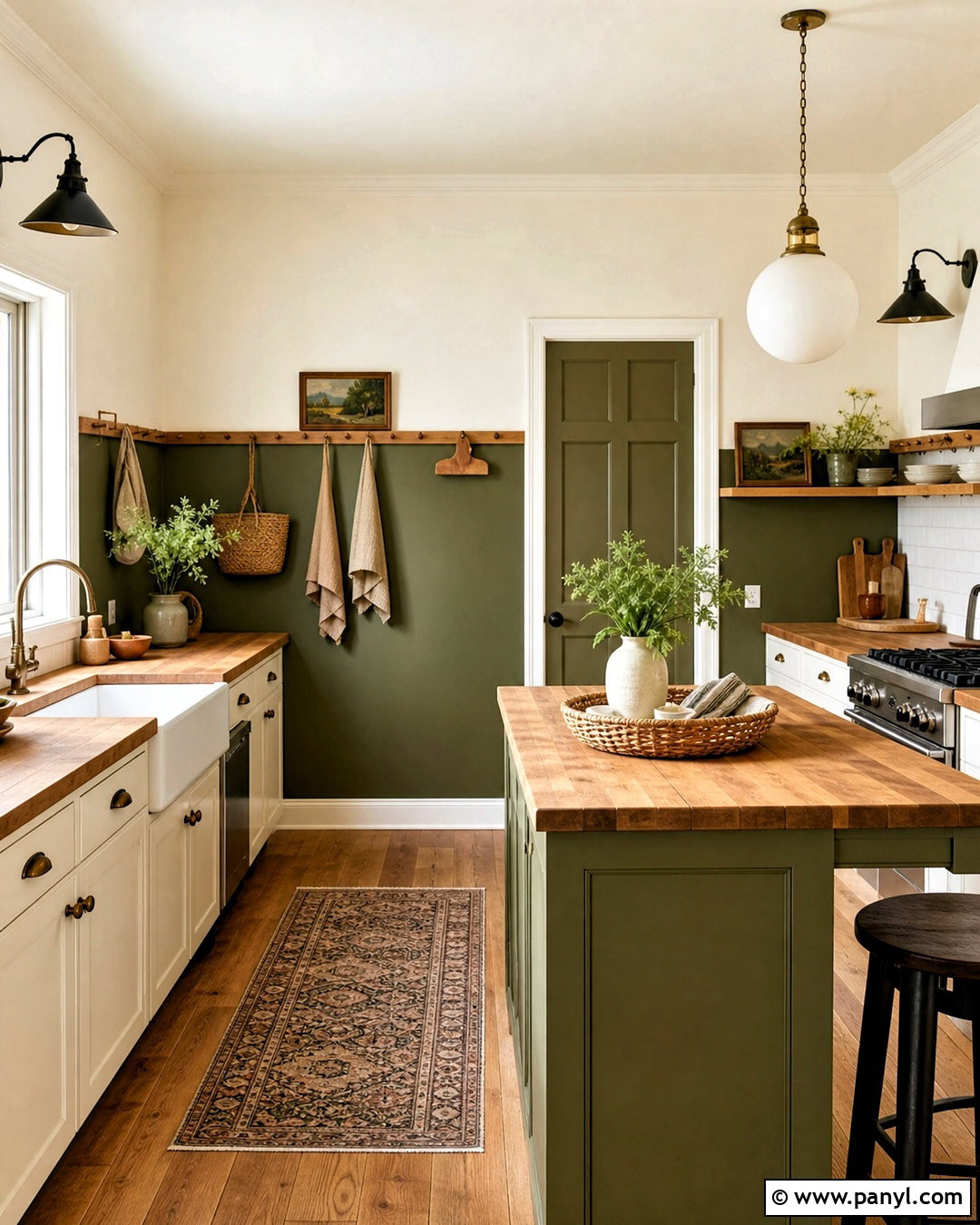
Beadboard gives sage green kitchen walls cottage character while adding subtle vertical texture. Install it on the lower half of the walls and paint it the same sage as the upper surface for a cohesive look. Warm white cabinets, butcher block counters, and an ivory tile backsplash keep the room light and welcoming. Use small brass knobs, traditional cup pulls, and milk-glass ceiling lights for vintage influence. Pale oak or painted wood flooring supports the casual style. A compact freestanding island can provide prep space without making the room feel too fitted. Finish with striped linen curtains, white dishes, and woven baskets. This complete design works especially well in older homes, small kitchens, and breakfast areas where architectural detail adds charm without requiring major construction.
17. Sage Green Kitchen Walls With Wall Paneling
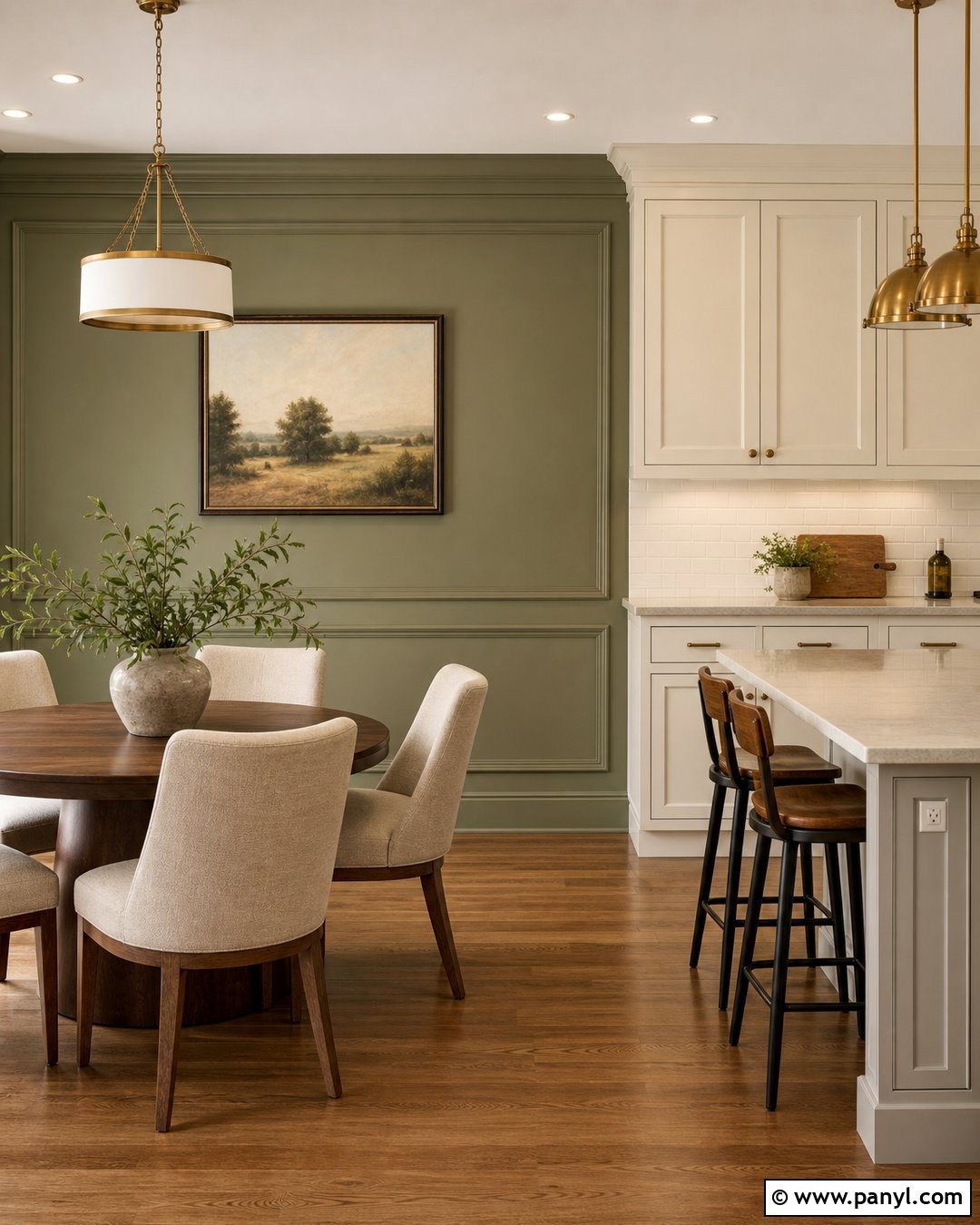
Simple wall paneling makes sage green paint feel more architectural and intentional. Apply slim rectangular molding across the dining side of the kitchen or around a breakfast nook, then paint the wall and trim in one matte sage finish. Pair the feature with warm white cabinetry, pale stone counters, and a softly textured ivory backsplash. A walnut dining table and upholstered oatmeal chairs add depth to the lighter surfaces. Choose aged brass pendants and matching cabinet pulls to connect the cooking and dining zones. Medium oak flooring should run continuously through the space. Keep artwork minimal, using one large landscape print within the paneling. The finished kitchen feels polished and complete without relying on ornate decoration or expensive custom architectural details.
18. Sage Green Kitchen Walls With Open Shelves
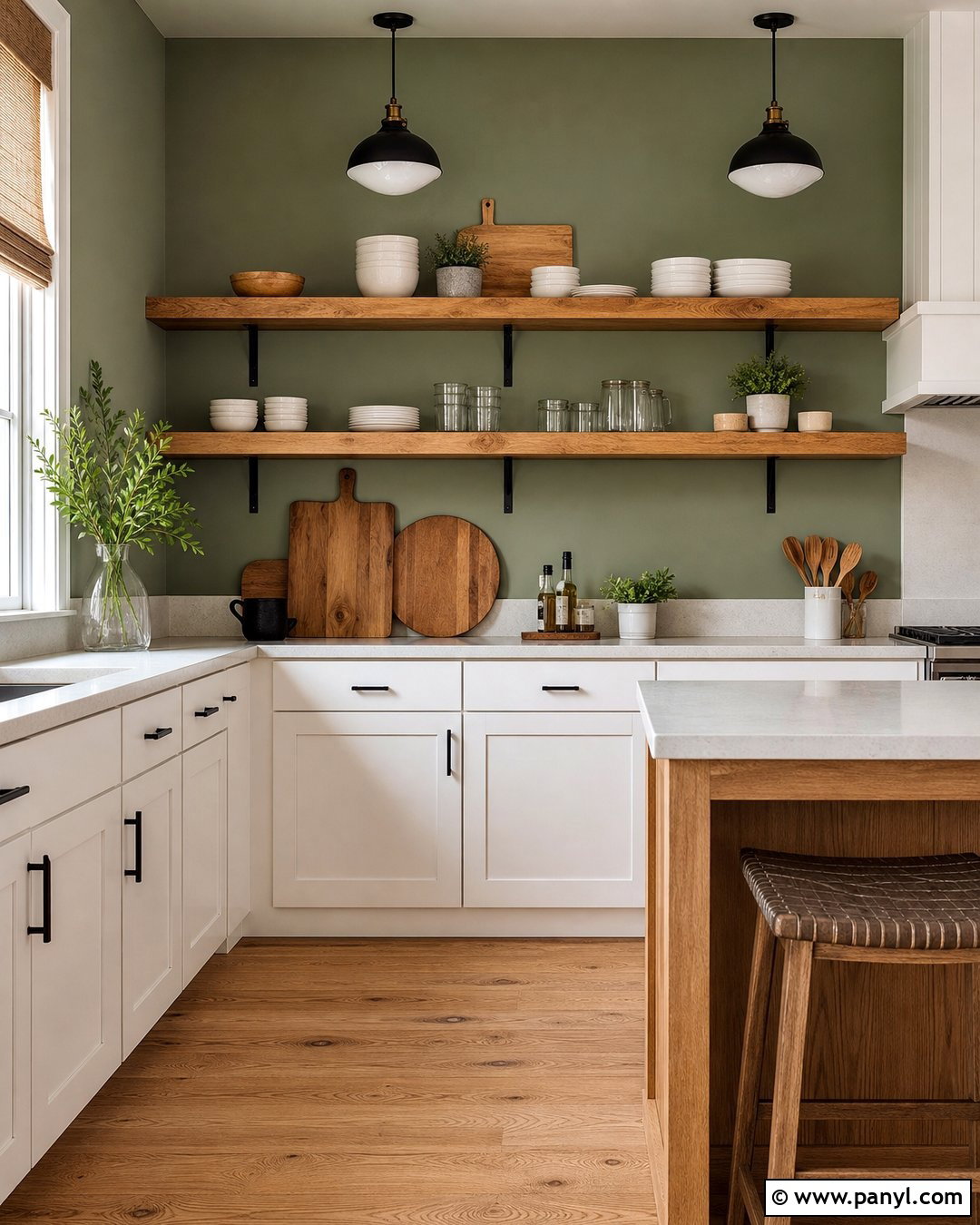
Open shelves can turn sage green kitchen walls into a visible backdrop for practical storage. Choose two or three thick oak shelves over a base cabinet run and leave enough painted wall showing between them. Combine the shelves with white lower cabinets, pale quartz counters, and a short white backsplash that protects the work surface. Black brackets, cabinet pulls, and a black faucet create crisp definition. Arrange everyday white dishes, clear glasses, wood boards, and a few neutral pottery pieces without overcrowding the shelves. Continue the oak tone through flooring or a compact island. Use simple black pendants and linen shades to complete the room. This approach makes a modest kitchen feel open while maintaining useful storage and a coherent material palette.
19. Sage Green Kitchen Walls With Brass Hardware
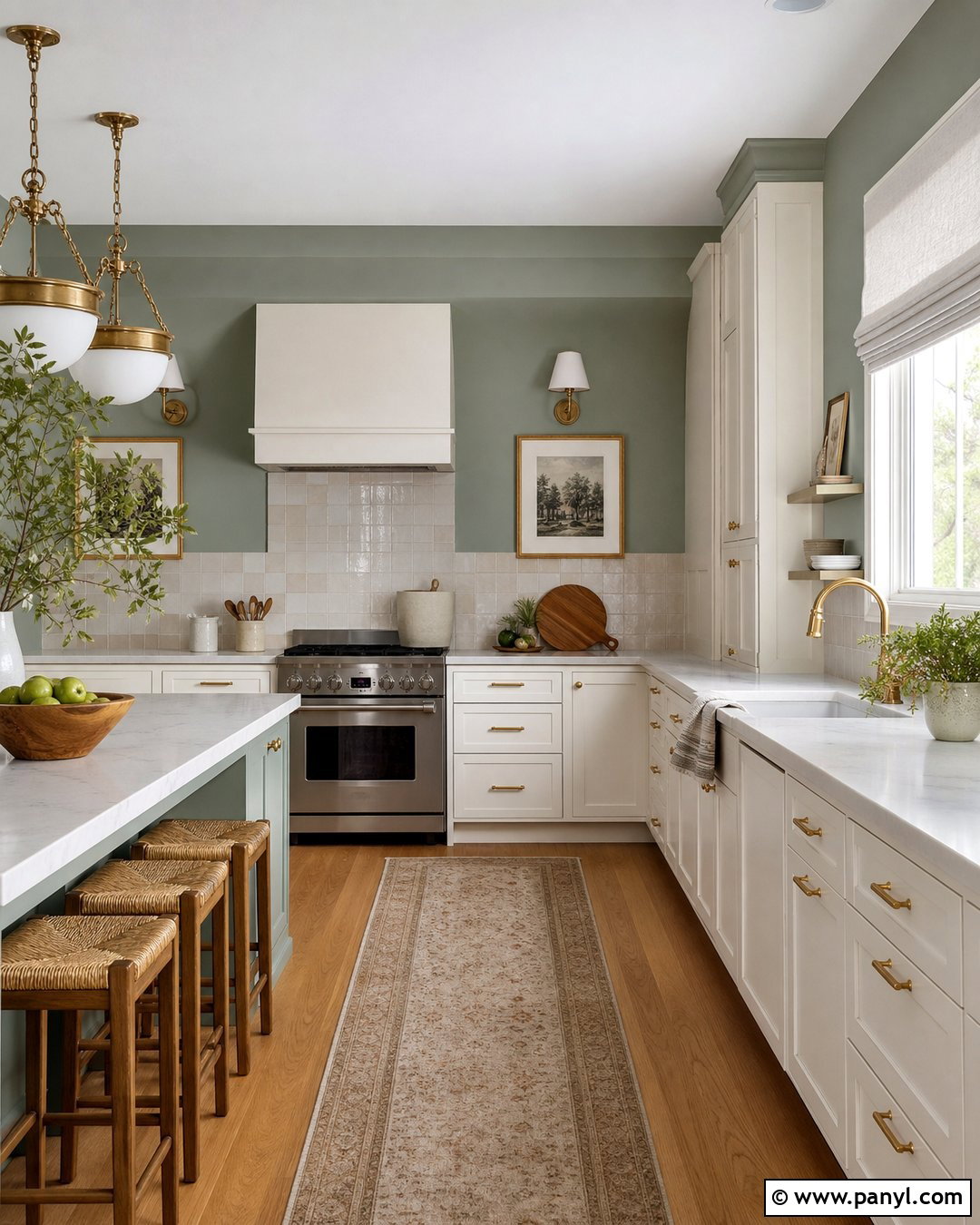
Brushed brass creates a warm highlight against sage green kitchen walls without overpowering their muted color. Build the room around warm white cabinets, gently veined quartz counters, and a cream handmade tile backsplash. Use the same restrained brass finish for cabinet pulls, the faucet, pendants, and two small wall sconces. Avoid mixing highly polished gold with aged brass, since inconsistent finishes can make the room feel disconnected. Medium oak flooring and natural woven stools balance the subtle shine. Add linen Roman shades and a faded beige runner to soften the hard surfaces. The completed kitchen should feel warm and tailored, with brass appearing in measured touches rather than becoming the main feature. Sage remains the visual backdrop that holds every element together.
20. Sage Green Kitchen Walls With Matte Black Accents
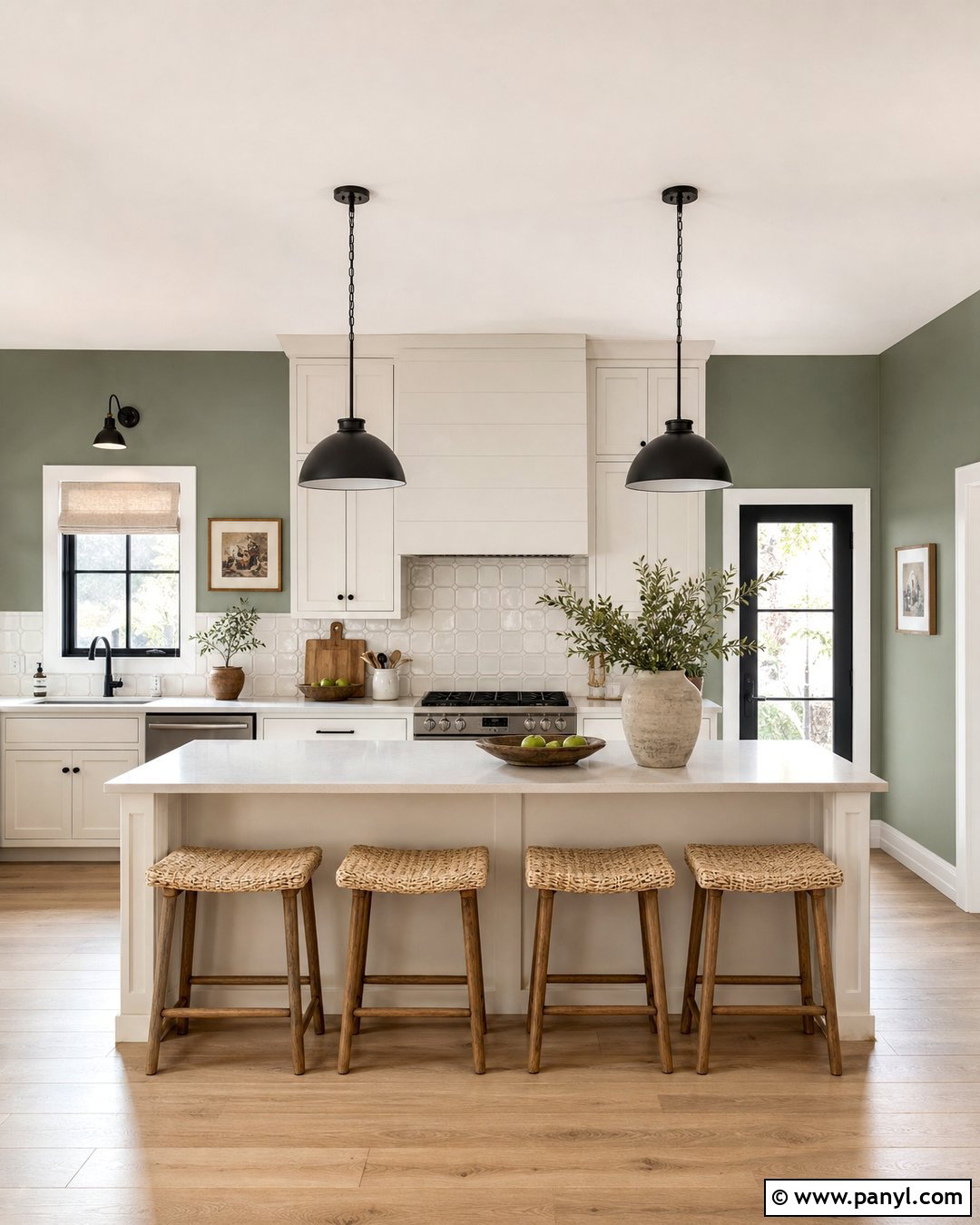
Matte black accents sharpen sage green walls and help a pale kitchen feel more structured. Start with light oak cabinets or warm white Shaker doors, then add black pulls, a black faucet, slim window frames, and simple dome pendants. Use creamy quartz counters and an off-white backsplash to prevent the contrast from becoming too severe. Pale oak flooring keeps the lower half of the space warm. Repeat black only a few times through counter stools, framed artwork, or the range hood trim. Natural linen shades and simple pottery soften the graphic lines. This cohesive look works well in modern farmhouse and transitional kitchens because it combines familiar materials with cleaner details. The sage provides enough color to keep the black-and-white scheme from feeling generic.
21. Light Sage Green Kitchen Walls
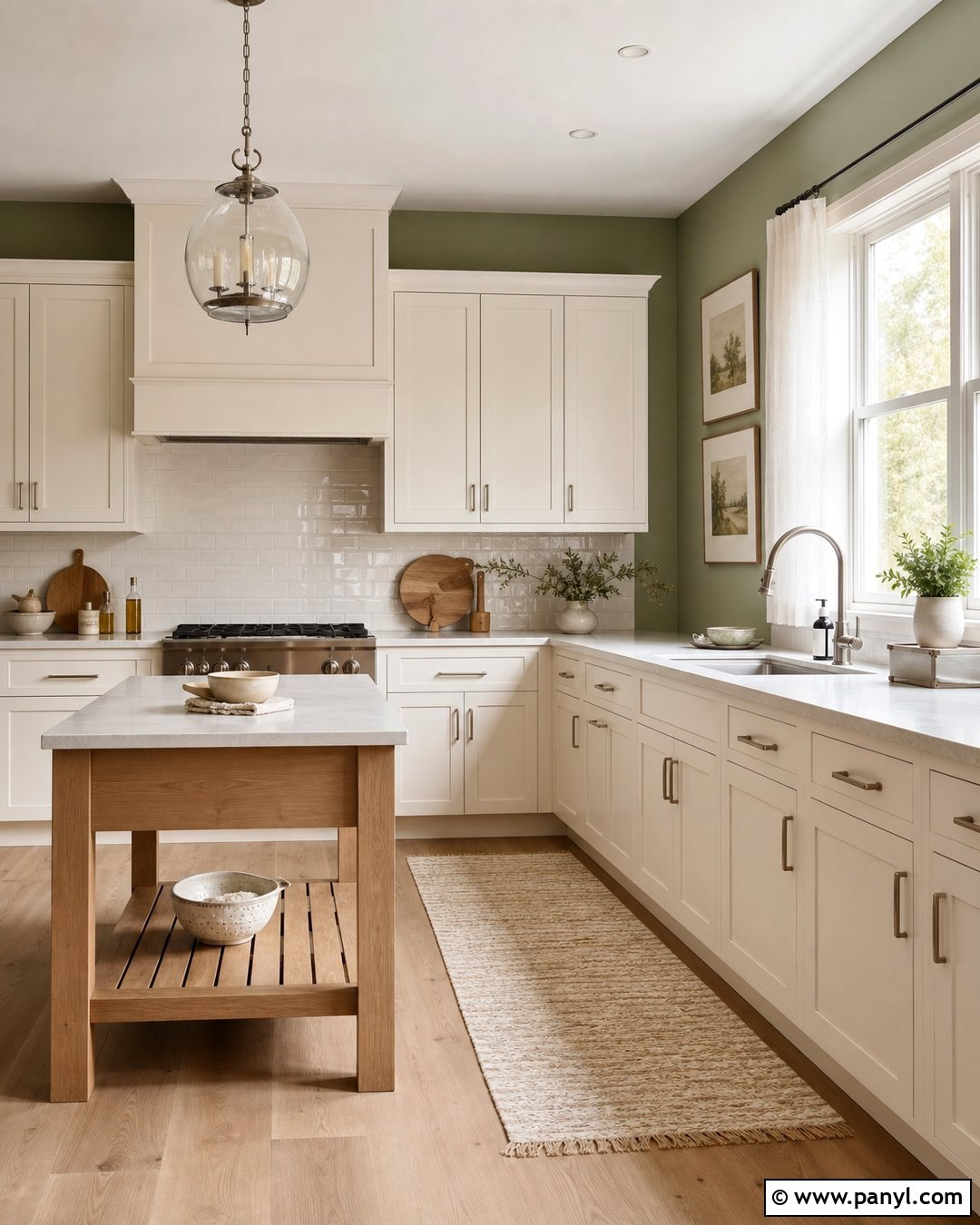
Light sage green walls can brighten a small kitchen while adding more personality than basic white or pale gray. Pair the delicate shade with warm white cabinets and slim brushed nickel pulls for a clean foundation. Use white quartz counters, a glossy ivory backsplash, and pale oak flooring to reflect as much daylight as possible. A small rolling island in natural wood offers flexible prep space without crowding the room. Choose glass pendants or flush ceiling lights that maintain open sightlines. Keep window treatments sheer and counters mostly clear. A cream runner and a few handmade green-gray ceramics add controlled texture. The finished kitchen feels spacious and calm because the pale surfaces flow together, while the gentle green prevents the room from appearing sterile.
22. Dark Sage Green Kitchen Walls
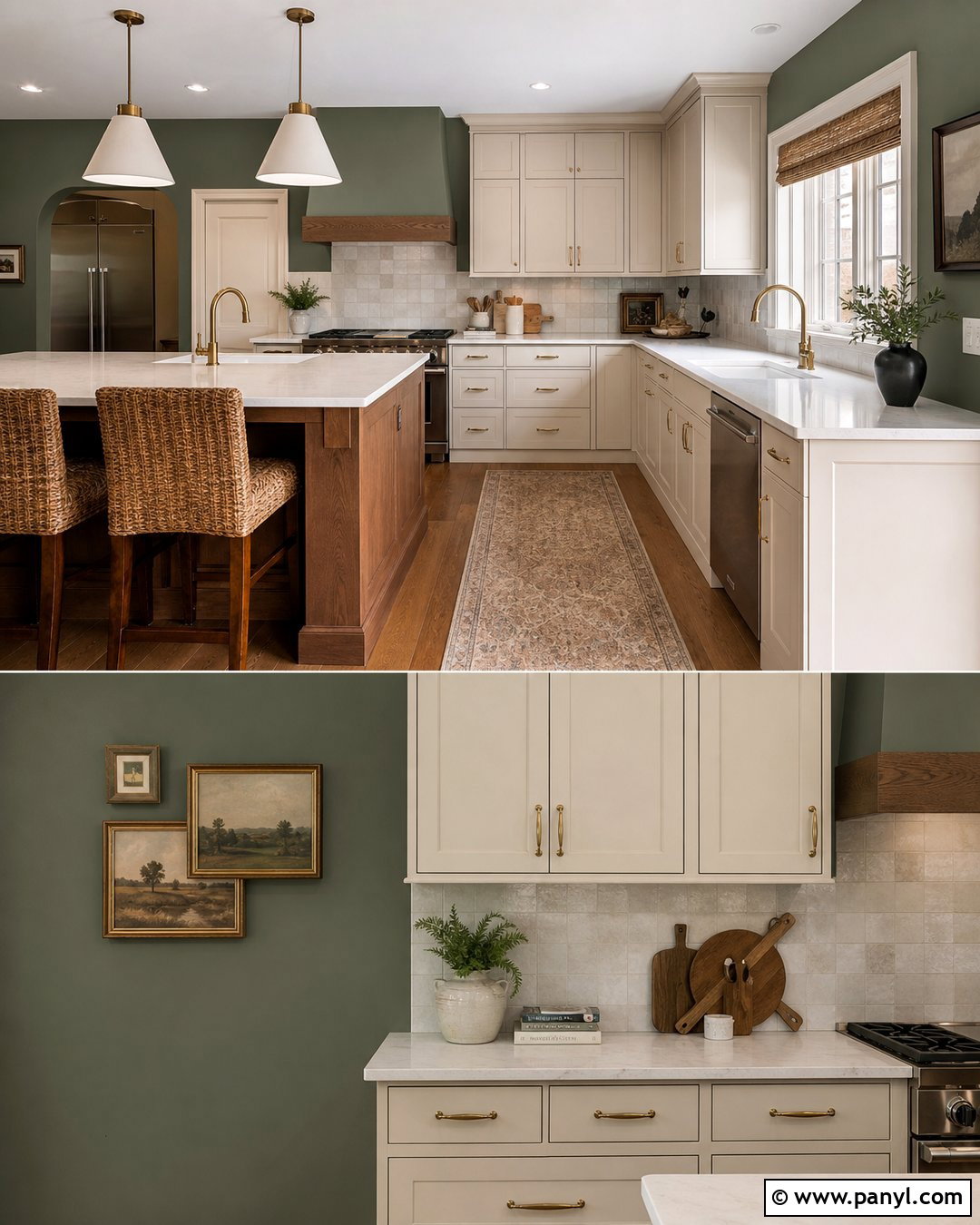
Dark sage green walls can make a large, bright kitchen feel intimate and grounded. Balance the deeper paint with cream cabinets, wide white quartz counters, and a light limestone backsplash. Use warm oak on the island and flooring so the design remains earthy rather than dramatic. Aged brass hardware and oversized white pendants add contrast against the saturated walls. If the room has tall ceilings, carry the sage above the cabinets to emphasize the architecture. Keep window trim cream to frame natural light. Add woven stools and a muted vintage-style runner for softness. The complete look is rich but still relaxed, especially when the green has warm gray undertones. Test the shade throughout the day to ensure it never reads too cool or shadowy.
23. Sage Green Kitchen Walls With Terracotta Floors
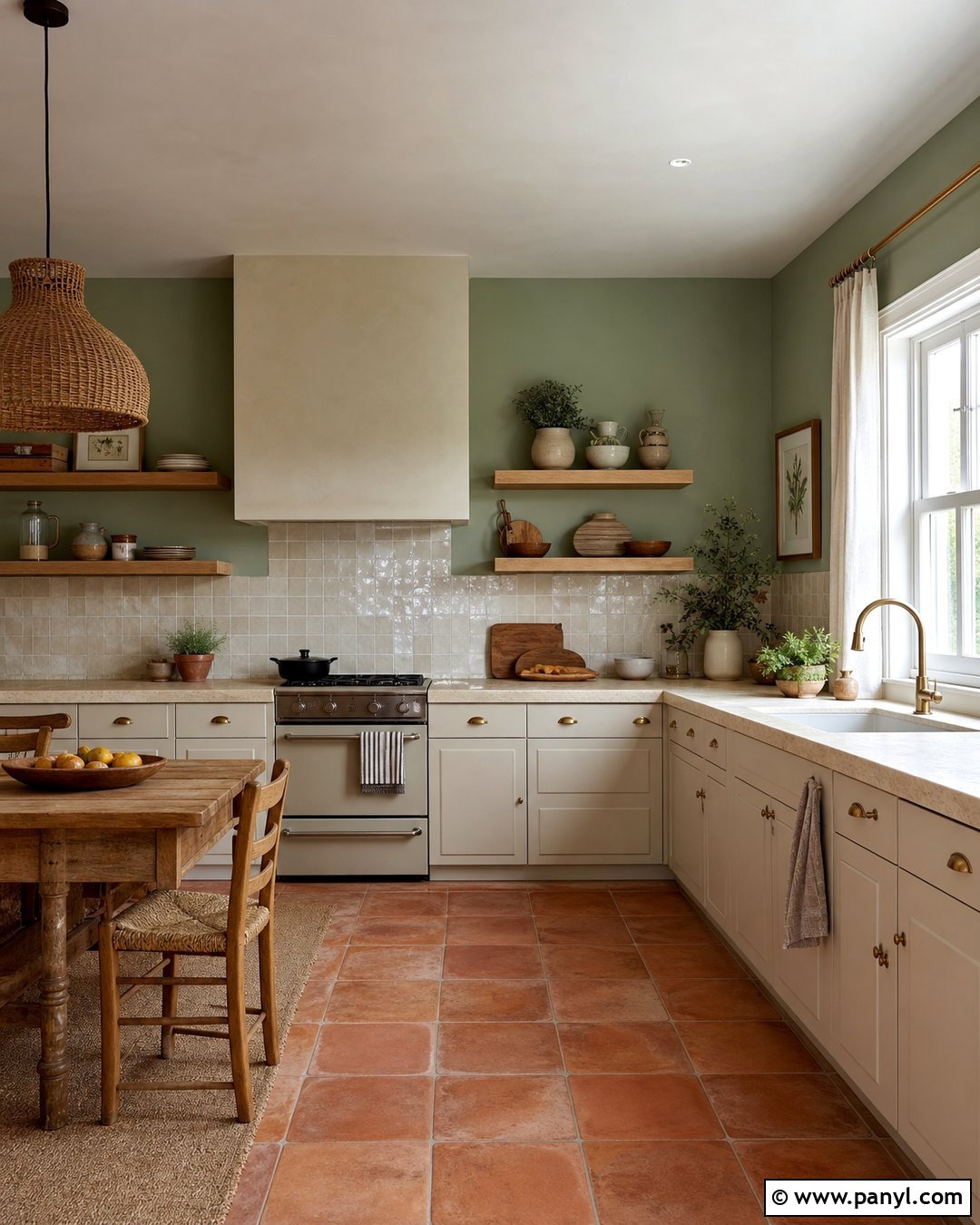
Terracotta flooring brings sunbaked warmth to sage green kitchen walls and creates a naturally balanced palette. Select matte, softly varied tiles in muted rust and clay tones rather than bright orange. Pair them with cream cabinets, honed beige stone counters, and an ivory zellige backsplash. Natural oak shelving and a simple oak table reinforce the organic character. Use aged brass hardware and woven pendant lights for warmth, but keep their shapes clean to avoid making the kitchen overly rustic. Linen café curtains and off-white pottery add softness. Repeat small touches of terracotta in a runner or ceramic bowl. The finished room feels welcoming and established, with cool sage balancing the warm floor and pale cabinetry keeping the overall design bright.
24. Sage Green Kitchen Walls With Light Wood Floors
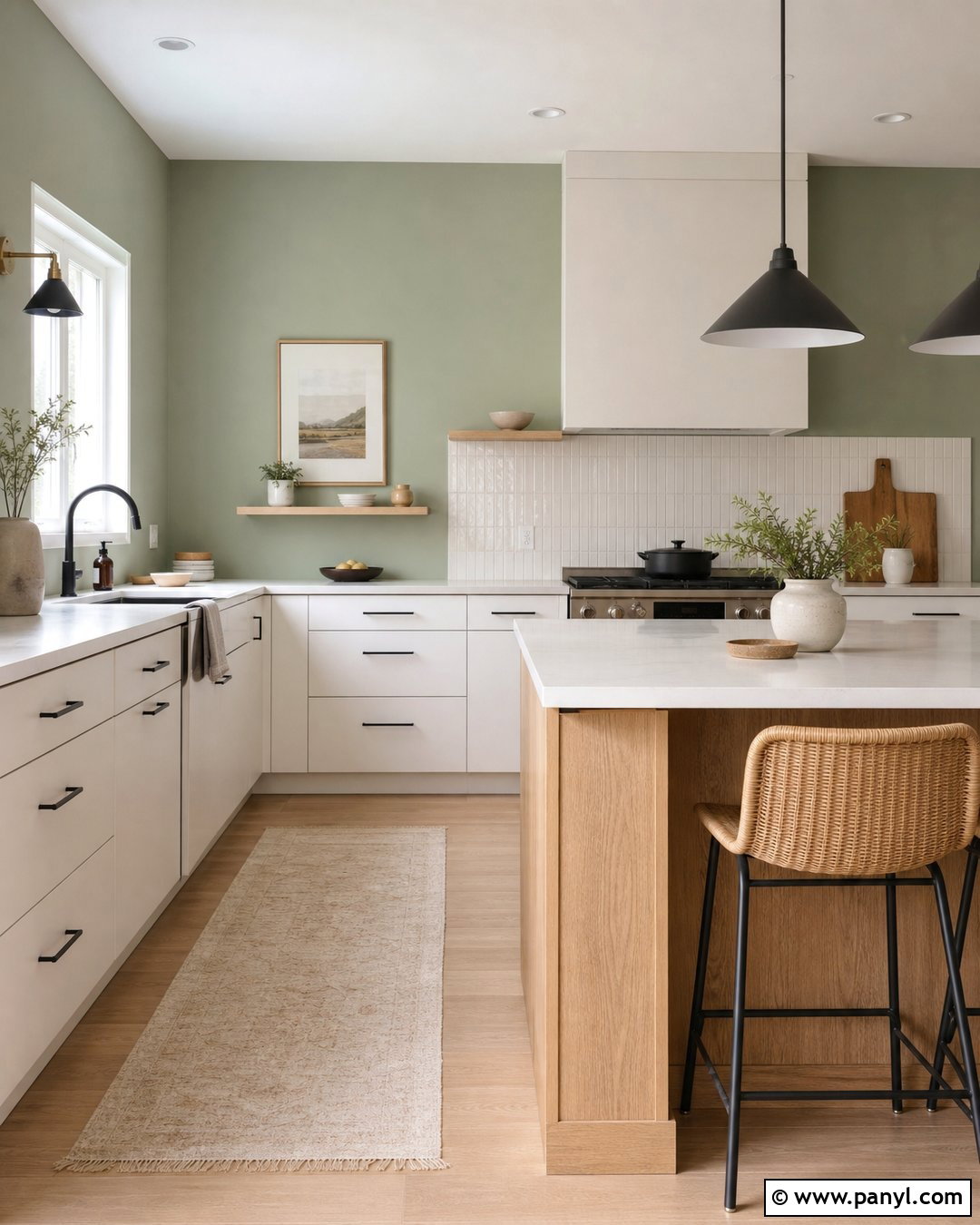
Pale wood flooring makes sage green kitchen walls feel airy and contemporary. Choose wide planks with a matte natural finish and minimal yellow or gray staining. Combine them with white flat-panel cabinets, thin black pulls, and warm white quartz counters. An ivory vertical tile backsplash adds subtle height and texture without breaking the quiet palette. Use a light oak island or dining table to repeat the floor tone at eye level. Simple black pendants and a black faucet provide definition, while woven stools keep the room comfortable. Add a soft cream runner and plain ceramic accessories instead of busy patterns. This complete design suits Scandinavian and modern kitchens, delivering warmth through wood while keeping the cabinetry, lighting, and decorative layers streamlined.
25. Sage Green Kitchen Walls With Dark Wood Floors
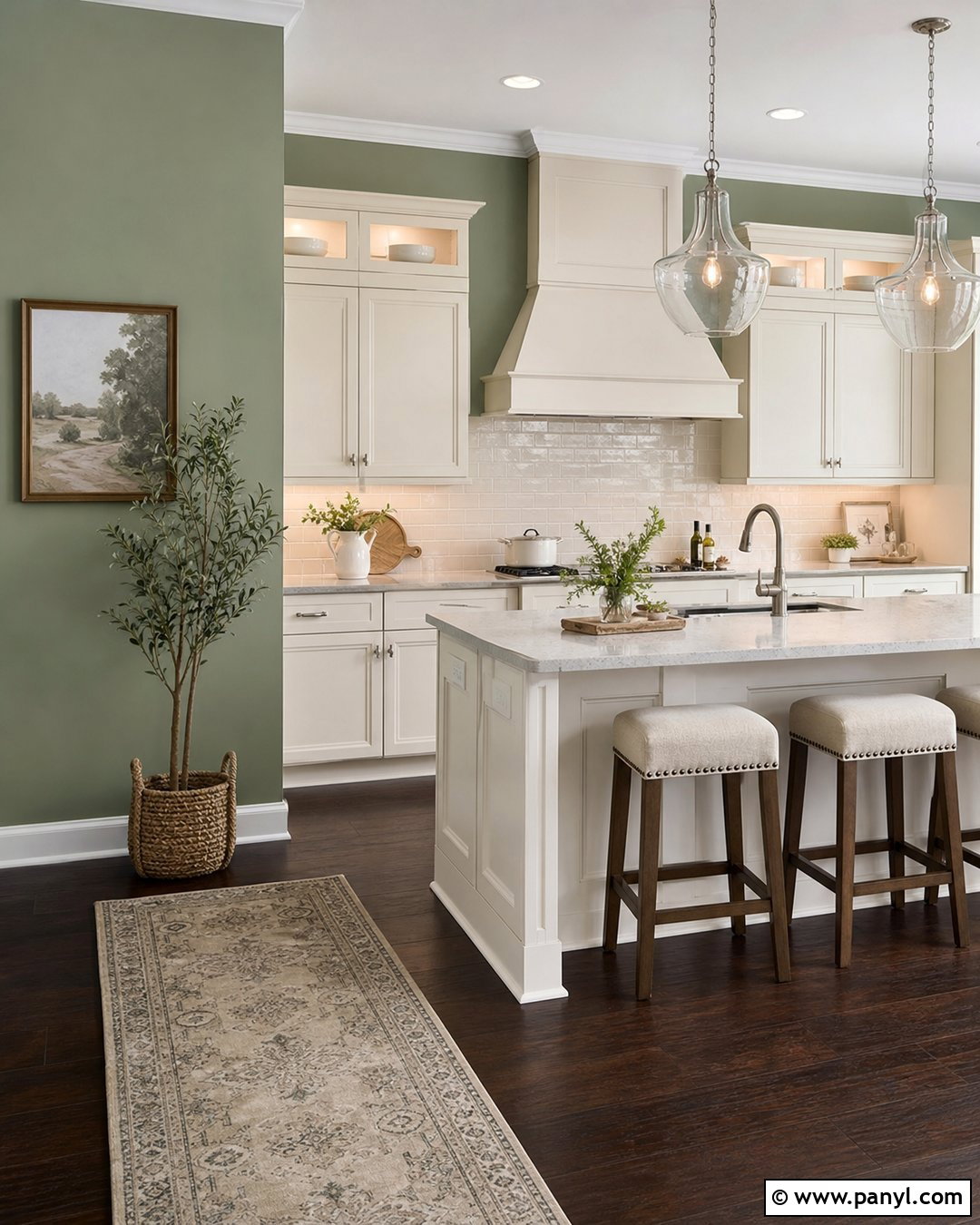
Dark wood floors can give sage green walls a classic, substantial appearance when the upper half of the kitchen remains light. Choose warm white inset cabinets, pale quartz counters, and a glossy cream backsplash to balance the deep flooring. A medium sage with gentle gray undertones will connect the dark wood to the pale cabinetry. Use polished nickel hardware and glass pendants for a crisp traditional finish. A white island with upholstered beige stools keeps the center of the room bright. Add a washable runner containing cream, sage, and faded brown to soften the floor. Natural linen shades and restrained botanical artwork complete the look. The finished kitchen feels elegant and grounded without becoming dark, formal, or visually heavy.
26. Sage Green Kitchen Walls In A Small Kitchen
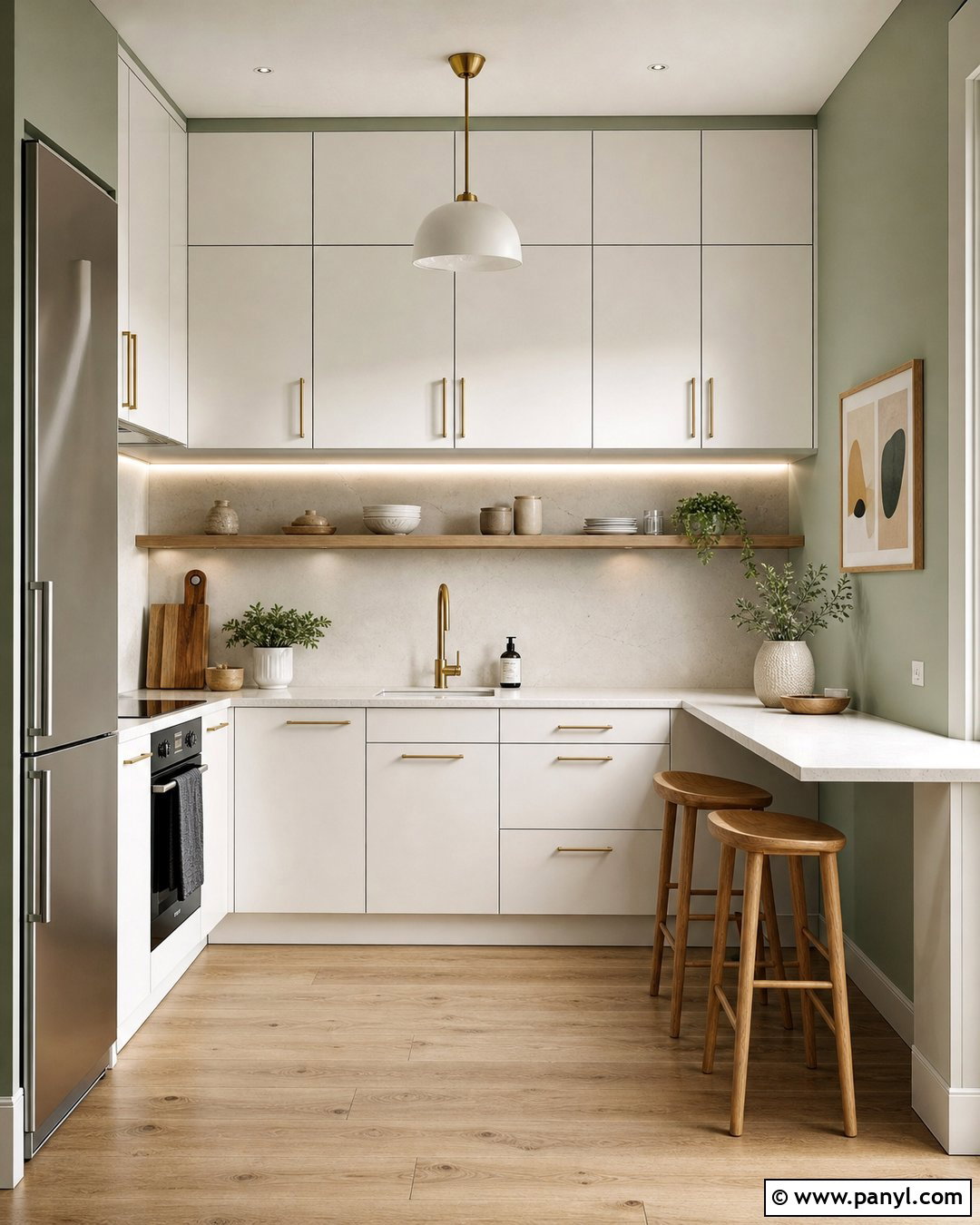
In a small kitchen, sage green walls should support an open layout rather than create visual clutter. Use a light, warm sage alongside white flat-panel cabinets that extend to the ceiling. Choose pale quartz counters and a matching low-contrast backsplash to reduce abrupt color changes. Recessed lighting, undercabinet strips, and one small glass pendant will keep the work areas bright. Use light oak flooring and repeat the wood on a narrow shelf or compact breakfast ledge. Slim brushed brass pulls provide warmth without looking bulky. Limit counter decor to daily essentials and one small ceramic container. The completed space feels efficient and calm because storage, lighting, and color work together, while sage adds depth without shrinking the room.
27. Sage Green Kitchen Walls In A Galley Kitchen
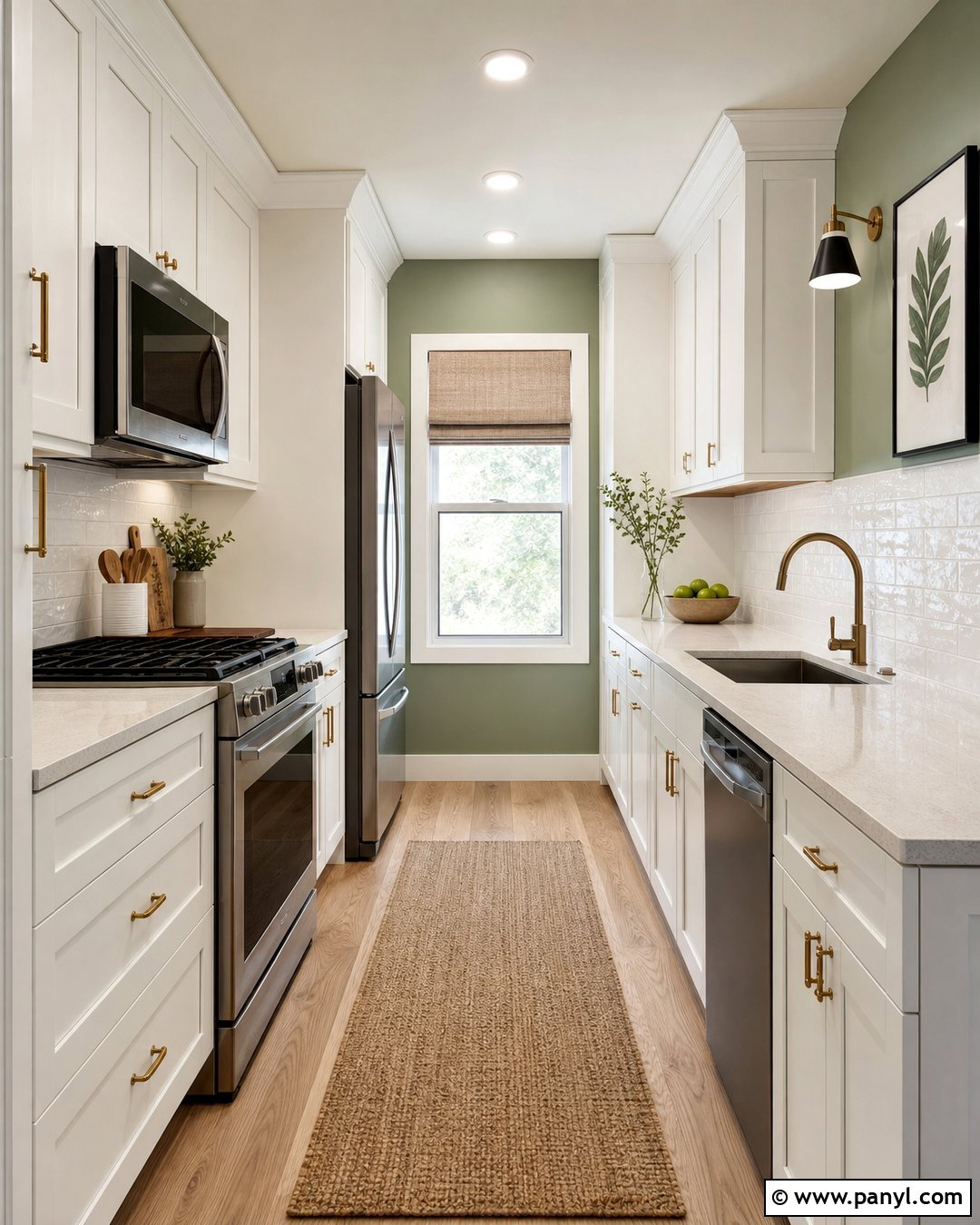
A galley kitchen benefits from sage green walls at the ends and above the cabinets, where the color can add depth without narrowing the walkway. Use warm white cabinetry on both sides, pale quartz counters, and a glossy white backsplash that reflects light across the room. Light oak flooring laid lengthwise visually extends the narrow plan. Choose compact brass hardware and flush ceiling lights rather than large pendants. At the far end, add a small window treatment in natural linen or a simple botanical print. Keep appliances integrated or stainless steel for a clean rhythm. The final design feels organized and welcoming, with the sage framing the long view while light surfaces and thoughtful lighting maintain a comfortable sense of width.
28. Sage Green Kitchen Walls In An Apartment
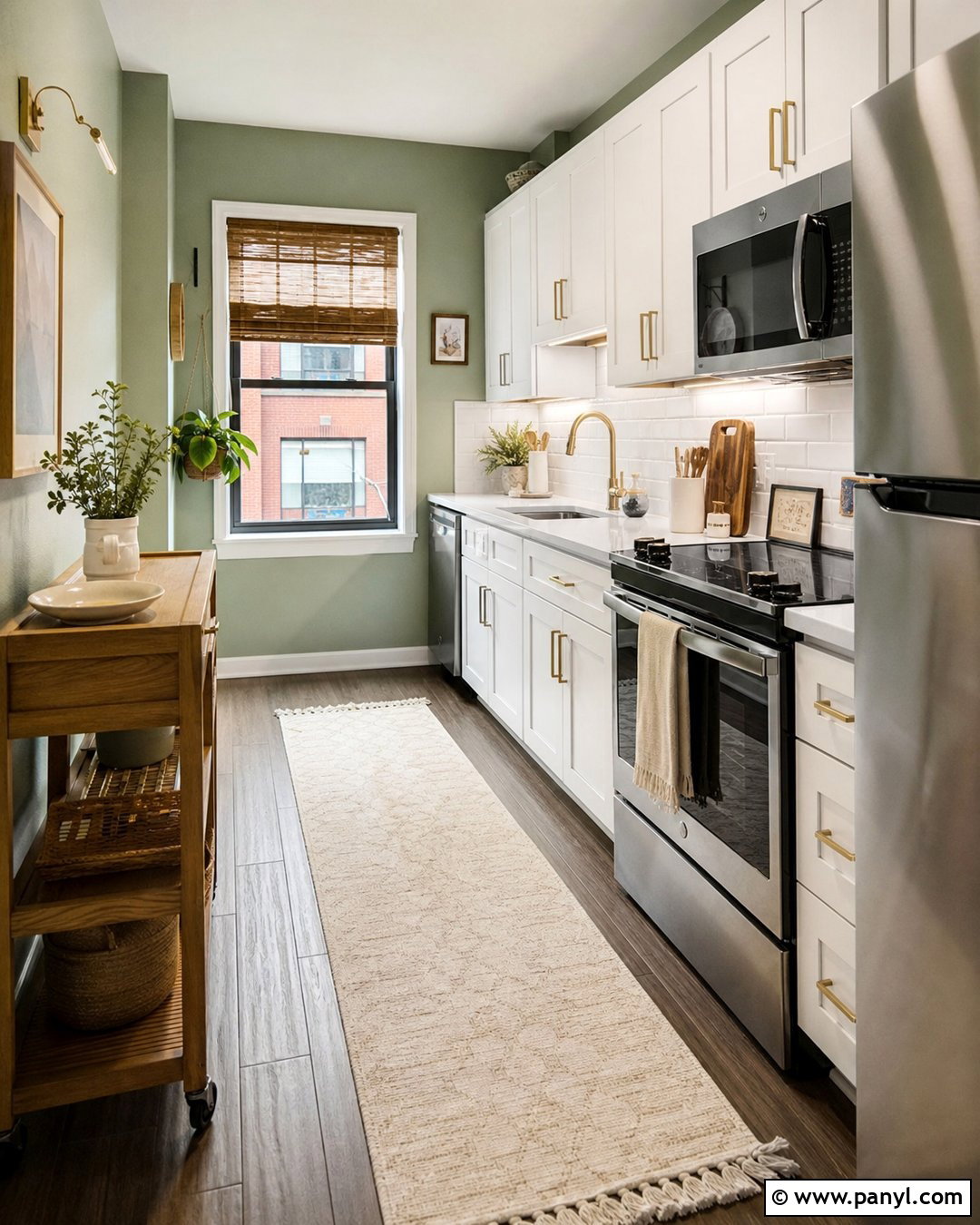
Sage green walls offer an effective apartment kitchen update without replacing permanent finishes. If the existing cabinets are white or light wood, use a removable backsplash in warm white and add renter-friendly brass or black hardware where permitted. A washable cream runner can cover dated flooring and introduce softness. Install plug-in undercabinet lights to brighten counters and help the sage appear clear rather than dull. Add a narrow rolling cart in natural wood for storage and prep space. Woven shades, removable linen curtains, and simple pottery bring warmth without clutter. Keep freestanding appliances and countertop accessories consistent in white, stainless steel, or black. The completed room feels coordinated and personal while relying mainly on reversible, budget-conscious changes.
29. Sage Green Kitchen Walls In An Open Plan Kitchen
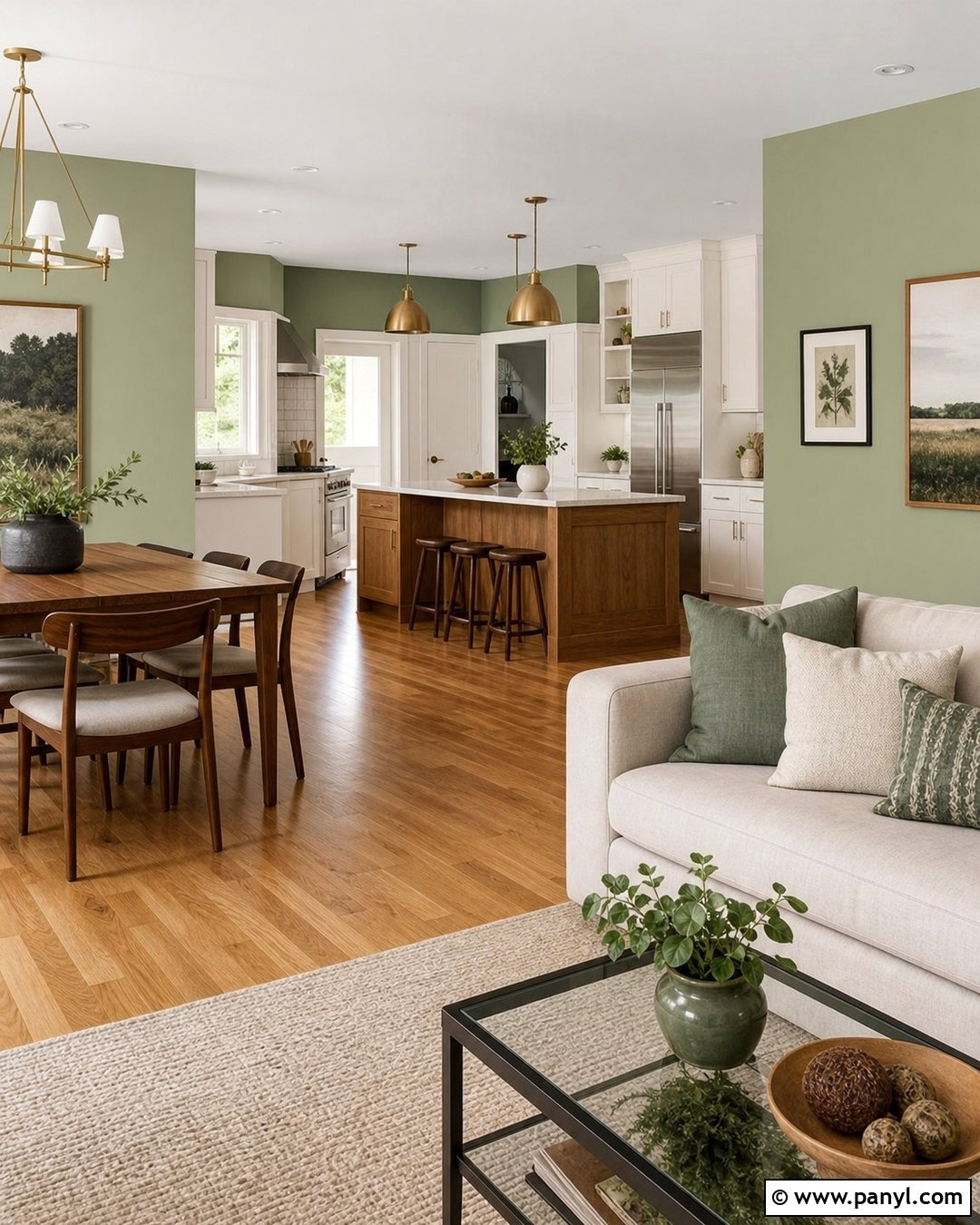
An open-plan kitchen needs sage green walls to connect naturally with the adjoining living and dining spaces. Carry the color across one continuous wall, then repeat it through cushions, artwork, or a small upholstered dining bench. Use warm white kitchen cabinets, pale stone counters, and an oak island to establish a neutral transition. Medium oak flooring should run throughout the entire open area for visual continuity. Choose brass pendants over the island and a related brass fixture above the dining table. Keep the backsplash simple with cream handmade tile. A beige sofa and walnut dining table can introduce deeper neutral tones nearby. This coordinated approach gives each zone a clear purpose while allowing the sage wall color to unify the whole shared room.
30. Sage Green Kitchen Walls With A Breakfast Nook
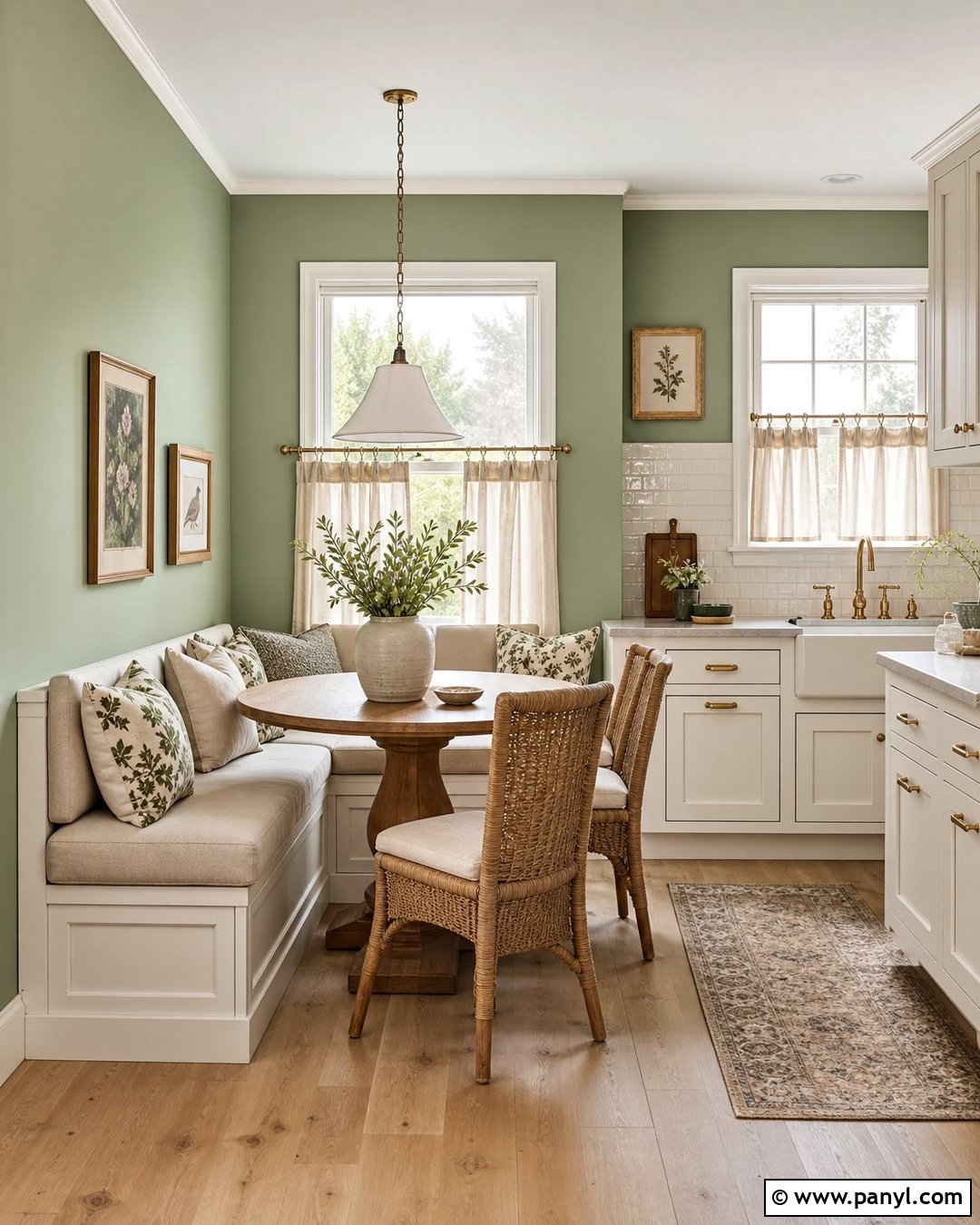
A breakfast nook can make sage green kitchen walls feel especially comfortable and inviting. Place a built-in cream bench beneath a window, then add oatmeal cushions and muted botanical pillows that echo the wall color. A round oak pedestal table and two woven chairs create an efficient dining arrangement. In the nearby kitchen, use warm white cabinets, pale quartz counters, and an ivory backsplash for continuity. Add a small brass pendant over the table and matching brass cabinet pulls throughout the room. Light oak flooring connects both zones, while linen café curtains soften the window. Keep artwork simple with one framed landscape or botanical print. The complete space feels relaxed and practical, offering a welcoming destination for everyday meals without requiring a large dining room.
31. Sage Green Kitchen Walls In A Farmhouse Kitchen
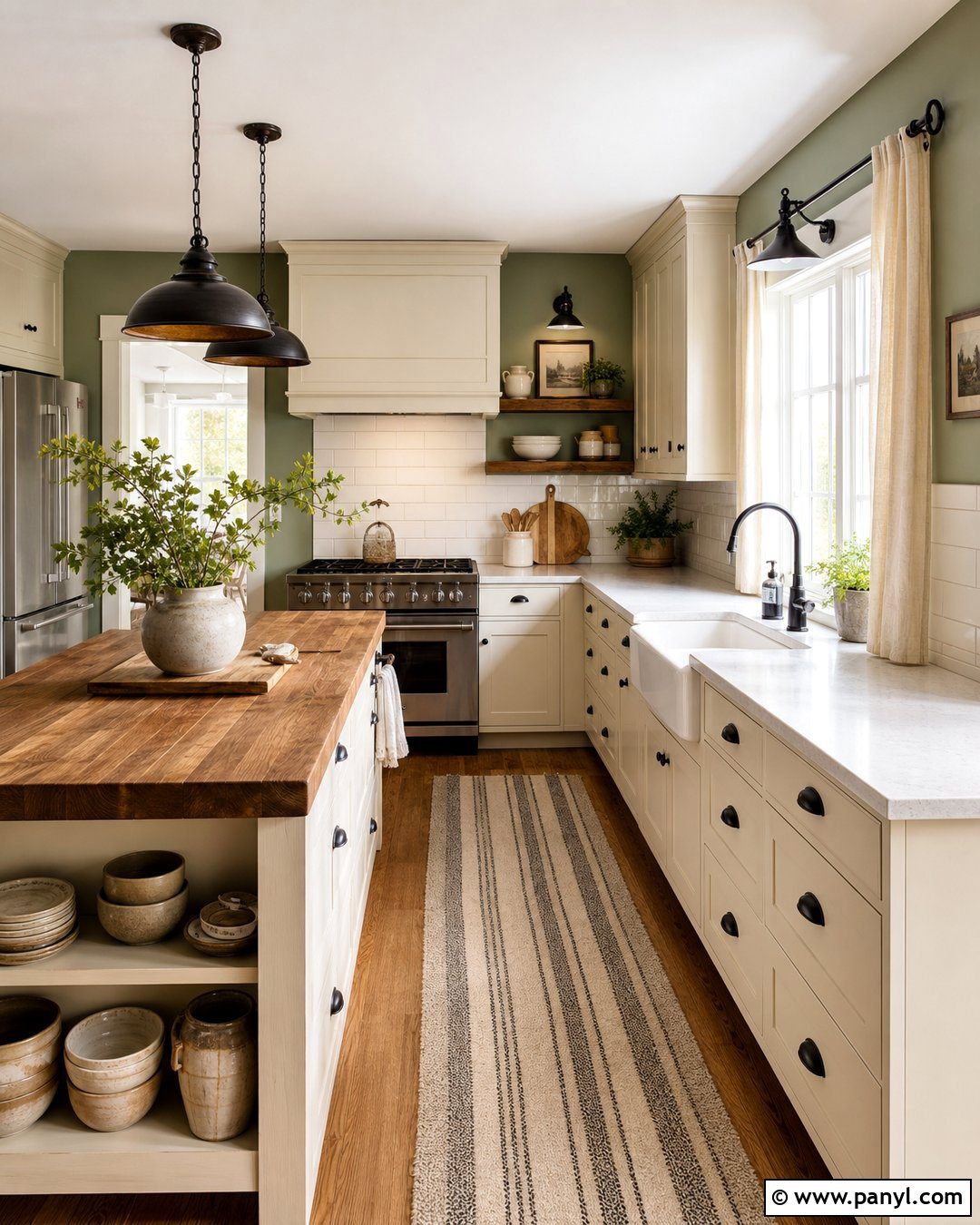
A farmhouse kitchen feels fresh rather than themed when sage green walls are paired with simple, hardworking materials. Choose cream Shaker cabinets, butcher block on the island, and durable warm white quartz around the sink and range. Use an ivory subway backsplash with greige grout and a large white apron-front sink. Medium oak flooring, black cup pulls, and aged iron pendants add practical character. Include one freestanding wood hutch or open shelf for stoneware, but avoid filling every surface with decorative signs. Linen curtains and a faded striped runner provide softness. The finished room should feel collected and useful, with sage adding muted color while natural wood, creamy cabinetry, and straightforward fixtures create the welcoming farmhouse foundation.
32. Sage Green Kitchen Walls In A Modern Kitchen
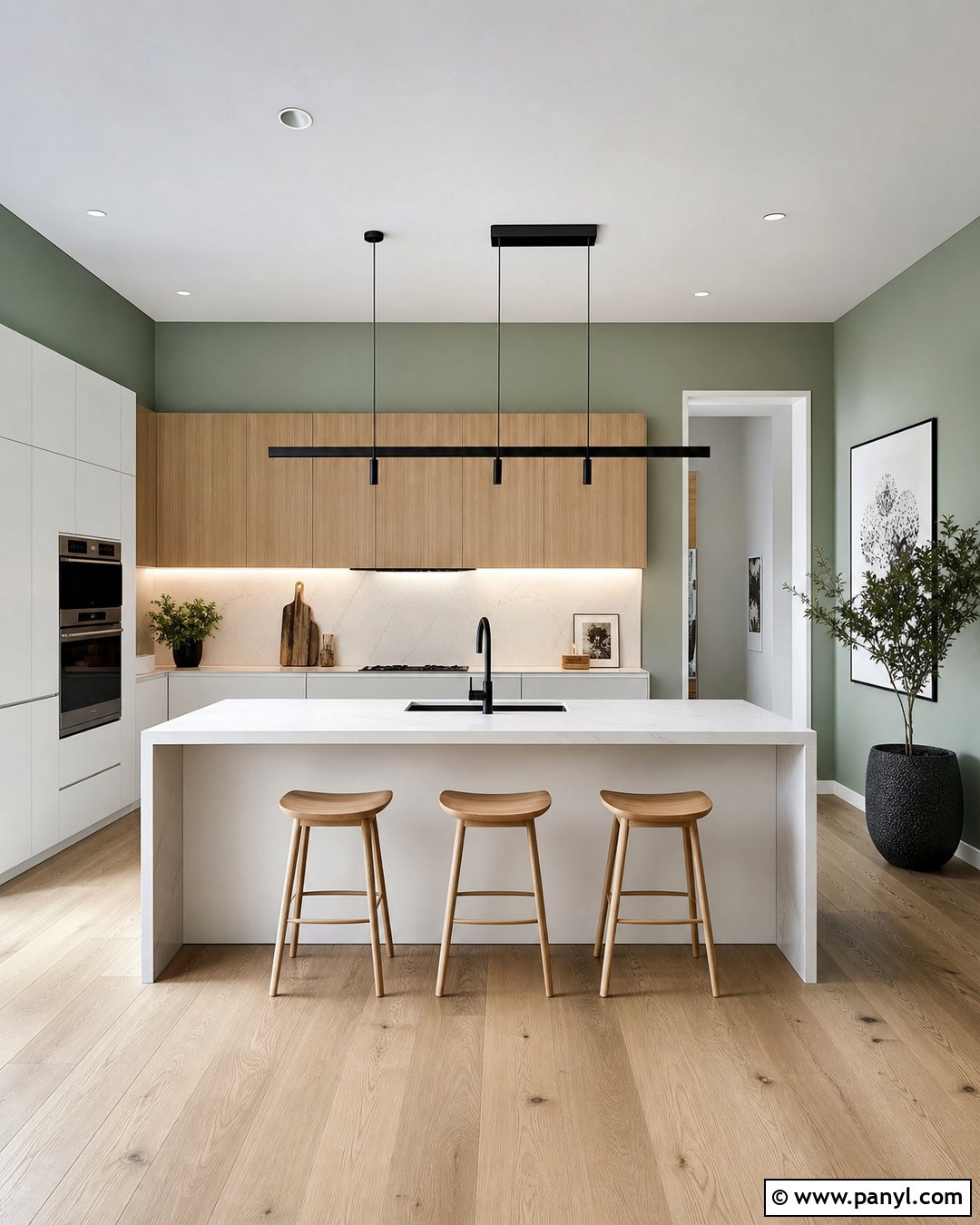
Clean lines allow sage green walls to bring warmth into a modern kitchen without disrupting its streamlined appearance. Use handleless white or pale oak cabinets, thin warm white quartz counters, and a matching slab backsplash. Keep the painted sage visible on the dining wall, around windows, and above full-height storage. A waterfall island in pale quartz creates a crisp centerpiece, while low-profile oak stools introduce natural texture. Choose one linear black pendant and a matte black faucet for definition. Wide-plank light wood flooring softens the smooth cabinetry. Limit accessories to a stone bowl, wood cutting board, and a few neutral ceramics. The completed space feels minimal but not cold because the sage and oak temper the sharper architectural elements.
33. Sage Green Kitchen Walls In A Coastal Kitchen
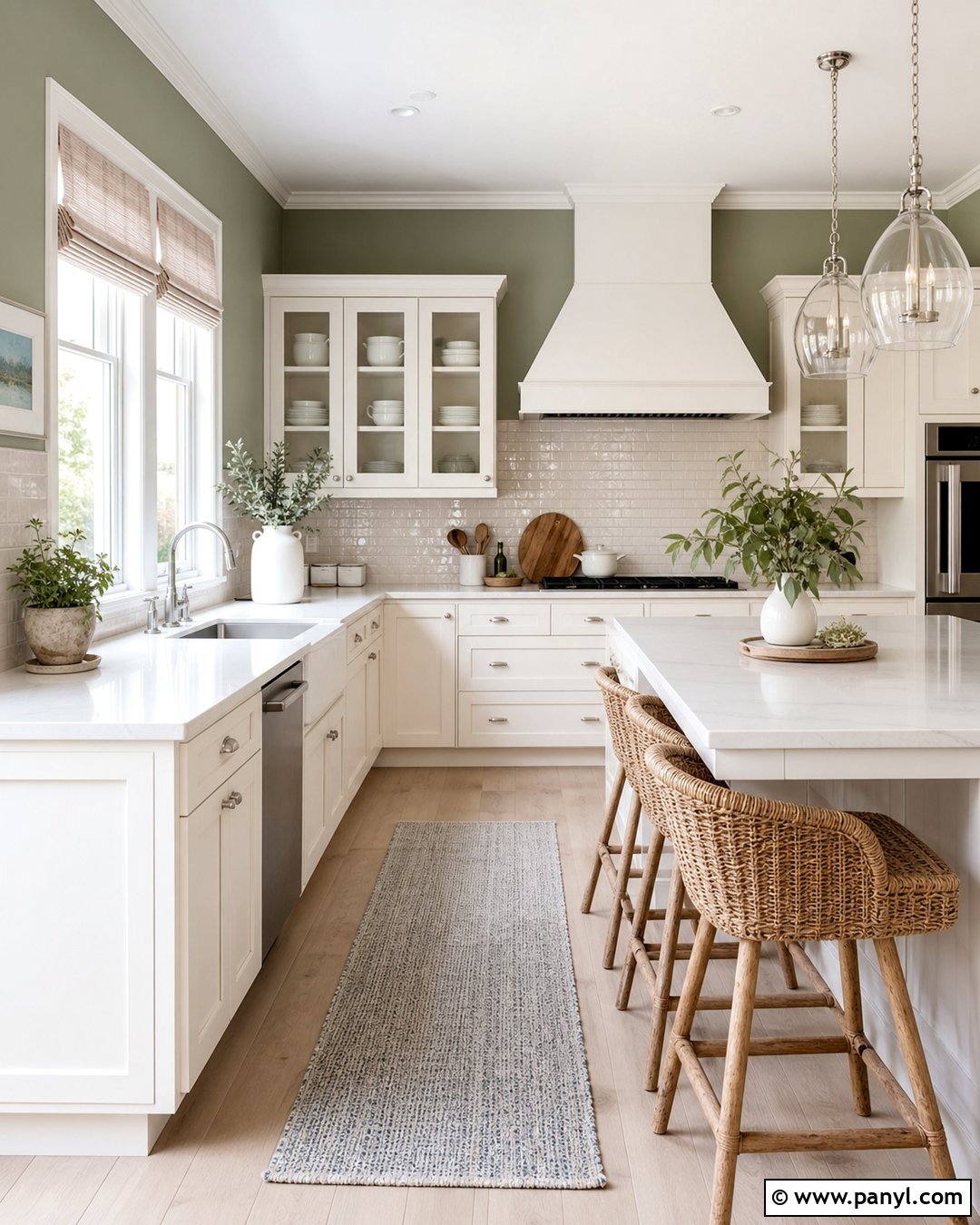
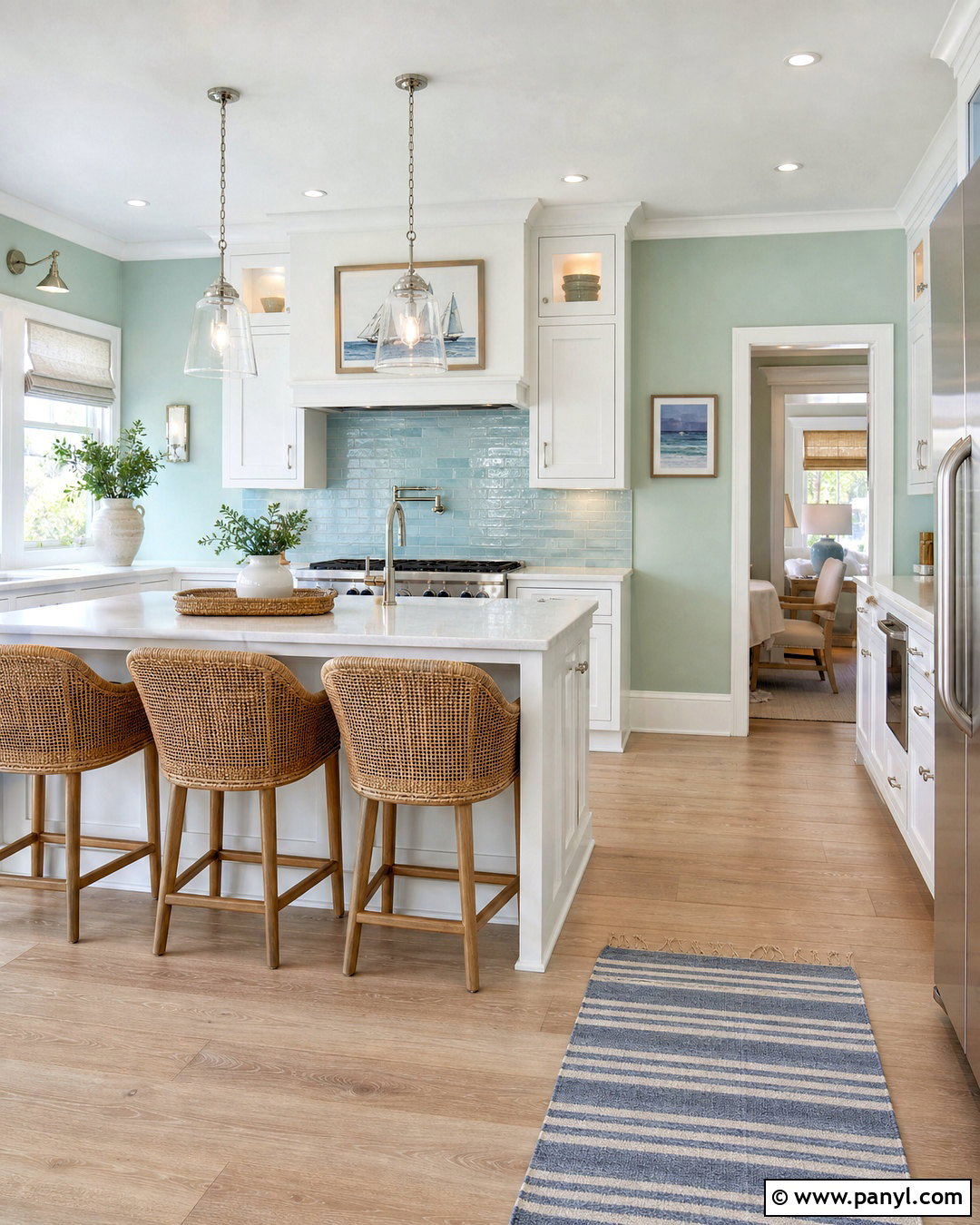
Sage green walls can create a subtle coastal kitchen without relying on obvious nautical decorations. Pair the color with warm white cabinets, pale quartz counters, and glossy off-white tile that reflects daylight. Use light oak or whitewashed wood flooring to establish a relaxed foundation. Woven rattan stools, linen Roman shades, and clear glass pendants introduce breezy texture. Select brushed nickel hardware and a stainless steel faucet for a fresh, understated finish. A soft blue-gray runner may add a restrained secondary color, while white ceramics keep counters uncluttered. Avoid anchors, signs, and themed accessories. The final kitchen feels connected to sand, grasses, and weathered natural materials, making the coastal influence clear through color and texture rather than literal decoration.
34. Sage Green Kitchen Walls In A Cottage Kitchen
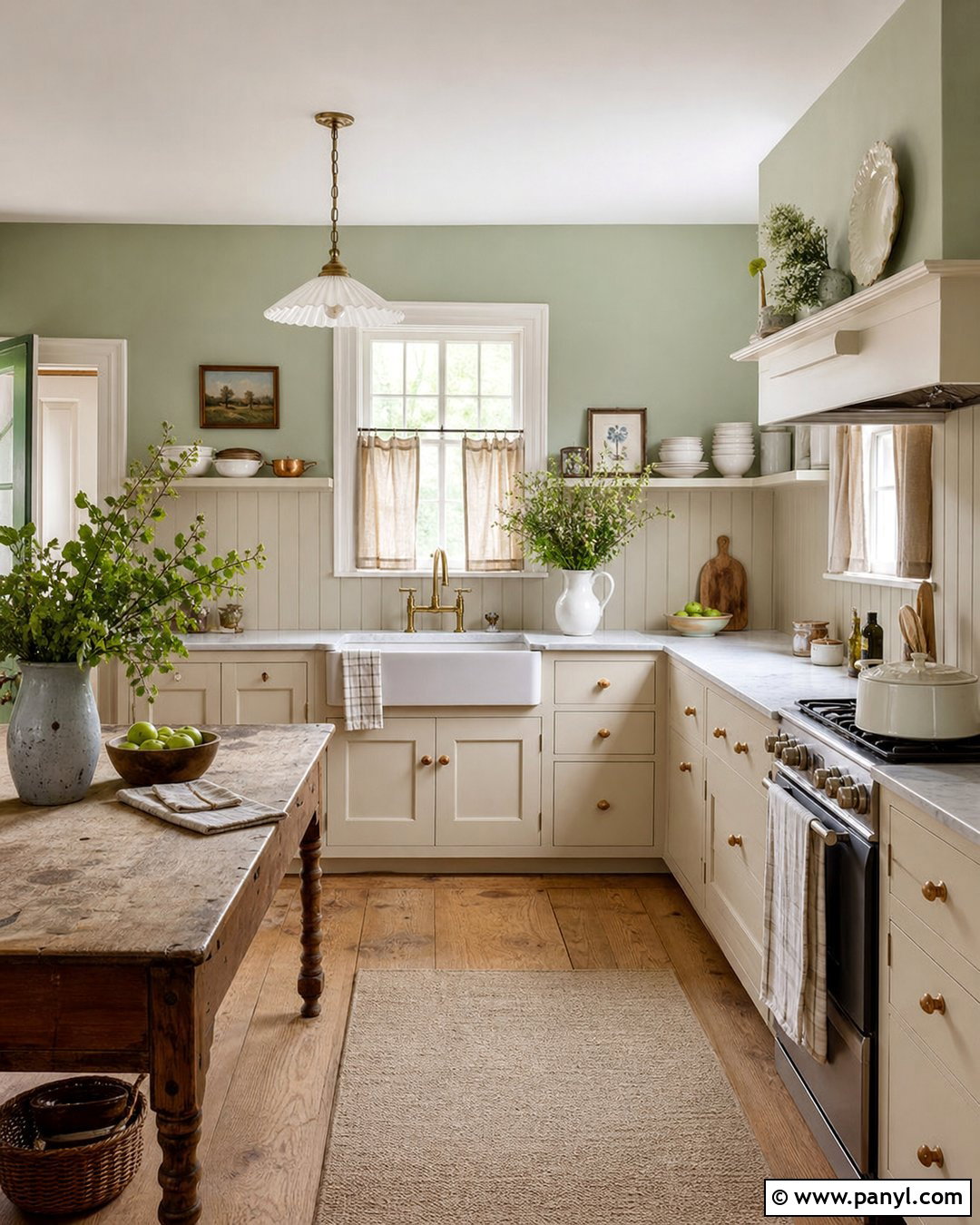
Soft sage walls provide an ideal background for the curved shapes and handcrafted details of a cottage kitchen. Use warm cream cabinets, simple wood knobs, and lightly veined stone counters. An ivory beadboard backsplash or handmade square tile adds texture, while medium oak floors keep the palette grounded. Include a small painted island or vintage wood worktable instead of a large built-in centerpiece. A white apron-front sink, pleated fabric pendant, and linen café curtains bring gentle traditional character. Display a limited collection of white dishes on one open shelf and store everything else behind closed doors. The complete room feels charming but organized, with sage unifying old-fashioned details, natural materials, and practical modern appliances in one comfortable design.
35. Sage Green Kitchen Walls In A Scandinavian Kitchen
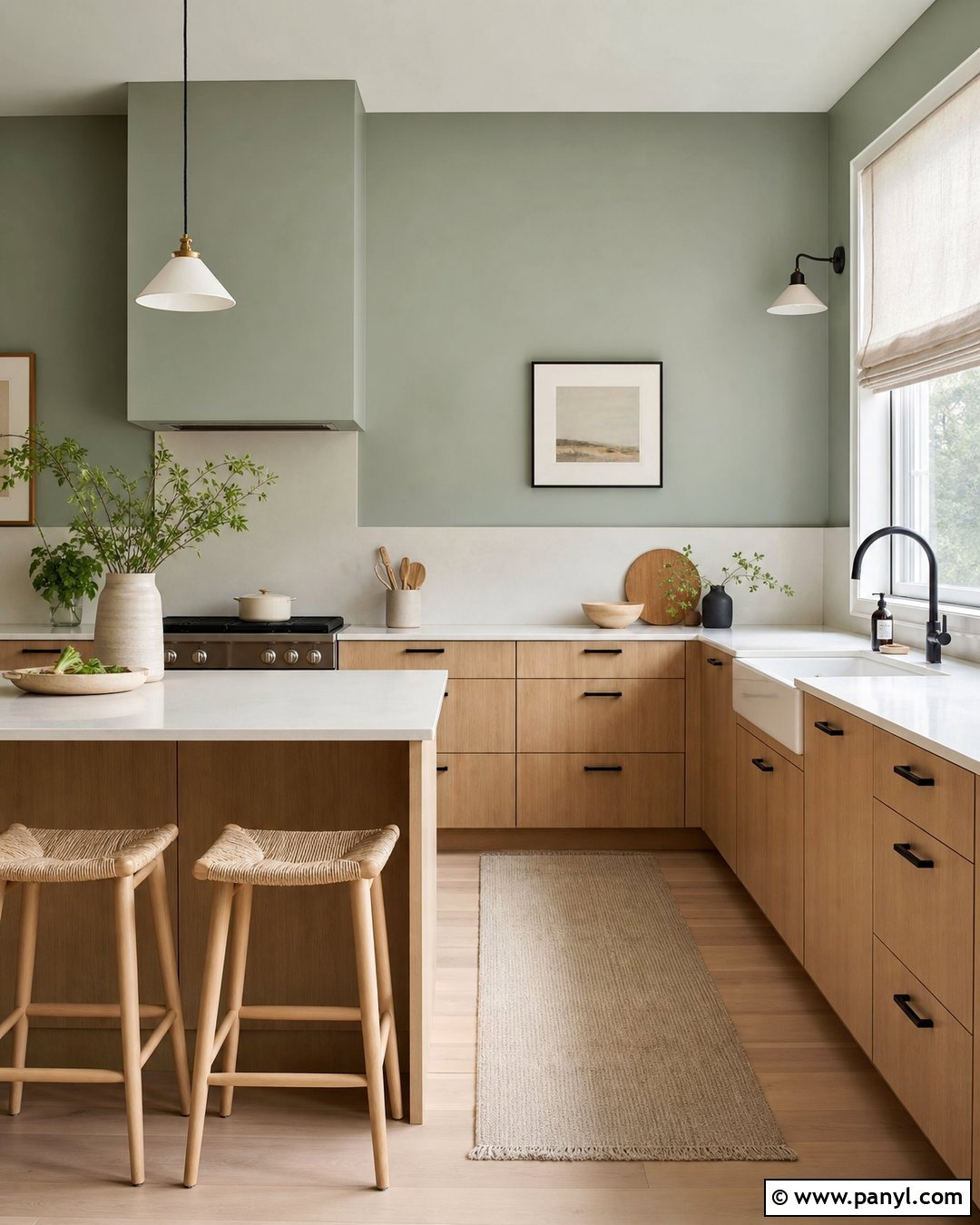
Scandinavian simplicity pairs naturally with pale sage green kitchen walls. Choose light oak flat-panel cabinets, white quartz counters, and a soft white backsplash with minimal grout lines. Use the sage on all open wall areas to introduce gentle color without interrupting the clean architecture. Pale wood flooring, oak counter stools, and a simple round dining table create a warm visual rhythm. Add matte black pulls and one understated black pendant for contrast. Linen shades and a woven wool runner provide texture in quiet neutral tones. Keep shelves nearly bare, displaying only white dishes, clear glassware, and one small ceramic vase. The completed kitchen feels light, functional, and relaxed, with every object selected for both usefulness and visual simplicity.
36. Sage Green Kitchen Walls In A Japandi Kitchen
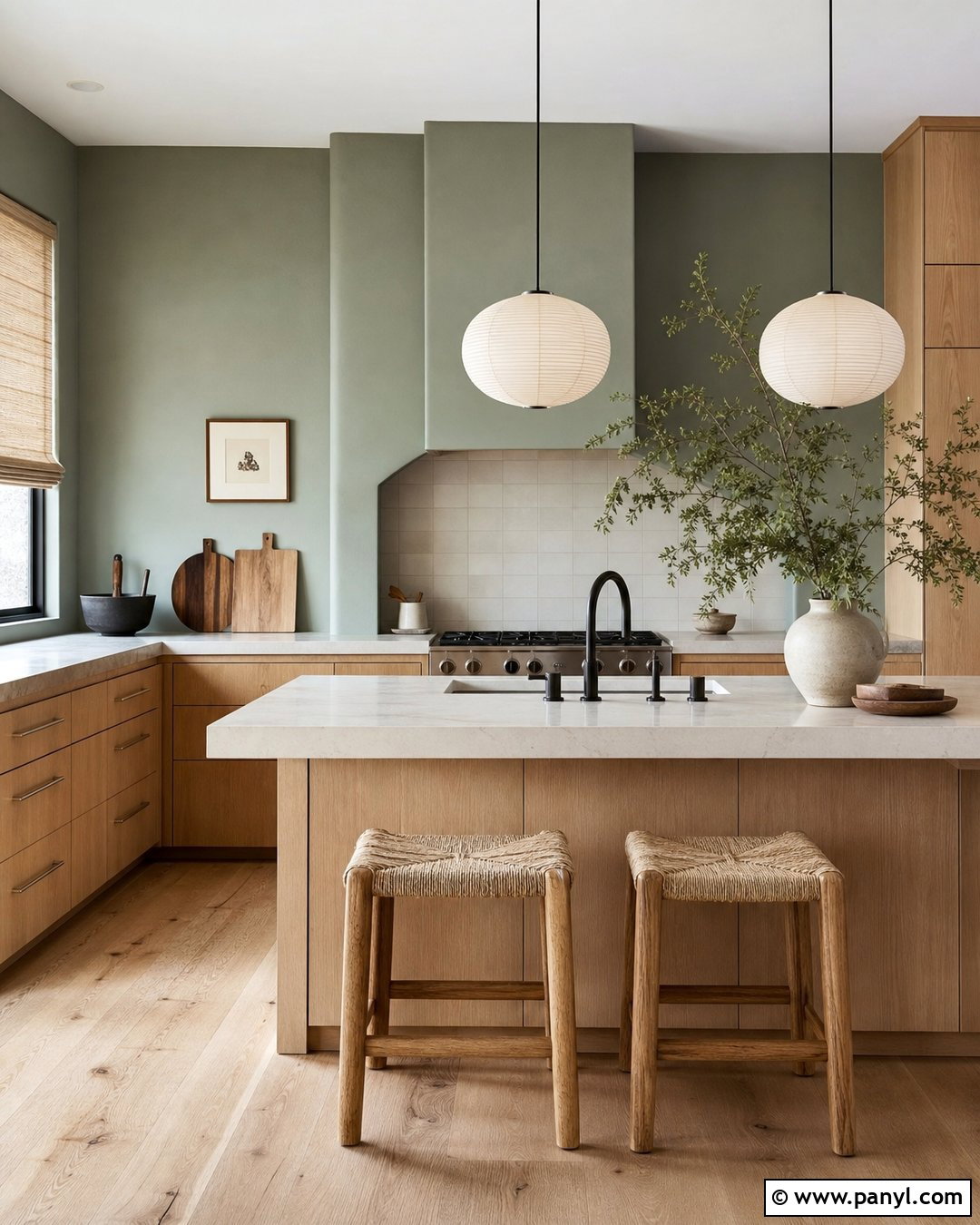
A Japandi kitchen combines sage green walls with restrained forms, warm wood, and tactile natural surfaces. Use flat-panel white oak cabinets with discreet integrated pulls and creamy quartz counters. Install a matte off-white tile backsplash to create subtle texture without shine. Wide-plank oak floors and a simple oak island reinforce the quiet material palette. Choose blackened bronze fixtures, rice-paper-inspired pendants, and low wooden stools with woven seats. Keep open storage limited to one shelf holding handmade stoneware in cream and charcoal. A natural linen shade softens the window while maintaining privacy. The finished room should feel uncluttered but not empty. Sage supplies a calming layer of color that connects the wood, stone, textiles, and minimalist cabinetry.
37. Sage Green Kitchen Walls In A Midcentury Kitchen
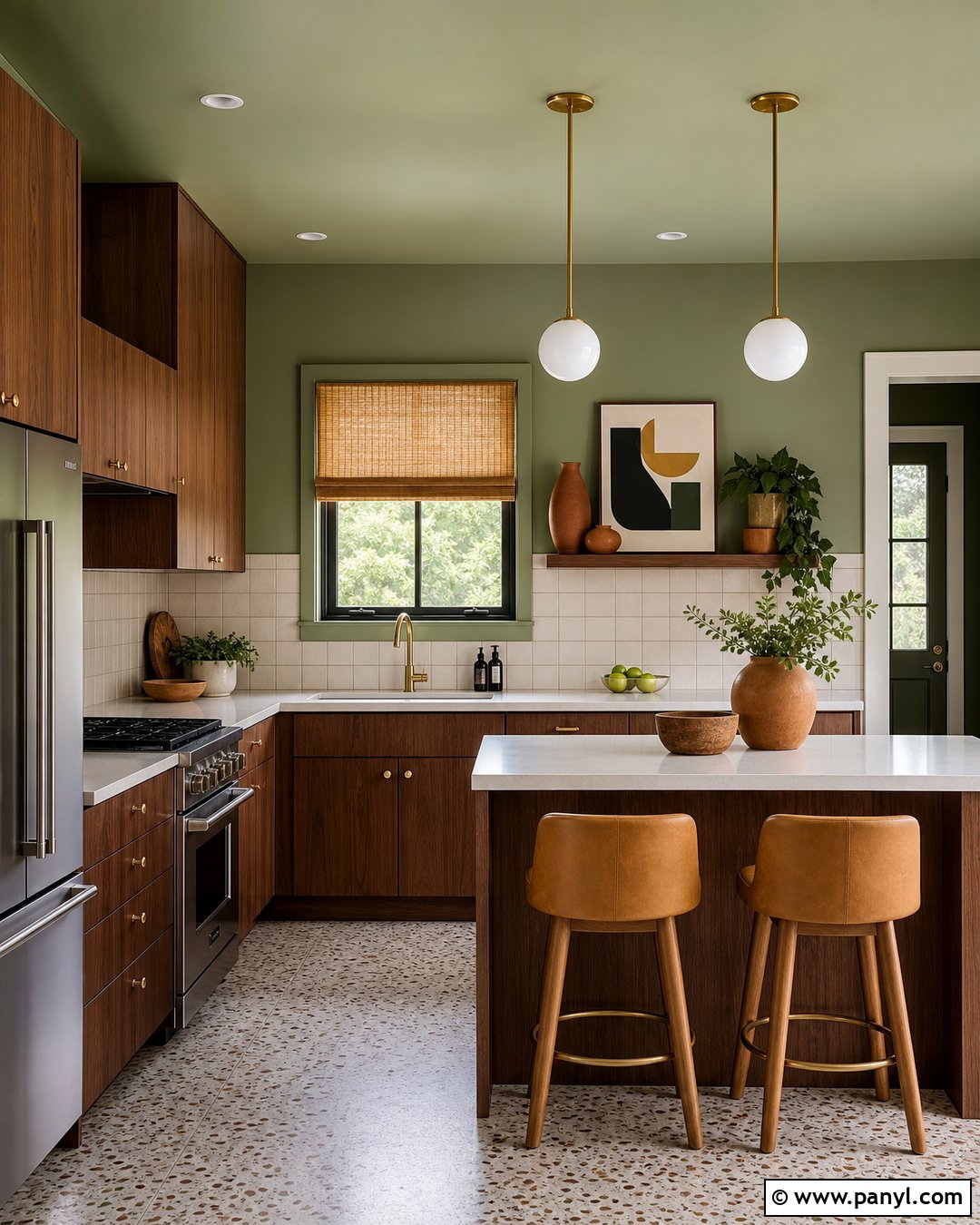
Sage green walls can soften the bold wood tones and graphic shapes of a midcentury kitchen. Choose walnut flat-panel cabinets, white quartz counters, and a small square backsplash tile in warm ivory. Use terrazzo-look flooring with restrained cream, tan, and muted green chips to introduce period influence without overwhelming the room. Add globe pendants, brushed brass knobs, and curved counter stools upholstered in camel-colored fabric. A compact peninsula can provide casual seating while preserving an open layout. Keep window treatments simple with woven shades. Display one abstract print and a few sculptural ceramic pieces rather than many small accessories. The complete space feels warm and distinctive, balancing vintage-inspired forms with practical contemporary finishes and appliances.
38. Sage Green Kitchen Walls In An Industrial Kitchen
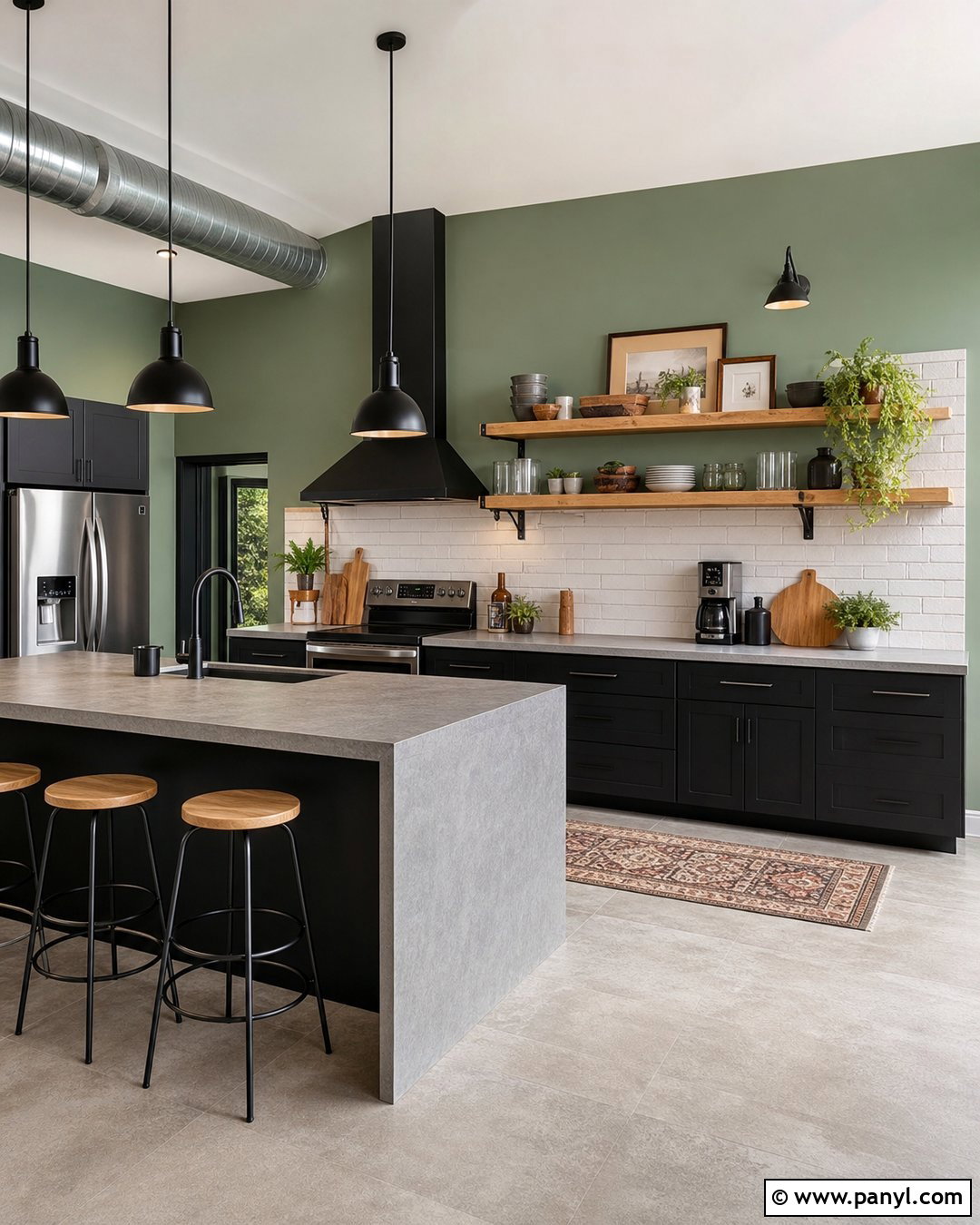
Industrial materials feel less severe when set against muted sage green kitchen walls. Use matte black lower cabinets, natural oak upper shelves, and durable concrete-look quartz counters. A white brick backsplash brightens the work area while maintaining textural character. Choose black metal pendants, a commercial-style stainless faucet, and simple bar pulls. Medium oak flooring or warm gray porcelain tile prevents the scheme from becoming overly cold. Add counter stools with wood seats and black steel frames. Keep exposed elements controlled; one visible duct, steel rack, or factory-style window is enough to establish the look. The completed kitchen balances rugged finishes with calm color and warm wood, creating an industrial design that still feels comfortable, clean, and suitable for an average home.
39. Sage Green Kitchen Walls In A French Country Kitchen
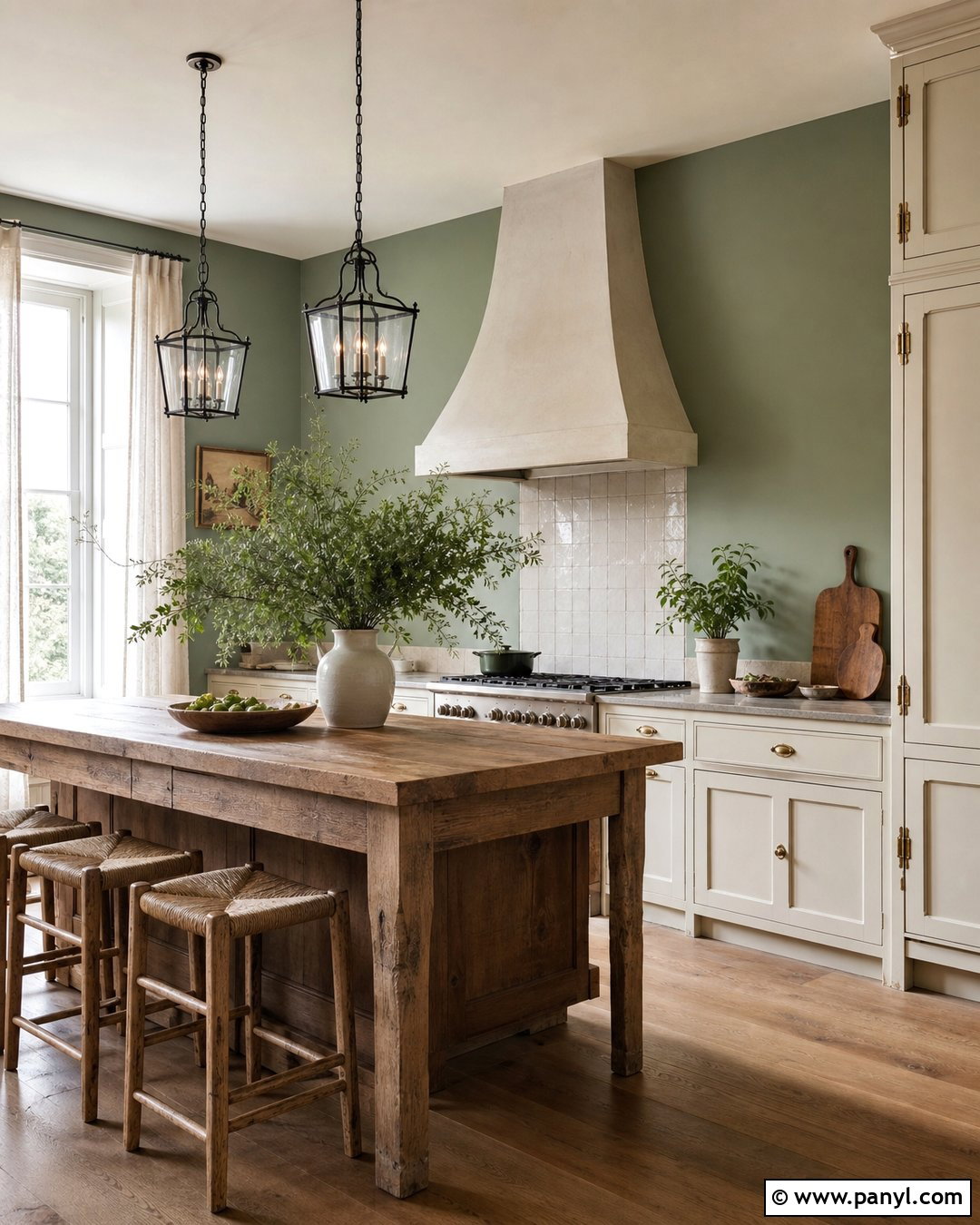
French country character emerges naturally from sage green walls, cream cabinetry, and softly aged finishes. Choose inset cabinet doors, antique brass latches, and honed limestone or limestone-look counters. Use a handmade ivory backsplash behind the range and frame it with a simple plaster hood. Medium oak floors, a weathered wood island, and rush-seat stools add warmth. Hang two understated iron lantern pendants rather than ornate fixtures. Linen café curtains and a muted beige runner soften the room. Display a few white pitchers, wood boards, and copper-toned cookware, but leave generous open counter space. The finished kitchen feels gracious and established, using architectural detail and natural materials rather than excessive decorations to communicate its traditional European influence.
40. Sage Green Kitchen Walls In A Rustic Kitchen
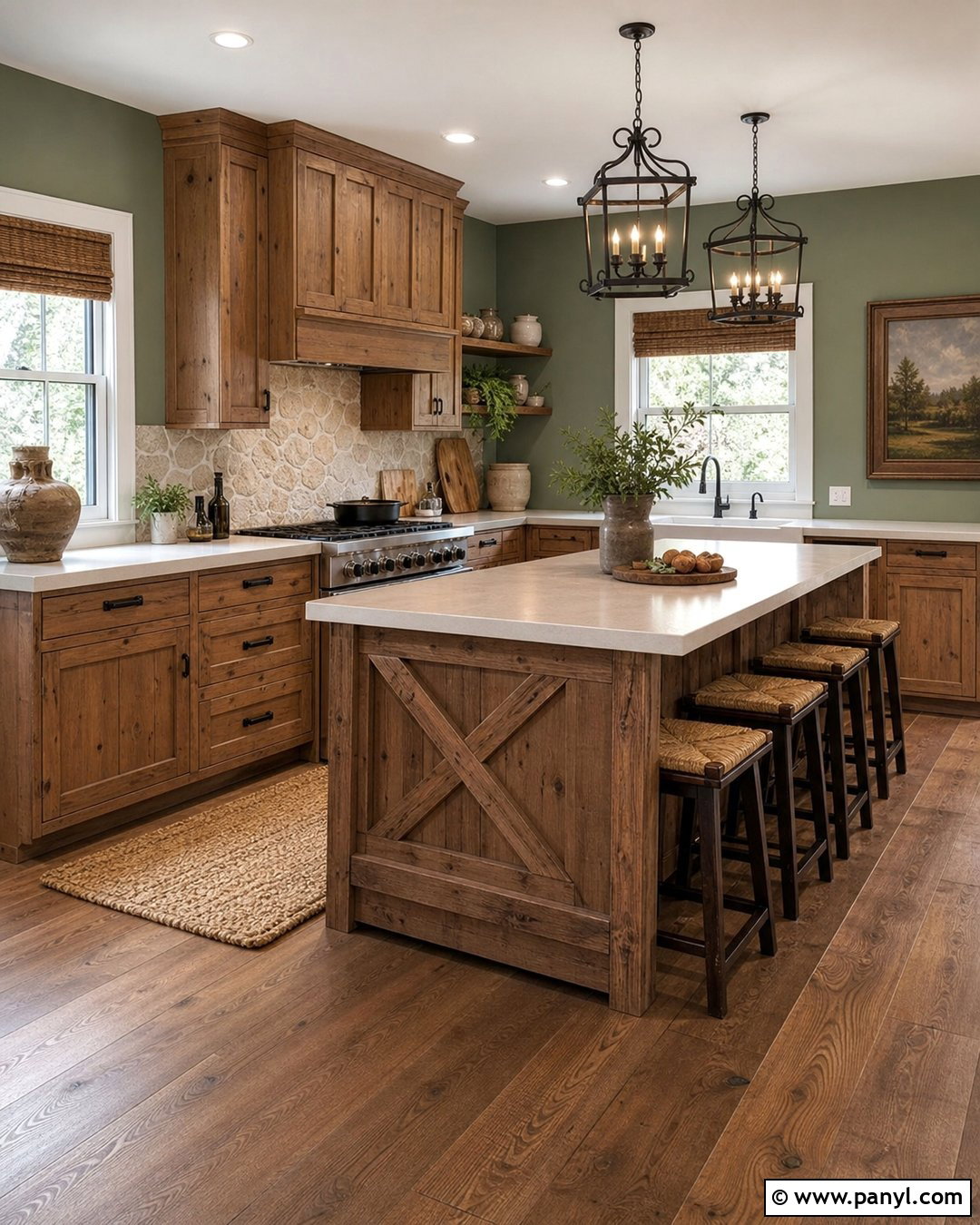
A rustic kitchen can use sage green walls to balance substantial wood and stone features. Select knotty oak cabinets with a matte finish, warm beige quartz counters, and a backsplash of irregular cream stone tile. Dark bronze pulls and iron pendants add definition, while wide-plank medium brown flooring creates a sturdy foundation. Introduce a large wood island with simple backless stools and a durable stone top. Keep the ceiling white unless the room is large enough to support exposed wood beams. Linen shades and a woven neutral runner soften the heavier surfaces. The complete design should feel natural and functional rather than overly rough. Sage provides a quiet color break that helps the various brown and beige materials appear coordinated.
41. Sage Green Kitchen Walls In A Minimalist Kitchen
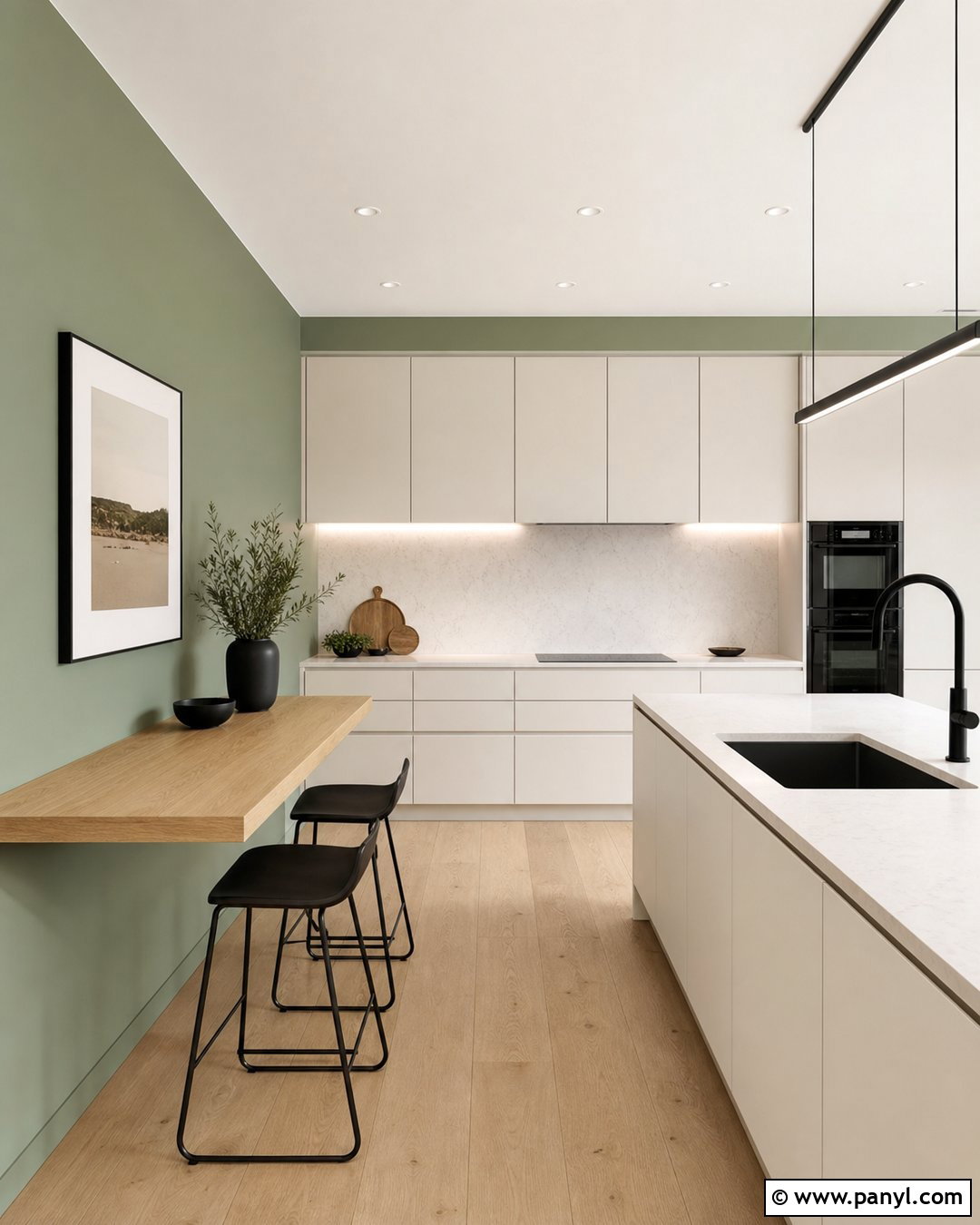
Sage green walls add warmth and personality to a minimalist kitchen while preserving a clean visual field. Use handleless warm white cabinets, seamless pale quartz counters, and a full-height matching backsplash behind the cooking zone. Limit the material palette to sage paint, white surfaces, light oak flooring, and a few matte black fixtures. A slim oak dining ledge or compact island provides contrast without extra ornament. Choose recessed lighting and one simple linear pendant. Hide small appliances inside an appliance garage and keep open counters nearly empty. Add texture through a plain linen shade and one neutral runner. The finished kitchen feels calm because every element has a purpose, while the muted wall color prevents the restrained design from becoming clinical or impersonal.
42. Sage Green Kitchen Walls In A Boho Kitchen
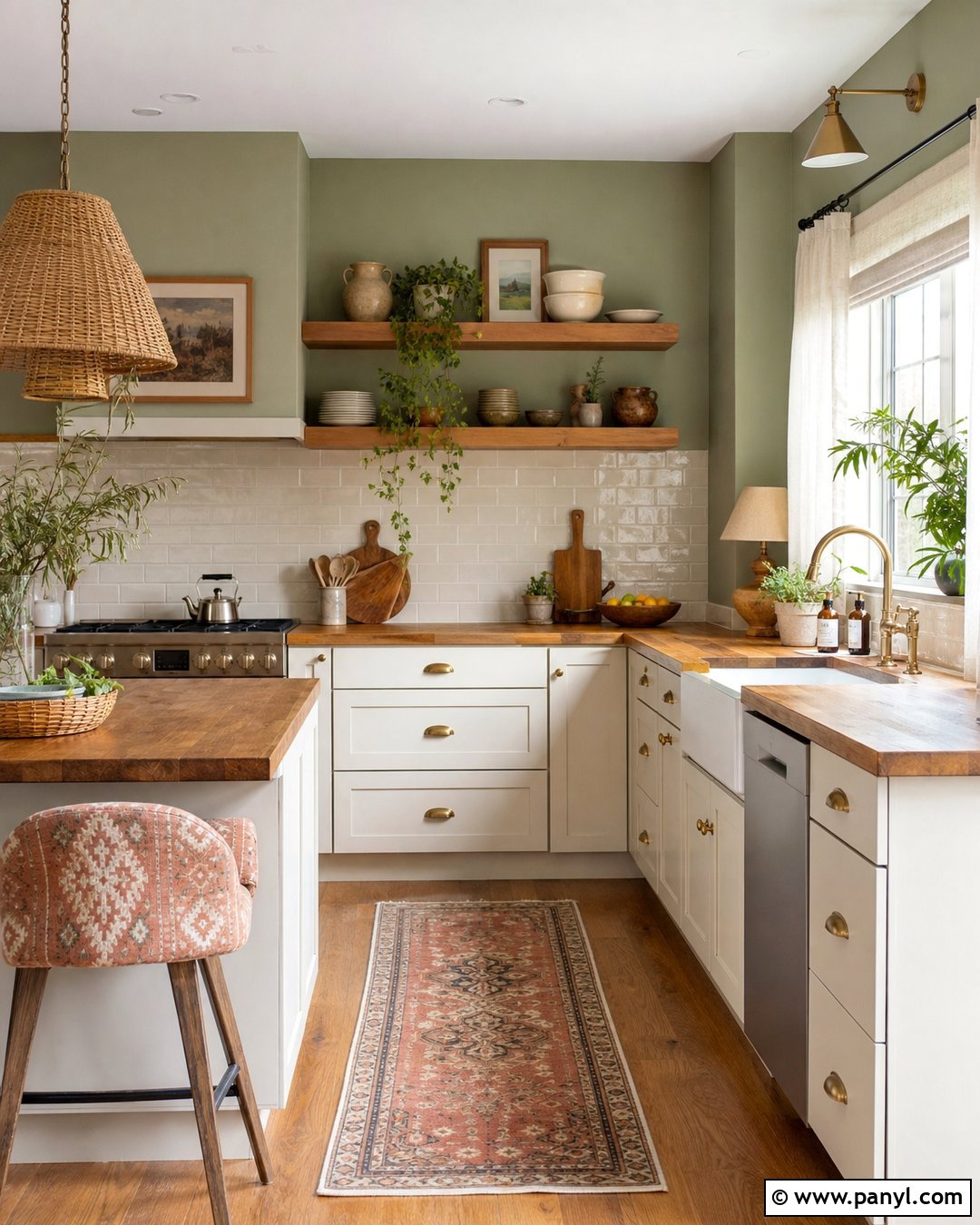
A boho kitchen with sage green walls should feel layered and relaxed without becoming cluttered. Start with warm white cabinets, butcher block counters, and a glossy cream backsplash. Add natural wood open shelves displaying a controlled collection of handmade pottery, glassware, and woven containers. Use rattan pendants, brass cabinet pulls, and patterned counter stools in muted rust and beige. Medium oak flooring and a washable vintage-style runner strengthen the warm palette. Include trailing greenery near a bright window, but keep plants away from food preparation areas. Linen curtains and framed botanical artwork complete the look. The resulting kitchen feels personal and creative because texture, pattern, and handcrafted pieces appear throughout a consistent sage, cream, wood, and earthy accent scheme.
43. Sage Green Kitchen Walls In A Mediterranean Kitchen
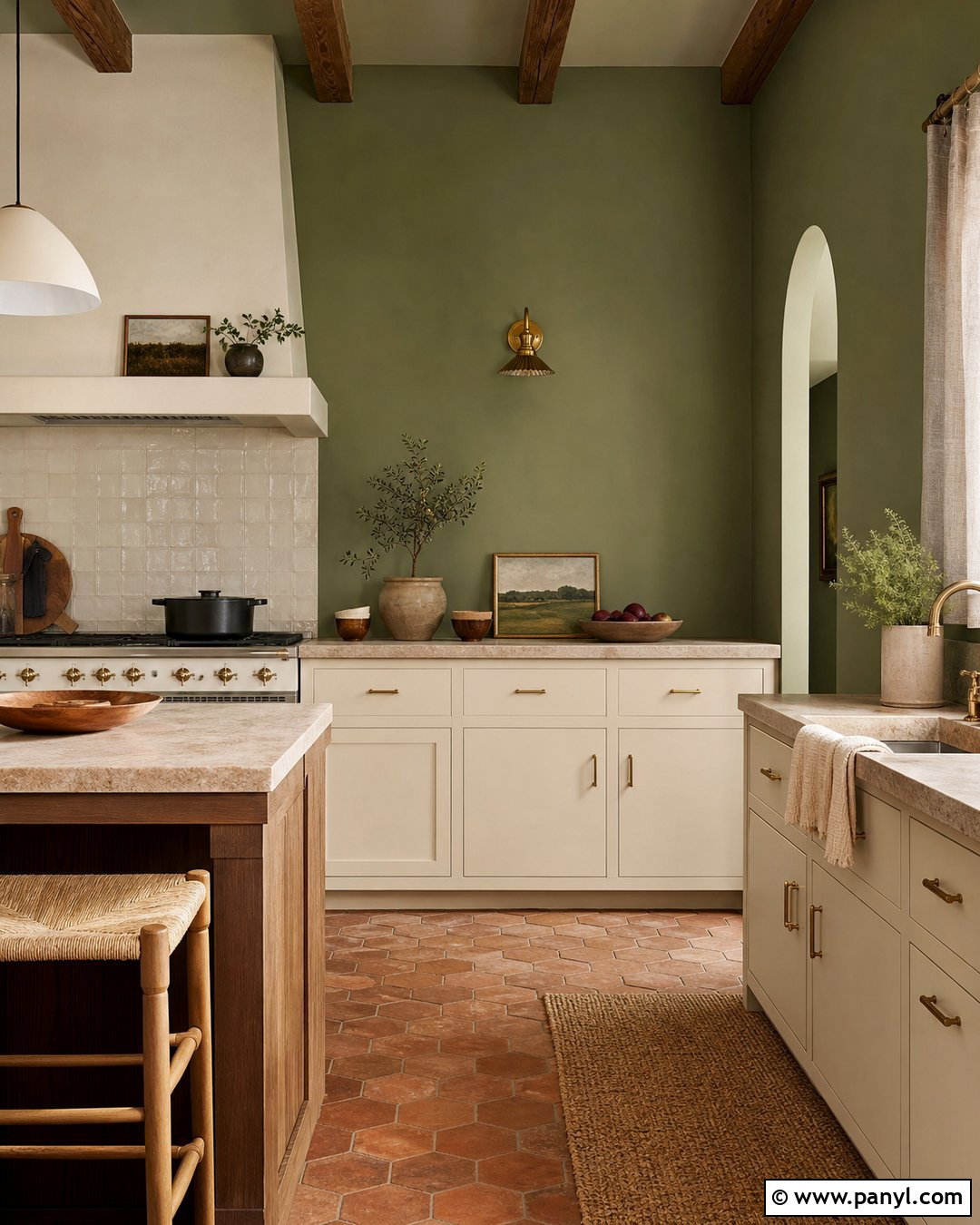
Mediterranean warmth pairs beautifully with sage green walls, especially when the room includes handmade surfaces and sun-washed colors. Choose cream cabinets, honed beige stone counters, and an ivory zellige backsplash with subtle variation. Terracotta floor tile provides warmth beneath the cooler walls. Use an oak island, woven stools, and aged brass fixtures to reinforce the natural palette. A simple plaster range hood and arched doorway can introduce architectural character where appropriate. Add linen curtains, rustic ceramics, and one muted landscape print. Avoid filling the room with ornate patterns; let material variation create the interest. The completed kitchen feels bright, tactile, and welcoming, with sage balancing the warm clay, wood, brass, and creamy stone finishes.
44. Sage Green Kitchen Walls In A Retro Kitchen
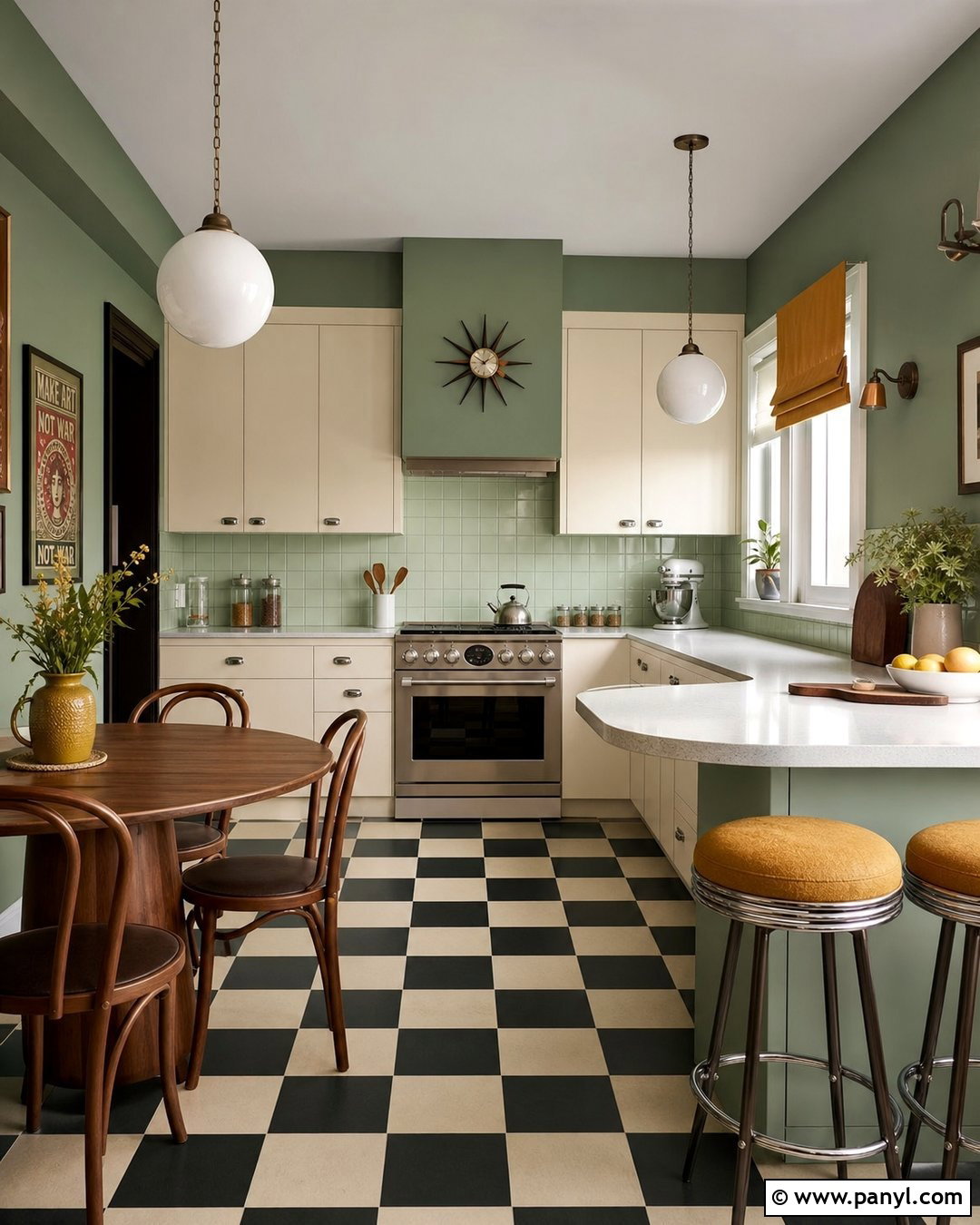
A retro-inspired kitchen can use sage green walls as a softer alternative to brighter period colors. Pair them with cream flat-panel cabinets, chrome pulls, and white quartz counters with rounded edges. Choose small square backsplash tiles in white and pale mint for controlled pattern. A black-and-cream checkerboard floor introduces graphic energy, while a compact wood dining set keeps the room warm. Add opal globe pendants, a stainless steel range, and a few curved accessories in muted mustard or dusty coral. Keep modern appliances visually simple so they blend into the design. The finished kitchen feels playful but practical, using recognizable retro shapes and patterns without turning the space into a costume or sacrificing everyday storage and durability.
45. Sage Green Color Drenched Kitchen Walls
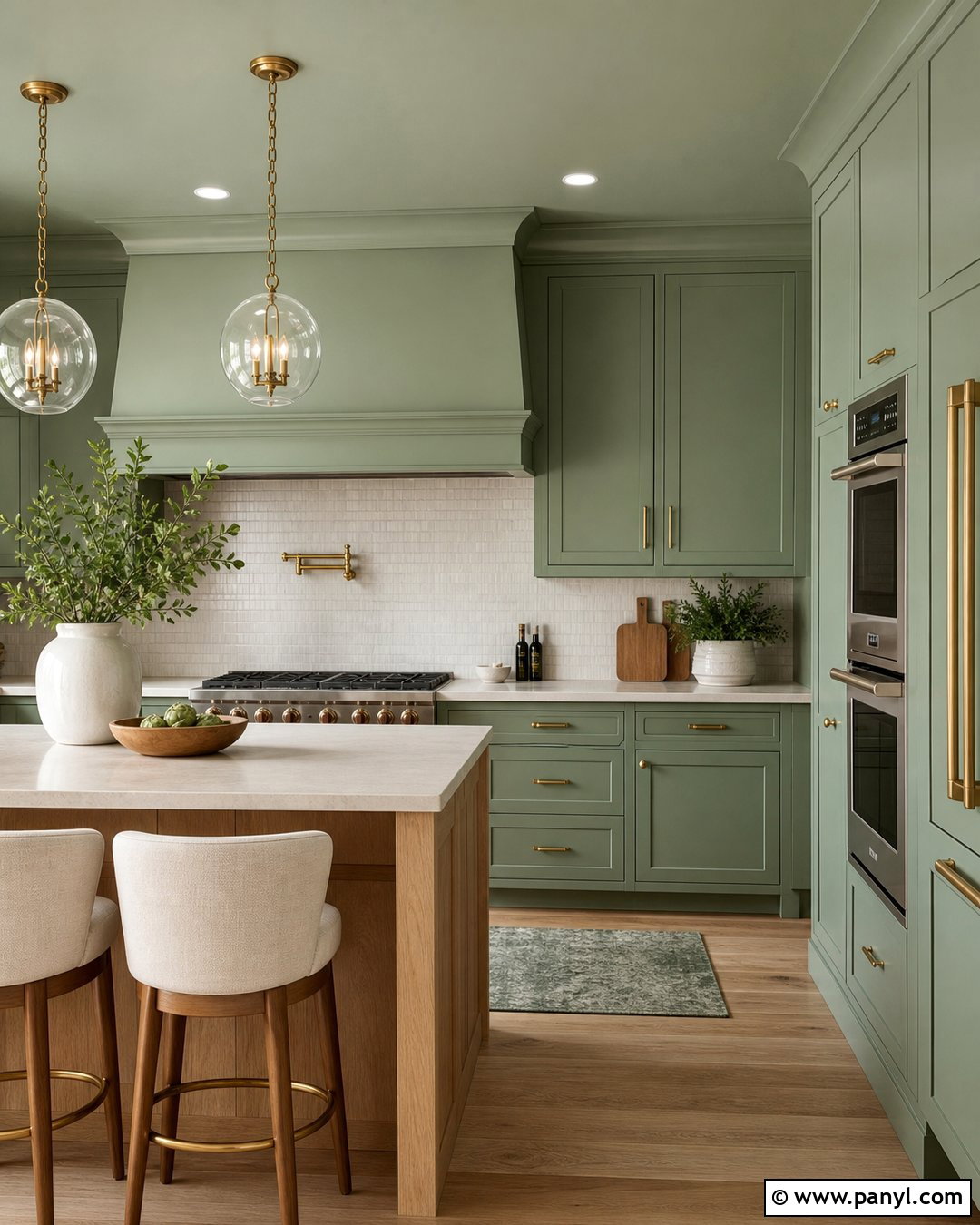
Color drenching creates an immersive kitchen by carrying sage green across the walls, trim, ceiling, and selected cabinetry. Use slightly different sheens rather than several unrelated shades: matte on walls and ceiling, satin on trim, and durable enamel on cabinets. Balance the extensive green with pale quartz counters, an ivory backsplash, and light oak flooring. A natural oak island can break up the color while maintaining the organic palette. Choose brushed brass hardware, clear glass pendants, and cream upholstered stools for warmth and contrast. Keep appliances integrated where possible and limit decorative objects to white stoneware and wood pieces. The completed kitchen feels cohesive and enveloping, while bright surfaces and natural materials prevent the all-over sage treatment from appearing heavy.
Conclusion:
The best sage green kitchen walls work as part of a complete design rather than as a separate color decision. Cabinet undertones, counters, backsplashes, floors, hardware, lighting, and nearby rooms all influence how the green appears. Pair pale sage with white or light oak for an airy effect, or use deeper sage with cream, walnut, soapstone, or terracotta for warmth and character. Handmade tile, natural wood, woven textiles, and brushed metals reinforce the color’s organic appeal. Before painting, place large samples beside every permanent surface and observe them from morning through evening. With careful coordination, these 45 sage green kitchen walls can inspire a kitchen that feels fresh, functional, personal, and beautifully connected.

Related Ideas and Inspiration:
Leave a Reply