
Cream cabinetry brings warmth, softness, and timeless character to a kitchen, but the surrounding paint color determines whether it feels fresh, traditional, dramatic, or dated. The best kitchen wall colors with cream cabinets respect the cabinetry’s undertones while adding enough contrast to keep the room visually defined. Cool blues, greens, and grays can balance yellow-based cream. Warm whites, taupes, and earthy shades create a comfortable tonal palette. Deeper colors offer striking contrast in larger or naturally bright rooms. Before choosing, compare samples beside the cabinets, countertops, backsplash, and flooring throughout the day. The complete color schemes below include practical combinations of surfaces, hardware, lighting, and decor, making it easier to explore 35 kitchen wall colors with cream cabinets. ()

1. Warm White Kitchen Walls
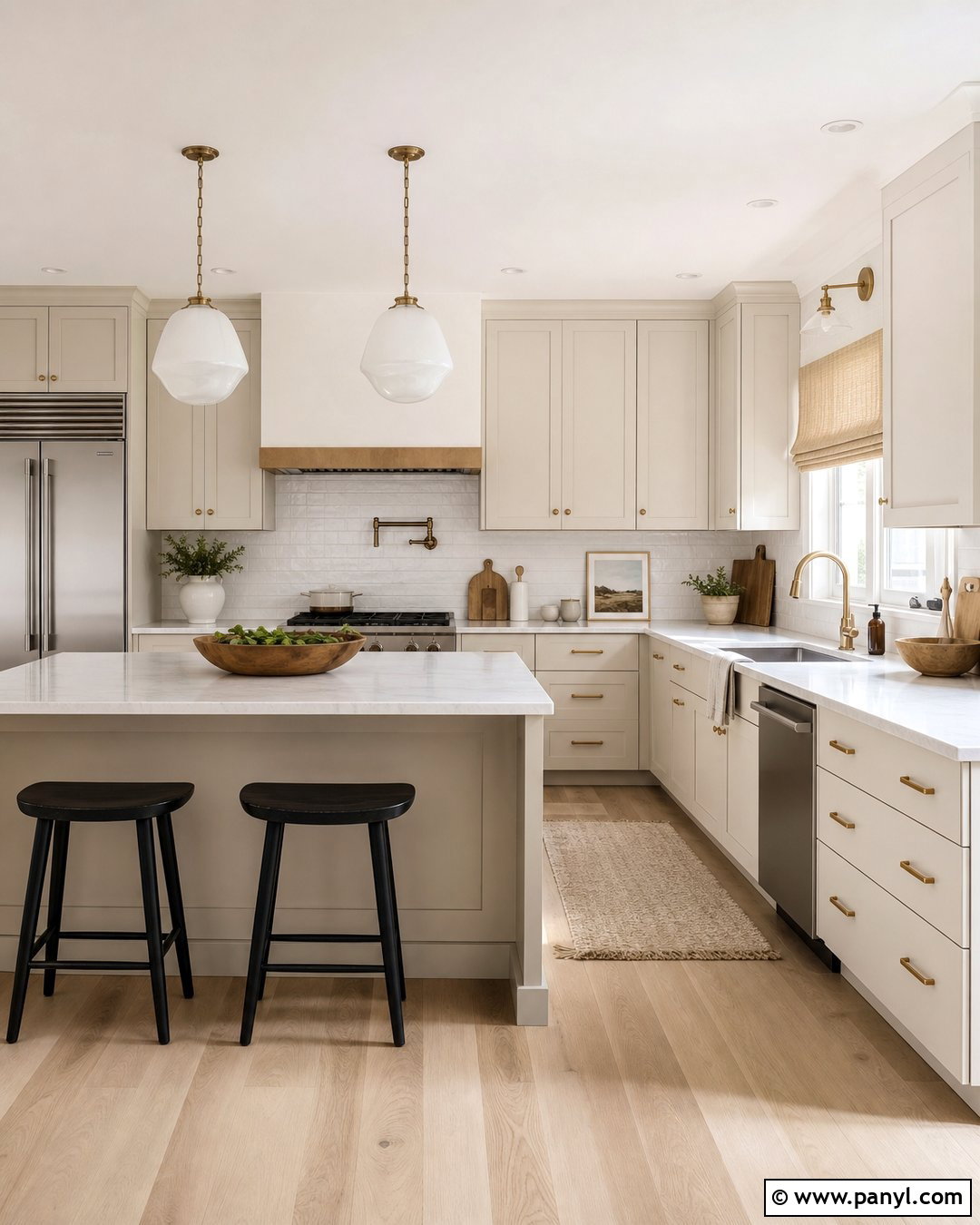
Warm white walls create a clean kitchen without making cream cabinets appear overly yellow. Choose a soft white with subtle beige or ivory undertones rather than a stark, blue-based white. Complete the look with pale quartz countertops, a handmade white subway tile backsplash, and brushed brass cabinet pulls. Natural white oak flooring adds gentle contrast while repeating the warmth of the cabinetry. Over the island, install simple milk-glass pendants or woven fixtures for comfortable texture. Keep window coverings light and uncomplicated, such as linen Roman shades. This balanced palette works especially well in small kitchens because the walls reflect light while the cabinets remain visibly distinct. Add black counter stools or a dark wood cutting board for a few grounding accents.
2. Crisp White Kitchen Walls
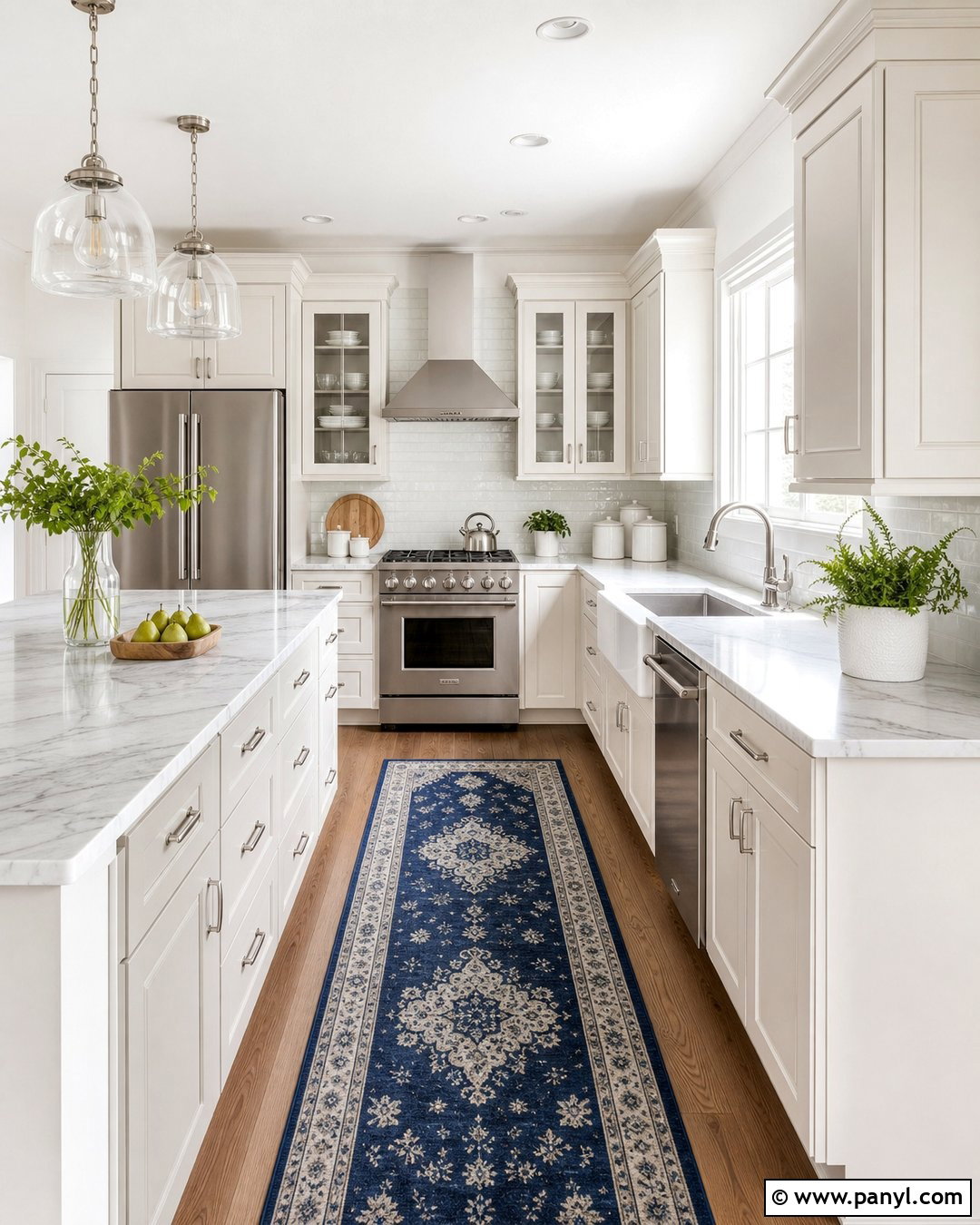
Crisp white walls can give cream cabinets sharper definition when the kitchen has plenty of warm natural light. The contrast should look intentional, so repeat bright white on the ceiling, backsplash grout, or marble countertop veining. Choose streamlined cream Shaker cabinets with polished nickel hardware for a tailored transitional appearance. Medium-toned oak flooring keeps the white from feeling sterile, while a navy runner brings color through the center of the room. Clear glass pendants allow the palette to remain open and airy. If the cabinets have strong yellow undertones, test the white carefully because overly cool paint may exaggerate them. Finish the room with stainless steel appliances, white ceramic accessories, and one or two leafy plants instead of numerous small decorations.
3. Ivory Kitchen Walls
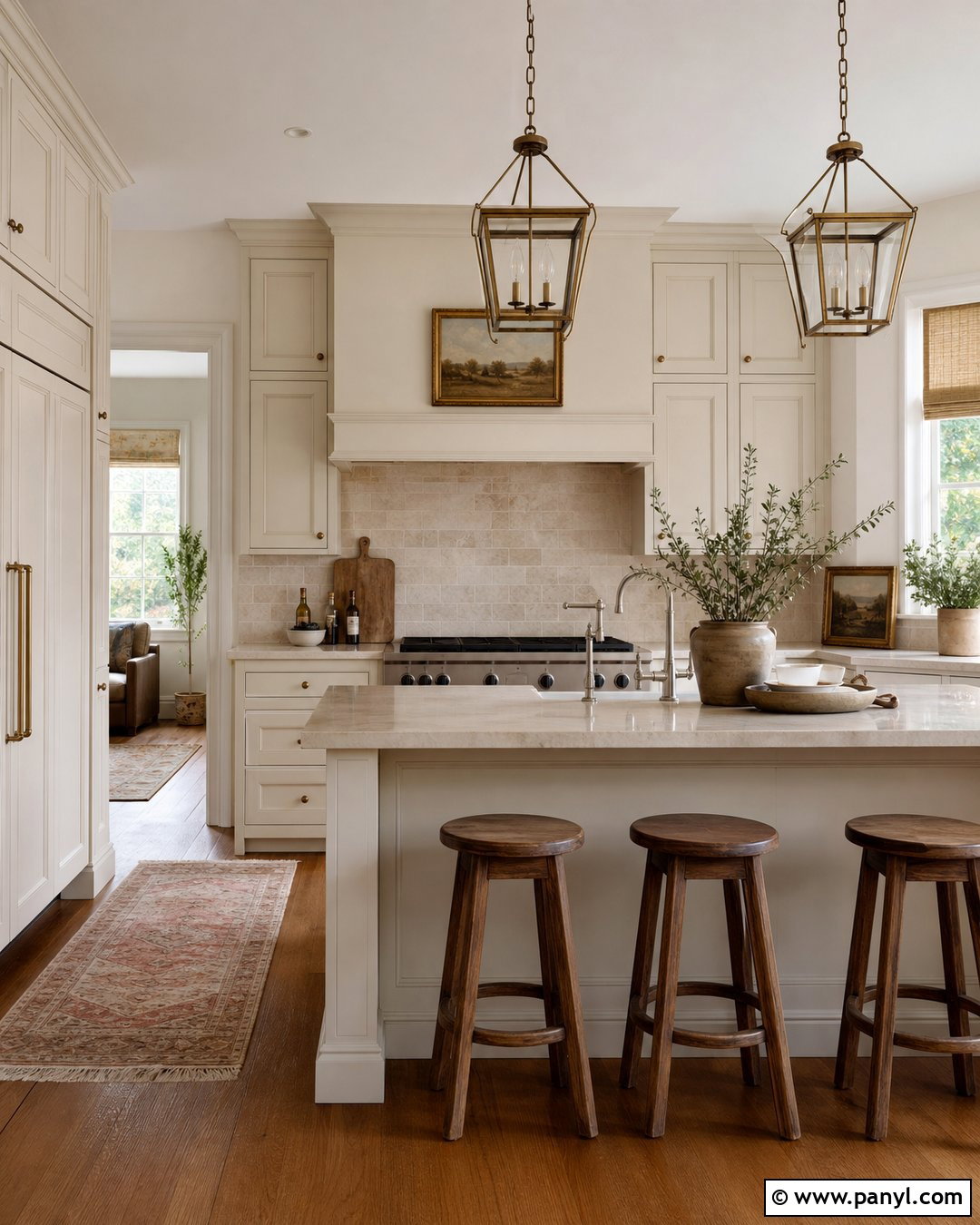
Ivory walls create a soft, layered kitchen where the cream cabinets blend gently into their surroundings. Select an ivory that is slightly lighter than the cabinetry so doors, molding, and architectural details remain visible. Pair the tonal backdrop with honed beige limestone countertops and a matching slab backsplash for an uninterrupted surface. Antique brass knobs, a bridge faucet, and traditional lantern pendants reinforce the warm, classic character. Walnut stools and medium brown flooring provide necessary depth. Consider painting the ceiling the same ivory at reduced strength to avoid a harsh white line above the cabinets. This complete palette suits traditional, French country, and Mediterranean kitchens. Keep textiles restrained, using natural linen, muted stripes, and small touches of olive green to prevent the neutral room from feeling flat.
4. Cream Kitchen Walls
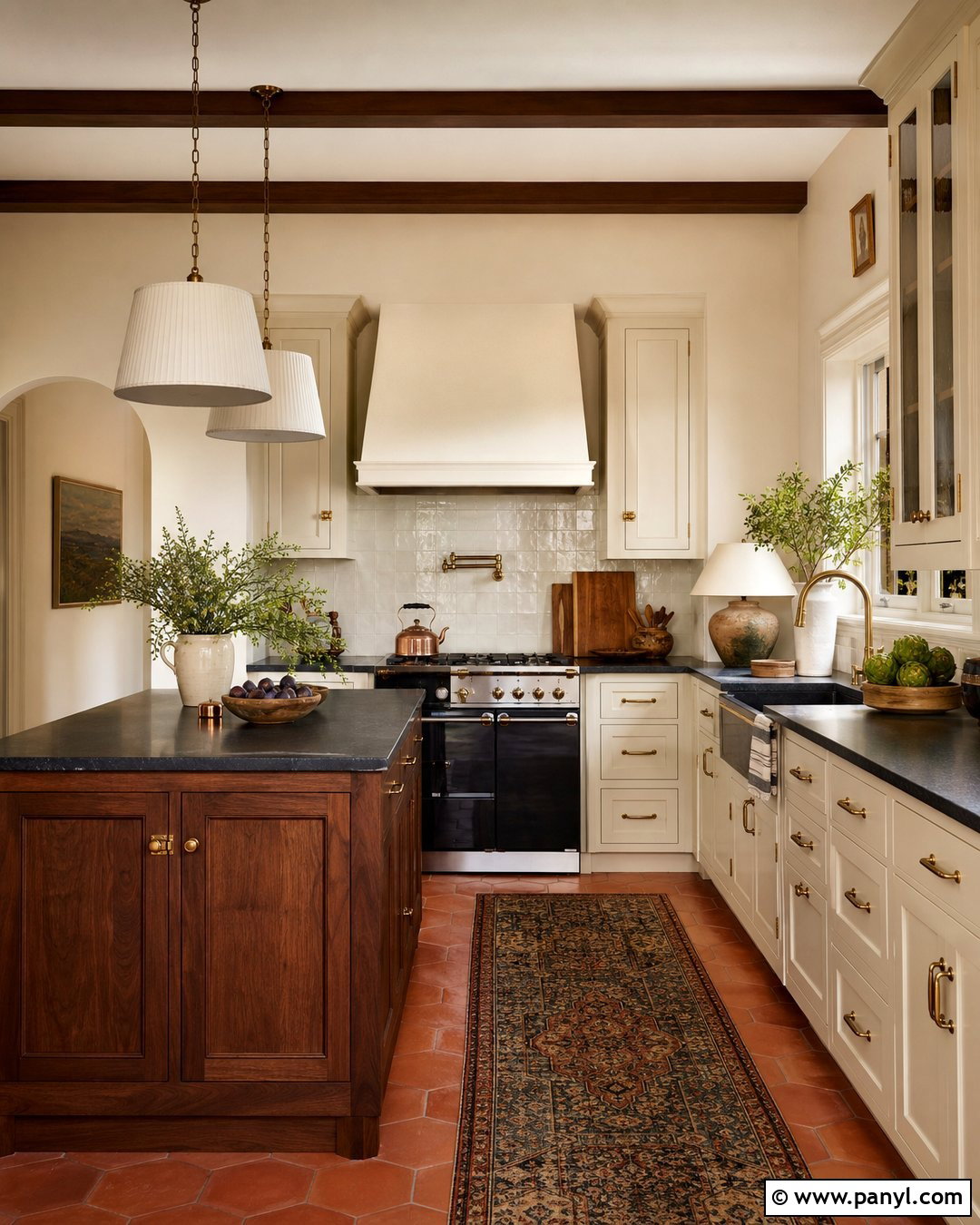
Matching cream walls and cabinets produces a calm, color-drenched kitchen with a spacious, cohesive appearance. Use the same paint family throughout, but adjust the sheen so the cabinetry has a durable satin finish and the walls have a washable matte or eggshell finish. Introduce definition through dark soapstone countertops, unlacquered brass hardware, and a rich walnut island. A backsplash of handmade cream tile adds movement without interrupting the monochromatic envelope. Terracotta or aged oak flooring can warm the lower half of the room. This treatment is particularly effective in kitchens with detailed crown molding because one continuous color simplifies the architecture. Add linen pendant shades, off-white ceramics, and a vintage patterned runner. Avoid filling every surface; texture and finish variations should create most of the interest.
5. Light Greige Kitchen Walls
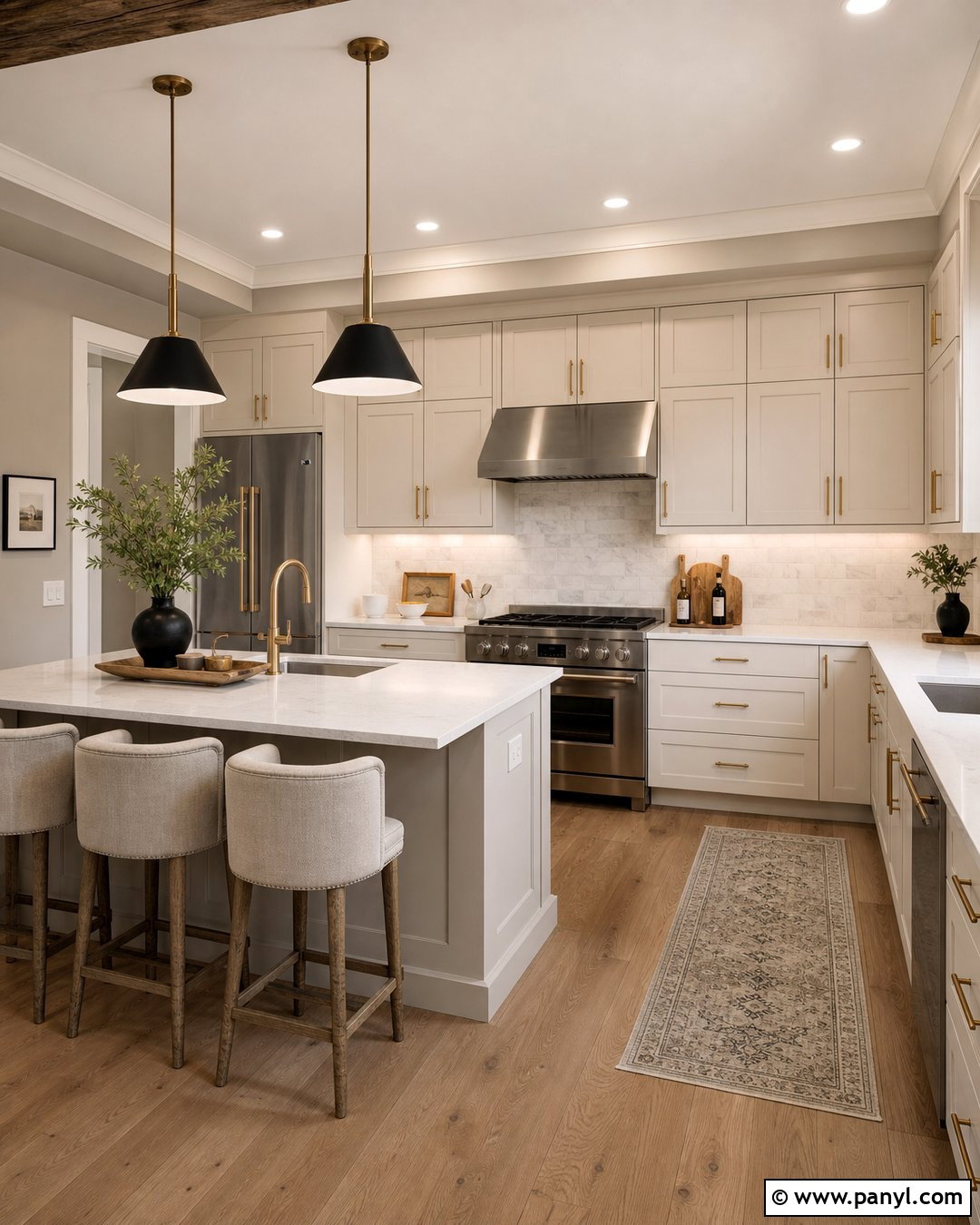
Light greige walls balance the warmth of cream cabinets with a subtle gray influence. Look for a shade that reads beige in warm evening light and gently gray during the day. Build a relaxed transitional kitchen with white quartz counters, a pale marble backsplash, and satin brass hardware. Wide-plank oak flooring supports the warmer undertones, while matte black pendants add modern structure above the island. Greige is especially useful in open-concept homes because it connects cream cabinetry with adjacent gray, beige, and wood furnishings. Repeat the wall color in upholstered counter stools or a washable runner to strengthen the flow. Keep appliances stainless steel and choose simple cabinet profiles. The resulting space feels current and neutral without depending on bright white, making it comfortable in both sunny and shaded kitchens.
6. Soft Gray Kitchen Walls
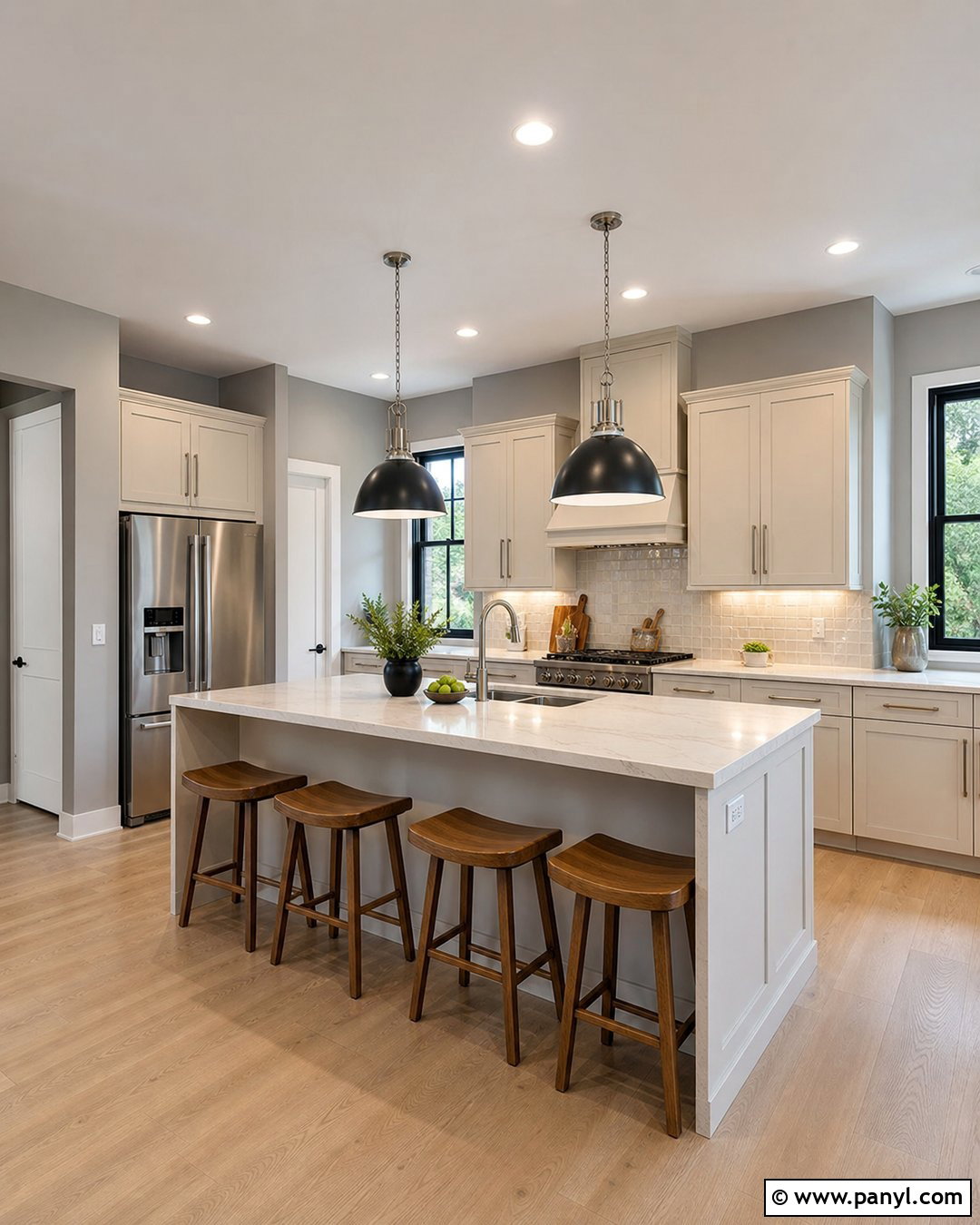
Soft gray walls create gentle contrast and can neutralize cream cabinets with noticeable yellow undertones. Choose a balanced gray that does not lean strongly blue, purple, or green. Pair it with lightly veined quartz counters, glossy off-white backsplash tile, and polished nickel pulls for a fresh transitional scheme. Pale oak floors prevent the cooler wall color from making the kitchen feel cold. Add warm wood through stools, shelves, or a butcher-block section beside the range. Black-framed windows or charcoal pendant lights give the design a crisp outline. In a north-facing kitchen, sample several grays because limited daylight can make them appear darker. A simple white ceiling and warm LED lighting will preserve brightness. This combination feels practical, clean, and calm while allowing the creamy cabinetry to remain the room’s welcoming focal point.
7. Dove Gray Kitchen Walls
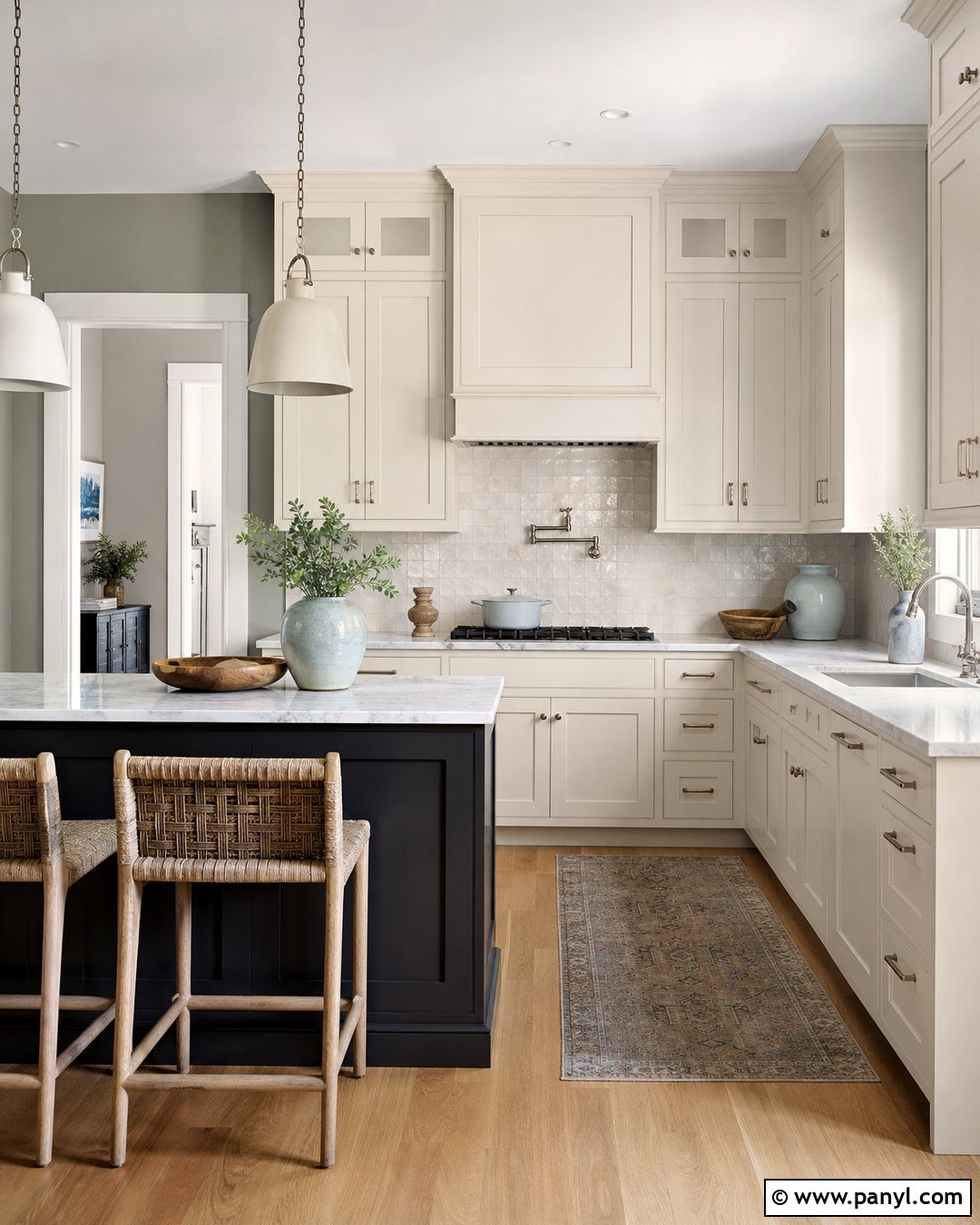
Dove gray is a light, refined wall color that sits comfortably between cool gray and warm taupe. Against cream cabinets, it creates visible separation without introducing a strong color statement. Design the room with honed Carrara marble countertops, a softly textured zellige backsplash, and brushed nickel hardware. Add medium oak flooring and a charcoal-gray island to create a gradual progression from light to dark. Fabric pendants or pale ceramic lights soften the straight lines of the cabinetry. Dove gray also works well with stainless steel appliances because it connects their cooler finish to the warmer cabinets. For decoration, use pale blue pottery, white stoneware, and one substantial wooden bowl. The finished kitchen feels elegant yet approachable, making this wall color suitable for traditional millwork, simple Shaker doors, or understated contemporary cabinetry.
8. Mushroom Kitchen Walls
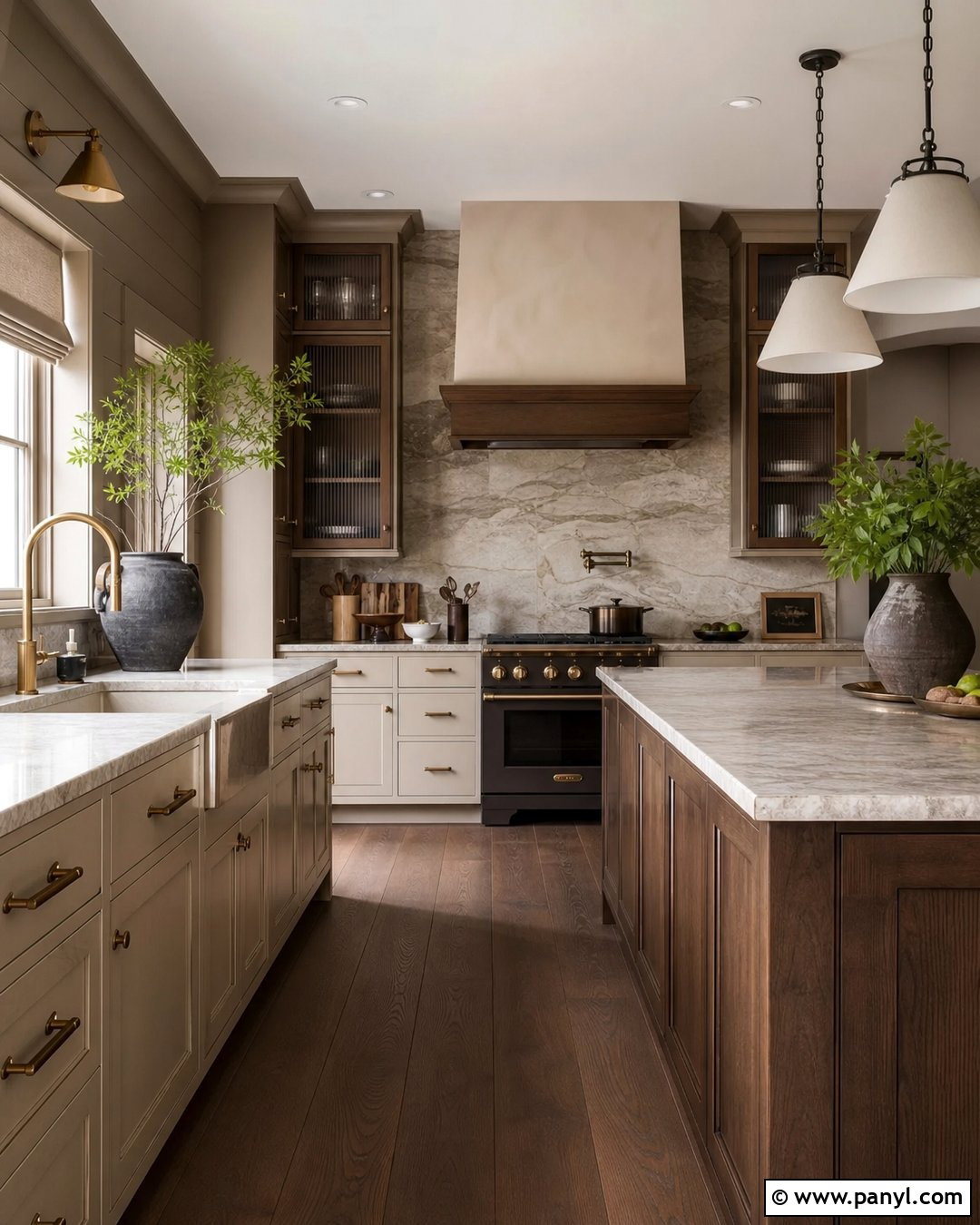
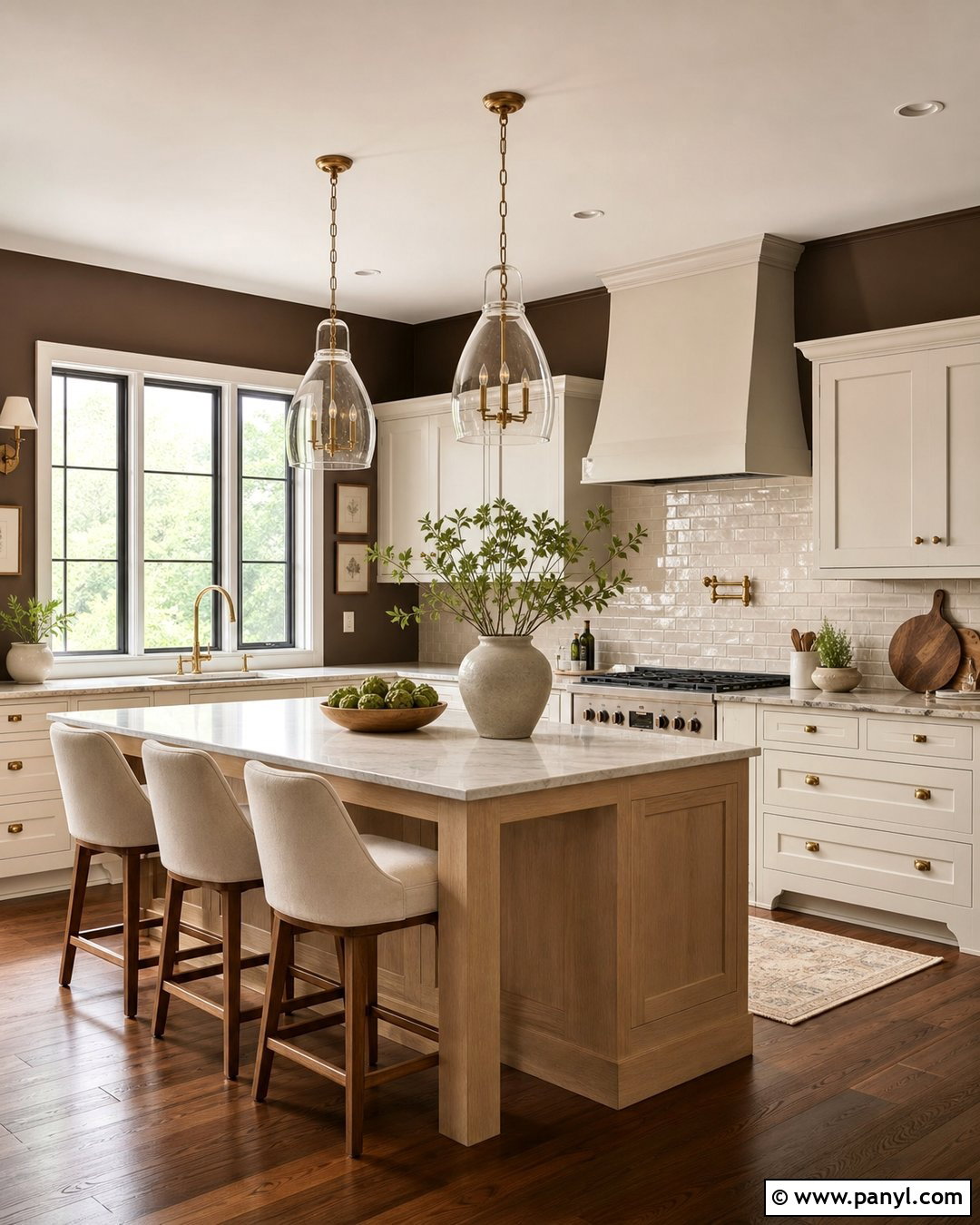
Mushroom walls add earthy depth while staying close enough to cream for a soothing neutral palette. This brown-gray shade looks especially sophisticated beside cabinets with beige rather than bright yellow undertones. Complete the kitchen with creamy quartzite counters, a full-height stone backsplash, and aged bronze hardware. Dark oak flooring and a substantial wood island create a grounded, furniture-like effect. Use plaster or ceramic pendant lights in off-white to brighten the center without introducing another metal finish. Mushroom paint performs beautifully in a kitchen with southern or western light, which reveals its complex warmth. Add natural linen shades, ribbed glass cabinet doors, and a few dark brown accessories. The result is a warm contemporary kitchen that feels layered and welcoming, with enough tonal contrast to keep the cabinets from disappearing into the walls.
9. Taupe Kitchen Walls
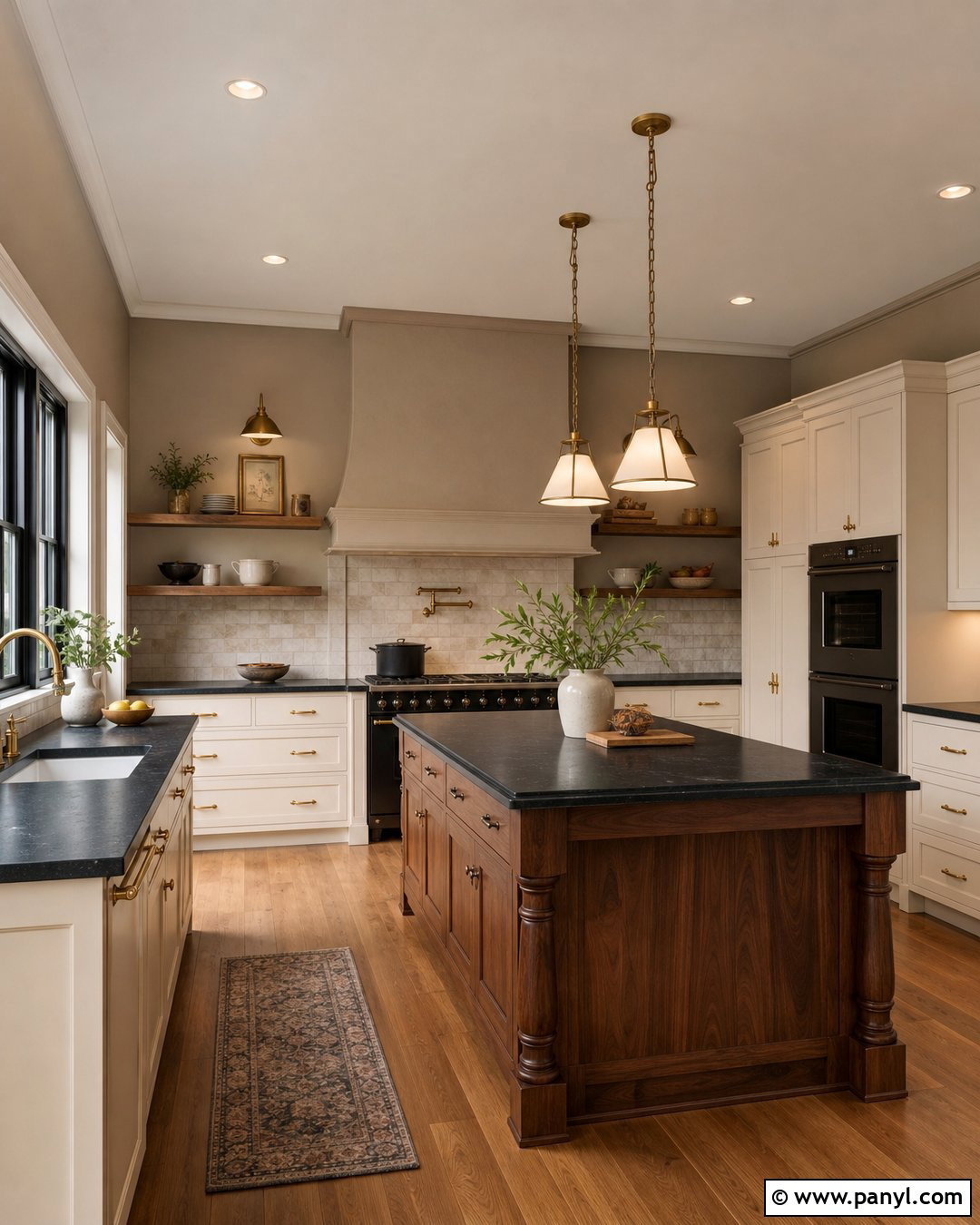
Taupe walls create a polished connection between cream cabinets, brown wood, and gray stone. Select a warm taupe that clearly contrasts with the cabinetry but does not become muddy in low light. Pair it with black granite or soapstone counters, creamy tile, and antique brass hardware for a rich traditional look. A walnut island, dark wood stools, and medium oak flooring deepen the natural palette. Add a simple plaster range hood painted to match the walls so it becomes part of the architecture. Warm white pendants and undercabinet lighting will keep work surfaces bright. Taupe also provides an attractive background for open shelves holding ivory ceramics and clear glassware. This complete scheme suits kitchens connected to living spaces containing leather, linen, wood, and neutral upholstery because the wall color helps every material feel intentionally related.
10. Warm Beige Kitchen Walls
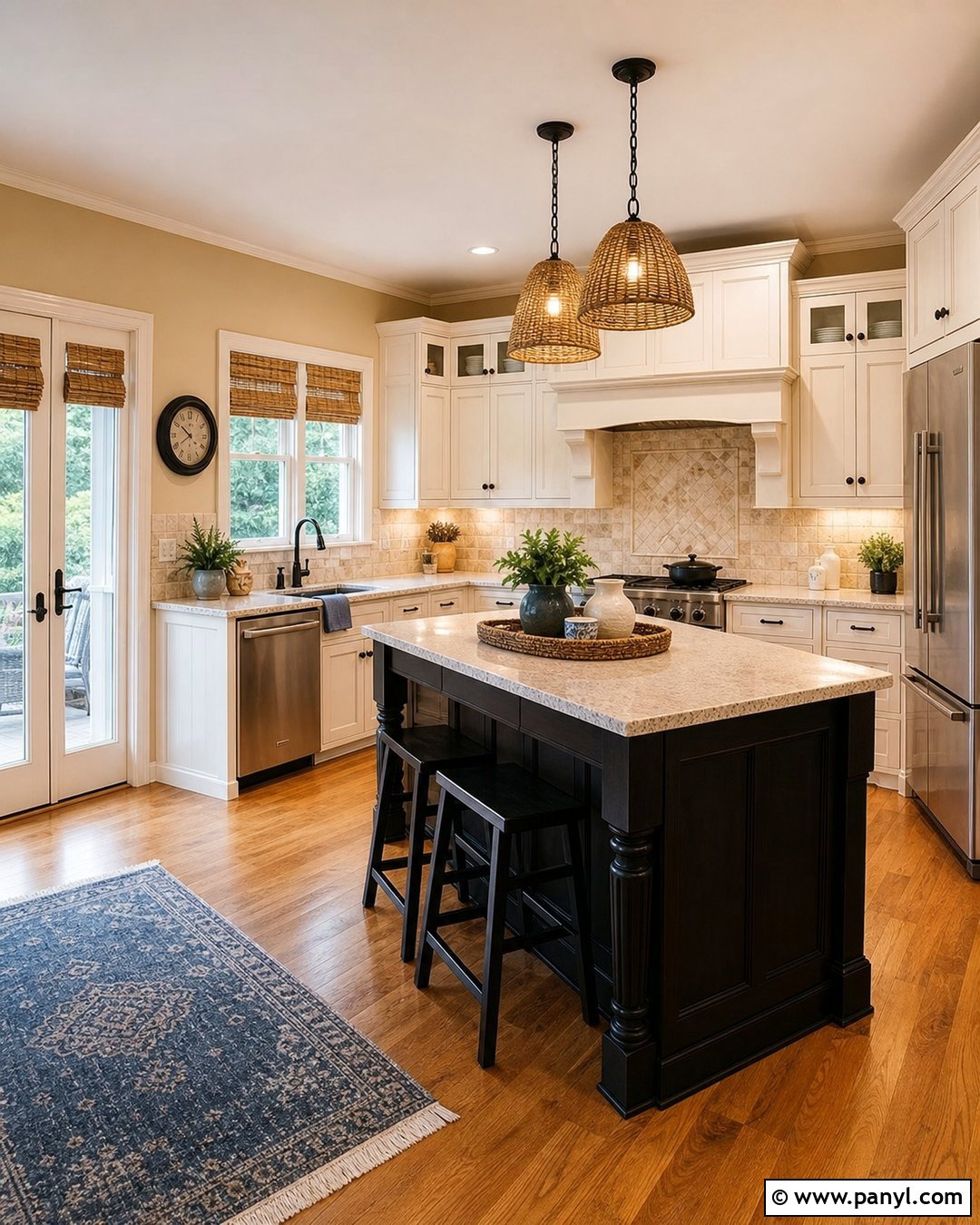
Warm beige walls emphasize the inviting quality of cream cabinets and create an easy, family-friendly kitchen. Avoid beige paint with an overly golden cast; a balanced sandy undertone will feel fresher. Use speckled cream quartz counters, tumbled stone backsplash tile, and oil-rubbed bronze hardware to develop a relaxed traditional design. Honey-toned oak flooring complements the walls, while a dark-painted island or black counter stools provide contrast. Woven pendant lights introduce texture above the island and work naturally with bamboo or linen window shades. Add muted blue accessories to cool the palette slightly, perhaps through a runner, pottery, or upholstered breakfast nook. This color works particularly well in rooms with limited direct sunlight because it remains warm and comfortable. The complete look feels familiar, practical, and welcoming without becoming excessively monochromatic.
11. Sand Kitchen Walls
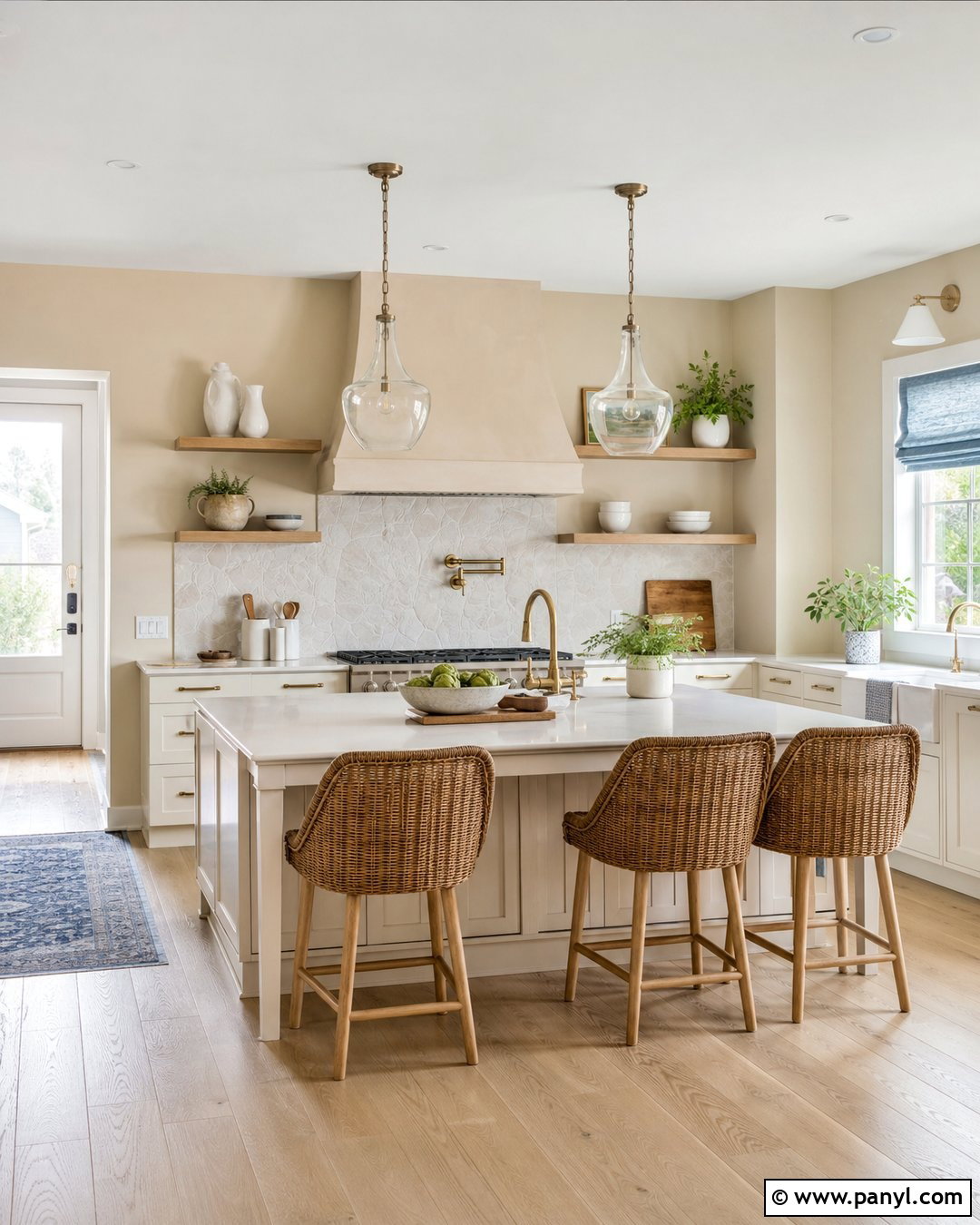
Sand-colored walls bring a light coastal warmth to cream cabinetry without relying on obvious beach-themed decoration. Choose a pale tan with understated gray undertones and pair it with white quartz countertops, softly irregular ivory tile, and brushed nickel or champagne bronze hardware. White oak flooring and woven counter stools reinforce the natural palette. Add pale blue linen shades and clear glass pendants for a breezy layer of color and light. A simple cream range hood can connect the cabinetry, while a few open oak shelves prevent the upper walls from feeling heavy. Keep decorative pieces functional, including wood boards, white bowls, and textured ceramic containers. This complete scheme works in kitchens of many sizes because the walls stay bright. The result feels casual and fresh, with enough warmth to flatter the cabinets throughout the day.
12. Putty Kitchen Walls
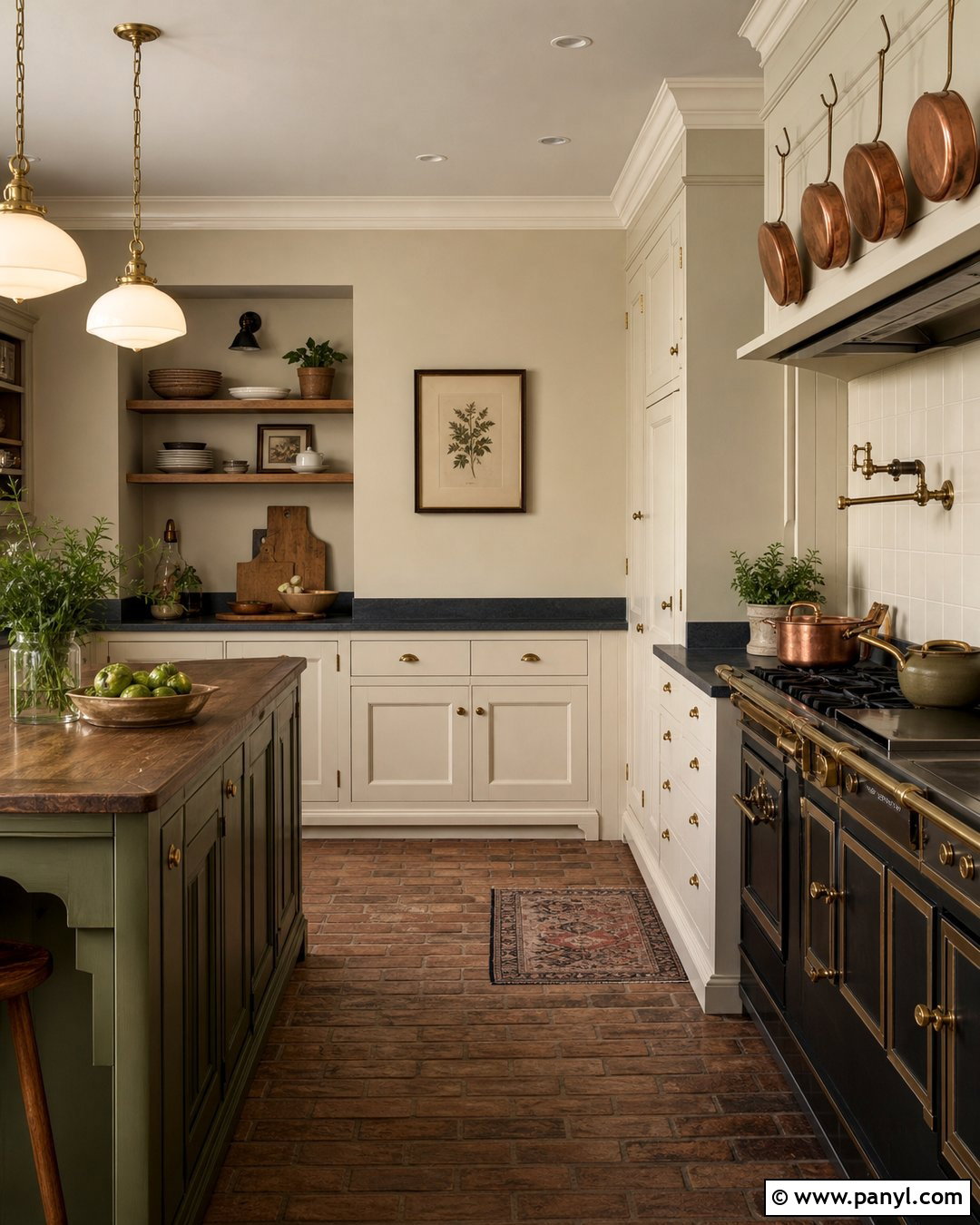
Putty walls offer deeper neutral contrast than beige while maintaining a quiet, earthy appearance. Their blend of gray, brown, and subtle green can calm cabinets that look strongly yellow under artificial lighting. Create a tailored English-inspired kitchen with cream inset cabinetry, dark soapstone counters, aged brass latches, and a simple bridge faucet. Use warm brick or aged limestone flooring to strengthen the lived-in character. A backsplash of glossy cream square tile reflects light beneath the darker walls. Add a painted wood island in deep olive or charcoal, topped with oak or stone. Traditional opal-glass pendants will brighten the workspace without weakening the period influence. Putty walls also flatter botanical prints, copper cookware, and natural wood shelves. The finished kitchen feels established, practical, and carefully layered rather than newly decorated.
13. Pale Sage Green Kitchen Walls
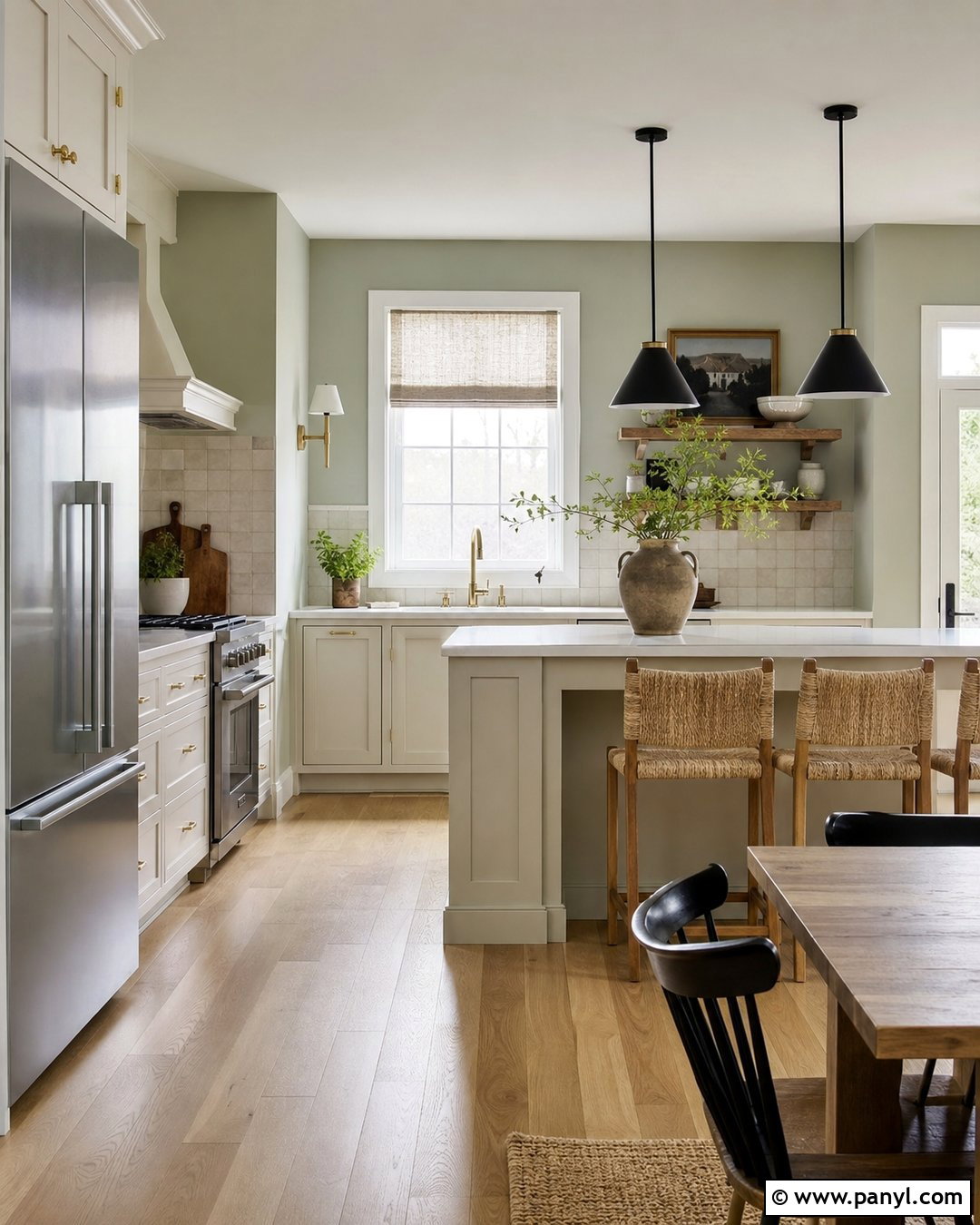
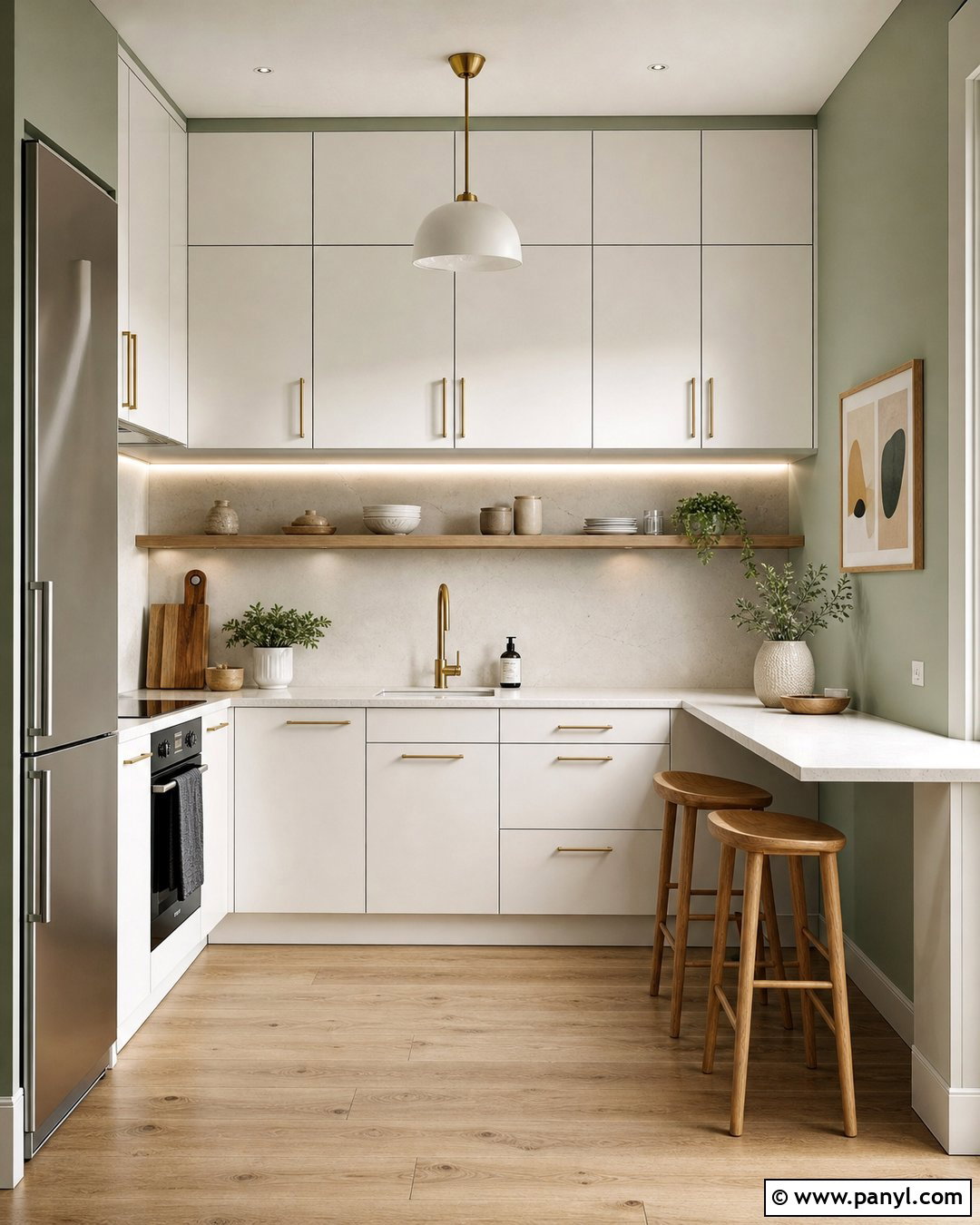
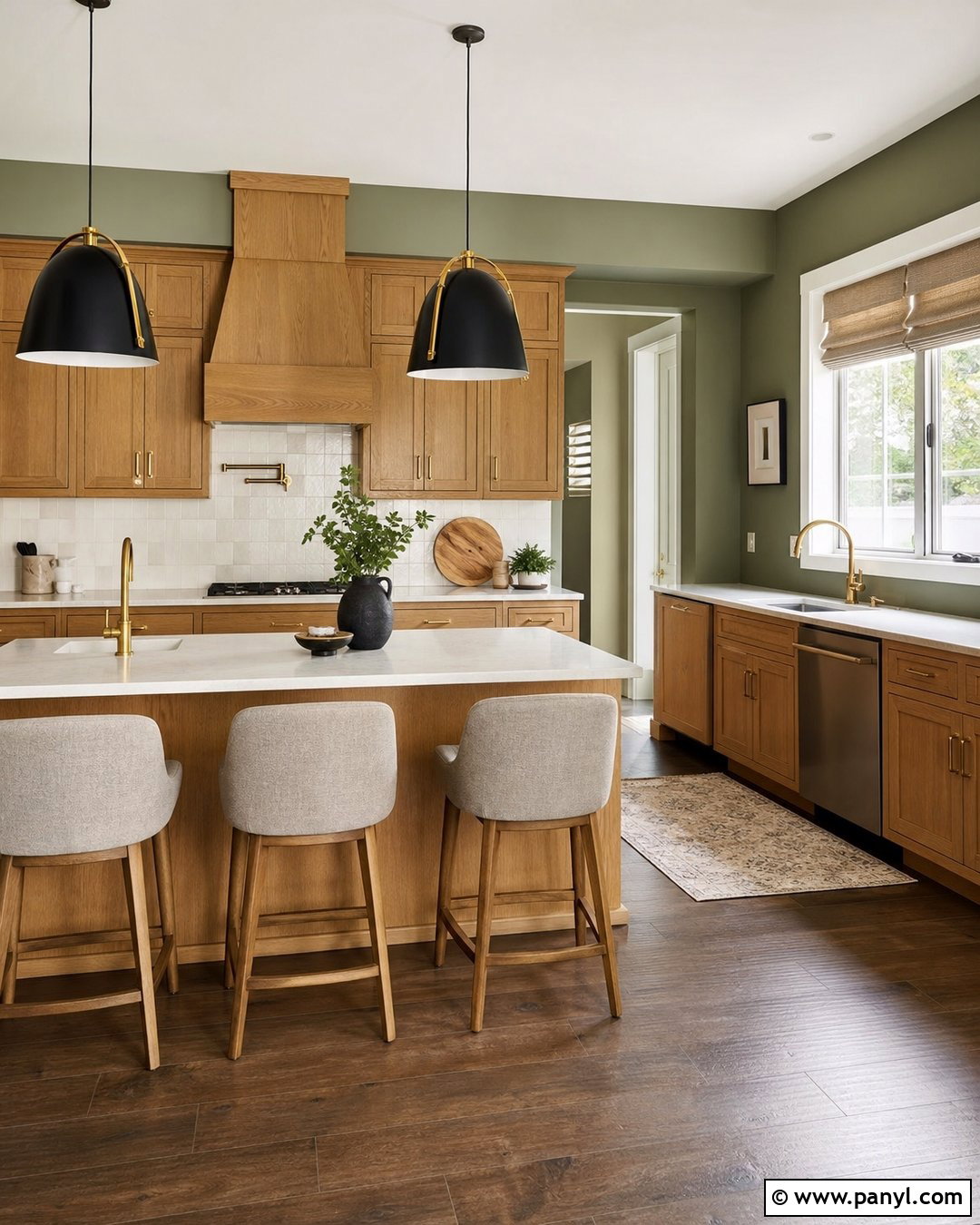
Pale sage walls bring a calming botanical note to cream cabinets and gently balance their golden warmth. Choose a muted sage with gray undertones rather than a bright, minty green. Pair it with warm white quartz, a cream zellige backsplash, brushed brass hardware, and light oak flooring. Natural materials should complete the look: woven counter stools, a linen Roman shade, and a simple wood dining table work beautifully. Add matte black pendants to create clean contrast and coordinate them with black window frames or small appliances. This palette suits cottage, farmhouse, and transitional kitchens, yet it can also look modern with flat-front cabinetry and minimal hardware. Limit additional colors to soft brown, ivory, and charcoal. The complete space will feel fresh and grounded, as though the kitchen naturally connects with the landscape outside.
14. Olive Green Kitchen Walls
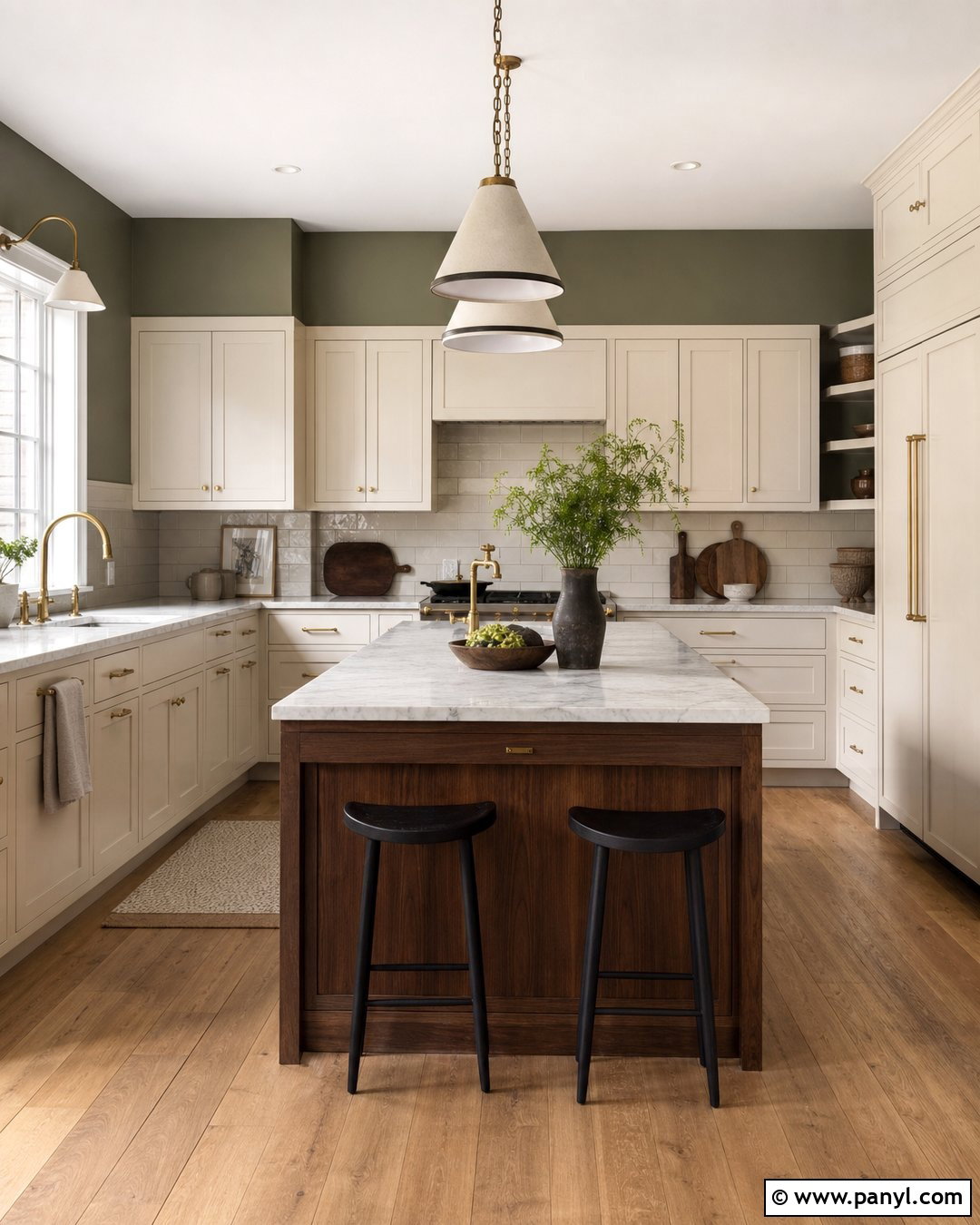
Olive green walls turn cream cabinets into a warm, striking feature while giving the kitchen earthy sophistication. Choose a medium olive with muted brown or gray undertones so the color feels grounded rather than bright. Complete the room with honed marble countertops, cream subway tile, and unlacquered brass hardware. A walnut island and warm oak flooring reinforce the organic palette, while ivory plaster pendants keep the center visually light. Olive works especially well in larger kitchens or rooms with generous windows. In smaller spaces, use it above a full-height backsplash or on one uninterrupted wall. Decorate with natural linen, dark wood boards, and a restrained collection of cream ceramics. The finished design feels rich yet comfortable, offering more personality than a neutral wall without competing with the cabinetry or overwhelming the room’s practical surfaces.
15. Eucalyptus Green Kitchen Walls
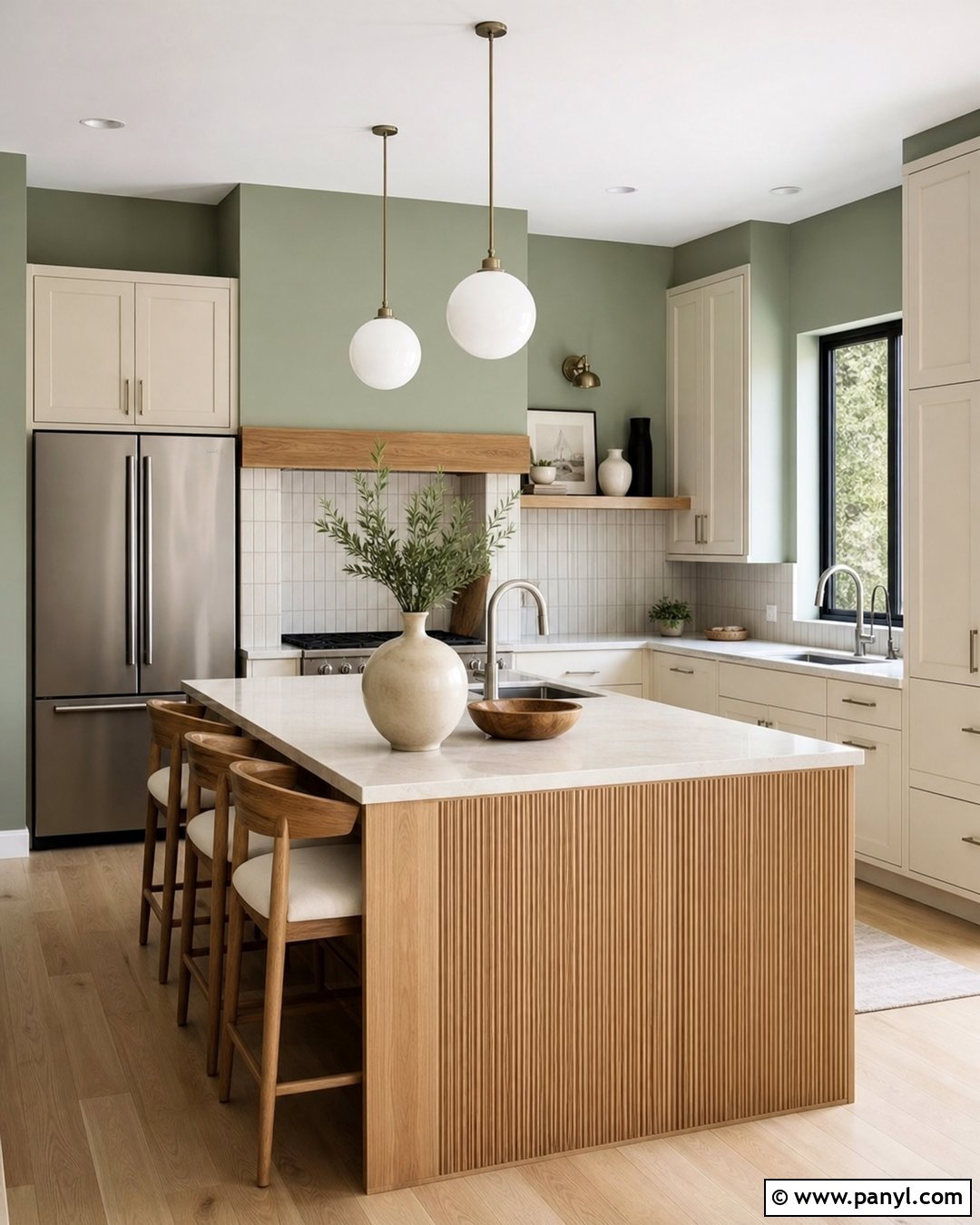
Eucalyptus green walls create a clean, contemporary variation of the popular green-and-cream combination. This muted blue-green has enough coolness to balance cream while remaining softer than teal. Pair it with pale quartz counters, vertical ivory backsplash tile, and slim brushed nickel pulls. Light white oak floors maintain an airy foundation, and globe pendants in opal glass provide simple modern lighting. Consider a natural oak island with reeded panels to add texture without another paint color. Stainless steel appliances blend comfortably into this cooler scheme. For accessories, select white pottery, pale wood trays, and a few darker green plants. Keep window treatments minimal so daylight can reveal the wall color accurately. The complete kitchen feels peaceful, practical, and updated, particularly when combined with Shaker cabinets, clean counter lines, and uncluttered open space.
16. Soft Mint Kitchen Walls
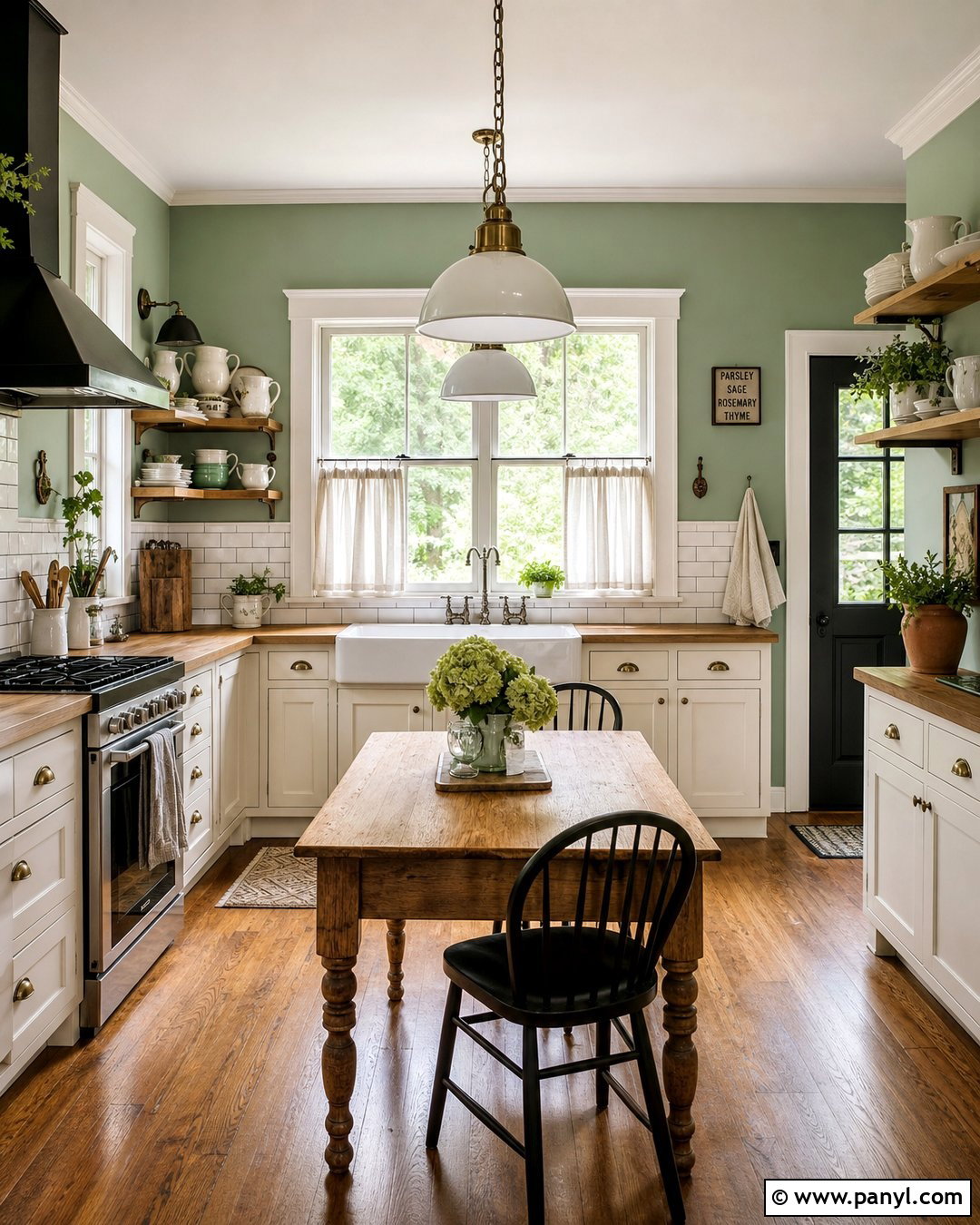
Soft mint walls give cream cabinets a light, cheerful backdrop without making the kitchen look overly colorful. Choose a subdued mint with a noticeable gray base, which will feel more sophisticated than pastel candy tones. Build a cottage-inspired design with butcher-block counters, white farmhouse tile, and antique brass knobs. Medium oak flooring adds warmth below, while white enamel pendants keep the room bright. A freestanding wood table or small cream island can make the kitchen feel collected rather than overly fitted. Repeat the mint subtly through patterned café curtains or ceramic dishes, but avoid matching every accessory. Black accents on the range, faucet, or window frame will sharpen the soft palette. This complete look is particularly effective in compact kitchens, breakfast rooms, and older homes where an easygoing color can highlight charming architectural details.
17. Forest Green Kitchen Walls
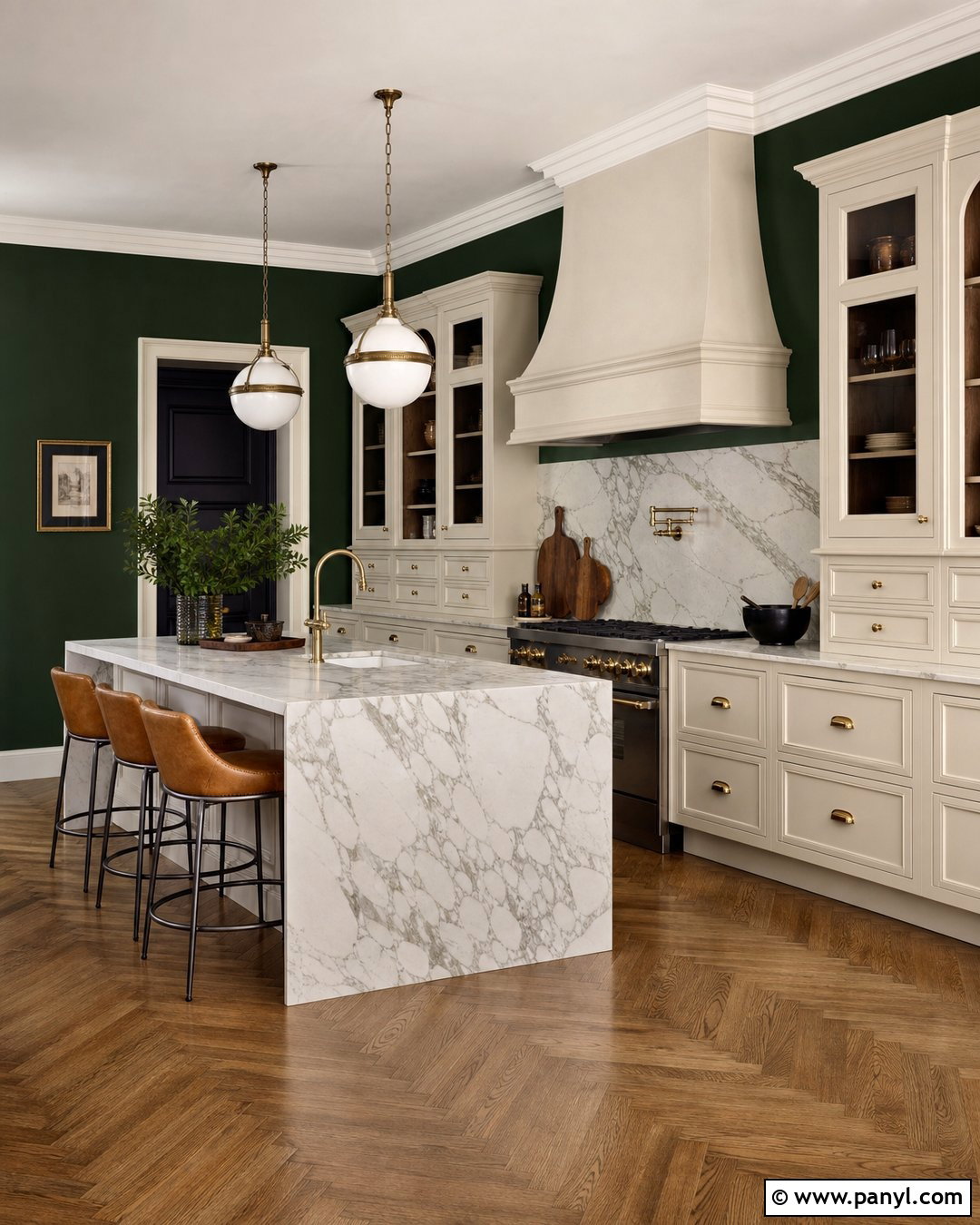
Forest green walls deliver dramatic contrast and make cream cabinets appear brighter and more architectural. This deep color works best in a kitchen with strong natural light, reflective surfaces, or a generous open layout. Pair it with richly veined white marble, a matching slab backsplash, and warm brass hardware. Dark walnut flooring or a medium oak herringbone pattern adds depth without competing with the green. Use large opal-glass pendants to cast even light across the island. A cream-painted range hood will stand out beautifully against the saturated wall. Keep stools and textiles simple in tan leather, linen, or dark wood. Because forest green carries significant visual weight, avoid covering every wall with busy art. The completed scheme feels classic and confident, with the cabinetry providing softness against the bold, enveloping background.
18. Blue Gray Kitchen Walls
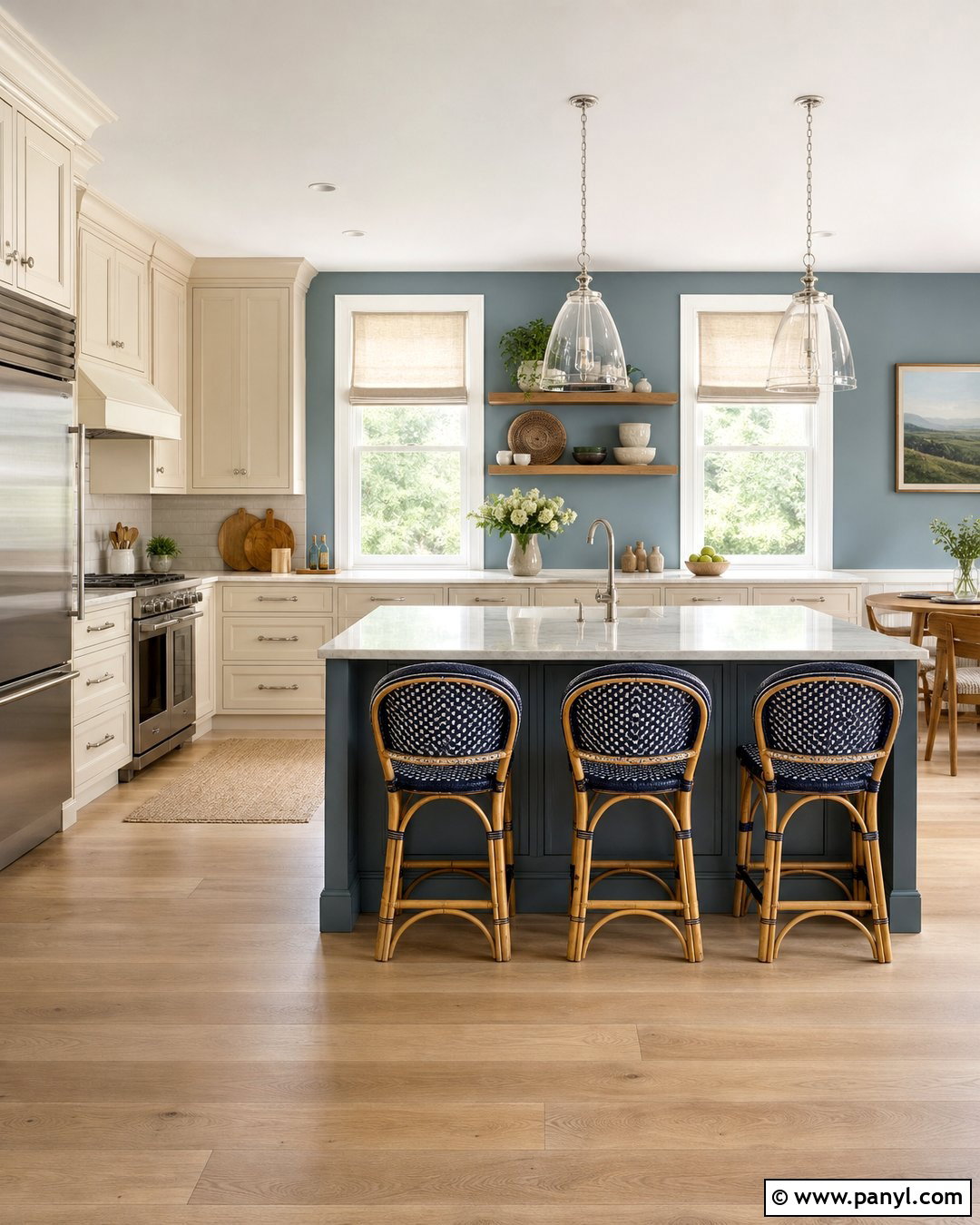
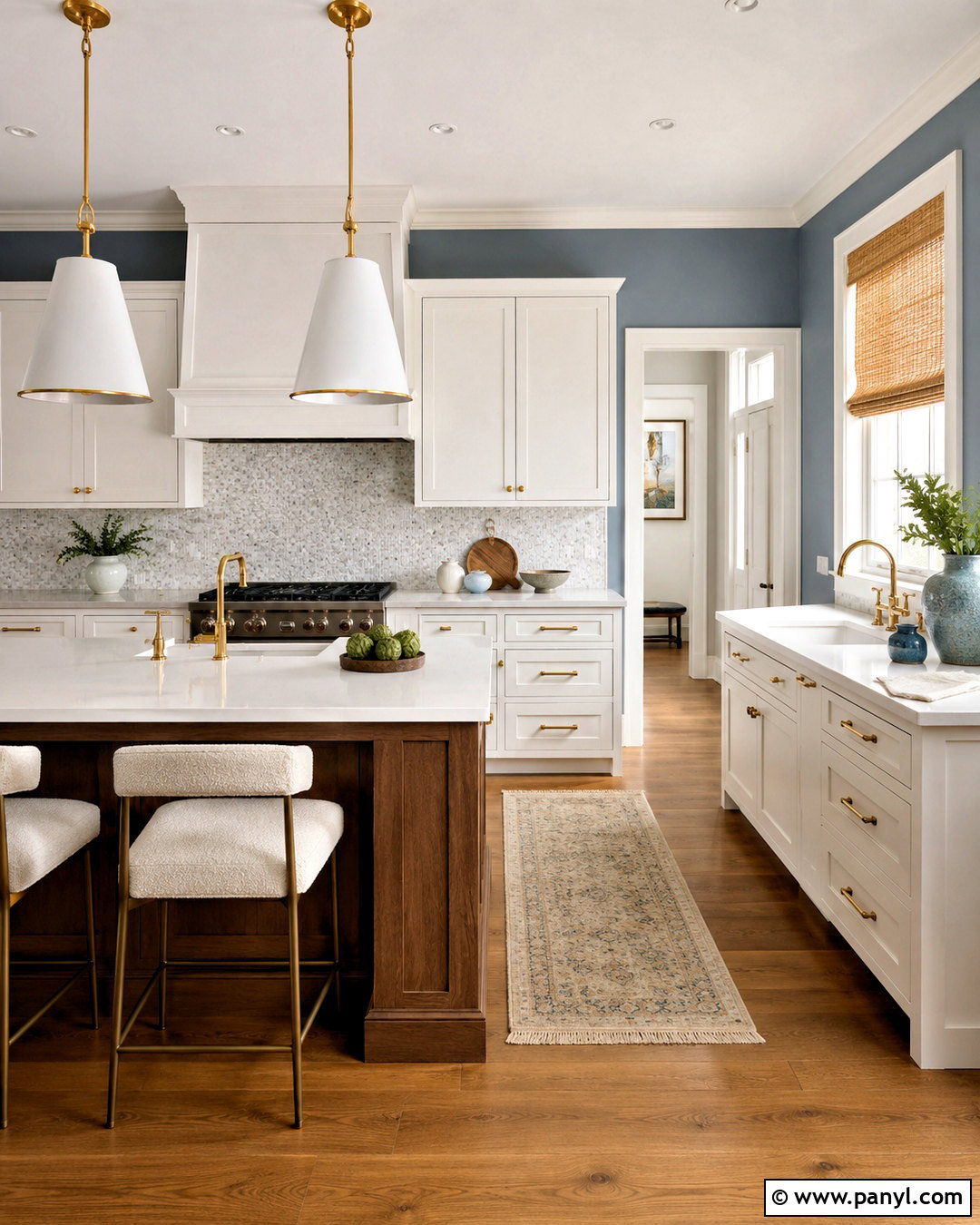
Blue-gray walls offer a cool, balanced contrast that can make cream cabinets look less yellow and more refined. Select a shade that reads softly blue in daylight but nearly neutral in the evening. Combine it with white quartzite countertops, handmade cream tile, and polished nickel hardware for a fresh coastal-transitional kitchen. Pale oak flooring warms the room, while navy or charcoal counter stools add depth. Clear glass pendants maintain open sightlines and allow the wall color to remain noticeable. A small amount of natural wood on shelves, cutting boards, or the island prevents the palette from feeling chilly. Use simple white or flax linen window treatments. This design works particularly well in kitchens with stainless steel appliances because the blue-gray walls connect cooler metal finishes to the warmth of the cream cabinetry.
19. Pale Blue Kitchen Walls
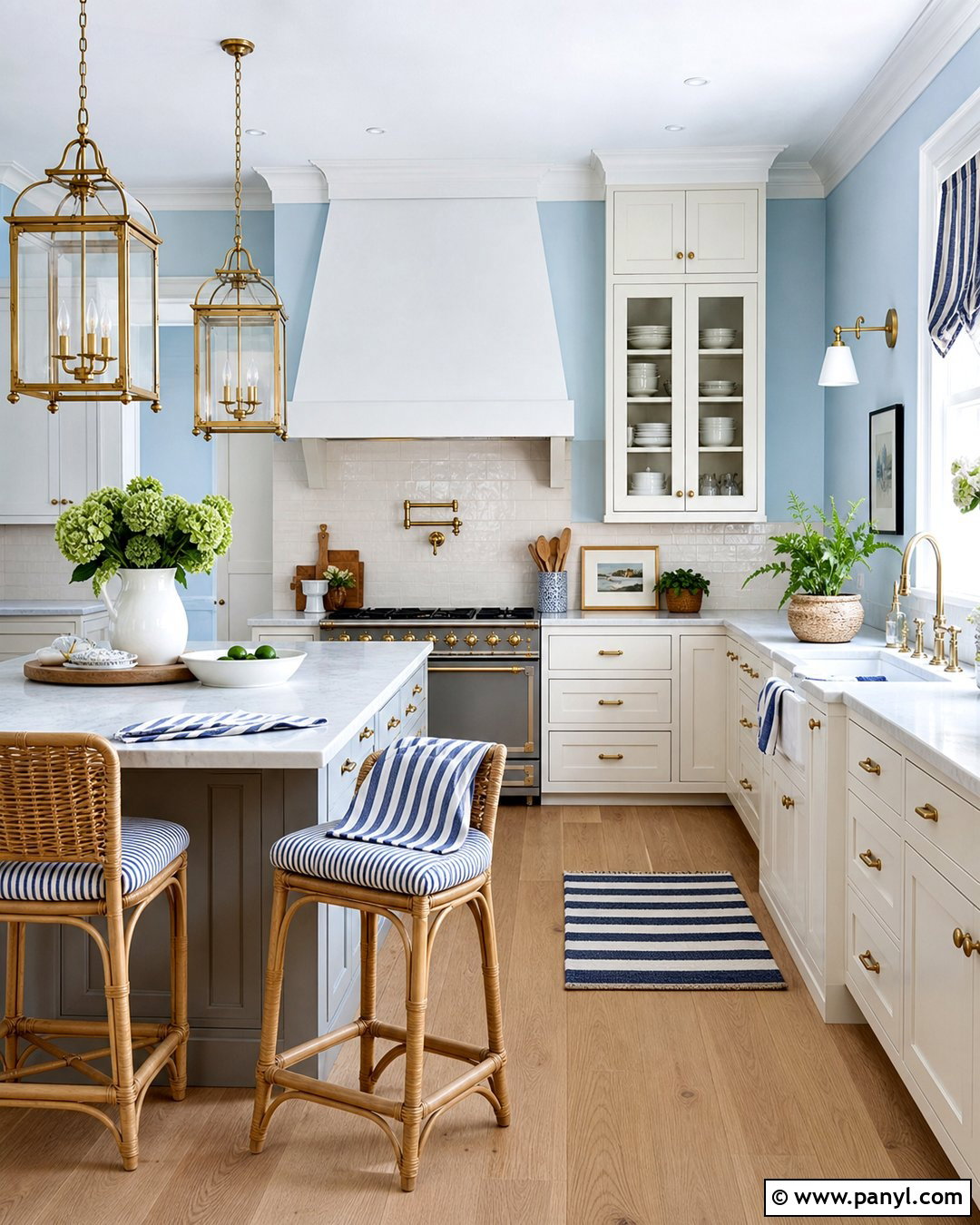
Pale blue walls create an airy kitchen that feels bright, relaxed, and quietly colorful. Look for a powdery blue with a hint of gray rather than an icy or intensely saturated shade. Pair it with cream Shaker cabinets, lightly veined marble counters, and brushed brass hardware to balance cool and warm finishes. White oak flooring and woven counter stools add natural texture. Use an ivory backsplash instead of stark white so the cabinets remain connected to the surrounding surfaces. Overhead, choose lantern-style pendants or simple white ceramic fixtures. Pale blue works particularly well near windows overlooking greenery, where the wall color echoes the sky without becoming thematic. Complete the room with navy-striped textiles, white stoneware, and a few wood accessories. The effect is fresh enough for modern homes yet soft enough for traditional kitchens.
20. Powder Blue Kitchen Walls
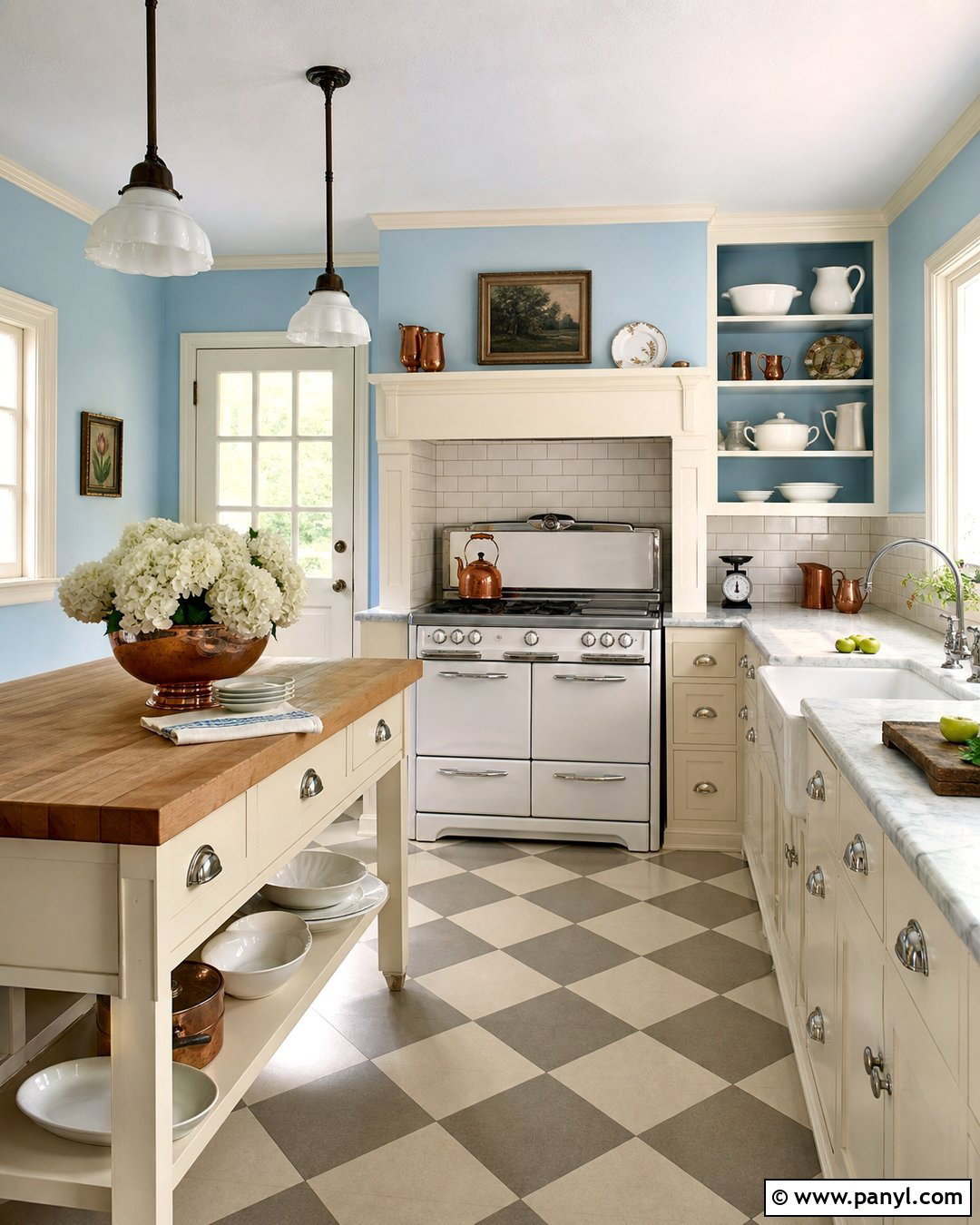
Powder blue walls give cream cabinets a charming vintage character, especially when paired with traditional details. Choose a clean but muted blue and carry it around the room rather than limiting it to a small accent wall. Add honed white marble counters, glossy ivory subway tile, and polished nickel cup pulls. A checkerboard floor in cream and soft gray can reinforce the period look without becoming visually harsh. Install milk-glass pendants and a bridge faucet for a finished, coordinated design. Warm wood on a butcher-block island or breakfast table keeps the blue from feeling cold. Display only a small collection of white dishes or copper pans on open shelving. The complete palette works beautifully in cottage and 1930s-inspired kitchens, giving cream cabinetry visible definition while maintaining a lighthearted, welcoming atmosphere.
21. Dusty Blue Kitchen Walls
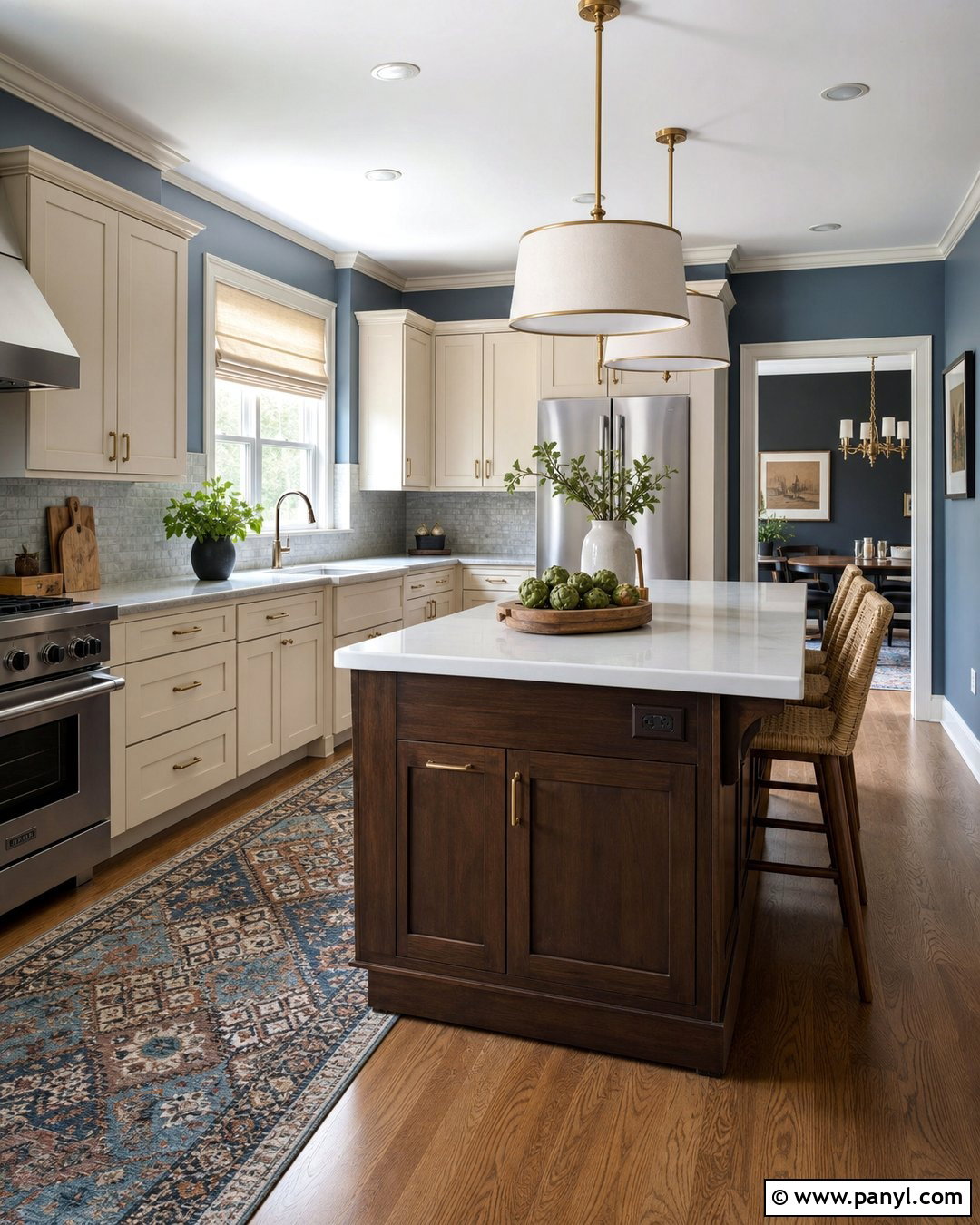
Dusty blue walls introduce more depth than pale blue while preserving a calm, muted mood. Their gray undertones coordinate naturally with cream cabinets, aged metals, and weathered wood. Complete the kitchen with white quartz counters, a soft gray stone backsplash, and antique brass hardware. Use medium-toned oak flooring and a stained wood island to create a solid visual foundation. Linen drum pendants or aged brass lanterns support the relaxed transitional look. Dusty blue can cover all walls in a larger kitchen or appear above tall backsplash tile in a compact room. Add a patterned runner containing blue, rust, and cream to connect the surfaces. Keep countertop decor minimal and practical. The resulting kitchen feels layered and comfortable, providing noticeable color without the intensity of navy or the sweetness sometimes associated with lighter pastel blue.
22. Denim Blue Kitchen Walls
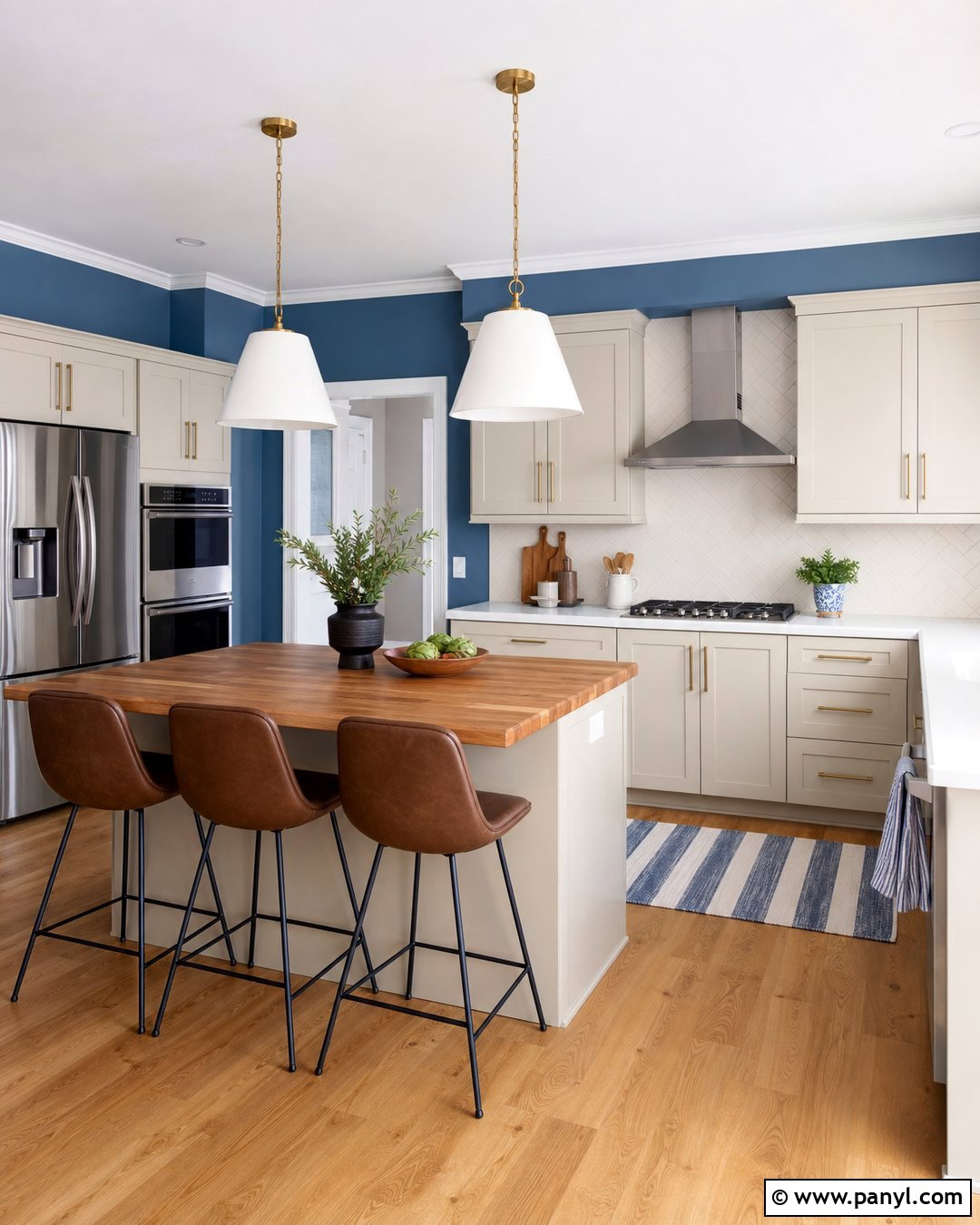
Denim blue walls create a casual, substantial backdrop for cream cabinets. This medium blue feels familiar and livable, making it useful in busy kitchens where a very pale wall color may seem too delicate. Pair it with durable white quartz counters, an ivory tile backsplash, and brushed brass or bronze hardware. Natural oak flooring, leather counter stools, and a butcher-block island enhance the approachable character. Use oversized white pendants to brighten the workspace and repeat cream through shades, pottery, and upholstery. Denim blue also coordinates well with stainless steel appliances and black accents. For an open-plan kitchen, carry small amounts of the blue into nearby rugs or cushions without repeating it on every surface. The finished look is colorful but grounded, combining the warmth of traditional cabinetry with a relaxed modern sensibility.
23. Navy Blue Kitchen Walls
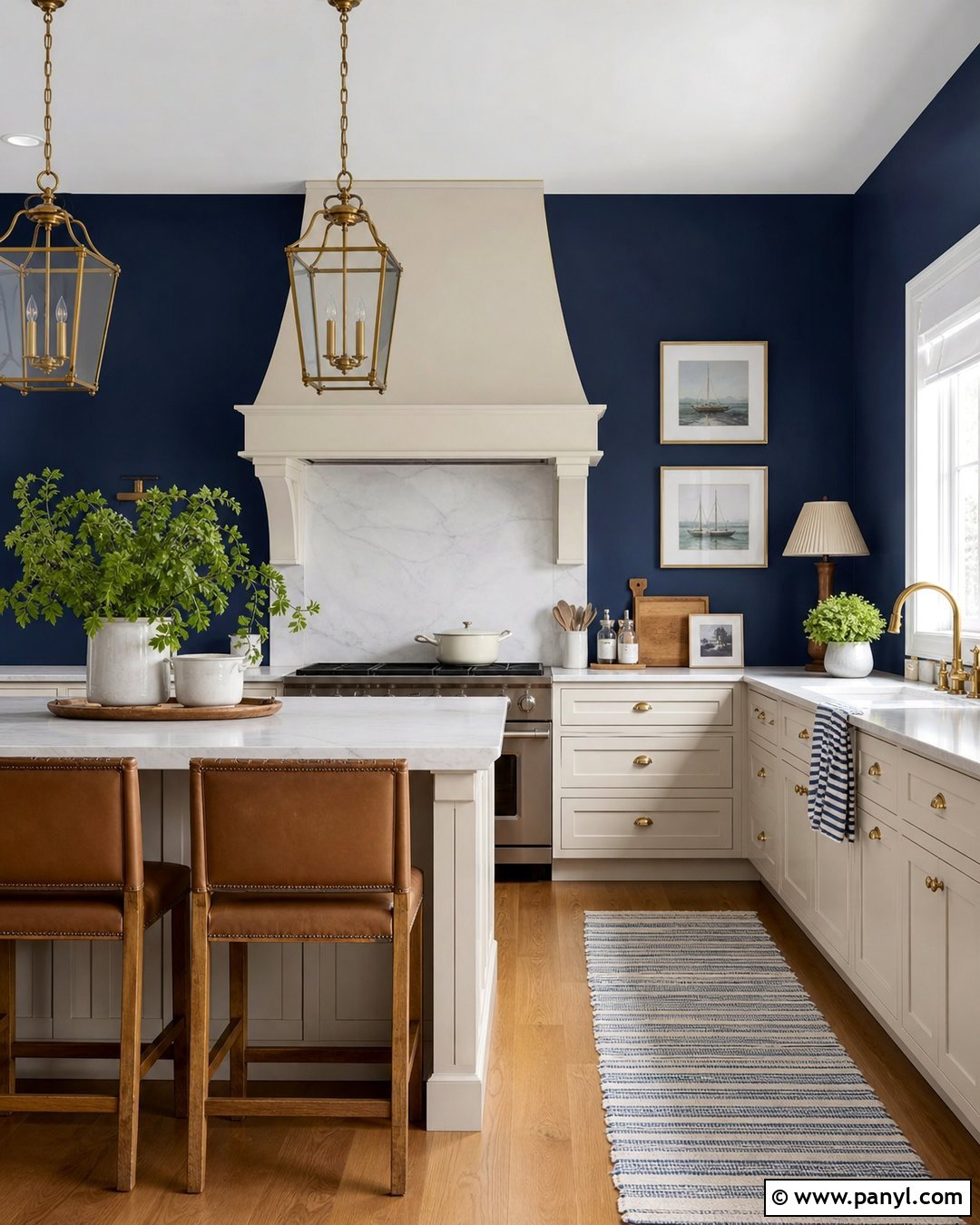
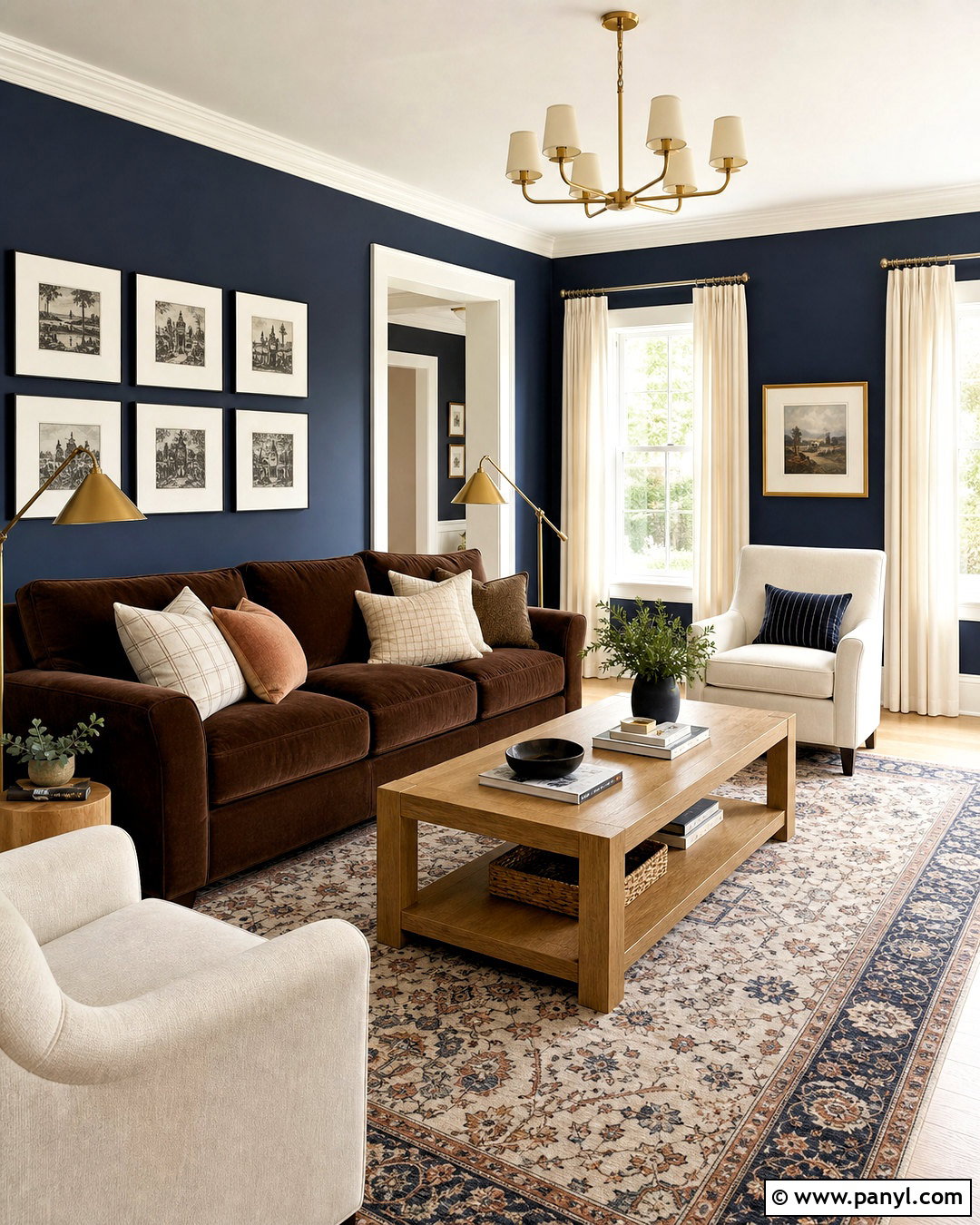
Navy walls create one of the strongest classic contrasts with cream cabinets. The combination feels tailored and timeless, especially in a large kitchen with good daylight. Choose a true navy or a slightly softened blue-black, then add pale marble counters and a full-height cream backsplash to keep work areas bright. Warm brass hardware and lantern pendants stand out clearly against the dark walls. Use medium oak flooring and tan leather stools to introduce natural warmth. A cream range hood or tall cabinet bank will become a dramatic focal point against the navy background. Keep the ceiling and window trim light to prevent the room from feeling closed in. For the final layer, add striped textiles, dark wood boards, and simple white ceramics. This complete scheme suits coastal, traditional, and sophisticated transitional interiors.
24. Muted Teal Kitchen Walls
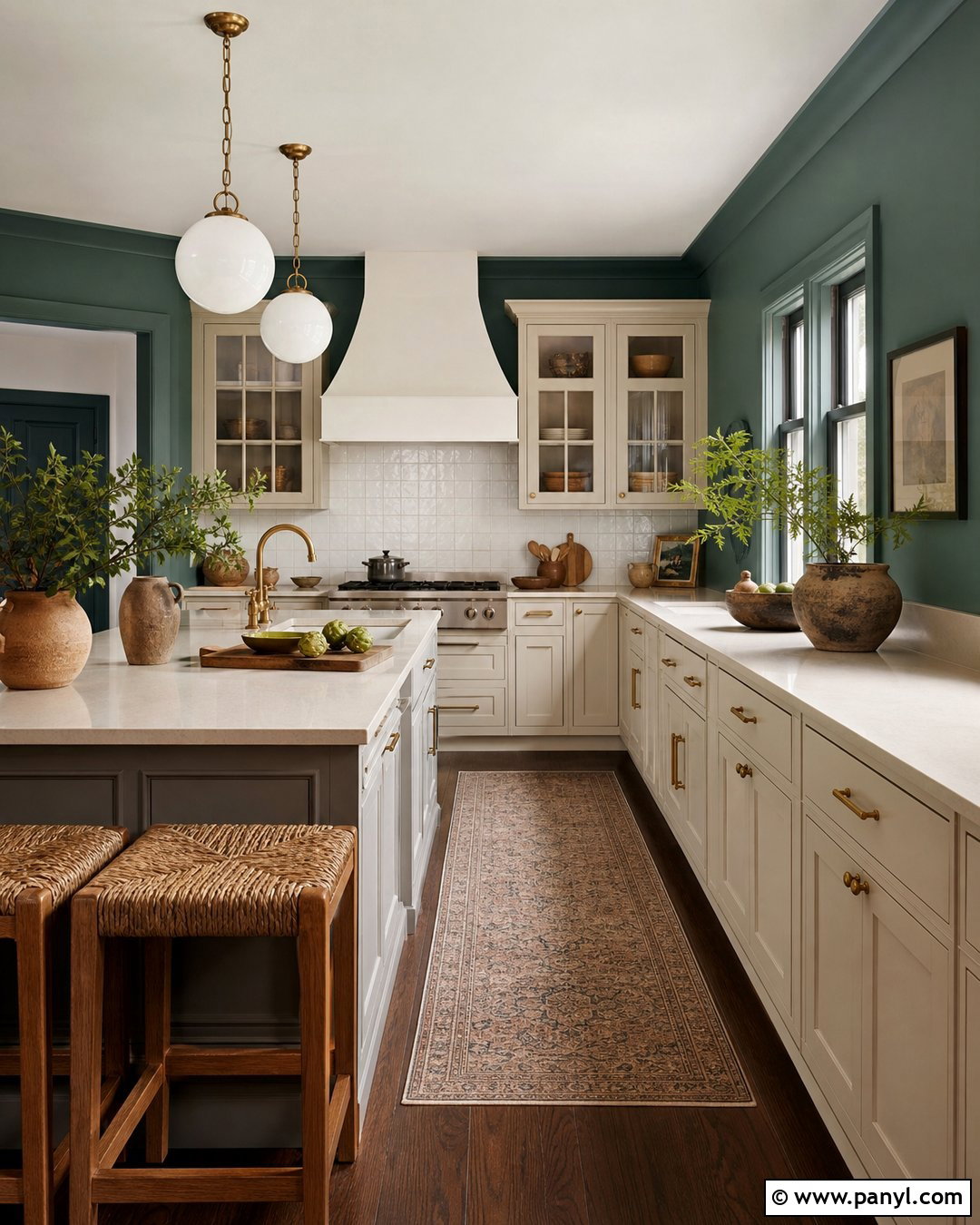
Muted teal walls combine the calming character of blue with the natural warmth of green. Beside cream cabinets, this complex color creates lively contrast without looking overly bright. Choose a grayed teal and pair it with creamy quartz counters, white handmade tile, and antique brass hardware. Dark wood flooring or medium walnut adds richness, while woven stools soften the saturated backdrop. Use simple globe pendants in white glass to maintain strong task lighting. Teal can work throughout a well-lit kitchen, but in a smaller room, reserve it for walls above the backsplash and keep the ceiling warm white. Repeat the color sparingly in a runner or framed artwork. Add clay pottery and natural wood utensils for warmth. The completed kitchen feels distinctive, collected, and balanced rather than dependent on a temporary color trend.
25. Blush Pink Kitchen Walls
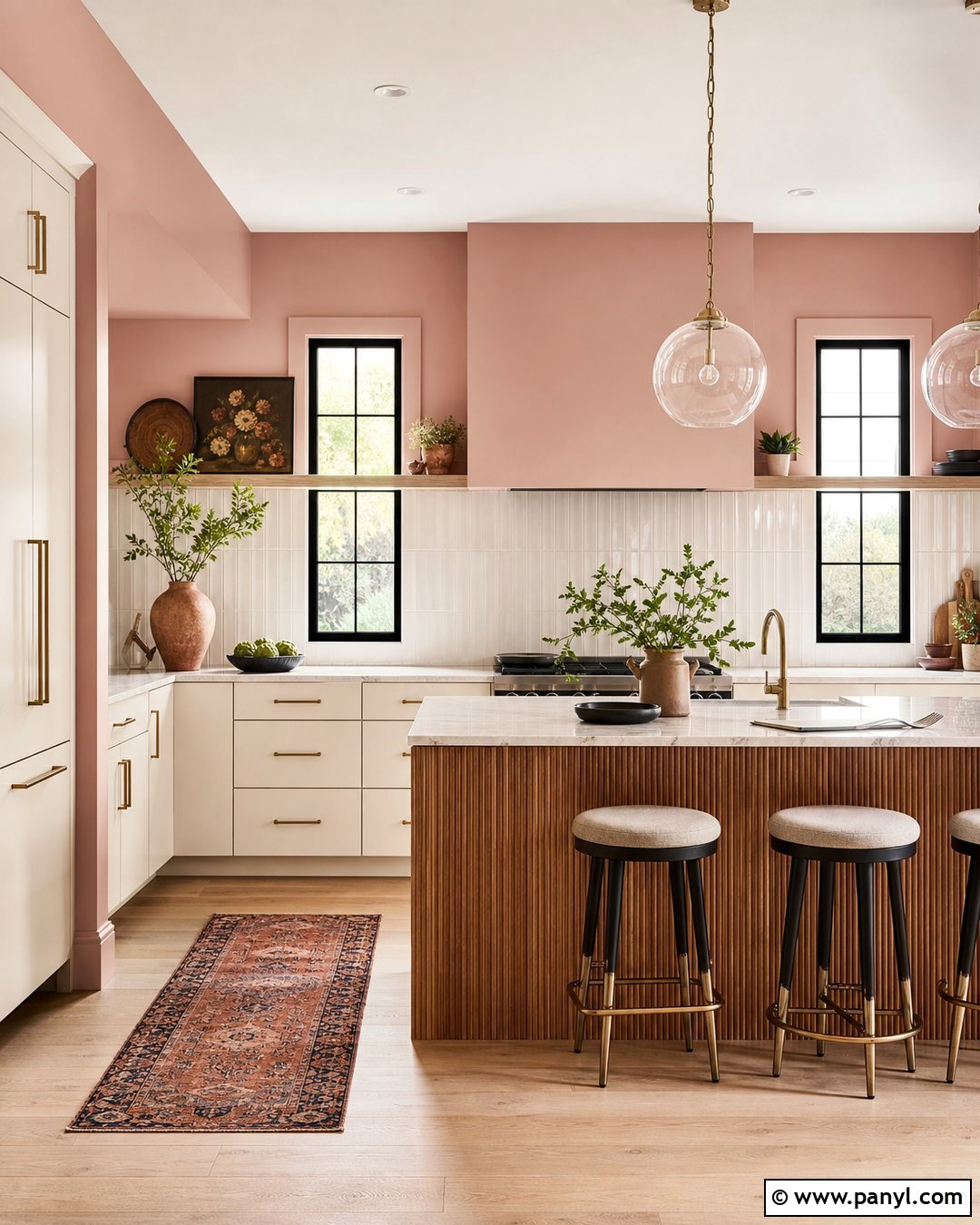
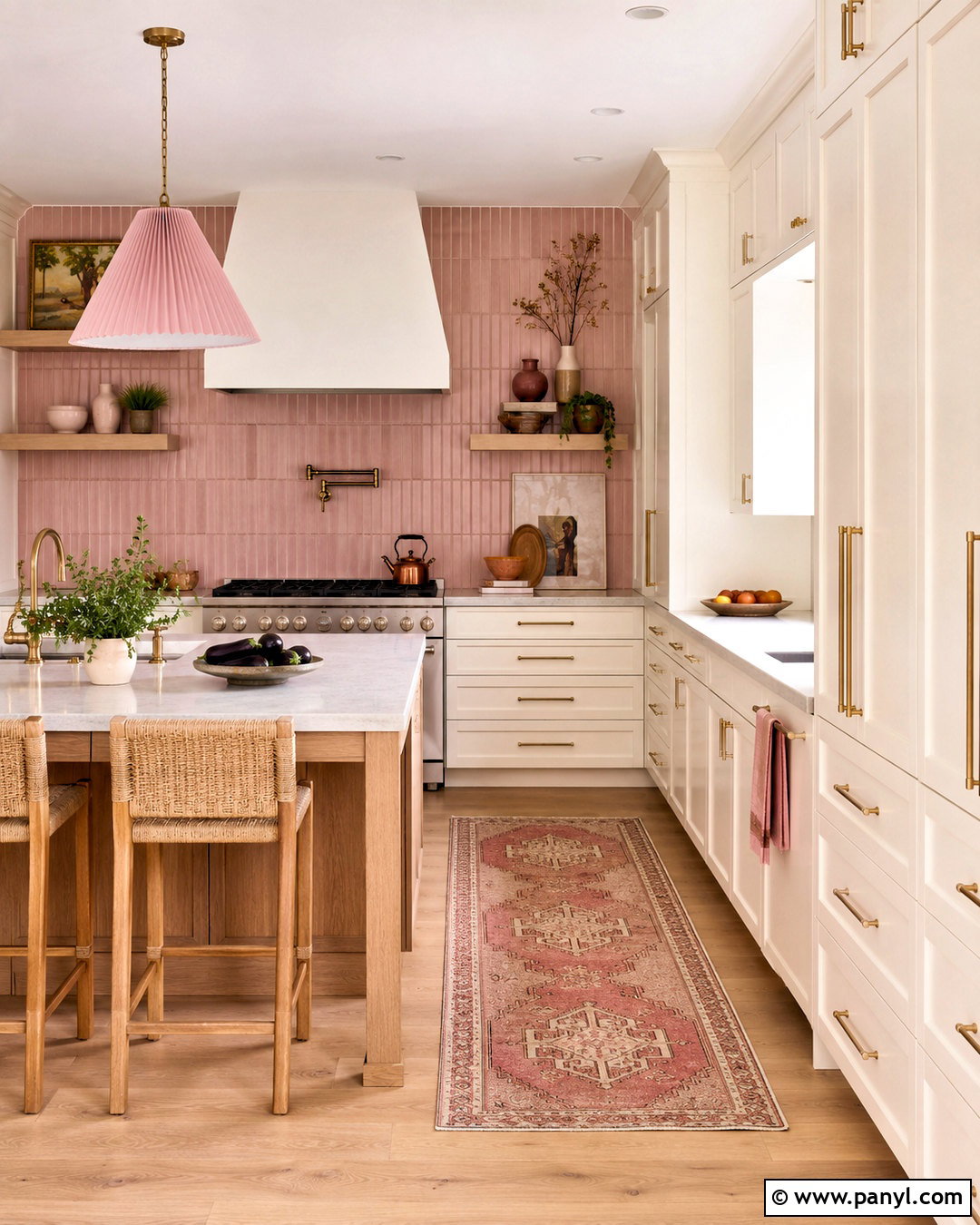
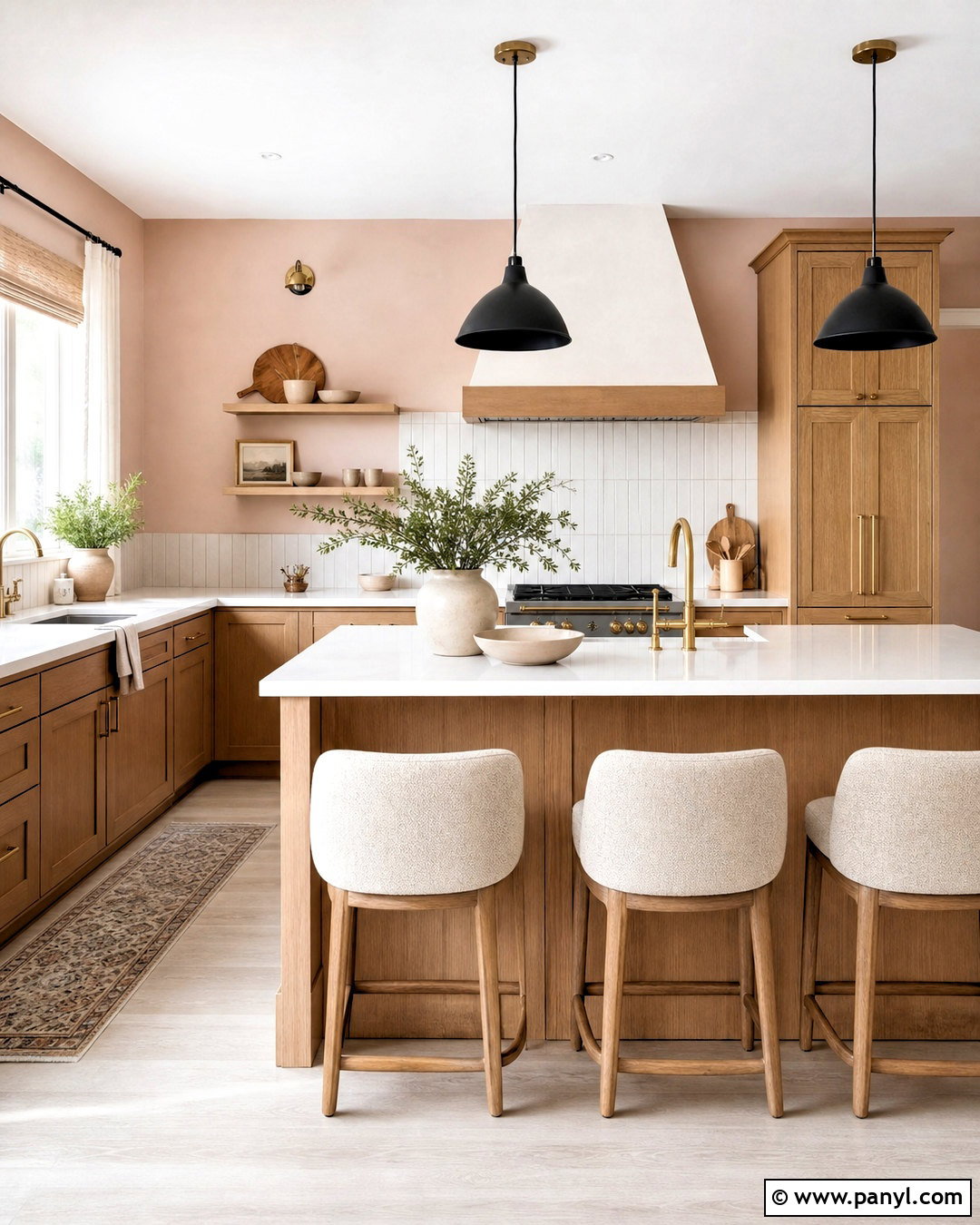
Blush pink walls gently enhance the warmth of cream cabinets while giving the kitchen a soft, contemporary personality. Choose a dusty, beige-based blush rather than a sugary pastel. Pair it with white quartz or pale marble counters, an ivory vertical-tile backsplash, and brushed brass pulls. Light oak flooring and a fluted wood island introduce clean natural texture. For lighting, use matte white pendants or clear glass globes so the room remains bright. Black window frames, stools, or a slim faucet provide enough contrast to sharpen the pale palette. Blush walls also complement terracotta accessories, linen shades, and muted green plants. Keep these accents restrained to avoid making the room feel overly themed. The complete look is warm, understated, and surprisingly versatile, working with both traditional Shaker cabinetry and simpler modern cabinet doors.
26. Dusty Rose Kitchen Walls
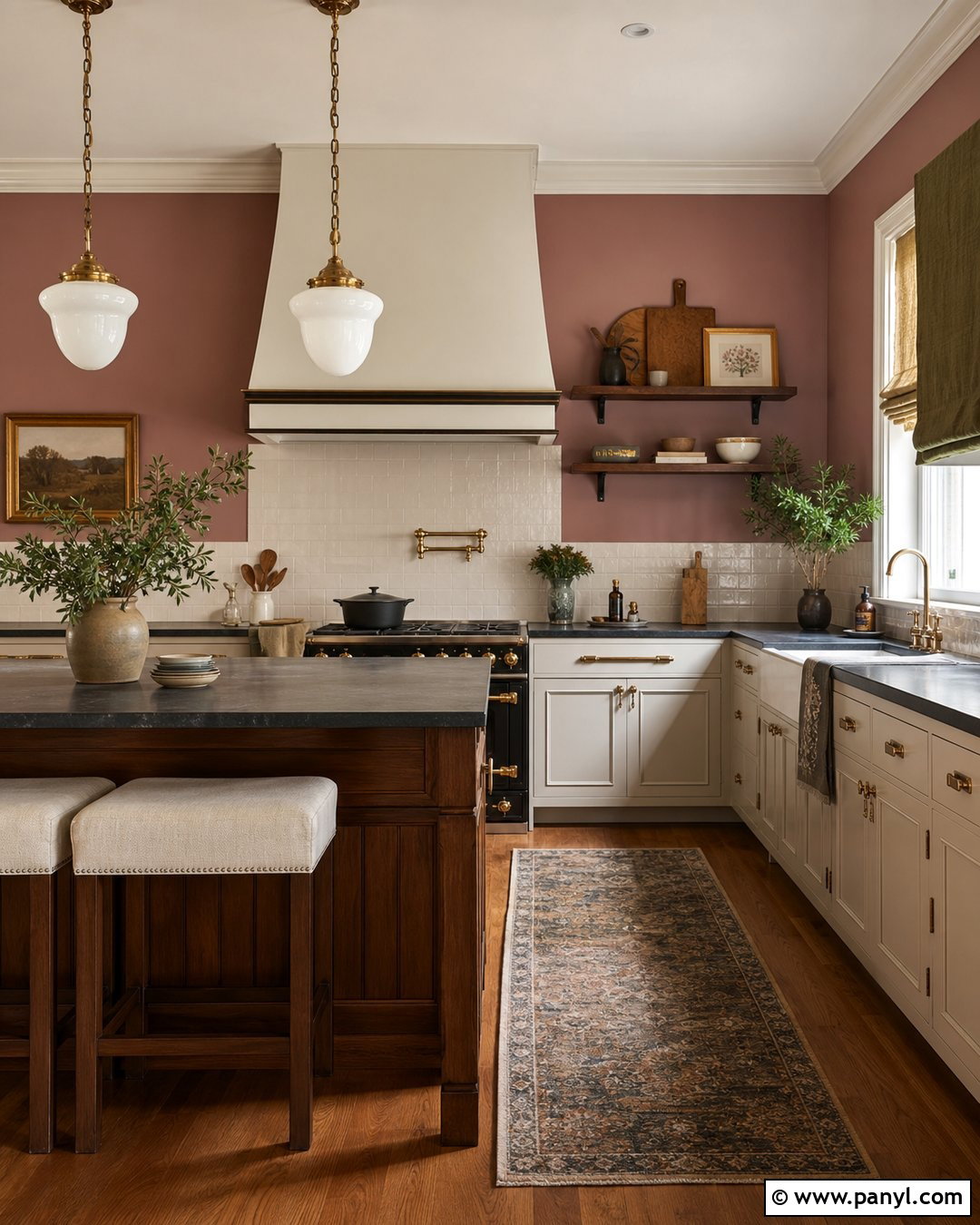
Dusty rose walls offer a deeper and more grounded alternative to pale blush. Their muted brown undertones connect naturally with cream cabinetry, dark wood, and aged metal. Create a welcoming heritage-inspired kitchen with soapstone counters, glossy cream tile, and antique brass latches. Add a walnut island, warm oak flooring, and linen-covered stools to reinforce the mature palette. Traditional opal pendants will brighten the dark counters, while a white ceiling keeps the room open. Dusty rose looks particularly effective on plastered walls or paneling because subtle texture gives the color more dimension. Add muted olive accents through a runner, Roman shade, or small collection of ceramics. The finished design feels warm and memorable without becoming overly feminine, offering a sophisticated option for homeowners who want color beyond familiar blue and green.
27. Soft Peach Kitchen Walls
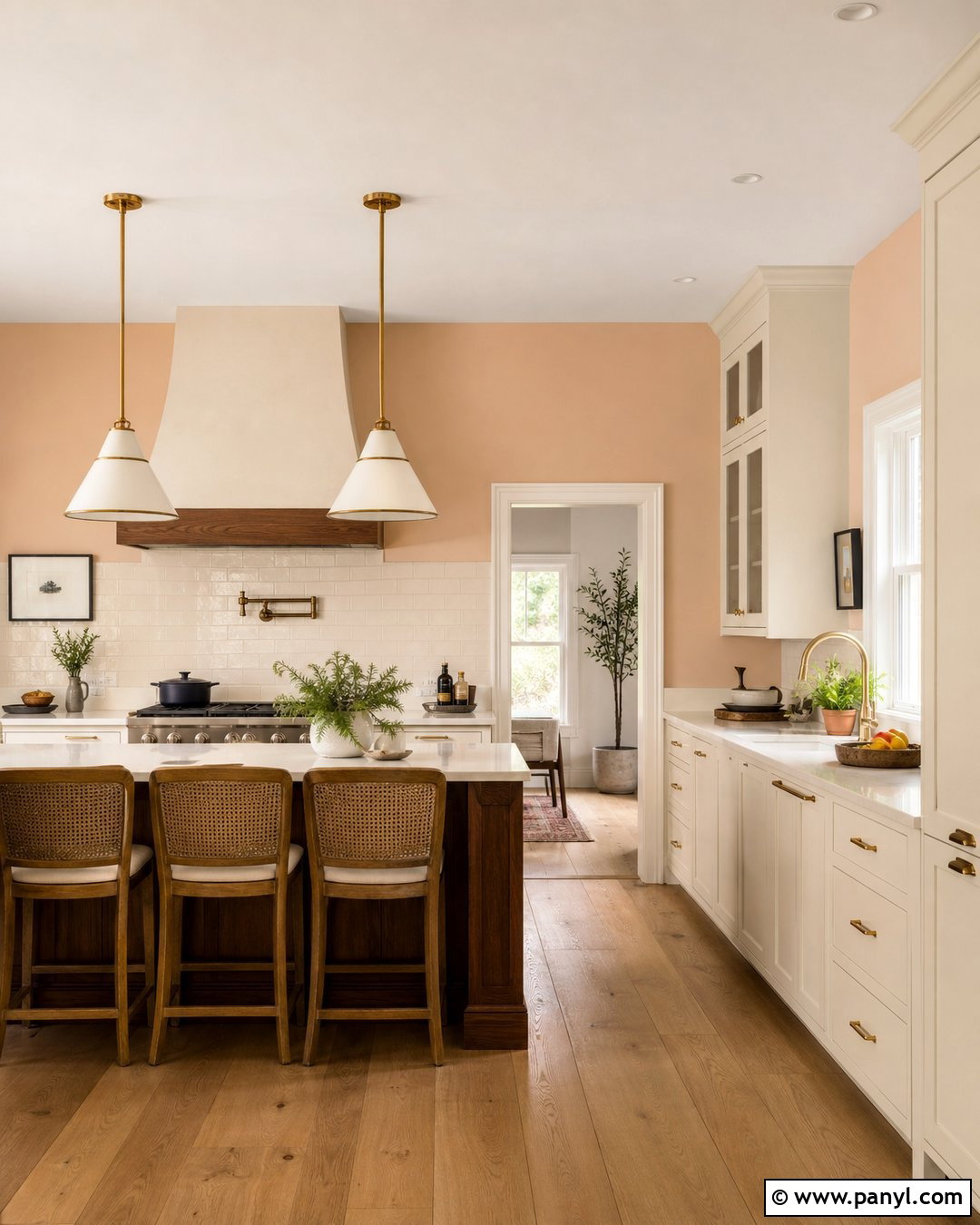
Soft peach walls create a sunny, welcoming setting for cream cabinets. Select a pale clay-based peach with muted beige undertones, avoiding bright orange or pink shades. Pair it with warm white quartz, handmade ivory tile, and champagne bronze hardware. Light oak flooring and cane-backed stools enhance the cheerful natural palette. Use white ceramic pendant lights and warm LED undercabinet lighting to keep the peach looking clean after sunset. A cream-painted hood will blend into the cabinetry while standing softly against the walls. Introduce contrast through a dark wood island, black faucet, or charcoal runner. Soft green herbs and simple white pottery complete the room without adding unnecessary color. This cohesive design works especially well in kitchens with northern light because the walls contribute warmth that the daylight may otherwise lack.
28. Terracotta Kitchen Walls
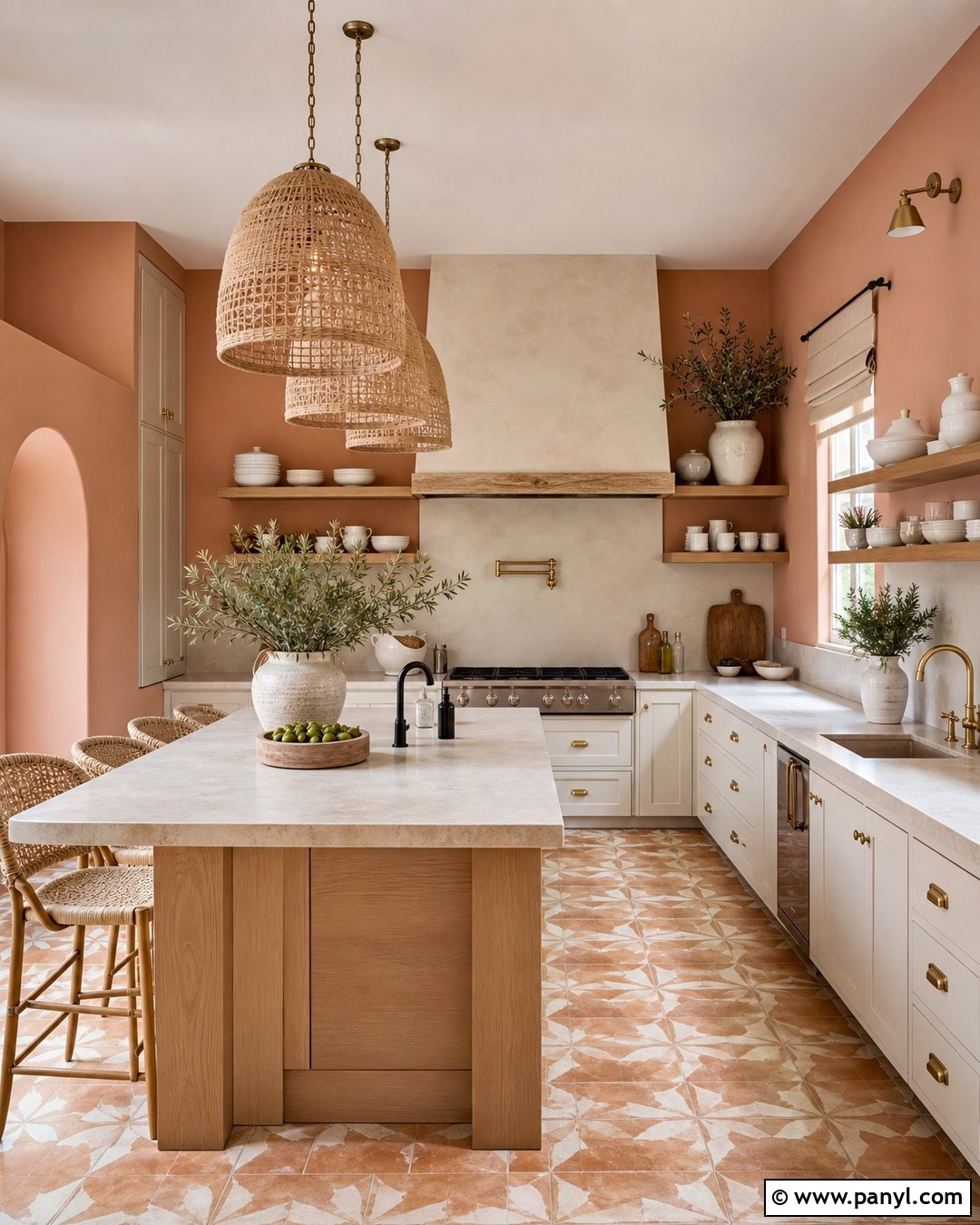
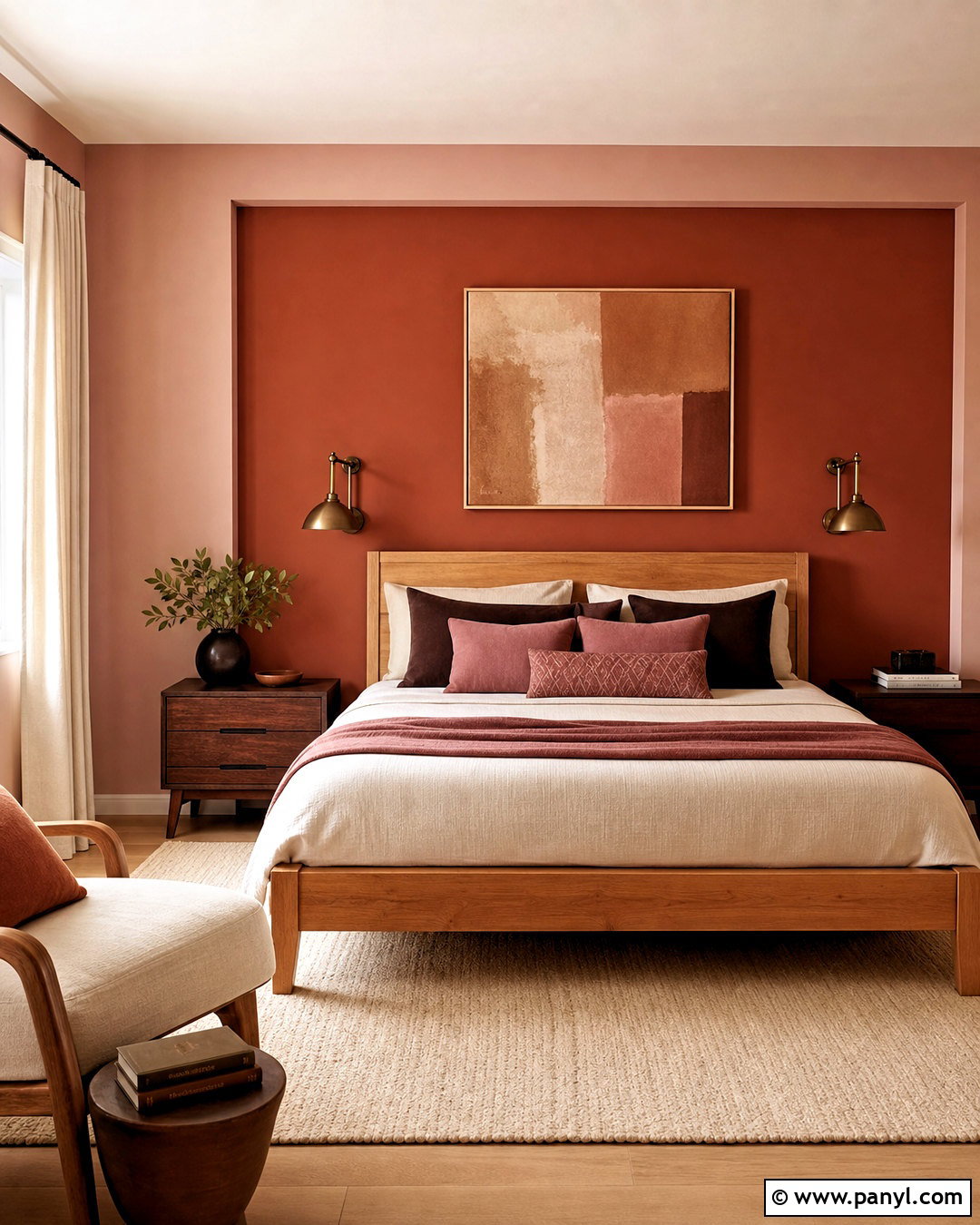
Terracotta walls give cream cabinets a rich Mediterranean or Southwestern character. Choose a muted baked-clay shade with earthy brown undertones rather than a vivid orange. Balance the strong color with pale limestone counters, an ivory plaster backsplash, and aged brass hardware. Natural oak cabinets on the island or open shelves can add another warm material without competing with the cream cabinetry. Use light stone or patterned terracotta flooring, depending on how much color the room can support. Woven pendants and linen Roman shades strengthen the relaxed, sun-washed appearance. Introduce small touches of deep olive or charcoal through stools and cookware. Terracotta is especially effective on one long wall, inside a dining nook, or above a tall backsplash. The complete kitchen feels warm, textured, and connected to natural materials.
29. Muted Coral Kitchen Walls
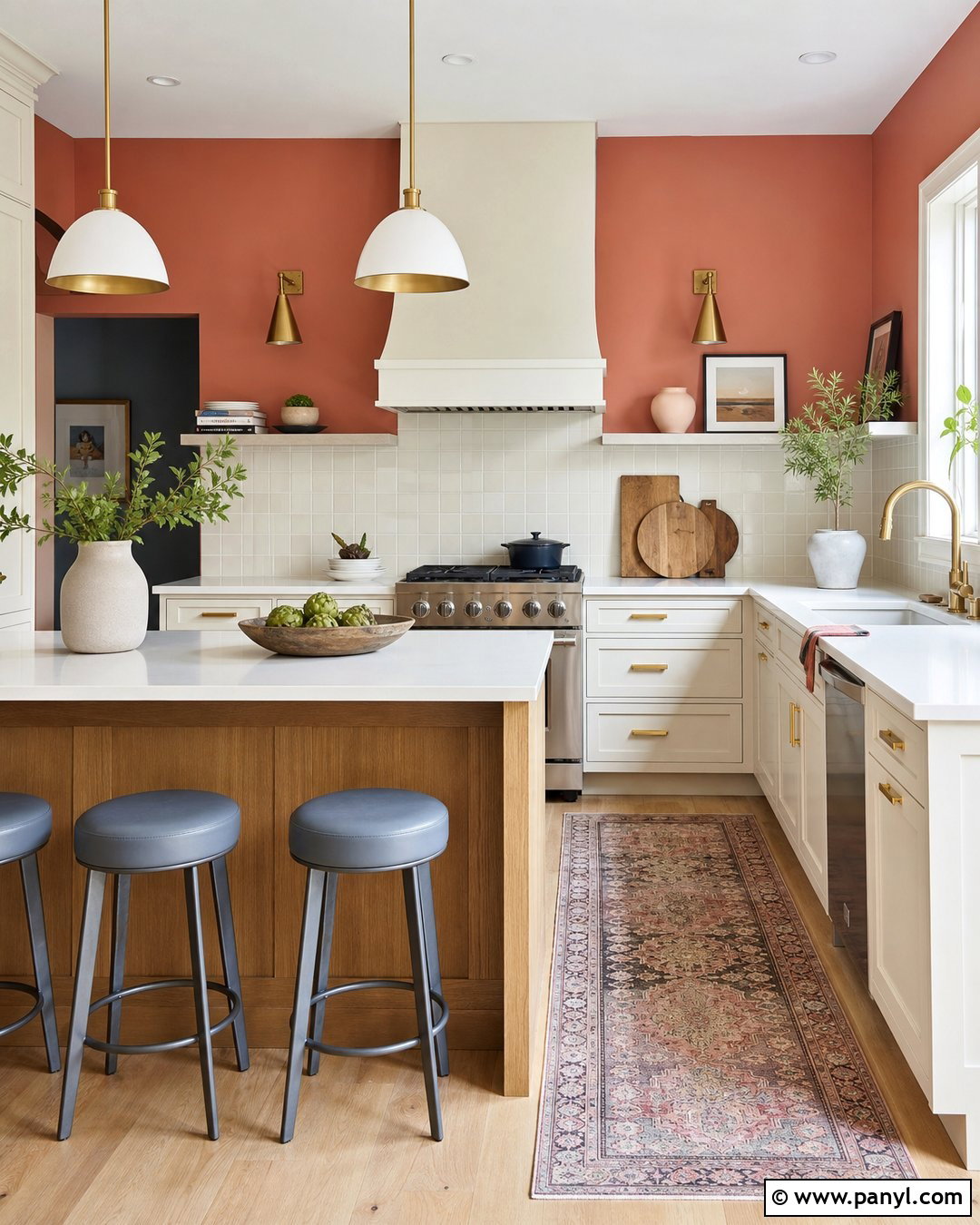
Muted coral walls add energetic warmth while remaining softer and more livable than bright red or orange. Choose a dusty coral with clay or beige undertones to complement cream cabinets. Pair the walls with simple white quartz counters, ivory square tile, and brushed brass hardware. Pale oak flooring and a natural wood island calm the color, while matte white pendants maintain a clean modern outline. Use restrained blue-gray accents in a runner, stools, or pottery to balance the warm palette. Coral works best in kitchens with ample daylight, where its undertones remain fresh rather than heavy. If the room is small, paint only the breakfast area and use warm white elsewhere. This finished design has personality without sacrificing function, making it suitable for casual contemporary kitchens, colorful cottages, or open family spaces.
30. Pale Lavender Kitchen Walls
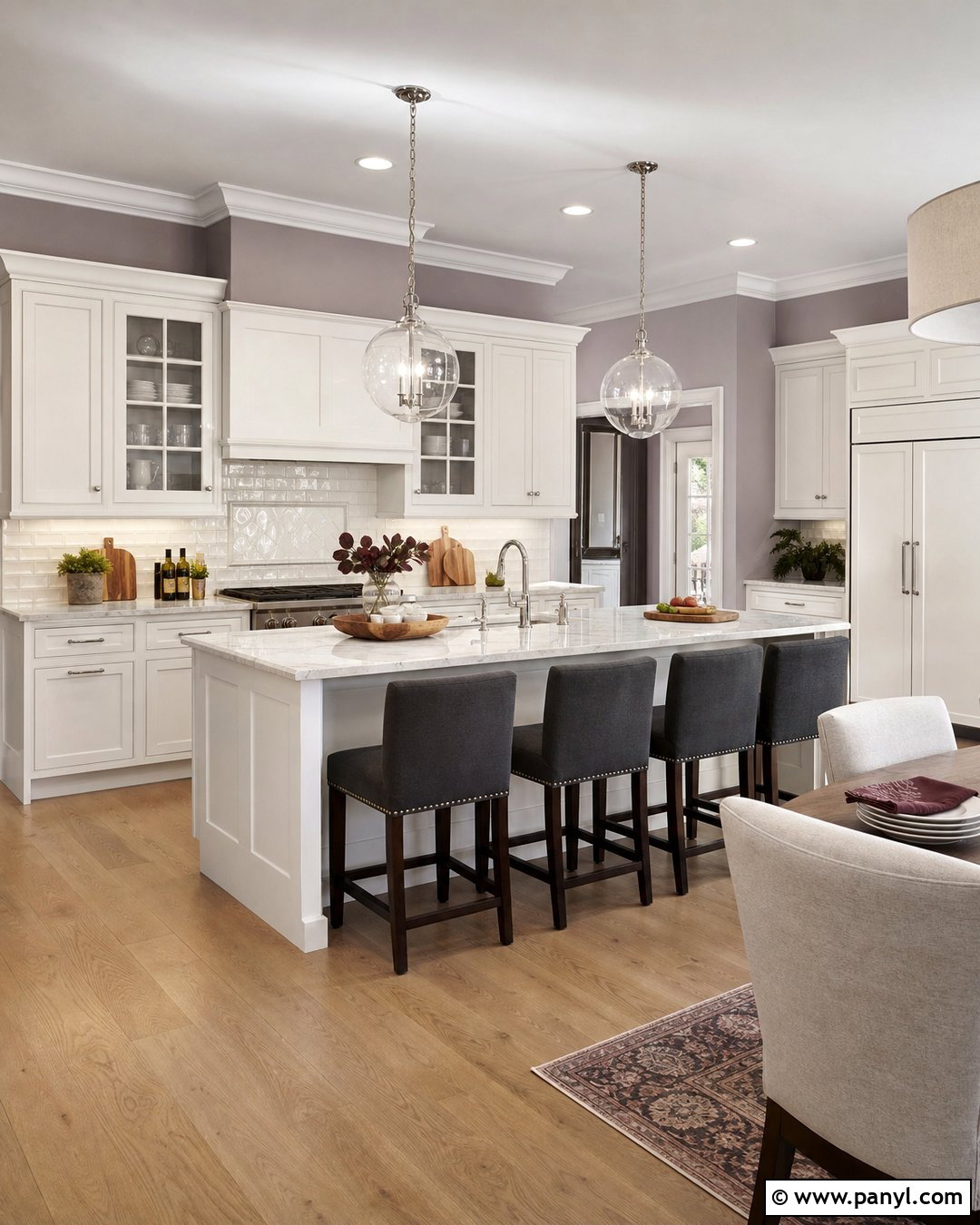
Pale lavender walls can cool the yellow undertones of cream cabinets while adding subtle, unexpected color. Select a grayed lavender that appears nearly neutral from a distance. Pair it with pale marble counters, a warm white backsplash, and polished nickel hardware. Light oak flooring adds warmth, while charcoal counter stools prevent the delicate palette from feeling overly sweet. Use clear glass or white ceramic pendants to preserve brightness. Lavender works particularly well in kitchens receiving warm southern or western light, which keeps the color balanced. Add natural linen shades, muted plum textiles, and simple wood serving pieces. Avoid introducing several additional pastel colors; cream, oak, gray, and lavender should carry the design. The completed kitchen feels calm and distinctive, offering a refined alternative to familiar gray or blue walls.
31. Muted Mauve Kitchen Walls
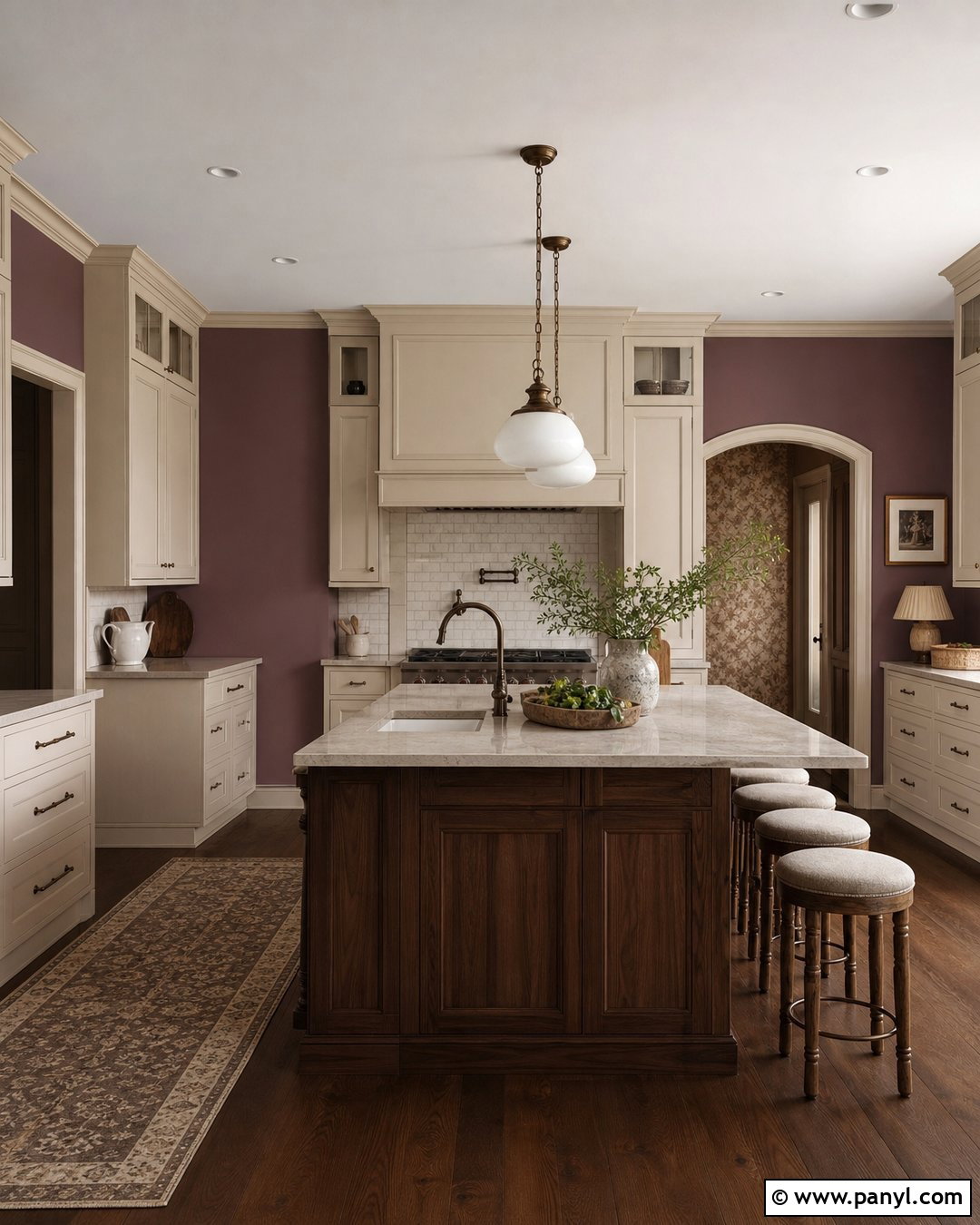
Muted mauve walls create a sophisticated bridge between gray, purple, and dusty pink. Against cream cabinetry, the shade feels warm yet balanced, particularly when it has visible taupe undertones. Complete the room with honed quartzite counters, an ivory tile backsplash, and aged bronze hardware. Dark oak flooring and a walnut island give the pale cabinets and mauve walls a solid foundation. Add opal-glass pendants with brass fittings for soft, even illumination. Use natural linen window treatments and a patterned runner containing cream, brown, and muted green. Mauve suits traditional kitchens with detailed molding, but it can also soften contemporary flat-front cabinets. Keep appliances integrated or stainless steel and limit decorative items to ceramics and wood. The final room feels layered, mature, and colorful without depending on an intense statement shade.
32. Aubergine Kitchen Walls
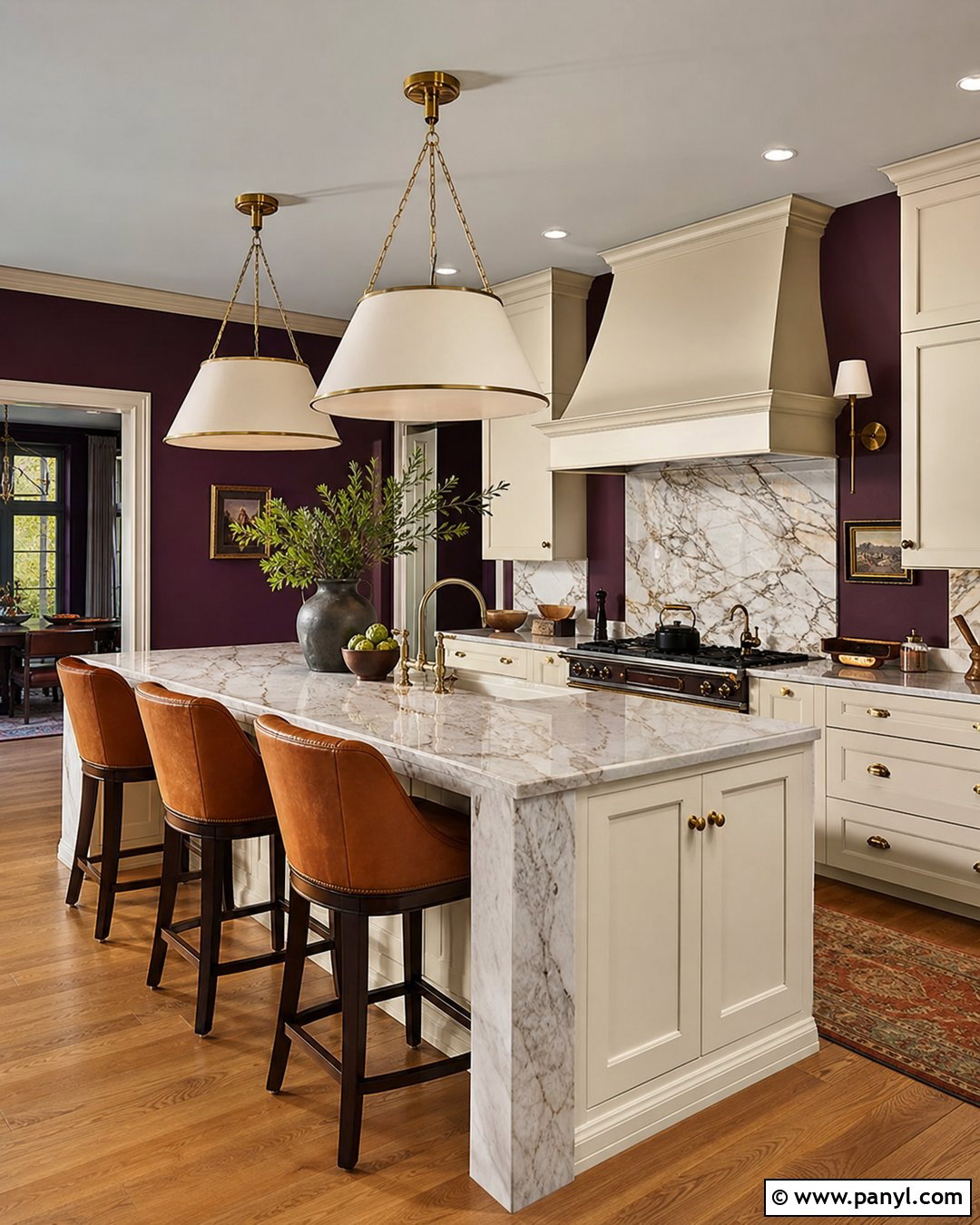
Aubergine walls provide bold jewel-toned contrast for cream cabinets and can make a spacious kitchen feel intimate and luxurious. Choose a deep eggplant shade with brown or brick undertones, which will relate more naturally to warm cabinetry than a blue-based purple. Pair it with richly veined marble counters, a matching backsplash, and aged brass hardware. Medium oak flooring and tan leather stools keep the dark palette approachable. Use large cream pendants and strong undercabinet lighting to ensure every work surface remains bright. A cream range hood becomes a dramatic architectural feature against aubergine walls. Keep fabrics and accessories simple, using rust, olive, and ivory in small amounts. This complete scheme works best in rooms with good daylight and enough open wall area for the saturated color to read clearly.
33. Charcoal Kitchen Walls
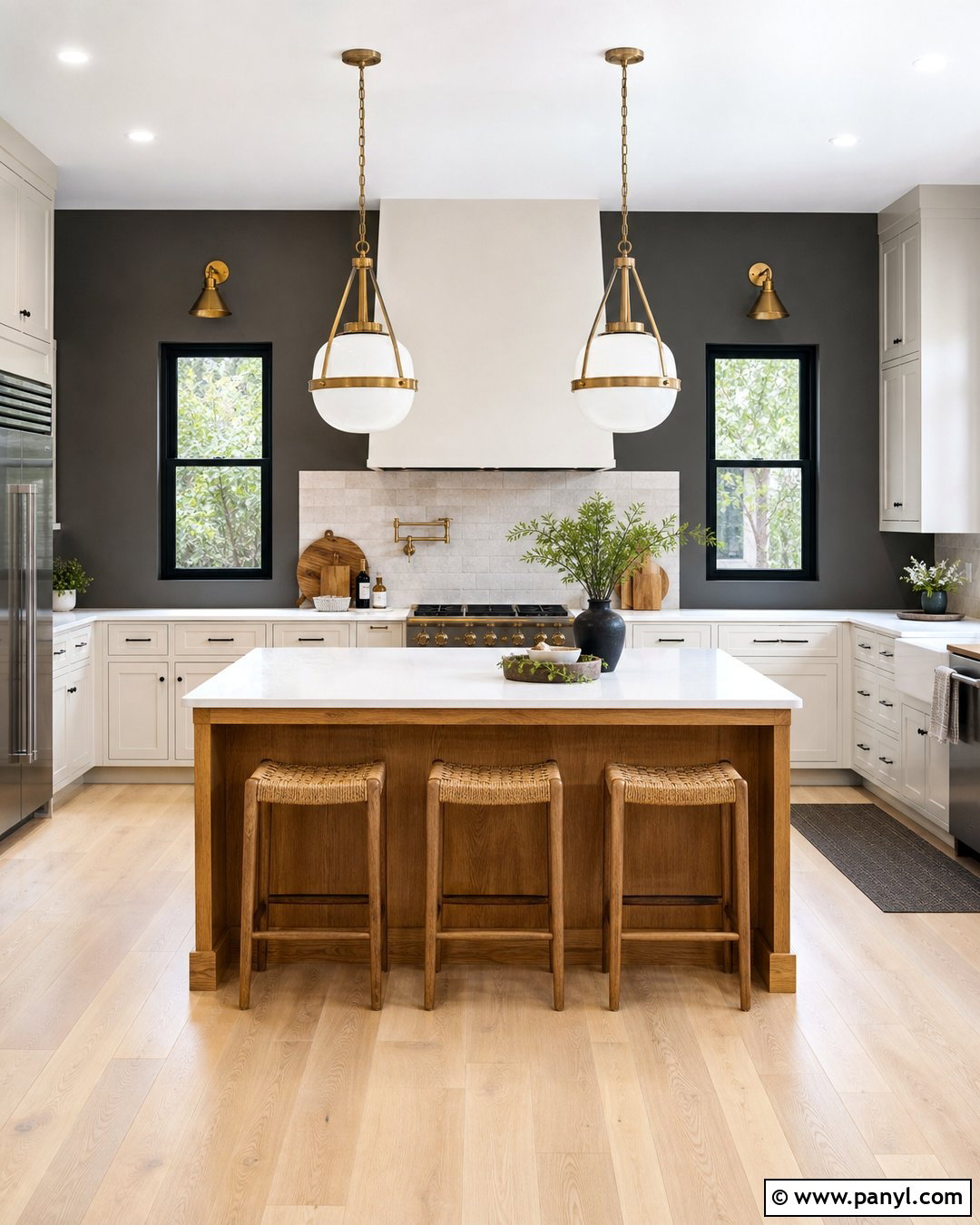
Charcoal walls give cream cabinets a crisp, modern outline while providing a neutral alternative to navy or forest green. Choose a softened charcoal with warm undertones rather than a harsh blue-black. Pair it with white quartz counters, a creamy stone backsplash, and matte black hardware for a streamlined look. To prevent the scheme from feeling severe, add white oak flooring, a natural wood island, and woven stools. Large opal pendants will brighten the center of the kitchen and stand out against the dark background. Repeat charcoal on window frames or the range for continuity, but keep the ceiling warm white. A few brass accents can add warmth without disrupting the modern character. The finished kitchen feels graphic and sophisticated, with the cream cabinetry supplying the softness needed to balance the deep walls.
34. Chocolate Brown Kitchen Walls
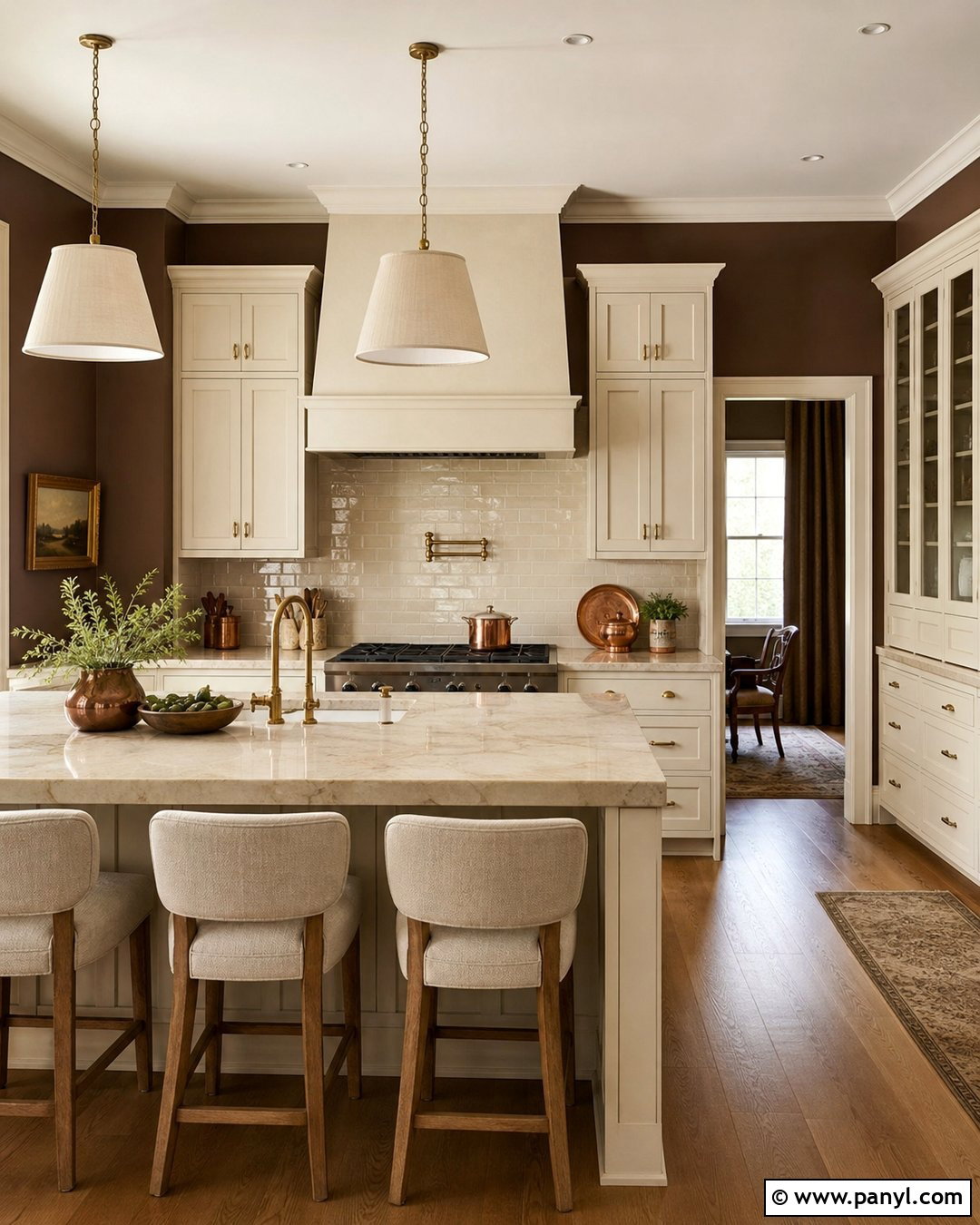
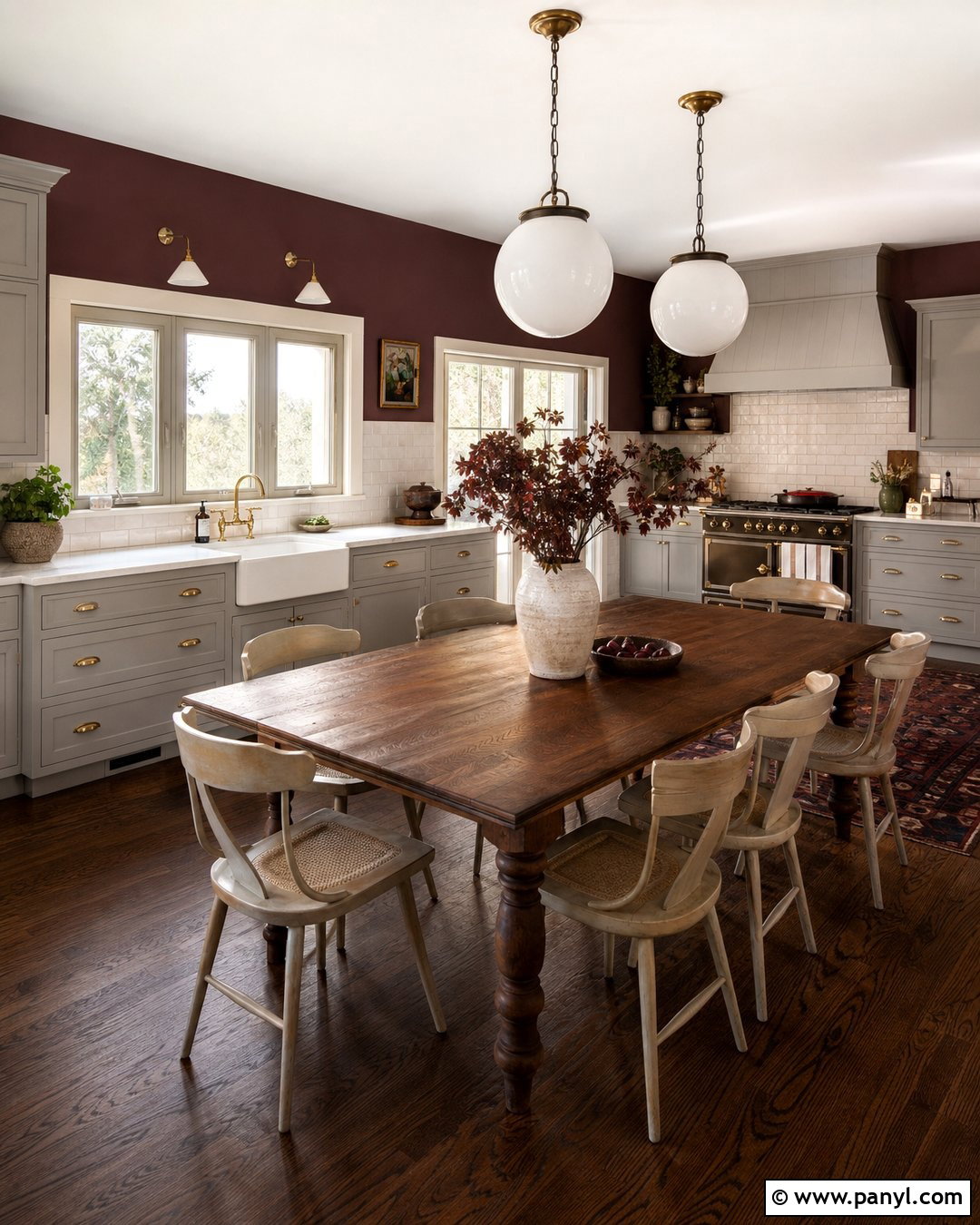
Chocolate brown walls surround cream cabinets with deep, enveloping warmth. Choose a rich brown with neutral or slightly red undertones, then balance it with pale counters and reflective backsplash surfaces. Creamy quartzite, glossy ivory tile, and aged brass hardware create an elegant traditional foundation. Use medium oak flooring rather than very dark wood so the lower half of the kitchen remains visually clear. Linen pendant shades, a cream range hood, and light upholstered stools will stand out beautifully against the brown. Add a walnut island only if there is enough variation between the wood and wall tones. For decoration, select ivory ceramics, copper accents, and muted olive textiles. This complete palette is particularly effective in a large kitchen or adjoining dining space, where brown paint can create warmth without making the room feel confined.
35. Burnt Orange Kitchen Walls
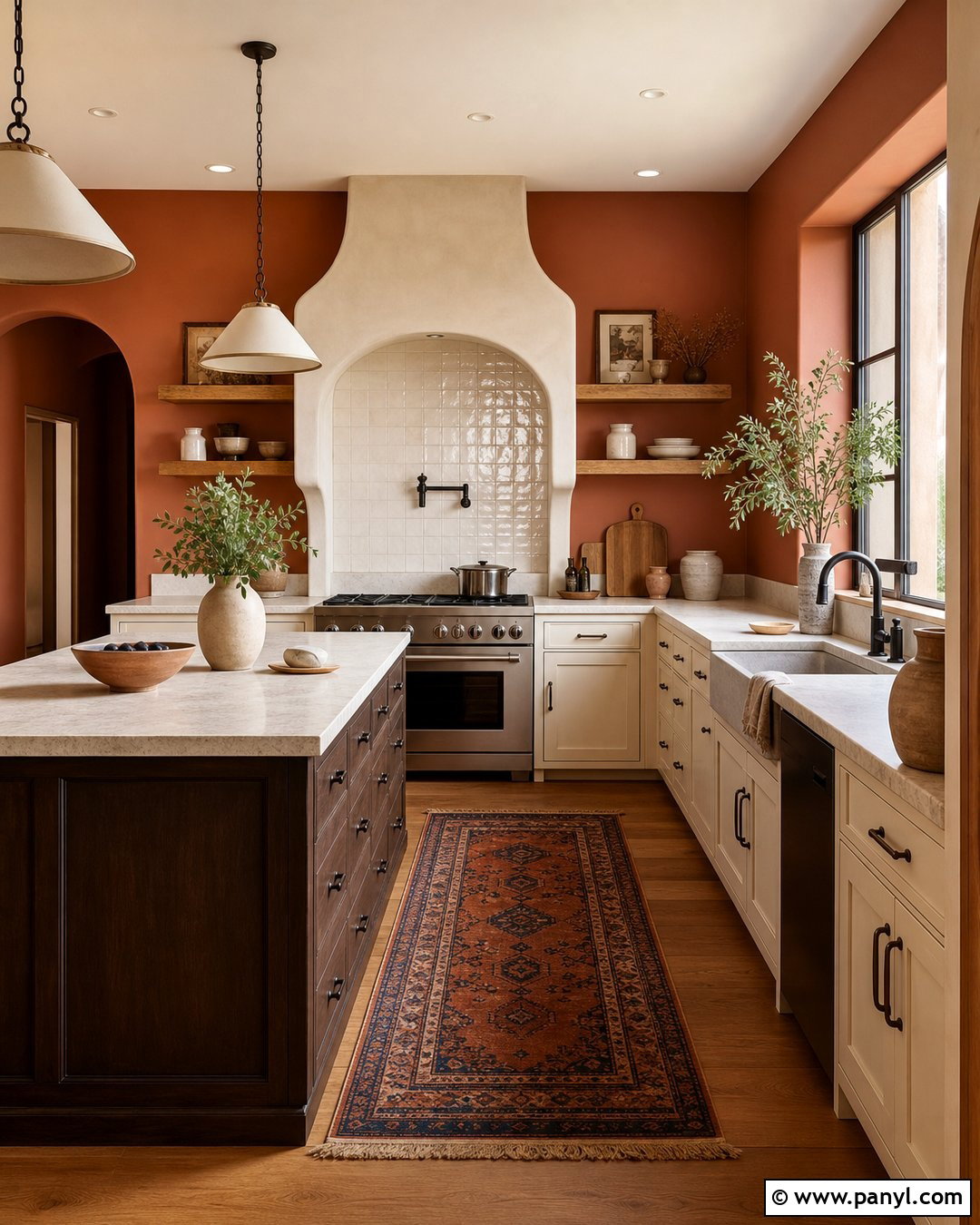
Burnt orange walls bring bold autumnal warmth to cream cabinets while creating a lively, earthy kitchen. Select a muted rust-based orange with brown undertones so the color feels architectural rather than bright. Pair it with pale limestone counters, a handmade cream backsplash, and dark bronze hardware. Warm oak flooring and a black or deep brown island provide grounding contrast. Use cream ceramic pendants to repeat the cabinet color and maintain bright task lighting. A runner containing rust, navy, and beige can connect the palette across the floor. Add open wood shelves with simple white pottery, but leave enough clear wall space for the paint to remain visible. This finished scheme suits rustic, Mediterranean, and eclectic kitchens, delivering strong personality while the cream cabinetry keeps the overall room balanced and approachable.
Conclusion:
The most successful kitchen wall colors with cream cabinets create a clear relationship between the cabinetry, fixed surfaces, lighting, and surrounding rooms. Warm whites and layered neutrals produce a quiet, timeless kitchen. Sage, blue-gray, and dusty blue add balanced color, while navy, forest green, charcoal, and aubergine make a stronger statement. Earthy peach, terracotta, and burnt orange emphasize cream’s warmth for a cozy effect. Always place large painted samples vertically beside the cabinets and observe them in morning, afternoon, and evening light. Compare each option with the backsplash, countertop, flooring, appliances, and hardware before deciding. With thoughtful testing, cream cabinets can support anything from a bright neutral palette to a deep, colorful kitchen.

Related Ideas and Inspiration:
Leave a Reply