
Burnt orange brings earthy warmth, depth, and personality to a living room without feeling as sharp as brighter citrus tones. The secret is designing the entire space around the wall color. Upholstery, flooring, wood finishes, lighting, textiles, and artwork should either soften the orange or create intentional contrast. Warm cream, beige, walnut, olive, navy, charcoal, rattan, and aged brass are especially useful companions. Natural textures also keep the room grounded, while layered rust and terracotta tones create a richer, more dimensional palette. These approaches reflect current interest in warm, nature-inspired rooms and carefully balanced orange combinations. () Whether your home is modern, traditional, rustic, or eclectic, these 20 burnt orange living room walls offer complete, practical looks worth recreating.

1. Burnt Orange Wall With Cream Sofa
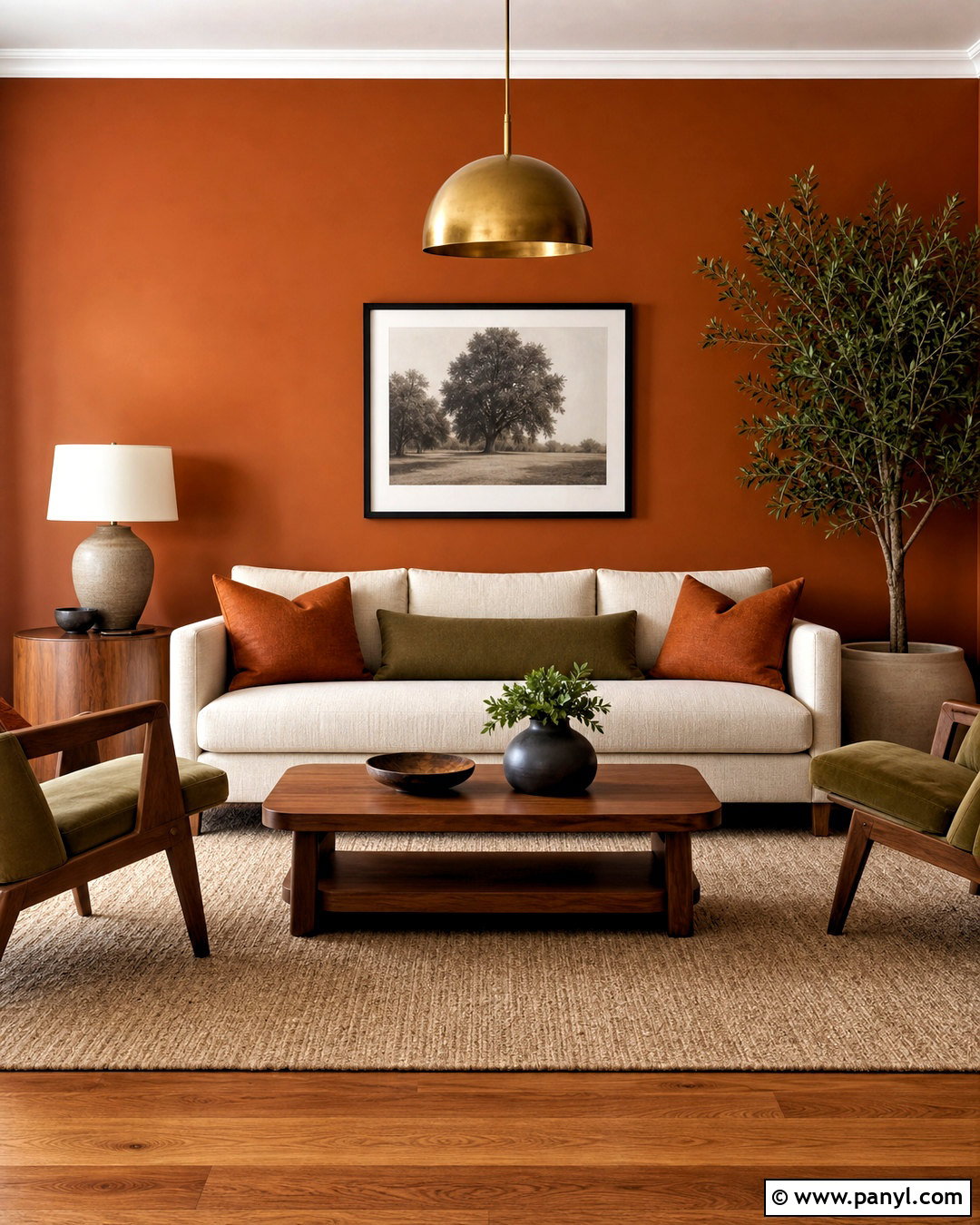
A cream sofa immediately softens the visual strength of a burnt orange wall. Place the sofa against the painted feature wall, then ground the seating area with a large oatmeal or ivory rug. Choose a walnut coffee table to reinforce the warm palette without making everything orange. Cream linen curtains, off-white ceilings, and pale beige surrounding walls will keep the room light. Add two rust-patterned pillows, but introduce olive green or muted blue through additional cushions for contrast. A tall indoor tree brings freshness beside the sofa. Finish with aged brass lighting and simple black-framed artwork. This combination works particularly well in medium-size living rooms because the furniture provides a calm break between the bold wall and the rest of the space.
2. Burnt Orange Wall With Navy Sofa
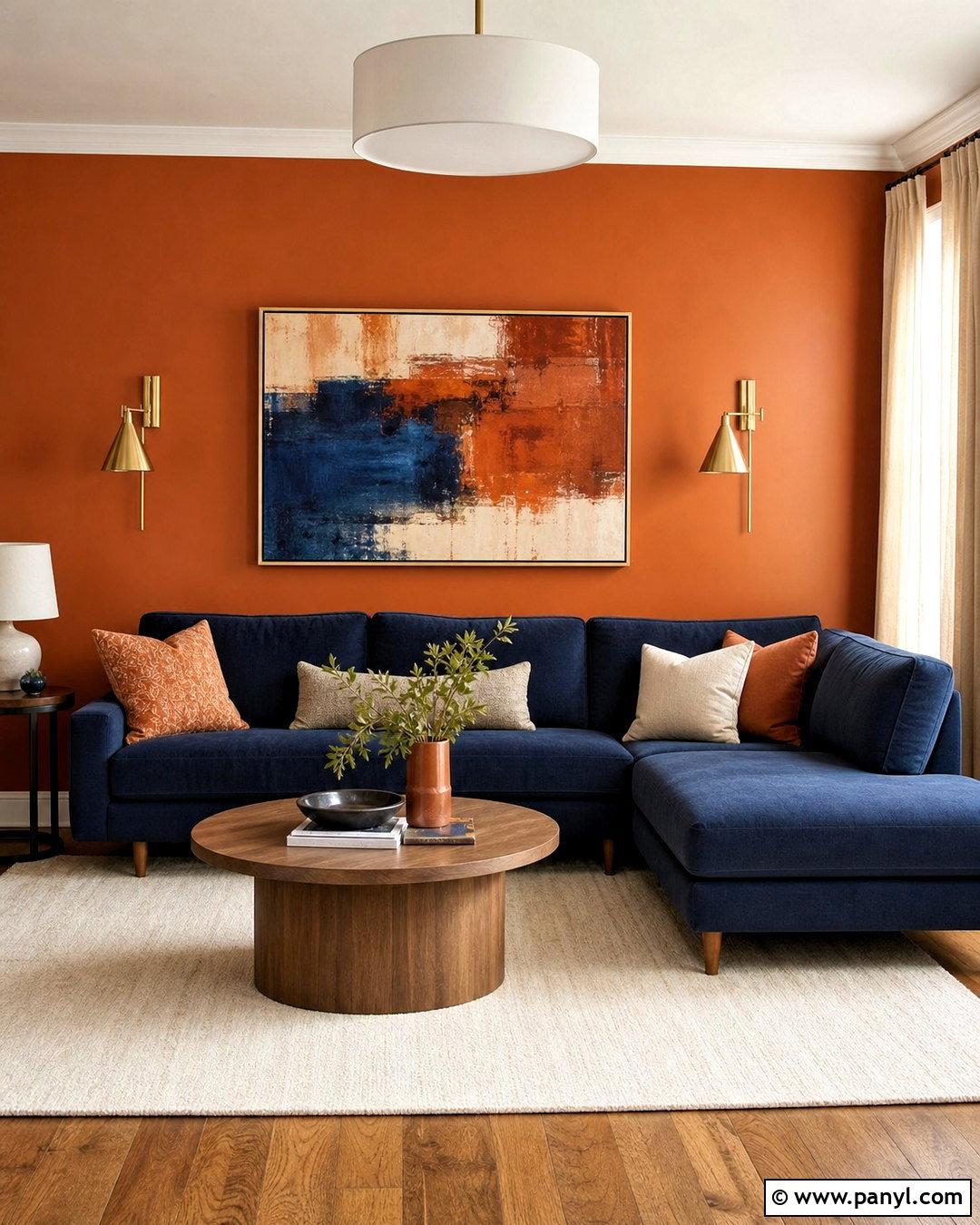
Rich navy upholstery creates a confident contrast against burnt orange living room walls. Center a clean-lined navy sofa on the orange feature wall, leaving enough open space around it so both colors remain distinct. Use a light beige rug and warm oak flooring to prevent the palette from becoming too dark. A round wood coffee table softens the strong color blocking, while cream curtains brighten nearby windows. Repeat navy sparingly through one ceramic lamp or patterned pillow rather than matching every accessory. Burnished brass sconces and abstract artwork containing cream, blue, and rust can connect the scheme. Keep the ceiling warm white and choose simple furniture silhouettes. The finished room feels colorful and sophisticated while remaining comfortable enough for everyday family use.
3. Burnt Orange Wall With Olive Green Sofa
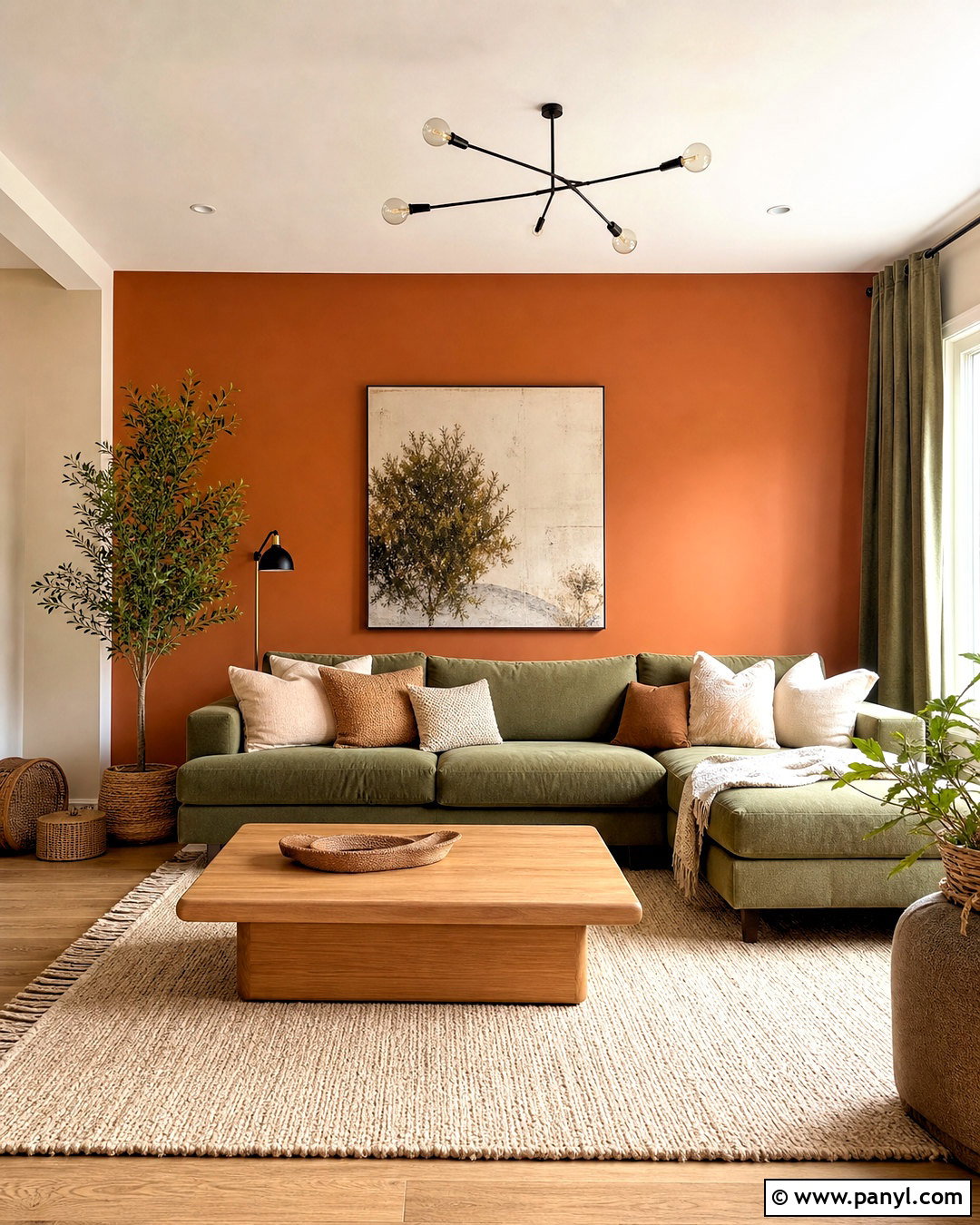
Picture a soft olive green sofa surrounded by warm terracotta color and natural wood. This earthy pairing gives a burnt orange living room wall a relaxed, organic character. Use the orange behind the sofa, then paint the other walls a light mushroom beige. Bring in a flat-woven cream rug, a low oak coffee table, and woven baskets for practical storage. Olive curtains can work, but choose a slightly lighter tone than the sofa to avoid a heavy appearance. Add linen pillows in cream, ochre, and small amounts of rust. Black metal lighting offers a crisp modern edge. Houseplants should be placed near windows rather than scattered everywhere. The result is a grounded, nature-inspired living room with clear layers and an inviting seating arrangement.
4. Burnt Orange Wall With Charcoal Furniture
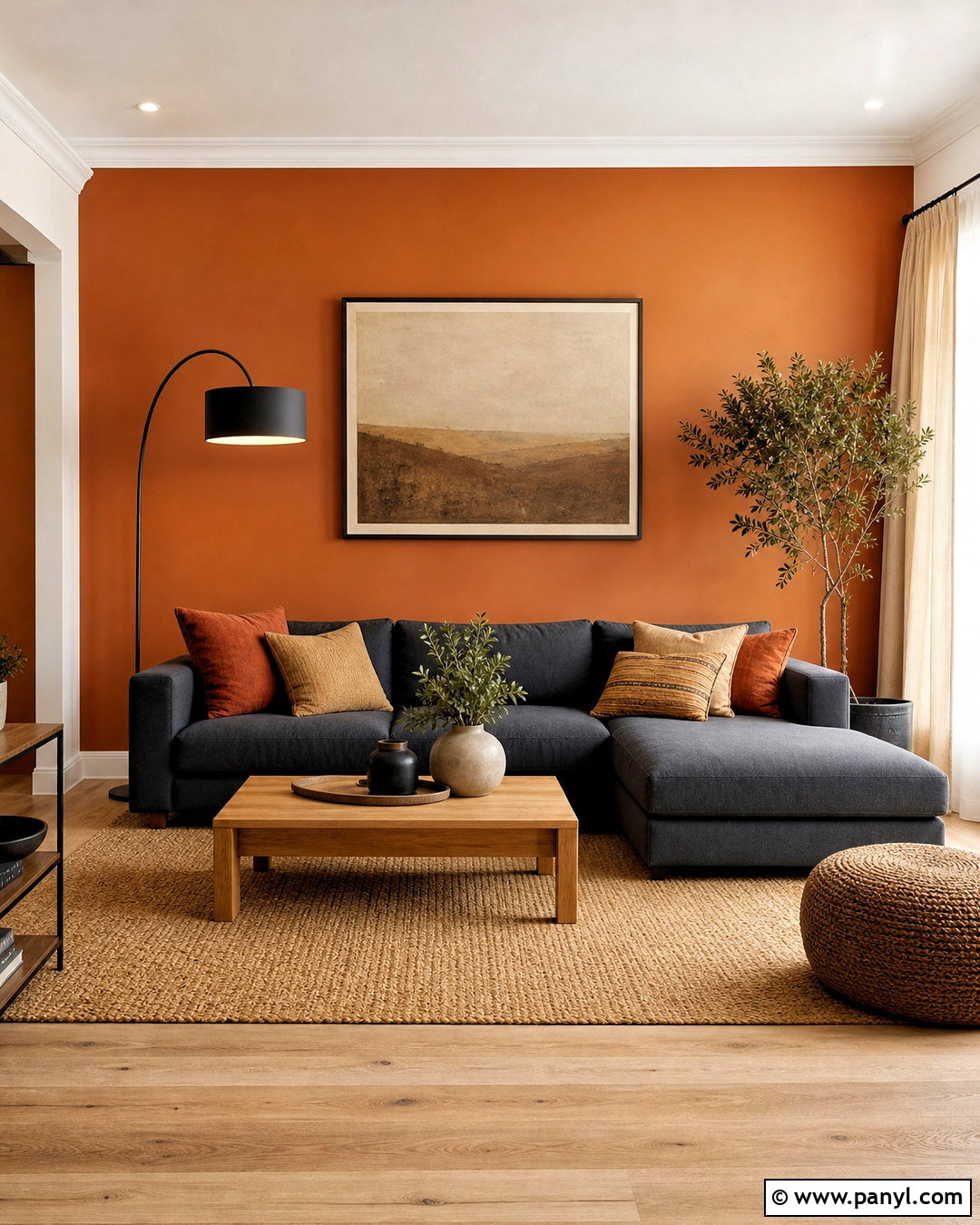
Can dark furniture work with a warm orange wall? It can when the flooring, textiles, and lighting provide enough brightness. Start with one muted burnt orange wall and position a streamlined charcoal sofa in front of it. Keep the remaining walls creamy white and use a large natural jute or light greige rug. A pale oak coffee table will create a lighter visual center than black furniture would. Add charcoal curtains only if the room receives generous daylight; otherwise, choose warm white linen panels. Rust, tan, and cream pillows can bridge the sofa and wall colors. Include a matte black floor lamp, one substantial plant, and artwork with broad neutral areas. This balanced design feels contemporary rather than stark, and the charcoal gives the orange a refined foundation.
5. Burnt Orange Wall With Black Accents
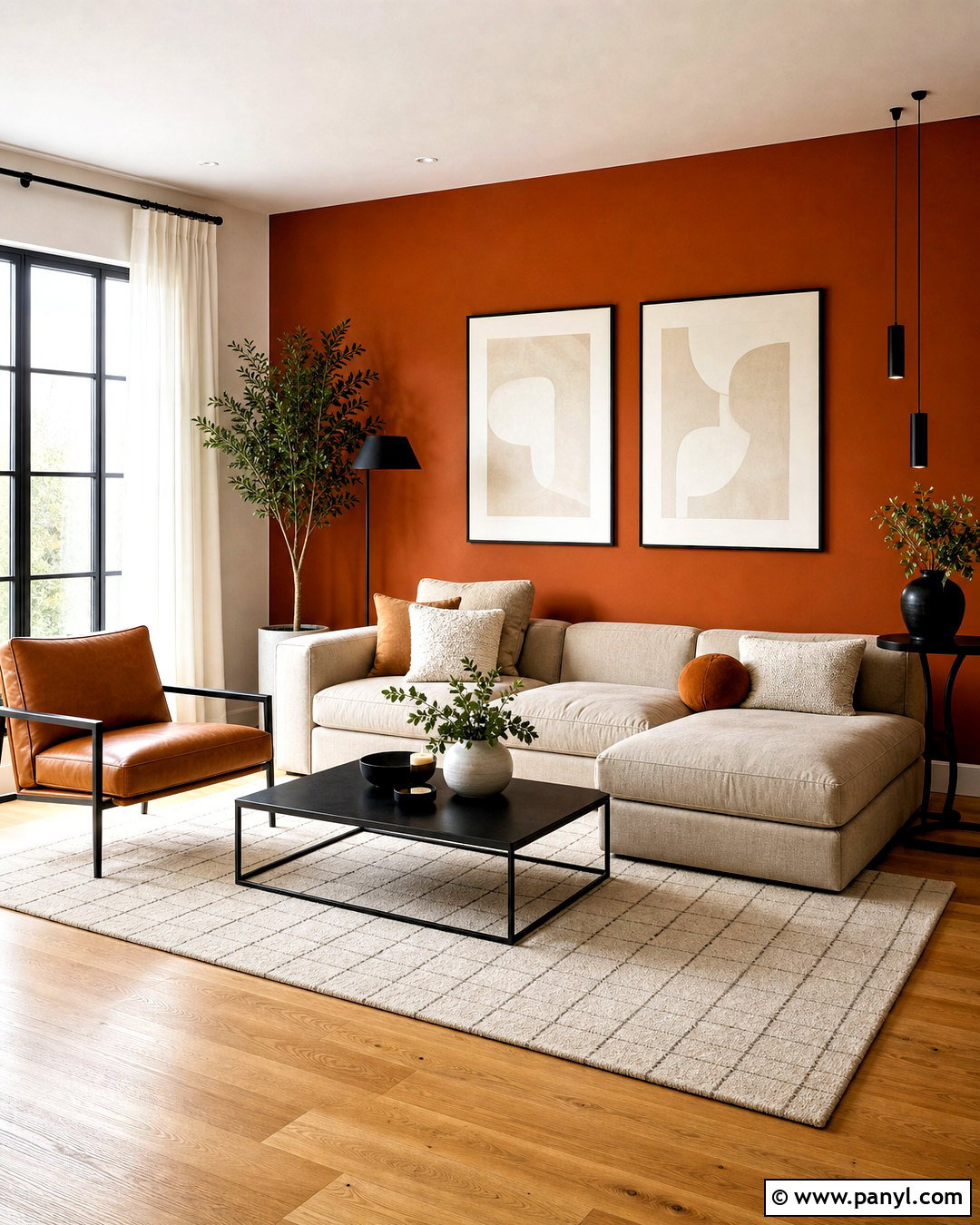
Crisp black details make a burnt orange living room wall look intentional and modern. Paint the main sofa wall orange, then furnish the room with a beige modular sofa and a slim black metal coffee table. Add black curtain rods, picture frames, lamp bases, and one narrow shelving unit, but avoid filling every corner with dark objects. A cream rug featuring a subtle black grid can tie the furnishings together. Choose medium-tone oak flooring and warm white curtains to maintain brightness. Abstract artwork with ivory, rust, and charcoal adds movement without competing with the wall. Use cognac leather on a single accent chair for another warm layer. This complete scheme is especially effective in apartments because the repeated black lines provide structure without requiring bulky furniture or elaborate architectural changes.
6. Burnt Orange Wall With Beige Decor
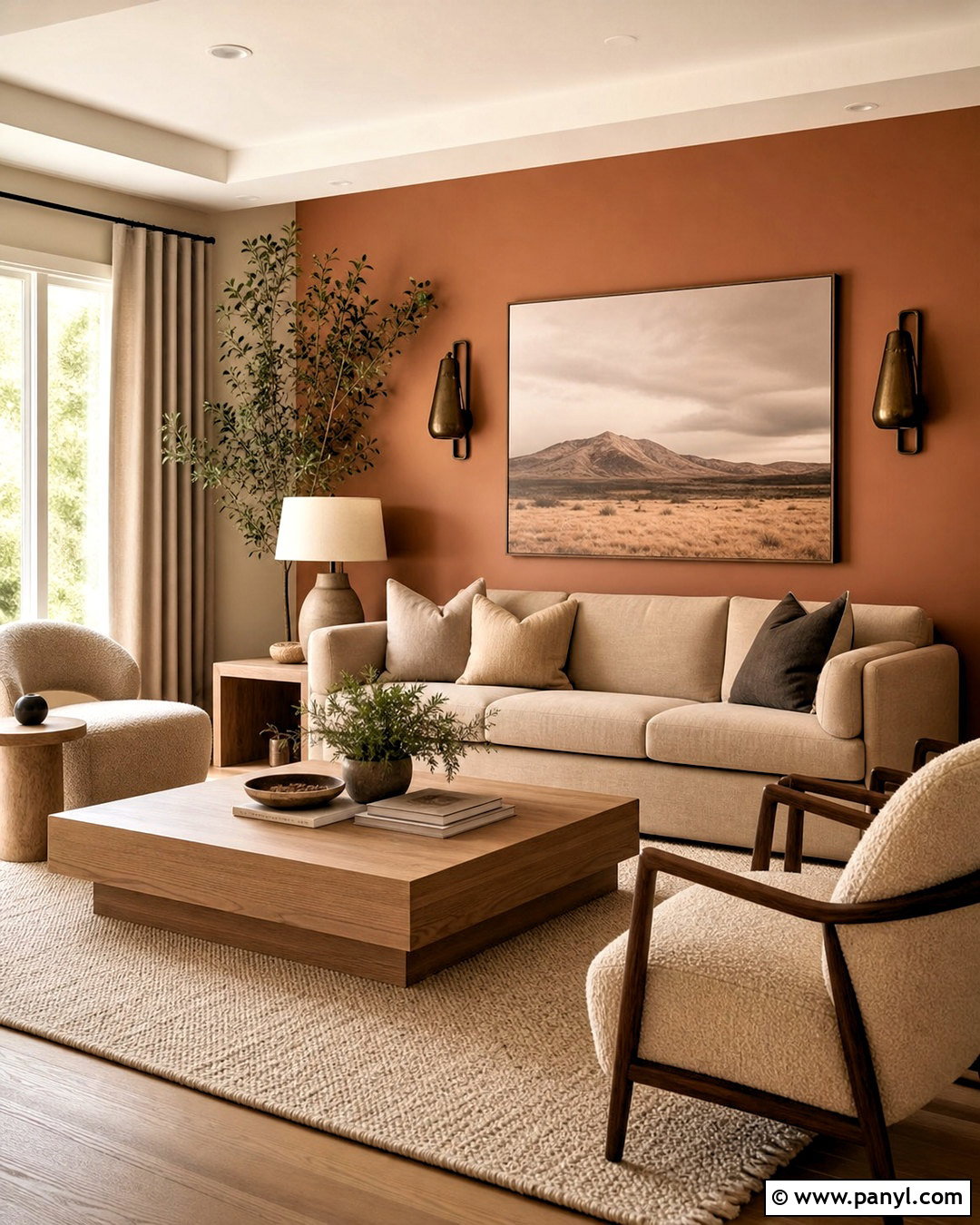
For a calm approach, surround the orange wall with several related beige tones. Use a sand-colored sofa, an oatmeal rug, light taupe curtains, and pale oak tables instead of selecting one identical neutral throughout. The slight changes in color and texture will give the room depth. Paint one long wall a muted burnt orange and keep the ceiling and remaining walls soft ivory. Bouclé chairs can add softness, while linen pillows and a wool throw make the seating feel comfortable. Introduce a few darker anchors through walnut frames or bronze lighting. Simple landscape artwork with cream, clay, and brown tones will reinforce the natural palette. This living room feels warm and cohesive, yet the tonal neutrals prevent the orange from overpowering the furniture, windows, or walking areas.
7. Midcentury Burnt Orange Living Room Wall
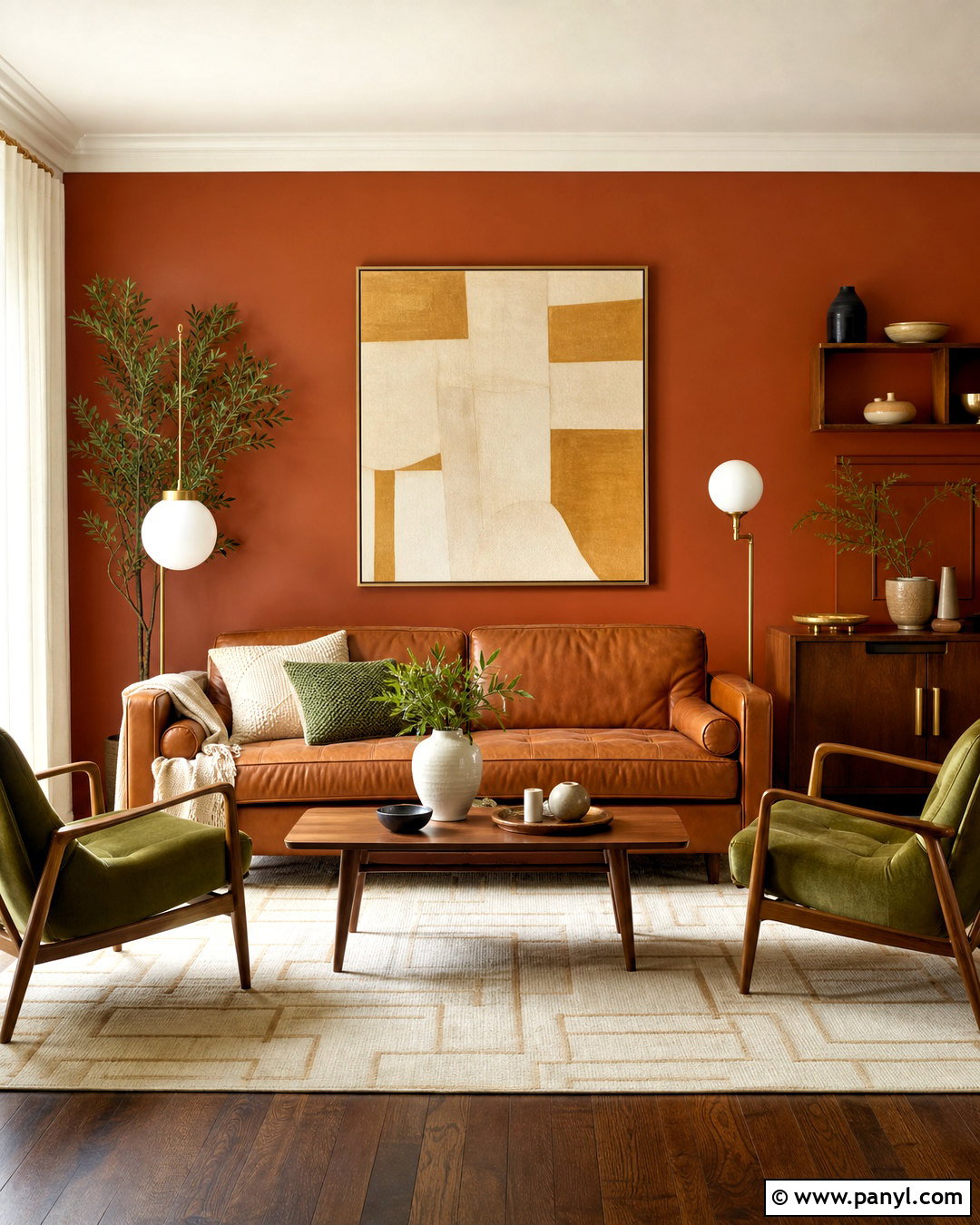
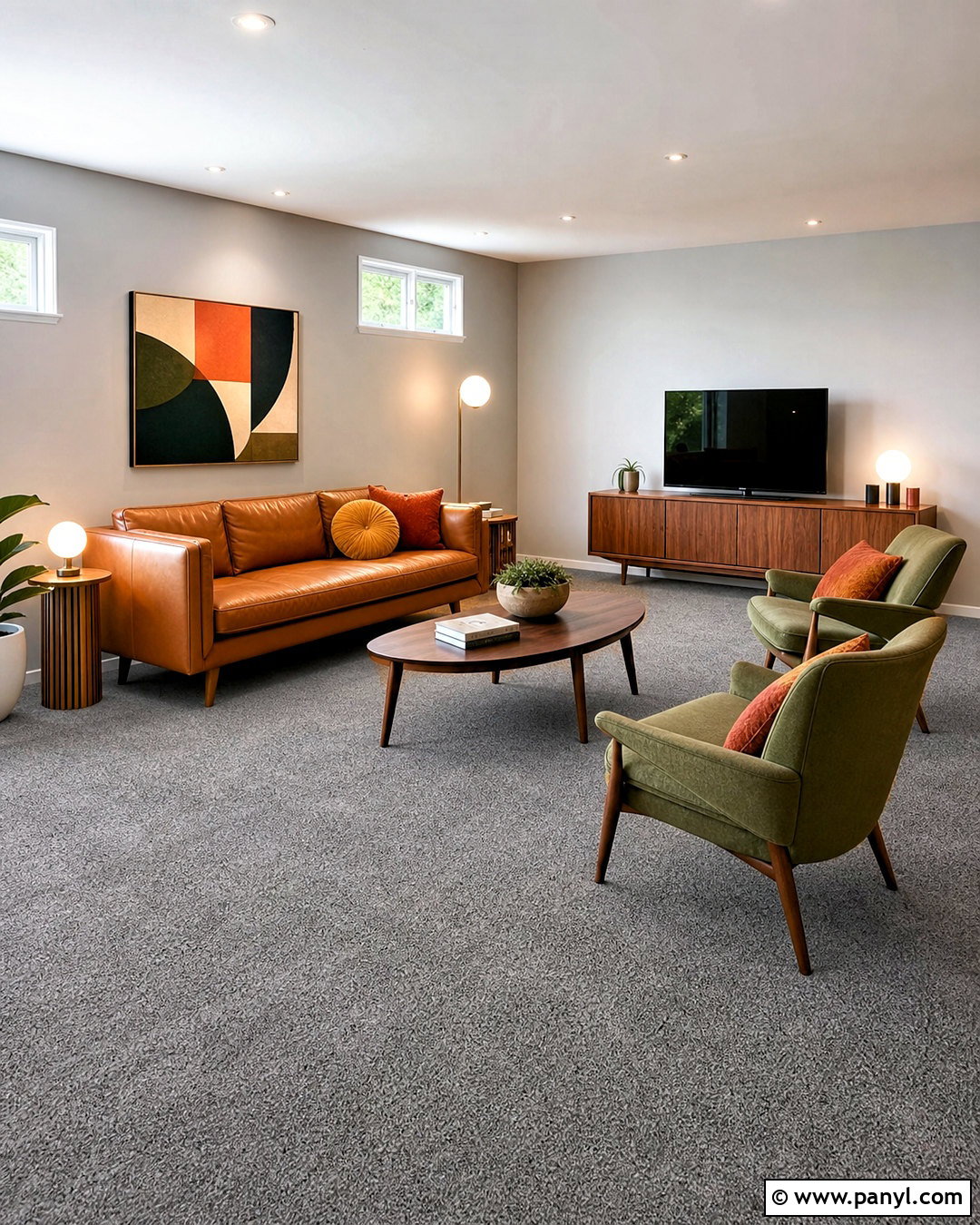
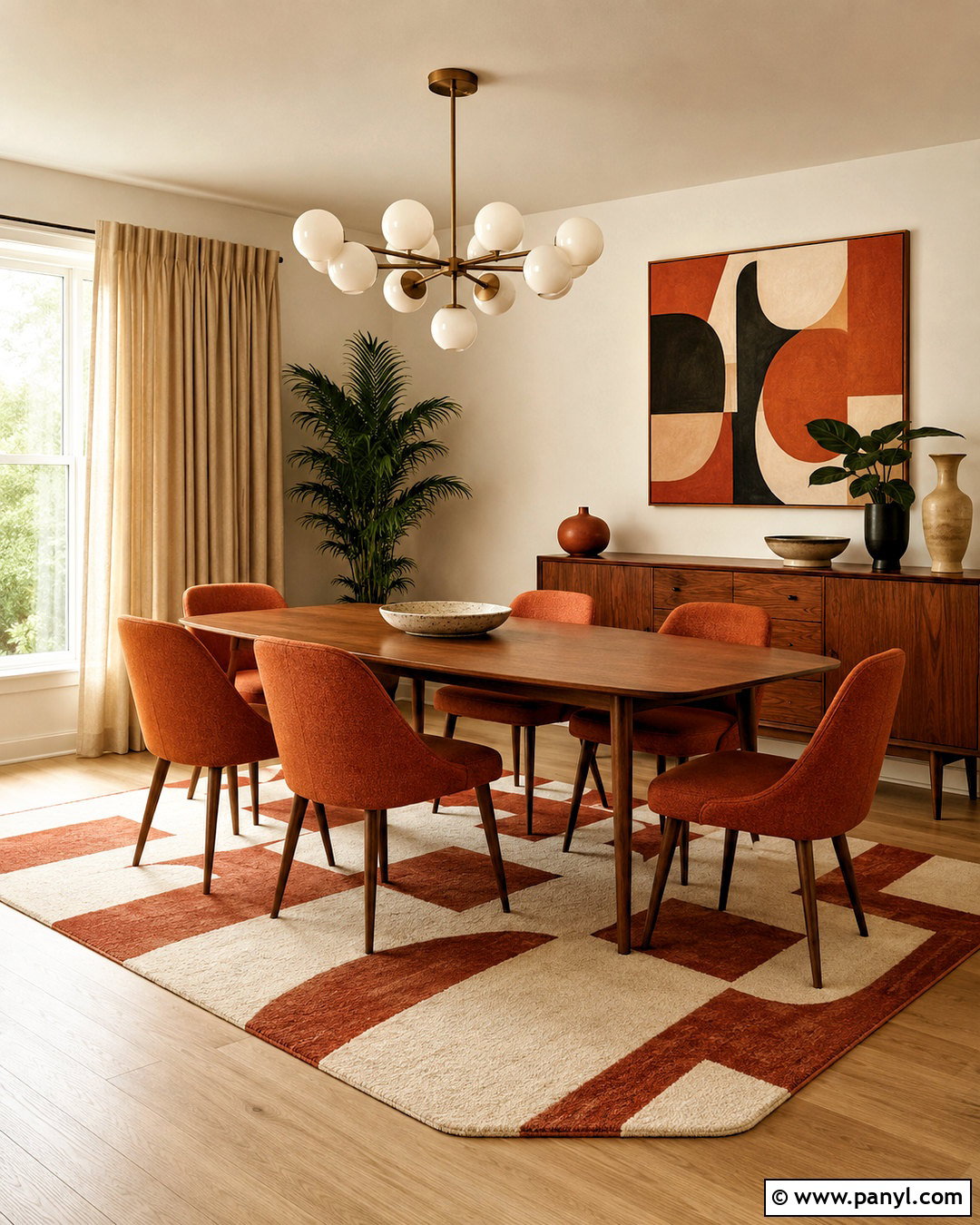
Burnt orange fits naturally into a midcentury living room when paired with walnut furniture and uncluttered shapes. Paint the wall behind a low-profile caramel leather sofa, then add a rectangular walnut coffee table with tapered legs. Use an ivory geometric rug to brighten the floor and define the conversation area. A pair of moss green lounge chairs introduces period-appropriate contrast without turning the room into a theme. Select globe lighting, slim brass details, and long off-white curtains mounted close to the ceiling. Keep decorative objects limited to ceramics, books, and one sculptural planter. Large abstract artwork in cream, ochre, and brown can sit above the sofa. The orange wall supplies retro character, while the simplified layout and restrained accessories keep the completed room fresh and functional.
8. Boho Burnt Orange Living Room Wall
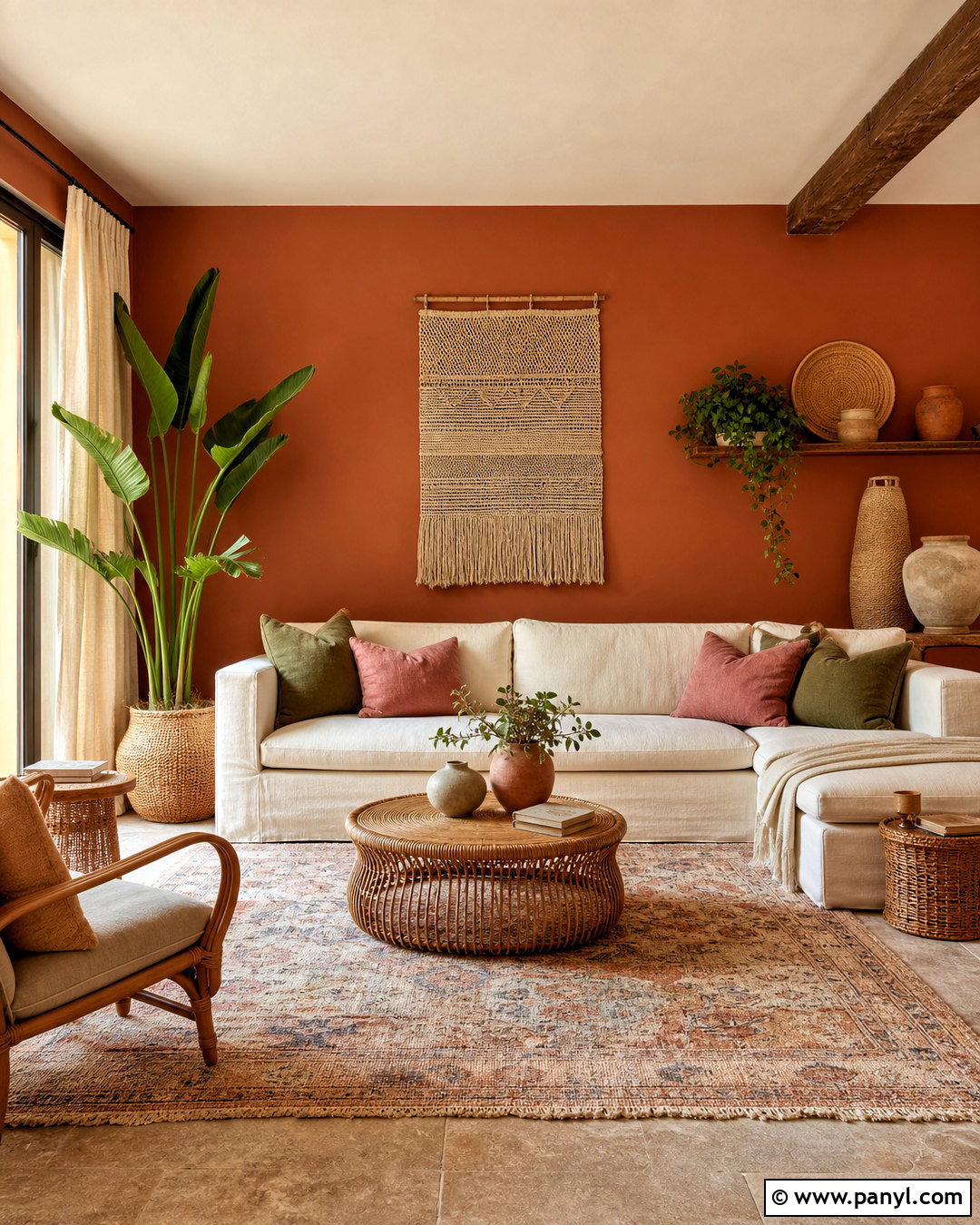
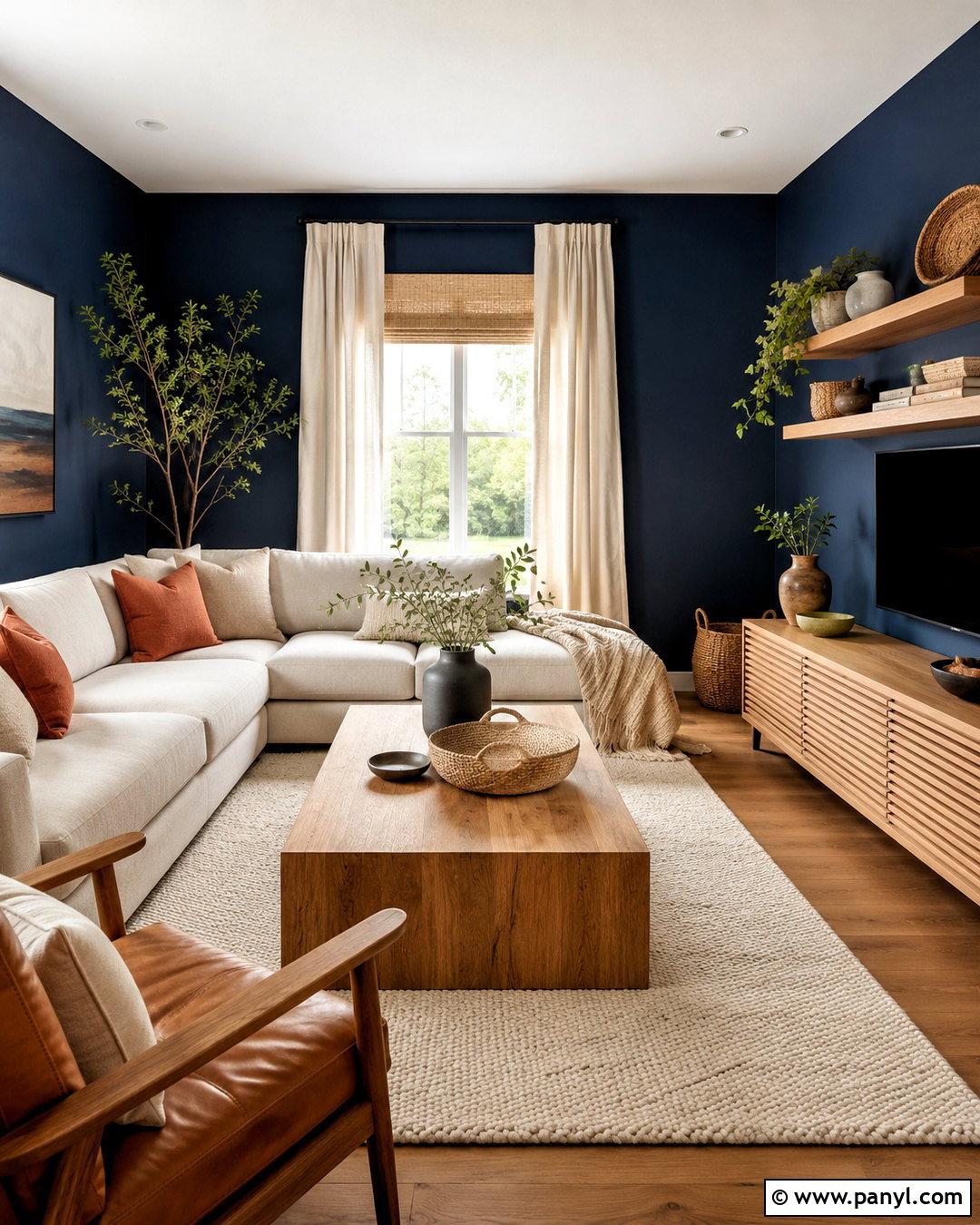
A boho living room benefits from texture, but it still needs an organized foundation. Begin with a matte burnt orange wall behind a relaxed cream slipcovered sofa. Layer a faded patterned rug over wood flooring, then add a round rattan coffee table and two woven side tables. Use pillows in olive, dusty rose, tan, and rust, mixing patterns in different scales rather than repeating one print. Full-length natural linen curtains will filter daylight and soften the saturated wall. Include a large floor plant, a woven pendant, and a small collection of handmade-looking ceramics. Instead of covering the wall with many tiny decorations, hang one large textile or a balanced group of three framed prints. The completed space feels collected and expressive while remaining comfortable, breathable, and visually controlled.
9. Farmhouse Burnt Orange Living Room Wall
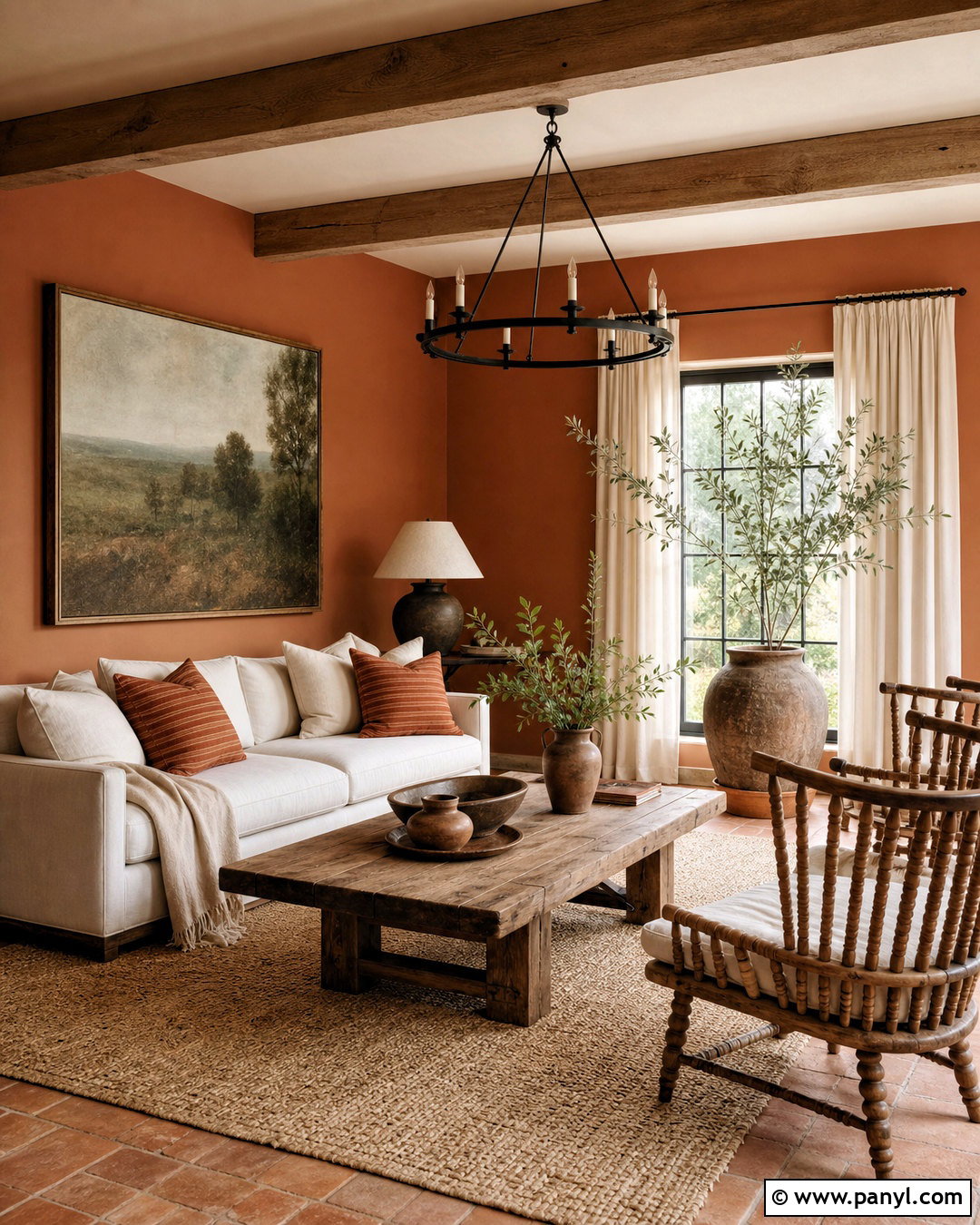
A farmhouse room can use burnt orange without losing its simple, welcoming character. Choose a softened clay-orange paint rather than a highly saturated shade and apply it to the wall behind a warm white sofa. Add a distressed oak coffee table, a large cream-and-tan rug, and two spindle chairs with oatmeal cushions. Keep the other walls and ceiling a gentle off-white. Black iron lighting and curtain hardware provide contrast, while natural linen curtains maintain an airy appearance. Use striped pillows in cream, rust, and muted brown instead of overly themed accessories. A substantial landscape painting or vintage-style botanical print can become the main decoration above the sofa. Finish with an earthenware vase and leafy branches. The result combines farmhouse comfort with a richer, more current wall color.
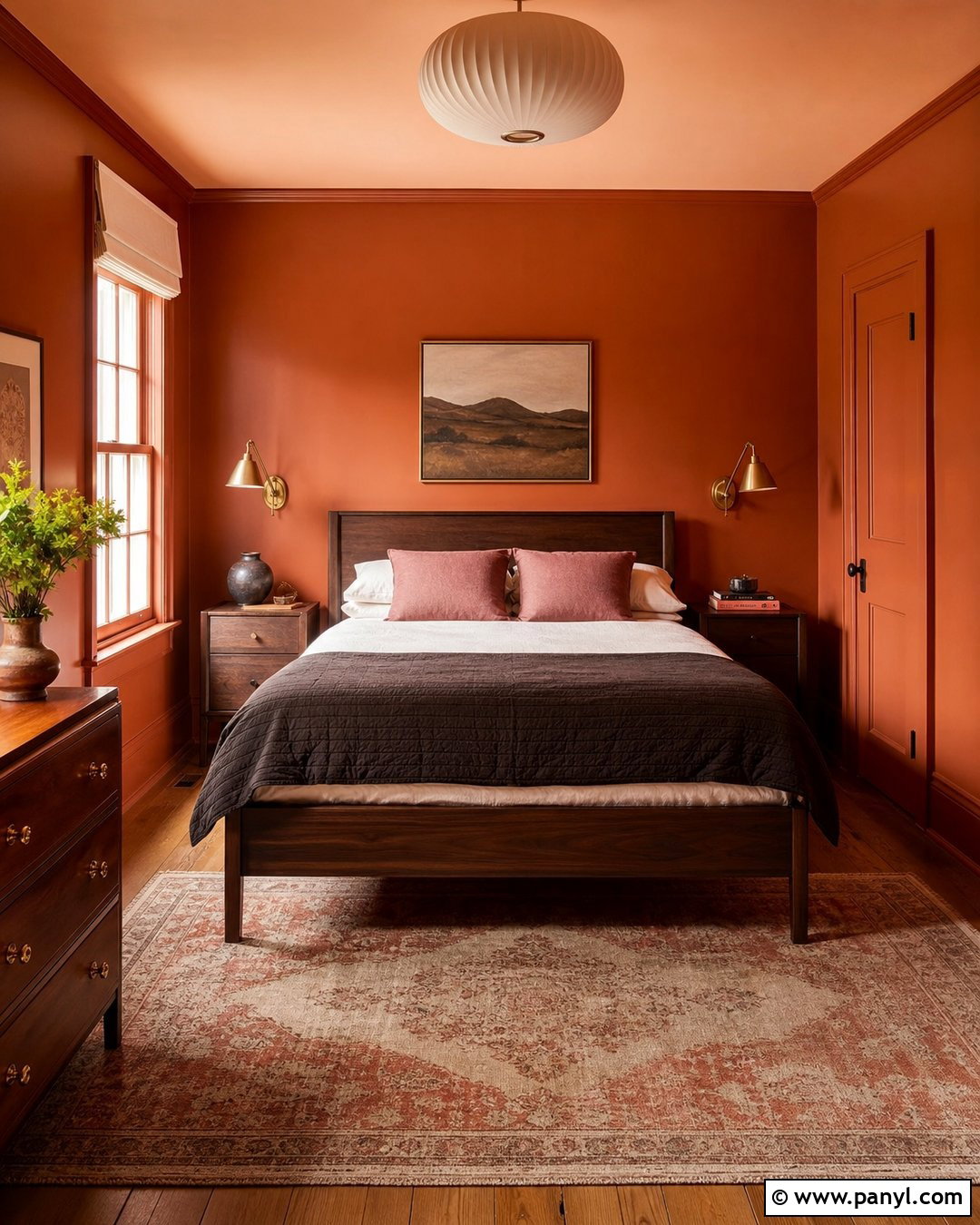
10. Mediterranean Burnt Orange Living Room Wall
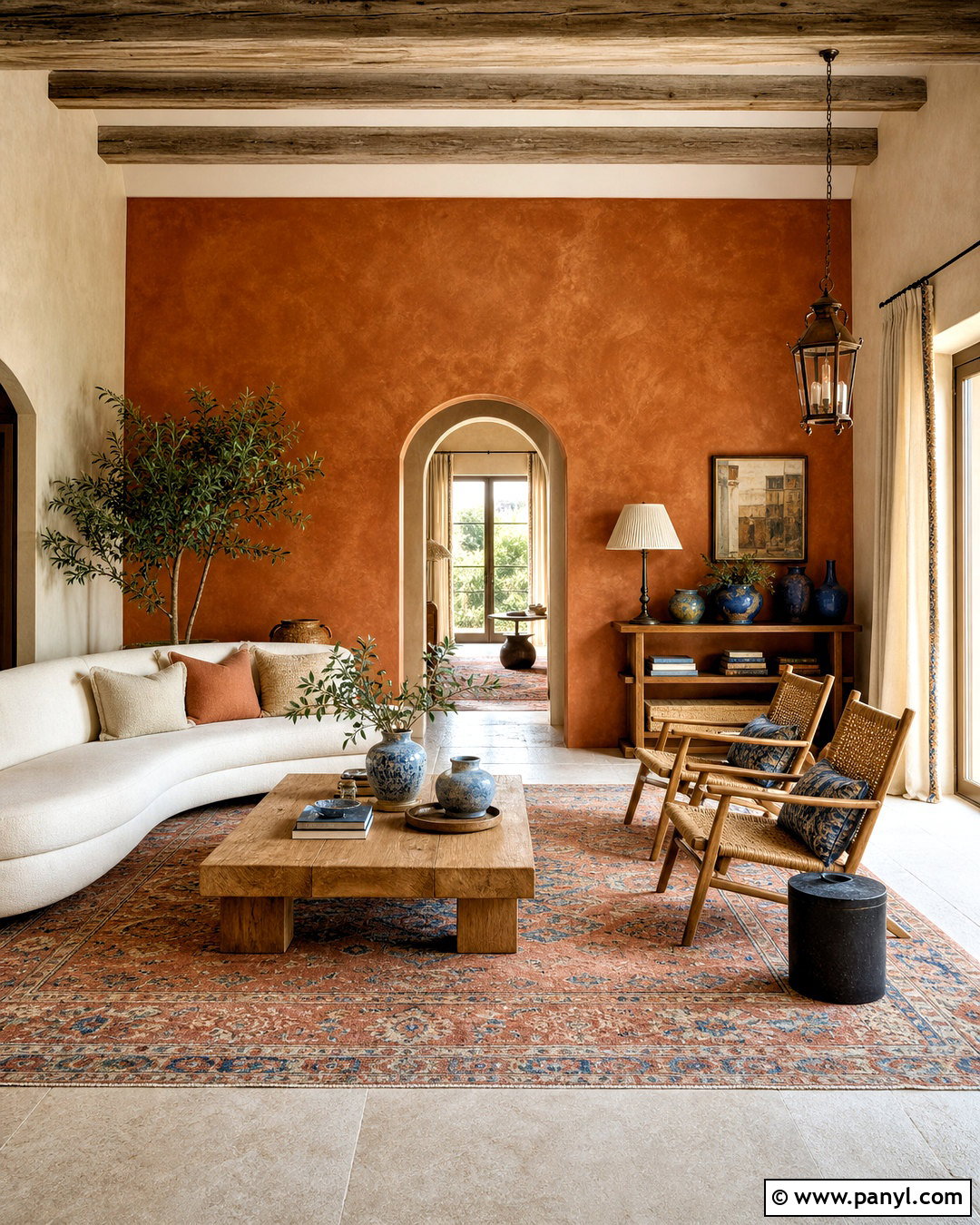
Sun-washed materials help burnt orange feel especially natural in a Mediterranean living room. Use a mineral-looking orange finish on the main wall and combine it with creamy plaster-colored surrounding walls. Arrange a low ivory sofa with curved arms, two rush-seat chairs, and a chunky light wood coffee table around a faded terracotta-and-blue rug. Blue ceramic lamps or pottery will provide cool contrast, while dark wood frames add definition. Choose breezy flax-colored curtains and keep the window area open to maximize brightness. A rounded wall niche, if available, can display a few simple vessels rather than numerous accessories. Complete the room with olive branches, woven baskets, and aged brass details. The layered design should feel relaxed and handcrafted, not overly decorative or formal.
11. Industrial Burnt Orange Living Room Wall
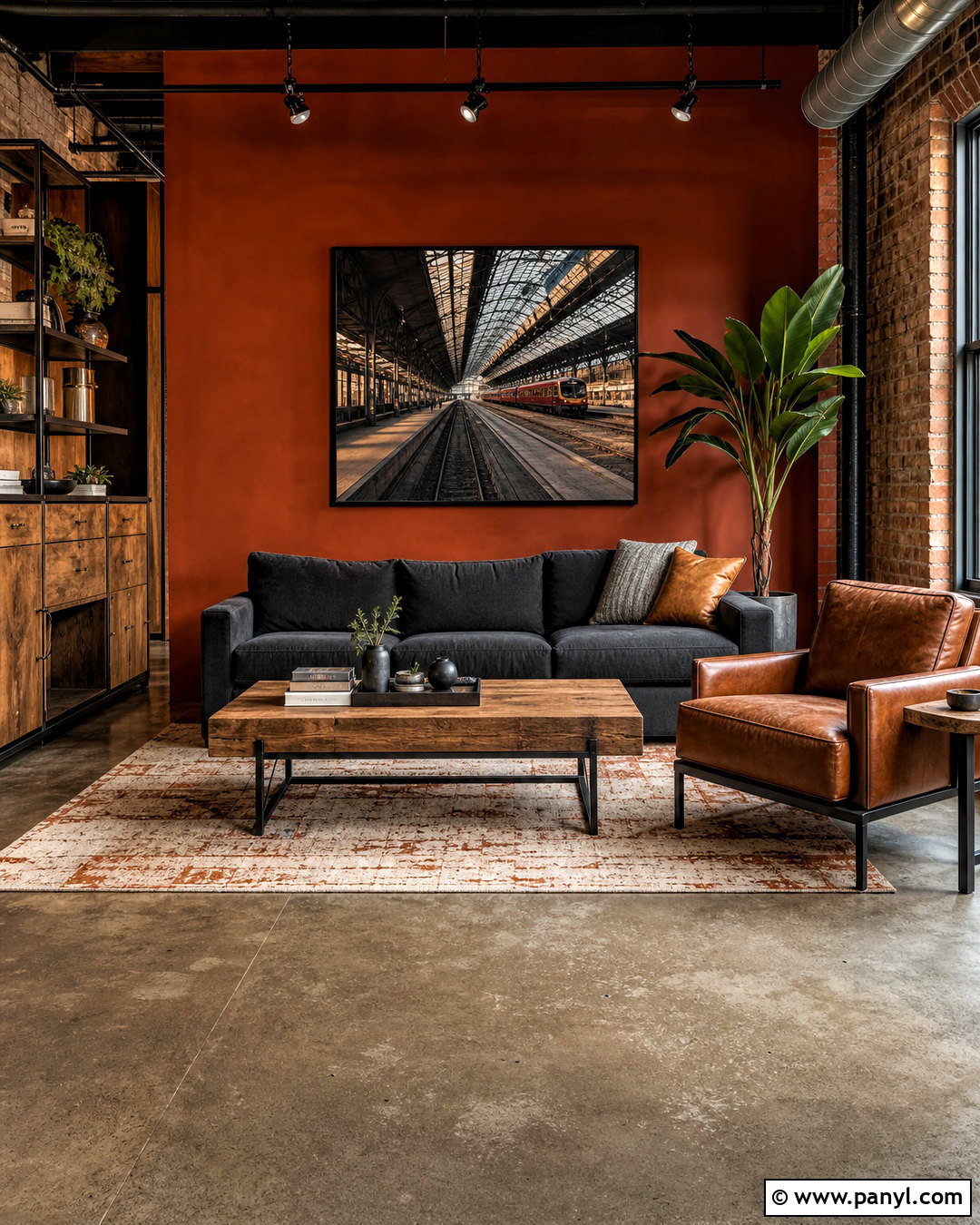
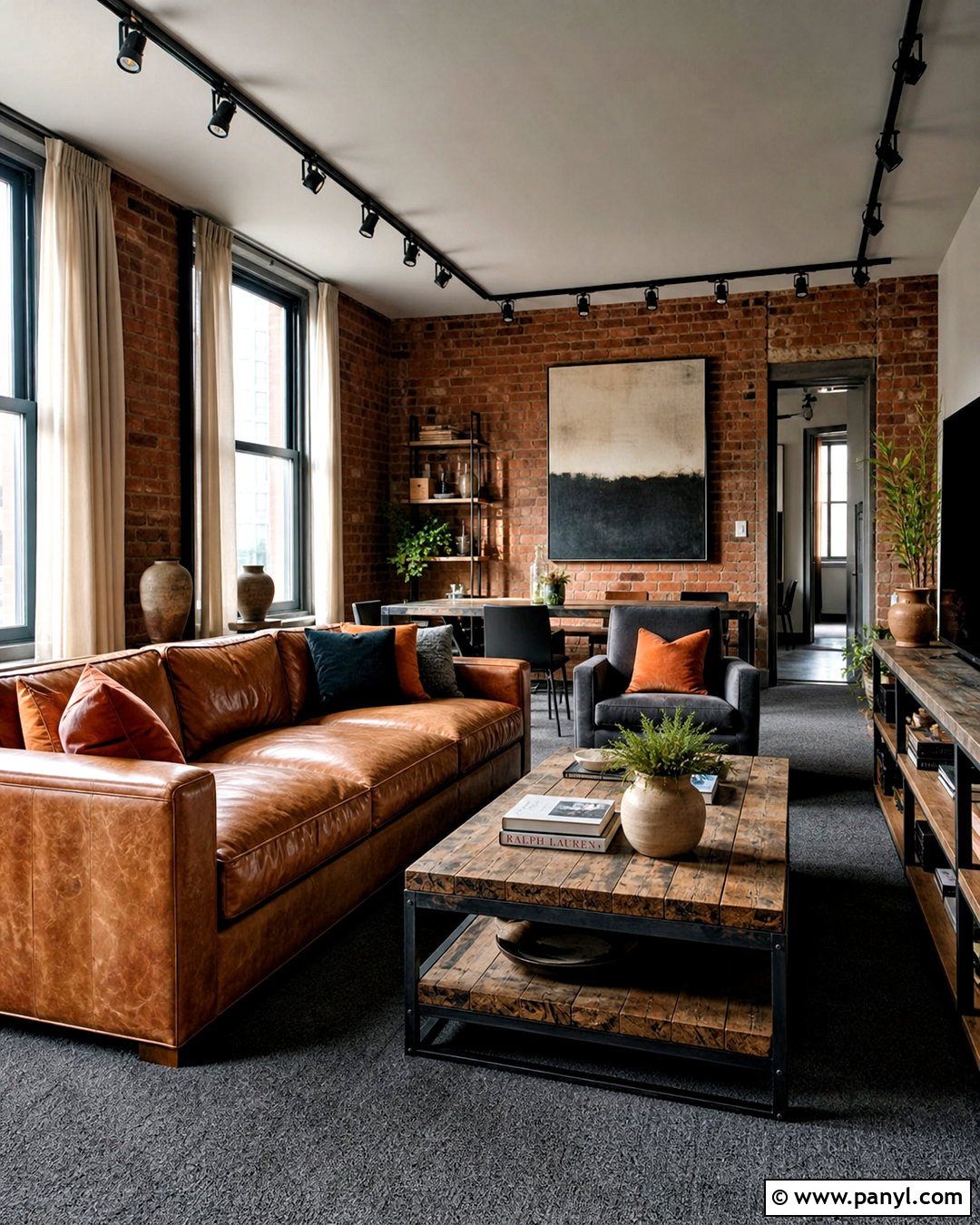
Exposed materials give a burnt orange wall a strong urban setting. Paint one wall in a deep rust-orange shade and leave adjacent brick, concrete, or warm gray surfaces visible where possible. Place a charcoal sofa against the orange wall, then introduce a cognac leather chair and a reclaimed wood coffee table with black metal legs. A large faded rug in cream, brown, and rust will soften hard flooring and improve the seating area. Use black track lighting or a simple metal floor lamp, but balance those dark features with off-white curtains. Oversized black-framed photography can provide scale without creating clutter. Include one wooden storage cabinet and a tall plant to warm the industrial materials. The final room feels sturdy, practical, and comfortable rather than cold or unfinished.
12. Glam Burnt Orange Living Room Wall
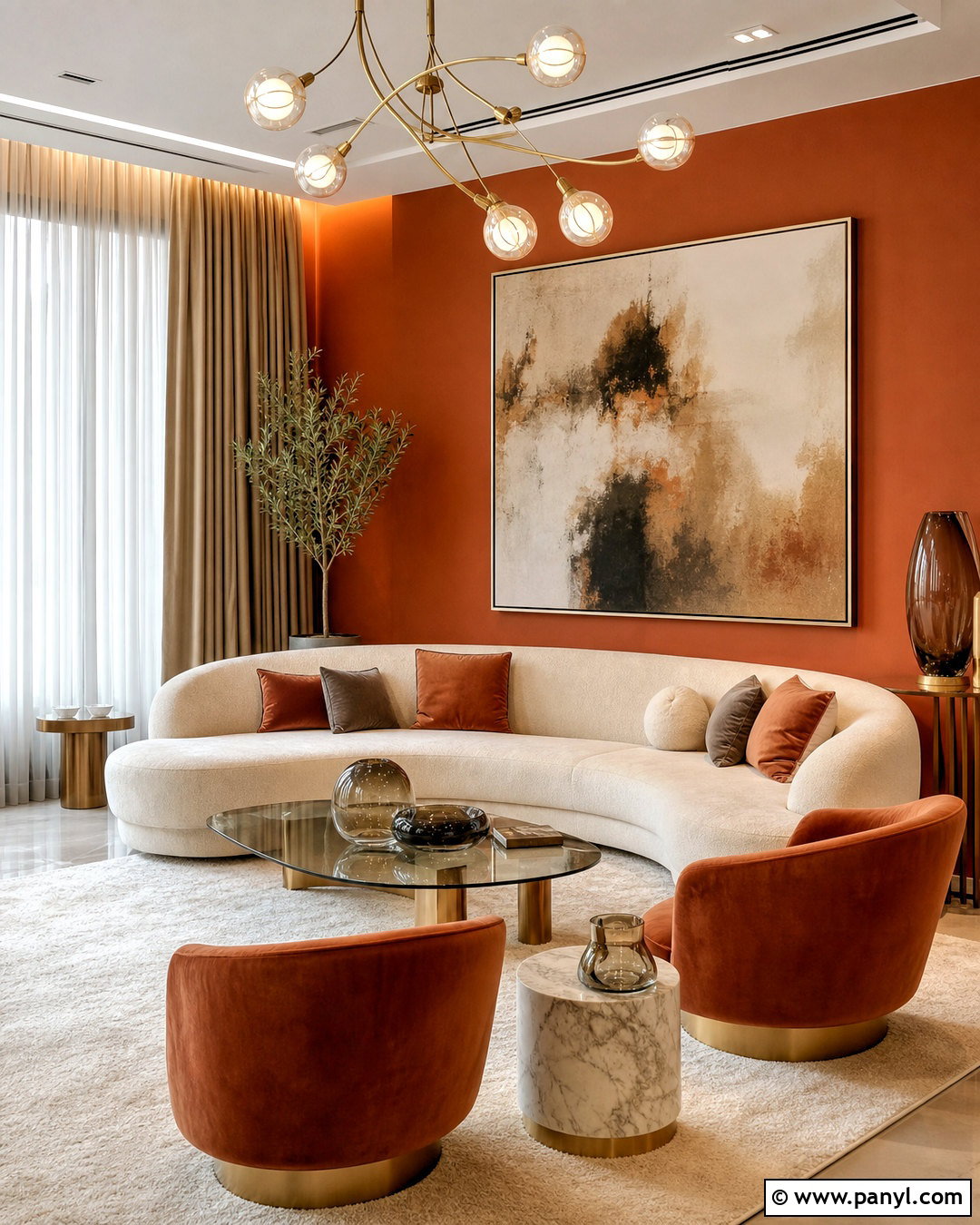
Burnt orange can look polished and glamorous when balanced with soft upholstery and warm metallic finishes. Make the orange wall the backdrop for a curved ivory or pale beige velvet sofa. Add a glass coffee table with a brushed brass base, then anchor the room with a plush cream rug. Two compact rust velvet chairs can face the sofa, creating a complete conversation layout without overusing the wall color. Select full-length champagne-colored curtains and a sculptural brass chandelier for elegant height. Artwork should contain generous cream space with touches of orange, blush, and charcoal. Add a marble-topped side table and a few smoky glass accessories. Avoid mirrored furniture on every surface. Restraint keeps the completed living room sophisticated, allowing the rich orange wall to remain the main visual statement.
13. Scandinavian Burnt Orange Living Room Wall
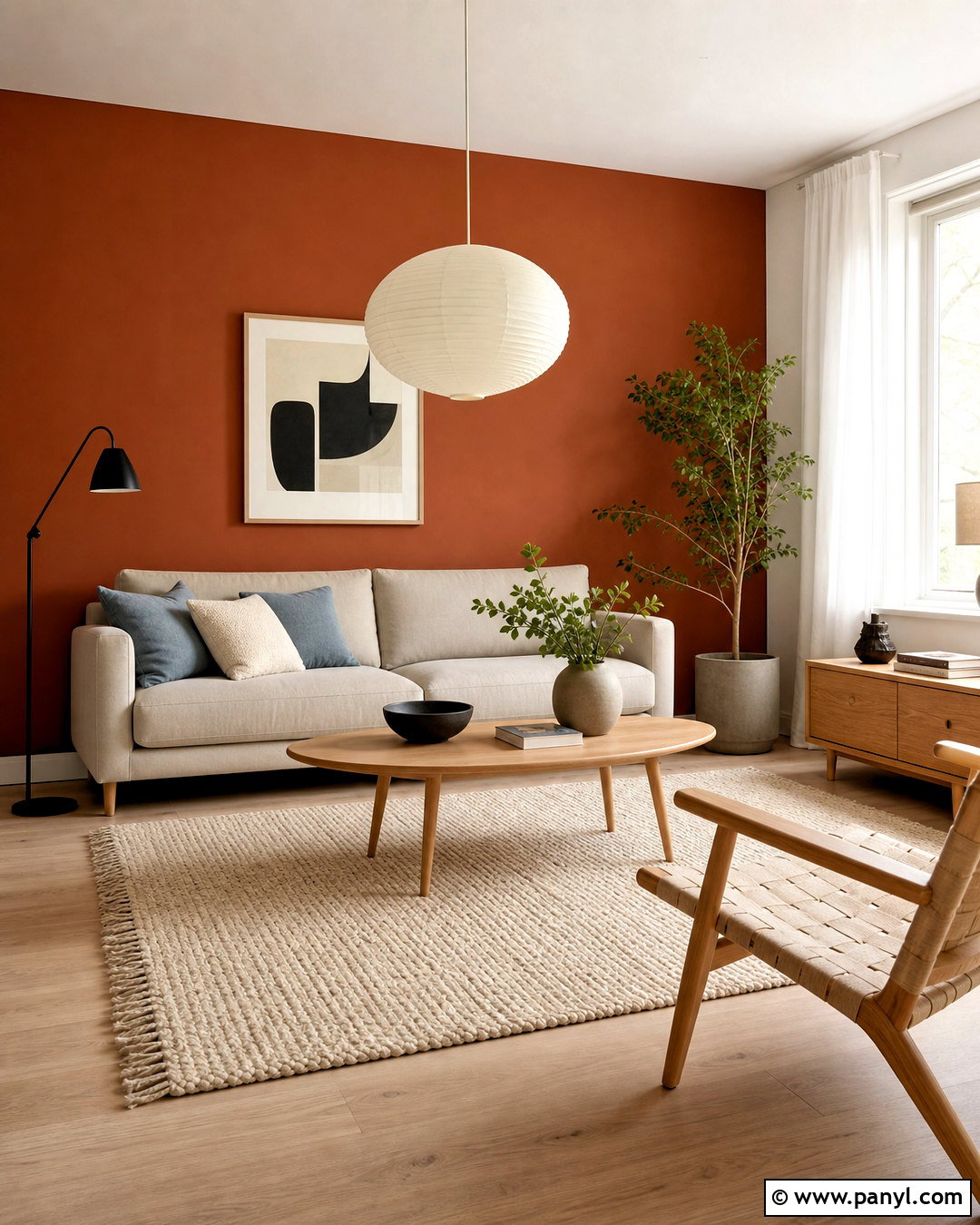
In a Scandinavian-inspired room, burnt orange should be warm but slightly muted. Paint one feature wall a soft rust tone and keep everything else light, simple, and functional. Position a pale gray-beige sofa against the wall, then add a blond oak coffee table and a cream wool rug. Choose one light wood lounge chair with a woven seat instead of adding another bulky upholstered piece. White linen curtains, a paper pendant light, and warm white surrounding walls will help reflect daylight. Use black sparingly through a floor lamp and two thin picture frames. Cushions in oatmeal, dusty blue, and subtle orange can connect the palette. A practical oak media console and a single leafy plant complete the space. The finished room feels colorful, clean, and comfortable without looking overly decorated.
14. Small Burnt Orange Living Room Wall
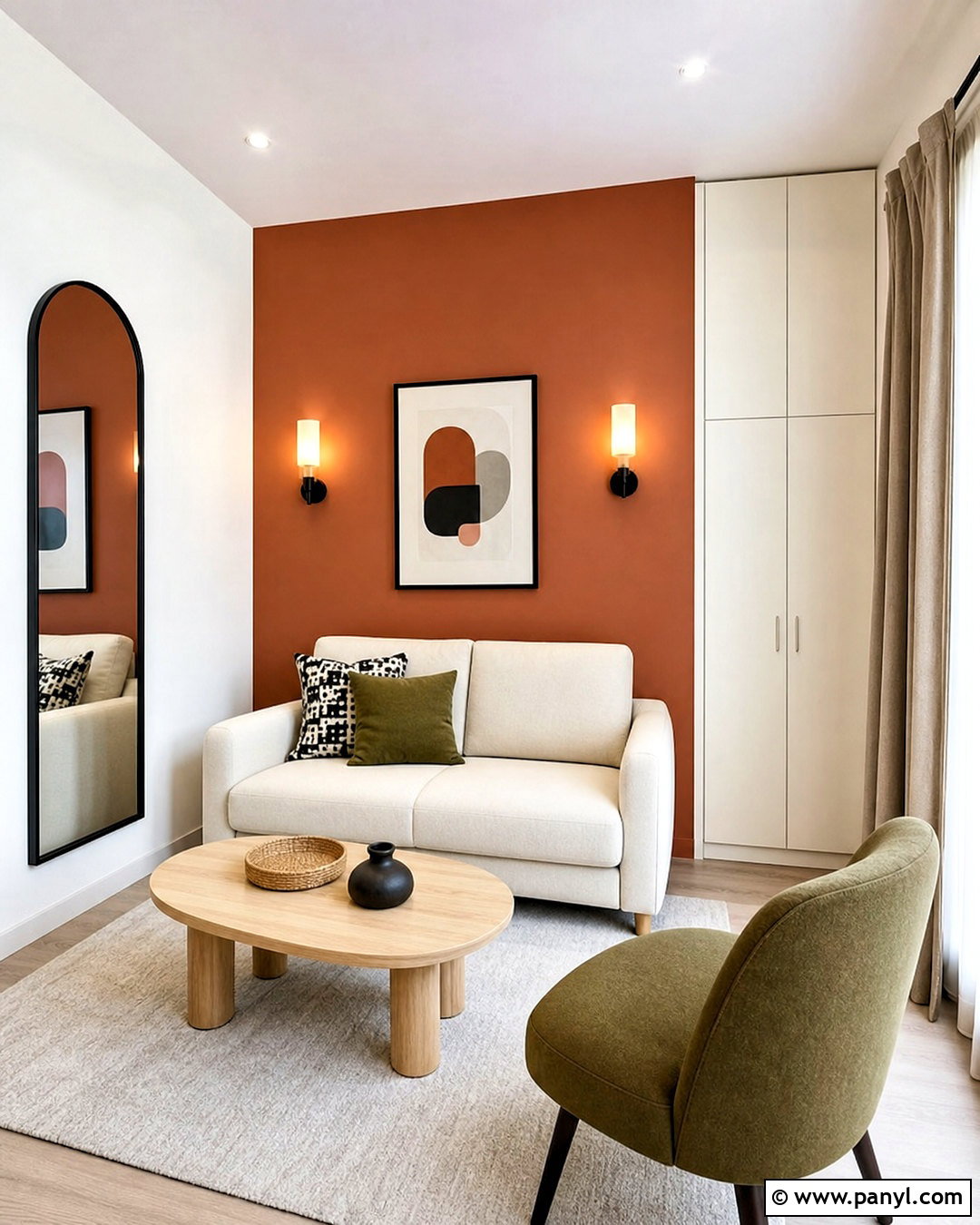
A compact living room can handle burnt orange when the color has a clear boundary. Paint the shortest wall, preferably behind the sofa, and leave the longer walls warm white to preserve an open feeling. Select a small cream loveseat with raised legs so more flooring remains visible. Add a narrow oval coffee table, a light-colored rug, and one compact accent chair in muted olive or tan. Hang curtains above the window frame and let them reach the floor to emphasize height. A large mirror on an adjacent neutral wall can distribute light without hiding the orange focal point. Use wall-mounted sconces instead of wide table lamps, and choose closed storage to control clutter. This layout provides comfortable seating, color, and useful storage while keeping walking paths clear and visually spacious.
15. Burnt Orange Fireplace Wall
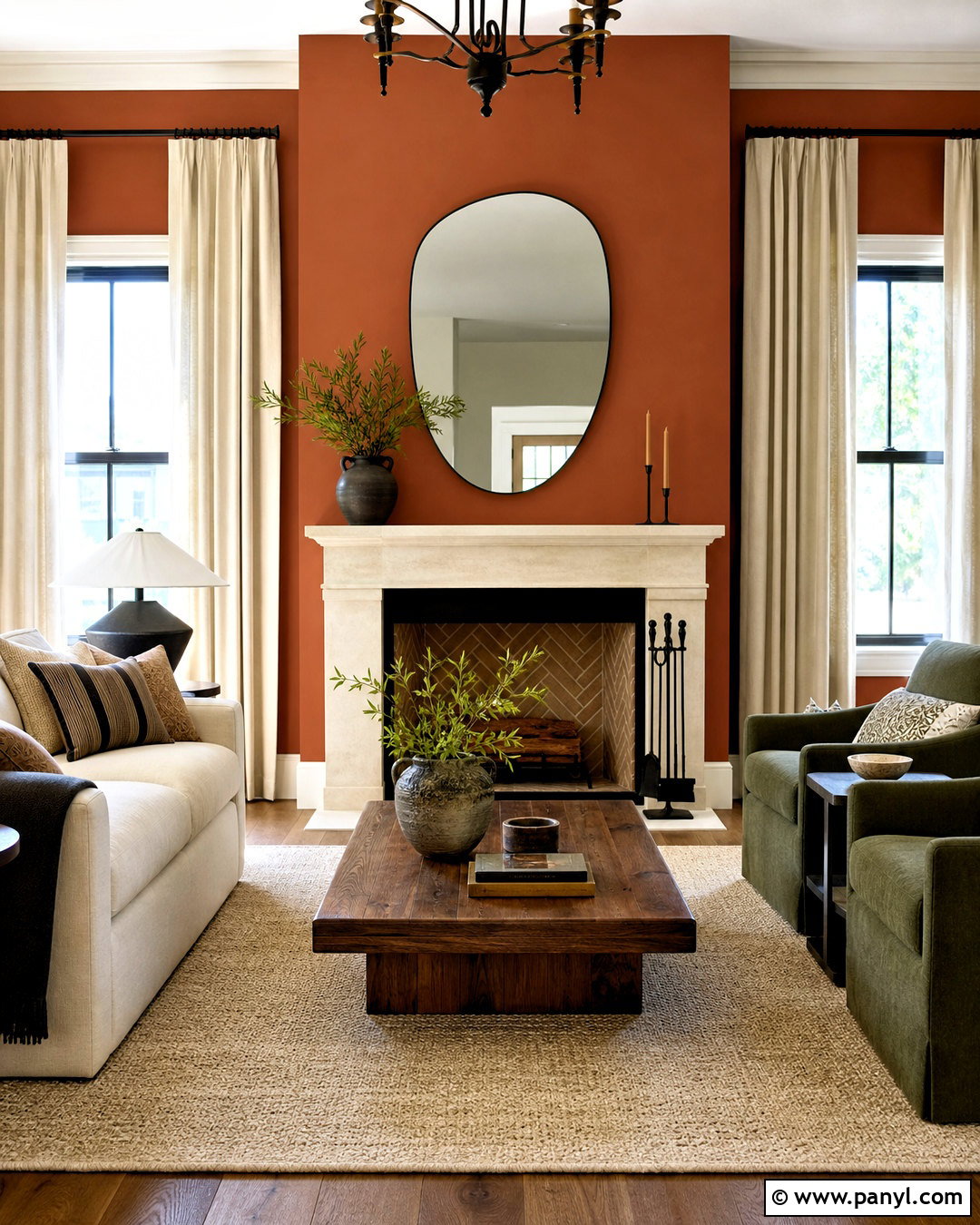
Turn the fireplace wall into a complete architectural focal point by coating the surrounding surface in burnt orange. A simple white, limestone, or light oak mantel will stand out cleanly against the color. Arrange a cream sofa facing the fireplace, with two brown leather or olive chairs angled inward to create a sociable layout. Use a large neutral rug and a substantial wood coffee table to anchor the furniture. Keep fireplace accessories matte black for definition, then repeat black through slim window hardware or picture frames. Above the mantel, choose one large artwork or a rounded mirror rather than several small objects. Linen curtains and warm white adjacent walls will brighten the composition. This treatment gives the room a strong center while keeping the fireplace, furniture, and color visually connected.
16. Burnt Orange Paneled Living Room Wall
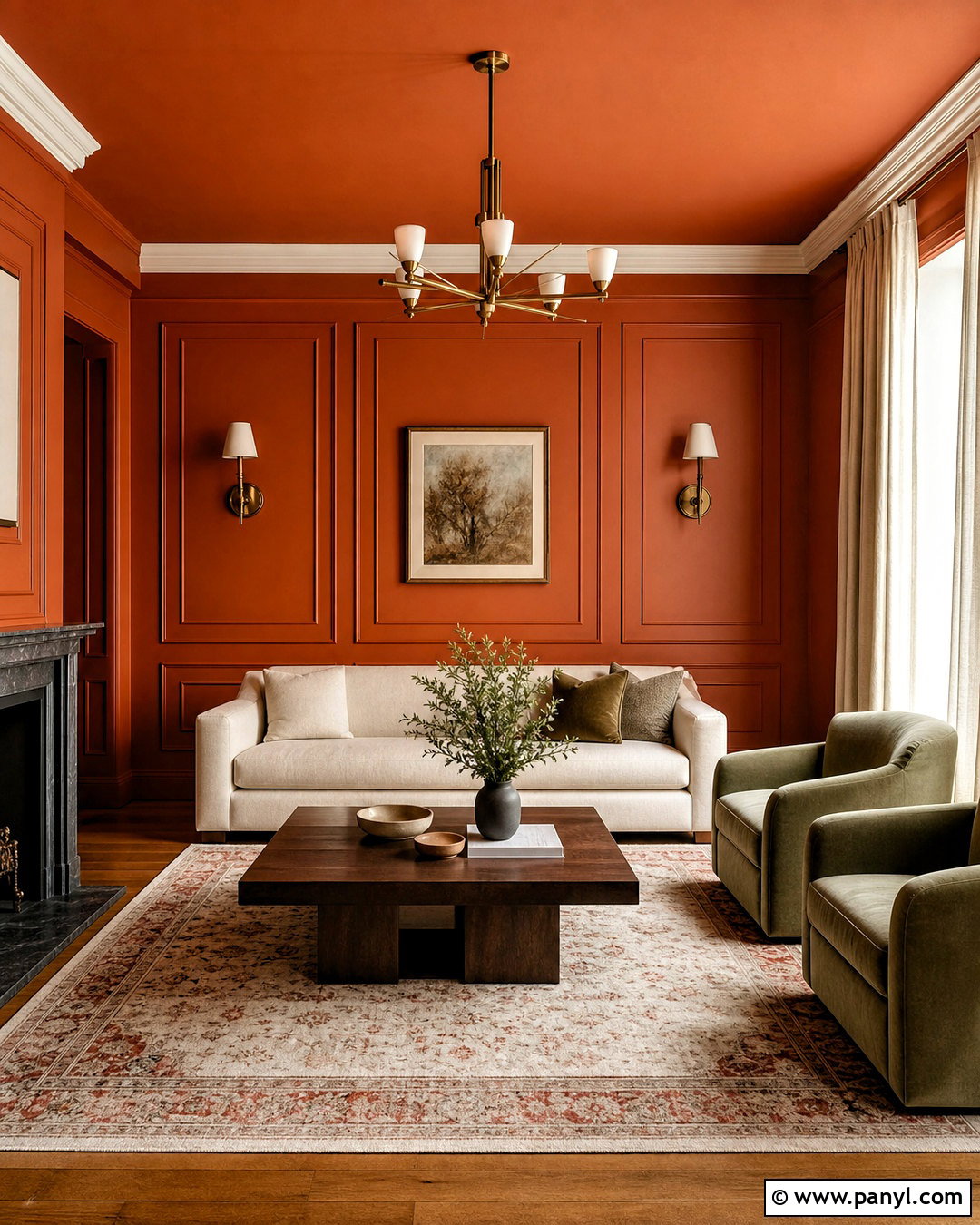
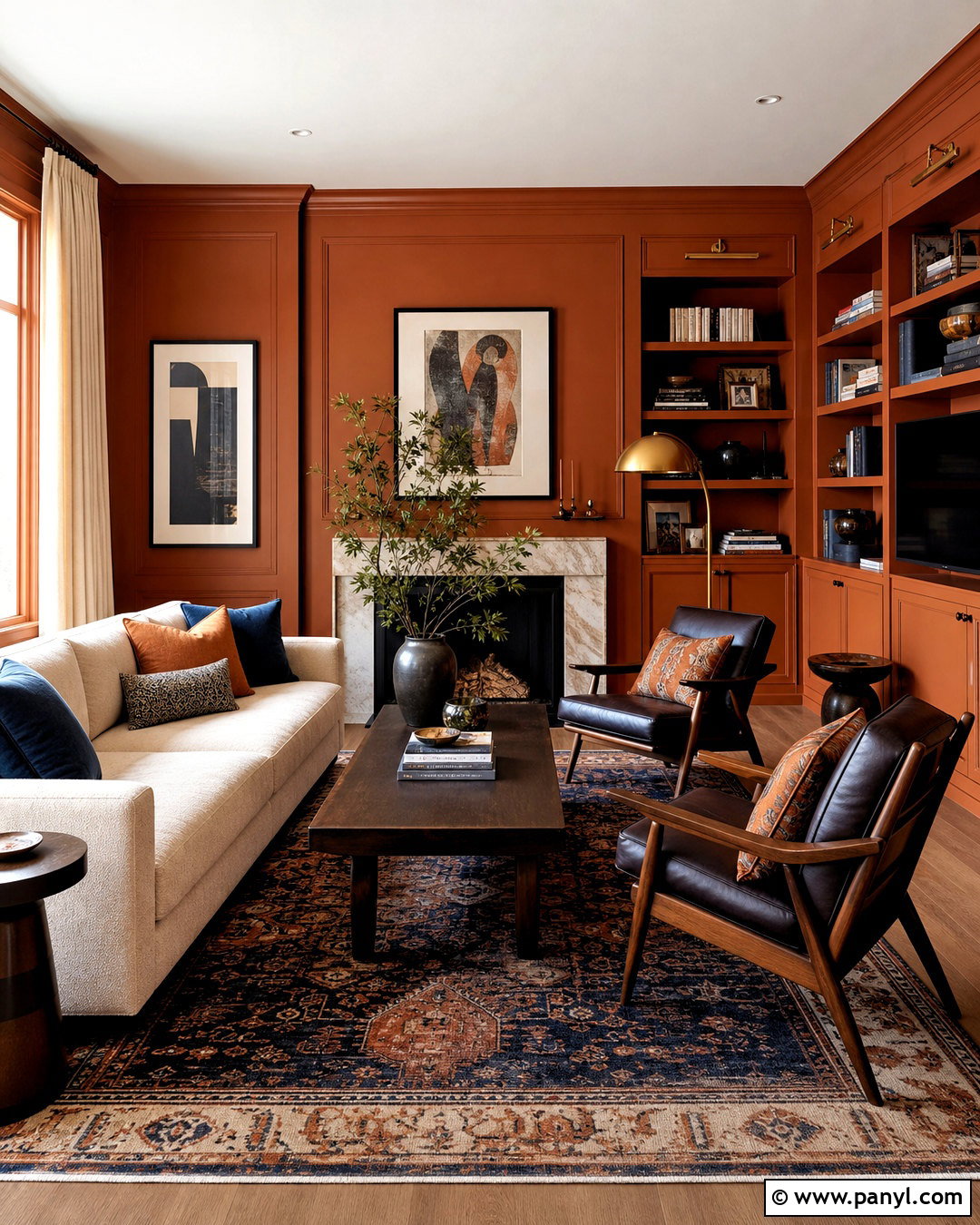
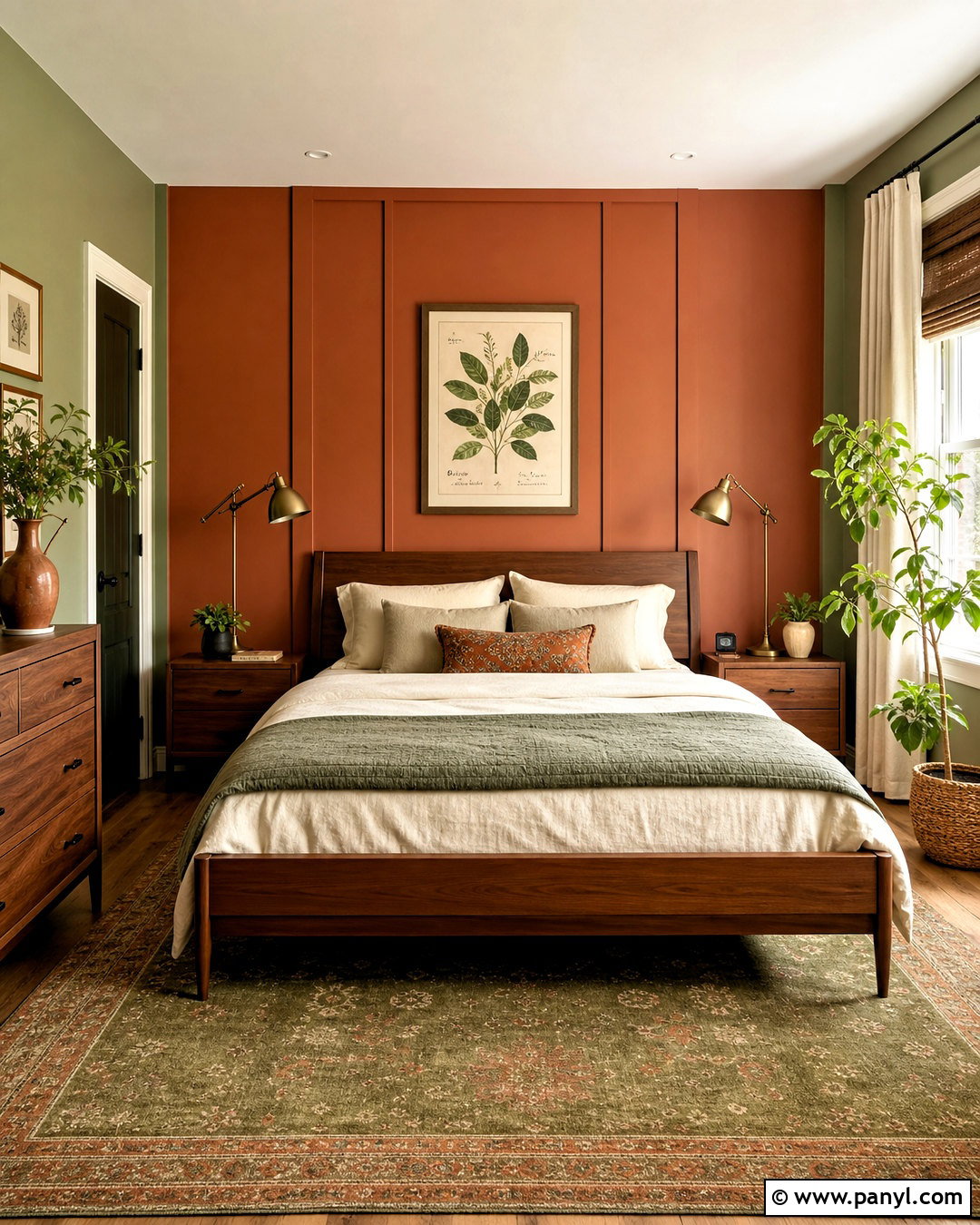
Wall paneling adds shadow and structure, helping burnt orange appear deeper and more dimensional. Install simple rectangular molding or vertical boards on the main wall, then paint the trim and wall in the same matte orange finish. Pair this backdrop with a tailored cream sofa, a dark walnut coffee table, and two muted green armchairs. A patterned rug containing ivory, rust, and brown will connect the seating arrangement. Choose antique brass sconces for the paneled wall and add a warm white ceiling light for general illumination. Keep artwork minimal so the molding remains visible. Long beige curtains and medium oak flooring will soften the formal lines. The finished living room combines traditional architecture with contemporary furniture, making it suitable for updated older homes as well as newer builder-grade spaces.
17. Two Tone Burnt Orange Living Room Wall
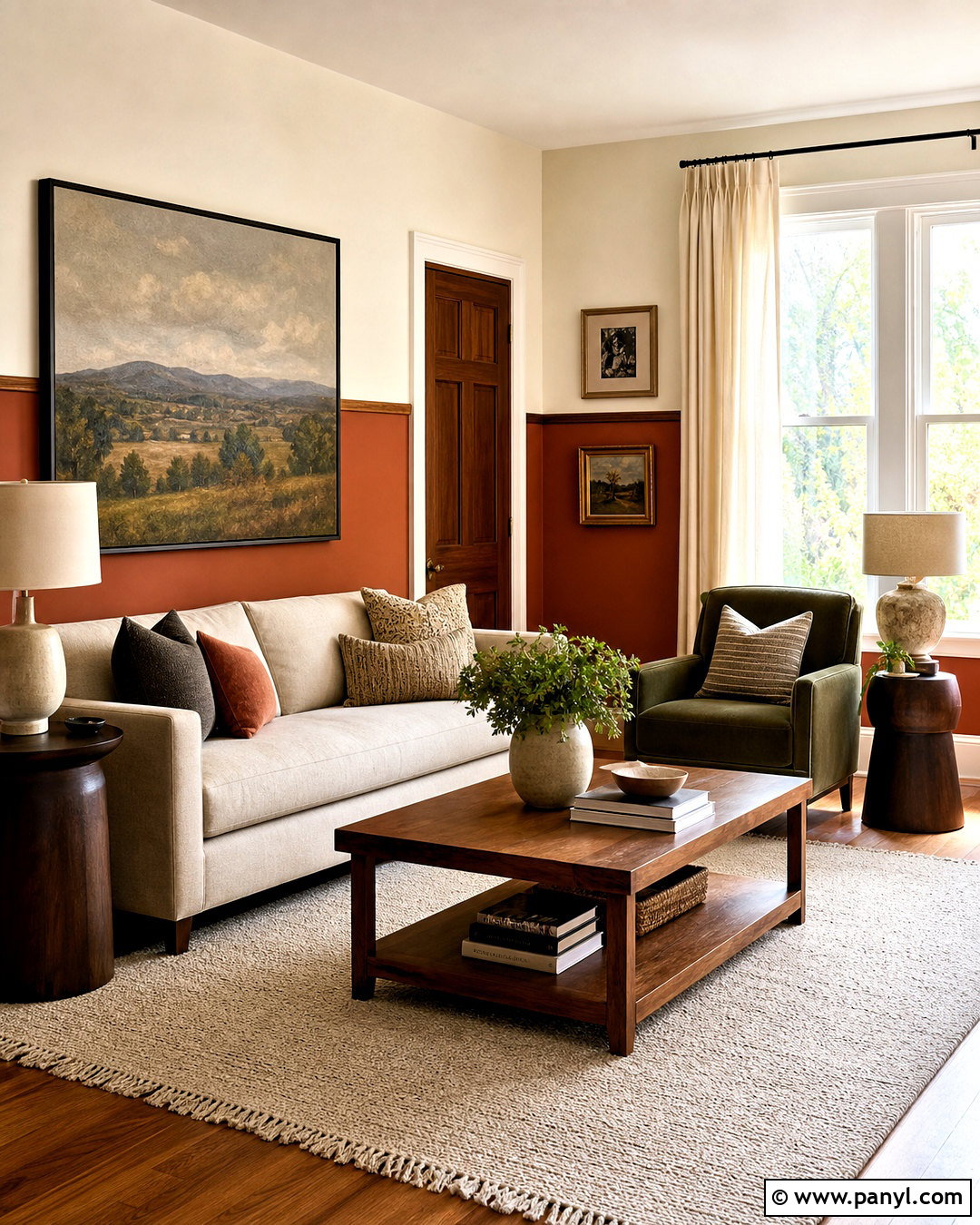
Two-tone paint can introduce burnt orange while leaving the upper part of the room light. Paint the lower two-thirds of the walls orange and finish the upper section in warm ivory, dividing the colors with a narrow wood or painted trim. Place a beige sofa along the longest wall and use an olive chair, oak coffee table, and cream rug to develop a balanced palette. Curtains should match the lighter upper wall so the windows appear taller. Hang artwork across the dividing line only when the frames are large enough to look deliberate. Otherwise, keep frames within the ivory section. Add ceramic lamps, linen pillows, and a few walnut accents. This treatment works throughout the room, producing more continuity than a single feature wall while avoiding the heaviness of floor-to-ceiling orange.
18. Burnt Orange Gallery Wall
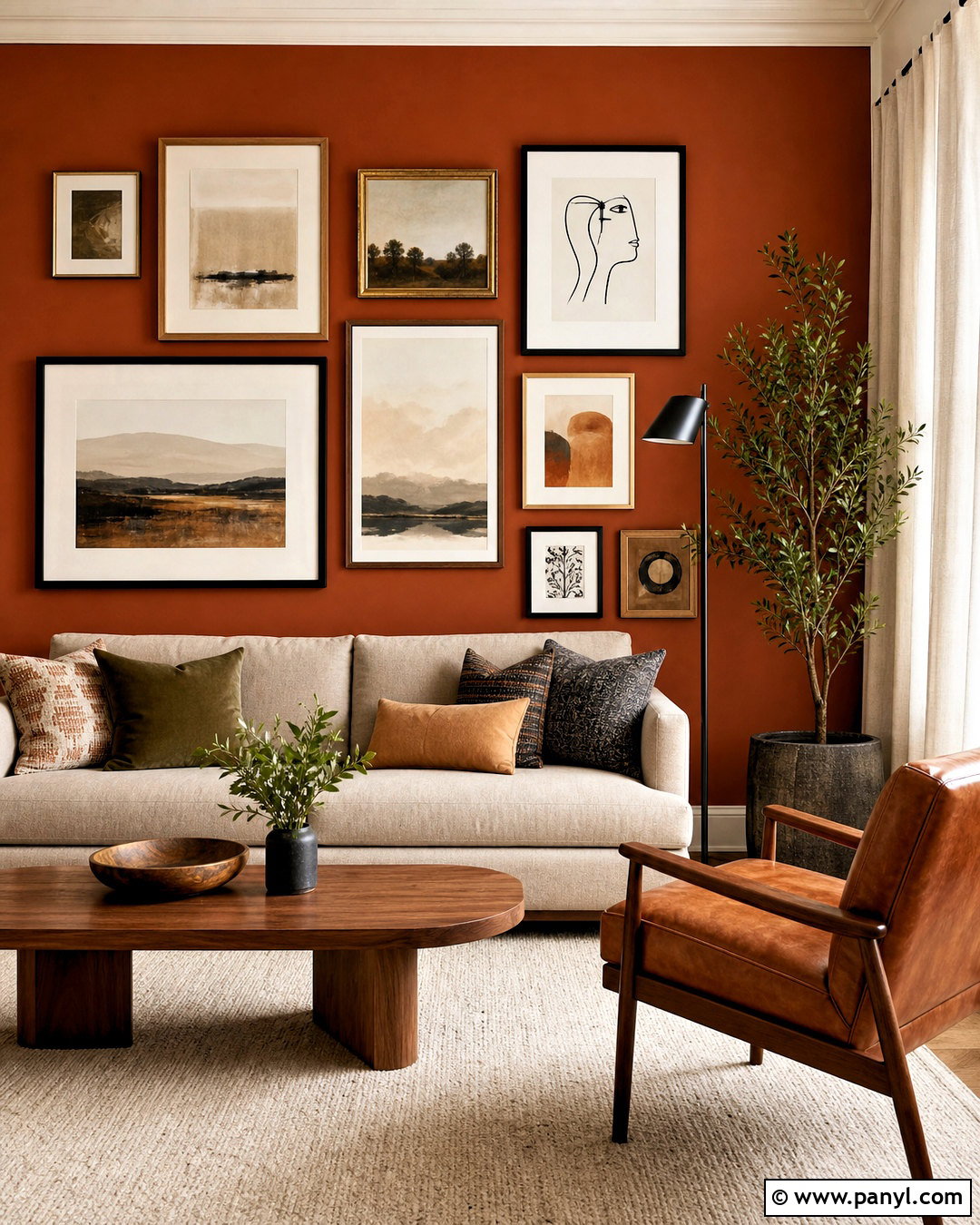
A burnt orange wall makes a strong backdrop for a carefully planned gallery arrangement. Start with a neutral sofa in cream, flax, or warm gray and center it below a mix of black, oak, and brass frames. Choose artwork featuring plenty of white space, landscapes, line drawings, and muted blue or green details. Lay out the frame arrangement on the floor before hanging it, keeping spacing consistent so the orange remains visible between pieces. Complete the room with a walnut coffee table, an ivory rug, and one cognac leather chair. Natural linen curtains will soften the wall color near the windows. Repeat black only through a lamp or table base. The completed look feels personal and layered, but the controlled frame palette prevents the gallery wall from appearing crowded or disconnected.
19. All Burnt Orange Living Room Walls
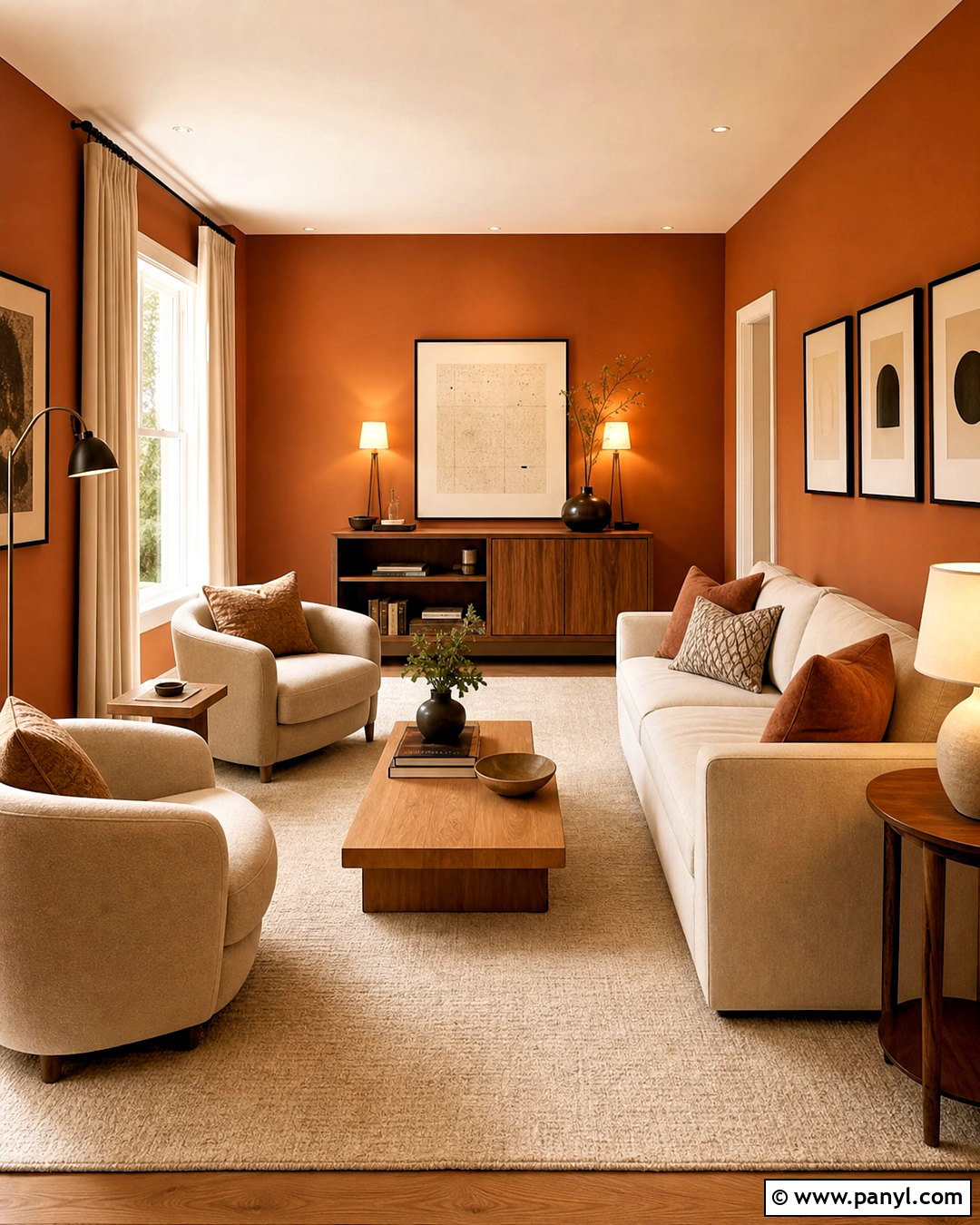
Painting every wall burnt orange creates an enveloping room, so the furnishings should introduce plenty of visual relief. Choose a muted, earthy orange rather than a bright pumpkin tone, and continue a warm white across the ceiling. Use a large cream sofa, pale oatmeal chairs, an ivory rug, and light oak tables to break up the painted surfaces. Full-length beige curtains will cover portions of the color while adding softness. Include dark accents through one walnut cabinet and a few black frames, but avoid a complete set of dark furniture. Lighting is essential, so combine a ceiling fixture with floor and table lamps placed around the room. Large-scale artwork with cream backgrounds will provide breathing room. The finished space feels cozy and immersive, yet still balanced enough for daily living.
20. Open Concept Burnt Orange Living Room Wall
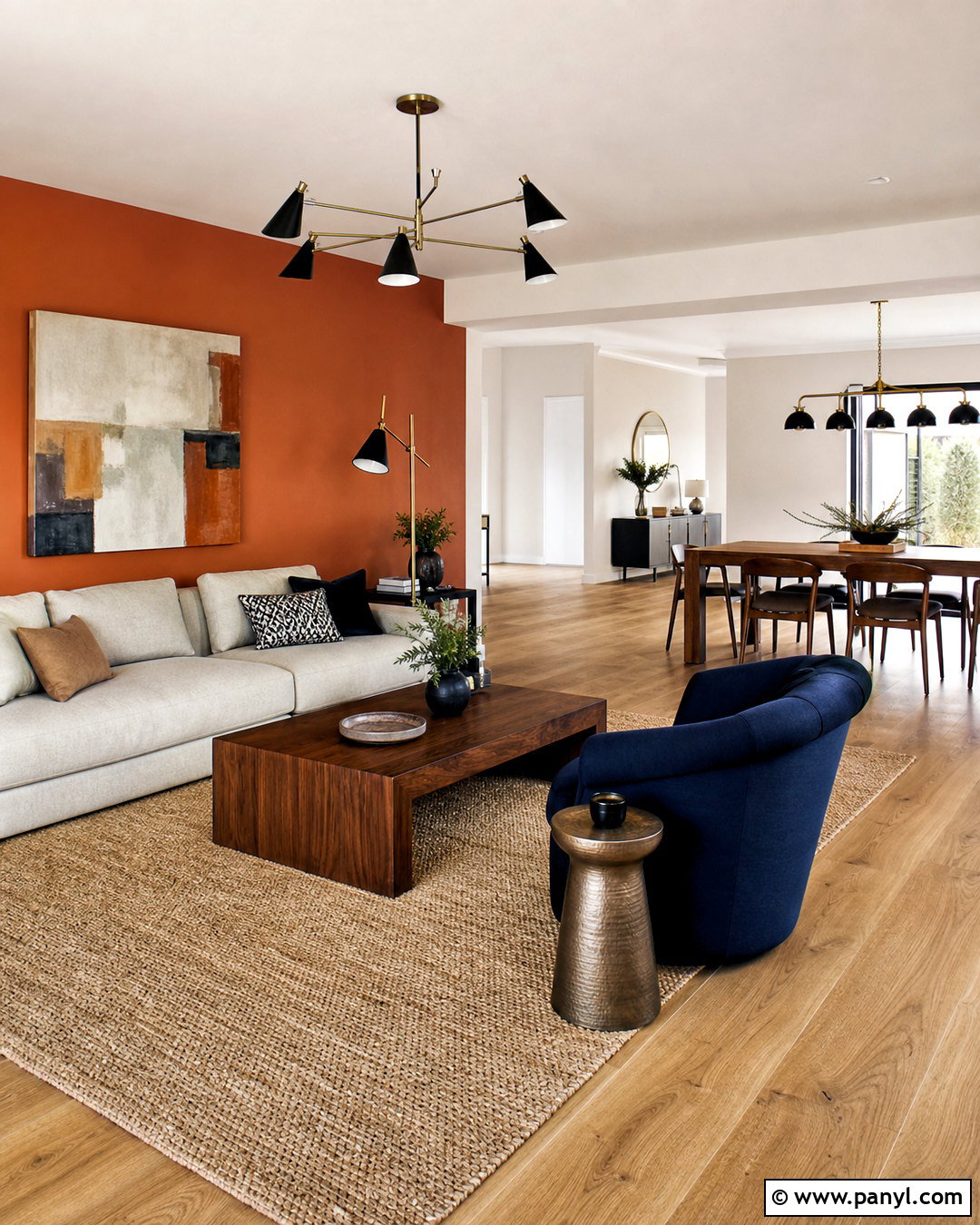
In an open-concept home, use burnt orange to define the living zone without interrupting the surrounding layout. Paint the wall behind the sofa or media unit, choosing a surface that can be viewed clearly from the kitchen or dining area. Keep connecting walls a warm off-white so the transition looks intentional. Furnish the living area with a cream sectional, a broad natural rug, a walnut coffee table, and one navy or olive chair. Repeat a small amount of orange in nearby dining artwork or seat cushions, but do not duplicate the entire living room palette. Consistent flooring and matching black or brass lighting will visually connect all zones. This approach gives the seating area its own identity while maintaining a cohesive, spacious flow throughout the shared interior.
Conclusion:
The most successful burnt orange rooms balance expressive wall color with a complete, thoughtful furniture plan. Cream and beige create softness, while navy, olive, charcoal, and black provide stronger contrast. Natural wood, woven fibers, leather, linen, and aged brass make the color feel grounded instead of overly bright. Before painting, test the chosen shade on more than one wall and observe it throughout the day. Then build the room with a clear hierarchy: one main focal wall, comfortable neutral furniture, a defined rug, practical lighting, and a few repeated accent colors. Whether you prefer a small feature wall or a fully color-drenched space, these 20 burnt orange living room walls can inspire a warm, coordinated room that feels personal and livable.

Related Ideas and Inspiration:
Leave a Reply