
Burnt orange brings warmth, depth, and personality to a room made for gathering. The best burnt orange dining room ideas balance this earthy color with complementary neutrals, natural materials, comfortable furniture, and practical lighting. You can make a bold statement with painted walls or introduce the shade more gently through upholstered chairs, curtains, artwork, and rugs. Burnt orange pairs especially well with cream, olive green, navy blue, walnut, oak, black, and brushed brass. It also adapts beautifully to modern, traditional, farmhouse, bohemian, and midcentury spaces. Whether you are refreshing a small breakfast area or decorating a formal room, the complete looks below offer approachable ways to recreate 20 burnt orange dining room ideas.

1. Burnt Orange Dining Room With Cream Walls
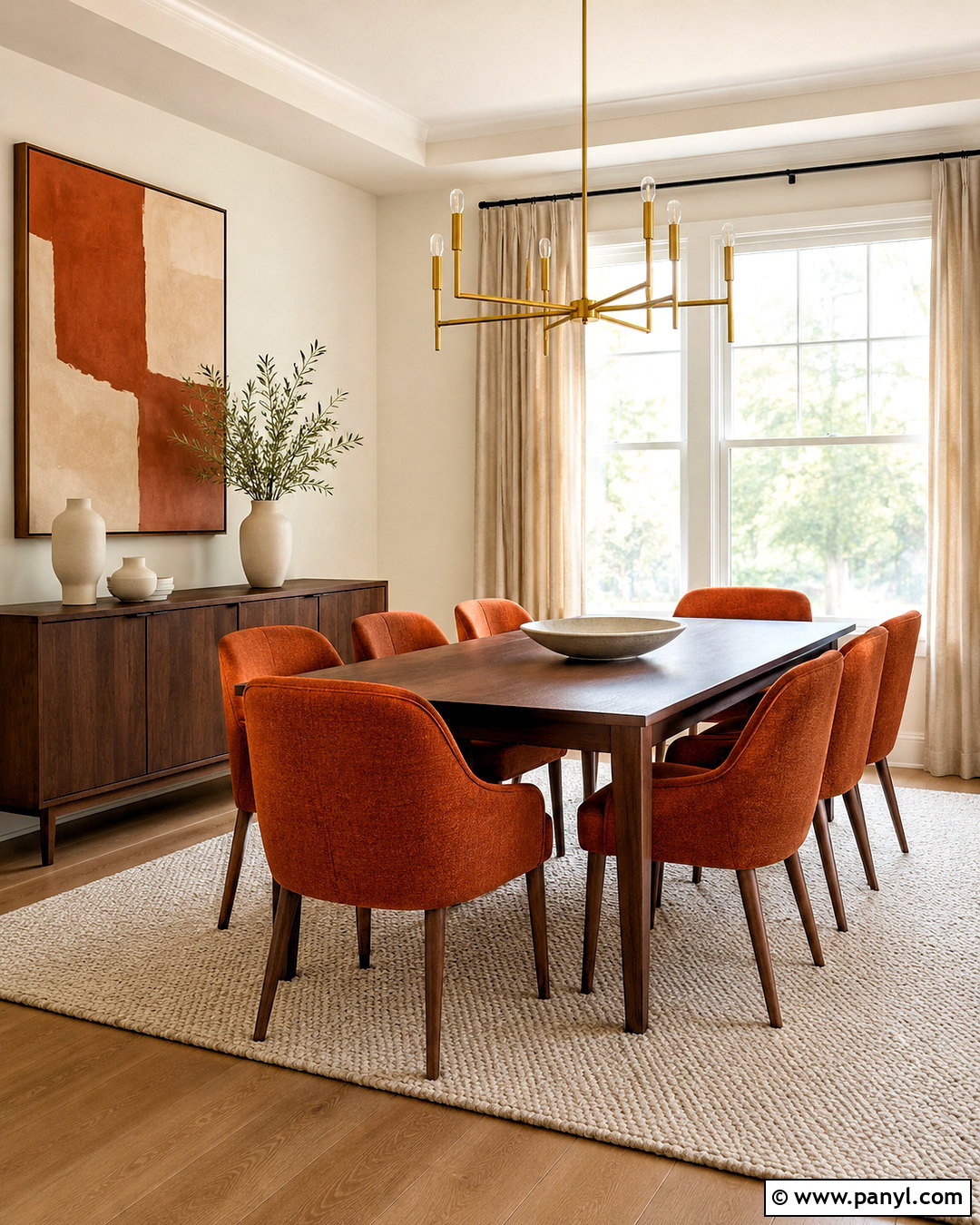
Cream walls create a calm background that allows burnt orange furniture to look rich without overwhelming the room. Start with a medium-tone walnut dining table and surround it with burnt orange upholstered chairs featuring simple, comfortable silhouettes. Ground the arrangement with a large cream rug woven with subtle rust and beige details. Hang an oversized abstract artwork above a low walnut buffet to repeat the room’s warm palette. Linen curtains, an ivory ceramic centerpiece, and a softly curved brass chandelier keep everything light and welcoming. Choose warm white rather than bright blue-white bulbs. This complete scheme works especially well in dining rooms that need color while maintaining an open, relaxed, and timeless appearance.
2. Burnt Orange Dining Room With Olive Green
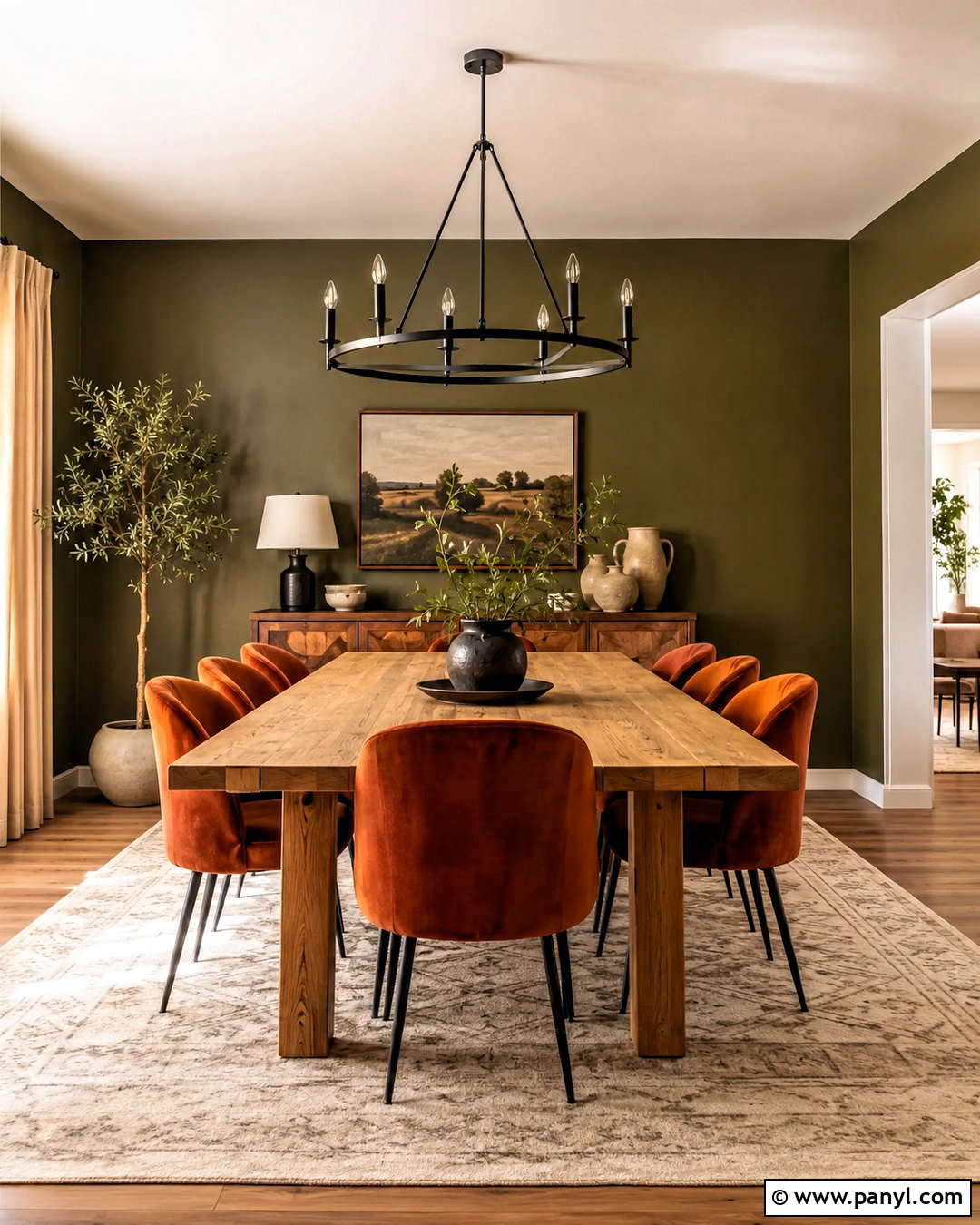
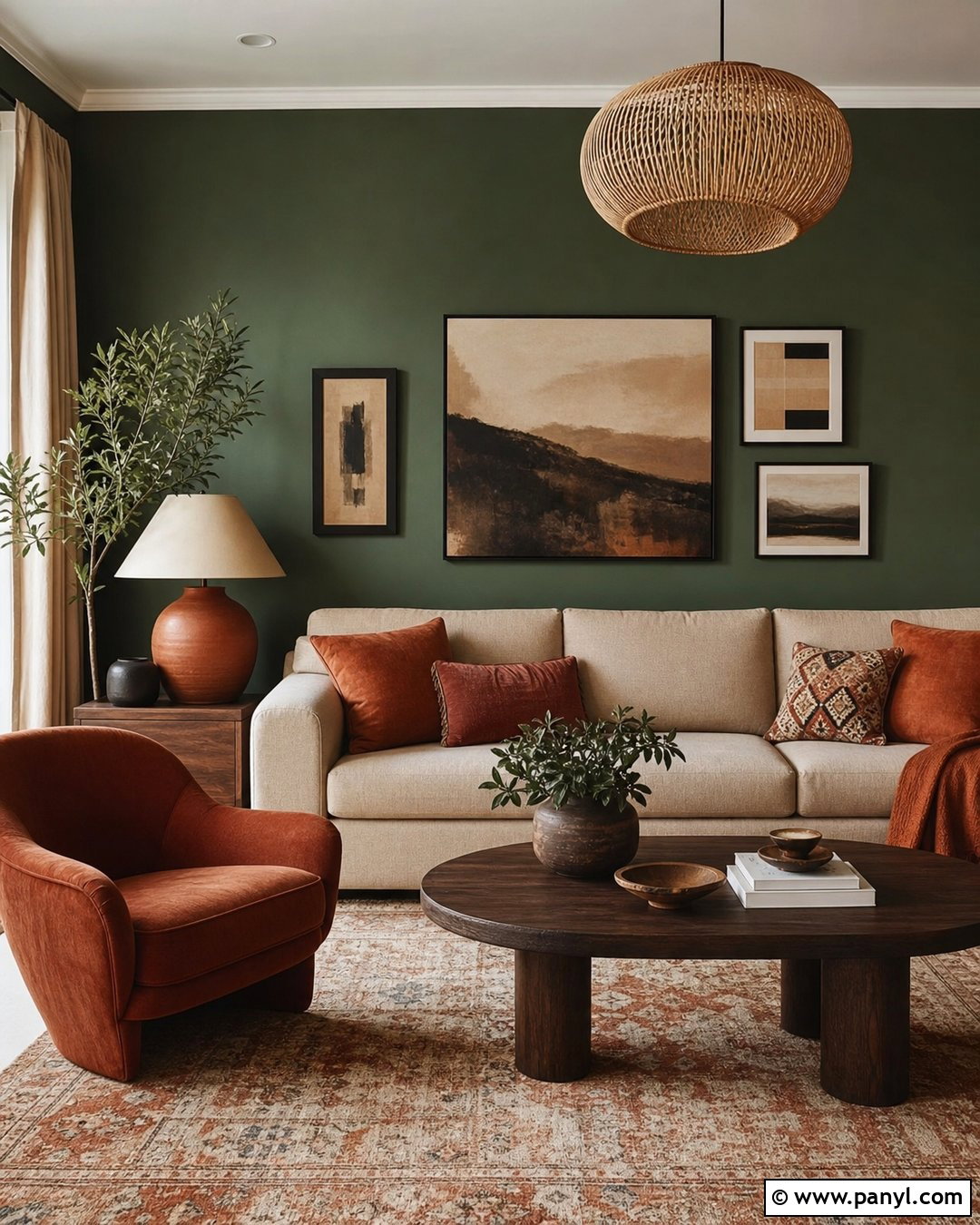
Burnt orange and olive green form an earthy combination that feels natural, comfortable, and distinctive. Use olive green on the walls, then place a solid oak table in the center of the room with burnt orange velvet dining chairs. A cream and tan patterned rug prevents the deeper colors from becoming too heavy. Add a wood buffet topped with amber glassware, neutral pottery, and leafy branches in a simple stone vase. A black metal chandelier introduces definition without competing with the palette. Keep curtains light beige and choose artwork containing small touches of rust, moss, and cream. The finished dining room feels grounded and layered, with enough contrast to highlight each color clearly.
3. Burnt Orange Dining Room With Navy Blue
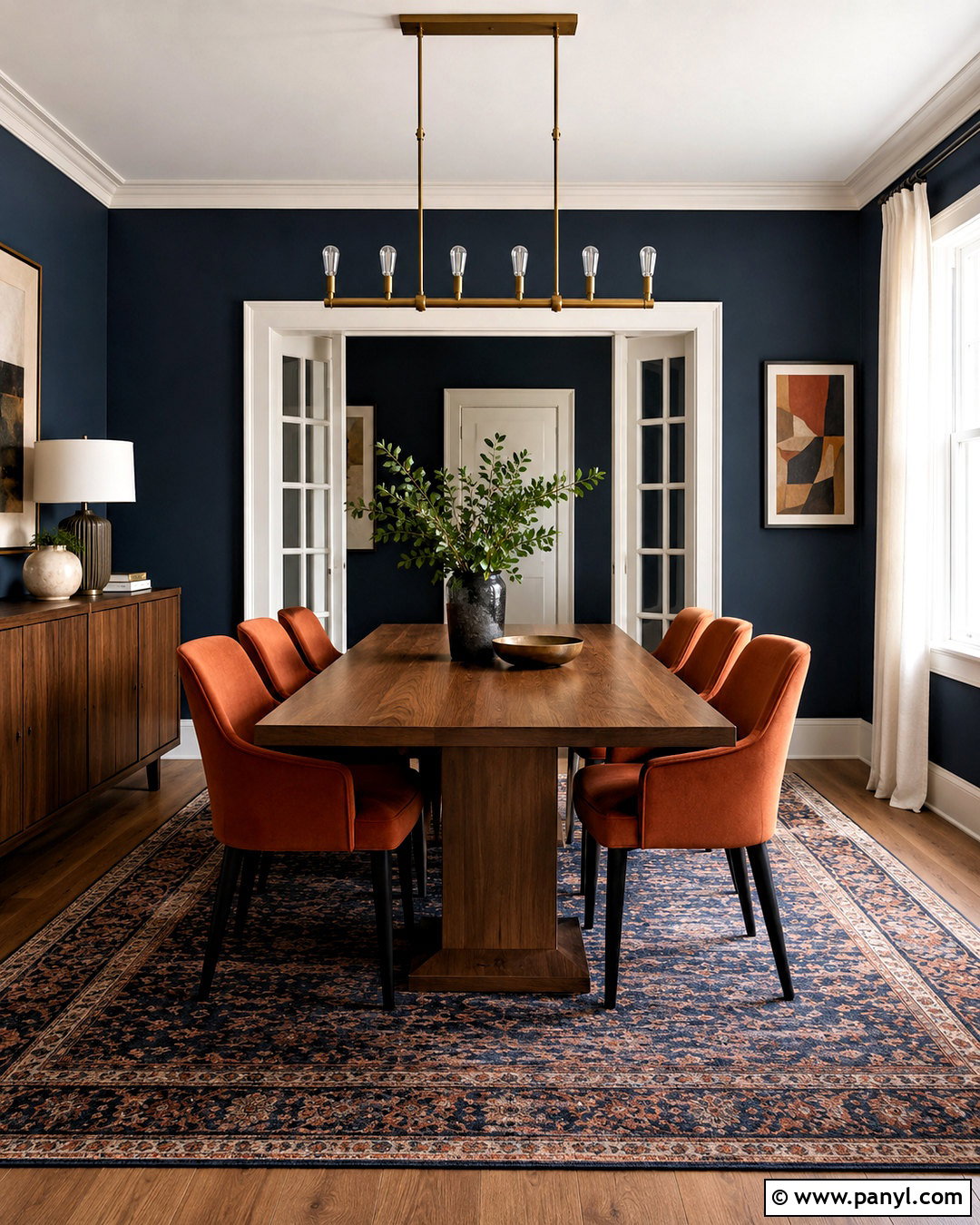
Looking for a stronger color contrast? Pair burnt orange chairs with navy blue walls for a dining room that feels bold yet balanced. Select a rectangular walnut table to bridge the warm and cool tones, then add a faded navy, rust, and ivory rug underneath. A brass linear chandelier will brighten the dark walls and give the table a clear focal point. Keep the ceiling, trim, and curtains soft white so the room does not feel enclosed. Complete the arrangement with a streamlined wood sideboard, ceramic tableware, and one large contemporary artwork using blue, orange, and sandy beige. Repeating each main color two or three times makes the overall design feel intentional rather than mismatched.
4. Burnt Orange Dining Room With Charcoal Gray
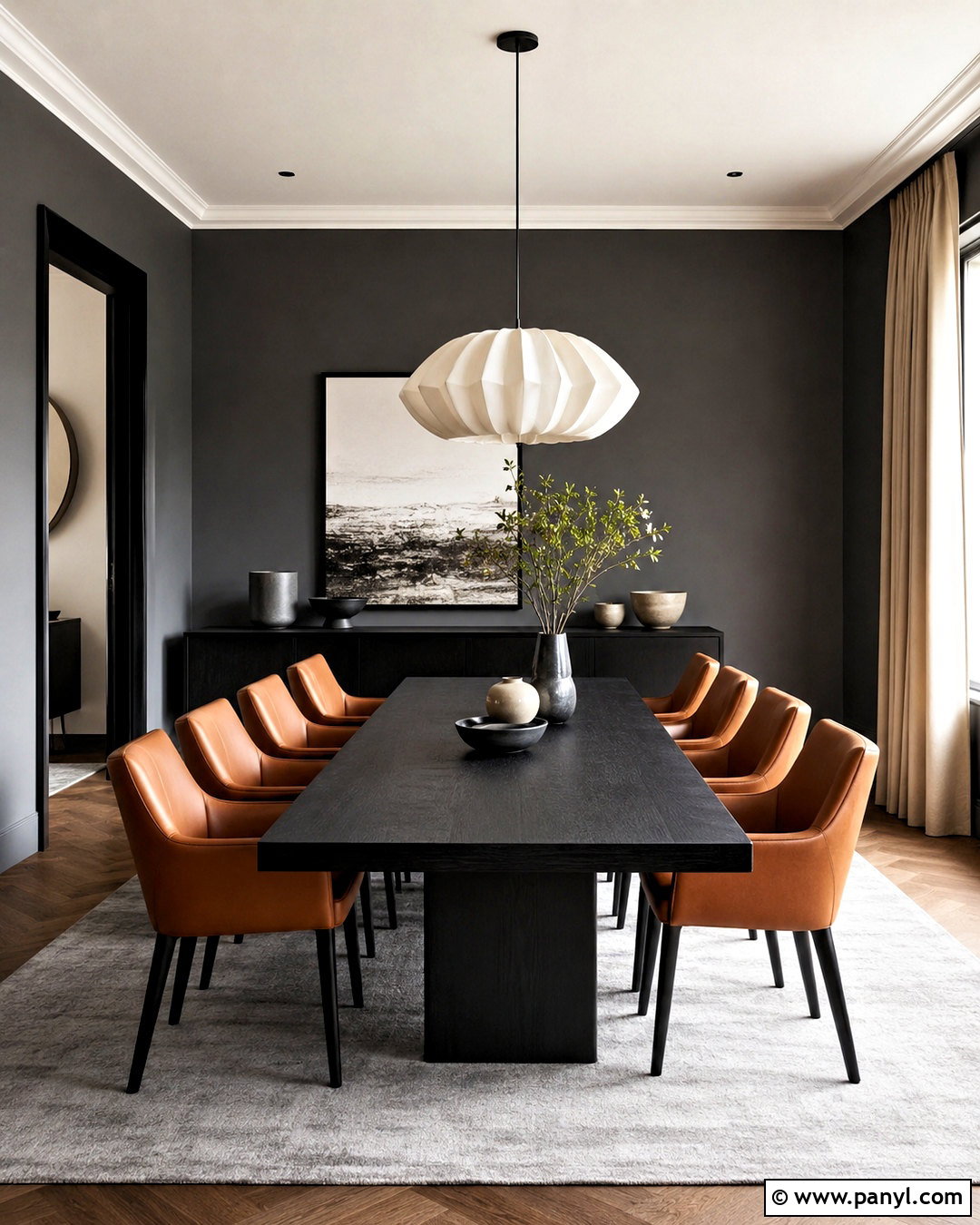
Charcoal gray gives burnt orange a sophisticated urban edge while allowing its warmth to remain visible. Paint the walls a soft charcoal instead of a nearly black shade, especially if the room receives limited daylight. Center a black oak dining table beneath a sculptural white pendant and add burnt orange leather chairs with slim black frames. A light gray wool rug softens the contrast and improves comfort underfoot. Bring in a narrow black sideboard, oversized monochrome artwork, and a few stoneware pieces in gray and terracotta. Pale linen curtains will help reflect available light. The result is a clean, modern dining room that feels dramatic but still practical for everyday meals and gatherings.
5. Burnt Orange Dining Room With Black And Brass
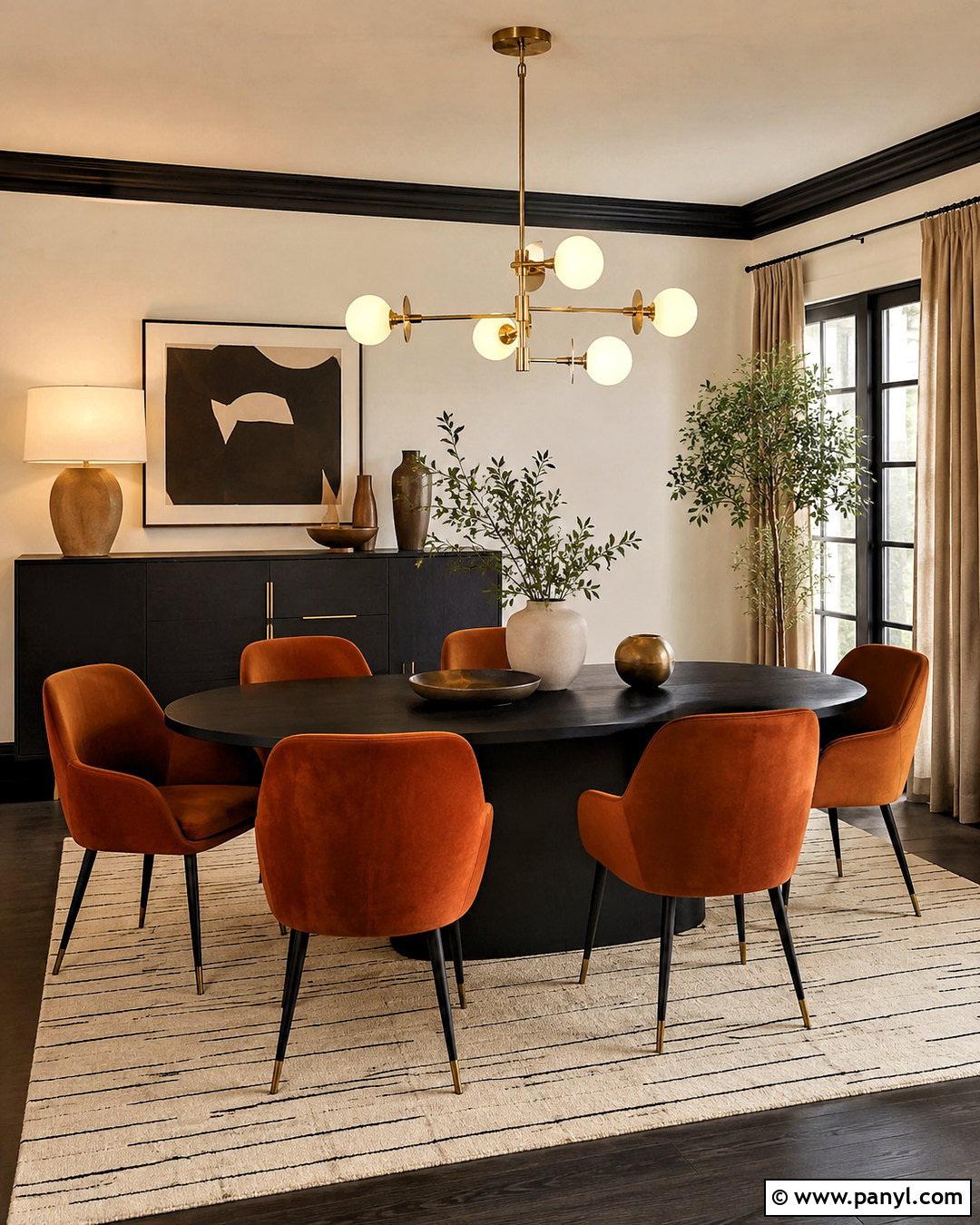
A black, brass, and burnt orange palette creates an elegant dining space with clear visual structure. Choose a matte black oval table and surround it with burnt orange velvet chairs, leaving enough space for comfortable movement. Install a brushed brass chandelier with frosted glass globes to soften the dark table and frame. Warm white walls keep the scheme bright, while black-framed artwork carries the furniture color upward. Add a low black buffet with brass hardware and style it sparingly with cream ceramics and an orange glass vase. A beige rug with thin black lines connects the entire palette. This combination feels polished and contemporary without requiring complicated patterns or excessive decorative accessories.
6. Burnt Orange Dining Room With Walnut Furniture
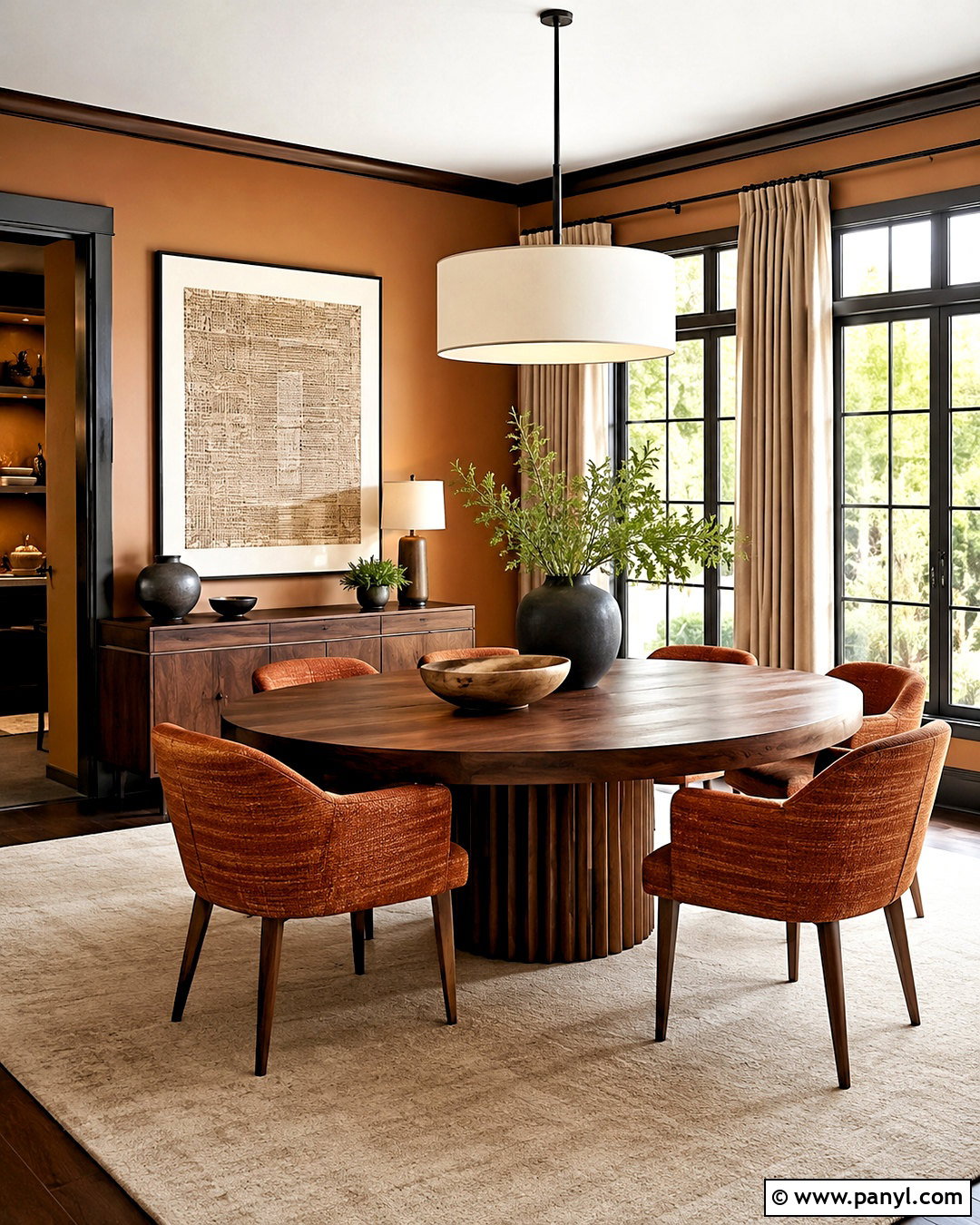
The rich brown grain of walnut naturally supports the reddish undertones found in burnt orange. Build the room around a substantial walnut dining table with softly rounded edges and pair it with burnt orange fabric chairs. Use warm beige walls to keep the wooden furniture from blending into a dark background. A large ivory rug defines the dining zone, while a cream drum pendant distributes gentle light across the table. Choose a matching walnut buffet and hang textured neutral artwork above it. Black accents can appear in small amounts through frames, curtain rods, and chair legs. This cohesive dining room feels warm and established, yet the simple furniture shapes prevent it from appearing overly traditional or heavy.
7. Burnt Orange Dining Room With Light Oak
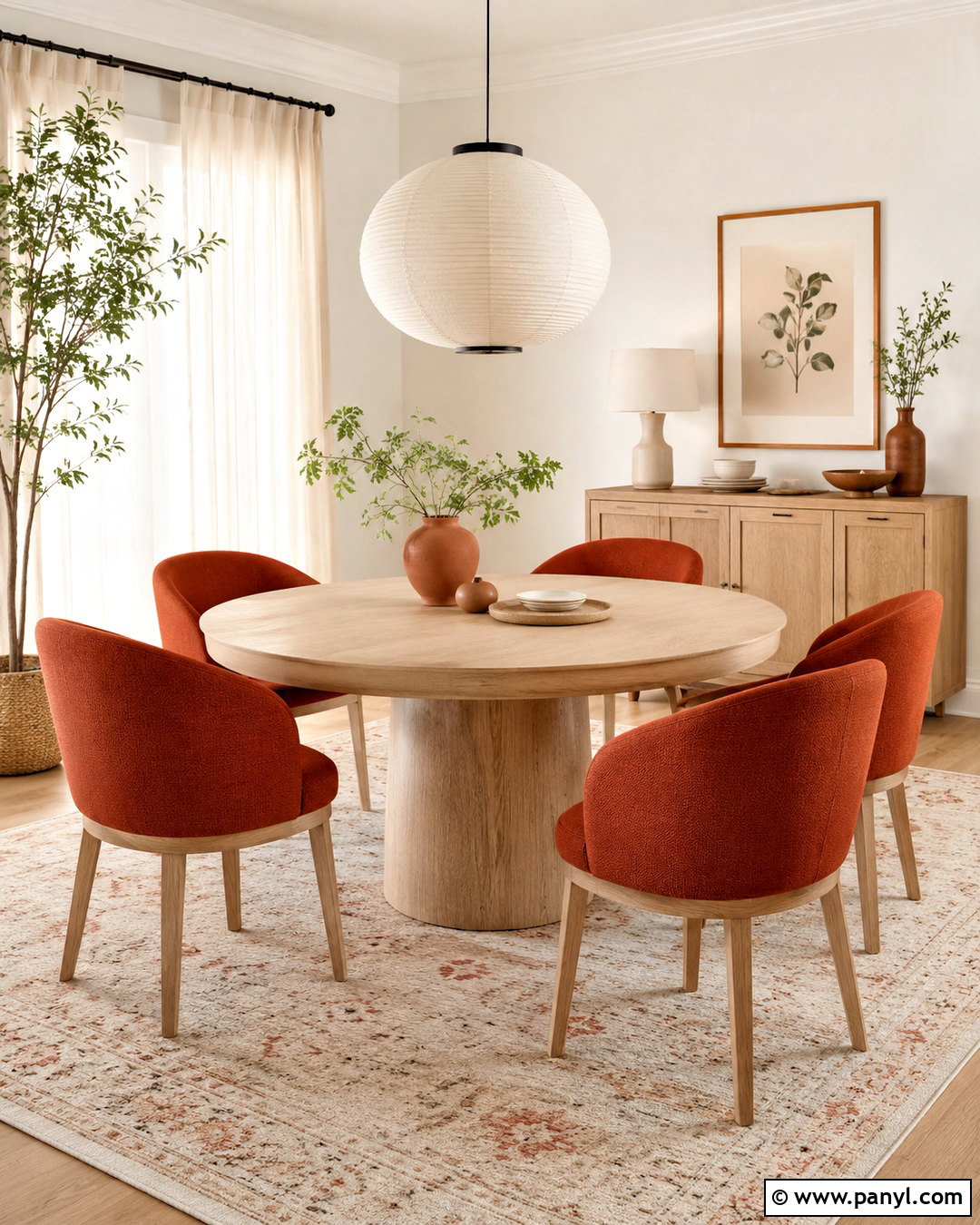
Light oak makes burnt orange feel fresher, brighter, and easier to use in a casual dining room. Begin with a pale oak pedestal table and comfortable burnt orange chairs in a durable woven fabric. Keep the walls soft white and introduce a flat-weave rug in ivory, tan, and muted orange. A large rice-paper pendant adds gentle texture without visually crowding the room. Use a matching oak cabinet for closed storage and display only a few ceramic serving pieces on top. Natural linen curtains and simple botanical artwork reinforce the relaxed palette. This design is particularly effective in sunny dining areas, where the wood grain and orange upholstery can appear warm without making the space feel dark.
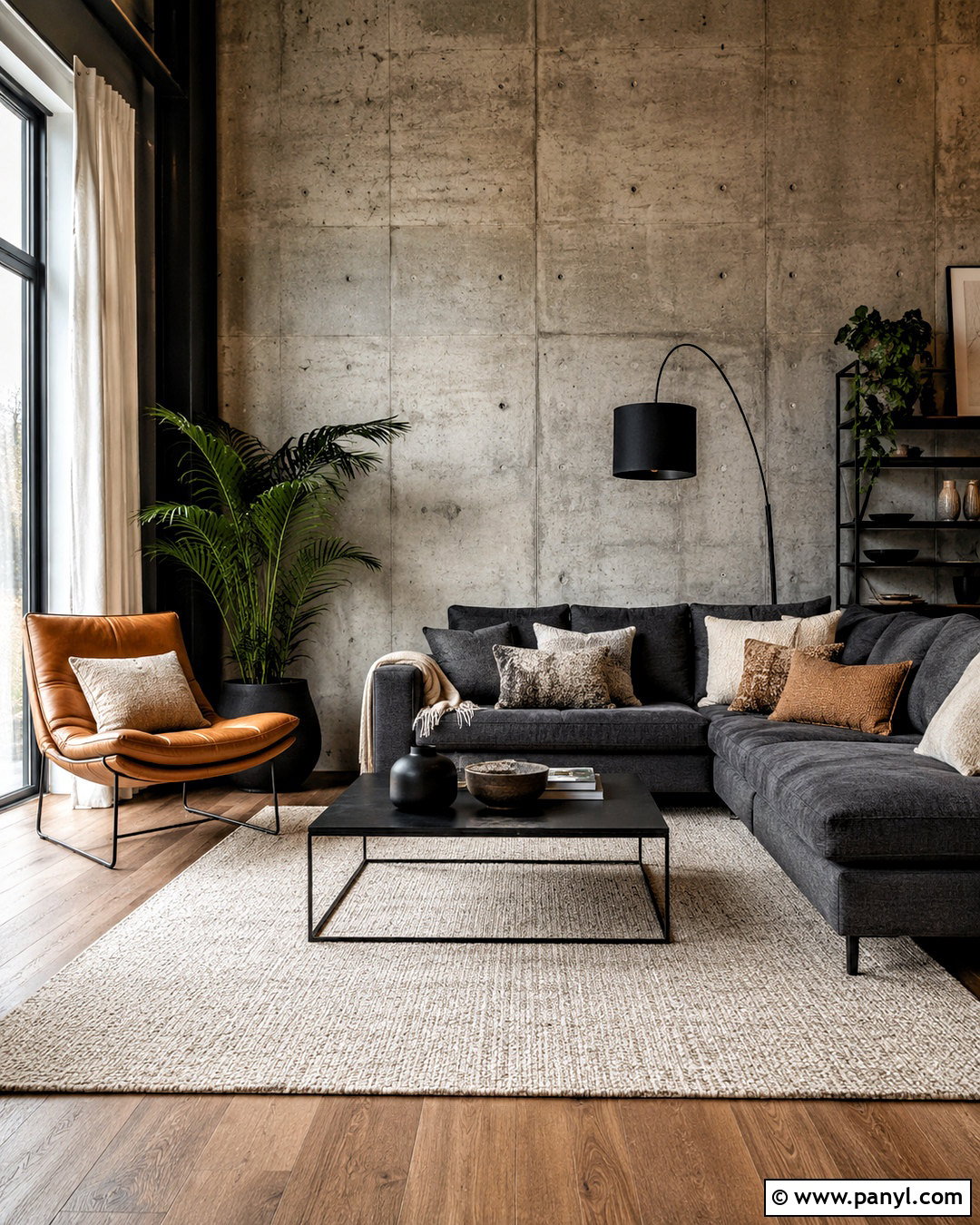
8. Burnt Orange Dining Room With Velvet Chairs
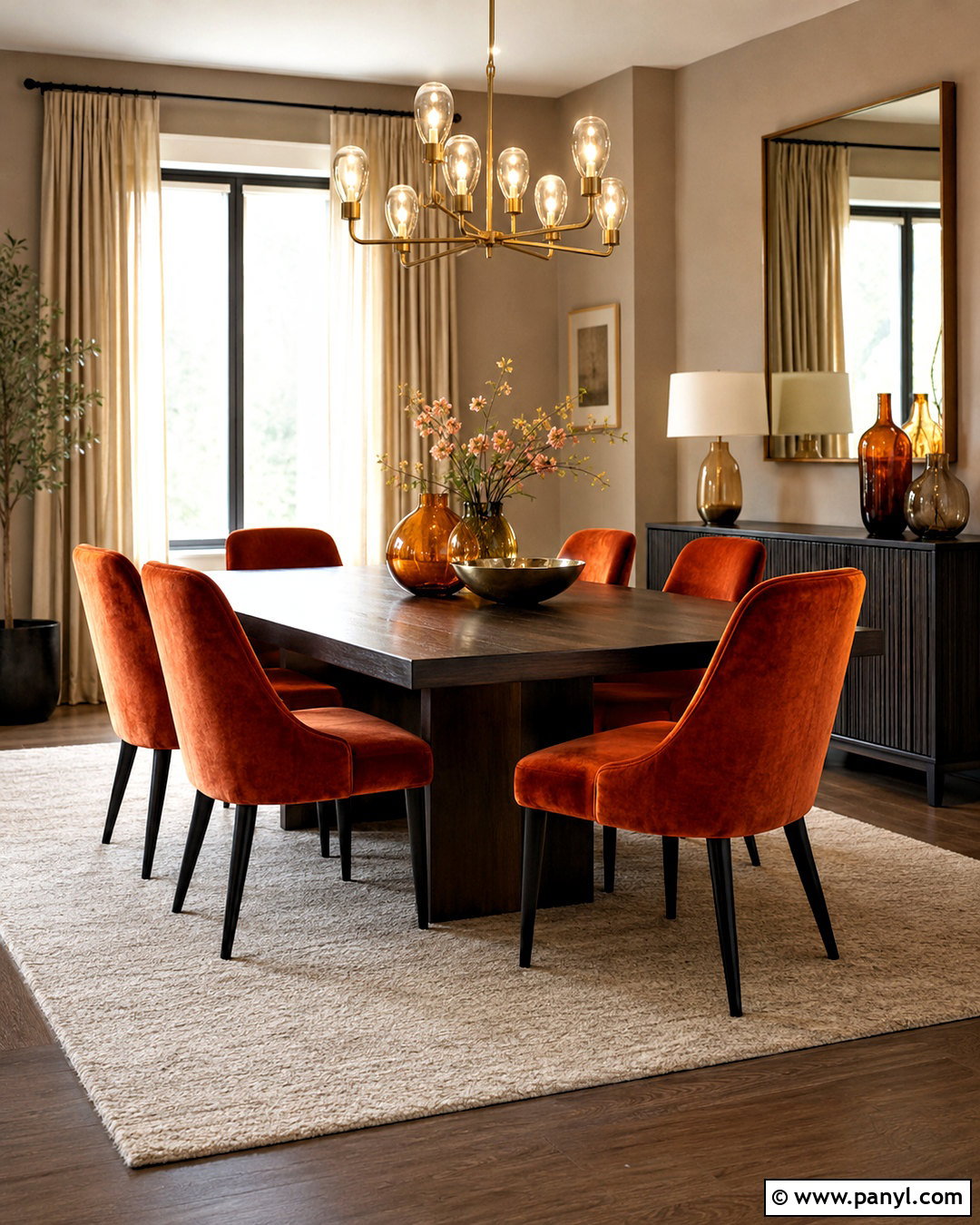
Velvet gives burnt orange extra depth, making dining chairs the natural focal point of the room. Arrange six streamlined velvet chairs around a simple dark wood table, keeping the remaining surfaces quieter. Warm greige walls, cream curtains, and a low-pile beige rug provide a neutral framework that lets the fabric stand out. Install a clear glass chandelier with aged brass fittings so the lighting feels elegant but visually light. A dark wood sideboard can hold table linens and serving pieces while supporting a large mirror above. Finish with cream dinnerware, amber glass vases, and one arrangement of green branches. The completed look feels luxurious, comfortable, and suitable for regular family use.
9. Burnt Orange Dining Room Accent Wall
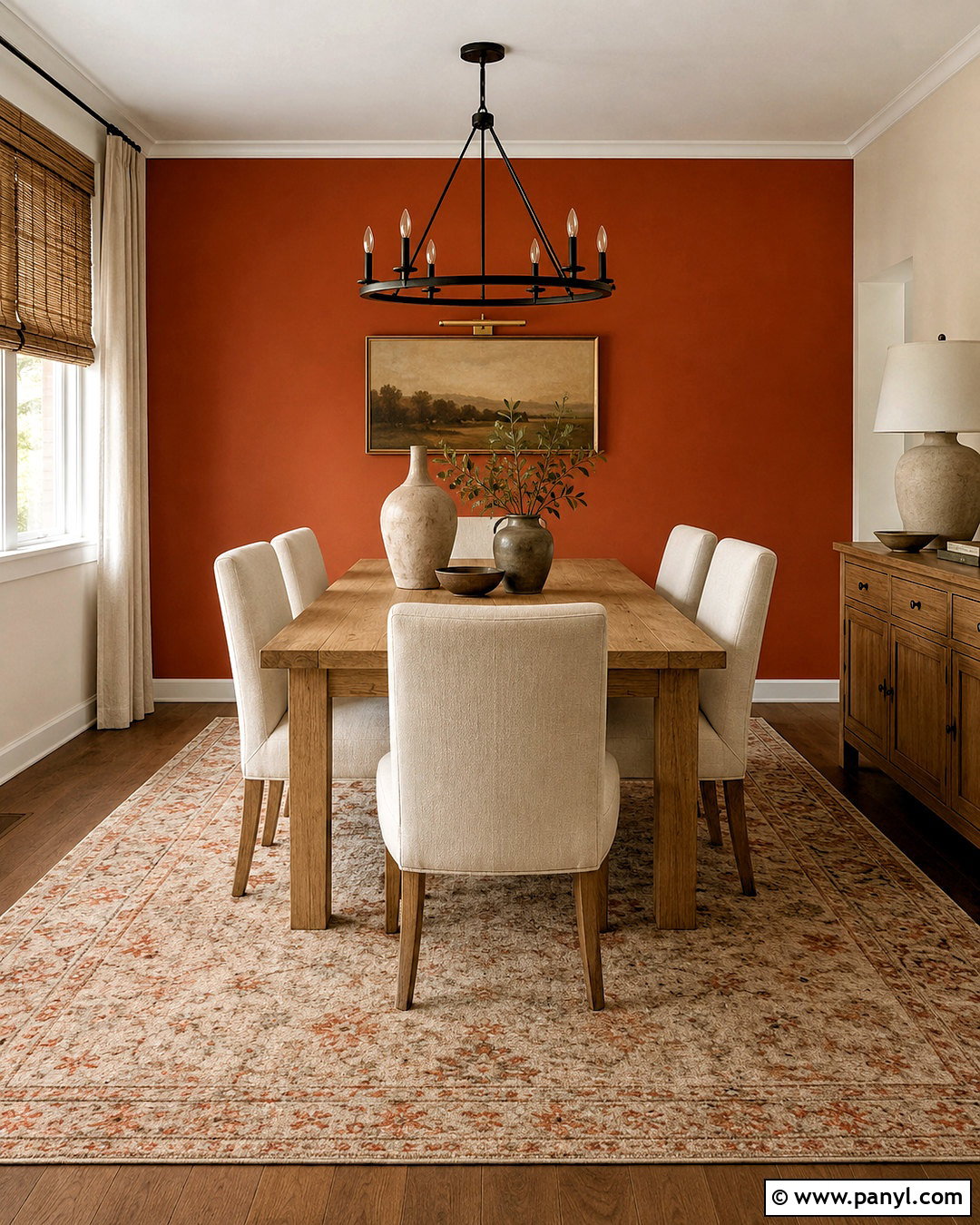
One burnt orange accent wall can reshape the dining room without covering every surface in a strong color. Paint the wall behind the buffet or dining table, then leave the surrounding walls warm white. Position a natural oak table with cream upholstered chairs against this colorful backdrop. A patterned rug containing beige, faded orange, and soft gray will distribute the accent color across the floor. Hang a large neutral canvas on the orange wall and illuminate it with a slim brass picture light. Add woven shades, a ceramic centerpiece, and a simple black chandelier. This controlled approach gives the room a confident focal point while remaining flexible enough for changing furniture, artwork, and seasonal table decorations.
10. Burnt Orange Color Drenched Dining Room
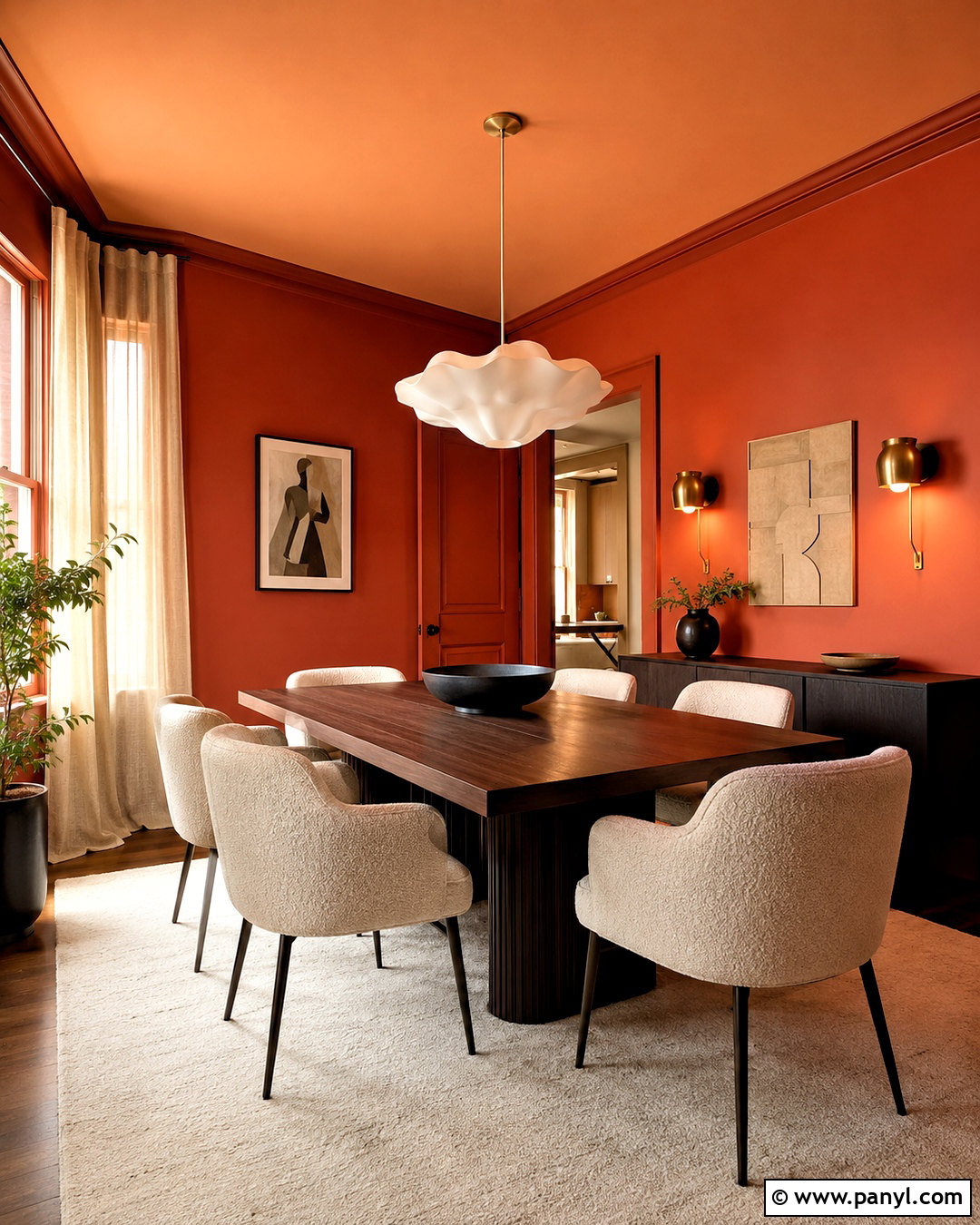
For an immersive room, paint the walls, trim, and ceiling in closely related burnt orange tones. Use a slightly lighter version overhead to maintain a sense of height. Balance the saturated envelope with a dark walnut table, cream boucle chairs, and a generously sized ivory rug. A sculptural white pendant provides contrast at the center, while antique brass wall lights add another layer of illumination. Keep artwork simple, using cream mats and dark wood frames. Floor-length neutral curtains will soften the painted walls and improve the room’s acoustics. This complete design works best when the furniture remains restrained. The result feels intimate and dramatic rather than busy, making every meal feel like a special occasion.
11. Burnt Orange Dining Room Wallpaper
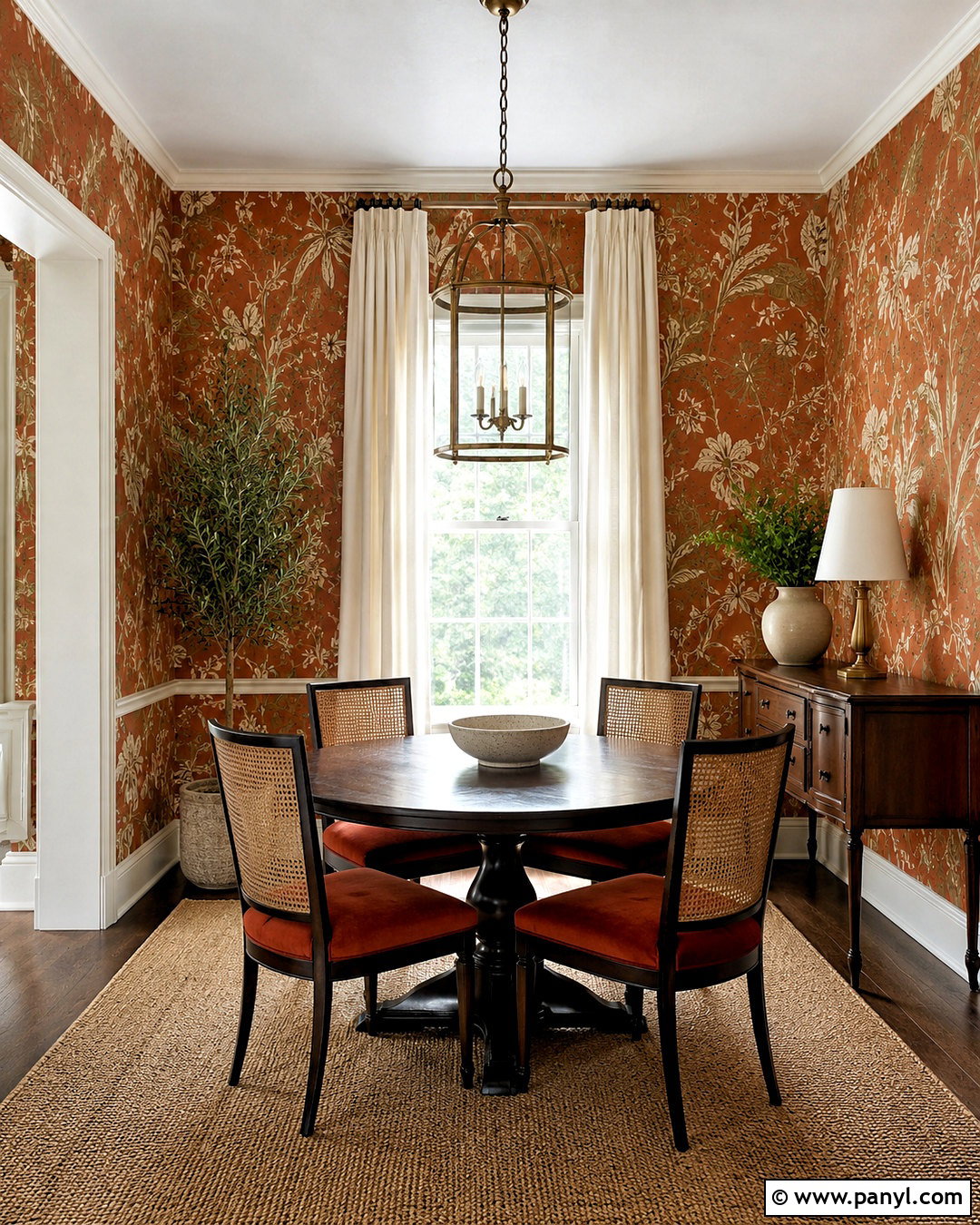
Wallpaper introduces burnt orange through pattern, which can feel softer than a solid painted wall. Choose a small-scale botanical or geometric print combining burnt orange, cream, and muted olive. Cover all four walls for a cozy effect, then add a round walnut table and simple cane-backed chairs with rust-colored seat cushions. A natural jute rug provides quiet texture without competing with the pattern. Use an aged brass lantern pendant and a narrow vintage-inspired buffet to complement the layered backdrop. Solid cream curtains will give the eyes a place to rest. Limit tabletop decor to one stoneware bowl or leafy arrangement, allowing the wallpaper, furniture, and lighting to create the room’s character together.
12. Midcentury Burnt Orange Dining Room
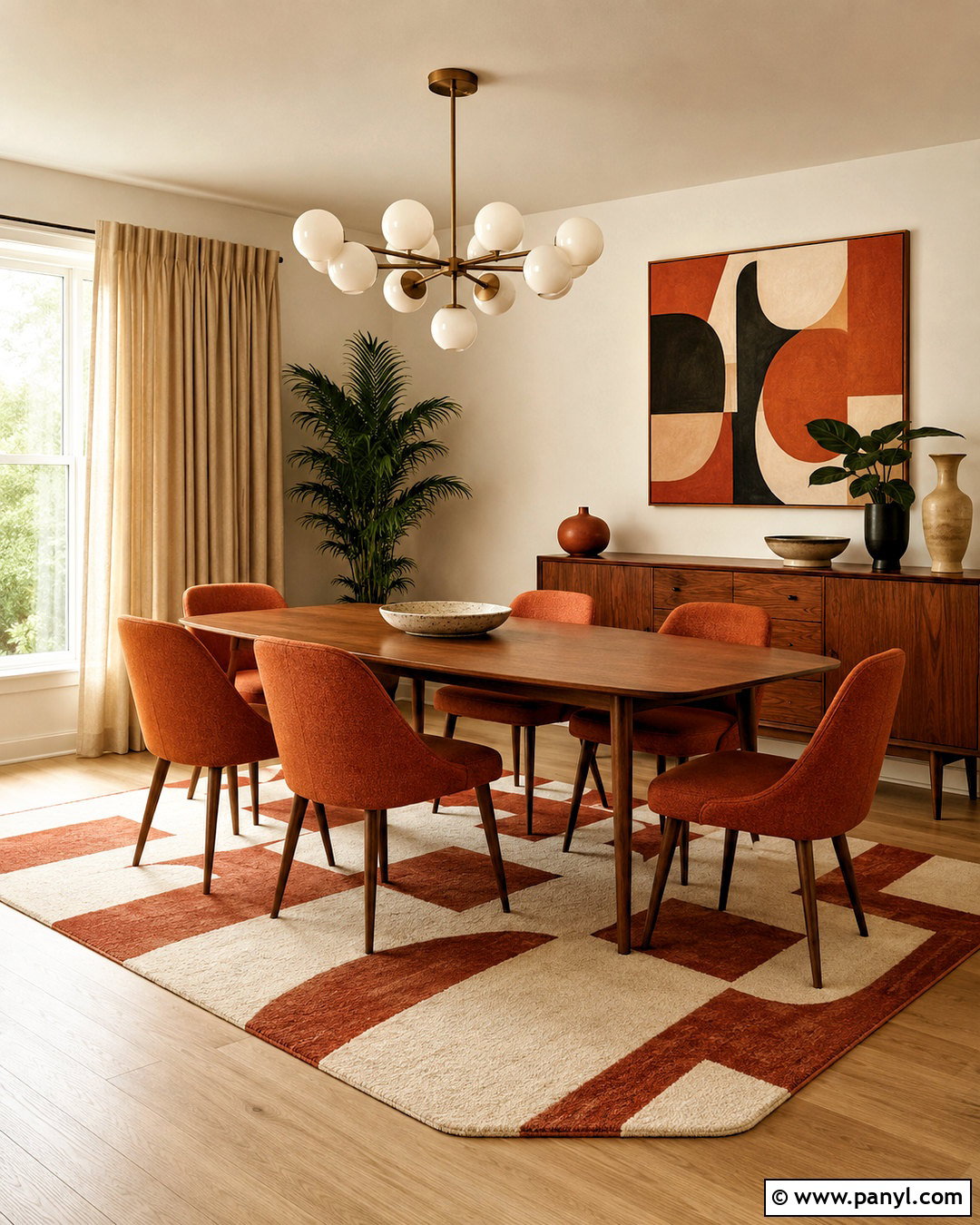
Burnt orange fits naturally into a midcentury dining room filled with streamlined wood furniture and graphic shapes. Select a tapered-leg walnut table with matching chairs upholstered in orange textured fabric. Keep the walls warm white, then introduce a large geometric rug in cream, rust, mustard, and dark brown. A globe chandelier or compact starburst fixture reinforces the period influence without turning the space into a theme. Place a long, low walnut credenza against one wall and hang bold abstract artwork above it. Finish with ceramic vessels, a simple table bowl, and full-length oatmeal curtains. Clean lines and carefully repeated colors make this complete room feel nostalgic, functional, and still relevant for a modern home.
13. Farmhouse Burnt Orange Dining Room
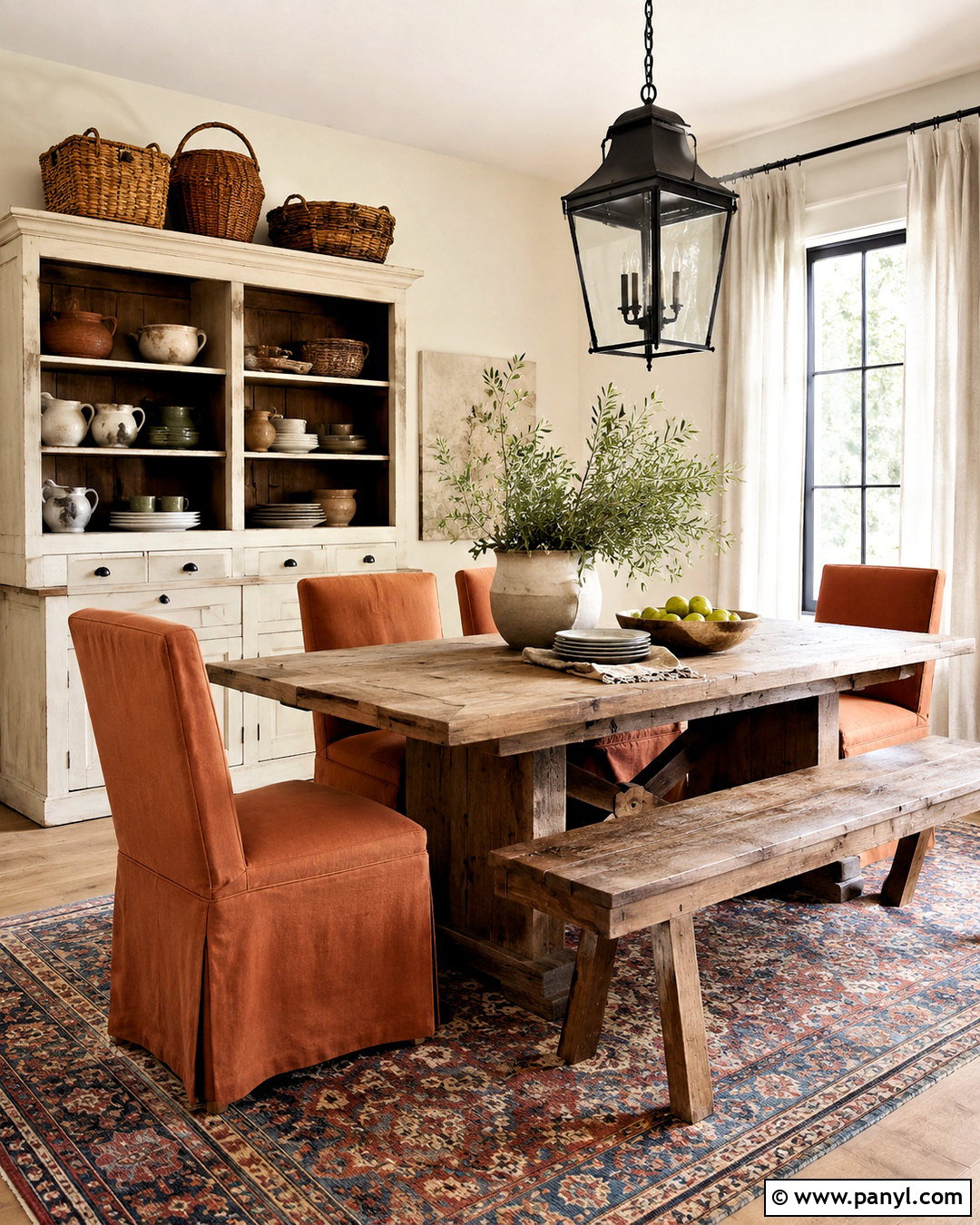
A farmhouse dining room becomes warmer and more distinctive when burnt orange is layered with weathered wood and creamy neutrals. Use a sturdy reclaimed wood table with a bench on one side and burnt orange slipcovered chairs on the other. Paint the walls a soft ivory and add a vintage-style rug combining rust, beige, and faded blue. An oversized black metal lantern provides contrast above the table. Complete the room with a painted cream hutch, woven baskets, stoneware dishes, and linen curtains. Avoid filling every surface with small accessories. A few larger pieces will keep the space relaxed and useful. The final room feels welcoming and collected while remaining bright enough for everyday family dining.
14. Boho Burnt Orange Dining Room
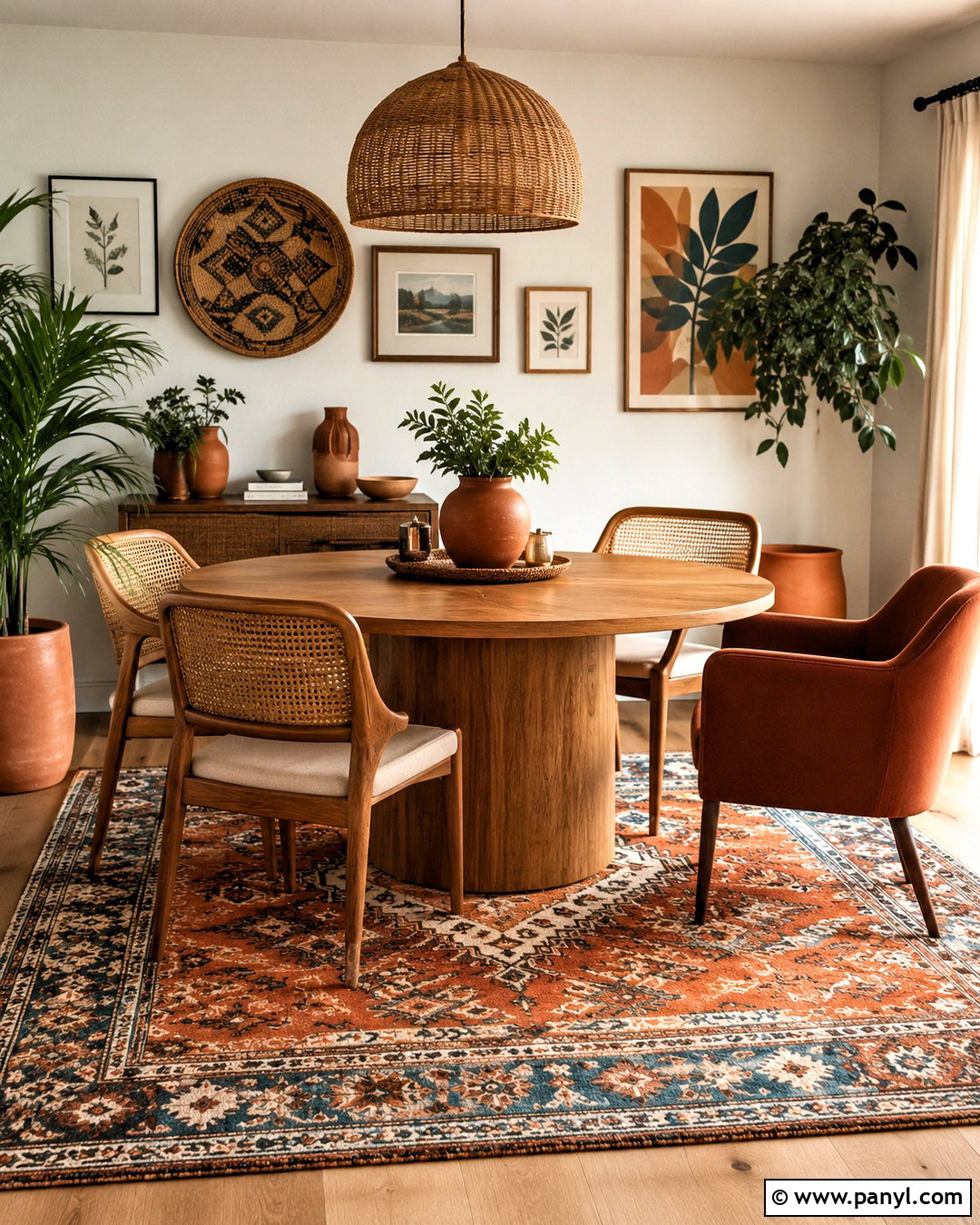
Layers of natural texture help burnt orange feel relaxed and expressive in a bohemian dining room. Center a round wood table on a patterned kilim-style rug containing rust, cream, brown, and muted teal. Mix cane dining chairs with two burnt orange upholstered end chairs for an intentionally varied arrangement. Keep the walls warm white and hang woven art alongside a few framed prints in similar earthy colors. A large rattan pendant creates a soft focal point overhead. Complete the setting with linen curtains, terracotta planters, leafy houseplants, and handmade ceramic dishes. Leave some open wall and floor space so the layers can breathe. The room should feel personal and collected, not crowded with unrelated decorations.
15. Traditional Burnt Orange Dining Room
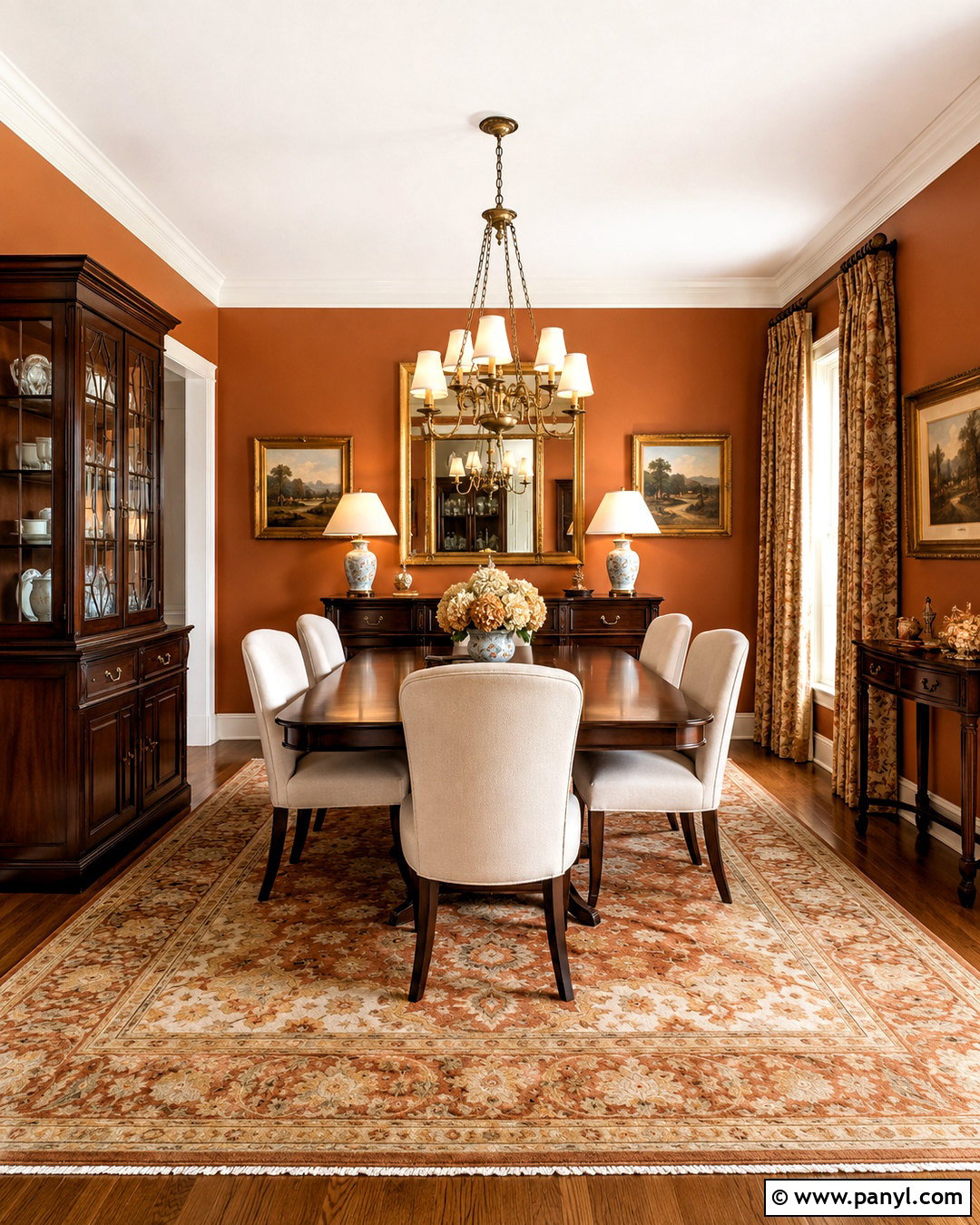
Burnt orange can make a formal dining room feel welcoming while preserving its classic character. Paint the walls a muted orange-brown and add crisp cream crown molding, baseboards, and window trim. A dark mahogany table with upholstered cream chairs creates an elegant central arrangement. Introduce orange again through a traditional patterned rug and full-length curtains with a subtle border. Hang an antique brass chandelier above the table and place a wood buffet or china cabinet along the longest wall. Framed landscapes, a large mirror, and balanced ceramic lamps complete the symmetrical layout. By choosing softened colors and substantial furniture, the finished dining room feels refined and comfortable rather than bright, themed, or overly formal.
16. Small Burnt Orange Dining Room
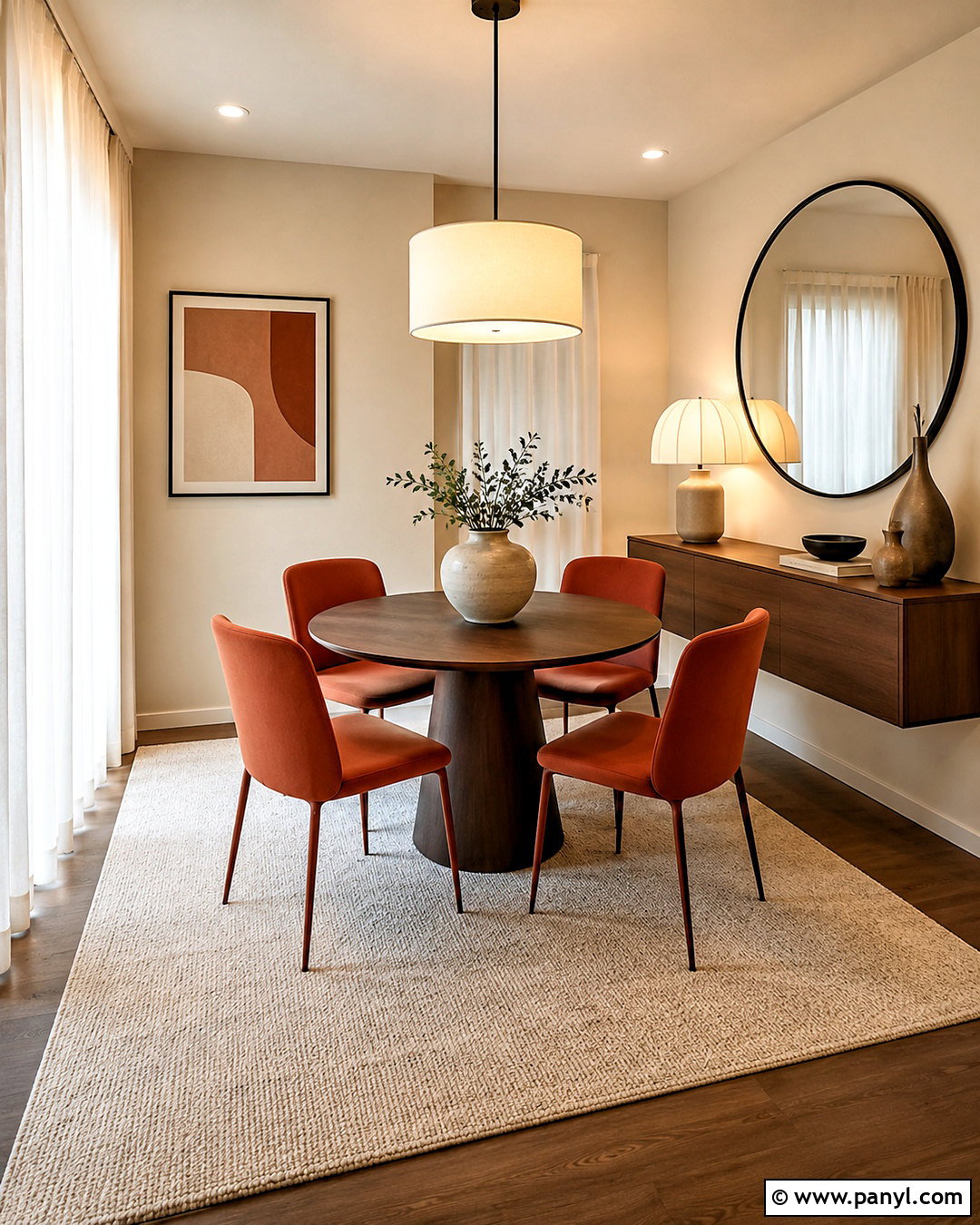
In a compact dining room, burnt orange works best when it has a clear role and enough light around it. Choose a small round pedestal table, which improves circulation and avoids sharp corners. Add four burnt orange upholstered chairs with slim legs, then place the arrangement on a light cream rug. Soft beige walls and a large wall mirror will make the area feel more open. Install one proportional pendant above the table and use a narrow floating cabinet instead of a deep buffet. Simple artwork, sheer curtains, and a small ceramic centerpiece complete the space without consuming useful room. This coordinated approach delivers warmth and personality while keeping the dining area comfortable, uncluttered, and easy to navigate.
17. Open Concept Burnt Orange Dining Room
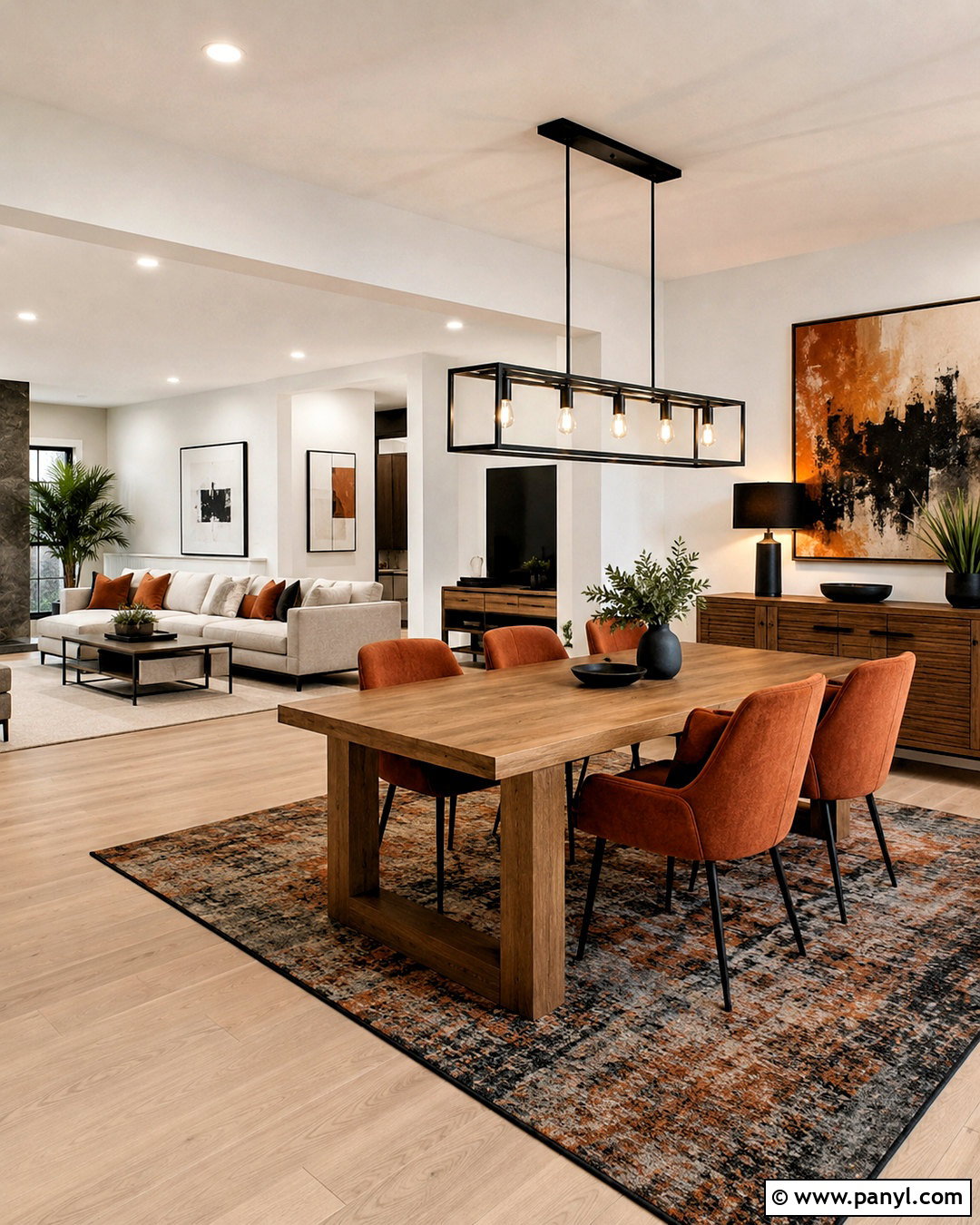
An open layout needs visual connections between the dining area and neighboring spaces. Define the dining zone with burnt orange chairs around a natural wood table, then place a rust, cream, and charcoal rug underneath. Keep the main wall color consistent across the open floor plan, using warm white or light greige. Repeat burnt orange subtly in the adjacent room through artwork, a pillow, or one ceramic accessory rather than matching everything. A black linear chandelier will establish the dining table as its own destination. Add a low sideboard that can serve both dining and living areas. Consistent woods, restrained accents, and repeated black details create a connected interior without erasing the dining room’s identity.
18. Burnt Orange Dining Room With Round Table
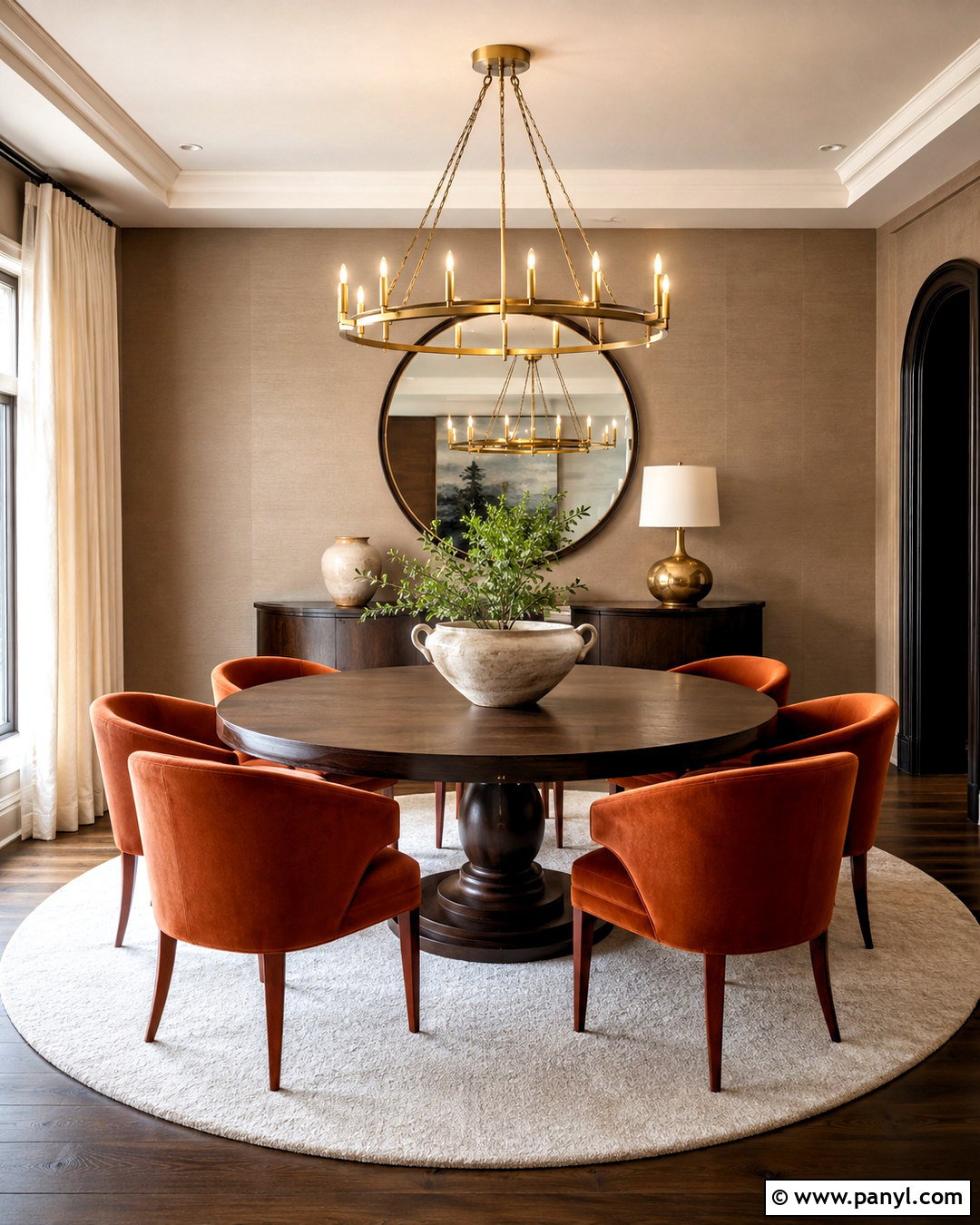
A round table encourages conversation and softens dining rooms filled with straight architectural lines. Choose a dark wood pedestal table and surround it with curved burnt orange chairs for a cohesive, comfortable arrangement. Center everything beneath a round brass chandelier or white globe pendant. Use a circular cream rug large enough to hold the chairs even when they are pulled out. Warm taupe walls provide a quiet background, while a curved-front buffet continues the softer shapes. Add a round mirror, an oversized ceramic bowl, and simple linen curtains. Limiting the palette to burnt orange, brown, cream, and brass creates a clear visual rhythm. The finished room feels intimate without becoming crowded or overly decorative.
19. Burnt Orange Dining Room Gallery Wall
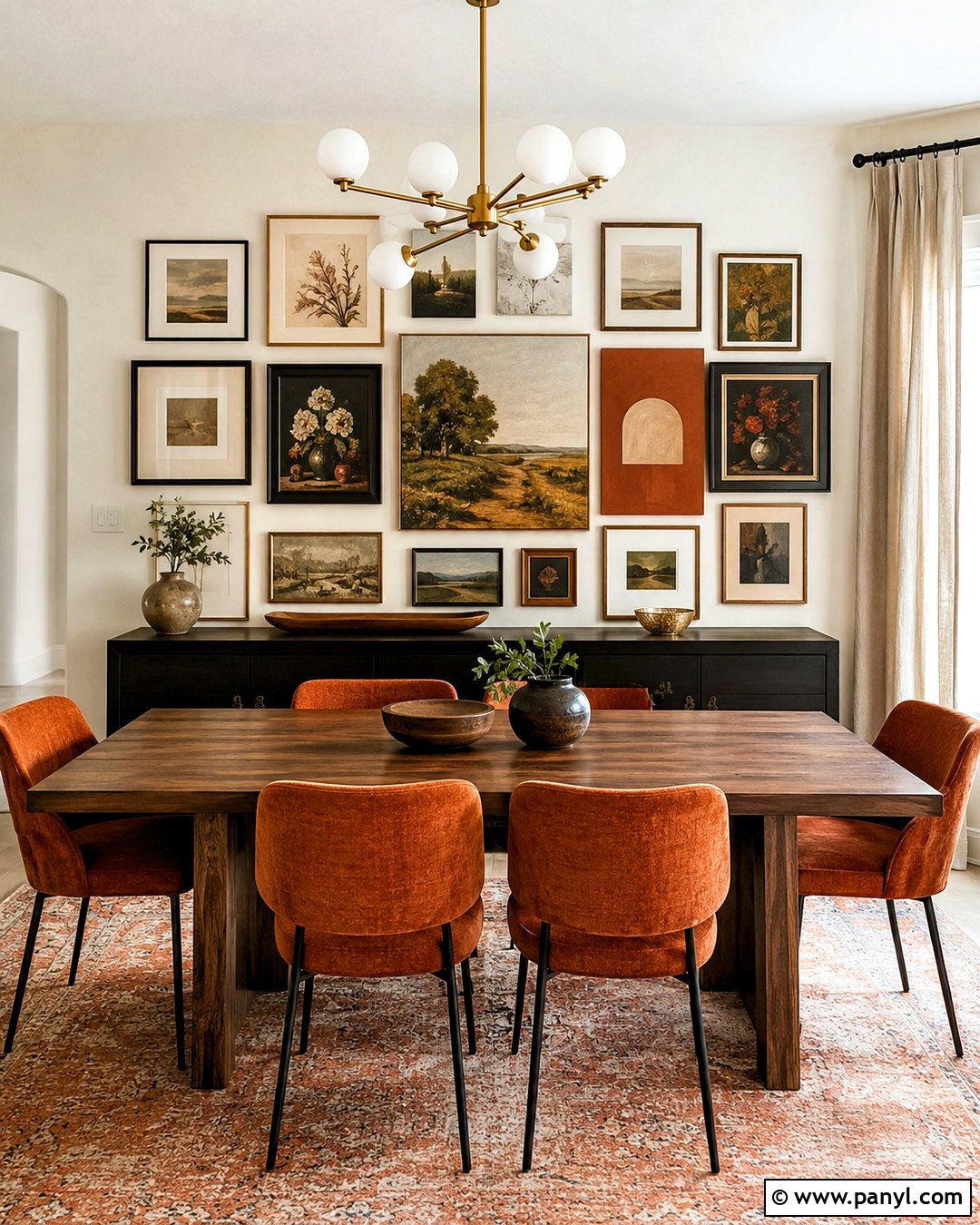
A gallery wall can connect burnt orange furniture with the rest of the dining room’s palette. Start with a walnut table, orange upholstered chairs, and soft cream walls. Above a low black buffet, arrange framed artwork containing varying amounts of rust, tan, olive, black, and ivory. Mix frame sizes while maintaining even spacing and aligned outer edges for a tidy result. Place a faded patterned rug beneath the table and install a simple brass chandelier overhead. Linen curtains and black curtain rods repeat colors already found in the frames. Keep the tabletop minimal so the wall remains the main decorative feature. This complete design adds personality while preserving a coordinated, comfortable setting for dining and entertaining.
20. Burnt Orange Dining Room With Teal Accents
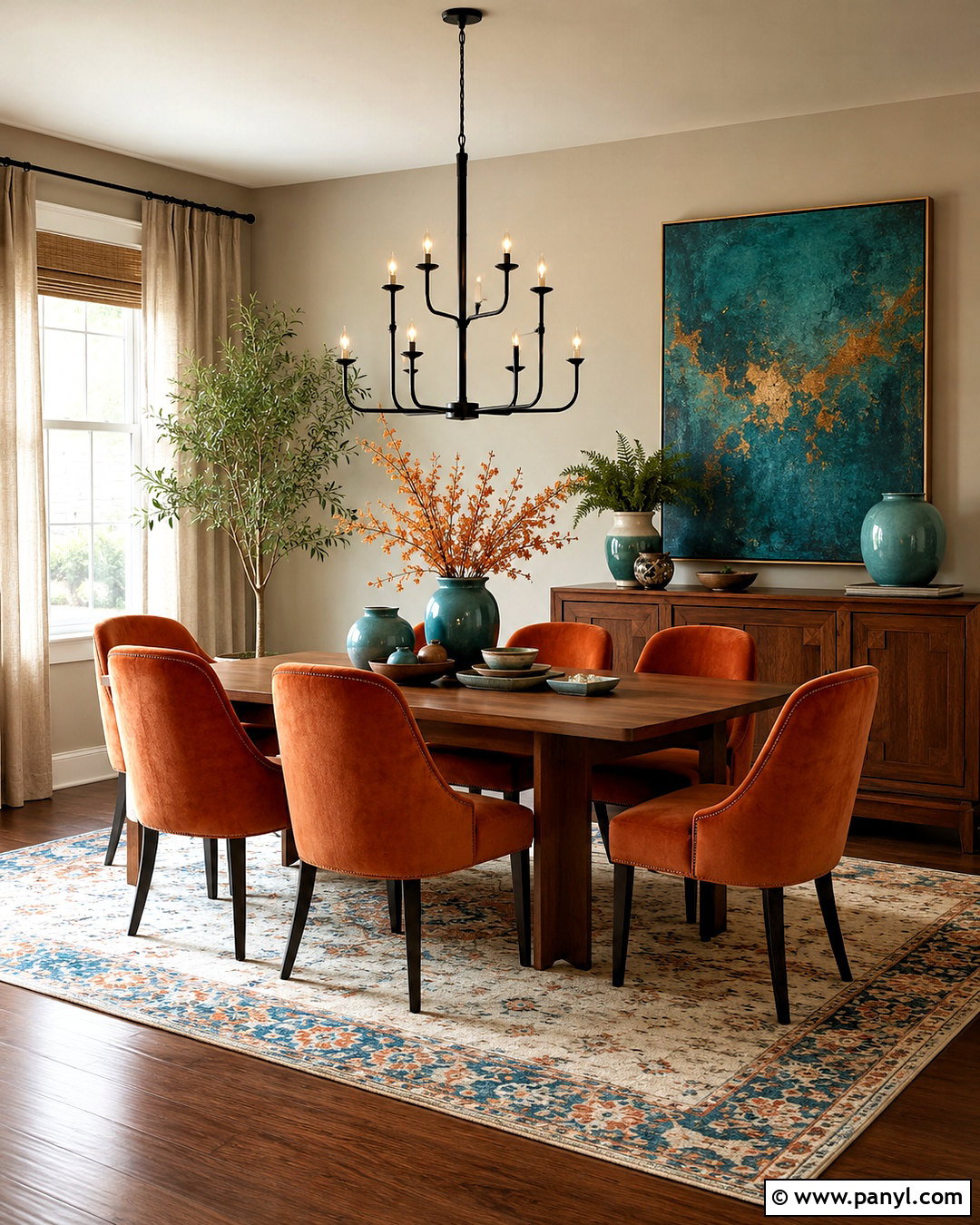
Teal introduces a lively contrast that makes burnt orange feel vibrant and modern. Use burnt orange chairs around a medium-tone wood table, then add a large rug combining cream, teal, rust, and sandy beige. Keep the walls soft white or pale taupe to prevent the two saturated colors from competing. Hang one oversized teal artwork above a simple wood buffet and repeat the blue-green shade through a ceramic vase or table bowl. A matte black chandelier grounds the colorful palette, while natural linen curtains maintain warmth. Use teal selectively rather than distributing it across every surface. With neutral breathing room and repeated wood tones, the completed dining room feels energetic, balanced, and intentionally colorful.
Conclusion:
These burnt orange dining room ideas show how adaptable this warm, earthy shade can be. It can cover the walls, highlight comfortable seating, appear within patterned textiles, or provide a colorful link between open living spaces. For a balanced room, begin with one dominant orange feature and support it with warm neutrals, coordinated wood tones, and a few repeated accents. Cream and oak create a light atmosphere, while navy, olive, charcoal, and teal offer stronger contrast. Remember to consider natural light, table size, walking space, and practical storage alongside color. With a clear palette and complete plan, a burnt orange dining room can feel welcoming, polished, and personal throughout the year.

Related Ideas and Inspiration:
Leave a Reply