
A thoughtfully styled centerpiece can make an ordinary table feel finished, welcoming, and connected to the rest of your home. These 20 table centerpieces for home ideas include practical arrangements for dining tables, coffee tables, breakfast nooks, consoles, and outdoor spaces. You will find fresh flowers, natural greenery, sculptural ceramics, candles, fruit, books, and other accessible materials. Each look considers the table’s size, surrounding furniture, color palette, and everyday function. Most arrangements are low enough for conversation or easy to move when you need more serving space. Whether your home feels modern, farmhouse, coastal, traditional, or relaxed and eclectic, you can adapt the colors and materials. Explore these 20 table centerpieces for home ideas to find a complete look that suits your space.

1. Low Floral Dining Table Centerpiece
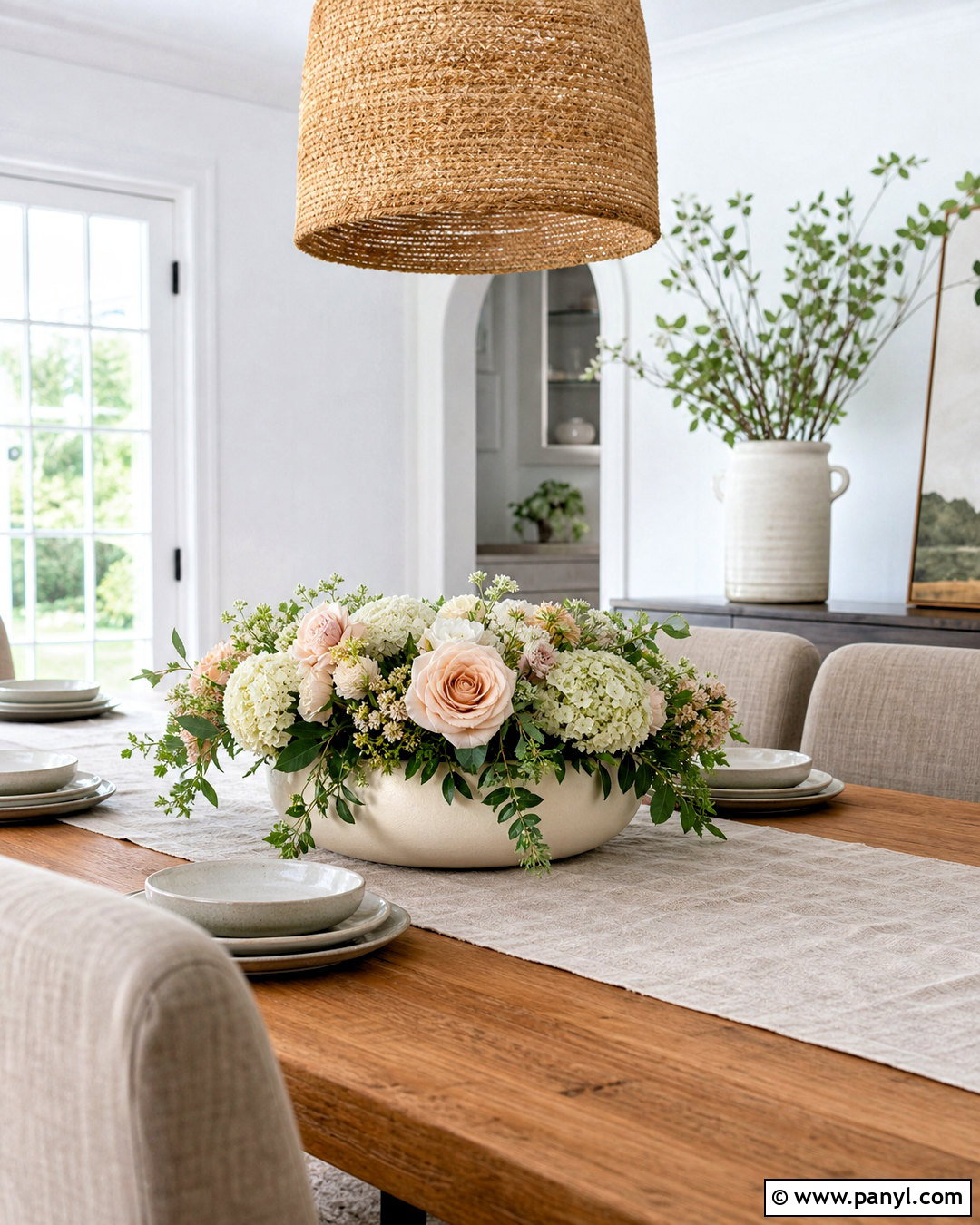
A low floral arrangement creates color and softness without interrupting conversation across the dining table. Start with a wide ceramic bowl in cream, pale gray, or another shade already used in the room. Fill it with loosely arranged garden roses, hydrangeas, greenery, and small seasonal flowers. Keep the overall height below eye level when seated. Place the bowl on a washed linen runner that extends along the center of a warm wood table. Neutral upholstered chairs, simple stoneware place settings, and a woven pendant complete the relaxed look. Choose two or three flower colors rather than mixing every shade available. This keeps the centerpiece polished while still feeling natural. For everyday use, remove the place settings and let the flowers remain as the room’s main decorative focal point.
2. Branch Vase Table Centerpiece
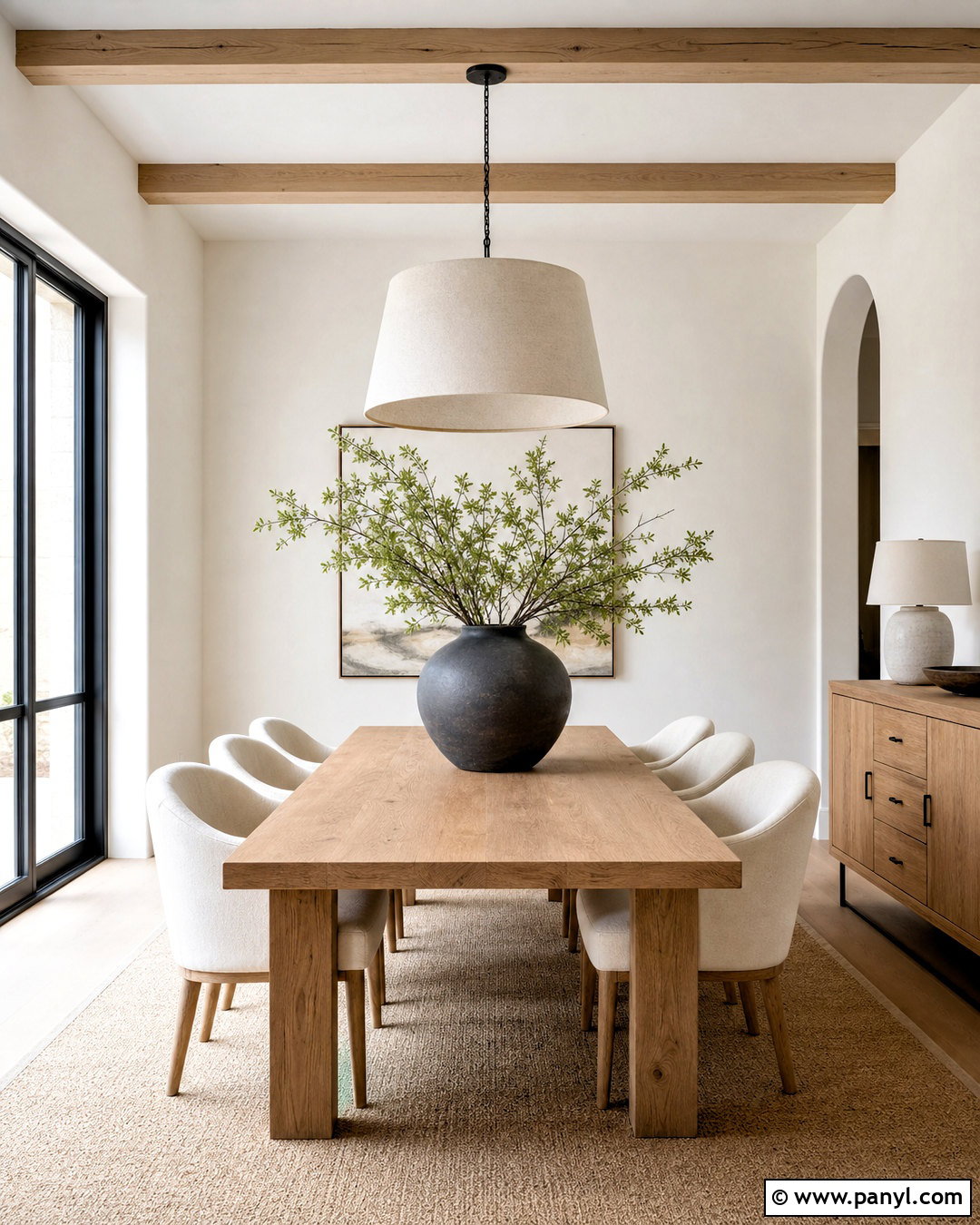
What could be simpler than a few beautiful branches in one substantial vase? This table centerpiece works especially well in a modern dining room with high ceilings or an open layout. Choose an oversized matte ceramic vessel in charcoal, warm white, or earthy brown. Add airy branches with small green leaves, allowing them to spread naturally instead of forcing a symmetrical shape. Center the vase on a bare rectangular table so the wood grain becomes part of the design. Pair it with streamlined chairs, a linen pendant shade, and minimal wall art. Because tall branches can block sightlines during meals, place the vase on a shallow tray that is easy to relocate. The result feels architectural and organic, giving the entire room character without requiring numerous small accessories or complicated floral arranging.
3. Fruit Bowl Table Centerpiece
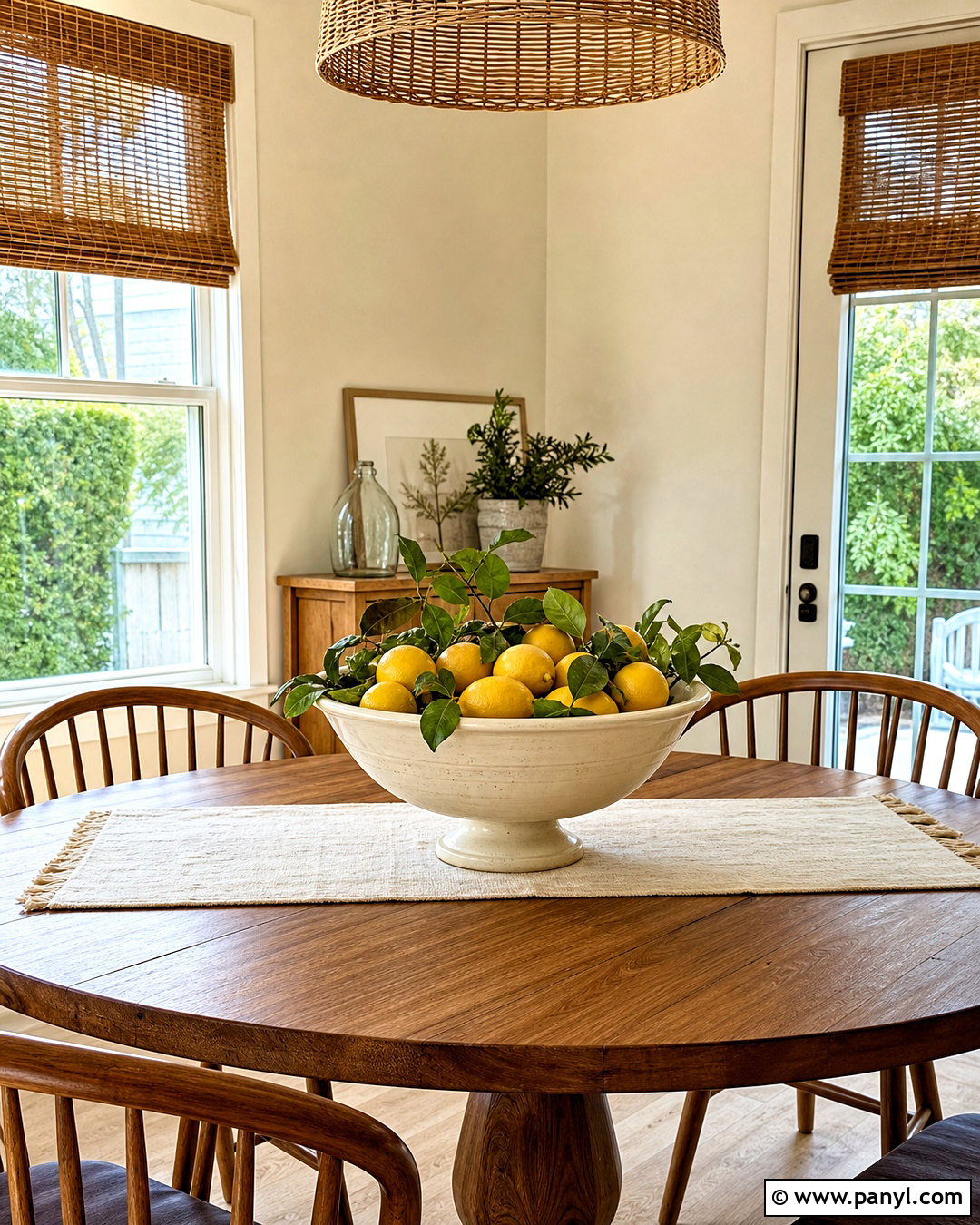
A bowl filled with fresh fruit offers color, texture, and everyday usefulness. Select a handcrafted wood, marble, or footed ceramic bowl that is large enough to look intentional but does not consume the table. Fill it with one dominant fruit, such as green pears, yellow lemons, or deep red apples. Add a few leafy stems for a fresh market-inspired finish. On a round kitchen table, center the bowl over a small natural linen cloth and surround it with simple spindle-back chairs. Warm wood tones, creamy walls, and woven shades create an inviting background. Avoid overfilling the bowl or combining too many colors, which can make the arrangement feel busy. Repeating one fruit color in nearby dish towels, artwork, or pottery helps connect this practical table centerpiece to the surrounding kitchen.
4. Candle Tray Table Centerpiece
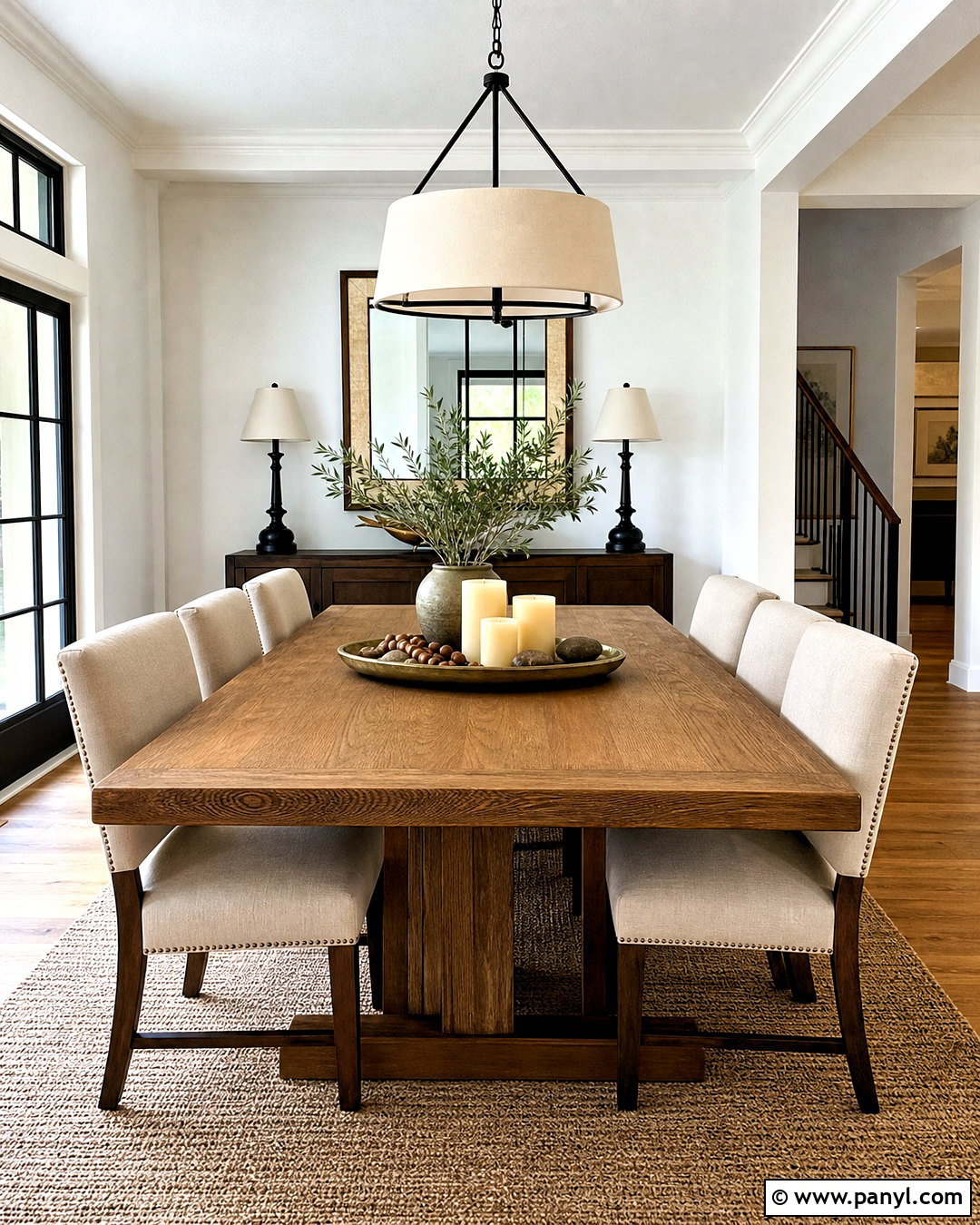
Soft candlelight can transform a dining area while a tray keeps the entire display organized. Begin with a low oval tray in aged brass, dark wood, or black metal. Arrange three unscented pillar candles in varied heights, leaving enough space between them for visual balance. Add a small ceramic vase with olive branches and a few smooth stones or wooden beads. Set the tray on a long oak dining table with neutral linen chairs and a simple area rug underneath. The varied heights create interest, but the arrangement remains compact enough to move before serving dinner. Flameless candles are a practical alternative for busy households. Keep the surrounding decor understated so the warm candle cluster remains the focus. This centerpiece suits modern, transitional, and rustic interiors without feeling overly formal.
5. Potted Herb Table Centerpiece
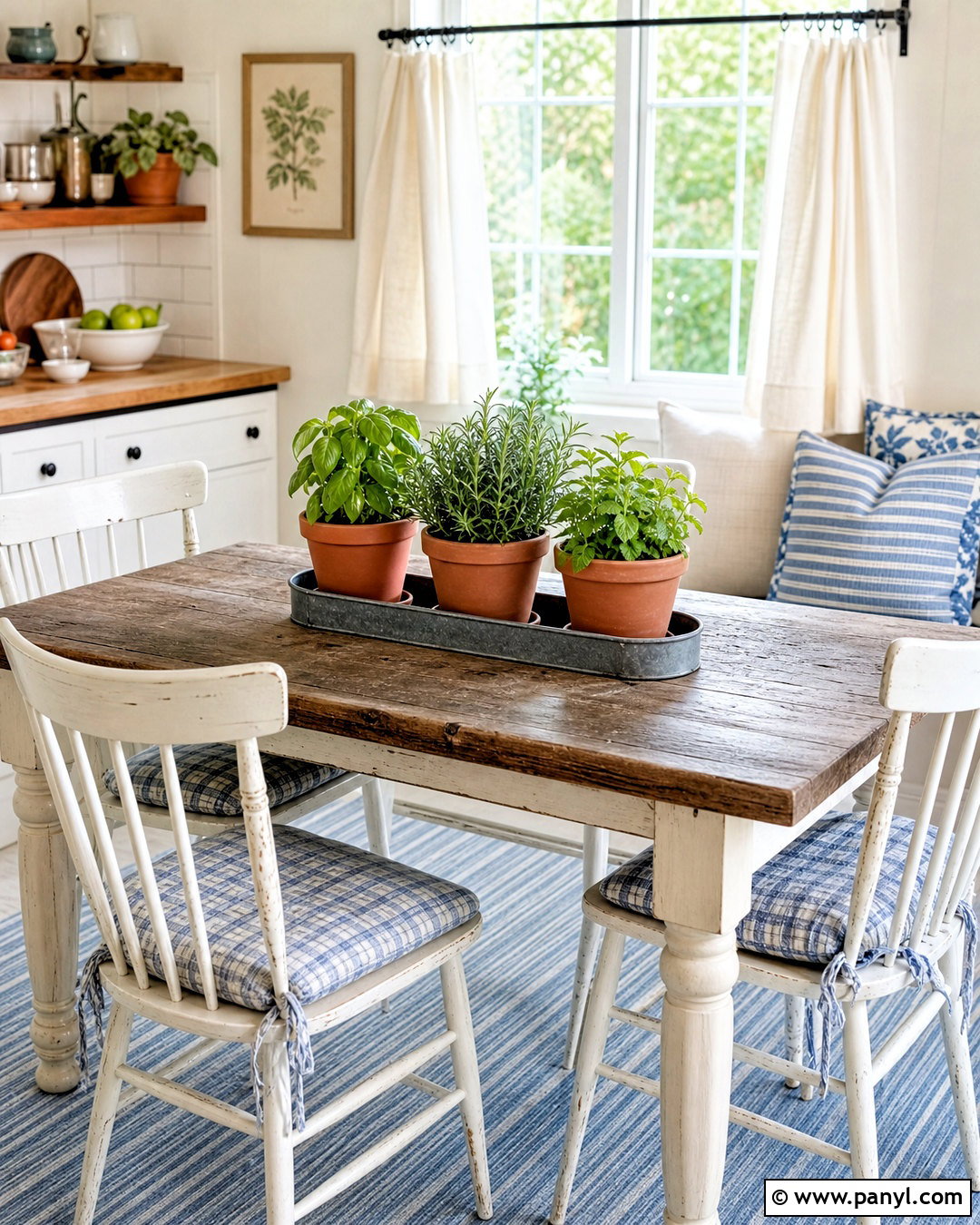
Fresh herbs bring natural fragrance and cheerful greenery to a kitchen or breakfast table. Group three small terracotta pots containing basil, rosemary, and mint inside a narrow waterproof tray. The repeated pots create order, while the different leaf shapes add texture. Place the arrangement on a compact farmhouse table beside a sunny window, then complete the nook with painted chairs, a striped washable rug, and simple cotton curtains. Choose healthy plants that remain low enough for conversation and trim them regularly for cooking. A layer of small pebbles over the soil gives each pot a cleaner appearance. The warm terracotta looks especially attractive against sage green, cream, or light wood surroundings. This living table centerpiece feels casual and useful, making it well suited to an active family kitchen.
6. Dried Flower Table Centerpiece
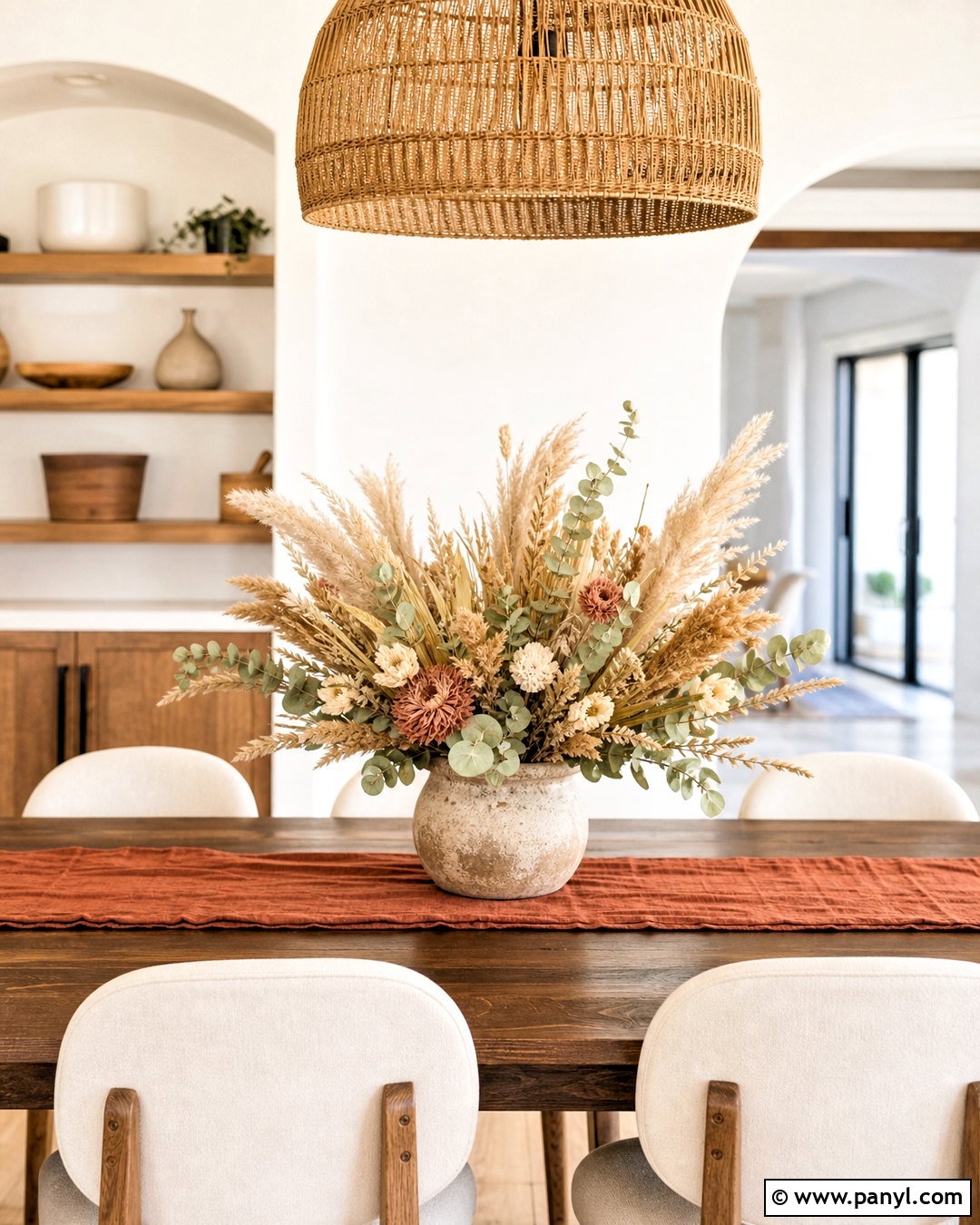
Dried flowers offer lasting texture and muted color without weekly maintenance. Build a loose arrangement using pampas grass, preserved eucalyptus, strawflowers, and wheat in shades of tan, dusty pink, soft gold, and faded green. Place the stems in an earthy stoneware vase with a softly irregular shape. A rust-colored linen runner can ground the arrangement on a dark walnut dining table, while cream upholstered chairs keep the room from appearing heavy. Repeat the natural tones through a woven pendant and simple landscape artwork. Keep the bouquet airy rather than dense, and trim the stems so the arrangement does not overwhelm the table. Since dried materials can shed, position the vase on a small wooden board or ceramic plate. The finished centerpiece feels warm, relaxed, and especially fitting for bohemian or organic interiors.
7. Ceramic Vase Table Centerpiece
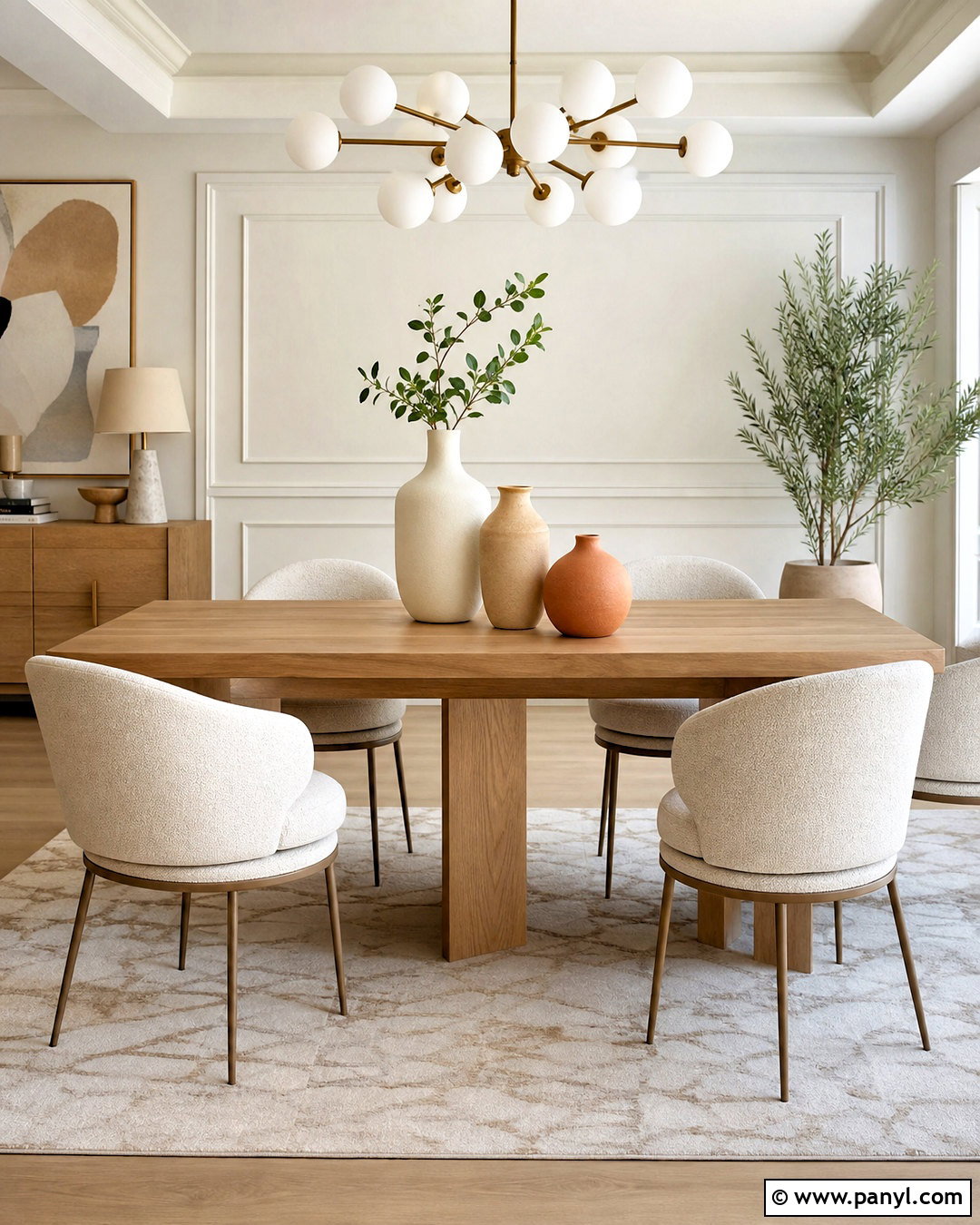
A collected group of ceramic vases can make the table feel artistic even when flowers are unavailable. Choose three vessels with different heights but a shared palette, such as warm white, sand, and muted terracotta. Combine one rounded vase, one narrow-neck vessel, and one low sculptural piece. Add a single leafy stem to the tallest vase while leaving the other two empty. Arrange everything slightly off-center on a rectangular plaster or light wood table. Bouclé dining chairs, an abstract neutral rug, and a simple globe chandelier support the soft contemporary setting. Leave open space between each vessel so their silhouettes remain visible. The arrangement should look intentionally edited rather than crowded. This complete table centerpiece introduces shape and warmth while remaining easy to maintain throughout the year.
8. Greenery Runner Table Centerpiece
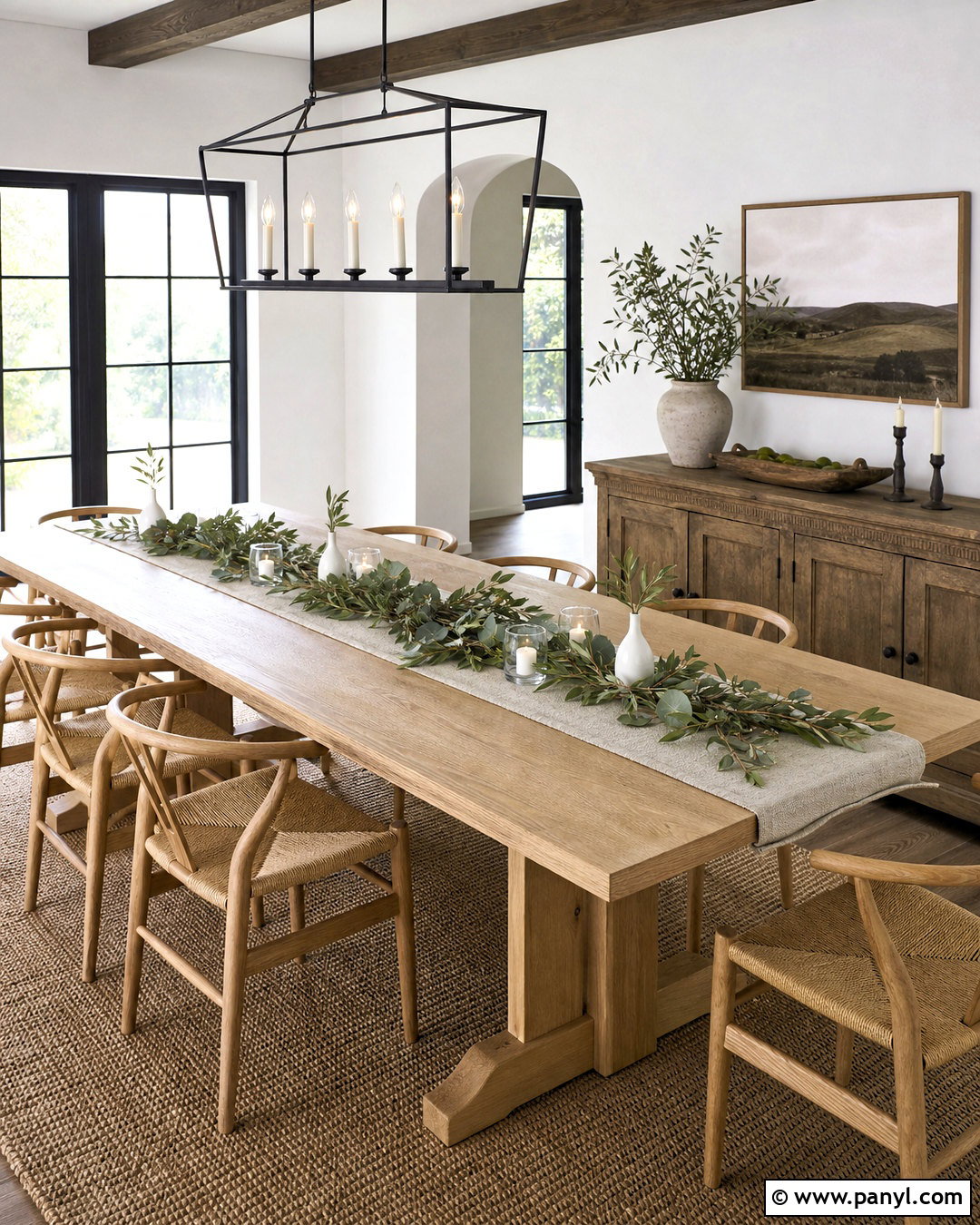
A long table benefits from a centerpiece that follows its shape. Lay fresh or realistic eucalyptus and olive branches loosely over a narrow linen runner, creating a low line of greenery from one end to the other. Tuck in several small white ceramic bud vases and short glass candleholders to break up the foliage. Keep the arrangement narrow enough to leave room for plates and serving dishes. A pale oak table, woven dining chairs, white walls, and black-framed windows give this design a fresh modern-farmhouse background. Avoid making the greenery perfectly straight; gentle curves look more natural and relaxed. For everyday styling, use fewer branches and remove the candles. When entertaining, add white flowers at intervals. The finished look feels generous and layered without creating a tall visual barrier between guests.
9. Sculptural Bowl Table Centerpiece
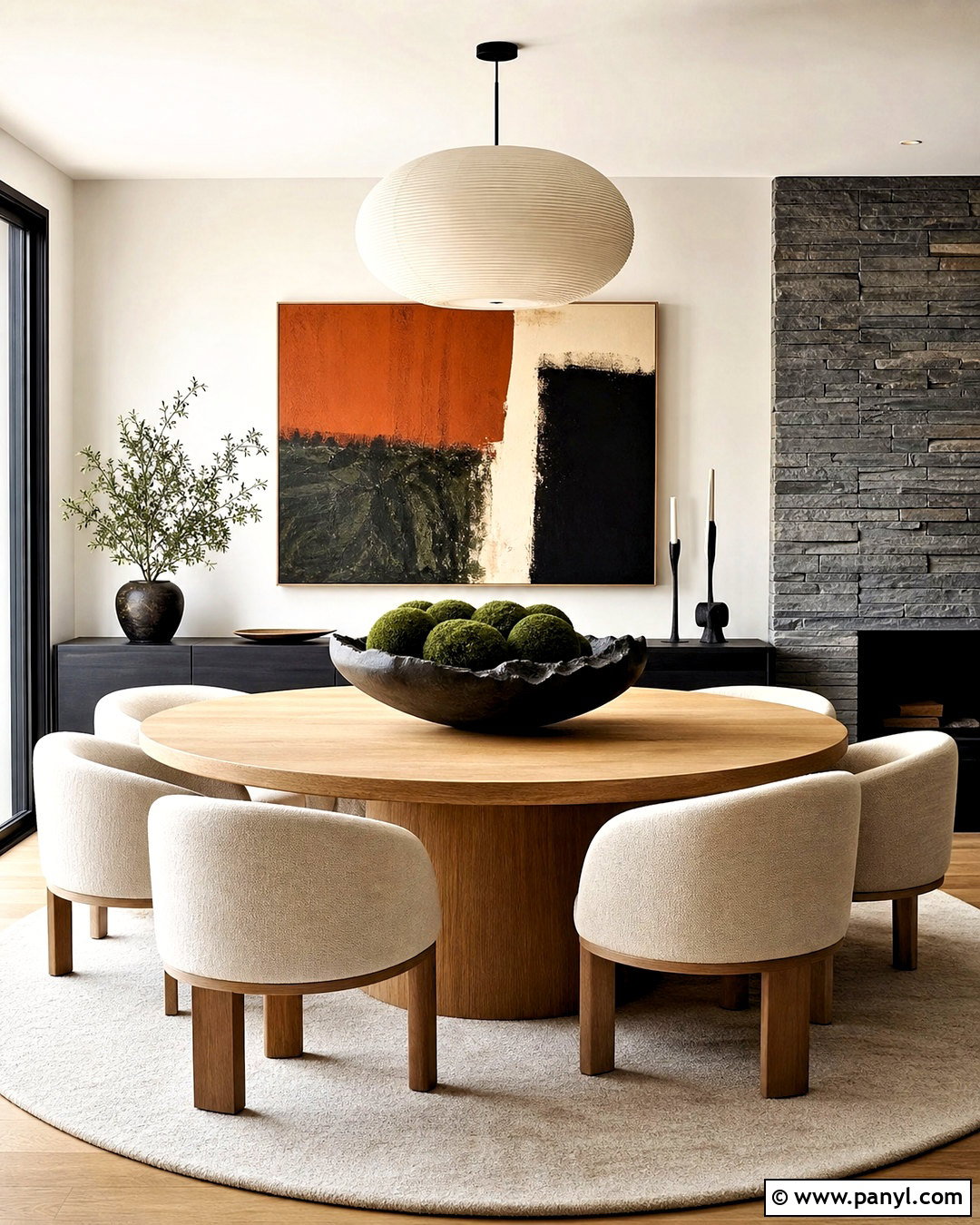
Sometimes one striking object is enough to complete a table. Choose a large sculptural bowl with an uneven rim, carved surface, or strong pedestal base. Matte black, chalky white, or natural travertine creates a bold silhouette without relying on bright color. Center it on a round pedestal dining table and leave it mostly empty, adding only a few moss-covered spheres or natural seed pods if desired. Curved dining chairs, a rounded pendant, and a circular rug can repeat the bowl’s shape throughout the room. This approach works best when the object is proportional to the tabletop and interesting from every angle. Avoid surrounding it with unrelated accessories. The negative space is part of the arrangement. The result is a clean, gallery-inspired centerpiece that still feels comfortable in a practical home.
10. Glass Bud Vase Table Centerpiece
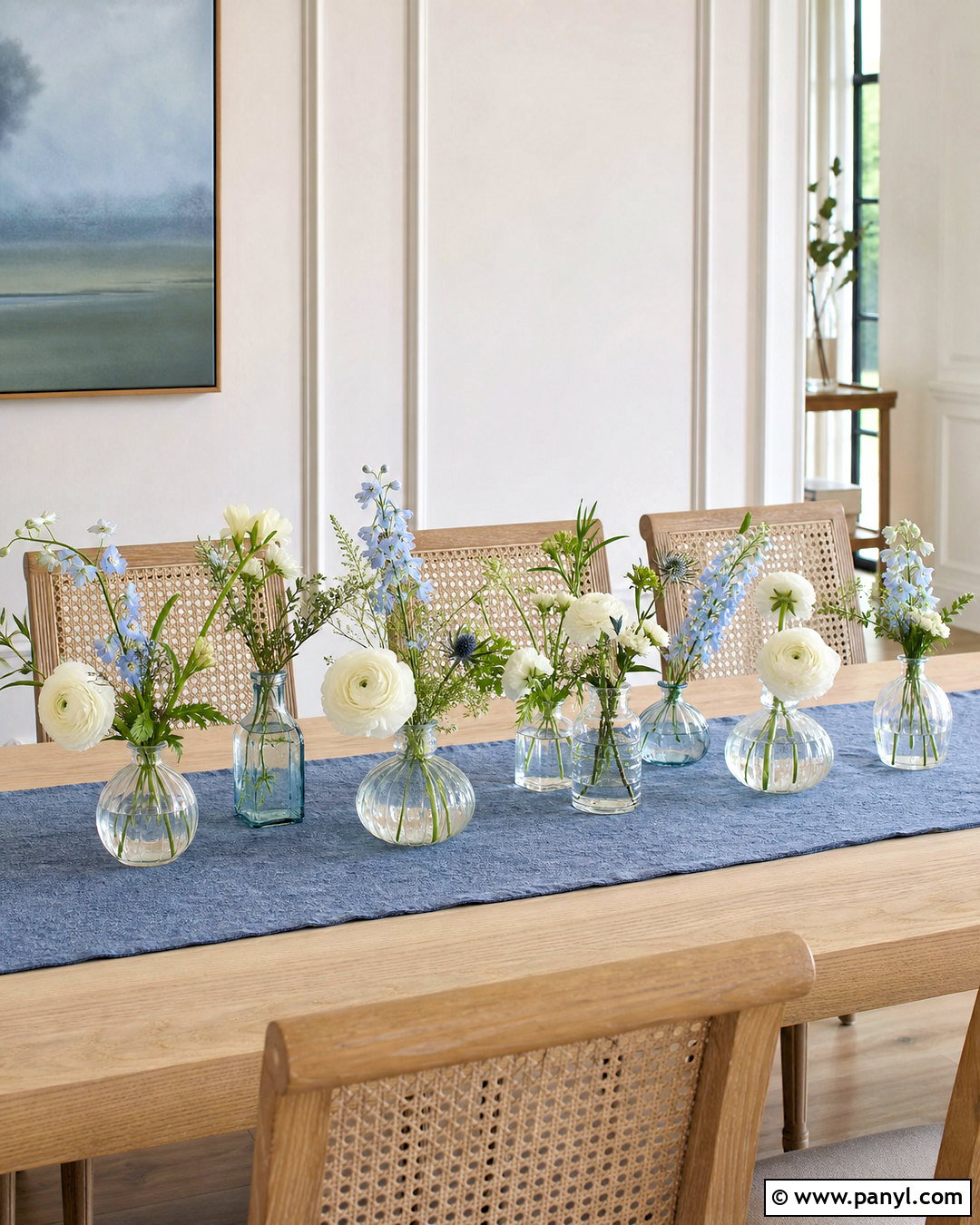
A row of bud vases delivers the beauty of fresh flowers in a light, flexible format. Gather five to seven clear or softly tinted glass vessels in similar sizes. Add one or two stems to each, using daisies, ranunculus, tulips, or greenery in a controlled palette. Arrange the vases down the middle of a narrow dining table rather than clustering them in one spot. A soft blue runner, white oak table, cane-back chairs, and pale walls create an airy setting around the delicate glass. Vary the vase heights slightly while keeping every arrangement low. This makes the display visually interesting and easy to see across. The individual vases can also be moved around serving dishes when needed. Repetition ties the complete centerpiece together, even when the vessels and flowers are not perfectly matched.
11. Succulent Table Centerpiece
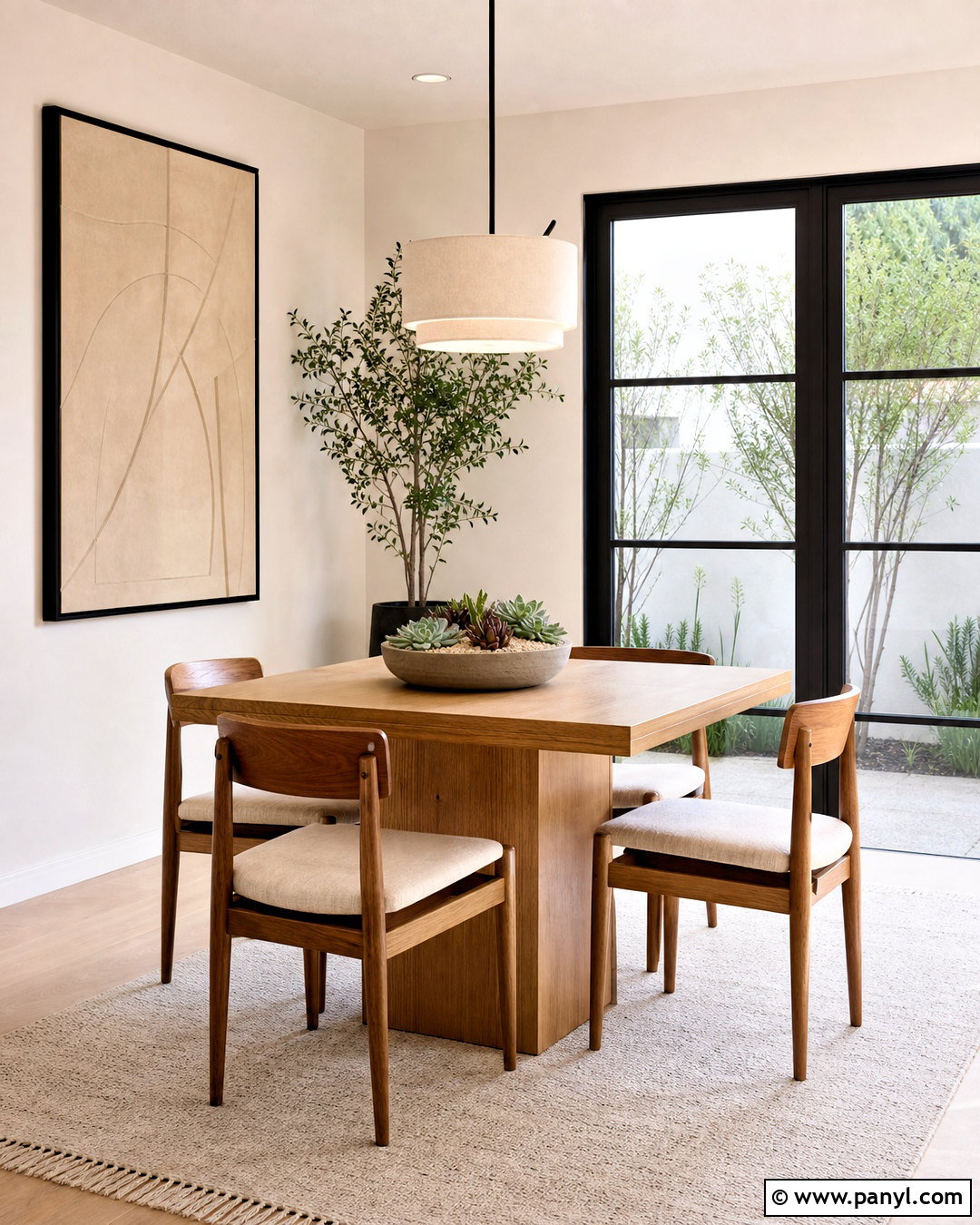
A shallow succulent garden provides greenery in a compact shape that suits small tables. Use a wide concrete, stone, or matte ceramic planter with a waterproof base. Combine rosette succulents in blue-green, soft sage, and muted burgundy, then cover exposed soil with pale gravel. Set the planter at the center of a square breakfast table with clean-lined wood chairs and a small contemporary pendant above. Warm white walls and a light neutral rug prevent the concrete container from looking too industrial. Choose plants with similar light requirements and rotate the planter occasionally for balanced growth. The low profile preserves conversation space and keeps the tabletop visually open. This table centerpiece brings natural form into a modern home while requiring fewer decorative pieces than a layered tray or traditional floral display.
12. Coastal Table Centerpiece
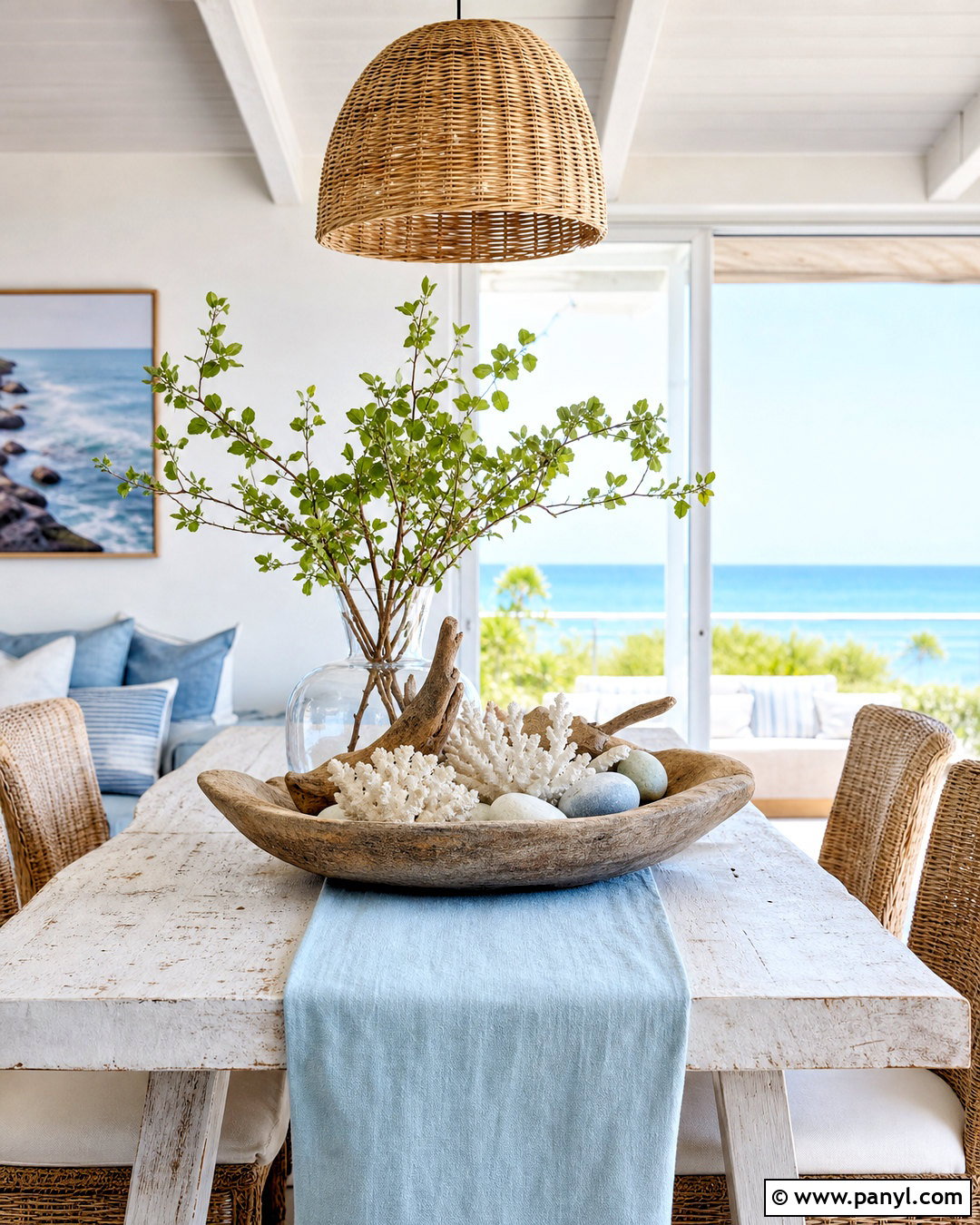
A coastal centerpiece feels most convincing when it uses natural materials and restrained colors. Place a weathered wood bowl on a pale blue linen runner, then fill it with white coral-inspired sculptures, smooth stones, and a small piece of driftwood. Add one clear glass vase holding loose green branches for height and freshness. Style the arrangement on a whitewashed dining table surrounded by woven rattan chairs. Soft white walls, sandy textiles, and a simple rope or basket pendant complete the breezy room without turning it into a themed display. Use only a few carefully chosen seaside references and avoid bright novelty decorations. The centerpiece should feel collected and calming rather than crowded. Its mix of wood, glass, stone, and greenery creates a relaxed focal point suitable for everyday dining in any light-filled home.
13. Farmhouse Table Centerpiece
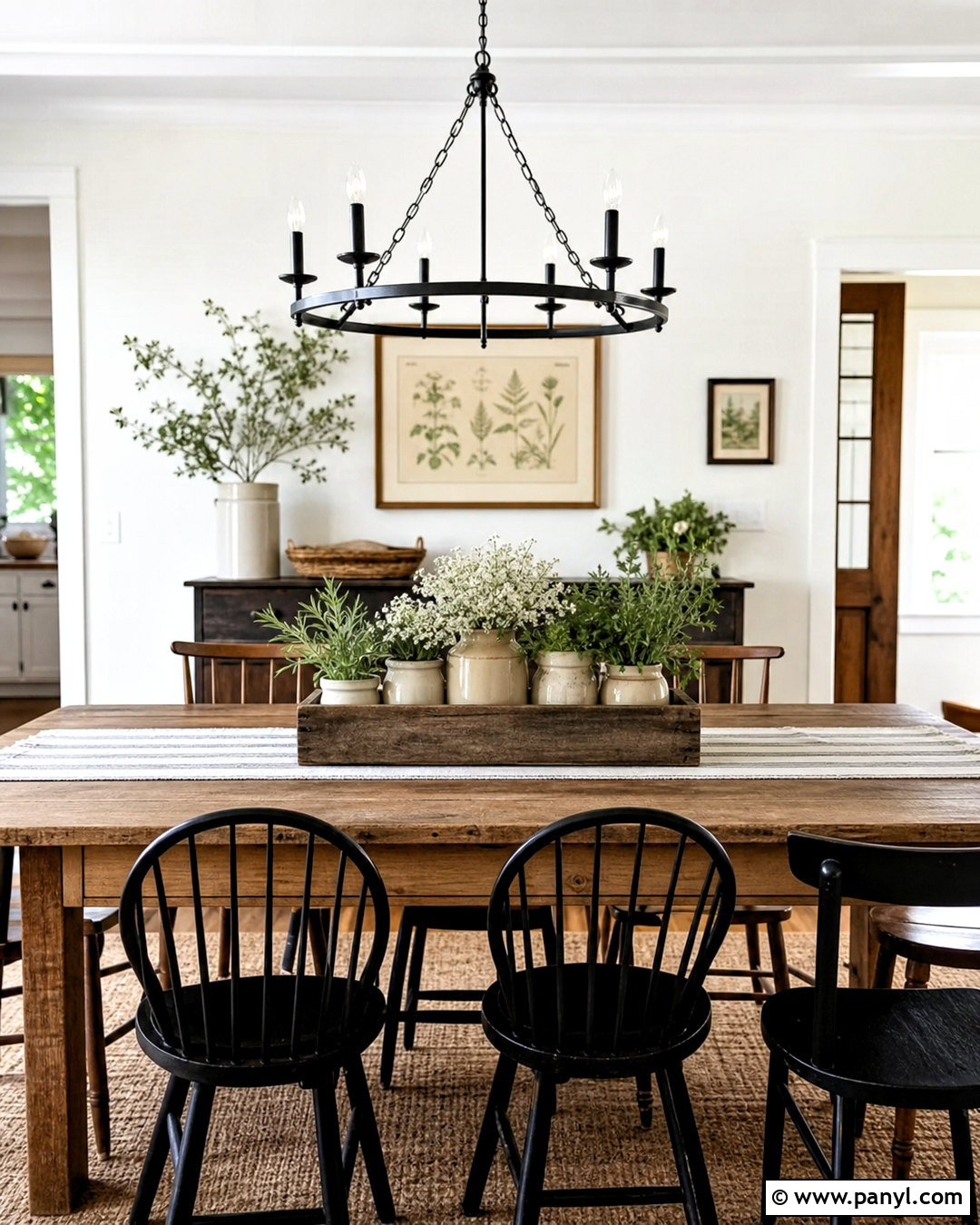
A classic farmhouse centerpiece combines useful containers, greenery, and warm natural texture. Begin with a long reclaimed-wood box sized to fit the middle of a rectangular dining table. Fill it with small cream stoneware crocks, leafy herbs, and compact white flowers. Allow a few stems to spill over the edge while keeping the arrangement low. A softly striped linen runner protects the table and visually anchors the box. Complete the dining area with mixed wood chairs, a black metal chandelier, off-white walls, and simple framed botanical prints. The arrangement should look abundant but not overly arranged. Remove one or two crocks when extra serving space is needed. By repeating wood, pottery, and greenery across the centerpiece and room, the finished design feels welcoming, practical, and connected rather than deliberately distressed or overly rustic.
14. Modern Black Table Centerpiece
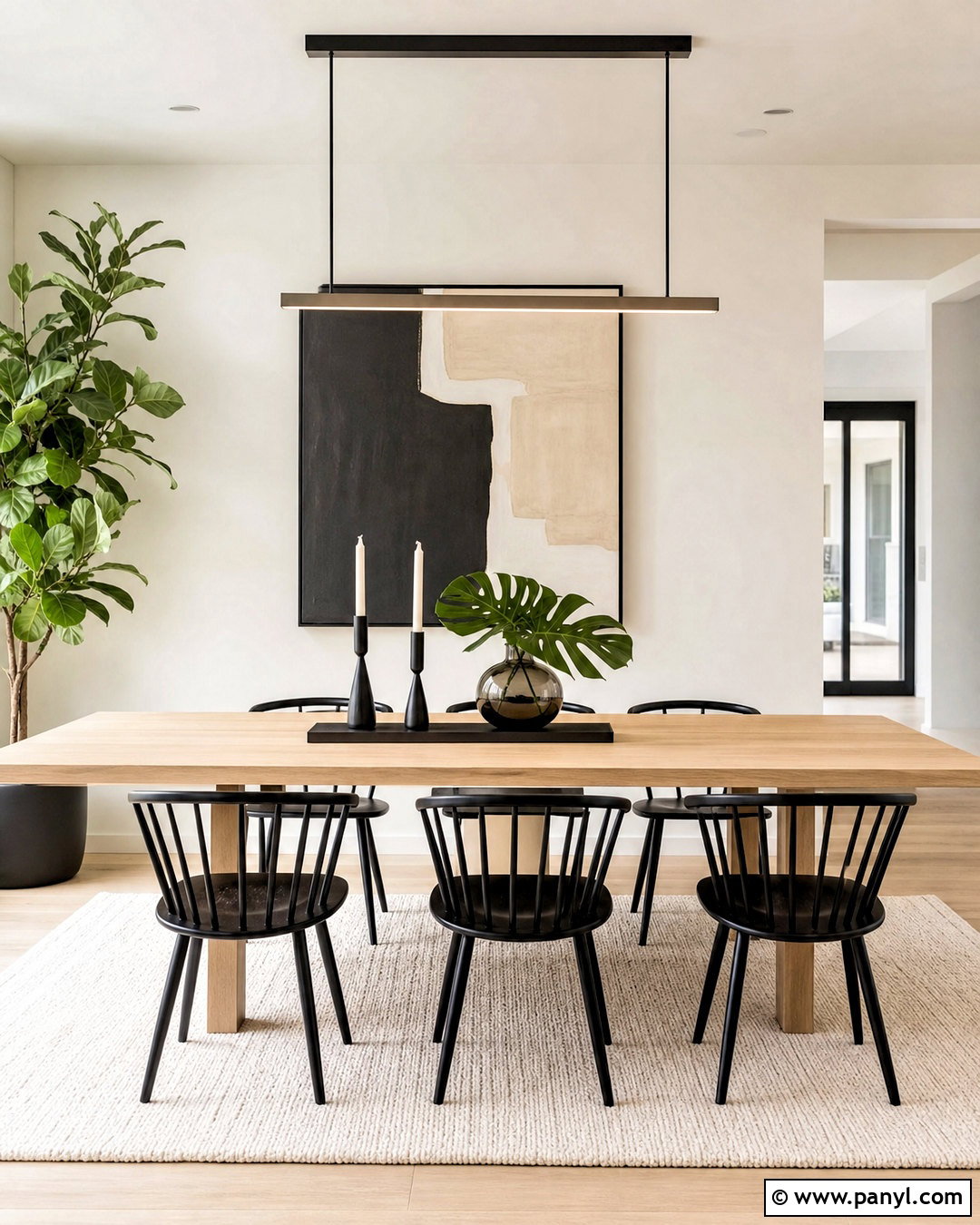
Black accessories can create a crisp centerpiece when balanced with warm wood and fresh greenery. Place three matte black metal candleholders in staggered heights on a slim rectangular tray. Add a low smoked-glass vase containing two or three sculptural monstera leaves. Position the arrangement in the center of a light oak dining table with black spindle chairs and a cream textured rug. A linear pendant and restrained abstract artwork reinforce the contemporary look. Keep the tray narrow and the accessories widely spaced so the centerpiece feels graphic rather than heavy. Use ivory taper candles to introduce contrast, and choose unscented options during meals. The complete palette of black, cream, green, and oak is easy to repeat around the room. This table centerpiece provides strong definition while preserving a bright, comfortable atmosphere.
15. Blue And White Table Centerpiece
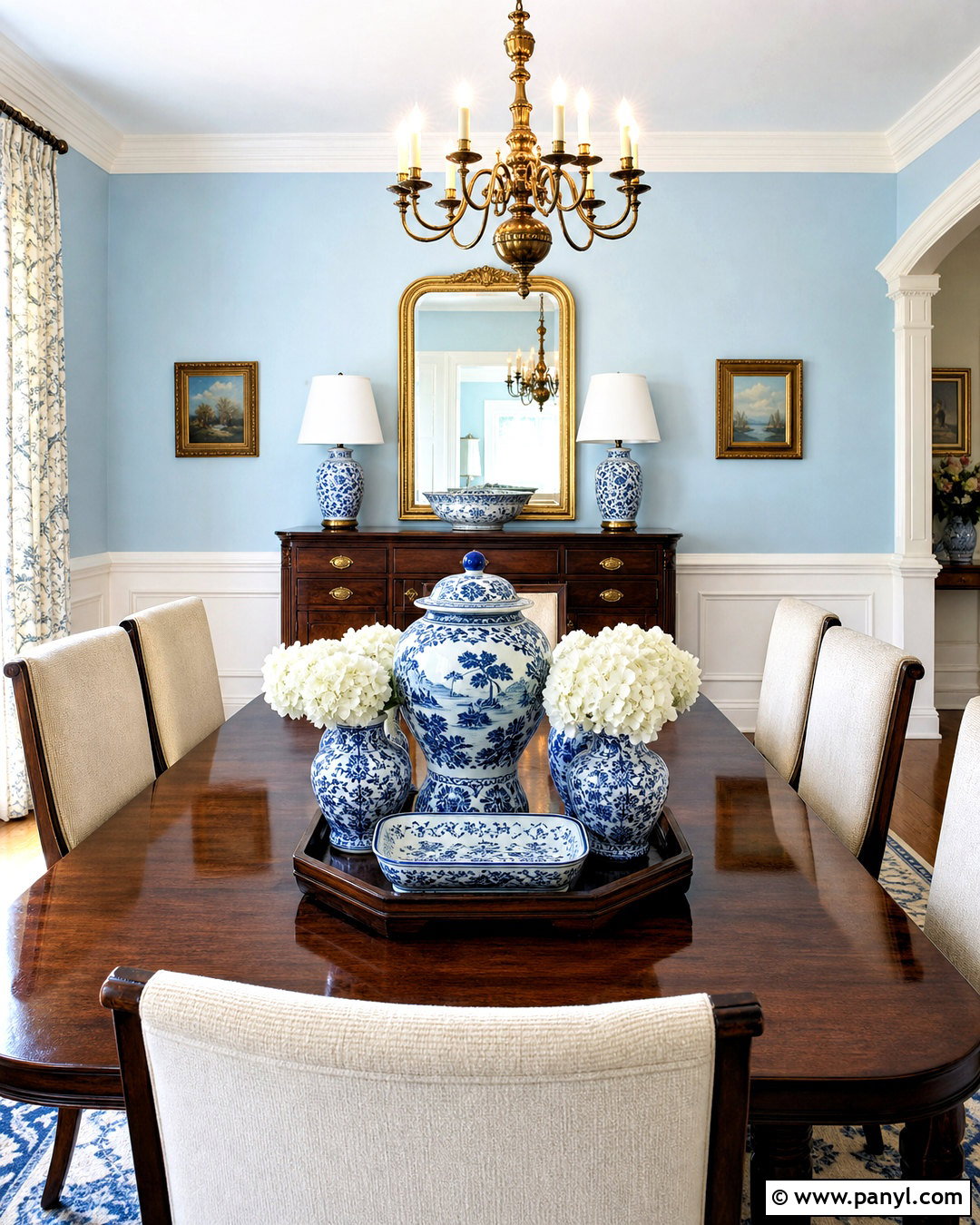
Blue and white pottery brings pattern and traditional character to a dining table. Select one medium ginger jar, two smaller patterned vases, and a shallow white dish with a blue border. Group the pieces on a dark wood tray, varying their heights without creating a crowded cluster. Fill the central vase with white hydrangeas and fresh green leaves. Place the arrangement on a polished mahogany or medium walnut table surrounded by cream upholstered chairs. Pale blue walls, white trim, and a brass chandelier complete the refined setting. Repeating the limited palette keeps the different patterns from competing. Leave enough clear surface around the tray to highlight the rich tabletop. This centerpiece works as an everyday display, while the flowers can be changed to match the season or removed for a simpler collected-pottery arrangement.
16. Coffee Table Book Centerpiece
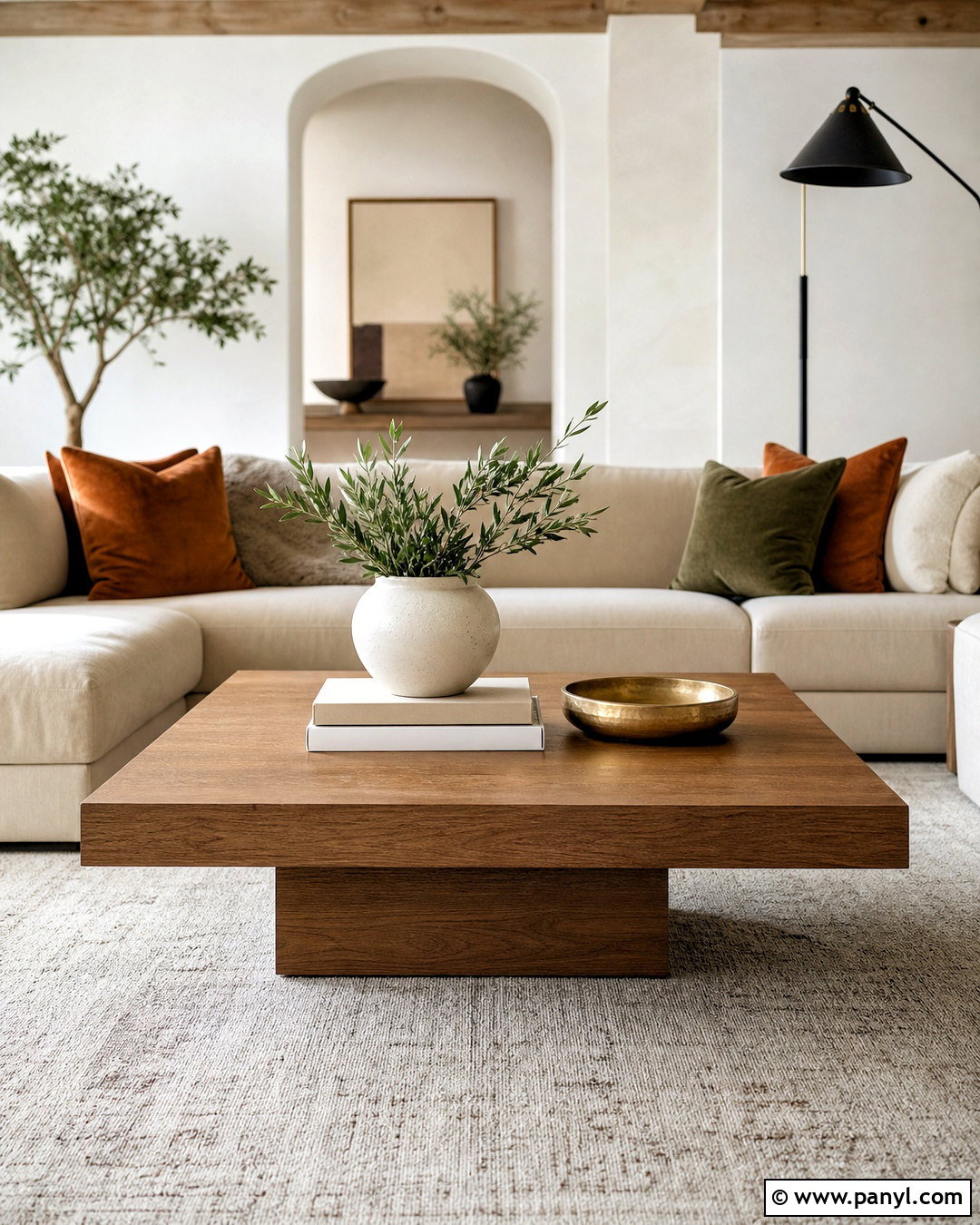
Books provide color, height, and personality when styling a living room coffee table. Stack two large hardcover design books on one side of a rectangular wood table. Place a small cream vase with fresh green stems on top, then add a shallow brass bowl beside the stack. A neatly folded throw or decorative box can balance the opposite corner while leaving open space for drinks and daily use. Surround the table with a neutral sofa, rust and olive pillows, a textured wool rug, and a black floor lamp. Choose book covers that coordinate with the room rather than introducing random colors. Keep the arrangement low so it does not obstruct the view across the seating area. The finished centerpiece feels personal and layered while remaining organized enough for a relaxed, functional living room.
17. Entry Table Centerpiece
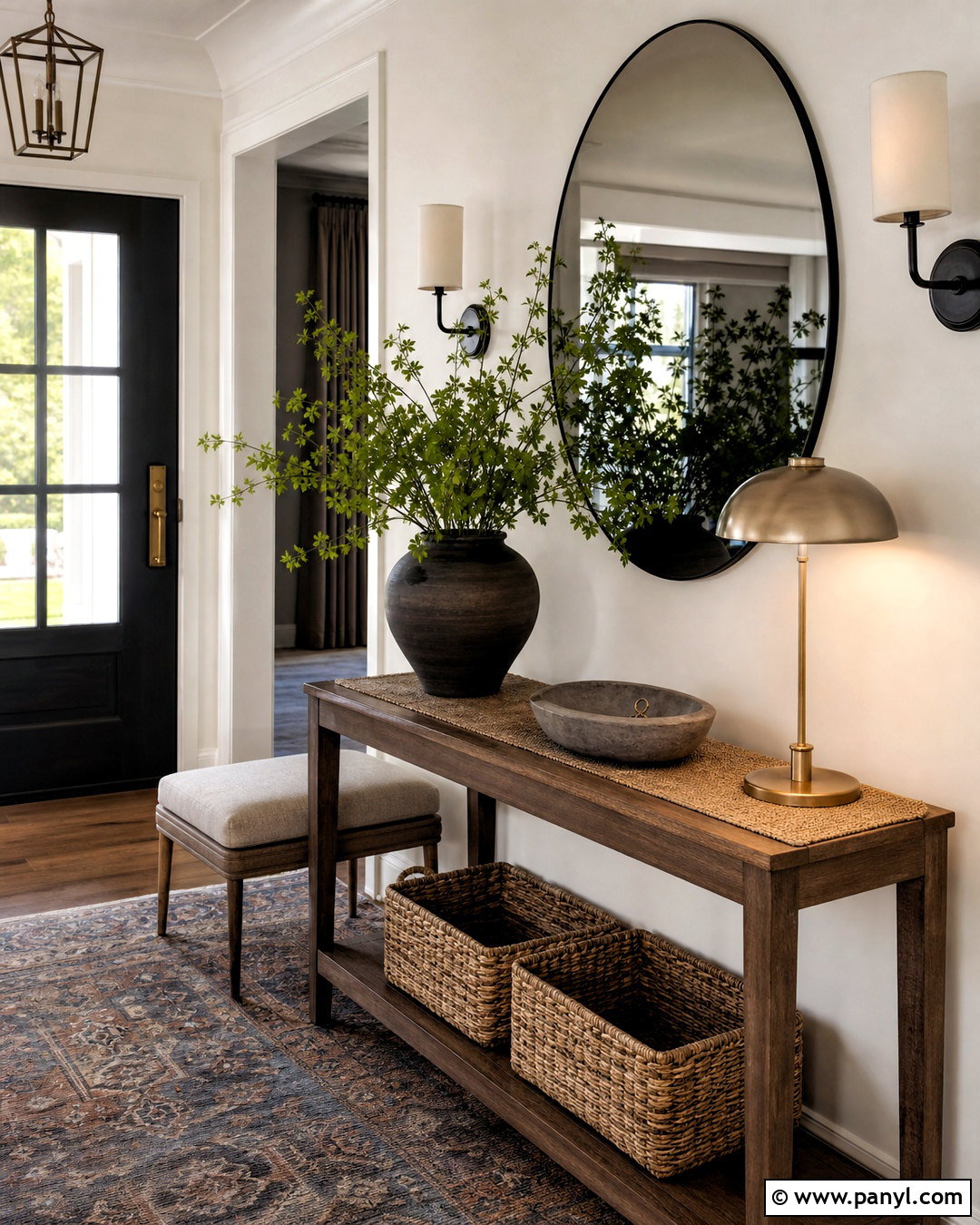
An entry table centerpiece should create an inviting first impression without becoming a drop zone. Start with a large round ceramic vase filled with airy green branches and place it slightly off-center on a slim wood console. Add a shallow stone bowl for keys and one small brass lamp for warm material contrast. Hang an oval mirror above the table to reflect the arrangement and brighten the entry. A woven runner, lidded storage baskets, and a simple upholstered bench complete the surrounding space. Keep the branches narrow enough that they do not interfere with the walkway or mirror. Choose a vase color that contrasts gently with the wall, such as charcoal against warm white or cream against sage green. The finished console feels decorated, useful, and coordinated with the rest of the home.
18. Breakfast Table Centerpiece
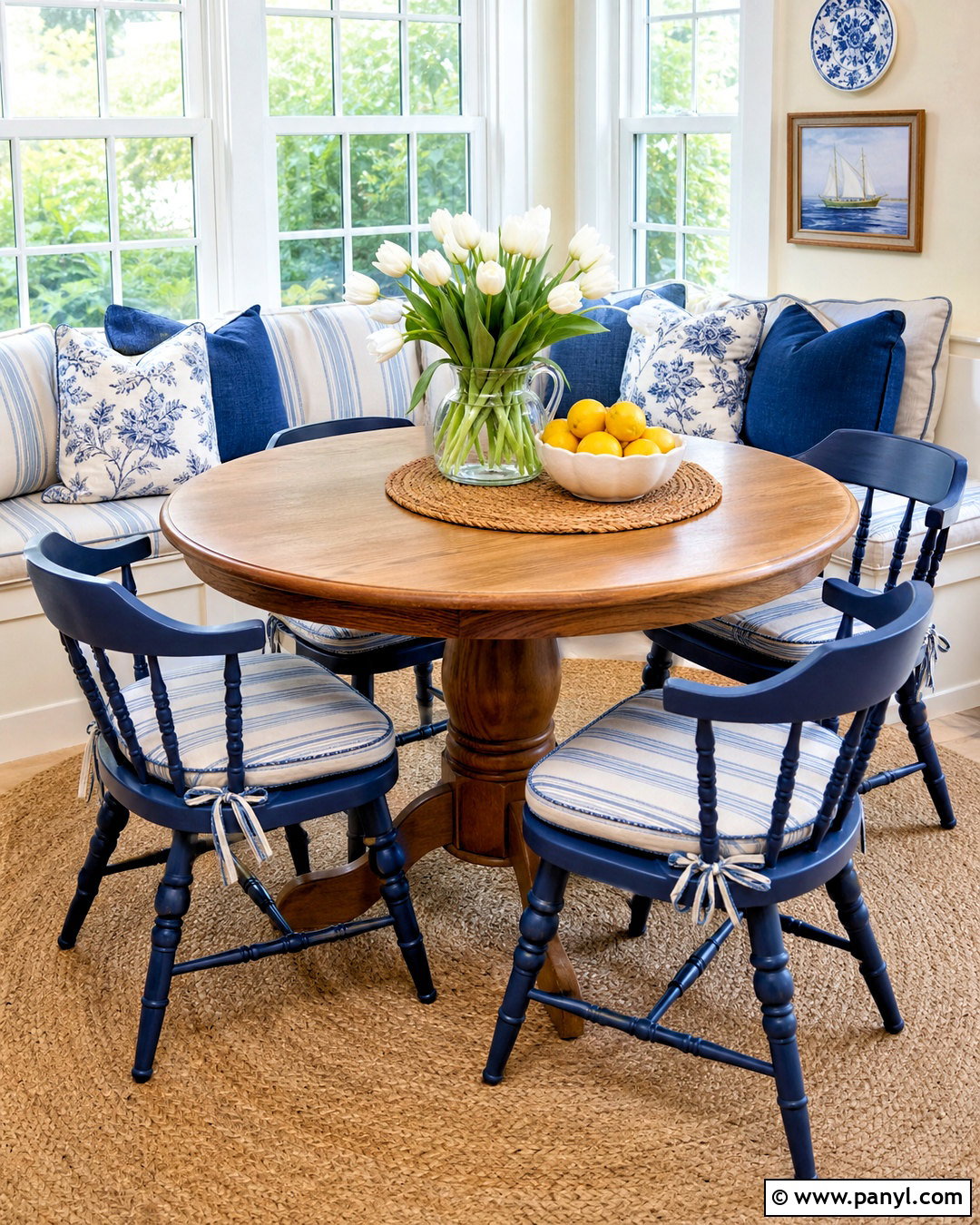
Morning light deserves a centerpiece that feels fresh, simple, and easy to live with. Place a small glass pitcher filled with white tulips or leafy clippings in the middle of a round breakfast table. Set it on a woven circular placemat beside a small ceramic bowl of lemons. Painted Windsor chairs, a built-in bench with striped cushions, and a washable natural-fiber rug create a comfortable nook around the arrangement. Use pale yellow, soft blue, and warm white accents to amplify the sunny mood. Keep the pitcher short and lightly filled so it can remain in place during meals. The round mat visually connects the separate objects and protects the tabletop from moisture. This approachable centerpiece looks finished without feeling formal, making it ideal for coffee, homework, quick meals, and relaxed weekend breakfasts.
19. Outdoor Patio Table Centerpiece
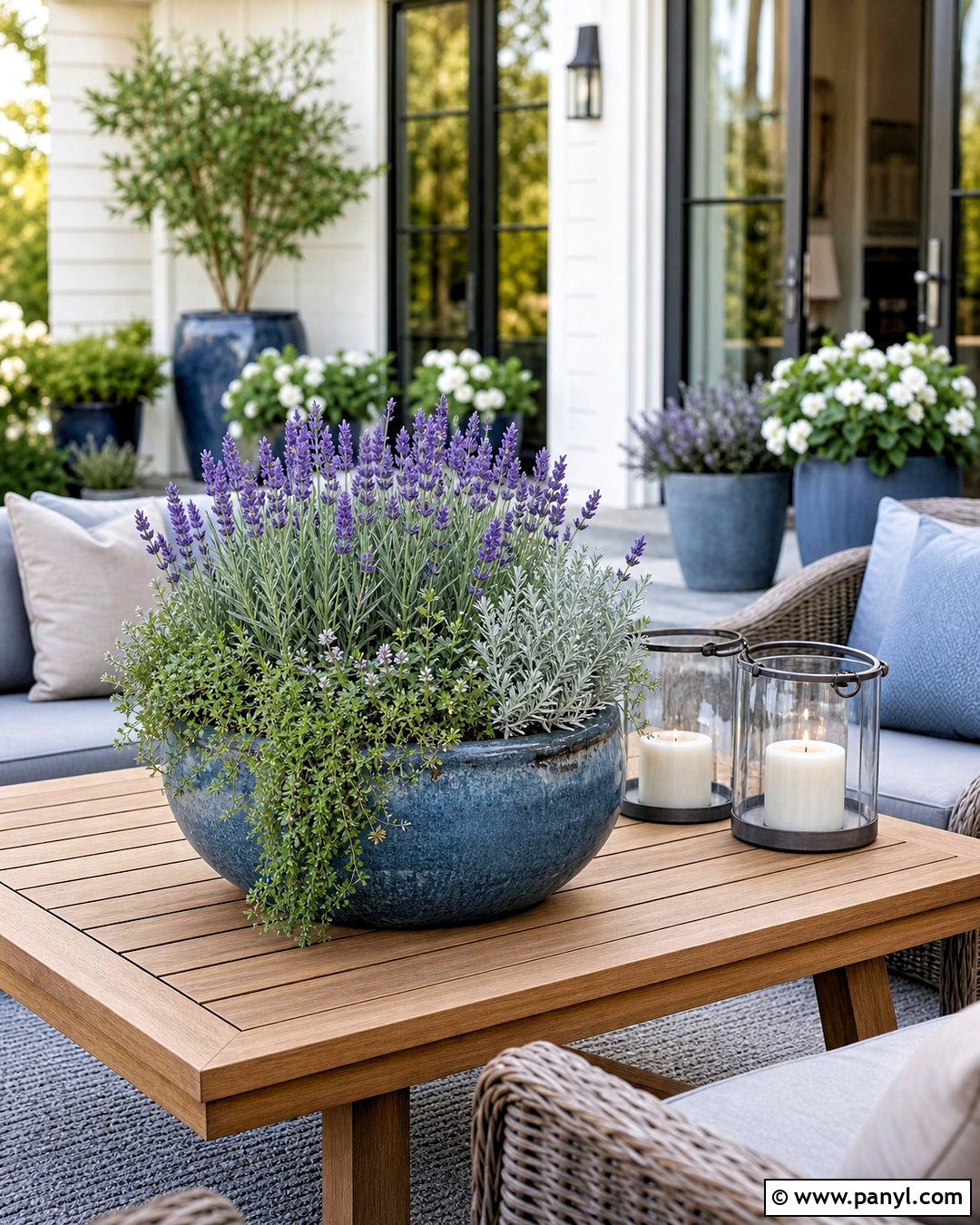
An outdoor centerpiece needs sturdy materials that can handle occasional wind and moisture. Set a wide glazed ceramic planter in the middle of a teak or powder-coated metal patio table. Fill it with compact lavender, trailing thyme, and silvery foliage for varied color and texture. Surround the planter with two low glass hurricane lanterns containing flameless candles. Weather-resistant woven chairs, neutral seat cushions, and an outdoor rug define the dining zone, while nearby planters repeat the same purple, green, and silver palette. Keep the centerpiece low and broad so it remains stable and does not block conversation. A removable tray underneath makes it easier to clean the table or protect it from drainage. The complete arrangement connects the dining furniture to the surrounding garden and feels attractive even when the table is not set.
20. Natural Seasonal Table Centerpiece
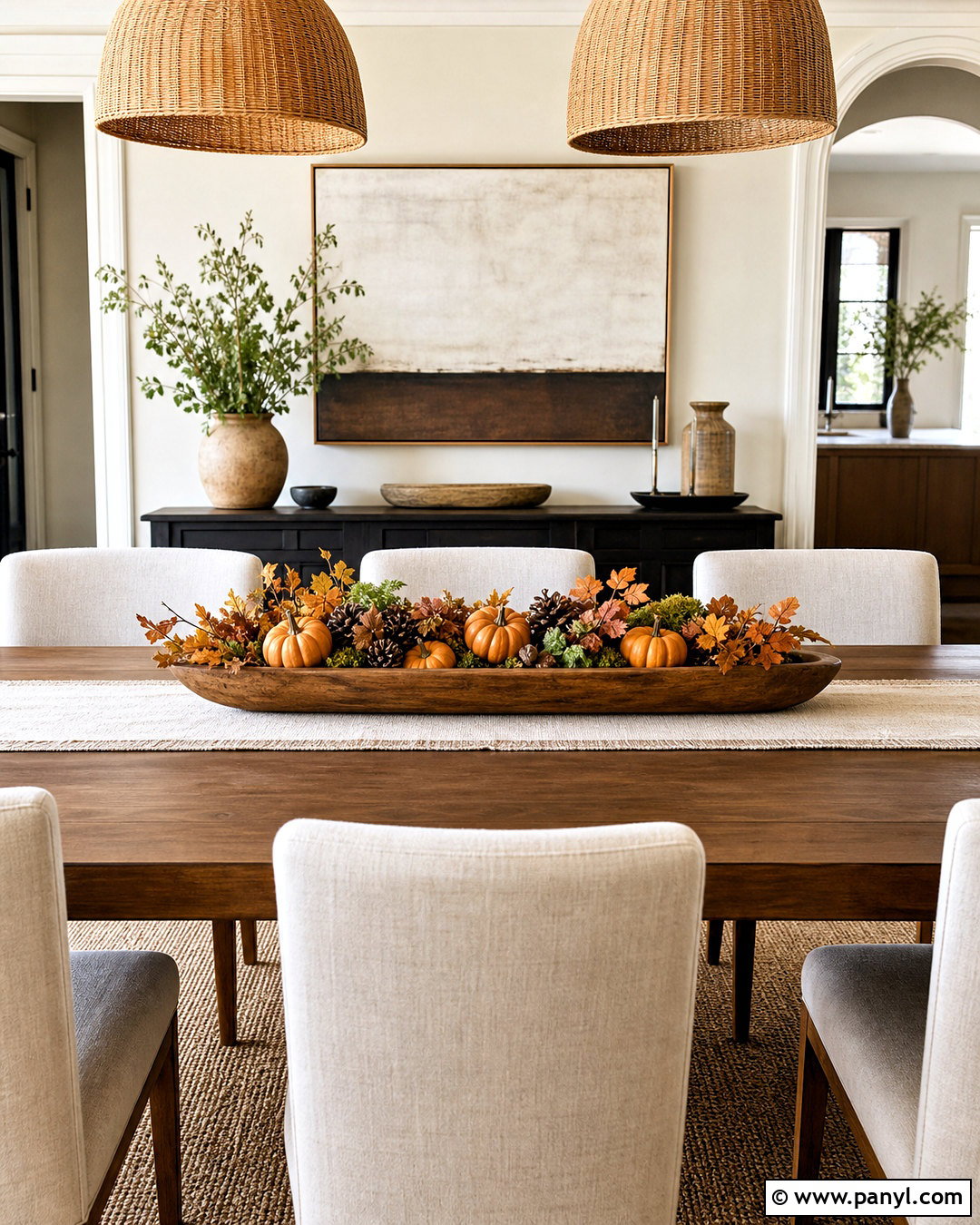
A seasonal centerpiece can change throughout the year without requiring an entirely new collection. Begin with a long shallow wood bowl as the permanent foundation. Fill it with lemons and leafy cuttings in warmer months, small pumpkins and dried leaves during fall, or moss, pinecones, and bare branches during winter. Avoid holiday-specific ornaments so the arrangement remains versatile. Place the bowl on a neutral linen runner over a medium-tone dining table. Upholstered chairs, warm white walls, simple pottery, and natural woven lighting support the organic palette. Keep the materials limited to two or three types at a time so the display feels intentional. Because everything sits inside one container, seasonal updates take only minutes. This complete table centerpiece offers changing color and texture while staying consistent with the room’s everyday design.
Conclusion:
The best centerpiece brings the table and surrounding room together while supporting the way you use the space. These 20 table centerpieces for home ideas offer options for large dining rooms, small breakfast areas, coffee tables, entry consoles, and outdoor patios. Start with the size and shape of your table, then choose a bowl, tray, vase, or planter as the arrangement’s anchor. Add flowers, greenery, candles, fruit, pottery, or books in colors already present nearby. Keep dining centerpieces low or easy to move, and leave enough open surface for everyday activities. A simple, coordinated arrangement often feels more polished than numerous unrelated decorations. Choose one complete look, personalize the materials, and let your table become a welcoming focal point.

Related Ideas and Inspiration:



Leave a Reply