
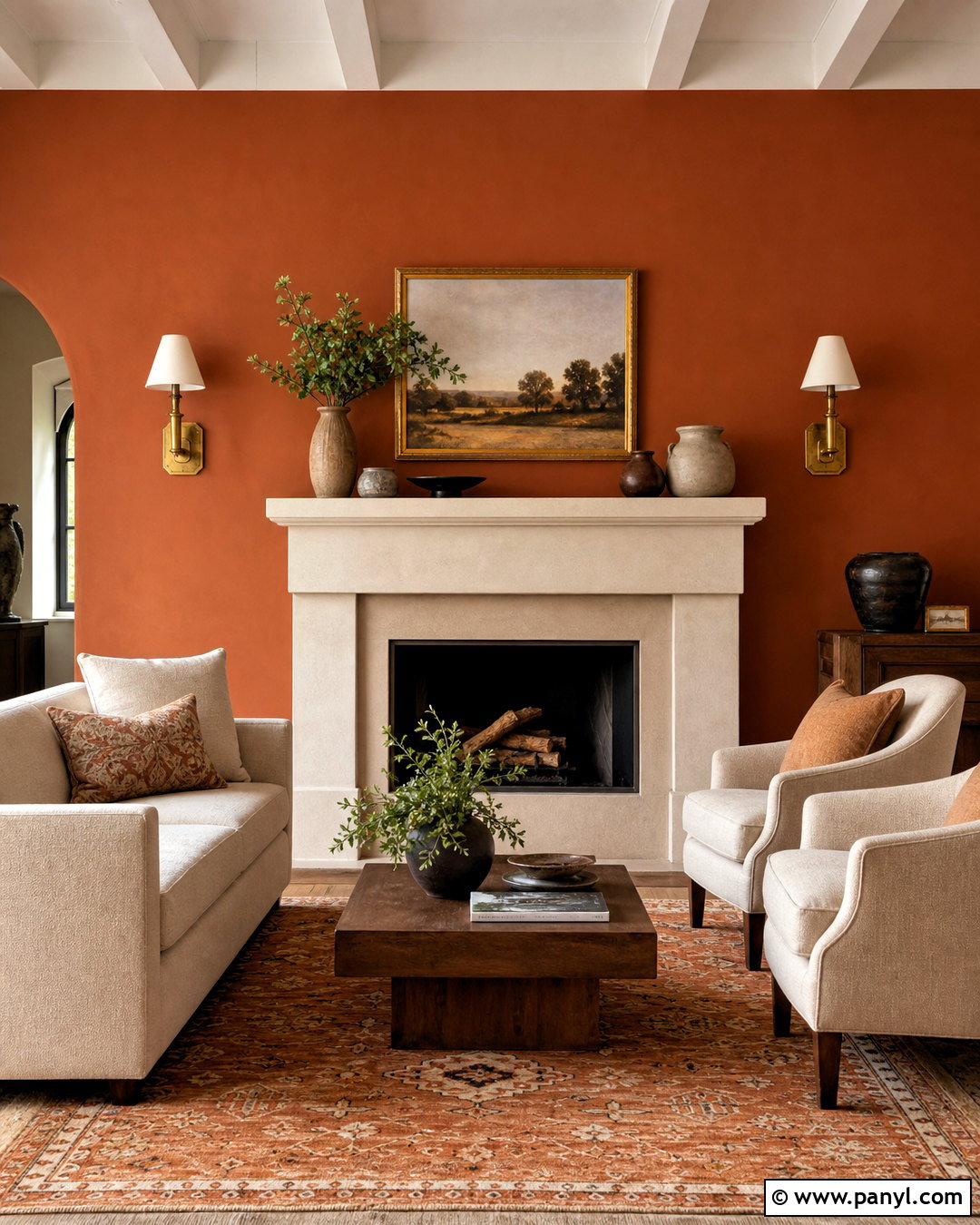
Burnt orange brings earthy warmth, rich color, and a welcoming sense of character into the home. It can feel retro, rustic, modern, or refined depending on the materials and colors around it. Pair this spicy shade with cream and oak for softness, navy for contrast, sage green for a natural mood, or black for contemporary definition. You can introduce it through painted walls, velvet seating, patterned rugs, cabinetry, tile, or smaller decorative layers. The key is building a balanced room rather than adding unrelated orange accents. Each space below combines color, furniture, lighting, texture, and practical finishing details into one complete look. Explore these 20 burnt orange interior ideas to find an approachable design that fits your room and personal taste.

1. Burnt Orange And Cream Living Room
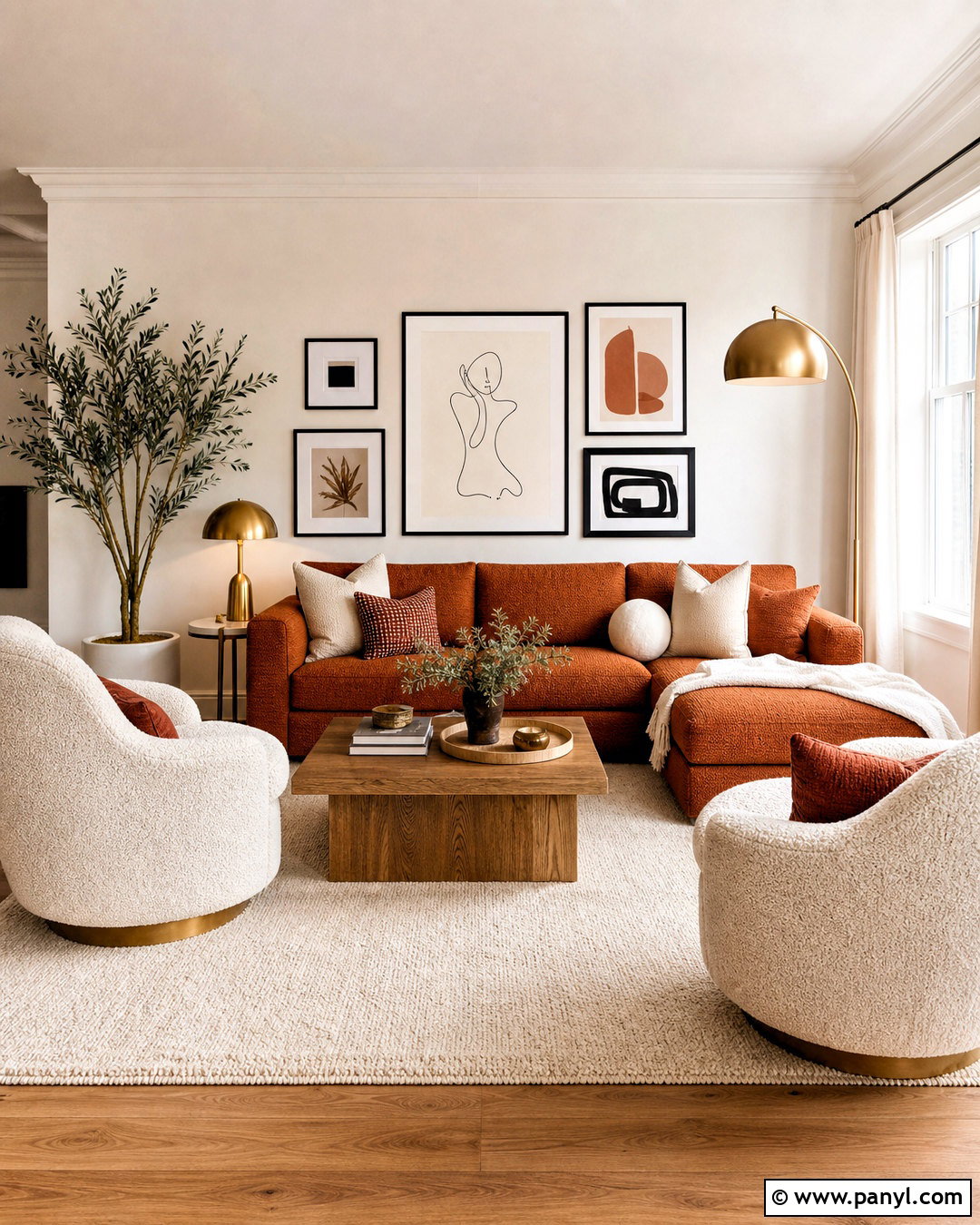
Create a warm living room by placing a burnt orange sofa against creamy white walls. Choose a sofa with simple lines and textured fabric so the strong color feels relaxed rather than overpowering. Ground the seating area with a large ivory wool rug and a medium-toned oak coffee table. Cream boucle chairs can face the sofa while keeping the layout light and conversational. Add rust, beige, and muted brown pillows in different textures. Linen curtains will soften the windows without competing with the upholstery. Finish the room with aged brass lamps, black-framed artwork, and one tall indoor tree. Repeating burnt orange in a patterned rug or ceramic vase makes the palette feel deliberate and connected.
2. Burnt Orange And Navy Living Room
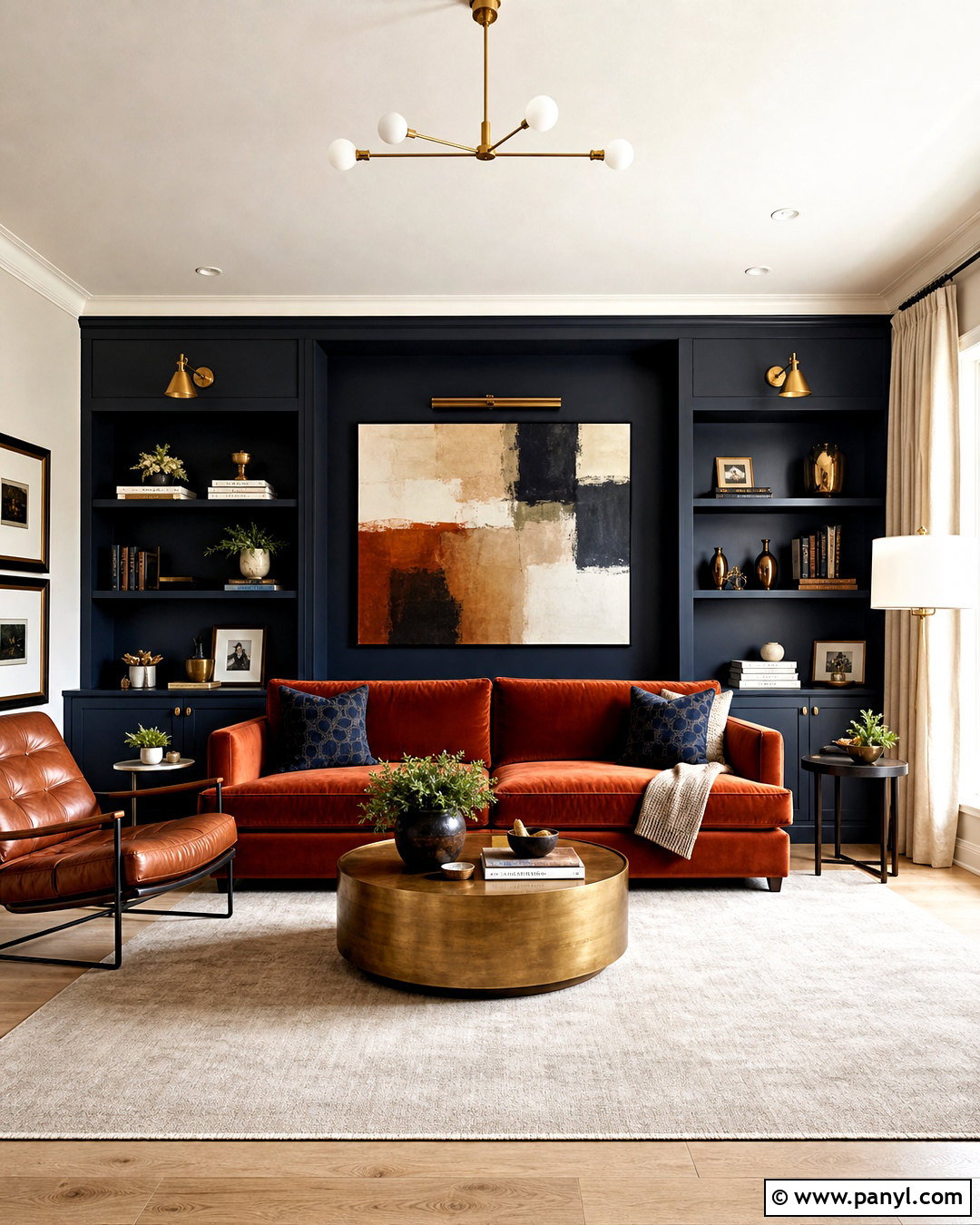
Burnt orange and navy create an energetic color scheme that still feels polished. Start with deep navy walls or built-in shelving, then introduce a burnt orange velvet sofa as the main focal point. Balance these saturated colors with warm white ceilings, pale oak flooring, and a cream area rug. A cognac leather chair can bridge the orange and natural wood tones. Choose a slim brass coffee table to add brightness without making the room feel heavy. Patterned pillows containing navy, rust, and ivory will connect the furniture to the walls. Complete the space with linen window treatments, modern ceramic lamps, and large abstract artwork. Keep accessories limited so the strong color combination remains sophisticated and comfortable.
3. Burnt Orange Accent Wall Bedroom
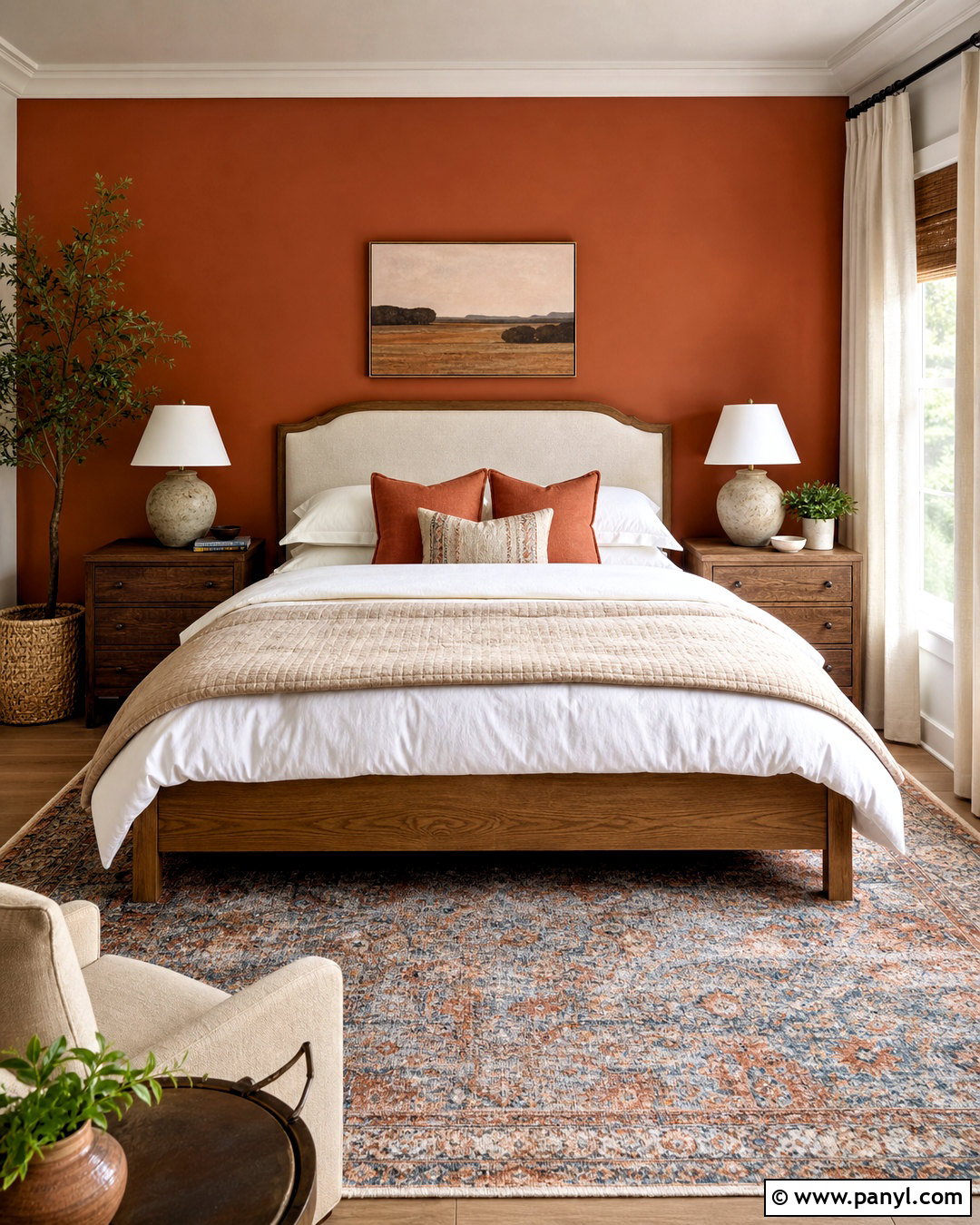
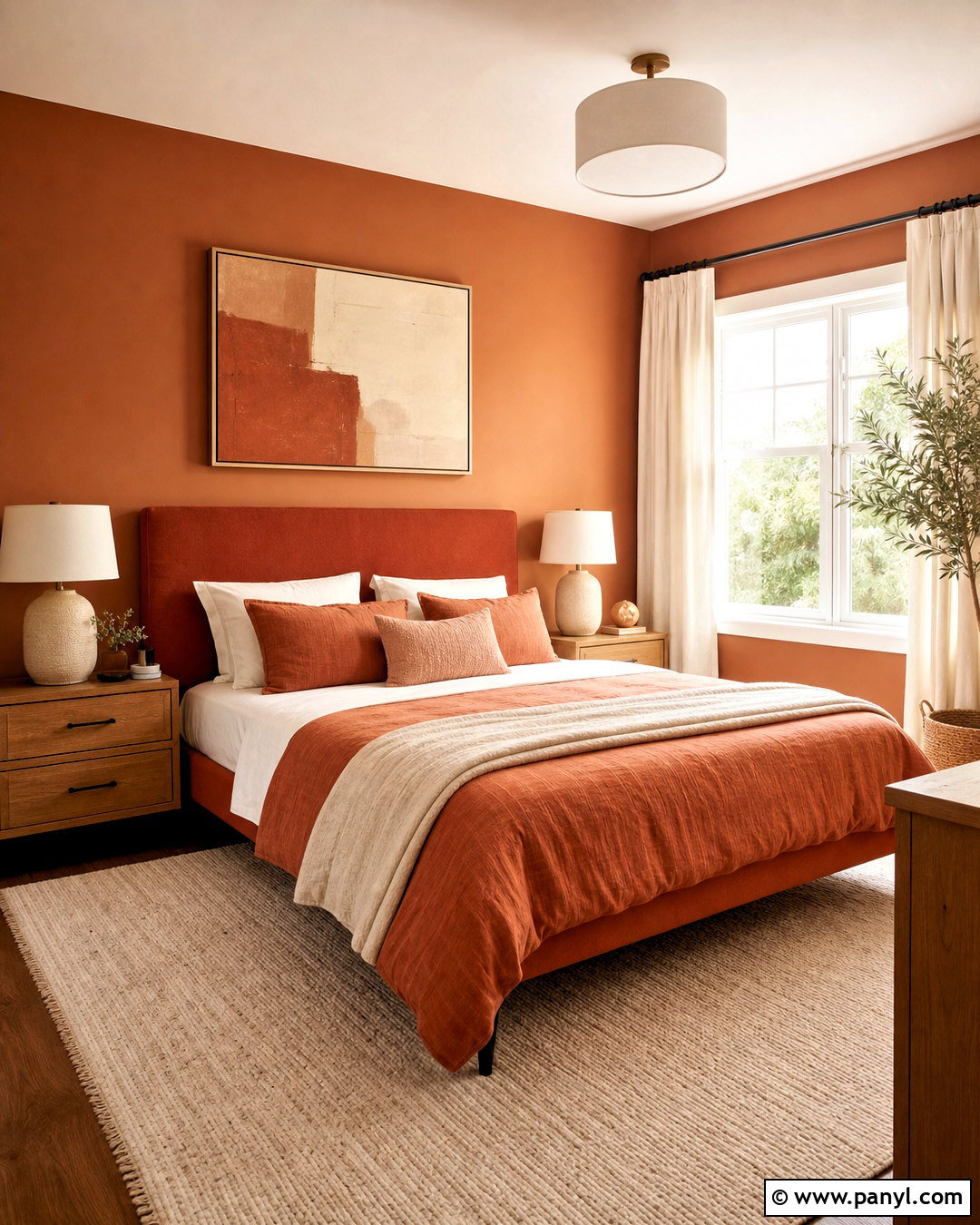
A burnt orange accent wall can make a bedroom feel cozy while defining the sleeping area. Paint the wall behind the bed in a muted clay-orange shade, leaving the remaining walls warm white. Place a natural oak bed against it with an upholstered oatmeal headboard. Layer the bed with crisp ivory sheets, a beige quilt, and rust-colored pillows that subtly repeat the wall. Use matching wood nightstands and softly shaped ceramic lamps for balance. A vintage-inspired rug containing faded blue, tan, and orange will add pattern without overwhelming the room. Finish with full-length linen curtains, simple botanical artwork, and a woven bench. This arrangement keeps the strong wall grounded through natural materials and restful neutral layers.
4. Burnt Orange And Sage Green Bedroom
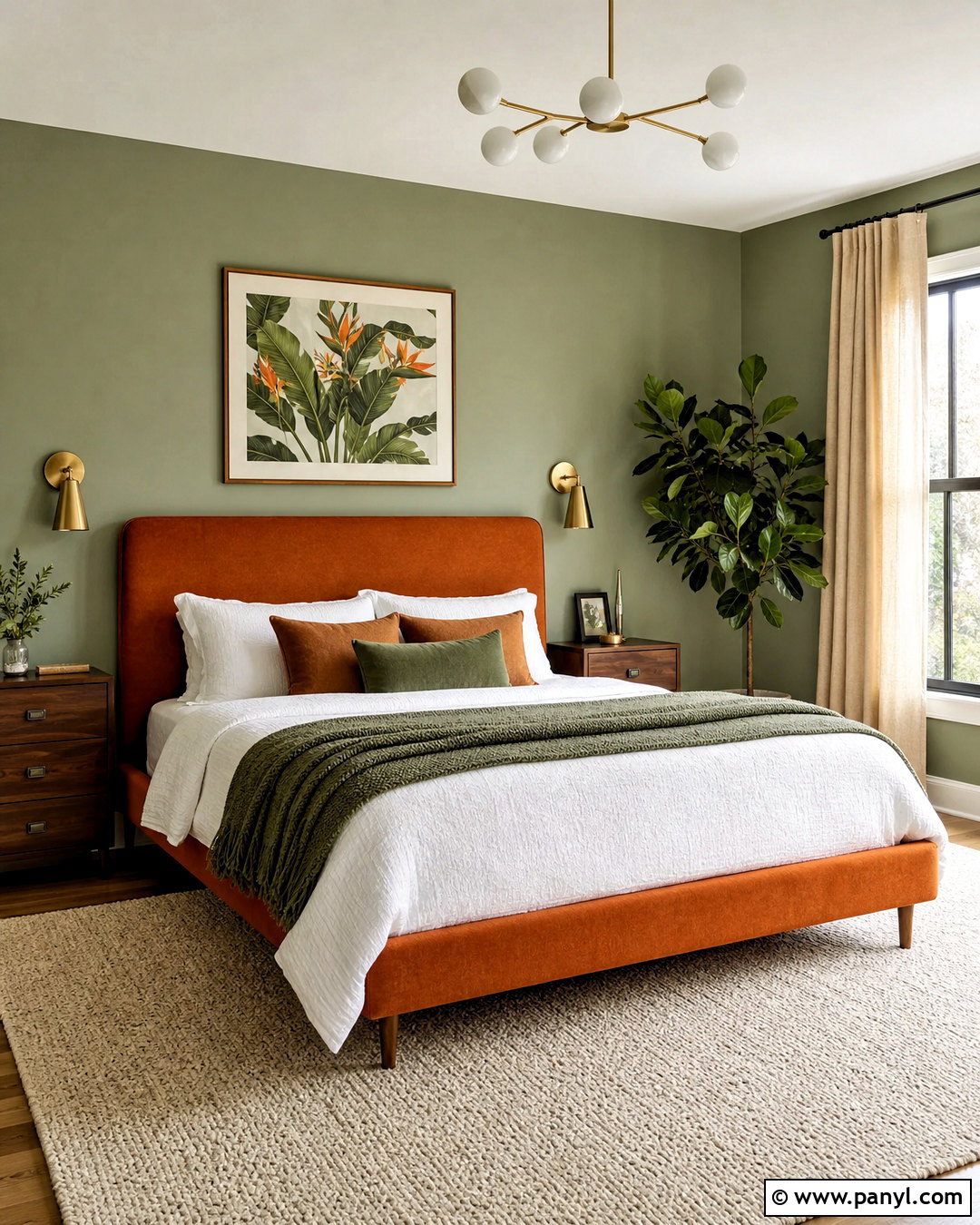
Imagine waking up in a room filled with gentle earth tones and natural texture. Paint the bedroom walls a soft sage green, then use burnt orange for the upholstered headboard, lumbar pillow, and folded bed throw. Choose white or cream bedding to create breathing room between the deeper colors. Walnut nightstands will reinforce the warm palette, while brushed brass sconces provide an elegant metallic accent. Add a beige wool rug under the bed and hang linen curtains in a light oatmeal shade. Botanical prints can connect the green walls with the room’s organic mood. A woven chair, handmade pottery, and a few leafy plants complete the design. The result feels colorful, grounded, and suitable for year-round decorating.
5. Burnt Orange Boho Living Room
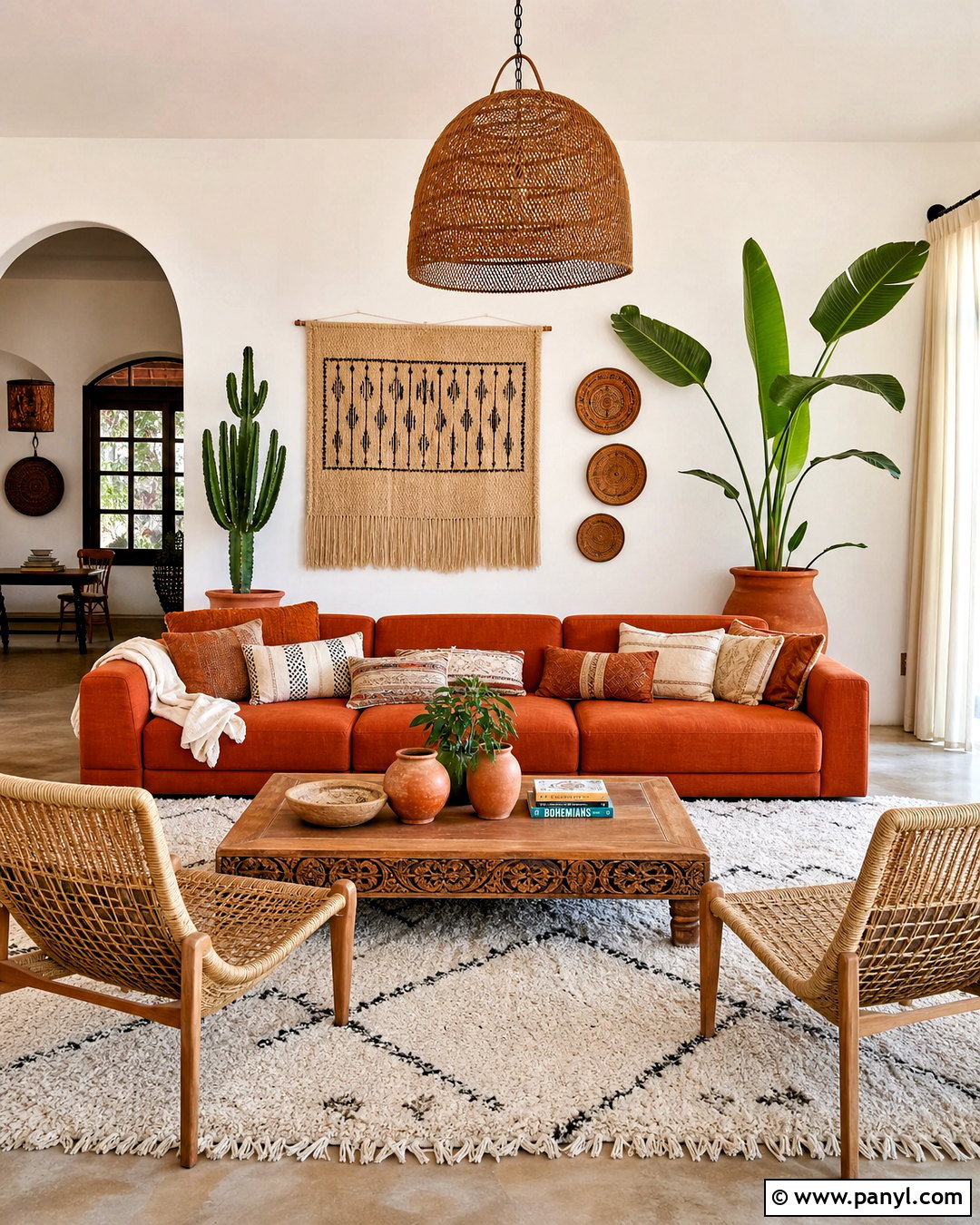
For a relaxed boho look, combine burnt orange upholstery with layered natural materials and handcrafted accents. Center the room around a low-profile rust-orange sofa, then add a carved wood coffee table and two woven rattan chairs. Use a large cream rug with a subtle black geometric pattern to anchor the furniture. Layer the sofa with mustard, brown, and ivory pillows, but leave enough open space to keep it from looking crowded. Hang neutral macramé, framed textile art, or a small curated gallery above the sofa. Natural linen curtains, woven baskets, and terracotta planters strengthen the earthy palette. Finish with several leafy plants and a sculptural floor lamp. The entire room should feel collected, comfortable, and intentionally balanced.
6. Burnt Orange Midcentury Living Room
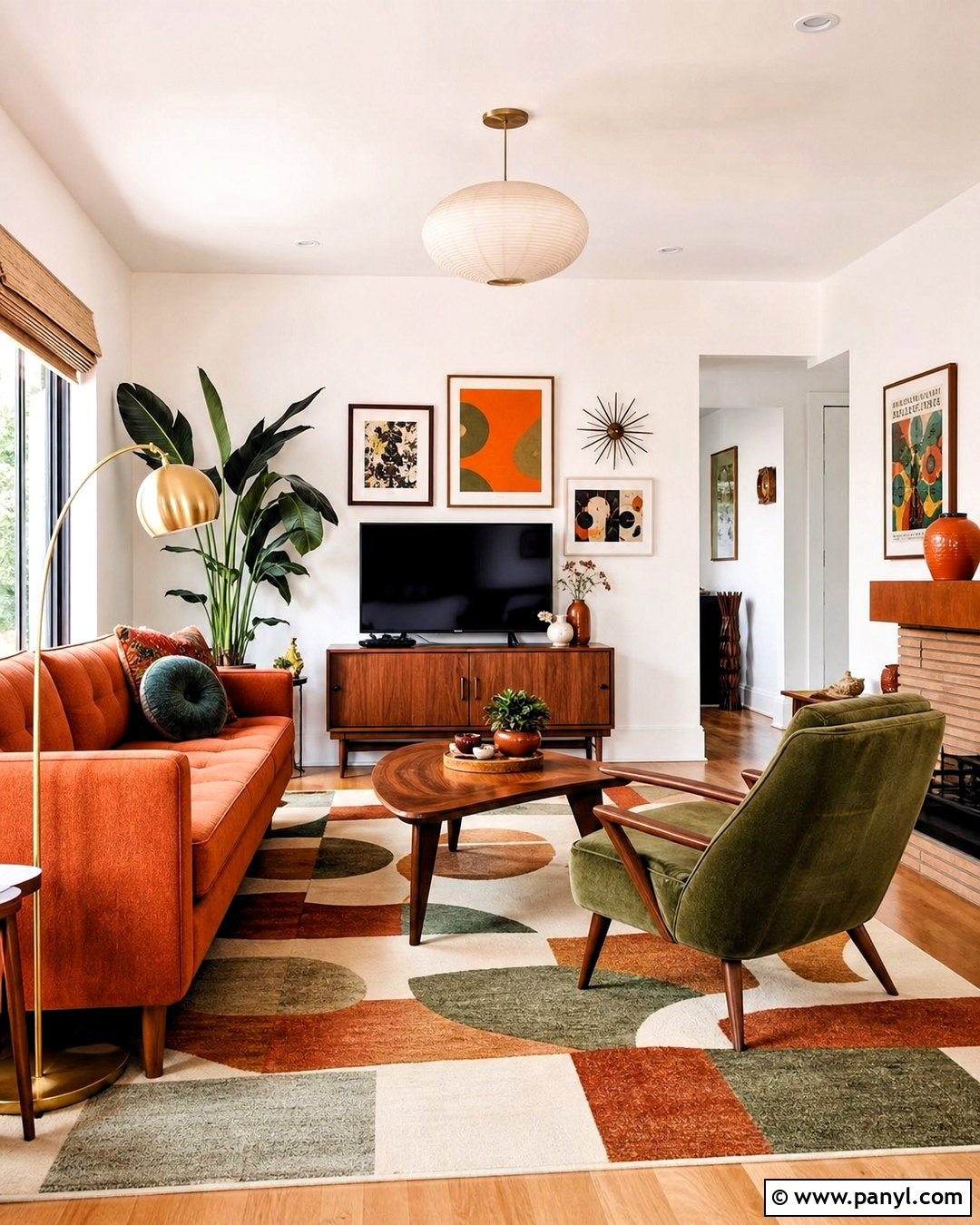
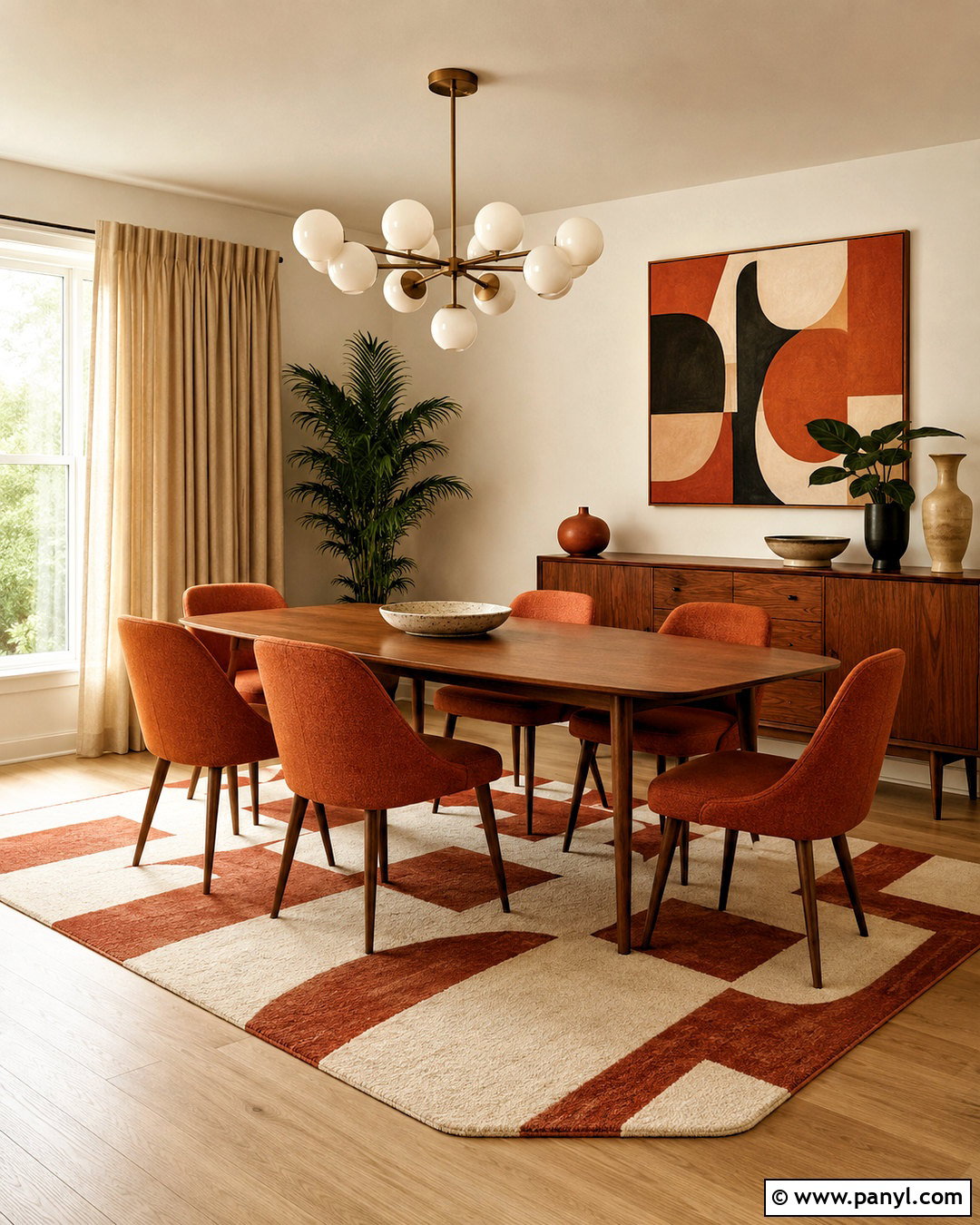
Burnt orange naturally suits a midcentury-inspired room when paired with walnut furniture and clean shapes. Select a streamlined burnt orange sofa with tapered wood legs and position it opposite a walnut media console. Add an olive green lounge chair for contrast and a rounded teak coffee table at the center. Warm white walls will keep the darker furniture from making the space feel dated. Choose a geometric rug in cream, rust, olive, and brown to connect the palette. A brass arc lamp and globe-shaped ceiling fixture can reinforce the period influence without creating a themed appearance. Complete the room with abstract artwork, ceramic vessels, and one tall plant. Keep the arrangement open and uncluttered to highlight each distinctive furniture silhouette.
7. Burnt Orange Dining Room
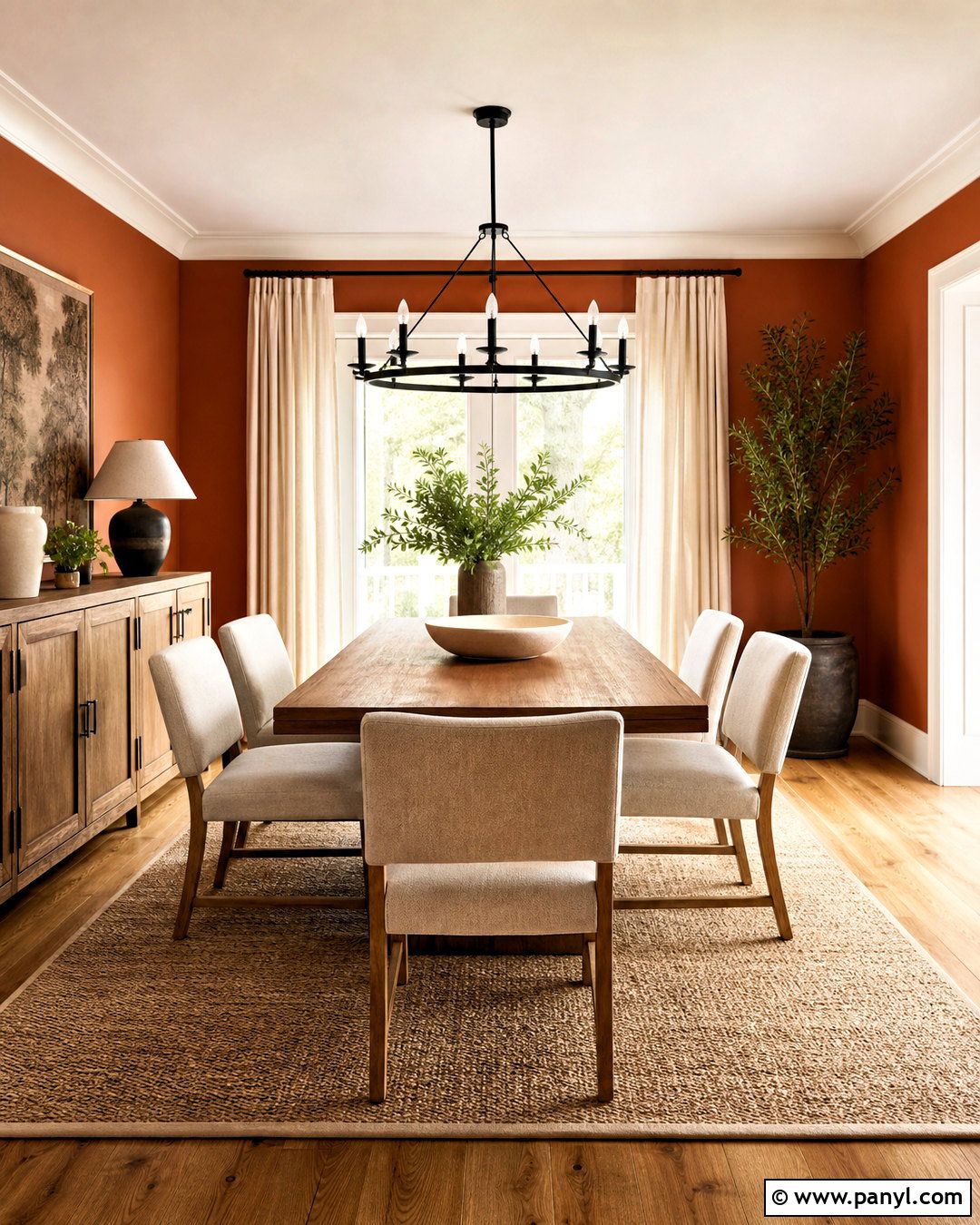
Would you like a dining space that feels warm and memorable without becoming too formal? Cover the walls in a muted burnt orange paint, then balance them with a substantial oak dining table and cream upholstered chairs. A natural jute or wool rug can soften the floor and visually define the table. Hang a matte black chandelier above the center for contrast and structure. Use an oak sideboard to store serving pieces while providing space for neutral ceramics and framed artwork. Ivory linen curtains will brighten the perimeter and reduce the visual weight of the orange walls. Add greenery in a stoneware vase and simple brass candleholders. This complete palette feels intimate enough for everyday meals and polished enough for gatherings.
8. Burnt Orange Dining Chairs
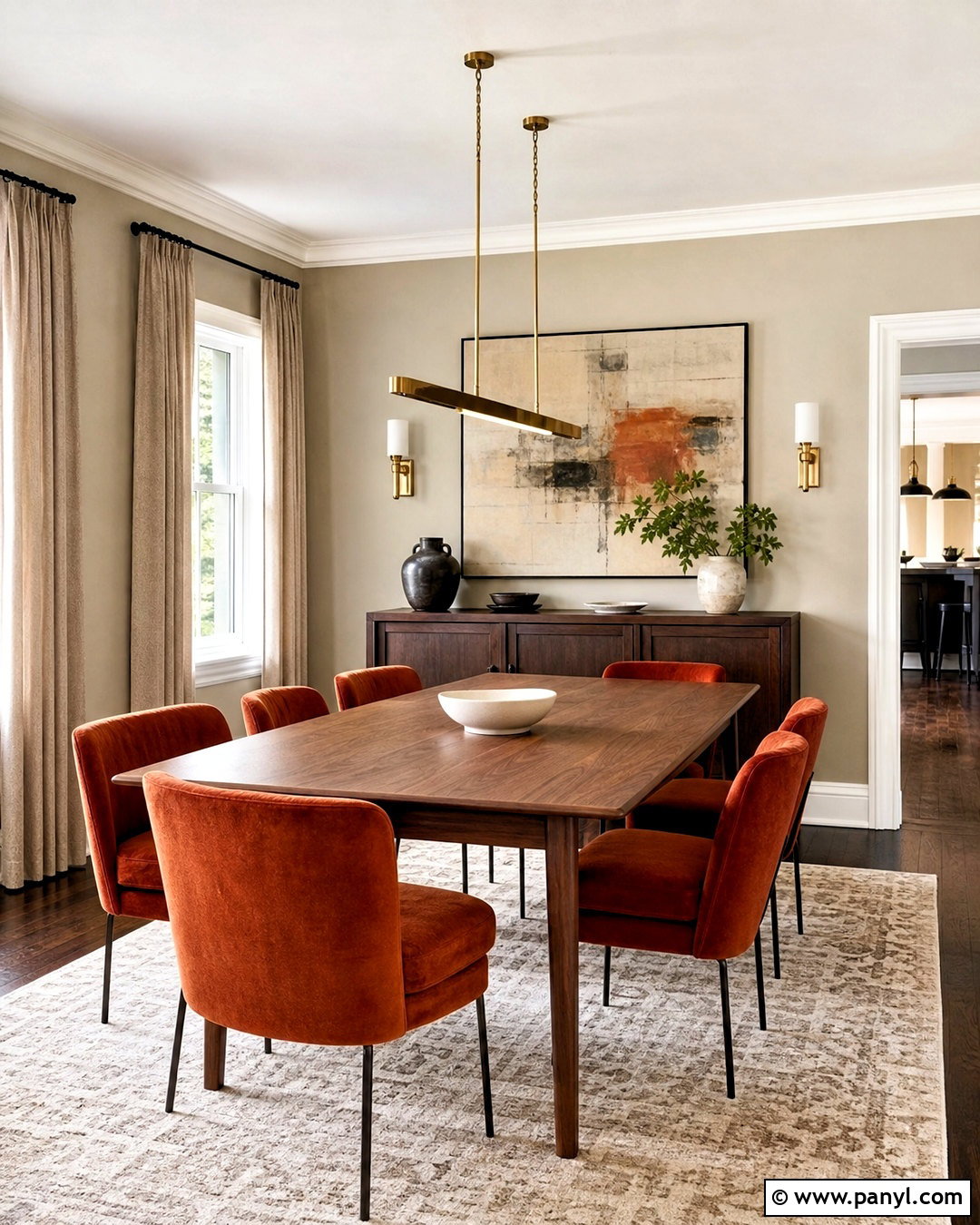
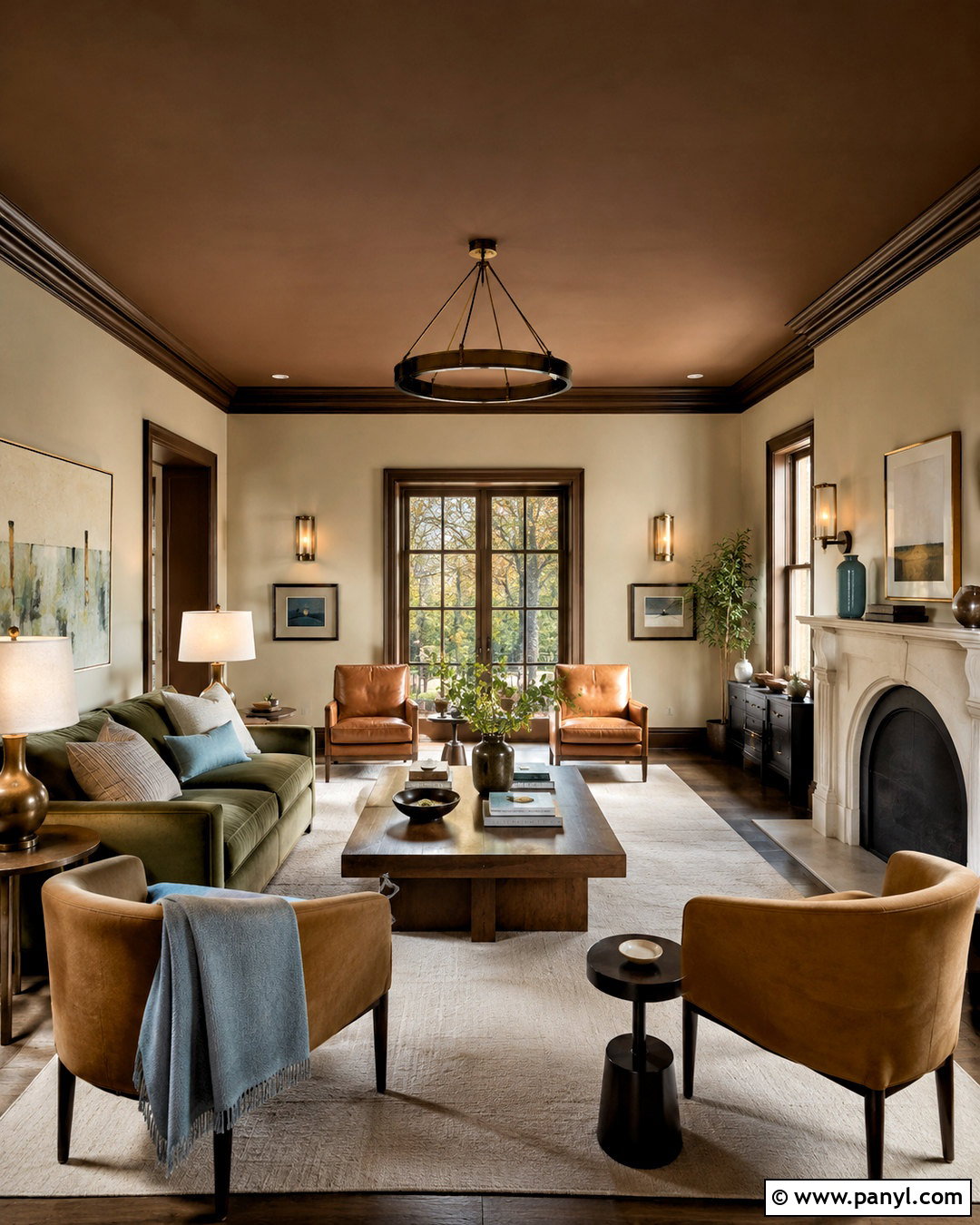
Burnt orange dining chairs offer a practical way to introduce color without painting the room. Arrange rust-colored velvet or textured linen chairs around a medium walnut table. Keep the walls soft greige and use warm white trim for a clean neutral background. A cream-and-tan patterned rug beneath the table will ground the arrangement and protect the floor. Choose a linear brass pendant that follows the shape of the table. A dark wood sideboard can provide contrast, while an oversized abstract print repeats small amounts of orange, brown, and black. Add natural greenery and off-white stoneware to soften the polished furniture. The finished dining room feels coordinated because the bold chairs remain the clear focal point within a restrained setting.
9. Burnt Orange Kitchen Cabinets
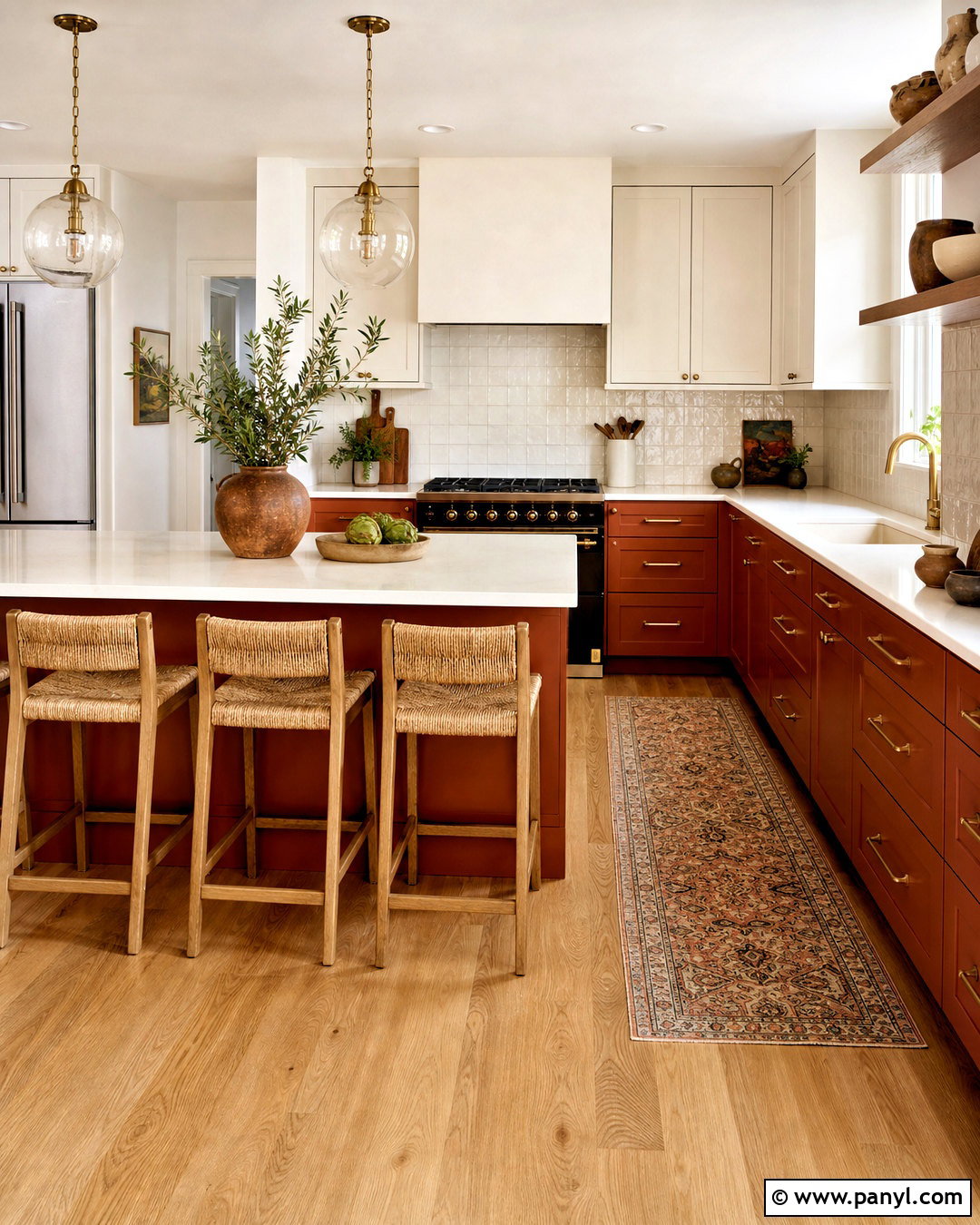
Burnt orange cabinets can give a kitchen an inviting, custom appearance when the surrounding finishes remain simple. Use the color on lower cabinets and the island, then install warm white upper cabinetry to keep the room visually open. Select creamy quartz countertops with minimal veining and a handmade off-white tile backsplash. Brushed brass hardware will complement the warm cabinet color, while medium oak flooring adds natural continuity. Choose simple counter stools with woven seats and black frames to introduce definition. Glass pendant lights can illuminate the island without blocking the cabinetry. Complete the kitchen with wood cutting boards, neutral pottery, and a small runner containing rust and beige. The balanced palette makes the cabinetry distinctive but still easy to live with.
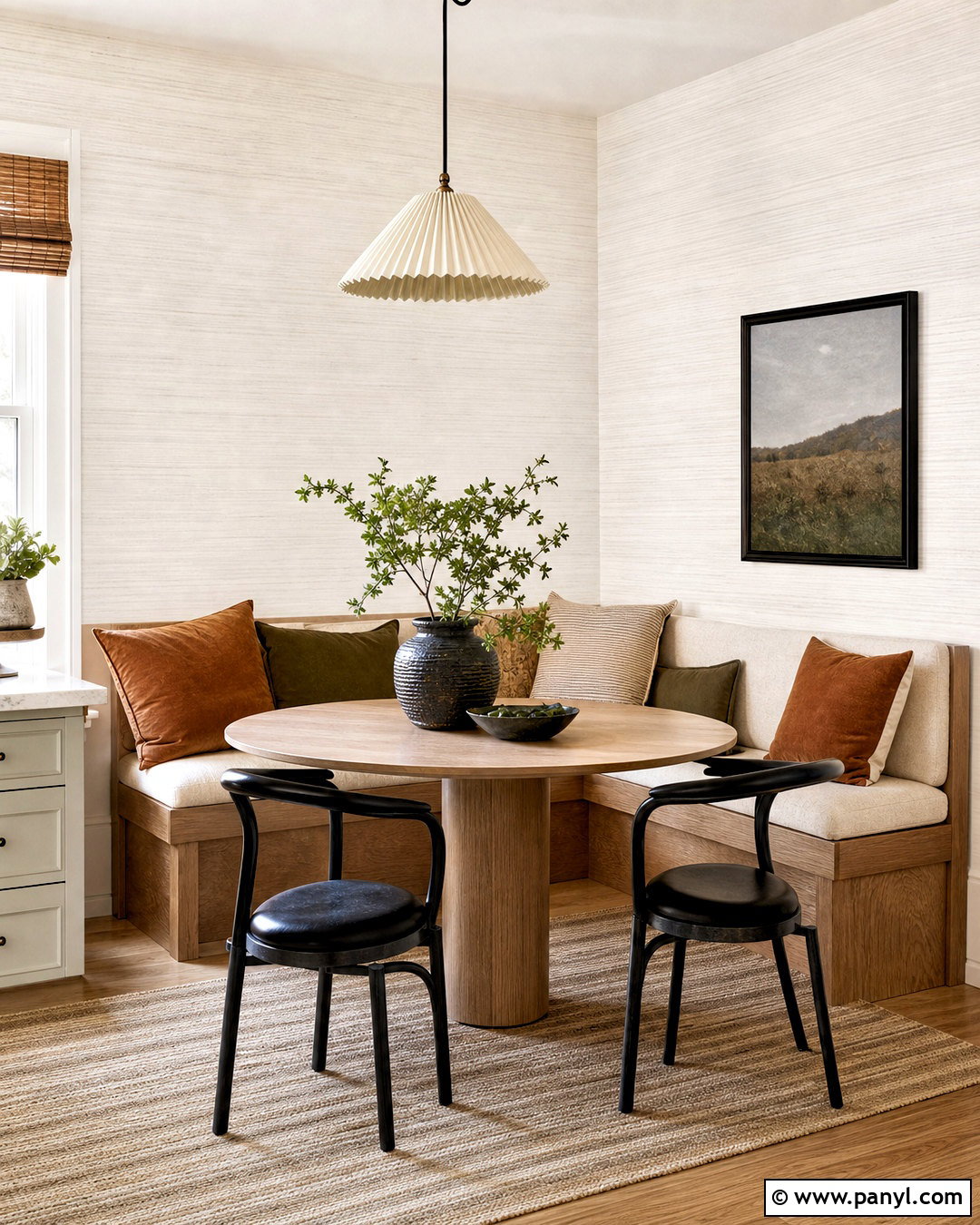
10. Burnt Orange Kitchen Island
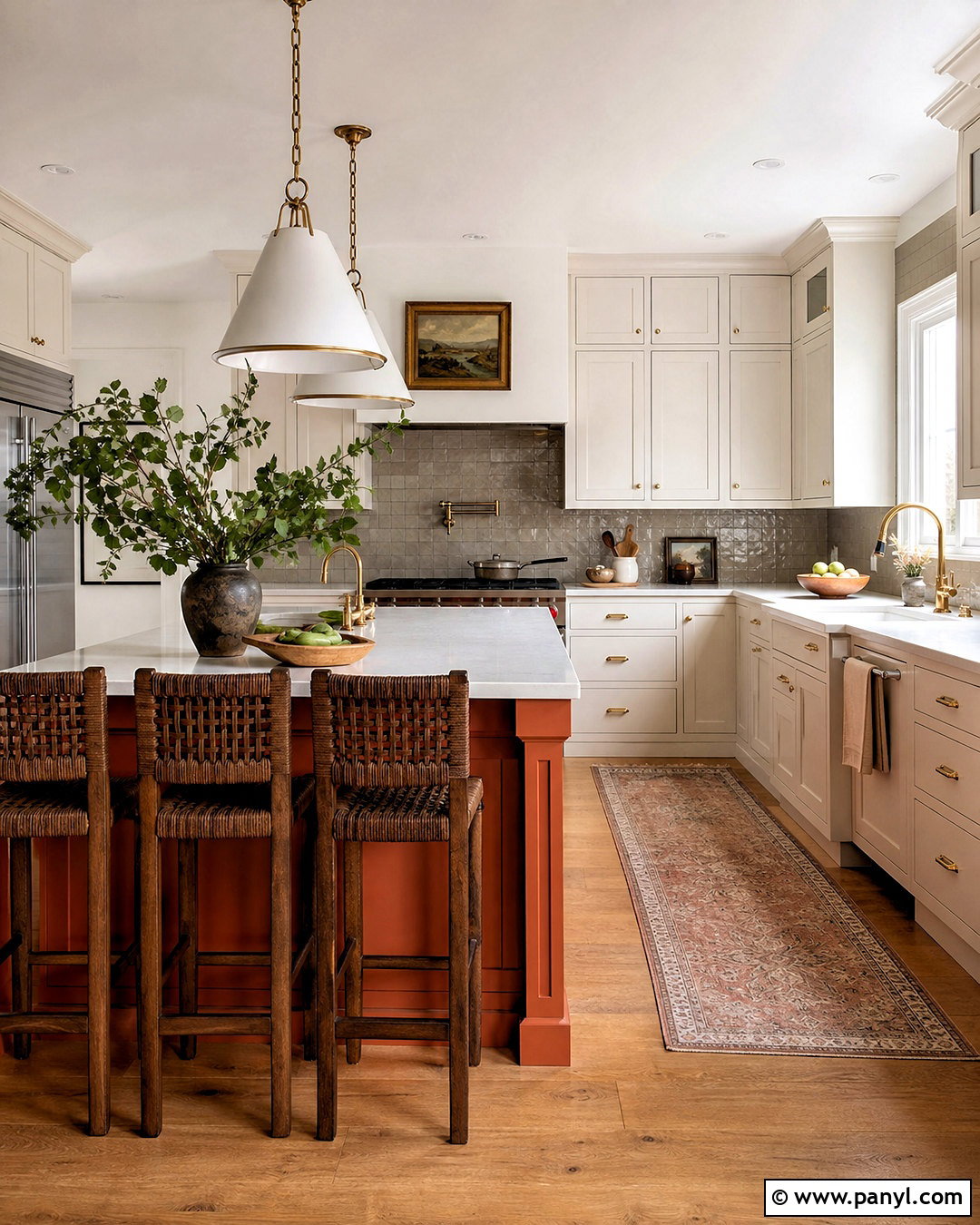
If full orange cabinetry feels too bold, make the kitchen island the center of the color scheme. Paint a substantial island in deep burnt orange and surround it with creamy white perimeter cabinets. Use pale quartz counters throughout so the two cabinet colors remain visually connected. A warm gray backsplash and light oak flooring will provide quiet, practical foundations. Add three walnut counter stools with woven backs, positioning them neatly along the seating side. Brushed brass pulls and oversized white glass pendants can bring light to the deeper island color. Repeat orange sparingly through a patterned runner or small ceramic bowl. With the remaining surfaces calm and neutral, the island becomes a strong architectural feature instead of an isolated burst of color.
11. Burnt Orange Bathroom Vanity
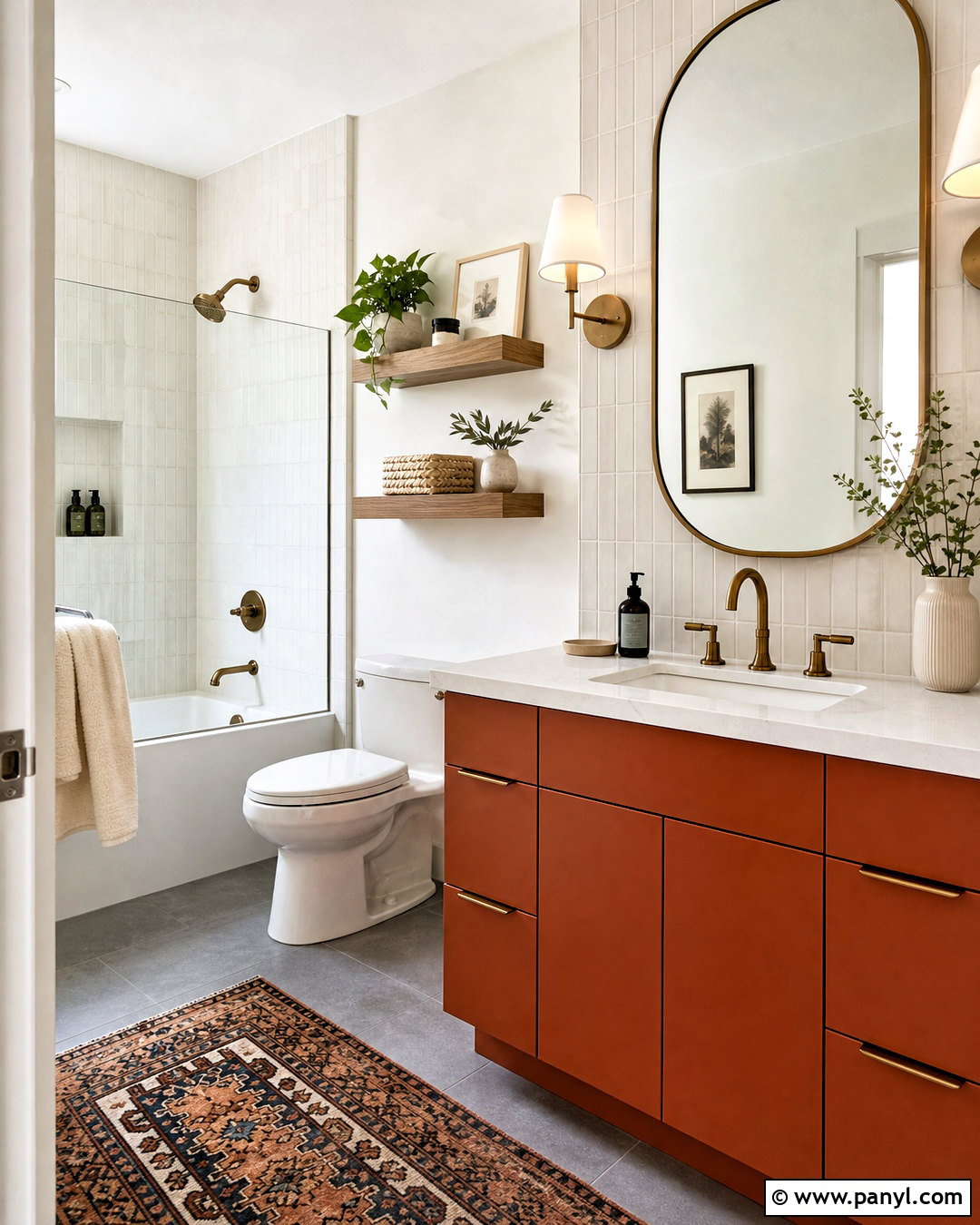
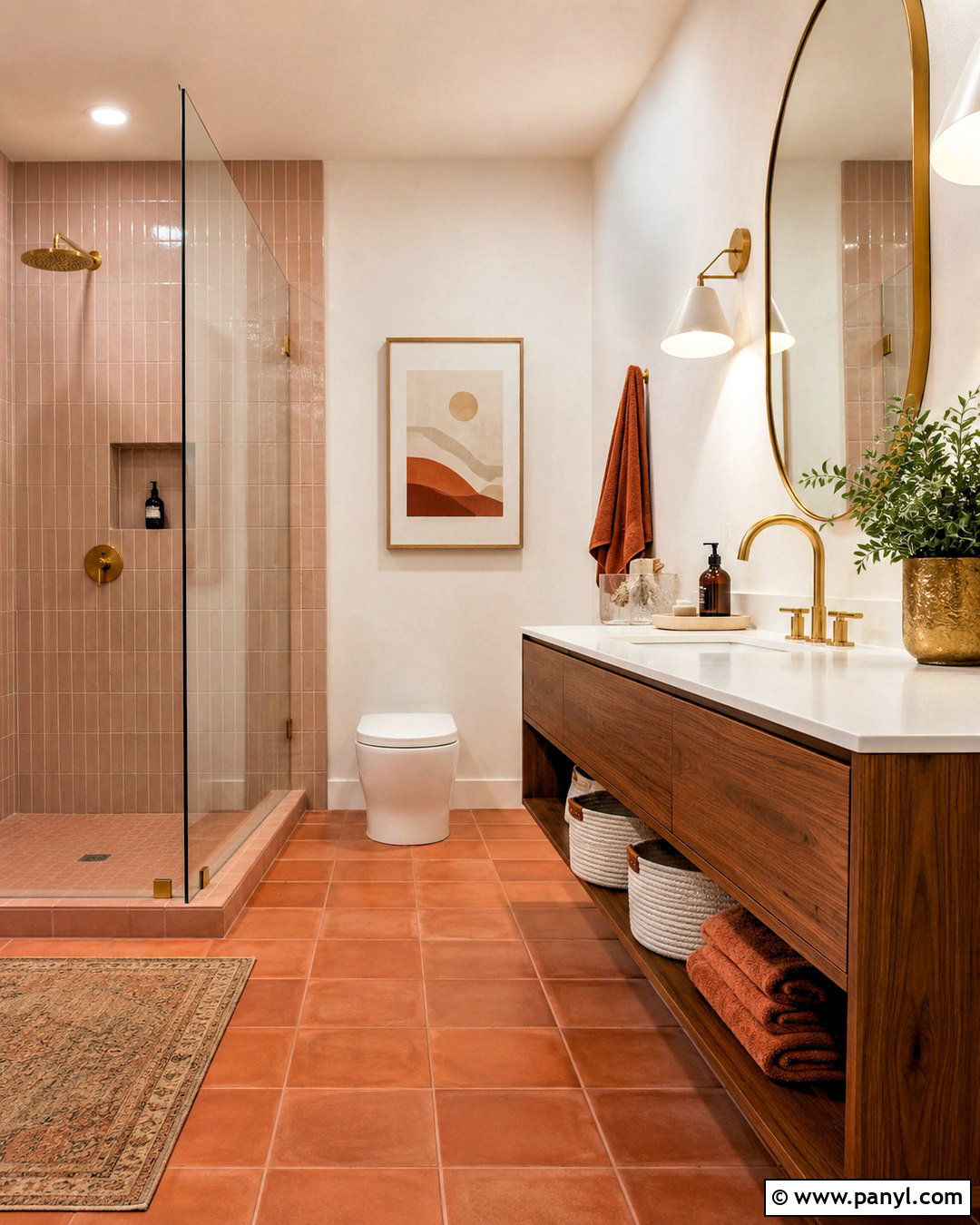
A burnt orange vanity can transform a compact bathroom without requiring color on every surface. Choose a flat-panel vanity in a rich rust-orange finish and top it with clean white quartz. Install an off-white vertical tile backsplash extending behind a rounded brass-framed mirror. Matte black or aged brass fixtures will provide clear definition against the light counter. Keep the floor grounded with warm gray stone-look tile, then add a washable runner featuring beige and subtle orange patterning. White walls and a glass shower enclosure will help the bathroom feel open. Complete the room with natural wood shelves, neatly folded cream towels, and a small green plant. The final design feels fresh, functional, and more permanent than a collection of temporary accessories.
12. Burnt Orange Powder Room
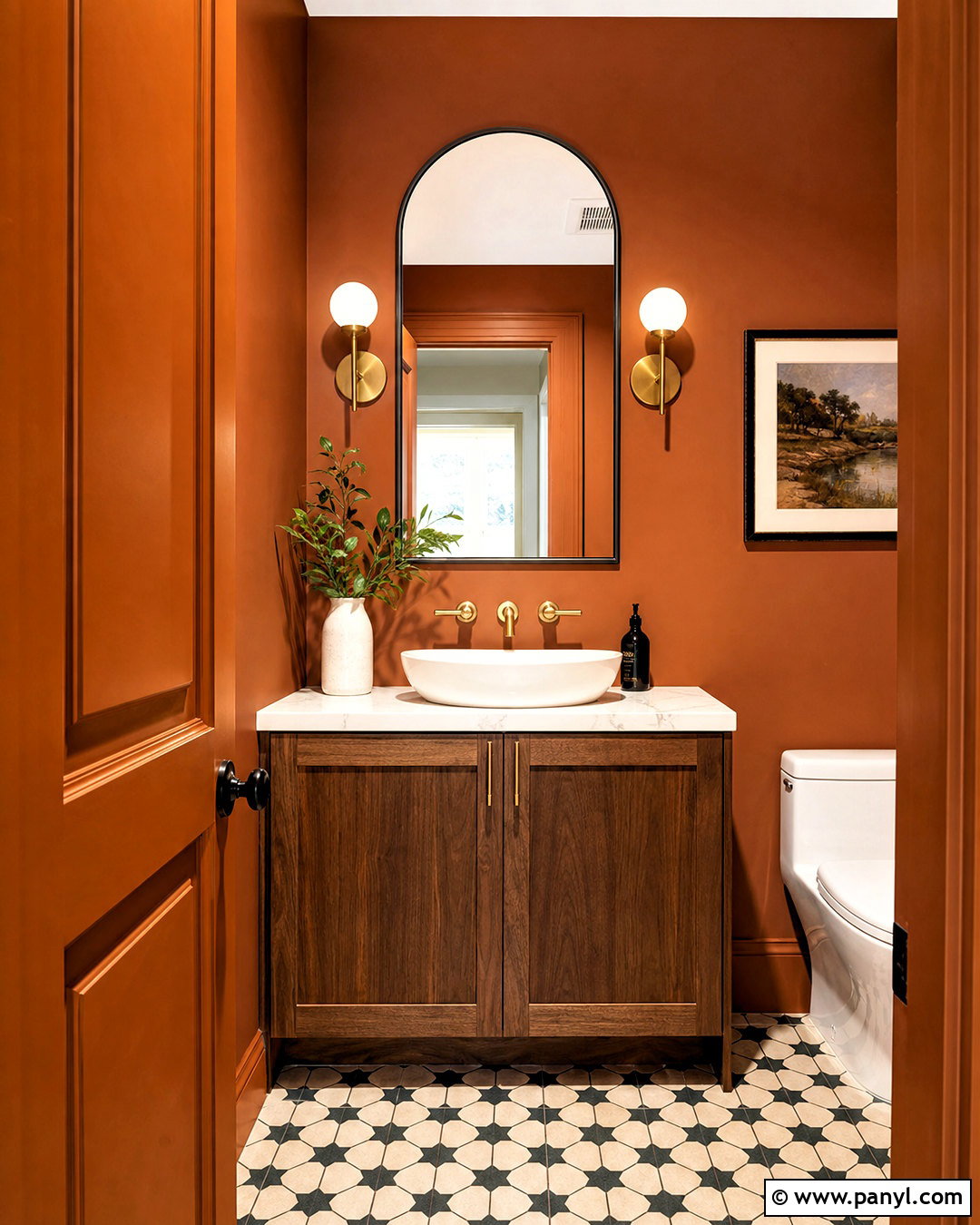
Small powder rooms can handle an immersive burnt orange palette because they are used for shorter periods. Paint the walls and trim in the same muted rust shade to create a seamless envelope of color. Balance that intensity with a compact walnut vanity, white stone countertop, and warm white vessel sink. A tall arched mirror will reflect light and make the room feel less enclosed. Install a pair of opal glass sconces with antique brass fittings on either side. For the floor, choose small cream-and-black geometric tiles that add crisp pattern. Finish with a framed landscape print, a simple hand towel, and one ceramic container. The complete room feels bold and intentional while remaining practical, clean, and welcoming for guests.
13. Burnt Orange Home Office
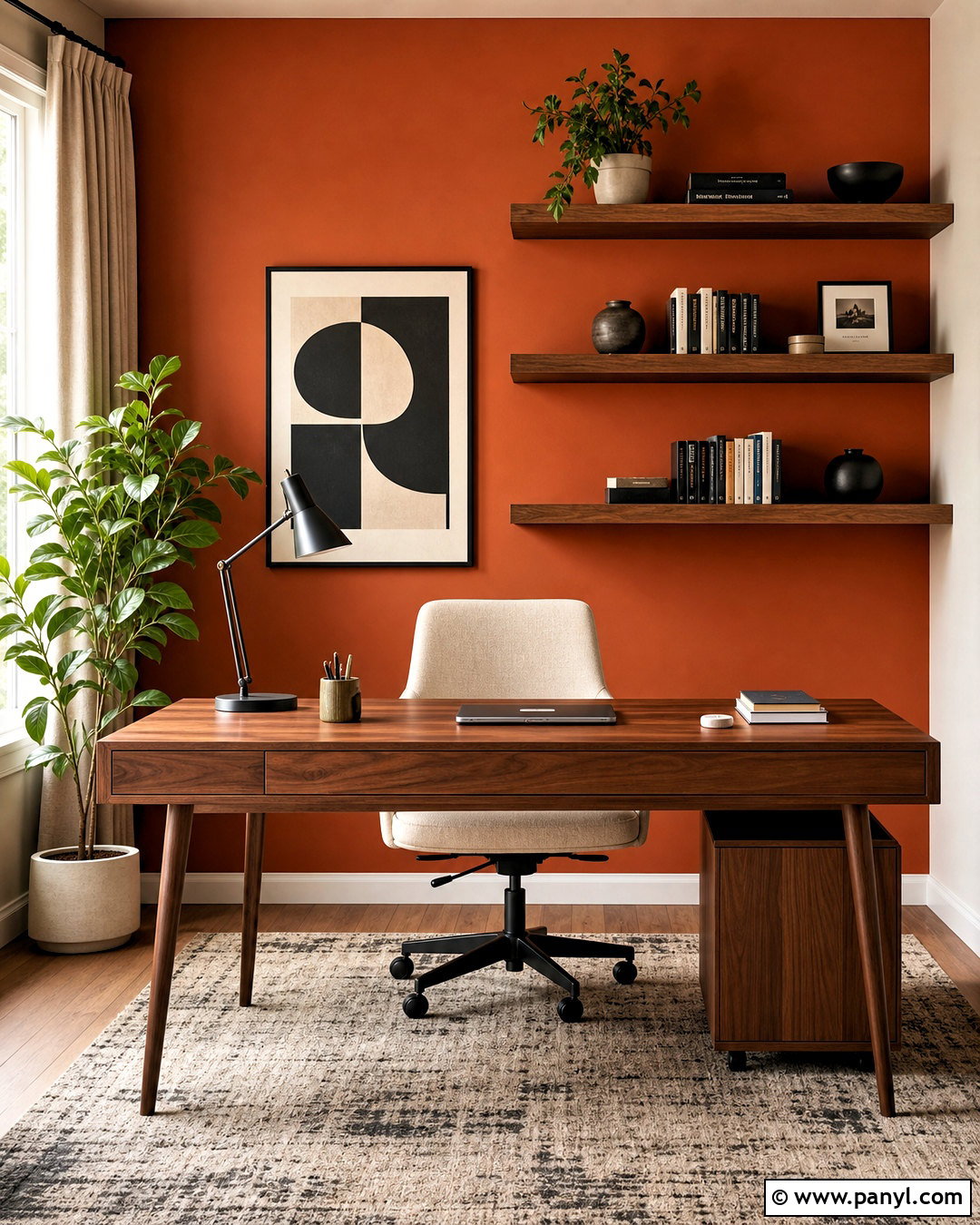
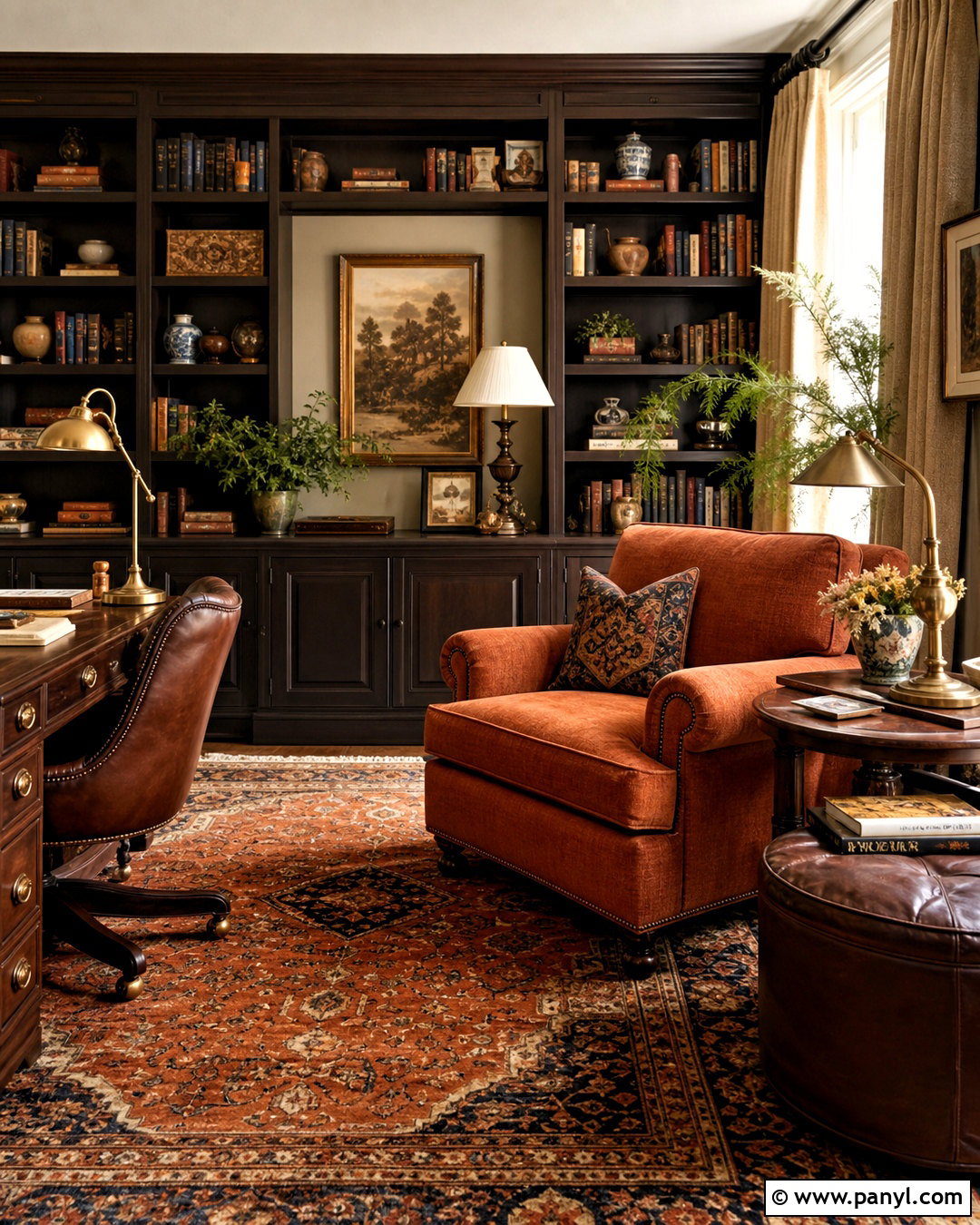
Bring energy into a home office by combining a burnt orange feature wall with functional wood furniture. Position a walnut desk against the painted wall and add a supportive cream upholstered chair. Install floating walnut shelves above the desk for books, storage boxes, and a few decorative objects. Keep the other walls warm white so the workspace remains bright during the day. A flat-woven rug in beige, charcoal, and rust will define the office zone and improve comfort. Add a matte black desk lamp and matching hardware for crisp contrast. Linen curtains can filter glare without darkening the room. Finish with framed graphic art, one leafy plant, and concealed cord storage. This setup feels creative, orderly, and suitable for focused everyday work.
14. Burnt Orange Reading Nook
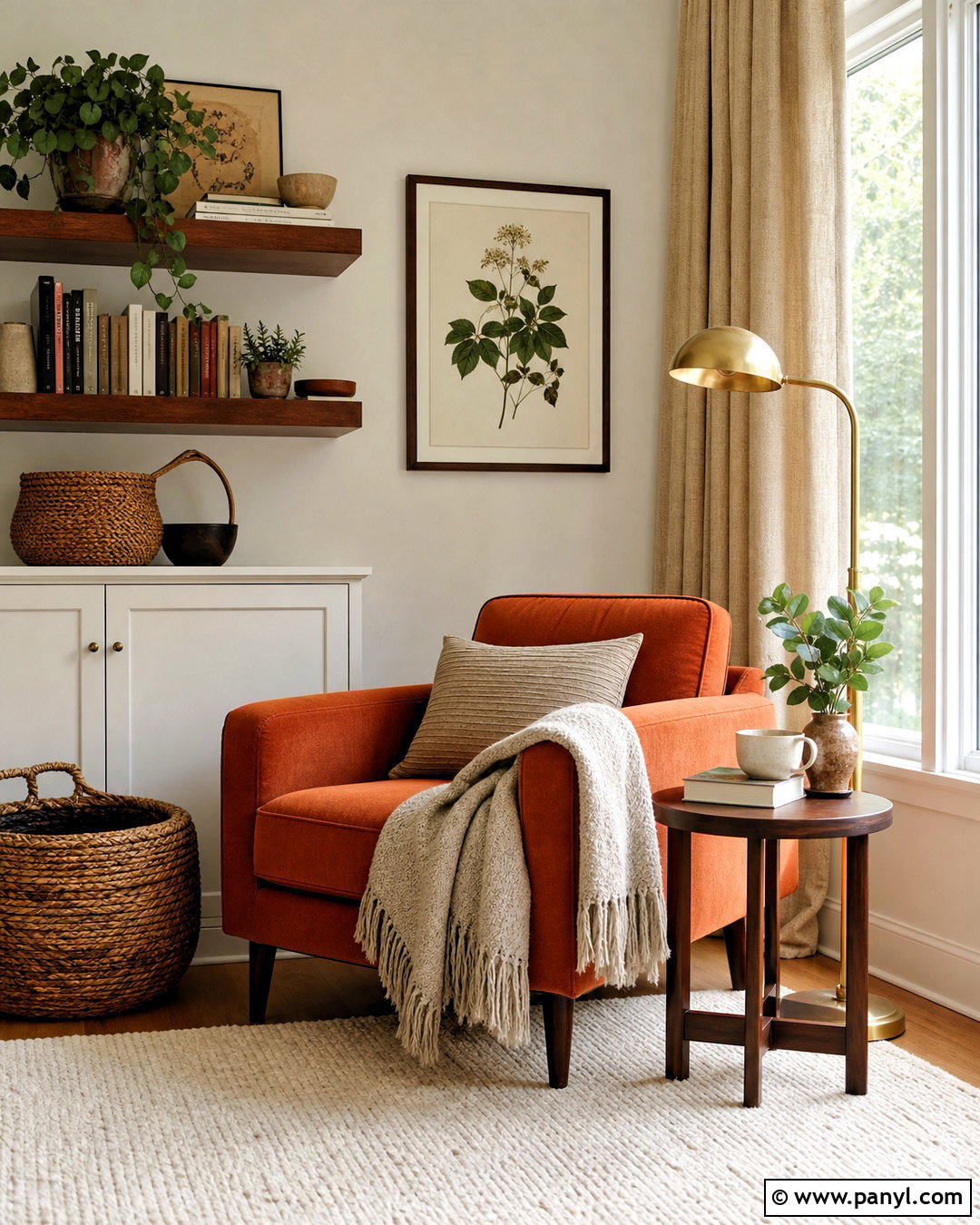
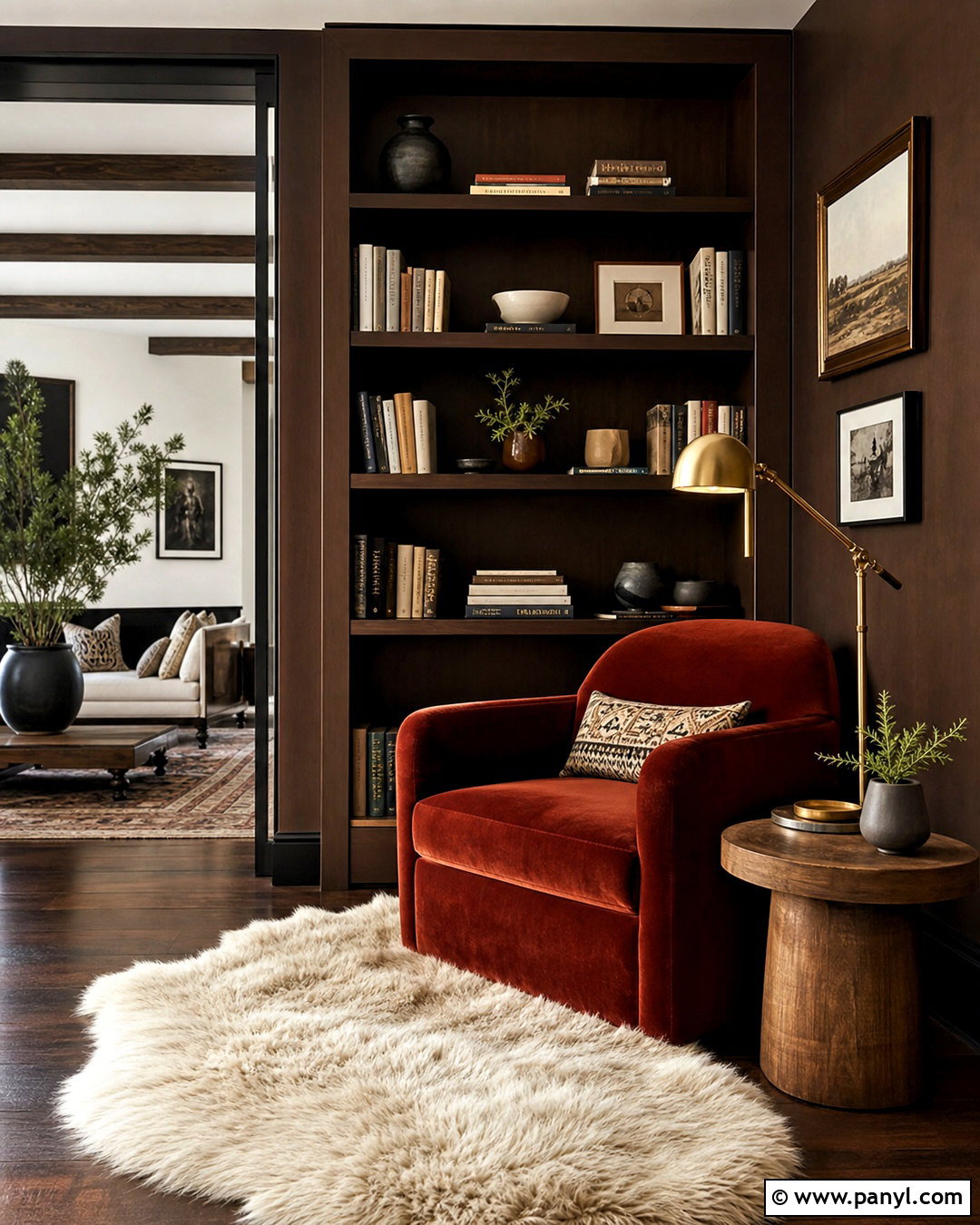
Turn an unused corner into a complete reading nook with one comfortable burnt orange armchair as the anchor. Place it beside a window with soft oatmeal curtains and add a compact walnut side table within easy reach. A brass floor lamp should arch over the chair and provide focused task lighting. Ground the nook with a small cream wool rug, then add a rust-and-beige pillow and a textured neutral throw. Install narrow floating shelves or a low bookcase on the nearby wall to keep favorite books organized. Warm white walls will preserve an airy feeling, while a framed botanical print adds quiet color. Include a small plant and woven basket to finish the corner without reducing valuable floor space.
15. Burnt Orange Entryway
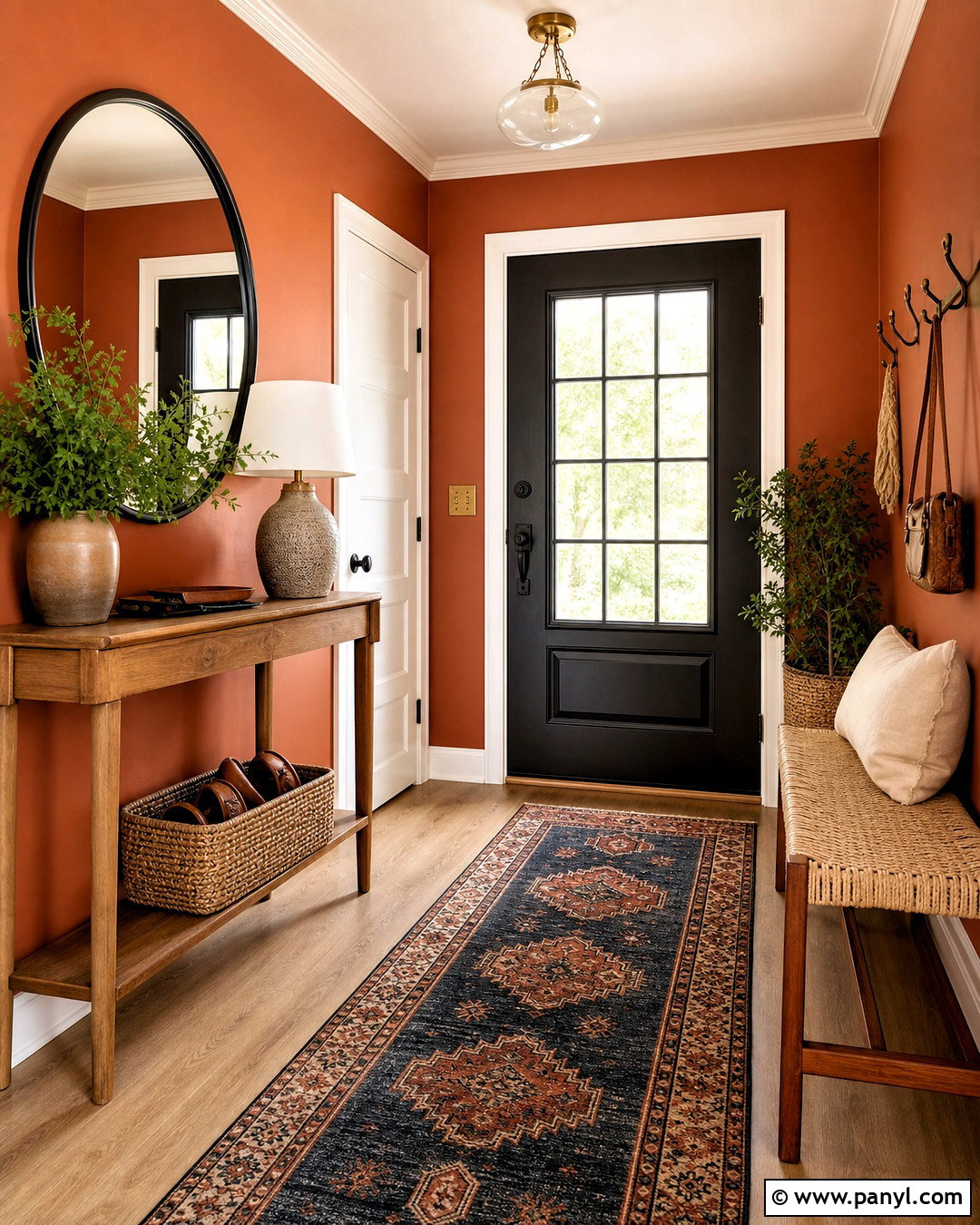
A well-planned burnt orange entryway can make the home feel welcoming from the moment the door opens. Paint the main wall in an earthy rust-orange shade and place a slim oak console against it. Hang a large round black-framed mirror above the console to reflect light and provide practical function. Add a woven bench with a cream cushion along the opposite wall, leaving a clear walkway through the space. A durable vintage-style runner containing navy, beige, and orange will hide daily wear while connecting the palette. Choose a simple brass ceiling light and a ceramic table lamp for layered illumination. Finish with wall hooks, a lidded basket for shoes, and minimal greenery. Every detail should support both organization and visual warmth.
16. Burnt Orange And Charcoal Living Room
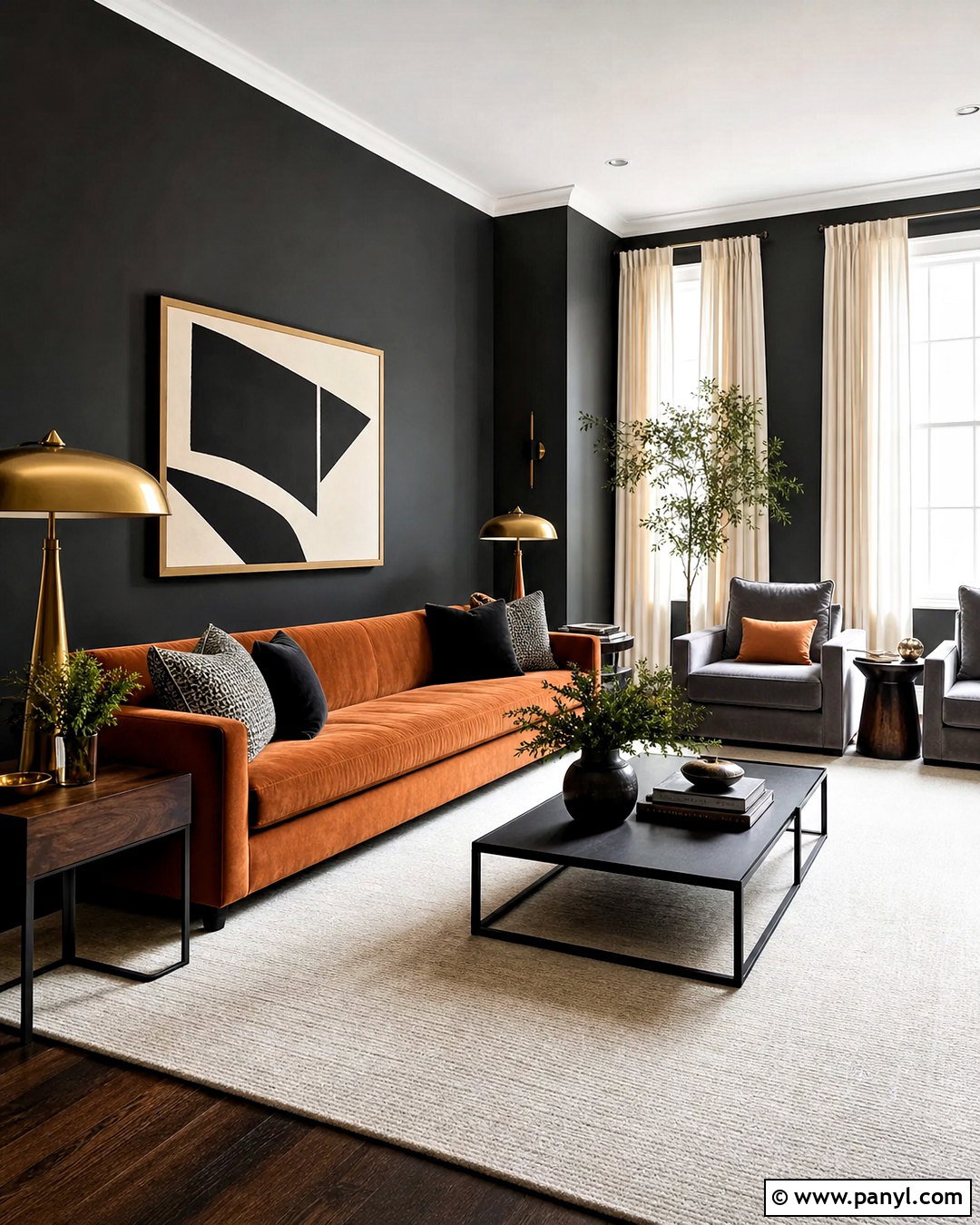
For a dramatic modern room, pair burnt orange seating with charcoal walls and light neutral flooring. Use one long rust-orange sofa as the focal point, then add a pair of soft gray chairs to balance its visual weight. Place the arrangement on a large ivory rug that brightens the center of the room. A black metal coffee table with a pale stone top will connect the dark walls to the lighter floor. Choose cream curtains that reach from ceiling to floor and soften the strong architecture. Add graphic black-and-white artwork with small touches of orange. Walnut side tables and warm brass lamps prevent the scheme from feeling cold. Keep the styling minimal, using carefully spaced objects and greenery to maintain an open contemporary atmosphere.
17. Burnt Orange And Pink Bedroom
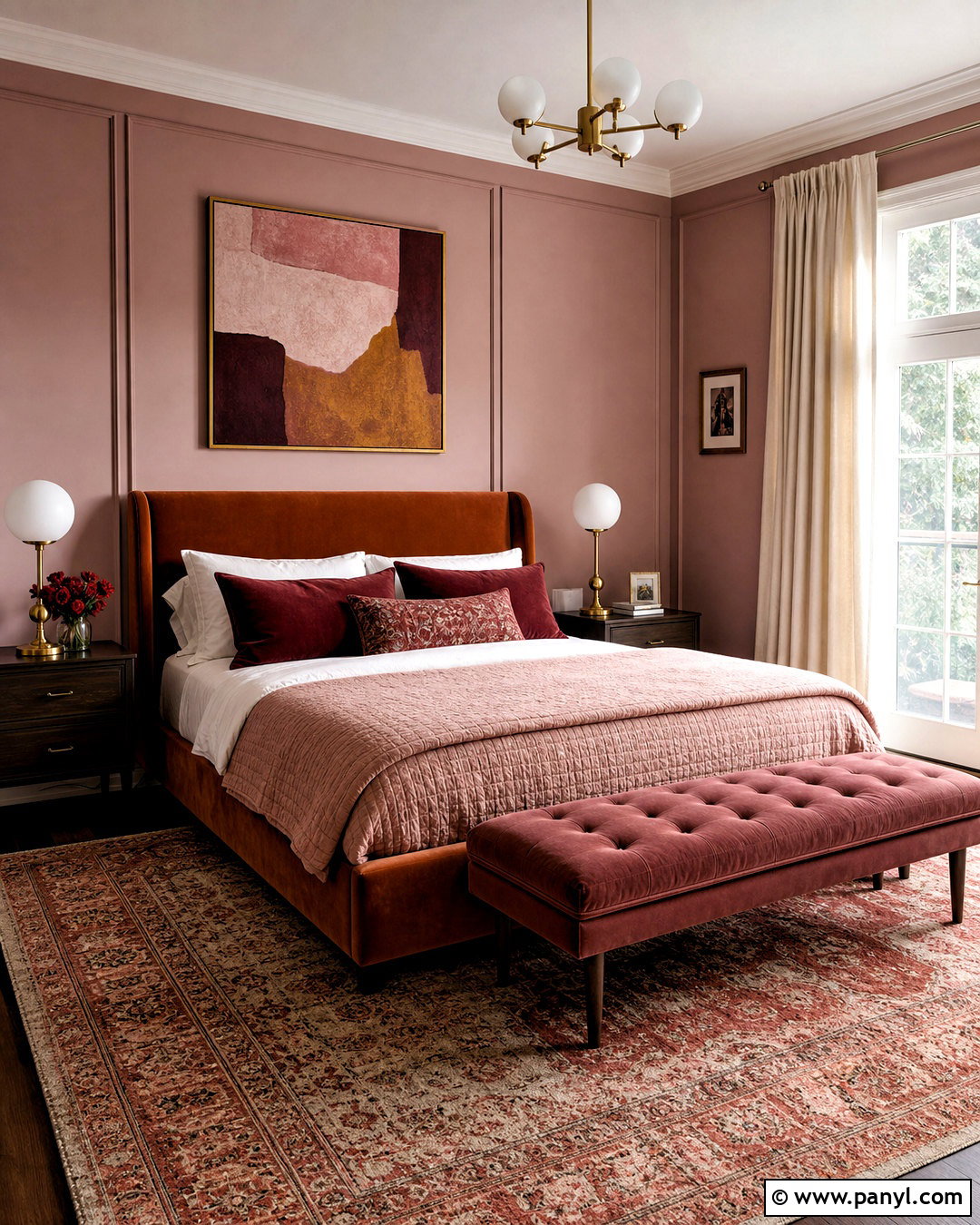
Burnt orange and dusty pink can create a warm bedroom that feels layered rather than overly sweet. Paint the walls a soft blush tone and place a burnt orange upholstered bed at the center. Dress it with ivory sheets, a muted pink quilt, and pillows in rust, cream, and burgundy. Dark walnut nightstands will add needed depth, while brass globe lamps introduce a gentle reflective finish. Ground the furniture with a vintage-style rug containing faded rose, tan, and orange. Choose full-length cream curtains to soften the windows and brighten the palette. Abstract artwork can repeat the room’s colors in small amounts. Finish with a rust velvet bench and a simple ceramic vase. The result feels grown-up, colorful, and comfortably cohesive.
18. Burnt Orange Rustic Living Room
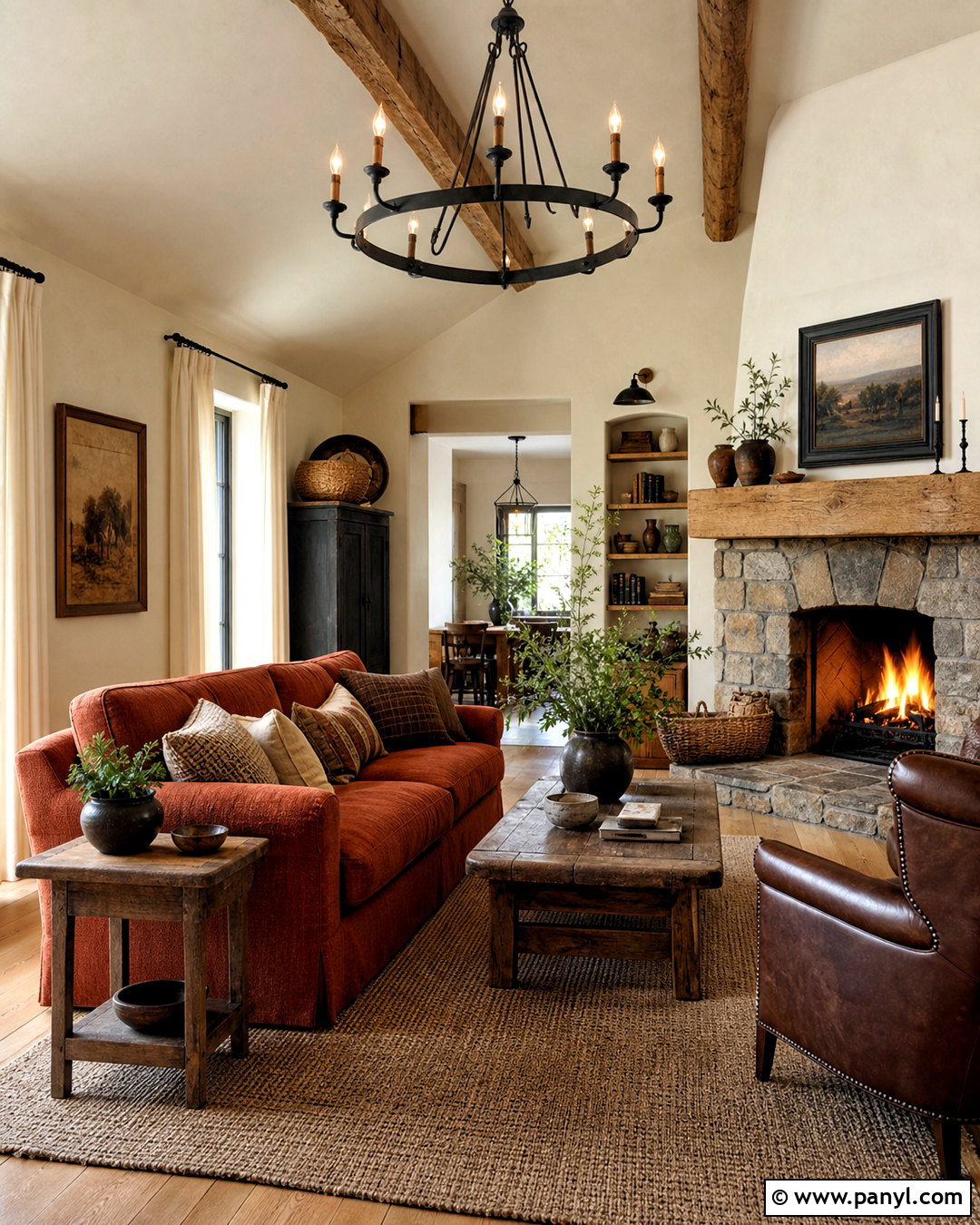
A rustic burnt orange interior works best when the color is surrounded by genuine wood, stone, and woven texture. Begin with a comfortable rust-orange linen sofa facing a simple stone fireplace. Add a reclaimed wood coffee table, brown leather armchair, and large natural jute rug. Keep the walls a warm cream so the room retains plenty of brightness. Exposed wood beams or a substantial oak mantel can deepen the earthy character without making the space feel themed. Use plaid or striped pillows in rust, beige, olive, and brown. Black iron lighting will provide practical contrast. Complete the room with woven baskets, handmade pottery, linen curtains, and understated landscape art. The finished scheme should feel sturdy, relaxed, and welcoming in every season.
19. Burnt Orange Minimalist Bedroom
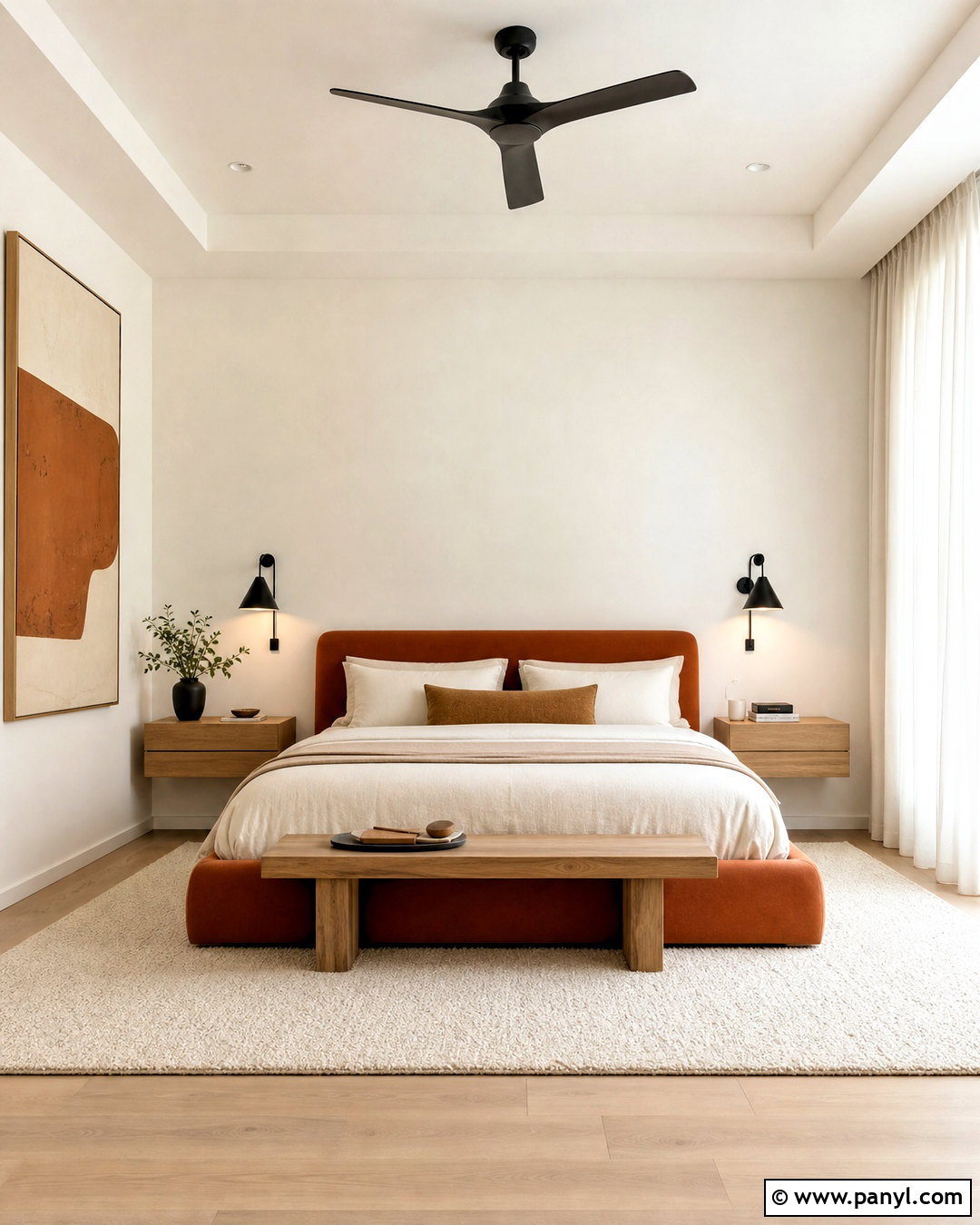
Minimalist rooms do not have to rely entirely on white and gray. Use a low burnt orange upholstered bed to bring warmth into a bedroom with soft white walls and pale oak flooring. Choose plain ivory bedding with one rust-colored lumbar pillow and a neatly folded beige blanket. Install floating oak nightstands to preserve open floor space, then mount simple black sconces above them. A large cream rug can soften the room without adding visual noise. Instead of several small decorations, hang one oversized abstract artwork containing rust, tan, and black. Add full-length sheer curtains and a streamlined oak bench. Careful spacing, hidden storage, and a limited palette allow the strong bed color to feel calm, intentional, and visually balanced.
20. Burnt Orange Maximalist Living Room
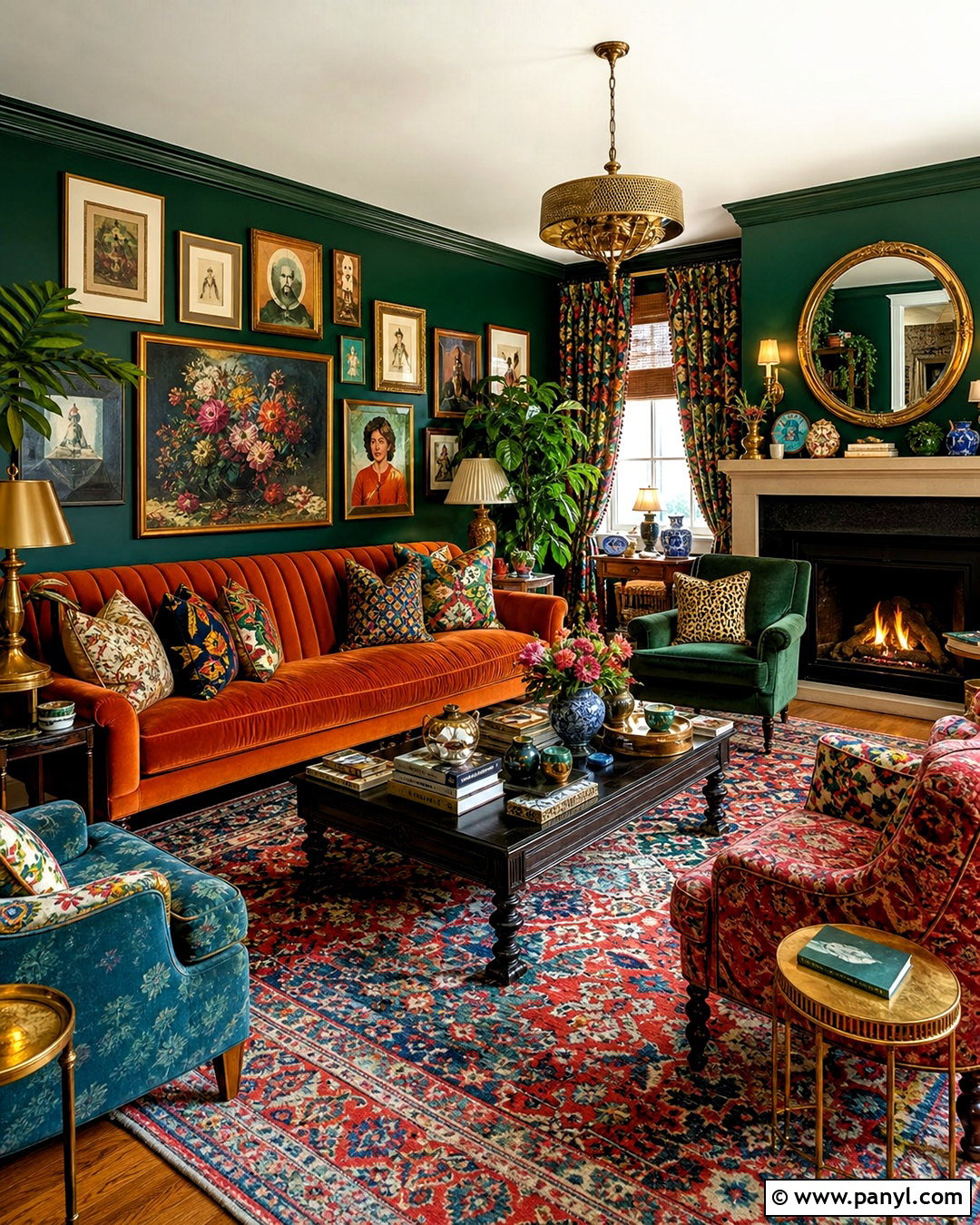
Love layered color and pattern? Build a maximalist living room around a burnt orange velvet sofa, emerald green walls, and a large patterned rug containing navy, gold, pink, and rust. Add mismatched upholstered chairs that share at least one color with the rug. A dark wood coffee table will ground the arrangement, while brass lighting adds shine. Create a full gallery wall with colorful artwork in coordinated black, wood, and gold frames. Patterned curtains can work beautifully if their scale differs from the rug. Use pillows in velvet, embroidery, and woven fabrics, but repeat colors to maintain order. Books, ceramics, and plants should be arranged in clear groups. This controlled repetition makes the richly decorated room feel collected rather than chaotic.
Conclusion:
These 20 burnt orange interior ideas show how flexible this earthy color can be throughout the home. It can anchor a living room sofa, warm up bedroom walls, define kitchen cabinetry, or turn a small bathroom into a memorable space. For a balanced result, combine burnt orange with light neutrals, natural wood, and a few carefully selected contrasting colors. Cream creates softness, navy adds sophistication, green emphasizes its organic character, and charcoal delivers modern drama. Pay attention to texture and lighting because velvet, linen, tile, and painted wood can make the same color appear very different. Start with one clear focal point, repeat the shade selectively, and let the complete room develop around it.

Related Ideas and Inspiration:
Leave a Reply