
These 20 orange interior ideas show how warm citrus, terracotta, apricot, rust, and burnt orange can transform every room without making a home feel overwhelming. Orange is especially effective when balanced with creamy neutrals, natural wood, deep blue, soft green, or charcoal. It can energize a kitchen, create a cocooning bedroom, or give a plain entryway an inviting identity. The color is also enjoying renewed attention in interiors, particularly through earthy, retro-inspired shades and brighter mango tones. () Whether you prefer a bold painted room or carefully layered accents, the key is building a complete palette with repeated colors and consistent materials. Explore the following 20 orange interior ideas.

1. Burnt Orange Living Room
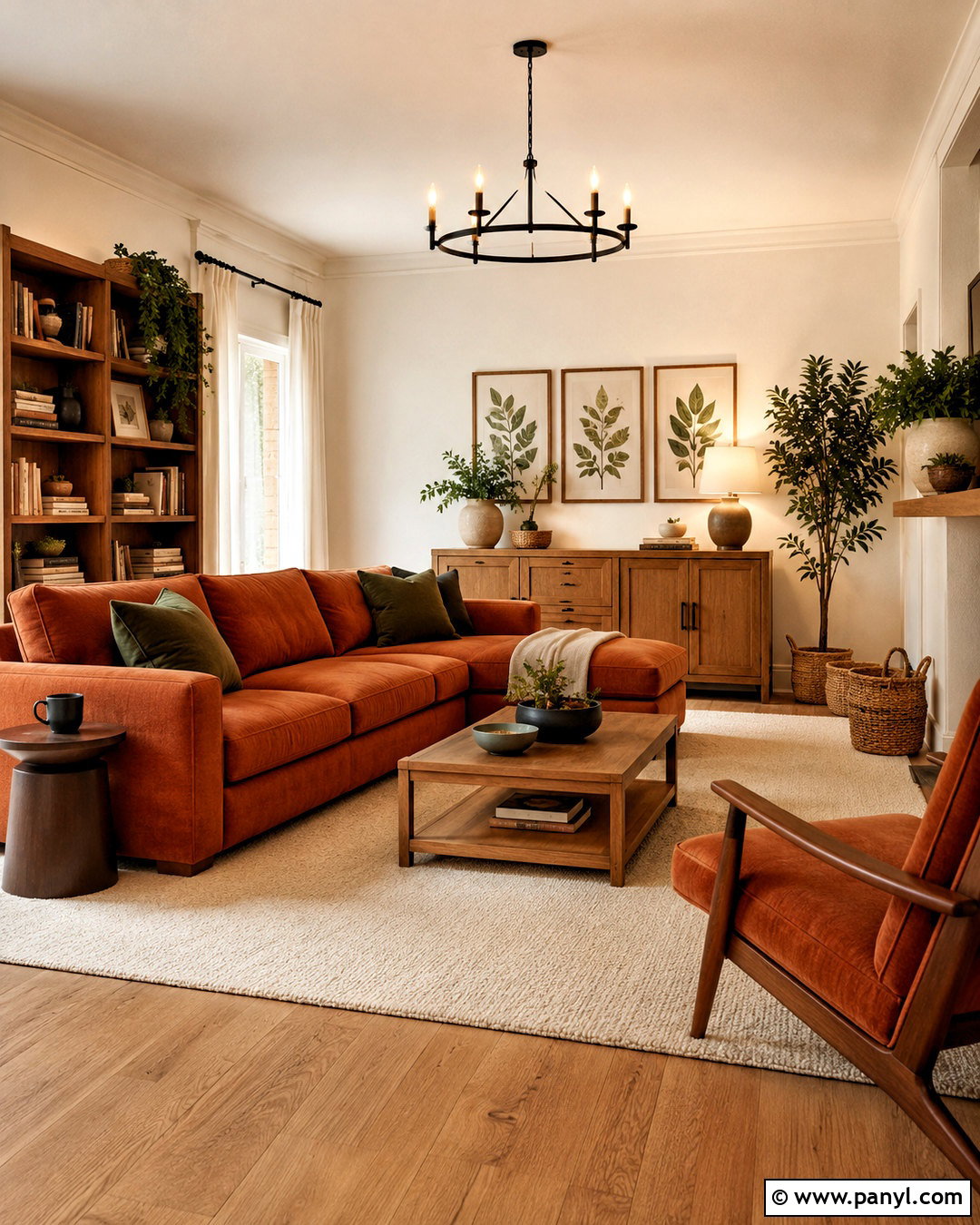
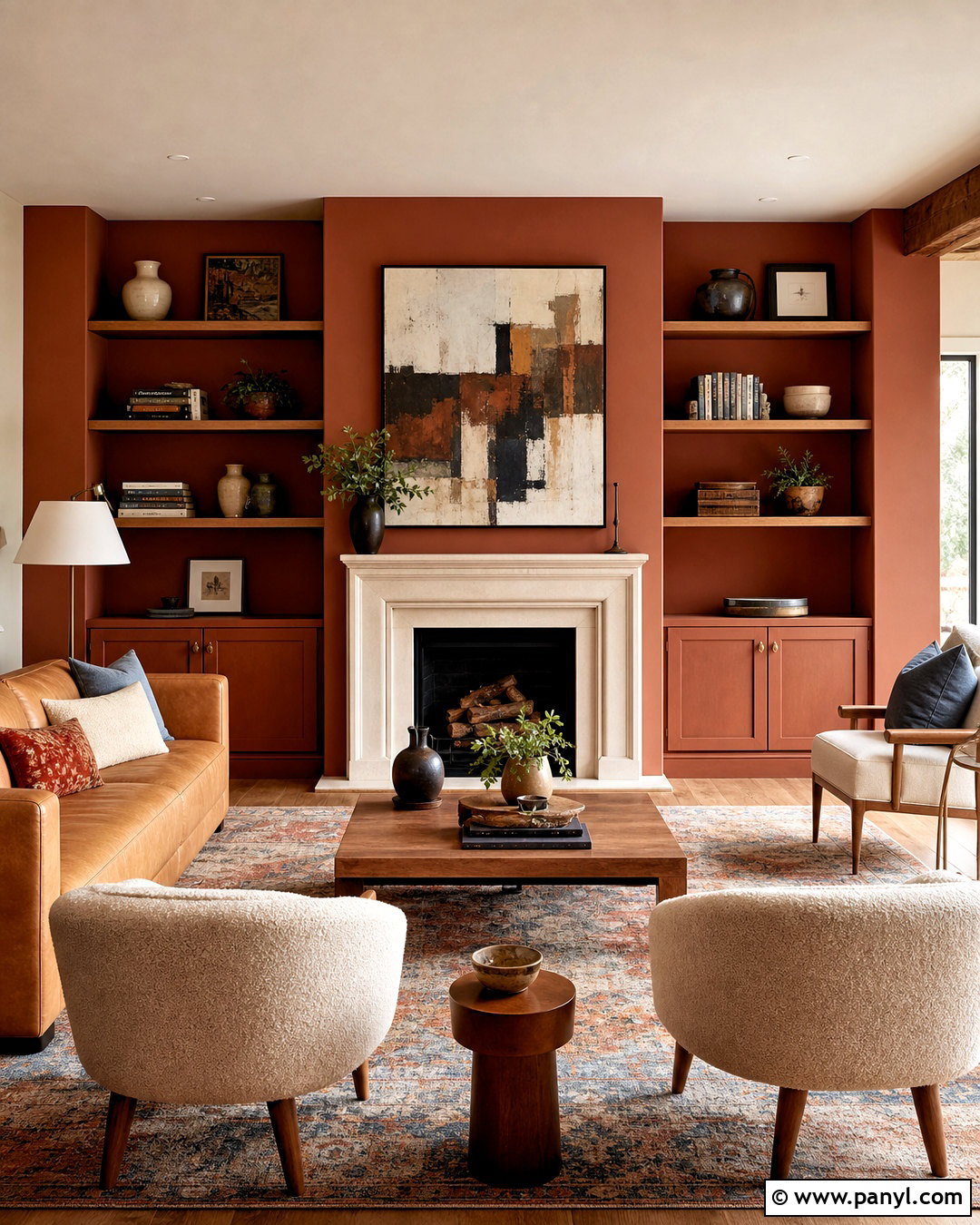
Burnt orange creates a living room that feels warm, grounded, and comfortable throughout the year. Start with a burnt orange sofa as the main focal point, then surround it with warm white walls and medium-toned oak furniture. A cream wool rug will soften the strong upholstery color, while walnut side tables add deeper contrast. Bring in muted olive green through pillows, ceramic pieces, or a single lounge chair. Black metal lighting gives the room a cleaner, more contemporary edge. Choose artwork that repeats orange, brown, and green without matching the sofa exactly. Finish with off-white curtains, woven baskets, and several leafy plants. This balanced palette allows the orange furniture to stand out while keeping the full room calm and highly livable.
2. Orange And Navy Living Room
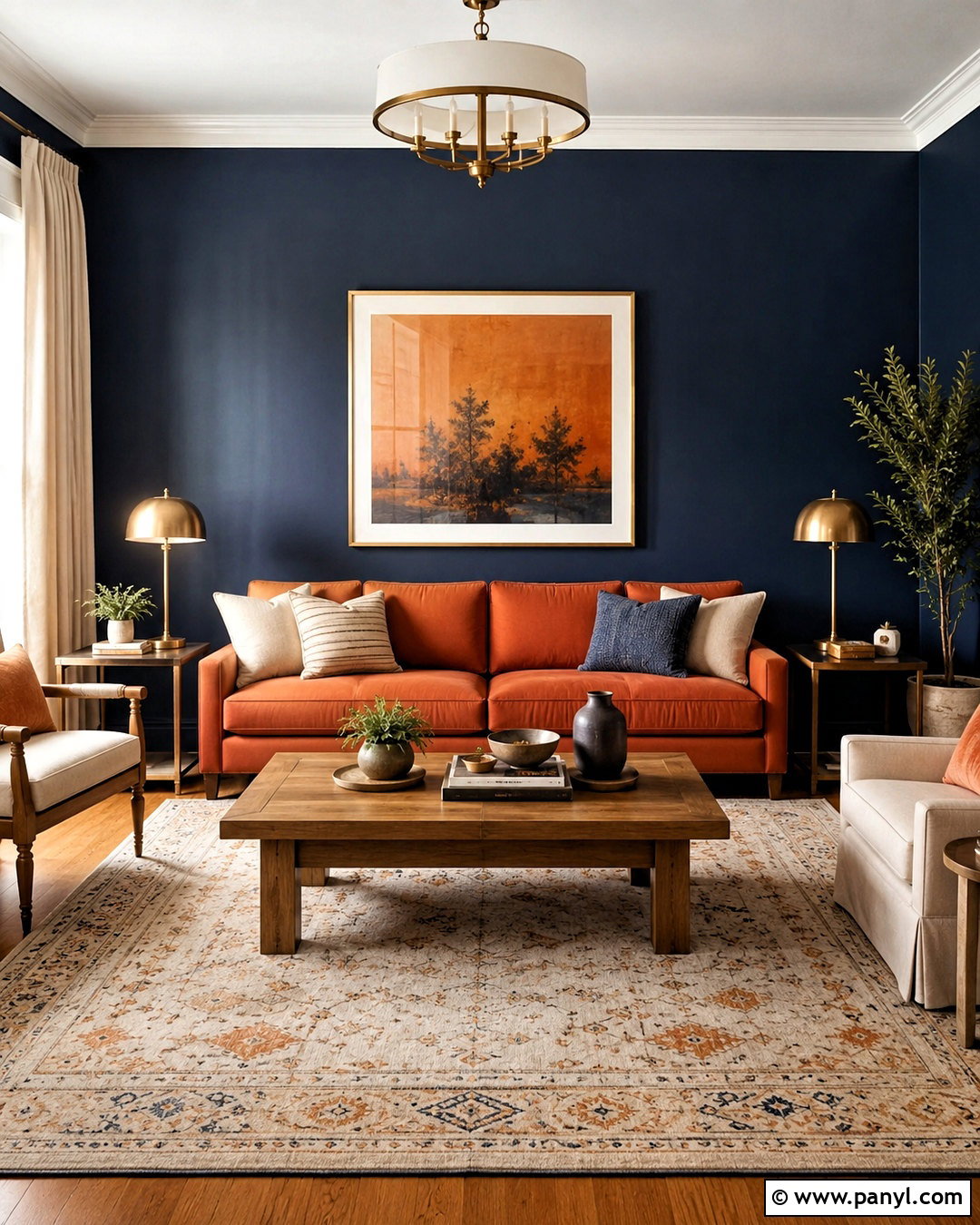
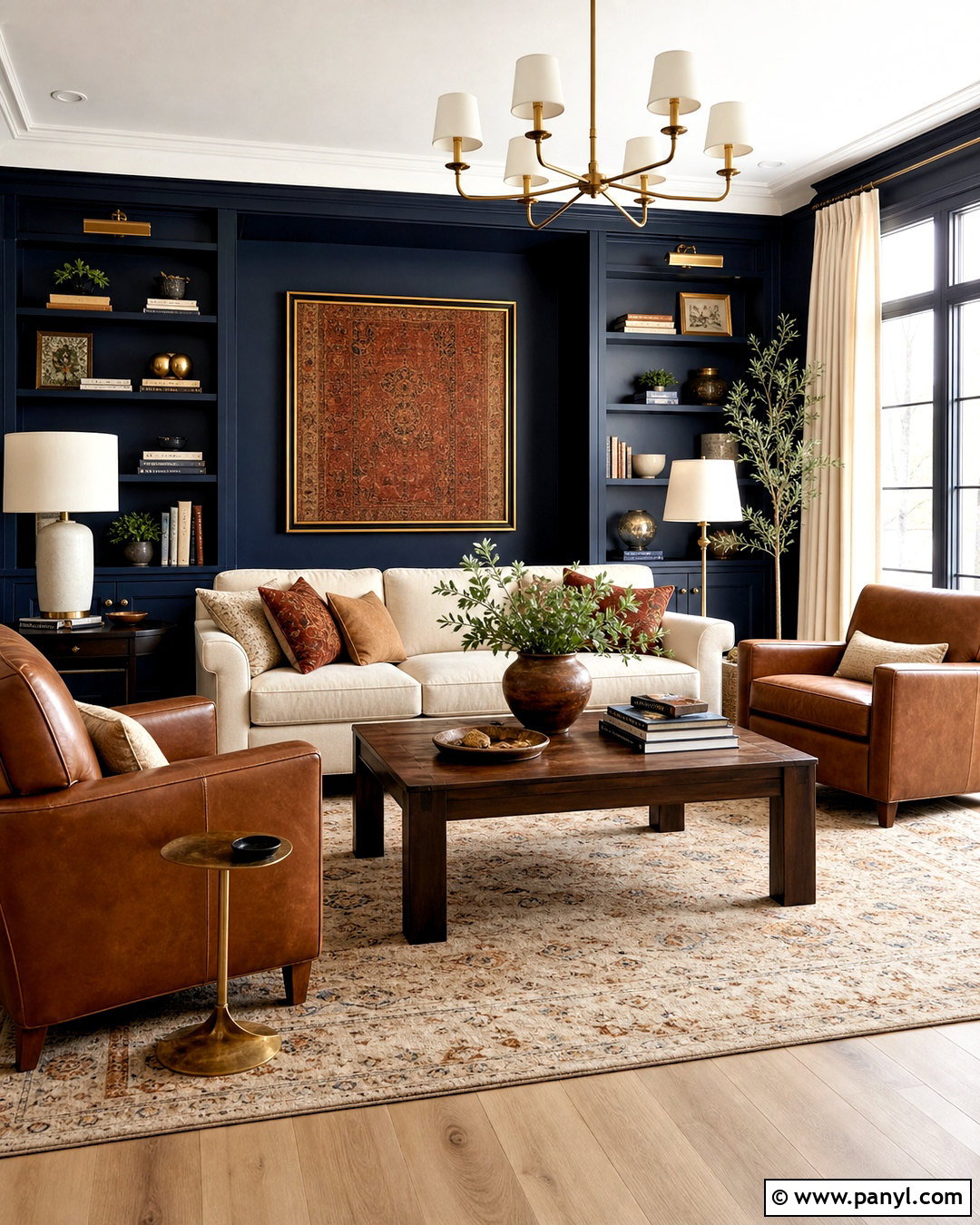
Orange and navy create an energetic yet polished living room because the two colors offer strong visual contrast. Paint the walls a rich navy blue, then introduce a muted orange sofa or two rust-colored armchairs. Keep the ceiling, trim, and curtains warm white so the dark walls do not feel heavy. A patterned area rug featuring cream, faded blue, and small orange details will connect the furniture to the architecture. Add a medium oak coffee table, brushed brass lamps, and simple linen pillows. Avoid filling every surface with bright accessories. Instead, repeat orange in just two or three places, such as artwork, a throw, and a ceramic vase. The completed room feels colorful and confident without becoming overly loud or themed.
3. Terracotta Orange Bedroom
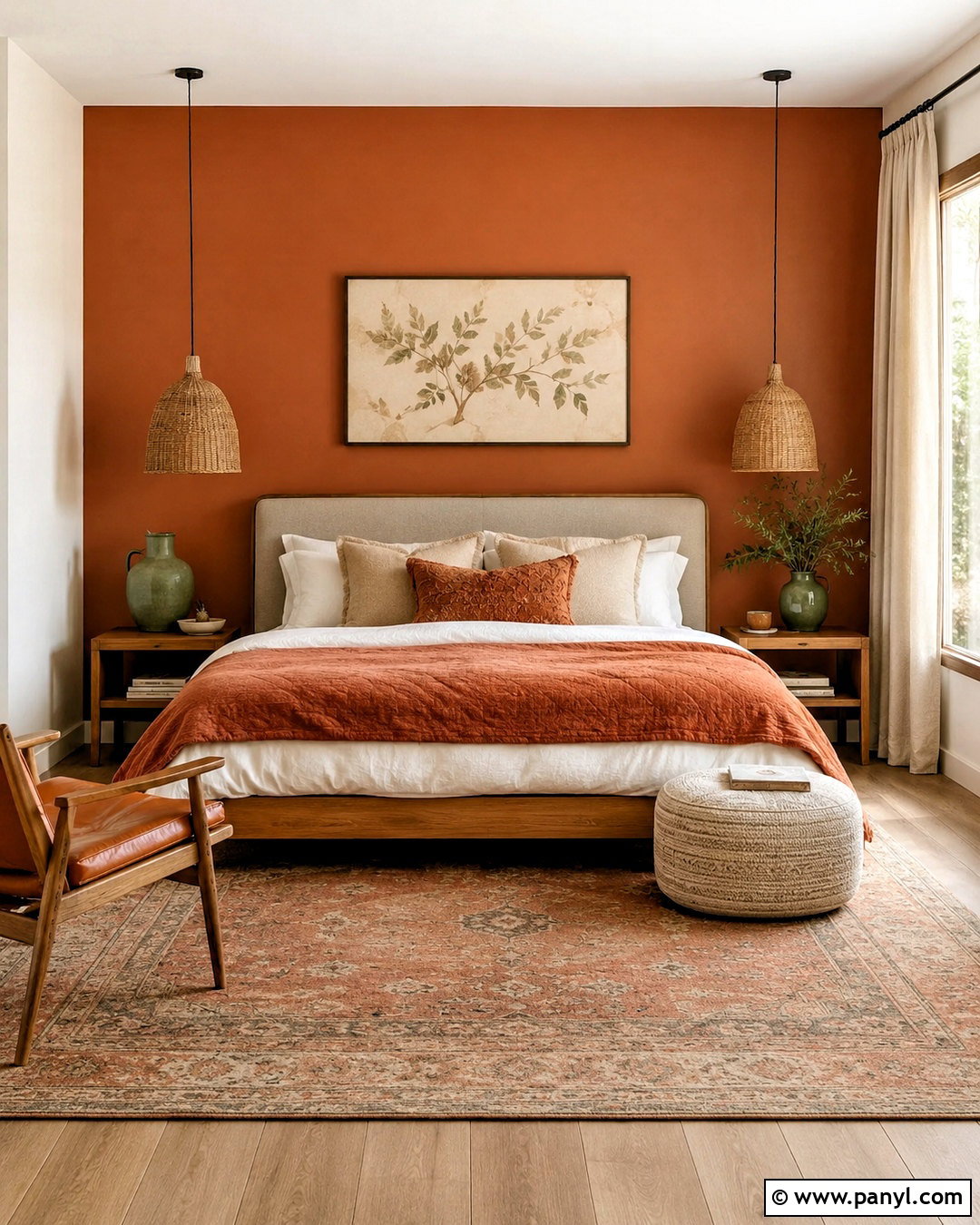
Imagine waking up in a bedroom wrapped in the soft, sunbaked warmth of terracotta orange. Use a muted clay-orange paint behind the bed and a creamy off-white color on the remaining walls. Select a low oak bed with an oatmeal upholstered headboard to give the strong accent wall a natural foundation. Layer the bed with white linen sheets, a rust coverlet, and beige textured pillows. Woven pendant lights provide symmetry without taking up space on the nightstands. Complete the room with light wood furniture, a faded patterned rug, and simple botanical artwork. Small accents of dusty green can appear in pottery or plants. The result is an earthy bedroom that feels cozy and restful rather than dark, making the orange suitable for everyday living.
4. Peach Orange Bedroom
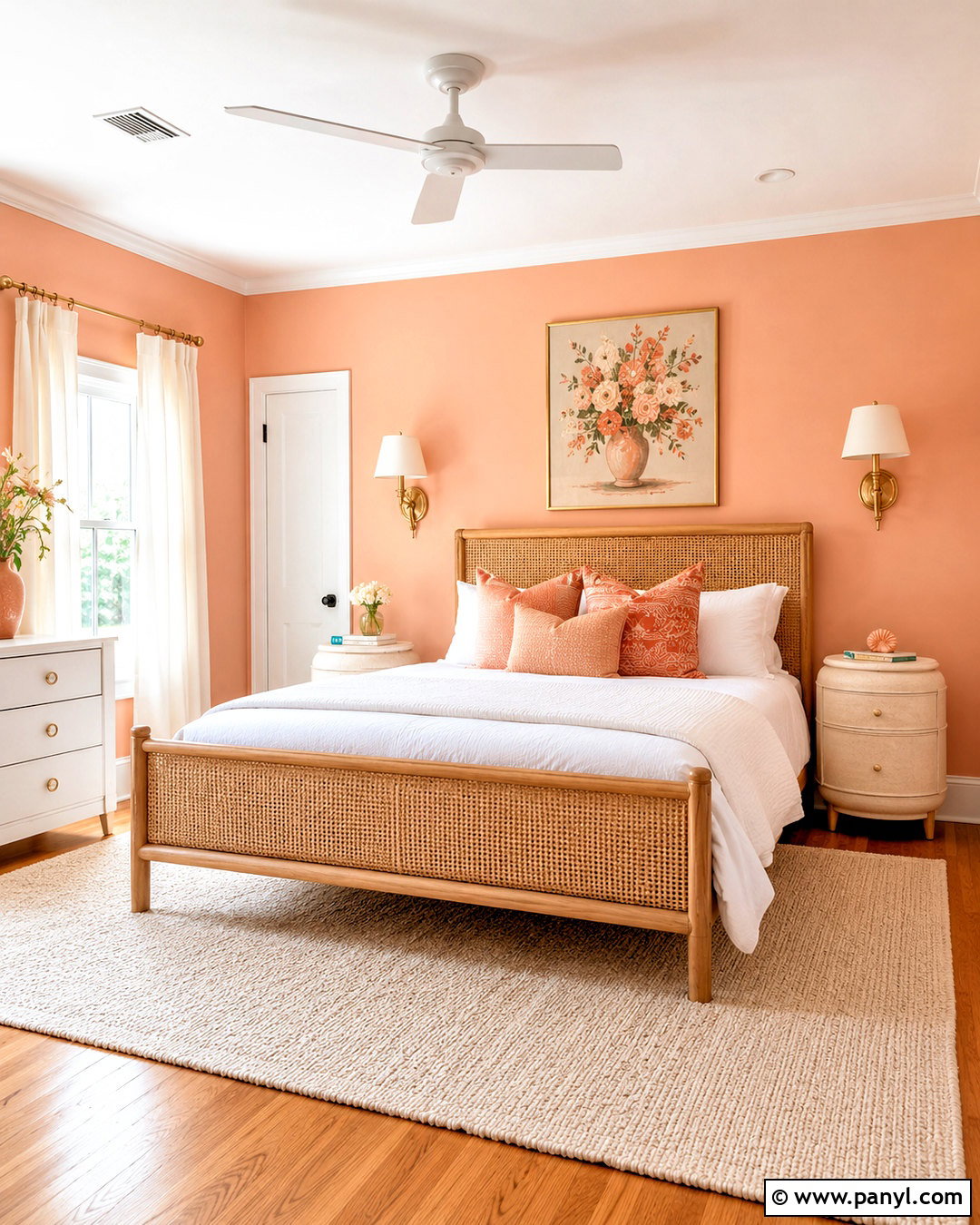
A peach orange bedroom offers warmth with a softer, airier appearance than deeper shades. Paint all four walls a pale peach with warm undertones, then use crisp white for the ceiling and trim. Anchor the room with a natural cane bed or a light oak frame. White bedding keeps the palette fresh, while coral, blush, and apricot pillows create gentle color variation. Place a cream rug beneath the bed and choose rounded nightstands to reinforce the relaxed look. Brushed brass sconces add a subtle glow without making the design too glamorous. A white dresser, sheer curtains, and minimal floral artwork keep the room bright. This complete arrangement works especially well in smaller bedrooms because the orange reads as warm and inviting without visually closing in the space.
5. Orange Midcentury Modern Living Room
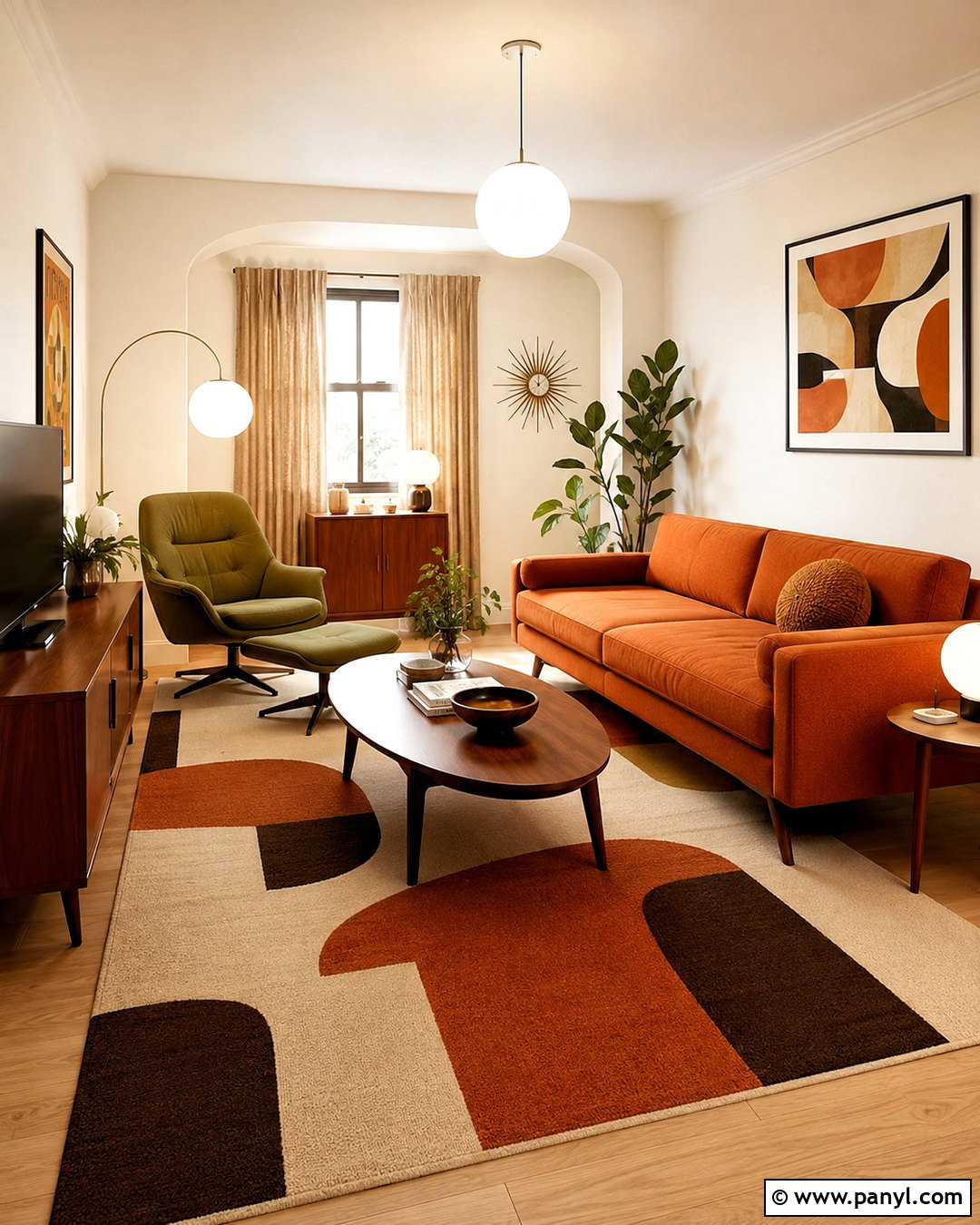
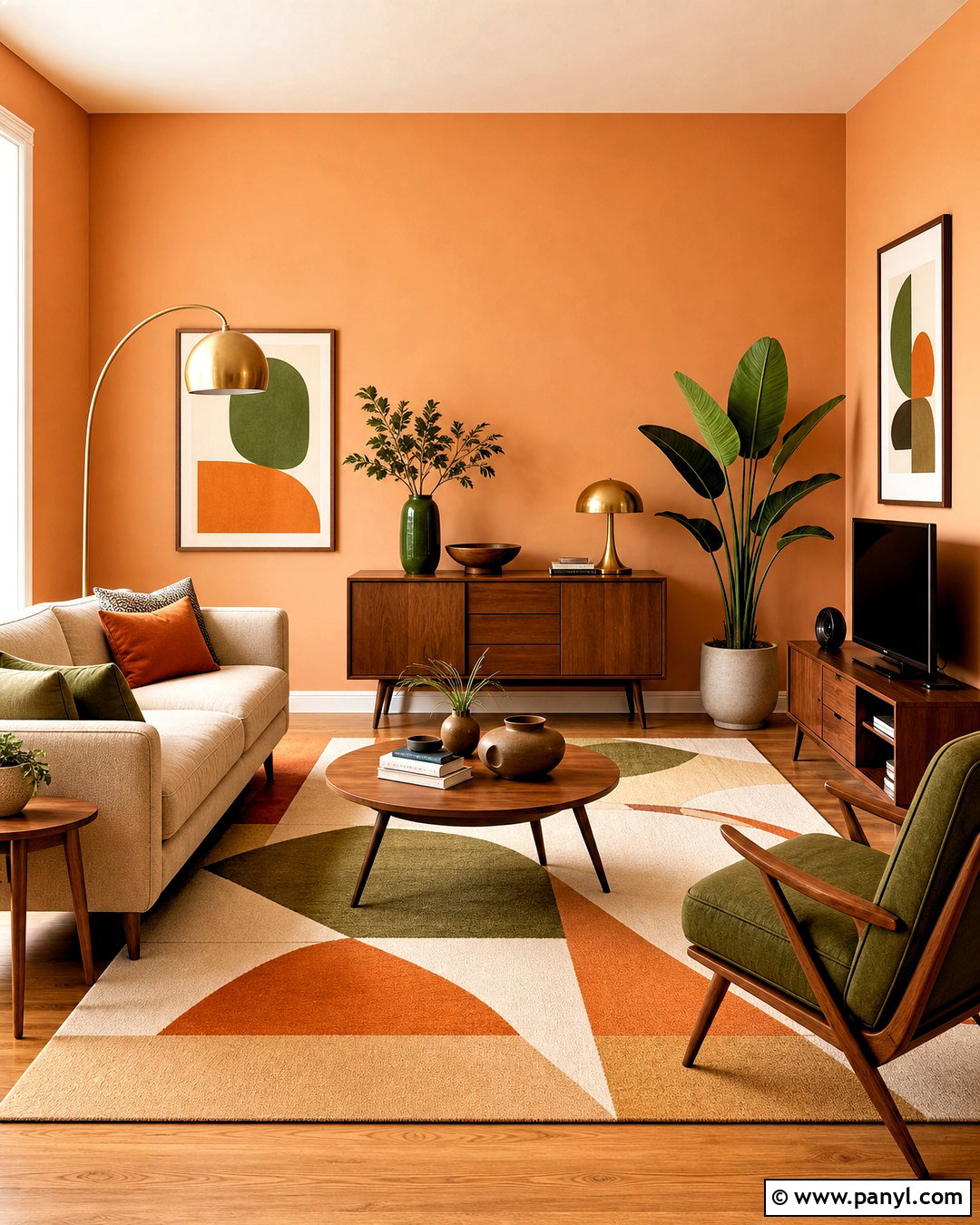
Orange fits naturally into a midcentury modern living room when it is paired with walnut furniture and clean architectural lines. Choose a low-profile rust orange sofa with tapered wooden legs. Place it against a warm white wall and add a walnut coffee table with a simple oval or rectangular shape. An olive green lounge chair provides period-inspired contrast, while a geometric rug in cream, brown, and muted orange ties the seating area together. Use globe lighting, abstract artwork, and a compact teak media console to reinforce the look. Keep decorative objects limited so the furniture remains visually important. Full-length beige curtains soften the windows. The finished room references classic retro interiors but still feels practical, uncluttered, and appropriate for a modern home.
6. Orange Boho Living Room
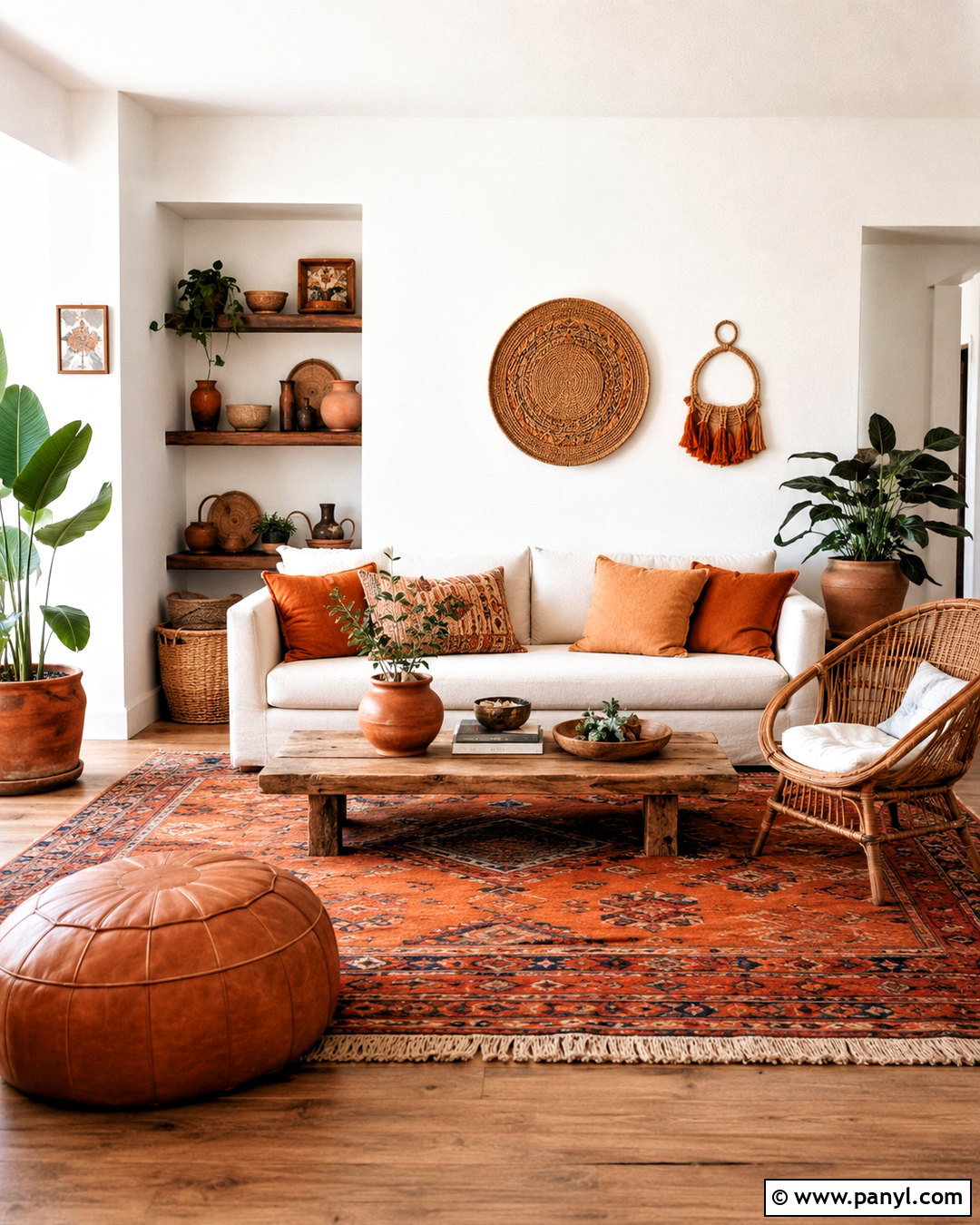
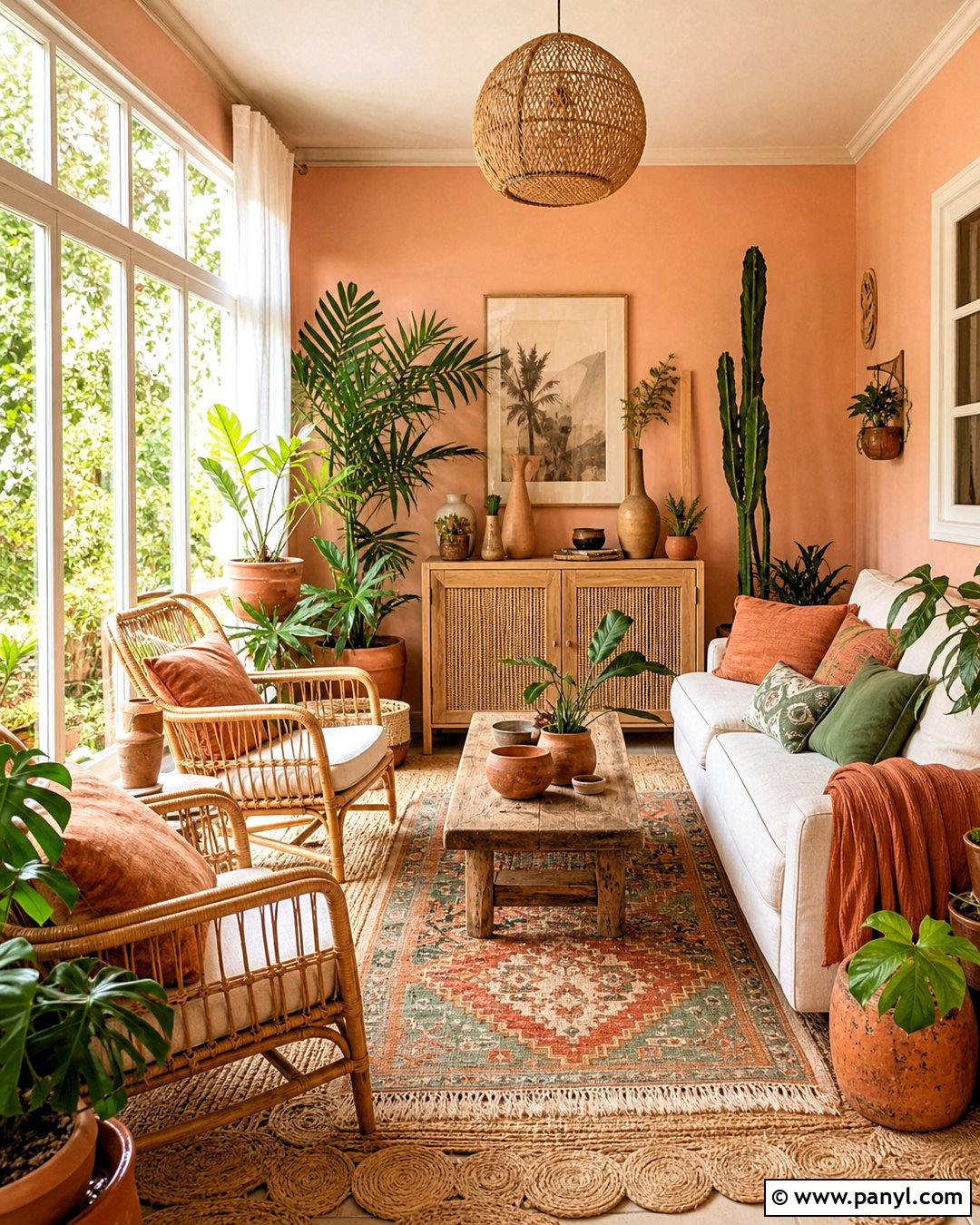
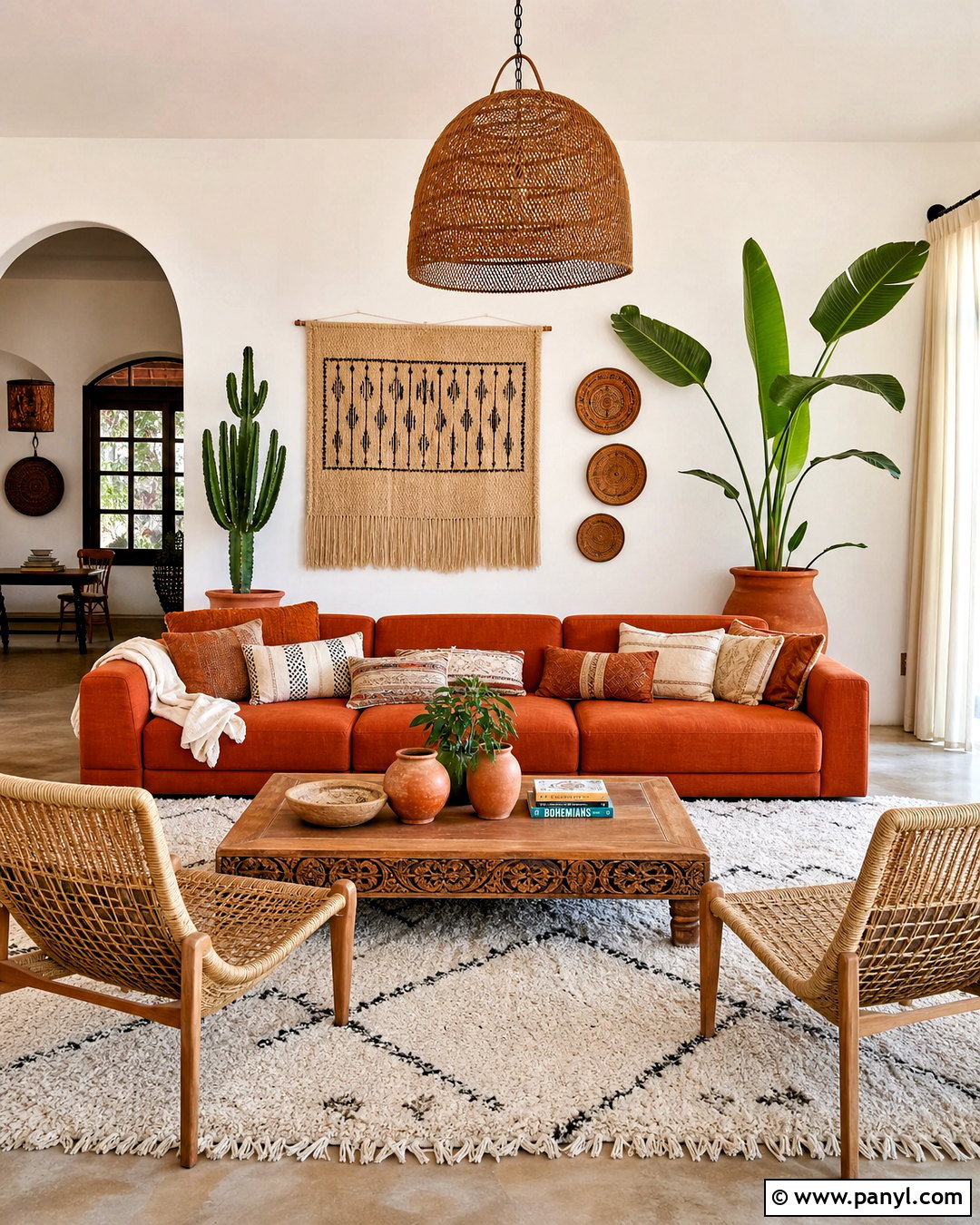
For a relaxed boho interior, combine orange with layered textiles, handmade finishes, and plenty of natural texture. Begin with warm white walls and a neutral linen sofa that provides space for rust orange, mustard, and cream pillows. Add a terracotta-colored vintage-style rug beneath a reclaimed wood coffee table. A caramel leather pouf, rattan chair, and woven wall hanging build depth without competing for attention. Use orange curtains if the room receives strong daylight, or choose lighter beige curtains in a smaller space. Plants in clay pots bring fresh green into the warm scheme. Finish with open shelving displaying pottery, books, and collected objects. The room should feel layered but intentional, with enough open floor and wall space to prevent the assortment from appearing cluttered.
7. Orange Accent Wall Dining Room
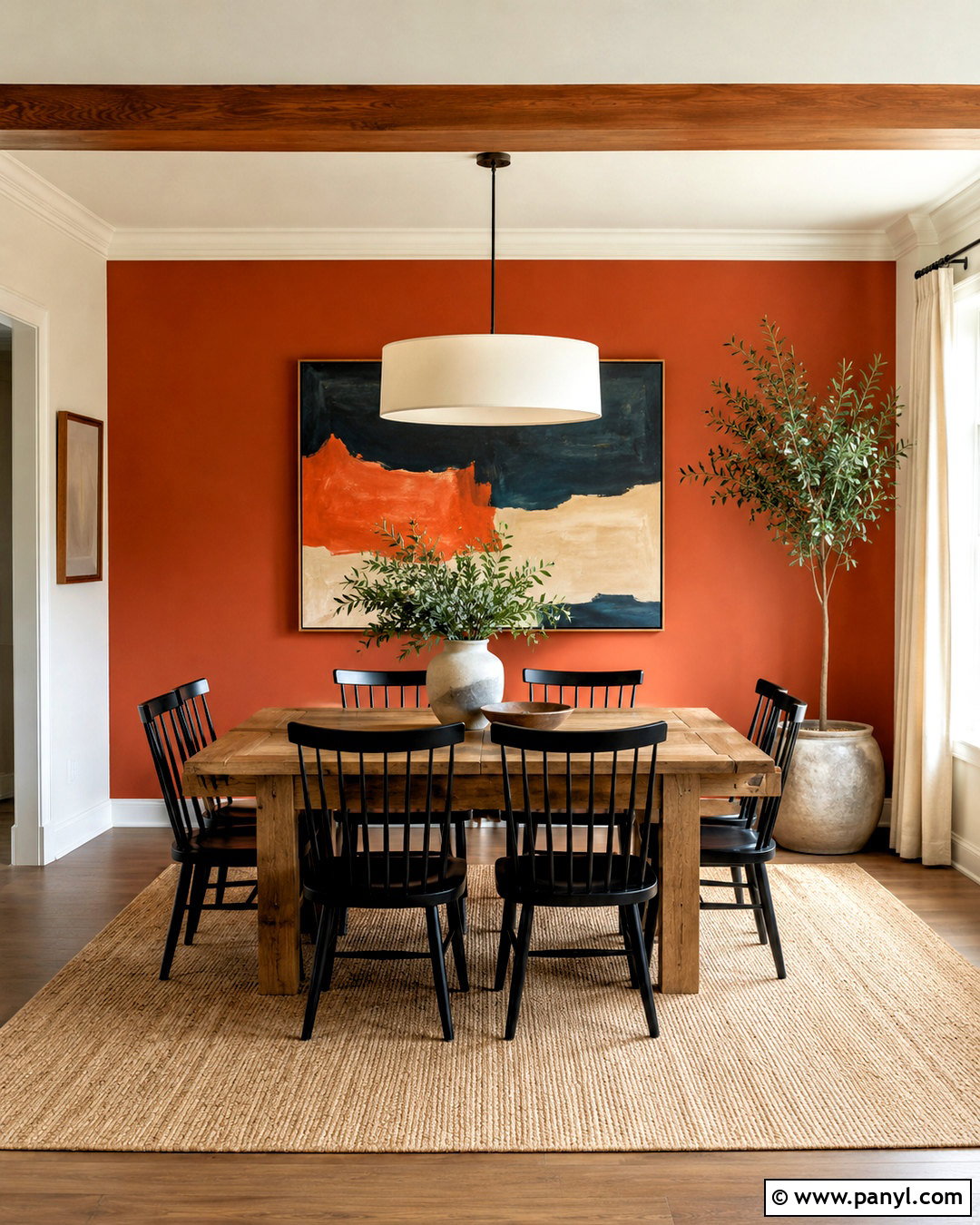
An orange accent wall can give a plain dining room a clear focal point without requiring a complete renovation. Choose a deep persimmon or muted pumpkin paint for the wall behind the dining table. Keep the other walls creamy white to balance the color and reflect light. Center a solid oak table in the room and surround it with black spindle-back chairs for definition. A large cream pendant light will brighten the dining surface and break up the strong wall color. Add one oversized artwork with blue, beige, and orange details rather than several small pieces. Linen curtains and a flat-woven neutral rug soften the harder furniture lines. A simple centerpiece of greenery in a stoneware vessel completes a warm, welcoming dining room suitable for both everyday meals and gatherings.
8. Orange And Green Dining Room
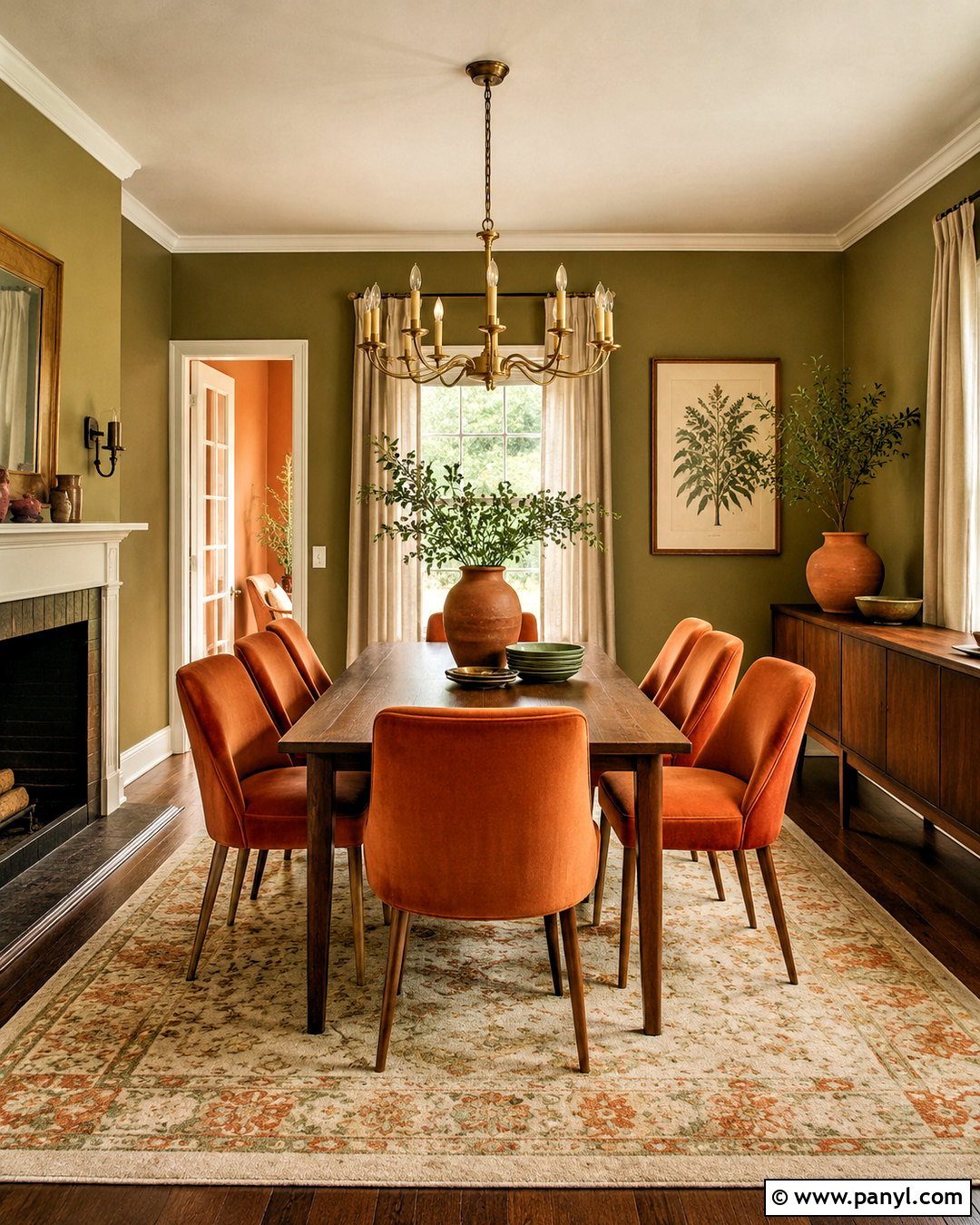
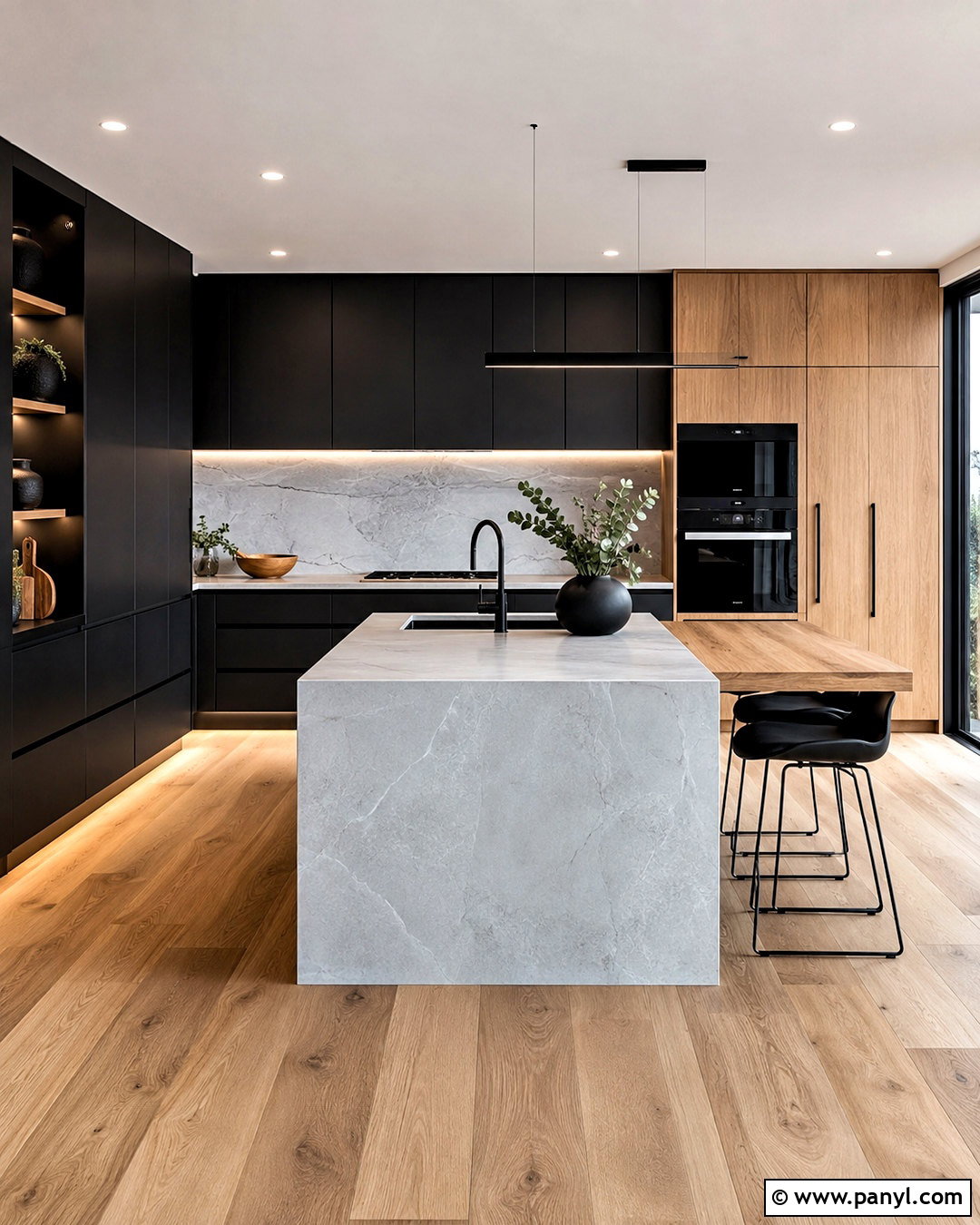
Orange and green can create a fresh dining room when both colors share warm, earthy undertones. Paint the walls a soft olive or sage green, then bring in burnt orange through upholstered dining chairs. A medium-toned wooden table will bridge the two colors naturally. Choose a rug with cream, moss, rust, and tan details to make the palette feel deliberate. Above the table, install a simple aged brass chandelier or a woven pendant with a wide shade. Keep the window treatments light and neutral so the room remains open. Display a few terracotta vessels on a sideboard and add botanical artwork in dark wood frames. This combination feels lively without relying on overly bright shades, making it particularly effective in traditional, rustic, and transitional homes.
9. Orange Kitchen Cabinets
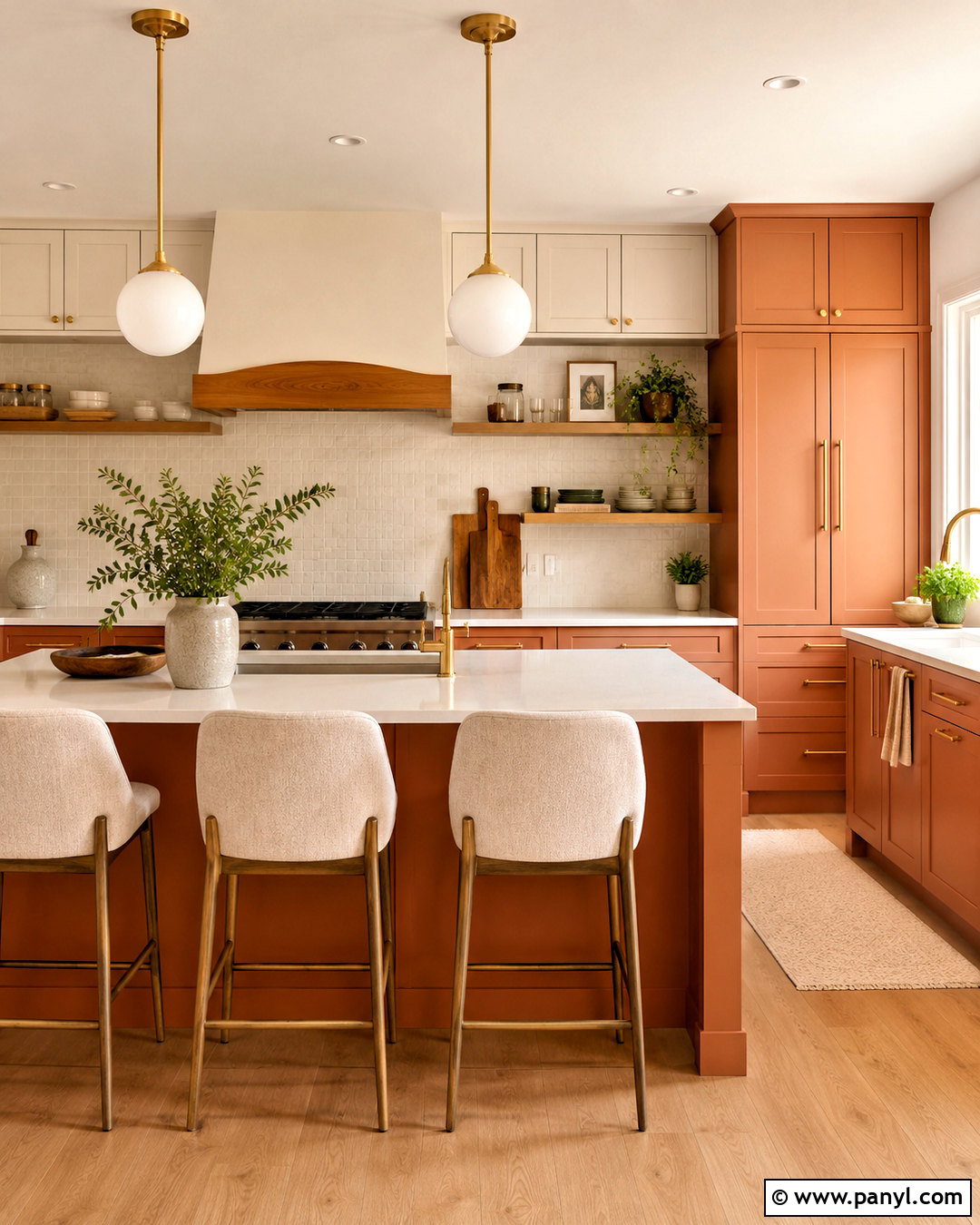
Would orange kitchen cabinets feel too bold? A muted clay or terracotta finish can actually look sophisticated when combined with simple materials. Use the orange color on lower cabinets and a tall pantry unit, while keeping upper cabinets warm white to prevent visual heaviness. Add a creamy quartz countertop and an off-white handmade tile backsplash. Oak floating shelves introduce natural texture and offer practical space for neutral dishes. Choose brushed brass hardware for warmth or matte black pulls for stronger definition. Light wood flooring keeps the room connected to the cabinetry without creating an exact color match. Finish with globe pendants, cream counter stools, and a few green herbs. The completed kitchen feels colorful and custom while remaining functional, balanced, and easy to maintain.
10. Orange Kitchen Backsplash
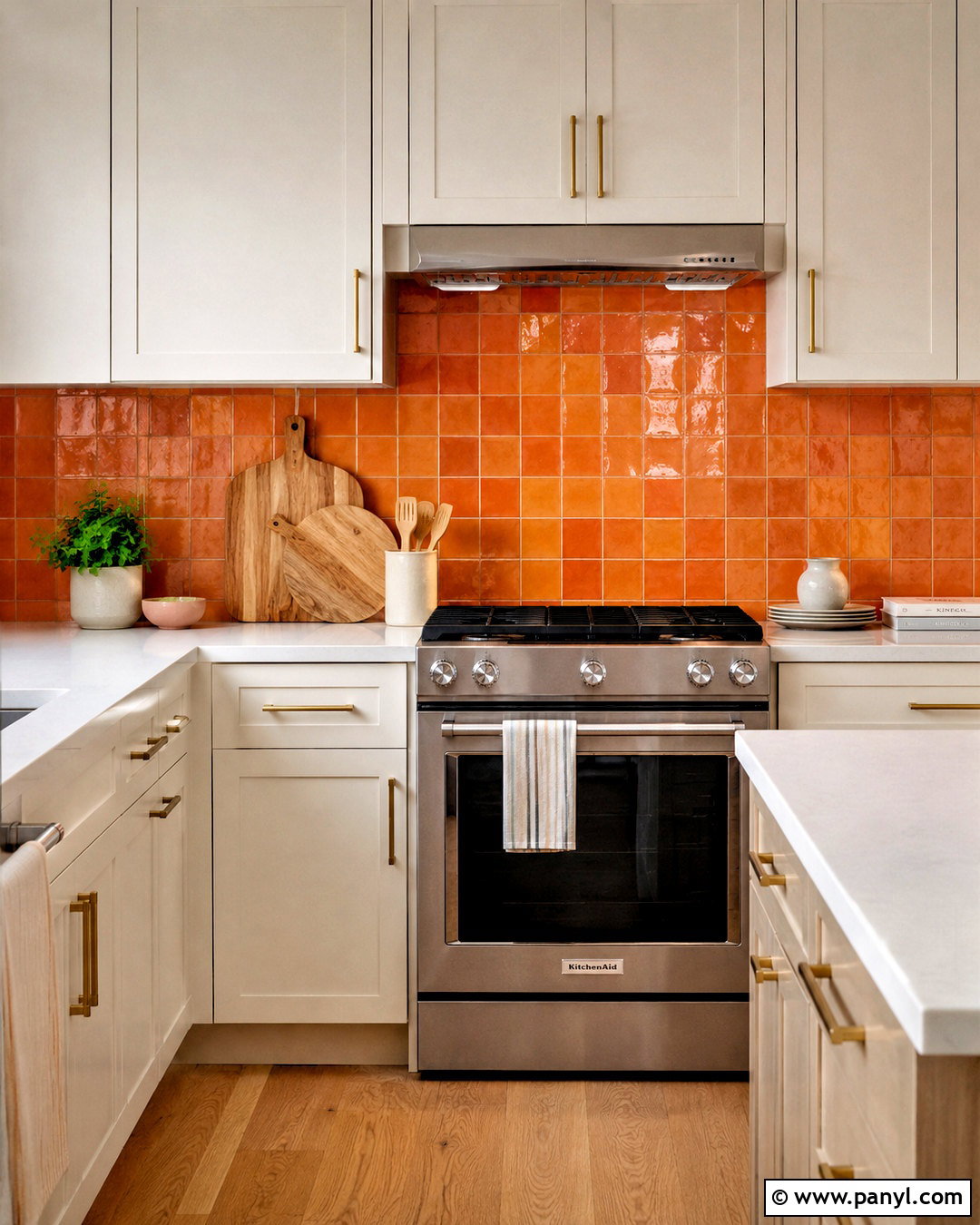
A bright orange backsplash can energize a neutral kitchen while leaving the major cabinets and surfaces timeless. Choose glazed tangerine or burnt orange tiles with subtle tonal variation, then install them from the countertop to the upper cabinets. Pair the backsplash with matte white cabinetry, pale quartz counters, and light oak flooring. Simple brass hardware will echo the warmth of the tile, while stainless steel appliances prevent the room from becoming overly coordinated. Keep counter accessories limited to wood boards, cream ceramics, and a small plant. If the orange tiles have a glossy finish, use understated lighting that highlights their texture without creating excessive glare. This complete kitchen works because the strongest color remains concentrated in one architectural area and is surrounded by calm, practical finishes.
11. Orange Breakfast Nook
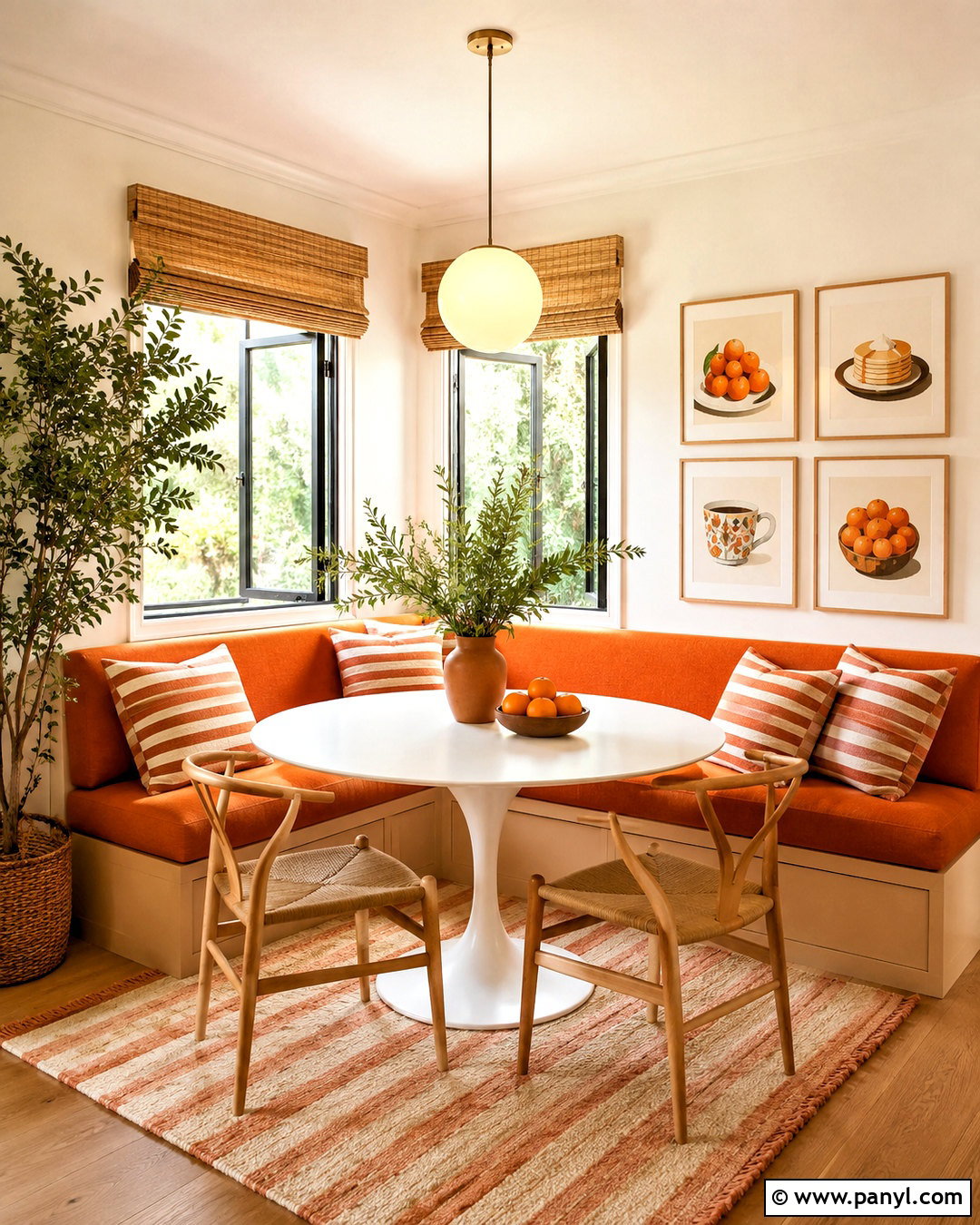
A cheerful breakfast nook is an ideal place to use orange because the color naturally creates an upbeat, sociable feeling. Build the design around an L-shaped banquette upholstered in durable pumpkin orange fabric. Add a round white pedestal table to improve movement through the compact space. Light oak chairs on the open side provide extra seating without adding visual weight. Use warm white walls, a striped cream-and-orange cushion, and a small patterned rug to repeat the palette. A simple globe pendant can define the nook, while framed food illustrations add personality. Keep the windows uncovered or use woven shades to maximize morning light. The finished corner feels purposeful and welcoming, offering a comfortable place for breakfast, homework, coffee, or casual conversations.
12. Orange Home Office
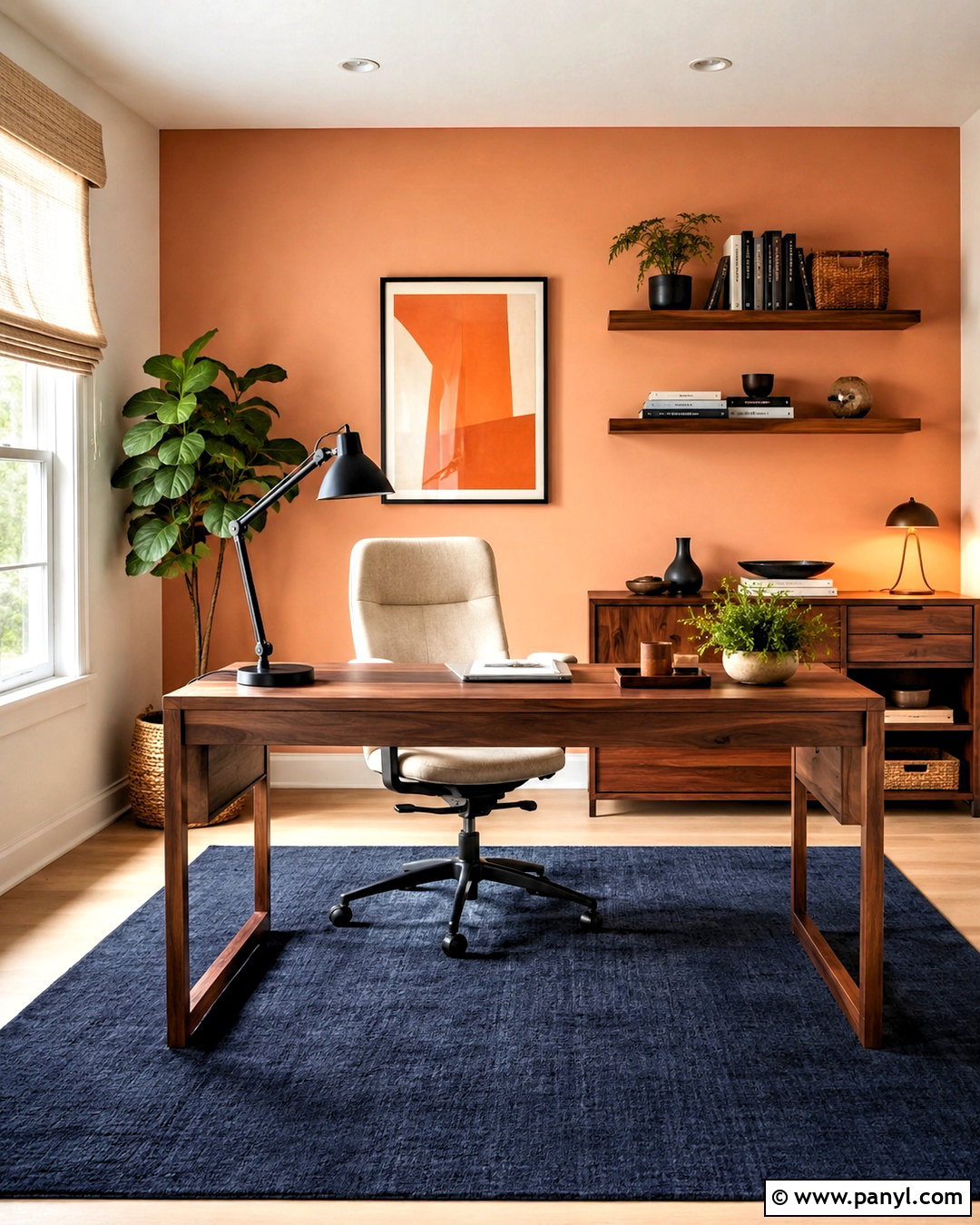
Orange can make a home office feel stimulating, but a restrained palette is important for maintaining focus. Paint the wall behind the desk a muted apricot or earthy orange and leave the remaining walls warm white. Choose a streamlined walnut desk, an ergonomic cream chair, and closed storage in matching wood tones. A navy blue rug or filing cabinet provides cool contrast and gives the scheme greater depth. Install adjustable black task lighting and add simple floating shelves above the desk. Repeat orange through one piece of artwork rather than many small accessories. A leafy plant, linen window shade, and woven basket soften the workspace. This complete setup feels energetic enough for creative work while remaining organized, professional, and comfortable during long periods at the desk.
13. Orange Entryway
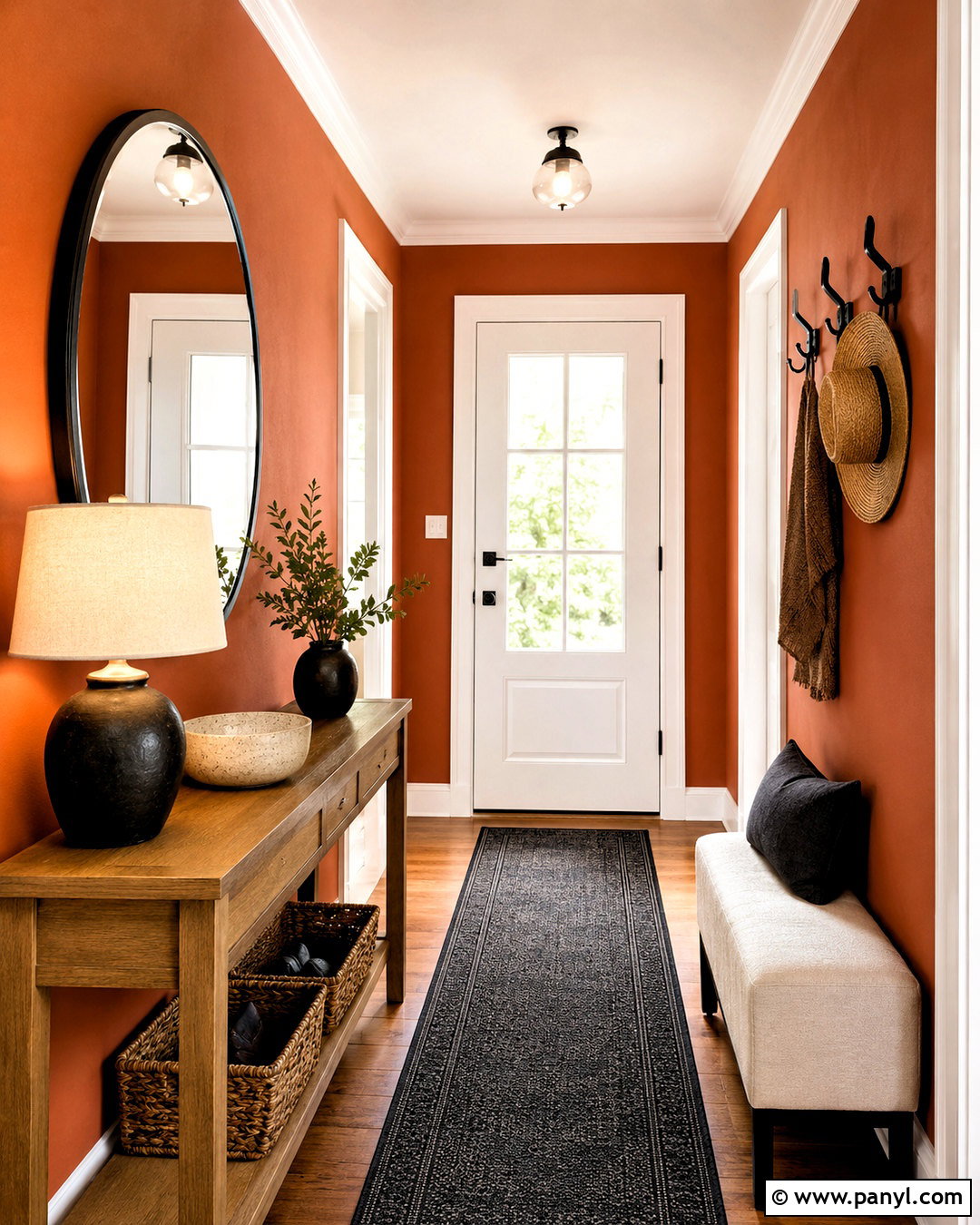
The entryway offers an easy opportunity to use orange in a compact, high-impact area. Paint the walls a rich burnt orange, then balance them with white trim and a light ceiling. Position a narrow oak console along one wall and hang a large round mirror above it to reflect light. A dark charcoal runner will ground the warm color and hide everyday dirt. Add a simple bench with cream upholstery, black wall hooks, and a woven basket for shoes or bags. Keep accessories practical by using a ceramic bowl for keys and one table lamp with a linen shade. If the space lacks natural light, select a slightly lighter orange. The final entry feels warm, orderly, and memorable without requiring expensive furniture or major structural changes.
14. Orange Powder Room
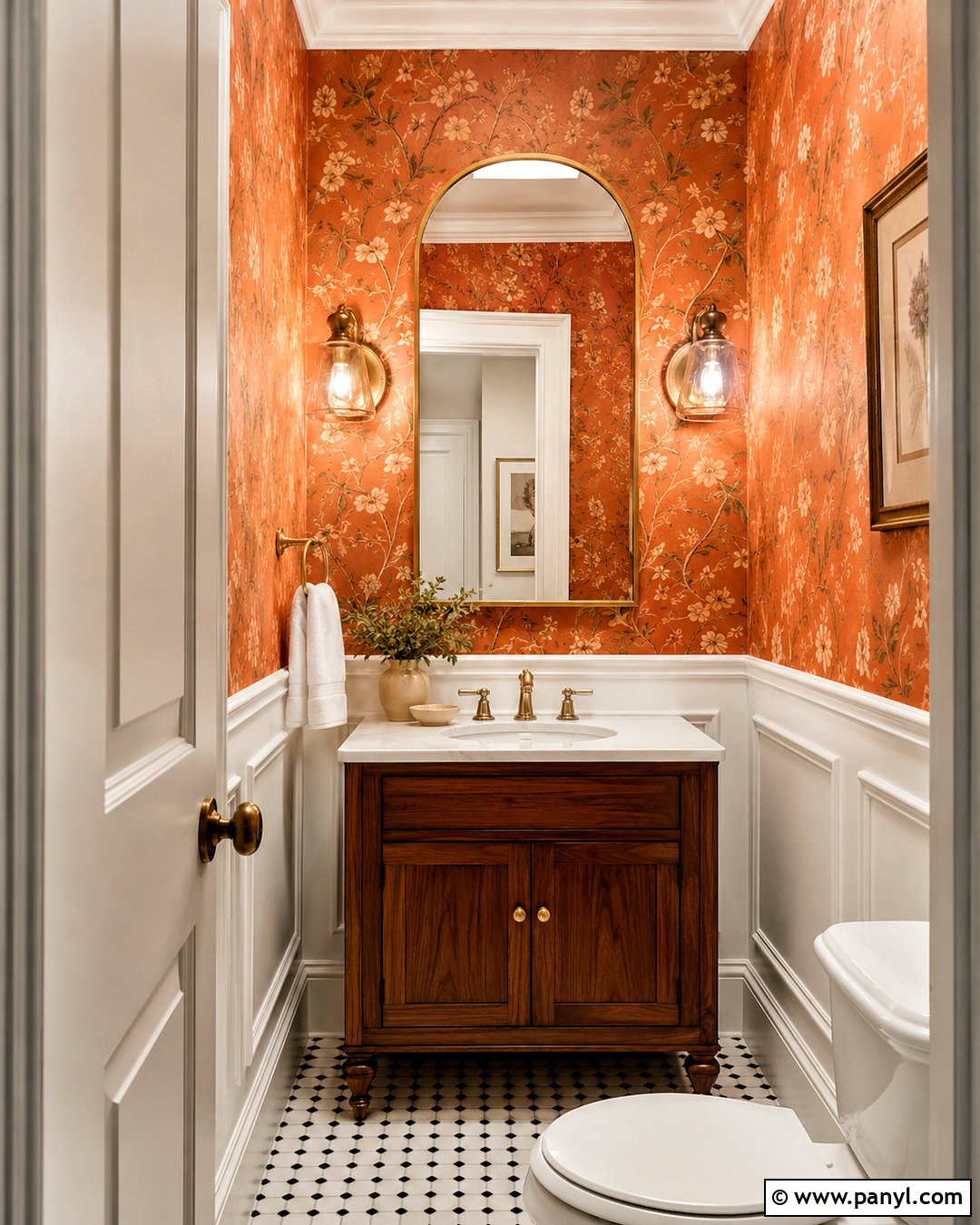
A powder room is small enough to support a more adventurous orange scheme. Cover the walls with a burnt orange botanical wallpaper or use saturated orange paint above simple white paneling. Select a compact walnut vanity with a white stone top to give the room warmth and structure. An aged brass faucet, matching mirror, and clear glass sconces add polished detail. Use small black-and-white floor tiles to create contrast and keep the space from looking too sweet. White towels and minimal countertop accessories preserve a clean finish. If wallpaper is used, repeat its orange tone in one framed print or a small ceramic container. This complete design turns a functional room into a distinctive feature while keeping every fixture practical and appropriately scaled.
15. Orange Bathroom Vanity
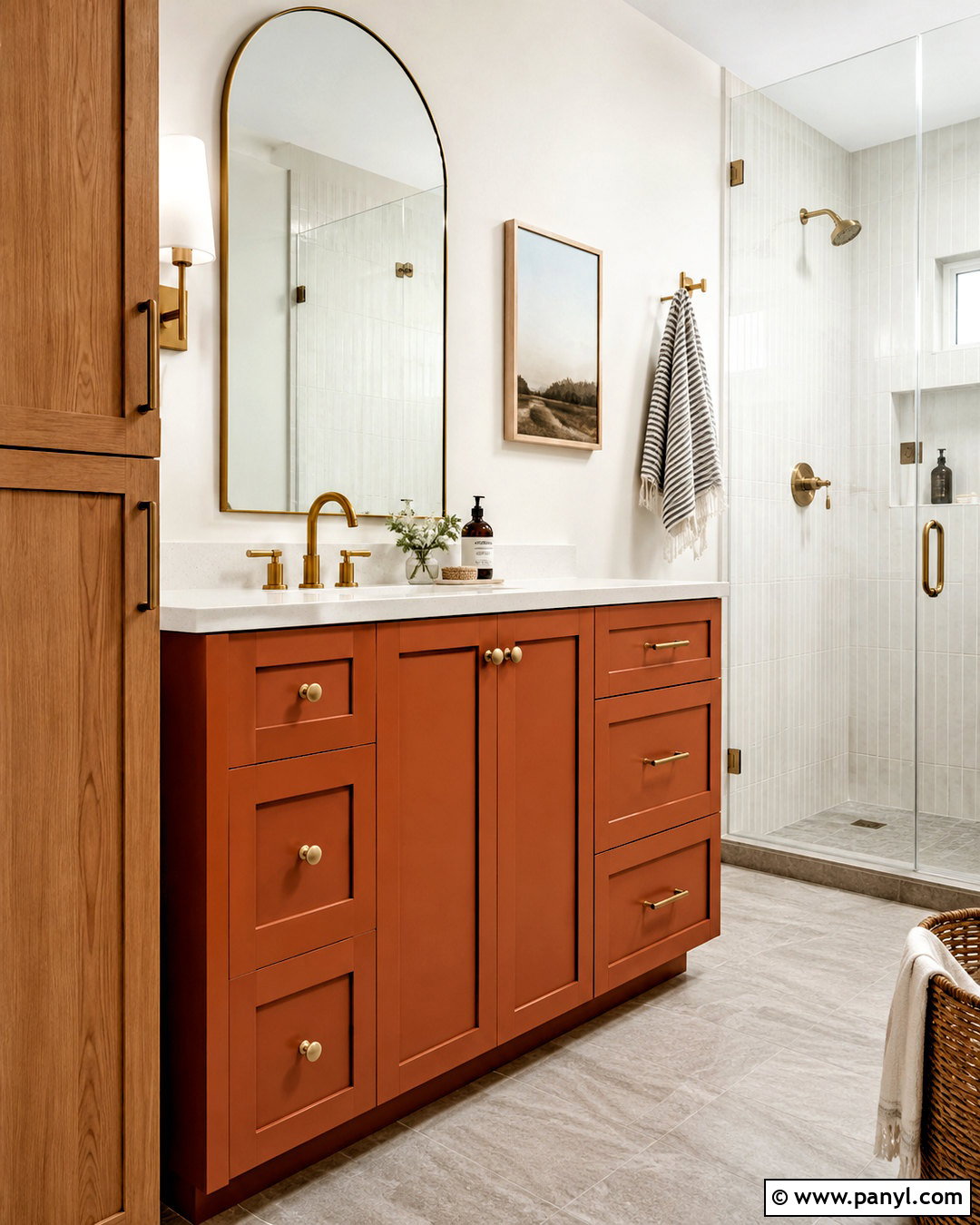
An orange vanity can transform a basic bathroom without covering the entire room in strong color. Choose a simple shaker-style vanity painted in muted rust or deep terracotta. Pair it with a white quartz countertop, brushed brass hardware, and an arched mirror. Use warm white tile on the walls and pale gray stone-look tile on the floor to create a quiet background. A frameless glass shower will help the room feel open, while a light oak storage cabinet adds another natural material. Repeat the vanity color sparingly through a striped hand towel or small artwork. Bright white lighting is important for keeping orange tones clear and flattering. The final bathroom feels personal and modern, yet its permanent surfaces remain neutral enough for long-term flexibility.
16. Orange Reading Nook
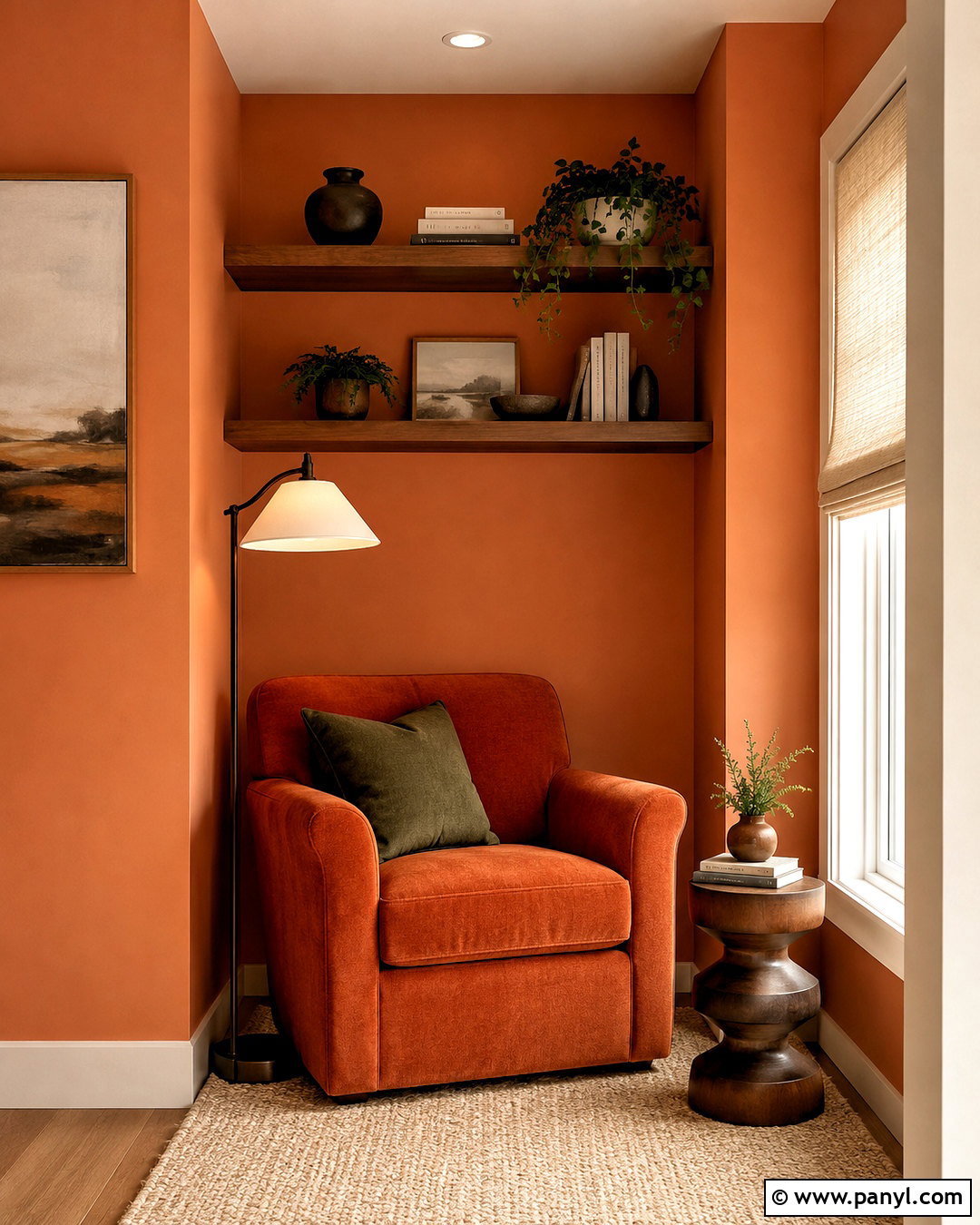
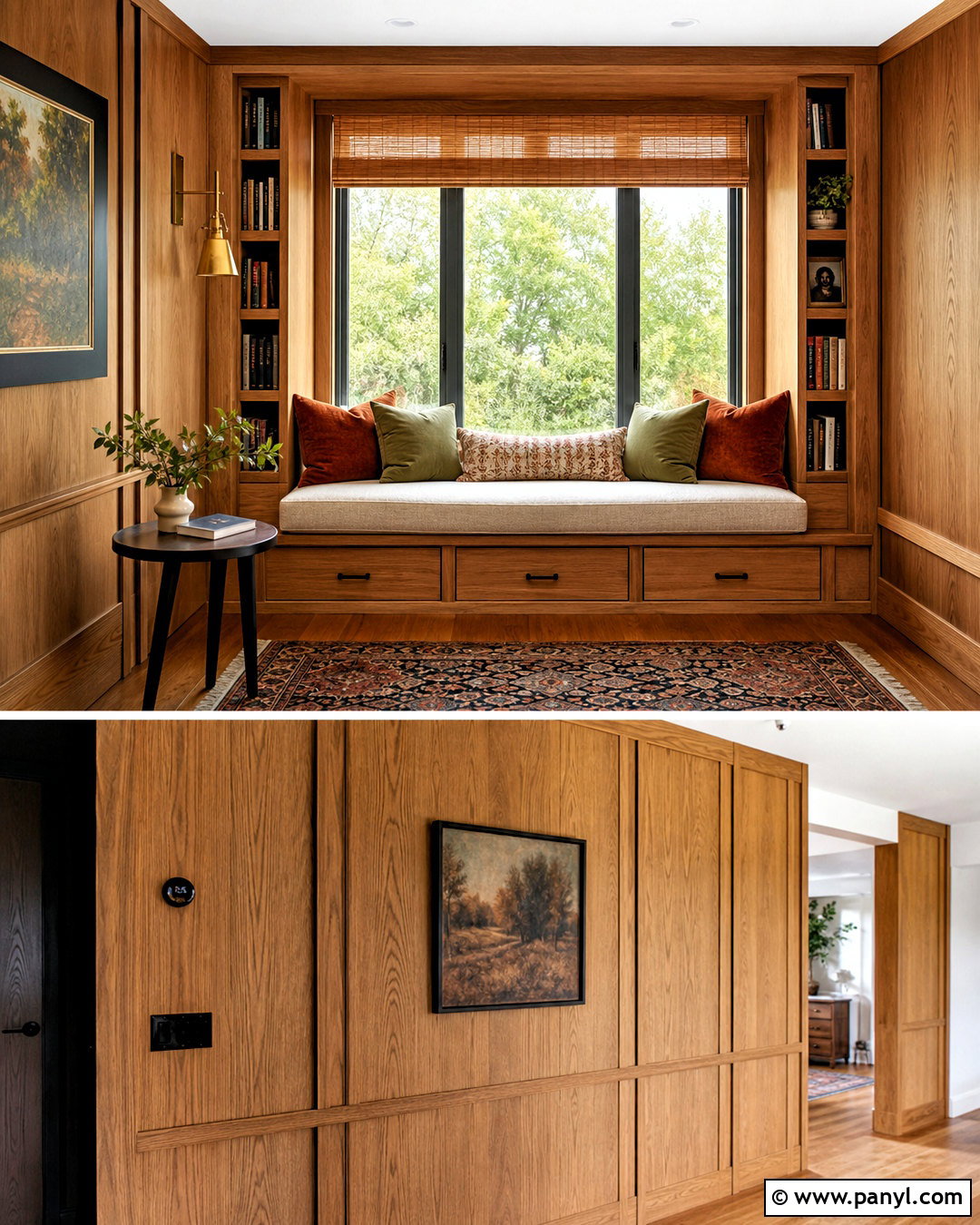
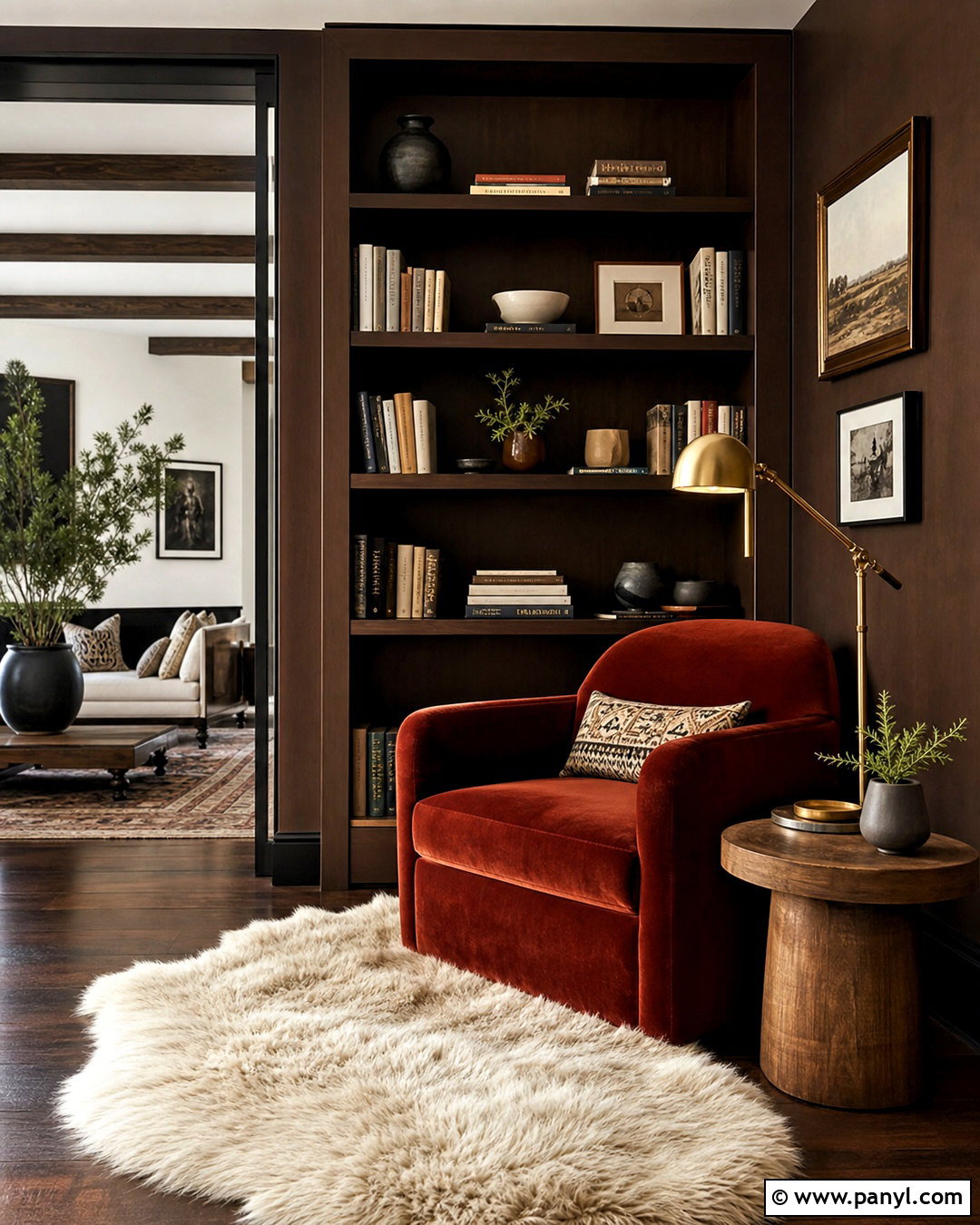
A quiet reading nook can use orange to create a warm, enclosed feeling without overwhelming an entire room. Place a deep rust orange armchair beside a window and pair it with a small walnut side table. Use a cream floor lamp or an adjustable black reading light for focused illumination. Behind the chair, paint a shallow alcove muted terracotta or install warm orange patterned wallpaper. Add a wool rug in beige and brown, plus one olive green pillow for contrast. Nearby floating shelves can hold books while preserving floor space. Finish the window with a natural linen shade that filters harsh daylight. This complete corner feels separate from the surrounding room, giving the orange chair and background enough presence to establish a comfortable destination for reading and relaxing.
17. Orange Kids Room
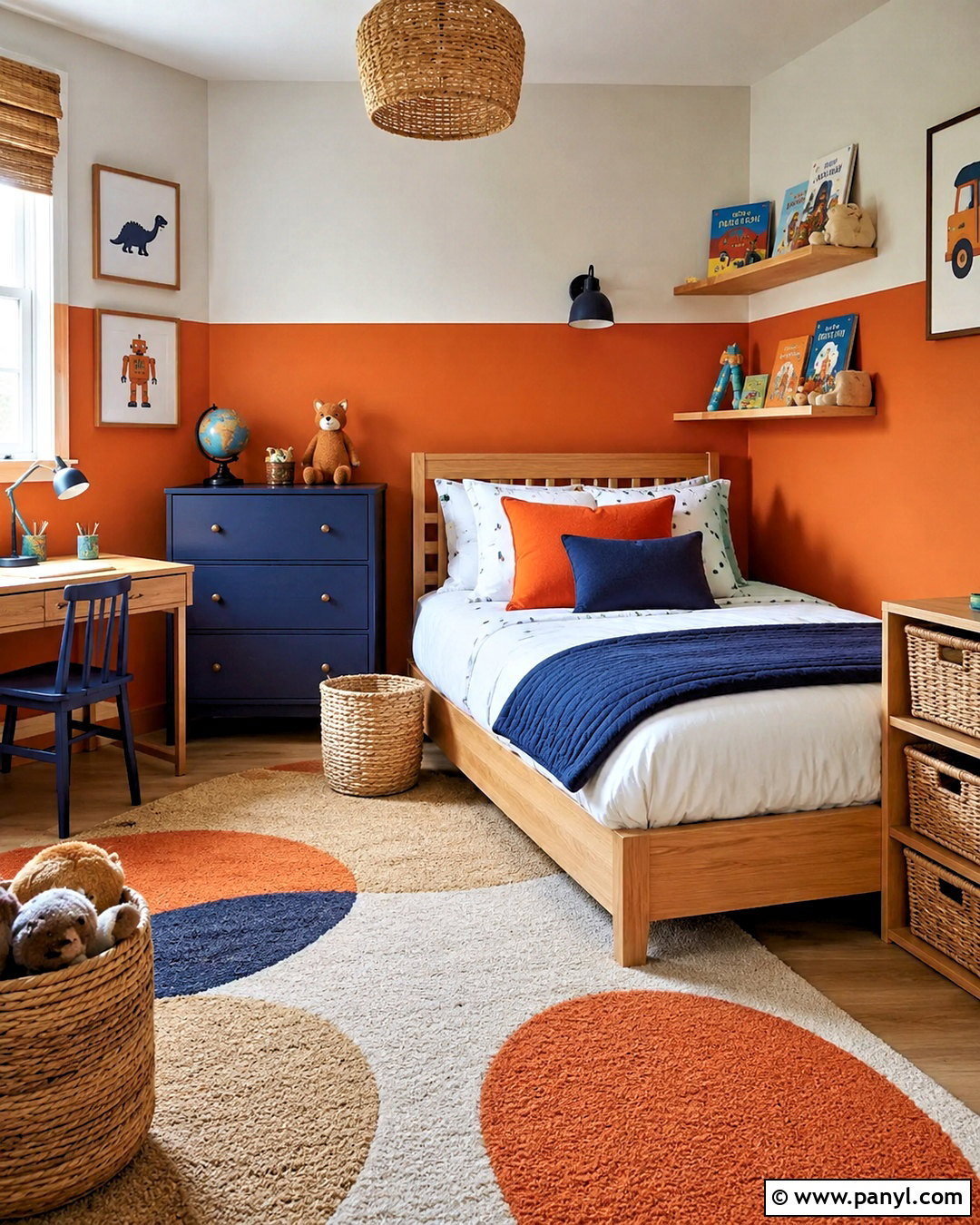
An orange kids room can feel playful without relying on cartoon themes or overly bright furniture. Paint the lower half of the walls a warm apricot orange and the upper half soft white, creating a cheerful color-blocked effect. Choose a simple light oak bed, white bedding, and a washable rug with orange, blue, and cream shapes. A navy dresser balances the warmth and provides useful closed storage. Add wall-mounted book ledges, woven toy baskets, and a compact desk that can adapt as the child grows. Use orange in small repeated details, such as a lamp and pillow, rather than matching every accessory. The completed bedroom feels colorful and age-flexible, with clear areas for sleeping, playing, reading, and storing everyday belongings.
18. Orange Guest Bedroom
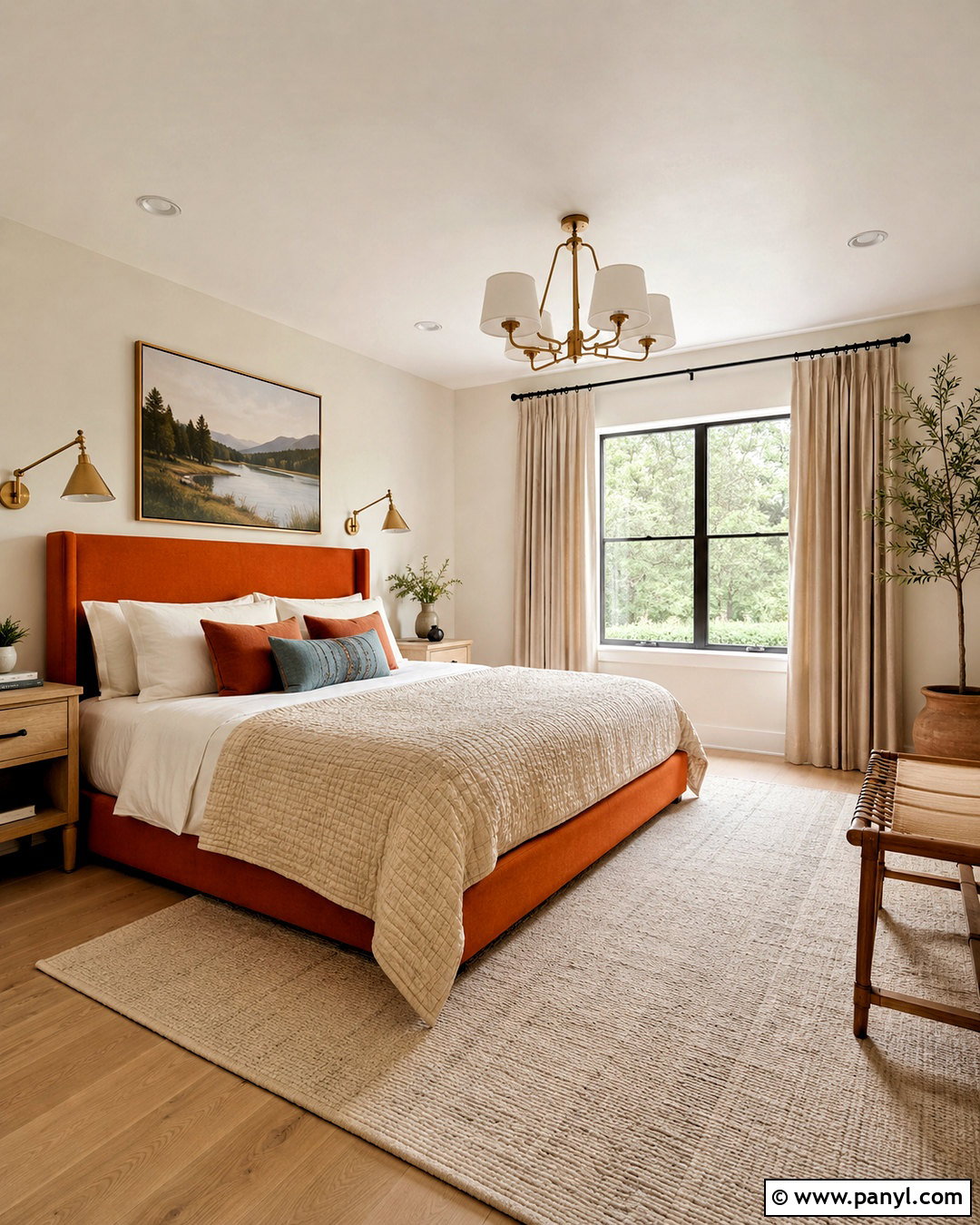
Give visitors a comfortable retreat with a guest bedroom built around muted orange and relaxed neutral tones. Start with warm ivory walls and an upholstered headboard in soft burnt orange. Dress the bed with white cotton sheets, a beige quilt, and patterned pillows that include rust, tan, and dusty blue. Place light oak nightstands on both sides so the room feels balanced and functional for two guests. Add brass reading sconces, a cream rug, and full-length oatmeal curtains. A simple wooden bench at the foot of the bed provides space for luggage. Keep artwork calm and limited to one landscape or abstract print. The result is welcoming and distinctive, yet neutral enough to appeal to guests with different tastes and comfort preferences.
19. Orange Minimalist Interior
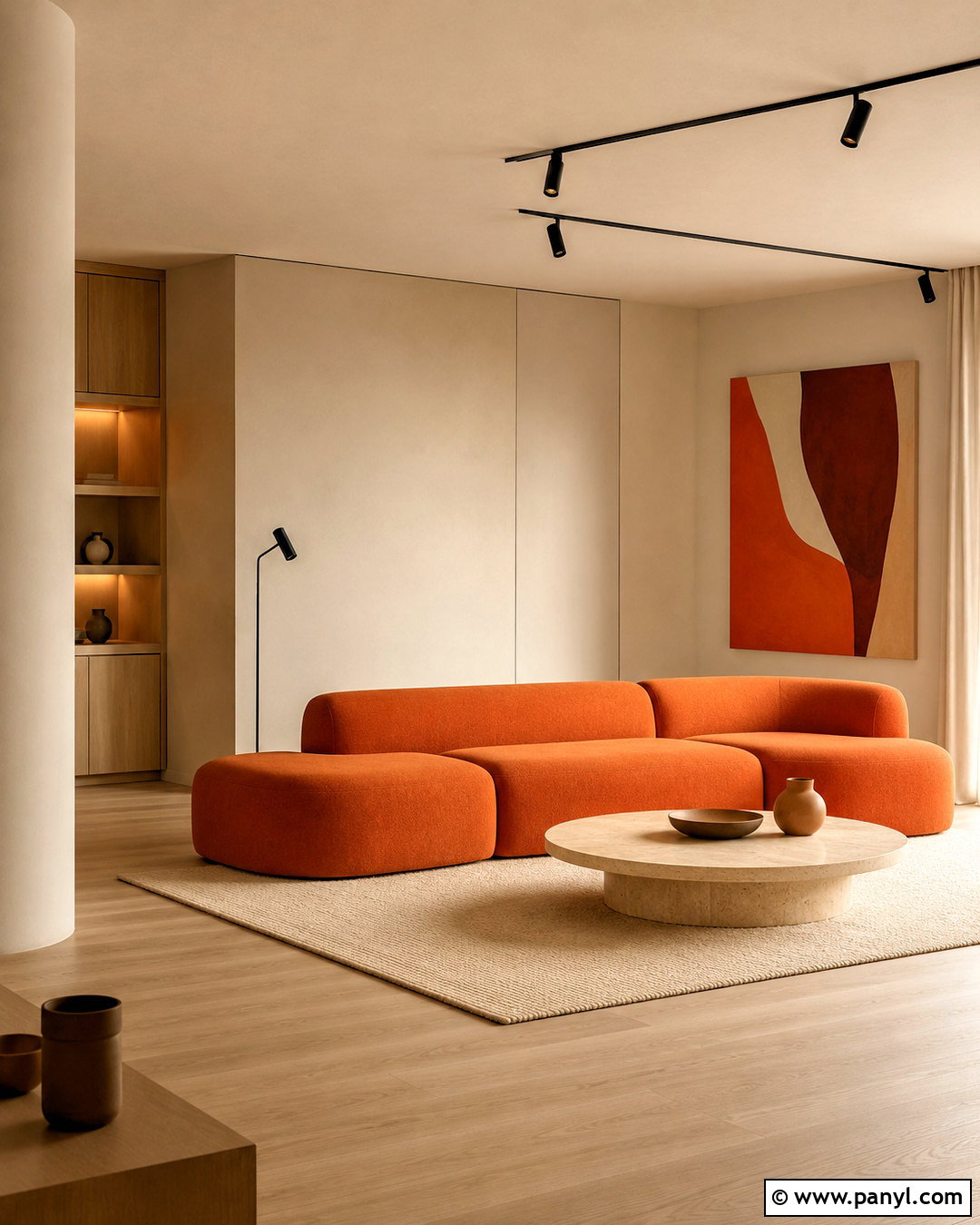
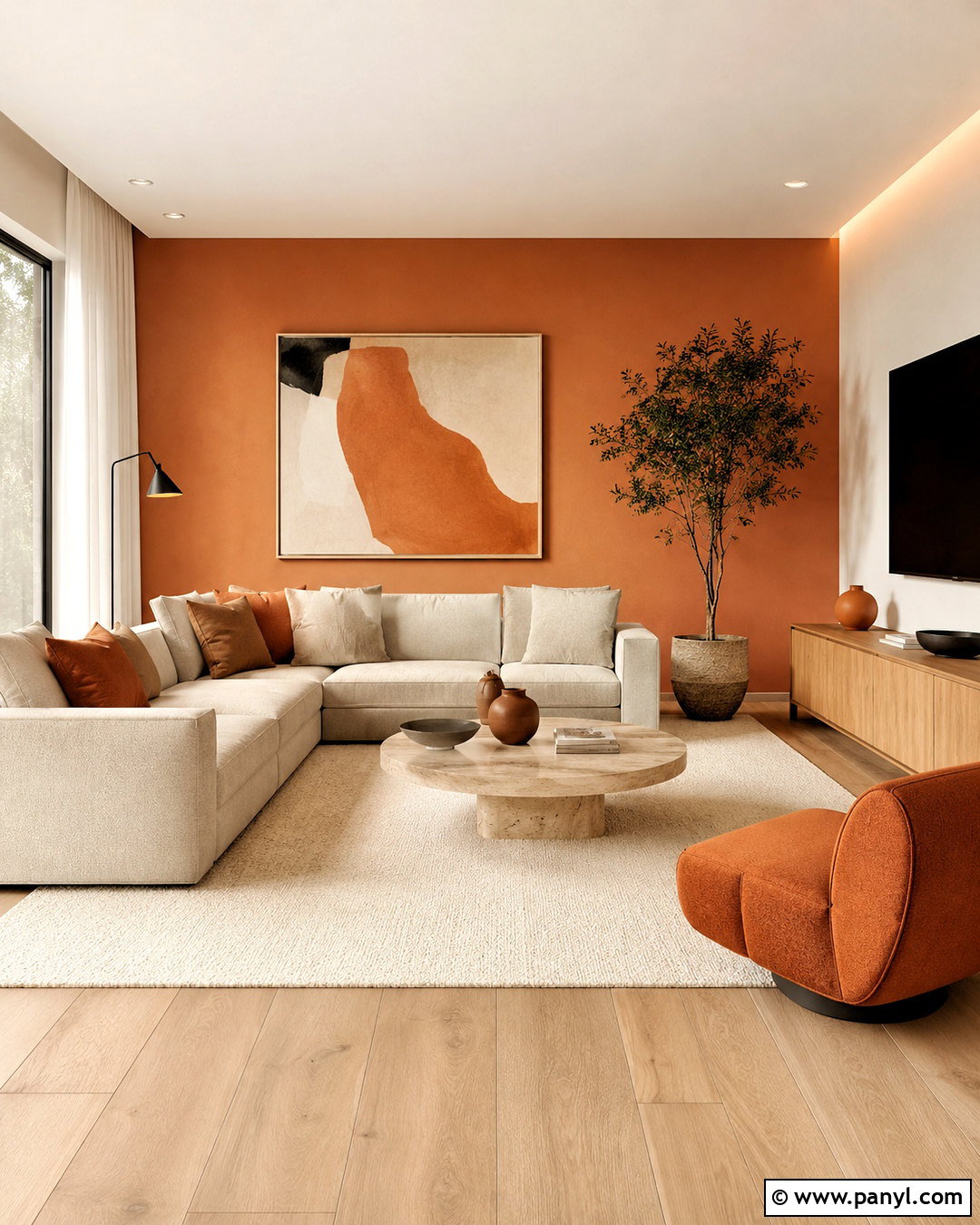
Orange can work in a minimalist interior when its placement is controlled and the surrounding materials remain quiet. Build the room around a single sculptural orange sofa or lounge chair, then use soft greige walls and pale oak flooring. Select a low cream rug and a simple travertine coffee table with rounded edges. Avoid patterned textiles, crowded shelving, and clusters of tiny accessories. Instead, display one large abstract artwork that contains a small amount of orange, brown, and black. Use concealed storage to maintain clean surfaces and choose slim black lighting for contrast. Linen curtains should match the wall color closely. The final space feels warm rather than stark, proving that a strong hue can enhance minimalist design when the layout and visual repetition remain disciplined.
20. Orange Maximalist Interior
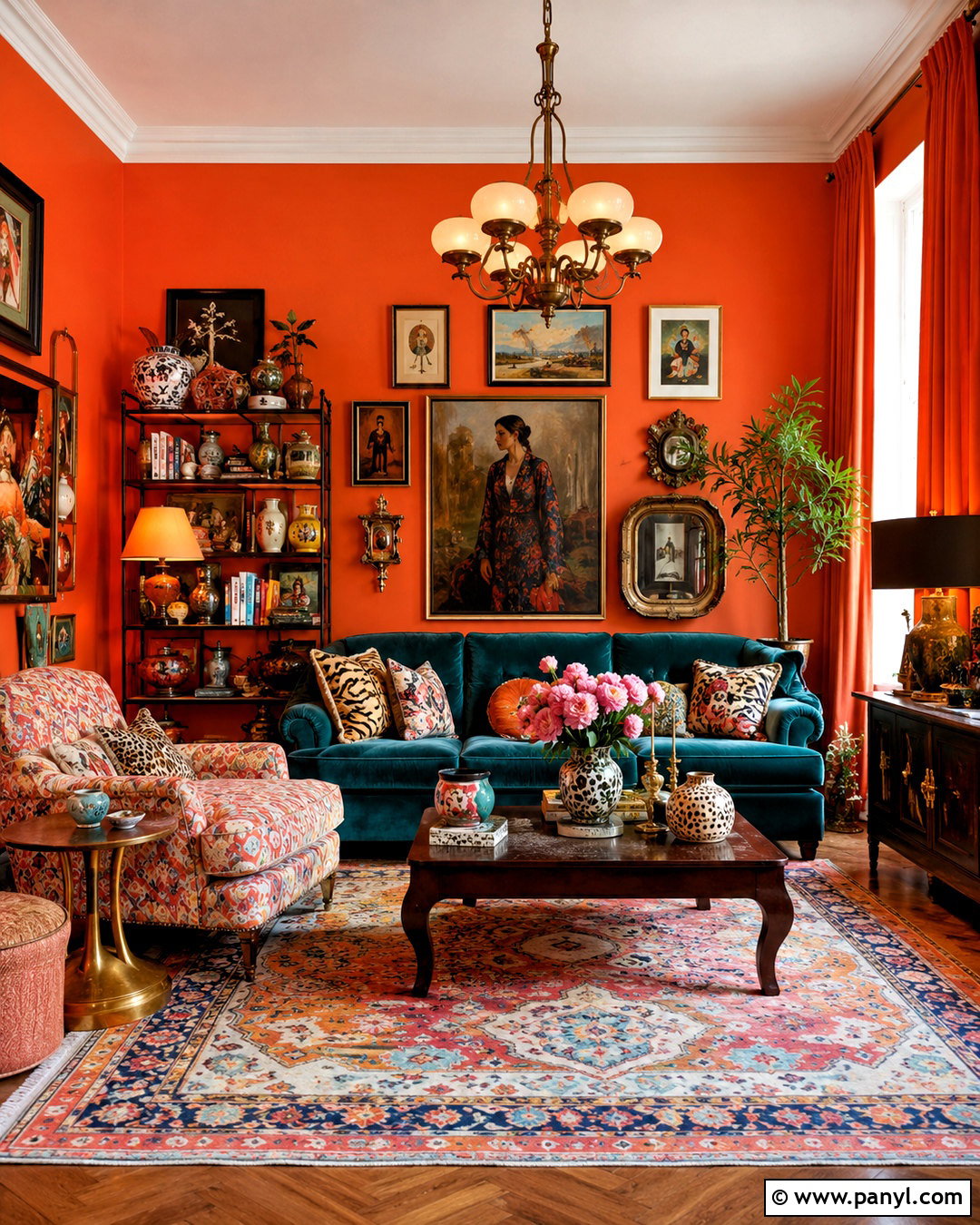
For anyone who loves expressive color, an orange maximalist room can feel joyful and collected rather than chaotic. Begin with deep orange walls, then add a teal velvet sofa and a large patterned rug containing rust, pink, blue, and cream. Mix floral and geometric pillows, but repeat at least two colors across every pattern to maintain continuity. Use dark wood furniture, brass lighting, and layered artwork in mismatched frames. Orange curtains can intensify the room, while white trim and a light ceiling provide essential breathing space. Arrange books, ceramics, and decorative objects in grouped collections rather than scattering them randomly. The completed interior should feel richly personal, with orange acting as the consistent background that connects contrasting furniture, artwork, textiles, and vintage-inspired details.
Conclusion:
The best 20 orange interior ideas use color as part of a complete, balanced room rather than as an isolated decoration. Burnt orange and terracotta pair naturally with wood, cream, olive, and brass, while brighter citrus shades look sharper beside white, navy, or black. Before committing, test the chosen orange in morning and evening light because its warmth can change noticeably throughout the day. Renters and cautious decorators can begin with upholstery, curtains, rugs, or bedding. Homeowners ready for greater impact can explore painted walls, cabinetry, tile, or wallpaper. Whatever approach you choose, repeat the orange in a few carefully selected places and leave enough neutral space for the finished interior to feel comfortable.

Related Ideas and Inspiration:
Leave a Reply