
Cedar brings natural warmth, rich grain, and architectural character to rooms that might otherwise feel flat or unfinished. These 20 cedar walls interior ideas show how the material can work beyond the traditional log cabin. Current applications include streamlined vertical slats, broad horizontal paneling, compact accent walls, built-in media centers, and contemporary combinations with stone, plaster, and painted drywall. () The key is creating balance. Warm wood looks fresher when paired with clean furniture, restrained colors, soft textiles, and enough open wall space. Cedar can define an entire room or highlight one carefully selected area. Whether your home leans rustic, Scandinavian, midcentury, or modern, the complete looks below offer practical ways to recreate these 20 cedar walls interior ideas.

1. Modern Cedar Living Room Wall
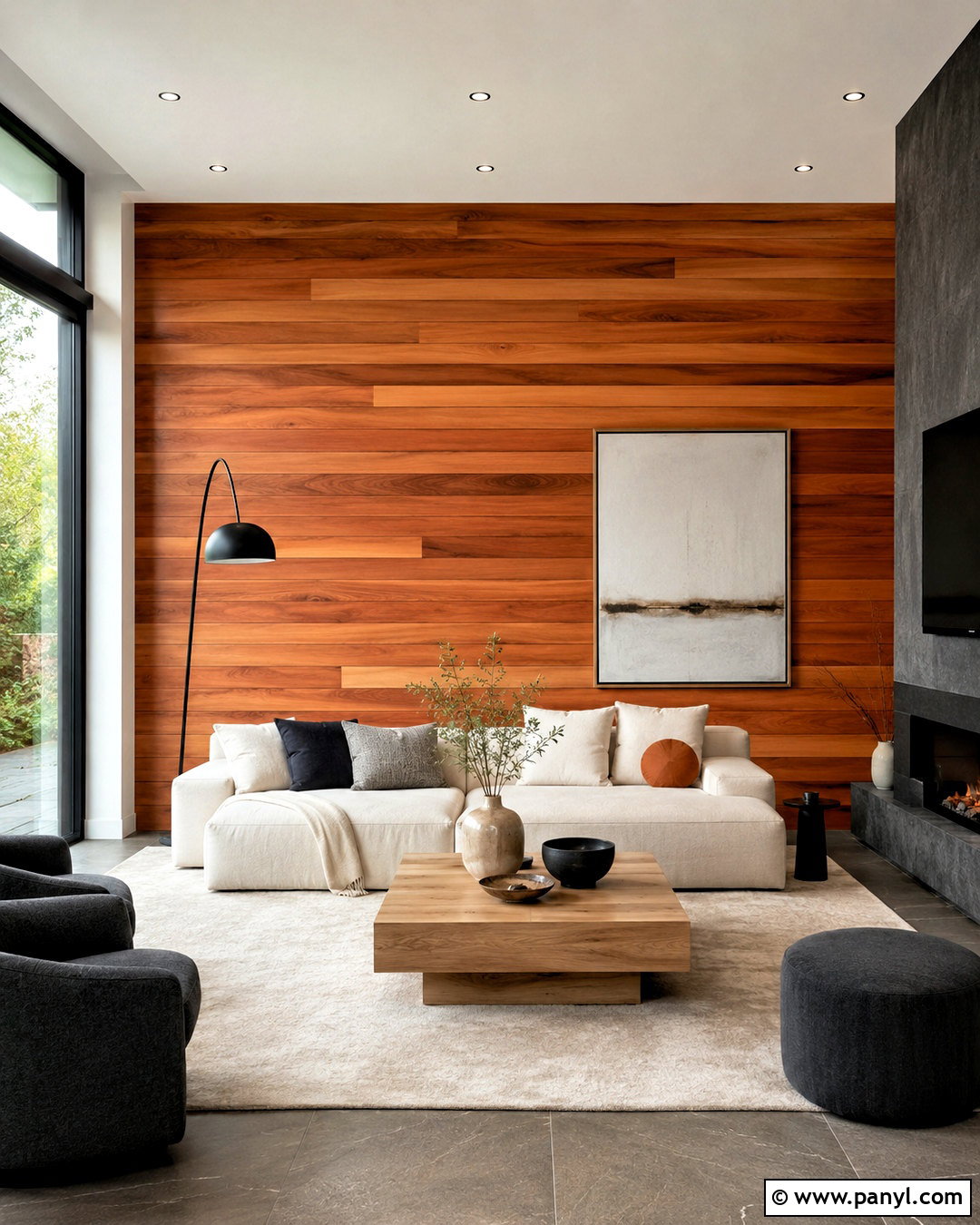
Create a clean living room by installing smooth cedar planks across the wall behind a low-profile sofa. Run the boards horizontally to make the room appear wider, and choose a clear matte finish that preserves their natural honey and reddish tones. Keep the remaining walls warm white so the wood becomes the main architectural feature. A cream performance-fabric sofa, charcoal lounge chair, and simple oak coffee table provide comfortable seating without competing with the grain. Add a large ivory rug to brighten the floor and soften the room. Matte black lighting, slim curtain rods, and a few ceramic vessels introduce contemporary contrast. Finish with one large neutral artwork rather than several small decorations, allowing the cedar wall to remain calm and visible.
2. Cedar Bedroom Accent Wall
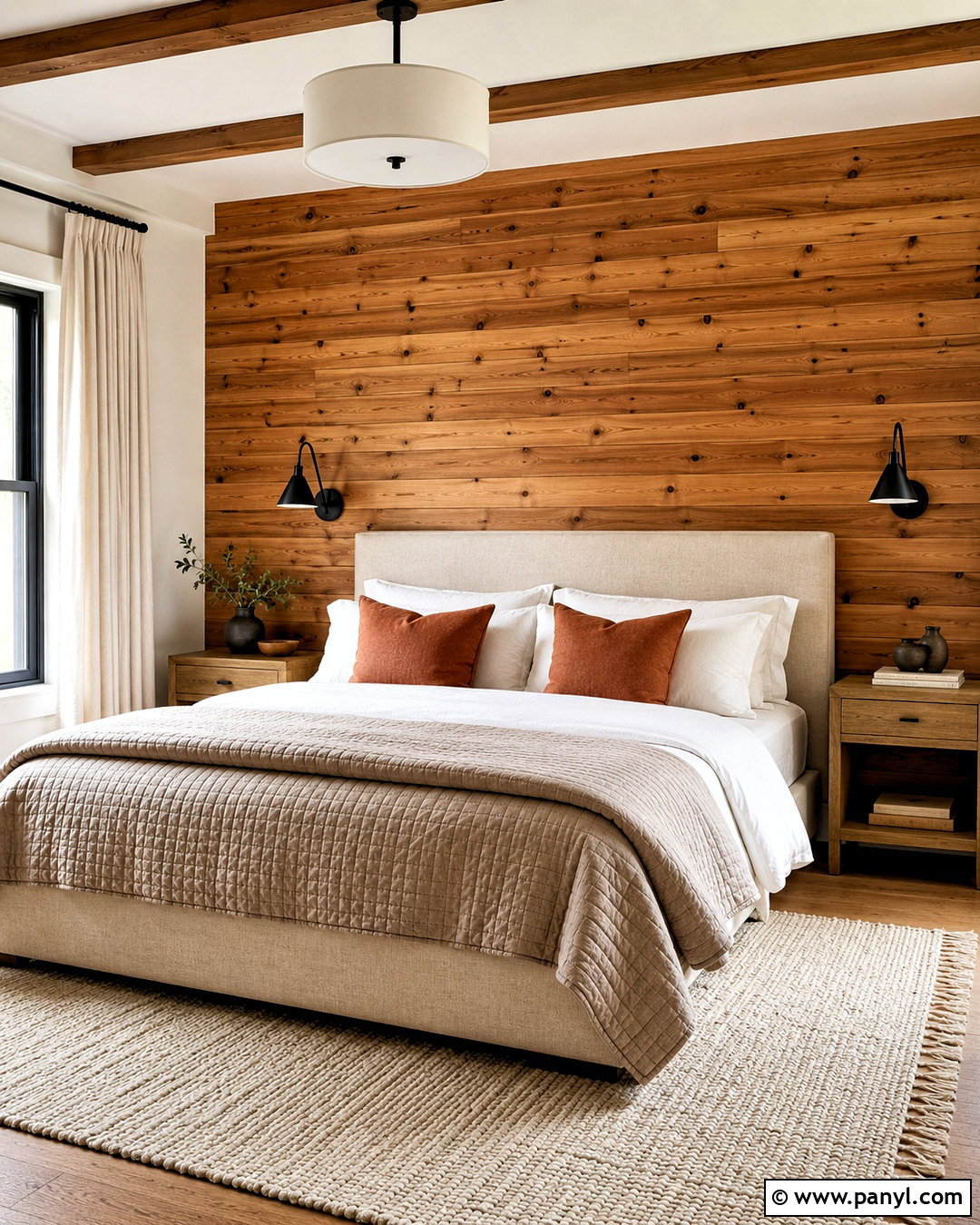
A cedar wall behind the bed can replace a conventional headboard while making the entire bedroom feel warmer. Use tongue-and-groove boards in a medium natural finish, extending them from floor to ceiling for a polished result. Center a simple oatmeal upholstered bed against the wood and leave generous space around it. White bedding, a soft taupe quilt, and muted rust pillows connect with the cedar without creating an overly brown palette. Choose matching oak nightstands and compact black wall sconces to maintain symmetry. Pale greige paint on the other walls keeps the room bright, while light wood flooring and an ivory wool rug add quiet layers. Complete the look with linen curtains and minimal botanical art on an adjoining painted wall.
3. Vertical Cedar Slat Wall
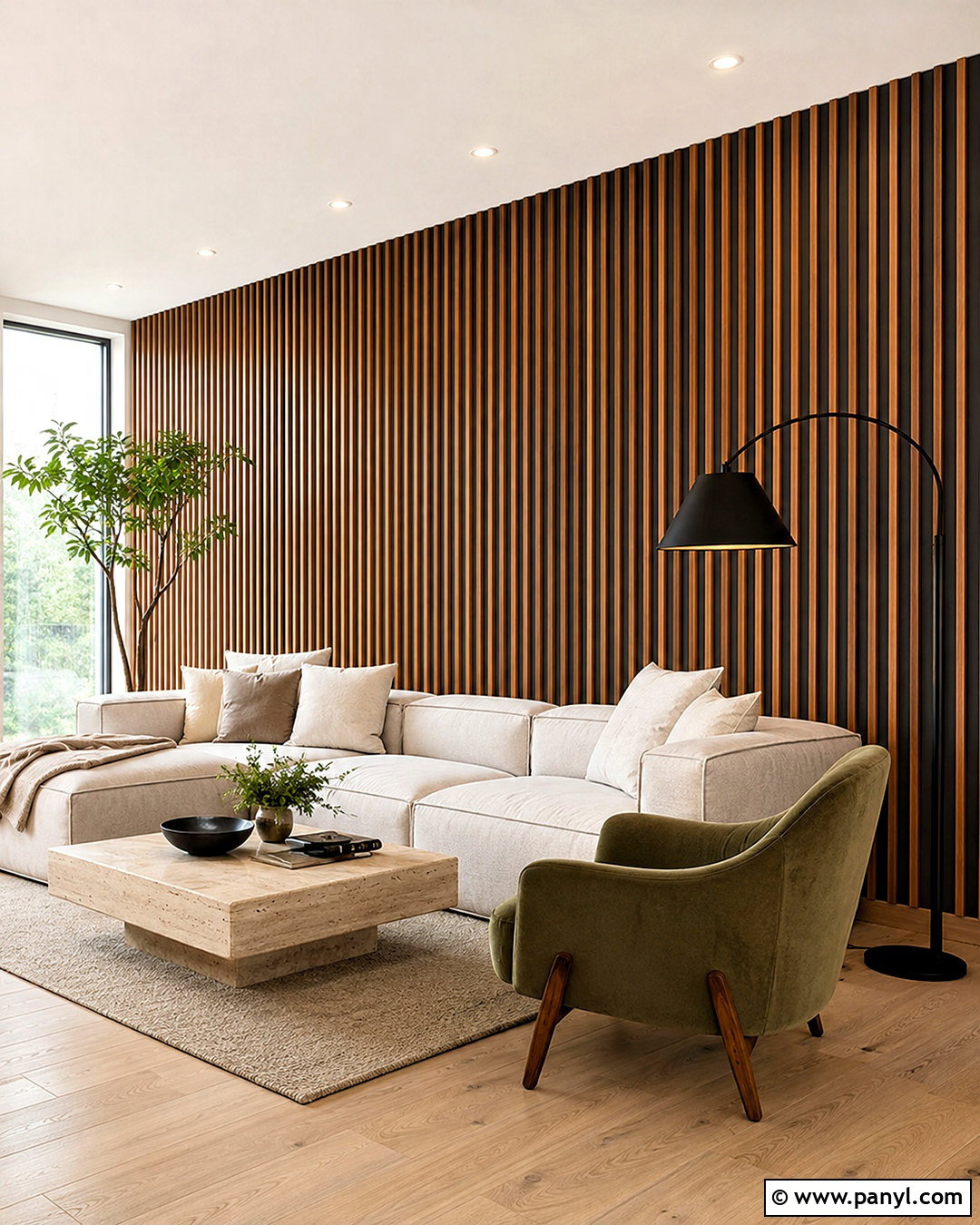
Vertical cedar slats offer a lighter alternative to solid wood paneling while giving a room noticeable height and rhythm. Install narrow clear-cedar strips over a charcoal or matte black backing so the spaces between them create crisp shadow lines. Use the treatment on one living room wall, then place a streamlined beige sectional in front of it. A rounded travertine coffee table, black metal floor lamp, and low walnut console support the modern composition. Keep the ceiling and surrounding walls bright white to prevent the detailed surface from overwhelming the space. Light oak flooring provides subtle contrast without introducing another strong wood tone. Add textured cream cushions, one muted green chair, and a tall leafy plant to soften the linear design and create a balanced, welcoming room.
4. Horizontal Cedar Plank Wall
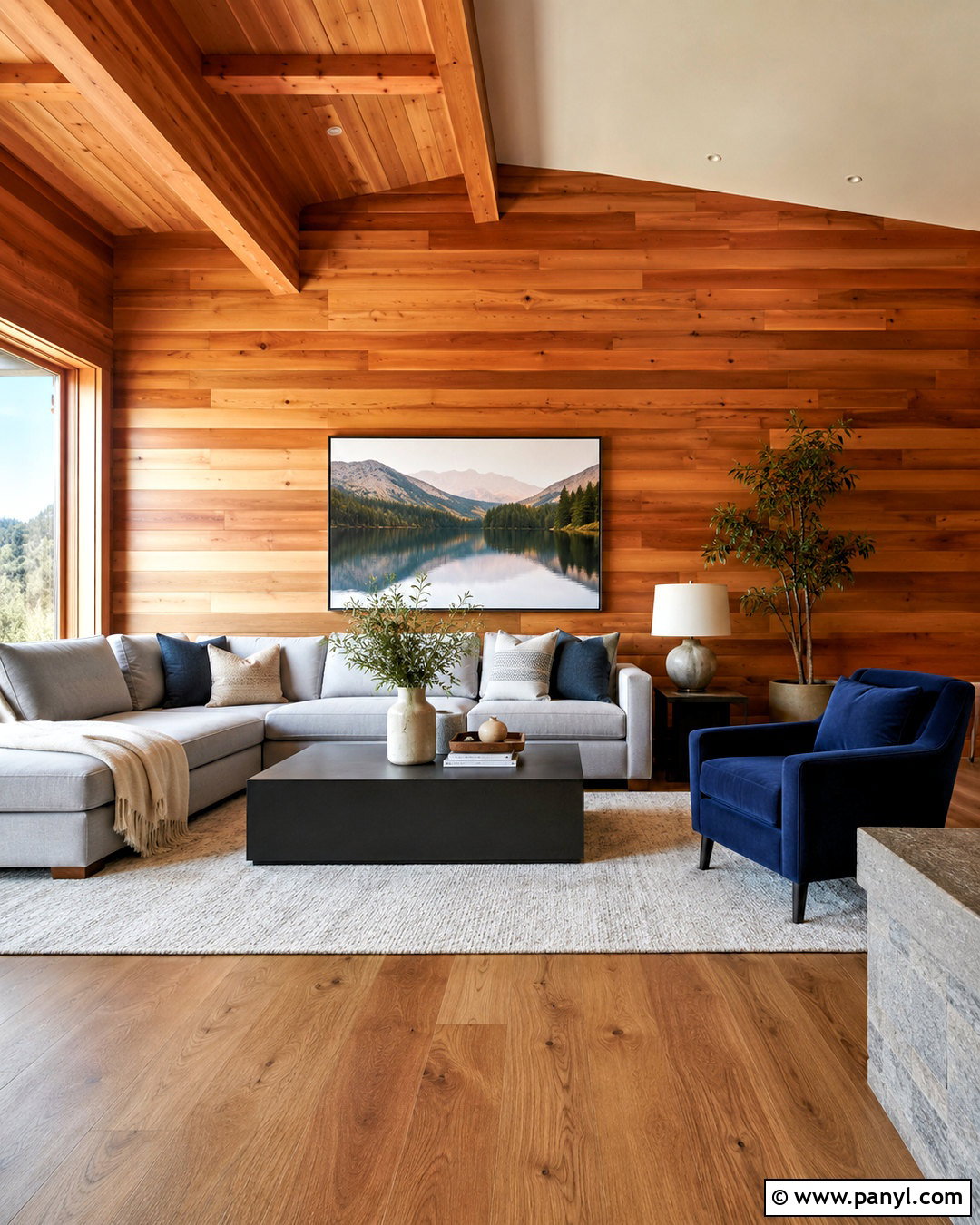
Wide horizontal cedar planks can make a narrow family room feel more expansive. Select boards with visible natural color variation, but use a low-sheen finish to keep the surface refined. Cover the longest uninterrupted wall and arrange a soft gray sectional parallel to it. A rectangular black coffee table helps ground the warm wood, while an off-white rug creates breathing room between the furniture and medium oak flooring. Bring in navy blue through pillows and a single lounge chair for a cooler counterpoint. Recessed ceiling lights and a sculptural white floor lamp provide even illumination across the grain. Keep decorative objects simple, using a few stoneware pieces and framed landscape photography. This complete scheme feels relaxed and contemporary without hiding cedar’s distinctive character.
5. Cedar Fireplace Wall
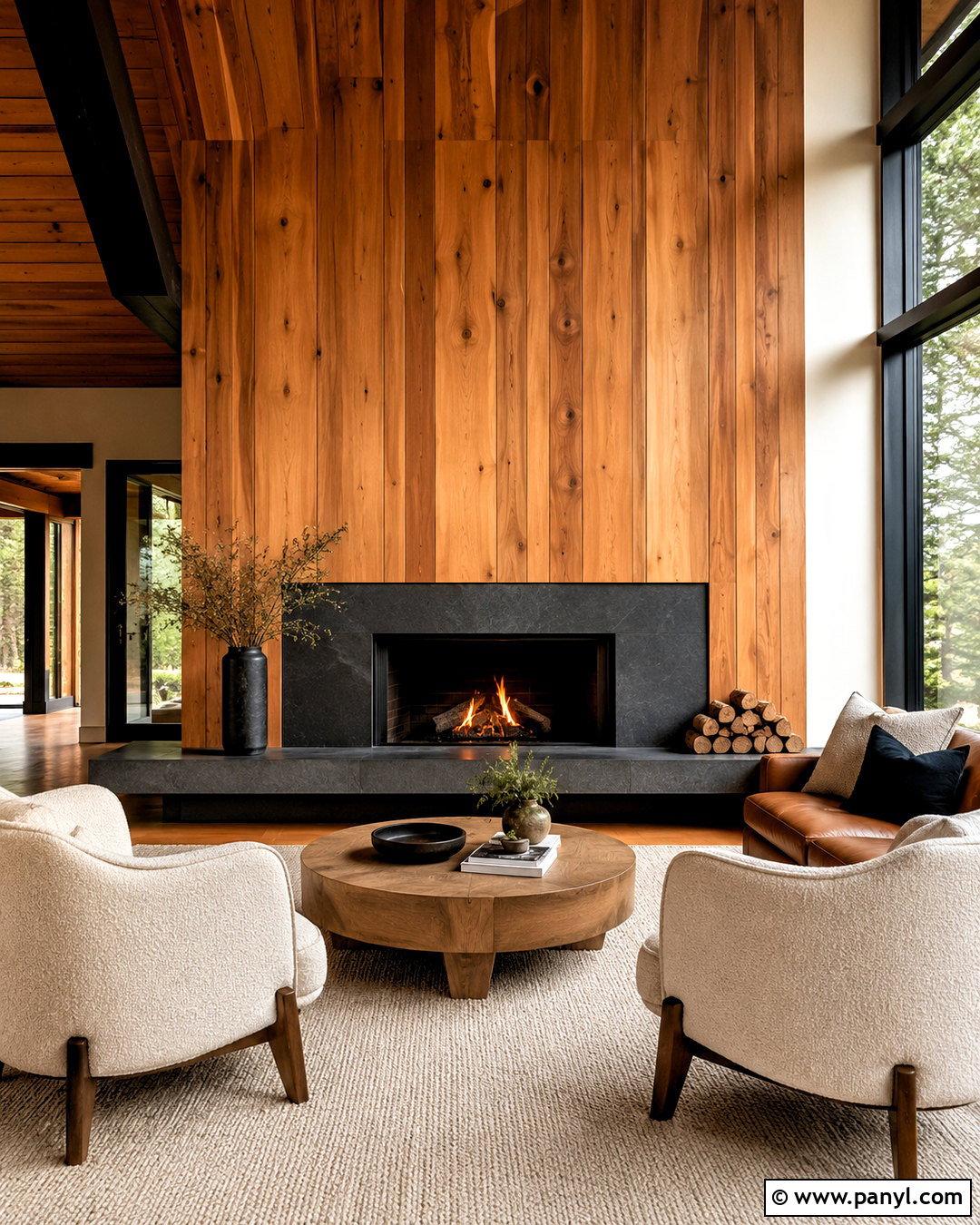
Turn the fireplace into a complete focal point by surrounding it with warm cedar paneling and a simple dark stone insert. Run slim cedar boards vertically from the floor to the ceiling, framing a wide fireplace finished in honed black slate. A substantial floating hearth provides visual weight, while the absence of an ornate mantel keeps the wall modern. Arrange a camel leather sofa and two cream boucle chairs around a round wood coffee table. Choose a lightly patterned neutral rug that connects the black stone, golden cedar, and pale upholstery. Soft white walls prevent the room from becoming too wood-heavy. Add black-framed windows, understated ceiling lighting, and one sculptural branch in a ceramic vase. The result combines cabin warmth with an uncluttered, contemporary layout.
6. Cedar Dining Room Wall
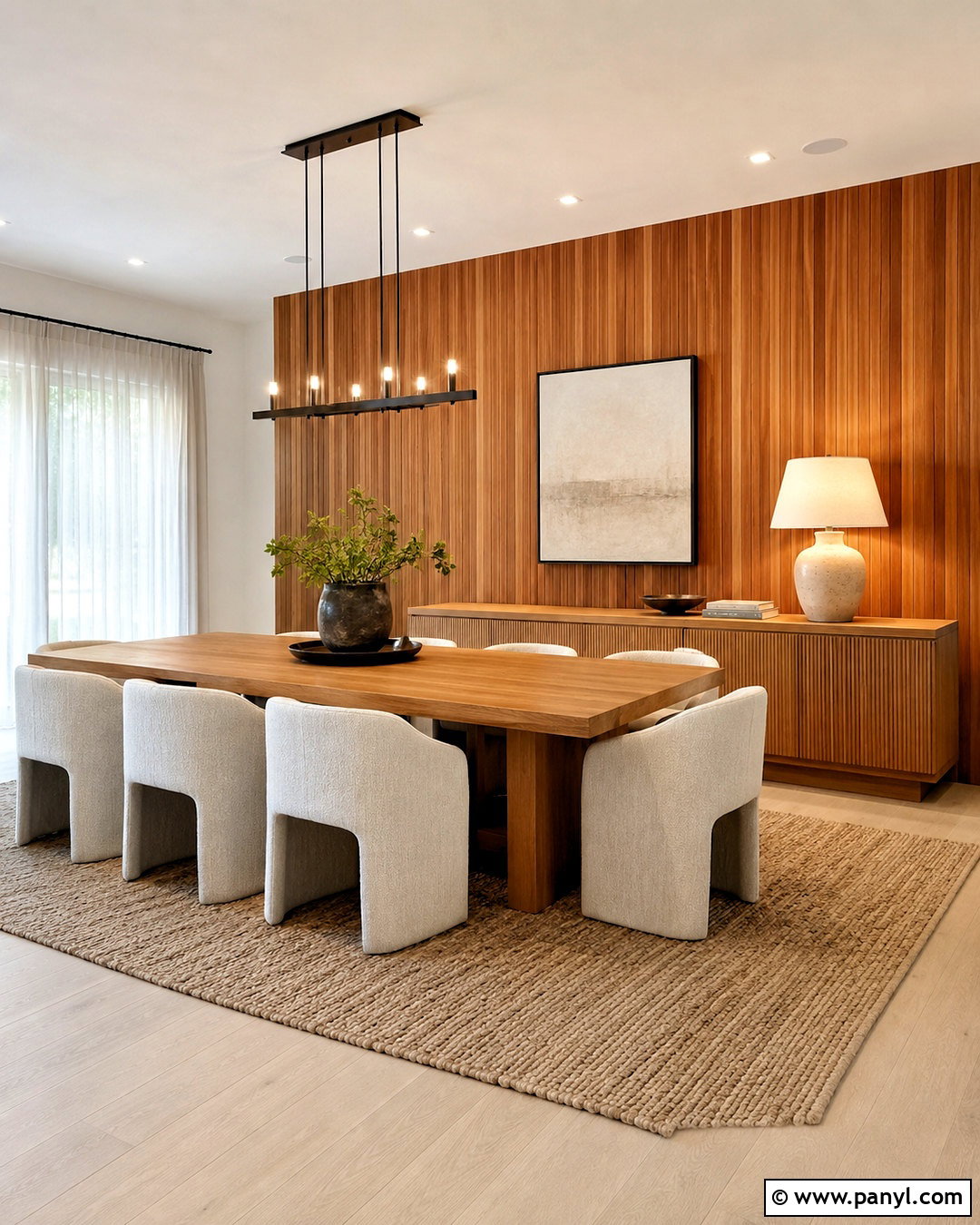
Give a dining space definition with a cedar feature wall behind a long sideboard. Smooth vertical boards create a tailored backdrop, especially when finished with a clear product that leaves the wood looking natural rather than glossy. Place a solid oak dining table in the center of the room and surround it with curved chairs upholstered in cream fabric. A large black linear chandelier adds contrast and visually connects the table to the wall. Choose warm white paint elsewhere, along with pale stone or light oak flooring. On the sideboard, arrange one oversized ceramic lamp, a broad bowl, and two framed pieces leaning casually against the cedar. Linen curtains and an understated woven rug soften the hard surfaces, creating a welcoming dining room suitable for everyday meals and gatherings.
7. Cedar Entryway Wall
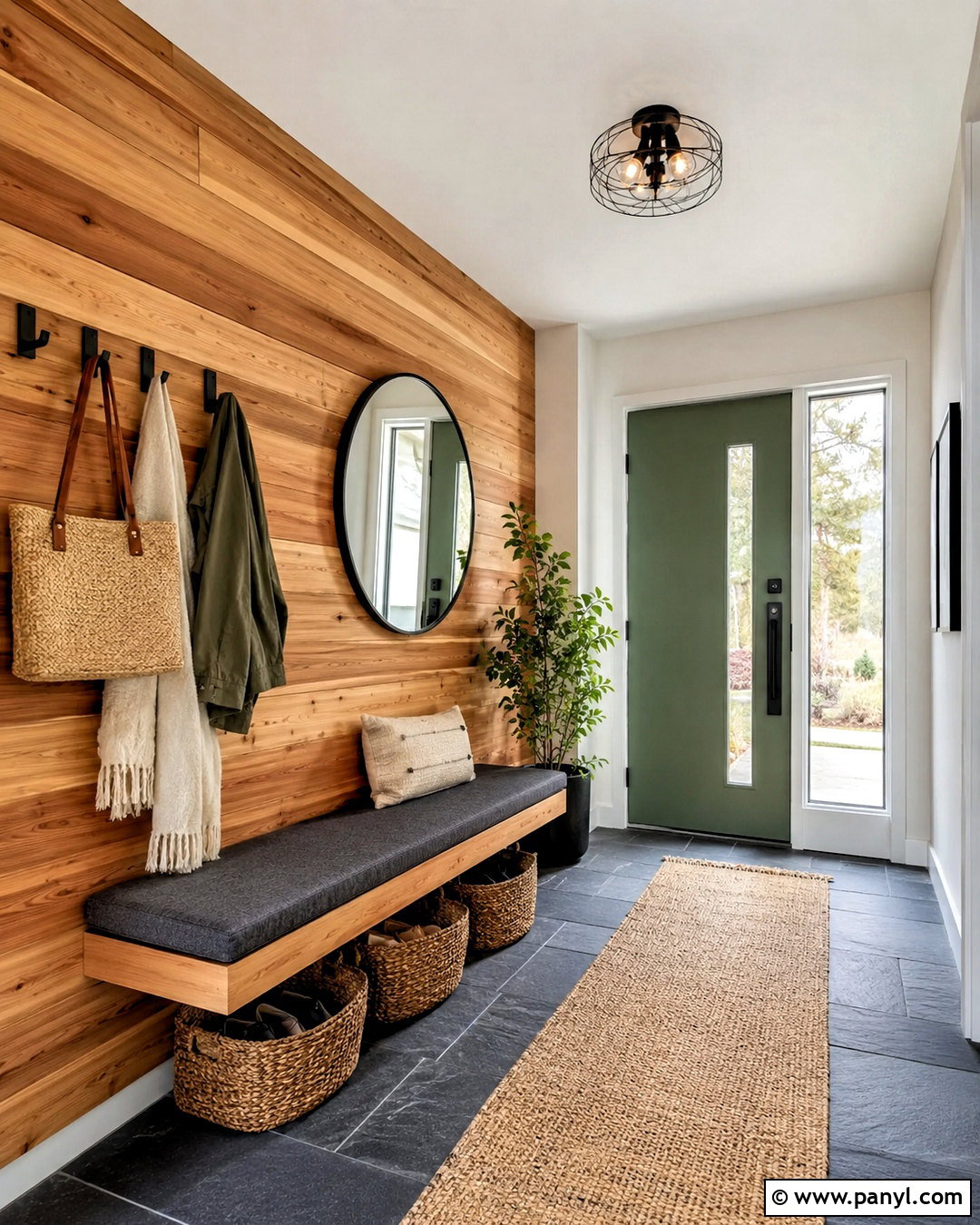
A cedar wall can give a small entryway a clear identity while adding practical storage. Install narrow horizontal boards across the wall beside the front door, then incorporate a floating oak bench and a row of matte black hooks. Keep the arrangement open rather than adding bulky cabinetry. A charcoal seat cushion, woven baskets beneath the bench, and a slim runner make the area useful without hiding the cedar. Paint the remaining walls soft white and choose a muted sage green front door for a natural color connection. Black slate flooring offers durability and creates a strong contrast with the warm wood. Complete the entry with a round black-framed mirror, a compact ceiling fixture, and one leafy plant. The finished space feels organized, bright, and intentionally designed.
8. Cedar Home Office Wall
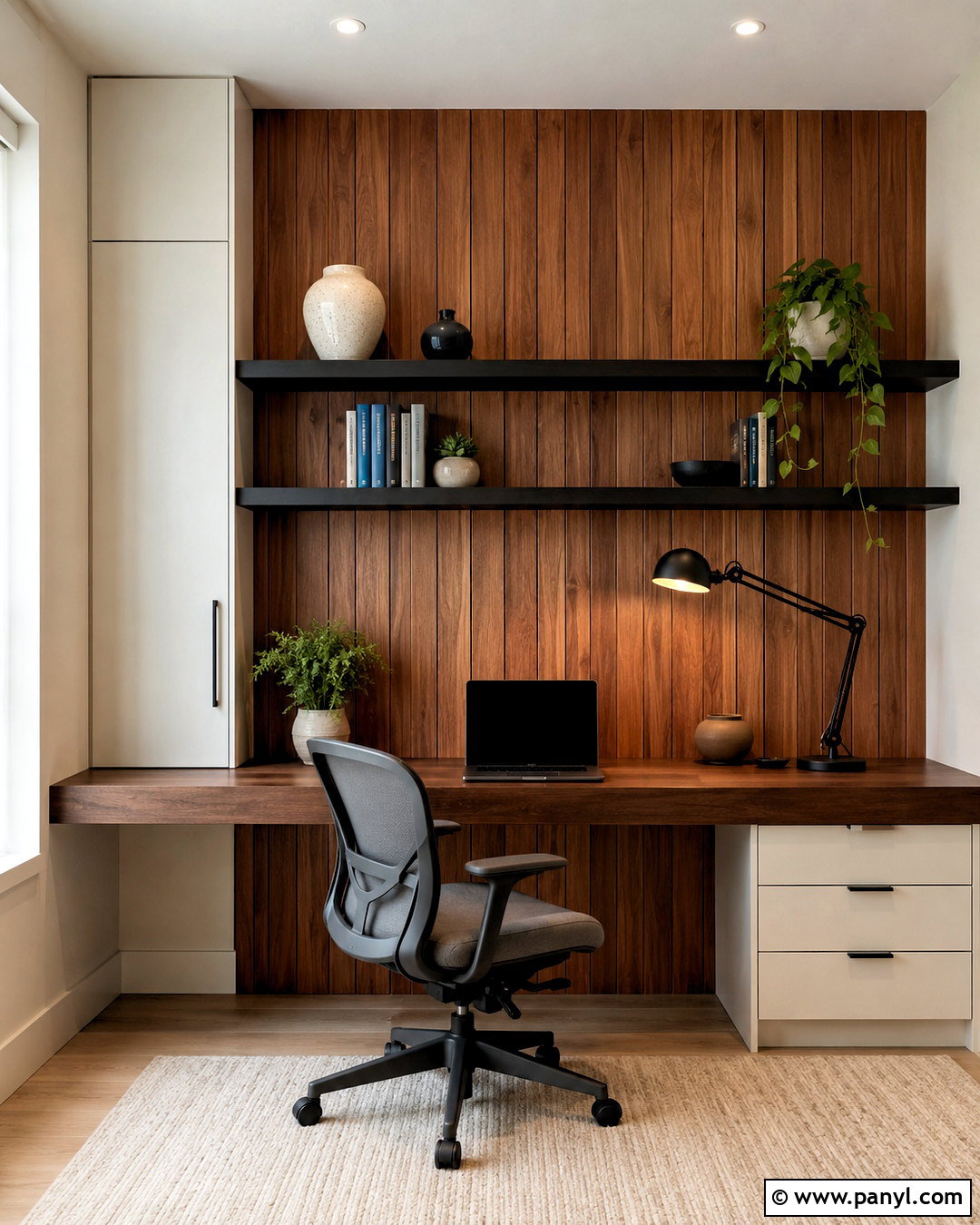
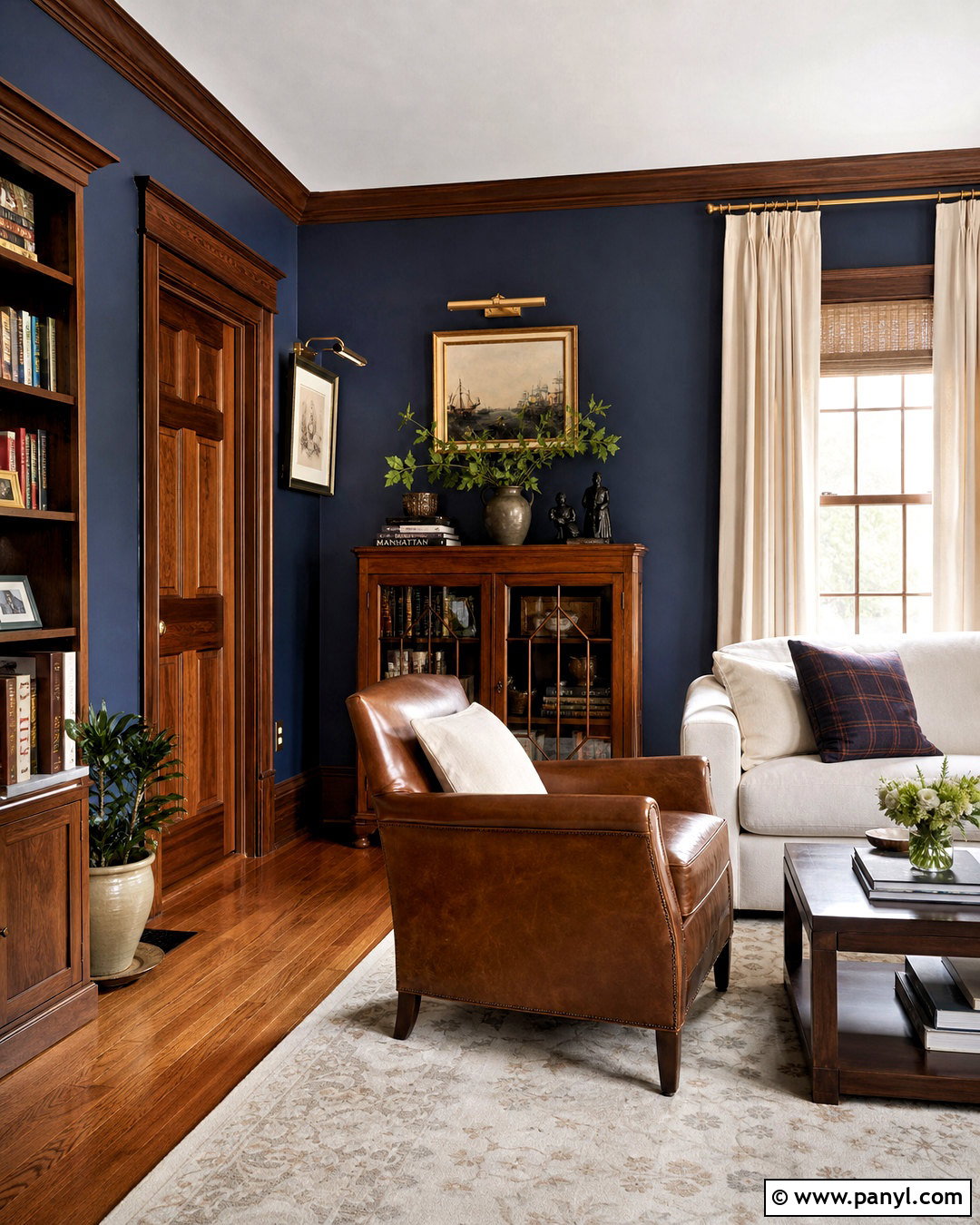
Make a home office feel focused yet comfortable by using cedar behind the desk and built-in storage. Cover the central wall with smooth vertical planks, then place a long floating walnut desk across the lower portion. Add narrow white cabinets on both ends so the wood remains visible in the middle. An ergonomic chair in warm gray fabric, a black adjustable desk lamp, and concealed cord management keep the workstation polished. Paint the side walls pale greige and use light oak flooring with a flat-weave cream rug. Floating black shelves can hold a restrained mix of books, ceramics, and small plants. Finish the room with linen window shades and a soft ceiling light. This complete office balances natural warmth with the clean organization needed for productive daily work.
9. Cedar Bathroom Wall
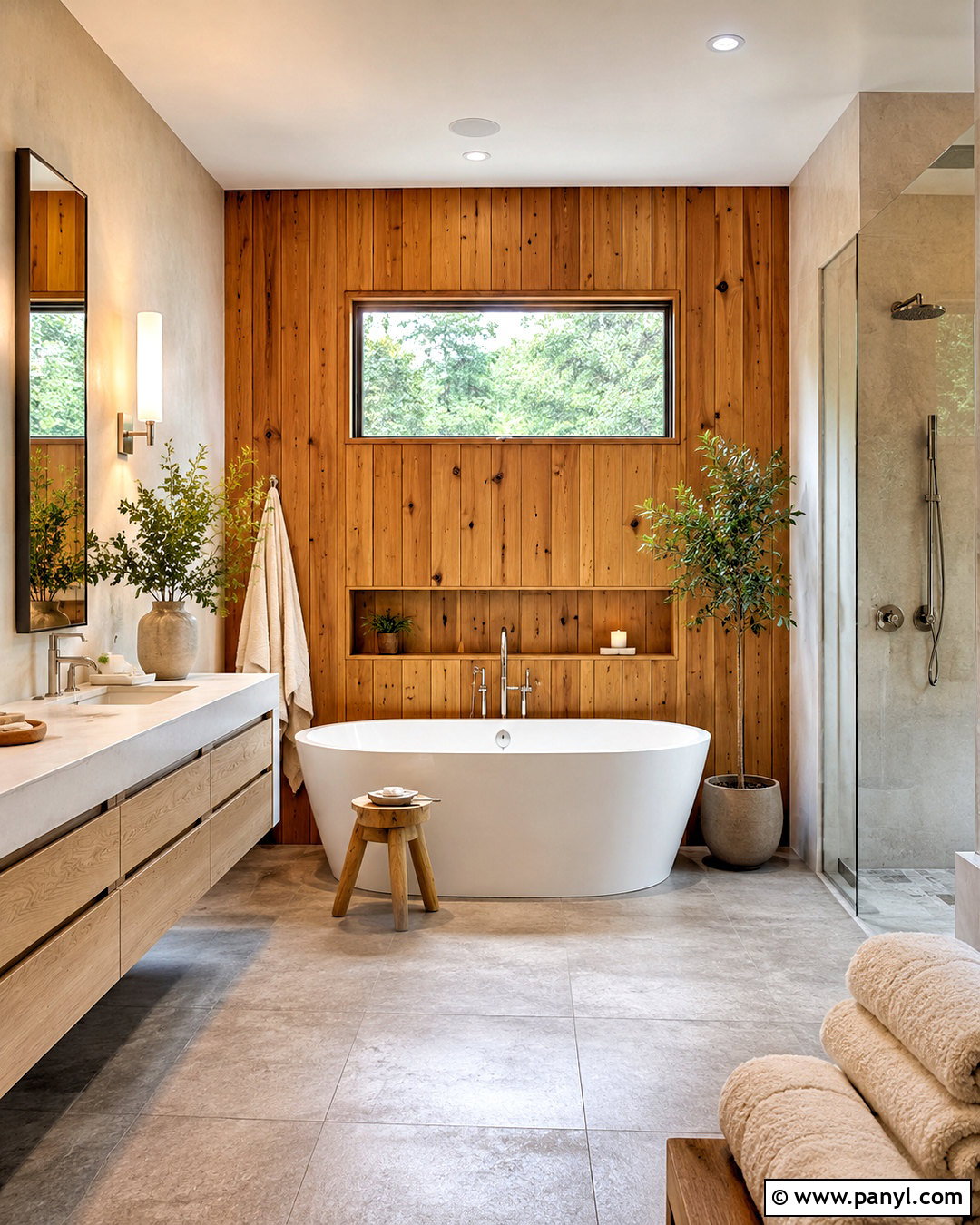
Cedar can introduce a spa-inspired atmosphere when it is used selectively in a properly planned bathroom. Place finished cedar boards on the dry wall behind a freestanding white tub rather than inside the shower enclosure. Run the planks vertically and pair them with large warm-gray porcelain floor tiles. A floating white oak vanity, creamy quartz counter, and brushed nickel fixtures keep the palette light. Use clear glass around the shower so the compact room remains visually open. Soft white paint on moisture-prone walls prevents the wood from taking over the design. Add thick ivory towels, a small teak stool, and simple greenery in a stone pot. Bright recessed lighting and a frosted window illuminate the grain, resulting in a fresh bathroom that feels natural instead of themed.
10. Cedar Kitchen Wall
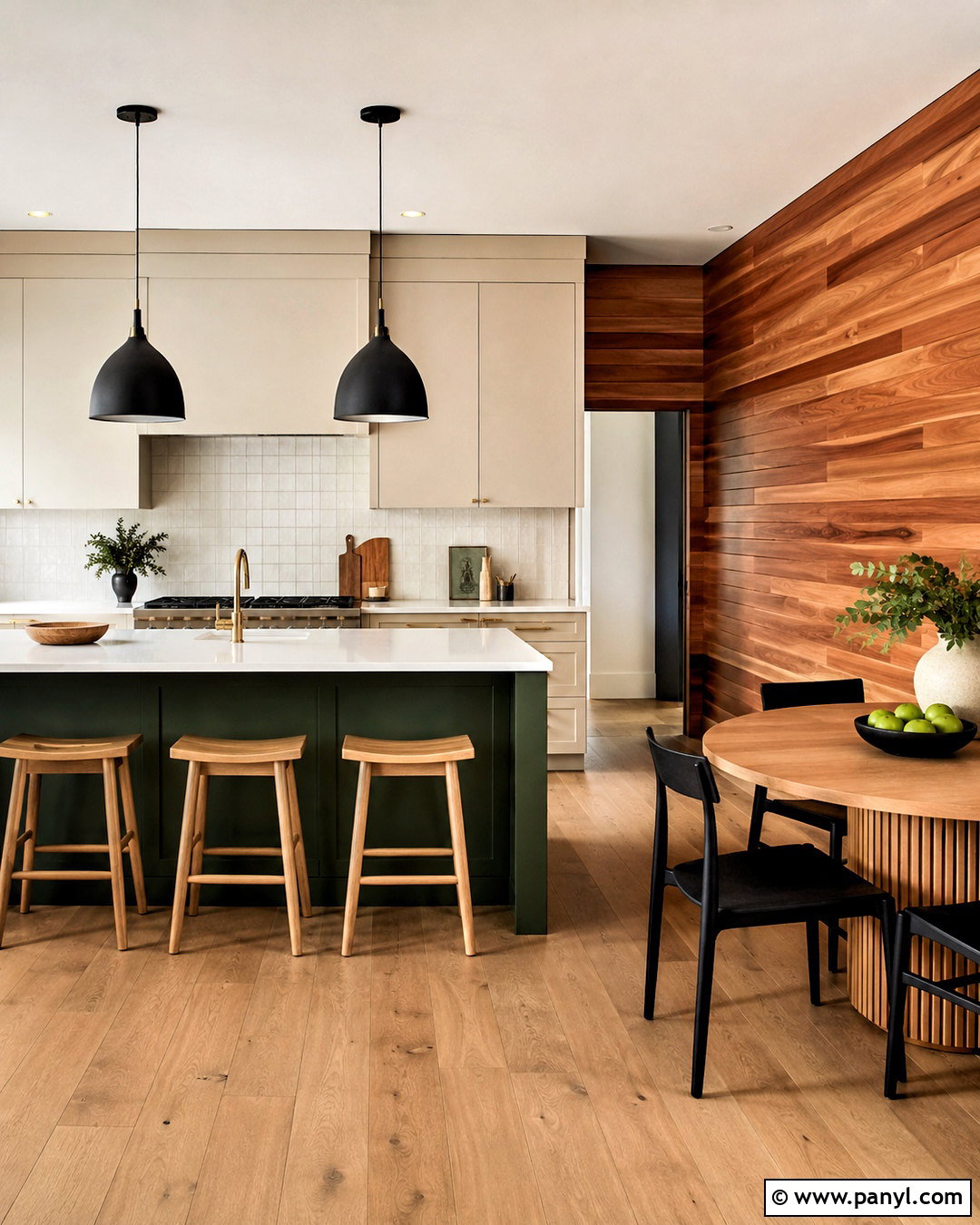
Use cedar as a warm architectural layer in a kitchen with simple cabinetry and durable surfaces. Install narrow cedar boards on the wall around a breakfast nook or beside a bank of tall cabinets, keeping them away from direct cooking splashes. Pair the wood with flat-panel cabinets in soft cream and an island painted deep forest green. White quartz counters and a pale handmade-look tile backsplash reflect light through the room. Choose backless oak stools, matte black pendant lights, and brushed brass cabinet pulls for a controlled mix of finishes. Medium-tone wood flooring can work if it has a quieter grain than the cedar. Complete the layout with a round breakfast table, woven chairs, and linen shades. The varied surfaces create depth while maintaining a cohesive, functional kitchen.
11. Cedar Basement Wall
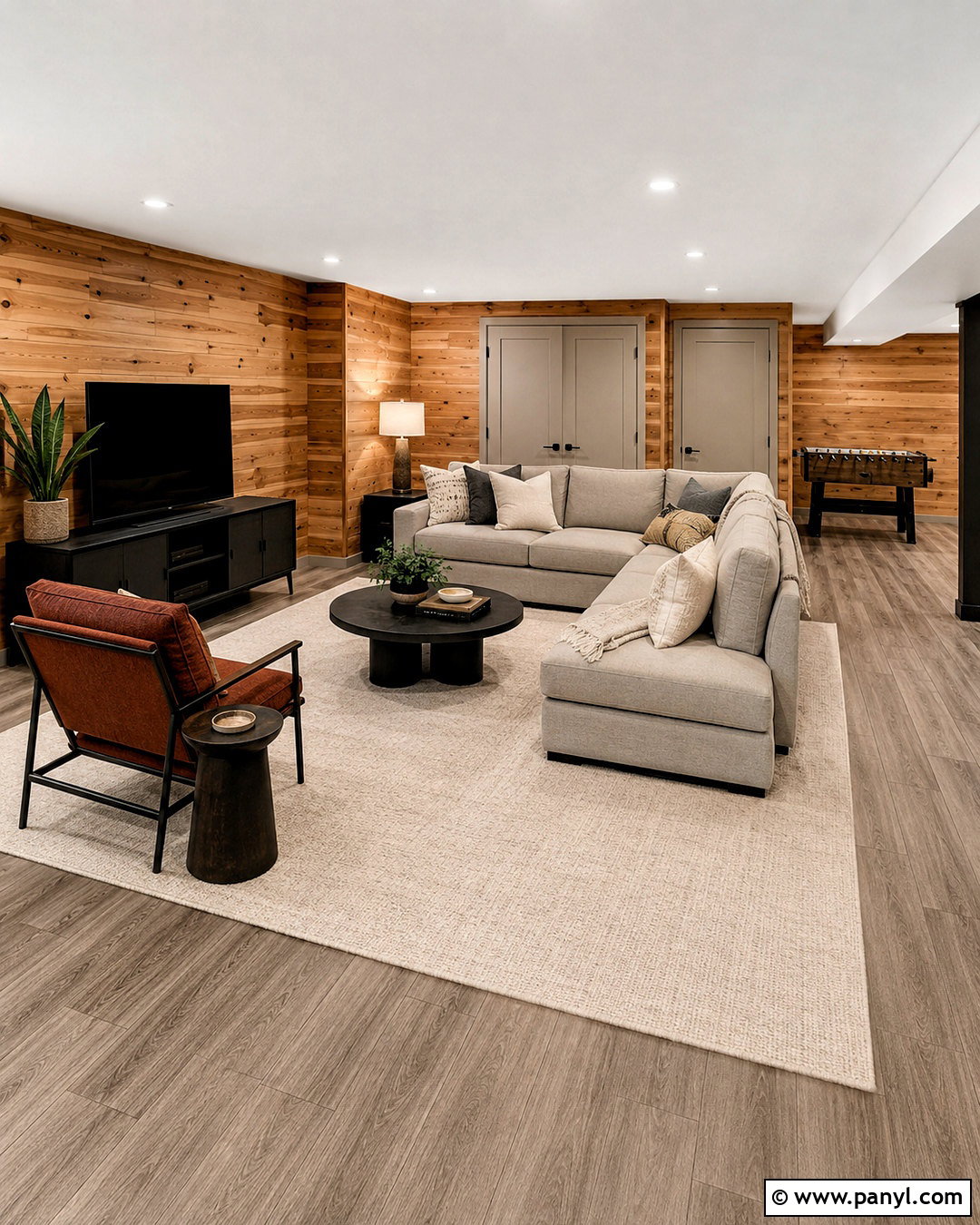
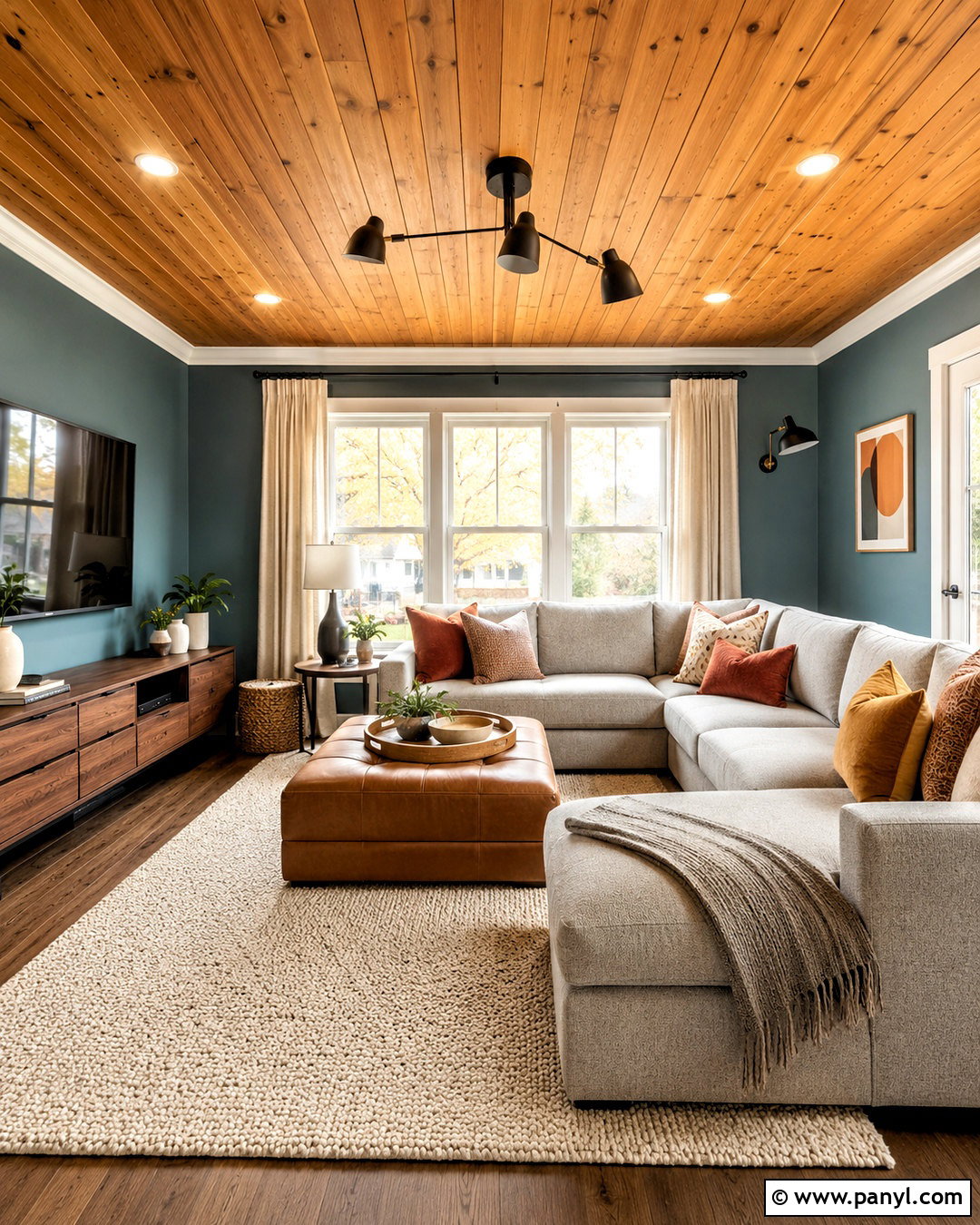
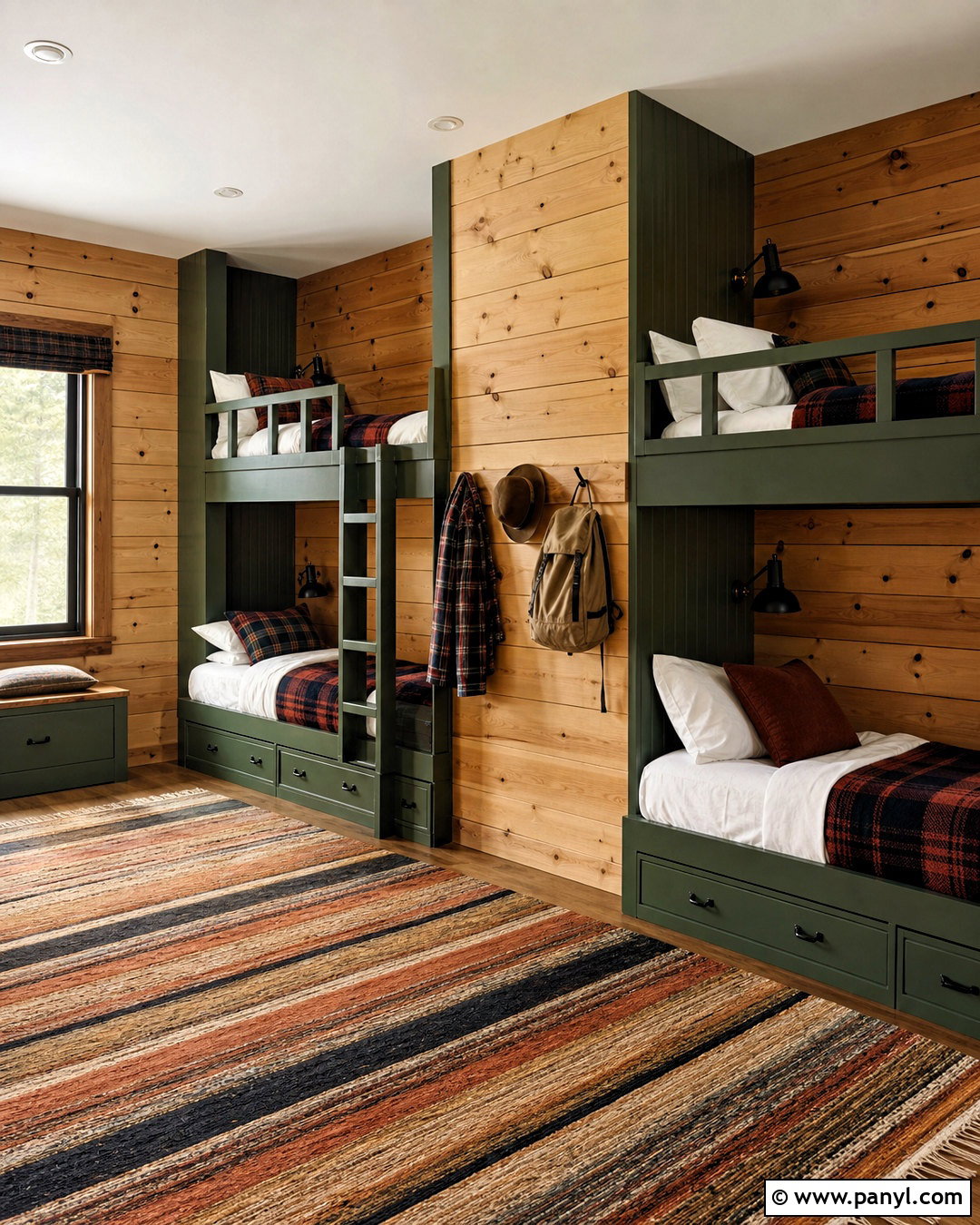
Transform a plain basement into a relaxed family space by covering one long wall with knotty cedar tongue-and-groove paneling. Let the knots and color variation add character, but balance them with streamlined furnishings. Place a large light-gray sectional opposite a low black media console, leaving clear walkways around the seating zone. Durable warm-gray vinyl plank flooring and an oversized cream rug brighten the lower-level room. Paint the remaining walls a pale mushroom color instead of stark white, which can feel cold under artificial light. Add recessed ceiling lights, black track lighting near the cedar, and table lamps with linen shades. A compact game table, closed toy storage, and a rust-colored lounge chair complete the layout. The finished basement feels cozy, practical, and suitable for different activities.
12. Cedar Media Wall
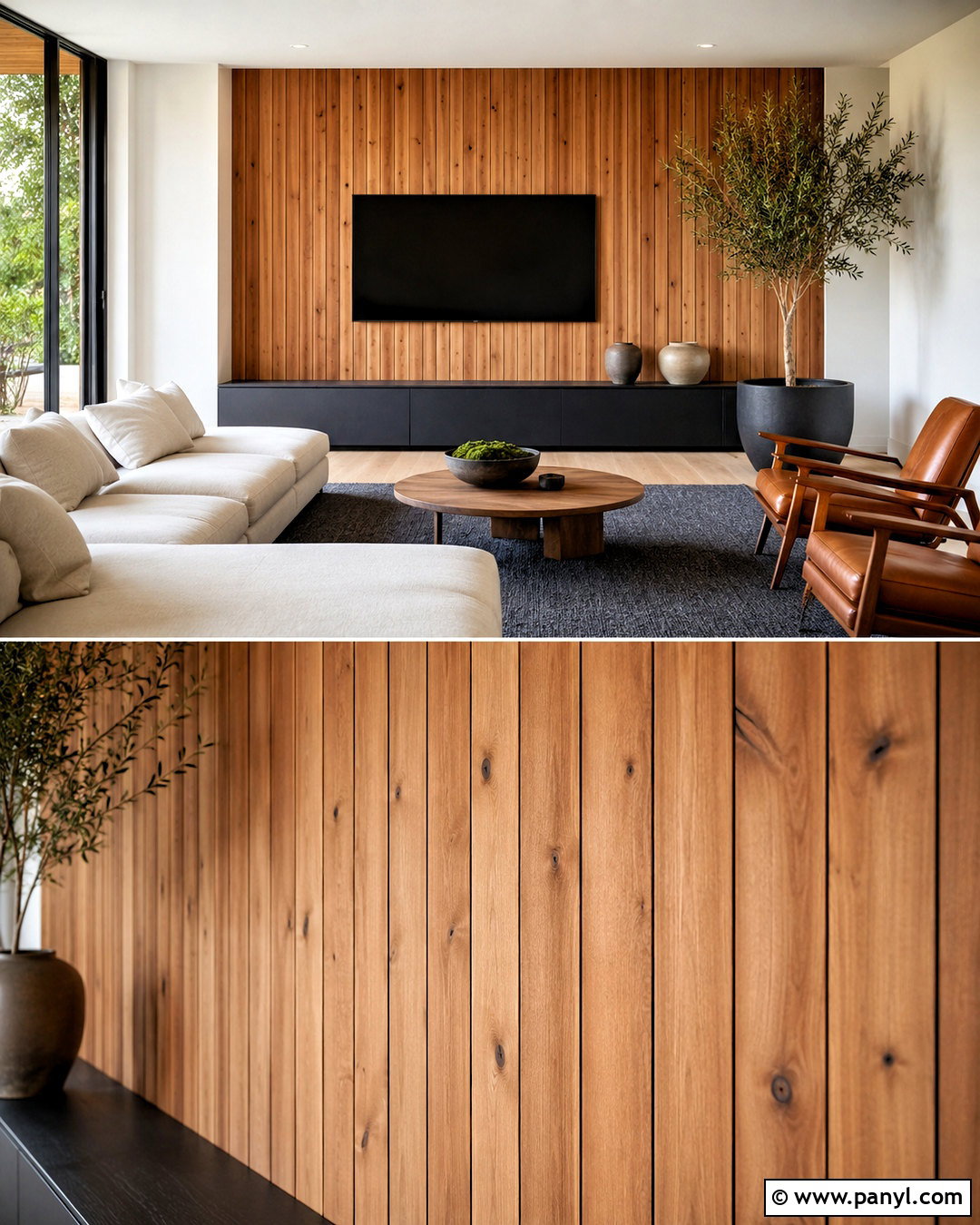
Build a sophisticated media wall by combining cedar paneling, concealed storage, and a streamlined television area. Install clear cedar boards vertically across the central section, then mount the television directly on the wood. Add low handle-free cabinets in matte charcoal along the bottom to hide equipment, cords, and everyday clutter. Flank the cedar with narrow off-white wall sections so the feature has a defined boundary. Face the wall with a modular cream sofa and two compact cognac leather chairs. A dark wool rug and rounded oak coffee table ground the seating arrangement. Use dimmable recessed lighting for viewing, but include bright floor and table lamps for daily use. Minimal pottery and a tall indoor tree complete the room without distracting from the organized cedar centerpiece.
13. Cedar Wall With White Paint
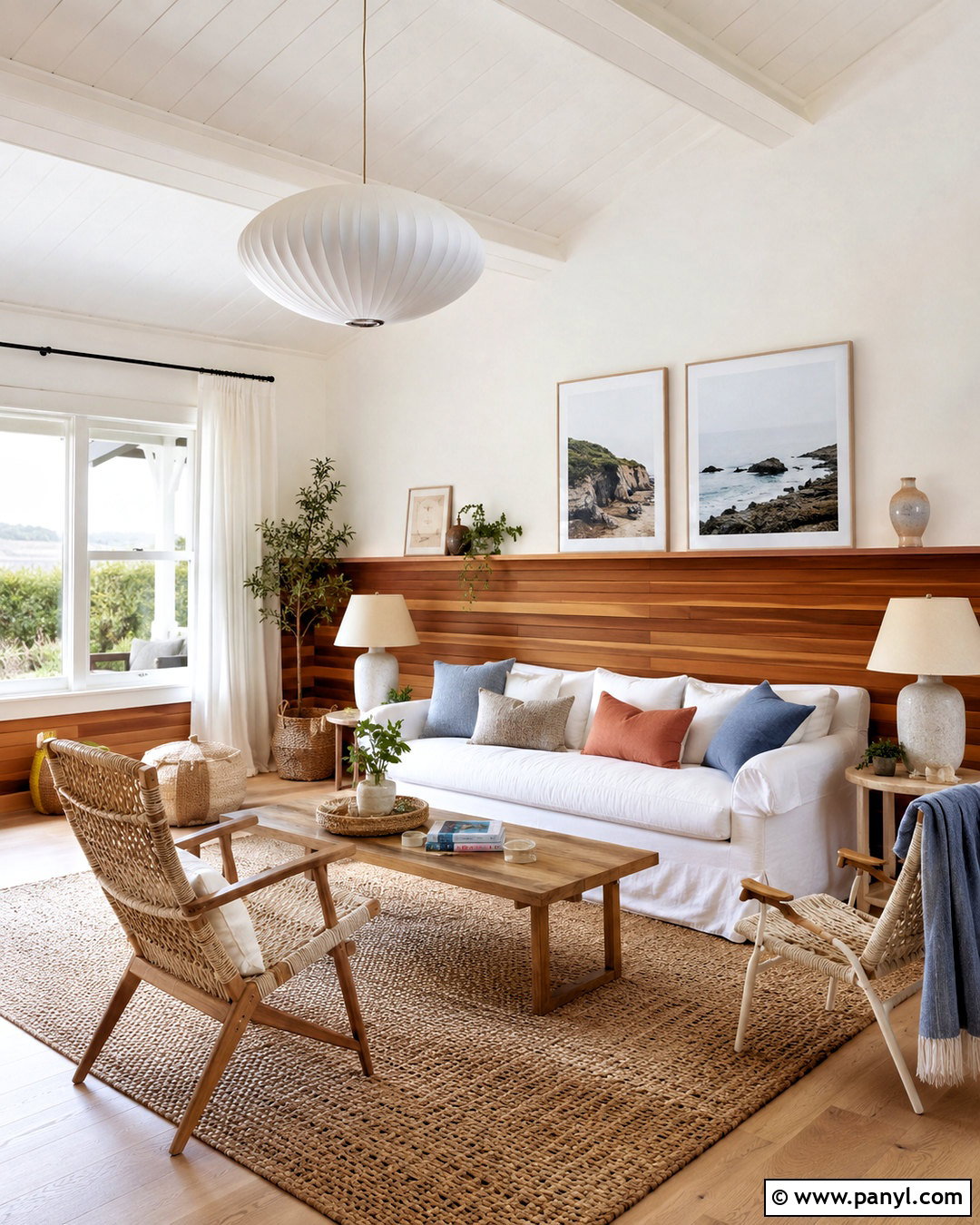
Natural cedar and warm white paint create an easy combination for rooms that need both character and brightness. Cover the lower two-thirds of a living room wall with horizontal cedar planks, then finish the upper area and ceiling in a creamy white. Align a slim picture ledge with the top of the paneling to create a crisp transition. Choose a white slipcovered sofa, light oak coffee table, and two woven accent chairs for an airy foundation. Soft blue and clay-colored cushions bring gentle color into the scheme. Pale flooring and a natural jute rug keep the overall look relaxed. Add linen drapes, a white ceramic lamp, and a few large framed prints above the ledge. The generous painted surfaces prevent the cedar from making the room look enclosed or visually heavy.
14. Cedar Wall With Black Accents
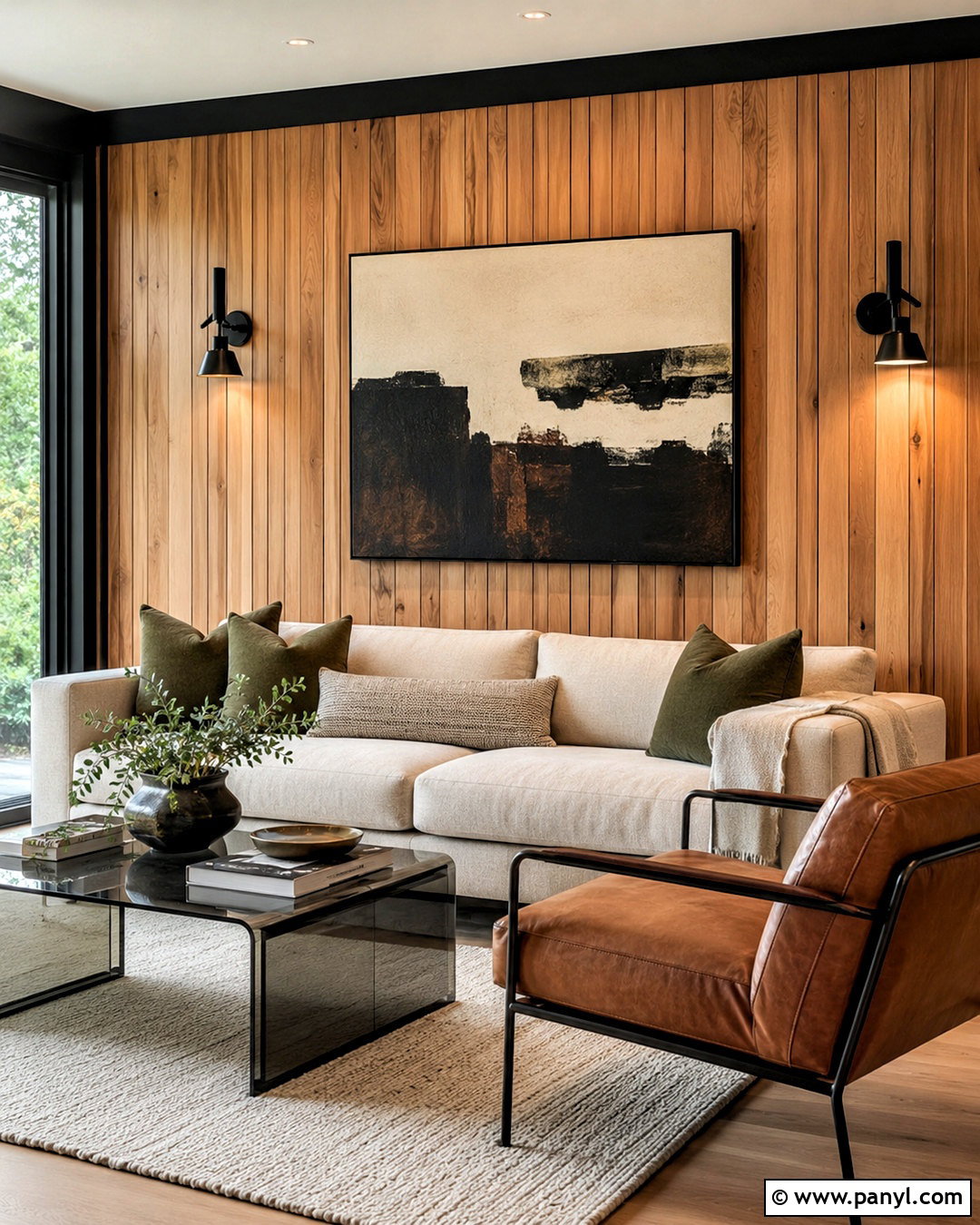
Black details sharpen the warm color of cedar and give it a distinctly modern direction. Install medium-toned cedar boards across the dining or sitting room’s main wall, using a vertical layout for a clean architectural appearance. Frame the wall with narrow black trim and repeat that color through a metal chandelier, window frames, and furniture legs. A pale beige sofa or dining chairs will keep the contrast from feeling severe. Use a smoked-glass coffee table, a cream rug, and light neutral flooring to preserve an open atmosphere. Small touches of olive green and cognac leather complement the cedar’s natural variation. Avoid covering the wall with excessive decor. One large abstract piece or a simple black shelf is enough to make the finished room feel confident, balanced, and uncluttered.
15. Cedar Wall With Stone Fireplace
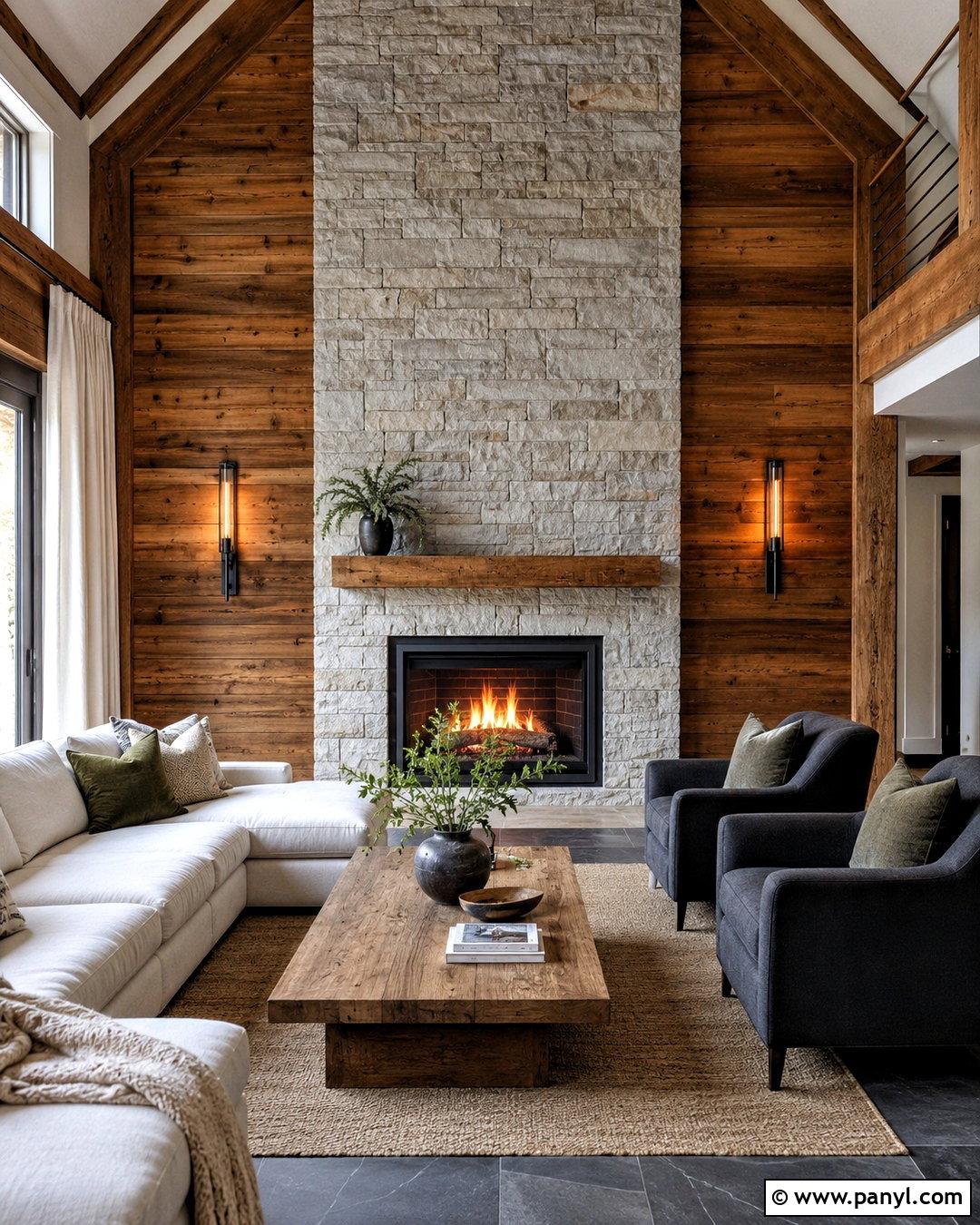
Combine cedar and stone for a grounded living room that still feels suitable for a modern home. Build a broad fireplace surround from light gray stacked stone, then flank it with vertical cedar paneling on both sides. Keep the cedar and stone at equal visual importance by using simple edges and avoiding a heavy rustic mantel. A slim reclaimed-oak beam can add definition without dominating the wall. Arrange a deep ivory sectional and two charcoal armchairs around a large rectangular coffee table. Use a warm beige rug to soften dark slate flooring and connect the seating area. Black metal sconces, linen curtains, and a few moss green pillows complete the palette. This balanced composition delivers natural texture while maintaining clean lines and a comfortable, functional furniture arrangement.
16. Light Cedar Scandinavian Room
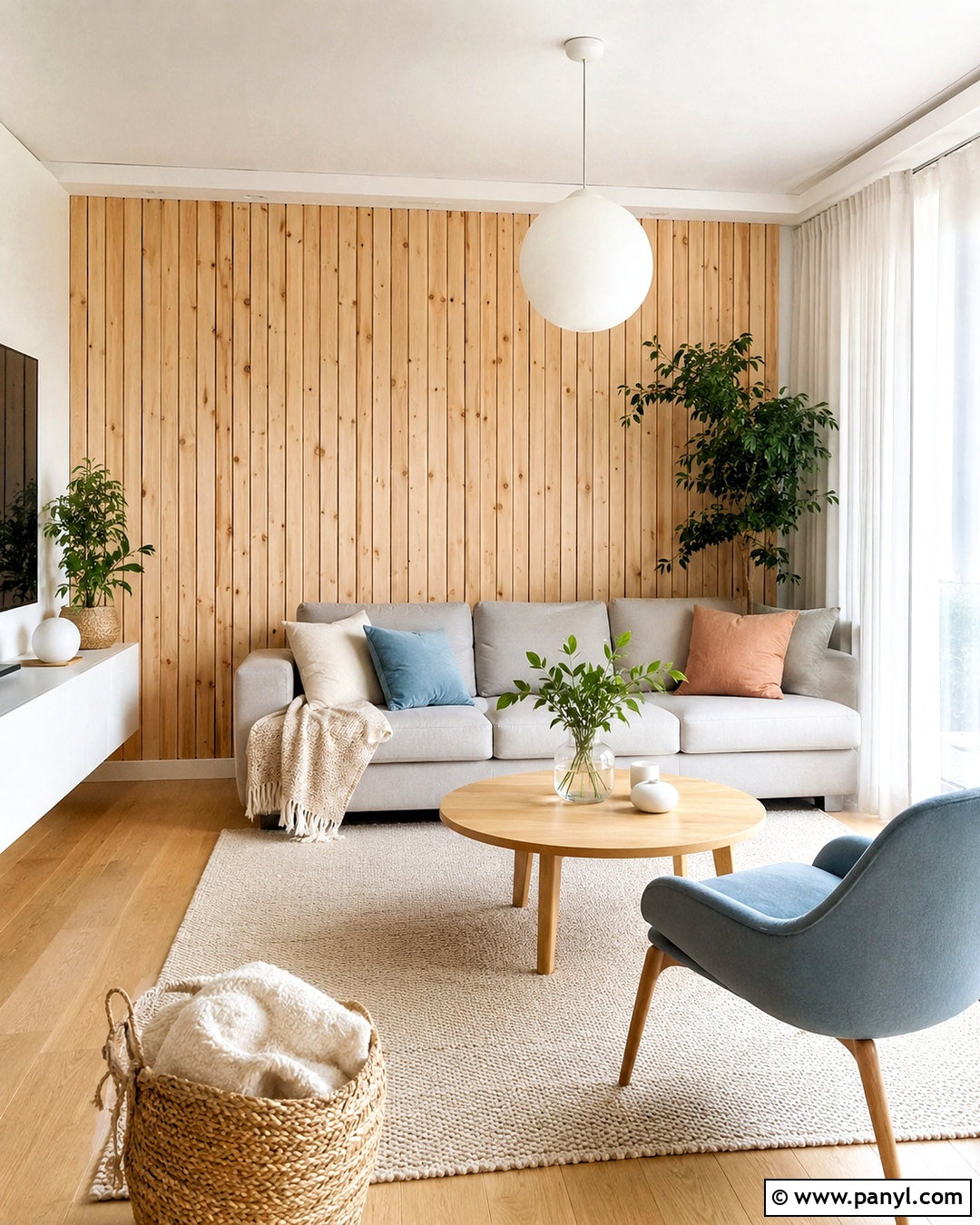
Pale cedar paneling works beautifully in a Scandinavian-inspired room built around simplicity, daylight, and practical comfort. Choose clear boards with a light natural finish and install them vertically across one full living room wall. Pair the cedar with white walls, a light gray sofa, and blonde oak flooring. Furniture should have uncomplicated shapes and visible space underneath, helping the room feel open. Add a cream wool rug, a round oak table, and one soft blue lounge chair for subtle color. White globe lighting and sheer curtains distribute light without creating visual clutter. Use black only in small amounts, such as picture frames or a slender floor lamp. Finish with textured cushions, a woven basket, and a few leafy plants for a relaxed room that feels warm rather than stark.
17. Dark Stained Cedar Wall
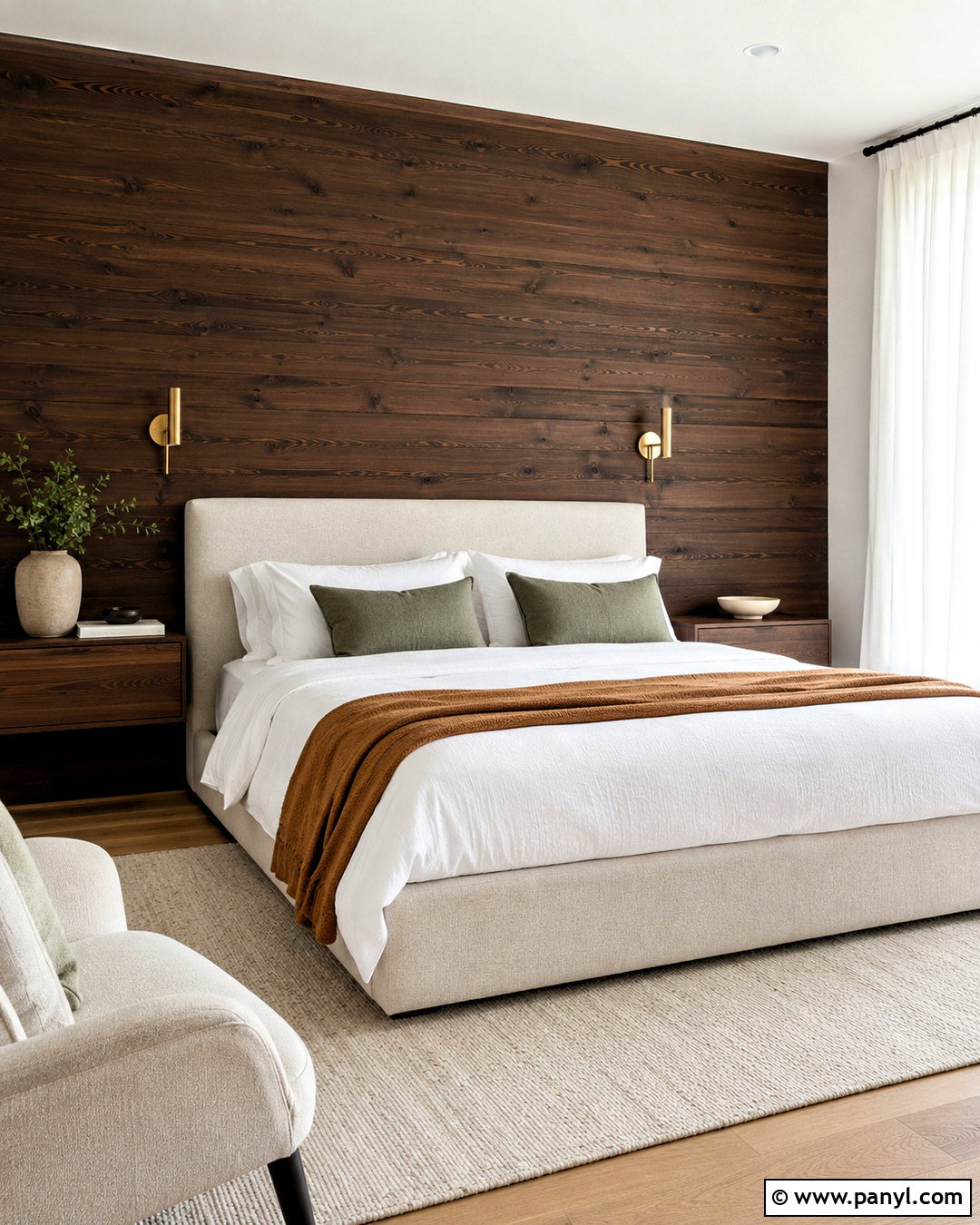
A dark cedar wall can feel dramatic without making the room gloomy when lighter materials surround it. Apply a deep walnut-brown stain that preserves the visible grain, then use the wall behind a cream upholstered bed or pale sofa. Keep the ceiling, adjoining walls, and window treatments soft white to provide strong contrast. Light oak flooring and an ivory textured rug reflect more brightness into the space. Choose furniture with clean silhouettes, such as floating nightstands, a slim bench, or a rounded coffee table. Brushed brass sconces bring warmth to the dark wood, while muted green and caramel textiles create depth. Limit accessories to a few sculptural pieces and simple artwork. The completed room feels tailored and intimate, with the stained cedar acting as its defining architectural element.
18. Rustic Cedar Cabin Interior
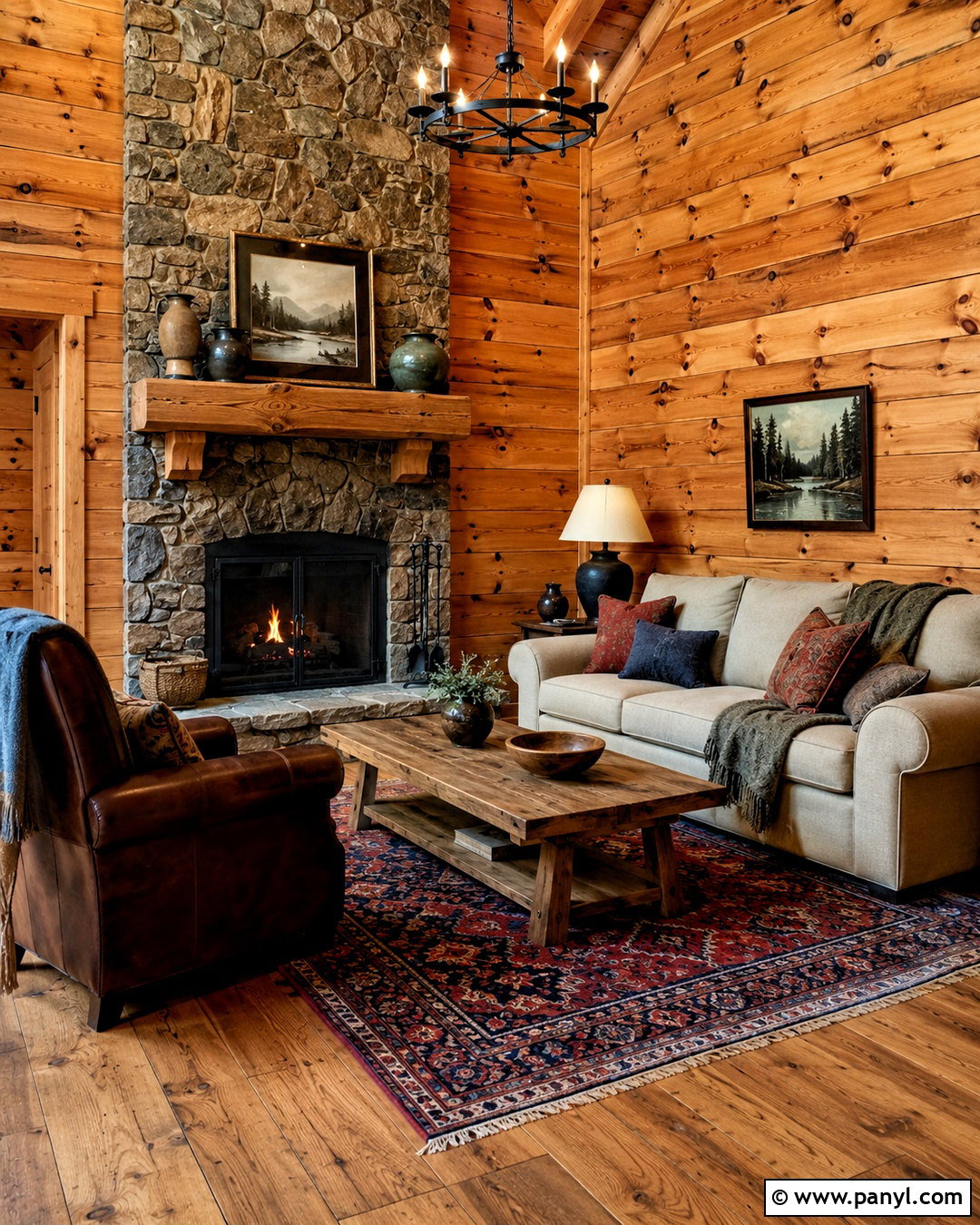
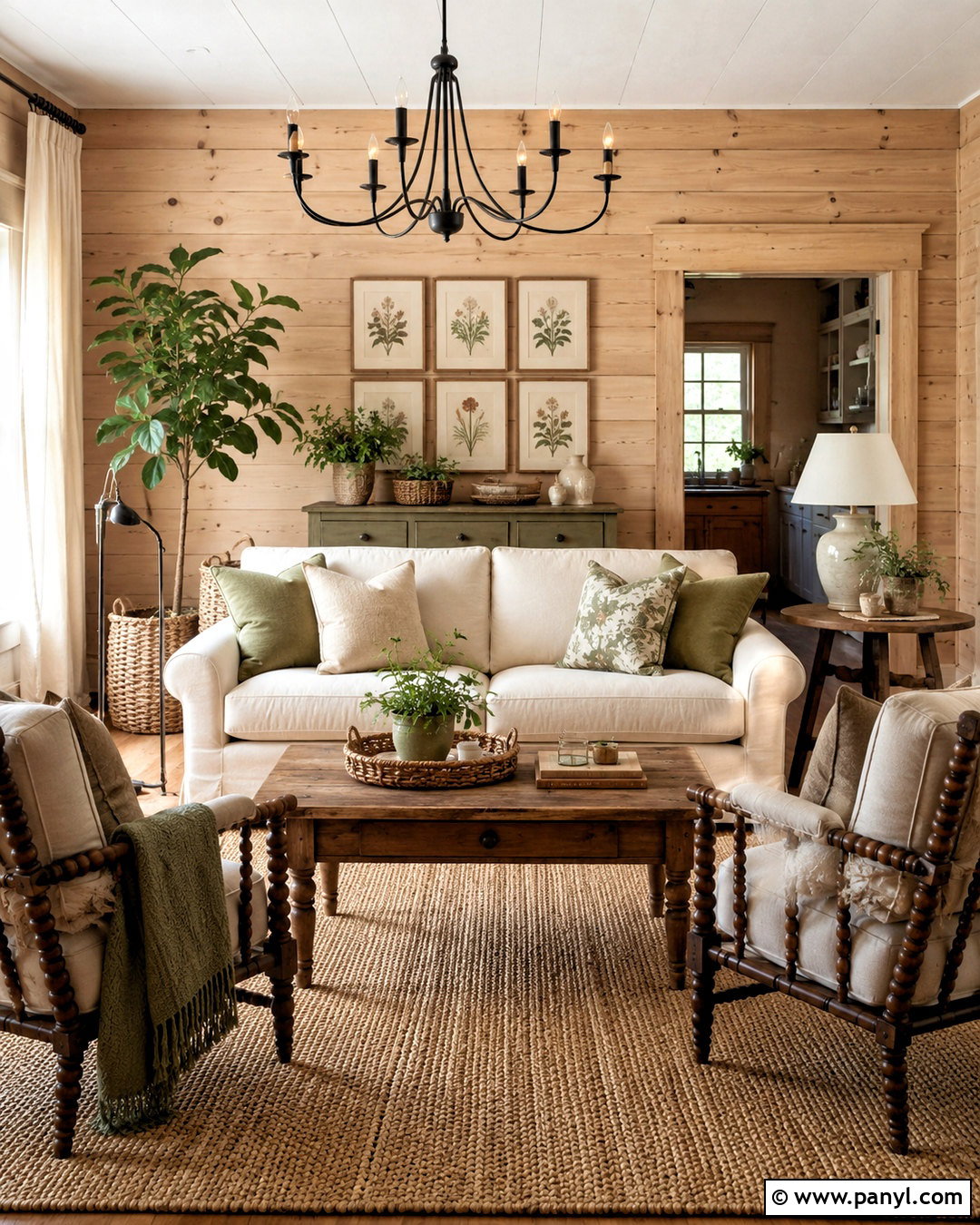
For a comfortable cabin look, embrace knotty cedar walls while simplifying the furniture and decorative details. Cover two connecting walls with natural tongue-and-groove boards, then leave the ceiling a soft warm white to prevent complete wood saturation. Anchor the room with a fieldstone fireplace and a substantial oak mantel. A deep oatmeal sofa, brown leather chair, and sturdy plank coffee table create a practical conversation area. Layer a red, cream, and muted blue patterned rug over wide wood flooring for color and softness. Black iron lighting and woven window shades reinforce the rustic materials without looking overly themed. Store firewood neatly in a recessed niche and decorate with landscape art, wool throws, and handmade pottery. The complete room feels authentic, lived-in, and visually balanced.
19. Midcentury Cedar Wall
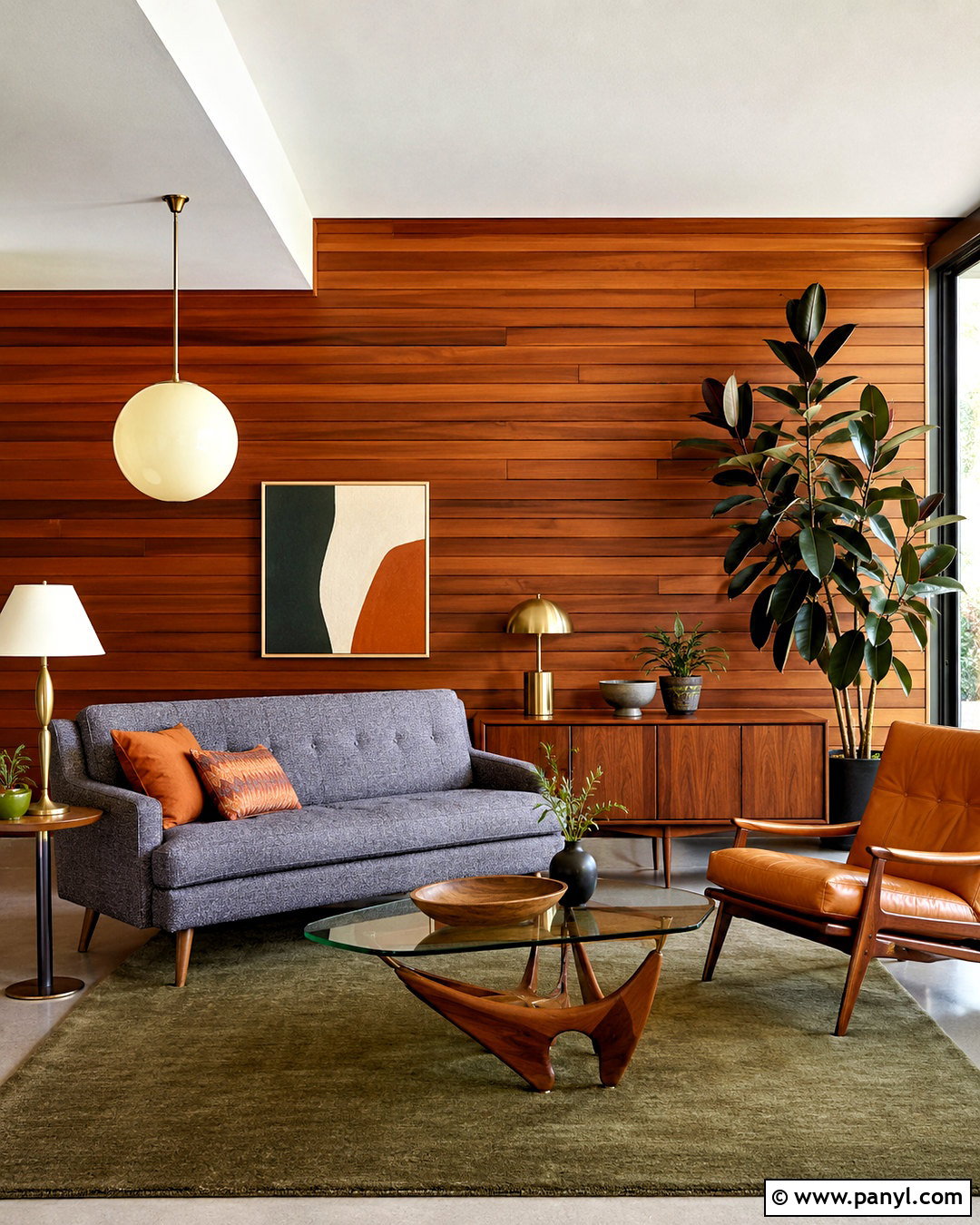
Highlight cedar’s retro appeal with a midcentury room that uses clean lines and a controlled color palette. Install smooth horizontal cedar panels across the wall behind a low walnut credenza. Add a tapered-leg sofa in warm gray, a caramel leather lounge chair, and a kidney-shaped coffee table. An olive green rug introduces period-inspired color while complementing the wood’s red and golden undertones. Keep the other walls off-white and choose a large globe pendant for a simple sculptural statement. Burnt orange cushions and abstract geometric artwork can add personality, but leave enough open cedar visible around each object. Finish with a tall rubber plant, brass table lamp, and light neutral curtains. The resulting space references classic midcentury design while remaining comfortable and uncluttered for everyday living.
20. Cedar Half Wall Paneling
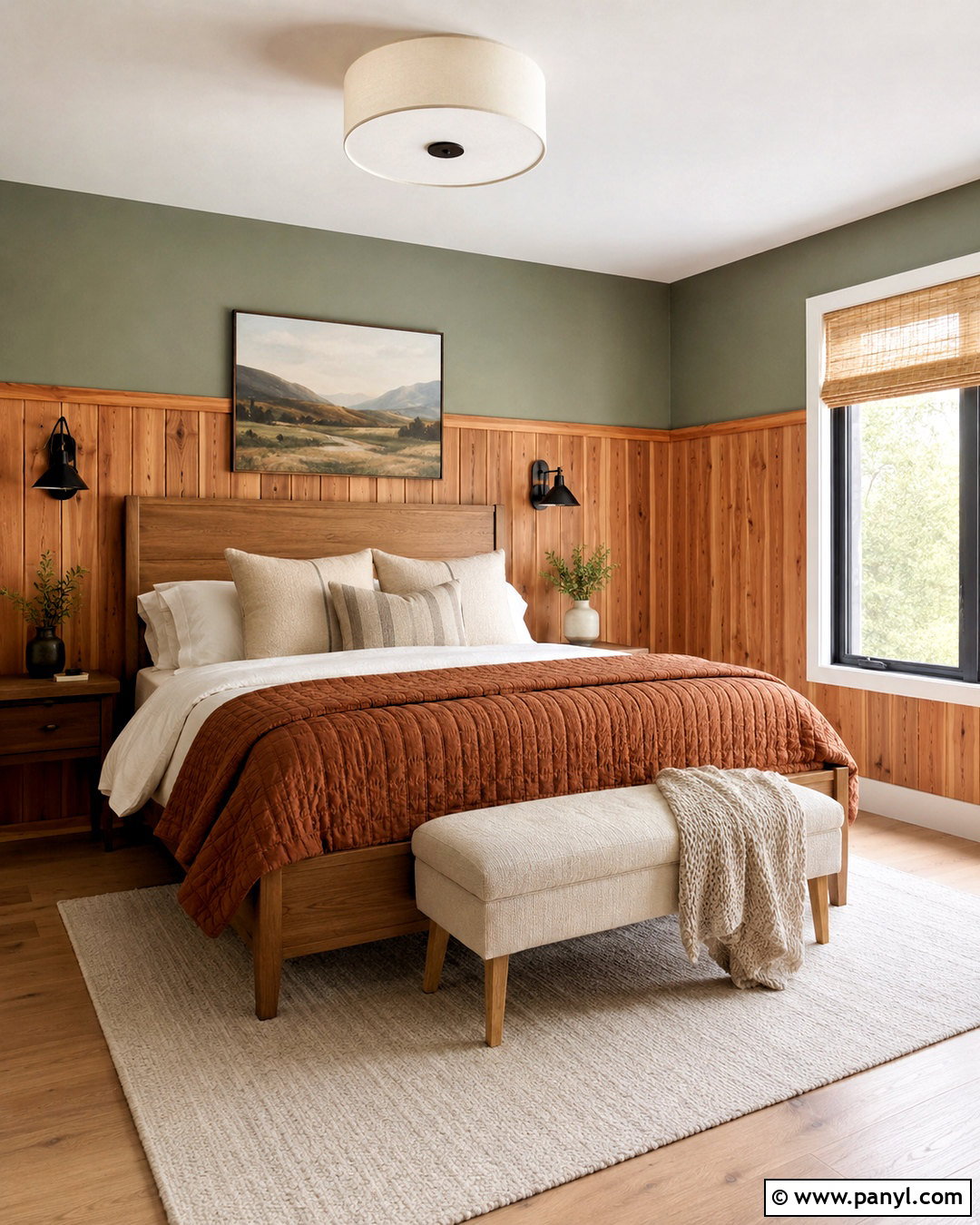
Half-height cedar paneling brings natural texture into a room without covering every surface. Install vertical tongue-and-groove boards from the floor to approximately chair-rail height, topping them with a slim matching cap. Paint the wall above a muted sage green for a soft contrast that works especially well in a guest bedroom or reading room. Use a simple oak bed, crisp white bedding, and a rust-colored quilt to create a warm layered palette. Small black sconces and narrow nightstands keep the wall treatment visible. Choose pale wood flooring, an ivory rug, and woven shades for an approachable finish. A framed landscape, ceramic vase, and upholstered bench complete the room. This design is especially useful when you want noticeable cedar character while retaining plenty of painted wall space.
Conclusion:
The most successful 20 cedar walls interior ideas treat the wood as part of a complete room rather than an isolated decorative surface. Cedar can look streamlined with vertical slats, traditional with knotty tongue-and-groove boards, or dramatic with a rich dark stain. Its warmth also works across living rooms, bedrooms, kitchens, offices, bathrooms, and basements. For a balanced result, coordinate the wall with quieter flooring, simple furniture, practical lighting, and a limited color palette. Warm white, charcoal, sage green, cream, and muted blue are especially useful companions. Most importantly, select one clear focal area and allow enough open space for the grain to stand out. Thoughtful restraint will keep your cedar interior feeling inviting, current, and cohesive.

Related Ideas and Inspiration:
Leave a Reply