
Wood trim can make an ordinary room feel warmer, richer, and more architecturally complete. Whether you are preserving original millwork or adding new molding, the right finish should connect the walls, floors, doors, windows, and furniture. These 20 wood trim interior ideas include light oak, deep walnut, Craftsman casing, traditional crown molding, modern flat-stock profiles, and several room-specific combinations. Some looks celebrate natural grain, while others mix stained wood with painted architectural details for a lighter effect. You will also find practical color pairings, furniture choices, and styling tips that help woodwork feel intentional instead of dated. Use the following 20 wood trim interior ideas to create a cohesive design that respects your home’s architecture and reflects your personal style.

1. Natural Oak Window Trim
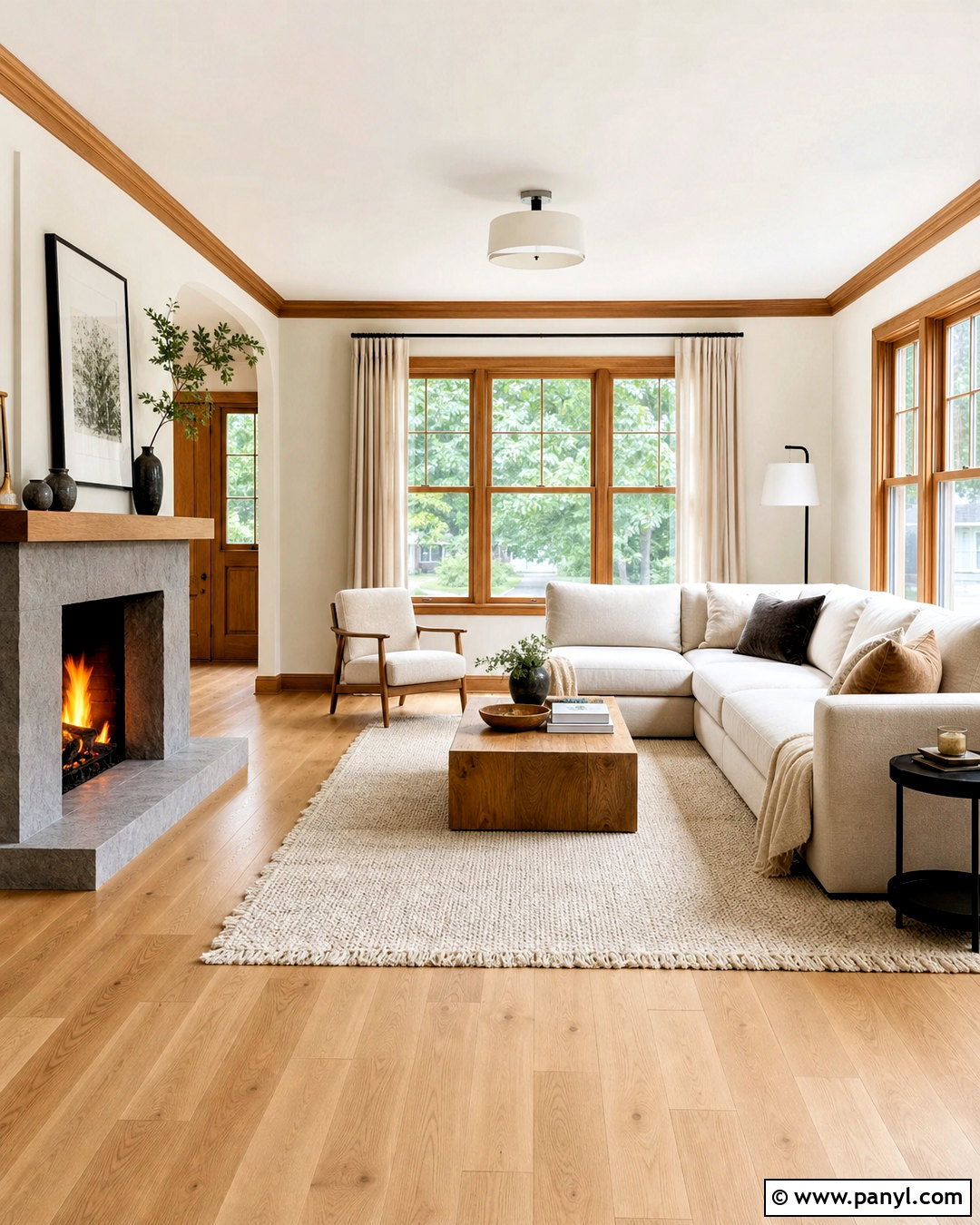
Natural oak window trim creates a bright, welcoming room without losing the warmth of real wood. Choose a clear matte finish or pale natural stain that protects the grain without turning it orange. Surround the windows with warm white or light greige walls, then repeat the oak through flooring, open shelving, or a simple coffee table. Cream upholstery, oatmeal curtains, and textured wool rugs keep the palette soft and relaxed. Use flat casing with square edges for a clean, updated appearance. Keep the window treatments mounted slightly beyond the trim so the woodwork remains visible. Matte black lighting or hardware can add definition, but use it sparingly. This complete look works particularly well in Scandinavian, organic modern, and casual contemporary interiors.
2. Dark Walnut Door Trim
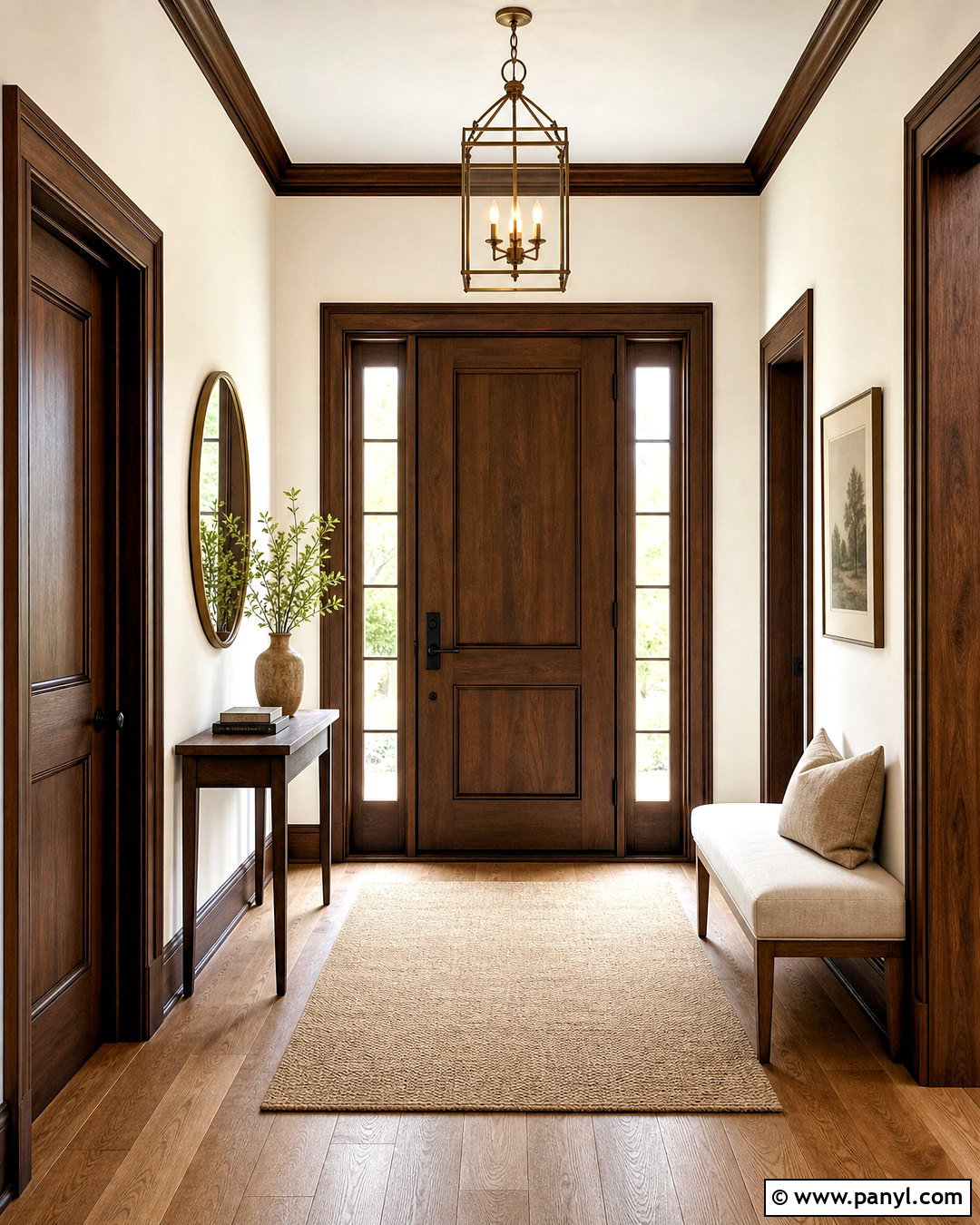
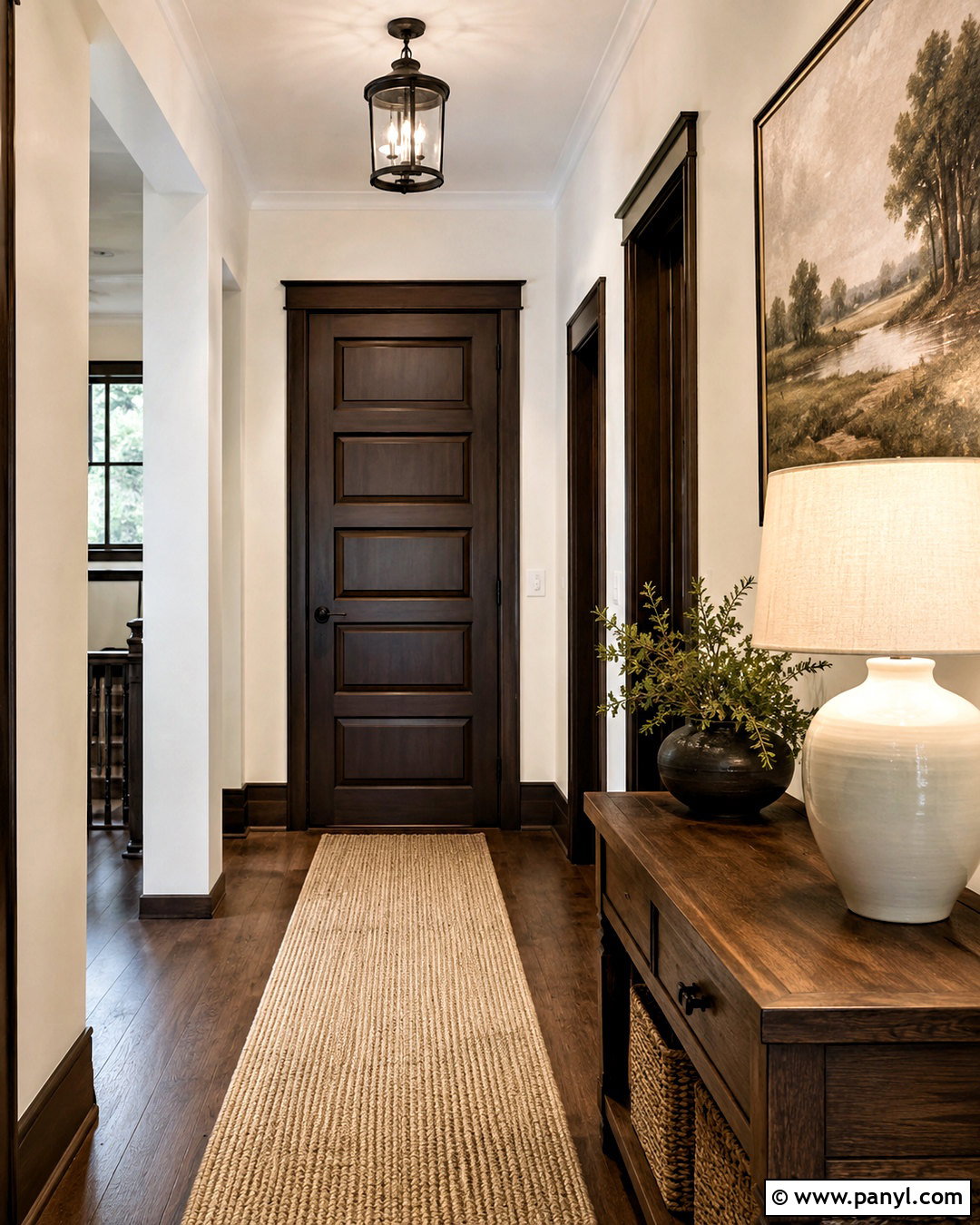
Dark walnut door trim brings definition and depth to a neutral interior. Frame matching walnut doors with substantial casing, then balance the rich wood using soft ivory walls and medium-tone oak flooring. A slim console, linen bench, and aged brass light fixture can make an entryway feel polished without becoming formal. Choose casing with a simple stepped profile rather than elaborate carving, allowing the wood grain to provide the decoration. Dark bronze hinges and lever handles blend naturally with the finish. If several doors are visible from one space, carry the same trim treatment across all openings for consistency. Add cream textiles, warm stone, and a few black accents to distribute visual weight. The result feels sophisticated, grounded, and suitable for traditional or transitional homes.
3. Craftsman Wood Trim
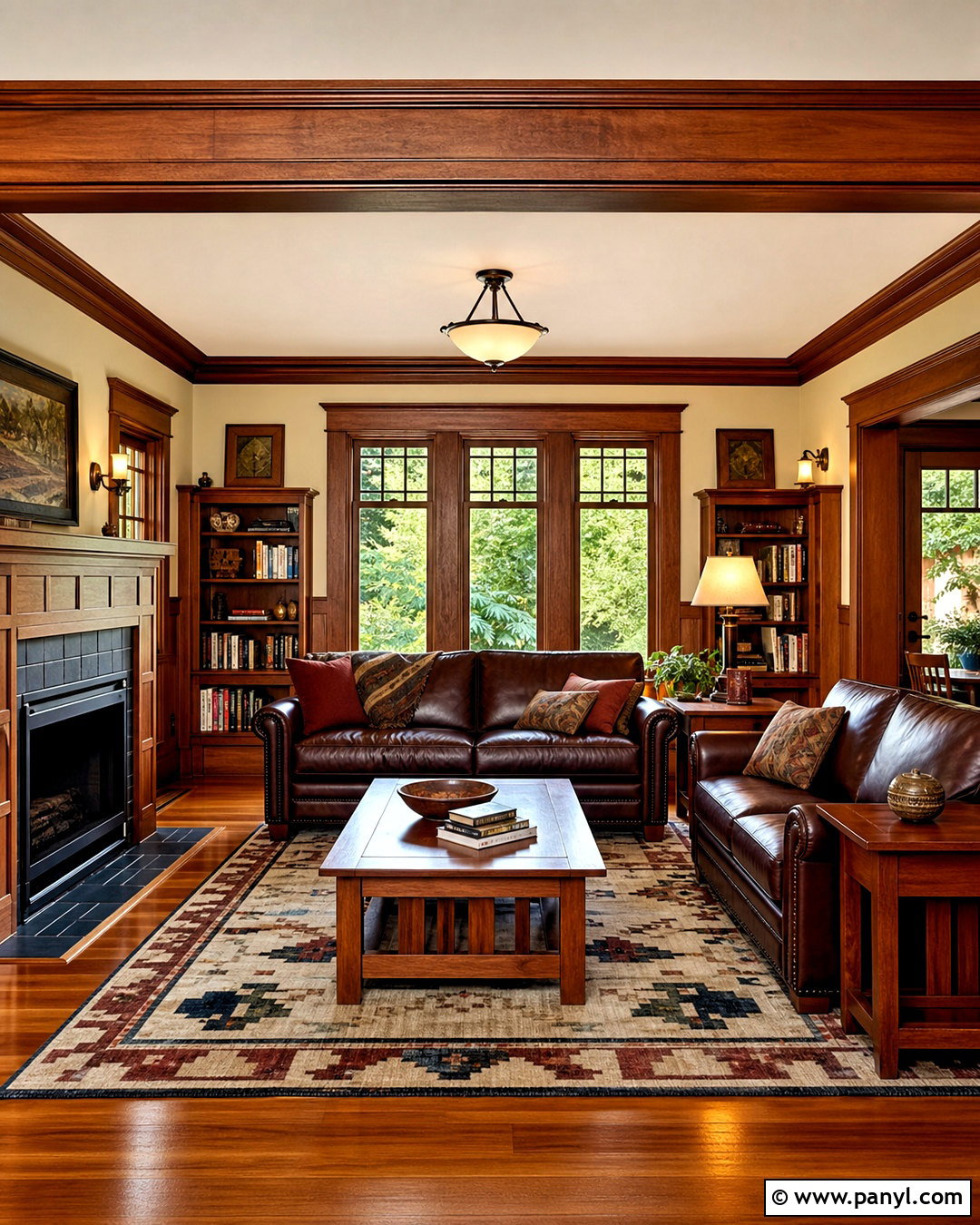
Craftsman wood trim works best as part of a coordinated architectural package. Use wide, flat casings around doors and windows, topped with a slightly projecting header. Connect them to substantial baseboards in the same quarter-sawn oak or warm medium-brown stain. Cream walls provide contrast while maintaining the earthy character associated with Craftsman interiors. Furnish the room with a leather sofa, solid wood tables, woven textiles, and a geometric wool rug. Built-in bookcases or a window seat can extend the millwork and make the design feel original to the house. Select hammered bronze hardware and simple glass lighting instead of ornate accessories. Keeping every profile sturdy, straight, and well proportioned gives the room handcrafted character without making it feel heavy or overly historic.
4. Midcentury Modern Wood Trim
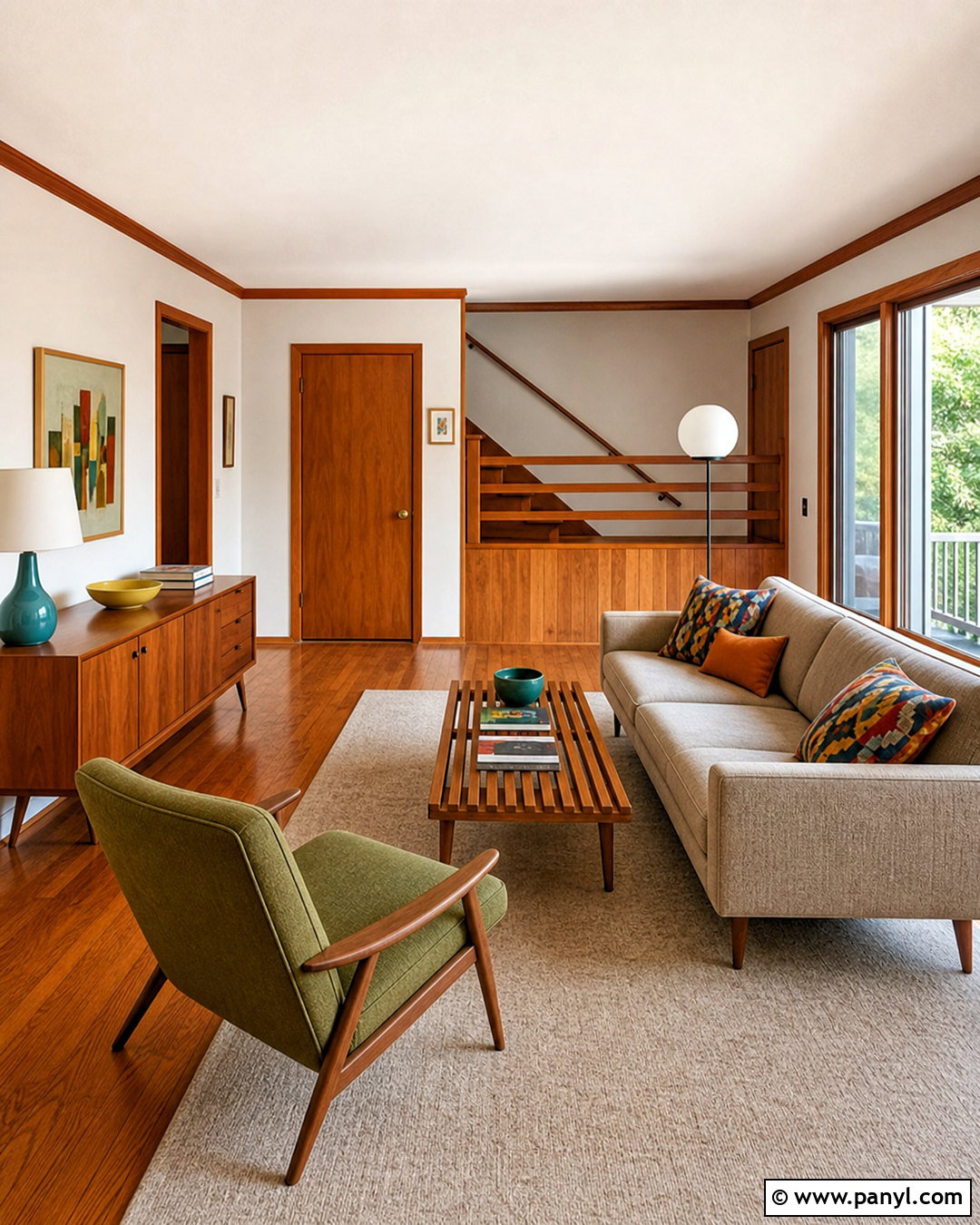
Clean lines and honey-toned wood are natural partners in a midcentury modern room. Use narrow, square-edged trim around large windows and flat interior doors, preferably in teak, walnut, or a warm oak stain. Pair it with muted white walls and medium-brown wood flooring to create an uninterrupted background. A low-profile sofa, tapered-leg sideboard, sculptural lounge chair, and globe lighting complete the period-inspired arrangement. Introduce olive green, rust, or mustard through restrained upholstery and artwork. Avoid ornate crown molding because it can conflict with the simple horizontal architecture. Instead, let the slim wood casings connect visually with ceiling beams or built-in cabinetry. This approach preserves vintage warmth while keeping the room uncluttered, functional, and comfortable enough for everyday living.
5. White Walls With Wood Trim
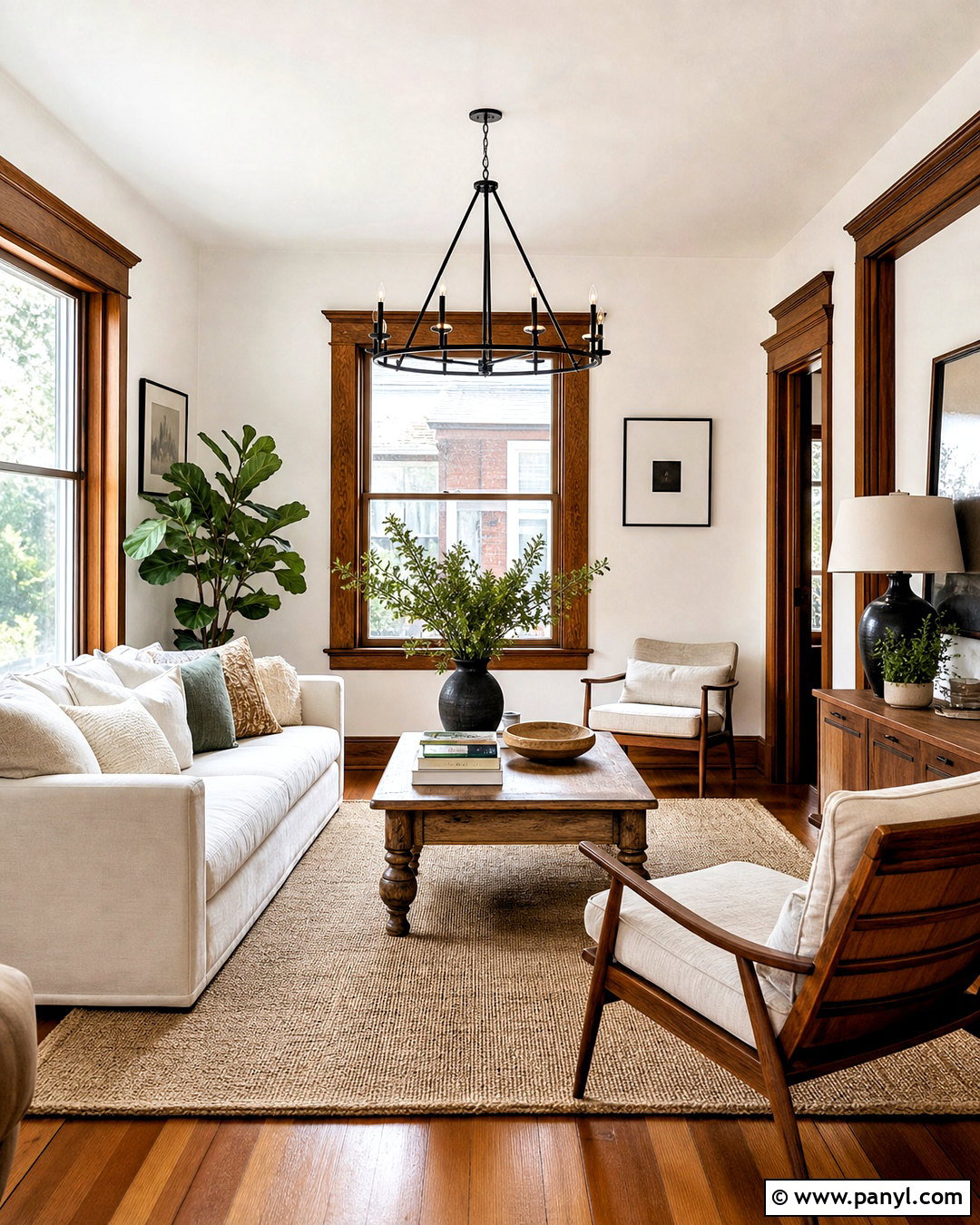
Crisp white walls allow natural wood trim to become a clear architectural feature. This combination works especially well when the room contains attractive original casings, baseboards, and solid wood doors. Select a soft white with warm undertones rather than a sharp blue-white, which can exaggerate orange or red tones in older wood. Bring in a light neutral sofa, woven rug, and wood furniture that shares at least one color with the trim. Black metal accents provide contrast, while greenery adds freshness. Use simple window shades instead of heavy curtains that conceal the casings. If the woodwork varies slightly between surfaces, repeat those tones through frames, baskets, and tables. The layered palette makes mismatched natural finishes appear collected and intentional rather than inconsistent.
6. Green Walls With Wood Trim
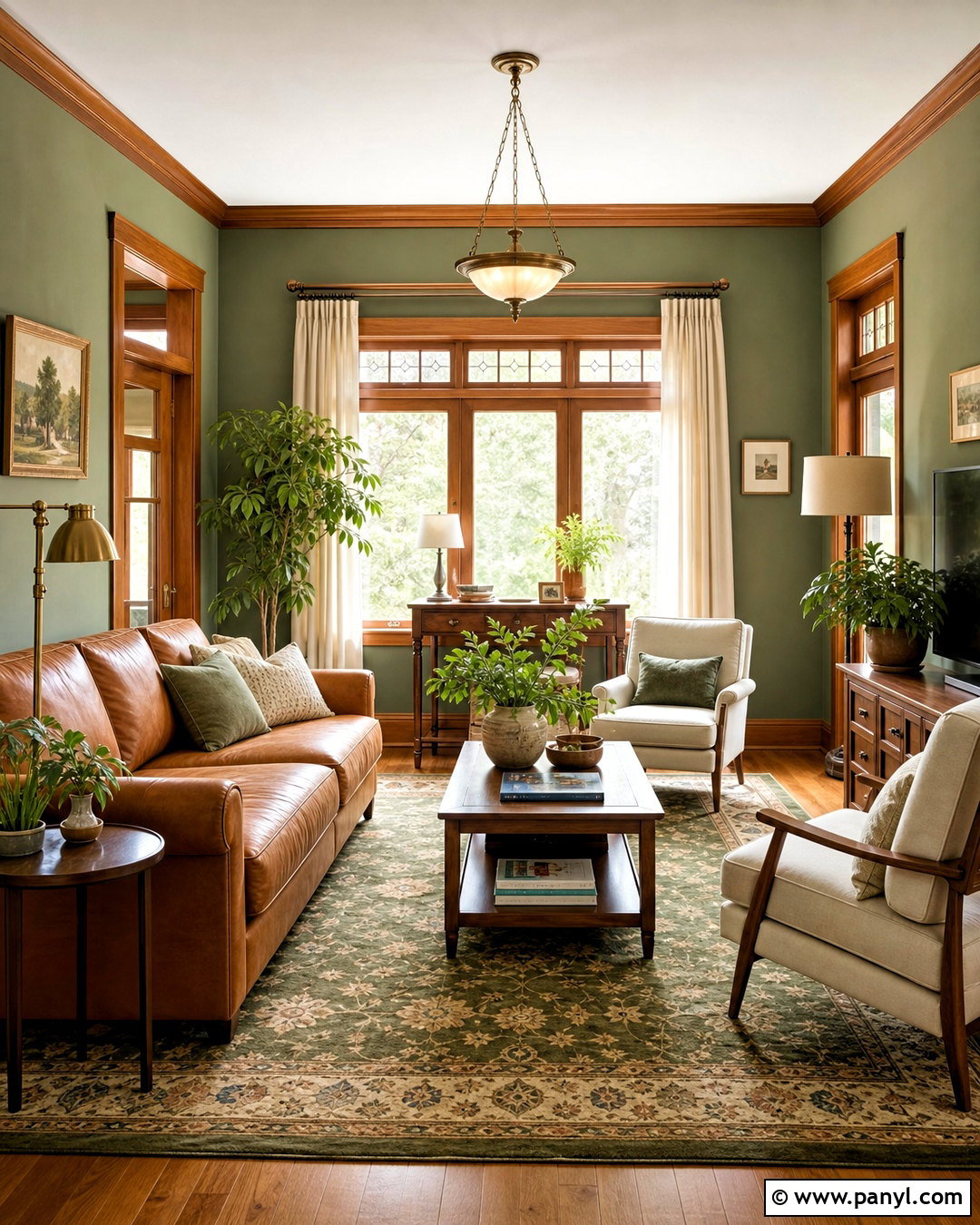
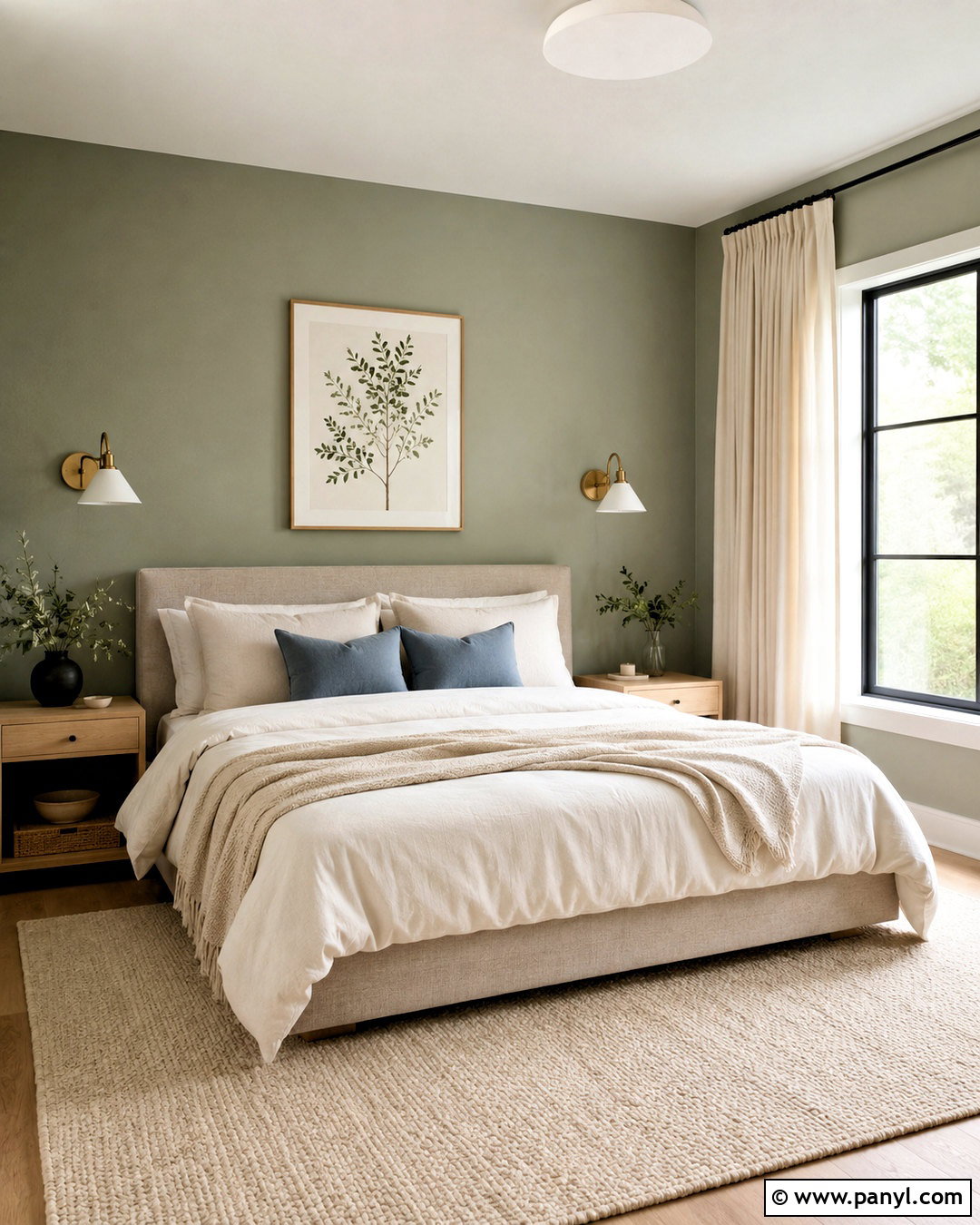
Muted green walls can make warm wood trim feel richer and more connected to nature. Sage, olive, or moss green works beautifully with oak, walnut, mahogany, and darker stained pine. Create a complete living room with green walls, exposed window casings, matching baseboards, and a wood-framed doorway. Add a camel leather sofa, cream accent chairs, antique brass lighting, and a patterned rug containing both green and brown. Linen curtains should be mounted outside the casing so the wood remains visible. Keep the ceiling warm white to prevent the room from feeling enclosed. Decorative pottery and leafy plants reinforce the earthy color story. This balanced combination suits historic homes, Craftsman interiors, and updated traditional spaces where natural materials and comfortable furnishings take priority.
7. Blue Walls With Wood Trim
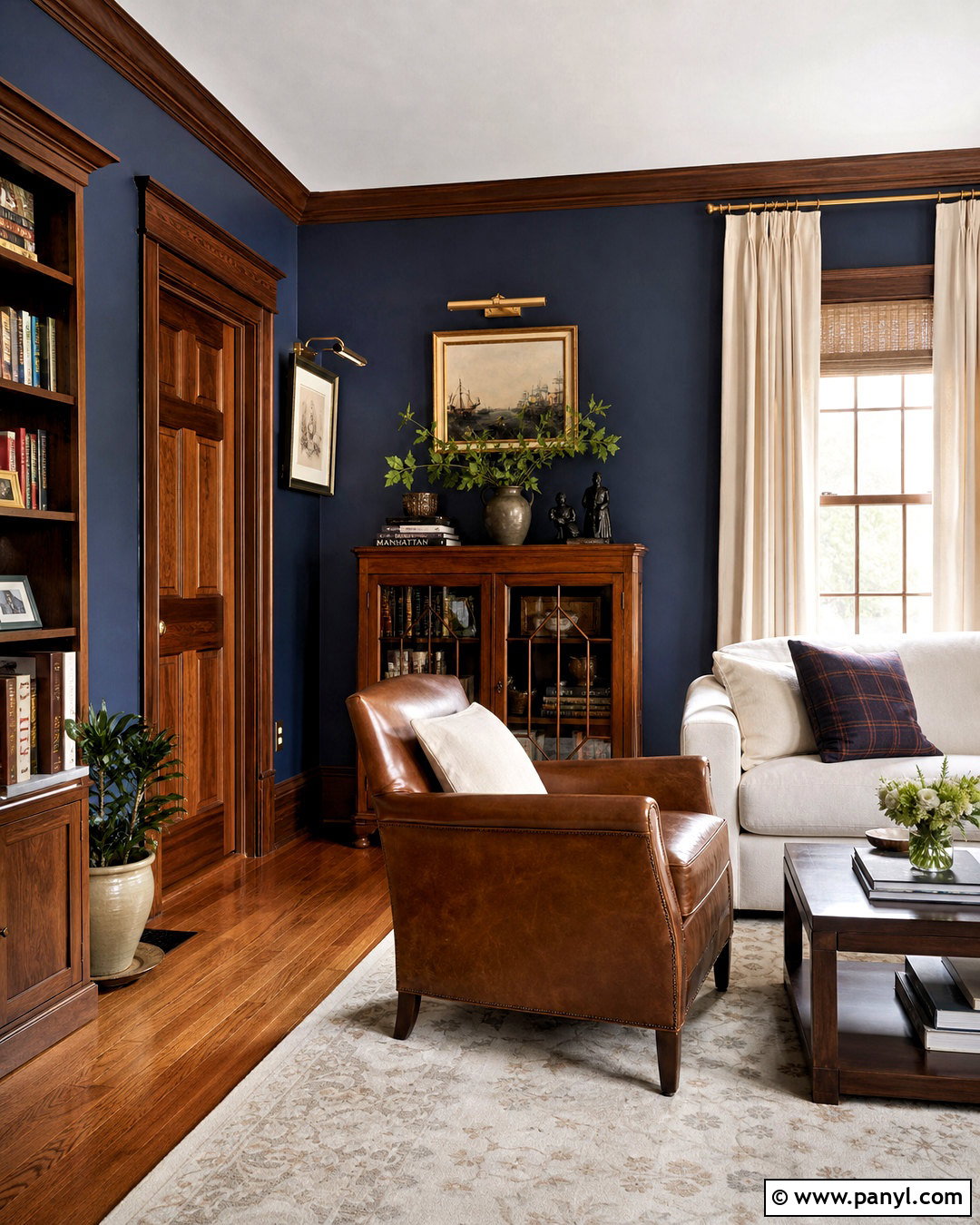
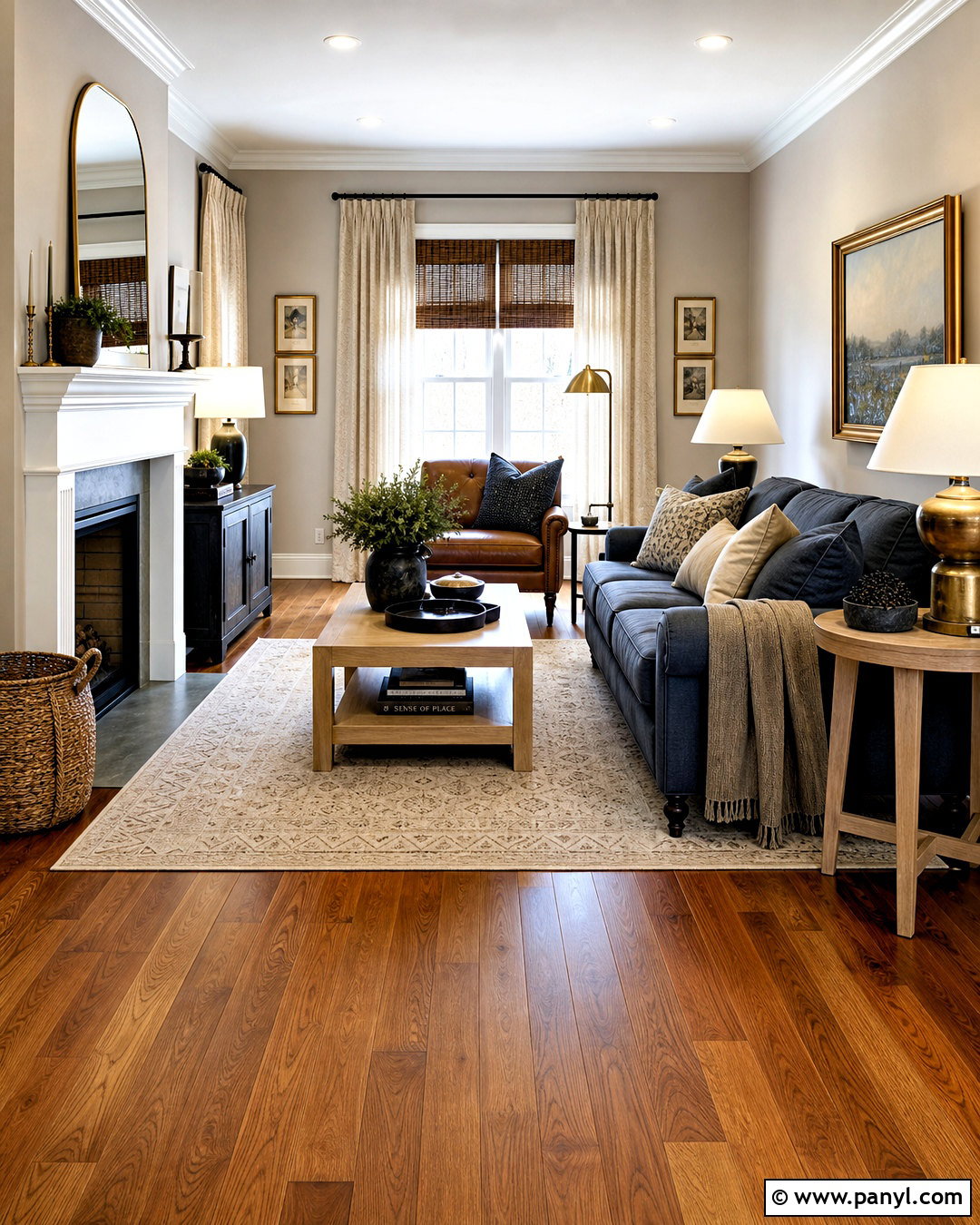
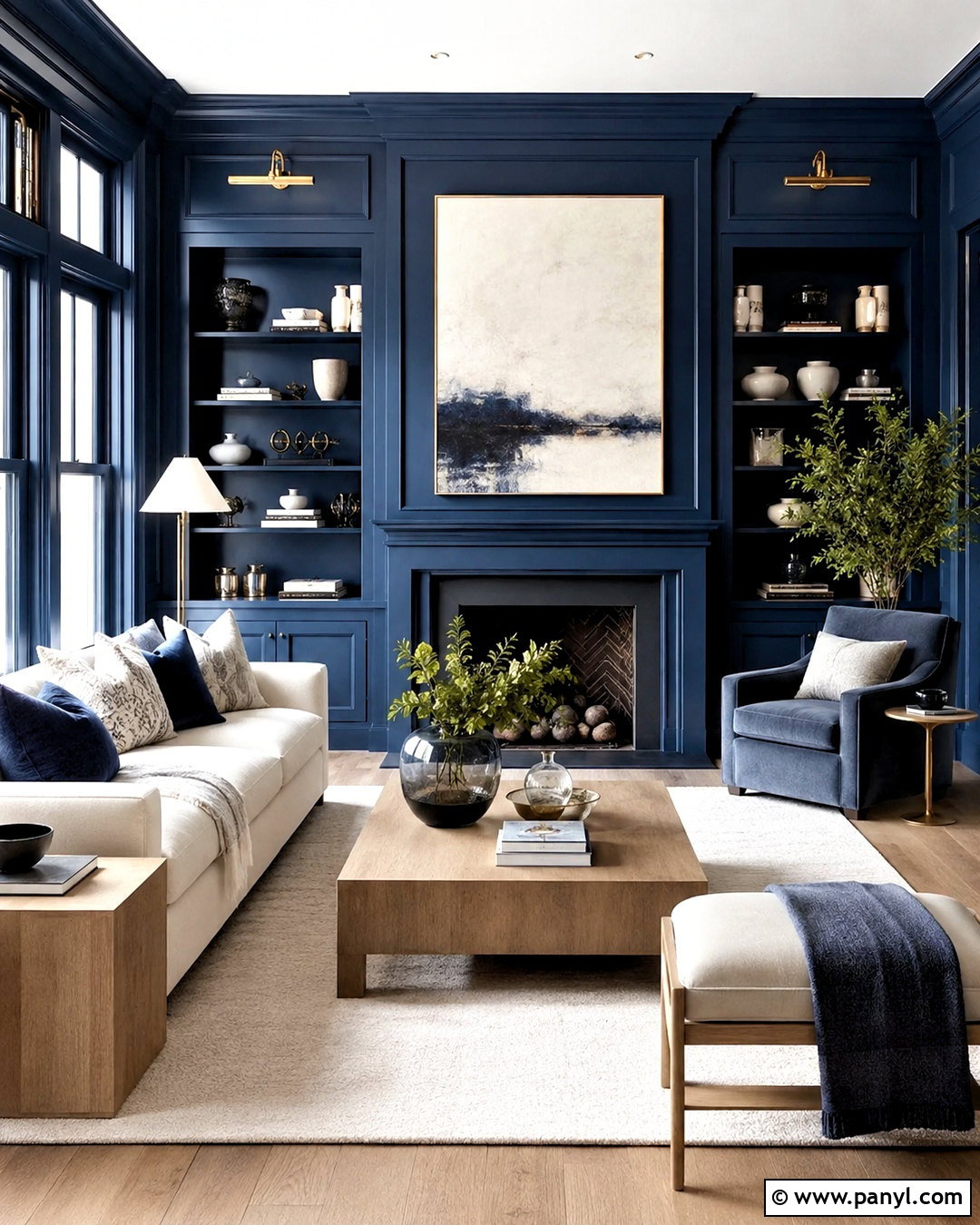
Deep blue walls offer a dramatic background for medium and dark wood trim. Choose a softened navy or smoky blue rather than an extremely bright shade, then use walnut or mahogany casings to frame the doors and windows. A cognac leather chair, warm white sofa, vintage wood cabinet, and brass picture lights create a comfortable library-inspired living room. Carry the stained finish onto the baseboards so the lower edge of the room feels anchored. Cream curtains and a pale rug keep the overall design from becoming too dark. Introduce artwork with tan, rust, and muted blue details to connect the palette. This arrangement feels classic but not stuffy, especially when traditional trim profiles are paired with streamlined furniture and simple contemporary accessories.
8. Wood Trim With Wallpaper
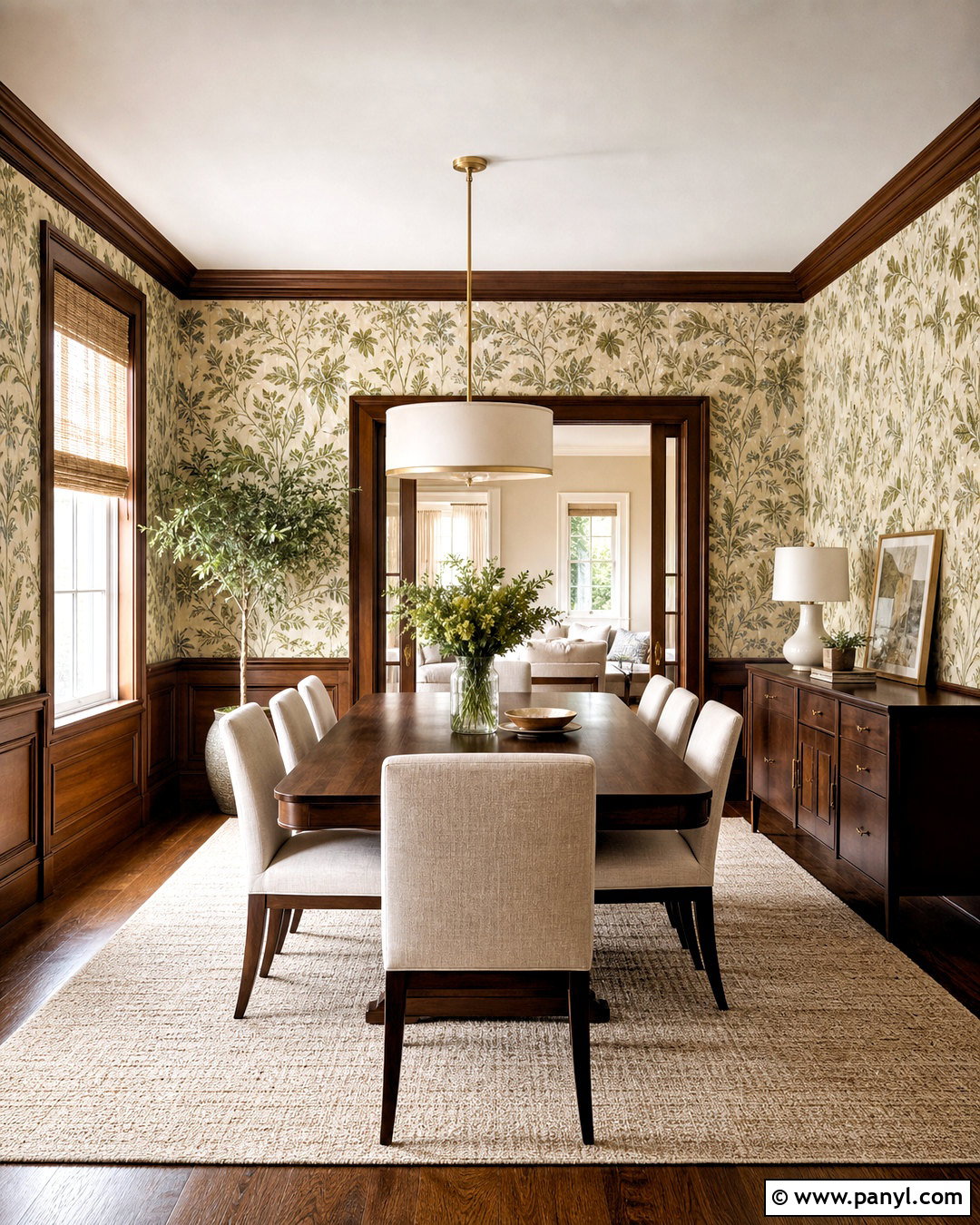
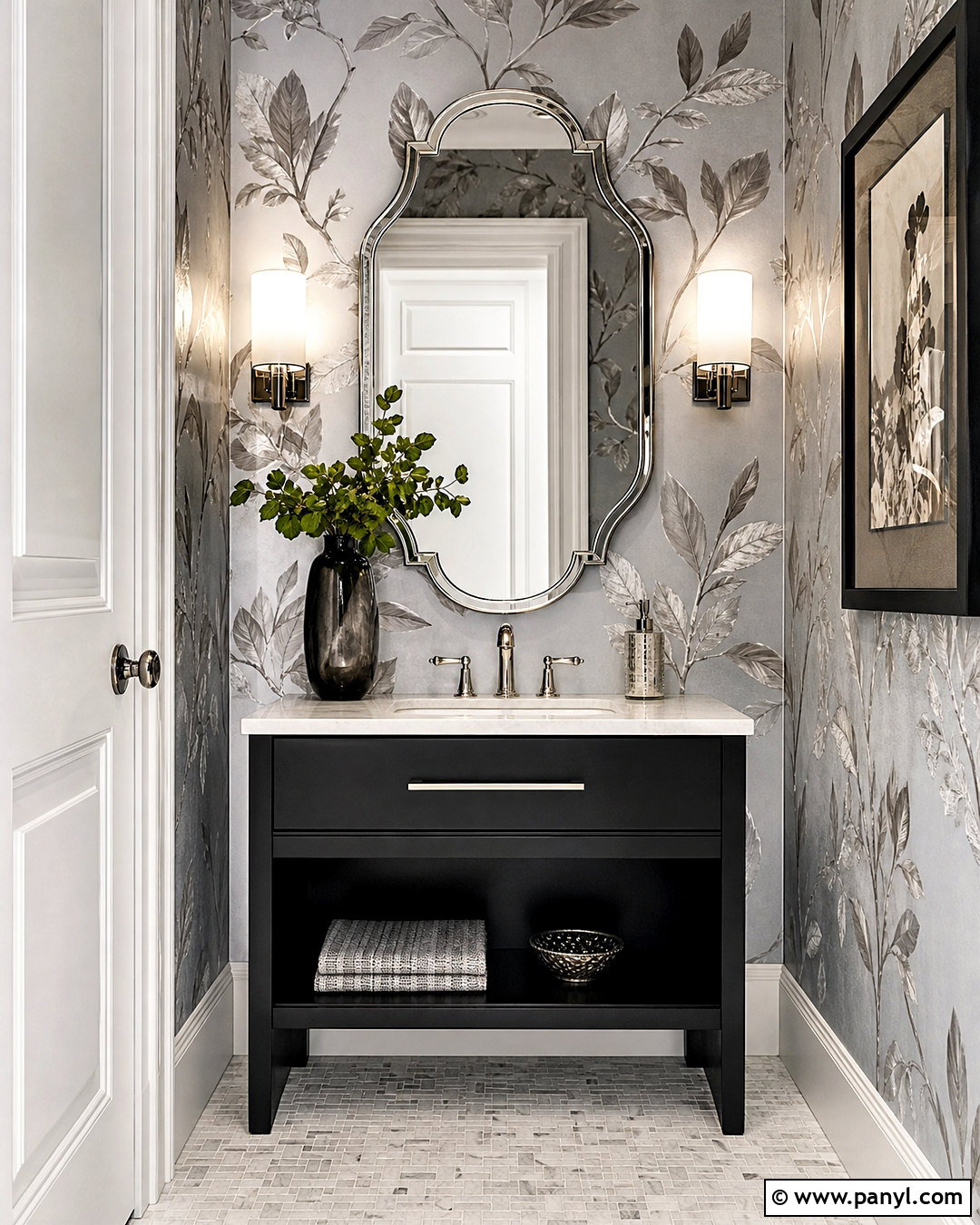
Patterned wallpaper and wood trim can create a layered room with memorable character. Select a botanical, geometric, or small-scale floral pattern that includes a shade related to the wood’s natural undertone. Warm walnut pairs well with olive, cream, and muted gold, while pale oak complements soft blue, sage, and sand. Use the wallpaper above a wood chair rail or across the full wall, allowing substantial door and window casings to frame it neatly. A dining table in a similar wood tone helps unify the design. Add upholstered chairs, a simple pendant, woven shades, and understated artwork. Avoid competing patterns on every surface. One wallpaper, one dominant wood finish, and a few solid fabrics will produce a complete interior that feels detailed, coordinated, and visually calm.
9. Wood Crown Molding
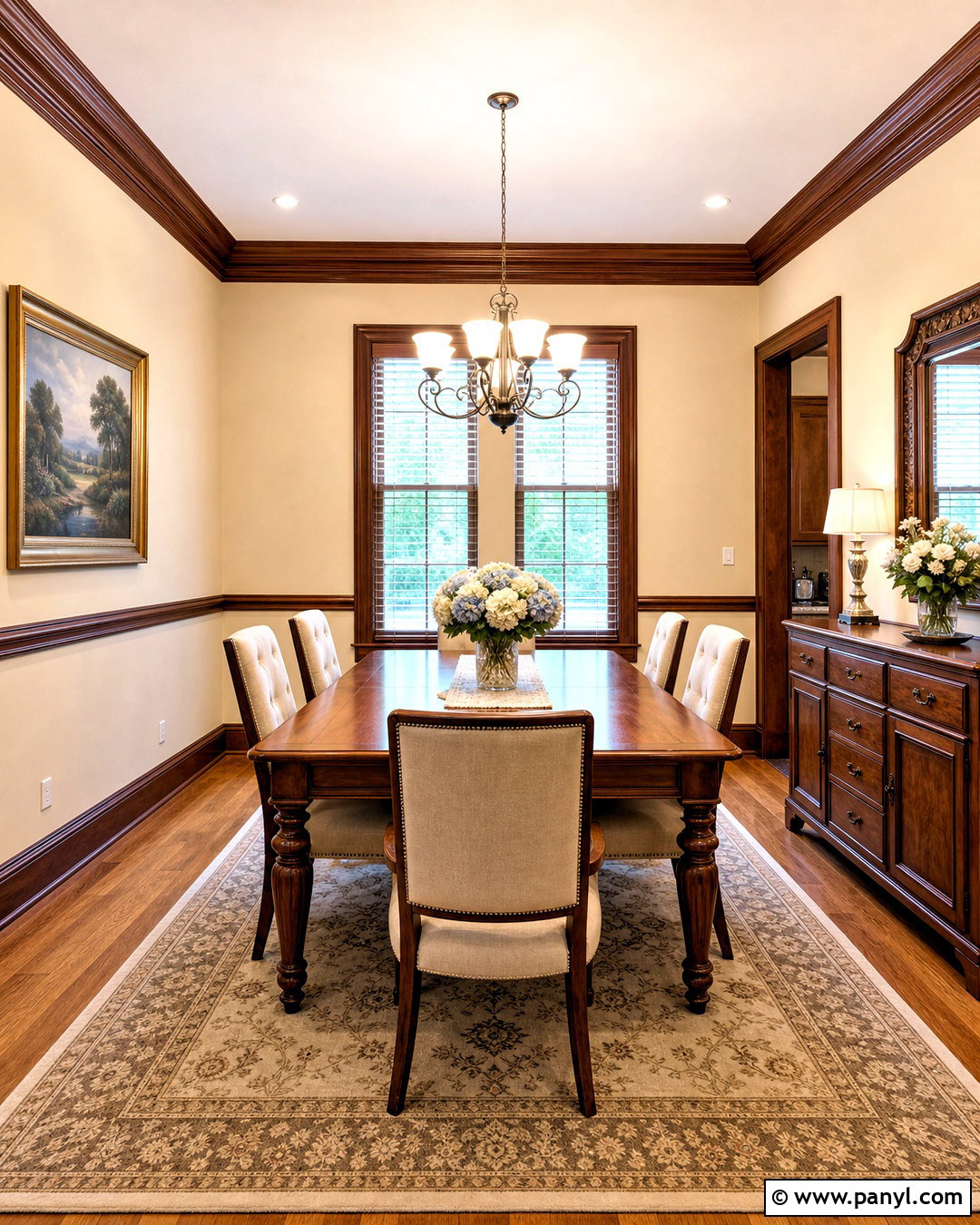
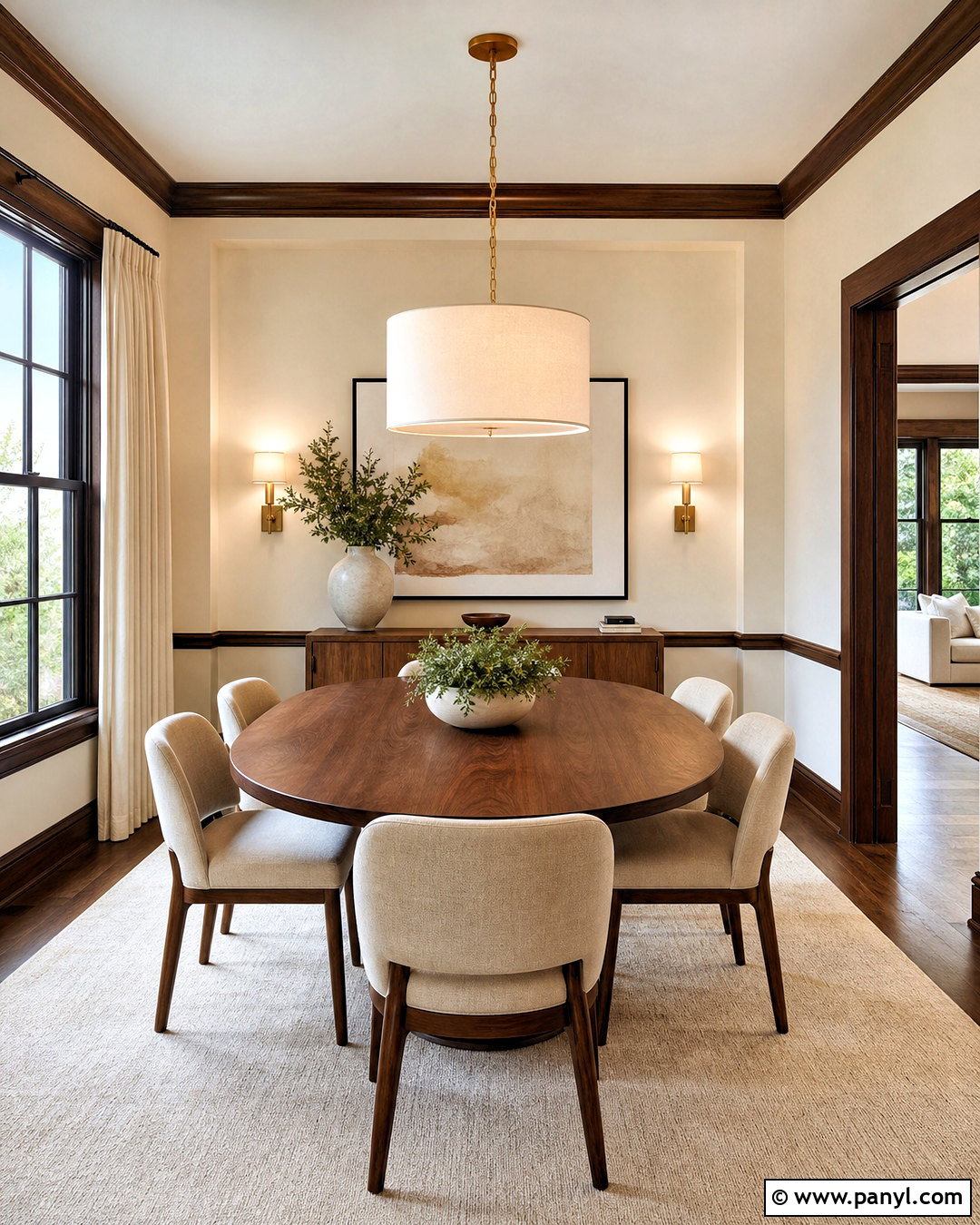
Wood crown molding creates a strong transition between walls and ceilings, particularly in rooms with tall proportions. Choose a profile that matches the home’s architecture, such as simple cove molding for a contemporary space or layered crown for a traditional dining room. Repeat the stain on window casings, door frames, and a matching chair rail to form a complete trim package. Warm cream walls and a lighter ceiling keep dark wood crown from appearing too heavy. Below, arrange a rectangular dining table, upholstered chairs, a wool rug, and a centered chandelier. A sideboard in a complementary wood tone reinforces the formal layout. Keep artwork aligned and accessories restrained. Thoughtful repetition helps the crown molding look integrated instead of resembling an isolated strip around the ceiling.
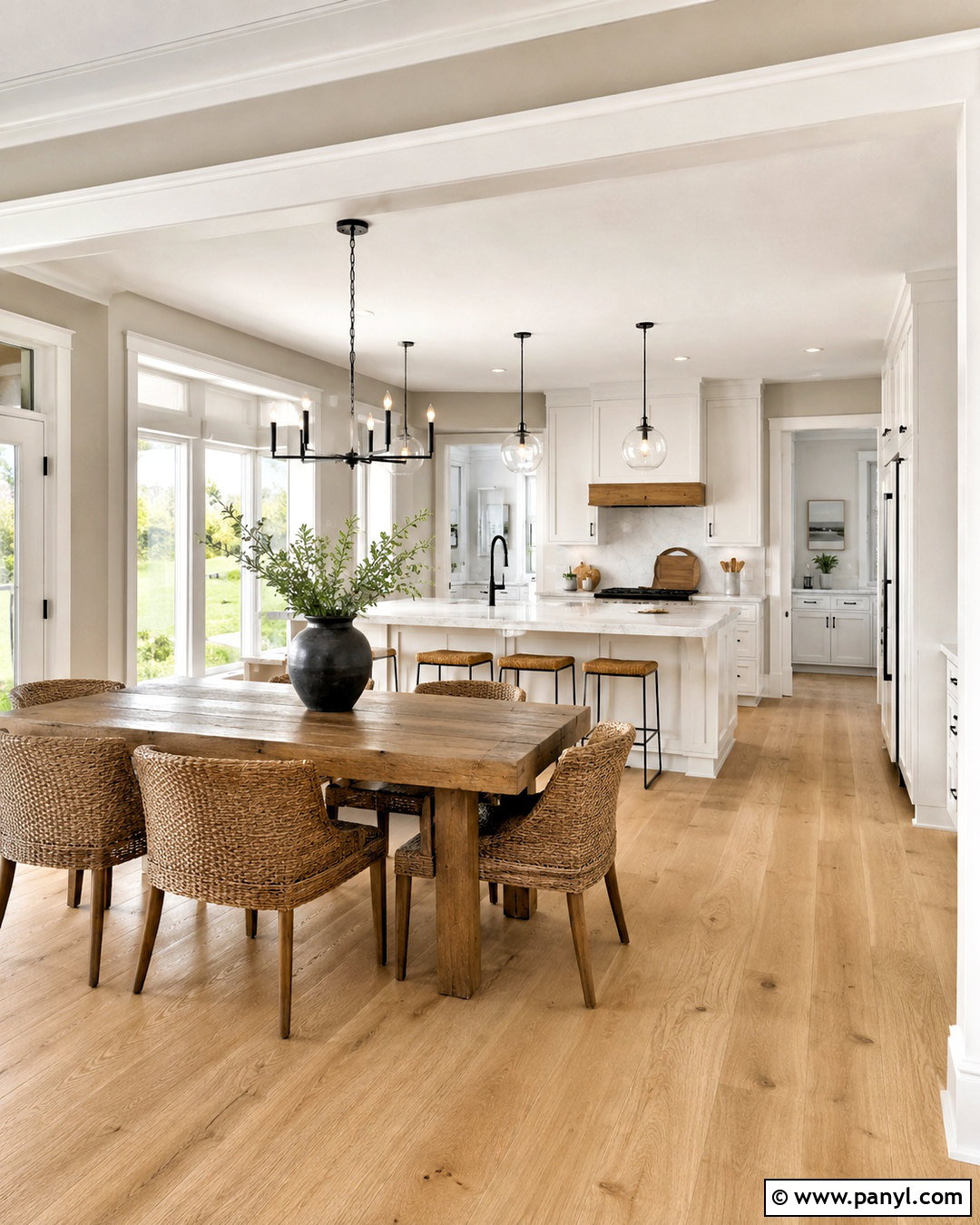
10. Tall Wood Baseboards
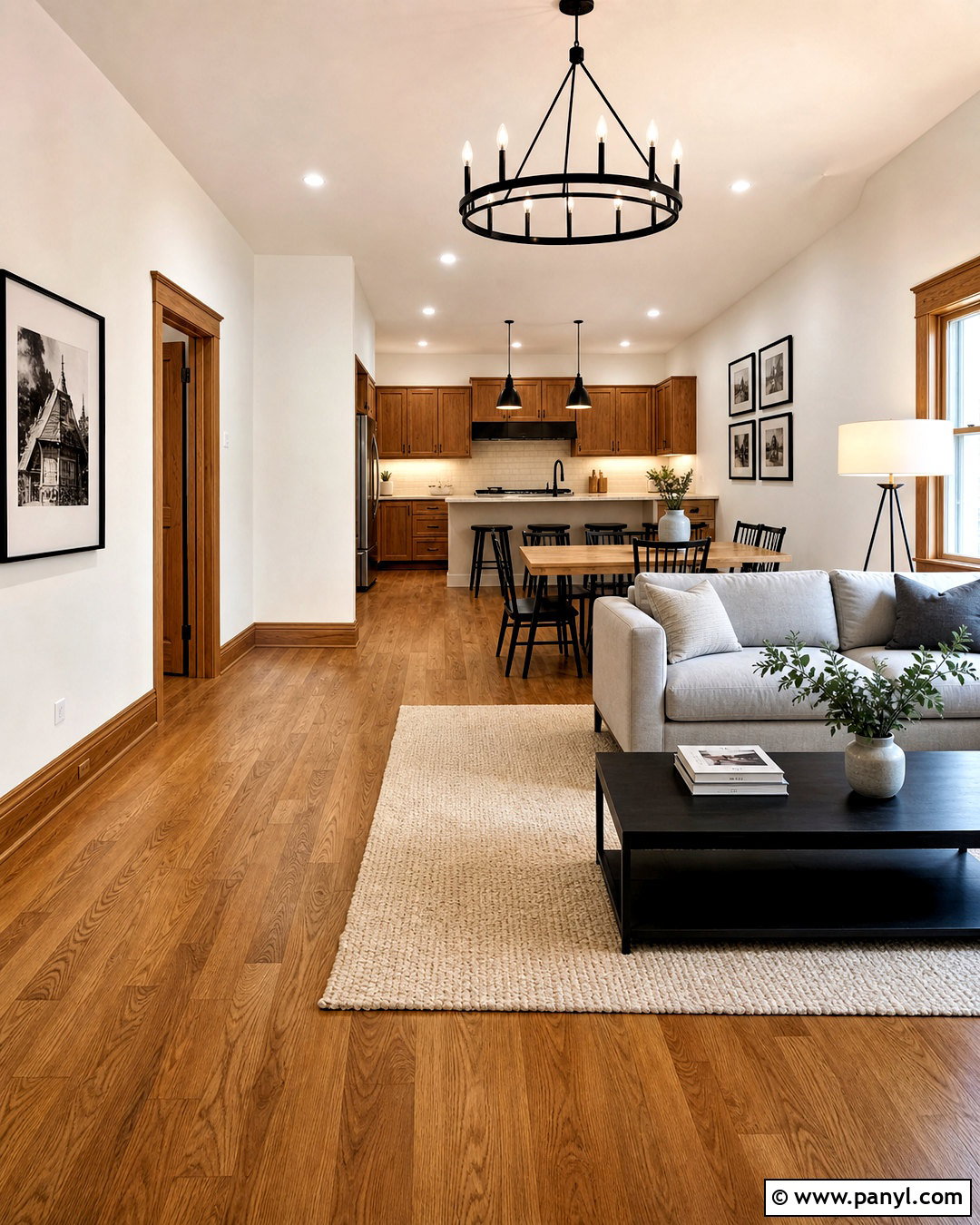
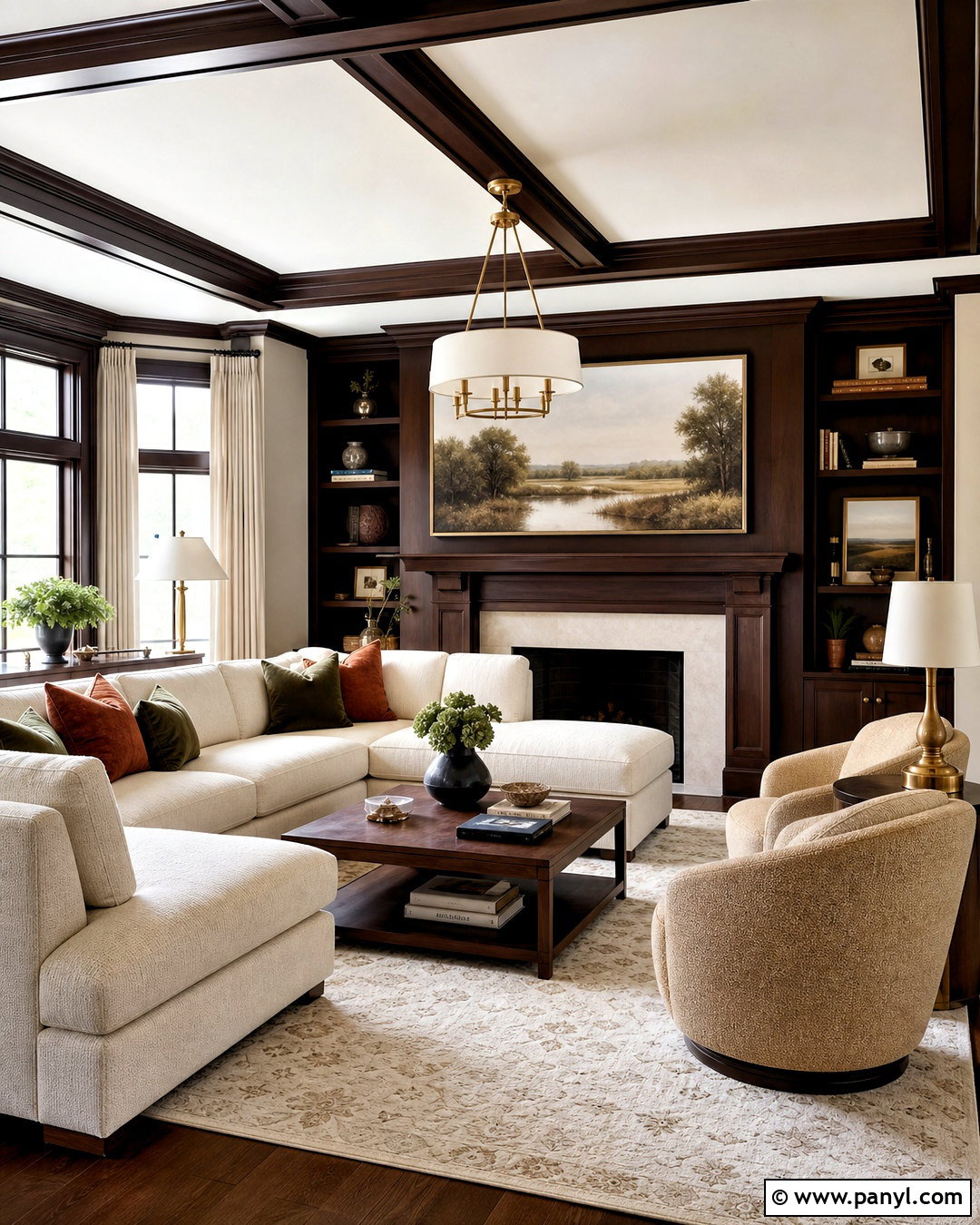
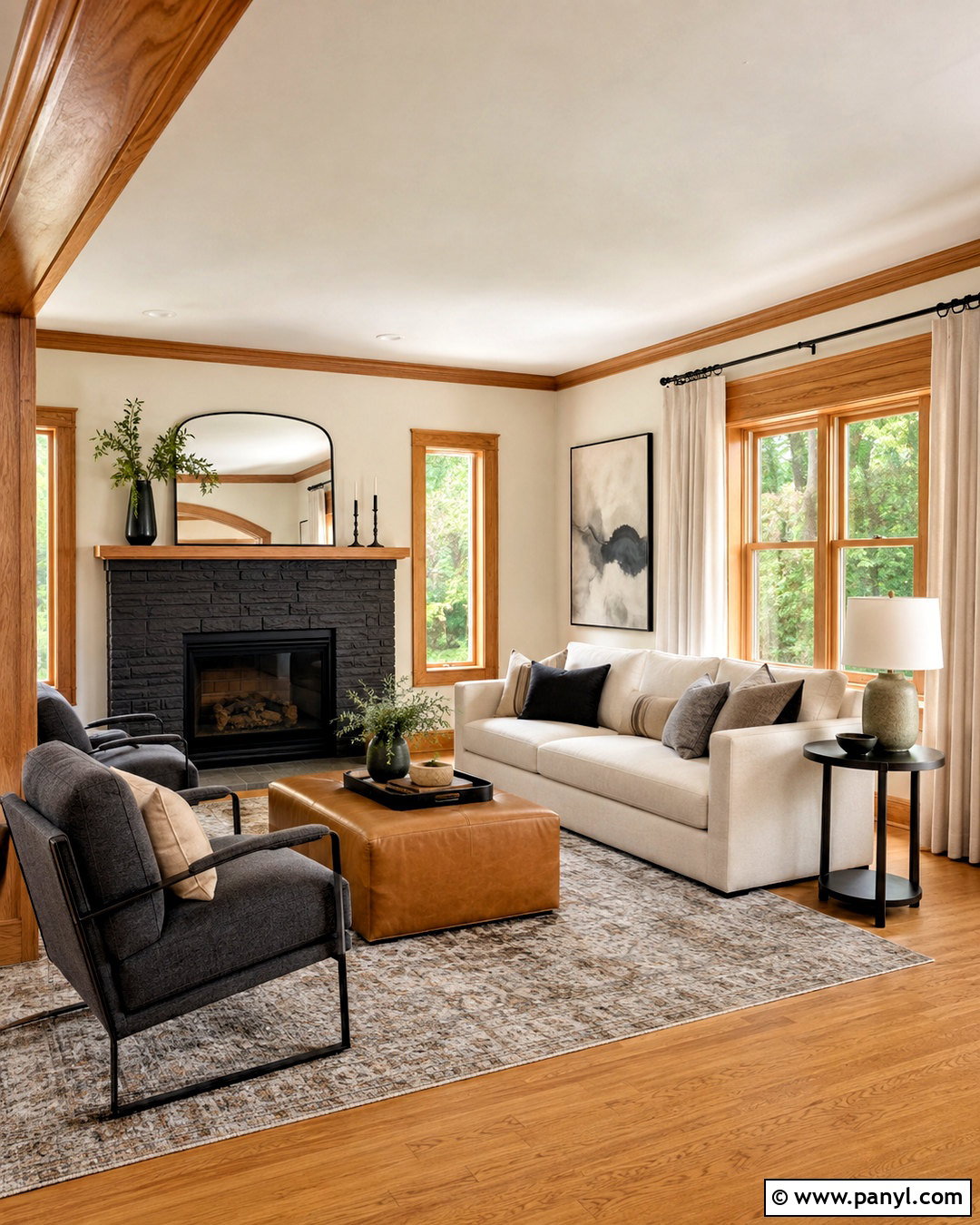
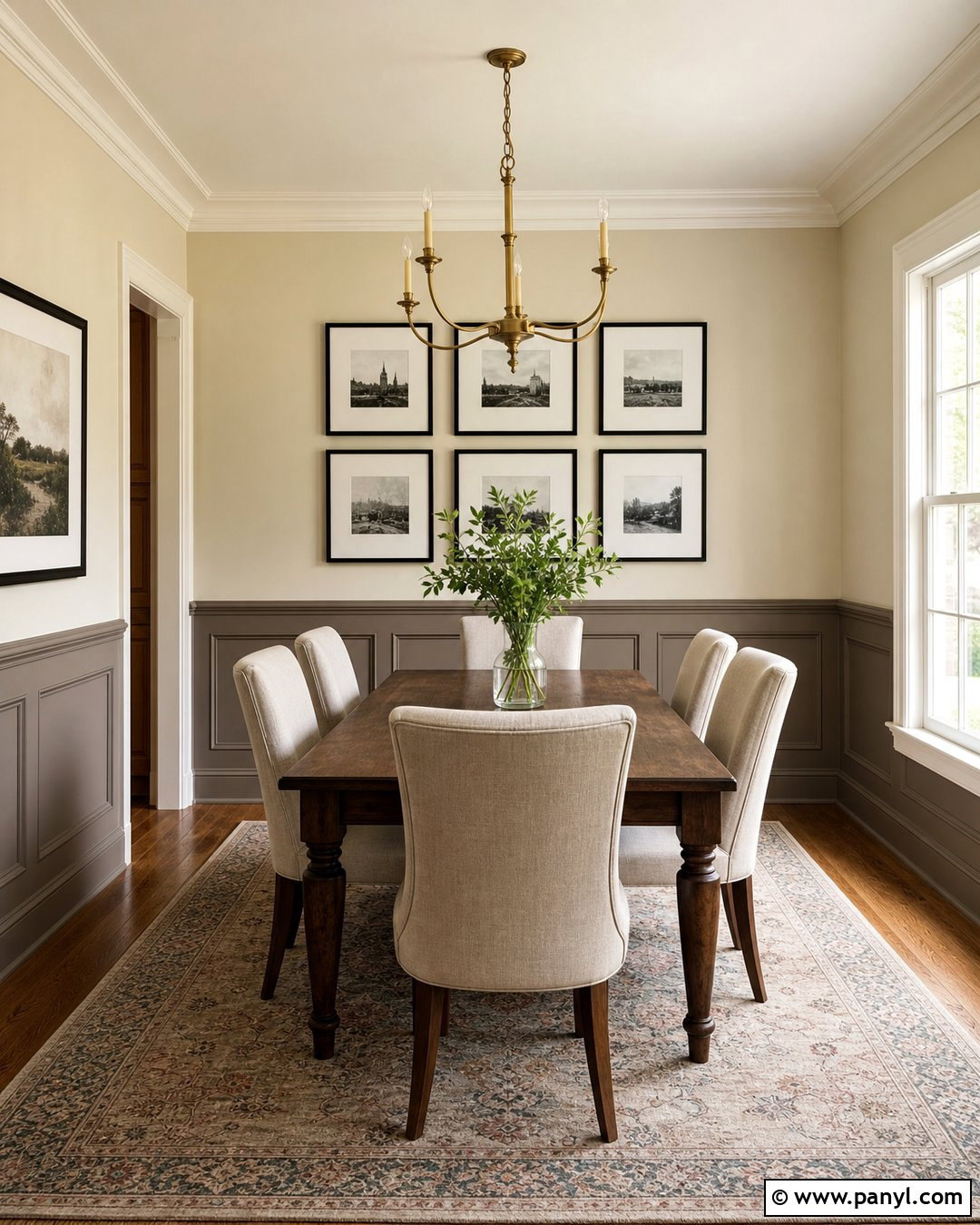
Tall wood baseboards can give a simple room stronger proportions and a more finished appearance. Select a flat profile between the flooring and wall for modern interiors, or use a gently shaped top edge in traditional homes. Medium oak baseboards look especially cohesive with matching hardwood floors, but a subtle difference in tone can prevent the surfaces from blending together. Continue the same wood onto door casings and window sills. Pair the trim with warm white walls, streamlined furniture, and an area rug that stops several inches before the baseboard. This leaves enough visible wood to define the perimeter. In a hallway or open living area, tall baseboards also create a continuous line that links adjoining spaces, making varied furnishings and wall colors feel more coordinated.
11. Wood Picture Frame Molding
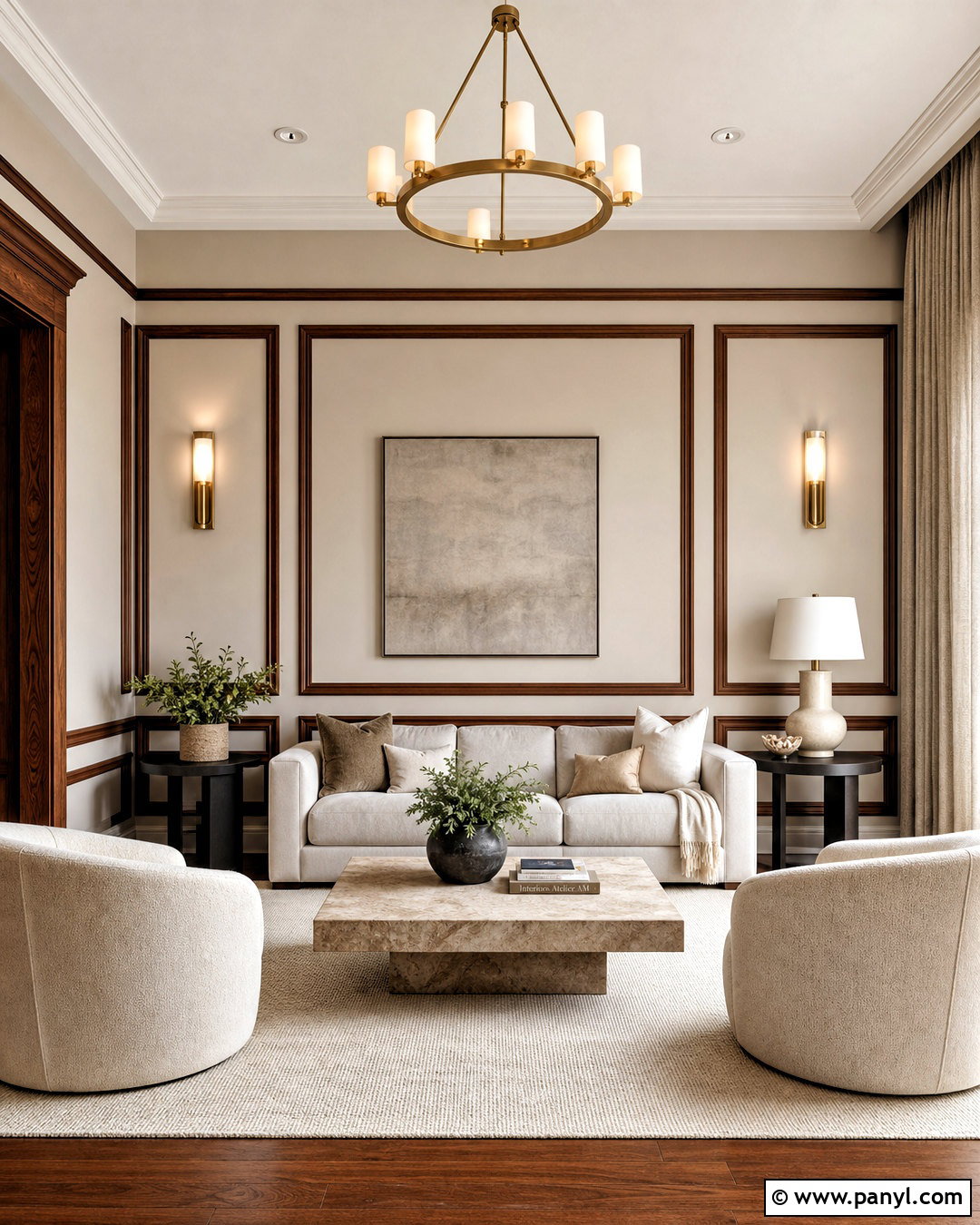
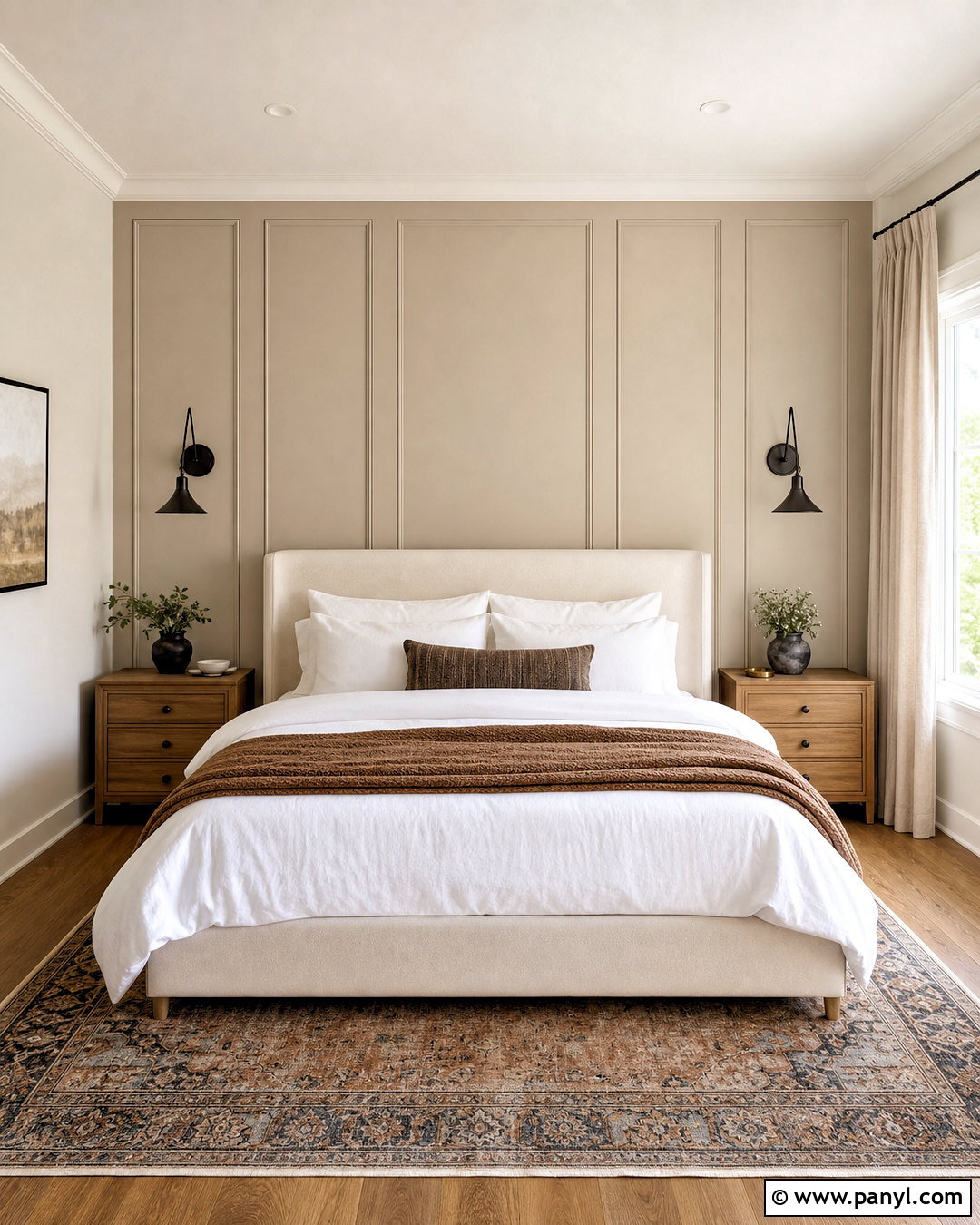
Wood picture frame molding transforms a plain wall into an organized architectural feature. Use slim oak or walnut strips to create evenly spaced rectangular panels, keeping the stain consistent with nearby doors and baseboards. In a living room, center the largest frames behind the sofa and place smaller panels around artwork or sconces. Warm white or soft taupe walls allow the wood outlines to remain noticeable without creating harsh contrast. Complete the room with a neutral sofa, curved accent chairs, a stone coffee table, and textured curtains. Precise spacing is essential, so design the panel layout around wall dimensions, outlets, and furniture placement before installation. The finished look combines traditional wall detailing with modern restraint, adding depth without covering the entire surface in solid wood.
12. Wood Wainscoting Trim
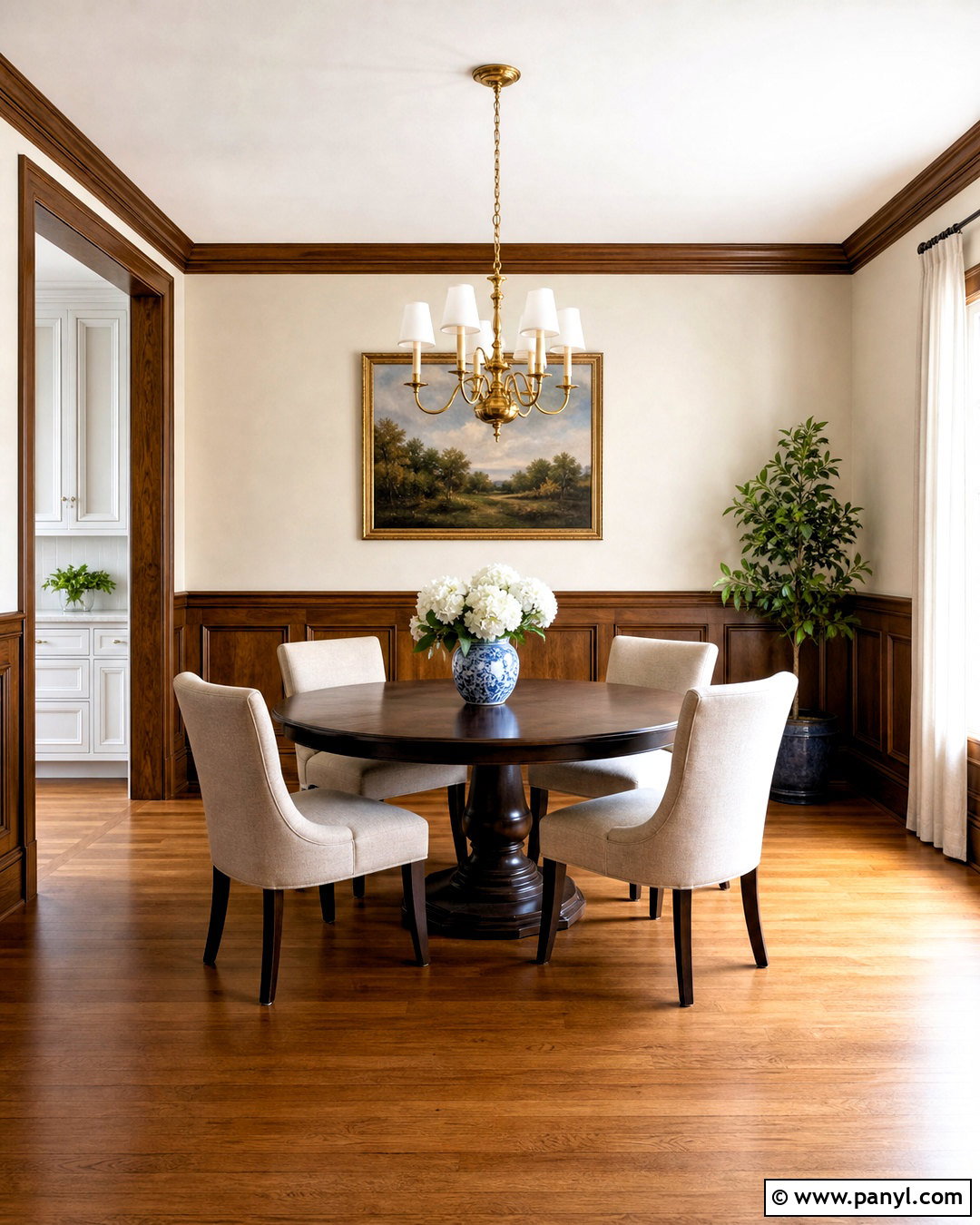
Wood wainscoting gives a dining room warmth, durability, and architectural rhythm. Install stained oak panels or frame molding across the lower third of the walls, finishing the top with a substantial wood chair rail. Paint the upper walls soft cream, muted green, or warm beige to complement the grain. A round pedestal table helps soften the straight lines, while upholstered dining chairs make the setting comfortable. Add a simple brass chandelier, linen curtains, and one large piece of artwork rather than many small accessories. Match the window and door casing to the wainscoting for a seamless appearance. If the room is compact, choose a medium or light stain. Dark wood can look beautiful, but it needs sufficient natural light and pale surrounding surfaces to remain balanced.
13. Arched Wood Door Trim
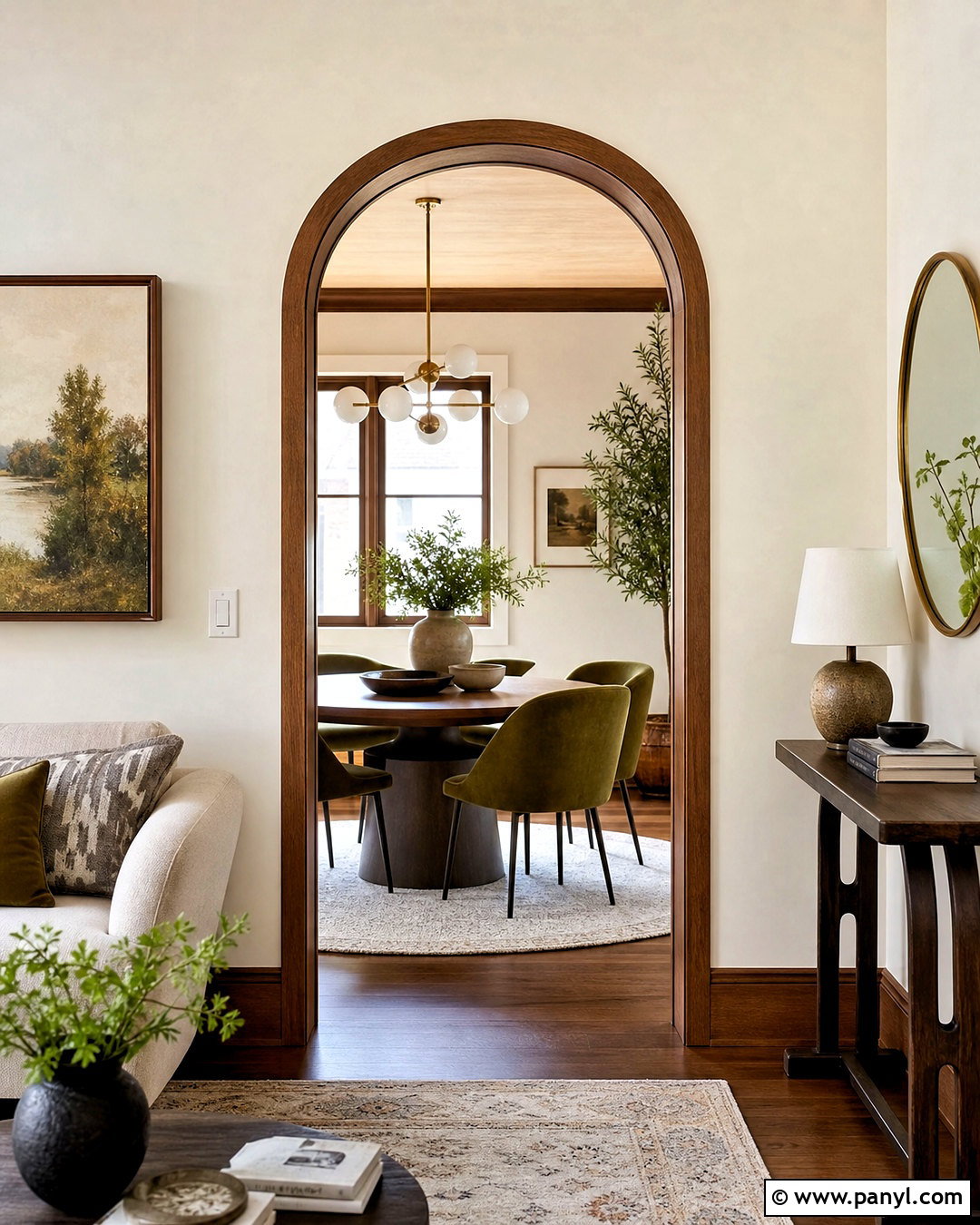
Arched wood door trim turns a passage between rooms into a graceful focal point. Use flexible or custom-milled casing that follows the curve smoothly, avoiding awkward joints around the top of the opening. A medium walnut finish adds warmth while clearly outlining the architectural shape. Paint both connected rooms a soft neutral so the arch feels like a unifying feature rather than a visual interruption. Repeat the wood through baseboards, furniture legs, and a nearby console. Rounded lighting, curved chairs, or an oval rug can quietly echo the opening. Keep the surrounding decor simple because the arch already provides movement and character. This treatment works well between an entry and living room, or between a dining space and kitchen, where it creates separation without closing either area.
14. Wood Trim In The Kitchen
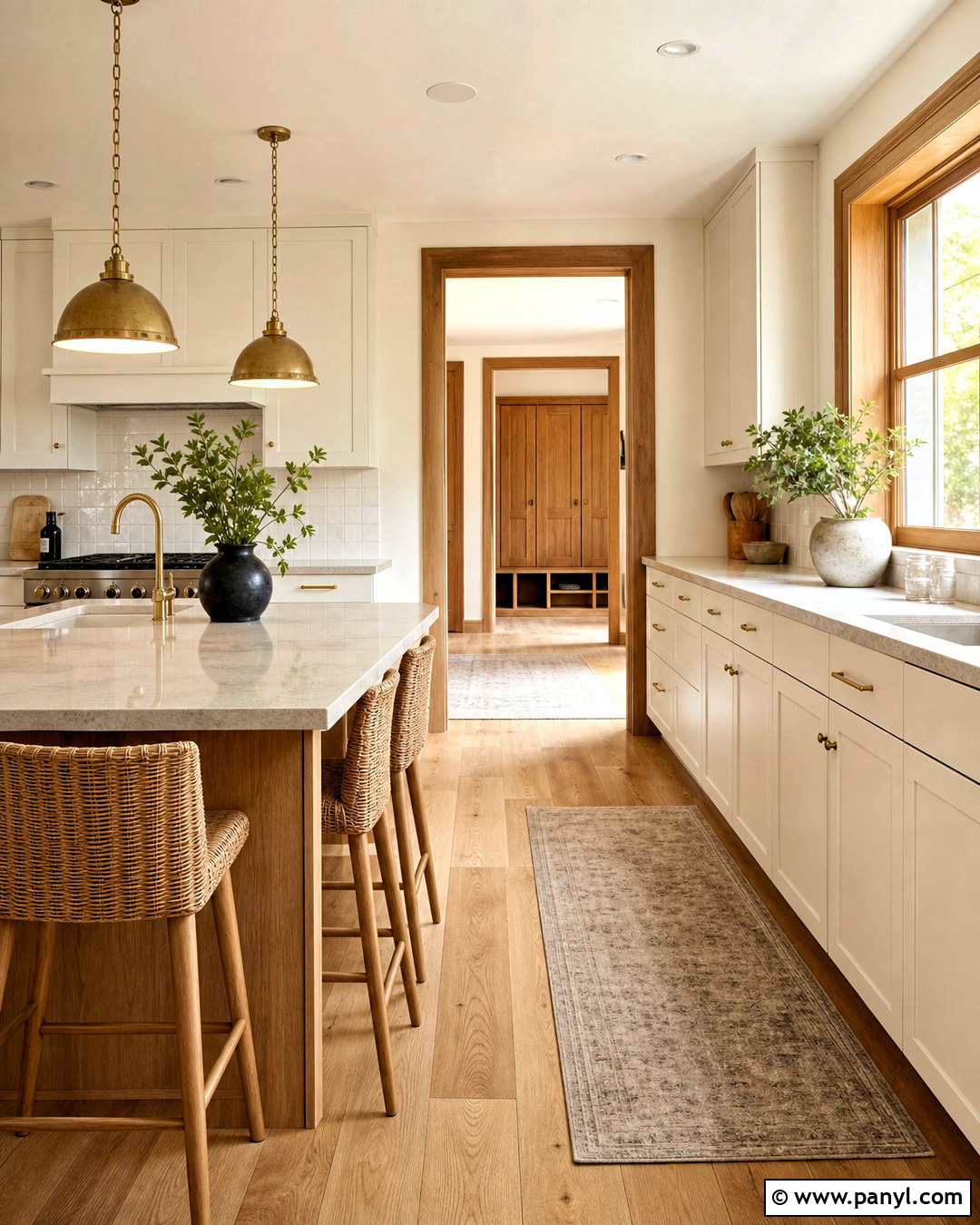
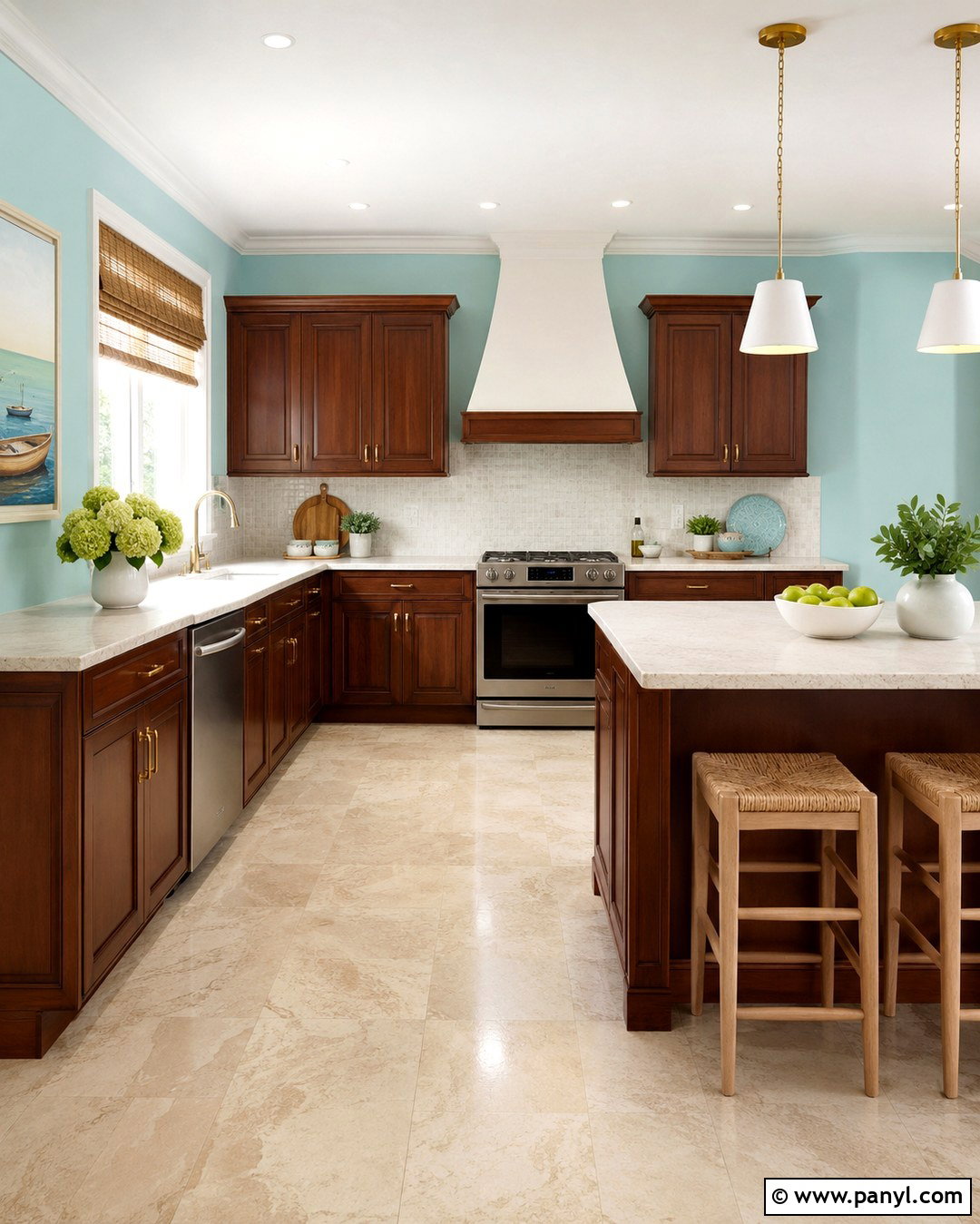
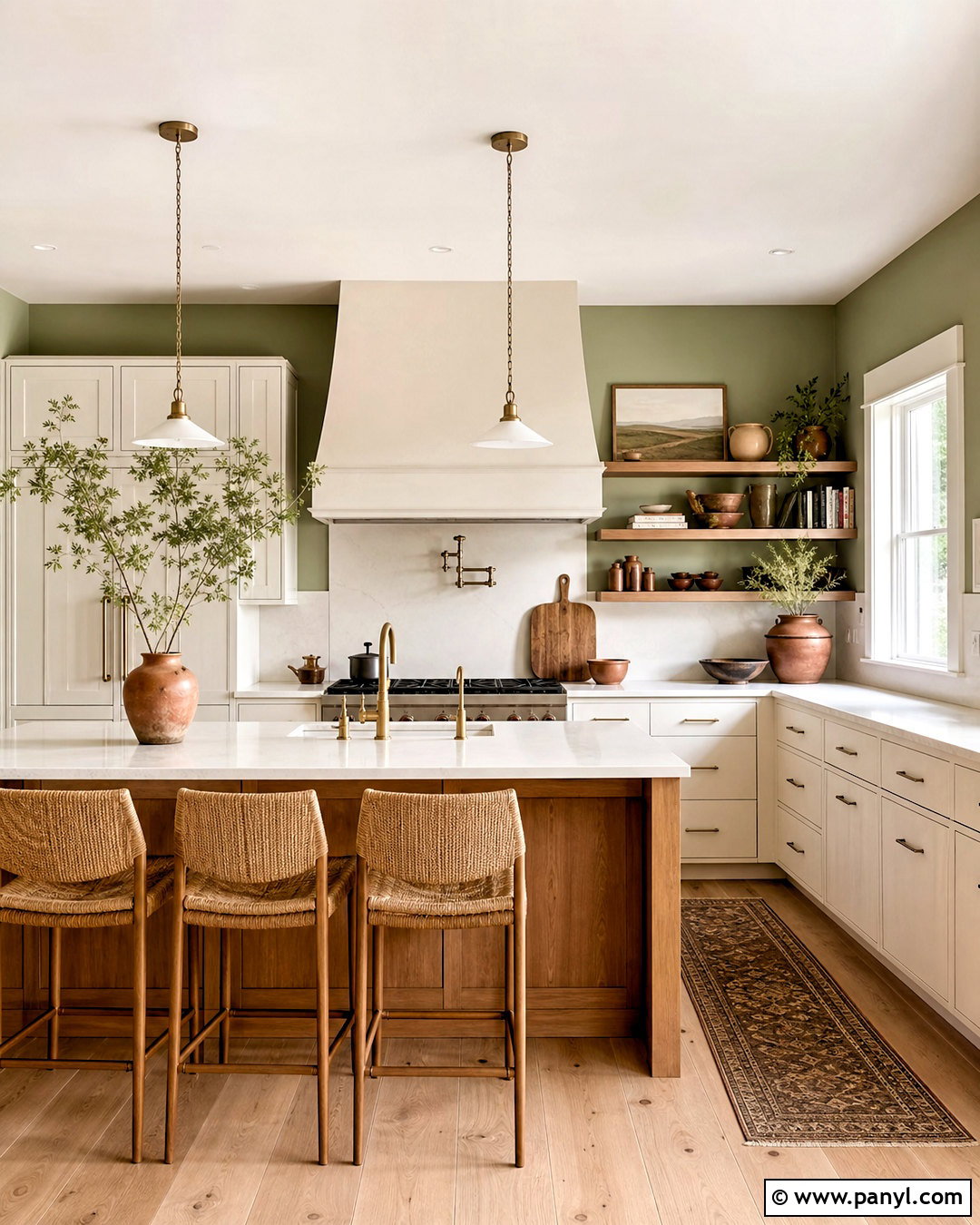
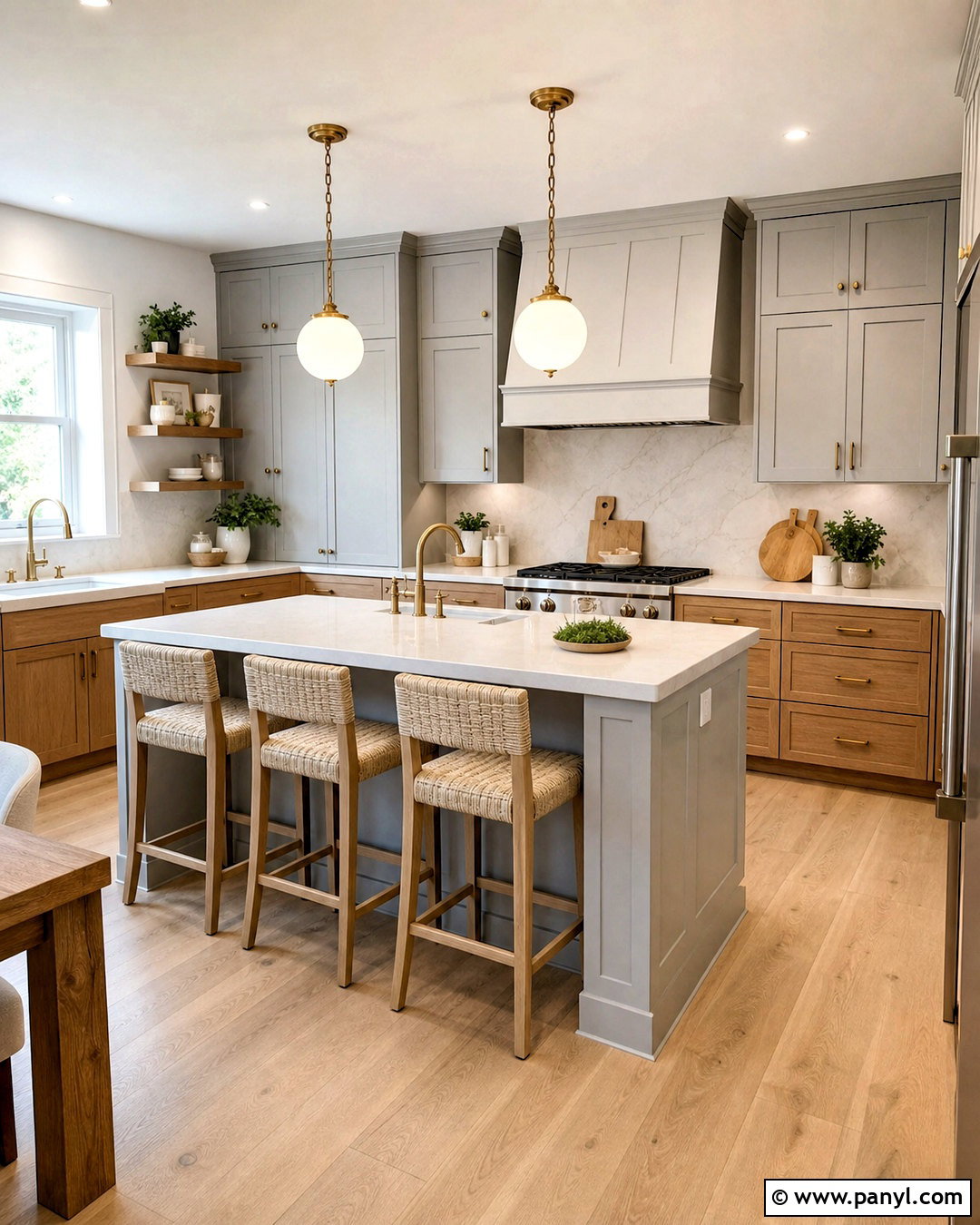
Wood trim can soften a kitchen filled with tile, stone, and painted cabinetry. Frame the windows and doorways in natural white oak, then repeat the same finish on an island base, floating shelves, or range hood detail. Warm white cabinets and pale quartz countertops maintain a light atmosphere, while handmade cream backsplash tile introduces texture. Use flat trim profiles to keep the design clean and prevent busy visual transitions near the cabinets. Brushed brass hardware and woven counter stools complement the oak without creating an exact match. If hardwood flooring is also present, choose a stain with similar undertones but enough variation to show each surface clearly. The finished kitchen feels cohesive because the wood appears in several balanced locations rather than around one isolated window.
15. Wood Trim In The Living Room
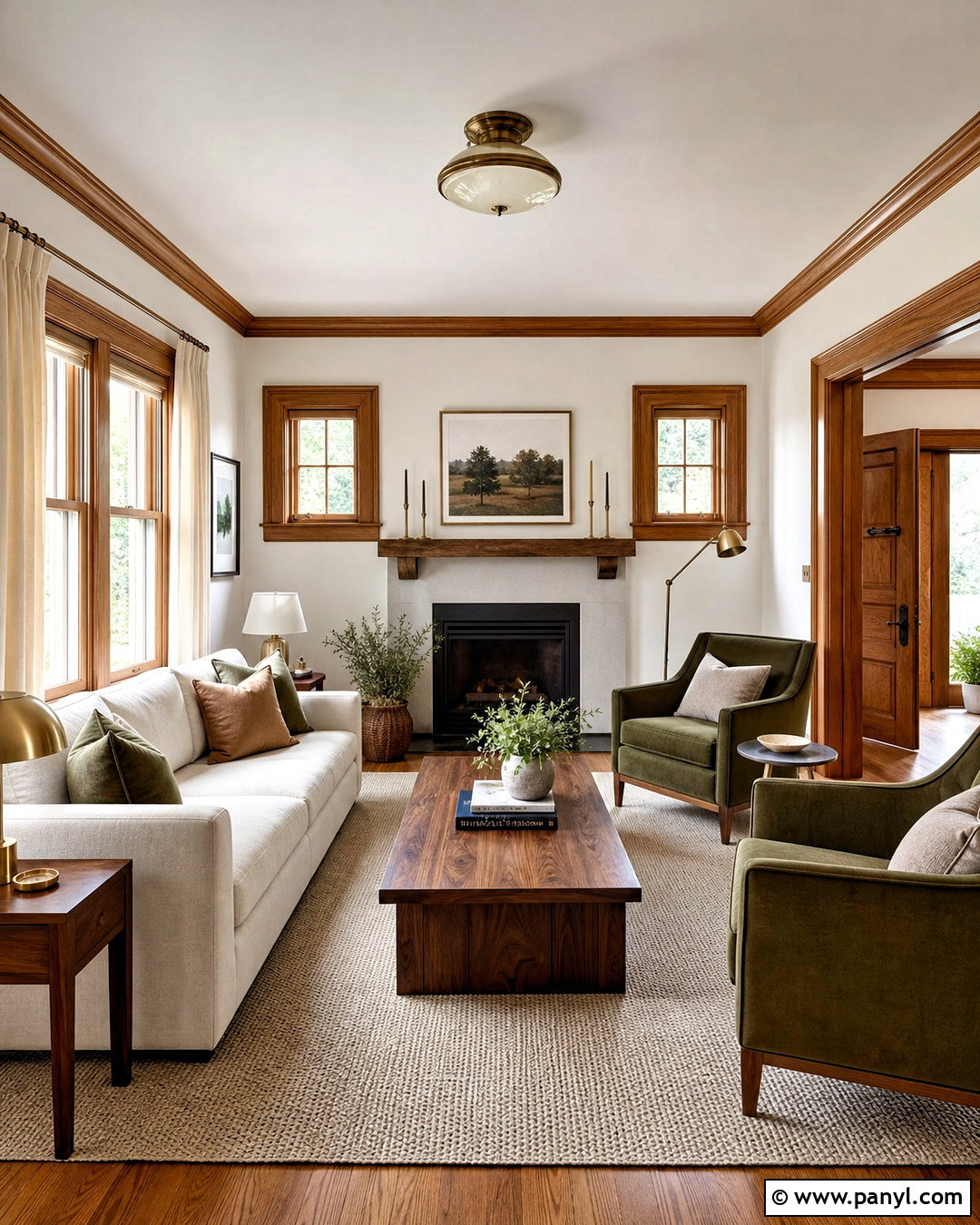
A living room with wood trim should feel layered, comfortable, and connected from floor to ceiling. Start with warm oak window casings, door frames, and baseboards, then select furnishings that complement rather than duplicate the finish. A cream sofa, olive lounge chairs, a walnut coffee table, and a beige wool rug create subtle tonal variety. Paint the walls a warm off-white and use linen drapery placed beyond the window trim. If the room includes a fireplace, add a simple wood mantel in the same general color family. Black metal lamps and aged brass accessories provide small points of contrast. By distributing warm and dark details around the room, the woodwork becomes part of a complete composition instead of looking like leftover architecture from another decorating period.
16. Wood Trim In The Bedroom
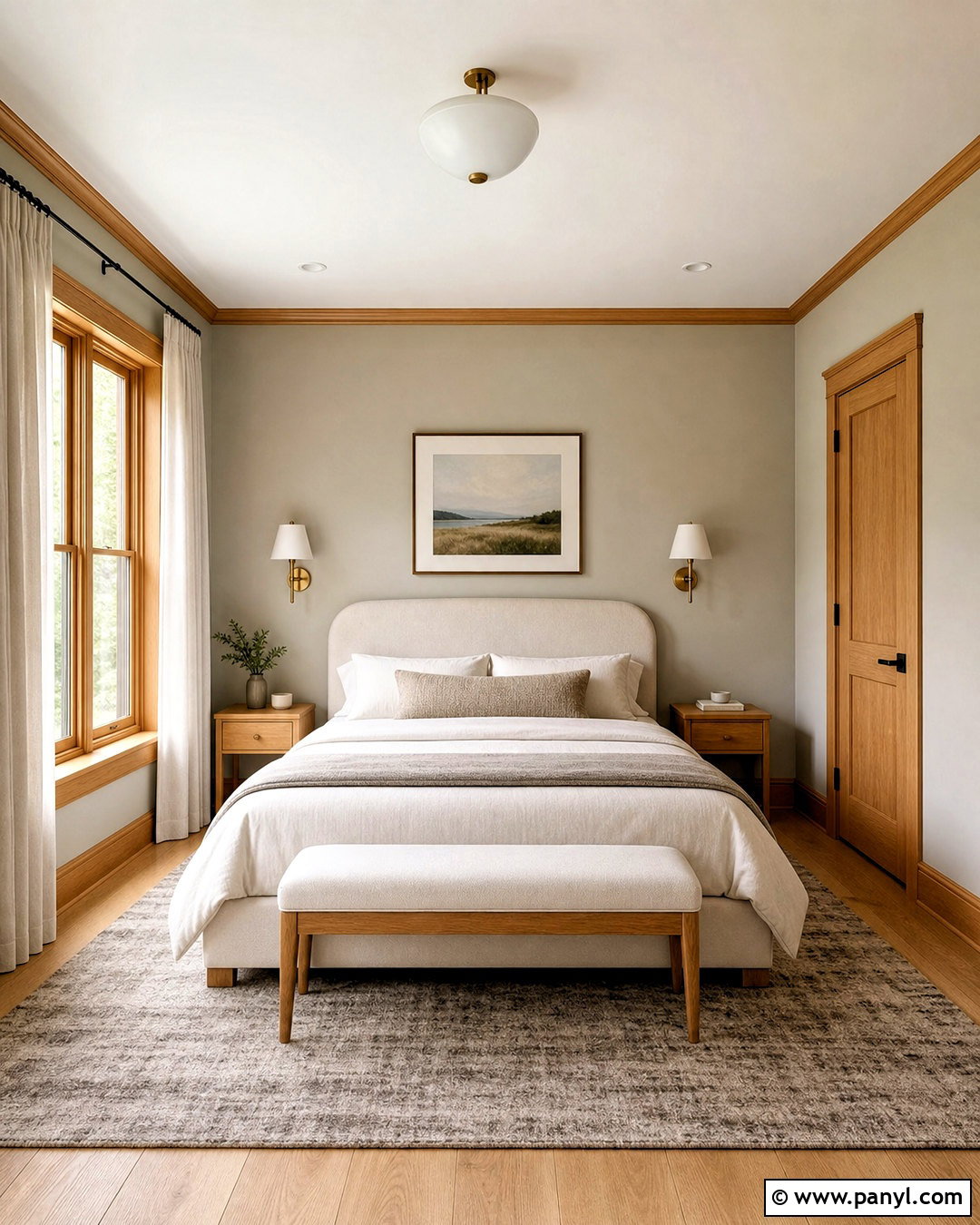
Wood trim can make a bedroom feel calm, grounded, and naturally inviting. Use light oak around windows, doors, and baseboards, then coordinate it with an upholstered bed rather than adding another large wooden surface. Soft greige walls, ivory bedding, flax linen curtains, and a muted wool rug create a peaceful background. Choose compact oak nightstands with slightly darker grain to relate to the trim without appearing overly matched. Wall-mounted brass sconces preserve tabletop space and add warm contrast. If the ceiling is high, a narrow wood picture rail can give the walls better proportion. Keep the palette limited to cream, beige, pale brown, and one subdued accent color. This controlled approach highlights the wood’s texture while maintaining the restful simplicity expected in a comfortable bedroom.
17. Wood Trim In The Bathroom
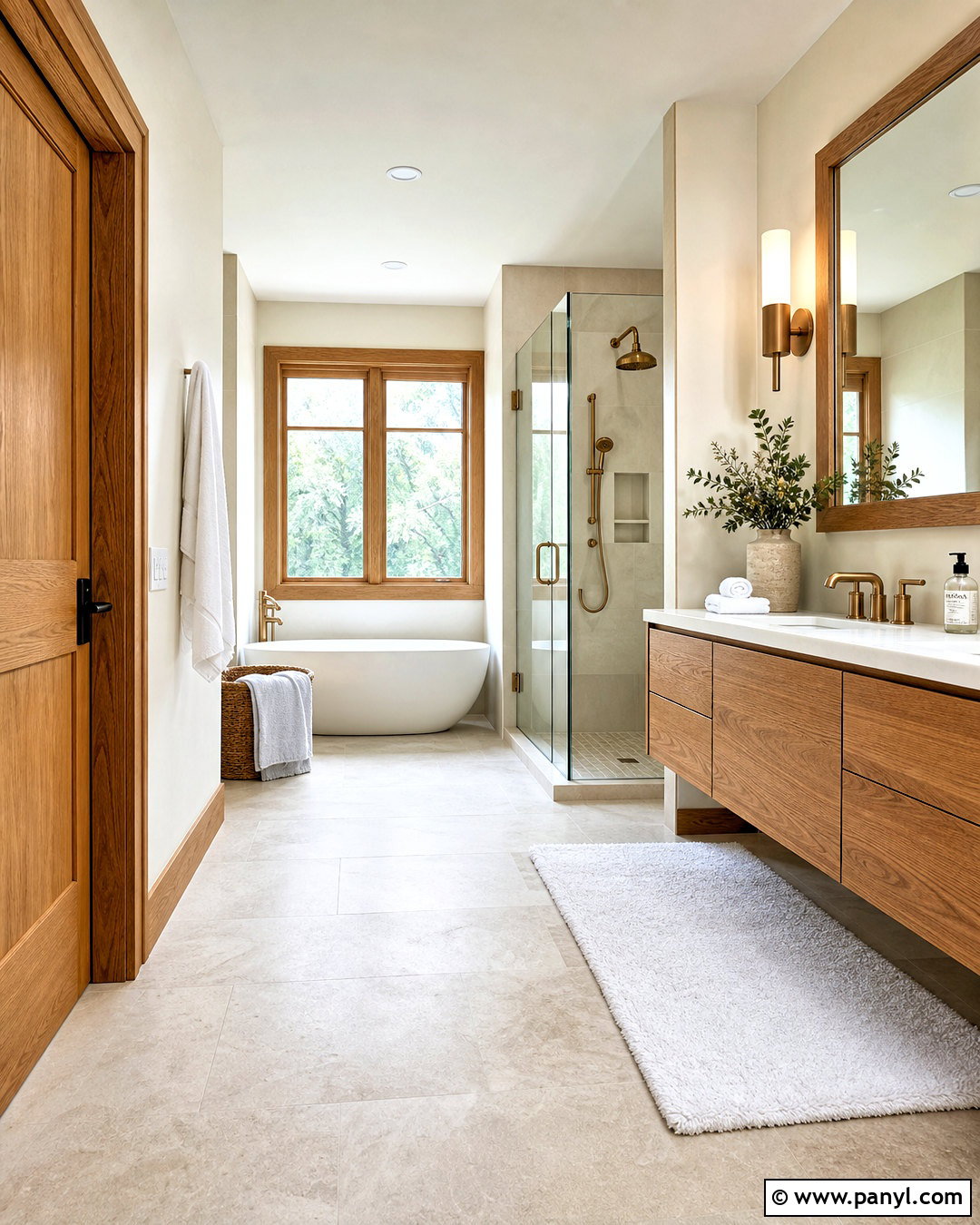
Moisture-resistant wood trim can bring warmth to a bathroom dominated by hard surfaces. Use properly sealed white oak or teak around the window, mirror, and vanity area, while keeping baseboards away from regularly wet zones when possible. Pair the wood with matte ivory tile, pale stone flooring, and a floating vanity in the same finish. A frameless glass shower preserves visual openness, while brushed nickel or aged brass fixtures add a refined metallic note. Choose a soft warm-white wall color and introduce texture through cotton towels, a woven basket, and a simple bath mat. Good ventilation and an appropriate protective finish are essential for maintaining real wood in a humid room. The resulting bathroom feels spa-like, bright, and approachable rather than cold or overly polished.
18. Wood Trim In The Home Office
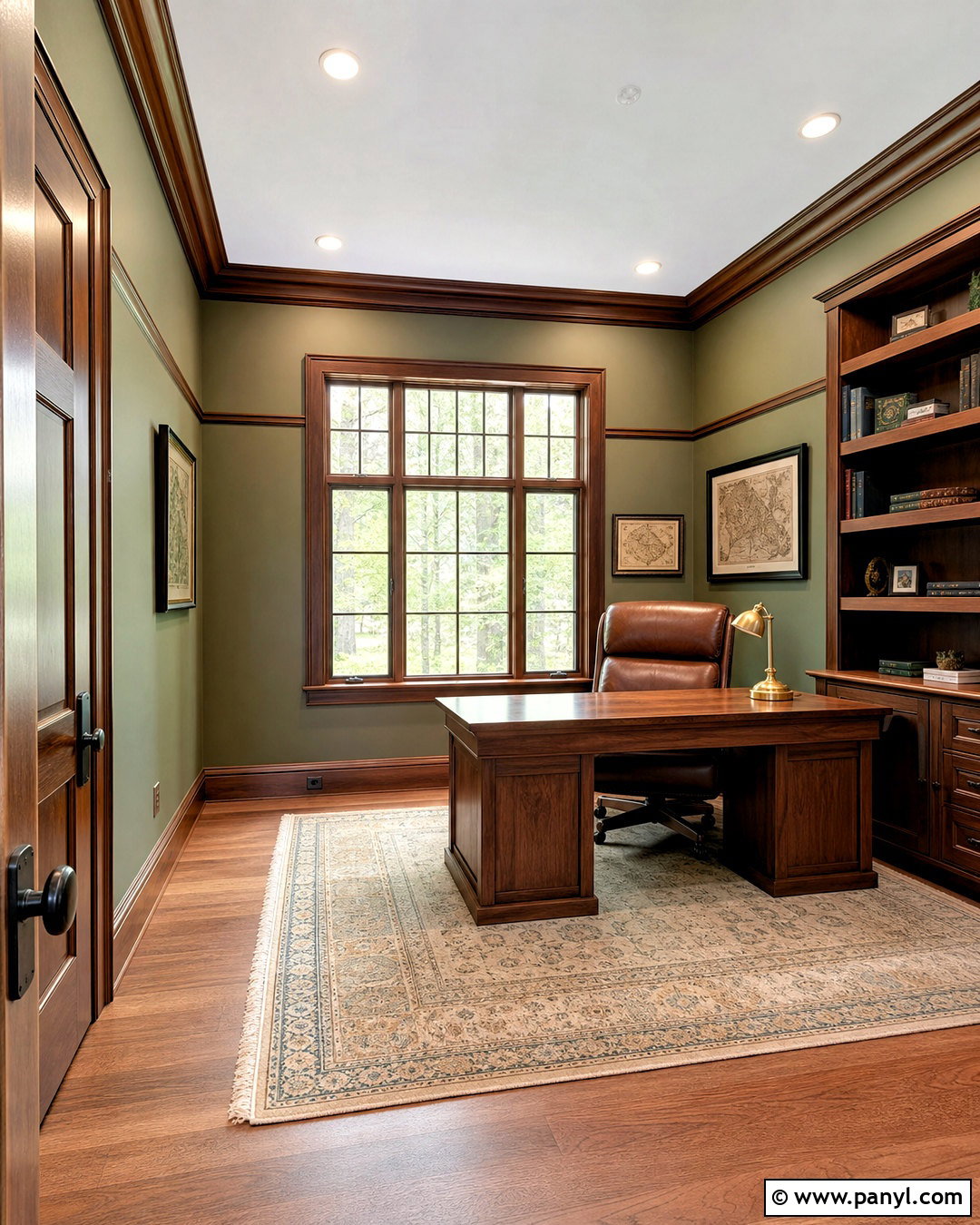
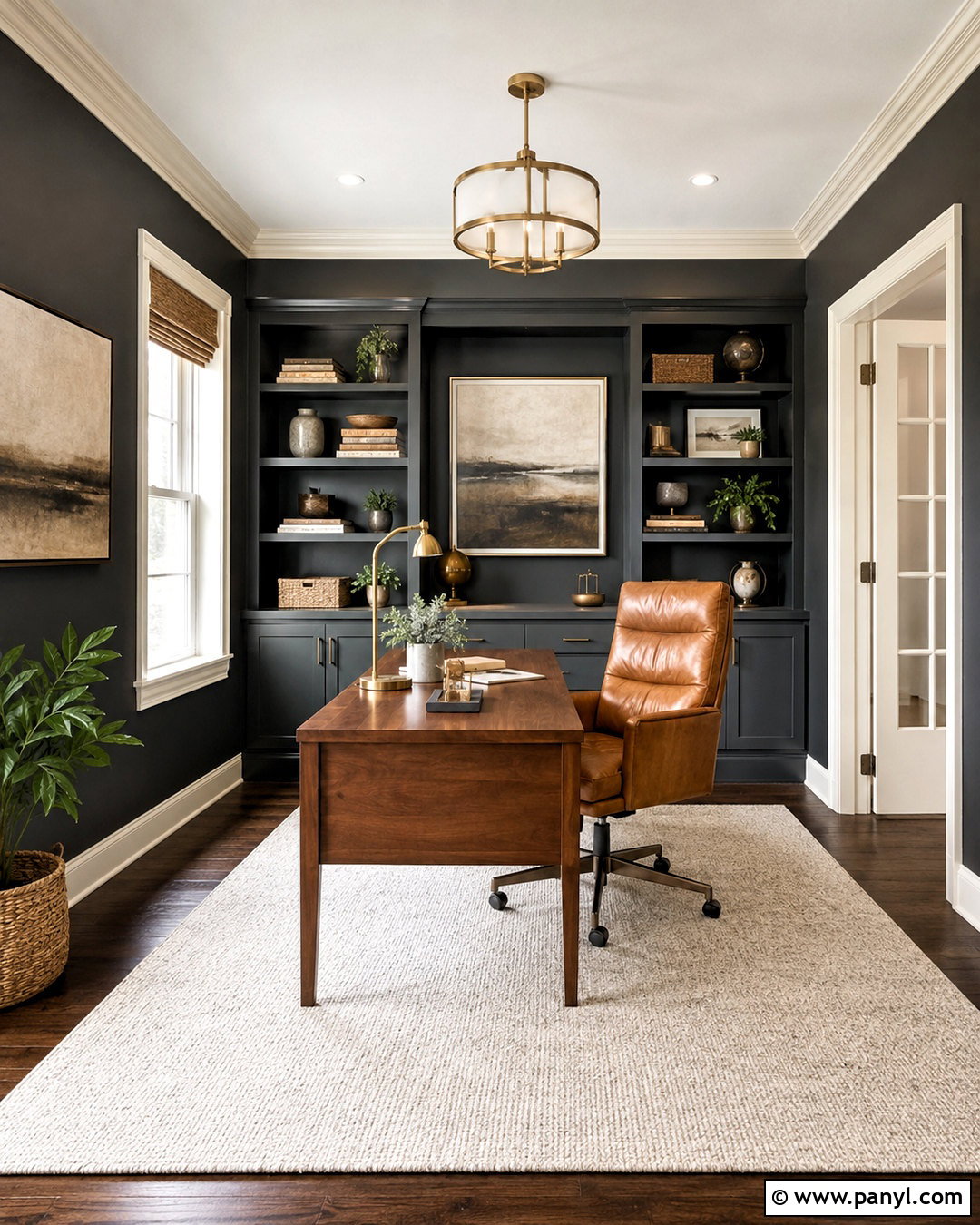
A home office becomes more focused and inviting when wood trim is incorporated throughout the design. Frame the window and doorway with medium walnut casing, then add matching baseboards and a narrow picture rail. Paint the walls muted blue-gray or olive to create gentle contrast. Position a substantial wood desk near the natural light, accompanied by a comfortable leather or upholstered chair. Built-in shelves can use the same walnut finish, but leave enough painted wall visible to avoid a heavy appearance. Add a flat-weave rug, brass task lamp, and a few framed prints arranged within the trim lines. Closed storage keeps paperwork out of sight. This complete office combines traditional architectural warmth with the clean organization needed for productive, comfortable work.
19. Mixed Painted And Wood Trim
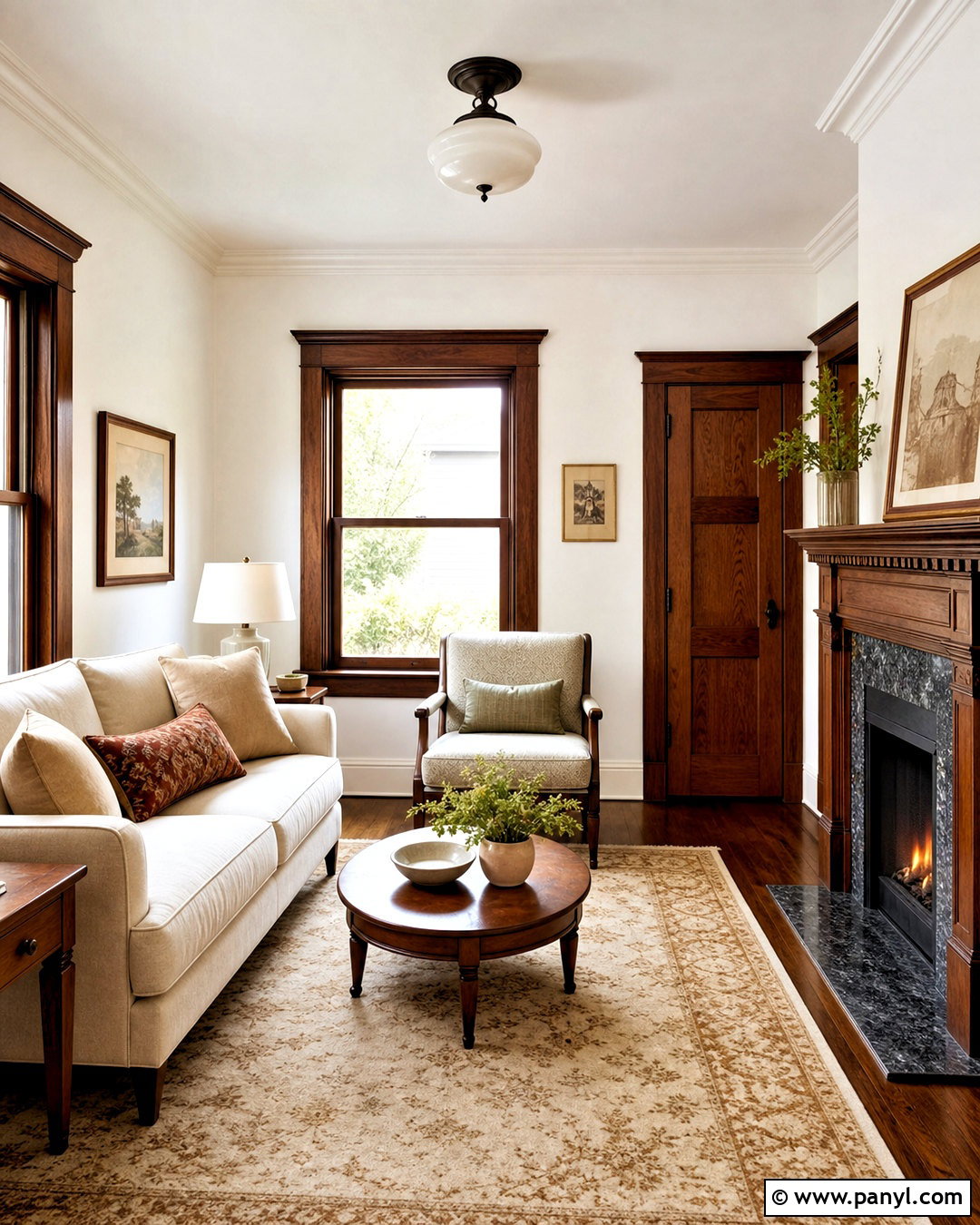
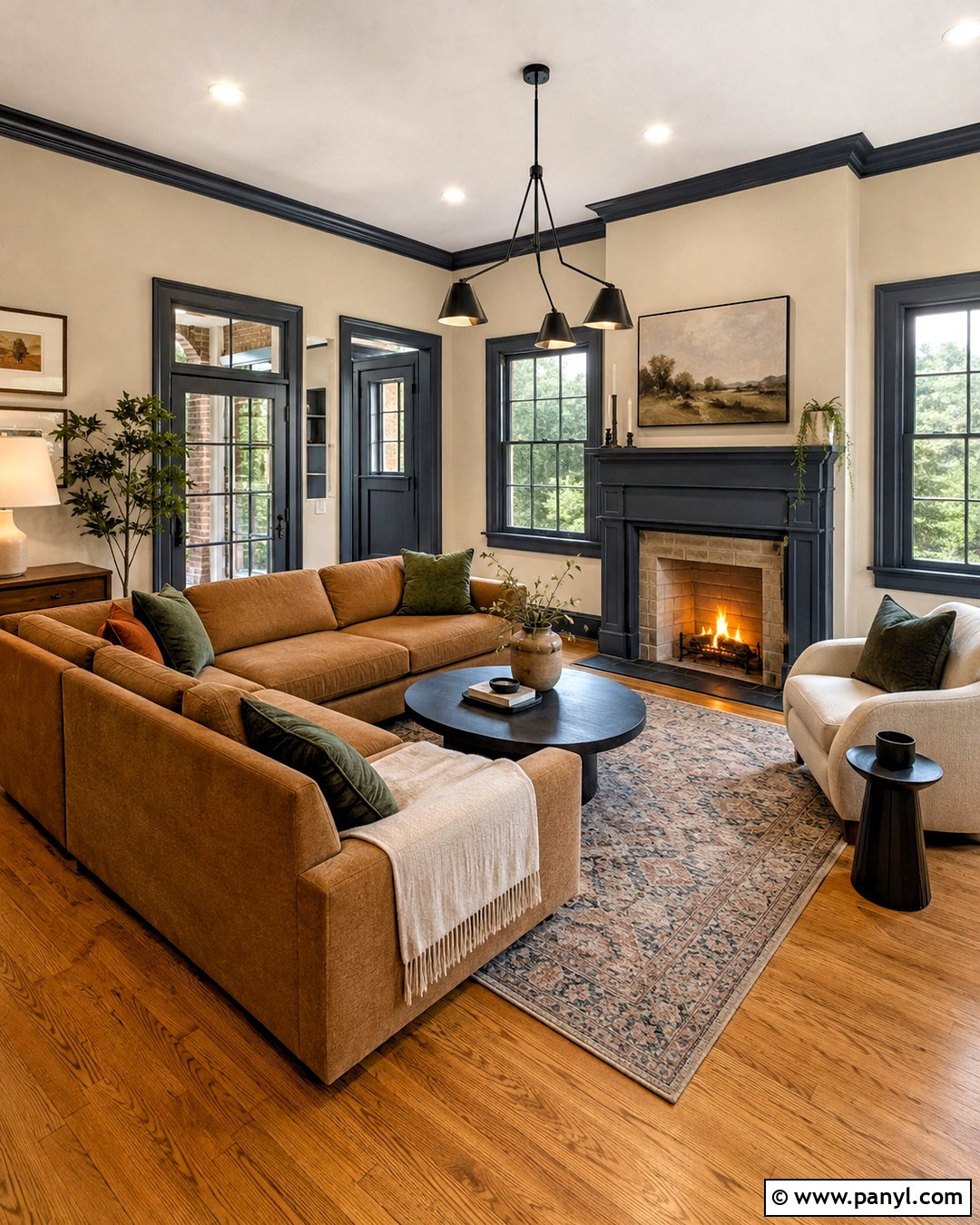
Mixing painted and natural wood trim can lighten an interior while preserving its best original features. Keep prominent window casings, interior doors, and a fireplace mantel in their natural finish. Paint simpler baseboards and crown molding a warm white that blends with the walls. This hierarchy draws attention toward the most attractive woodwork without surrounding every surface in brown. Connect both finishes through neutral furniture, wood-framed artwork, and a rug containing cream and caramel tones. Make each transition deliberate; for example, painted baseboards can end neatly against wider wood door casings. Avoid switching finishes randomly between similar windows or adjoining doors. When the pattern remains consistent throughout visible rooms, the combination feels planned, making it a practical solution for homes with partially painted or mismatched original millwork.
20. Two Tone Wood Trim
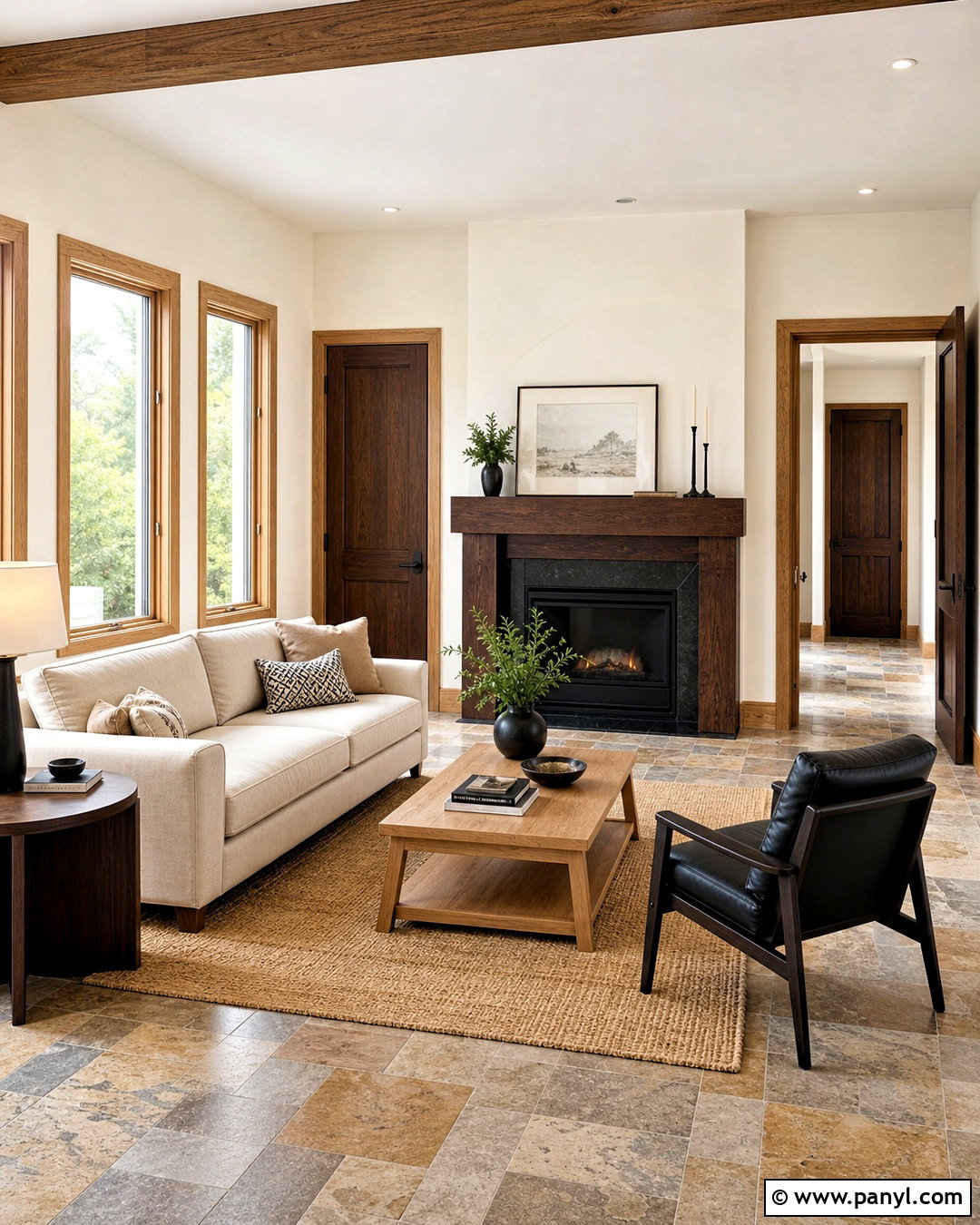
Two-tone wood trim adds depth when one finish would make the entire interior feel too uniform. Use lighter white oak for window frames and baseboards, then choose dark walnut for doors, built-ins, or a fireplace mantel. Keep the trim profiles similarly simple so the contrasting finishes still share a visual language. Warm white walls and natural stone flooring provide a neutral bridge between the woods. Furnish the room with a beige sofa, black accent chair, oak coffee table, and walnut side table to repeat both tones at different heights. A textured rug should include tan and brown details without matching either wood exactly. Limit the palette to two dominant species or stain colors. Careful repetition turns the contrast into a cohesive, modern design rather than a collection of unrelated finishes.
Conclusion:
The best wood trim interior ideas treat molding as part of the entire room instead of an isolated finishing detail. Begin by identifying the wood’s undertone, architectural profile, and condition. Then coordinate the walls, flooring, furniture, textiles, and hardware around those qualities. Light oak creates an airy modern look, while walnut and mahogany bring traditional depth. Craftsman casing, crown molding, wainscoting, and picture frame trim offer additional ways to introduce character. Painted and natural finishes can also work together when their placement is consistent. Above all, repeat important wood tones thoughtfully and keep the proportions appropriate for the space. These 20 wood trim interior ideas can help any home feel warmer, more cohesive, and intentionally designed.

Related Ideas and Inspiration:
Leave a Reply