
Interior trim can completely change how finished, spacious, and intentional a home feels. The right baseboards, window casings, door frames, crown molding, and wall panels create a visual framework that connects every surface. Trim can blend quietly into the walls, introduce natural wood warmth, or become a bold architectural feature through color and scale. The best approach considers the home’s architecture, ceiling height, flooring, doors, furniture, and overall color palette together. Whether you prefer modern simplicity, traditional character, or a comfortable transitional look, these complete room schemes offer practical inspiration for different spaces and budgets. Use the following 20 interior trim ideas to find a coordinated look that suits your home.

1. White Interior Trim With Neutral Walls
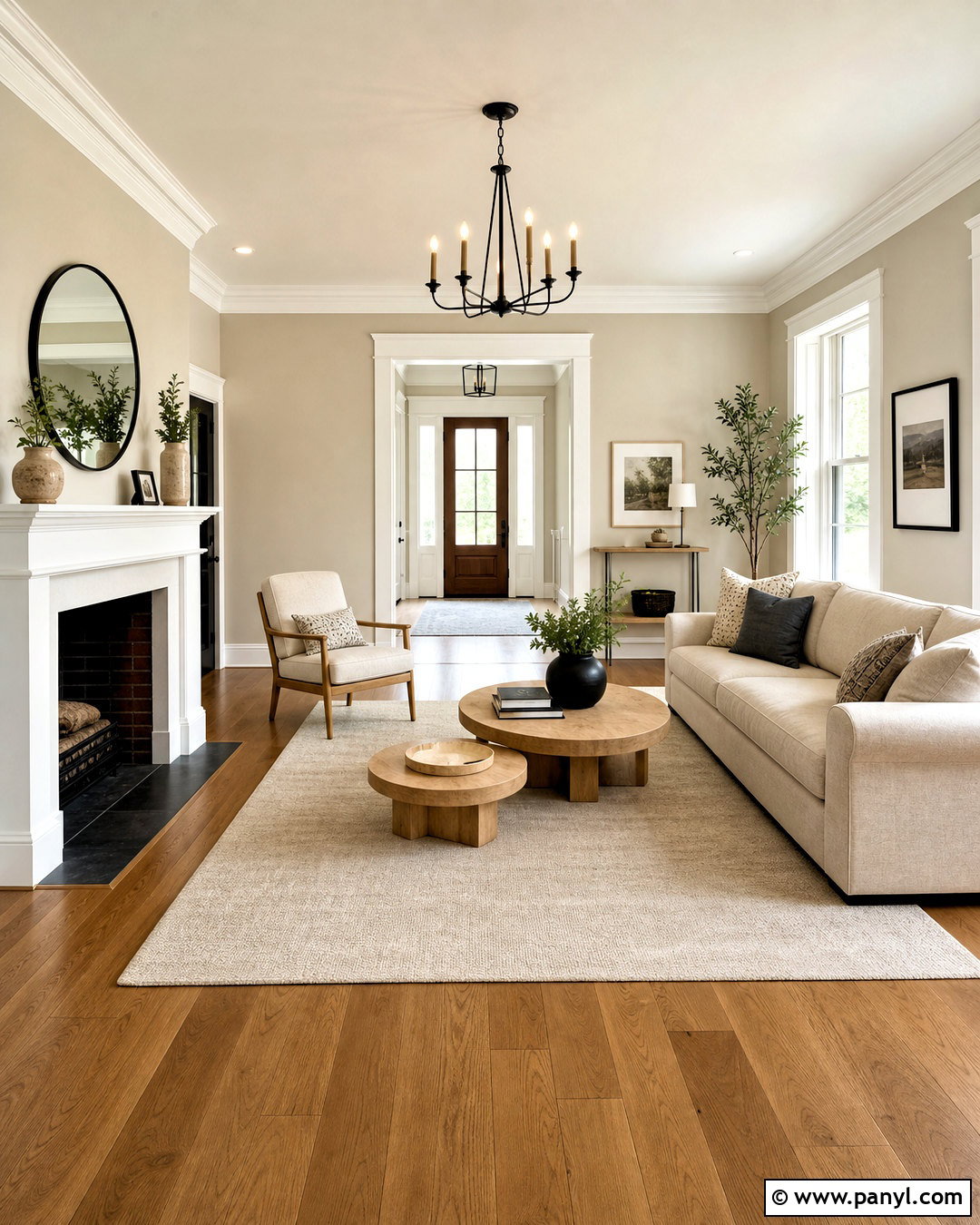
Crisp white trim and warm neutral walls create a clean, versatile foundation that works throughout an entire home. Paint baseboards, door casings, window frames, and simple crown molding the same soft white in a durable satin finish. Pair them with light greige walls, natural oak flooring, and off-white ceilings. In the living room, add a beige sofa, textured ivory rug, pale wood tables, and black metal lighting for definition. Keep the trim profile moderately simple so the room feels current without becoming too plain. This coordinated scheme is especially effective in open layouts because the repeated white borders connect adjoining rooms. Select warm rather than icy whites to complement wood floors and comfortable neutral furnishings.
2. Black Interior Trim With White Walls
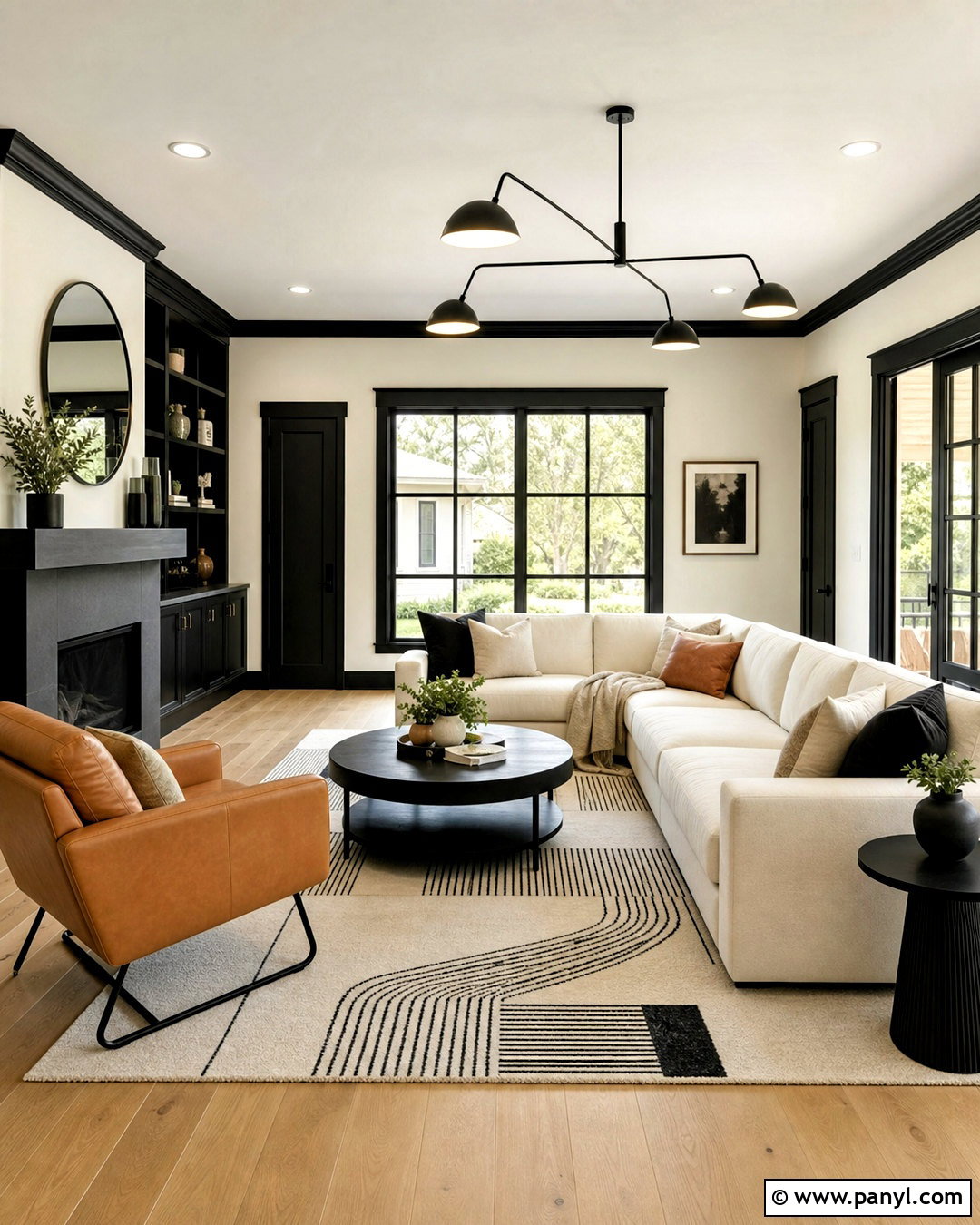
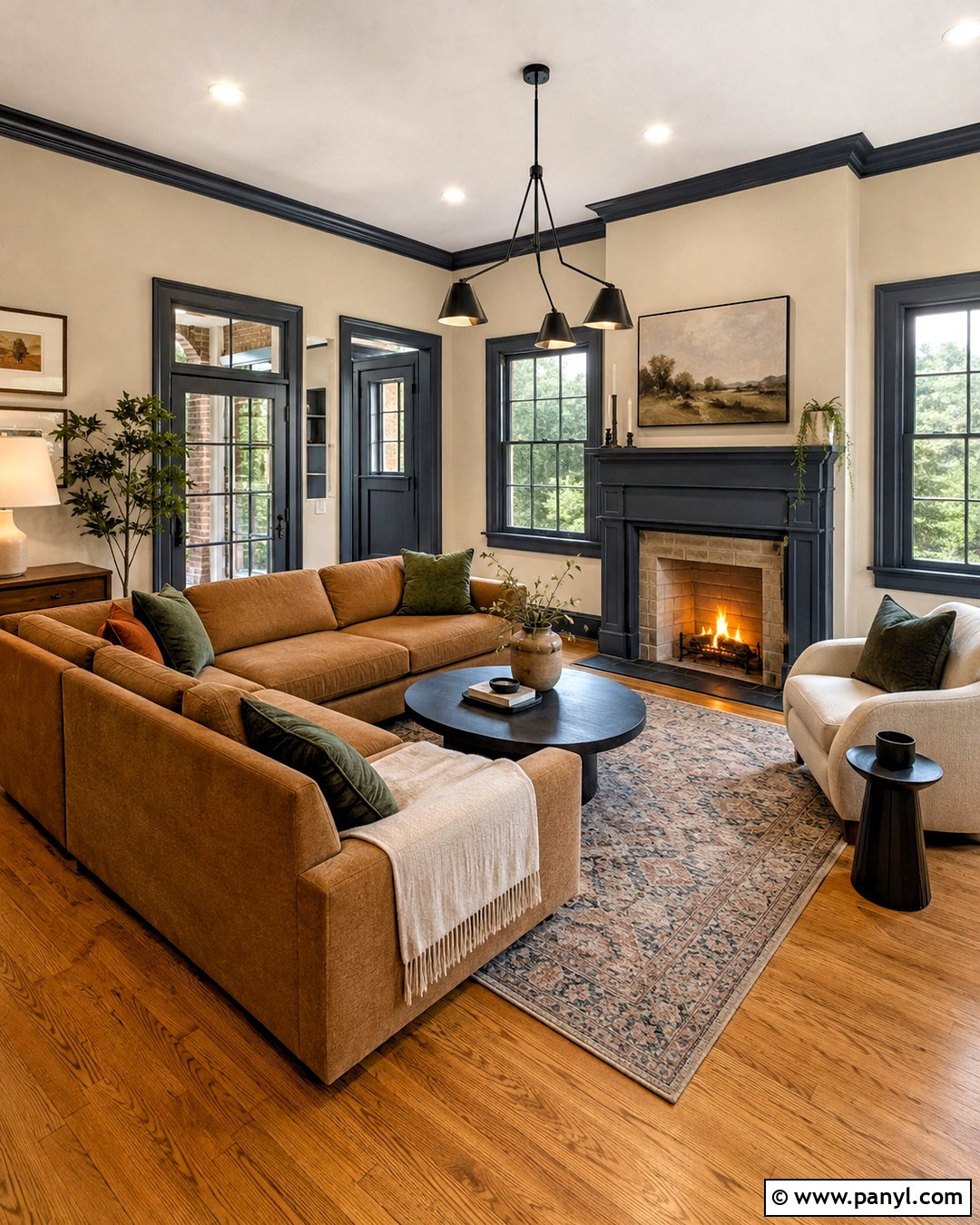
Black interior trim gives a basic room stronger architectural definition without requiring elaborate molding. Use matte or satin black on slim window casings, door frames, baseboards, and interior doors. Balance the dark lines with warm white walls, a white ceiling, and medium-toned oak flooring. A cream sofa, caramel leather chair, graphic rug, and black light fixtures complete a modern living room without making it feel harsh. Keep window treatments light and simple so natural light remains prominent. This trim treatment works best when repeated deliberately instead of applied to one random doorway. Black hardware, curtain rods, and furniture legs can echo the trim, while woven textiles and natural wood soften the high-contrast palette.
3. Wall-Matching Interior Trim
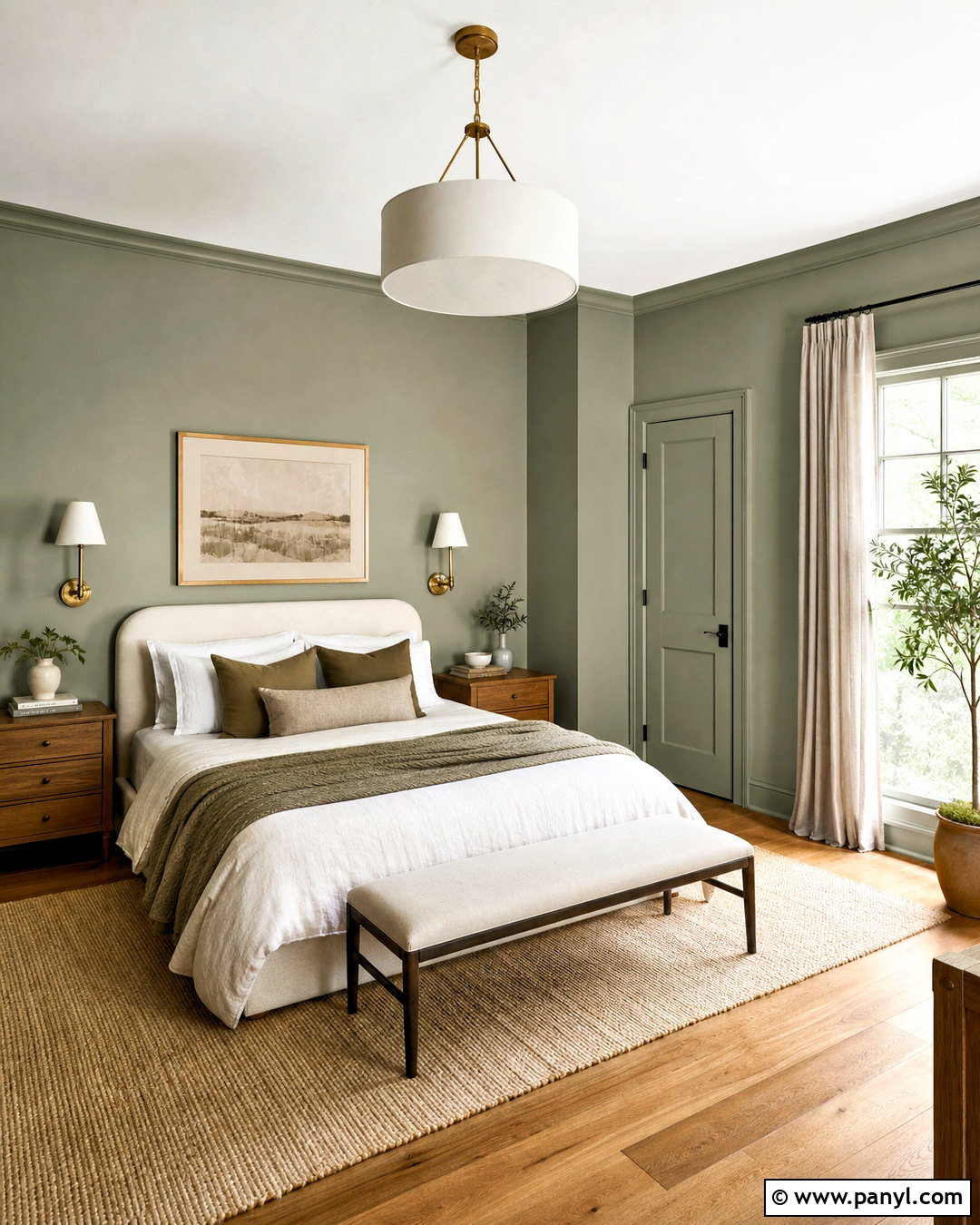
Painting trim and walls the same color creates a seamless, contemporary room with less visual interruption. Try a muted sage green across the walls, baseboards, door casings, window trim, and doors, using eggshell on the walls and satin on the woodwork. The small finish change provides subtle depth while maintaining a unified color field. Add a cream upholstered bed or sofa, medium oak furniture, linen curtains, and brushed brass lighting to warm the palette. Keep the ceiling soft white to preserve brightness unless the room has generous natural light. Simple flat-stock trim suits this treatment particularly well. Matching the architectural details to the walls can also make narrow rooms feel calmer because contrasting borders no longer divide every surface.
4. Natural Wood Interior Trim
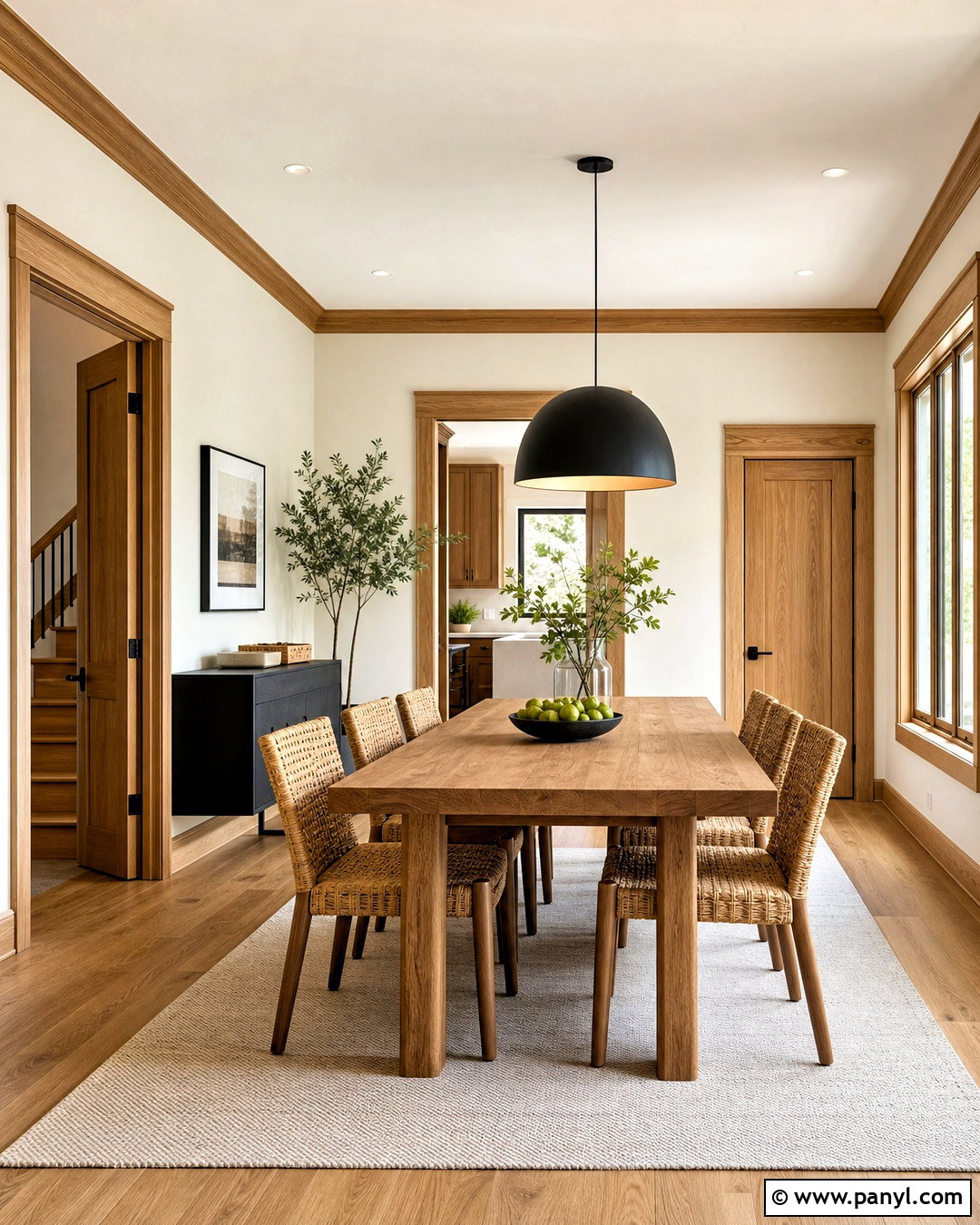
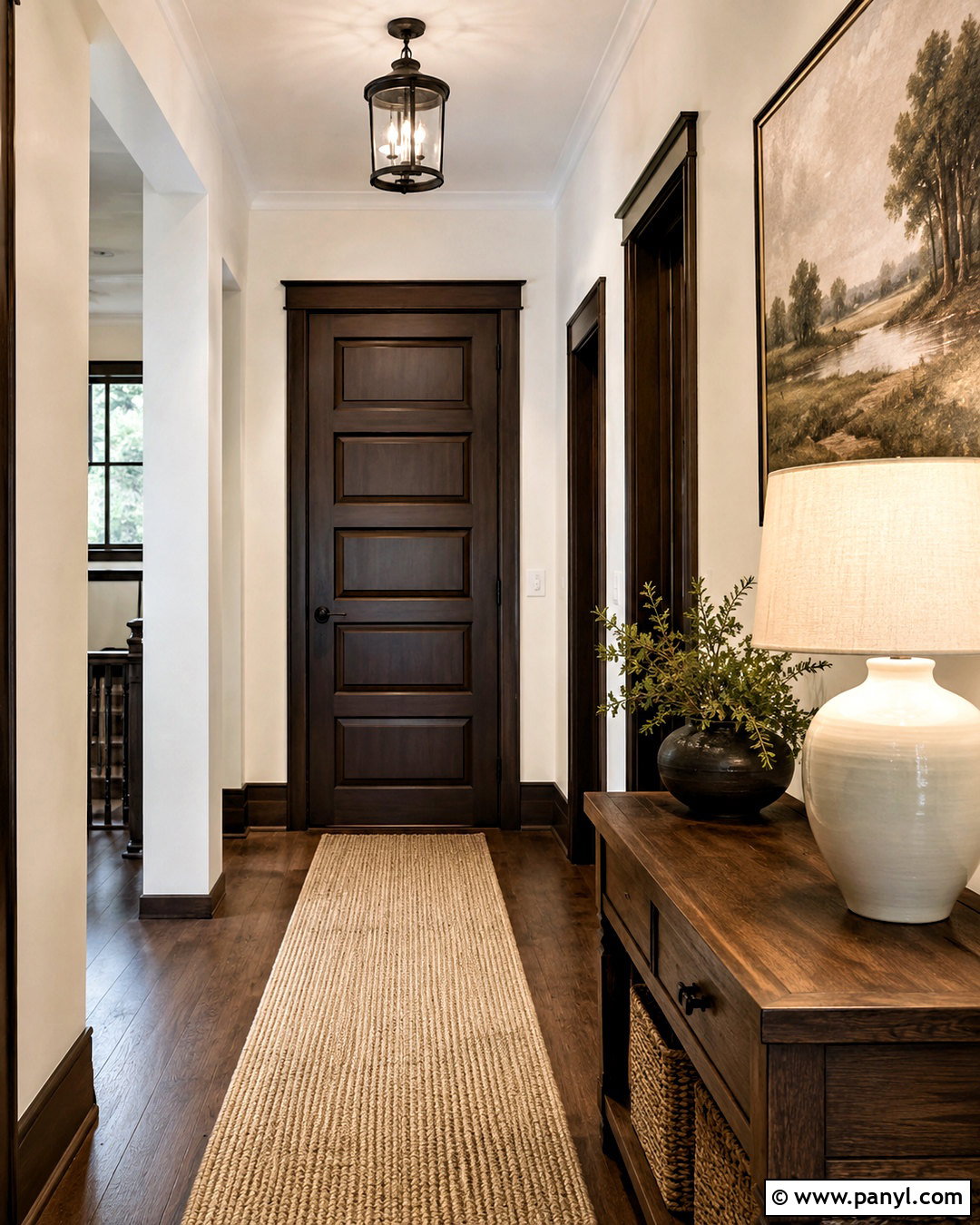
Natural wood trim brings warmth and craftsmanship into a room without relying on decorative profiles. Use clear-finished white oak for flat baseboards, window casings, door frames, and matching solid wood doors. Surround the millwork with warm white walls, light oak flooring, and a simple white ceiling. In a dining room, pair the trim with a substantial oak table, woven chairs, a neutral wool rug, and a sculptural black pendant. Keep the stain consistent across visible woodwork so the grain becomes a connecting feature rather than visual clutter. Soft linen curtains and ceramic accessories support the organic palette. This complete look feels modern yet comfortable, especially when the trim has square edges and minimal layered detailing.
5. Craftsman Interior Window Trim
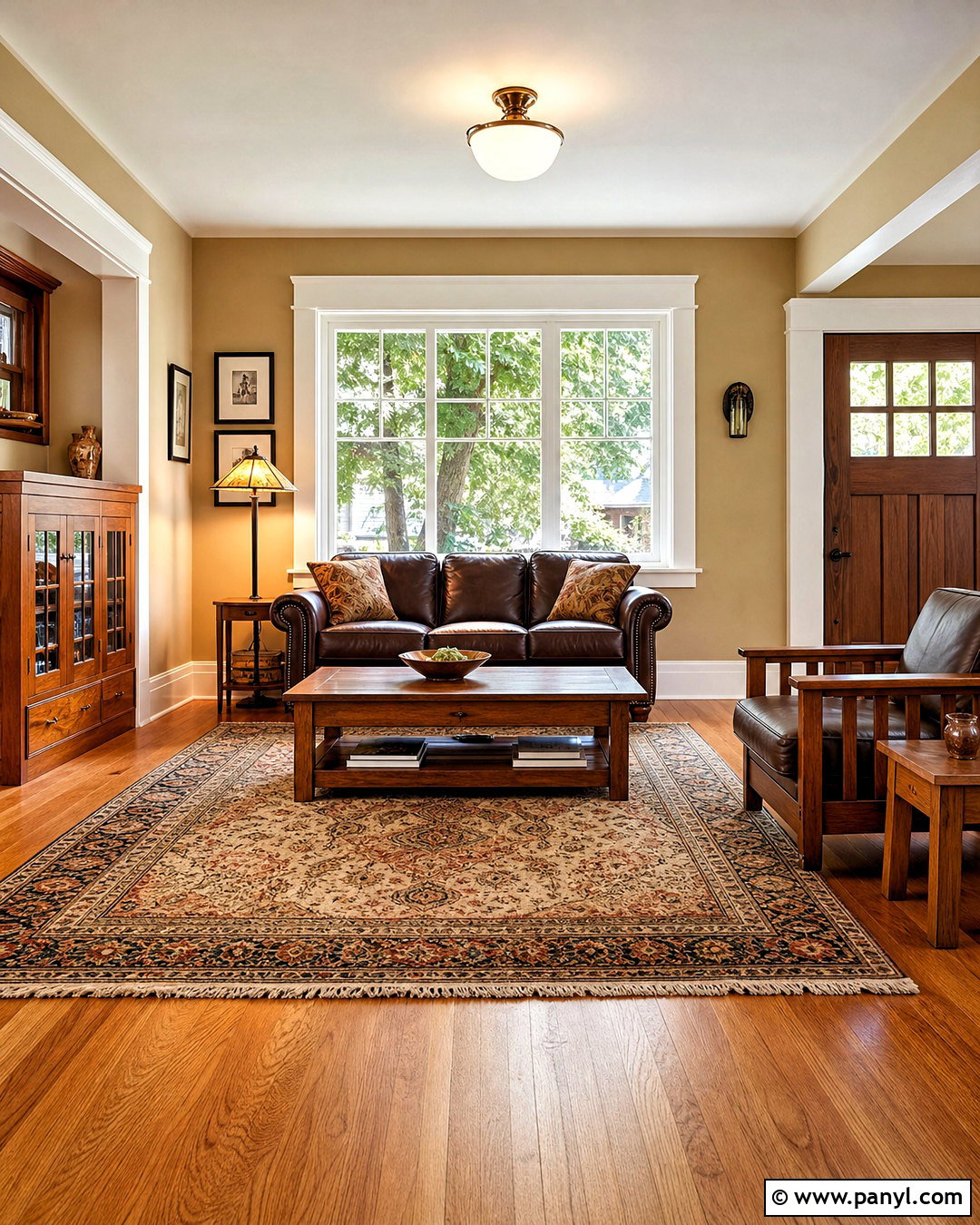
Craftsman window trim gives a living room a solid, handcrafted appearance through broad boards and straightforward construction. Frame the windows with wide painted casing, a substantial top header, a projecting sill, and a simple apron. Continue the look with tall baseboards and similarly proportioned door trim in warm white. Use soft tan walls, medium oak flooring, a brown leather sofa, patterned wool rug, and sturdy wood furniture to reinforce the approachable character. Built-in shelves on one wall can repeat the squared trim lines. Avoid delicate crown molding or highly ornate furniture, which can compete with the strong window frames. Aged bronze lighting and earth-toned textiles complete this practical Craftsman-inspired interior.
6. Modern Flat Interior Trim
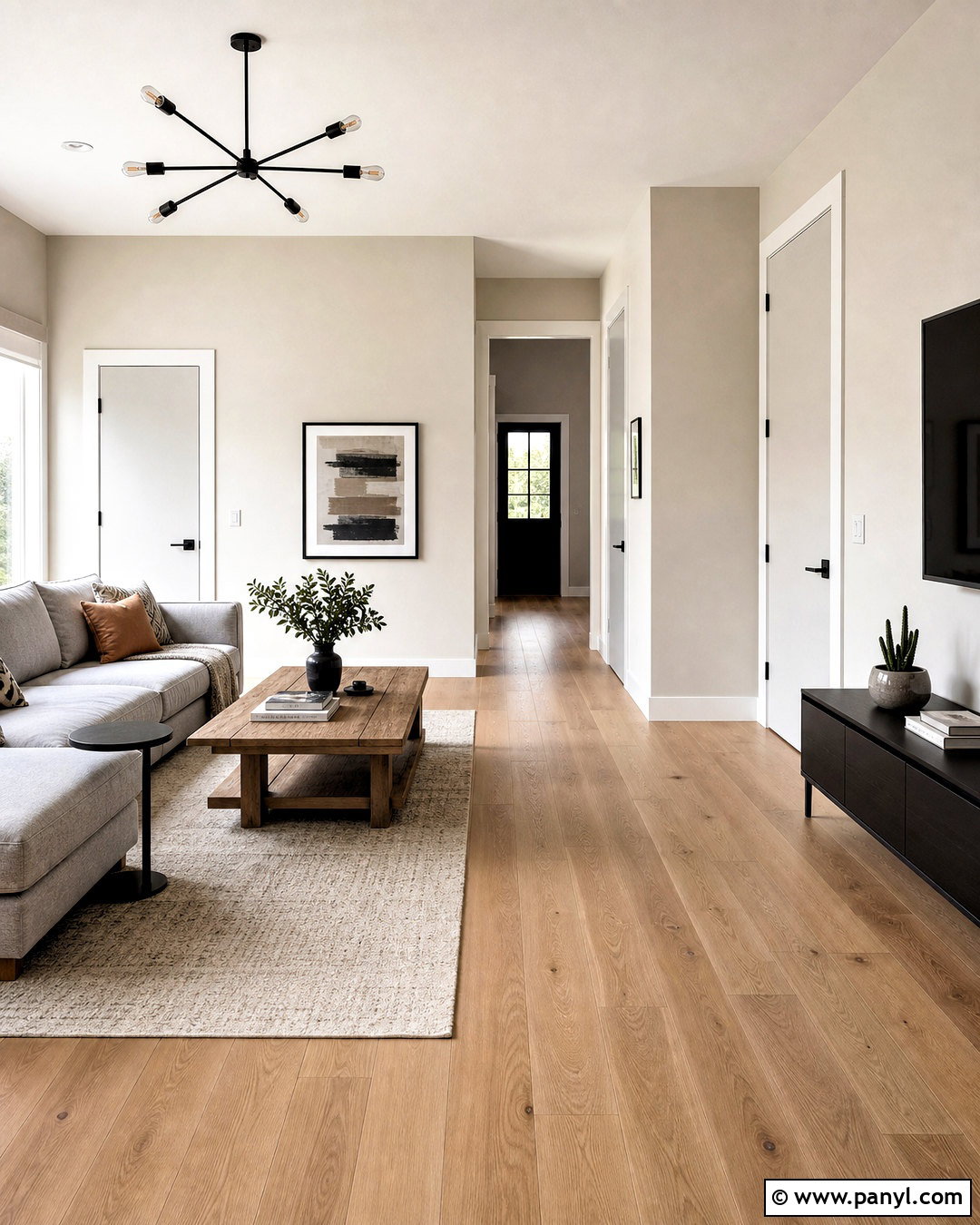
Flat interior trim creates clean edges that suit contemporary homes, renovated ranch houses, and compact spaces. Choose square-edged baseboards and narrow flat casing around doors and windows, all painted a soft warm white. Pair them with pale gray-beige walls, wide-plank oak flooring, and streamlined slab doors. Furnish the room with a low-profile sectional, a simple wood coffee table, an understated rug, and minimal black lighting. Skip ornate crown molding, or use a narrow flat ceiling border for a subtle finished line. Consistent reveals and uncomplicated profiles are important because every joint remains visible in a minimalist design. Limit decorative accessories and use large-scale artwork to maintain the room’s calm, architectural appearance.
7. Tall Baseboard Interior Trim
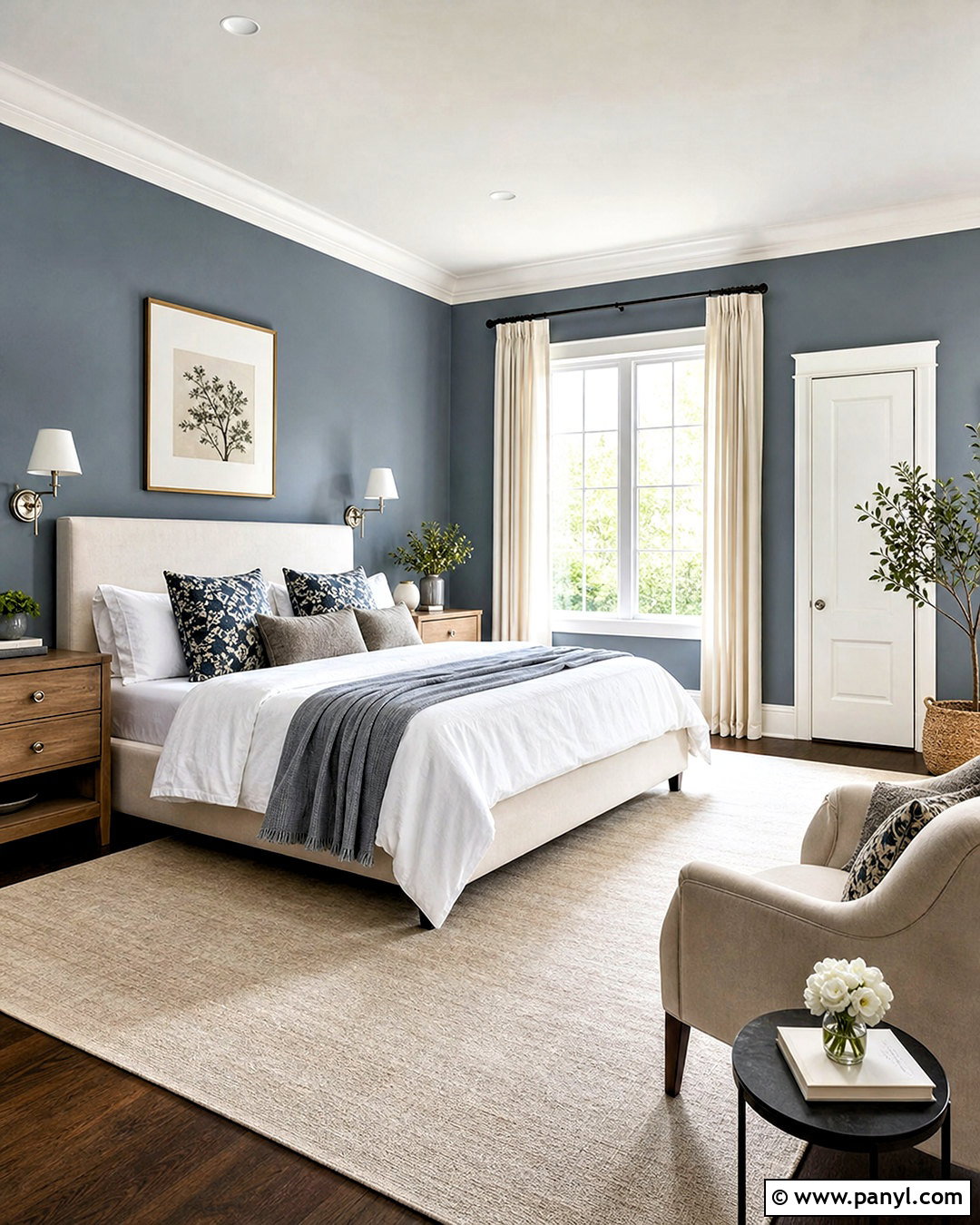
Tall baseboards give an ordinary room greater presence while protecting more of the lower wall. Select a five- to seven-inch board with a flat face and a small cap detail, depending on the ceiling height and existing architecture. Paint the baseboards, window casings, and door trim creamy white against muted blue-gray walls. Complete the bedroom with a linen upholstered bed, oak nightstands, a soft ivory rug, and polished nickel sconces. Full-length curtains hung close to the ceiling help balance the substantial trim below. Keep crown molding restrained so the room does not feel overly framed. This look works especially well in transitional interiors where classic proportions are paired with simple furniture and relaxed, modern textiles.
8. Picture Frame Wall Trim
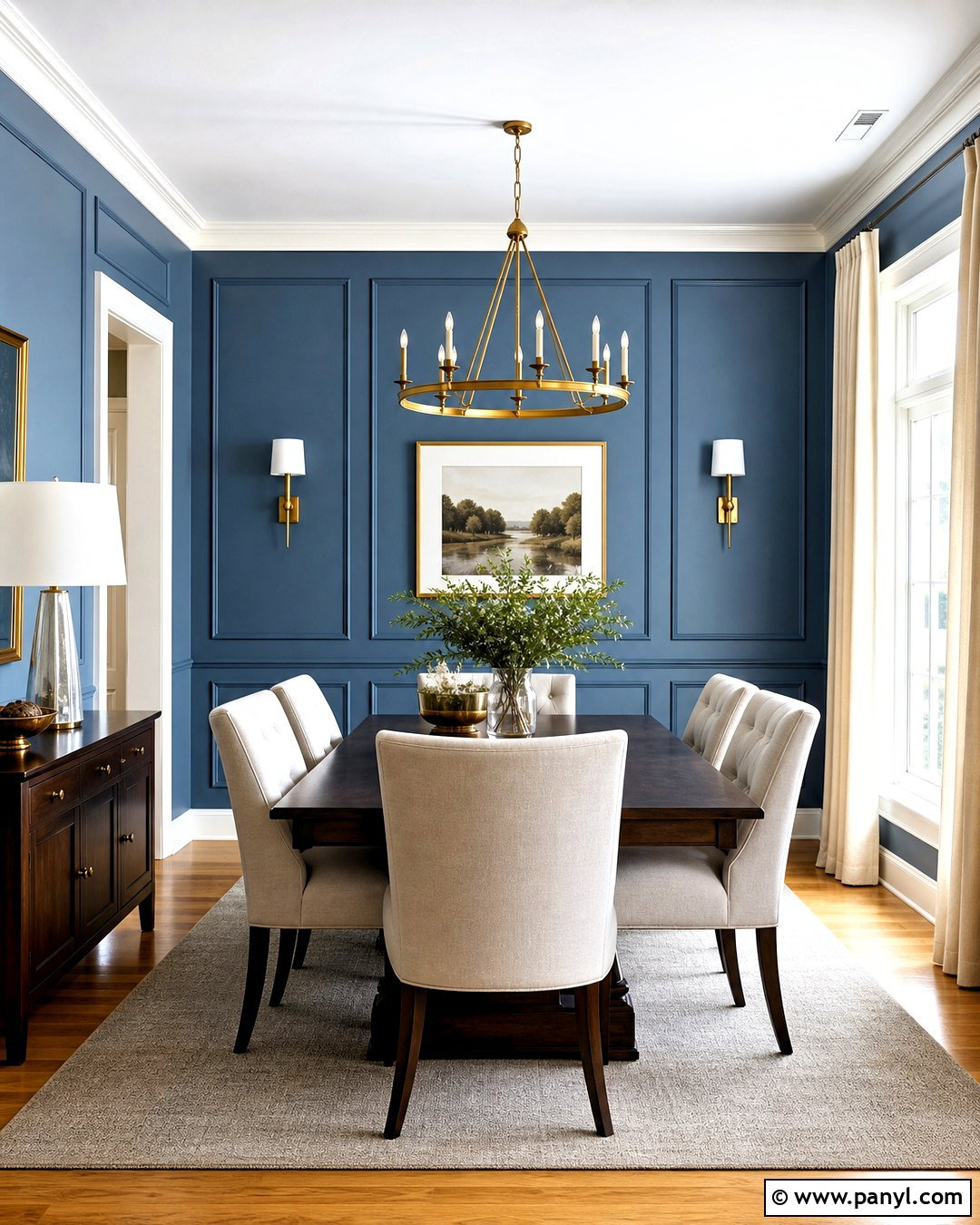
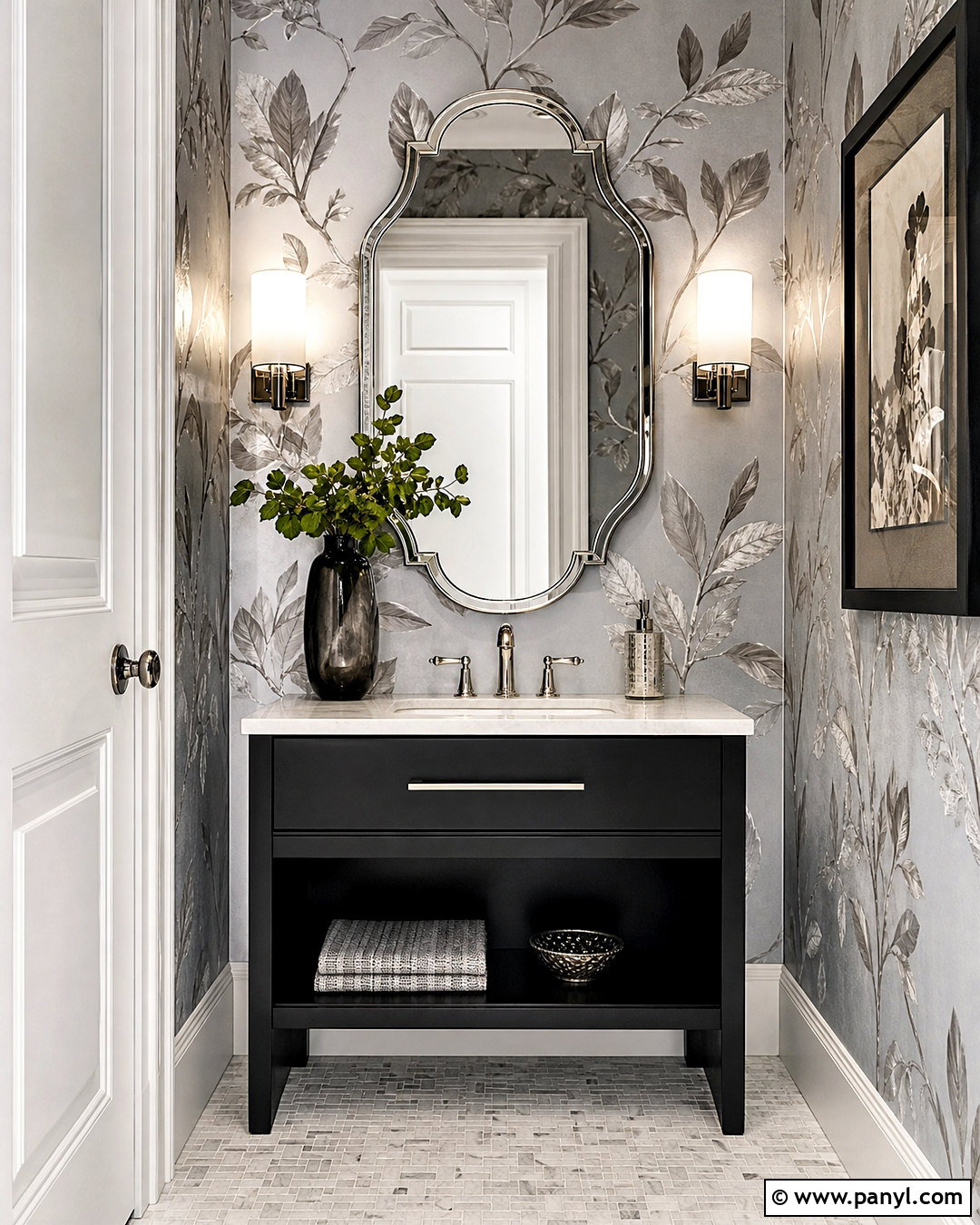
Picture frame wall trim can turn a plain dining room into a polished space without covering every wall in heavy paneling. Install evenly spaced rectangular molding above a simple baseboard, then paint the walls and applied trim the same dusty blue. Add white crown molding and matching white door casings for a crisp upper and outer frame. A dark walnut dining table, cream upholstered chairs, brass chandelier, and warm wood flooring provide contrast. Plan the rectangles around doors, corners, artwork, and furniture rather than forcing identical dimensions everywhere. Large panels usually look calmer than many small boxes. Center a console or framed artwork within the molding so the entire room composition feels balanced and deliberately arranged.
9. Full Height Wall Panel Trim
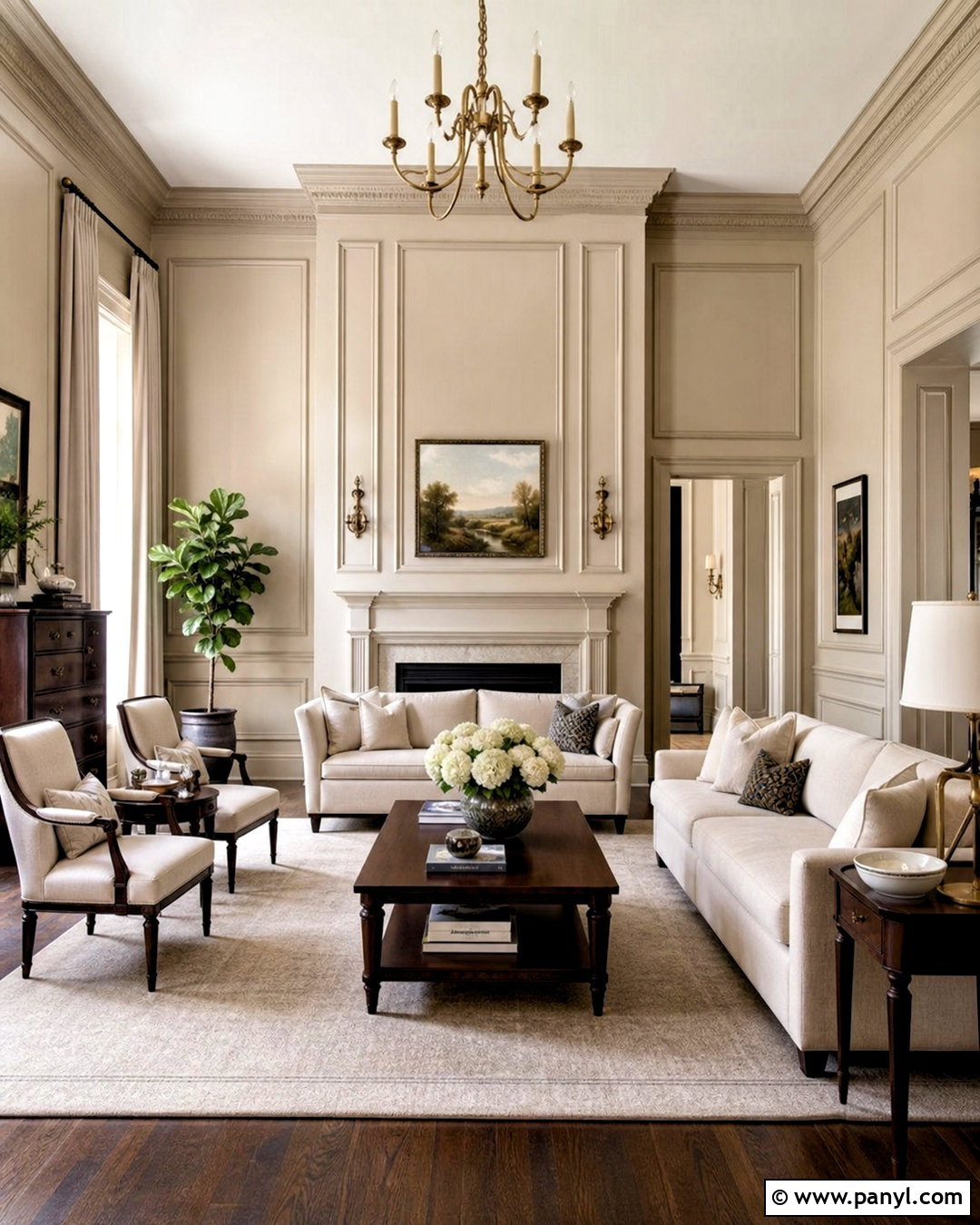
Full-height panel molding creates an elegant living room backdrop by extending architectural detail from baseboard to crown. Use slim rectangular molding to divide the walls into tall, balanced panels, including wider sections behind the sofa and narrower sections near doorways. Paint everything a soft mushroom beige for a tonal finish. Add creamy upholstery, dark wood tables, a light wool rug, linen drapery, and antique brass lighting. Keep artwork limited so the panel pattern remains visible. A matching paneled fireplace surround can anchor the main wall without introducing a competing material. This complete design feels formal but livable because the restrained color and simple furniture prevent the traditional trim from becoming overly elaborate or visually heavy.
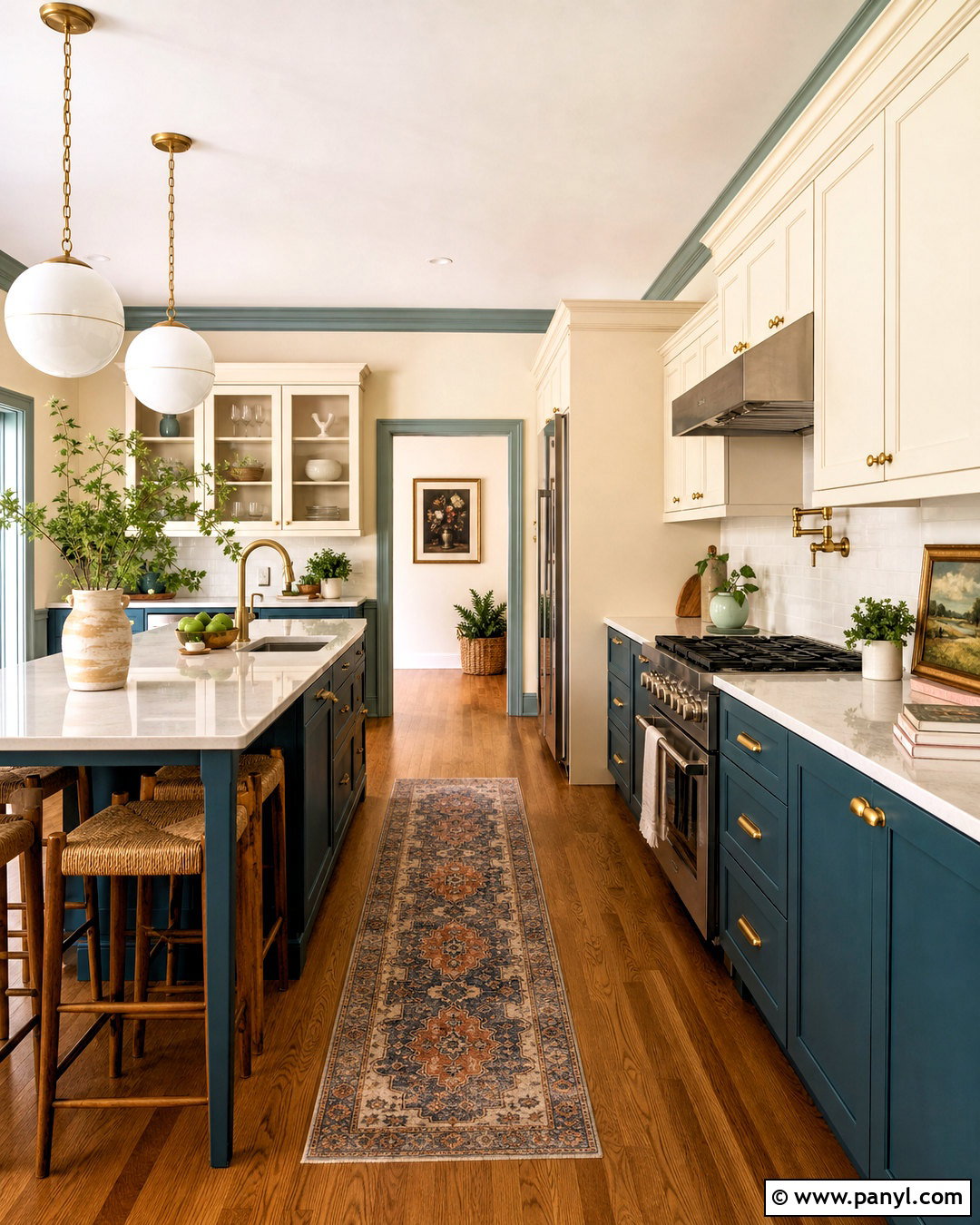
10. Board And Batten Interior Trim
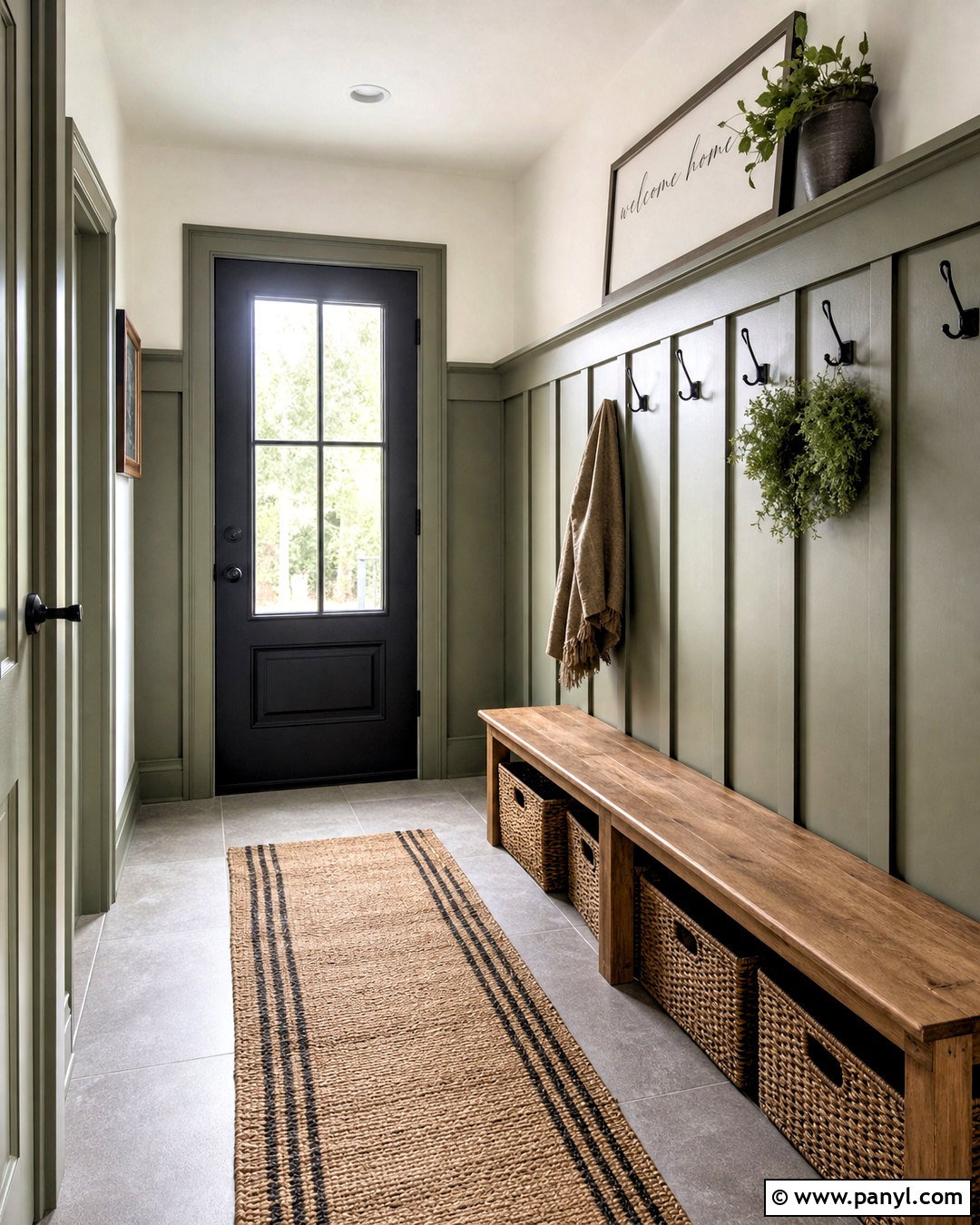
Board and batten trim provides practical wall protection and relaxed architectural detail in an entryway or mudroom. Install vertical battens over a smooth lower wall, finishing the treatment with a sturdy horizontal cap about two-thirds of the way up. Paint the lower trim muted olive green and keep the upper walls warm white. Continue the green on baseboards and door casings for a connected look. Add an oak bench, black hooks, woven baskets, durable stone-look flooring, and a washable runner. Space the battens around switches and outlets whenever possible. The strong vertical lines make the space feel taller, while the darker lower section hides everyday marks. Simple globe lighting keeps the finished entry bright and welcoming.
11. Wainscoting Interior Trim
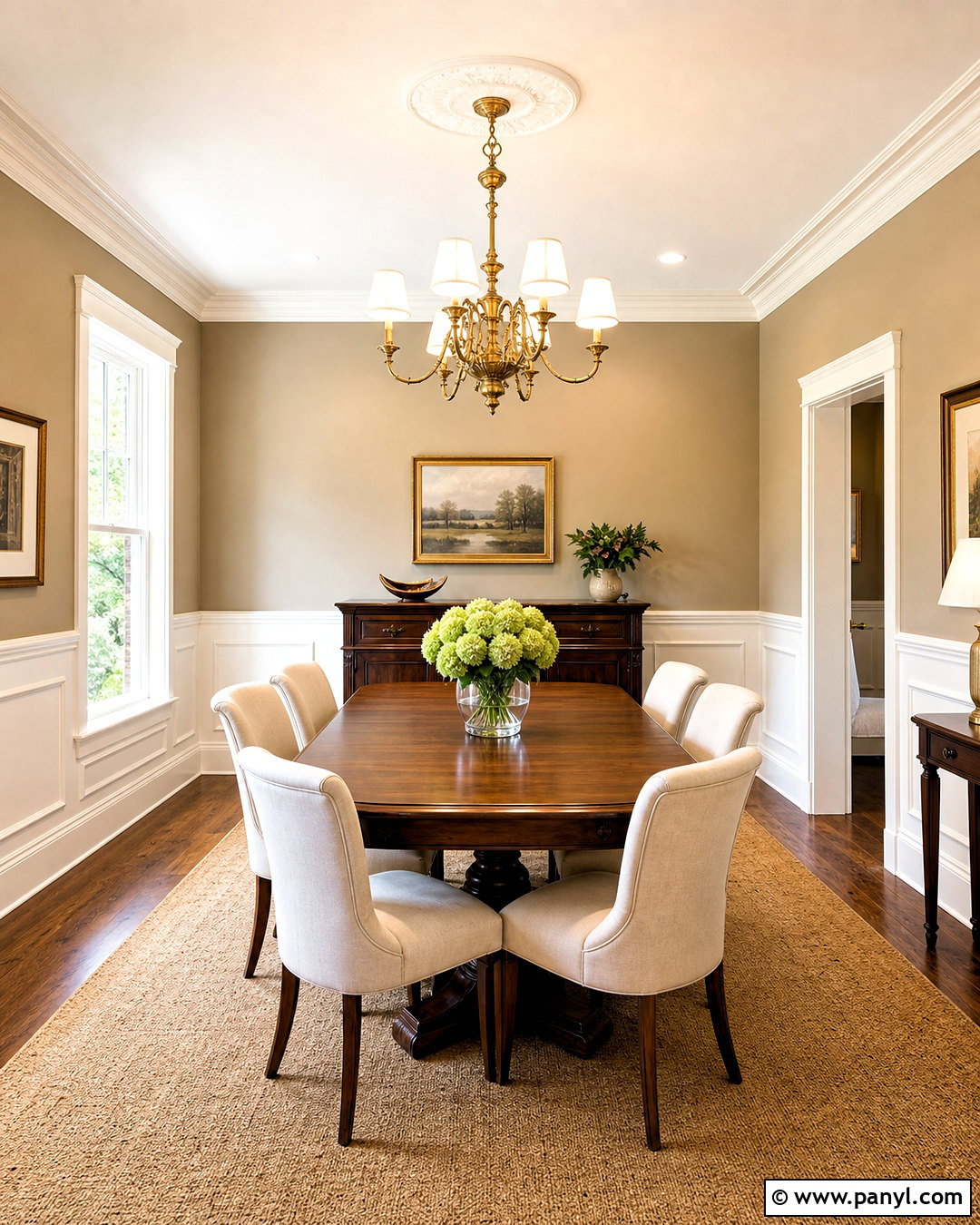
Traditional wainscoting can make a dining room feel established while still supporting relaxed, updated furnishings. Build recessed panels across the lower third of the walls, including a substantial baseboard and gently projecting chair rail. Paint the complete lower section warm white and use a soft clay-beige color above it. Frame windows and doors with matching white casing, then add modest crown molding to finish the ceiling line. A round walnut table, curved upholstered chairs, natural fiber rug, and shaded brass chandelier soften the structured woodwork. Keep panel spacing consistent around the room, adjusting widths gradually at corners. The finished scheme combines durable lower walls with warm color, comfortable furniture, and enough architectural detail to feel special.
12. Fluted Interior Door Trim
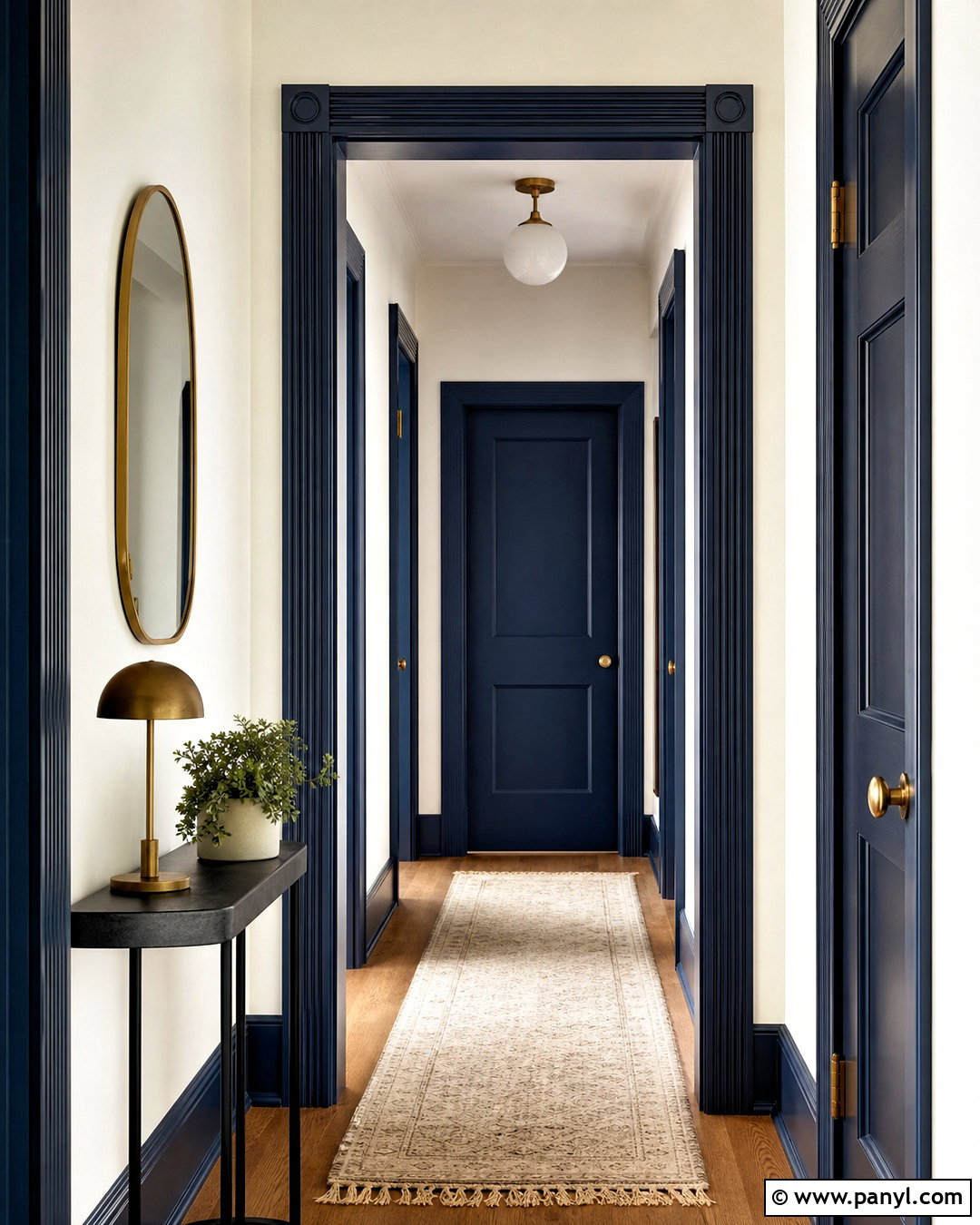
Fluted door trim adds texture and vertical emphasis to a formal opening without covering the whole room in ornament. Use shallow fluted casing on each side of the doorway, finished with simple corner blocks and a modest top header. Paint the trim deep navy blue and repeat the color on the interior doors and nearby baseboards. Warm white walls, honey-toned oak flooring, and a cream runner prevent the hallway from feeling dark. Add aged brass door hardware, a slim wood console, a rounded mirror, and bright ceiling lights. Keep window casings simpler so the fluted doorway remains the focal point. The overall design feels tailored and distinctive while staying manageable for an entry hall or connecting corridor.
13. Arched Doorway Interior Trim
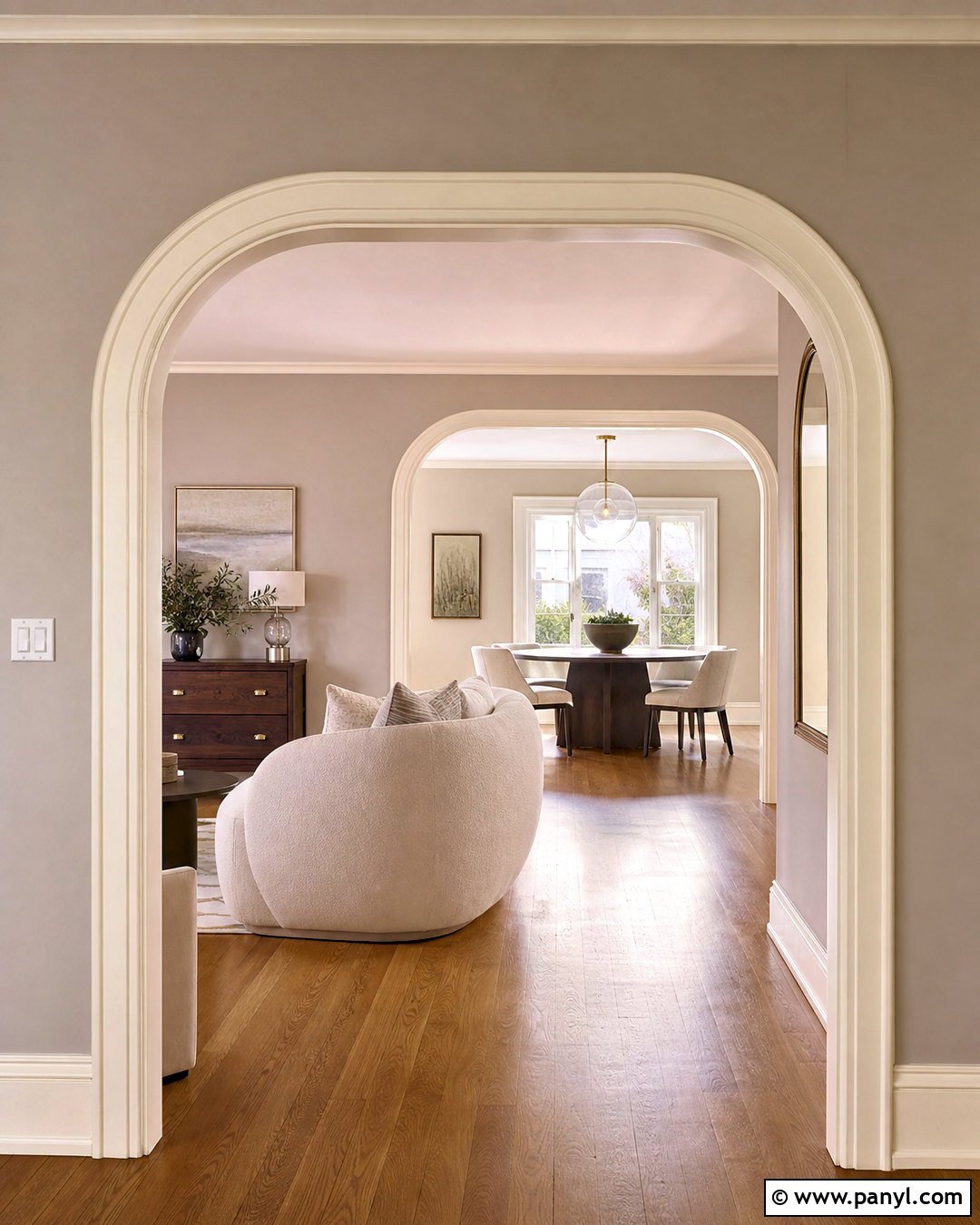
An arched doorway becomes an intentional architectural feature when its casing, wall color, and surrounding furnishings work together. Follow the curved opening with smooth, flexible trim in a broad but simple profile. Paint the arch, baseboards, and nearby window frames a warm ivory against pale taupe walls. In the connected rooms, repeat curved shapes through a rounded sofa, oval coffee table, globe pendant, and softly arched mirror. Medium oak flooring should flow continuously through the opening to strengthen the connection. Avoid complicated corner blocks or ornate molding that interrupts the curve. This complete transitional scheme highlights the doorway while maintaining a gentle, cohesive rhythm across both spaces, making an ordinary passage feel graceful rather than overly formal.
14. Two-Tone Interior Trim
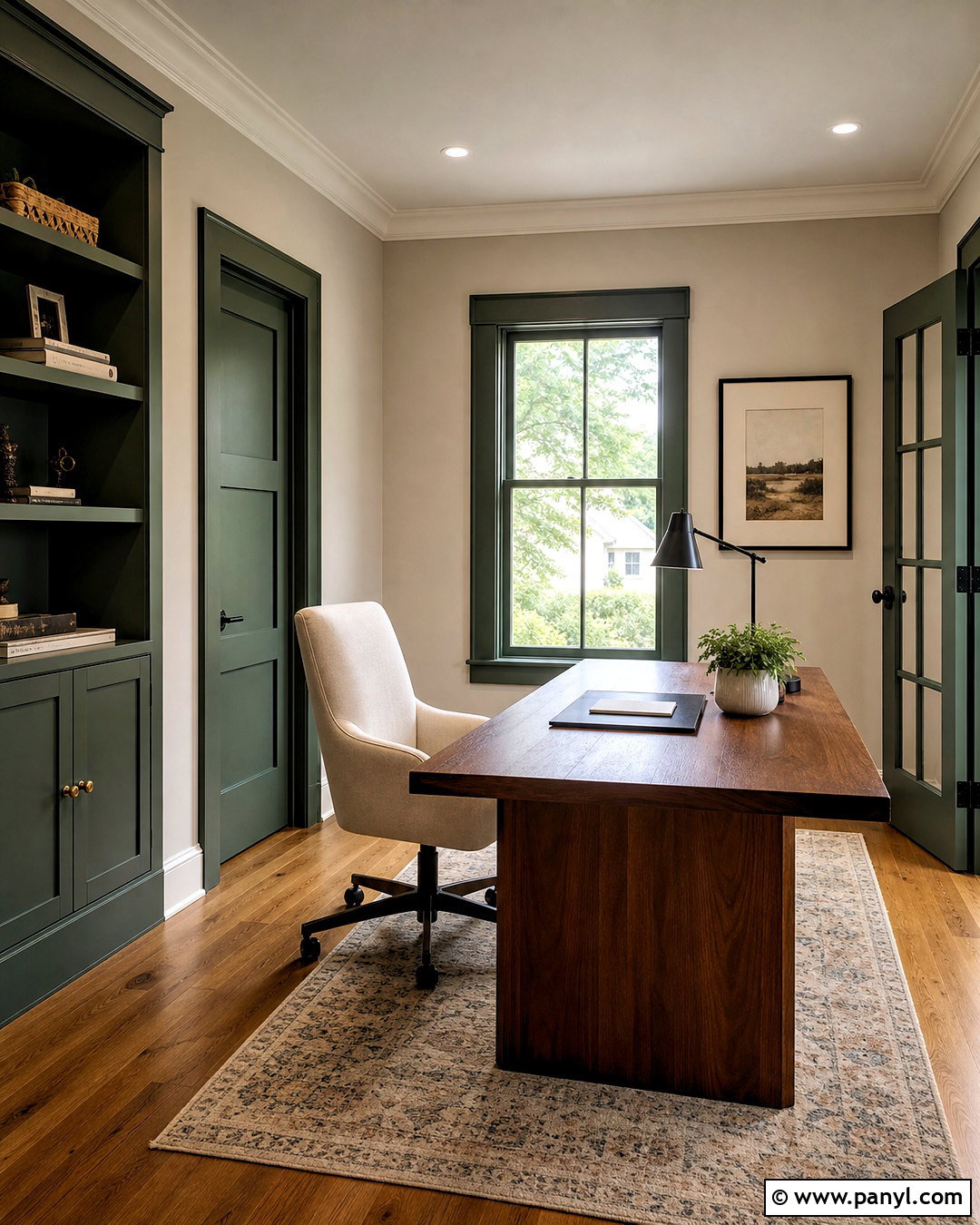
Two-tone trim creates depth when the colors are assigned consistently across the room. Paint baseboards and crown molding creamy white, then use smoky green on window casings, door frames, and interior doors. Set the combination against pale warm-gray walls and natural oak flooring. In a home office, add a walnut desk, oatmeal upholstered chair, green built-in shelves, woven shade, and black task lamp. The darker openings create focal points, while the white horizontal trim keeps the room feeling open. Repeat the smoky green in a rug or artwork rather than introducing several unrelated accent colors. Carefully planned two-tone woodwork looks intentional and layered, especially when door and window trim share the same profile and finish.
15. Contrasting Crown Interior Trim
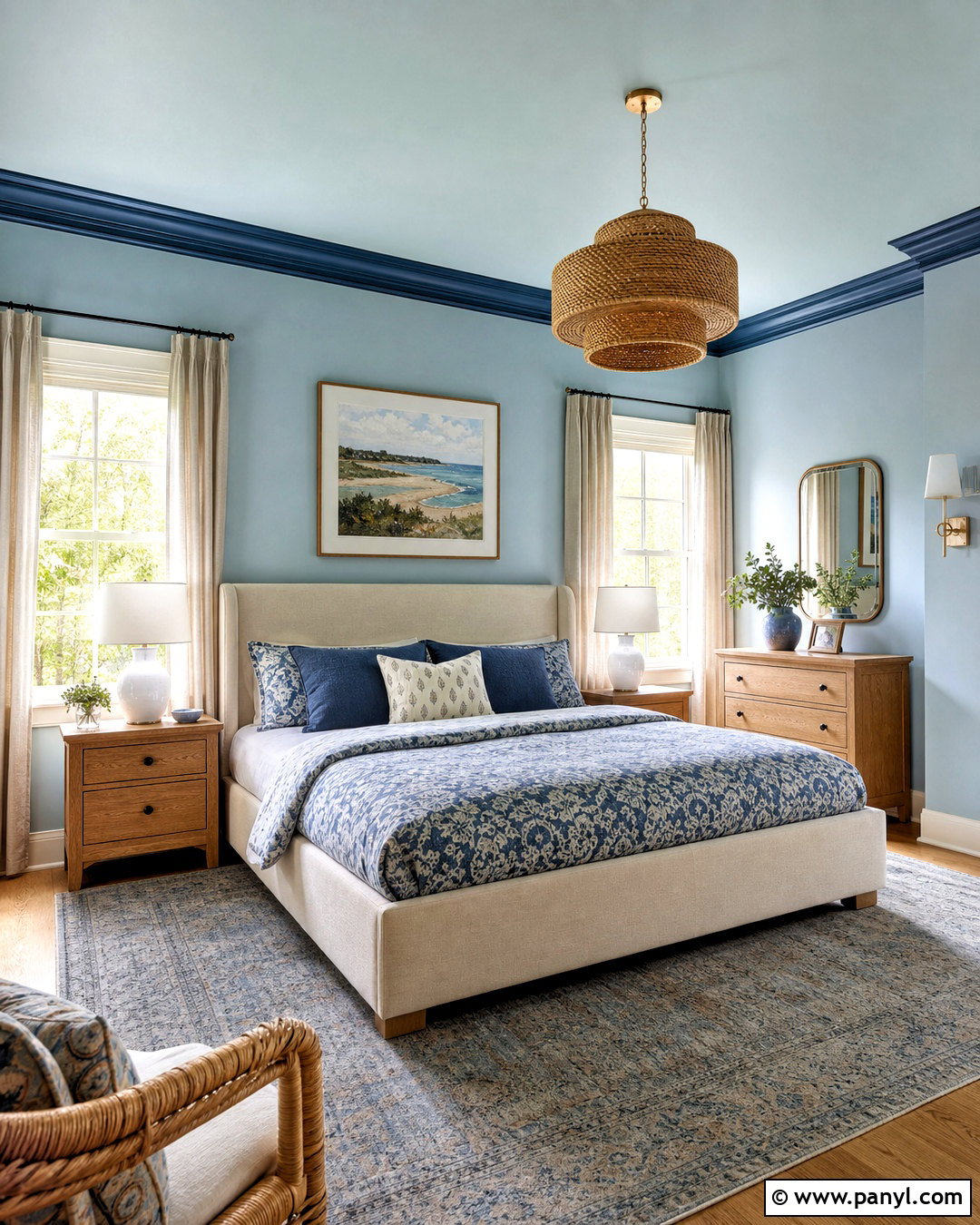
Contrasting crown molding can visually connect the walls and ceiling while adding color near the top of a room. Paint the walls soft blue, the ceiling pale sky blue, and the crown molding a deeper slate blue. Keep baseboards, windows, and door casings warm white so the darker crown remains a focused ceiling detail. Complete the bedroom with an ivory upholstered bed, blue patterned bedding, light oak nightstands, and white linen curtains. A woven pendant and natural rug prevent the palette from becoming overly cool. Choose a structured crown profile rather than a highly decorative one. This balanced scheme draws attention upward, gives the ceiling greater presence, and introduces color without surrounding the entire room in a dark shade.
16. Farmhouse Interior Trim
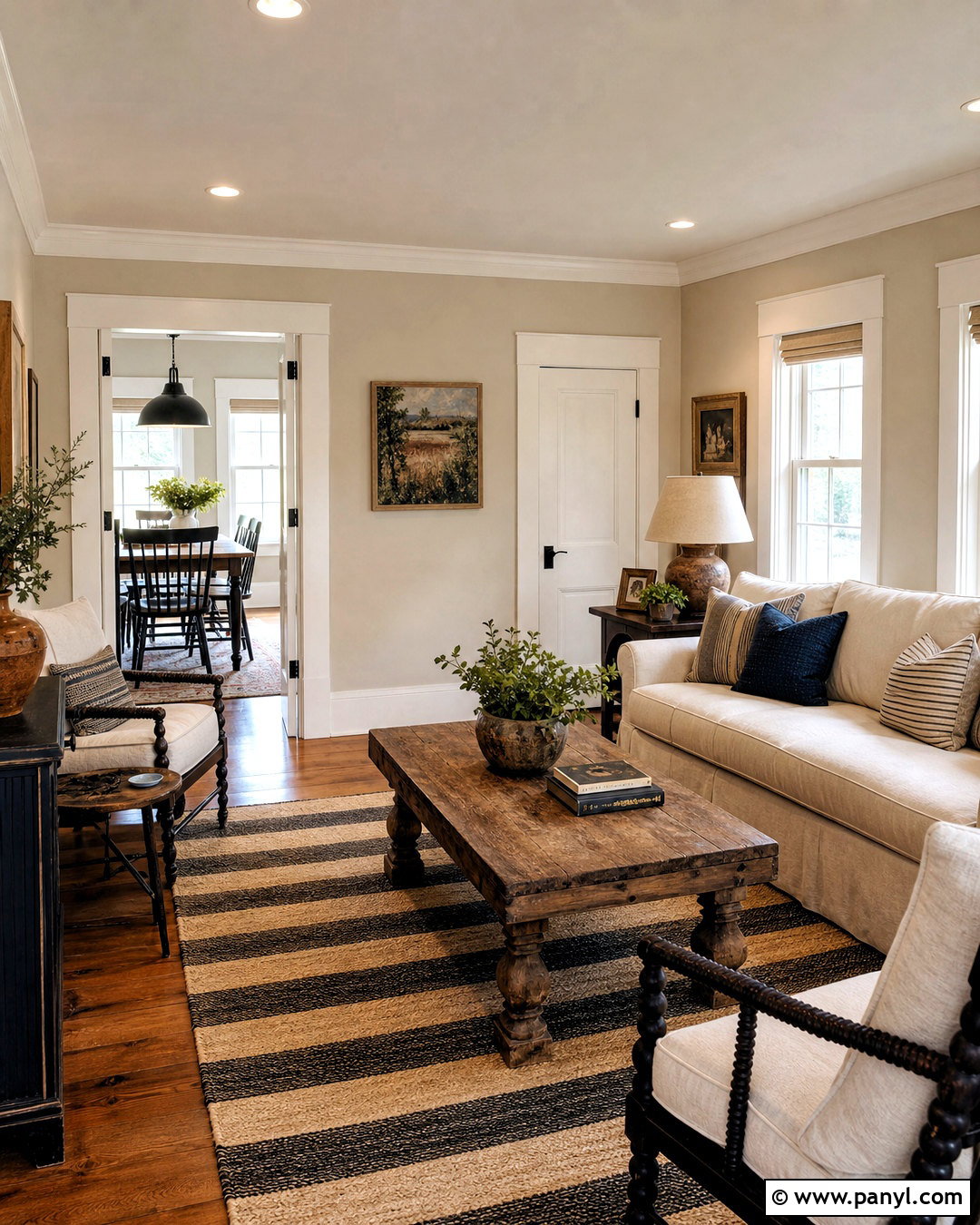
Farmhouse interior trim works best when broad, simple boards are paired with natural textures rather than excessive decorative signs. Use chunky flat window and door casings, tall baseboards, and a plain header detail, all painted warm white. Cover the walls in a pale greige and add medium brown wood flooring for an aged, grounded base. A slipcovered cream sofa, spindle chairs, reclaimed wood coffee table, striped rug, and black iron lighting complete the living room. Choose woven shades or lightweight linen curtains that leave the substantial window trim visible. Black door hardware adds practical contrast. The finished look should feel casual and functional, with clean trim lines balancing rustic wood, comfortable upholstery, and everyday accessories.
17. Traditional Layered Interior Trim
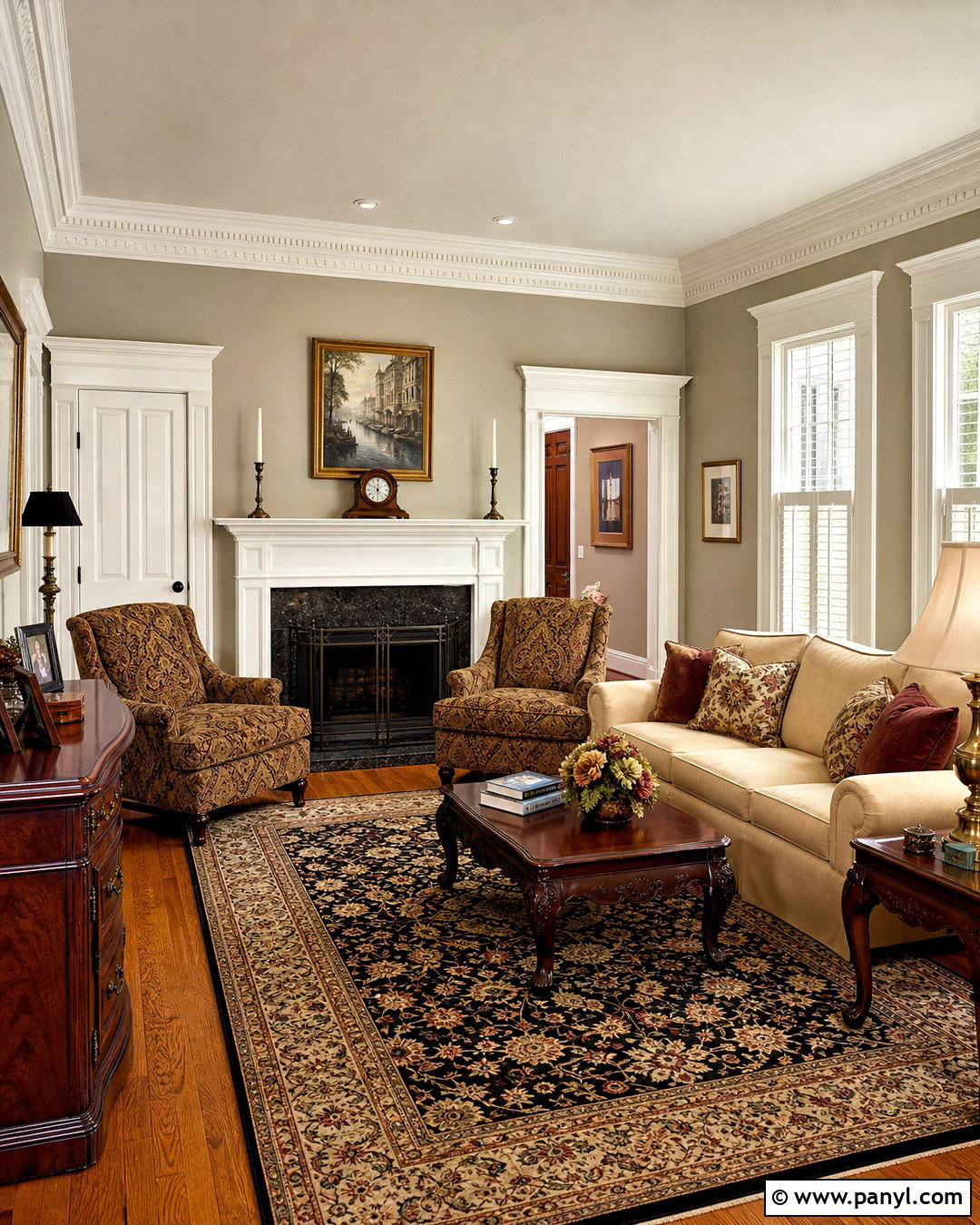
Layered molding gives a formal living room the depth needed to support classic furniture and taller ceilings. Combine substantial baseboards, detailed window casings with backbands, paneled door surrounds, and proportionate crown molding. Paint all woodwork soft ivory and use muted taupe walls for gentle contrast. Arrange a camelback sofa, two patterned armchairs, dark mahogany tables, a traditional rug, and shaded brass lamps around a central fireplace. Full drapery panels should frame the windows without hiding their casings. Repeat molding details on the fireplace mantel so every architectural element feels related. Restraint is still important: choose one trim family and use it consistently rather than mixing several unrelated patterns across the same room.
18. Mid-Century Wood Interior Trim
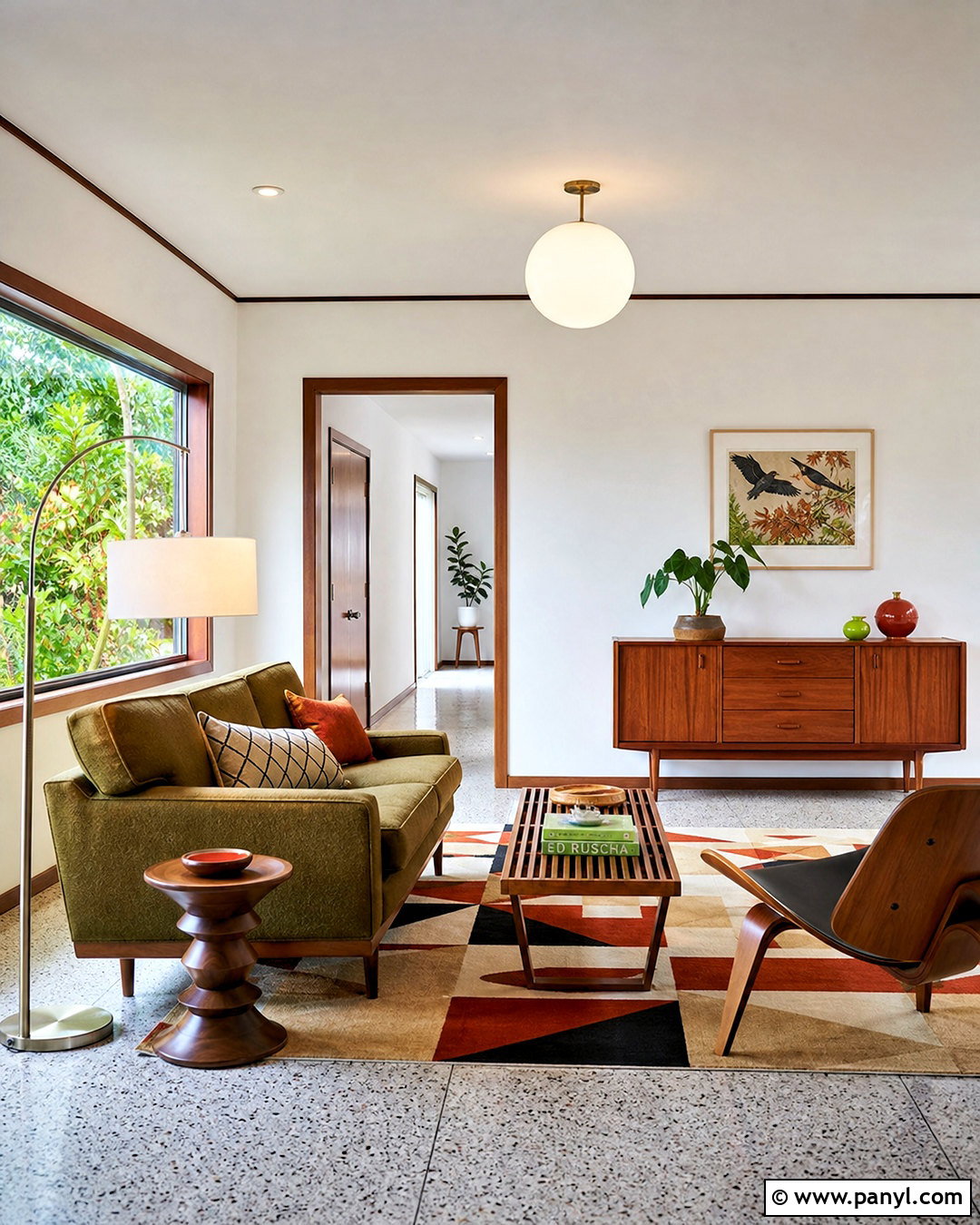
Slim stained wood trim complements a mid-century room by emphasizing clean geometry and warm natural materials. Frame large windows and simple slab doors with narrow walnut casing, then use matching low-profile baseboards. Pair the woodwork with warm white walls, a light ceiling, and honey oak or terrazzo flooring. Furnish the room with a low olive sofa, teak credenza, sculptural lounge chair, geometric rug, and globe lighting. Leave crown molding out so the wall-to-ceiling transition remains crisp. Window coverings should be minimal, such as woven shades or simple off-white panels. The trim should feel integrated rather than decorative, repeating the warm wood notes found in furniture while allowing the windows and horizontal room proportions to remain prominent.
19. Bathroom Interior Trim
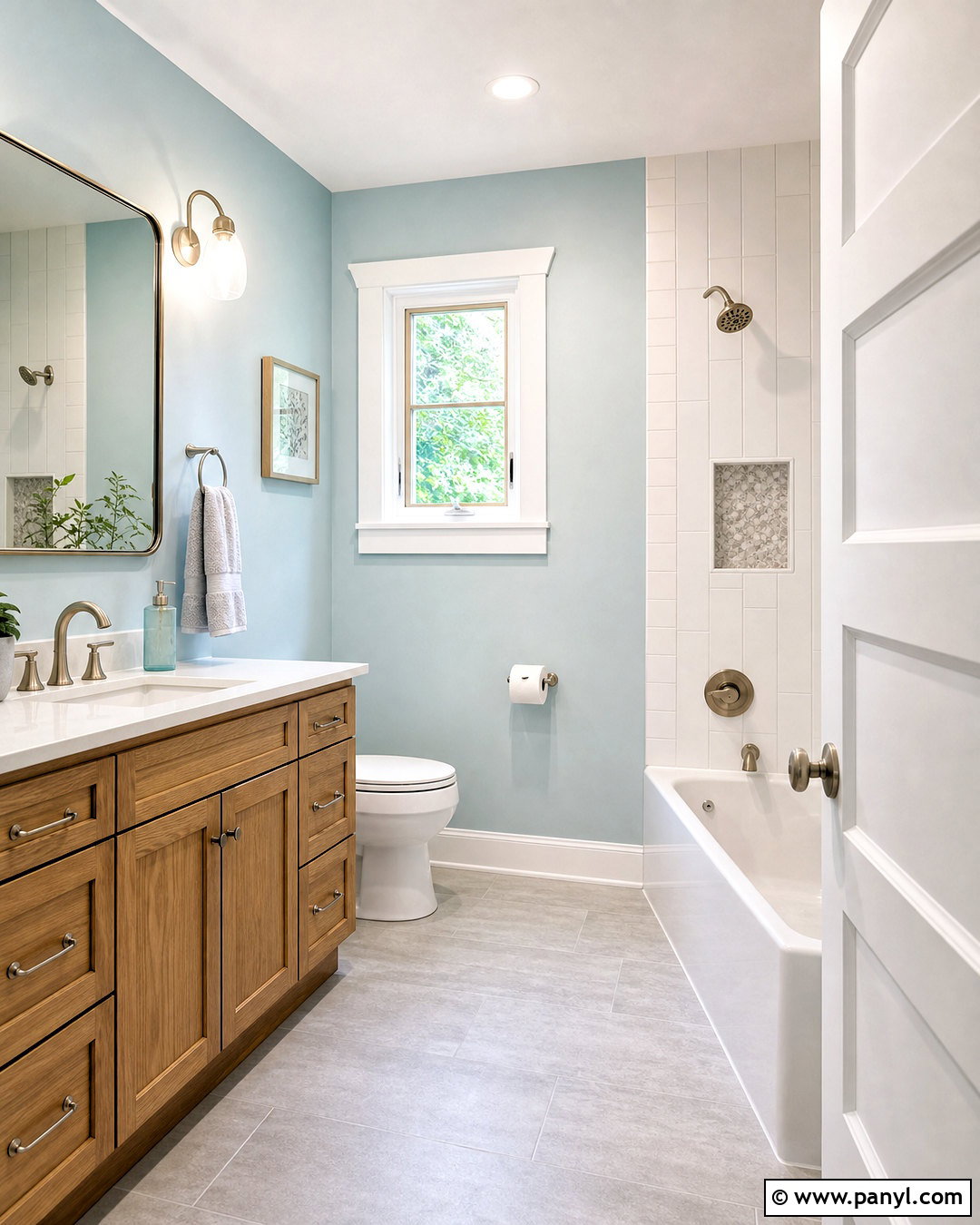
Bathroom trim needs a coordinated appearance and materials suited to frequent moisture. Use smooth moisture-resistant baseboards, simple door casing, and compact window trim painted crisp white in a durable finish. Pair the trim with pale blue-green walls, white vertical tile around the tub, light gray porcelain flooring, and a medium oak vanity. Add brushed nickel fixtures, a framed mirror, white towels, and a washable striped runner. Avoid intricate profiles with deep grooves that collect dust and condensation. Where possible, keep wood trim away from direct shower spray and seal edges carefully. The complete bathroom should feel bright, fresh, and easy to maintain, with consistent white borders connecting the tile, painted walls, window, and doorway.
20. Color-Drenched Interior Trim
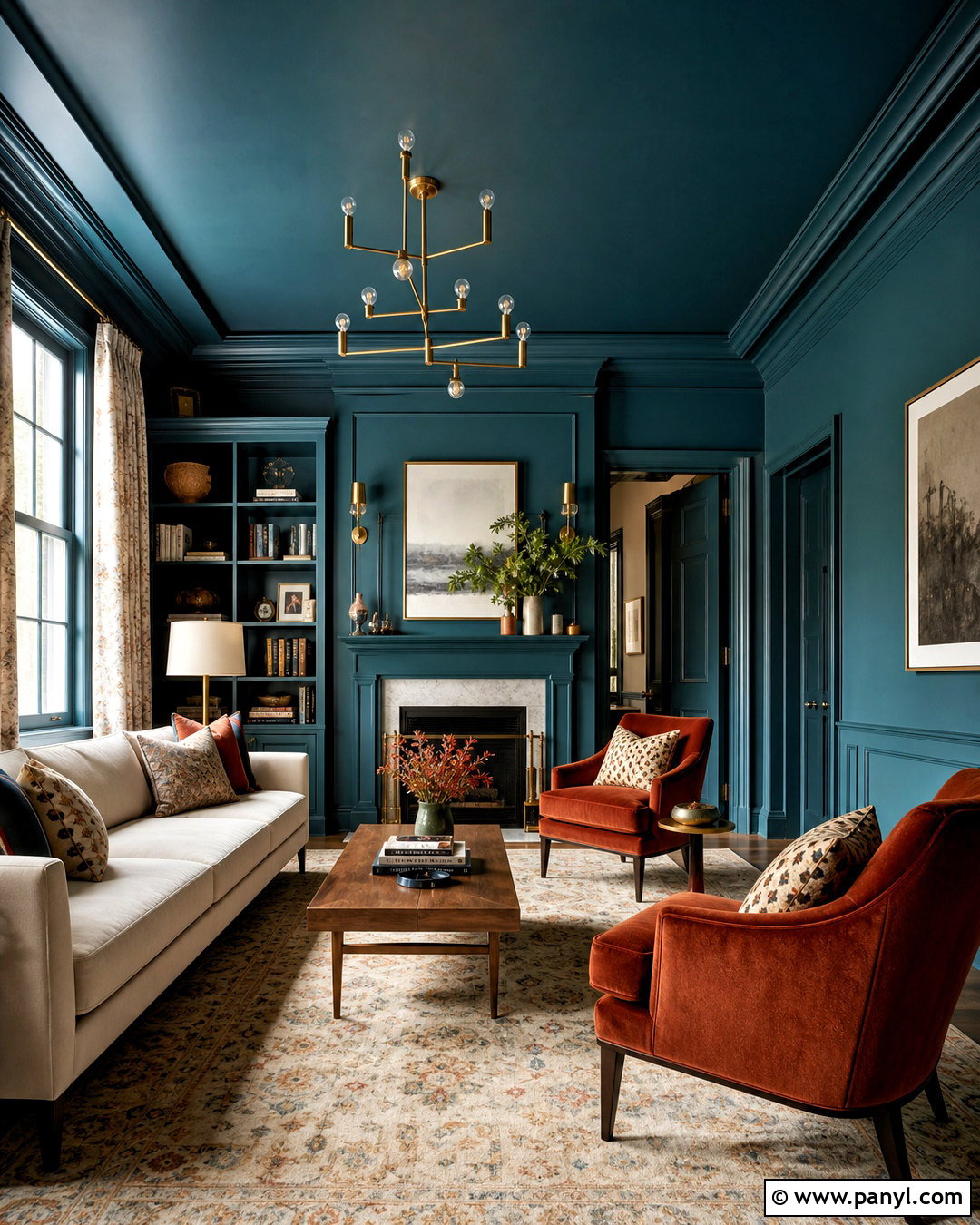
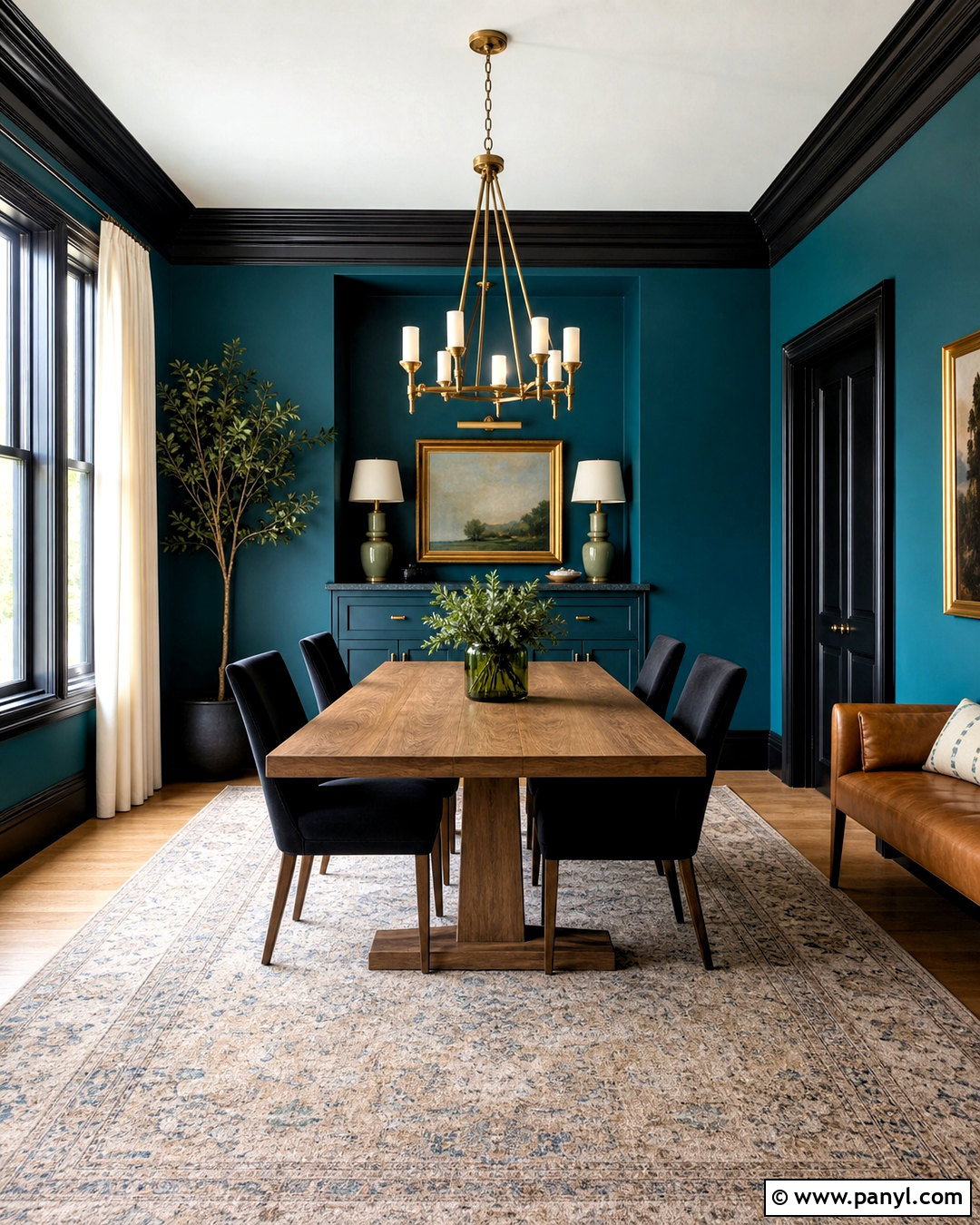
Color-drenched trim produces a bold yet cohesive room by wrapping nearly every architectural surface in one carefully selected shade. Paint the walls, baseboards, window casings, crown molding, doors, and ceiling a rich teal green, using different sheens to reveal the details. Balance the saturated envelope with an ivory sofa, rust-colored chairs, walnut tables, a pale patterned rug, and brushed brass lighting. Keep curtains close to the wall color so the windows do not appear fragmented. Large artwork with light backgrounds can provide breathing room without weakening the effect. This complete living room scheme works because the furniture and trim share a controlled palette. Bright natural light also helps the rich color appear vibrant instead of heavy.
Conclusion:
Successful interior trim should connect the architecture, color palette, flooring, furniture, and purpose of each room. Start by deciding whether the trim should blend into the walls, create contrast, or showcase natural wood. Then select profiles that suit the home, from clean flat boards to layered traditional molding. Consistency matters, especially across connected rooms, doorways, windows, and baseboards. Scale is equally important because oversized profiles can crowd a small room, while narrow trim may disappear in a tall space. Test colors and sample profiles before making a whole-house commitment. With thoughtful planning, these 20 interior trim ideas can add structure, character, and a polished sense of completion to any home.

Related Ideas and Inspiration:
Leave a Reply