
Fresh paint can reshape a room without changing its footprint, but the best results come from treating color as part of a complete design. When you paint interior walls, consider the flooring, furniture, trim, lighting, textiles, and adjoining spaces before choosing a shade. Warm earth tones, botanical greens, powder blues, and immersive color-drenched rooms are especially relevant in 2026. Paint sheen matters too. Matte finishes soften imperfect surfaces, while eggshell and satin options provide greater durability in busy areas. () The looks below range from light neutrals to rich, dramatic colors, with practical combinations for bedrooms, kitchens, living areas, and smaller spaces. Use these complete looks when you are ready to paint interior walls.

1. Warm White Living Room Walls
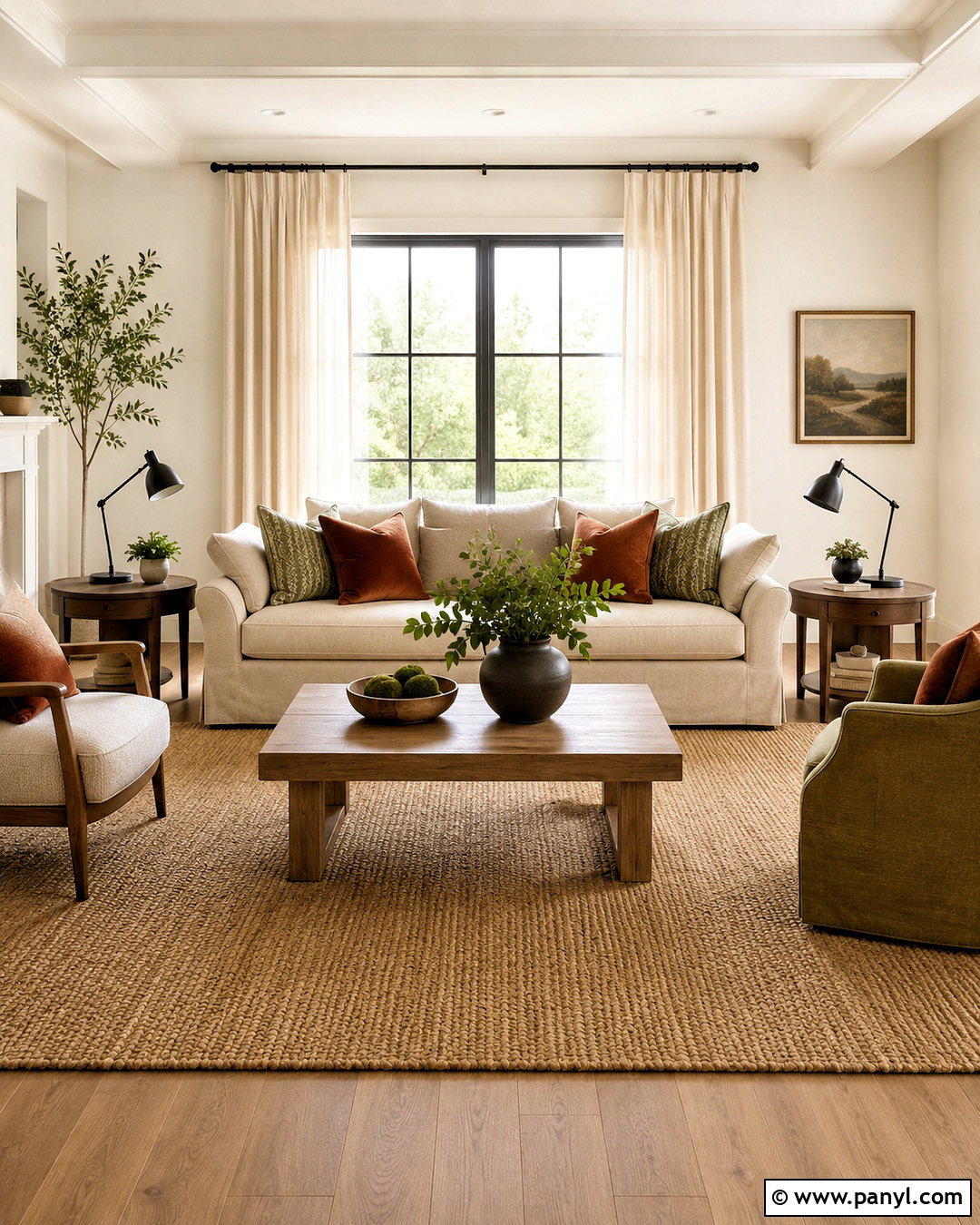
Warm white walls create a bright living room without the cold feeling that can come from stark white paint. Choose a creamy white with subtle beige or yellow undertones, then repeat that warmth through an oatmeal sofa, natural oak coffee table, and woven jute rug. Linen curtains should closely match the walls so the windows feel taller and the room appears more open. Add contrast with black metal lamps, walnut side tables, and several rust or olive pillows. Use an eggshell finish for walls and a soft satin finish for matching white trim. Before committing, test large painted samples beside the flooring during morning and evening light. The finished room should feel relaxed, layered, and welcoming rather than empty or overly neutral.
2. Soft Greige Open Plan Walls
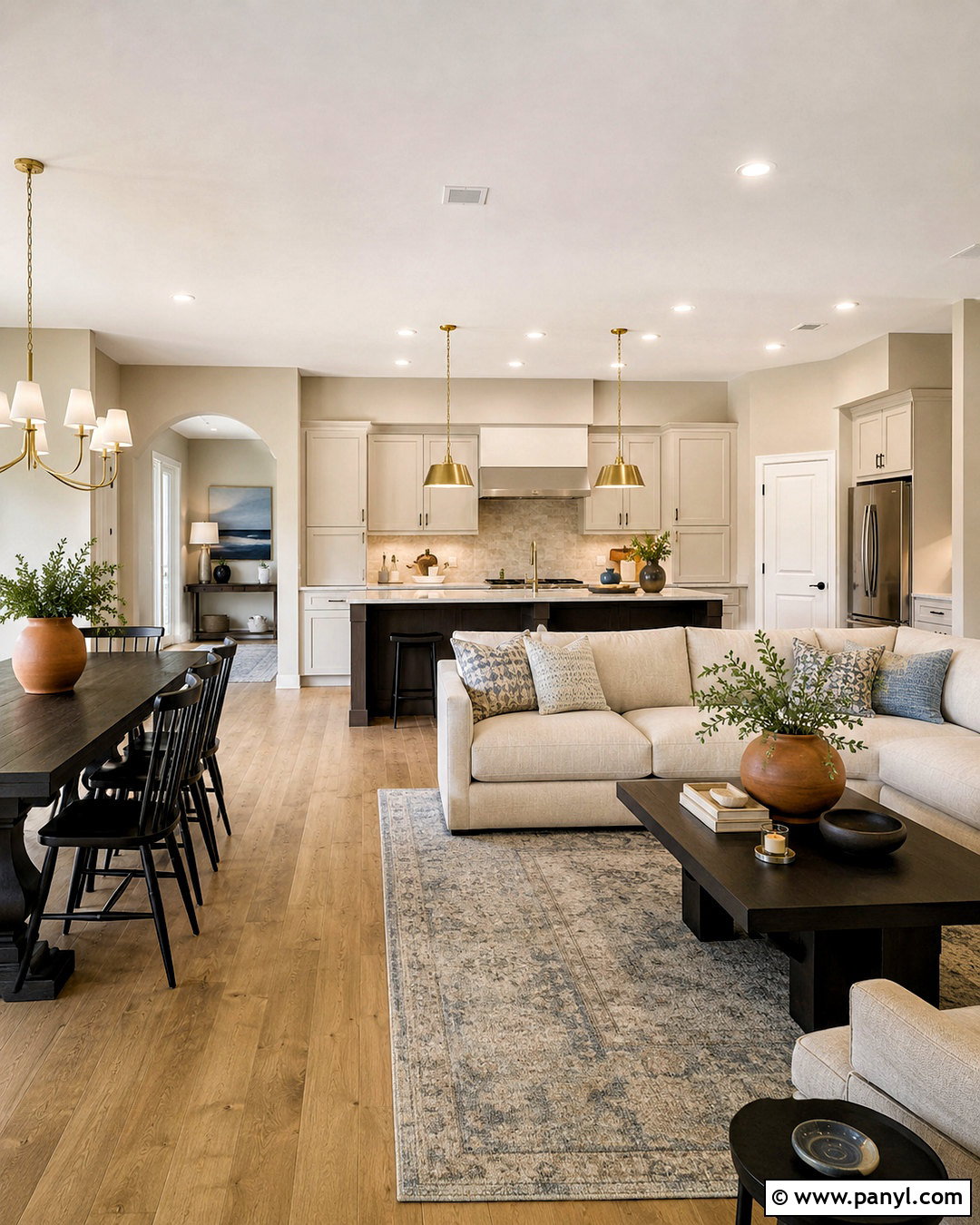
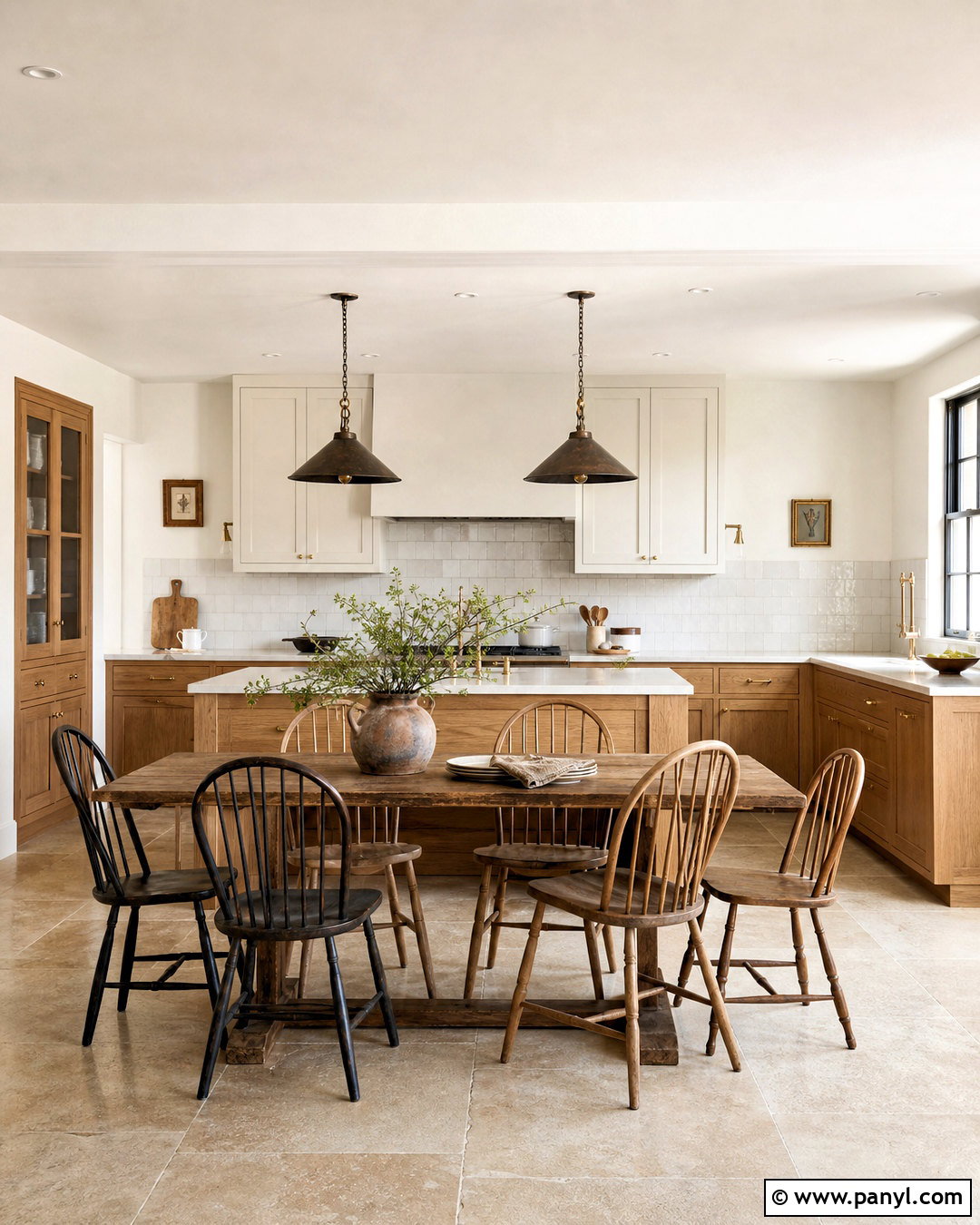
Soft greige provides a continuous backdrop that can connect a living room, dining area, and kitchen without making the open layout look flat. Select a balanced shade that sits between warm beige and light gray. Pair it with medium oak floors, an ivory sectional, black dining chairs, and off-white kitchen cabinets. Terracotta pottery, muted blue artwork, and aged brass lighting will keep the neutral palette interesting. Use one wall color throughout, but define each area with rugs, pendant lights, and furniture placement. An eggshell finish offers a gentle glow and is easier to clean than flat paint in busy shared spaces. Paint the baseboards a warm white to create quiet contrast while maintaining a smooth visual transition between every zone.
3. Sage Green Bedroom Walls
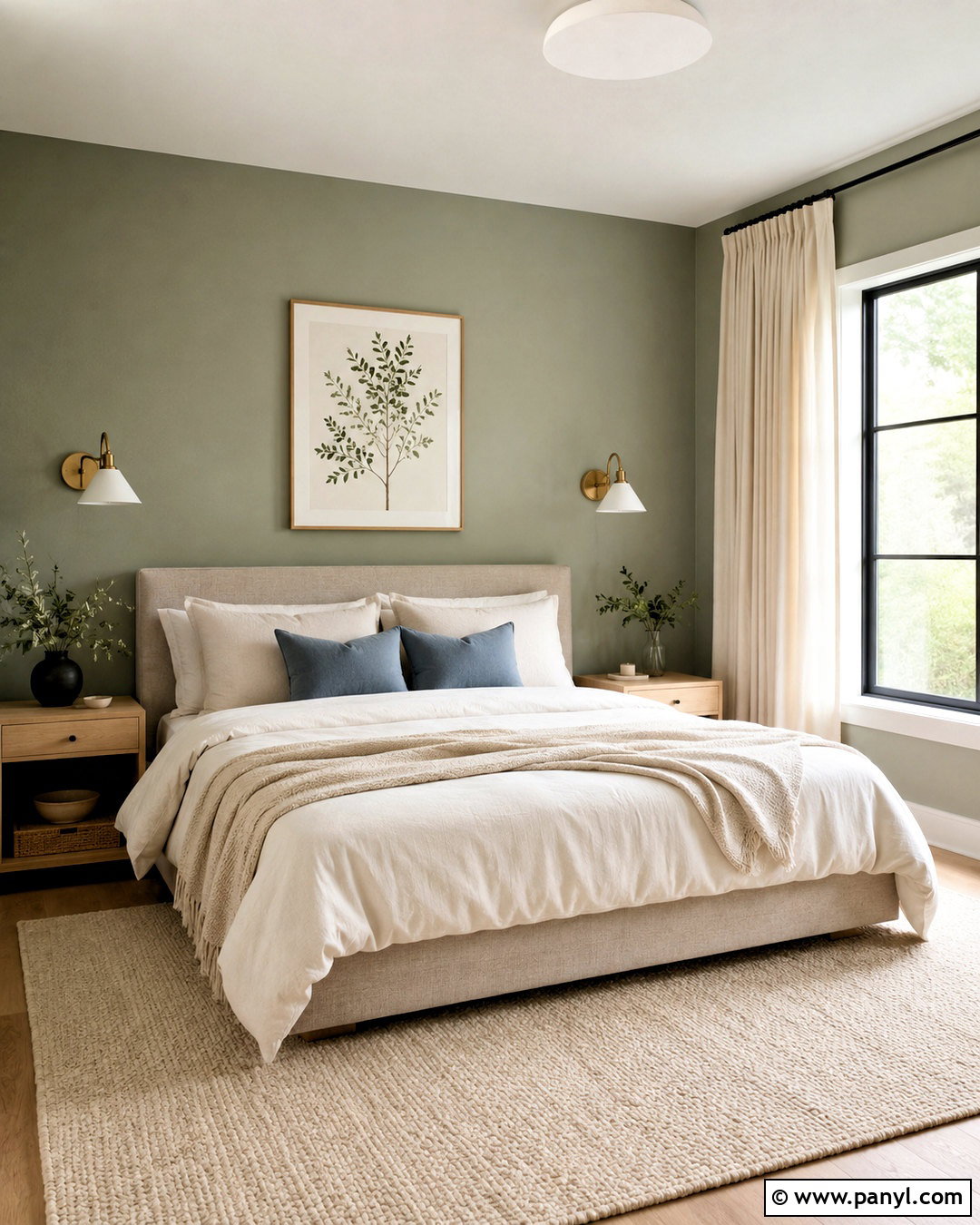
Imagine waking up in a bedroom surrounded by soft, natural color. Muted sage green walls work beautifully with pale oak furniture, warm white bedding, and beige wool carpet or light hardwood flooring. Choose a sage with gray undertones so the room remains restful rather than overly bright. Add a flax linen headboard, cream curtains, and small accents of dusty blue or muted rust. Brushed brass sconces bring warmth without overwhelming the gentle palette. Paint the ceiling and trim a creamy white for a crisp but comfortable frame. A washable matte finish gives the walls a velvety appearance and helps soften minor surface flaws. Keep decorative objects limited, using botanical artwork and one substantial plant to reinforce the calm, nature-inspired design.
4. Deep Olive Dining Room Walls
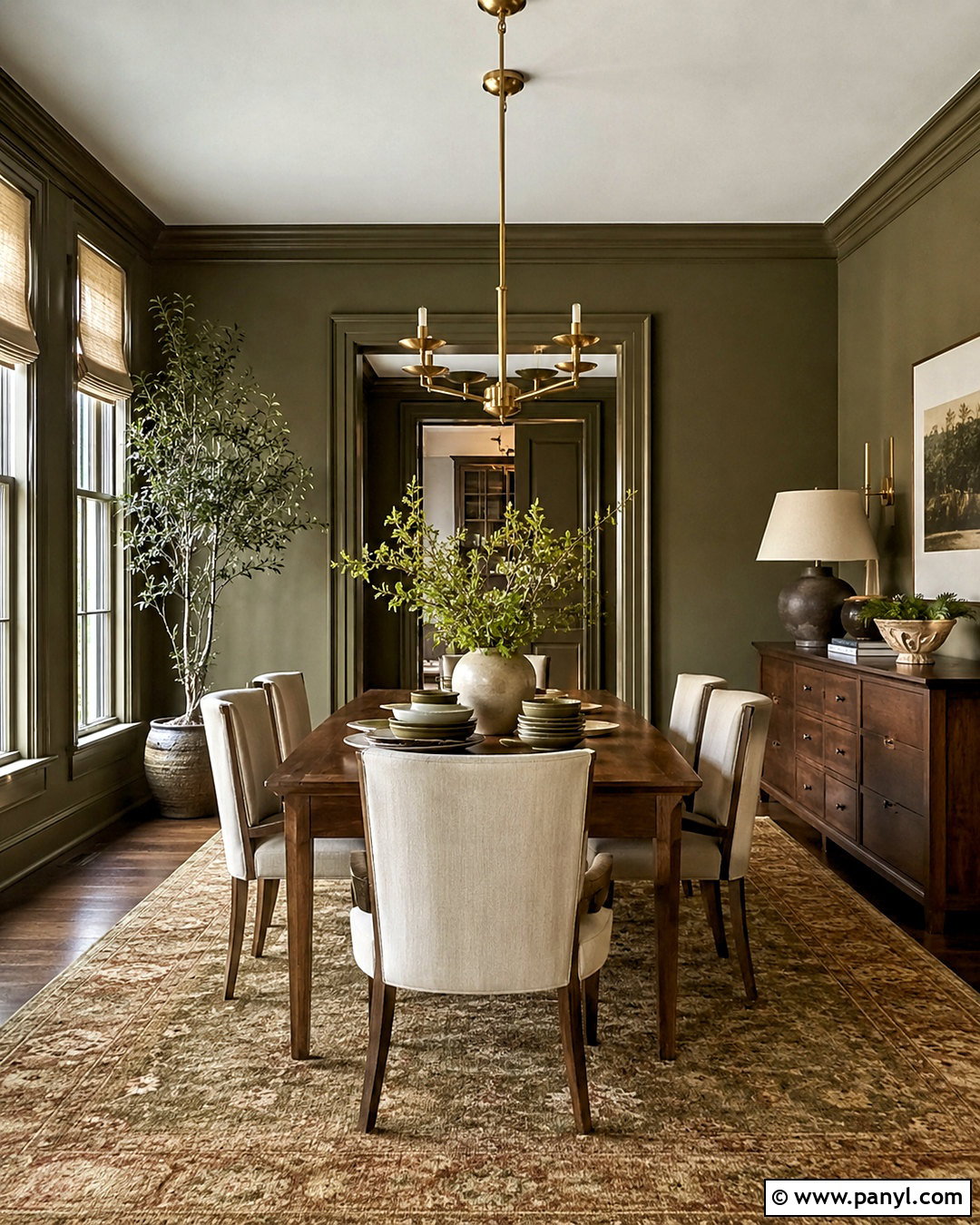
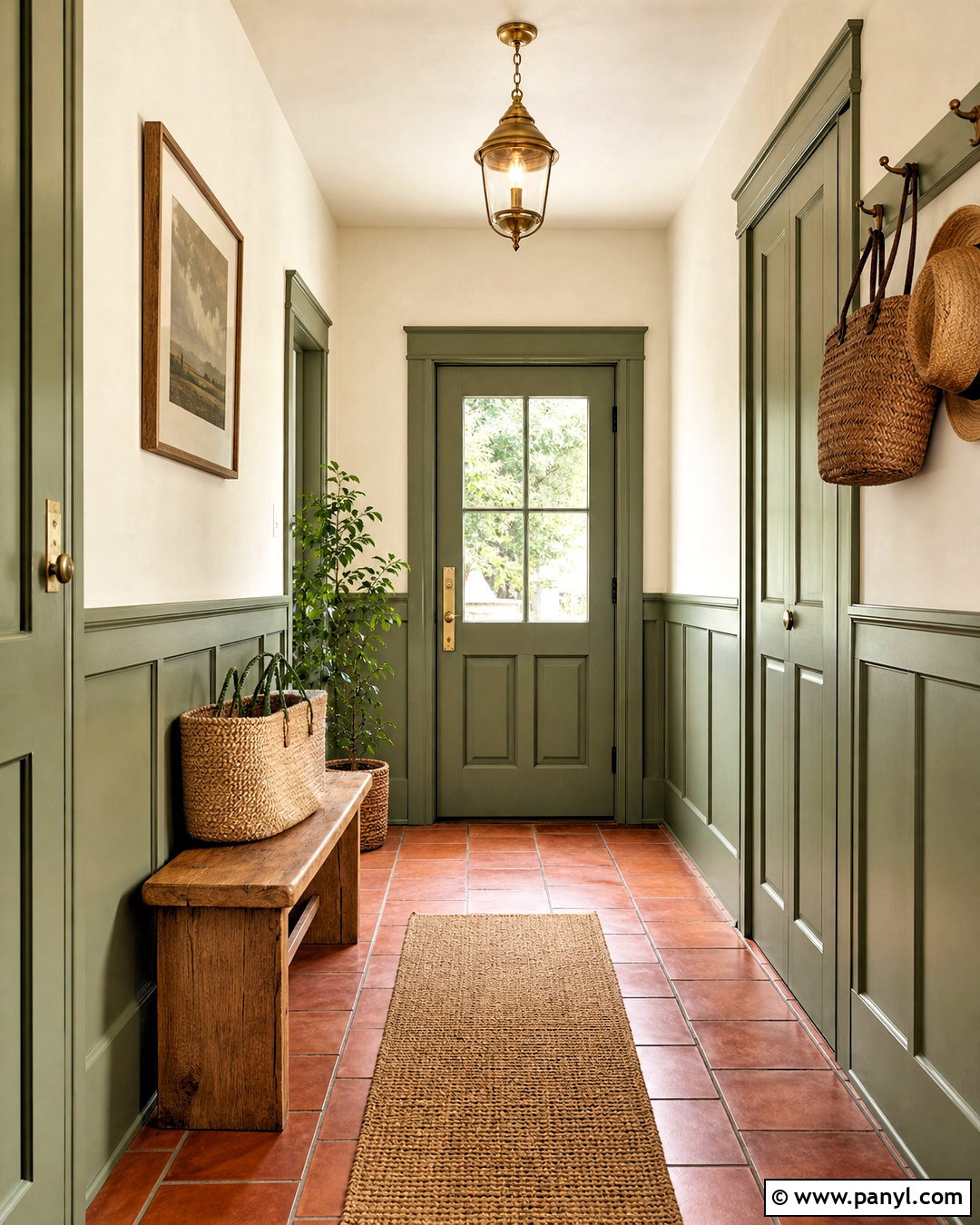
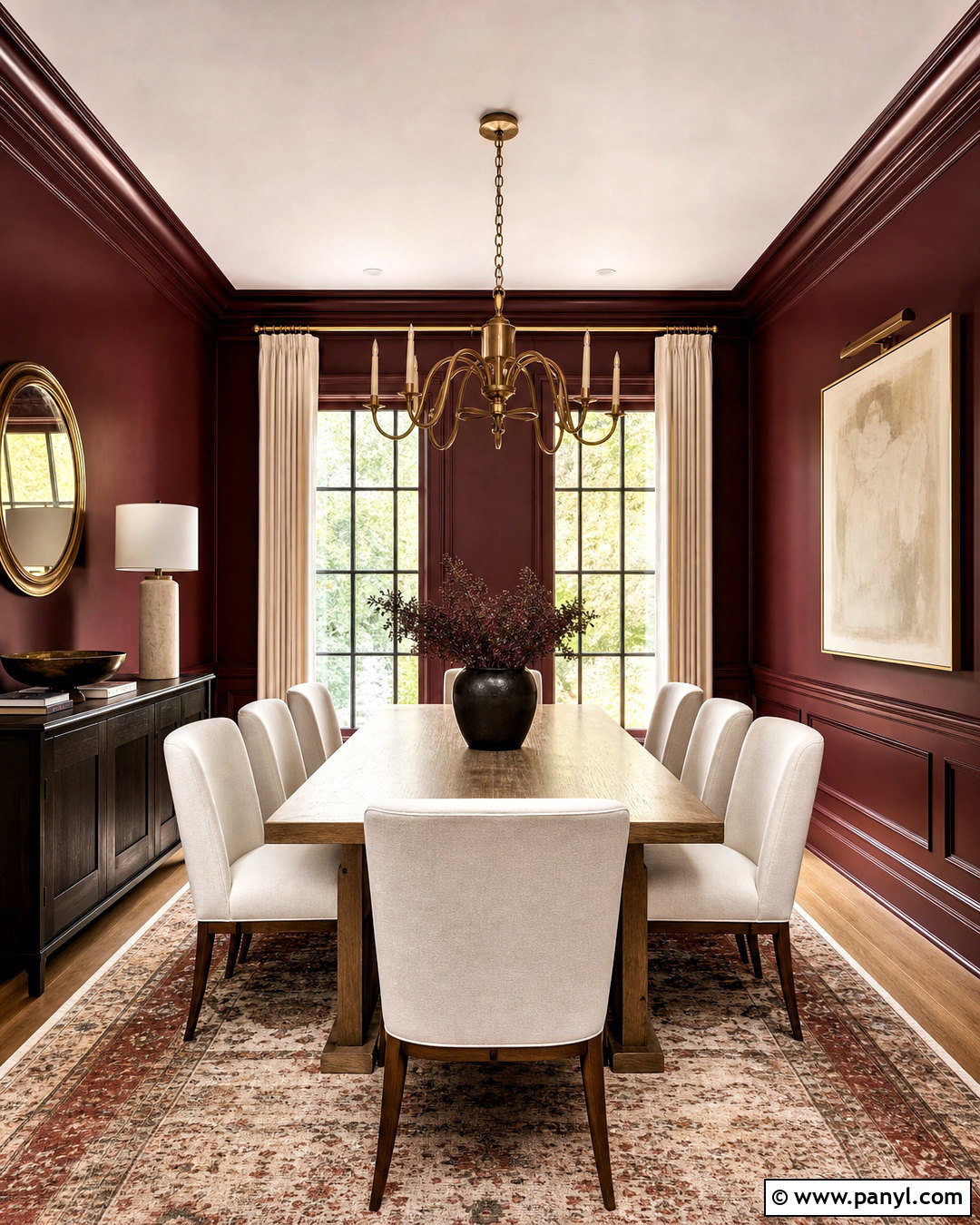
Deep olive walls can turn an ordinary dining room into a warm, enveloping gathering space. Cover all four walls rather than limiting the color to one accent wall, then balance the depth with a medium-toned walnut table and cream upholstered chairs. A vintage-style rug containing olive, tan, and muted red will connect the room from floor to ceiling. Add an aged brass chandelier, linen Roman shades, and simple ceramic tableware. Paint the trim in the same olive using a satin finish, while keeping the ceiling a softer, diluted version of the wall color. Olive works especially well beside limestone, travertine, wood, and warm metals. () Test the shade carefully because natural and artificial lighting can significantly change its appearance.
5. Powder Blue Home Office Walls
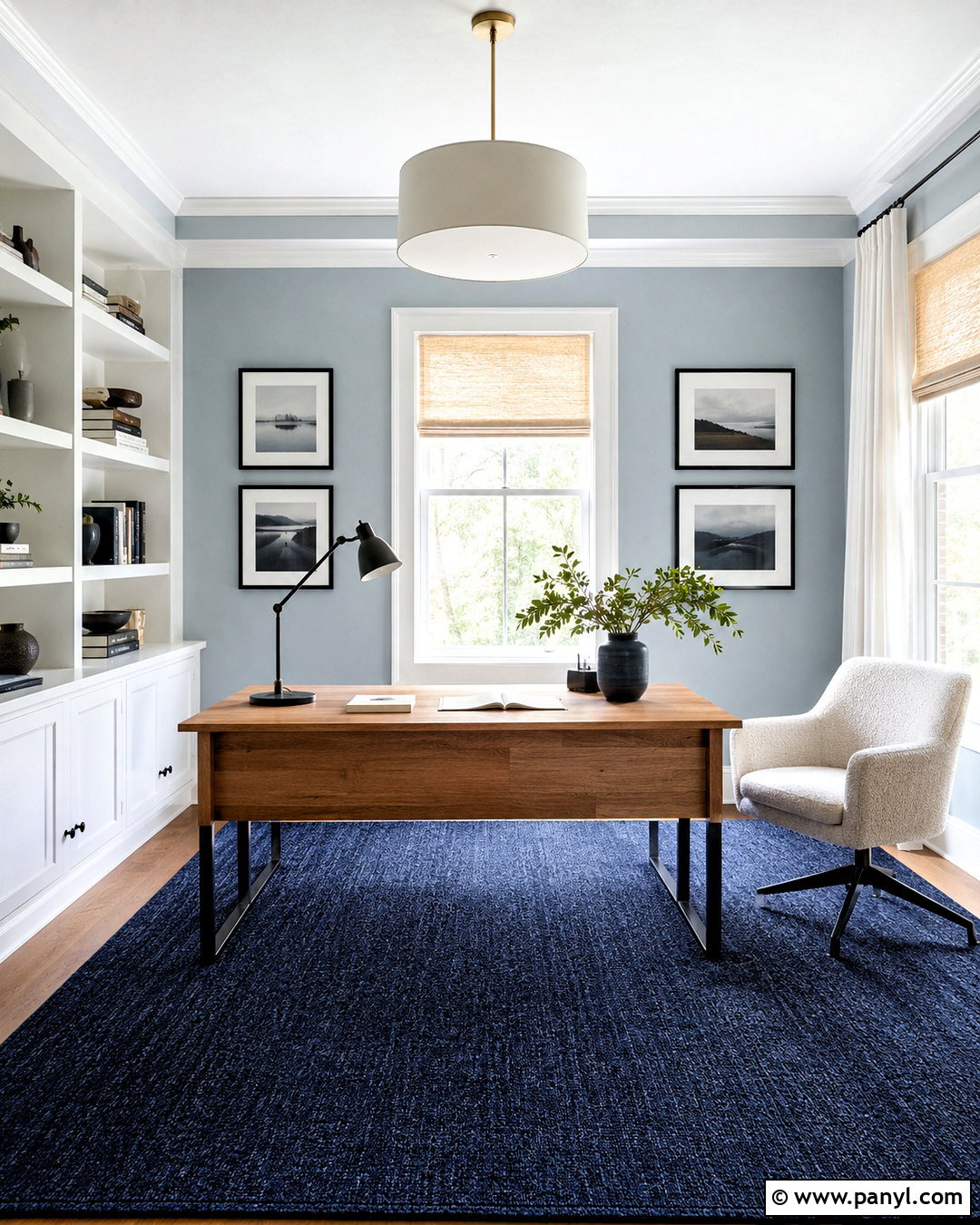
Powder blue walls bring quiet color to a home office while maintaining a fresh, organized atmosphere. Look for a pale blue with a slight gray undertone, which will feel more sophisticated than a clear pastel. Position a warm oak desk against the main wall and add a cream boucle chair, white shelving, and a small navy rug. Black task lighting and dark picture frames provide enough contrast to sharpen the pale palette. Use an eggshell wall finish so occasional marks can be wiped away, especially around the desk. Paint the trim a clean warm white and continue the blue onto the ceiling only if the room receives plenty of daylight. Finish with linen shades, restrained artwork, and closed storage that prevents office supplies from disrupting the calming effect.
6. Dusty Rose Guest Room Walls
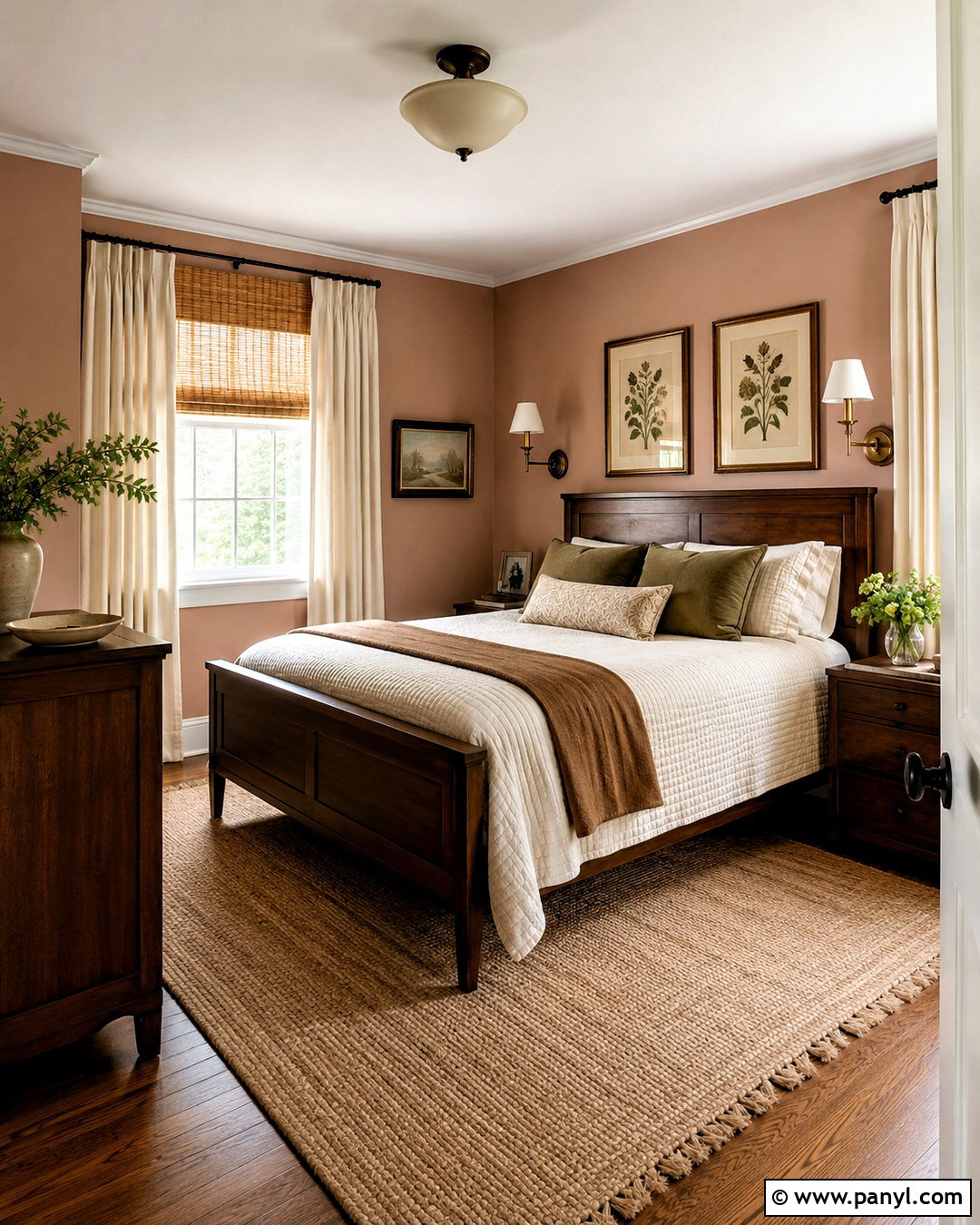
Dusty rose walls can make a guest bedroom feel warm and polished without becoming overly sweet. Choose a muted pink mixed with beige or brown, then pair it with a dark wood bed, ivory quilt, and camel-colored throw. Olive green pillows and botanical prints introduce contrast while keeping the palette grounded in nature. Use woven shades beneath full-length cream curtains to soften the windows and control privacy. An antique brass ceiling light and matching bedside sconces complement the warm undertones. Keep the ceiling creamy white and paint the baseboards in a slightly deeper off-white for definition. A matte or low-sheen finish will create a soft, comfortable background. This complete scheme suits traditional, transitional, and relaxed contemporary guest rooms equally well.
7. Terracotta Family Room Walls
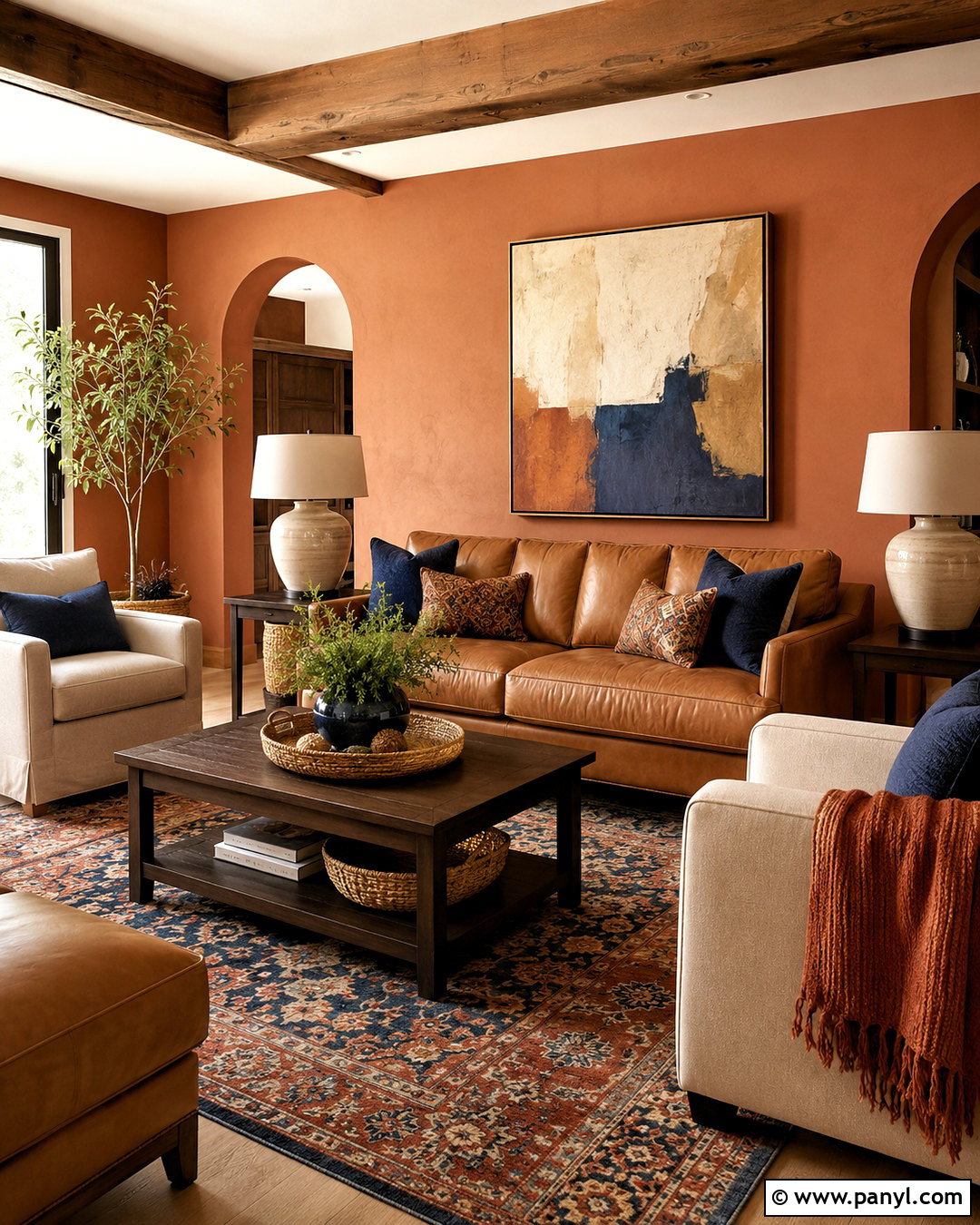
Terracotta walls surround a family room with earthy warmth and make everyday furniture feel more intentional. Select a softened clay shade rather than a vivid orange. Build the room around a tan leather sofa, cream lounge chairs, and a large patterned rug containing rust, navy, and beige. Walnut tables and woven baskets continue the natural material story, while dark blue pillows keep the warm colors balanced. Paint the walls in washable eggshell to handle fingerprints and daily activity. Use warm white on the ceiling and trim so the room stays lively and open. Large abstract artwork with pale backgrounds will prevent the terracotta from dominating. Add layered lighting through a linen-shaded floor lamp, ceramic table lamps, and a simple black ceiling fixture.
8. Navy Blue Media Room Walls
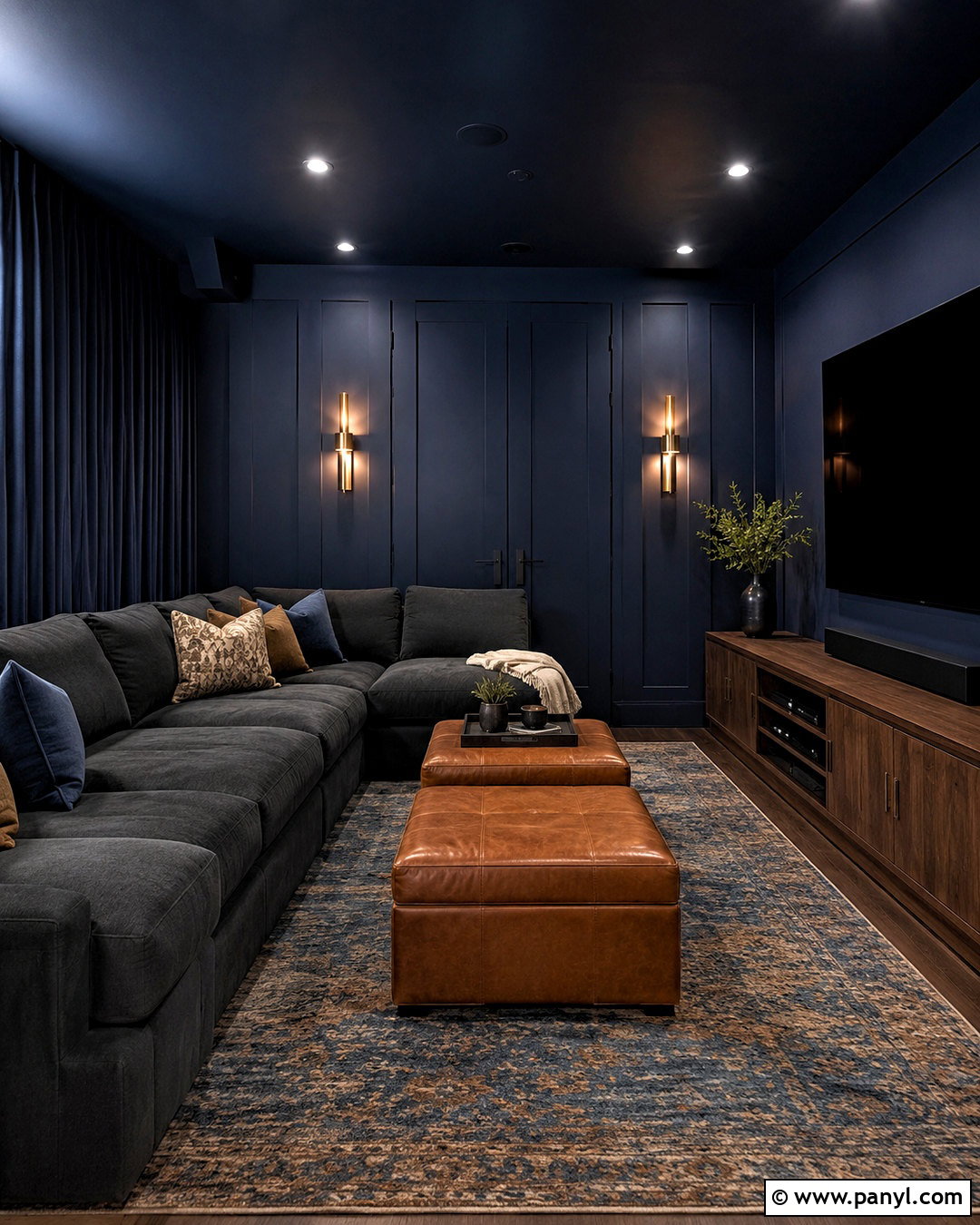
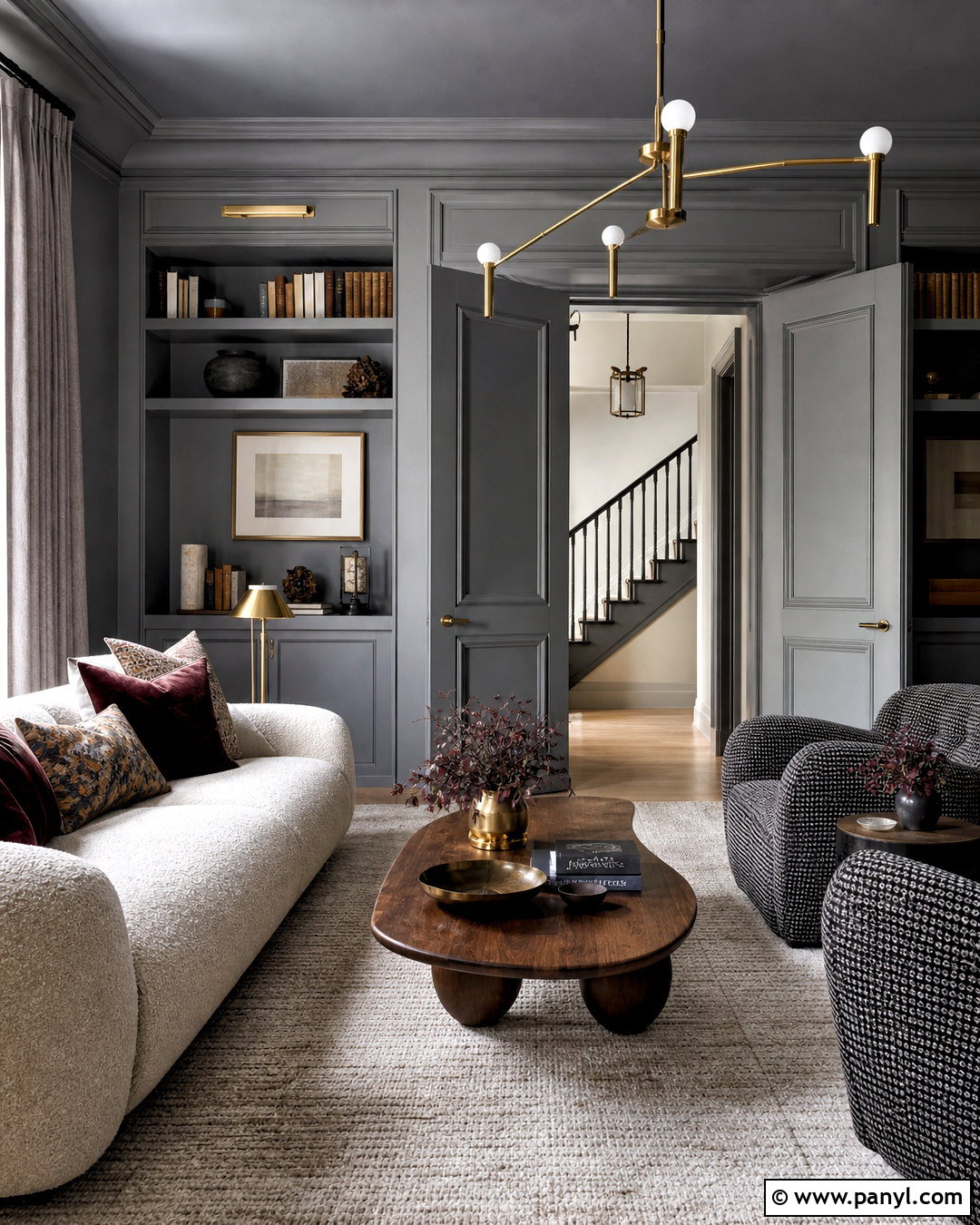
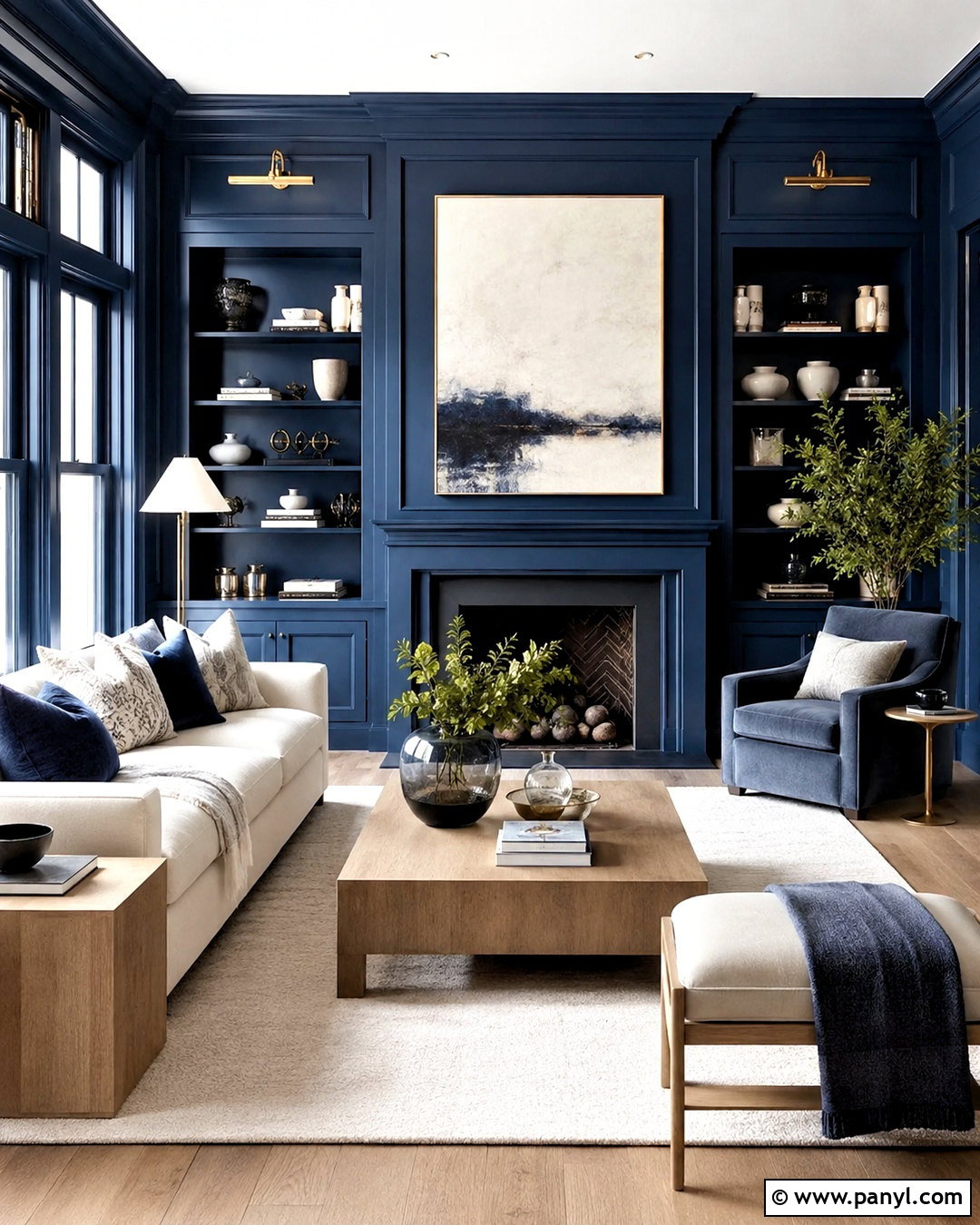
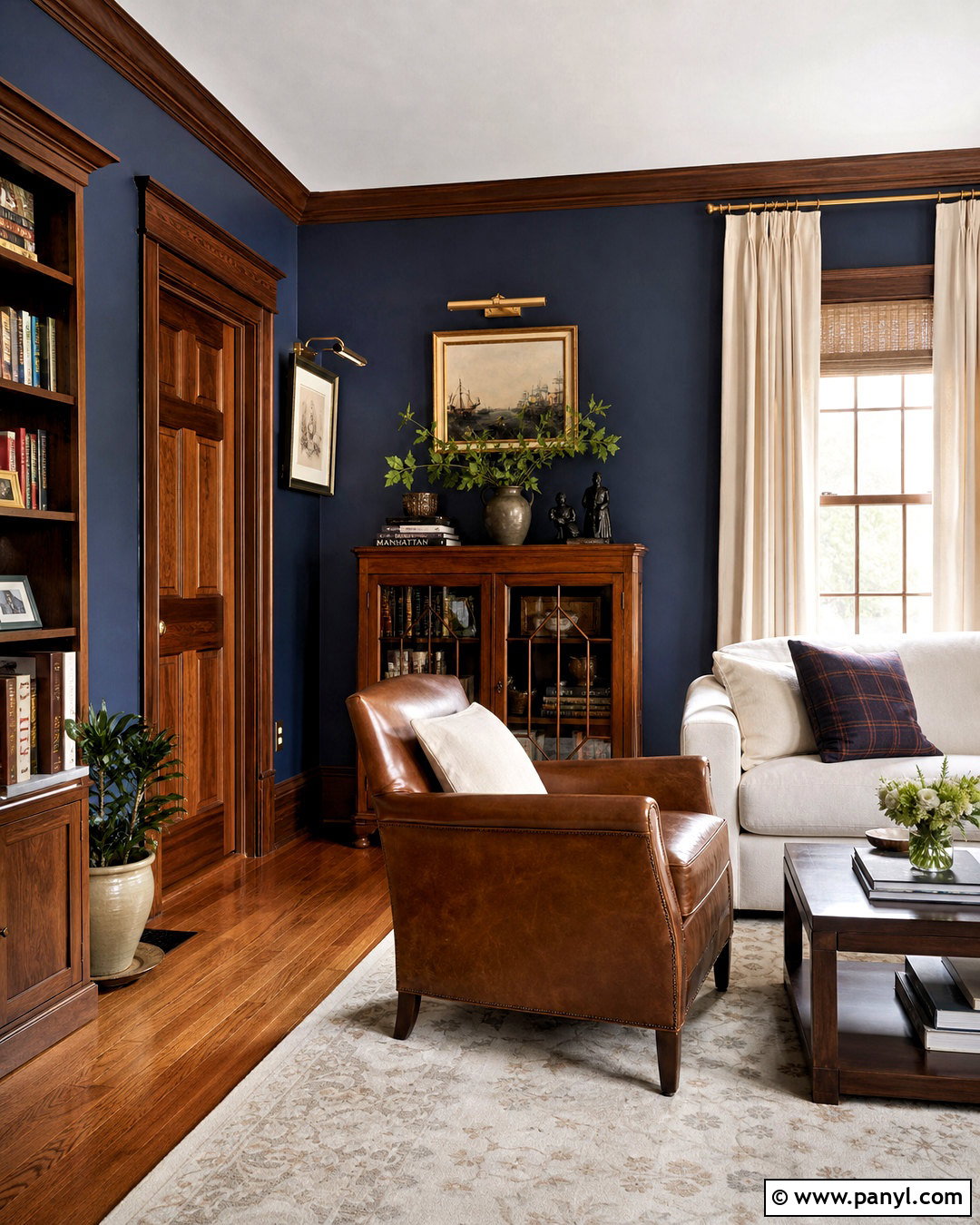
A media room benefits from a darker wall color that reduces visual distraction and creates a cozy setting. Paint every wall deep navy blue and consider carrying the same shade across the ceiling for a fully immersive look. Choose a flat or matte finish to limit reflections near the television. Furnish the room with a charcoal sectional, medium walnut console, and a large rug featuring faded blue and warm brown. Cognac leather ottomans and brass wall sconces stop the navy palette from feeling cold. Keep window treatments simple with lined navy curtains or woven shades. Conceal cords and store equipment inside closed cabinetry. Color drenching the walls, trim, doors, and ceiling can make compact rooms feel unified instead of visually divided. ()
9. Charcoal Gray Bedroom Walls
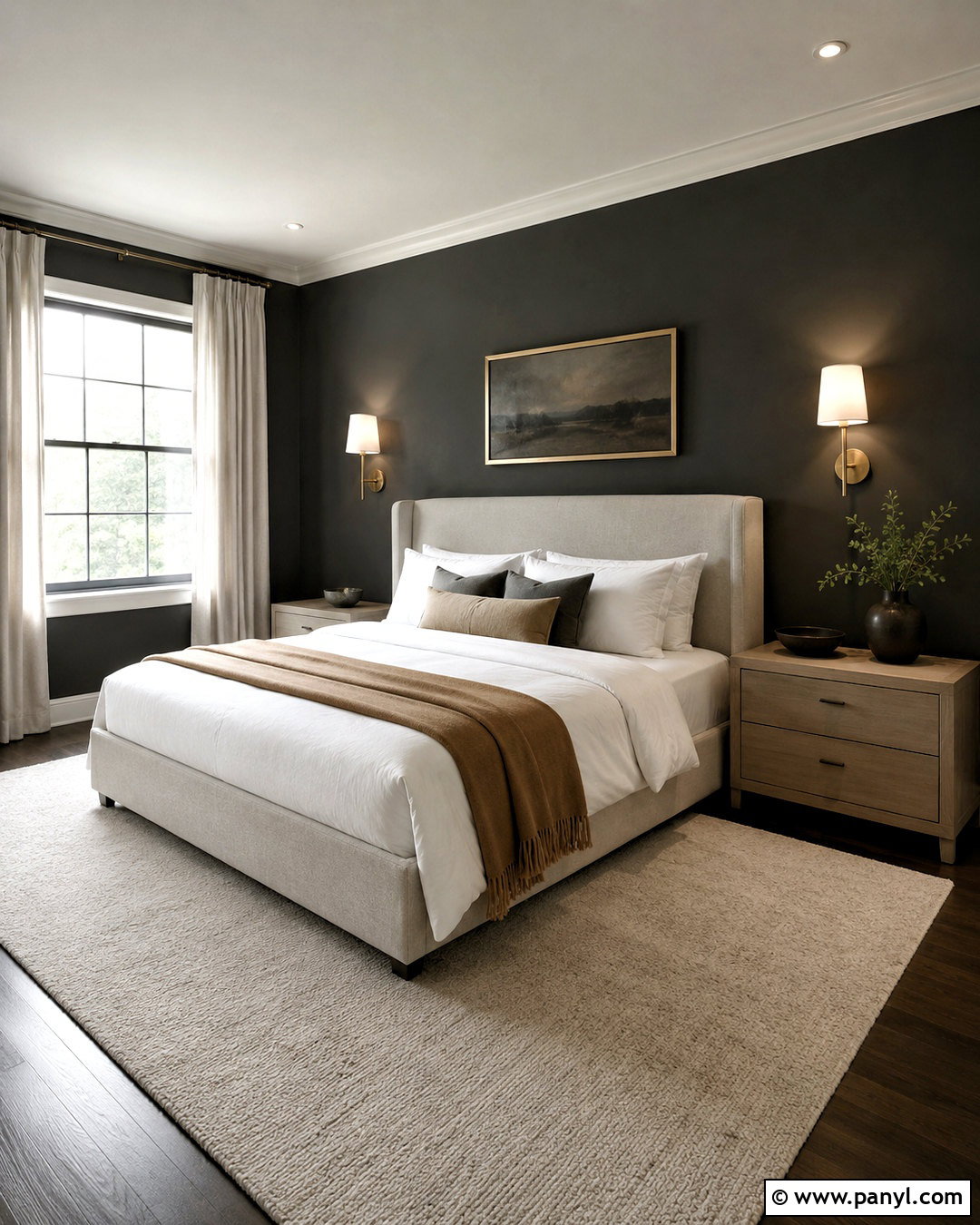
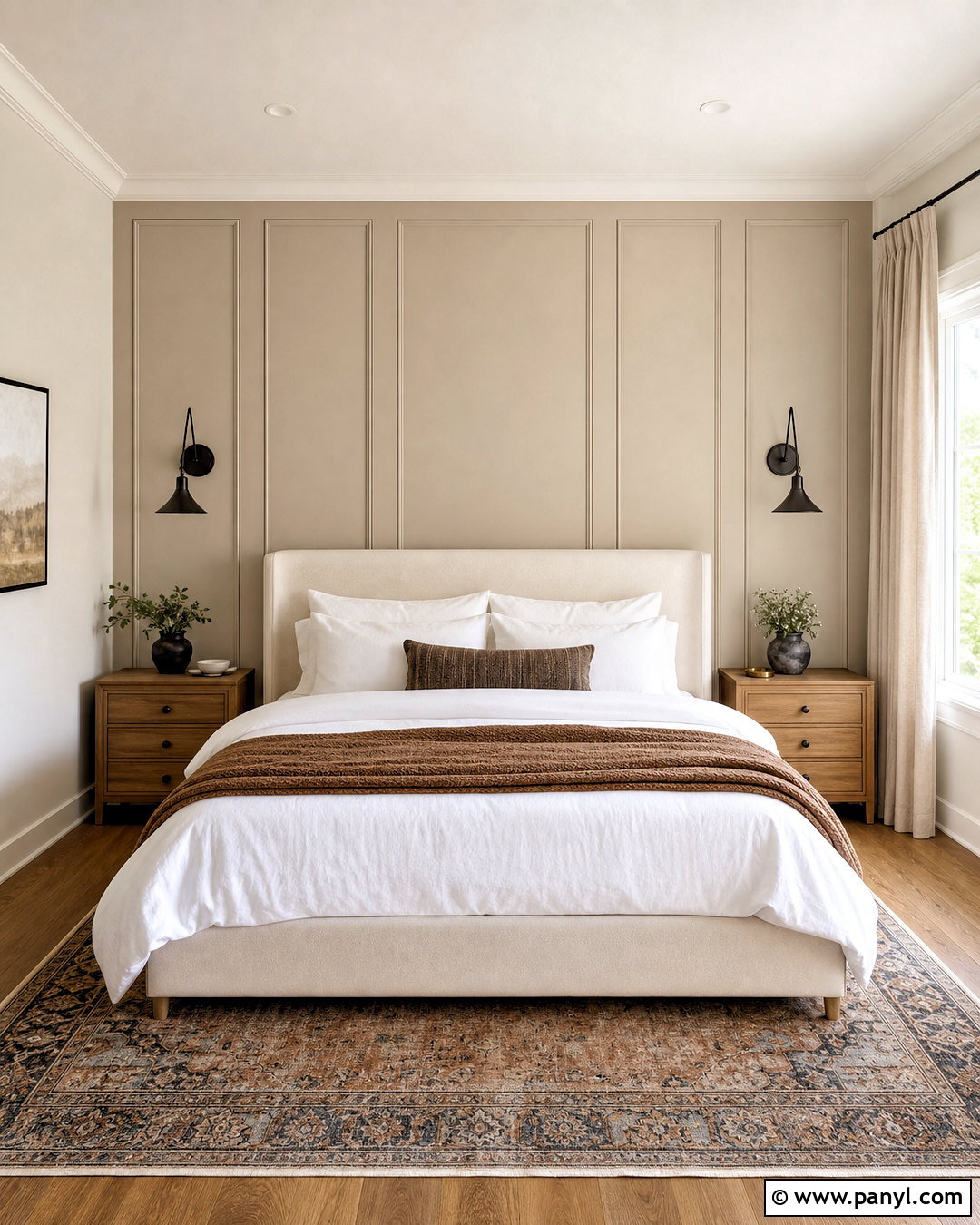
Charcoal gray walls give a bedroom depth, but the surrounding materials should be light and tactile. Choose a charcoal with warm brown undertones and paint all four walls for a consistent, cocooning effect. Place a tall oatmeal upholstered bed against the longest wall, then add white bedding, a camel throw, and pale oak nightstands. Soft beige carpet or a large ivory rug will brighten the lower half of the room. Hang full-length linen curtains close to the ceiling and use warm brass or bronze sconces beside the bed. Paint the ceiling a gentle mushroom white instead of brilliant white to reduce harsh contrast. A matte finish creates the most refined surface, although careful wall preparation is important because darker colors can reveal uneven patches and application marks.
10. Butter Yellow Kitchen Walls
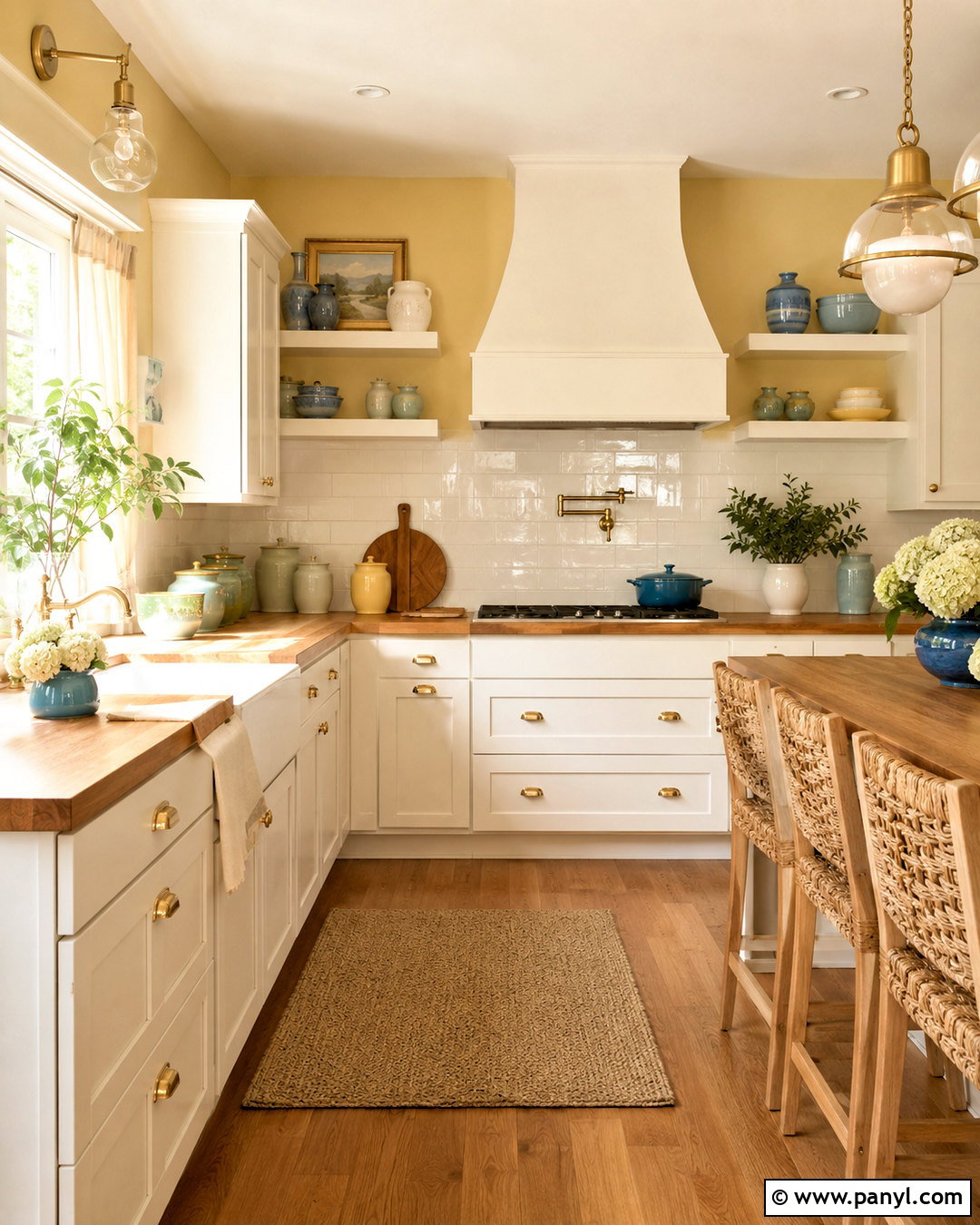
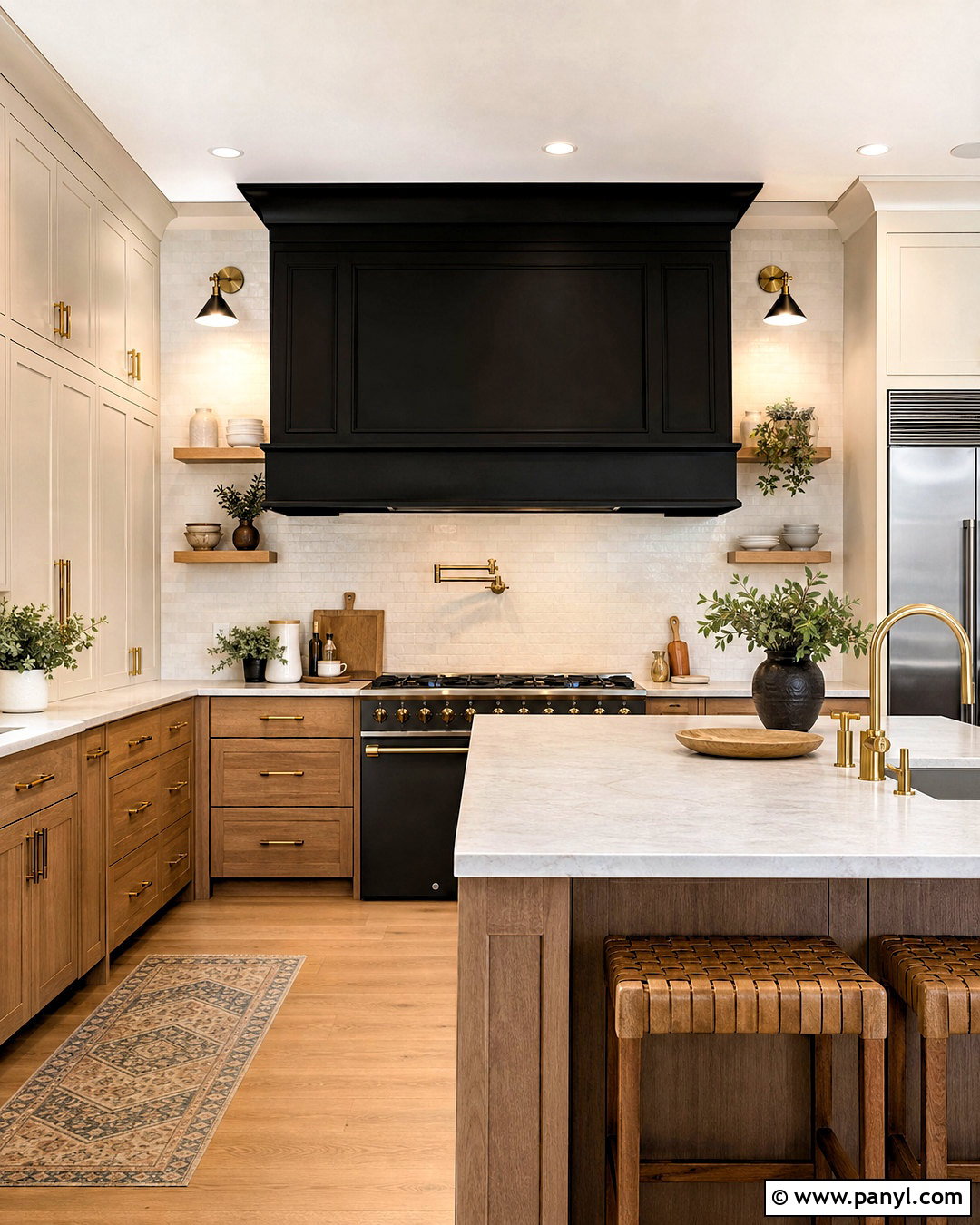
Could your kitchen use more warmth without darker cabinets or a major renovation? Soft butter yellow walls can brighten the space while complementing white cabinetry, butcher-block counters, and warm wood flooring. Choose a creamy, muted yellow rather than a sharp lemon shade. Add brushed brass hardware, simple white tile, and counter stools with woven seats. Small accents of dusty blue or olive green will make the palette feel balanced and collected. Use washable satin paint around food preparation areas because it handles moisture and cleaning better than a flat finish. Keep the ceiling and cabinets warm white, allowing the wall color to provide gentle contrast. Natural wood cutting boards, ceramic containers, and linen café curtains complete this cheerful yet practical kitchen design.
11. Clay Beige Entryway Walls
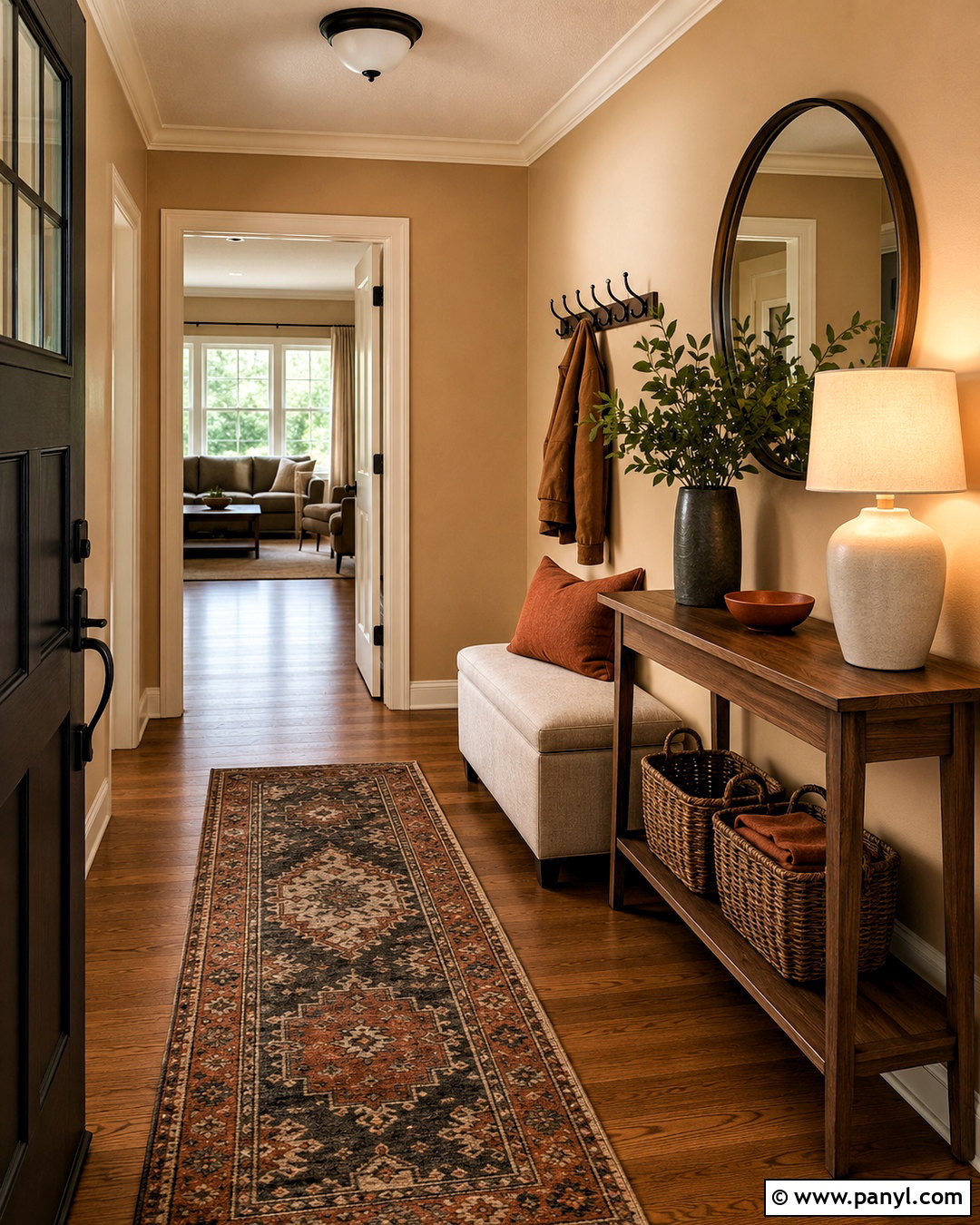
Clay beige creates an entryway that feels warmer than gray but more grounded than standard cream. Select a medium-light beige with subtle red or terracotta undertones. Pair it with a slim walnut console, a large round mirror, and a textured runner containing tan, charcoal, and faded rust. Black hooks and a black metal ceiling light add crisp definition. If space permits, include a small upholstered bench with storage baskets underneath. Use satin or durable eggshell paint because entryway walls often collect scuffs from bags, shoes, and everyday traffic. Paint the trim a creamy white and repeat that shade on interior doors. A simple ceramic lamp and one leafy plant soften the practical features. The result should introduce the home’s broader color palette immediately without overcrowding the entrance.
12. Teal Bathroom Walls
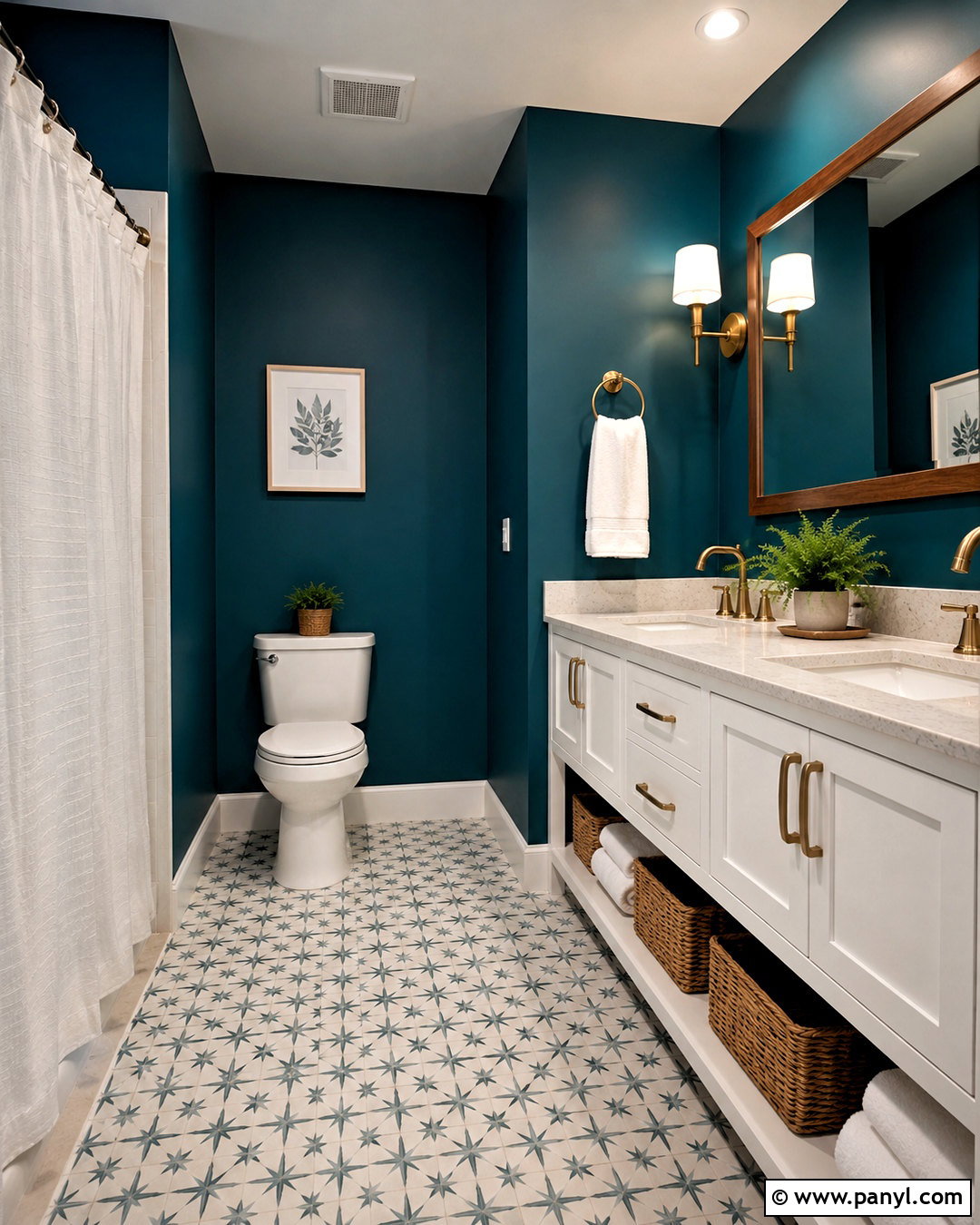
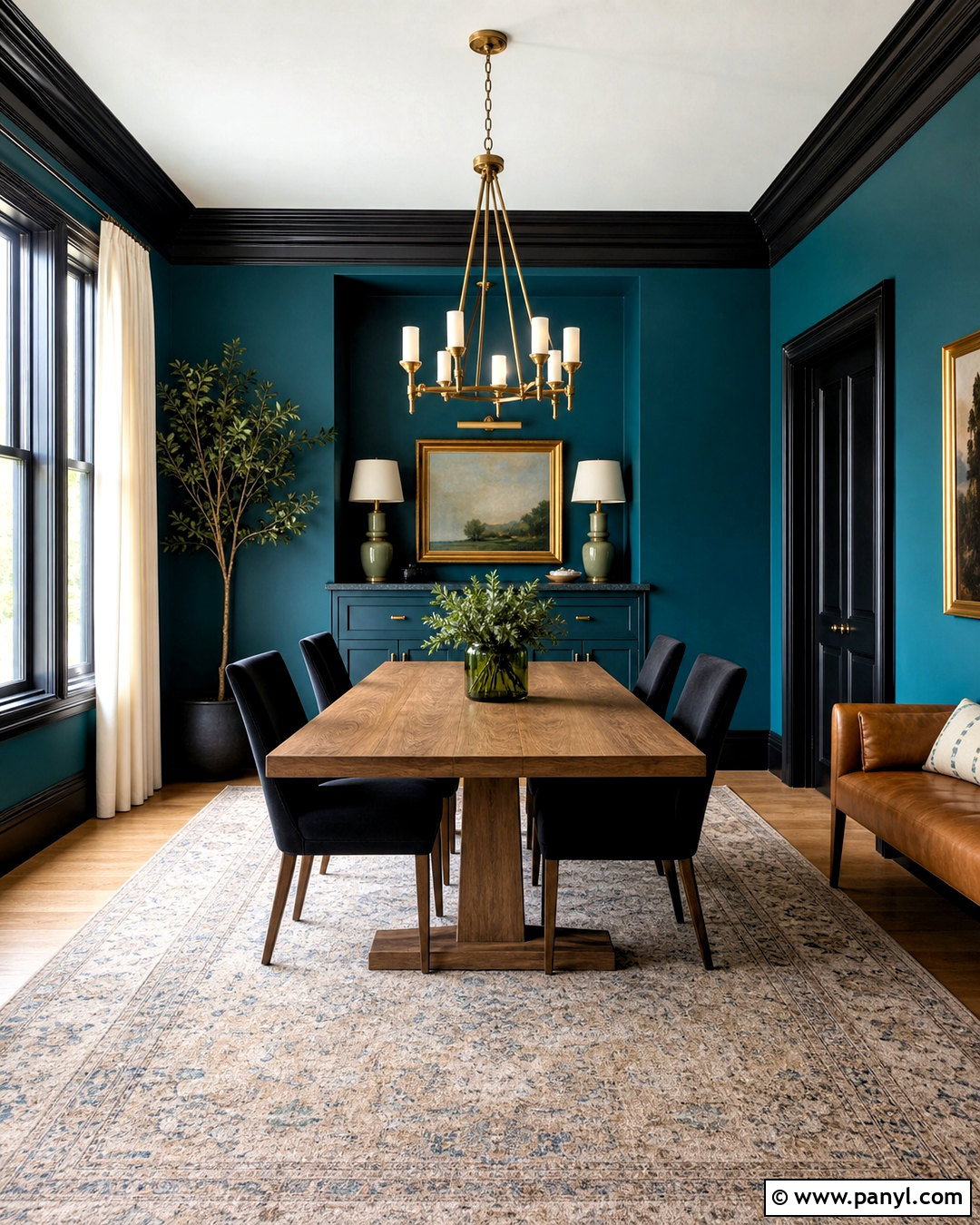
Rich teal walls can make a compact bathroom feel deliberate and jewel-like. Choose a blue-green shade with enough depth to contrast against a white vanity, white tile, and pale stone countertop. Bring in natural warmth through a walnut-framed mirror, woven storage baskets, and brushed brass faucets or cabinet pulls. A small patterned floor tile containing cream, teal, and warm gray will tie every surface together. Use moisture-resistant satin paint on the walls and semigloss on the trim for easier cleaning. Keep the ceiling bright warm white unless you want a more enclosed color-drenched effect. Add thick white towels, a simple fabric shower curtain, and one small plant suited to humid conditions. Good ventilation and proper wall preparation will help the painted finish remain smooth and durable.
13. Forest Green Library Walls
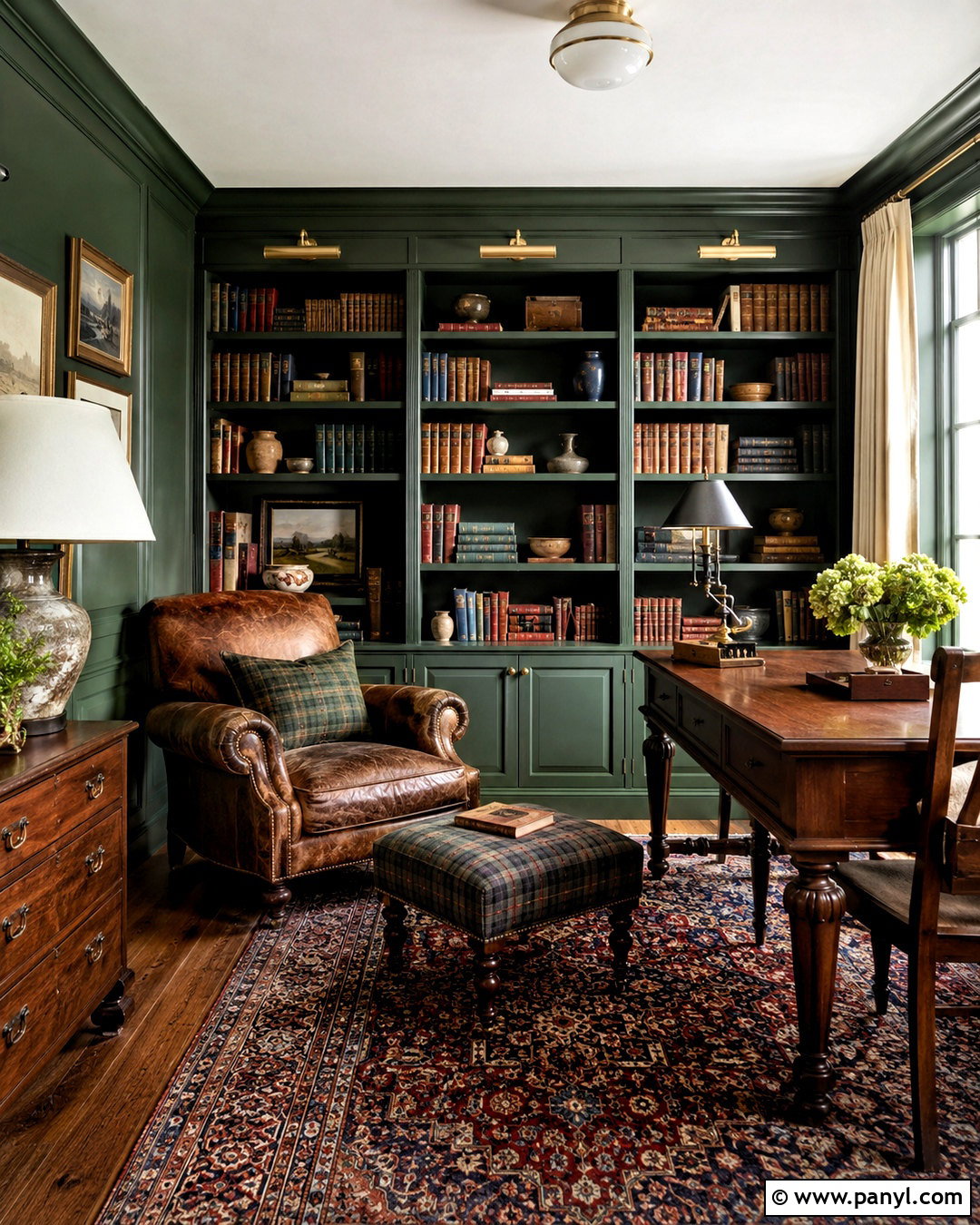
Forest green walls provide a classic foundation for a reading room, library, or book-filled den. Paint the walls, built-in shelves, and trim in one deep green, using eggshell on broad surfaces and satin on woodwork. Fill the shelving thoughtfully, leaving room for framed artwork, pottery, and small lamps instead of packing every shelf. A worn brown leather chair, plaid wool ottoman, and traditional rug bring warmth to the darker background. Add a walnut writing desk near the window and hang cream linen curtains to filter daylight. Antique brass picture lights can illuminate the shelving and create focused evening light. Keep the ceiling a pale green-gray to soften the transition overhead. This layered room feels established and comfortable while still working in a modern home.
14. Warm Taupe Hallway Walls
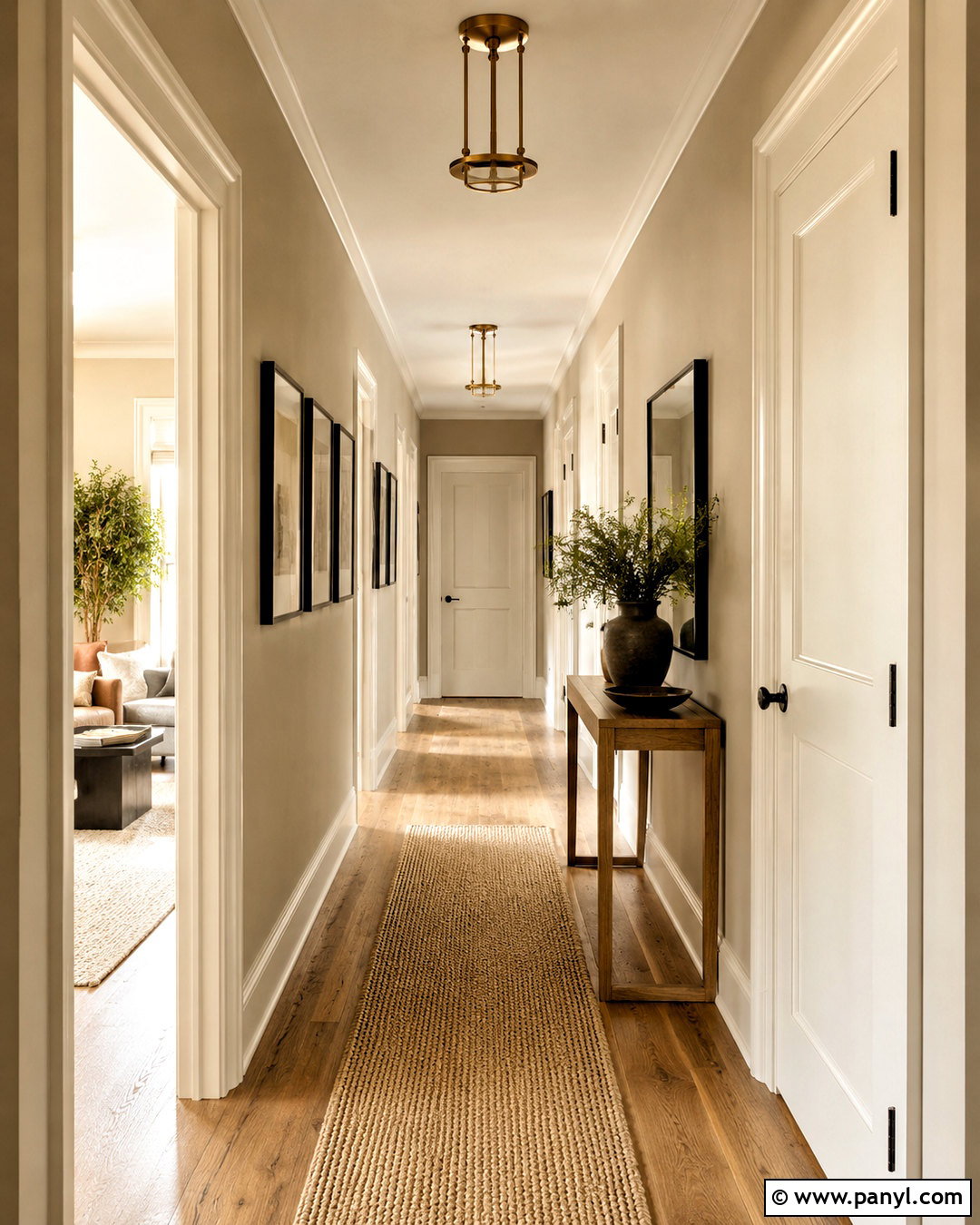
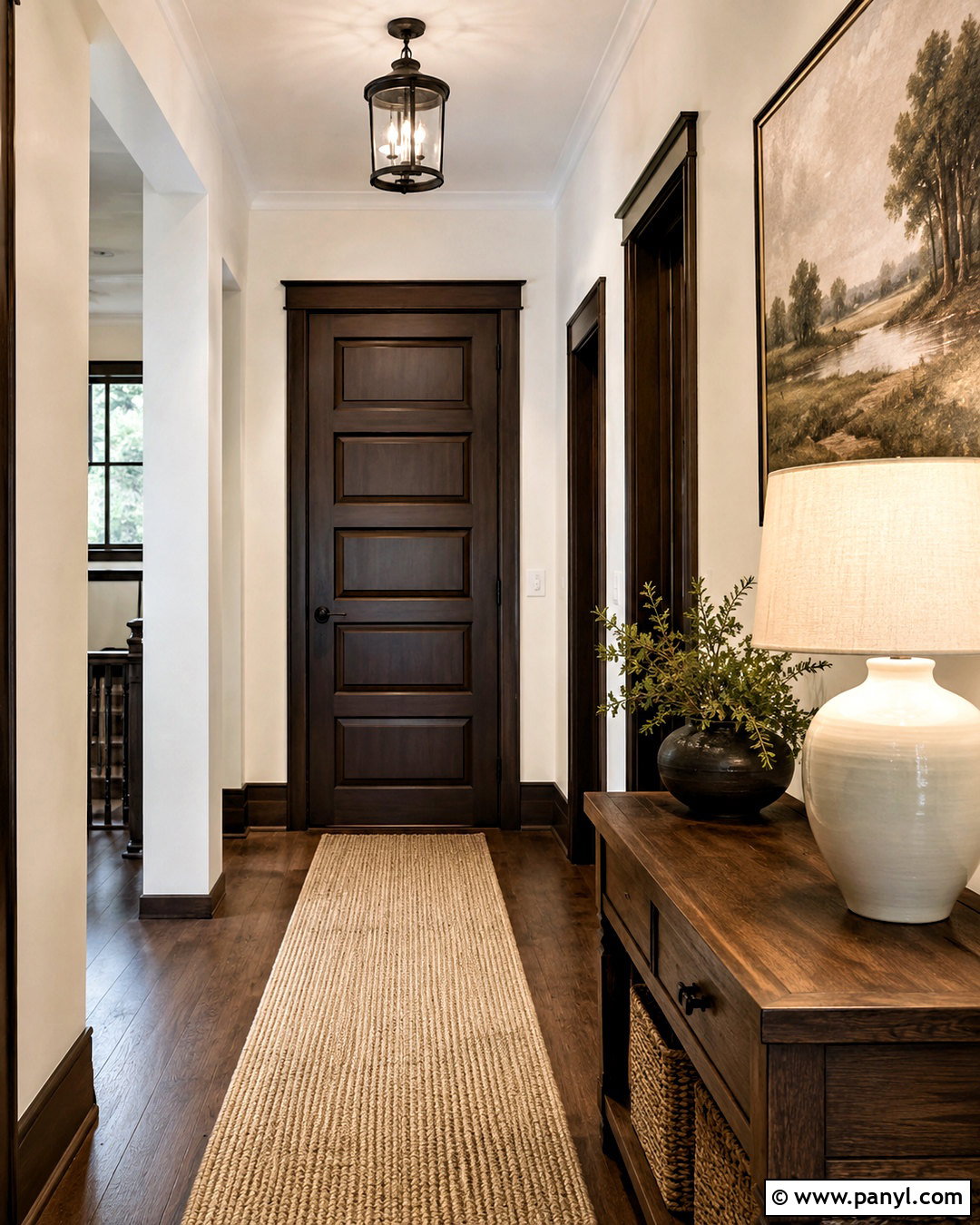
Long hallways often need more than plain white paint to feel connected to the surrounding rooms. Warm taupe walls introduce subtle depth while remaining flexible enough to coordinate with wood floors, neutral carpet, and colorful adjoining spaces. Select a taupe with beige or mushroom undertones and use an eggshell finish for practical cleaning. Paint doorframes, baseboards, and doors in a creamy white satin. Add a narrow natural-fiber runner, evenly spaced black picture frames, and simple brass ceiling fixtures. If the hallway lacks windows, use warm white bulbs that render colors clearly rather than strongly yellow lighting. Keep furniture minimal, perhaps adding only one slim console at the widest point. The finished hallway should feel like a designed passage, not an overlooked space between more important rooms.
15. Two Tone Nursery Walls
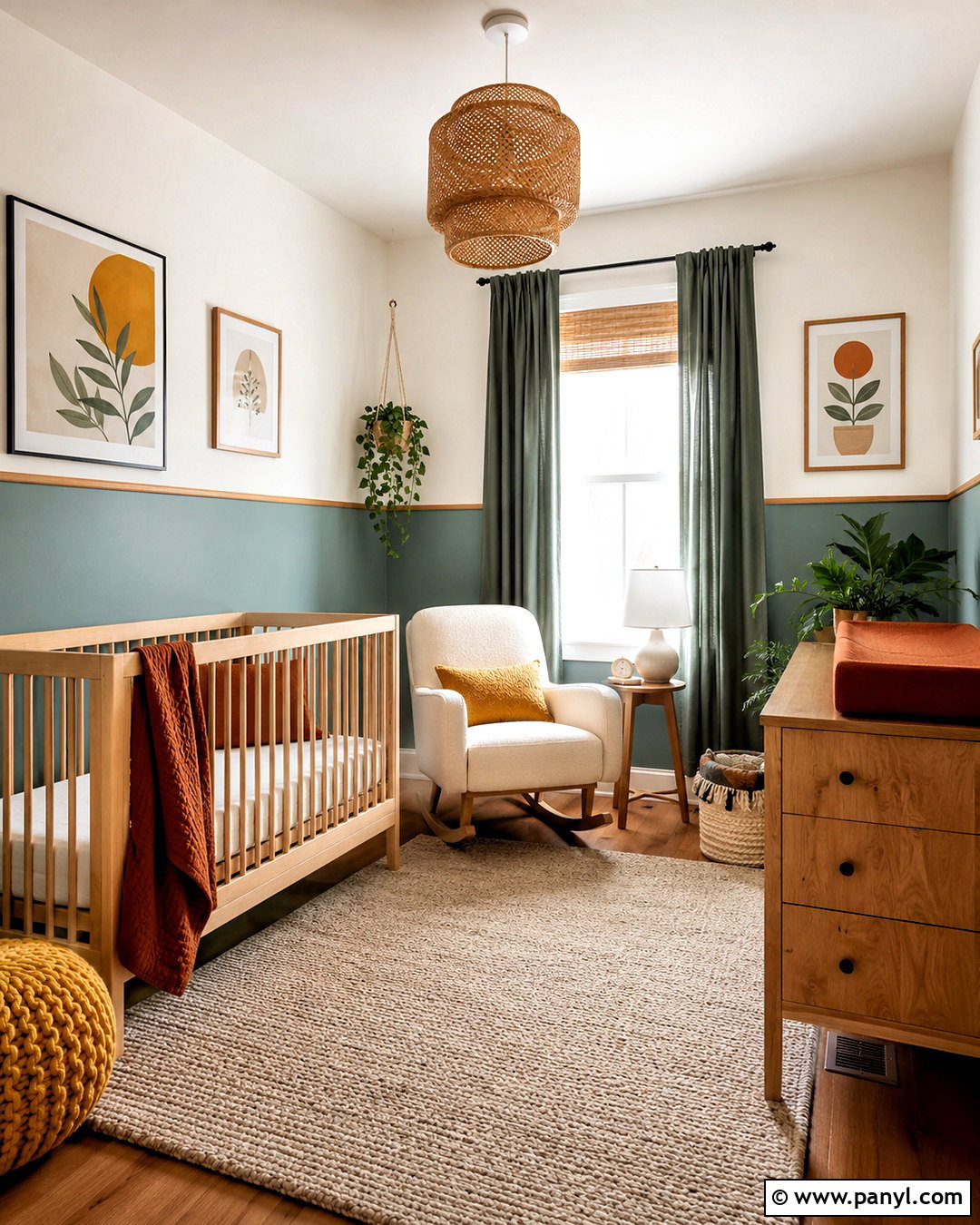
Two-tone walls bring gentle structure to a nursery and can adapt as the child grows. Paint the lower third of each wall in muted blue-green and the upper portion in warm white. A narrow painted line or simple wood molding can create a clean transition between the colors. Choose a natural maple crib, cream rocker, and low oak dresser with rounded corners. Add a washable beige rug, soft green curtains, and small accents of rust or golden yellow. Keep artwork simple and securely mounted, leaving the area directly above the crib clear. Use low-odor, low-VOC interior paint and allow the room to ventilate fully before use. The lower color visually anchors the furniture, while the pale upper walls maintain an open, light-filled feeling throughout the nursery.
16. Color Drenched Sitting Room Walls
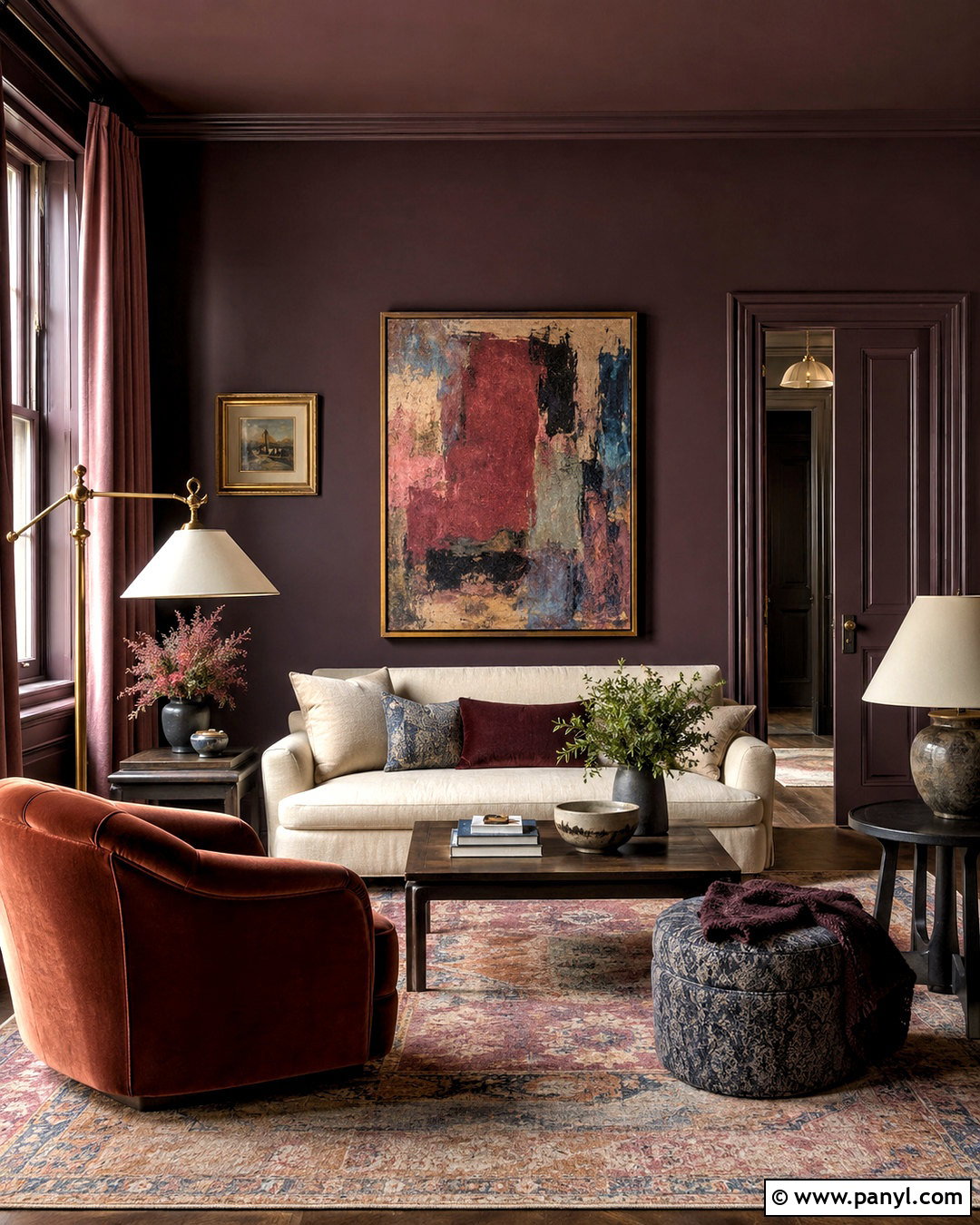
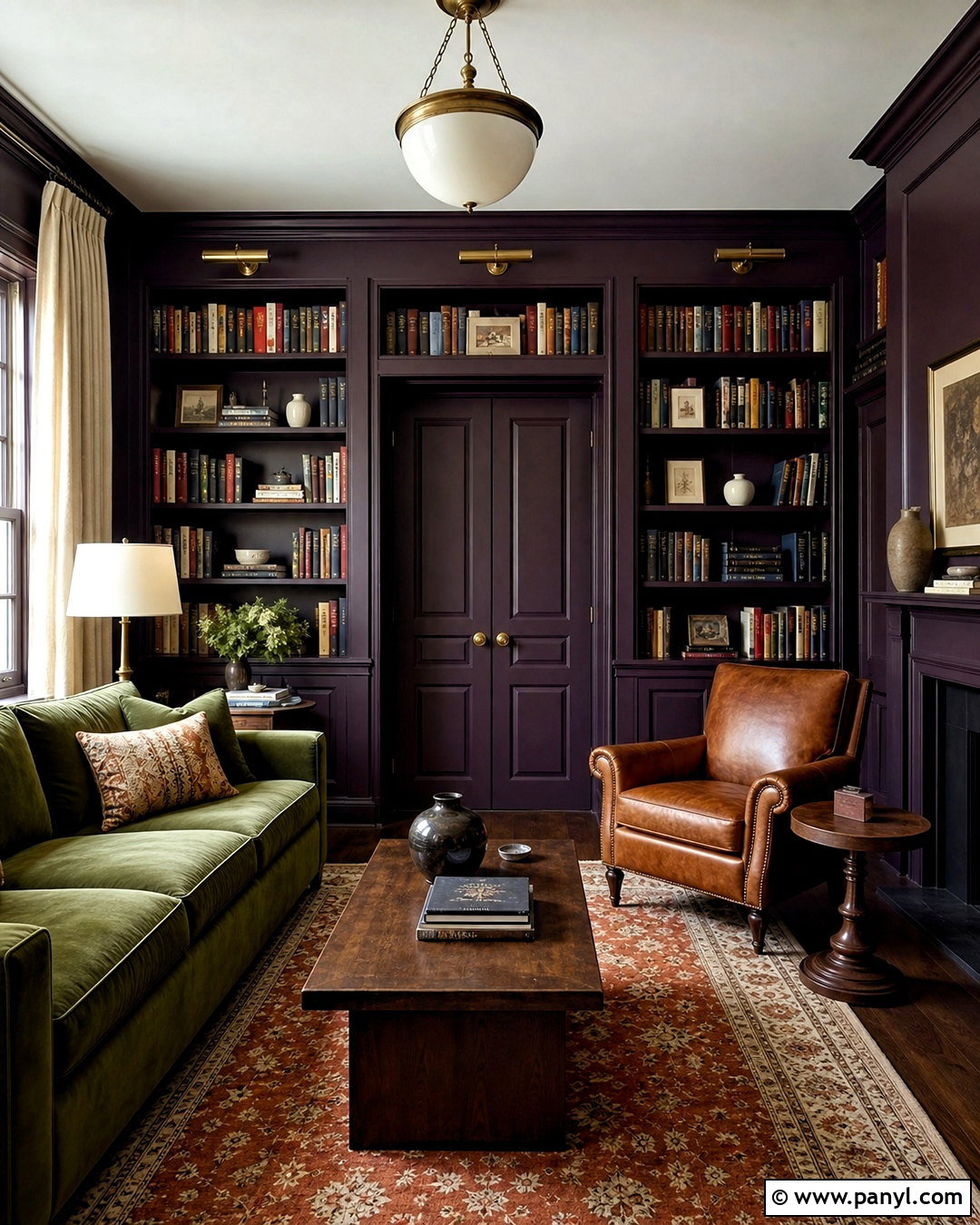
Color drenching creates a cohesive sitting room by wrapping the walls, trim, doors, and ceiling in related color. A muted plum-brown works especially well because it feels rich without becoming excessively bright. Use matte paint on the walls and ceiling, then introduce a slightly higher sheen on the trim and doors so architectural details remain visible. Furnish the space with a cream sofa, rust velvet chair, dark walnut tables, and an aged brass floor lamp. A traditional rug containing faded pink, brown, and blue will soften the saturated envelope. Keep curtains close to the wall color to avoid breaking the effect. Pale artwork and ivory lampshades provide controlled contrast. Test this deep shade on several walls because its appearance will shift as daylight moves through the room.
17. Limewash Effect Living Room Walls
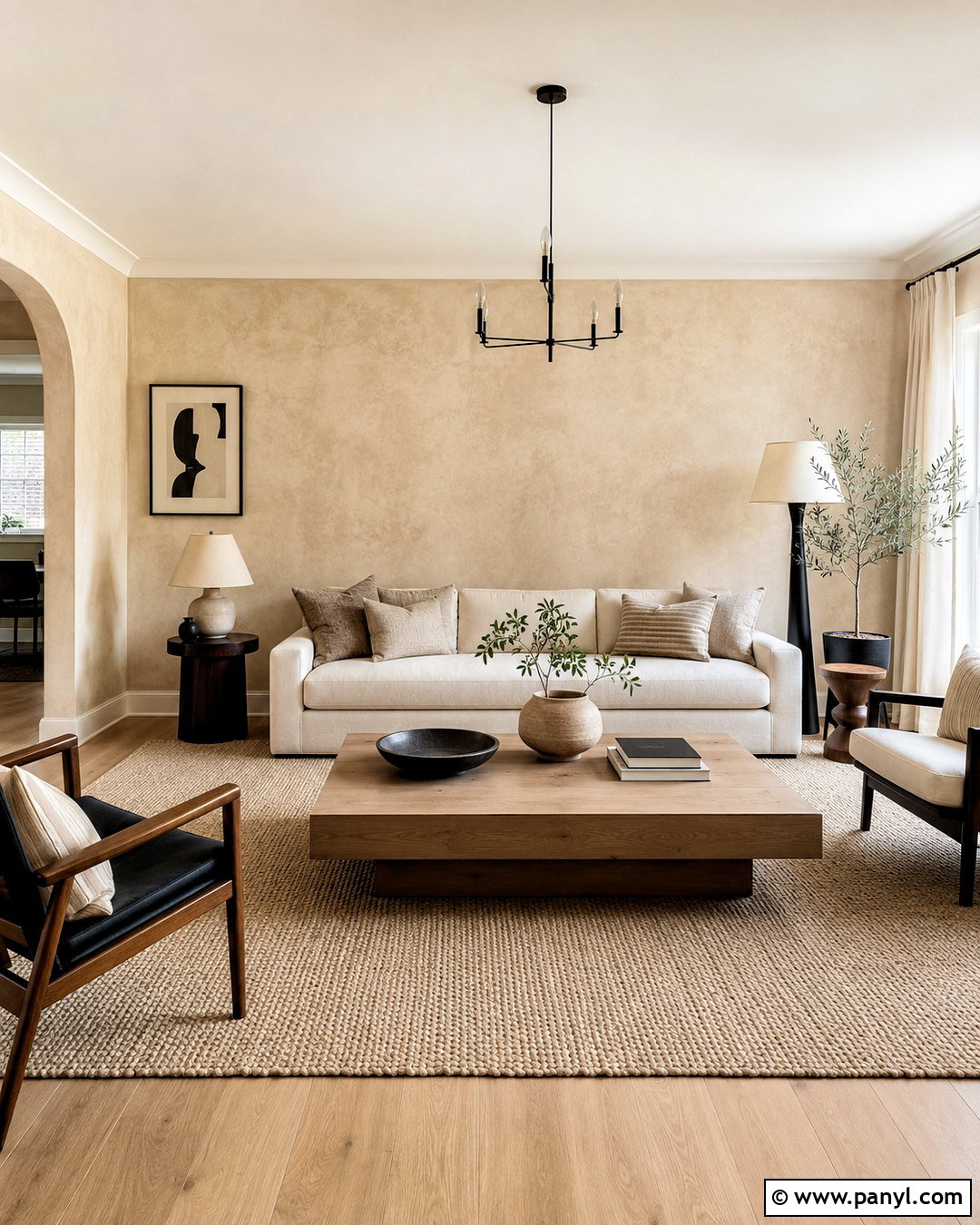
A limewash-inspired paint finish gives living room walls soft movement and handcrafted character. Choose a warm mineral beige or pale clay color, then apply compatible base and finish products according to the manufacturer’s instructions. The subtle tonal variation should remain visible without looking striped or unfinished. Pair the textured walls with a low cream sofa, light oak coffee table, woven wool rug, and linen curtains. Add sculptural ceramic lamps, black metal accents, and a few dark wood pieces for contrast. Keep the ceiling and trim in a quiet warm white so the wall finish remains the main feature. Because specialty coatings behave differently from standard latex paint, practice the application on a sample board first. The finished space should feel natural, relaxed, and gently layered.
18. Painted Arch Bedroom Wall
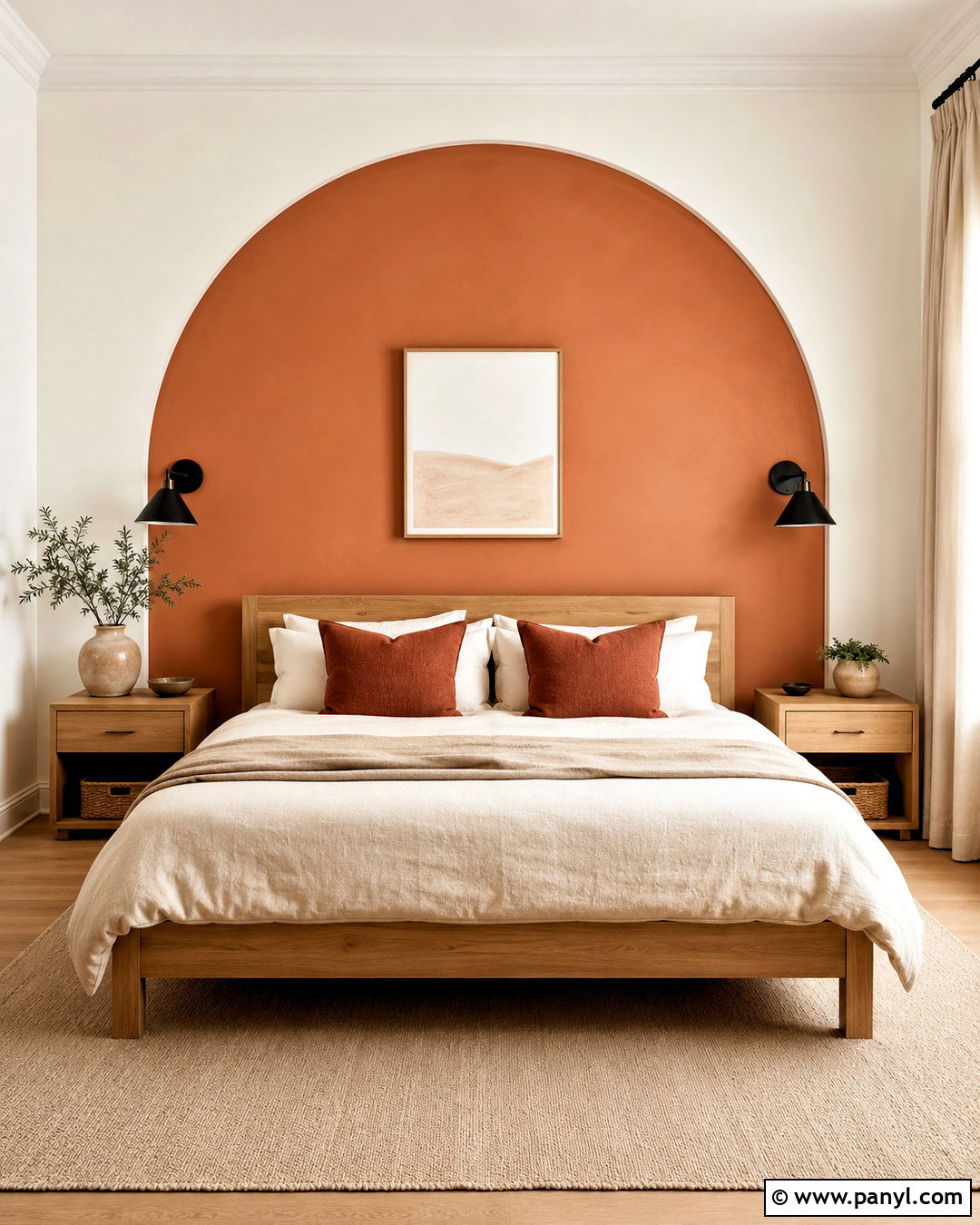
A painted arch can define a bed area without covering the entire room in a stronger color. Begin with warm white walls, then paint a wide muted terracotta arch behind a simple oak or upholstered headboard. Extend the arch beyond both sides of the bed so the shape feels intentional and properly scaled. Use painter’s tape and a pencil tied to string to create smooth, balanced curves. Complete the room with ivory bedding, rust pillows, pale wood nightstands, and black reading sconces mounted inside the colored area. A beige rug and linen curtains will maintain softness. Keep other decorative features restrained so the arch remains the focal point. This approach works especially well in rentals, small bedrooms, and spaces without architectural details or room for a bulky headboard.
19. Geometric Kids Room Walls
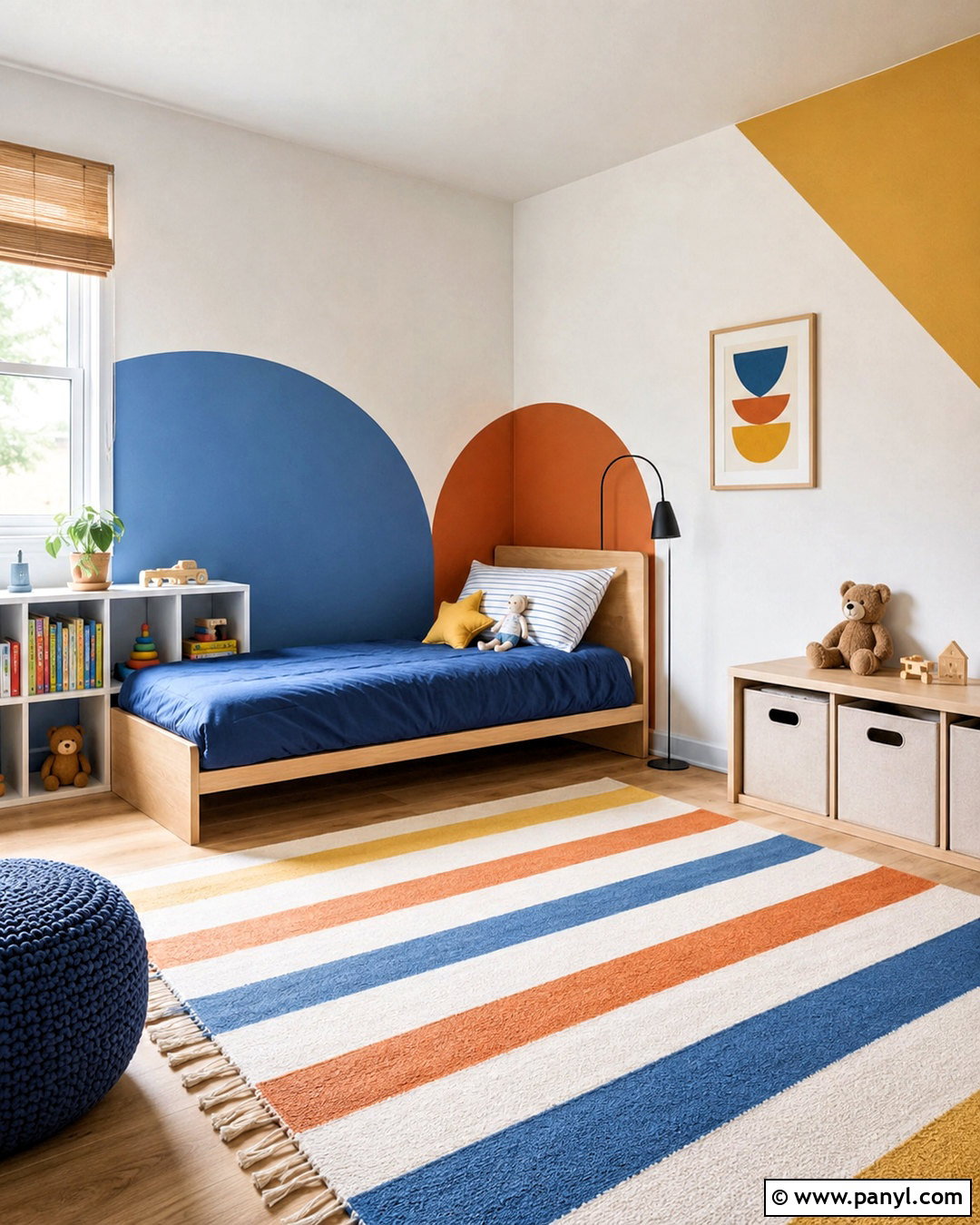
Geometric painted walls can bring energy to a child’s room while still supporting an organized, livable layout. Start with a warm white base, then add several large blocks in muted sky blue, clay orange, and soft mustard. Keep the shapes broad and simple rather than covering the wall with tiny patterns. Position a white or pale wood bed against the design and use solid-color bedding that repeats one wall shade. Add a low bookcase, washable striped rug, and closed toy storage in neutral finishes. Painter’s tape will create crisp lines, but it should be removed before the final coat becomes completely dry. Limit the pattern to one main wall and keep the remaining walls quiet. This allows artwork, books, and toys to add personality without creating visual clutter.
20. Black And White Stairway Walls
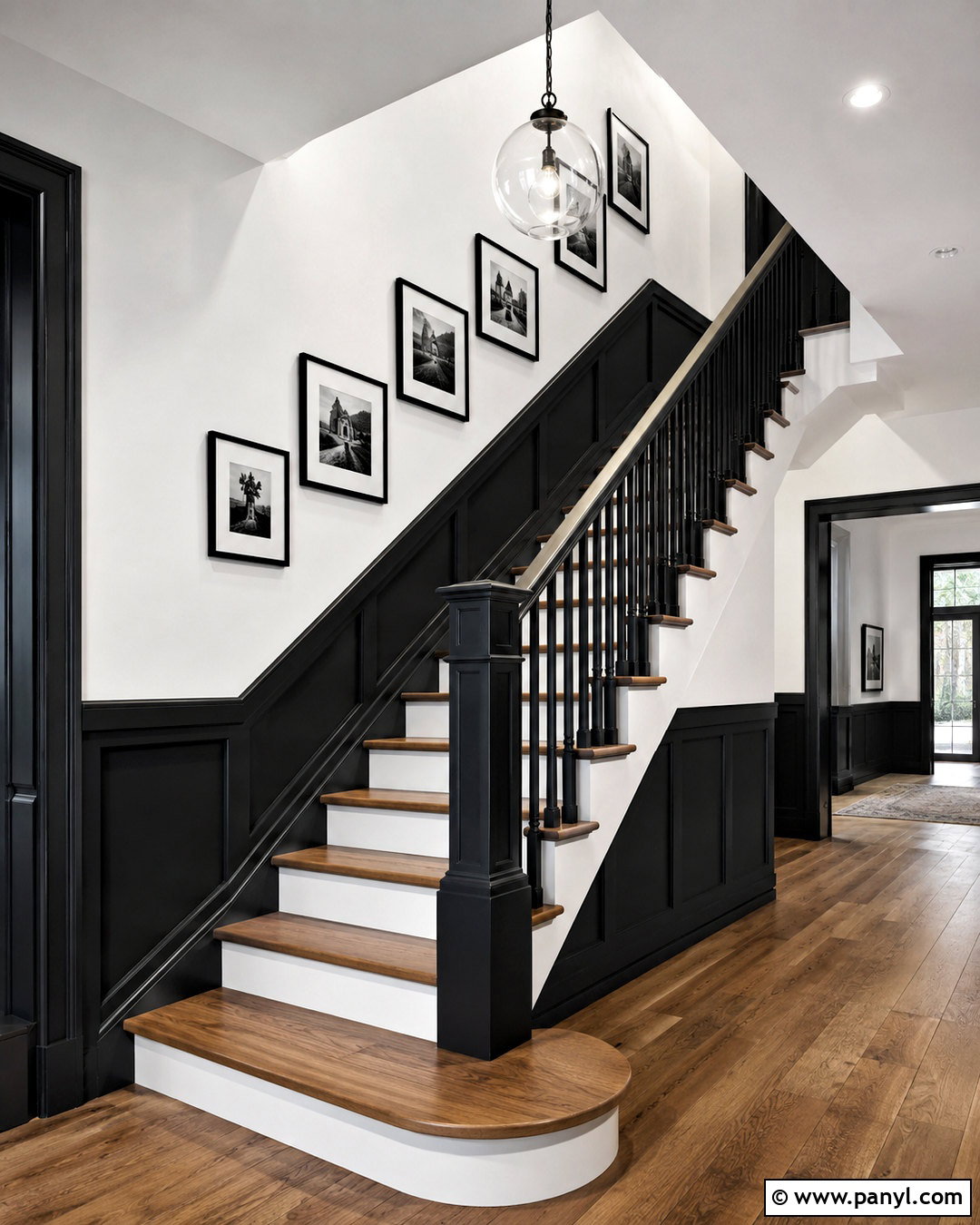
Black and white paint can transform a stairway into a crisp architectural feature. Paint the upper walls soft white and use near-black paint below the handrail or along existing wall paneling. Repeat the dark color on the banister while keeping stair risers white and treads in natural wood. A durable satin finish works well on the lower walls, where fingerprints and scuffs are common. Add a series of simple black-framed photographs following the angle of the stairs, leaving equal spacing between frames. Install a clear glass or white globe pendant overhead to maintain brightness. The strong contrast should follow the stairway’s existing lines rather than creating unrelated shapes. This complete scheme suits traditional, modern, and transitional homes while making a narrow passage feel finished and purposeful.
Conclusion:
The most successful way to paint interior walls is to build a complete palette around the room’s permanent features, natural light, purpose, and daily traffic. Warm whites and greige create flexible backgrounds, while olive, navy, charcoal, and teal offer greater depth. Painted arches, two-tone treatments, limewash effects, and color drenching add character without requiring structural remodeling. Always sample colors directly in the room, observe them throughout the day, and select a sheen suited to the surface and level of use. Prepare walls carefully, use dependable tools, and plan the furniture and textiles alongside the paint. With those decisions working together, fresh wall color can make an ordinary room feel comfortable, cohesive, and thoughtfully designed.

Related Ideas and Inspiration:
Leave a Reply