
White is no longer the only dependable choice for baseboards, doors, crown molding, and window casings. The best **20 non white trim interior ideas** show how colorful, neutral, dark, and natural wood trim can shape an entire room. Current design directions include color-drenched rooms, trim matched to wallpaper, tonal combinations, and contrasting architectural details. () The right approach can make plain construction feel more intentional or give traditional millwork a fresh identity. Consider the wall undertone, flooring, furniture, natural light, and connections between adjoining rooms before selecting a finish. From subtle cream molding to dramatic burgundy woodwork, the following complete spaces provide practical ways to explore **20 non white trim interior ideas**.

1. Black Trim Living Room
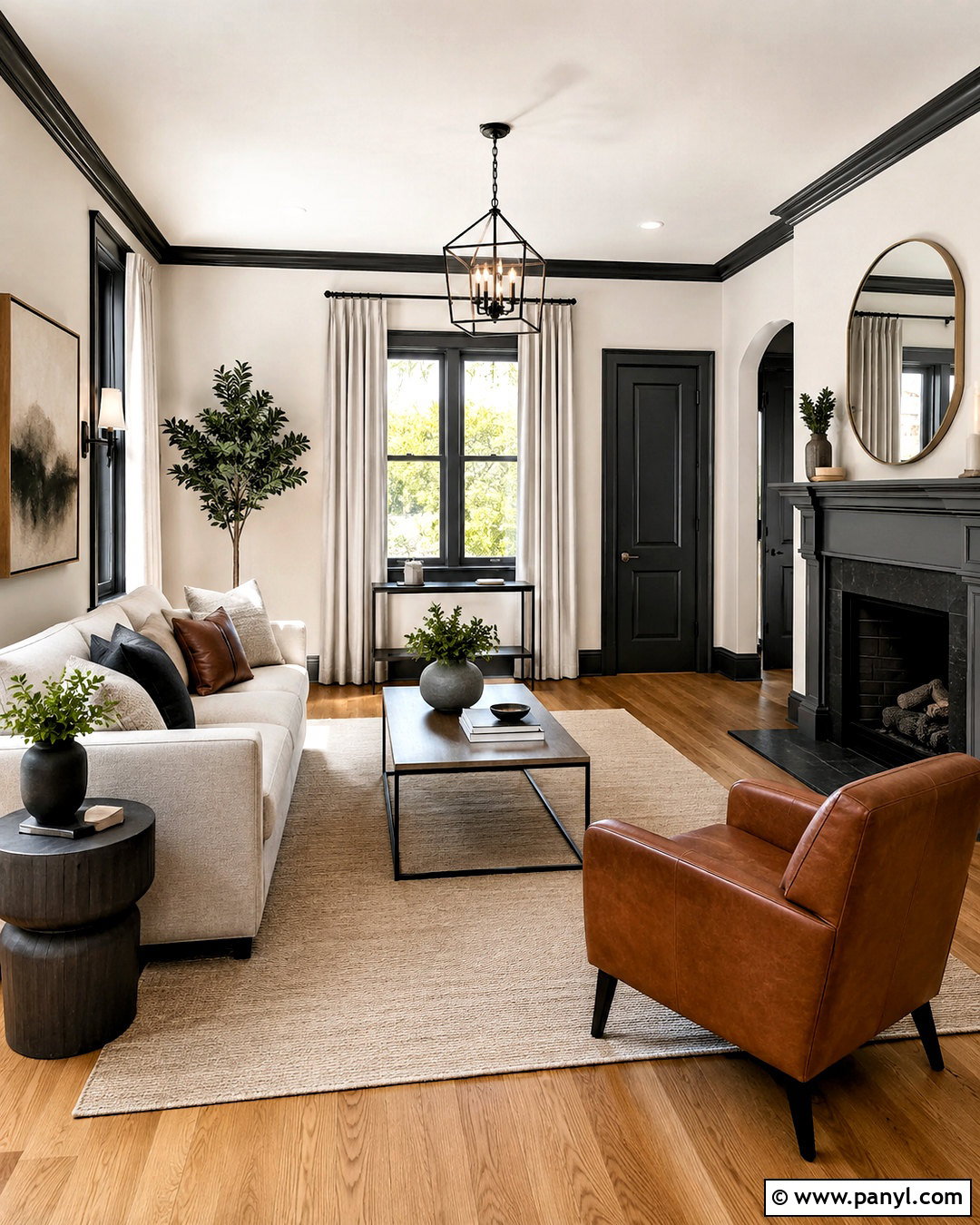
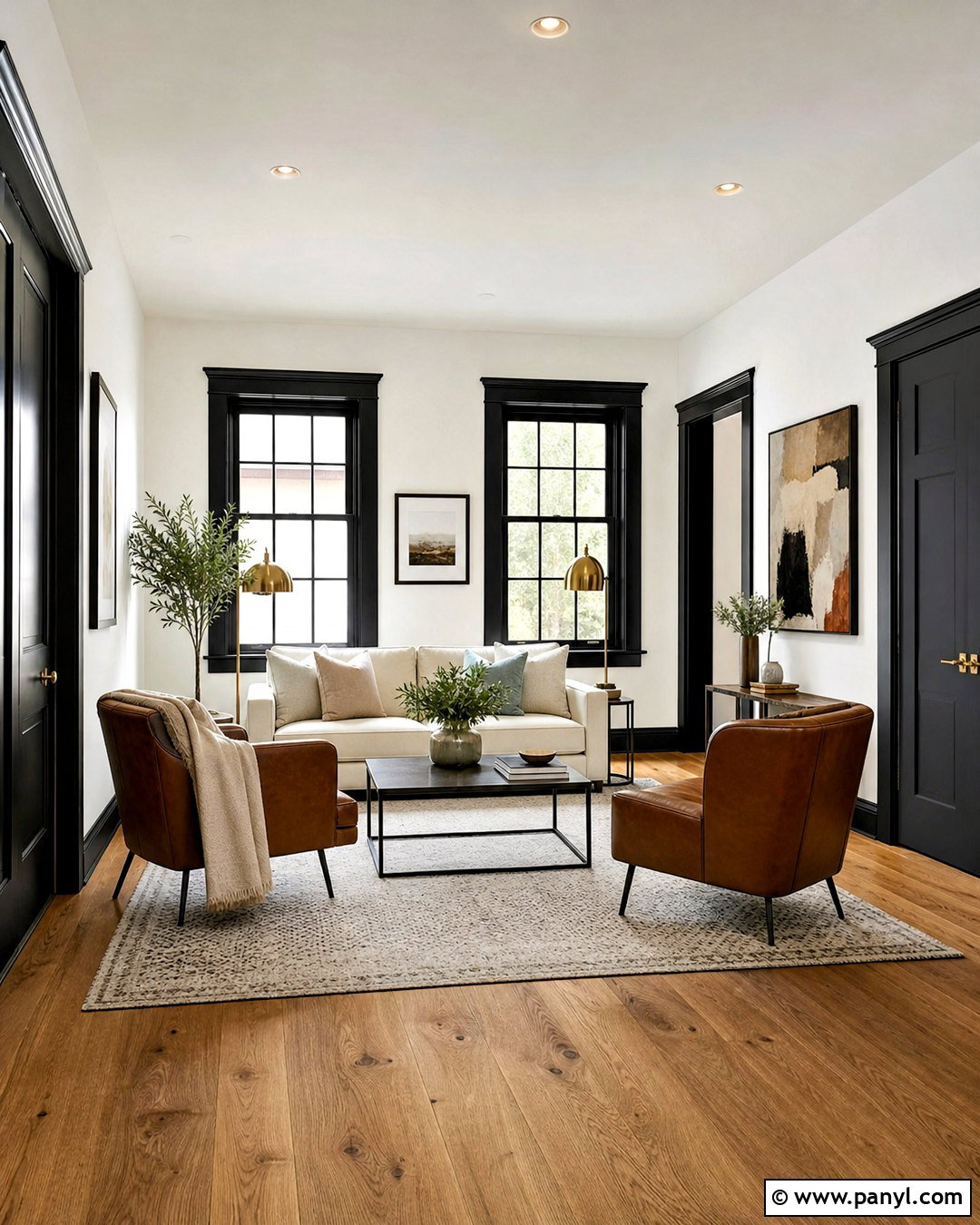
Black trim gives a bright living room a clean architectural outline without requiring dark walls. Use warm ivory paint on the walls, then carry soft black across the baseboards, window casings, doors, and simple fireplace surround. Choose a medium oak floor to keep the contrast from feeling cold. A light oatmeal sofa, cognac leather chair, and textured beige rug soften the stronger edges. Repeat black through the curtain rods, coffee table frame, and one sculptural floor lamp. Linen drapes and natural woven accents prevent the room from appearing overly formal. This complete scheme works especially well where large windows provide generous daylight. Select satin paint for the trim so it is durable but less reflective than a high-gloss finish.
2. Greige Trim With White Walls
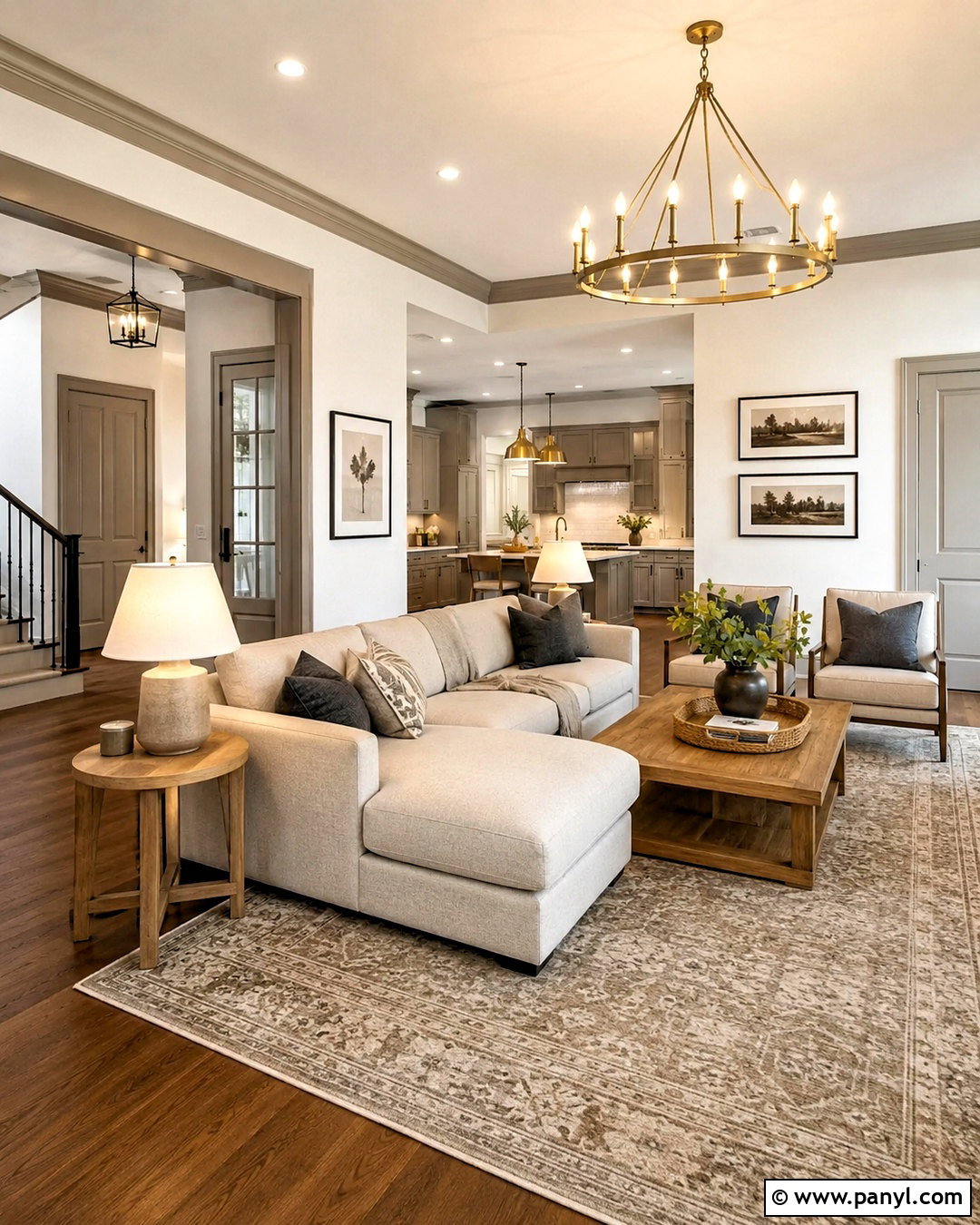
Greige trim creates gentle definition when pure contrast feels too sharp. Begin with creamy white walls and paint every baseboard, door casing, interior door, and crown molding a medium warm greige. The slight depth makes the architecture visible while preserving a calm, airy feeling. Furnish the room with a flax-colored sectional, light oak tables, and a softly patterned rug containing beige and gray. Brushed brass lighting adds warmth, while charcoal pillows provide a small amount of contrast. This combination is particularly useful in an open-plan home because greige can connect several rooms without dominating any one space. Check the trim sample beside the flooring first. A gray with brown undertones usually relates better to wood, stone, and warm white walls.
3. Sage Green Trim Kitchen
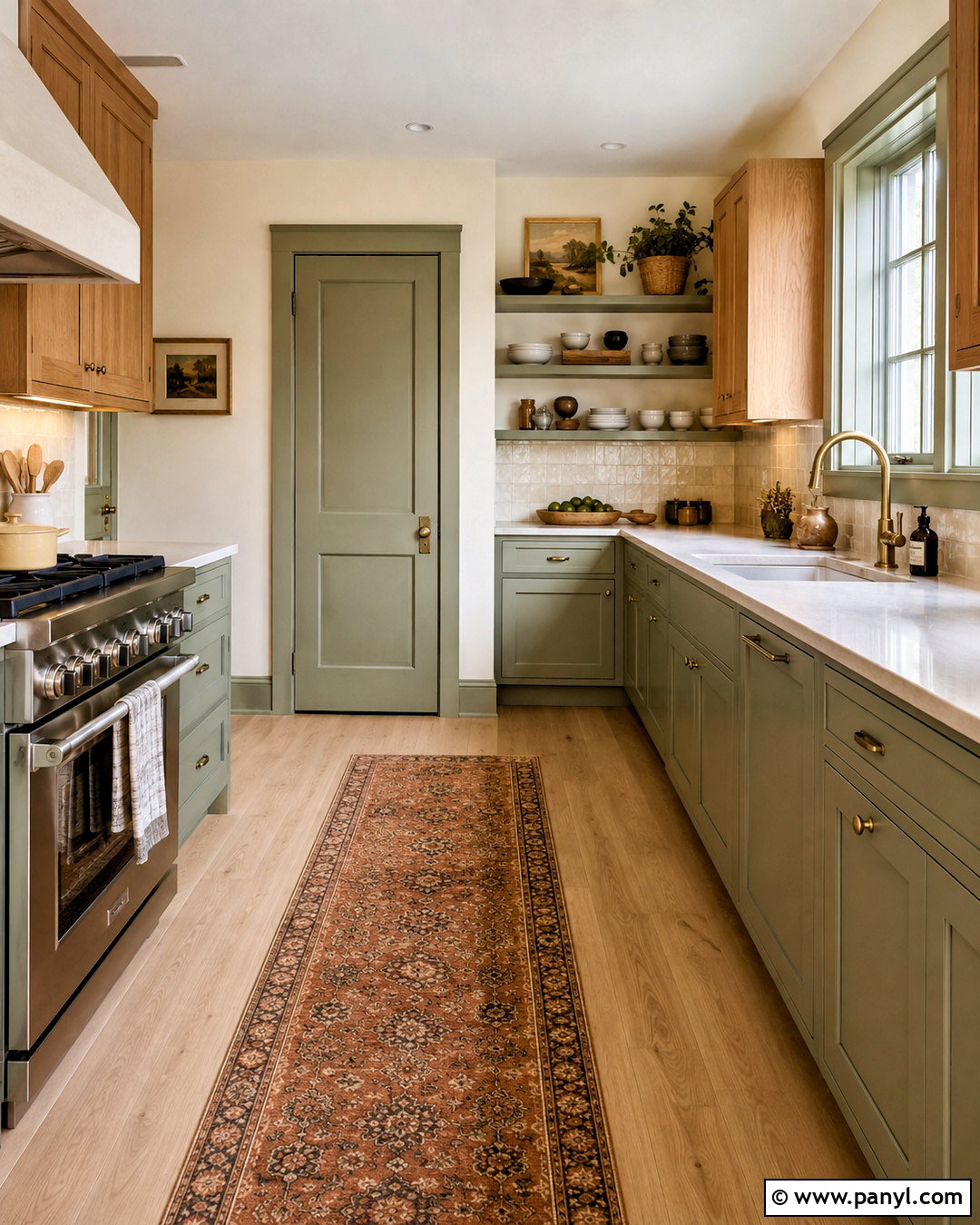
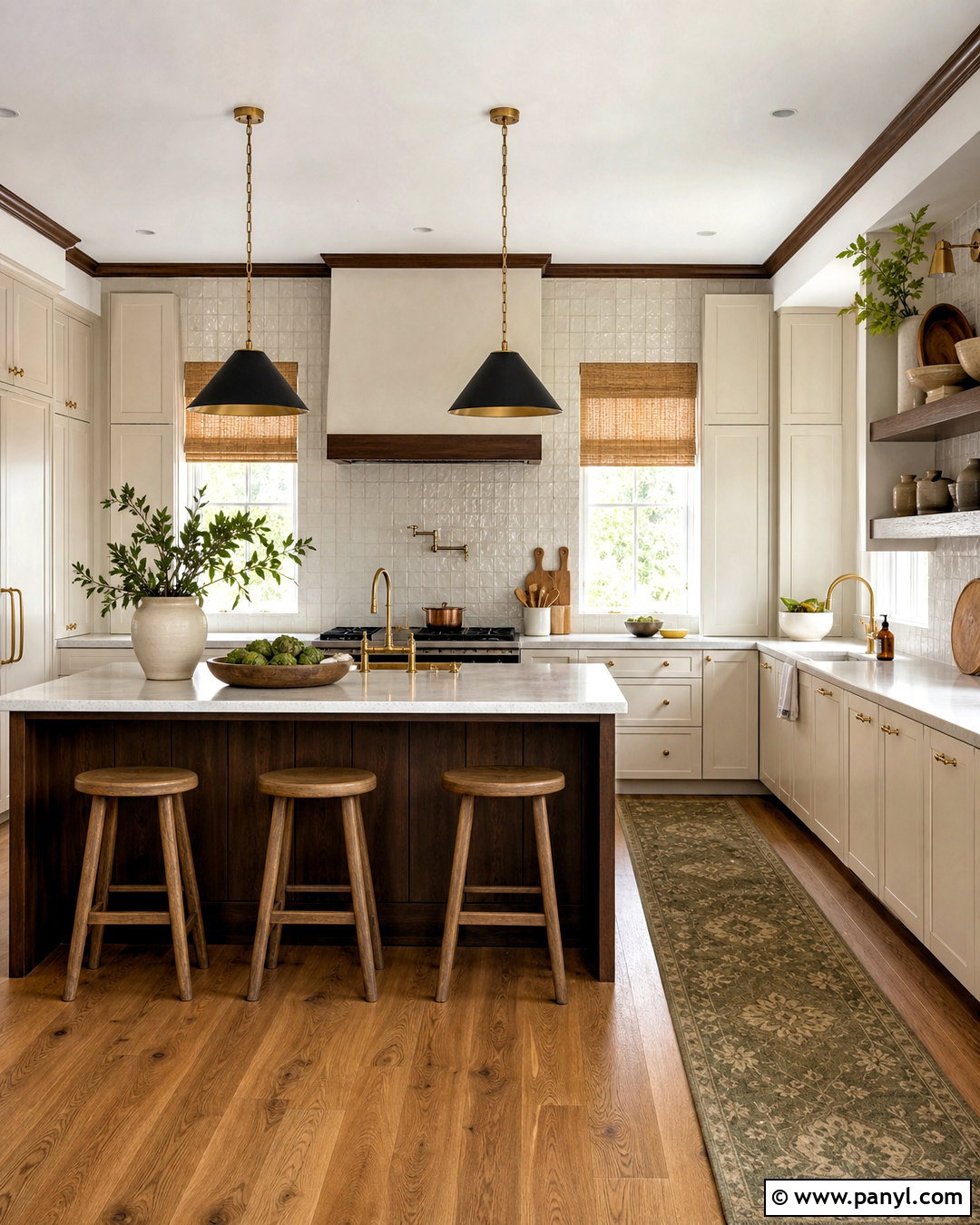
A soft sage green kitchen feels collected when the trim, cabinetry, and doors share one coordinated finish. Keep the walls a warm cream, then use muted sage on the baseboards, window casing, pantry door, lower cabinets, and open shelving. Add simple oak upper cabinets or a matching oak island to break up the painted surfaces. Honed cream quartz counters, handmade beige backsplash tile, and aged brass hardware complete the palette. A small vintage-style runner can introduce rust, olive, and faded blue. This look brings color into the kitchen without making it feel loud. Use washable satin or semi-gloss paint on the woodwork, especially near the sink and cooking areas. The result is relaxed, practical, and suitable for modern farmhouse or cottage interiors.
4. Navy Blue Trim Dining Room
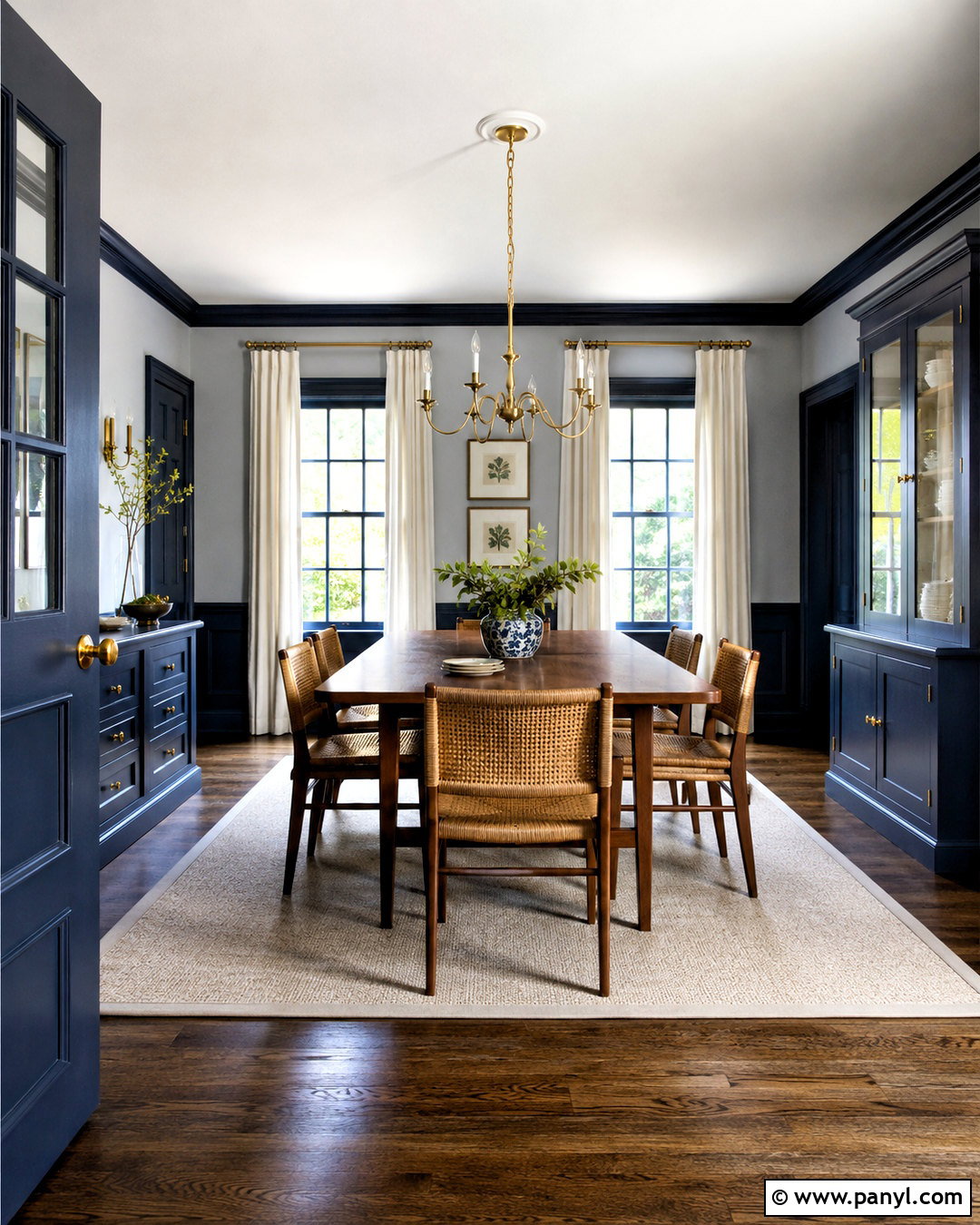
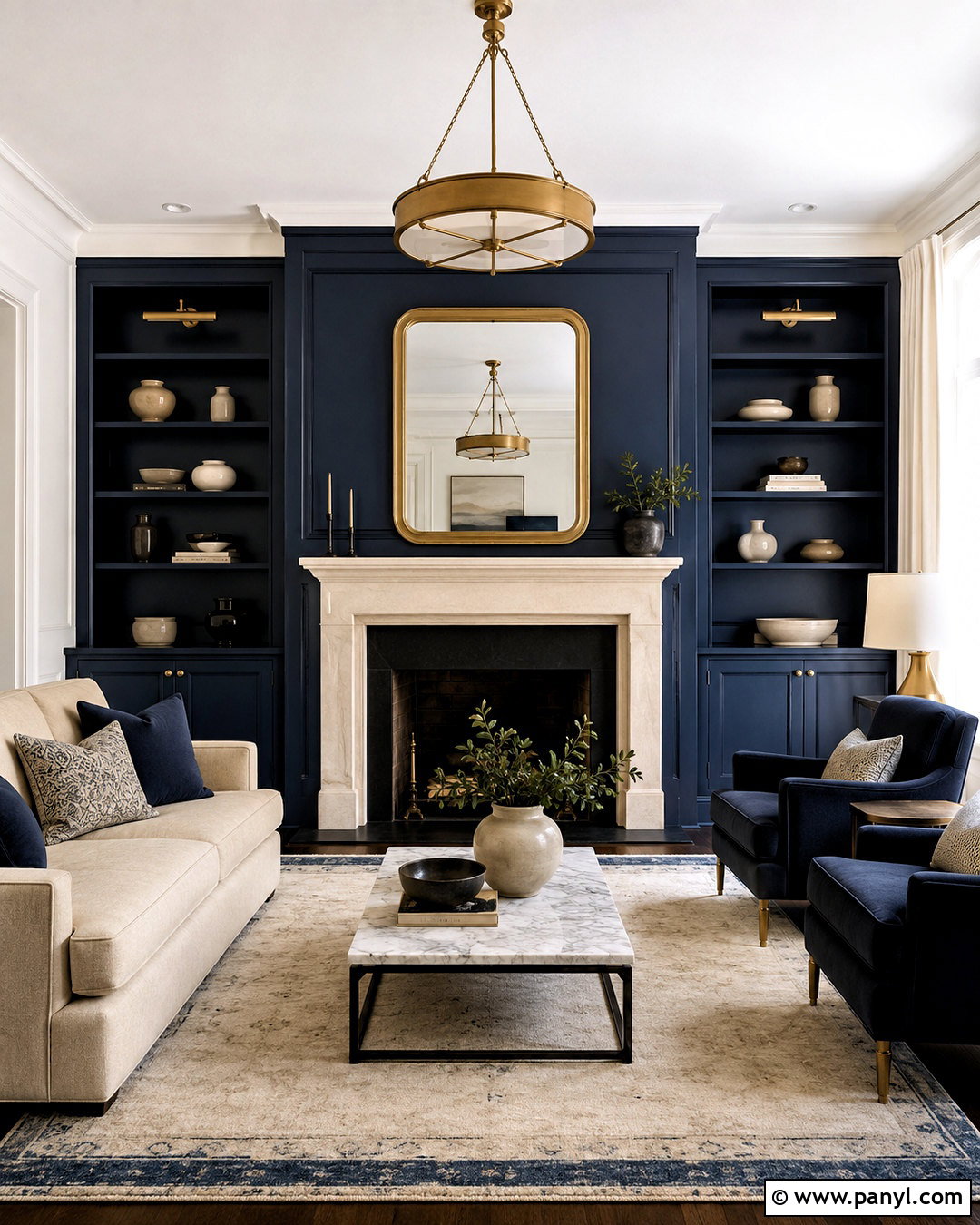
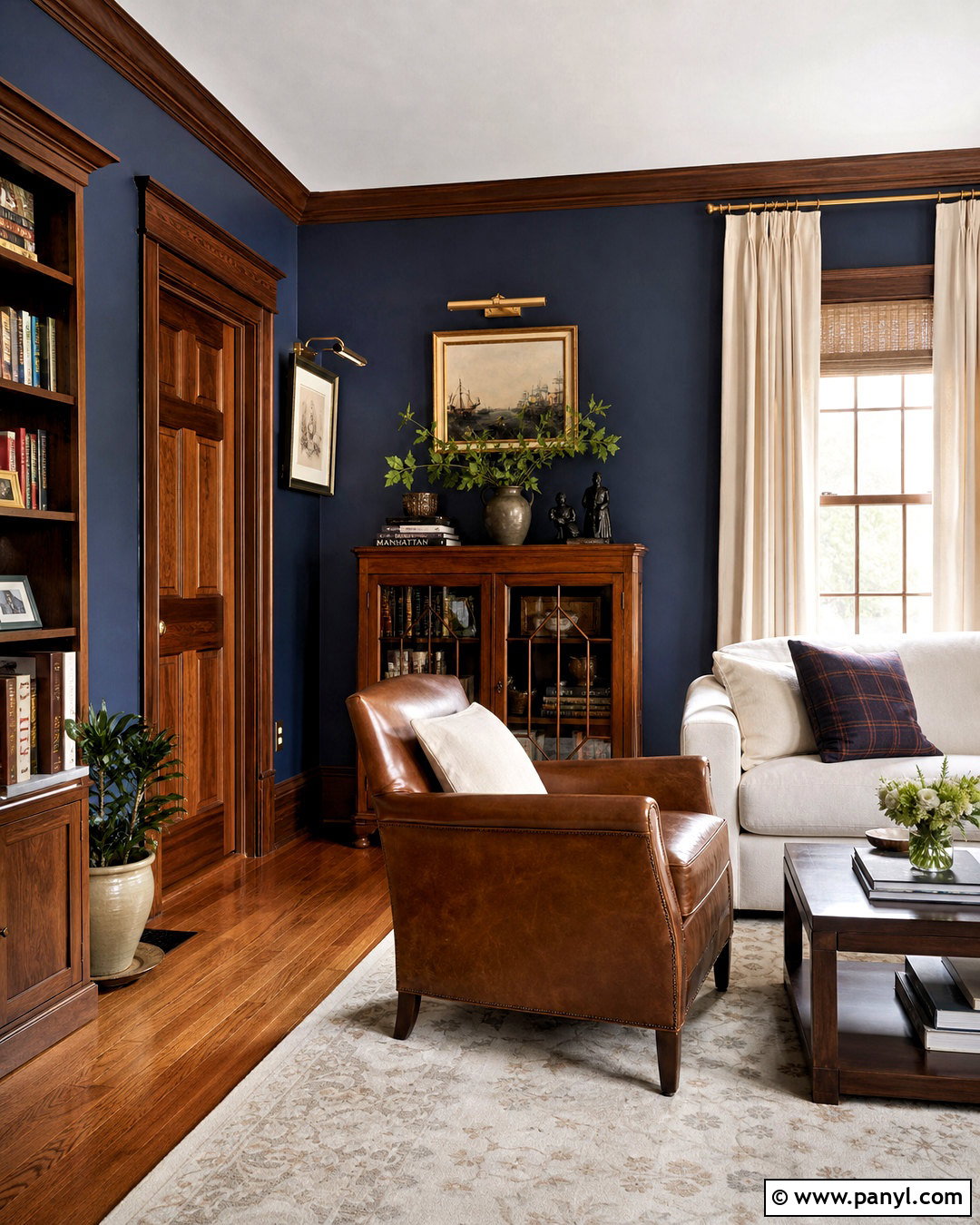
Navy trim can make an ordinary dining room feel polished and established. Pair pale blue-gray walls with deep navy baseboards, window frames, door casings, crown molding, and a painted built-in cabinet. Continue the navy onto the interior door for a stronger, more unified result. Center the room with a warm walnut table and woven rush-seat chairs. An ivory wool rug keeps the dark perimeter from becoming visually heavy. Add an aged brass chandelier, simple linen curtains, and framed botanical artwork with muted green details. The brown wood and brass balance the cool blue tones. This scheme works best when the navy has a slightly softened undertone rather than a bright nautical quality. Test it in daylight and under the room’s evening bulbs before committing.
5. Natural Wood Trim Interior
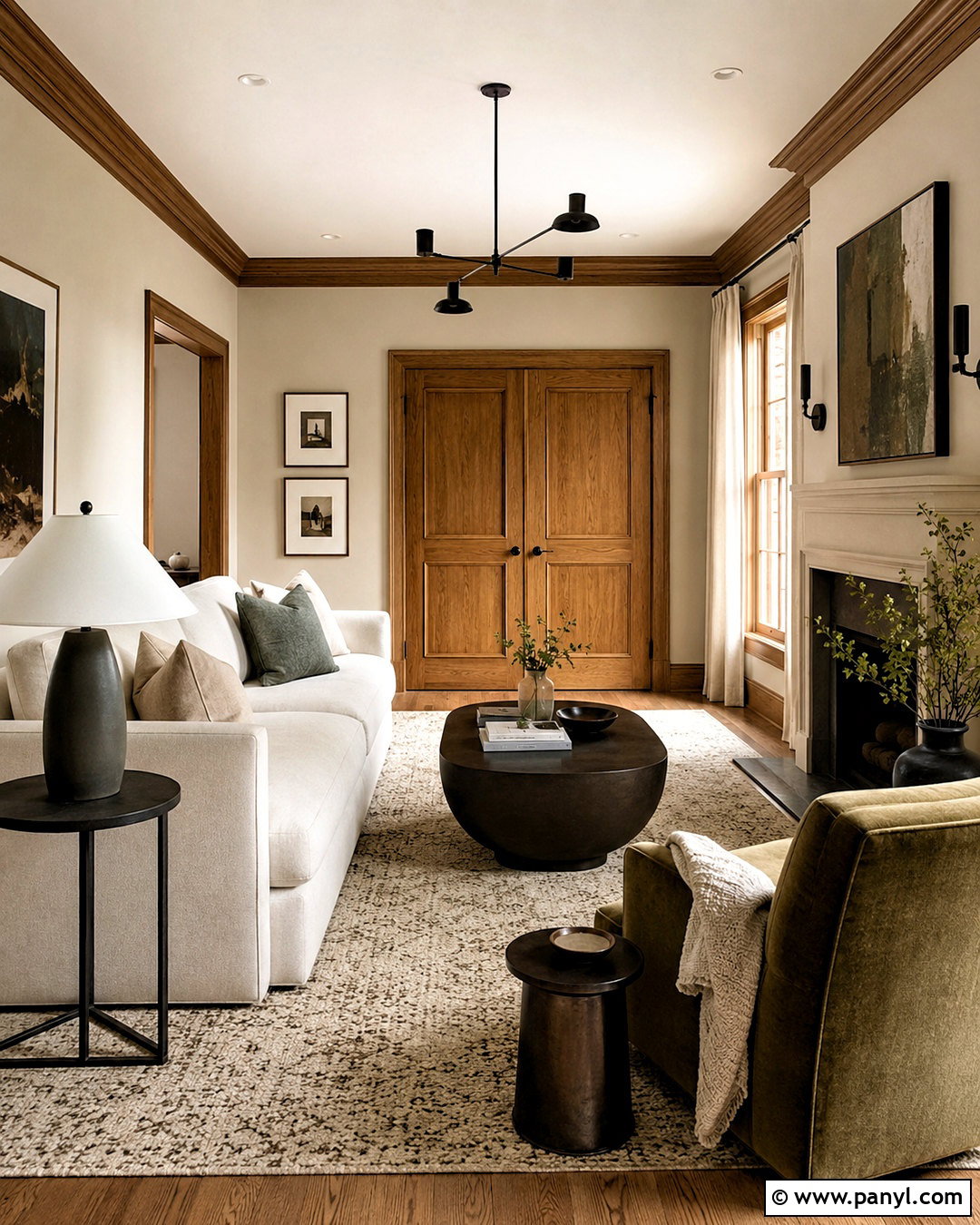
Original woodwork can become the foundation of a warm, contemporary room rather than something that needs to be painted. Keep oak or medium walnut baseboards, window casings, doors, and crown molding in a clear matte finish. Pair them with soft putty walls that complement the wood’s natural undertones. Choose streamlined furniture, such as a cream sofa, dark bronze side tables, and a low-profile olive chair, to prevent the space from feeling dated. A textured wool rug and off-white linen curtains add softness without hiding the trim. Repeat the wood tone in one or two substantial pieces, but avoid matching every item. Black lighting and pottery provide modern contrast. Clean lines, limited patterns, and a restrained palette allow the natural trim to feel deliberate.
6. Taupe Trim Bedroom
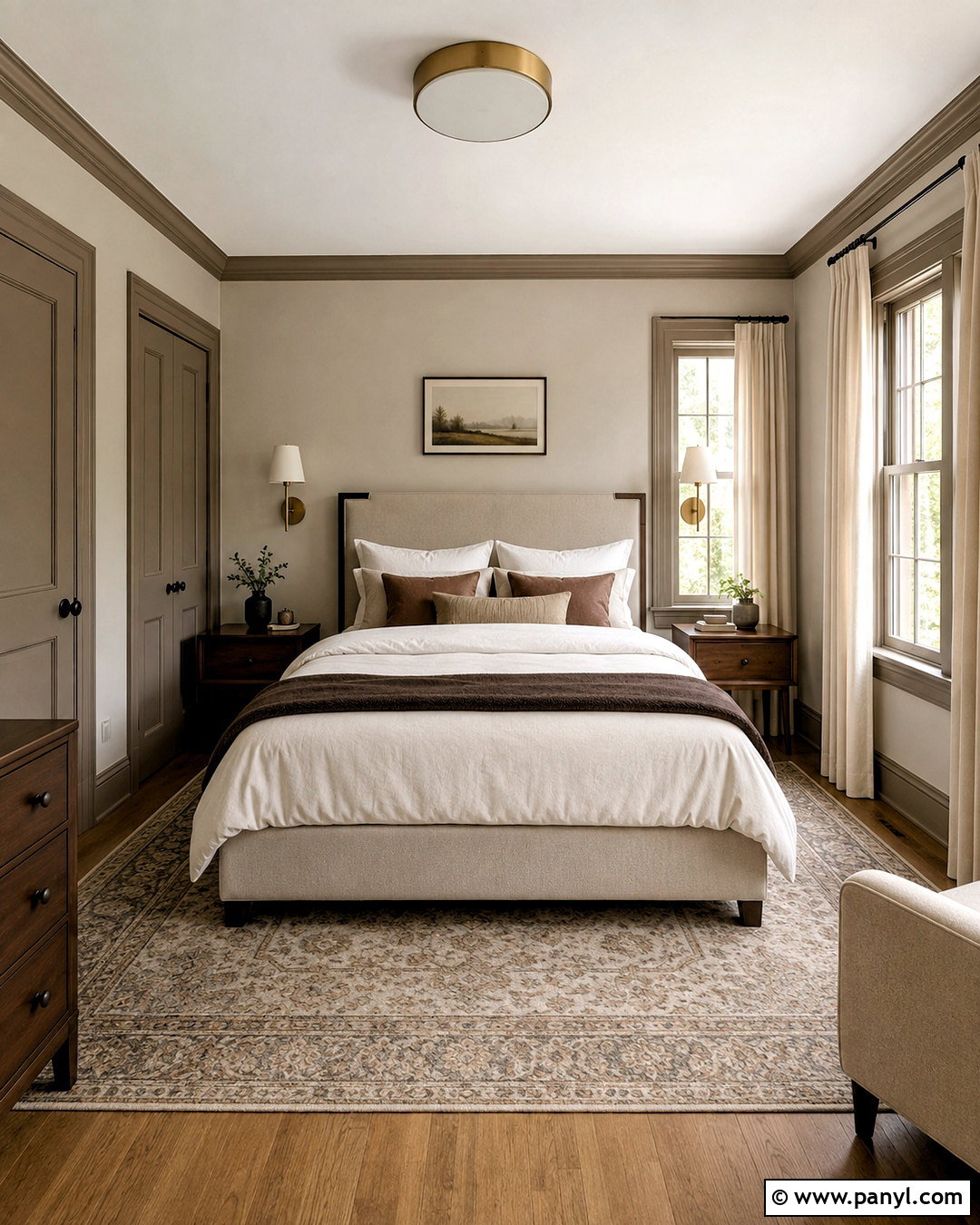
Imagine a quiet bedroom where every edge feels soft rather than sharply outlined. Paint the walls a pale mushroom beige, then use a deeper taupe on the baseboards, window casing, crown molding, closet doors, and bedroom door. Place a linen-upholstered bed against the main wall and layer it with ivory bedding, a cocoa throw, and muted clay pillows. Walnut nightstands introduce natural warmth, while shaded brass sconces keep the arrangement uncluttered. Use oatmeal curtains hung close to the ceiling and a large cream-and-taupe rug beneath the bed. This tonal design makes even simple trim look considered. Keep the ceiling a warm off-white to preserve brightness. The finished room feels cozy and dimensional without depending on strong patterns or dramatic accent colors.
7. Charcoal Trim With Beige Walls
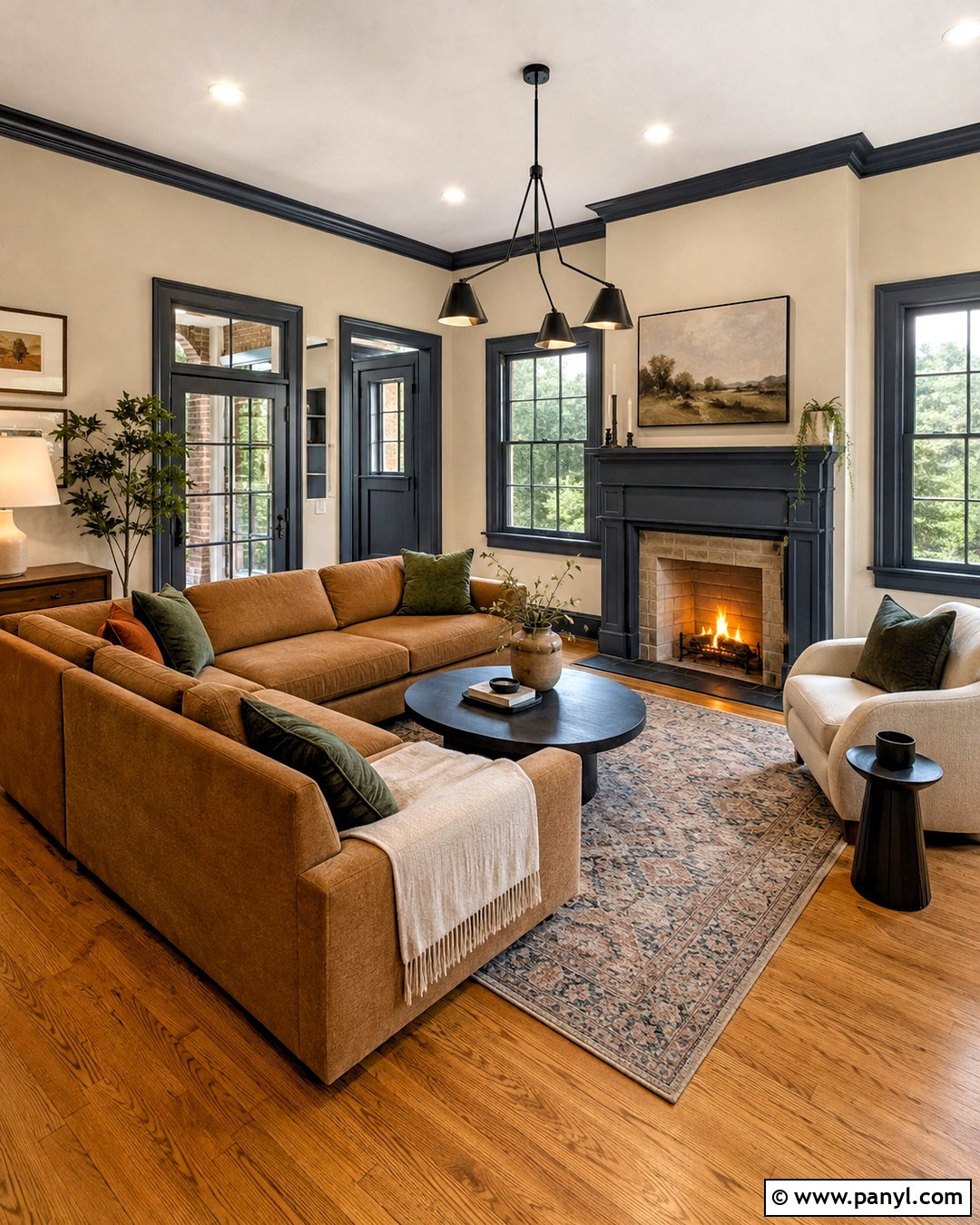
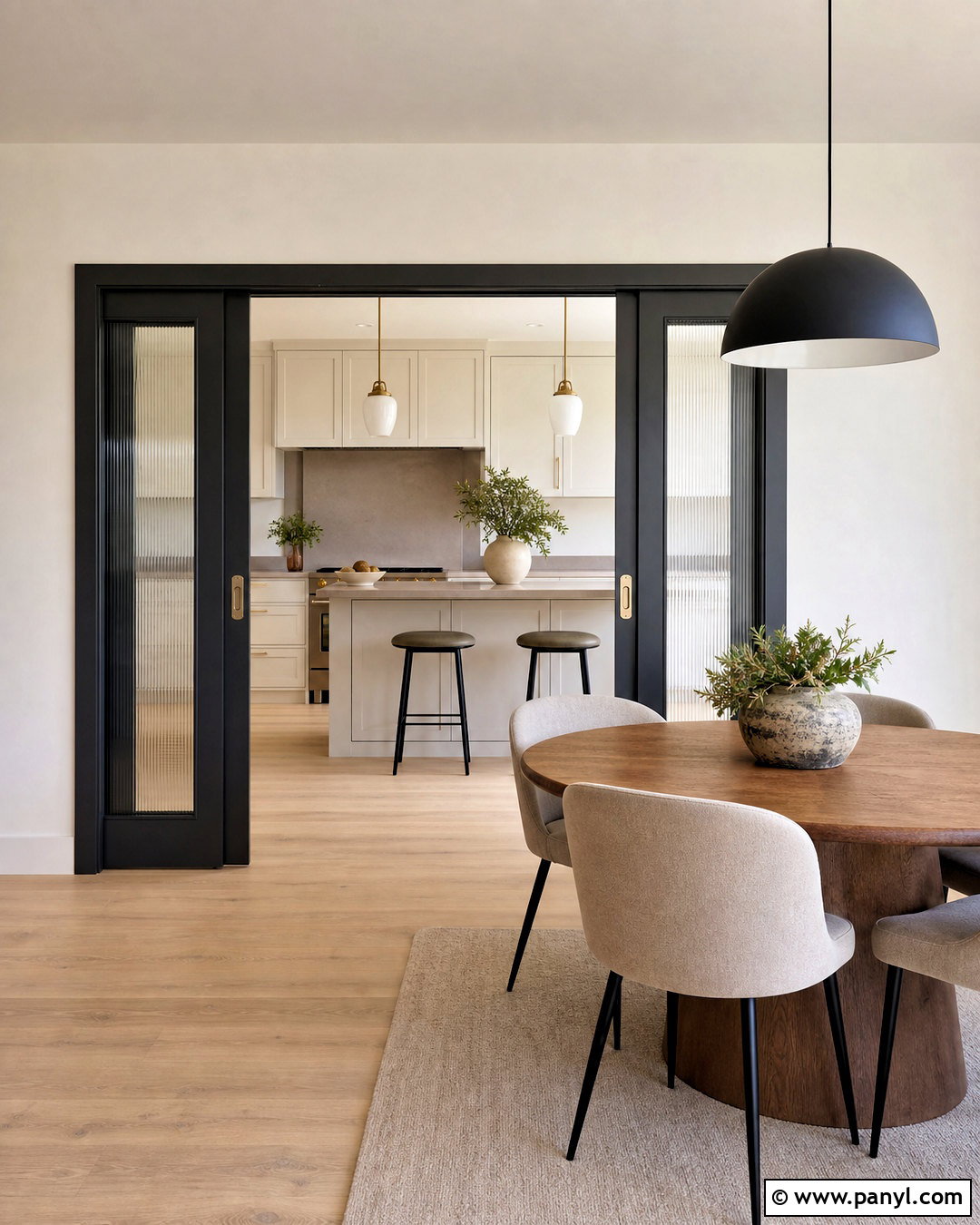
Charcoal trim grounds beige walls and gives a family room a tailored appearance. Choose a soft sandy beige for the walls and a deep charcoal gray for the windows, baseboards, door casings, interior doors, and fireplace mantel. Keep the flooring medium-toned oak so the palette remains warm. A roomy camel sectional, cream boucle chair, and faded geometric rug create a comfortable seating area. Repeat charcoal in the media console and metal lighting, but introduce rust and moss green through pillows and artwork. This approach offers nearly as much definition as black trim while looking slightly softer. In smaller rooms, limit the charcoal to the lower trim, doors, and windows rather than the crown molding. That prevents the dark color from visually lowering the ceiling.
8. Dusty Blue Trim Nursery
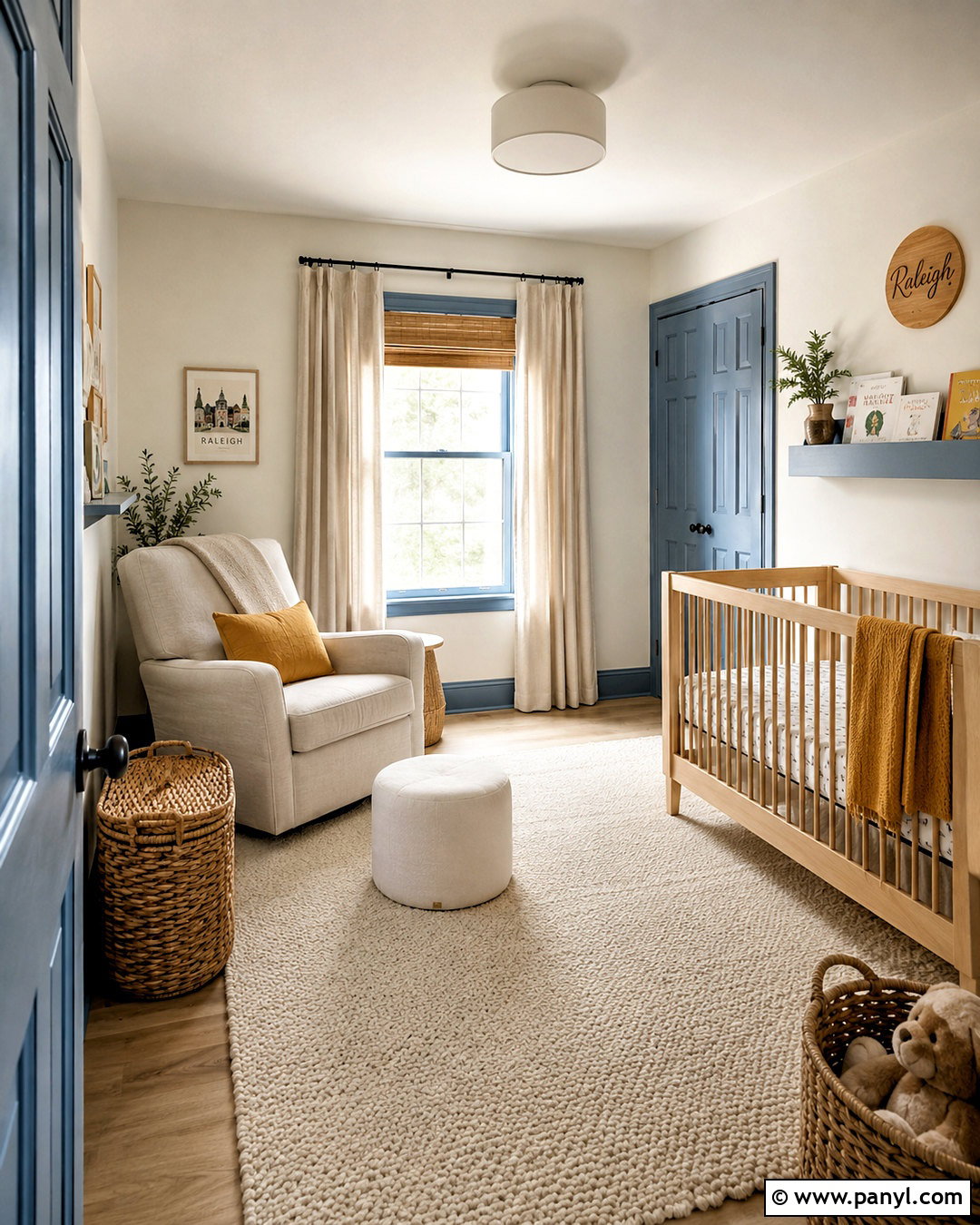
Dusty blue trim brings gentle color to a nursery without creating an overly themed room. Use warm ivory on the walls, then paint the baseboards, door, window casing, closet doors, and a low wall-mounted book ledge a muted gray-blue. Add a natural maple crib, an oatmeal glider, and a washable cream rug with a small blue pattern. Simple linen curtains, woven baskets, and pale wood shelving keep the room light and practical. Introduce touches of muted mustard or terracotta through a blanket and framed artwork for balanced warmth. The blue woodwork should have enough gray to remain restful in changing daylight. Choose a durable low-VOC paint appropriate for interior trim, and allow it to cure fully before the room is used regularly.
9. Burgundy Trim Home Library
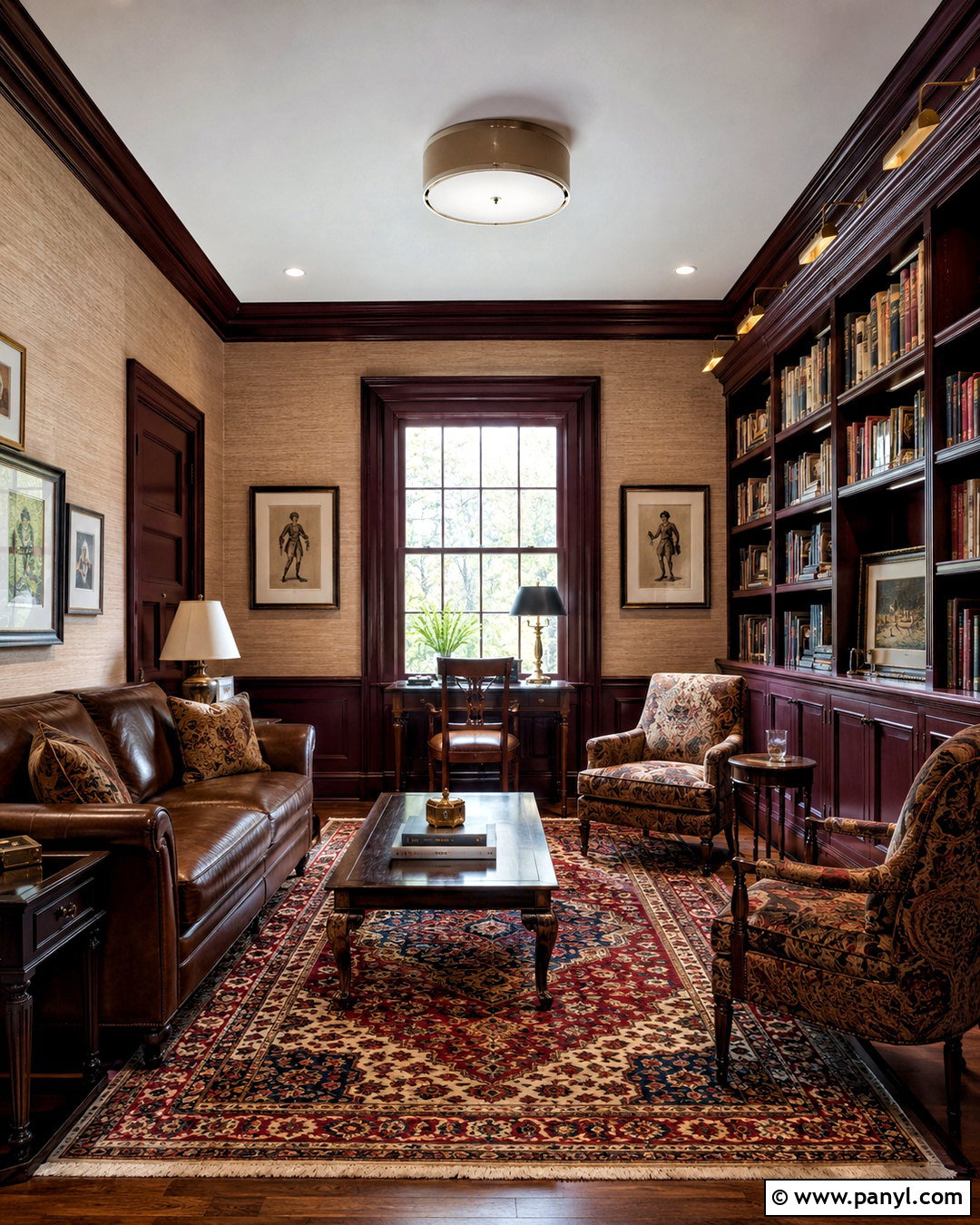
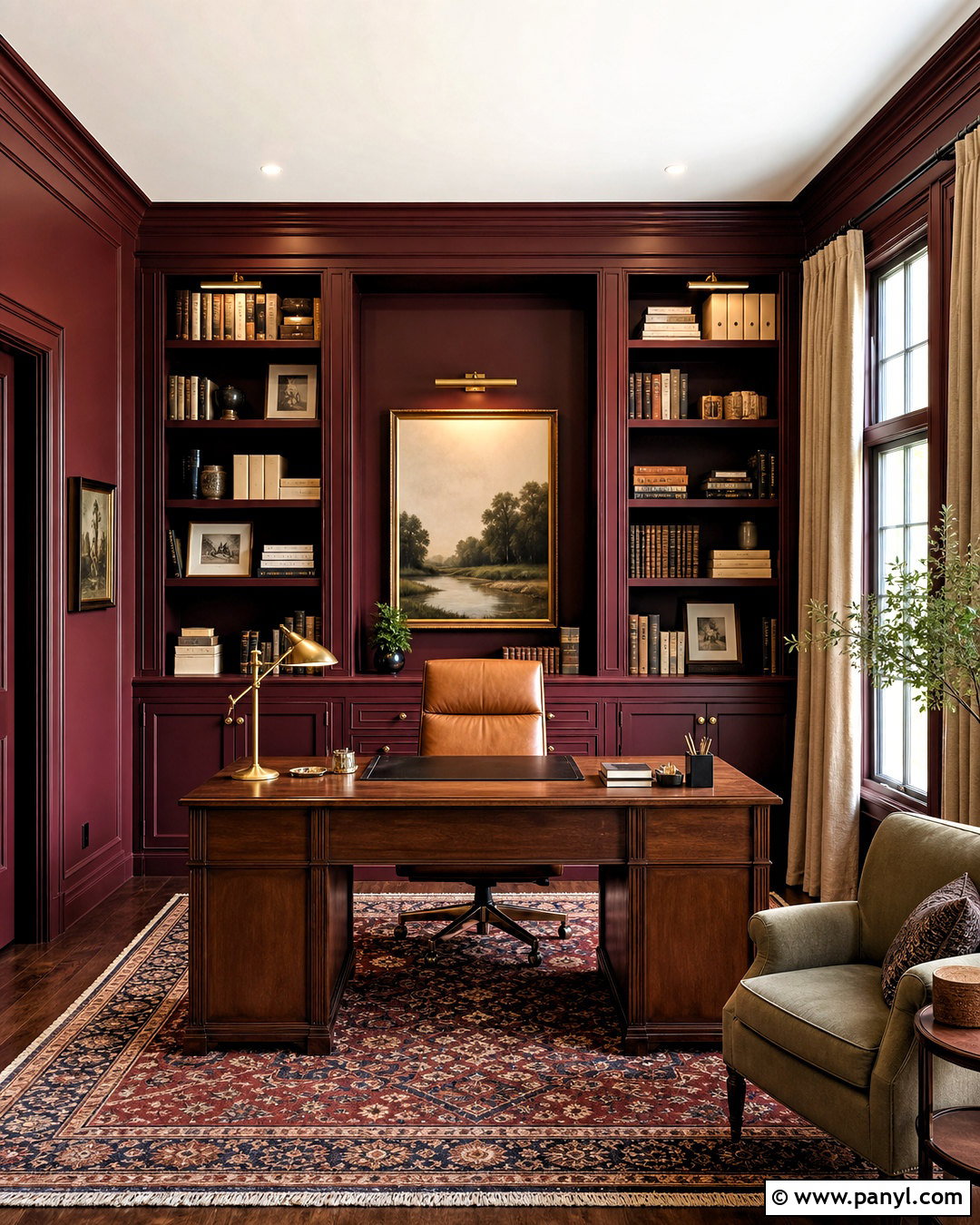
Rich burgundy trim turns a home library into a warm, immersive retreat. Cover the walls with tan grasscloth or matte camel paint, then apply deep wine-red paint to the baseboards, crown molding, window casing, door, and floor-to-ceiling bookcases. Place a compact brown leather sofa opposite two patterned reading chairs. A worn Persian-style rug can connect burgundy, navy, cream, and muted gold throughout the space. Add antique brass picture lights above the shelves and use ivory linen shades at the window to filter daylight. Dark walnut tables strengthen the traditional mood without competing with the painted woodwork. Because burgundy has a strong presence, keep accessories edited and book arrangements tidy. The completed room should feel enveloping, comfortable, and usable rather than theatrical.
10. Olive Green Trim Entryway
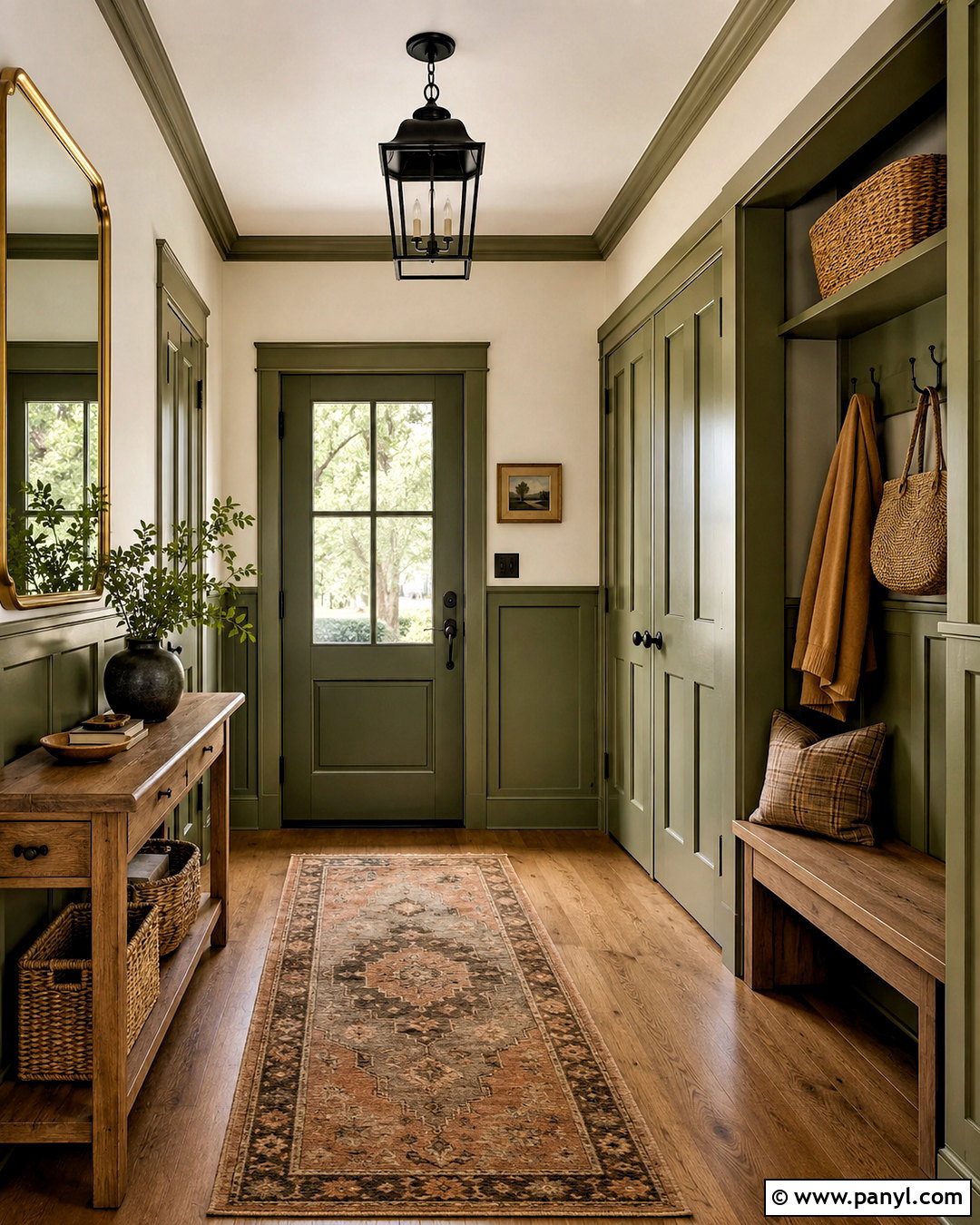
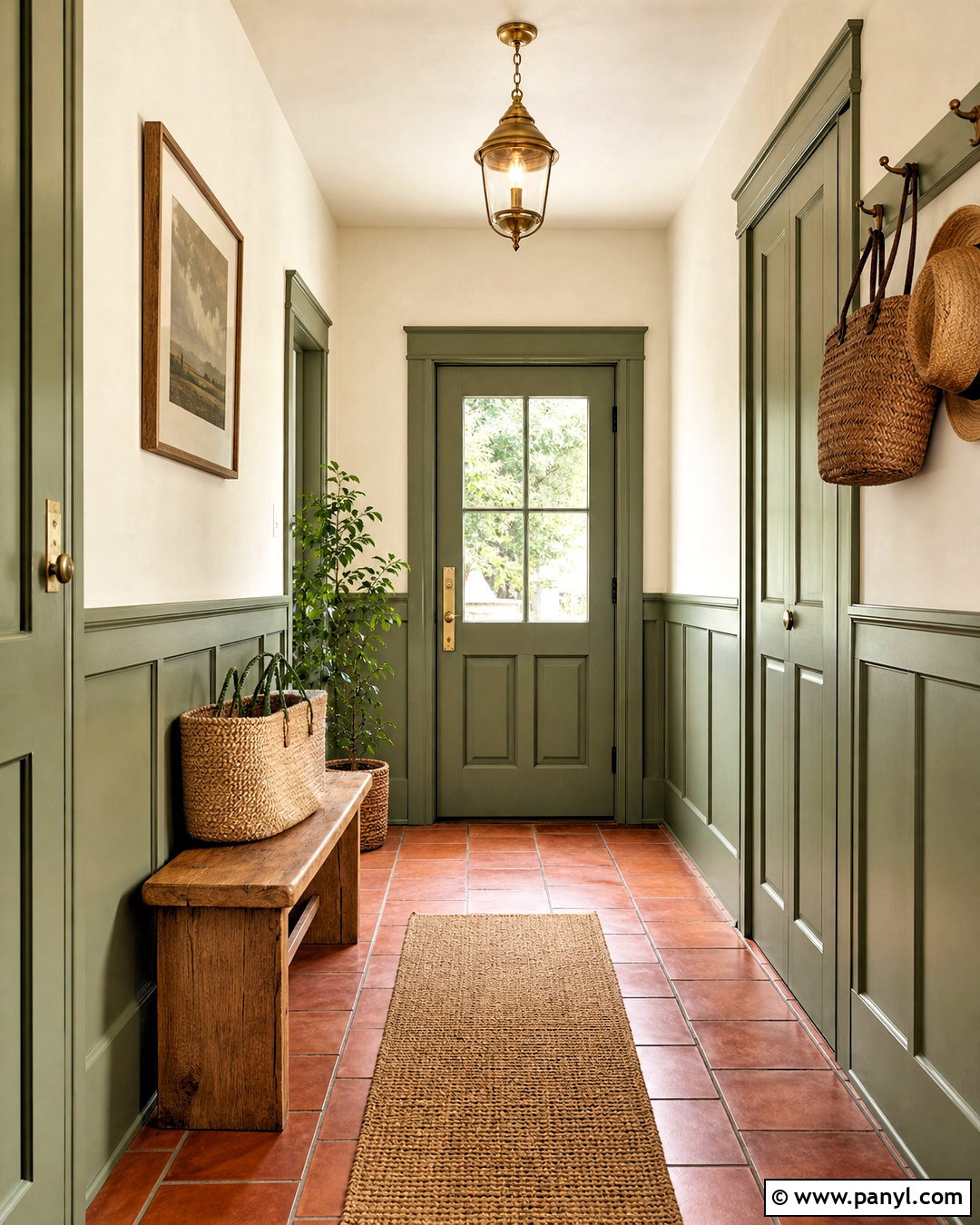
An entryway is an ideal place to try olive green trim because the color creates an immediate sense of character. Paint the upper walls a warm limestone beige and use earthy olive on the baseboards, door casings, interior doors, coat closet, and simple wall paneling below chair-rail height. Install a slim oak console, a rounded brass mirror, and a durable runner containing rust, cream, and faded green. A black metal ceiling lantern adds crisp contrast. Include a wooden bench with woven storage baskets if space allows. Continue the olive trim just far enough into connecting rooms to make the transition feel intentional. Since entryways receive frequent contact, use a washable satin or semi-gloss finish. The complete look feels grounded, welcoming, and practical for everyday traffic.
11. Terracotta Trim Sunroom
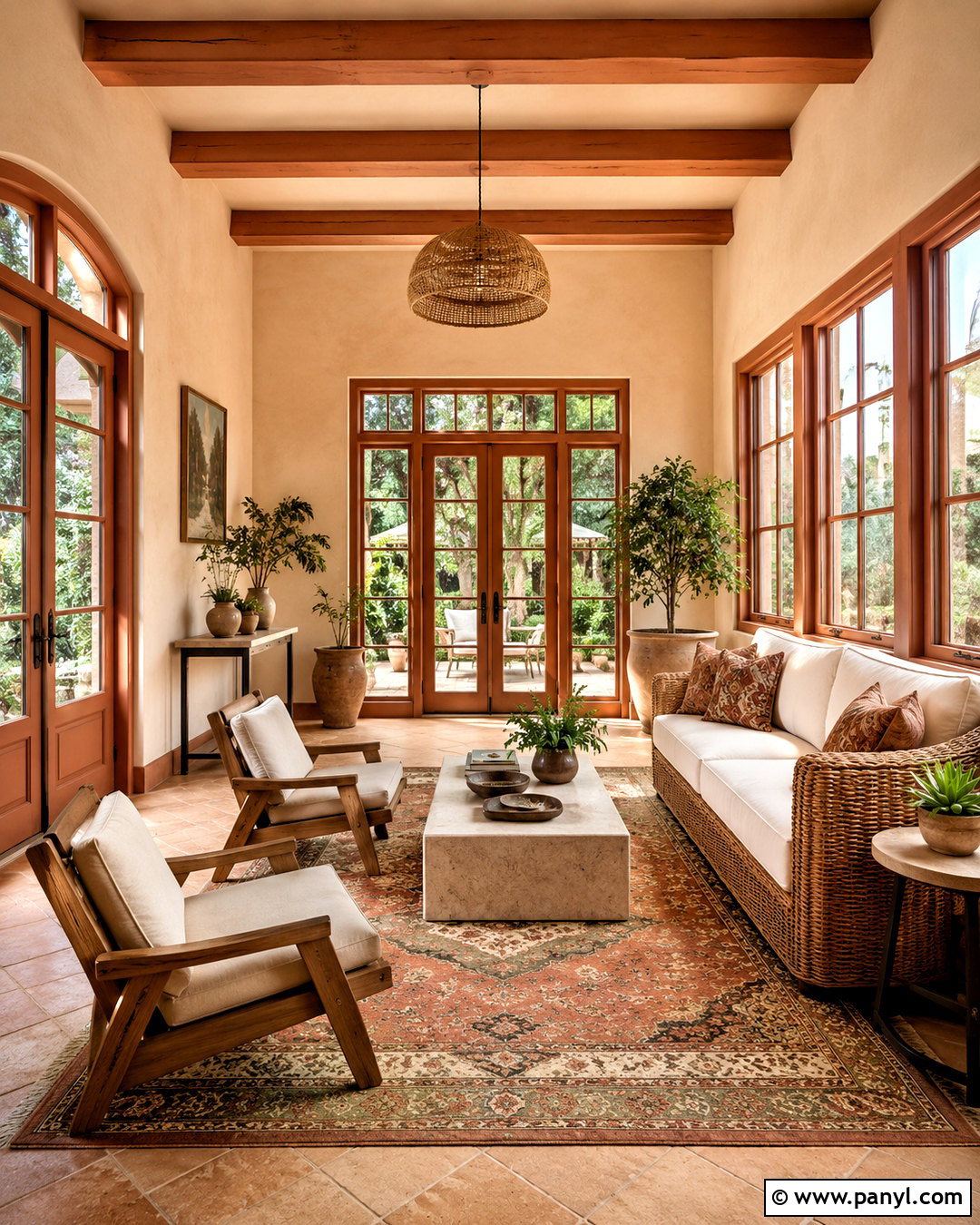
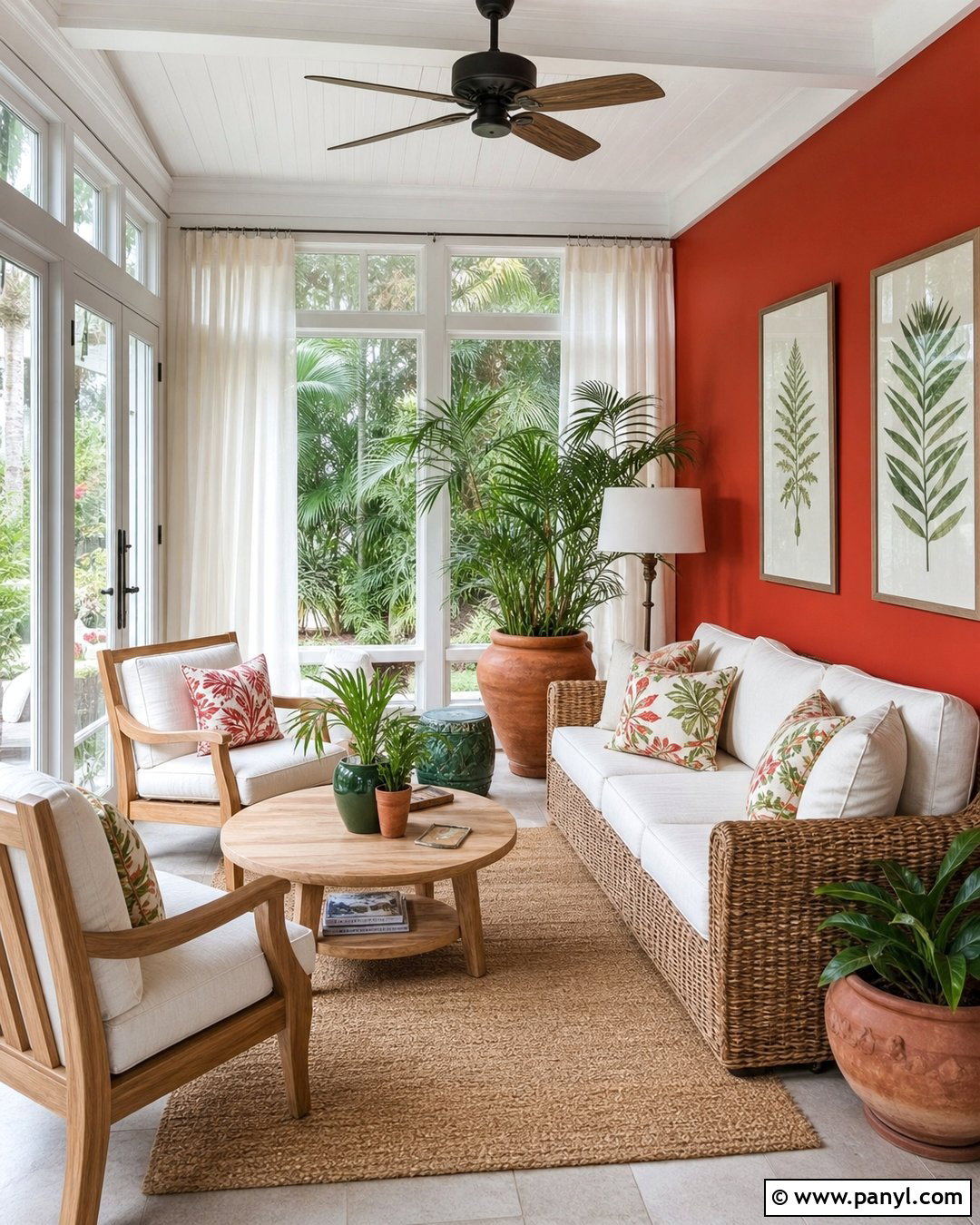
Sunlight makes warm terracotta trim appear lively, earthy, and inviting. Paint the walls a pale creamy peach, then use a softened clay tone on the windows, baseboards, French doors, and ceiling beams. Furnish the sunroom with a woven rattan sofa, ivory seat cushions, and a pair of light oak lounge chairs. Add a flat-weave rug featuring tan, rust, and muted green. Large leafy plants in aged ceramic pots connect the trim color to the natural setting outside. Use simple linen roller shades rather than heavy curtains so the architectural woodwork remains visible. A round travertine coffee table adds weight and texture. Choose terracotta with brown or pink undertones instead of bright orange. This keeps the full room sophisticated while still celebrating warmth and abundant natural light.
12. Cream Trim With White Walls
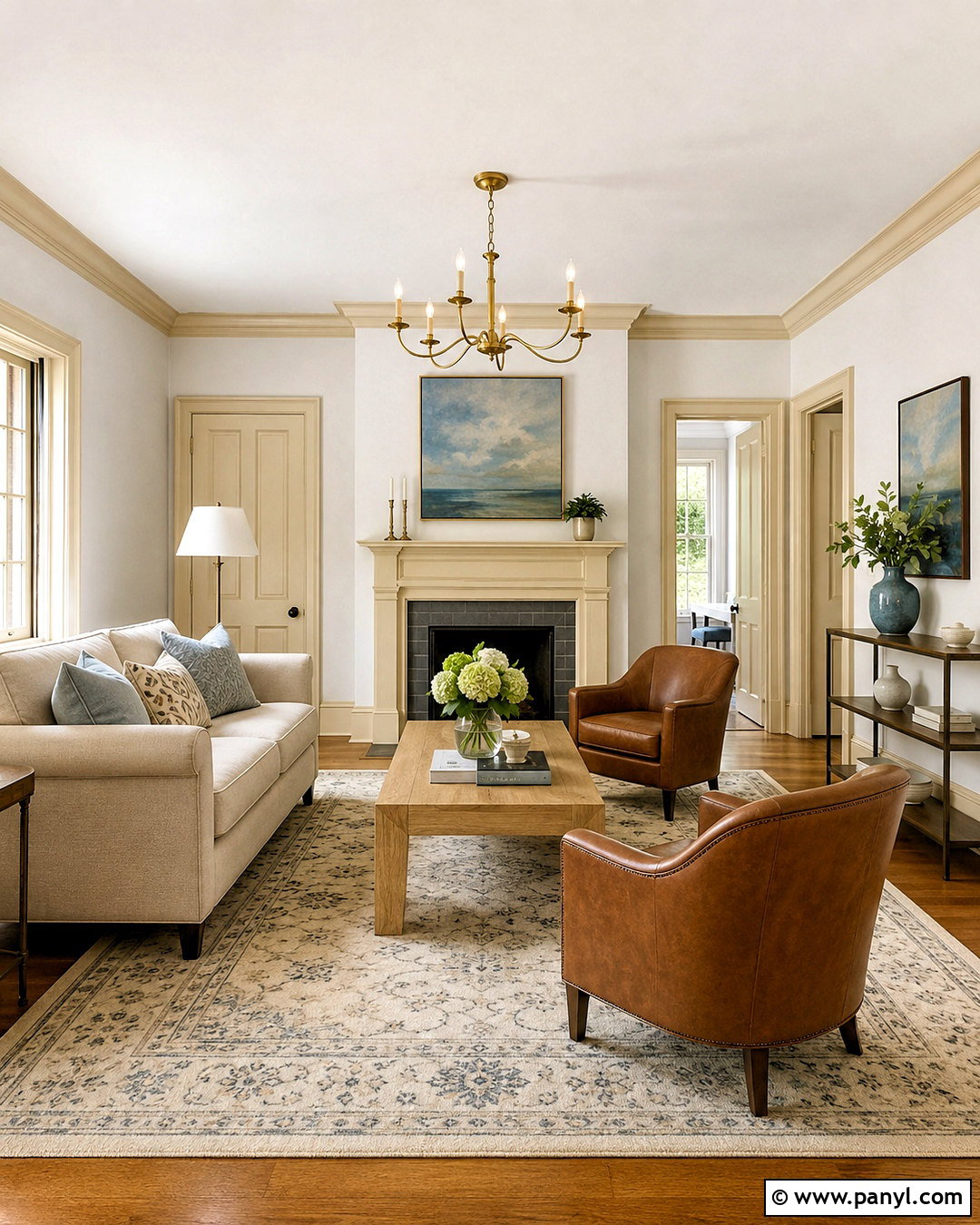
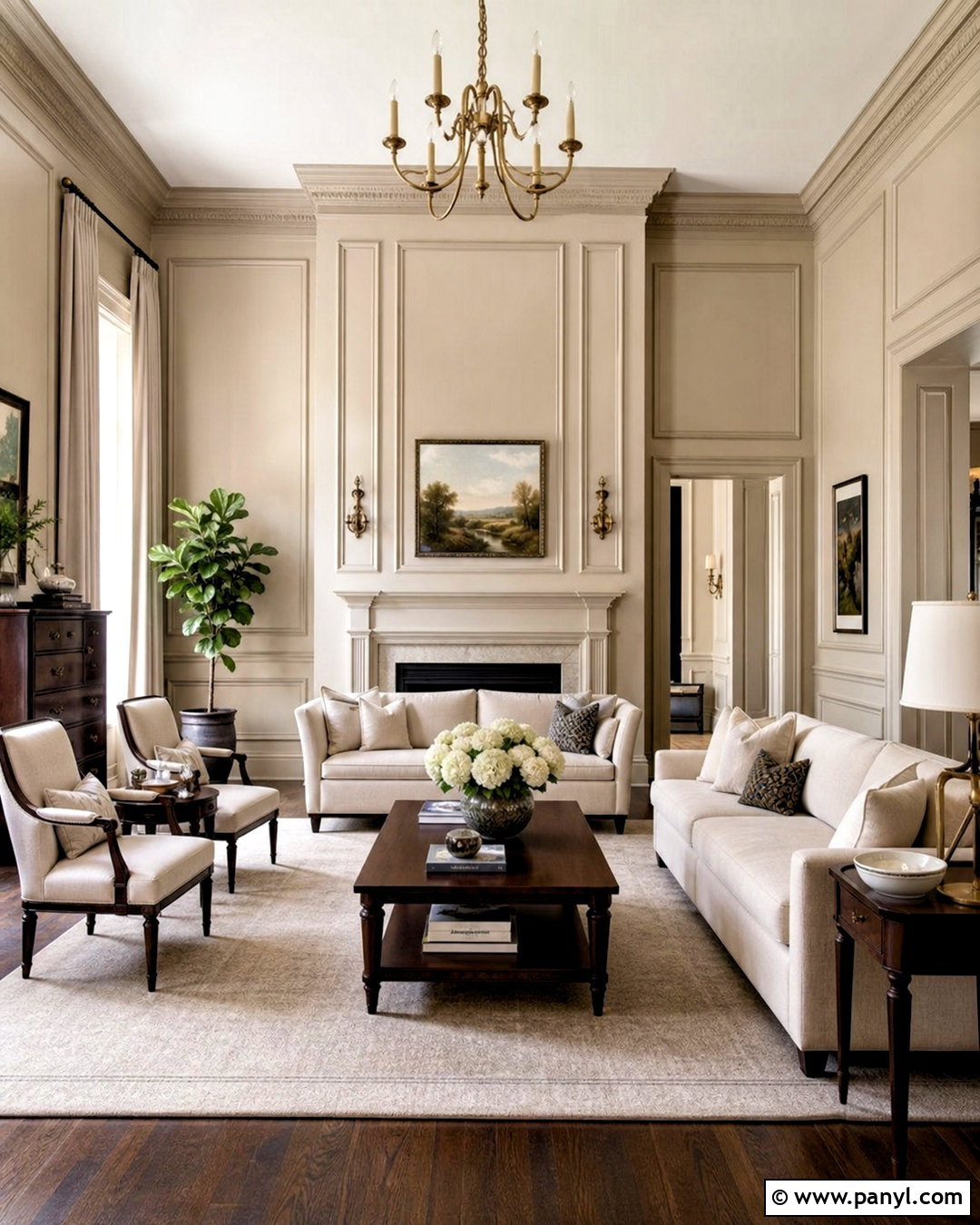
Cream trim against clean white walls offers subtle contrast that feels warmer than standard white-on-white construction. Paint the walls a balanced soft white, then apply buttery cream to the baseboards, crown molding, window casings, doors, and fireplace surround. Build the room around a beige sofa, two light brown armchairs, and a pale oak coffee table. Add a softly patterned rug with ivory, tan, and faded blue details. Antique brass lighting and warm-toned artwork support the creamy woodwork. The trim should be noticeably deeper than the walls, but not so yellow that it looks aged. This combination is especially attractive in traditional homes with substantial molding. It highlights those details gently while keeping the room bright, versatile, and easy to coordinate with neighboring spaces.
13. Color Drenched Green Living Room
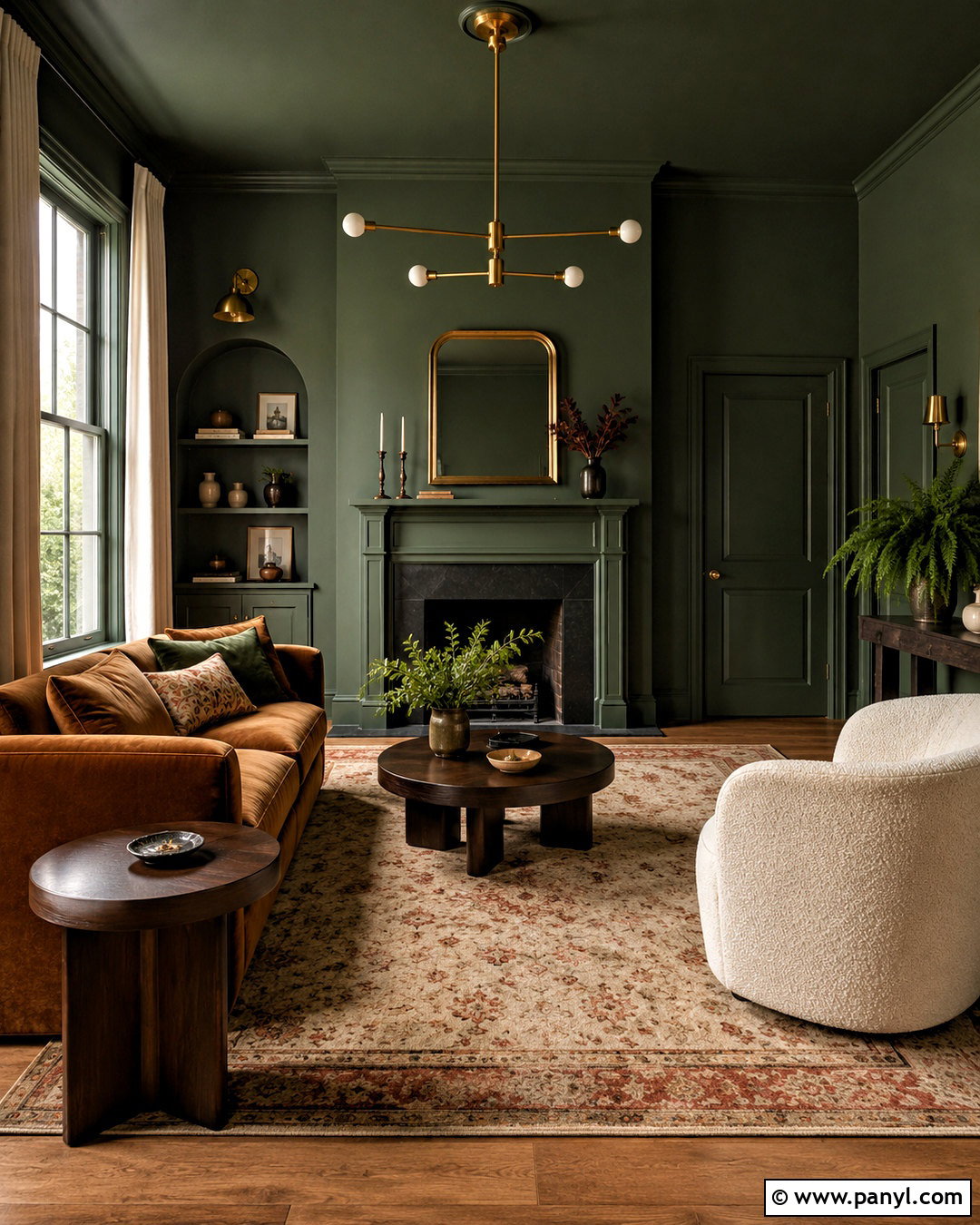
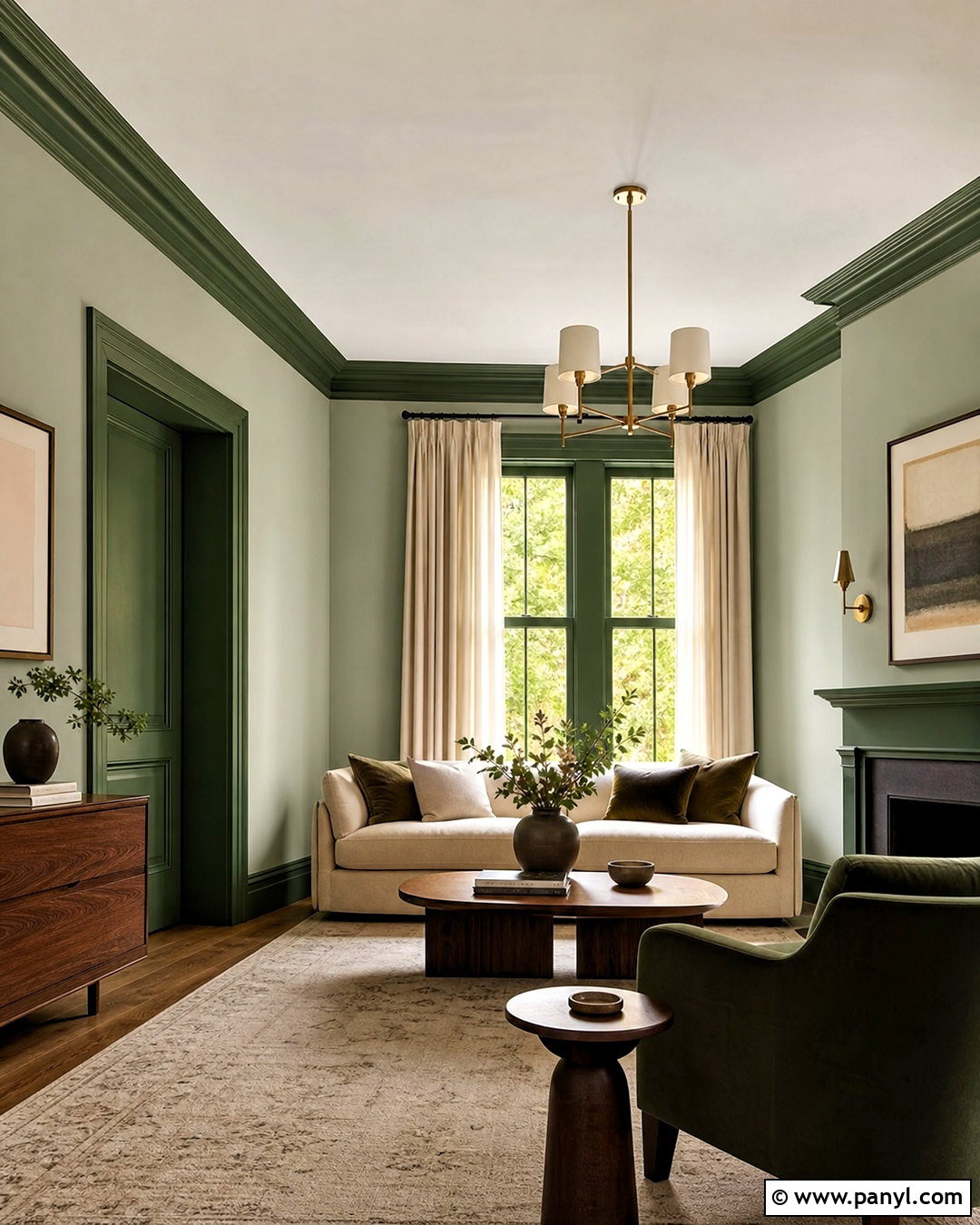
Could one paint color make a complicated room feel simpler? Cover the walls, baseboards, doors, window trim, fireplace, and ceiling in the same muted forest green. Use a matte finish on the walls and ceiling, then satin on the woodwork to create quiet variation. Add a caramel velvet sofa, an ivory boucle chair, and a large rug with faded cream and rust details. Walnut tables and antique brass lighting bring warmth into the deep green envelope. Keep curtains close to the wall color so they do not interrupt the continuous effect. A few pale ceramic pieces and light artwork prevent the room from feeling closed in. This complete color-drenched design is particularly effective in cozy sitting rooms with irregular corners or abundant architectural details.
14. Darker Blue Trim With Blue Walls
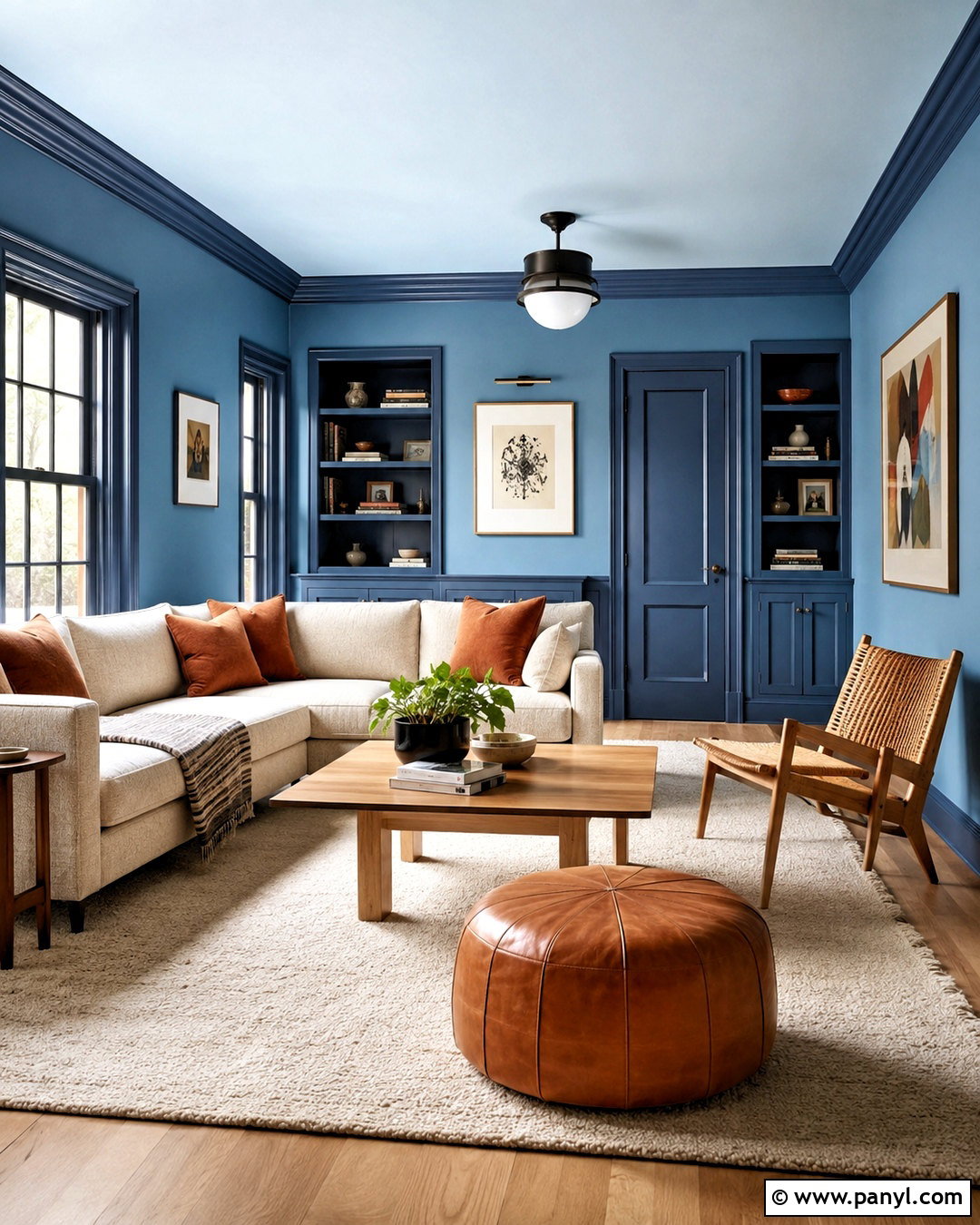
Tonal blue creates dimension without the hard break produced by unrelated colors. Paint the walls a muted mid-blue and choose a navy shade from the same undertone family for the baseboards, crown molding, window casings, door, and built-in storage. Use a natural linen sofa, pale oak coffee table, and cream wool rug to lighten the center of the room. Rust-colored pillows and a cognac leather ottoman introduce warmth. Hang curtains in a blue-and-ivory woven fabric for a layered but connected effect. Keep the ceiling a very pale blue rather than stark white. The darker trim frames each surface while allowing the room to remain cohesive. This method is a practical starting point for anyone who wants colorful trim but prefers controlled, predictable contrast.
15. Blush Pink Trim Powder Room
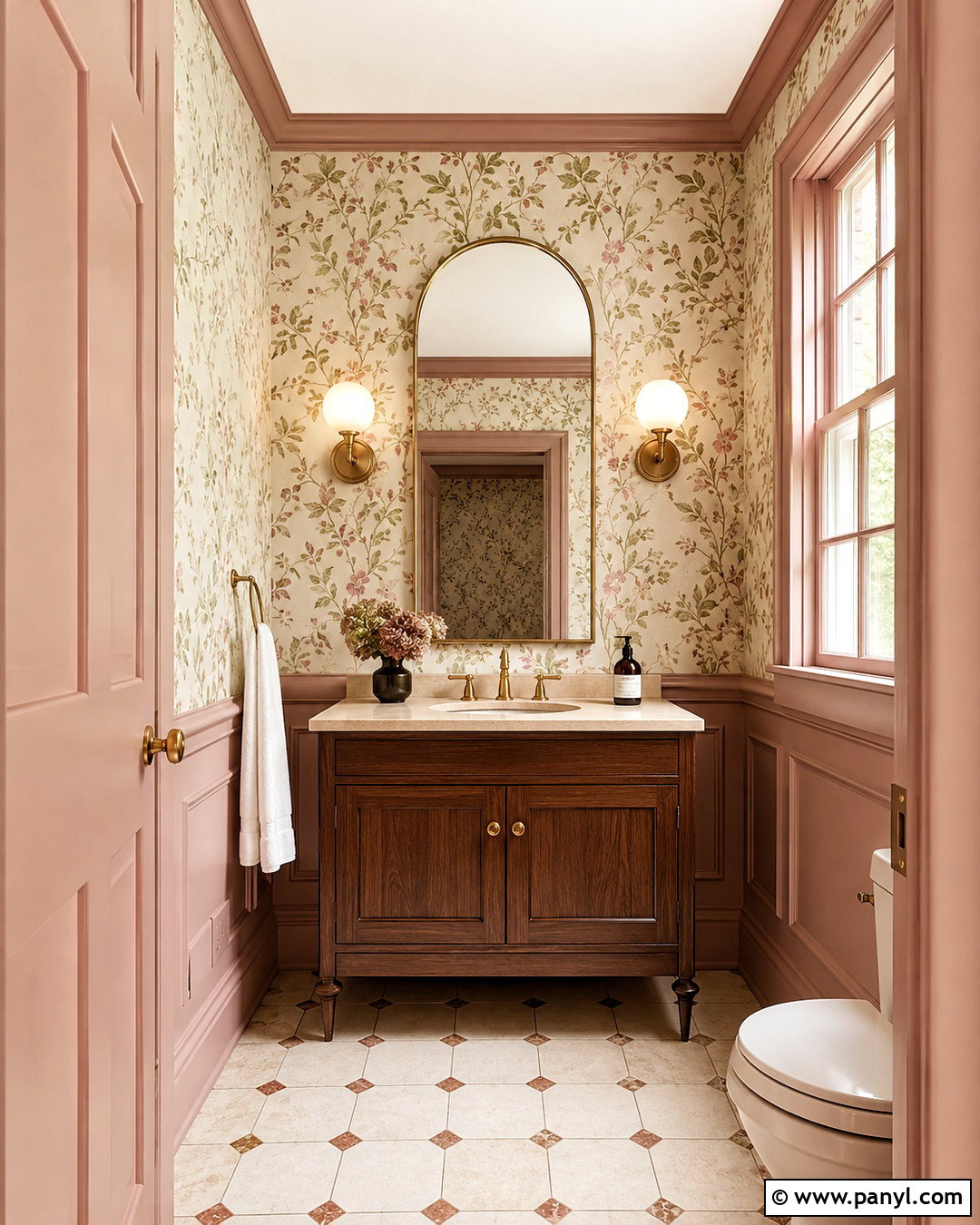
A small powder room can handle a playful trim color without affecting the rest of the home. Cover the upper walls in a cream botanical wallpaper with green and dusty rose details. Paint the baseboards, door casing, door, window trim, and lower wall paneling a muted blush pink pulled directly from the pattern. Add a compact walnut vanity, honed cream stone counter, and unlacquered brass faucet. An arched brass mirror and two opal glass sconces complete the focal wall. Use small beige-and-rose floor tiles to connect the palette from top to bottom. Select a pink with brown or gray undertones so it feels refined rather than sugary. The finished powder room becomes colorful, coordinated, and memorable while remaining appropriate for an everyday home.
16. Mustard Yellow Trim Playroom
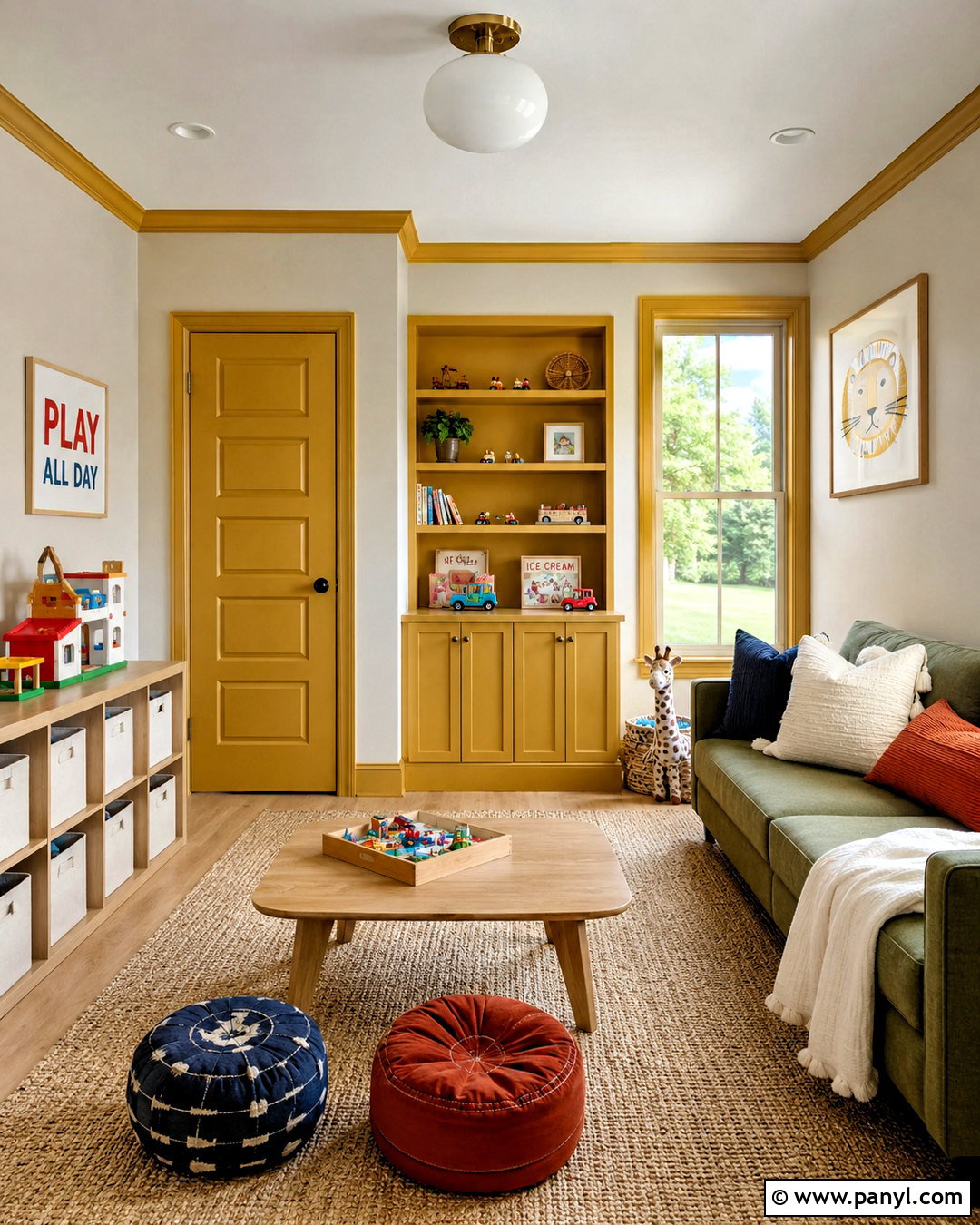
Mustard yellow trim gives a playroom cheerful energy while keeping the larger wall surfaces calm. Paint the walls a soft warm beige and use golden mustard on the baseboards, door, window casing, toy cabinets, and open shelving. Anchor the room with a washable natural-colored rug and a low oak activity table. Add cube storage with canvas bins, a compact green sofa, and floor cushions in rust, navy, and cream. Simple graphic artwork can repeat these colors without creating visual clutter. Keep frequently used toys grouped in labeled-looking but text-free color categories or closed storage. A white ceiling and broad daylight prevent the mustard from becoming heavy. The entire room feels upbeat, organized, and flexible enough to change as children grow.
17. Chocolate Brown Trim Home Office
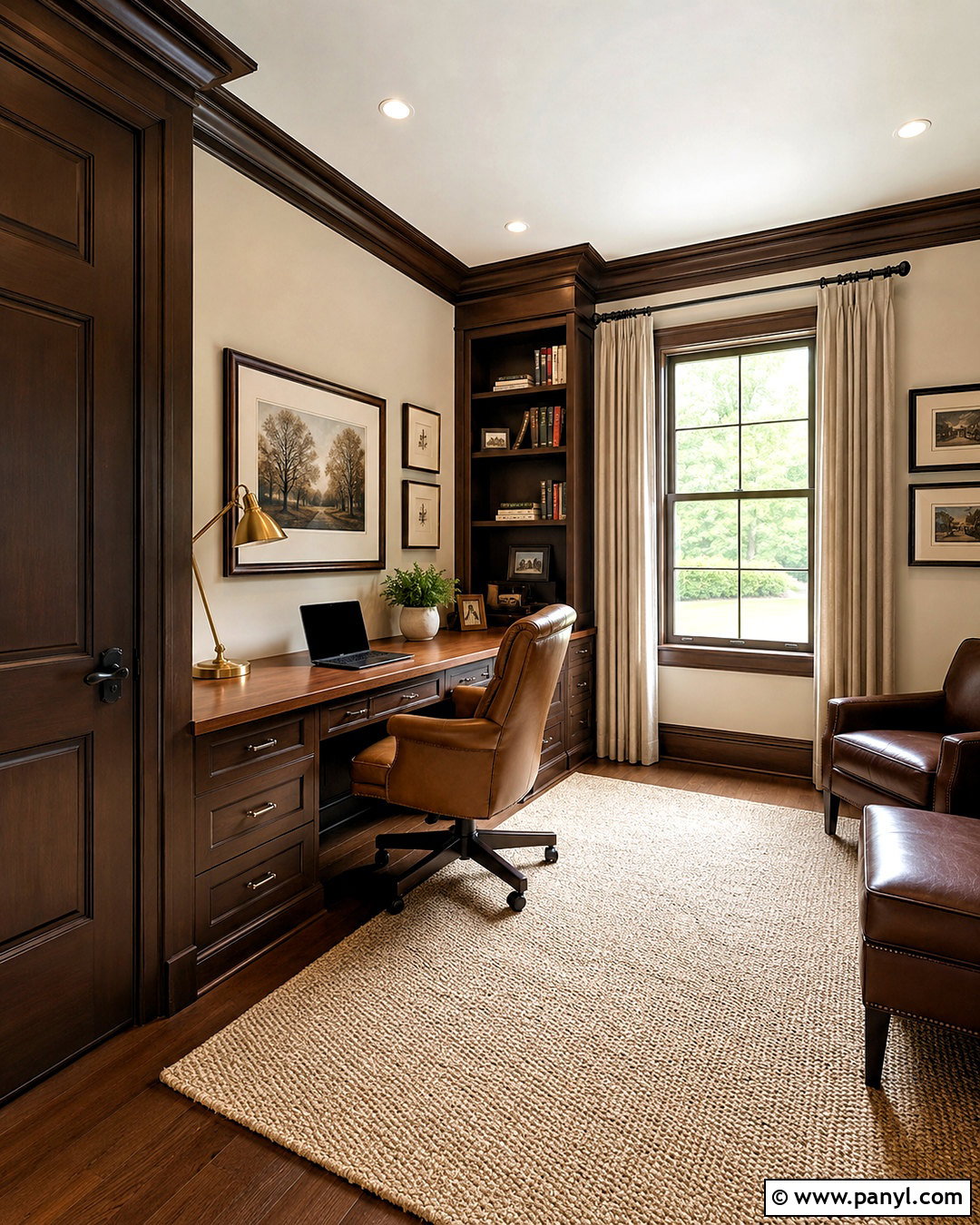
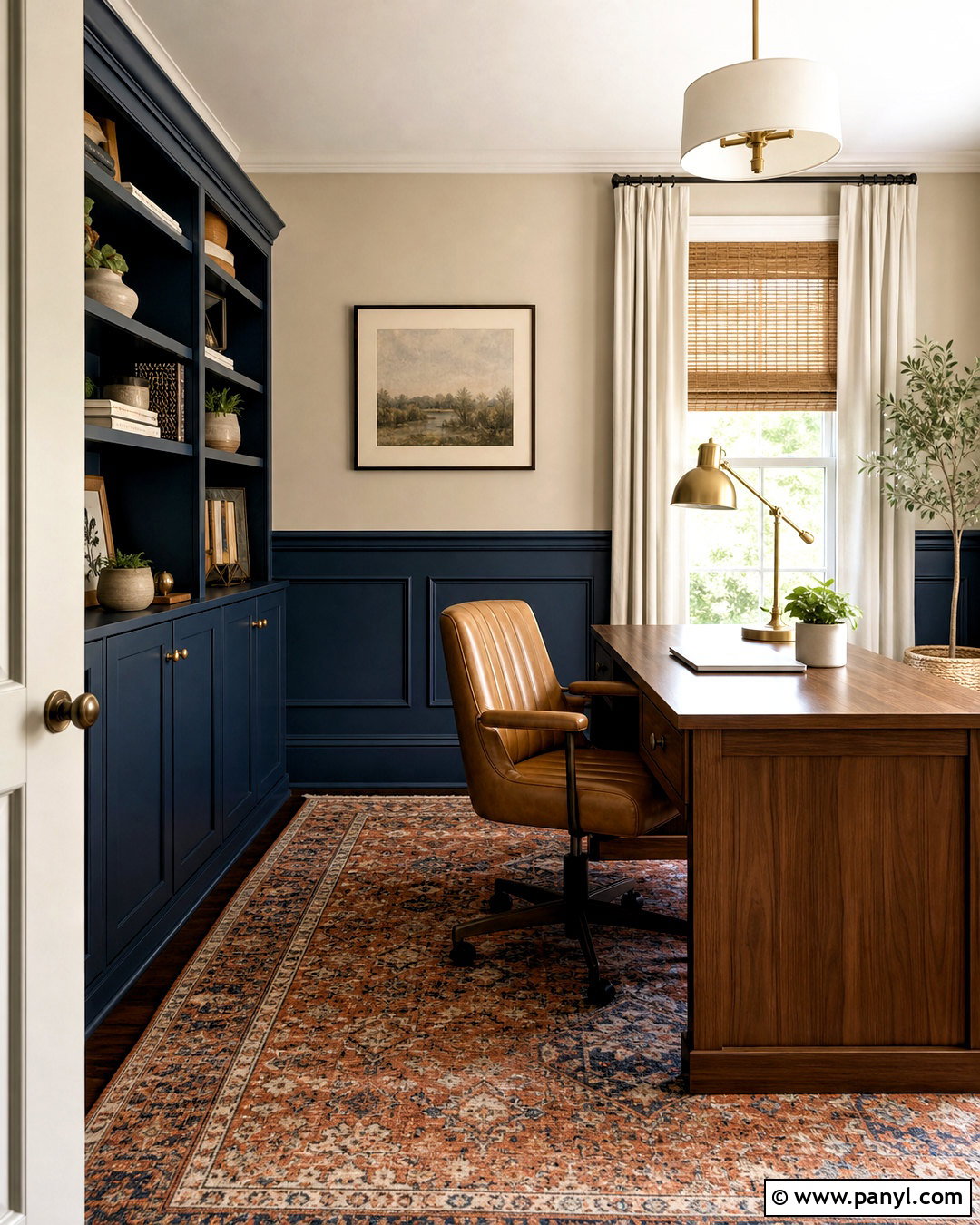
Chocolate brown trim creates a focused home office with the warmth of stained wood and the consistency of paint. Use light putty walls, then apply deep cocoa brown to the baseboards, window casing, door, crown molding, and built-in desk wall. Pair the woodwork with a walnut desk surface and closed lower cabinets to reduce clutter. Add a comfortable tan leather chair, a flat-woven beige rug, and linen curtains in a similar shade to the walls. A brass desk lamp and framed neutral artwork provide subtle polish. Keep the ceiling light to balance the darker perimeter. Brown trim works especially well beside oak flooring, aged metals, and natural textiles. The completed office feels grounded and professional without looking severe, glossy, or overly traditional.
18. Slate Blue Trim Bathroom
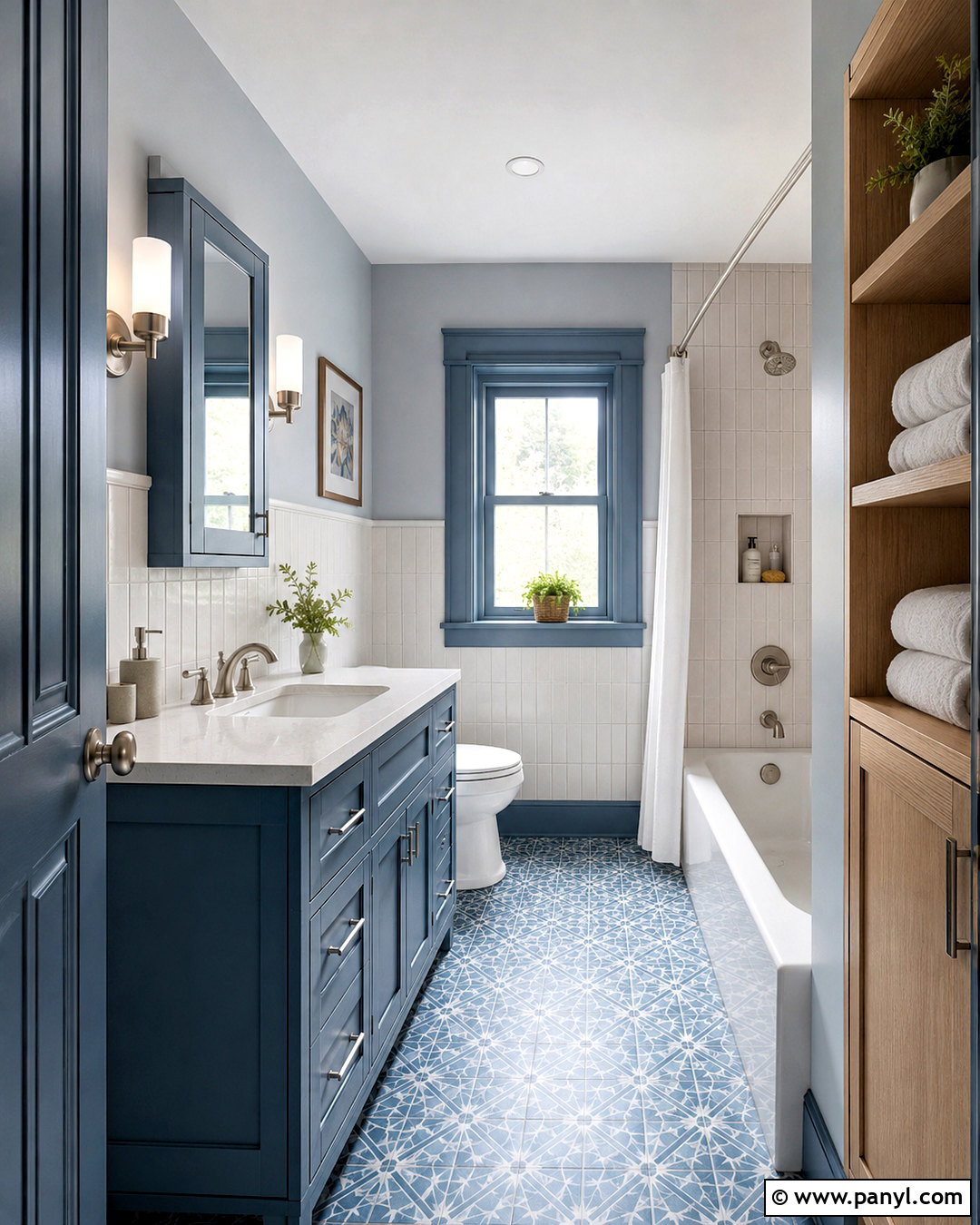
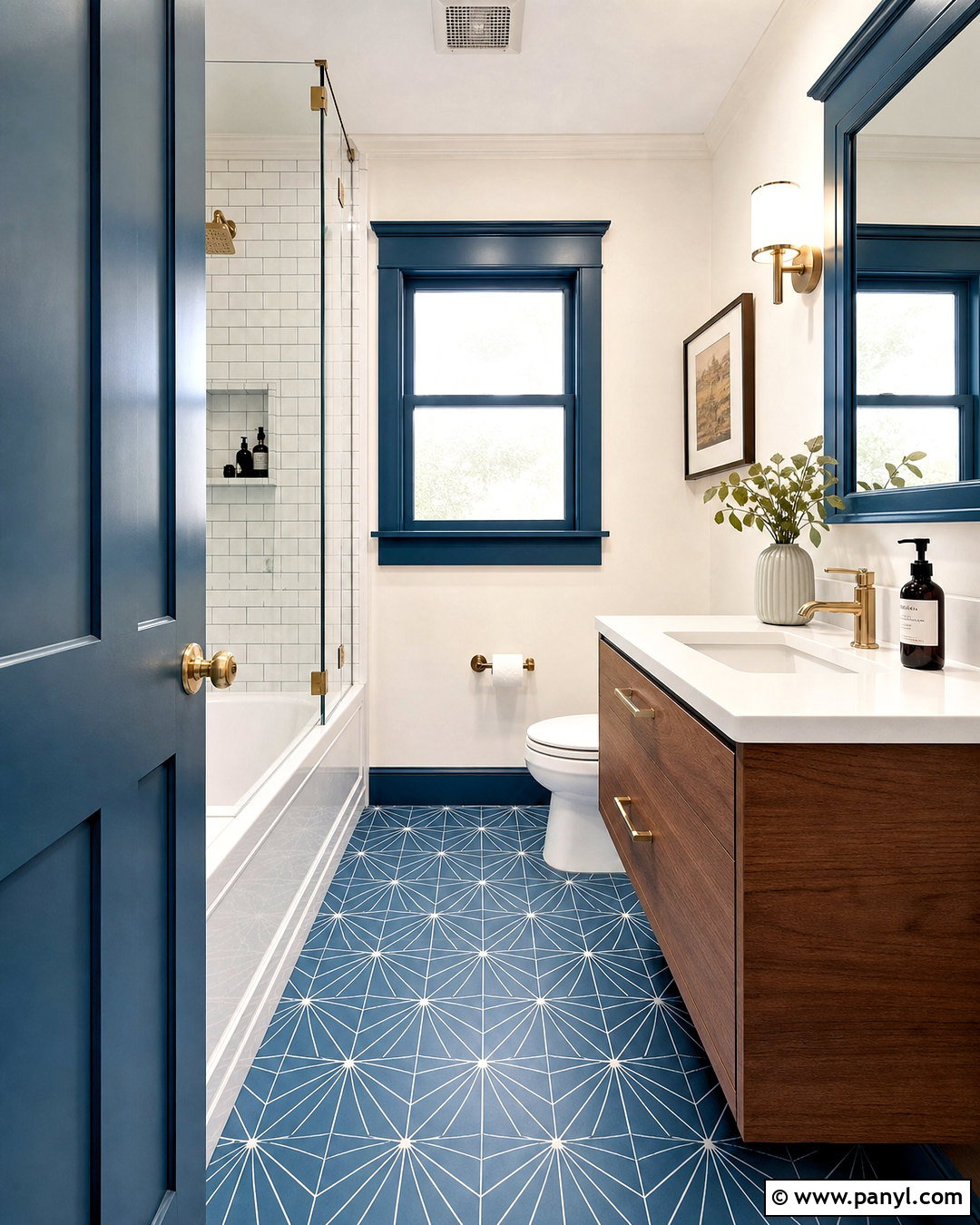
Slate blue trim can turn a basic bathroom into a calm, connected space. Cover the shower and lower walls with warm white vertical tile, then paint the upper walls pale gray-blue. Use a deeper slate blue on the baseboards, window casing, door, vanity, and recessed medicine cabinet. Choose a white quartz counter, brushed nickel fixtures, and a light oak storage cabinet for a clean material mix. A small patterned floor tile containing blue, cream, and gray ties the surfaces together. Add white towels and one natural woven basket rather than introducing several accent colors. Use moisture-resistant paint in a satin or semi-gloss finish on the trim. This full scheme feels fresh and relaxing, yet the blue detailing gives it more personality than an all-white bathroom.
19. Lavender Trim Guest Bedroom
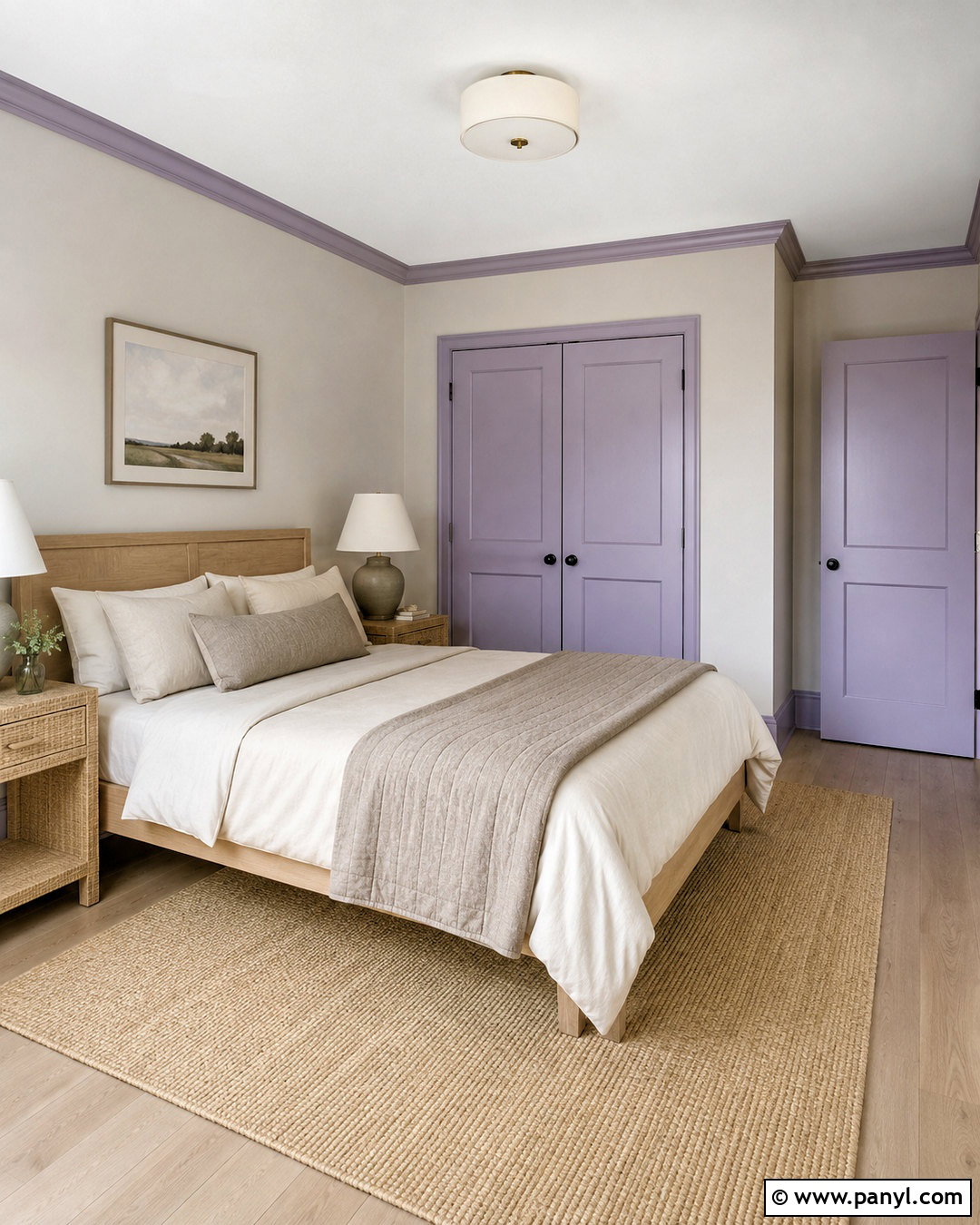
Soft lavender trim gives a guest bedroom a distinctive but restful character. Paint the walls a pale warm gray, then carry dusty lavender across the baseboards, window casing, closet doors, bedroom door, and simple crown molding. Center a light oak bed on the main wall and dress it with cream linen bedding, a taupe quilt, and two muted purple pillows. Add woven nightstands, ceramic lamps, and a large beige rug for natural texture. Curtains in a pale gray-lavender fabric make the windows feel taller while reinforcing the trim color. Use black only in small amounts, such as picture frames or hardware. Choosing lavender with gray undertones keeps the room mature. The finished space feels airy, comfortable, and thoughtfully coordinated for visitors of any age.
20. Teal Trim Hallway
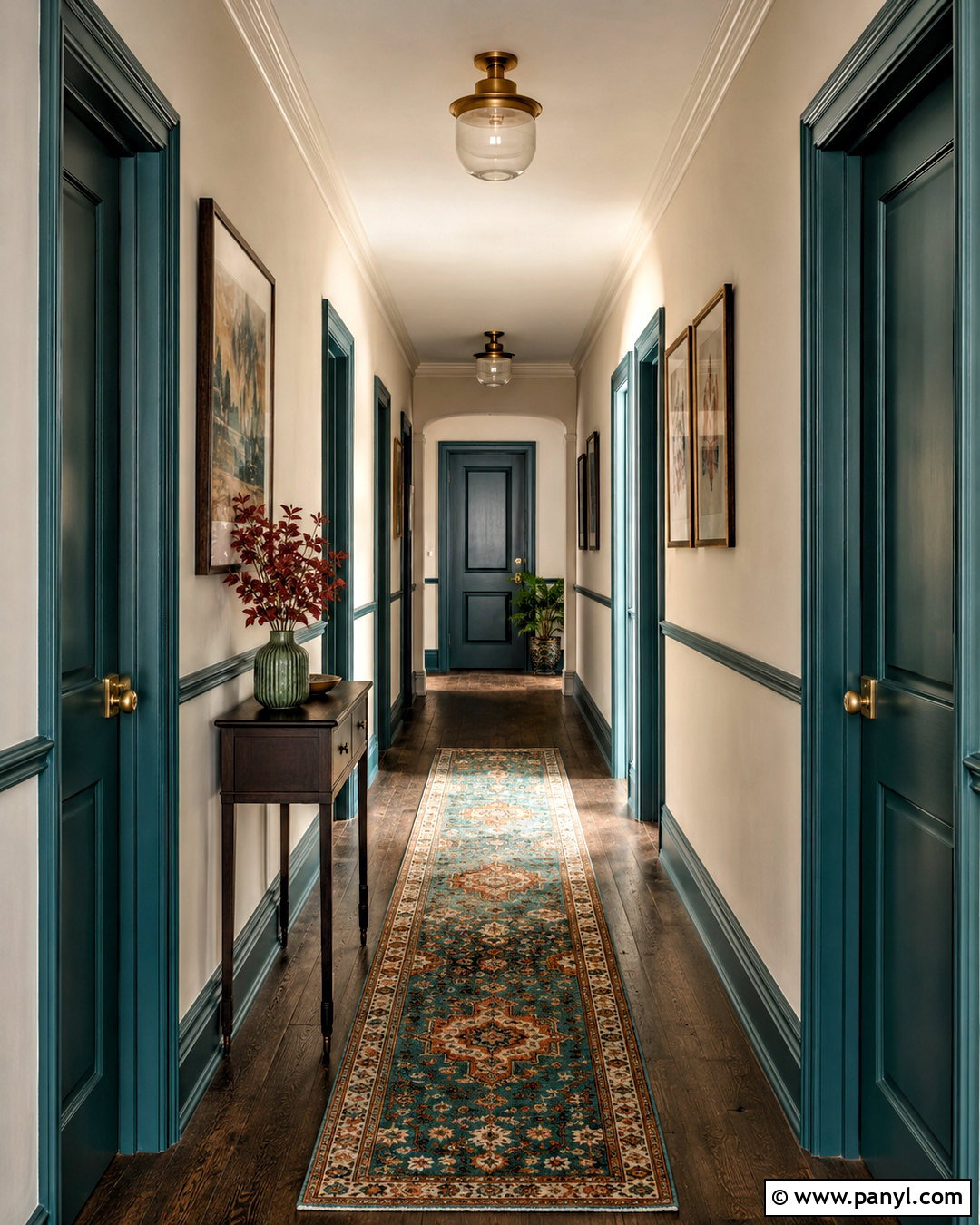
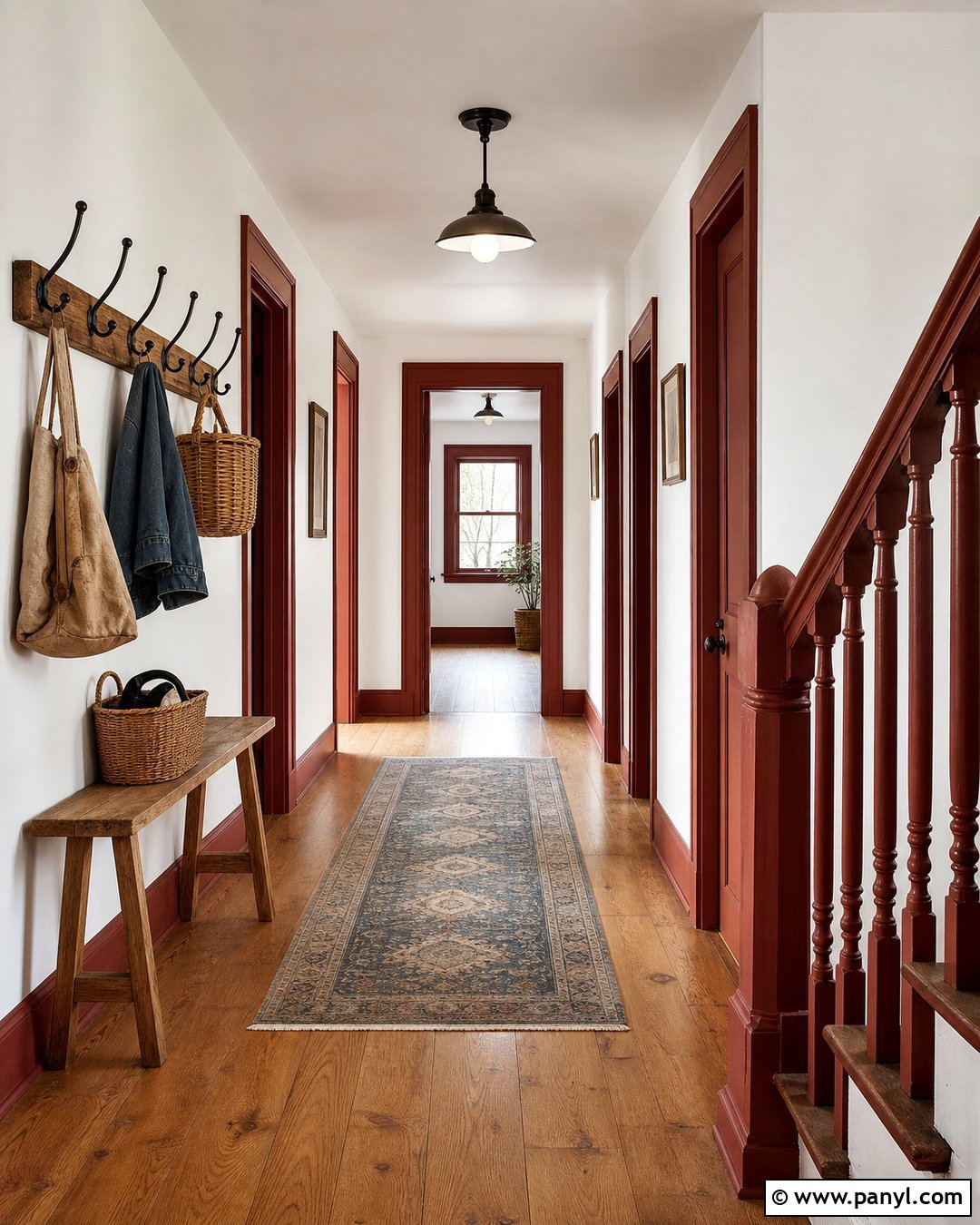
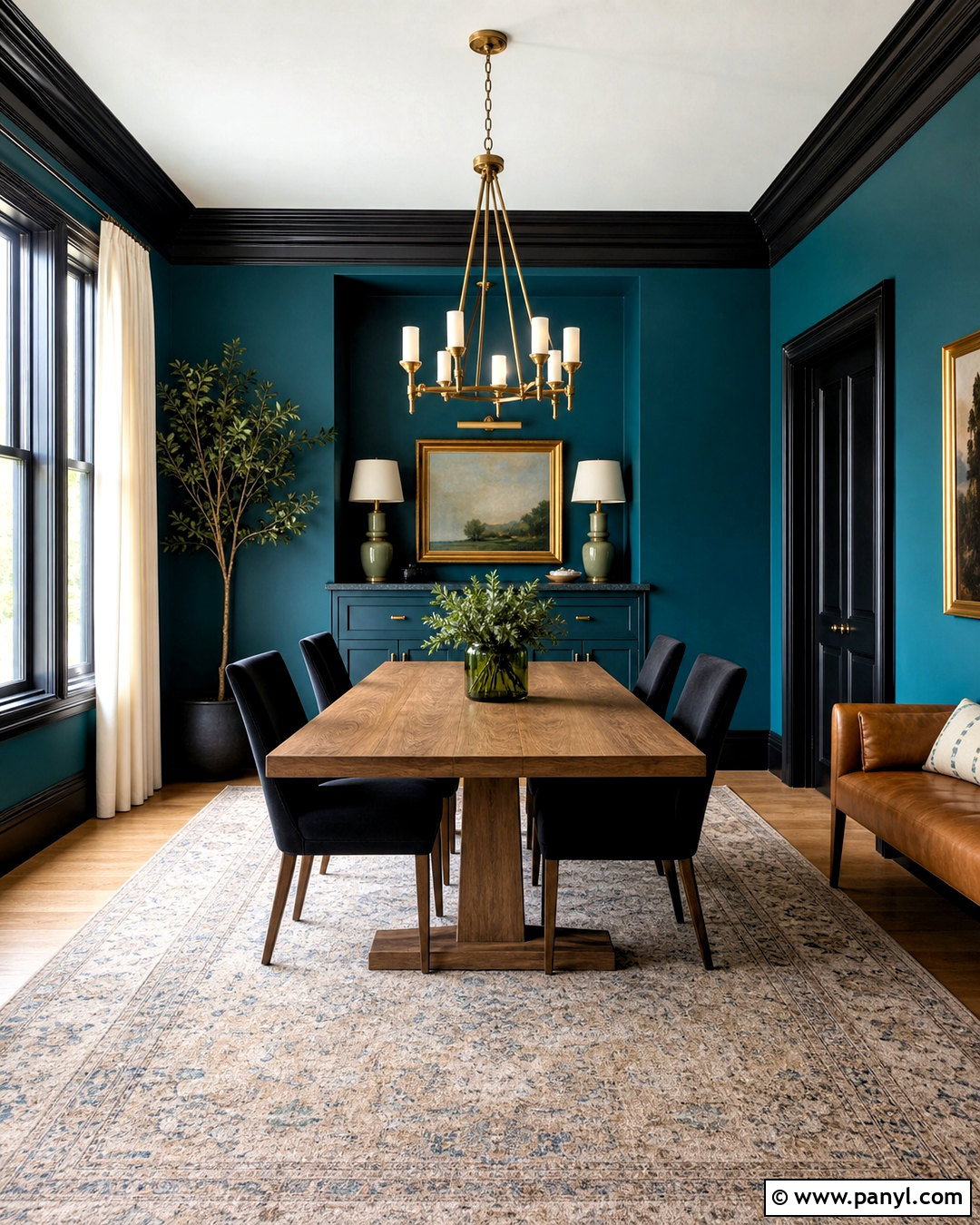
A teal-trimmed hallway can transform a pass-through area into a strong connecting feature. Keep the walls light with a warm parchment paint, then use deep blue-green on the baseboards, door casings, interior doors, and a narrow chair rail. Hang a balanced series of framed artwork above a slim dark wood console. A long vintage-inspired runner with teal, rust, and beige details draws the eye through the hall. Add simple aged brass ceiling lights and matching door hardware for warmth. If several rooms open from the hallway, paint each visible door teal so the repetition feels planned. Leave the ceiling pale to reflect light in a windowless space. The complete design delivers color and rhythm without requiring furniture that narrows the walkway.
Conclusion:
Choosing trim beyond standard white can completely change how an interior feels. Dark colors add structure, earthy hues bring warmth, and tonal combinations create soft architectural depth. These **20 non white trim interior ideas** also demonstrate why the surrounding walls, flooring, furniture, lighting, and adjoining spaces should be considered together. Test large painted samples vertically beside the wall and floor, then observe them throughout the day. Decide whether doors, built-ins, crown molding, and window frames should join the trim for a more complete effect. Finally, select a durable sheen that suits the room’s traffic and moisture. With thoughtful color repetition and balanced materials, non-white trim can look cohesive, practical, and intentionally designed.

Related Ideas and Inspiration:
Leave a Reply