
Contrasting trim can turn ordinary walls, doors, and windows into defining architectural features. Instead of defaulting to white woodwork, you can use black, navy, green, burgundy, warm neutrals, or natural wood to give a room more depth. Dark trim against light walls creates a crisp outline, while pale trim can brighten saturated wall colors. The strongest schemes coordinate trim with flooring, furniture, textiles, and hardware so the whole room feels intentional. Contrasting finishes can also produce subtle definition when dramatic color is not right for the space. Current approaches range from understated greige casings to playful color pairings that frame windows like artwork. () Below, discover 20 complete and practical contrasting trim interior ideas.

1. Black Trim With White Walls
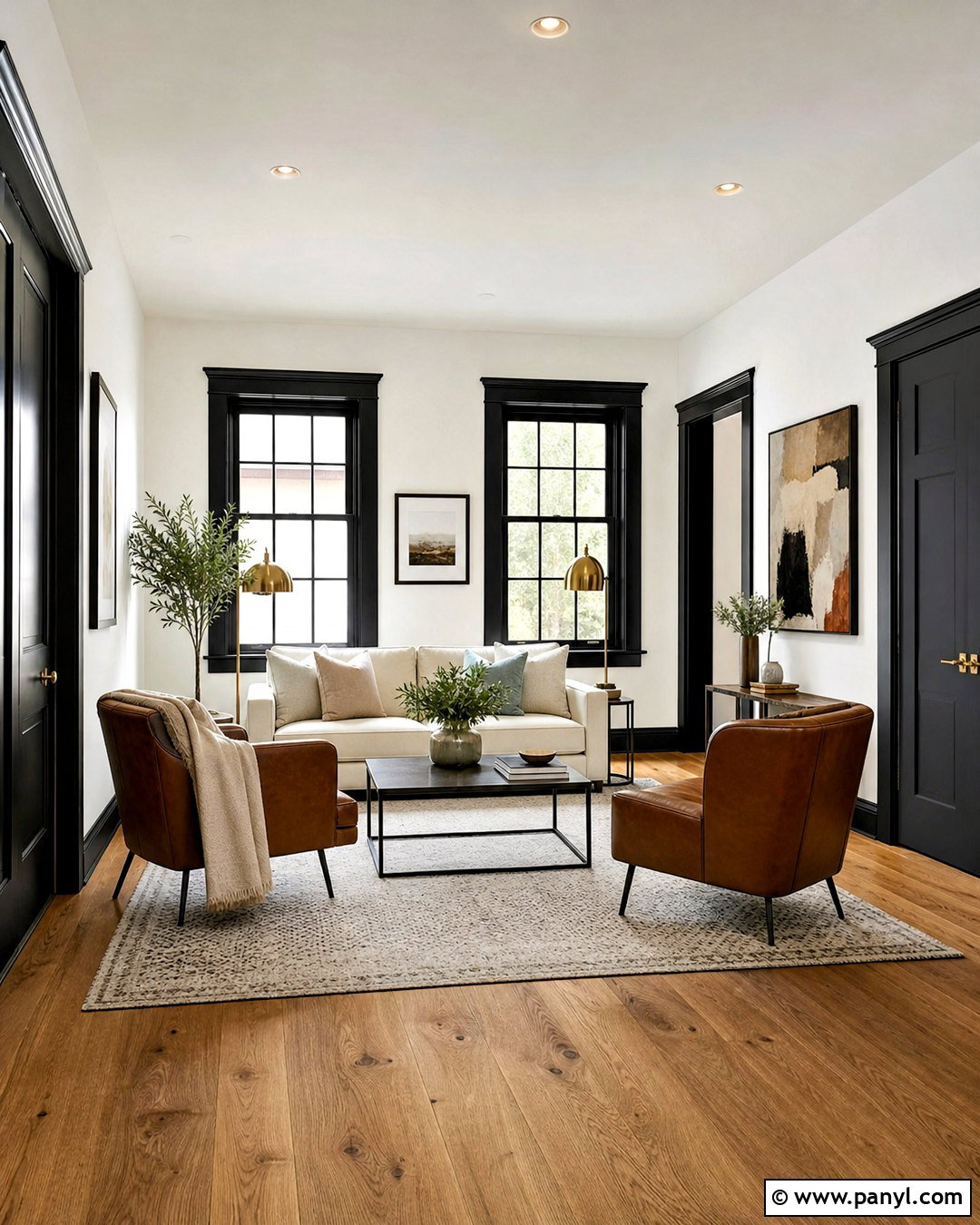
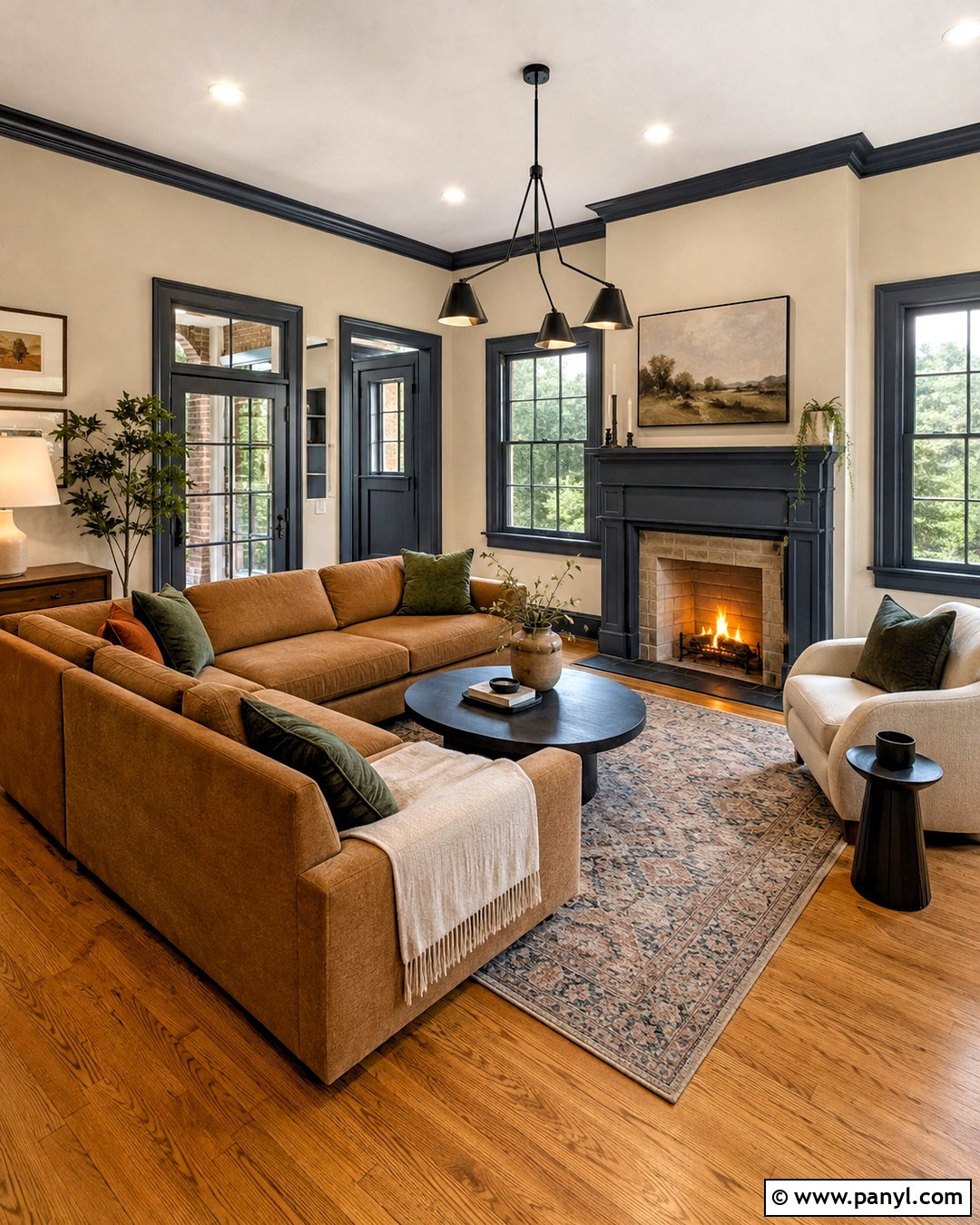
Crisp white walls and matte black trim create a clean living room with strong architectural definition. Carry the black across baseboards, window casings, doorframes, and interior doors so the contrast looks deliberate. A warm oak floor keeps the scheme from feeling cold, while an oatmeal sofa and two cognac leather chairs soften the sharp palette. Add a black metal coffee table, cream textured rug, and simple linen curtains mounted above the window trim. Brass lamps introduce a warmer finish without competing with the woodwork. This combination works especially well in rooms with wide windows or substantial molding. Keep artwork graphic but restrained, using black frames and neutral prints that repeat the balanced black-and-white theme.
2. Charcoal Trim With Warm White Walls
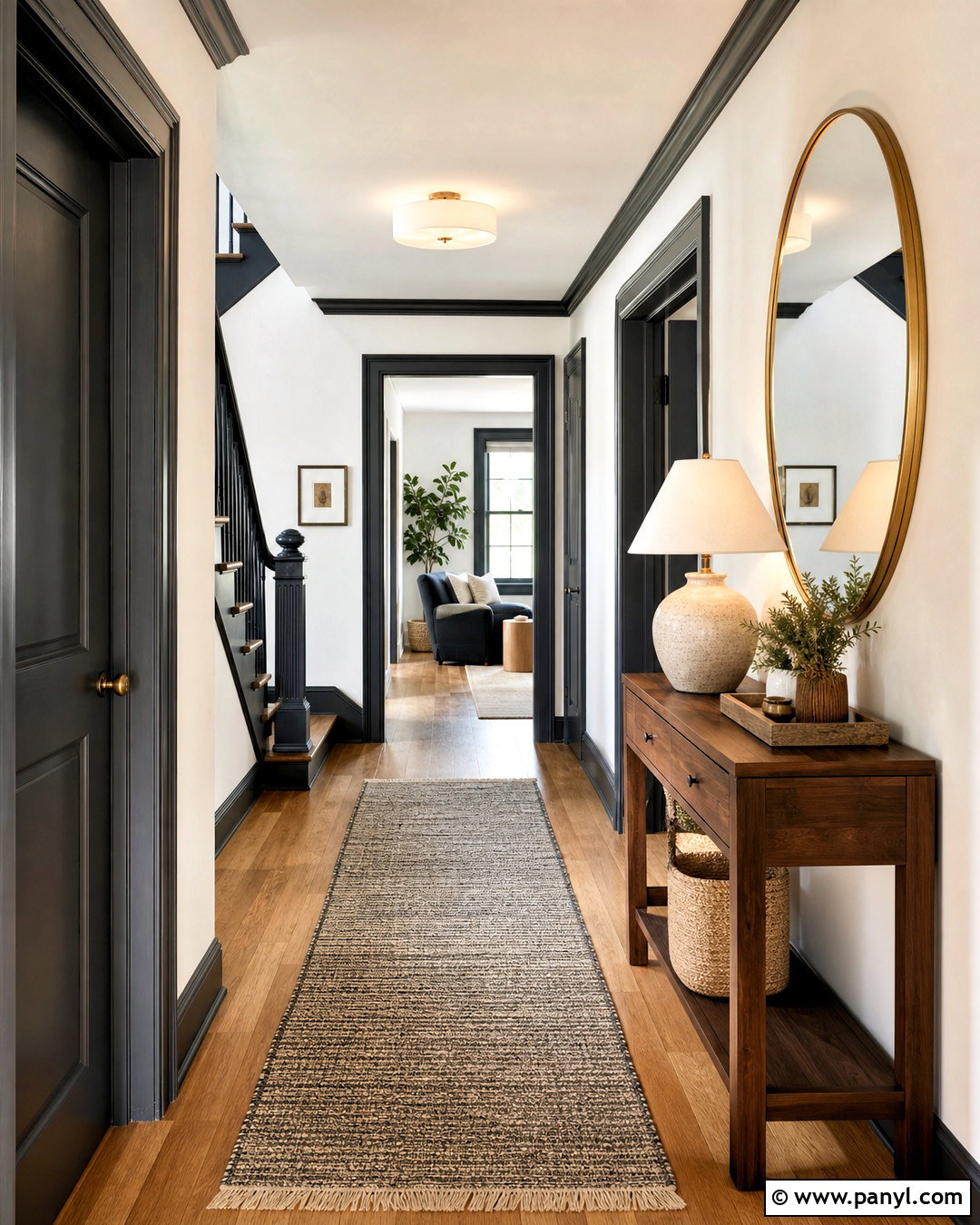
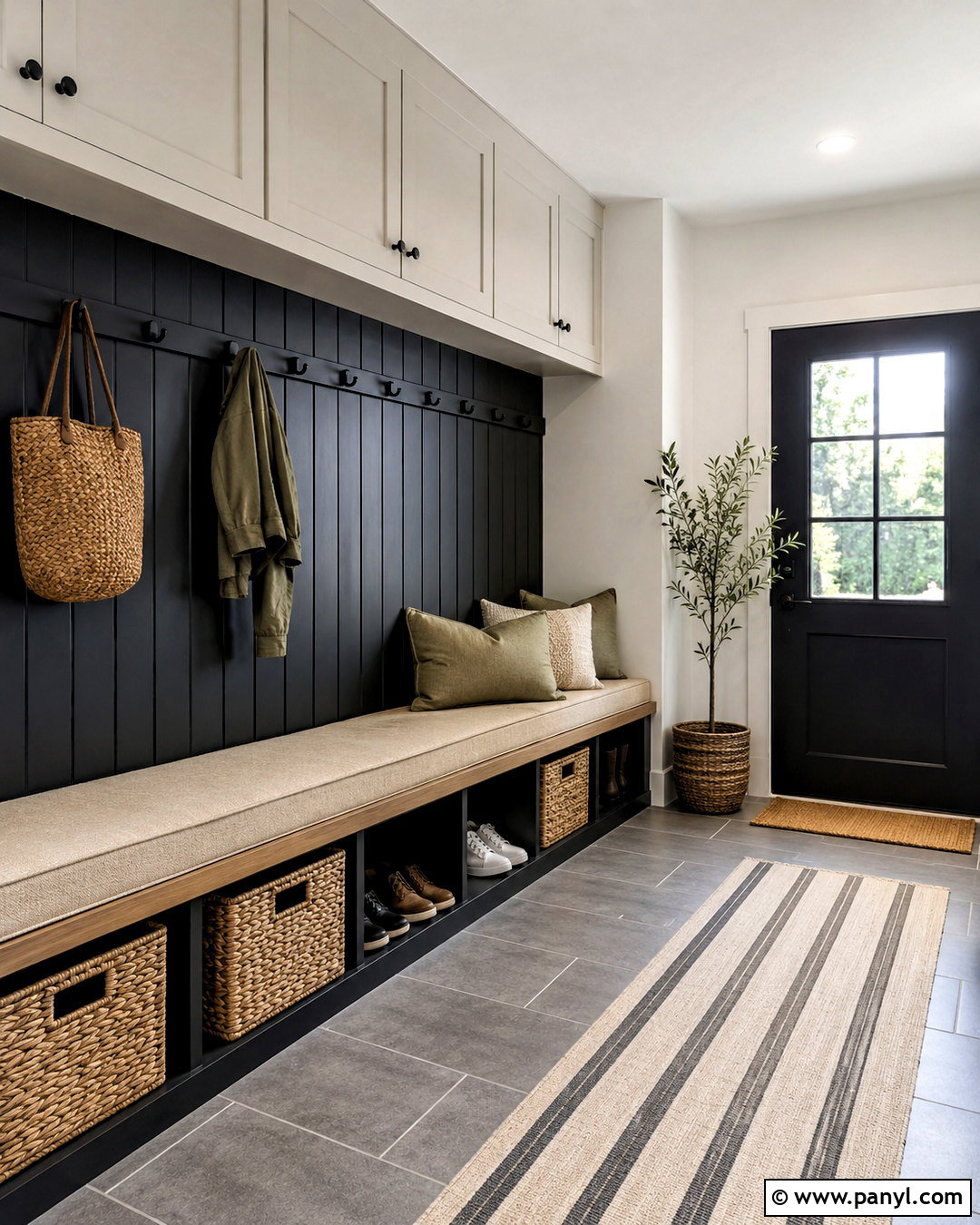
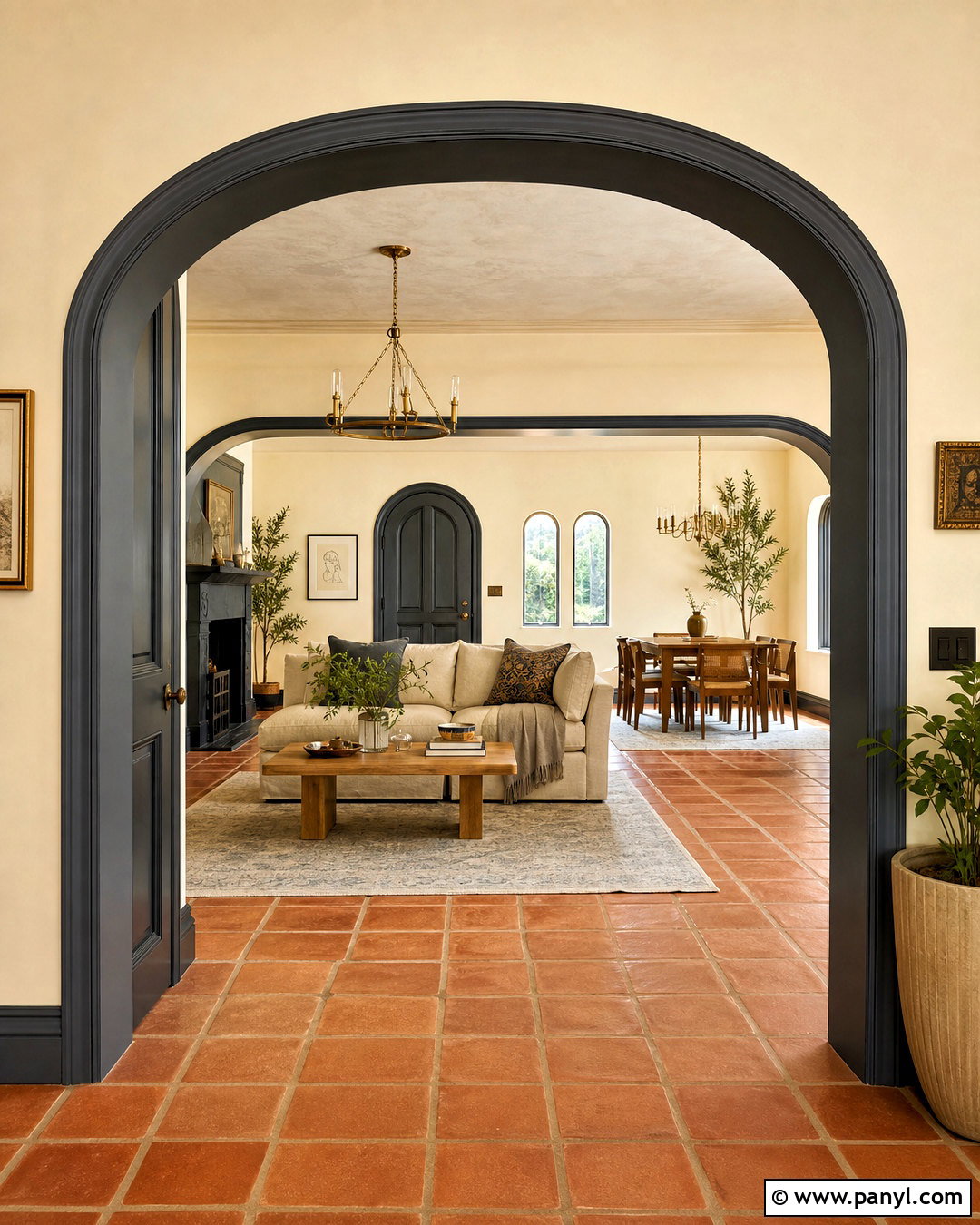
Charcoal trim gives an entryway a softer alternative to pure black while still framing every doorway clearly. Choose warm white walls with subtle beige undertones, then paint the baseboards, door casings, stair rail, and nearby doors deep charcoal gray. Finish the space with medium-tone oak flooring, a narrow walnut console, and a woven runner containing gray, tan, and ivory. A round brass mirror and ceramic table lamp prevent the hallway from appearing too industrial. If the entry connects to several rooms, continue the charcoal doorframes along the main sightline for visual flow. Keep the ceiling and crown molding warm white to preserve brightness. This layered neutral palette feels polished, welcoming, and practical for a busy entrance.
3. Navy Trim With Pale Blue Walls
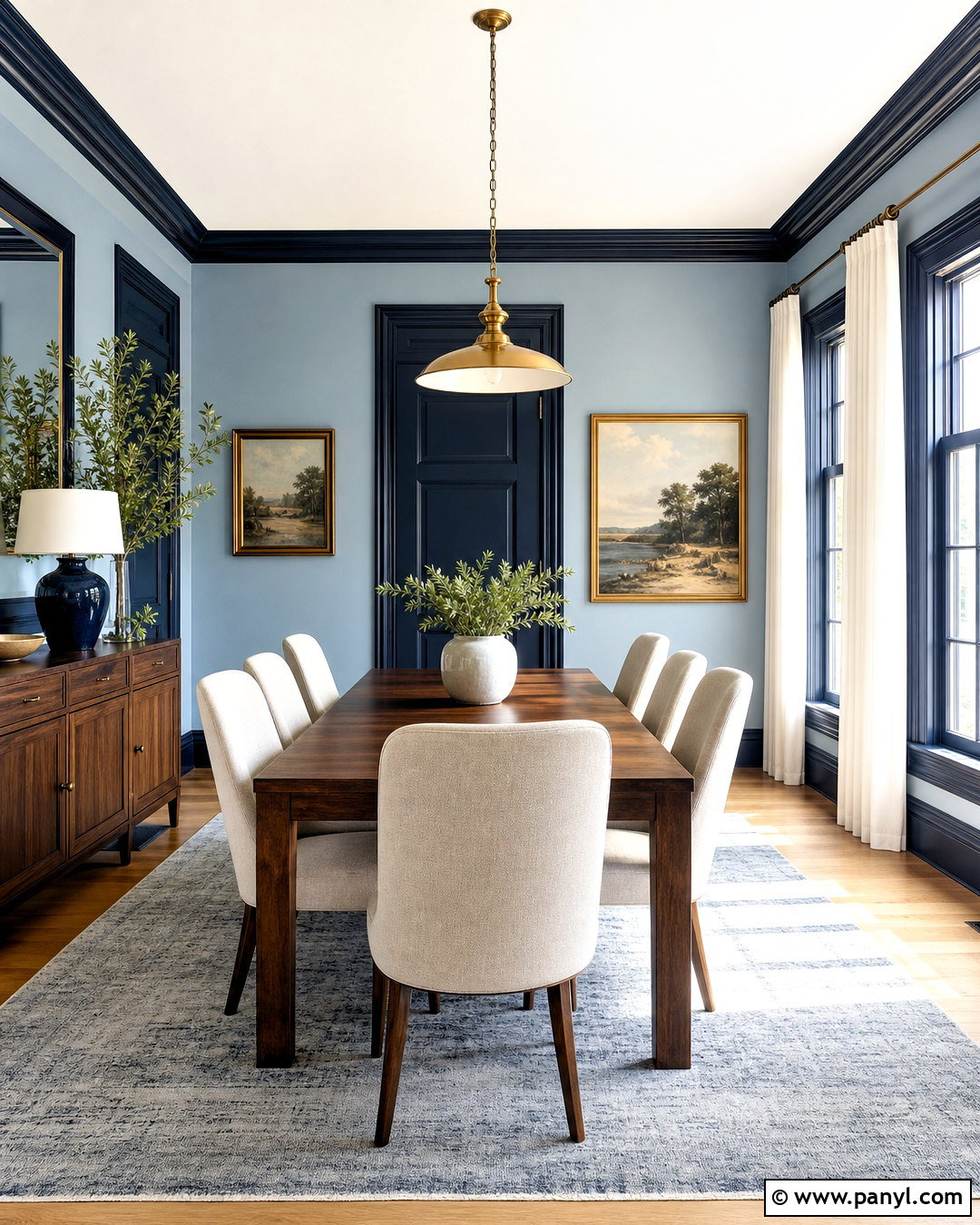
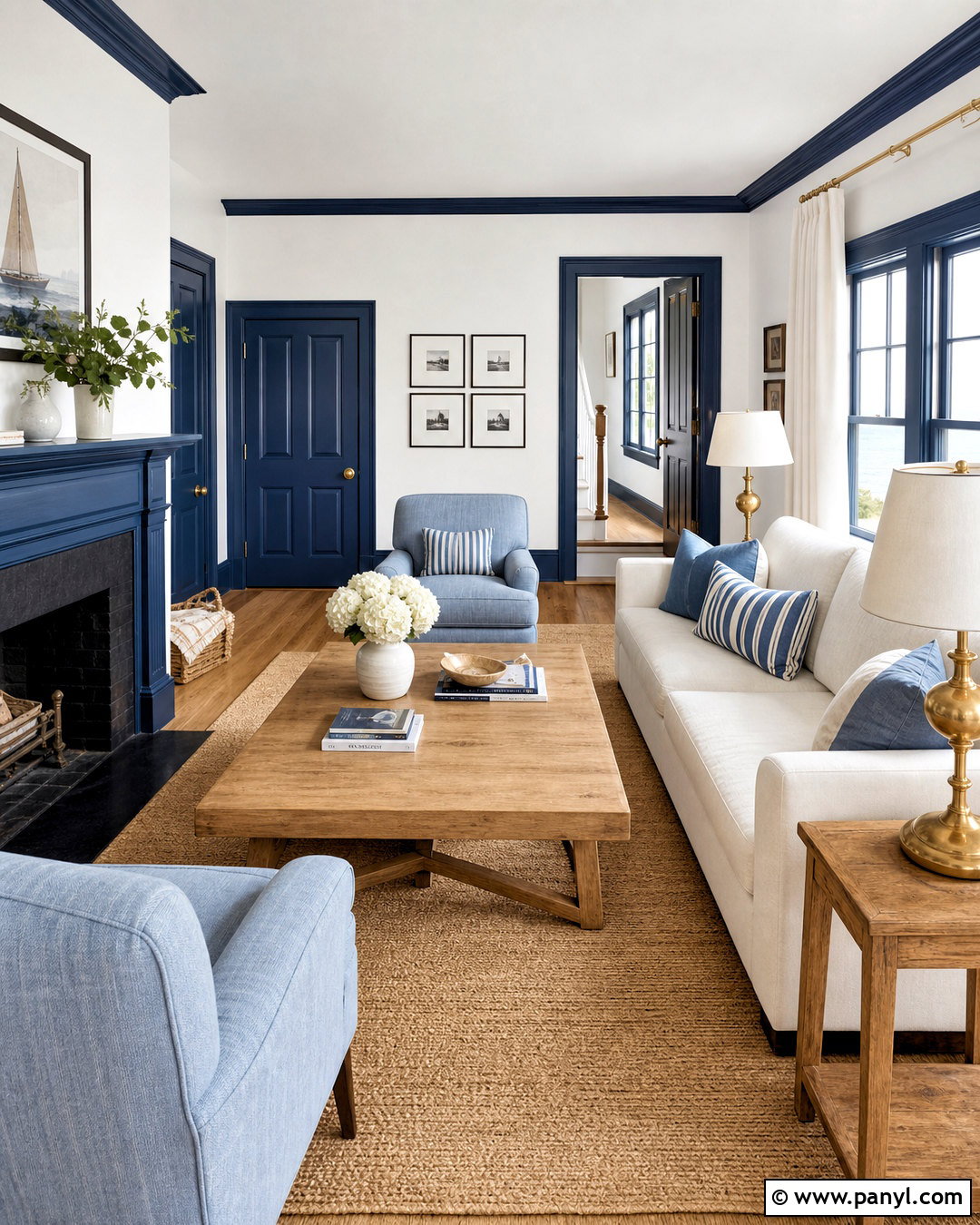
Imagine a dining room where dark navy trim outlines pale blue walls like a tailored border. Use navy on the baseboards, window casings, crown molding, and a pair of paneled doors. A rectangular walnut dining table provides natural warmth, while oatmeal upholstered chairs keep the room comfortable and light. Hang white linen curtains inside or just beyond the navy window frames so the contrast remains visible. A large brass pendant creates a warm focal point above the table. Complete the palette with a faded blue rug, white ceramic tableware, and one traditional landscape painting. The combination feels fresh yet established, making it suitable for coastal, transitional, or updated traditional interiors without relying on obvious nautical decorations.
4. Forest Green Trim With Cream Walls
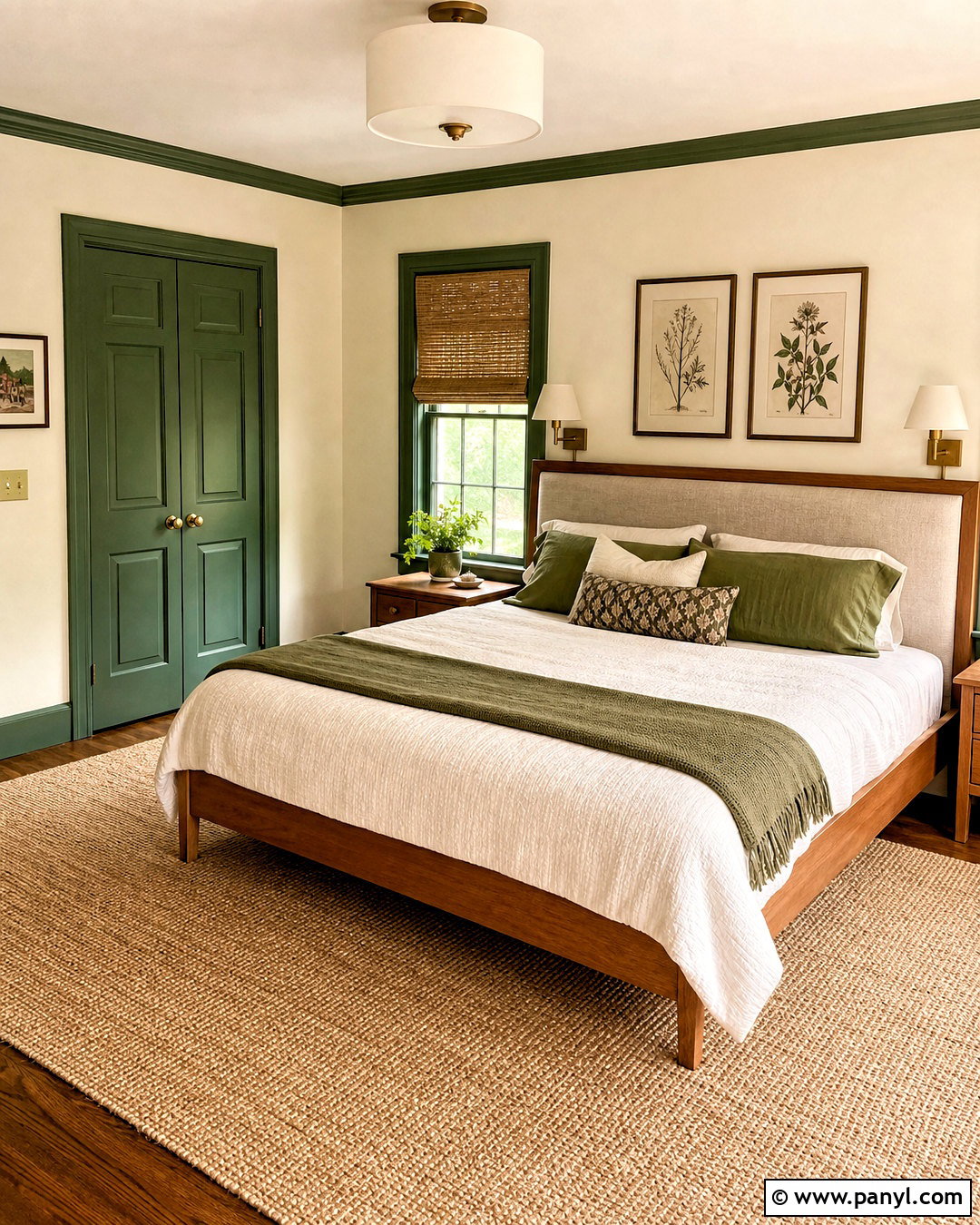
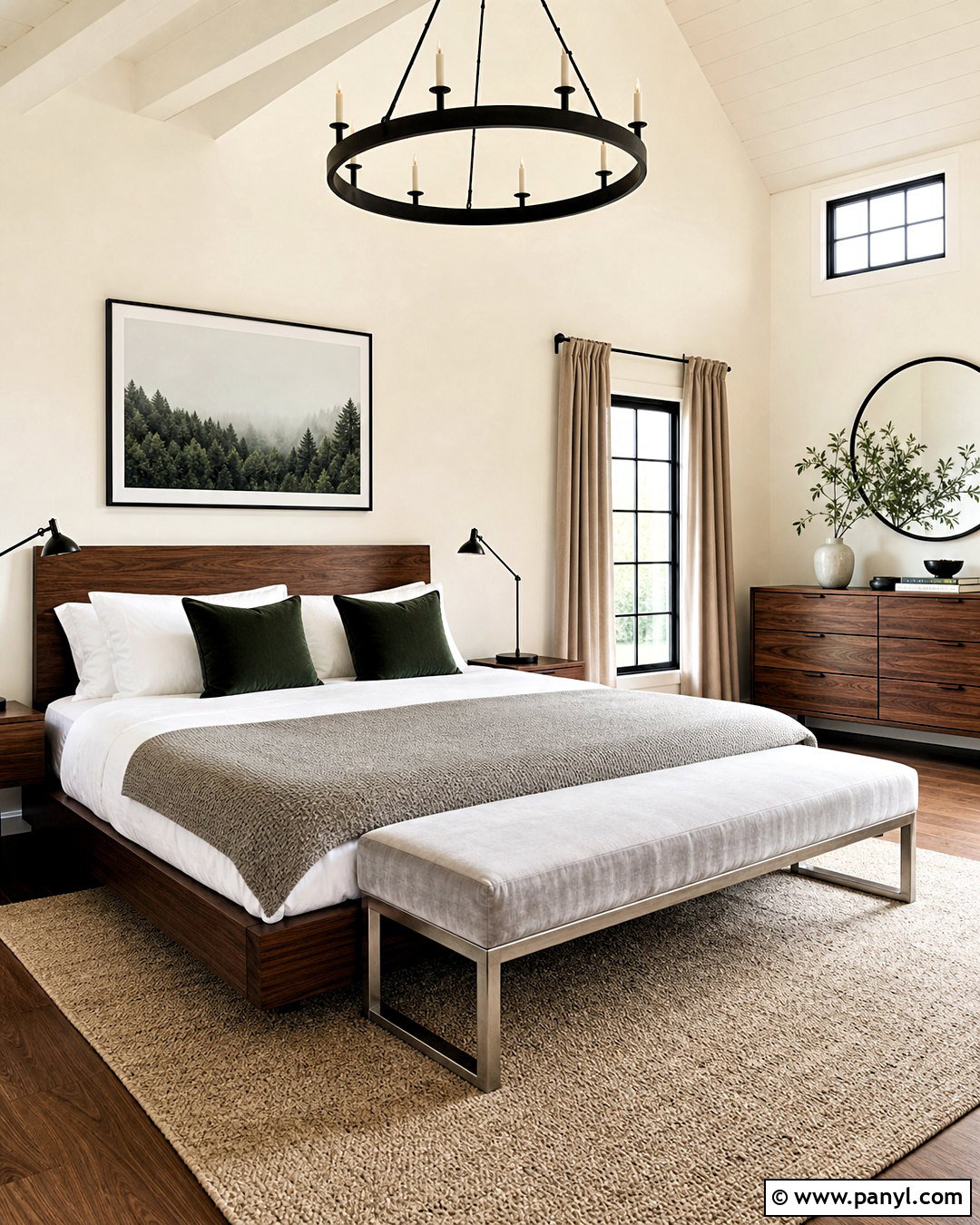
Forest green trim can transform a simple bedroom into a restful, nature-inspired retreat. Start with creamy off-white walls, then apply deep green to the baseboards, window frames, door casings, and paneled closet doors. Choose a medium oak bed with an upholstered linen headboard to balance the dark woodwork. Layer the bedding in cream, muted olive, and a small amount of rust for warmth. Antique brass sconces, woven shades, and a natural jute rug strengthen the organic character. Hang curtains that closely match the walls so they do not hide the green window trim. A wooden bench and botanical artwork complete the room. The finished look feels grounded, coordinated, and colorful without becoming overwhelming.
5. Sage Green Trim With White Walls
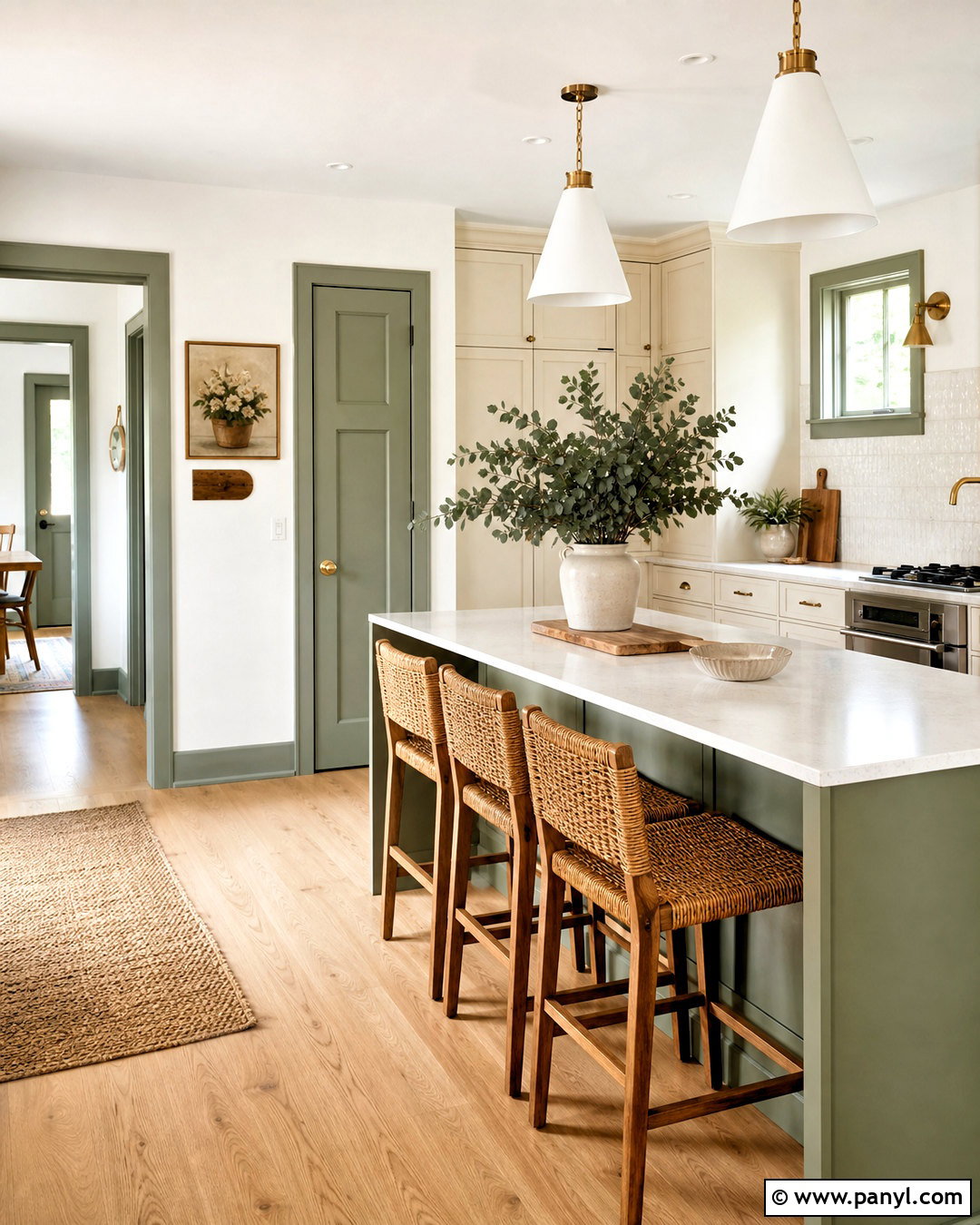
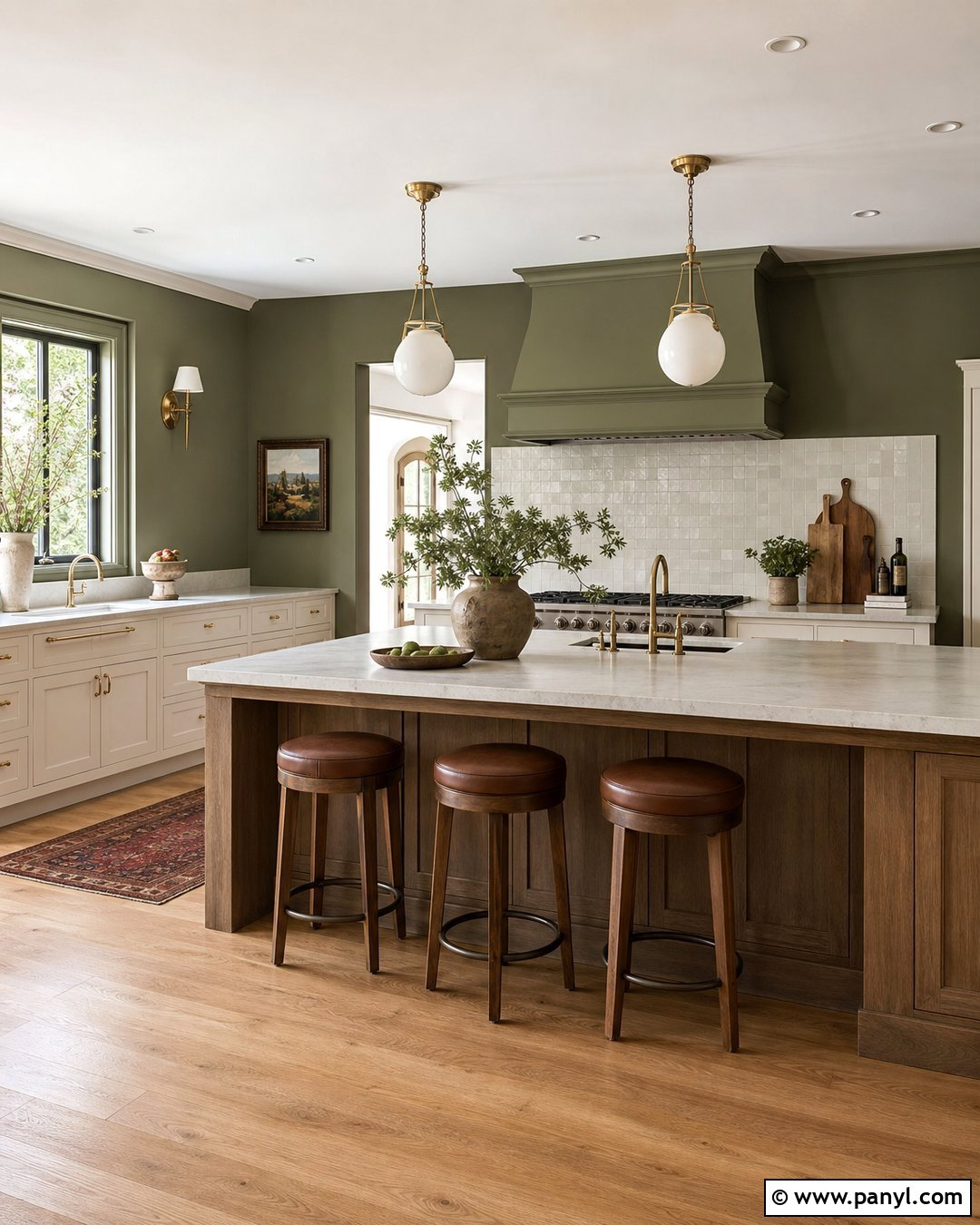
Soft sage trim is an approachable way to introduce color into a bright kitchen. Paint the window casings, baseboards, doorframes, and pantry door a muted gray-green, while keeping the walls warm white. Pair the trim with cream cabinets, pale quartz counters, and a handmade white tile backsplash. Light oak flooring and woven counter stools add natural texture. Repeat sage through a small island or freestanding hutch, but avoid matching every cabinet to the trim. Brushed brass hardware gives the restrained palette a little warmth. Simple Roman shades allow the painted window frames to remain noticeable. This complete scheme suits cottage, farmhouse, and transitional kitchens while feeling cleaner and more current than the usual all-white woodwork.
6. Burgundy Trim With Blush Walls
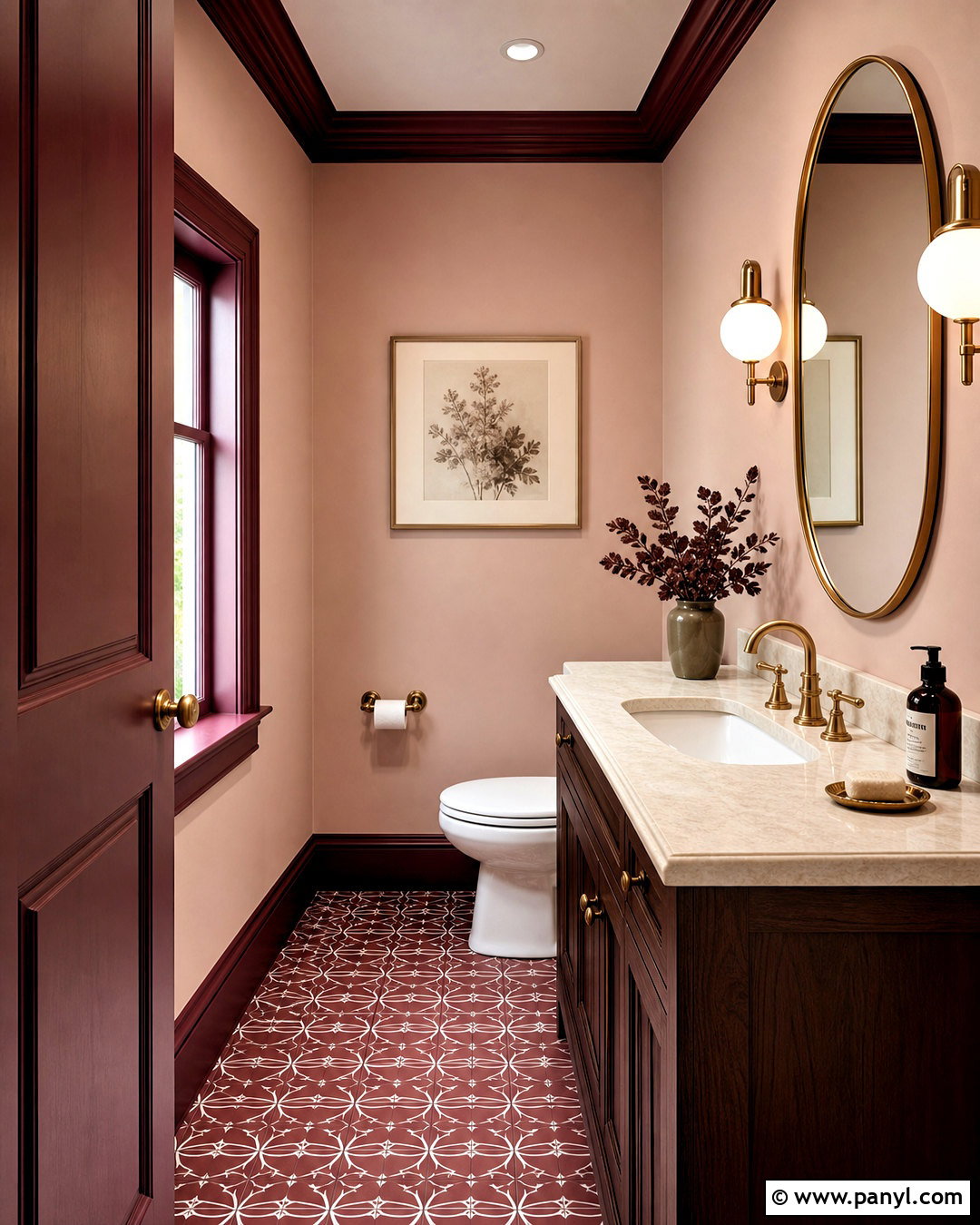
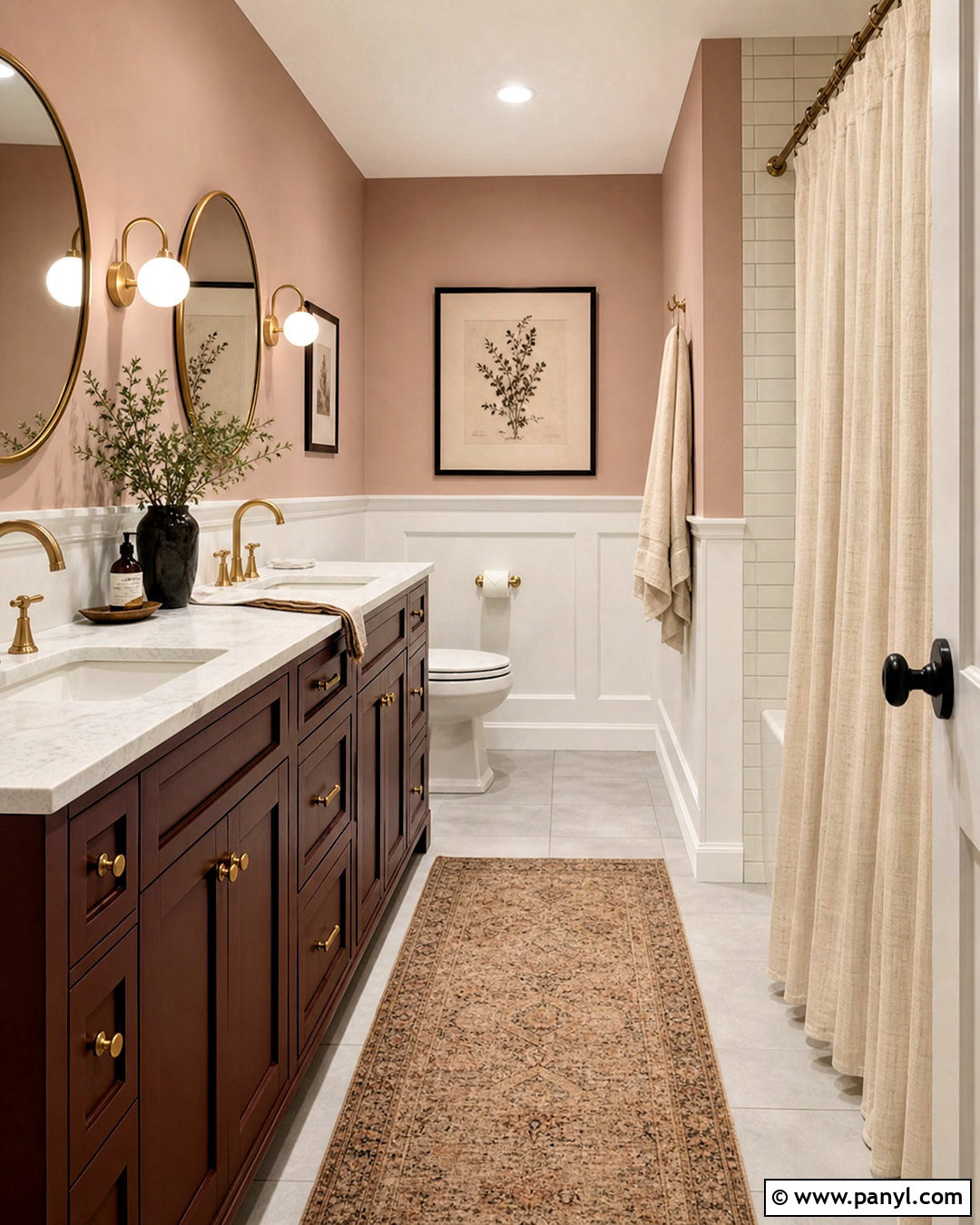
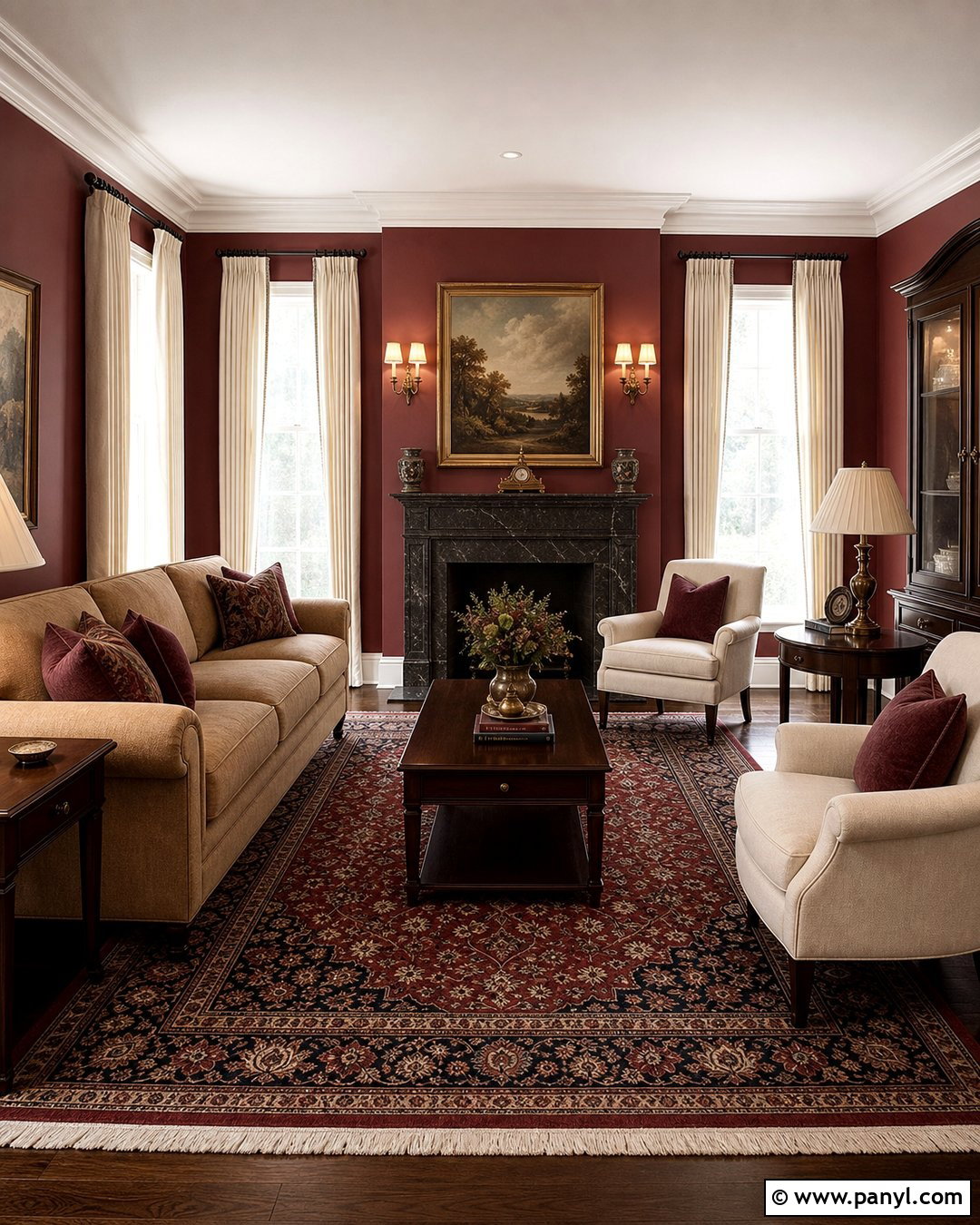
A powder room offers the perfect setting for burgundy trim and softly blushed walls. Cover the baseboards, crown molding, door, and window casing in a rich red-brown paint with a smooth satin finish. Choose a dusty blush wall color rather than a sugary pink, creating a sophisticated tonal contrast. A dark walnut vanity, creamy stone counter, and aged brass faucet support the warm palette. Install a rounded brass mirror and two opal glass sconces for balanced lighting. Small patterned floor tiles in burgundy, ivory, and muted rose pull the entire room together. Because the space is compact, keep accessories limited to a folded hand towel, ceramic soap dispenser, and one small framed print.
7. Terracotta Trim With Beige Walls
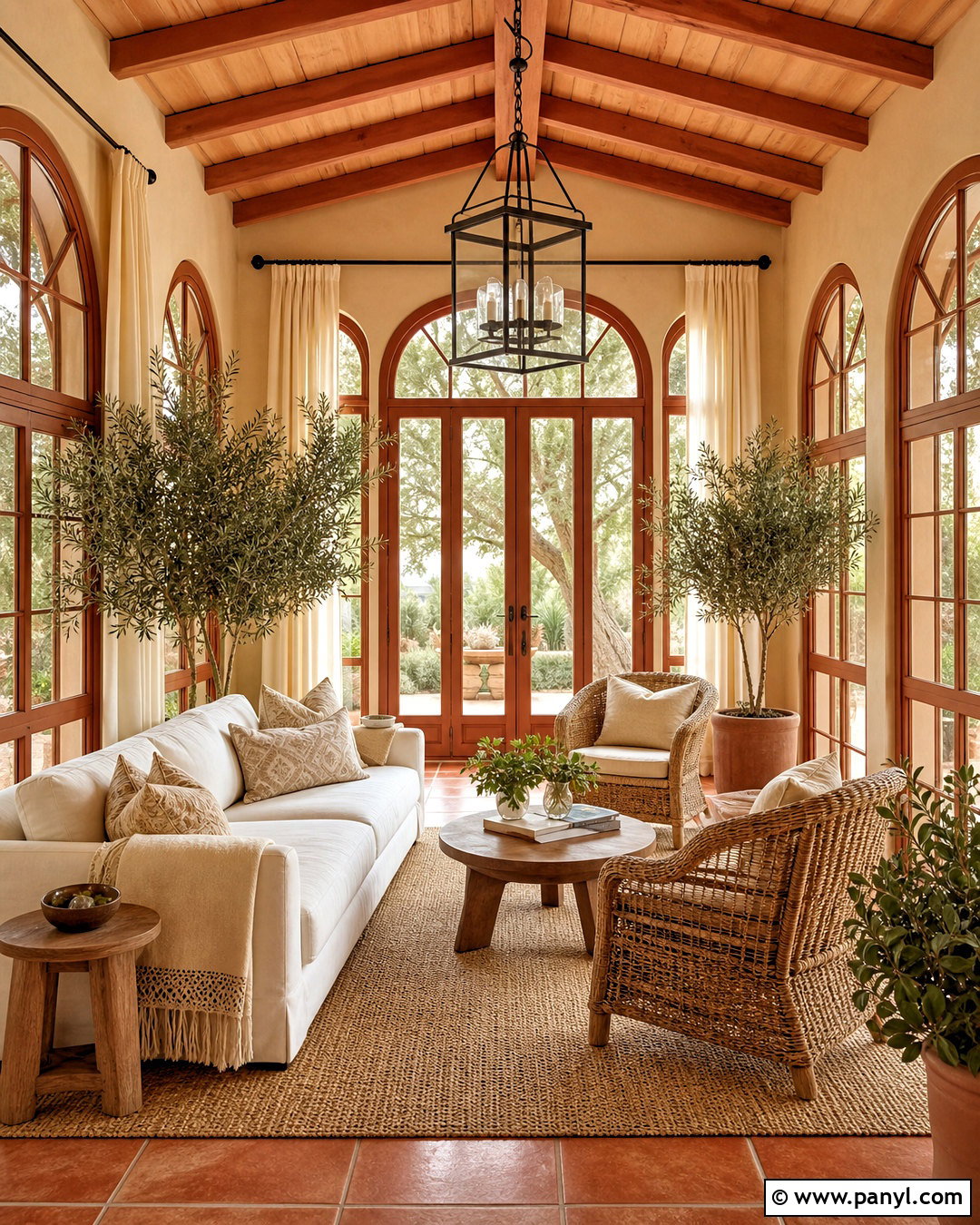
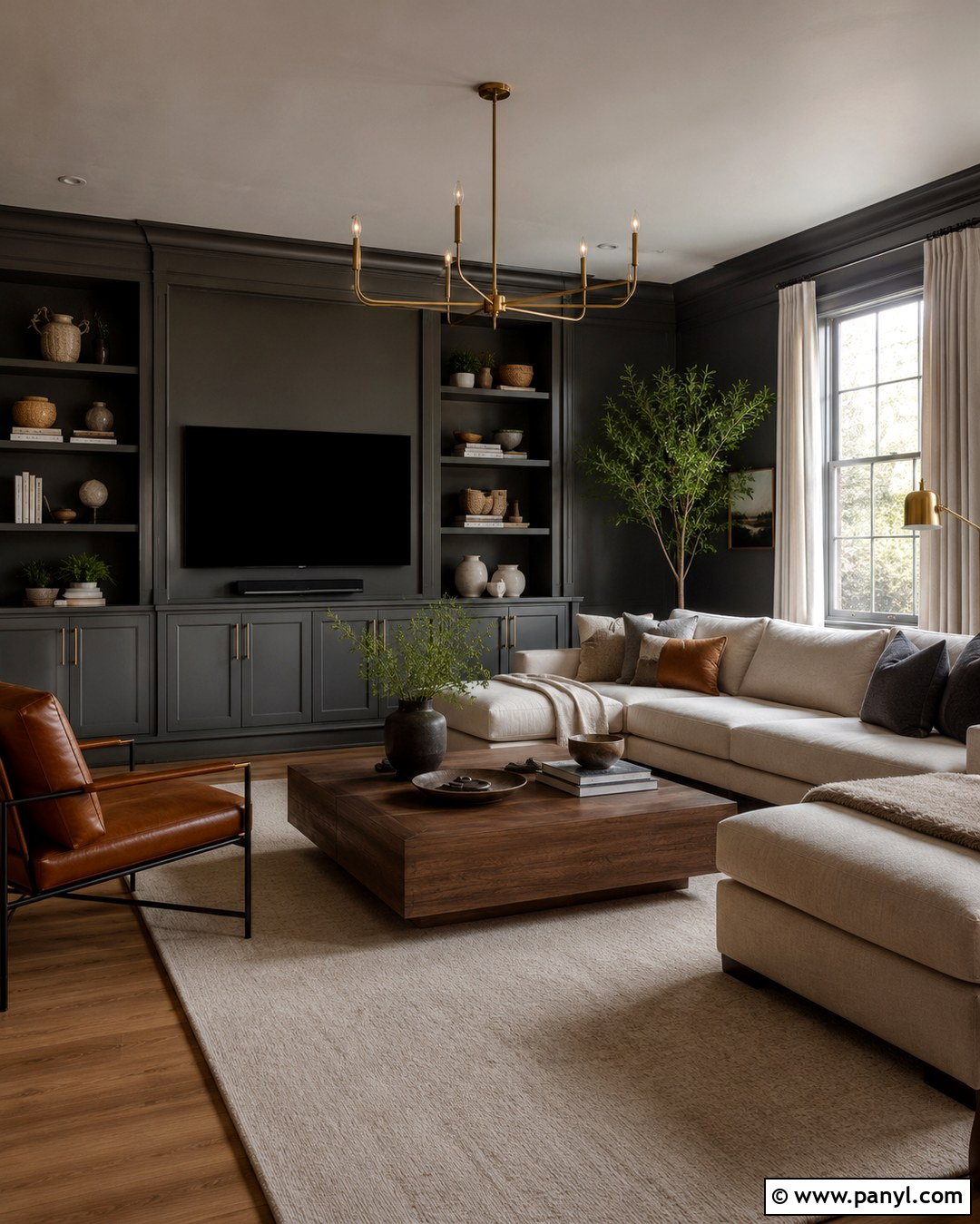
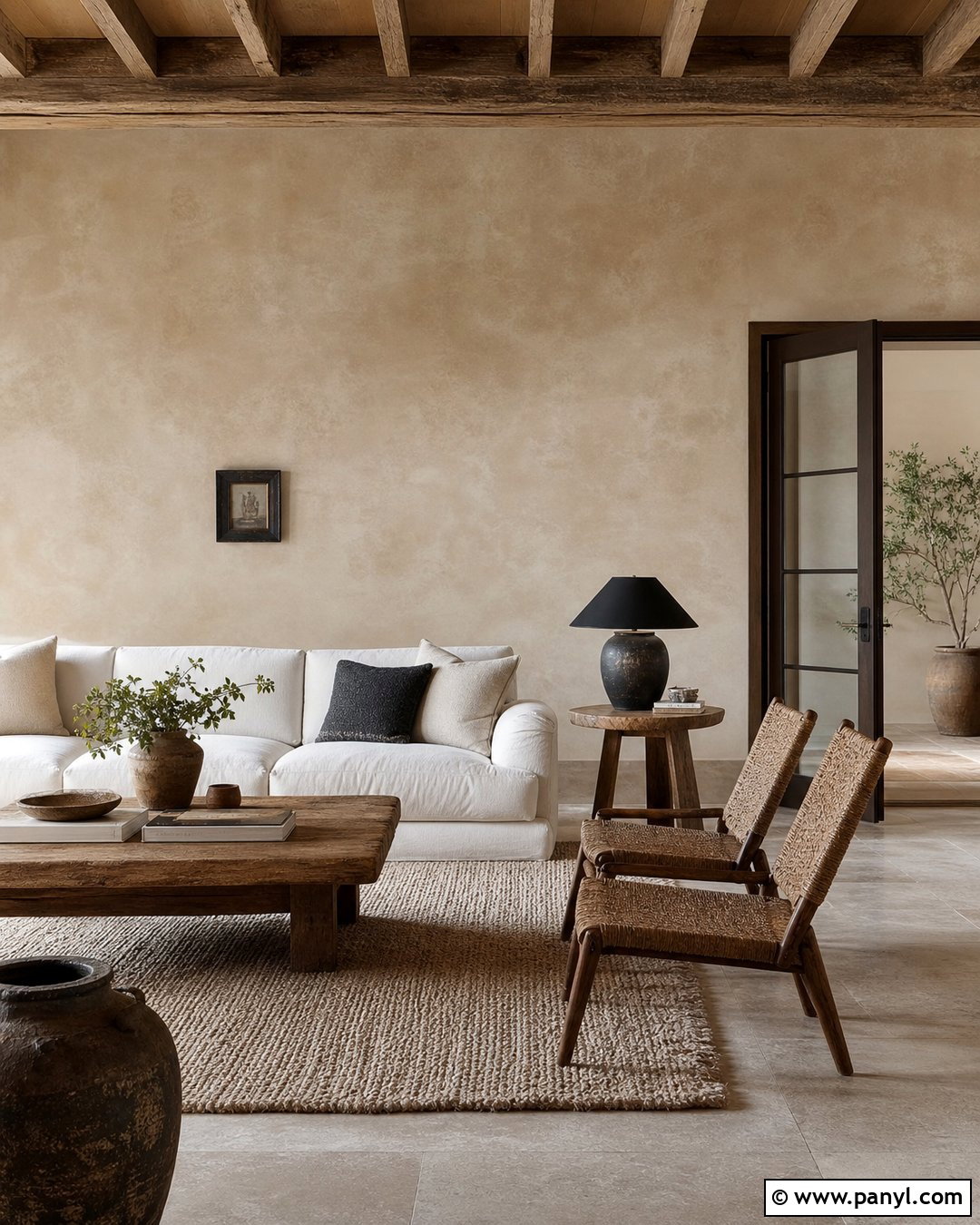
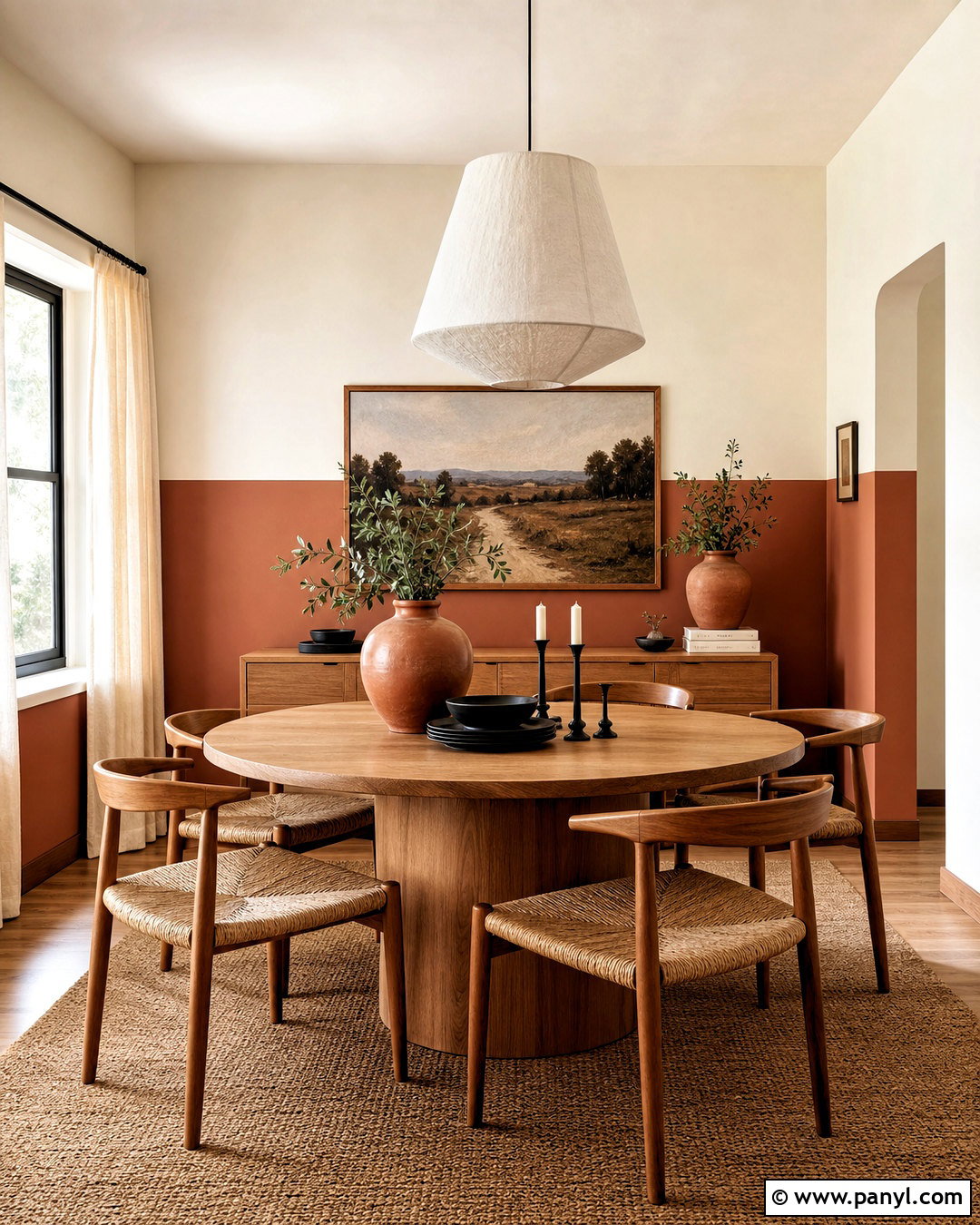
Sun-washed terracotta trim brings warmth and personality to a neutral sunroom. Use it on the window frames, French doors, baseboards, and ceiling beams, surrounded by sandy beige walls. Furnish the room with a low-profile cream sofa, two woven rattan chairs, and a round oak coffee table. A flat-weave rug featuring clay, tan, and faded blue prevents the palette from becoming too orange. Choose unlined ivory curtains that can be pulled away from the colorful casings. Potted olive trees and leafy houseplants connect the earthy trim to the view outdoors. Black accents should remain minimal, perhaps limited to one floor lamp. The finished space feels relaxed, bright, and inspired by warm Mediterranean interiors.
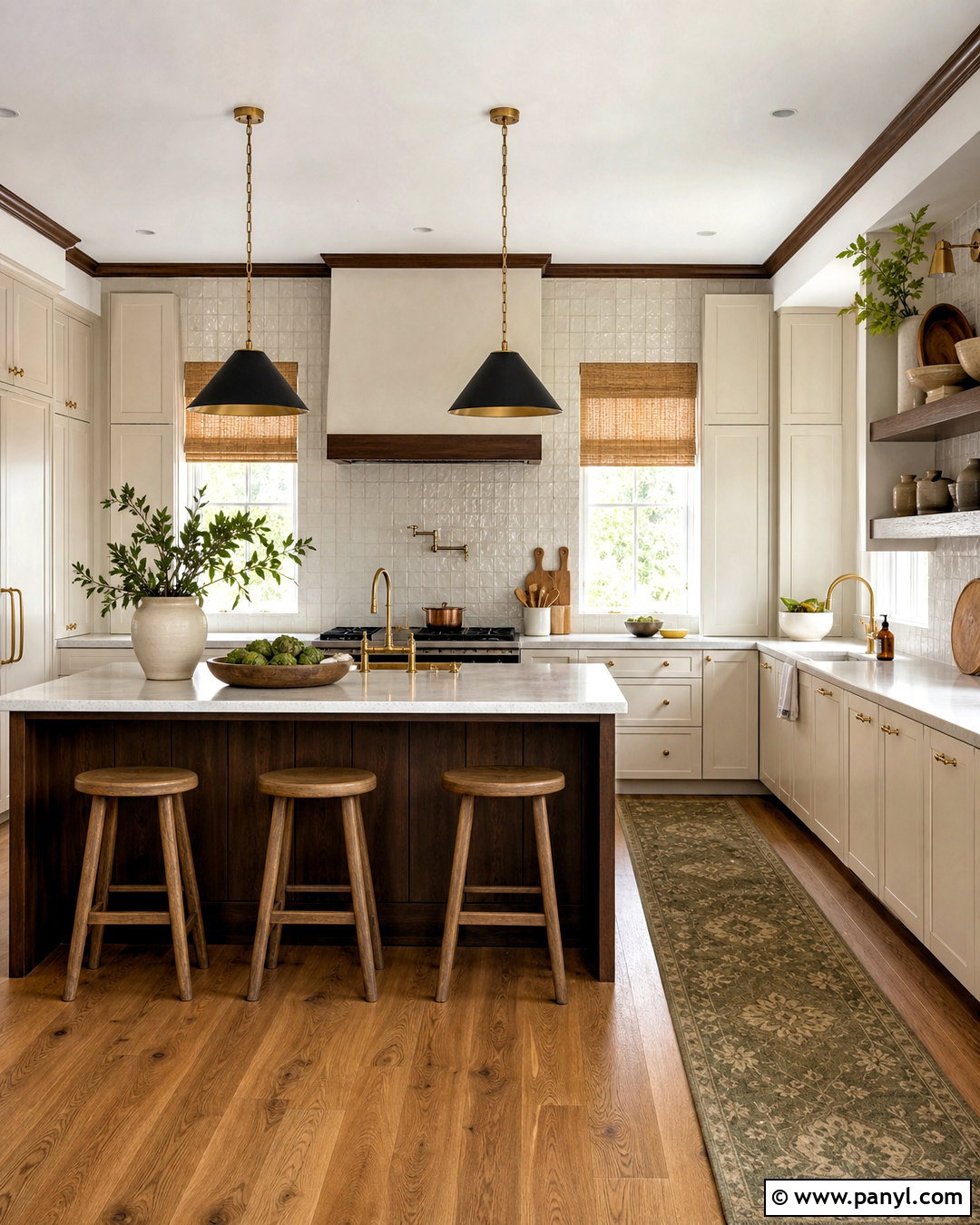
8. Brown Trim With Greige Walls
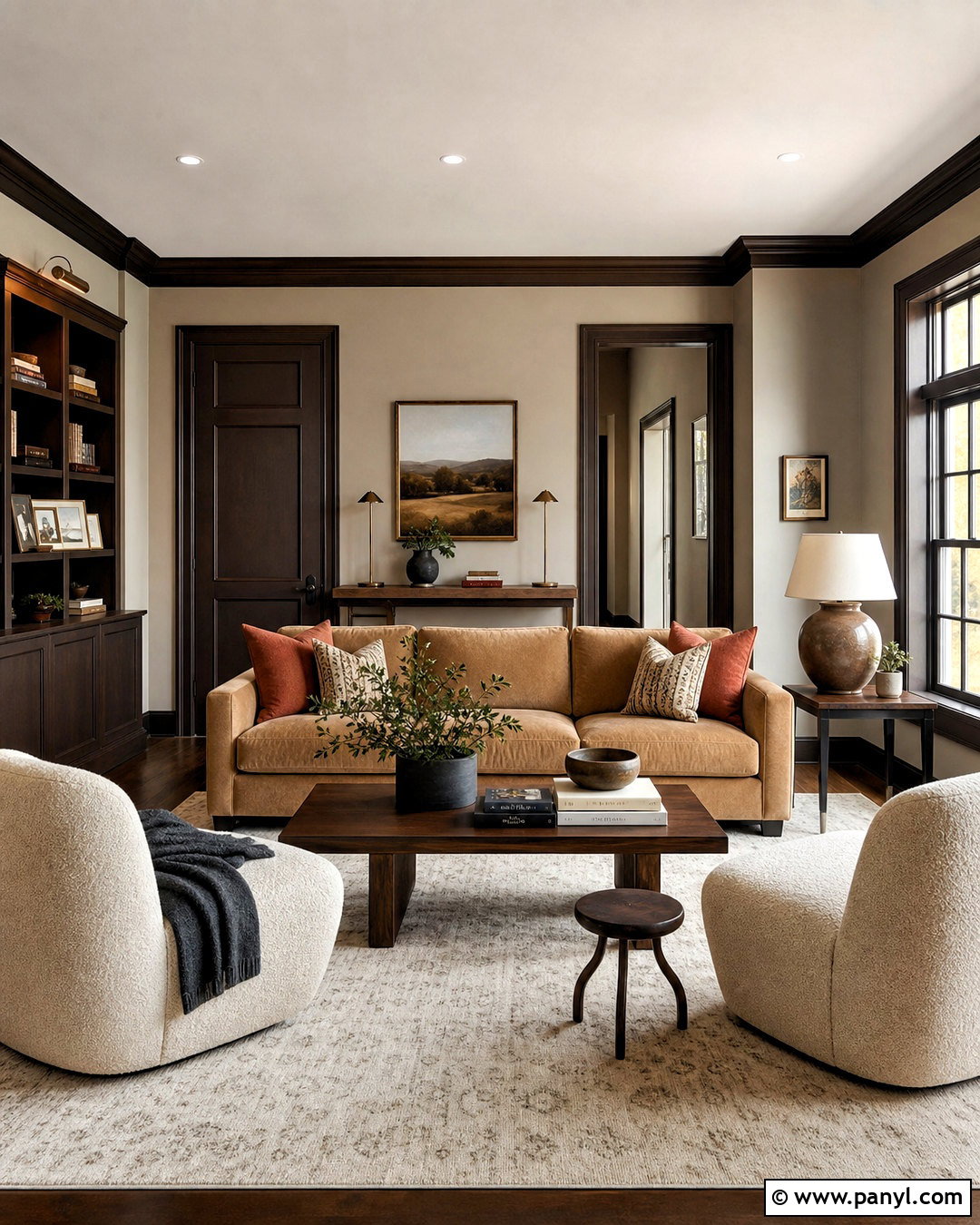
Deep chocolate brown trim gives a greige living room a comfortable, tailored foundation. Paint the baseboards, crown molding, built-in bookcase edges, window casings, and doors in a rich brown with subtle warm undertones. Select light greige walls that provide clear contrast without looking stark. A camel-colored sofa, ivory boucle chairs, and a walnut coffee table create a layered neutral seating arrangement. Ground the room with a cream and brown patterned rug, then add bronze lamps and rust-colored pillows. Keep curtains close to the wall color so the windows remain visually framed. This palette works particularly well with traditional molding because brown highlights its shape while coordinating naturally with wood furniture and warm-toned floors.
9. Taupe Trim With Ivory Walls
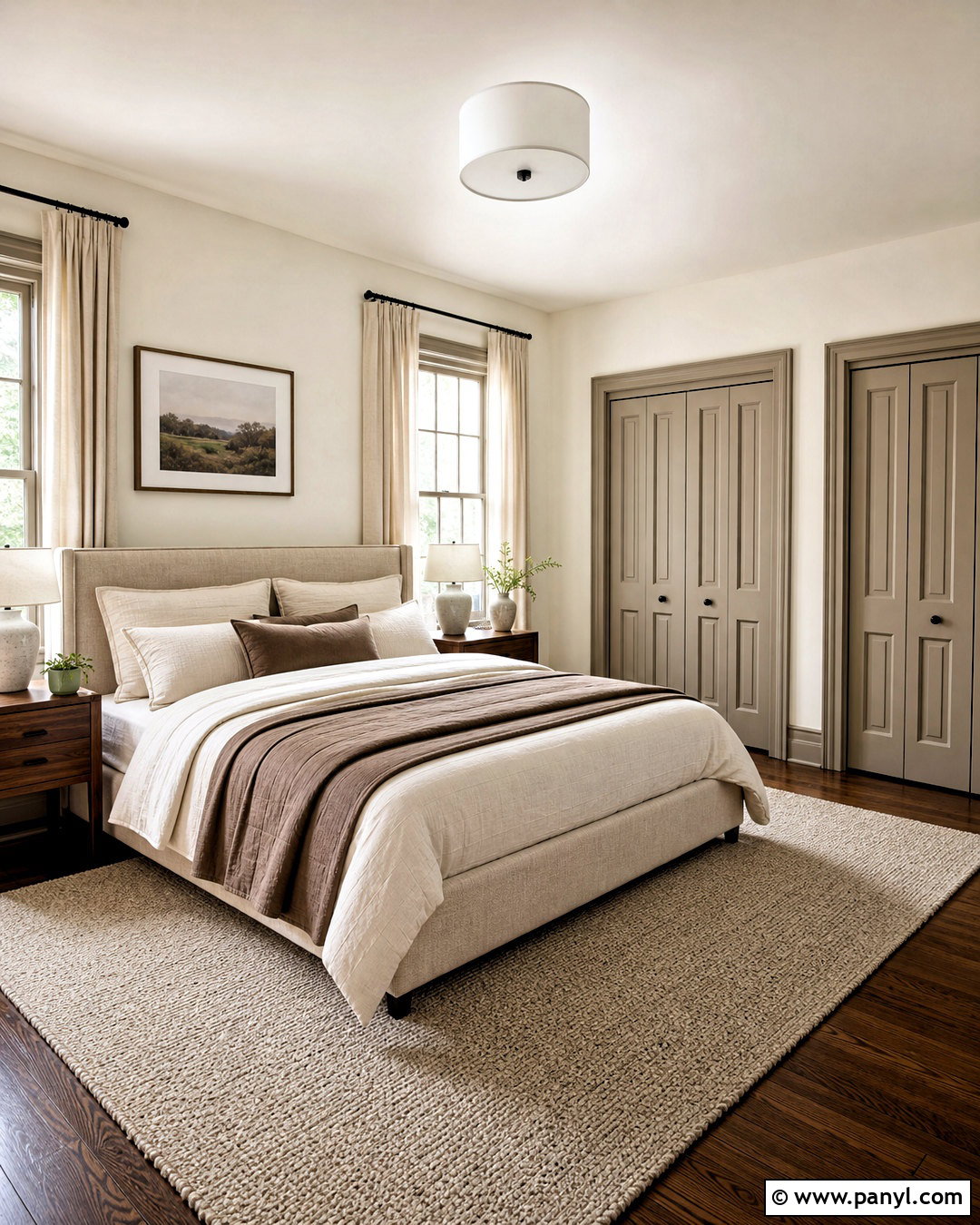
For gentle contrast, pair medium taupe trim with warm ivory walls in a peaceful primary bedroom. Apply taupe to the baseboards, door casings, window frames, and a wide paneled closet door. The difference should be noticeable but not severe. Place a curved upholstered bed in soft oatmeal against the ivory wall and use walnut nightstands for added depth. Layer white sheets with taupe quilts, muted brown pillows, and a lightweight cream throw. Linen curtains in the wall color allow the trim to provide the main outline. A wool rug, ceramic lamps, and minimal landscape art maintain the calm atmosphere. This understated scheme is ideal when bright white trim feels too sharp but dark paint feels overly dramatic.
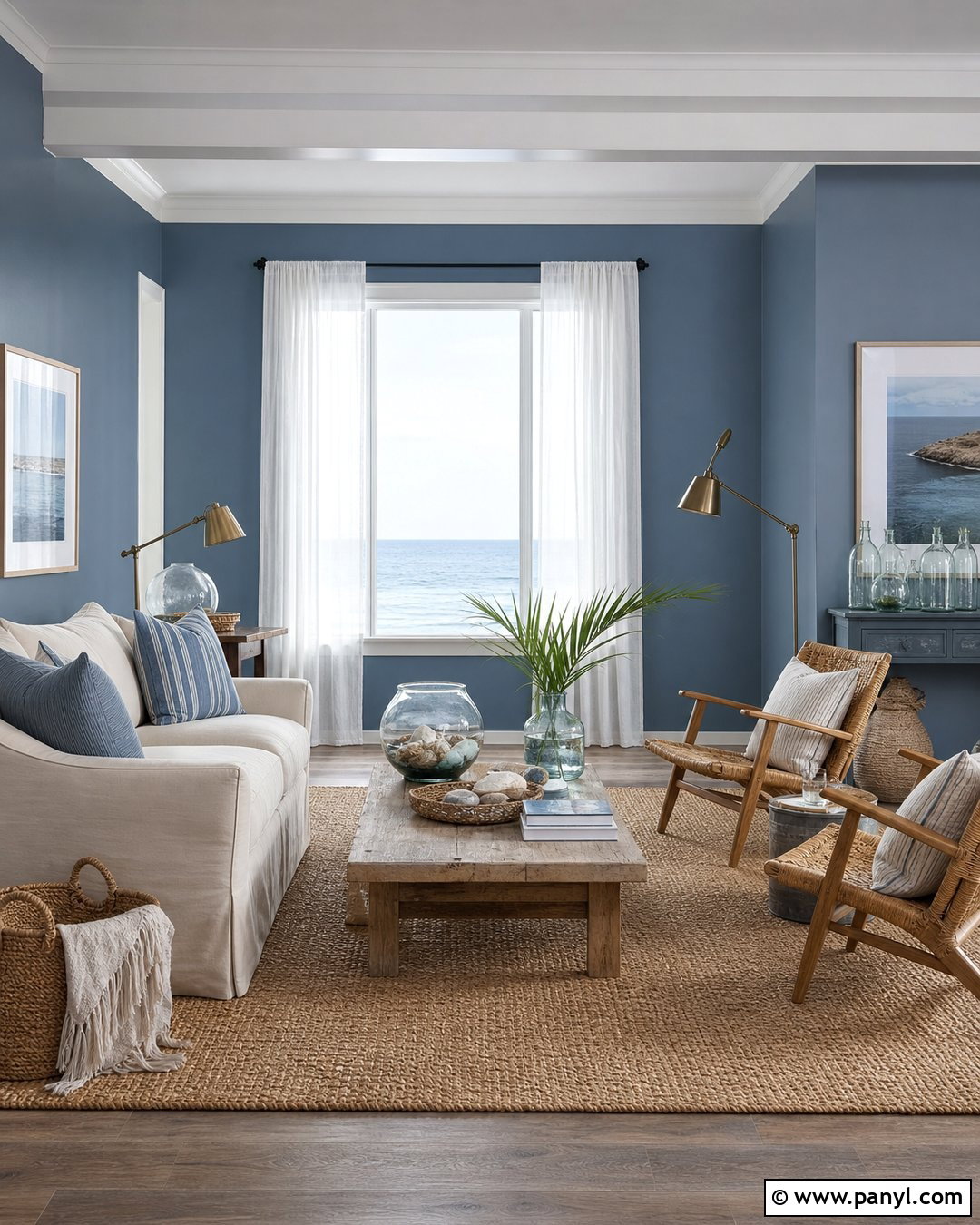
10. Dusty Blue Trim With White Walls
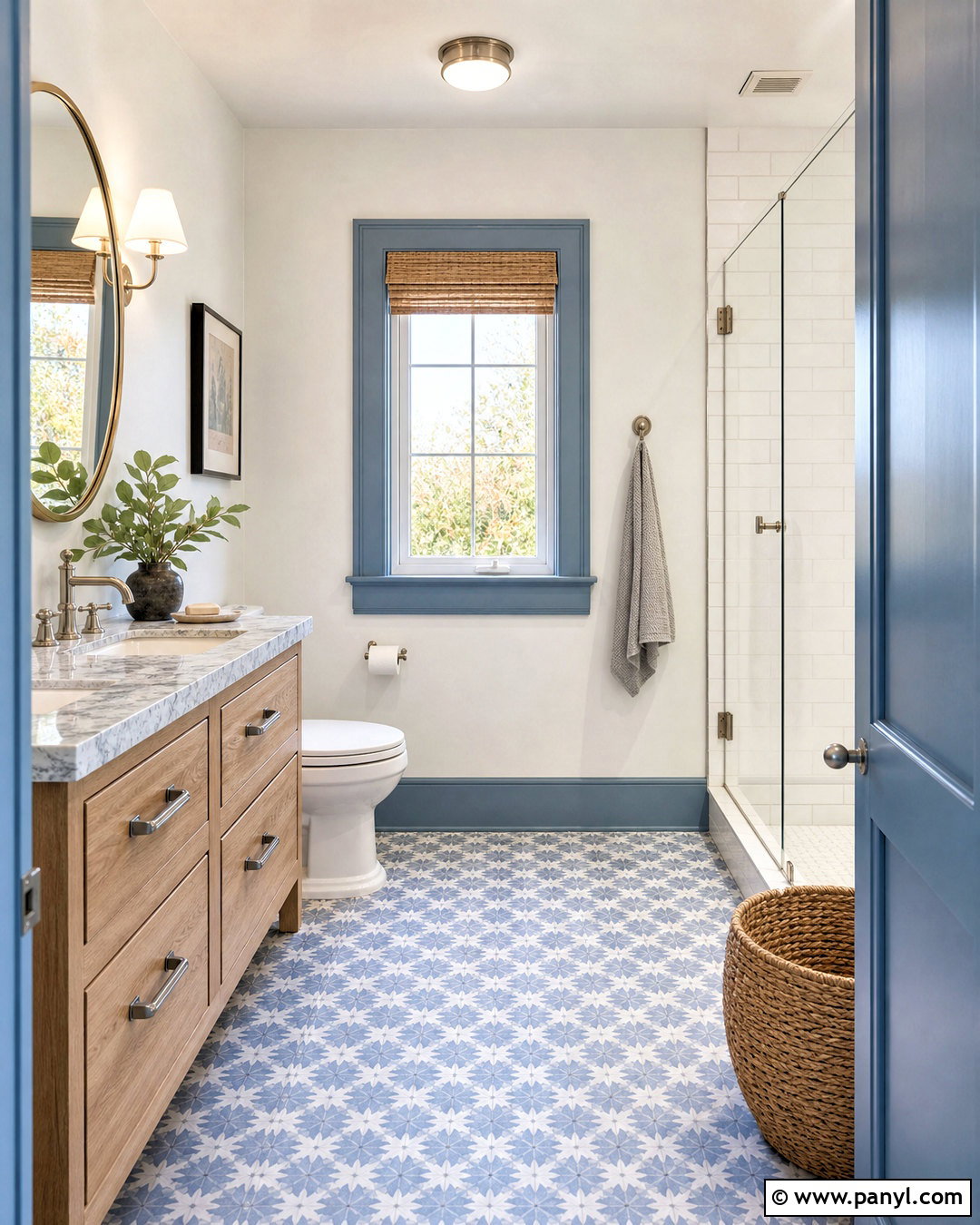
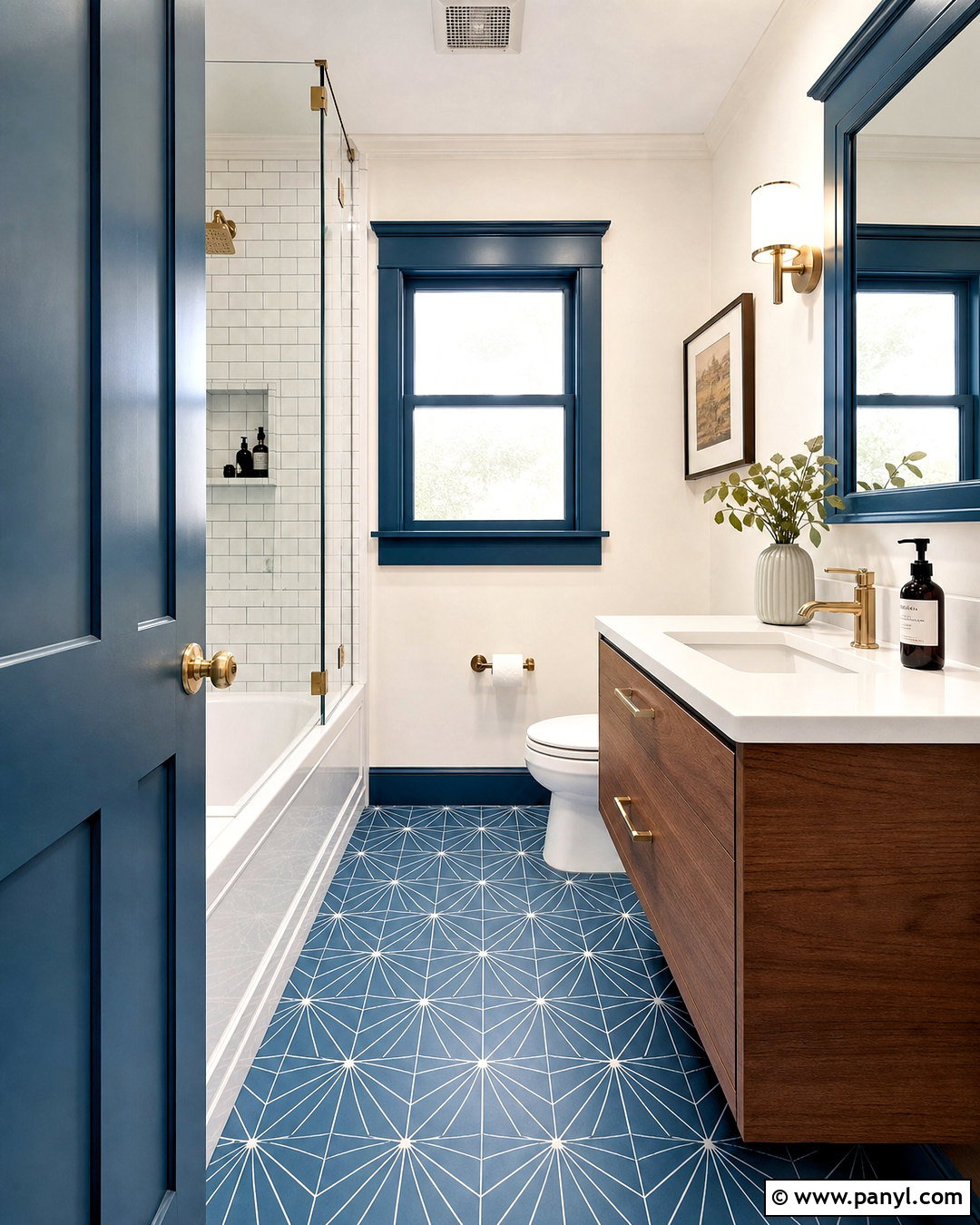
Dusty blue trim creates a fresh bathroom that feels colorful without losing its clean appearance. Keep the walls soft white, then paint the baseboards, window casing, door, and vanity molding a muted blue-gray. A white oak vanity, honed marble counter, and brushed nickel fixtures complement the cooler trim. Use white subway tile around the tub, but add pale gray grout for quiet definition. A blue-and-cream patterned floor provides another layer of color without competing with the painted woodwork. Finish the room with a simple white shower curtain, woven storage baskets, and a rounded metal mirror. This complete palette suits both compact bathrooms and larger family spaces because it remains bright, practical, and easy to coordinate.
11. Mustard Trim With Light Gray Walls
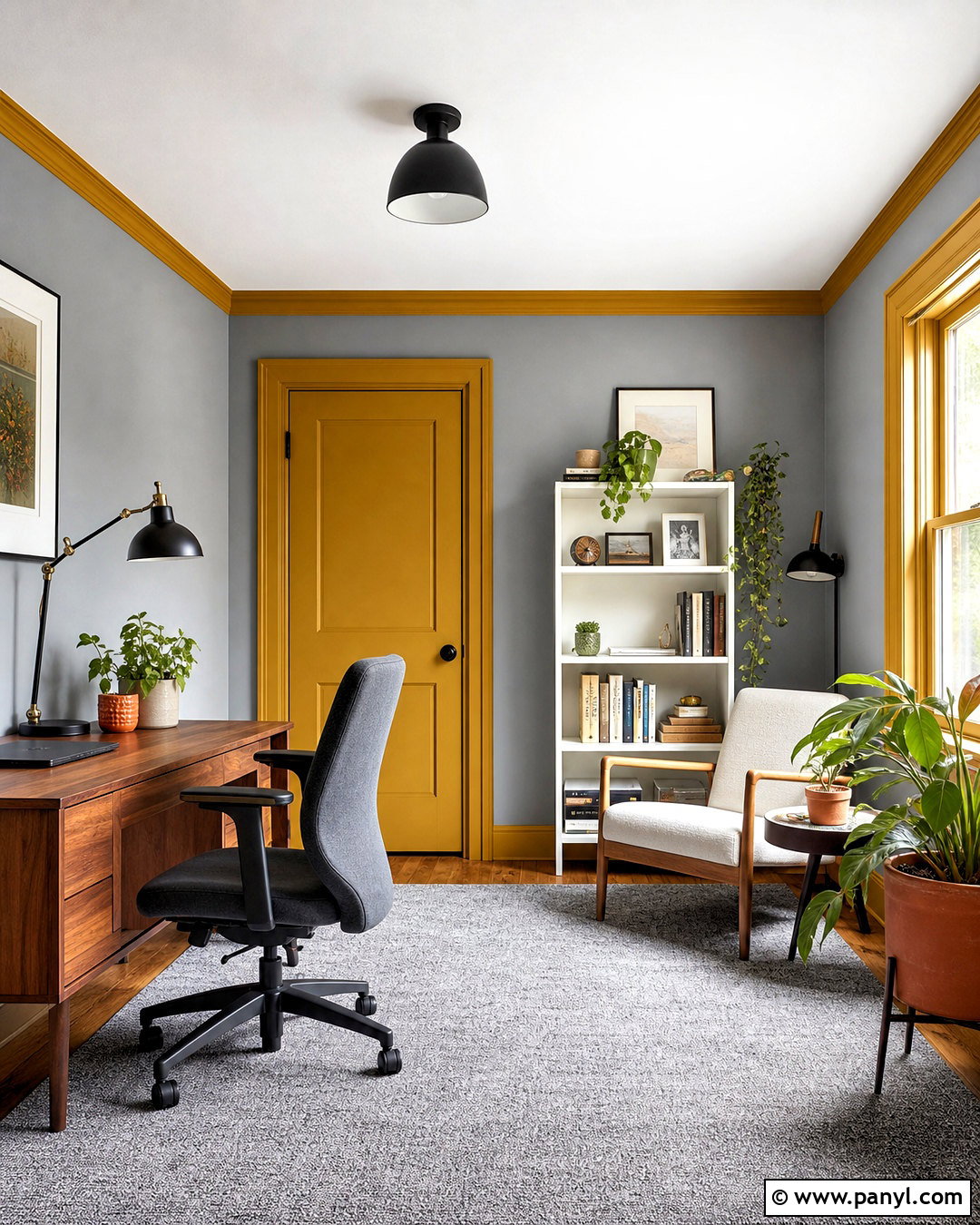
Mustard yellow trim can energize a home office when balanced with light gray walls and streamlined furniture. Use the color around one large window, along the baseboards, and across the interior door. Choose a warm, earthy mustard rather than a bright primary yellow. Position a walnut desk near the window and pair it with a charcoal upholstered chair. Add white shelving, a gray wool rug, and a compact cream reading chair to prevent the room from feeling busy. Black desk lighting provides structure, while terracotta planters repeat the trim’s warmth. Keep artwork simple and geometric. This palette creates an upbeat workspace where the trim supplies personality, yet the neutral walls and practical layout support concentration.
12. Red Trim With Pale Pink Walls
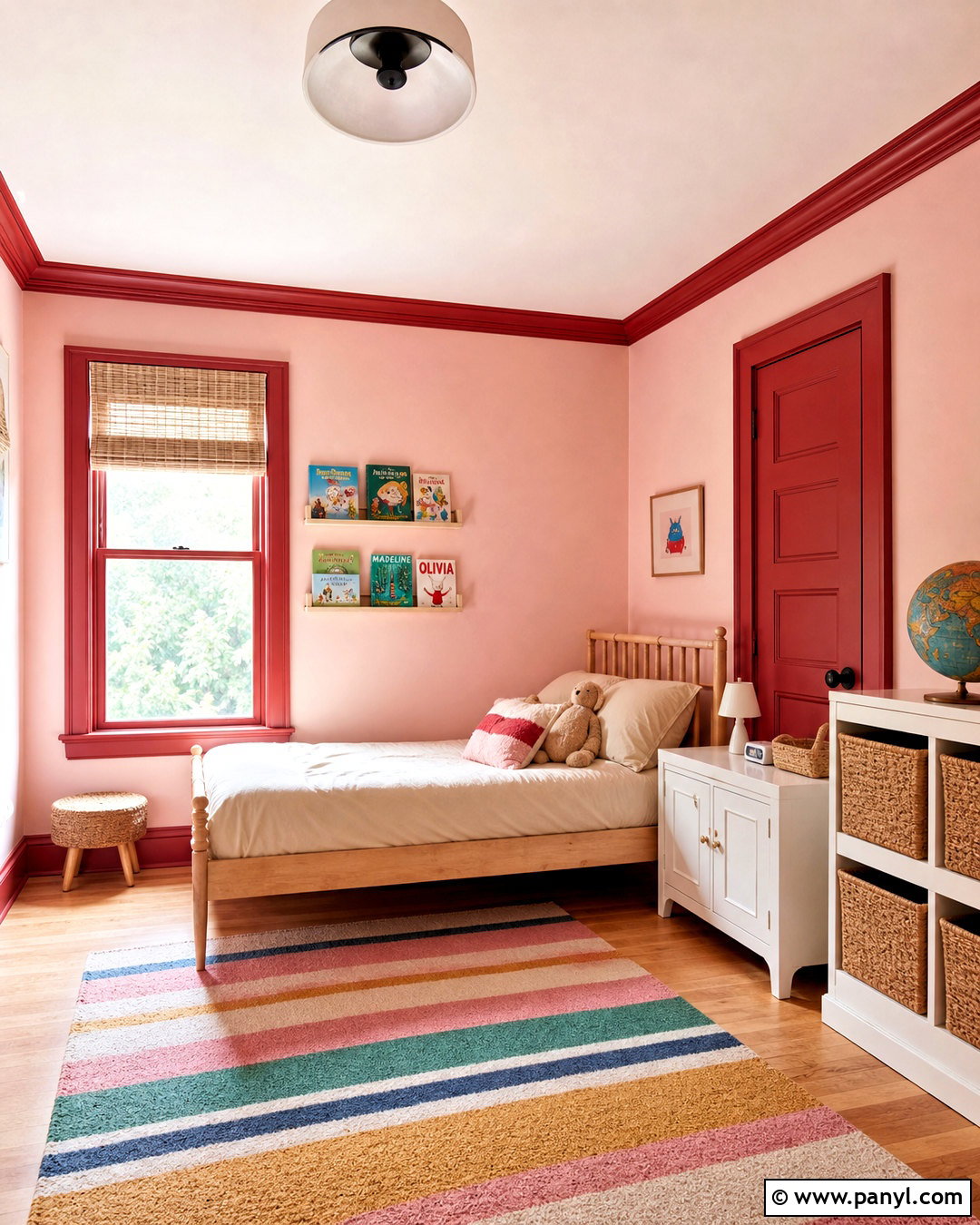
Playful red trim and pale pink walls can create a cheerful children’s room that still feels polished. Select a muted tomato red for the baseboards, window casing, crown molding, and paneled door. Use a chalky pink on the walls to soften the contrast. A natural maple bed, white storage cabinet, and woven baskets keep the room practical and visually balanced. Dress the bed in cream bedding with red, pink, and light blue accents. Add a washable striped rug and simple fabric curtains that stop short of covering the trim. Wall-mounted book ledges provide accessible storage without crowding the floor. The result is colorful and imaginative, but the coordinated furniture and limited palette allow the room to grow with the child.
13. Plum Trim With Lavender Walls
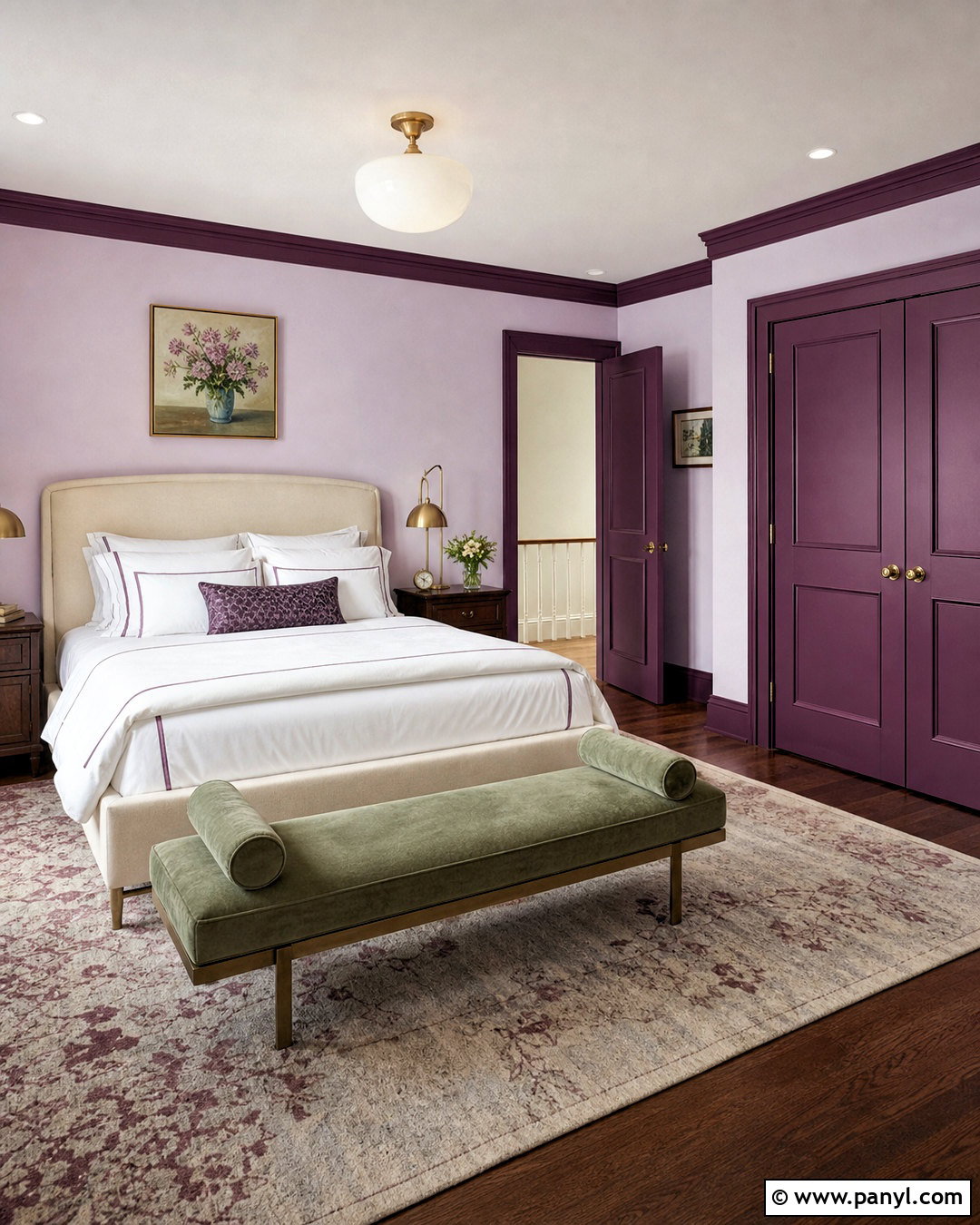
A guest bedroom gains depth from dark plum trim set against pale, gray-toned lavender walls. Paint the baseboards, doorframes, window casings, and closet doors in the same saturated plum for consistency. Choose an ivory upholstered bed and dark wood nightstands to anchor the softer wall color. White bedding with plum piping creates a crisp connection to the woodwork, while a muted floral rug adds olive, taupe, and lavender. Use antique brass lamps for warmth and hang cream curtains beyond the outer edges of the windows. One upholstered bench in dusty green introduces a balanced complementary note. This refined palette feels distinctive without being excessively feminine, especially when paired with clean furniture lines and restrained artwork.
14. Teal Trim With Light Aqua Walls
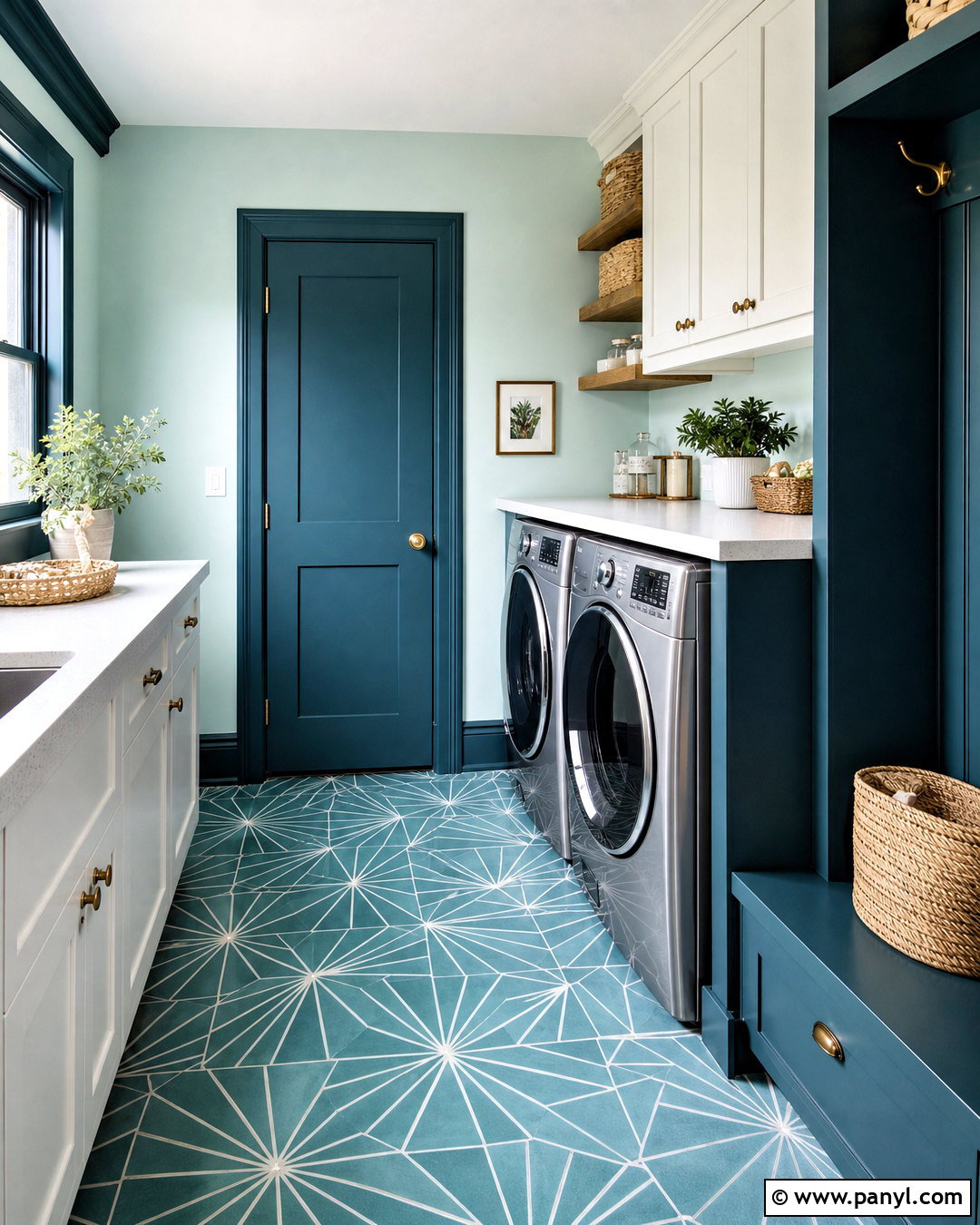
Teal trim turns a hardworking laundry room into a bright, coordinated space. Paint the baseboards, window casing, utility door, and cabinet crown molding in a deep blue-green. Pair it with very light aqua walls that make the room feel open. White shaker cabinets, pale quartz counters, and a stainless steel washer and dryer provide a practical foundation. Add warm oak floating shelves and woven hampers to offset the cooler colors. A small geometric floor tile in white, teal, and soft gray ties the surfaces together. Keep frequently used supplies inside labeled-free glass containers or closed cabinets for a clean appearance. The finished room combines dependable storage, durable materials, and lively color without sacrificing everyday function.
15. Olive Trim With Parchment Walls
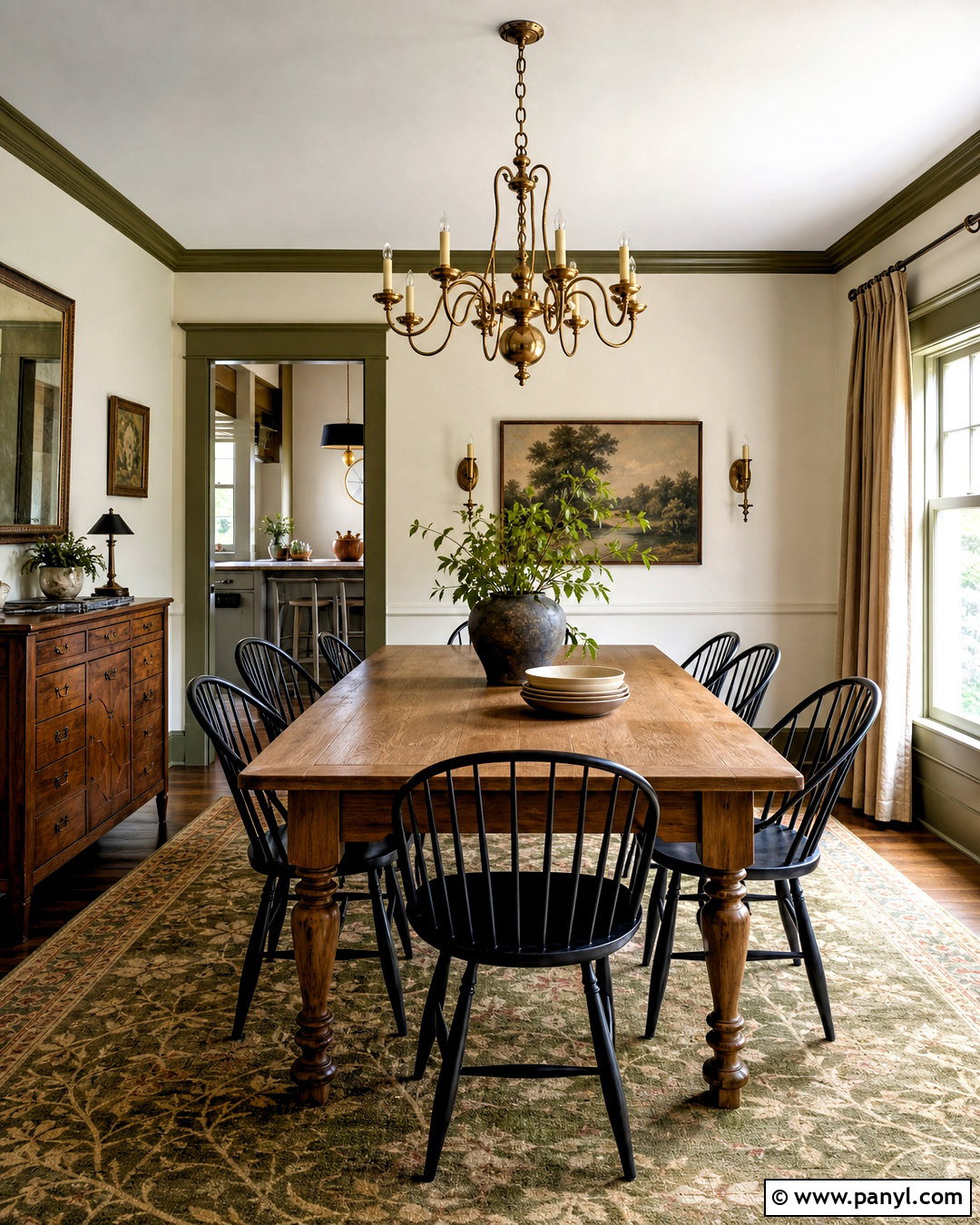
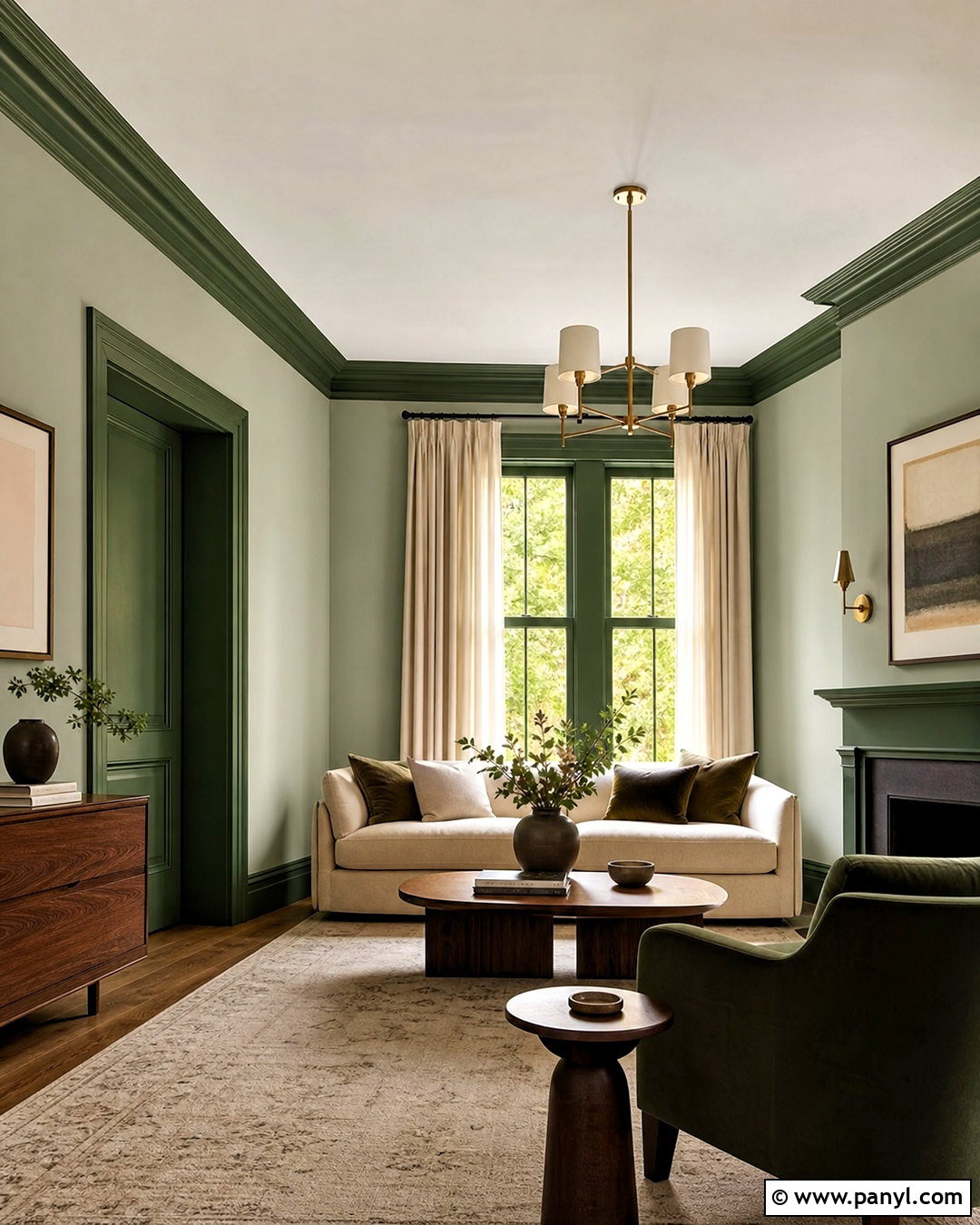
Olive trim and parchment-colored walls create an inviting dining room with understated historical character. Carry the earthy green across baseboards, window casings, crown molding, and a wide cased opening. Choose a substantial oak dining table and spindle-back chairs in a dark brown stain. A muted botanical rug brings together olive, tan, cream, and touches of faded red. Hang a simple aged brass chandelier over the table and use natural linen curtains at the windows. A vintage-style sideboard provides storage and supports ceramic lamps or a few collected objects. Because olive already makes a strong statement, keep artwork traditional and limited. This combination works beautifully with detailed molding, warm wood floors, and rooms receiving abundant natural light.
16. White Trim With Dark Green Walls
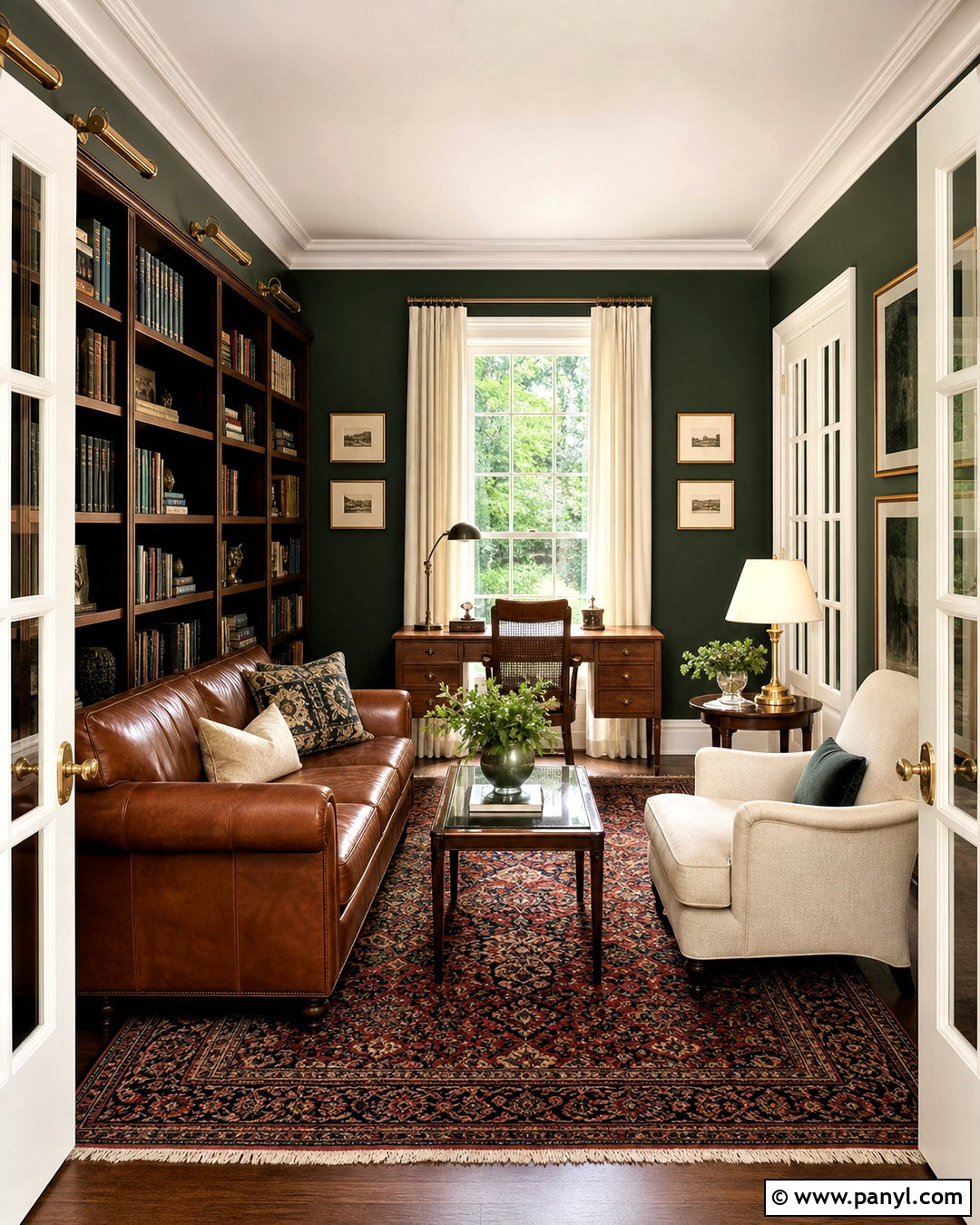
Reversing the usual light-wall formula can give a home library dramatic depth. Paint the walls a saturated dark green while keeping the crown molding, baseboards, window casings, and French doors crisp warm white. Add floor-to-ceiling walnut bookcases on one wall and place a cognac leather sofa opposite them. A cream reading chair and faded Persian-style rug brighten the center of the room. Use brass picture lights, a dark wood coffee table, and ivory curtains to connect with the trim. The white outlines prevent the green walls from feeling heavy and bring attention to the room’s architecture. This balanced design feels cozy during quiet evenings while remaining fresh enough for daytime work, reading, or conversation.
17. Cream Trim With Navy Walls
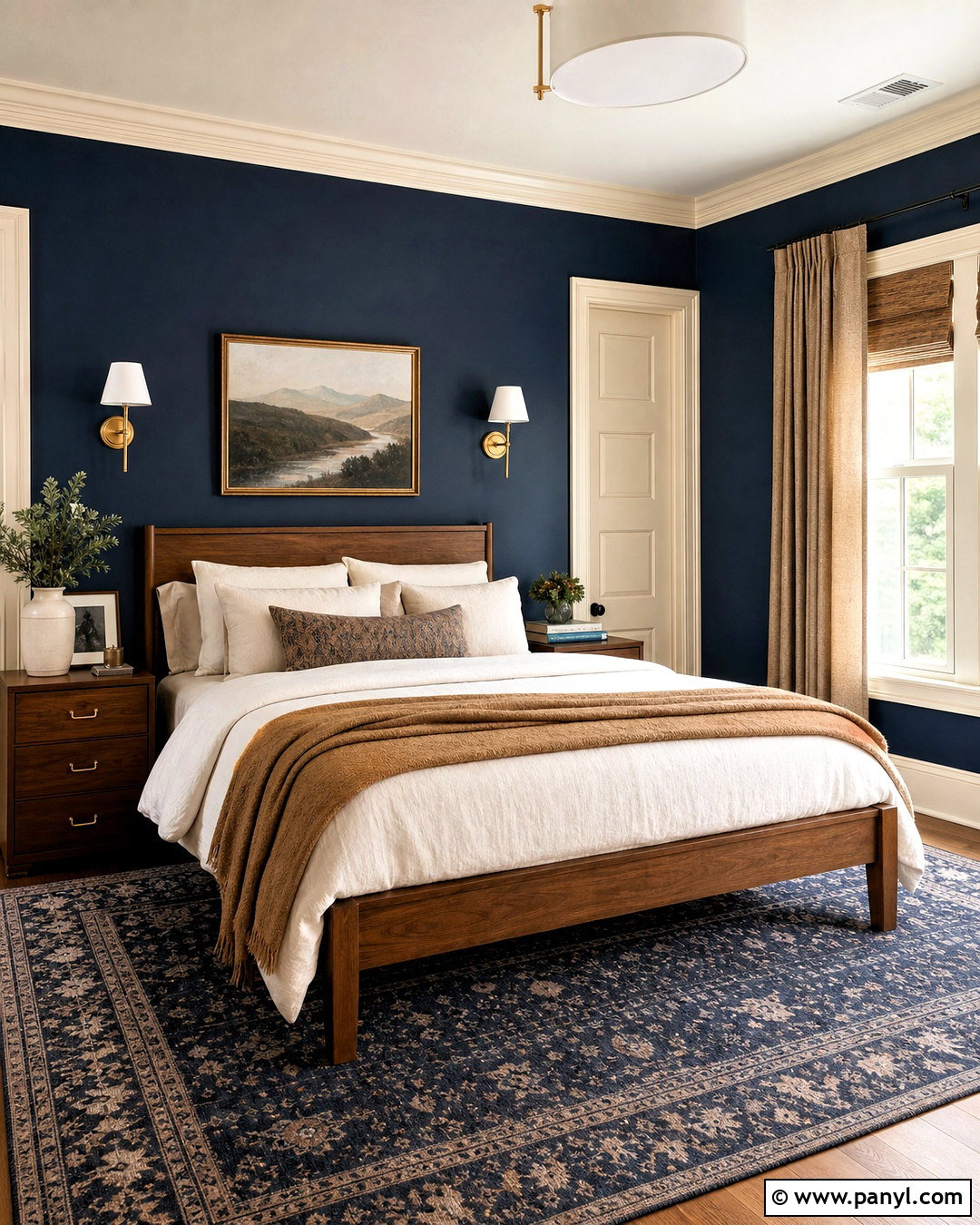
Cream trim softens deep navy walls in a comfortable, tailored bedroom. Instead of using bright white, choose a warm cream for the baseboards, crown molding, doorframes, and paneled doors. The gentler contrast works well with dark walls and traditional furniture. Center a medium-tone oak bed against the navy backdrop, then add cream bedding, a camel throw, and patterned blue pillows. Warm brass sconces and walnut nightstands reinforce the welcoming palette. Use cream curtains with a subtle woven texture, positioning them to reveal the painted window casing. A vintage-inspired rug containing navy, beige, and muted rust grounds the room. This full scheme delivers rich color while maintaining enough warmth and brightness for a restful sleeping space.
18. Natural Wood Trim With White Walls
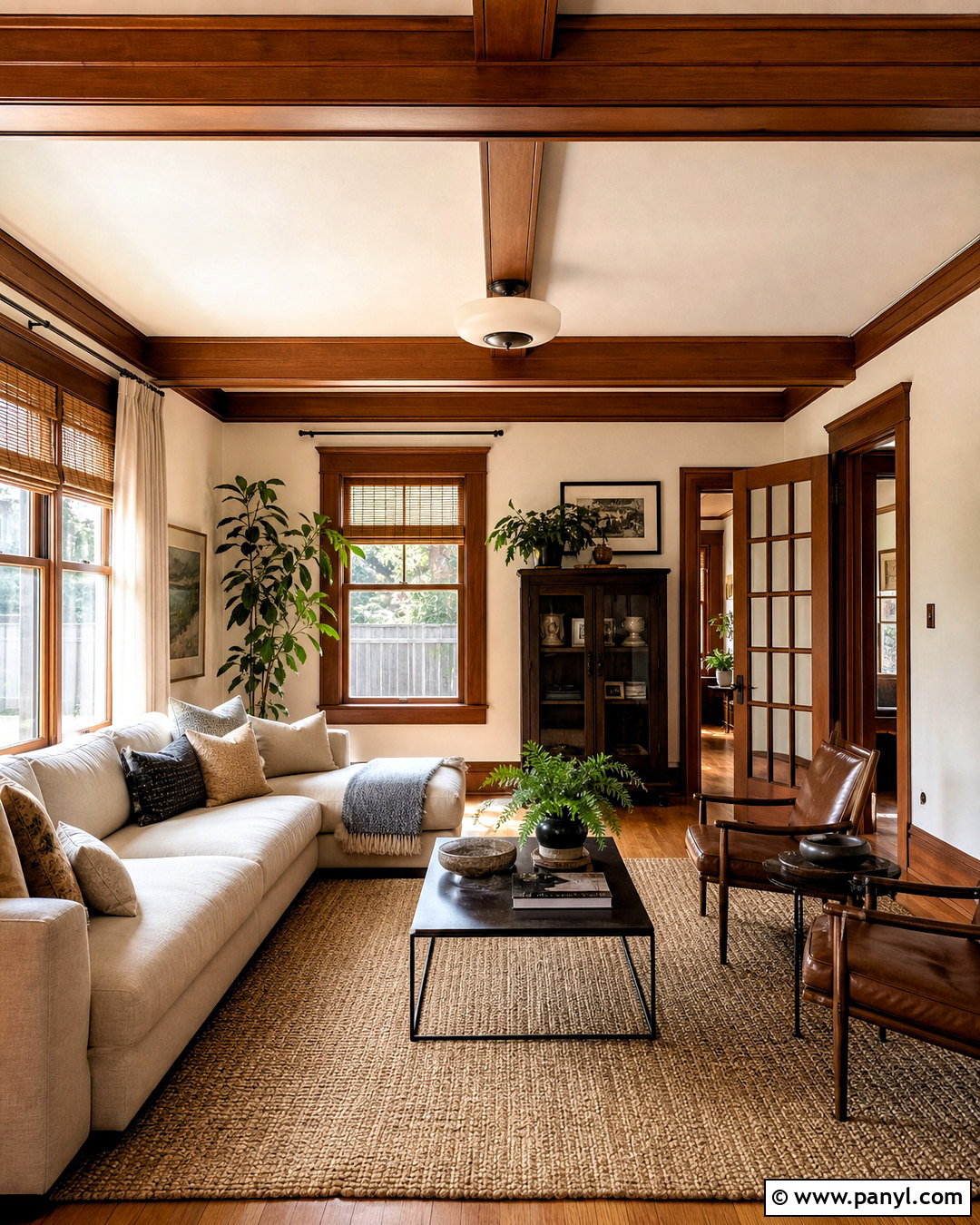
Natural wood trim offers rich contrast without adding another painted color. In a bright living room, keep the walls creamy white and restore window casings, baseboards, ceiling beams, and doorframes in a medium walnut or warm oak finish. Coordinate the wood tones carefully rather than mixing several unrelated stains. A cream sectional, black metal coffee table, and textured beige rug create a simple seating area that lets the craftsmanship stand out. Add linen curtains mounted outside the casings so the grain remains visible. Leather accent chairs and woven shades strengthen the warm, organic palette. Keep decorative objects light and minimal. The result feels grounded and architectural, working especially well in Craftsman, midcentury, rustic, and modern organic homes.
19. Black Window Trim With Neutral Walls
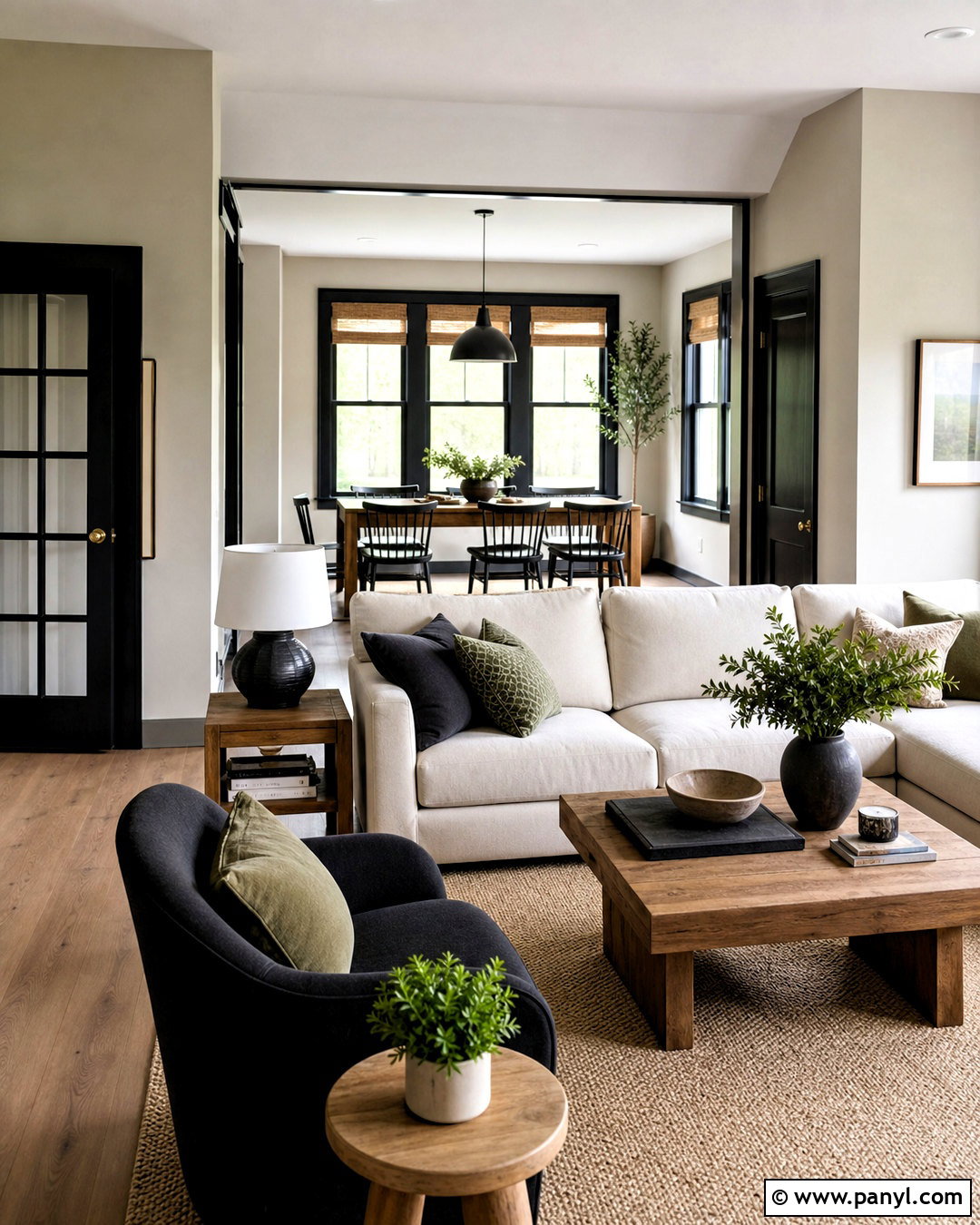
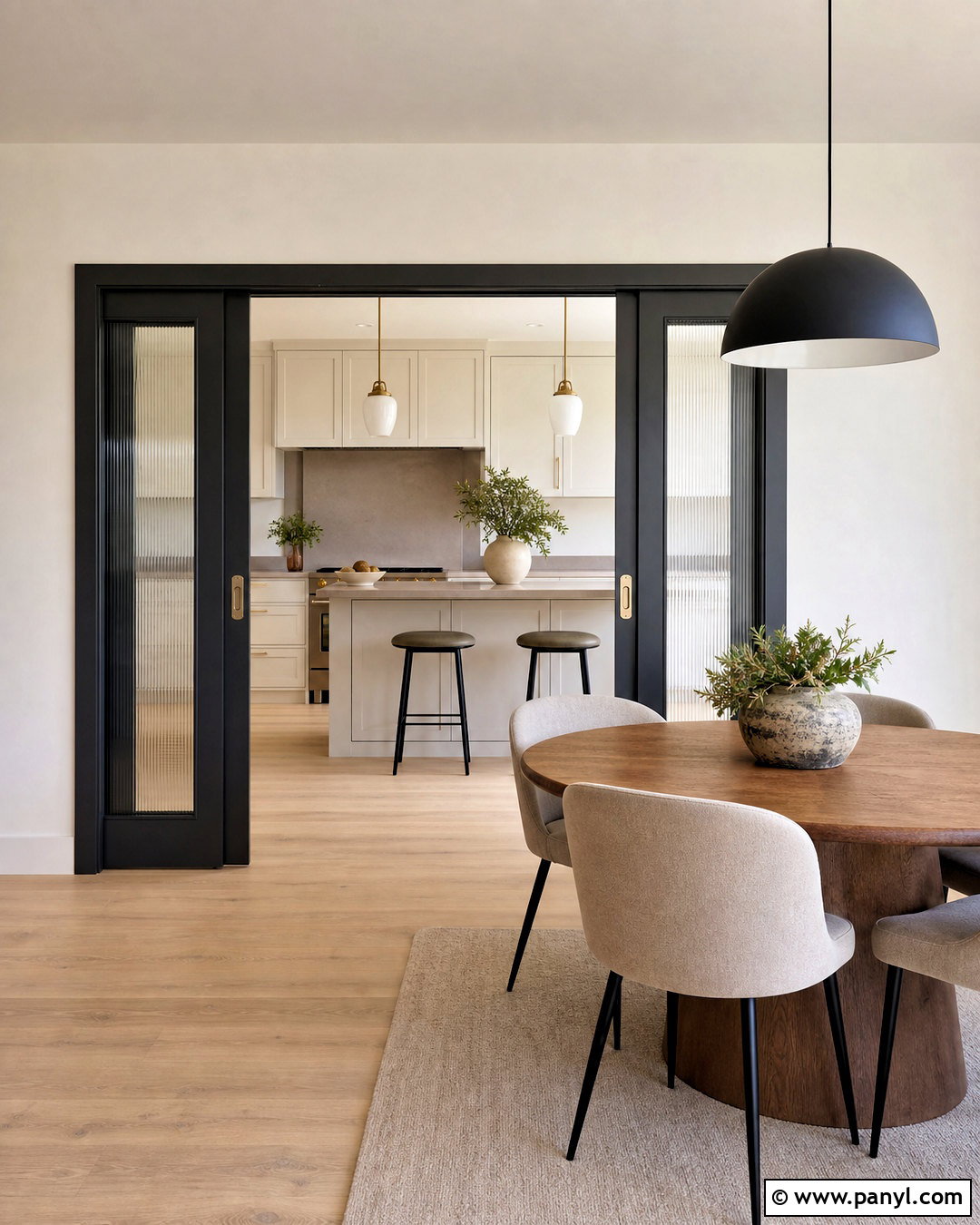
If painting every baseboard feels excessive, focus the contrast on windows and coordinating interior doors. In an open-plan living and dining area, use matte black on the window sashes, casings, and two visible doors. Keep baseboards and walls the same soft greige to reduce visual breaks elsewhere. Furnish the living zone with a cream sofa, oak coffee table, and charcoal chairs. In the dining zone, repeat black through slender chair frames and a linear pendant above a pale wood table. Natural woven shades fit neatly inside the dark windows without hiding them. A large neutral rug connects both areas. This selective approach frames outdoor views while preserving a calm, cohesive foundation throughout the open space.
20. Coral Trim With Warm White Walls
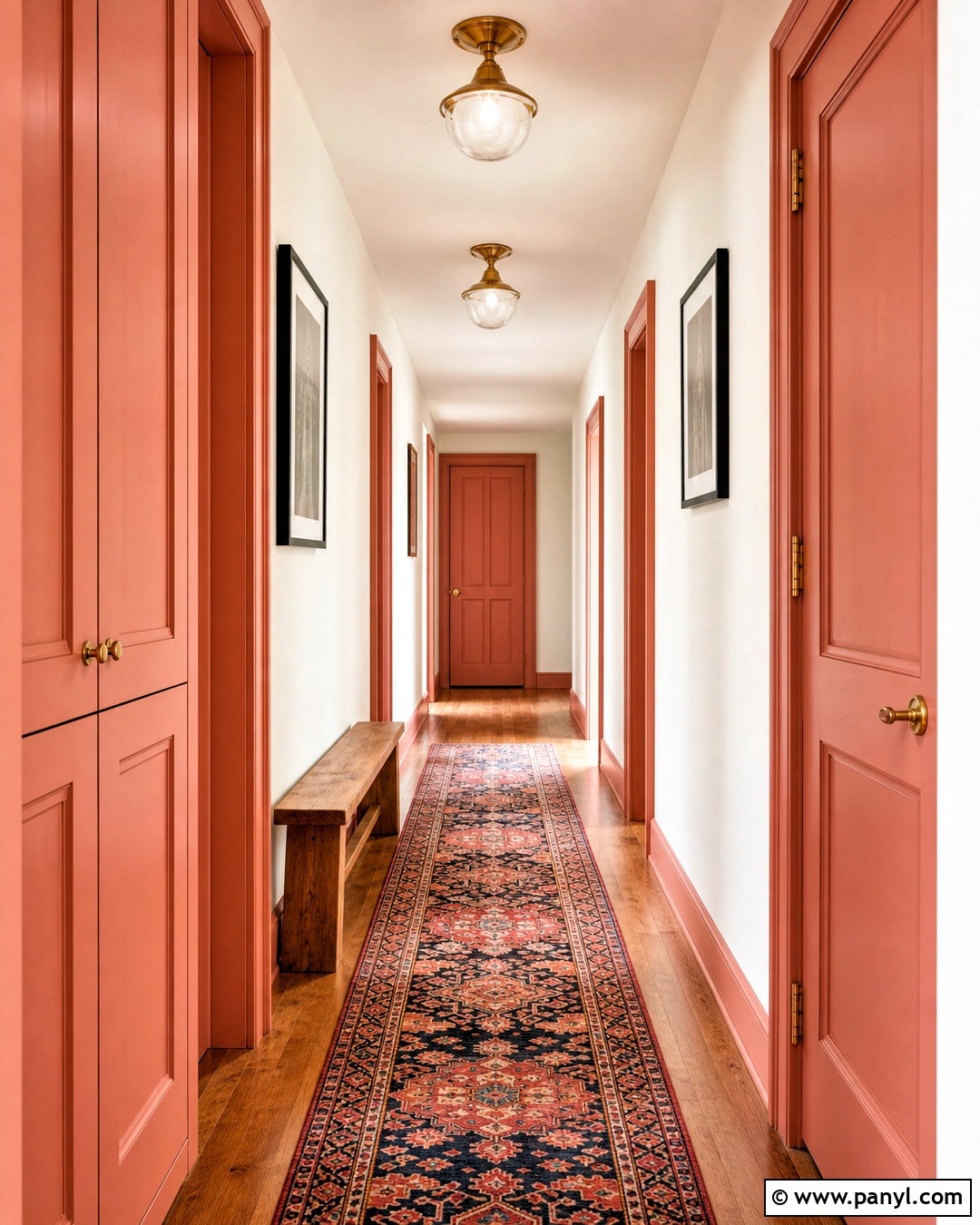
Coral trim can make a narrow hallway feel friendly, memorable, and intentionally decorated. Choose a softened clay-coral rather than a neon shade, then apply it to the baseboards, door casings, interior doors, and the edge of a small built-in cabinet. Keep the walls and ceiling warm white to maintain an open appearance. Add a washable runner containing coral, blue, beige, and brown. A narrow oak bench and a few black-framed prints create function without blocking the walkway. Use simple brass ceiling lights and matching door hardware for additional warmth. Let adjacent rooms repeat coral through small textiles or artwork. This creates continuity while allowing the hallway’s contrasting trim to remain the defining feature.
Conclusion:
These 20 contrasting trim interior ideas show how painted or natural woodwork can shape an entire room instead of acting as an afterthought. Black and charcoal provide crisp definition, while navy, green, burgundy, and coral introduce more personality. Softer taupe, sage, and dusty blue options work well when you prefer gentle contrast. Always evaluate the wall color, flooring, furniture, natural light, and adjoining rooms before choosing a trim shade. Sample both colors together because undertones can shift throughout the day. For the most cohesive result, repeat the trim color through a few furnishings, textiles, or hardware finishes. With thoughtful coordination, contrasting trim can make even basic architecture look distinctive and complete.

Related Ideas and Inspiration:
Leave a Reply