
White rooms do not have to feel flat or predictable. These 20 white walls contrasting trim ideas show how painted or natural woodwork can frame a room, define architectural details, and create a more finished look. Dark trim delivers crisp drama, while warm taupe, muted green, and dusty blue create softer transitions. The key is choosing a trim color that connects with the flooring, furniture, doors, and permanent finishes. Sheen also matters. Satin or semi-gloss trim provides practical durability while separating the woodwork from flatter wall paint. () Each section below presents a complete design with coordinated furnishings, textiles, lighting, and accents, making it easier to recreate these 20 white walls contrasting trim ideas.

1. White Walls With Black Trim
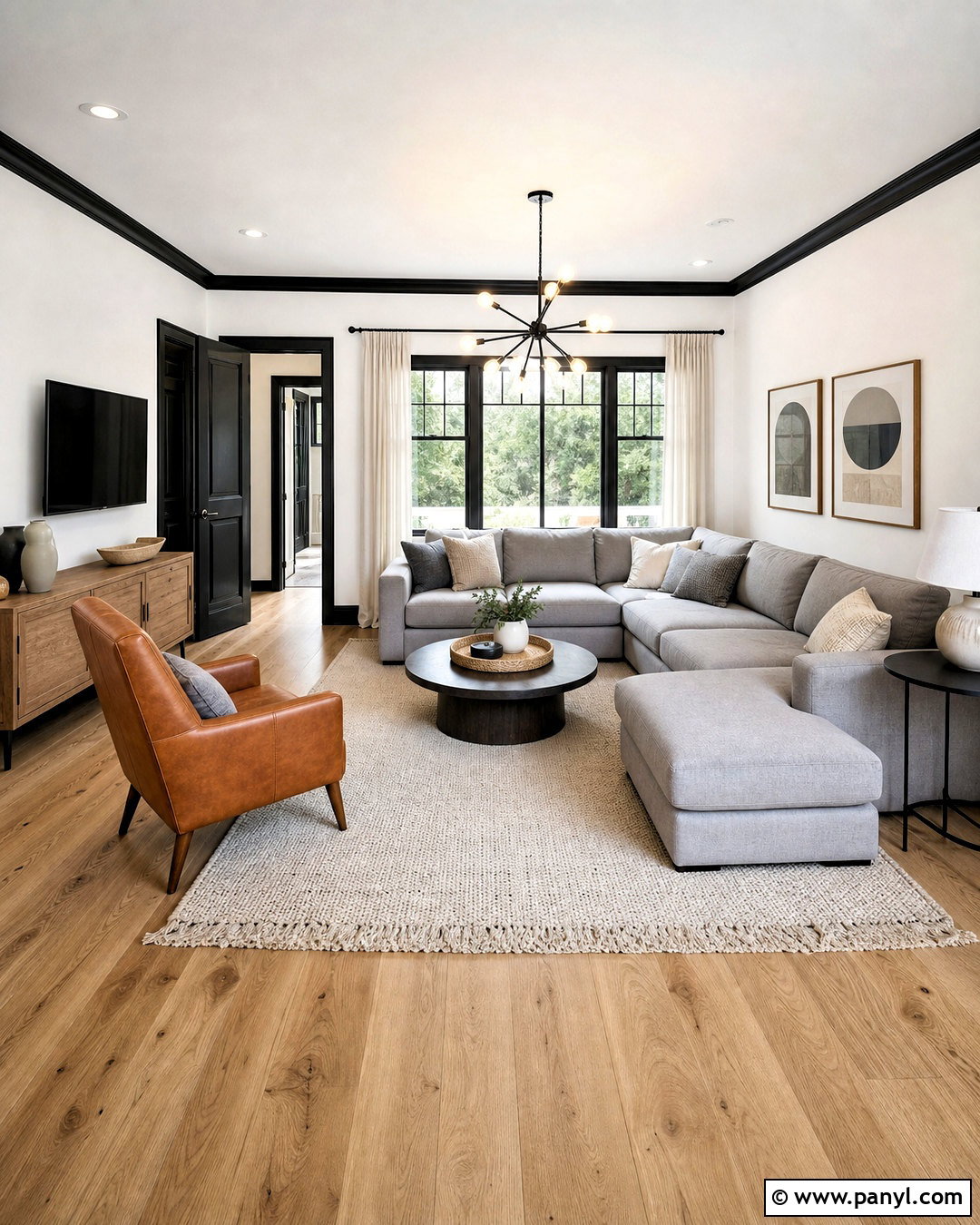
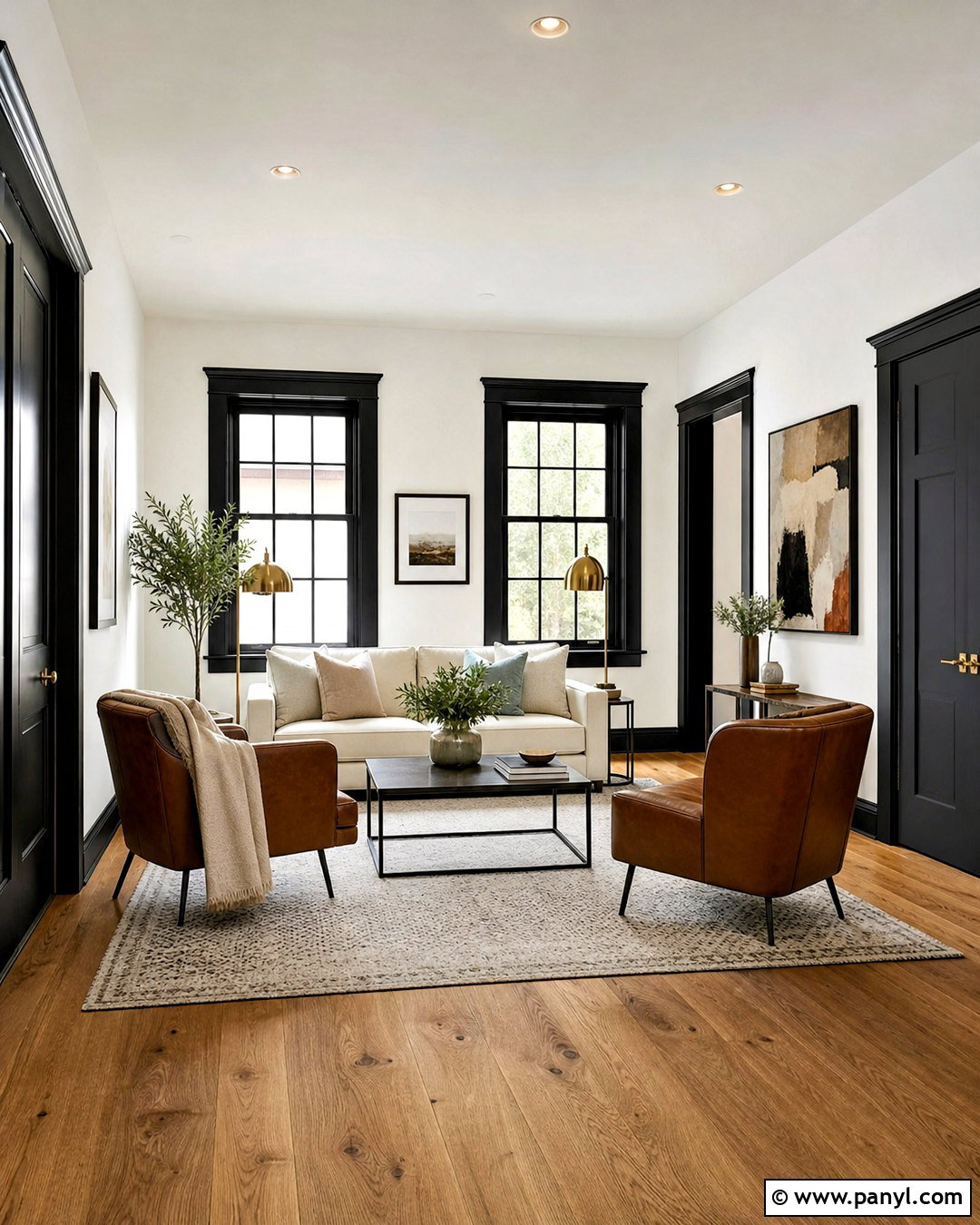
Crisp white walls with black trim create a bold, architectural look that works especially well in a modern living room. Paint the baseboards, window frames, door casings, and interior doors soft matte black rather than an extremely glossy jet black. Add a light oak floor and a warm gray sectional to prevent the room from feeling cold. A cream woven rug, cognac leather chair, and natural linen curtains soften the sharp contrast. Repeat black through a slim metal coffee table, picture frames, and a simple ceiling fixture. Keep the ceiling white so the room remains open and bright. This combination looks most intentional when the trim has clean lines and the furniture includes warm wood, leather, or textured fabric.
2. White Walls With Charcoal Gray Trim
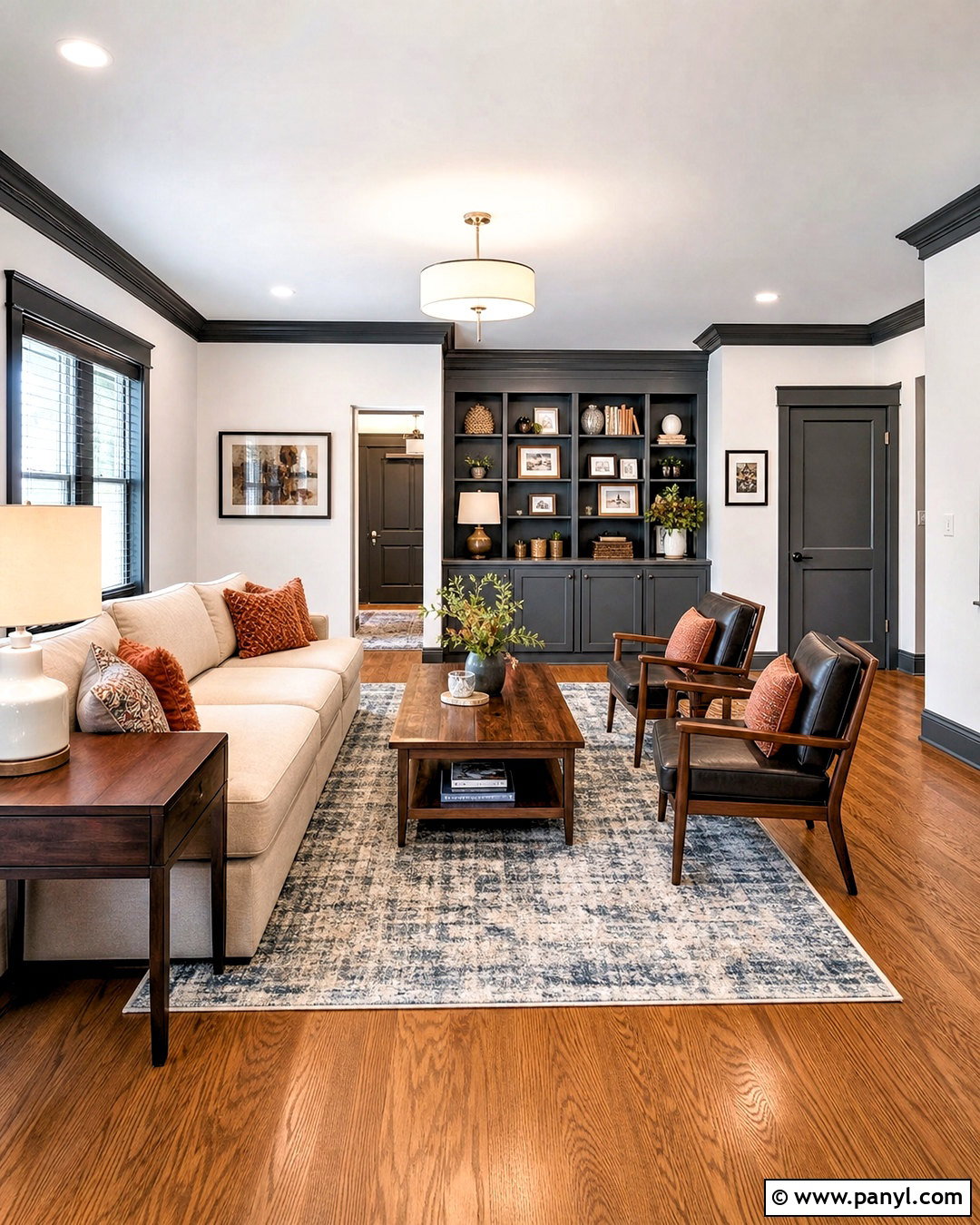
Charcoal gray trim offers strong definition without the severity of solid black. In a comfortable family room, use warm white walls with charcoal baseboards, window casings, crown molding, and doors. Pair the scheme with medium-toned oak flooring and a generously sized oatmeal sofa. Layer in a faded blue-gray rug, walnut side tables, and pillows in cream, rust, and charcoal. Brushed nickel lighting supports the cool side of the trim, while woven baskets add warmth. Choose a charcoal with subtle brown undertones if the room receives limited daylight. Satin trim paint will highlight the millwork without creating distracting reflections. The finished room feels tailored and grounded, yet it remains relaxed enough for everyday living and casual entertaining.
3. White Walls With Warm Gray Trim
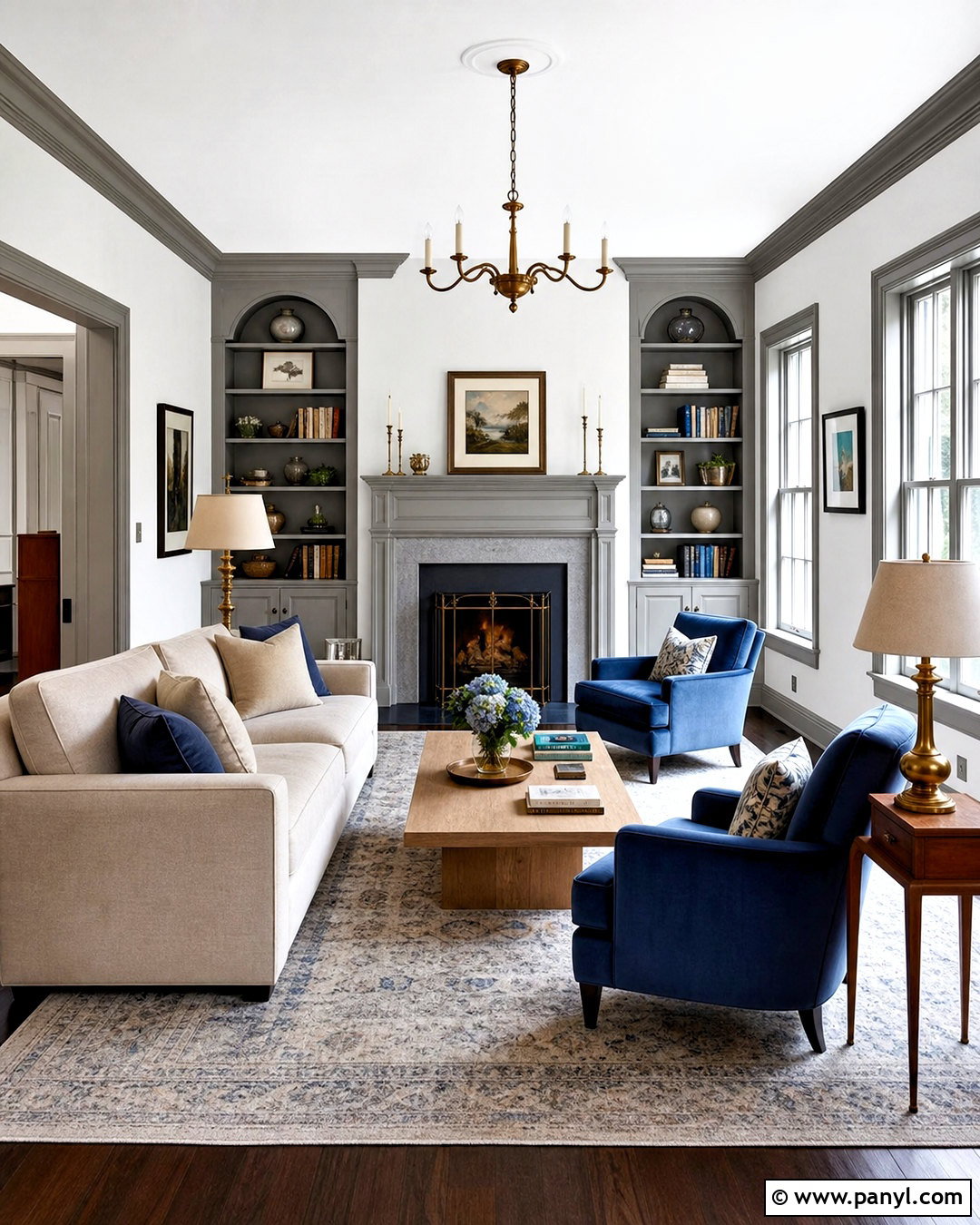
Would you prefer contrast that is visible but not dramatic? Warm gray trim gives white walls a gentle outline and works beautifully in transitional spaces. Use a soft white on the walls, then apply medium warm gray to the baseboards, window trim, doors, and built-in shelving. Furnish the room with a flax-colored sofa, pale oak coffee table, and two muted blue armchairs. A patterned rug combining ivory, gray, and sandy beige connects the palette. Add antique brass lamps and cream linen drapes for warmth. Carry the trim color onto the fireplace mantel to create a clear focal point. This balanced combination is useful in open layouts because it adds definition while remaining easy to coordinate with nearby neutral rooms.
4. White Walls With Greige Trim
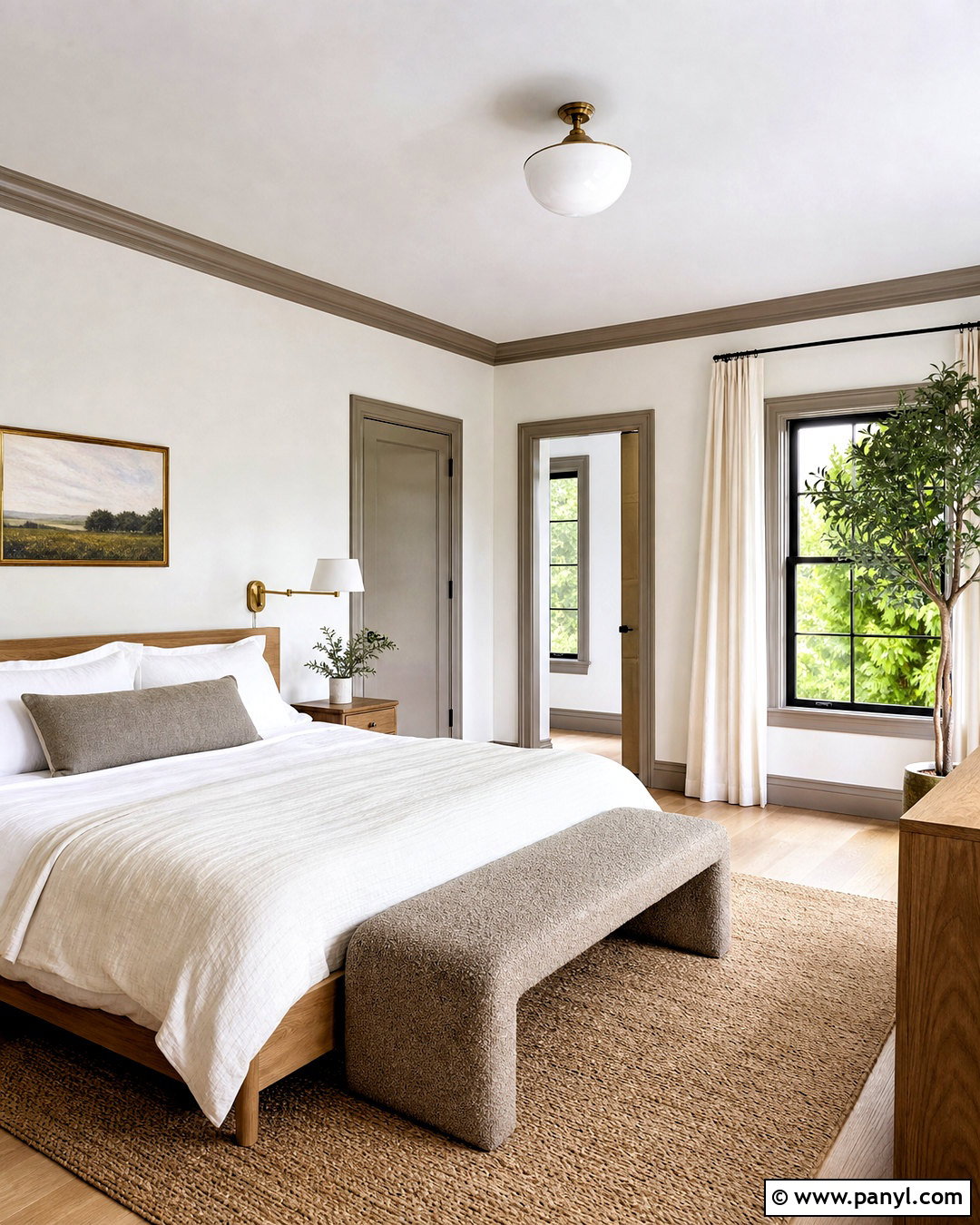
Greige trim creates a quiet, sophisticated frame around white walls while accommodating both warm and cool furnishings. Try this combination in a primary bedroom with creamy white walls, greige baseboards, matching window casings, and a greige-painted door. Anchor the room with a natural oak bed, white linen bedding, and a textured mushroom-colored bench. Soft blue-gray pillows and a faded neutral rug introduce restrained color. Install aged brass sconces above simple wood nightstands, then hang full-length ivory curtains slightly above the windows. Paint the crown molding greige as well if the room has high ceilings. The coordinated woodwork makes the bedroom feel complete, while the restrained palette creates a restful atmosphere that can easily evolve with new bedding or artwork.
5. White Walls With Taupe Trim
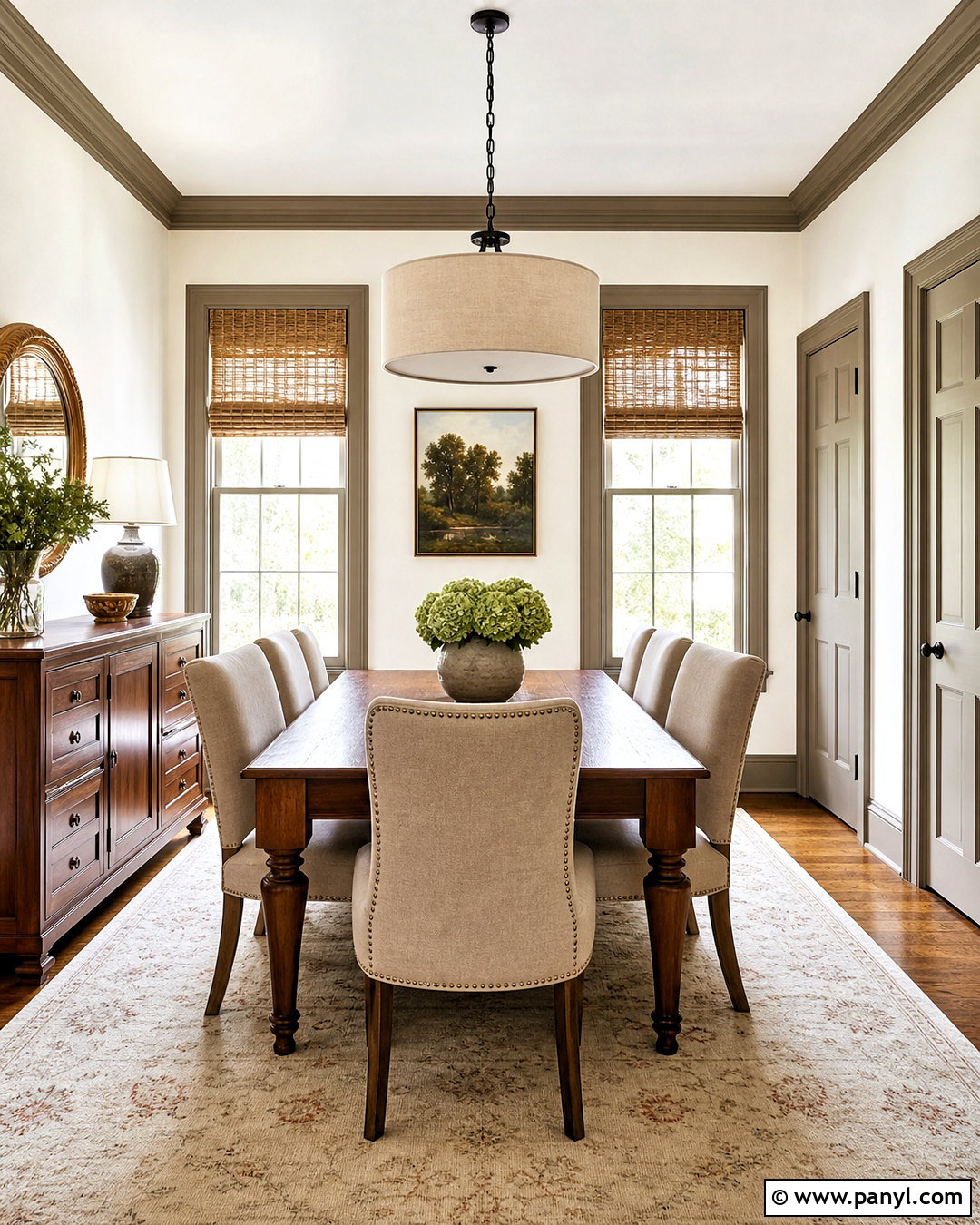
Warm taupe trim gives white walls a comfortable, earthy character that suits traditional and organic interiors. In a dining room, apply clean off-white paint to the walls and a medium mushroom taupe to the baseboards, crown molding, window trim, and paneled doors. Center a rectangular walnut table beneath a large linen drum pendant. Surround it with upholstered oatmeal chairs and add a low vintage wood sideboard. A cream and brown patterned rug reinforces the warm palette without competing with the trim. Use ceramic lamps, simple landscape artwork, and woven shades to create depth. Taupe works best when it reappears in at least one textile or decorative piece. The result feels polished, inviting, and less formal than high-contrast black woodwork.
6. White Walls With Chocolate Brown Trim
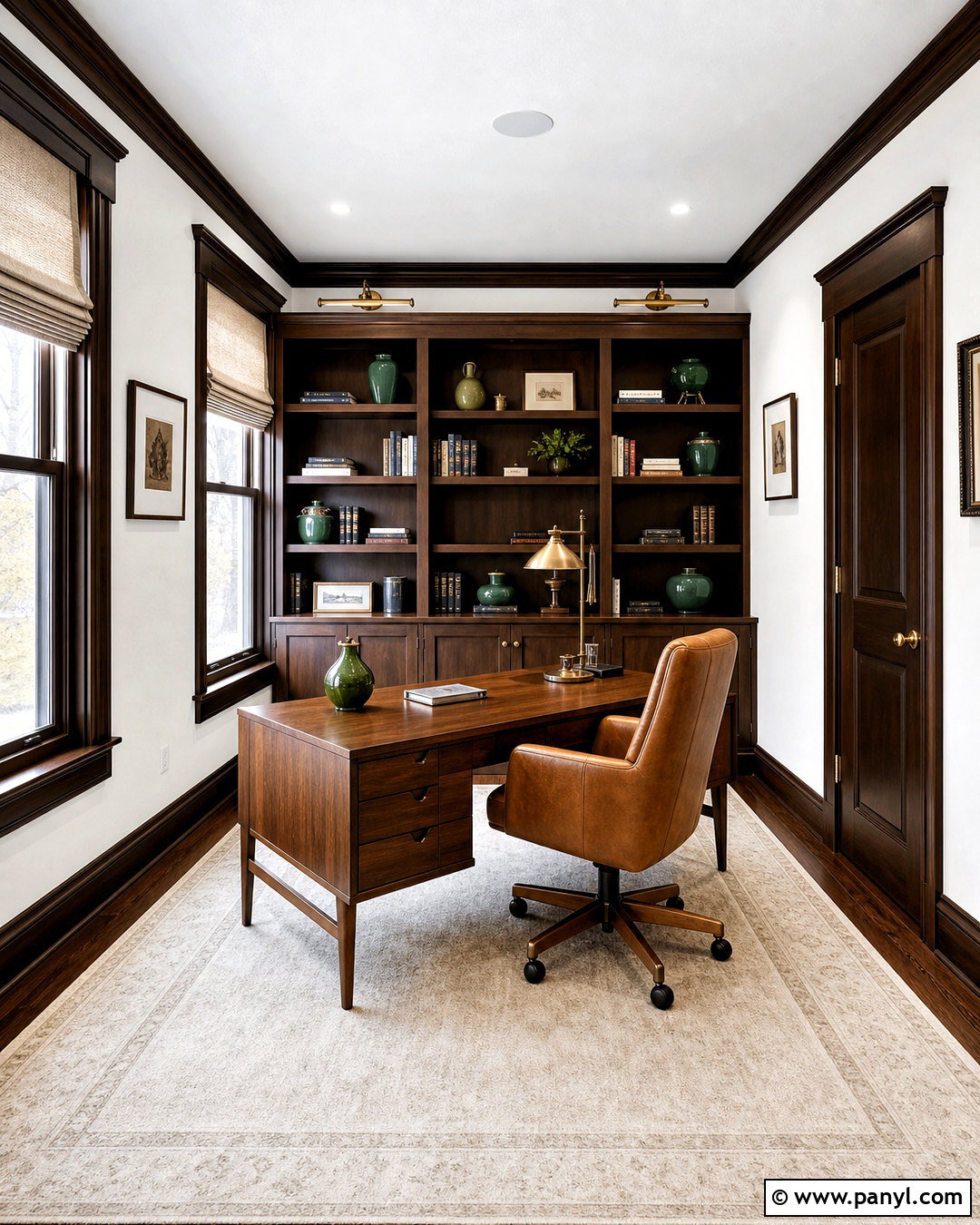
Deep brown trim can make a white room feel rich, established, and connected to traditional wood furnishings. Design a home office with warm white walls and chocolate brown trim across the baseboards, window frames, door, and built-in bookcases. Add a substantial walnut desk, a camel leather chair, and a flat-woven cream rug. Brass library lights and a shaded desk lamp provide warm accents without making the palette overly ornate. Hang linen Roman shades inside the dark window frames so the trim remains visible. A few forest green books, ceramic pieces, and indoor plants bring life to the room. Brown trim is particularly effective beside medium or dark wood floors because it creates a smooth visual transition between the floor and the walls.
7. White Walls With Natural Wood Trim
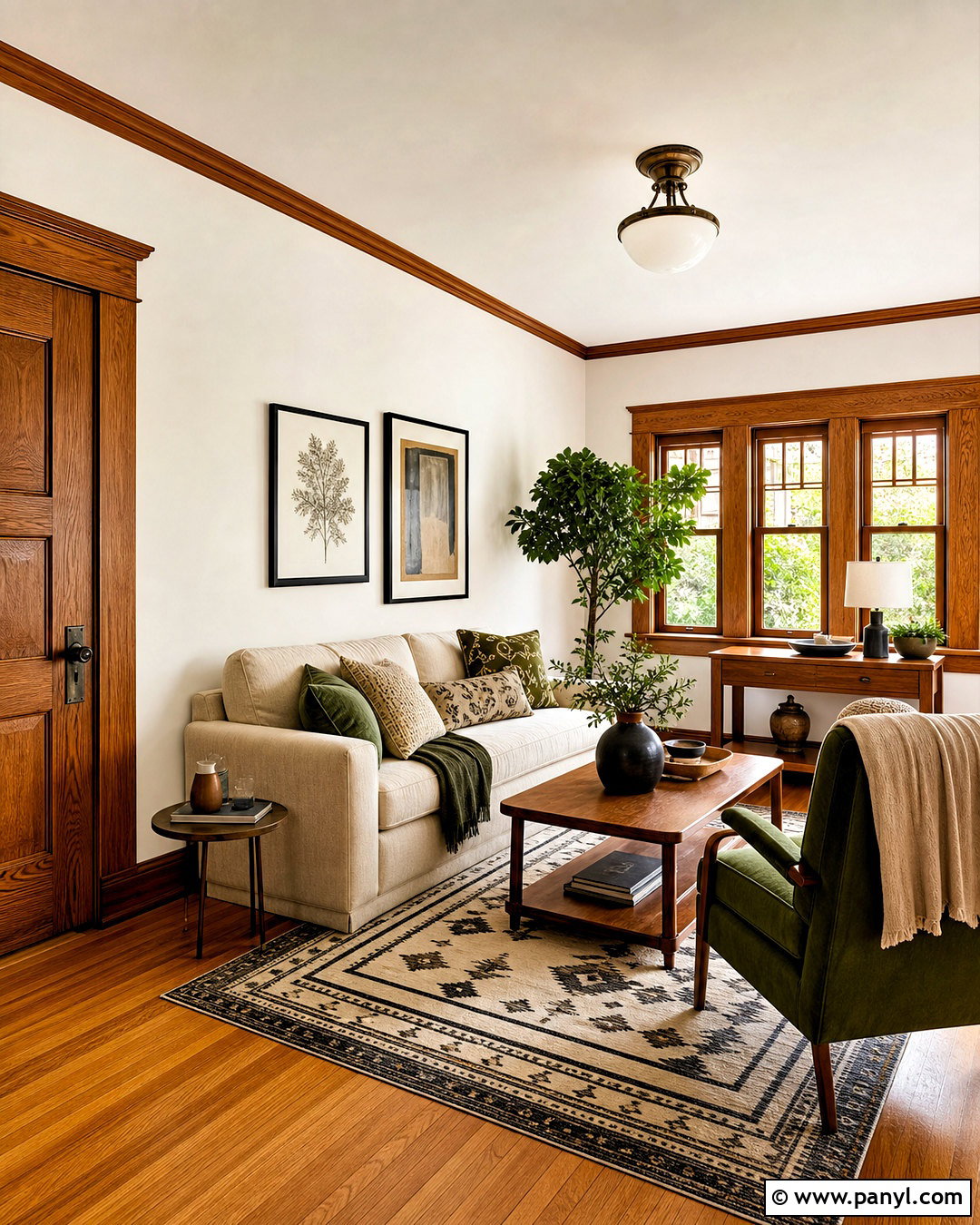
Original woodwork can become the defining feature of a room when paired with uncomplicated white walls. Preserve oak, pine, or walnut baseboards, window casings, crown molding, and doors instead of covering them with paint. In a Craftsman-inspired living room, combine warm white walls with medium oak trim and matching hardwood floors. Choose an ivory sofa with clean lines, a deep green lounge chair, and a simple wood coffee table. A muted geometric rug can introduce rust, sage, and cream without distracting from the grain. Finish the design with bronze lighting, linen curtains, and handmade pottery. Keep other wood tones reasonably close to the trim color. This creates continuity and allows the natural architectural details to look intentional rather than outdated.
8. White Walls With Sage Green Trim
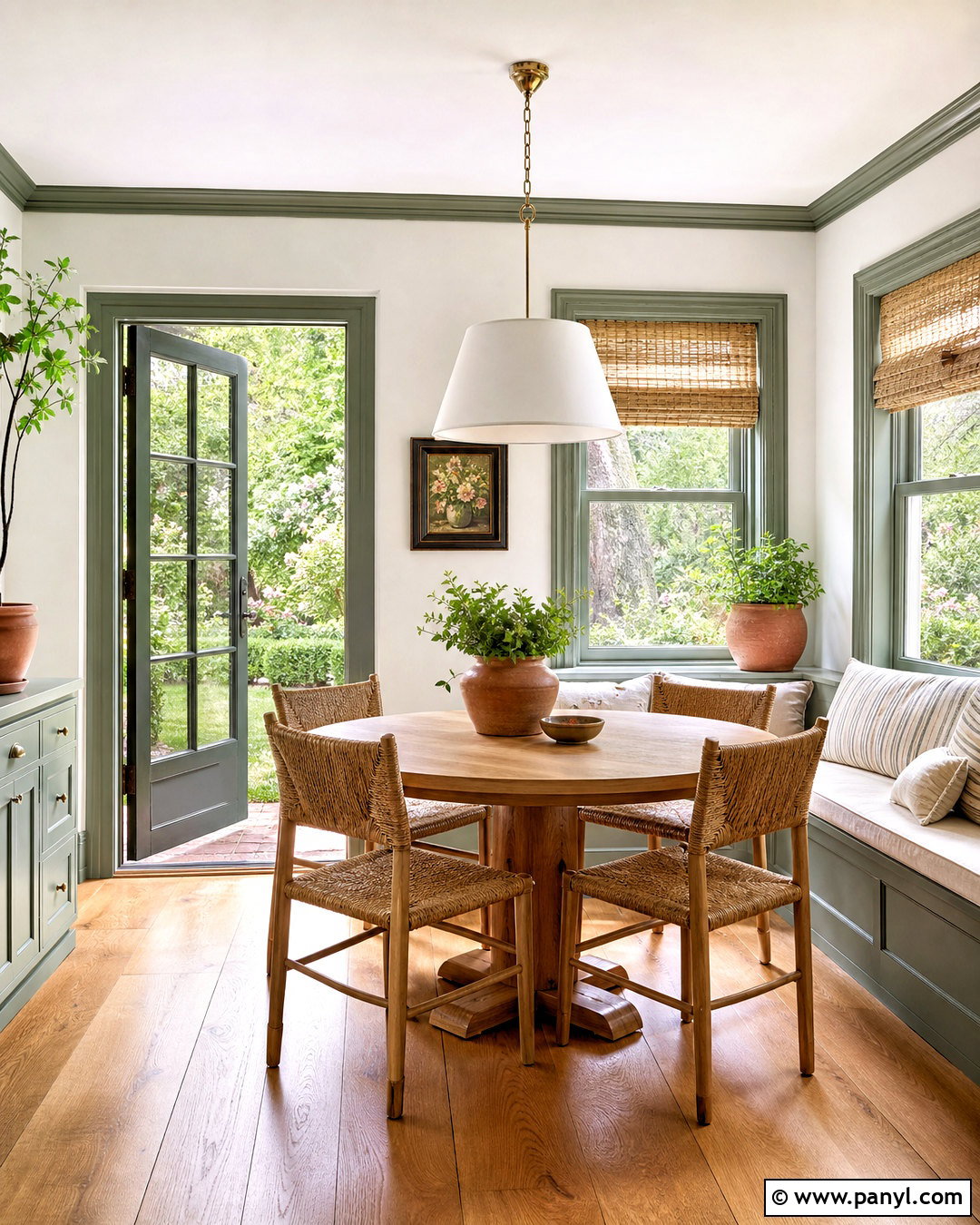
Sage green trim introduces relaxed color while preserving the brightness of white walls. This pairing works especially well in a breakfast room or small dining area overlooking a garden. Paint the walls a warm soft white, then cover the window casings, baseboards, door frames, and built-in bench in muted sage. Add a round oak table, woven dining chairs, and a cream pendant with a simple plaster finish. Use a striped ivory and green cushion on the bench, along with botanical artwork and a few terracotta planters. Natural woven shades make the windows feel layered without hiding the green frames. Choose a sage with gray undertones for a calmer effect. The completed room feels fresh, casual, and connected to the outdoor view.
9. White Walls With Olive Green Trim
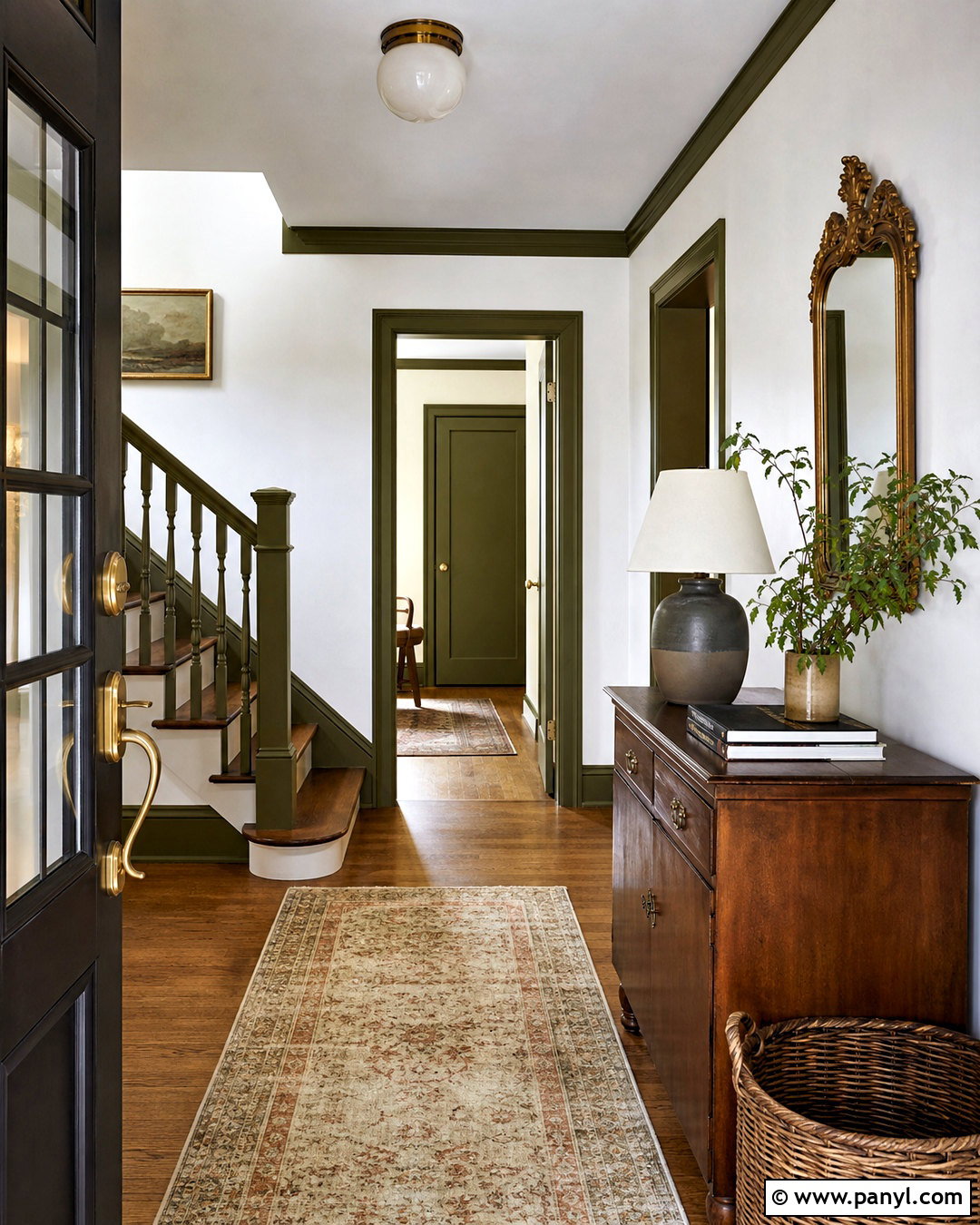
Olive green trim brings more depth than sage and pairs naturally with warm woods, aged metals, and vintage-inspired textiles. In an inviting entryway, keep the walls warm white and paint the baseboards, door casing, stair railing, and interior doors a grounded olive green. Place a narrow walnut console against the wall with an antique brass mirror above it. A faded runner in cream, rust, and green adds pattern to the floor. Include a simple ceramic lamp, a woven storage basket, and one leafy plant. If the entry connects to a staircase, continue the olive onto the newel posts and handrail for continuity. This complete palette gives a plain passage architectural presence while remaining softer and more approachable than charcoal or black trim.
10. White Walls With Forest Green Trim
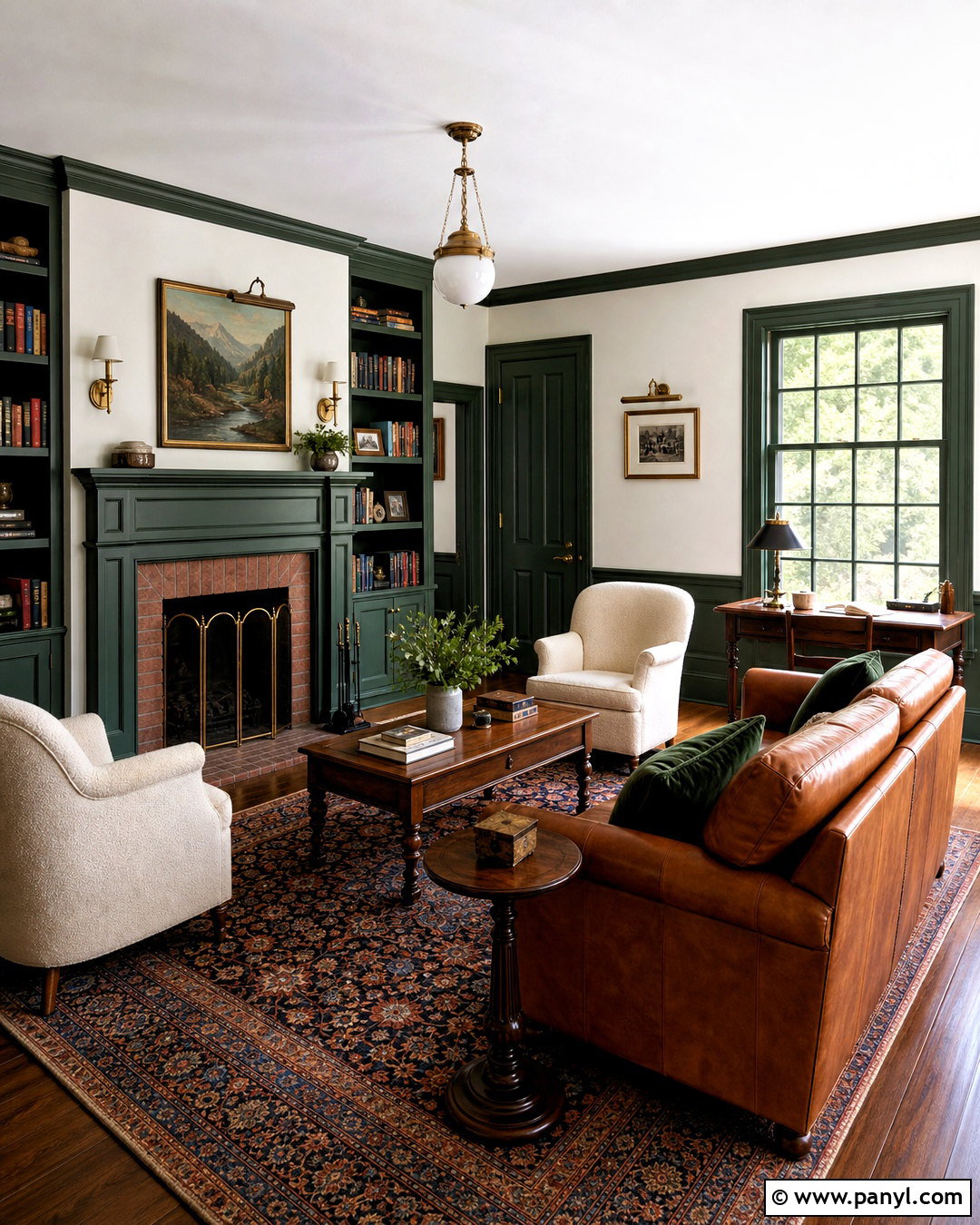
Forest green trim creates a strong, heritage-inspired contrast against white walls. Use it in a library-style living room where saturated color can support substantial furniture and collected decor. Paint the walls a balanced warm white, then carry deep forest green across the baseboards, door casings, window frames, fireplace mantel, and built-in shelves. Add a cognac leather sofa, two cream armchairs, and a large traditional rug containing muted red, navy, and green. Walnut tables and aged brass picture lights complement the rich woodwork. Keep curtains neutral and hang them beyond the windows so the painted casings remain visible. The finished design feels layered and established, while the white walls prevent the dark green details from overwhelming the room.
11. White Walls With Navy Blue Trim
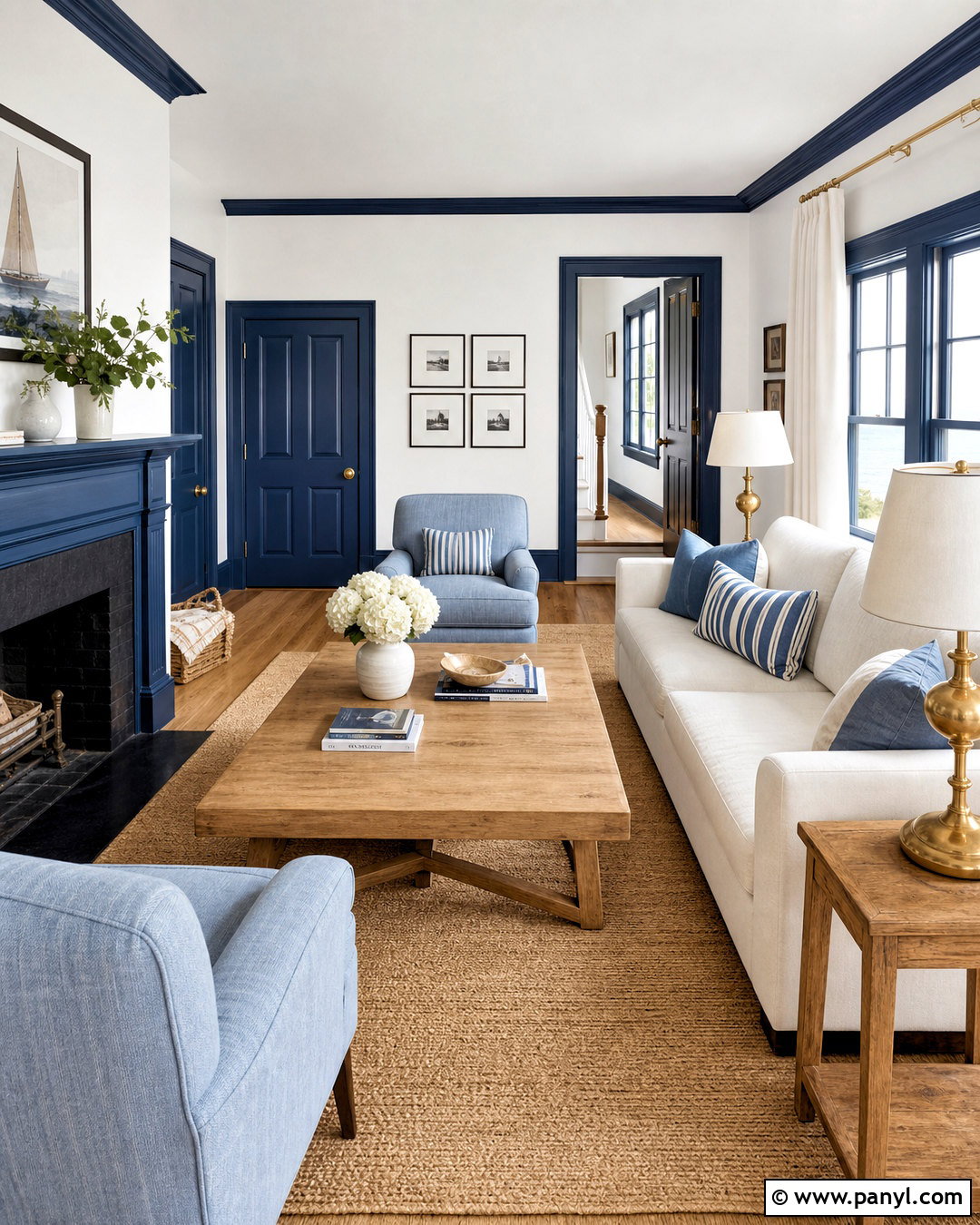
Navy trim gives white walls a crisp coastal character without relying on obvious nautical decorations. In a bright living room, paint the baseboards, window casings, paneled doors, and fireplace mantel a classic deep navy blue. Add a slipcovered ivory sofa, light oak coffee table, and woven natural-fiber rug. Soft blue patterned chairs can repeat the trim color at a lighter intensity. Use white linen curtains, brushed brass lamps, and a few striped pillows to complete the palette. Avoid filling the space with too many additional blues. Warm wood and tan accents provide necessary balance. A satin navy finish is practical for frequently touched woodwork and creates gentle dimension. The result feels clean, structured, and suitable for either a coastal home or suburban interior.
12. White Walls With Dusty Blue Trim
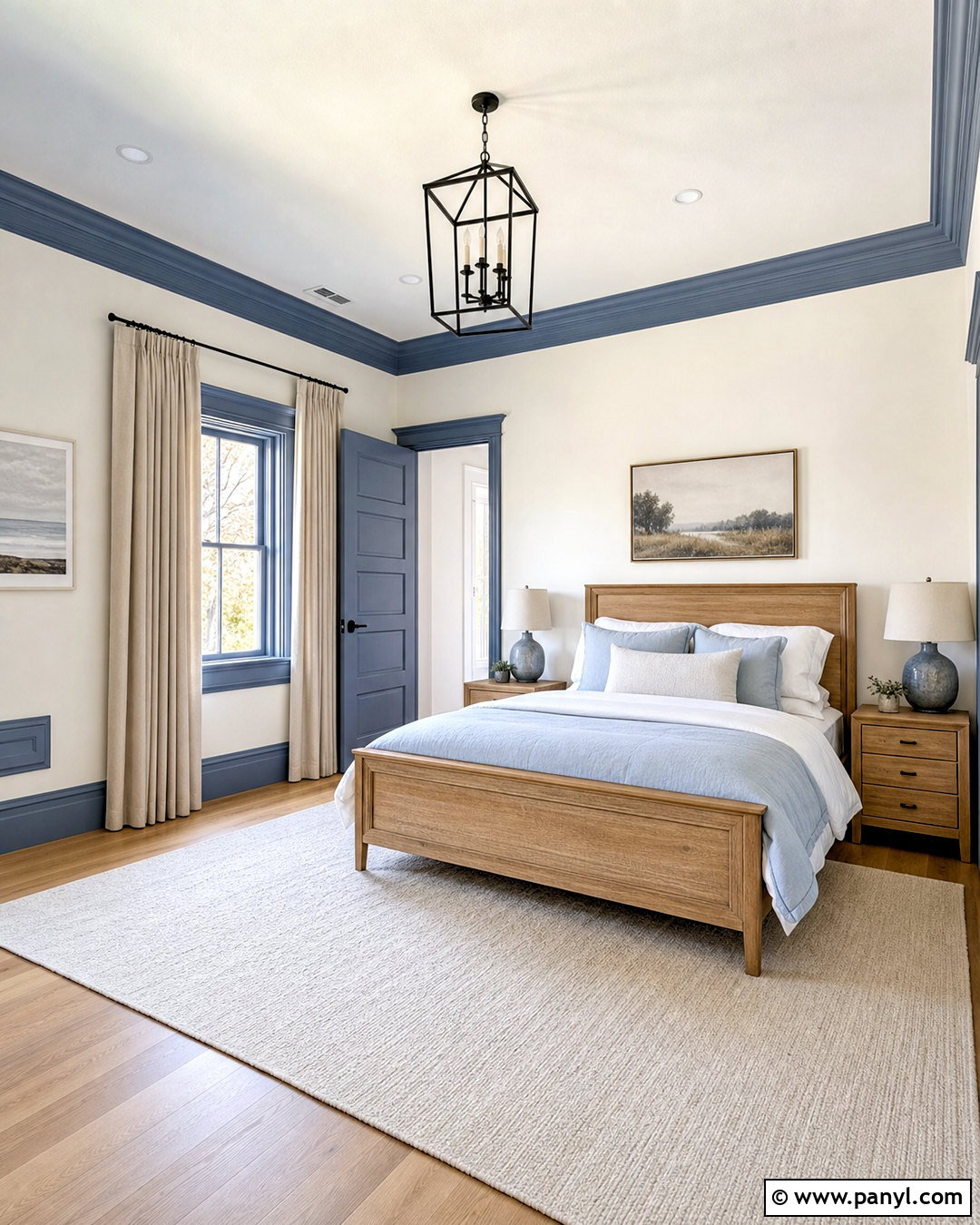
Dusty blue trim brings understated color to white walls and creates a peaceful foundation for bedrooms or nurseries. Apply soft white paint to the walls and a muted gray-blue to the baseboards, window trim, door, and simple wall molding. Choose a natural oak bed with layered white and pale blue bedding. Add a cream wool rug, light wood nightstands, and small ceramic lamps with linen shades. Full-length oatmeal curtains warm the blue and soften the windows. Introduce restrained pattern through a block-printed quilt or lumbar pillow rather than covering every surface with color. Dusty blue looks especially cohesive when paired with warm whites instead of stark blue-white paint. The complete space feels airy and calm, but the colored woodwork gives it more personality than a standard white bedroom.
13. White Walls With Slate Blue Trim
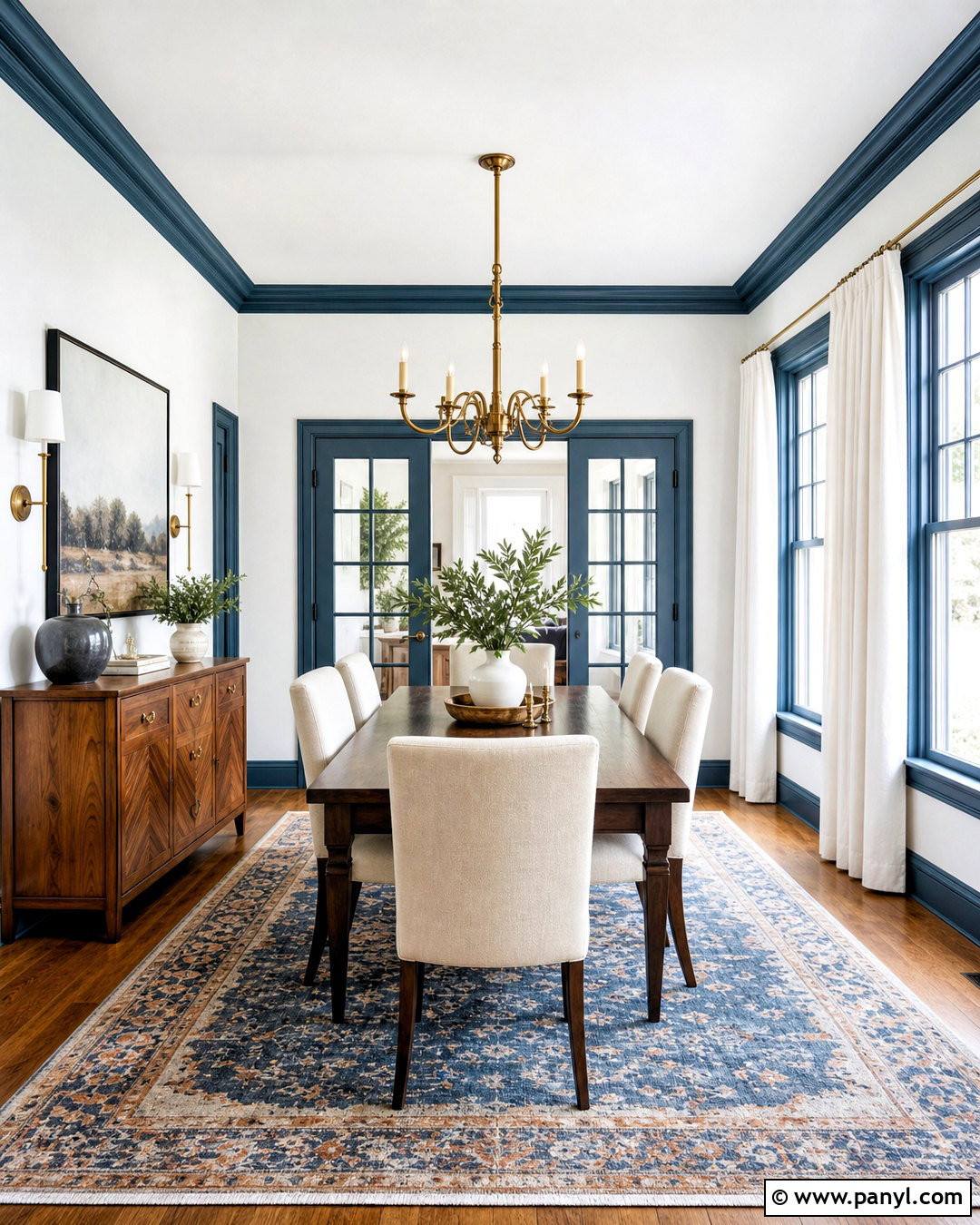
Slate blue trim has enough gray to feel sophisticated and enough color to define white architecture clearly. Build a polished dining room around white walls, slate blue baseboards, matching crown molding, and paneled French doors. Use a dark oak dining table with upholstered cream chairs and a large vintage-style rug in blue, beige, and faded rust. Hang a blackened brass chandelier above the table and place a warm wood sideboard along one wall. Simple white curtains keep the windows bright, while blue ceramic lamps repeat the trim color. Paint the doors and their frames the same slate tone for a more unified statement. This combination feels formal without becoming stiff, and it works with both traditional furniture and cleaner transitional pieces.
14. White Walls With Teal Trim
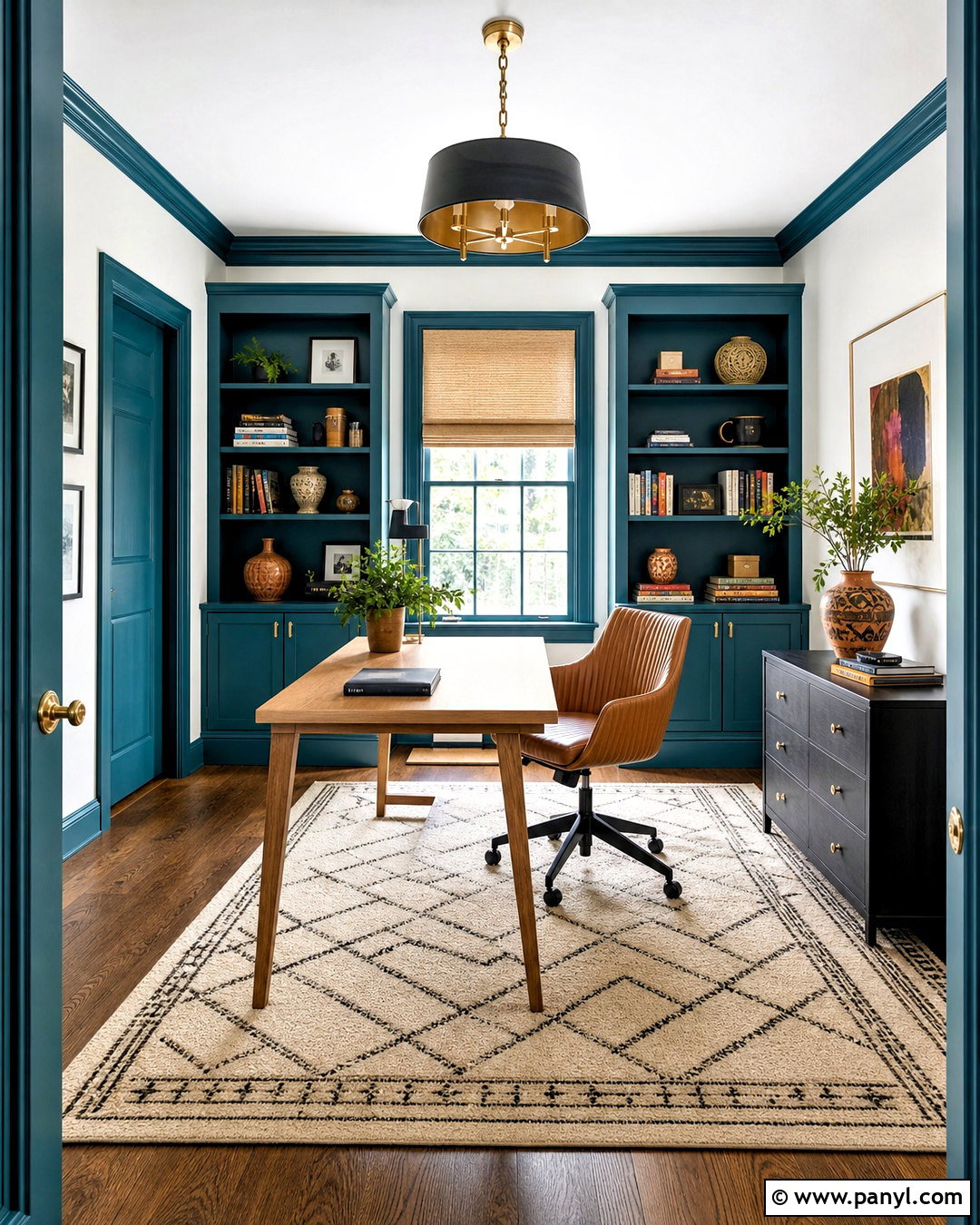
Deep teal trim gives a white room lively contrast while still feeling grounded and sophisticated. Try it in a creative home office with bright white walls and teal baseboards, window frames, doors, and built-in cabinets. Pair the colored millwork with a light wood desk, a tan upholstered chair, and a cream geometric rug. Add brushed brass cabinet hardware and a matching adjustable desk lamp to bring warmth to the cool trim. Natural linen shades filter daylight without covering the window frames. Display books, storage boxes, and pottery in white, ochre, and muted coral. Keep the ceiling and larger furniture pale so the room remains productive and open. This complete scheme feels energetic but controlled, making it suitable for a workspace used every day.
15. White Walls With Terracotta Trim
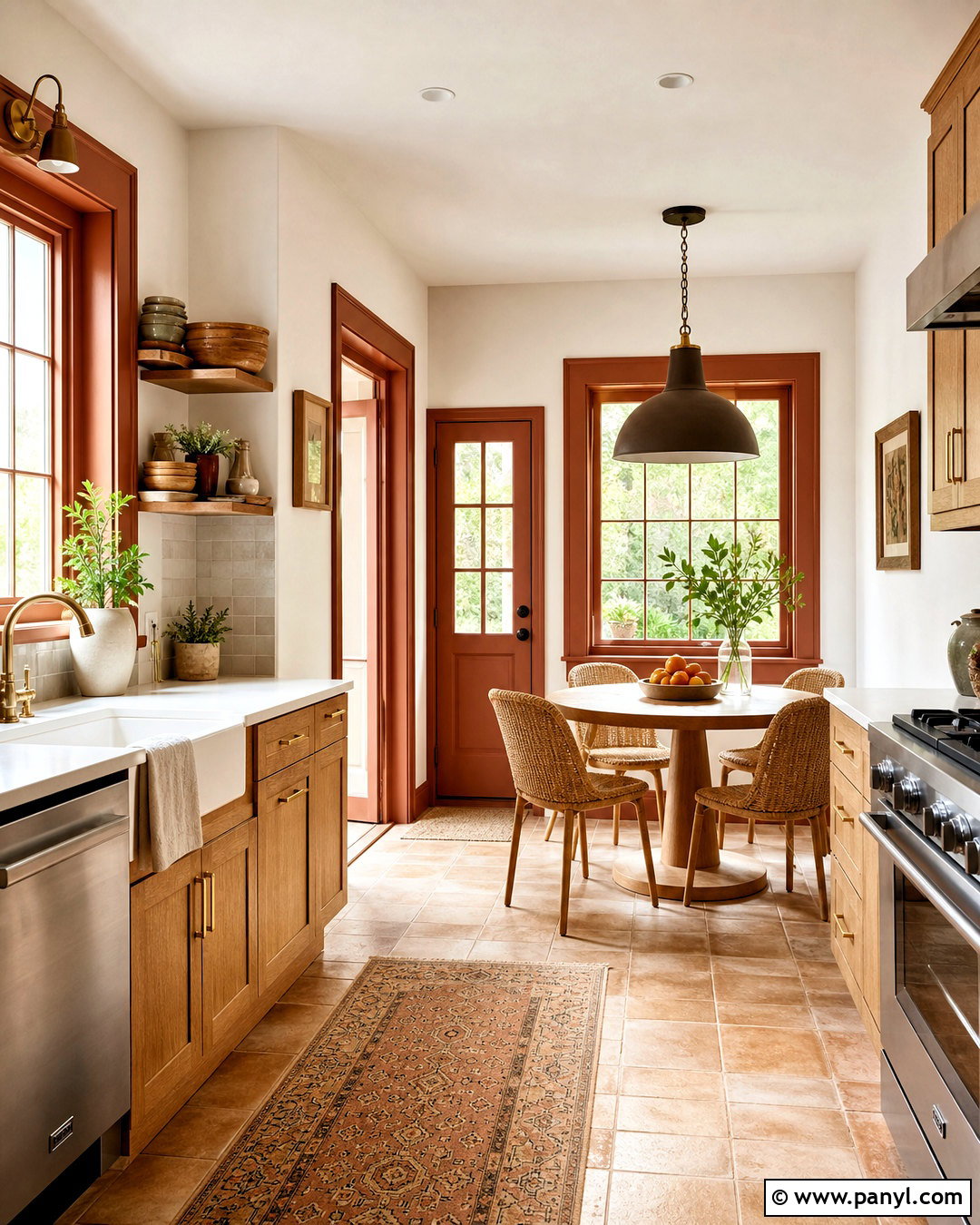
Sun-warmed terracotta trim transforms white walls into an earthy, welcoming backdrop. This combination is ideal for a casual kitchen or breakfast nook with natural materials. Use creamy white walls, then paint the baseboards, window casings, back door, and open shelving a muted clay color. Pair the trim with light oak cabinets, off-white quartz countertops, and handmade cream backsplash tile. A small wood table, woven chairs, and a striped washable rug complete the eating area. Add aged brass hardware and simple ceramic pendant lights for warmth. Green herbs in terracotta pots provide a fresh accent without changing the palette. Choose a softened, brown-based terracotta rather than bright orange. The finished room feels sunny, relaxed, and visually connected from the cabinetry to the dining corner.
16. White Walls With Burgundy Trim
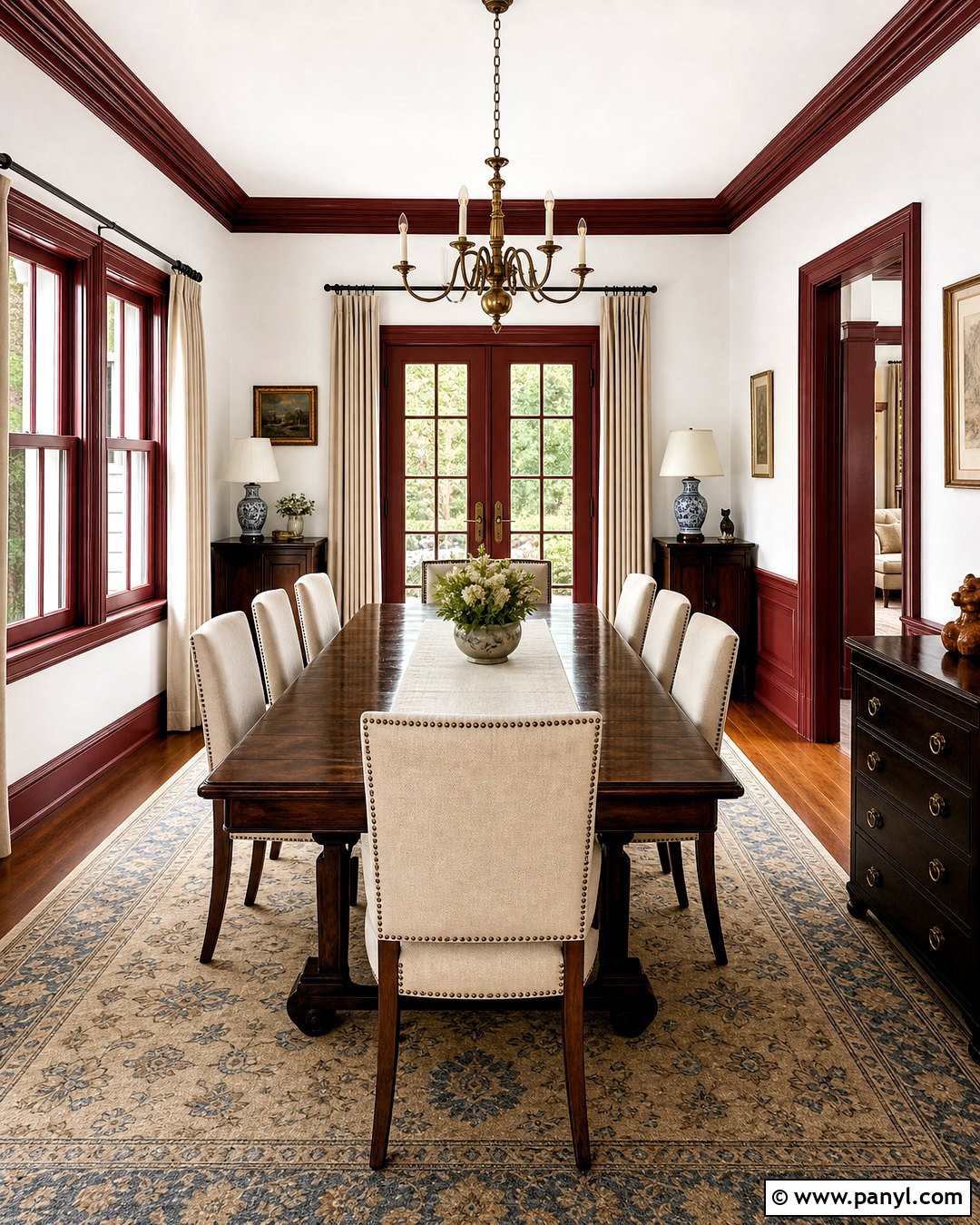
Burgundy trim offers a dramatic alternative to black, especially in rooms with traditional details and warm wood flooring. Create an intimate dining room with soft white walls and deep wine-red baseboards, crown molding, window casings, and double doors. Place a dark walnut table in the center with cream upholstered chairs and a patterned rug combining beige, faded blue, and muted burgundy. An aged brass chandelier supports the richness of the trim, while linen curtains prevent the room from becoming heavy. Add a long wood sideboard, ceramic table lamps, and understated botanical prints. Keep the ceiling white to preserve height. The burgundy should have brown or plum undertones so it feels refined rather than overly bright, resulting in a warm and memorable entertaining space.
17. White Walls With Mustard Yellow Trim
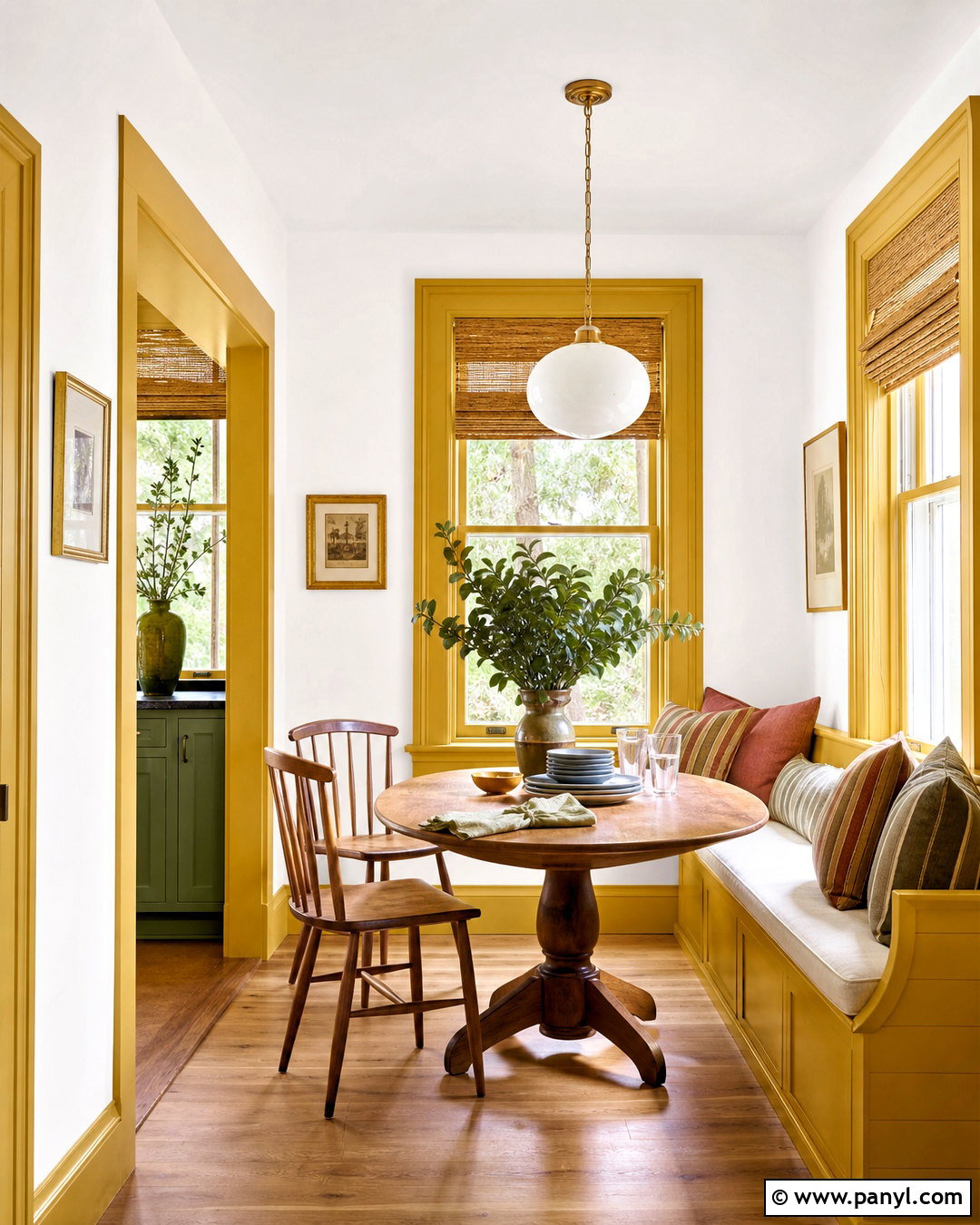
Mustard yellow trim can make white walls feel cheerful, handcrafted, and full of character. Use the combination in a sunny breakfast nook with warm white walls and muted golden trim around the windows, baseboards, built-in bench, and doorway. Add an oval oak pedestal table with simple spindle-back chairs. Cover the bench in a cream cushion and layer it with striped pillows in rust, olive, and mustard. Woven shades, a white globe pendant, and small framed botanical prints keep the design casual. Repeat the yellow sparingly through one ceramic vase or patterned textile. The color should be earthy and slightly browned rather than bright primary yellow. This creates a welcoming room that feels colorful in daylight but remains warm and comfortable throughout the year.
18. White Walls With Blush Pink Trim
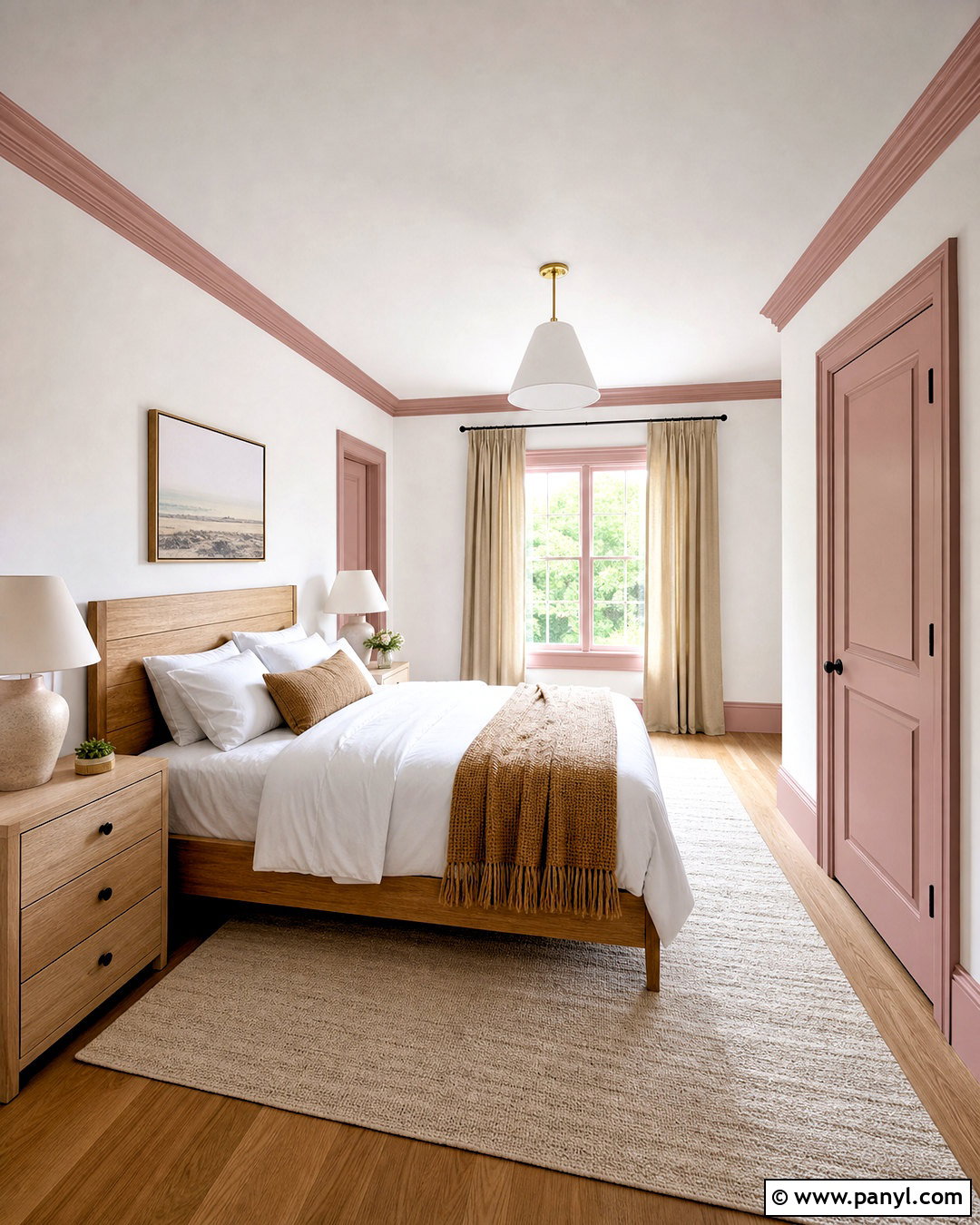
Blush pink trim gives white walls subtle warmth and can feel sophisticated when balanced with natural materials and restrained furnishings. In a guest bedroom, paint the walls a soft neutral white and use dusty blush on the baseboards, door, window casings, and narrow crown molding. Choose a light oak bed with crisp white sheets, a camel-colored throw, and pillows in cream and muted rose. Add pale wood nightstands, ivory ceramic lamps, and a woven beige rug. Linen curtains in warm white keep the room bright. Incorporate black only in small details, such as picture frames or curtain rods, to sharpen the gentle palette. The finished bedroom feels welcoming and grown-up, proving that pink trim does not need to look overly sweet or juvenile.
19. White Walls With Lavender Trim
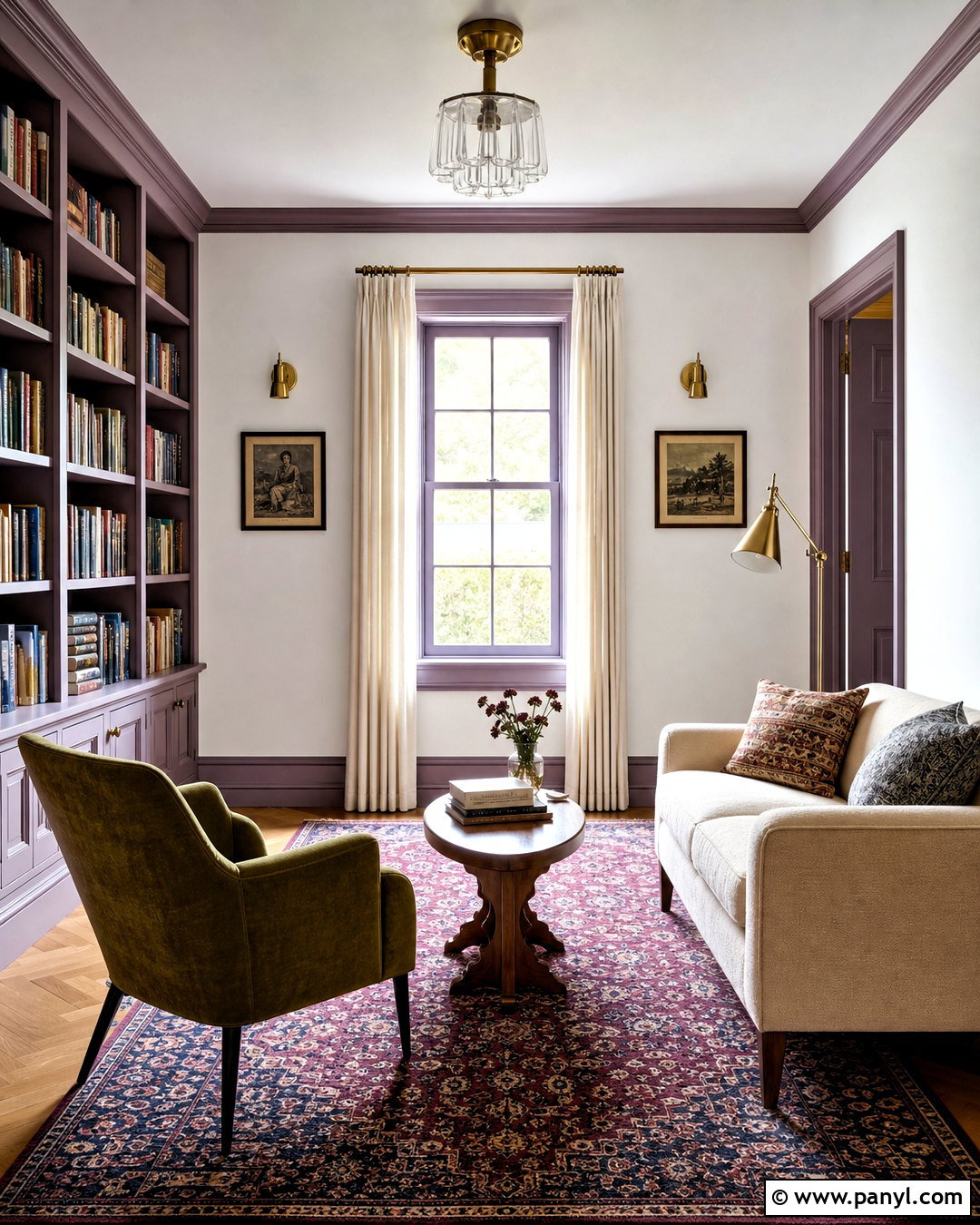
Muted lavender trim offers an unexpected contrast that changes gently as natural light moves through the room. Use it in a reading room with clean white walls, lavender-gray baseboards, window casings, doors, and built-in bookcases. Furnish the space with a cream loveseat, walnut side table, and comfortable olive green reading chair. A vintage-inspired rug containing plum, tan, and blue connects the colors without making the room feel themed. Add antique brass sconces and off-white linen curtains for softness. Select a lavender with noticeable gray or brown undertones so it remains calm beside warm flooring. Filling the shelves with neutral books, ceramics, and a few framed pieces creates a complete, collected space where the trim feels distinctive but still livable.
20. White Walls With Plum Trim
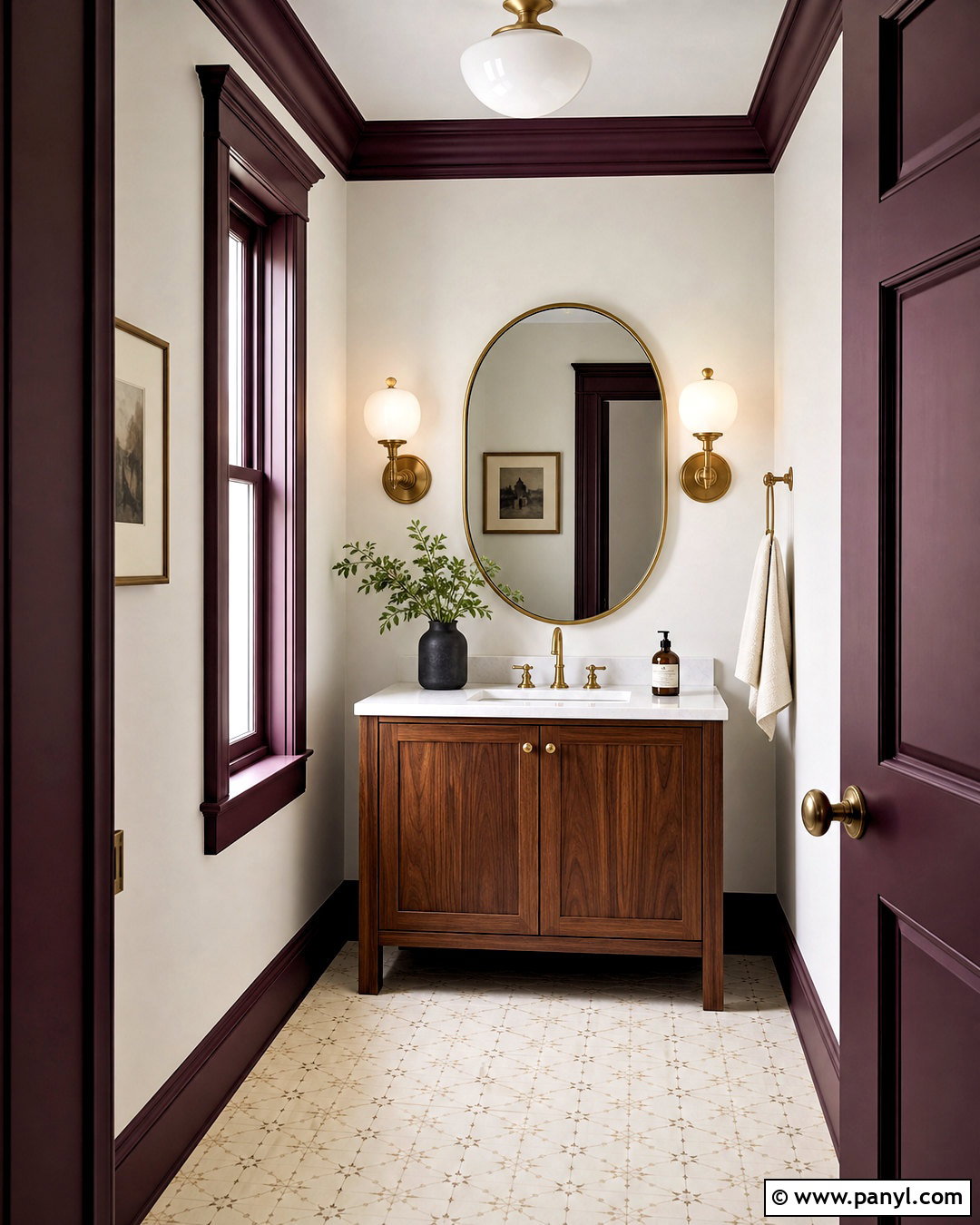
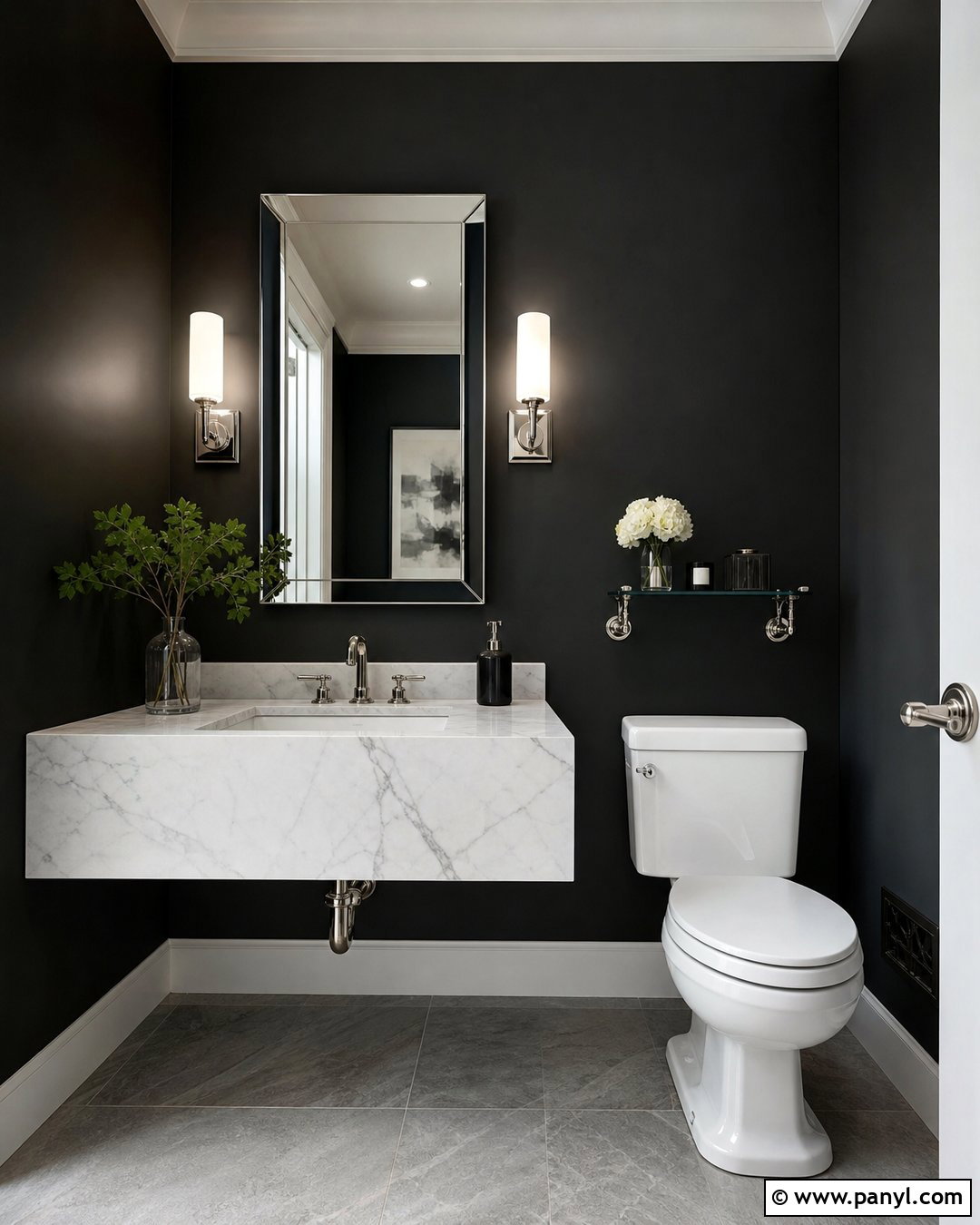
Plum trim creates rich definition and gives white walls a warmer, more colorful alternative to charcoal. Design a refined powder room with bright white walls and deep muted plum on the baseboards, door, window casing, and decorative wall molding. Add a walnut vanity with a white stone countertop, aged brass faucet, and oval brass mirror. Use a small patterned floor tile combining cream, charcoal, and soft plum. Two simple opal-glass sconces provide clear illumination without competing with the painted details. Keep towels and accessories white, then add one leafy plant or small framed print. A satin finish helps the plum woodwork resist everyday marks. The finished room feels bold and polished while the white background maintains freshness in the compact space.
Conclusion:
The most successful 20 white walls contrasting trim ideas connect the woodwork color with the entire room rather than treating trim as an isolated accent. Black, charcoal, and navy create sharp architectural definition. Taupe, greige, and natural wood offer softer warmth. Green, blue, terracotta, burgundy, and plum add noticeable personality while keeping white walls bright. Before committing, sample the wall and trim colors together under both daylight and artificial lighting because undertones can shift noticeably. Keep trim color consistent across connected openings, and repeat it through a few furnishings or accessories. Finish with practical satin or semi-gloss paint where durability matters. With thoughtful coordination, contrasting trim can make even simple rooms feel intentional and complete. ()

Related Ideas and Inspiration:
Leave a Reply