
Deep red walls bring warmth, depth, and confident character to rooms that might otherwise feel ordinary. Shades such as burgundy, oxblood, merlot, and brown-based crimson can look historic, modern, romantic, or minimalist depending on the surrounding finishes. The key is building a complete palette rather than treating the wall color as an isolated statement. Warm wood makes red feel grounded, cream textiles soften its intensity, and metals add polished contrast. Lighting also matters because rich red paint can shift between earthy, purple, and nearly brown tones throughout the day. The following rooms pair color, furniture, flooring, lighting, and decor into practical looks you can recreate. Explore this complete guide to 25 Deep Red Walls.

1. Deep Red Living Room With Cream Sofa
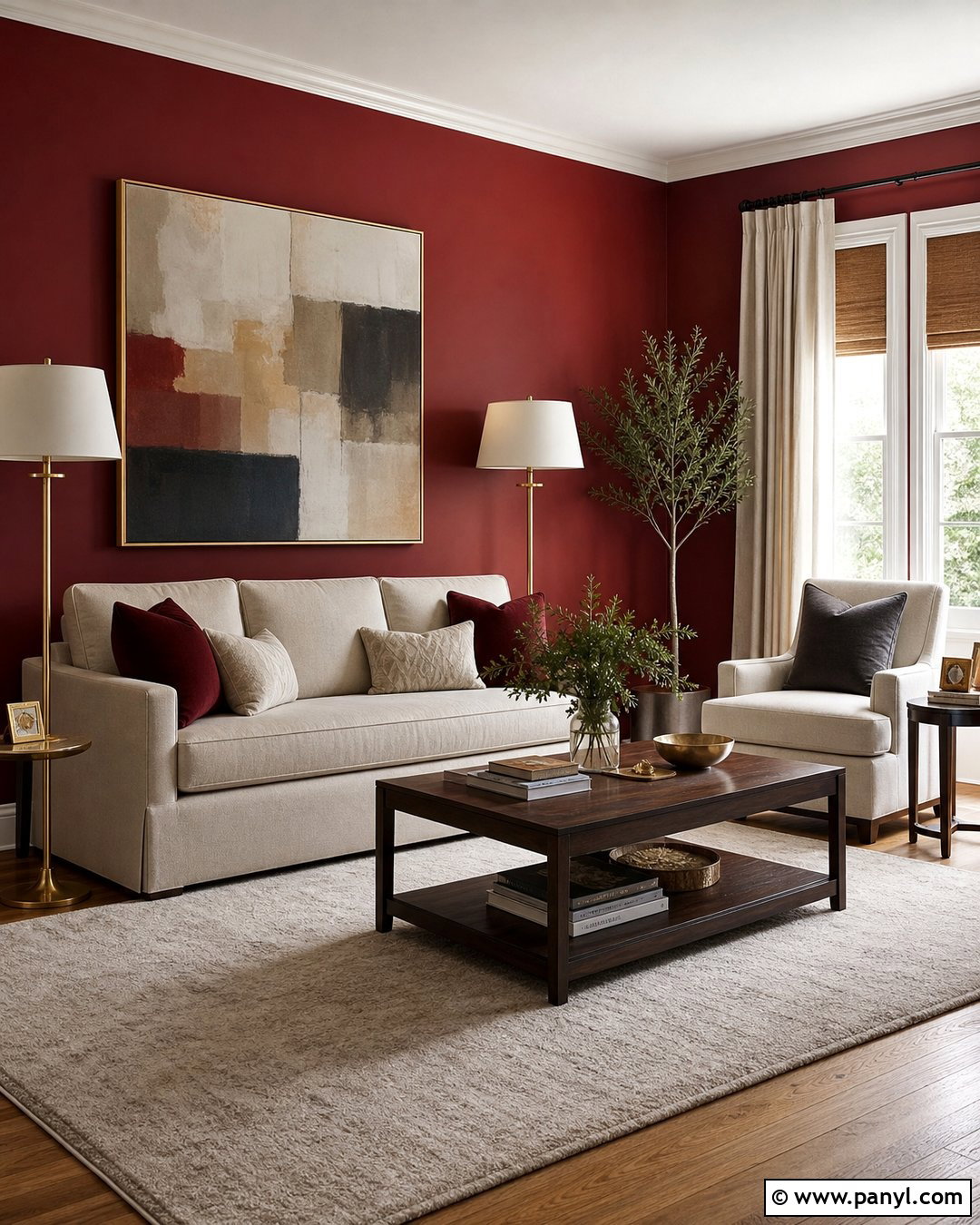
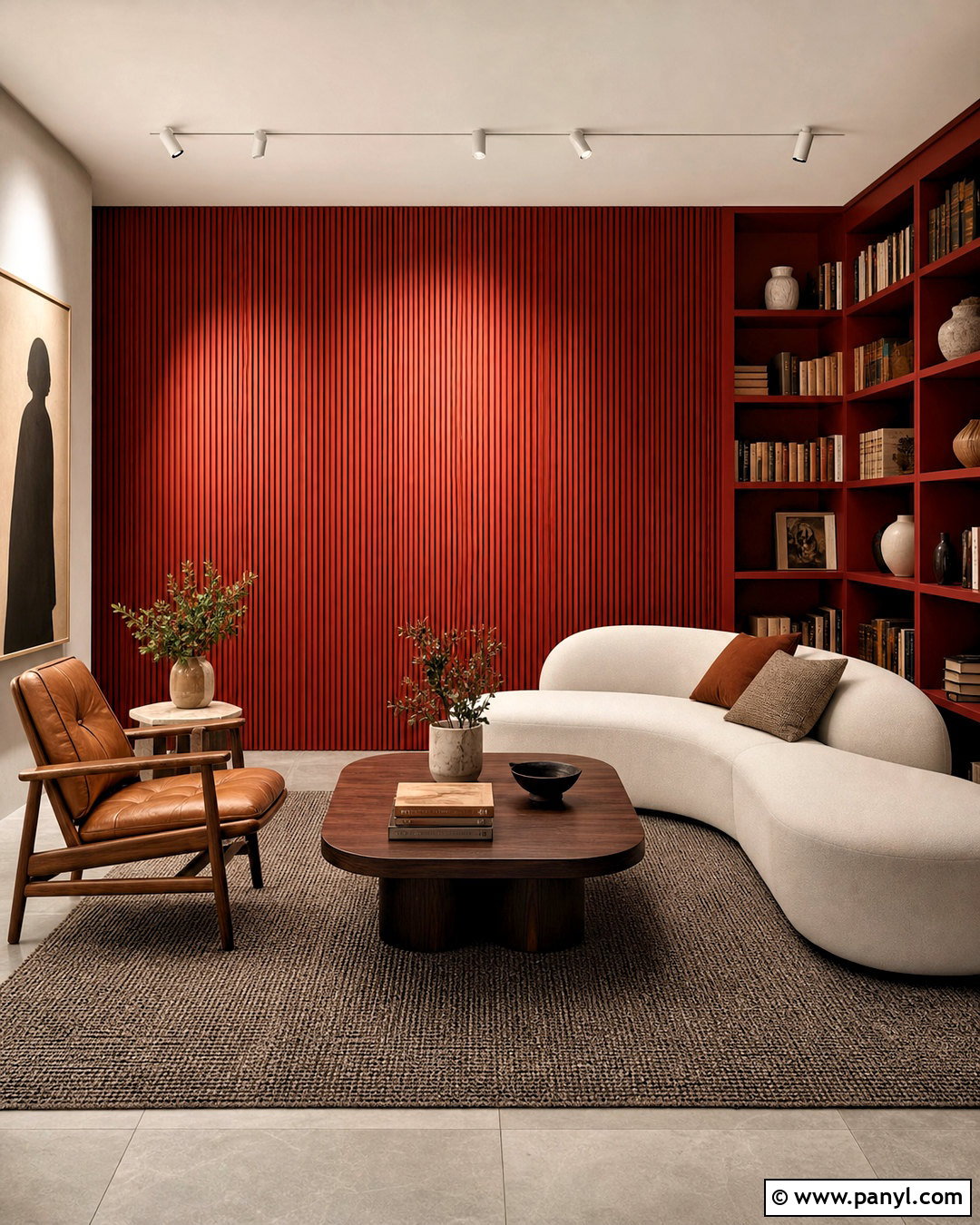
A cream sofa creates a calm focal point against deep red living room walls. Choose a substantial sofa with simple lines, then add walnut side tables and a low wood coffee table to ground the contrast. A warm ivory rug should extend beneath the front legs of every seat, making the arrangement feel connected. Repeat the wall color through restrained accents, such as patterned pillows or a burgundy stripe in the rug. Antique brass lamps contribute warmth without competing with the paint. Hang one oversized landscape or abstract canvas rather than several small pieces. Natural linen curtains and an off-white ceiling keep the room from feeling closed in, while medium oak flooring introduces an approachable, everyday finish.
2. Deep Red Bedroom With Walnut Furniture
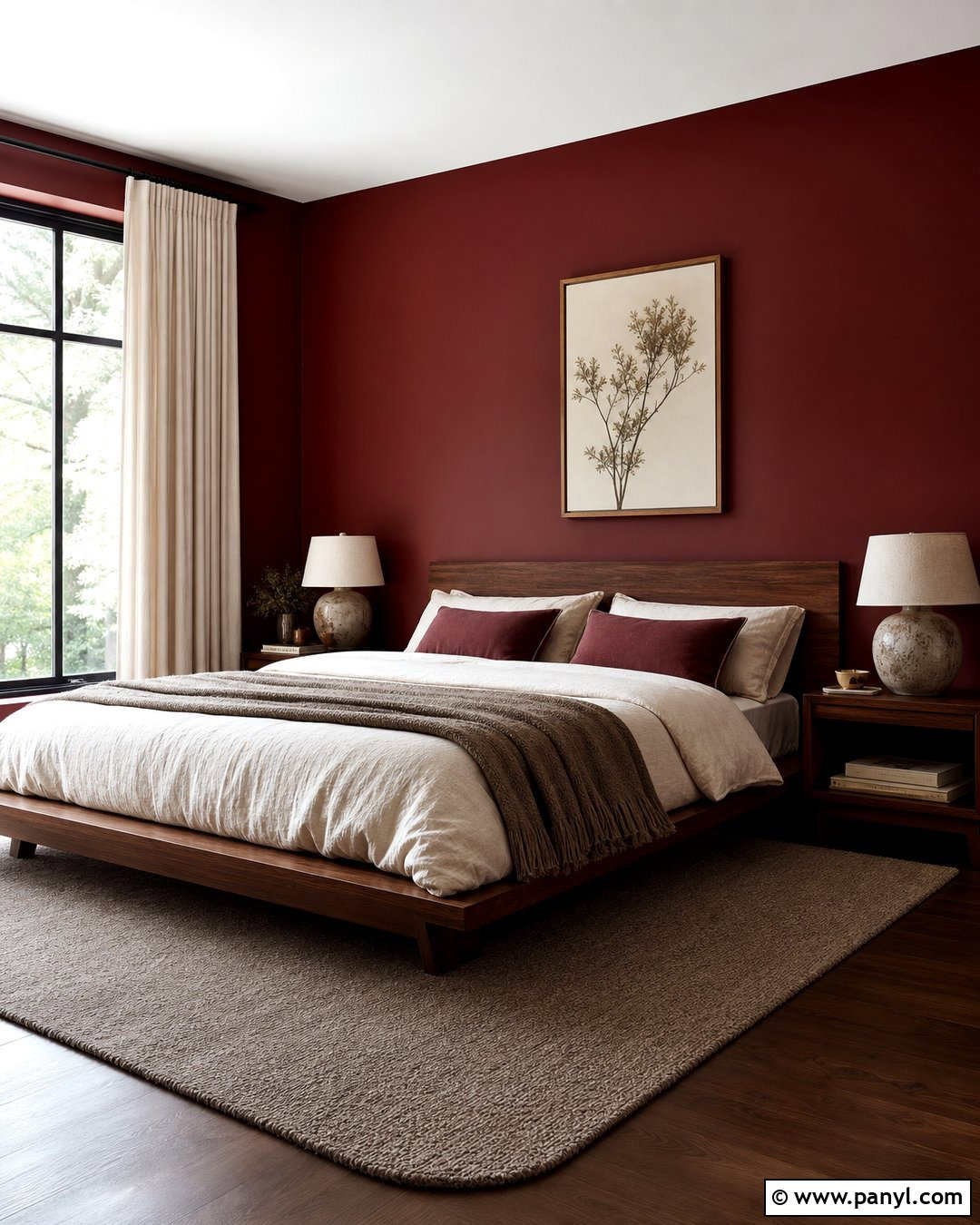
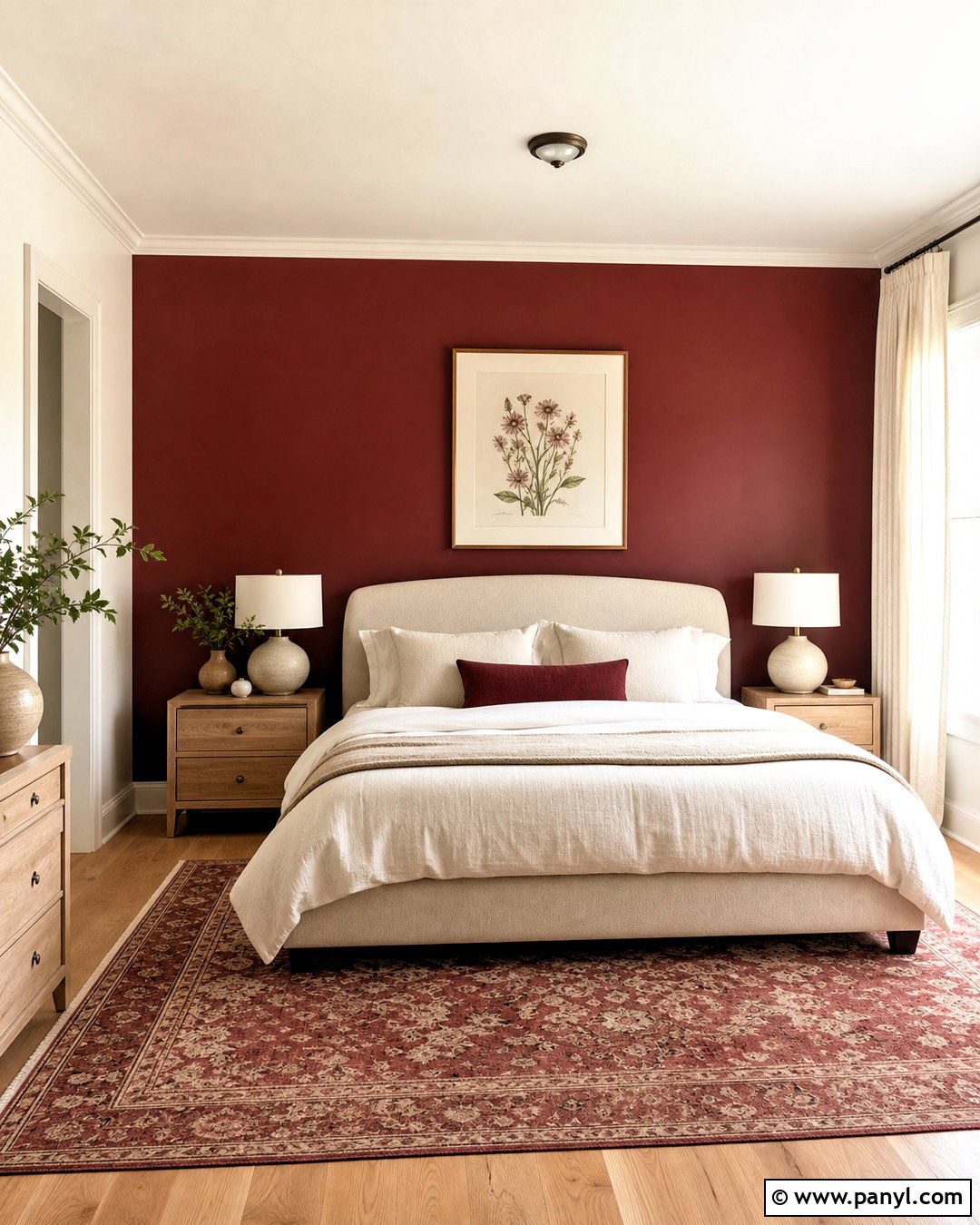
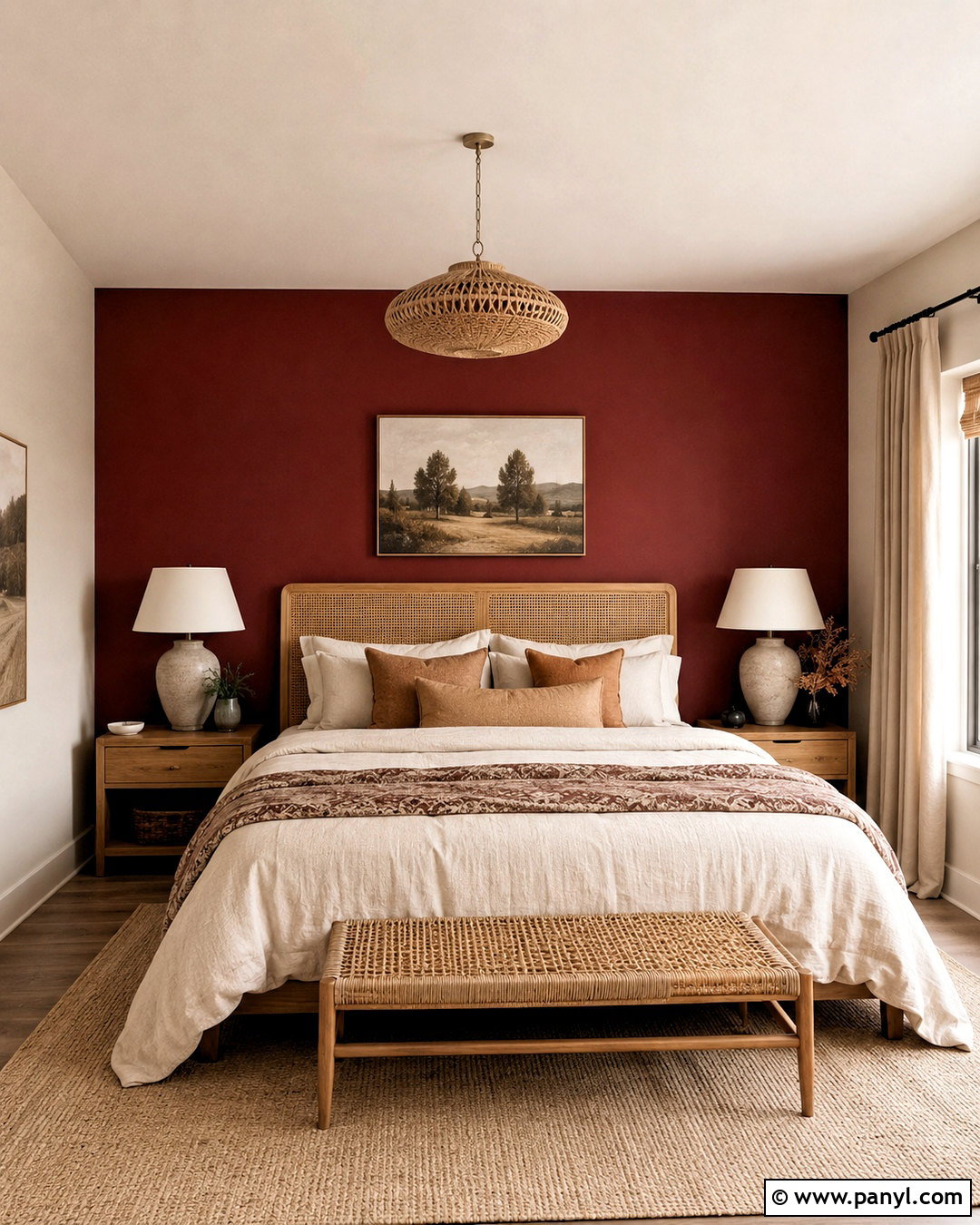
Deep red bedroom walls can feel restful when paired with warm walnut furniture and soft neutral bedding. Center a low walnut bed against the longest wall, leaving enough open space for matching nightstands. Dress the bed in ivory linen, mushroom-colored blankets, and two muted red pillows for a gentle connection to the paint. A flatweave taupe rug softens the floor without introducing a busy pattern. Use cream curtains that reach from ceiling to floor and diffuse bright daylight. Ceramic table lamps with natural linen shades provide comfortable bedside lighting. Keep artwork minimal, perhaps with one horizontal botanical print above the bed. A matte paint finish gives the room a velvety appearance and reduces distracting reflections.
3. Deep Red Dining Room With Brass Lighting
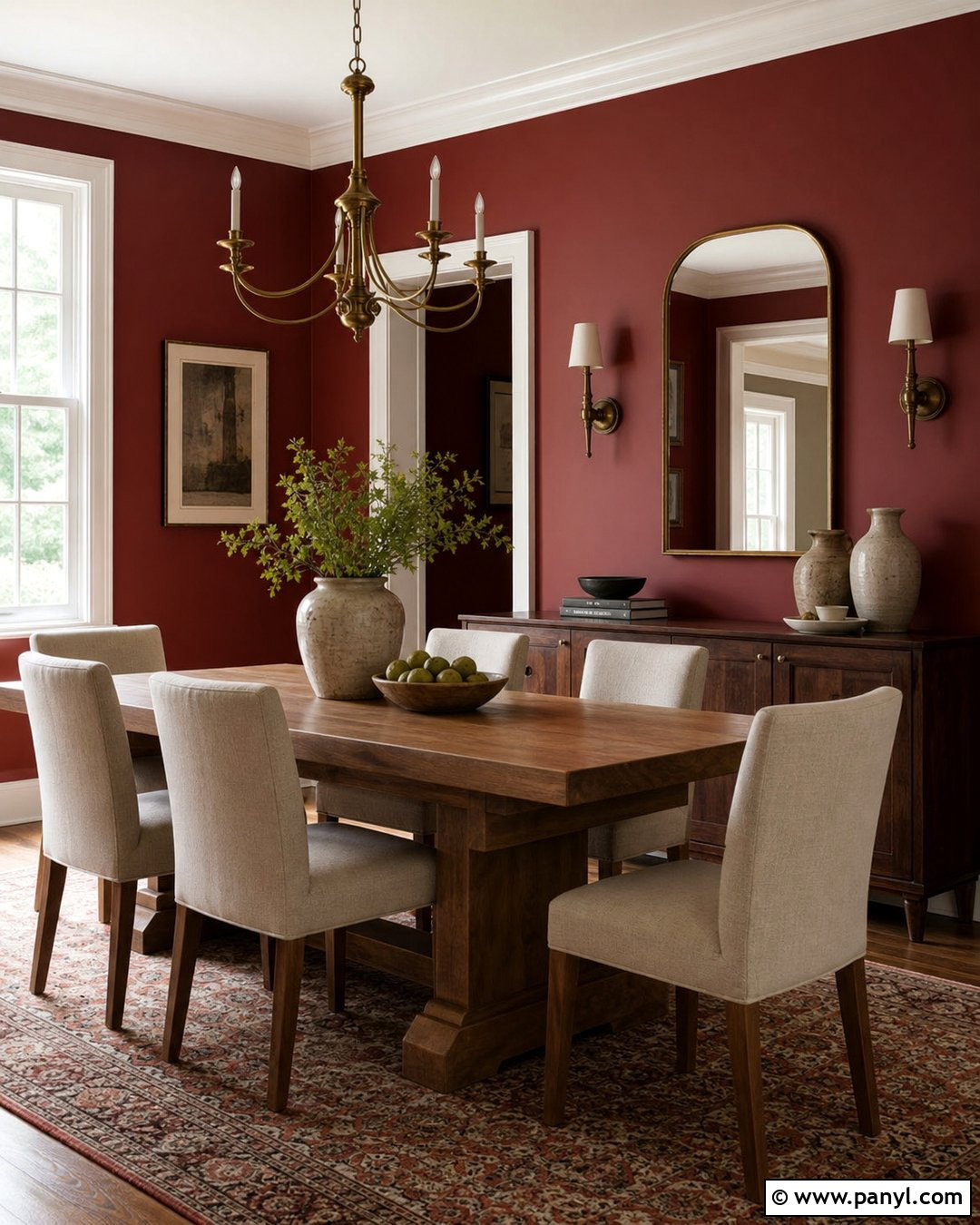
Imagine deep red dining room walls surrounding a solid oak table and comfortable upholstered chairs. The rich color establishes intimacy, while natural wood prevents the setting from appearing overly formal. Choose dining chairs in oatmeal fabric with dark wood frames, then position a sculptural aged brass chandelier above the table. A muted Persian-style rug can connect red, cream, faded blue, and brown throughout the room. Add a simple walnut sideboard topped with ceramic vessels and one large mirror. Warm white trim provides definition around windows and doors without creating a stark outline. For evening meals, combine the chandelier with shaded wall sconces. The layered lighting helps the deep paint remain dimensional after natural daylight disappears.
4. Deep Red Home Office With Built-In Shelves
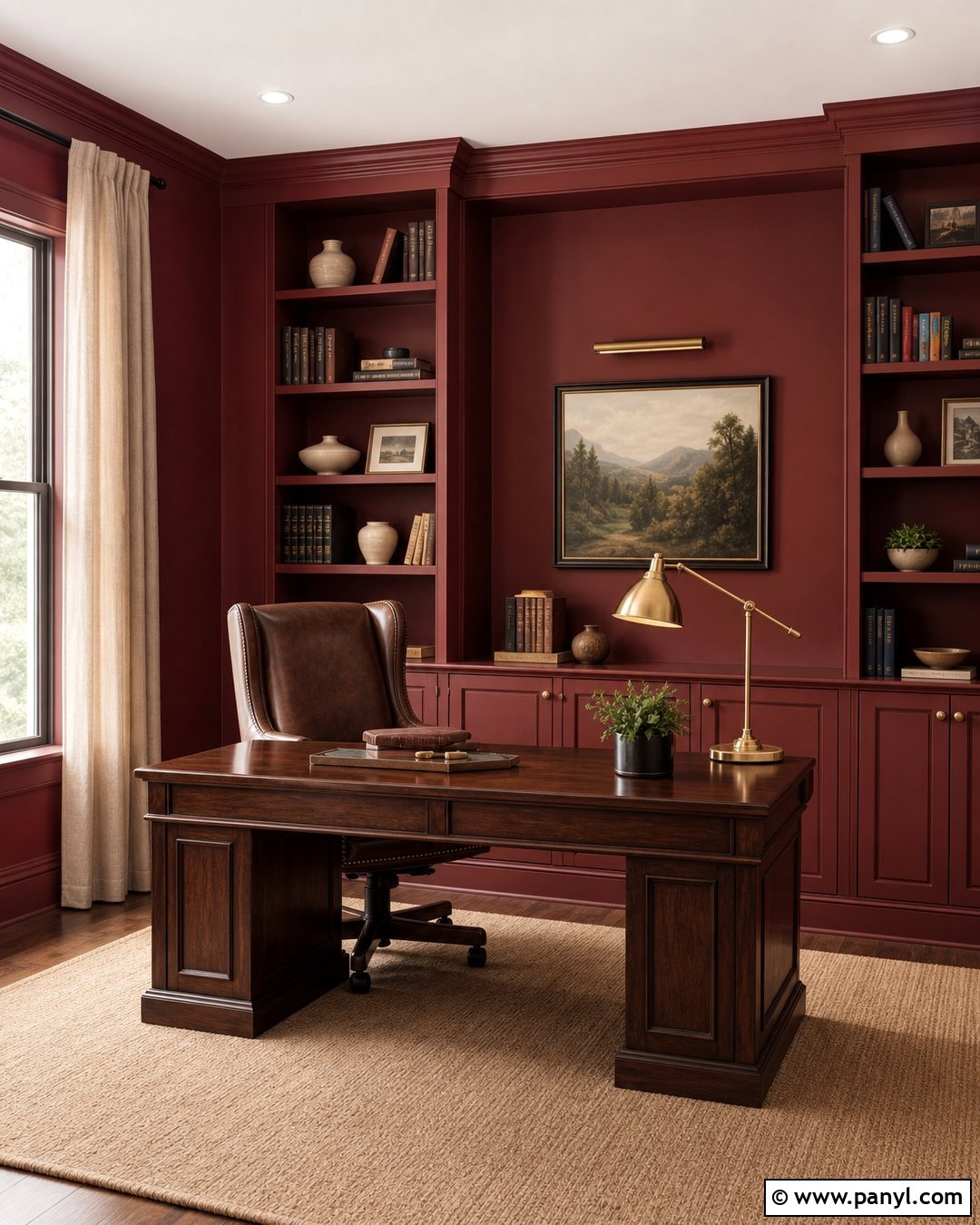
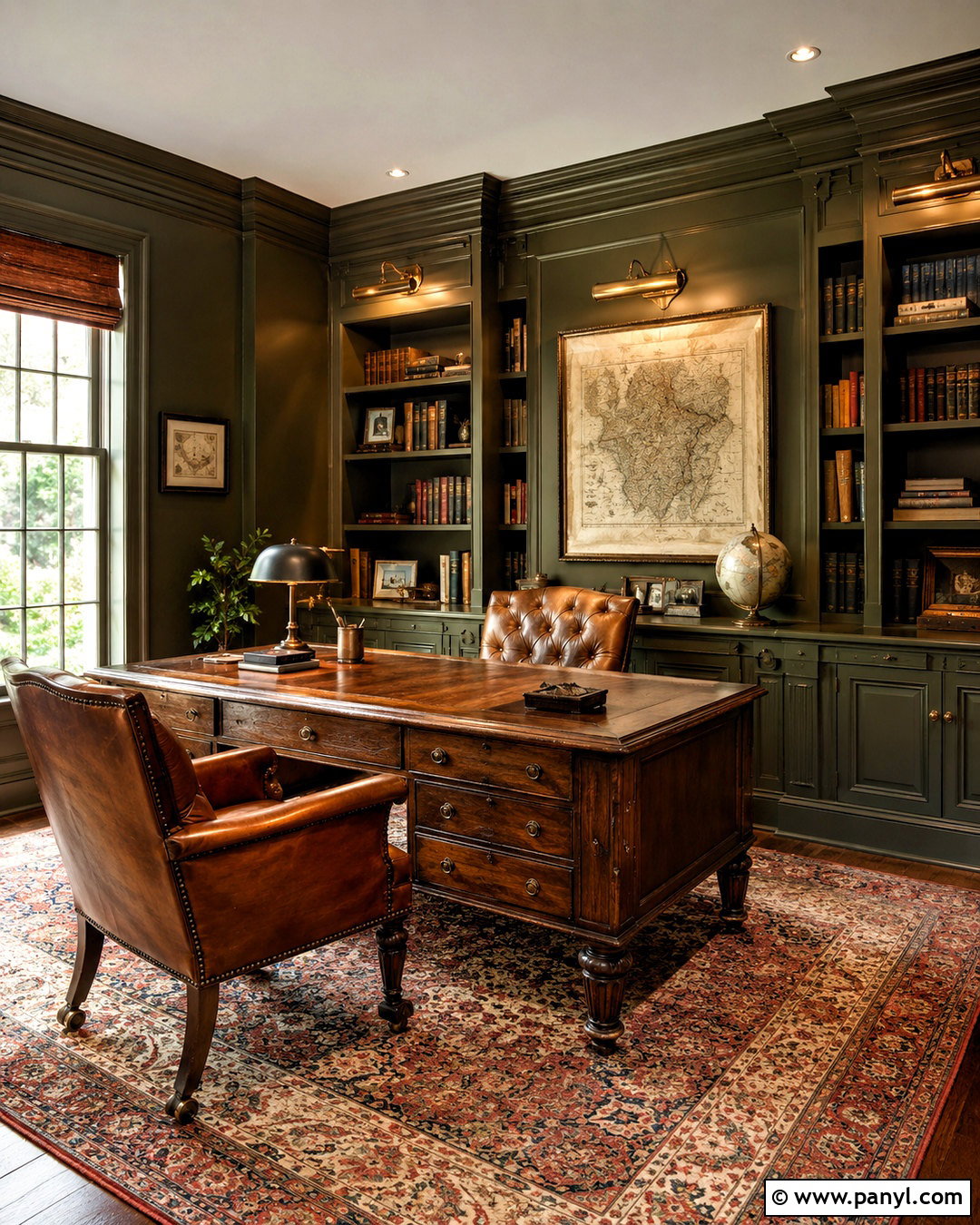
A deep red home office becomes especially cohesive when the walls, built-in shelves, and trim share the same color. This color-drenched approach minimizes visual breaks and makes ordinary storage look intentional. Place a streamlined walnut desk near the window, with a brown leather chair and a compact brass task lamp. Style the shelves sparingly with books, cream pottery, framed photographs, and a few sculptural objects. A light tan rug balances the saturated walls and helps define the workspace. Add full-length oatmeal curtains for softness and acoustic comfort. Closed cabinets along the bottom of the bookcases conceal office supplies. The finished room feels focused and collected, with practical storage integrated into a polished, complete design.
5. Deep Red Powder Room With Marble
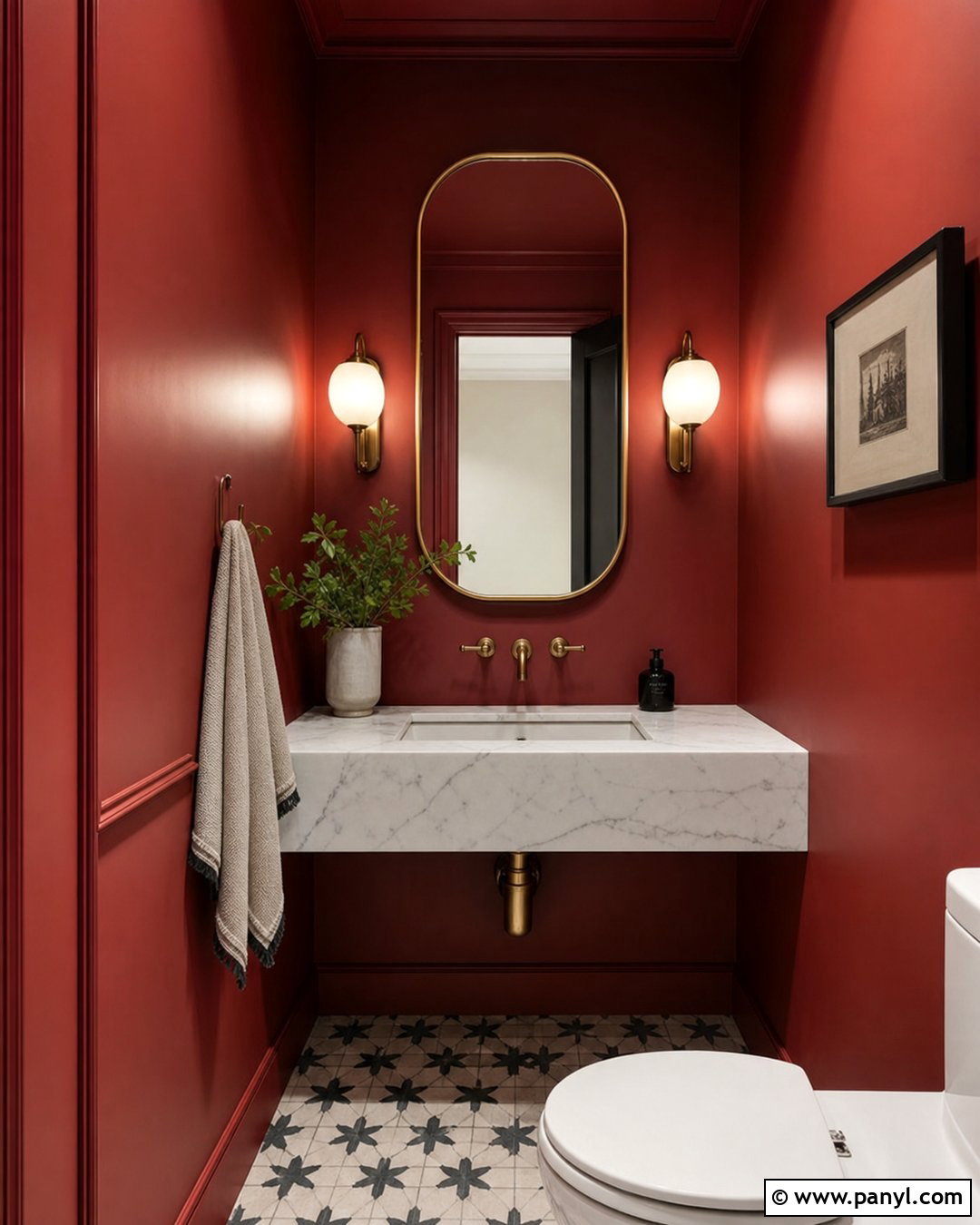
A powder room offers the perfect scale for dramatic deep red walls. Use a brown-based burgundy across the walls, ceiling, door, and trim to produce an enveloping finish. Balance the saturated paint with a compact white marble vanity featuring subtle gray veining. An aged brass faucet, matching towel ring, and rounded mirror introduce warm reflection. Choose patterned cement floor tile in cream and muted charcoal for character without overwhelming the small room. Two opal glass sconces placed beside the mirror provide even illumination. Keep accessories limited to a neutral hand towel, a soap dispenser, and one small plant. The completed space feels bold yet organized because every material supports the deep wall color rather than fighting it.
6. Deep Red Kitchen Walls With Oak Cabinets
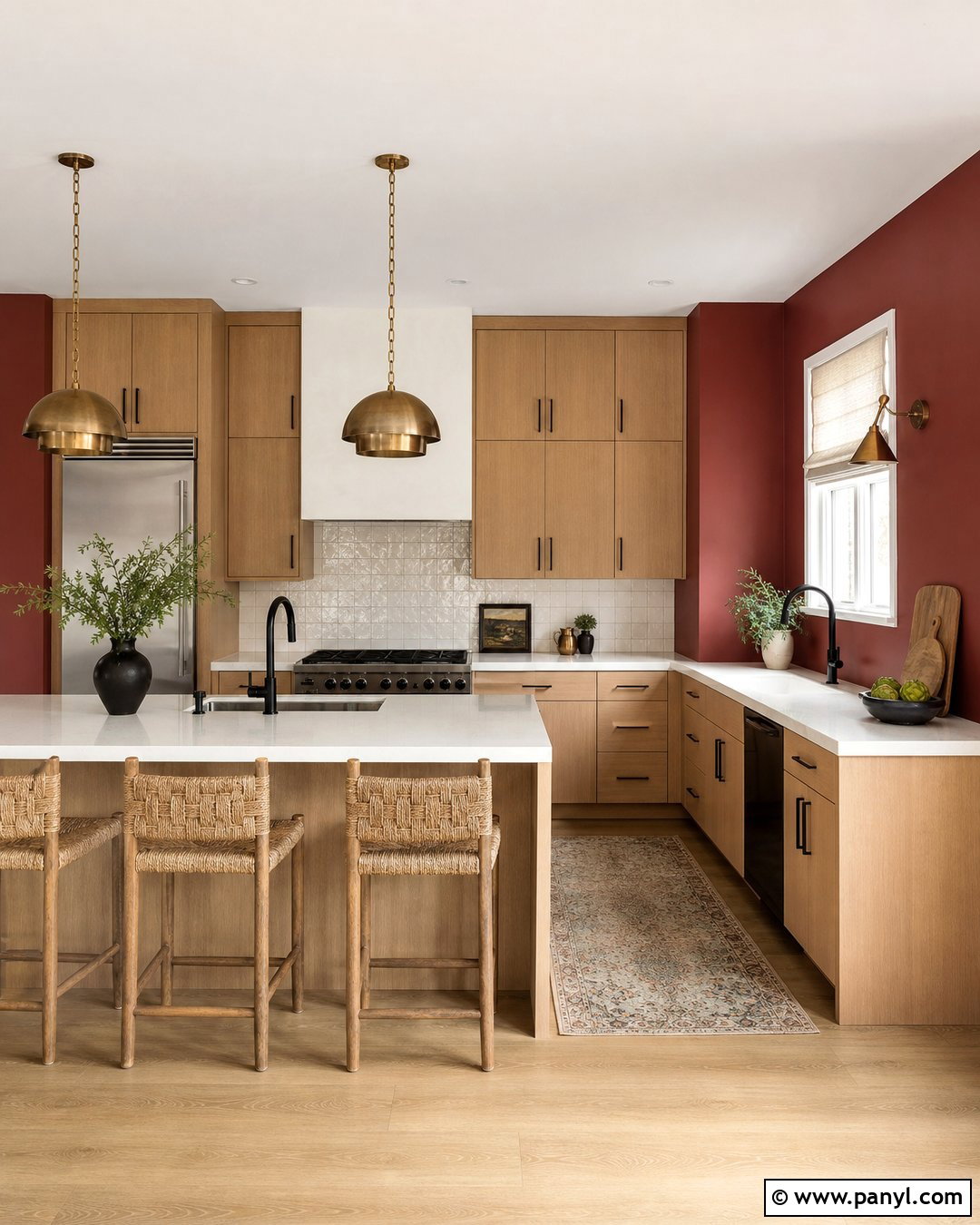
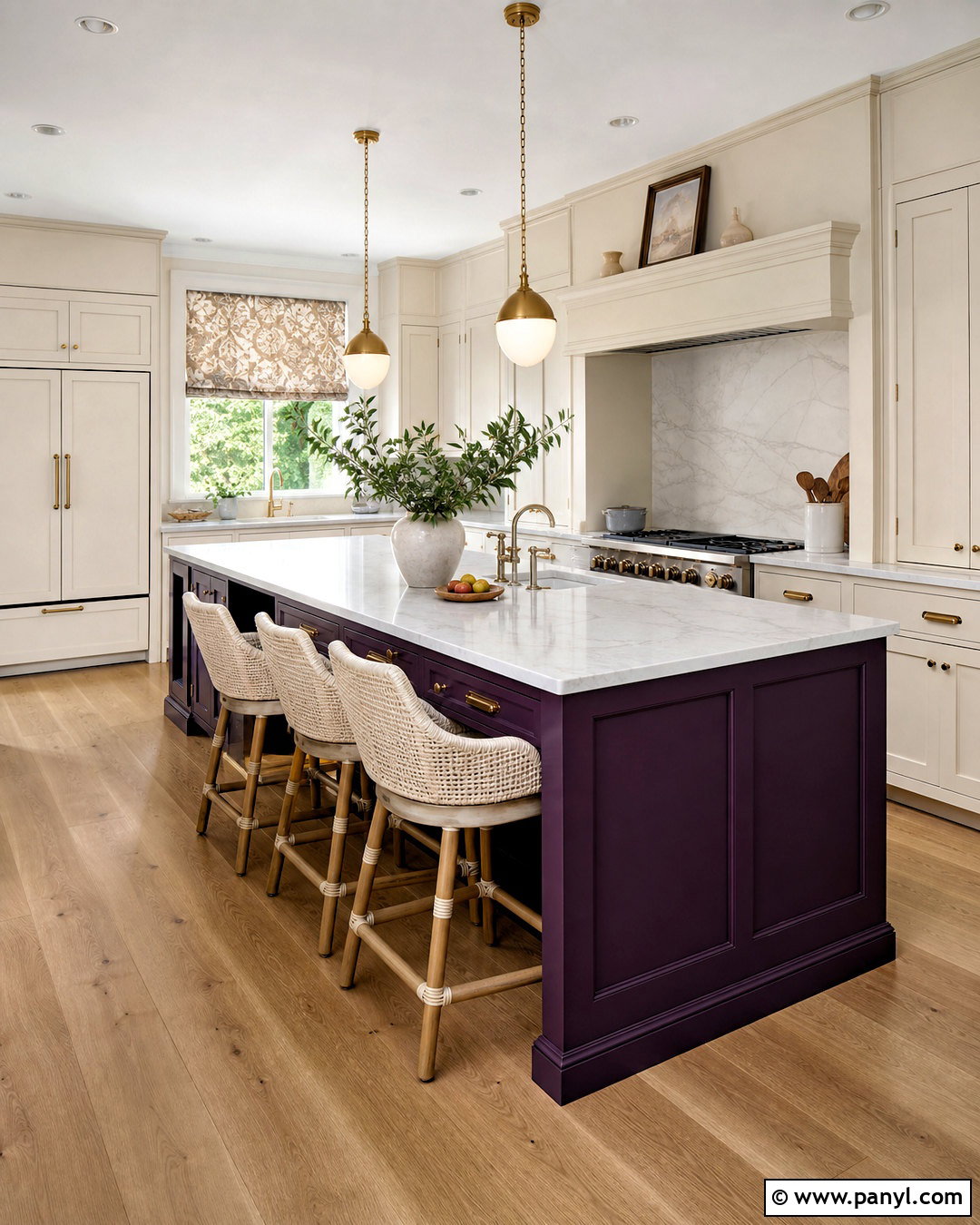
Deep red kitchen walls can add warmth without requiring colorful cabinetry. Pair them with flat-panel white oak cabinets, creamy quartz countertops, and a backsplash of handmade ivory tile. The pale wood and reflective tile create enough visual relief for the saturated wall color. Matte black hardware brings a clean, contemporary line, while aged brass pendant lights soften the overall effect. Use the red on open wall areas around windows, the breakfast nook, and the range rather than hiding it behind excessive upper cabinets. Medium-tone oak flooring continues the natural palette. Complete the room with woven counter stools and off-white Roman shades. The resulting kitchen feels welcoming, functional, and colorful without becoming visually crowded or overly themed.
7. Deep Red Entryway With Black Accents
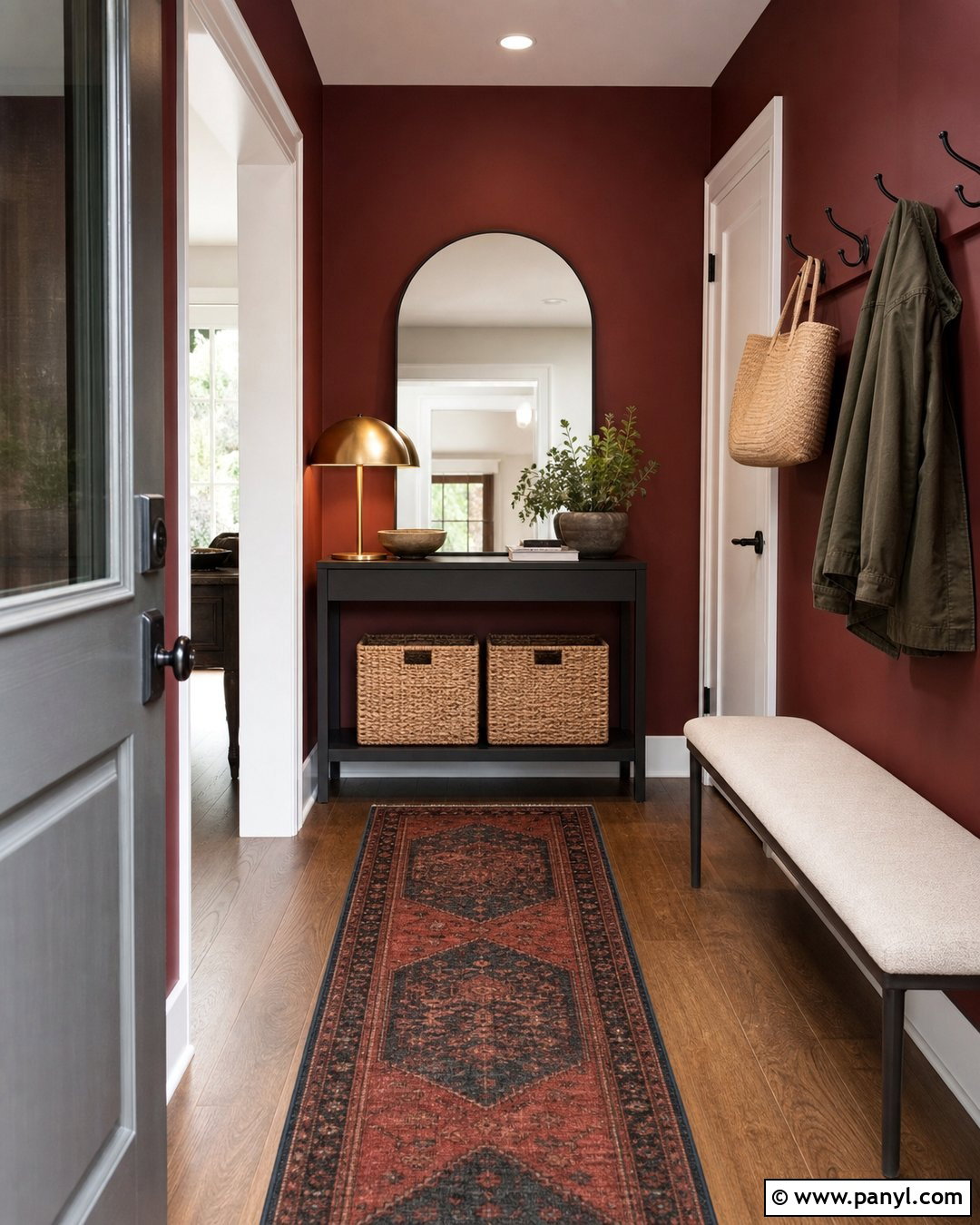
Set a memorable first impression with deep red entryway walls, black accents, and practical storage. Paint the walls a rich merlot, but keep the ceiling soft white to preserve brightness near the front door. A slim black console table provides a landing place without restricting the walkway. Above it, hang a large arched mirror that reflects daylight and visually expands the space. Add a narrow upholstered bench, woven baskets for shoes, and black wall hooks arranged in a clean row. A vintage-inspired runner can include faded red, tan, and charcoal details. Finish the arrangement with a small brass lamp and simple ceramic bowl. Every piece serves a purpose, producing an entrance that feels dramatic, organized, and easy to maintain.
8. Deep Red Library Walls With Leather Seating
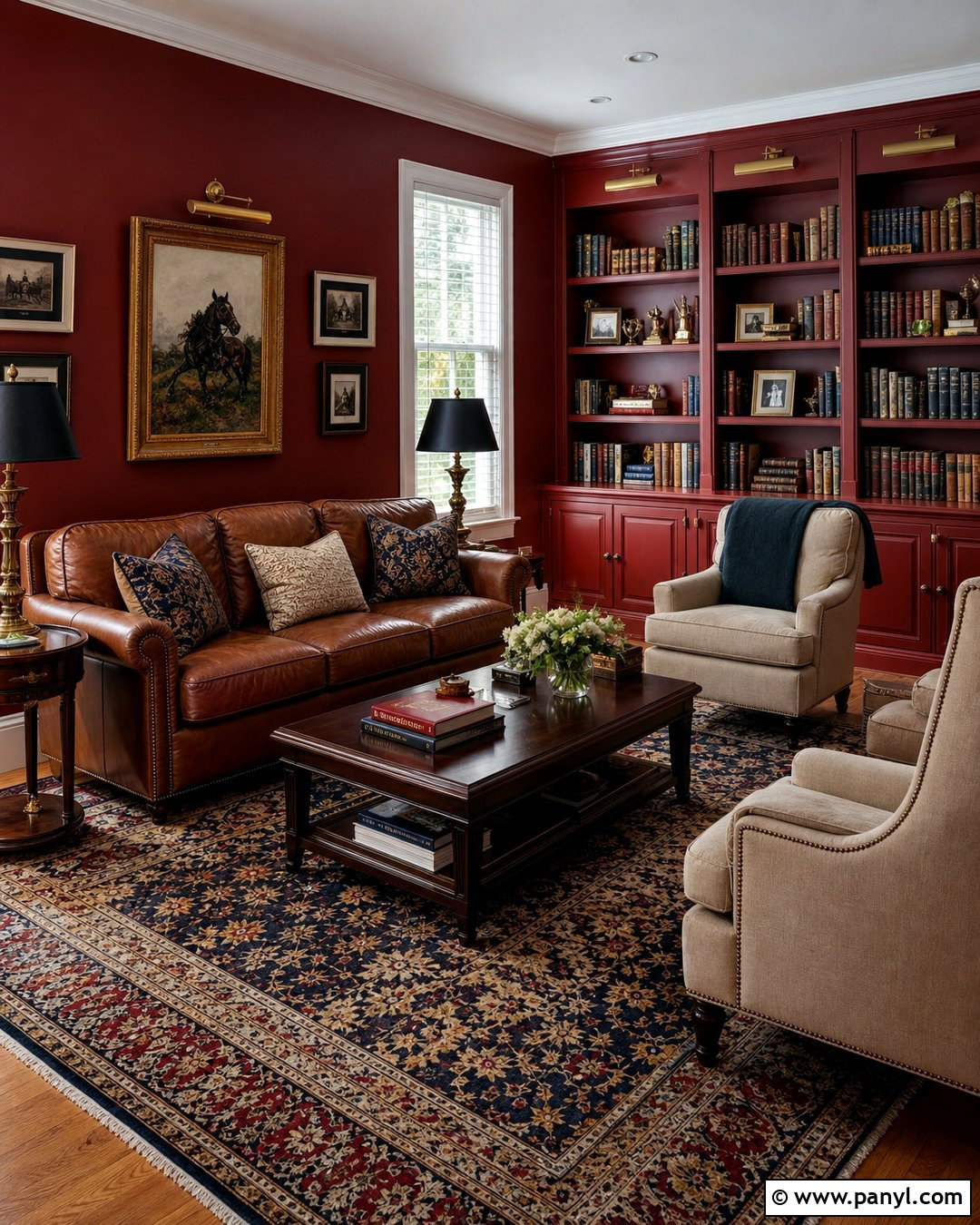
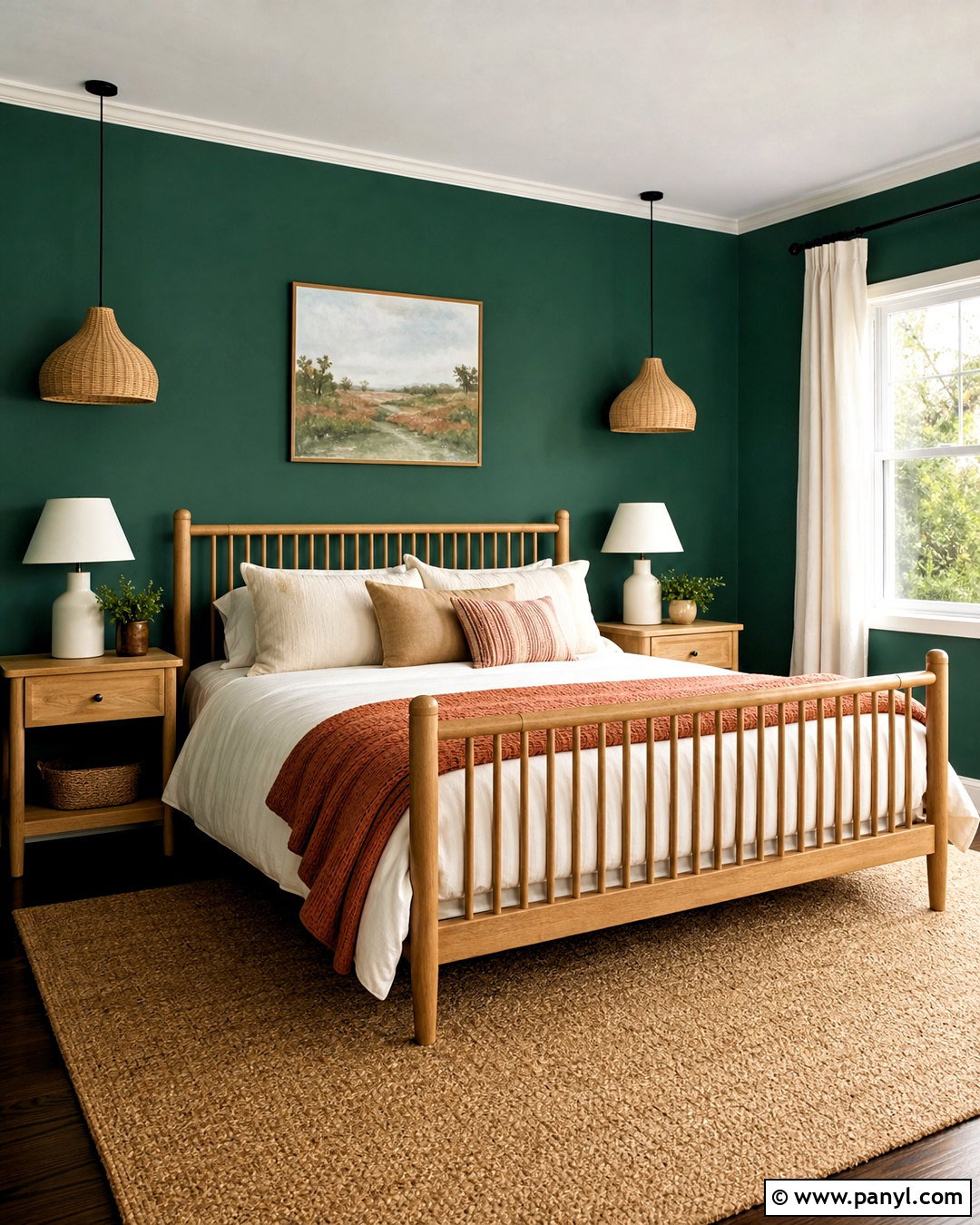
Rows of books look especially inviting against deep red library walls. Paint the walls and built-in bookcases in the same oxblood shade, using a satin finish on shelving for added durability and subtle contrast. Place a worn cognac leather sofa opposite two compact reading chairs covered in oatmeal fabric. A large traditional rug should combine navy, muted gold, cream, and burgundy to unite the palette. Include several light sources rather than relying on one ceiling fixture. Brass picture lights, shaded floor lamps, and a central pendant create comfortable pools of illumination. A dark oak coffee table supplies space for books and drinks. Leave sections of shelving partially open so the room feels collected, not overfilled or visually heavy.
9. Deep Red Fireplace Wall With Stone Hearth
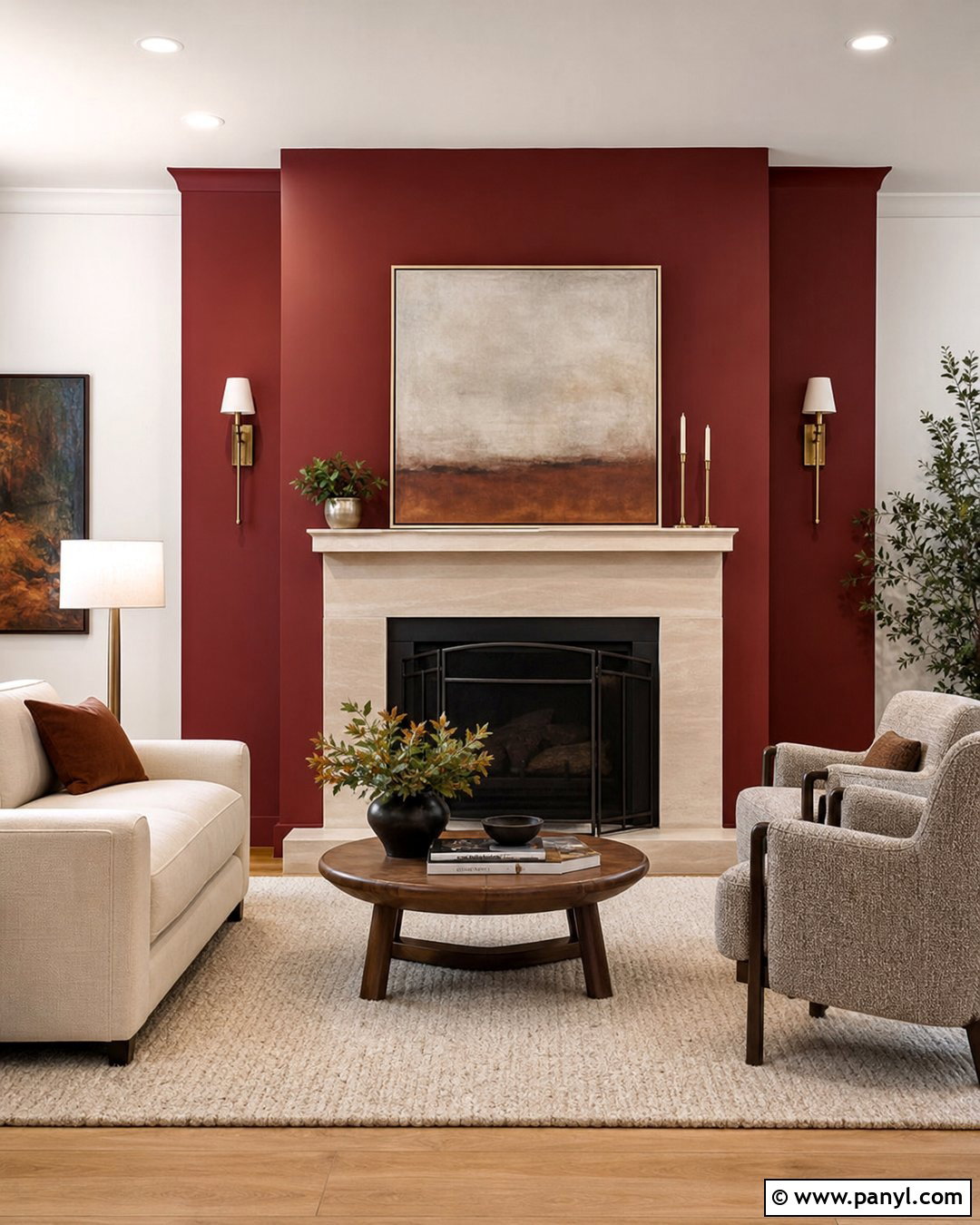
A deep red fireplace wall makes the architectural center of a living room feel even more substantial. Paint the full chimney breast and surrounding wall in earthy crimson, then use warm limestone or honed travertine around the firebox. Keep the mantel simple, preferably in matching stone or medium oak. Arrange a neutral sofa and two textured armchairs in a conversational U-shaped layout facing the fireplace. An ivory wool rug and light oak flooring brighten the lower half of the room. Above the mantel, display one generously scaled artwork with cream, rust, and charcoal tones. Black fireplace tools and a slim black screen provide definition. Soft wall sconces complete the balanced, comfortable setting without distracting from the strong focal wall.
10. Deep Red Accent Wall With Neutral Decor
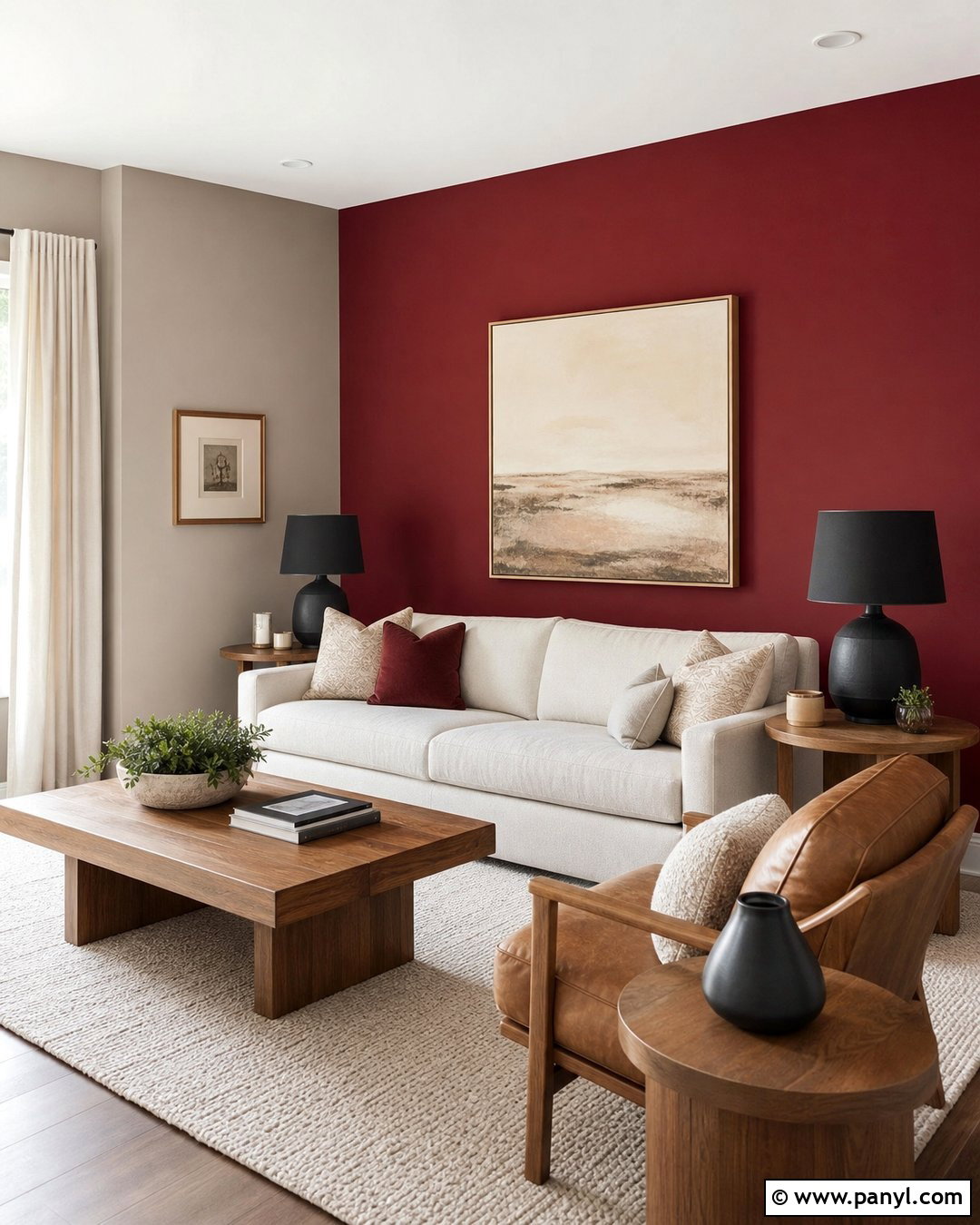
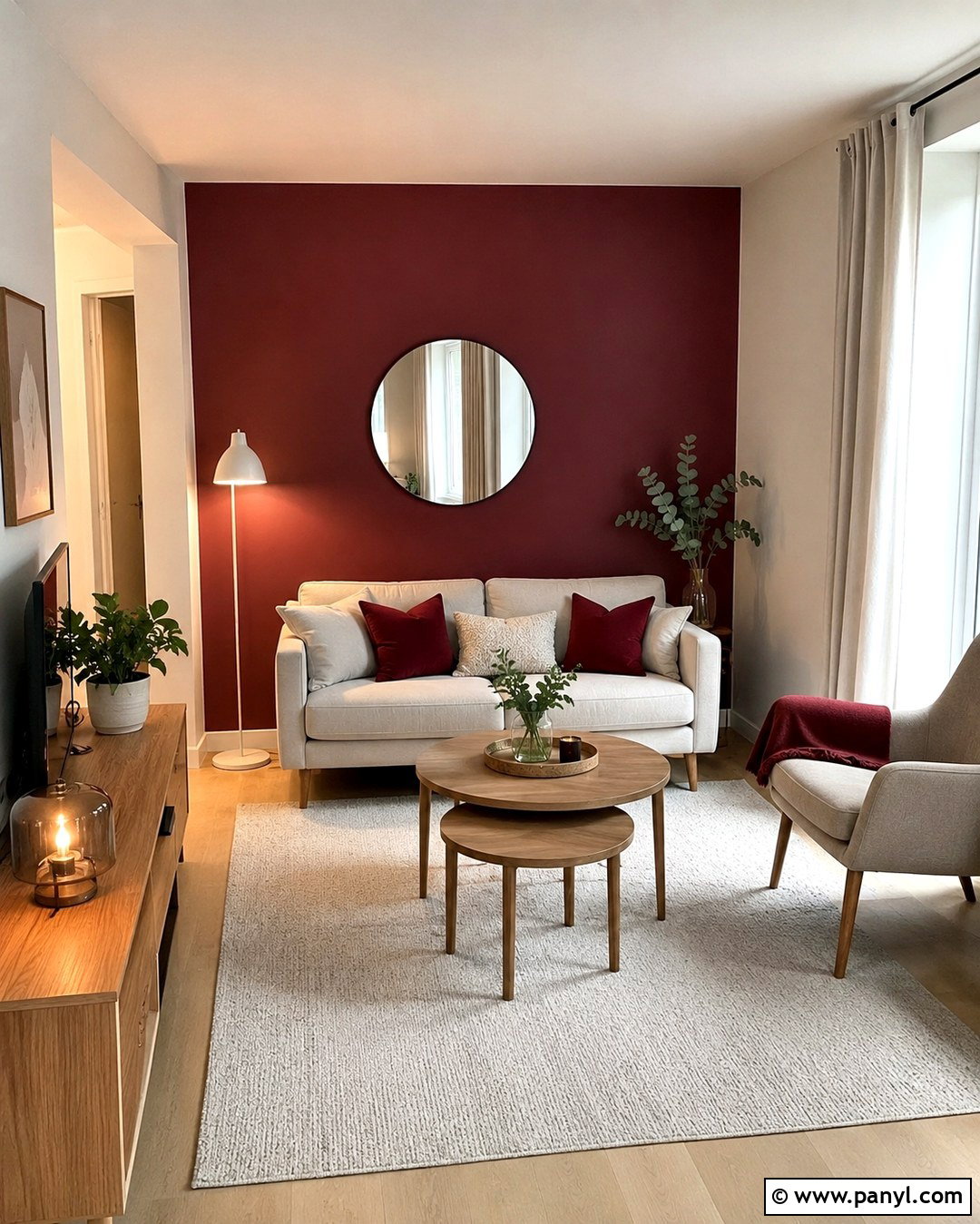
For a manageable introduction to strong color, use one deep red accent wall within an otherwise neutral room. Select the wall behind the sofa or bed so the color visually anchors the largest piece of furniture. Paint the remaining walls warm greige rather than bright white, creating a softer transition. Choose furniture in cream, camel, and natural oak, then introduce black accents through frames, lamps, or table legs. A textured ivory rug keeps the floor light and comfortable. Repeat deep red only once or twice in small textiles to avoid an overly coordinated look. Large artwork with generous pale areas will stand out clearly against the painted surface. This measured palette feels finished while allowing the red wall to remain the main attraction.
11. Deep Red Color Drenched Room
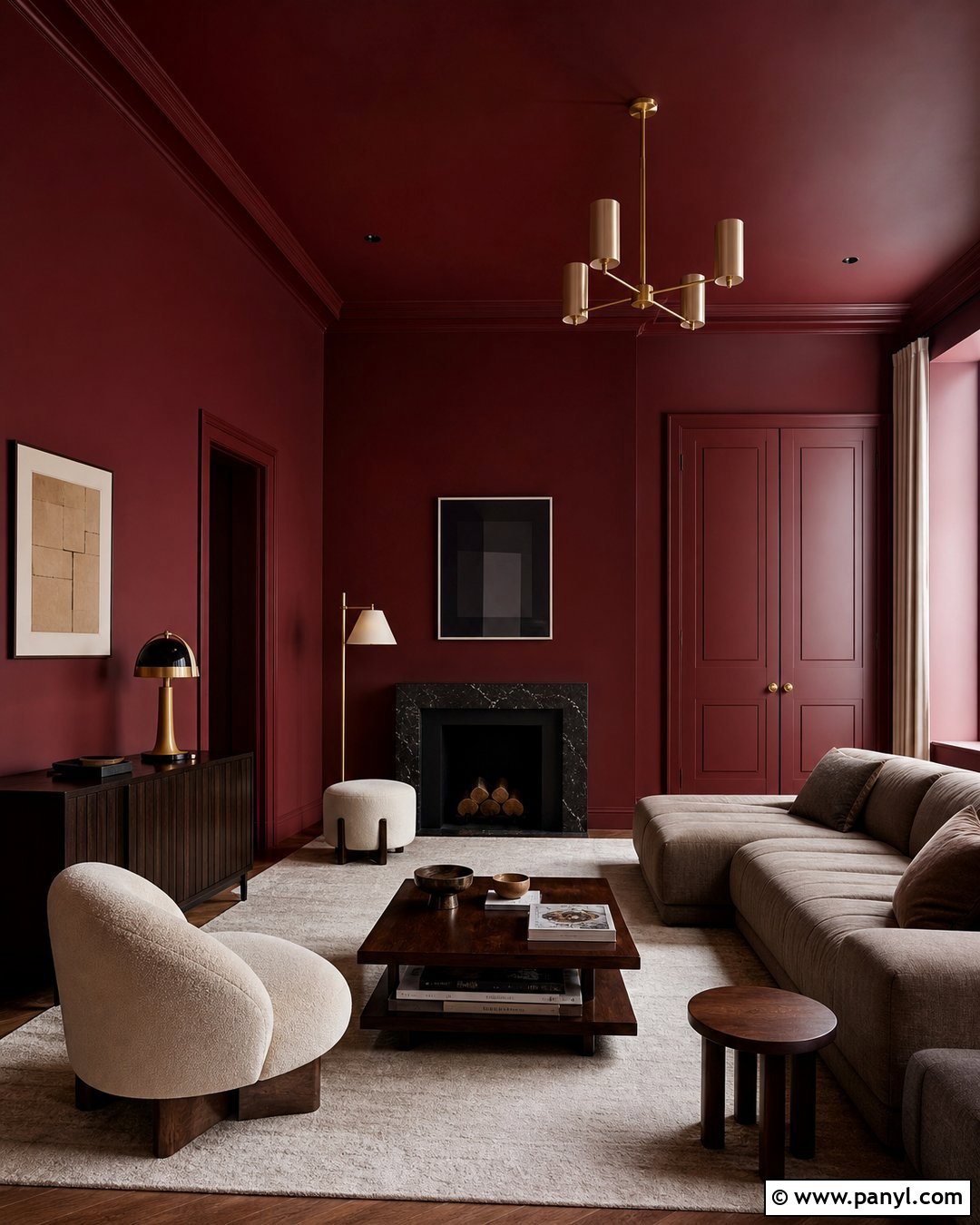
Color drenching turns deep red walls into an immersive design rather than a standard painted backdrop. Cover the walls, ceiling, trim, radiator, and interior doors in one muted burgundy. Use flat paint overhead and an eggshell or satin finish on woodwork to create subtle variation without changing color. Keep the furniture low and uncomplicated, including a taupe sofa, dark walnut tables, and a sculptural cream chair. Pale linen curtains offer a useful break while preserving the room’s warm character. Add brushed brass lighting and a large ivory rug to reflect illumination around the space. Artwork should be limited and strongly framed. This approach works particularly well in snug living rooms, libraries, and dens where a cozy, enveloping atmosphere feels intentional.
12. Deep Red Walls With White Trim
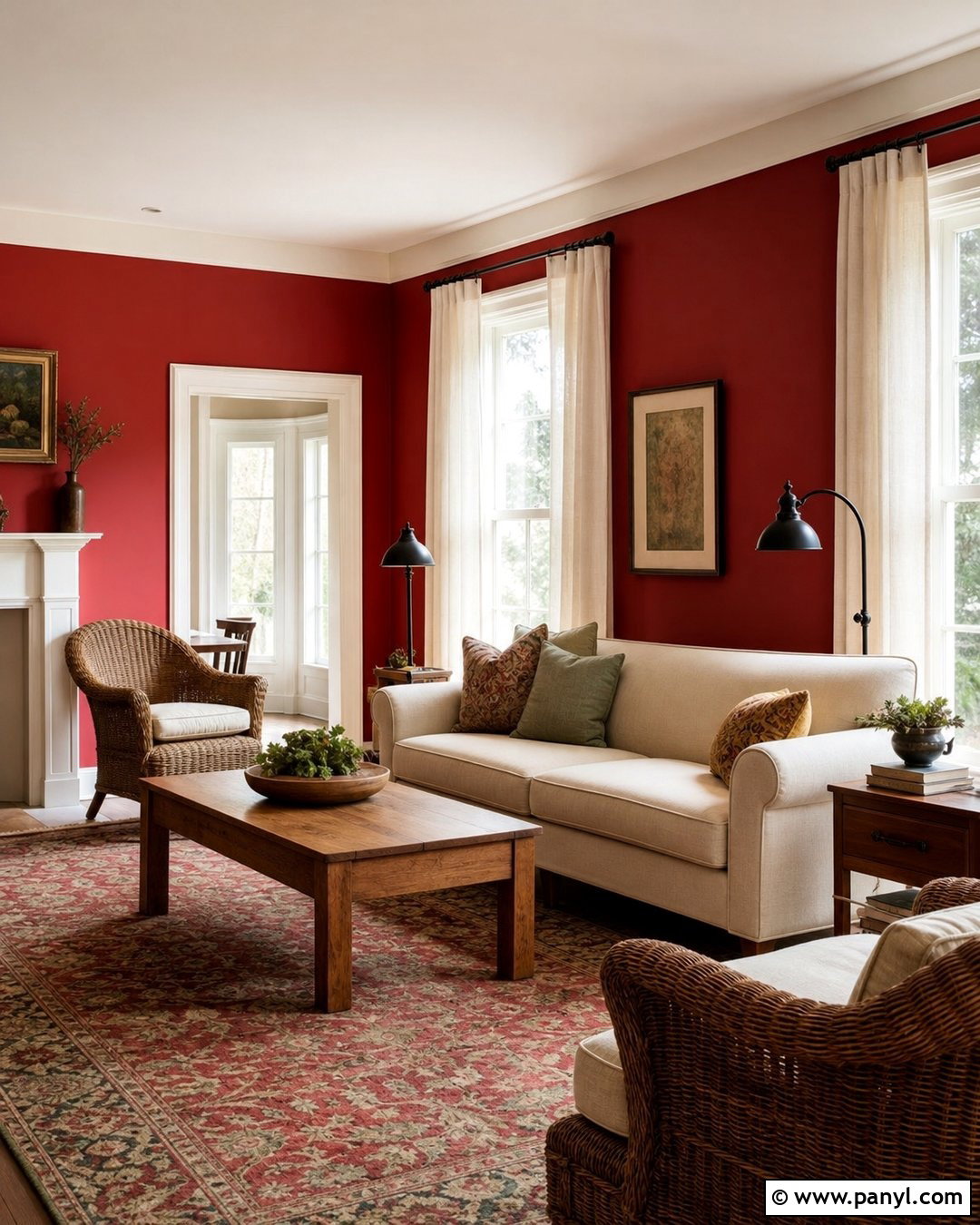
Crisp architectural details stand out beautifully when deep red walls are paired with warm white trim. Use the red across the main wall surfaces, then paint baseboards, window casings, crown molding, and doors in creamy white rather than a cold blue-white. Furnish the room with a beige sofa, medium oak tables, and woven accents that bridge the strong contrast. White linen curtains can blend into the window trim and bring brightness higher in the room. Introduce a patterned rug containing red, tan, and faded green for a natural transition between surfaces. Black metal lamps add definition, while a few brass details provide warmth. The finished look feels clean and traditional, yet the rich wall color gives it considerably more personality.
13. Deep Red Walls With Dark Wood Furniture
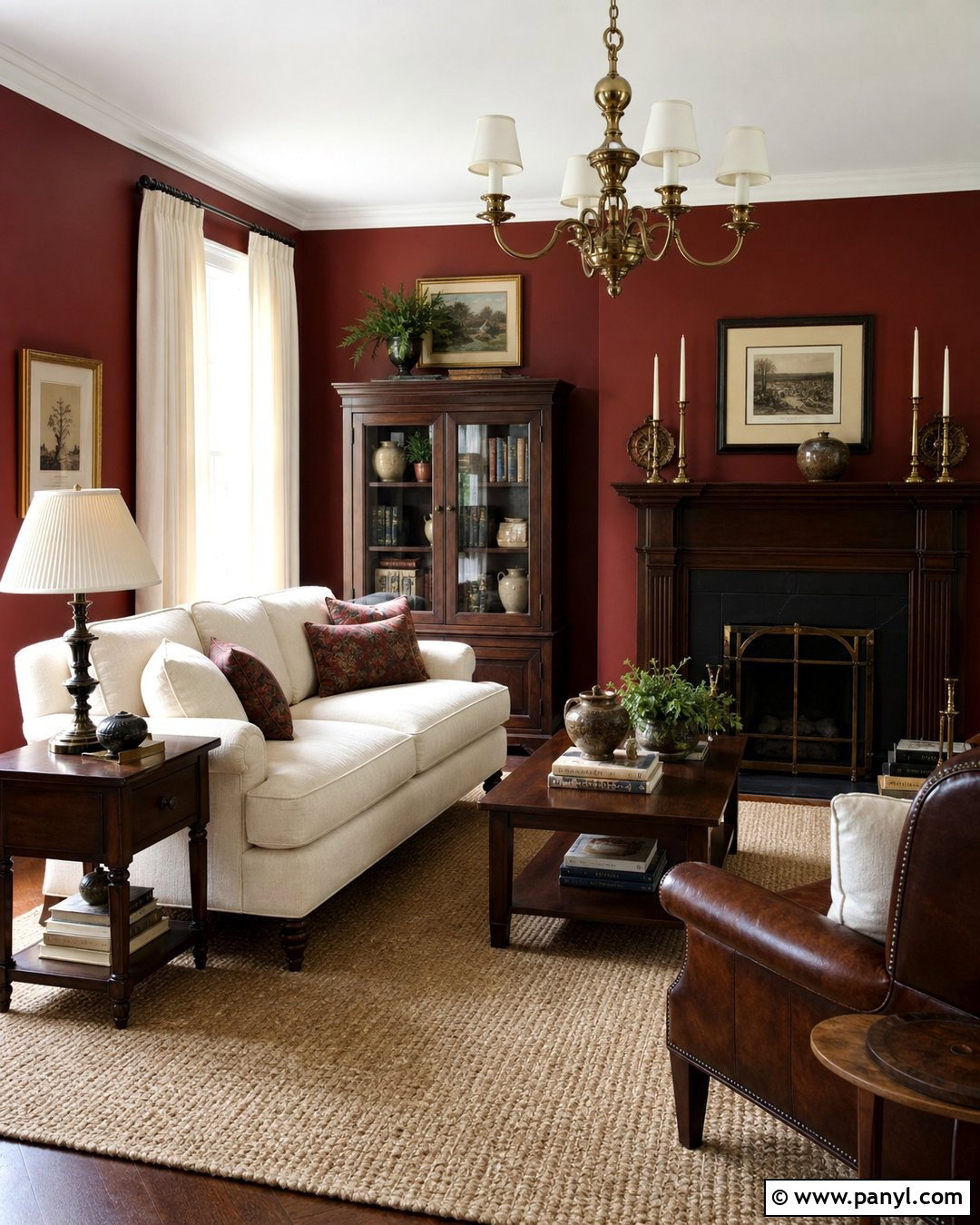
Dark wood and deep red walls can create a sophisticated room when lighter materials are added strategically. Start with a muted red that contains brown undertones, then introduce walnut or mahogany furniture with clean, unfussy shapes. An ivory upholstered sofa or bed prevents the two darkest elements from dominating the space. Use a pale natural-fiber rug, cream curtains, and off-white lampshades to distribute brightness from floor to ceiling. Antique brass hardware complements both the red paint and dark wood grain. Keep decorative objects limited to stoneware, books, and a few framed prints. Greenery can provide a small organic contrast. This layered combination works particularly well in dining rooms, bedrooms, and studies where warmth and visual depth are desirable.
14. Deep Red Walls With Sage Green Decor
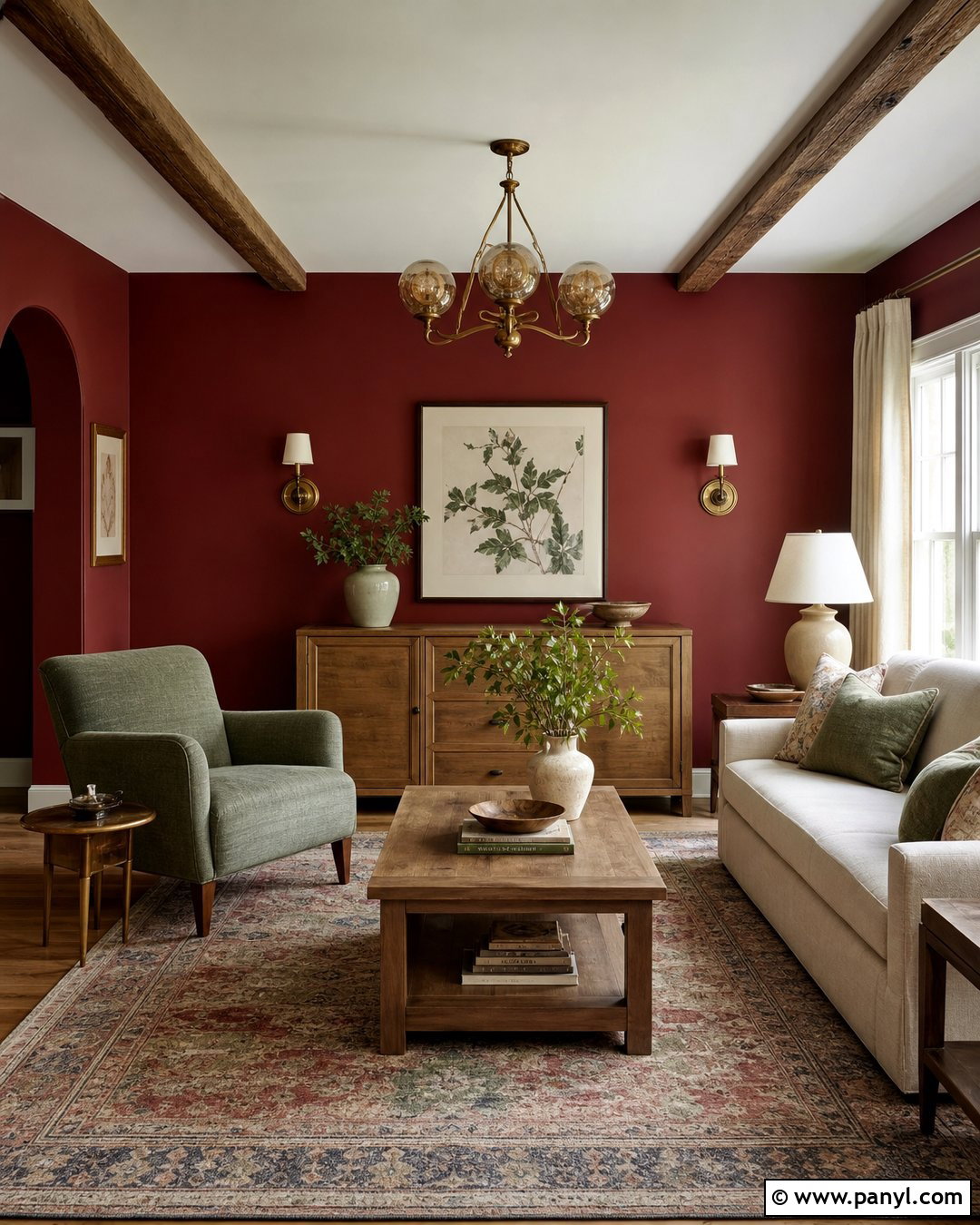
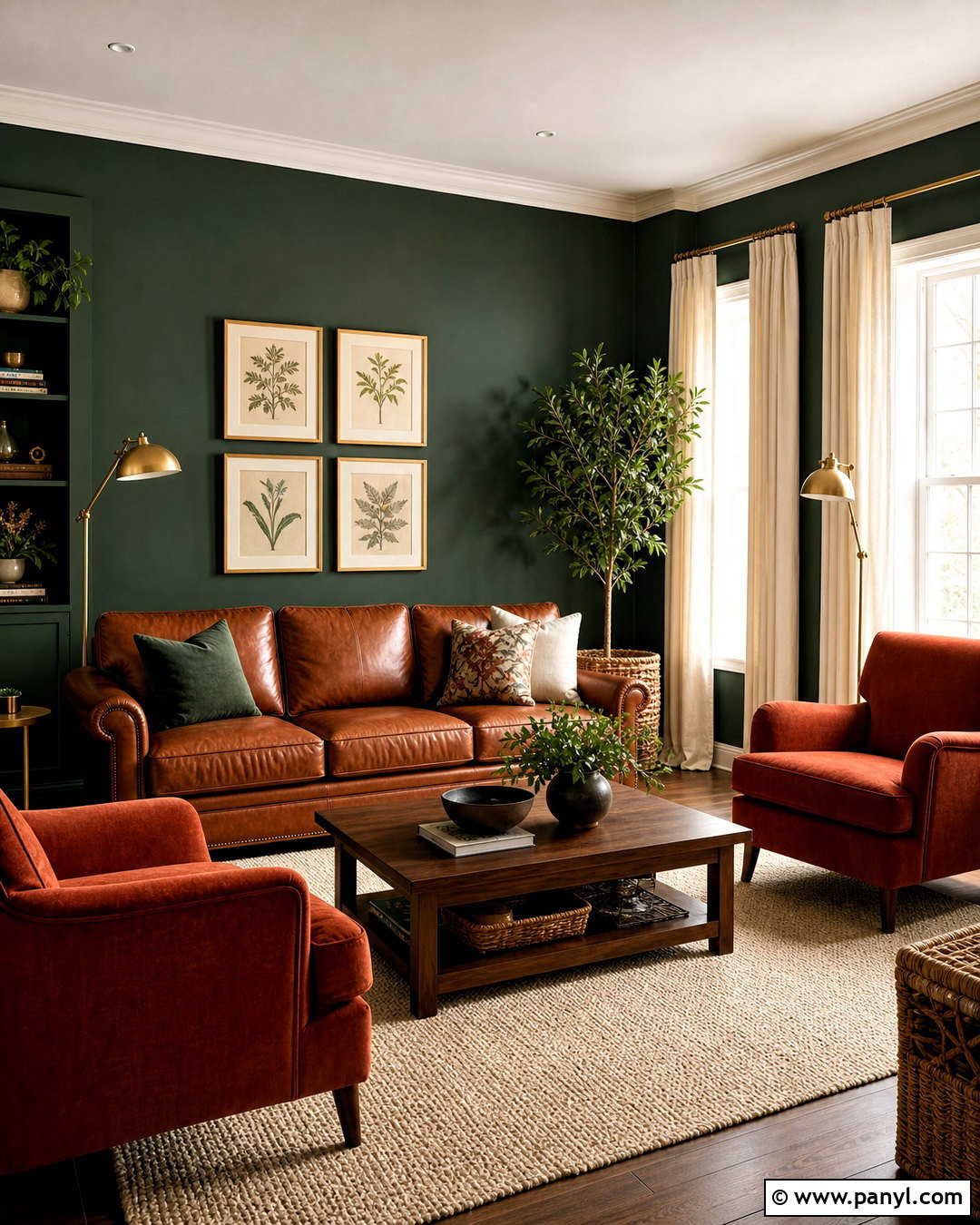
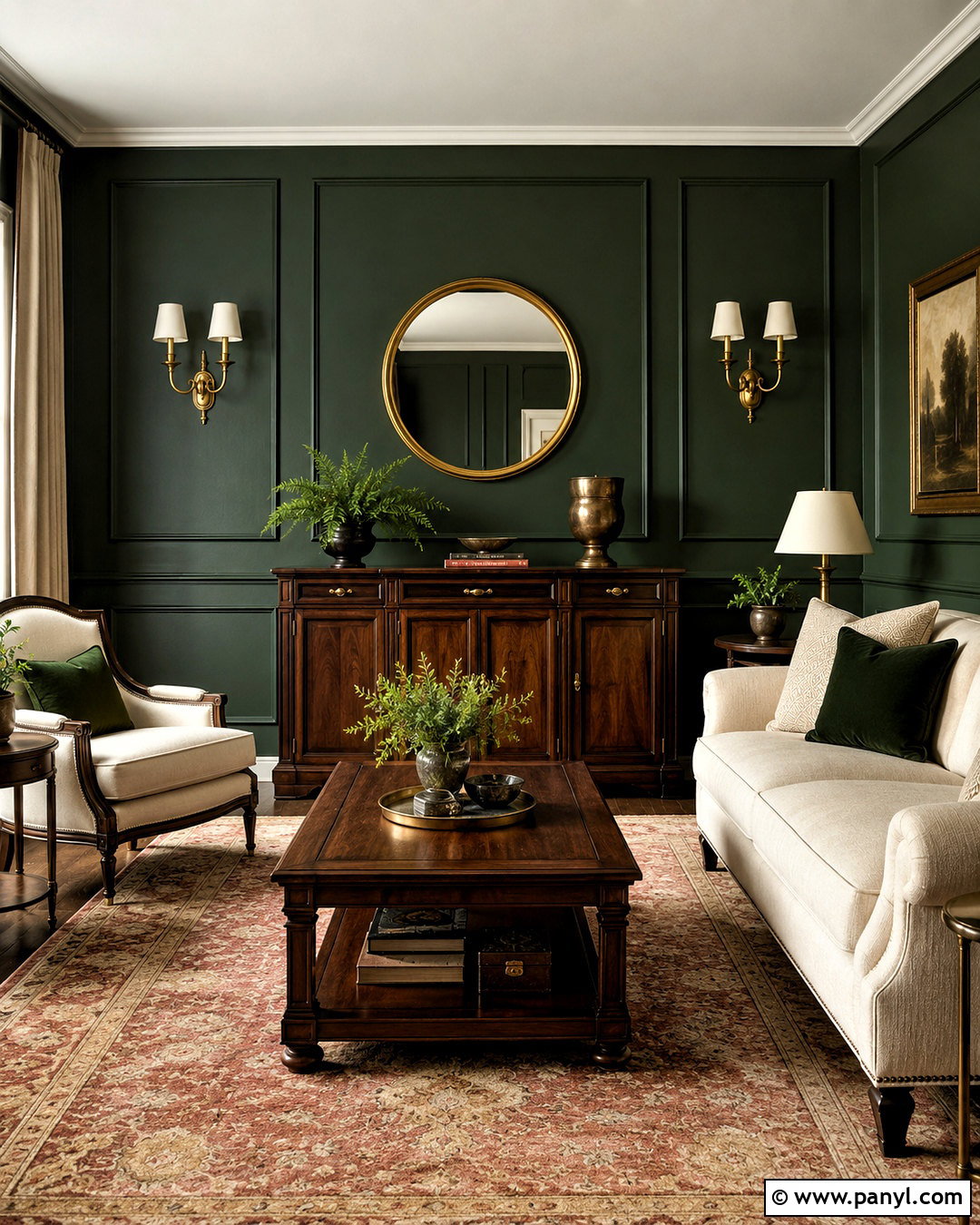
Sage green brings an earthy softness to deep red walls without creating a sharp holiday-like contrast. Choose a dusty, gray-based sage for an upholstered chair, curtains, or painted cabinetry. Pair these features with a muted oxblood wall color, natural oak furniture, and warm ivory textiles. A patterned area rug can blend both colors with tan and faded blue, helping the scheme feel established rather than overly matched. Add ceramic lamps in cream or moss green and select antique brass hardware for warmth. Botanical artwork provides a logical connection between the palette and natural materials. Keep brighter greens out of the arrangement. The complete room should feel calm, grounded, and layered, with each color appearing in a soft, slightly weathered form.
15. Deep Red Walls With Navy Blue Decor
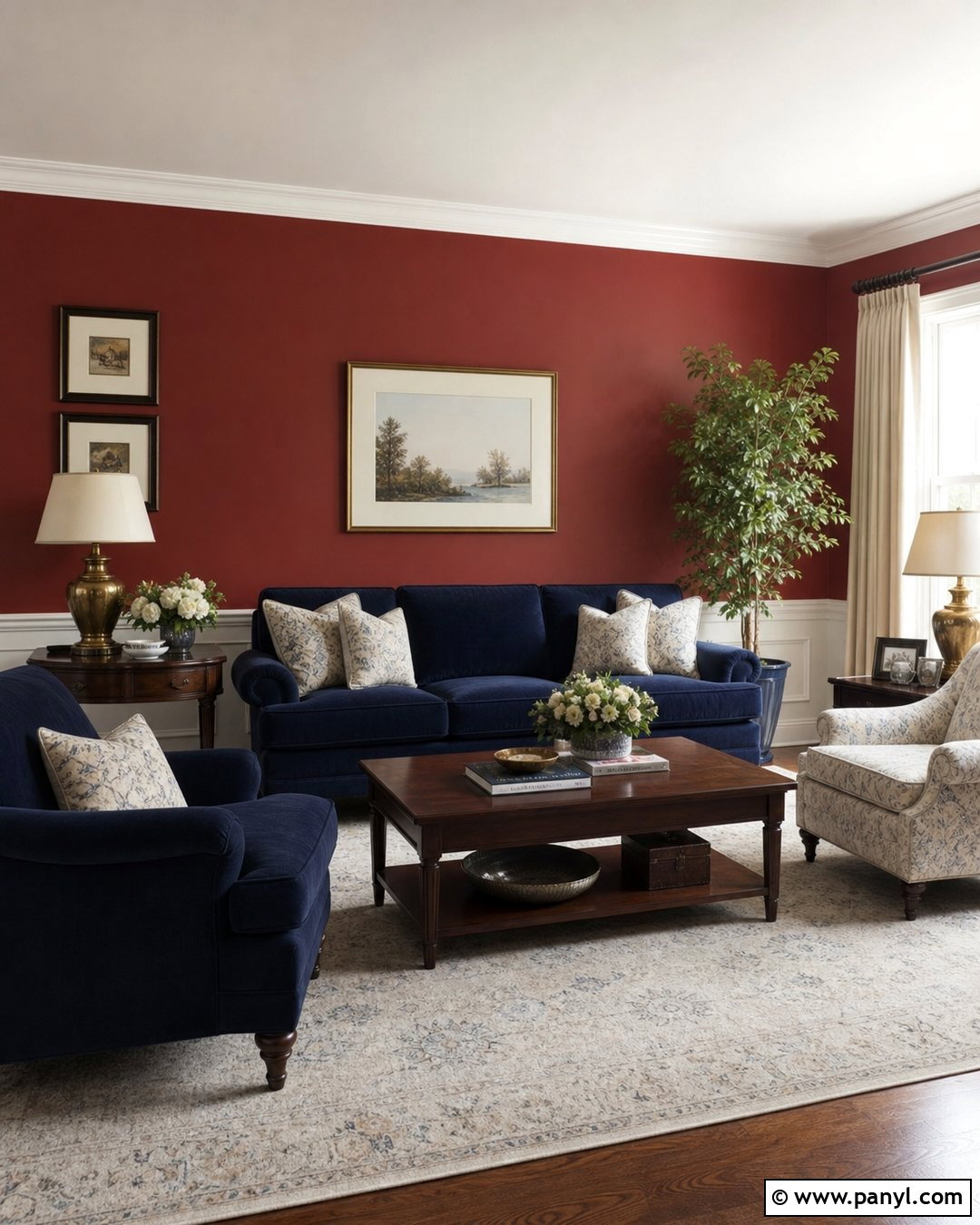
Deep red walls and navy blue decor create a rich palette that benefits from generous neutral space. Use burgundy paint with a slightly cool undertone, then add a navy sofa or a pair of blue upholstered chairs. Break up the dark colors with an ivory rug, cream curtains, and pale patterned pillows. Medium walnut furniture supplies warmth without competing with either saturated shade. Aged brass table lamps and picture lights introduce a polished glow. Choose artwork containing small touches of blue and red against a lighter background. Keep the ceiling and major textiles off-white to protect the room’s sense of openness. This color combination is especially effective in formal living rooms, dining spaces, and home offices with strong natural light.
16. Deep Red Walls With Blush Pink Decor
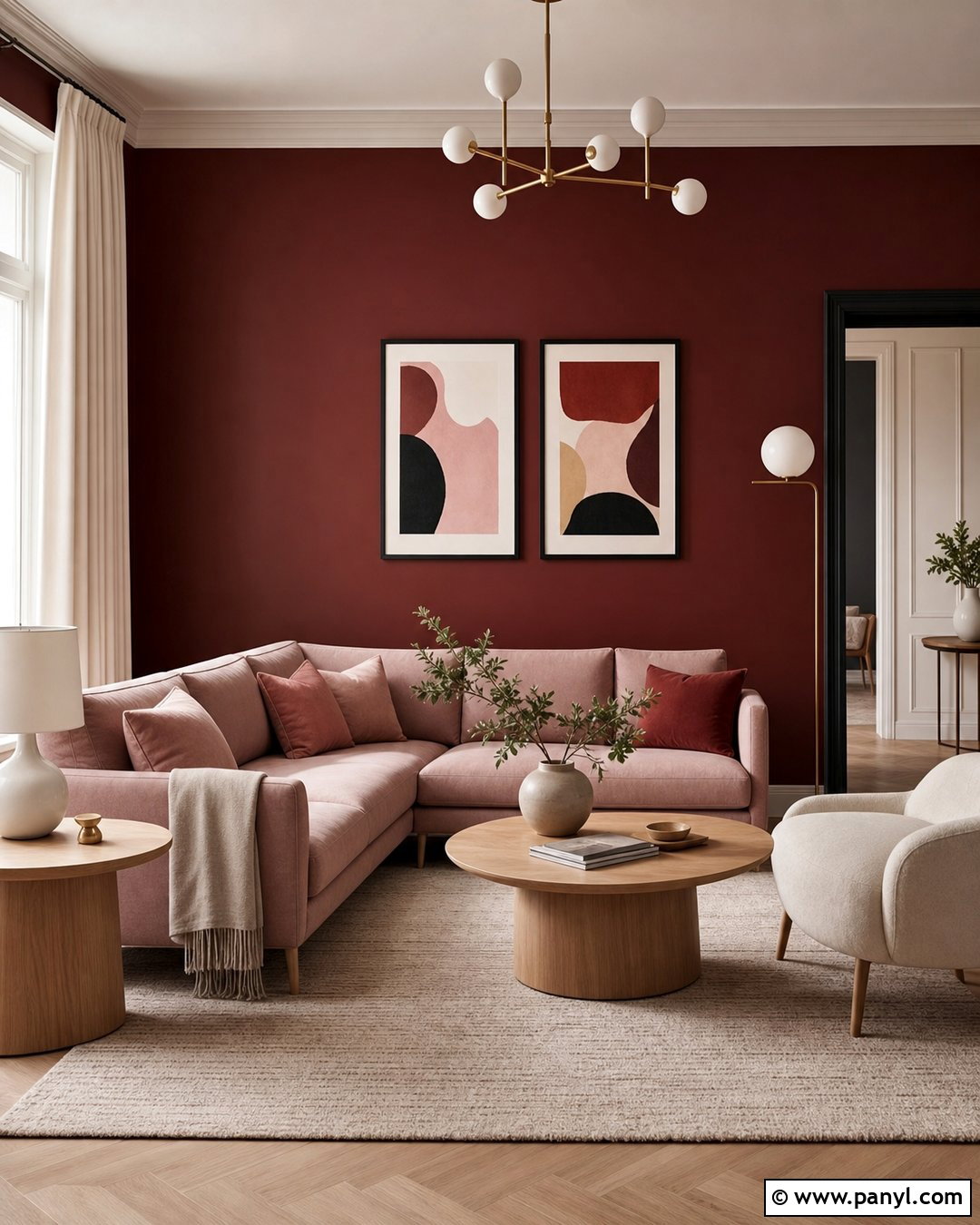
Blush pink softens deep red walls by extending the palette through a lighter related tone. Begin with a brown-based burgundy so the room feels mature rather than overly sweet. Add a dusty blush sofa, upholstered headboard, or pair of lounge chairs as the primary contrasting feature. Cream curtains, a light beige rug, and pale oak furniture maintain freshness around the saturated walls. Use small black details to sharpen the scheme, such as picture frames or lamp bases. Brushed brass lighting adds warmth without making the room too ornate. Artwork can combine abstract areas of blush, rust, ivory, and charcoal. The finished space feels balanced and modern because the pink is muted, the red is grounded, and the neutral elements remain visually prominent.
17. Deep Red Walls With Mustard Yellow Decor
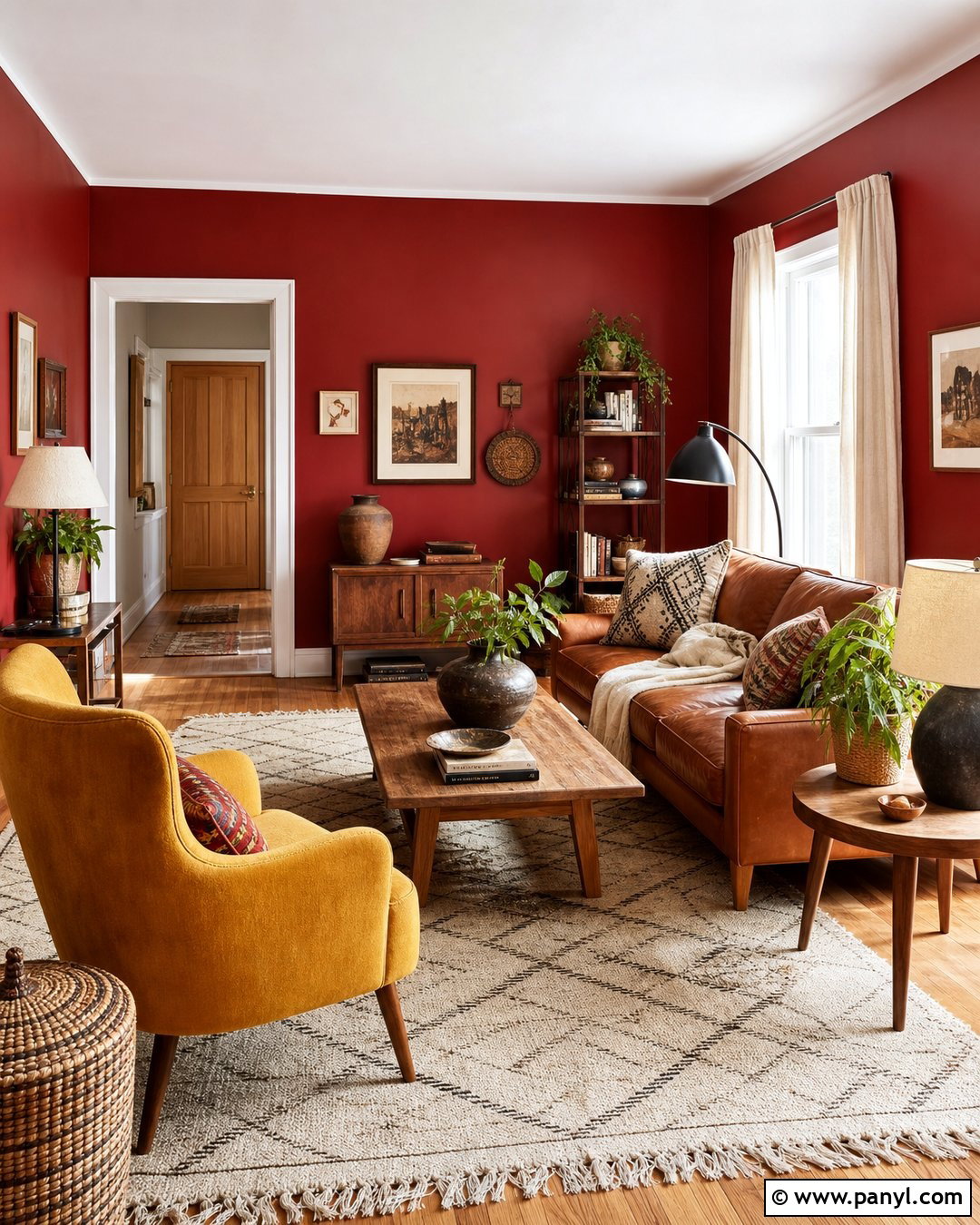
Mustard yellow brings lively warmth to deep red walls while retaining an earthy, comfortable mood. Use the yellow selectively through one upholstered chair, patterned curtains, or several cushions rather than every accessory. Choose a dark brick-red paint with warm brown undertones, then add medium oak furniture and a large cream rug. A cognac leather sofa can act as a bridge between the two main colors. Black metal lighting and simple frames give the lively palette structure. Include woven baskets, handmade pottery, and a few vintage-inspired textiles for texture. Keep the ceiling pale and window treatments light enough to support daytime brightness. This full scheme suits relaxed living rooms, reading rooms, and creative home offices with plenty of personality.
18. Deep Red Walls With Black And White Decor
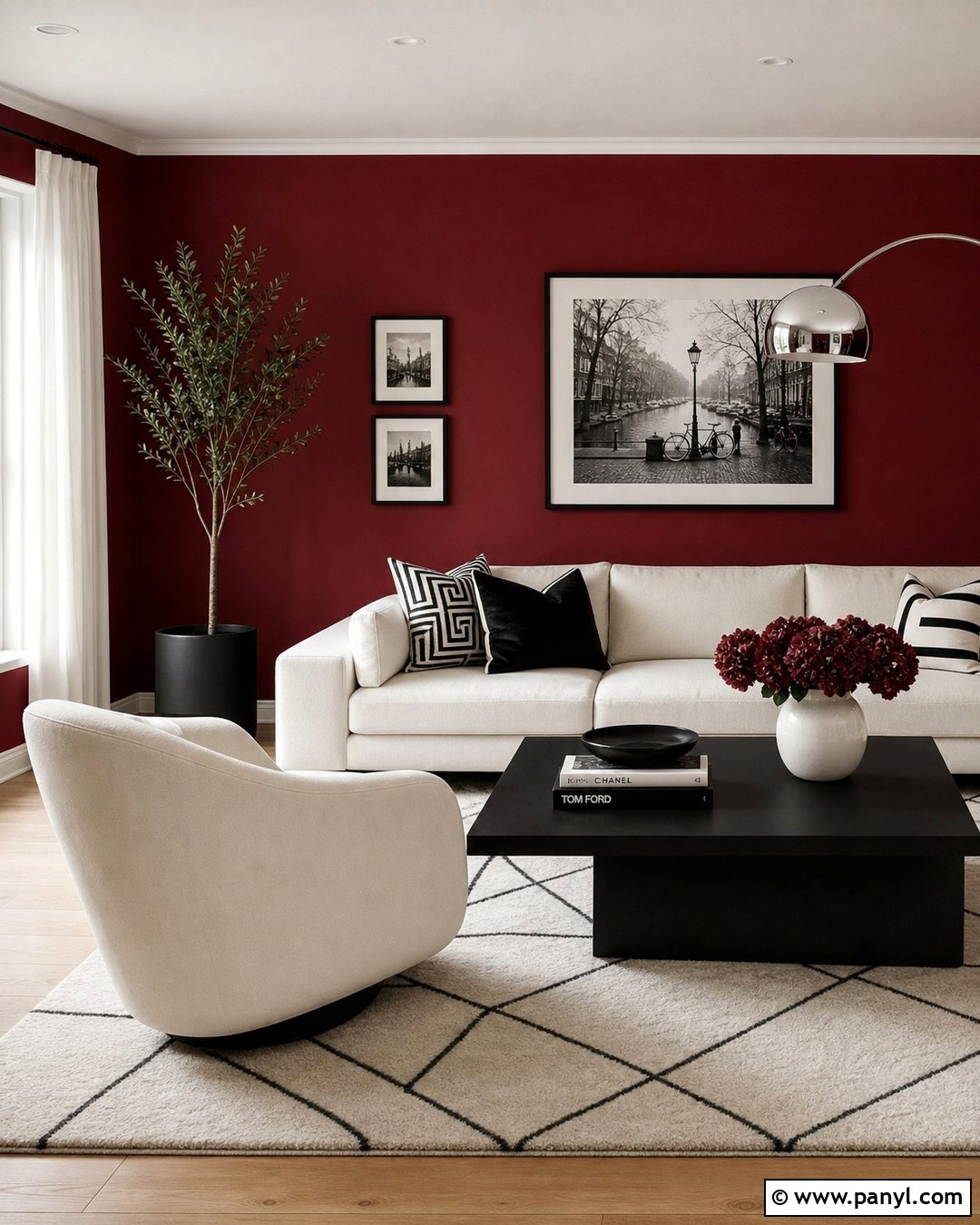
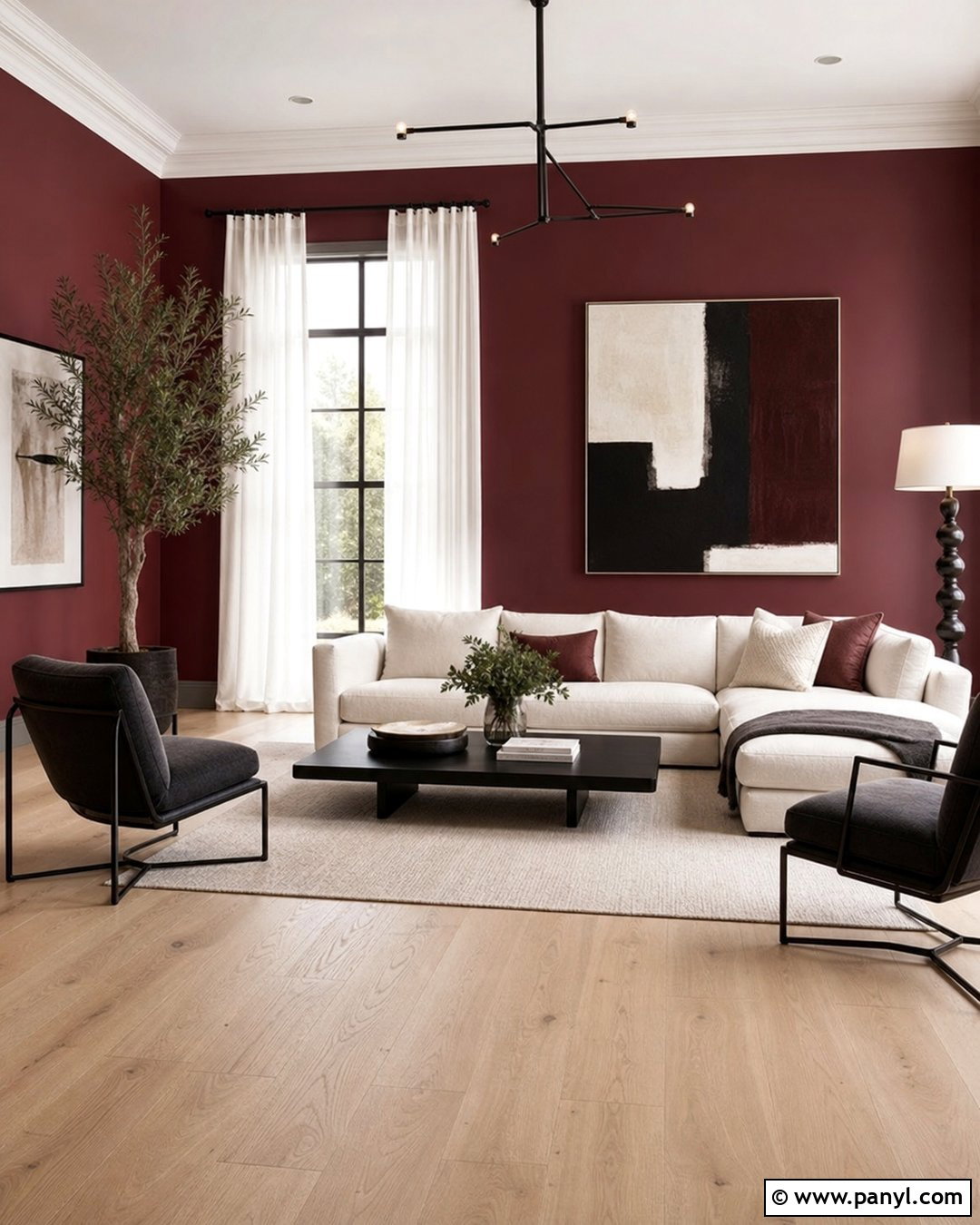
A black-and-white palette gives deep red walls a crisp, graphic edge. Select simple furniture, such as an off-white sofa with black legs, a matte black coffee table, and one sculptural white chair. Lay down a cream rug with a restrained black geometric pattern to connect the seating arrangement. Black-framed photography creates a striking gallery display against the red paint, especially when the images include generous white borders. Keep window treatments plain and light, avoiding additional strong colors. Chrome or polished nickel lighting can make the room feel more contemporary than traditional brass. Natural oak flooring prevents the high-contrast palette from appearing cold. The result is bold and modern, but still comfortable enough for an everyday living space.
19. Deep Red Walls With Gallery Art
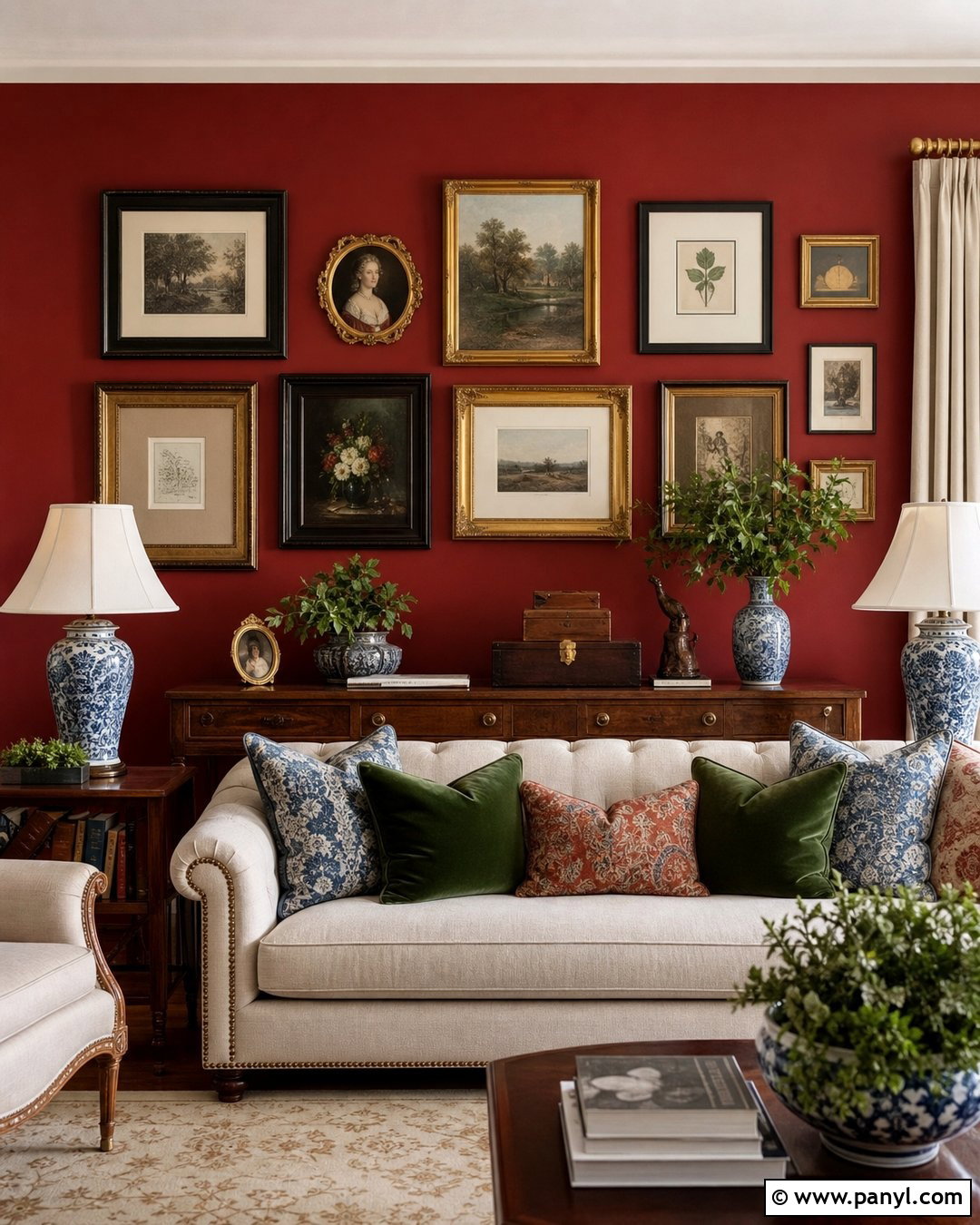
Deep red walls provide a dramatic background for a thoughtfully arranged gallery collection. Begin with one large central artwork, then build outward using medium and small frames with consistent spacing. Mix antique gold, dark wood, and slim black frames, but keep the artwork connected through repeated cream, green, blue, or rust tones. Below the display, place a streamlined neutral sofa or a long walnut console to anchor the composition. Add an ivory rug, linen curtains, and a pair of balanced table lamps. Avoid filling every inch of wall; visible red space allows each piece to stand out. Picture lights can highlight larger works after dark. The room feels personal and layered while maintaining a clear, carefully controlled visual structure.
20. Deep Red Walls With Patterned Curtains
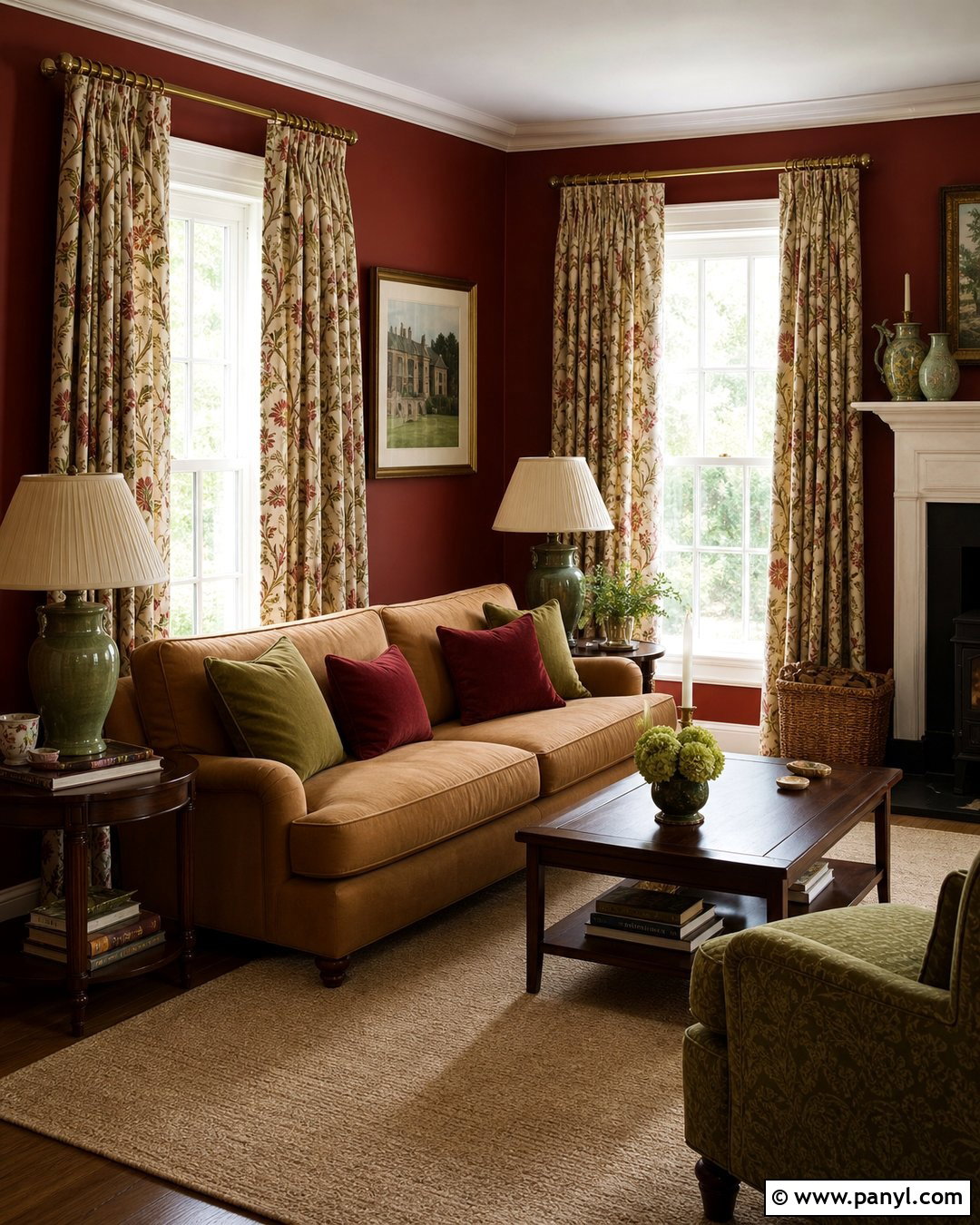
Patterned curtains can make deep red walls feel layered and comfortable rather than severe. Choose a fabric with a cream background and a medium-scale botanical or geometric motif containing muted red, olive, and tan. Hang the curtains close to the ceiling and let them reach the floor, which gives the walls a taller appearance. Furnish the room with a camel sofa, walnut tables, and an oatmeal rug to balance the pattern. Add solid-colored pillows instead of introducing another print. Brass curtain rods and lamps complement the warm palette, while simple ceramic decor keeps the room relaxed. The repeated red in the fabric creates continuity, but the lighter background prevents the windows from disappearing into the dark painted walls.
21. Deep Red Hallway Walls With Runner
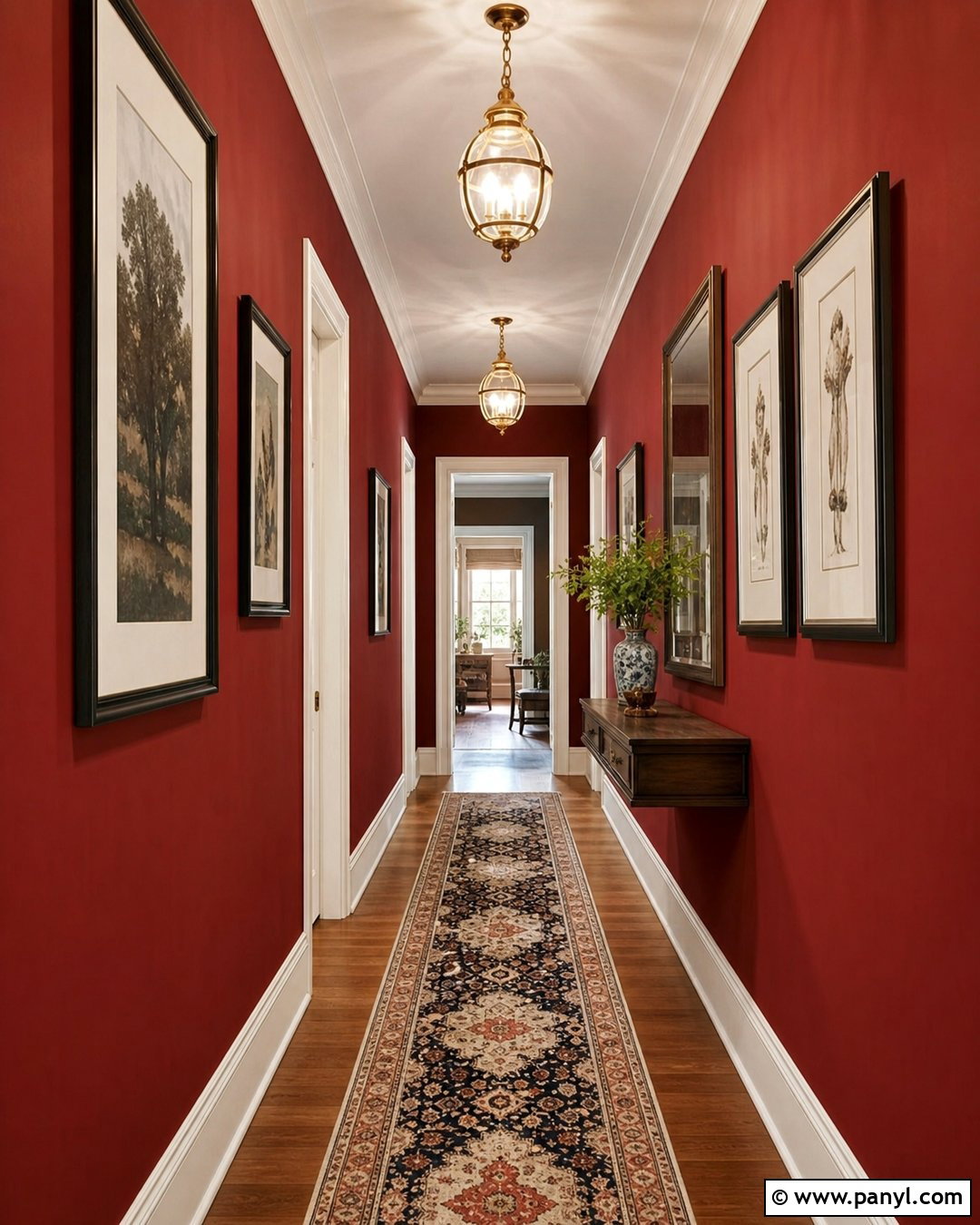
A narrow hallway gains identity when deep red walls are combined with purposeful lighting and a long patterned runner. Paint the walls in muted garnet, leaving the ceiling and trim warm white for contrast. Select a runner with cream, navy, faded red, and tan details, ensuring that exposed flooring remains visible along both sides. Install a row of simple brass or opal glass ceiling lights to illuminate the entire path evenly. A limited collection of framed artwork can create rhythm without crowding the walkway. If space allows, add one shallow console or wall-mounted shelf near the entrance. Matching red doors may create a more enveloping look, while white doors maintain definition. Both treatments make the transitional space feel considered and complete.
22. Deep Red Small Bedroom Walls
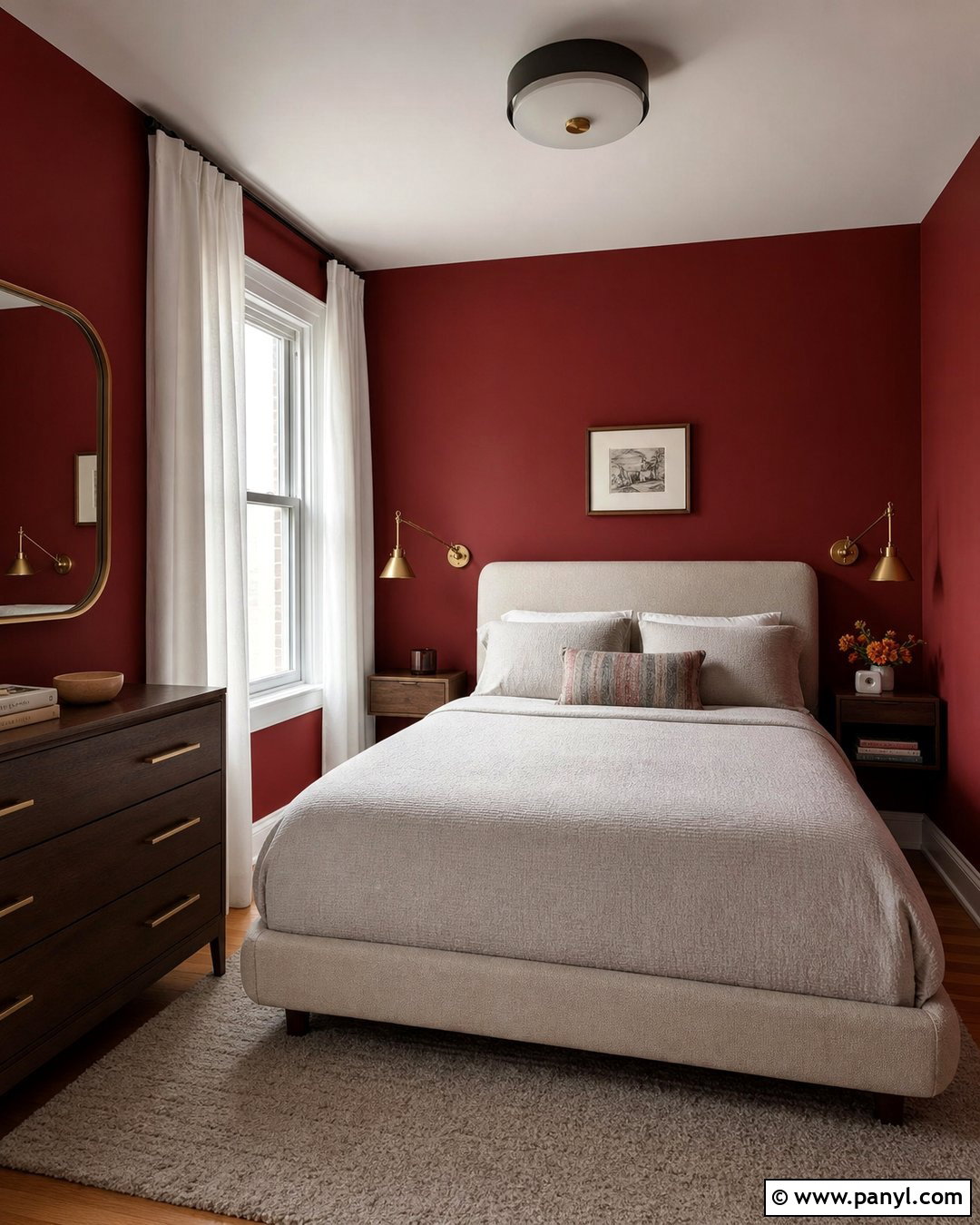
A small bedroom can support deep red walls when the furniture stays light, compact, and carefully placed. Use a full or queen bed with an upholstered cream headboard and position it against the room’s most uninterrupted wall. Select narrow floating nightstands to preserve floor space, then add adjustable brass sconces instead of table lamps. Pale bedding, a light taupe rug, and off-white curtains will reflect available daylight around the room. Keep the ceiling white unless the space receives strong natural light. One large mirror can increase visual depth, while a single framed print prevents wall decor from becoming cluttered. Under-bed storage and a streamlined dresser complete a room that feels cozy and efficient rather than cramped or excessively dark.
23. Deep Red Bathroom Walls With White Tile
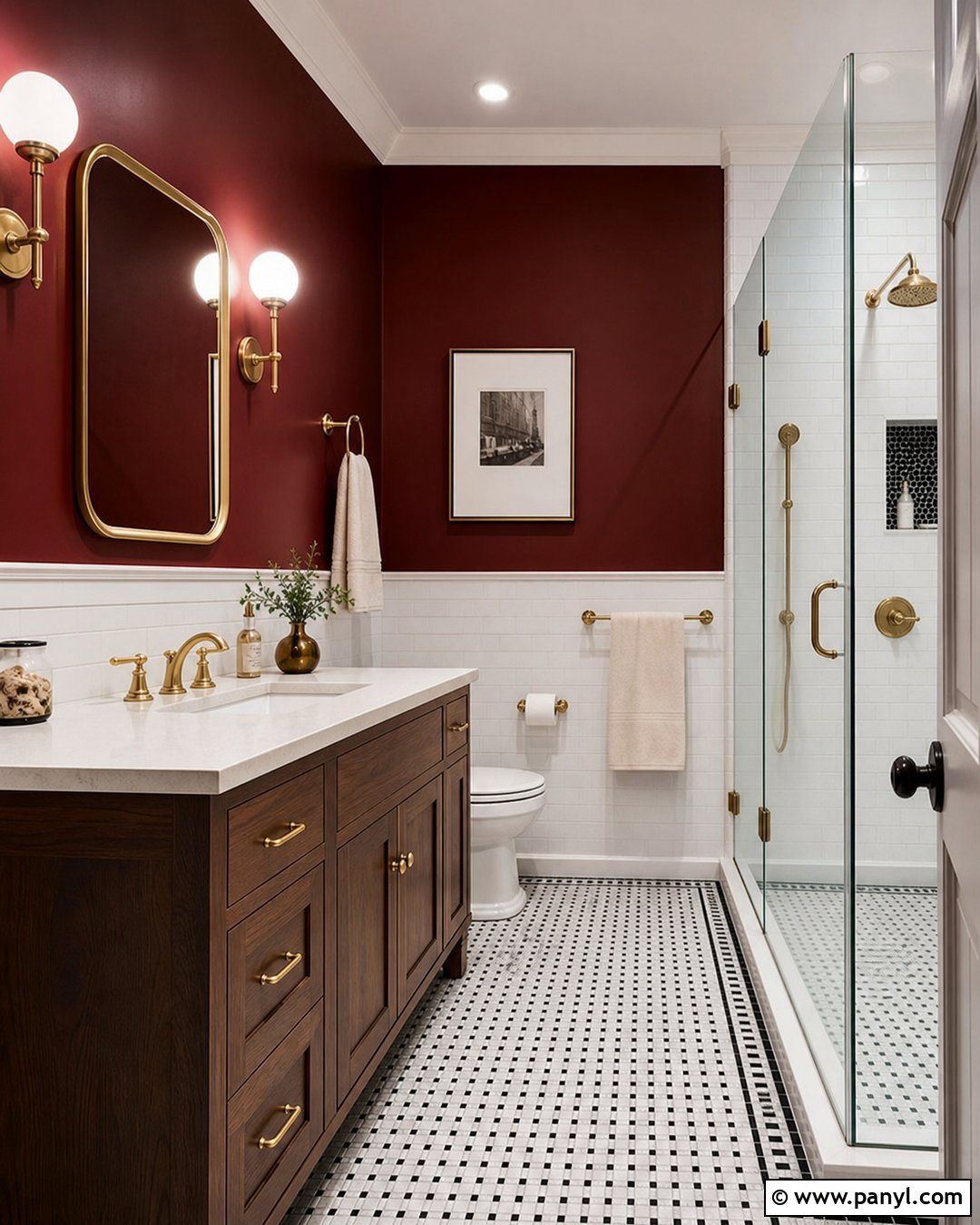
Deep red bathroom walls create a polished contrast with classic white tile and warm metal fixtures. Cover the lower half of the room in glossy white subway tile or simple square tile, then apply burgundy paint above it. A walnut vanity with a pale quartz top introduces natural warmth, while aged brass faucets and sconces coordinate with the red. Choose a frameless glass shower enclosure to keep sightlines open. Small black-and-white mosaic floor tile adds pattern without competing with the wall color. Finish the space with ivory towels, a rounded brass mirror, and one restrained piece of artwork. Proper ventilation and bathroom-appropriate paint help maintain the finish, allowing the completed design to remain practical as well as visually distinctive.
24. Deep Red Reading Nook Walls
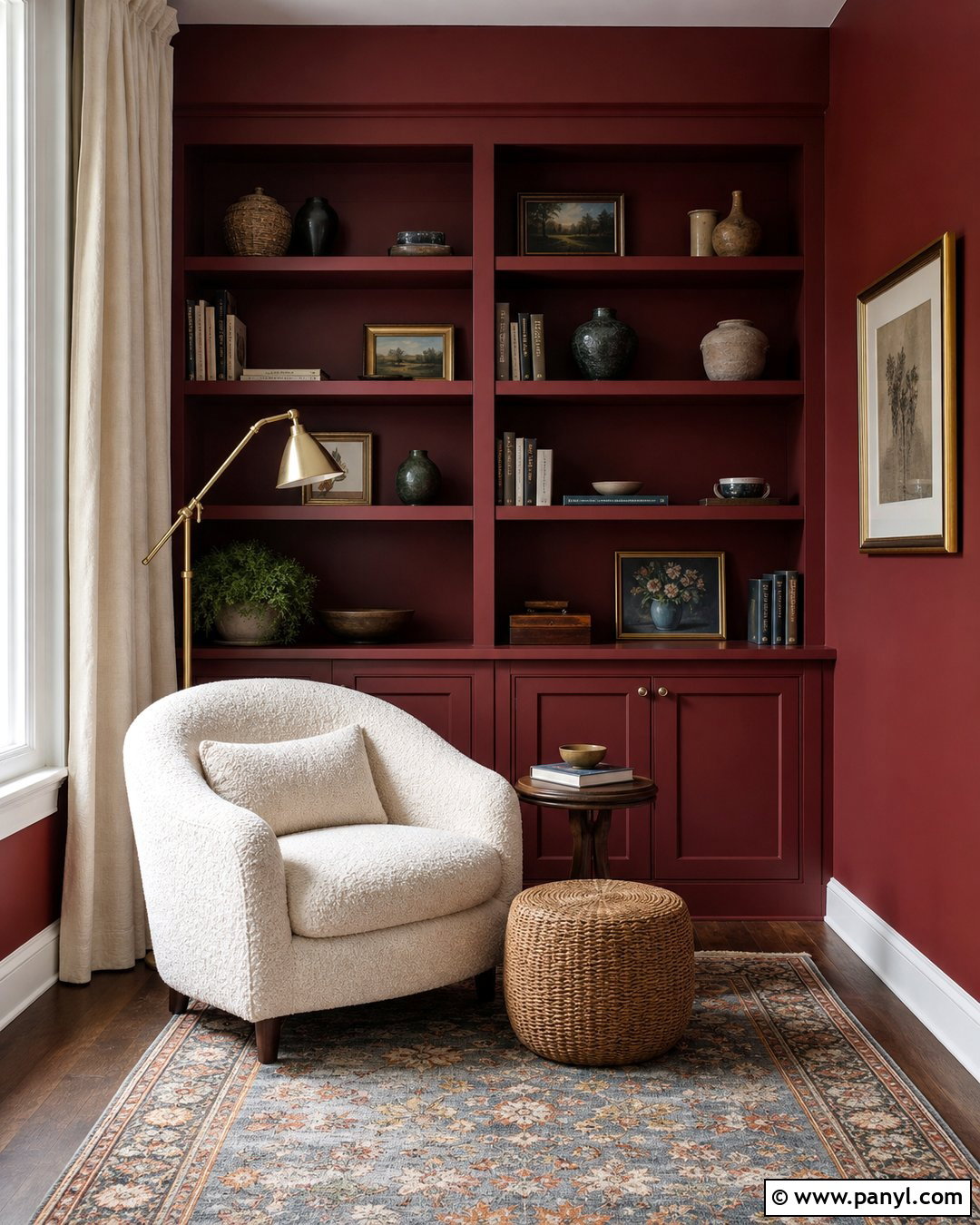
A compact reading nook feels more defined when deep red walls surround a comfortable chair and focused lighting. Paint the recess, alcove, or corner in oxblood, including any built-in shelves for a seamless appearance. Place a generously cushioned chair in cream bouclé or tan leather beside a small walnut table. Add a brass floor lamp with an adjustable shade and a woven footstool for comfort. A patterned wool rug can introduce muted blue, gold, and red beneath the arrangement. Style nearby shelving with books, pottery, and a few framed pieces, leaving open space between groups. Linen curtains soften the window without blocking natural light. The result is a complete retreat that feels separated from the larger room without requiring structural changes.
25. Deep Red Basement Lounge Walls
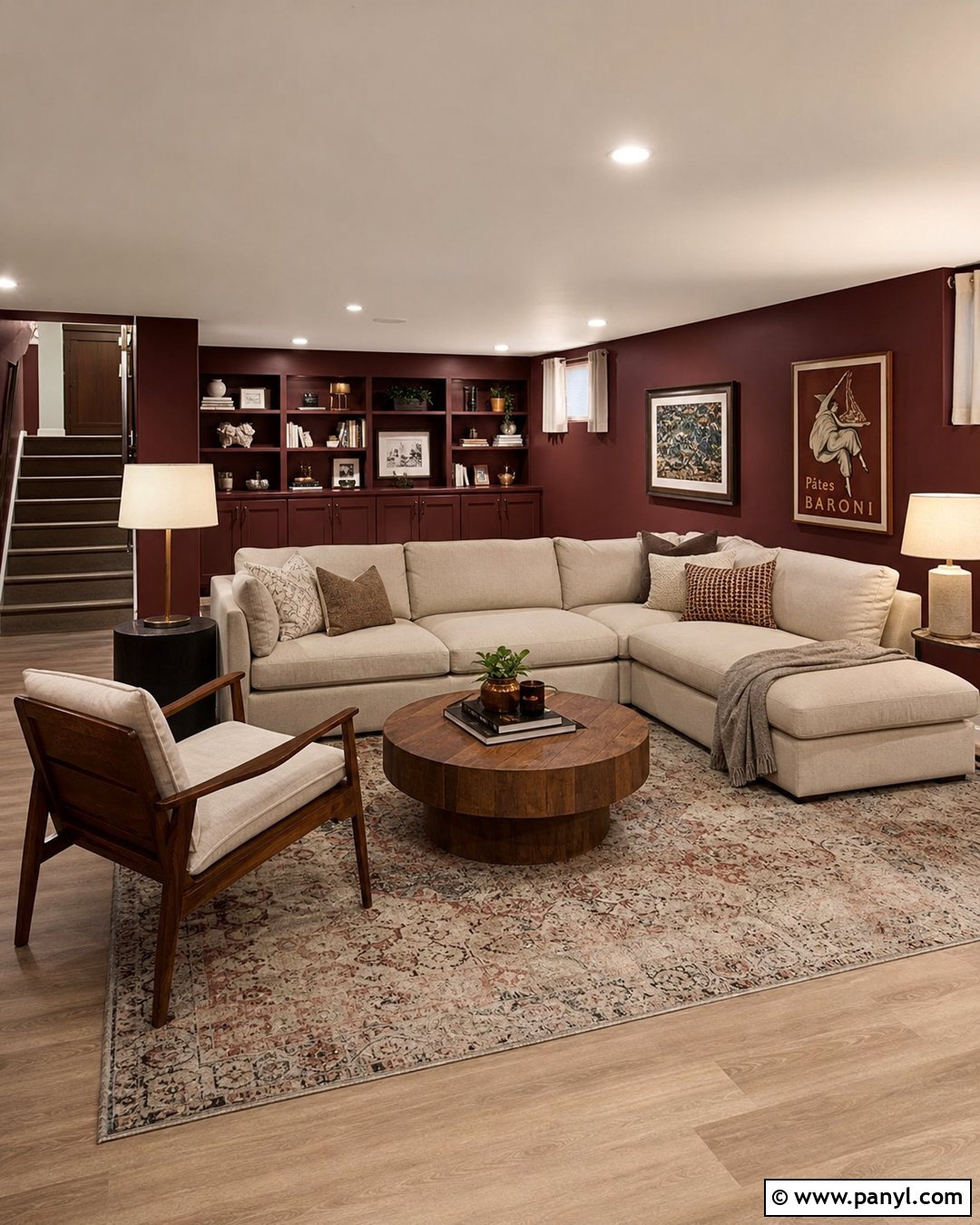
Deep red basement walls can transform a plain lower-level room into a warm, practical lounge. Select a muted brick-red or brown-based crimson that does not rely on strong daylight to look appealing. Pair it with a large oatmeal sectional, durable walnut-look tables, and a low-pile patterned rug. Use several bright light sources, including recessed ceiling fixtures, shaded floor lamps, and table lamps placed around the seating area. Pale curtains can soften small windows, while an off-white ceiling helps distribute illumination. Add built-in storage painted in the wall color to reduce visual clutter. Framed art, board game storage, and a compact reading chair complete the flexible layout. The finished basement feels welcoming, organized, and suitable for everyday relaxation.
Conclusion:
These 25 Deep Red Walls show how one powerful color can support many different interiors, from compact powder rooms to comfortable living spaces. Successful rooms balance saturated paint with lighter textiles, natural wood, useful lighting, and a controlled selection of accent colors. Cream and warm white create breathing room, while walnut, oak, brass, and stone deepen the sense of warmth. Sage, navy, blush, and mustard offer distinctive alternatives for anyone who wants more color. Before painting, sample several reds on different walls and observe them during daylight and evening hours. With a coordinated palette and practical layout, deep red walls can feel welcoming, personal, and surprisingly versatile instead of heavy or difficult to decorate.

Related Ideas and Inspiration:

Leave a Reply