
Aubergine brings the richness of deep purple, burgundy, and brown into one sophisticated kitchen color. It can make Shaker cabinetry feel traditional, give flat-panel doors a modern edge, or turn a basic island into a striking focal point. The key is building a balanced palette around this dramatic shade. Pale countertops, warm woods, reflective metals, layered lighting, and carefully chosen wall colors prevent the room from feeling heavy. Aubergine can also work in kitchens of every size, from compact galley layouts to spacious open-plan rooms. Whether you prefer subtle accents or fully saturated cabinetry, these complete schemes offer practical combinations you can recreate. Explore the following **20 aubergine kitchen ideas** for cabinetry, finishes, layouts, and color pairings.
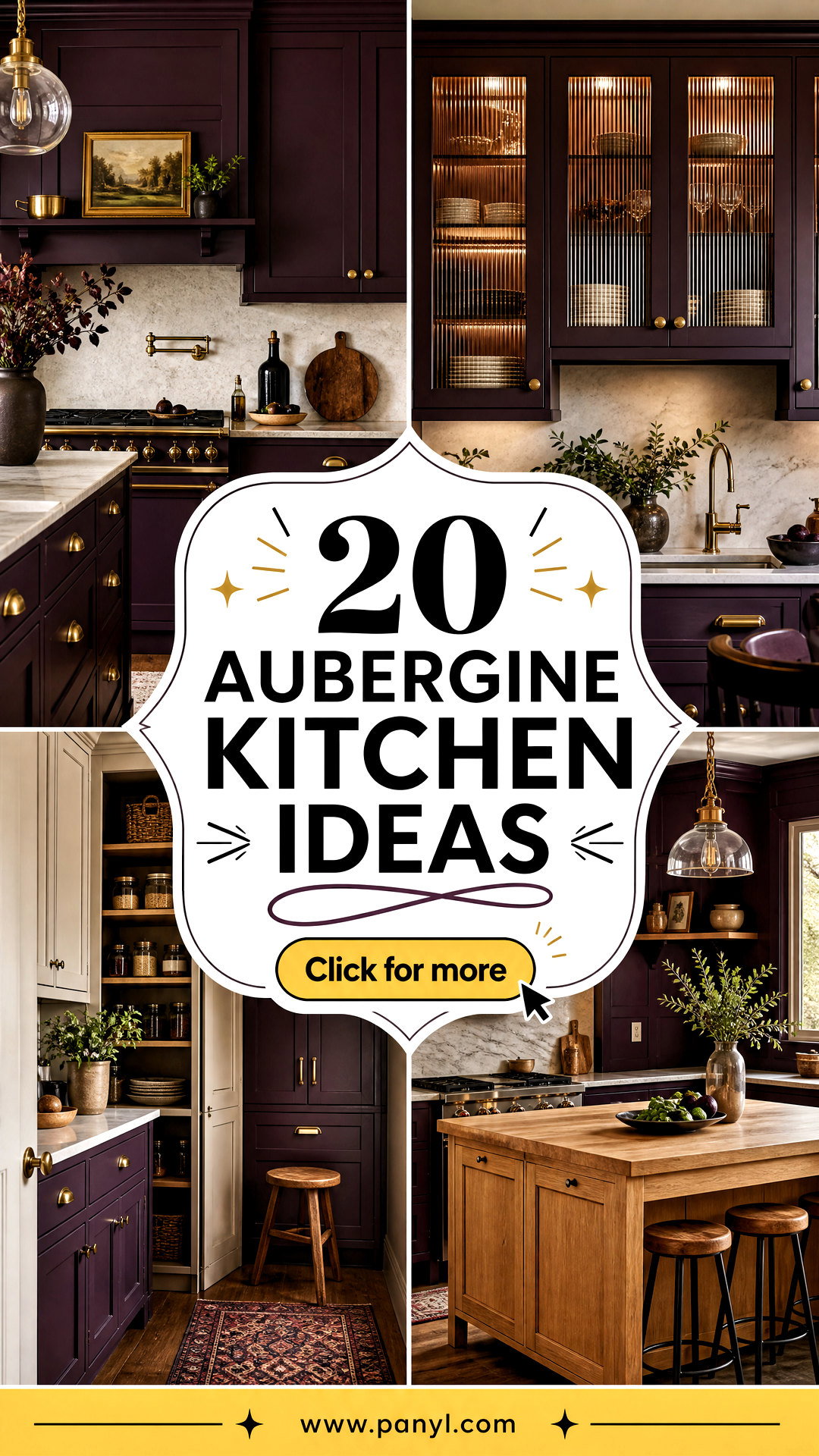
1. Aubergine Kitchen Cabinets With White Marble
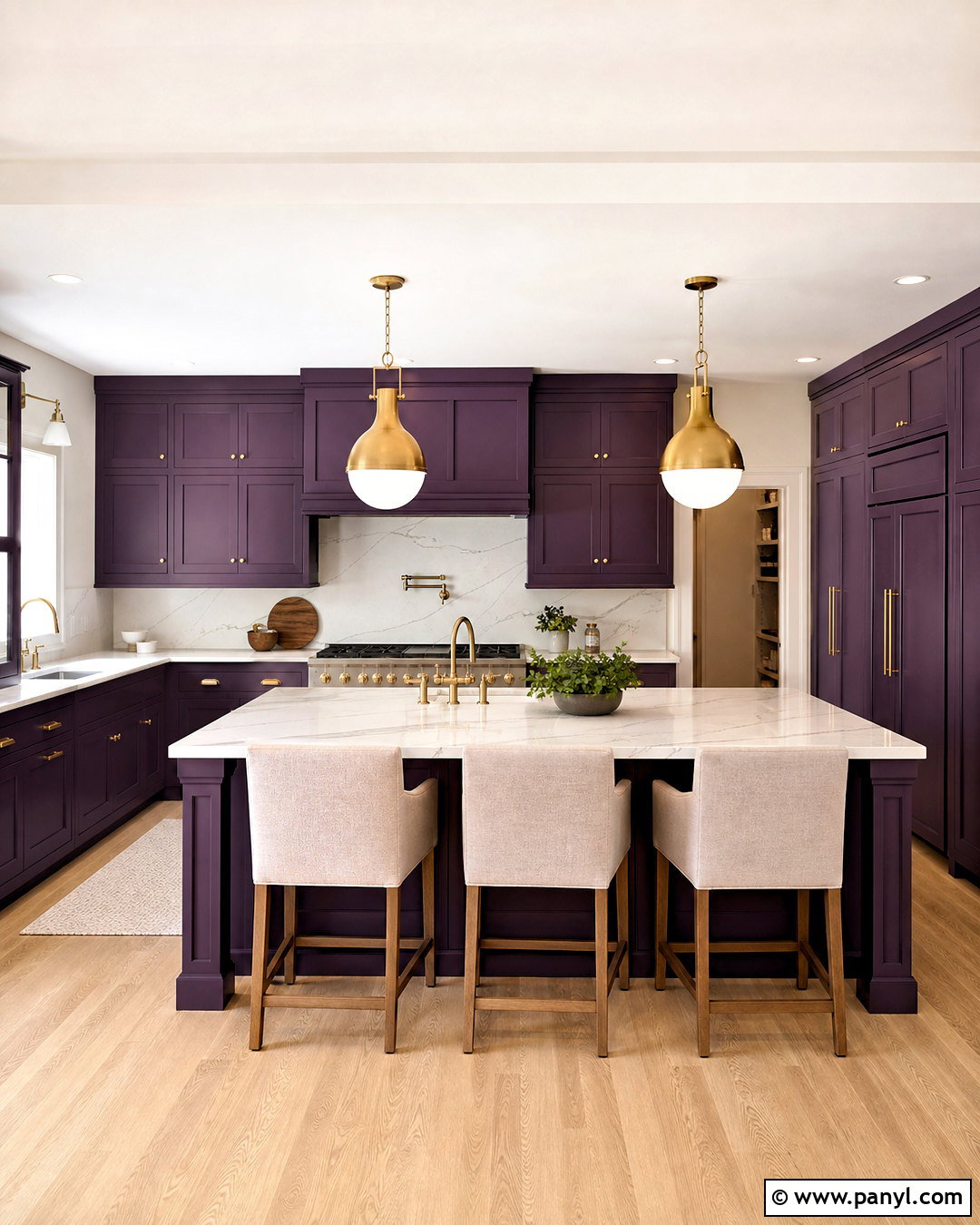
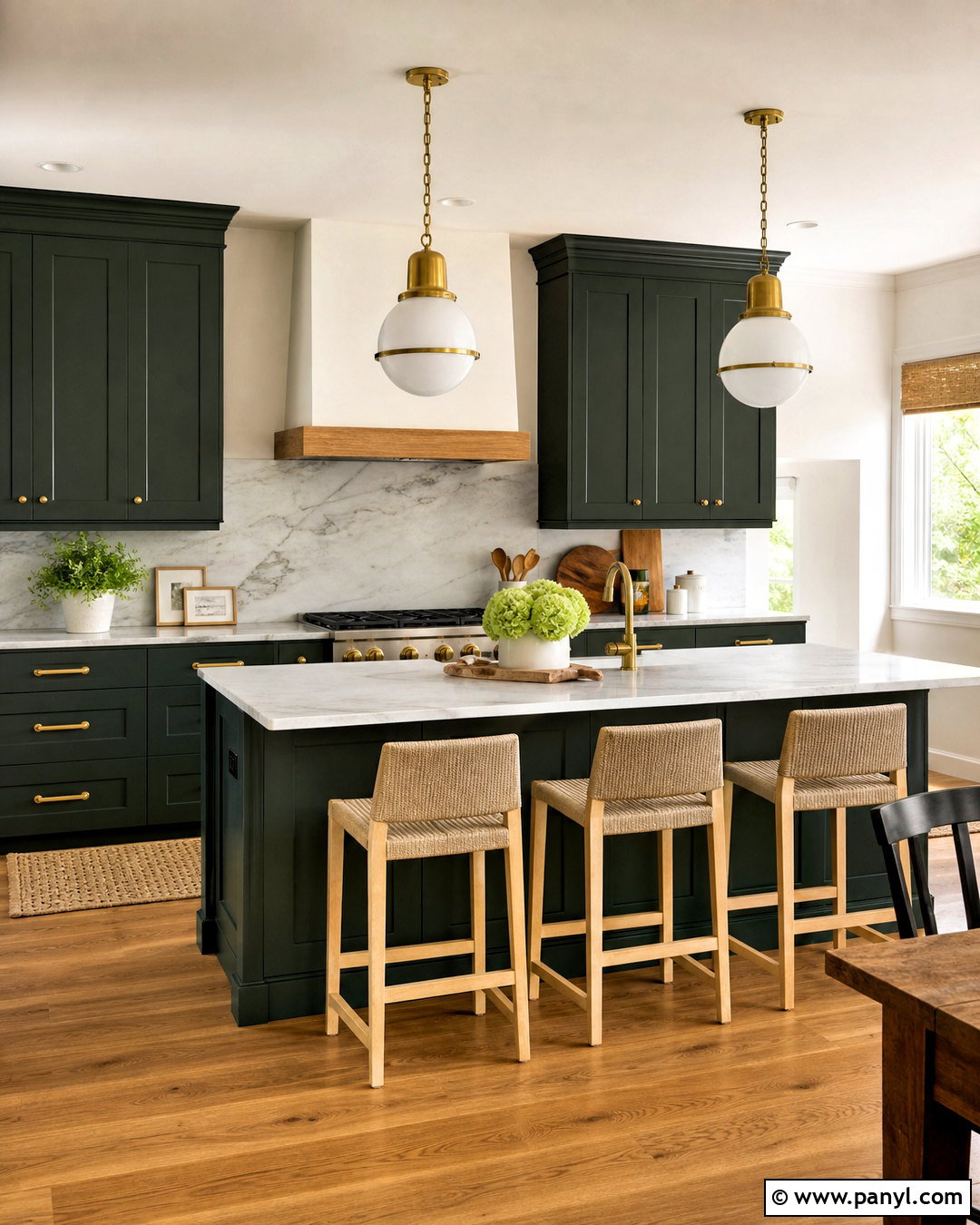
Deep aubergine cabinets create a luxurious foundation when balanced with crisp white marble. Choose simple Shaker doors for a transitional look that feels elegant without becoming overly formal. Carry lightly veined marble across the countertops and backsplash to brighten the dark cabinetry and create a continuous surface. Brushed brass knobs, a matching faucet, and two understated pendant lights add warmth. White oak flooring softens the contrast and keeps the room welcoming. Paint the ceiling and surrounding walls a warm off-white rather than a cool, bright white. Finish the layout with a generous aubergine island, upholstered counter stools, and clear countertop space. This combination suits both renovated period homes and polished contemporary kitchens.
2. Aubergine Kitchen With Walnut Cabinets
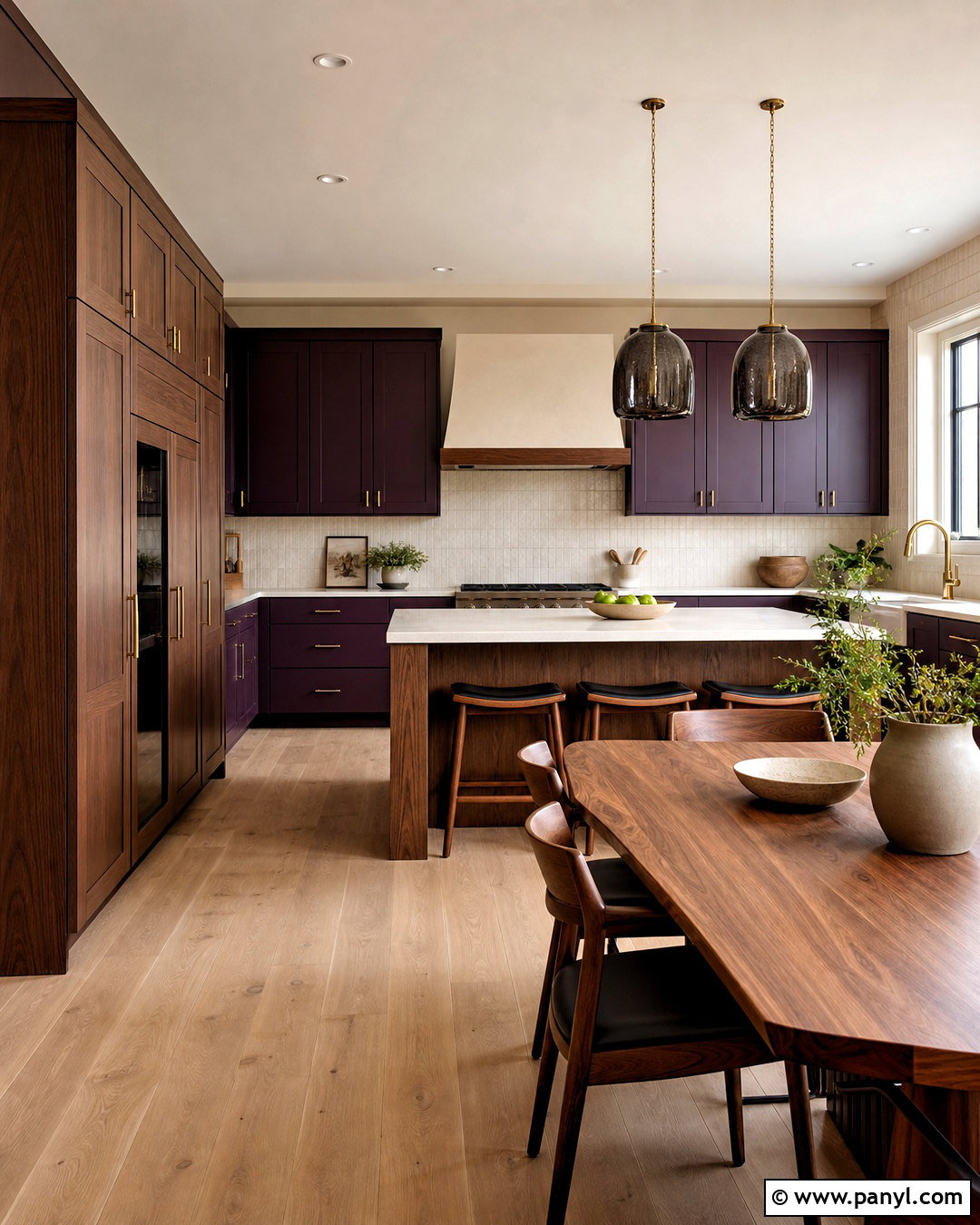
Warm walnut and aubergine share similar brown undertones, making them a natural pairing for a rich, grounded kitchen. Use walnut veneer on tall pantry units and the island, then reserve aubergine for the upper and lower perimeter cabinets. A creamy quartz countertop keeps the dark materials from overwhelming the room. Add an ivory tile backsplash with subtle texture to reflect light. Antique brass hardware, smoked glass pendants, and medium-toned oak flooring complete the layered palette. Keep the walls soft beige and introduce a small dining table in matching walnut. This full design works especially well in open-plan homes because the natural wood helps the colorful cabinetry connect comfortably with living and dining furniture.
3. Aubergine Shaker Kitchen With Brass Hardware
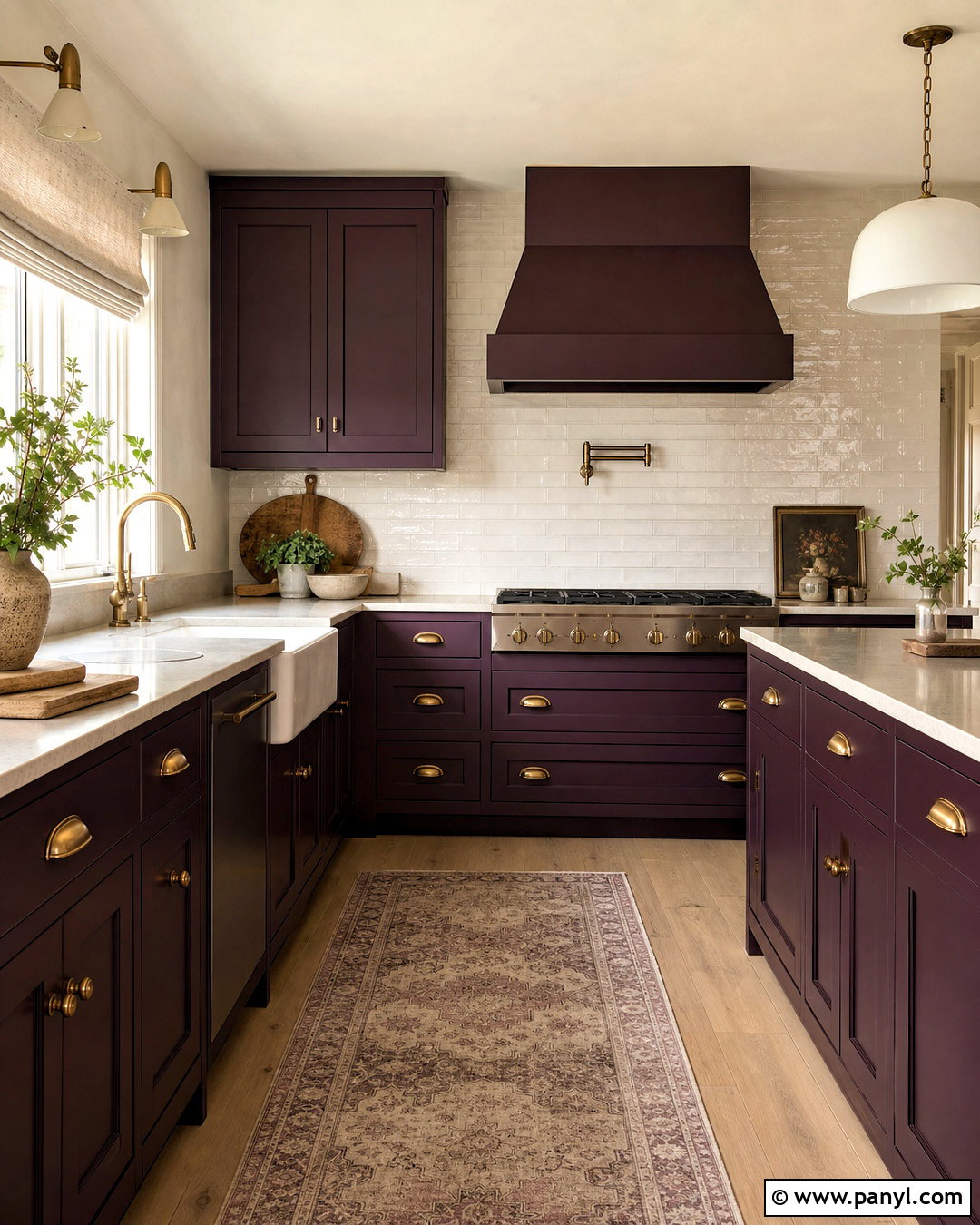
There is something timeless about aubergine Shaker cabinets paired with aged brass. The recessed door panels bring familiar character, while the unusual color gives the kitchen a more personal identity. Use aubergine across the base cabinets, wall cabinets, island, and paneled range hood for a coordinated look. Select creamy stone countertops and handmade ivory subway tiles to lighten the scheme. A warm white ceiling, pale oak floor, and linen Roman shade prevent the room from feeling too formal. Complete the kitchen with a farmhouse sink, unlacquered brass bridge faucet, and traditional cup pulls. A vintage-style runner containing muted purple, rust, and beige will connect the cabinetry to the floor while adding softness and pattern.
4. Aubergine Kitchen Island With Cream Cabinets
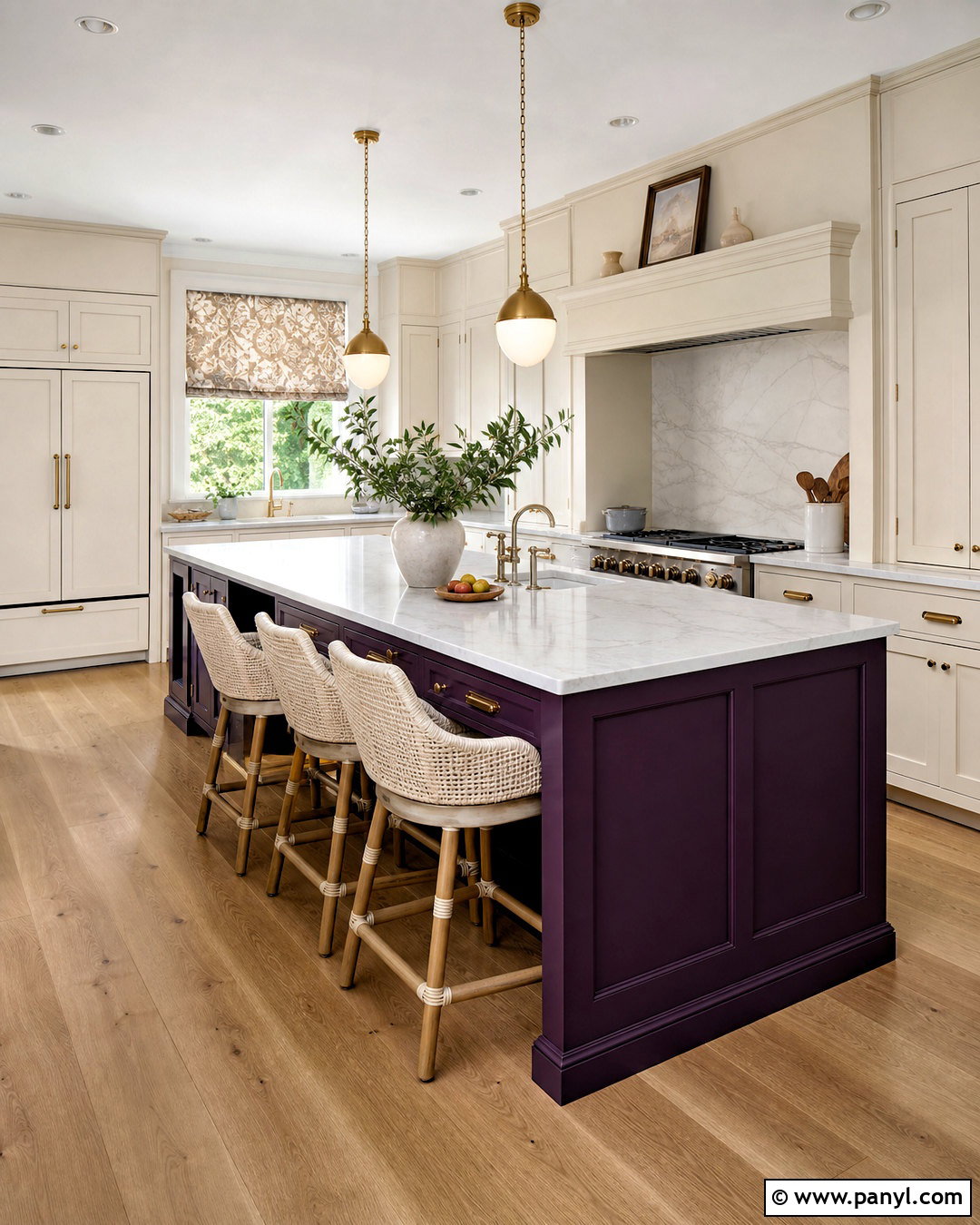
Not ready to cover every cabinet in purple? Make aubergine the focal point through a large, furniture-style island. Surround it with creamy white perimeter cabinets to preserve a bright, open atmosphere. Choose a thick white quartz countertop for the perimeter and a warmer marble slab for the island. Medium oak flooring and woven counter stools introduce relaxed texture. Repeat aubergine subtly through a patterned window shade or small ceramic accessories rather than adding another large purple surface. Brass pendant lights and cabinet handles give the palette a warm glow. This layout is practical for busy kitchens because the darker island conceals everyday marks, while the light perimeter cabinetry keeps the overall room airy and approachable.
5. Aubergine Kitchen With Blush Pink Walls
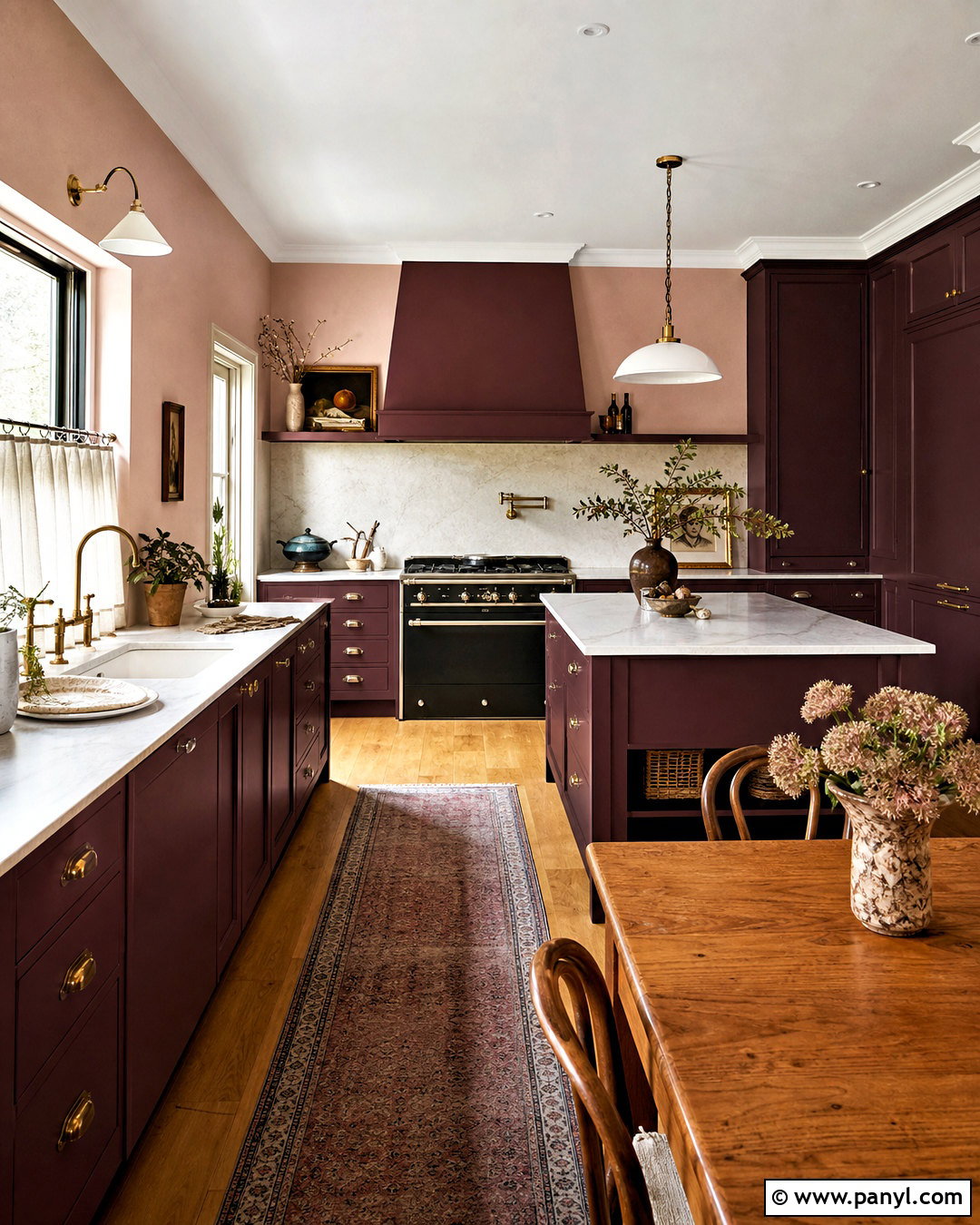
Soft blush walls bring out the warm red undertones in aubergine cabinetry without creating a sugary or overly feminine room. Choose muted plaster pink with a gray or beige base, then use deep aubergine on simple inset cabinets. White marble countertops provide freshness, while aged brass fixtures reinforce the warmth. Ground the combination with natural oak flooring and a sturdy oak dining table. A cream backsplash, linen café curtain, and off-white ceiling prevent the two statement colors from competing. For a polished finish, carry aubergine onto the range hood and use blush only above the backsplash. The resulting kitchen feels colorful, welcoming, and sophisticated, with enough neutral material to remain comfortable for everyday family living.
6. Aubergine Kitchen With Sage Green Accents
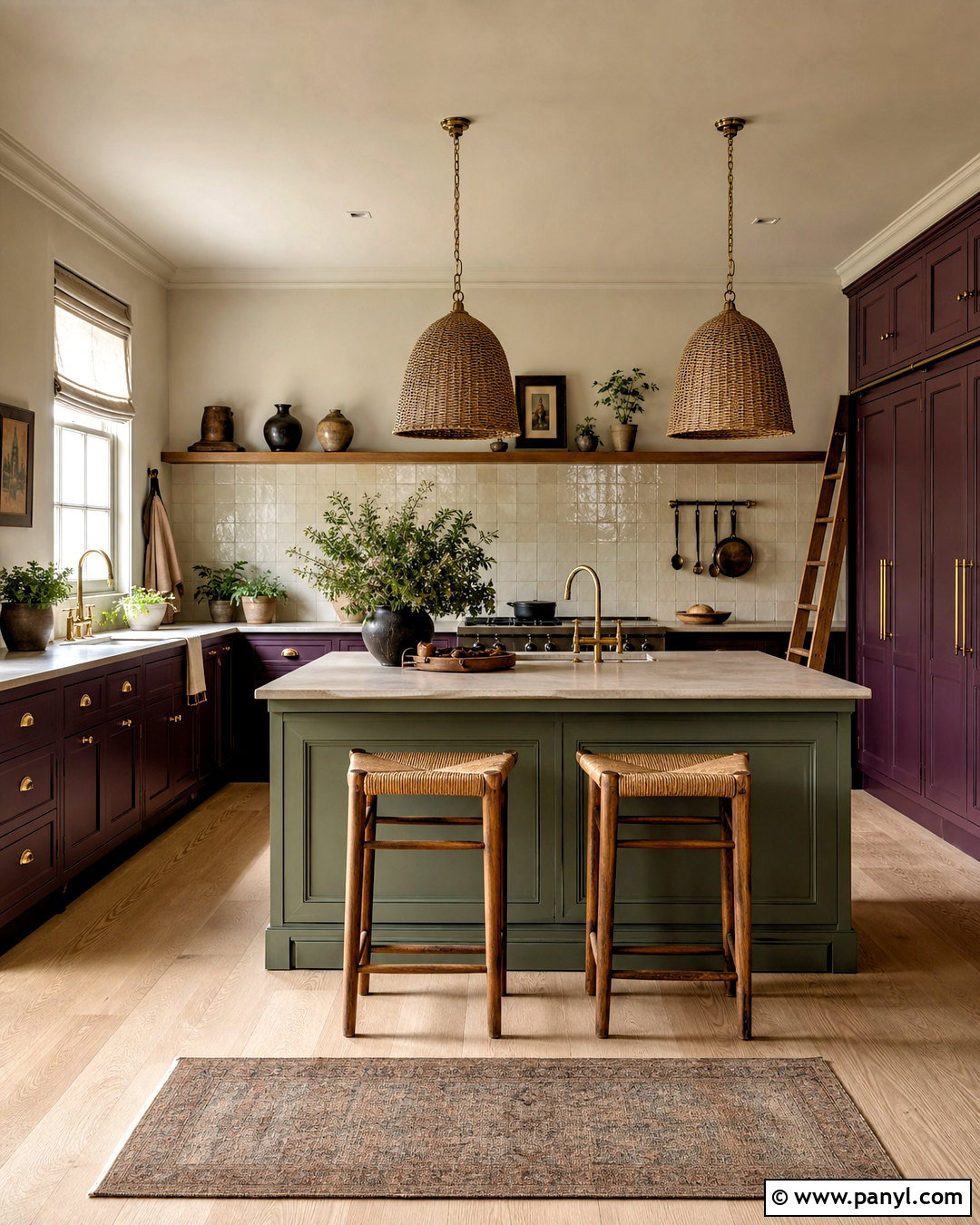
Aubergine and sage green create a nature-inspired combination that feels layered but calm. Apply aubergine to the lower cabinets and tall pantry wall, then use muted sage for a freestanding hutch or compact island. Keep the upper walls warm white so both colors have room to breathe. Honed limestone countertops, a cream zellige backsplash, and pale oak flooring reinforce the organic character. Choose antique brass hardware instead of polished chrome, which can appear too sharp against these earthy shades. Complete the room with woven pendant lights, natural linen shades, and a small collection of simple pottery. This balanced scheme works particularly well in cottage kitchens, garden-facing rooms, and interiors containing plenty of natural wood and greenery.
7. Modern Aubergine Kitchen With Black Accents
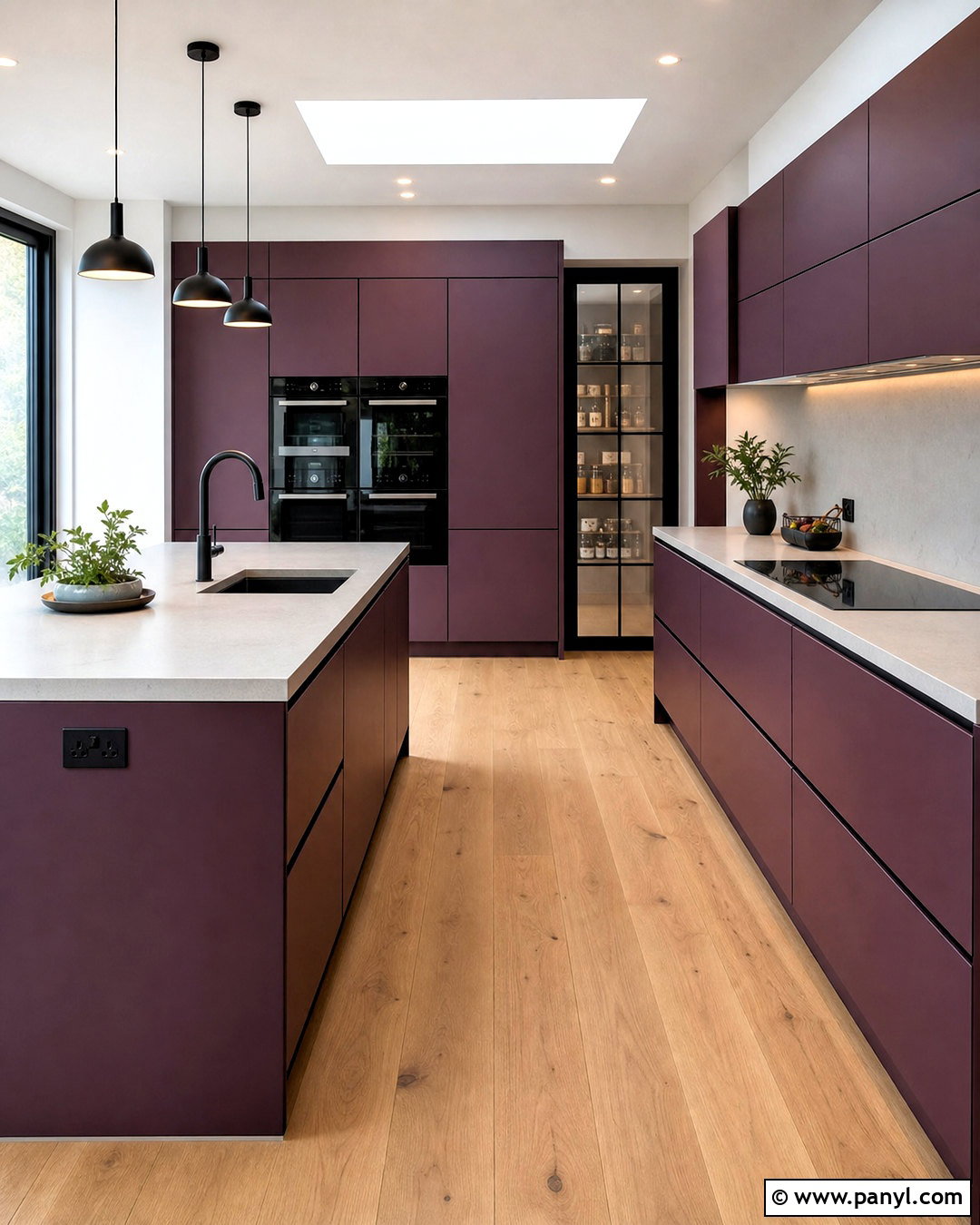
Clean lines make aubergine feel distinctly contemporary. Select handleless flat-panel cabinets in a matte eggplant finish and pair them with slim black details, including faucets, window frames, appliances, and pendant lights. Use pale gray quartz countertops and a matching full-height backsplash to break up the saturated cabinetry. Wide-plank light oak flooring adds necessary warmth without weakening the modern appearance. Keep decorative objects minimal and hide small appliances behind pocket doors. A black-framed glass pantry or interior door can repeat the architectural contrast elsewhere in the room. Under-cabinet lighting is especially important because it illuminates the work surfaces and reveals the aubergine tone instead of allowing the cabinets to read as nearly black.
8. Aubergine Kitchen With Butcher Block Countertops
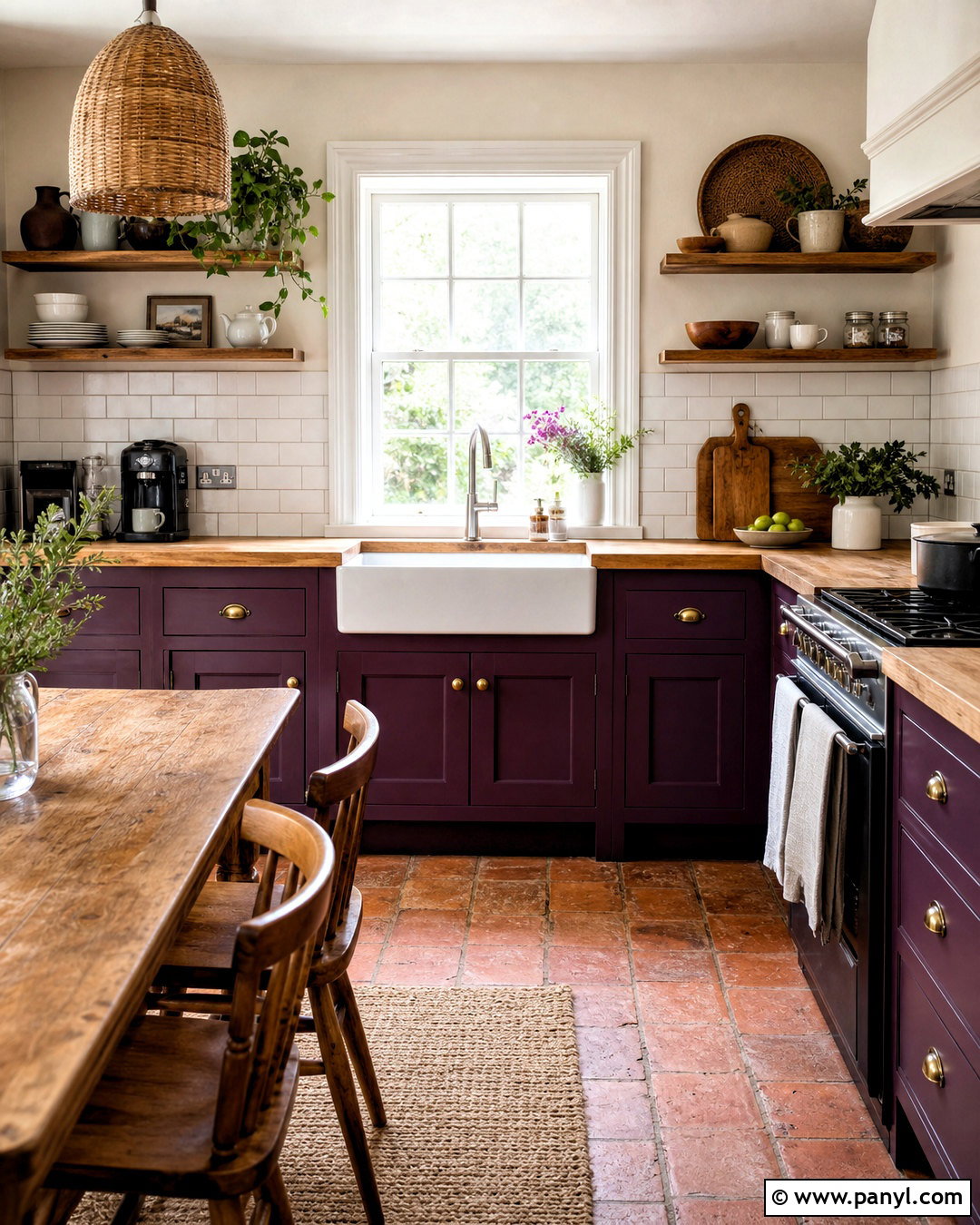
Could a dramatic cabinet color still feel casual and family-friendly? Pair aubergine base cabinets with warm butcher block countertops and simple cream walls. Keep some upper storage open by installing thick oak shelves instead of filling every wall with dark cabinetry. A white apron-front sink, brushed nickel faucet, and classic ceramic backsplash give the room a practical farmhouse influence. Continue the relaxed approach with terracotta floor tiles, woven baskets, and a small wooden breakfast table. Paint a pantry door or narrow freestanding cupboard in aubergine to reinforce the color across the layout. The mix of painted cabinetry and honest wood surfaces creates a kitchen that feels collected, durable, and comfortable rather than precious or excessively polished.
9. Aubergine Kitchen With Stainless Steel Appliances
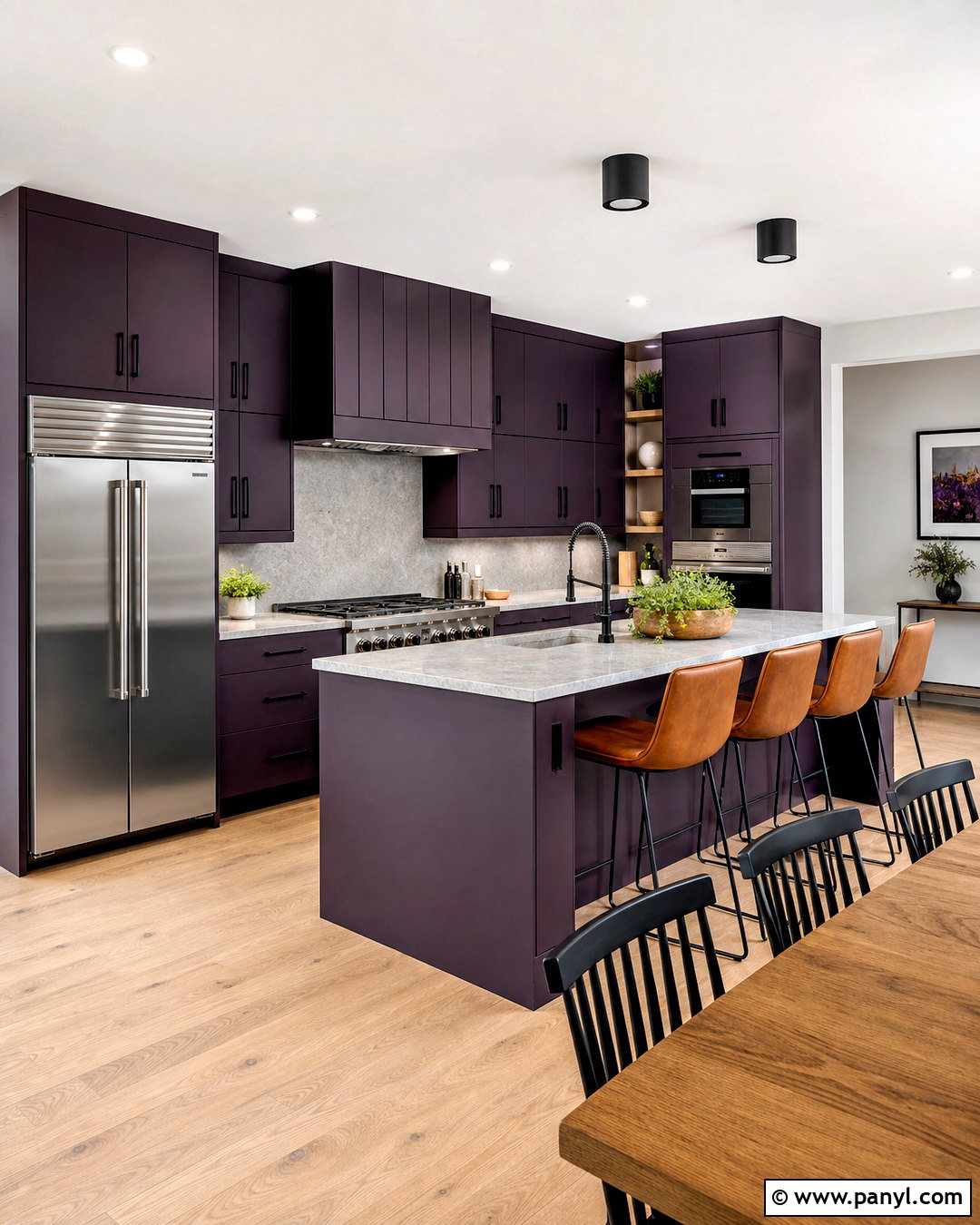
Stainless steel gives aubergine cabinetry a crisp, professional edge. Center a large stainless range beneath an aubergine-paneled hood, then integrate the refrigerator into matching floor-to-ceiling cabinets for a streamlined layout. Choose pale concrete-look quartz counters and a soft gray stone backsplash to connect with the cool metal. Matte black cabinet pulls create a clean transition between the purple and silver finishes. Bring warmth back through white oak flooring, a wood dining table, and caramel leather stools. Bright task lighting beneath the upper cabinets will keep meal preparation areas functional. This balanced combination is ideal for homeowners who enjoy colorful cabinetry but still want the efficient, uncluttered appearance associated with modern restaurant-inspired kitchens.
10. Aubergine Kitchen With Copper Details
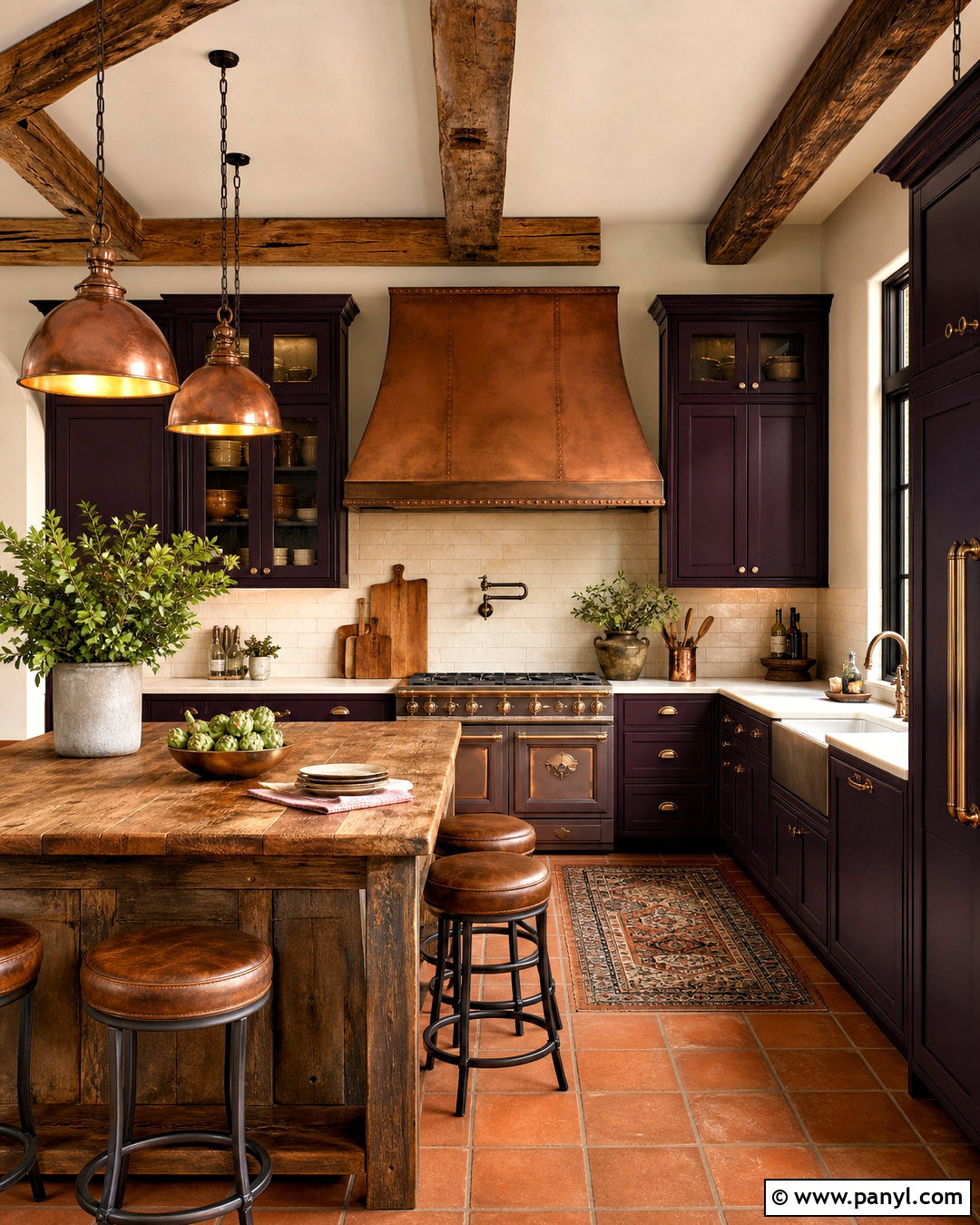
Copper adds a glowing, handcrafted quality to a deep aubergine kitchen. Use painted Shaker cabinetry around the perimeter and place a substantial prep table or island at the center. Choose creamy limestone counters and a textured off-white tile backsplash to create a quiet background. A copper range hood can become the main feature, supported by smaller copper touches in the pendant lights and cookware. Avoid using copper on every handle; aged brass or dark bronze hardware will produce a more layered, natural result. Terracotta flooring, a reclaimed wood table, and warm neutral walls complete the scheme. This palette suits Mediterranean, rustic, and English-inspired kitchens where patina and slight material variations add welcome character over time.
11. Aubergine Galley Kitchen With Light Flooring
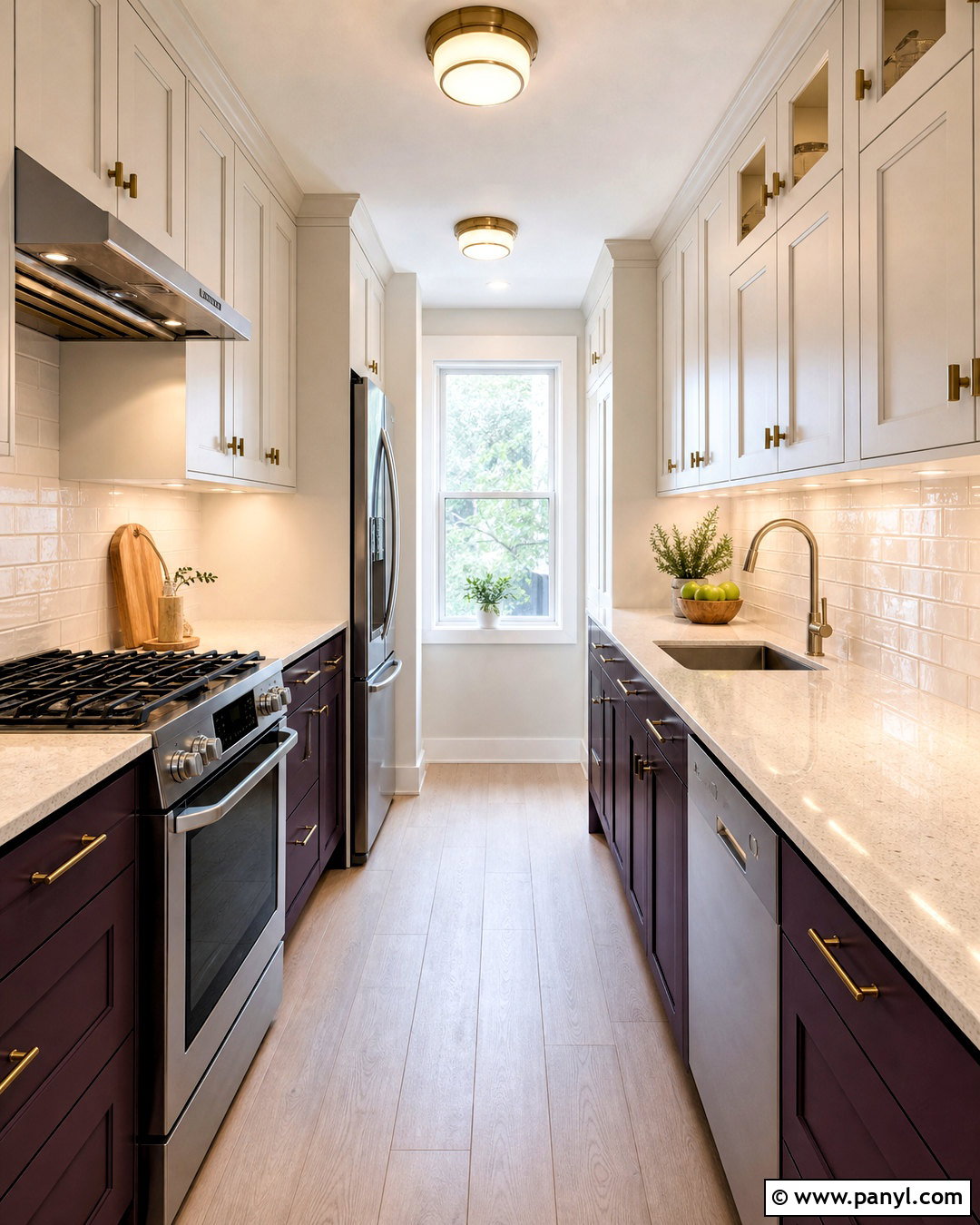
A narrow galley kitchen can handle aubergine when the layout includes enough visual relief. Paint the lower cabinets and one bank of tall storage in the rich purple shade, but keep the upper cabinets warm white. Install pale quartz countertops and a glossy ivory backsplash to bounce light through the room. Light oak flooring laid lengthwise can emphasize the kitchen’s longest dimension. Use compact brass handles and flush ceiling lights so the narrow walkway remains visually clear. At the far end, add a bright window treatment or small open shelf rather than another solid cabinet. The finished space feels colorful and intentional, while the lighter upper surfaces prevent the dark cabinetry from closing in the working area.
12. Small Aubergine Kitchen With Open Shelving
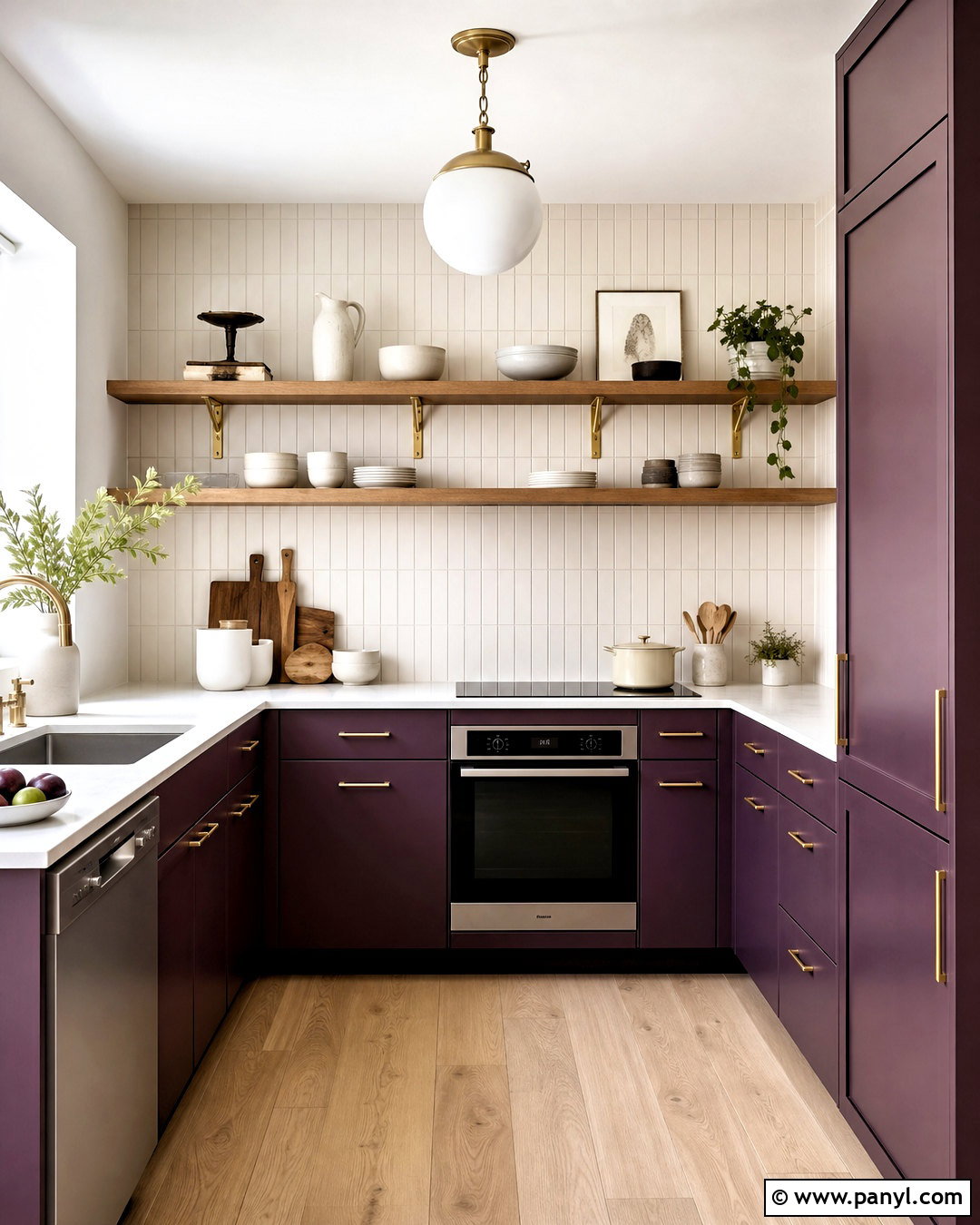
In a compact kitchen, aubergine can create depth instead of making the room feel crowded. Use it on lower cabinets and a single tall pantry, then replace bulky upper cabinets with two rows of warm oak shelving. A white quartz countertop and vertically stacked cream tiles will brighten the work zone and draw the eye upward. Select compact appliances with integrated fronts to maintain a calm, continuous layout. Brass shelf brackets, a small globe pendant, and a pale wood floor provide warmth. Keep displayed items coordinated in white, tan, and clear glass so the shelving does not appear cluttered. This complete arrangement offers useful storage, strong personality, and enough open wall space to keep a small kitchen visually comfortable.
13. Aubergine Kitchen With Terrazzo Countertops
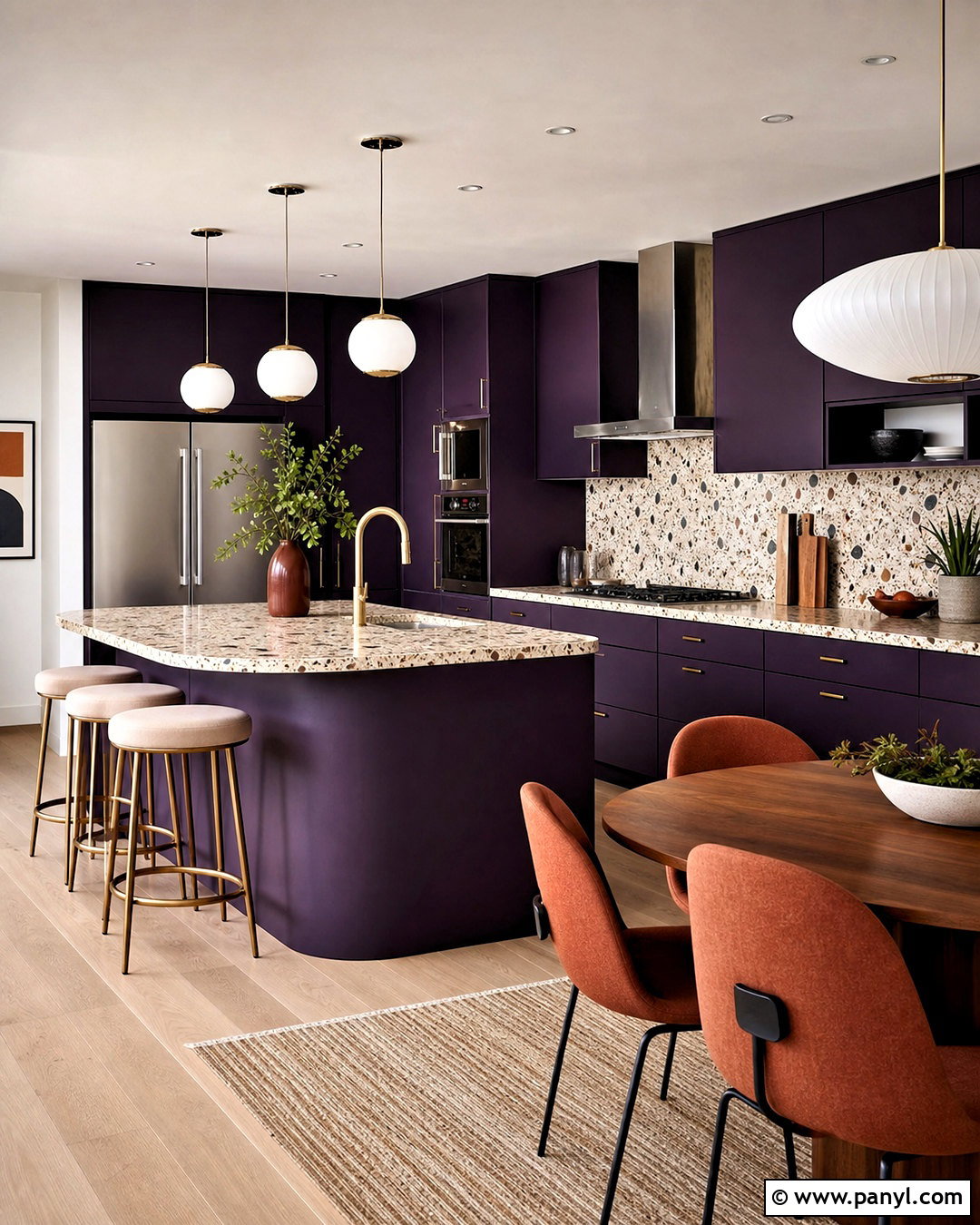
Terrazzo brings playful movement to the seriousness of aubergine cabinetry. Select a pale cream surface containing small chips of purple, rust, tan, and charcoal, then use it across both countertops and the backsplash. Flat-panel aubergine cabinets allow the patterned material to remain the primary decorative feature. Add brushed stainless hardware, simple white globe pendants, and a light oak floor for a fresh midcentury influence. A compact island with rounded corners can make the kitchen feel softer and improve circulation. Keep the walls clean white and choose dining chairs in natural wood or muted rust. Repeating one or two terrazzo colors in accessories helps the room feel coordinated rather than busy, especially in an open-plan setting.
14. Aubergine Kitchen With Blue Accents
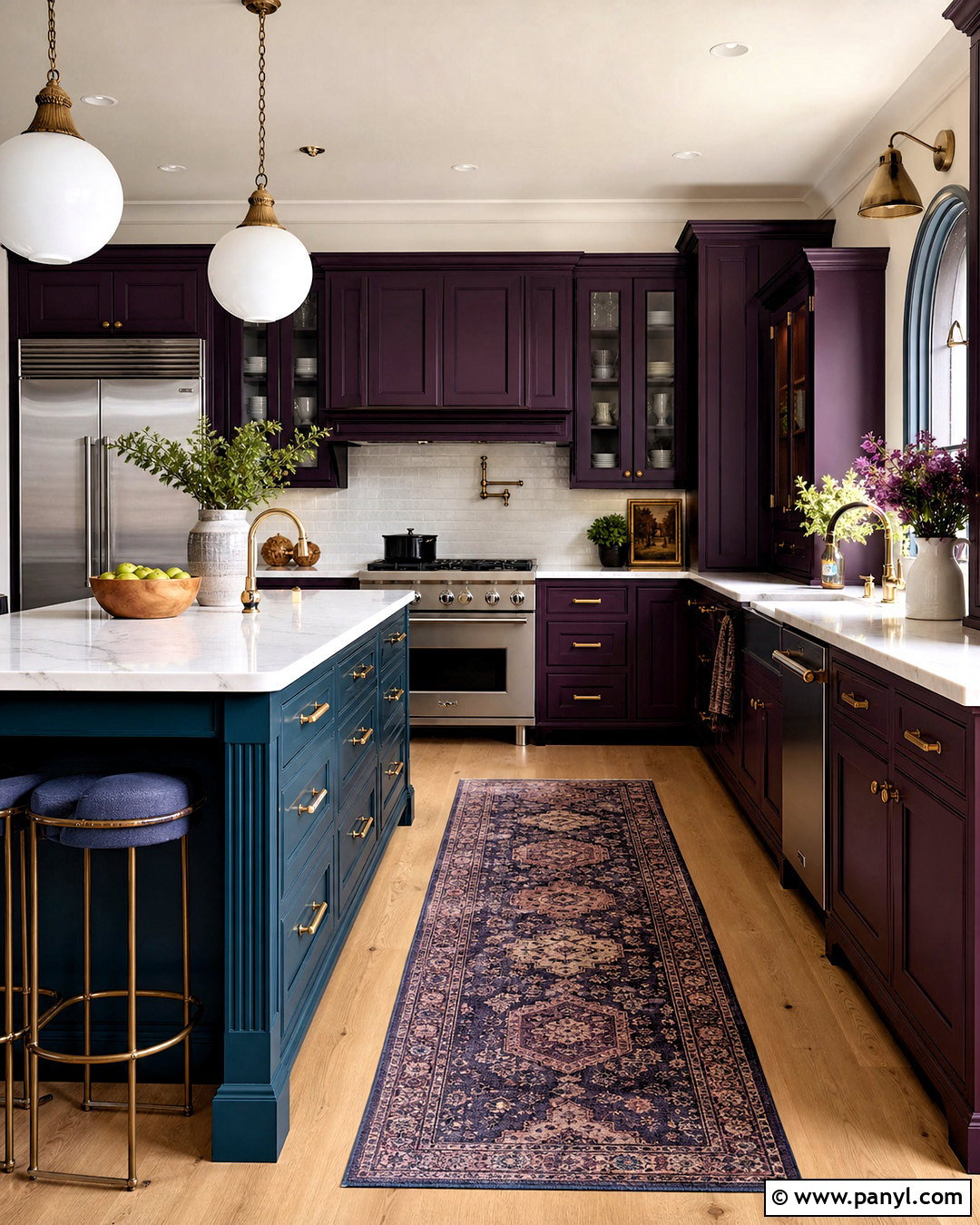
Rich blue accents can make an aubergine kitchen feel bold and carefully collected. Start with aubergine perimeter cabinets, then introduce deep teal or navy through an island, upholstered stools, or a built-in dining bench. Use warm white marble countertops to separate the saturated colors and keep the palette readable. Oak flooring and antique brass hardware add warmth, while cream walls create a calm background. A patterned runner containing purple, blue, and beige can unite the different cabinetry colors. Limit the strongest blue to one main feature instead of scattering it throughout the room. The finished design feels confident and distinctive, yet the shared depth of the two colors keeps the kitchen visually harmonious.
15. Aubergine Kitchen With Fluted Glass Cabinets
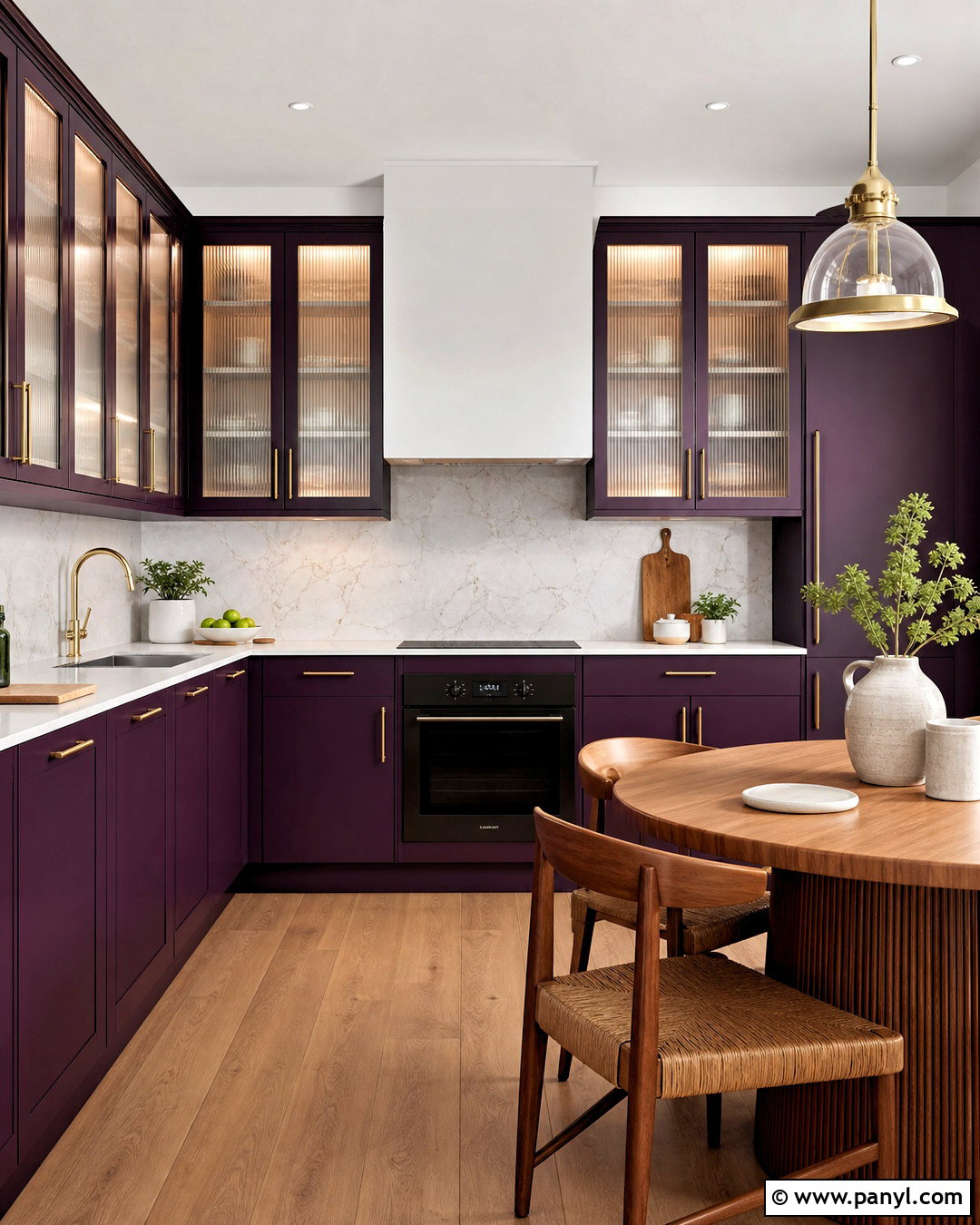
Fluted glass introduces lightness and texture to a room filled with deep aubergine cabinetry. Use solid painted doors on the base units, then install ribbed glass fronts on selected upper cabinets near the sink or serving area. The glass softly conceals dishes while reflecting light from nearby windows and pendants. Pair the cabinetry with creamy quartz counters, a pale marble backsplash, and slender aged brass handles. Choose medium oak flooring and a round wood dining table to balance the refined finishes. Interior cabinet lighting creates a gentle glow behind the textured glass and improves visibility. Keep the remaining upper walls warm white so the special cabinets stand out without making the entire kitchen feel overly decorative.
16. Aubergine Kitchen With Color Drenched Walls
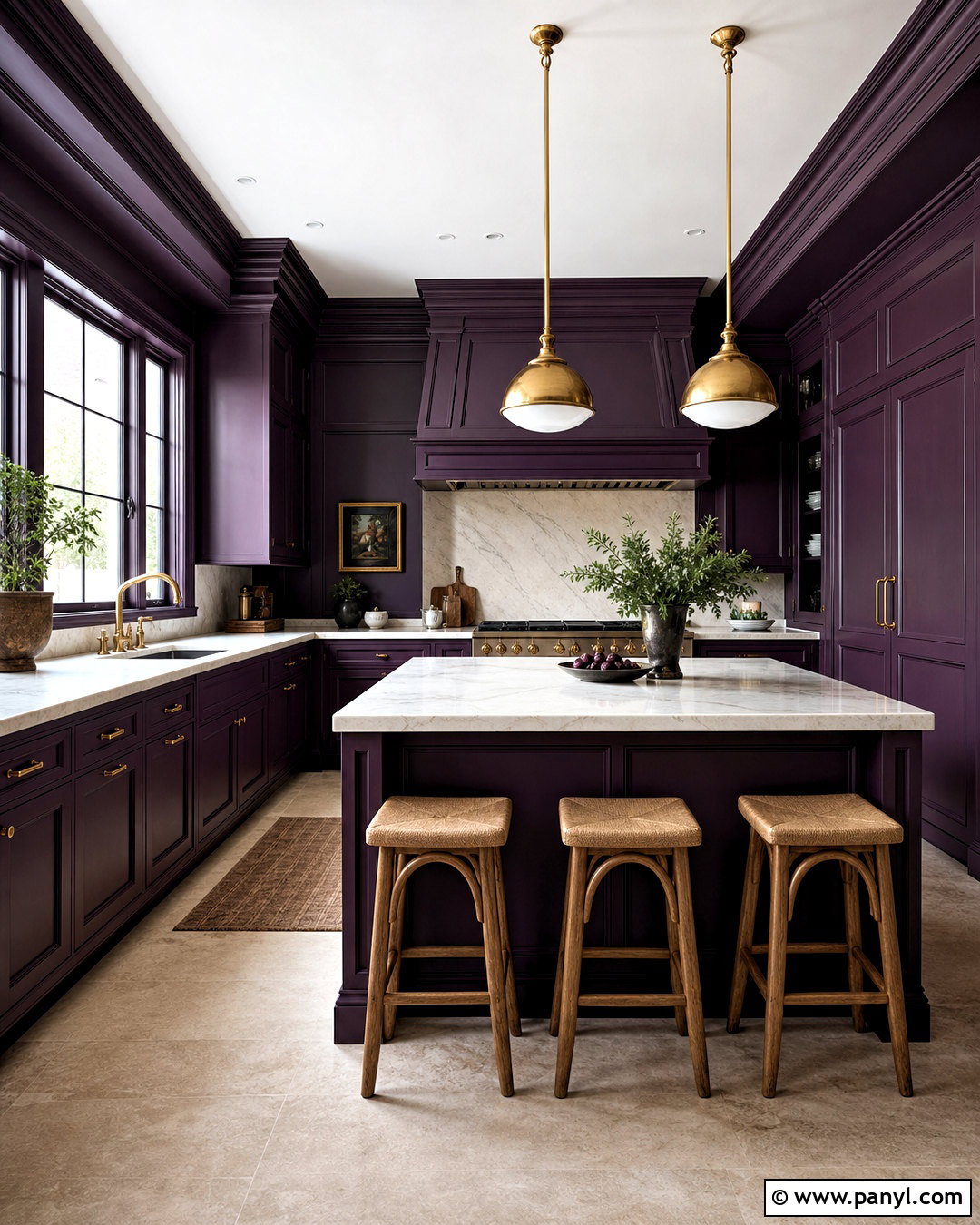
For maximum impact, carry aubergine from the cabinets onto the walls, trim, pantry door, and paneled range hood. Vary the sheen rather than the color: use durable satin on cabinetry, washable matte on walls, and semi-gloss on trim. This subtle finish change adds dimension while maintaining the enveloping effect. Prevent the room from becoming too dark with broad white marble countertops, a matching slab backsplash, and a pale limestone floor. Large windows, bright ceiling lights, and brass pendants will further lift the saturated scheme. Keep furnishings simple, such as light oak stools and a cream dining table. The completed kitchen feels intimate and dramatic, making it particularly effective in a well-lit room with generous architectural detail.
17. Aubergine Pantry With Neutral Cabinets
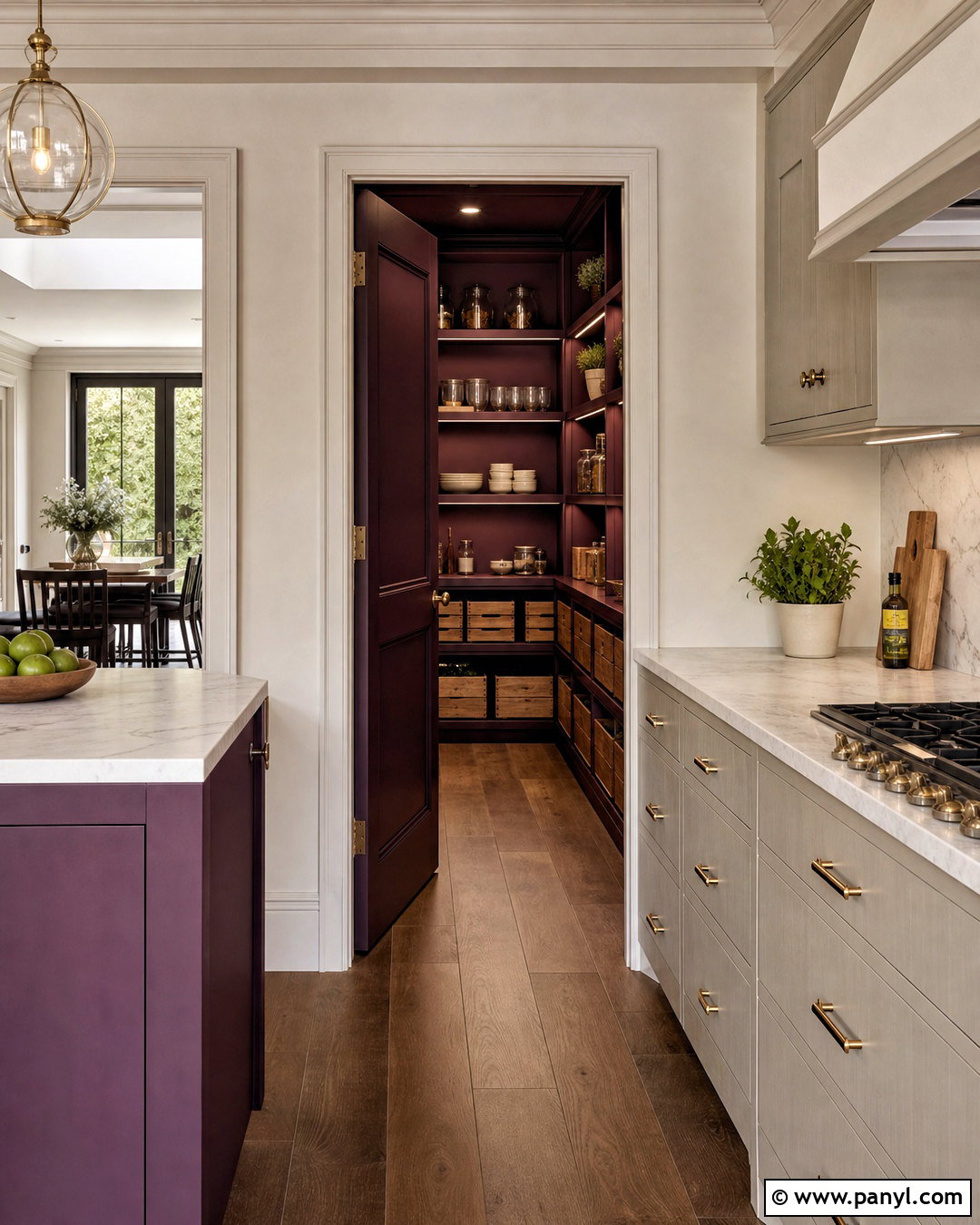
A walk-in pantry or pantry wall provides a controlled way to introduce aubergine into a neutral kitchen. Keep the main room soft greige with pale stone counters, then paint the pantry cabinetry, shelving, walls, and door in deep aubergine. If the pantry is visible through an open doorway, the saturated color creates a framed focal point. Add a small marble worktop, aged brass hardware, oak storage crates, and bright under-shelf lighting. Repeat the aubergine once in the main kitchen through a narrow island base or fabric shade. This connection makes the pantry feel intentional rather than separate. The overall design stays light and versatile while still delivering the depth and personality of a richly colored kitchen.
18. Aubergine Kitchen With Cream Zellige Tile
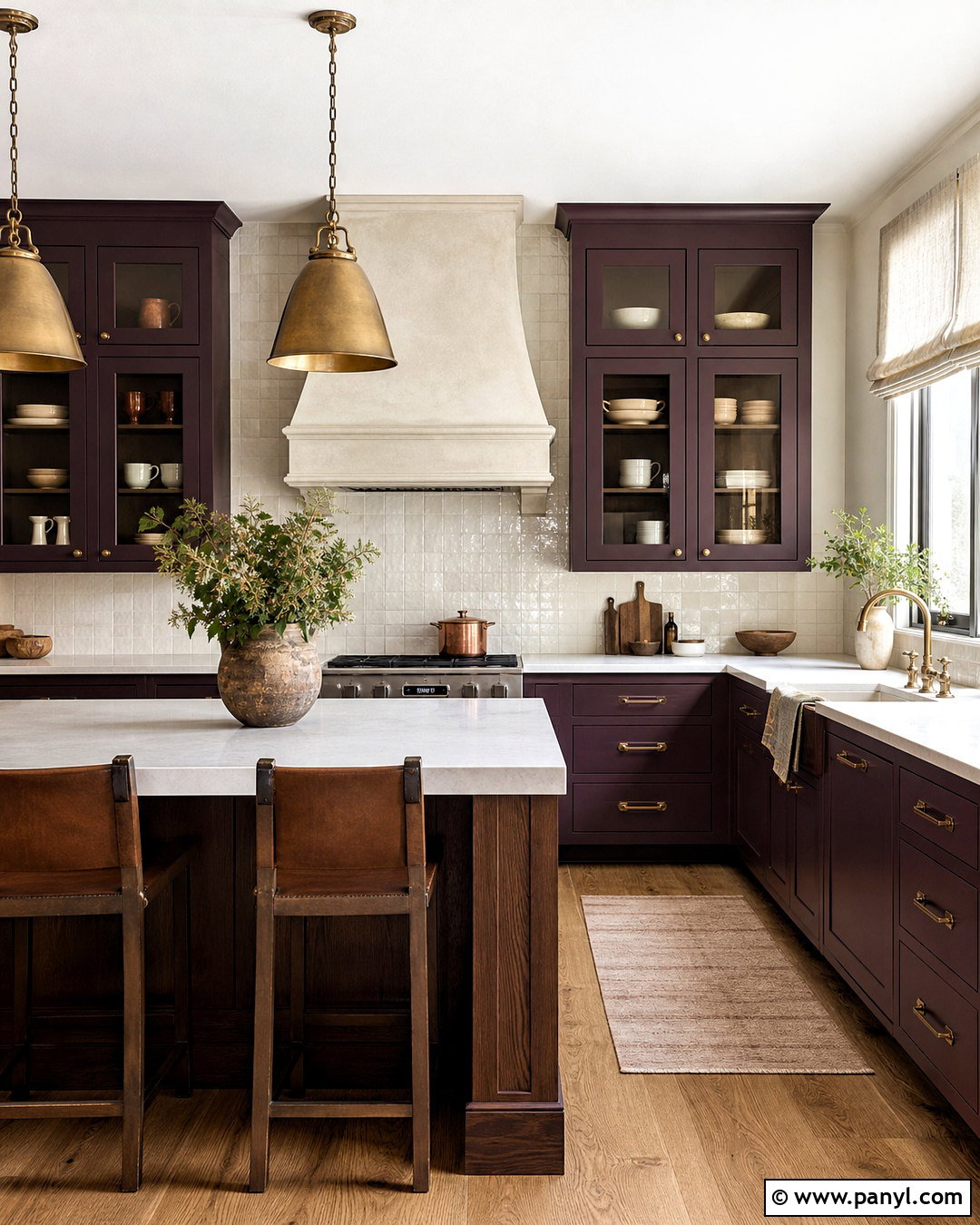
Glossy cream zellige tile is especially effective beside aubergine cabinets because its uneven surface reflects light in many directions. Cover the backsplash from the countertop to the underside of the upper cabinets, or continue it to the ceiling behind the range. Use warm white quartz counters with minimal pattern so the handmade tile remains visible. Aubergine Shaker cabinets, aged bronze hardware, and a plaster range hood create an inviting Old World influence. Add natural oak flooring, linen window treatments, and a substantial wood island with open storage. Small variations in the tile keep the pale surfaces from feeling flat. Together, these elements form a bright, tactile kitchen that balances dramatic color with soft, approachable materials.
19. Aubergine Kitchen With Charcoal Stone
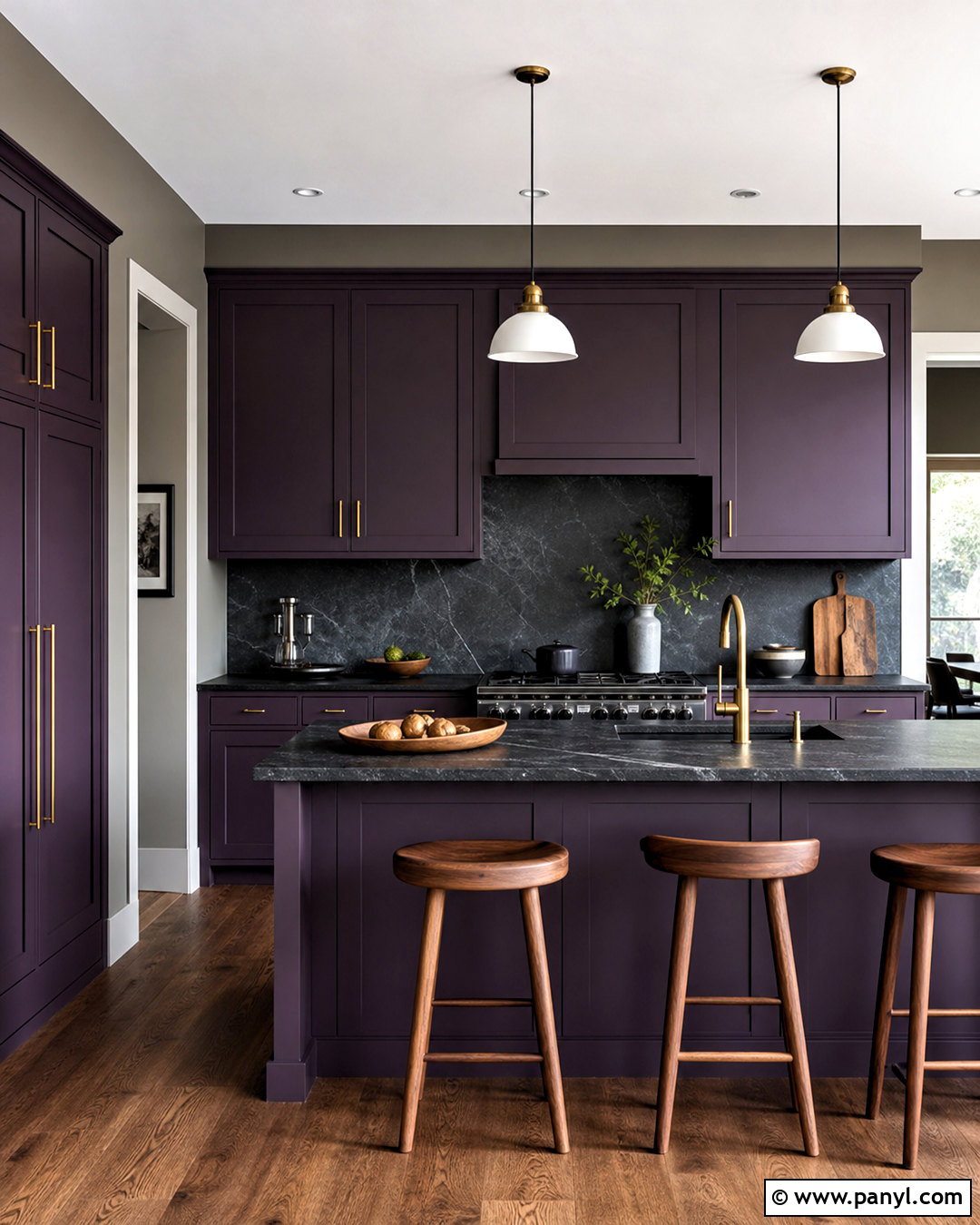
Charcoal stone creates a dramatic, tonal kitchen when paired with aubergine cabinetry. Choose soapstone or a dark quartz with quiet veining for the countertops, then continue it several inches up the wall or across a full backsplash. Keep the cabinet finish matte so the purple undertones remain visible beside the gray-black surface. Add warm brass handles, a brass faucet, and soft white pendant lights to prevent the palette from feeling cold. Medium walnut flooring and matching counter stools bring in another warm layer. Use aubergine on the island and lower cabinets, but consider warm gray upper walls to provide breathing space. The final room feels sleek, grounded, and luxurious without relying on ornate detailing.
20. Aubergine Kitchen With Natural Oak Island
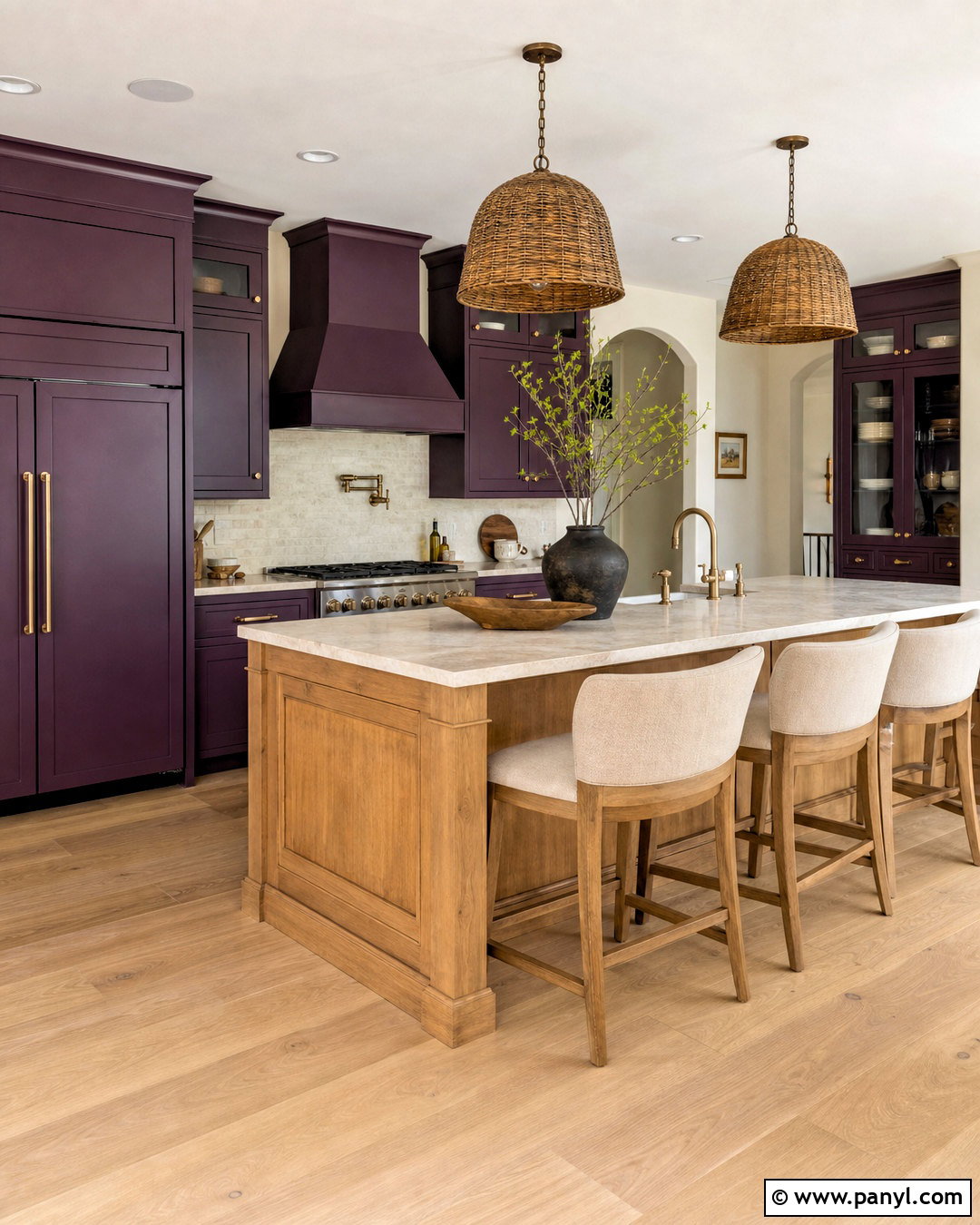
A natural oak island can soften a full wall of aubergine cabinetry and make the room feel more relaxed. Use deep purple on the perimeter cabinets, refrigerator panels, and range hood, then keep the central island unpainted. Select creamy marble or quartz countertops for both areas to visually connect the two finishes. Pale oak flooring can work if it differs slightly from the island, avoiding an overly matched appearance. Complete the kitchen with bronze hardware, woven pendant shades, and warm white walls. Add oatmeal-colored stools and simple stoneware for subtle texture. This combination offers the richness of an aubergine kitchen while preserving the easy, organic quality many homeowners want in an open family space.
Conclusion:
The best **20 aubergine kitchen ideas** balance this deep, expressive color with materials that add light, warmth, or texture. White marble creates crisp contrast, while walnut, oak, and butcher block bring out aubergine’s earthy undertones. Brass and copper make it feel warmer, whereas black and stainless steel produce a sharper modern finish. You can use the color across every cabinet, limit it to an island, or create a concentrated statement inside a pantry. Before committing, test large samples beside your flooring, countertops, and lighting at different times of day. With a thoughtful layout and a balanced palette, aubergine can feel dramatic, welcoming, and remarkably versatile.

Related Ideas and Inspiration:

Leave a Reply