
Dark wood walls bring warmth, depth, and architectural character to a room. Today’s versions feel more polished than the heavy paneling often associated with older homes. Rich walnut, smoked oak, mahogany, and black-stained timber can create anything from a streamlined modern backdrop to a cozy library atmosphere. The key is designing the entire room around the wood instead of treating it as an isolated surface. Pale upholstery, layered lighting, reflective metals, soft rugs, and contrasting ceilings keep deeper finishes balanced. Vertical slats, wide planks, raised panels, and mixed-material walls also offer different levels of texture and formality. Wood paneling is once again being used as a versatile contemporary wall treatment rather than simply a nostalgic feature. () Explore these 20 dark wood walls for complete, practical looks you can recreate.

1. Dark Walnut Living Room Wall
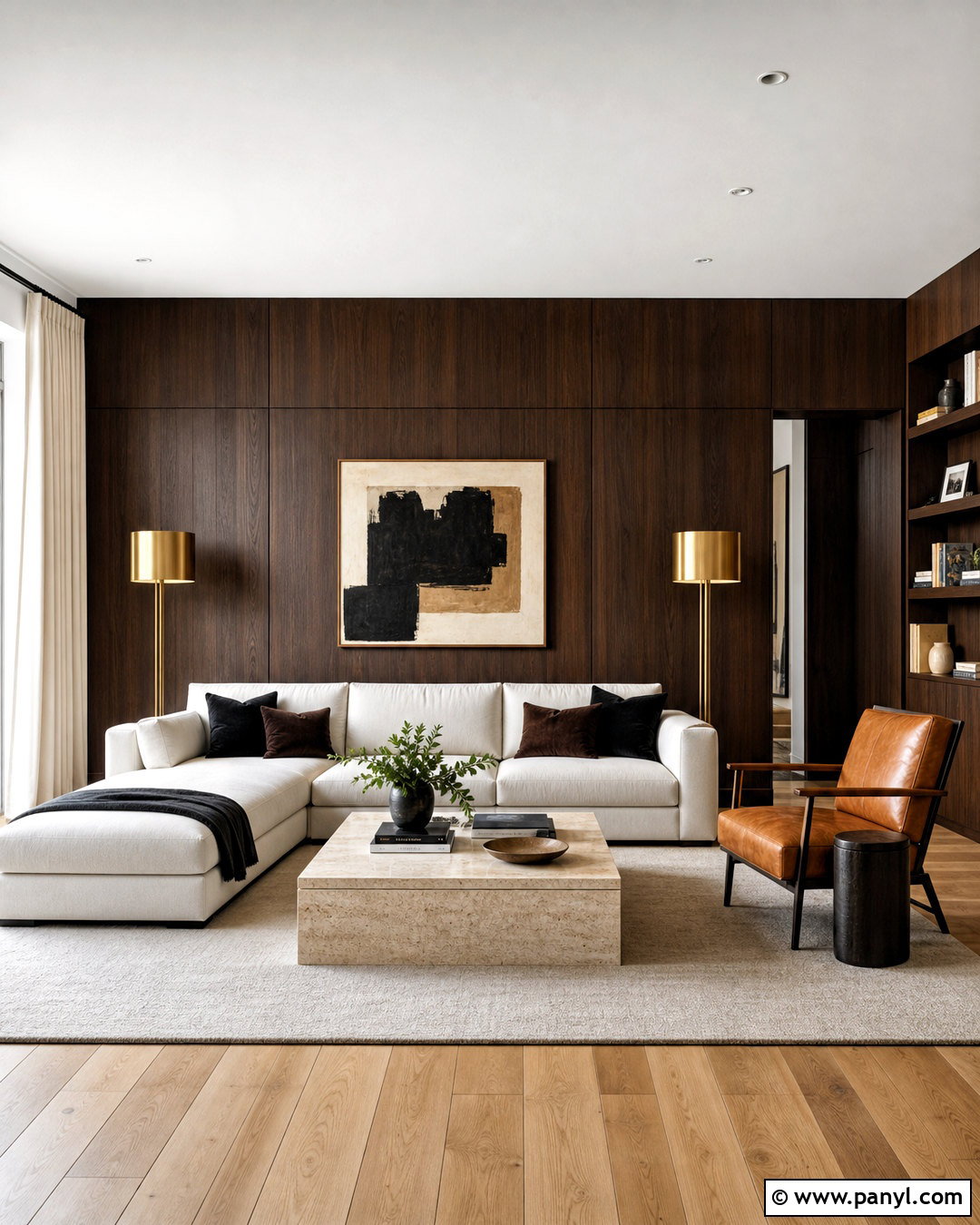
A dark walnut feature wall gives a living room an inviting focal point without making the entire space feel enclosed. Install full-height, flat walnut panels behind a low cream sofa, allowing the natural grain to provide subtle movement. Add a pale wool area rug and an oval travertine coffee table to break up the brown tones. Slim brass floor lamps introduce gentle shine, while ivory curtains keep the windows bright and soft. Choose one cognac leather chair for warmth rather than filling the room with more dark wood furniture. Light oak flooring can also create useful contrast. Finish the arrangement with oversized abstract artwork in cream, rust, and muted blue so the wall feels decorated but not visually crowded.
2. Dark Wood Slat TV Wall
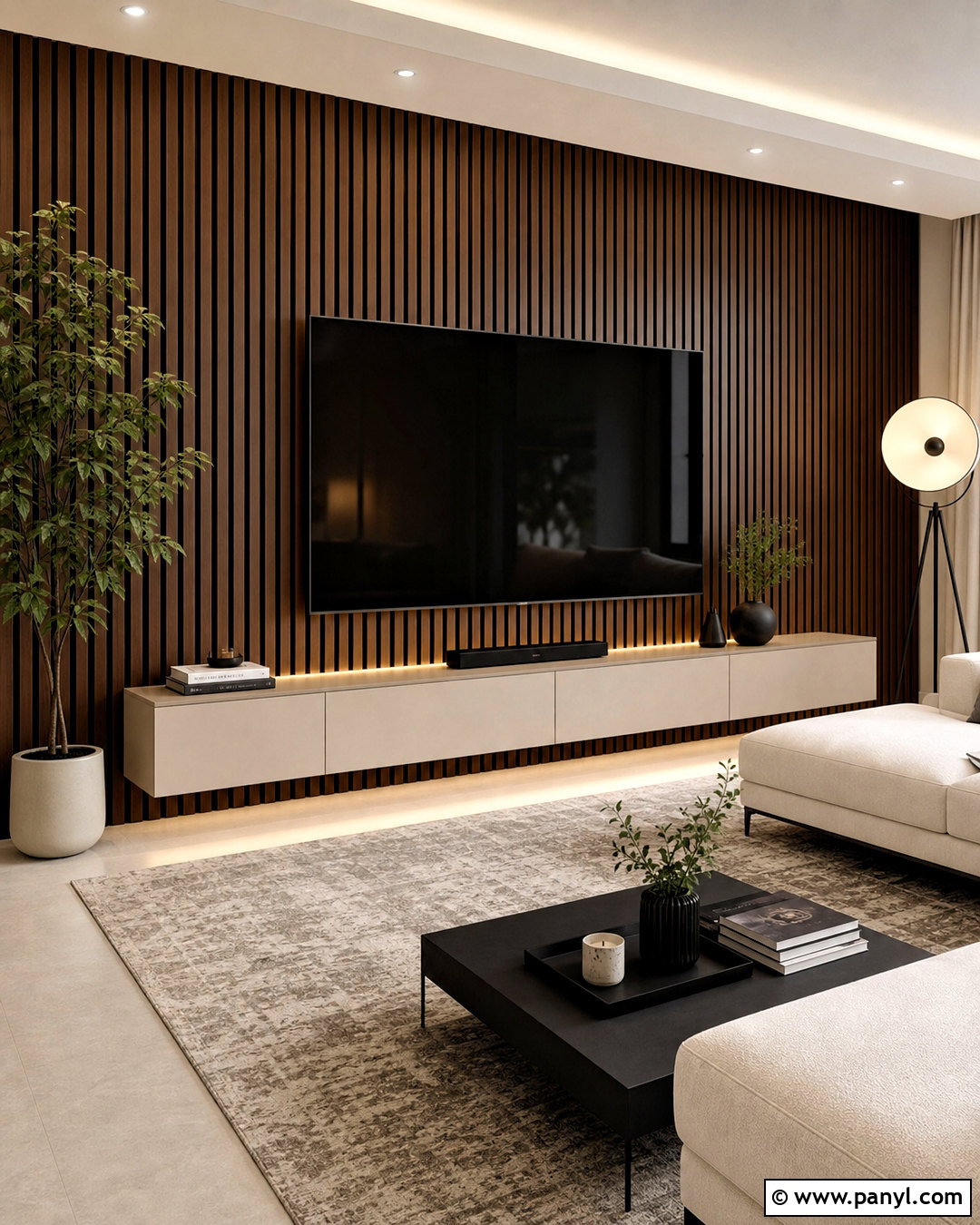
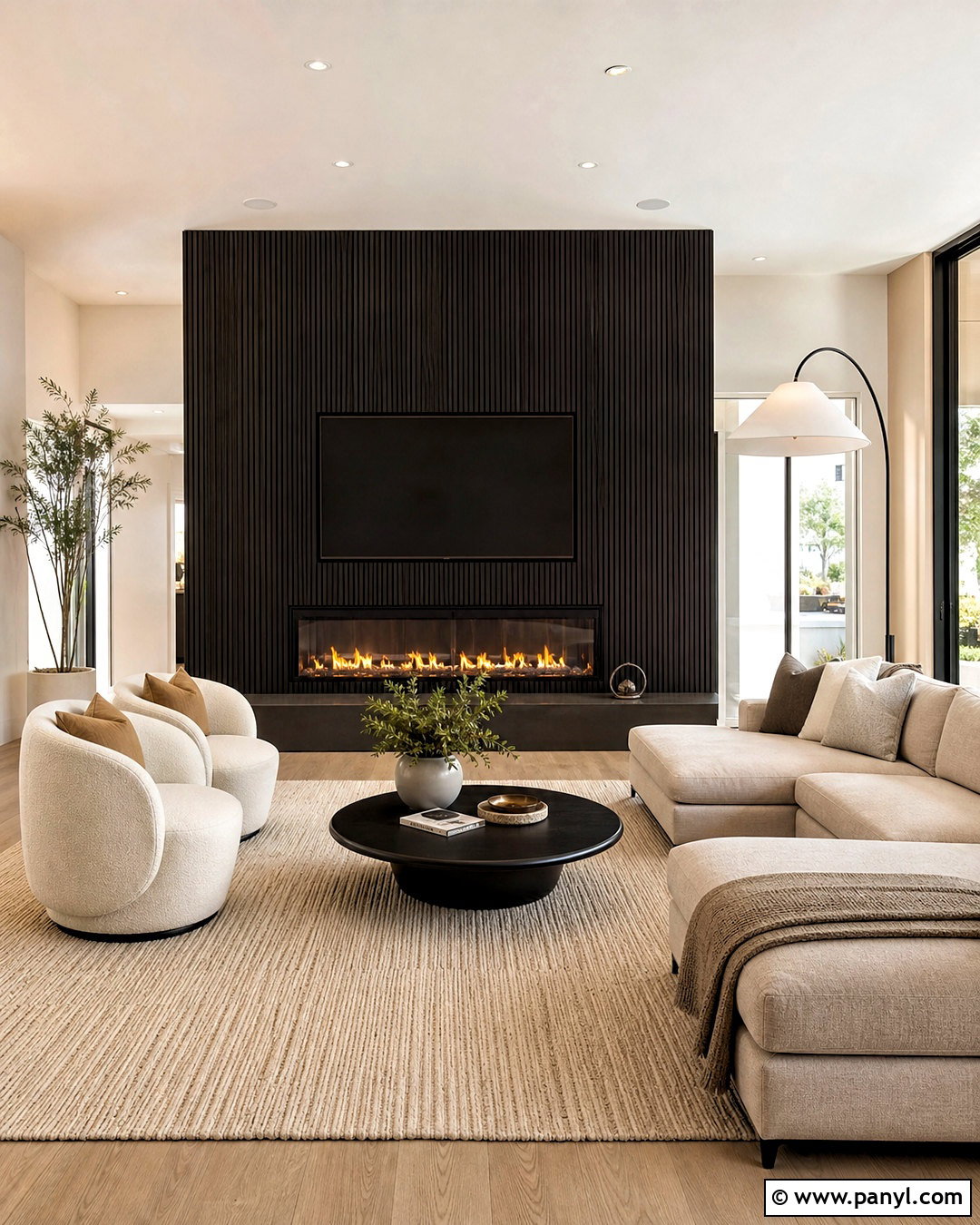
Vertical dark wood slats can turn a television wall into an intentional architectural feature. Use narrow walnut or smoked oak slats over a matte black backing so the small gaps nearly disappear. Mount the television at a comfortable viewing height and add a long floating cabinet in soft beige or charcoal gray. A warm white sectional, textured neutral rug, and rounded black coffee table will balance the wall’s strong lines. Keep cables hidden inside the panel system for a clean finish. Place soft LED lighting behind the cabinet rather than outlining the television, which can look distracting. A tall leafy plant near one end and a sculptural floor lamp on the other will soften the symmetry while maintaining a streamlined contemporary living room.
3. Dark Wood Bedroom Accent Wall
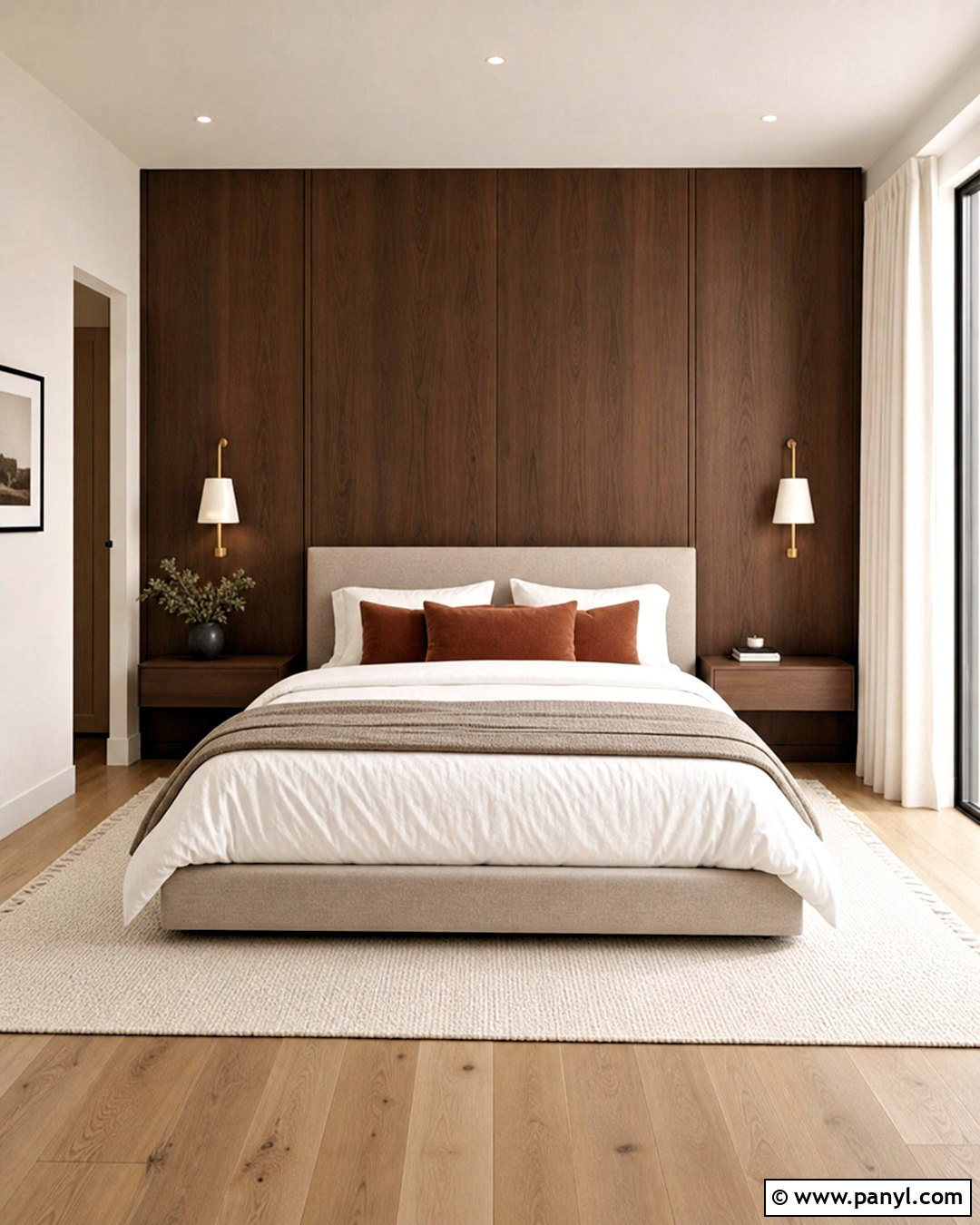
Imagine entering a bedroom where a deep walnut wall creates an immediate feeling of comfort. Center an upholstered oatmeal bed against full-width panels with a simple vertical grain. Use crisp white sheets, a taupe coverlet, and rust-colored pillows to introduce lighter layers. Floating walnut nightstands can blend into the wall, while brushed brass sconces provide definition and free up bedside space. Keep the remaining walls warm white and select light natural-oak flooring or a large ivory rug. Soft linen curtains will filter daylight without competing with the wood. Instead of hanging several small decorations, place one wide landscape painting over the headboard. This complete scheme feels restful, polished, and warm while still allowing the dark wall to remain the room’s defining feature.
4. Dark Wood Dining Room Panels
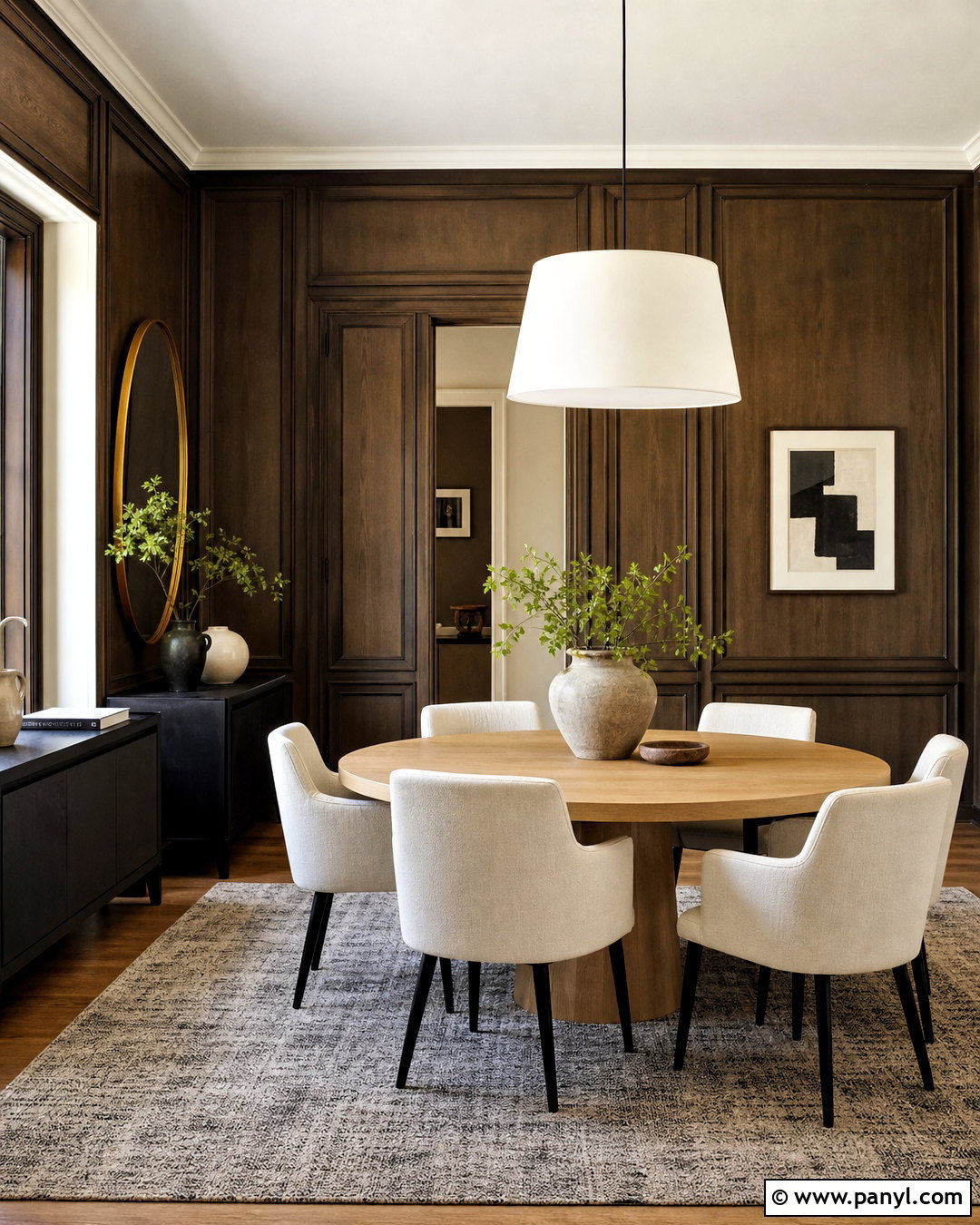
Could your dining room use more definition and intimacy? Cover the longest wall with rectangular dark wood panels arranged in a simple grid. Pair them with a round dining table in light oak to prevent an overly matched appearance. Upholstered chairs in warm ivory will brighten the center of the room, while a large linen pendant creates a soft focal point overhead. Add an understated sideboard in matte black or mushroom gray along the paneled wall. A low ceramic lamp, one large mirror, and a few neutral vessels provide enough decoration without hiding the grain. Choose a flat-woven rug in beige and charcoal to ground the table. Cream-colored walls and a white ceiling will keep the complete dining space open, welcoming, and suitable for everyday meals.
5. Dark Wood Home Office Wall
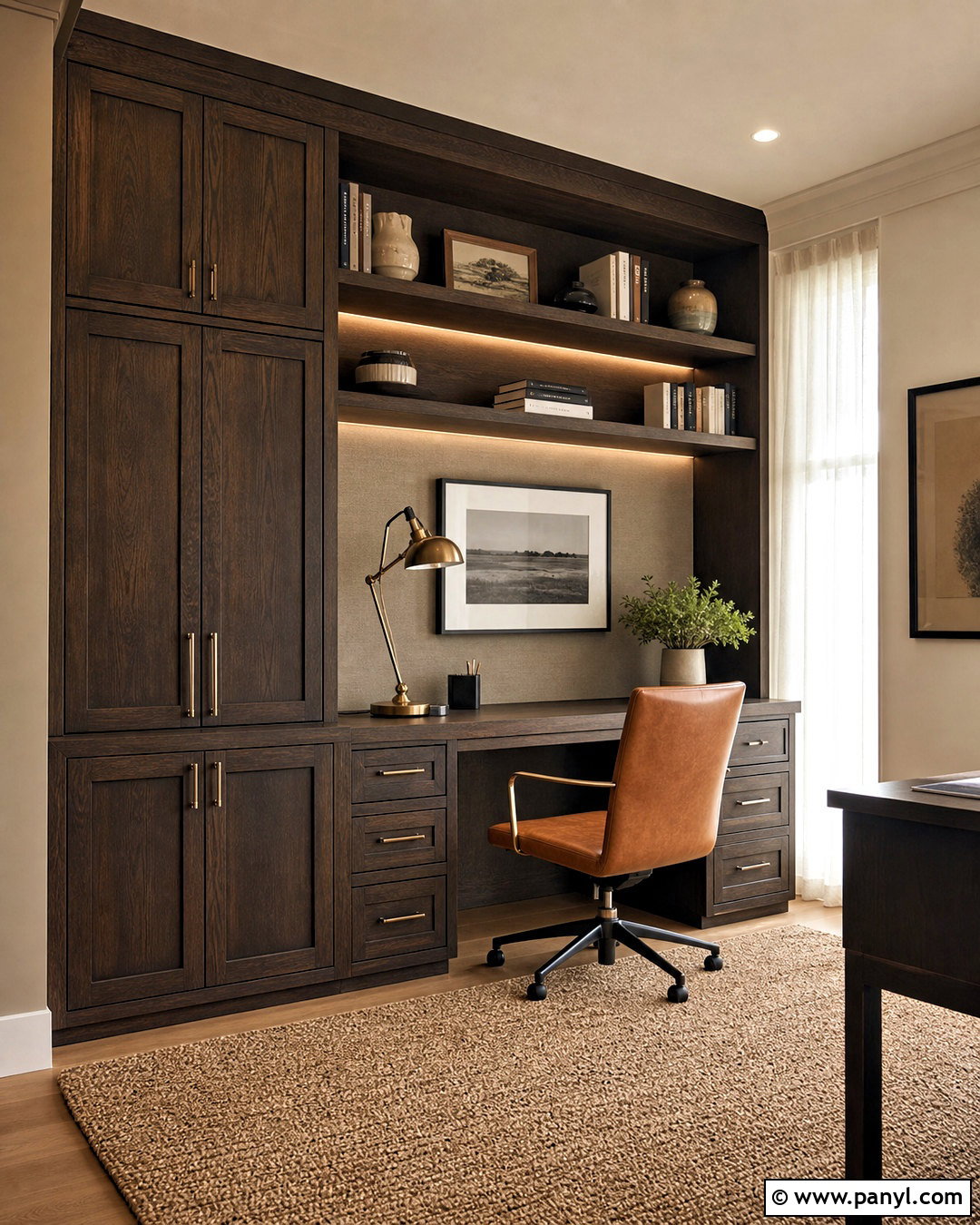
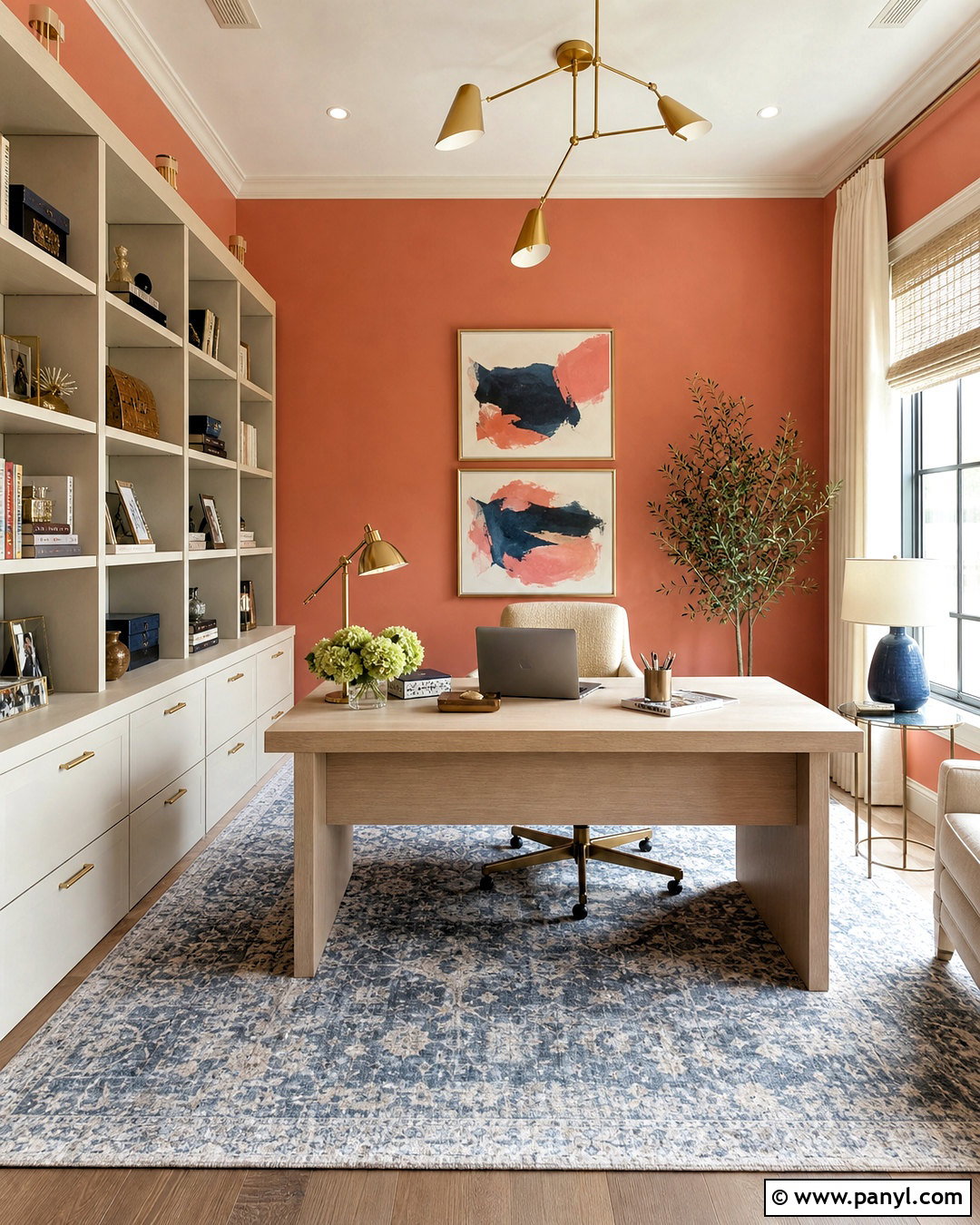
A dark wood office can feel focused and sophisticated when practical storage is incorporated into the design. Create a wall of stained oak cabinetry with closed lower cupboards, open upper shelves, and a central desk niche. Paint the niche backing a soft clay or warm greige to distinguish the work surface from the surrounding wood. Add a comfortable camel-colored desk chair, a small brass task lamp, and discreet under-shelf lighting. The rest of the room should remain lighter, with ivory walls, a natural fiber rug, and sheer curtains. Place books, framed art, and ceramic storage boxes on the shelves with generous empty space between them. This balanced layout delivers storage, visual order, and a professional backdrop without making a compact home office feel overly formal.
6. Dark Wood Fireplace Wall
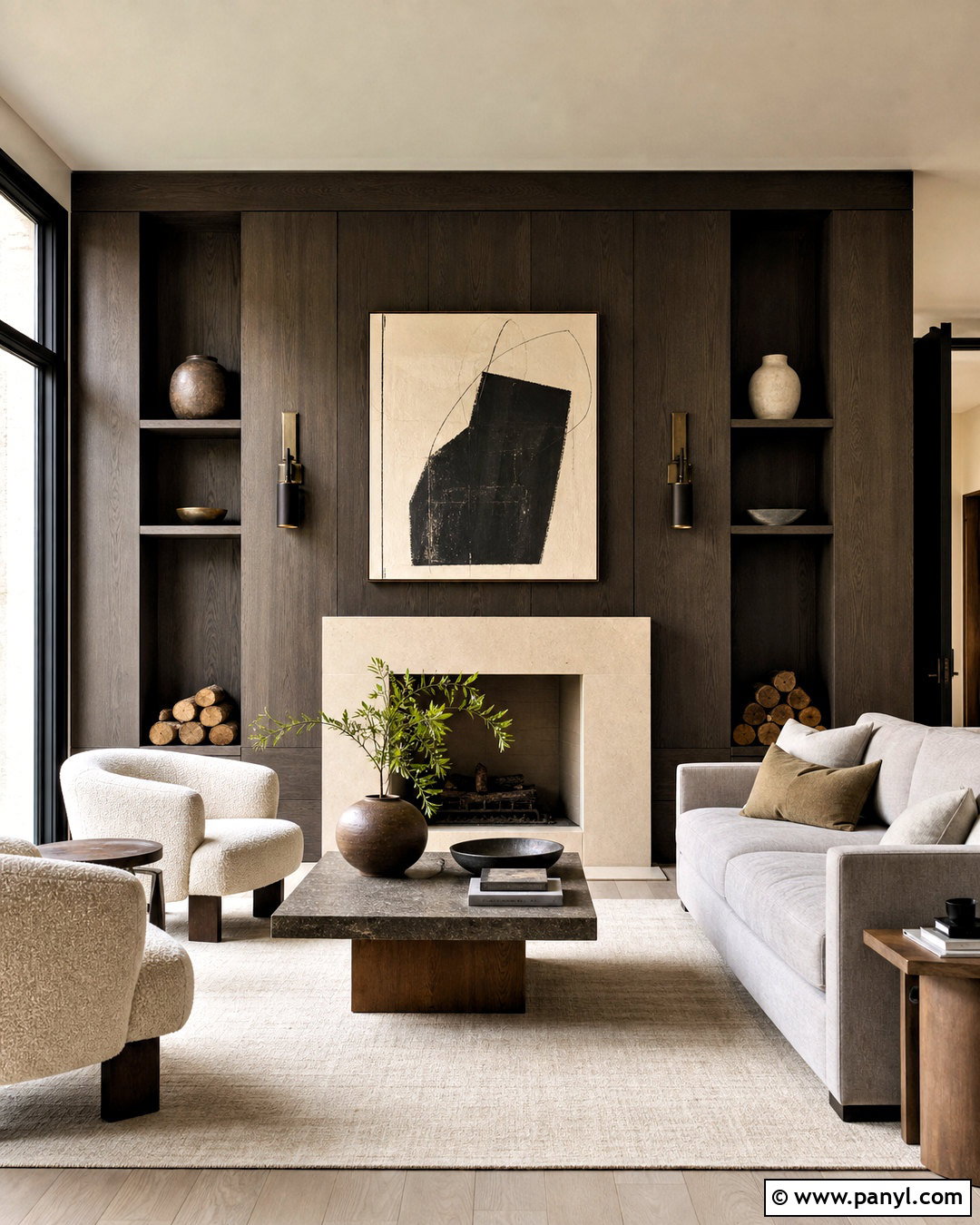
A fireplace becomes even more dramatic when dark wood and natural stone are combined across the entire focal wall. Frame a light limestone or creamy travertine fireplace with broad smoked-oak panels reaching from floor to ceiling. Keep the mantel simple or omit it for a cleaner contemporary profile. Arrange a soft gray sofa and two boucle chairs around a substantial wood-and-stone coffee table. Pale flooring and a large cream rug will reflect light upward toward the paneling. Use recessed ceiling lights and minimal bronze sconces to reveal the grain after sunset. Avoid mounting a television above the fire if space allows. A large abstract canvas, ceramic vessels, and neatly stacked logs can complete the composition while preserving the fireplace as the room’s calm visual center.
7. Dark Wood Midcentury Living Room
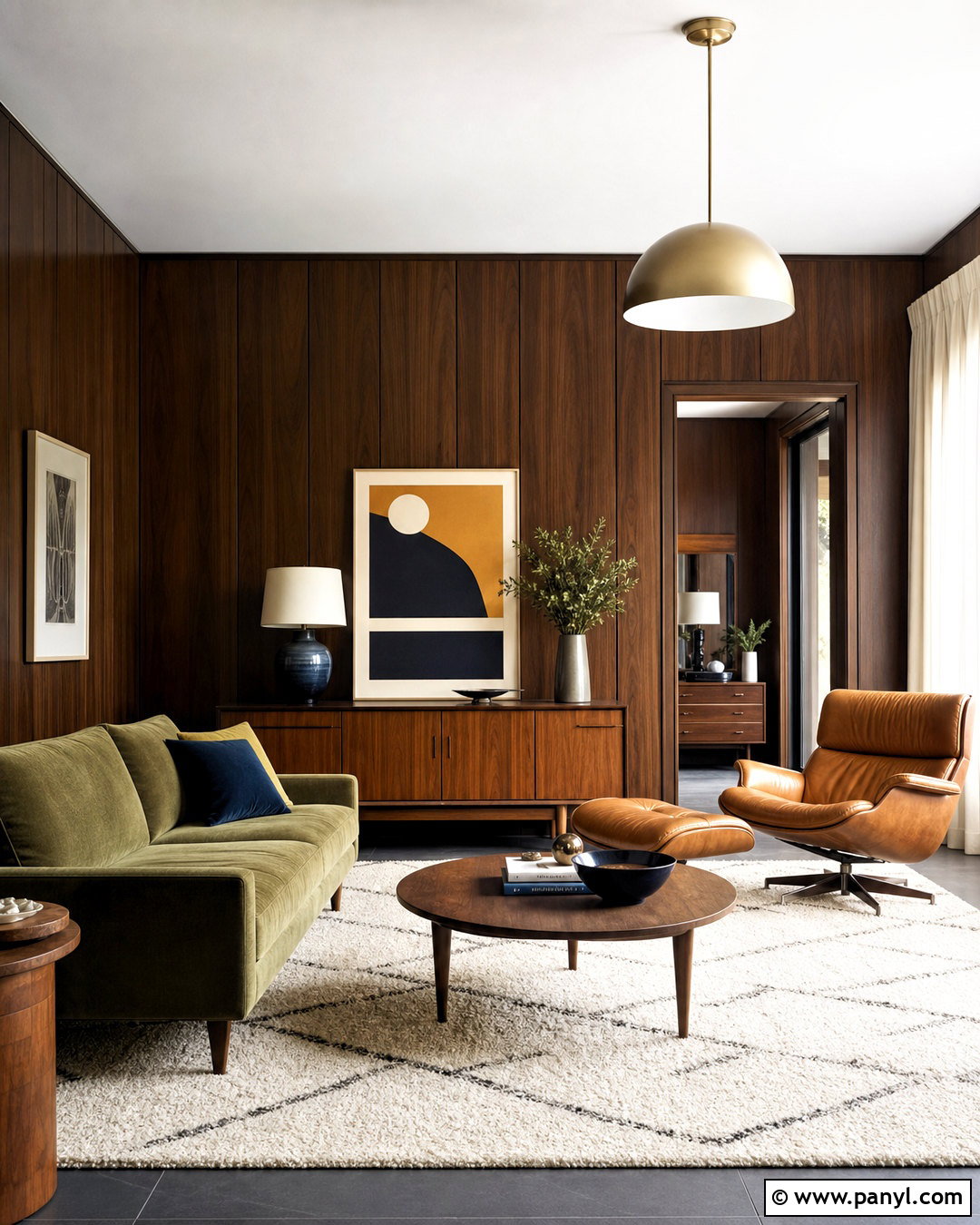
Midcentury furniture works naturally with dark wood walls, but the room needs color and contrast to avoid looking like a period set. Cover one wall with flat walnut panels and furnish the space with a low-profile olive green sofa, a caramel lounge chair, and a streamlined teak console. Choose a cream geometric rug to brighten the floor and create separation between the different wood finishes. A globe pendant, brushed brass accents, and sculptural ceramic lamps reinforce the retro influence without overwhelming it. Hang one large graphic artwork with mustard, navy, and off-white shapes. Keep window treatments simple and pale so natural light reaches the paneling. The finished room should feel warm and nostalgic, yet clean enough to suit a comfortable modern home.
8. Dark Wood Modern Entryway
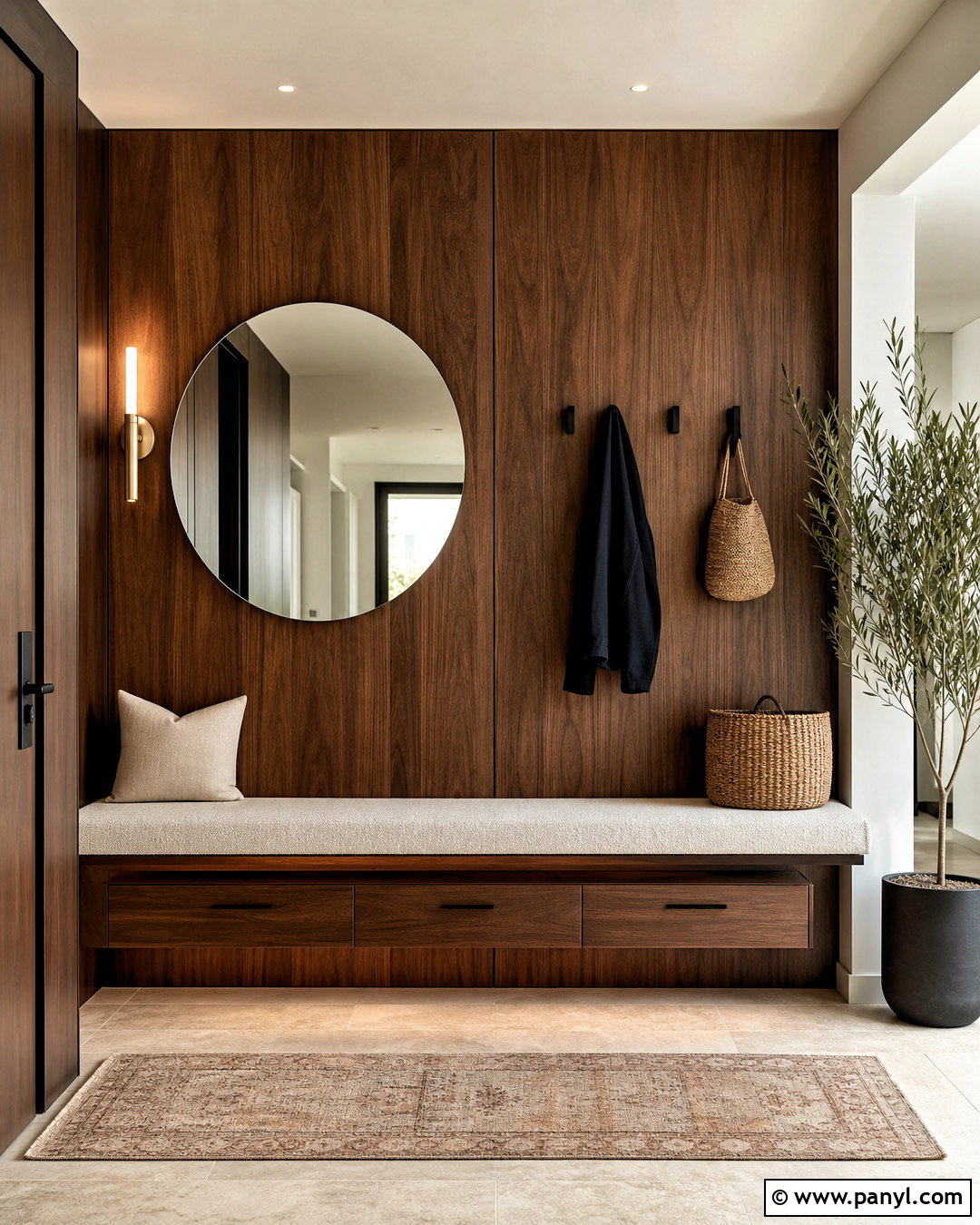
First impressions become more memorable when an entryway combines dark wood with simple, useful features. Install vertically grained walnut panels along one main wall and incorporate a floating bench upholstered in textured cream fabric. Add two concealed drawers underneath for shoes and everyday accessories. A large round mirror will reflect both daylight and the wood grain, helping a narrow entrance appear wider. Use pale stone tile underfoot for durability and strong contrast. Matte black coat hooks, a slim brass wall light, and a woven basket provide practical finishing details. Keep the opposite wall warm white rather than extending paneling around the entire space. A muted runner and one tall indoor plant will soften the hard surfaces, resulting in an organized entry that feels welcoming rather than dark.
9. Dark Wood Hallway Paneling
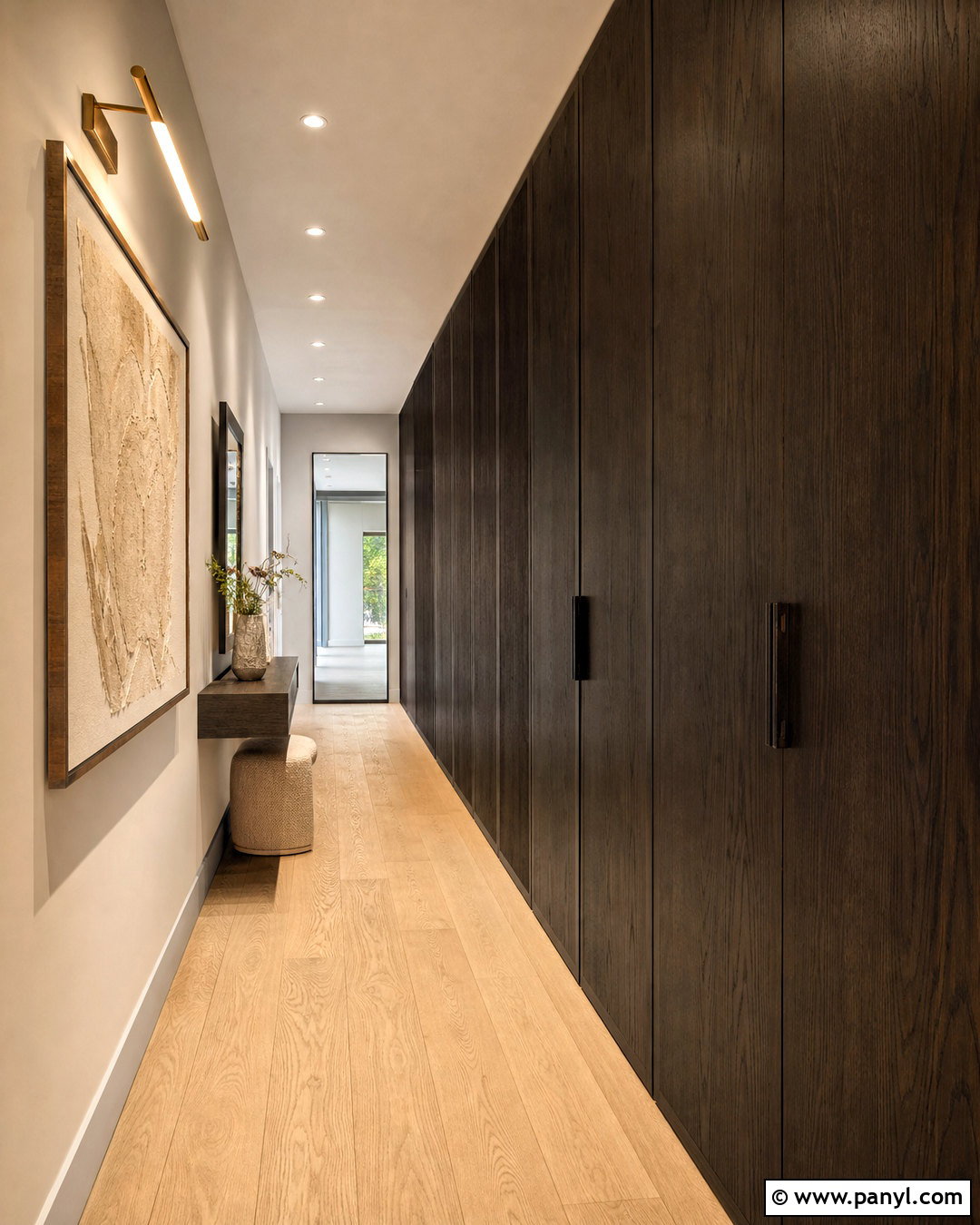
Long hallways often lack visual interest, making them an ideal place for measured dark wood detailing. Use full-height smoked-oak panels on one side while keeping the opposite wall and ceiling a clean warm white. Position slim picture lights over a sequence of large, light-colored artworks to introduce rhythm. Pale oak flooring laid lengthwise will visually extend the passage and prevent too many dark finishes from meeting. If the hallway is wide enough, add a narrow floating console that matches the panels and a rounded upholstered stool beneath it. Recessed ceiling lights should be spaced evenly to eliminate shadowy areas. At the far end, place a large mirror or bright artwork to create a clear destination. The result feels architectural, calm, and intentionally connected to nearby rooms.
10. Dark Wood Kitchen Wall
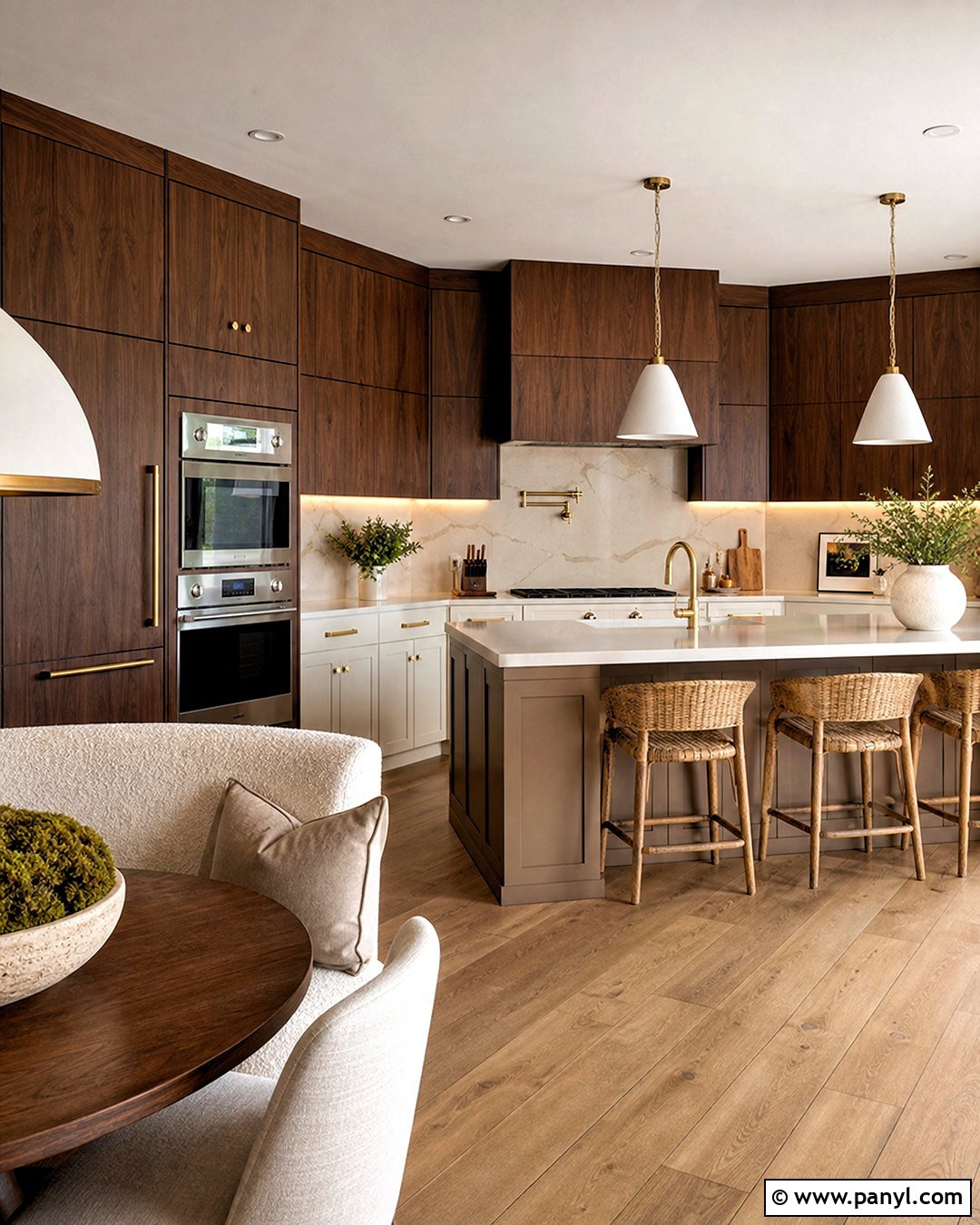
Dark wood can warm a kitchen without requiring every cabinet to share the same finish. Use walnut panels around a tall bank of appliances and extend them across an adjacent breakfast wall. Balance this surface with warm white lower cabinets, pale quartz countertops, and a softly veined stone backsplash. A central island in muted taupe will connect the light and dark elements without creating a harsh divide. Choose backless counter stools with woven seats and slim black frames. Brushed nickel or aged brass fixtures can add restrained shine. Under-cabinet lighting is essential for keeping work surfaces clear and usable. Finish the breakfast corner with a built-in cream bench, a small round table, and an oversized pendant. This mixed palette makes the entire kitchen feel layered and approachable.
11. Dark Wood Bathroom Wall
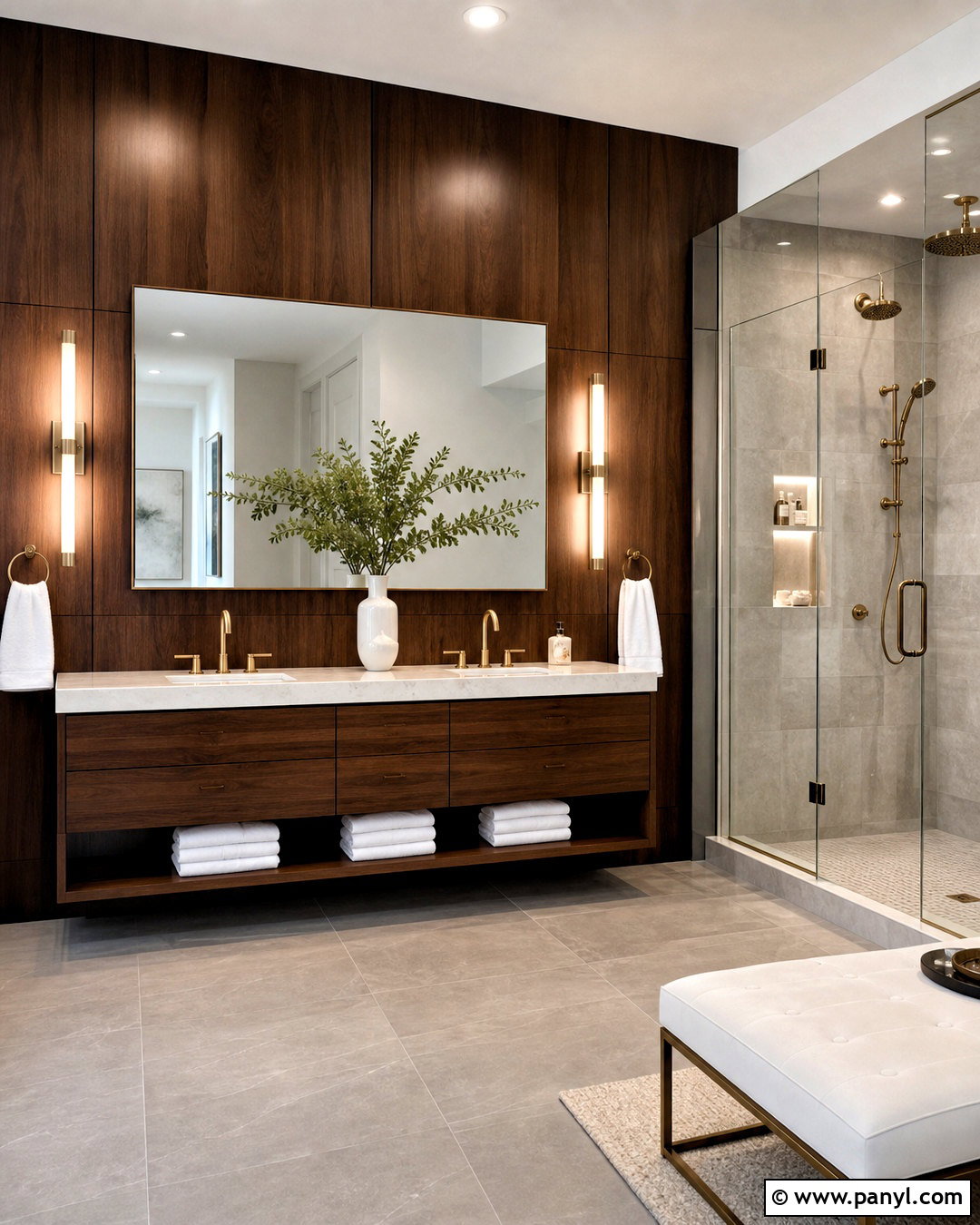
Rich wood can make a bathroom feel relaxing when it is used selectively and protected from direct water exposure. Place dark, moisture-rated wood panels behind a floating vanity rather than inside the shower. Choose a pale stone countertop, an undermount sink, and simple walnut drawers that visually merge with the wall. A large frameless mirror will reflect the brighter surfaces around it. Use warm gray porcelain tile across the floor and shower walls, then introduce brushed brass faucets and slim sconces for a gentle glow. A glass shower enclosure keeps sightlines open, while white towels add crisp contrast. Confirm that the panel product and finish are suitable for humid rooms. With proper ventilation and carefully chosen materials, the complete bathroom feels warm, modern, and spa-like.
12. Dark Wood Powder Room
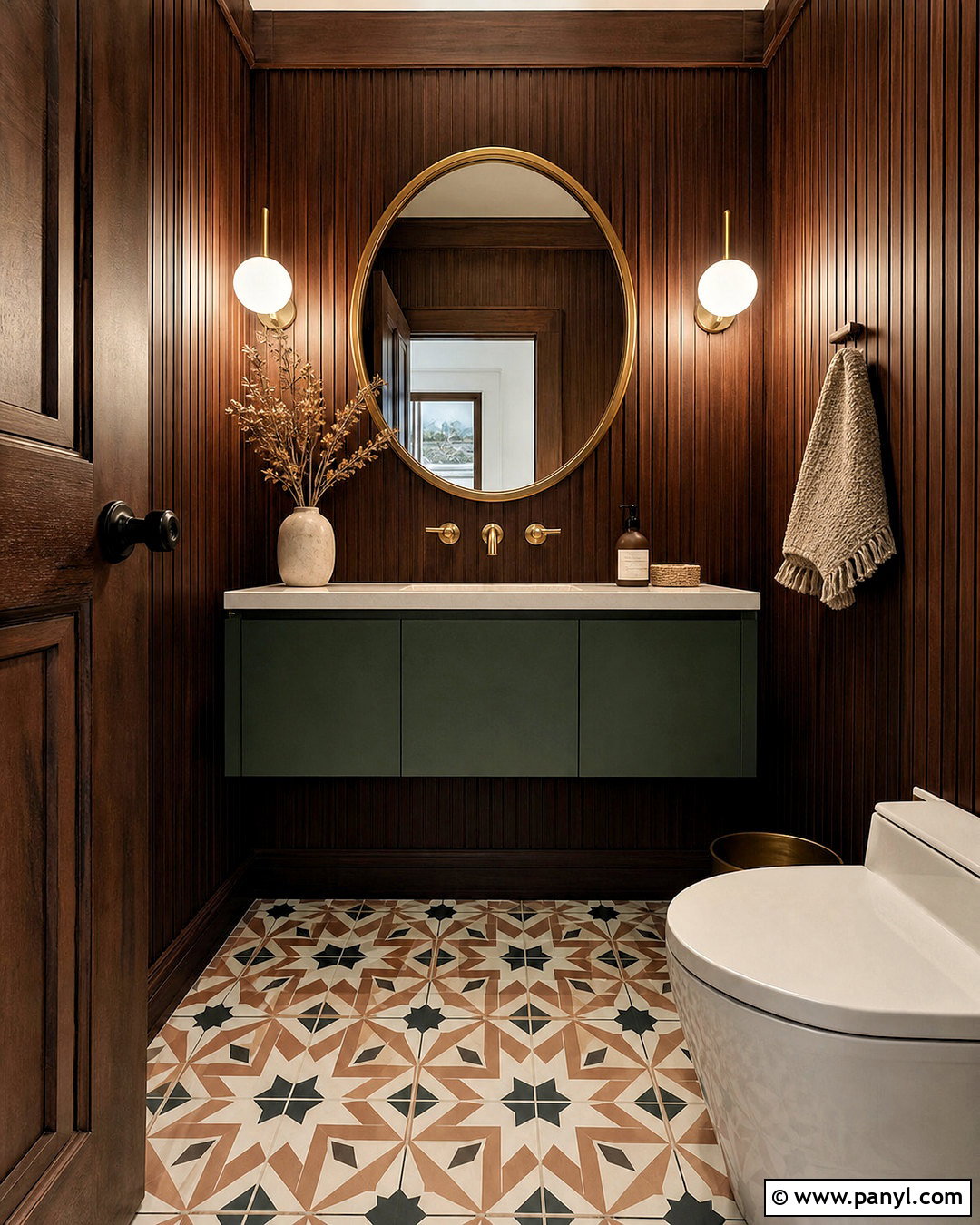
A small powder room can handle a richer, more immersive design than many larger spaces. Wrap the walls in narrow dark walnut panels and keep the ceiling a soft cream to prevent a boxed-in effect. Install a compact floating vanity in deep forest green with a white stone top. An oval antiqued-brass mirror and two petite globe sconces will bring warm reflection to the wood. Use patterned floor tile in cream, black, and muted terracotta for personality without adding clutter at eye level. A wall-mounted faucet can preserve countertop space and make the vanity appear custom. Complete the room with a woven hand towel, a small ceramic vase, and understated hardware. The finished design feels jewel-like and memorable while remaining functional for guests and everyday family use.
13. Dark Wood Library Wall
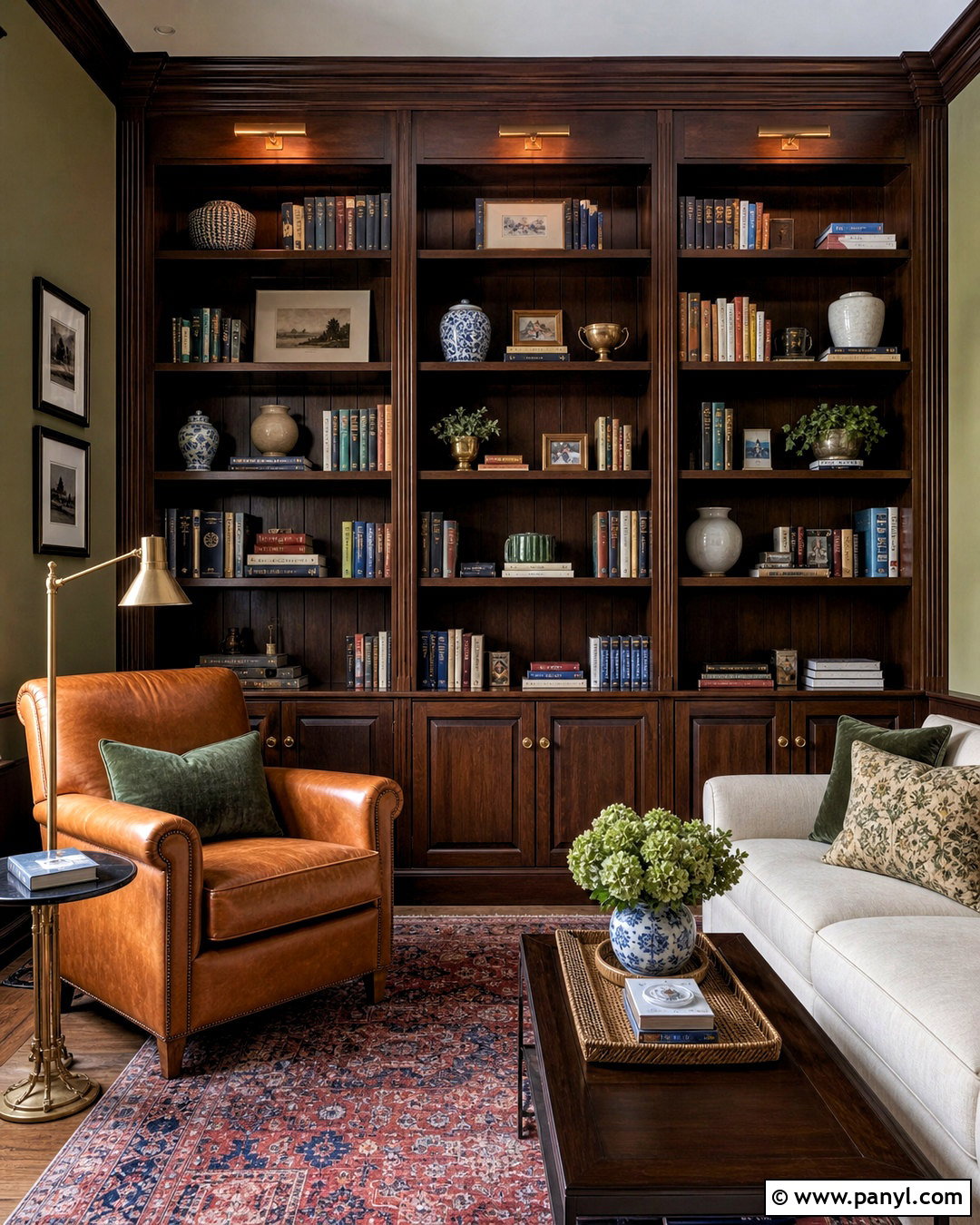
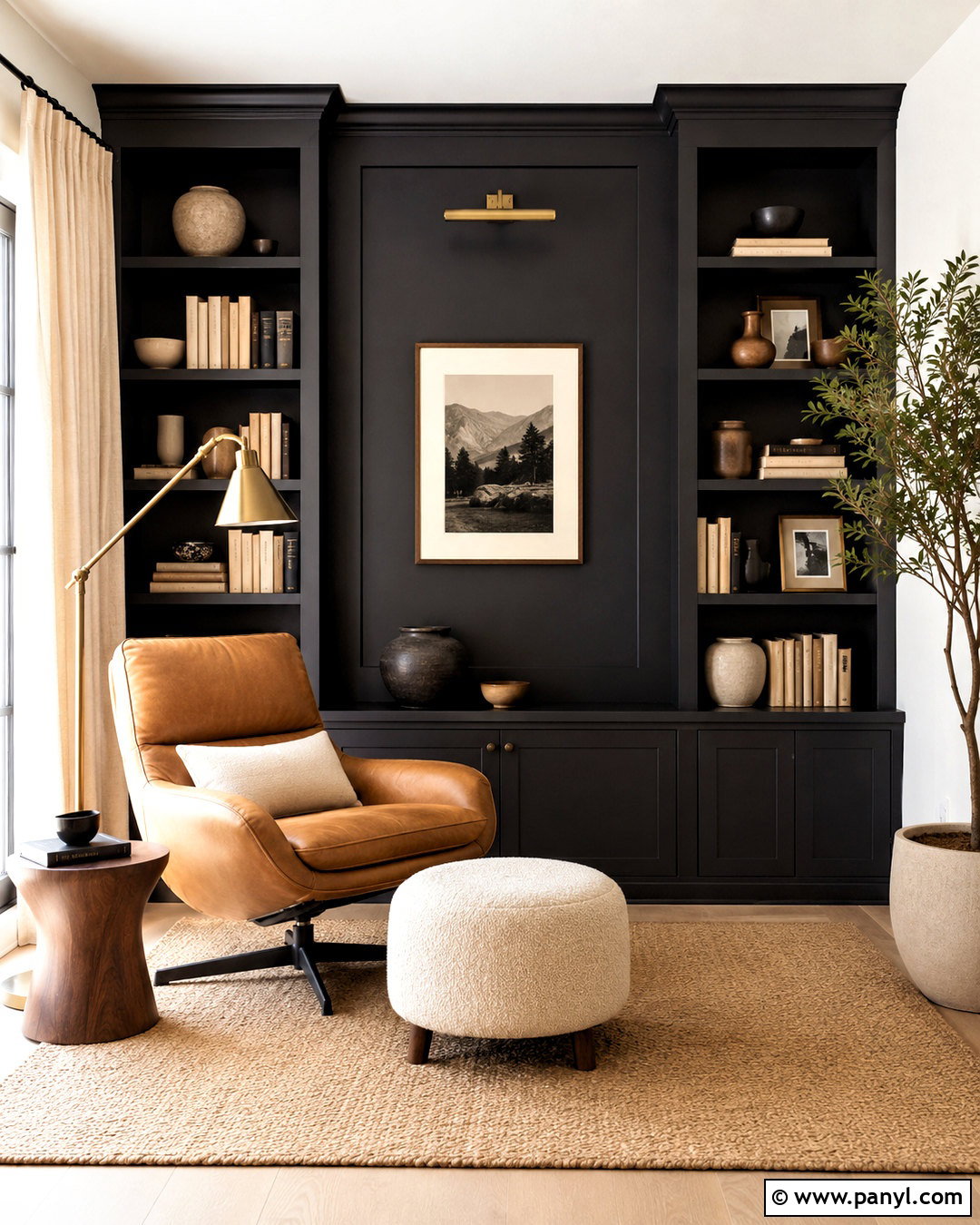
Few combinations feel as inviting as dark wood, comfortable seating, and shelves filled with books. Build floor-to-ceiling walnut bookcases across one wall, including closed cabinets along the bottom to conceal less attractive items. Paint the other walls a muted olive green so the room feels cohesive rather than sharply divided. Position a deep camel leather chair beside a small round table and an adjustable brass reading lamp. A faded red and blue rug will provide color while reinforcing the traditional atmosphere. Add a compact cream sofa if space permits. Picture lights above the shelves can illuminate books and decorative objects without flooding the room. Keep shelf styling varied but controlled, mixing upright books, stacked volumes, ceramics, and framed photographs to create a personal, collected library.
14. Dark Wood Board And Batten Wall
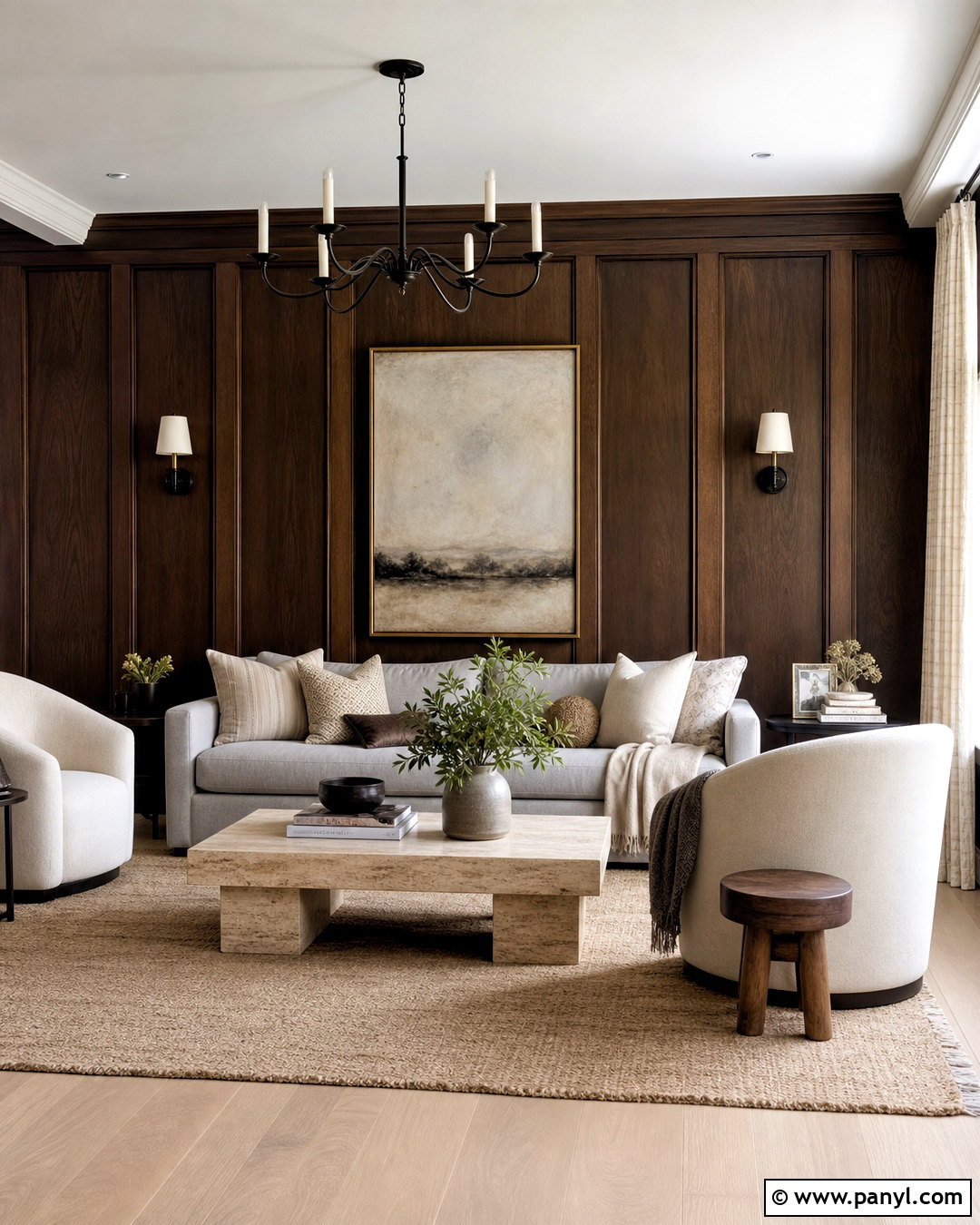
Board and batten offers a structured alternative to flat wood paneling. Apply dark-stained oak boards in wide vertical sections across a living room or bedroom wall, using consistent spacing for a clean appearance. The raised battens create shadows that add depth even when the wood grain is subtle. Pair the wall with a light gray sofa, curved ivory chairs, and a warm beige rug. A black metal chandelier can echo the strong architectural lines without introducing another wood tone. Keep tables simple, choosing travertine, glass, or matte metal finishes. Hang artwork within the wider panel sections so it appears integrated into the layout. Cream curtains and pale flooring will provide enough brightness, allowing the finished room to feel tailored, substantial, and comfortably balanced.
15. Dark Wood Vertical Plank Wall
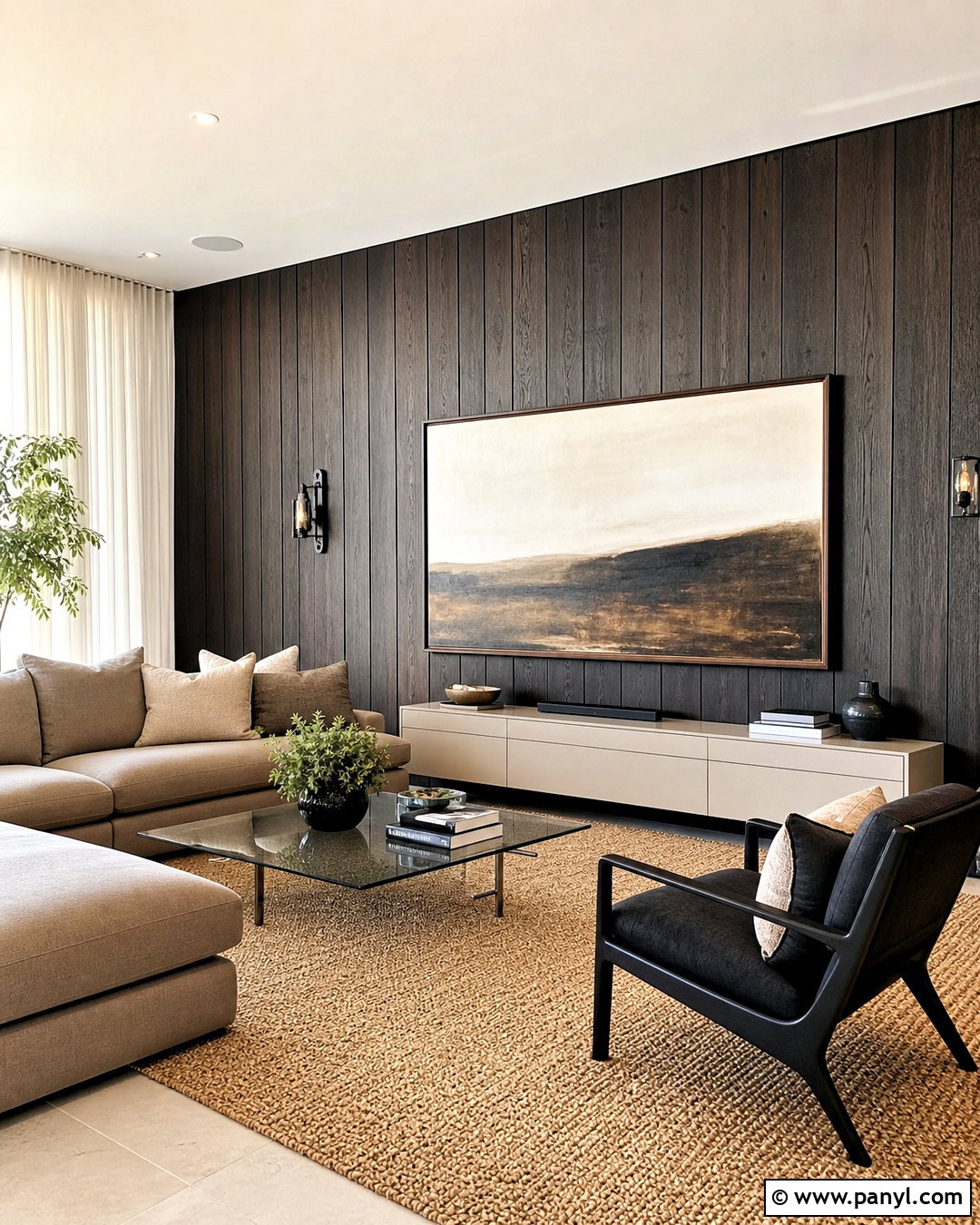
Vertical planks can make a standard-height room appear taller while showcasing the natural variation in dark timber. Select medium-width smoked-oak boards with a matte finish and install them from baseboard to ceiling behind the main seating area. A sand-colored sectional and low cream media cabinet will give the wall room to breathe. Use a chunky woven rug and linen pillows to soften the straight lines. Rather than filling the space with heavy furniture, choose a glass coffee table and one black-framed accent chair. A simple off-white ceiling and concealed curtain track will further emphasize height. Finish with a large horizontal painting to counterbalance the vertical grain. This thoughtful combination creates movement and dimension without relying on ornate moldings or highly decorative accessories.
16. Dark Wood Geometric Wall
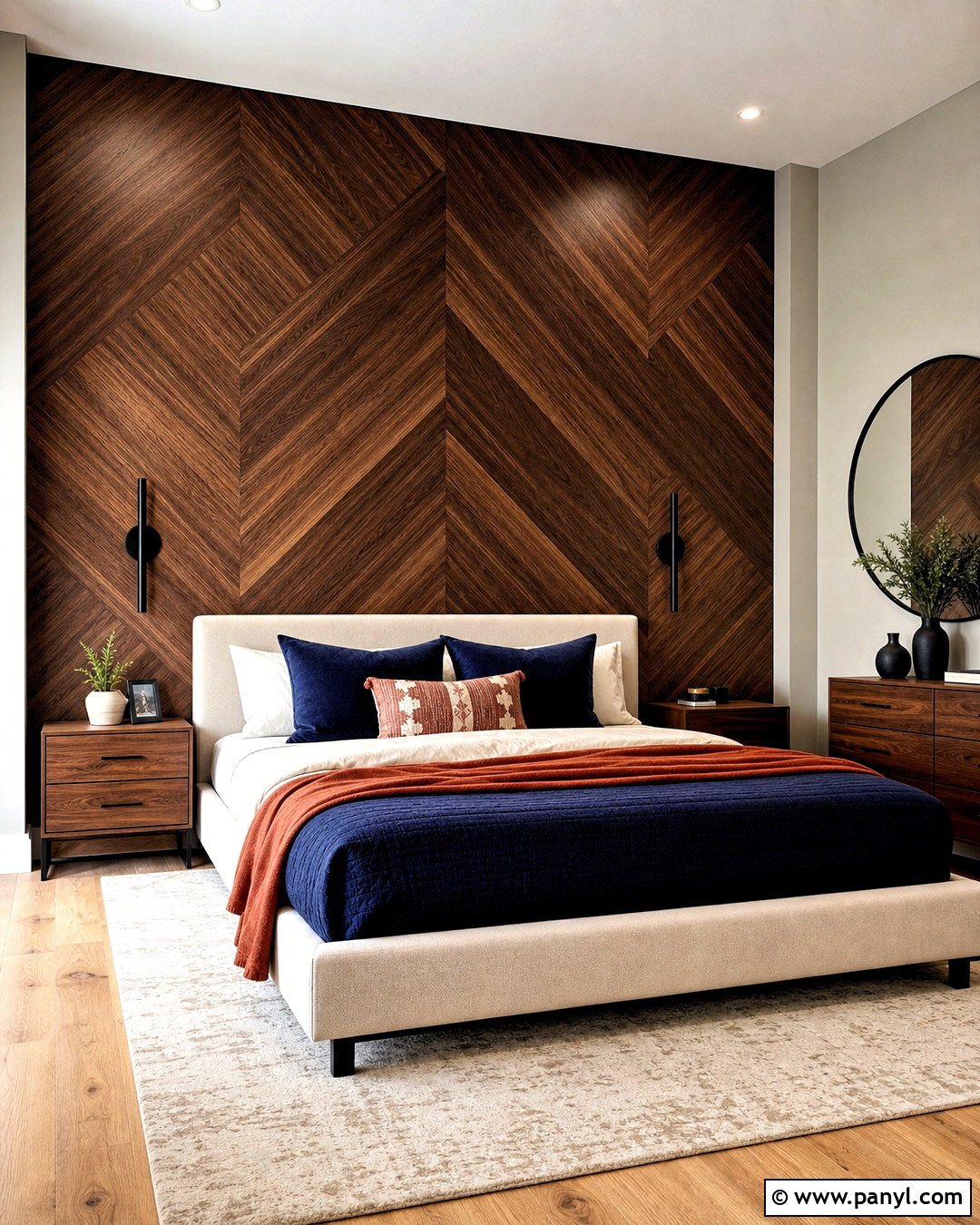
Geometric dark wood paneling can create an artistic focal point when the pattern remains large and uncluttered. Form broad diagonal sections with walnut veneer, alternating the grain direction rather than introducing several stain colors. Place this wall behind a simple cream platform bed or streamlined sofa so its pattern remains visible. Keep surrounding walls soft greige and choose light oak flooring for contrast. Minimal black sconces will emphasize the angles, while rust and navy textiles add controlled color. Avoid placing a gallery wall over the panels because small frames may compete with the geometry. Instead, use one round mirror or leave the surface undecorated. Rounded furniture and a soft wool rug will balance the sharp lines, producing a modern room that feels creative but still comfortable.
17. Dark Wood Rustic Bedroom
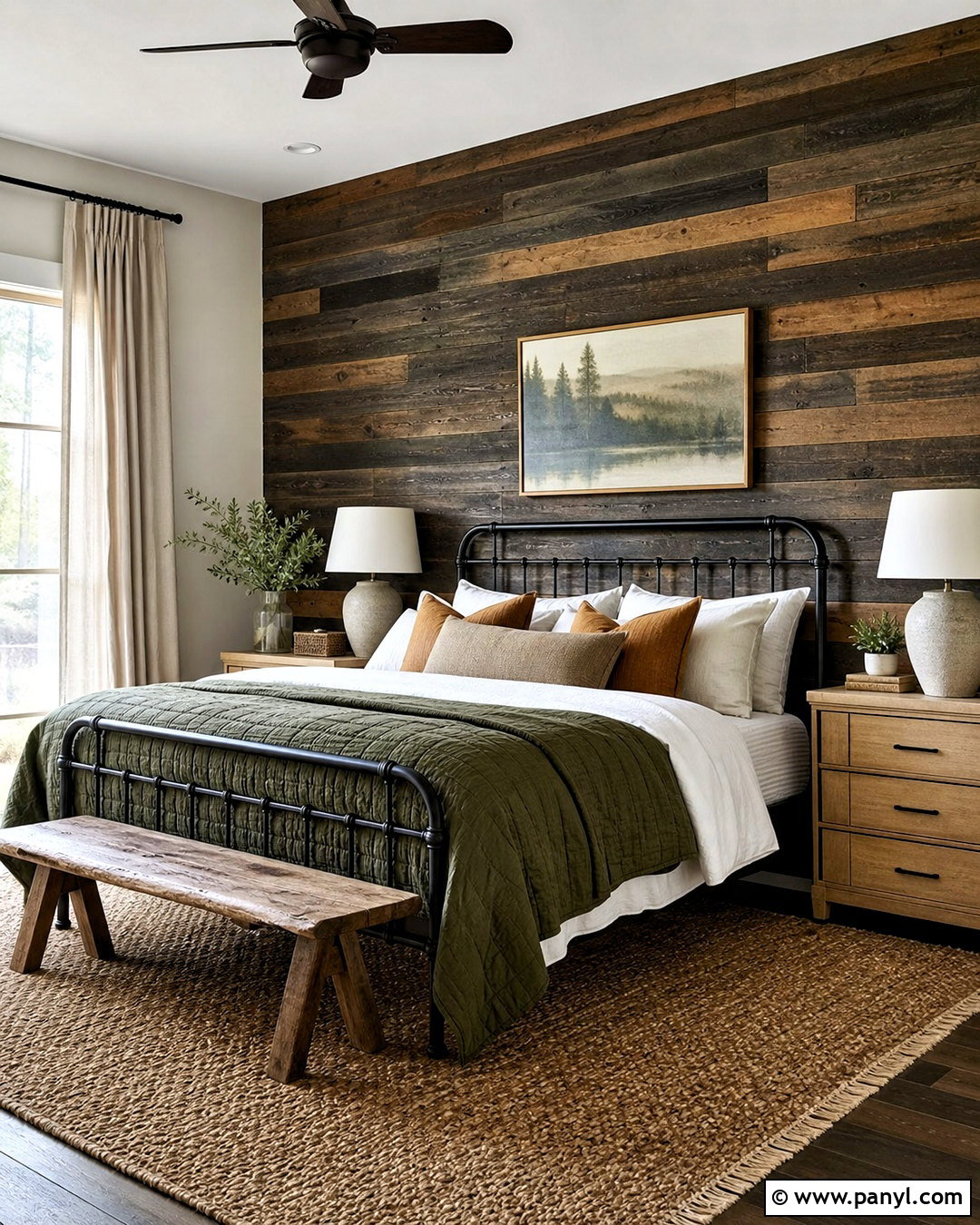
Dark wood does not need to look sleek or formal. Reclaimed planks with visible knots and color variation can create a relaxed bedroom inspired by nature. Install the boards horizontally behind a black iron or upholstered linen bed. Dress the bed in white cotton, a forest green quilt, and warm tan pillows. Use simple oak nightstands that are slightly lighter than the wall, then add ceramic lamps with off-white shades. A woven jute rug and linen curtains will reinforce the natural texture. Keep the remaining walls creamy white and avoid filling the room with additional rustic signs or distressed decorations. One framed landscape and a wooden bench at the foot of the bed are enough. The complete look feels genuine, calm, and comfortable rather than heavily themed.
18. Dark Wood Japandi Living Room
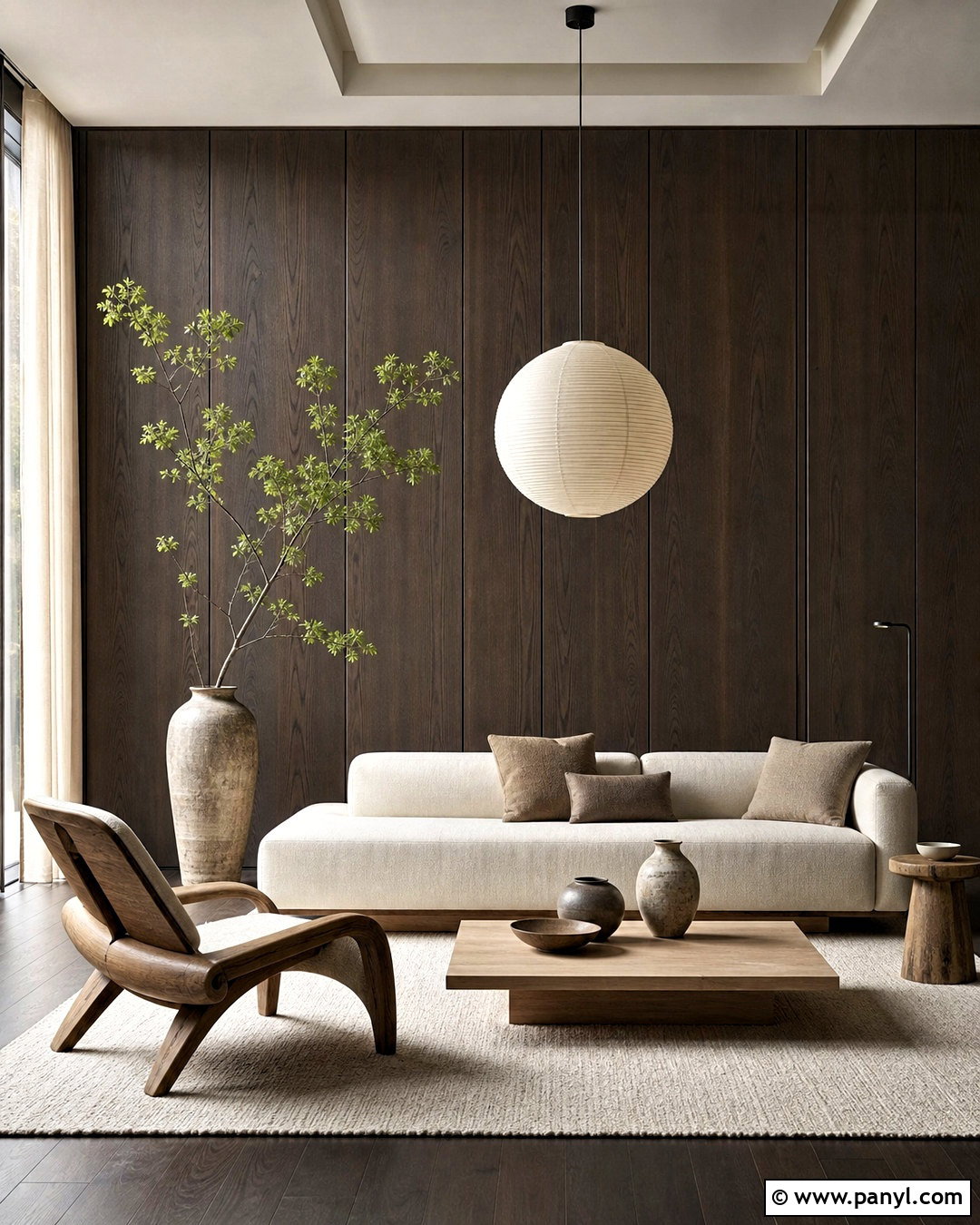
A Japandi room pairs the grounding quality of dark wood with calm shapes and carefully edited furnishings. Cover one feature wall in smooth smoked oak with a consistent vertical grain. Place a low oatmeal sofa in front of it, leaving open space around each side. Add a pale ash coffee table, one sculptural lounge chair, and a cream wool rug with minimal pattern. Handmade ceramic vessels, a paper lantern pendant, and a single branch in a tall vase provide organic detail. Keep the remaining walls warm white and use natural linen window panels. Storage should be closed and visually quiet to preserve the uncluttered atmosphere. The contrast between dark paneling and pale furnishings creates depth, while the restrained arrangement keeps the entire living room peaceful, warm, and practical.
19. Dark Wood And White Living Room
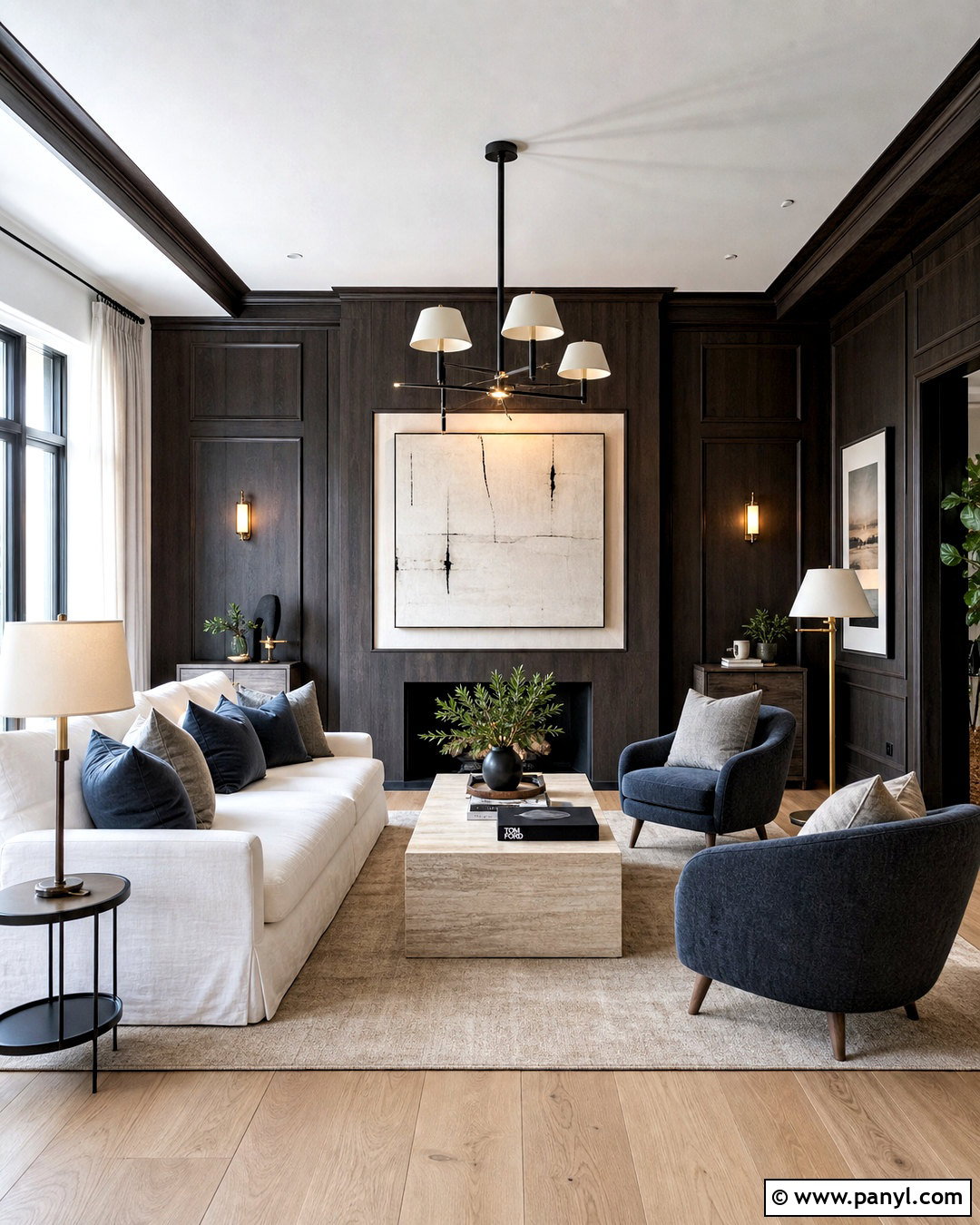
High contrast is one of the easiest ways to make dark wood walls feel fresh. Install deep espresso-toned panels behind a large white slipcovered sofa, then repeat white across the ceiling, curtains, and selected accessories. Light natural-oak flooring provides a softer transition than either very dark or stark white floors. Place two blue-gray armchairs opposite the sofa and center the arrangement around a pale stone coffee table. Black metal details can outline the room without adding visual weight. Use several lighting sources, including a floor lamp, table lamp, and directional ceiling fixtures, to brighten the panel texture. Large-scale artwork with white margins will stand out clearly against the wood. The completed room feels crisp and modern while retaining the comfort and warmth associated with natural timber.
20. Dark Wood And Green Living Room
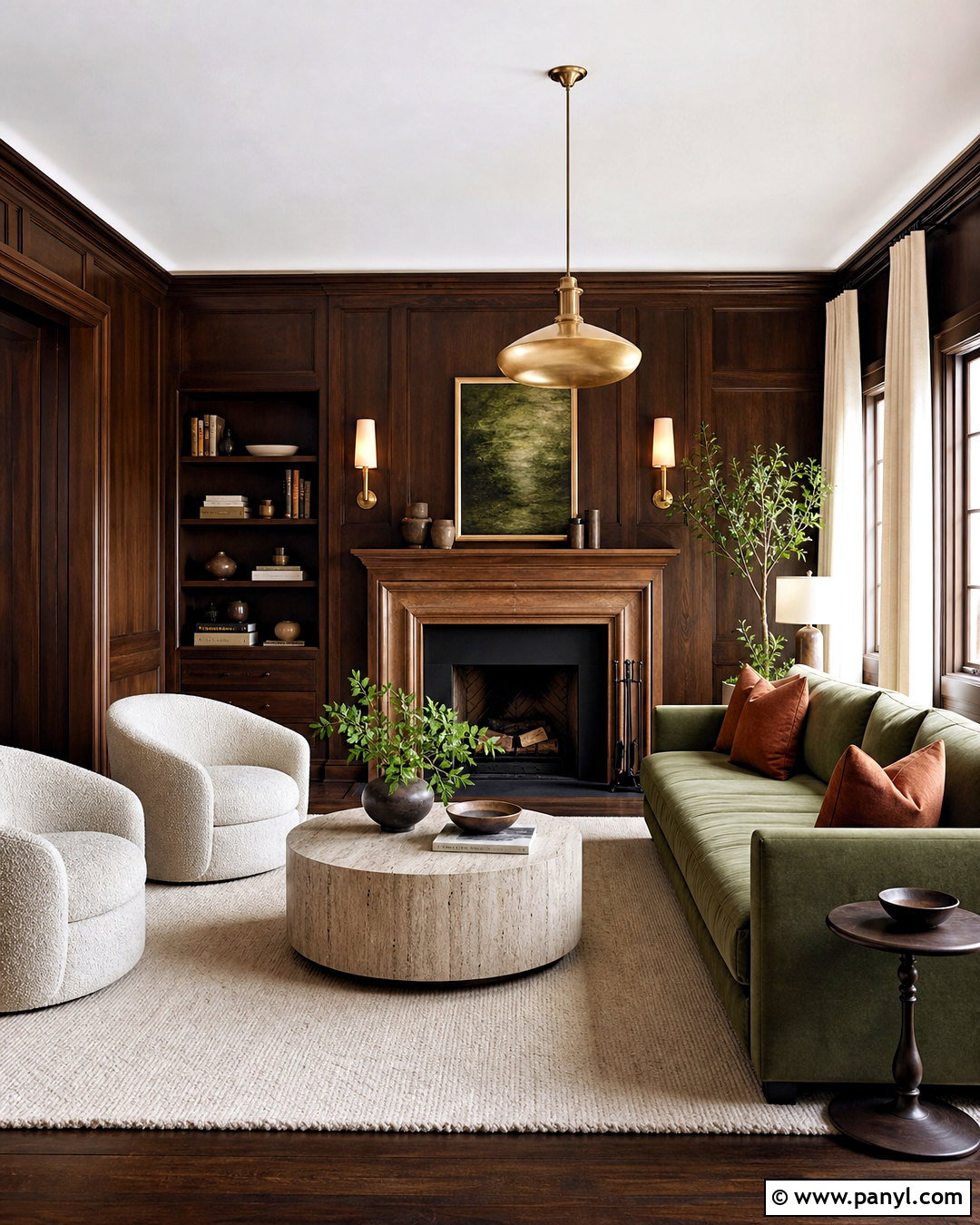
Deep green upholstery brings out the natural warmth of dark wood and gives a living room a rich but approachable color story. Use walnut panels across the fireplace and adjoining walls, then position a moss green sofa as the central seating piece. Add cream boucle chairs, a light wool rug, and a round travertine coffee table to prevent the palette from becoming too heavy. Bronze sconces and a simple brass pendant can enhance the wood’s warm undertones. Introduce plants sparingly because the sofa already carries the main green accent. Pale curtains and a white ceiling will preserve brightness, while rust-colored pillows offer a small dose of contrast. This layered combination produces a complete, grounded room that feels comfortable in every season without depending on passing decorative themes.
Conclusion:
Successful dark wood interiors depend on contrast, proportion, and thoughtful lighting. Instead of filling a room with matching brown finishes, combine the wall treatment with pale fabrics, stone, glass, metal, or softly painted surfaces. Accent walls work well in compact rooms, while larger spaces can support full-height paneling, built-in storage, or immersive library schemes. Always consider the direction of the grain, panel scale, existing floor color, and available daylight before selecting a finish. Matte stains generally emphasize natural texture without adding distracting glare. Most importantly, furnish the whole room as one balanced composition. These 20 dark wood walls show how rich timber can feel modern, warm, practical, and suitable for many different homes.

Related Ideas and Inspiration:
Leave a Reply