
Searching for **20 home painting ideas living room ideas** can quickly become overwhelming when every color looks different under changing light. The best living room palette does more than refresh the walls. It connects the furniture, flooring, trim, lighting, and decor into one comfortable space. Before choosing paint, notice the room’s natural light, fixed finishes, and open sightlines. Test large samples on several walls and view them throughout the day. Also decide whether you want the room to feel brighter, warmer, calmer, or more dramatic. The complete looks below combine practical paint treatments with coordinated furnishings and materials, making them easier to recreate in homes of different sizes. Explore these **20 home painting ideas living room ideas**.

1. Warm White Living Room Paint
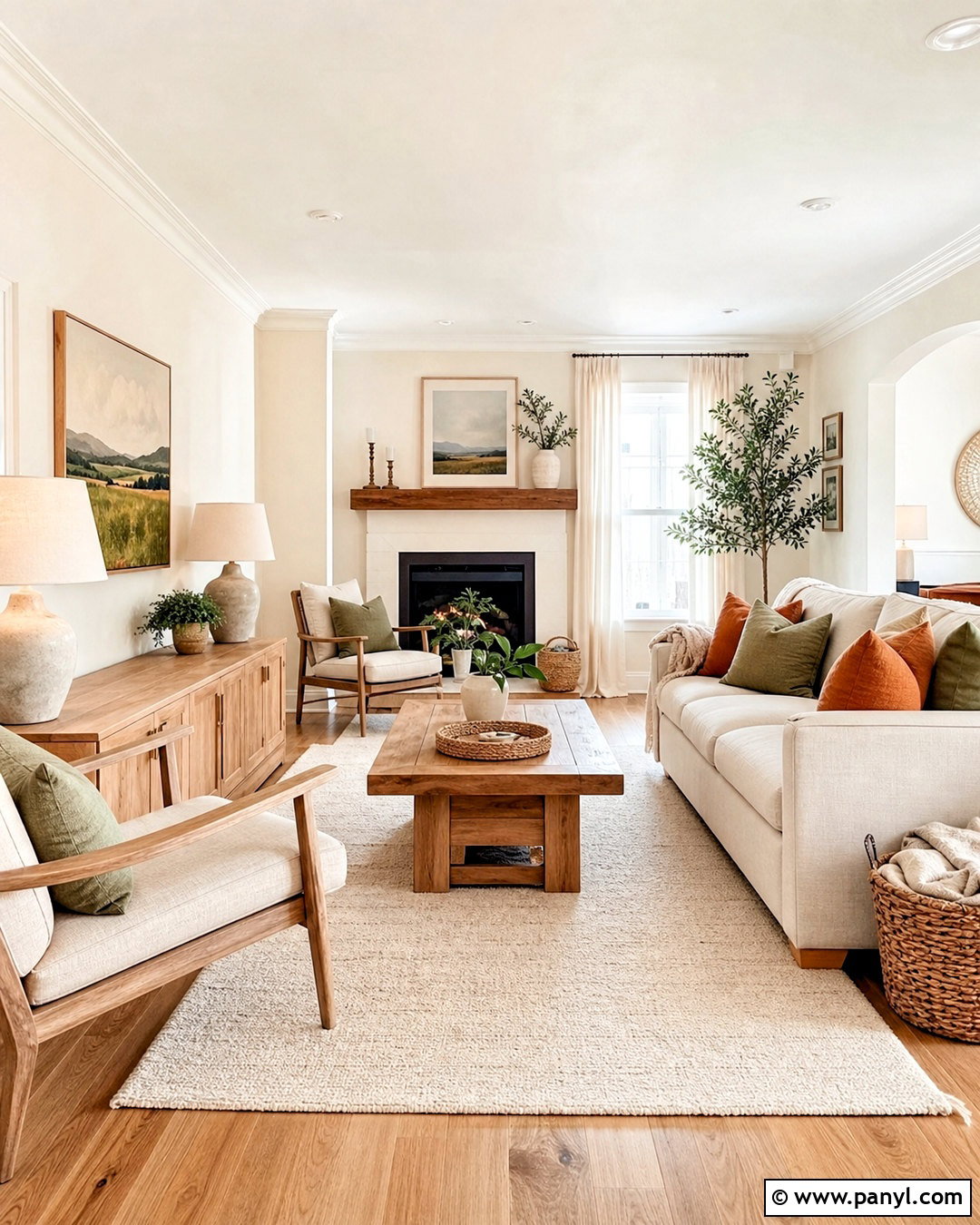
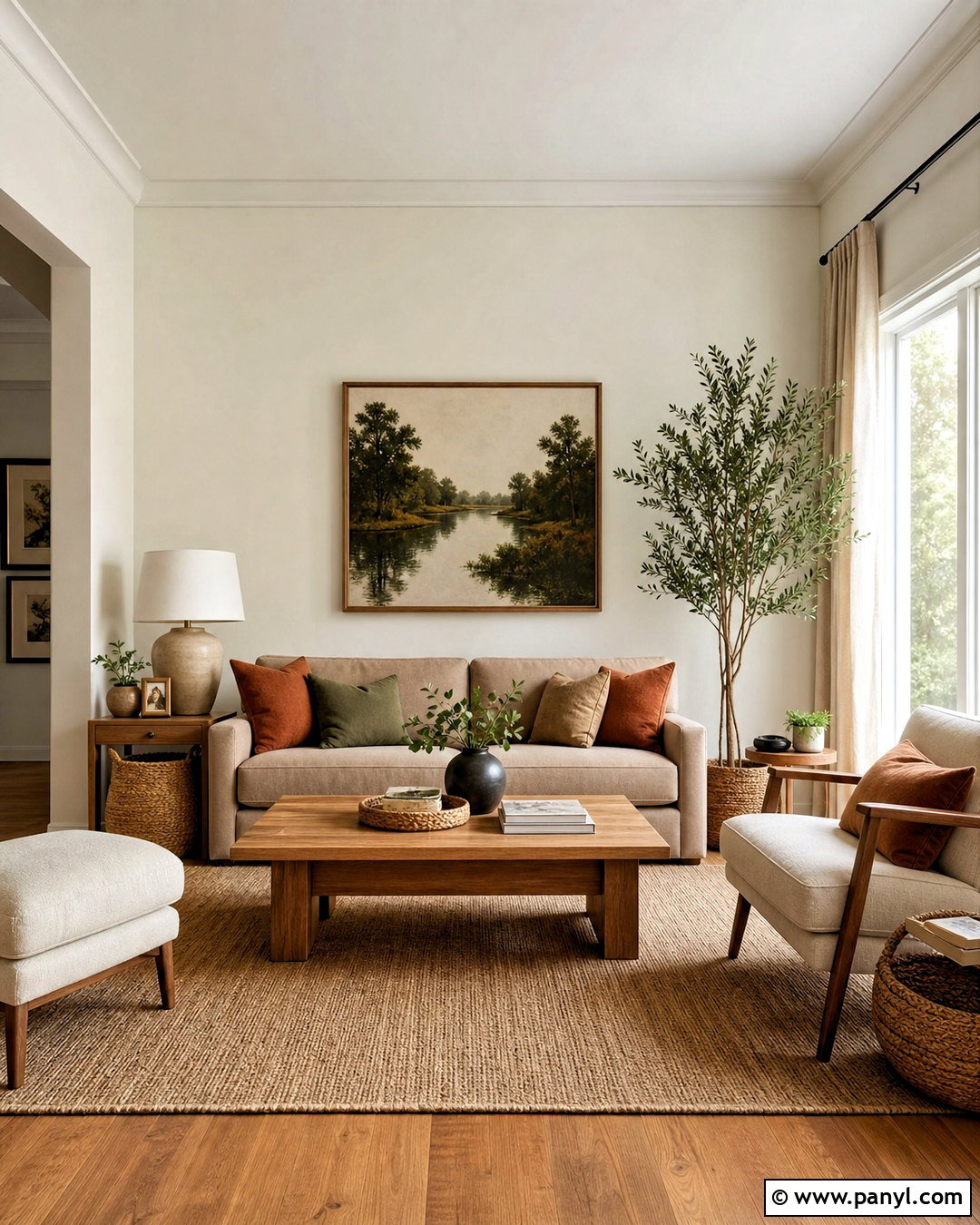
Warm white paint creates a clean living room without making it feel cold or unfinished. Choose a creamy white with subtle beige or yellow undertones, then repeat that warmth through light oak furniture, woven baskets, and an ivory wool rug. A soft oatmeal sofa keeps the room bright, while rust, olive, or camel pillows add grounded color. Paint the walls and ceiling in closely related whites to reduce harsh visual breaks. Crisp white trim can still provide definition around windows and doors. Complete the arrangement with linen curtains, ceramic table lamps, framed landscape art, and a few leafy plants. This palette works especially well when the room has limited daylight or connects to a warm-toned kitchen and dining area.
2. Soft Greige Living Room Paint
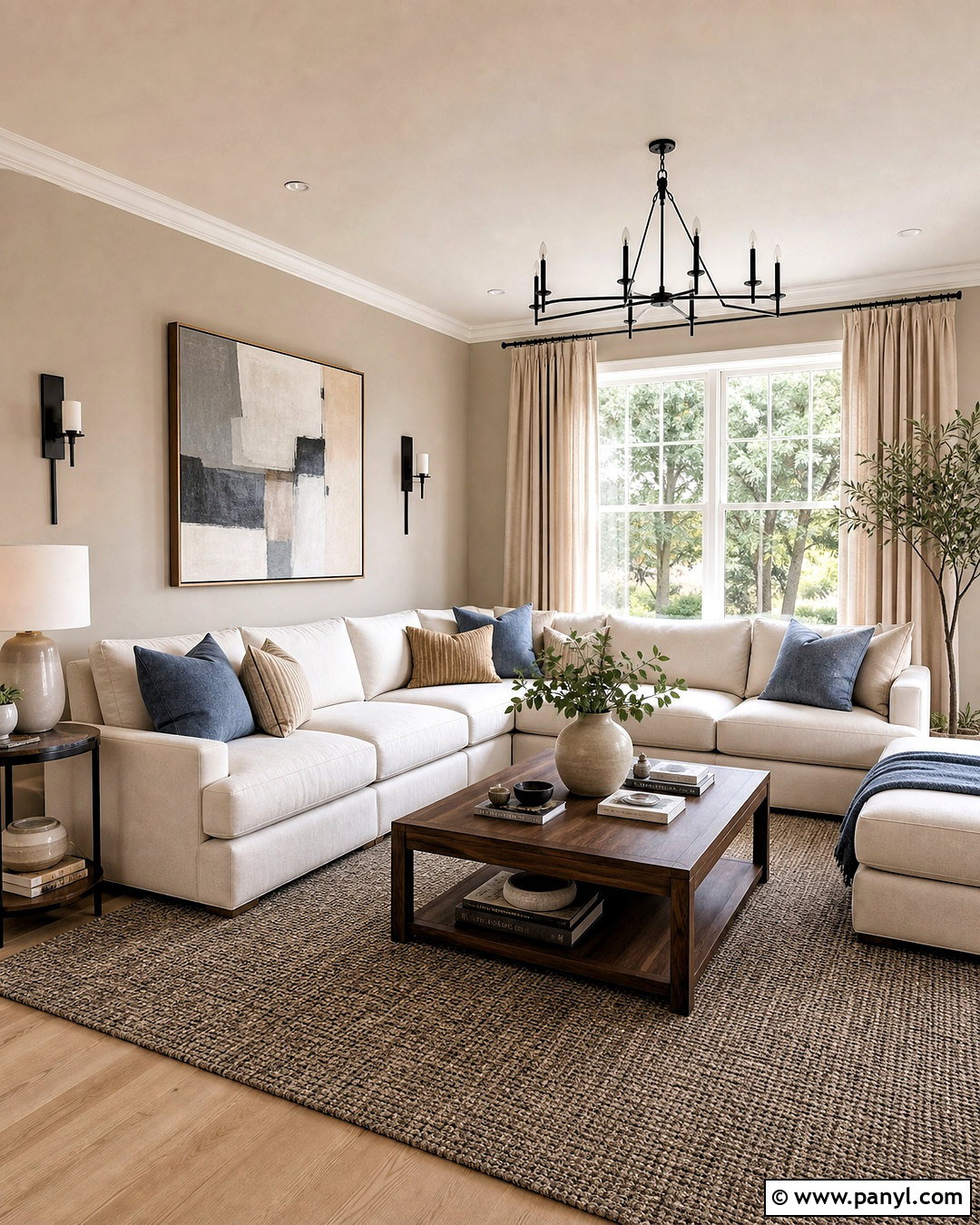
Soft greige offers the flexibility of gray with the welcoming warmth of beige. Select a balanced shade that complements the room’s flooring rather than turning noticeably pink, purple, or green. Paint every main wall greige and use warm white on the ceiling, baseboards, and window trim. Create a relaxed seating area with a cream sectional, walnut coffee table, and textured taupe rug. Black metal lighting and picture frames provide definition without making the palette feel heavy. Add muted blue, clay, and charcoal accents through pillows and artwork. This complete living room look suits open floor plans because greige transitions smoothly into nearby neutral spaces. Sampling is important, since surrounding woods and natural light can strongly affect how the color appears.
3. Sage Green Living Room Paint
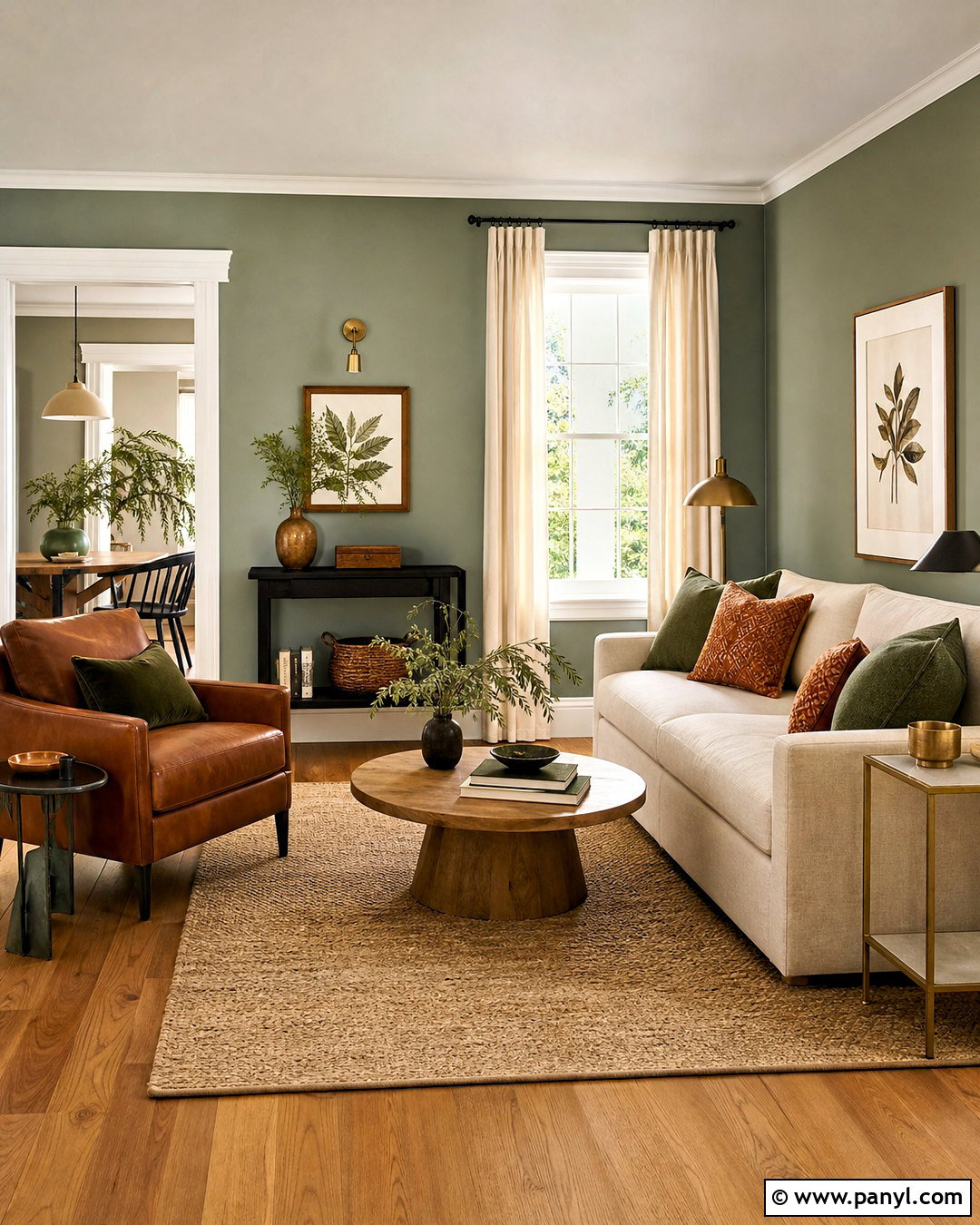
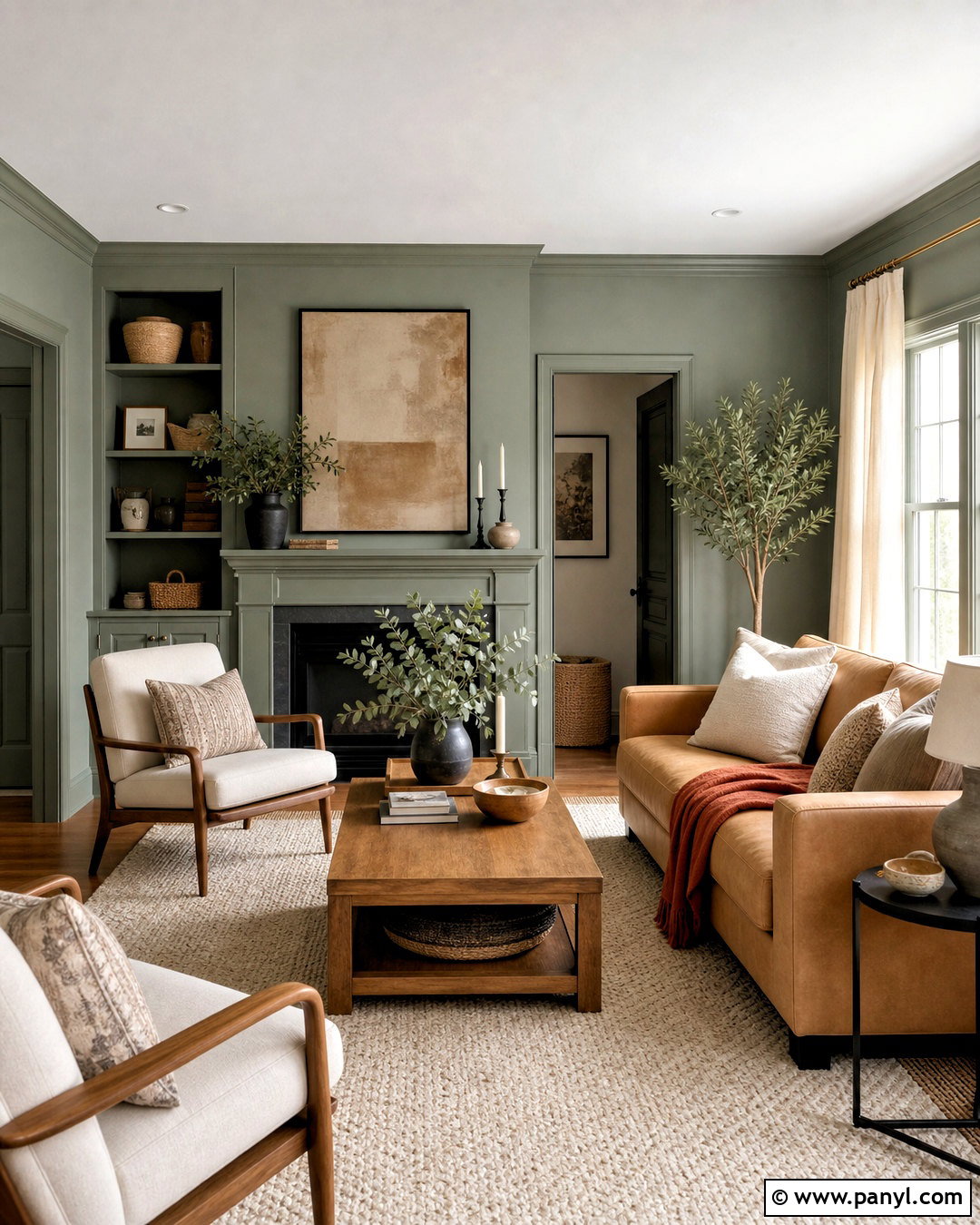
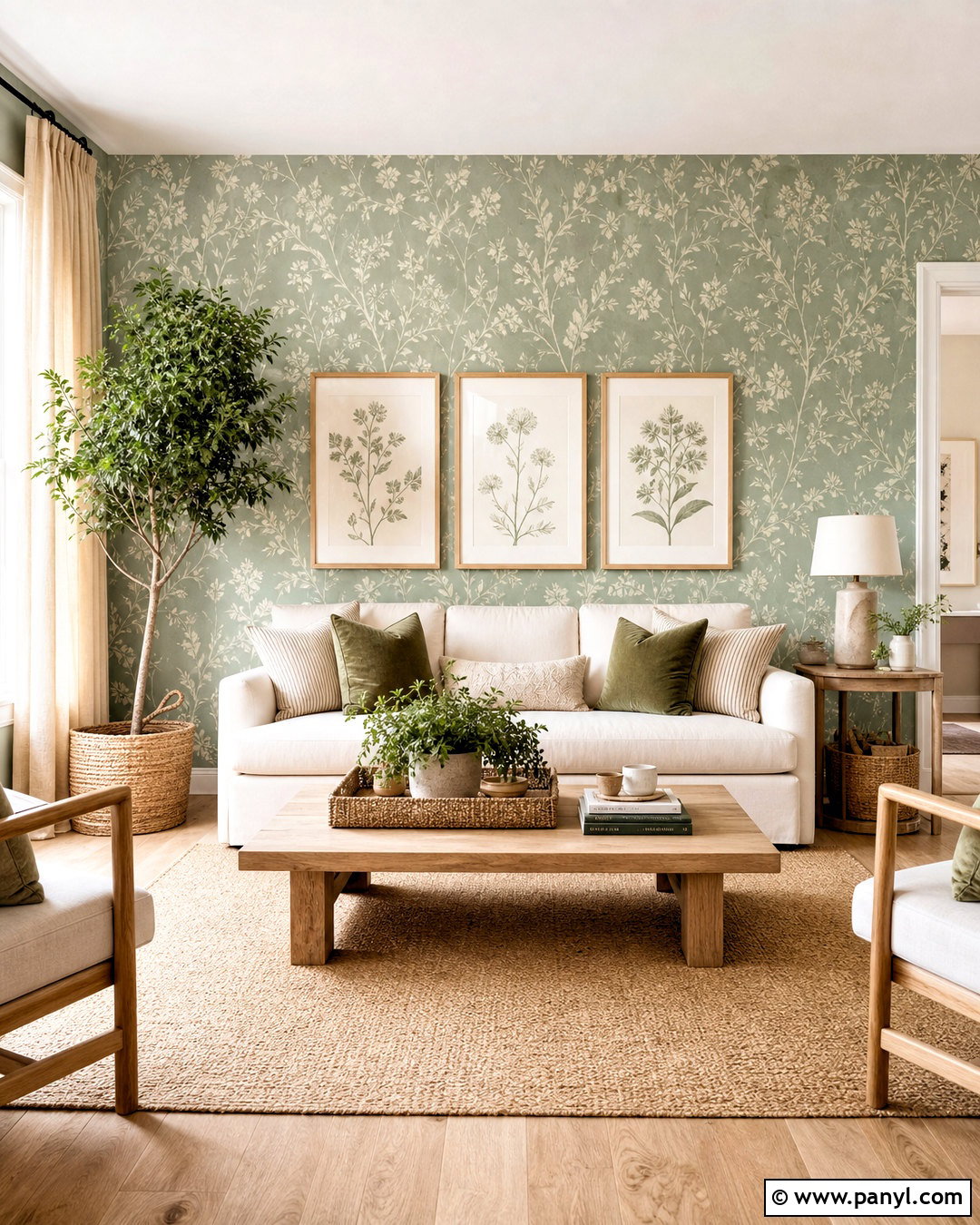
Soft sage green brings gentle color into a living room while remaining easy to decorate around. Cover the walls in a muted green with gray undertones, then balance it with warm white trim and a natural oak floor. A beige linen sofa, cognac leather chair, and round wood coffee table create a comfortable organic foundation. Add cream curtains, a jute-blend rug, and pillows in darker olive, faded rust, and botanical prints. Brass lamps provide a warm contrast against the cool green walls. Keep the artwork simple, using landscapes, pressed botanicals, or abstract pieces with earthy colors. This scheme feels especially cohesive when plants are arranged near windows and natural materials appear throughout the room instead of being limited to one decorative corner.
4. Deep Navy Living Room Accent Wall
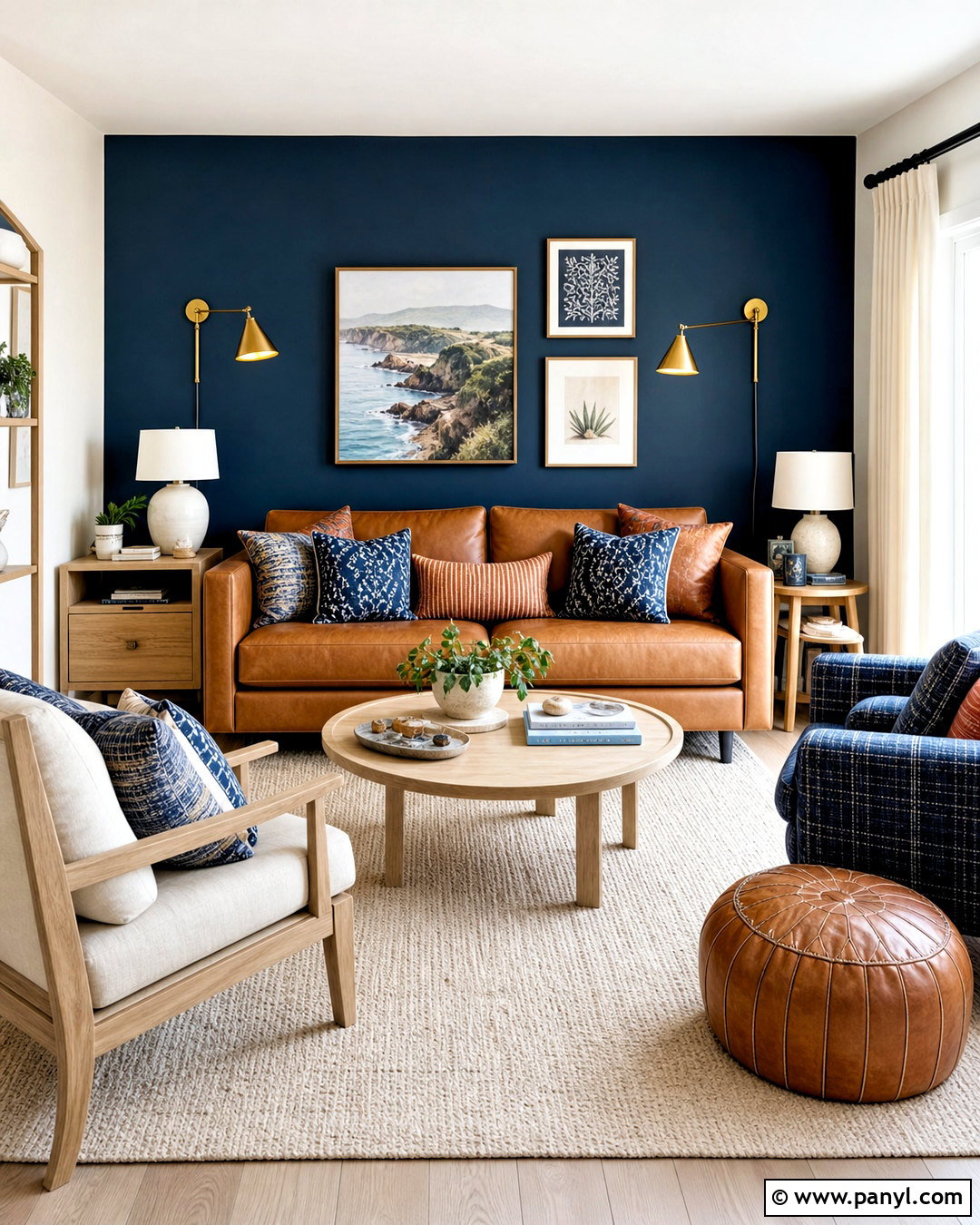
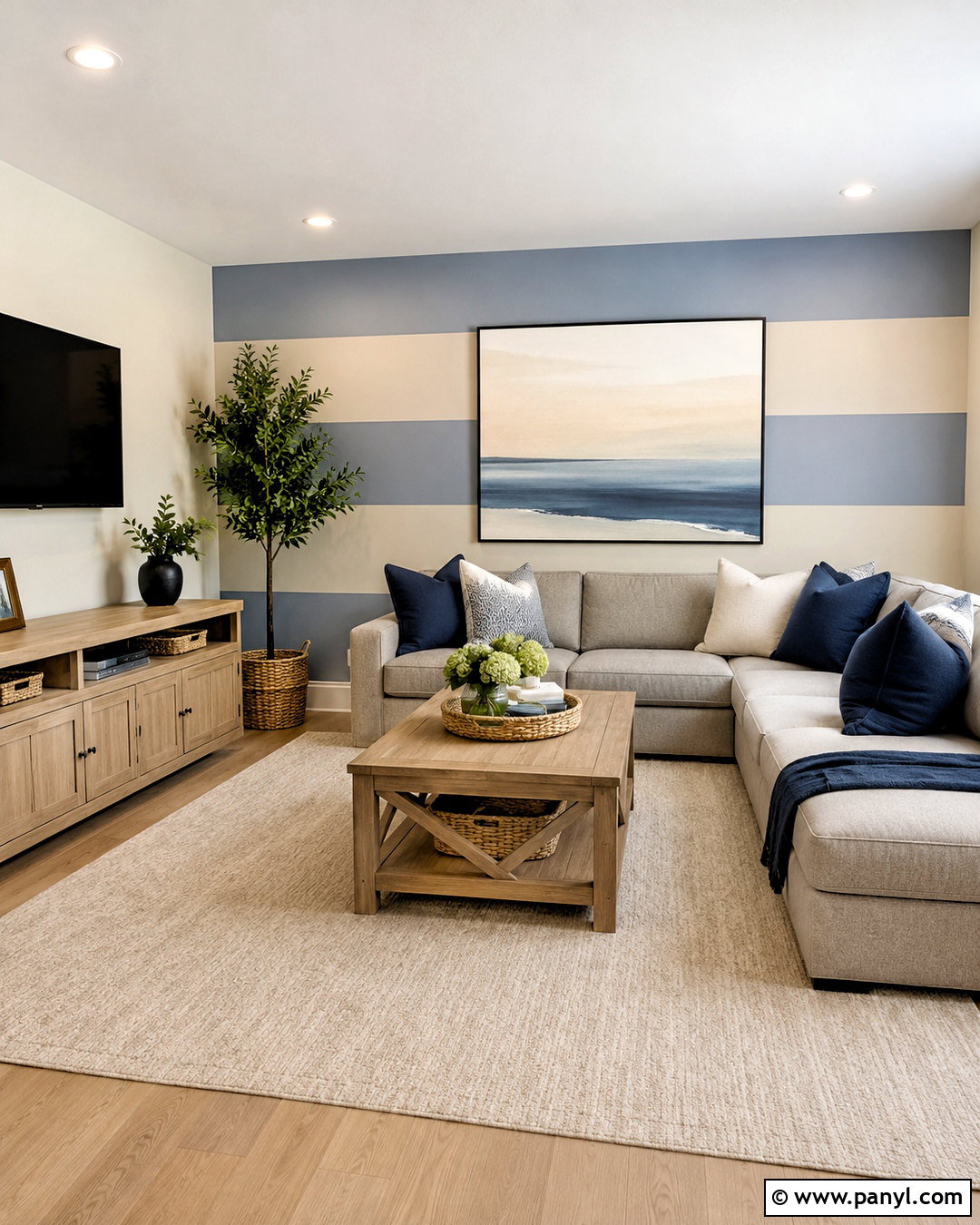
A deep navy accent wall can anchor the living room while allowing the remaining surfaces to stay light. Place the dark color behind the sofa, fireplace, or main media console so it supports a clear focal point. Paint the other walls soft warm white and repeat navy in a patterned rug or a few pillows. A camel leather sofa, pale oak tables, and cream curtains prevent the room from becoming too dark. Use brushed brass sconces or lamps to add warmth and gentle shine. Choose artwork with white, rust, and blue details so the feature wall feels connected to the whole room. This design works best when the navy wall is visually balanced by generous lighting, uncluttered furniture, and lighter materials across the floor.
5. Teal Color Drenched Living Room
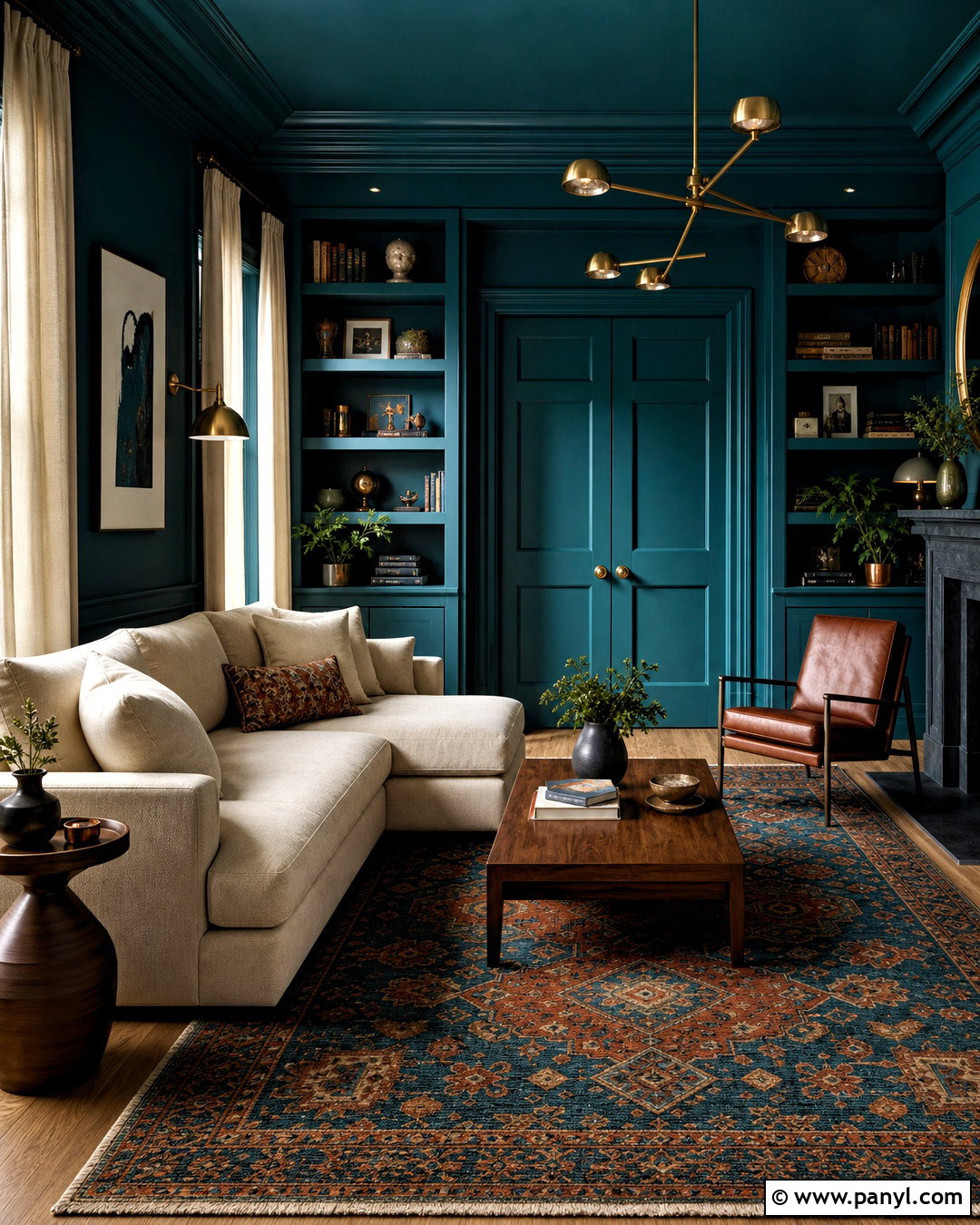
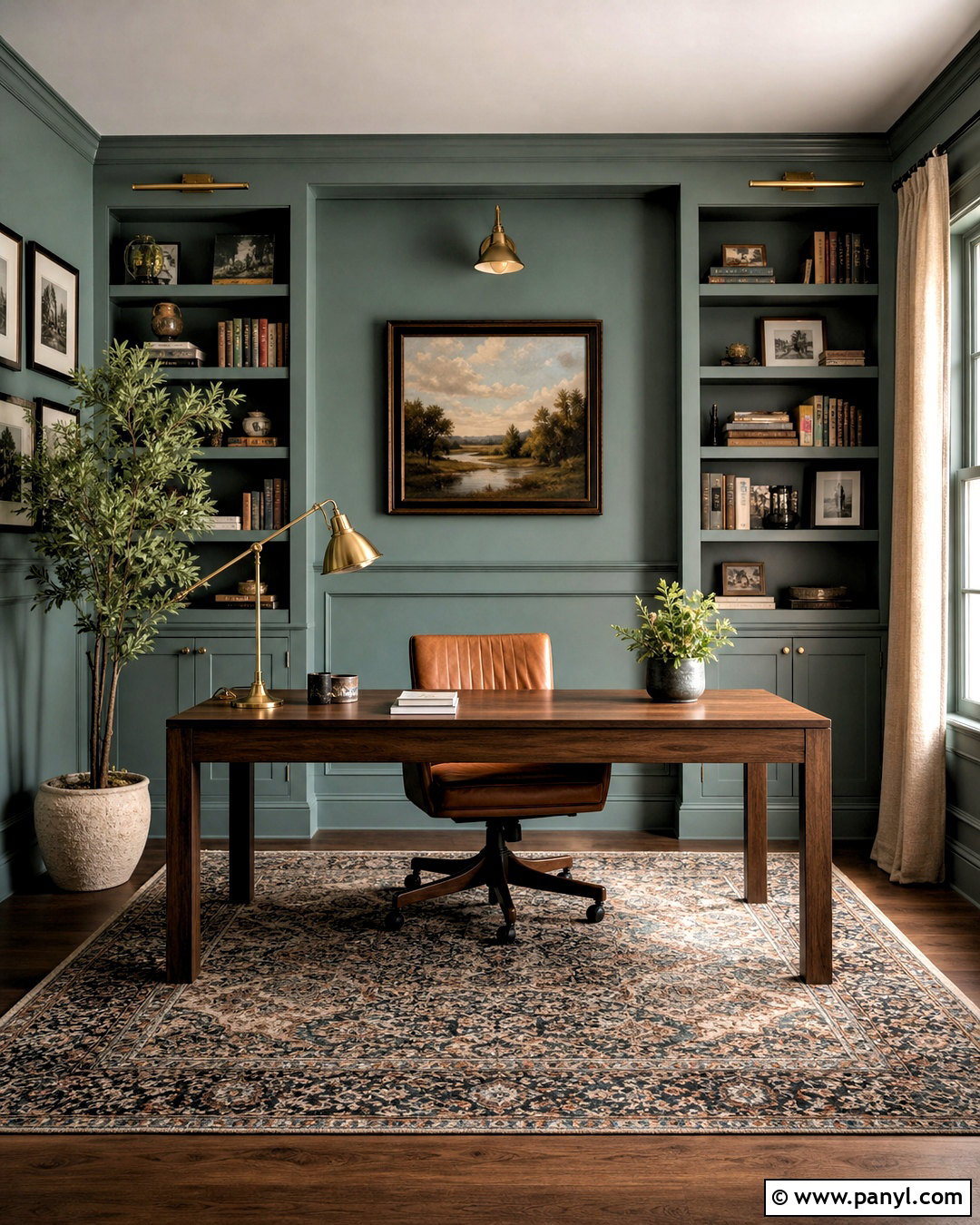
Color drenching transforms a living room by carrying one shade across the walls, trim, doors, and ceiling. A medium or deep teal produces an immersive result while still working with wood, cream, brass, and rust accents. Use a matte or low-sheen finish on the walls and ceiling, then apply a more durable satin finish to the trim and doors. Furnish the room with a cream sofa, walnut tables, and a patterned rug containing teal, burnt orange, and ivory. Add sculptural brass lighting and pale linen curtains for contrast. Built-in shelving can be painted the same color so it blends into the architecture. This complete treatment looks intentional in small rooms, libraries, and cozy living spaces where strong white trim could create distracting visual boundaries.
6. Terracotta Living Room Paint
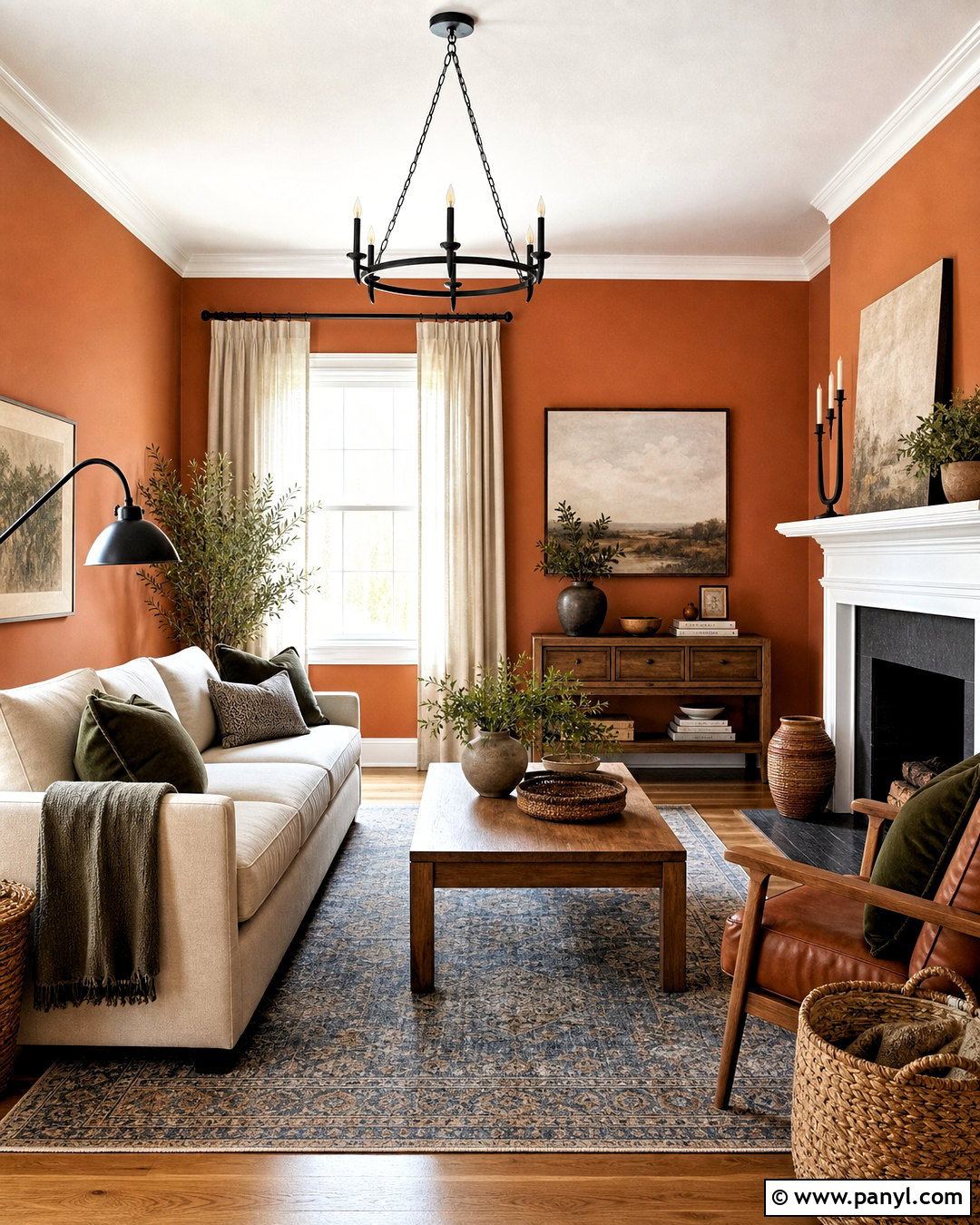
Terracotta walls can make a living room feel sun-warmed, grounded, and inviting. Choose a softened clay tone rather than a highly saturated orange, especially if the room receives strong afternoon light. Pair the walls with creamy trim, a light beige sofa, and medium-tone wood furniture. A faded blue rug creates a cooling contrast, while olive pillows and linen curtains support the earthy palette. Add black metal accents sparingly through a floor lamp, fireplace tools, or slim picture frames. Handmade pottery, woven baskets, and textured artwork reinforce the natural character without turning the space into a theme. For a balanced finish, leave the ceiling warm white and use plenty of pale upholstery so the painted walls remain the strongest visual element without overwhelming the room.
7. Dusty Blue Living Room Paint
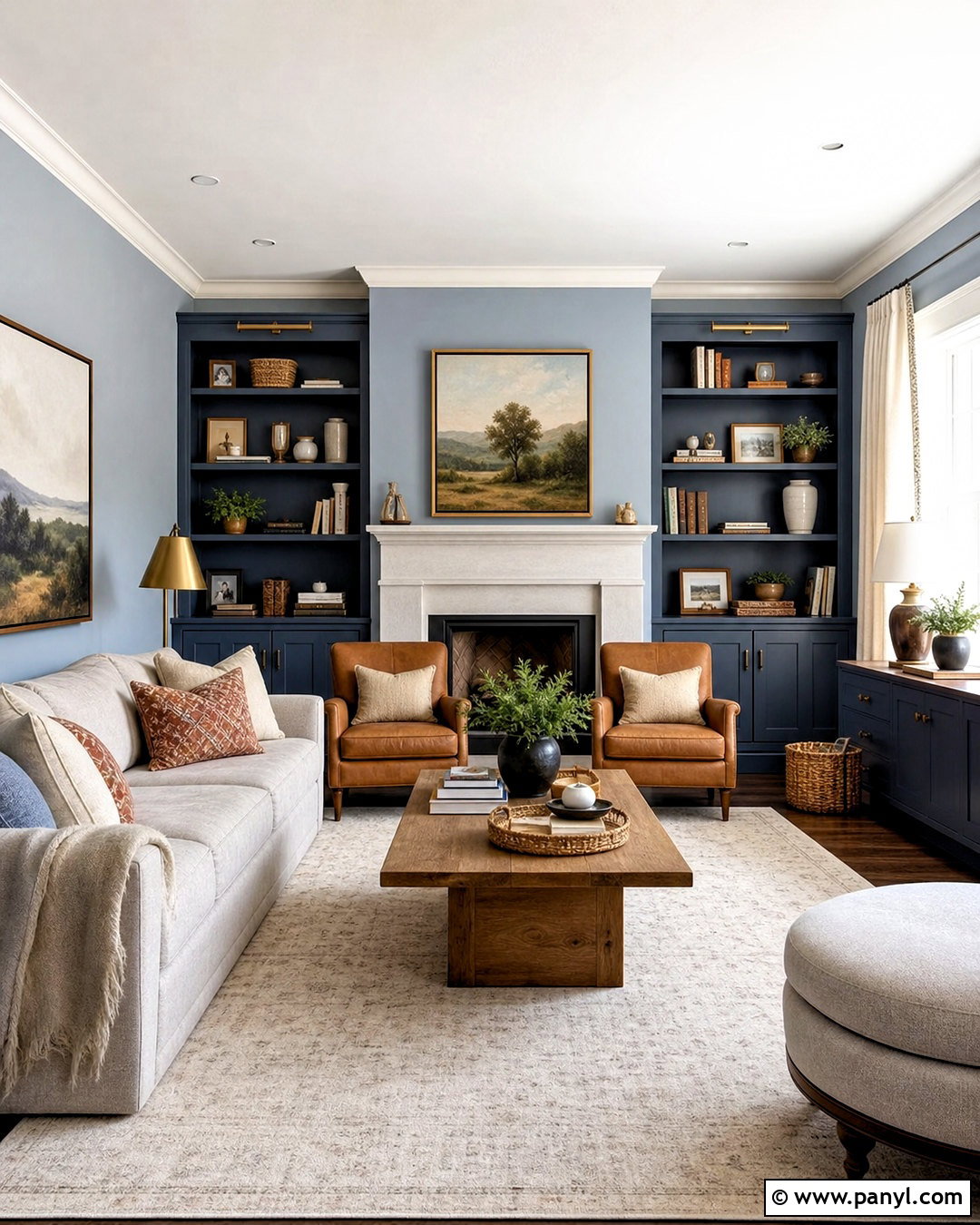
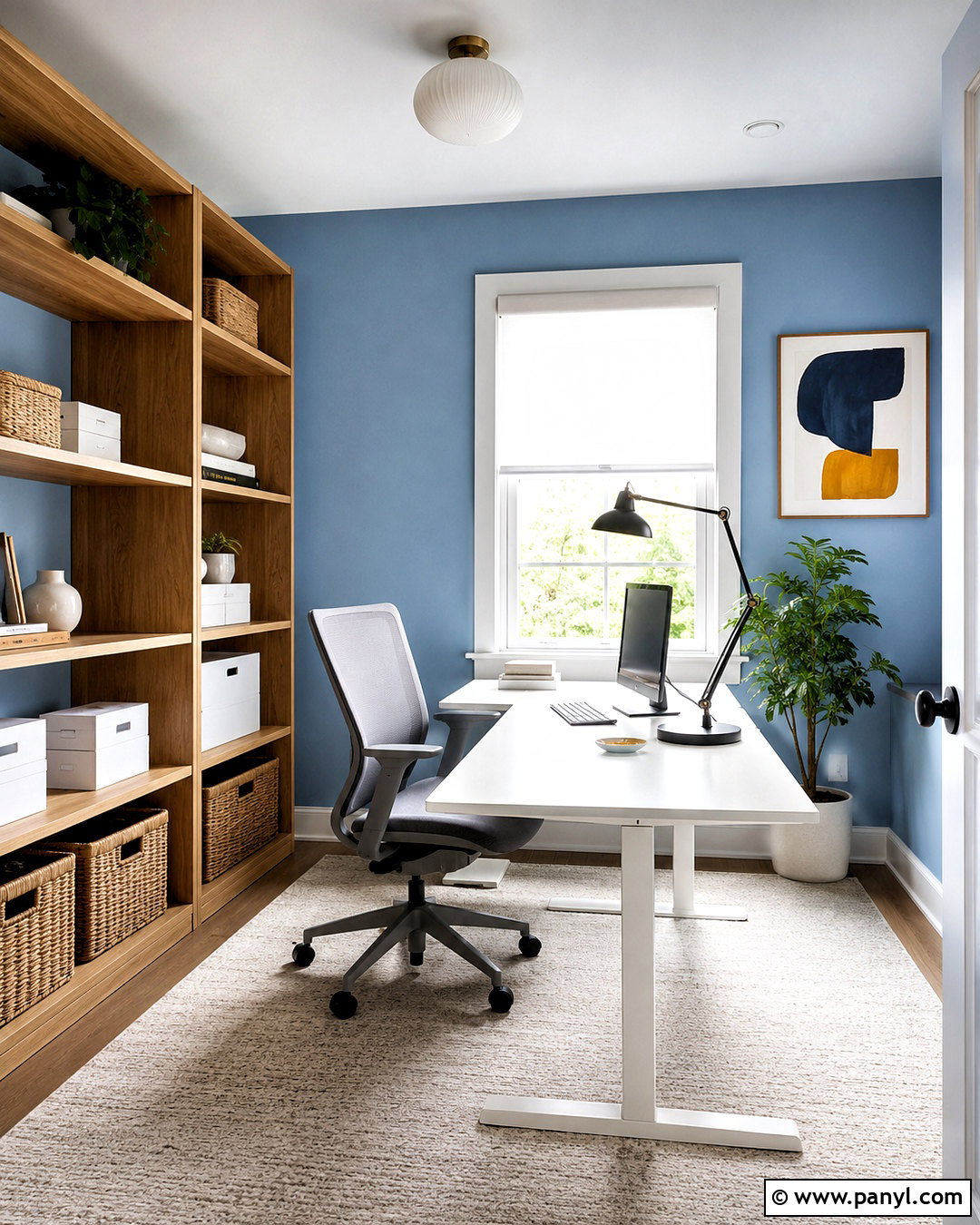
Dusty blue paint creates a calm living room that feels colorful but not overly bright. Look for a softened blue with a touch of gray, which will coordinate easily with warm woods and neutral upholstery. Paint the walls blue, keep the trim creamy white, and introduce a slightly deeper blue on built-in cabinetry or the fireplace surround. A light gray sofa, oak coffee table, and ivory rug form a relaxed base. Bring in warmth with tan leather, antique brass, and muted coral pillows. Simple linen curtains allow natural light to soften the wall color throughout the day. Complete the look with coastal landscapes, abstract art, and ceramic accessories, avoiding obvious nautical decorations so the room remains versatile, modern, and suitable for year-round use.
8. Plaster Pink Living Room Paint
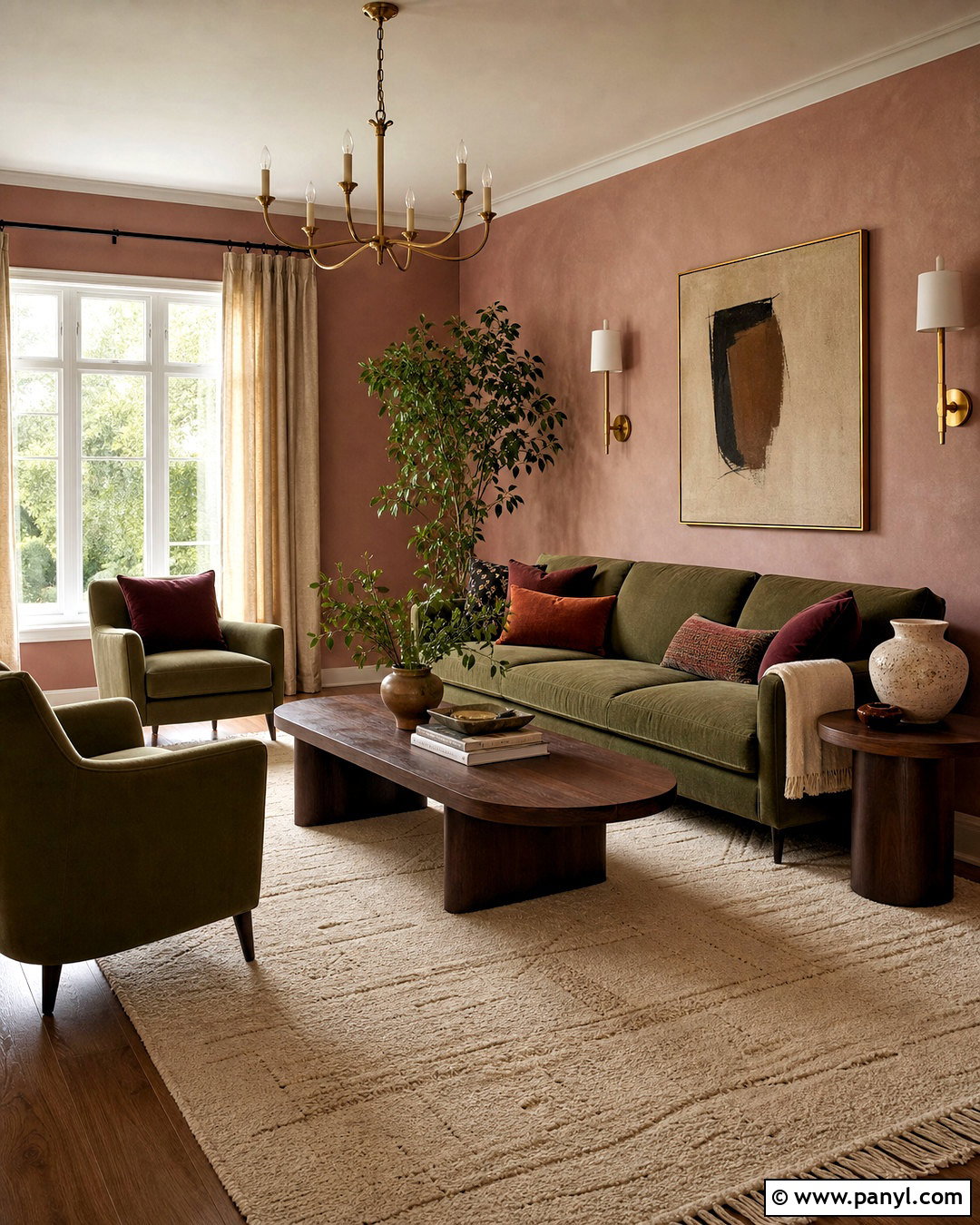
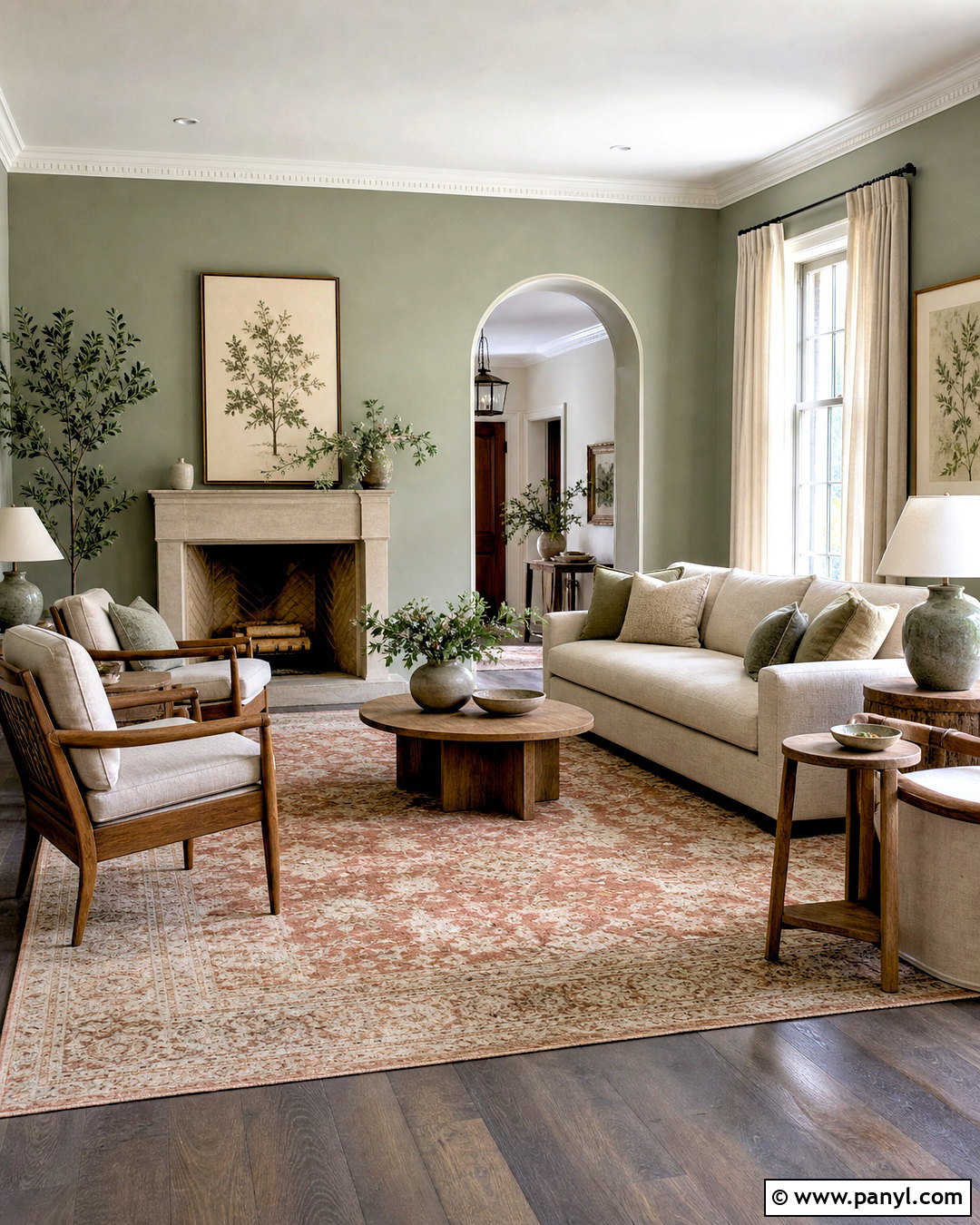
Plaster pink is a subtle alternative to beige because it adds warmth without making the room look overly sweet. Select a muted, chalky pink with brown or gray undertones and paint all four walls for an even, enveloping effect. Pair it with a moss green sofa or olive armchairs to create an earthy contrast. Use walnut tables, natural linen curtains, and a cream textured rug to keep the room sophisticated. Burgundy, rust, and dusty rose accents can appear in small amounts through pillows and artwork. Black or aged brass lighting gives the pale walls stronger definition. Finish the space with sculptural pottery and simple greenery. The result is a complete living room palette that feels soft, personal, and comfortable while supporting both vintage and contemporary furniture.
9. Chocolate Brown Living Room Paint
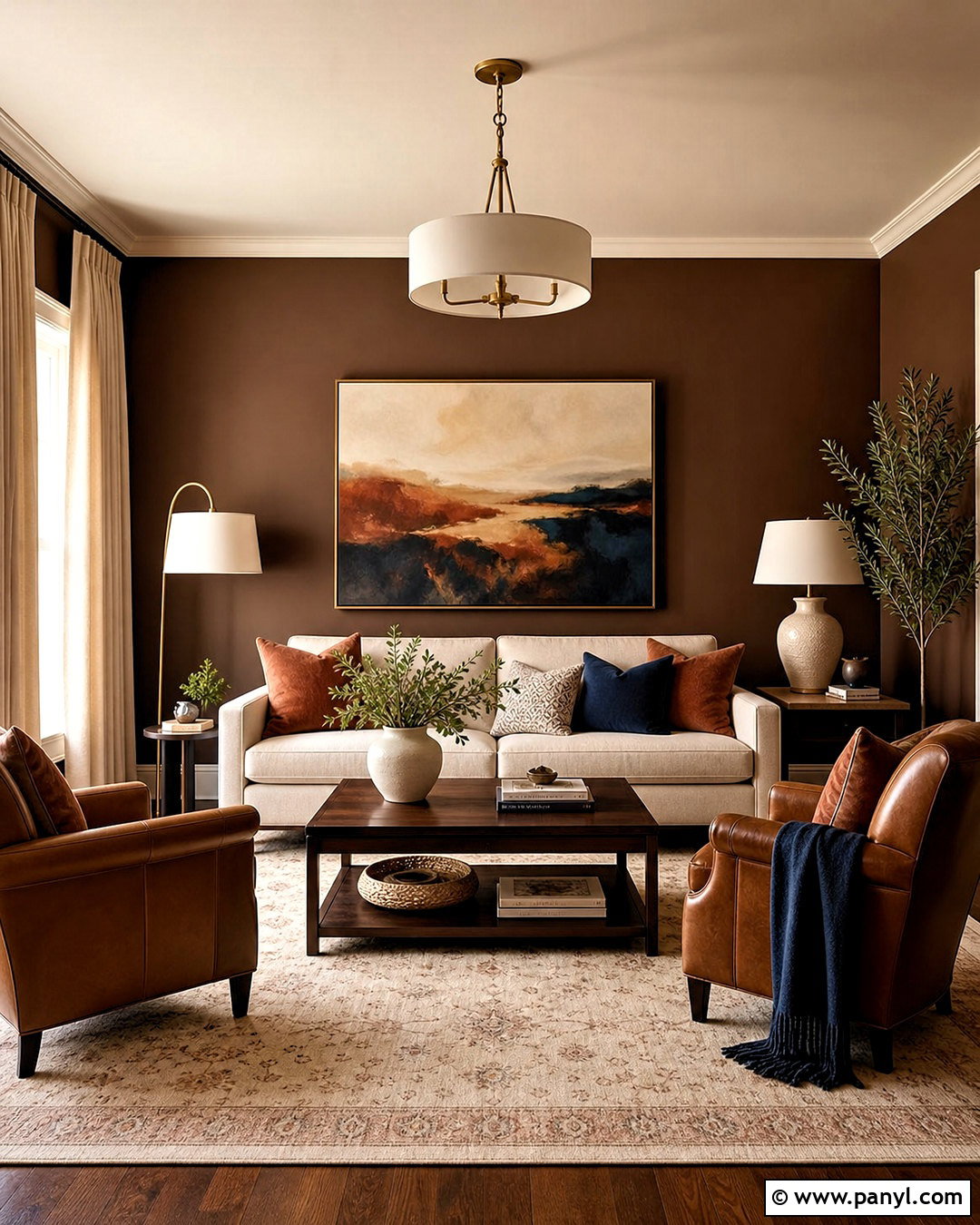
Rich chocolate brown paint can turn a larger living room into a cozy, polished retreat. Use the color across the walls while keeping the ceiling a warm cream to preserve some brightness overhead. Upholster the main sofa in oatmeal or ivory fabric, then add caramel leather chairs and a walnut coffee table. A light patterned rug helps break up the darker surfaces and defines the seating arrangement. Hang pale linen curtains from near the ceiling to soften the windows. Brass lamps, cream ceramics, and artwork with rust, tan, and faded blue details prevent the scheme from becoming flat. If the room contains built-ins, paint them brown as well for a seamless look. Layered lighting is essential, so include table, floor, and overhead fixtures.
10. Mustard Yellow Living Room Paint
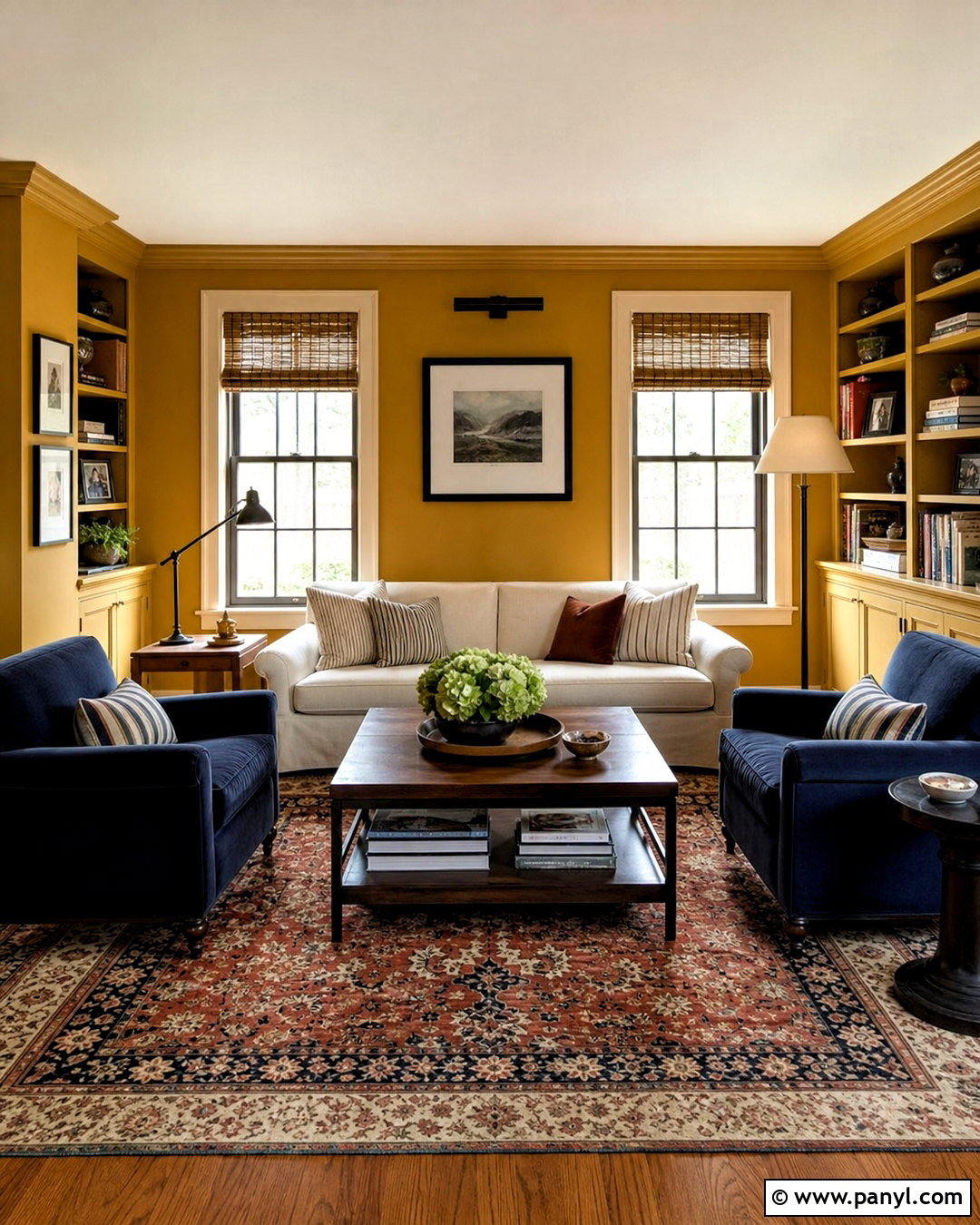
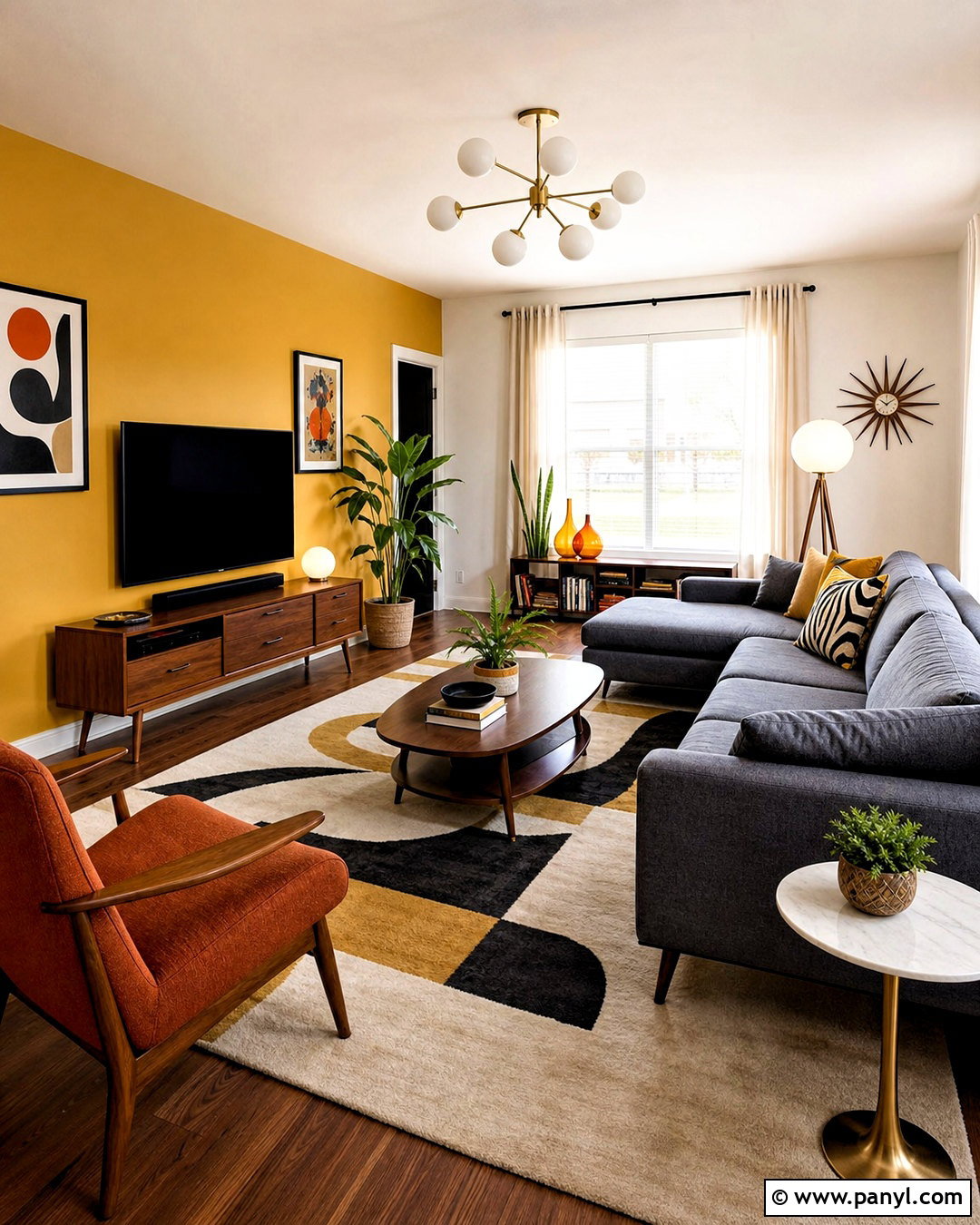
Muted mustard yellow gives a living room warmth and personality without the sharpness of brighter lemon tones. Choose a golden shade with brown undertones and use it on the walls or on walls and built-in shelves together. Balance the color with an off-white ceiling, medium oak flooring, and a cream sofa. Deep blue armchairs or a navy ottoman create a strong complementary contrast. Add striped cushions, woven shades, and a vintage-inspired rug containing gold, blue, and rust. Dark wood frames and black metal lighting bring structure to the cheerful palette. Keep smaller accessories restrained so the paint remains intentional rather than busy. This complete scheme works particularly well in rooms that need visual warmth and can support layered textiles, books, artwork, and traditional architectural details.
11. Two Tone Living Room Paint
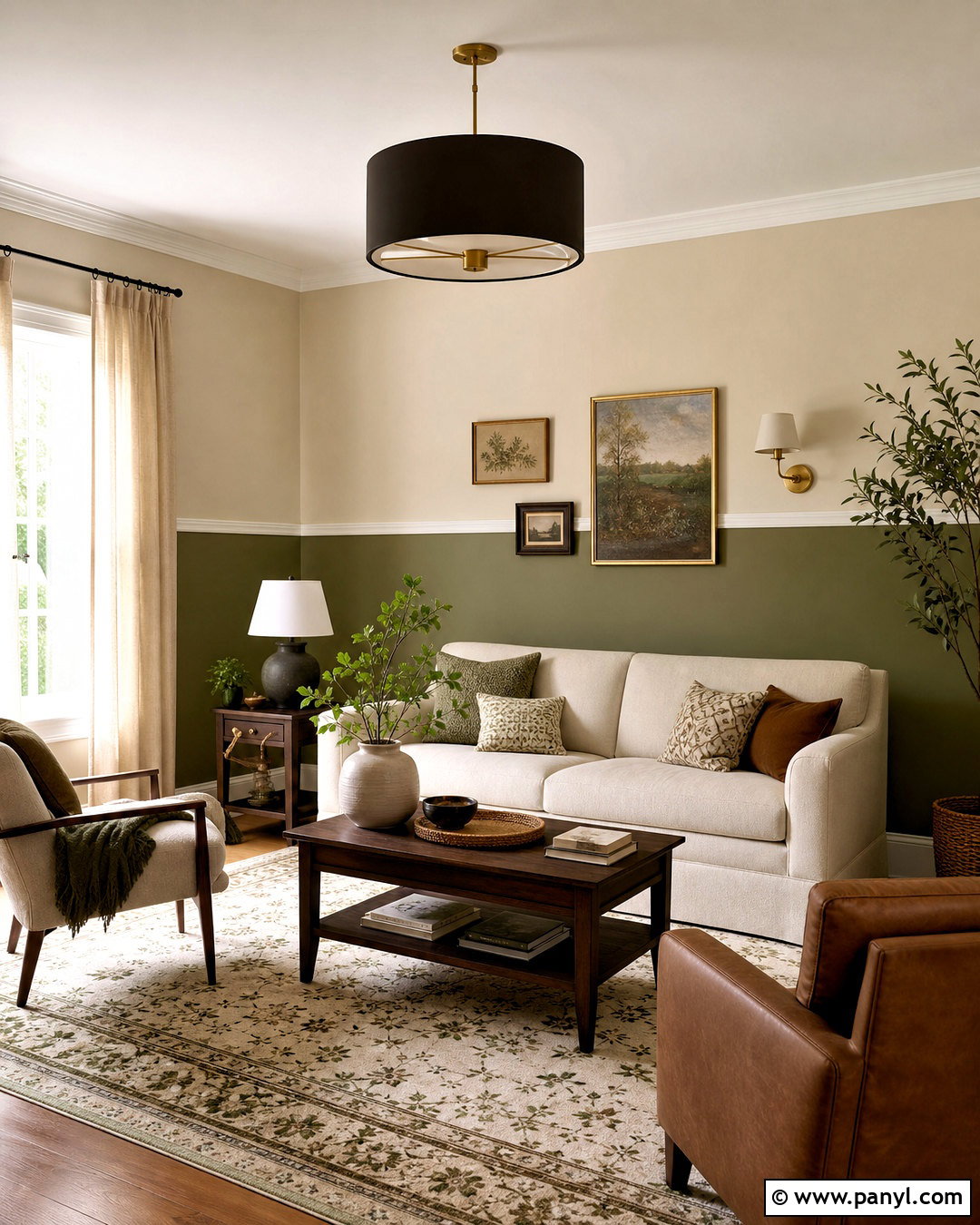
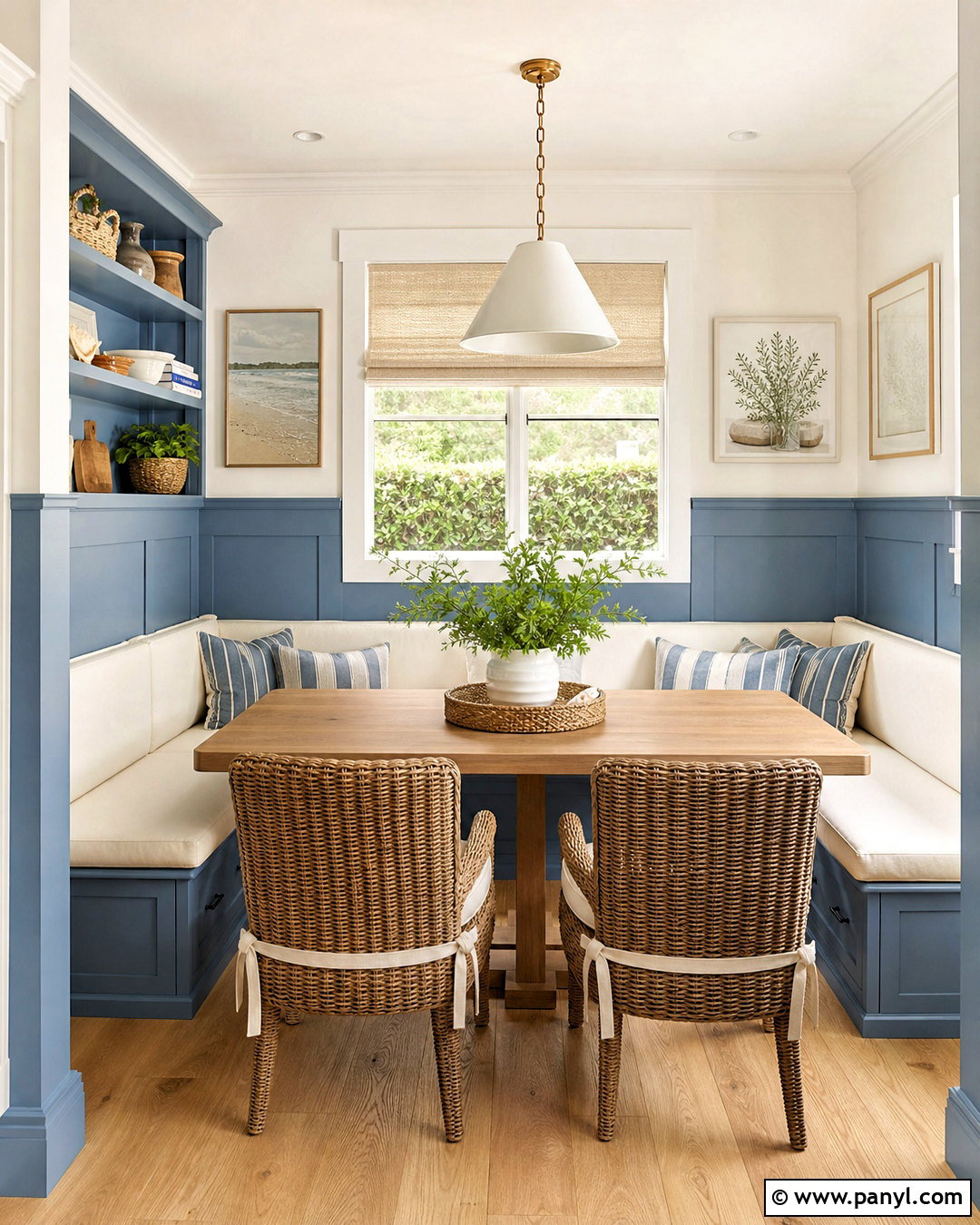
A two-tone paint treatment adds architectural interest to a plain living room without requiring decorative molding. Paint the lower third or lower half of the walls in muted olive, dusty blue, or warm taupe. Use a lighter coordinating neutral above it and continue that shade onto the ceiling. Keep the dividing line level around the room, or install a simple chair rail for a more finished transition. Position a neutral sofa against the darker portion, then add wood tables and a patterned rug that repeats both wall colors. Linen curtains should closely match the upper paint shade to make the windows feel taller. Complete the design with framed artwork arranged above the color break, balanced lighting, and understated accessories that support the room’s horizontal structure.
12. Painted Living Room Arch
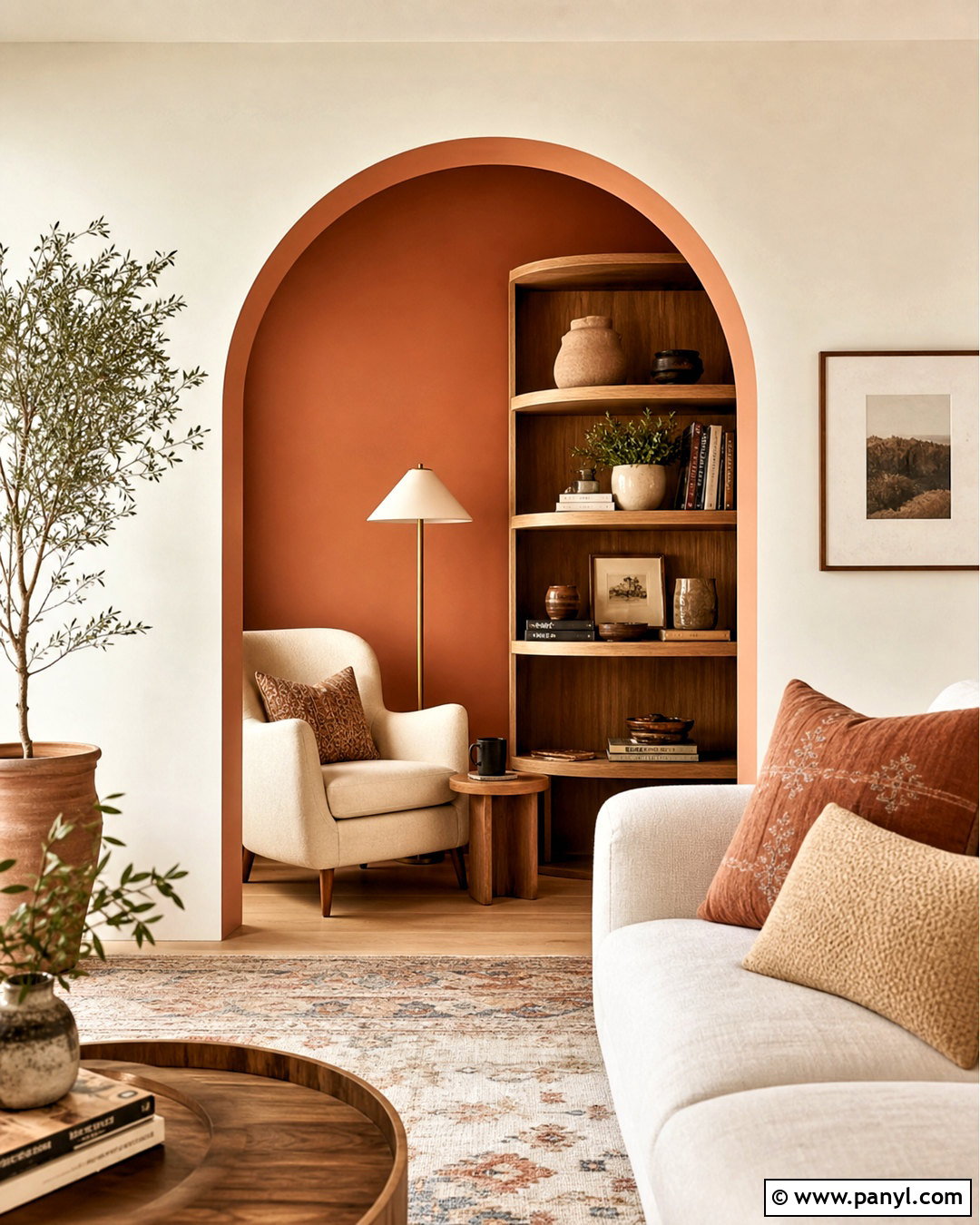
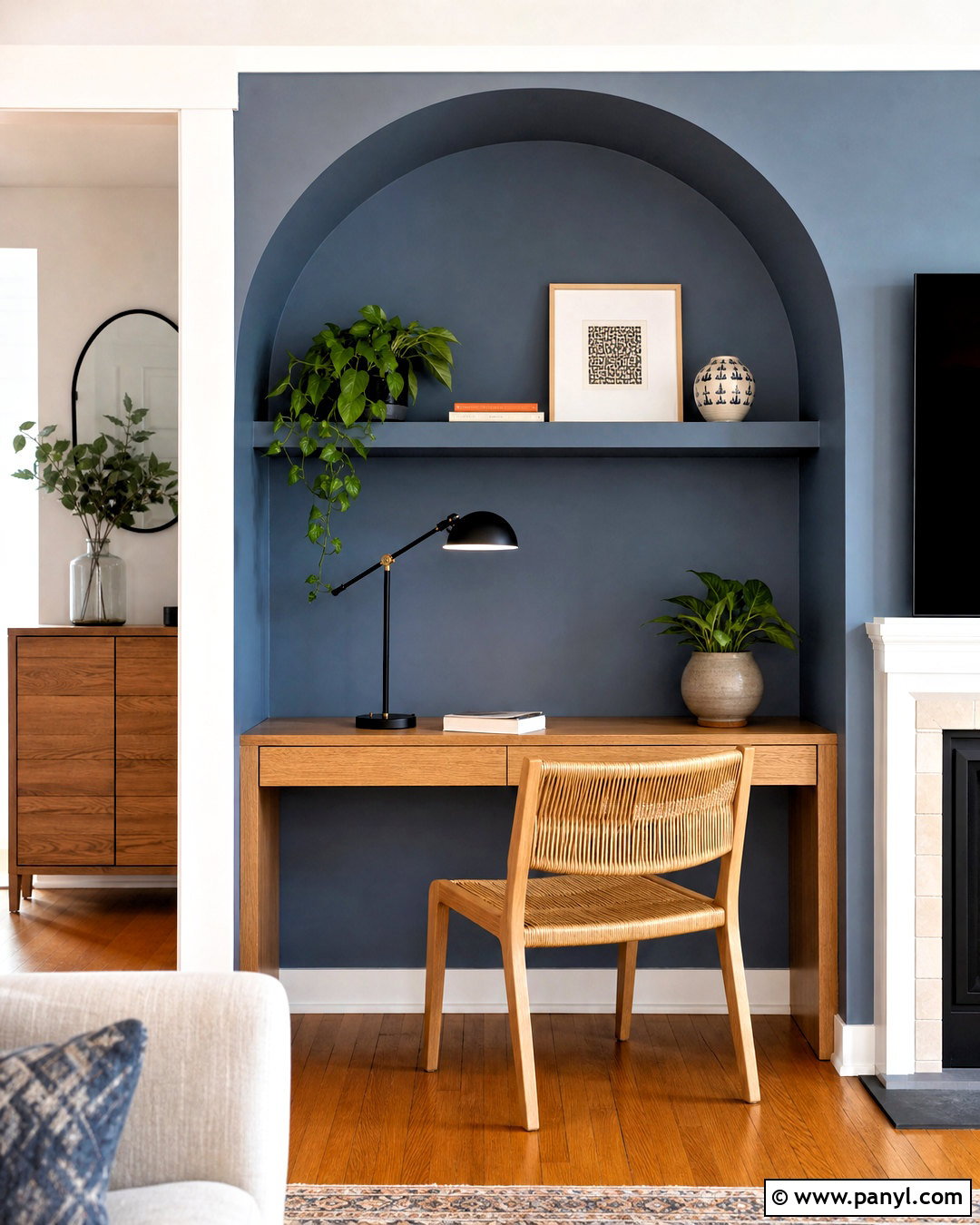
A painted arch can define a reading corner, console area, or sofa wall in a living room without permanent construction. Choose a color that contrasts gently with the main walls, such as terracotta against cream or sage green against warm white. Measure the arch carefully and use a pencil, string, and painter’s tape to establish clean edges. Place a curved bookcase, slim console, or comfortable accent chair within the painted shape so it serves a functional purpose. Repeat the arch color in pillows, pottery, or nearby artwork to connect it with the entire room. Keep the remaining furniture simple, using a neutral sofa, natural wood tables, and a softly patterned rug. The finished look should feel integrated rather than like an unrelated graphic painted on an empty wall.
13. Painted Living Room Ceiling
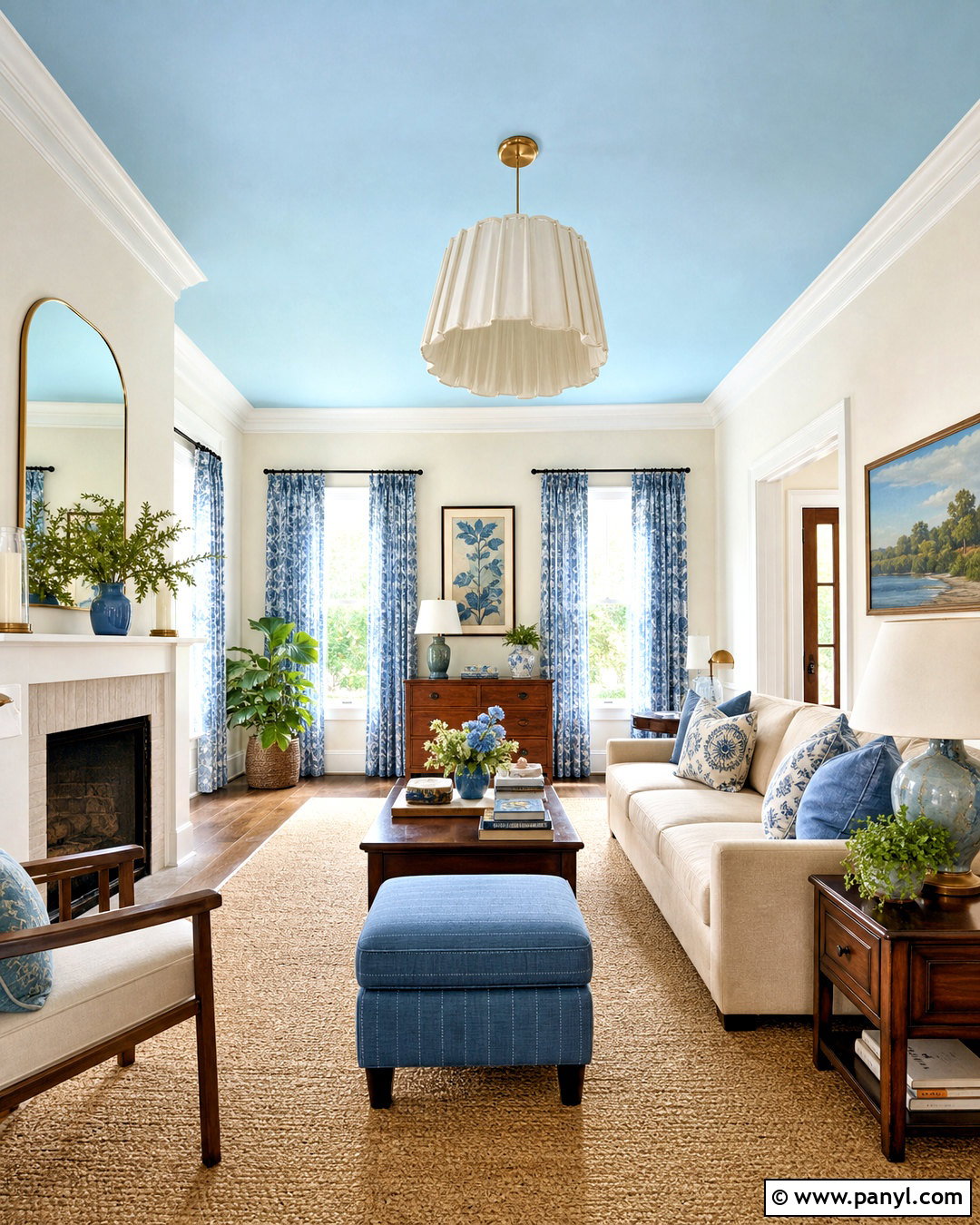
Painting the ceiling gives the living room a finished, thoughtfully layered appearance. Try a pale sky blue above warm white walls for an airy look, or select a deeper green ceiling to make a tall room feel more intimate. Repeat the ceiling color in two or three lower-level details, such as pillows, an ottoman, or patterned drapery. Keep crown molding crisp white if you want a clear frame, or paint it to match the ceiling for a smoother transition. A neutral sofa, wood furniture, and an understated rug prevent the upper color from competing with the seating area. Choose an attractive central light fixture because the painted surface naturally draws attention upward. Test the color overhead, where it often appears darker than it does on a vertical wall.
14. Painted Living Room Fireplace
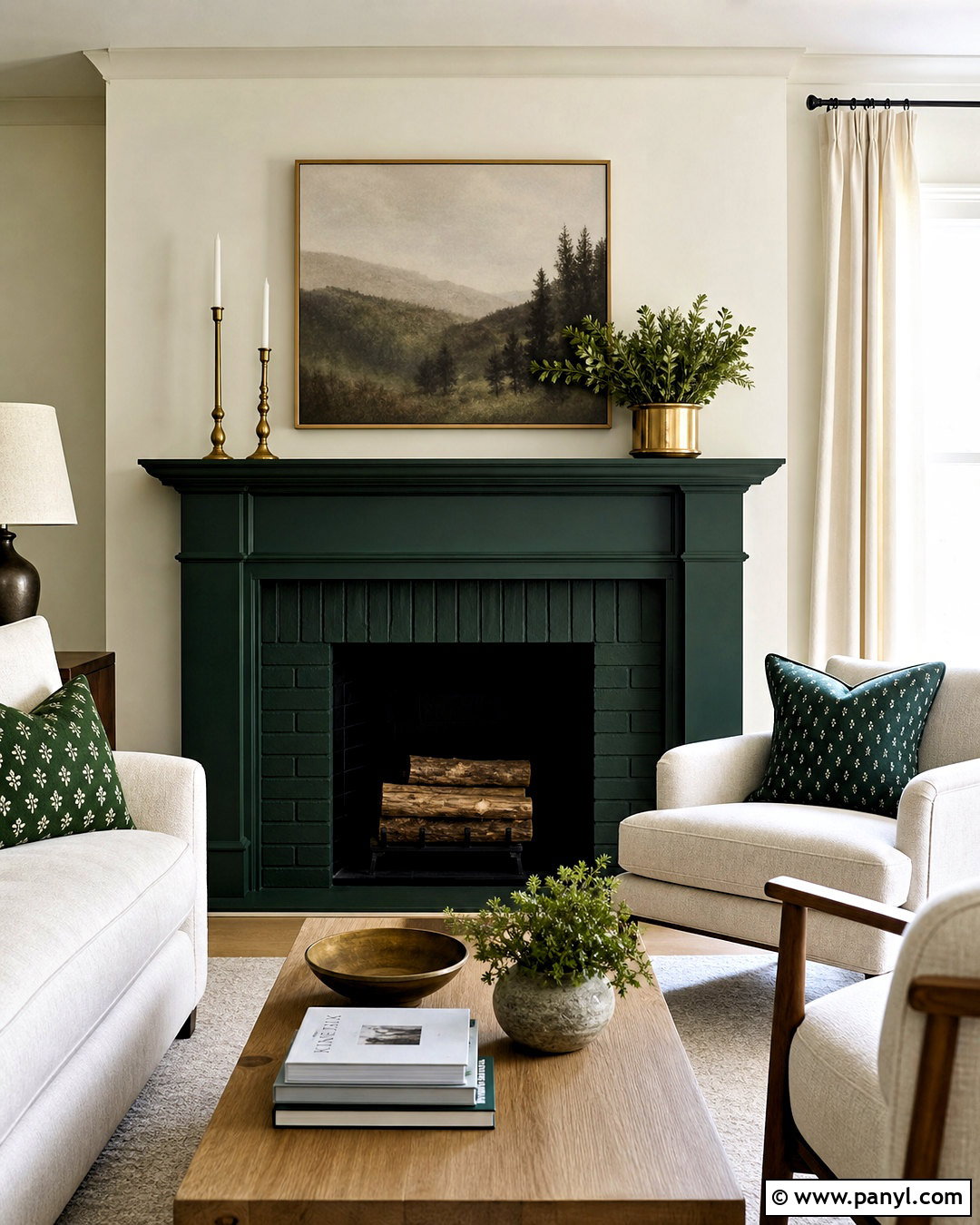
Painting the fireplace can establish a strong focal point and organize the entire living room palette. For a dramatic design, coat the mantel and surrounding masonry in deep charcoal, navy, or forest green. Use a product appropriate for the fireplace material and keep required heat-safe areas properly finished. Surround the feature with warm white walls, a neutral sofa, and balanced seating that faces both the fireplace and conversation area. Repeat the fireplace color through a rug pattern, pillows, or cabinet hardware. Light oak tables and cream curtains keep the dark feature from feeling too heavy. Above the mantel, use one large artwork or a simple mirror rather than many small objects. The completed room should look coordinated, with the painted fireplace acting as the visual anchor.
15. Painted Living Room Built Ins
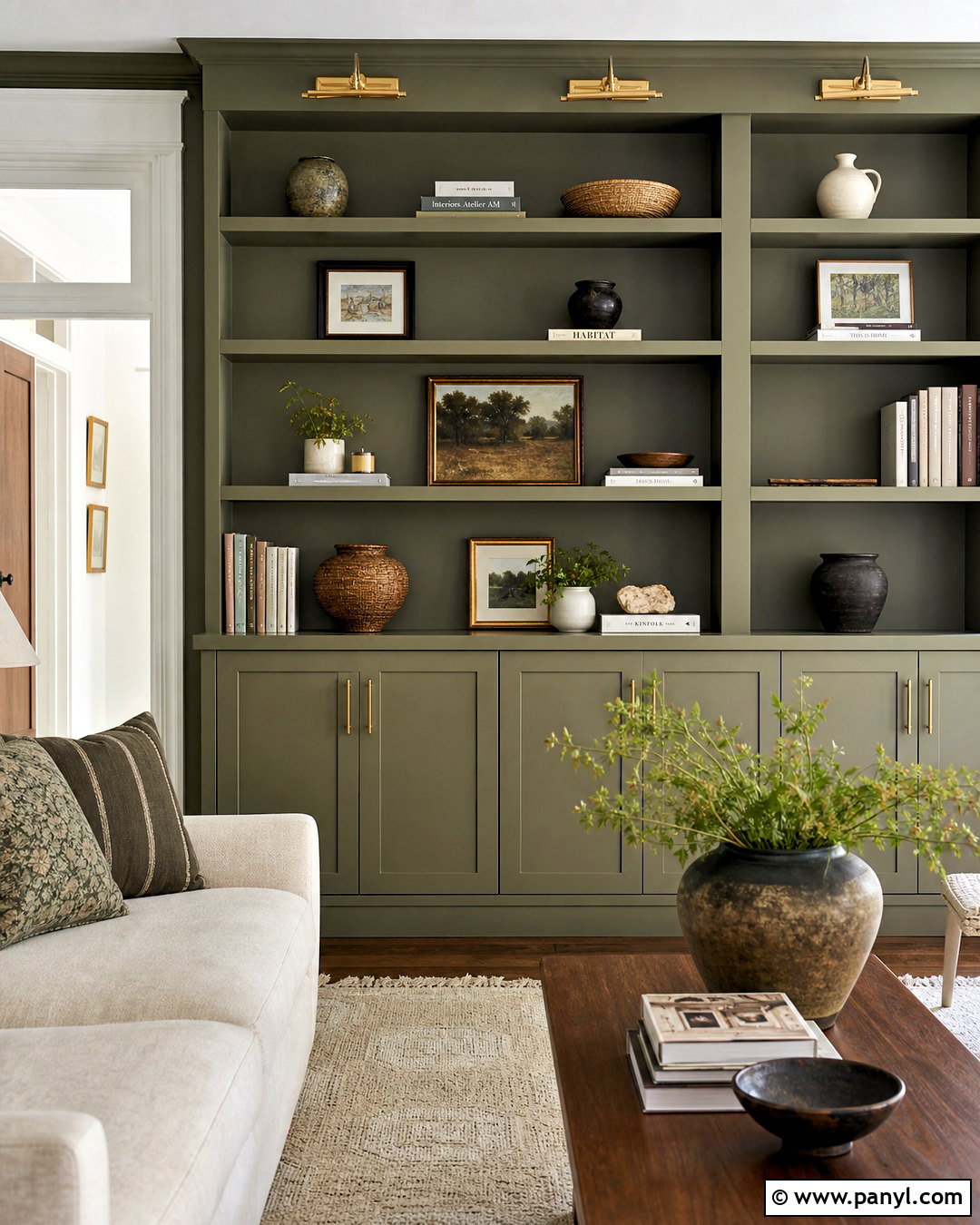
Built-in shelves become part of the room’s architecture when they are painted in a deliberate color. Cover the shelving, cabinet doors, and surrounding wall in the same muted olive, dusty blue, or deep taupe for a seamless appearance. Use satin paint on shelves and doors for easier cleaning, while choosing a flatter finish for the wall. Style the units with books, ceramics, framed art, and a few natural objects, leaving open space around each grouping. A cream sofa and light rug keep the living room balanced, while wood and brass accents warm the painted cabinetry. If the built-ins flank a fireplace, repeat the color on the mantel for continuity. This approach reduces visual clutter and gives ordinary storage a polished, custom-made effect.
16. Charcoal Living Room Paint
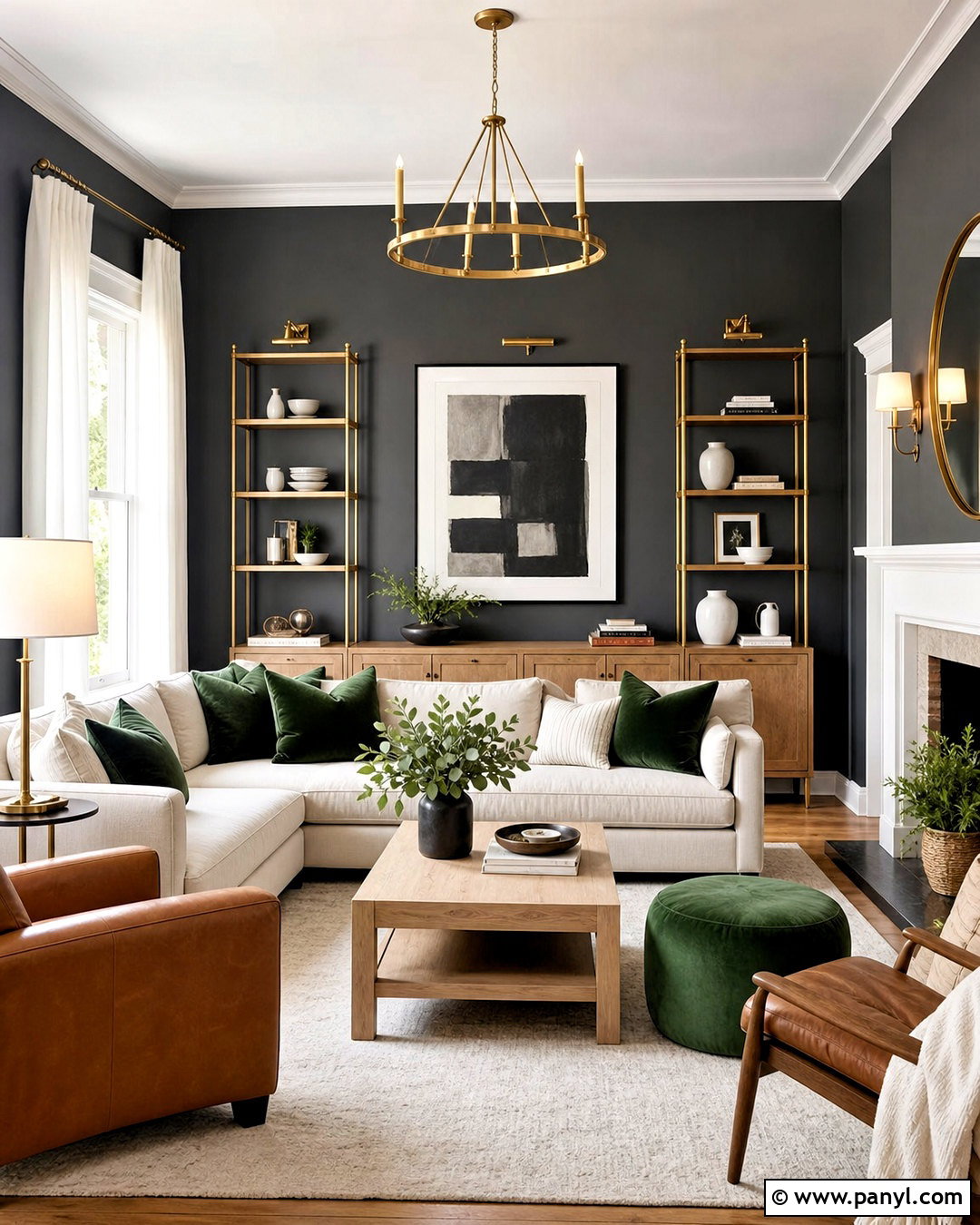
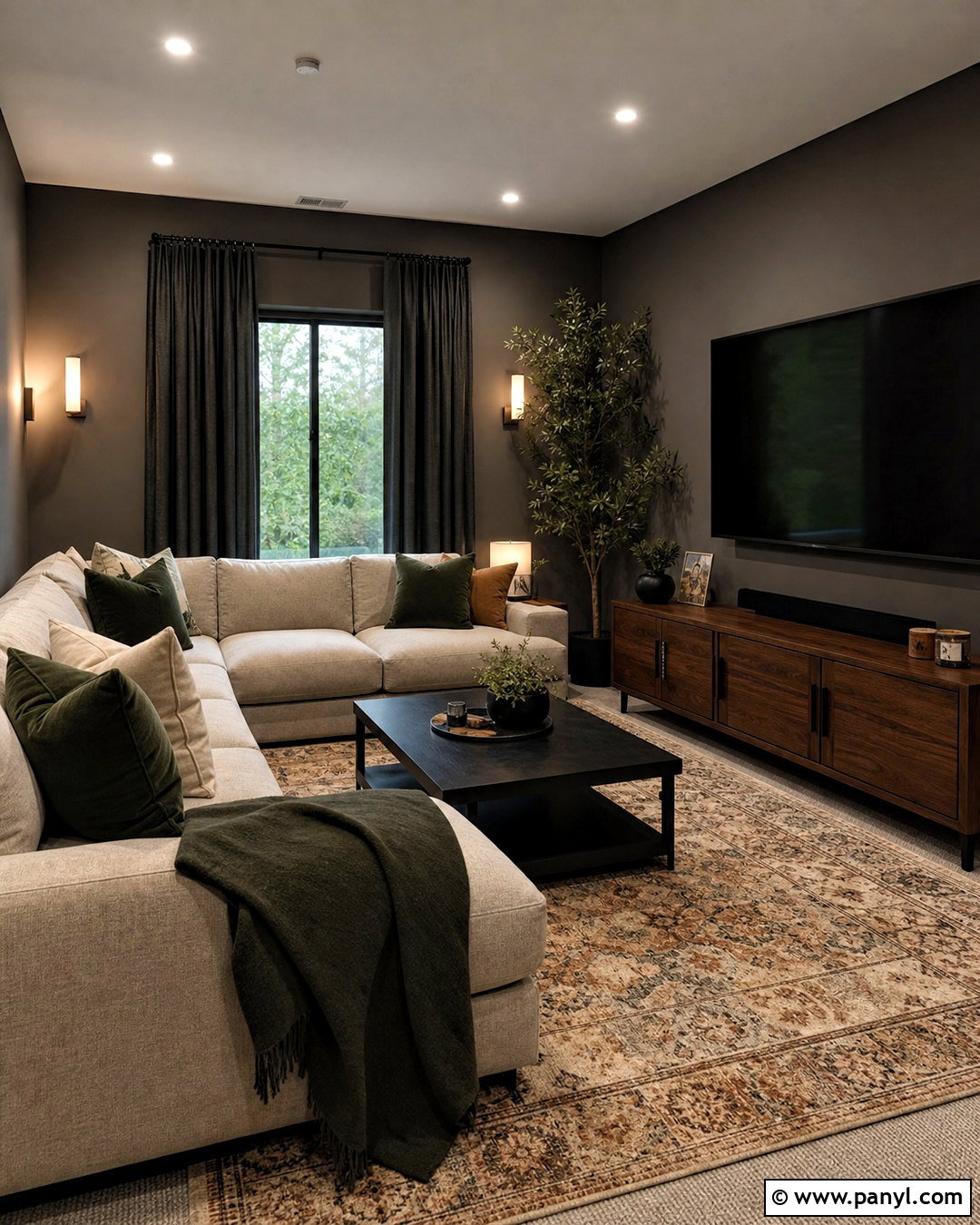
Charcoal walls create a dramatic living room that can still feel bright when paired with the right materials. Choose a softened charcoal rather than a pure black, then paint the walls while keeping the ceiling warm white. Position a cream or light gray sofa against the dark backdrop and introduce pale oak through the coffee table, media cabinet, or shelving. White curtains, a large ivory rug, and reflective brass lighting distribute brightness across the room. Add cognac leather and deep green accents for warmth and depth. Bold artwork with generous white space stands out clearly against charcoal paint. Instead of filling every wall, maintain an uncluttered layout with visible floor area and multiple light sources. The finished scheme should feel modern and comfortable, not stark or overly formal.
17. Peach Living Room Paint
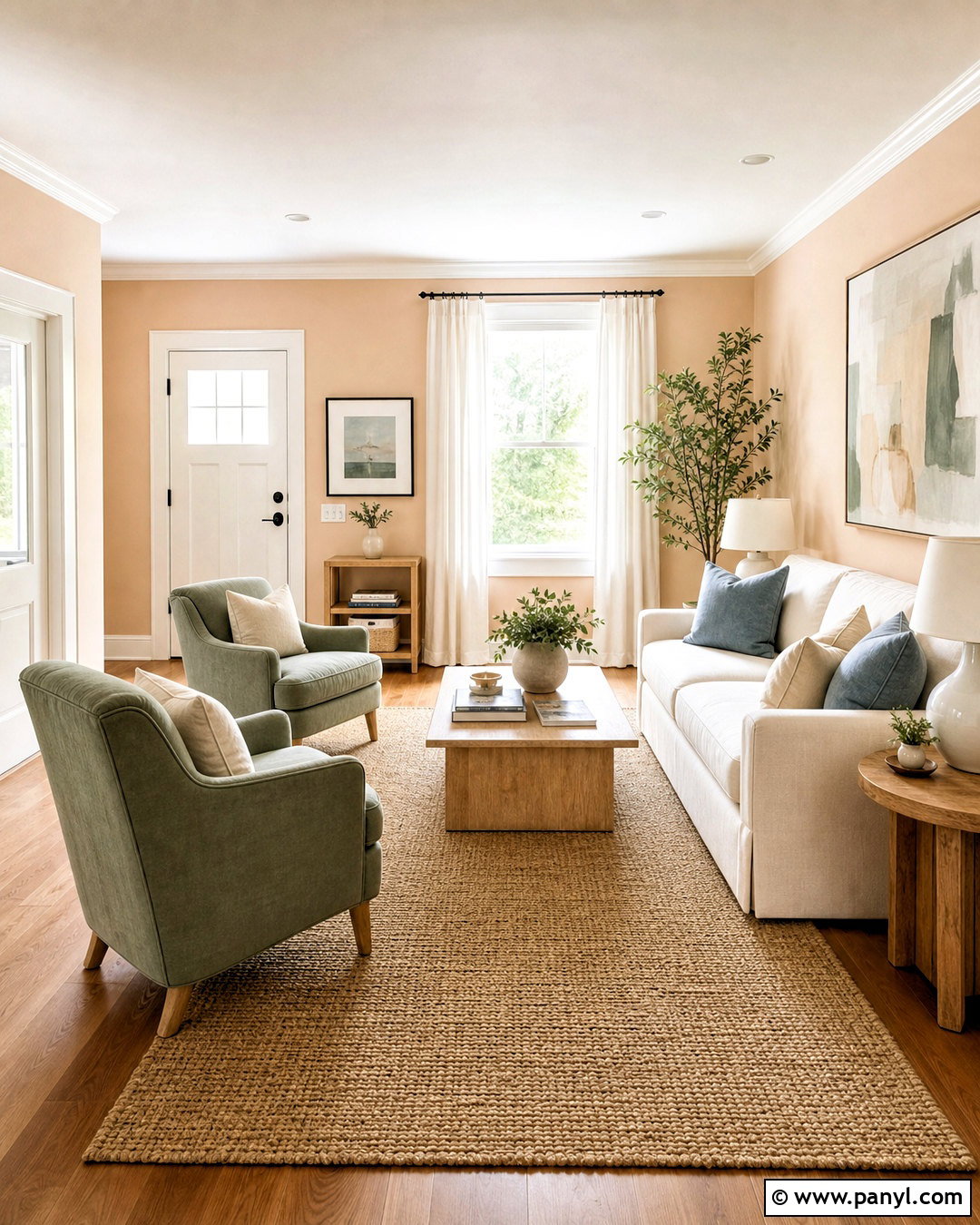
Soft peach paint fills a living room with warmth while staying lighter and more playful than terracotta. Choose a subdued peach with beige undertones and pair it with creamy white trim. Furnish the room with an ivory sofa, light oak tables, and a natural woven rug. Sage green chairs or pillows offer gentle contrast, while dusty blue accents prevent the palette from becoming overly warm. Use white linen curtains and pale ceramic lamps to maintain an airy appearance. Artwork can include abstract shapes in peach, olive, cream, and muted burgundy. A few black frames or dark bronze fixtures add necessary definition. This complete look suits compact living rooms because the walls feel cheerful and welcoming, while the lighter furniture and simple arrangement preserve visual breathing room.
18. Lavender Living Room Paint
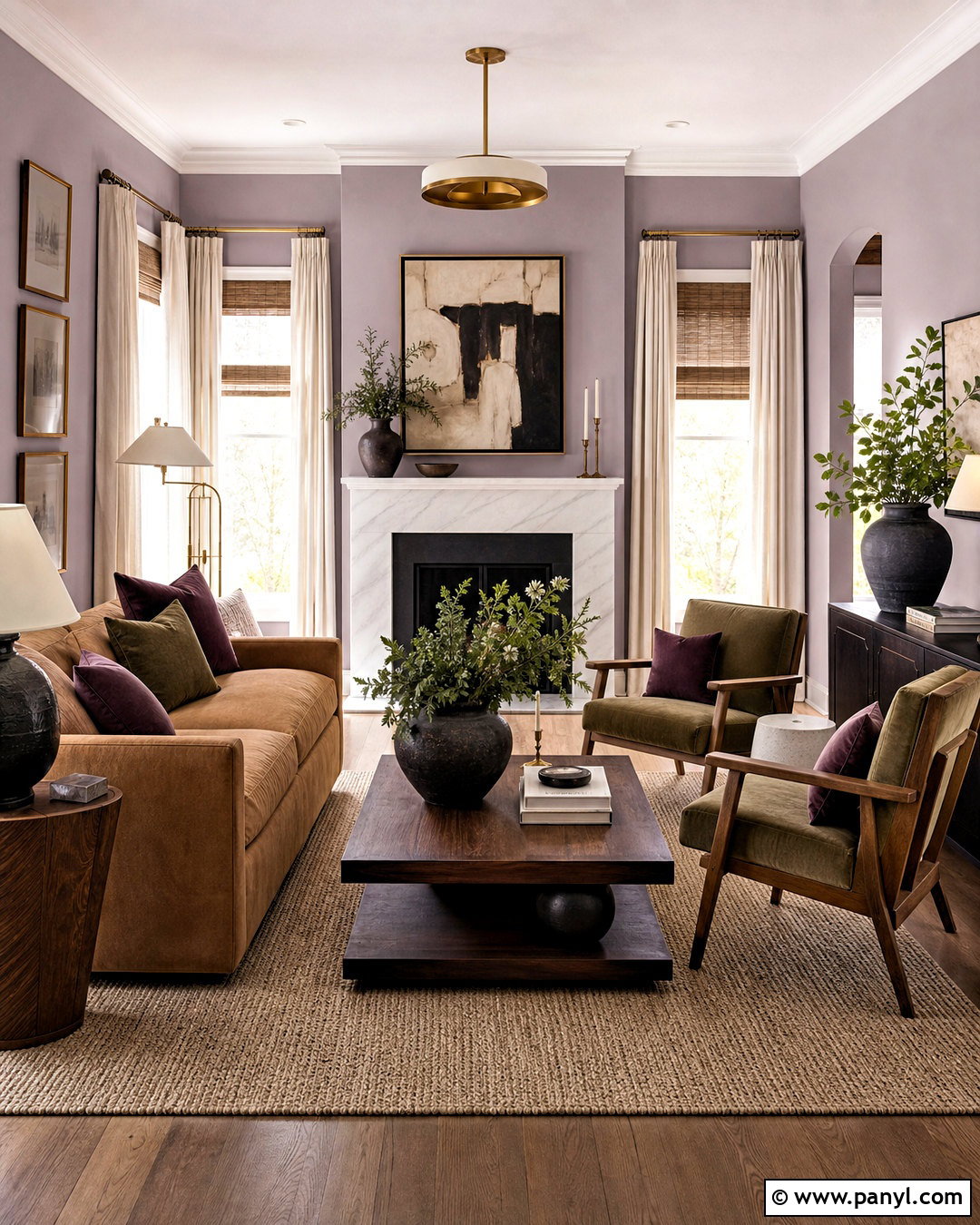
Muted lavender creates a distinctive living room when its undertones are balanced with warm, grounded materials. Avoid candy-like purple and choose a dusty lavender with noticeable gray or brown undertones. Paint the walls in the soft purple shade, then use warm white on the ceiling and trim. A camel sofa, walnut coffee table, and oatmeal rug offset the cooler walls. Add plum, olive, and cream pillows for a layered but controlled color story. Brass lamps and woven window shades introduce warmth, while pale curtains soften the overall effect. Decorate with abstract artwork, dark pottery, and greenery rather than matching purple accessories everywhere. This coordinated design makes lavender feel sophisticated and livable, allowing the unusual wall color to complement everyday furnishings rather than dominate them.
19. Olive Green Living Room Paint
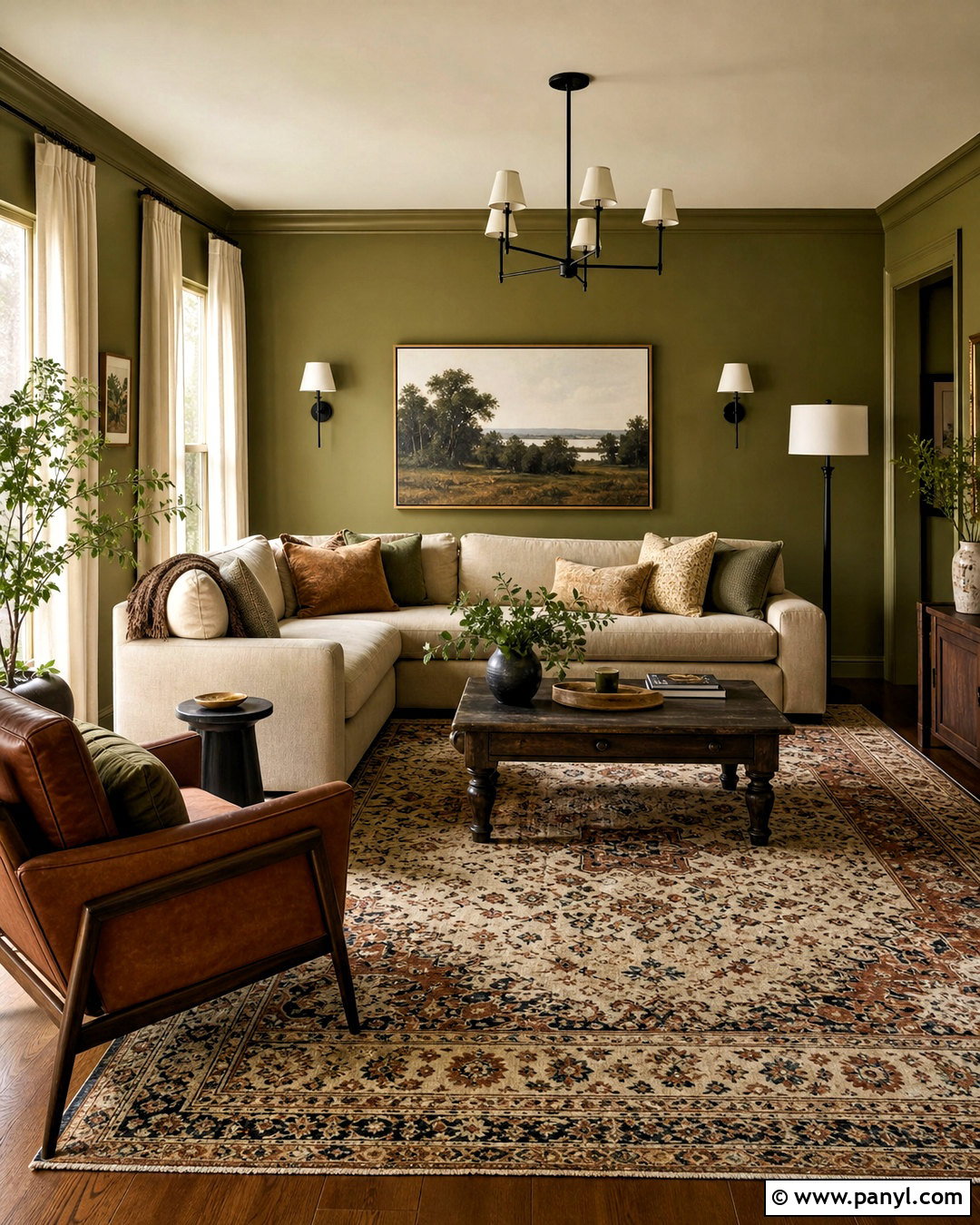
Earthy olive green gives the living room a grounded character that works beautifully with natural wood and aged finishes. Choose a medium olive that remains clearly green without becoming too dark or muddy. Paint all the walls and consider matching the trim for a smooth, enveloping effect. Add a beige sectional, dark wood coffee table, and vintage-inspired rug with cream, rust, and muted blue details. Cognac leather seating provides warmth, while black metal lighting adds crisp contrast. Hang off-white curtains to brighten the windows and introduce textured pillows in linen, velvet, and woven fabrics. Artwork featuring landscapes or simple geometric forms completes the space. Use plants selectively because too many green elements can blur into the walls instead of creating an intentional layered room.
20. Beige Living Room With Black Trim
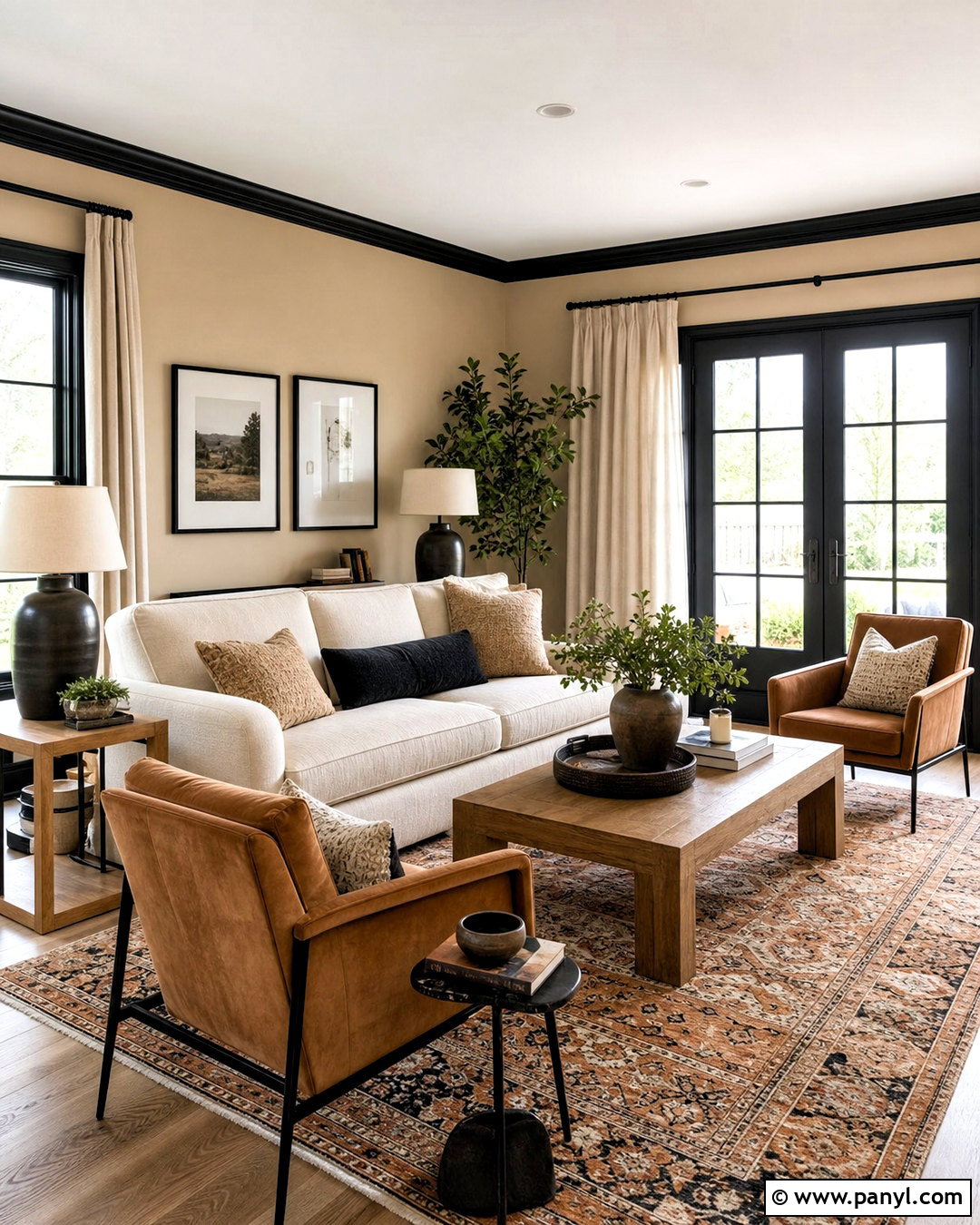
A beige living room gains sharper definition when doors, window frames, or selected trim are painted black. Begin with a warm sandy beige on the walls and a soft white ceiling. Use matte or satin black on architectural details, keeping the application consistent rather than highlighting every small molding. A cream sofa, camel chairs, and medium oak tables support the neutral foundation. Add a large patterned rug with beige, black, and muted rust to connect the color scheme. White or natural linen curtains soften the dark window outlines. Complete the room with black-framed artwork, ceramic lamps, and a few green plants. This coordinated approach gives familiar neutral paint a modern edge while preserving the warmth and flexibility that make beige comfortable for an everyday living space.
Conclusion:
The right paint plan can reshape how a living room looks, feels, and functions without requiring a complete renovation. Start by considering natural light, flooring, furniture, and neighboring rooms before selecting a color. Then test large painted samples and observe them during the morning, afternoon, and evening. Whether you prefer warm white, earthy green, rich brown, or a creative painted feature, repeat the chosen colors through textiles and decor for a connected result. Each of these **20 home painting ideas living room ideas** presents a complete scheme rather than an isolated wall color. Choose the look that fits your home, adjust its contrast to your comfort level, and build the finished room one coordinated layer at a time.

Related Ideas and Inspiration:

Leave a Reply