
Blank walls offer more than a backdrop for furniture. With thoughtful color, pattern, and placement, they can shape the mood and visual balance of an entire room. These cool wall painting ideas include approachable tape designs, soft blended finishes, oversized murals, and architectural color treatments. Each look pairs the painted wall with coordinated furniture, lighting, textiles, and decor, making it easier to imagine the finished space. Before painting, repair imperfections, apply primer when needed, and test colors under both natural and artificial light. Measure patterns carefully, and choose a durable finish suited to the room. Whether you prefer playful color or quiet sophistication, the following complete spaces make it easy to explore 20 cool wall painting ideas.

1. Geometric Wall Painting
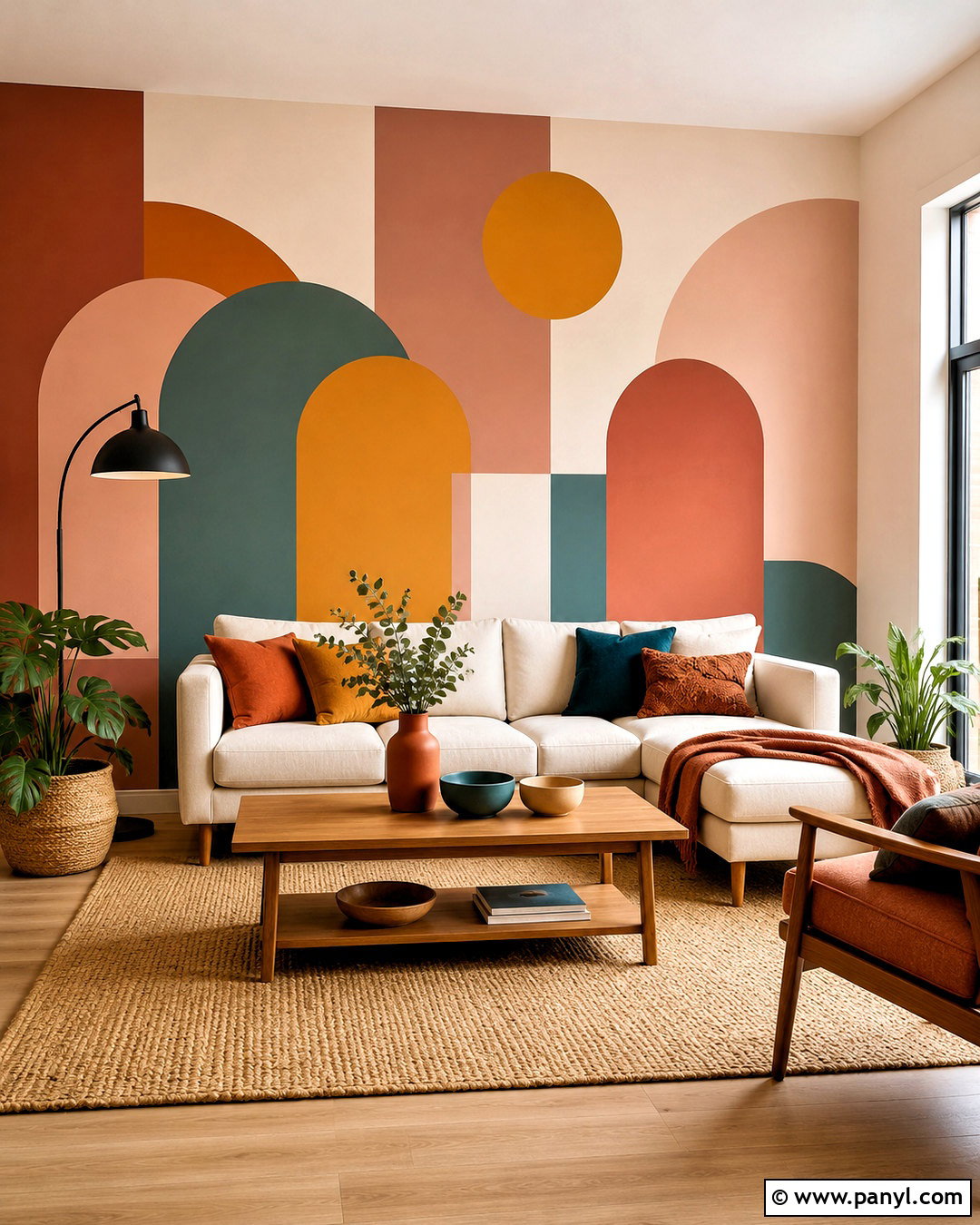
Turn a plain living room wall into graphic artwork with overlapping geometric shapes. Begin with a warm white base, then add large arches, rectangles, and circles in terracotta, muted teal, mustard yellow, and dusty blush. Keep some white space between the shapes so the composition feels balanced rather than busy. Position a low cream sofa against the mural, paired with an oak coffee table and a textured neutral rug. Black metal lighting adds definition, while pillows in colors pulled from the wall connect everything. Limit smaller decorations to a few ceramics and leafy plants. Sketch the arrangement first and use a level, string, and painter’s tape to create accurate edges. This complete look feels colorful, modern, and intentionally arranged.
2. Two Tone Wall Painting
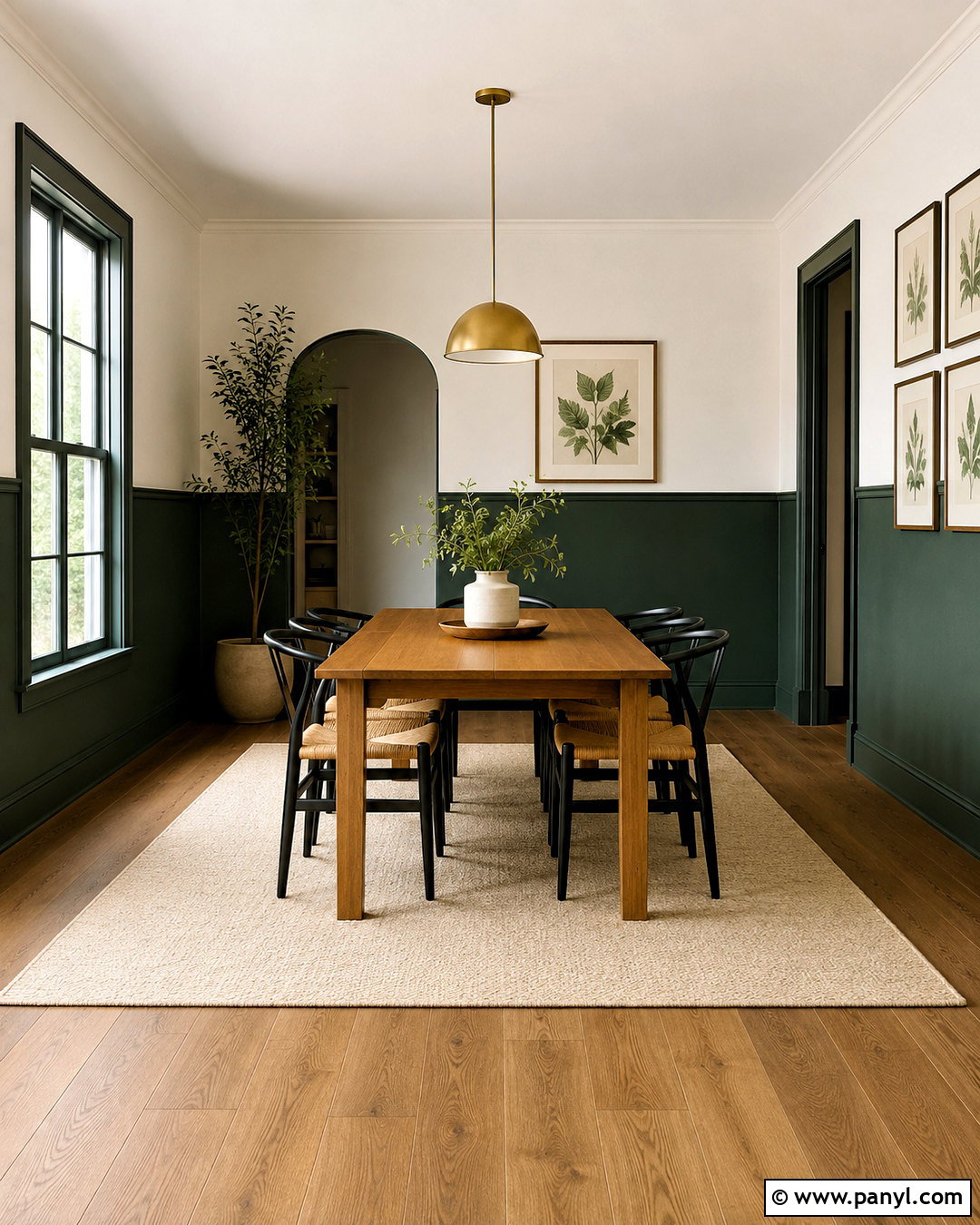
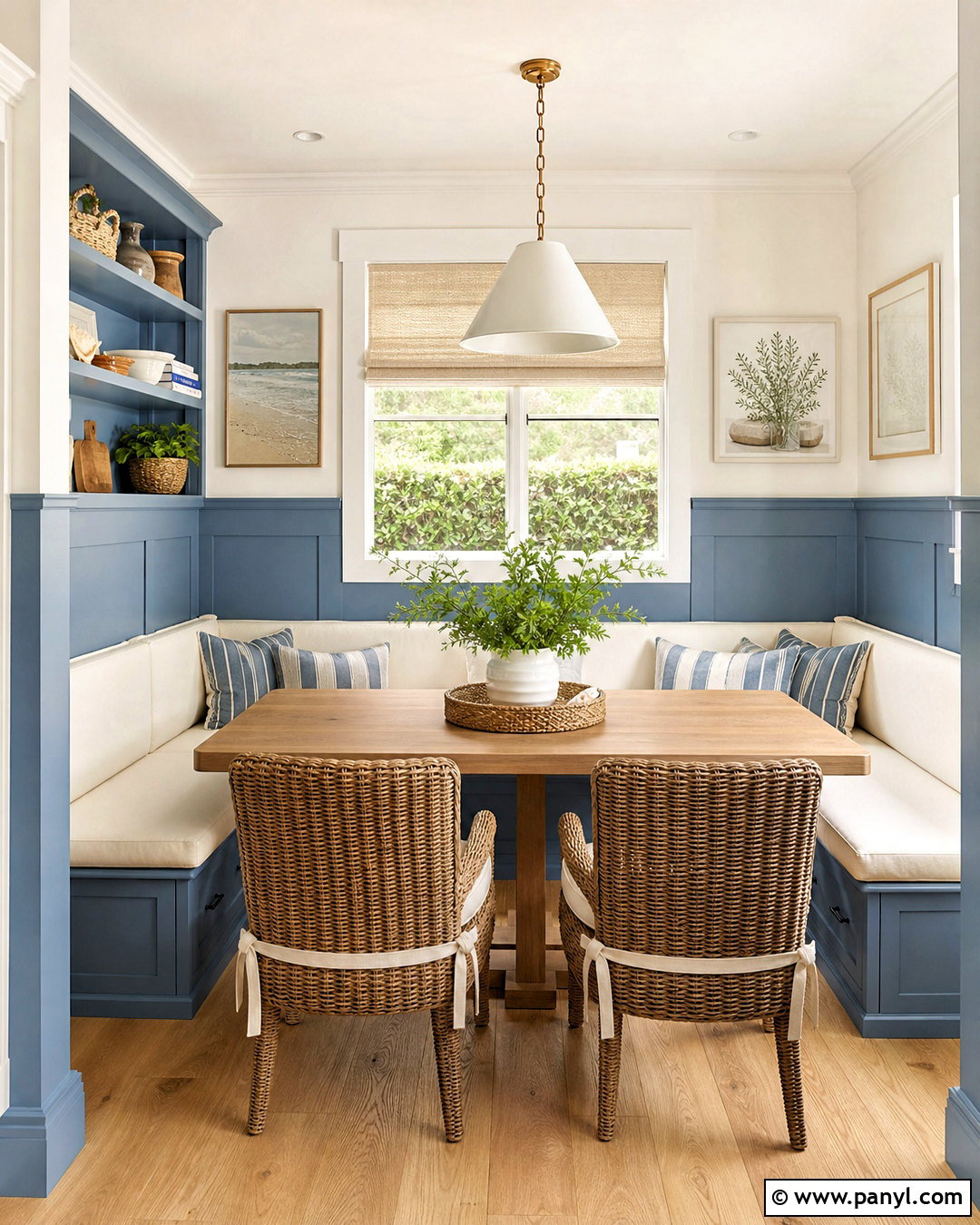
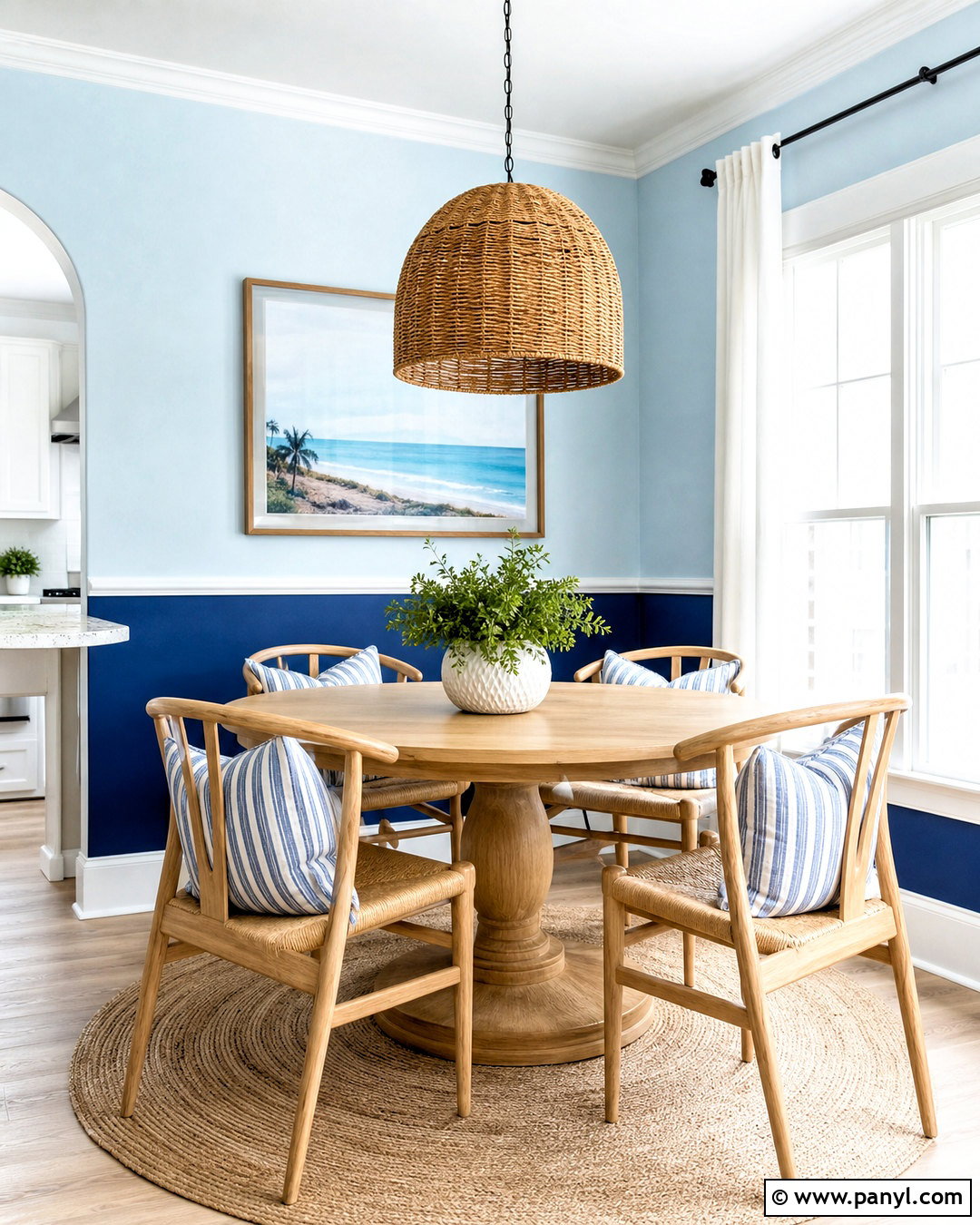
A two-tone treatment can give a dining room architectural character without installing molding. Paint the lower third of the walls a deep forest green and cover the upper portion with soft warm white. A crisp horizontal division creates a clean, structured look, while painting the baseboards green makes the lower section feel substantial. Complete the room with a medium oak dining table, woven chairs, a cream flat-weave rug, and a simple brass pendant. Botanical artwork in thin wood frames can bridge both wall colors. For a polished boundary, mark an even line around the room with a laser level and seal the tape edges before applying the darker paint. The finished space looks grounded, welcoming, and more detailed than a standard single-color room.
3. Ombre Wall Painting
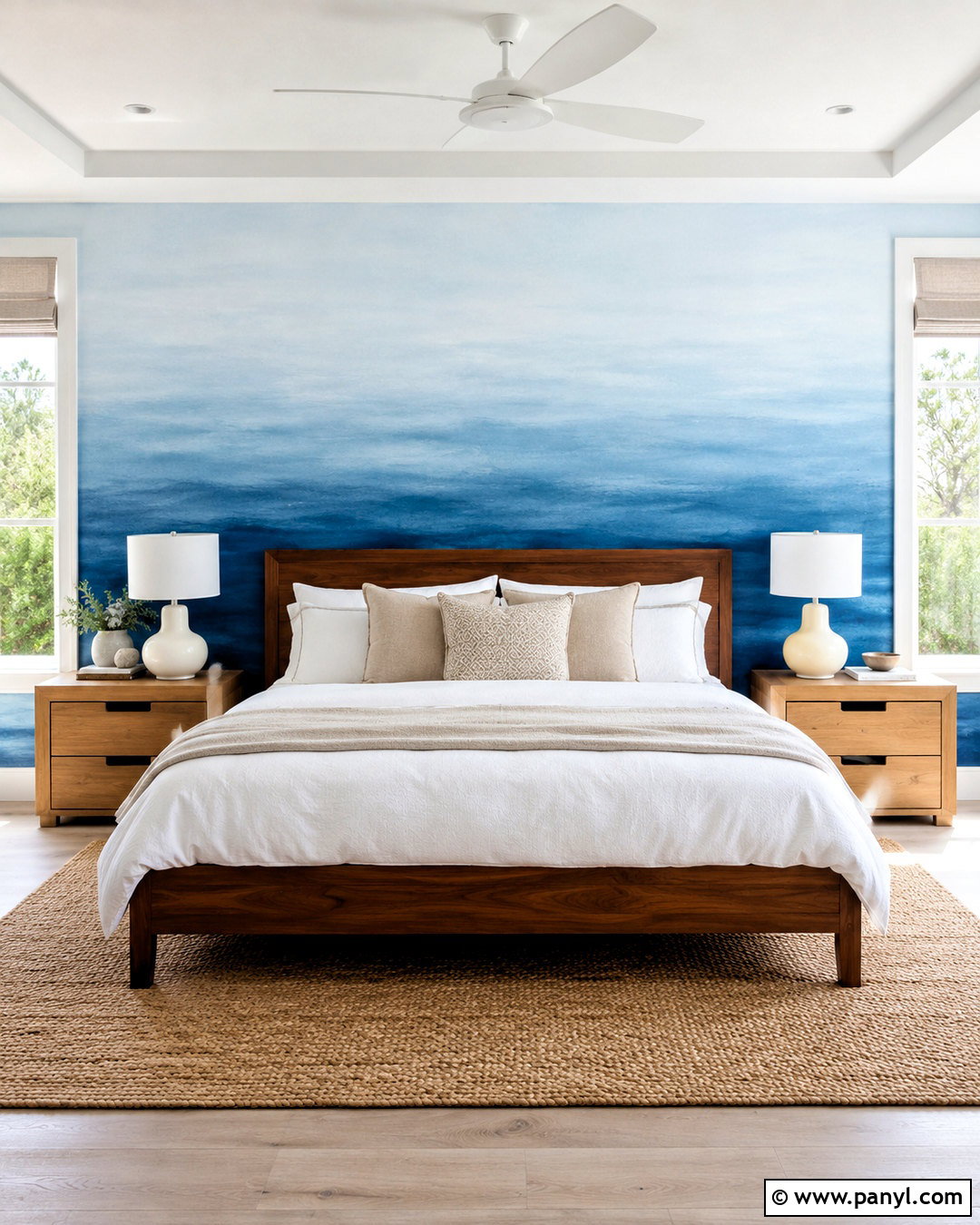
Softly blended color can turn a bedroom into a calming retreat. Create an ombre feature wall that moves from deep ocean blue near the floor through misty blue and into pale sky blue at the ceiling. Blend each transition while the paint remains workable, using separate brushes and a clean blending brush between shades. Place a simple walnut bed against the wall so the darkest color anchors the headboard. White linen bedding, sandy beige pillows, and light oak nightstands prevent the blue scheme from becoming heavy. Add ceramic lamps and a natural woven rug for gentle texture. Keep the remaining walls warm white. The gradual painted background feels atmospheric, while the restrained furniture and coastal palette maintain an uncluttered, restful bedroom design.
4. Painted Arch Wall
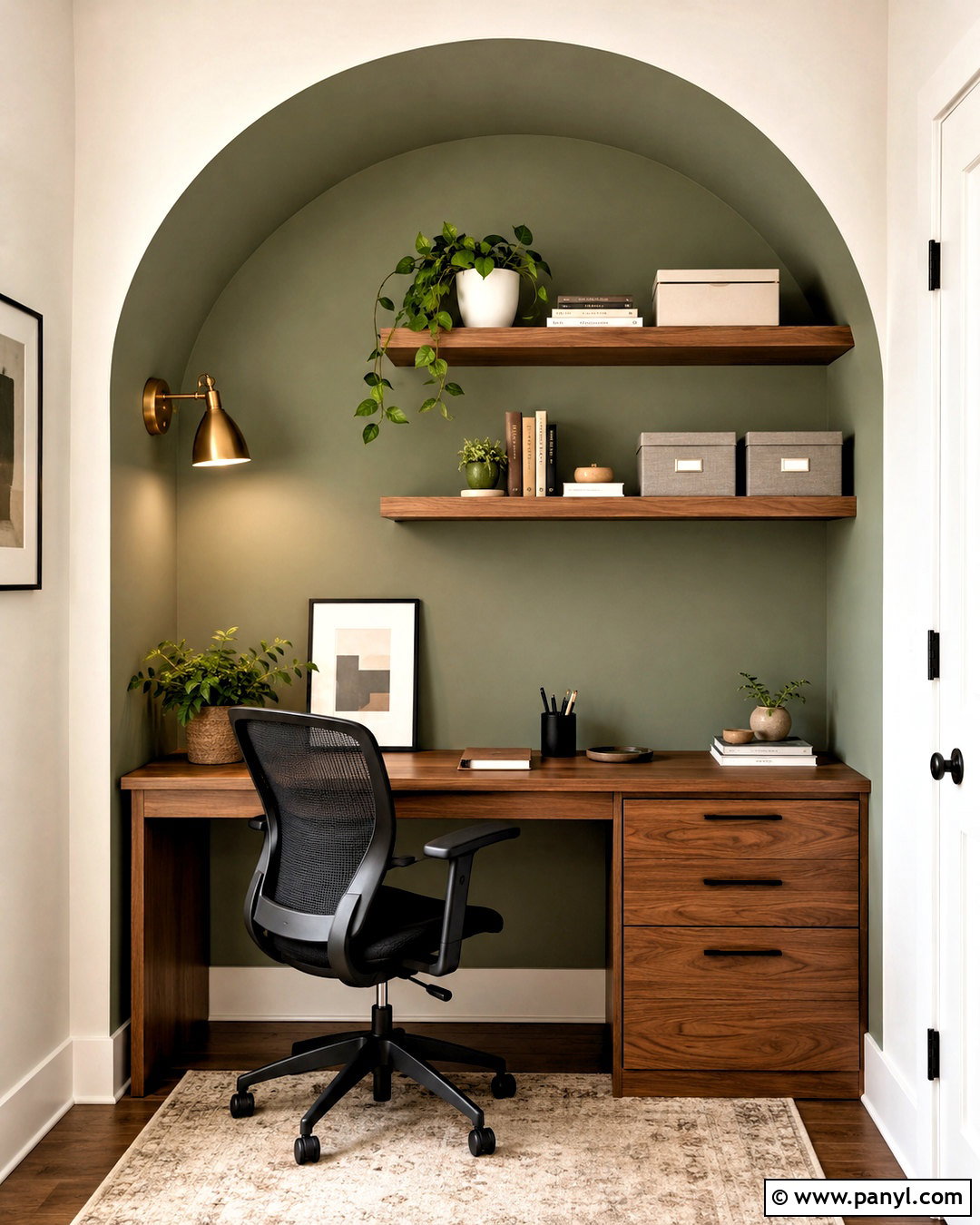
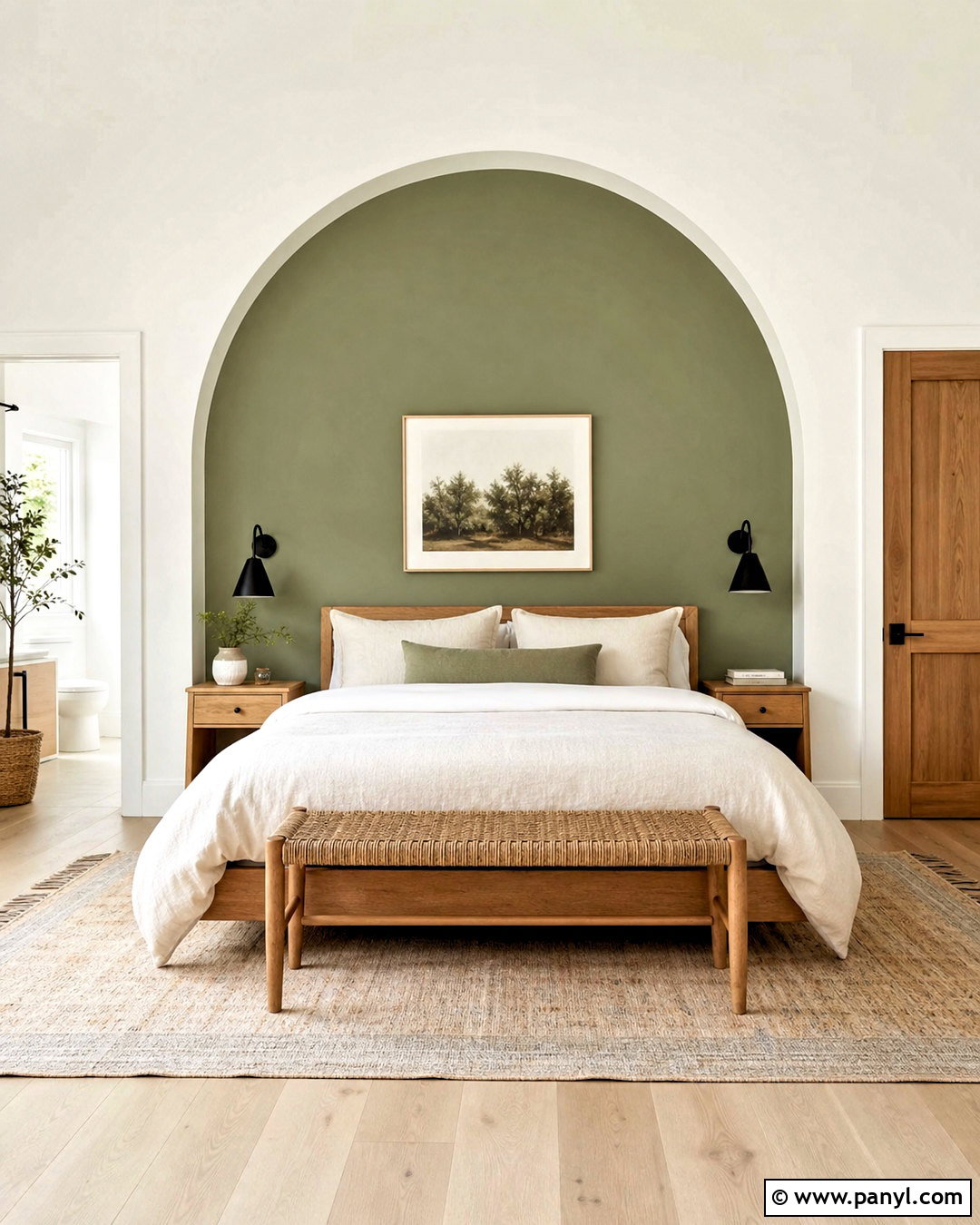
A painted arch creates a strong focal point and visually frames furniture without requiring construction. In a compact home office, paint a tall rounded arch in warm sage green over a creamy white wall. Center a slim walnut desk within the shape, allowing the painted area to extend slightly beyond the desk on both sides. Add a black task chair, a brass wall light, and two floating oak shelves inside the arch. Neutral storage boxes and a few plants provide function without hiding the design. Use a pencil tied to string to draw an even semicircle, then paint the curved edge with a small angled brush. The finished workspace feels organized and purposeful, and the soft green backdrop helps the work zone stand apart from the surrounding room.
5. Horizontal Stripe Wall Painting
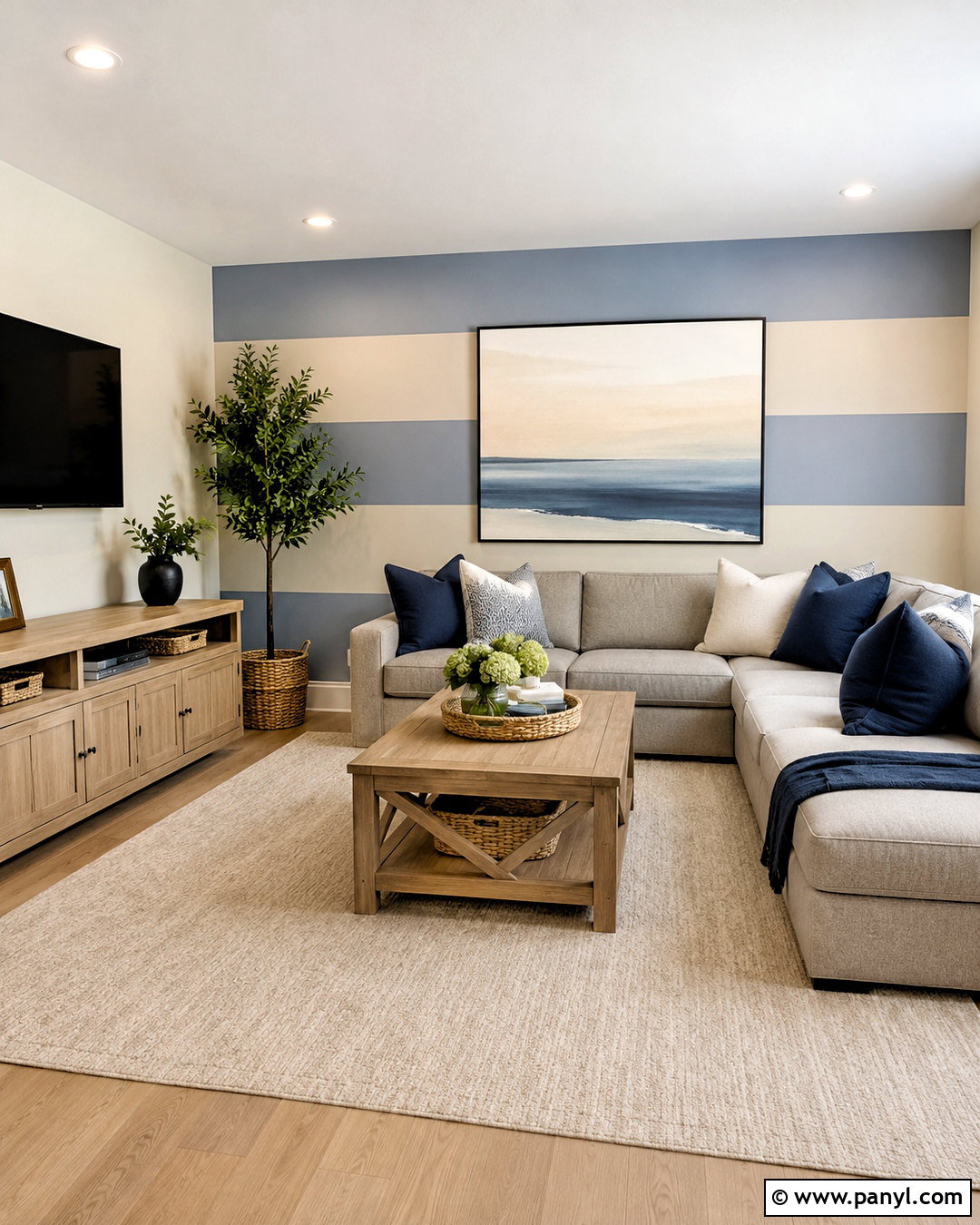
Wide horizontal stripes can bring rhythm and relaxed color to a family room. Alternate broad bands of soft beige and dusty blue across one main wall, keeping the stripes equal in width for a clean appearance. Continue the pattern behind a light gray sectional, then use solid-colored pillows so the room does not feel overly patterned. A pale oak media console, woven storage baskets, and a large ivory rug balance the cooler blue. Hang one simple piece of oversized artwork rather than a crowded gallery. Measure from the ceiling downward to keep the pattern consistent, and mark every stripe with a level. Seal each taped edge with the base color before adding blue. This approachable design makes the room feel wider, casual, and comfortably coordinated.
6. Vertical Stripe Wall Painting
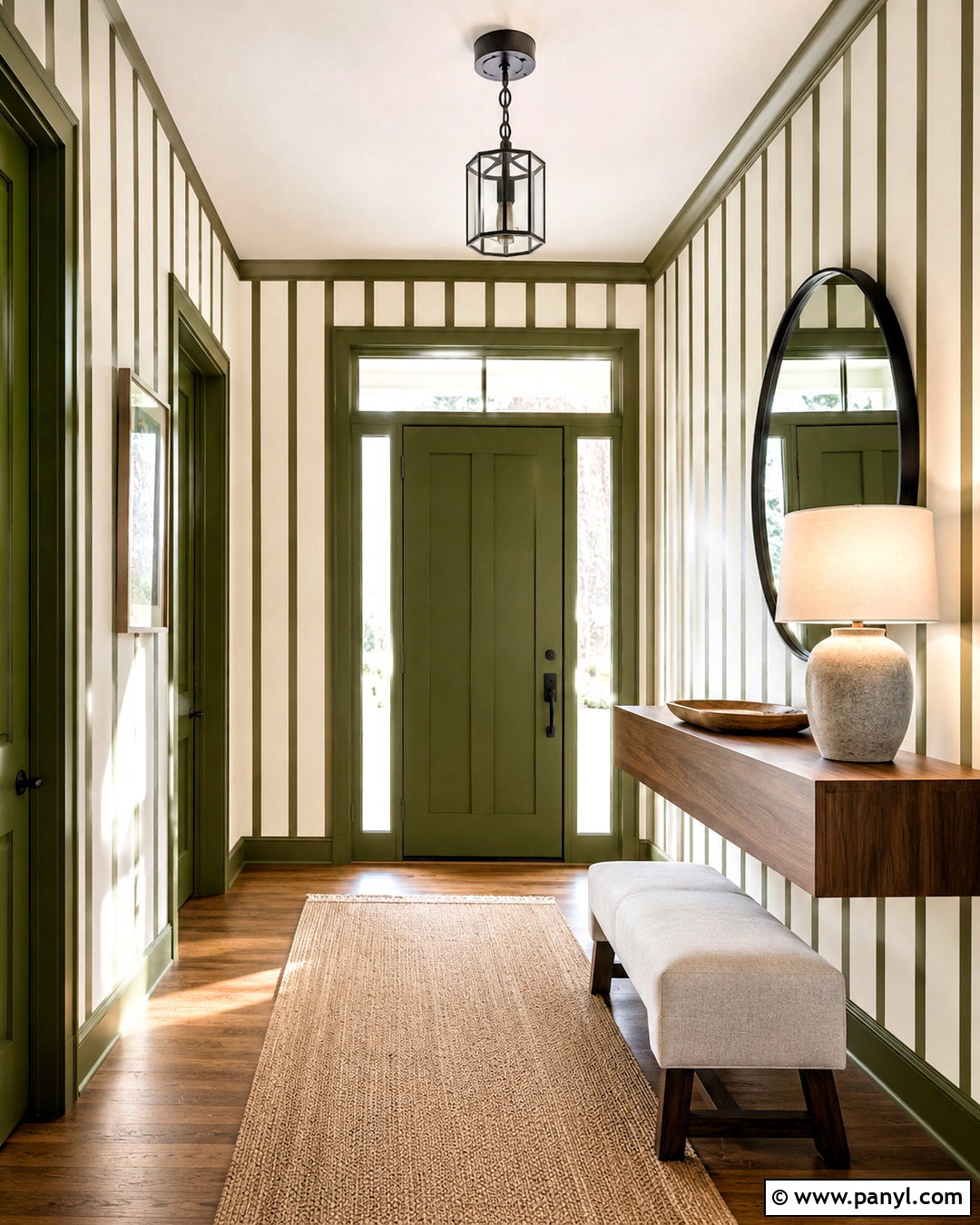
Slim vertical stripes create a crisp background that works especially well in an entryway with limited floor space. Paint the walls warm white, then add evenly spaced olive green stripes from the baseboards to the ceiling. Keep the stripes narrow enough to feel refined but wide enough to remain visible behind furniture. Pair the pattern with a shallow walnut console, a round black-framed mirror, and a small upholstered bench. A natural runner introduces texture, while a ceramic lamp and wooden tray provide practical landing spots. Carry the olive color onto the interior side of the front door for a connected scheme. Carefully measured tape lines are essential because small spacing errors become noticeable. The completed entry feels taller, orderly, and full of personality.
7. Color Block Wall Painting
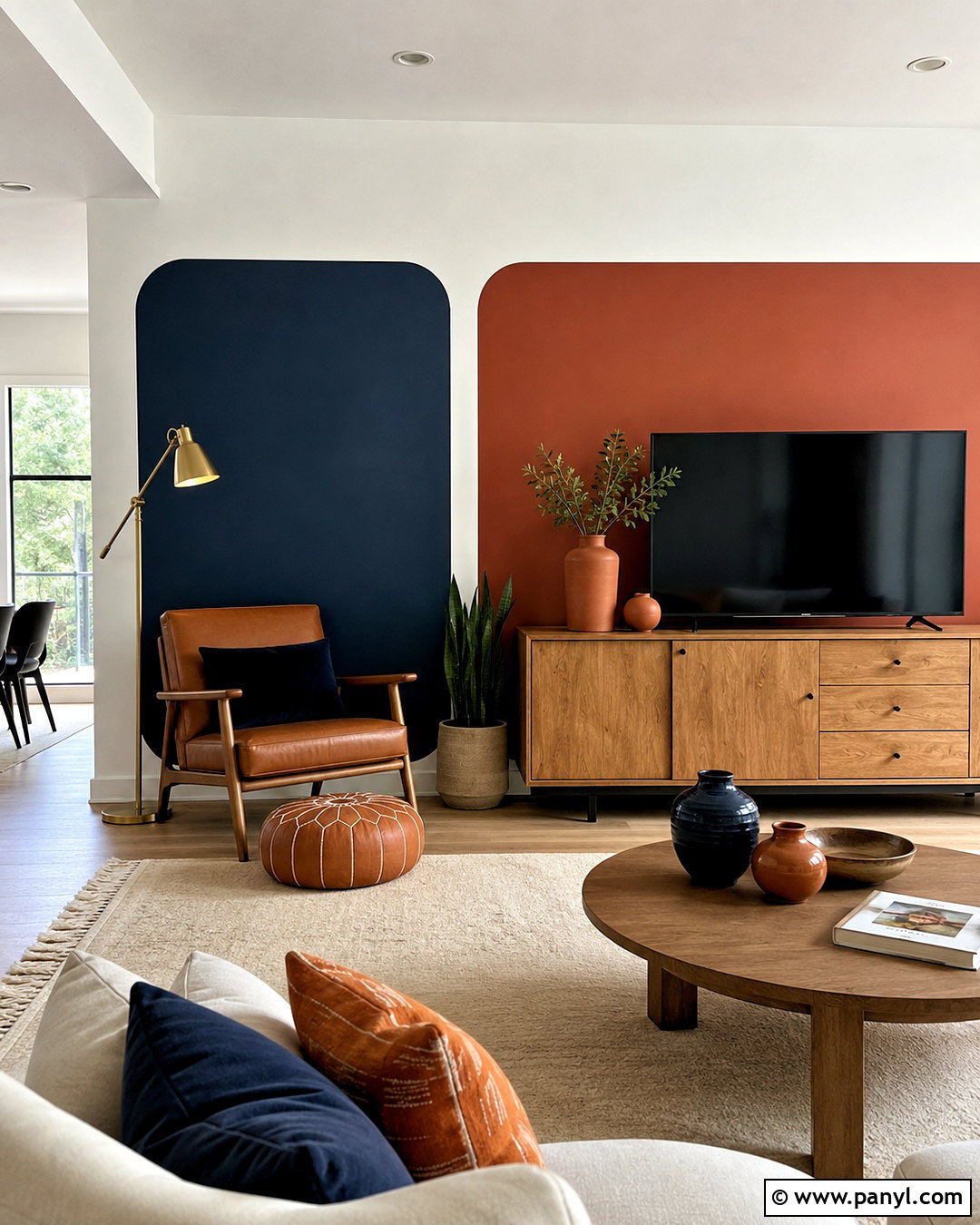
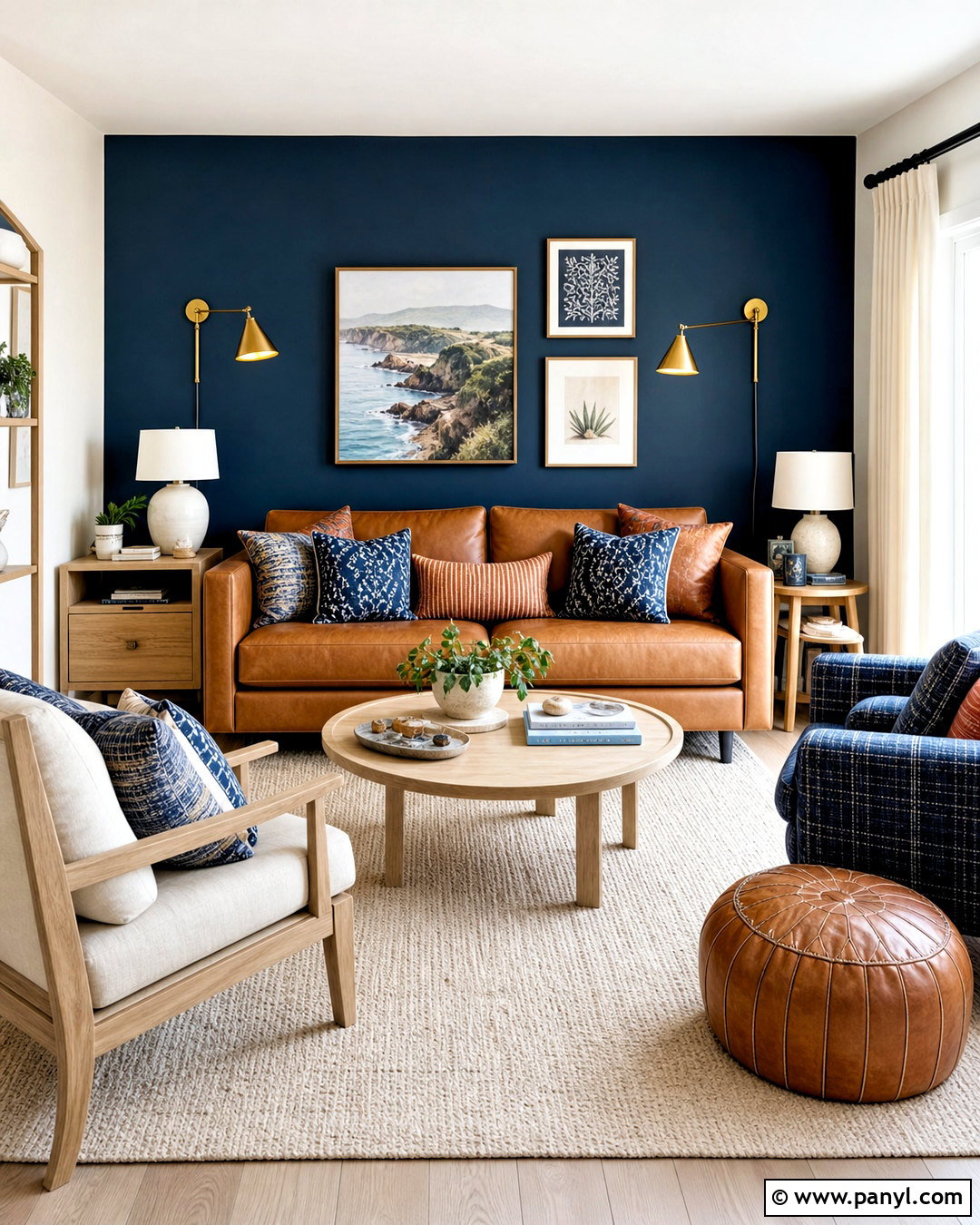
Large blocks of color can define separate functions within an open room. Paint the reading corner of a living space in a floor-to-ceiling rectangle of deep navy blue, leaving the surrounding walls soft greige. Place a cognac leather chair, brass floor lamp, and small round oak table fully inside the painted block. Across the room, use a second muted rust block behind a low media cabinet to establish another visual zone. Connect both areas with an ivory rug, navy pillows, and rust-colored ceramics. Keep the shapes simple and align their edges with nearby furniture for an intentional result. This layout shows how wall painting can organize a multipurpose room while introducing rich color without coating every surface in a bold shade.
8. Scalloped Wall Painting
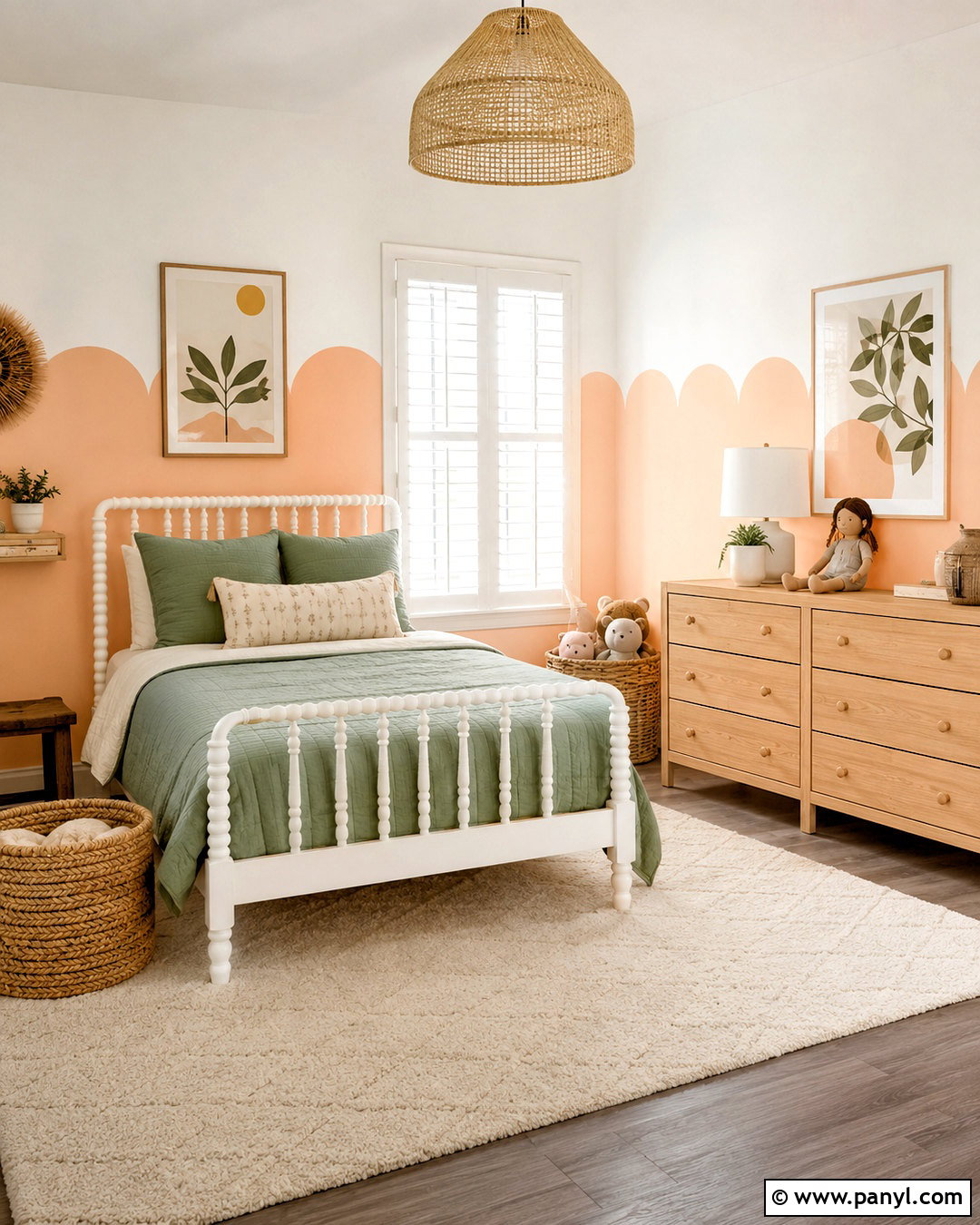
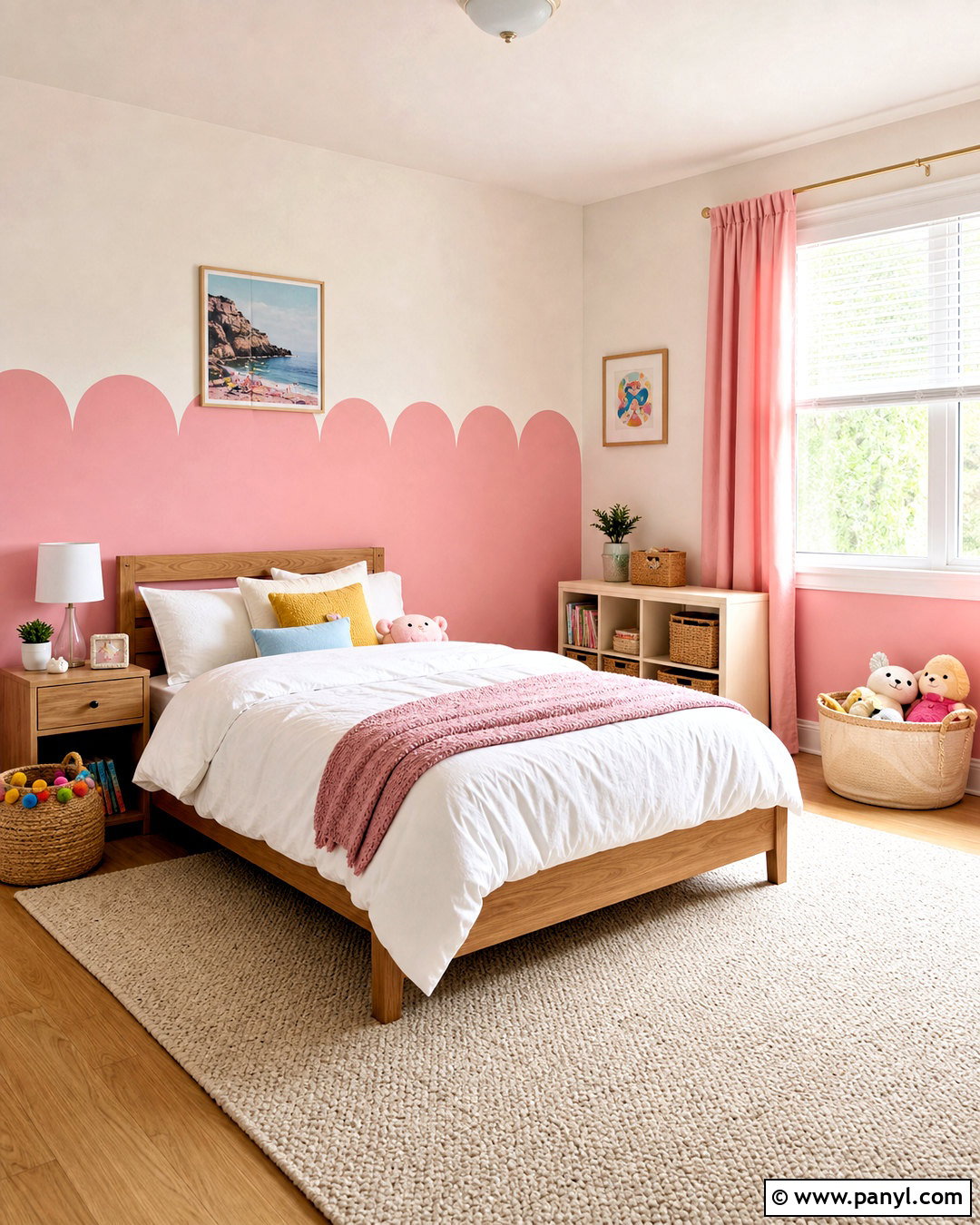
A scalloped border creates a playful bedroom without making the space feel overly themed. Paint the lower half of the walls a soft peach, finishing the top edge with large, evenly spaced scallops. Leave the upper walls warm white for brightness. A white spindle bed, light wood dresser, and woven baskets give the room a fresh foundation, while sage green bedding balances the peach. Add a washable cream rug and simple animal or nature prints in oak frames. Make a cardboard semicircle template so each curve has the same width and height. Trace the design lightly, then use a small brush around the rounded edges before rolling the larger area. The complete room feels cheerful, gentle, and flexible enough to grow with its occupant.
9. Mountain Mural Wall Painting
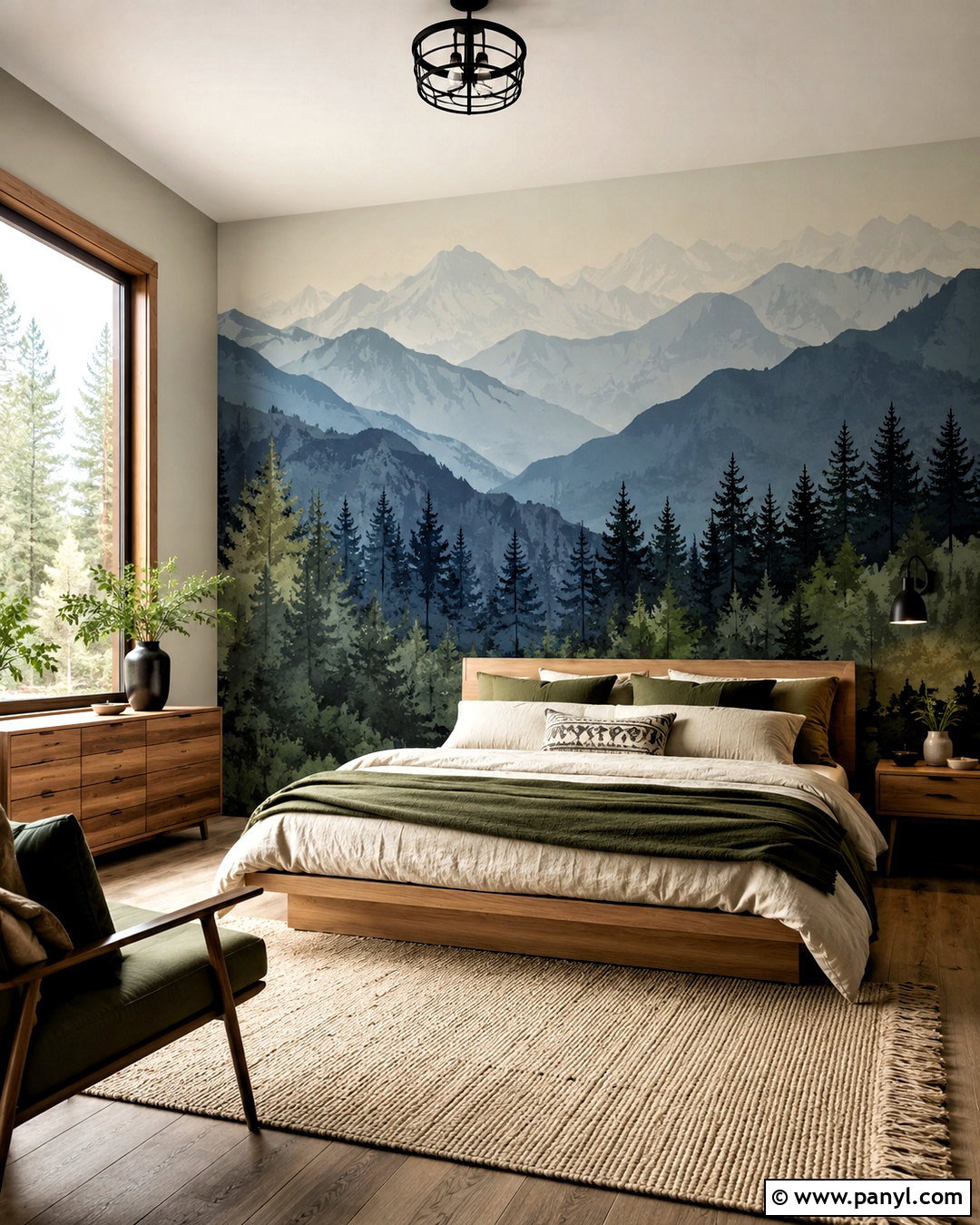
Layered mountain shapes can create depth in a nature-inspired bedroom or playroom. Start with a pale gray-blue wall, then paint overlapping mountain silhouettes in slate blue, muted pine green, and smoky navy. Keep the peaks broad and slightly irregular so the mural feels organic. Place a low natural wood bed in front, dressed with charcoal, cream, and moss green textiles. A wool rug, simple wood nightstand, and black reading sconce support the outdoorsy palette. Avoid adding busy artwork over the mural because the painted landscape already provides a complete focal point. Draw each mountain layer in pencil before painting from the background forward. The final room offers adventure and visual interest while remaining calm, cohesive, and easy to furnish.
10. Checkerboard Wall Painting
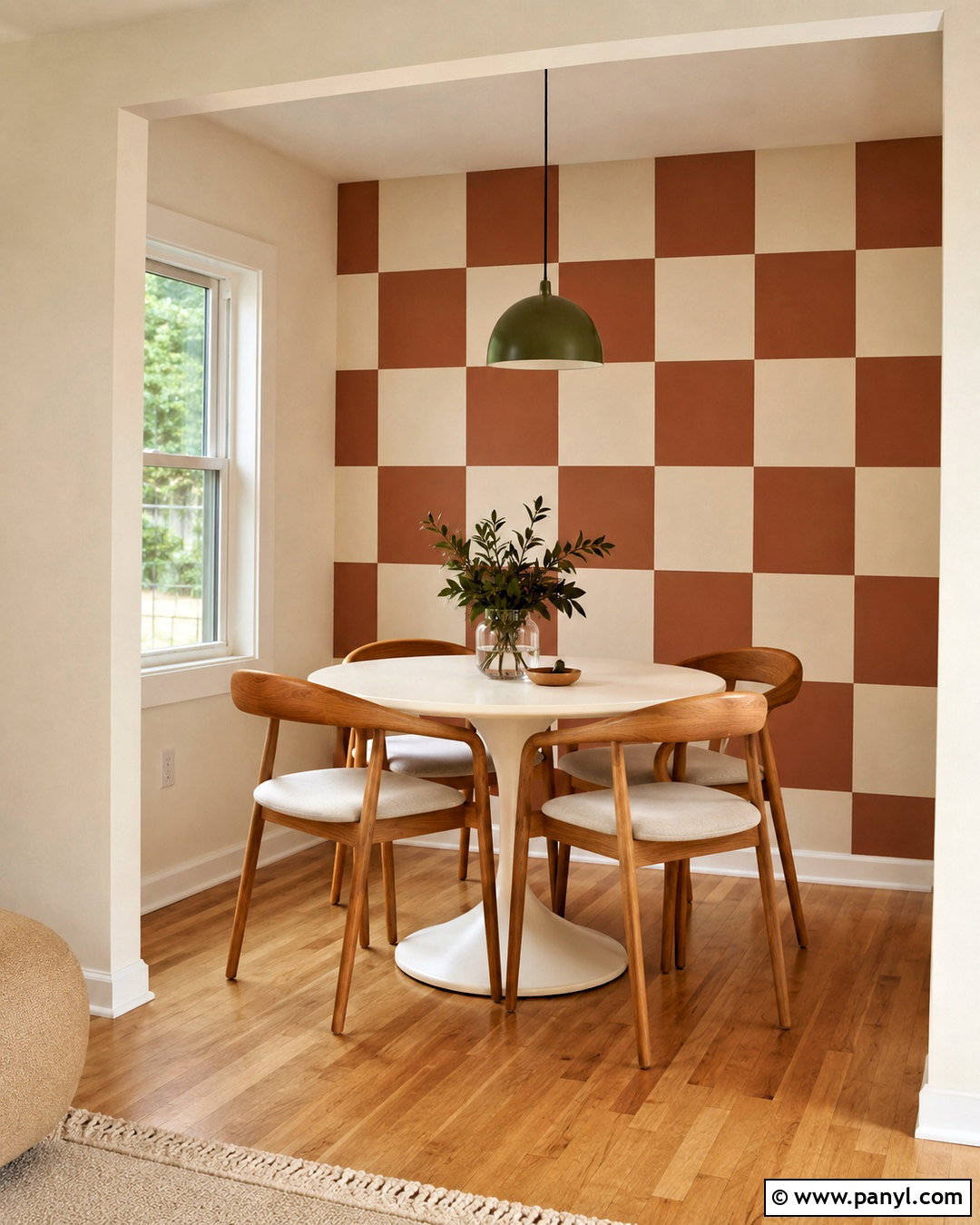
A large-scale checkerboard pattern brings retro energy to a breakfast nook or casual dining corner. Use warm cream and muted clay squares rather than harsh black and white for a softer, more livable effect. Paint the pattern on one wall only, leaving the adjoining walls solid cream. A round white pedestal table, curved oak chairs, and an olive green pendant create a balanced mix of playful and natural elements. Add simple linen seat cushions and a small plant on the table. Plan the grid so full squares frame the wall edges whenever possible. A laser level and carefully sealed painter’s tape will help keep the lines crisp. The finished nook feels upbeat and memorable without requiring elaborate furniture, expensive wallpaper, or excessive decorative accessories.
11. Sunburst Wall Painting
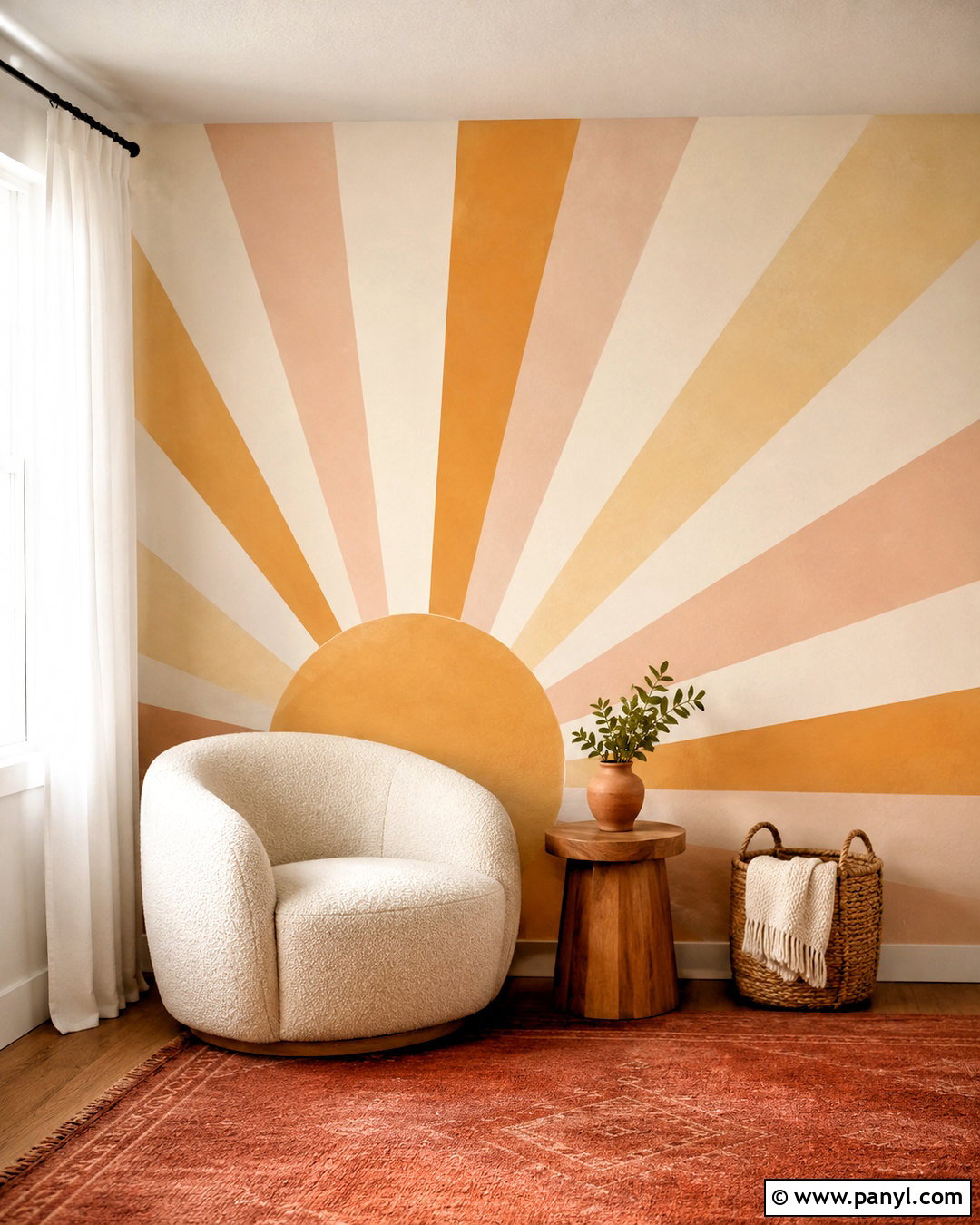
A sunburst mural can brighten a nursery, reading room, or creative corner with warm, optimistic color. Paint a muted golden circle low on a soft ivory wall, then extend broad rays outward in alternating shades of ochre, pale peach, and creamy yellow. Position a comfortable boucle chair in front without completely covering the center. Add an oak side table, a woven floor basket, and a small rust-colored rug to ground the composition. White curtains allow natural light to support the sunny palette. Use string attached to a center point to guide the rays, and keep the color changes limited for a clean design. The whole space feels cheerful and nurturing, while the earthy tones make the mural more sophisticated than a bright primary-color treatment.
12. Abstract Mural Wall Painting
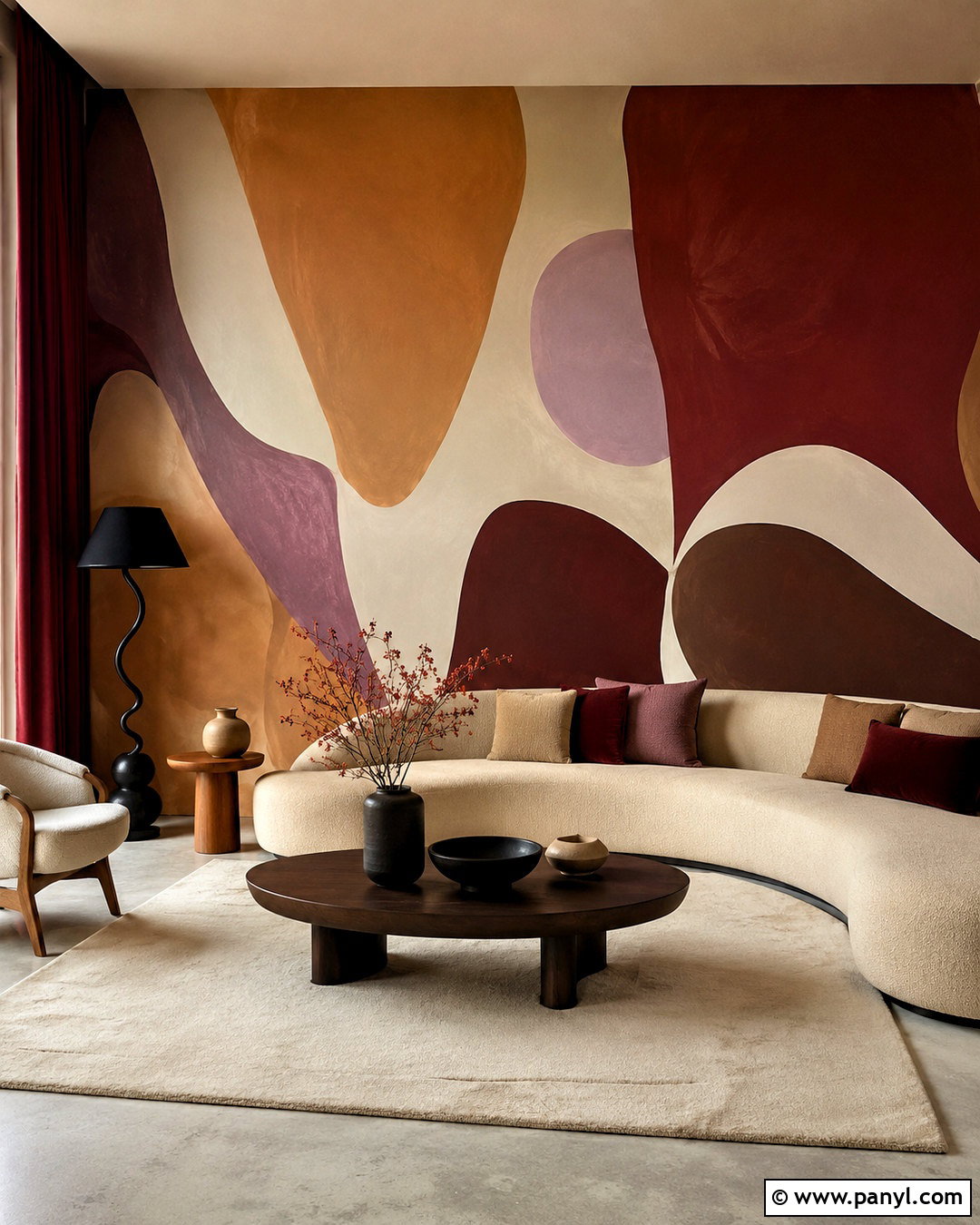
Free-flowing painted shapes can give a living room the character of a custom art installation. Cover one wall with oversized organic forms in camel brown, dusty rose, deep burgundy, muted lavender, and warm cream. Allow some shapes to overlap, but repeat each color in more than one area to create balance. Furnish the room with a curved beige sofa, dark wood coffee table, cream rug, and sculptural black floor lamp. Solid pillows and minimal pottery complement the mural without competing with it. Draw the major forms lightly with chalk before painting, then soften imperfect curves by hand rather than forcing every edge to look mechanical. The result is a complete, artful room that feels expressive while remaining coordinated through its restrained furniture and repeated color palette.
13. Color Drenched Wall Painting
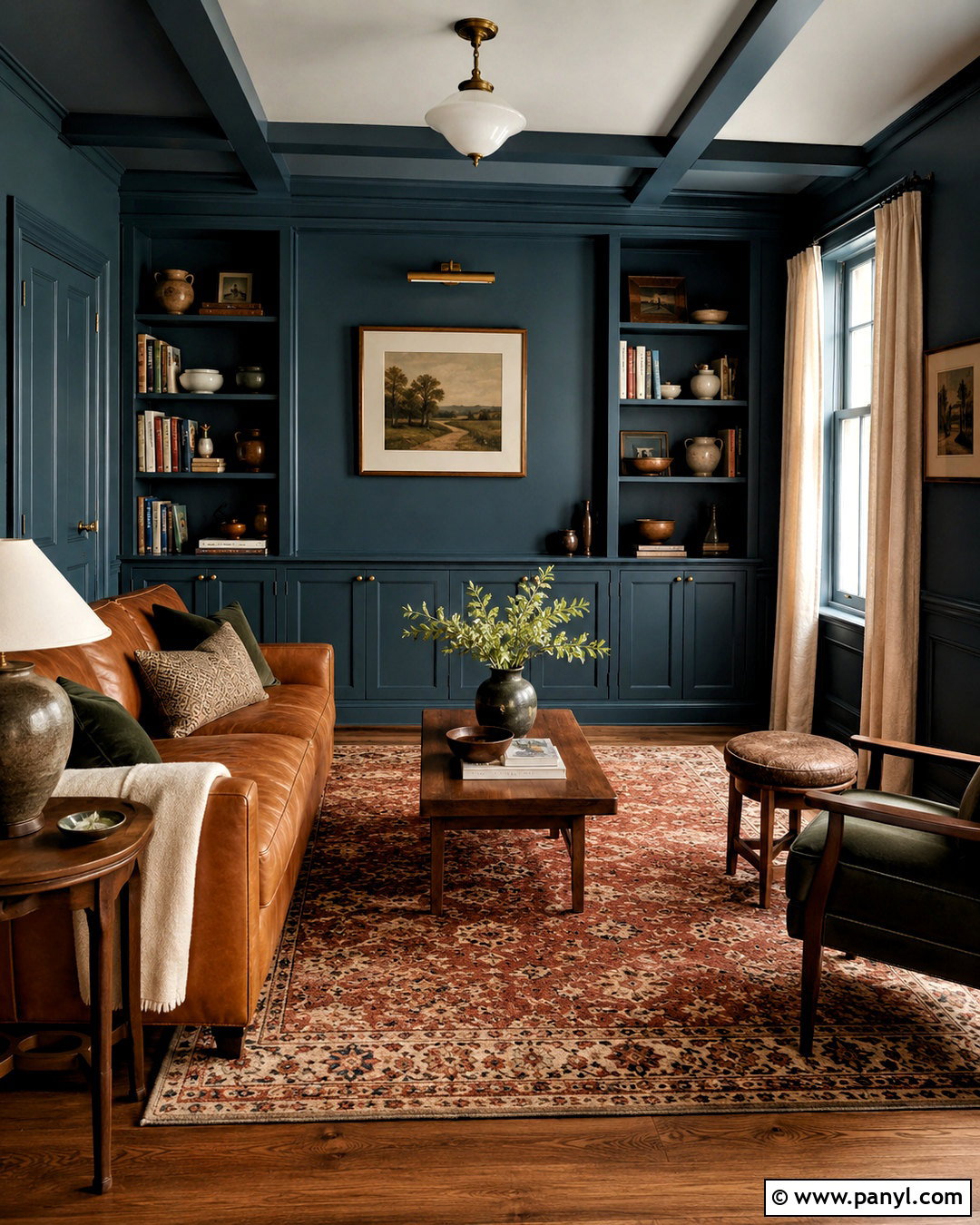
Color drenching creates an immersive room by using one shade across walls, trim, doors, and architectural details. In a cozy den, choose a rich blue-green with enough depth to feel enveloping but not nearly black. Paint the walls in a washable matte finish and use satin on the trim and built-in shelving for subtle contrast. Add a caramel leather sofa, walnut side tables, and a rust-and-cream patterned rug to warm the cool wall color. Brass picture lights and ivory curtains keep the room from looking flat. Books and pottery in earthy shades complete the built-ins. Because every painted surface shares one color, texture becomes especially important. The finished den feels unified, comfortable, and more intentional than a room with contrasting white trim.
14. Half Circle Wall Painting
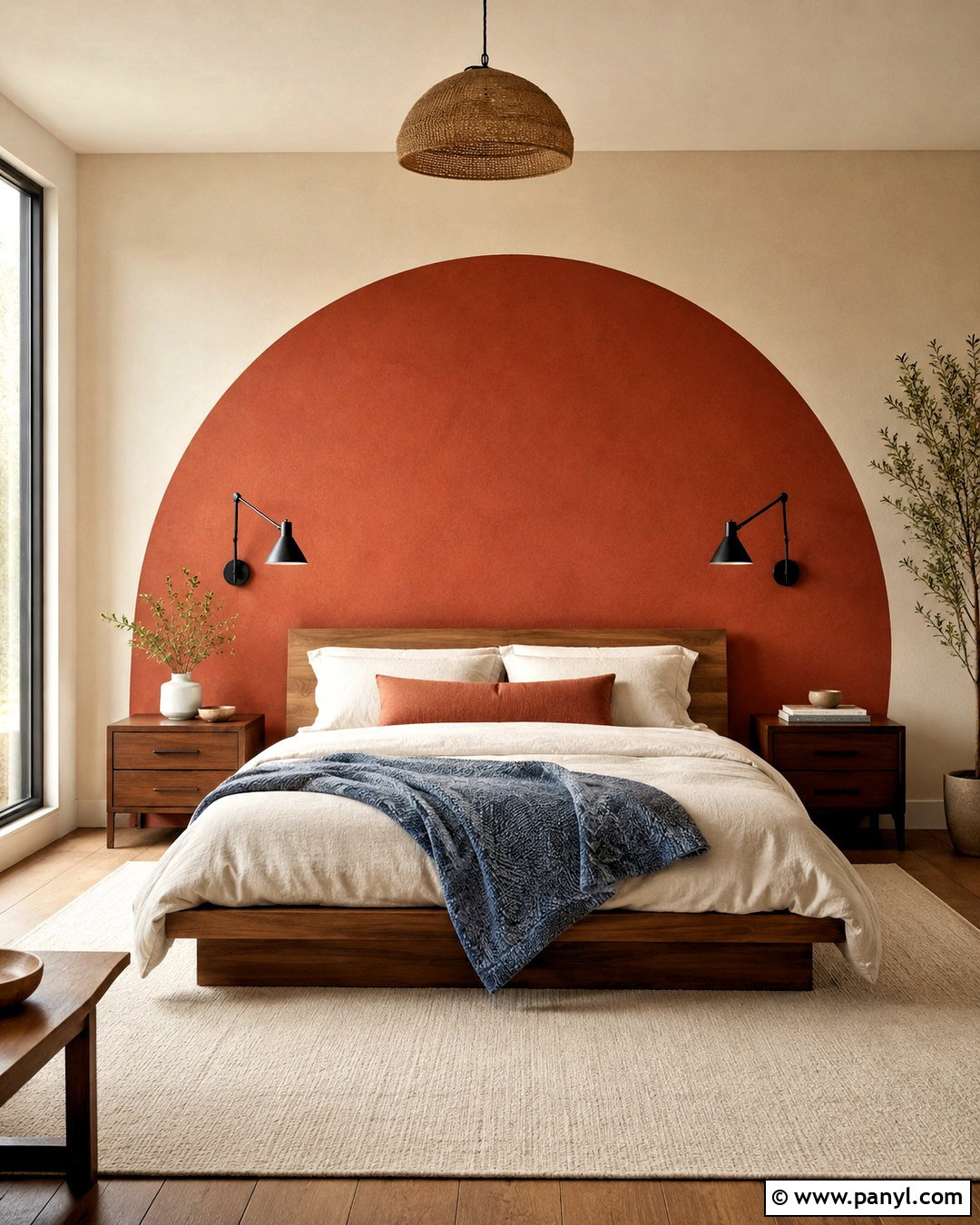
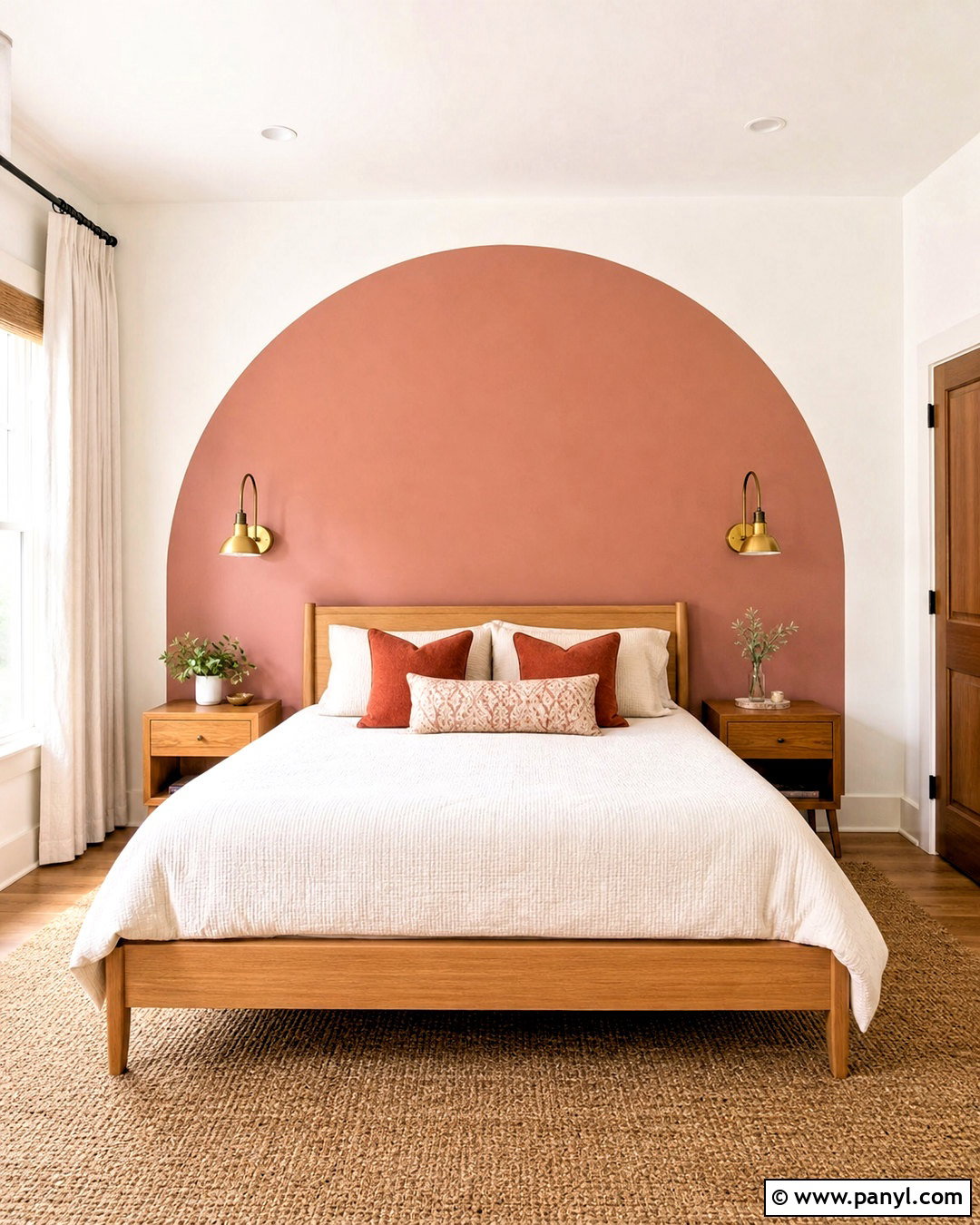
An oversized half circle can visually anchor a bed when a traditional headboard feels too bulky. Paint a wide rust-colored semicircle rising from behind a simple platform bed on a pale beige wall. Make the shape slightly wider than the mattress so it frames the entire sleeping area. Choose natural linen bedding, walnut nightstands, and black swing-arm sconces for a warm modern bedroom. An ivory rug and muted blue throw introduce lighter contrast. Use a centered nail, pencil, and measured string to create a smooth curve before filling it with paint. Keep artwork off the semicircle so its bold outline remains clear. This wall treatment establishes symmetry, adds color, and creates a finished focal point while preserving valuable space in a smaller bedroom.
15. Ceiling Border Wall Painting
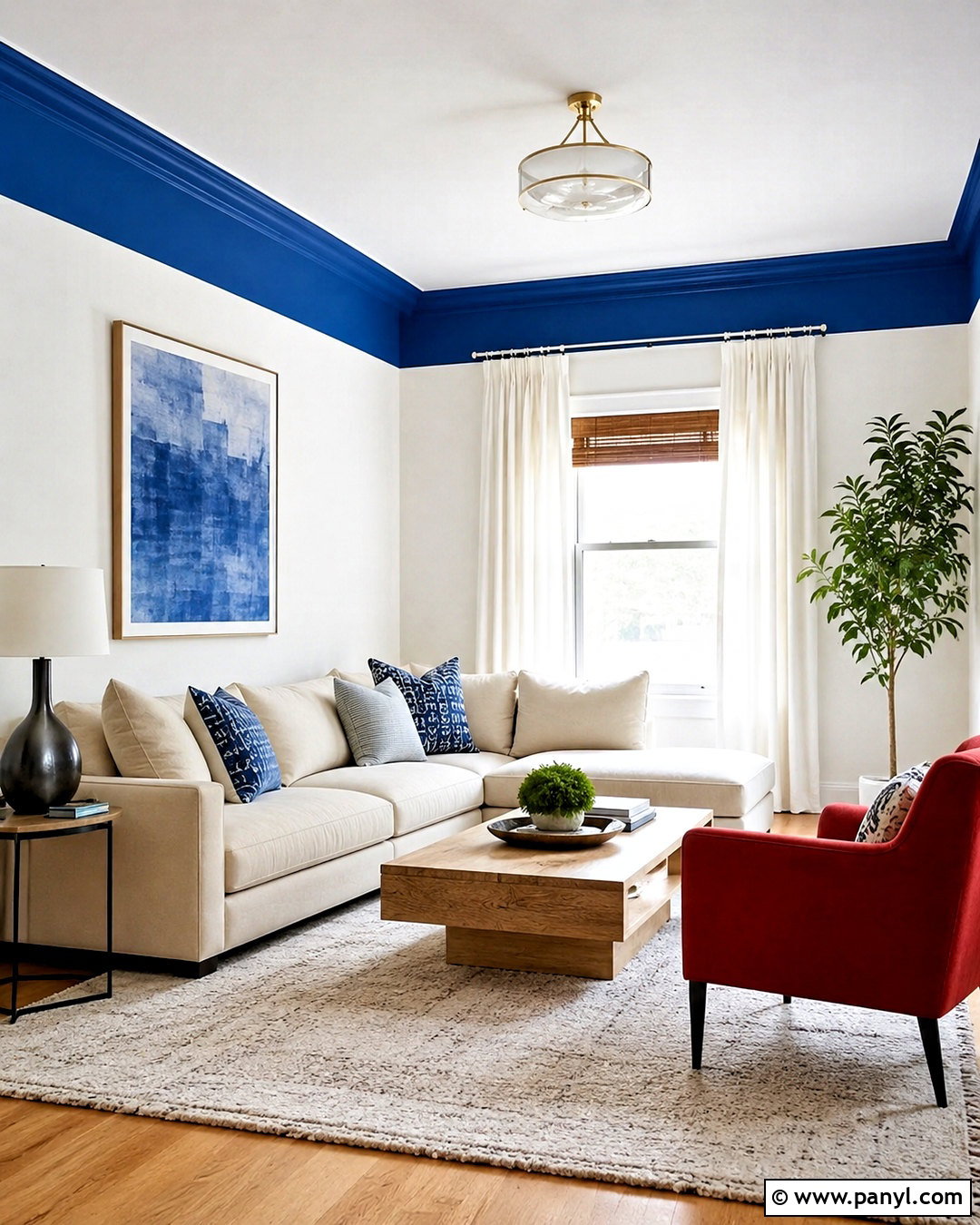
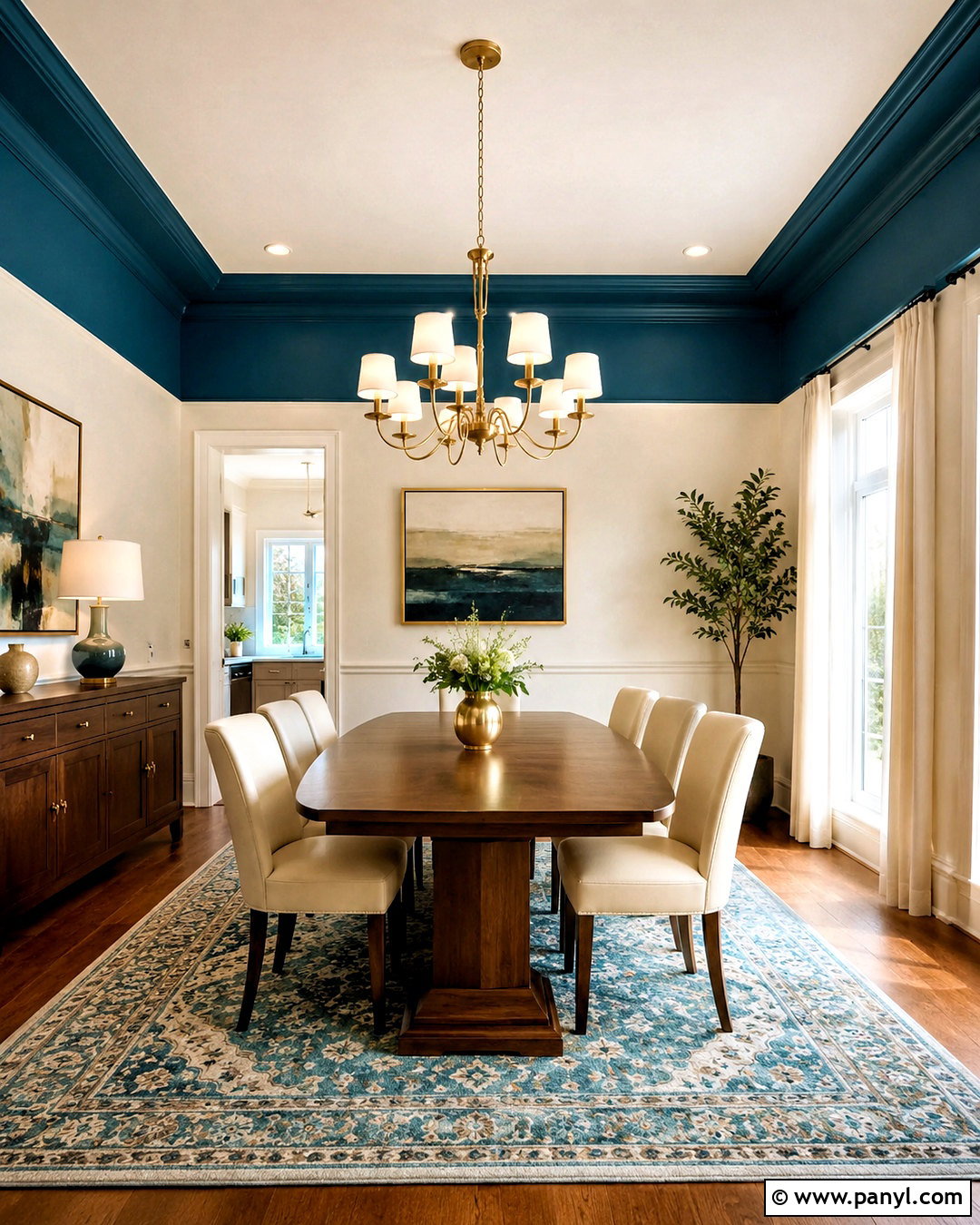
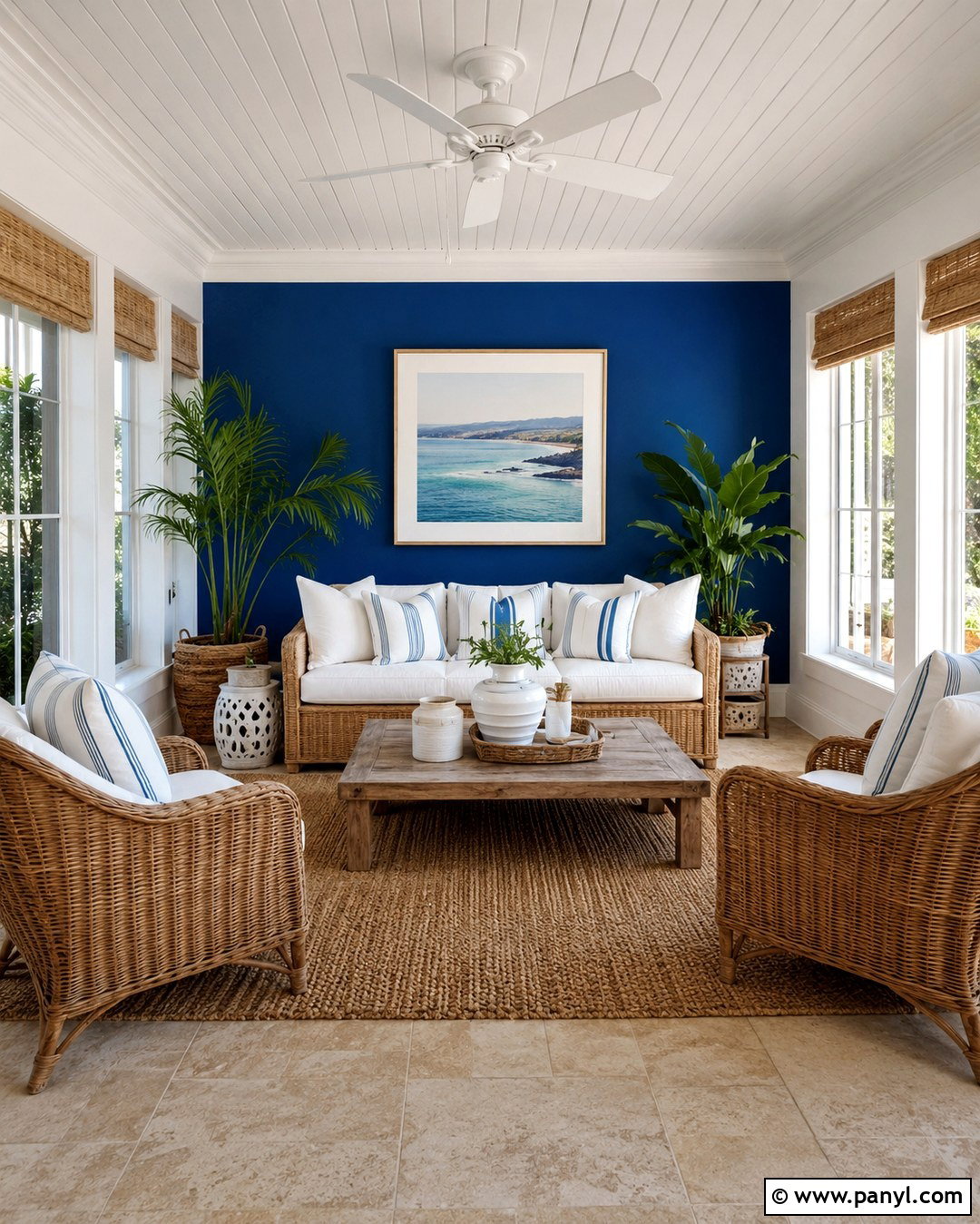
Painting a border where the wall meets the ceiling adds color in an unexpected but controlled way. In a white living room, create a 12-inch band of deep cobalt blue around the upper walls, then continue the same color across the ceiling for a framed canopy effect. Keep the main wall area bright white to preserve openness. Complete the space with a streamlined cream sofa, blue patterned pillows, a light oak coffee table, and a contemporary red accent chair. White curtains and a pale rug soften the stronger colors. Use a laser level to maintain an even border around corners and above doors. This complete scheme draws attention upward and introduces architectural definition while leaving plenty of quiet wall space for simple artwork and practical furniture.
16. Wavy Line Wall Painting
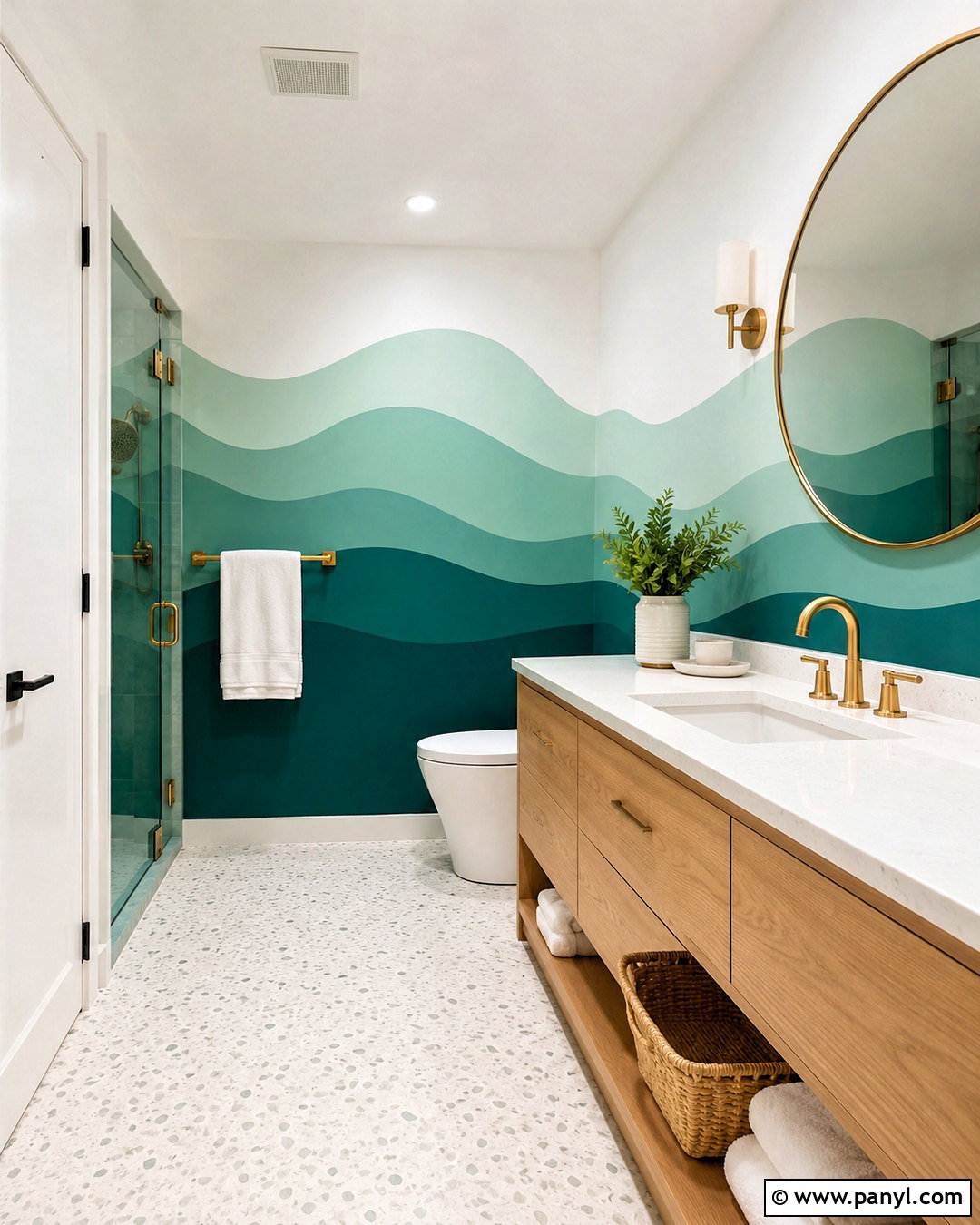
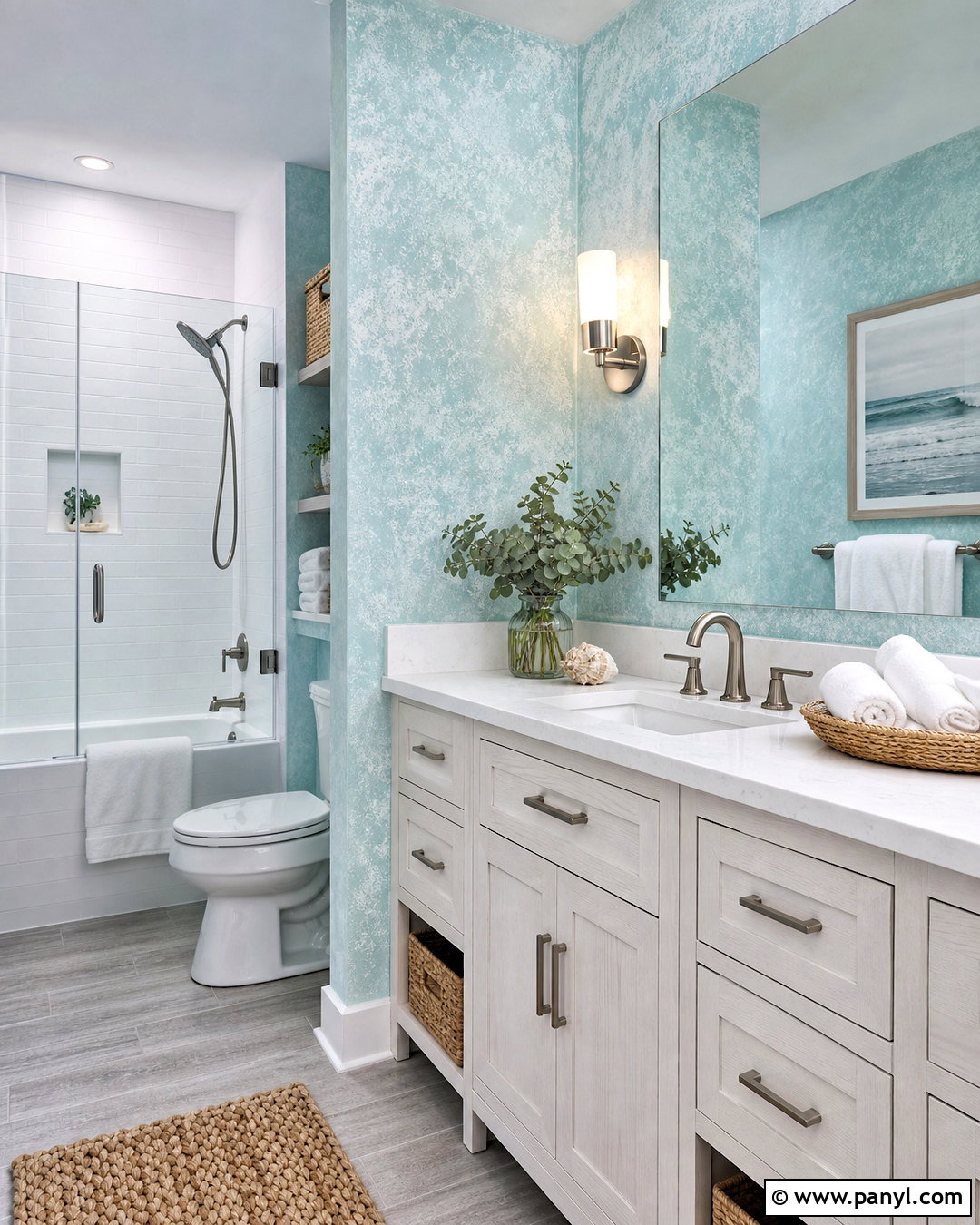
A flowing wave pattern brings gentle movement to a bathroom or powder room. Paint the upper walls soft white and cover the lower portion with broad, horizontal waves in seafoam green, turquoise, and deep teal. Keep the curves simple and repeat them consistently around the room. Pair the painted walls with a white oak vanity, white quartz counter, brushed brass faucet, and round mirror. Pale terrazzo flooring adds quiet texture without competing with the wave design. Use moisture-resistant interior paint and place the pattern away from areas with constant direct water exposure. Draw the curves with a flexible ruler or handmade template before painting. The completed bathroom feels fresh and energetic, yet the natural vanity and limited palette prevent the decorative treatment from becoming visually overwhelming.
17. Grid Wall Painting
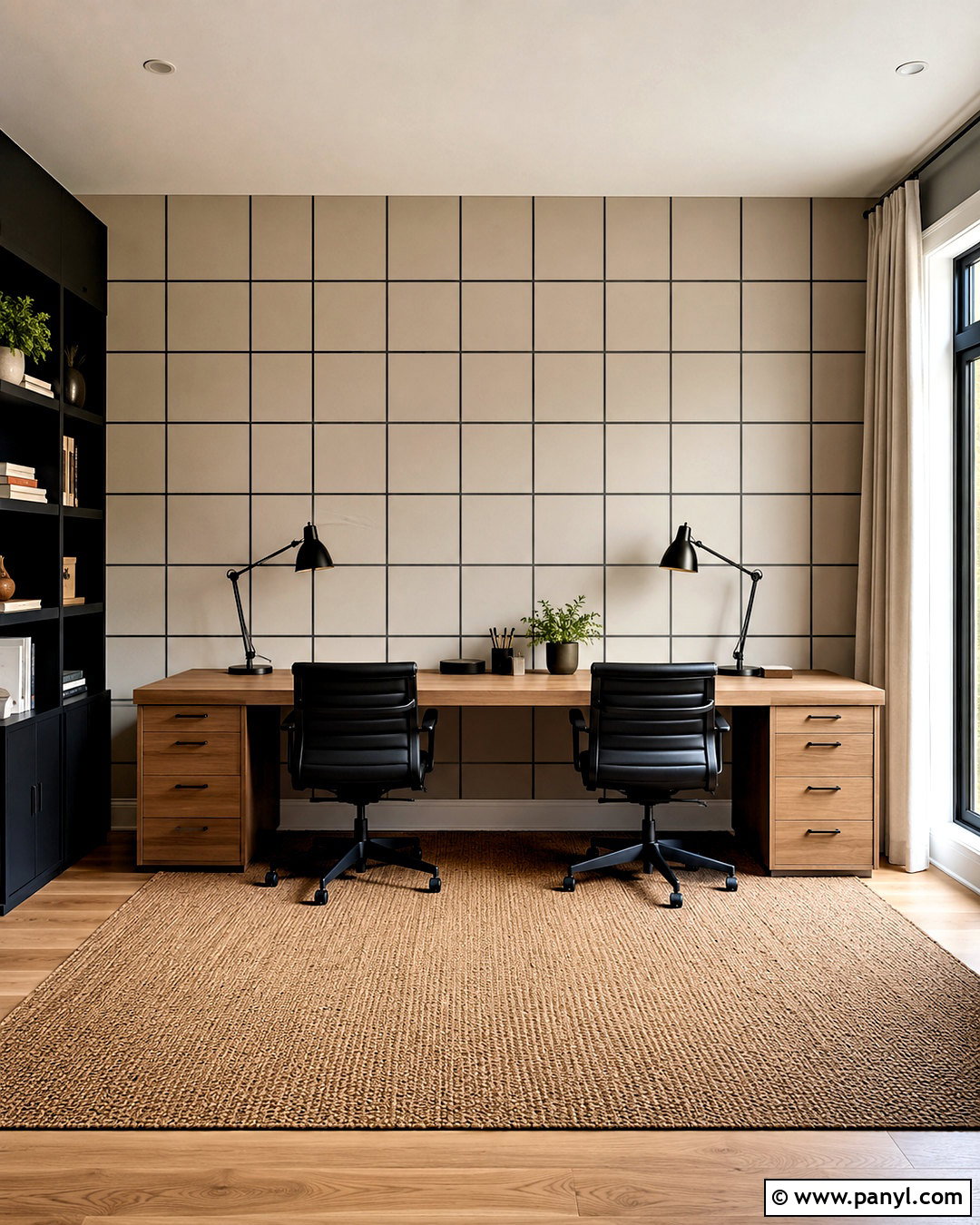
A painted grid offers a clean alternative to wallpaper in a modern office or study. Begin with a warm greige wall and add thin charcoal lines in evenly spaced vertical and horizontal rows. Use a matte finish so the pattern remains subtle rather than shiny. Set a long oak desk against the wall with two black chairs, matching task lamps, and streamlined drawer units. A tan rug and linen curtains soften the strong geometry. Keep shelves and desk accessories simple because the grid already supplies visual structure. Measure the entire wall before deciding the spacing, especially if the design must align around windows or outlets. The completed workspace looks precise, calm, and professional, with a graphic background that supports concentration without relying on a loud collection of colors.
18. Botanical Mural Wall Painting
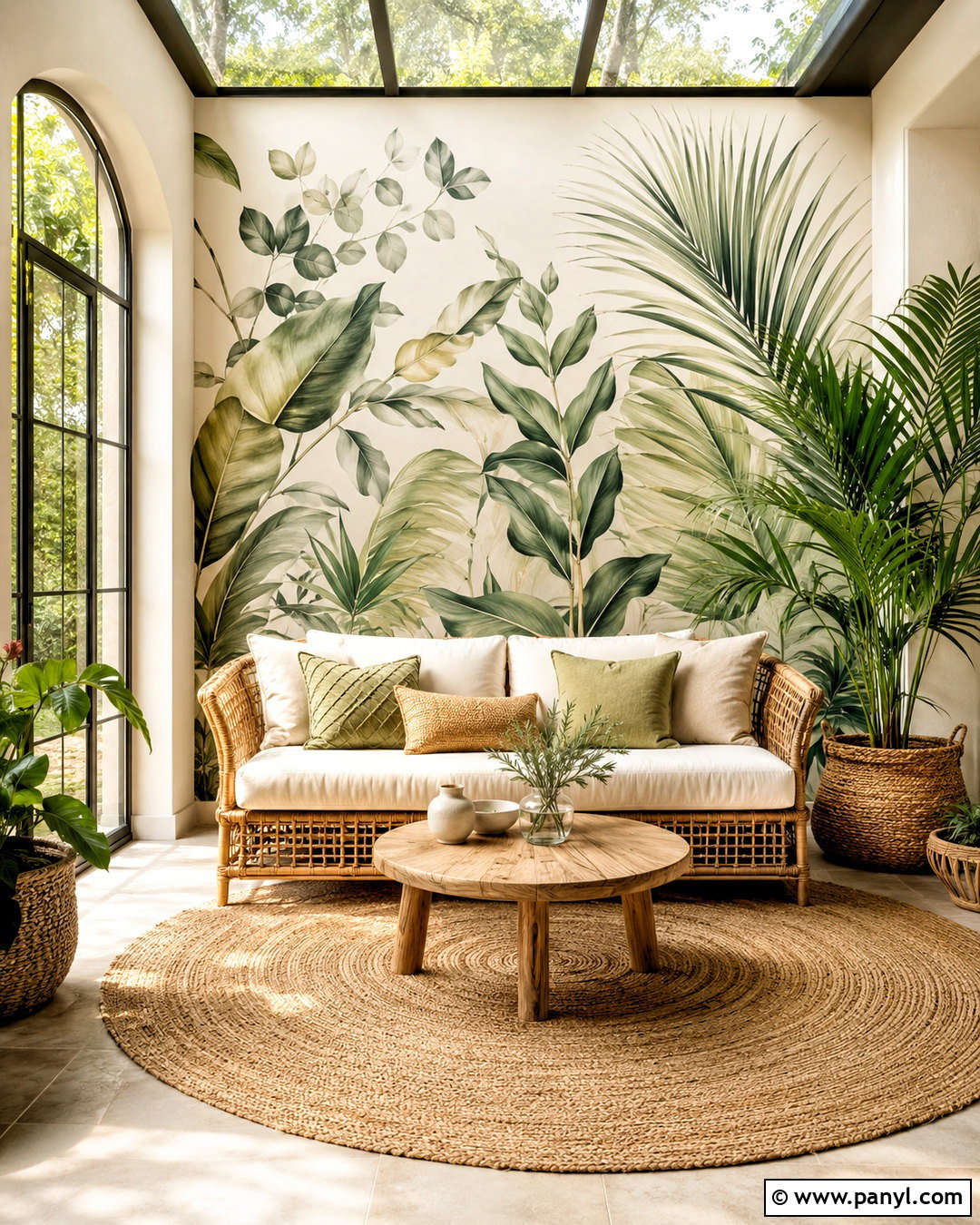
Oversized leaves can transform a sunroom or quiet sitting area into a refreshing indoor retreat. Paint a warm cream base, then add sweeping eucalyptus and palm-inspired leaves in sage, olive, and deep forest green. Arrange the leaves from the lower corners toward the center, leaving open wall space around the upper middle. Furnish the room with a natural rattan loveseat, ivory cushions, a round wood table, and a soft jute rug. Several real plants can repeat the shapes and colors of the mural. Use sample boards to refine the leaf forms before working on the wall, and vary their sizes for a natural composition. The finished room feels connected to the outdoors while its limited palette, light furniture, and open layout maintain an airy appearance.
19. Terrazzo Wall Painting
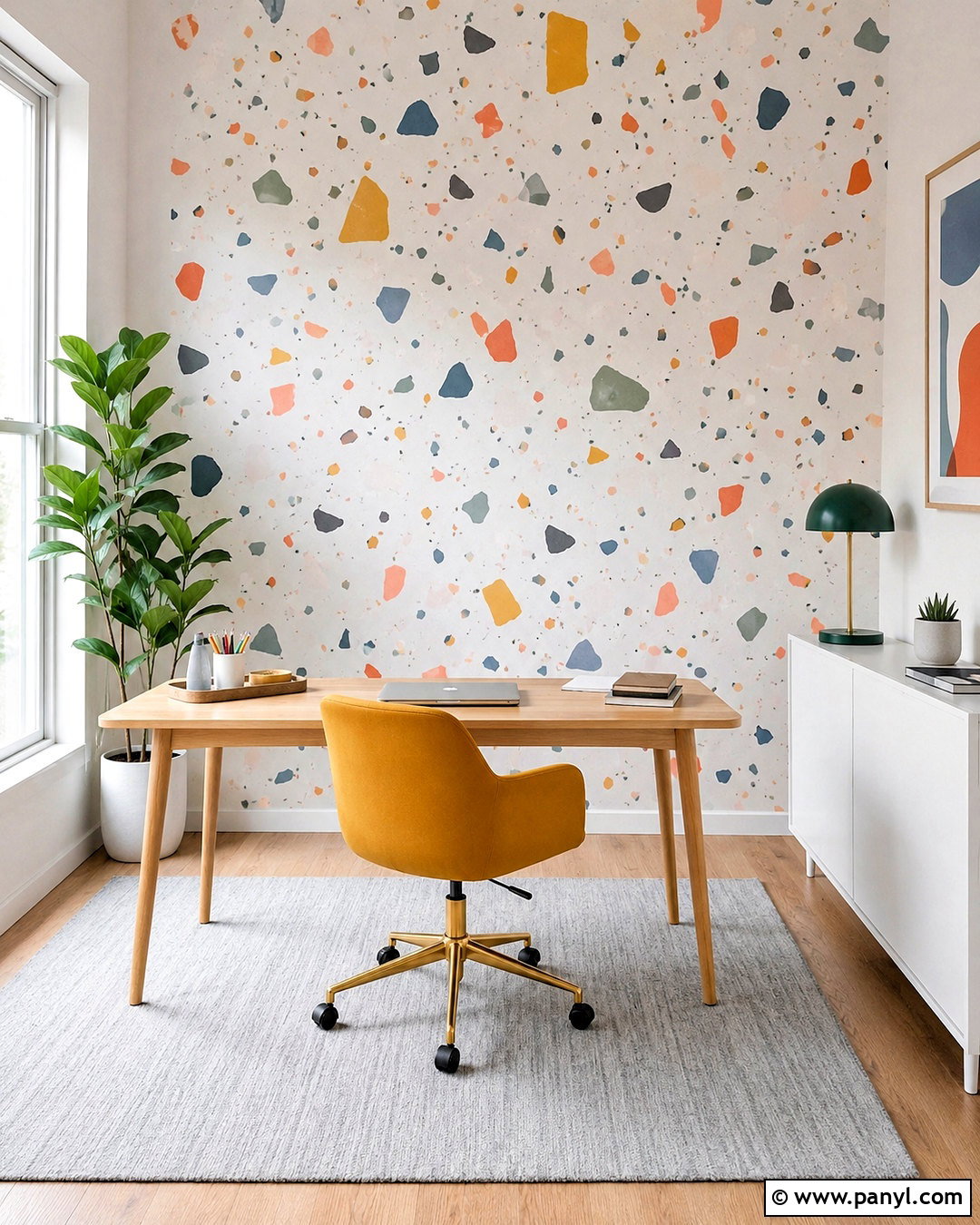
A terrazzo-inspired wall delivers colorful detail without requiring stone or tile. Paint a home office feature wall in soft warm white, then scatter irregular chips in coral, mustard, dusty blue, sage green, and charcoal. Vary the scale and direction of the painted pieces, but leave enough space between them to keep the wall from looking crowded. Add a simple birch desk, white storage cabinet, mustard chair, and pale gray rug. Solid accessories work best because the background already contains plenty of pattern. Cut reusable chip templates from cardstock, then rotate them as you work to avoid obvious repetition. The completed office feels lively and creative, while the neutral furnishings and controlled color palette ensure the terrazzo wall remains stylish rather than visually chaotic.
20. Faux Panel Wall Painting
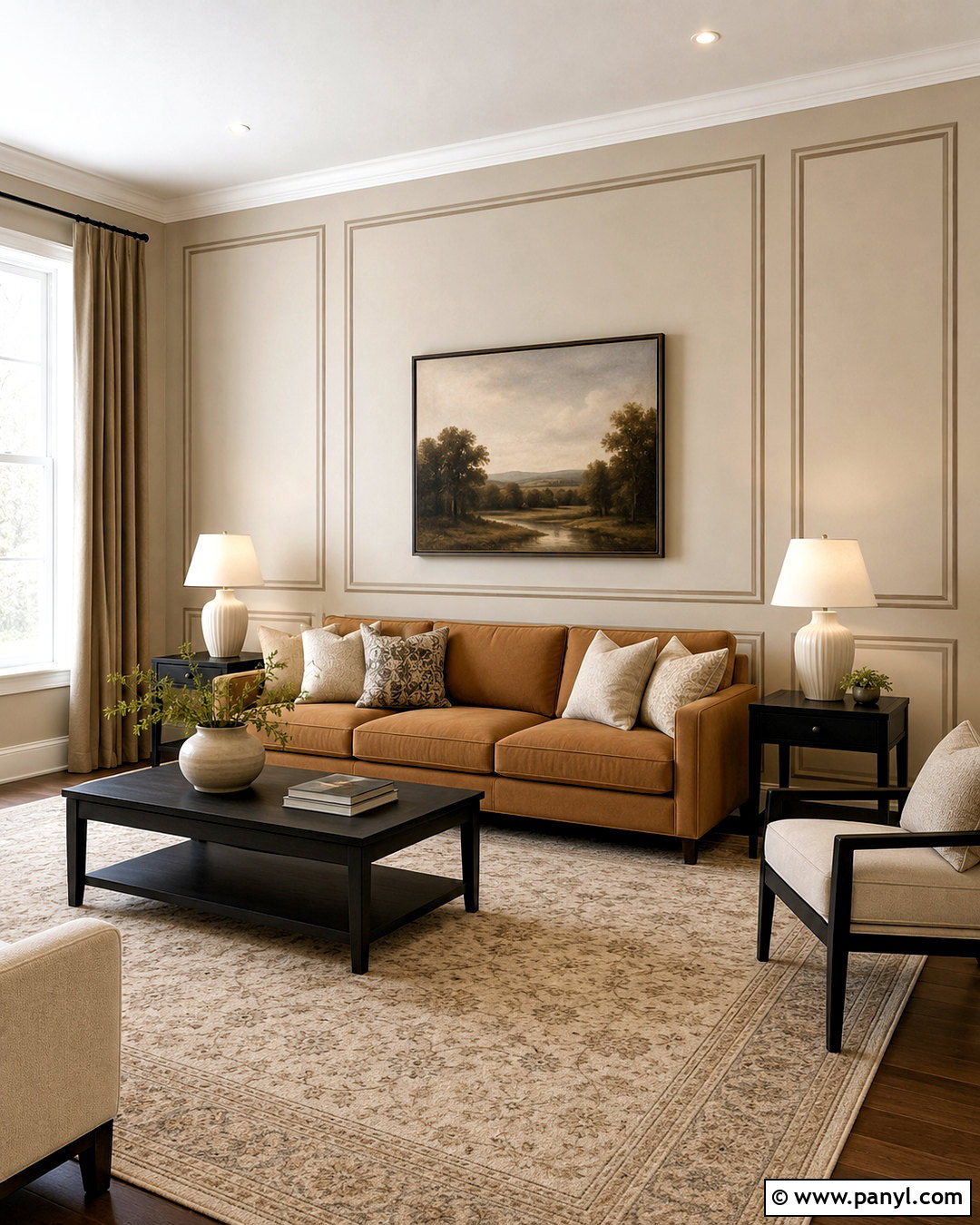
Paint can recreate the polished appearance of wall panels without lumber, tools, or permanent installation. Start with a soft greige wall, then paint thin rectangular outlines in a slightly darker taupe to imitate classic picture-frame molding. Keep each painted panel symmetrical and align the arrangement with the furniture below. In a formal living room, center a camel-colored sofa against the wall and add two black side tables, ivory lamps, and a traditional cream rug. Hang one large landscape print inside the middle painted frame. Use a level, measuring tape, and narrow painter’s tape to create consistent borders. The monochromatic color difference should remain subtle. This complete design adds depth and structure while keeping the room calm, refined, affordable, and easy to update later.
Conclusion:
The best wall treatment does more than fill an empty surface. It supports the room’s layout, repeats colors found in the furnishings, and creates a clear visual focal point. Bold murals and checkerboards bring energy, while arches, two-tone walls, grids, and faux panels offer a more structured effect. Ombre finishes and botanical scenes can establish a softer atmosphere. Before beginning, sample every color, plan the full composition, and measure carefully. Crisp preparation usually makes the biggest difference in the finished result. Start with one well-chosen wall if you are unsure about committing to a large pattern. With thoughtful planning, these 20 cool wall painting ideas can make an ordinary room feel personal, coordinated, and completely refreshed.

Related Ideas and Inspiration:
Leave a Reply