
Painter’s tape makes it possible to create a custom accent wall without expensive wallpaper, stencils, or professional tools. With careful measuring and a balanced color palette, simple taped lines can become stripes, arches, grids, mountains, or bold geometric murals. The key is designing the entire room around the pattern, so the wall works with the furniture, flooring, lighting, and decor rather than competing with them. Start with a smooth, clean base, press every tape edge firmly, and apply light coats to reduce bleeding. Carefully removing the tape at an angle before the paint fully hardens can help produce cleaner lines. () From subtle neutral patterns to playful multicolor walls, the following rooms showcase 20 wall painting with tape design ideas.
1. Diagonal Tape Wall Design
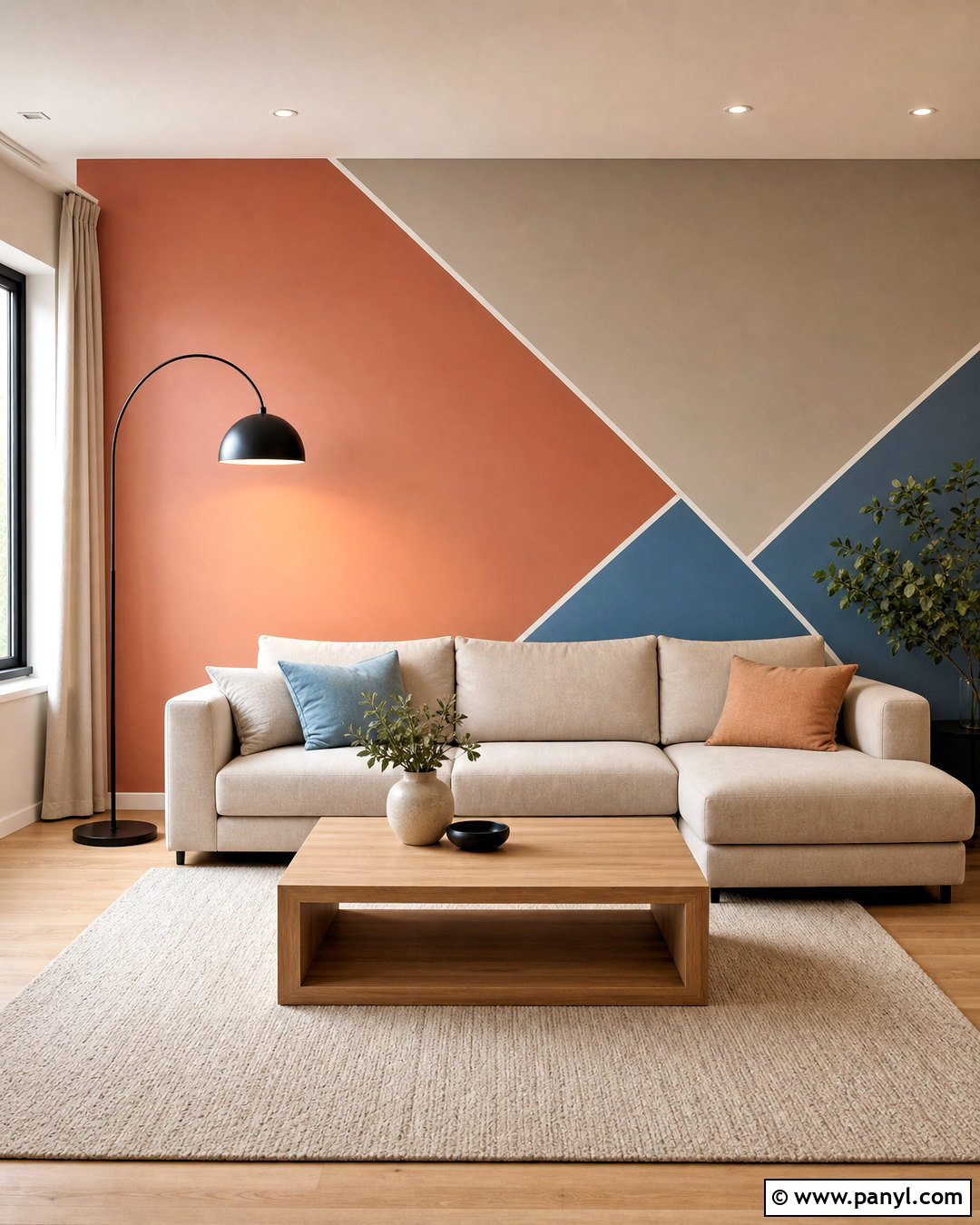
A diagonal design brings movement to a living room without making the space feel chaotic. Begin with a warm white base, then divide the main wall into large angled sections using painter’s tape. Fill selected areas with muted terracotta, dusty blue, and soft greige while leaving enough white space between the colors. Place a low-profile beige sofa against the wall so the pattern remains visible. Add a light oak coffee table, a textured ivory rug, and matte black lighting for definition. Keep cushions and accessories within the wall palette rather than introducing extra colors. This complete arrangement works especially well in a modern living room because the large shapes create impact while the restrained furniture keeps the finished design comfortable and balanced.
2. Triangle Tape Wall Design
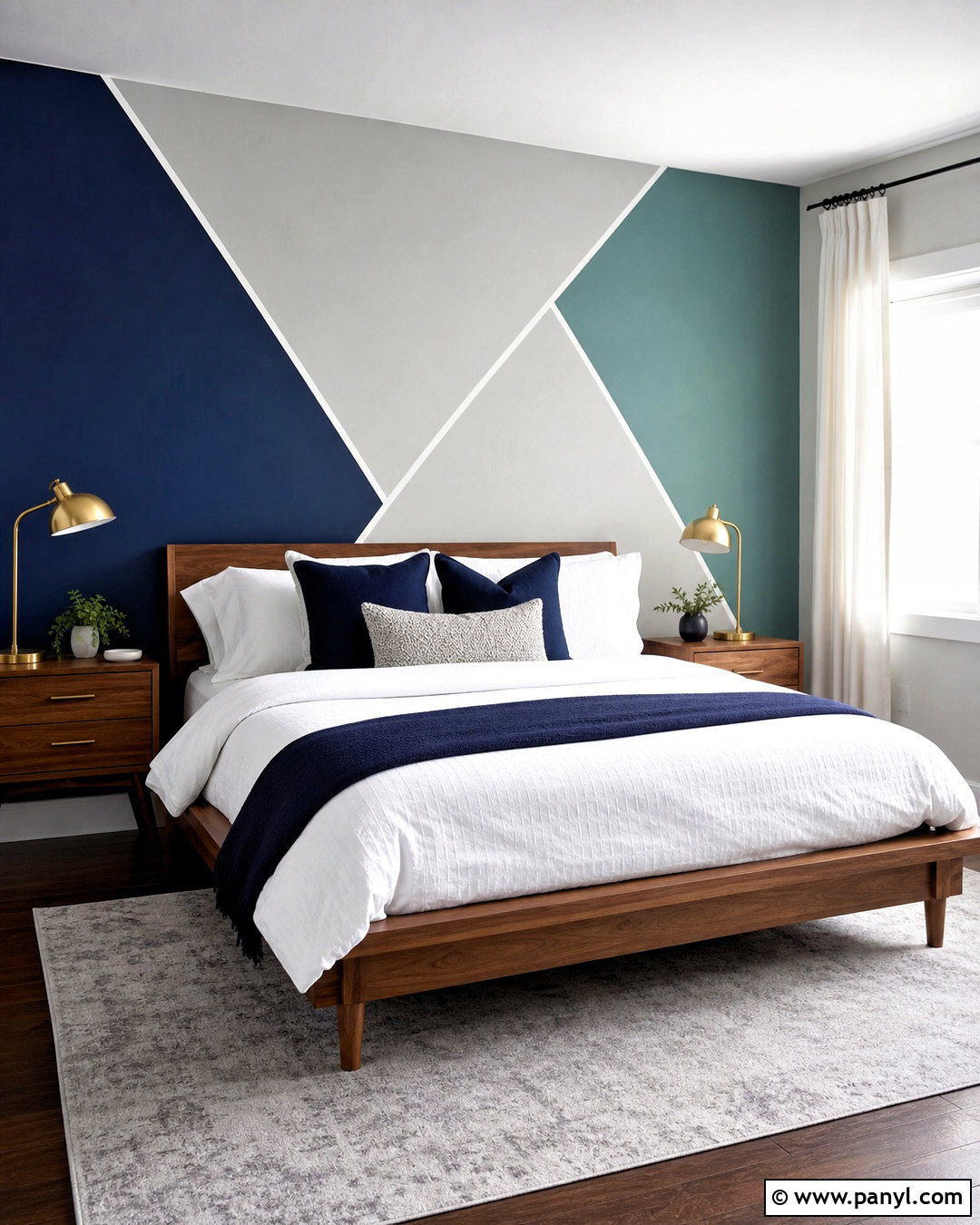
Sharp triangles can turn an ordinary bedroom wall into a graphic focal point. Paint the wall pale gray first, then use tape to create a mix of large and small triangular sections behind the bed. Choose deep navy blue, muted teal, soft gray, and white for a calm but interesting palette. A simple walnut platform bed grounds the angular design, while white bedding keeps the room from looking busy. Add navy accent pillows, matching wood nightstands, and brushed brass lamps for warmth. Avoid filling every triangle with color. Leaving some sections in the original gray gives the pattern breathing room. This arrangement creates a finished contemporary bedroom where the wall replaces the need for oversized artwork and visually frames the bed.
3. Painted Arch With Tape
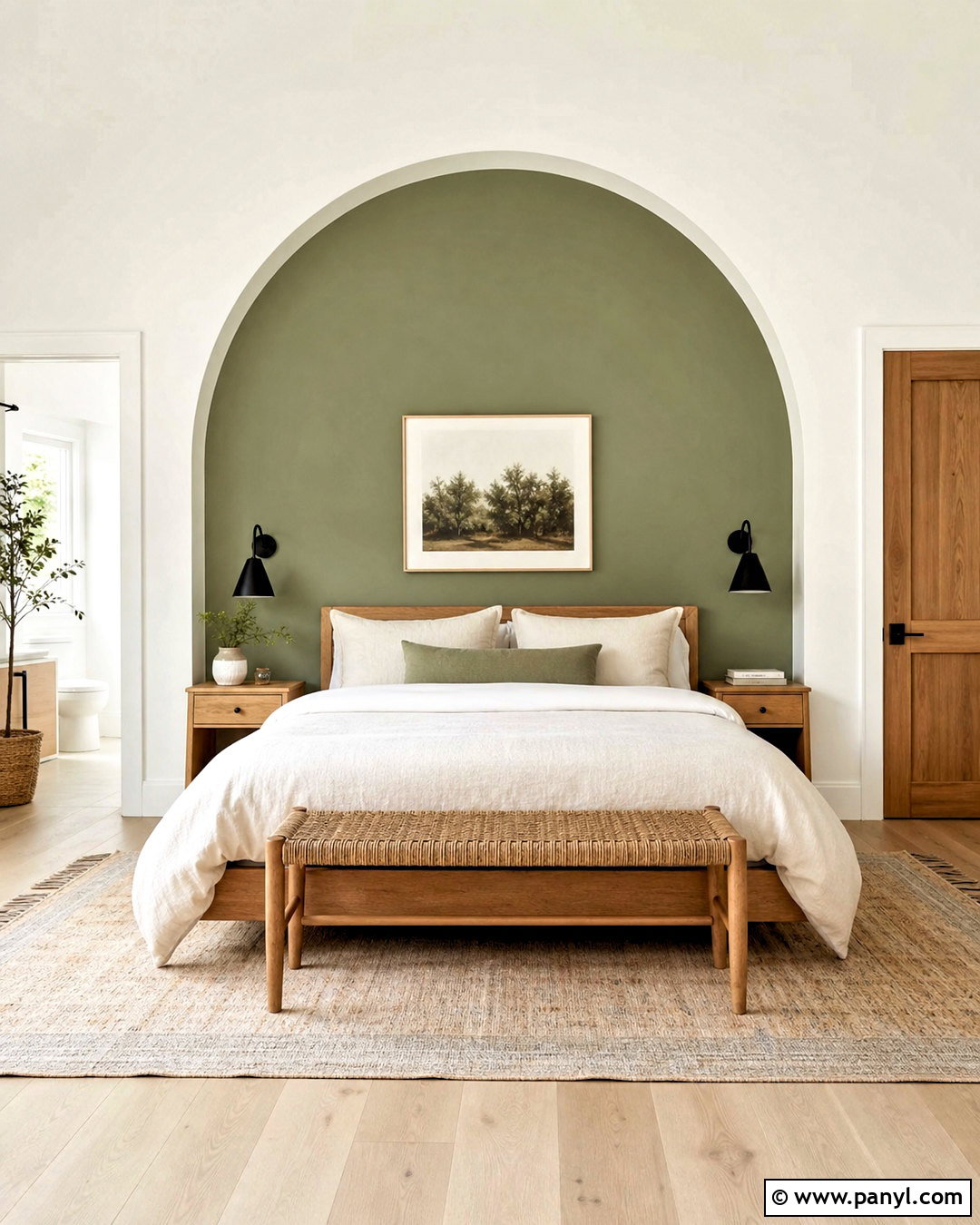
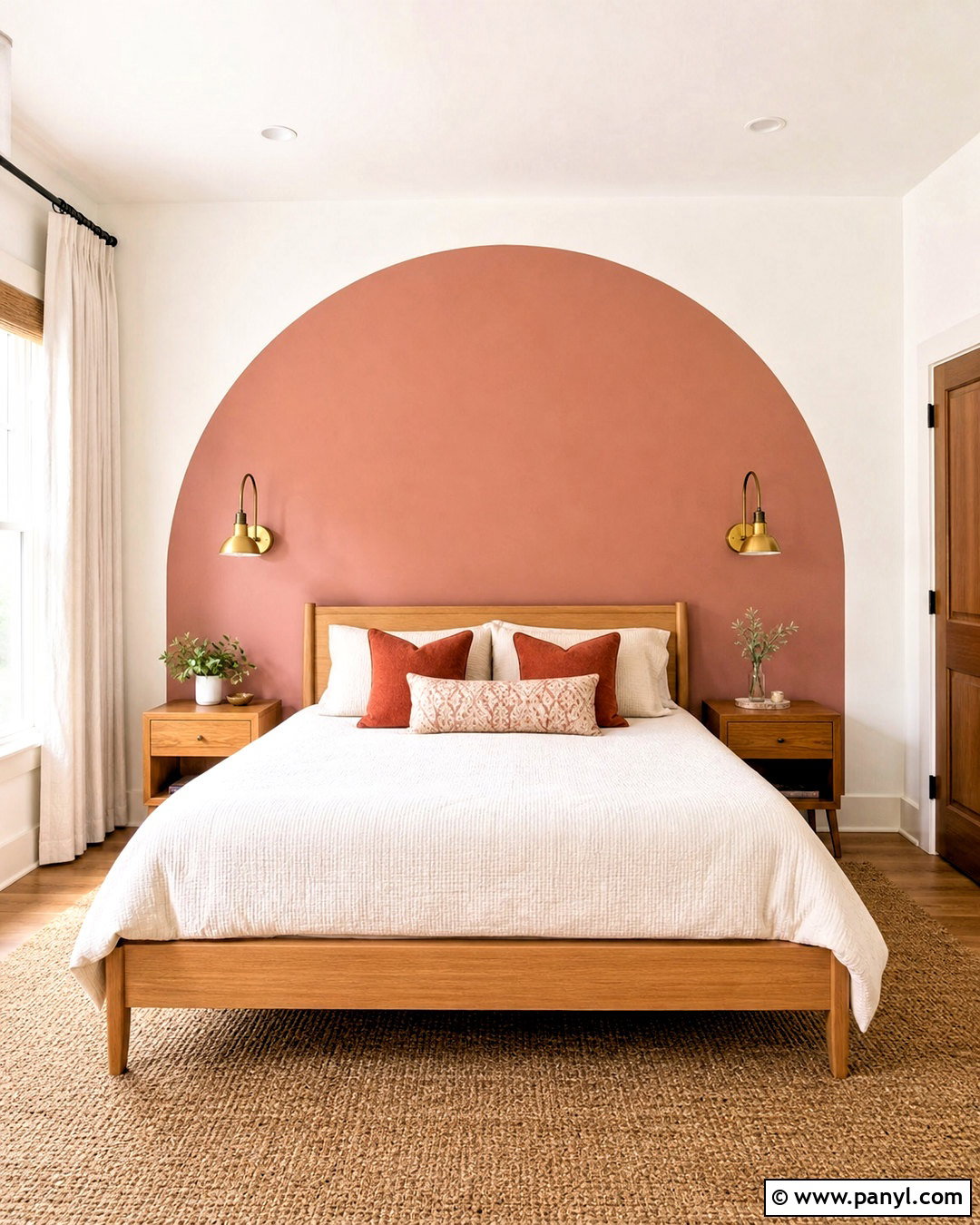
A painted arch creates the appearance of an architectural feature behind a bed, desk, or reading chair. Form the straight sides with painter’s tape, then carefully outline the curved top before filling the shape with warm sage green. Keep the surrounding wall creamy white for gentle contrast. In a bedroom, center a natural oak bed within the arch and use ivory linen bedding, a woven bench, and small black sconces. Repeat the green through one or two cushions instead of matching every accessory. A pale wood floor and neutral rug complete the quiet, organic look. The oversized arch should extend beyond the furniture on both sides, creating a clear visual frame. The result feels intentional, spacious, and more polished than a small painted shape.
4. Vertical Stripe Tape Wall
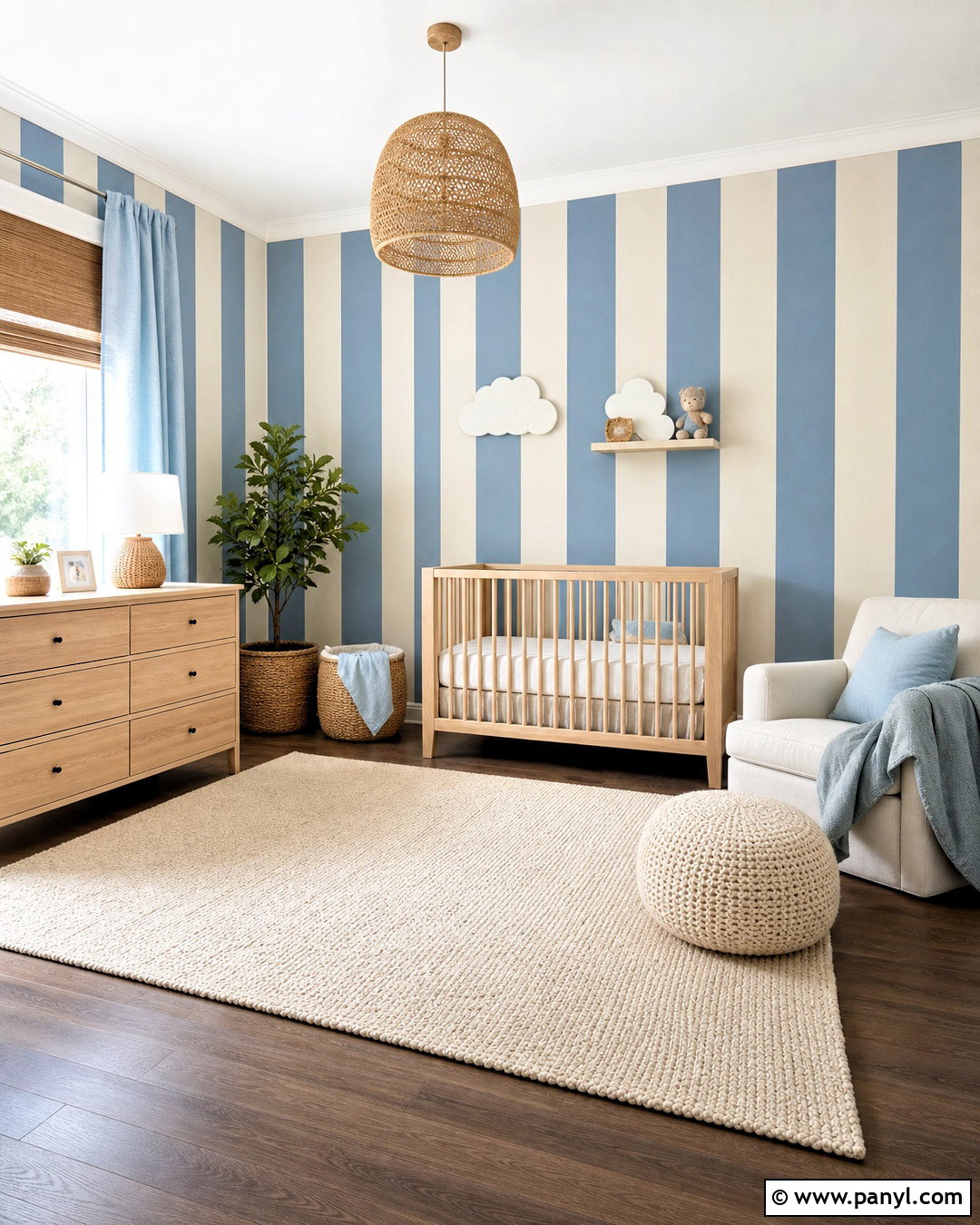
Vertical painted stripes can add height and structure to a nursery, bedroom, or compact guest room. Use equal-width strips of painter’s tape to create alternating warm white and soft dusty blue bands from the baseboard to the ceiling. Pair the wall with a white or natural wood crib, a light oatmeal rug, and a compact oak dresser. Small cloud-shaped decor, pale blue textiles, and woven baskets can soften the straight lines without creating clutter. Continue the stripe pattern across only one wall and keep the remaining walls warm white. Medium-width stripes are easier to balance than very narrow bands, which may look overly busy. This complete room feels fresh and orderly while the muted colors maintain a restful atmosphere suitable for sleeping and relaxing.
5. Horizontal Stripe Tape Wall
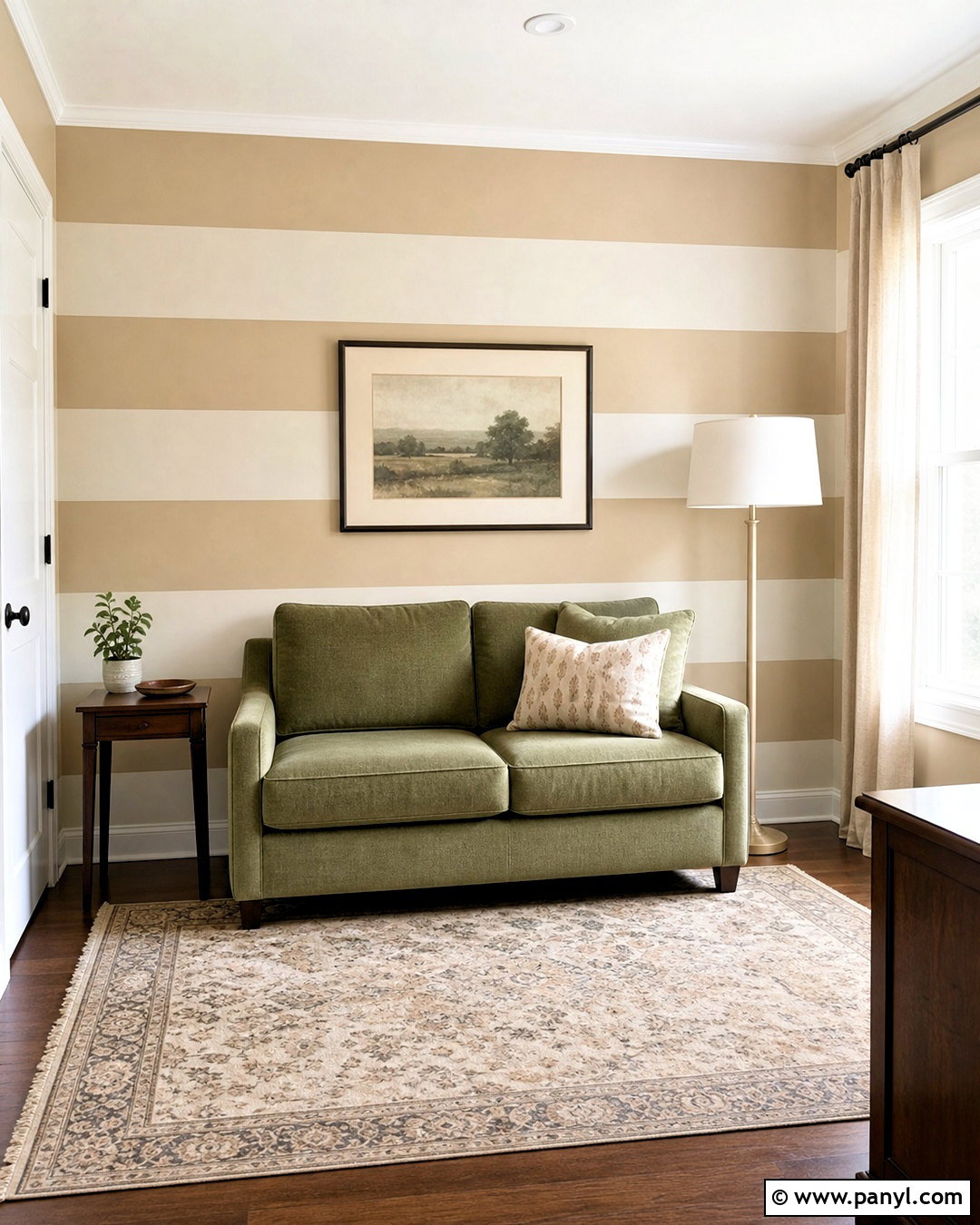
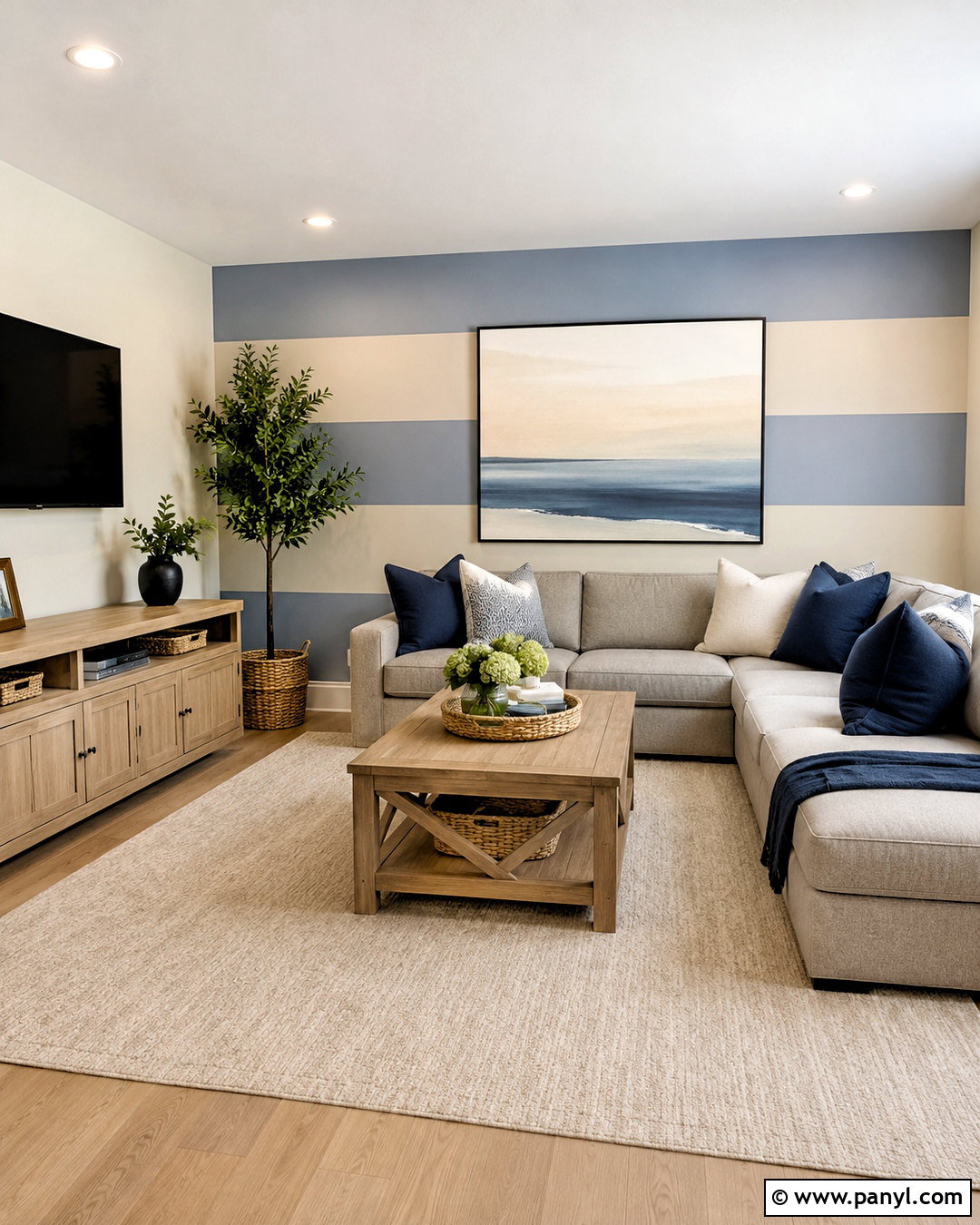
Wide horizontal stripes can make a narrow room appear broader and more grounded. Paint a small bedroom or reading room in alternating bands of creamy white and warm beige, using a level and painter’s tape to keep each line consistent. Three or four broad bands usually create a cleaner result than numerous thin stripes. Position a compact olive green loveseat or upholstered daybed against the wall. Add a slim walnut side table, an ivory floor lamp, and a patterned rug that repeats the beige and green tones. Keep the ceiling and trim bright white to sharpen the design. The long painted bands guide the eye across the room, while the earthy furniture and simple decor make the finished space feel comfortable rather than visually stretched.
6. Mountain Tape Wall Design
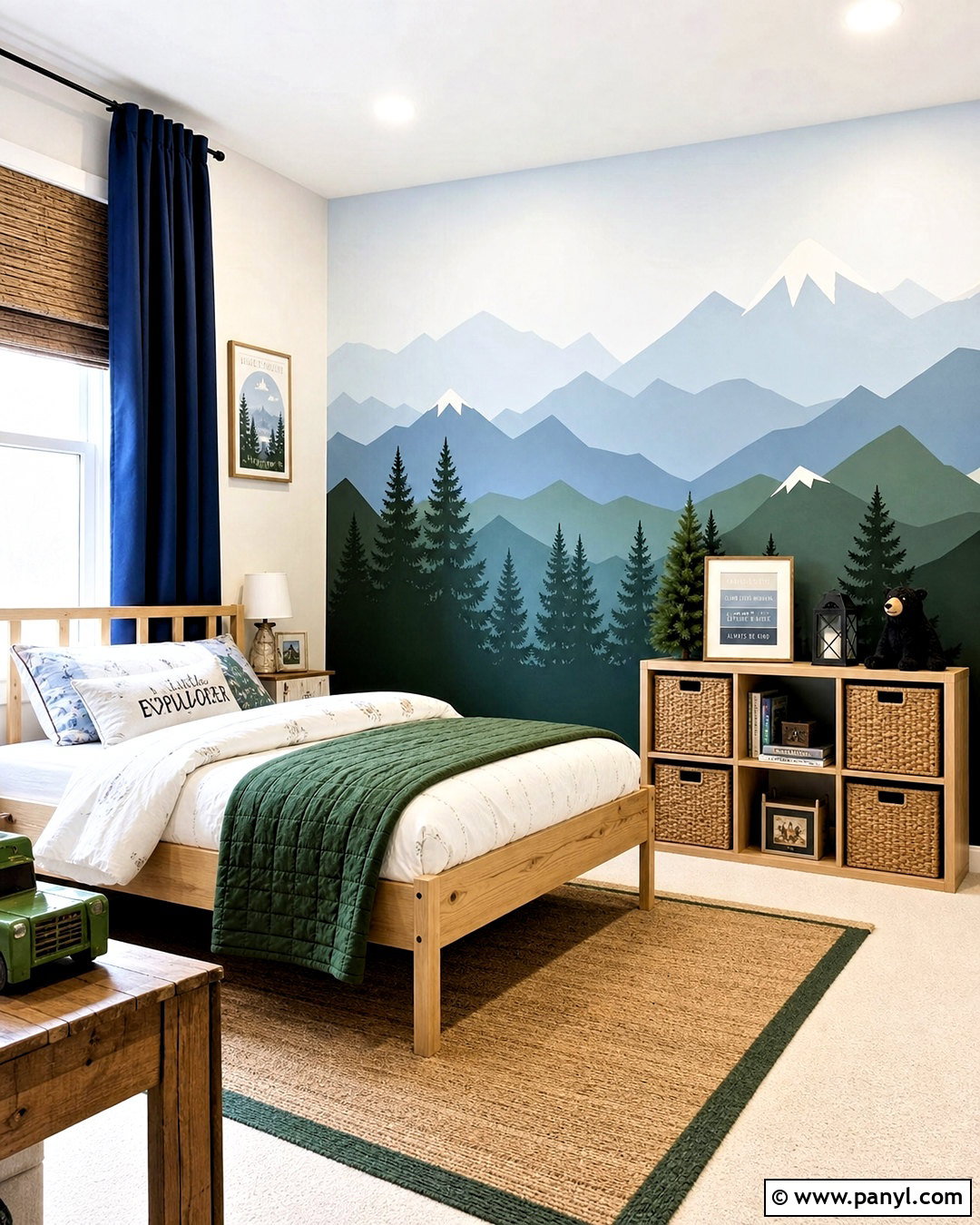
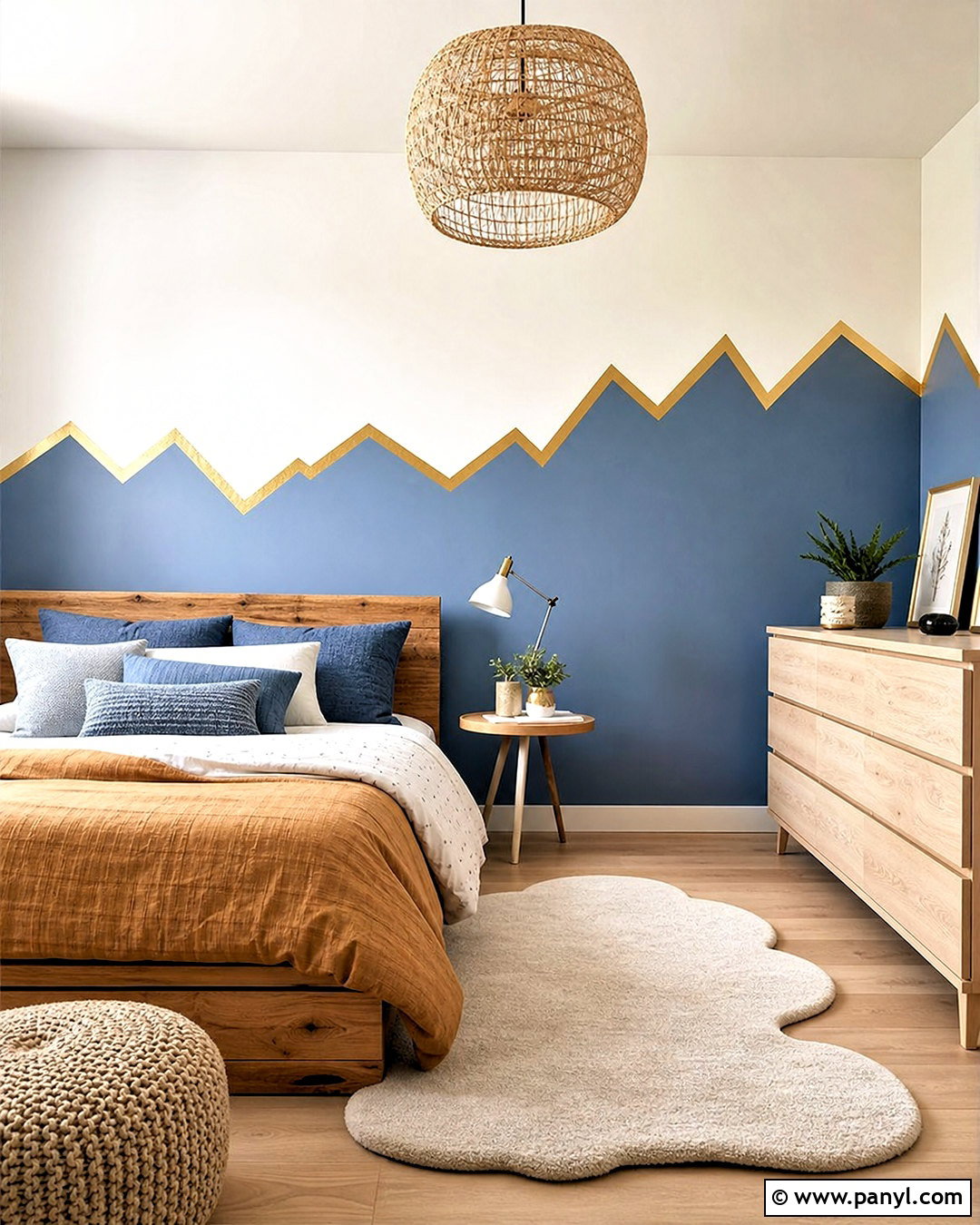
A taped mountain mural creates a playful but polished children’s bedroom. Begin with a pale sky-blue wall and use overlapping diagonal tape lines to outline layered mountain peaks. Paint the rear mountains soft blue-gray, the middle range muted navy, and the foreground warm forest green. Small white sections at the peaks can suggest snow without adding complicated details. Place a low natural pine bed in front of the mural, leaving the highest peaks visible above it. Use white bedding, a green quilt, a woven rug, and simple wood storage cubes to complete the room. Limit additional wall decor because the mural already provides a strong focal point. The layered colors add depth, while coordinated furniture keeps the adventurous theme practical and restful.
7. Sunburst Tape Wall Design
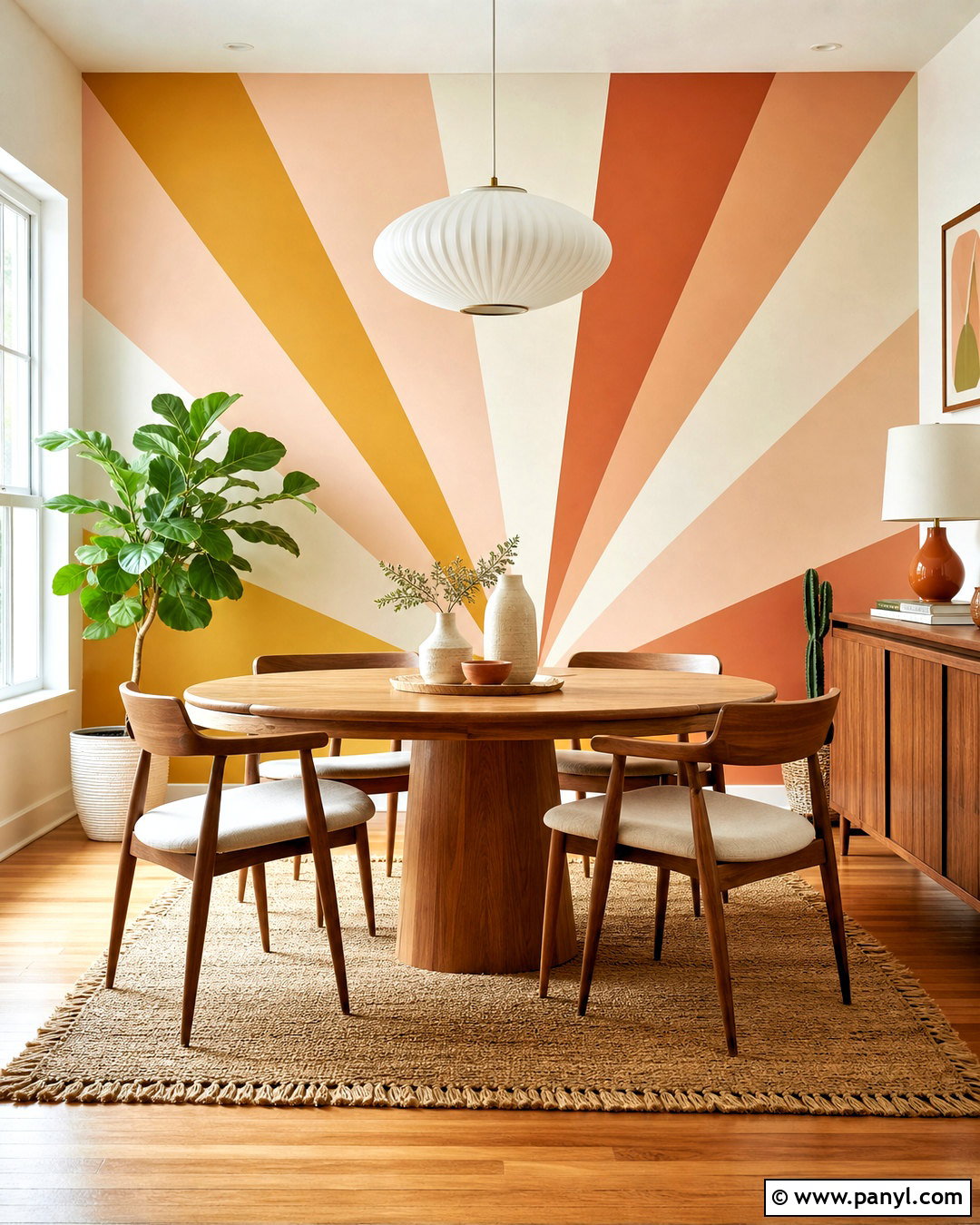
A sunburst pattern can give a dining room or breakfast nook an energetic focal point. Select a low central point behind a sideboard and stretch painter’s tape outward toward the ceiling and side edges. Alternate warm mustard yellow, pale peach, creamy white, and muted terracotta sections. Keep some rays wider than others for a relaxed, handmade appearance. Furnish the room with a round oak dining table, curved wood chairs, and a simple white pendant light. A neutral woven rug prevents the colorful wall from overpowering the room. Place a few ceramic vases or leafy plants on the sideboard, but avoid hanging art over the pattern. This coordinated space feels cheerful and contemporary, with the radiating lines naturally drawing attention toward the dining area.
8. Checkerboard Tape Wall
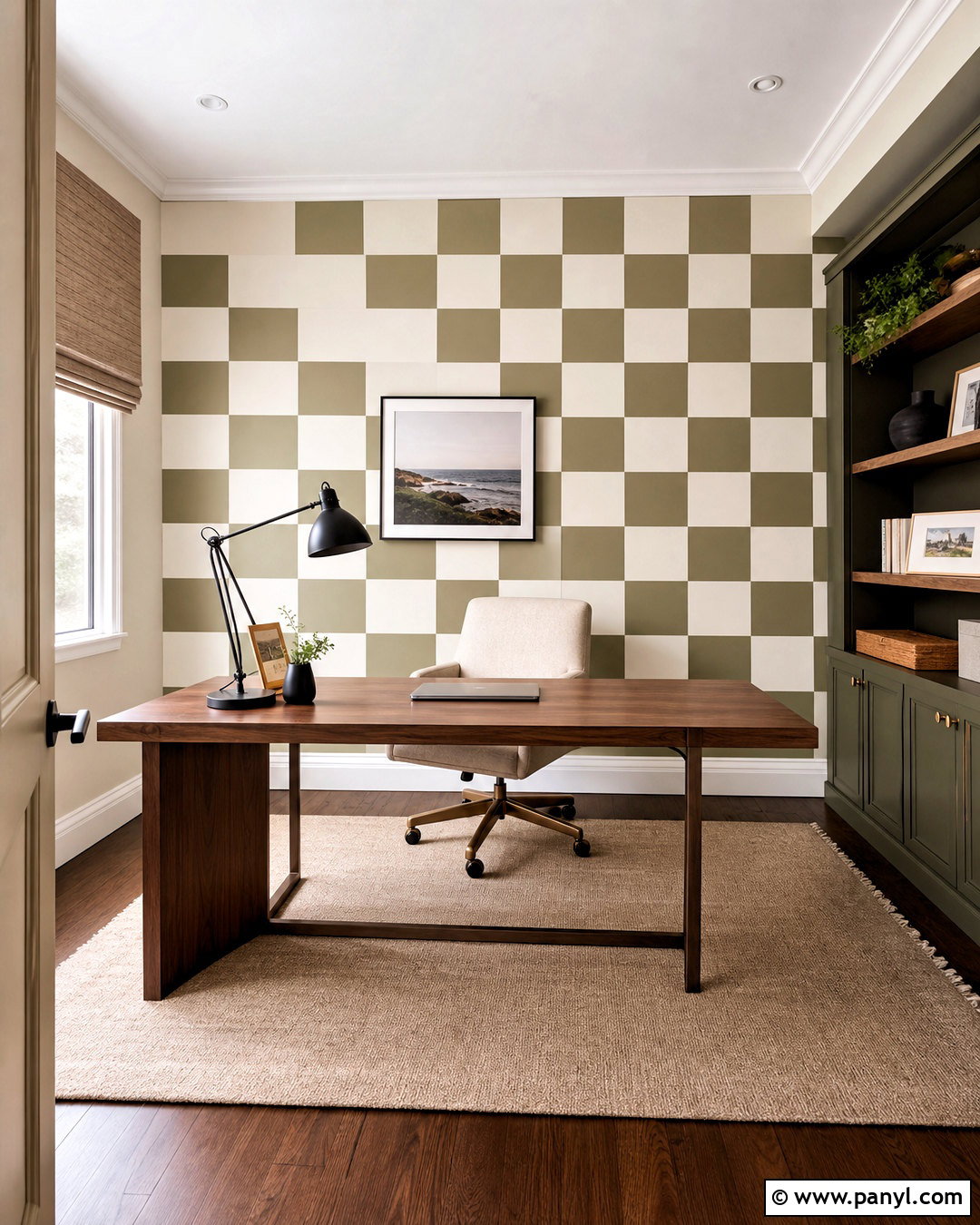
A large checkerboard pattern gives a home office a graphic backdrop without requiring complicated angles. Paint the wall warm white, measure equal squares, and use painter’s tape to create alternating blocks of soft olive green and the original base color. Larger squares provide a calmer appearance and are easier to align with furniture. Center a streamlined walnut desk against the finished wall and add a cream upholstered chair, a matte black task lamp, and closed storage cabinets. Keep desktop accessories minimal so the checkerboard remains clear. A solid beige rug and linen window covering soften the repeated geometry. This complete office feels organized and distinctive, while the subdued green and natural wood palette helps the bold pattern look refined rather than playful or distracting.
9. Herringbone Tape Wall Design
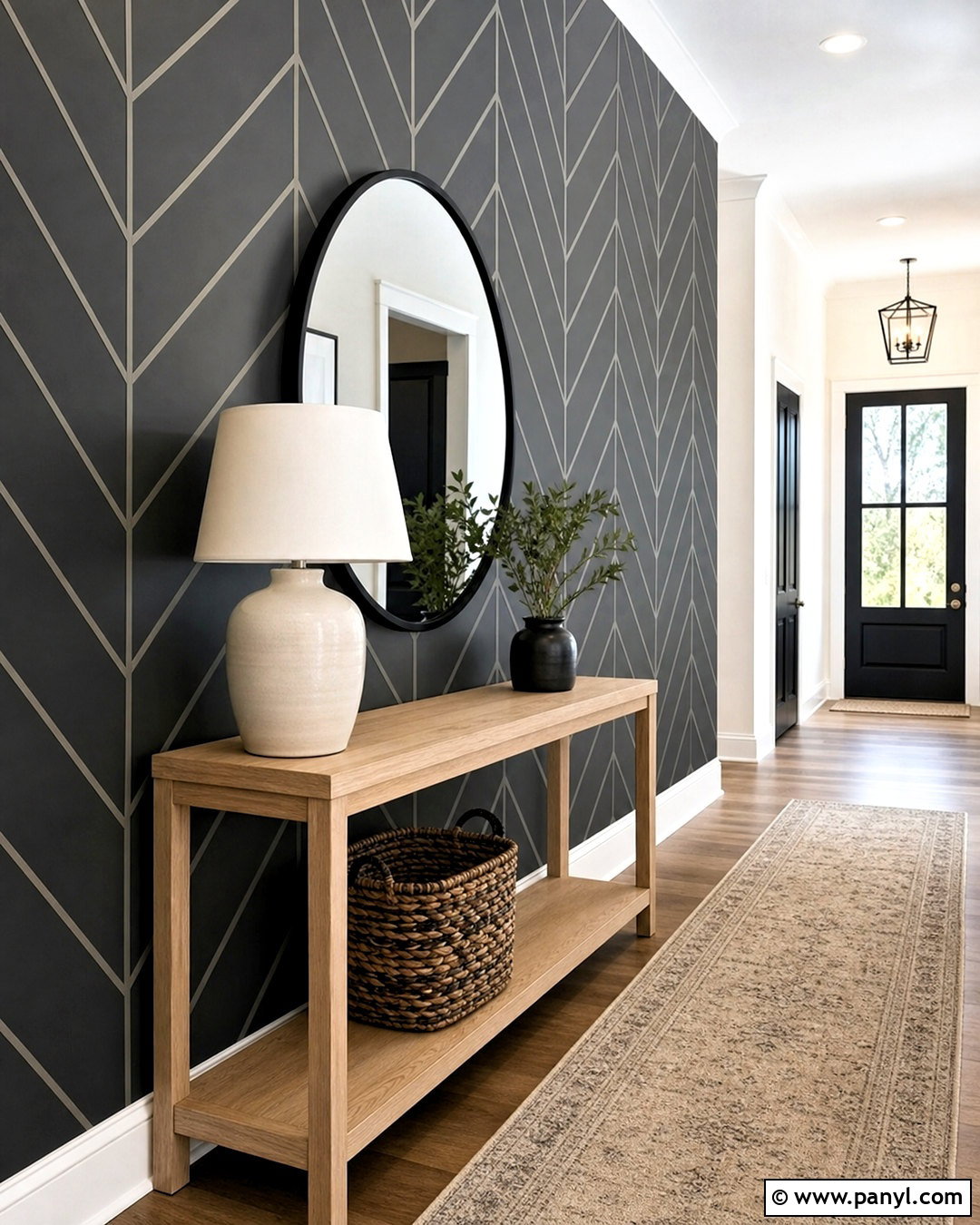
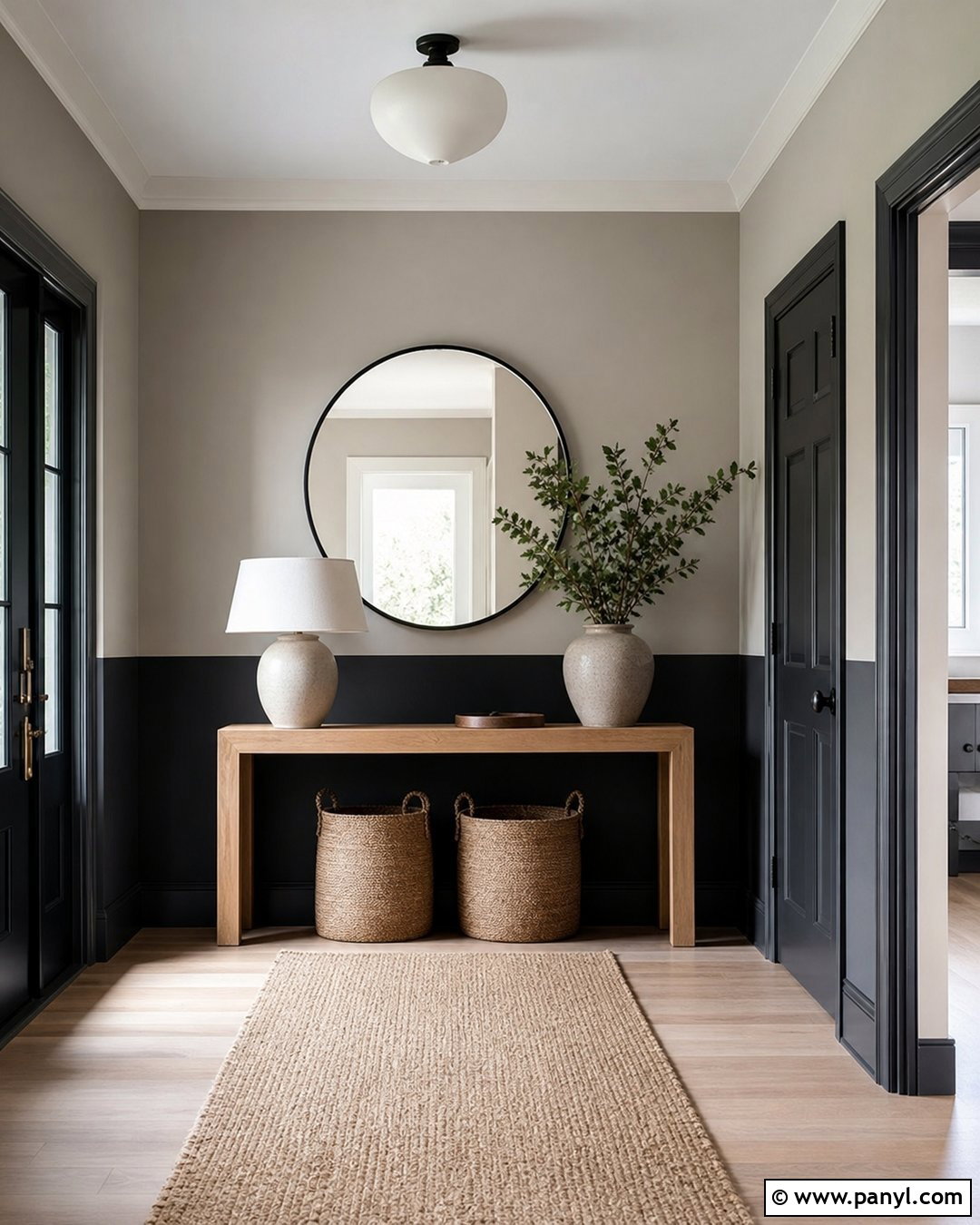
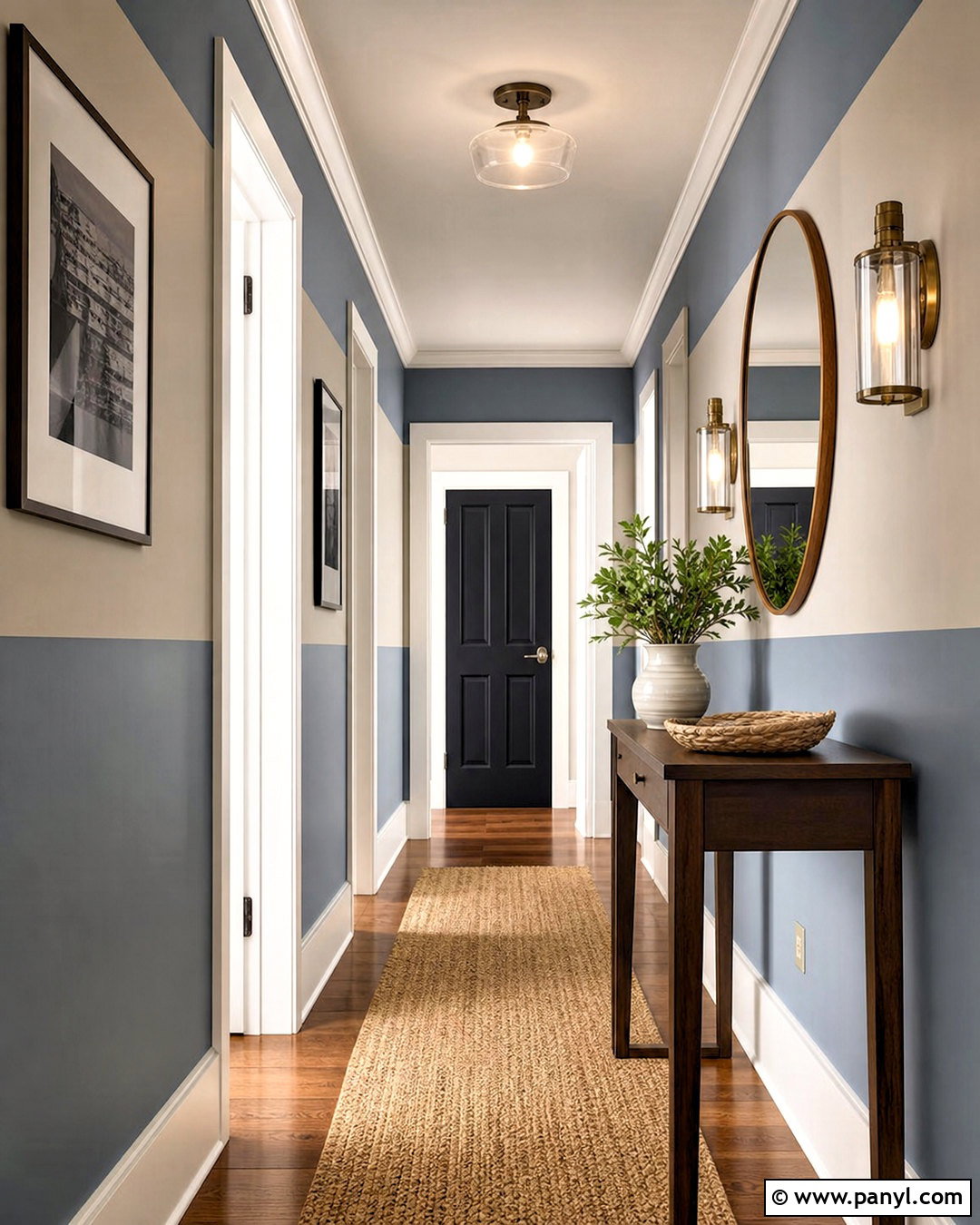
A herringbone wall introduces rhythm and texture to a hallway without taking up physical space. Start with a smooth warm gray background, then use evenly spaced diagonal tape lines to form repeating V-shaped sections. Paint the open areas deep charcoal while allowing thin gray lines to remain after the tape is removed. Place a narrow light oak console against the wall, paired with a round black-framed mirror and a small ceramic lamp. A neutral runner rug and woven storage basket make the hallway practical while softening the angular pattern. Keep adjoining walls white so the feature wall has a clear boundary. The combination of charcoal paint, pale wood, and simple accessories creates a finished transitional hallway that feels more architectural, organized, and visually substantial.
10. Hexagon Tape Wall Design
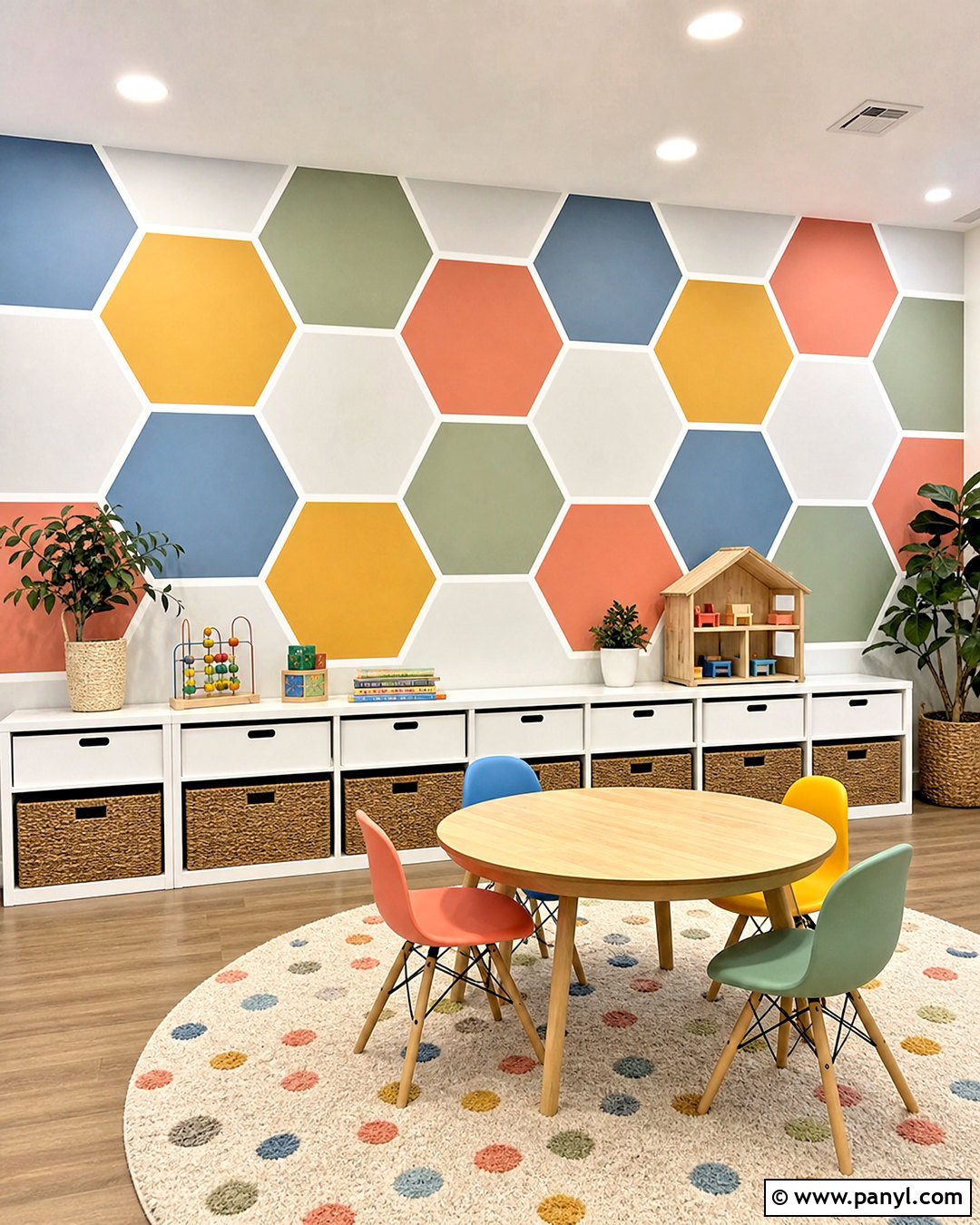
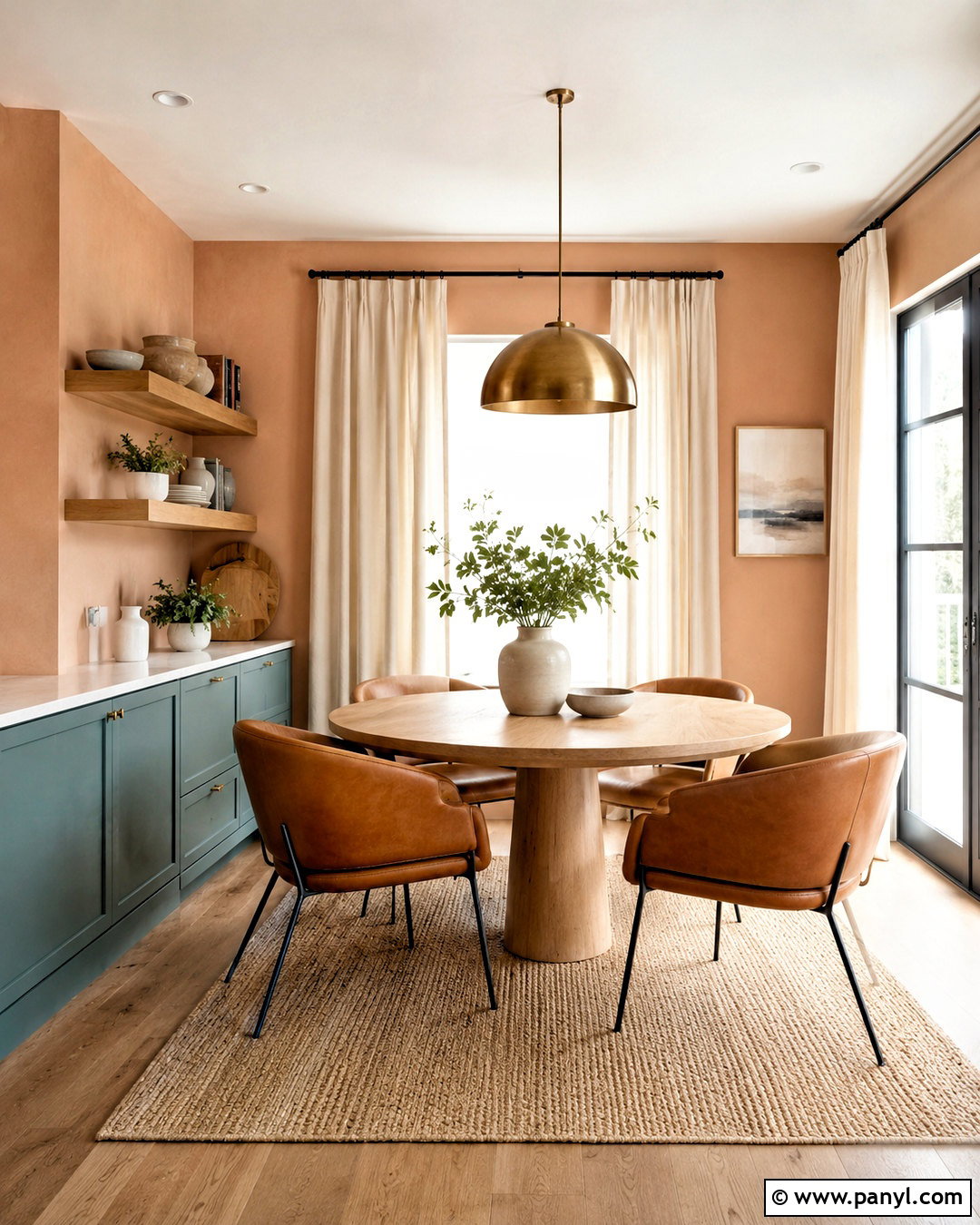
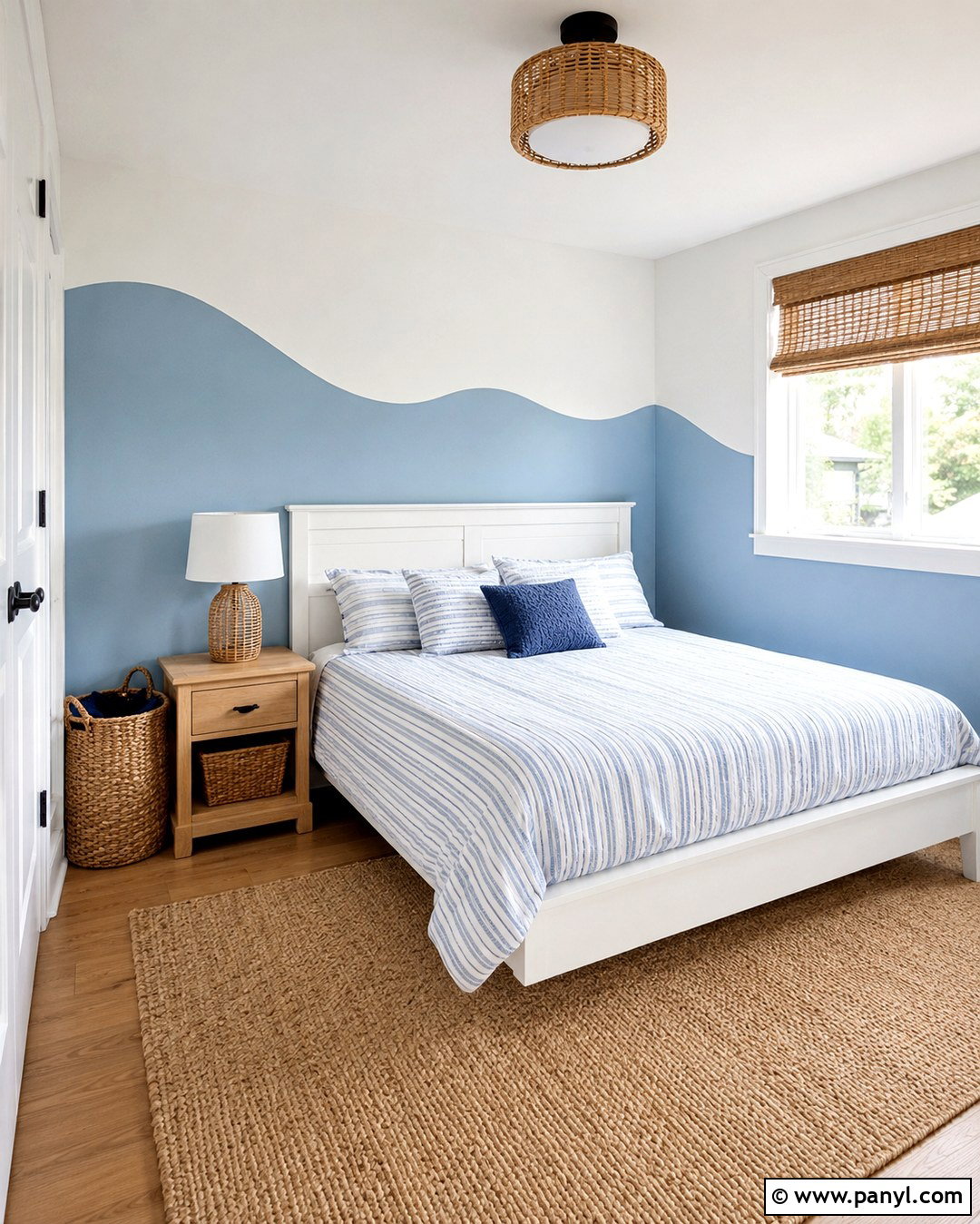
An oversized hexagon pattern can bring color and order to a playroom while remaining sophisticated enough to grow with the space. Paint the wall soft white, then map out large connected hexagons with painter’s tape. Fill selected shapes with muted coral, dusty blue, mustard yellow, and sage green. Leave several hexagons white to prevent the pattern from becoming overwhelming. Use low white storage cabinets across the bottom of the wall and add natural woven bins for toys and craft supplies. A round washable rug, a small pale wood table, and colorful chairs complete the room. Repeat the mural colors through only a few accessories. The large-scale geometry makes the playroom lively, while practical storage and open floor space maintain a clean, functional layout.
11. Scalloped Tape Wall Border
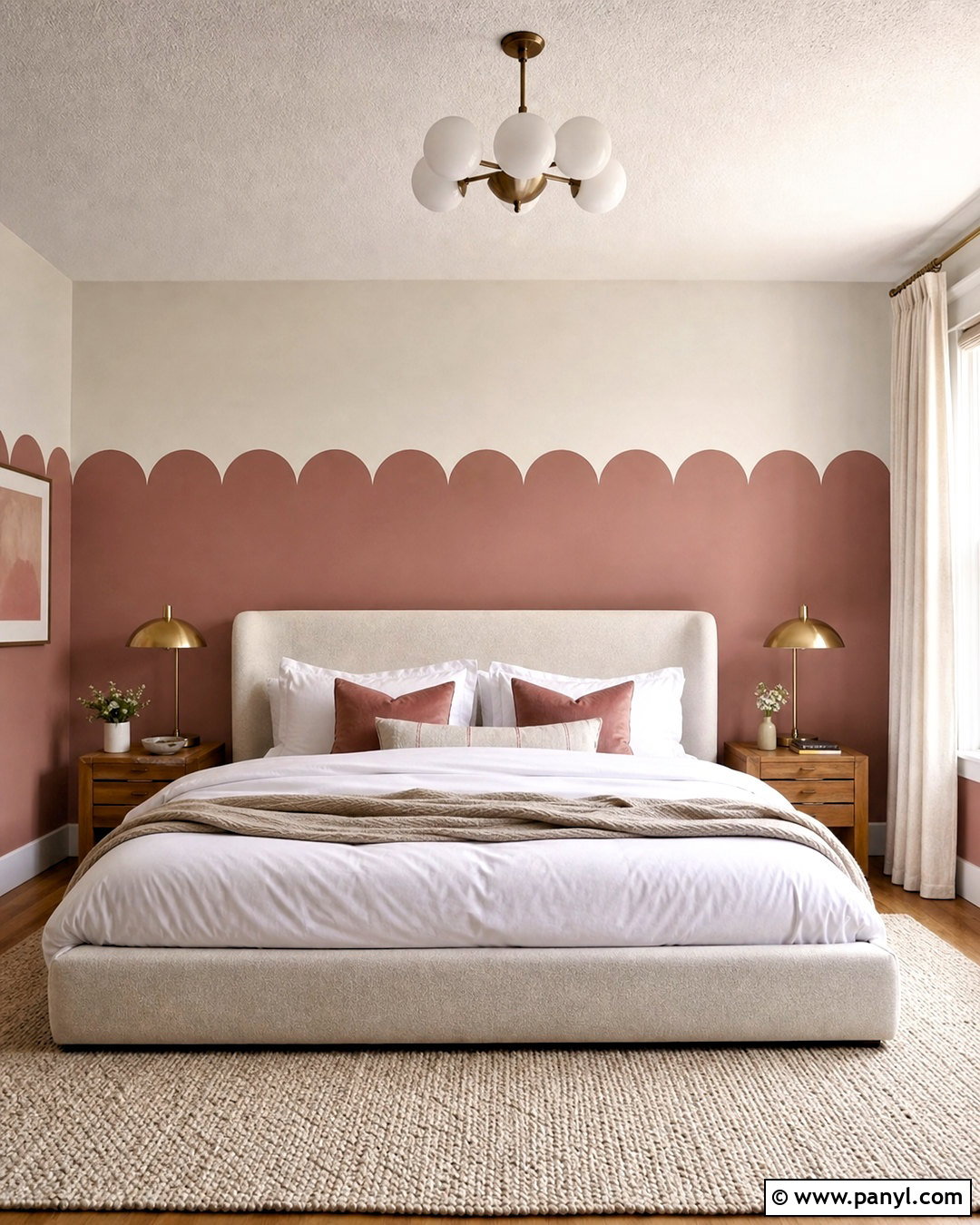
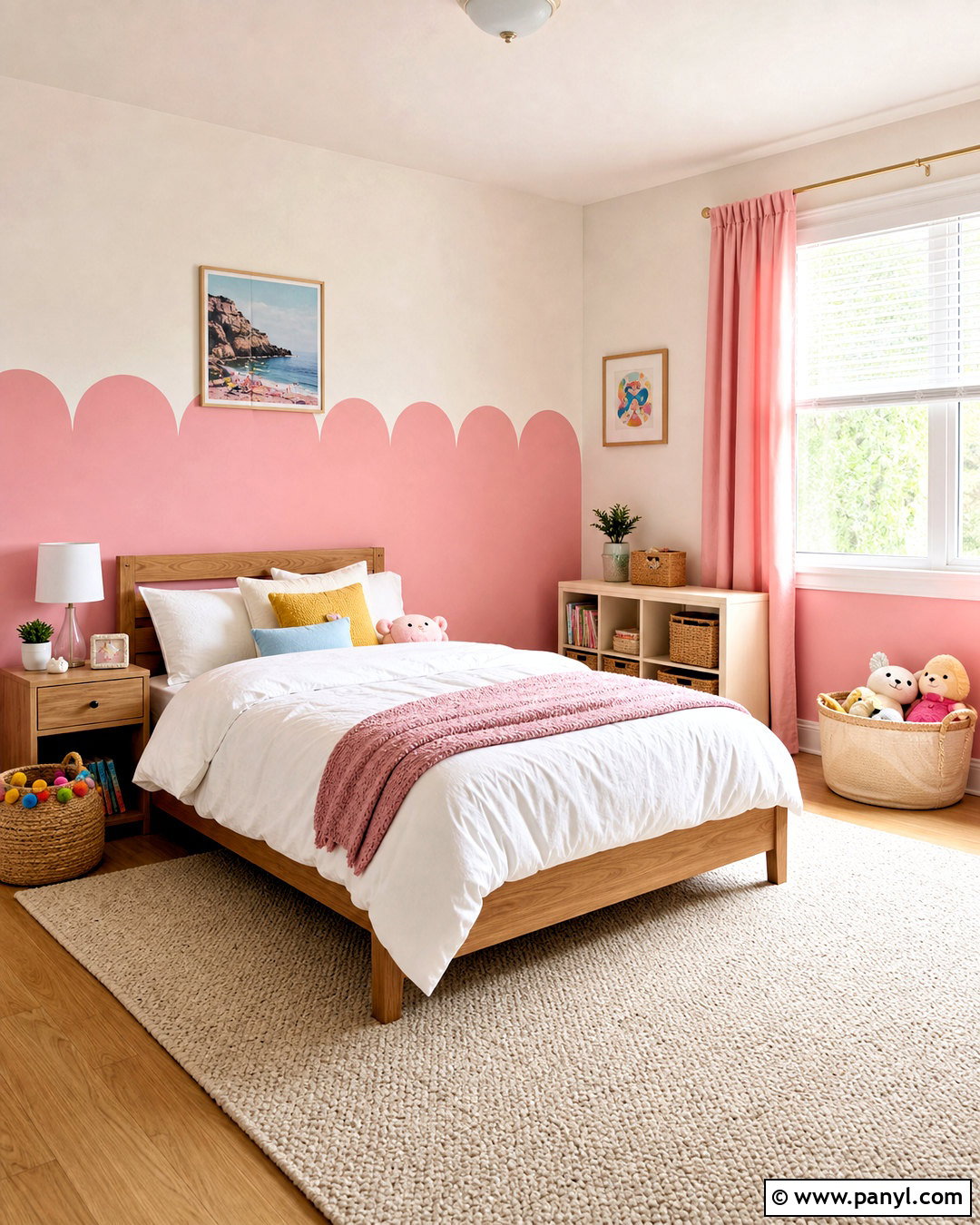
A painted scalloped border gives a bedroom a soft decorative detail without covering the entire wall. Paint the lower two-thirds dusty rose and keep the upper section warm white. Create a level guideline with painter’s tape, then trace evenly sized semicircles along the top edge of the pink area. Position a cream upholstered bed against the wall and layer it with white bedding, rose cushions, and a light taupe throw. Add pale oak nightstands, small brass lamps, and a simple wool rug. The scallops should remain large and evenly spaced so the border looks clean rather than overly detailed. By limiting the pattern to one horizontal transition, the room gains personality while maintaining a calm, balanced appearance suitable for a main bedroom or guest room.
12. Faux Panel Tape Wall
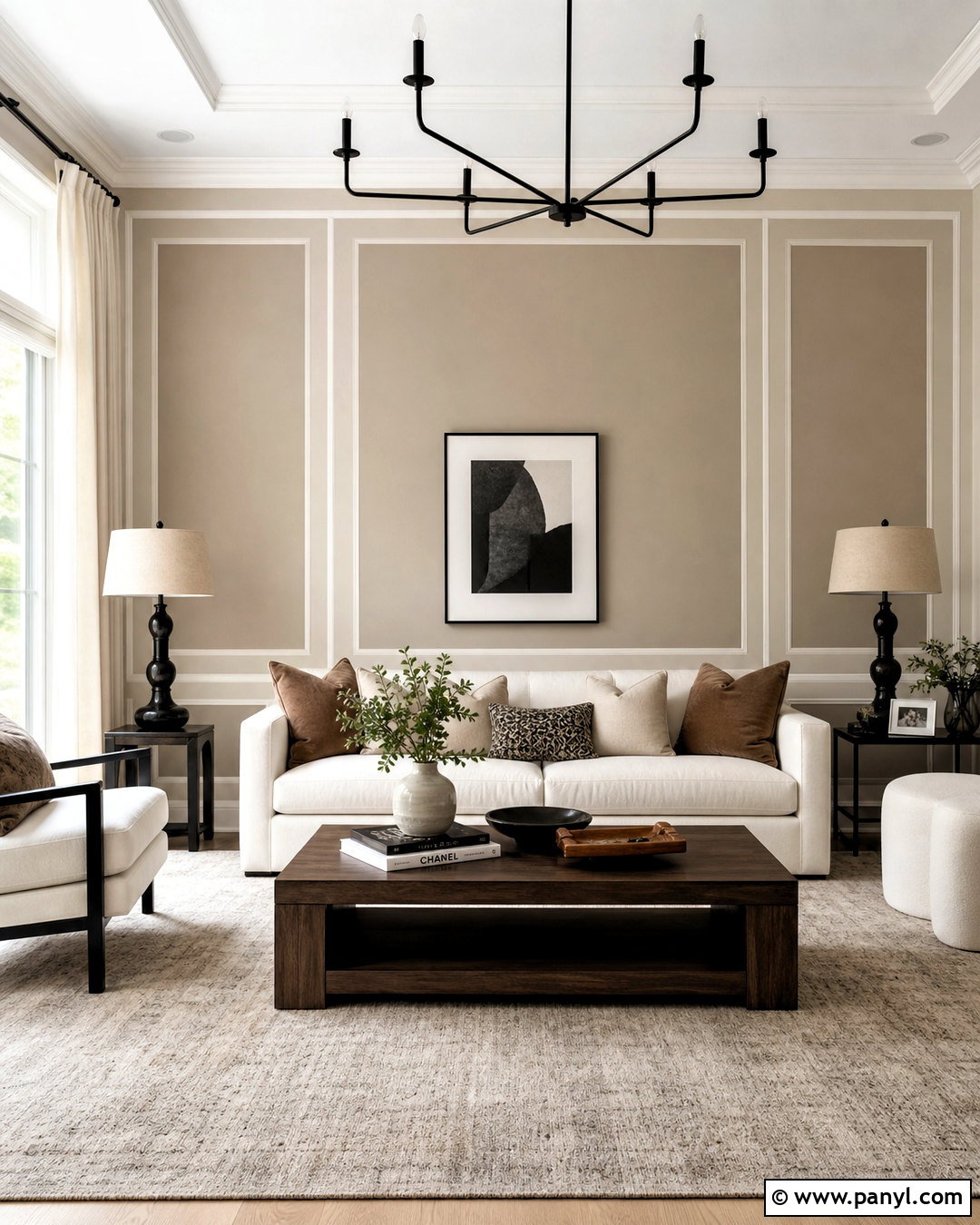
Painted rectangles can suggest wall paneling without installing wood molding. Begin with a soft greige background and use thin painter’s tape to create a symmetrical arrangement of large rectangular frames. Paint the taped openings a slightly deeper taupe, leaving narrow greige lines around each section. Arrange the pattern behind a cream sofa, matching the center frames to the sofa’s position for a balanced composition. Add a walnut coffee table, ivory curtains, black metal lighting, and a textured neutral rug. One large framed print can sit within the central painted panel, while the surrounding frames remain undecorated. This living room design offers the structured appearance of architectural paneling but retains a flat, easy-to-maintain surface. The tonal colors keep the result elegant and approachable.
13. Abstract Tape Wall Design
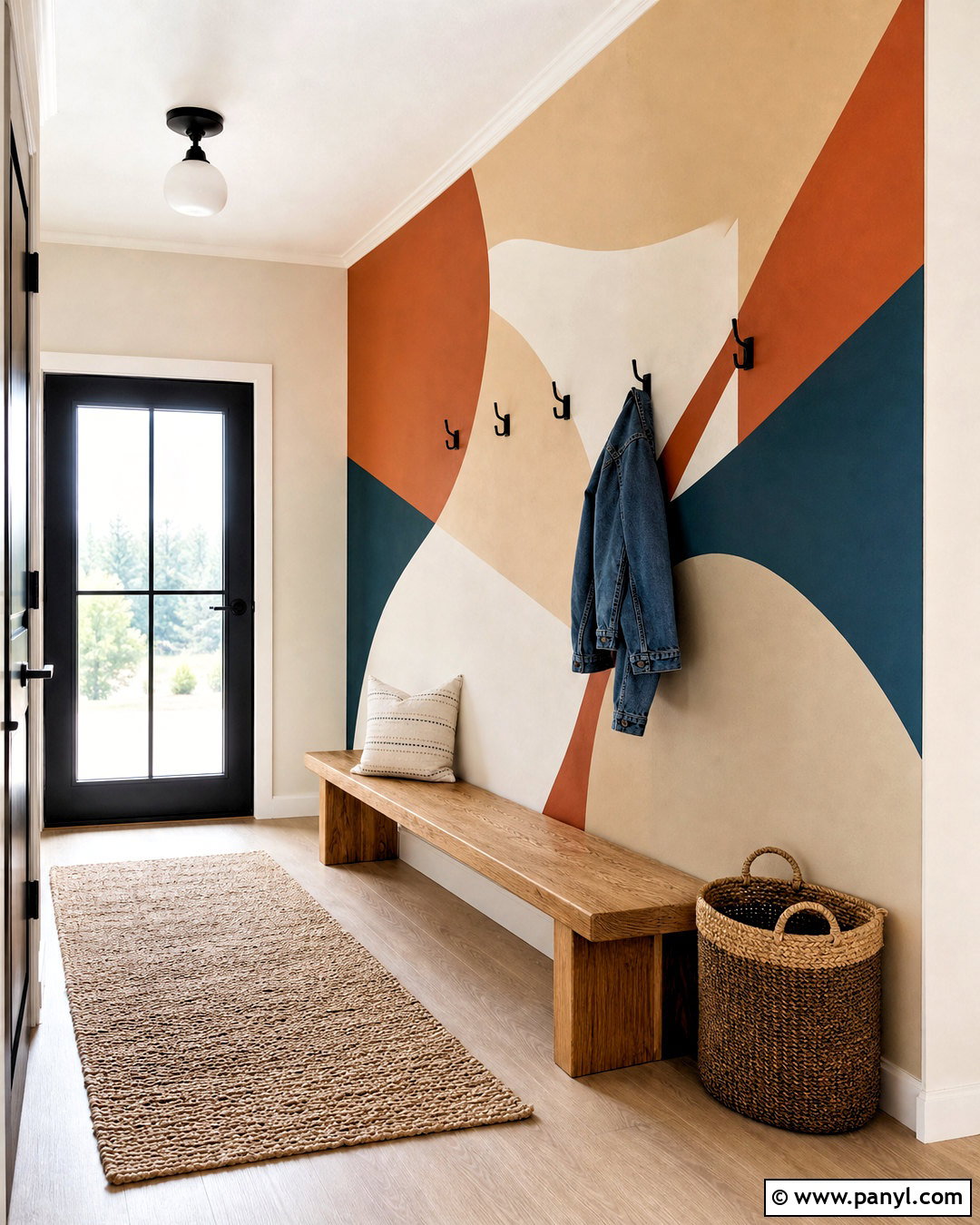
An abstract taped mural can make an entryway feel like a thoughtfully designed room rather than a pass-through area. Use painter’s tape to divide the wall into several overlapping shapes, combining curved painted forms with straight geometric sections. Choose rust orange, warm beige, deep teal, and creamy white for a grounded palette. Place a narrow oak bench against the wall and add a black coat hook rail, a woven basket, and a neutral seat cushion. Keep the darkest paint near the bottom or center so the design feels visually anchored. A simple flush-mount light and durable natural fiber runner complete the entry. The mural becomes functional artwork, while the limited color palette connects the painted shapes with the furniture and practical storage pieces.
14. Rainbow Tape Wall Design
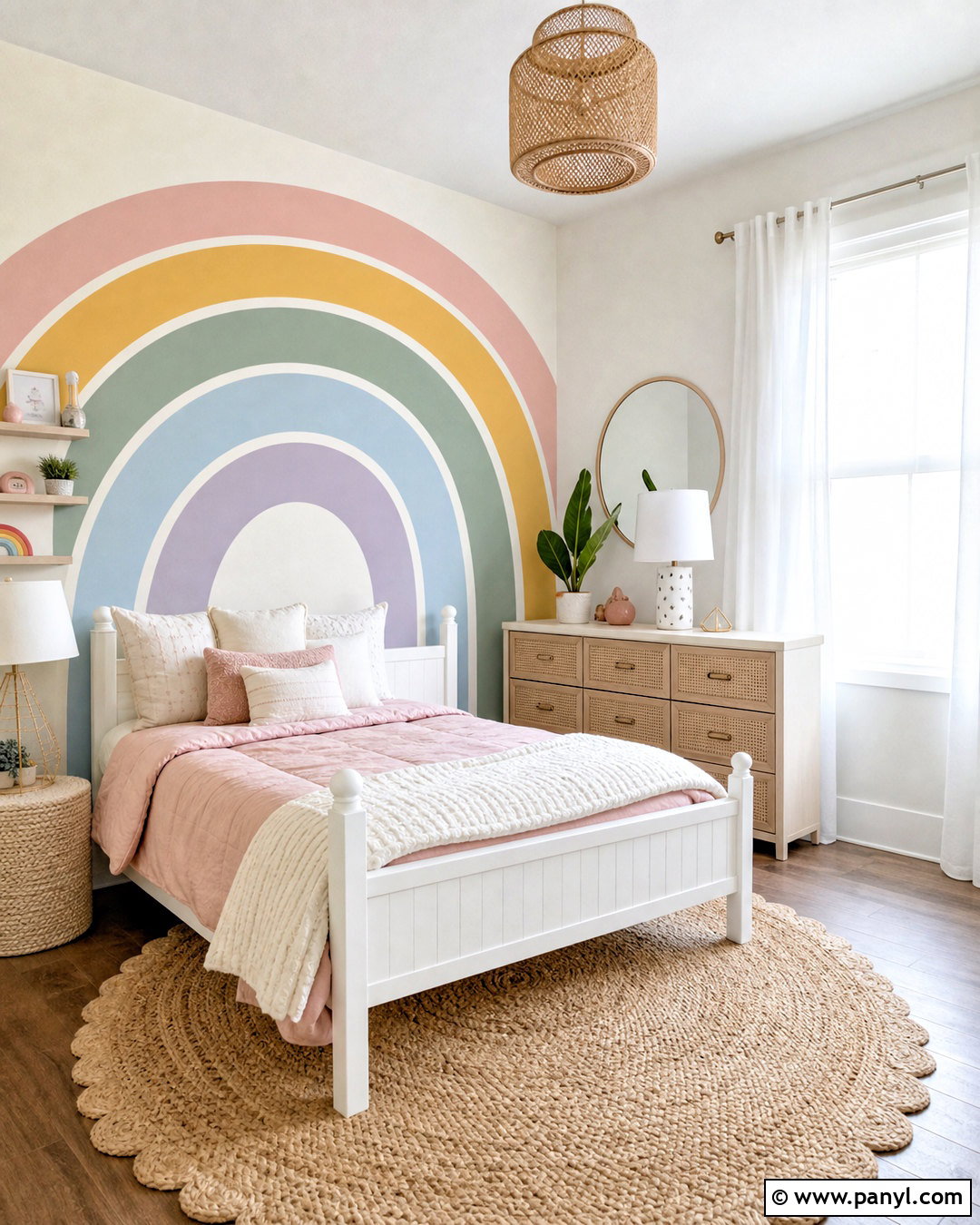
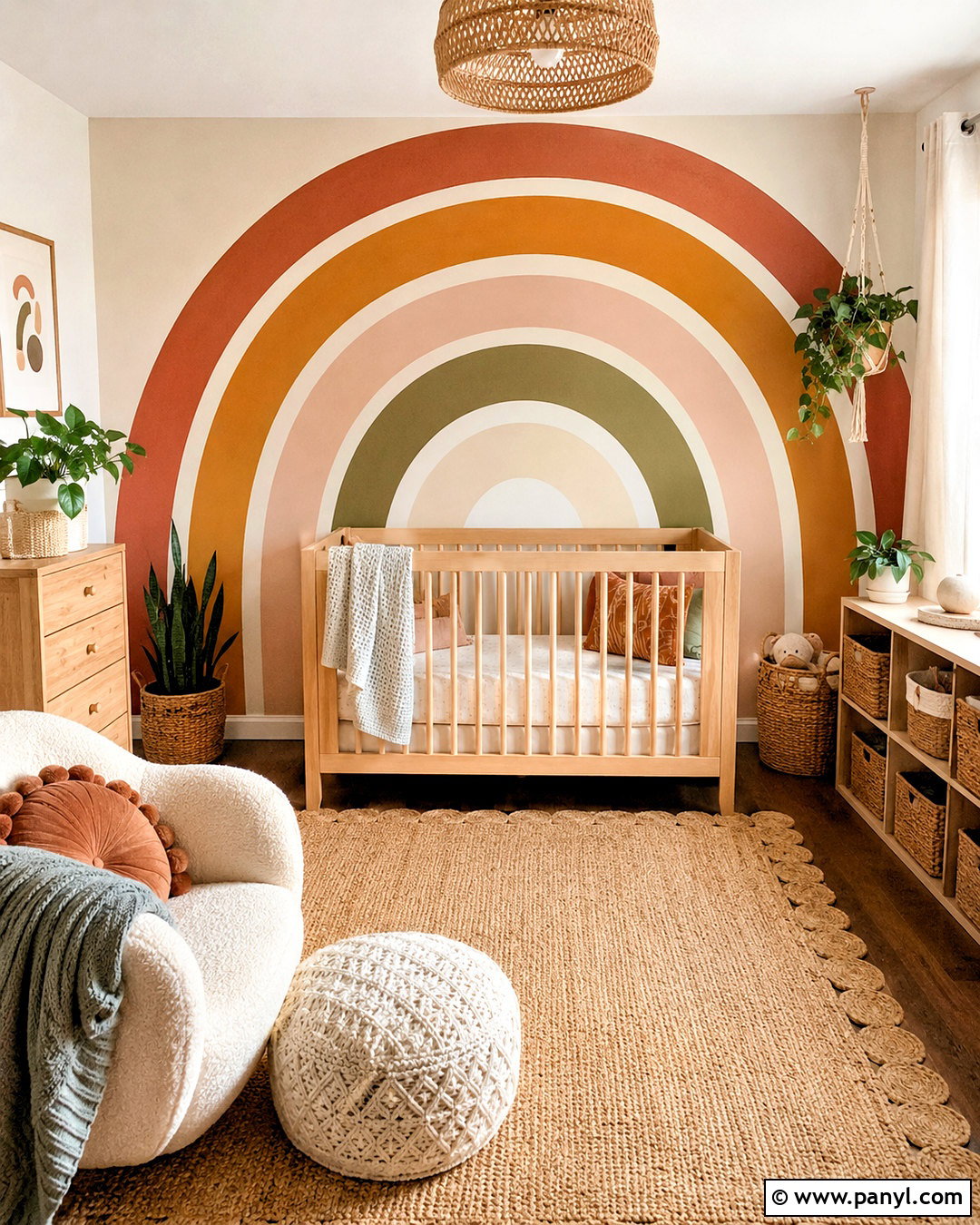
A muted rainbow wall can brighten a child’s bedroom without relying on overly saturated primary colors. Use painter’s tape to form several wide curved bands beginning near the floor and extending upward behind the bed. Paint the bands dusty pink, warm mustard, sage green, pale blue, and muted lavender against a creamy white background. Choose a simple white bed with light wood details, then add neutral bedding and a few pillows that repeat the rainbow colors. A round braided rug, cane-front dresser, and soft white curtains complete the room. Leave open white space around the rainbow so its shape remains easy to recognize. This full design feels joyful and youthful, but the softened colors and natural materials prevent it from looking too themed or visually overwhelming.
15. Grid Tape Wall Design
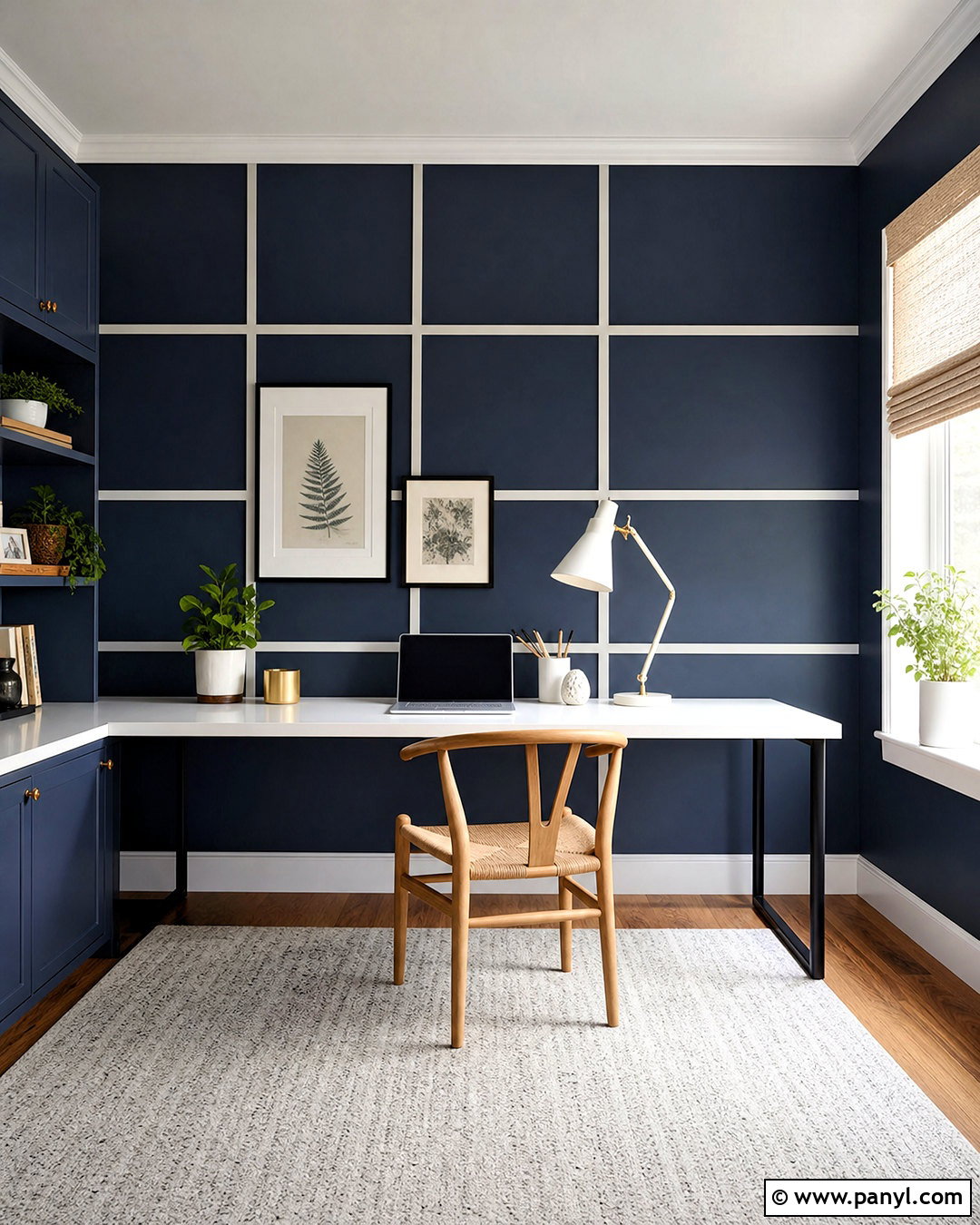
A thin painted grid creates a crisp background for a modern home office or study area. Cover the wall in warm white, then use evenly spaced horizontal and vertical tape lines to establish large squares. Paint over the wall with muted navy blue and remove the tape to reveal clean white grid lines. Place a long white desk against the wall, supported by slim black legs, and add an oak desk chair for warmth. Closed navy cabinets, a white task lamp, and a small pinboard can keep supplies organized without hiding the pattern. Use a pale gray rug and simple window shade to finish the space. The consistent grid provides order, while the deep blue background gives the room enough contrast to feel focused and complete.
16. Ombre Block Tape Wall
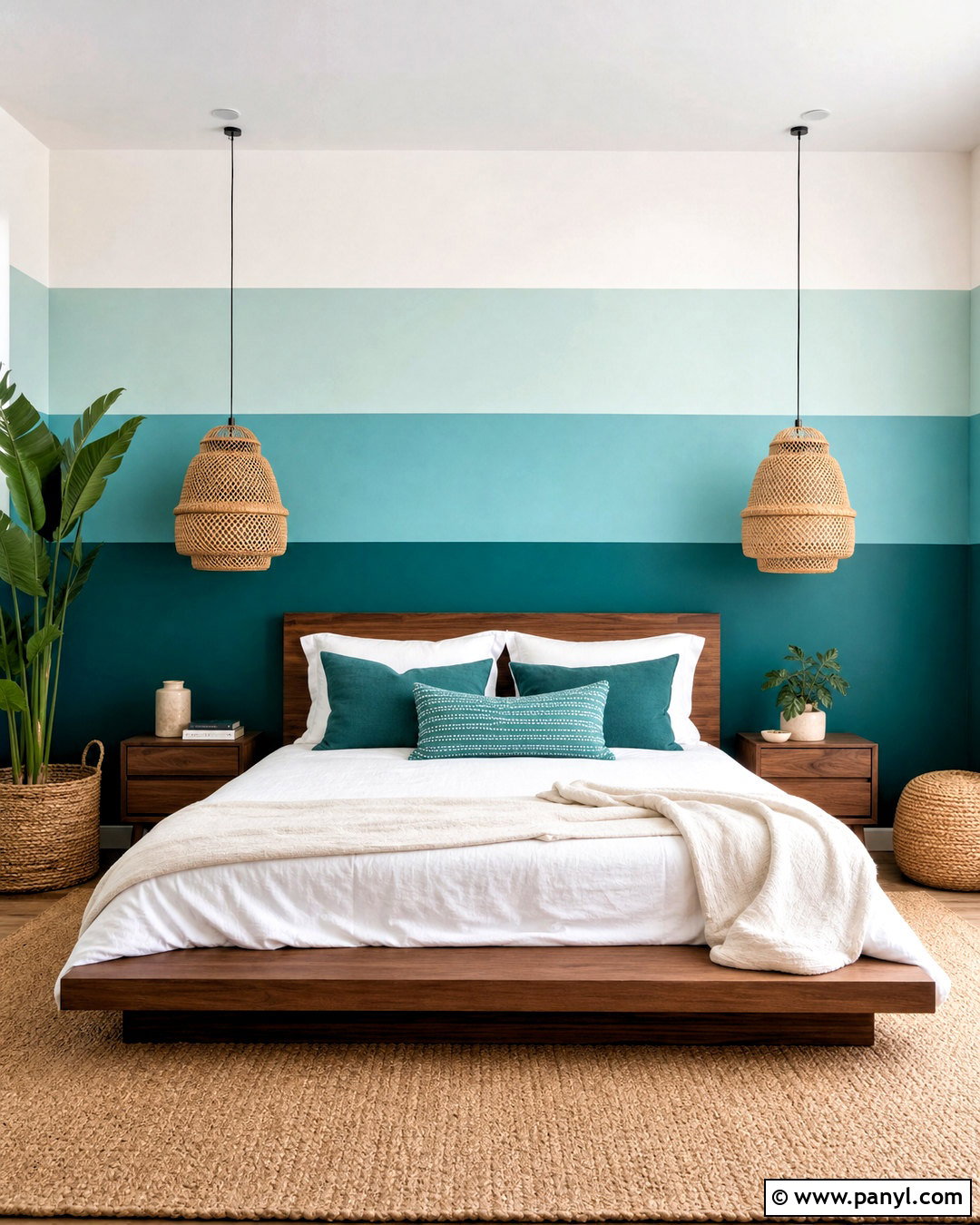
Taped color blocks can create an ombre effect with cleaner transitions than a traditional blended wall. Divide a bedroom wall into four broad horizontal sections using painter’s tape. Begin with deep teal near the floor, then move through medium blue-green, pale aqua, and soft white toward the ceiling. Place a low walnut bed against the wall so the darker lower colors visually anchor the furniture. Dress the bed in white linen with teal and aqua accents, then add woven pendant lights and a beige textured rug. Paint the other walls pale aqua or warm white to maintain continuity. The broad tonal blocks provide depth without complicated brush blending, producing a relaxed bedroom that feels coordinated, refreshing, and visually taller toward the lighter ceiling.
17. Corner Tape Wall Design
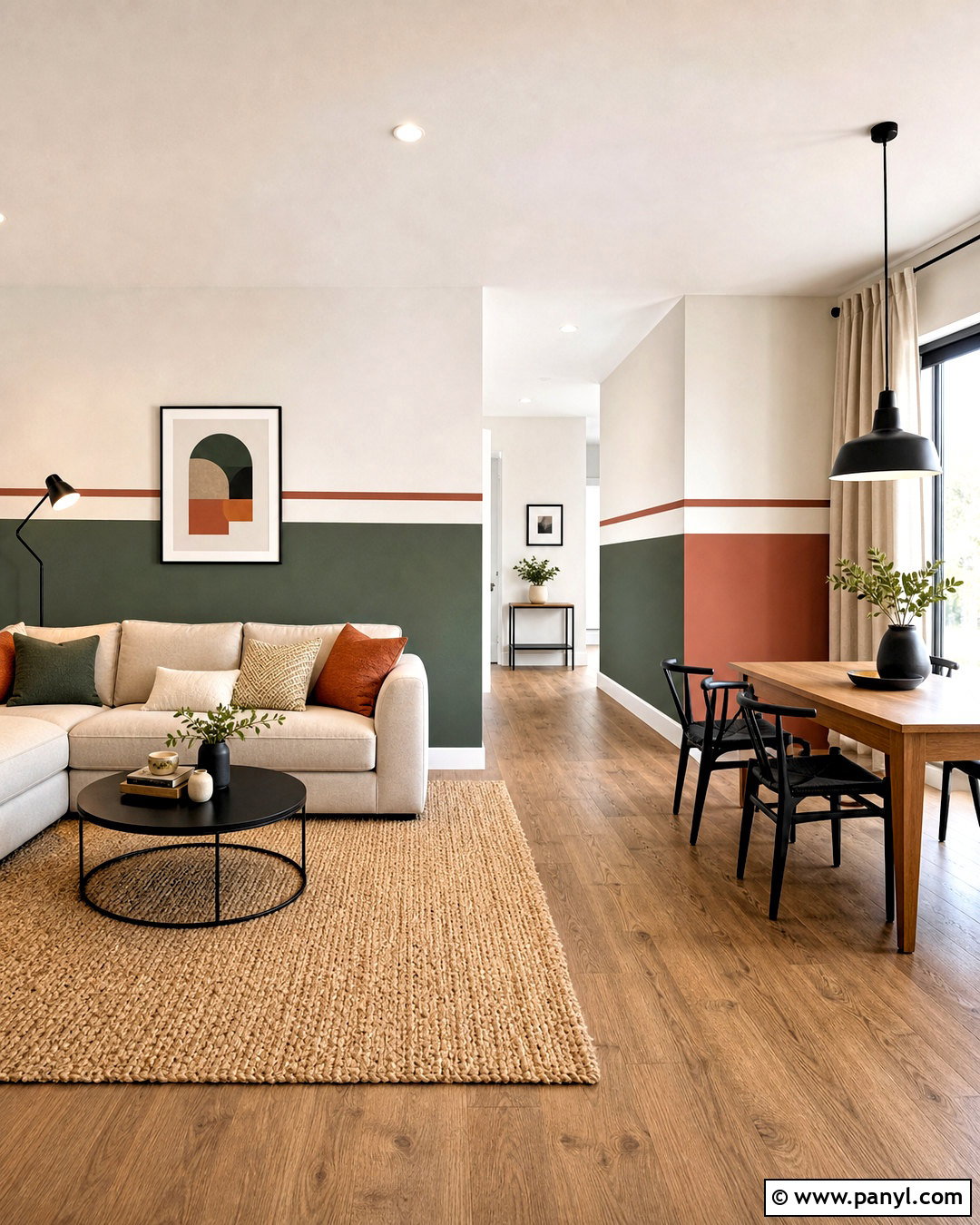
A painted design that wraps around a corner can visually connect two areas of a room. Start with warm white walls, then create one oversized diagonal block that travels from the living room wall onto the adjoining dining wall. Paint the shape deep sage green and add a smaller muted terracotta section where the walls meet. Position a beige sofa along one side and a compact oak dining table on the other, allowing the continuous paint treatment to unite both zones. Use black metal lighting, cream curtains, and a natural woven rug across the shared space. Keep the remaining walls simple. This approach works especially well in an open-plan apartment because the tape-defined color blocks establish connection and structure without adding partitions or bulky furniture.
18. Minimalist Line Tape Wall
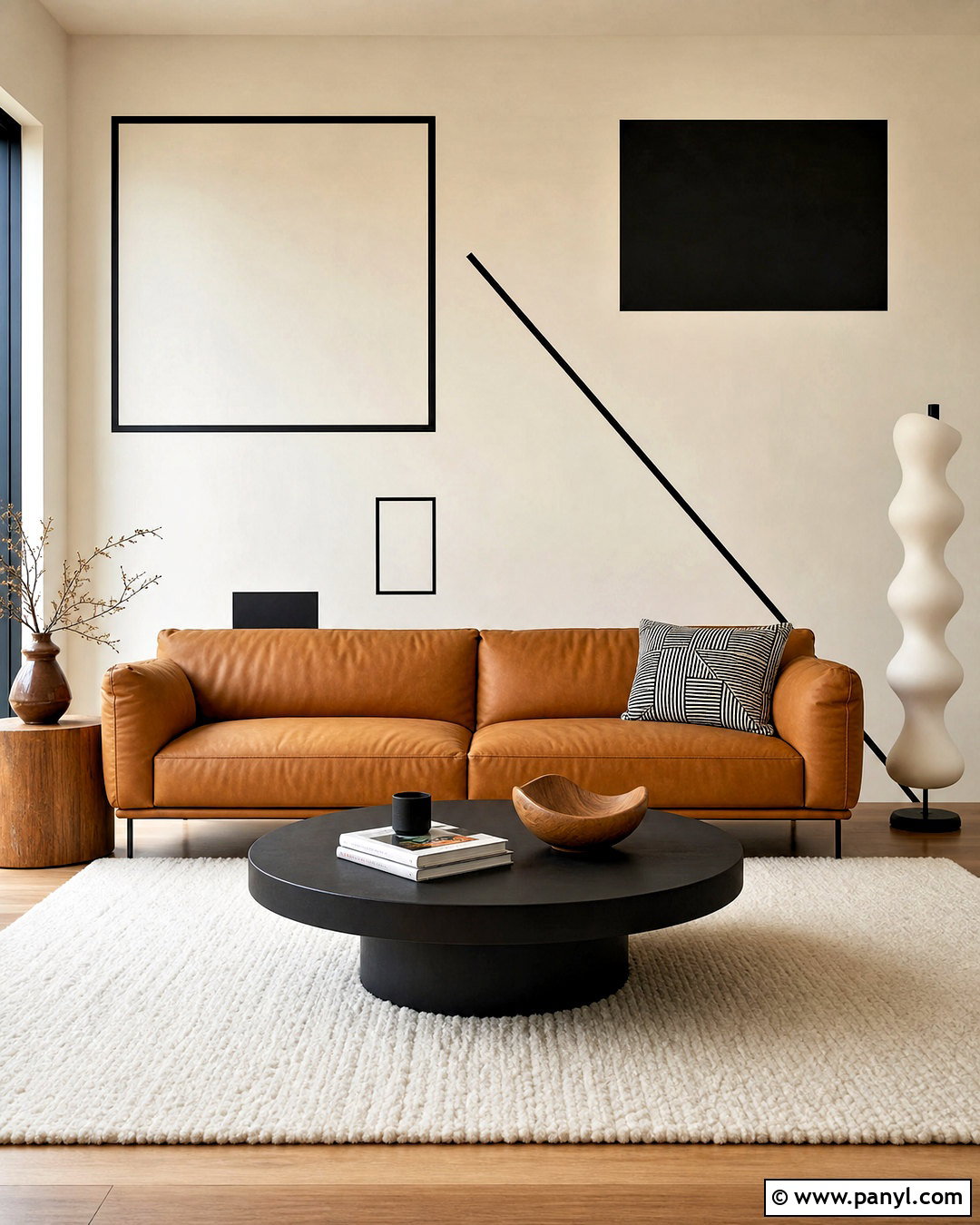
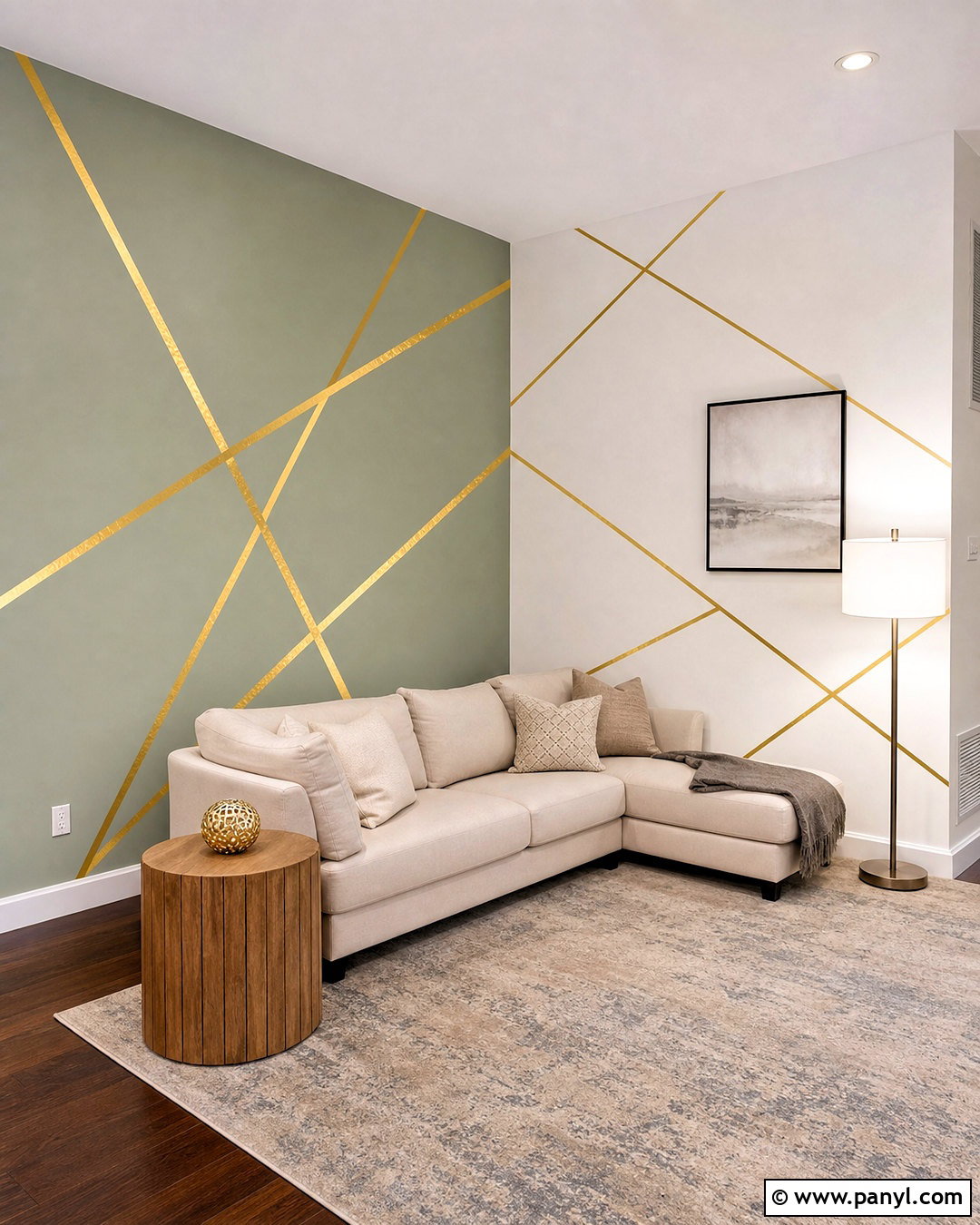
Thin black painted lines can create a minimalist mural that works with a simple neutral room. Paint the feature wall warm white, then use narrow tape strips to outline a few oversized intersecting rectangles and diagonal lines. Paint the exposed line areas matte black, keeping plenty of blank wall between them. Pair the finished design with a low camel-colored sofa, a round black coffee table, and an ivory wool rug. Add one sculptural floor lamp and a small amount of natural wood decor. Avoid colorful artwork or patterned cushions, since the linear wall already provides movement. The limited black, cream, and camel palette gives the room a cohesive contemporary appearance, while the large-scale spacing prevents the design from feeling like a busy grid.
19. Retro Wave Tape Wall
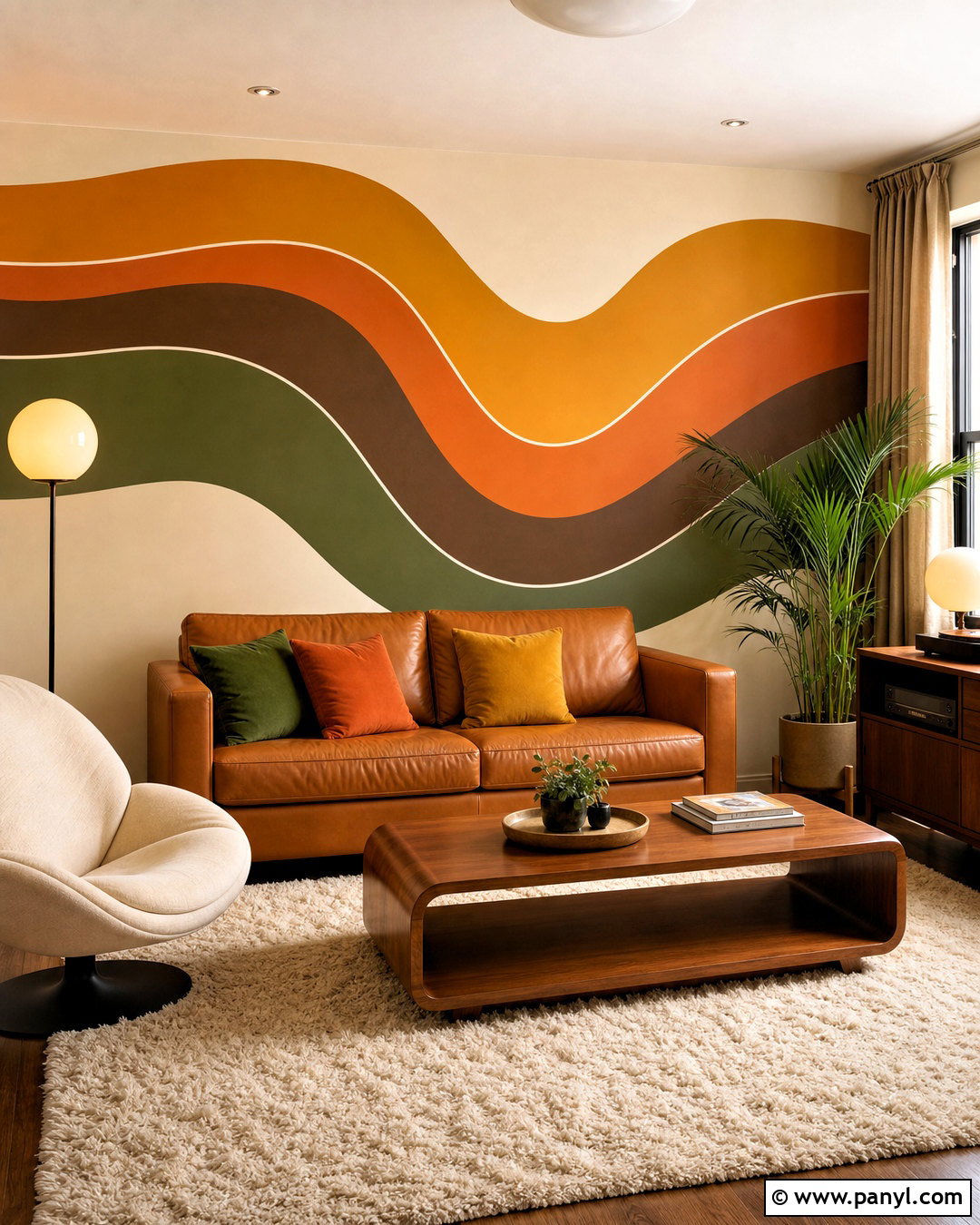
A retro-inspired wave wall can bring warmth and personality to a den, music room, or casual living area. Use flexible painter’s tape or carefully planned short tape sections to form wide flowing bands across a cream wall. Paint the bands burnt orange, mustard yellow, muted olive green, and warm brown. Arrange a compact caramel leather sofa in front of the design, leaving the upper curves visible. Add a walnut media cabinet, a cream shag rug, and rounded table lamps with white shades. Choose pillows in solid olive and mustard rather than additional patterns. The repeated curves soften the room’s straight furniture lines, while the earthy palette creates a coordinated vintage look that still feels clean, practical, and suitable for a modern home.
20. Color Block Doorway Tape Wall
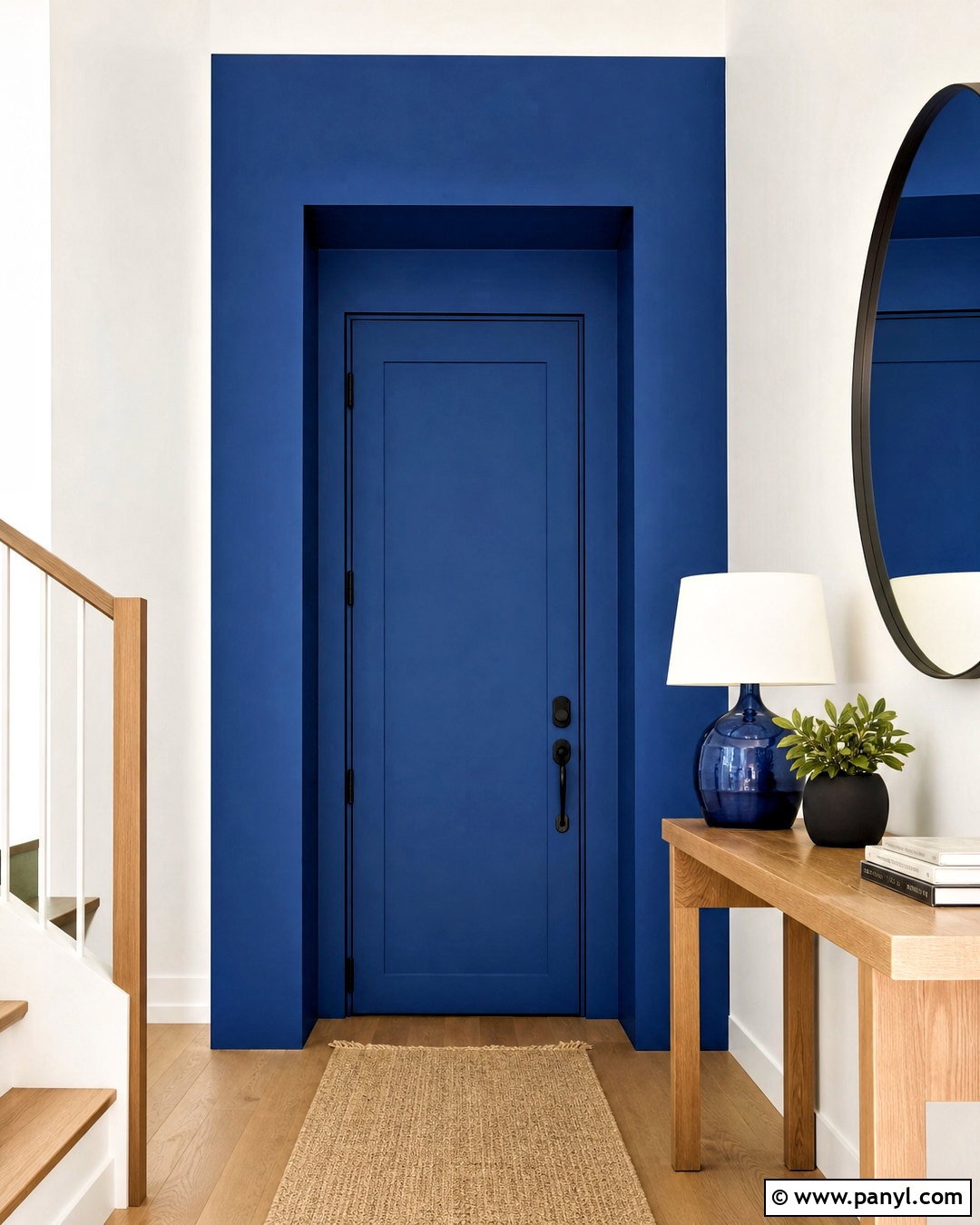
Paint can turn a plain doorway into a strong architectural feature. Use painter’s tape to create a large rectangular color block that surrounds the door and extends approximately two feet onto each side of the wall. Choose deep cobalt blue for the block, warm white for the surrounding wall, and matching blue for the door itself. Add matte black hardware for sharp contrast. In the adjoining entry, place a narrow oak console, a circular mirror, and a small neutral runner. Keep accessories restrained so the bold doorway remains the focal point. The painted frame gives the opening more visual importance and can help define the transition between rooms. Repeating cobalt through one lamp or ceramic accessory creates a polished, connected finished design.
Conclusion:
These 20 wall painting with tape design ideas show how simple lines and carefully chosen colors can transform an entire room. The most successful design starts with accurate measurements, a clean base, and a palette that connects naturally with the furniture, flooring, textiles, and lighting. Large shapes generally create a calmer result, while smaller patterns add more energy and detail. Test the layout with tape before opening the paint, then view it from several positions in the room. Whether you choose subtle stripes, an oversized arch, geometric blocks, or a colorful mural, treat the wall as part of a complete interior. Thoughtful planning will make the finished feature look balanced, intentional, and customized to your home.

Related Ideas and Inspiration:
Leave a Reply