
Leaf motifs can turn an ordinary painted wall into a fresh botanical feature without the cost or installation challenges of wallpaper. This guide to **20 Wall Paint Leaves** explores complete room designs built around hand-painted branches, oversized tropical foliage, simple stencils, and modern line art. Painted patterns can mimic wallpaper, while stencils or a projector can make detailed botanical shapes easier to repeat across a wall. () Each look coordinates the leaf pattern with practical furniture, complementary colors, lighting, textiles, and natural materials. You will find options for living rooms, bedrooms, nurseries, dining spaces, offices, and entryways. Whether your taste is earthy, colorful, minimalist, or dramatic, these complete designs make it easier to recreate **20 Wall Paint Leaves** throughout your home.

1. Green Leaf Accent Wall
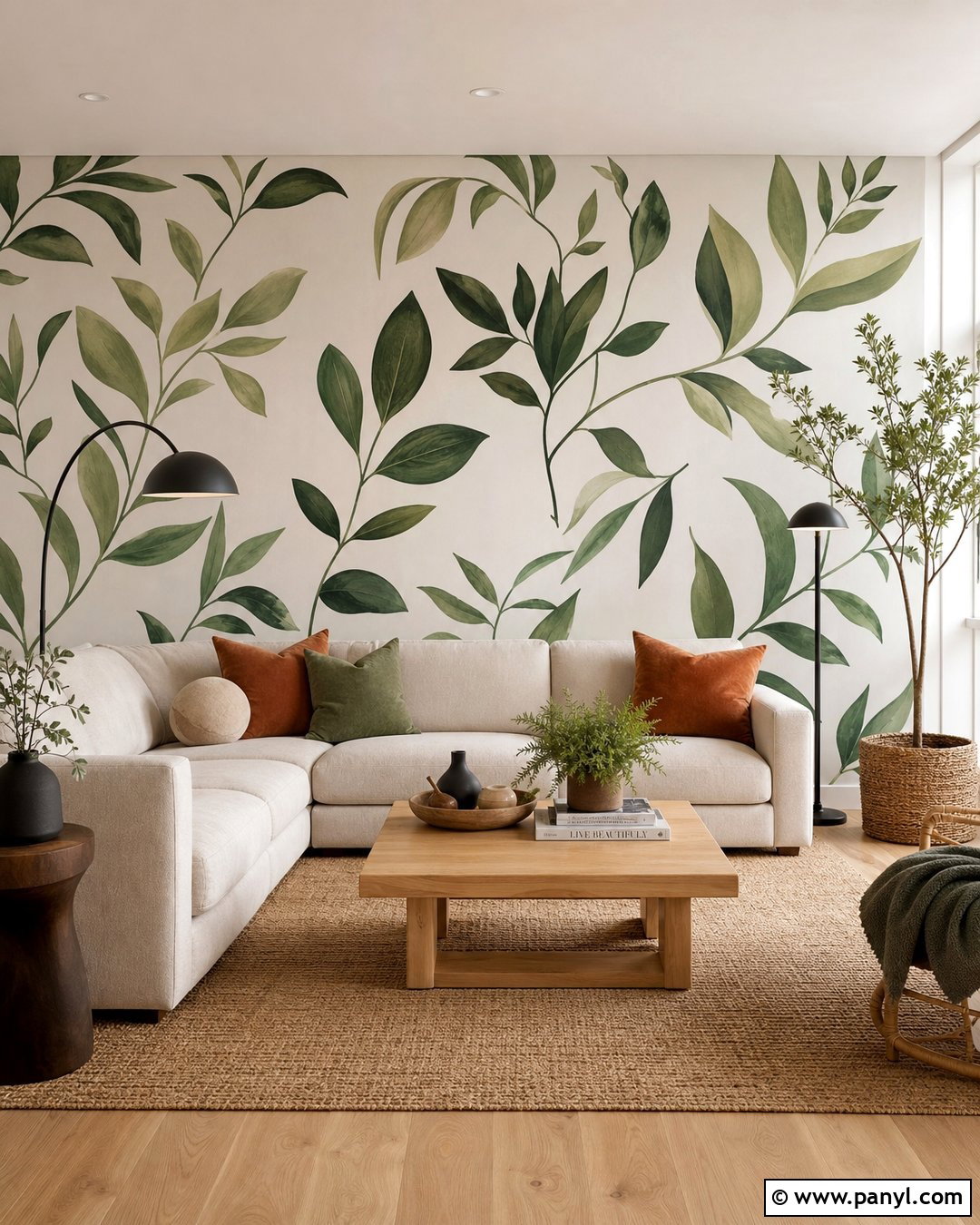
A warm white living room gains energy from a leafy green accent wall behind the sofa. Start with a creamy white base, then paint medium-scale olive, sage, and forest green leaves in a loose repeating pattern. Keep the remaining walls neutral so the botanical feature feels intentional rather than busy. A light oak coffee table, oatmeal sofa, and woven jute rug create a calm natural foundation. Add pillows in moss green and muted terracotta to connect the furniture with the mural. Matte black floor lamps provide crisp contrast, while simple ceramic planters reinforce the organic theme. Leave enough open space between the painted leaves so the white background remains visible and the complete room feels bright, balanced, and comfortable.
2. Monstera Leaf Living Room Wall
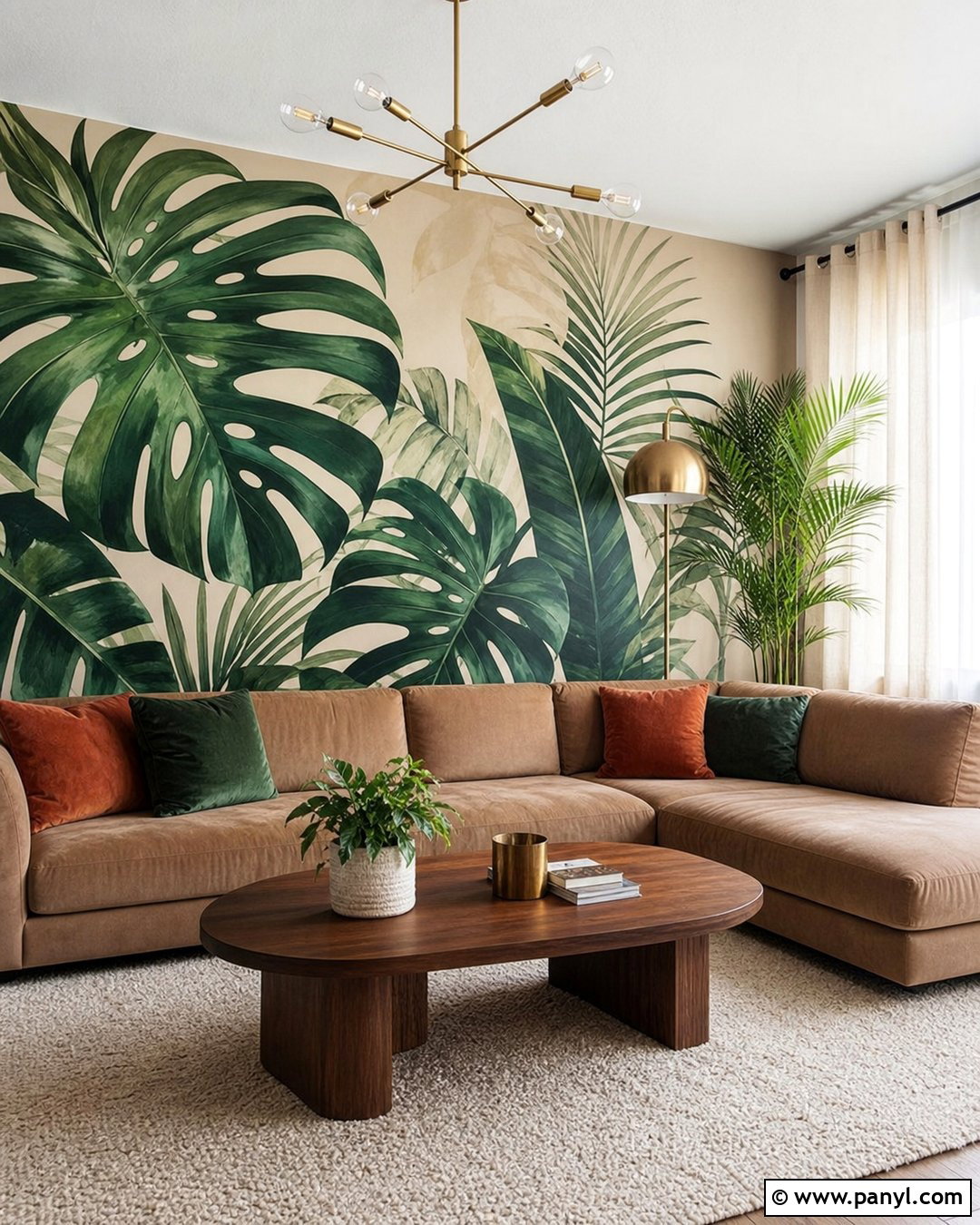
Large monstera leaves create a bold focal point when their scale matches the size of the living room. Paint oversized foliage in emerald, deep teal, and muted palm green across a soft beige wall. Allow several leaves to extend beyond the wall edges, giving the mural a natural, immersive appearance. Ground the dramatic pattern with a low-profile tan sectional and a rectangular walnut coffee table. Cream curtains, a textured ivory rug, and two rust-colored pillows soften the saturated greens. Use brushed brass lighting for a warm metallic detail that does not compete with the mural. Keep artwork to a minimum because the painted wall already provides visual interest. The result is a welcoming tropical room that still feels polished, practical, and appropriate for an everyday home.
3. Sage Leaf Bedroom Wall
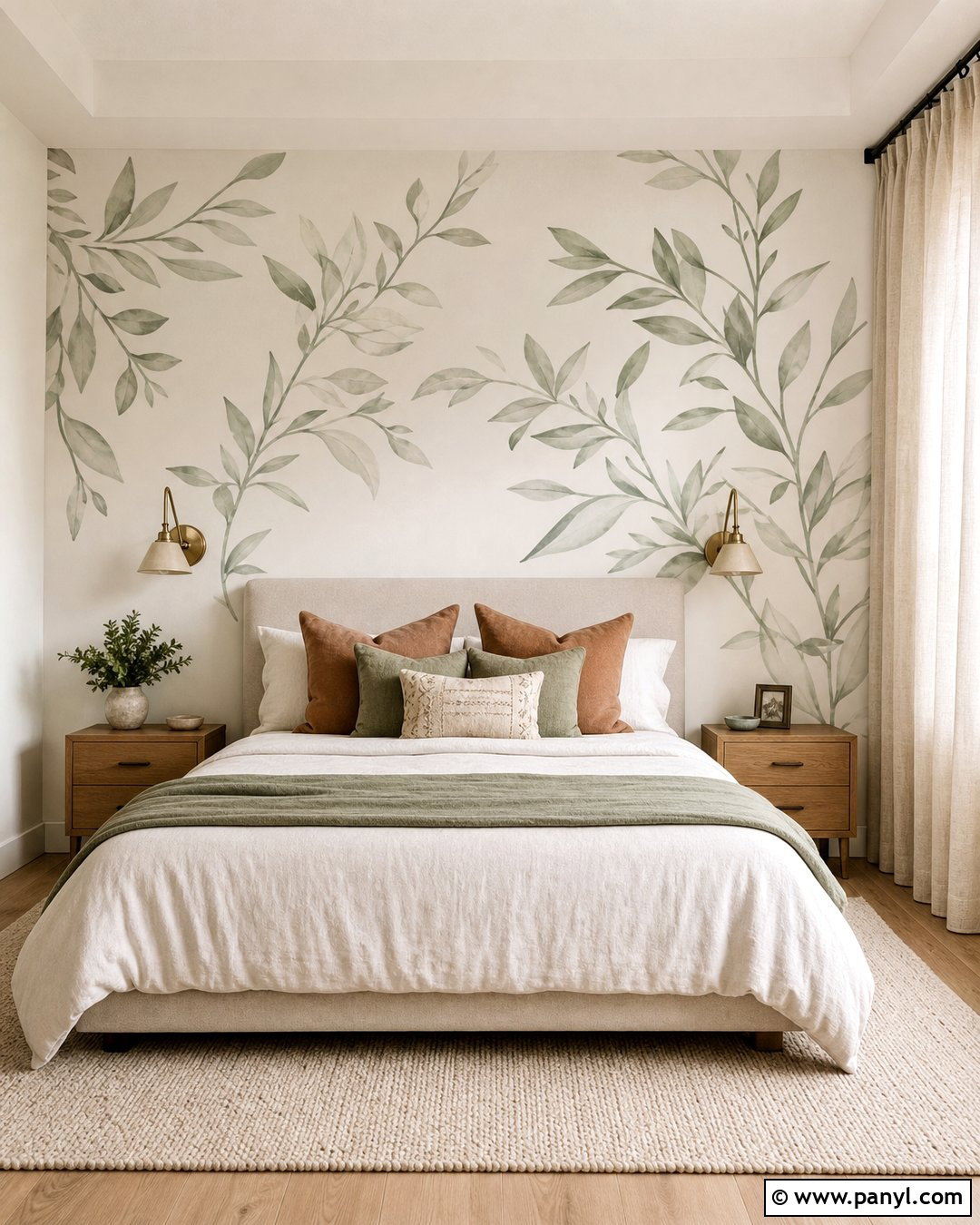
Soft sage leaves can make a bedroom feel restful without becoming overly themed. Use warm off-white paint as the background and add slender sage branches that rise gently behind the headboard. Mix pale eucalyptus green with a slightly deeper gray-green to create subtle dimension. An upholstered oatmeal bed, natural linen bedding, and light oak nightstands continue the quiet color palette. Choose clay-colored accent pillows and a folded taupe throw for a small amount of warmth. Simple brass sconces free space on the bedside tables and highlight the painted branches at night. Finish the room with cream curtains, a wool area rug, and one or two understated ceramic accessories. This complete look works especially well in small bedrooms because the delicate leaf pattern keeps the wall feeling open.
4. Black Leaf Wall Painting
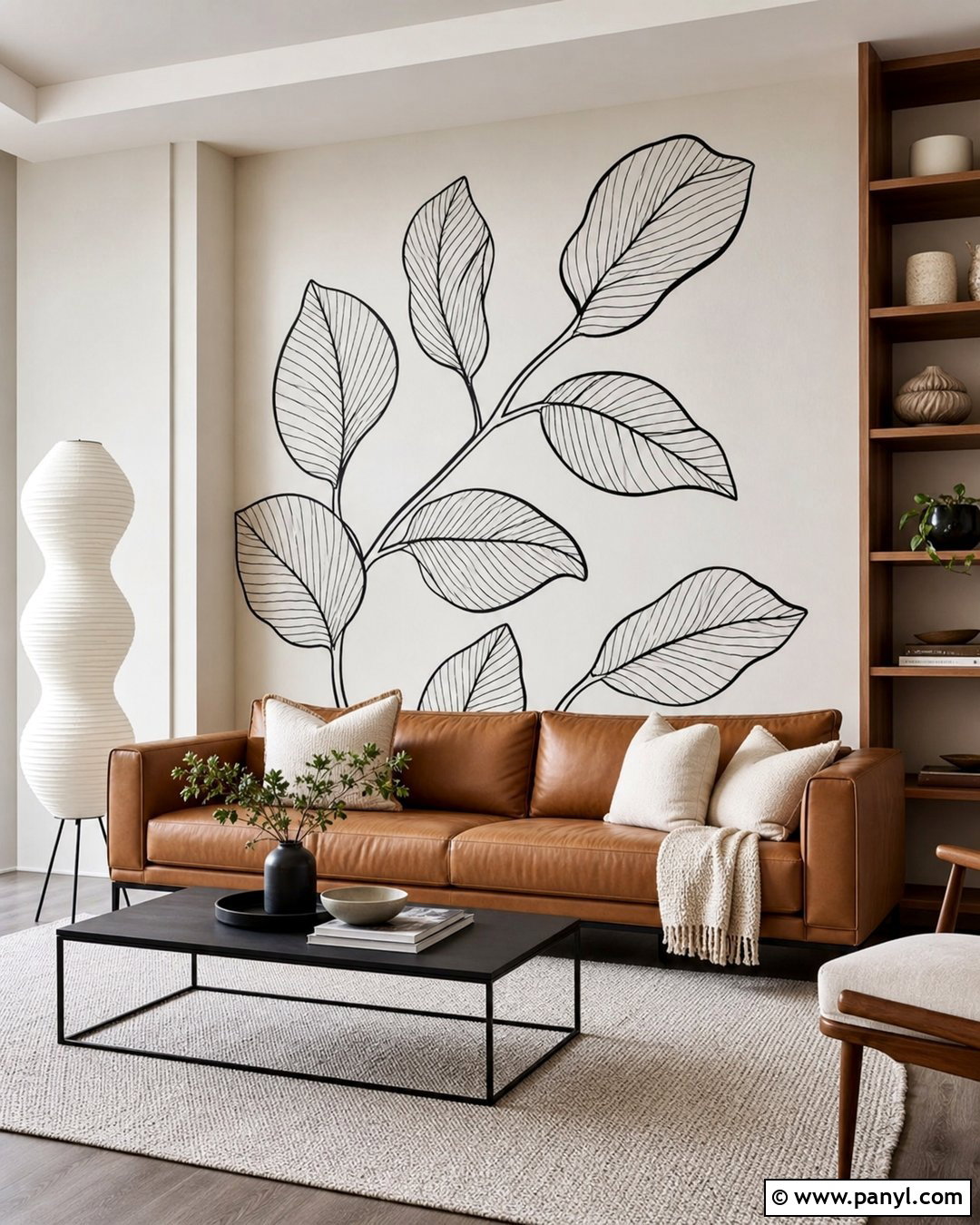
Black painted leaves offer a graphic alternative to traditional green botanical murals. Begin with a clean ivory wall and create large, simple leaf outlines using matte black paint. Arrange the stems diagonally so the pattern adds movement without covering every part of the wall. Pair the feature with a camel leather sofa, a black metal coffee table, and a light neutral rug. Walnut shelving introduces warmth, while cream pillows prevent the palette from becoming harsh. Add a sculptural white floor lamp and a few green houseplants to connect the line drawings with real foliage. The room should remain uncluttered so the crisp shapes stay prominent. This monochrome treatment suits modern, Scandinavian, and industrial interiors while remaining easy to coordinate with changing furniture and seasonal accessories.
5. Tropical Leaf Dining Room Wall
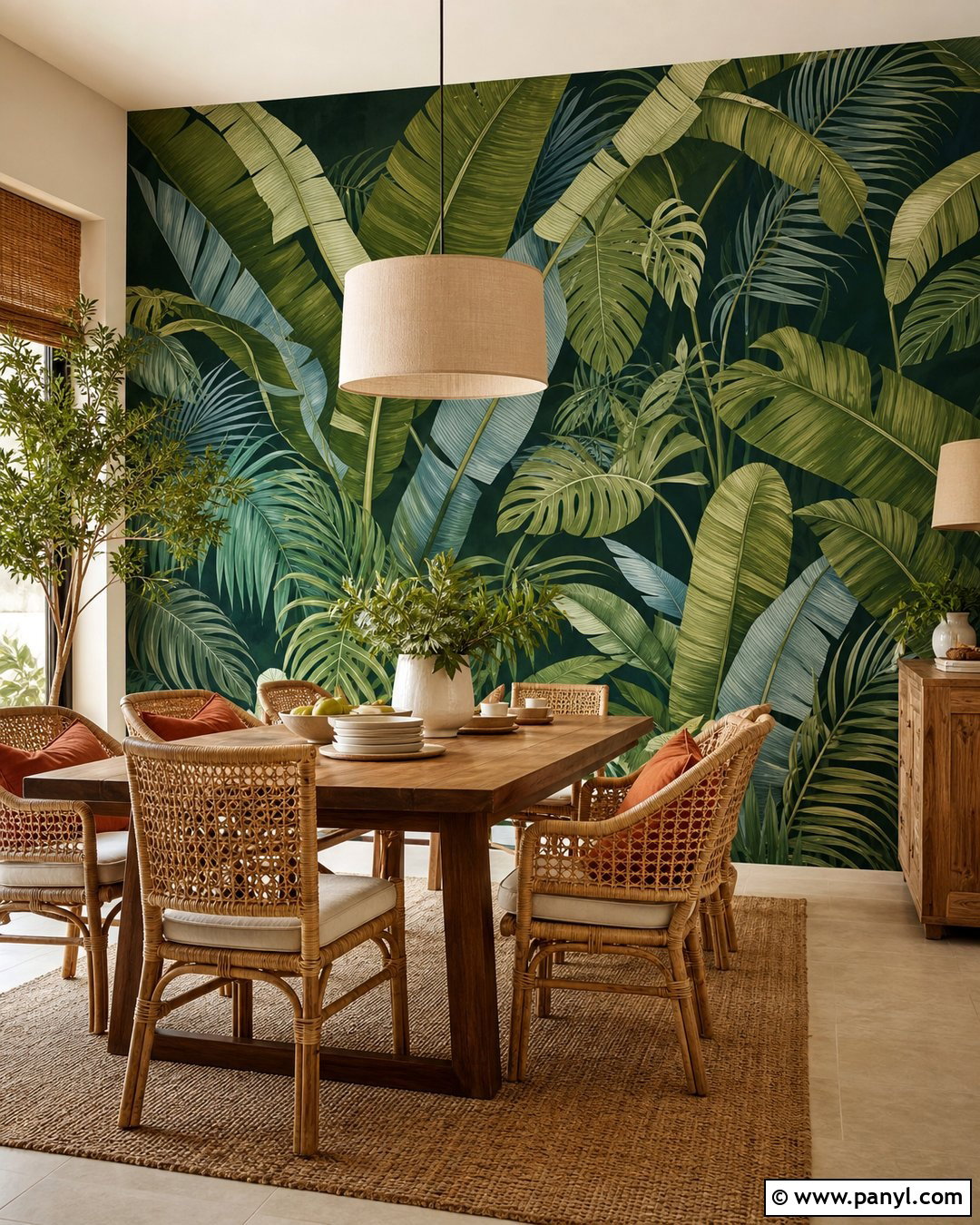
A dining room can handle a richer leaf pattern because it is often used for shorter, more social gatherings. Paint layered banana, palm, and philodendron leaves across a deep green background using lighter olive and blue-green tones. Position the densest foliage behind the dining table, then simplify the pattern near doors and windows. A medium-tone wood table and woven dining chairs provide natural texture against the saturated wall. Add an oversized linen pendant above the table for a soft focal point. Cream tableware, rust-colored seat cushions, and a simple jute rug warm the green palette. Keep the other walls pale beige to preserve brightness. The finished dining space feels lush and enveloping, but its straightforward furniture arrangement keeps the dramatic mural usable and approachable.
6. Eucalyptus Leaf Nursery Wall
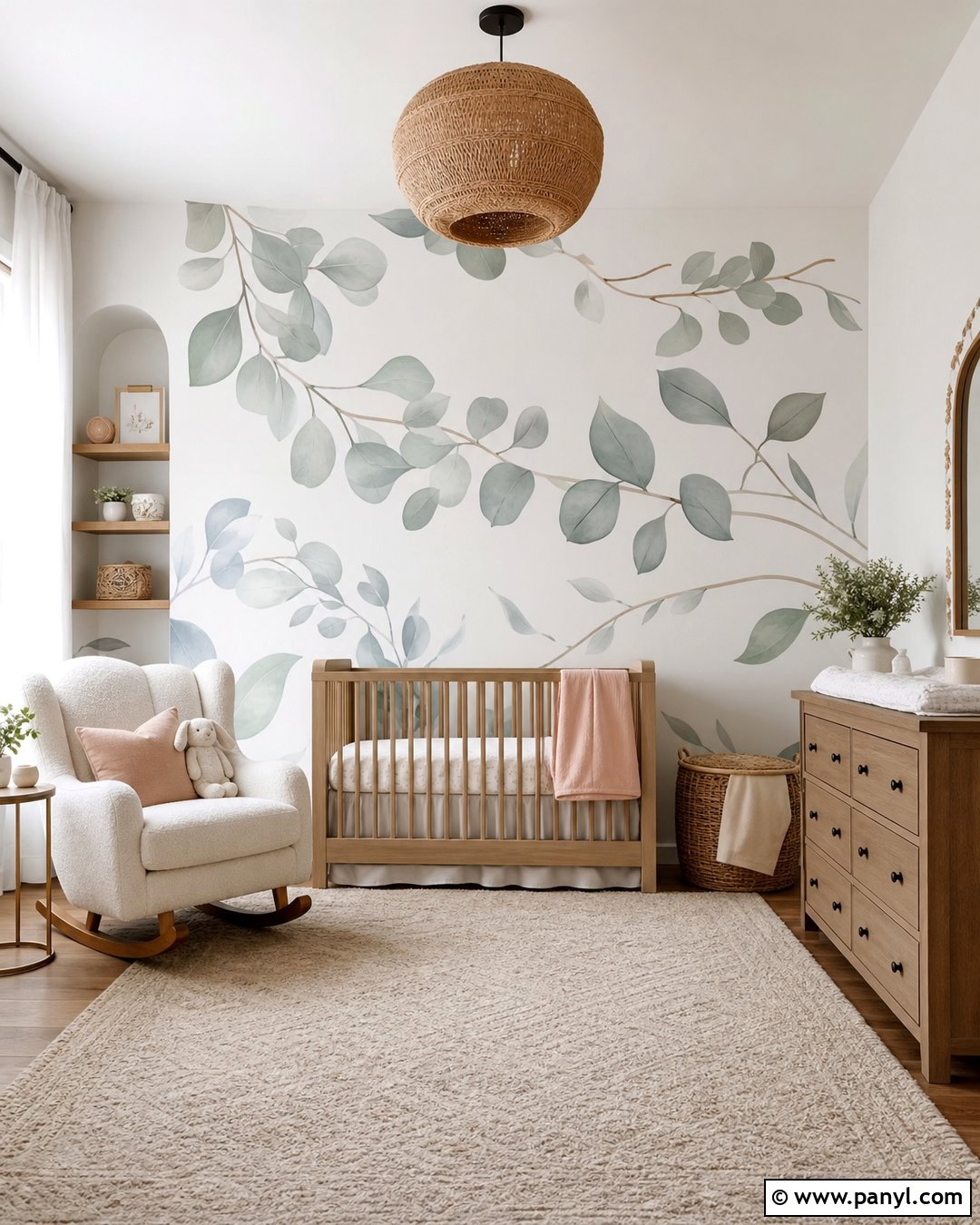
Delicate eucalyptus stems create a gentle nursery backdrop that can grow with the child. Paint a warm white base and add curved branches in dusty sage, pale gray-green, and muted blue-green. Keep the shapes simple and space them evenly behind a natural wood crib. A cream boucle rocking chair, light oak dresser, and washable beige rug make the room feel soft without relying on a strongly themed color scheme. Introduce muted peach or powder blue through a small blanket, storage baskets, and window trim. Use a white ceiling light with a rounded silhouette for even illumination. Avoid placing shelves over the busiest part of the mural. With its quiet colors and uncluttered layout, this leaf-painted nursery remains suitable when the crib is eventually replaced by a toddler bed.
7. Palm Leaf Bathroom Wall
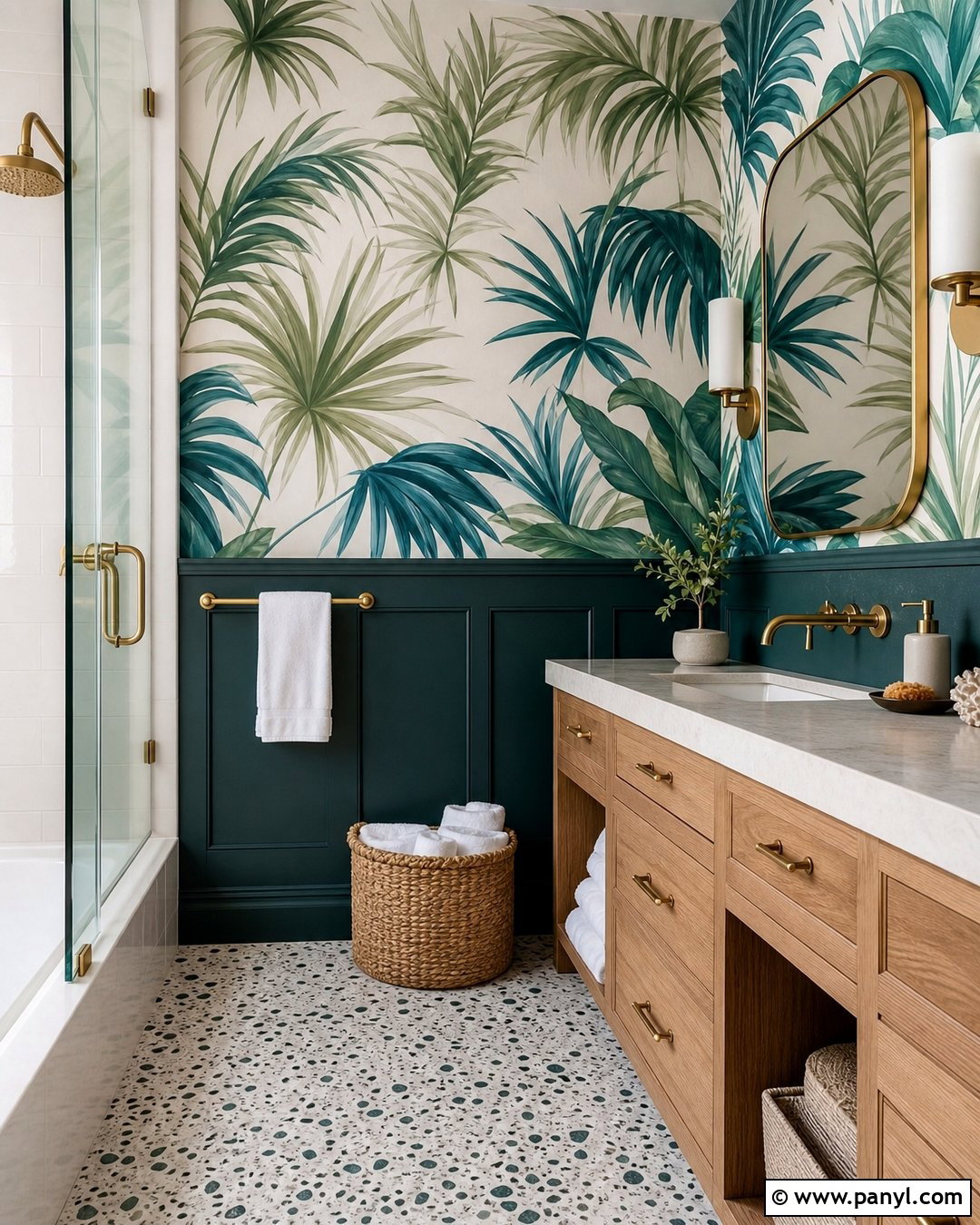
Bring a fresh resort feeling into a bathroom with a simplified palm leaf wall above painted paneling. Cover the lower half in moisture-resistant deep teal paint and use warm white on the upper wall. Add sweeping palm fronds in sage, emerald, and soft blue-green, concentrating the pattern around the vanity mirror. A white oak vanity, pale stone counter, and brushed brass fixtures create a bright, natural foundation. Choose a frameless rounded mirror so more of the painting remains visible. White towels and light terrazzo flooring prevent the darker colors from overwhelming the room. Because bathrooms contain many hard surfaces, a woven basket and small wood stool add welcome texture. Proper surface preparation and bathroom-rated paint will help the complete botanical design stay attractive in a humid environment.
8. Gold Leaf Branch Wall
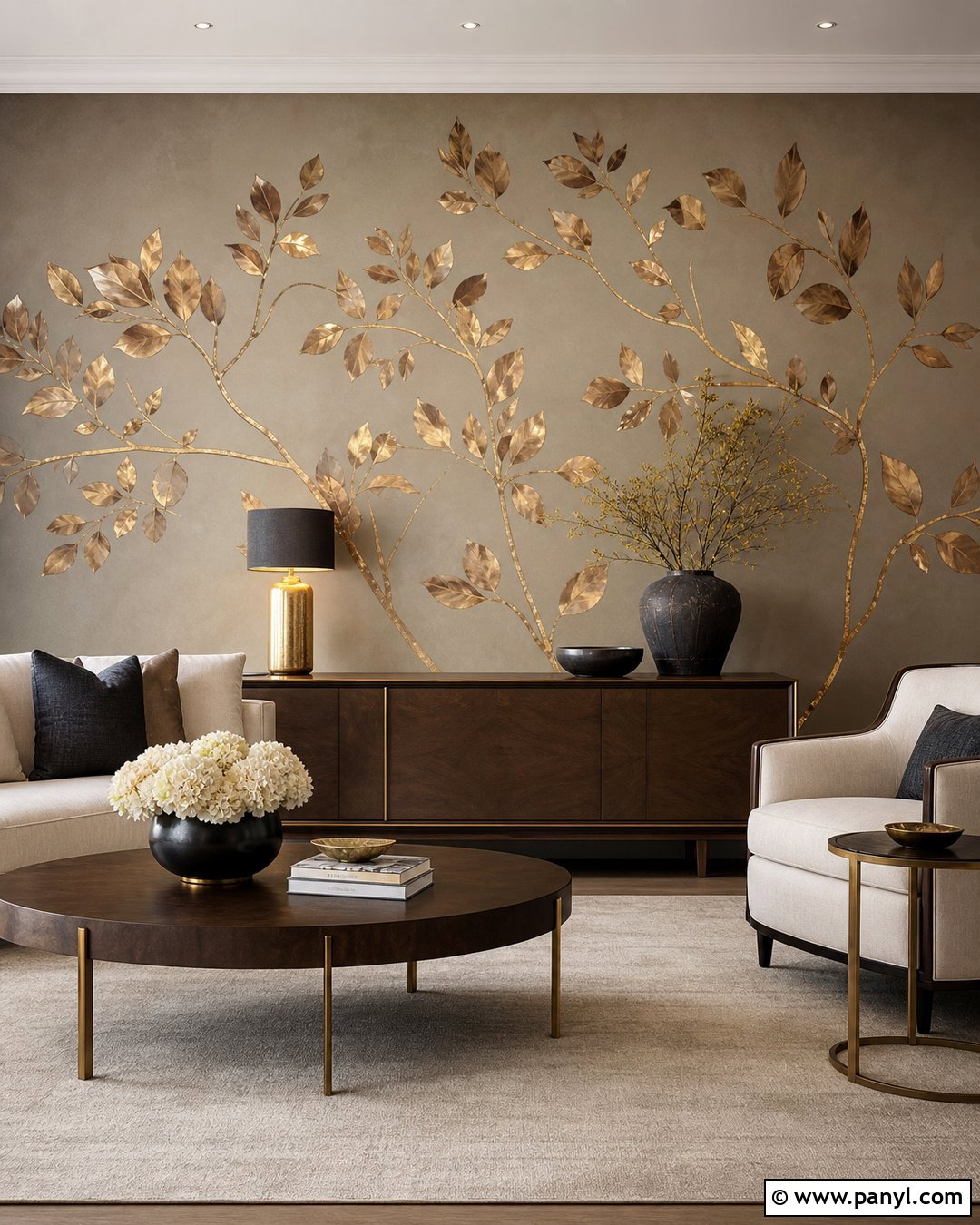
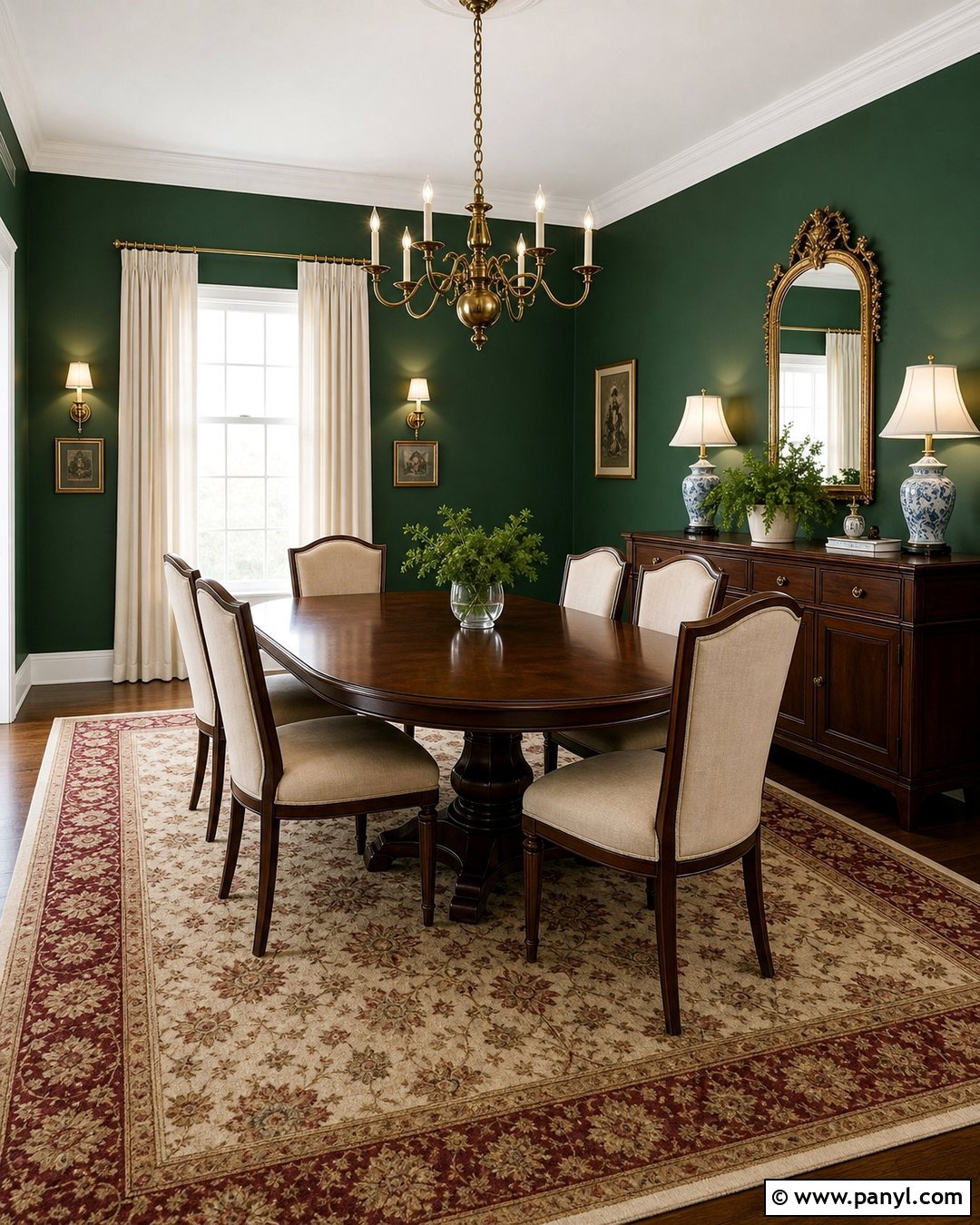
For a refined botanical look, combine slender metallic branches with a warm greige background. Paint sweeping stems behind a dining console or bedroom headboard, using muted gold for the branches and soft bronze for selected leaves. Keep the pattern airy rather than filling the entire wall. The metallic finish should behave as a subtle highlight, not a glittering surface. Coordinate it with walnut furniture, ivory upholstery, and a warm beige rug. A pair of aged brass lamps will repeat the mural’s finish while providing balanced lighting. Add charcoal accents through picture frames or small cushions to sharpen the neutral palette. This full design feels elegant without requiring elaborate furniture. It works particularly well in rooms with natural daylight, where the painted leaves can catch light gently from different angles.
9. Blue Leaf Bedroom Wall
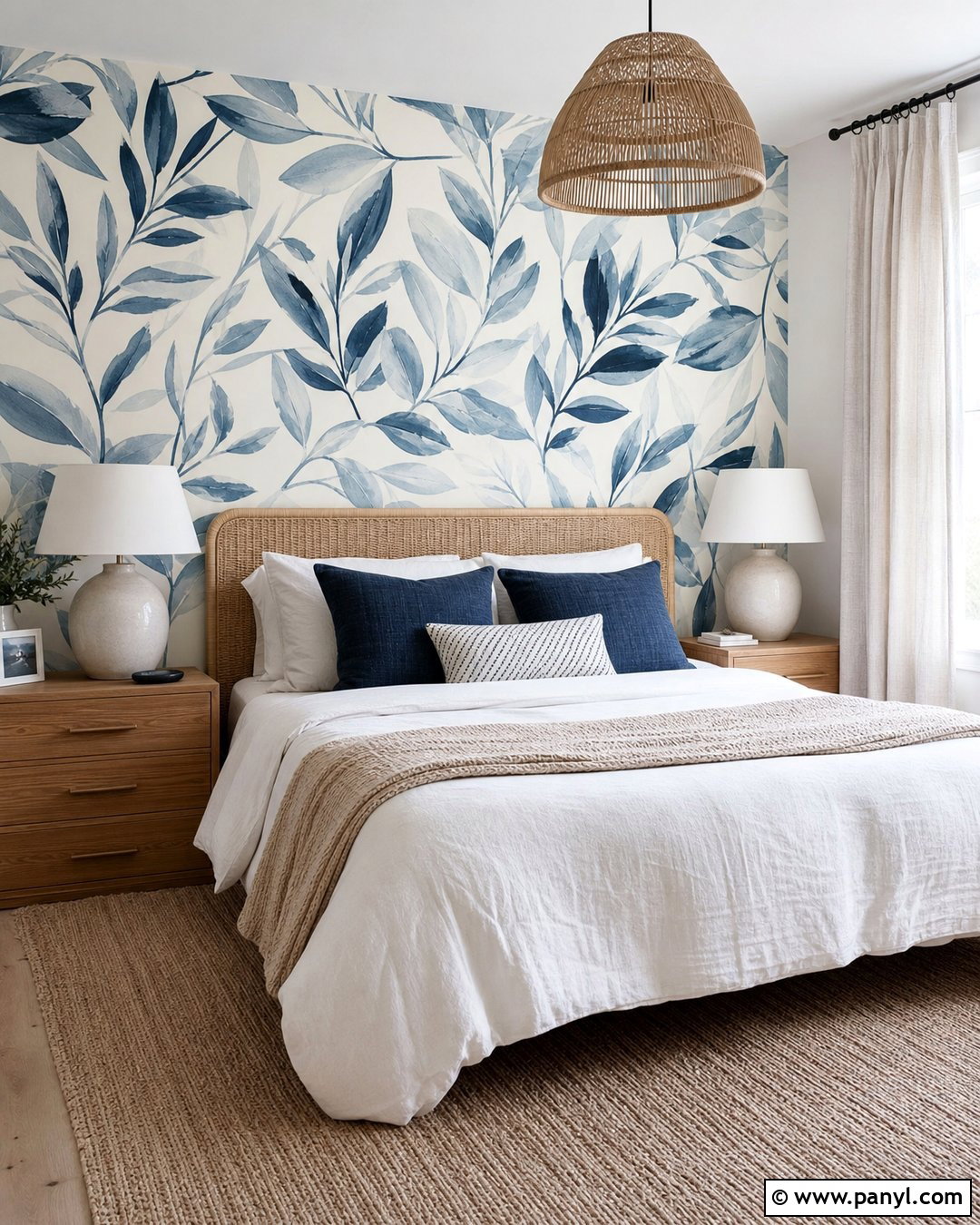
Blue botanical shapes provide a cool, peaceful alternative to predictable green foliage. Paint a soft ivory wall with layered leaves in dusty blue, muted navy, and pale blue-gray. Arrange the pattern in a loose canopy above and around the bed, leaving the lower wall relatively open. Choose a natural cane headboard and crisp white bedding to keep the room light. Navy pillows establish a connection with the darkest leaves, while a sand-colored throw adds warmth. White oak nightstands, ceramic lamps, and pale curtains complete the relaxed scheme. Avoid adding multiple pieces of wall art over the mural. Instead, let texture come from linen, cane, and woven materials. The coordinated room feels coastal without relying on obvious nautical decorations, making it adaptable to several decorating preferences.
10. Terracotta Leaf Accent Wall
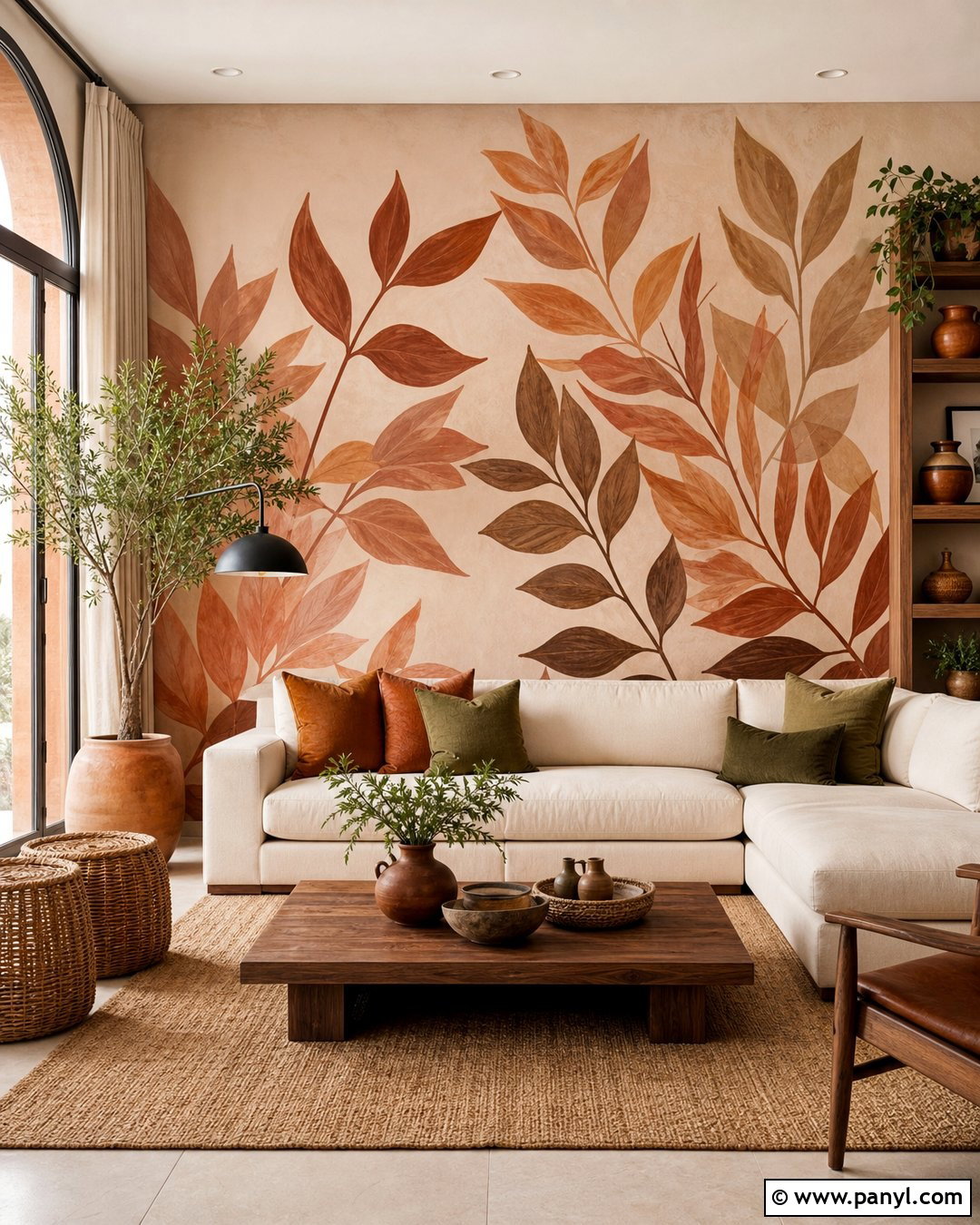
Earthy terracotta leaves can warm a neutral room while keeping the botanical pattern modern. Start with a pale clay or creamy beige background and paint broad leaves in rust, cinnamon, muted peach, and deep brown. Use overlapping shapes sparingly so individual leaves remain recognizable. Place a cream sofa against the feature wall, then add a walnut coffee table and a textured tan rug. Olive green cushions introduce a natural contrast that balances the warm mural. Choose matte black lighting and hardware for definition. Woven baskets, unglazed pottery, and linen curtains support the relaxed color story without making the space feel overly rustic. The final living room combines botanical imagery with desert-inspired tones, creating a cozy design that remains attractive throughout the year rather than feeling tied to one season.
11. Minimalist Leaf Line Wall
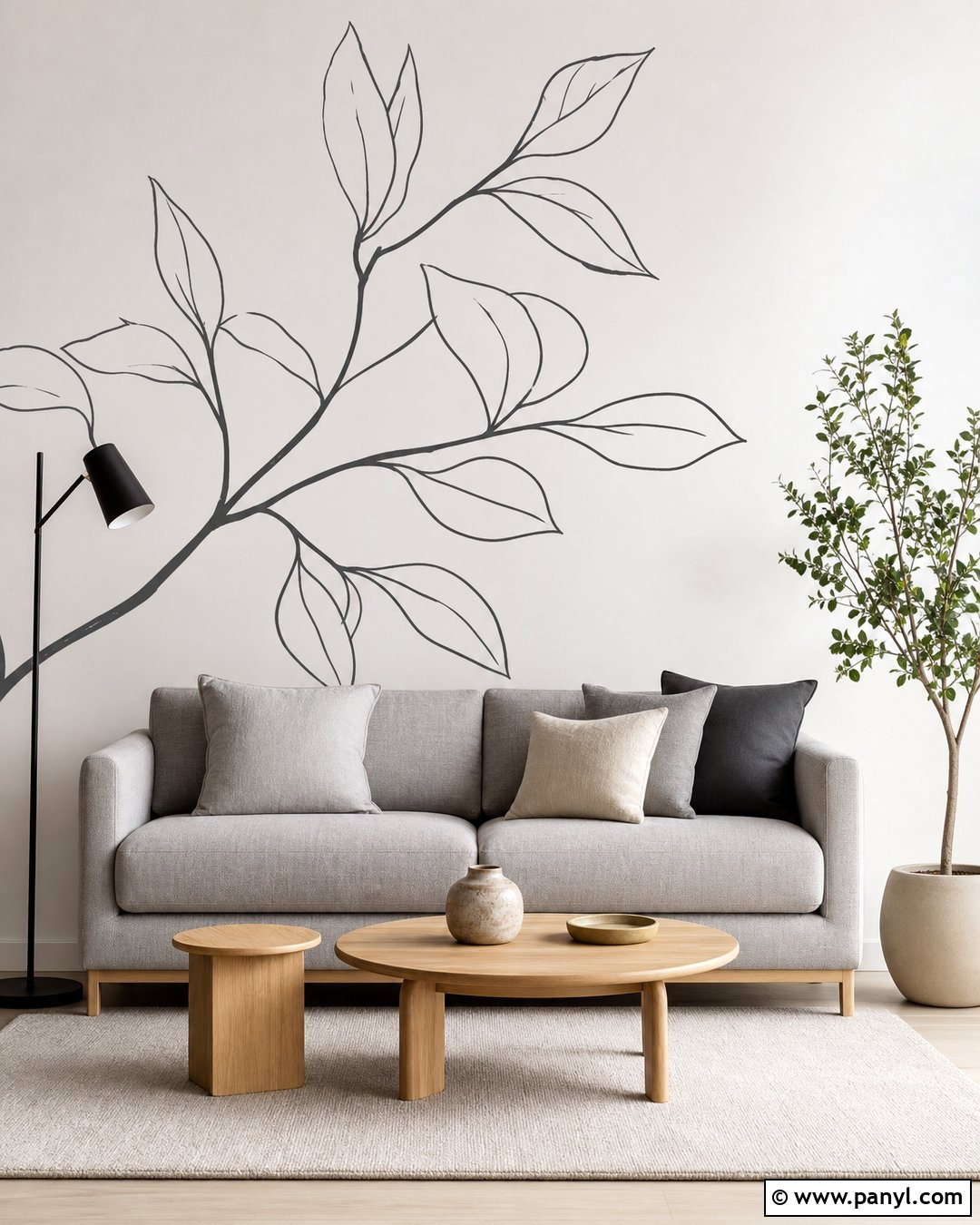
A single continuous leaf line can add character to a minimalist room without disrupting its calm appearance. Paint the wall soft warm white, then draw one oversized branch in a thin charcoal or taupe line. Let it travel horizontally behind a sofa, desk, or bed instead of filling the entire surface. Choose furniture with simple shapes, such as a light gray sofa, pale oak side tables, and a slim black floor lamp. A low-pile cream rug and solid-color cushions keep the room visually quiet. Limit decorative objects to a ceramic vase, a small stack of books, and one real plant. The painted line should remain consistent in width and have smooth curves. This restrained design offers botanical interest while preserving the open space and practical simplicity that define a minimalist interior.
12. Colorful Leaf Playroom Wall
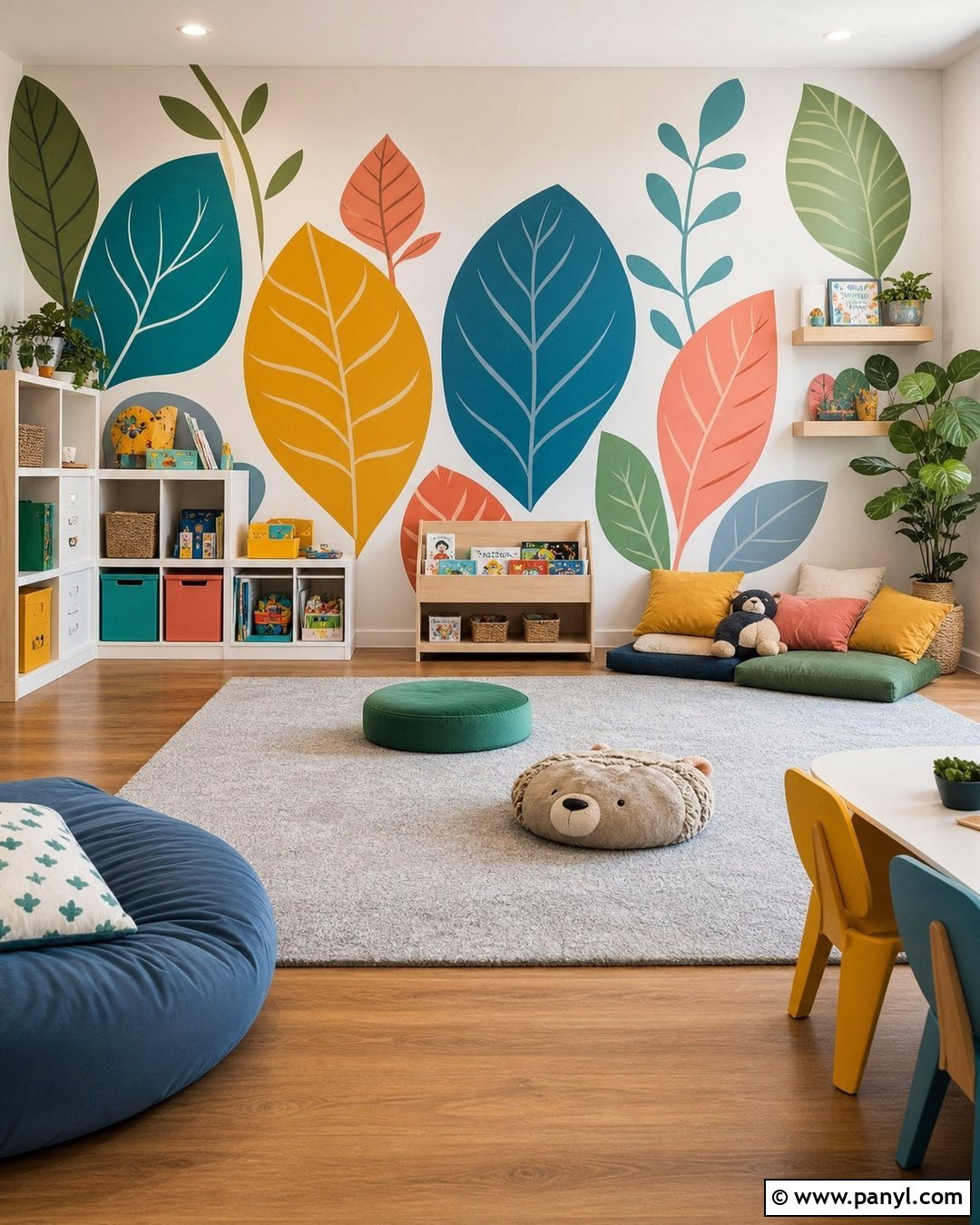
A playroom leaf mural can be cheerful without using an overwhelming rainbow palette. Begin with a warm white wall and paint large rounded leaves in teal, mustard yellow, coral, grass green, and muted blue. Arrange the leaves around a low reading nook, allowing the pattern to frame the furniture instead of disappearing behind it. Add modular white storage, natural wood shelves, and washable floor cushions in matching solid colors. A light gray rug gives children a comfortable play surface while balancing the brighter wall. Keep toys organized in labeled-looking but text-free colored bins for a clean visual structure. Rounded furniture edges and open floor space support everyday use. The finished room feels lively, creative, and coordinated, with a botanical design that can remain appealing beyond the early childhood years.
13. Fern Leaf Entryway Wall
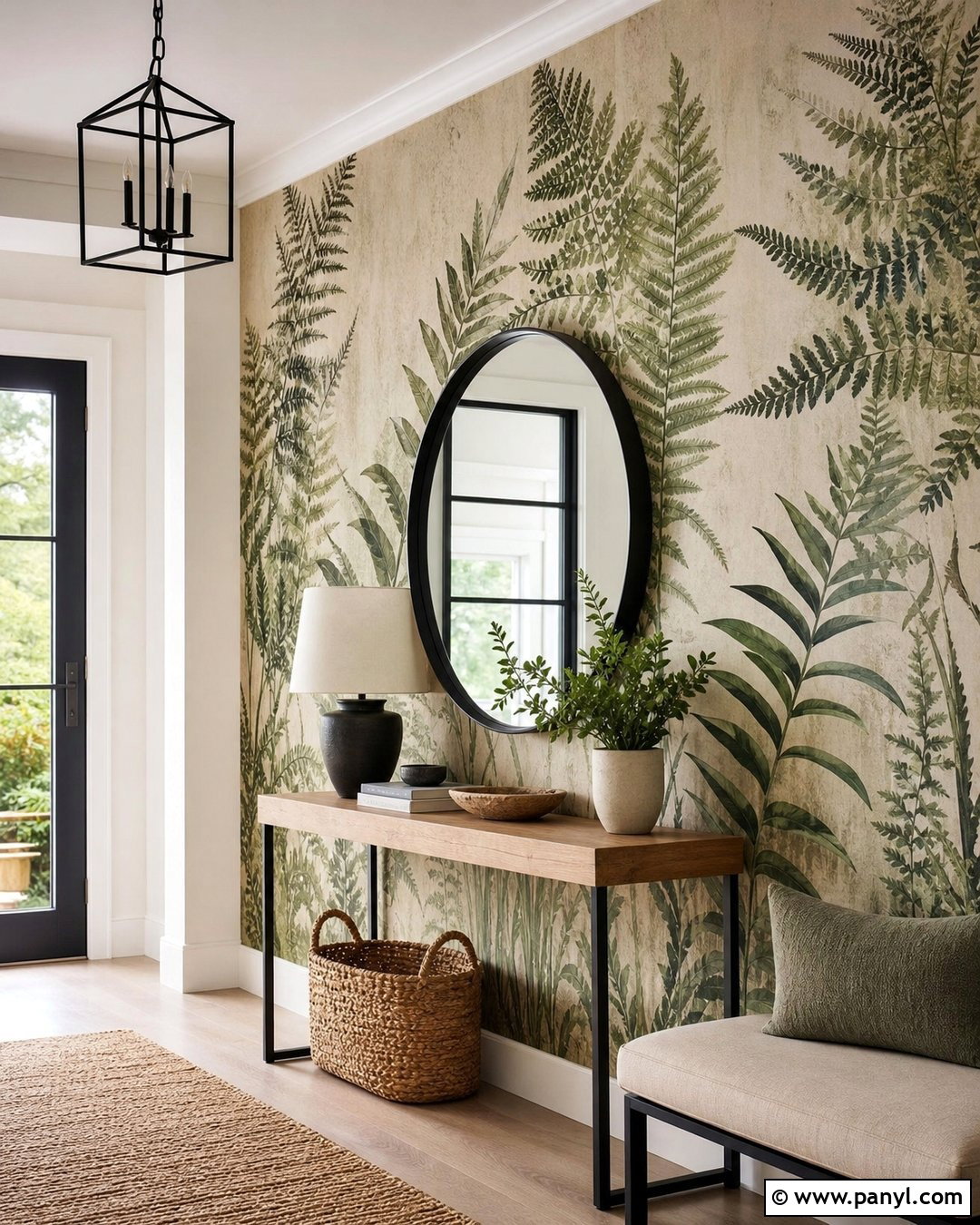
An entryway becomes more welcoming when a vertical fern mural emphasizes its height. Paint the background a soft mushroom beige, then add tall fern fronds in moss, olive, and deep forest green. Position the plants so they appear to grow upward from behind a slim console. Use a medium-tone oak table with black metal legs, a round black-framed mirror, and a woven storage basket underneath. A small upholstered bench can provide a practical spot for putting on shoes. Keep the flooring and trim light to balance the darker leaves. Add one ceramic lamp and a shallow tray for everyday essentials, but avoid covering the mural with excessive decor. This complete arrangement turns a transitional area into a defined botanical space while preserving a clear, functional walkway through the home.
14. Watercolor Leaf Wall Painting
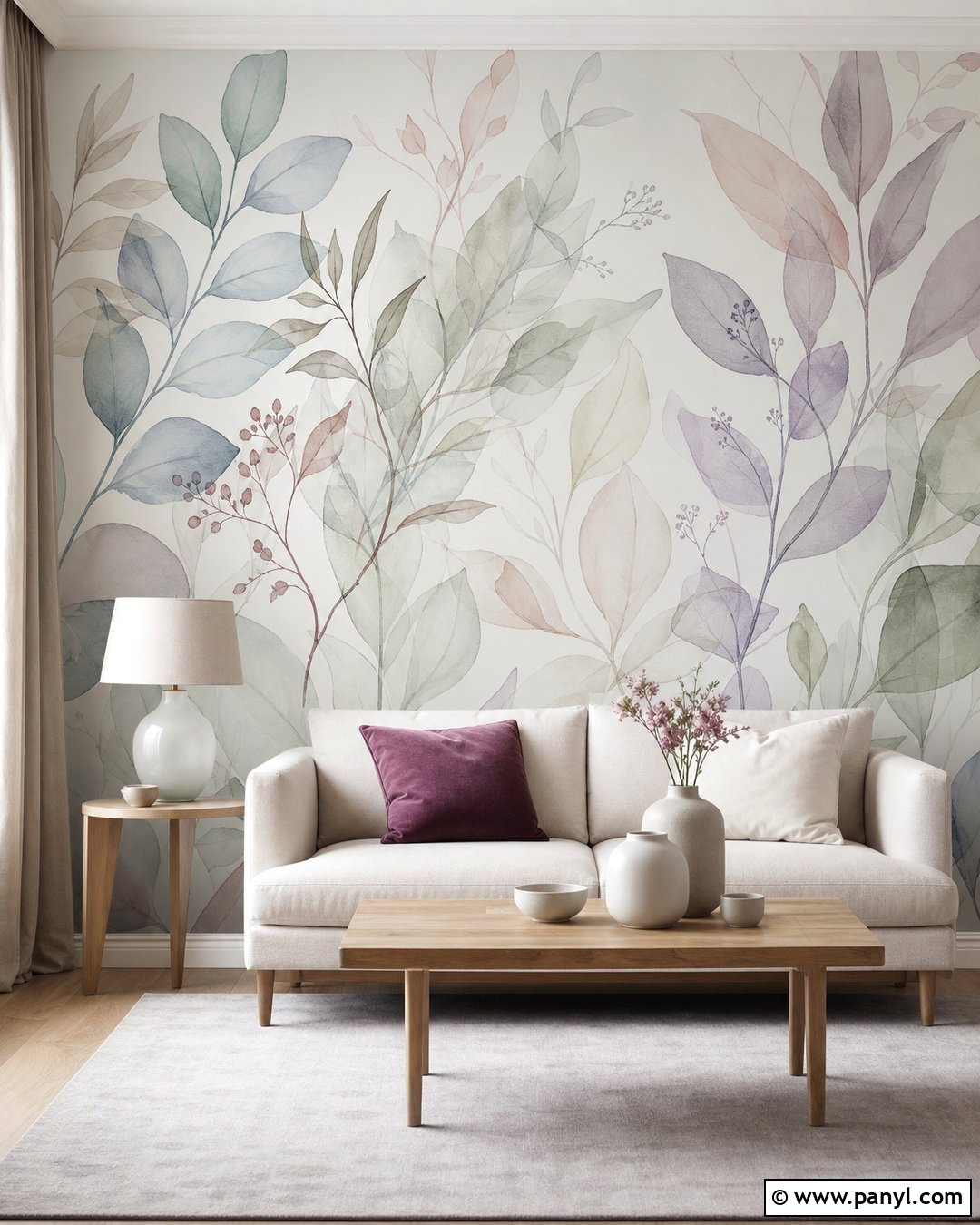
Watercolor-inspired leaves bring soft movement to a bedroom or quiet sitting room. Use a pale ivory background and create translucent-looking leaves in sage, dusty blue, blush, and muted lavender. Build the pattern from light, irregular layers rather than sharp outlines, allowing some shapes to overlap gently. Pair the wall with an ivory loveseat or upholstered bed and a light oak side table. Linen curtains and a pale gray rug reinforce the airy appearance. Introduce one deeper color through a plum or forest green cushion so the room does not look washed out. Choose frosted glass lighting and matte ceramic accessories for a soft finish. The completed design should feel balanced and relaxed, with enough plain wall remaining around the painted foliage to let each watercolor shape remain clear.
15. Olive Branch Kitchen Wall
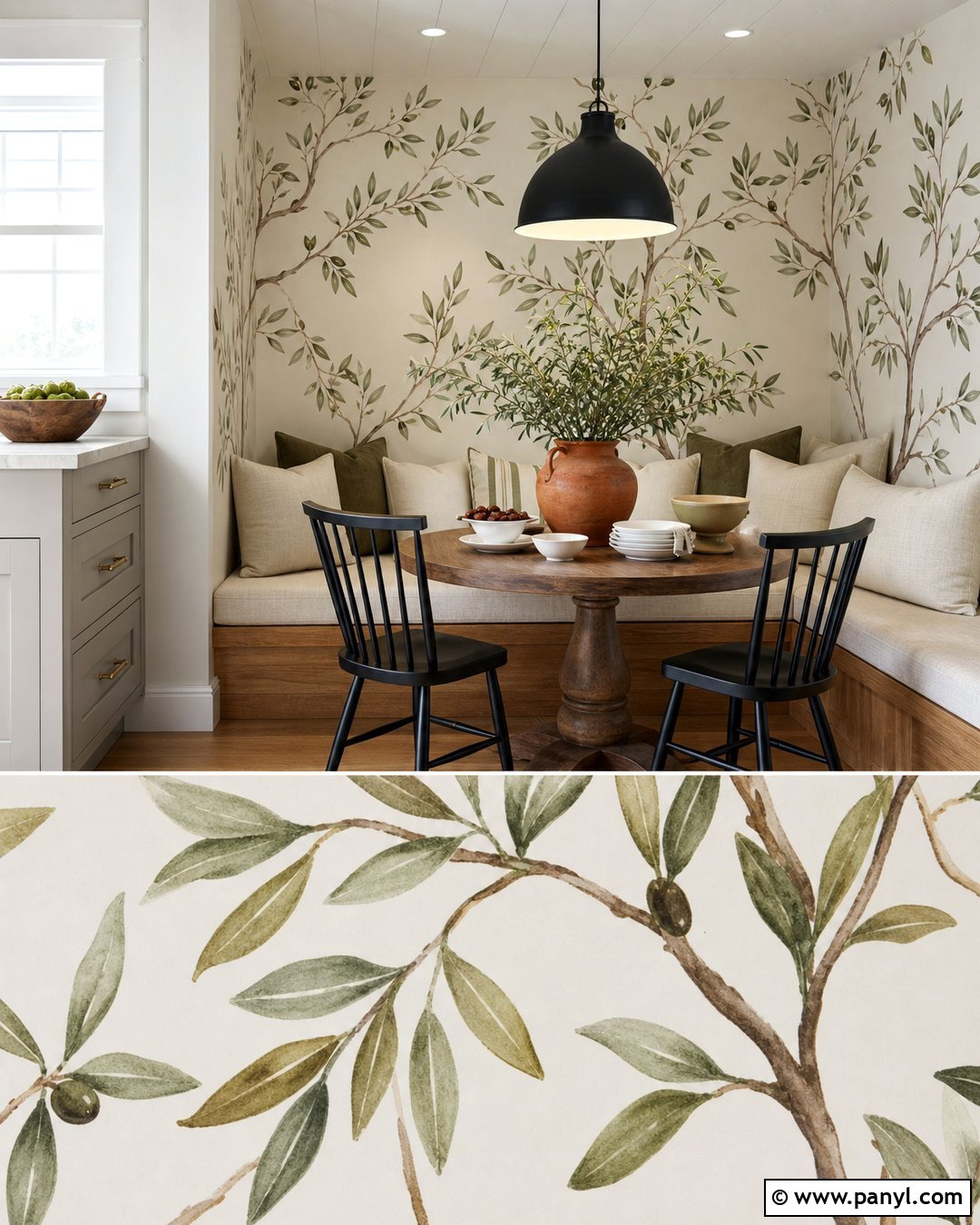
An olive branch pattern can make a breakfast nook feel connected to natural kitchen materials. Paint slender brown stems and muted olive leaves across a creamy white wall beside the dining area. Keep the pattern small and evenly spaced, similar to understated botanical wallpaper. Install a built-in light oak bench with washable oatmeal cushions and pair it with a round pedestal table. Black spindle chairs, a matte black pendant, and dark cabinet hardware add structure. Bring in warm terracotta through a bowl, seat pillows, or a narrow runner. If the kitchen has open shelving, use white dishes and wood cutting boards to maintain the simple palette. This complete nook feels fresh and practical, while the restrained leaf pattern complements cabinetry and dining furniture rather than becoming an overpowering decorative feature.
16. Jungle Leaf Kids Bedroom Wall
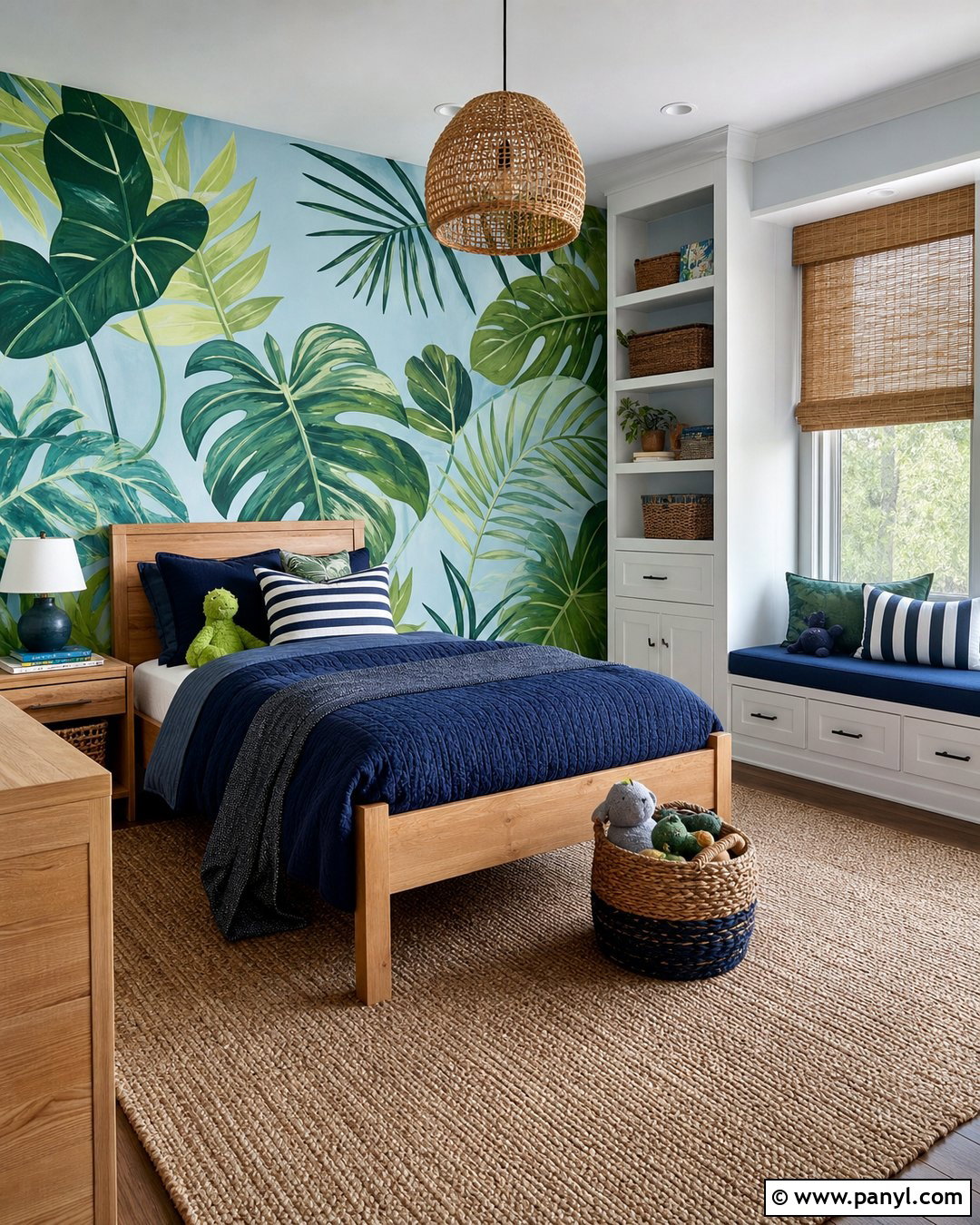
A jungle leaf wall can feel adventurous while remaining organized and easy to update. Paint oversized tropical leaves in forest green, olive, teal, and lime over a soft sky-blue background. Cluster the foliage around the bed and room corners, leaving a quieter section near the study desk. Choose a simple white or natural wood bed with solid navy bedding. Add striped green cushions, a tan woven rug, and closed storage units to control visual clutter. A rattan ceiling light and bamboo-style Roman shade strengthen the natural theme. Instead of adding many character decorations, use animal-shaped cushions or one small framed print as restrained accents. The coordinated room encourages imagination, but its sturdy furniture and mature base colors allow it to adapt as the child grows older.
17. White Leaf Pattern On Green Wall
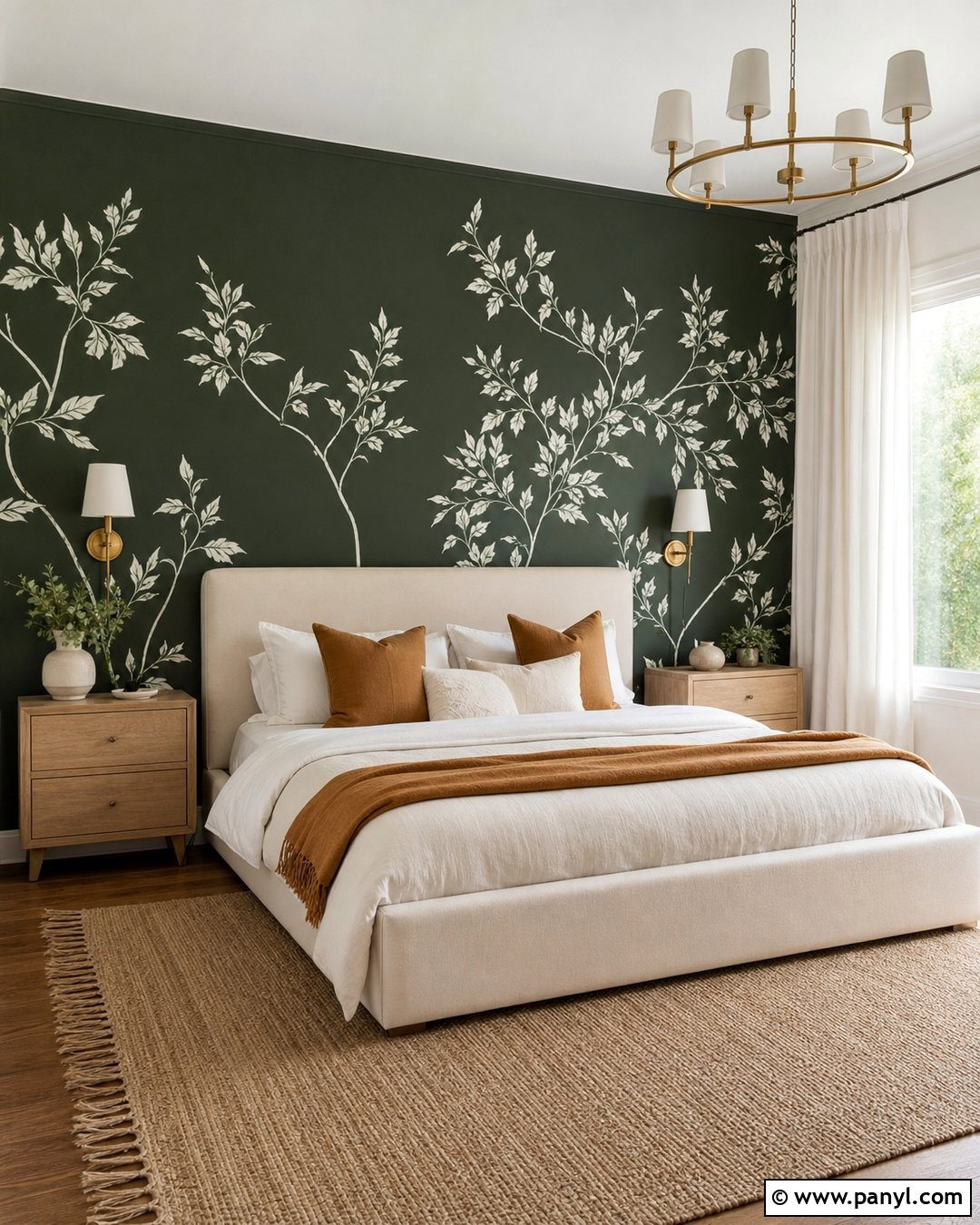
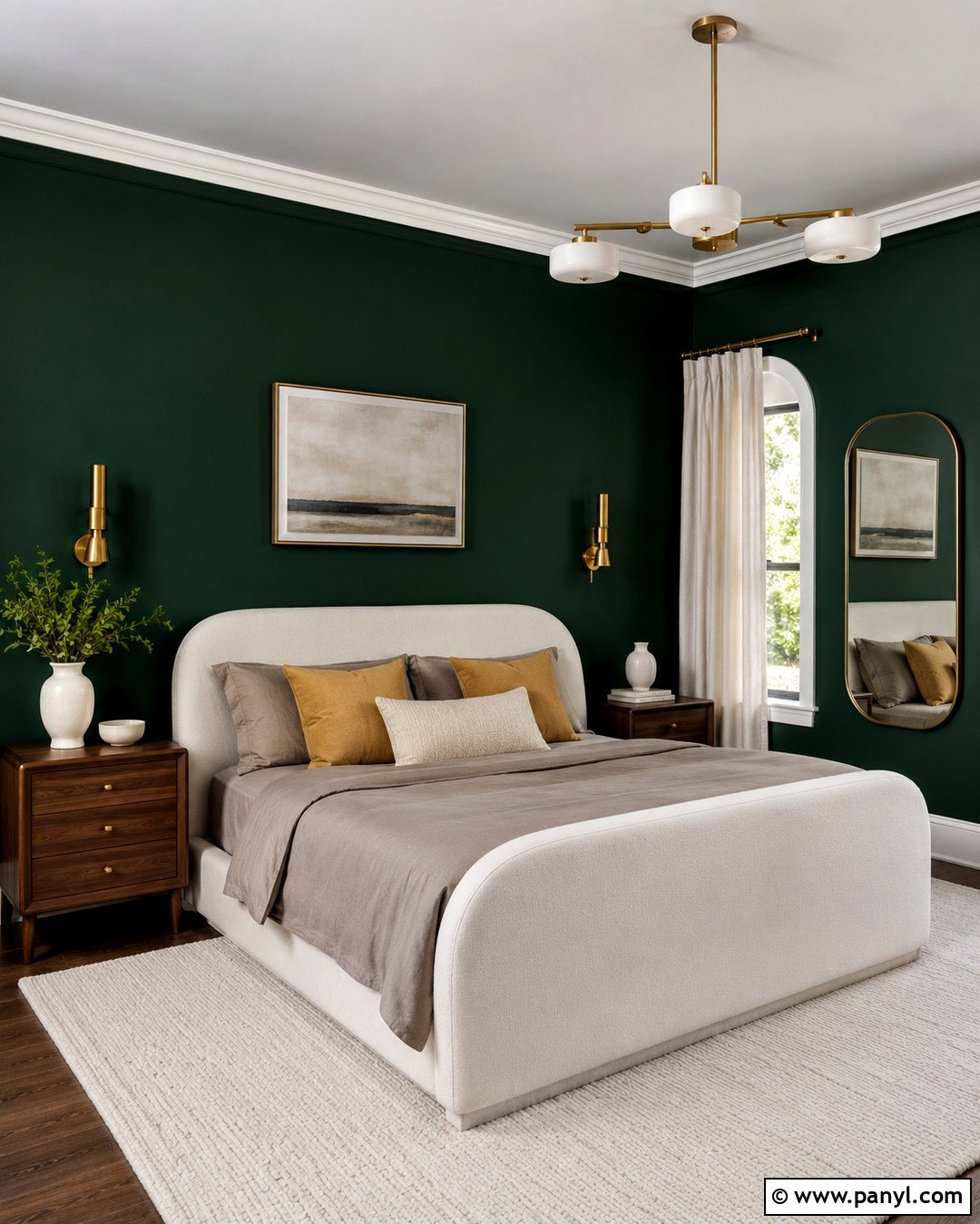
Reverse the usual botanical color scheme by painting crisp white leaves over a deep green wall. Choose a rich forest or hunter green for the background, then apply medium-scale white branches in an evenly spaced pattern. Use the treatment behind a cream upholstered bed or sofa so the furniture stands out clearly. Light oak nightstands, a natural woven rug, and white curtains help balance the dark wall. Add brass sconces and small camel-colored accents for warmth. Keep the remaining walls pale and avoid introducing competing prints in the bedding or upholstery. This high-contrast approach delivers the detail of patterned wallpaper while retaining the handcrafted quality of paint. The complete design is especially effective in rooms with generous daylight, which prevents the deep background from making the space feel enclosed.
18. Falling Leaf Staircase Wall
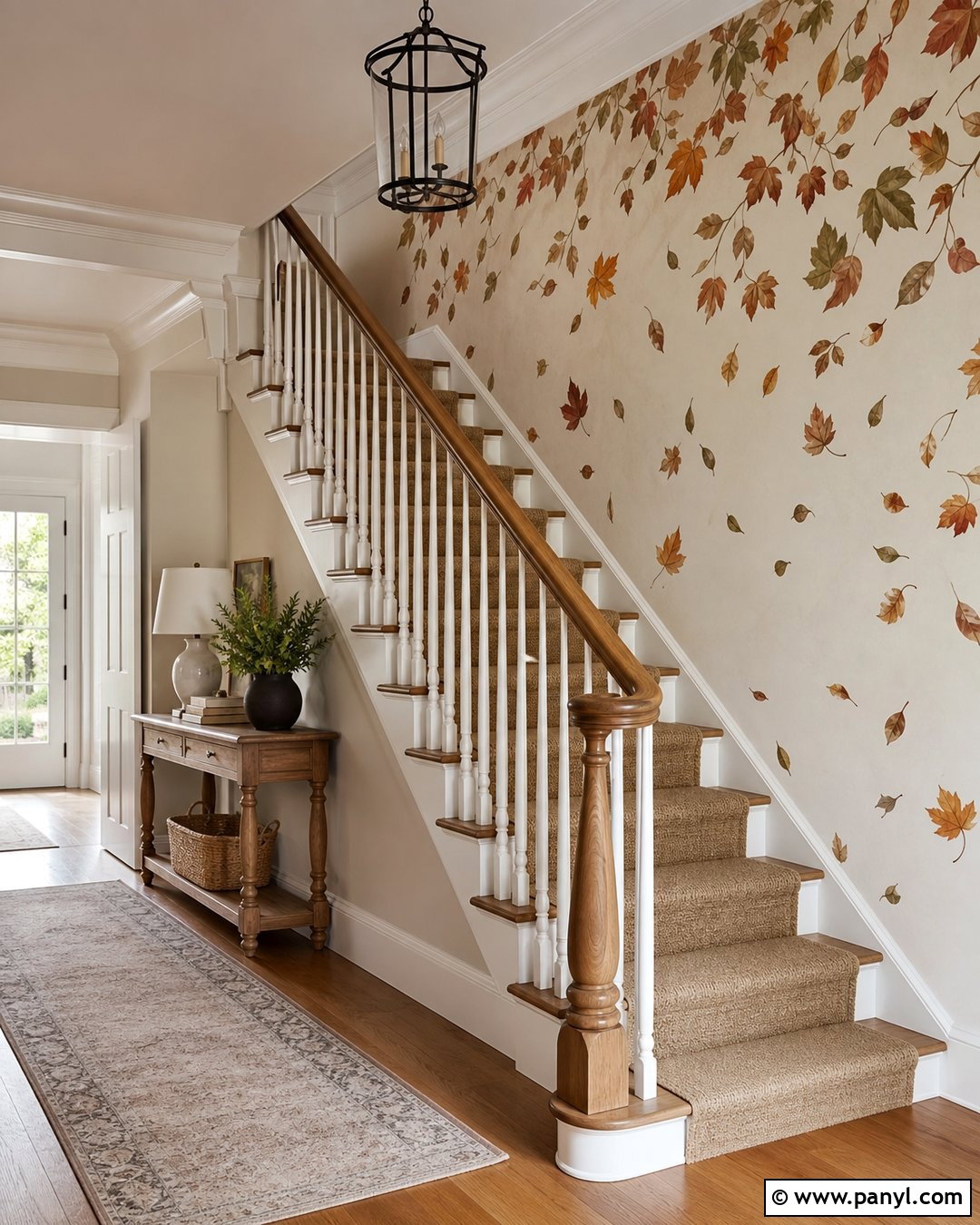
A staircase wall offers enough height for a painted leaf pattern that appears to drift between floors. Start with a warm off-white base and paint scattered leaves in olive, ocher, rust, muted red, and soft brown. Arrange them in a gentle diagonal flow that follows the rise of the stairs. Keep the shapes more concentrated near the lower landing and gradually spread them apart toward the top. Pair the mural with a natural oak handrail, white balusters, and a simple jute stair runner. A black lantern-style ceiling light provides definition without blocking the artwork. Limit additional wall decorations so the movement of the leaves remains easy to see. The full staircase becomes a connected design feature instead of an overlooked passage, while the earthy palette complements nearby neutral rooms.
19. Leaf Wall Painting Behind Bed
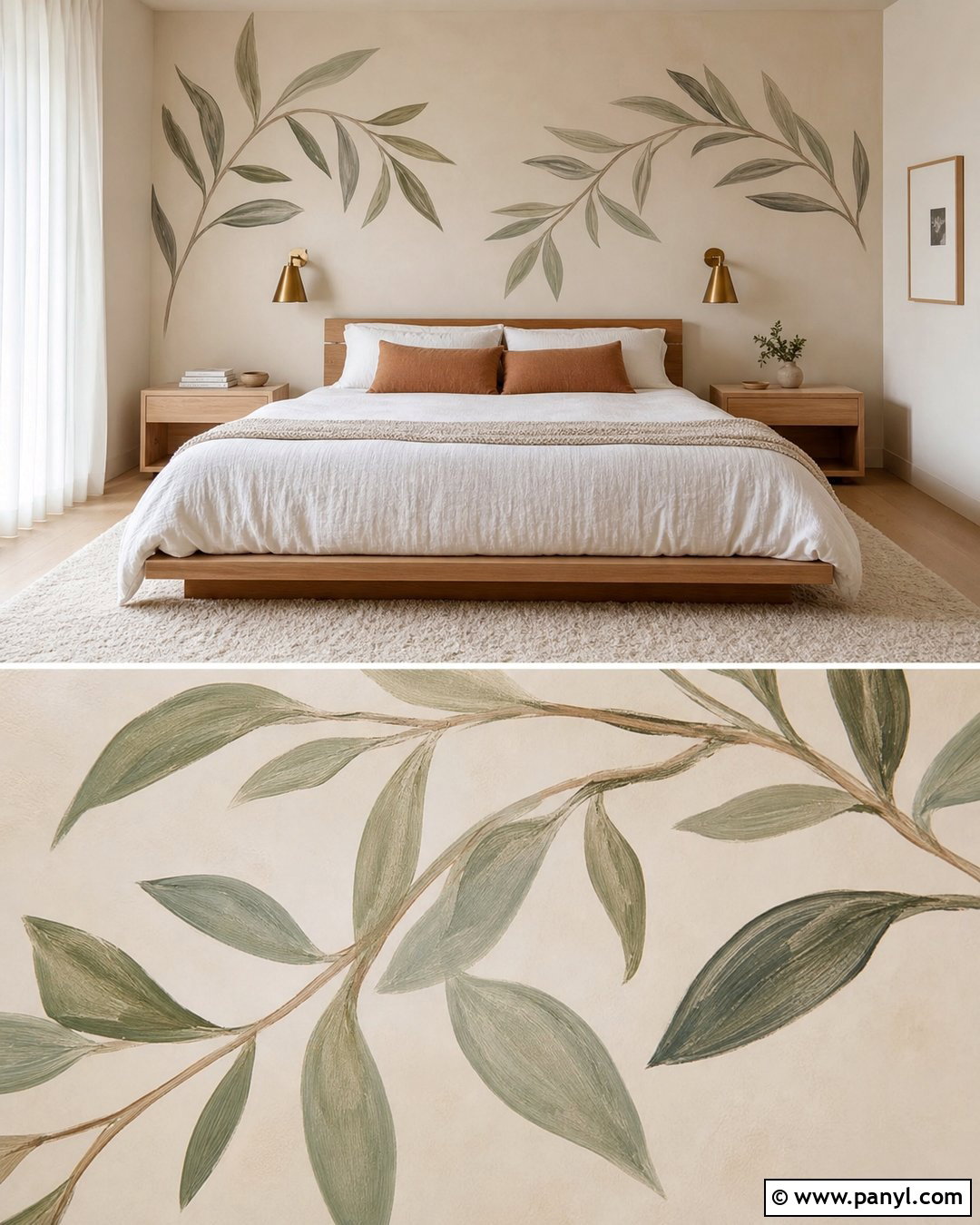
Frame a bed naturally by painting two tall leafy branches that curve inward from opposite sides. Use a soft beige wall with branches in muted olive, sage, and dusty green. Let the open space between them create the impression of a botanical headboard without painting directly behind every pillow. Choose a low oak bed, white linen bedding, and a textured oatmeal blanket. Small wall-mounted brass lights can sit within the open areas of the mural without interrupting the main leaves. Add pale wood nightstands, a cream wool rug, and clay-colored cushions for warmth. Keep curtains simple and avoid hanging framed art above the bed. This balanced composition creates a clear sleeping-zone focal point while preserving the calm, symmetrical arrangement that helps a bedroom feel orderly and restful.
20. Leaf Wall Stencil Home Office
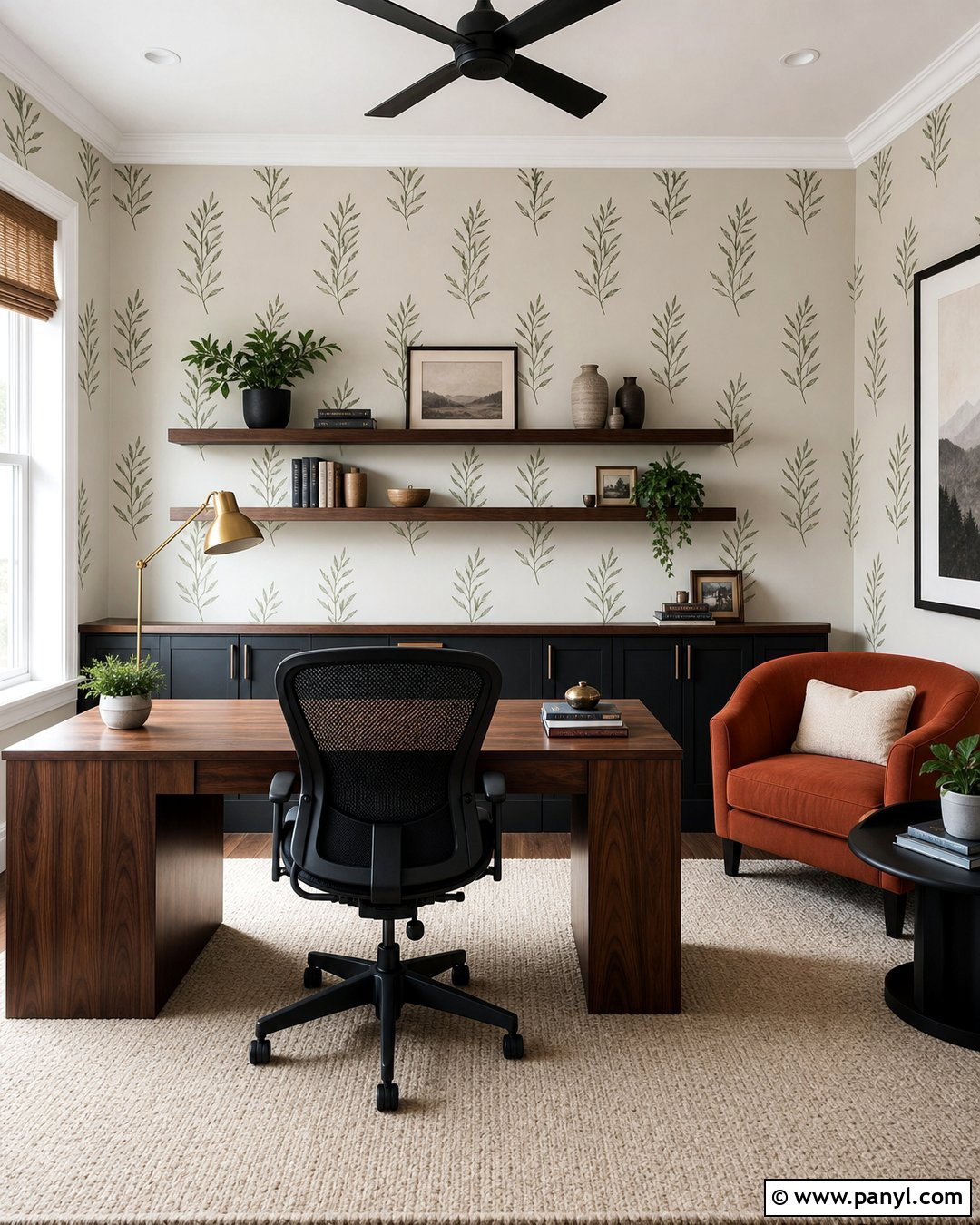
A repeating leaf stencil can give a home office the polished appearance of wallpaper while keeping the colors customizable. Apply small olive branches over a light greige wall, spacing each motif evenly from the desk area to the corners. Pair the pattern with a walnut desk, black ergonomic chair, and slim floating shelves. A cream flat-weave rug softens the floor, while a brass task lamp adds warmth. Use matching boxes and closed cabinets to prevent paperwork from competing with the detailed wall. Add one rust-colored chair or cushion as an earthy accent. The stencil should continue behind furniture so the surface looks complete rather than temporarily decorated. This coordinated office feels professional enough for video meetings but relaxed enough to remain comfortable during long periods of focused work.
Conclusion:
Painted botanical patterns offer a flexible way to add color, movement, and natural character to nearly any room. These **20 Wall Paint Leaves** range from delicate eucalyptus branches and minimalist outlines to tropical murals and bold high-contrast patterns. The strongest designs treat the painted wall as part of a complete room rather than an isolated decoration. Coordinate the leaves with furniture, flooring, textiles, lighting, and a controlled color palette. Consider the room’s size before choosing the pattern scale, and leave open background space when you want a lighter result. Whether you use a stencil, projector, or freehand method, careful planning will help your botanical feature look balanced, intentional, and beautifully integrated with the rest of your home.

Related Ideas and Inspiration:
Leave a Reply