
Choosing from **20 living room walls paint colors** becomes easier when you picture each shade as part of a complete room. The right wall color should work with your natural light, flooring, furniture, trim, and everyday lifestyle. Warm whites and earthy neutrals remain useful foundations, while sage, muted teal, dusty pink, and rich brown bring more personality without overwhelming the space. Current color trends also favor warmer, nature-inspired shades and nuanced colors with livable undertones. () Before committing, paint a large sample on several walls and check it during the morning, afternoon, and evening. The complete looks below make it easier to compare and recreate **20 living room walls paint colors**.

1. Warm White Living Room Walls
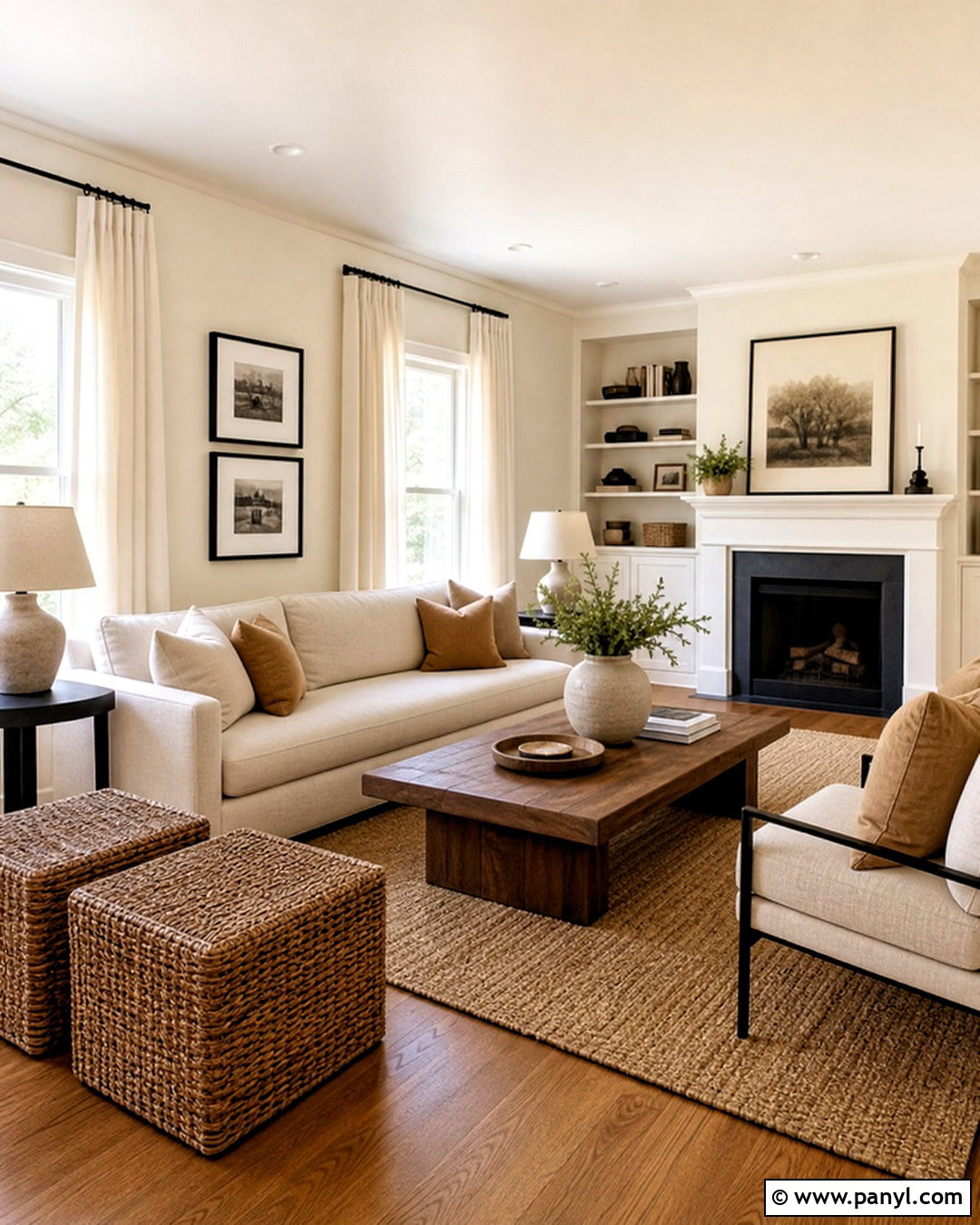
Warm white walls create a bright living room without the chilly feeling of a sharp, blue-based white. Choose a creamy white with subtle beige or yellow undertones, then repeat that warmth through ivory curtains, an oatmeal sofa, and a natural wool rug. Medium oak flooring and a round walnut coffee table provide enough contrast to keep the room from appearing washed out. Add black-framed artwork and a slim black floor lamp for crisp definition. Soft camel pillows, woven baskets, and ceramic table lamps complete the relaxed scheme. Paint the trim in the same warm white with a satin finish, while using eggshell on the walls. This continuous color treatment makes an average living room feel open, polished, and connected.
2. Cream Living Room Walls
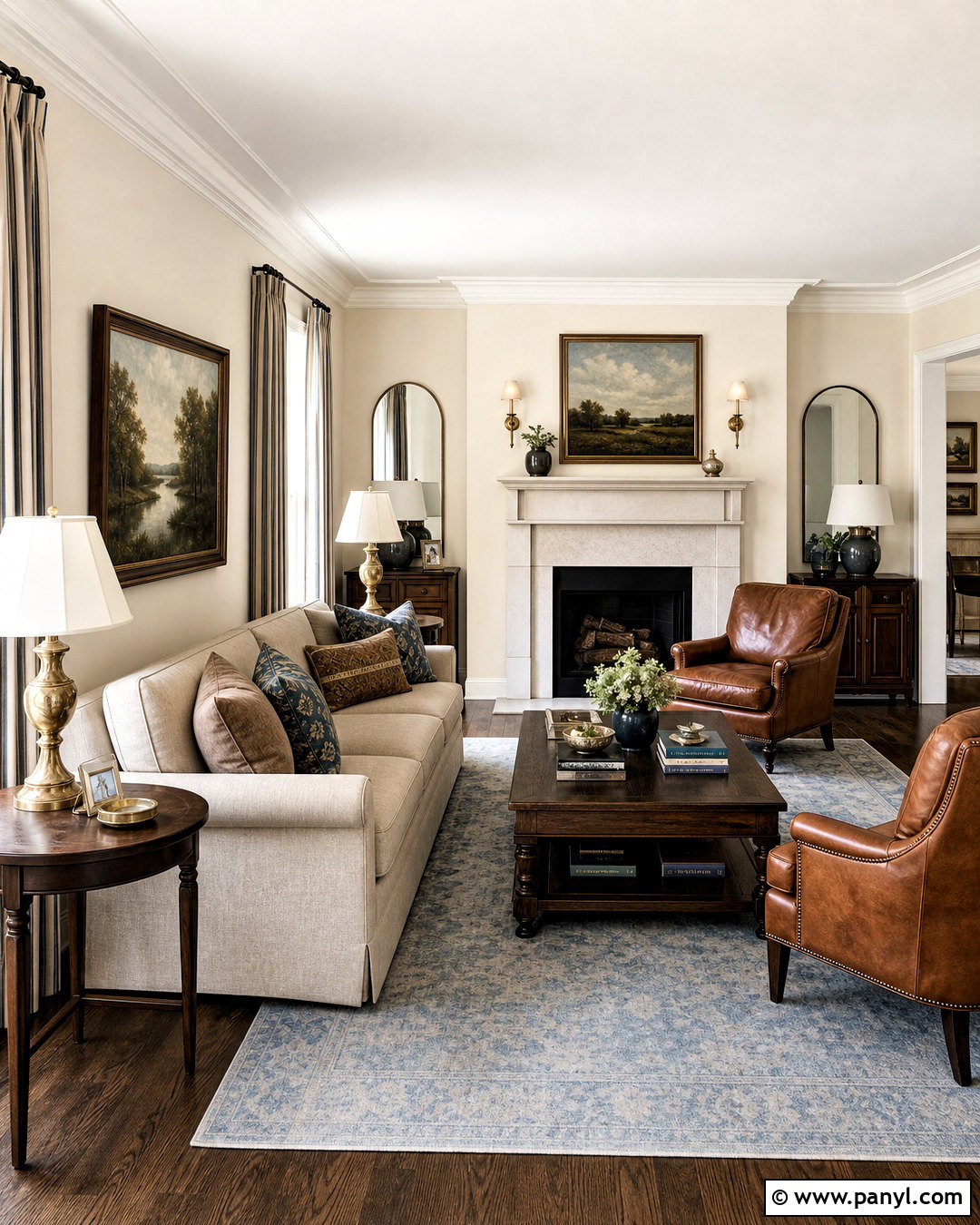
Cream walls surround a living room with gentle warmth and work especially well in spaces filled with classic furniture. Build the room around a beige linen sofa, two cognac leather chairs, and a large faded blue rug. Dark walnut side tables add depth, while antique brass lamps bring a soft reflective finish. Keep the ceiling a lighter cream so the room remains airy rather than overly yellow. Blue-gray pillows, striped curtains, and landscape artwork balance the warm backdrop with cooler accents. A white stone fireplace can remain slightly lighter than the walls, creating a quiet focal point. This full palette suits traditional, transitional, and cottage interiors because it feels comfortable and established while still looking fresh enough for an updated home.
3. Light Greige Living Room Walls
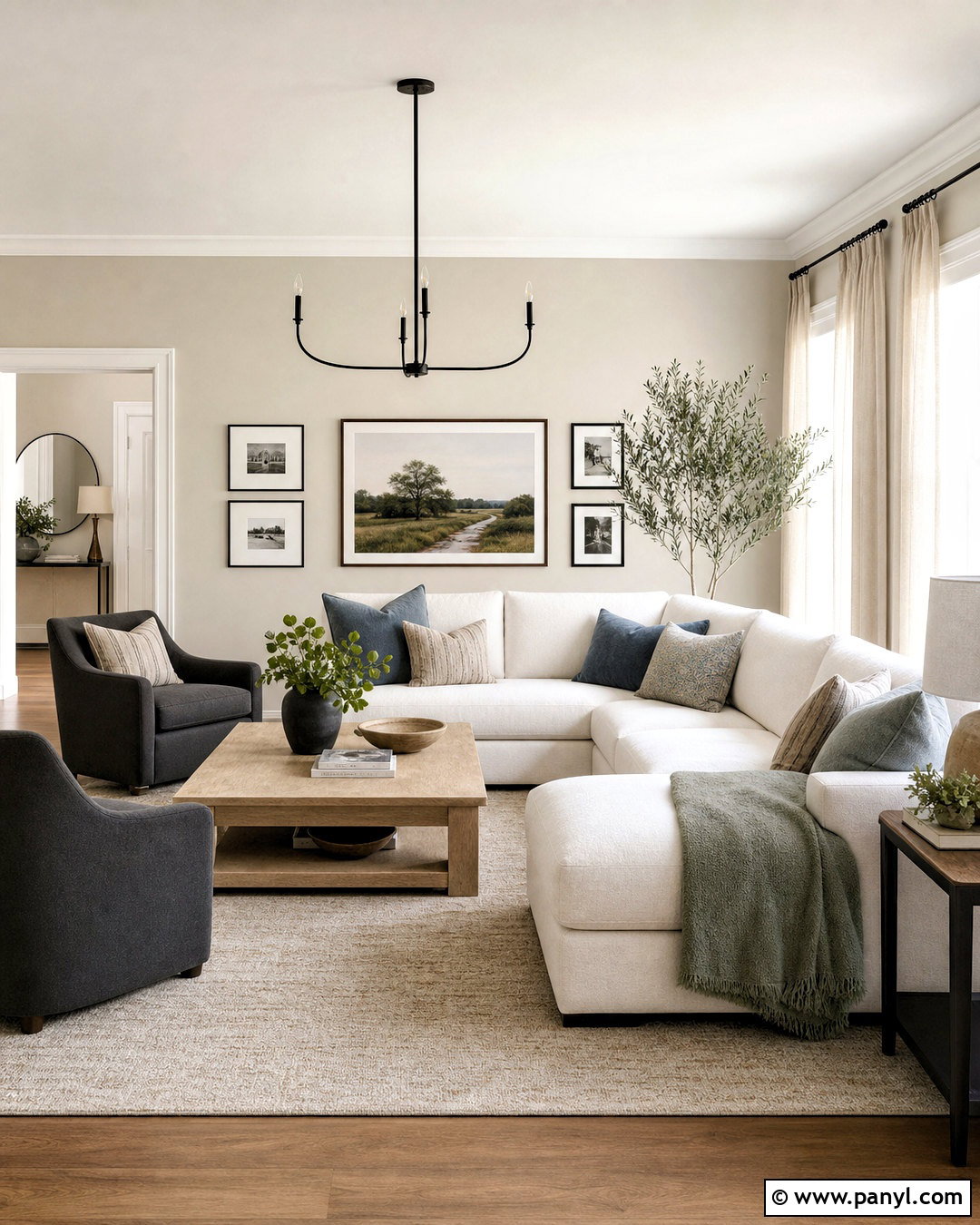
Can’t decide between gray and beige? Light greige walls deliver the structure of gray with the welcoming character of a warm neutral. Pair them with a soft white sectional, pale oak coffee table, and textured oatmeal rug for an uncluttered foundation. Introduce contrast through charcoal armchairs, matte black curtain rods, and simple abstract artwork. Dusty blue pillows and a muted green throw prevent the neutral scheme from feeling flat. Use warm white on the ceiling and trim to reveal the greige undertone clearly. Sheer linen curtains will diffuse harsh sunlight while allowing the color to shift naturally throughout the day. This balanced living room works particularly well in open floor plans because the wall color connects easily with white kitchens, wood finishes, and darker entryway accents.
4. Warm Taupe Living Room Walls
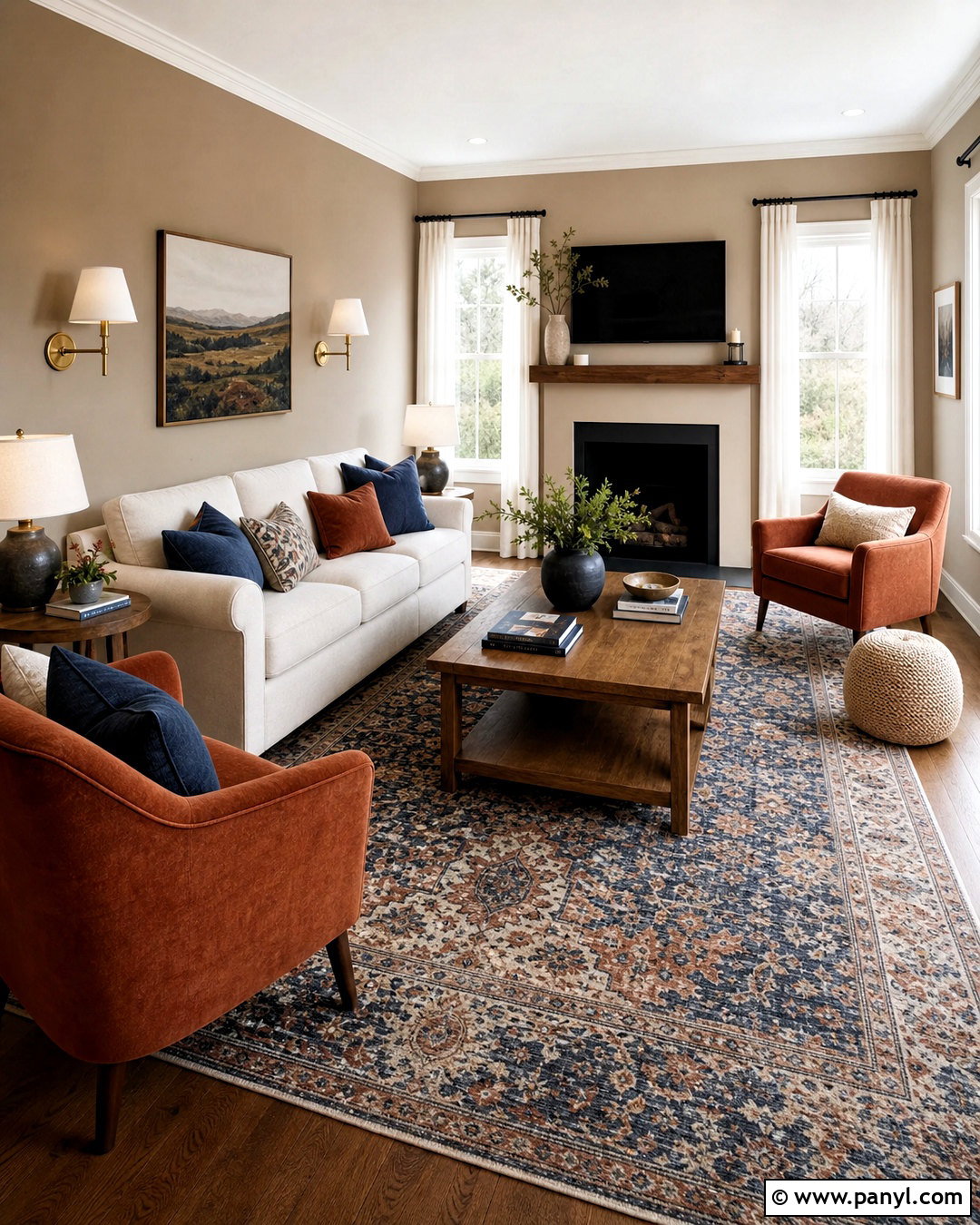
Warm taupe walls offer a richer alternative to beige while remaining flexible enough for everyday decorating. Create a comfortable conversation area with a cream sofa facing two rust-colored lounge chairs around a rectangular oak coffee table. Layer a patterned rug containing taupe, ivory, faded terracotta, and muted navy to connect the entire palette. Brass sconces and dark bronze curtain hardware add controlled shine without making the space overly formal. Choose off-white curtains rather than matching taupe fabric, which could make the room feel heavy. A large landscape painting with green and brown tones gives the walls a natural focal point. Finish with walnut shelving, pottery, and leafy plants. The result is grounded, layered, and especially attractive in rooms with warm wood floors.
5. Soft Beige Living Room Walls
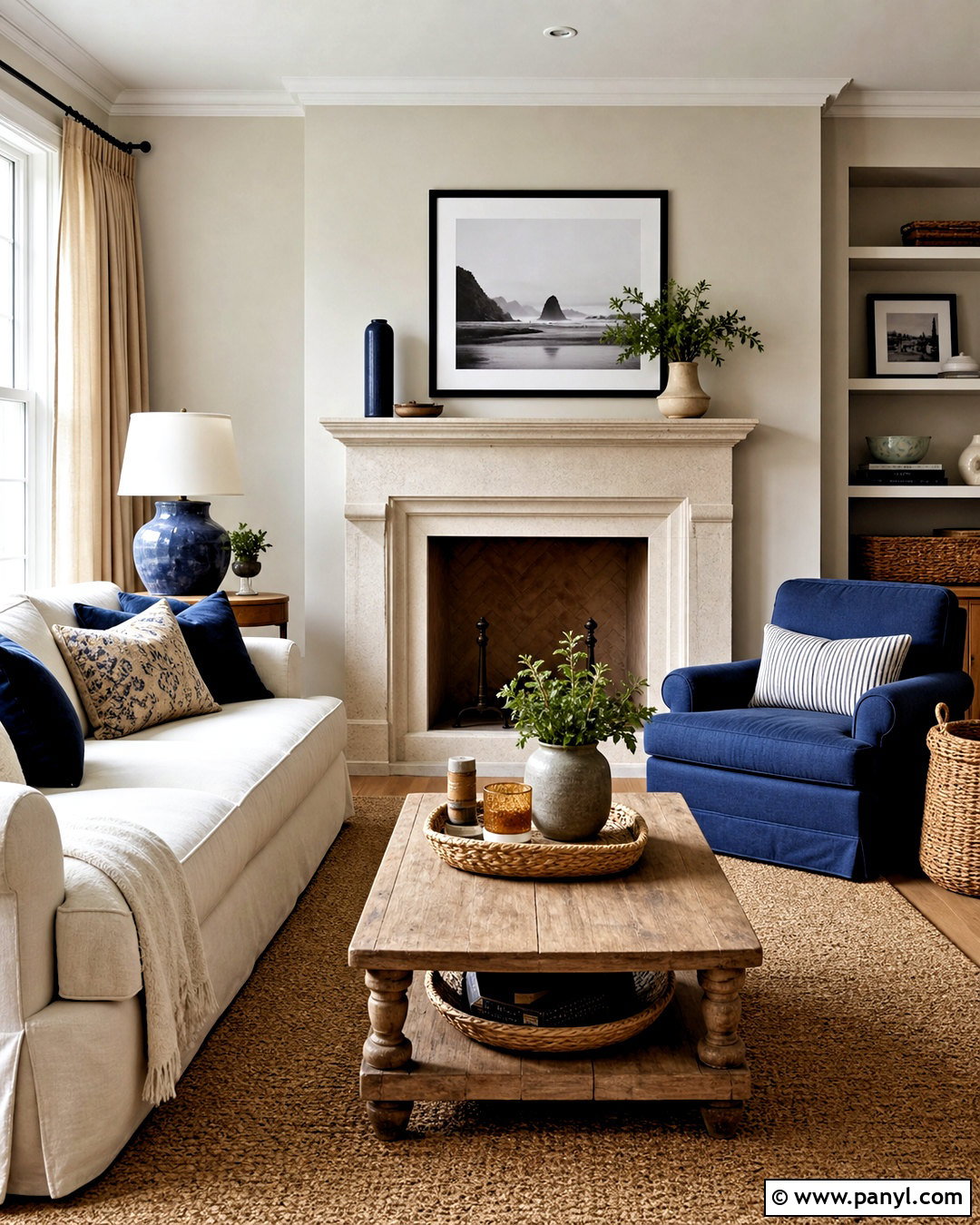
Soft beige walls can look clean and current when the room includes varied textures and a few strong accents. Start with a slipcovered ivory sofa, a woven jute rug, and light oak furniture to establish a casual foundation. Add one deep blue armchair, navy patterned pillows, and blue ceramic lamps for contrast. Full-length flax linen curtains bring softness while staying close to the wall color. Display black-and-white photography in medium wood frames instead of filling every wall with small decorations. A plaster or pale stone fireplace complements the sandy palette and creates subtle dimension. Keep metal finishes limited to aged brass or matte black. This practical arrangement gives a busy family living room a calm appearance while allowing durable materials, washable covers, and storage baskets to handle daily use.
6. Sage Green Living Room Walls
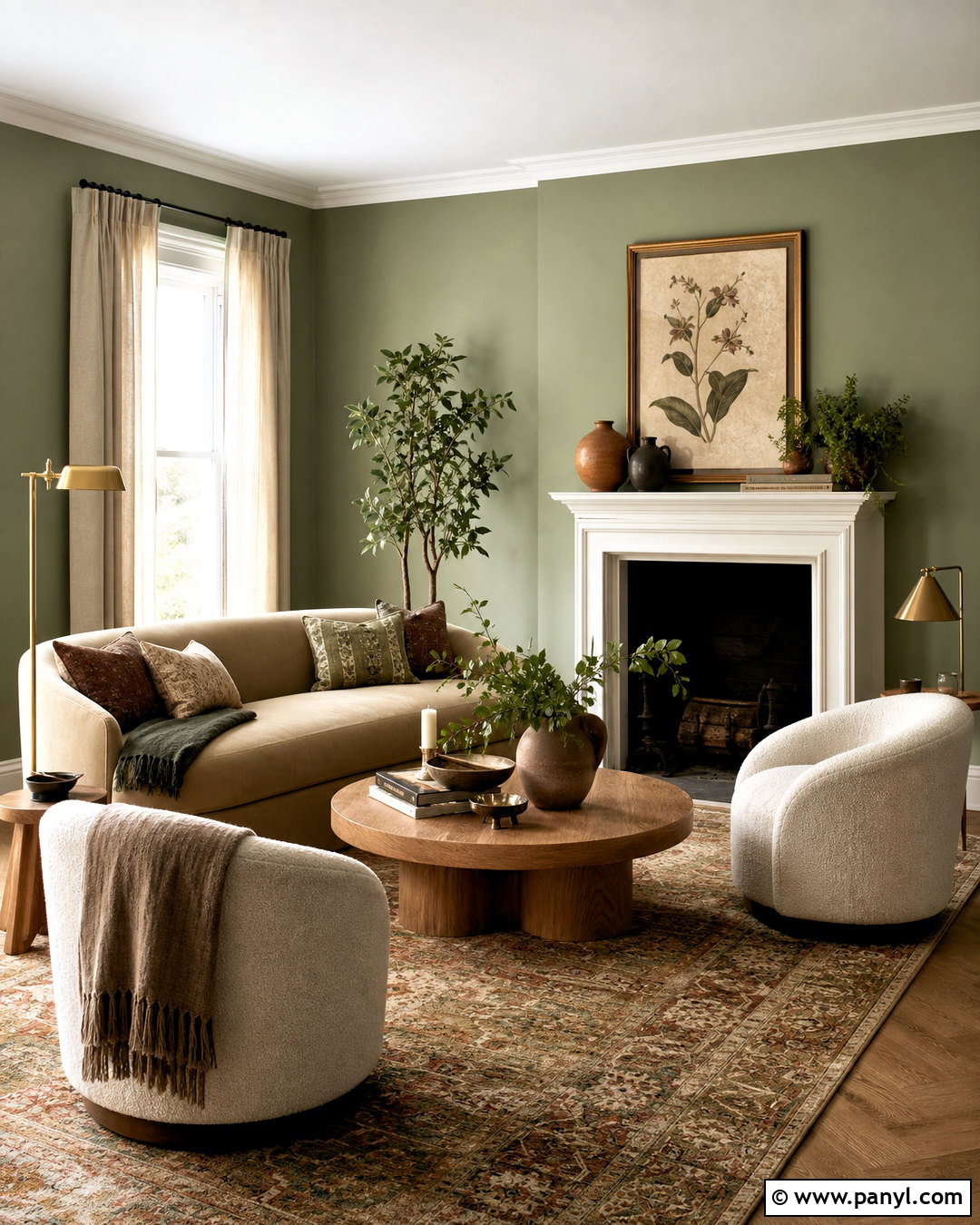
Sage green walls give a living room a peaceful connection to nature while remaining muted enough for large surfaces. Pair the color with a warm beige sofa, cream boucle chairs, and an oak coffee table with rounded edges. A vintage-inspired rug containing faded olive, rust, and ivory grounds the seating arrangement. Use warm white on the ceiling and trim for a soft boundary that keeps the green looking fresh. Linen curtains in natural flax filter the light without competing with the walls. Add aged brass lamps, botanical artwork, and dark green pillows for gentle layering. Terracotta pottery and a few healthy houseplants complete the organic palette. This room feels relaxed and collected rather than overly themed, making sage suitable for farmhouse, transitional, and modern interiors.
7. Muddy Olive Living Room Walls
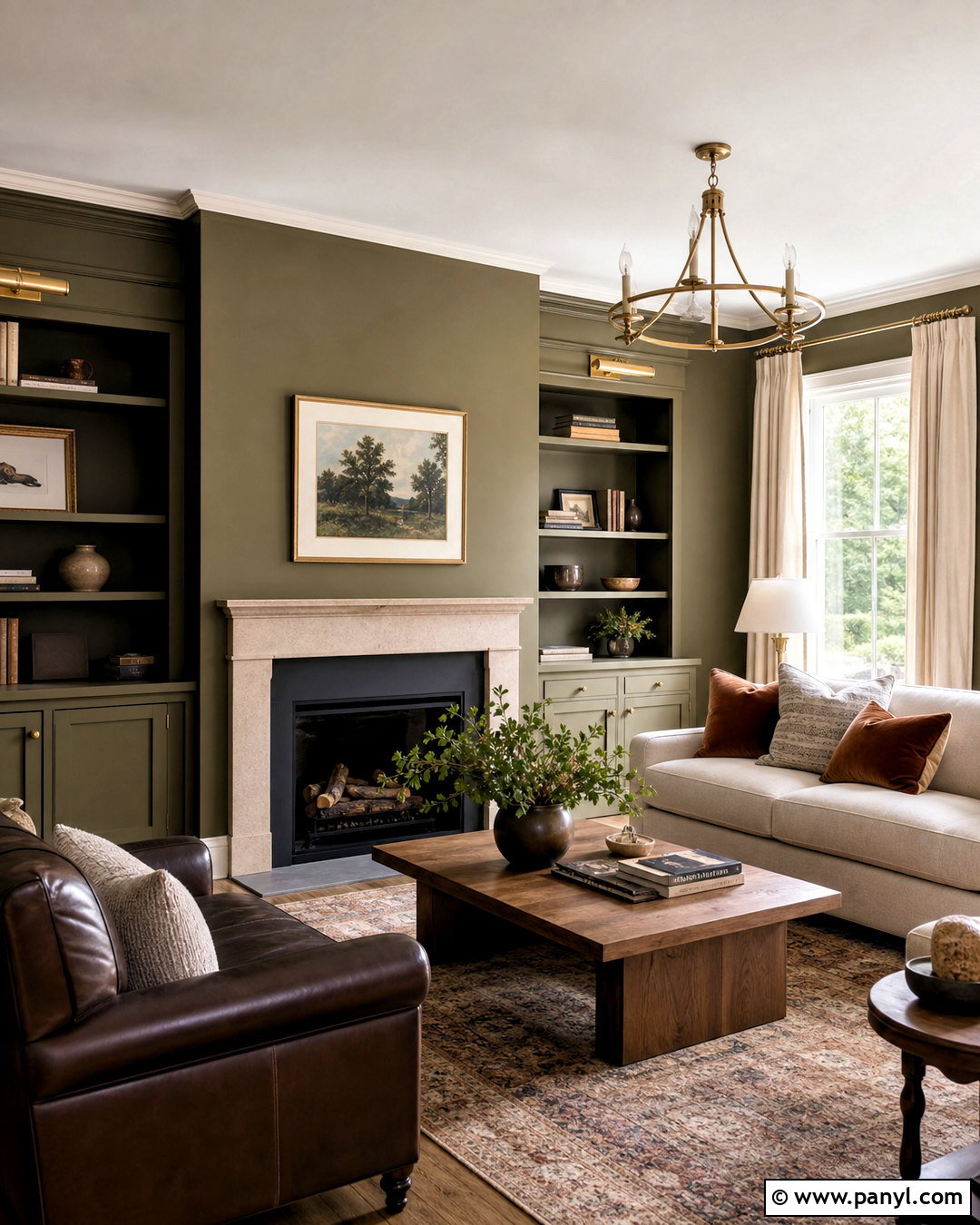
Muddy olive walls create a deeper, enveloping living room that feels sophisticated rather than brightly green. Use the color on every wall, then balance it with an off-white sofa and light neutral curtains. A chocolate leather chair, walnut coffee table, and antique brass lighting reinforce the room’s warm undertones. Choose a traditional rug with muted red, tan, and forest green details to add pattern beneath the seating area. Cream matting around artwork creates breathing room against the darker backdrop. If the room has built-in shelves, paint them olive as well for a seamless architectural effect. Finish with rust velvet pillows and a camel wool throw. The full scheme works beautifully in rooms with generous windows, warm artificial lighting, and medium-to-dark wood floors.

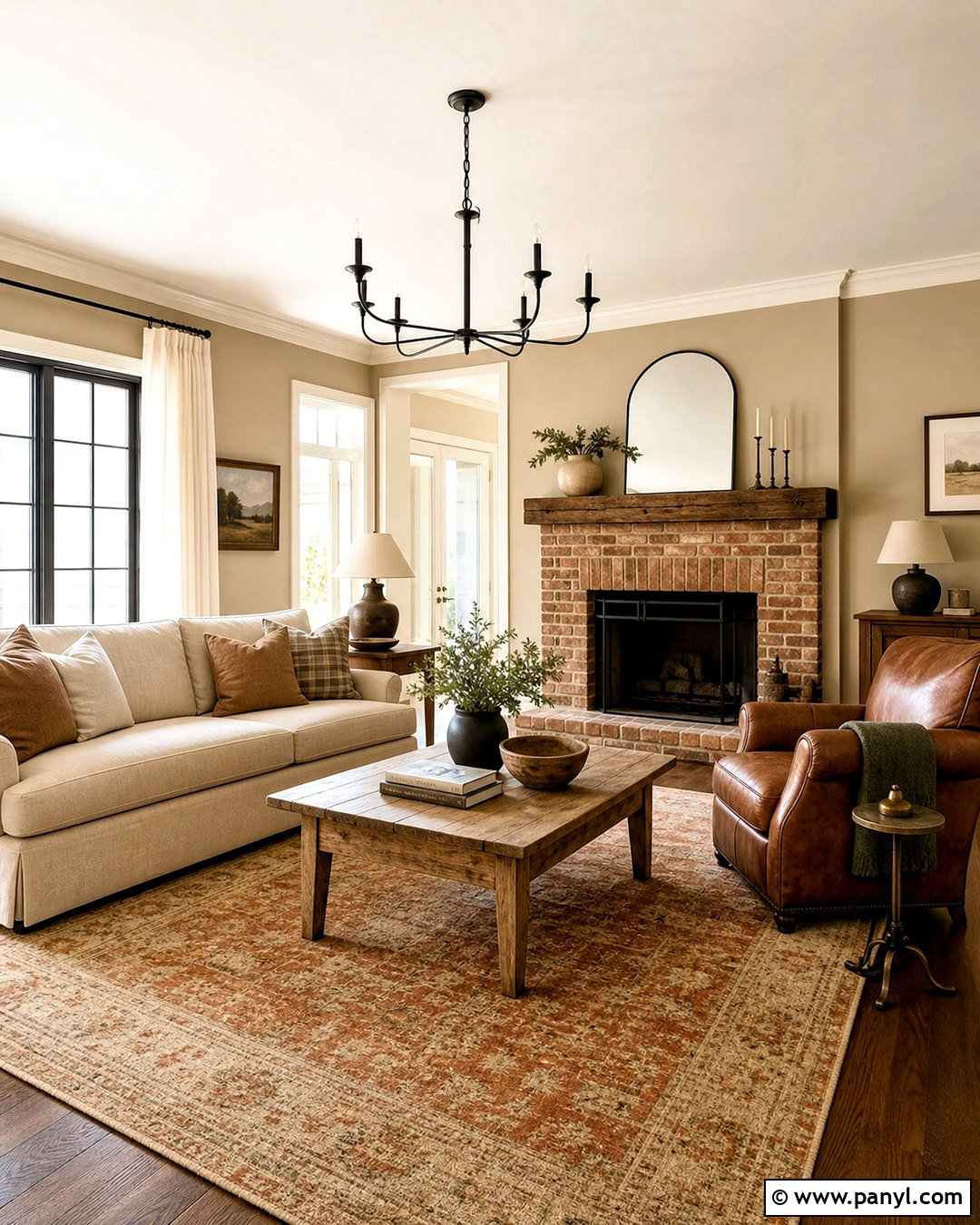
8. Warm Eucalyptus Living Room Walls
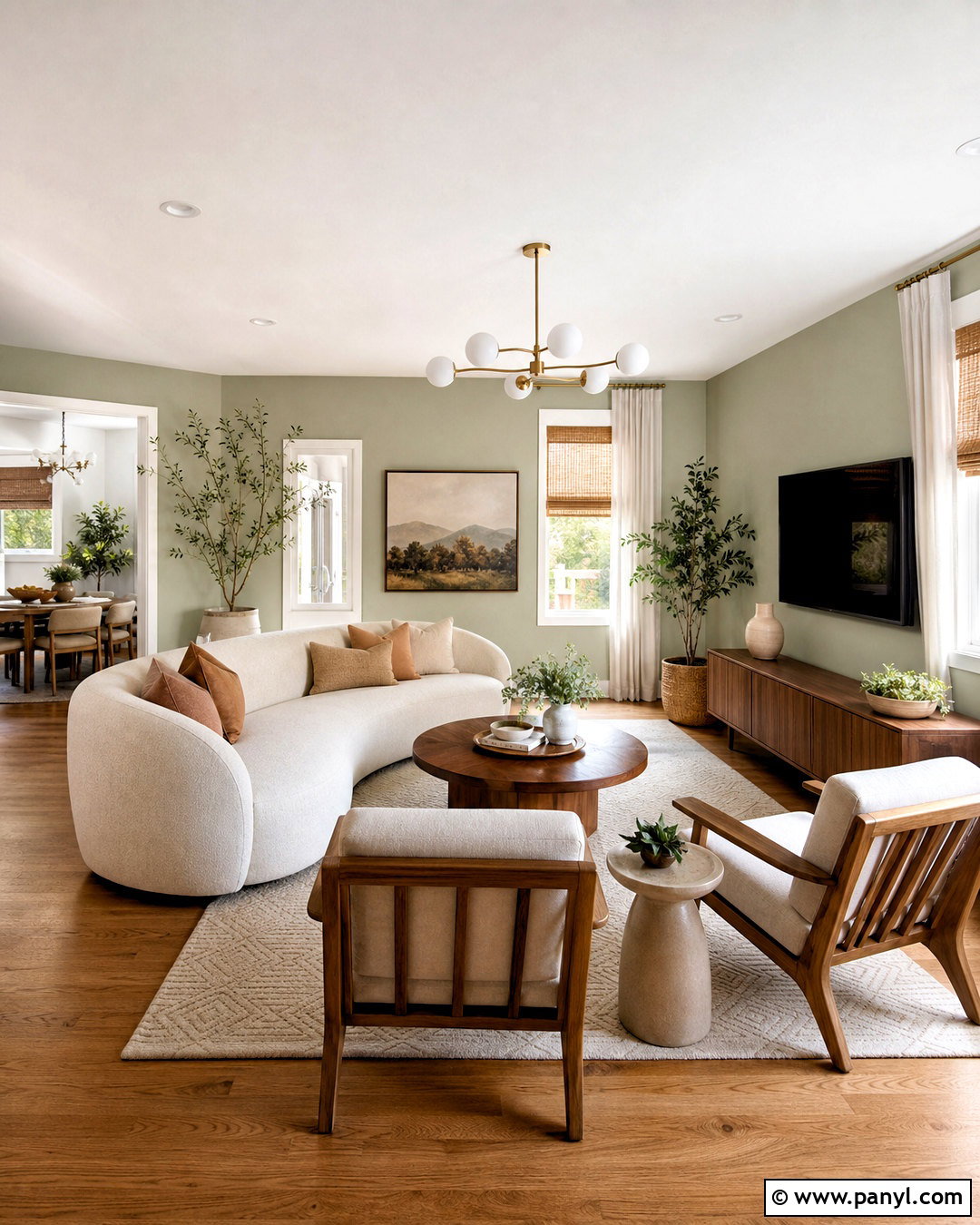
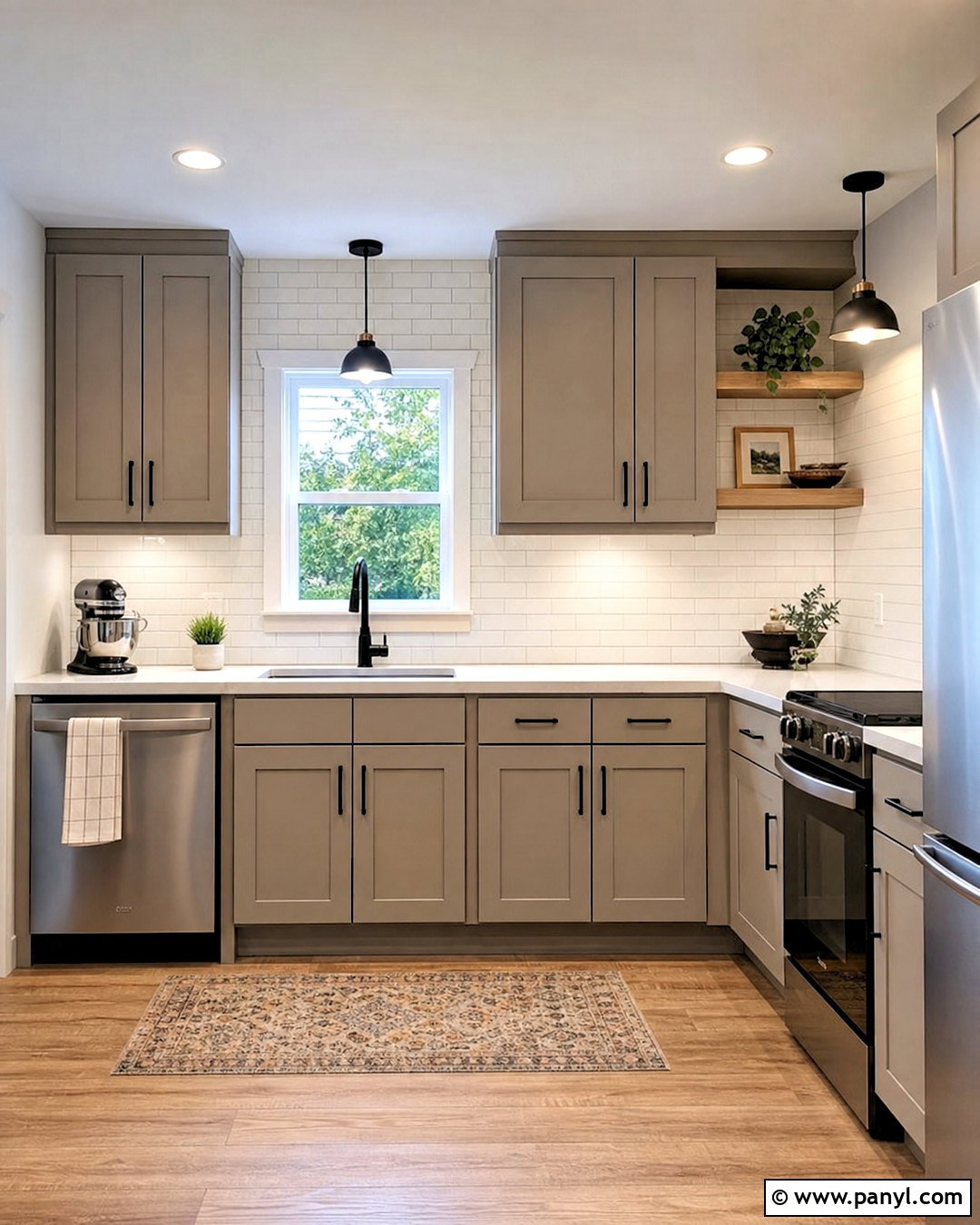
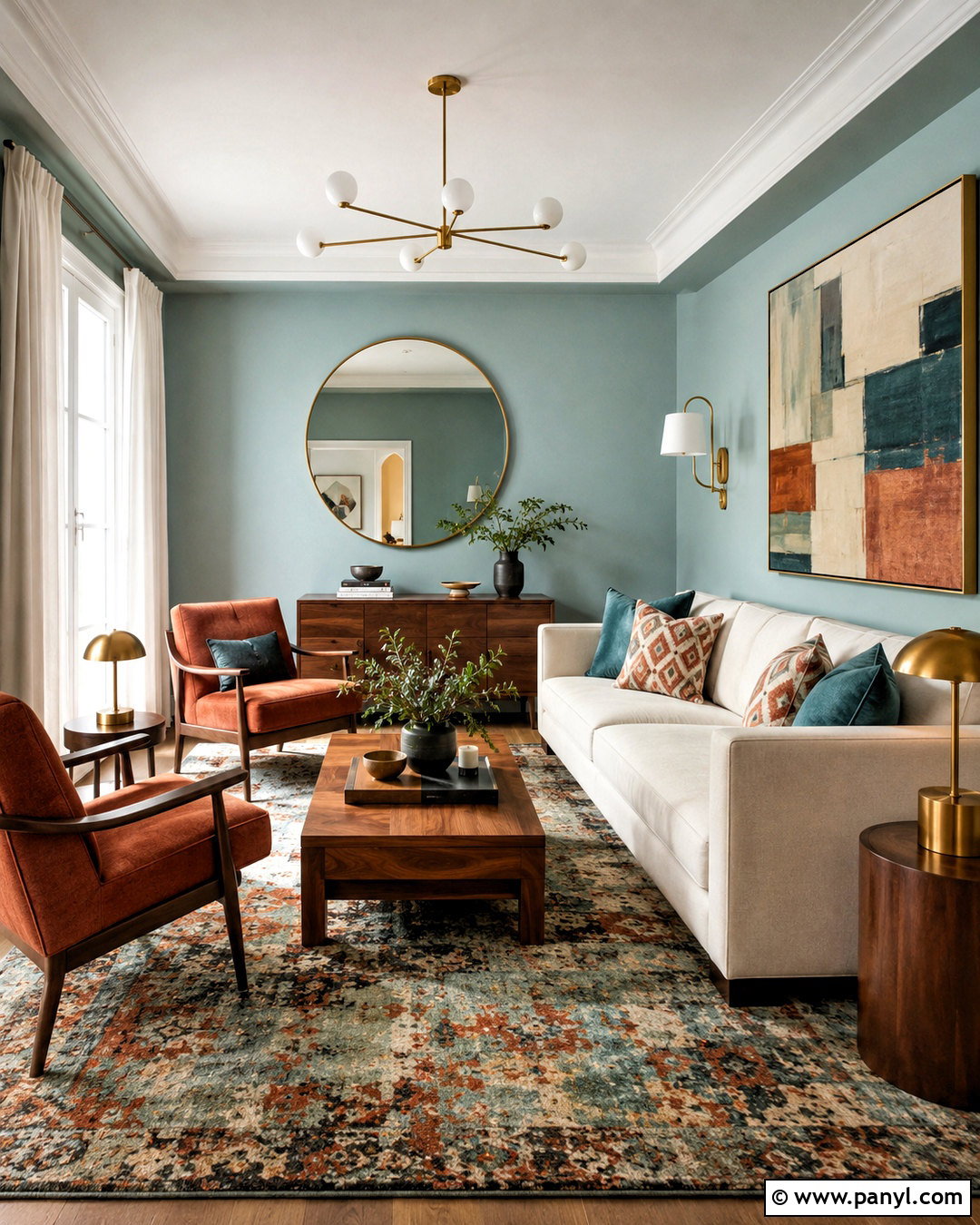
Warm eucalyptus walls sit between sage and muted blue-green, giving a living room noticeable color without excessive intensity. Combine this shade with a curved oatmeal sofa, light wood lounge chairs, and a cream geometric rug. Use natural walnut for the media console to add a deeper, grounding tone. Soft white curtains and matching trim keep the edges bright, while brushed brass lighting introduces warmth. Decorate with clay-colored pillows, woven shades, and modern landscape art featuring green, tan, and pale blue. A few sculptural plants can echo the wall color, but leave open space around them to avoid a crowded botanical theme. This complete look feels refreshing and modern, especially in living rooms that receive balanced natural light throughout most of the day.
9. Pale Blue Living Room Walls
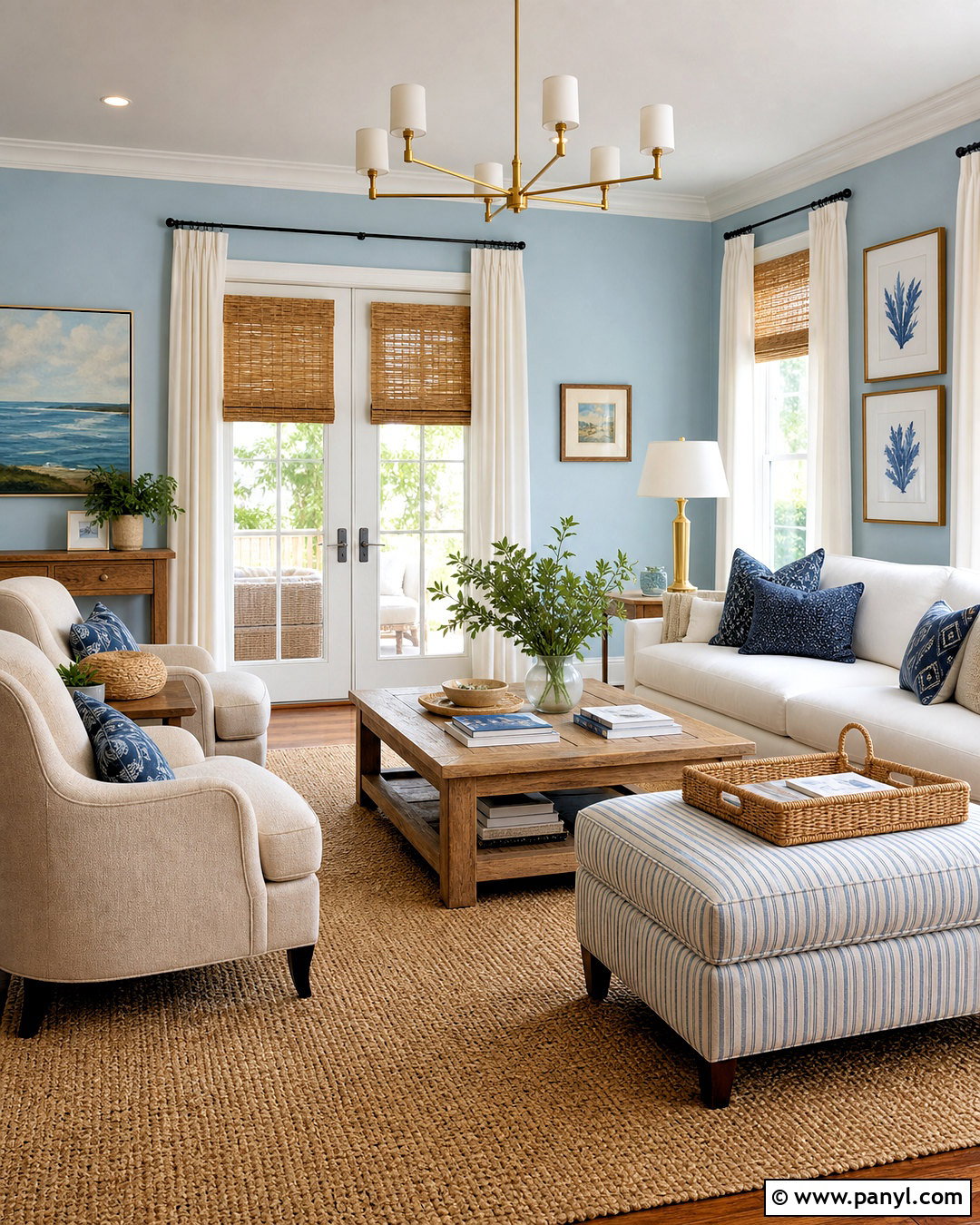
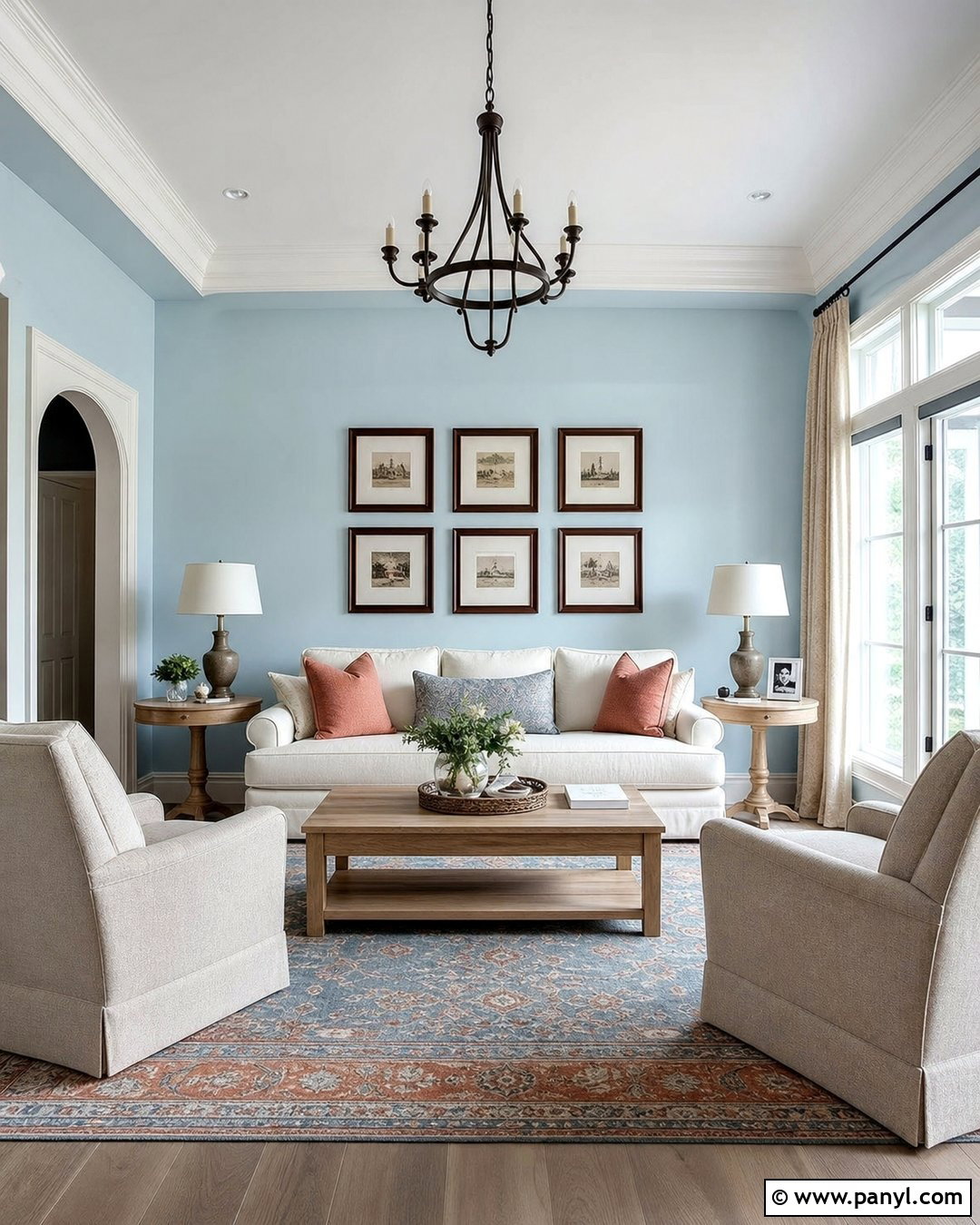
Pale blue walls can make a living room feel airy, quiet, and gently coastal without relying on obvious beach decorations. Select a softened blue with a slight gray undertone, then pair it with a white sofa, sandy beige armchairs, and a natural fiber rug. Medium oak tables prevent the cool wall color from feeling cold. Add navy piping, faded blue pillows, and one striped ottoman to build a layered tonal palette. Warm white trim and ceiling paint will keep the blue clear and delicate. Use woven Roman shades beneath simple ivory curtain panels for privacy and texture. Finish the space with brass picture lights, neutral ceramics, and understated seascape or abstract artwork. The room remains bright, practical, and suitable for both traditional and casual homes.
10. Dusty Blue Living Room Walls
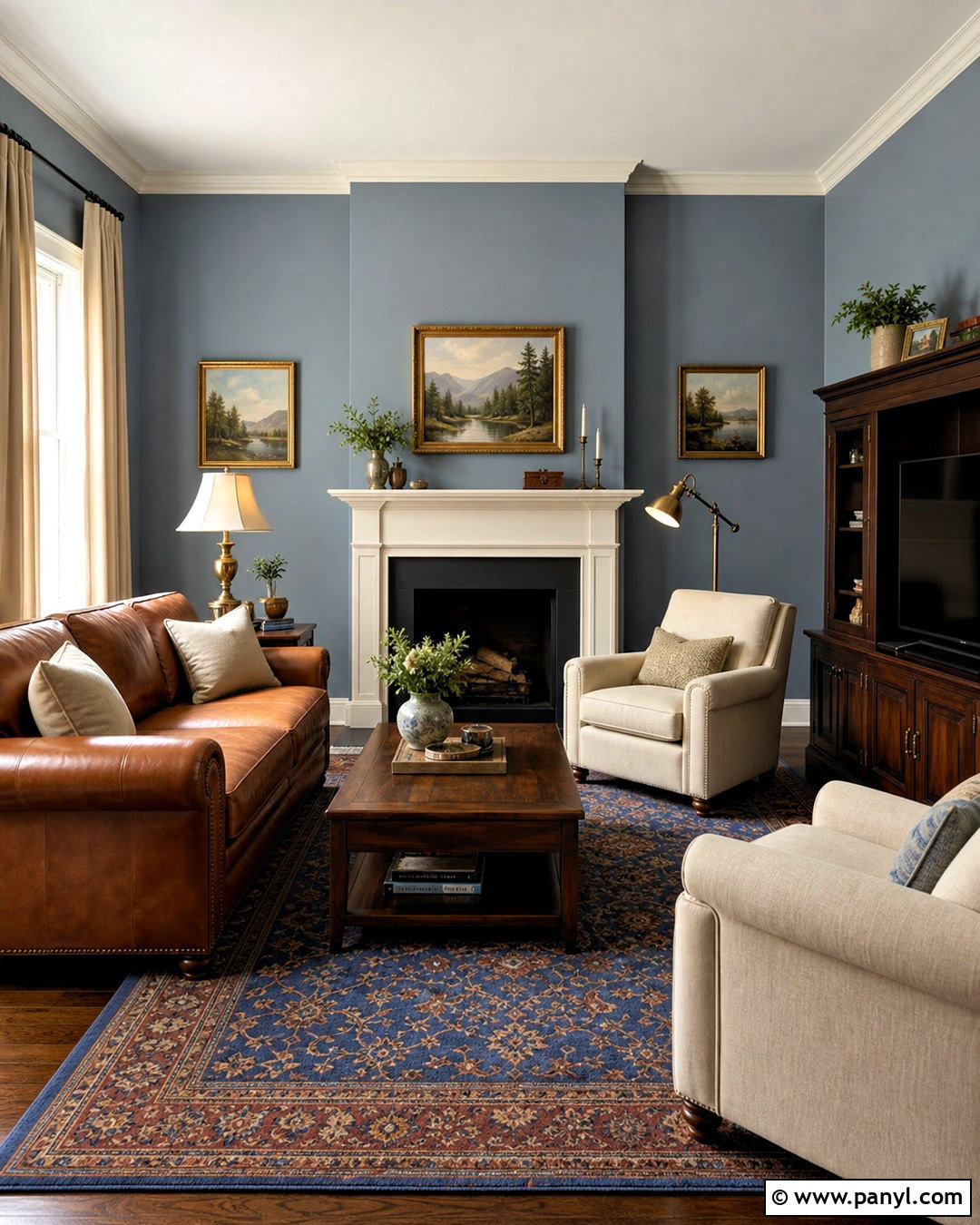
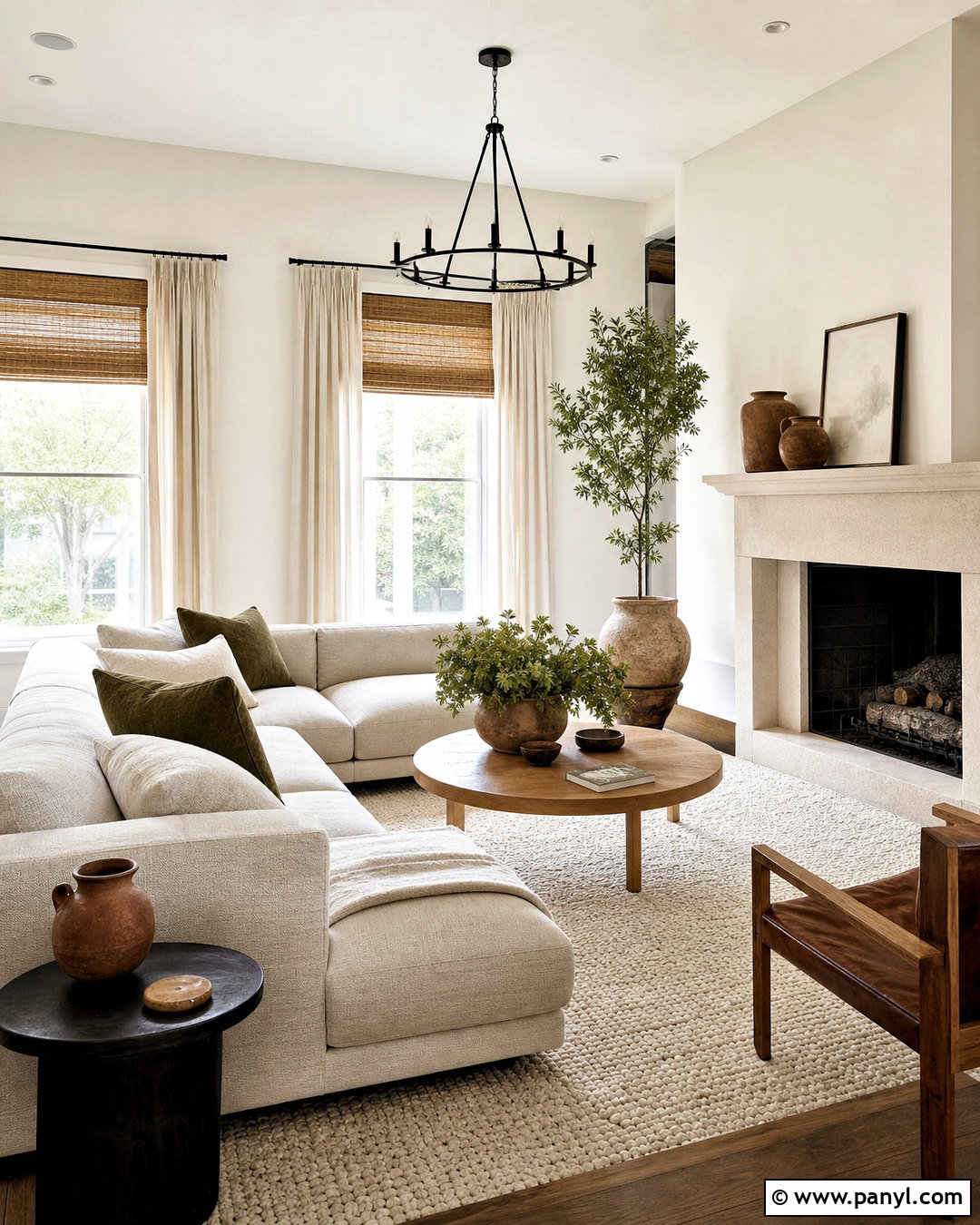
Dusty blue walls bring more depth than pale blue while preserving a calm, comfortable atmosphere. Build the design around a camel leather sofa, cream upholstered chairs, and a large vintage rug containing blue, tan, and muted burgundy. Walnut tables and a dark wood media cabinet provide visual weight against the softened wall color. Hang full-length beige curtains to warm the windows and frame them clearly. Antique brass lamps and small red-brown accessories pick up the rug’s warmer notes. Paint the fireplace mantel and trim in creamy white to create a defined architectural focal point. A balanced collection of framed landscapes can fill the wall above the sofa. This living room feels established and welcoming, with enough contrast to remain interesting through changing seasons.
11. Navy Blue Living Room Walls
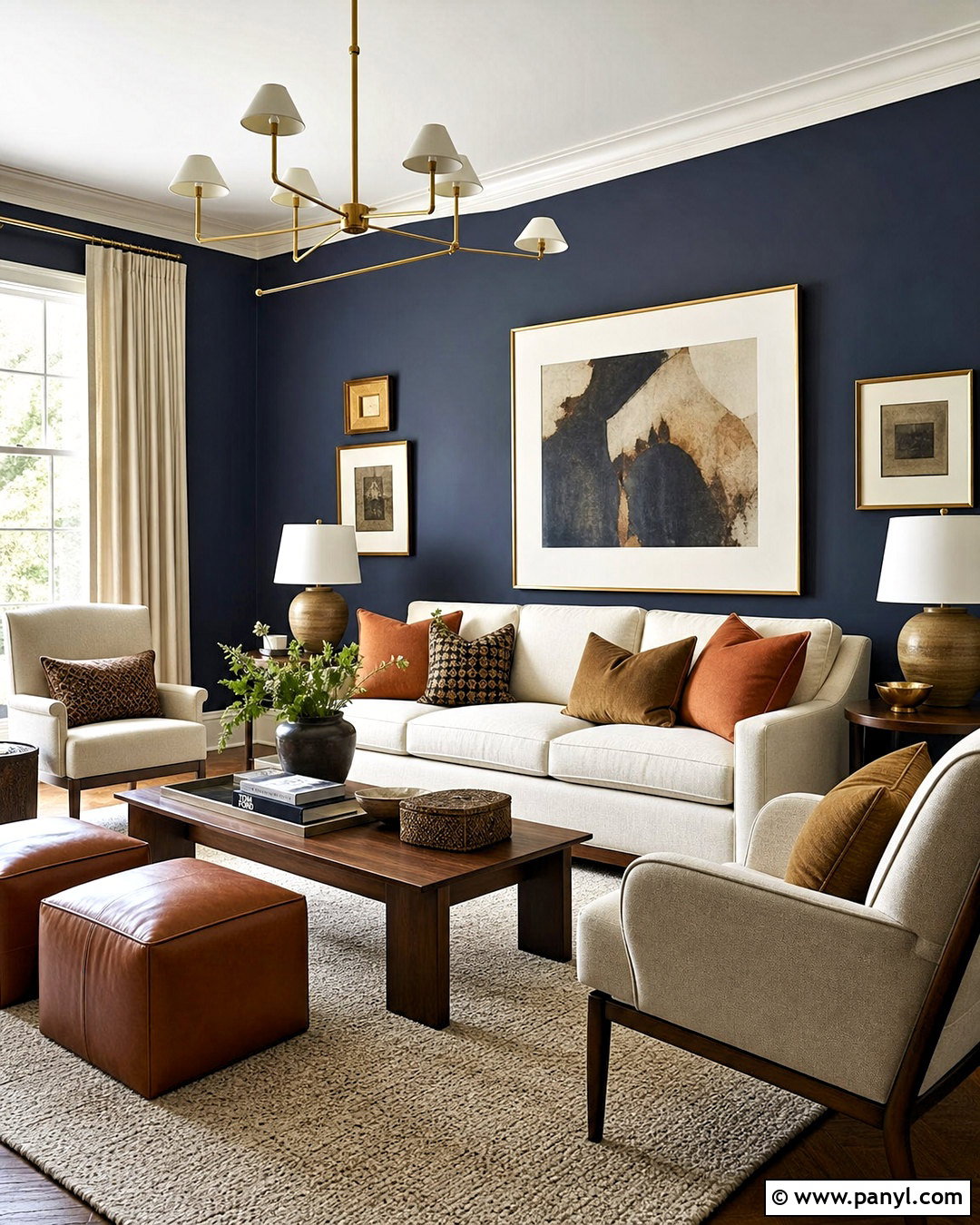
Navy blue walls turn a living room into a cozy gathering space with strong visual character. To prevent the color from becoming oppressive, combine it with a cream sofa, pale upholstery, and a light wool rug. Warm walnut tables, cognac leather ottomans, and aged brass lighting bring richness to the darker background. Use navy across all four walls for an intentional look rather than limiting it to a disconnected accent wall. Bright white trim can create sharp contrast, while softer ivory trim produces a more blended result. Hang large artwork with generous white matting to break up the blue surfaces. Add rust, camel, and faded red pillows for warmth. Several table and floor lamps will keep corners comfortable after sunset and support the room’s layered design.
12. Muted Teal Living Room Walls
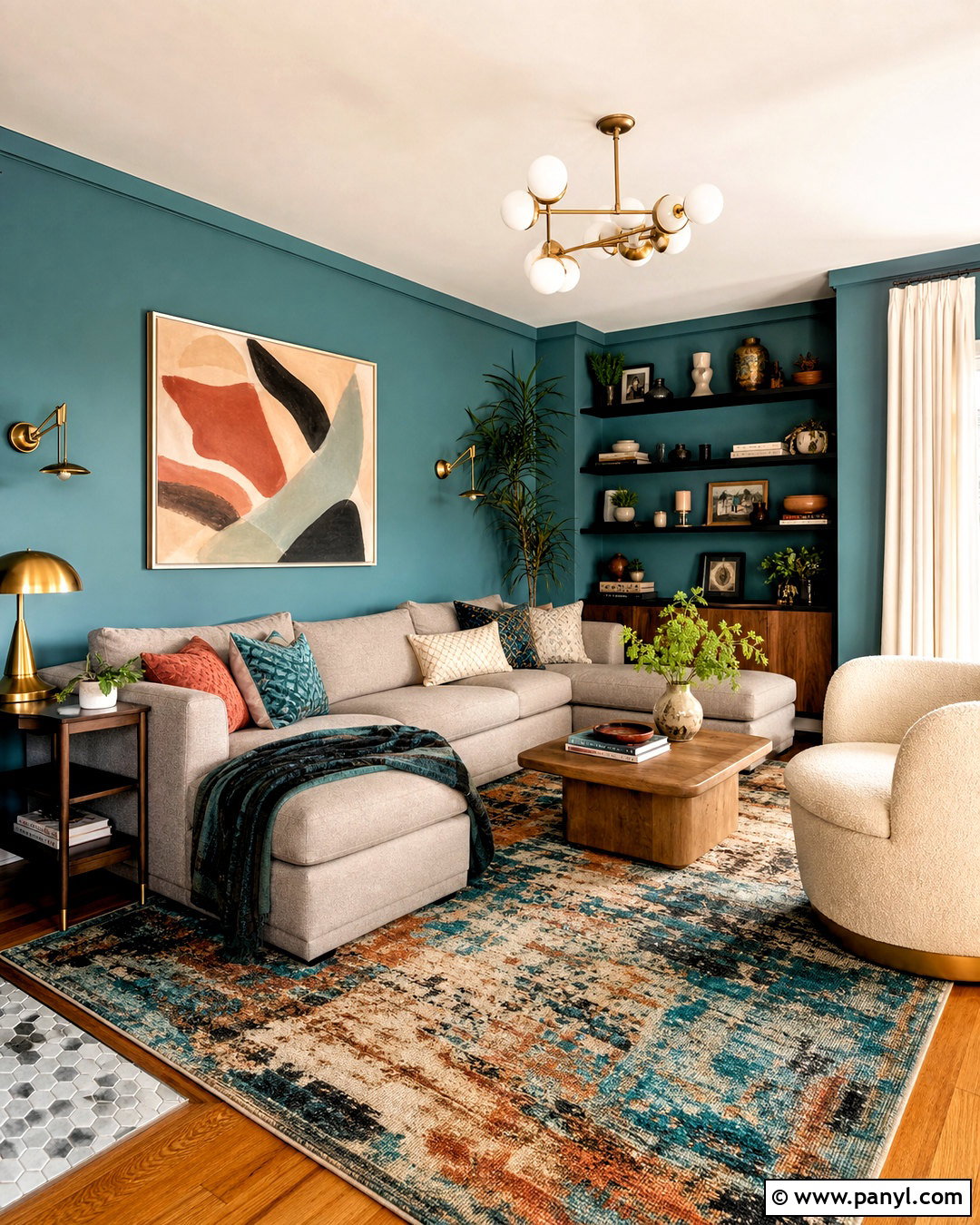
Muted teal walls create an expressive living room while staying more livable than a highly saturated turquoise. Pair the color with a warm gray sectional, an ivory boucle chair, and a medium-toned oak coffee table. A patterned rug containing teal, cream, rust, and charcoal ties the furniture and walls together. Choose simple off-white curtains so the windows offer visual relief. Matte black shelving and lighting introduce clean lines, while brass accessories add controlled warmth. Abstract artwork with coral and beige details can become the main focal point above the sofa. Repeat teal only in one or two small accessories rather than matching every object to the walls. This complete palette suits eclectic and midcentury-inspired rooms that need personality, structure, and comfortable everyday seating.
13. Charcoal Gray Living Room Walls
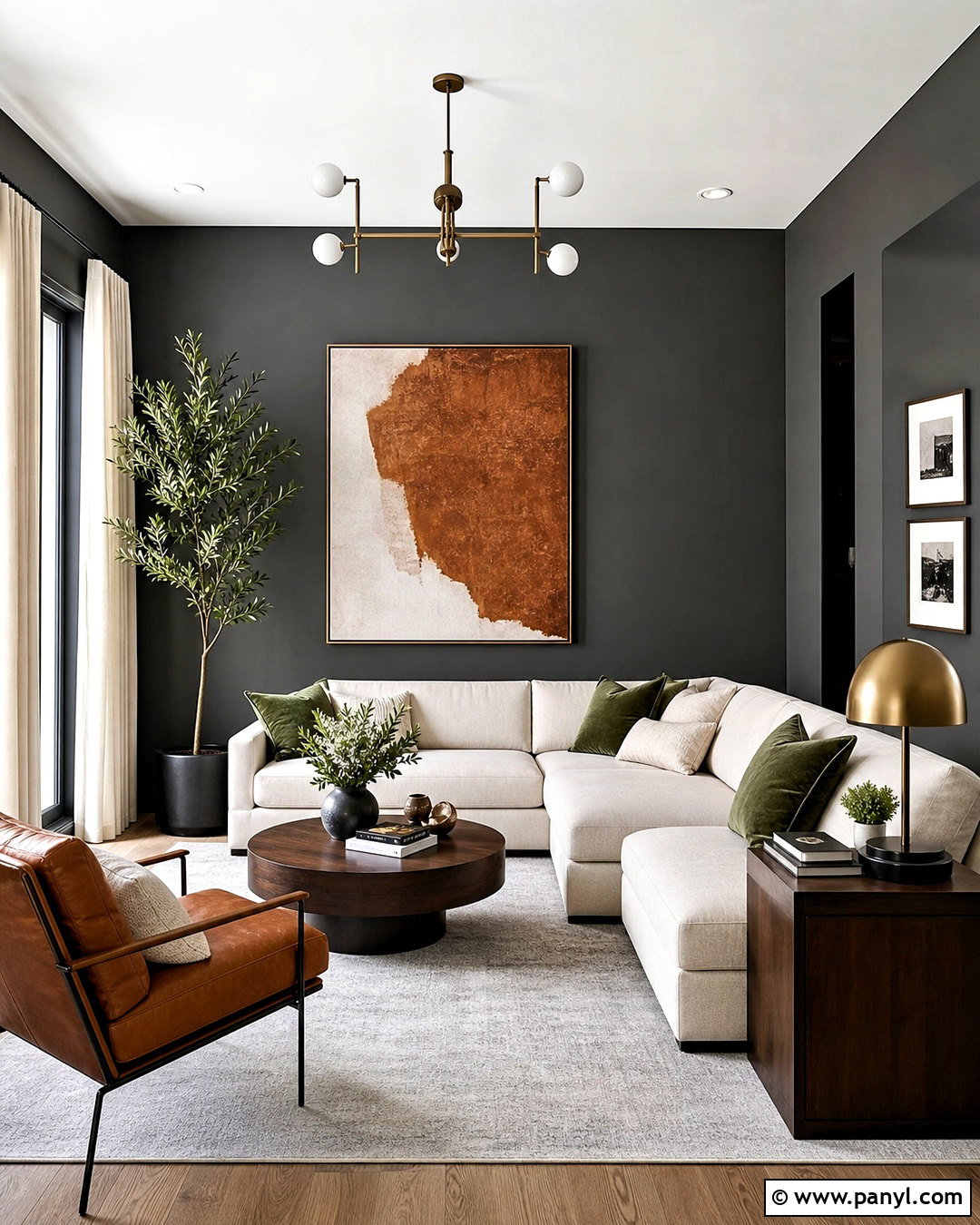
Charcoal gray walls give a living room dramatic depth and make lighter furniture appear especially crisp. Use a warm charcoal rather than a blue-black version, then add an ivory sectional, cognac leather chair, and pale gray rug. Walnut furniture softens the contrast, while black metal details maintain a clean modern edge. Hang creamy linen curtains from ceiling height to brighten the windows and visually stretch the room. Large abstract artwork featuring white, rust, and muted gold keeps the wall arrangement bold but controlled. Include brass lamps and warm bulbs so the gray does not look flat after dark. A few olive green pillows or plants add natural color. This design is best when several light sources and uncluttered furniture placement keep the room open and functional.
14. Chocolate Brown Living Room Walls
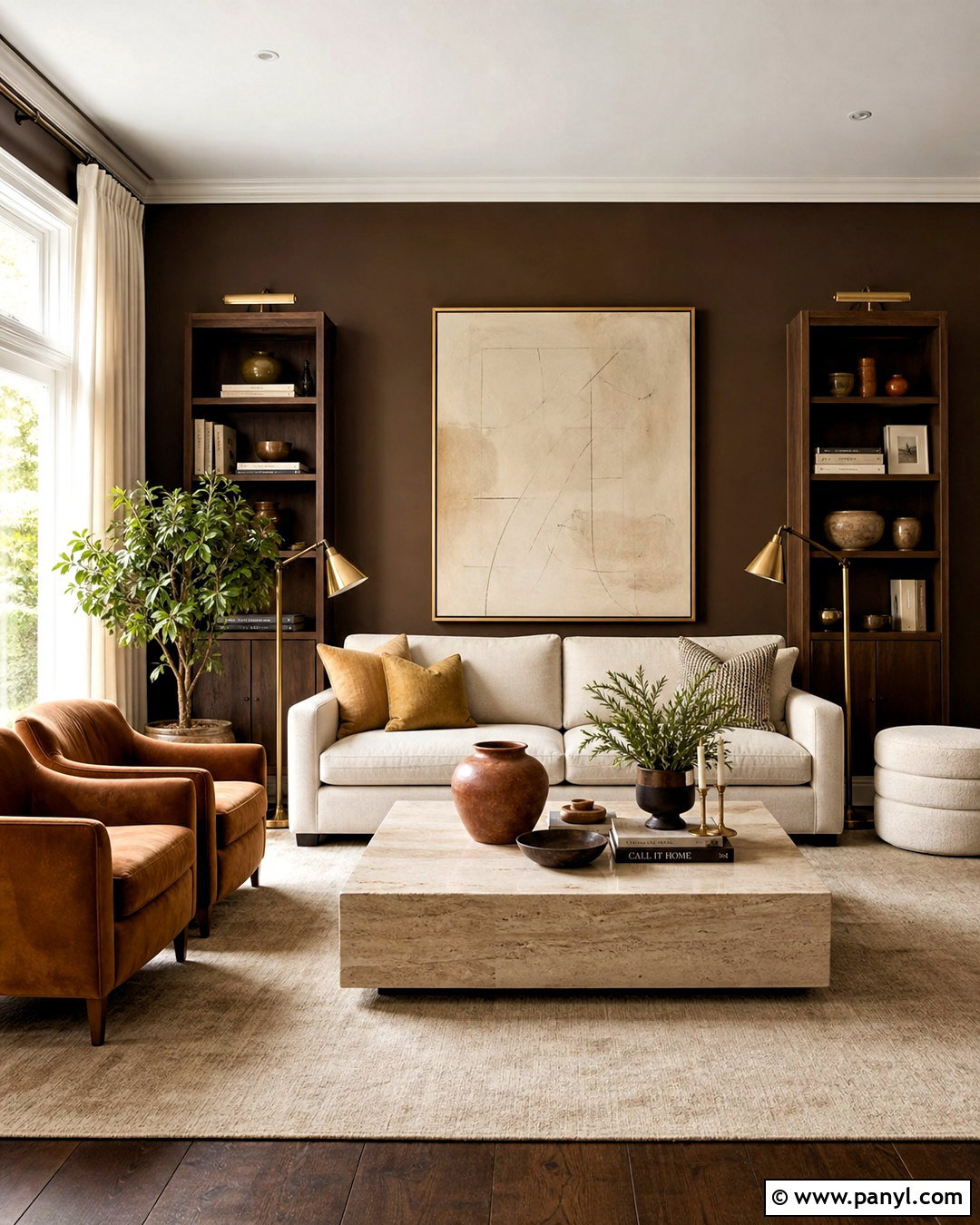
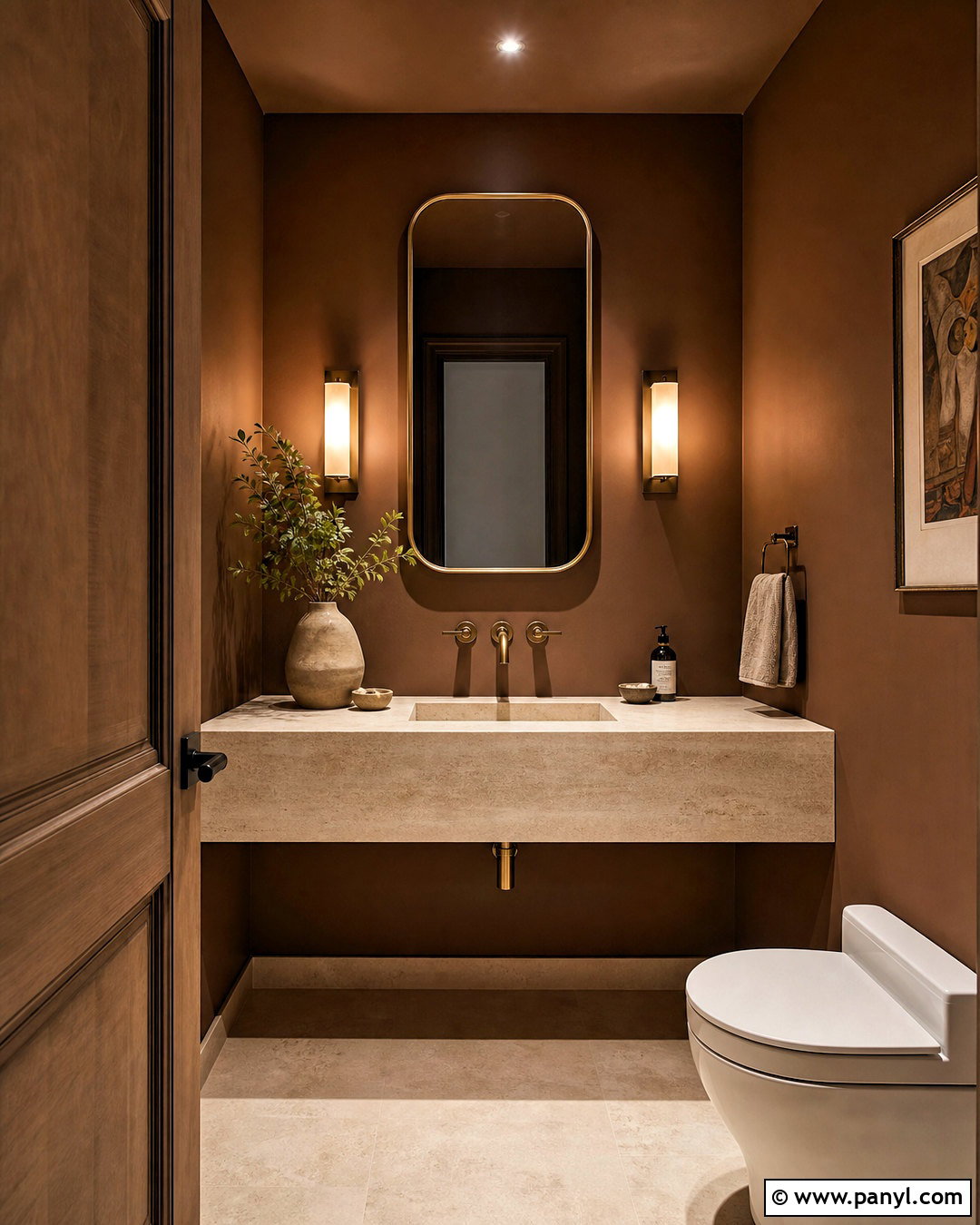
Chocolate brown walls create a warm, cocooning living room with a polished, earthy character. Pair the deep color with a cream linen sofa and two caramel velvet chairs arranged around a travertine coffee table. A light taupe rug lifts the floor area, while walnut shelves blend naturally into the walls. Choose ivory curtains and paint the trim a soft cream to provide clear but gentle contrast. Burnished brass lamps, ochre pillows, and rust-colored ceramics strengthen the warmth of the palette. Large artwork with pale backgrounds prevents the dark walls from dominating every surface. If the room is small, keep the furniture low and leave generous walking space around the seating group. The finished scheme feels intimate, refined, and comfortable rather than dark or overly formal.
15. Terracotta Living Room Walls
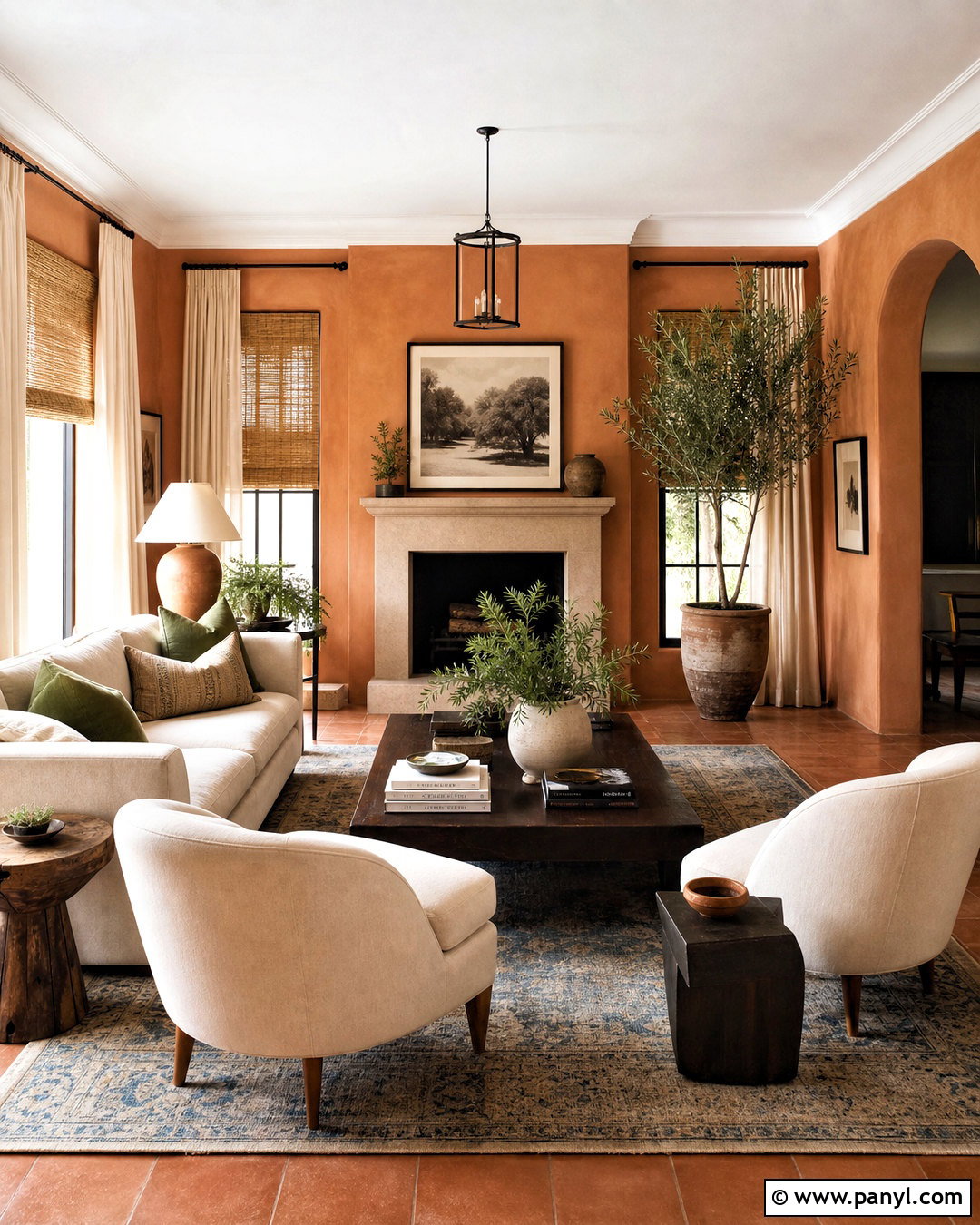
Terracotta walls fill a living room with sunbaked warmth and pair naturally with wood, linen, leather, and woven materials. Choose a softened clay shade rather than a vivid orange, then balance it with a beige sofa and cream accent chairs. A dark wood coffee table provides contrast, while a faded blue rug cools the palette and anchors the seating area. Use light flax curtains, warm white trim, and woven bamboo shades around the windows. Add olive green pillows, handmade pottery, and simple black-framed artwork to develop a relaxed Southwestern or Mediterranean influence. Avoid adding too many orange accessories, since the walls already provide strong color. This complete design feels lively during the day and especially cozy when layered table lamps illuminate the textured surfaces at night.
16. Dusty Rose Living Room Walls
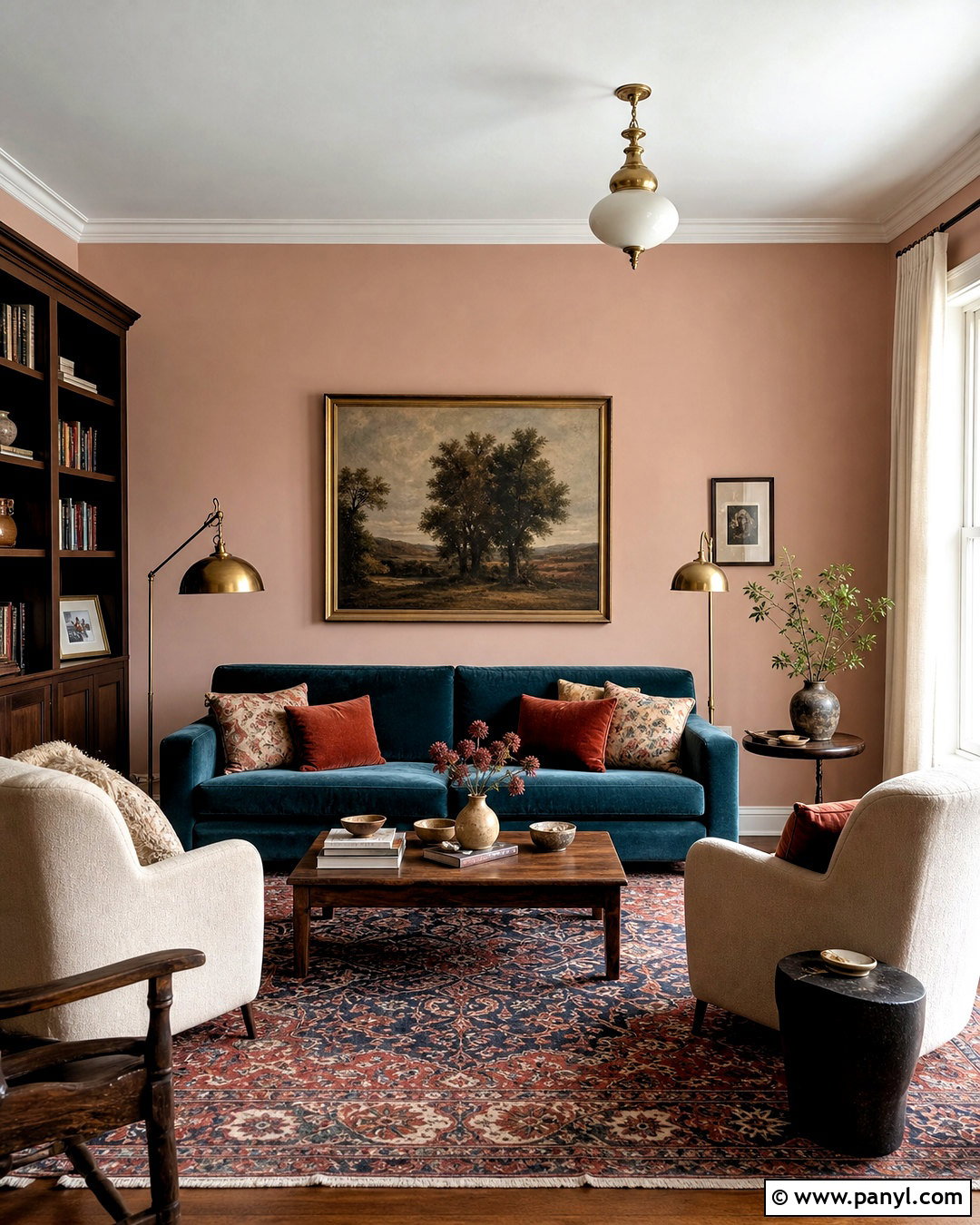
Dusty rose walls bring gentle color to a living room without making the space feel sugary or overly delicate. Look for a muted pink with beige or brown undertones, then combine it with a deep teal sofa and warm ivory chairs. A burgundy, blue, and cream vintage rug establishes a richer palette underfoot. Walnut side tables, aged brass lamps, and natural linen curtains make the pink feel grounded and grown-up. Paint the trim a creamy off-white rather than stark white for a softer transition. Artwork with green, red, and neutral tones can connect the walls to the furniture. Finish with rust pillows, sculptural ceramics, and a dark wood bookcase. This layered approach suits traditional, eclectic, and contemporary living rooms while giving each one a welcoming glow.
17. Soft Plum Living Room Walls
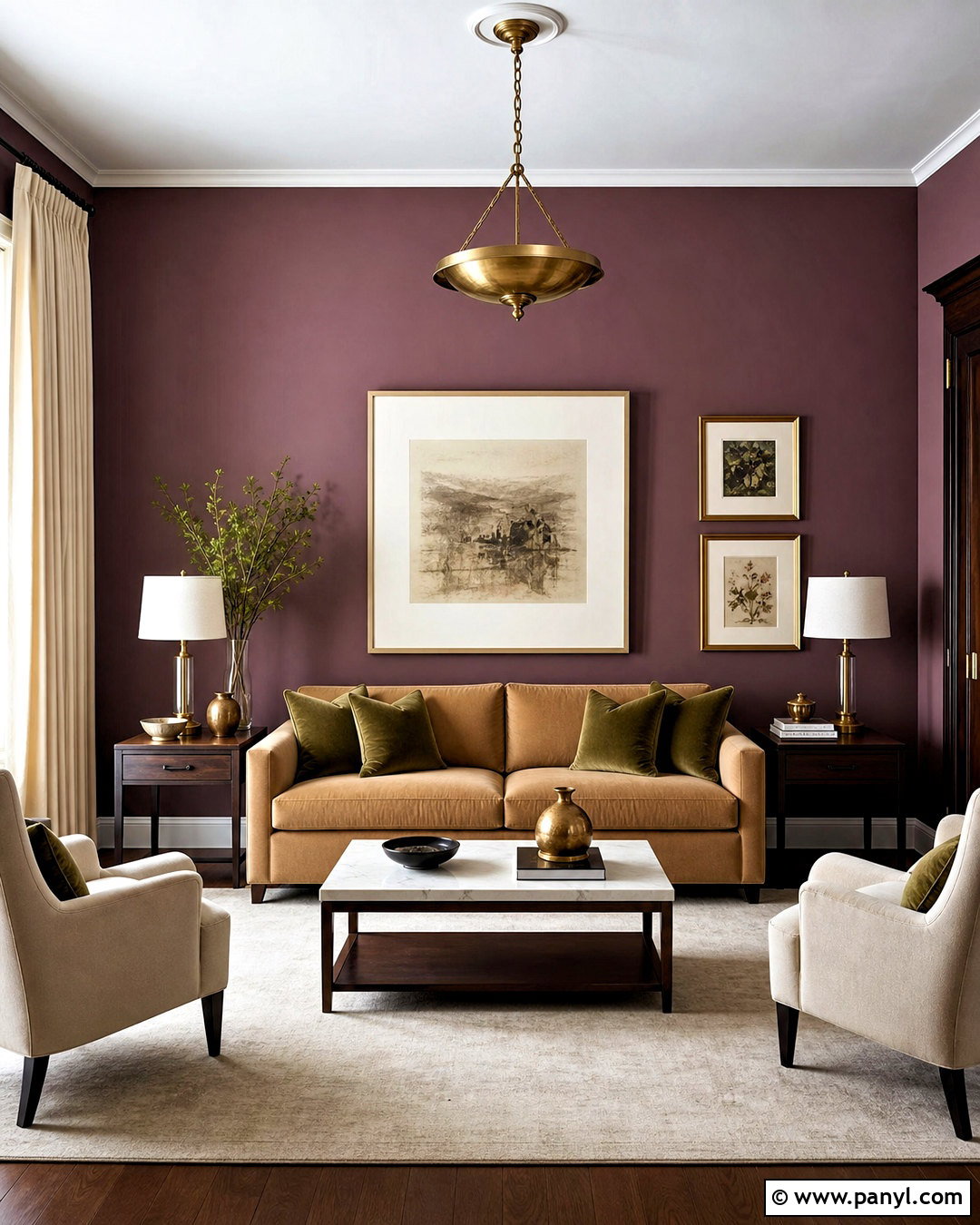
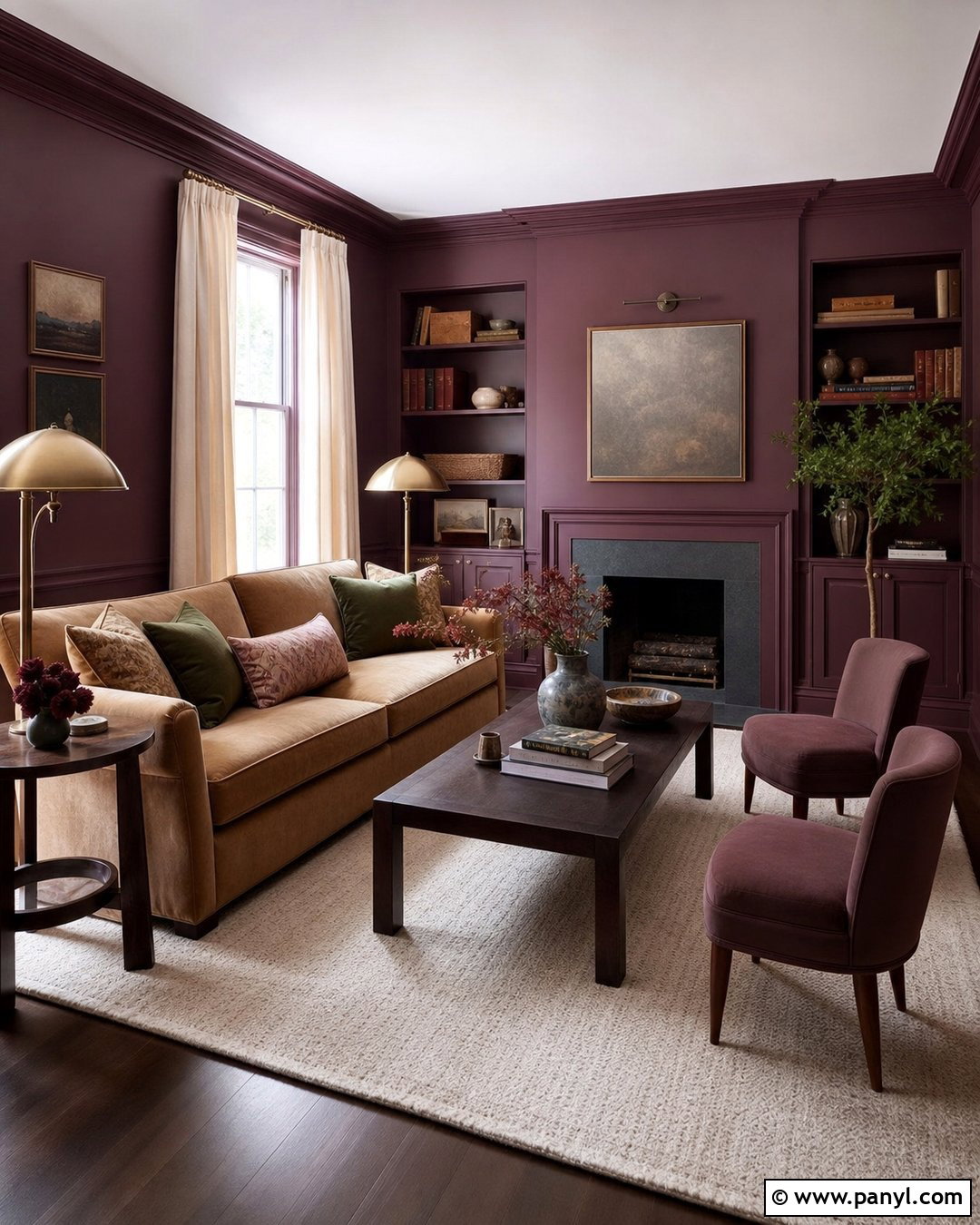
Soft plum walls offer an unusual alternative to navy or charcoal in a living room that needs depth. Select a subdued plum with gray and brown undertones, then pair it with a camel sofa, light beige armchairs, and a cream rug. Dark walnut furniture connects naturally with the richness of the walls. Add olive green pillows and muted gold accessories to create contrast without introducing loud colors. Full ivory curtains brighten the windows and soften the room’s heavier surfaces. Use large-scale artwork with pale matting, since small dark frames may disappear against plum paint. A marble-topped coffee table and aged brass floor lamp add lighter reflective finishes. The finished room feels enveloping and sophisticated, yet comfortable enough for reading, conversation, and everyday family use.
18. Muted Mustard Living Room Walls
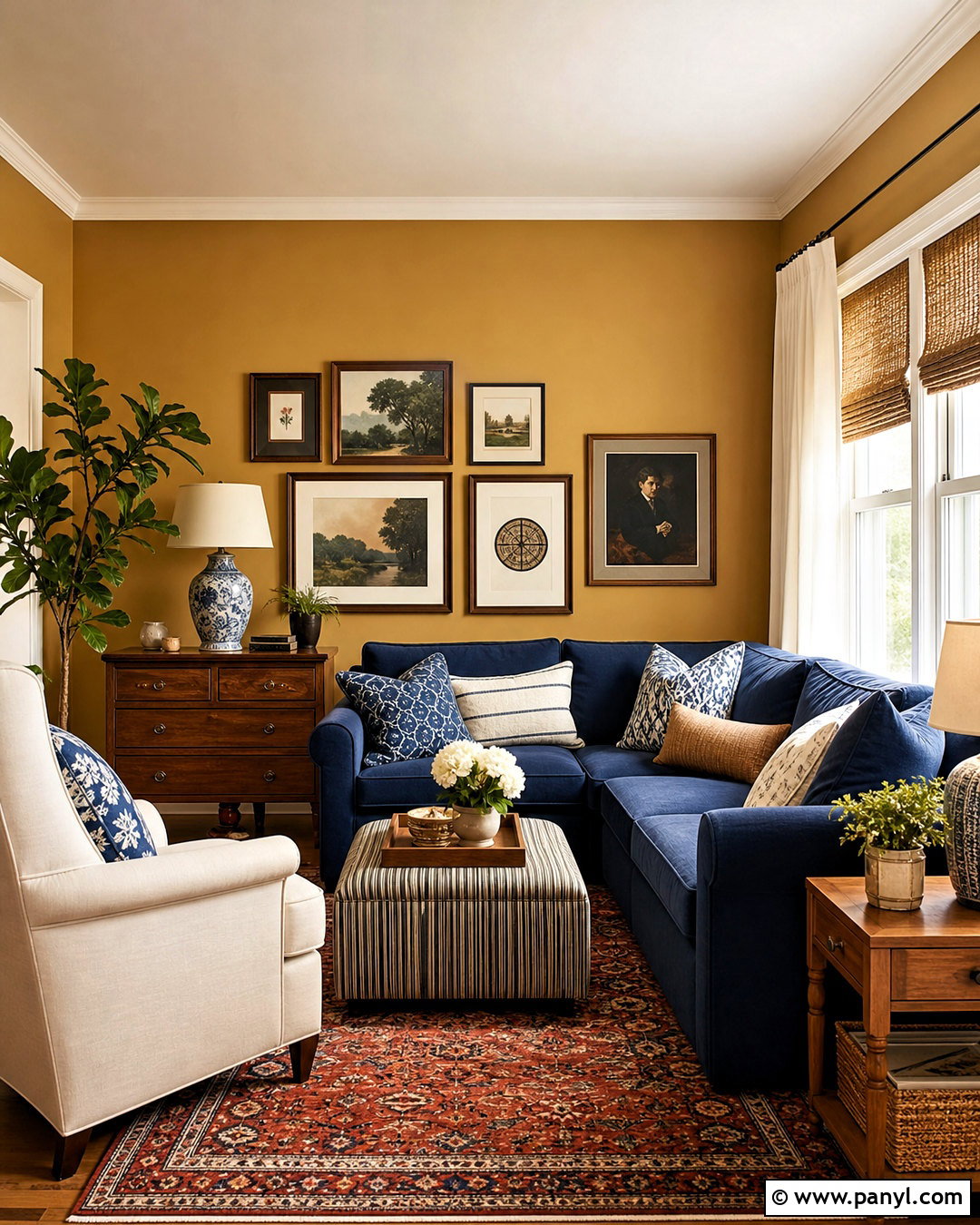
Muted mustard walls bring energy and warmth to a living room while feeling more sophisticated than bright yellow. Pair the shade with a deep navy sectional, an ivory armchair, and a striped ottoman that includes cream, blue, and ochre. Medium wood furniture and a faded red rug give the room a collected, slightly vintage quality. Keep the ceiling and trim warm white so the mustard remains clear without covering every surface. Hang a thoughtful gallery arrangement with black, wood, and brass frames above the sofa. Natural linen curtains and woven shades help soften incoming light. Finish with blue patterned pillows, ceramic lamps, and a few green plants. The resulting room feels cheerful and substantial, making it suitable for traditional, bohemian, or eclectic interiors.
19. Soft Peach Living Room Walls
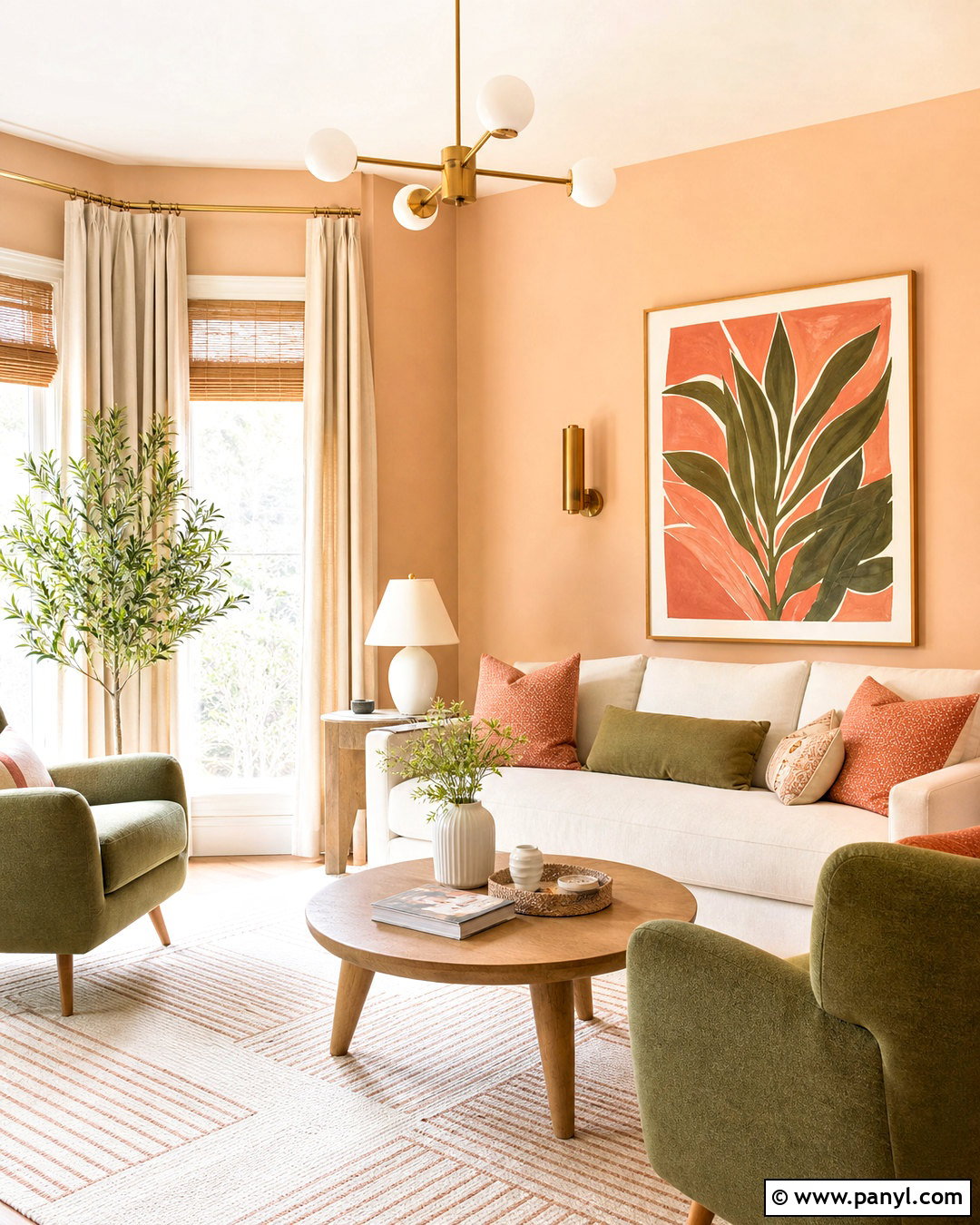
Soft peach walls create a flattering, sunlit effect that can warm up a living room with limited natural light. Choose a pale, earthy peach rather than a candy-colored pastel. Pair it with an ivory sofa, light oak tables, and two muted green armchairs for balanced contrast. A cream rug with subtle terracotta lines connects the furnishings to the walls. Add flax curtains, warm white trim, and woven window shades to maintain the gentle palette. Brushed brass lighting reinforces the warm undertone without adding excessive shine. Abstract artwork containing coral, olive, and beige provides a strong focal point. Finish with rust pillows and white ceramics. This room feels fresh and relaxed, offering more personality than beige while remaining easy to coordinate with natural materials.
20. Soft Black Living Room Walls
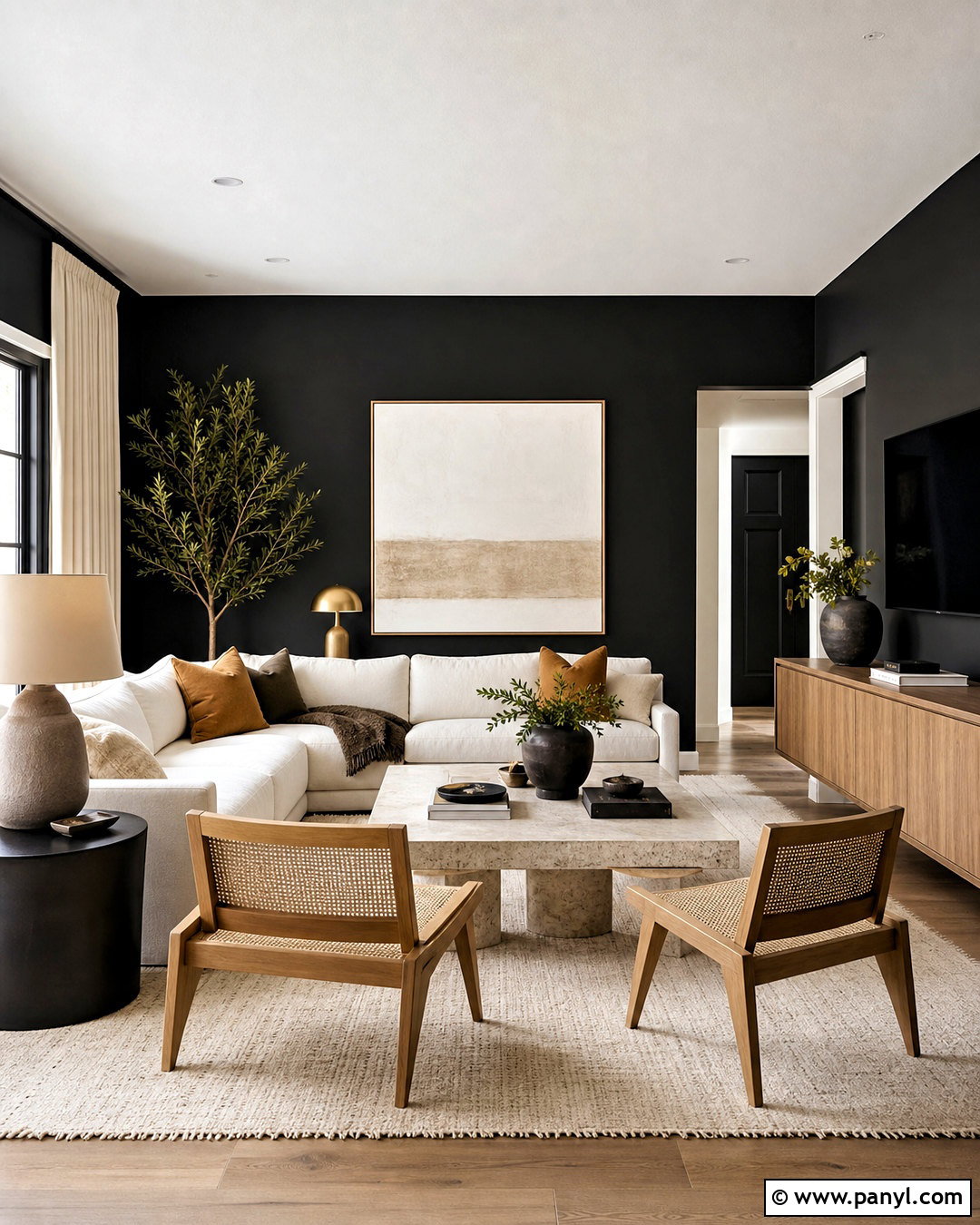
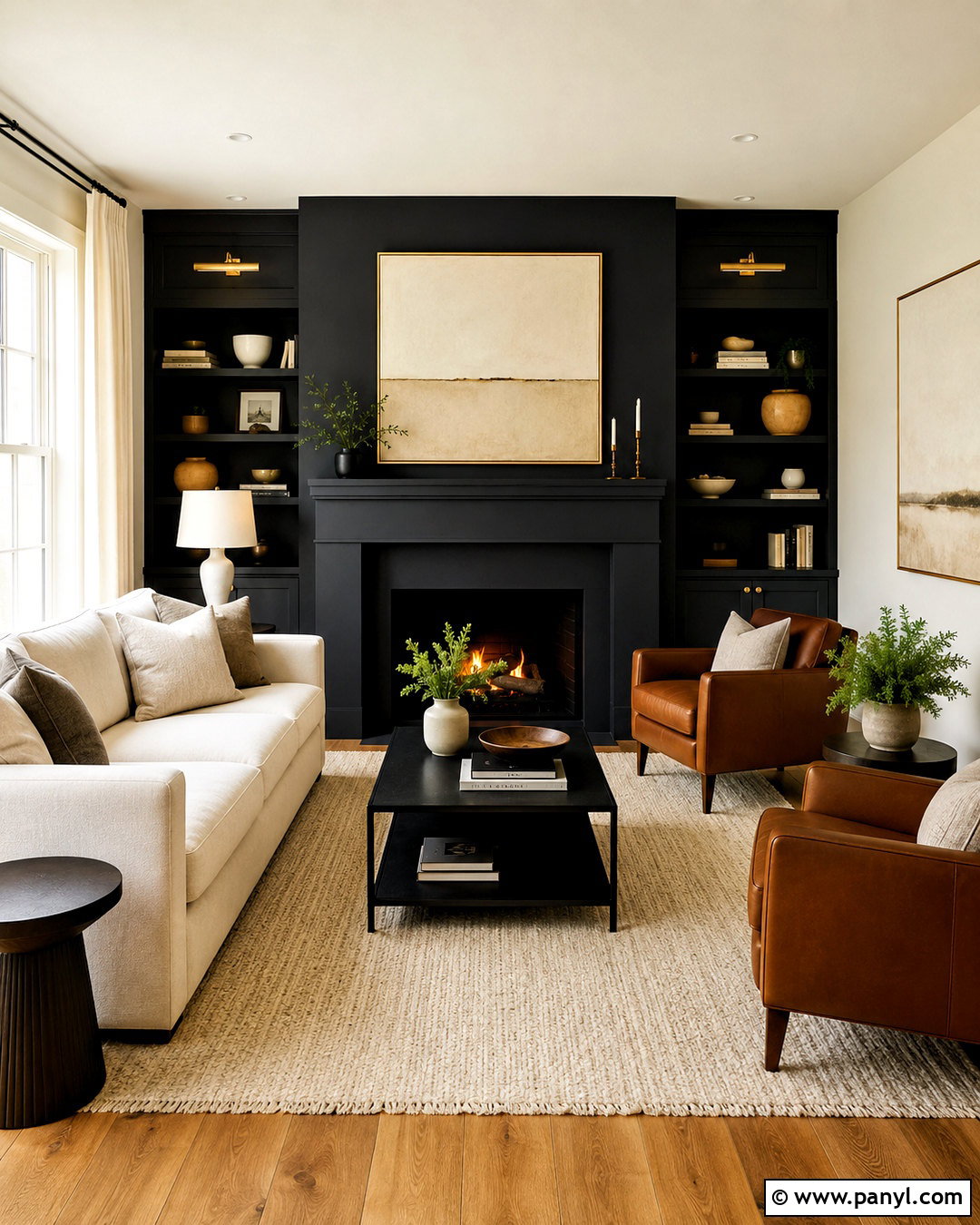
Soft black walls can produce a striking living room when they are balanced with light furniture and thoughtful illumination. Choose a charcoal-black with warm undertones and apply it across the walls for a consistent, intentional finish. Place an ivory sofa and two pale wood chairs on a large cream rug to brighten the center of the room. A natural oak media console and travertine coffee table add texture without creating harsh contrast. Use full-length off-white curtains and several brass or ceramic lamps to distribute light evenly. Oversized artwork with cream, tan, and muted green details prevents the dark walls from feeling empty. Finish with camel pillows, sculptural plants, and minimal black accents. The complete room looks modern, dramatic, and comfortable instead of severe.
Conclusion:
The best **20 living room walls paint colors** include more than safe neutrals or short-lived trends. Warm white, cream, greige, and beige provide flexible foundations, while sage, eucalyptus, blue, and dusty rose introduce calm personality. Darker options such as navy, chocolate brown, plum, charcoal, and soft black can create inviting rooms when paired with lighter upholstery, layered lighting, and warm natural materials. Before selecting a final shade, consider the room’s daylight, flooring, trim, and largest furniture pieces. Test generous samples on multiple walls and observe them at different times. Most importantly, plan the entire room as one connected palette. Coordinated furniture, textiles, finishes, and artwork will help any wall color look intentional.

Related Ideas and Inspiration:
Leave a Reply