
Your home’s exterior sets the mood before anyone reaches the front door. These 20 home exterior ideas offer complete, coordinated looks that combine siding, paint, roofing, architectural details, lighting, walkways, and landscaping. Some work as full renovations, while others can be adapted through smaller updates such as new trim colors, planters, or porch finishes. The key is choosing materials and colors that suit the home’s architecture, surrounding landscape, and natural light. Warm neutrals, earthy greens, mixed siding, defined entrances, and low-maintenance planting can all create a welcoming result. Whether your house is traditional, modern, coastal, or cottage-inspired, you will find practical inspiration in the 20 home exterior ideas below.
1. Warm Beige Home Exterior
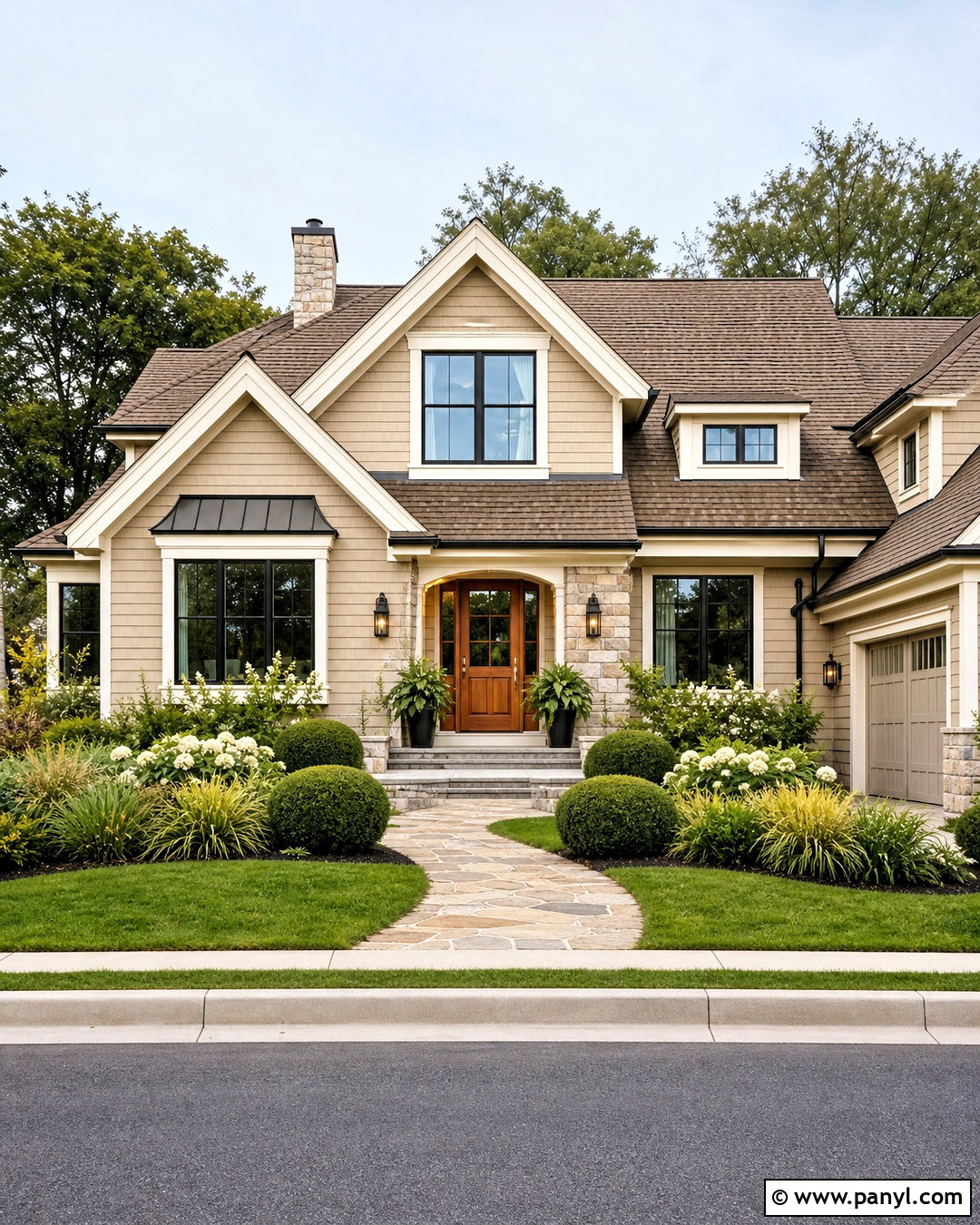
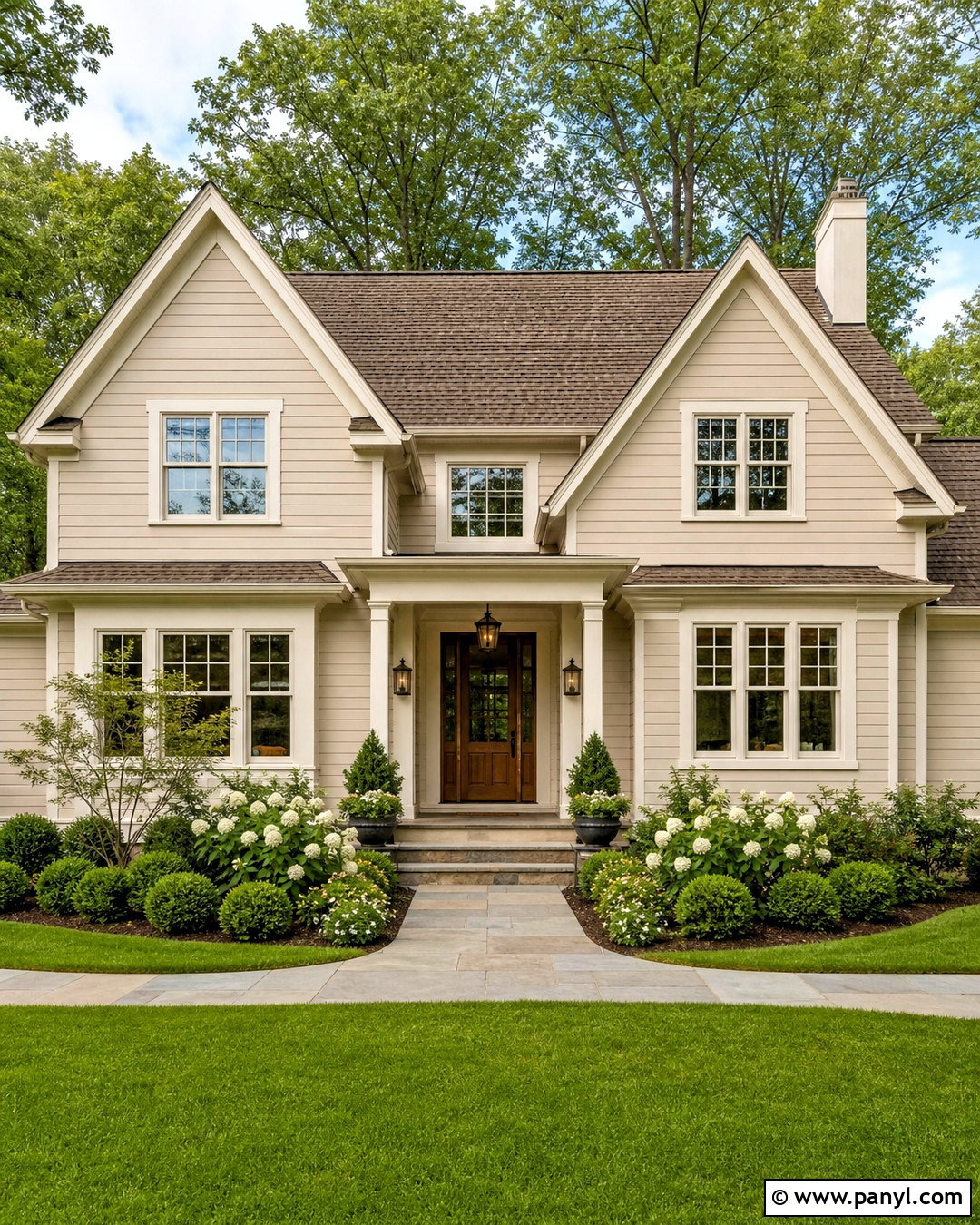
A warm beige exterior creates a soft, welcoming appearance without feeling plain. Choose sandy beige fiber-cement siding or smooth stucco for the main walls, then frame windows and rooflines with crisp off-white trim. A medium brown architectural-shingle roof keeps the palette grounded, while a stained oak front door adds natural character. Introduce contrast with matte black lanterns, gutters, and simple house numbers. Along the foundation, layer evergreen shrubs with ornamental grasses and white flowering perennials. A gently curved stone walkway can make the entrance feel more relaxed and inviting. This complete exterior works especially well on ranch, Colonial, and transitional homes because the balanced colors emphasize the architecture without overpowering it.
2. White House With Black Trim
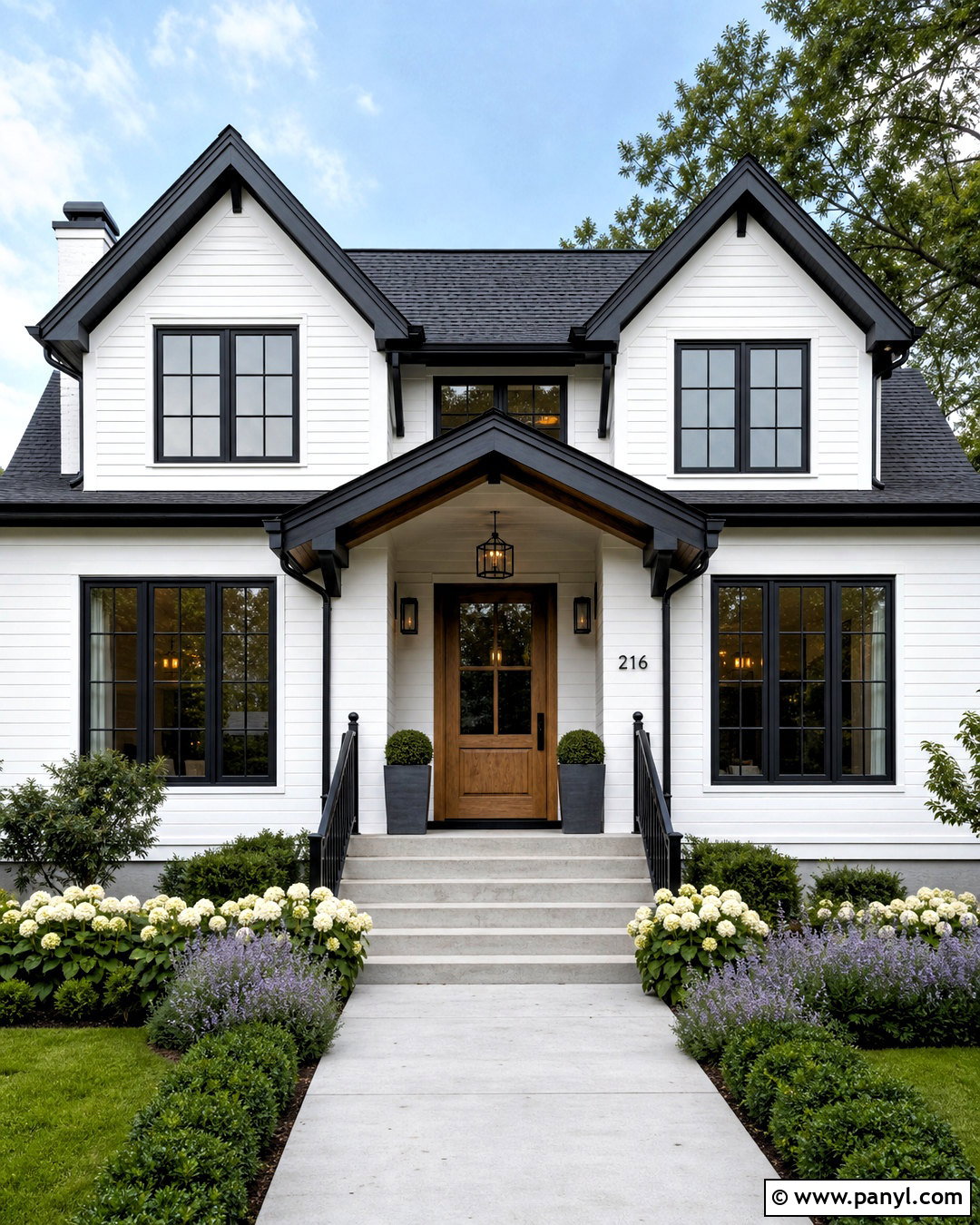
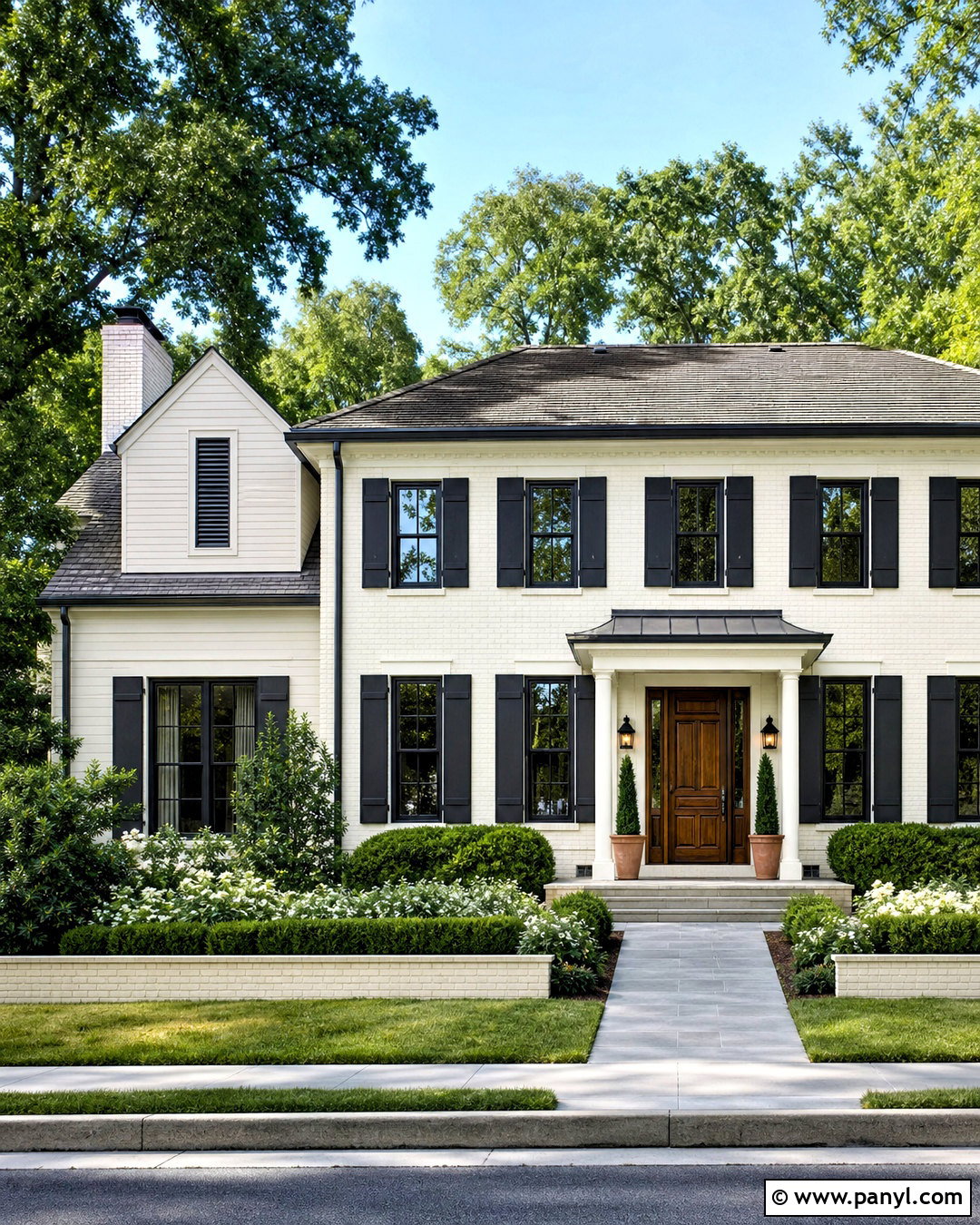
Few combinations define architectural lines as clearly as white siding with black trim. Use a warm white rather than a sharp blue-white so the exterior feels comfortable in changing daylight. Add black window frames, fascia, gutters, and garage doors for consistent contrast. A charcoal roof will connect the dark details without making the house look top-heavy. Keep the entrance warmer with a medium-tone wood door and matching porch ceiling. Concrete steps, black metal railings, and large gray planters complete the structure. For landscaping, use rounded boxwoods, lavender, and loose white flowers to soften the strong color blocking. This approach suits modern farmhouses and simple traditional homes, especially when every dark accent is repeated intentionally.
3. Sage Green Home Exterior
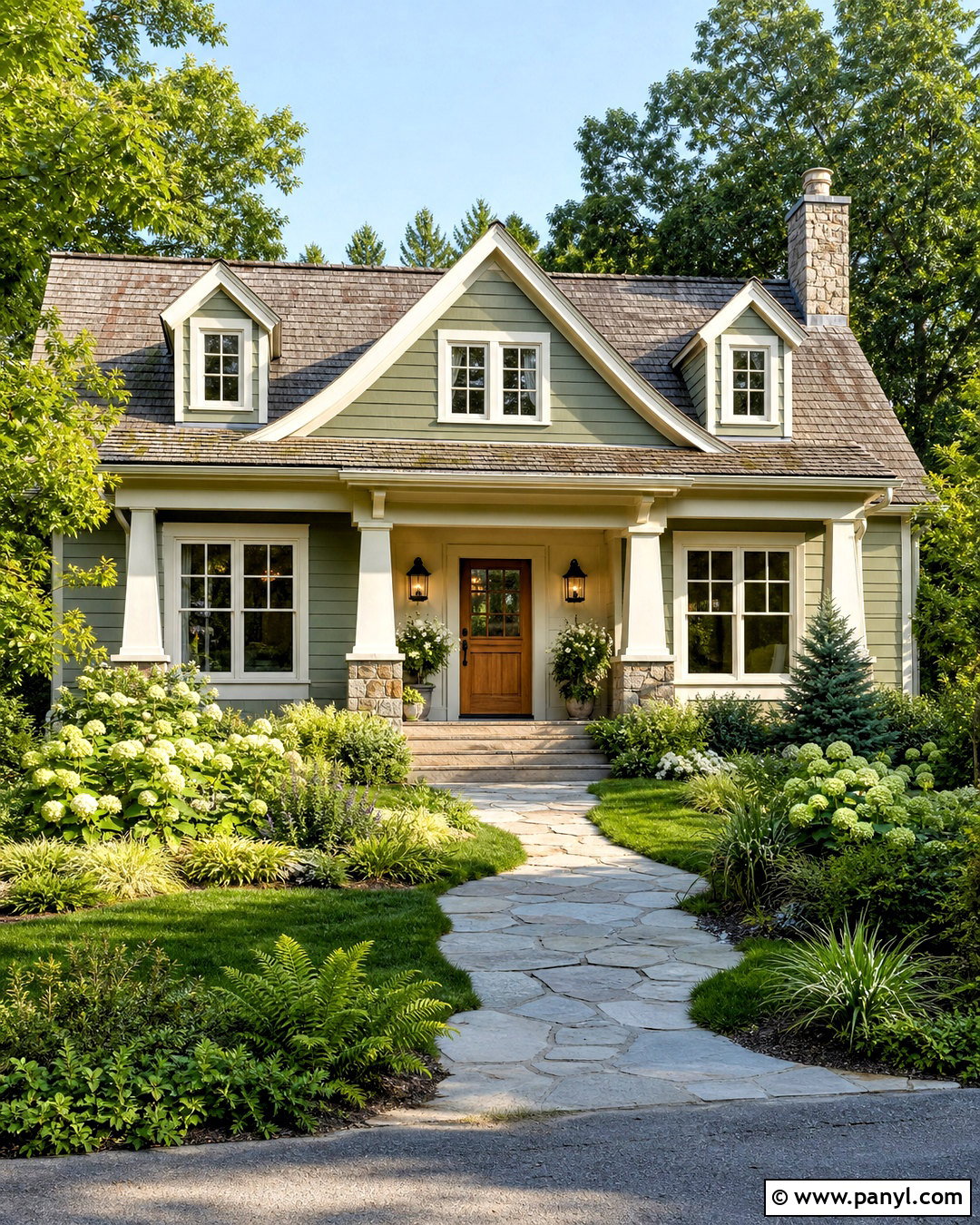
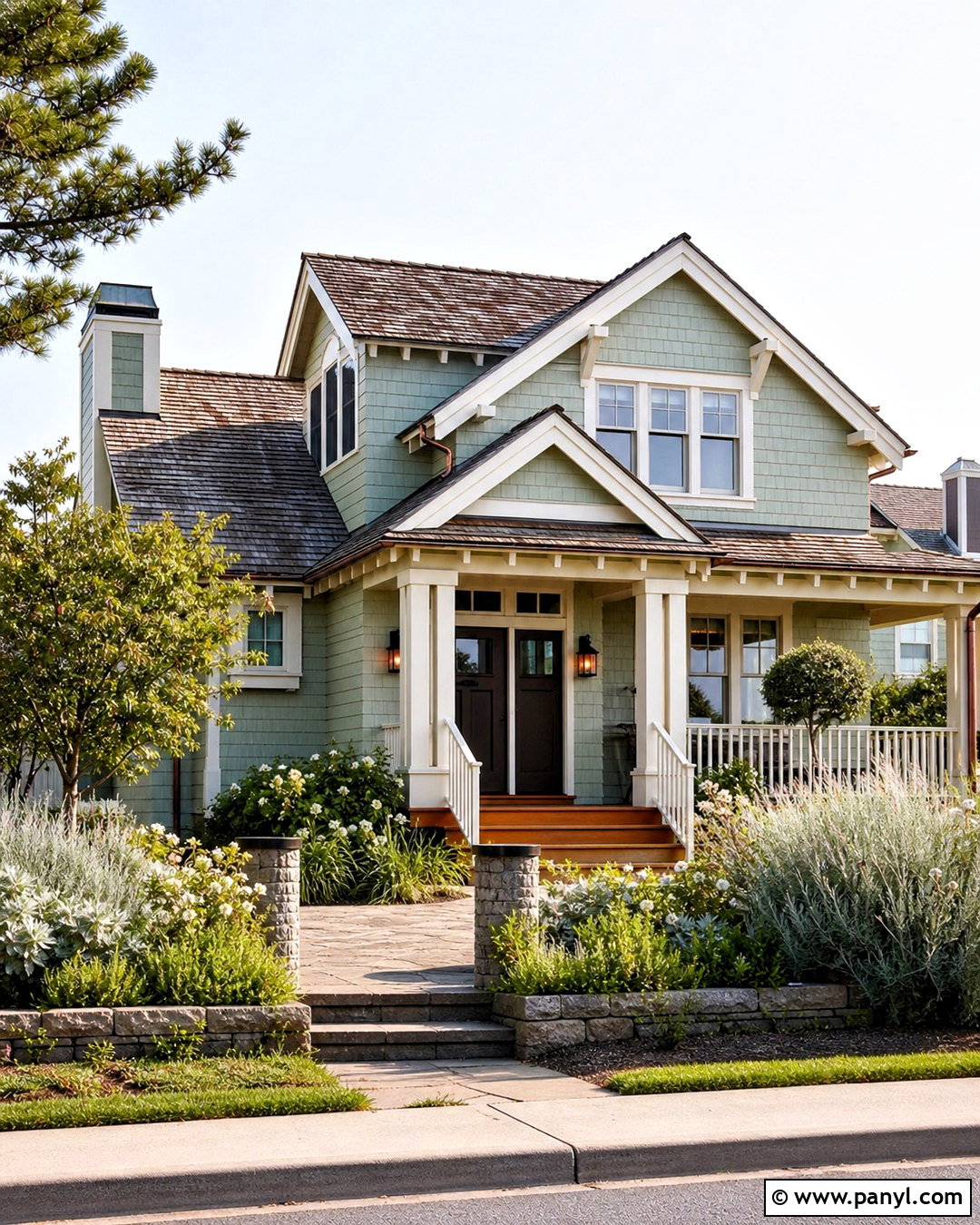
Does your home sit near mature trees or an established garden? Warm sage green siding can help the structure settle naturally into the landscape. Pair the green body color with creamy white trim, a weathered gray roof, and a natural cedar door. Copper-colored lanterns and gutters add warmth, although aged bronze finishes offer a lower-maintenance alternative. Use stone along the foundation or porch columns to create texture and visual weight. A flagstone walkway bordered by ferns, hydrangeas, native grasses, and low evergreen shrubs reinforces the garden-inspired look. Avoid overly bright accent colors that compete with the sage. Instead, repeat muted green, brown, cream, and gray tones across the house and yard for a coordinated exterior.
4. Dark Blue Home Exterior
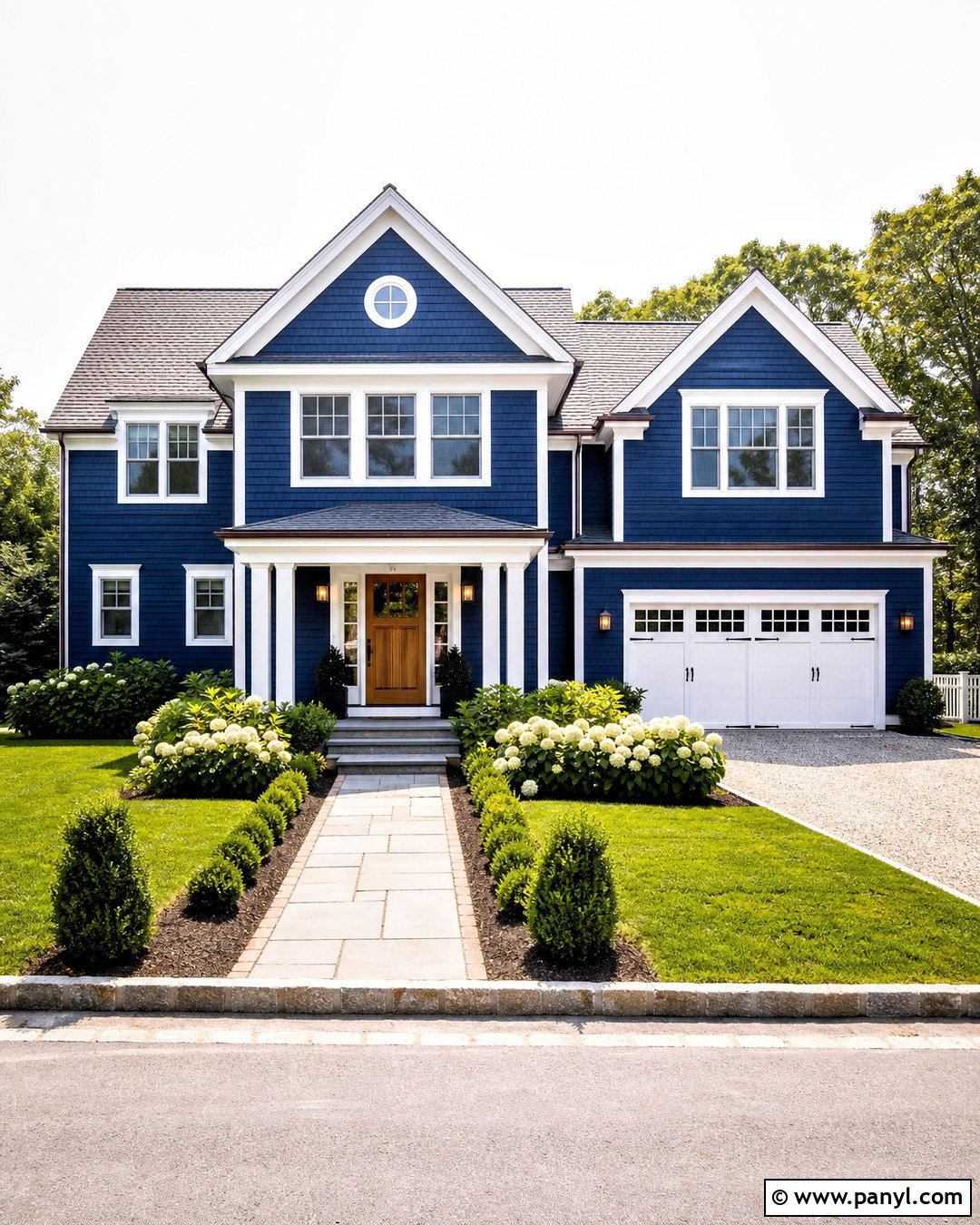
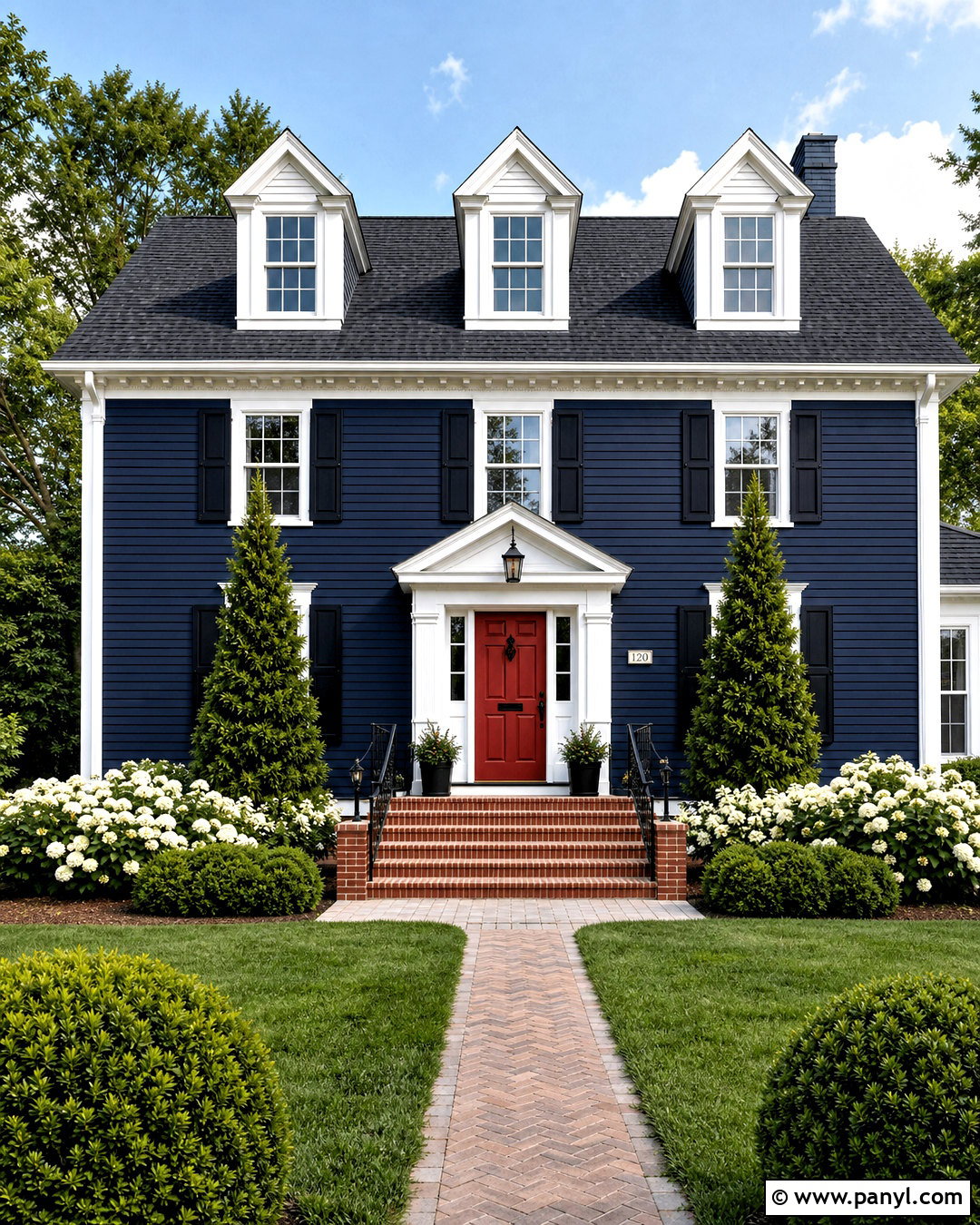
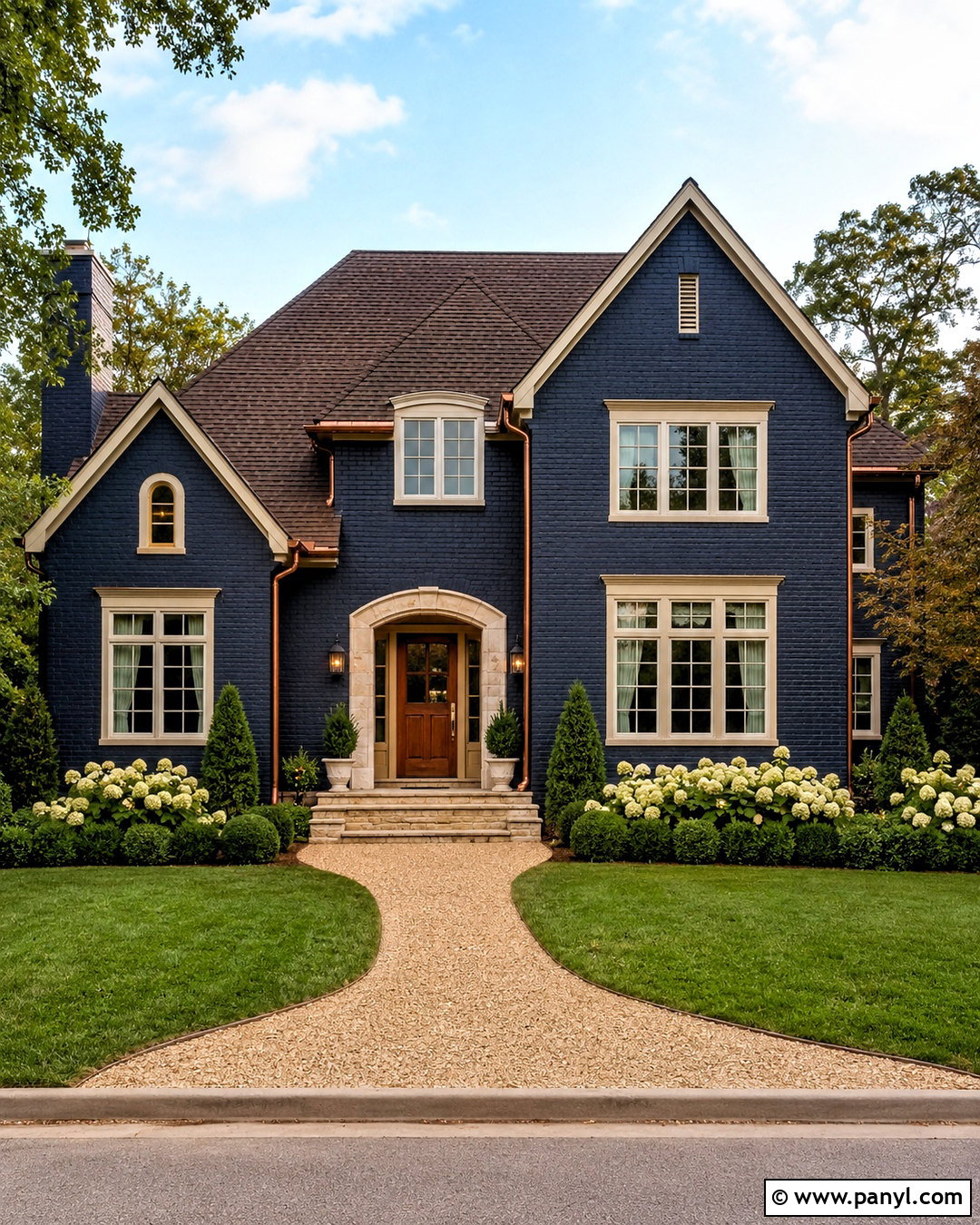
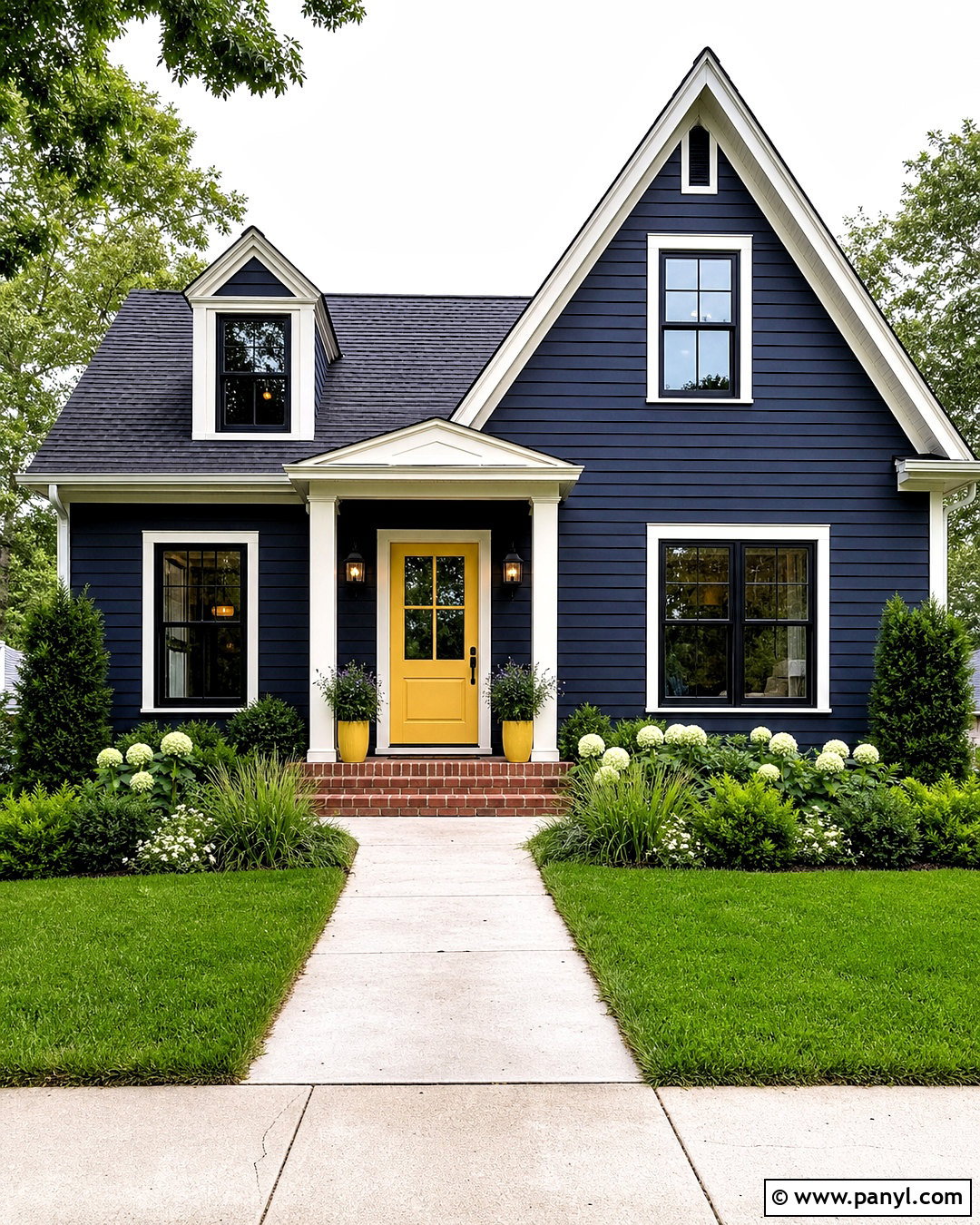
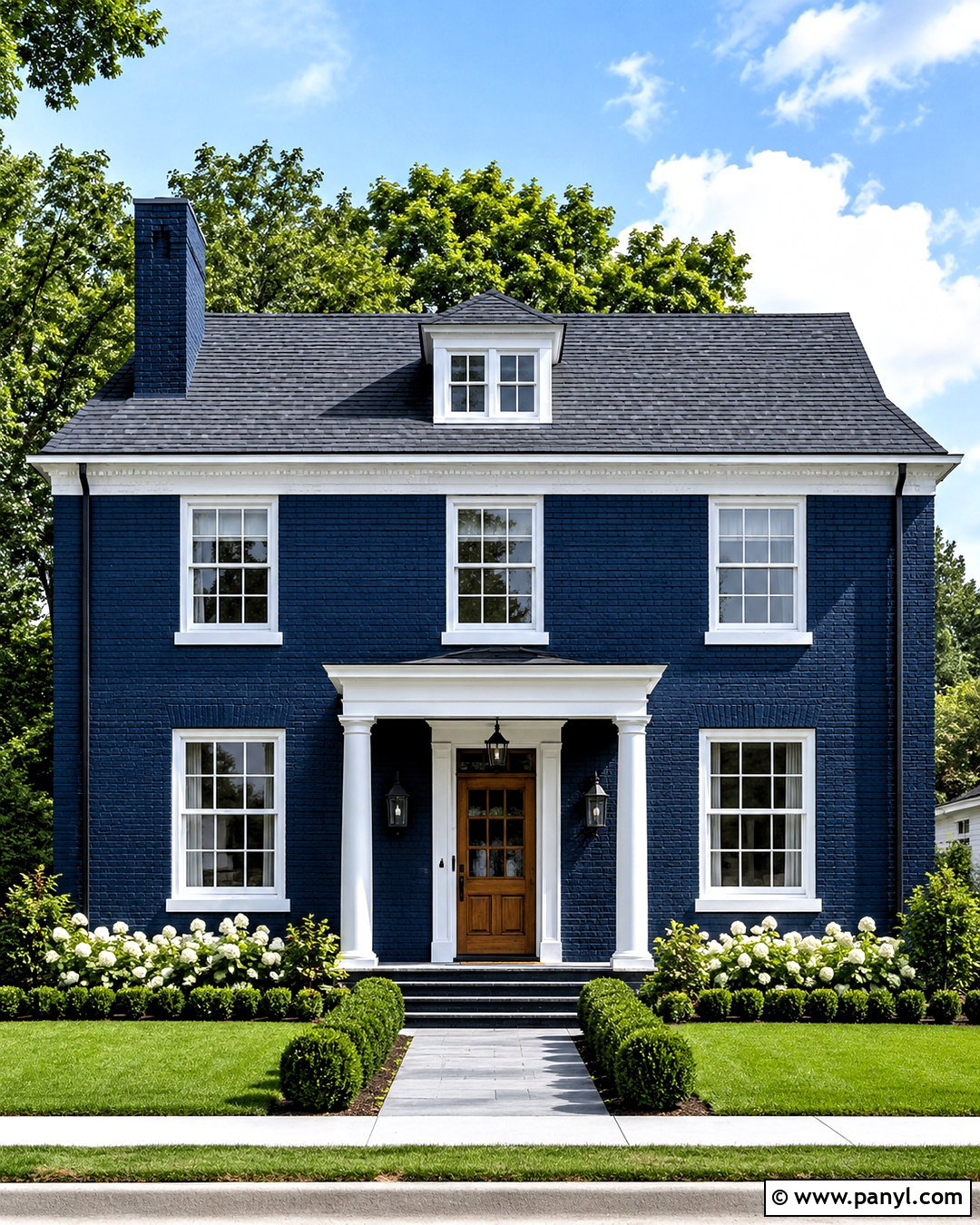
Deep navy blue gives an ordinary home a stronger presence while remaining easy to pair with familiar materials. Cover the main facade in navy lap siding, then use bright white trim around windows, doors, and porch columns. A medium gray roof softens the contrast, while a honey-toned wood door keeps the entry from feeling cold. Add brushed brass or warm bronze lighting for a polished finish. White garage doors can blend with the trim, although navy doors create a quieter, more seamless facade. Complete the yard with clipped evergreens, white hydrangeas, and a straight stone path. This full exterior scheme works beautifully on Cape Cod, Colonial, craftsman, and coastal-inspired houses with balanced window arrangements.
5. Modern Black Home Exterior
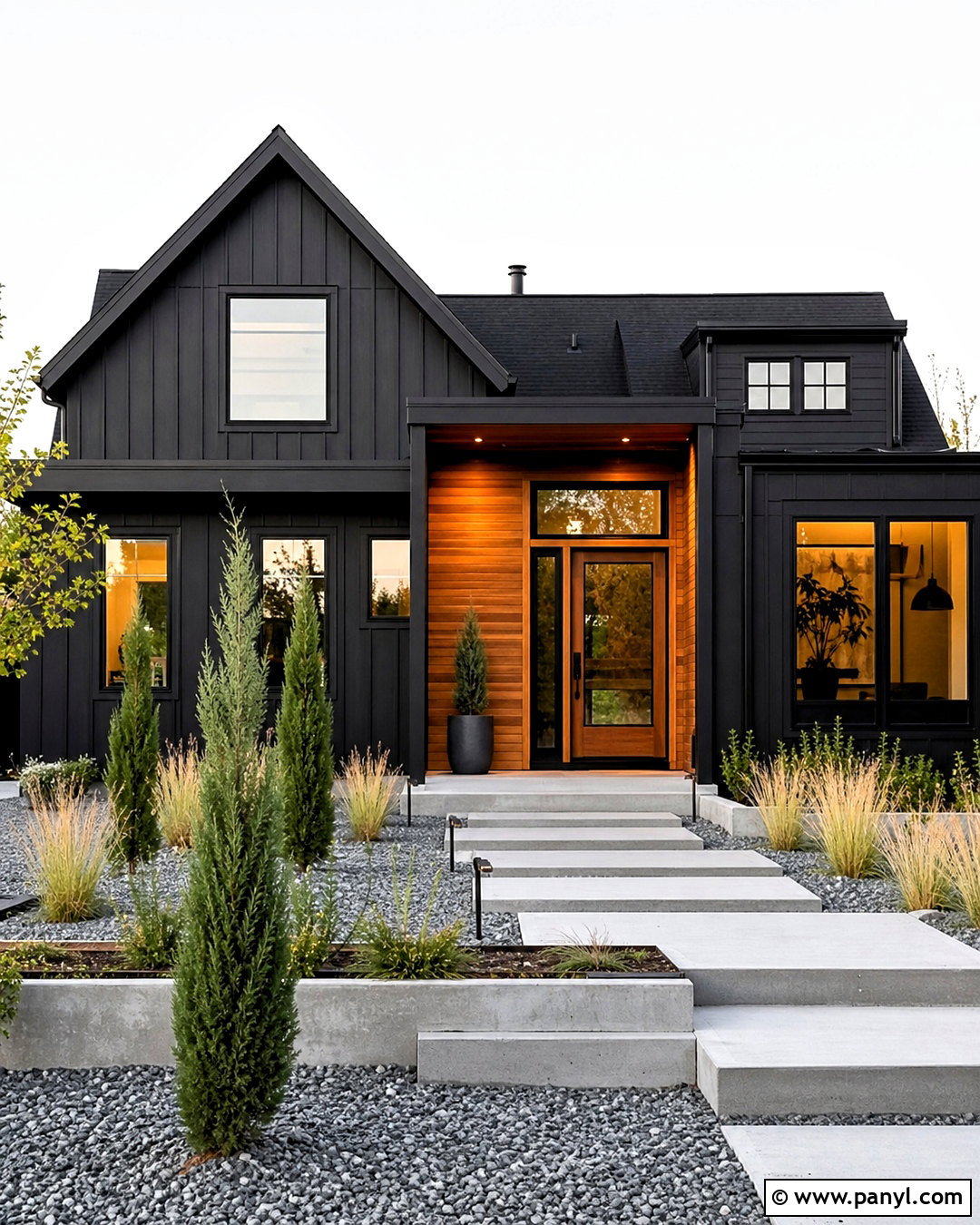
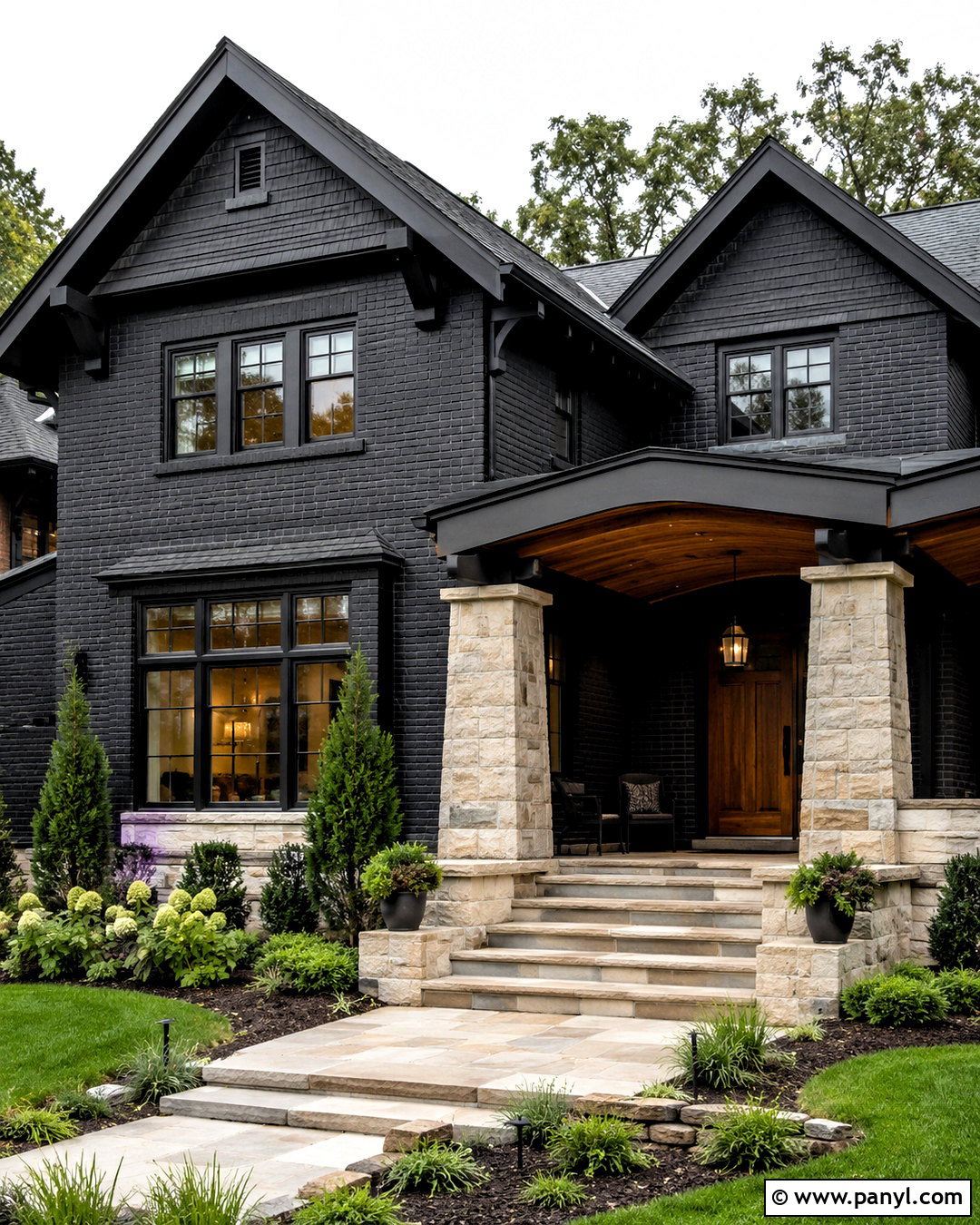
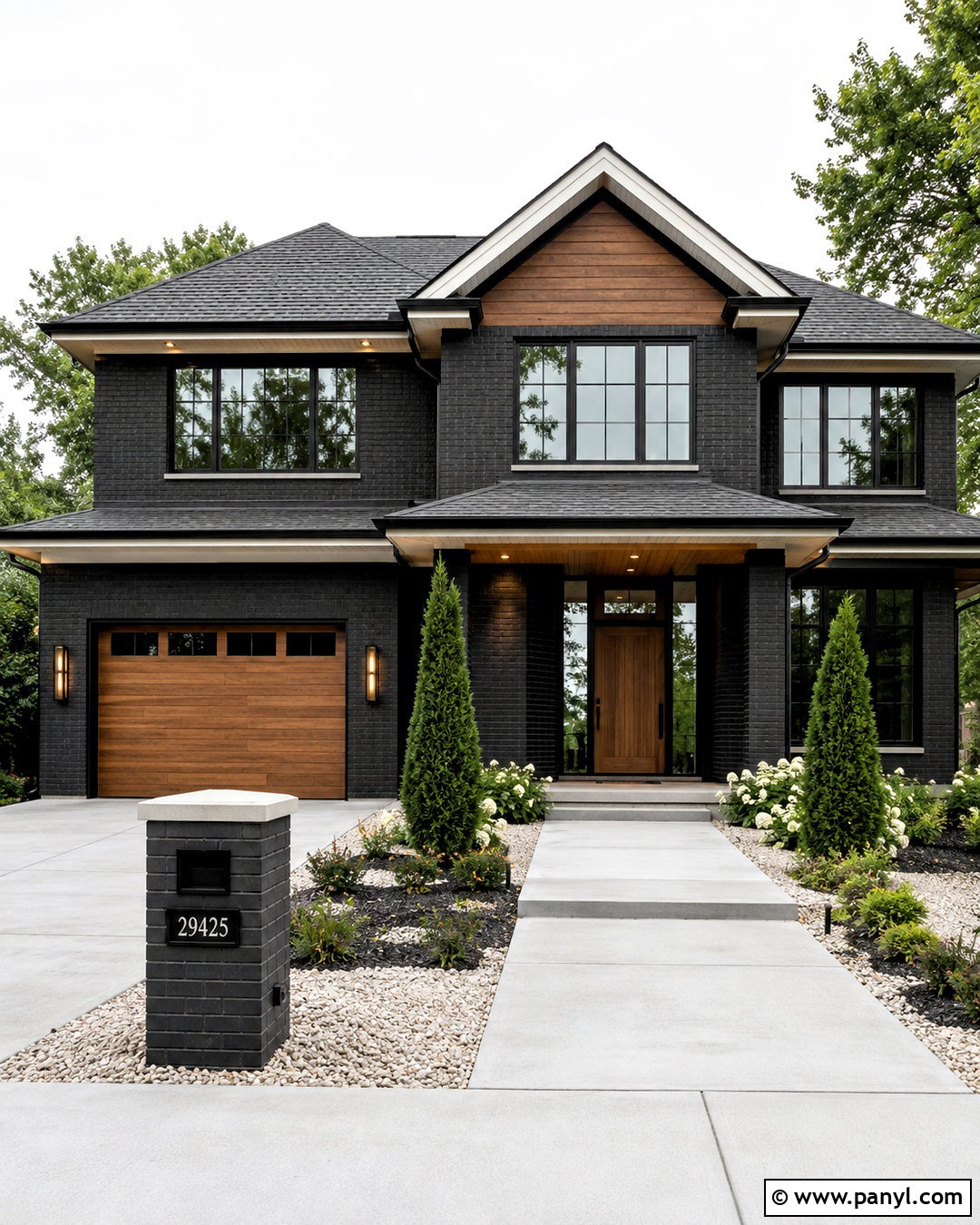
A black exterior can look dramatic without becoming harsh when texture and landscaping are carefully layered. Select soft black vertical siding with a matte finish, then add natural cedar around the entrance, porch ceiling, or upper-level sections. Keep the roof, gutters, and window frames black for a streamlined envelope. Large concrete steps and a simple gravel path support the modern architecture. Warm wall sconces and a glass-paneled wood door prevent the entrance from disappearing into the facade. Surround the home with pale ornamental grasses, sculptural evergreens, and light gray gravel to introduce contrast. This design works best when the facade has clean lines and enough daylight to reveal variations in the dark materials.
6. Brick And Board And Batten Exterior
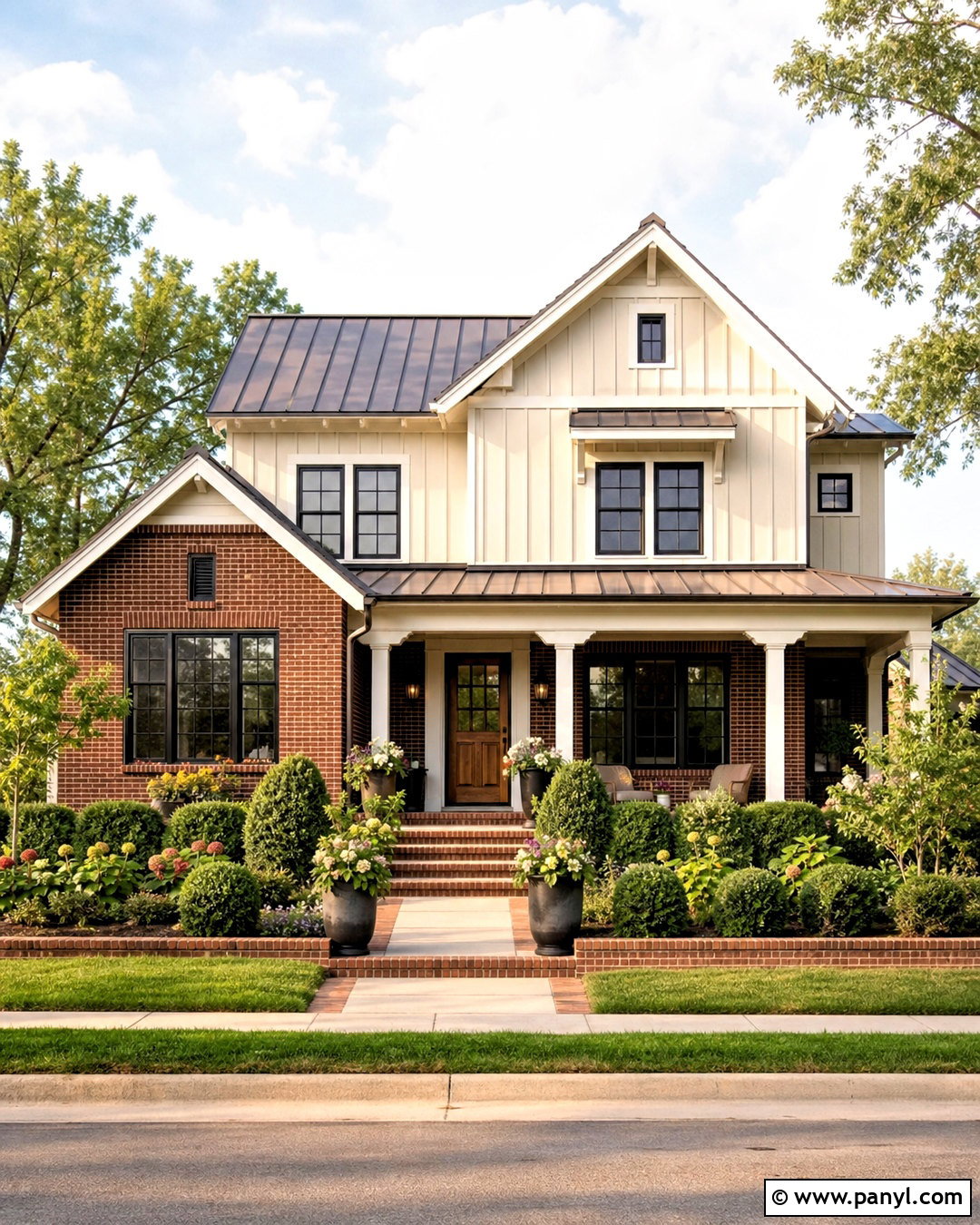
Mixed materials can make a flat facade appear more dimensional without changing the home’s footprint. Keep warm red or brown brick across the lower level, then install cream board-and-batten siding on gables or upper sections. Paint the trim a slightly deeper warm white so it connects both materials. A dark bronze roof, black-framed windows, and a stained walnut door provide structure. Repeat the wood tone through porch beams or garage door accents. Finish the front yard with a wide brick-edged walkway, rounded shrubs, flowering perennials, and two substantial entry planters. The result feels collected rather than overly matched, making it suitable for farmhouse, craftsman, and updated traditional architecture.
7. Stone And Wood Home Exterior
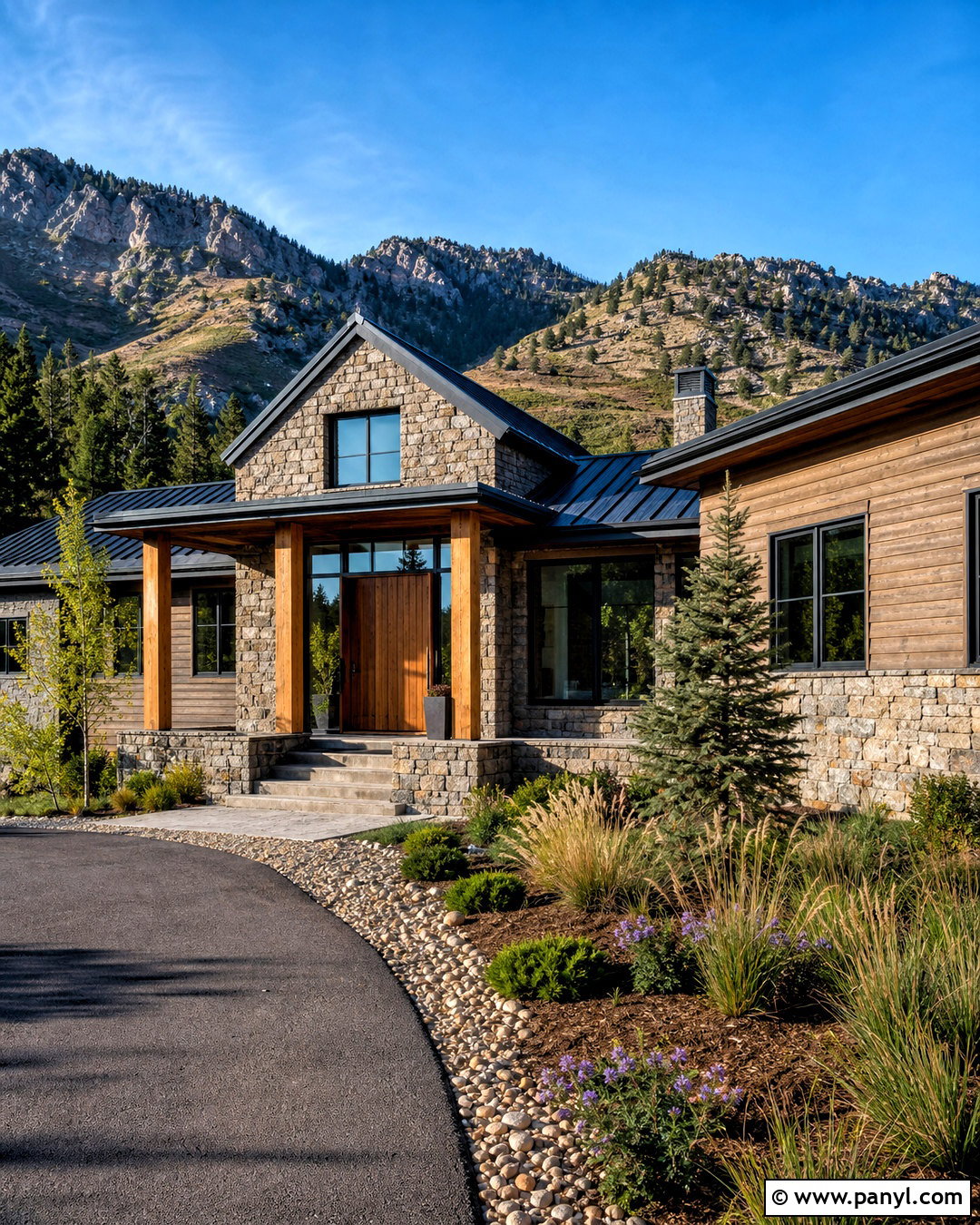
Natural stone and wood create an exterior that feels substantial, warm, and closely connected to its setting. Use irregular gray-brown stone across the foundation, chimney, and selected facade sections. Balance its weight with horizontal cedar siding or warm brown engineered-wood cladding. Dark bronze window frames and a charcoal metal roof create a crisp outline. A wide wood front door with narrow glass panels makes the entry easy to recognize. Continue the natural materials through stone steps, timber porch posts, and a gravel-edged walkway. Landscape with evergreens, native grasses, and low ground covers rather than formal flower borders. This coordinated look works particularly well for mountain, craftsman, contemporary, and wooded suburban homes.
8. Modern Farmhouse Exterior
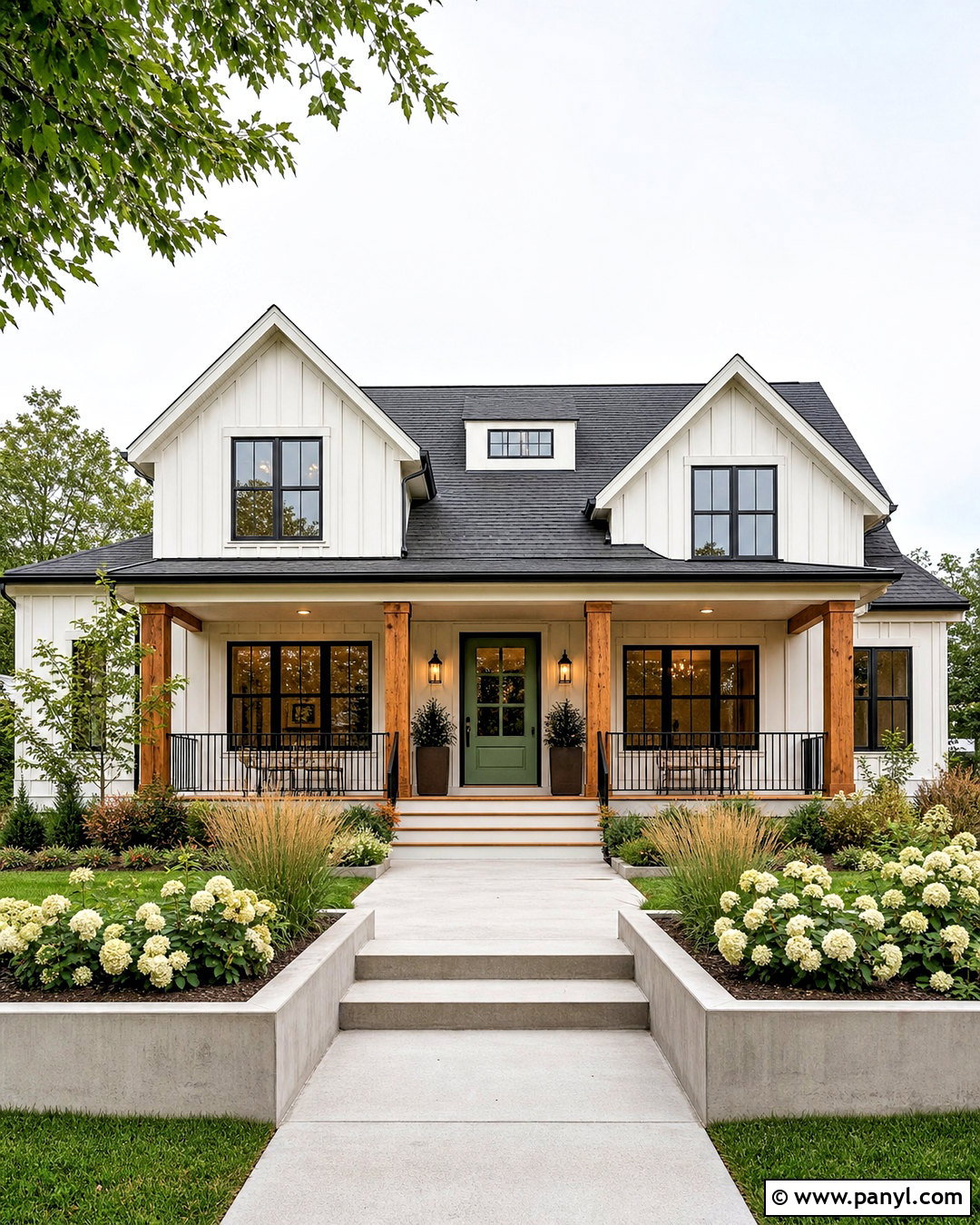
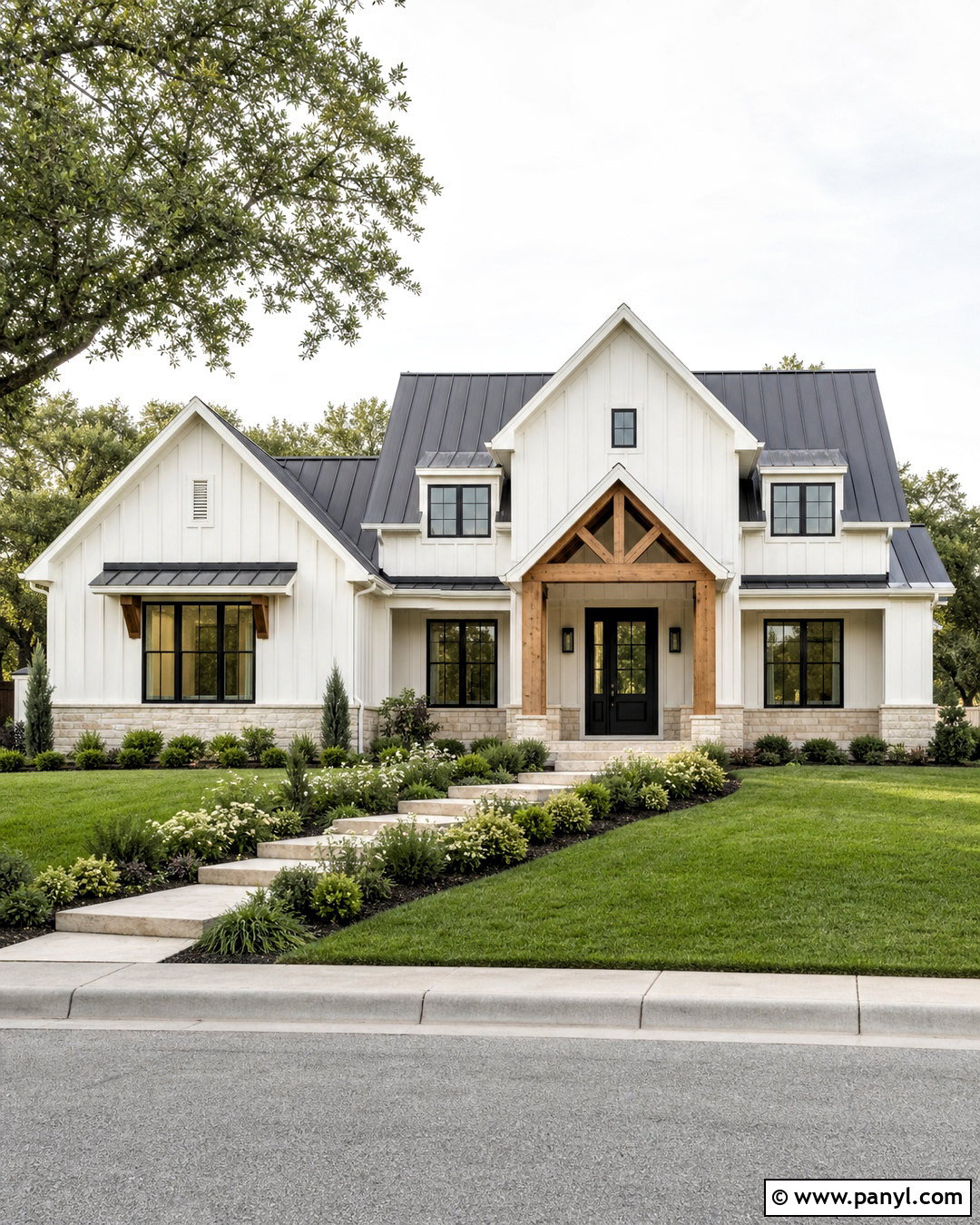
A modern farmhouse exterior feels most convincing when its simple materials and functional details work together. Cover the house in warm white board-and-batten siding, then use black-framed windows and a dark charcoal roof for definition. Add a broad front porch with natural wood posts, a pale stained ceiling, and simple black railings. The front door can be muted green, light wood, or deep black depending on the surrounding landscape. Choose galvanized or matte black barn-style lights in a restrained size. A straight concrete walkway, rectangular planting beds, hydrangeas, and airy grasses maintain the clean composition. Limit decorative signs and unnecessary rustic accessories so the architecture remains fresh, uncluttered, and residential.
9. Updated Ranch Home Exterior
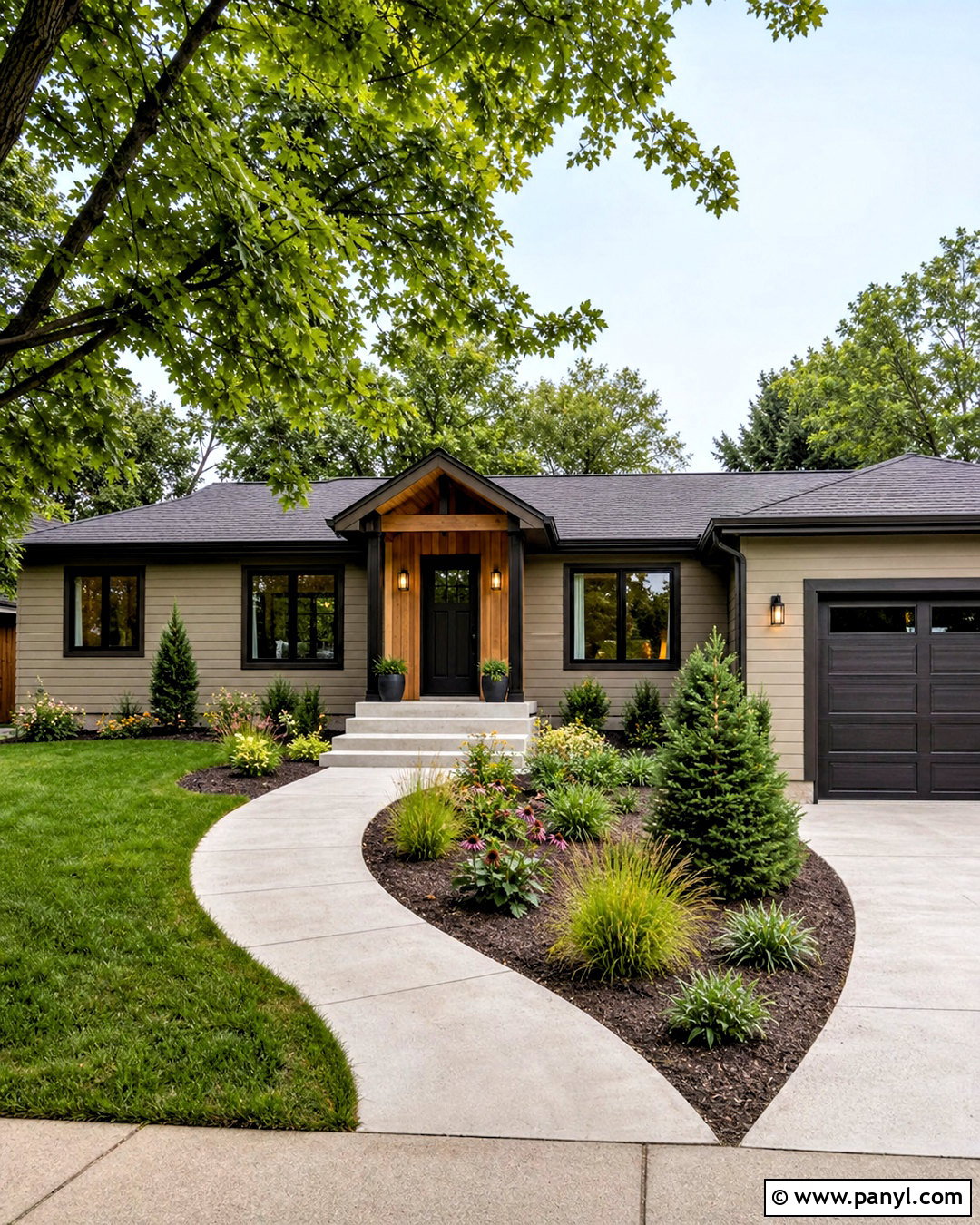
A one-story ranch can gain character through stronger proportions, layered materials, and a clearly defined entrance. Paint the brick or siding a warm greige, then use deep bronze on the fascia, gutters, window frames, and garage door. Add a shallow cedar porch roof over the front door to break up the long horizontal facade. Wide concrete steps and two modern sconces make the entrance more noticeable. Consider vertical wood siding around the doorway for additional height and texture. Replace overgrown foundation shrubs with grouped ornamental grasses, compact evergreens, and seasonal flowering plants. A broad walkway with a slight curve creates a more gracious arrival. Together, these changes modernize the house while respecting its low profile.
10. Craftsman Home Exterior
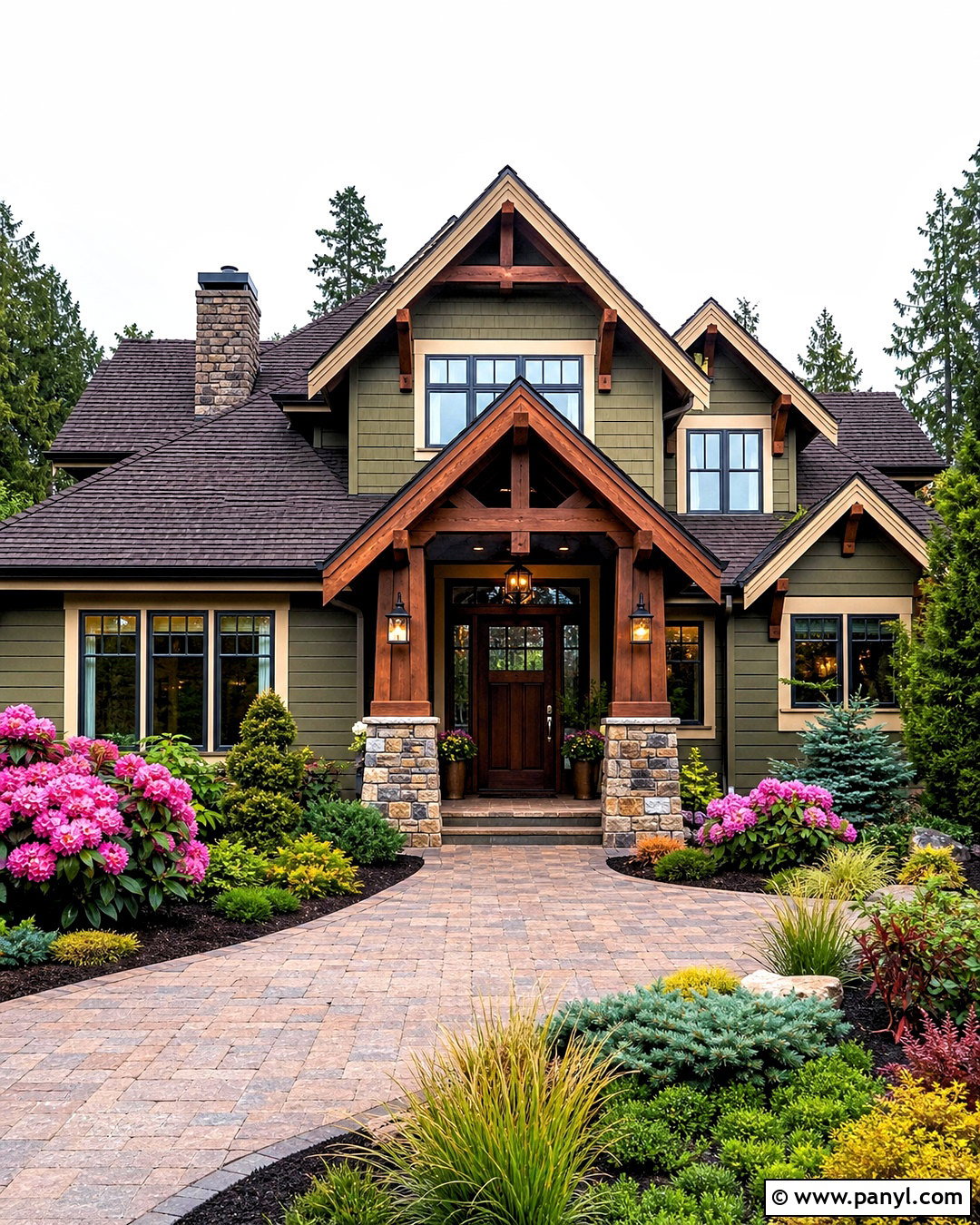
Craftsman architecture looks best when its strong rooflines, porch columns, and handcrafted materials remain the focus. Use warm olive or earthy taupe siding with creamy trim under the eaves and around windows. Wrap tapered porch columns with natural stone at the base, then stain the upper wood sections a medium walnut brown. A deep brown roof and matching gutters support the earthy palette. Choose a divided-light wood door and substantial bronze lanterns for the entrance. Layer the landscaping with rhododendrons, compact conifers, ornamental grasses, and ground-covering plants. Stone steps and a wide paver walkway add permanence. Avoid overly bright white trim, which can feel disconnected from the home’s warm natural materials.
11. Coastal Home Exterior
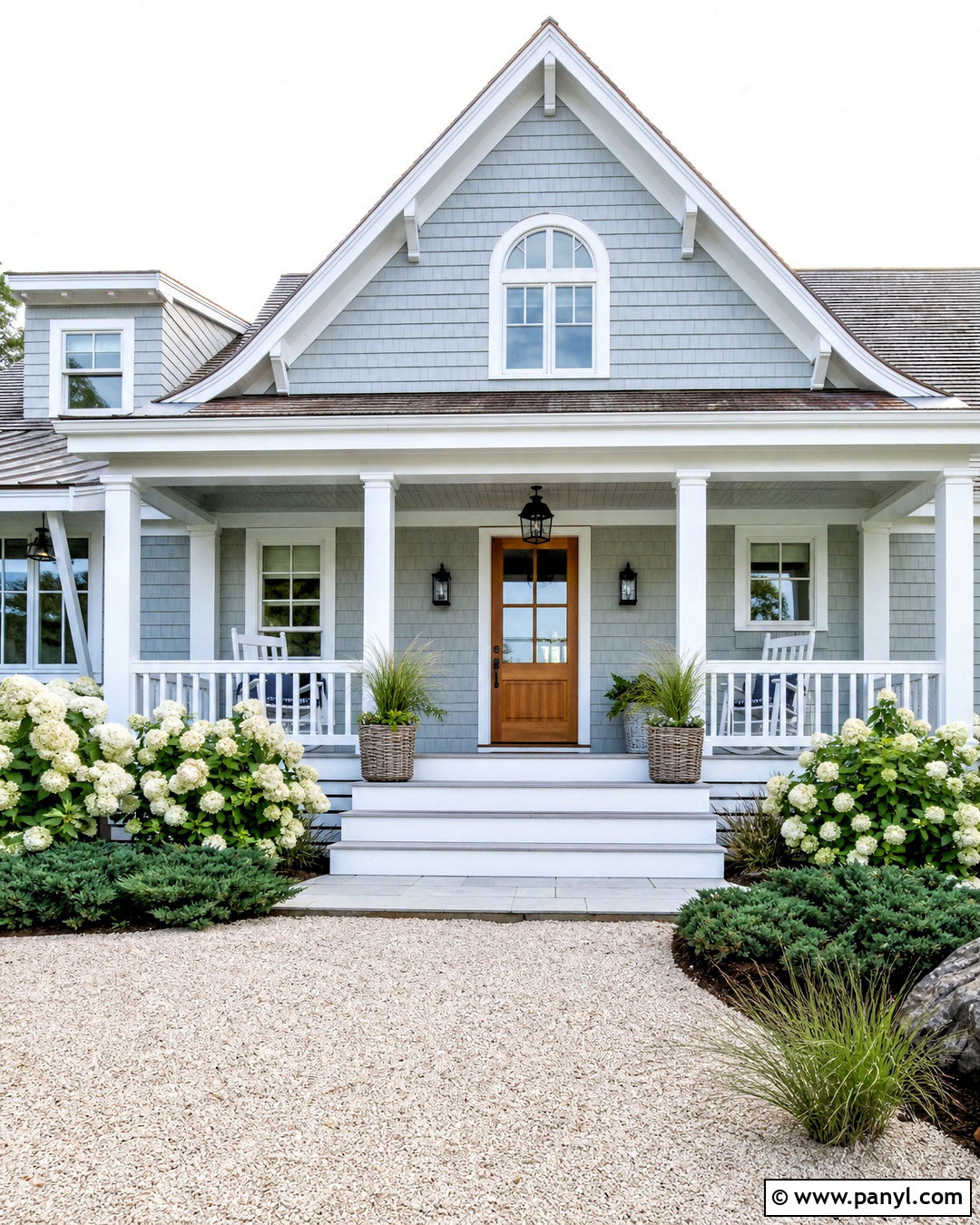
A coastal exterior can feel breezy and relaxed without relying on obvious nautical decorations. Choose pale blue-gray shingles or horizontal siding, then add clean white trim, porch railings, and window surrounds. A weathered gray roof keeps the palette soft, while a natural teak or light oak door introduces warmth. Use simple brushed nickel or black lanterns instead of themed fixtures. Wide porch steps, white rocking chairs, and woven planters create a comfortable entrance. Landscape with ornamental grasses, hydrangeas, low junipers, and gravel that can tolerate an open, windswept setting. This complete look also works away from the coast because its appeal comes from balanced colors, natural textures, and an uncluttered facade.
12. Mediterranean Stucco Exterior
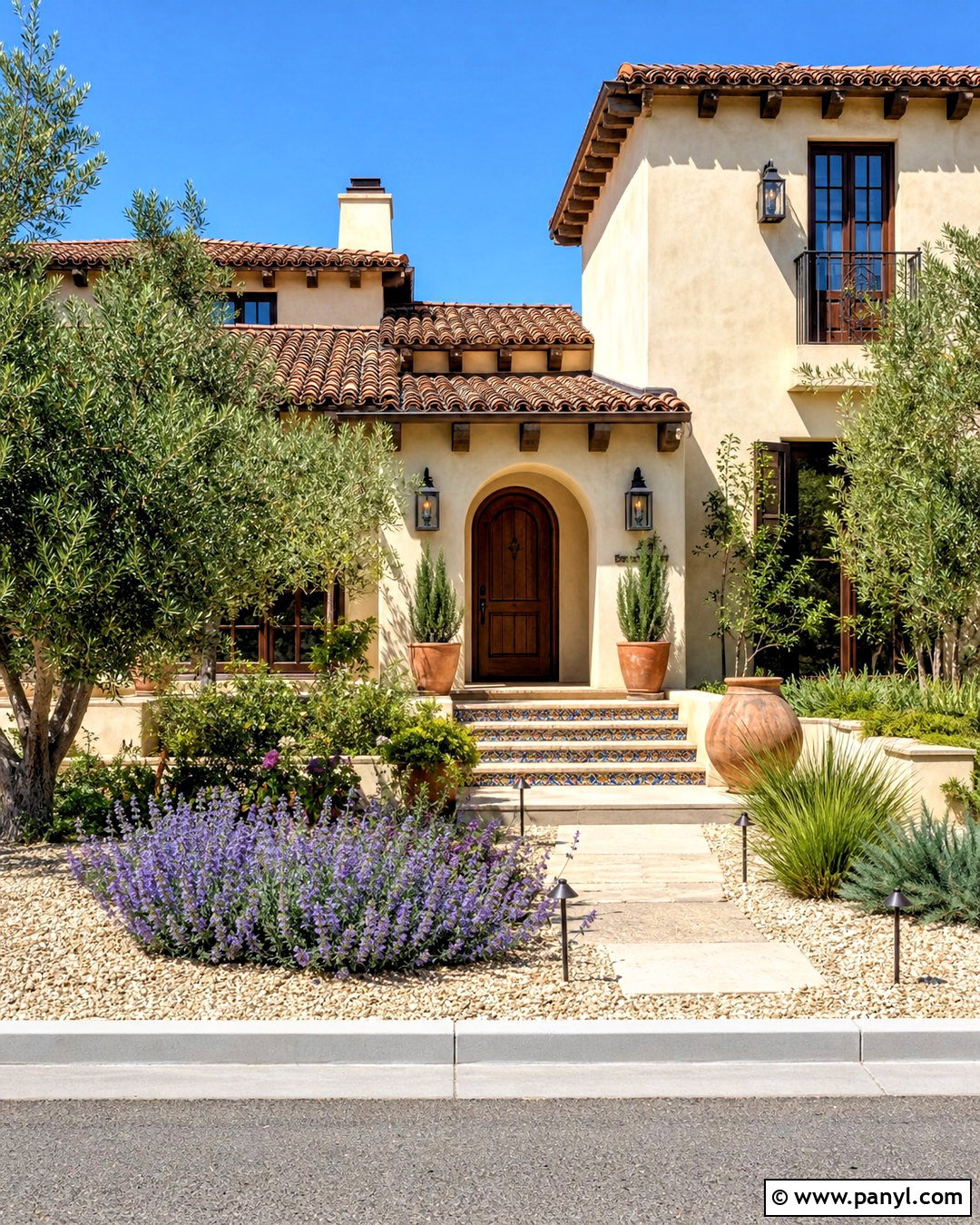
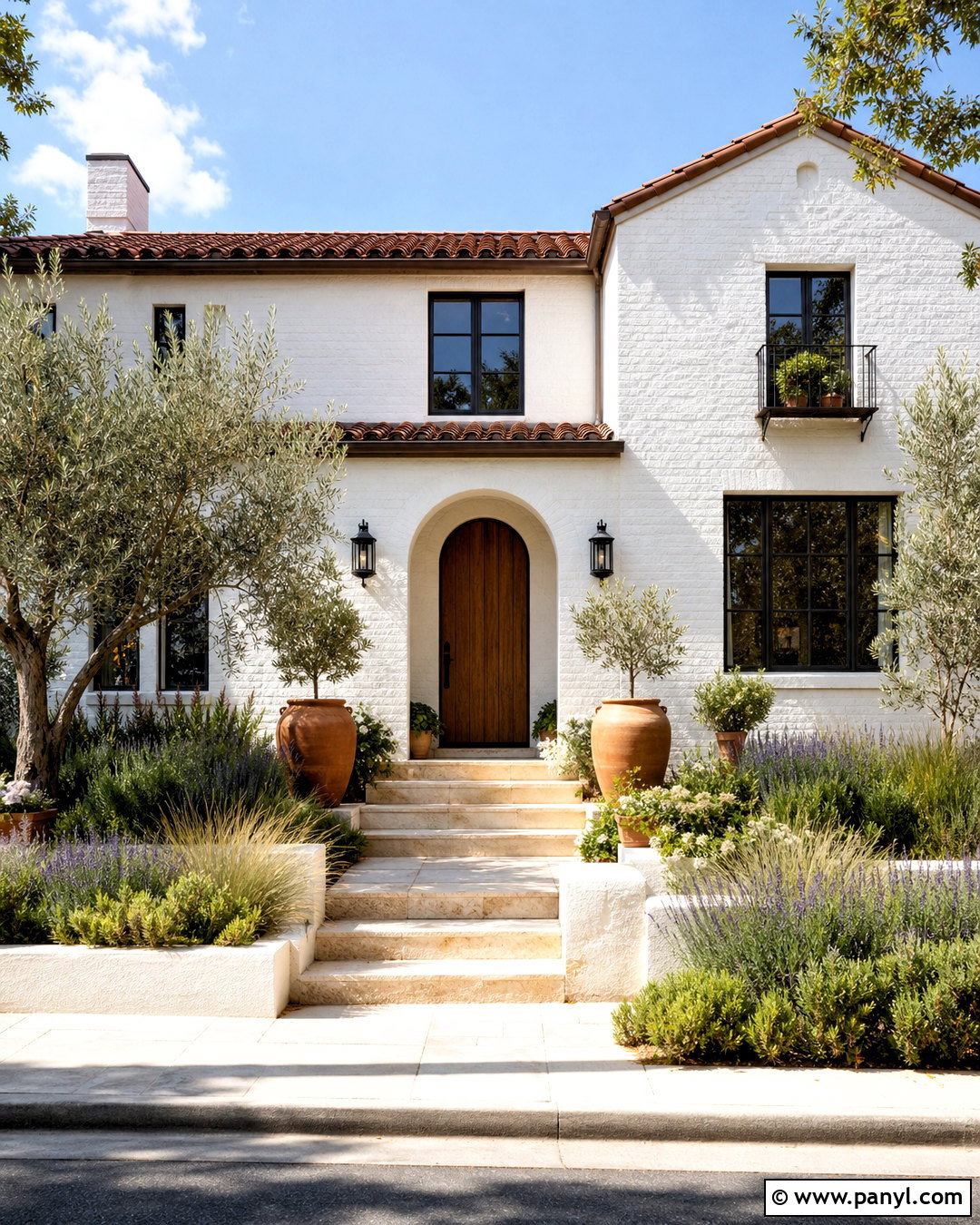
Sun-warmed stucco, earthy roofing, and textured landscaping form the foundation of a Mediterranean exterior. Use creamy beige or pale sand stucco across the main walls, paired with a terracotta barrel-tile roof. Deep brown wood windows, garage doors, and exposed beams add definition without creating a sharp contrast. Make the front entrance a focal point with an arched wood door, warm iron lanterns, and patterned tile on the stair risers. A pale stone or gravel walkway should curve through drought-tolerant planting, including lavender, rosemary, olive trees, and soft grasses. Use large clay pots near the entry for additional color. The finished design feels warm and established while keeping every decorative detail connected to the architecture.
13. Tudor Home Exterior
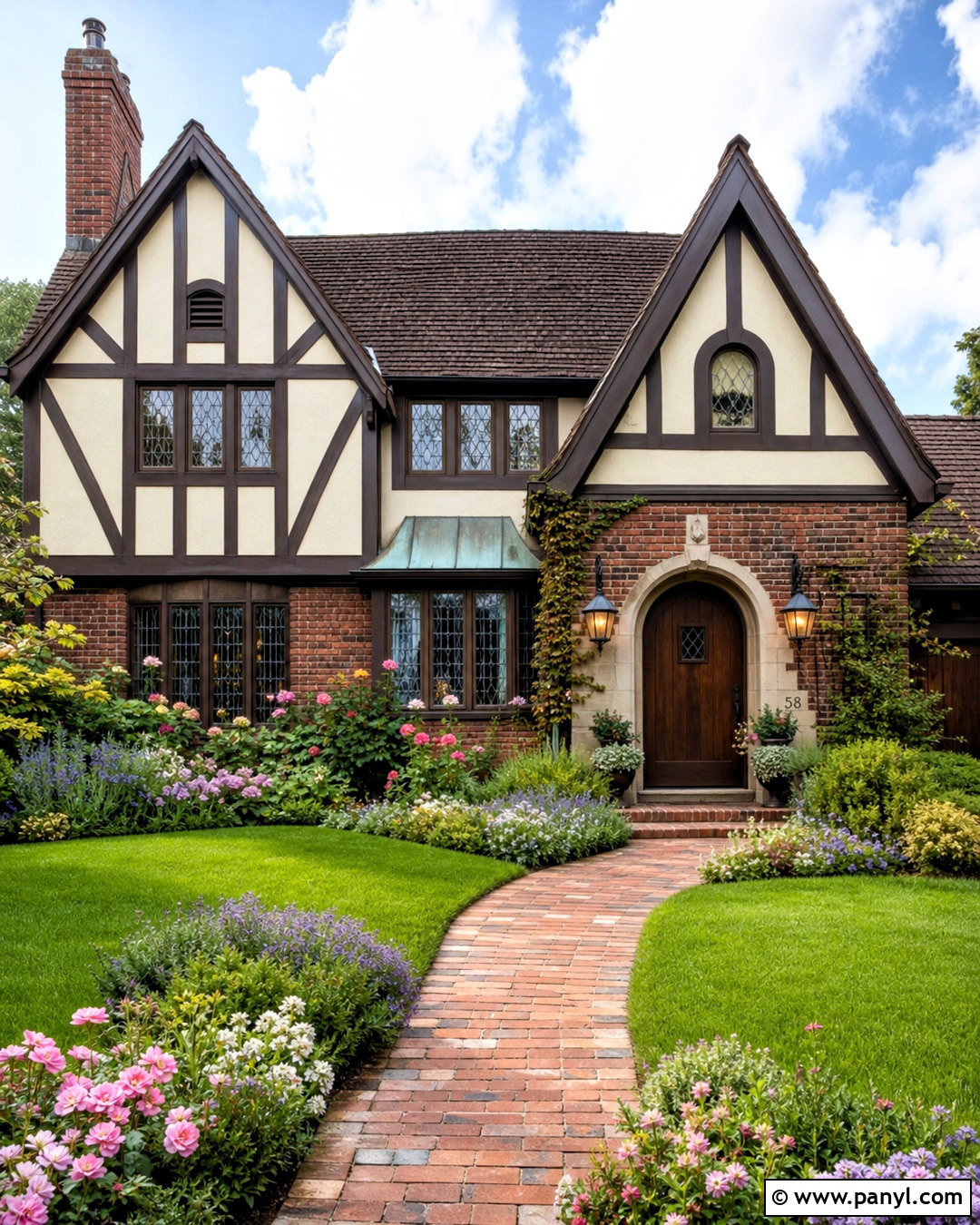
A Tudor exterior benefits from careful contrast and materials that respect its distinctive rooflines. Keep the stucco sections warm cream rather than stark white, and paint the half-timber details deep brown or charcoal. Leave red brick unpainted when possible, allowing its natural variation to add texture around the lower walls and chimney. Use a dark brown roof with minimal color variation. An arched wood door, black iron lanterns, and simple leaded-glass windows reinforce the traditional structure. Soften the formal facade with a curved brick path, loose hedges, climbing greenery, and layered cottage perennials. The goal is not to make the house look new, but to give its historic character a cleaner, more coordinated presentation.
14. Midcentury Modern Home Exterior
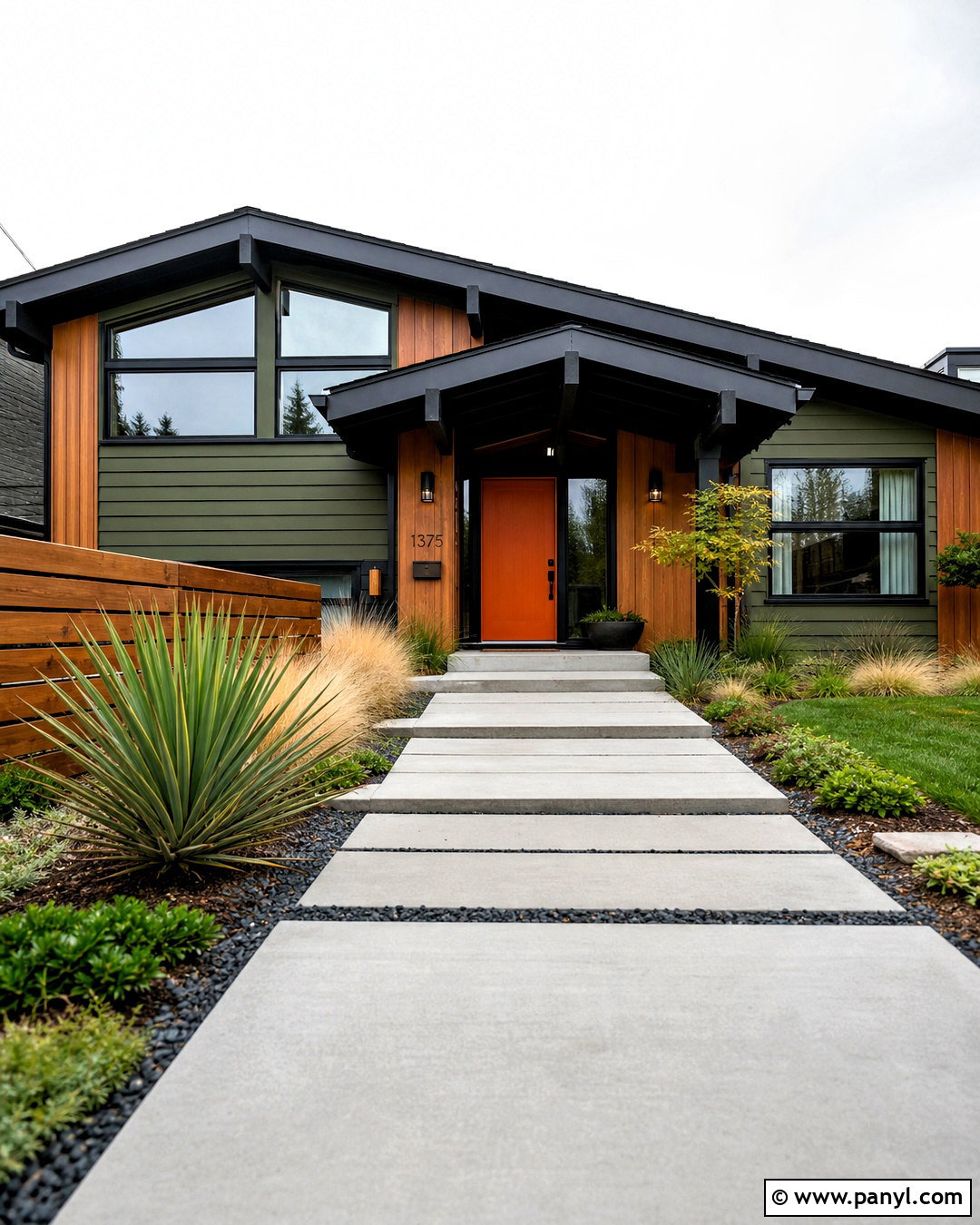
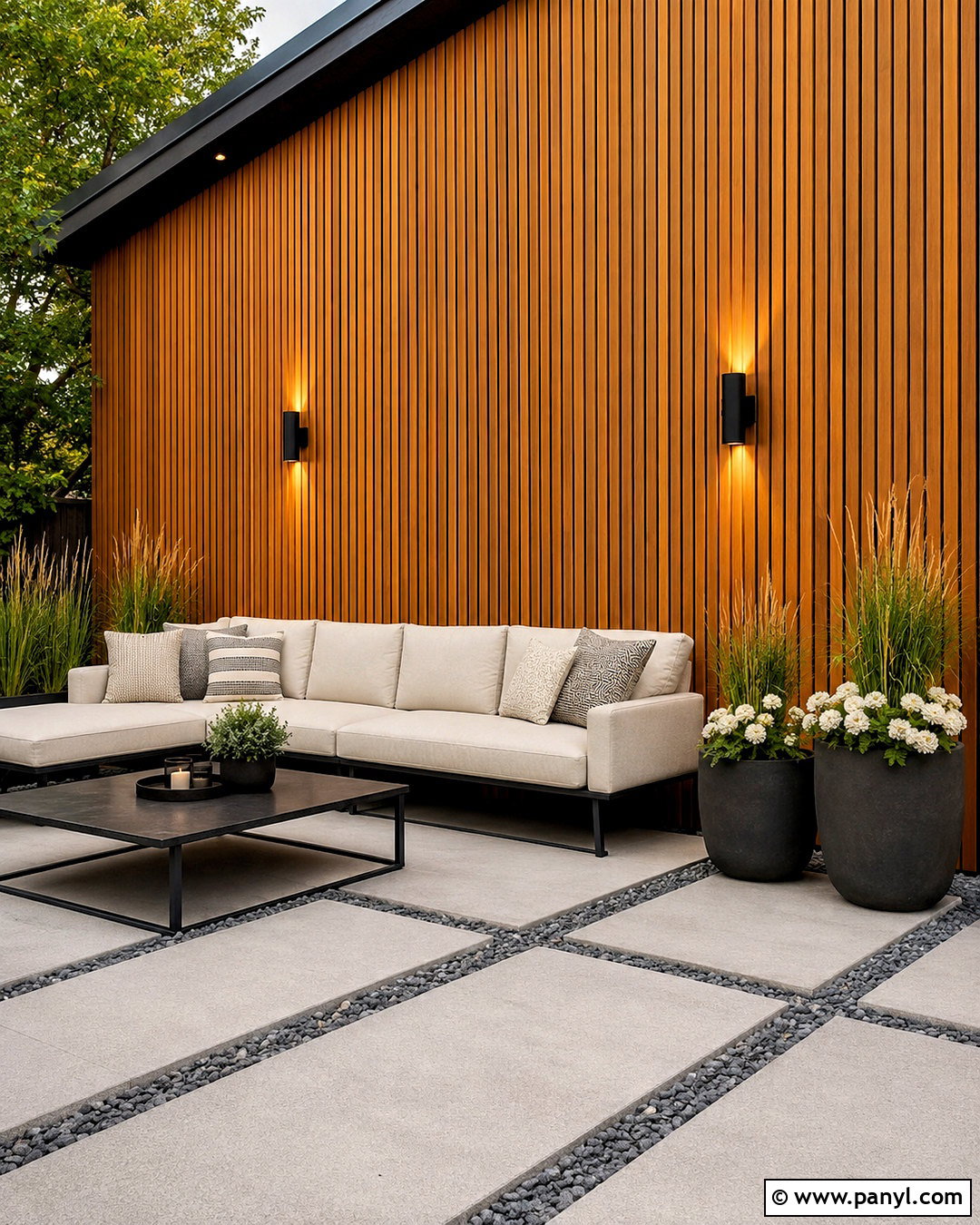
Low rooflines and broad windows give a midcentury home its recognizable shape, so exterior updates should emphasize those features. Use warm gray or muted olive siding alongside vertical cedar panels. Paint beams, fascia, and window frames charcoal to sharpen the horizontal architecture. A bright mustard, burnt orange, or teal front door can provide one controlled burst of color. Choose flat concrete pavers separated by gravel for the walkway, and keep porch lighting geometric but simple. Plant sculptural grasses, low evergreens, yucca, and spreading ground covers rather than tall foundation hedges. A horizontal wood screen can add privacy near the entrance. The complete result should feel open, functional, and connected to the surrounding yard.
15. Cottage Home Exterior
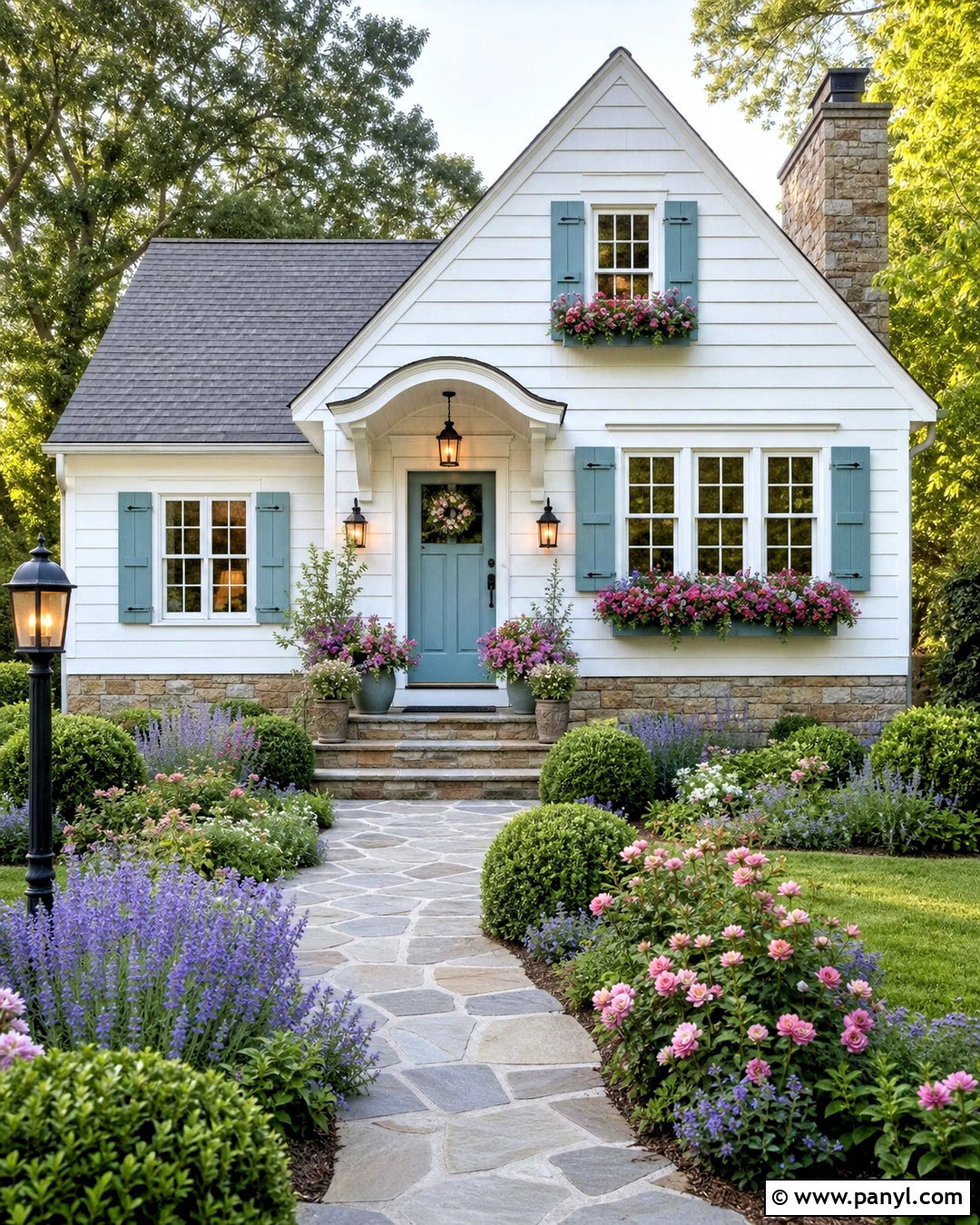
A cottage exterior should feel layered and welcoming while still appearing well maintained. Choose creamy white lap siding with muted blue-green shutters and a soft gray roof. A rounded or paneled wood door painted dusty blue can create a charming focal point. Add a small covered stoop with simple brackets, warm lanterns, and two overflowing planters. Guide visitors toward the entrance with an irregular flagstone path bordered by lavender, roses, catmint, and low boxwoods. Keep plants slightly loose rather than perfectly symmetrical, but leave windows, steps, and walkways unobstructed. White trim connects the facade, while natural stone around the foundation adds age and texture. This look works especially well on compact homes with traditional windows.
16. Contemporary Mixed Siding Exterior
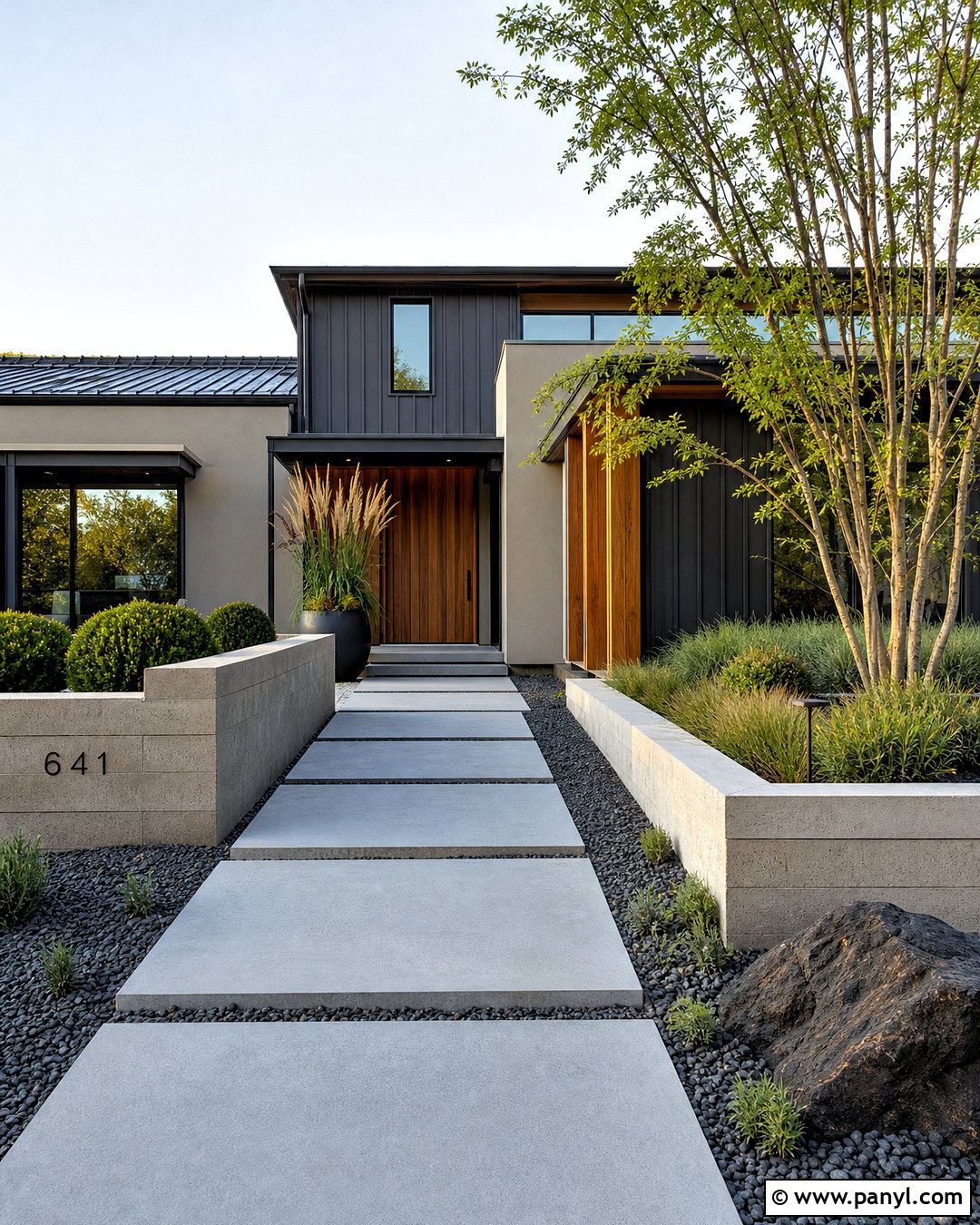
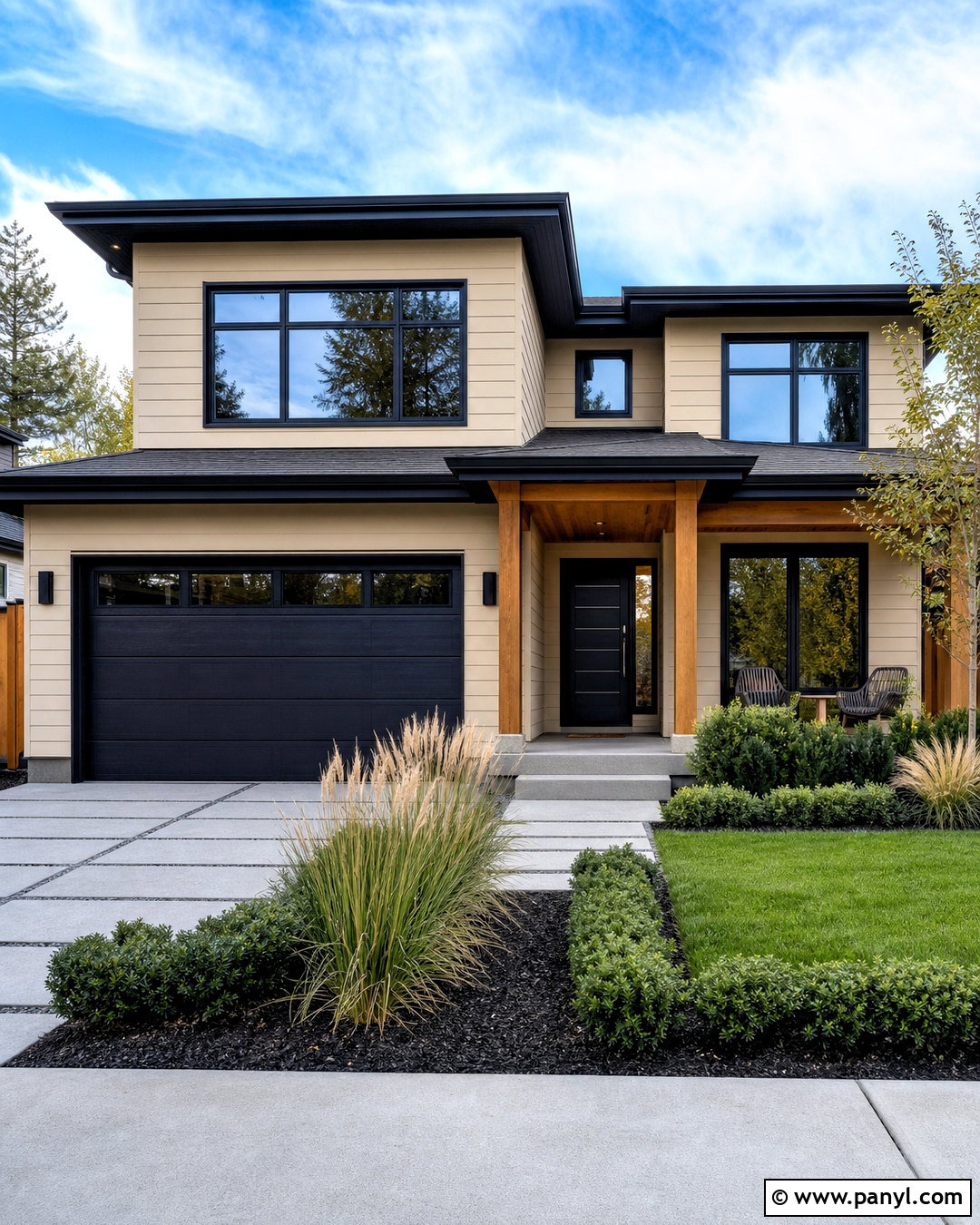
A contemporary exterior gains depth from carefully placed materials rather than applied decoration. Combine soft greige stucco with vertical charcoal siding and warm cedar panels around the entrance or garage. Use black window frames, slim gutters, and a low-profile metal roof to create a clean outline. The front door can blend into the wood section for a seamless appearance. Large rectangular concrete pavers, dark gravel, and low retaining walls extend the geometry into the yard. Choose sculptural shrubs, ornamental grasses, and one small multistem tree for controlled softness. Recessed porch lighting and minimal address numbers complete the facade. Keep the material palette limited to three main finishes so the design feels intentional instead of fragmented.
17. Red Brick Home Exterior
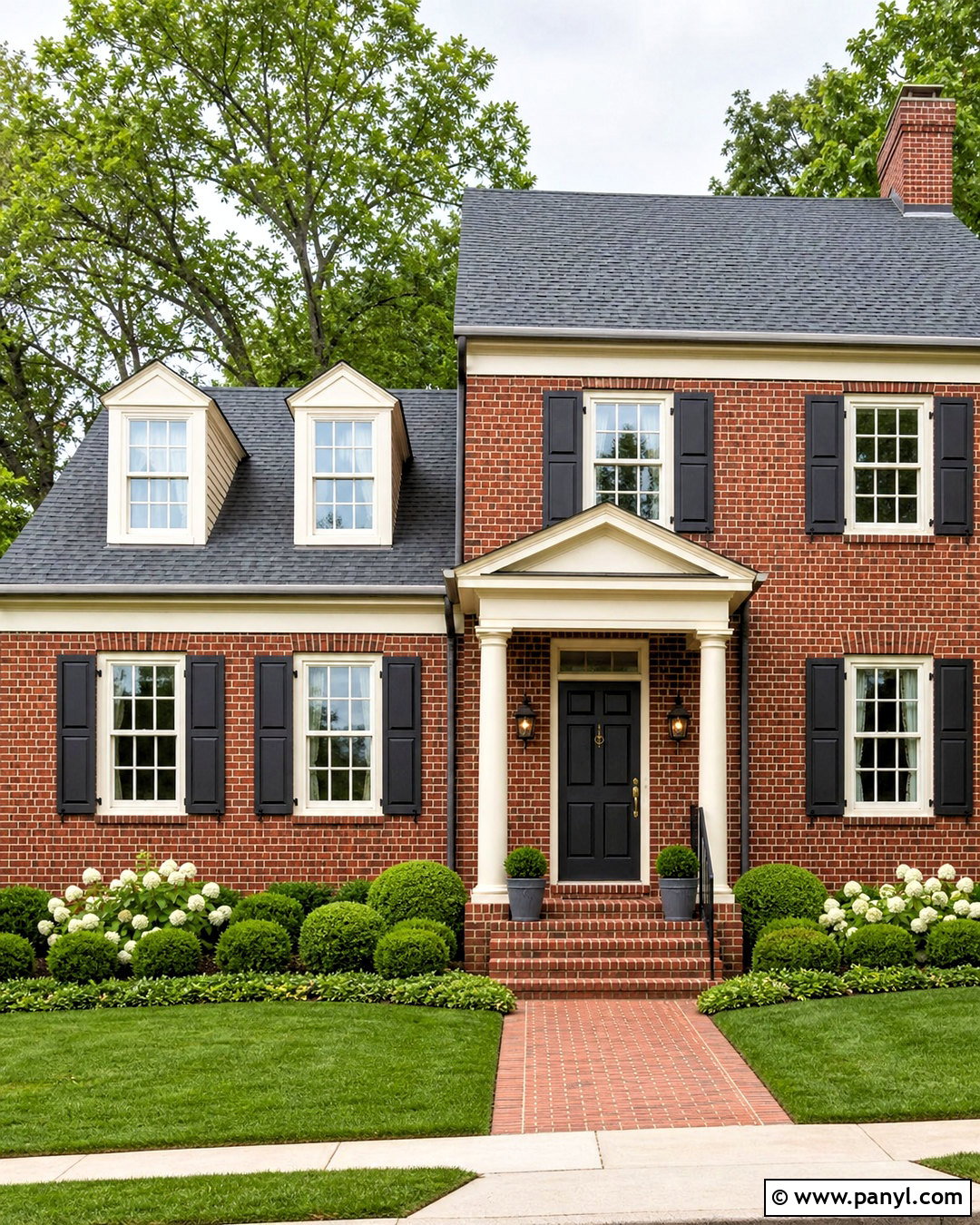
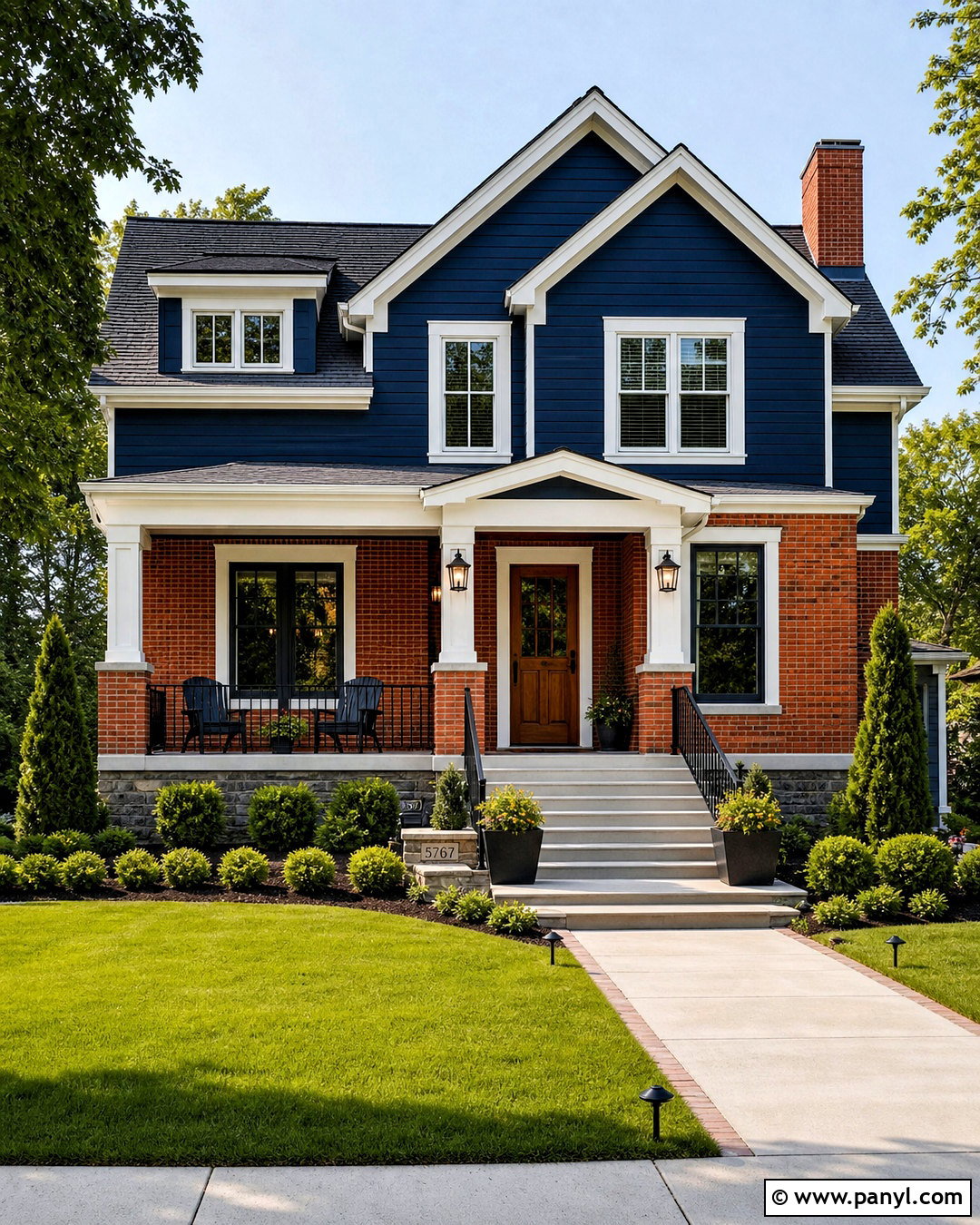
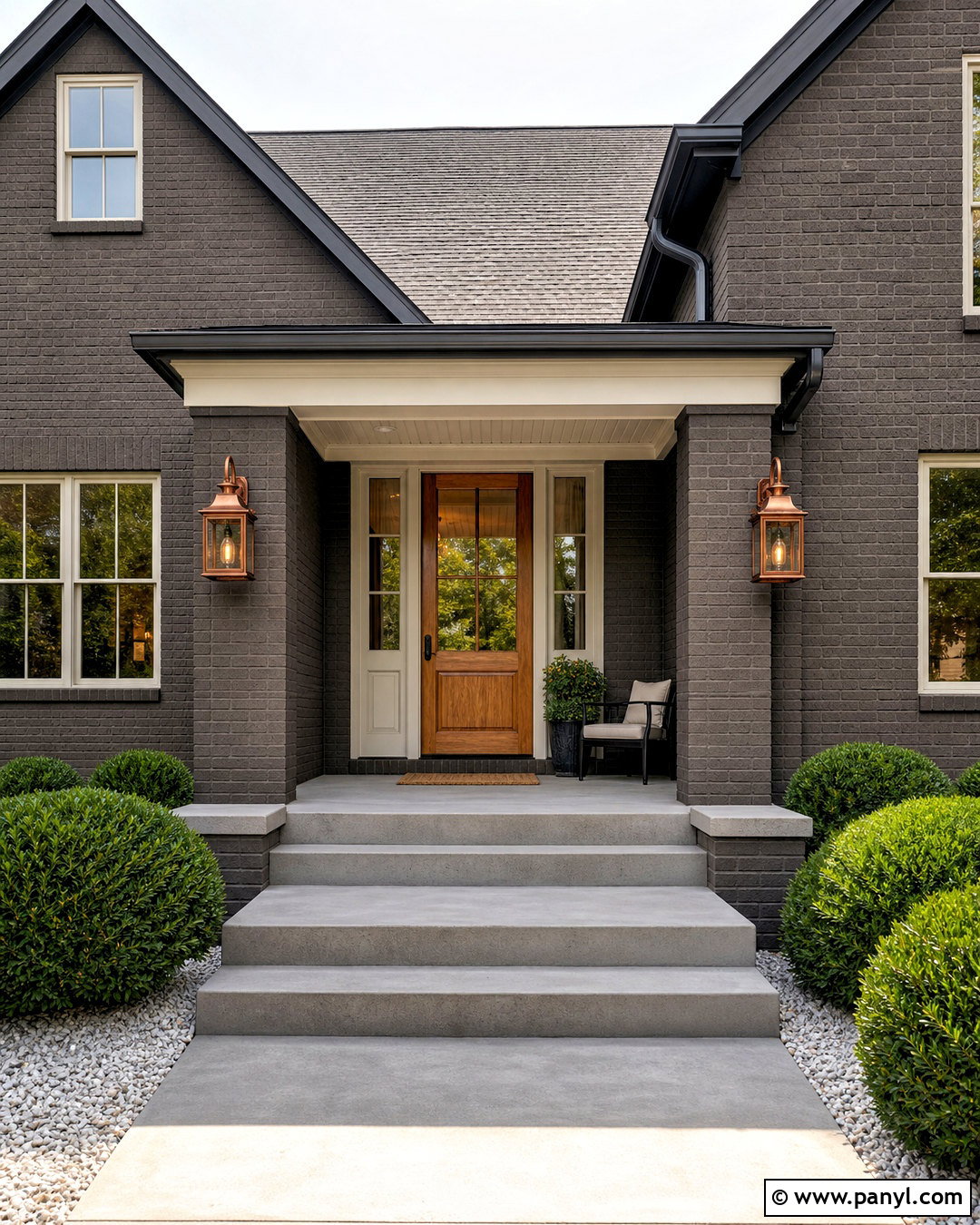
Traditional red brick can look refreshed without being painted or covered. Clean and repair the masonry first, then choose a warm off-white for the trim, soffits, and porch columns. Deep charcoal shutters and a matching front door will define the facade while respecting the brick’s natural color. Use a dark gray roof with subtle variation rather than a heavily patterned shingle. Copper or bronze lanterns add warmth beside the entry. Repeat the brick in a walkway border or front steps to connect the house with the landscape. Rounded boxwoods, white flowering shrubs, and green ground covers keep the planting simple. This coordinated update preserves the home’s character while giving every visible element a clearer relationship.
18. Small Home Exterior
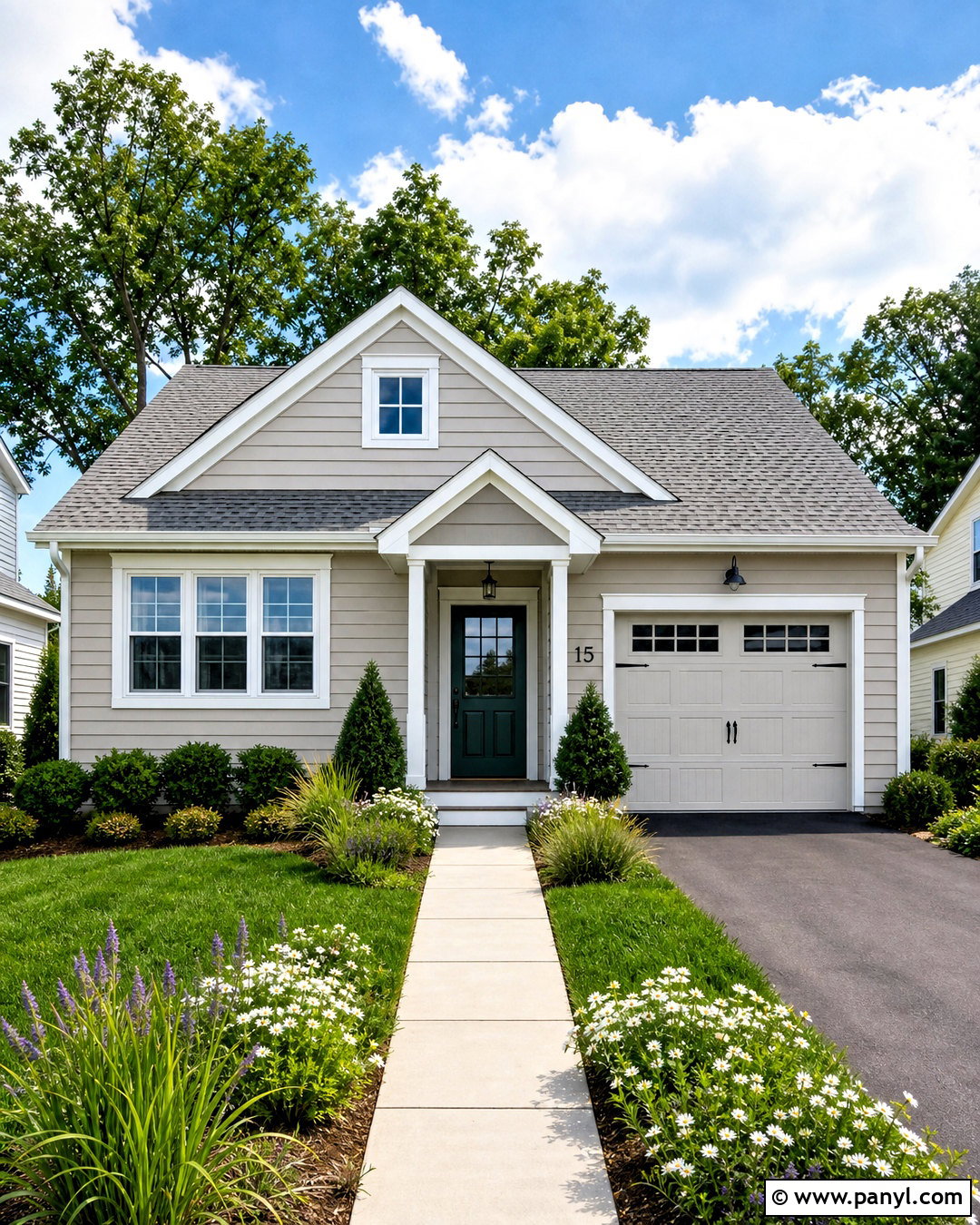
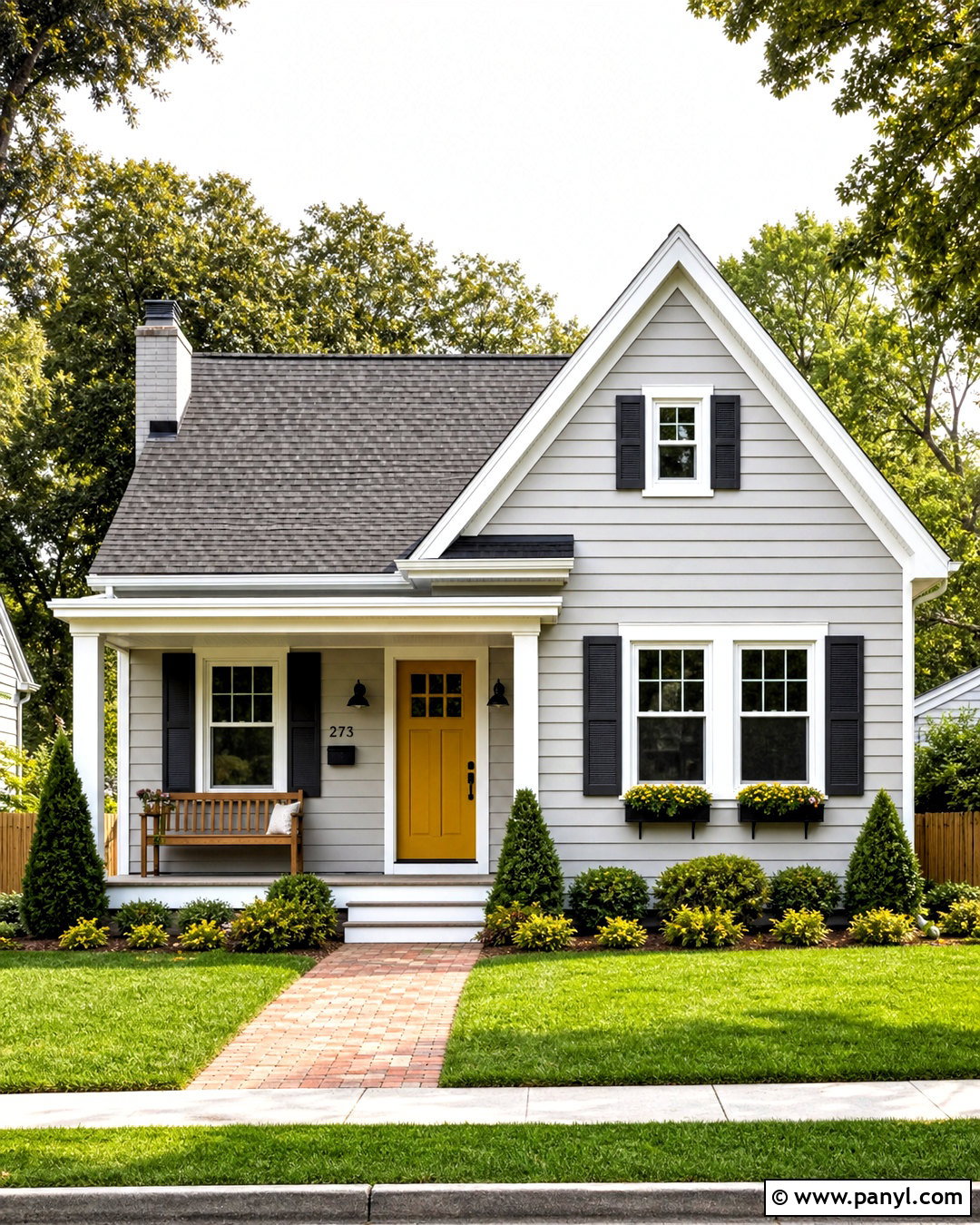
A small exterior can feel more spacious when its colors, entrance, and landscaping remain visually simple. Cover the home in light warm gray siding with white trim and a medium gray roof. Paint the front door deep blue or forest green to establish a single focal point. Use one appropriately scaled porch light, clean house numbers, and a compact overhang rather than multiple decorative accents. Extend a straight walkway from the sidewalk or driveway to make the entrance feel direct. Narrow planting beds filled with dwarf evergreens, grasses, and repeated flowering plants prevent crowding. Paint the garage door the same color as the siding if it dominates the facade. The unified palette makes the architecture appear calmer and wider.
19. Front Porch Home Exterior
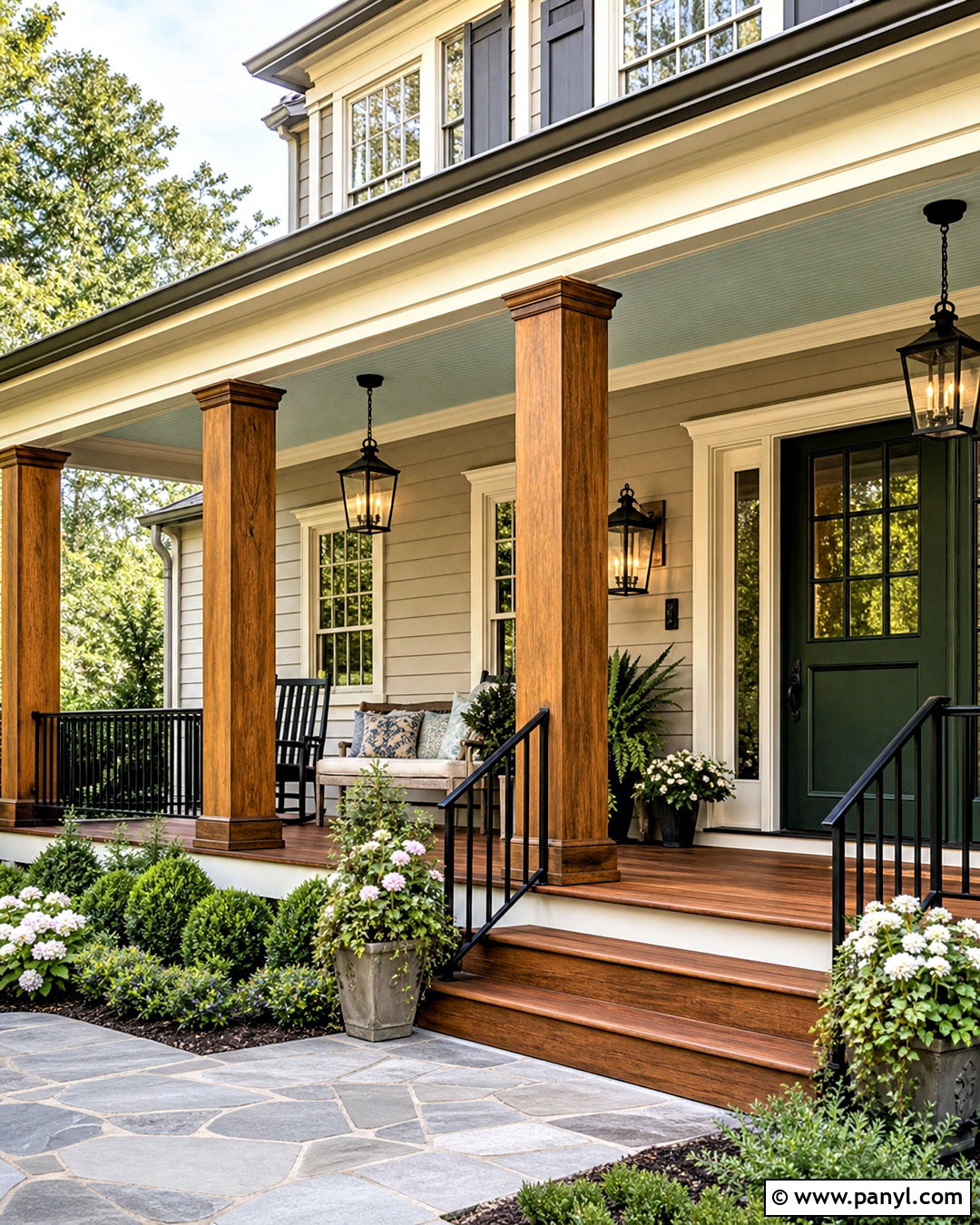
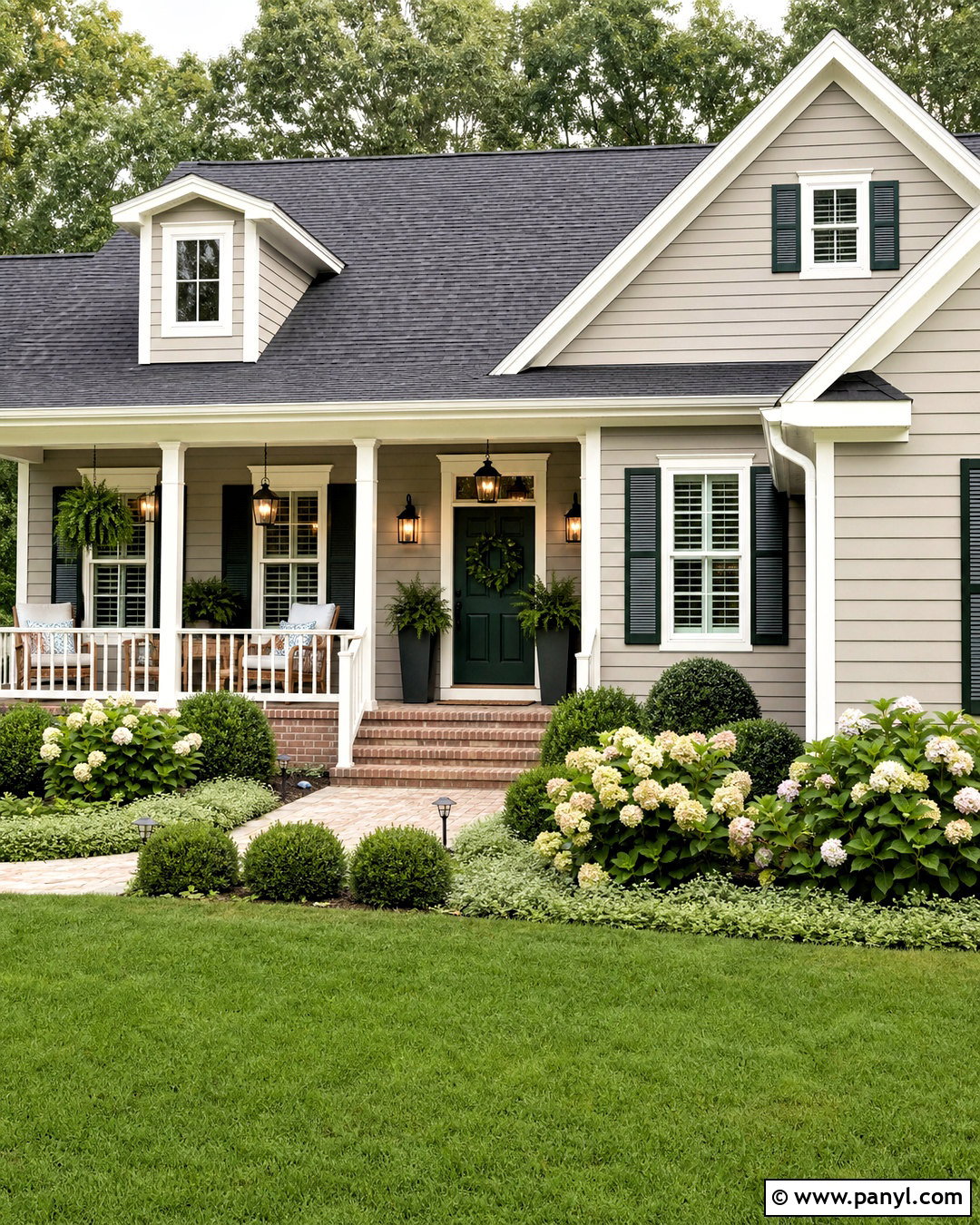
A well-designed porch can transform the entire exterior by adding depth, shelter, and usable living space. Start with a warm greige or cream house color, then introduce substantial wood columns and a medium-tone stained porch floor. Paint the ceiling pale blue-gray or warm white to reflect daylight. Arrange two comfortable chairs, a small side table, and one outdoor bench without blocking the path to the door. Use black railings, oversized lanterns, and a deep green front door for contrast. Wide steps should connect to a stone or concrete walkway bordered by low shrubs and flowering plants. Repeat the porch materials elsewhere through window boxes, garage accents, or planters so the addition feels original to the house.
20. Low Maintenance Home Exterior
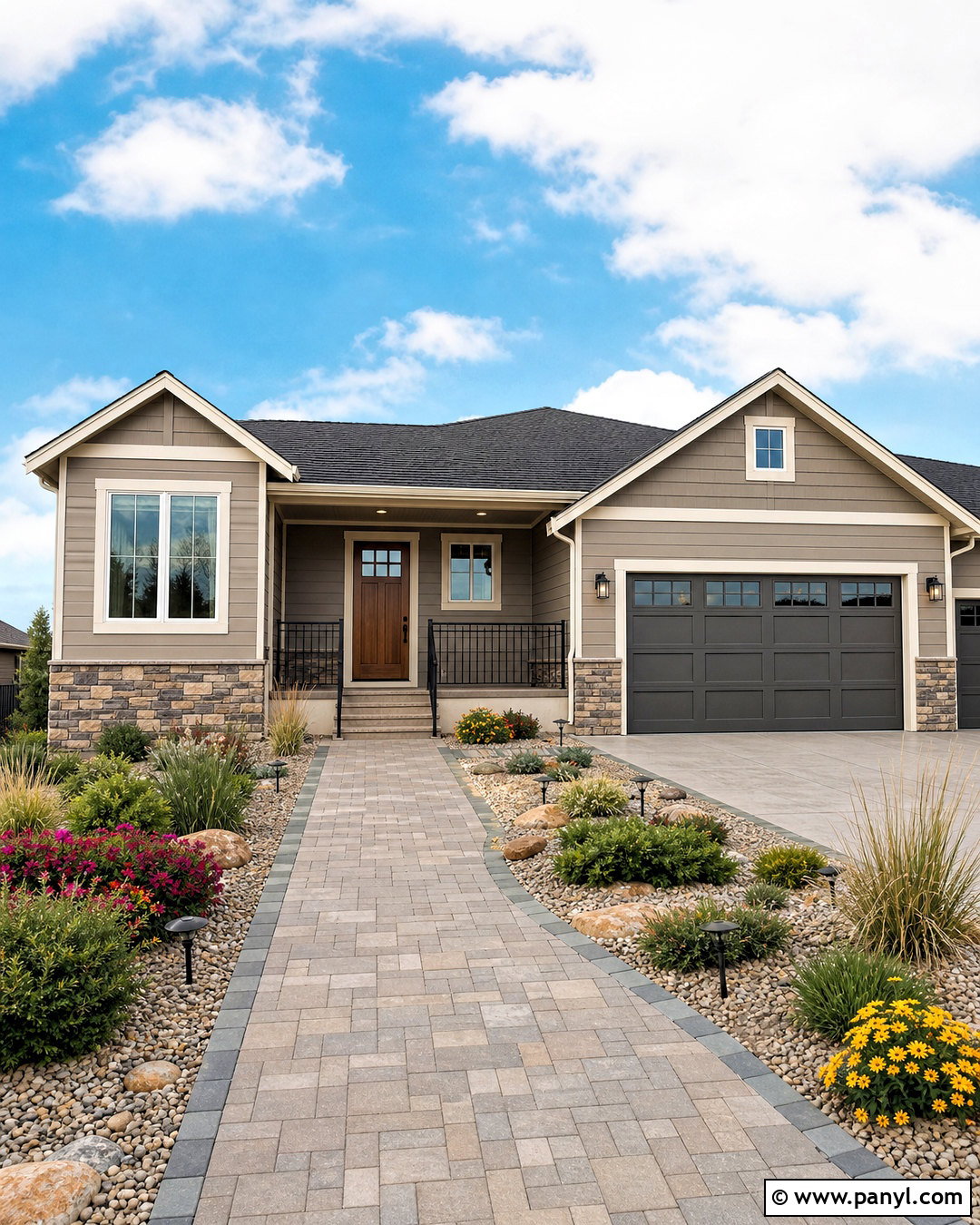
A low-maintenance exterior can still feel warm, detailed, and inviting. Use durable fiber-cement siding in earthy taupe, paired with off-white composite trim and a charcoal architectural-shingle roof. Choose fiberglass or metal-clad doors with a realistic wood finish for natural character without frequent refinishing. Black aluminum railings, weather-resistant sconces, and integrated gutters create practical structure. Replace demanding lawn areas with defined planting beds, gravel, native grasses, evergreen shrubs, and drought-tolerant flowering plants suited to the local climate. A wide paver walkway provides a stable entrance and reduces muddy edges. Keep the palette limited and repeat each material at least twice. The coordinated finish makes the property look polished without requiring constant seasonal updates.
Conclusion:
The strongest home exteriors feel coordinated from the roofline to the walkway. Instead of selecting paint, lighting, planting, and materials separately, create one clear palette that suits the architecture and surrounding landscape. These 20 home exterior ideas demonstrate how color, texture, trim, entrances, and landscaping can work together as a complete design. Begin with the updates that address maintenance, then improve the most visible areas, such as the front door, porch, garage, and foundation beds. Even a modest home can gain a more welcoming presence through consistent finishes and better proportions. Choose a look you can maintain comfortably, adapt it to local conditions, and let the house’s existing character guide every decision.

Related Ideas and Inspiration:
Leave a Reply