
Deep, saturated blue can make an ordinary facade feel polished, welcoming, and full of character. The best **navy blue exterior house colors** balance that rich body shade with trim, roofing, masonry, doors, and landscaping that prevent the home from looking too dark. Crisp white creates classic contrast, while cedar, copper, brick, and stone bring natural warmth. Black details produce a modern edge, and colorful front doors add personality without overwhelming the architecture. Navy also works across many home types, from compact ranch houses and coastal cottages to Craftsman homes and contemporary builds. Because sunlight and permanent materials affect how blue appears, always test large samples on several sides of the house. Explore these complete, practical **navy blue exterior house colors**.
1. Navy Blue Exterior With White Trim
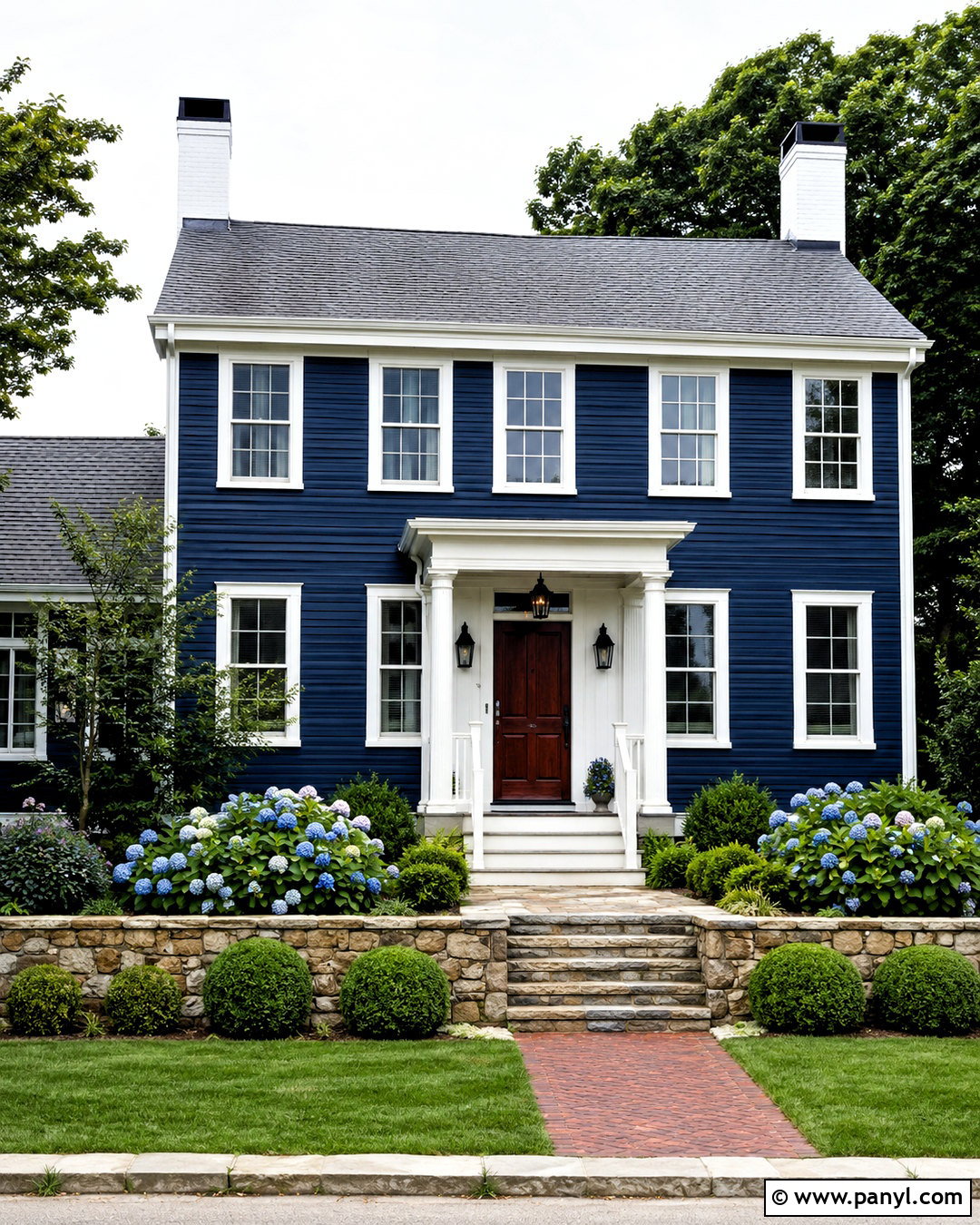
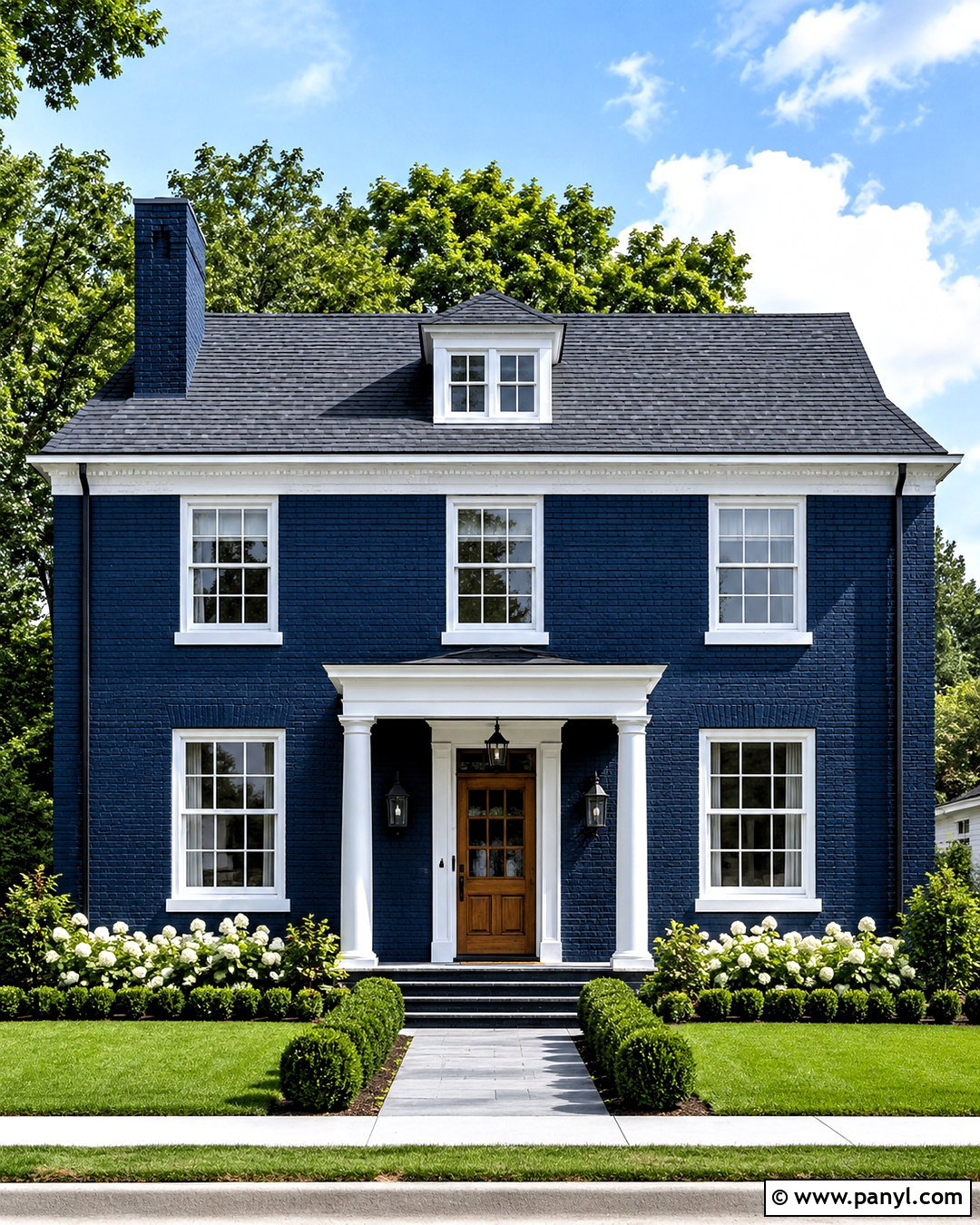
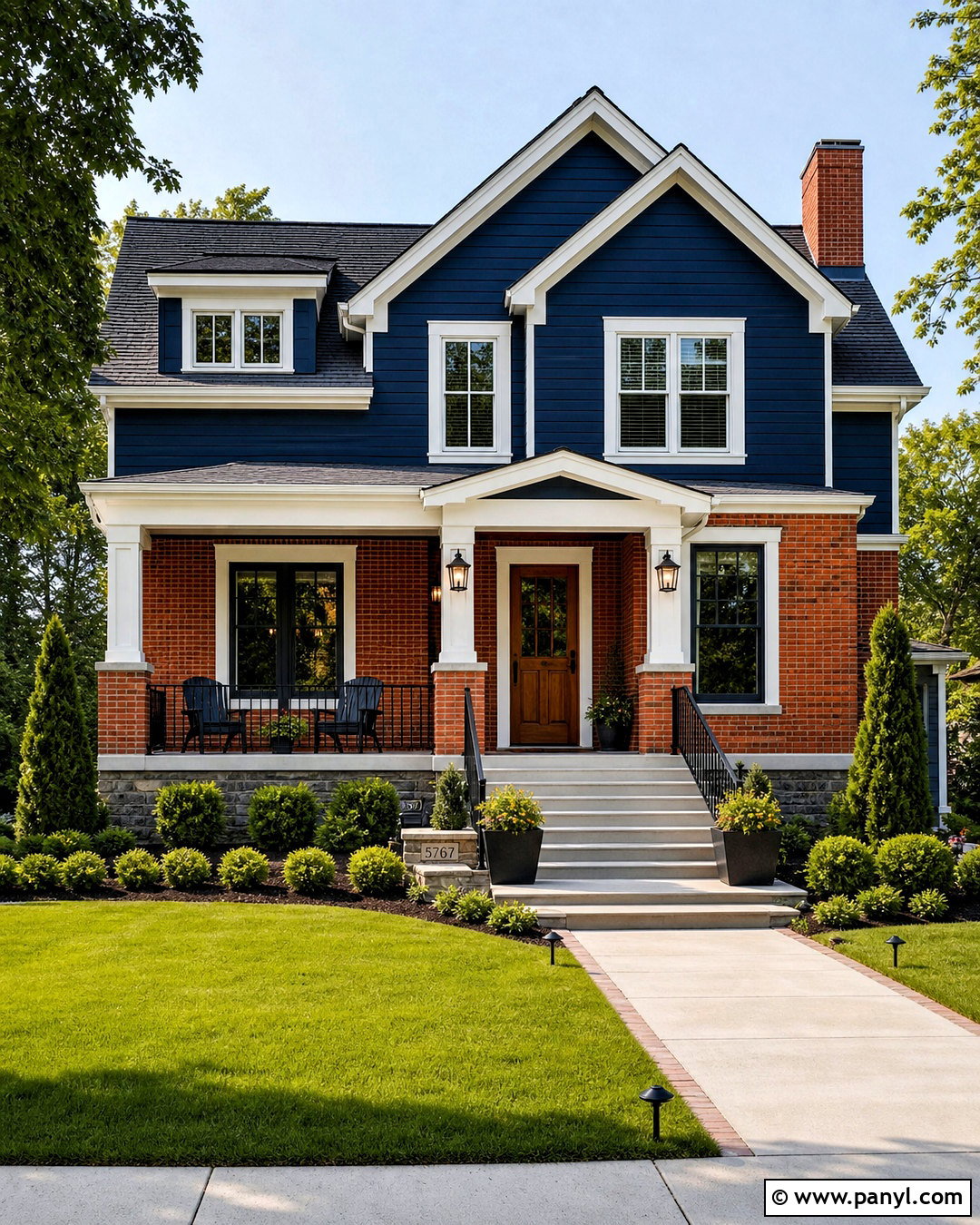
Crisp white trim gives a navy blue house a clean, timeless appearance. Paint the horizontal siding a true deep navy, then use bright white on the fascia, window frames, porch columns, railings, and garage surrounds. A medium-gray shingle roof softens the contrast and keeps the overall palette approachable. Complete the entrance with a natural mahogany door, brushed nickel hardware, and simple black lanterns. White hydrangeas, rounded boxwoods, and a light concrete walkway repeat the fresh trim color throughout the yard. This combination works especially well on Colonial, Cape Cod, and traditional two-story homes because it clearly defines their architectural lines. Deep navy shades are commonly paired with bright white trim to create contrast and highlight exterior details. ()
2. Navy Blue Exterior With Black Trim
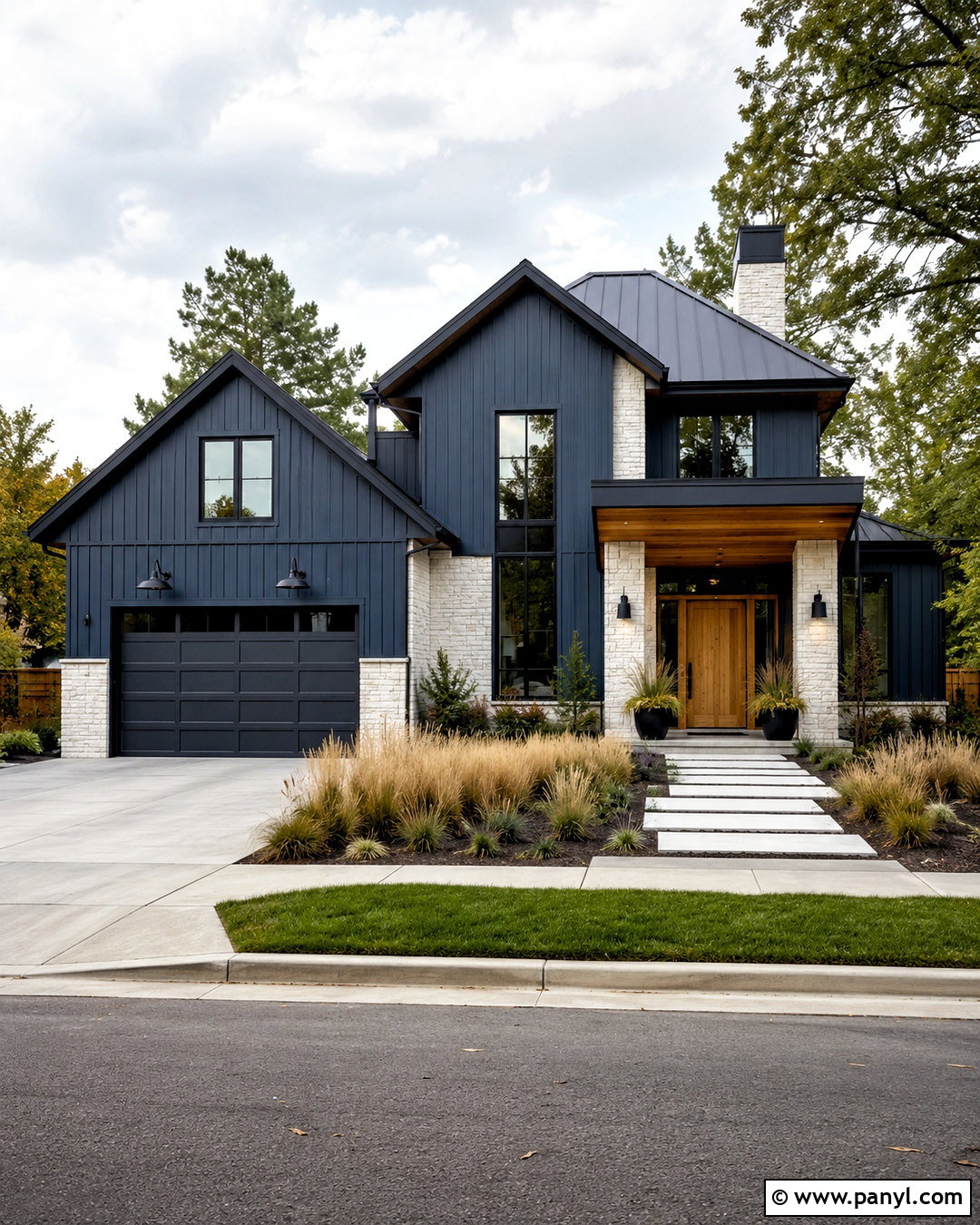
For a sharper contemporary look, combine dark navy siding with matte black trim. Choose a navy with cool gray undertones so the siding remains visibly blue beside black window frames, gutters, fascia, and exterior lights. Use vertical board-and-batten siding to strengthen the modern effect, then add pale limestone around the foundation or entry. A charcoal standing-seam metal roof connects naturally with the black accents. Warm cedar soffits and a matching wood front door keep the dark palette from feeling severe. Finish the yard with ornamental grasses, low evergreen shrubs, and wide rectangular concrete pavers. This complete scheme suits modern farmhouses and updated split-level homes, particularly when the facade has large windows and simple architectural lines.
3. Navy Blue Exterior With Warm White Trim
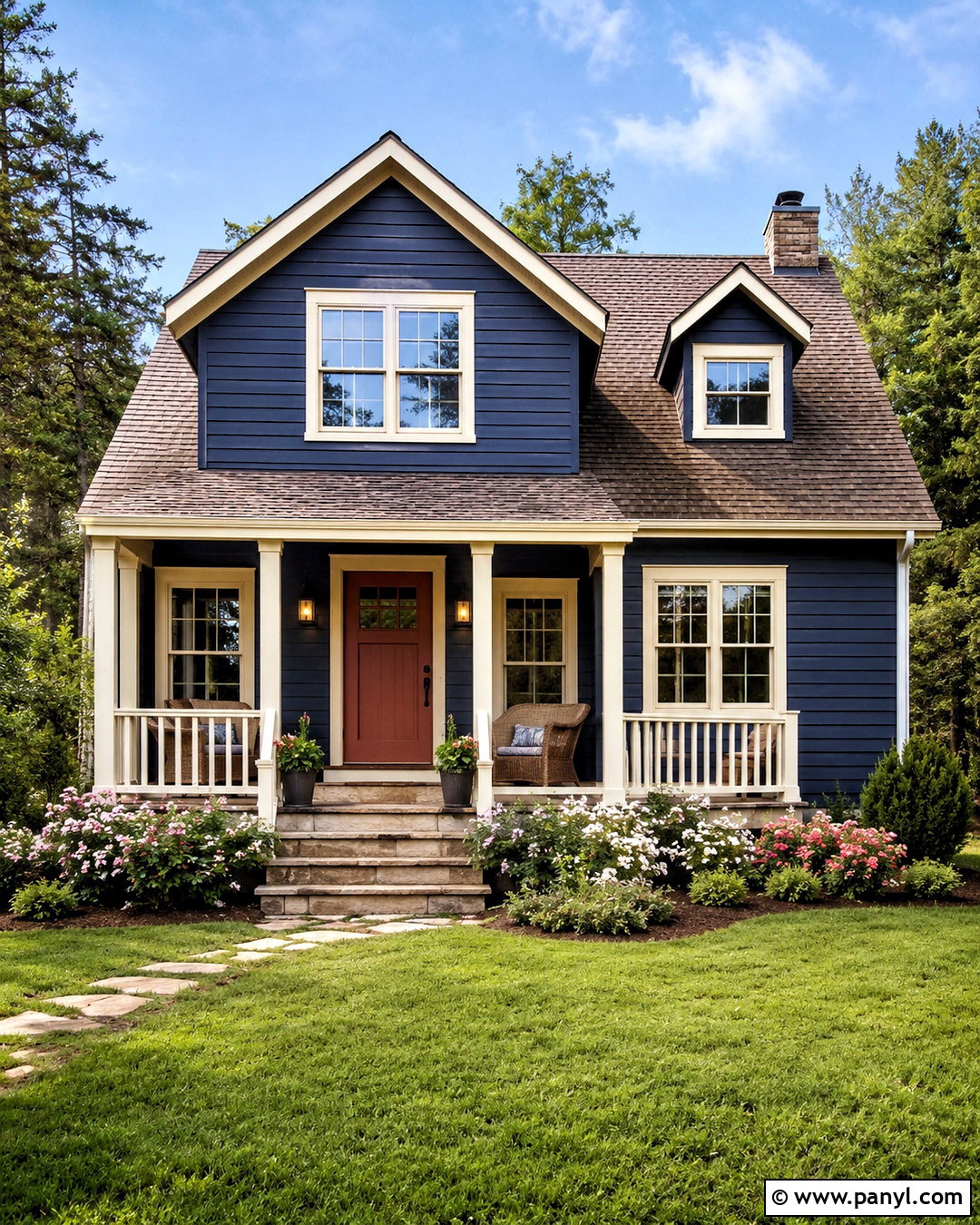
Warm white trim creates gentler contrast than a bright, cool white. Start with a slightly gray navy on the siding, then paint the windows, corner boards, porch ceiling, and railings a creamy off-white. Select a weathered brown roof rather than a stark charcoal one to support the warmer palette. A muted terracotta front door can add understated color, while antique bronze hardware reinforces the traditional character. Include tan stone steps, woven porch chairs, and layered foundation plantings with green, cream, and soft pink tones. This color combination feels relaxed and established rather than highly graphic. It is particularly useful for cottages, older homes, and shaded properties where brilliant white trim might appear too cold against the surrounding landscape.
4. Navy Blue Exterior With Cedar Accents
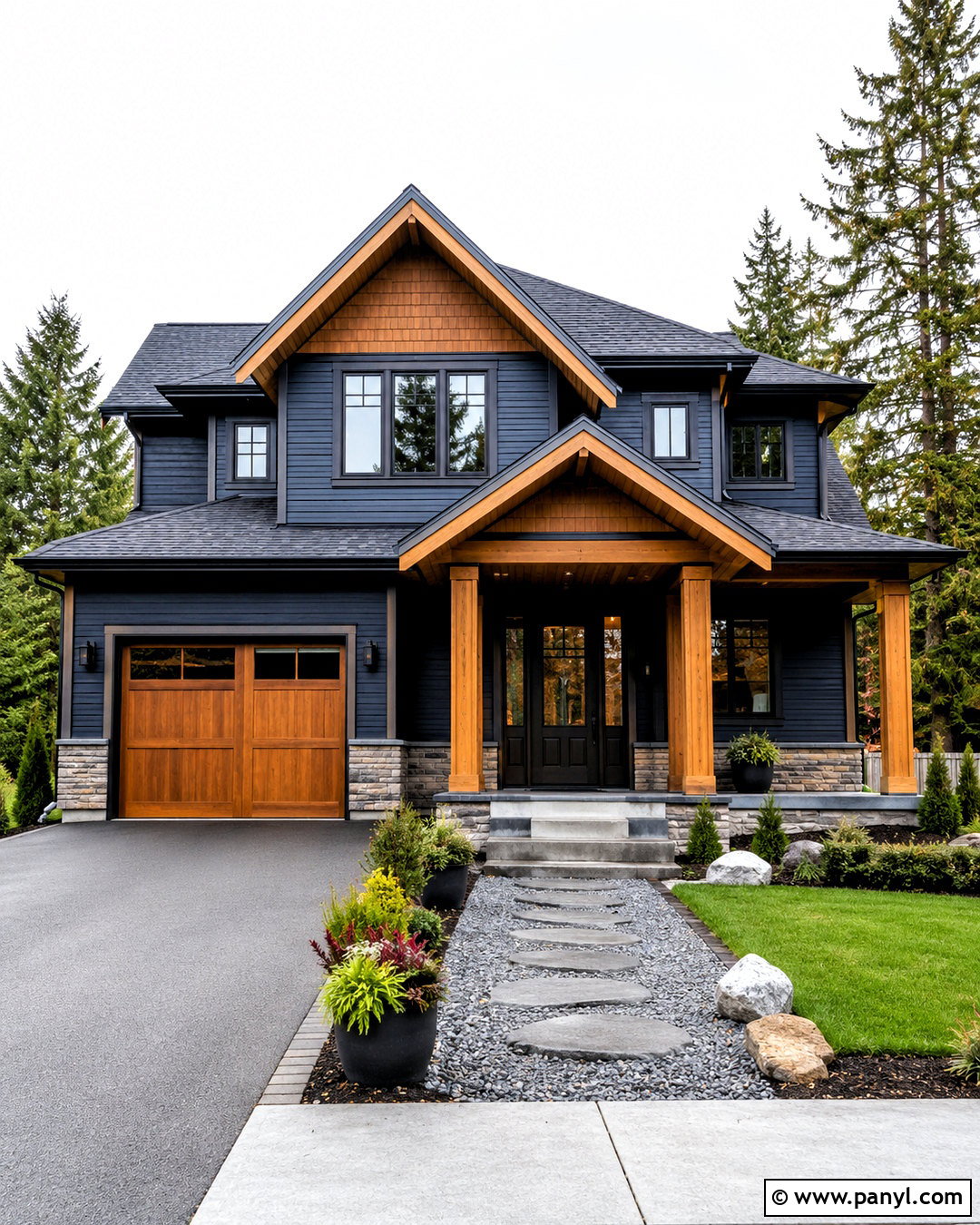
Natural cedar makes a navy exterior feel warmer, richer, and more connected to the landscape. Cover the primary walls in deep navy lap siding, then introduce cedar on the front door, garage doors, porch posts, gable peaks, and soffits. Choose a clear or medium honey stain that shows the wood grain. Black window frames and exterior sconces add definition without competing with the cedar. A charcoal roof provides a neutral top layer, while a mixed gray stone foundation adds subtle texture below. Use broad porch steps, dark planters, evergreen grasses, and a gravel-edged walkway to finish the setting. Wood, stone, and dark metal are especially effective companions for saturated navy exteriors. ()
5. Navy Blue Exterior With Red Brick
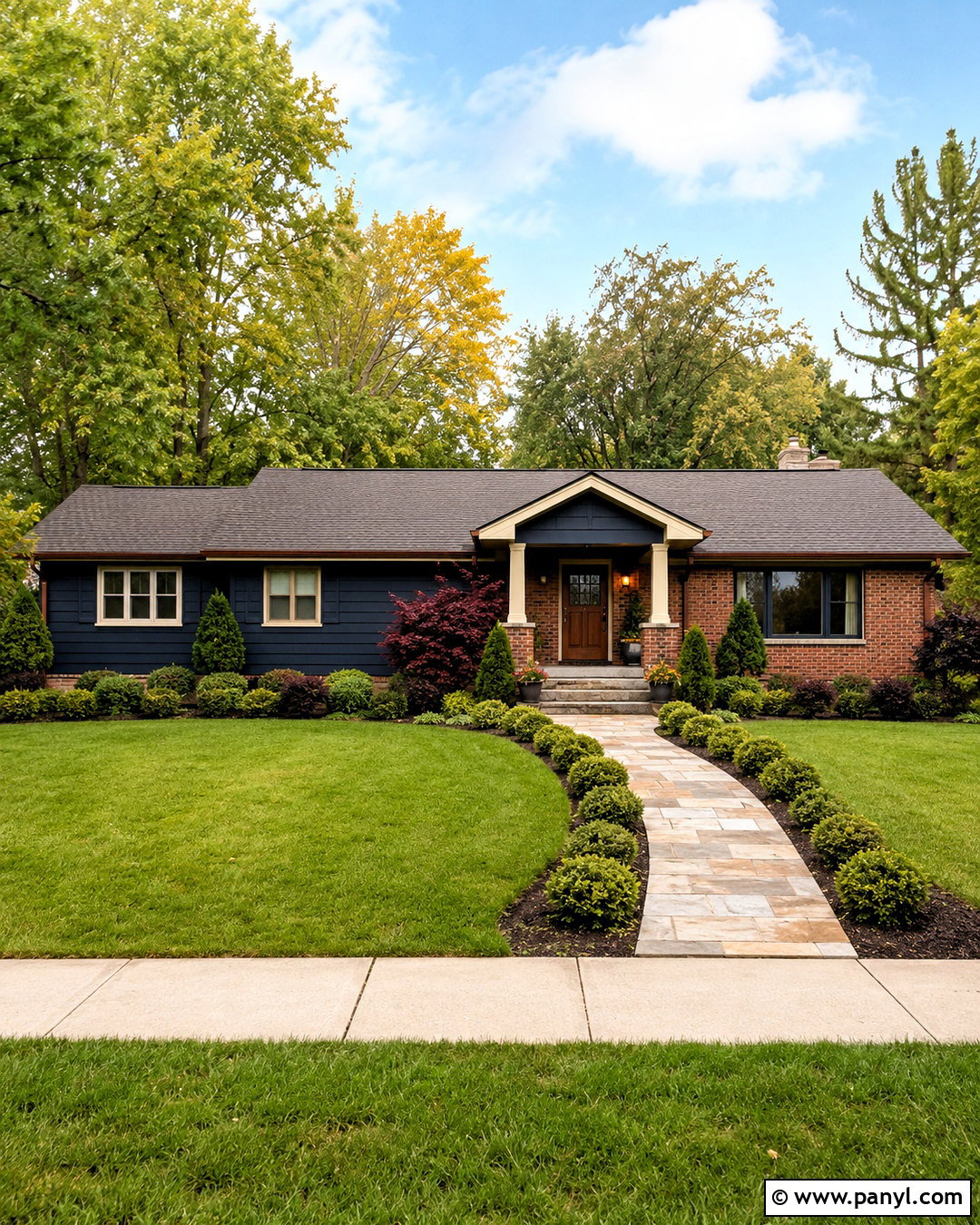
Existing red brick can look intentional and updated when paired with the right navy blue. Keep the brick unpainted around the lower facade, chimney, or porch columns, and apply a muted navy to the siding above it. Select a blue with a slightly warm or smoky undertone so it does not fight the orange and brown variations in the masonry. Use soft cream trim, dark bronze gutters, and a stained walnut front door to connect the colors. A weathered charcoal-brown roof will bridge the navy and brick without introducing another strong tone. Complete the exterior with natural stone steps, clipped shrubs, and burgundy foliage. The final palette feels traditional, layered, and suitable for ranch, Tudor, and Colonial architecture.
6. Navy Blue Exterior With Natural Stone
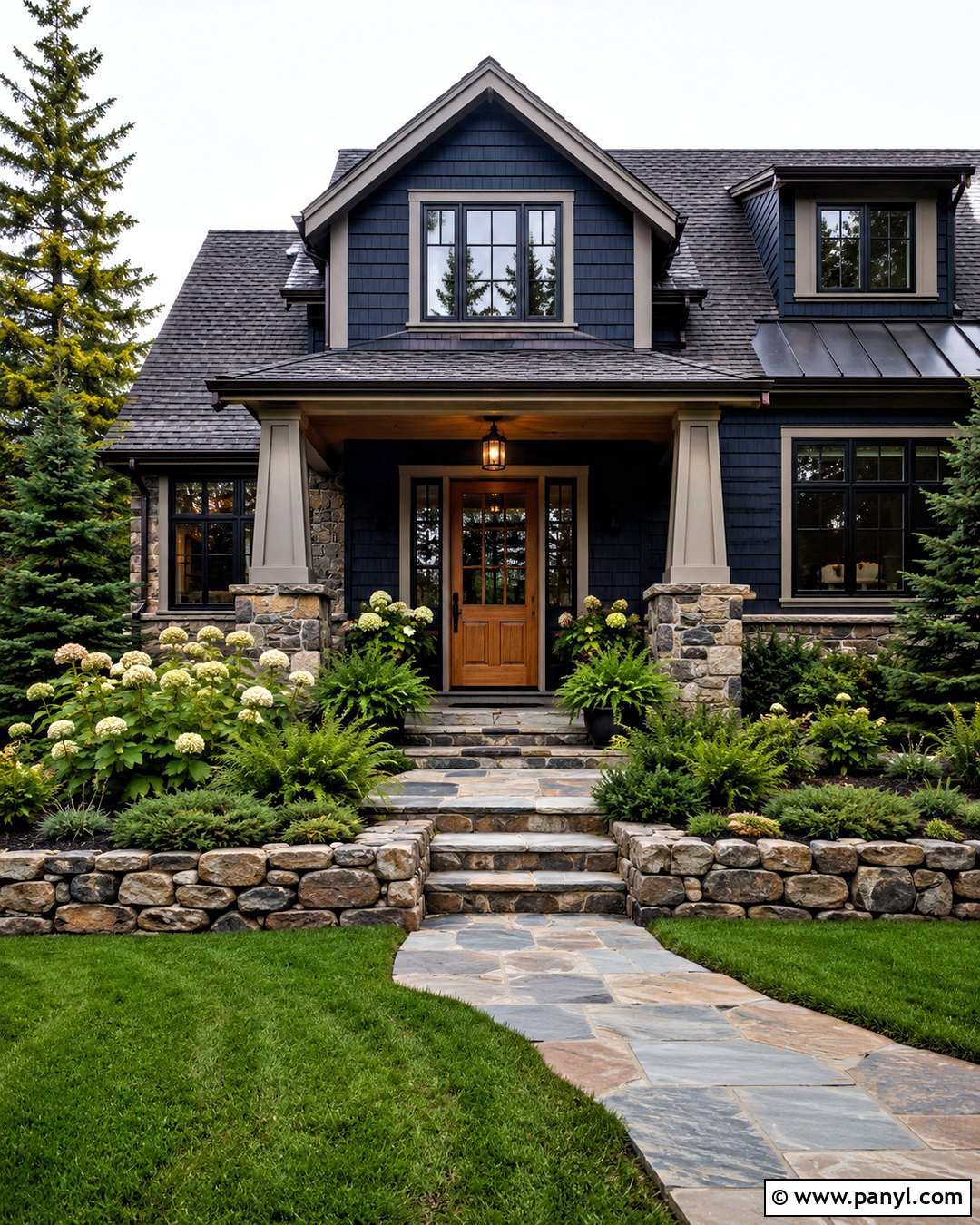
A navy and stone exterior combines bold color with organic texture. Paint the main siding a balanced midnight navy, then use natural fieldstone across the foundation, entry columns, and chimney. Choose stone containing gray, taupe, and muted brown rather than strongly yellow pieces. Soft gray trim will connect the masonry to the siding while creating less contrast than white. Add a medium-stained oak door, black-framed windows, and aged bronze lanterns. A charcoal architectural-shingle roof provides a practical neutral finish. Around the house, repeat the stone in walkway borders and low garden walls. Ferns, hydrangeas, and compact evergreens soften the edges. Navy works particularly well with natural wood and stone because those materials introduce warmth and visual variation. ()
7. Navy Blue Exterior With Gray Roof
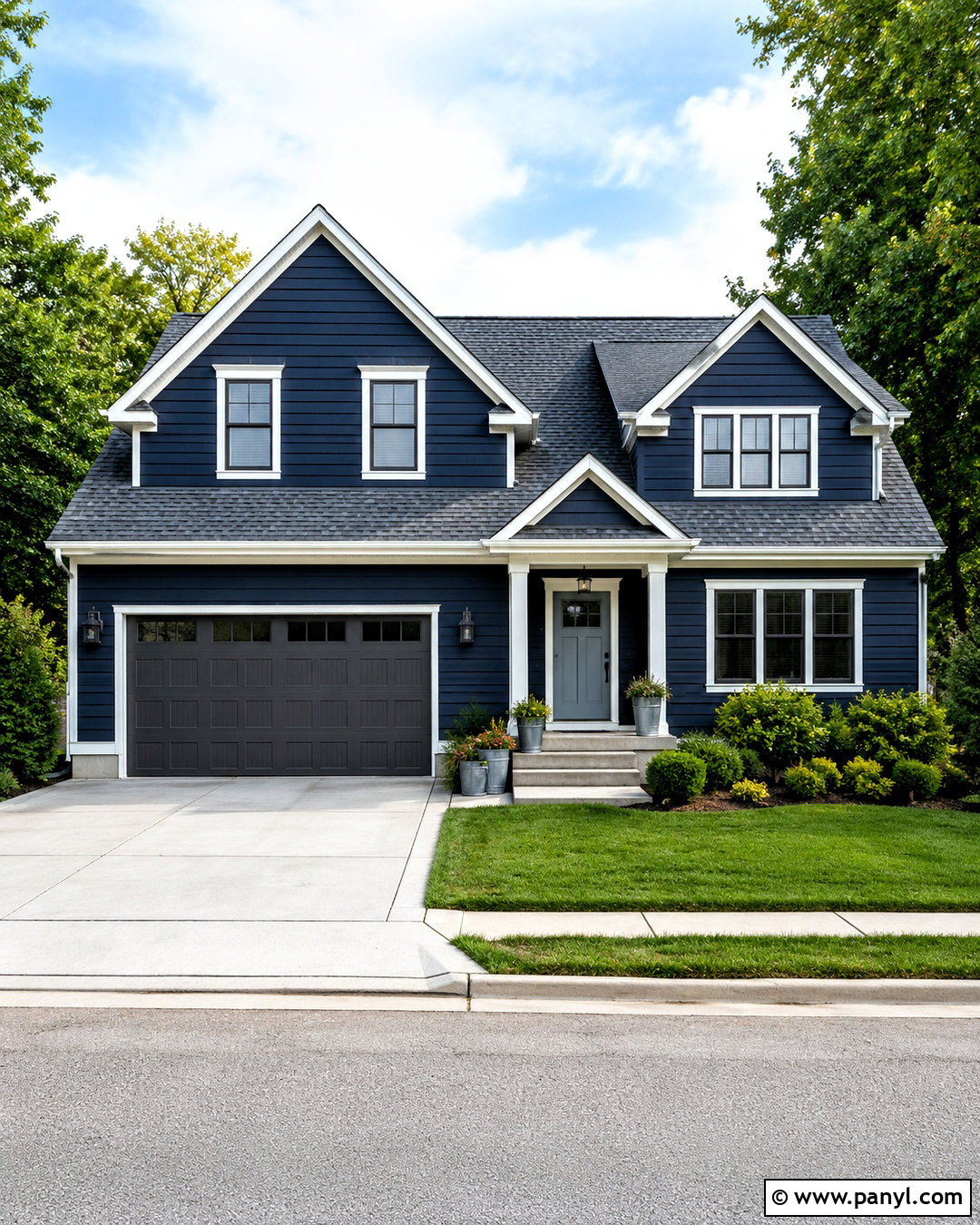
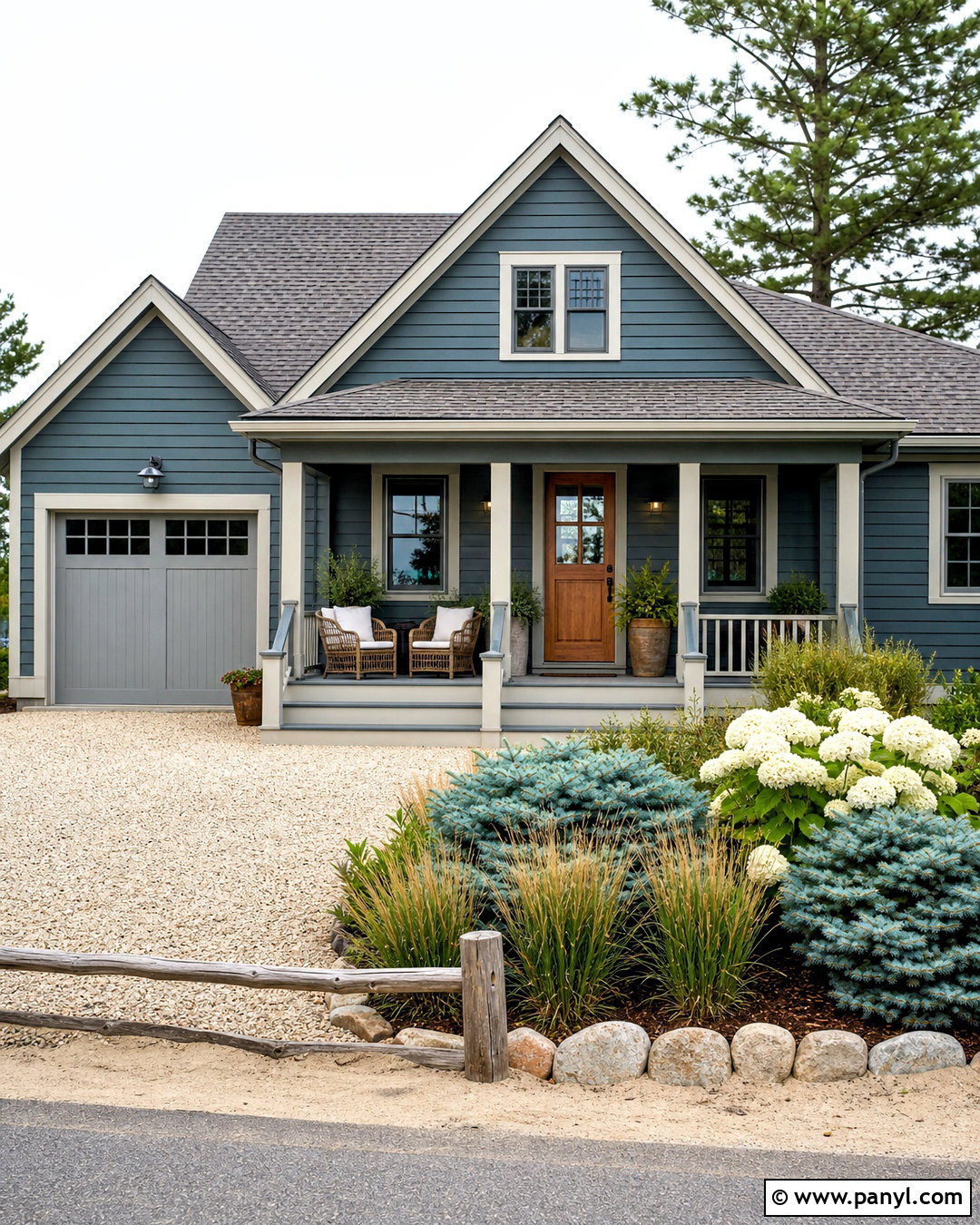
A medium-gray roof keeps a navy house balanced without making the upper half feel heavy. Use a rich but not nearly black navy on the siding, paired with soft white trim around the windows, eaves, and porch. Select variegated gray shingles containing both cool charcoal and lighter mineral tones. Those subtle variations help connect the roof to blue siding. Paint the front door muted blue-gray for a calm, layered entrance, then add black hardware and galvanized metal planters. Light gray porch flooring and a matching concrete walkway carry the roof color down to ground level. This adaptable palette looks comfortable on suburban two-story houses, cottages, and ranch homes. Green foundation shrubs provide enough natural contrast without adding another permanent exterior color.
8. Navy Blue Exterior With Black Roof
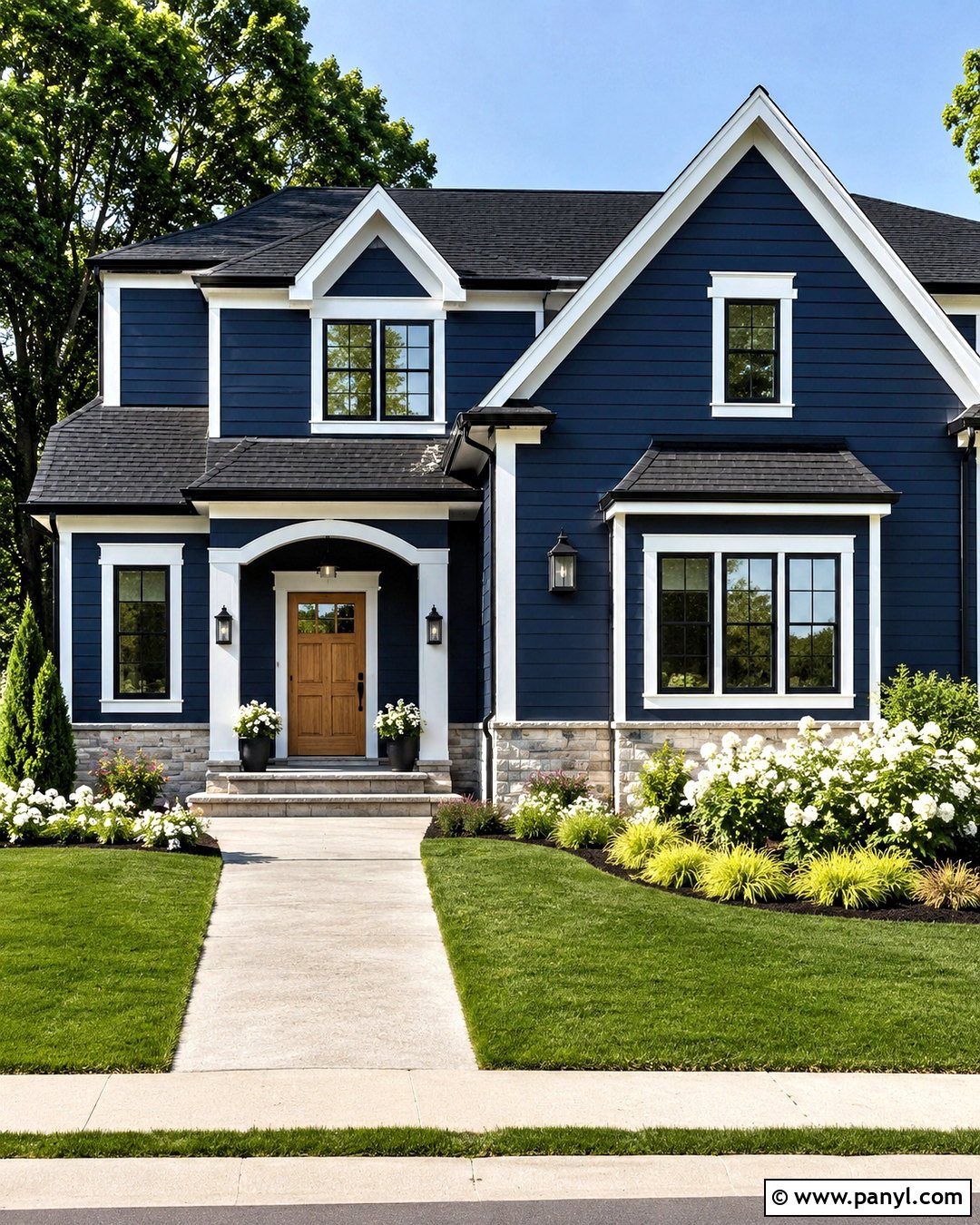
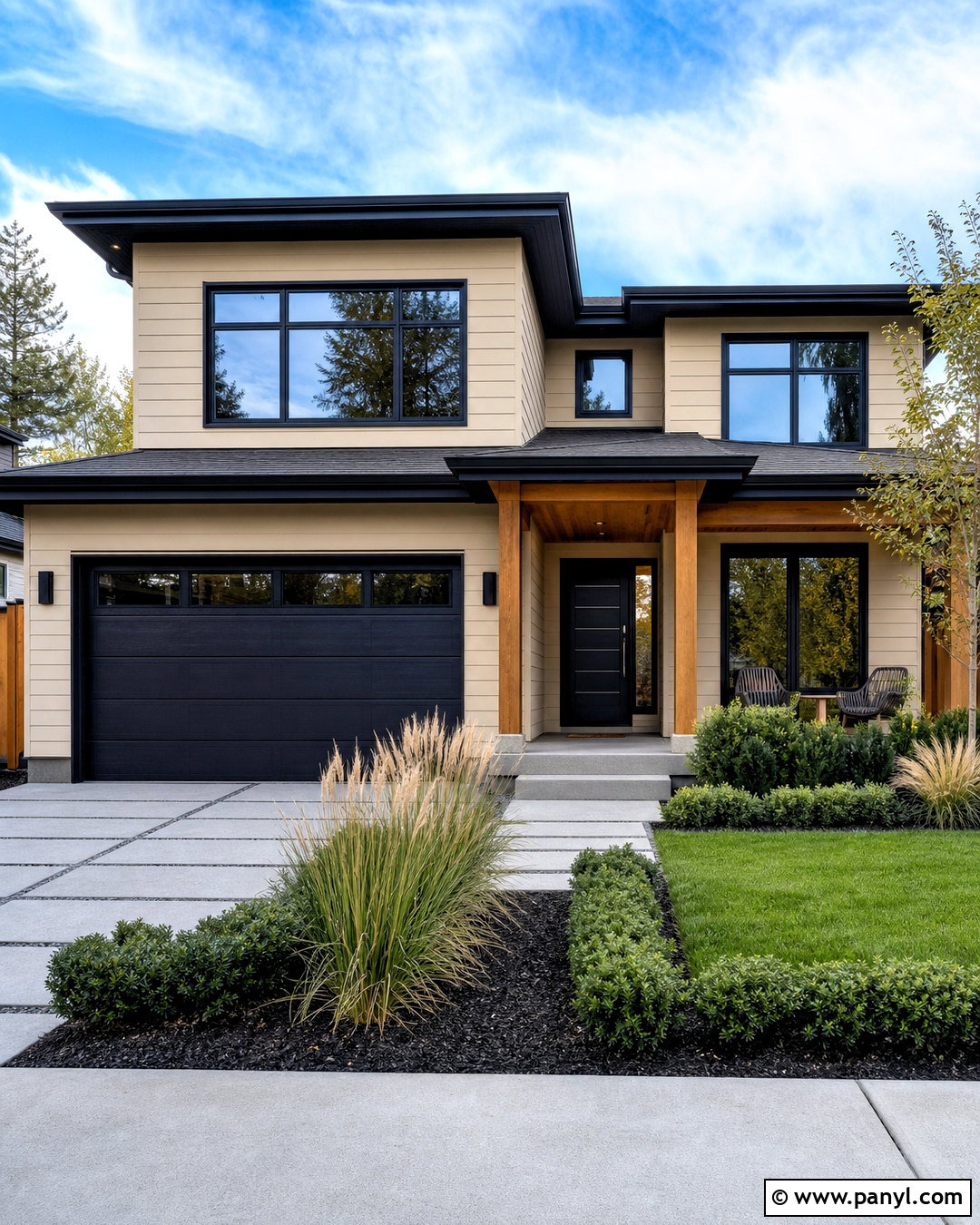
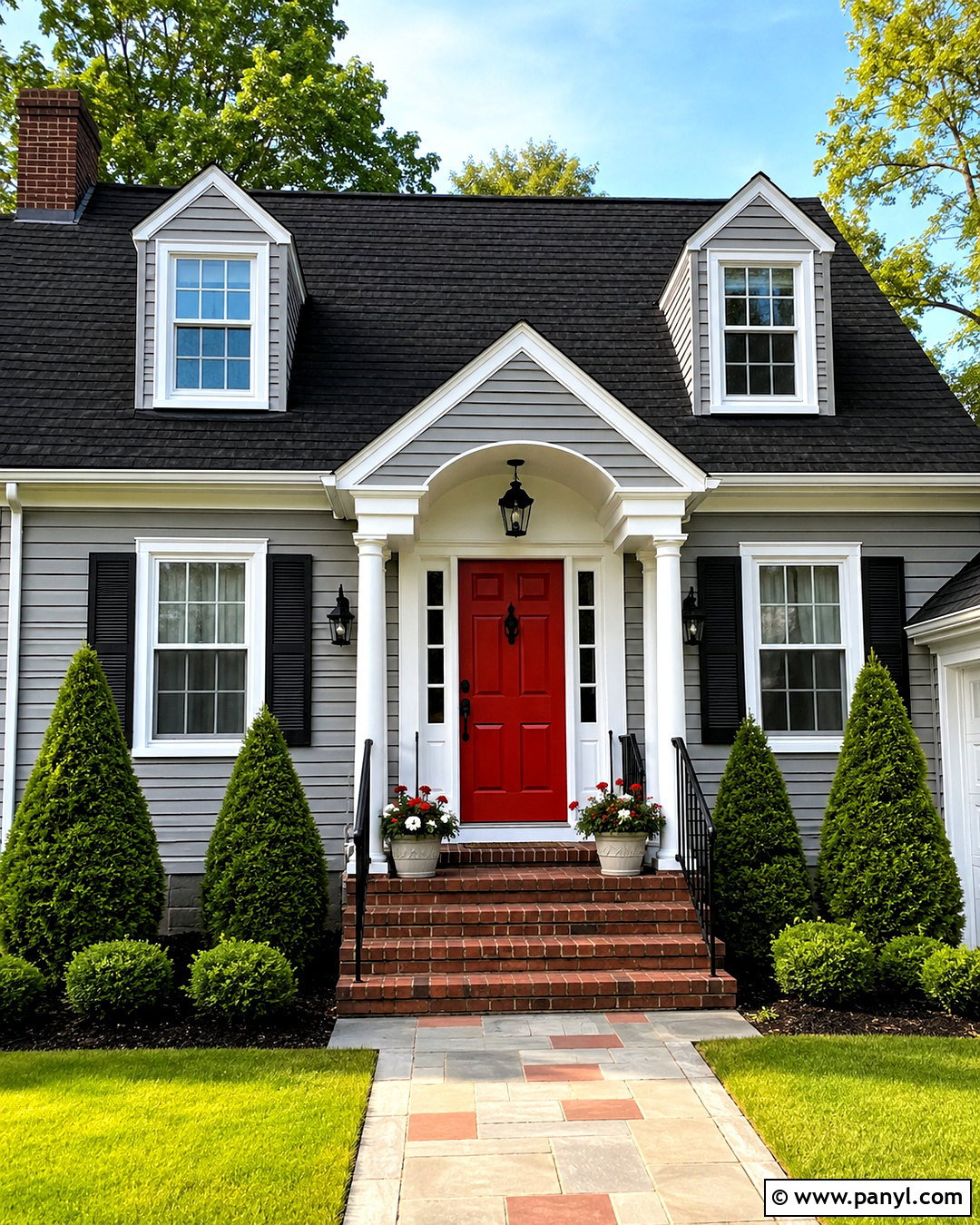
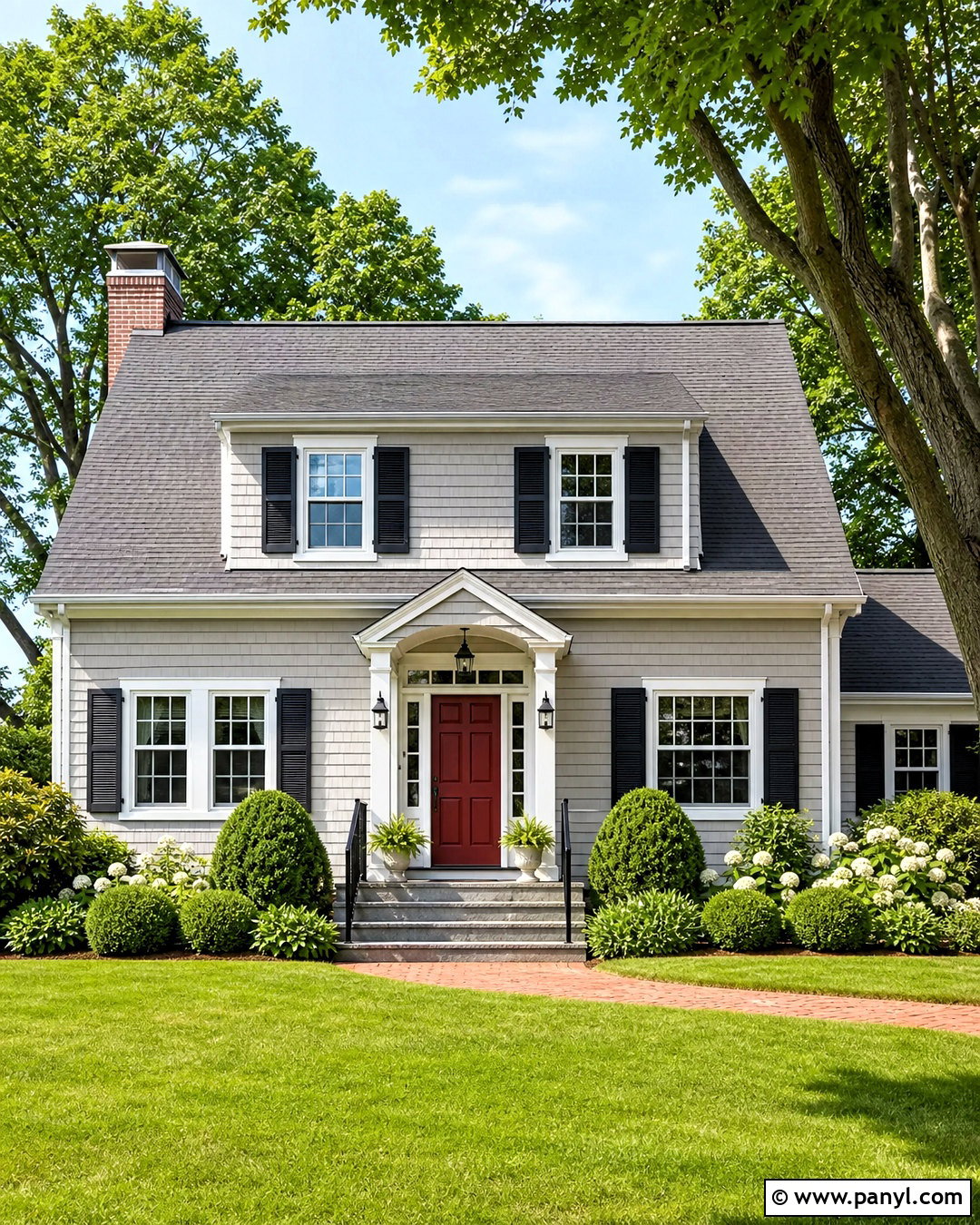
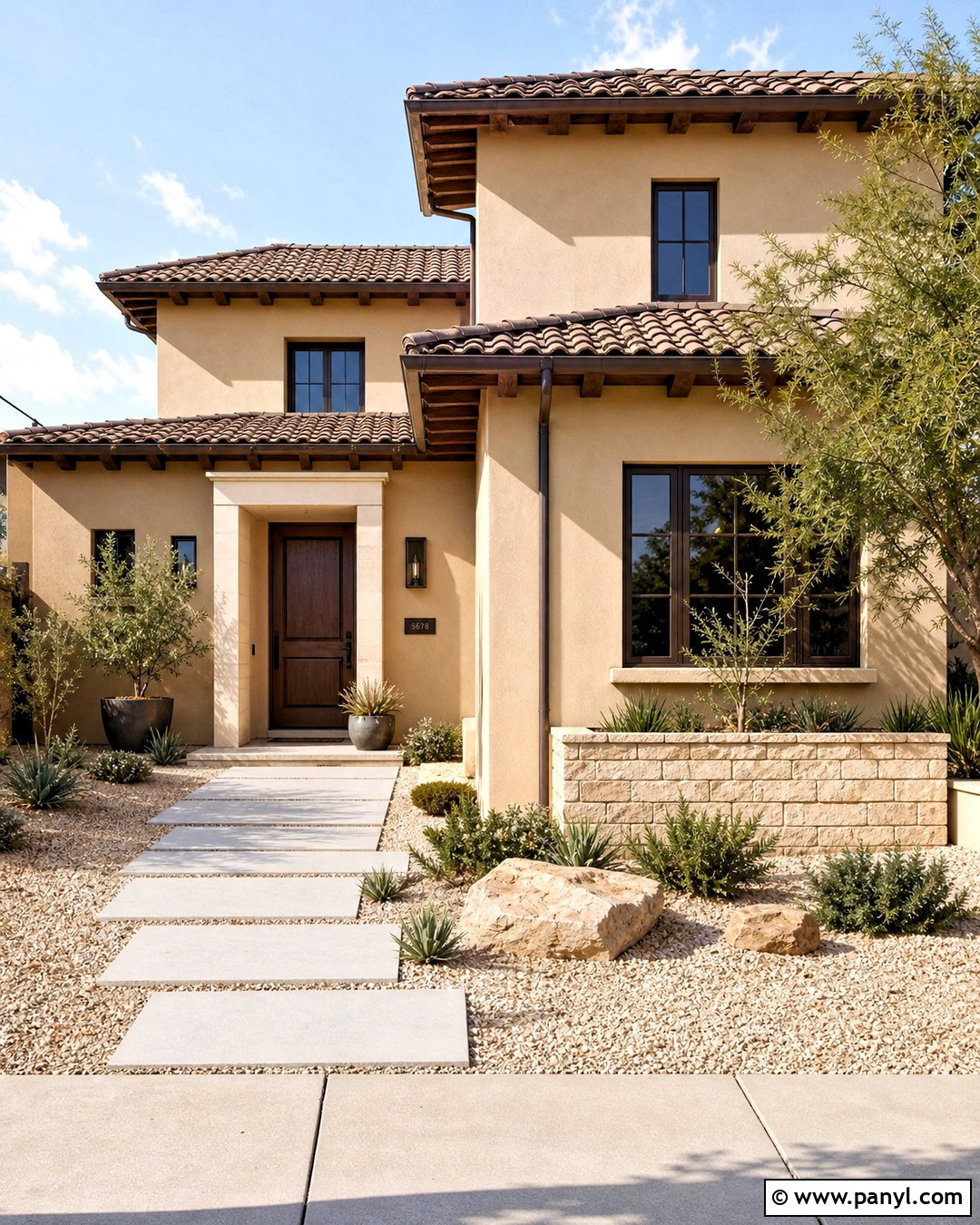
A black roof gives navy siding a dramatic, tailored finish. To preserve clear separation between the two dark surfaces, choose a visibly blue navy rather than an almost-black shade. Use clean white trim on the fascia, windows, porch posts, and garage frame. A natural wood front door adds a warm focal point, while black gutters, downspouts, lights, and house numbers connect with the roof. Keep masonry light by using pale gray or creamy stone around the base. The landscaping should also brighten the composition. Consider white flowering shrubs, chartreuse grasses, and light gravel beds. This scheme is especially effective on steep-gabled homes because white trim can outline the roofline and prevent the dark roof and walls from blending into one solid mass.
9. Navy Blue Exterior With Brown Roof
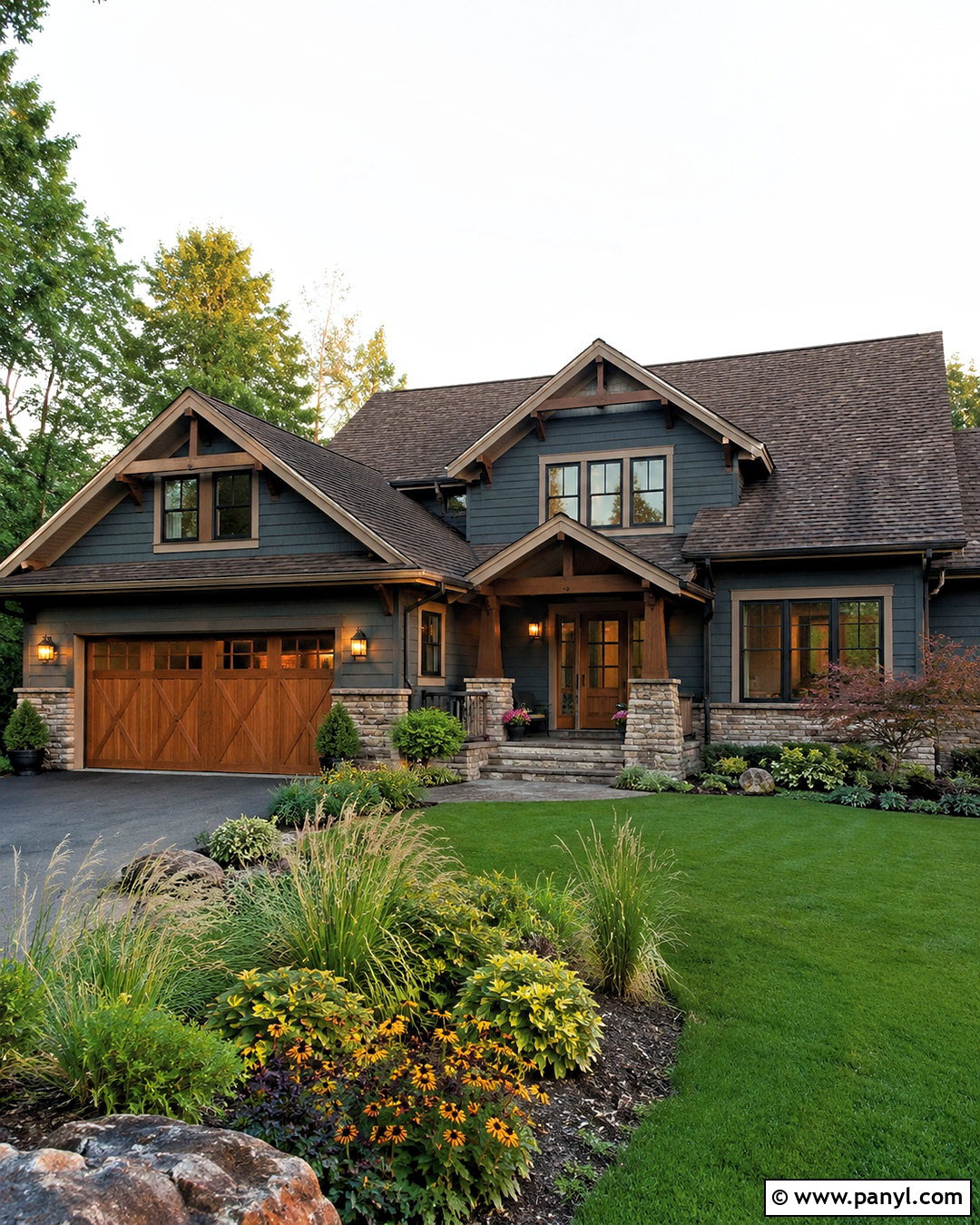
Brown roofing brings an earthy, approachable quality to a navy exterior. Choose a softened navy with subtle green-gray undertones, then combine it with warm taupe trim and a dimensional roof containing brown, charcoal, and weathered tan shingles. A cedar front door and matching garage door make the warm roof color feel connected to the rest of the facade. Use dark bronze gutters and lanterns instead of black, which may appear too sharp beside the brown. Add a buff stone foundation and warm concrete steps for a grounded finish. Informal landscaping with ornamental grasses, flowering shrubs, and reddish-brown mulch completes the relaxed setting. This palette is a natural match for Craftsman homes, cabins, and ranch houses surrounded by mature trees.
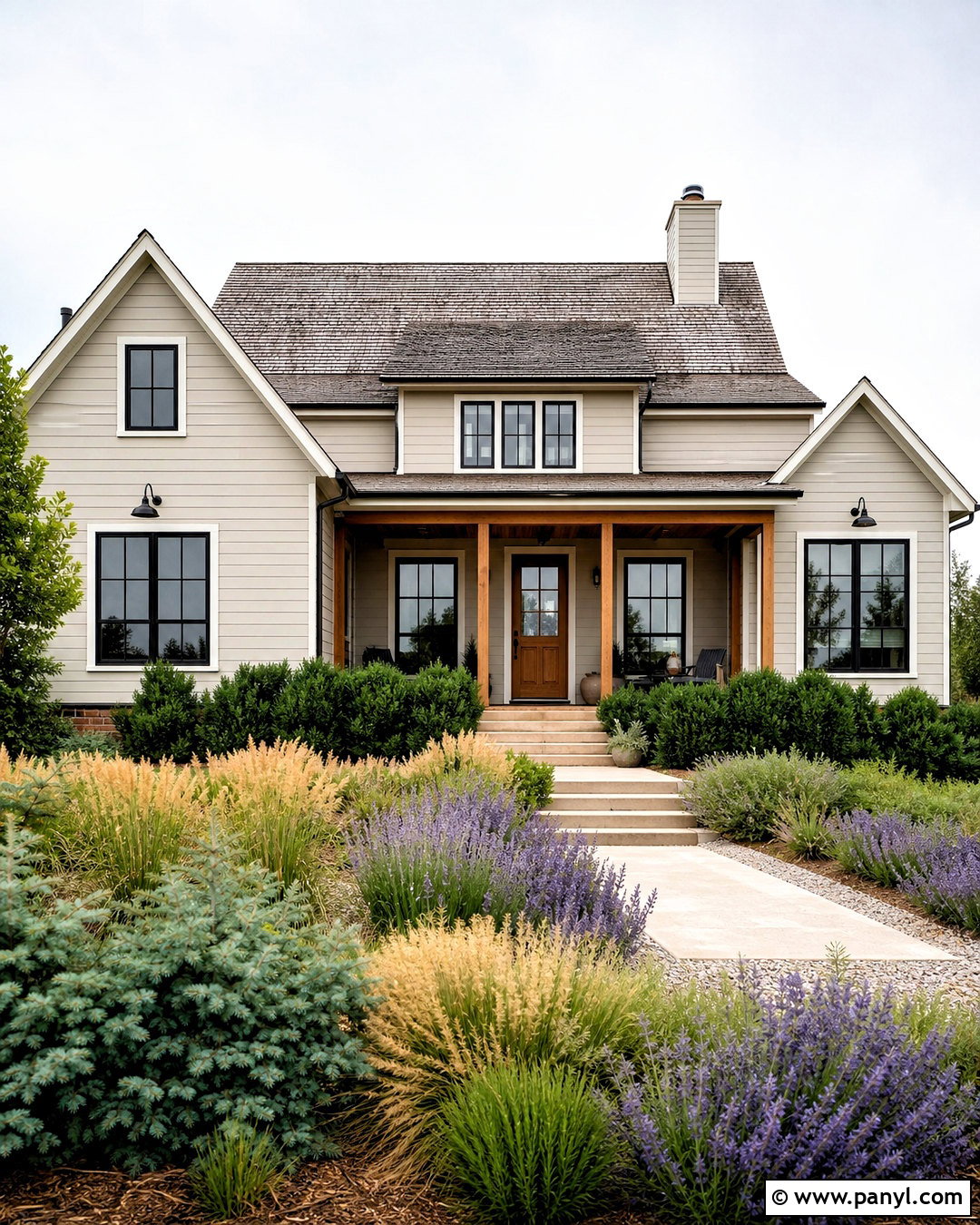
10. Navy Blue Exterior With Copper Accents
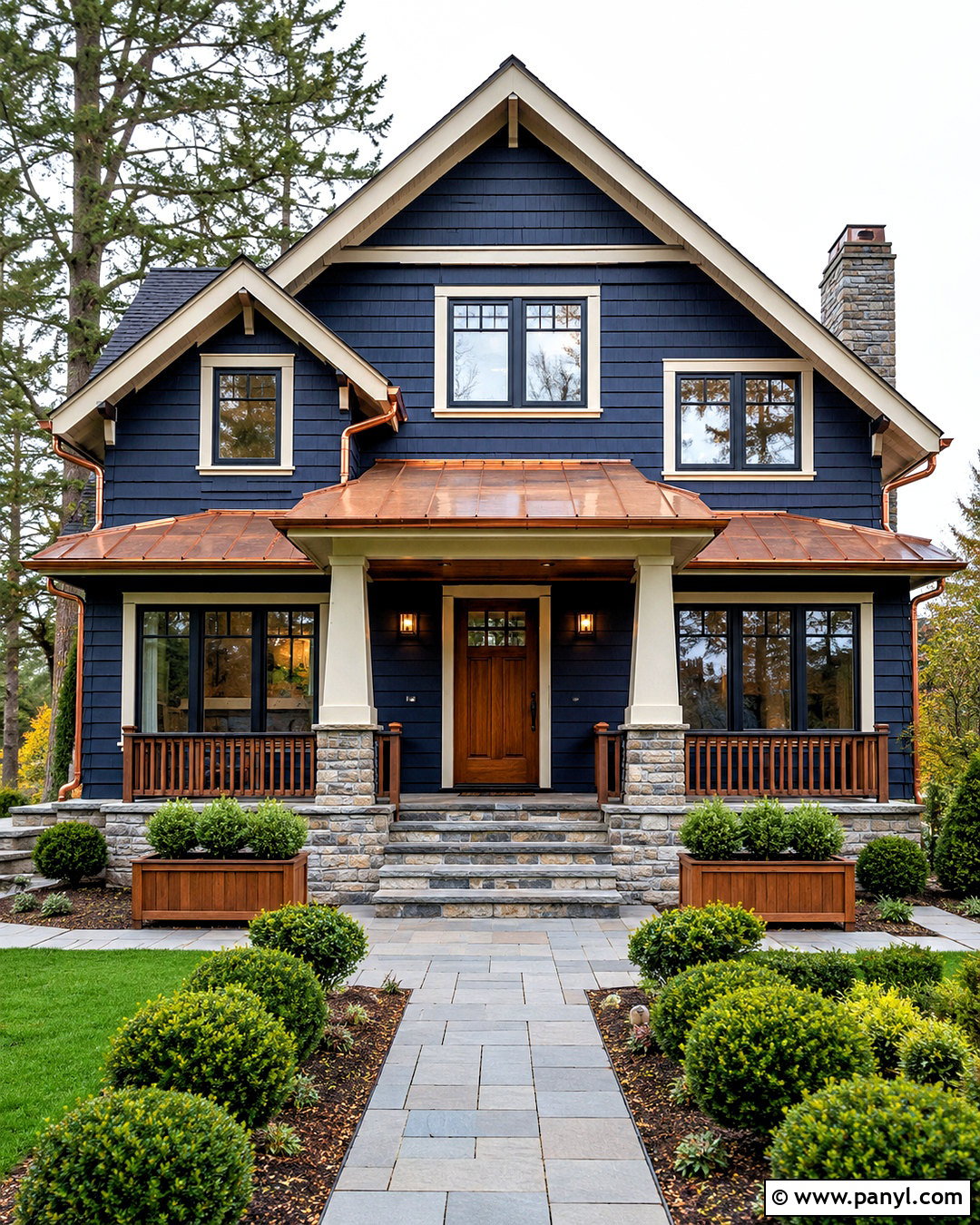
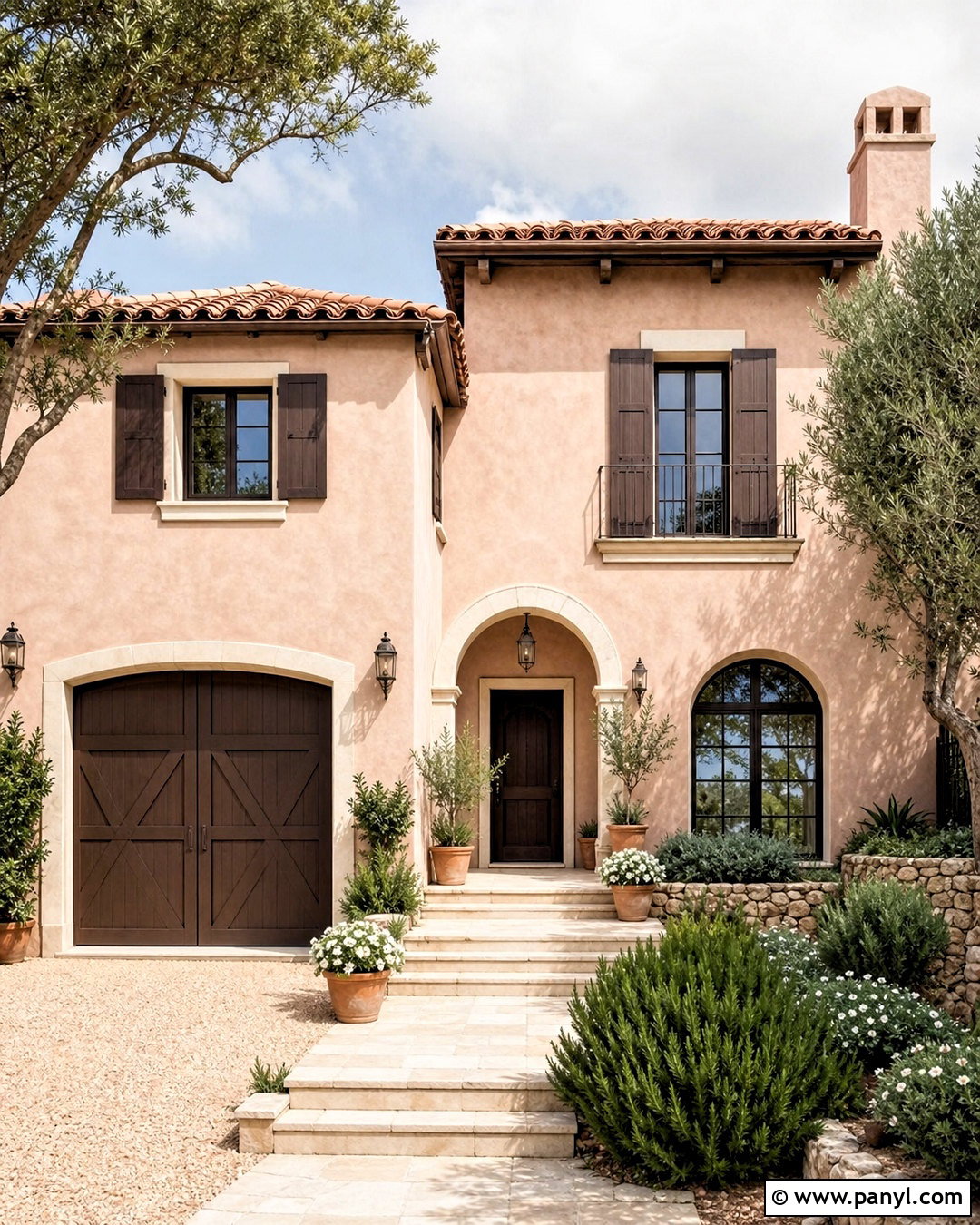
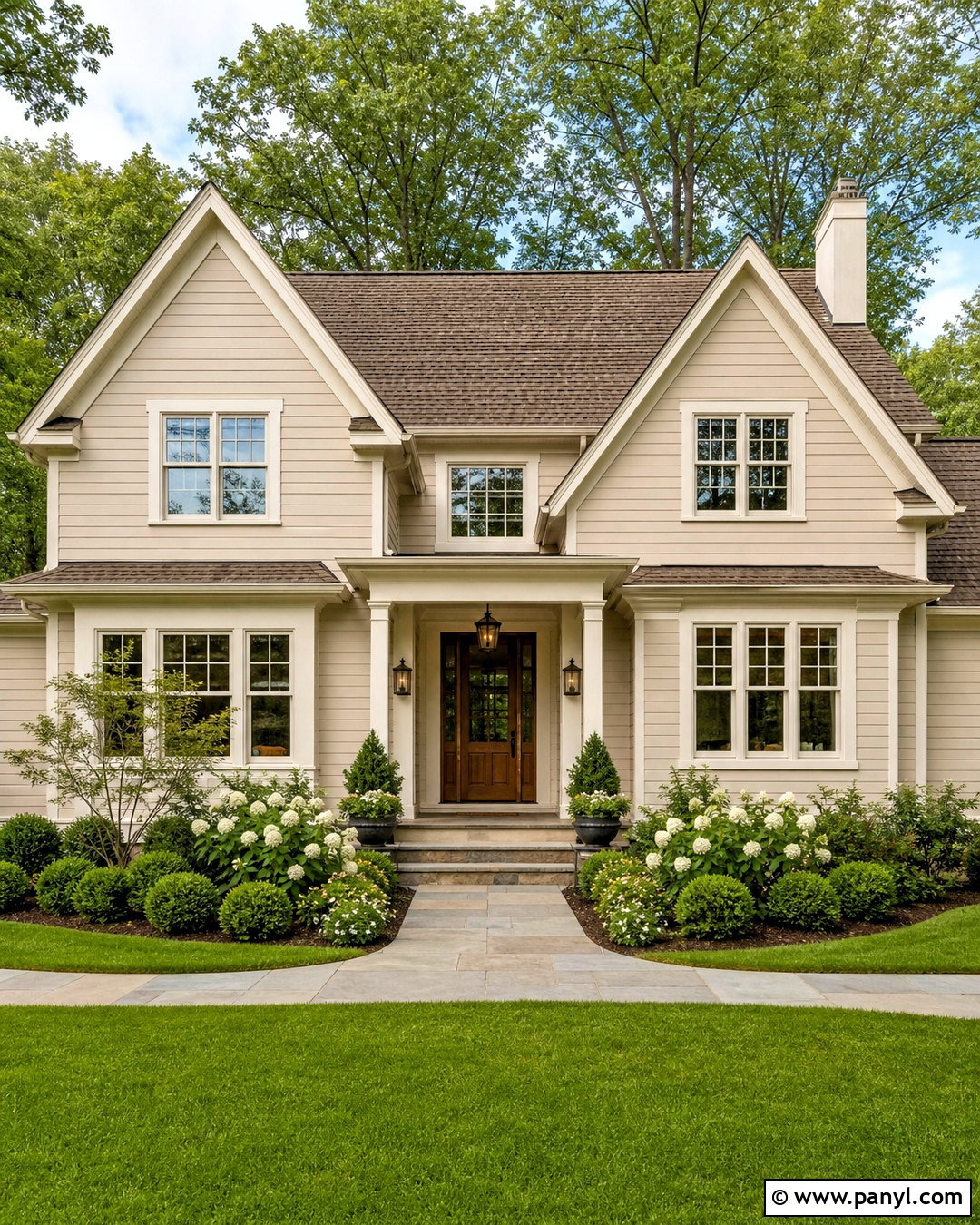
Copper adds warmth and graceful contrast to a dark navy facade. Cover the house in deep blue siding, then introduce copper through porch roofs, gutters, downspouts, flashing, or simple entry awnings. Keep the trim a soft stone white so it highlights the architecture without overshadowing the metal. Gray fieldstone around the entry and foundation creates a textured transition between the cool navy and warm copper. Choose a medium walnut front door with aged brass hardware, and repeat the brown tone in porch furniture or cedar planter boxes. A charcoal roof allows the copper features to remain the focal point. Over time, natural copper may develop a distinctive patina, giving the exterior added character and making this scheme particularly attractive on Craftsman and traditional homes. ()
11. Navy Blue Exterior With Yellow Front Door
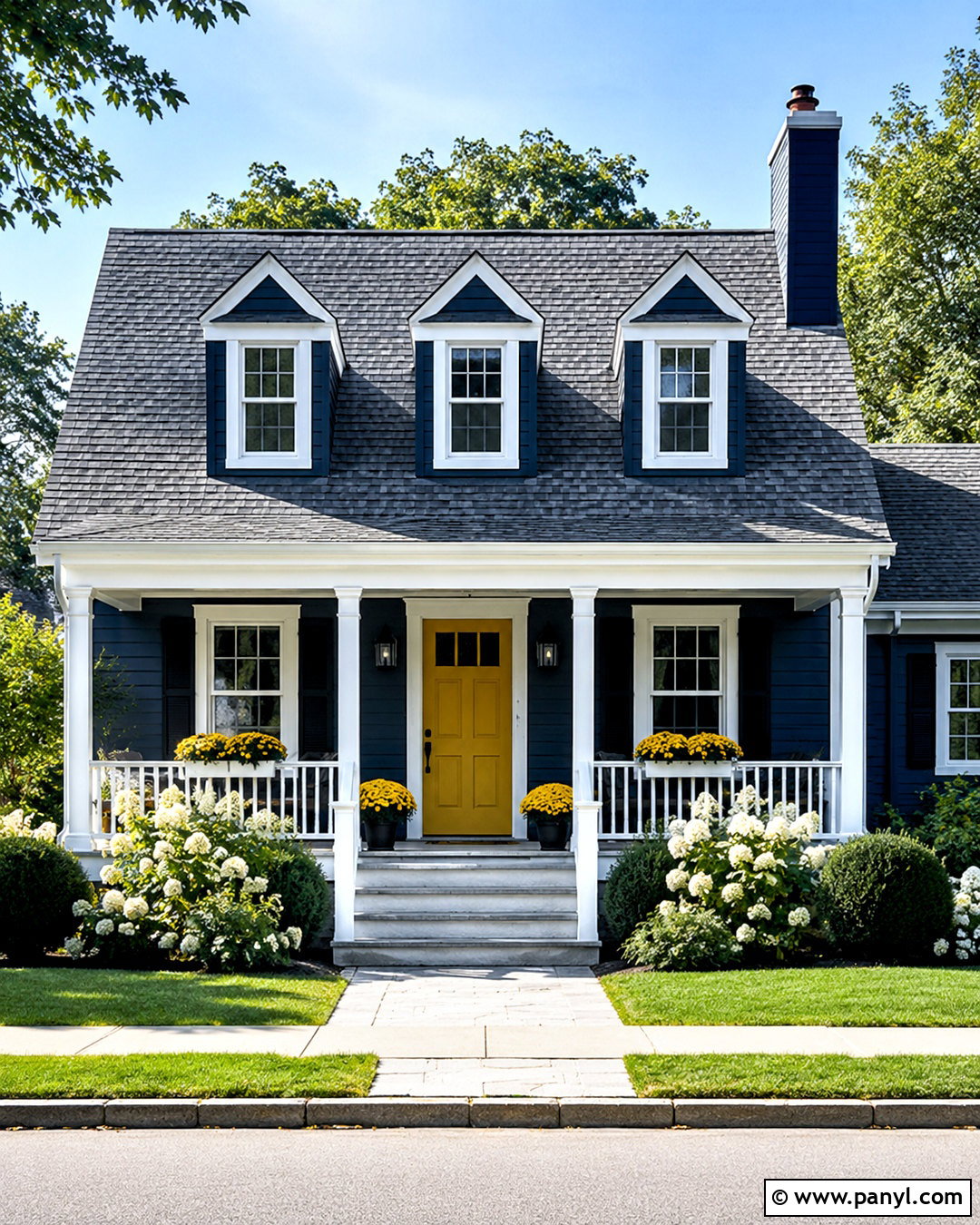
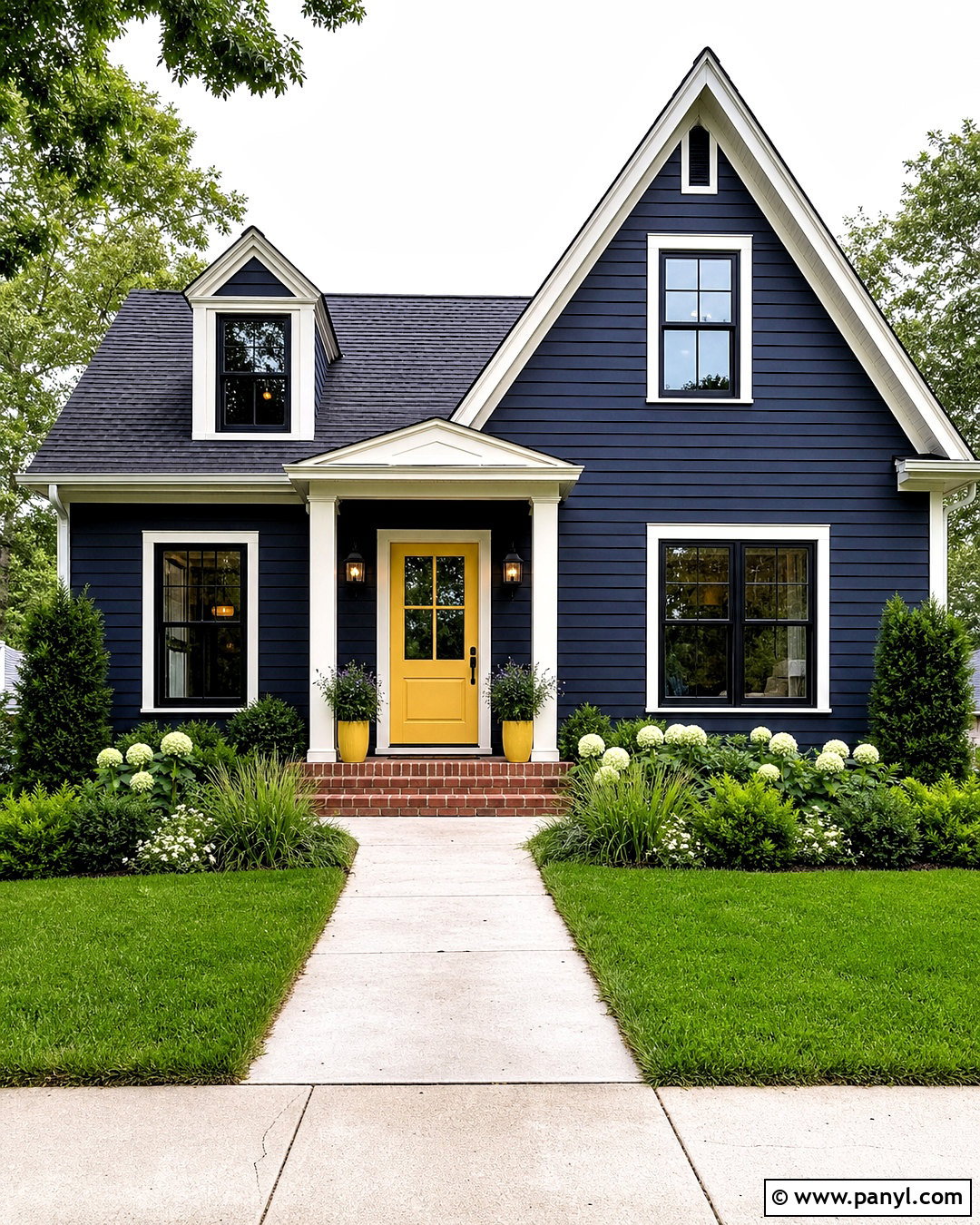
A yellow front door can give a navy house a bright, cheerful focal point. Paint the siding a classic deep navy and use clean white for the window trim, porch railings, and fascia. Choose a golden mustard or softened sunflower yellow for the door rather than a neon shade. This keeps the contrast strong but livable. A medium-gray roof and light concrete steps provide neutral balance, while black lights and door hardware outline the entrance. Repeat small touches of yellow through seasonal flowers in window boxes or porch containers. Keep the remaining landscaping simple with rounded evergreens and white blooms. This complete palette is particularly charming on Cape Cod houses, small cottages, and traditional homes with centered front doors and symmetrical windows.
12. Navy Blue Exterior With Red Front Door
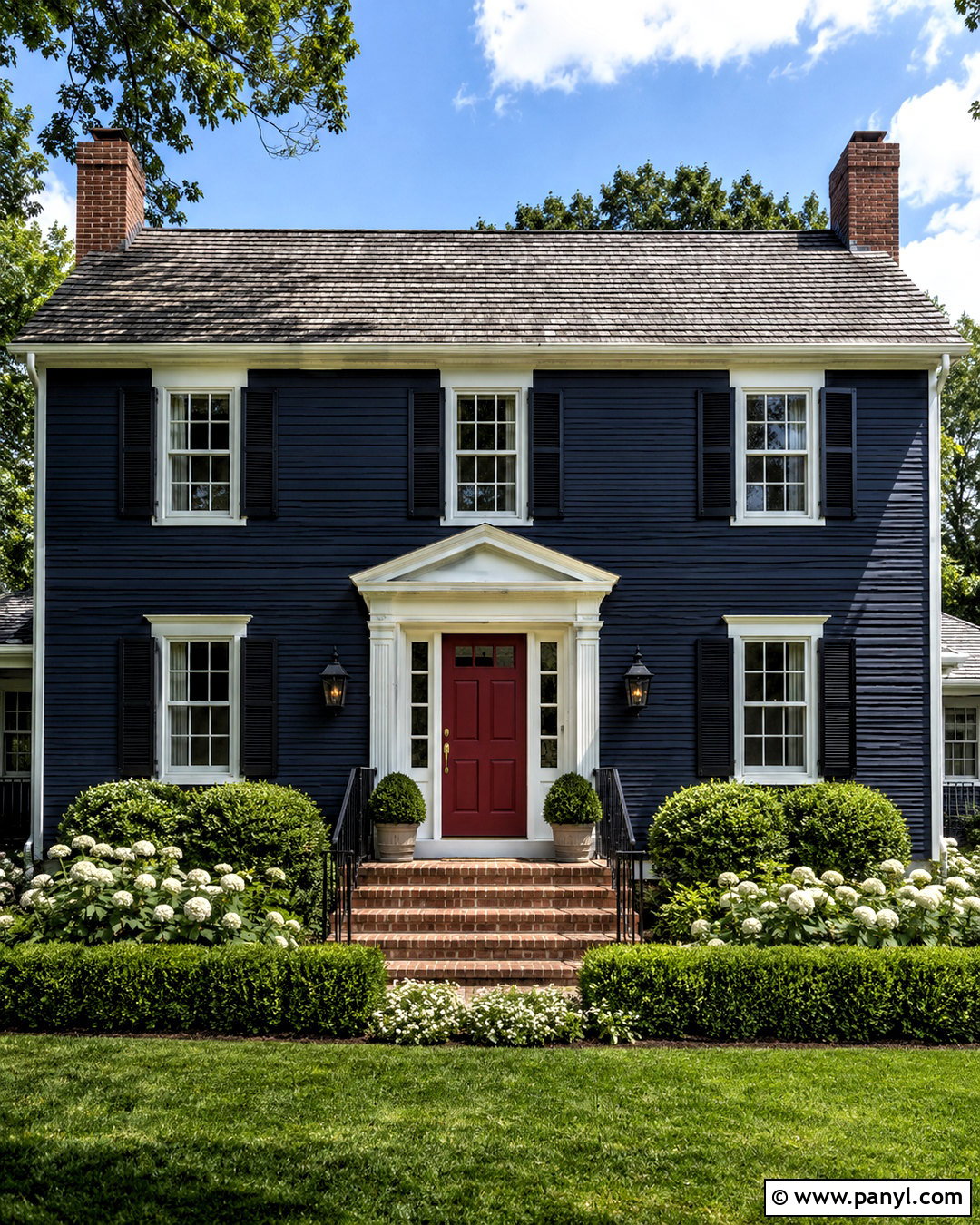
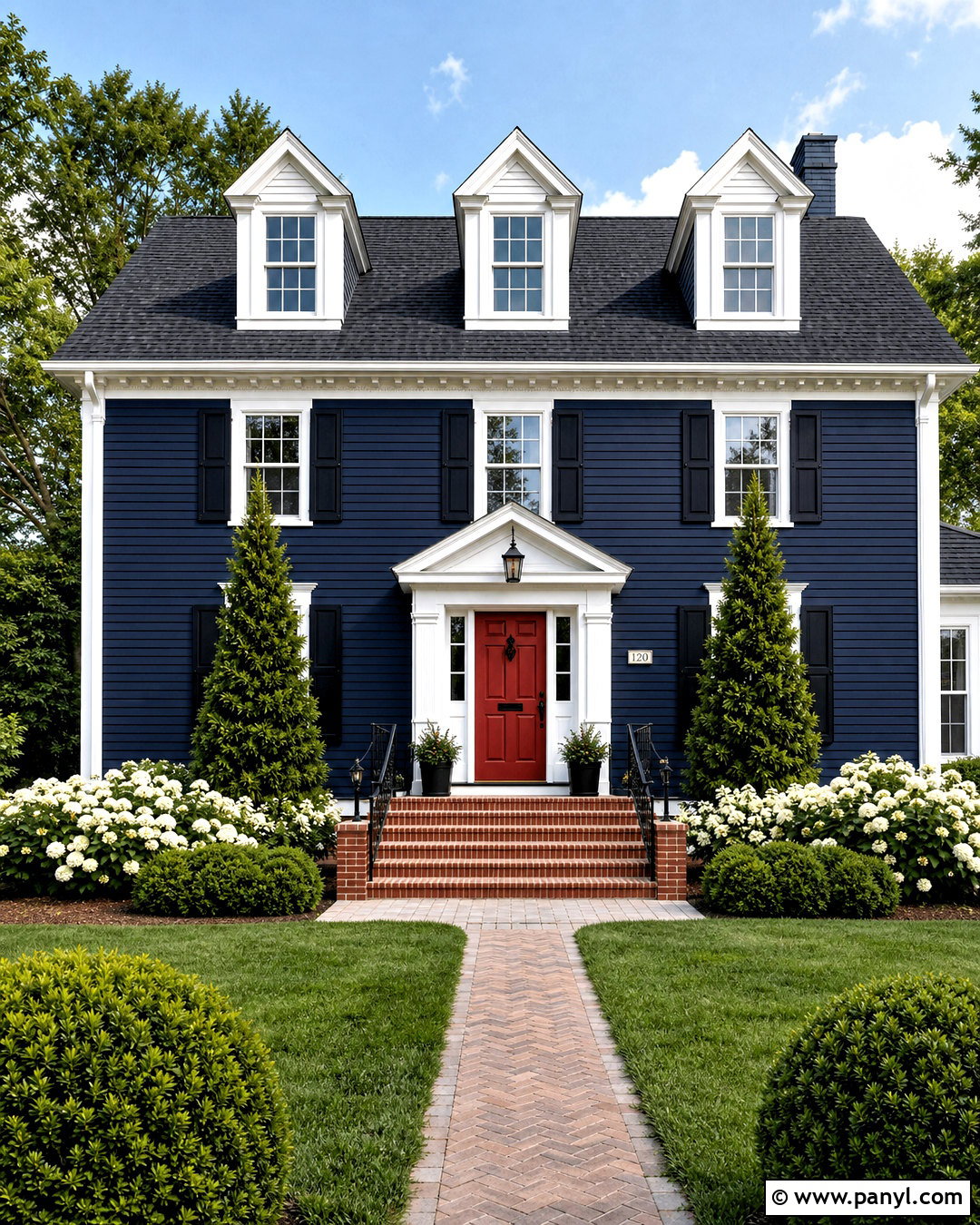
A muted red door brings traditional American character to navy siding. Begin with a dark, slightly gray navy across the main exterior, then frame it with soft white trim. Paint the front door brick red, cranberry, or deep barn red instead of a highly saturated primary red. Black shutters, iron railings, and classic lanterns create structure, while a weathered gray roof prevents the palette from becoming overly colorful. Add red brick steps or walkway edging to make the door feel integrated rather than isolated. Neatly clipped boxwoods and white flowering plants provide a polished finishing layer. This combination suits Colonial, Georgian, farmhouse, and Cape Cod homes. It feels established and welcoming while still giving the entrance enough color to stand out from the street.
13. Navy Blue Exterior With Light Blue Door
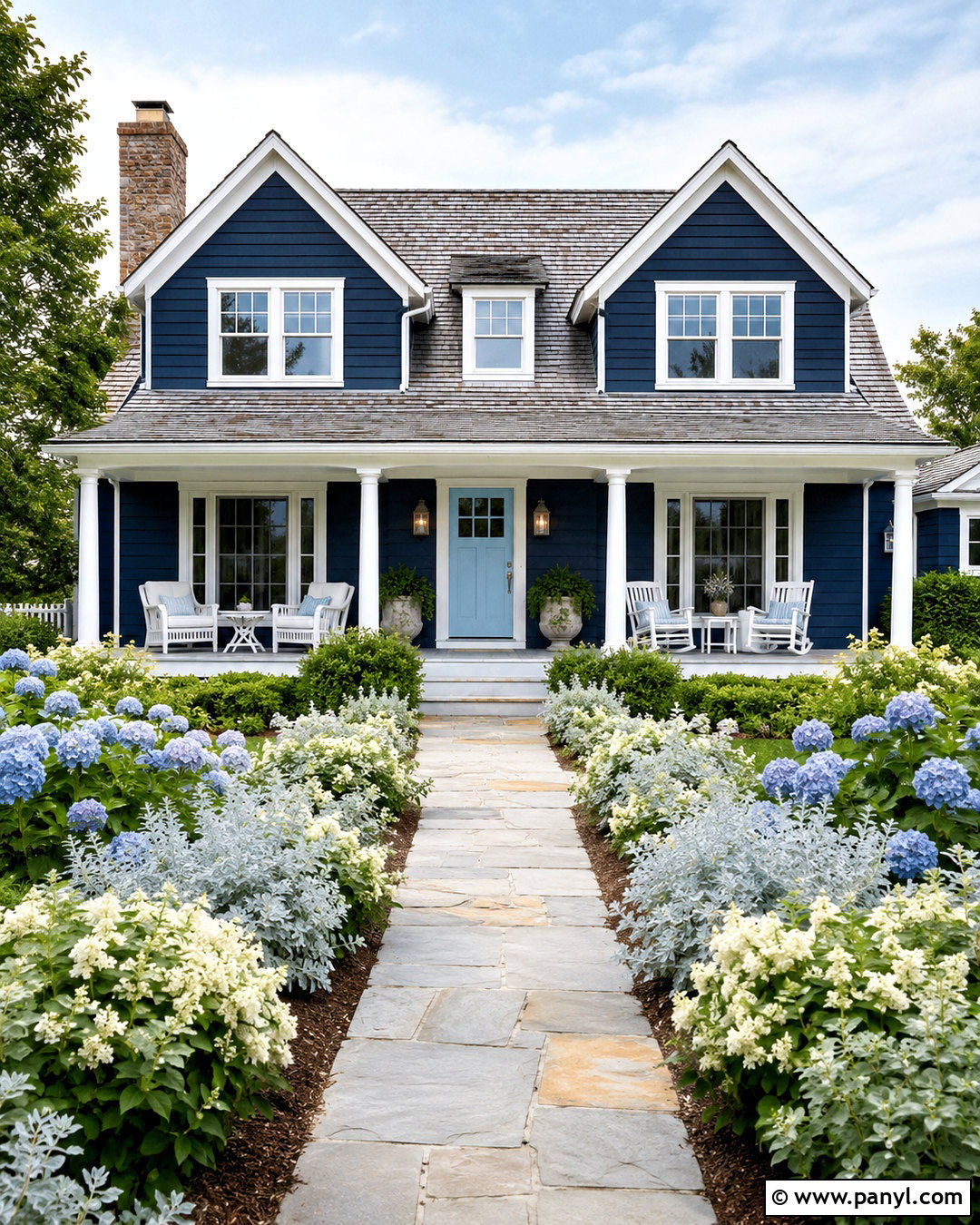
Layering light blue over navy creates a calm, coordinated exterior with coastal influence. Use deep navy on the siding and a pale powder blue or misty blue-gray on the front door. Bright white trim around the windows, roofline, porch, and door casing keeps the two blues clearly separated. Add a weathered gray roof, brushed nickel door hardware, and simple black lanterns for balanced contrast. A light stone walkway and white porch furniture strengthen the airy look. Finish the garden with blue-green grasses, hydrangeas, and silvery foliage rather than tropical decorations. The result feels fresh without becoming overly themed. This palette works beautifully on small cottages, shingle homes, and simple two-story houses where a softer front door can visually lighten the dark body color.
14. Navy Blue Exterior With Sage Green Door
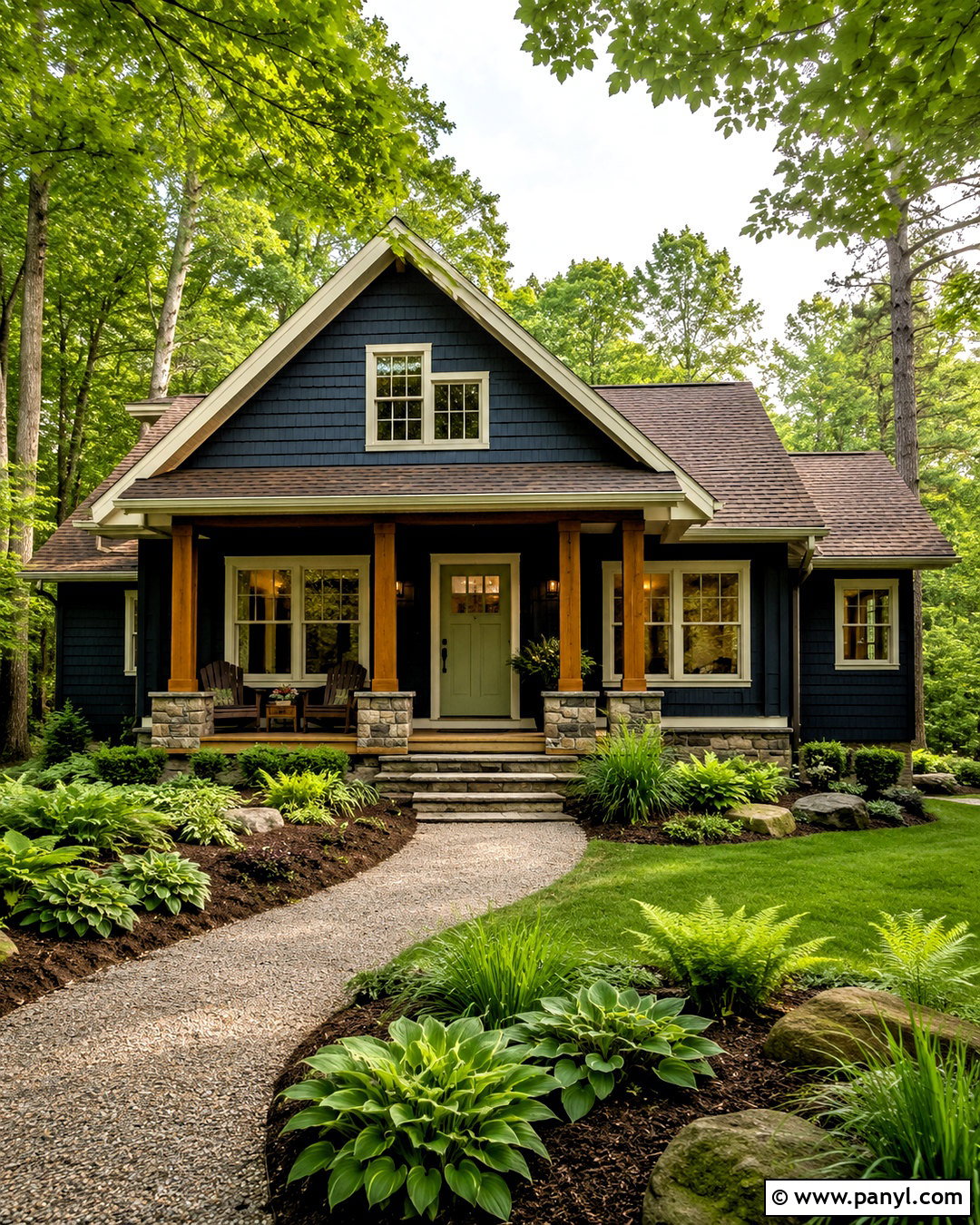
Sage green introduces an unexpected but natural accent to a navy blue house. Choose a muted, earthy sage for the front door and a smoky navy for the siding. Warm white trim helps both colors look softer and more connected. Add a medium-brown roof, bronze hardware, and natural cedar porch columns to reinforce the organic direction. A stone foundation containing gray, moss, and tan tones will tie the entire palette together. Use curved planting beds filled with ferns, ornamental grasses, hostas, and white flowers. This combination is well suited to Craftsman houses, wooded cottages, and relaxed ranch homes. The green entrance feels distinctive from the street, yet it remains subtle enough to support the deep blue rather than competing with it.
15. Navy Blue Exterior With Wood Garage Doors
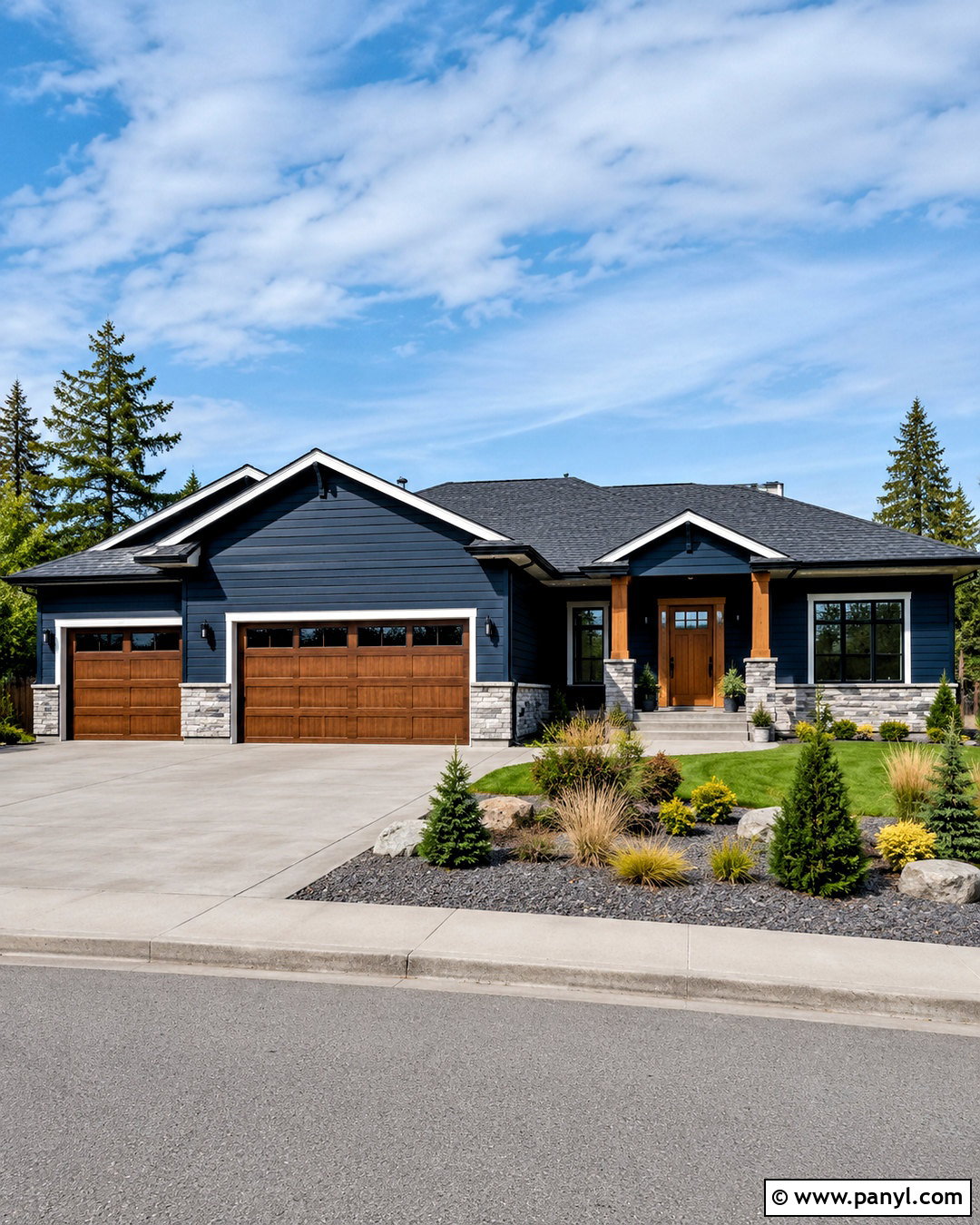
Wood garage doors can transform a large navy facade by adding warmth where it is needed most. Paint the siding an ink navy and keep the trim around the roofline and windows a restrained warm white. Select garage doors in medium-toned cedar or oak with visible horizontal grain. Match the front door to the garage finish for a coordinated appearance. Black windows, gutters, handles, and streamlined lights add modern definition. Use pale gray stone around the lower walls to break up wide areas of siding. A charcoal roof completes the structured palette. Finish the driveway edge with low grasses, compact evergreens, and neat gravel beds. This look works particularly well on modern ranch houses and suburban homes with prominent front-facing garages.
16. Monochromatic Navy Blue Exterior
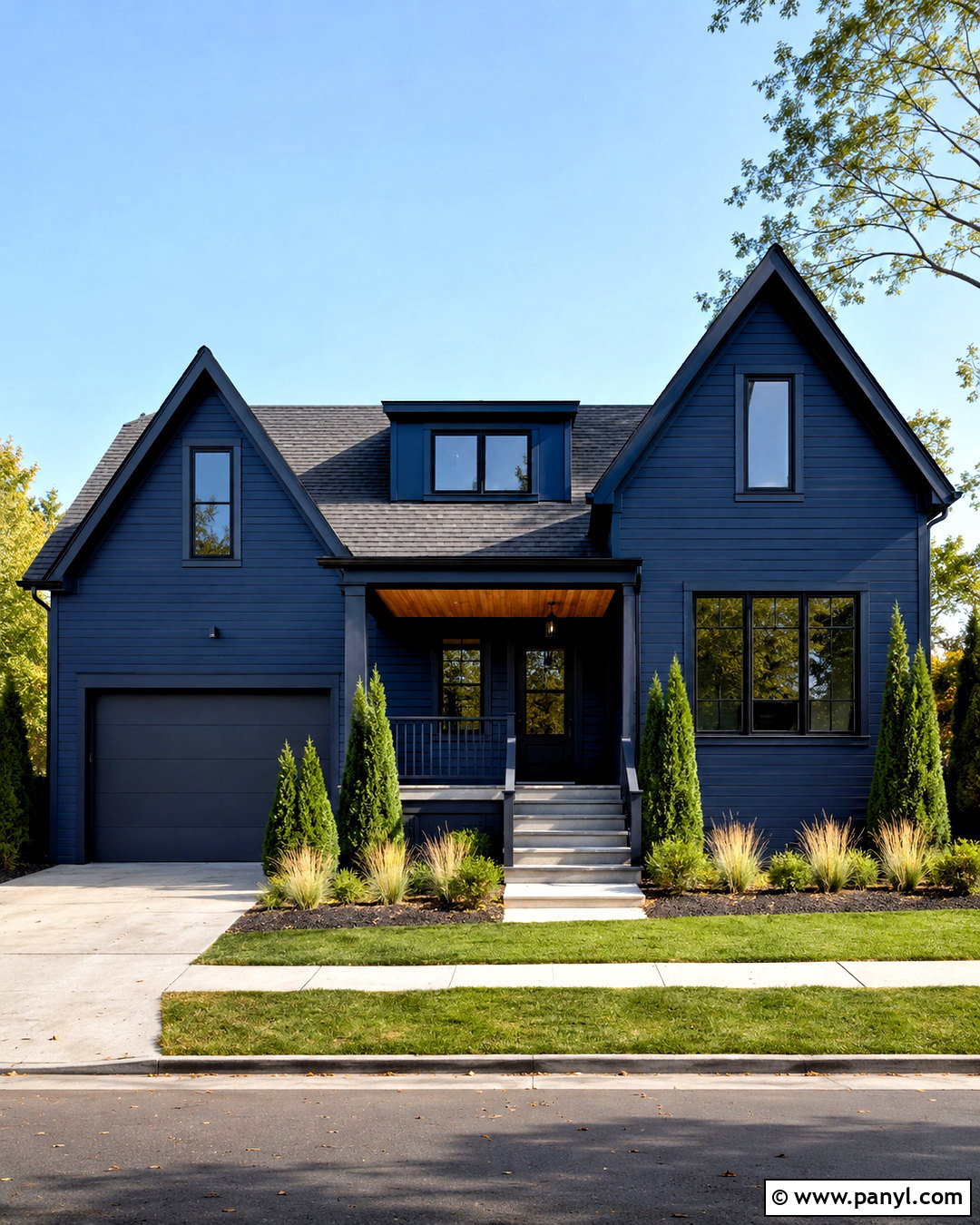
A monochromatic exterior can make a modest house look streamlined and architectural. Use one deep navy on the siding, trim, corner boards, garage door, and porch railings. Apply different finishes to create subtle depth: low-luster paint on the siding, satin on the trim, and a slightly glossier finish on the front door. Keep the roof charcoal and choose black windows, lights, and gutters so they quietly recede. Add warmth through a pale oak porch ceiling, a natural wood bench, and light gray concrete steps. Sparse landscaping with sculptural evergreens and ornamental grasses supports the clean design. This low-contrast treatment is best for modern cottages, compact ranches, and simple facades where a limited palette can emphasize shape, texture, and proportion.
17. Navy Blue Board And Batten Exterior
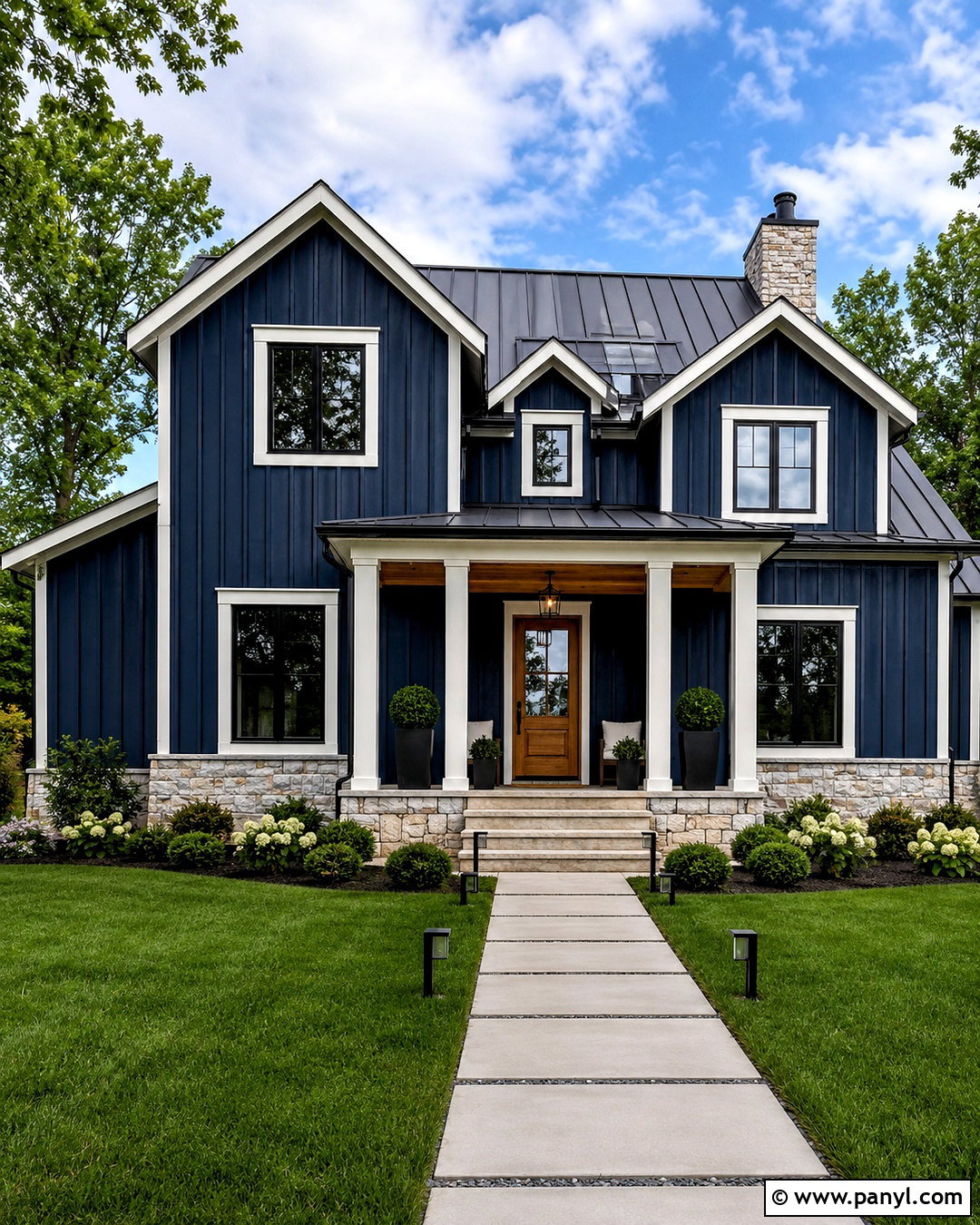
Vertical board-and-batten siding gives navy blue a bold, dimensional presence. Use a saturated navy across tall gables and main wall sections, then frame the facade with warm white fascia and window trim. A light stone base helps anchor the vertical lines and prevents the house from appearing overly tall. Add black-framed windows, a charcoal metal roof, and a natural cedar front door. If the home includes a porch, repeat the cedar on its ceiling and support beams. Large black lanterns and square planters strengthen the crisp geometry. Complete the yard with wide concrete pavers, clipped shrubs, and soft grasses. This full exterior scheme suits modern farmhouses and contemporary Craftsman homes without relying on excessive decorative details.
18. Navy Blue Stucco Exterior
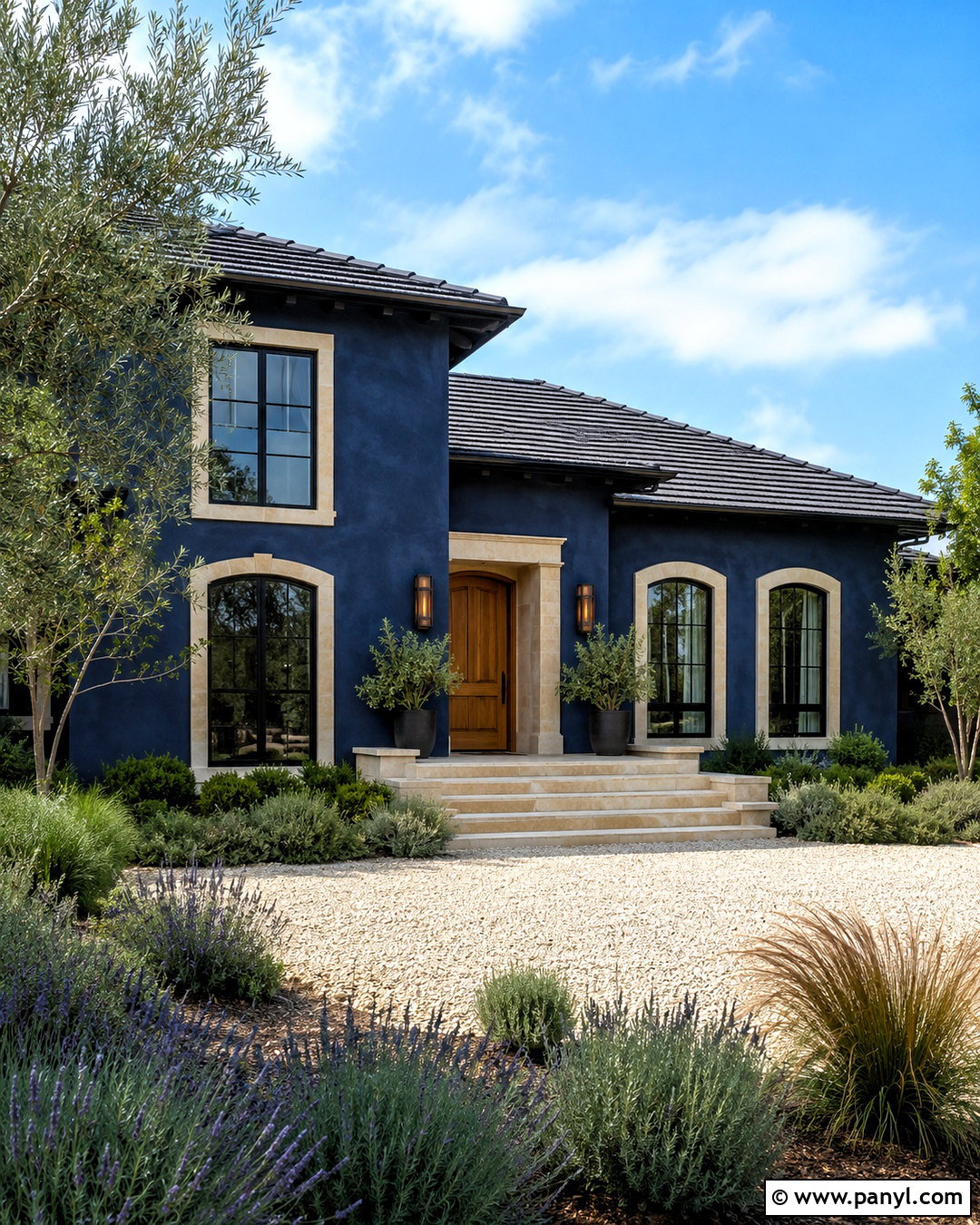
Smooth navy stucco creates a sophisticated alternative to traditional siding. Choose a smoky blue-black shade that still shows clear blue undertones in bright daylight. Use pale greige around the windows, entry arch, and roofline to soften the contrast. Black metal windows and a low-profile charcoal roof give the facade a modern structure. Add a warm wood pivot door or paneled entry door, along with large bronze sconces. Light limestone steps and a matching garden wall balance the dark stucco surface. Drought-tolerant landscaping with olive trees, lavender, ornamental grasses, and gravel keeps the setting clean and practical. This palette works especially well on contemporary, Mediterranean-inspired, and Southwestern homes where simple wall surfaces allow the navy color to become the primary architectural feature.
19. Navy Blue Painted Brick Exterior
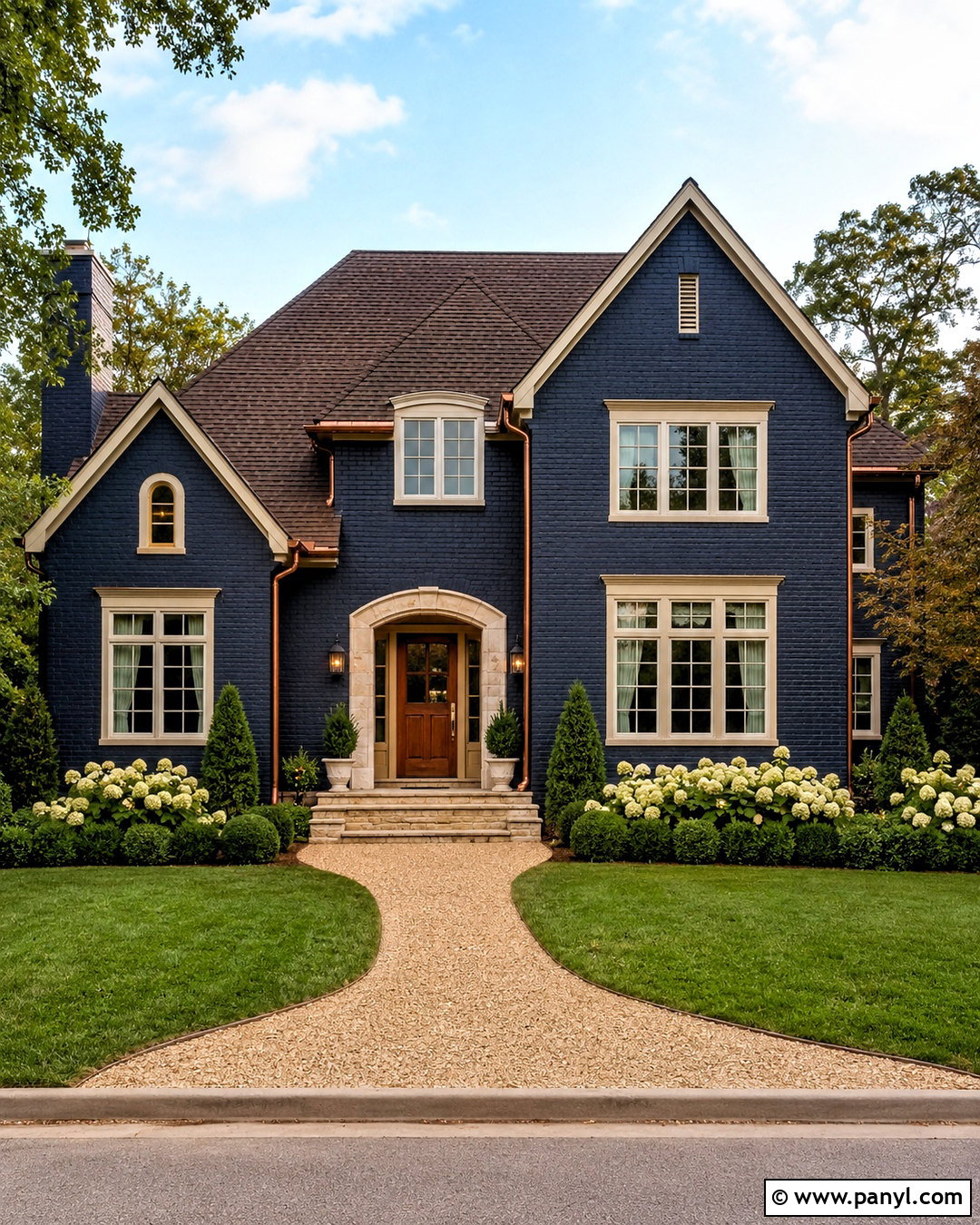
Painted brick gives navy blue extra depth because the masonry texture remains visible beneath the color. Coat the brick in a velvety dark navy, then use creamy greige on the trim, porch ceiling, and window surrounds. Leave selected stone steps or foundation areas natural to add variation. A medium-stained front door, copper gutters, and aged bronze lights introduce warmth against the cool painted brick. Choose a charcoal-brown roof rather than solid black for a softer transition. Keep shutters minimal so the brick texture remains prominent. Layer the landscaping with evergreen hedges, pale flowering shrubs, and a warm gravel path. This complete look can update ranch, Tudor, and traditional brick homes while preserving the substantial character associated with masonry construction.
20. Navy Blue Coastal Exterior
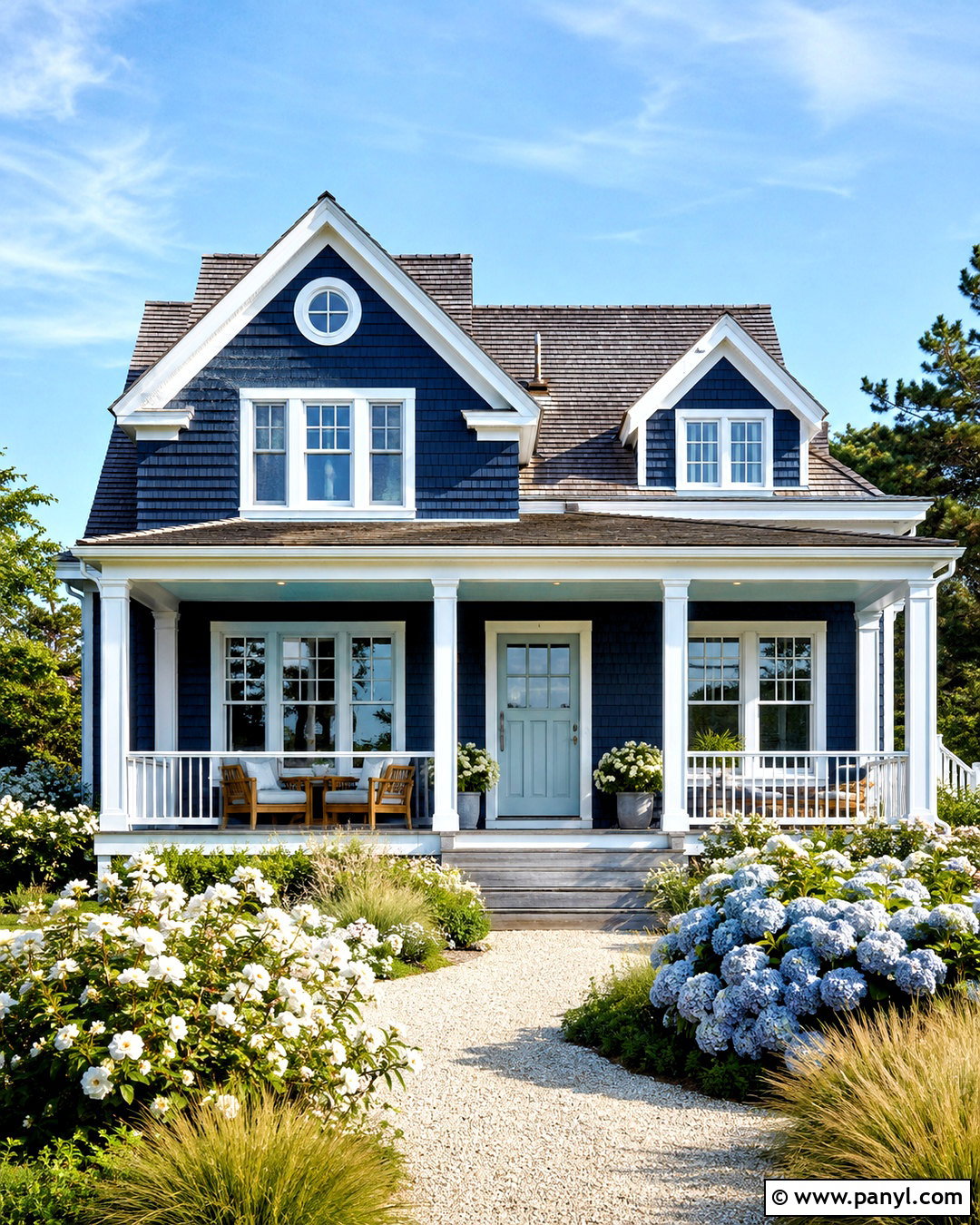
A coastal navy exterior should feel light, relaxed, and connected to its surroundings. Choose a clear navy for cedar shingles or lap siding, then use bright white on the trim, porch columns, railings, and decorative gable details. Add a pale blue-gray front door with brushed metal hardware. A weathered gray roof, natural teak seating, and light stone steps create a sun-washed finish without relying on novelty decorations. Use simple black lanterns for definition and paint the porch ceiling a soft sky blue. Complete the yard with hydrangeas, beach grasses, white roses, and a crushed-shell-colored gravel path. The resulting exterior suits coastal cottages and shingle homes, but it can also bring an airy waterside character to an ordinary suburban house.
Conclusion:
The most successful **navy blue exterior house colors** treat the entire property as one connected design. Siding, trim, roofing, masonry, doors, metals, and landscaping should support one another instead of competing for attention. White trim delivers classic contrast, while warm wood, red brick, stone, copper, and brown roofing soften navy’s cooler character. Black details create a modern result, and colorful doors offer an easy way to add personality. Before making a final choice, view large paint samples in morning sun, afternoon light, shade, and cloudy conditions. Compare them directly with permanent materials such as the roof and stone. Thoughtful testing will help your finished navy exterior look balanced from every angle.

Related Ideas and Inspiration:
Leave a Reply