
Choosing modern house colors is about creating a complete exterior palette, not simply finding one attractive paint chip. The best schemes connect the siding, trim, roof, front door, garage, masonry, and landscaping. Current exterior palettes favor warmer neutrals, grounded greens, natural blues, softened dark tones, and earthy accents rather than harsh, high-contrast combinations. () Before committing, consider your home’s architecture, fixed materials, surrounding landscape, and changing daylight. Test large samples on several walls because exterior color can appear much lighter outdoors. Whether you prefer a quiet neutral facade or a dramatic dark finish, these complete, practical looks will help you compare and confidently recreate 20 modern house colors.
1. Warm White House Color
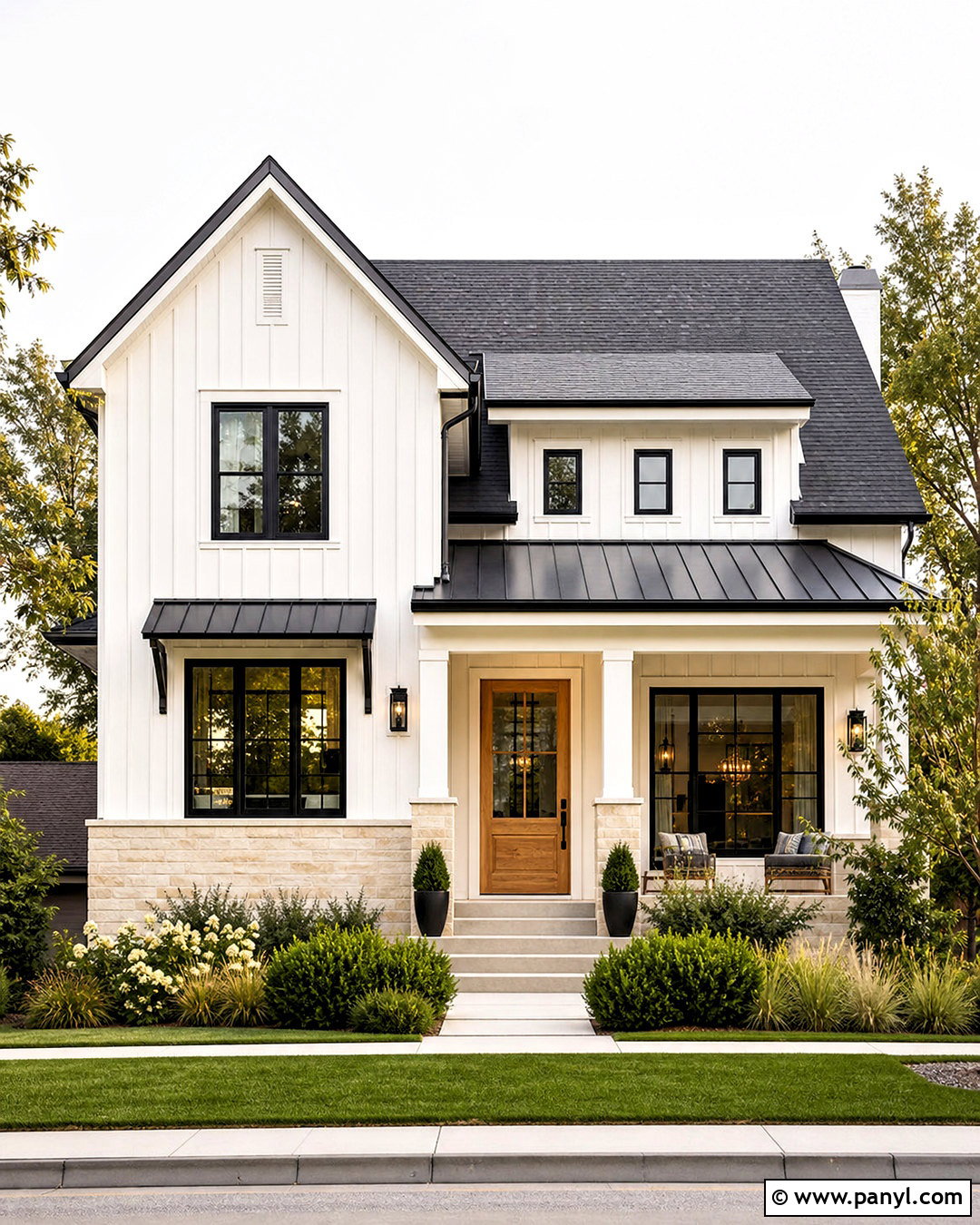
Warm white gives a modern home a clean appearance without making the exterior look cold or unfinished. Choose a creamy white with subtle beige undertones for the main siding or stucco. Repeat it on the trim for a streamlined, low-contrast finish, then add matte black window frames for crisp definition. A medium cedar front door and matching garage details bring natural warmth into the palette. Use a charcoal roof to ground the lighter facade without creating an overly sharp contrast. Pale limestone, smooth concrete steps, ornamental grasses, and neatly clipped shrubs complete the setting. This combination works especially well on modern farmhouse, transitional, ranch, and contemporary homes with uncomplicated rooflines.
2. Soft Greige House Color
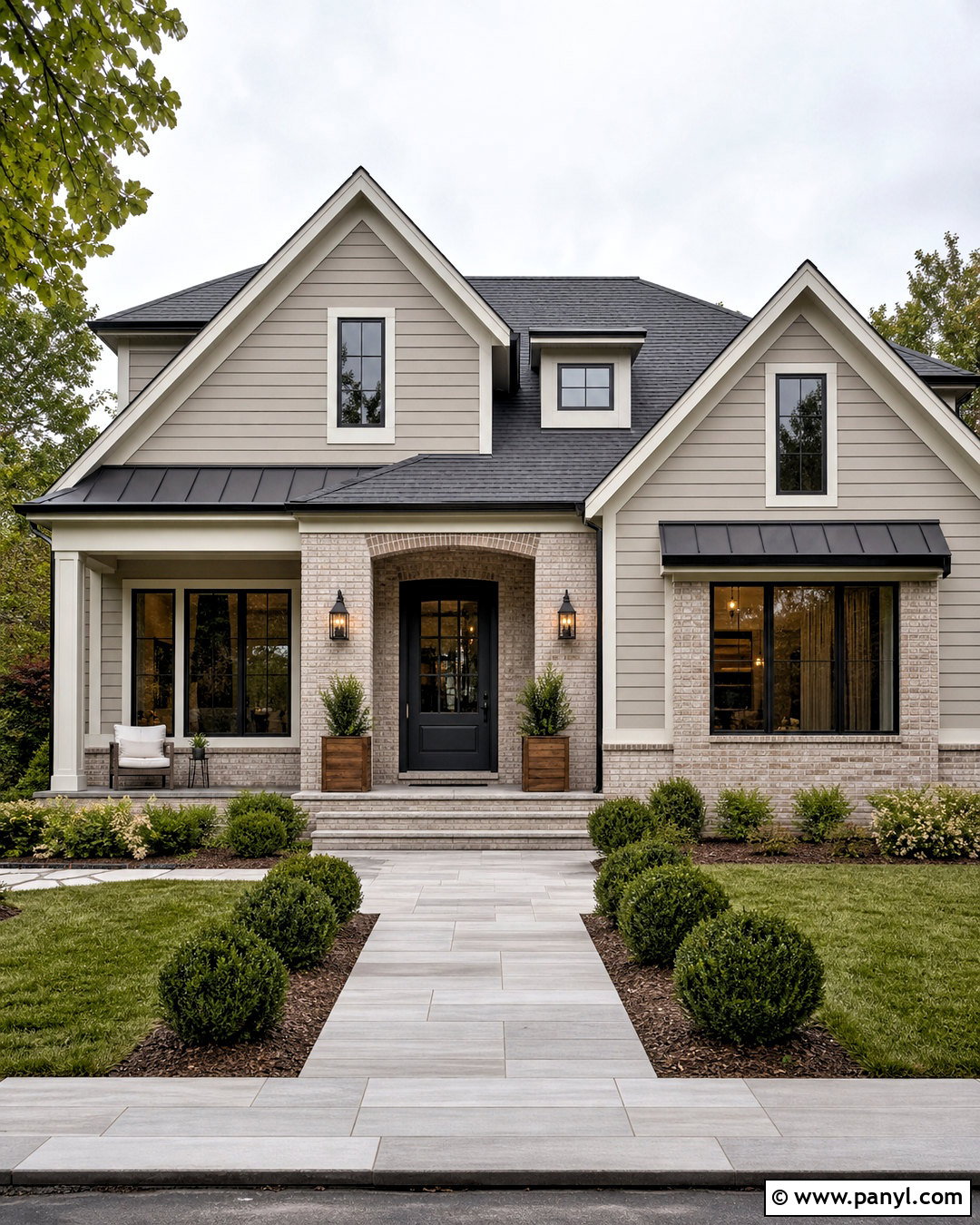
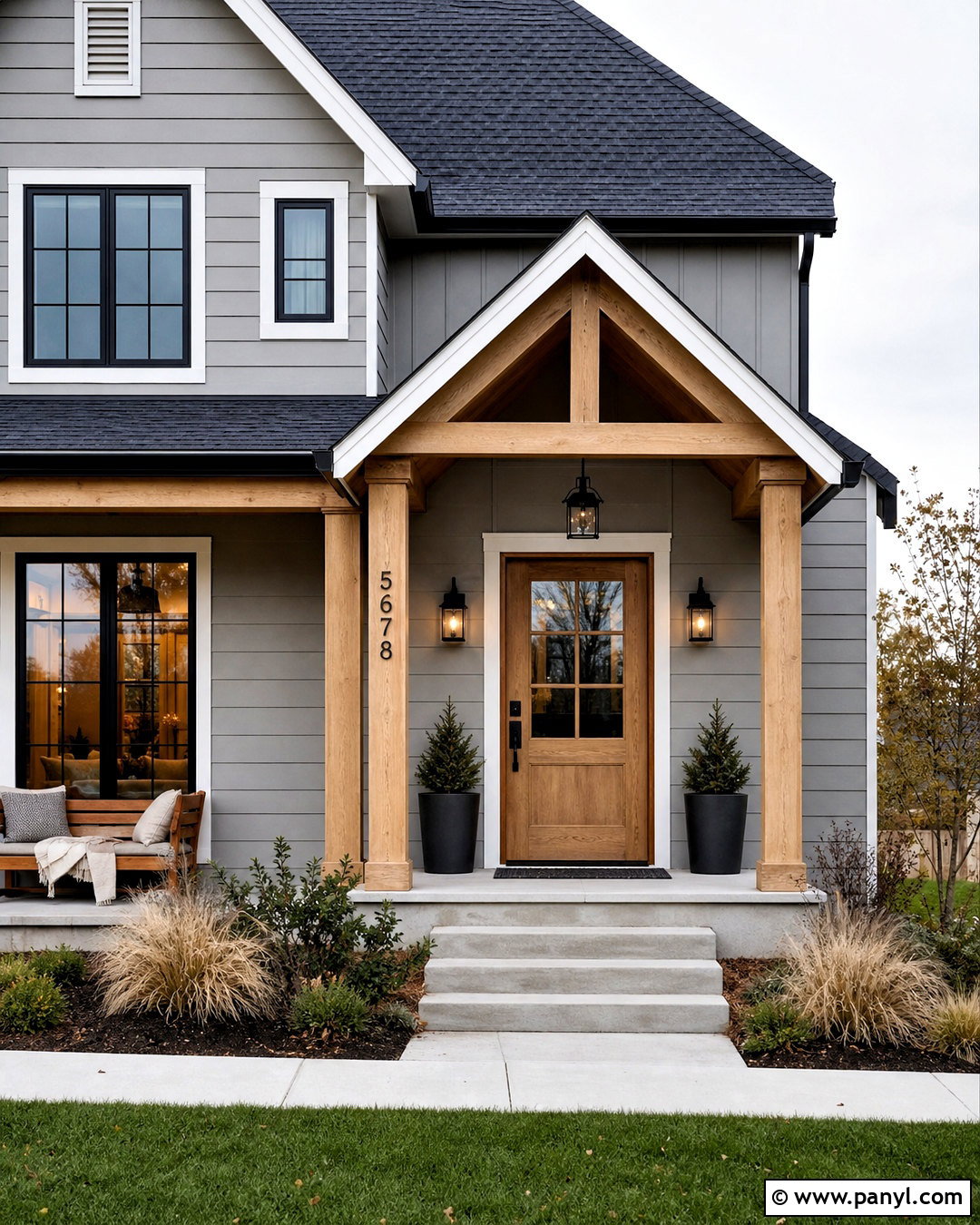
Can’t decide between gray and beige? Soft greige delivers the structure of gray with the welcoming warmth of a light brown undertone. Cover the main facade in a mid-light greige, then use warm off-white on window trim, fascia, and porch columns. A deep charcoal front door adds focus, while black metal lighting and house numbers introduce small, controlled accents. If the property includes brick, choose pale taupe or weathered tan brick rather than bright red. A medium gray roof supports the balanced palette. Finish the exterior with concrete pavers, rounded evergreen shrubs, and warm wood planters. The result feels polished and current without depending on extreme contrast or trendy decorative details.
3. Mushroom Taupe House Color
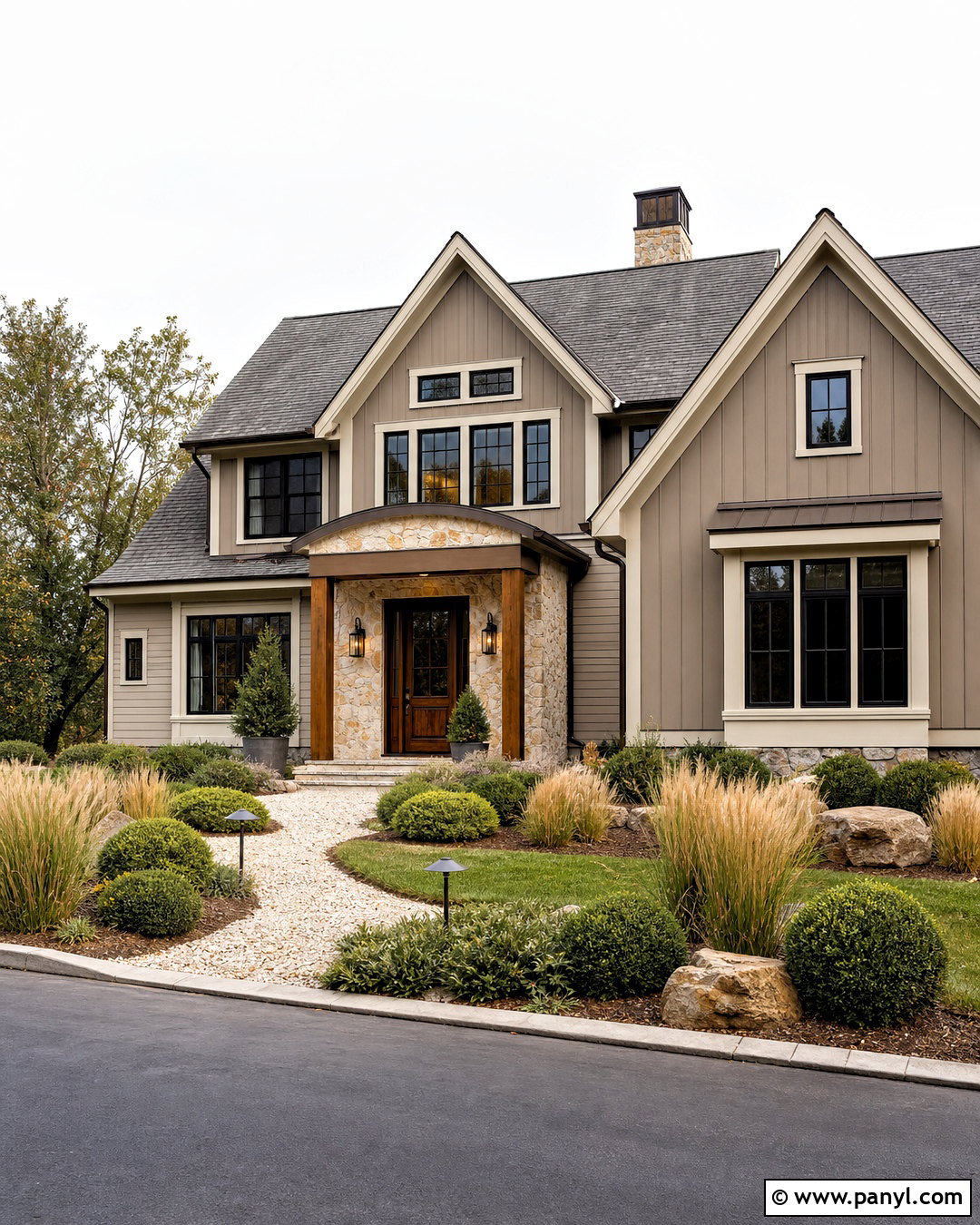
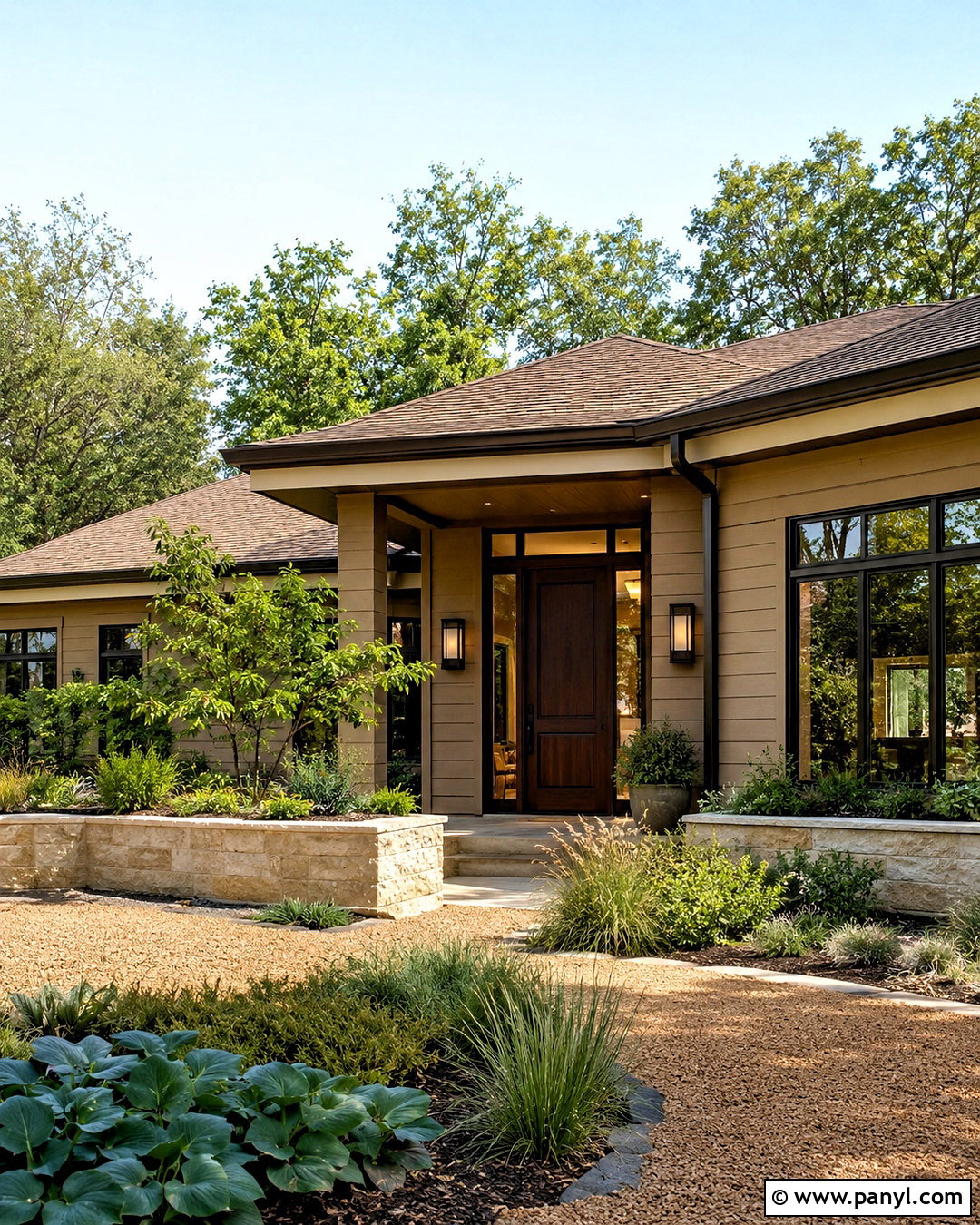
Mushroom taupe creates a richer neutral exterior that changes beautifully between sun and shade. Its subtle mixture of beige, gray, and brown gives flat siding or stucco more depth than an ordinary tan. Pair the taupe body with creamy putty trim rather than bright white. Add dark bronze window frames, gutters, and exterior lights for a softer alternative to black. A walnut-stained front door strengthens the earthy quality, while a weathered charcoal roof keeps the overall scheme grounded. Natural fieldstone around the foundation can connect every color. Use gravel paths, structured boxwoods, and airy ornamental grasses to create a complete modern exterior with warmth, texture, and understated curb appeal.
4. Light Sage Green House Color
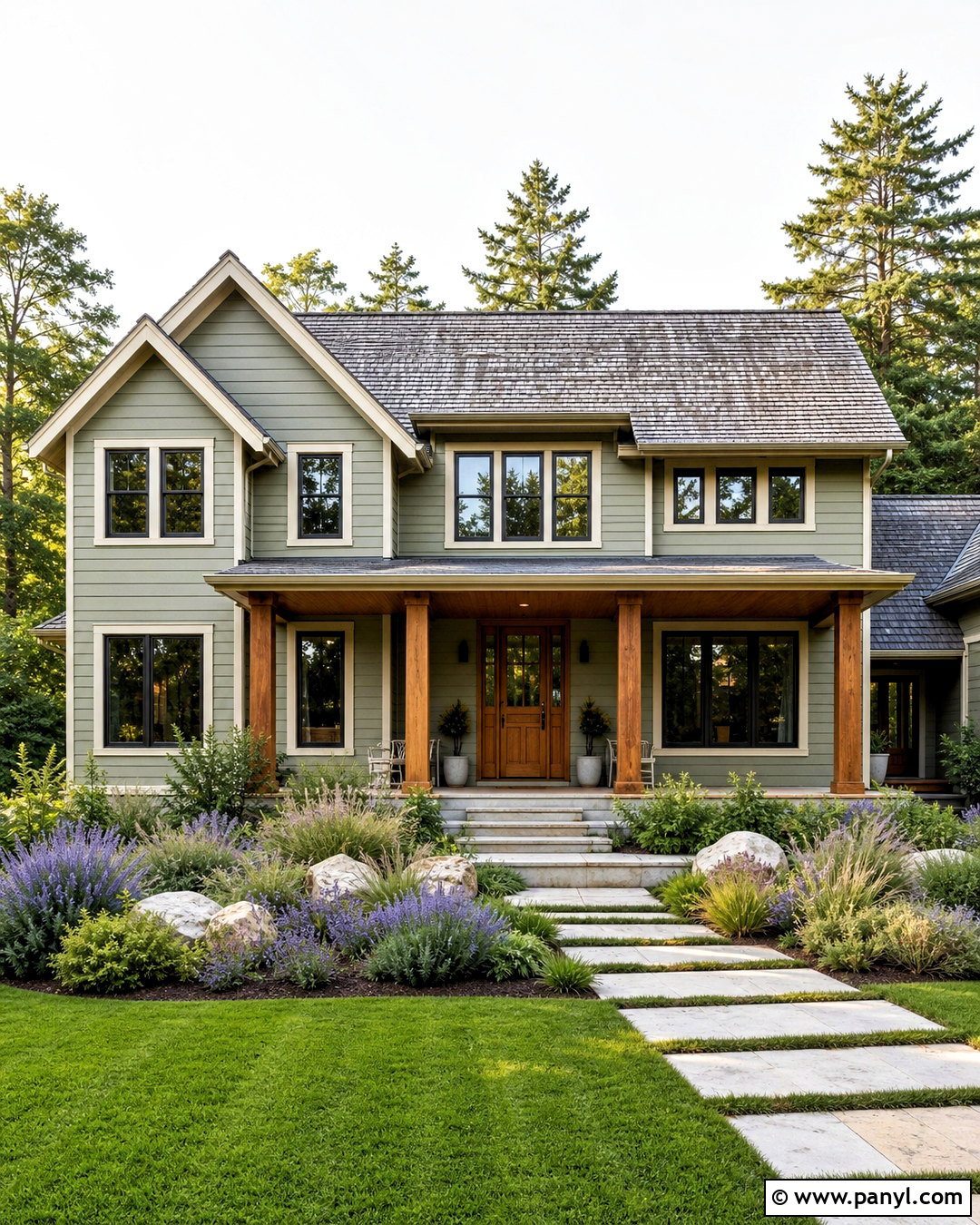
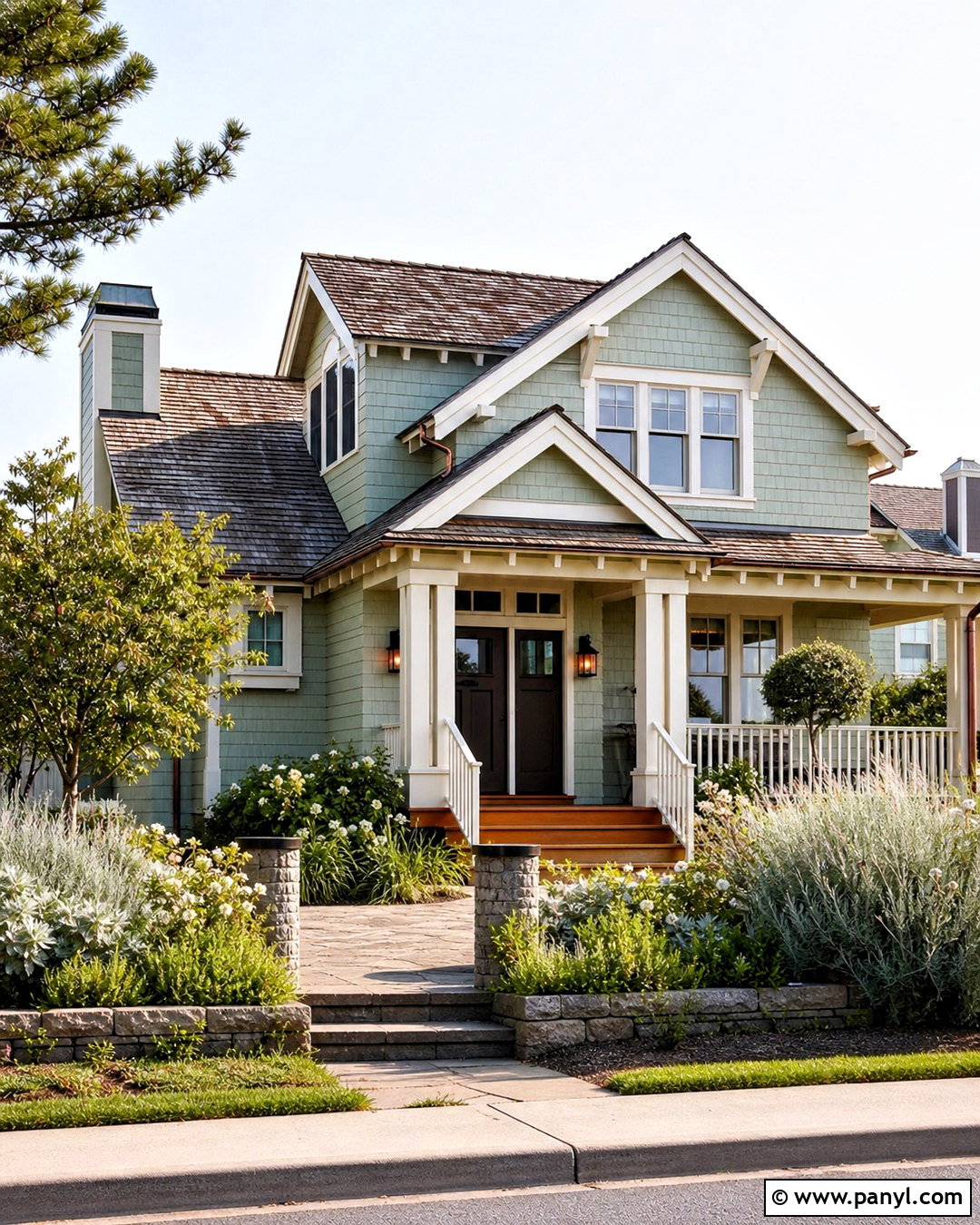
Light sage green brings gentle color to an exterior while remaining easy to coordinate with natural materials. Select a muted green with gray undertones for the siding so it feels calm rather than pastel. Use warm ivory on the trim, soffits, and porch posts to brighten the facade. A medium oak front door, cedar porch ceiling, or wood garage door can emphasize the organic palette. Choose bronze or charcoal metal for windows, lighting, and gutters. A medium brown or weathered gray roof will blend more naturally than a solid black one. Complete the look with pale stone, lavender, soft grasses, and layered evergreen planting for a relaxed modern home connected to its surroundings.
5. Deep Olive Green House Color
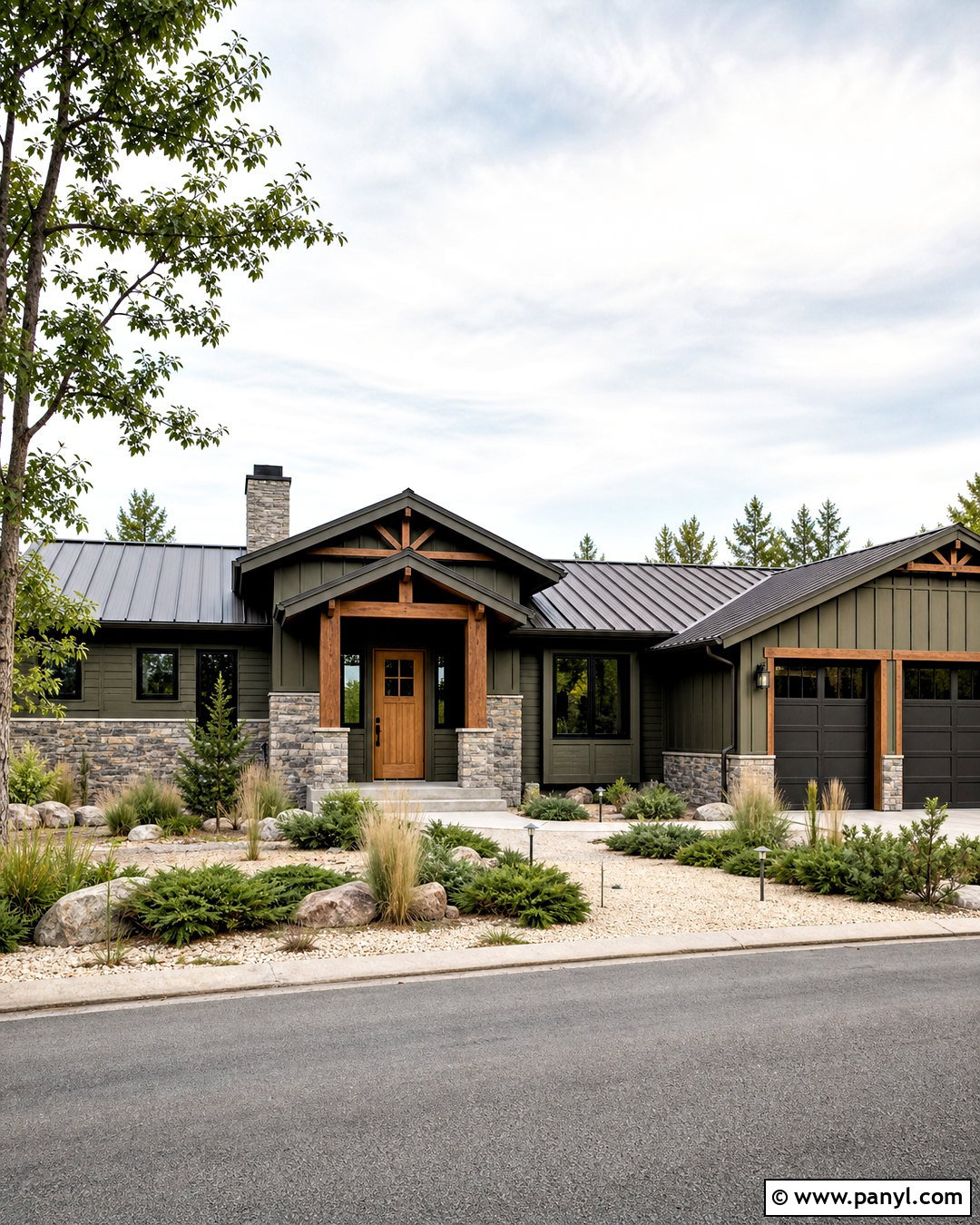
Deep olive green gives a simple house a sophisticated presence without the severity of black siding. Use the color across the main body and consider matching the trim to create a cohesive, color-drenched facade. Slim black window frames can provide definition, while a light natural-oak door prevents the exterior from feeling too heavy. Pair the olive with warm gray stone at the foundation and a dark bronze metal roof or charcoal shingles above. Keep other accents minimal so the green remains the defining feature. A gravel driveway, low junipers, native grasses, and pale concrete steps balance the darker walls. This complete scheme is particularly effective on ranch, cabin-inspired, contemporary, and wooded suburban homes.
6. Forest Green House Color
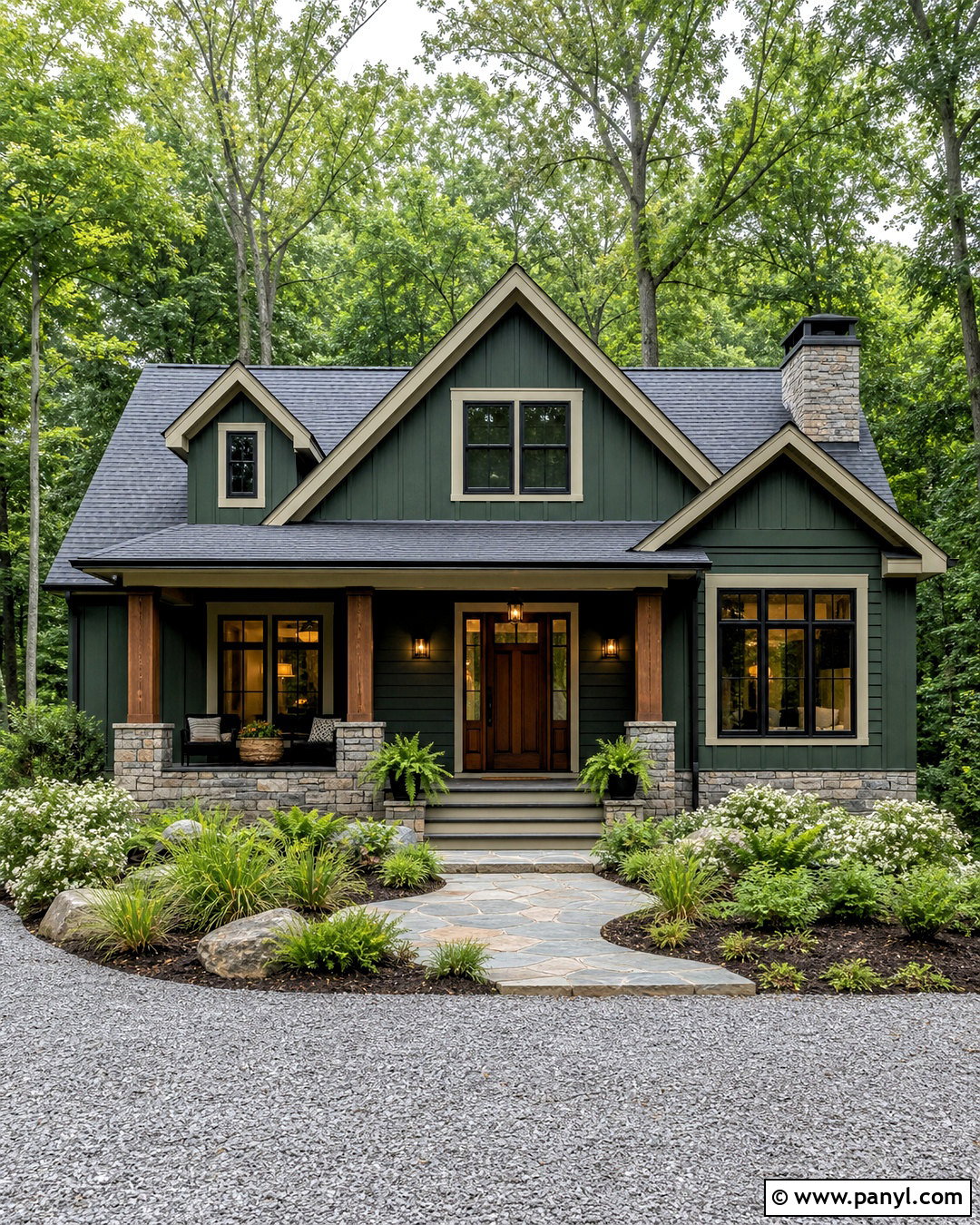
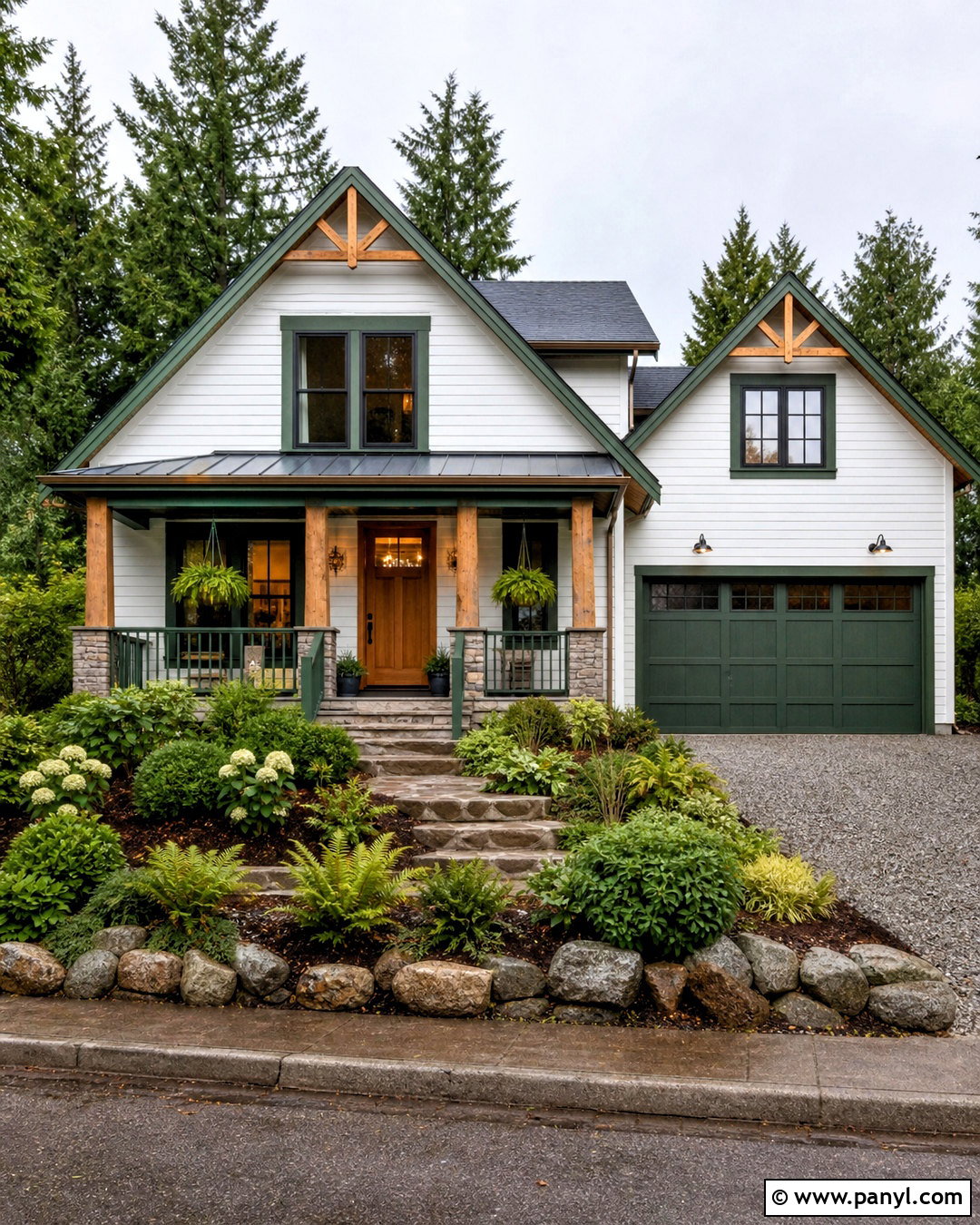
A forest green exterior feels bold, established, and closely connected to a leafy landscape. Choose a deep green with slightly muted undertones instead of a bright jewel tone. Cream trim around the windows and roofline provides gentle contrast, while stained mahogany or cedar gives the entrance visual warmth. Use aged bronze hardware, copper-toned lights, and charcoal roofing to enrich the palette without introducing unrelated colors. If the home has masonry, select gray-brown stone with irregular natural texture. Keep the front garden lighter with pale gravel, white flowering shrubs, ferns, and layered grasses. Together, these elements create a dramatic modern house color scheme that still feels welcoming, residential, and balanced throughout the year.
7. Blue Gray House Color
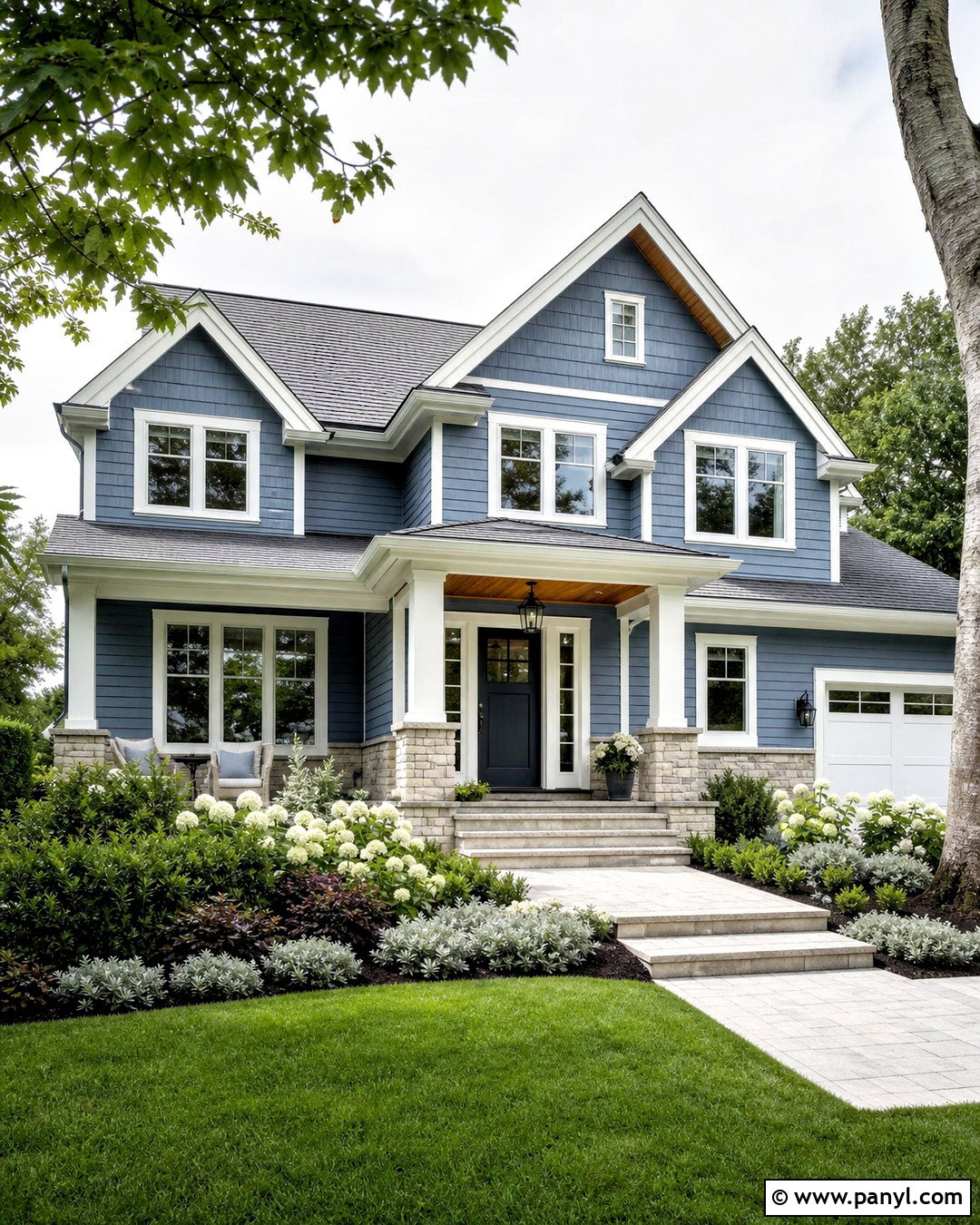
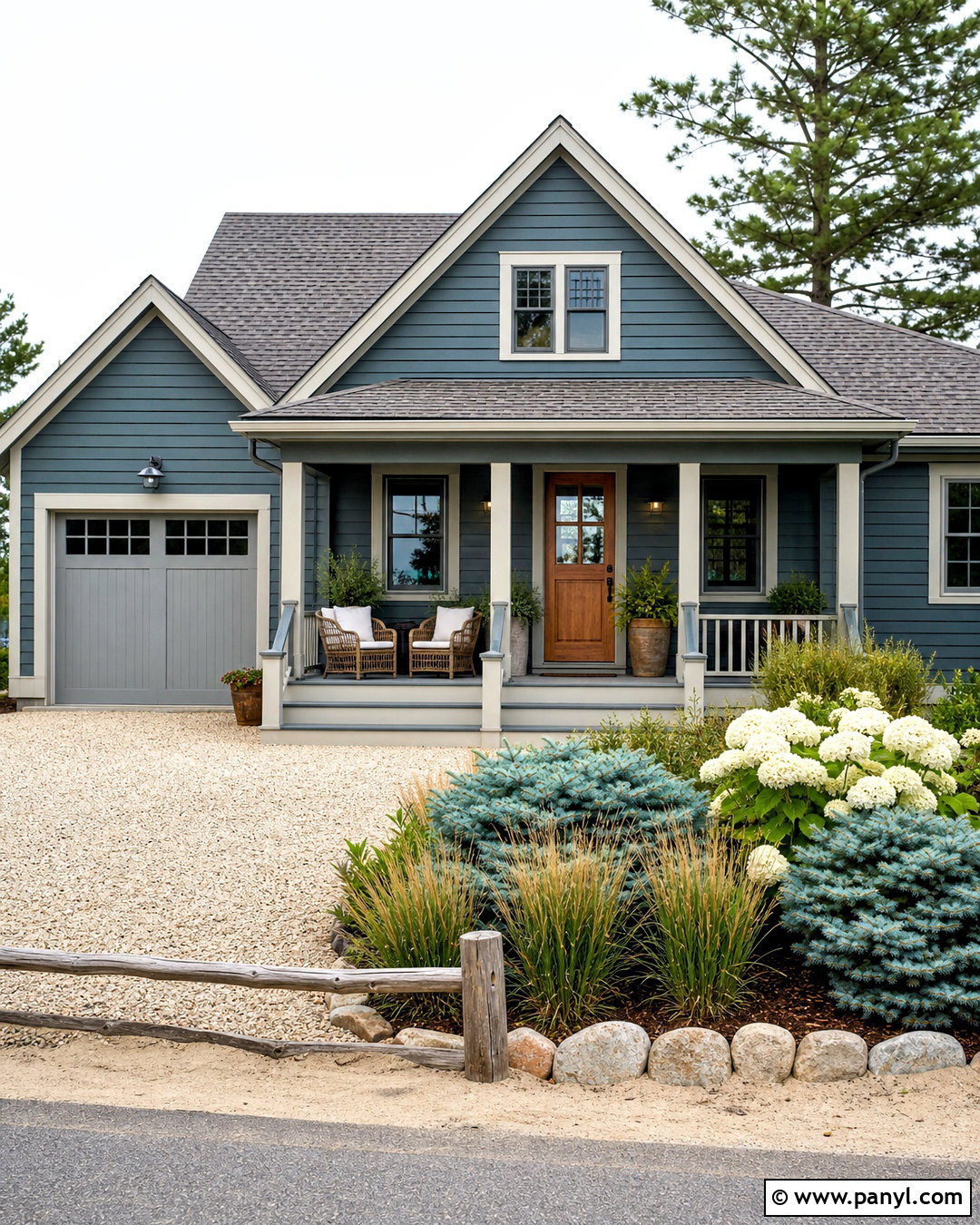
Blue gray can make an ordinary exterior look composed, airy, and quietly distinctive. Choose a softened medium shade that reads blue in direct sunlight and gray under cloudy skies. Frame the siding with warm white trim to preserve a clean appearance. A navy front door can create subtle tonal layering, while brushed nickel or dark pewter hardware supports the cooler palette. Add a natural cedar porch ceiling or wood bench to keep the facade from feeling chilly. Medium gray shingles, pale stone, and concrete walkways complete the architectural materials. For landscaping, use silvery foliage, white hydrangeas, and dark green shrubs. The finished home feels coastal and modern without relying on obvious nautical decoration.
8. Slate Blue House Color
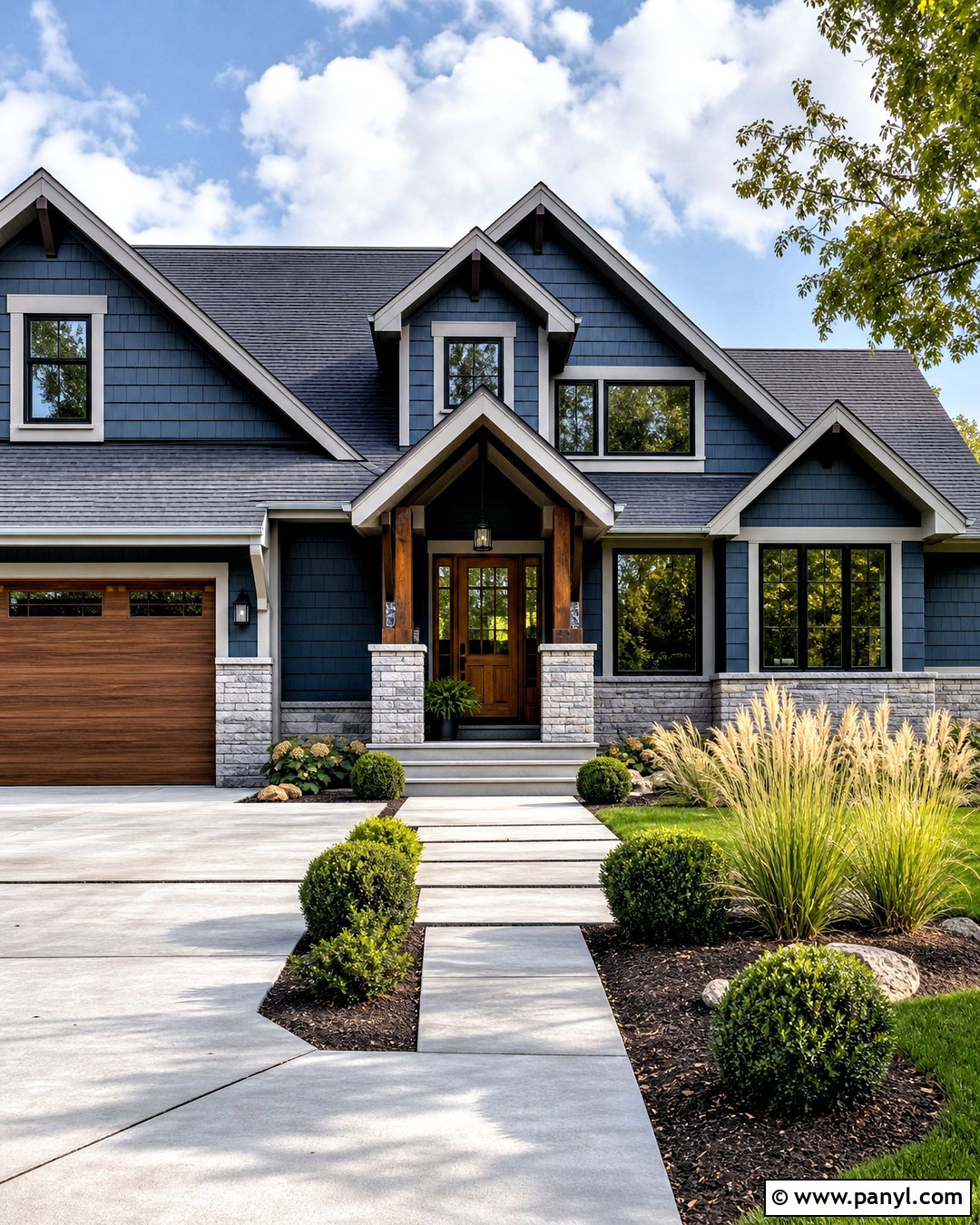
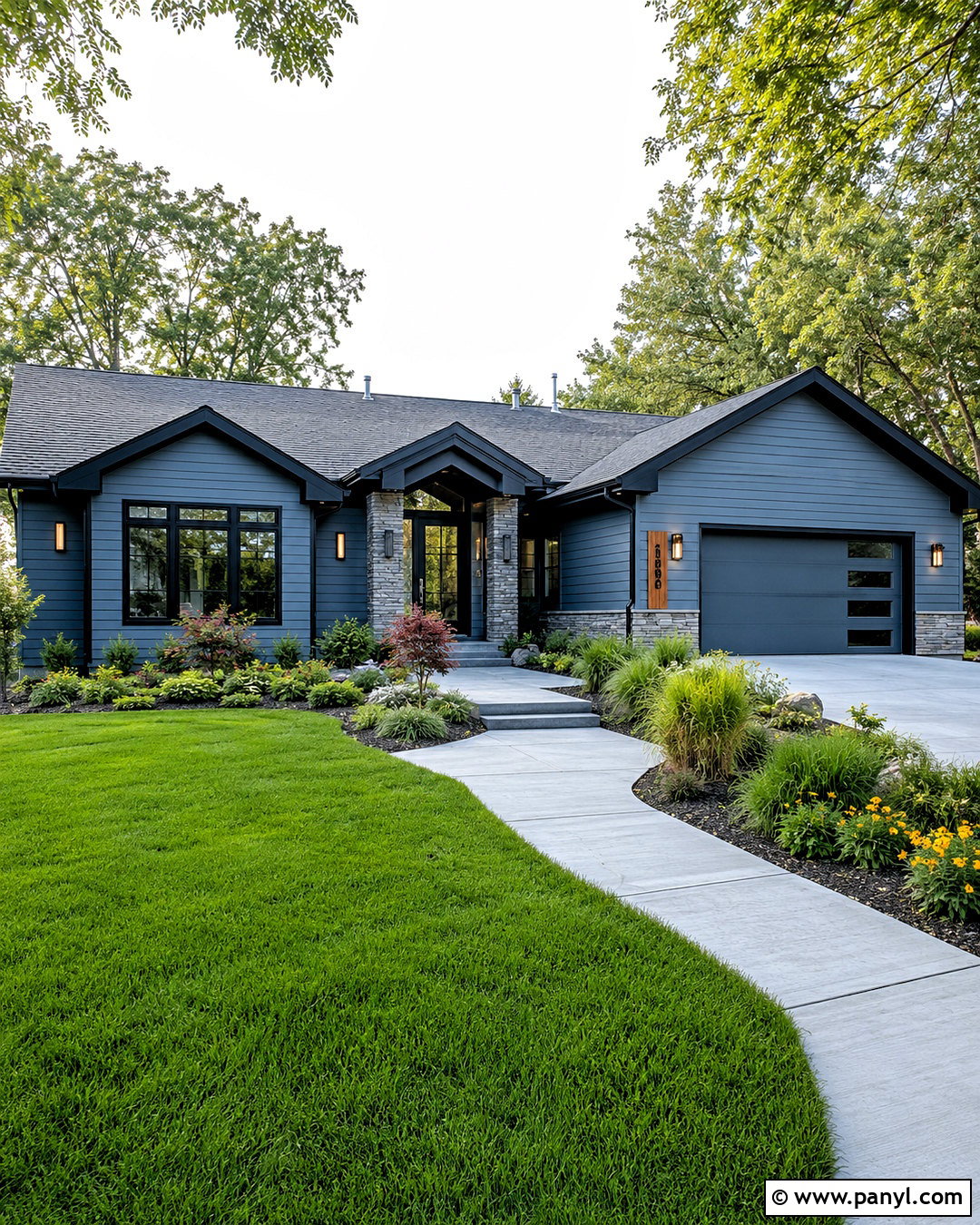
Slate blue offers more weight than a pale blue gray but remains softer than navy. Apply it to horizontal siding or smooth panels, then use light gray-white trim around windows and along the roofline. Black window frames and downspouts add definition without overpowering the blue. For the entrance, choose a warm walnut door with simple glass panels and matte black hardware. A charcoal roof and gray ledgestone foundation create a stable neutral base. Repeat the wood tone in porch beams or a modern garage door for consistency. Clean concrete paving, globe-shaped shrubs, and feather reed grass finish the curb view. This balanced palette complements contemporary Craftsman homes, split levels, and updated suburban facades.
9. Deep Navy House Color
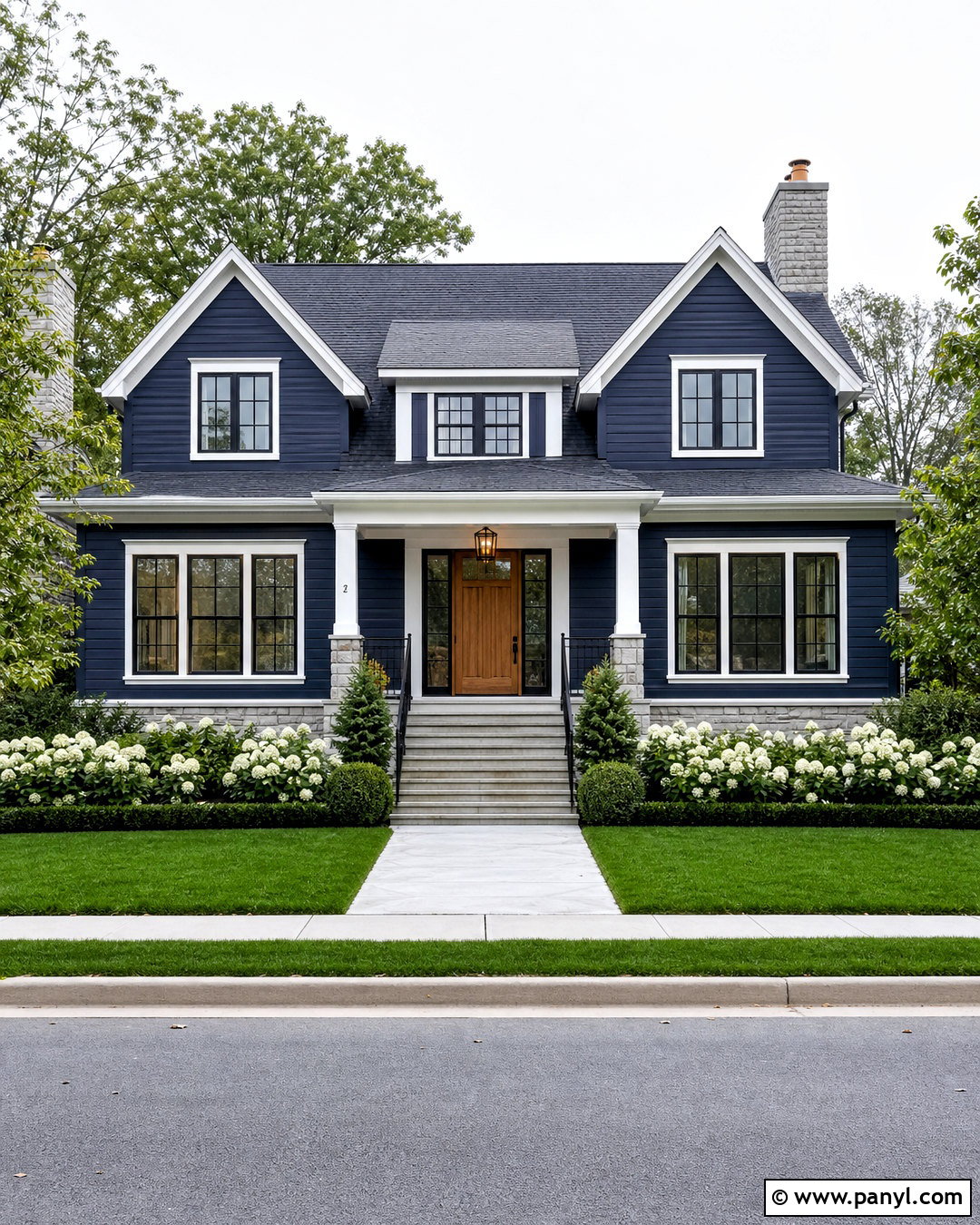
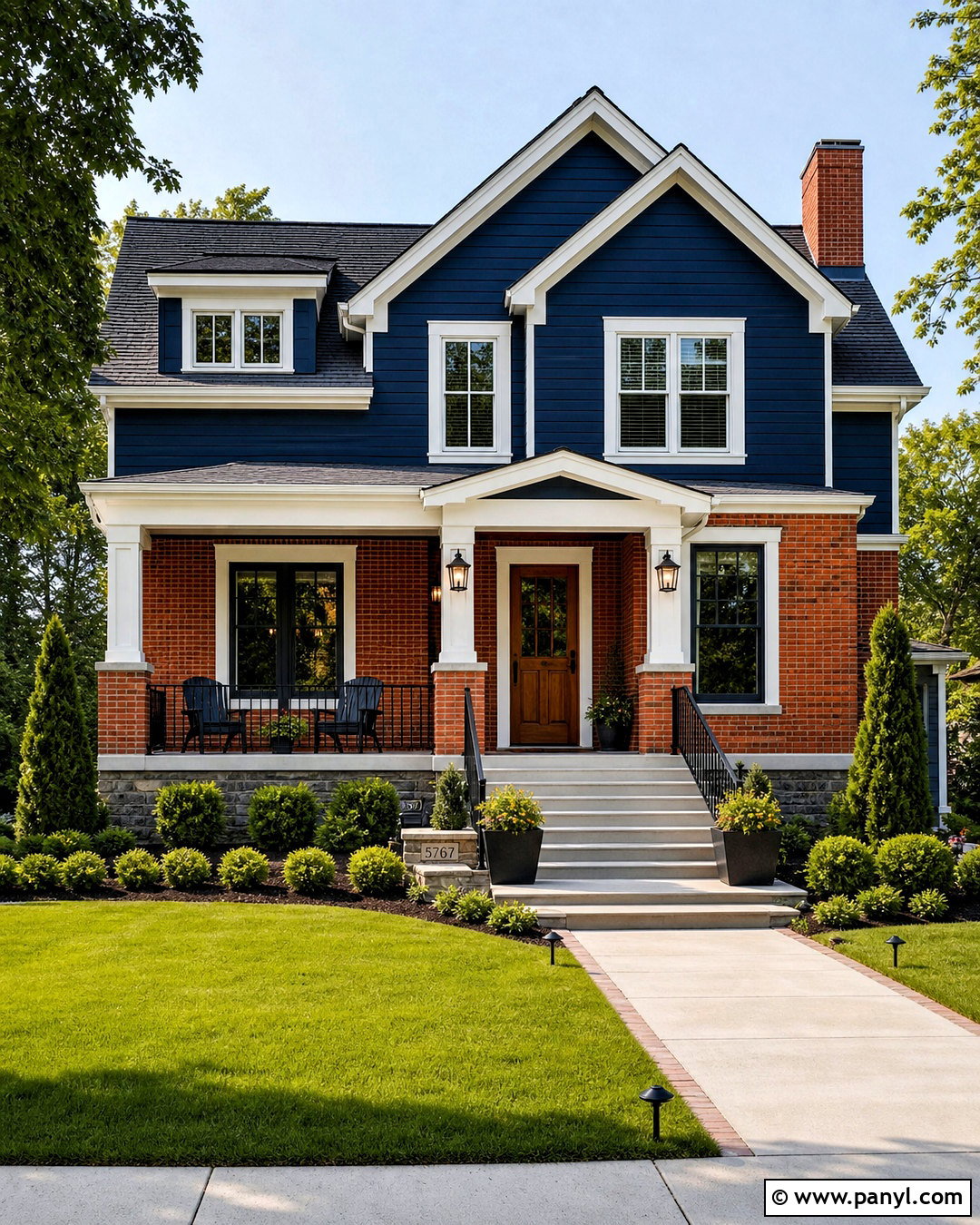
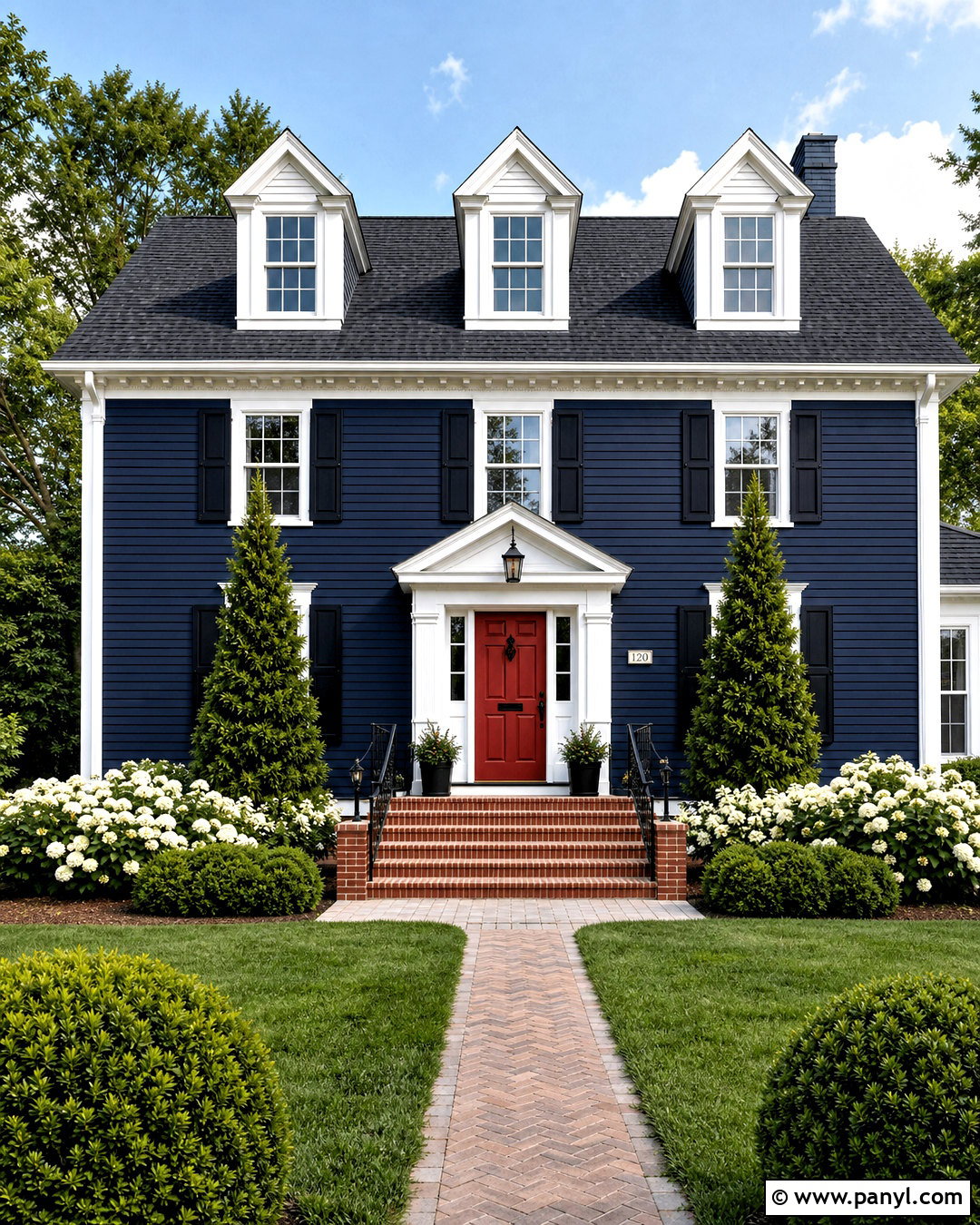
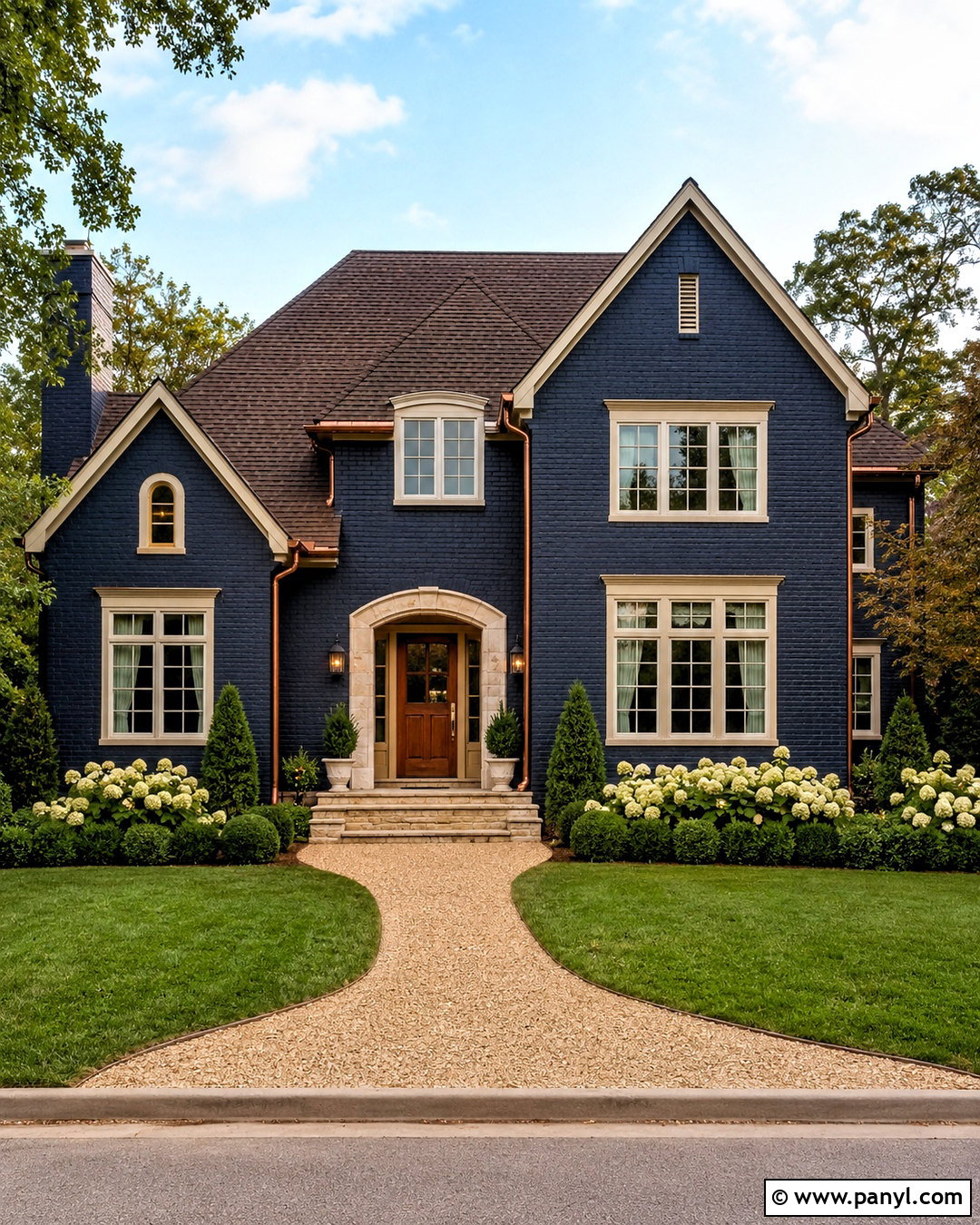
Deep navy makes a home feel substantial while providing more visible color than charcoal or black. Use navy siding as the dominant surface, supported by soft white trim that highlights windows, eaves, and porch columns. Keep the front door natural wood or paint it a muted rust color for an earthy focal point. Black metal railings and lighting can bridge the dark siding and a charcoal roof. If the house includes brick, consider limewashed red brick or pale gray stone to reduce visual competition. White flowering plants, clipped evergreens, and a light concrete walkway brighten the lower portion of the property. The completed exterior looks sharp and modern without becoming overly formal or severe.
10. Charcoal Gray House Color
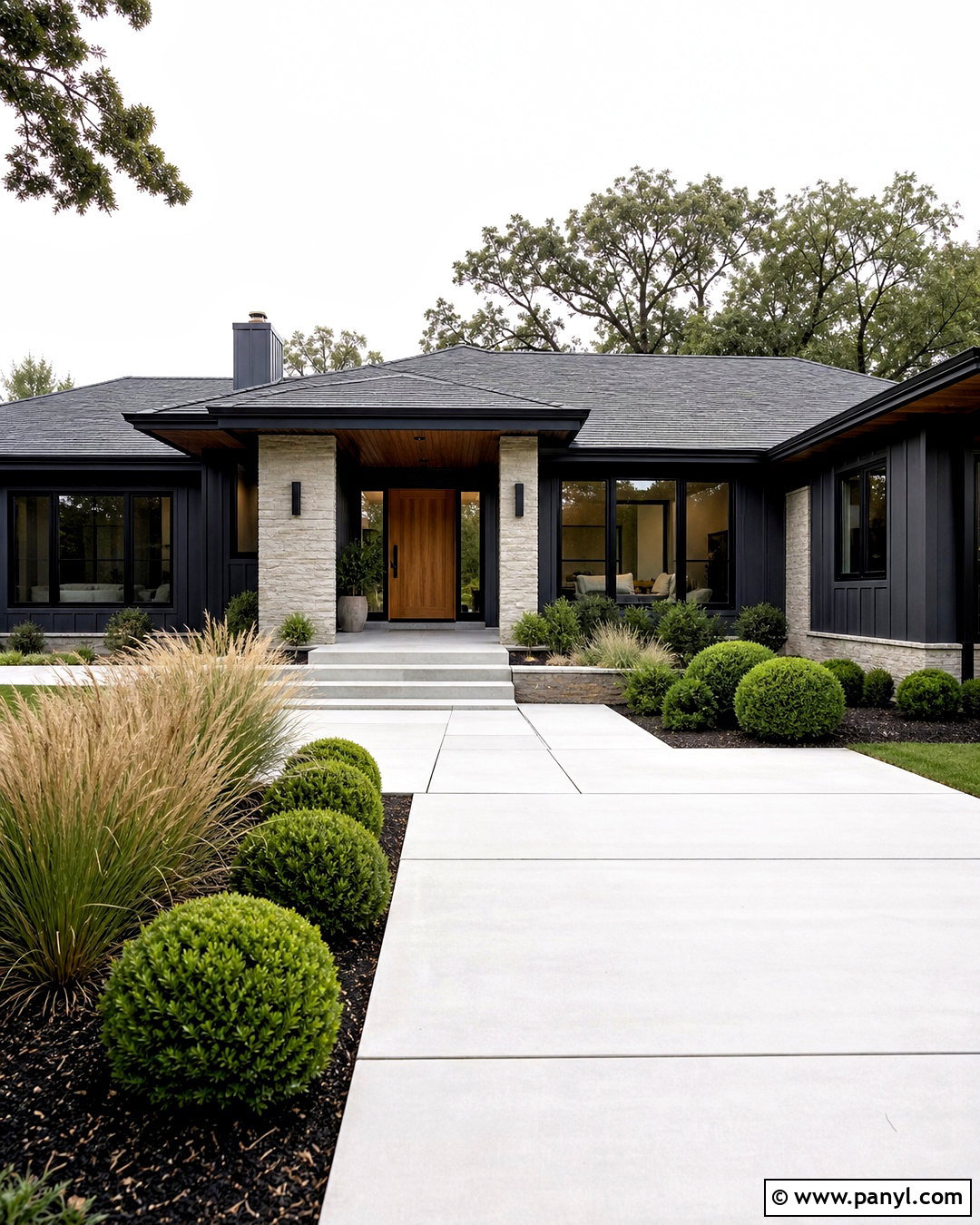
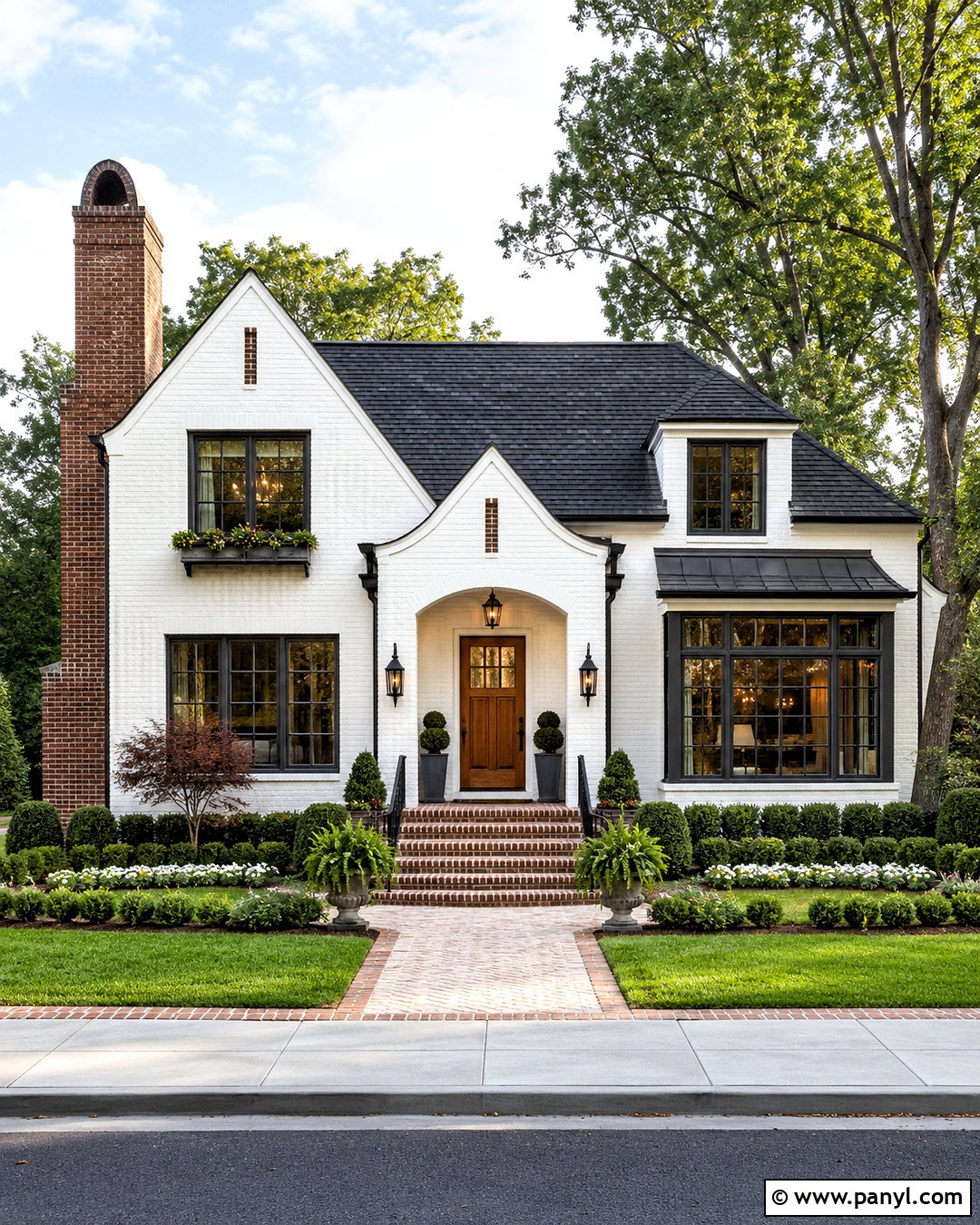
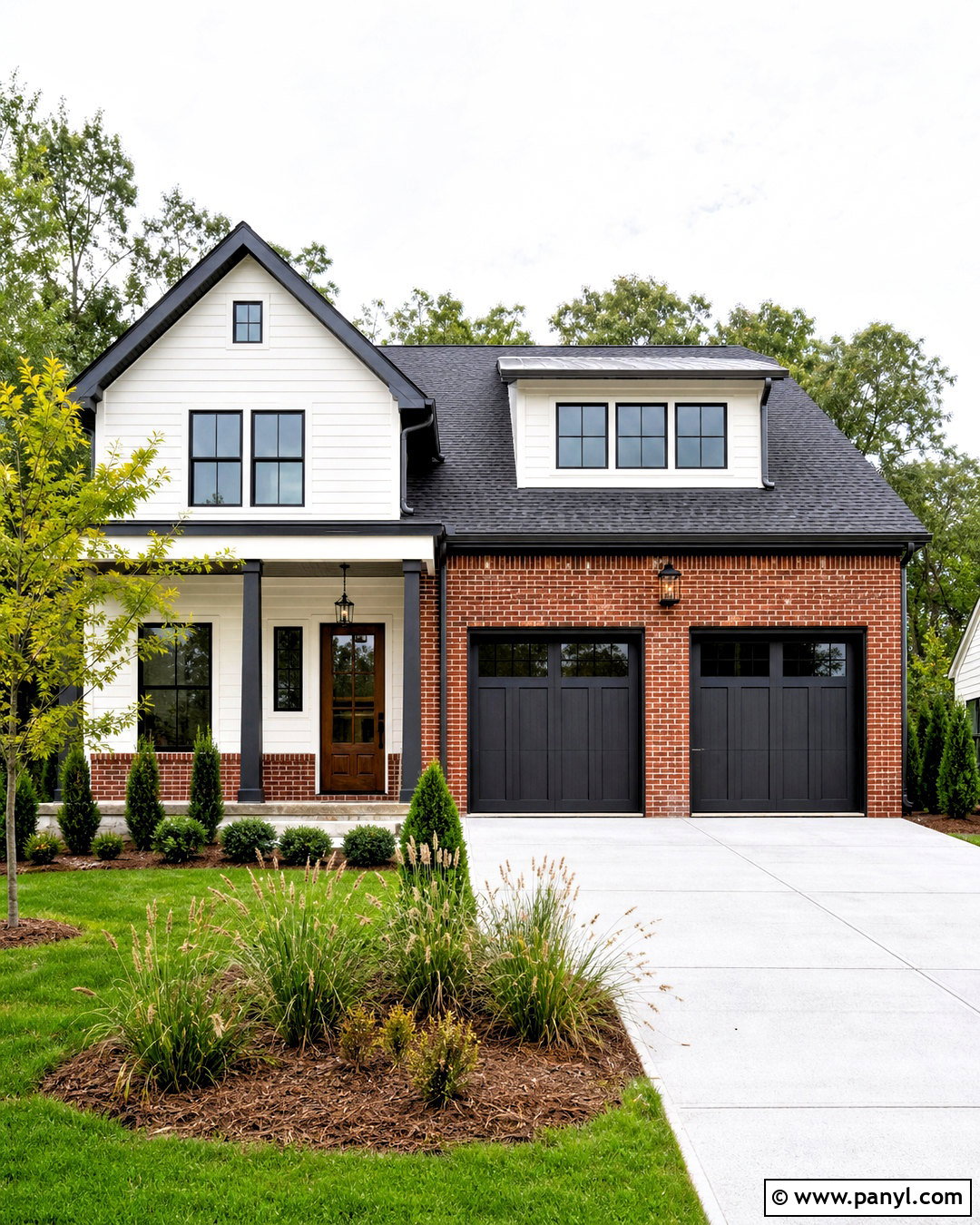
Charcoal gray is an effective choice when you want drama without committing to a true black exterior. Select a softened charcoal with warm undertones, especially if the home has wood or brown stone. Paint the body and major trim the same color to emphasize clean lines and architectural shapes. Add black window frames for a subtle tonal shift rather than strong contrast. A wide oak front door and matching cedar soffits bring warmth to the darker facade. Use pale concrete, gray limestone, and a medium charcoal roof to maintain a controlled palette. Light ornamental grasses and rounded green shrubs soften the geometry. This look is ideal for modern ranch homes, townhouses, and simple two-story exteriors.
11. Soft Black House Color
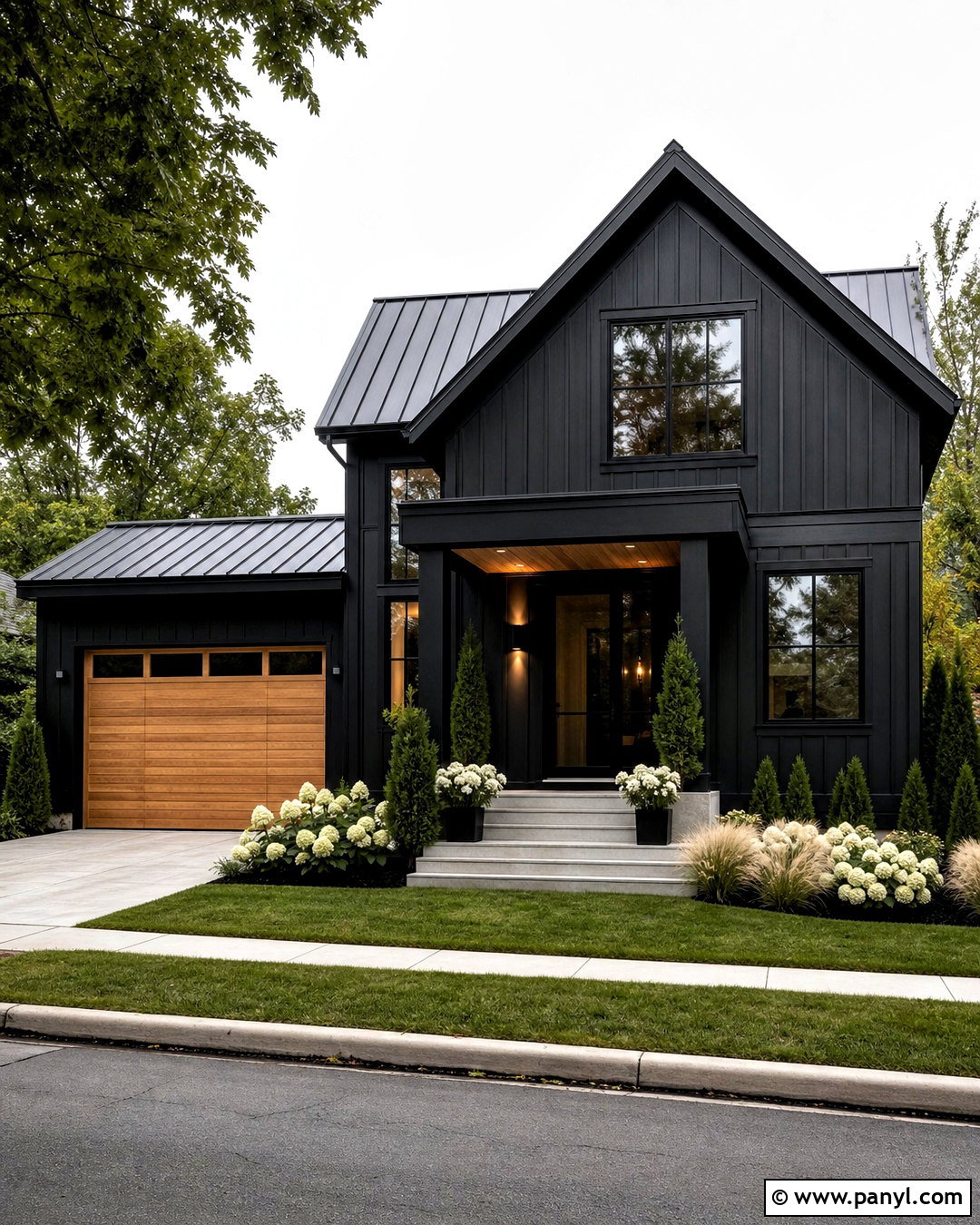
Soft black creates a memorable exterior, but its supporting materials determine whether it feels refined or overpowering. Choose an off-black with charcoal, brown, or green undertones rather than the darkest available shade. Carry it across siding and trim for a seamless monochromatic treatment. Break up the depth with a natural cedar garage door, porch ceiling, and front entry. Black-framed windows will disappear neatly into the facade, making the architecture appear more streamlined. Light gray stone, broad concrete steps, and a dark metal roof add texture without disrupting the palette. Keep landscaping fresh and graphic with pale grasses, compact evergreens, and white flowers. The finished scheme feels dramatic, cohesive, and appropriately scaled for a residential property.
12. Warm Sand House Color
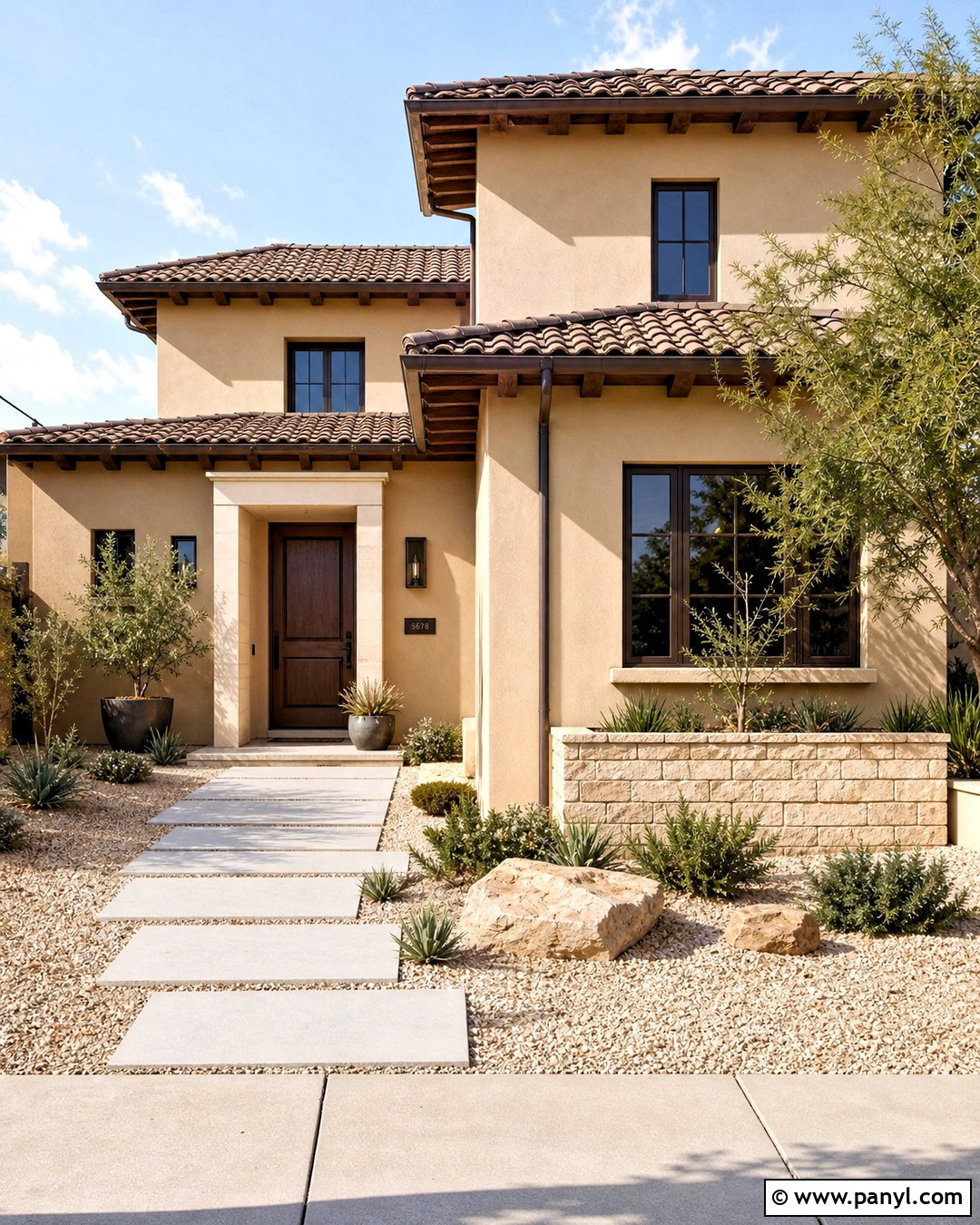
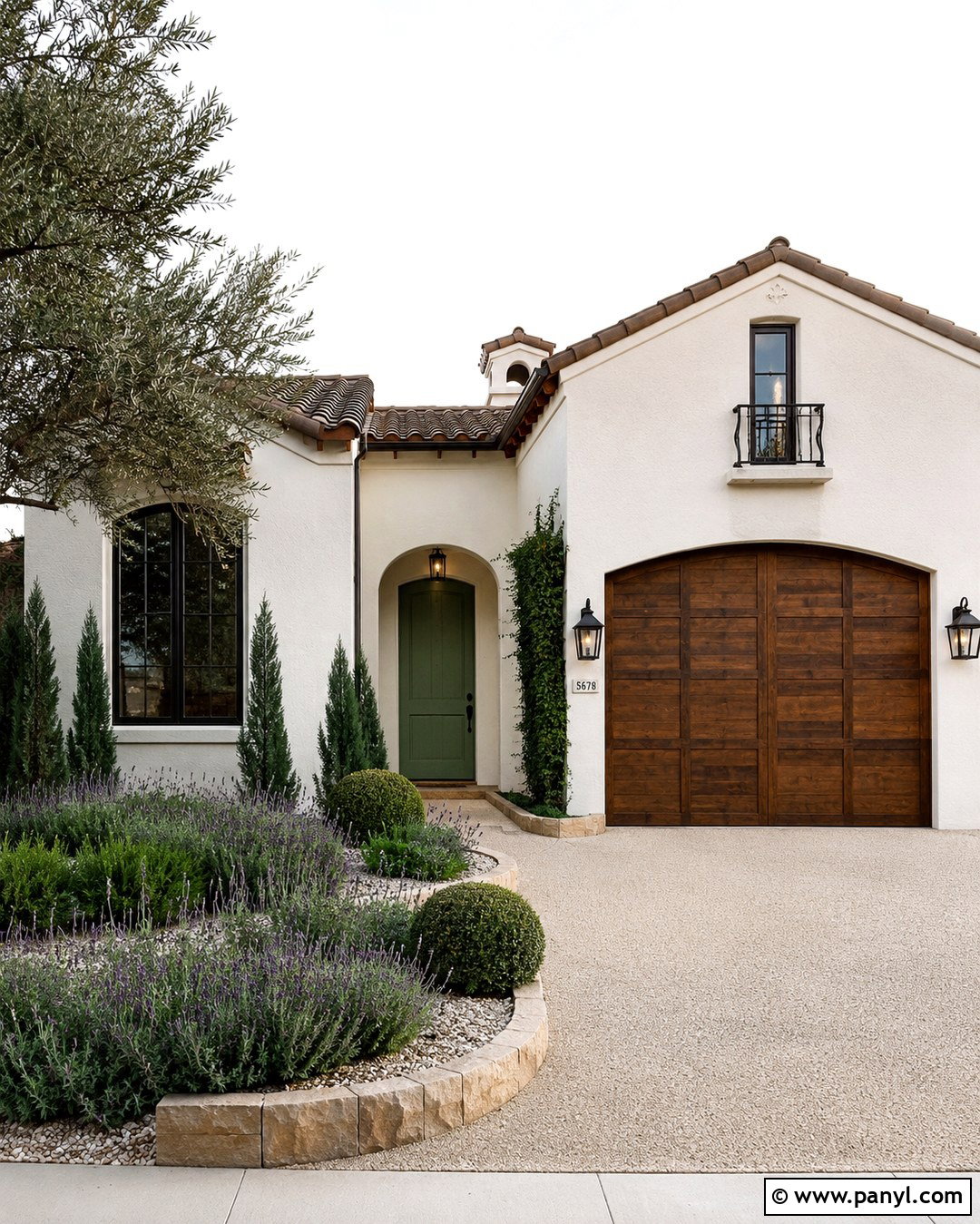
Warm sand gives a modern facade a sunlit, approachable appearance while staying more distinctive than basic beige. Choose a sandy neutral with muted gold and gray undertones for stucco, siding, or painted brick. Use creamy white on the fascia and window trim to lift the palette. A medium bronze front door, bronze window frames, and simple metal lighting provide quiet contrast. Terracotta roof tiles can create a warmer Mediterranean-modern direction, while brown-gray shingles make the combination suitable for a suburban home. Add buff limestone, pale gravel, and drought-tolerant landscaping with olive-toned foliage. The complete exterior feels relaxed and natural, especially in bright climates where very dark paint might absorb too much visual weight.
13. Clay Beige House Color
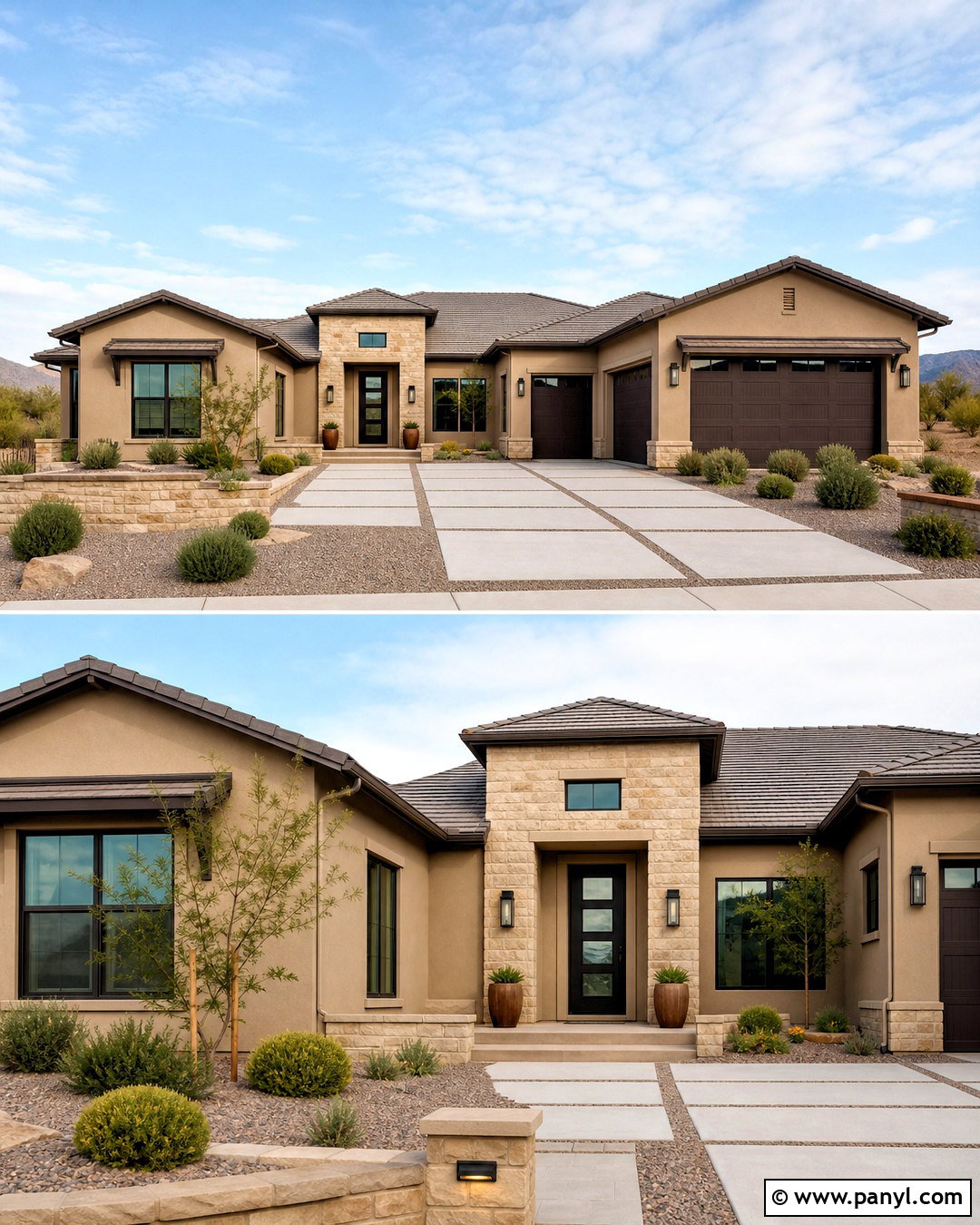
Imagine a beige exterior with enough earthy color to feel intentional. Clay beige combines warm tan with a subtle reddish undertone, creating a facade that works naturally with brick, stone, and wood. Pair it with putty-colored trim for a smooth transition rather than bright white contrast. Use a dark brown front door, bronze windows, and aged brass lighting to reinforce the warmth. A brown-gray roof will connect the darker accents to the main body. If extra texture is needed, add light sandstone around the entry or foundation. Sage plants, rosemary-like shrubs, gravel beds, and large concrete pavers complete the modern landscape. This scheme suits contemporary Southwest, ranch, and transitional architecture particularly well.
14. Muted Terracotta House Color
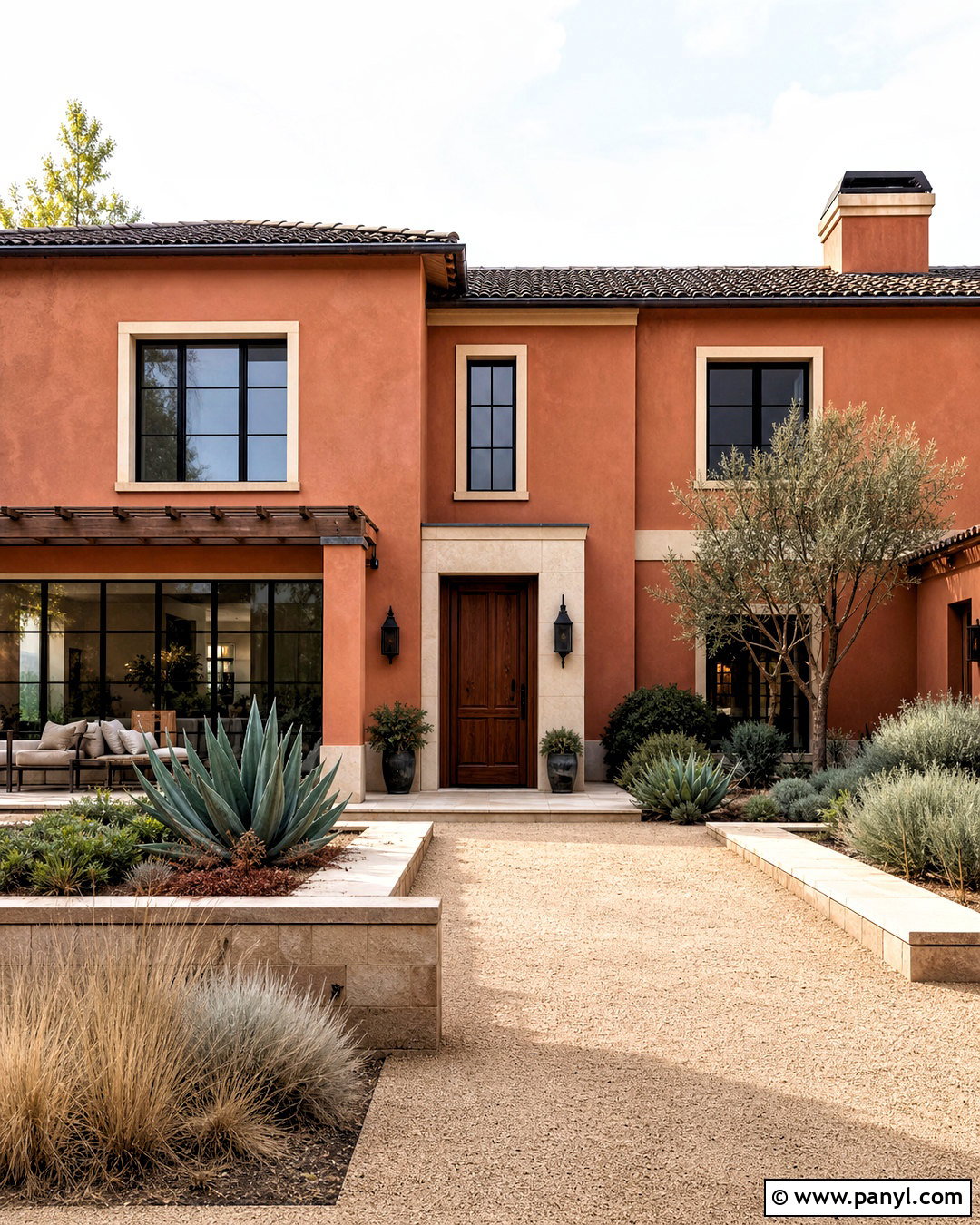
Muted terracotta delivers noticeable color while remaining rooted in natural materials. Look for a dusty red-orange with brown or clay undertones rather than a bright orange finish. Apply it to smooth stucco or simple siding, then soften the edges with warm cream trim. Dark bronze window frames, gutters, and lighting provide definition. A medium walnut door can deepen the entrance without competing with the walls. Pair the facade with a brown tile or weathered charcoal roof, depending on the architecture. Pale limestone paving and gravel prevent the exterior from becoming too warm. Olive trees, silvery grasses, and structured succulents create a complementary garden, producing a complete modern scheme with warmth, character, and regional flexibility.
15. Chocolate Brown House Color
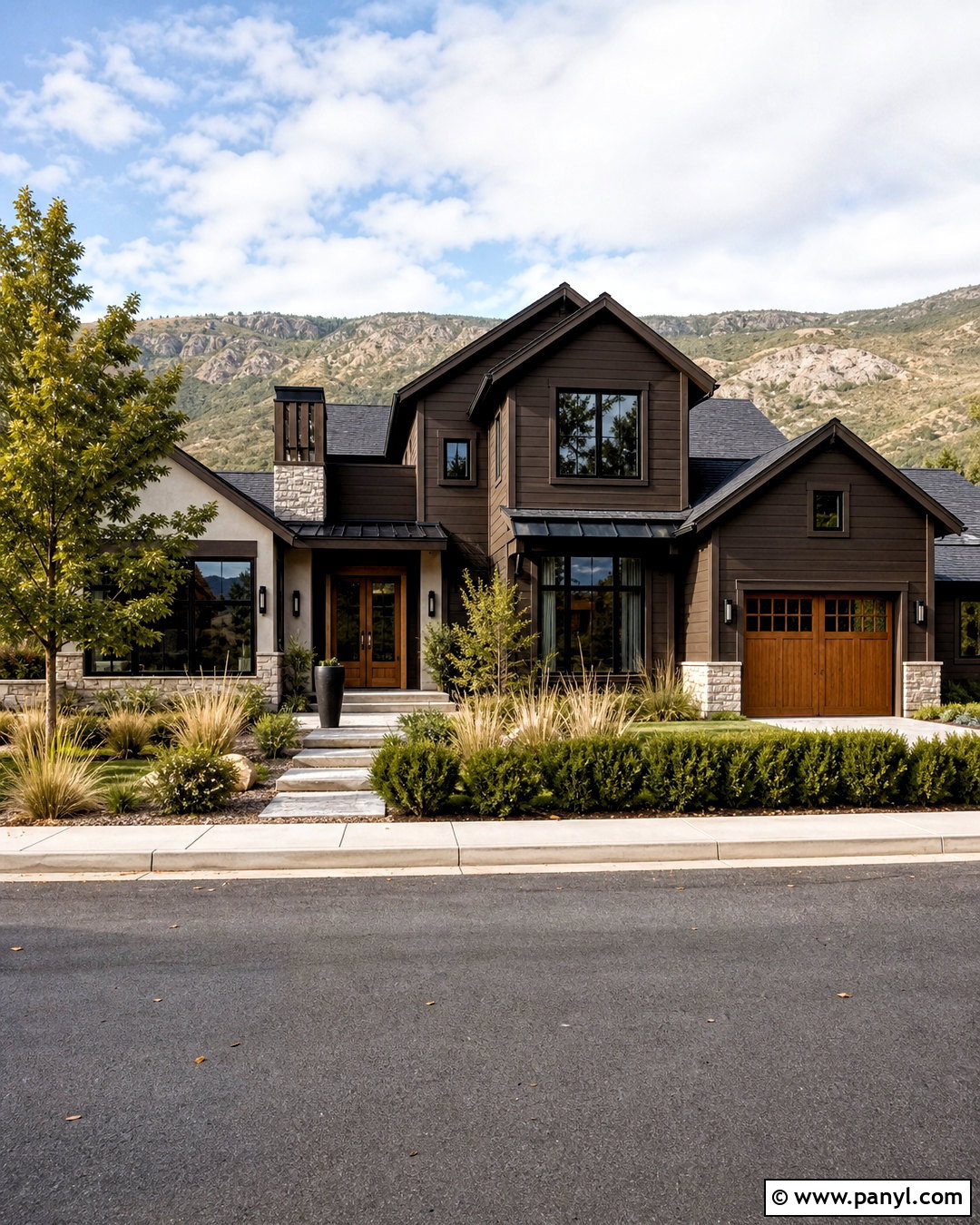
Chocolate brown can look surprisingly modern when it is paired with clean architecture and lighter natural accents. Select a rich brown with neutral or slightly smoky undertones to avoid a reddish, dated appearance. Use the brown across the siding and trim for a sleek tonal envelope. Introduce warm white through the recessed entry, concrete walls, or limited soffit details. Black window frames and a charcoal roof sharpen the composition. A honey-oak front door and matching garage panels add visible grain and keep the facade from becoming flat. Pale stone paths, cream ornamental grasses, and dark green hedges create contrast at ground level. This design feels grounded, private, and especially attractive in wooded or mountain settings.
16. Bronze Brown House Color
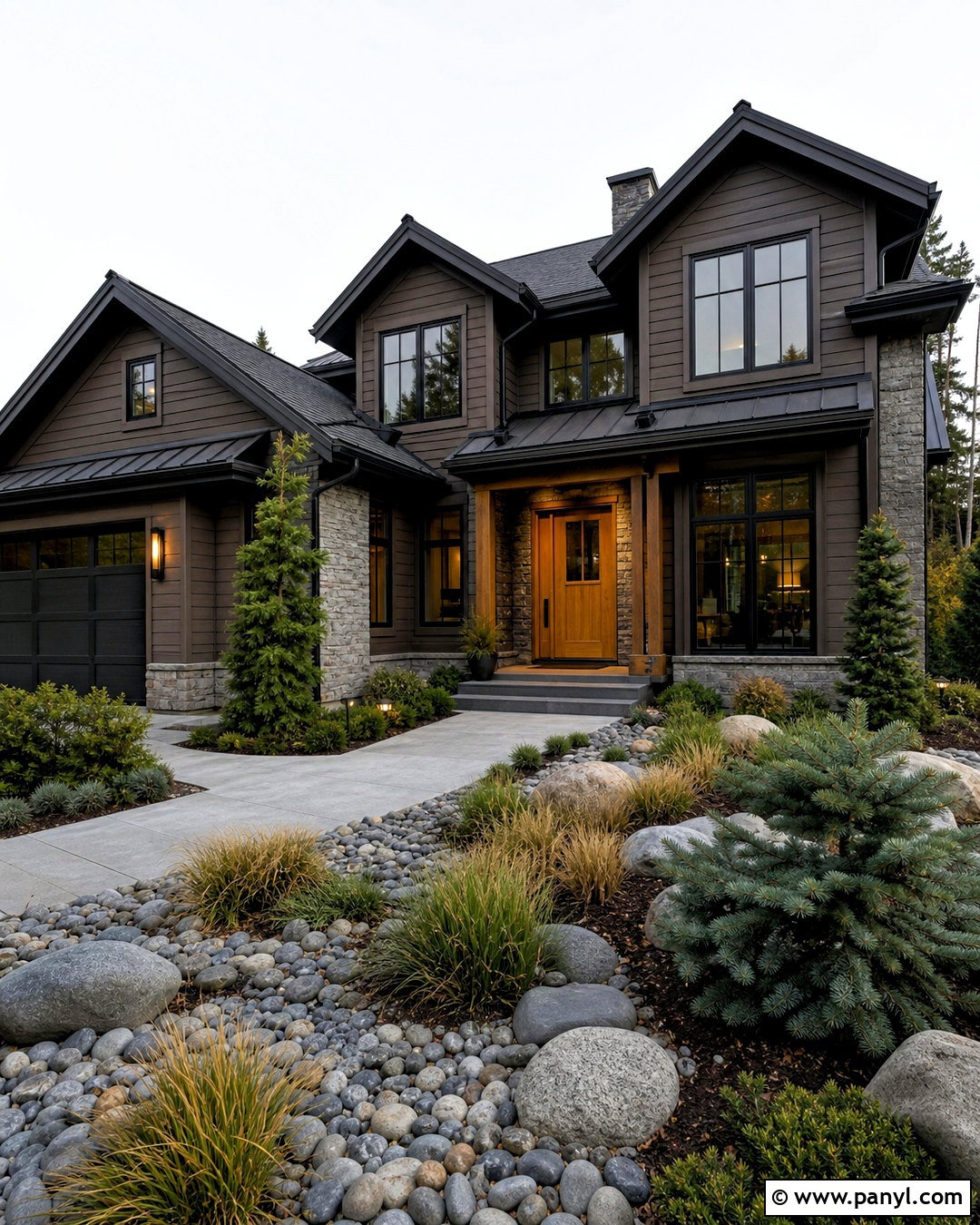
Bronze brown sits between deep olive, taupe, and charcoal, giving the exterior a color that shifts with the light. It is an excellent option for homeowners who want a dark house without using obvious gray or black. Cover the main facade in the bronzy shade and use a slightly darker version on the trim. Add medium oak to the door, soffits, and garage for warmth. Black metal windows and minimalist sconces provide a crisp finish. Choose warm gray stone and a charcoal roof to keep the scheme balanced. A modern landscape of river rock, low grasses, and sculptural evergreens complements the color’s natural quality. The completed home appears sophisticated without feeling formal or overly decorated.
17. Pale Putty House Color
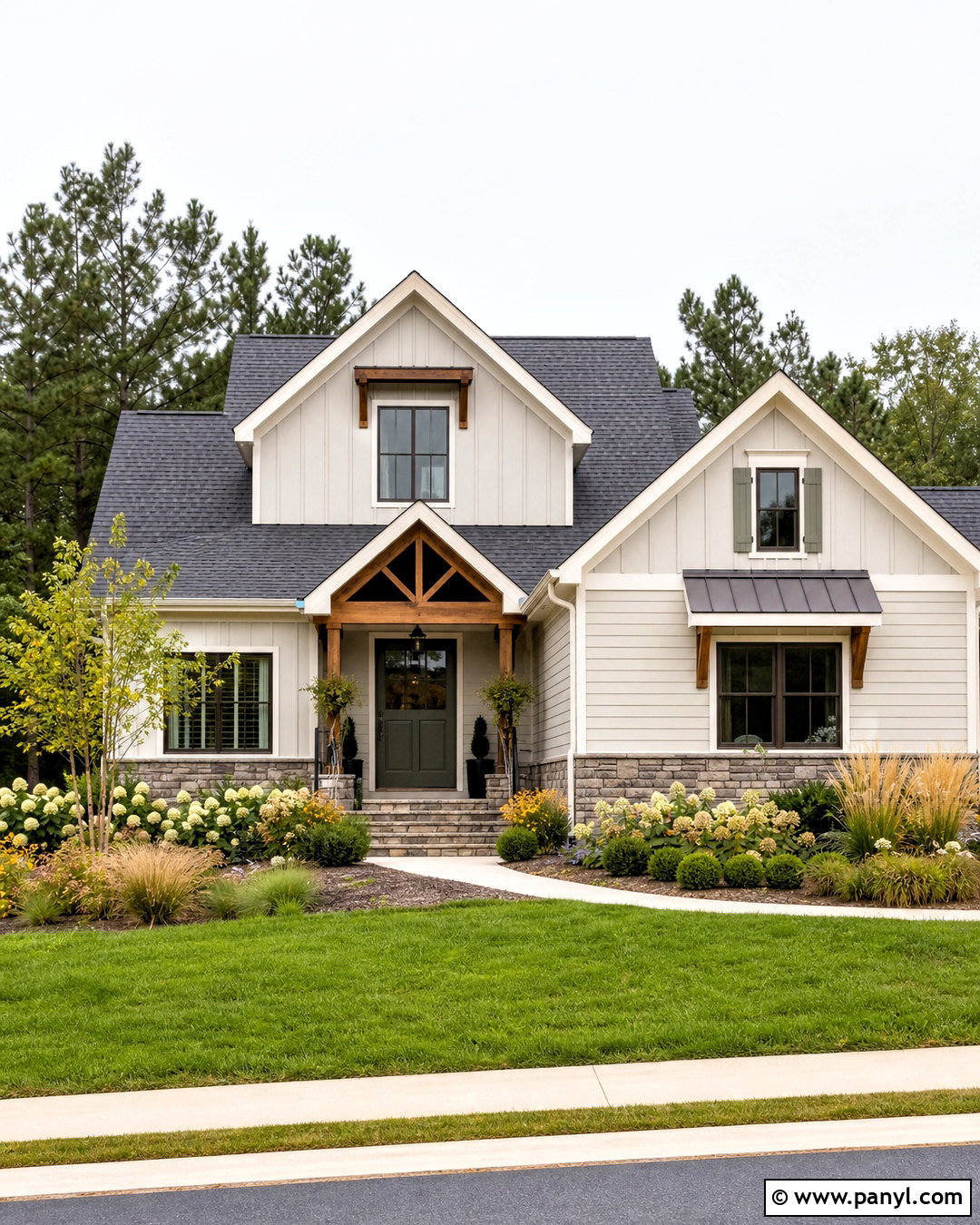
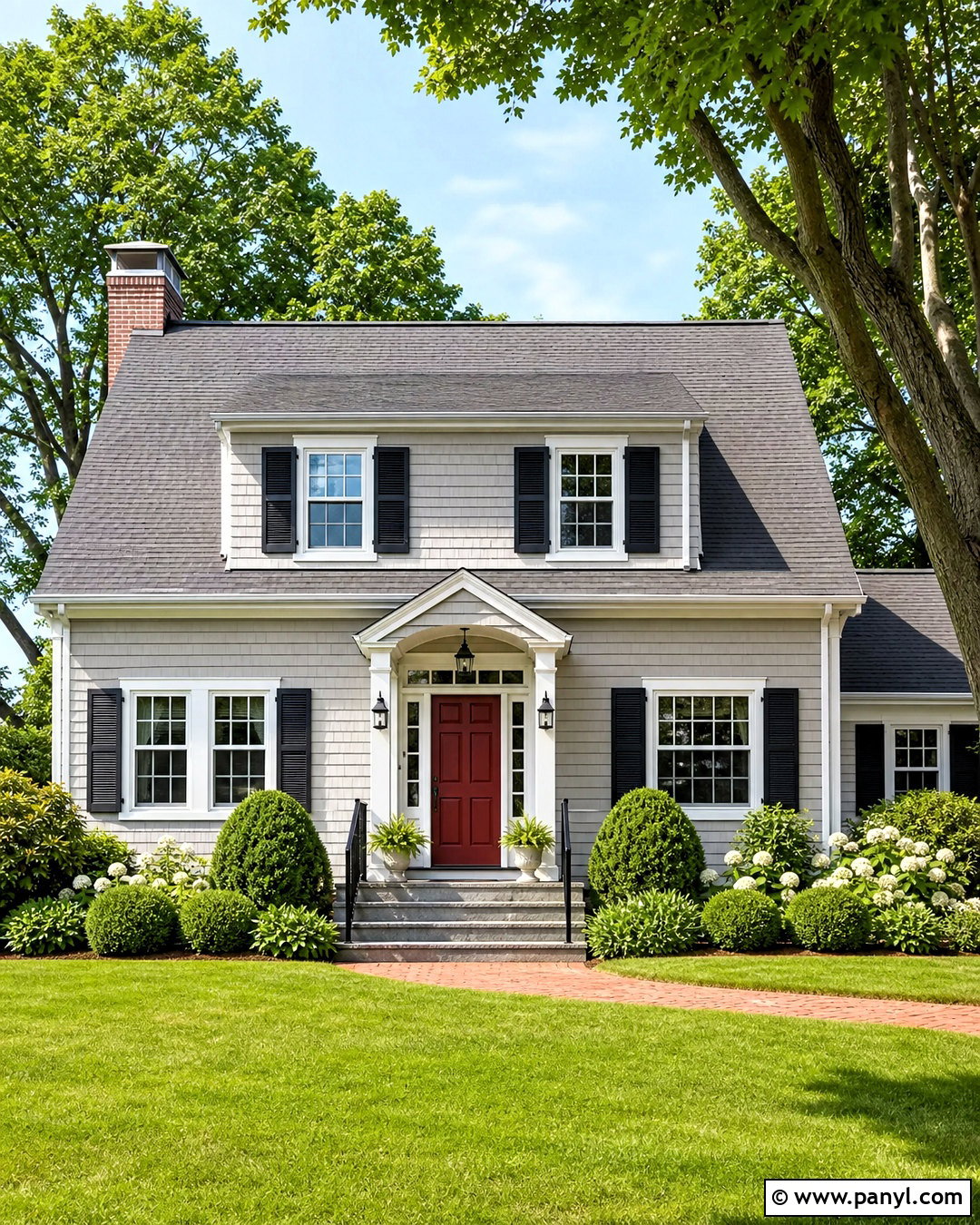
Pale putty creates a soft, tonal exterior that feels brighter than taupe but warmer than off-white. Choose a light beige-gray with enough pigment to define the house against white clouds or snowy surroundings. Paint the body in putty, then use a creamy ivory on trim and porch details. A smoky green or dark bronze front door adds restrained color. Pair the facade with weathered wood accents, warm gray stone, and medium charcoal shingles. Avoid stark black elements; softened bronze windows and lighting will suit the quiet palette better. Layer the front yard with hydrangeas, pale grasses, and rounded shrubs. This complete design works beautifully on cottages, modern farmhouses, Cape Cod homes, and compact suburban properties.
18. Dusty Blue House Color
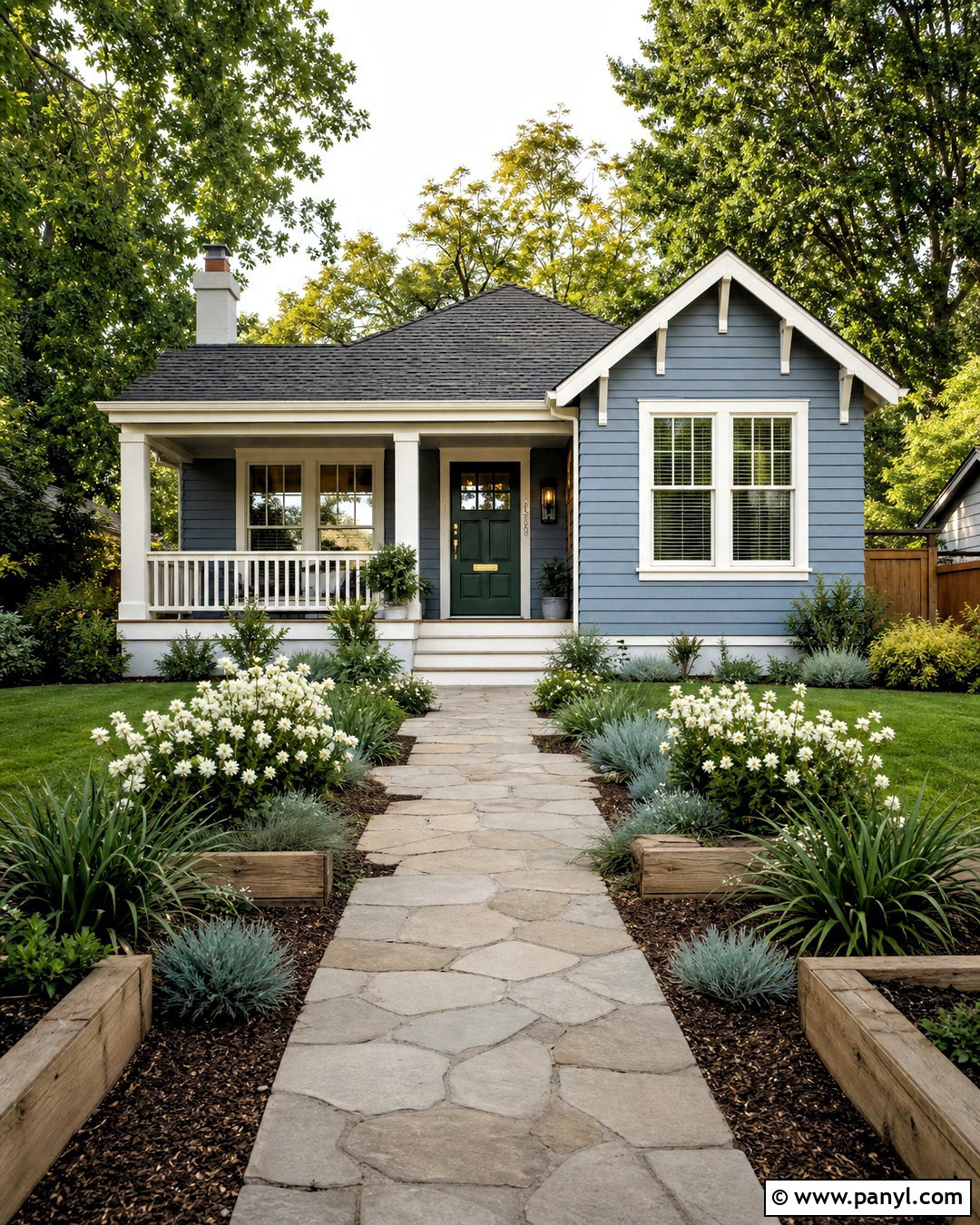
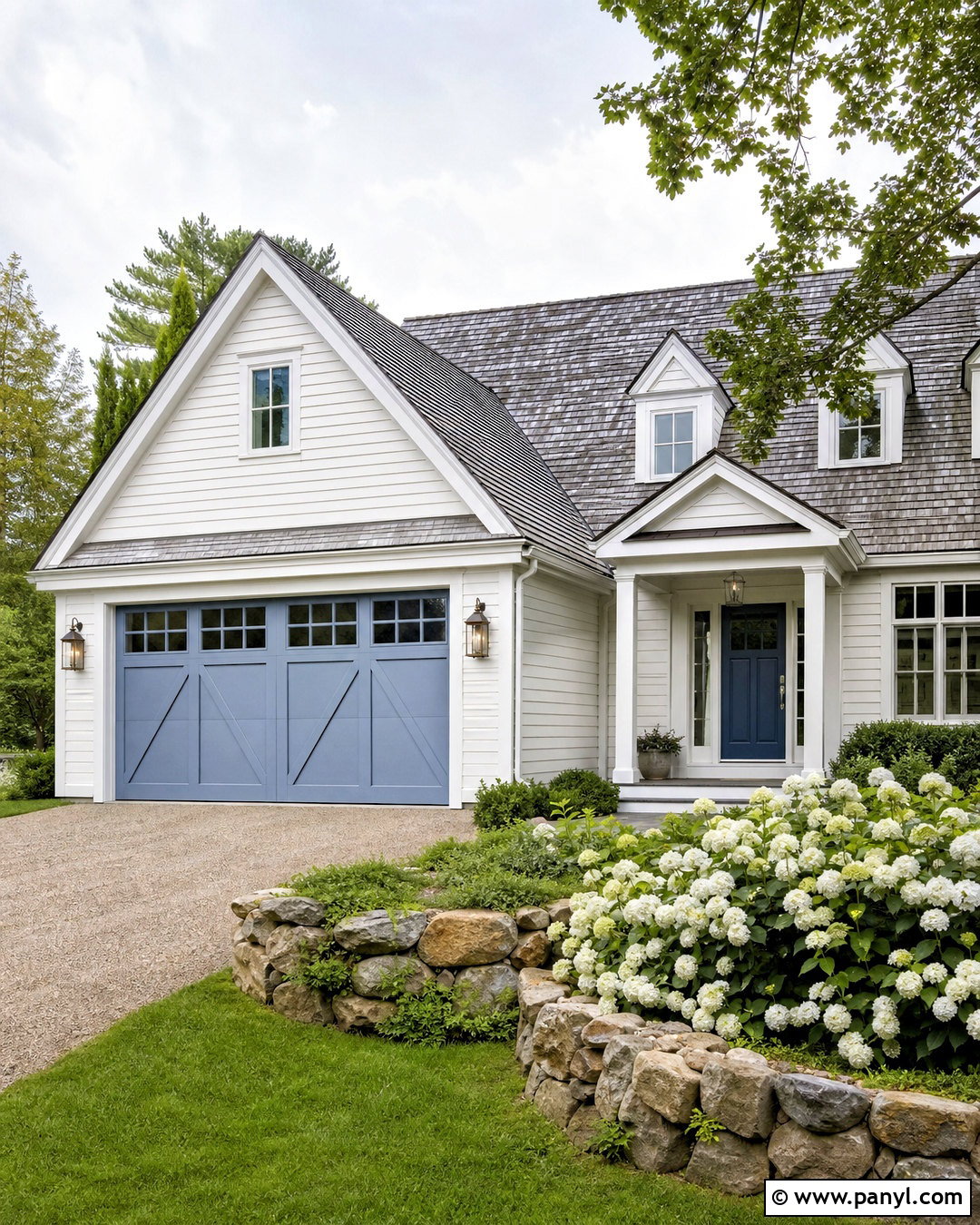
Dusty blue creates a cheerful exterior without becoming overly bright or decorative. The ideal shade contains enough gray to remain grounded and enough blue to appear colorful in natural daylight. Combine the blue siding with creamy white trim and a medium gray roof. A deep green front door adds an unexpected but harmonious accent, while aged brass or dark bronze hardware introduces warmth. Use pale brick or gray fieldstone around the foundation to provide texture. Natural wood planters can echo the warmer metal finishes. Finish the scene with white flowering shrubs, blue-green grasses, and a clean stone walkway. This palette is particularly inviting on cottages, bungalows, coastal homes, and modest modern farmhouses.
19. Eucalyptus Green House Color
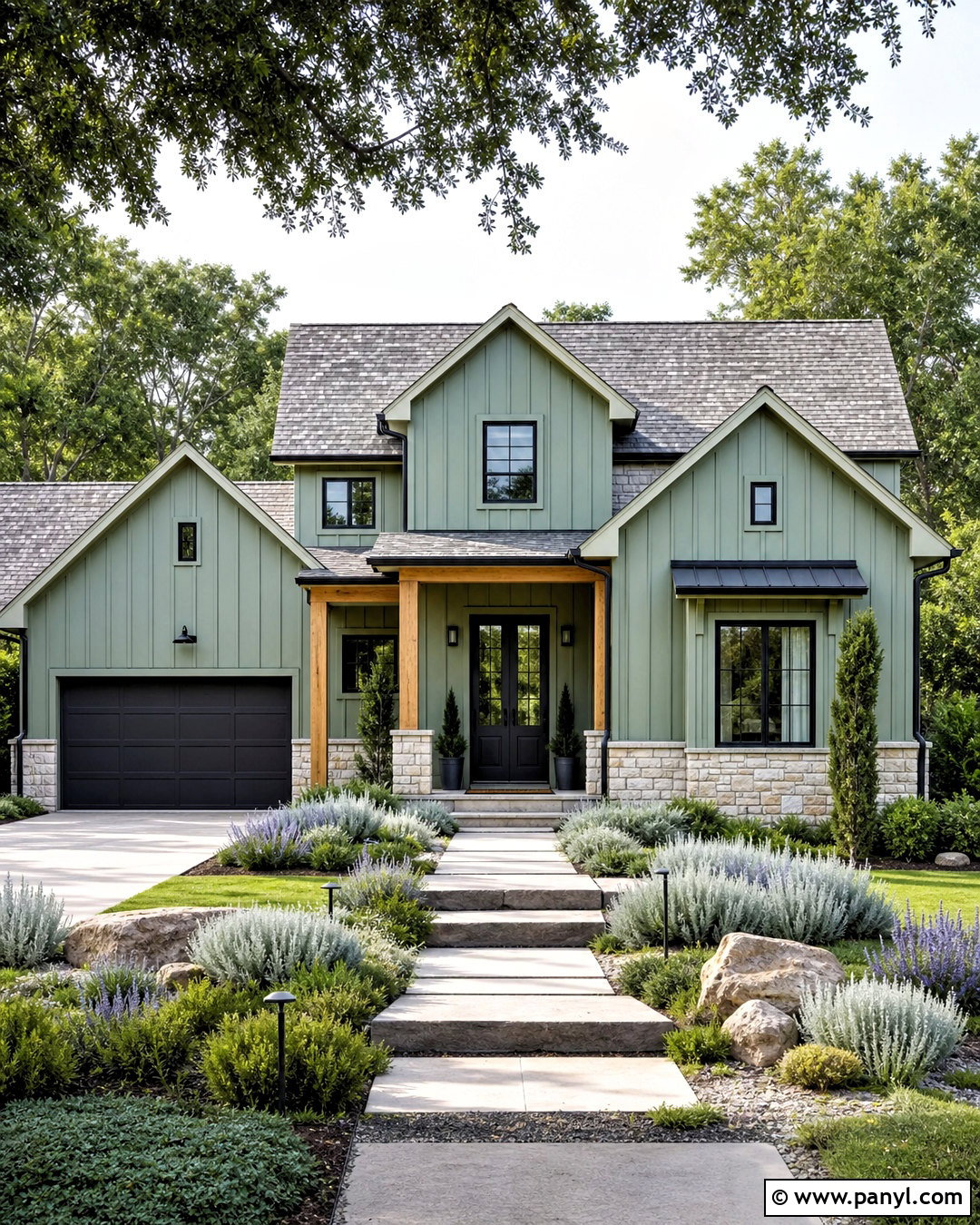
Eucalyptus green offers a cooler alternative to sage, blending soft green with blue-gray undertones. Use it across the siding or stucco, then add pale stone-colored trim for a subtle, nature-inspired contrast. A charcoal front door and matching window frames provide structure, while light oak porch posts prevent the palette from feeling too cool. Choose gray shingles with slight brown variation to coordinate with both the painted surfaces and wood. A foundation of pale limestone can brighten the lower facade. Repeat the exterior colors through silvery plants, blue-green ground cover, and deep evergreen shrubs. The finished scheme feels fresh, modern, and adaptable to coastal, woodland, and conventional suburban surroundings without looking strongly themed.
20. Pale Clay Pink House Color
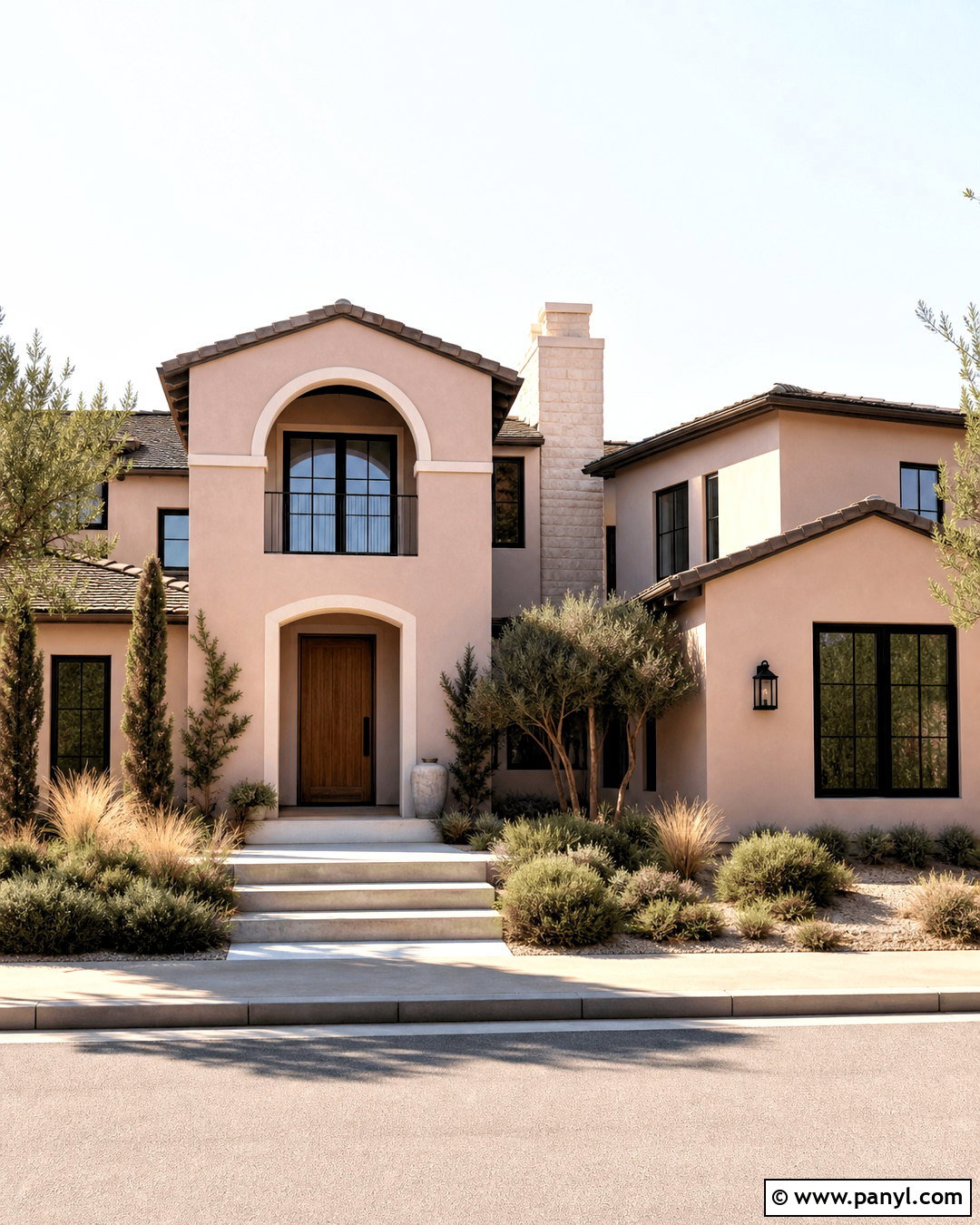
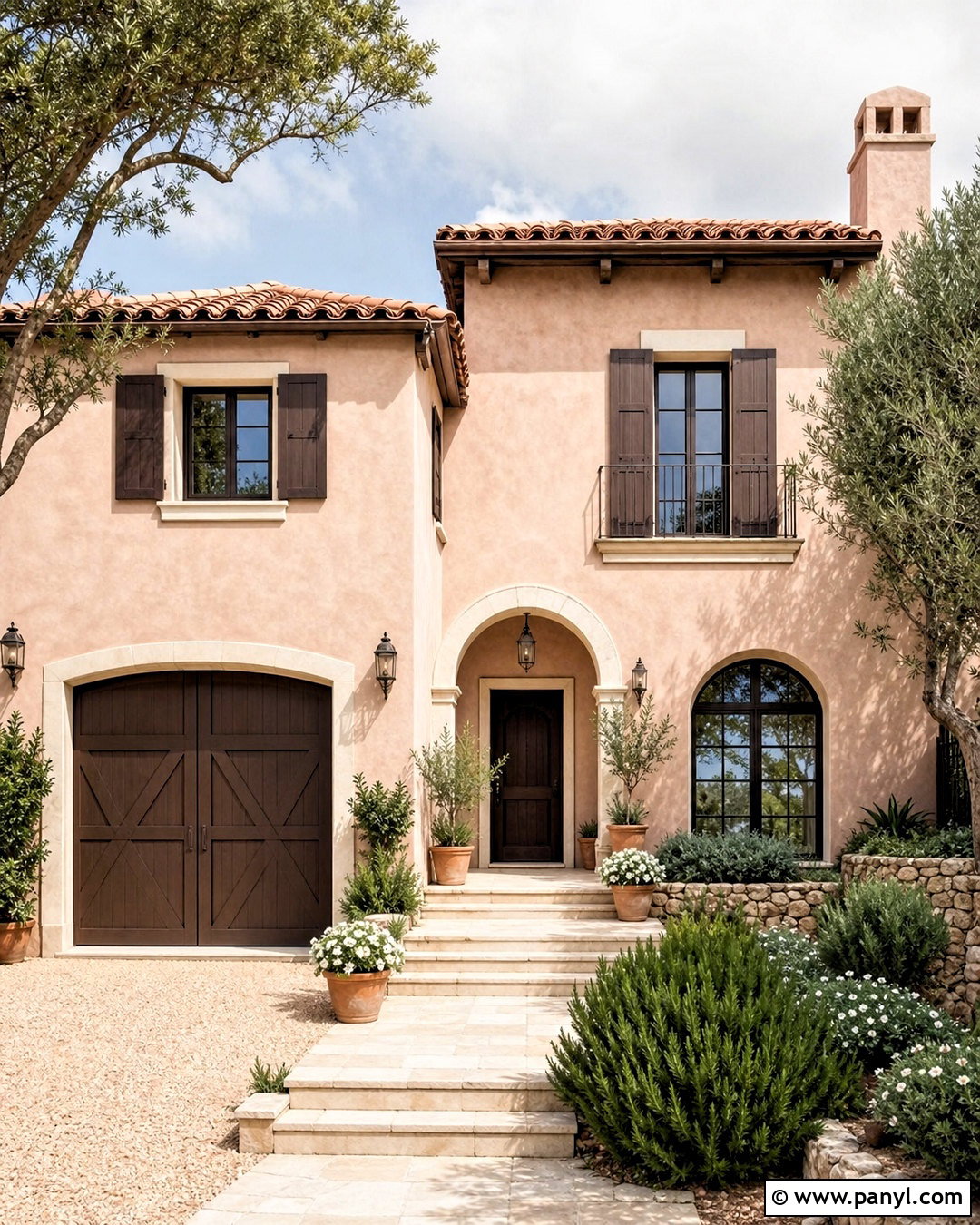
Pale clay pink can give a modern exterior warmth and personality while remaining quiet enough for everyday curb appeal. Choose a dusty blush mixed with beige or taupe, avoiding sweet or highly saturated pinks. Use warm ivory on window trim, fascia, and porch columns. Dark bronze window frames and lighting create clean outlines, while a medium walnut front door brings depth to the entry. Pair the walls with pale sandstone, a weathered brown-gray roof, and simple concrete steps. Olive-green shrubs, feathery grasses, and gravel beds balance the clay undertones with natural color. This complete exterior scheme works especially well on stucco homes, desert-modern houses, updated bungalows, and streamlined Mediterranean architecture.
Conclusion:
The most successful modern house colors work with the entire property, including its architecture, roof, stonework, doors, windows, and landscape. Warm white and putty create light, flexible foundations, while sage, olive, blue gray, and eucalyptus introduce grounded color. Charcoal, soft black, navy, chocolate, and bronze provide drama when balanced with wood, stone, and lighter paving. Clay beige, terracotta, sand, and dusty pink offer warmer alternatives to conventional neutrals. Before painting, compare large samples on sunny and shaded walls at different times of day. Also account for permanent roof and masonry colors. With thoughtful testing, any of these 20 modern house colors can become a cohesive, enduring exterior.

Related Ideas and Inspiration:
Leave a Reply