
Choosing exterior colors can feel overwhelming because the siding, trim, roof, masonry, and front door must work together. These **20 house paint ideas** make the process easier by presenting complete, coordinated looks rather than isolated color suggestions. You will find timeless neutrals, nature-inspired greens, coastal blues, dramatic dark finishes, and cheerful color combinations for many architectural types. Each palette also considers existing materials and curb appeal, helping you create an exterior that feels intentional from the street. Before committing, test large painted samples on several sides of your home and view them throughout the day. Whether you are refreshing a ranch, farmhouse, bungalow, or traditional two-story home, explore these practical **20 house paint ideas** for a scheme you can confidently recreate.

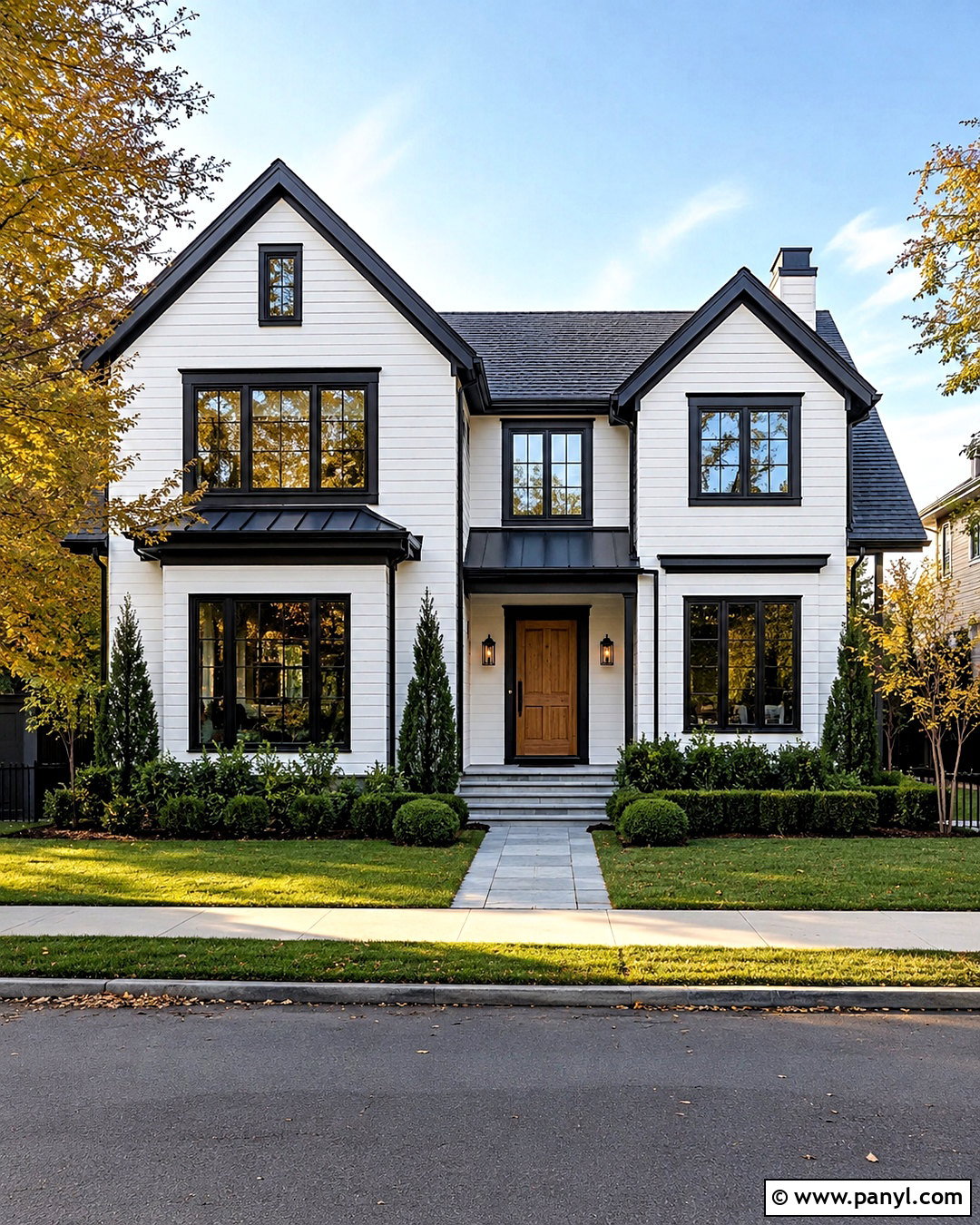
1. White House Paint With Black Trim
Crisp white siding and black trim create a clean exterior that suits traditional, farmhouse, and transitional homes. Choose a warm white rather than a stark blue-white so the house feels welcoming in bright sunlight. Use matte black on window frames, porch railings, gutters, and exterior lights to define the architecture. A medium-stained oak front door introduces natural warmth and keeps the contrast from looking severe. Finish the scheme with a charcoal roof, pale gray walkway, and structured evergreen landscaping. On a large facade, consider painting the garage doors the same white as the siding. This helps them blend into the house instead of becoming dominant. The finished look is simple, balanced, and easy to update with seasonal planters.
2. Sage Green House Paint With Cream Trim
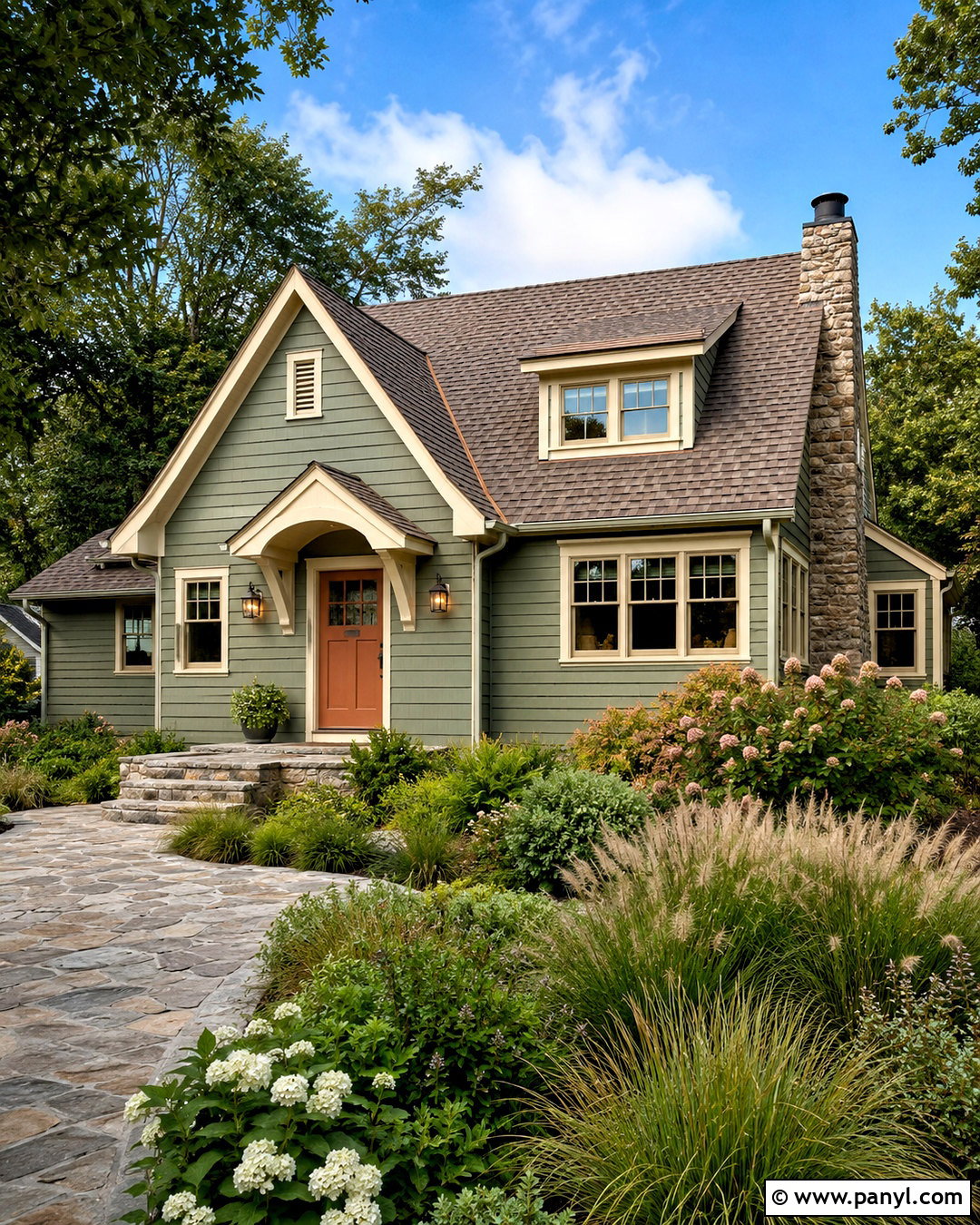
Soft sage green gives a house a calm, natural presence without disappearing into the landscaping. Pair the green siding with creamy off-white trim around the windows, eaves, porch columns, and fascia. The warmer trim prevents the palette from feeling cold or overly gray. A muted terracotta front door adds gentle contrast, while aged-brass lights bring warmth near the entrance. This scheme works especially well with brown shingles, weathered stone, or red brick that has subtle earthy undertones. Surround the house with ornamental grasses, flowering shrubs, and a curved stone path for a relaxed cottage appearance. Keep shutters and garage doors cream rather than introducing another dark color. The restrained palette makes the entire property feel cohesive, established, and connected to nature.
3. Greige House Paint With Dark Bronze Trim
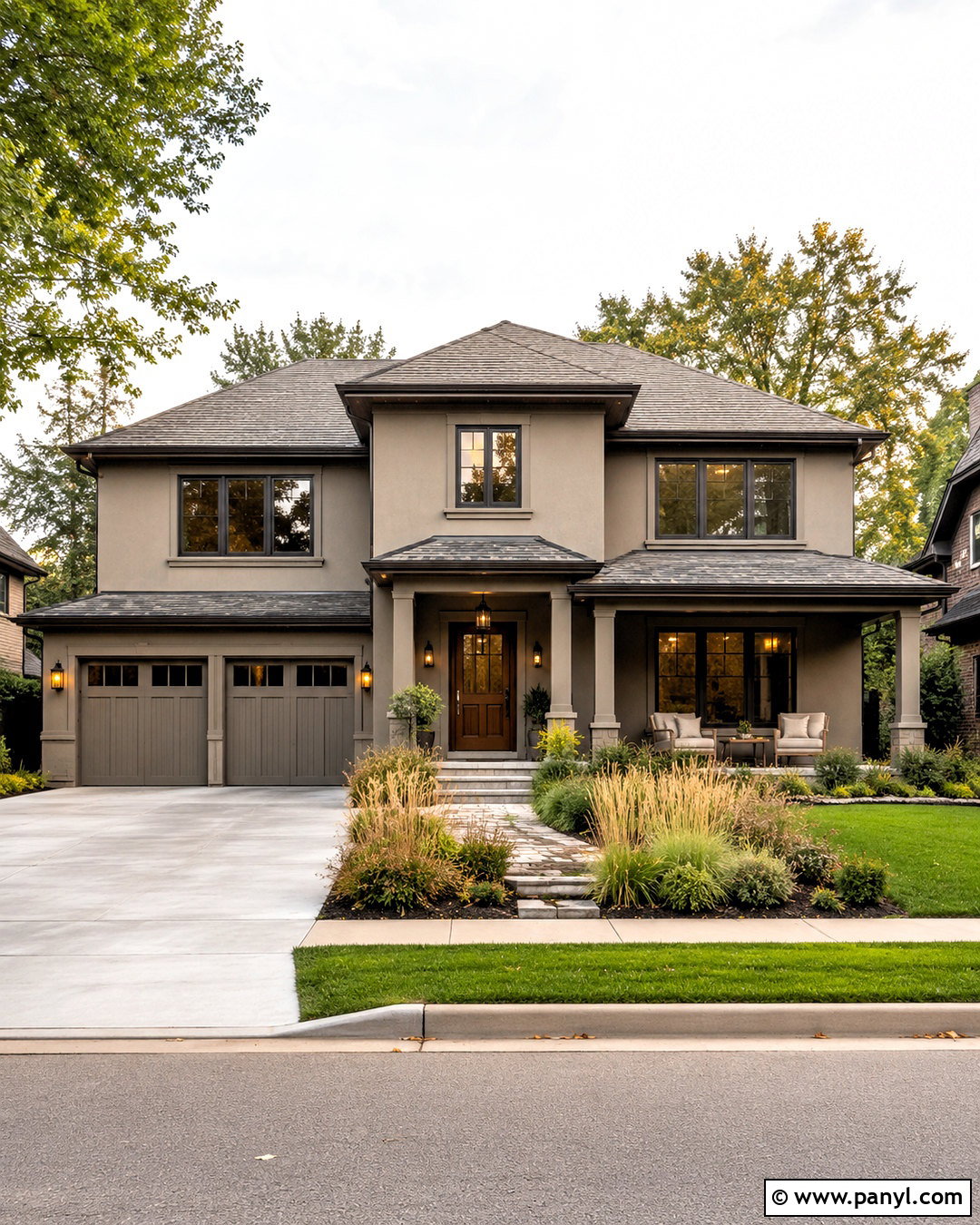
Greige is a flexible choice when your property includes several permanent materials. Select a warm gray-beige siding color that coordinates with stone, concrete, and brown or charcoal roofing. Deep bronze window frames and gutters provide definition without creating the sharp contrast of pure black. Paint the front door a rich walnut brown or use a real stained-wood door for greater texture. Garage doors can match the body color, allowing the entrance to remain the main focal point. Complete the exterior with warm metal sconces, cream porch furniture, and landscaping that mixes rounded shrubs with airy grasses. This house paint combination works particularly well on suburban homes with simple facades. It looks polished, understated, and welcoming without relying on a bright accent color.
4. Navy Blue House Paint With White Trim
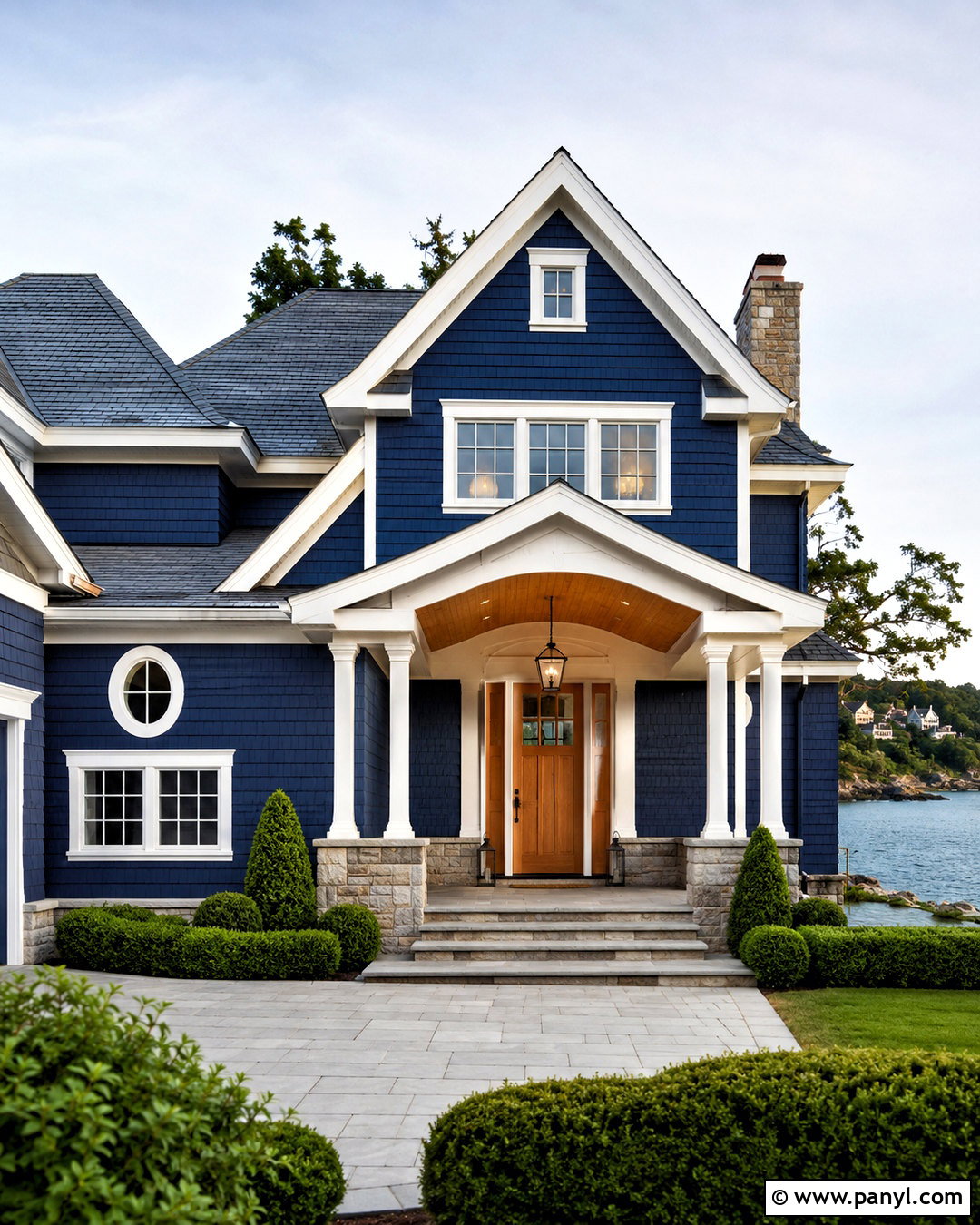
Deep navy siding can make an ordinary home look more distinctive while remaining classic. Balance the strong body color with warm white trim on the windows, corners, fascia, and porch columns. A medium cedar front door and matching wood porch ceiling soften the blue-and-white contrast. Choose matte black hardware and lighting for a quiet supporting accent rather than adding another noticeable color. This palette pairs naturally with gray shingles, pale stone foundations, and simple concrete walkways. Use white flowers, clipped boxwood, and fresh green foliage to brighten the surrounding landscape. For a smaller home, paint the garage door navy so the facade appears wider and less divided. The complete scheme feels crisp, coastal, and tailored without requiring nautical decorations or themed accessories.
5. Charcoal House Paint With Cedar Accents
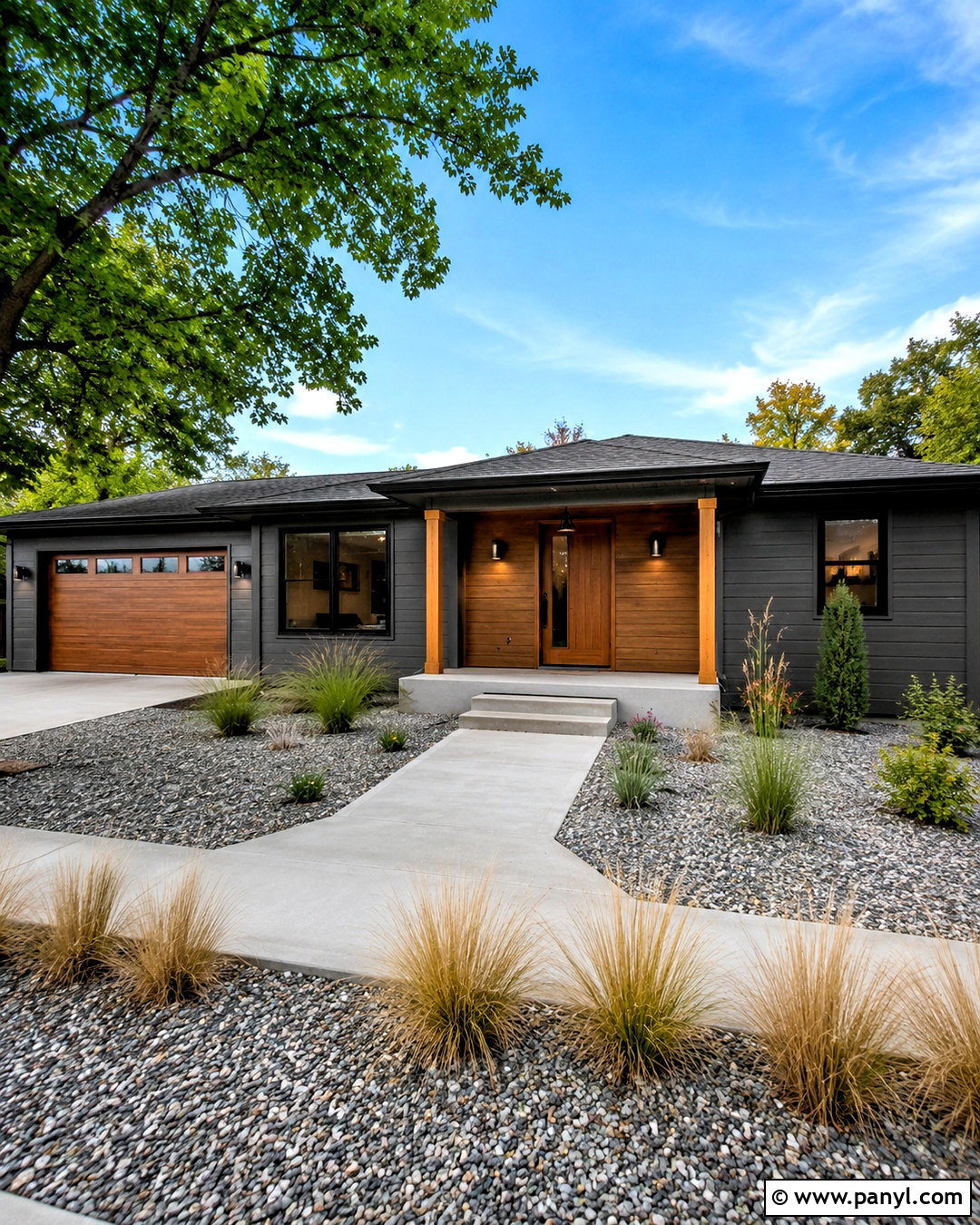
A charcoal exterior creates depth and gives clean architectural lines a stronger presence. Choose a softened charcoal with warm undertones instead of a flat, true black, especially if the home receives direct afternoon sun. Keep the window trim and gutters in the same dark family for a streamlined finish. Natural cedar siding around the entry, porch posts, or garage adds necessary warmth and texture. A matching cedar front door strengthens the connection between these accents. Pair the palette with a medium-gray roof, black metal lights, and pale concrete steps. Loose grasses, low evergreens, and gravel planting beds can complete the modern landscape. This house paint look works beautifully on contemporary homes, updated ranch houses, and cabins with simple shapes and limited decorative trim.
6. Cream House Paint With Olive Green Trim
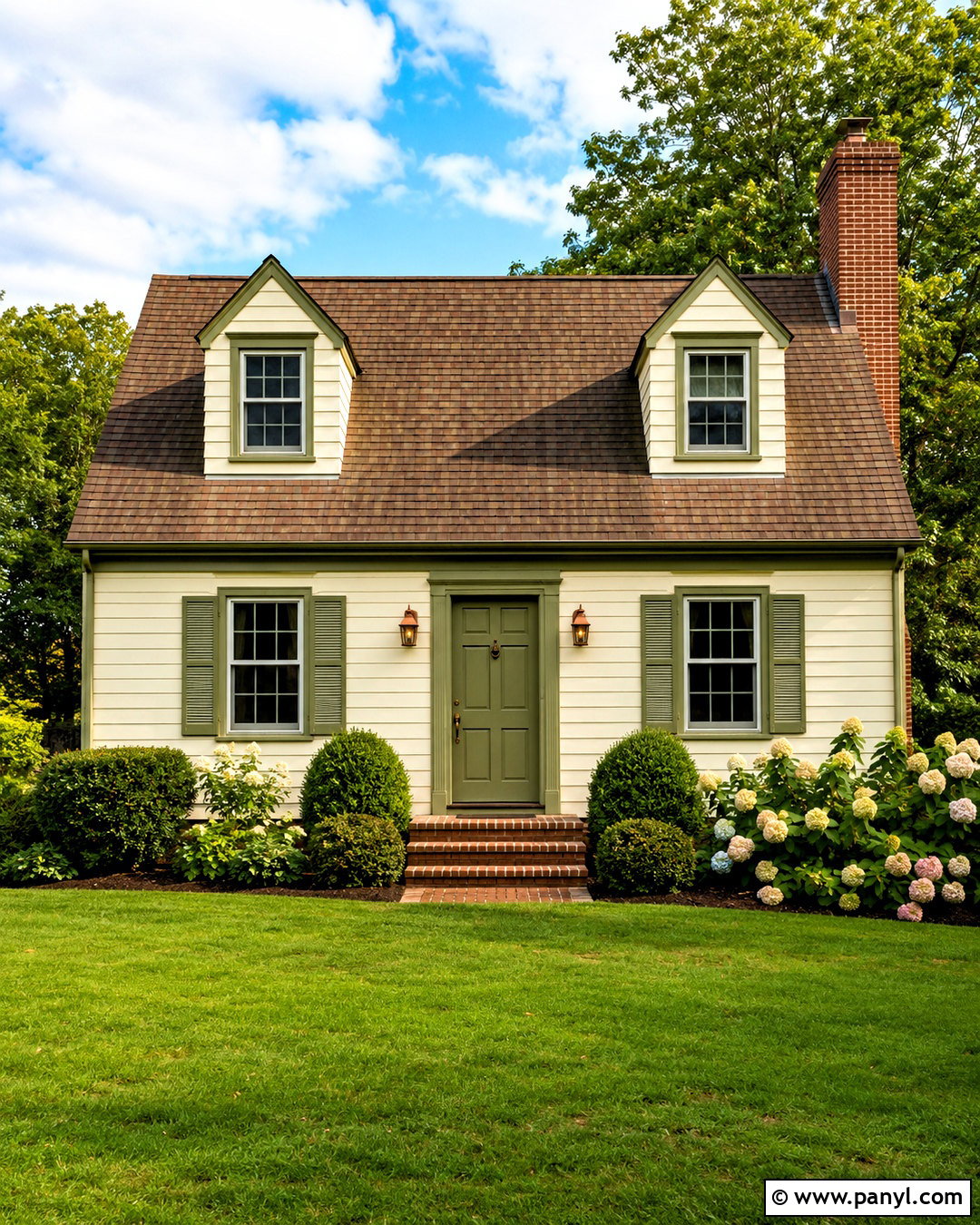
Warm cream paint can refresh an older exterior without hiding its traditional personality. Use the cream across the siding and reserve muted olive green for shutters, window trim, porch railings, and the front door. The green should feel earthy rather than bright, allowing it to coordinate with mature trees and garden beds. A medium-brown roof and copper-toned exterior lights support the warm undertones. If the house includes brick steps or a brick chimney, leave them unpainted so their natural red and brown variations add character. Layer the landscaping with hydrangeas, ferns, and rounded shrubs for a soft, established appearance. This palette is particularly effective for cottages, Cape Cod homes, and traditional houses that need color without an overly bold or modern transformation.
7. Light Blue House Paint With Soft White Trim
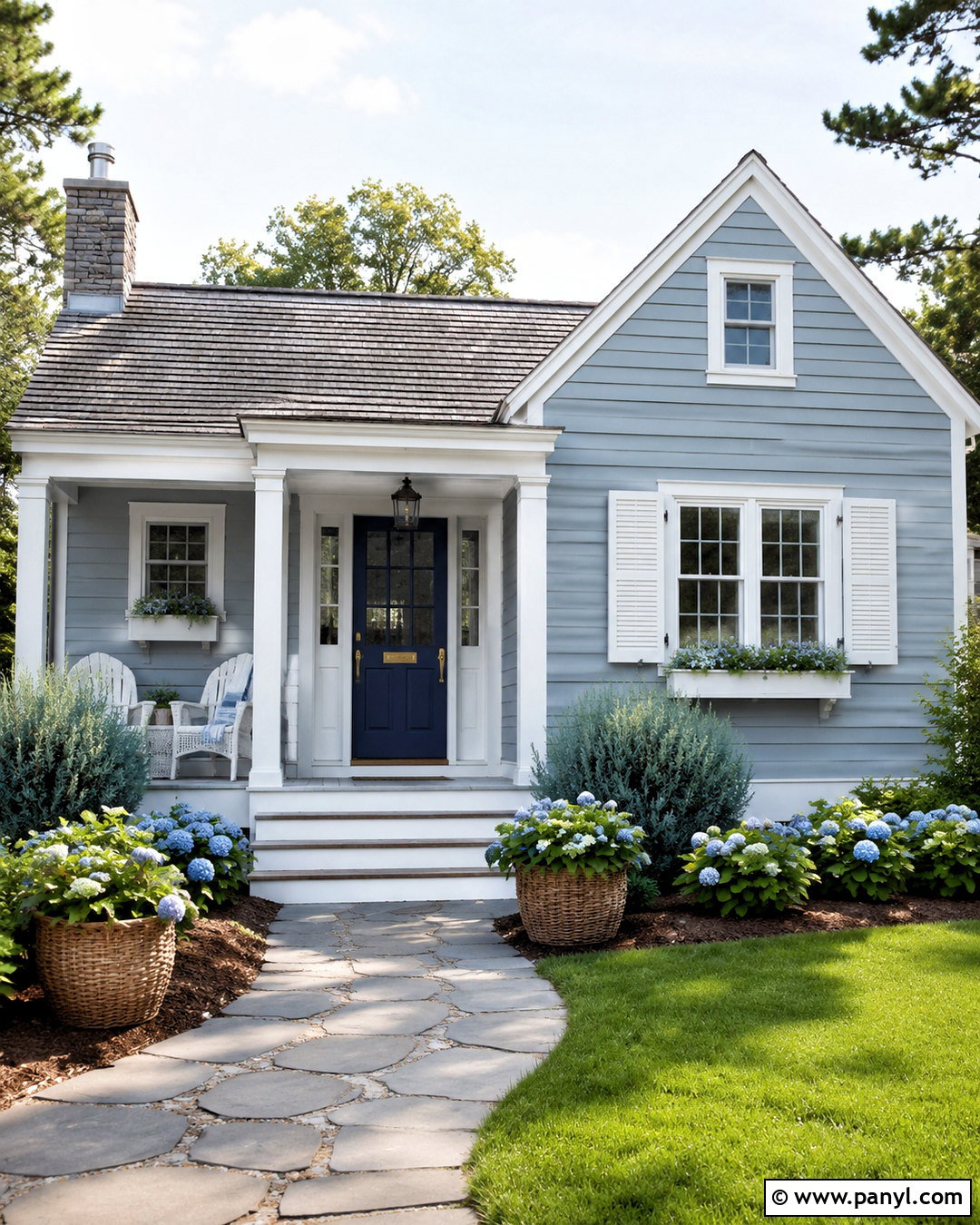
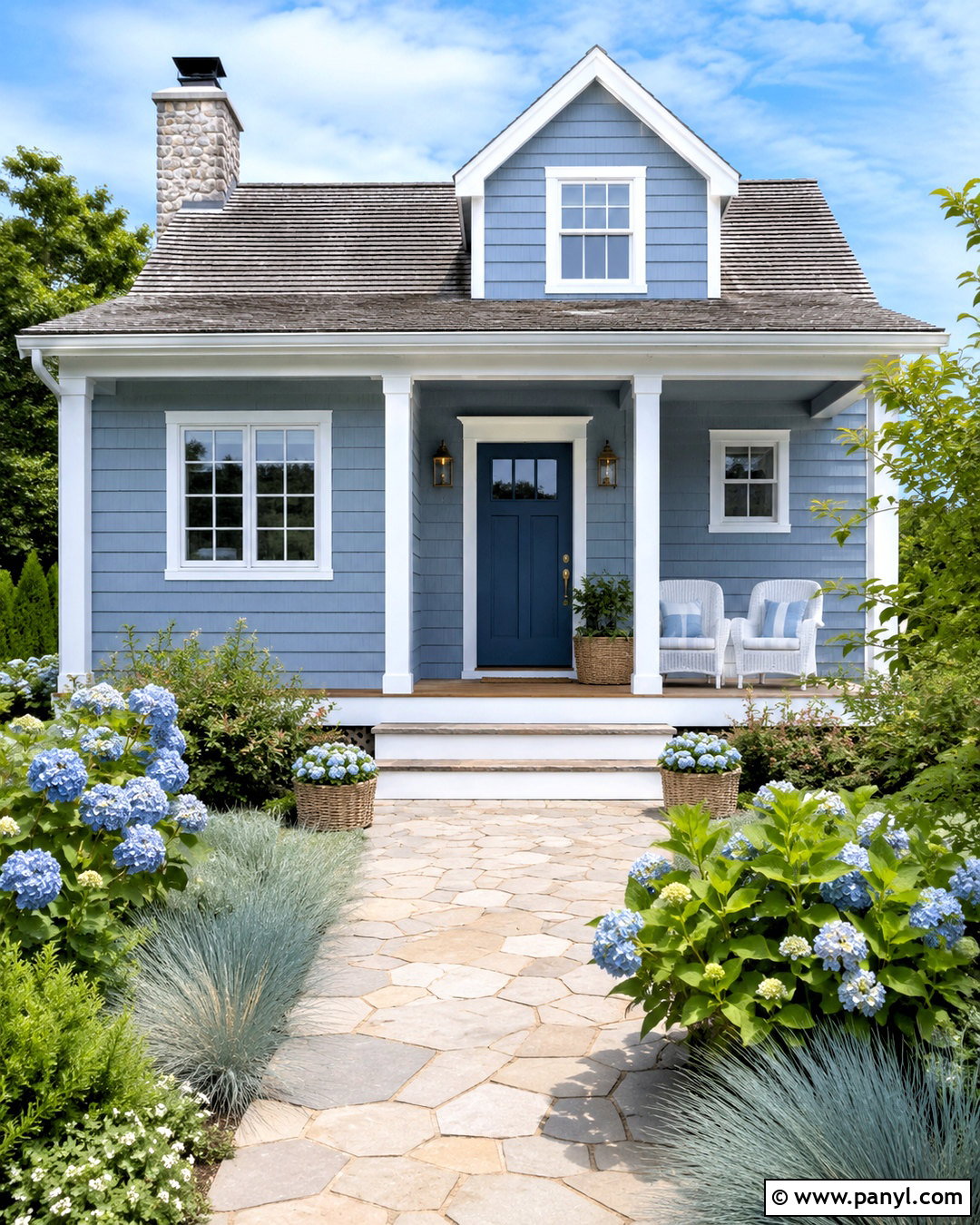
Imagine a pale blue home surrounded by fresh greenery and a bright, welcoming porch. Choose a dusty sky blue with a touch of gray so the siding appears calm rather than overly sweet. Soft white trim keeps the facade light, while a navy front door introduces enough depth to anchor the entrance. Add brushed nickel or aged brass hardware depending on whether the roof has cooler or warmer undertones. Light gray shingles and a natural stone walkway complement the airy palette. White porch furniture, woven planters, and blue-green foliage can extend the colors without making the setting look themed. This complete house paint scheme fits cottages, coastal homes, and modest suburban houses. It feels cheerful in sunlight and softly muted on cloudy days.
8. Taupe House Paint With Black Accents
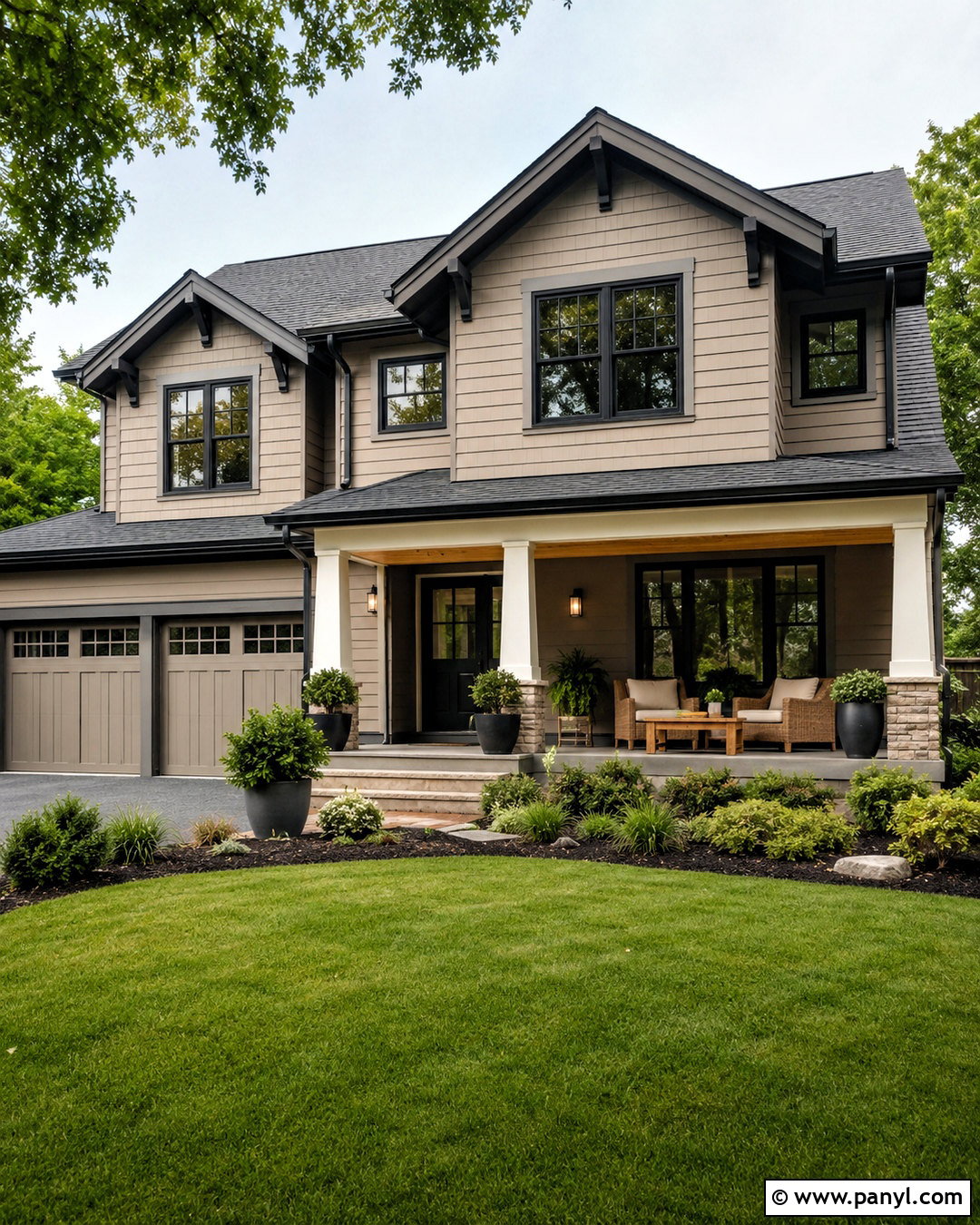
Taupe offers more warmth than gray while maintaining a sophisticated, neutral appearance. Cover the main siding with a medium taupe that relates to the property’s stonework, roof, or surrounding soil. Use black sparingly on window frames, gutters, porch lights, and the front door. Warm white trim around the fascia and porch columns can separate these darker elements from the body color. If the home has a large garage, paint its doors taupe to reduce their visual weight. Add natural oak porch furniture and oversized planters filled with green foliage for a relaxed entrance. This scheme suits transitional, Craftsman, and suburban homes where a pure white exterior might feel too bright. The result is grounded, balanced, and adaptable to many landscaping colors.
9. Forest Green House Paint With Warm White Trim
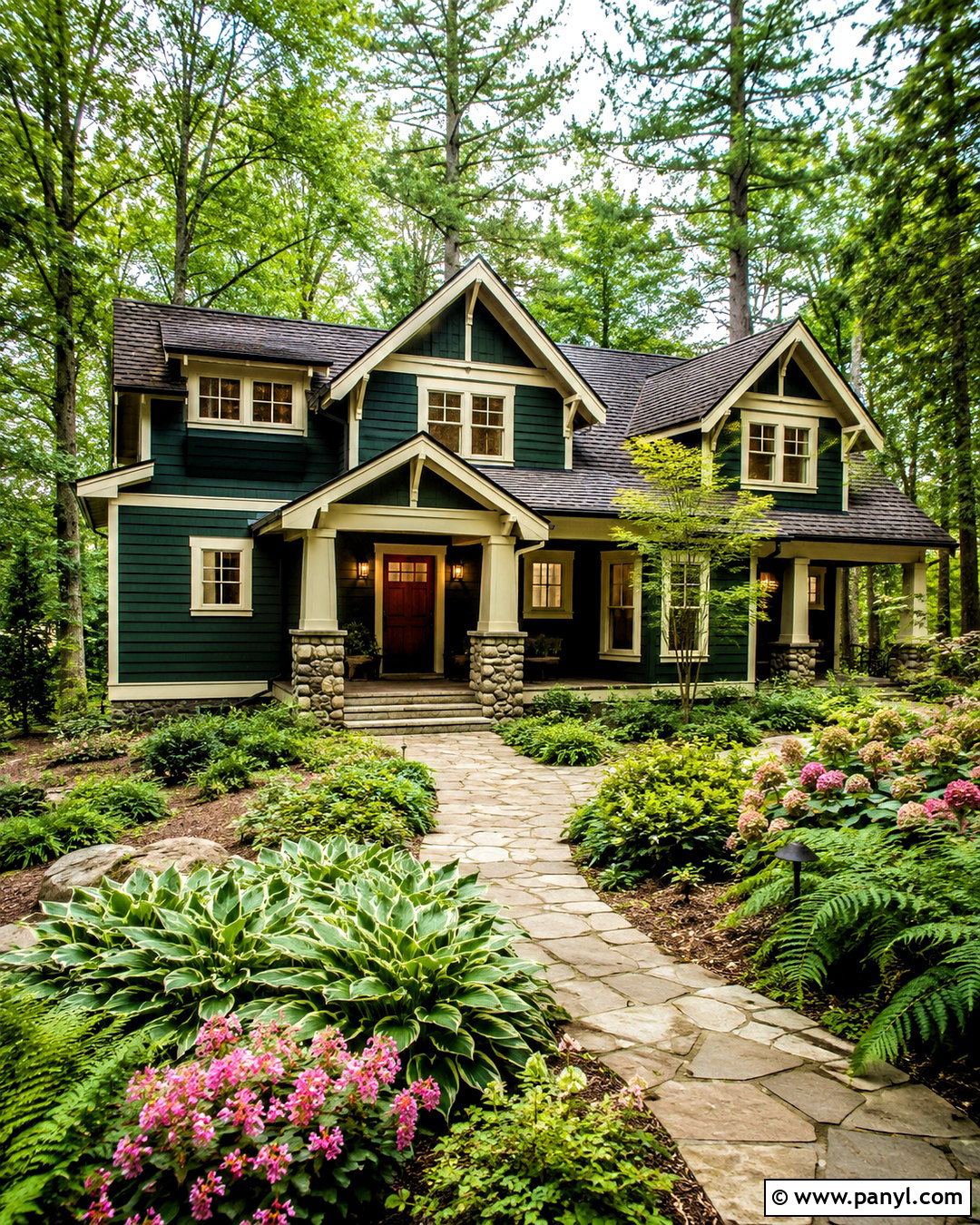
Deep forest green can make a home feel settled into its surroundings, especially on wooded or generously landscaped properties. Apply the green to the siding and use warm white on windows, fascia boards, porch columns, and decorative trim. A stained mahogany front door provides a rich transition between the dark body color and light trim. Black gutters and lantern-style lights can quietly outline the roof and entry. Choose a roof with charcoal or weathered-brown tones to maintain the natural palette. Around the house, use ferns, hostas, flowering shrubs, and a stone path with irregular edges. Avoid bright shutters that compete with the greenery. This full house paint scheme feels traditional and substantial, making it well suited to cabins, cottages, and Craftsman homes.
10. Soft Yellow House Paint With White Trim
A buttery yellow exterior can brighten a house without becoming loud or overly playful. Select a subdued yellow with creamy undertones, then pair it with soft white trim on the windows, eaves, porch, and railings. A muted blue-gray front door adds a cool accent that balances the warmth of the siding. Keep shutters white or blue-gray, depending on how much contrast the facade needs. Weathered-gray shingles, natural brick steps, and aged-brass lights complete the palette. Surround the entrance with lavender, white flowers, and leafy shrubs for an inviting garden effect. This house paint combination works especially well on cottages, farmhouses, and traditional homes with welcoming front porches. It creates a sunny appearance while remaining gentle enough for an entire facade.
11. Brick Red House Paint With Cream Trim
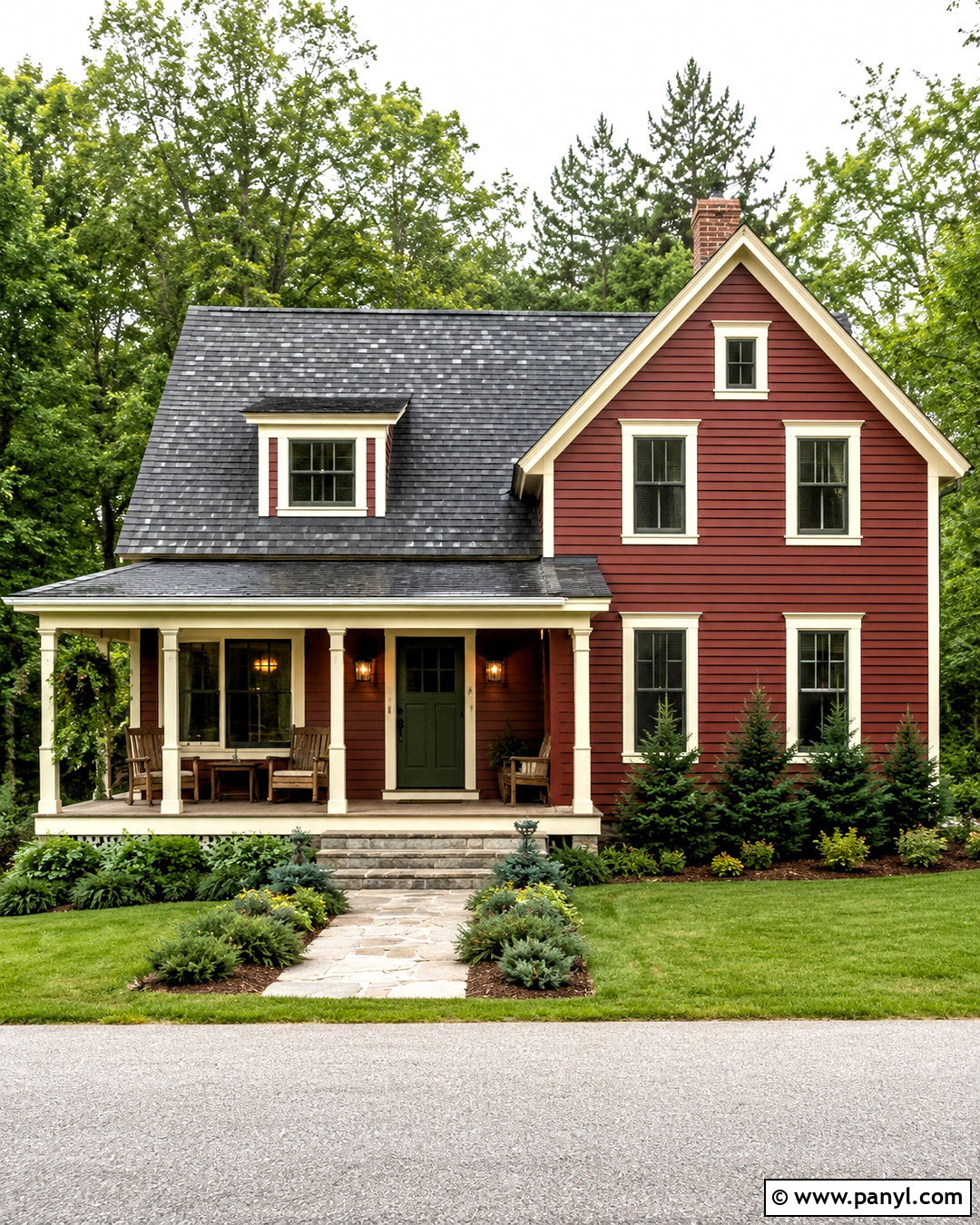
Brick red siding gives a home rich color while echoing familiar masonry tones. Choose a muted, earthy red rather than a clear primary shade so it coordinates with natural materials. Cream trim around the windows, corners, and roofline softens the darker body color. Paint the front door deep olive green for a classic contrast, and use dark bronze on exterior lights and hardware. A brown or weathered charcoal roof will support the palette better than a bright black roof. Incorporate stone steps, wood porch furniture, and evergreen foundation planting to reinforce the traditional character. This complete scheme is an excellent match for farmhouses, country homes, and older properties with simple architecture. It feels warm and distinctive without looking flashy or overly decorative.
12. Blue Gray House Paint With Wood Details
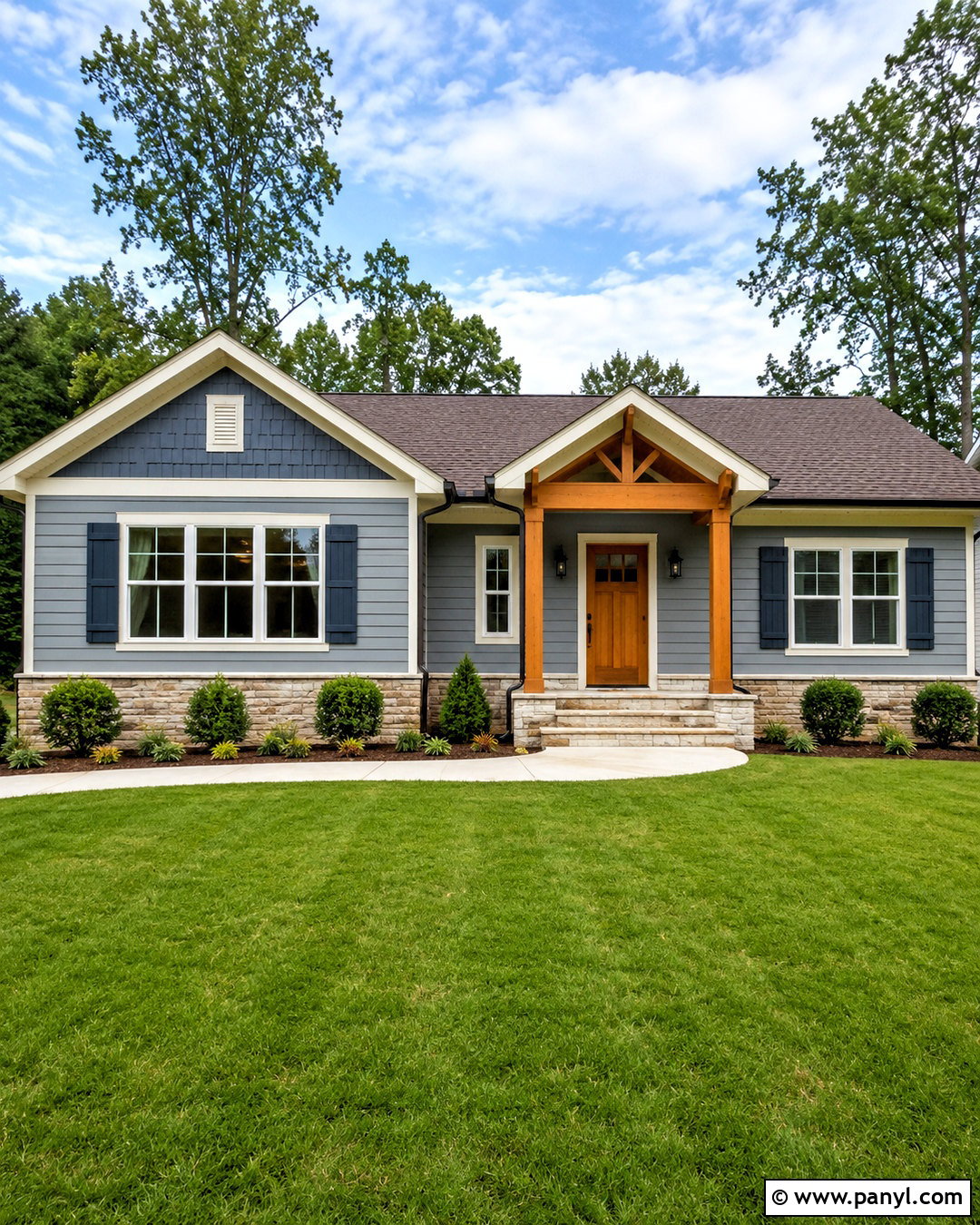
Blue-gray siding offers subtle color while still behaving like a versatile neutral. Look for a shade that appears blue in sunlight and slightly grayer in shadow. Pair it with creamy white trim to keep the exterior soft and approachable. Use natural wood on the front door, porch posts, and small gable details to bring warmth into the cool palette. Dark bronze gutters and window frames provide definition without appearing harsh. Gray-brown roof shingles, pale stone steps, and simple green landscaping help connect the colors. If the home has shutters, paint them a deeper blue-gray rather than black. This house paint scheme complements Craftsman homes, renovated ranch houses, and transitional exteriors. The finished facade feels layered, relaxed, and pleasantly understated from the street.
13. Black House Paint With Natural Wood
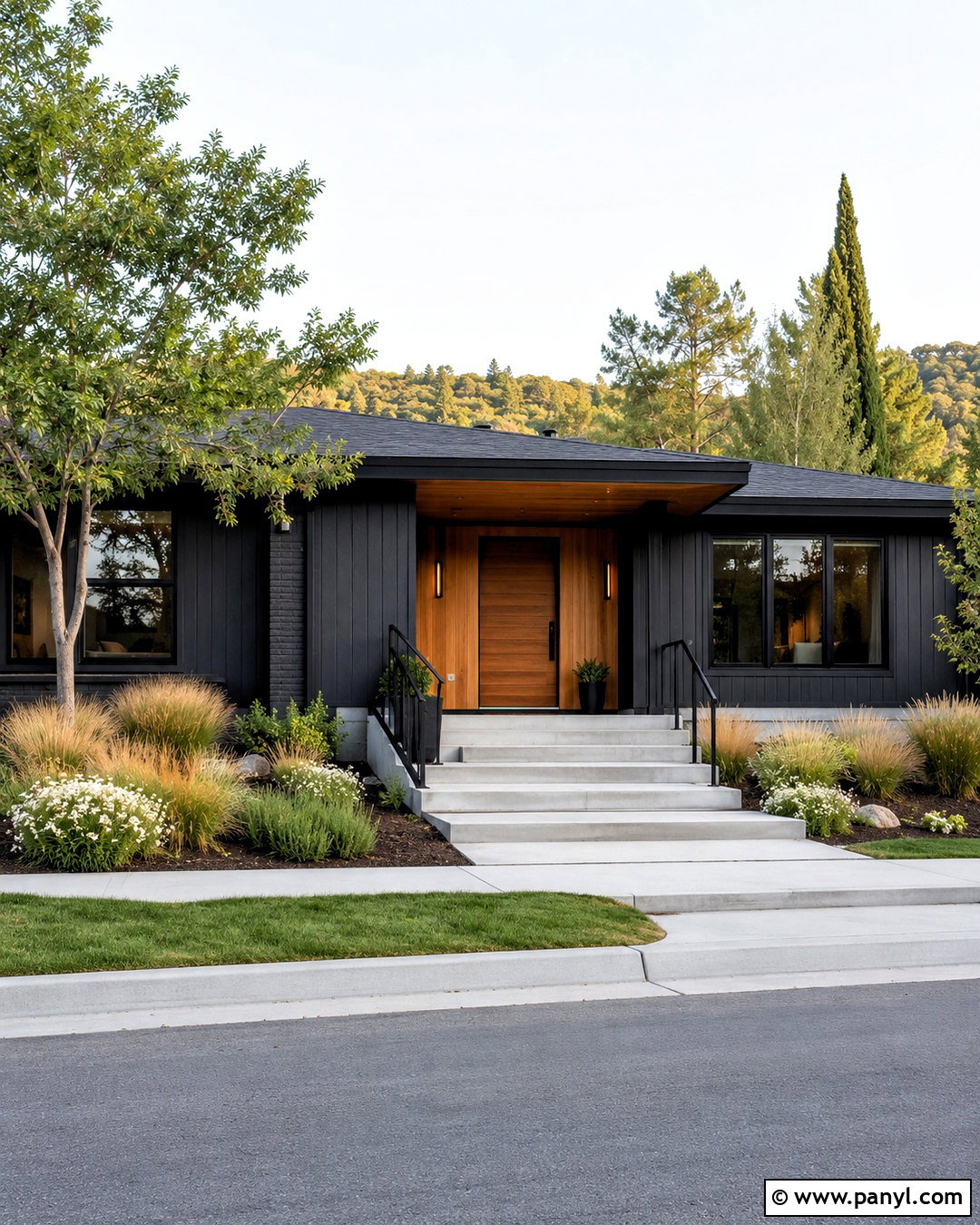
An all-black exterior can feel surprisingly welcoming when it includes generous natural wood and bright landscaping. Select a soft black with brown or charcoal undertones for the siding rather than an intense, cool black. Continue the same color across the trim, gutters, and garage door to create a unified silhouette. Use warm cedar for the front door, porch ceiling, posts, and horizontal accent panels. Large windows, light concrete steps, and simple metal railings prevent the facade from feeling heavy. Choose pale ornamental grasses, white flowers, and fresh green shrubs to create contrast near the foundation. This bold house paint treatment works best on modern homes and straightforward ranch facades. The limited palette emphasizes shape, texture, and architectural proportions instead of decorative details.
14. Warm White House Paint With Green Shutters
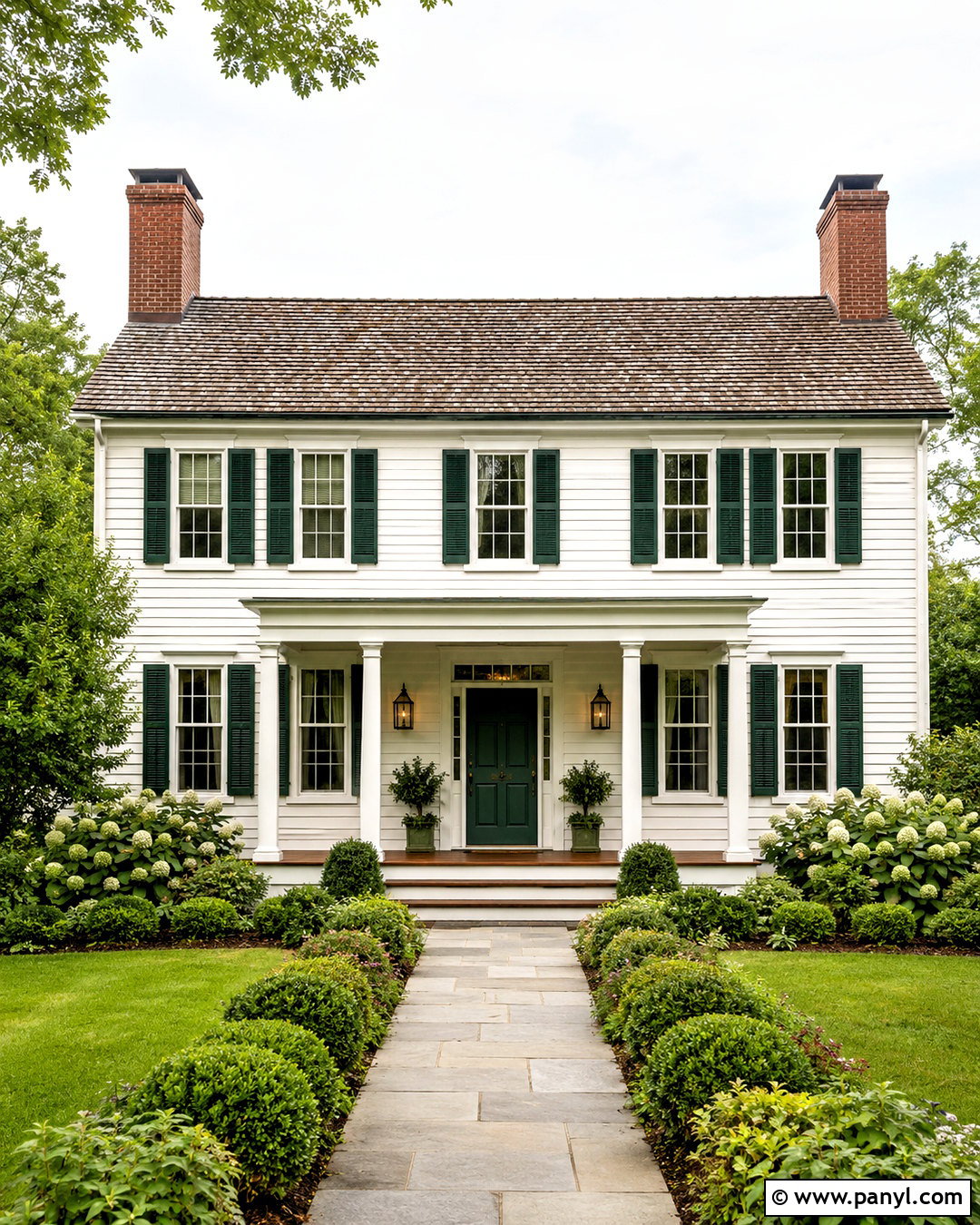
For a timeless exterior with gentle color, begin with warm white siding and deep green shutters. Use the same white on the trim and porch columns to create a continuous background that highlights the home’s architecture. Choose a dark, muted green for properly sized shutters and repeat it on the front door. A stained wood porch floor, aged-brass lights, and woven seating add warmth to the entrance. This palette pairs well with red brick chimneys, brown roof shingles, and stone pathways. Frame the home with boxwood, hydrangeas, and layered perennial beds for a traditional garden setting. The complete house paint look works particularly well on Colonial, Cape Cod, and Georgian-inspired homes. It remains polished while offering more personality than a plain white-and-black combination.
15. Mushroom House Paint With Cream Trim
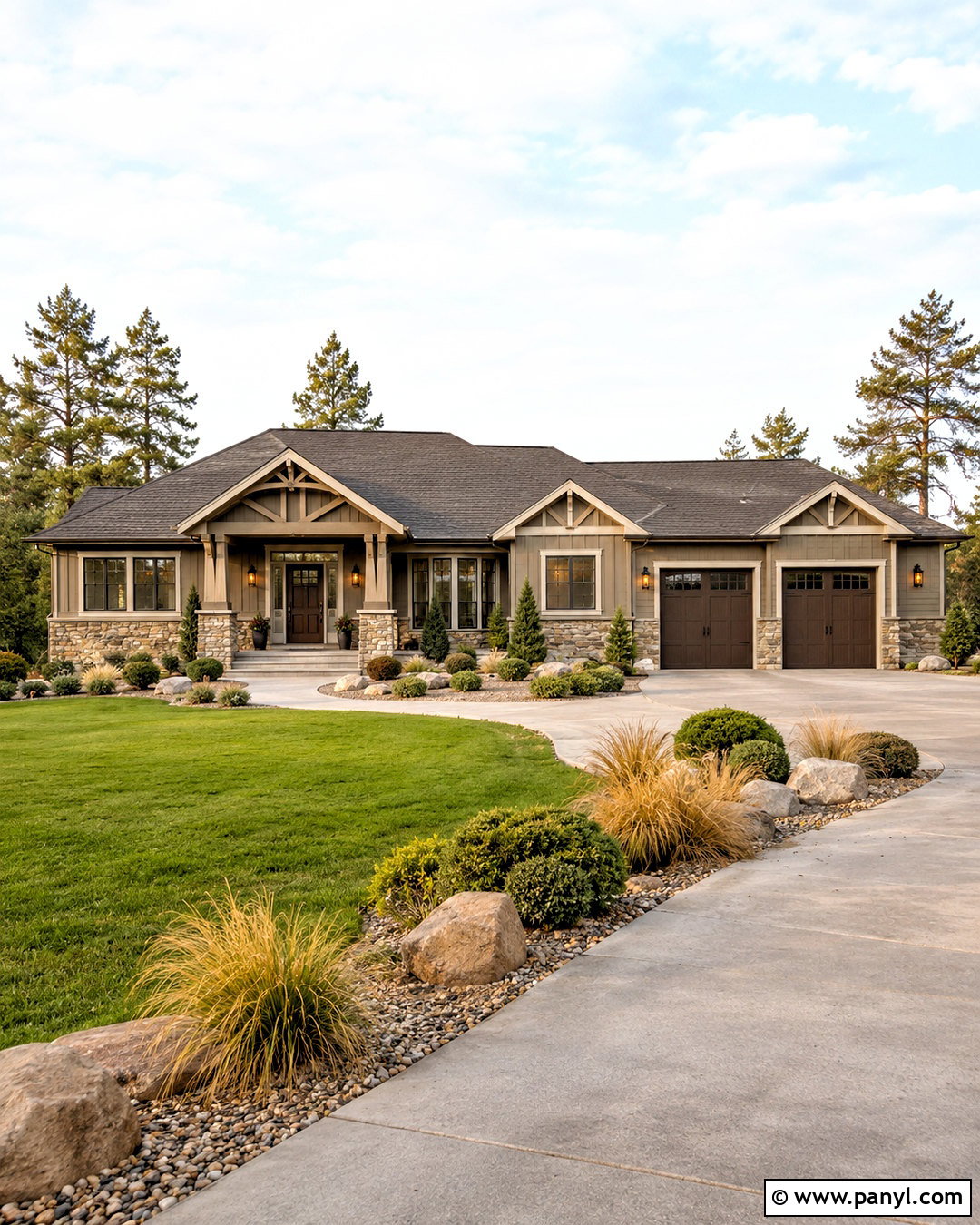
Mushroom paint sits between taupe, beige, and gray, creating a warm neutral exterior with noticeable depth. Apply it to the siding, then use a light cream for the trim, porch columns, and garage surrounds. A dark chocolate-brown front door gives the entrance a clear focal point without disrupting the quiet palette. Bronze lights, gutters, and house numbers can repeat the door’s warmth. If the home includes tan stone or multicolored brick, this scheme can tie those materials together naturally. Finish the property with gravel beds, clipped shrubs, and soft grasses in green and muted gold. This house paint combination suits ranch, Craftsman, and traditional suburban homes. It looks comfortable and refined while hiding everyday dust better than very bright white siding.
16. Terracotta House Paint With Beige Trim
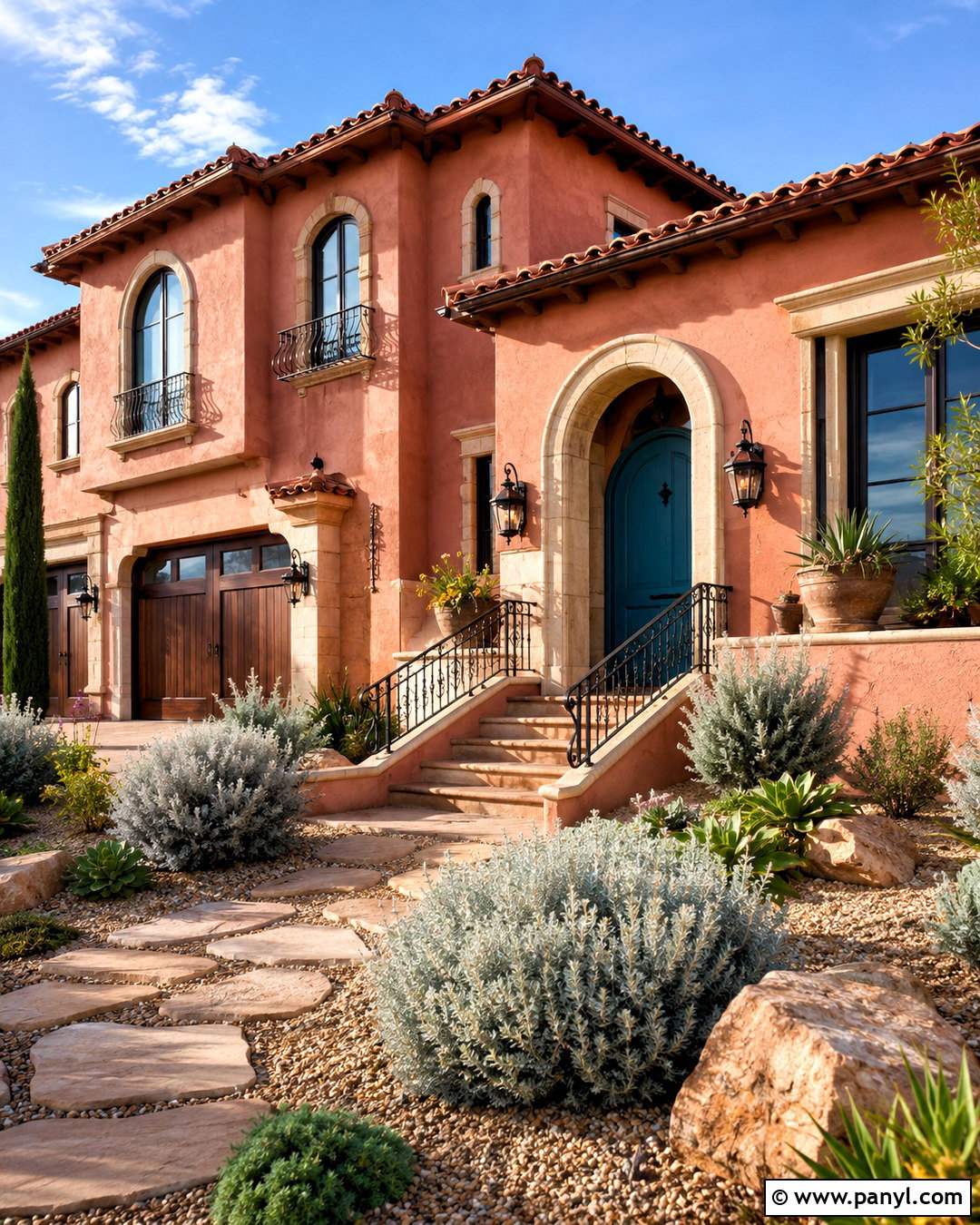
Terracotta paint brings sun-baked warmth to stucco and masonry exteriors. Choose a softened clay shade that blends orange, brown, and muted red rather than a highly saturated color. Pair it with sandy beige trim around windows, doors, and the roofline. A dark teal or deep blue-green front door provides a strong but natural-looking contrast. Use wrought-iron railings, dark bronze lights, and warm wood garage doors to support the earthy palette. Clay roof tiles are ideal, though weathered-brown shingles can work equally well. Complete the setting with gravel, stone pavers, drought-tolerant grasses, and silvery green plants. This cohesive house paint look is well suited to Spanish, Southwestern, Mediterranean, and simple stucco homes that benefit from warmth and architectural definition.
17. Dusty Rose House Paint With White Trim
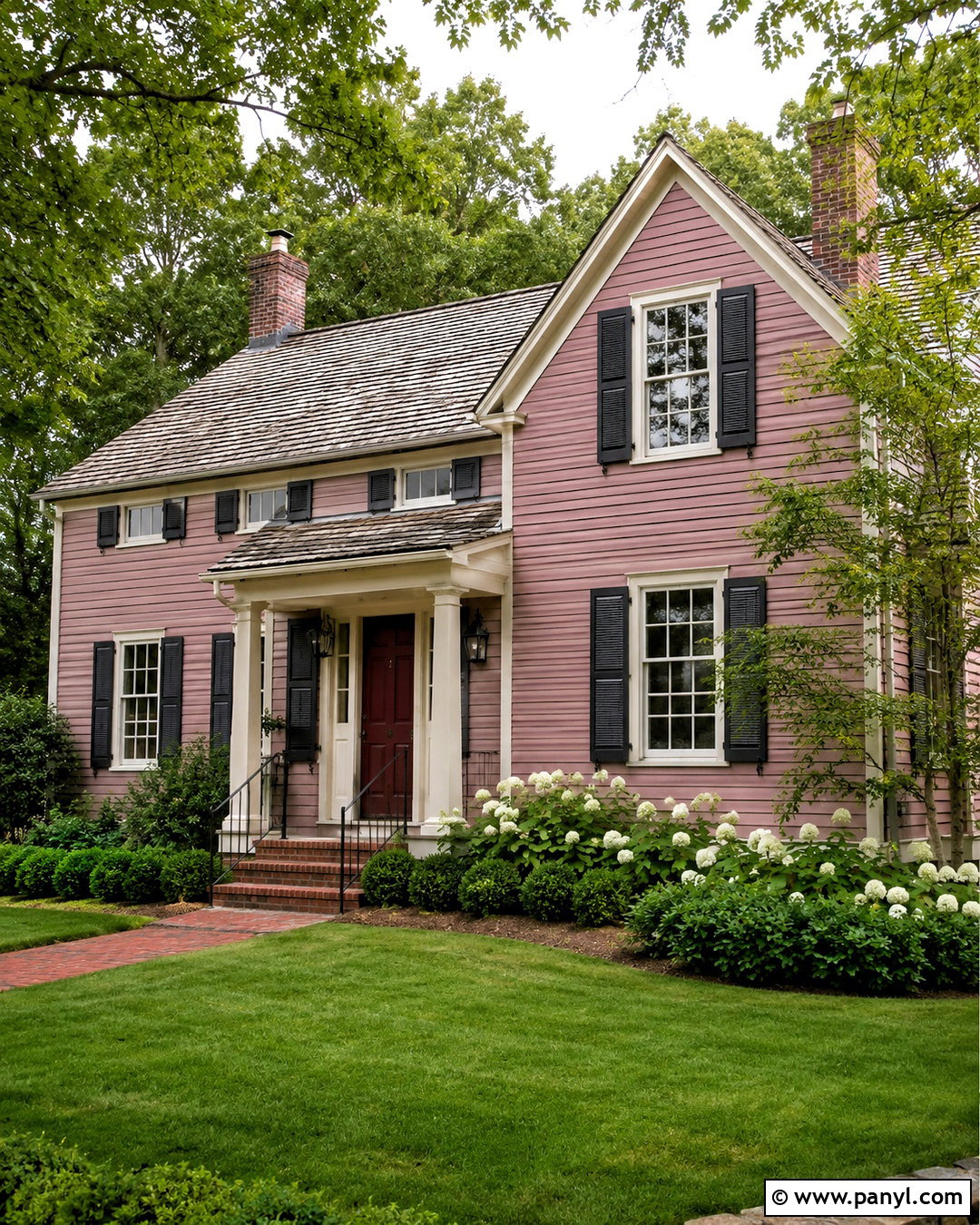
Dusty rose can give a cottage or historic home personality without creating a candy-colored exterior. Choose a muted pink with beige or gray undertones, then balance it with creamy white trim. A deep burgundy front door adds richness, while charcoal shutters can sharpen the facade if the architecture supports them. Keep the roof neutral with weathered gray or medium-brown shingles. Black metal lights, brick steps, and a natural wood porch floor prevent the palette from feeling too delicate. Use dark green shrubs, climbing plants, and white flowers to frame the house with strong natural contrast. This complete paint treatment feels warm, individual, and welcoming. It works best when decorative accents remain restrained and the main colors are allowed to define the architecture.
18. Slate Blue House Paint With Red Door
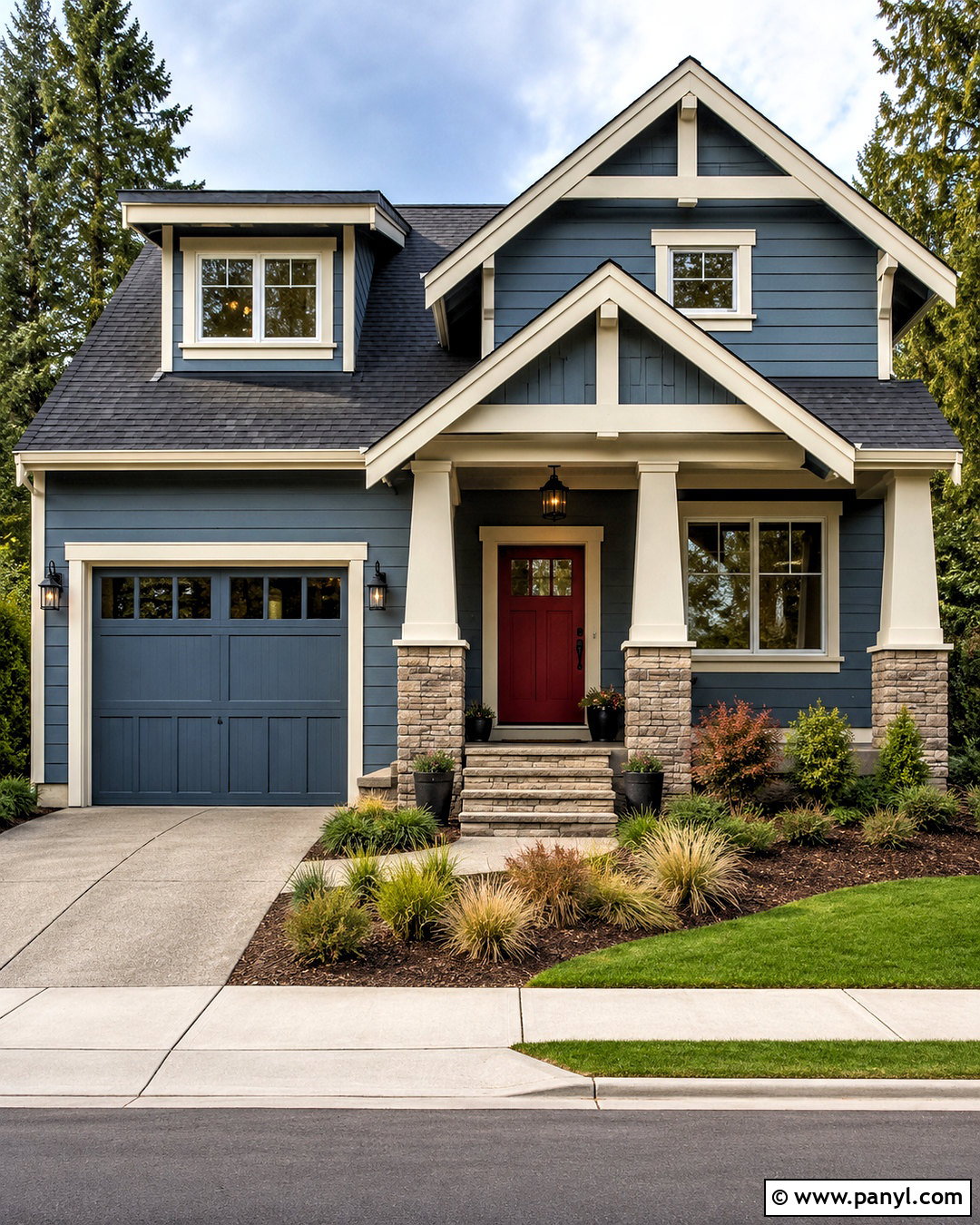
Slate blue siding creates a grounded exterior with enough color to stand apart from standard neutrals. Combine it with crisp but slightly warmed white trim around windows, gables, and porch columns. A muted barn-red front door becomes the central accent without overwhelming the facade. Repeat the red only in small touches, such as planters or a porch bench, to preserve visual balance. Charcoal shingles, black lighting, and natural stone steps support the cool blue body color. Use layered evergreen shrubs and ornamental grasses for a clean, low-maintenance landscape. Paint the garage door slate blue so it recedes into the main facade. This house paint scheme feels especially appropriate for traditional homes, coastal cottages, and Craftsman exteriors with visible trim details.
19. Beige House Paint With Deep Navy Trim
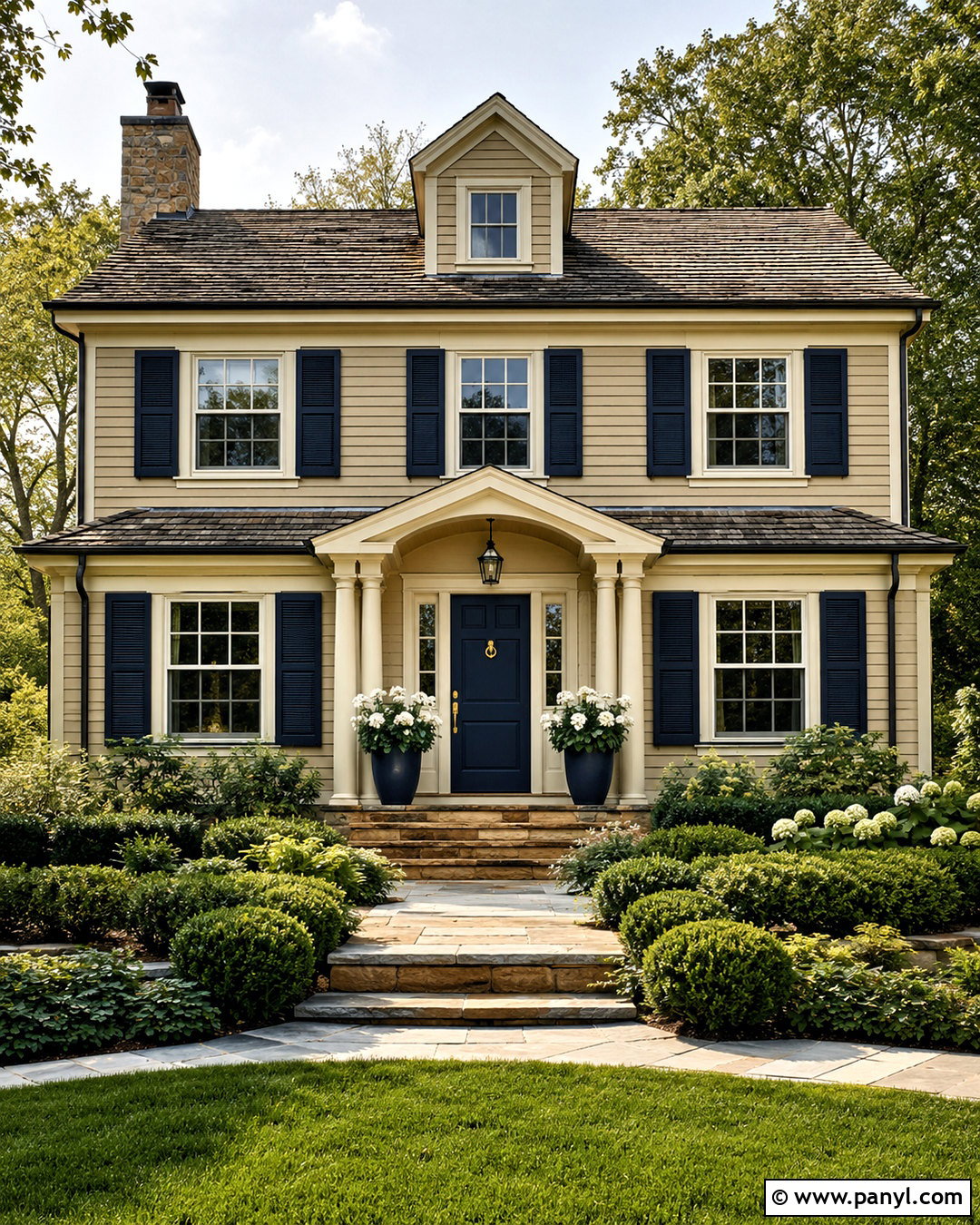
Beige can look fresh and current when it is paired with a strong, carefully placed accent. Select a light sandy beige for the siding and use deep navy on the shutters, front door, and selected window trim. Cream fascia and porch columns keep the roofline bright while preventing the navy from becoming too dominant. Add brass door hardware, dark bronze lights, and a natural jute doormat for subtle texture. Brown-gray roof shingles and warm stone steps connect the palette to the landscape. Complete the entrance with navy planters, white flowers, and neatly layered shrubs. This coordinated house paint combination is useful for traditional suburban homes that already have tan brick or stone. It delivers contrast and character while keeping the main facade light and approachable.
20. Olive Gray House Paint With Copper Accents
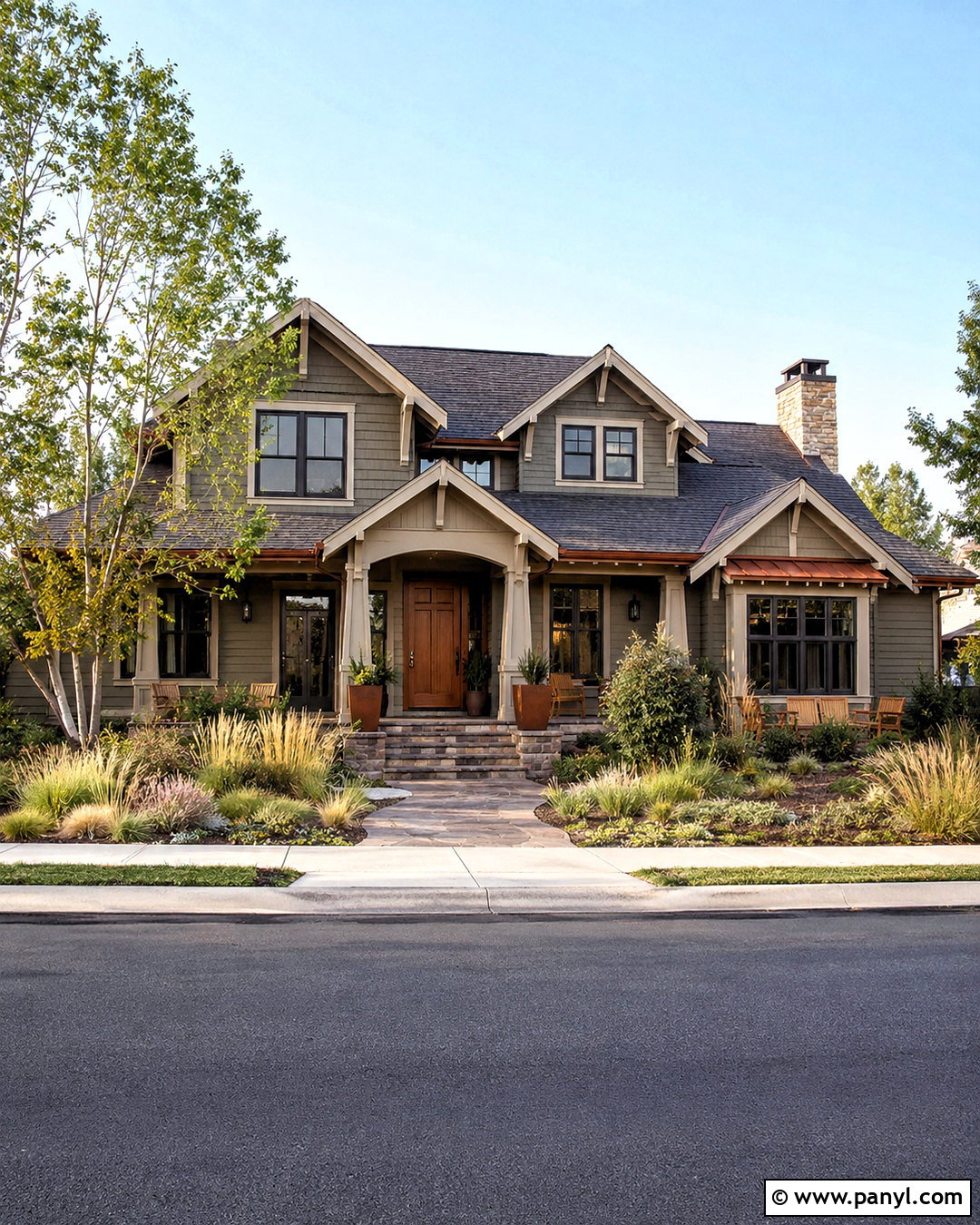
Olive gray combines the calm quality of green with the flexibility of a weathered neutral. Use it across the siding, then choose pale warm gray for the window trim, fascia, and porch columns. A rich copper-brown front door creates an earthy focal point and can be repeated through metal gutters, lights, or planters. Charcoal roofing and dark bronze window frames add depth without competing with the green undertones. Natural stone steps, cedar seating, and soft grasses complete the organic palette. Keep the garage door olive gray so the house reads as one connected form. This full house paint scheme works well on modern Craftsman homes, cabins, ranch houses, and woodland properties. It feels distinctive yet restrained, with materials and colors that transition smoothly into the landscape.
Conclusion:
The best exterior palette considers far more than the siding color. Trim, roofing, masonry, doors, lighting, and landscaping all affect how the finished home looks. These **20 house paint ideas** offer complete combinations that can be adapted to different home sizes and architectural types. Begin with permanent features you cannot easily change, such as brick, stone, and roof shingles. Then choose a body color, supporting trim, and one focused accent. Paint large sample areas and check them in morning, afternoon, and shaded light before purchasing everything. With thoughtful testing and a balanced color plan, a new coat of paint can create a cohesive exterior that feels welcoming, personal, and connected to its surroundings.

Related Ideas and Inspiration:
Leave a Reply