
Choosing among 20 modern kitchen cabinet colors is easier when you picture each shade as part of a complete room. Cabinet color affects how countertops, flooring, hardware, walls, and natural light work together. Current kitchens are moving toward warmer neutrals, natural wood tones, earthy greens, deep blues, and restrained statement colors rather than cold, heavily matched palettes. () The right choice should still suit your home, daily routine, and existing finishes after trends change. Before committing, test a large painted sample beside the backsplash and countertop during the morning and evening. Also consider how often fingerprints, cooking splashes, and dust may appear. The complete kitchen looks below offer practical combinations for exploring 20 modern kitchen cabinet colors.
1. Warm White Kitchen Cabinets
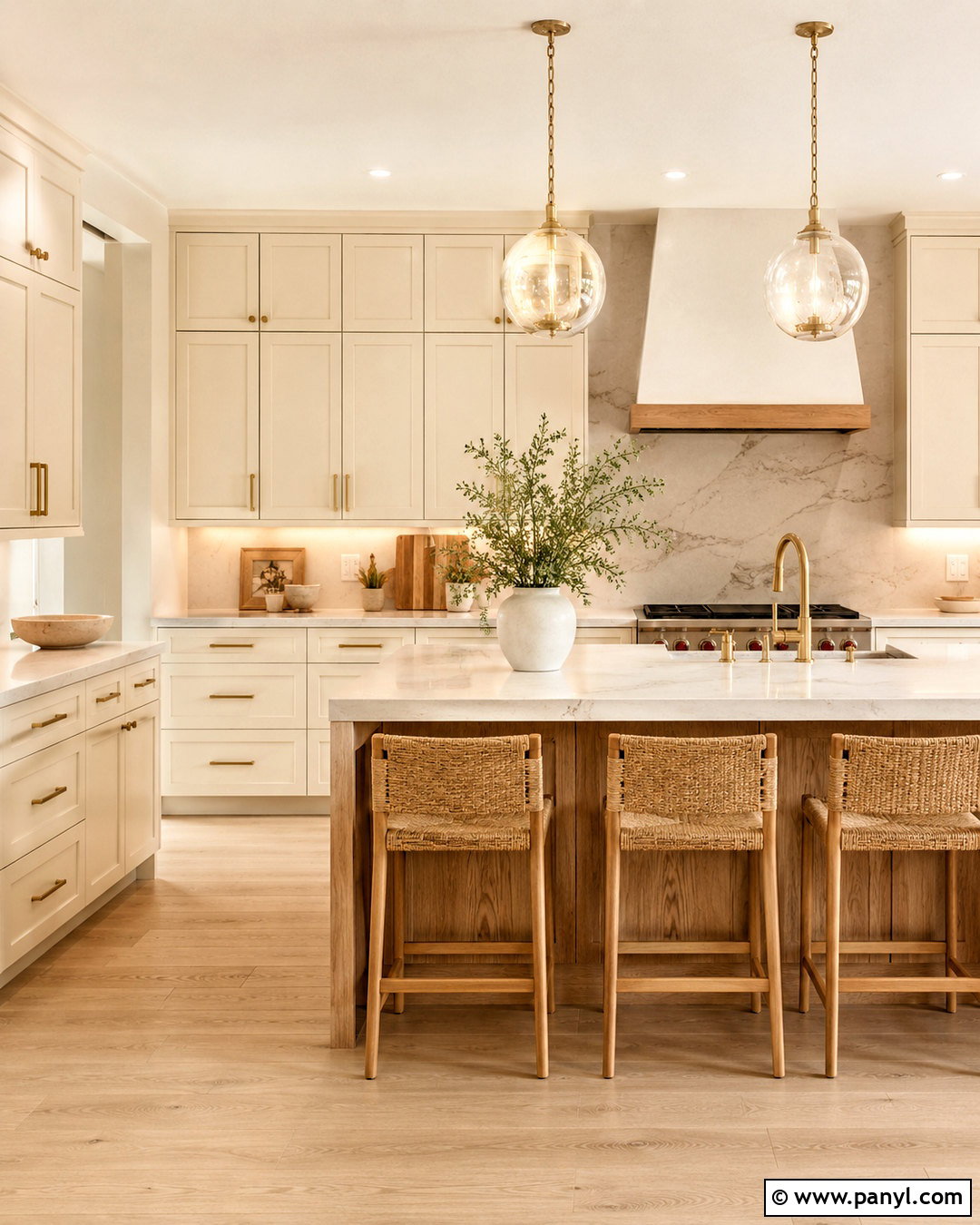
Warm white kitchen cabinets create a bright, comfortable room without the harsh feeling of pure white. Choose flat-panel or slim Shaker doors with subtle cream undertones. Pair them with pale quartz countertops, a softly veined backsplash, and light oak flooring for gentle contrast. Brushed brass pulls add warmth, while polished nickel creates a cleaner transitional finish. Carry the cabinet color onto tall pantry units so the storage feels integrated rather than bulky. A white oak island can introduce texture and prevent the kitchen from appearing flat. Finish the space with warm white walls, woven counter stools, and simple glass pendants. This palette is especially useful in smaller kitchens or rooms with limited natural light.
2. Cream Kitchen Cabinets
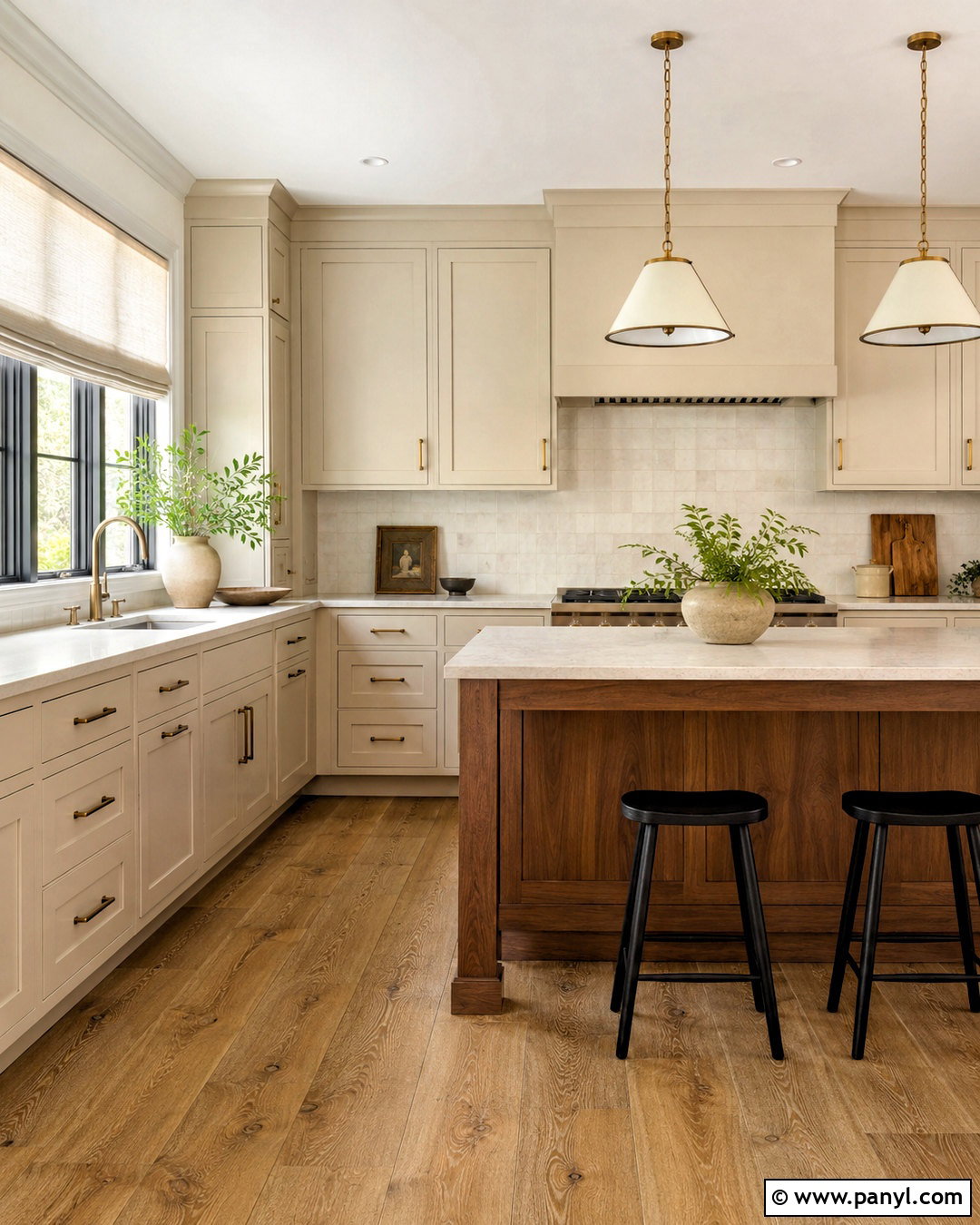
Cream kitchen cabinets give a modern space a softer, more welcoming character. Select a muted cream with beige undertones instead of a noticeably yellow shade. The color looks balanced with honed limestone-look quartz, handmade off-white backsplash tile, and medium oak flooring. Use aged brass knobs and slender pulls to deepen the warmth without making the design overly traditional. A walnut island creates a grounded focal point and gives the pale cabinetry stronger definition. Keep the walls a light neutral that is slightly paler than the cabinets. Linen shades and ceramic pendant lights complete the relaxed look. This full palette works particularly well in kitchens that receive cool northern light because the warm surfaces keep the room from feeling gray.
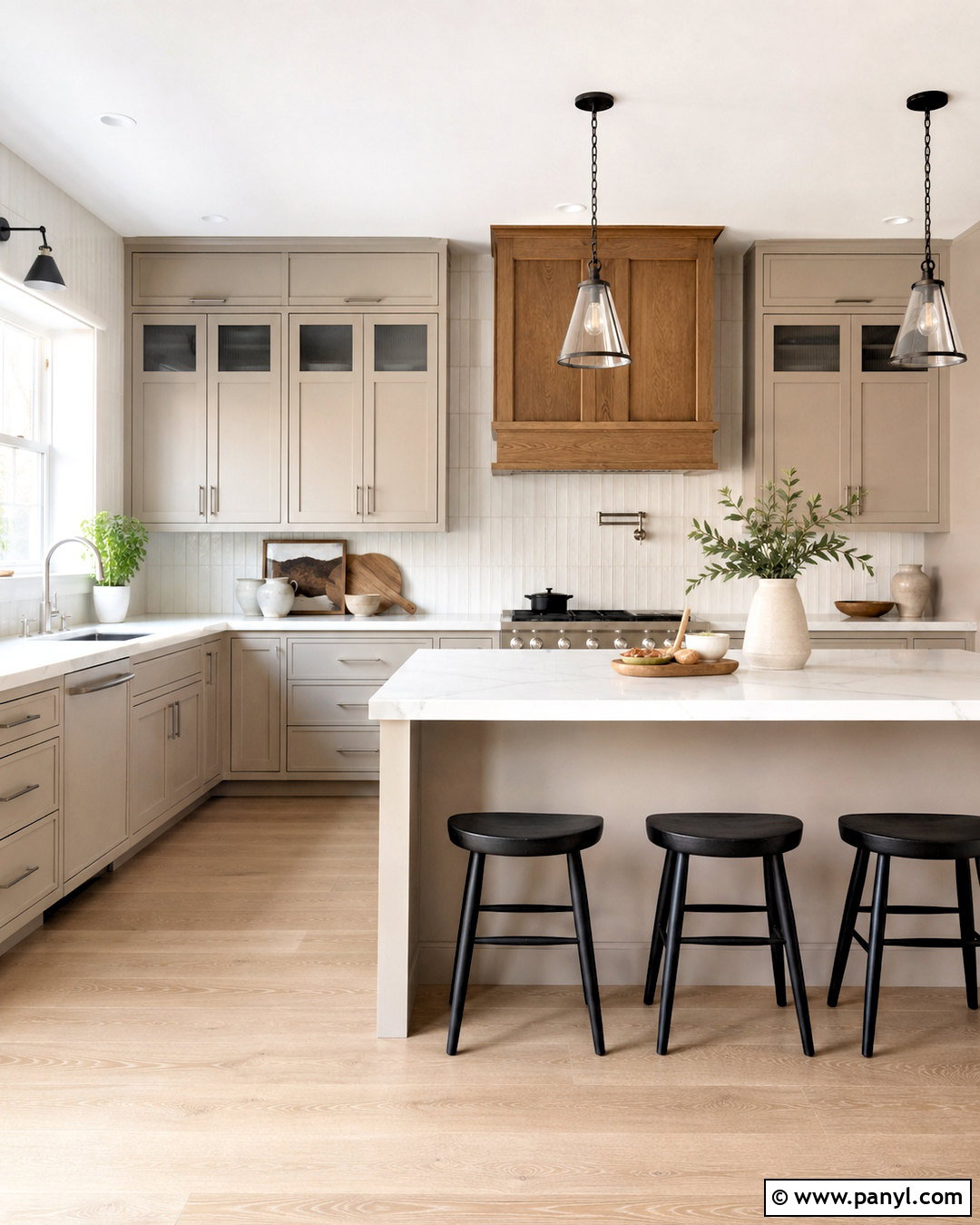
3. Greige Kitchen Cabinets
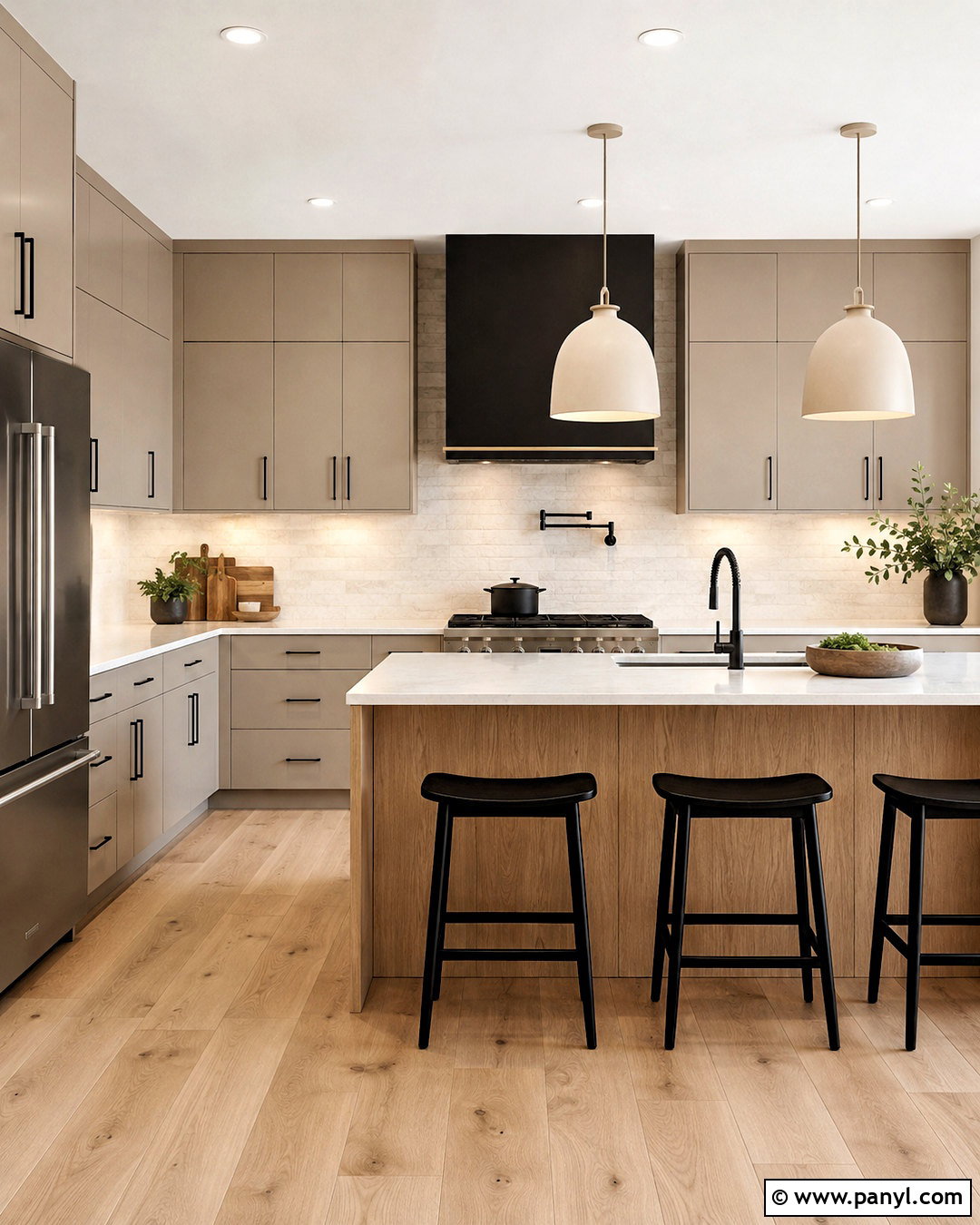
Can’t decide between gray and beige? Greige kitchen cabinets offer the clean appearance of gray with enough warmth to complement wood, stone, and metal. Use simple slab doors or narrow Shaker fronts for a streamlined foundation. Pair the cabinets with creamy quartz countertops, a light stone backsplash, and white oak flooring. Matte black hardware creates crisp definition, while brushed nickel produces a quieter result. For a balanced two-tone layout, place greige on the perimeter and use natural oak on the island. Keep walls warm white so their undertones relate to the cabinetry. A black range hood, sculptural pendants, and a washable neutral runner can finish the design. The result feels modern, calm, and practical rather than cold.
4. Mushroom Kitchen Cabinets
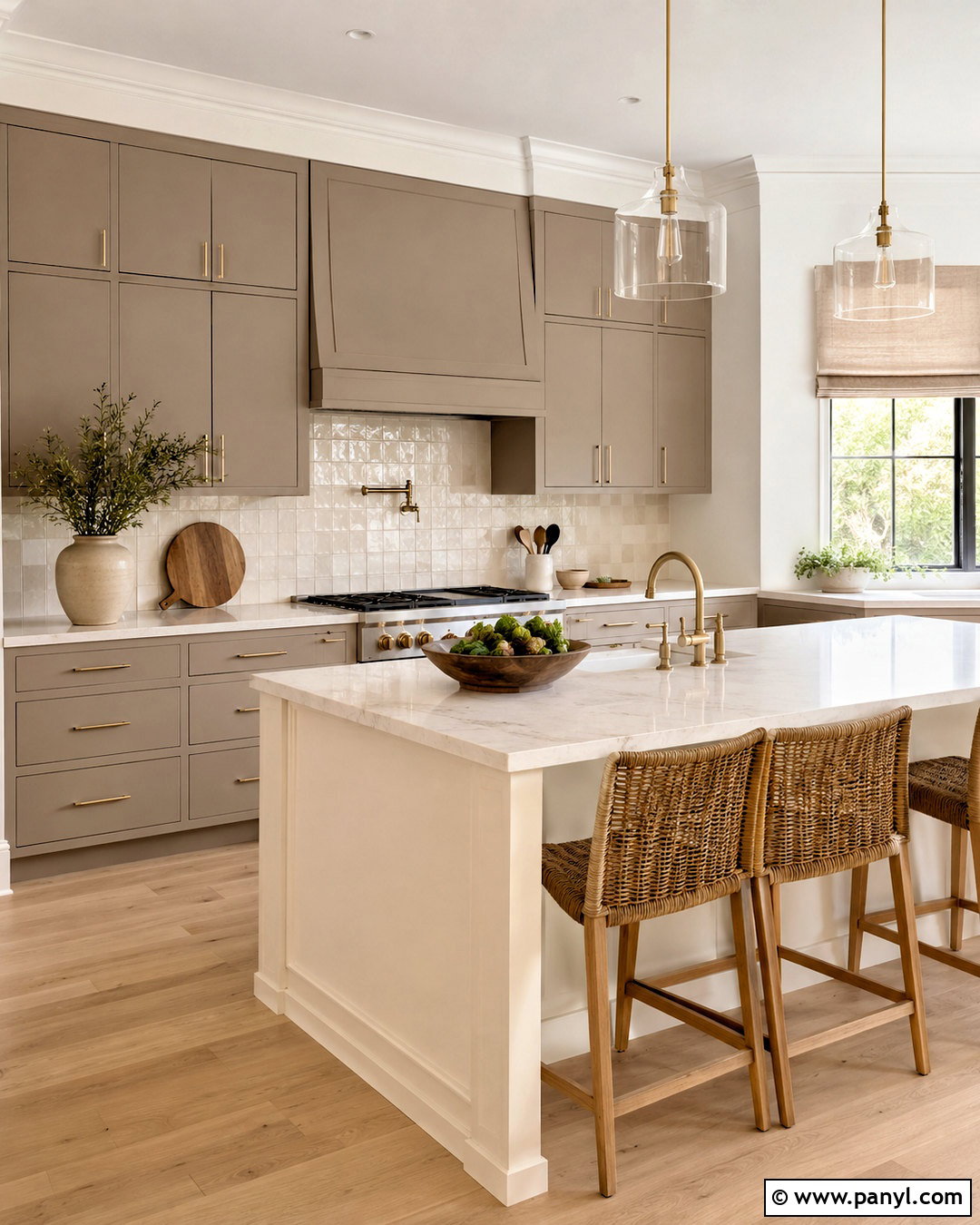
Mushroom kitchen cabinets blend soft brown, gray, and beige into a grounded neutral that has more depth than standard greige. This shade looks especially polished on full-height flat-panel cabinetry with minimal hardware. Pair it with creamy marble-look quartz, an ivory zellige backsplash, and light oak floors. Bronze or champagne-brass pulls highlight its brown undertones. Continue the cabinetry around the refrigerator for a seamless built-in effect, then choose a warm white island to keep the center visually light. Natural textures, such as woven stools and a linen Roman shade, prevent the sleek surfaces from feeling sterile. Mushroom also transitions comfortably into open dining and living spaces because it coordinates with common upholstery, wood furniture, and warm neutral wall colors.
5. Taupe Kitchen Cabinets
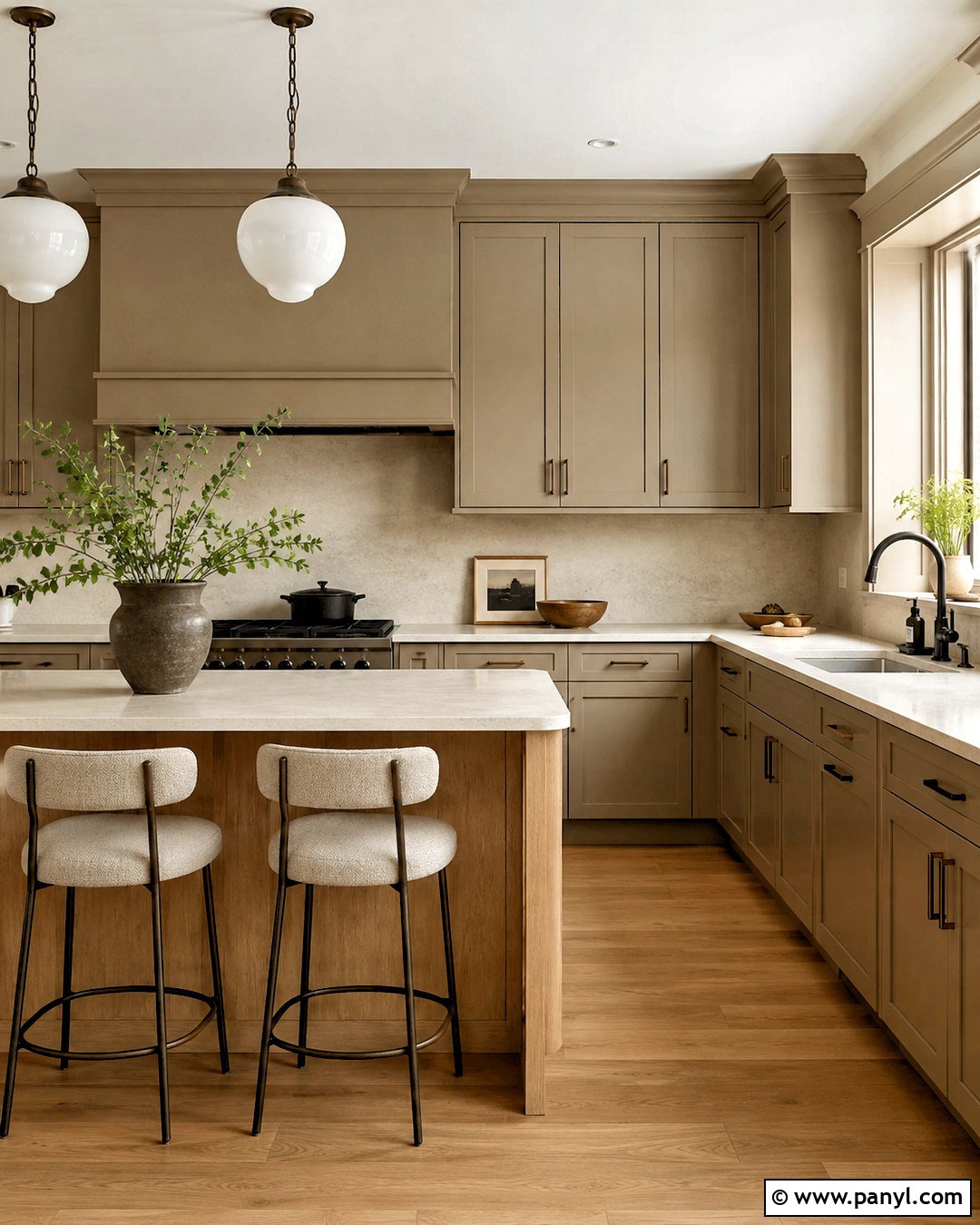
Soft taupe cabinets can make a kitchen feel sophisticated while remaining easy to decorate. Choose a balanced taupe that leans brown rather than purple, especially when the room has oak flooring. Use the color across slim Shaker cabinets and tall storage, then introduce a creamy stone countertop with subtle movement. A matching slab backsplash creates a streamlined backdrop and reduces visual clutter. Dark bronze hardware provides definition without the sharp contrast of black. For the island, consider rift-sawn white oak with comfortable upholstered stools. Warm white walls and oversized milk-glass pendants brighten the entire composition. Add restrained accents through stoneware, cutting boards, and a muted runner. This complete look suits contemporary, transitional, and softly minimalist homes.
6. Natural Oak Kitchen Cabinets
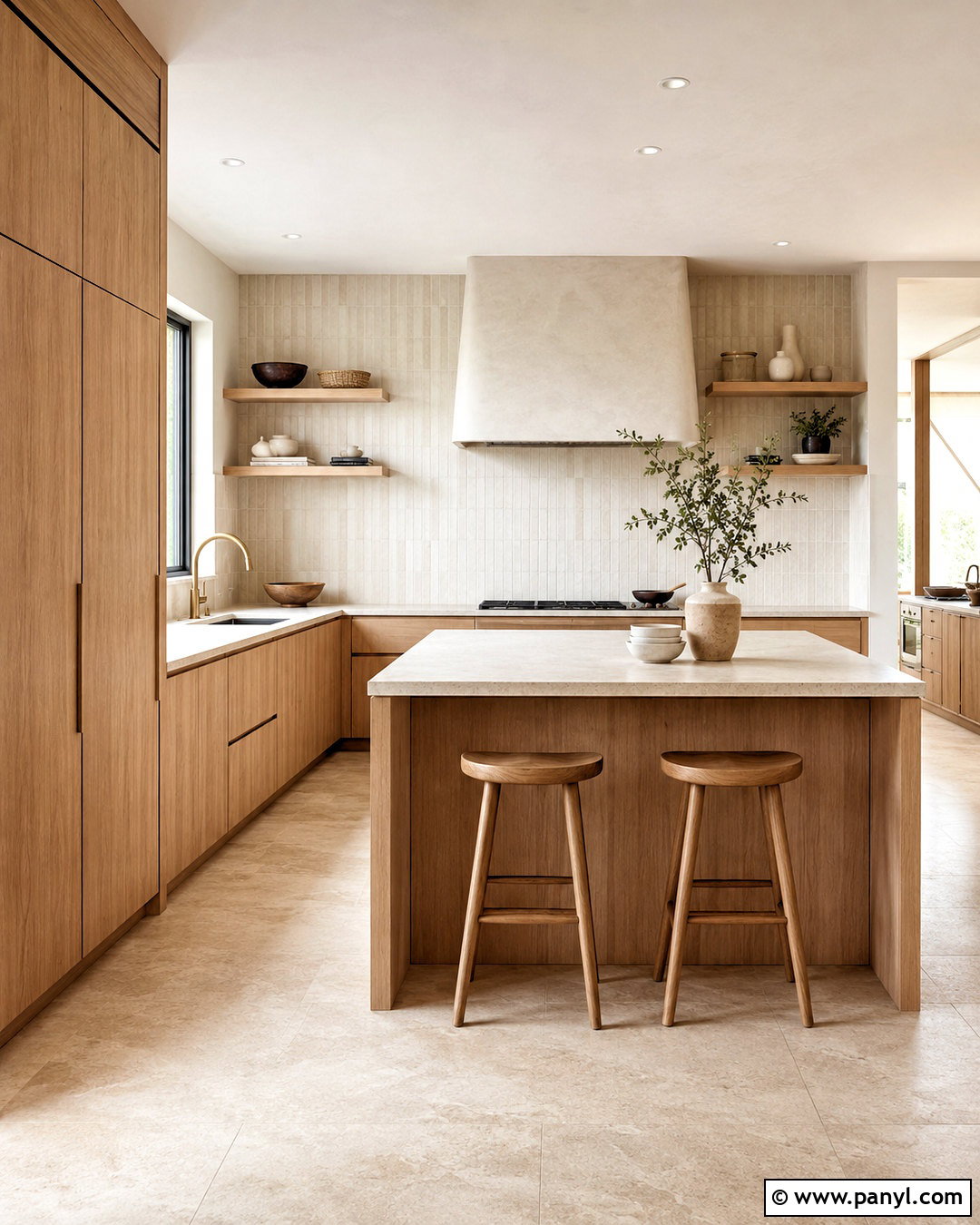
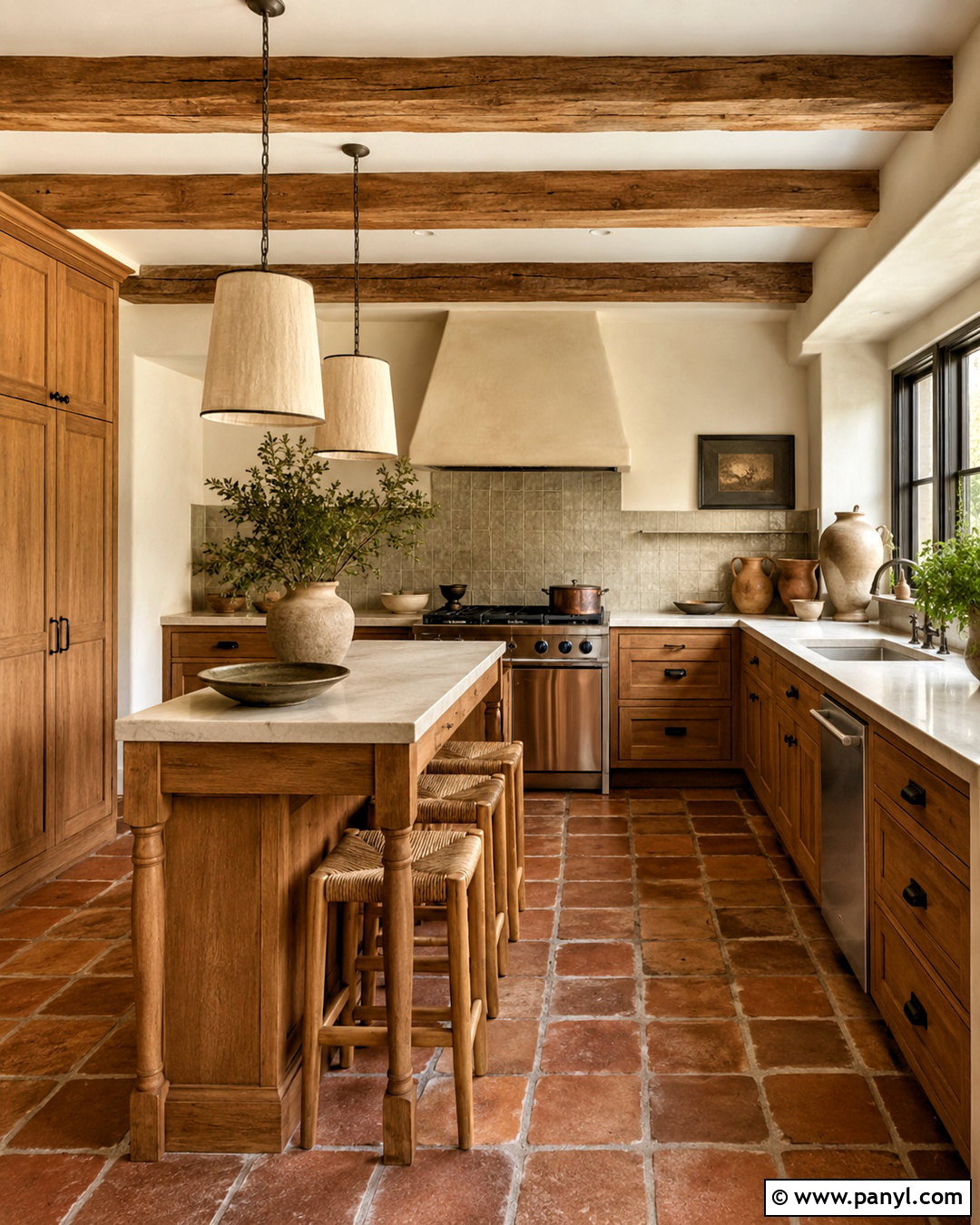
Natural oak kitchen cabinets bring visible grain and organic warmth into a modern room. Select white oak with a clear matte finish rather than an orange or glossy stain. Flat-panel doors keep the wood looking fresh, while integrated pulls maintain clean lines. Balance the cabinetry with pale quartz countertops and a creamy vertical tile backsplash. A plaster-style range hood in warm white can break up long stretches of wood. Use brushed nickel fixtures for a light, understated finish or black accents for stronger contrast. Large-format limestone-look flooring gives the kitchen a calm foundation. Keep open shelves limited and carefully styled with useful ceramics. The finished space should mix natural texture with simple shapes, creating warmth without appearing rustic or visually busy.
7. Walnut Brown Kitchen Cabinets
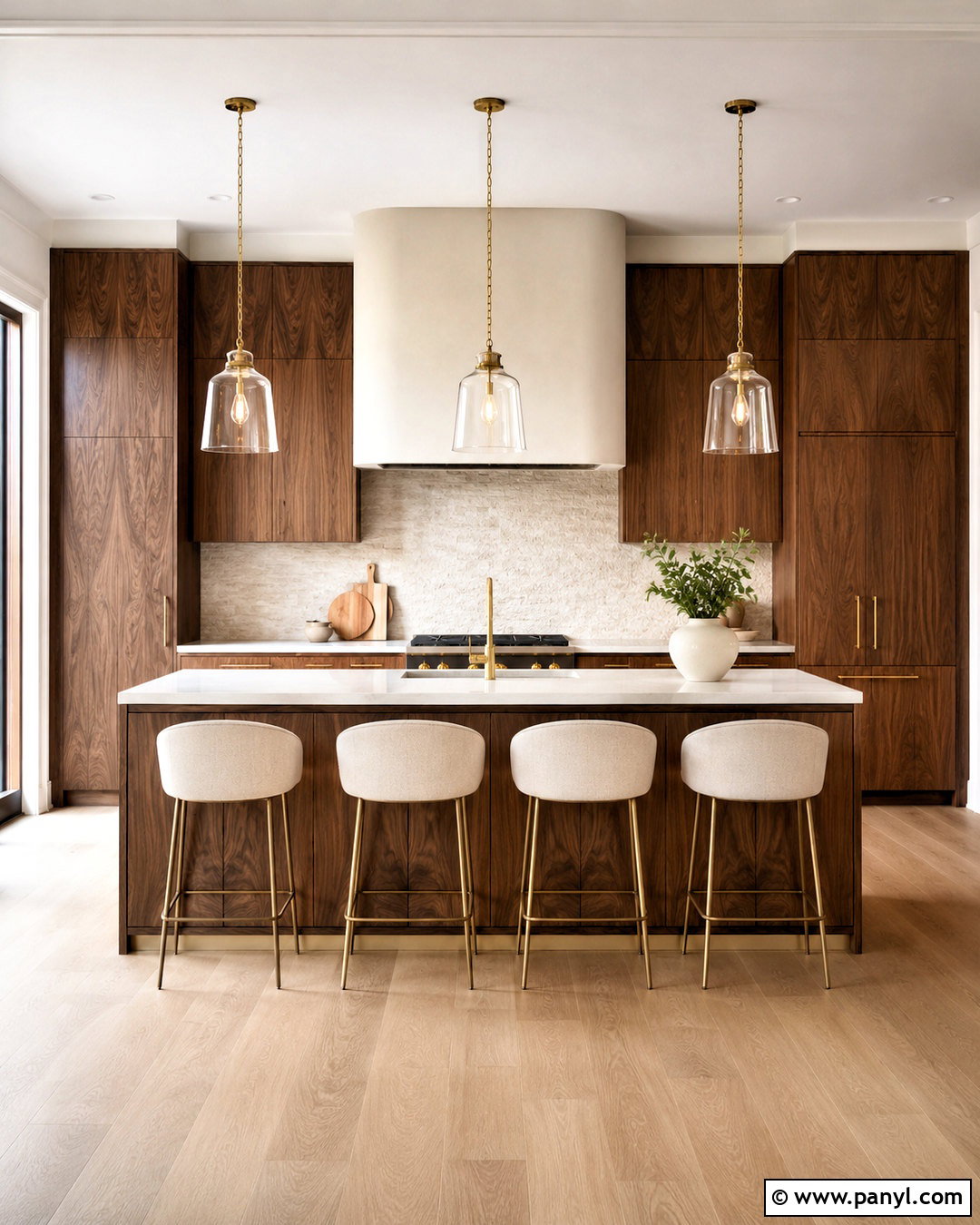
Rich walnut cabinets create instant depth, especially when balanced with light architectural surfaces. Use book-matched walnut veneer on slab doors so the grain becomes an intentional design feature. Pair the dark wood with warm white quartz, a pale stone backsplash, and light oak or limestone flooring. Minimal brass edge pulls complement the brown tones without interrupting the cabinet fronts. If the room is compact, reserve walnut for the lower cabinets and tall pantry wall, then use warm white uppers. Add a softly curved plaster hood and cream counter stools to lighten the composition. Clear glass pendants preserve open sightlines over the island. This complete scheme feels polished and modern while allowing the natural wood pattern to provide most of the decoration.
8. Espresso Kitchen Cabinets
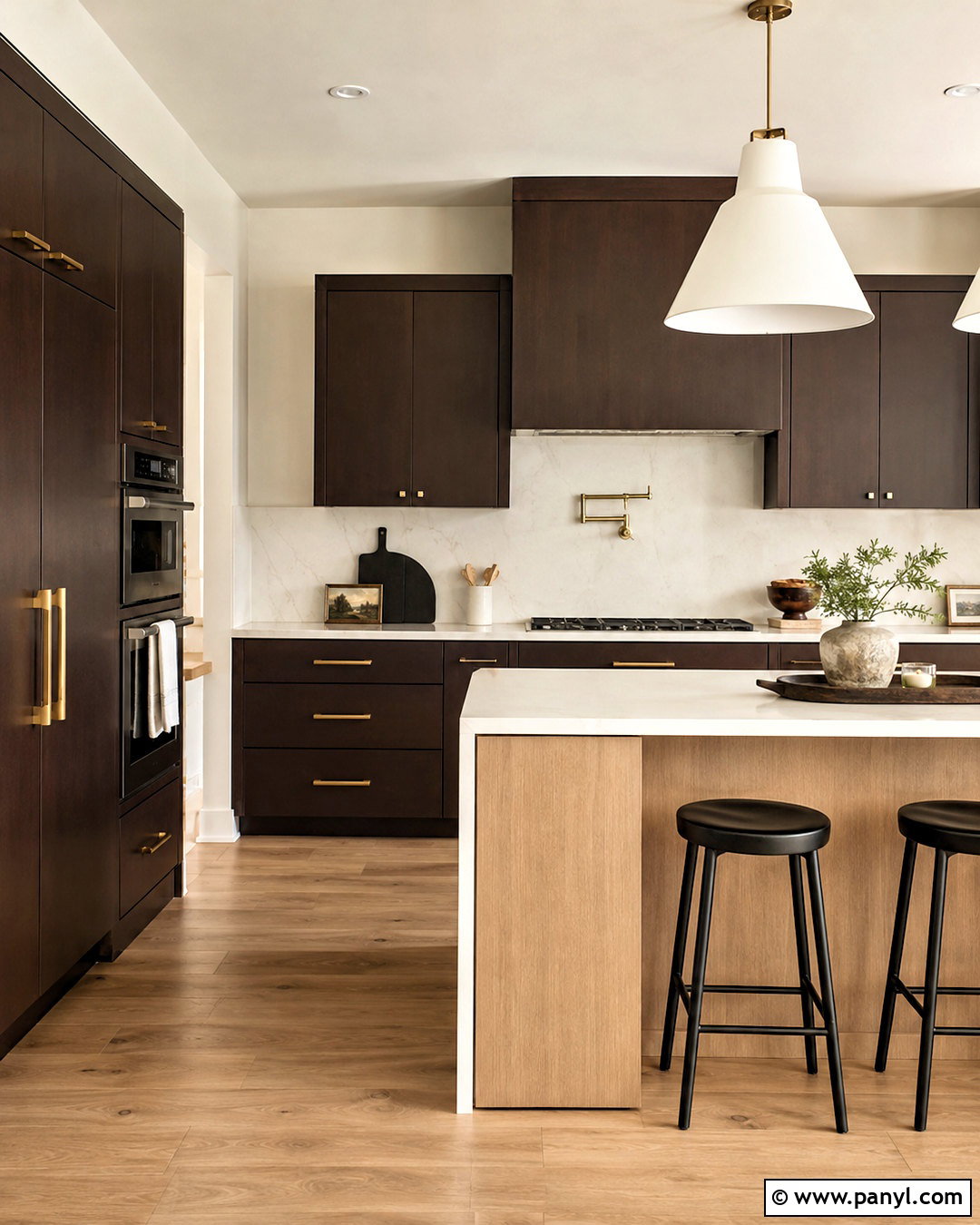
Espresso kitchen cabinets create a dramatic, tailored look without requiring pure black. Their deep brown finish works best in a kitchen with generous daylight and lighter surrounding materials. Choose sleek slab fronts in a matte or low-sheen finish, then add pale quartz countertops and a full-height warm white backsplash. Brushed brass hardware and fixtures reveal the cabinet color’s warmth. Use a light oak island or breakfast table to keep the room balanced. Wide-plank oak flooring, cream walls, and large white pendants further soften the darker cabinetry. Place under-cabinet lighting beneath every upper cabinet to illuminate work areas. The overall design should repeat espresso in only a few accents, such as stools or window frames, so the space remains open and inviting.
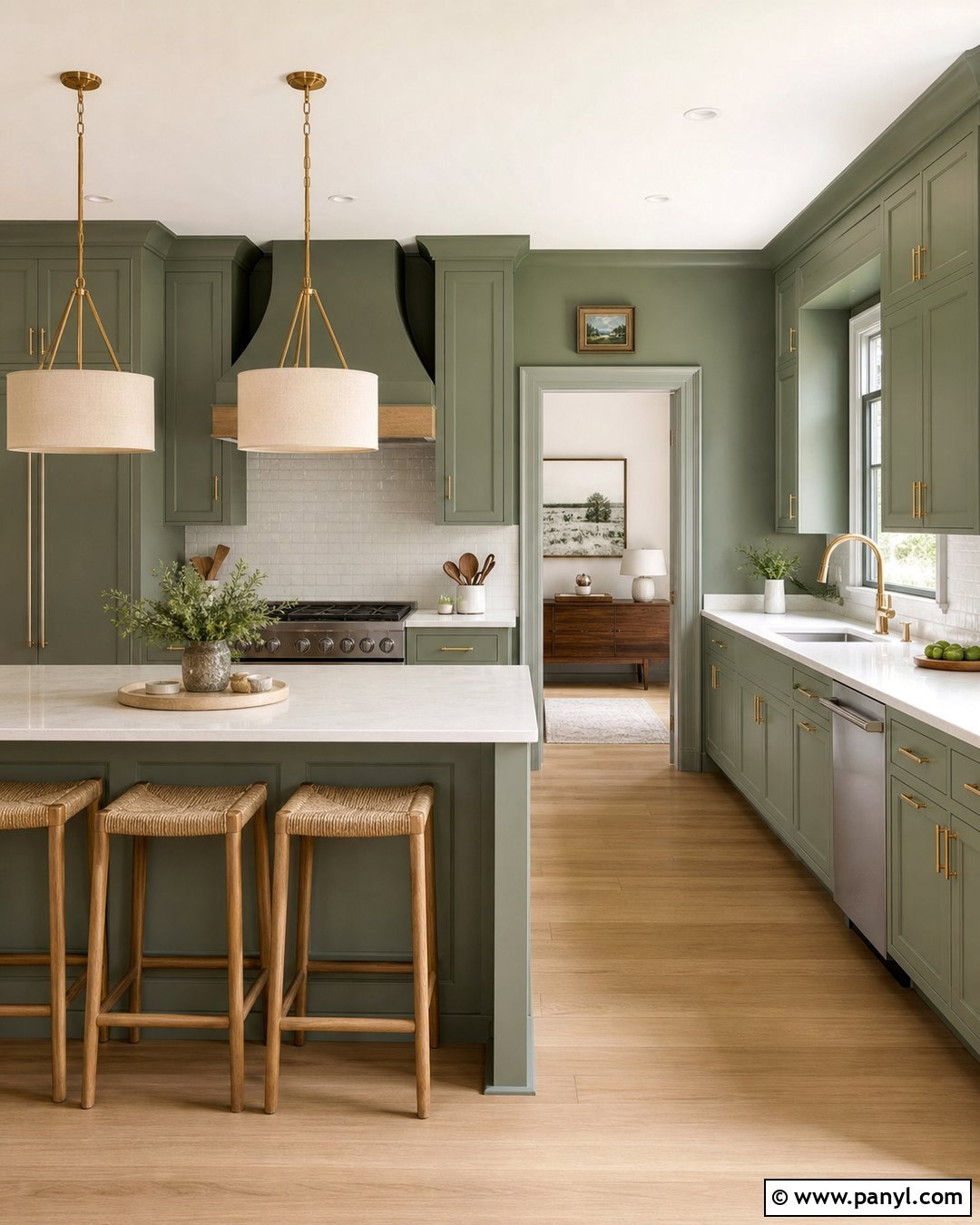
9. Sage Green Kitchen Cabinets
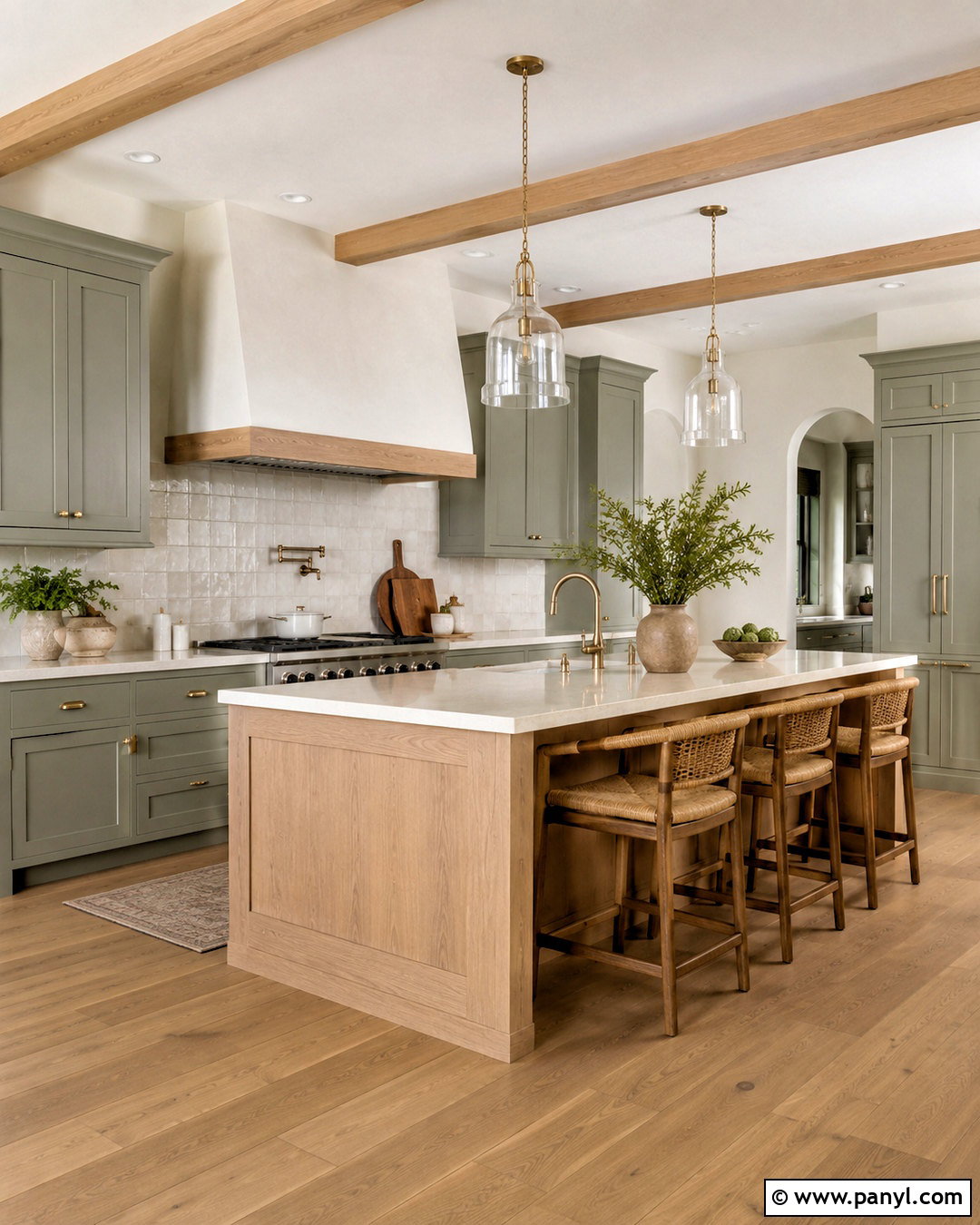
Sage green kitchen cabinets provide gentle color while remaining calm enough for everyday living. Choose a muted sage with gray undertones and apply it to simple Shaker doors. Pair the cabinets with creamy quartz, handmade ivory tile, and medium-tone oak flooring. Unlacquered brass knobs add warmth, while a white oak island introduces natural variation. A plaster range hood in warm white keeps the upper half of the room bright. Continue sage onto a pantry wall to create a cohesive built-in feature. Finish the kitchen with woven stools, clear glass pendants, and a washable runner containing soft green and beige. This palette works particularly well when windows overlook trees or a garden because the cabinetry visually connects the interior with the surrounding landscape.
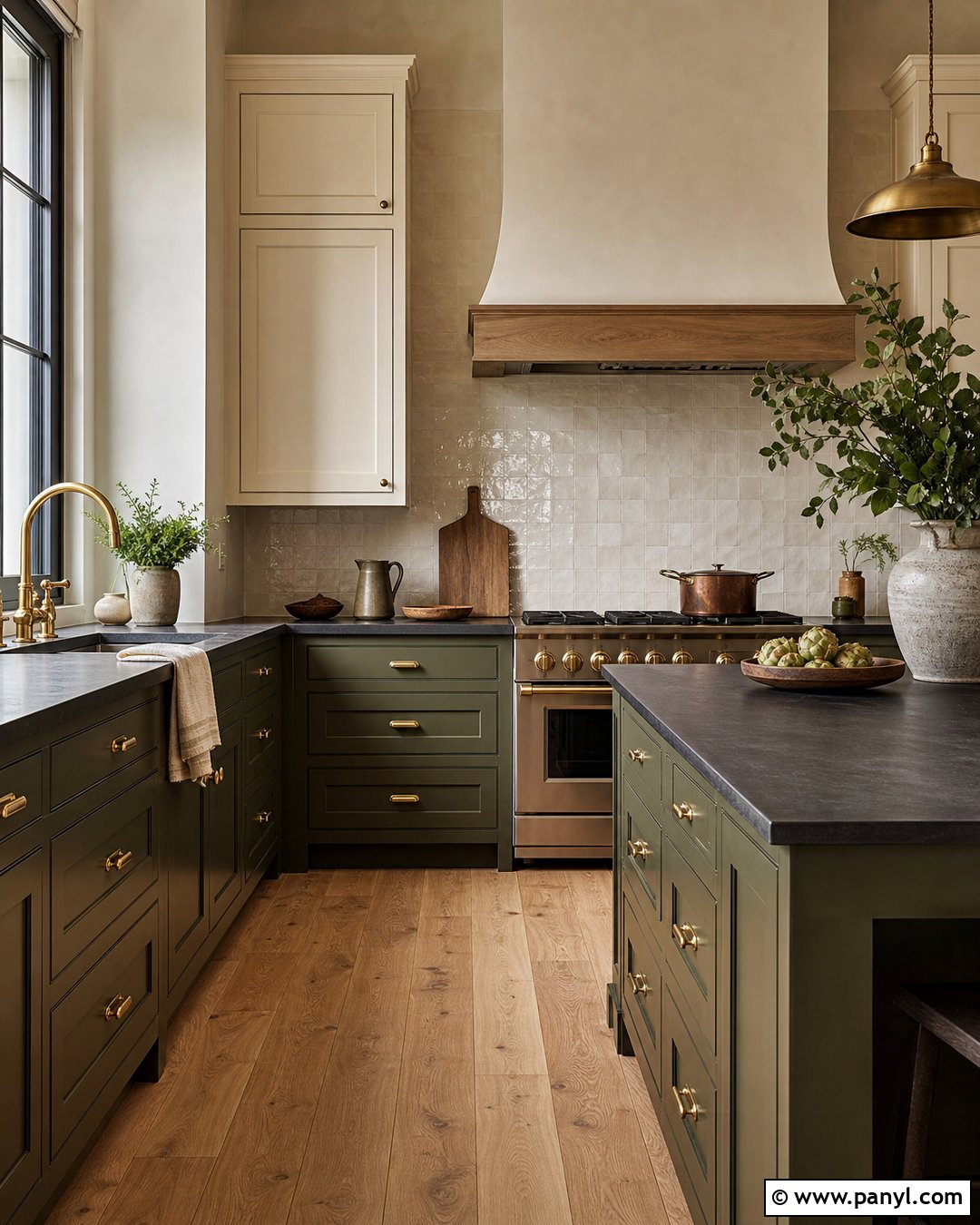
10. Olive Green Kitchen Cabinets
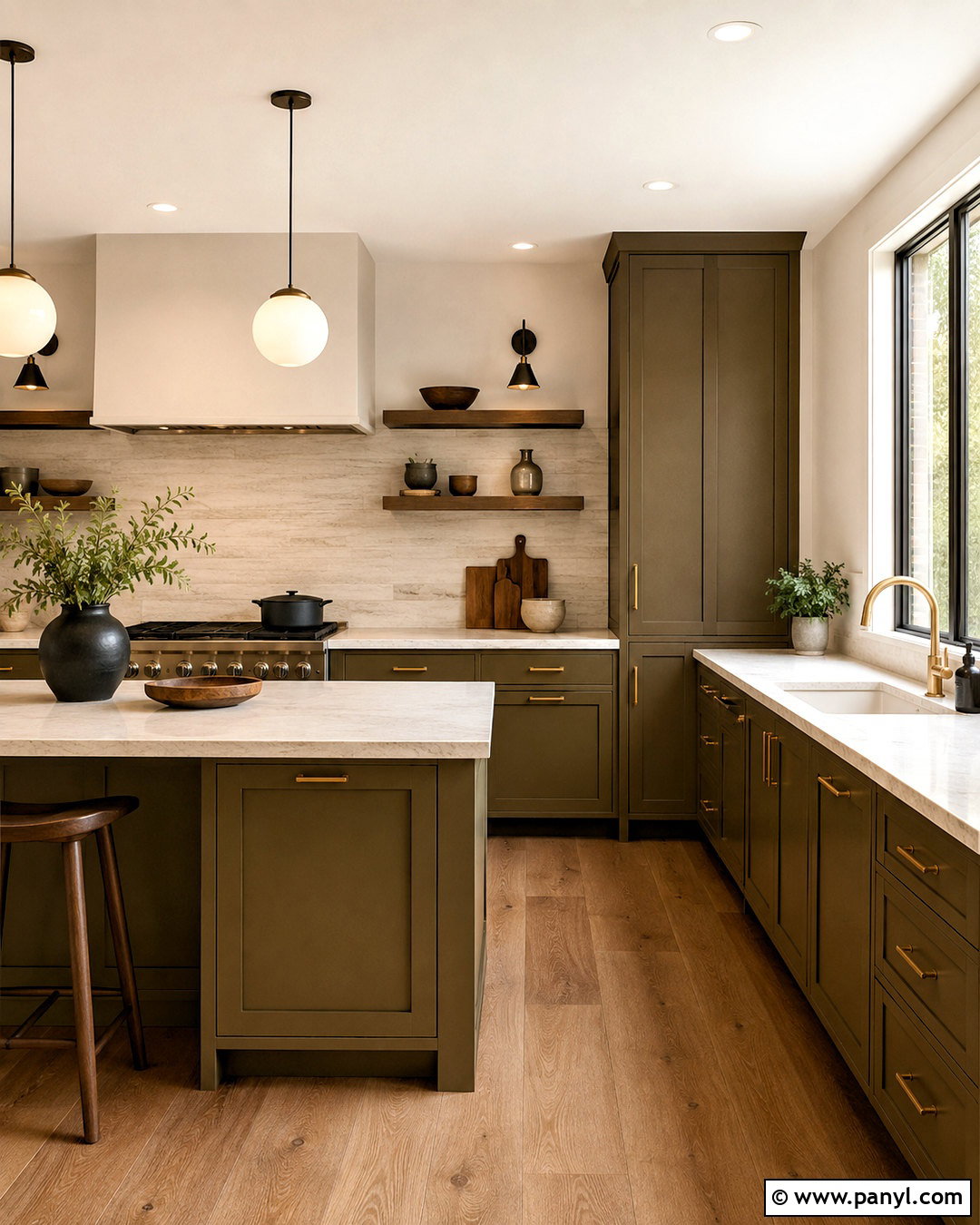
Olive green cabinets make a kitchen feel grounded, distinctive, and connected to natural materials. Select a deep olive with brown undertones rather than a bright grassy green. Use it across flat-panel or narrow Shaker cabinetry, including the island, for an immersive finish. Creamy marble-look counters and an off-white stone backsplash provide necessary brightness. Choose aged brass hardware, a warm wood floor, and simple globe pendants to support the earthy palette. A walnut dining nook or open shelf can add another rich natural tone. Keep walls light and avoid introducing several competing accent colors. Small touches of black through the faucet or window trim sharpen the room. The finished kitchen feels confident and modern but remains comfortable enough for a family home.
11. Forest Green Kitchen Cabinets
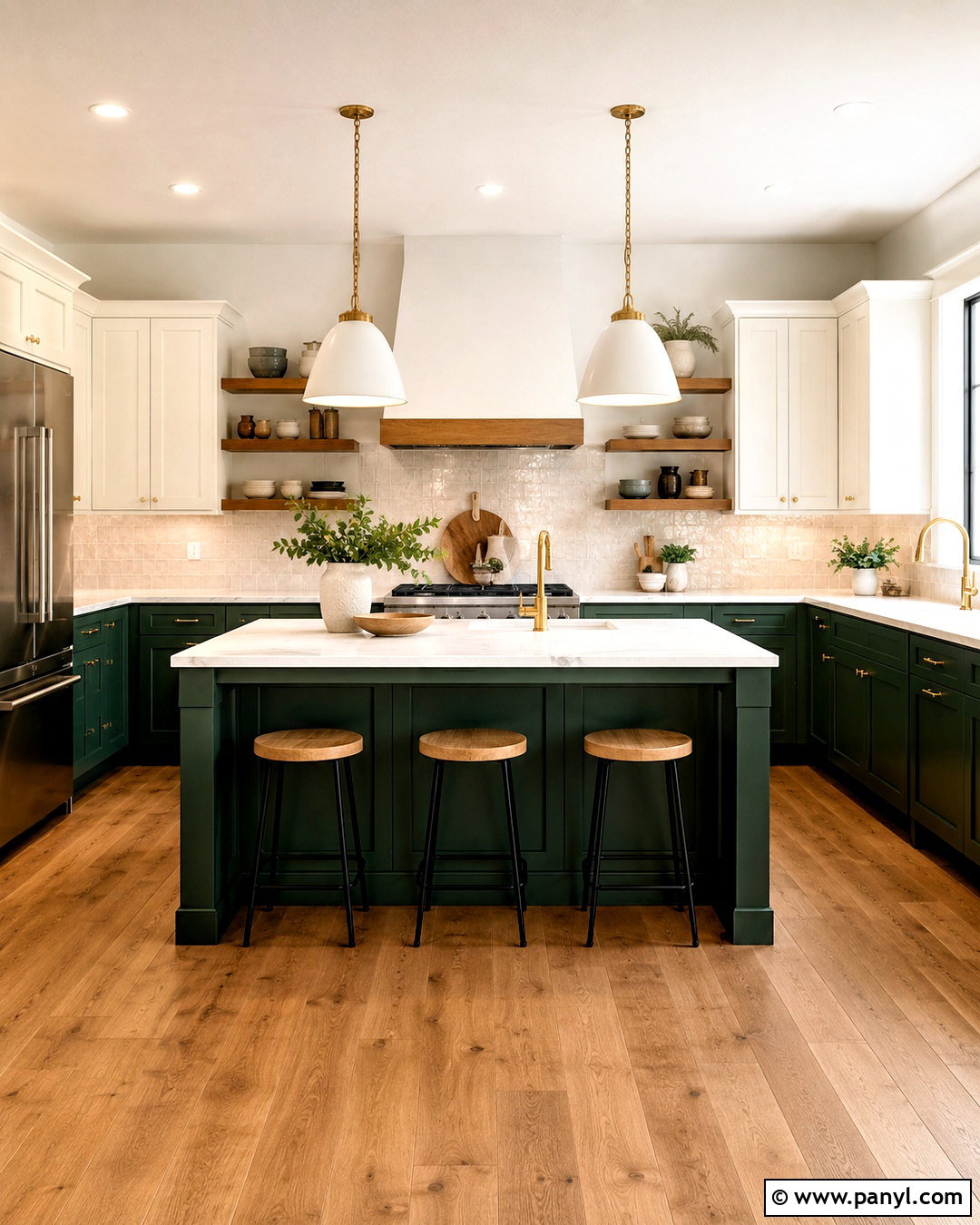
Forest green kitchen cabinets offer bold color with a classic, substantial presence. This deep shade works beautifully on lower cabinets, an island, and one tall storage wall. Use warm white upper cabinets or open oak shelving to prevent the room from feeling enclosed. White quartz with soft gold veining creates contrast, while a pale glazed-tile backsplash reflects light. Brass pulls and fixtures bring warmth to the green, and medium oak floors keep the palette natural. Install strong under-cabinet lighting and oversized white pendants over the island. Walls should remain a clean warm white. Repeat forest green sparingly in a runner or framed artwork. By balancing the dark cabinetry with reflective surfaces and open areas, the complete kitchen feels dramatic without becoming heavy.
12. Smoky Jade Kitchen Cabinets
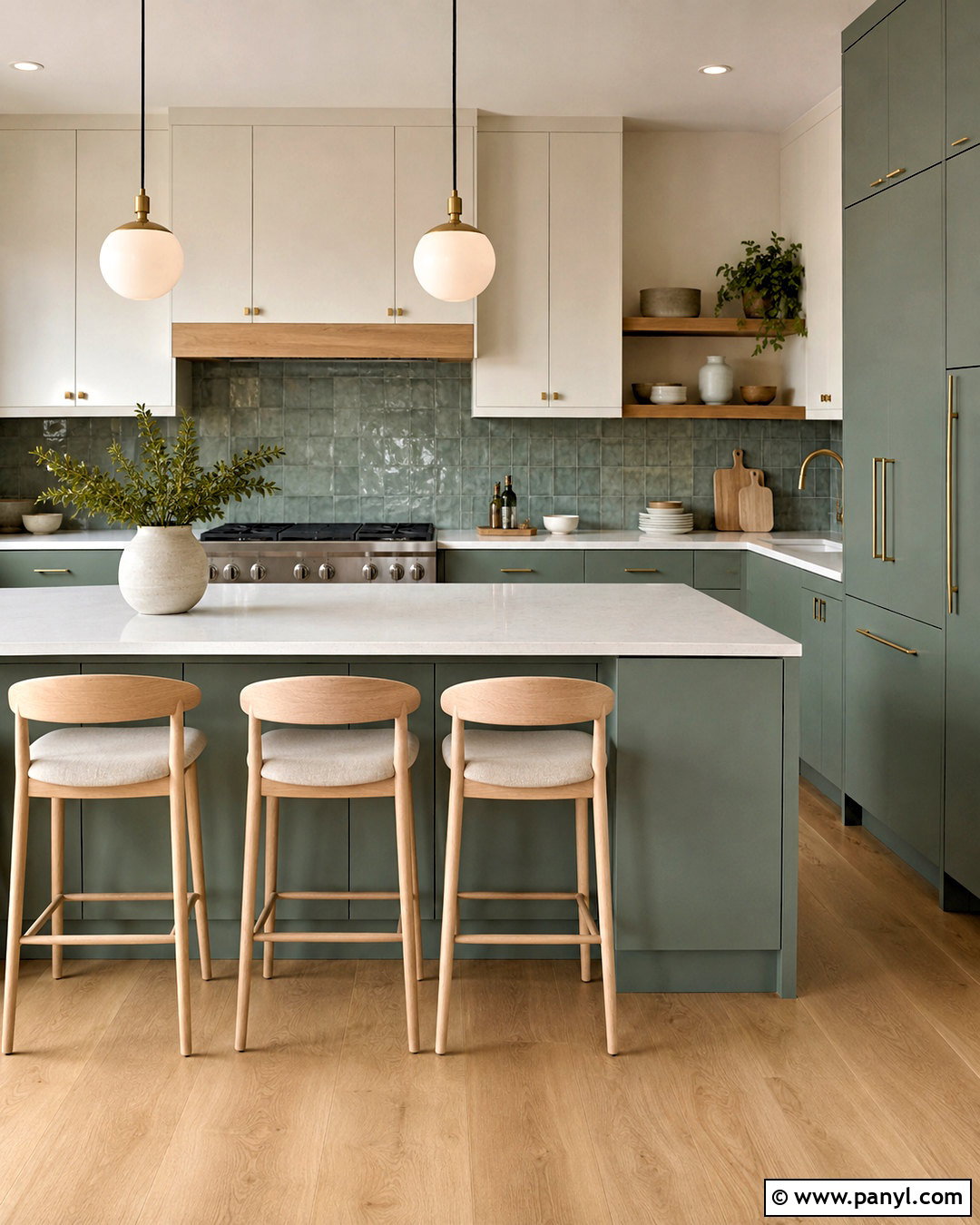
Smoky jade cabinets sit between green, blue, and gray, giving a modern kitchen noticeable color without overwhelming it. Choose a muted jade finish for slab-front cabinetry and pair it with white quartz counters. A soft gray-green tile backsplash can create subtle tonal layering, while light oak flooring warms the cooler hue. Brushed brass hardware adds a polished contrast. For greater visual balance, use jade on the island and lower cabinets, then select warm white uppers. Include a simple white range hood and open oak shelves to break up the painted surfaces. Globe pendants, pale stools, and a restrained patterned runner complete the room. This versatile palette looks especially attractive in bright kitchens where natural light reveals the cabinet color’s changing blue-green undertones.
13. Navy Blue Kitchen Cabinets
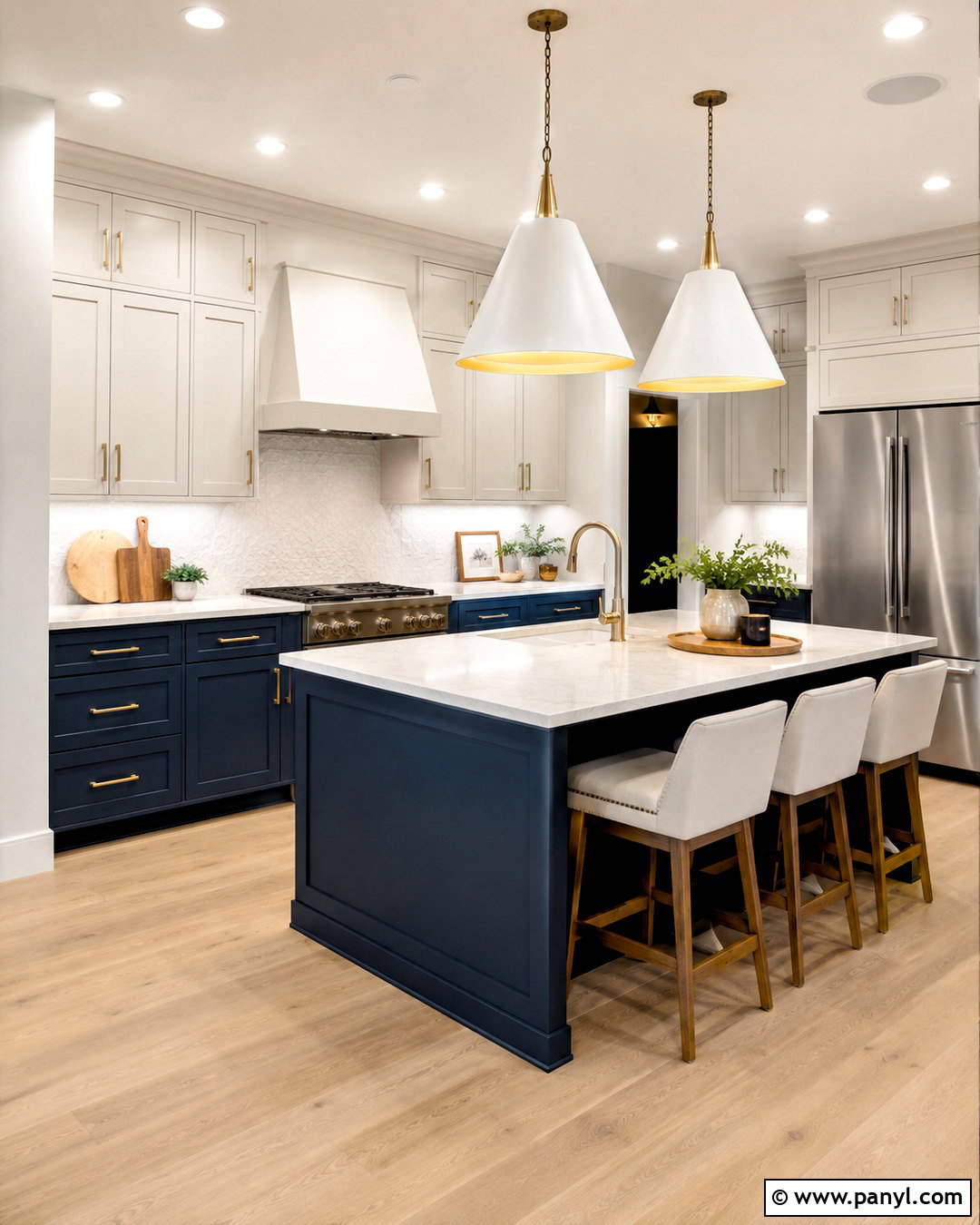
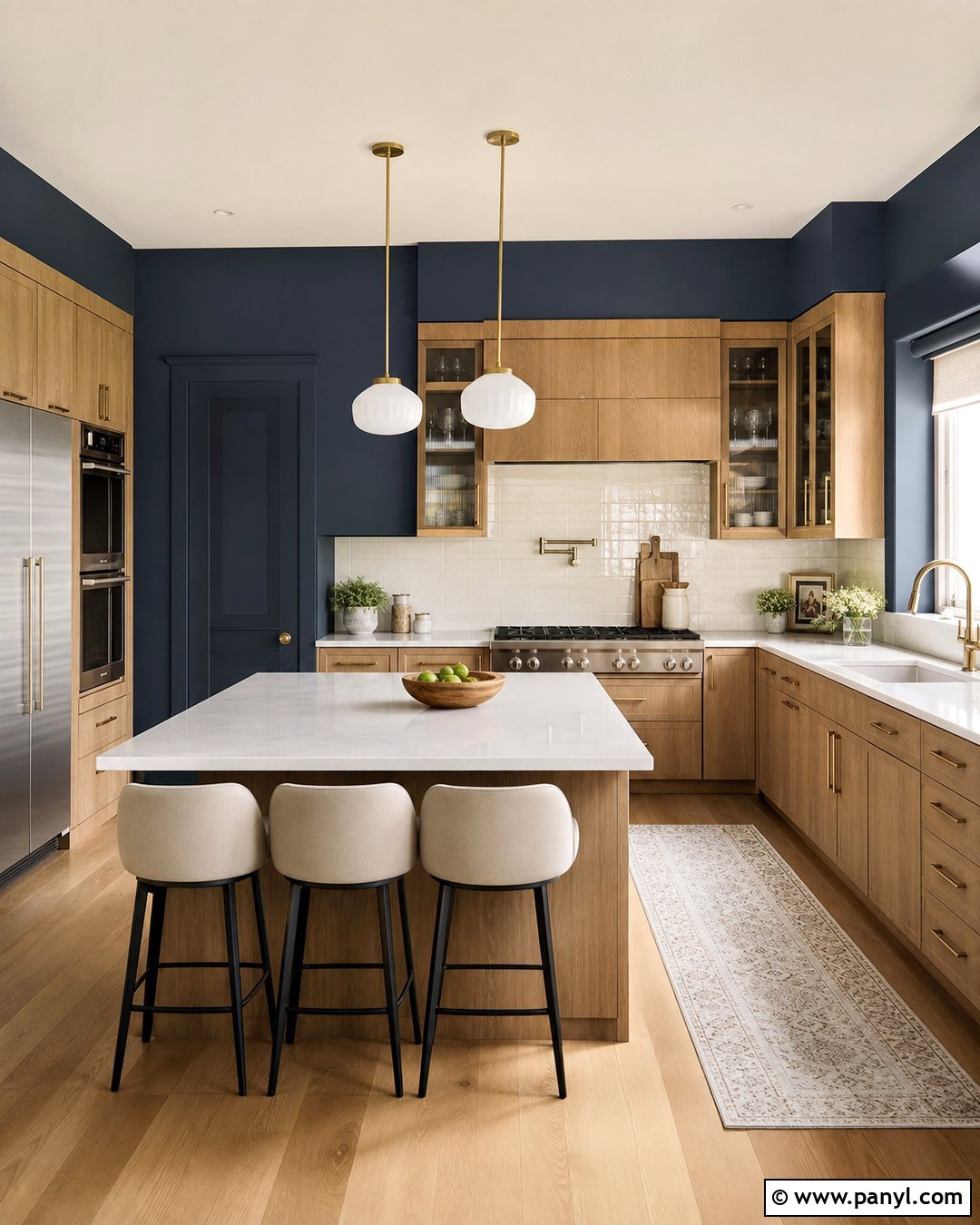
Navy blue cabinets create a crisp, structured kitchen that can feel either coastal or urban depending on the supporting materials. Use a softened navy rather than an almost-black blue, then pair it with white quartz and a lightly textured white backsplash. Brushed brass pulls give the cabinetry warmth, while polished nickel creates a cooler, tailored effect. In a smaller kitchen, use navy on the island and lower cabinets with warm white uppers. Light oak floors prevent the palette from becoming too formal. Add oversized white pendants, pale counter stools, and a natural woven shade. Keep decorative blue accents limited so the cabinetry remains the primary feature. The finished design should feel bright, organized, and intentional, with strong contrast but enough wood texture to remain welcoming.
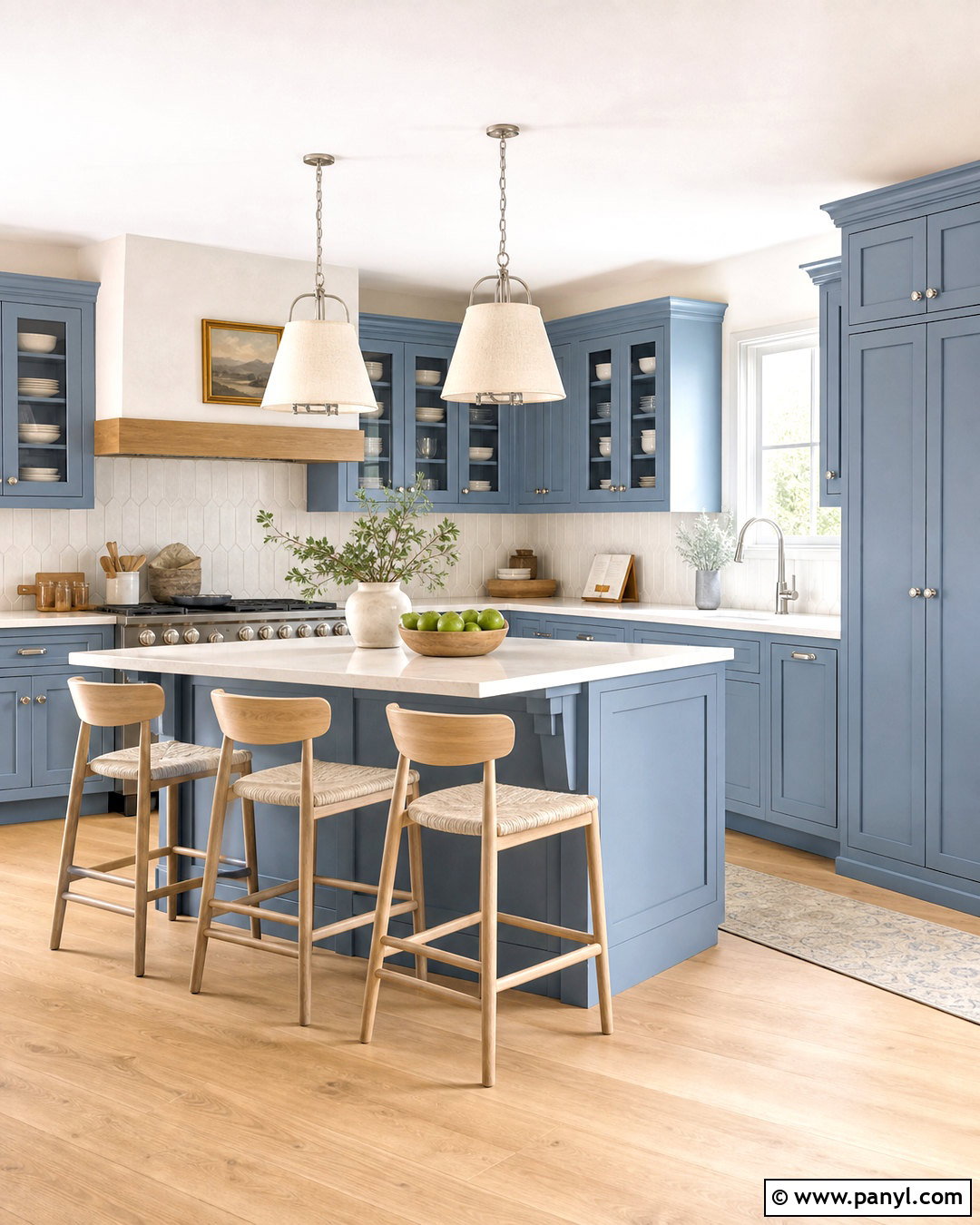
14. Dusty Blue Kitchen Cabinets
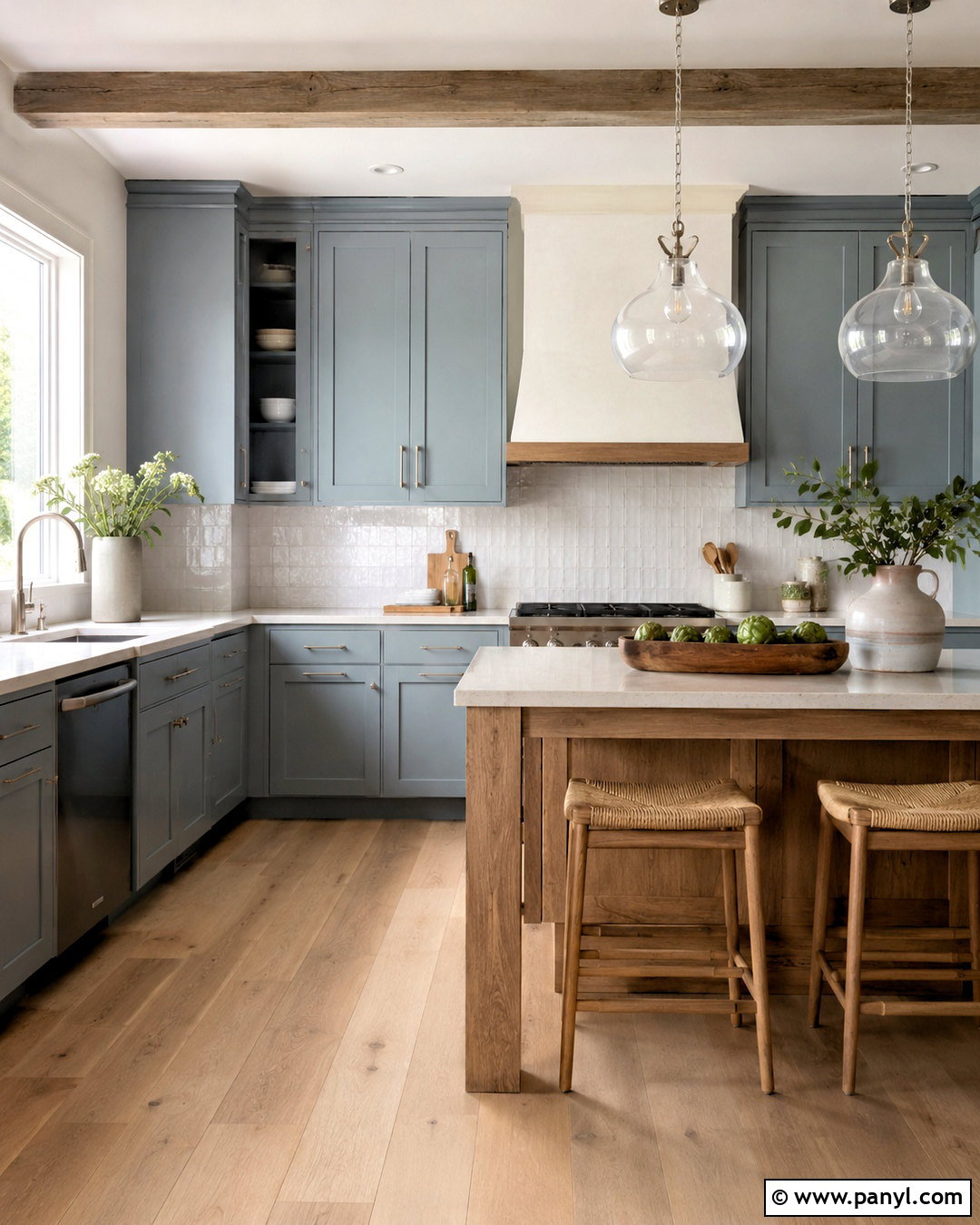
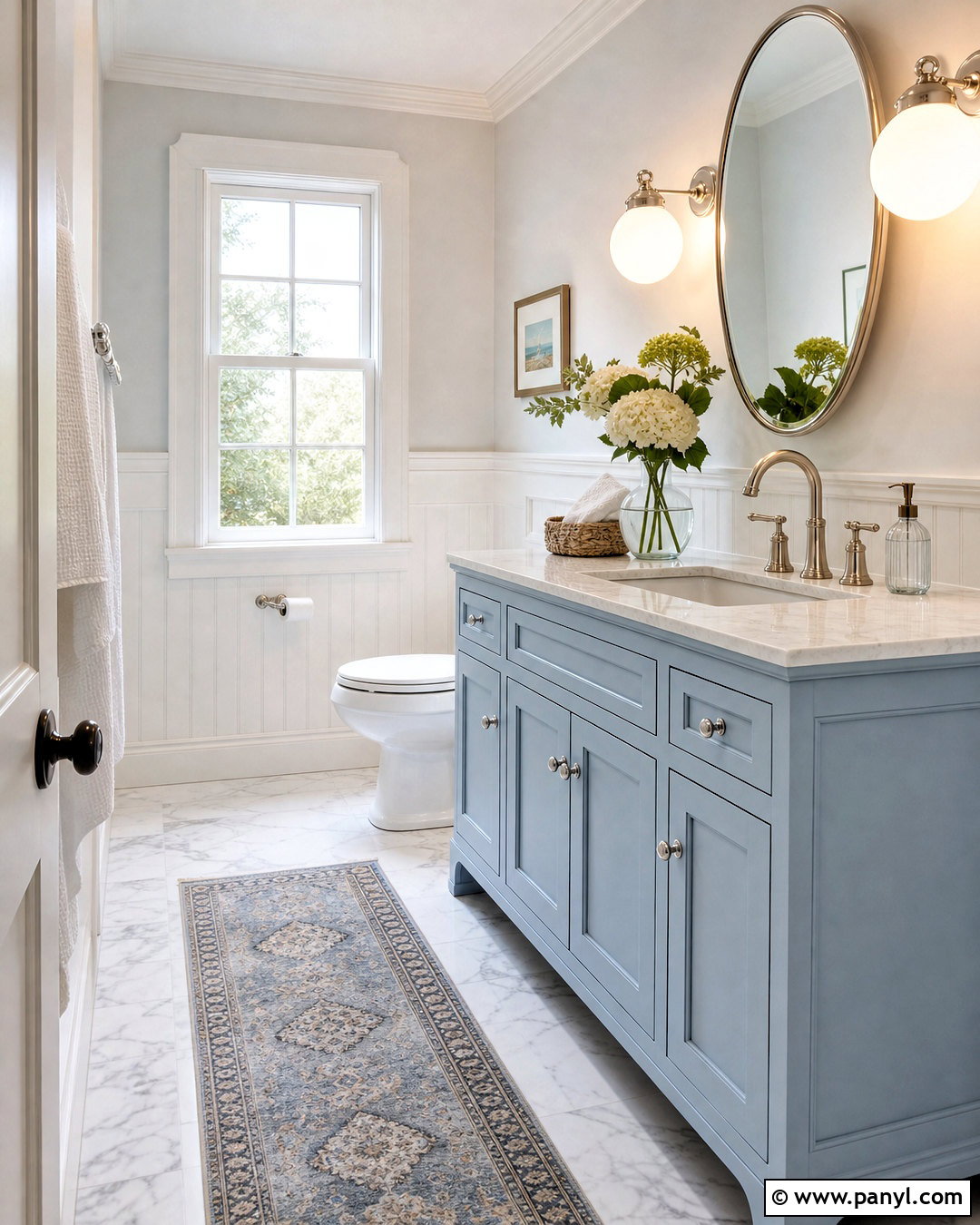
Dusty blue cabinets bring quiet color into kitchens that need a light, airy appearance. Select a gray-based blue that feels muted rather than pastel. Apply it to slim Shaker cabinetry, then pair it with creamy quartz countertops and a white handmade-tile backsplash. Light oak flooring and woven counter stools keep the cooler color comfortable. Satin nickel hardware supports a clean look, while aged brass offers warmer contrast. Use a natural oak island if the room needs more visual depth. Soft white walls, clear pendants, and minimal open shelving help preserve brightness. Add a subtle blue-and-beige runner to connect the palette without matching it exactly. This complete design works well in compact kitchens, casual homes, and open layouts where darker blue cabinetry might appear too dominant.
15. Charcoal Gray Kitchen Cabinets
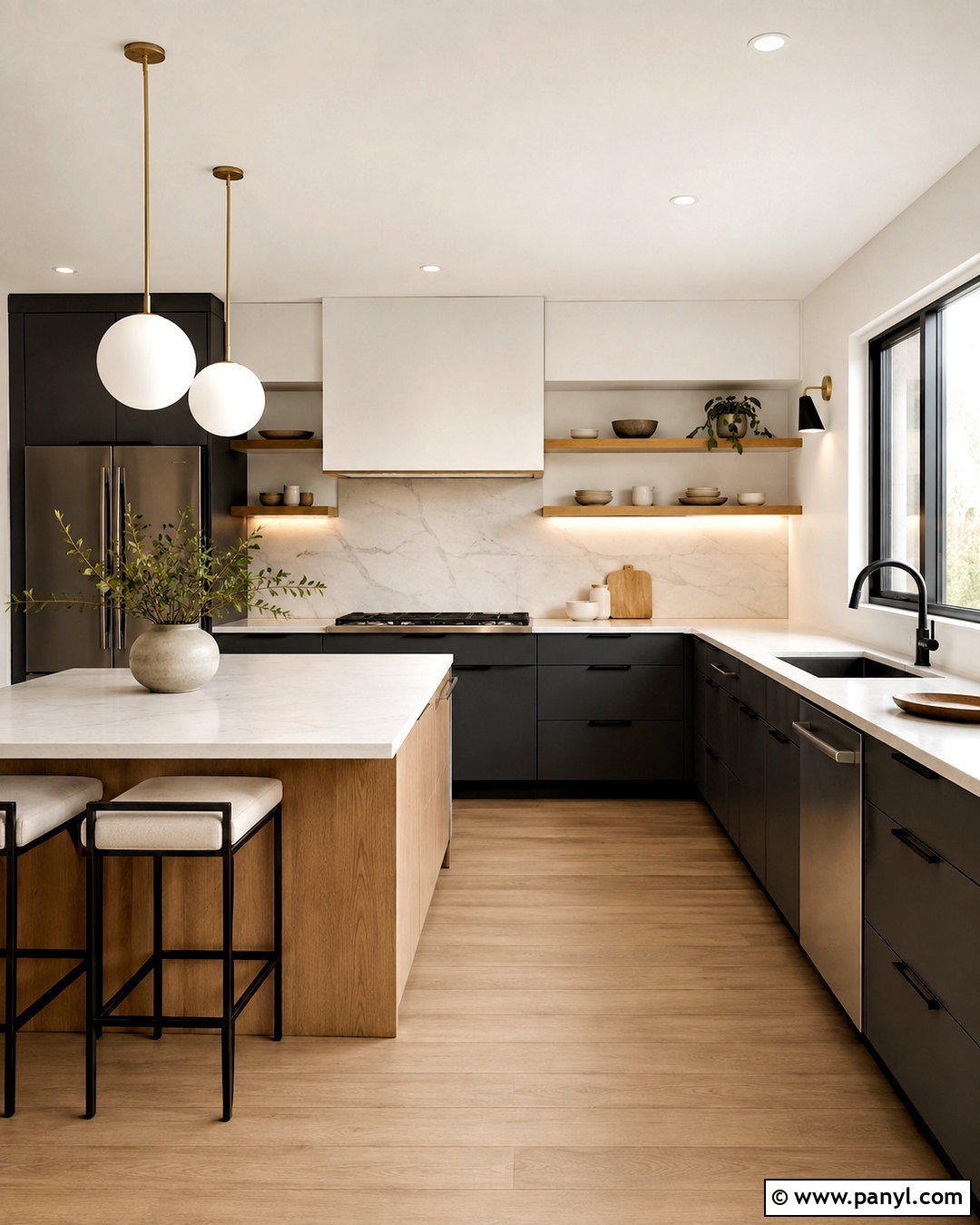
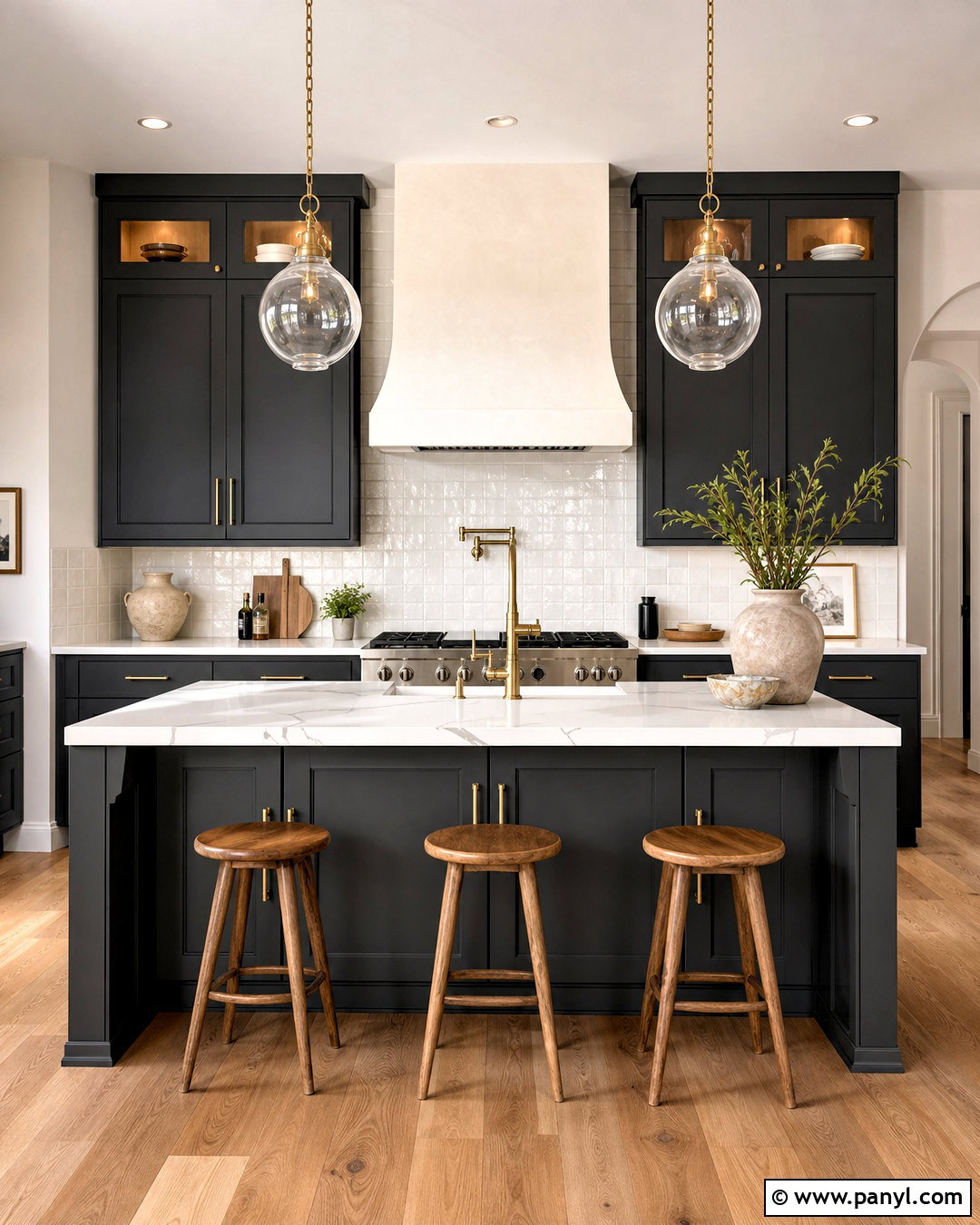
Charcoal gray cabinets deliver dramatic contrast with a softer effect than black. Choose a warm charcoal that contains slight brown undertones, particularly if the kitchen has wood flooring. Pair matte slab doors with pale quartz countertops and a full-height marble-look backsplash. Black hardware creates a seamless surface, while brass pulls make each cabinet more visible. Use charcoal mainly on lower cabinetry and tall appliance units, leaving upper cabinets warm white or replacing some with oak shelves. A light wood island can brighten the center of the room. Add white globe pendants and strong task lighting to keep work zones clear. The completed kitchen feels architectural and modern, with a balanced mix of dark storage, reflective stone, and natural wood rather than an uninterrupted wall of gray.
16. Matte Black Kitchen Cabinets
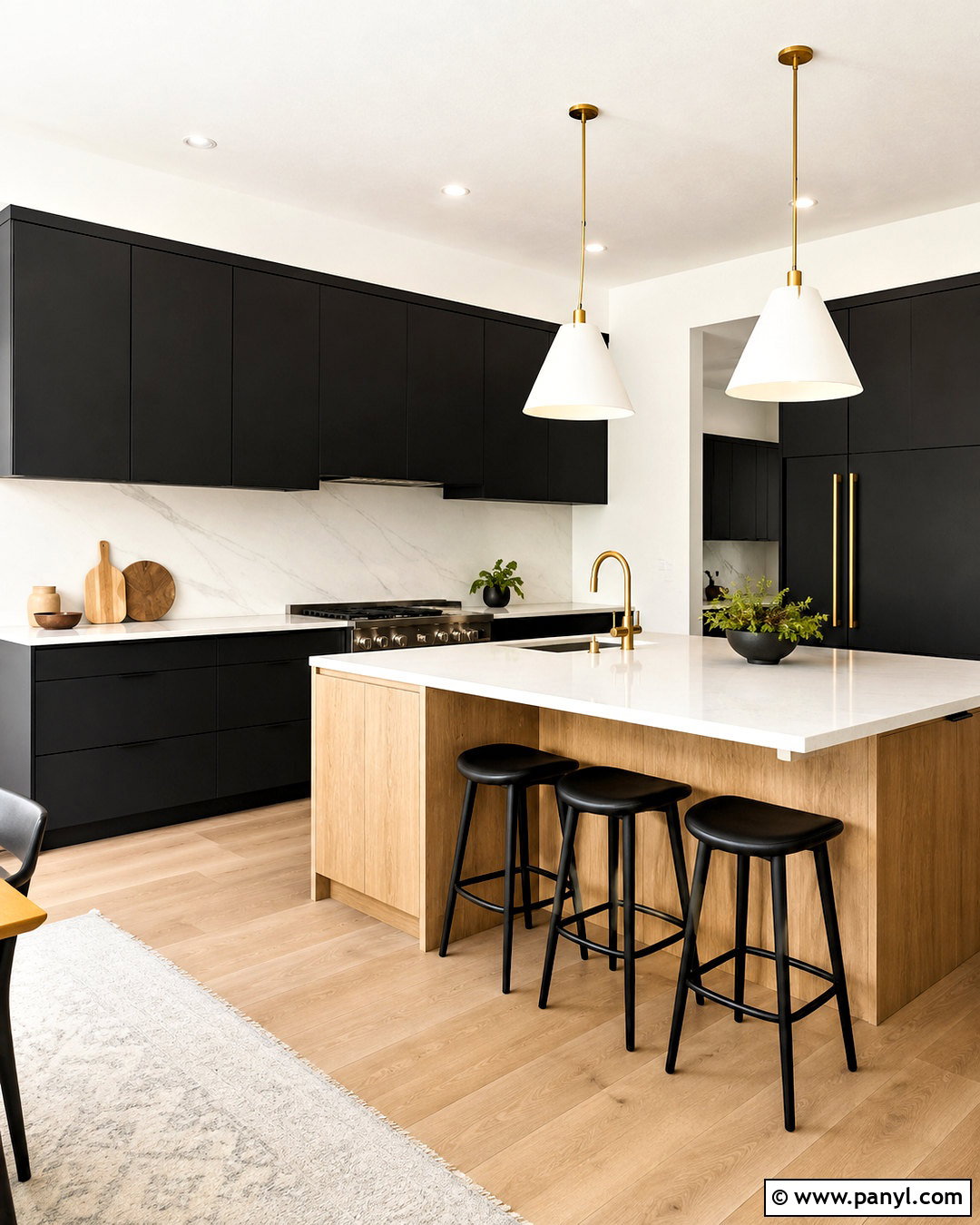
Matte black kitchen cabinets make a strong statement when the surrounding room is carefully lightened. Use smooth slab fronts with integrated pulls for a clean, uninterrupted appearance. Pair them with bright white quartz, a softly veined slab backsplash, and light oak flooring. Limit black upper cabinets near windows and use warm white walls to reflect daylight. A white oak island with black legs can bridge the dark and light elements. Choose brushed brass fixtures for warmth or stainless steel for an industrial edge. Large pendants with white shades keep the island bright, while continuous under-cabinet lighting improves visibility. Avoid filling the room with additional black decor. The cabinetry should function as the main graphic feature, supported by pale stone, wood grain, and simple shapes.
17. Terracotta Kitchen Cabinets
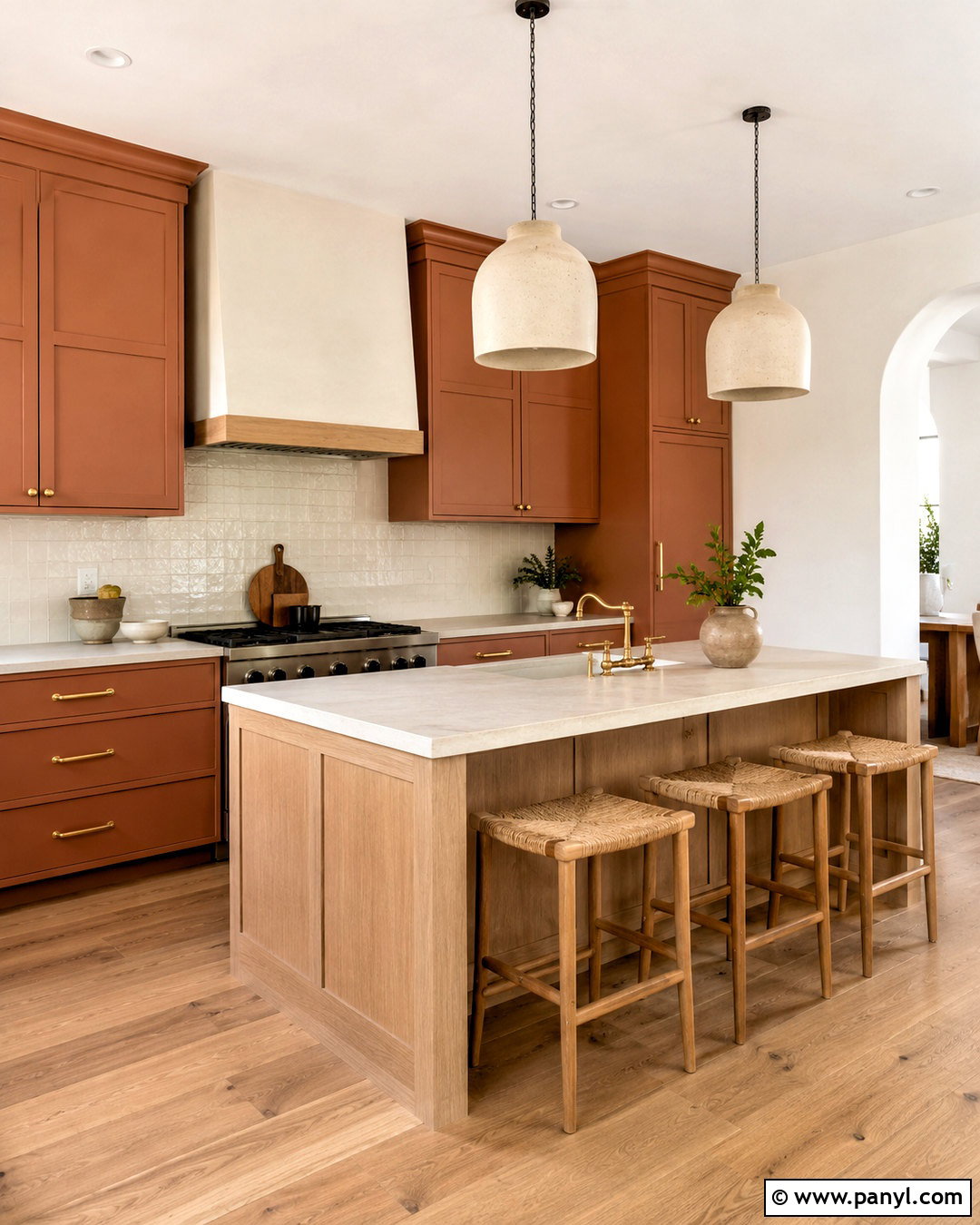
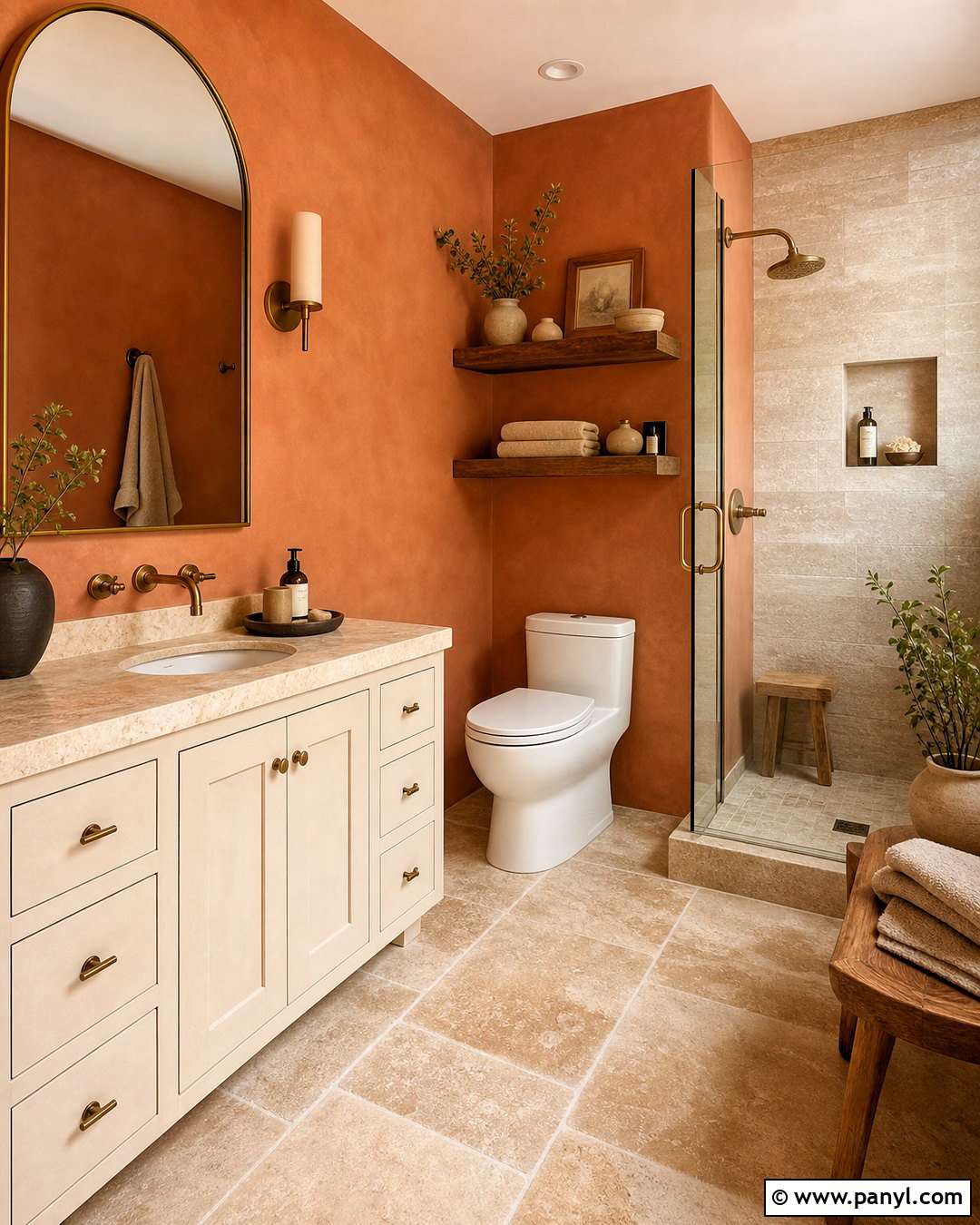
Terracotta kitchen cabinets introduce earthy red-orange color without the intensity of a bright primary shade. Select a muted clay tone with brown undertones and use it on simple flat-panel or narrow Shaker fronts. Cream limestone-look counters and an ivory tile backsplash soften the color. Natural oak flooring, aged brass hardware, and woven stools reinforce the warm palette. To prevent the room from feeling overly themed, keep the walls warm white and use minimal patterned decor. A pale oak island can provide contrast, or terracotta can cover the island alone as a controlled focal point. Add simple ceramic pendants and a few neutral stoneware pieces. The complete kitchen feels sunny, grounded, and personal while maintaining the clean lines expected in a modern interior.
18. Burgundy Kitchen Cabinets
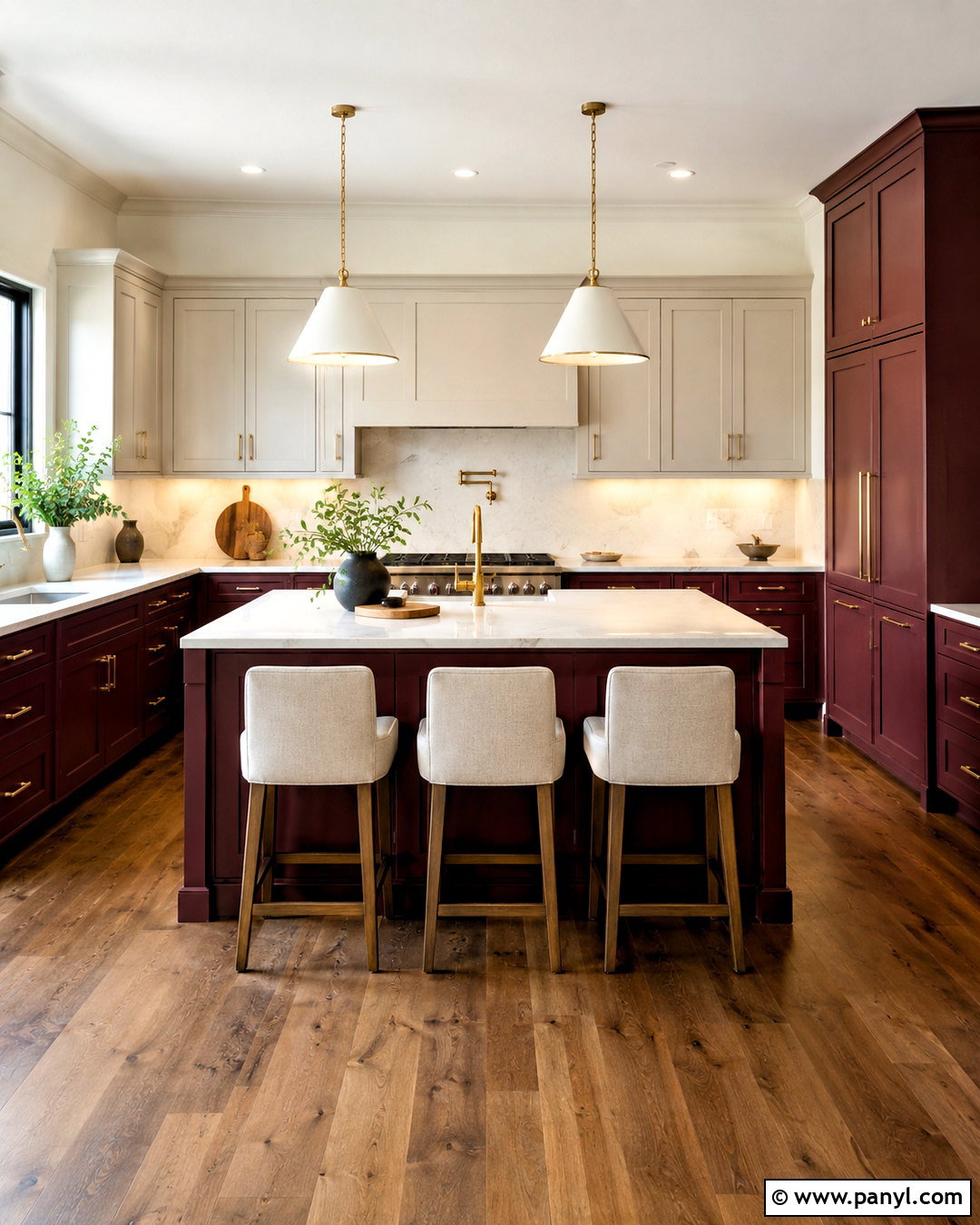
Deep burgundy cabinets can produce a rich, elegant kitchen when paired with restrained finishes. Choose a brown-based burgundy rather than a vivid red. Use it on lower cabinetry, the island, and a tall pantry wall, while keeping selected upper cabinets warm white. Pale marble-look quartz and a simple cream backsplash give the saturated color breathing room. Antique brass hardware enhances its warmth, and medium walnut flooring creates a sophisticated tonal connection. Add white pendants and under-cabinet lighting to brighten work surfaces. Upholstered stools in oatmeal fabric soften the island. Avoid adding competing jewel tones throughout the room. With clean cabinet profiles and a limited palette, burgundy feels modern and intentional instead of ornate, making it a memorable option for larger or naturally bright kitchens.
19. Muted Plum Kitchen Cabinets
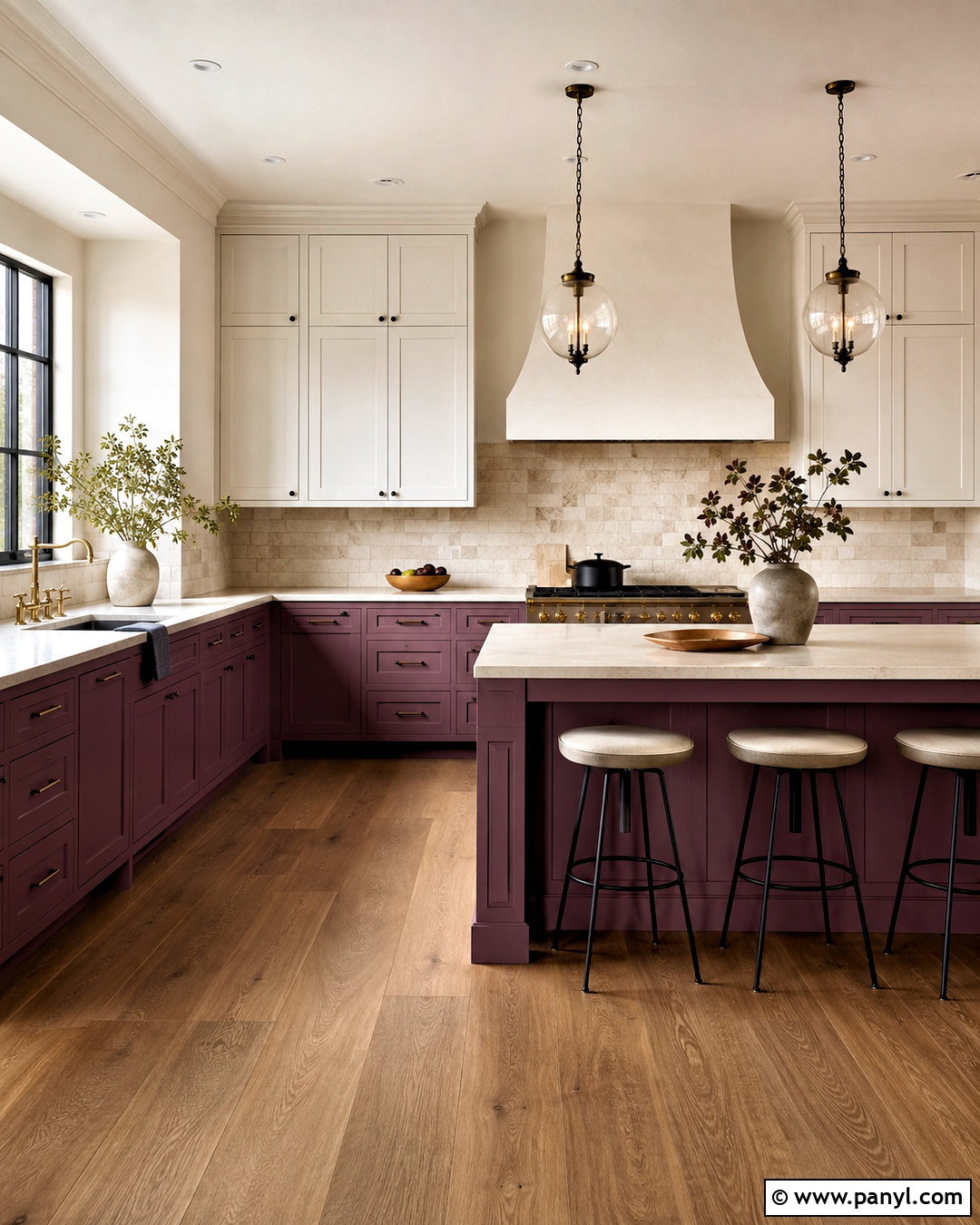
Muted plum cabinets offer an unexpected alternative to familiar navy, green, or gray. Look for a dusty purple with brown or gray undertones so it feels sophisticated rather than overly bright. Place it on a central island and lower cabinets, then combine it with warm white uppers. Cream quartz, a pale stone backsplash, and medium oak flooring create a calm foundation. Use aged bronze or brushed brass hardware to emphasize the shade’s warmth. A white plaster hood and simple globe pendants keep the upper portion airy. Repeat plum only once through a small textile or ceramic accent. The complete room should rely on natural woods and soft neutrals to balance the unusual cabinet color, producing a kitchen that feels individual, mature, and easy to live with.
20. Ochre Yellow Kitchen Cabinets
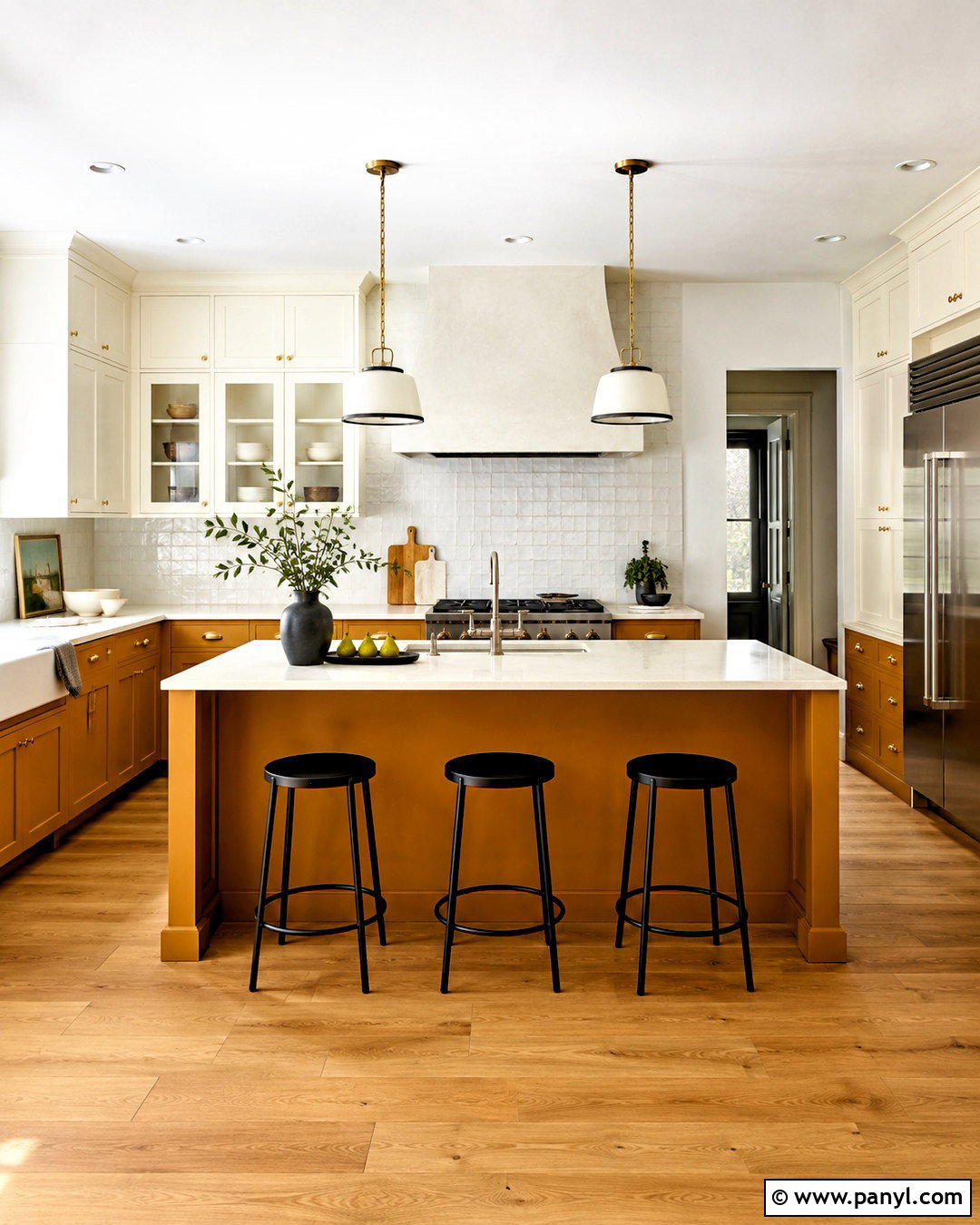
Ochre yellow cabinets can make a kitchen feel warm and energetic while remaining more grounded than lemon yellow. Select a deep golden shade with brown undertones and apply it to lower cabinets or a statement island. Pair it with warm white upper cabinets, creamy quartz, and a simple ivory backsplash. Medium oak flooring and aged brass hardware support the golden palette without creating excessive contrast. Add a white plaster range hood and understated ceramic pendants. Black accents can appear through the faucet, window frame, or slim stool legs to sharpen the design. Keep walls and decorative accessories neutral so the cabinetry remains intentional. This complete look is particularly effective in kitchens that need warmth, personality, and a cheerful focal point without relying on a bright primary color.
Conclusion:
The best cabinet palette considers much more than a favorite shade. It connects the cabinetry with the room’s light, flooring, countertops, backsplash, hardware, and nearby living areas. Warm whites and taupes create adaptable foundations, while natural woods add texture. Greens and blues provide approachable color, and deeper options such as burgundy, plum, or black make a stronger statement. Before ordering cabinetry or buying paint, compare large samples vertically in the actual kitchen for several days. View them beside every permanent surface under natural and artificial light. Whether you prefer a quiet neutral or an expressive finish, these 20 modern kitchen cabinet colors can help you build a cohesive kitchen that feels current, functional, and personal.

Related Ideas and Inspiration:
Leave a Reply