
Choosing the right bathroom color can make a basic space feel brighter, calmer, warmer, or more polished without requiring a full remodel. Today’s popular bathroom paint colors range from adaptable warm whites and nature-inspired greens to earthy clay shades and dramatic jewel tones. The strongest choice will complement your tile, countertop, flooring, vanity, and metal finishes while looking flattering under both natural and artificial light. Testing samples is important because bathroom lighting can noticeably change how undertones appear throughout the day. () Each complete look below combines wall color with practical finishes, materials, and decor, making it easier to create a room that feels intentional. Explore these 20 popular bathroom paint colors to find the perfect direction for your space.

1. Warm White Bathroom Paint
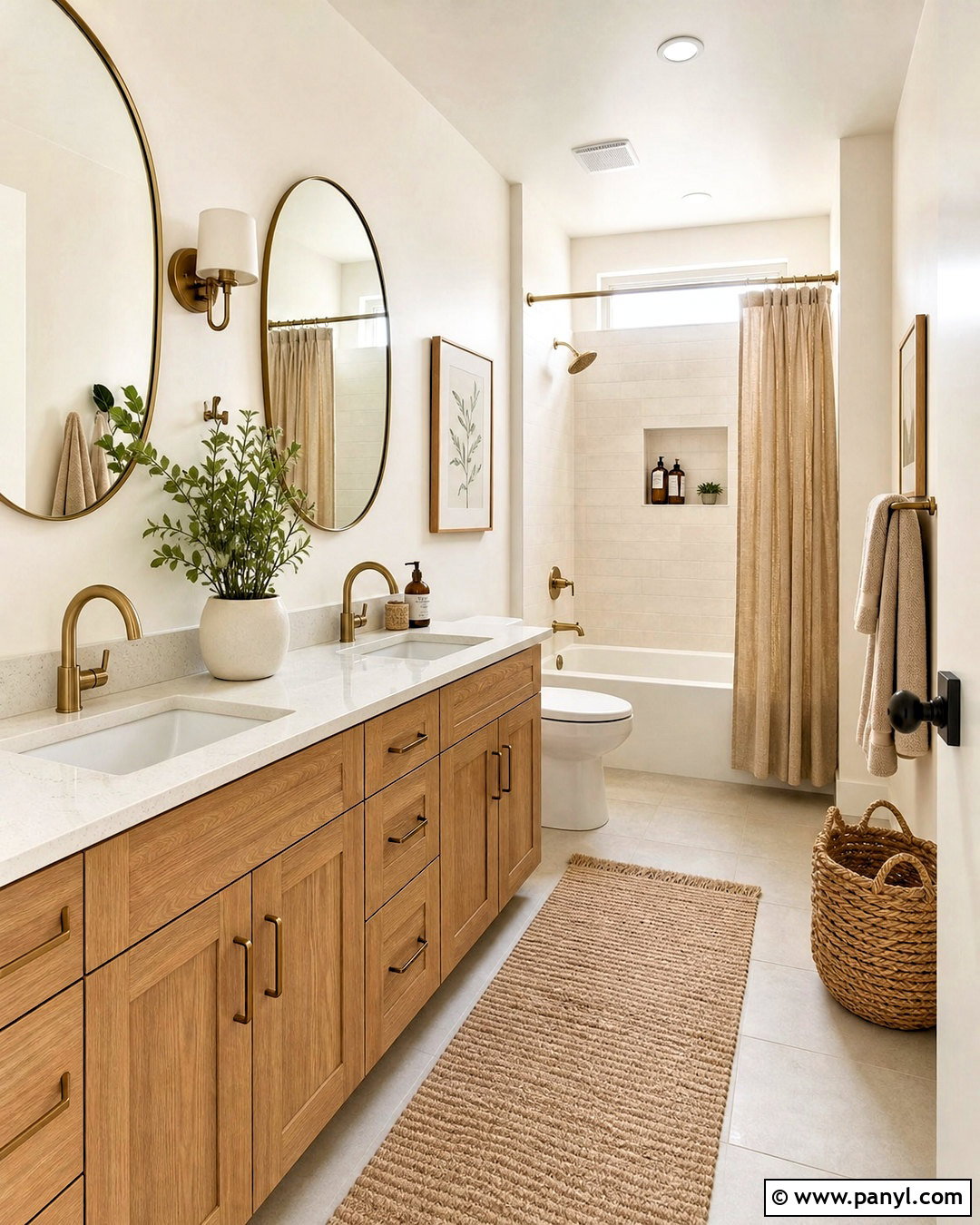
Warm white walls give a bathroom a clean appearance without the sharp feeling of a blue-toned white. Choose a creamy white with subtle beige or yellow undertones, then repeat it across the ceiling and trim for a seamless effect. Pair the color with light oak cabinetry, off-white quartz counters, and ivory tile to create gentle contrast. Brushed brass faucets and rounded mirrors introduce warmth, while woven baskets and natural linen towels keep the room relaxed. In a small bathroom, use one continuous floor material to make the layout feel less divided. Finish the walls with moisture-resistant satin or bathroom-rated matte paint. This complete palette suits modern farmhouse, transitional, coastal, and simple contemporary spaces.
2. Soft Ivory Bathroom Paint
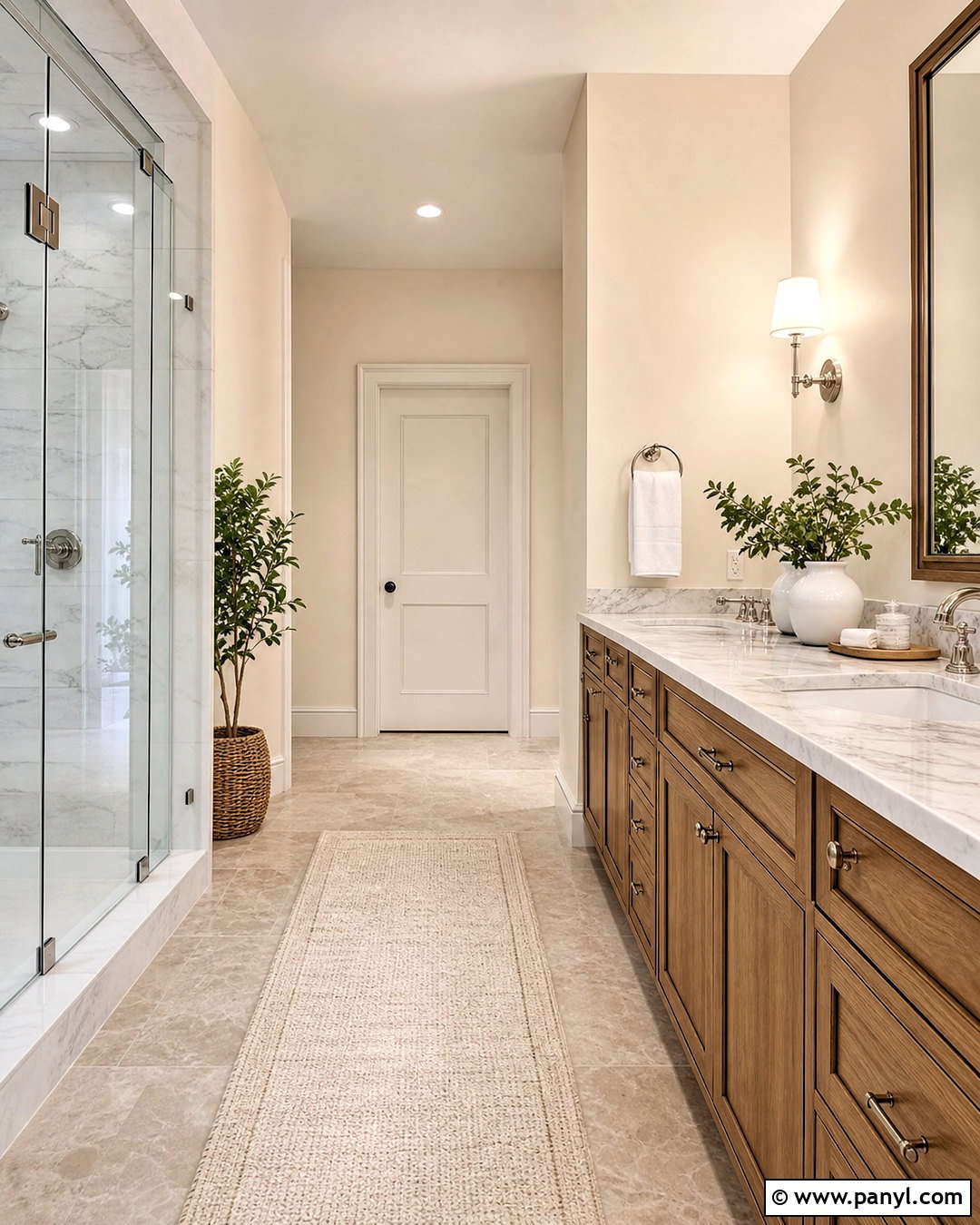
Soft ivory creates a bright yet welcoming bathroom with more depth than plain white. It works especially well when the room contains beige stone, cream tile, or warm wood that might look mismatched beside a cool white wall. Build the design around an ivory backdrop, a medium oak vanity, and lightly veined quartz or marble counters. Add polished nickel fixtures for a fresh contrast that does not feel overly warm. A frameless glass shower, pale woven runner, and simple ceramic accessories help maintain an airy look. Use crisp white sparingly on towels or trim to create definition. For balanced lighting, combine ceiling lights with sconces placed beside the mirror, allowing the ivory walls to remain soft rather than yellow.
3. Cream Bathroom Paint
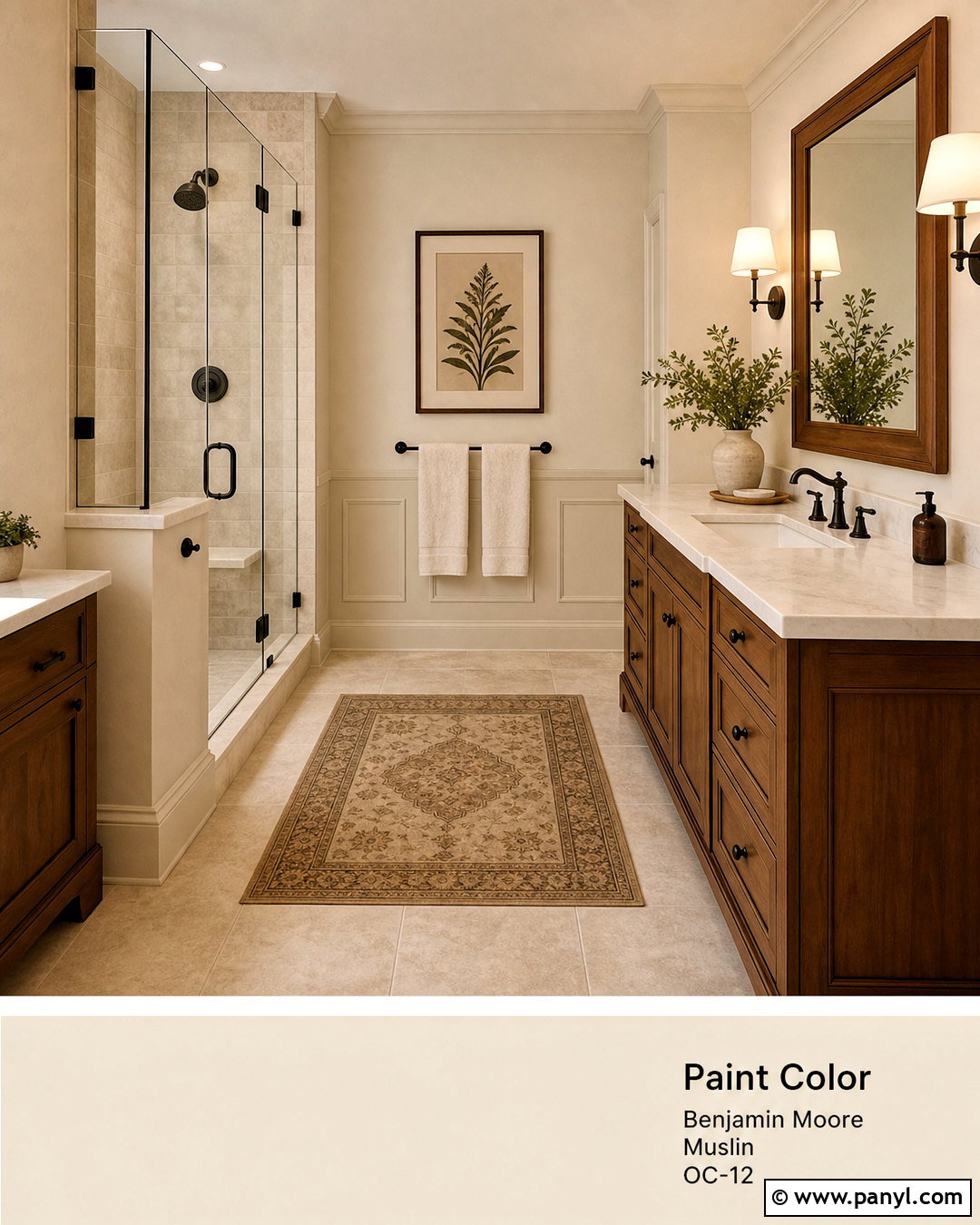
Cream paint can turn a practical bathroom into a comfortable, layered retreat. Select a muted cream instead of a strongly yellow shade, especially if the room receives warm afternoon light. Combine it with walnut cabinetry, creamy limestone-look flooring, and a white countertop to give each surface clear separation. Oil-rubbed bronze hardware adds depth, while a flax-colored shower curtain and small framed prints create a relaxed traditional finish. Bring in green through one or two plants rather than filling the room with decorative accessories. If the bathroom has wall paneling, paint both the paneling and upper walls cream for a cohesive envelope. The final look feels warm and established, making this color particularly effective in older homes and windowless bathrooms.
4. Light Greige Bathroom Paint
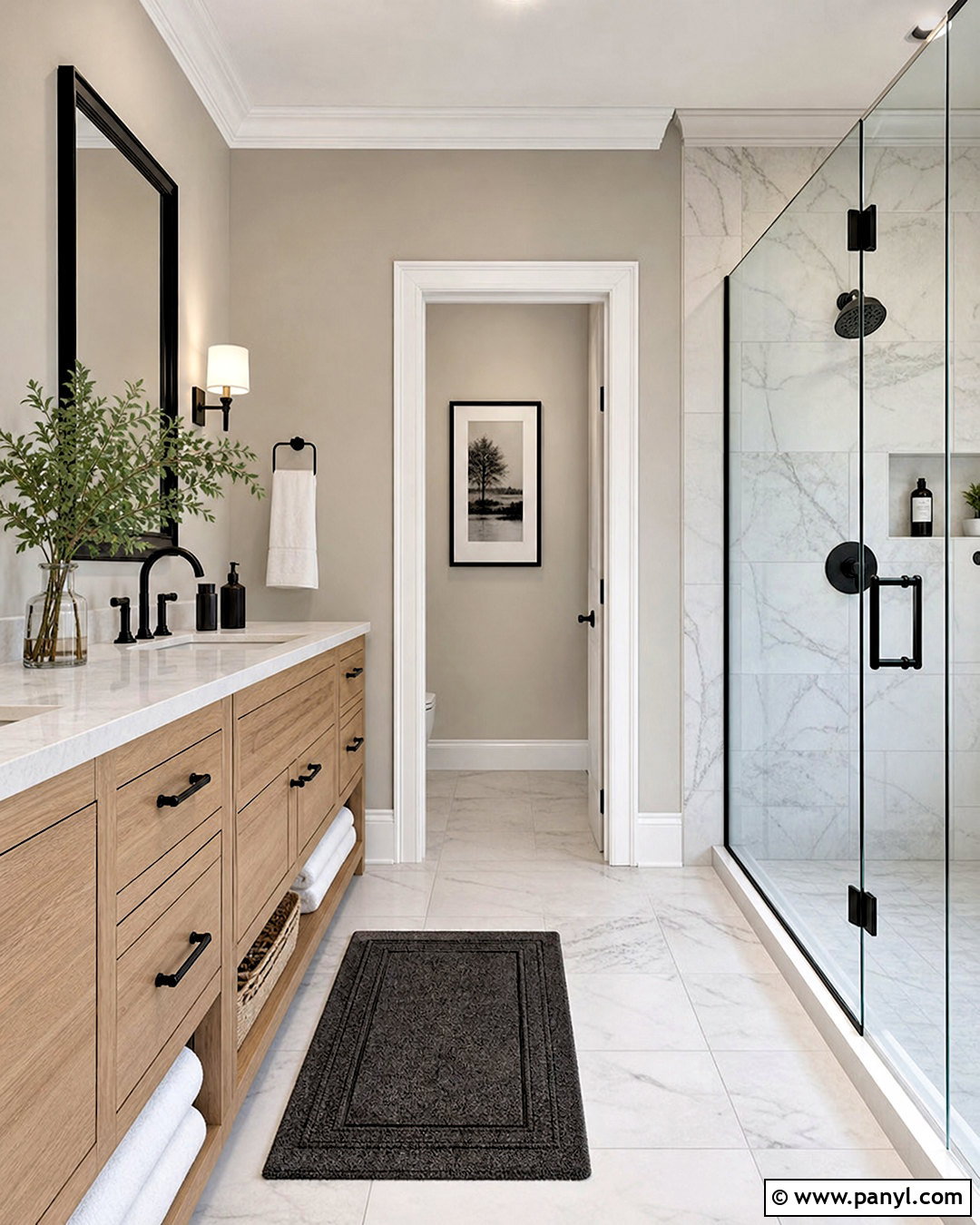
Light greige balances gray and beige, making it useful in bathrooms with a mixture of warm and cool finishes. Cover the walls in a pale greige, then use clean white on the trim, tub, and ceiling to sharpen the overall scheme. A white oak vanity brings out the beige undertone, while gray-veined marble tile connects with the cooler side of the color. Choose matte black faucets and cabinet pulls for simple definition. Soft white towels, a charcoal bath mat, and one understated landscape print complete the room without adding clutter. This palette is particularly practical when existing tile is difficult to identify as either gray or tan. Sample several greiges because their undertones can shift toward violet, green, or pink under bathroom lighting.
5. Warm Taupe Bathroom Paint
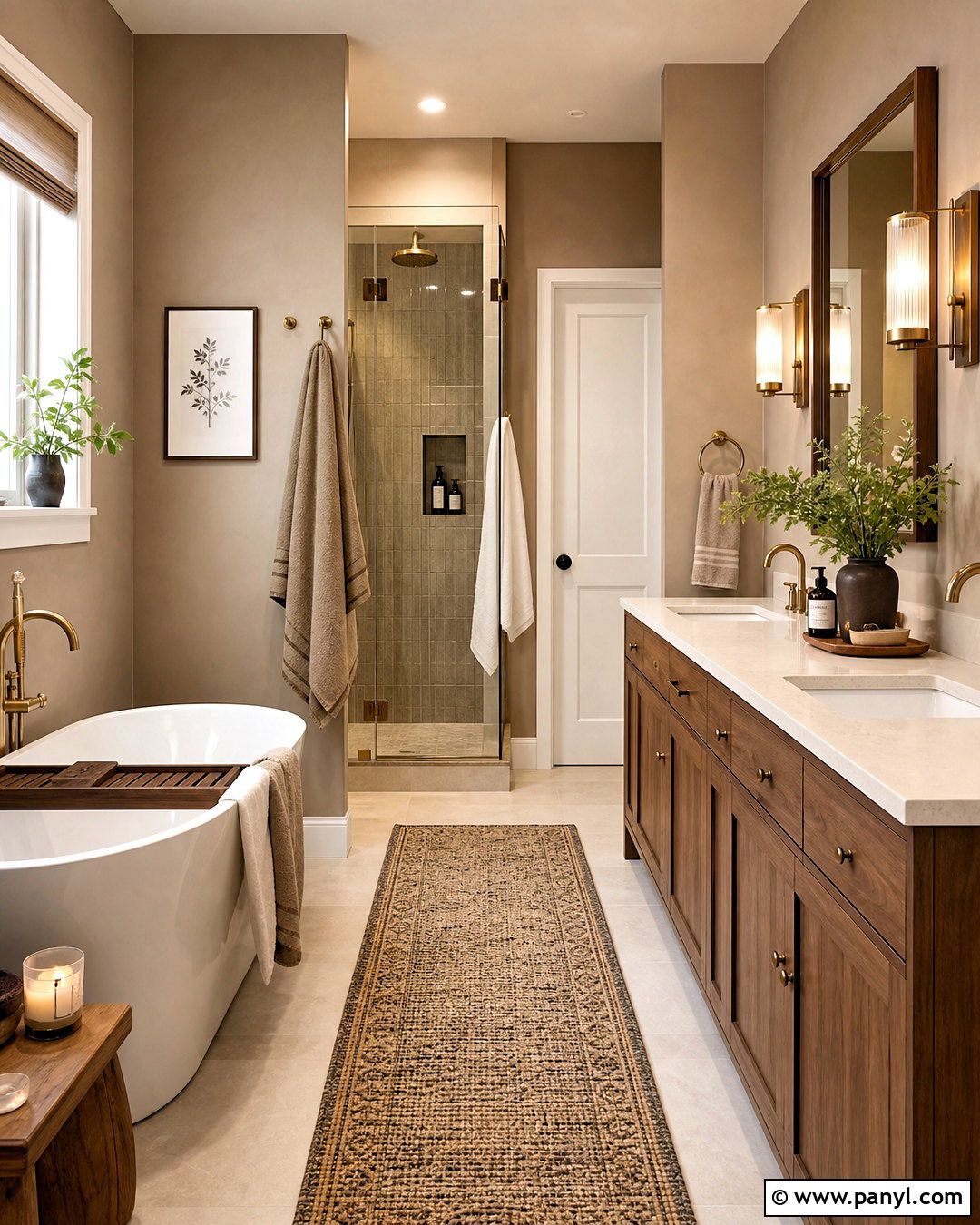
Imagine stepping into a bathroom wrapped in the soft color of natural stone. Warm taupe provides that grounded feeling while remaining flexible enough for contemporary or traditional interiors. Use taupe across the main walls with warm white trim and a slightly lighter ceiling. Pair it with a walnut vanity, cream quartz countertop, and beige porcelain floor tile. Aged brass fixtures and a wood-framed mirror reinforce the earthy palette. Add texture through ribbed glass sconces, oatmeal towels, and a small jute-look washable runner. Keep the shower tile lighter than the walls so the space does not feel heavy. In a powder room, taupe can also cover the ceiling and millwork, producing a sophisticated color-drenched effect that feels complete and intentional.
6. Soft Gray Bathroom Paint
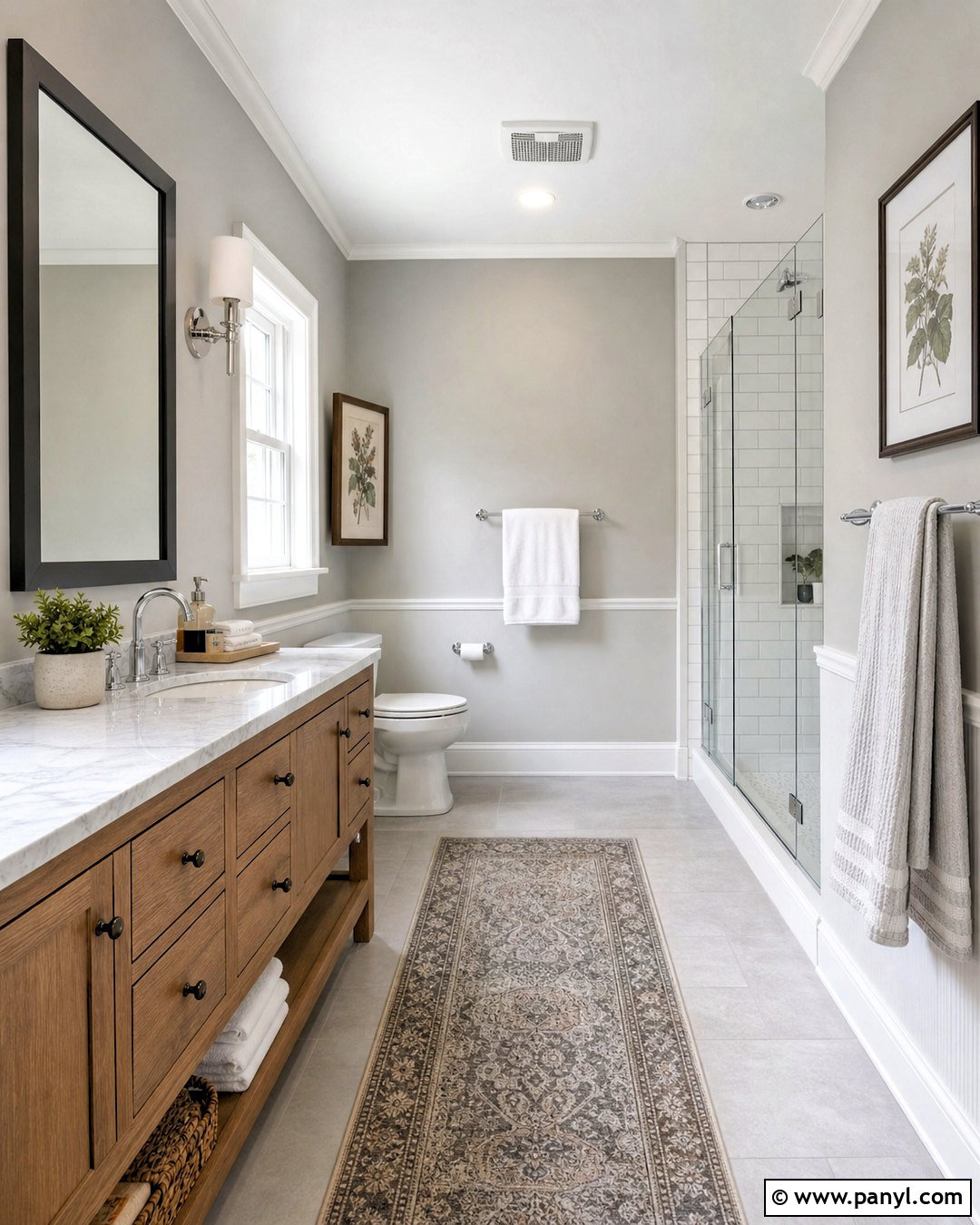
Soft gray offers a calm, tailored background when it has enough warmth to avoid looking cold. Choose a pale gray with a subtle green or beige undertone, then combine it with white subway tile and a medium-tone wood vanity. Polished chrome fixtures keep the room bright, while a charcoal-framed mirror gives the vanity wall a clear focal point. Introduce softness through white cotton towels, a light gray shower curtain, and a small patterned floor runner. If the bathroom lacks natural light, use high-quality bulbs with a neutral white appearance to keep the walls from turning blue. This complete look works best with limited decor and simple lines. It is an easy update for bathrooms that already contain white, gray, or marble-patterned surfaces.
7. Charcoal Gray Bathroom Paint
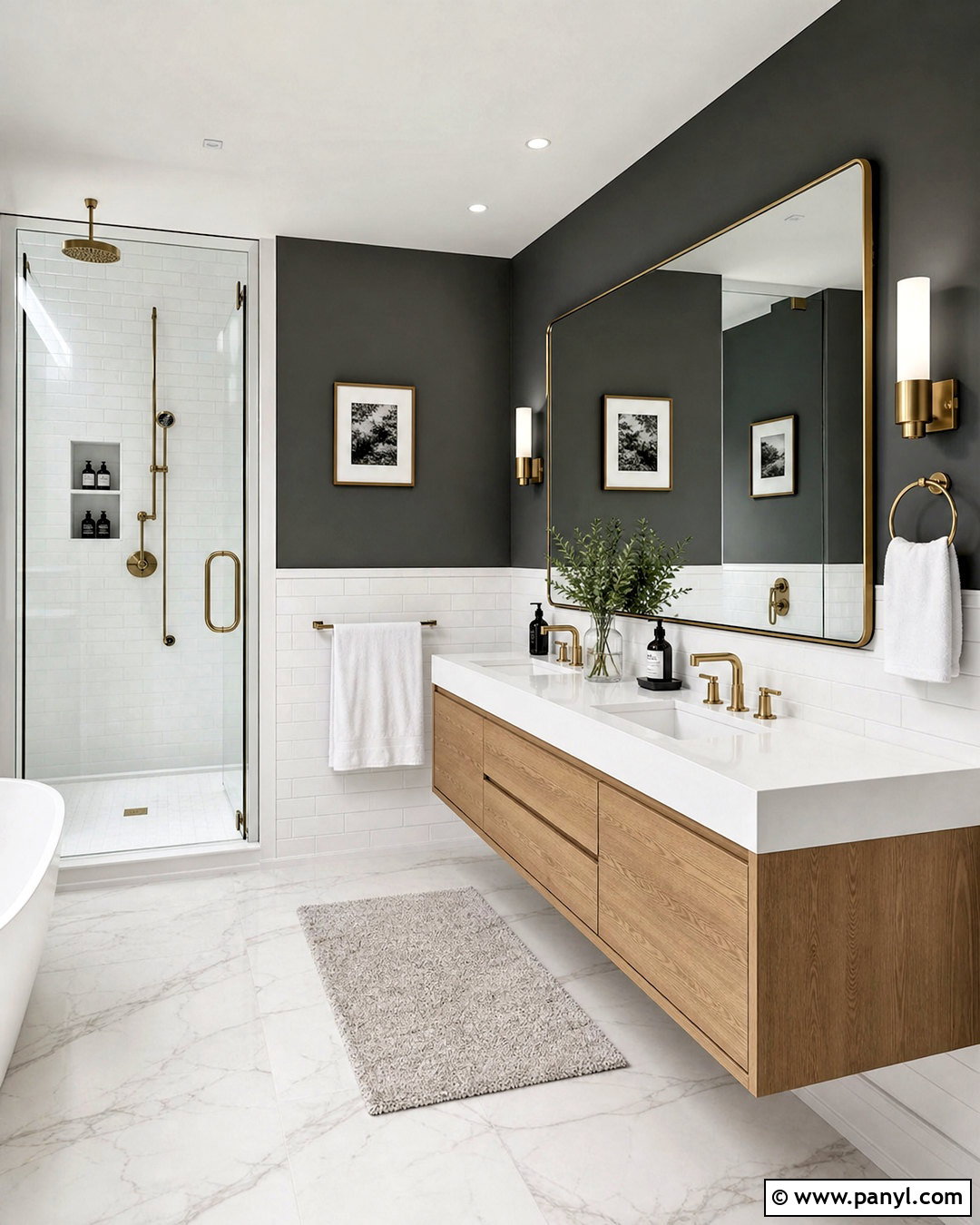
A charcoal bathroom can feel dramatic without becoming gloomy when the dark walls are balanced by reflective and light-colored surfaces. Paint the upper walls charcoal gray and use white tile or paneling on the lower half. Add a floating white oak vanity, a broad white countertop, and an oversized mirror to break up the deep color. Brushed brass faucets and sconces provide a warm highlight, while pale stone flooring keeps the room visually grounded. Use bright white towels and minimal black accessories for a clean finish. In a small powder room, carry charcoal across the ceiling for a cocooning effect. In a full bathroom, leave the ceiling white and prioritize strong vanity lighting so the color remains crisp and clearly defined.
8. Pale Blue Bathroom Paint
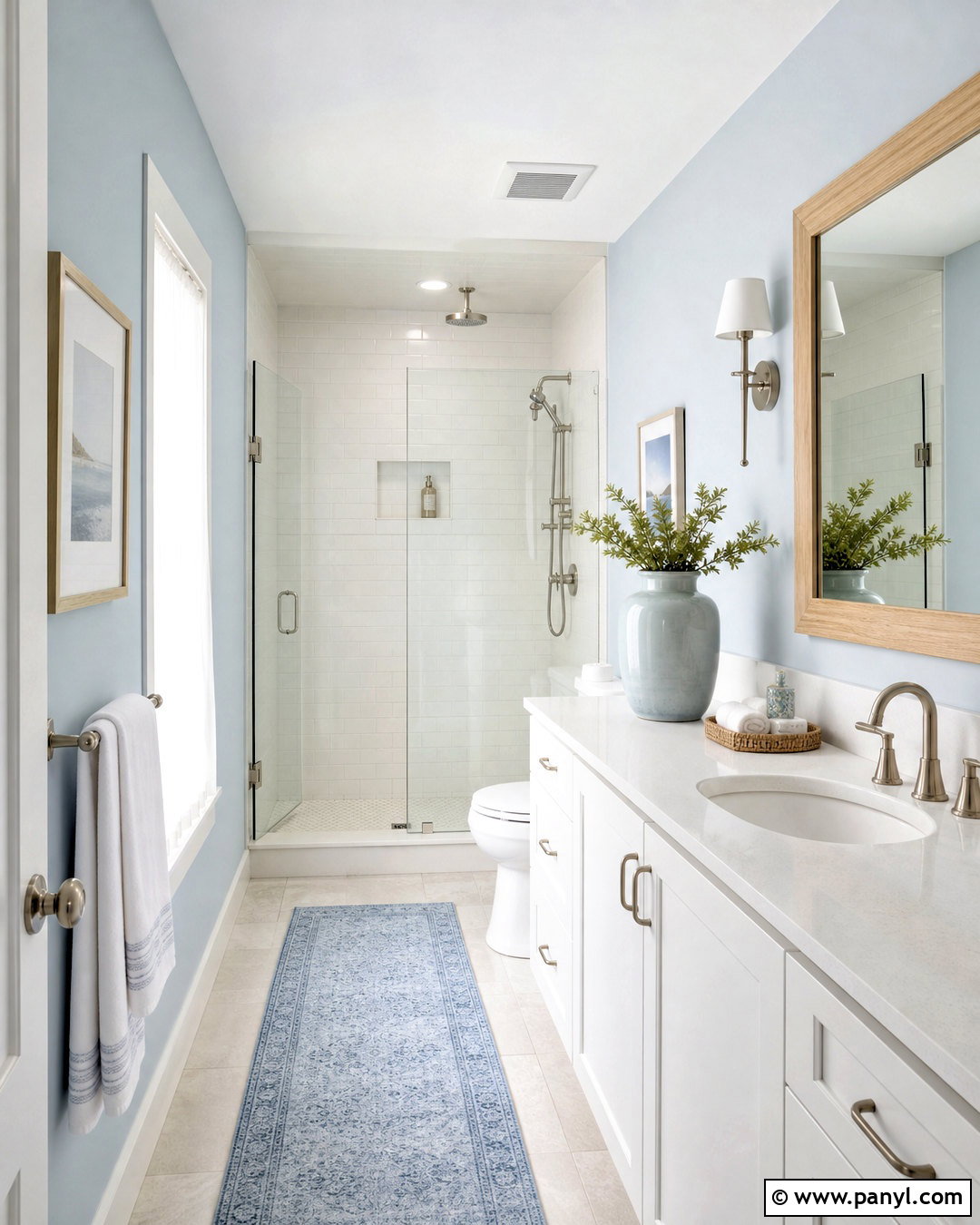
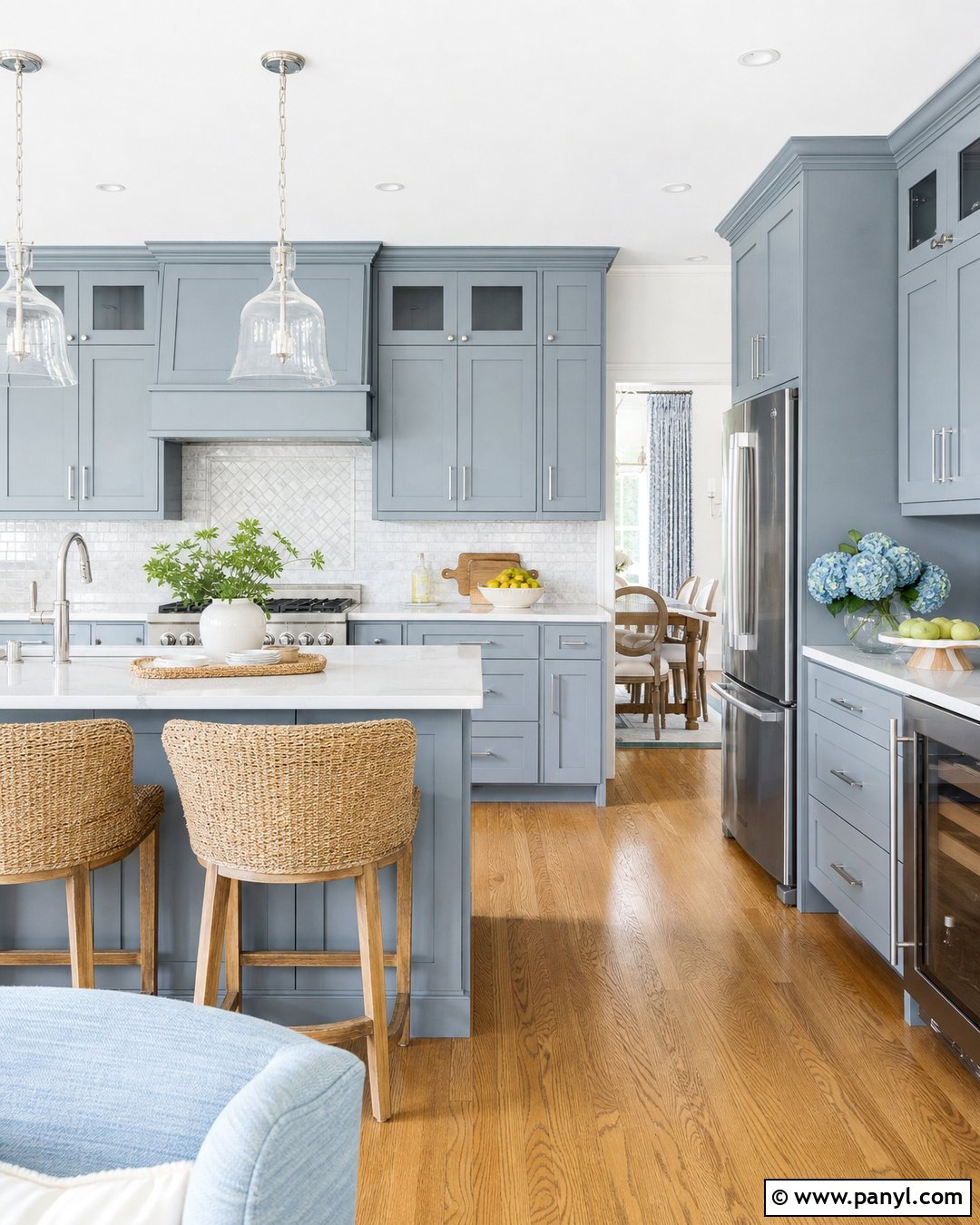
Pale blue walls bring an open, refreshing quality to a bathroom, particularly when paired with uncomplicated white surfaces. Choose a softened blue rather than a sugary pastel, and use it with a white vanity, white quartz counter, and glossy white shower tile. Light oak accents, such as a mirror frame or floating shelf, prevent the palette from feeling too cool. Polished nickel hardware complements the blue while maintaining a light appearance. Complete the room with white towels, a muted blue runner, and one small ceramic vase. Sheer window coverage allows daylight to strengthen the airy effect without sacrificing privacy. This combination is ideal for compact bathrooms, guest baths, and coastal homes, yet its restrained materials keep it from becoming overly themed.
9. Blue Gray Bathroom Paint
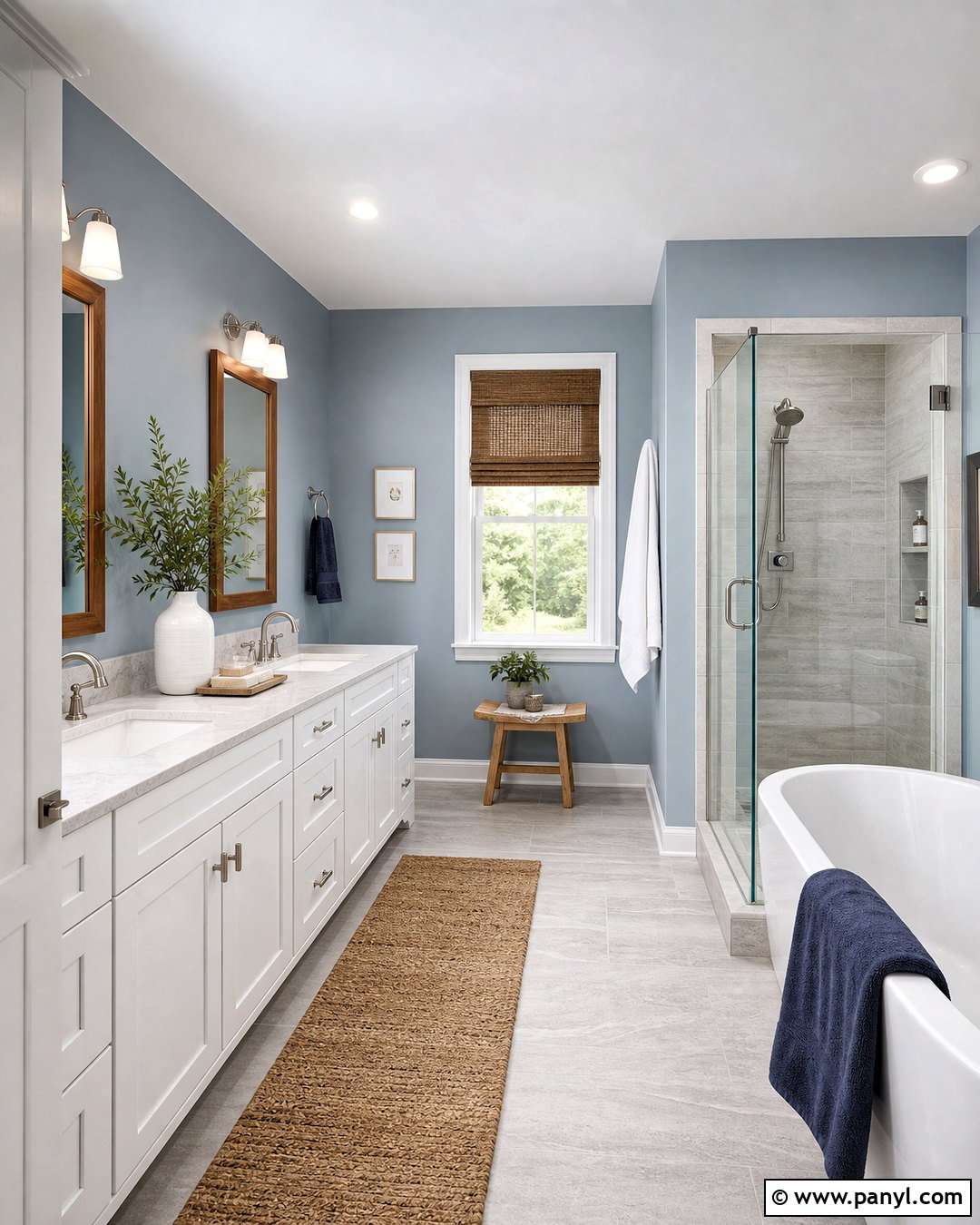
Blue-gray paint creates a peaceful backdrop with enough neutral character to coordinate with many fixed finishes. Select a medium-light shade that reads blue in daylight and softly gray under evening lighting. Pair it with a white double vanity, marble-look countertop, and light gray floor tile for a connected palette. Brushed nickel fixtures blend quietly into the room, while walnut-framed mirrors introduce necessary warmth. Add navy hand towels, white bath linens, and a simple woven shade to finish the look. When using blue-gray beside existing gray tile, compare samples carefully to avoid clashing undertones. The completed bathroom should contain a deliberate mix of warm and cool details. This balance gives the space depth while preserving its clean, restful atmosphere.
10. Navy Blue Bathroom Paint
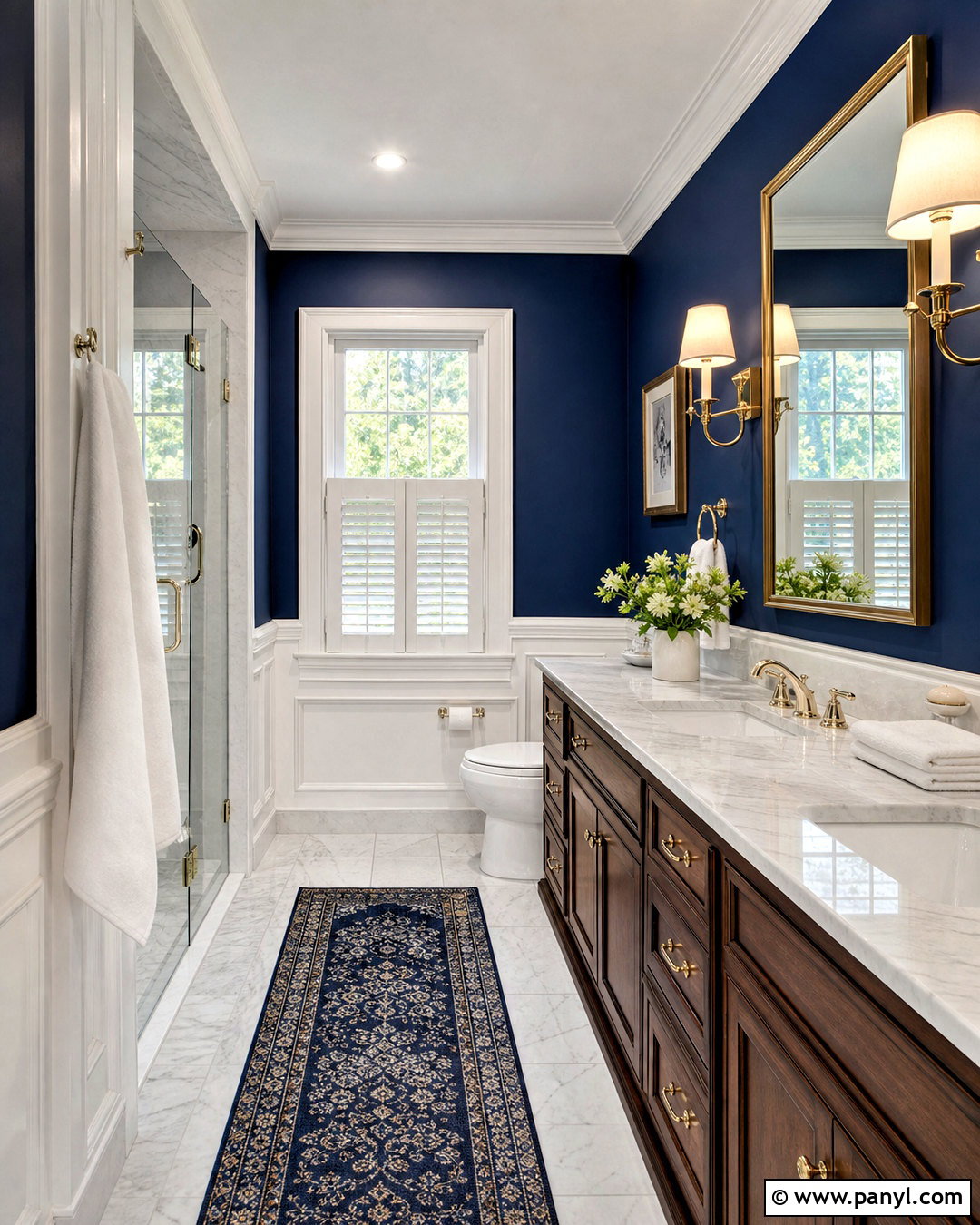
Navy blue brings structure and richness to a bathroom, making white fixtures and reflective metals stand out. For a balanced design, use navy on the walls above white wainscoting or tile rather than covering every surface. Install a warm walnut vanity with a white quartz top, then add polished brass faucets, sconces, and cabinet hardware. A large mirror helps distribute light across the darker walls. Keep the floor quiet with pale marble-look porcelain or small white mosaic tile. White towels and a softly patterned blue runner tie the scheme together. Navy works especially well in powder rooms, but it can also suit a larger bathroom with a window. Use a moisture-resistant finish that provides enough durability without making the walls excessively shiny.
11. Soft Aqua Bathroom Paint
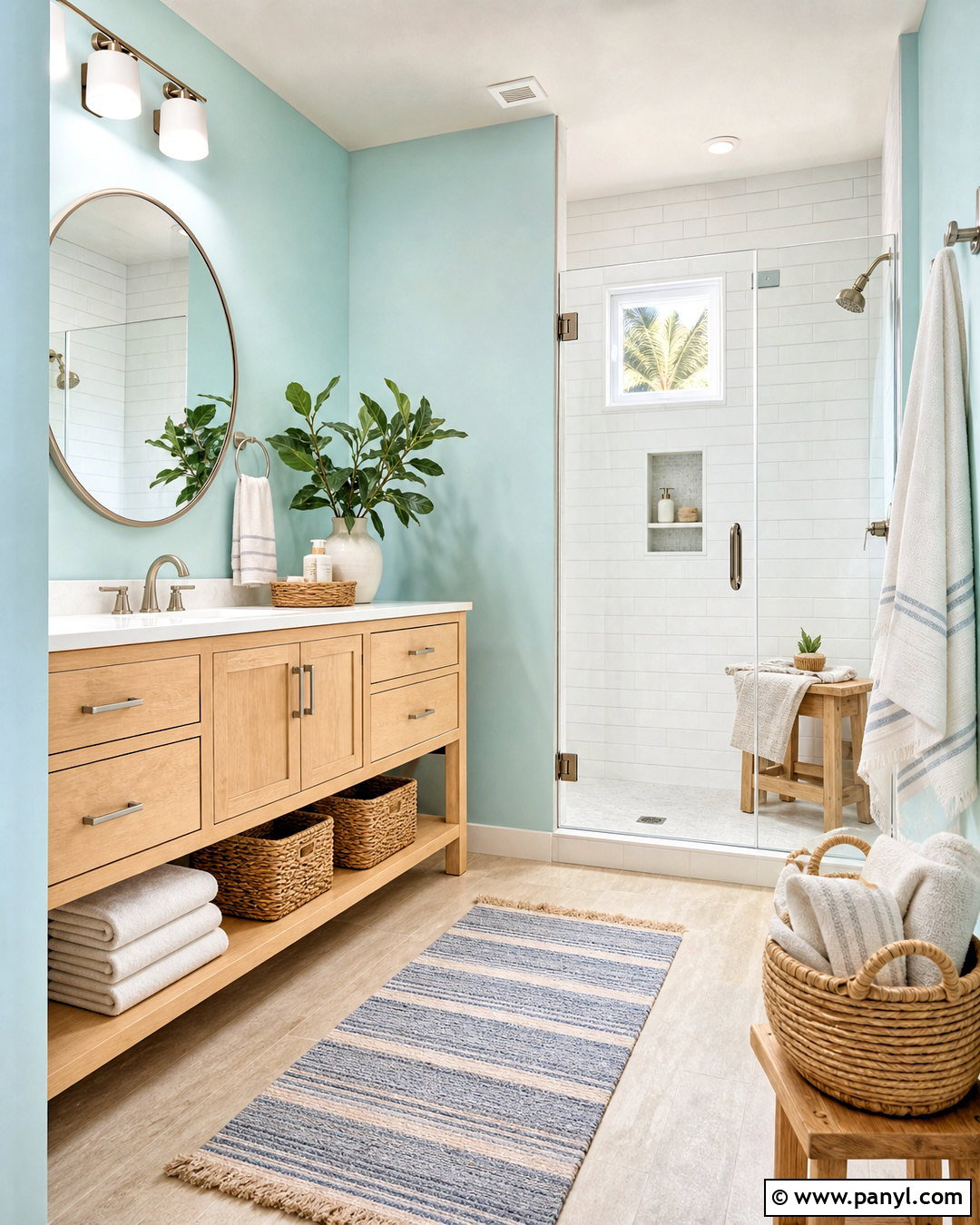
Soft aqua offers a livelier alternative to pale blue while maintaining the clean, water-inspired feeling many people want in a bathroom. Choose a muted blue-green with a gray undertone, then pair it with white shower tile, a light maple vanity, and sandy beige flooring. Brushed nickel hardware supports the cool wall color without introducing strong contrast. Natural woven baskets and cream towels add warmth, while a clear glass shower enclosure keeps the palette visible throughout the room. Avoid combining aqua with too many nautical accessories. Instead, use simple pottery, subtle striped textiles, and one leafy plant. The result is a fresh bathroom that feels relaxed rather than themed. This color is especially flattering in rooms with generous daylight and warm wood details.
12. Sage Green Bathroom Paint
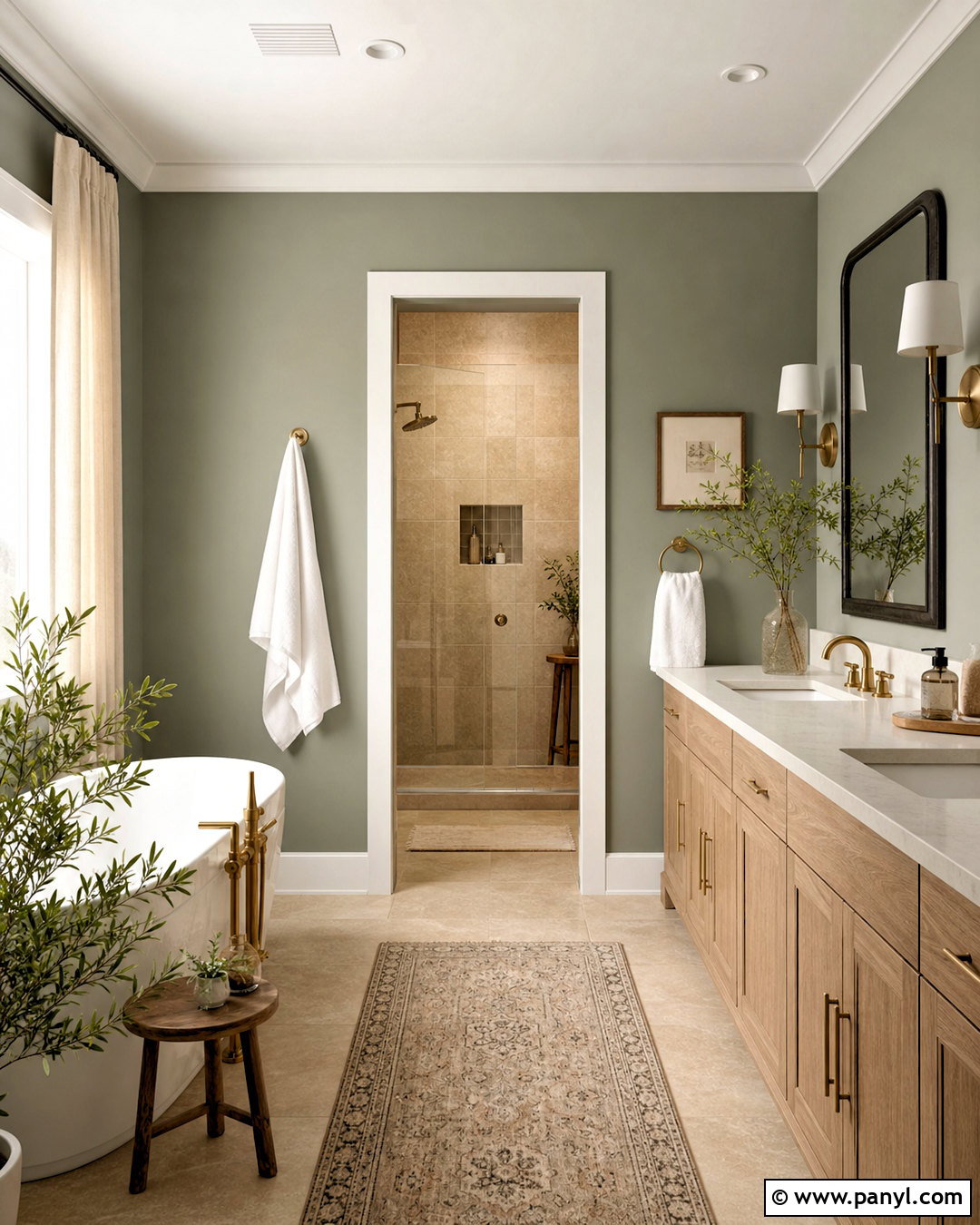
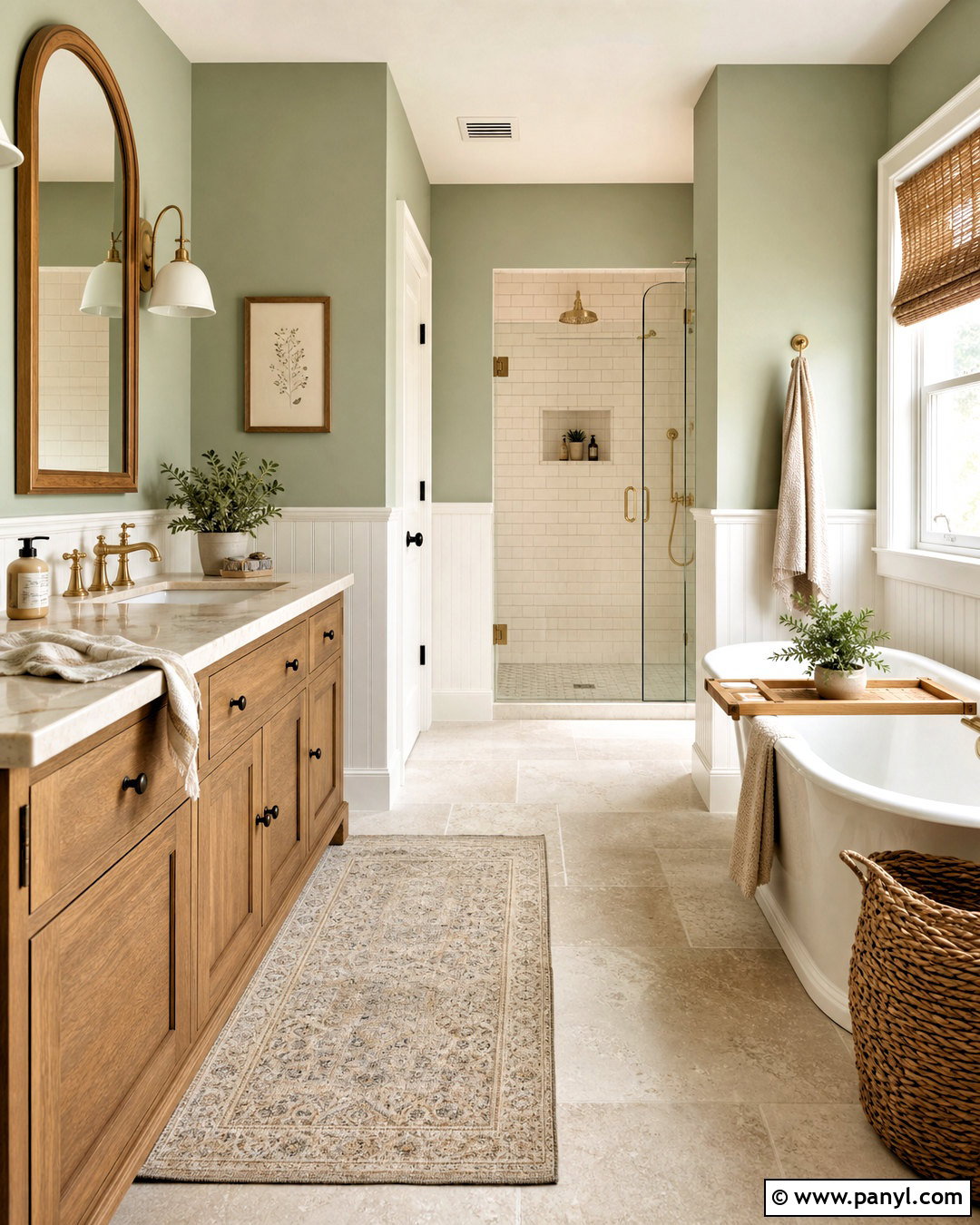
Sage green creates an easy connection between the bathroom and natural materials. Use a dusty, gray-based sage on the walls with creamy white trim and ceiling paint. A white oak vanity, ivory quartz counter, and warm beige floor tile build a soft foundation around the green. Choose aged brass fixtures to add warmth, then repeat the metal in the mirror frame and sconces. White towels, a linen shower curtain, and a few dark green accents provide gentle layering. If the bathroom includes stone or patterned tile, keep the remaining decor restrained so every finish has space to breathe. Sage works in small and large bathrooms because it adds recognizable color without becoming overpowering. It also suits modern, farmhouse, organic, and traditional rooms.
13. Olive Green Bathroom Paint
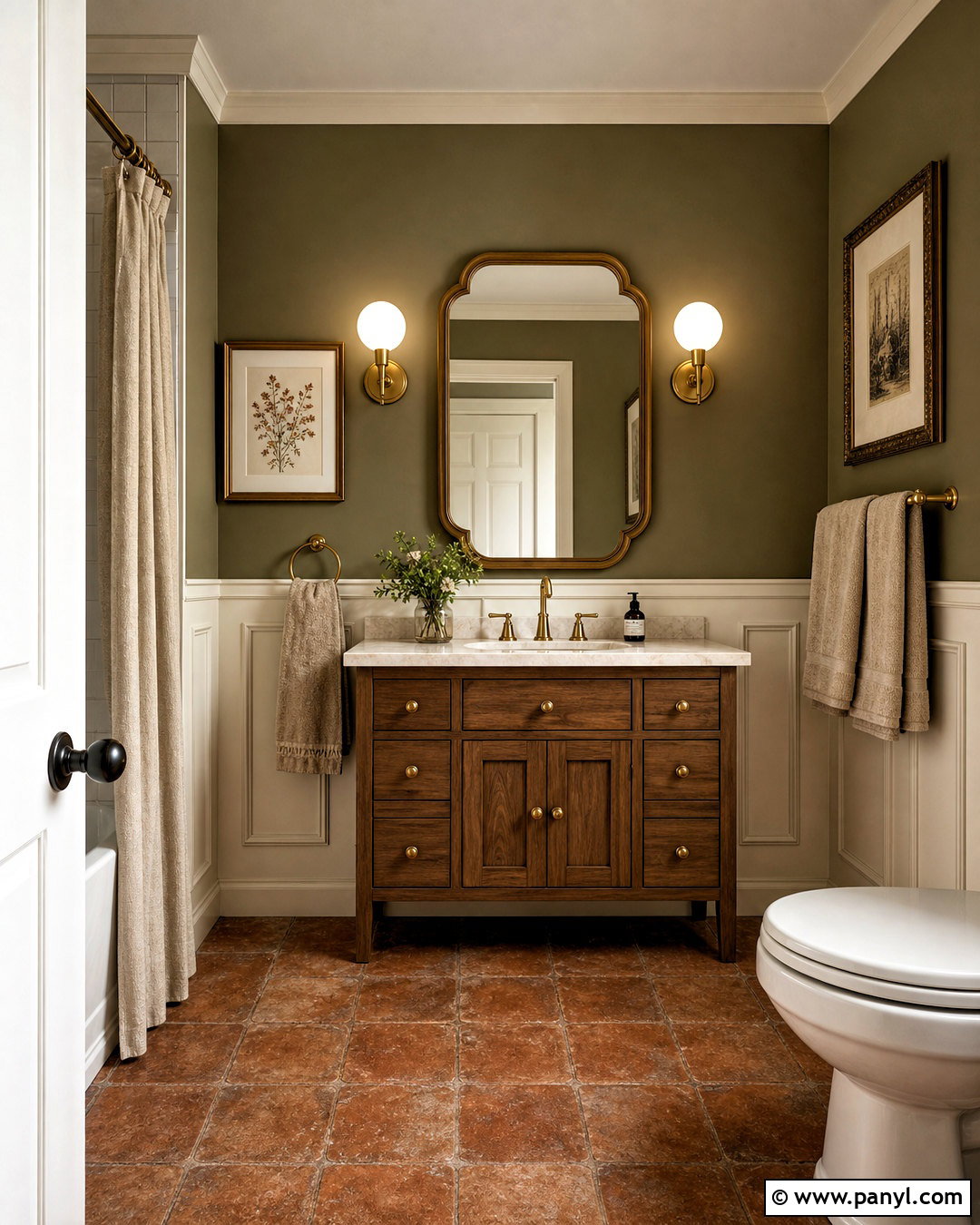
Olive green gives a bathroom earthy character and works beautifully with wood, cream, and warm metal finishes. Choose a muted olive rather than a bright yellow-green, then apply it above ivory wall paneling or neutral stone tile. Add a walnut vanity with a creamy countertop and antique brass hardware. Terracotta-look flooring or small beige mosaic tile strengthens the natural palette. Complete the design with flax towels, a vintage-inspired mirror, and understated botanical artwork. Strong white lighting is important because dim bulbs can make olive walls appear muddy. In a compact powder room, painting the ceiling olive creates an immersive look. For a larger main bathroom, keep the ceiling warm white and use generous mirrors to maintain brightness around the vanity and bathing areas.
14. Forest Green Bathroom Paint
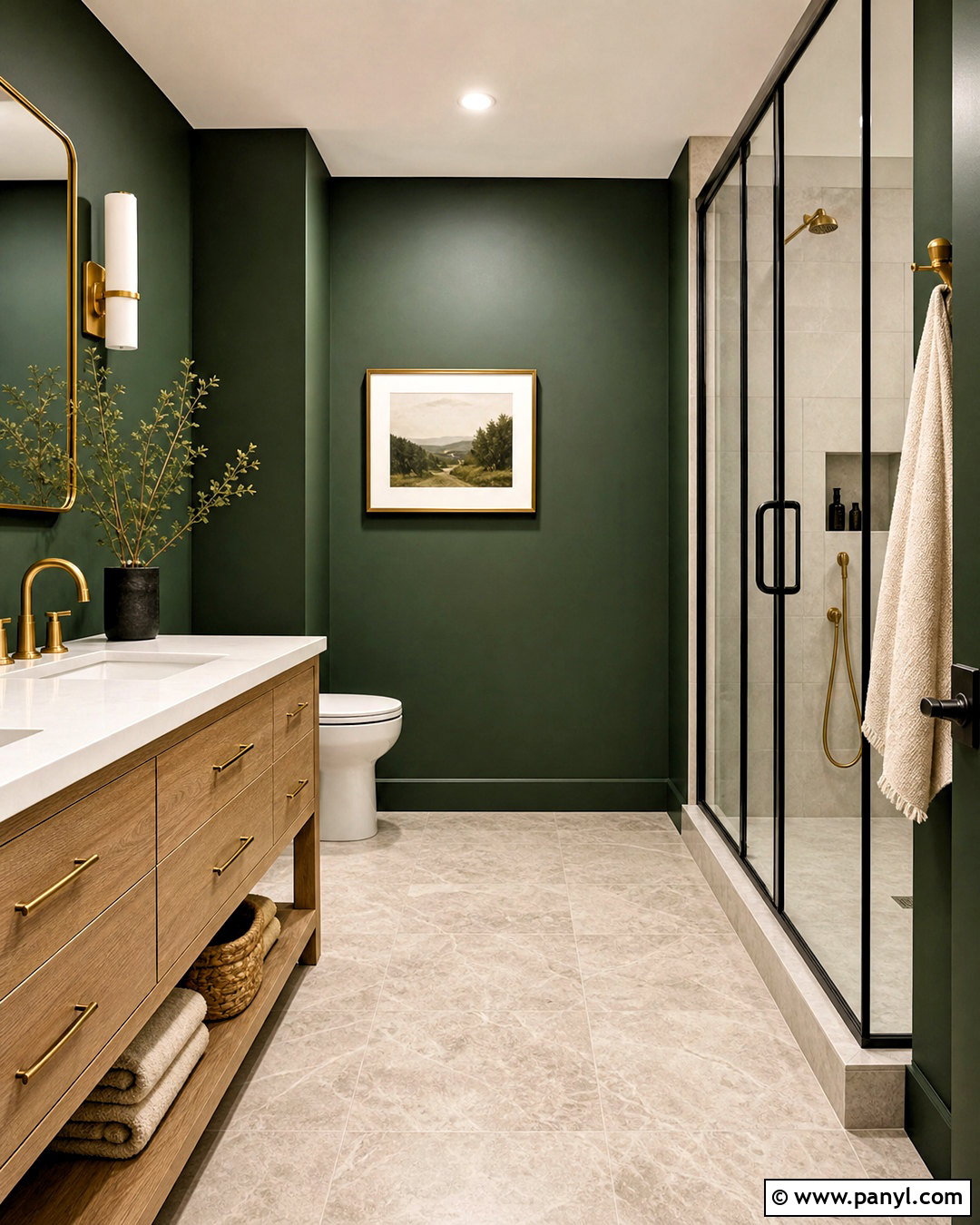
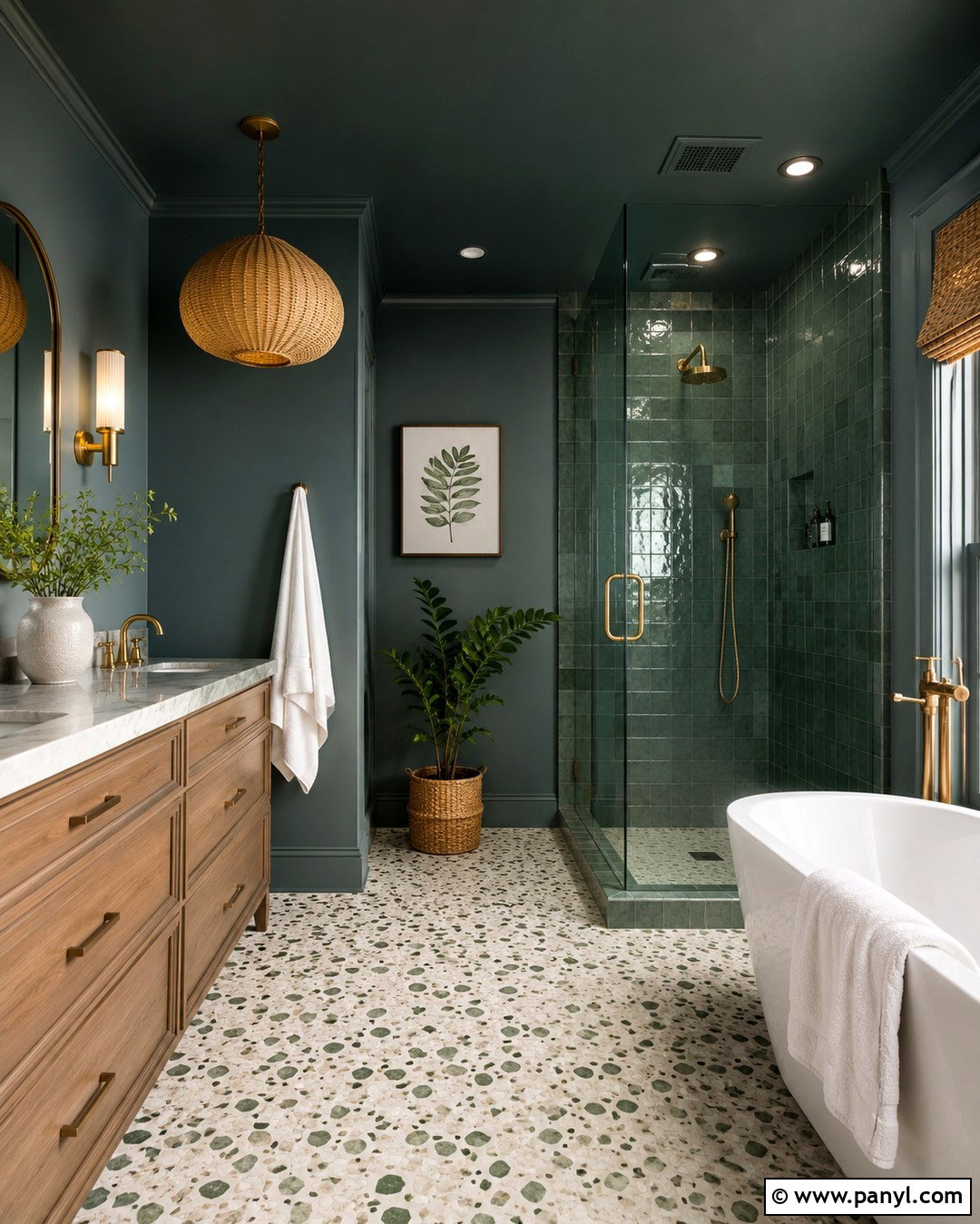
Deep forest green can make a bathroom feel polished, intimate, and connected to nature. Balance the saturated walls with a white pedestal sink or pale oak vanity, bright white countertop, and lightly veined stone flooring. Brass fixtures enhance the warmth of the green, while black accents add sharper definition around the mirror or shower enclosure. Keep towels and curtains cream rather than stark white for a softer transition. A single framed landscape or simple branch arrangement is enough decoration because the wall color already carries strong visual weight. Forest green is especially effective in a powder room or a bathroom with high ceilings. In a full bath, use it above light tile and maintain excellent ventilation, task lighting, and clear reflective surfaces.
15. Blush Pink Bathroom Paint
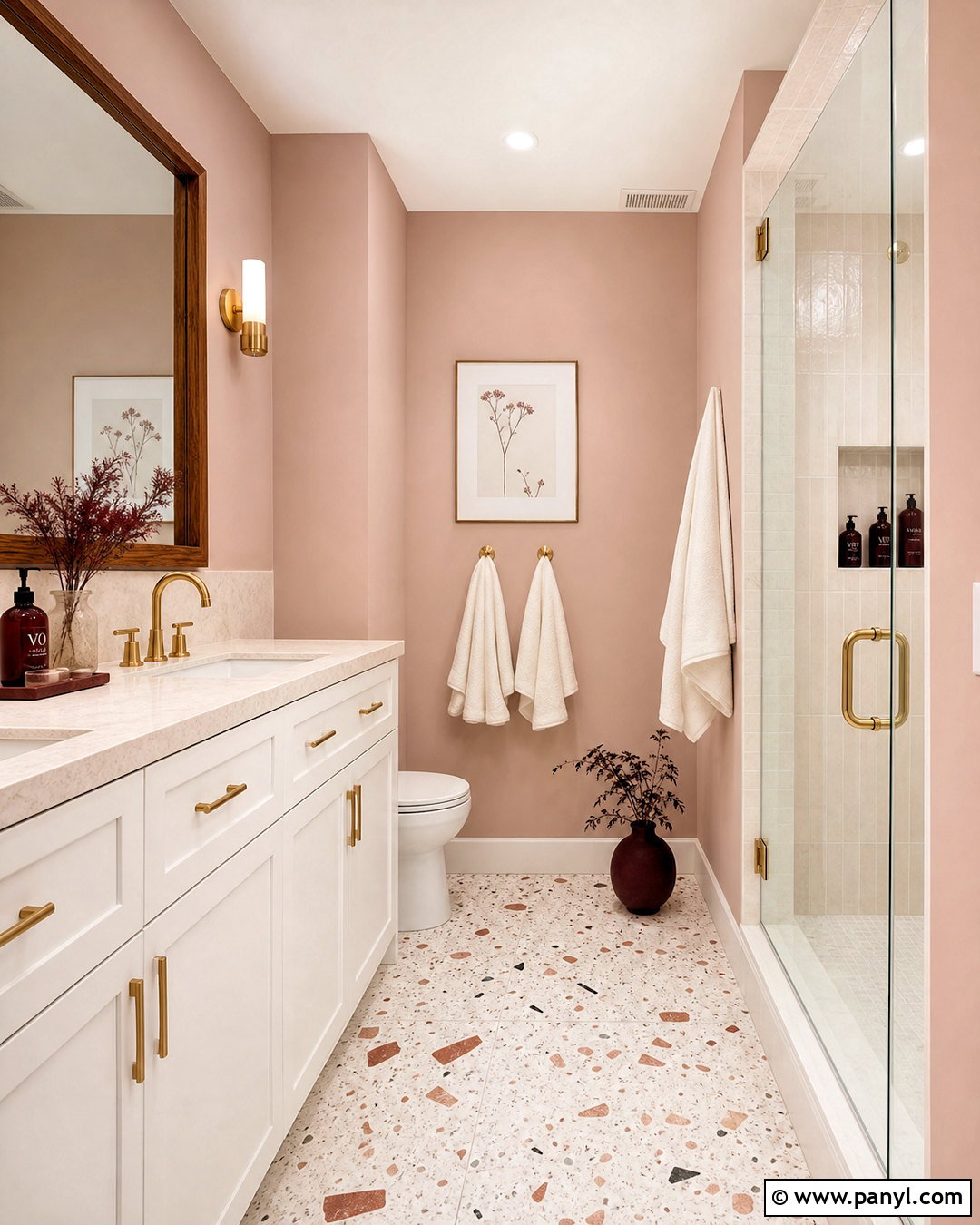
Blush pink can look grown-up and versatile when it carries muted beige or clay undertones. Paint the walls a soft blush, then combine them with a white vanity, warm marble counter, and light terrazzo flooring. Brushed brass fixtures highlight the warmth without making the design overly decorative. Introduce natural oak through a mirror frame or open shelf, and use cream towels instead of adding more pink. A clear glass shower and white tile preserve a bright foundation. For contrast, include one or two deep burgundy or charcoal accessories. The finished room feels warm, flattering, and contemporary rather than overly sweet. Blush works particularly well in bathrooms with limited daylight because it can add gentle color while still reflecting available light around the room.
16. Dusty Rose Bathroom Paint
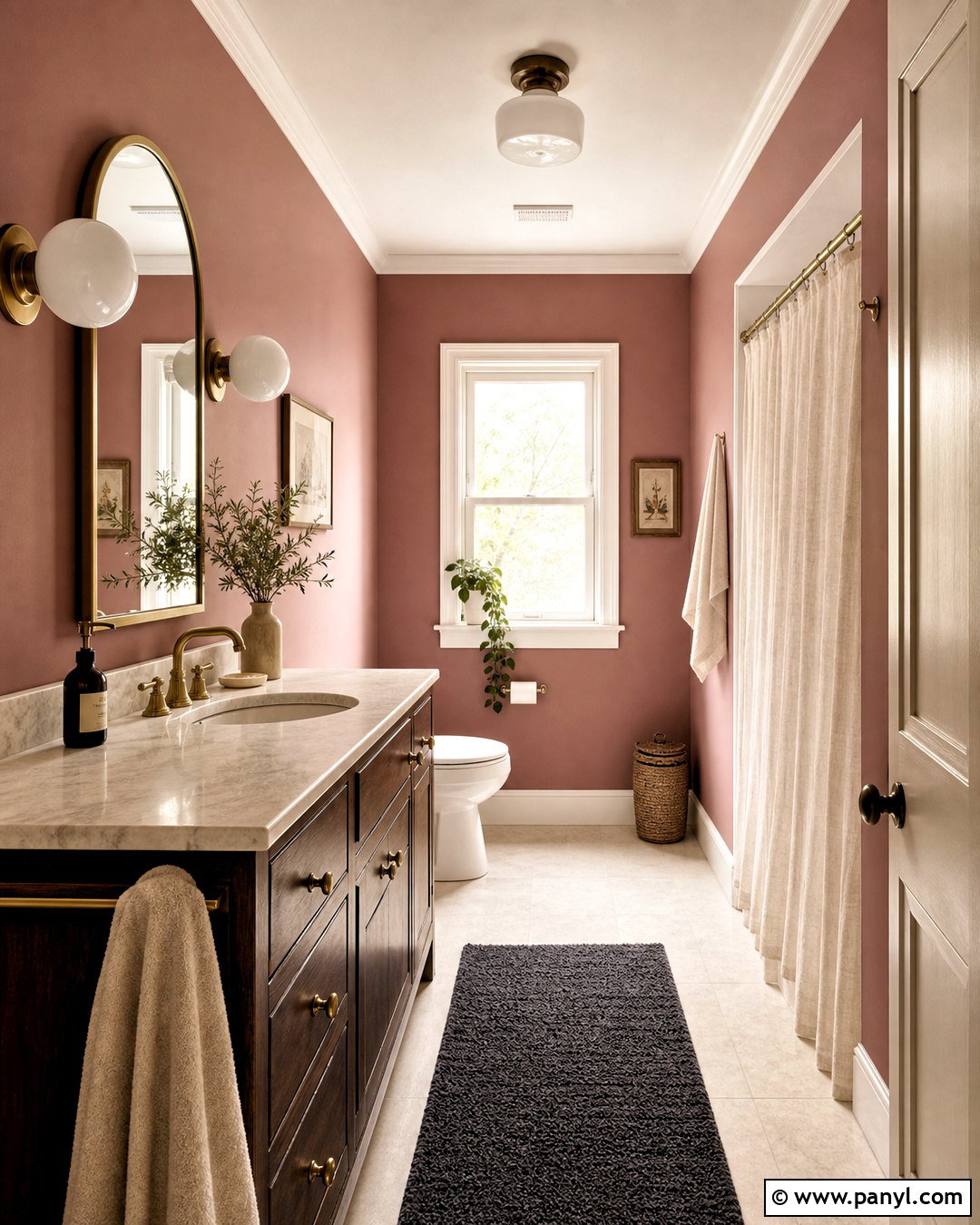
Dusty rose provides greater depth than blush while remaining softer than a strong red or magenta. Use this muted pink on the walls with warm white trim, then ground the palette with a dark walnut vanity and creamy stone countertop. Antique brass hardware, globe sconces, and an arched mirror support a slightly vintage look without making the room feel dated. Choose off-white floor tile and plain linen towels to prevent the scheme from becoming busy. A charcoal bath mat or black-framed shower enclosure introduces a useful dark accent. Dusty rose works especially well with existing pink, beige, or brown tile that might otherwise be difficult to coordinate. The complete look feels warm, collected, and suitable for either a powder room or full bathroom.
17. Pale Lilac Bathroom Paint
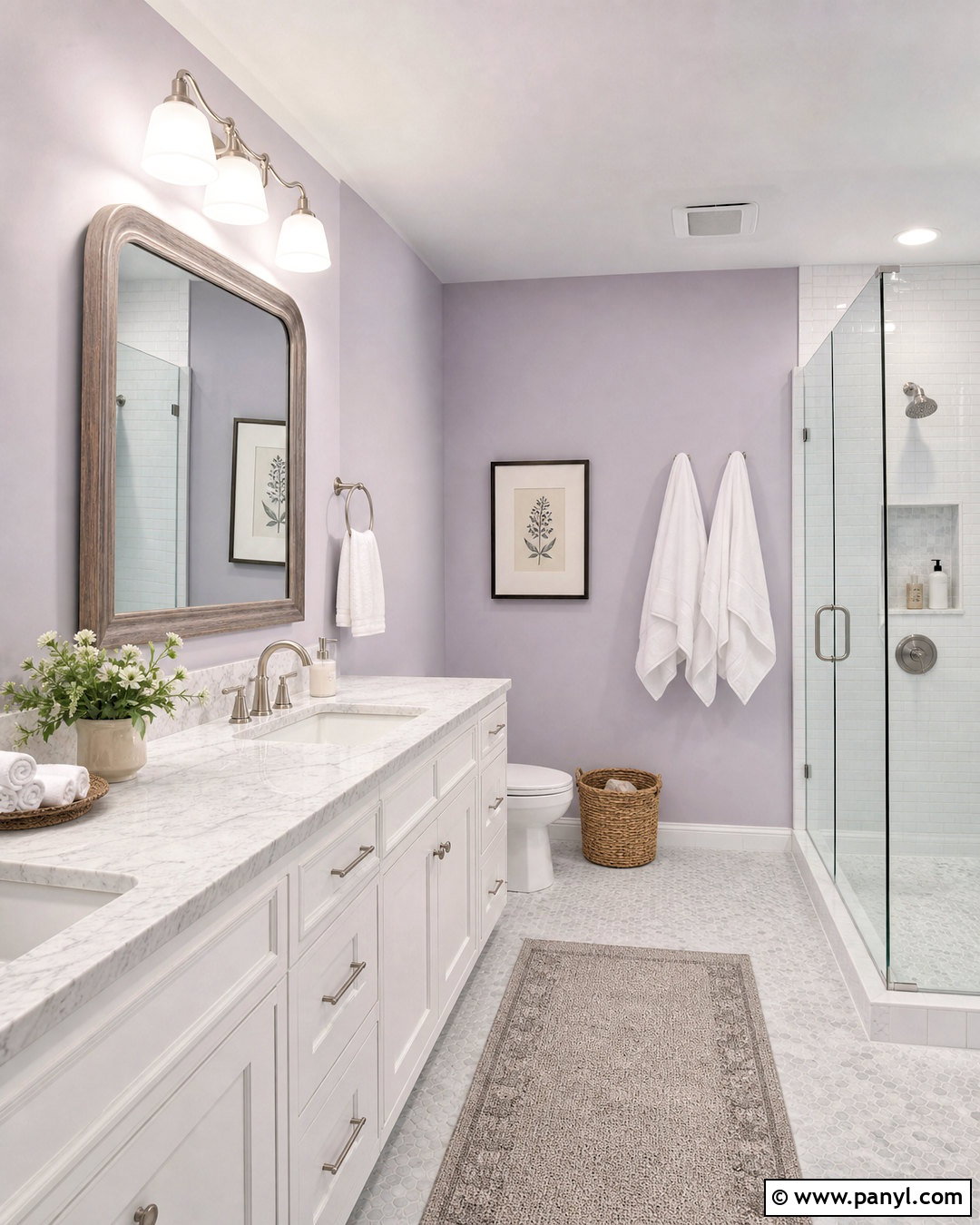
Could a light purple bathroom still feel calm and sophisticated? Pale lilac makes that possible when the shade has a quiet gray undertone. Pair lilac walls with white cabinetry, pale gray marble-look counters, and simple white shower tile. Polished nickel fixtures reinforce the cool palette, while a light wood mirror and woven basket introduce enough warmth to keep the room balanced. Use crisp white towels, a soft gray runner, and one restrained floral print. Avoid combining lilac with multiple pastel colors, which can make the design feel less cohesive. In a small bathroom, continue the wall color onto the ceiling to soften visual boundaries. The finished room feels fresh and distinctive while remaining light enough for everyday use and easy coordination.
18. Terracotta Bathroom Paint
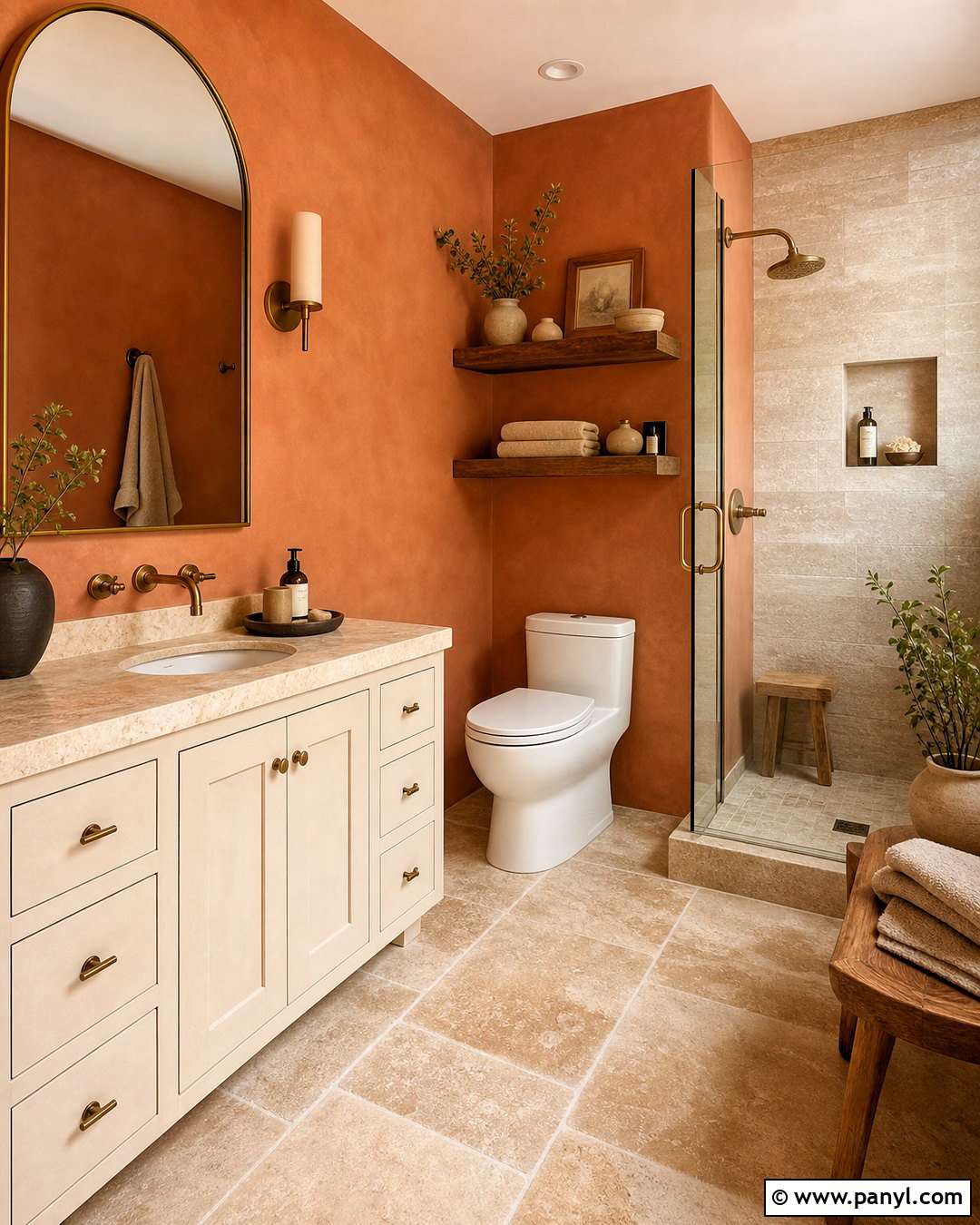
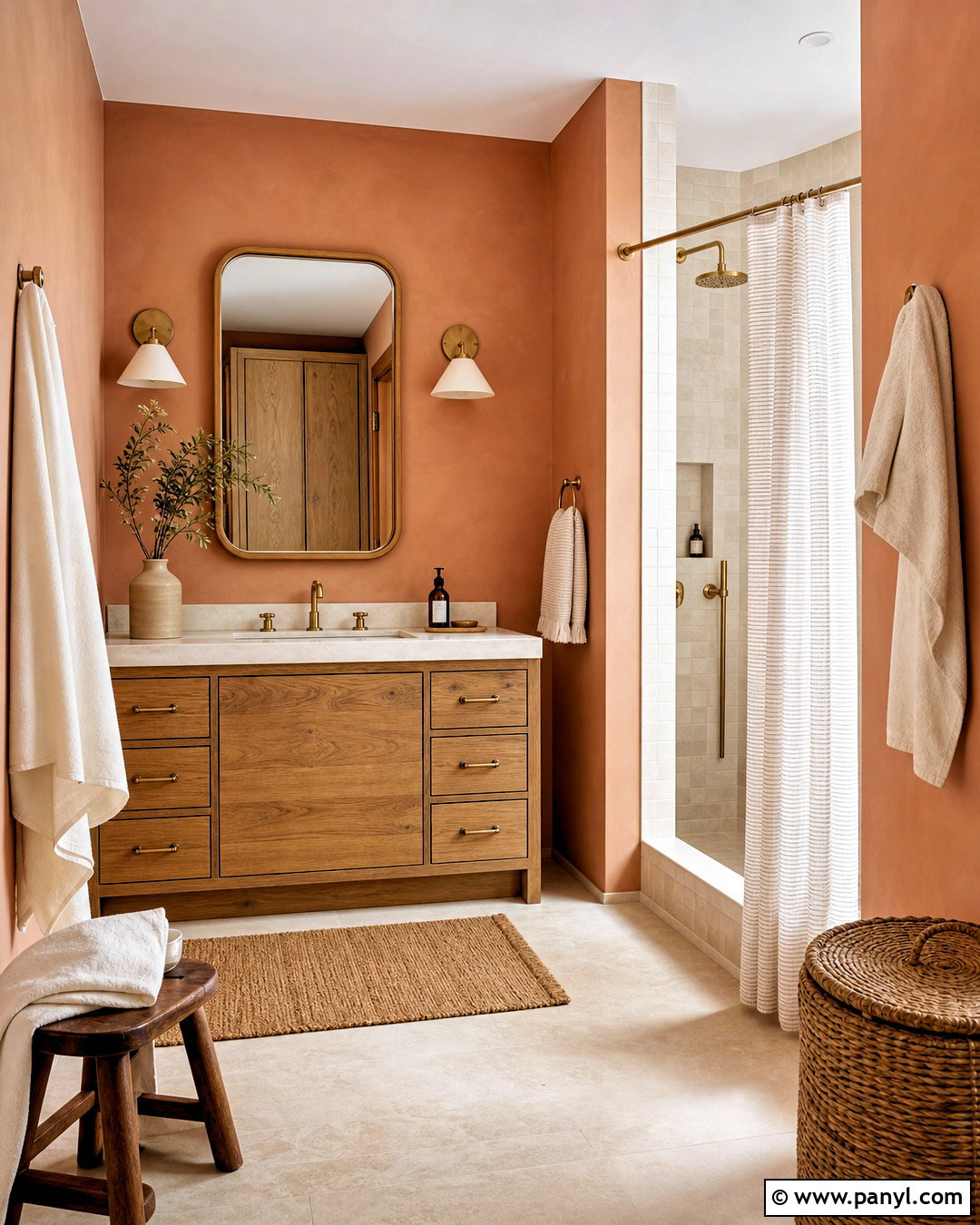
Terracotta paint surrounds a bathroom with sunbaked warmth and works best as part of a carefully layered earthy scheme. Choose a softened clay shade with brown or pink undertones rather than a vivid orange. Pair it with a cream vanity, travertine-look floor tile, and a lightly veined ivory countertop. Aged brass faucets and warm wood shelves deepen the natural character. Use oatmeal towels, handmade-look ceramic accessories, and a clear glass shower enclosure to maintain visual openness. If the room is small, apply terracotta to one upper wall area while keeping lower tile light. A larger powder room can handle terracotta across the walls, ceiling, and trim. The result feels cozy, grounded, and more distinctive than a standard neutral bathroom palette.
19. Butter Yellow Bathroom Paint
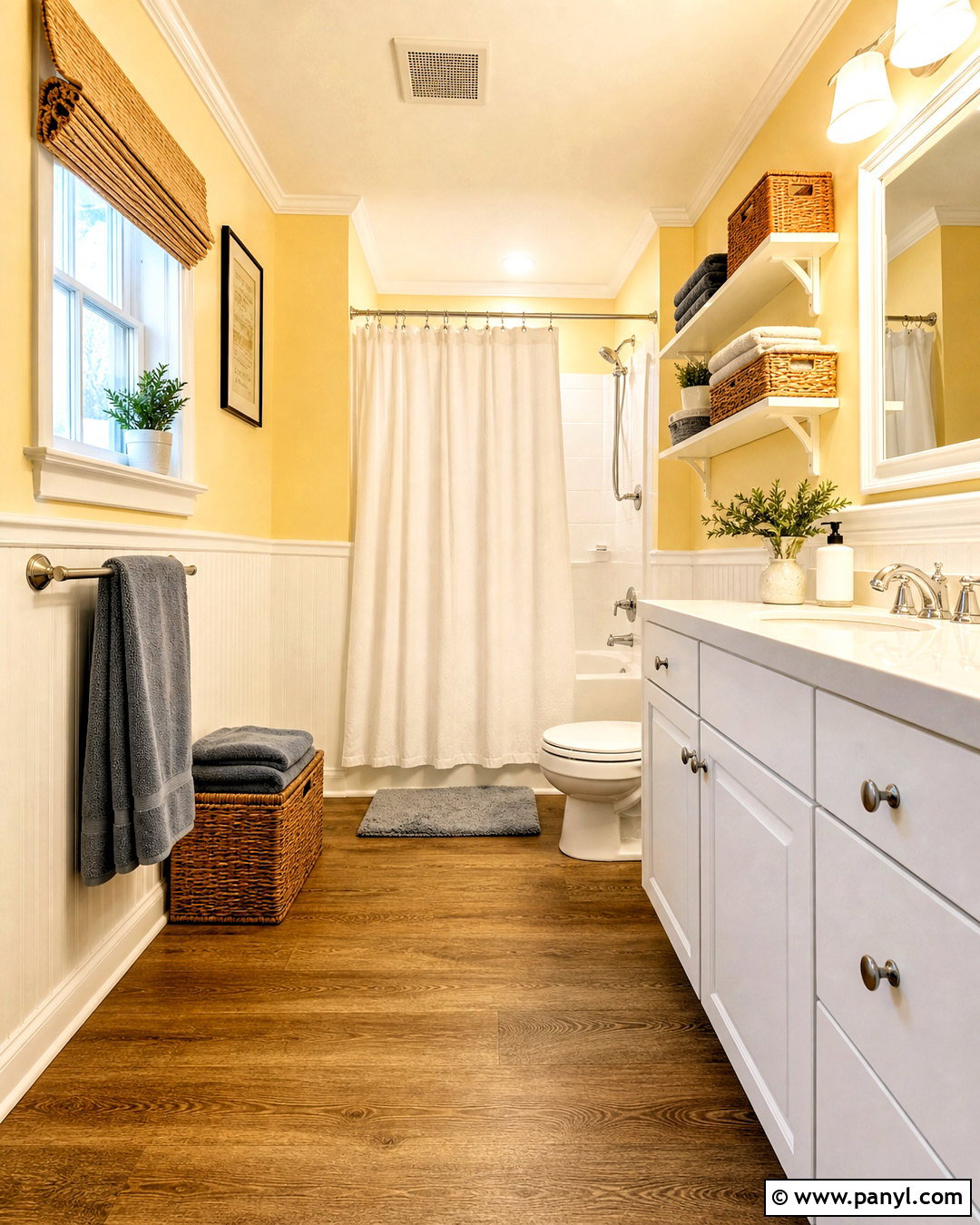
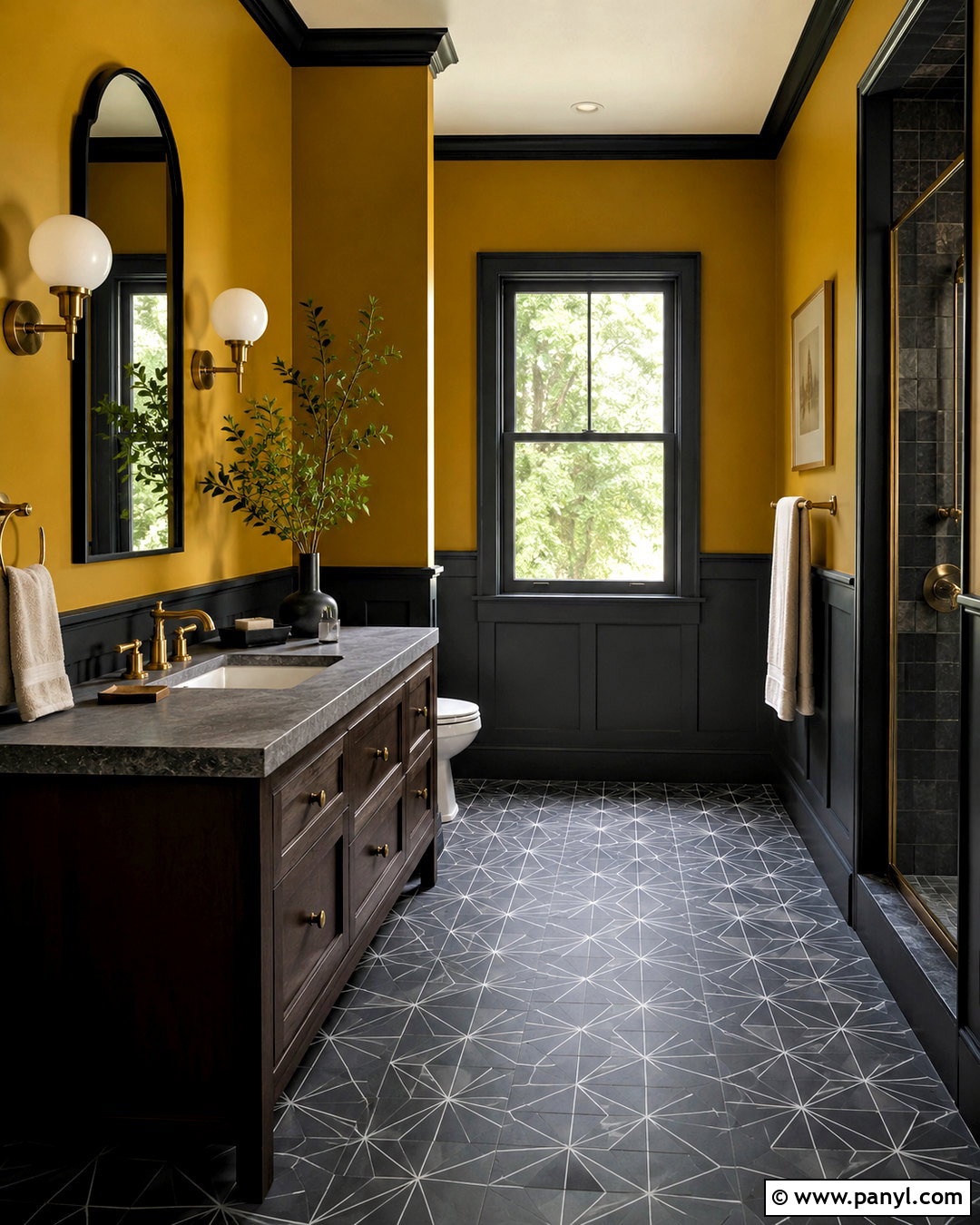
Butter yellow adds a sunny quality to a bathroom without the intensity of a bright primary yellow. Look for a pale, creamy shade and pair it with white beadboard, a simple white vanity, and warm oak flooring or wood-look porcelain tile. Polished nickel fixtures keep the scheme fresh, while woven baskets and blue-gray towels provide natural contrast. A white shower curtain and light countertop preserve an uncluttered appearance. Butter yellow is particularly useful in bathrooms with small windows or northern exposure, where it can create a warmer impression. Keep the ceiling and trim clean white so the color remains clear rather than muddy. The completed space feels cheerful and familiar, making this palette a practical choice for family bathrooms, cottages, and traditional homes.
20. Deep Plum Bathroom Paint
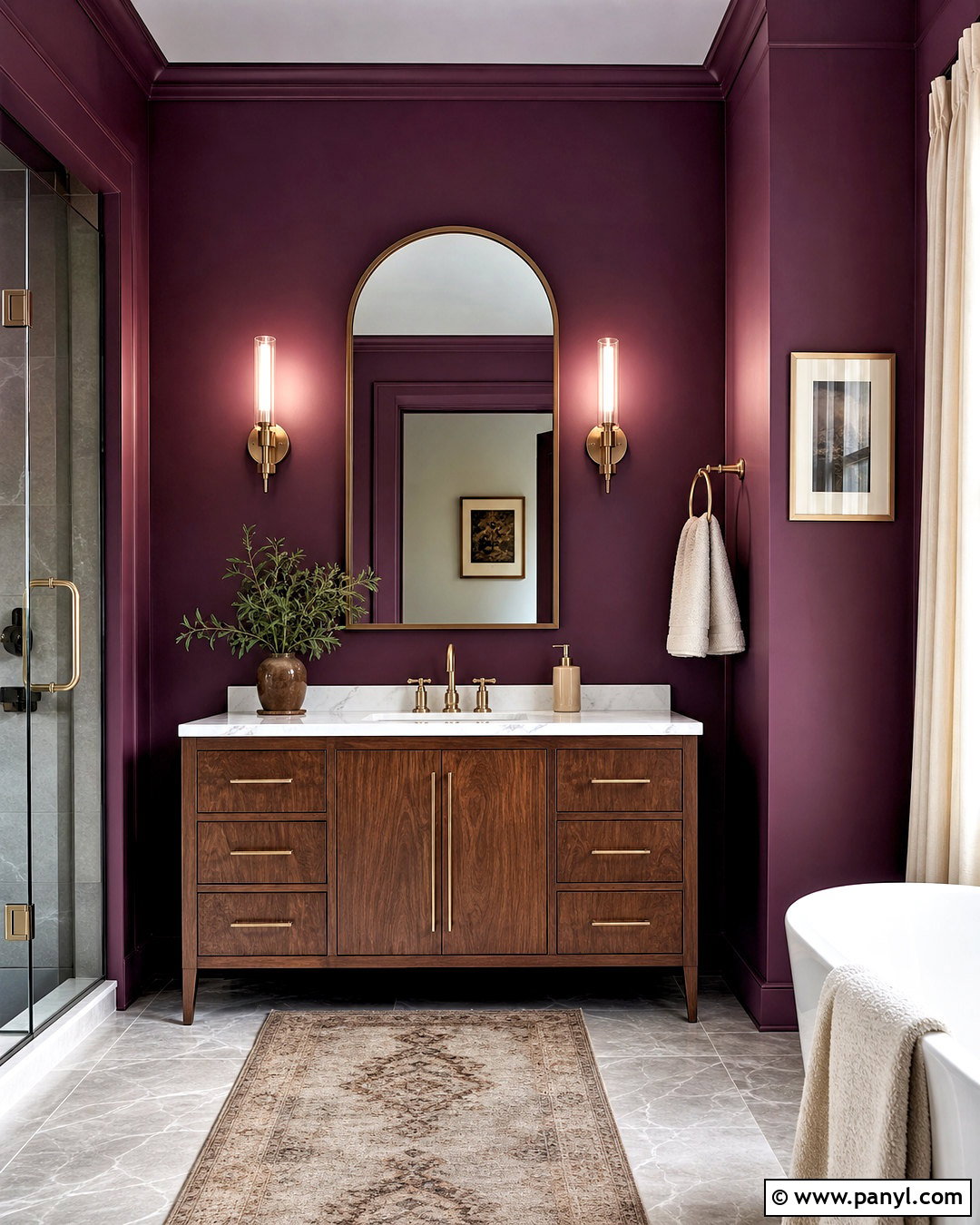
Deep plum creates a luxurious, enveloping bathroom with more warmth than navy or charcoal. Use it on the walls of a powder room, or place it above pale tile in a larger full bathroom. Combine the color with a walnut vanity, white marble-look counter, and warm gray flooring. Brushed brass fixtures bring out the red undertones, while a large arched mirror reflects light around the room. Choose cream towels and restrained artwork to prevent the palette from feeling overly dramatic. In a windowless space, install bright sconces on both sides of the mirror and keep the ceiling warm white. Plum also works well on painted cabinetry when full walls feel too bold. The completed scheme is rich, balanced, and memorable without relying on excessive decoration.
Conclusion:
The best bathroom color supports every fixed finish in the room while creating the atmosphere you want to experience each day. Warm white, ivory, greige, and taupe provide adaptable foundations, while pale blue, aqua, and sage create a softer spa-like effect. Navy, forest green, charcoal, terracotta, and plum offer stronger personality when balanced with light tile, mirrors, and thoughtful lighting. Before committing, place large painted samples beside your vanity, flooring, shower tile, and countertop. Check them in morning and evening light. Also select a durable, moisture-resistant product suitable for bathrooms. With careful testing and coordinated materials, these 20 popular bathroom paint colors can inspire a complete, practical, and beautifully finished room.

Related Ideas and Inspiration:
Leave a Reply