
Farmhouse bathrooms feel most inviting when color supports their natural textures, practical fixtures, and relaxed character. The best **farmhouse bathroom paint colors** now extend beyond basic white, bringing in warm neutrals, botanical greens, earthy blues, and grounded accent shades. Current farmhouse palettes are shifting toward warmer, nature-inspired colors while still keeping the clean simplicity associated with the look. () Before choosing a shade, consider the bathroom’s daylight, tile undertones, flooring, vanity finish, and metal fixtures. A color that appears creamy in one room may look gray or yellow in another. The complete looks below combine wall paint with trim, cabinetry, flooring, lighting, and decor, making it easier to visualize and recreate these **20 farmhouse bathroom paint colors**.

1. Warm White Farmhouse Bathroom
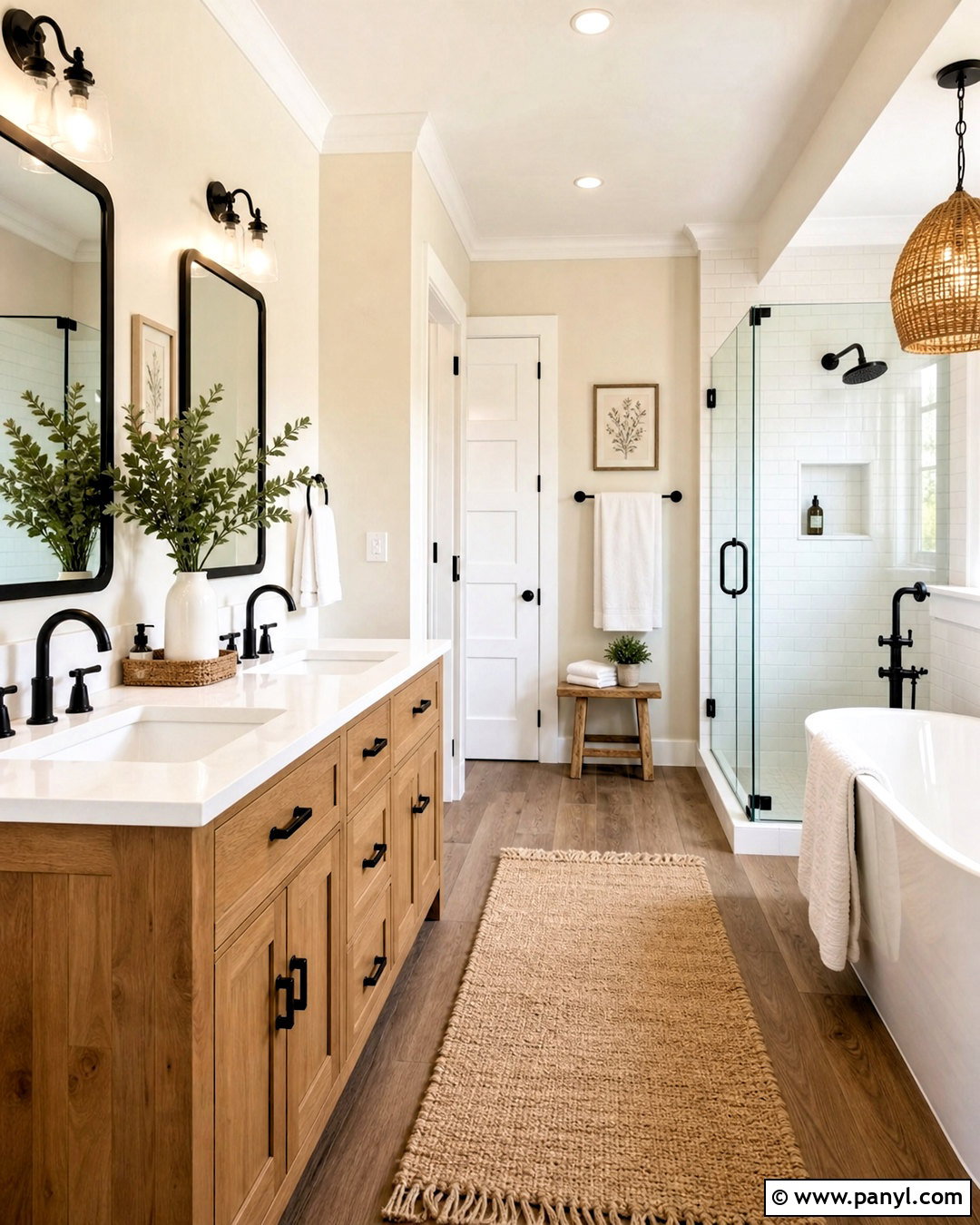
Warm white creates a clean farmhouse bathroom without the harsh feeling of a bright, blue-based white. Paint the walls a soft white with subtle cream or beige undertones, then use a slightly brighter white on the trim and ceiling. Add an oak vanity with a white quartz counter, matte black faucets, and simple shaker-style cabinet doors. White subway tile keeps the shower bright, while medium-tone wood-look flooring adds necessary warmth. Finish the room with a woven runner, linen towels, a black-framed mirror, and a clear glass pendant. This palette works especially well in bathrooms with limited daylight because it reflects available light while maintaining a comfortable, lived-in appearance. Choose washable satin paint for walls exposed to regular moisture.
2. Creamy Ivory Farmhouse Bathroom
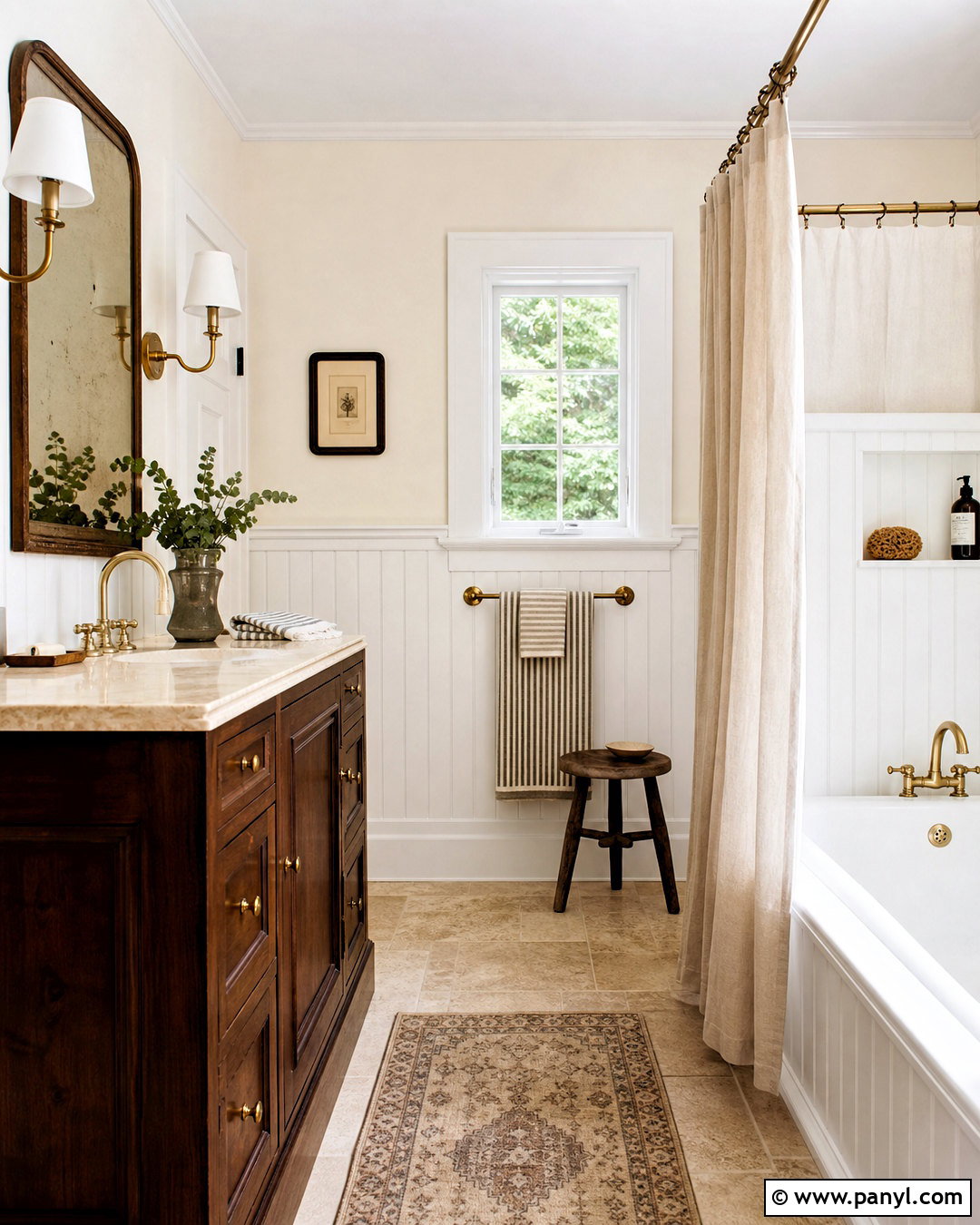
Creamy ivory gives a farmhouse bathroom a softer, more traditional appearance than pure white. Use the color across the upper walls and pair it with white-painted beadboard below for gentle contrast. A dark walnut vanity grounds the light palette, while an aged brass faucet and matching sconces introduce warmth. Choose tumbled limestone or warm beige porcelain flooring instead of cool gray tile. A framed vintage-style mirror, striped cotton towels, and a small wooden stool complete the collected look. Ivory is particularly effective in bathrooms with north-facing light, where colder whites can appear dull. Keep the ceiling and window trim light but not stark. Repeating the ivory tone in the shower curtain creates a coordinated design without making every surface match exactly.
3. Soft Greige Farmhouse Bathroom
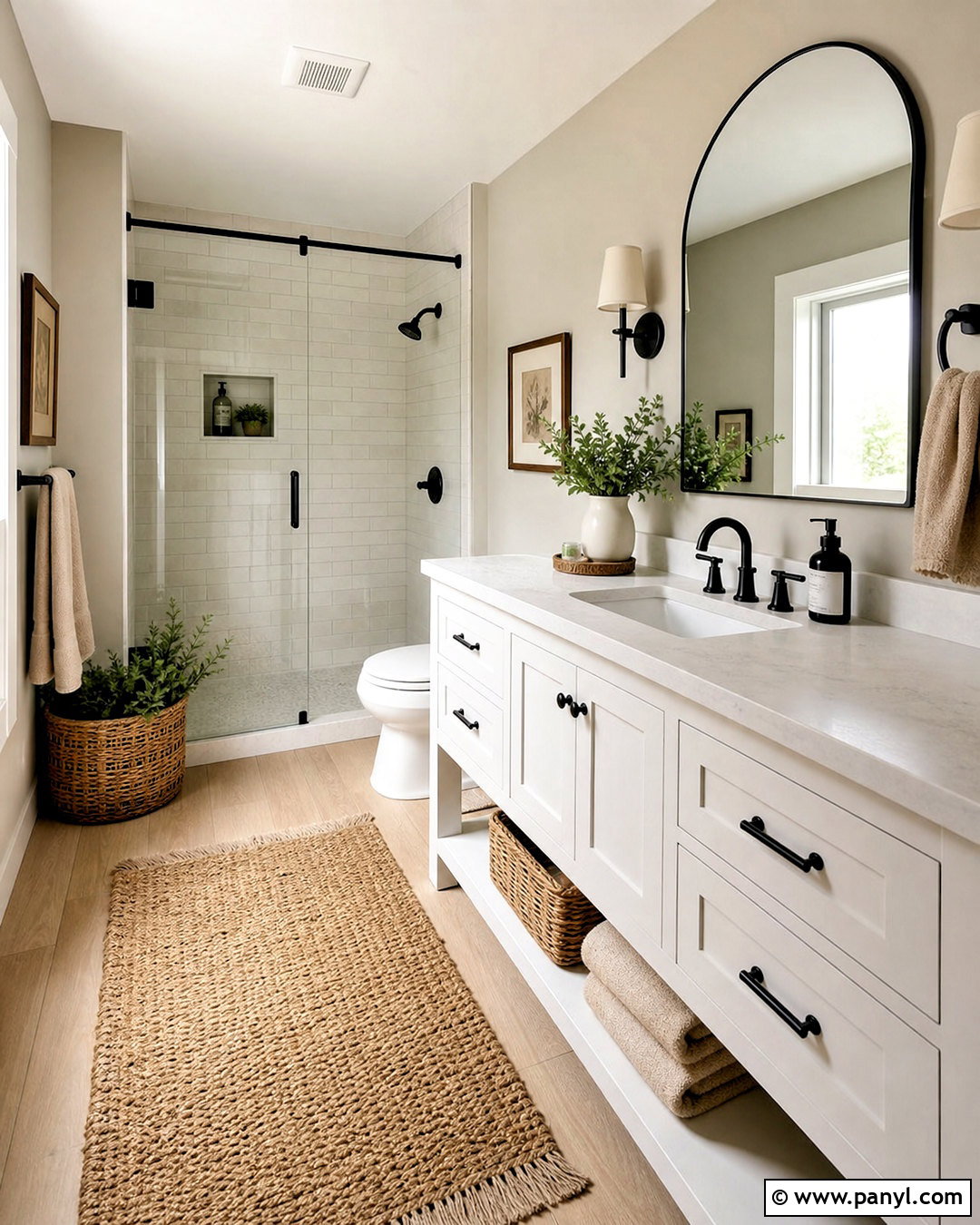
Soft greige balances gray and beige, making it a flexible choice for a modern farmhouse bathroom. Paint the walls in a light, warm greige and use crisp off-white for the ceiling, trim, and shaker-style vanity. Create contrast with black cabinet pulls, a matte black faucet, and an arched metal mirror. Pale oak flooring and woven baskets prevent the gray undertone from making the space feel cold. In the shower, choose handmade-look white tile with warm grout rather than sharp black grout. Add oatmeal-colored towels, a simple ceramic vase, and one leafy plant. This complete palette works with both rustic and updated farmhouse elements. Test the paint beside the floor and countertop because nearby finishes can make greige appear warmer or cooler throughout the day.
4. Mushroom Taupe Farmhouse Bathroom
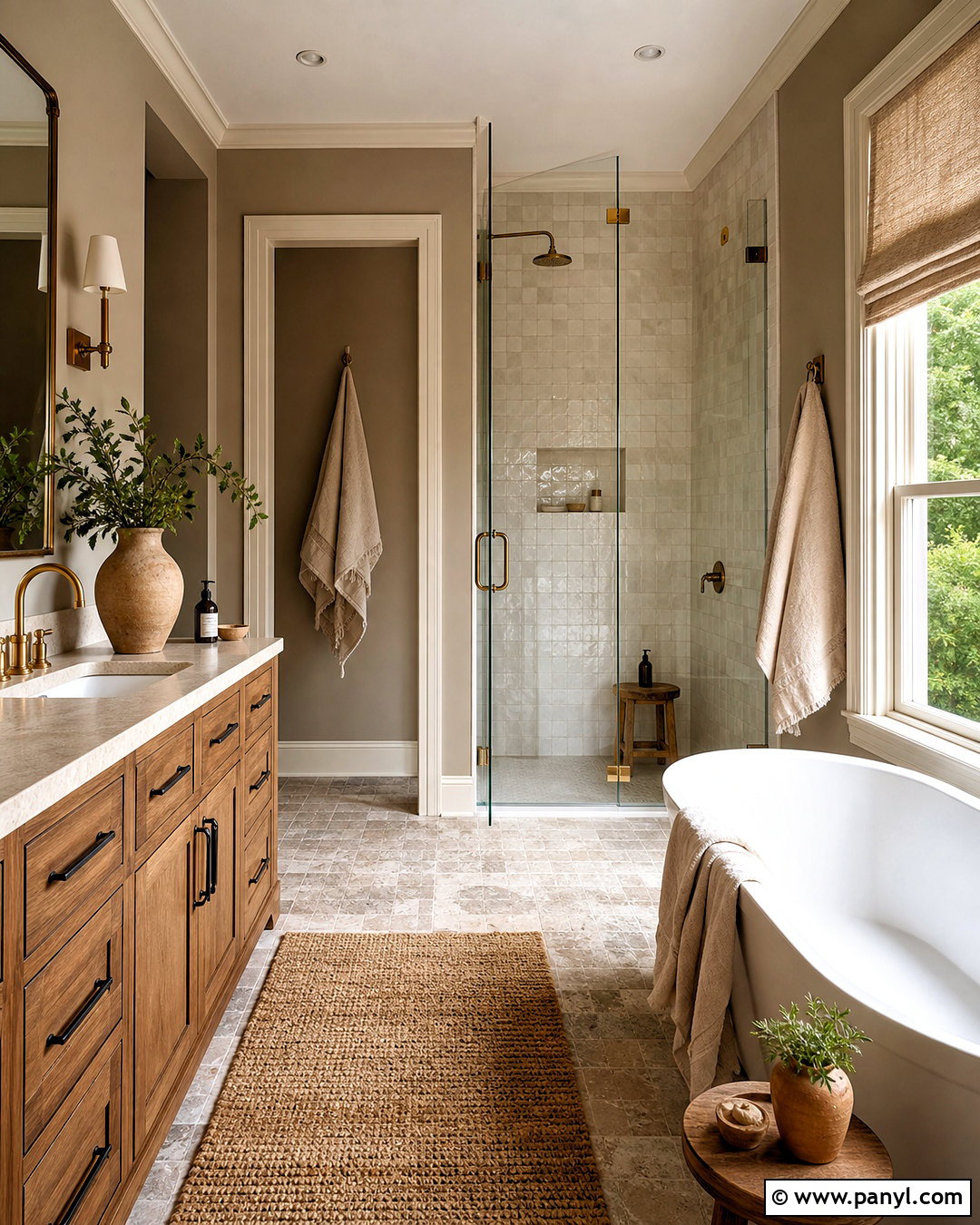
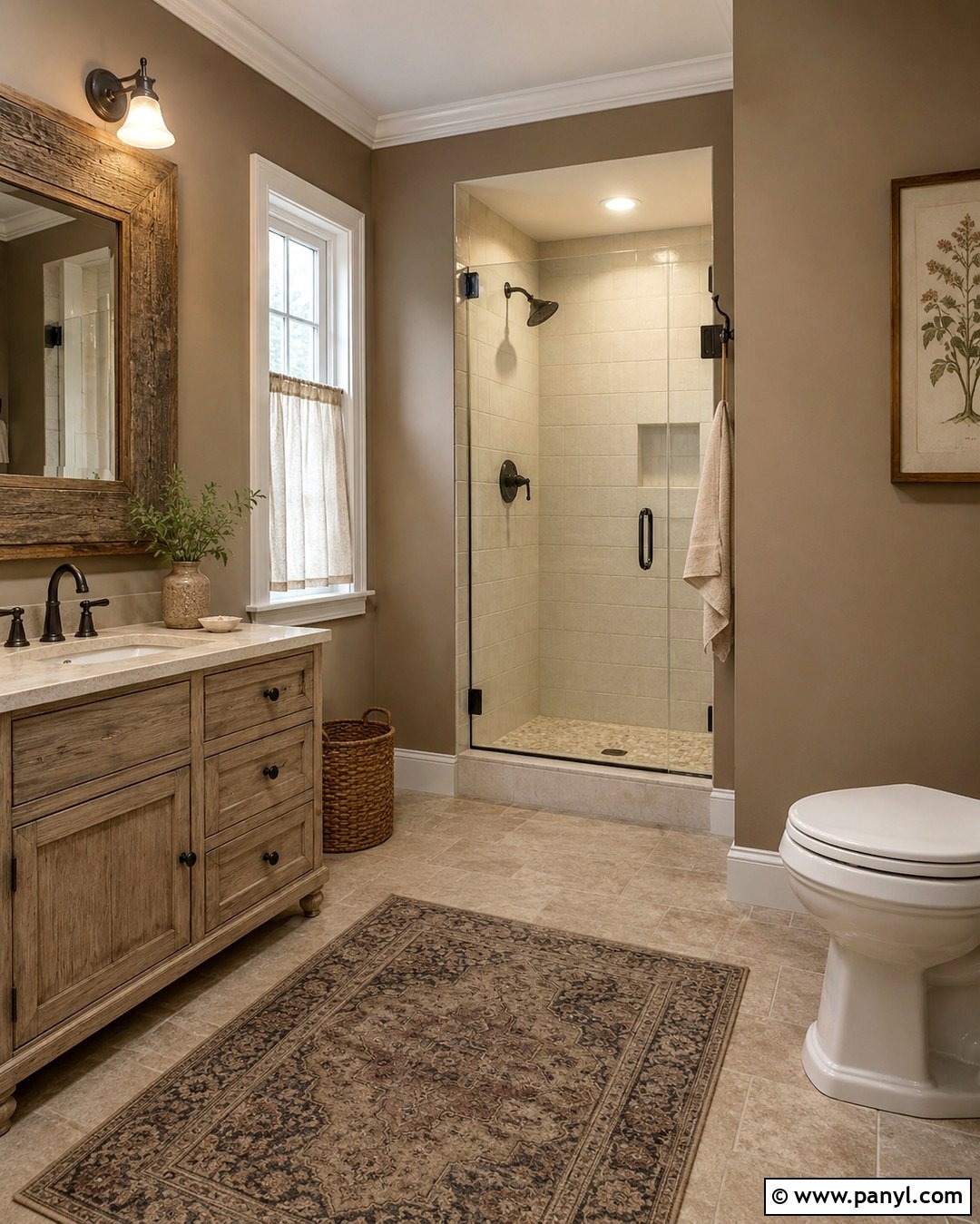
Mushroom taupe brings depth to a farmhouse bathroom while remaining calm and neutral. Cover the walls in a medium-light taupe with balanced brown and gray undertones. Pair it with creamy trim, a natural oak vanity, and an ivory stone countertop. Antique brass fixtures complement the earthy wall color, while black details can be limited to the mirror frame and shower enclosure. Use warm white zellige-style tile around the shower and a softly patterned stone-look floor underfoot. A flax linen shower curtain, clay pottery, and folded beige towels reinforce the organic palette. Mushroom taupe is an excellent backdrop for bathrooms that need more character than white can provide. Keep the ceiling lighter to preserve openness, especially in a compact room with only one small window.
5. Putty Beige Farmhouse Bathroom
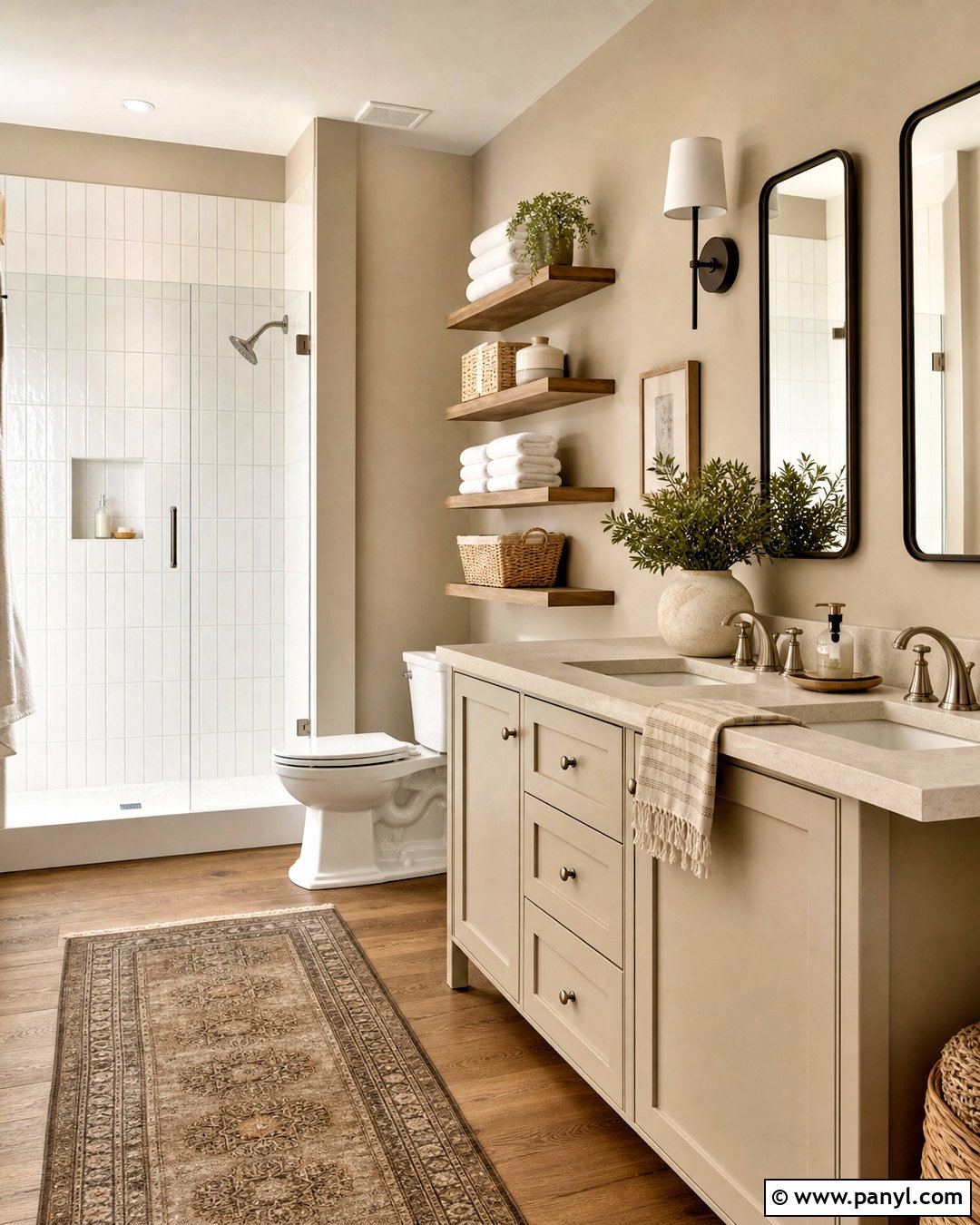
Putty beige offers an understated farmhouse palette inspired by natural plaster and weathered stone. Use this warm neutral on the walls, then paint the vanity a muted cream for a quiet tonal effect. A honed marble or pale quartz countertop keeps the room fresh, while brushed nickel fixtures add a practical, unfussy finish. Choose medium oak flooring, white vertical wall tile, and a frameless glass shower enclosure to balance rustic warmth with clean lines. Open wooden shelves can hold rolled white towels, lidded baskets, and simple ceramic containers. Avoid overly yellow beige shades, which may feel dated beside modern fixtures. A putty color with subtle gray undertones looks more current and coordinates easily with stone, wood, linen, and traditional farmhouse accessories.
6. Light Gray Farmhouse Bathroom
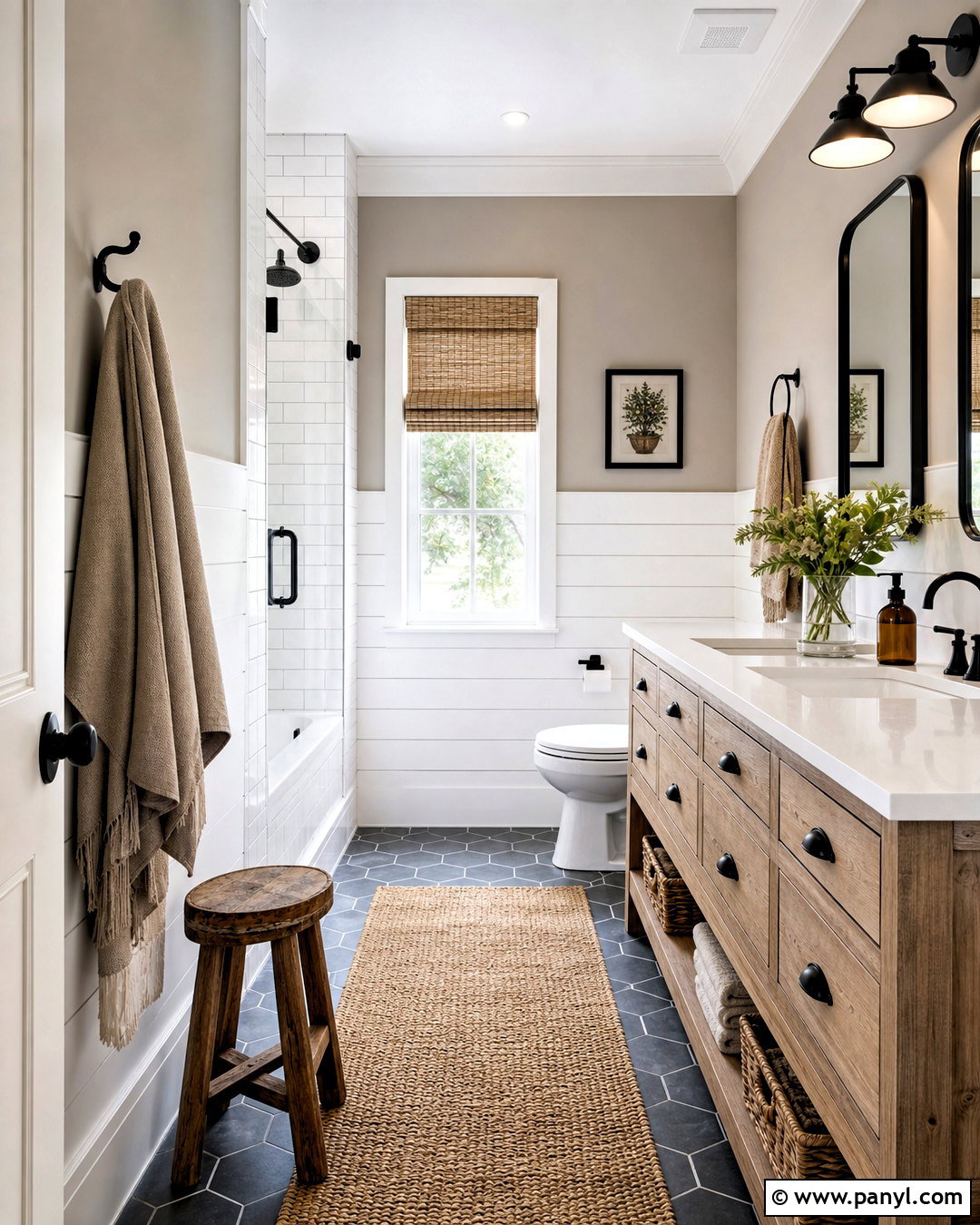
A light gray farmhouse bathroom can feel airy and timeless when the color has a gentle warm undertone. Apply the gray to the upper walls and use white horizontal shiplap or beadboard across the lower half. Anchor the room with a weathered oak vanity, white countertop, and matte black hardware. Large white shower tiles prevent the palette from becoming too busy, while charcoal hexagon floor tile adds definition. Include warm elements through a woven shade, tan runner, wooden stool, and soft beige towels. Natural texture is essential because an entirely gray-and-white room can appear flat. Use warm white light bulbs and place sconces on both sides of the mirror. This spreads light evenly while bringing out the softer qualities of the wall color.
7. Charcoal Gray Farmhouse Bathroom
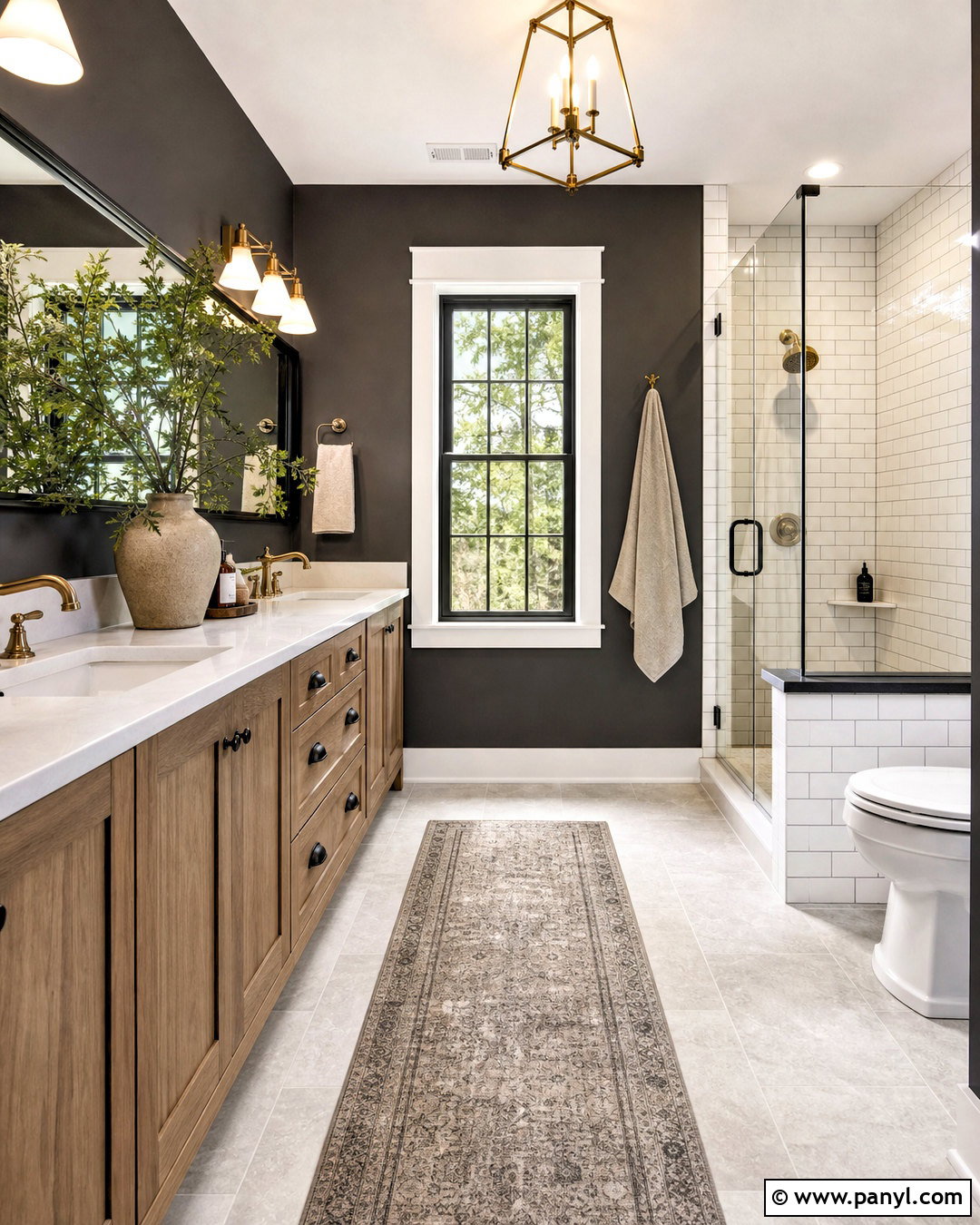
Charcoal gray creates a dramatic farmhouse bathroom that still feels practical and grounded. Paint the walls a deep charcoal, then balance them with bright white trim, a white ceiling, and a pale oak vanity. White subway tile around the shower or tub adds a broad reflective surface that prevents the darker color from overwhelming the room. Use brushed brass faucets and sconces to warm the palette, or choose matte black hardware for a more industrial farmhouse direction. A white quartz counter, light floor tile, and oversized mirror further brighten the design. Add neutral towels and a simple vintage-inspired rug rather than introducing several competing colors. This scheme works best with strong daylight or layered lighting, including ceiling fixtures, vanity sconces, and shower illumination.
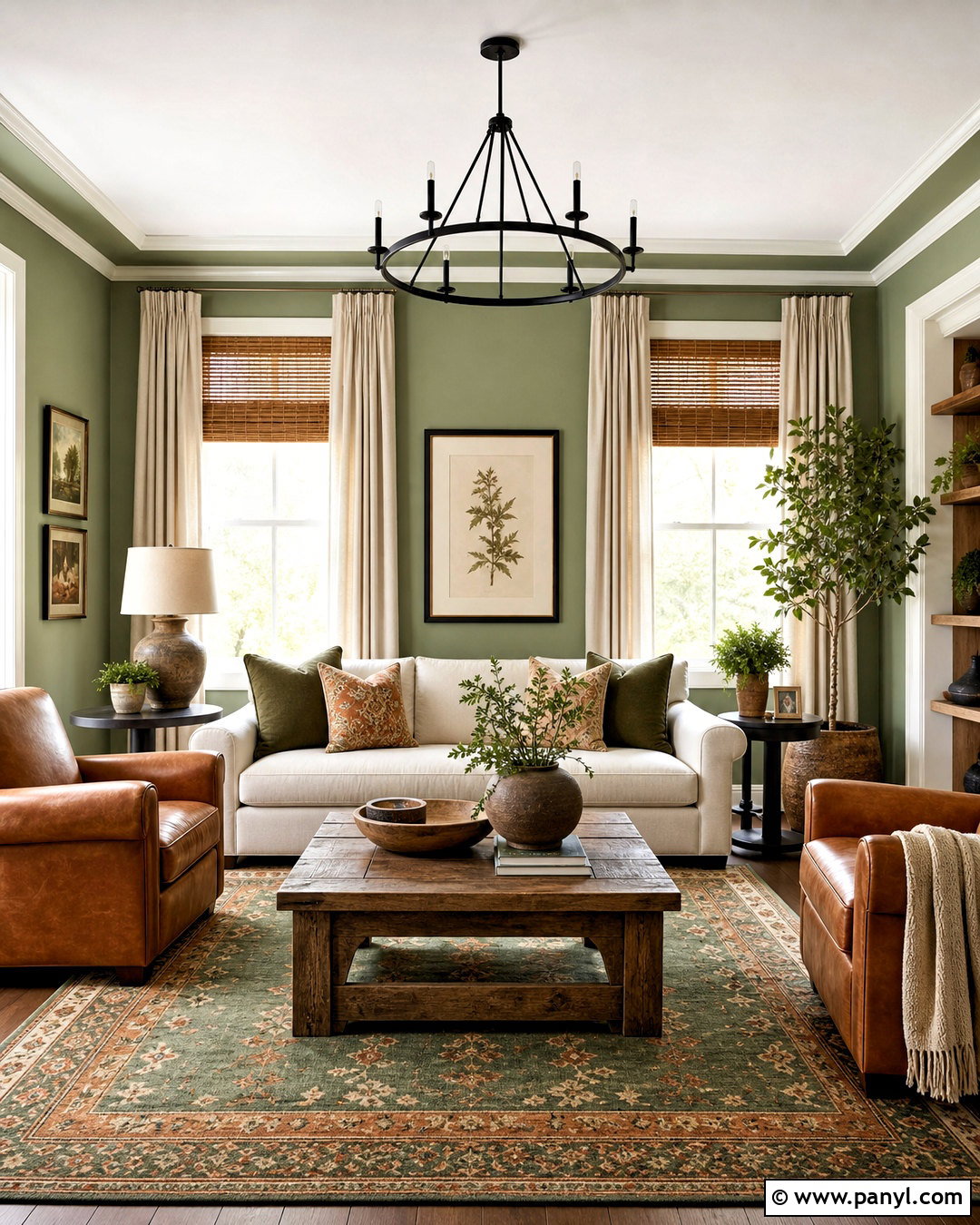

8. Sage Green Farmhouse Bathroom
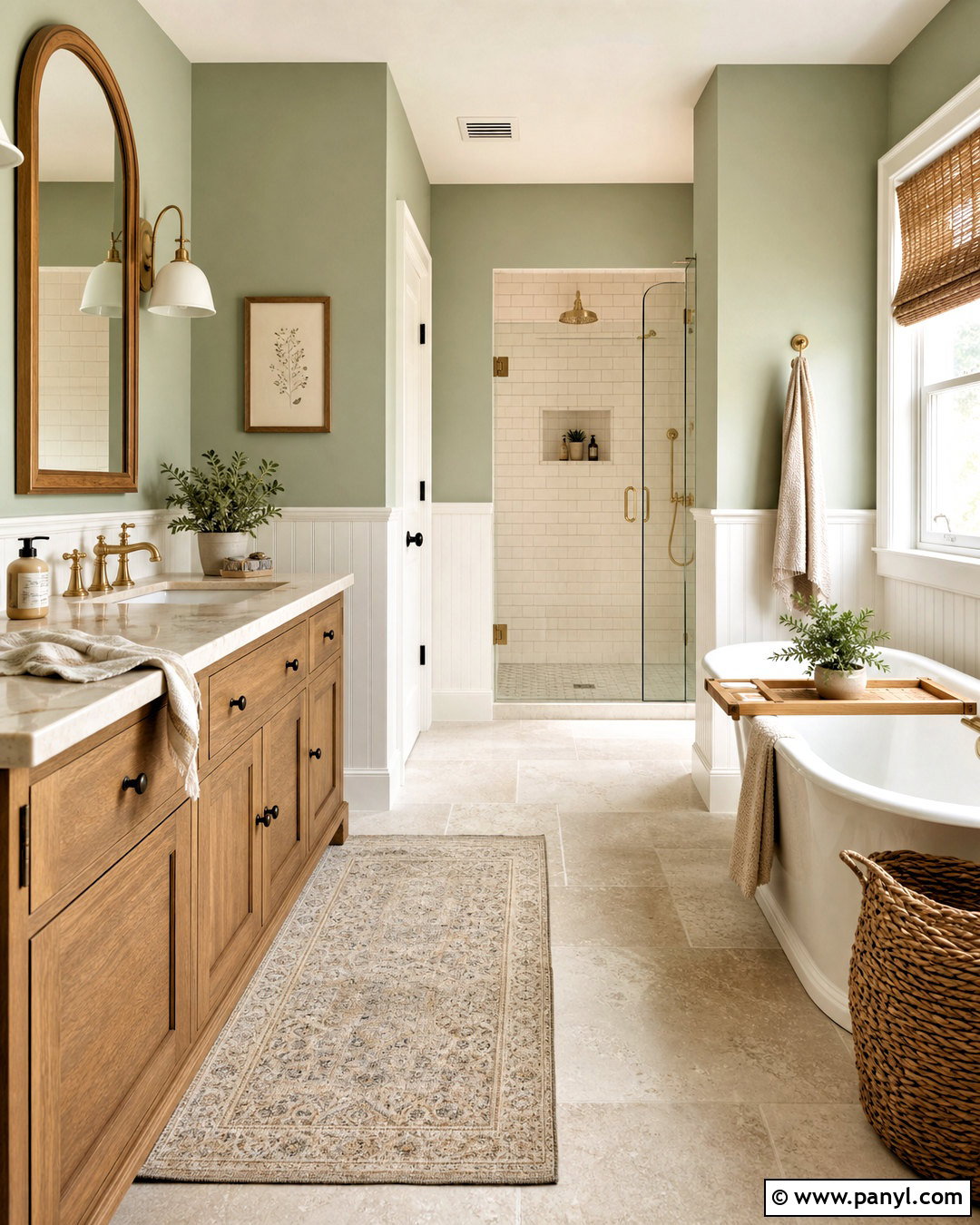
Sage green is one of the easiest colors to blend with classic farmhouse materials. Paint the walls a soft, muted sage and pair them with warm white trim and a natural oak vanity. Choose creamy subway tile, brushed brass fixtures, and limestone-look flooring to create a relaxed botanical palette. A rounded wood-framed mirror softens the room, while woven baskets, off-white towels, and simple greenery repeat its natural character. For a more traditional look, add white beadboard below the green walls. Keep other colors restrained so the sage remains the main feature. This shade works beautifully in bathrooms overlooking a yard or garden because it visually connects the room with the outdoors. Sample several greens to avoid versions that appear too minty under artificial light.
9. Olive Green Farmhouse Bathroom
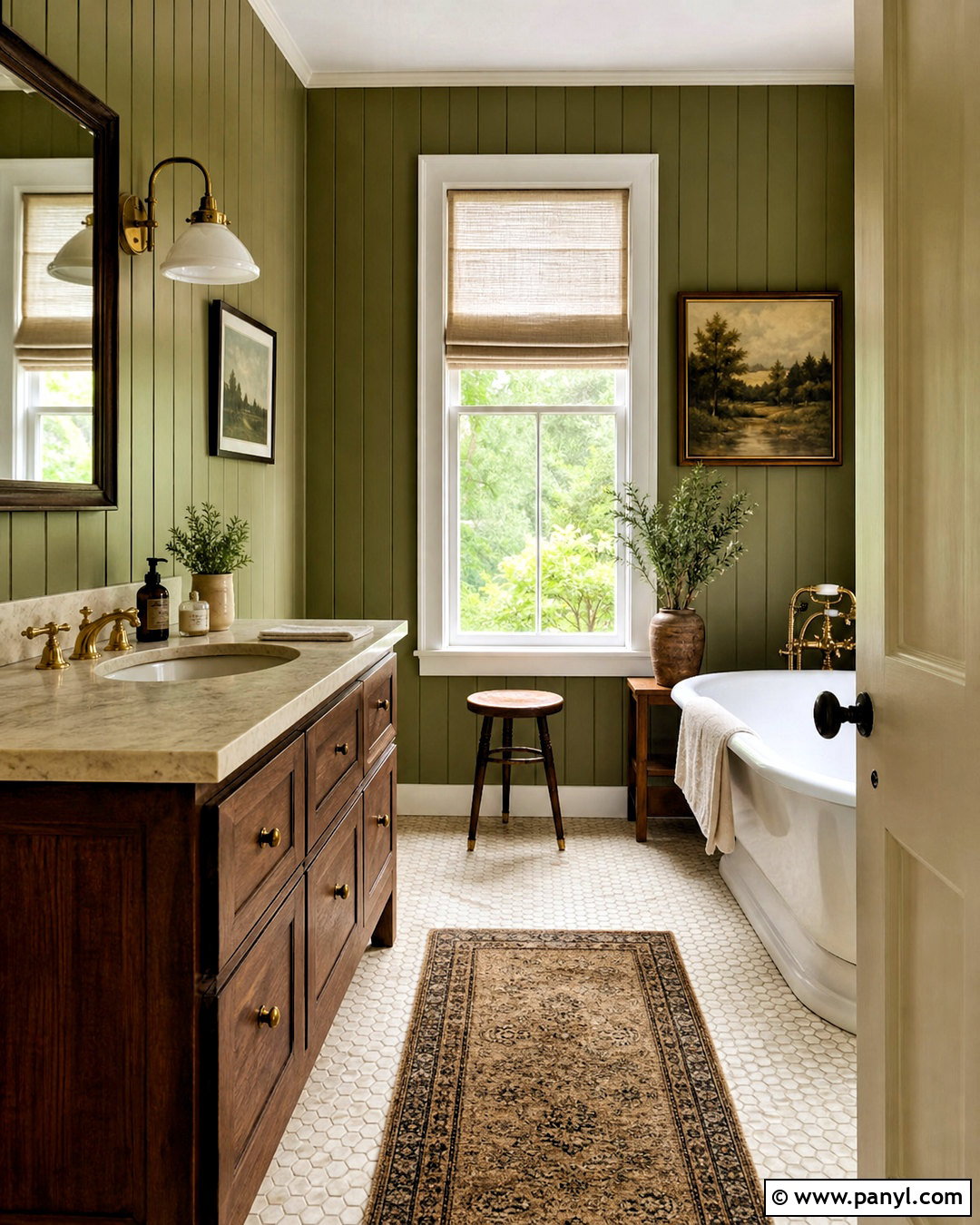
Muted olive green gives a farmhouse bathroom an earthy, established appearance. Use it on paneled walls or moisture-resistant shiplap, then offset the depth with creamy white trim and a pale stone countertop. A medium walnut vanity adds rich contrast without competing with the green. Choose aged brass faucets, traditional cup pulls, and milk-glass sconces for an updated vintage character. Warm gray floor tile or small cream hexagon tile keeps the foundation neutral. Finish the room with natural linen towels, an antique-style wooden stool, and one simple landscape print. Olive works particularly well in powder rooms, where a deeper color can create a memorable enclosed space. In larger bathrooms, balance the painted surfaces with white tile and generous mirrors to maintain brightness.
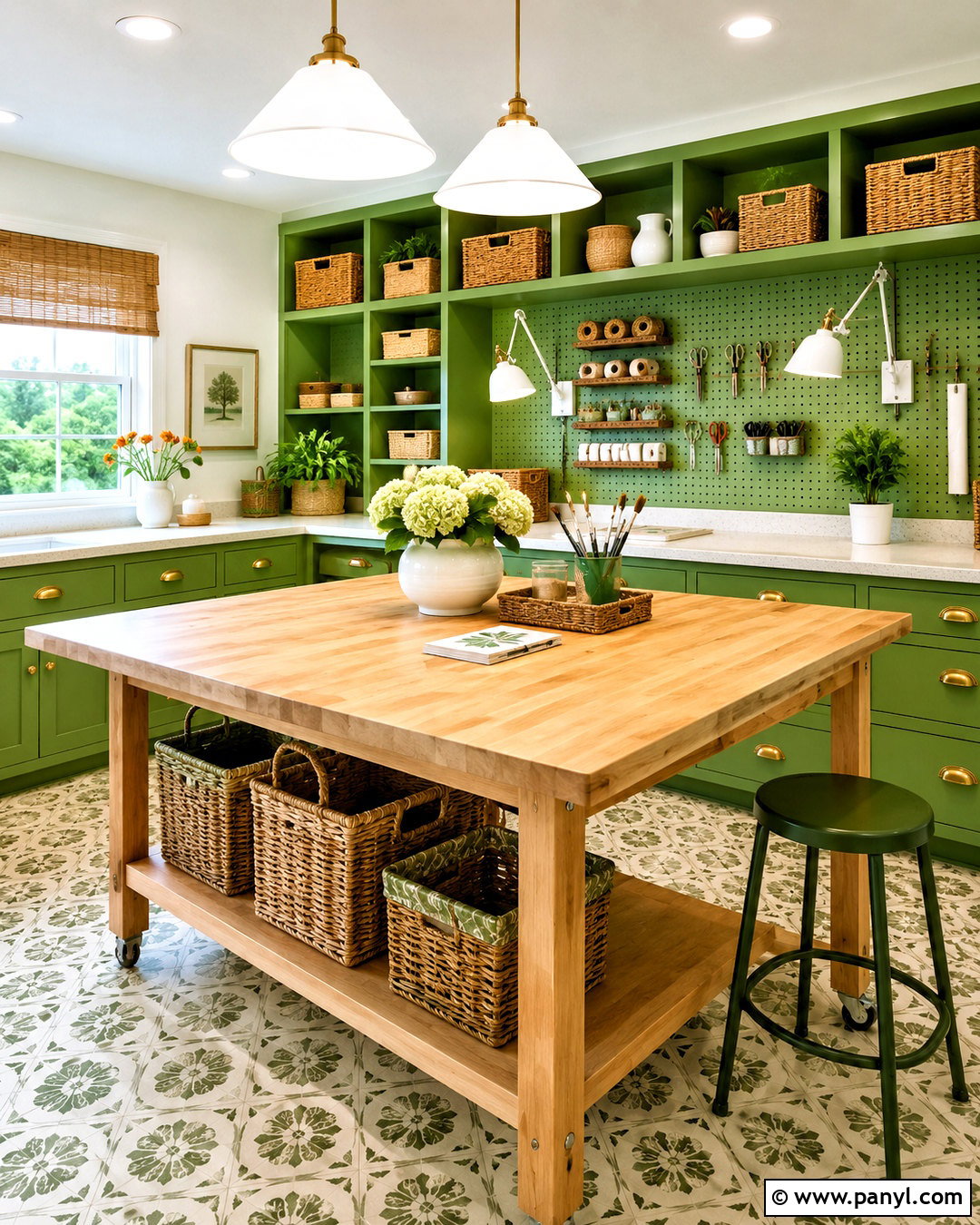
10. Eucalyptus Green Farmhouse Bathroom
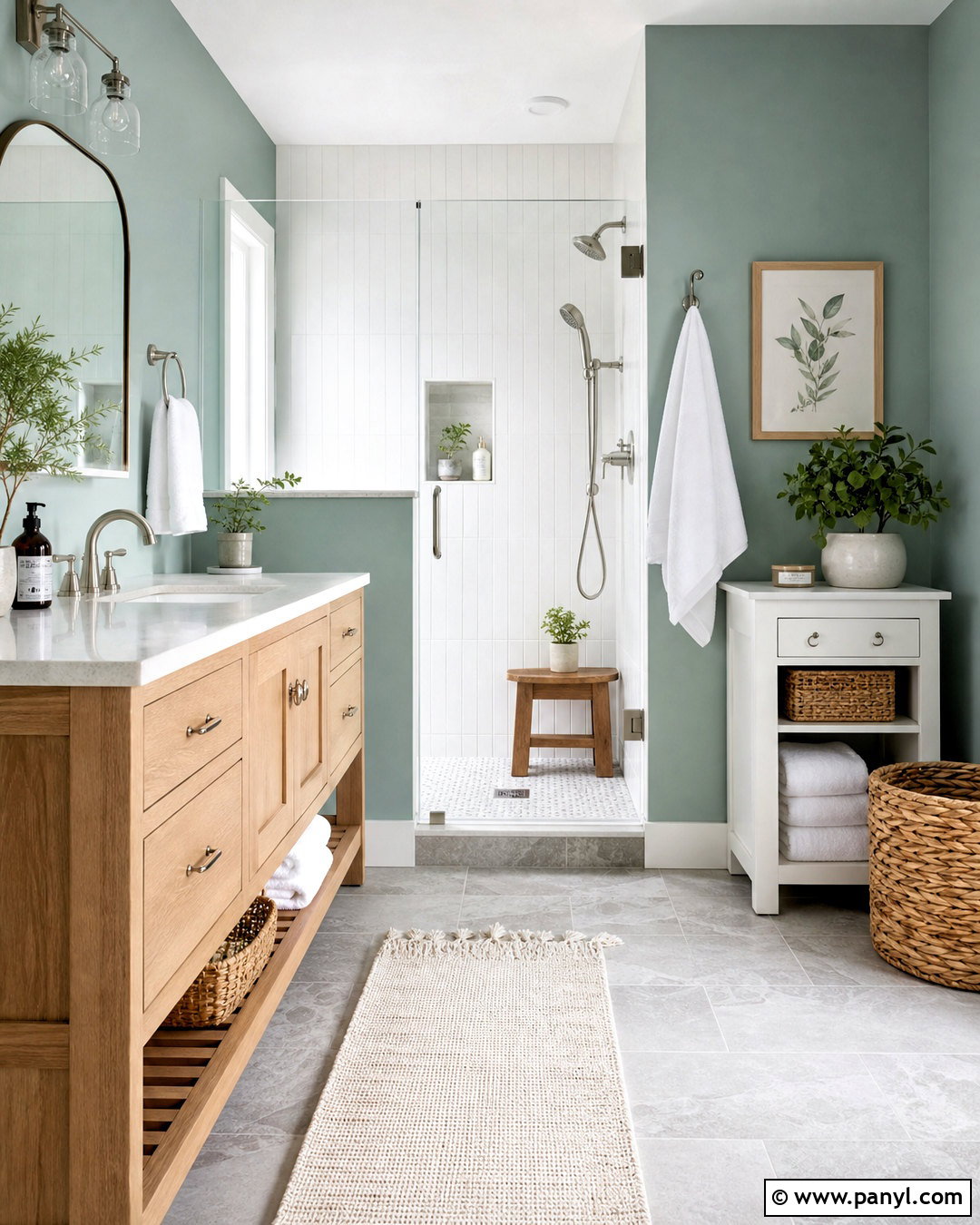
Eucalyptus green sits between sage and blue-green, giving a farmhouse bathroom a fresh but muted personality. Paint the walls in this calming midtone and use soft white on the ceiling, window trim, and doors. Pair it with a white oak vanity, lightly veined quartz counter, and brushed nickel fixtures for a clean modern farmhouse finish. White vertical shower tile draws the eye upward, while pale gray stone flooring provides subtle variation. Add a woven laundry basket, light cotton towels, and minimal ceramic accessories. A frameless mirror keeps the design streamlined, while shaded wall sconces provide softness. Because eucalyptus can shift with changing light, compare the sample beside the shower tile and vanity before painting. The finished room should feel natural rather than brightly green.
11. Dusty Blue Farmhouse Bathroom
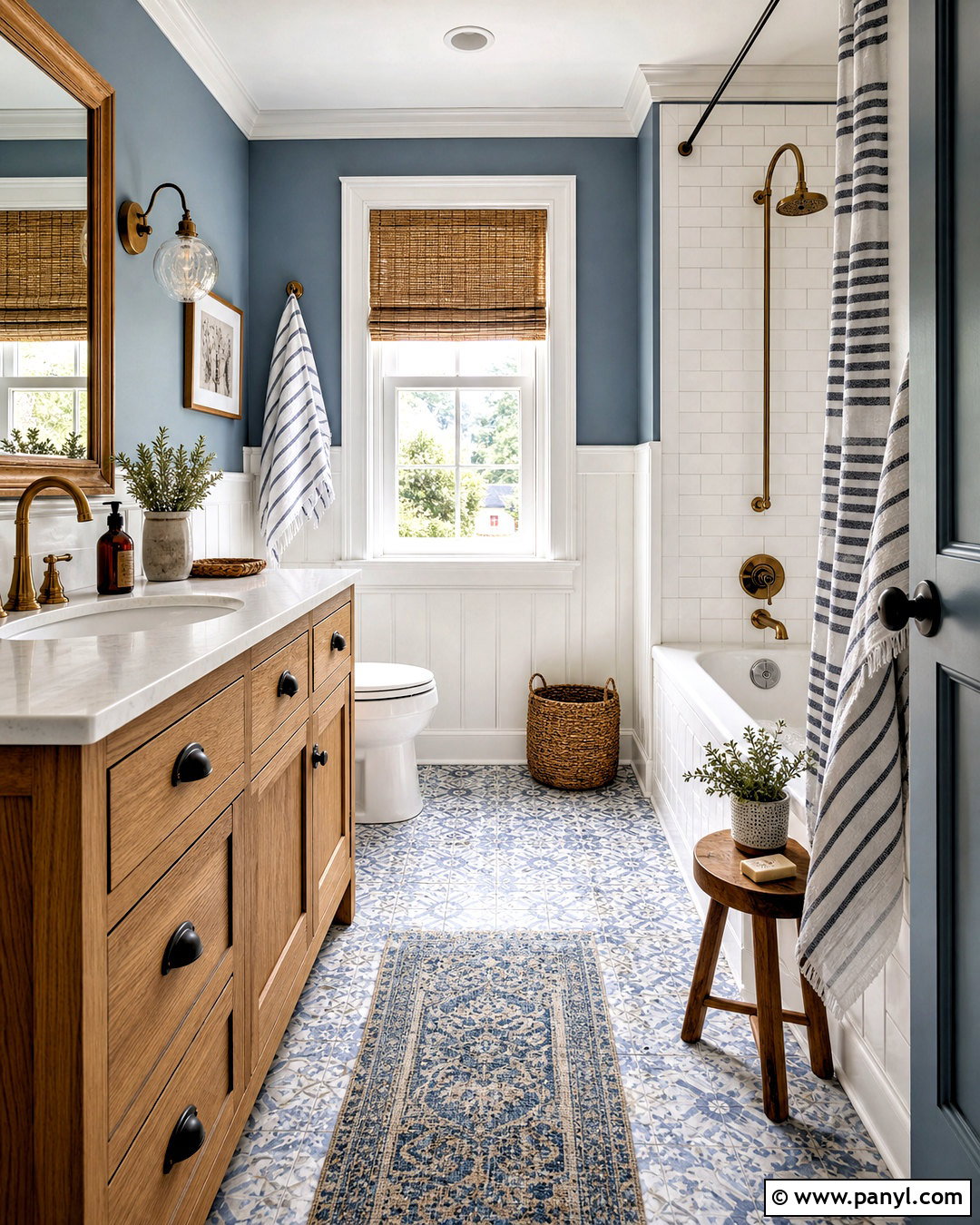
Dusty blue brings quiet color to a farmhouse bathroom while coordinating easily with white fixtures and warm wood. Use a softened blue with noticeable gray undertones on the walls, then add white beadboard around the lower portion of the room. A honey oak vanity, white porcelain sink, and aged brass faucet create a welcoming contrast. Choose white shower tile with pale gray grout and a small patterned floor tile that repeats blue, cream, and charcoal. Finish the space with a simple wood-framed mirror, striped towels, and a natural woven shade. Dusty blue is especially attractive in bathrooms with abundant daylight, where its muted quality becomes more visible. Avoid icy blue accessories; cream, tan, and natural brown will make the complete palette feel warmer and more farmhouse-inspired.
12. Slate Blue Farmhouse Bathroom
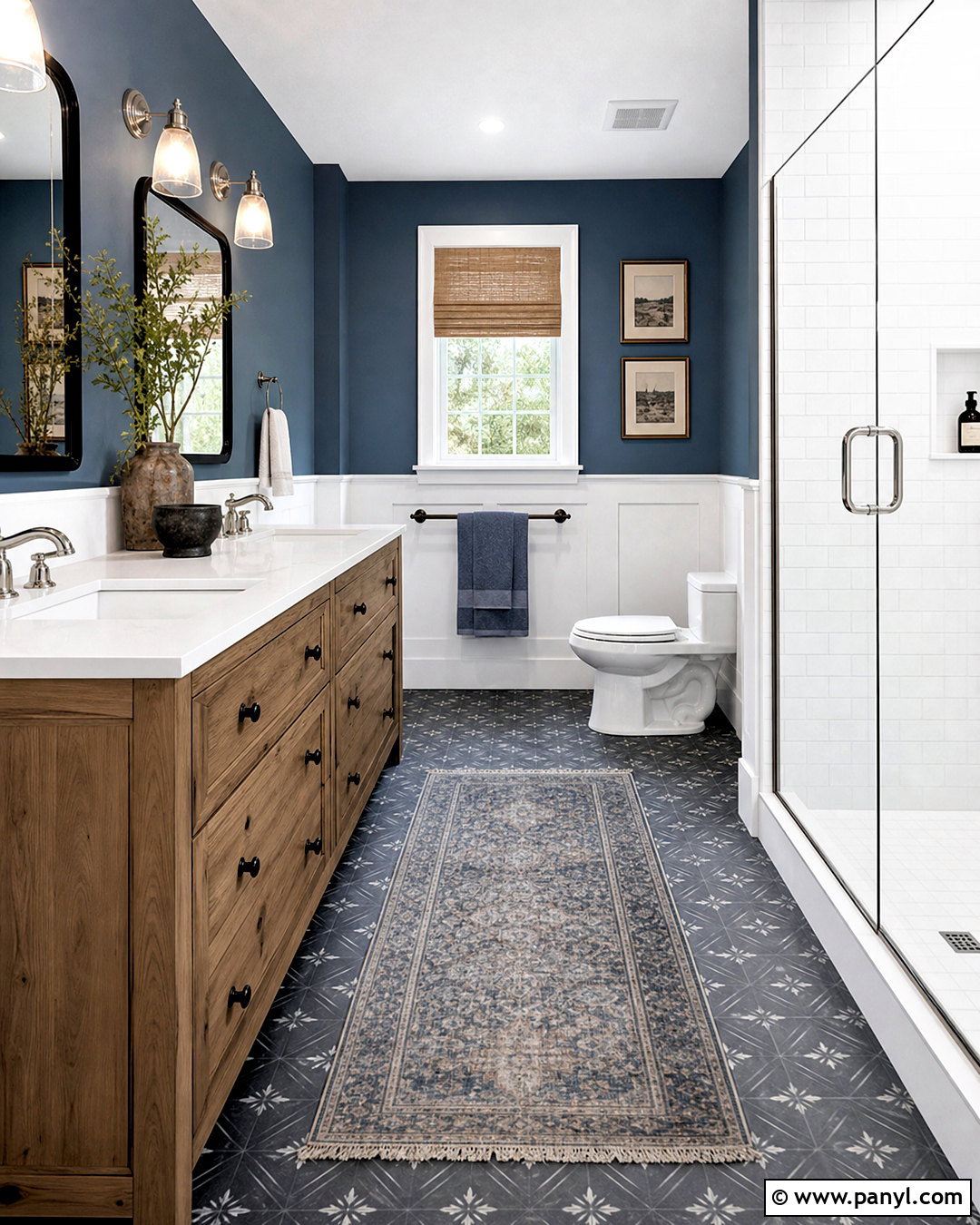
Slate blue offers more depth than dusty blue but remains softer than navy. Apply it to the walls above white board-and-batten paneling for a balanced farmhouse bathroom with clear architectural detail. Use a medium-tone oak vanity, white stone countertop, and polished nickel fixtures to keep the room bright. The shower can feature elongated white tile, while the floor uses charcoal and cream patterned porcelain. A black-framed mirror provides definition without making the palette overly dark. Add white towels, a woven hamper, and a faded blue runner to connect the different surfaces. Slate blue works well in both family and guest bathrooms because it feels colorful yet restrained. Keep the ceiling white and include generous vanity lighting so the paint maintains its blue character rather than reading as dark gray.
13. Navy Blue Farmhouse Bathroom

Navy blue makes a confident farmhouse bathroom statement when it is balanced with plenty of warm white. Use navy on the vanity and one paneled feature wall, while keeping the remaining walls creamy white. Add a white quartz counter, polished brass hardware, and a wide wood-framed mirror for warmth. White subway tile in the shower supports the traditional farmhouse look, and light oak flooring prevents the navy from feeling heavy. Repeat the color through a narrow striped rug or small ceramic accessories rather than covering every surface. In a powder room, navy can also wrap all four walls for a richer effect. Choose strong overhead lighting and clear glass sconces. The result should combine classic color contrast with relaxed wood, woven, and vintage-inspired details.
14. Pale Aqua Farmhouse Bathroom
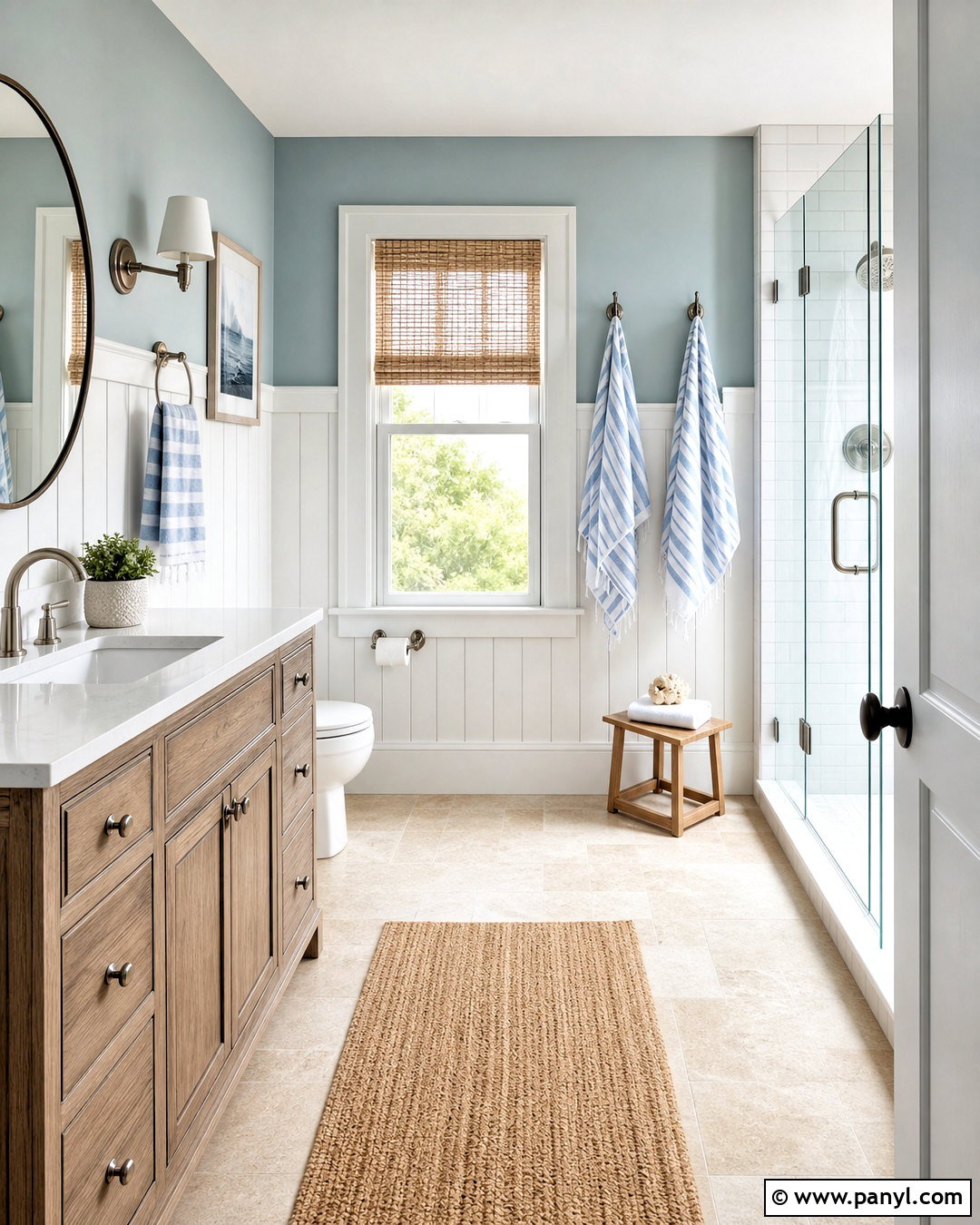
Pale aqua creates a light farmhouse bathroom with a subtle coastal influence. Select a muted aqua that contains gray rather than a bright tropical blue. Paint the upper walls and combine it with white tongue-and-groove paneling below. A washed oak vanity, white ceramic sink, and brushed nickel faucet continue the fresh palette. Choose light limestone-look flooring and simple white shower tile to keep the room uncluttered. A woven shade, cotton shower curtain, and striped aqua-and-cream towels add texture without becoming themed decor. Introduce one or two black accents, such as the mirror frame or cabinet knobs, for definition. This color works especially well in a small bathroom because the blue-green undertone adds personality while still maintaining a bright, open visual effect.
15. Soft Blush Farmhouse Bathroom
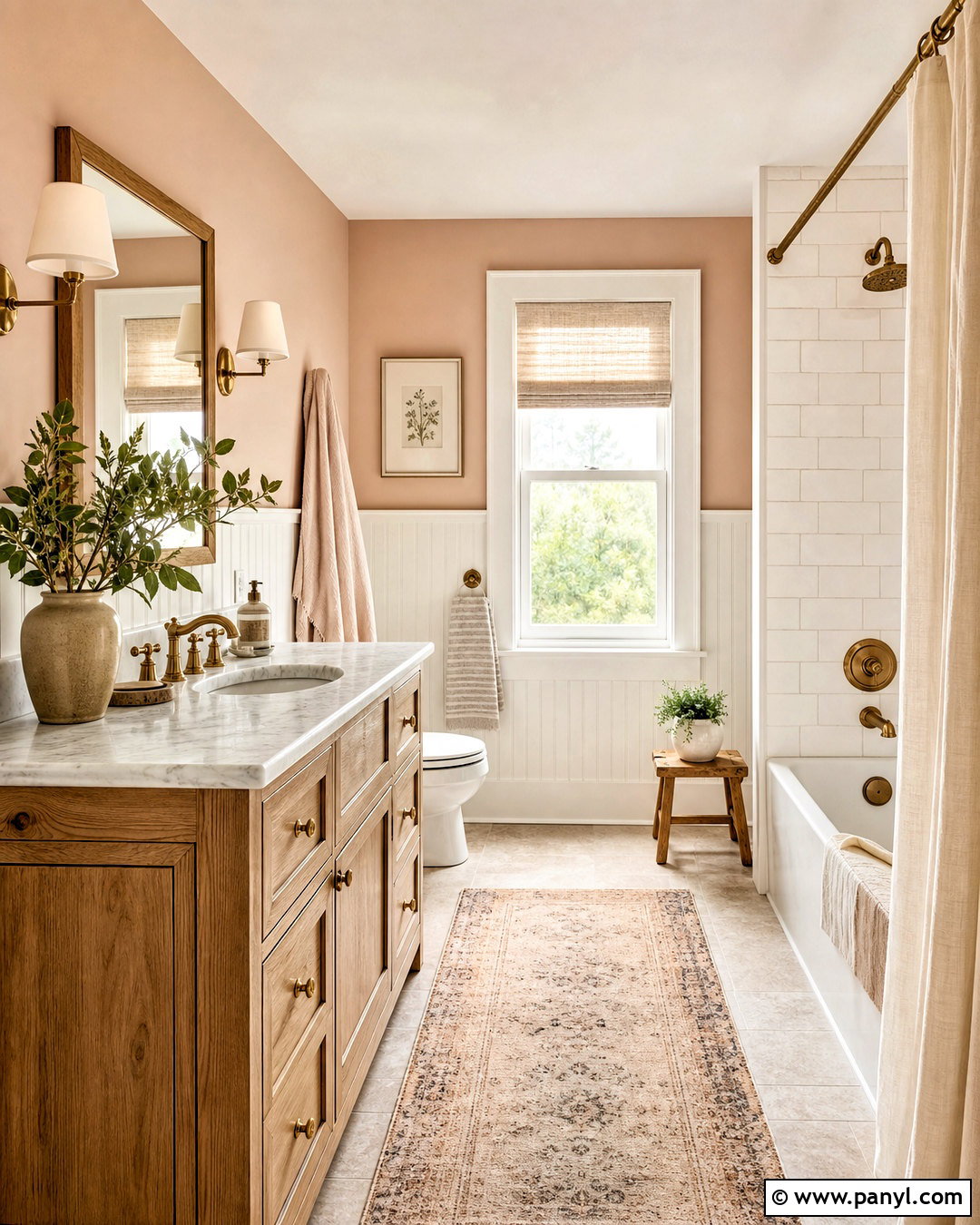
Soft blush can make a farmhouse bathroom feel warm, gentle, and surprisingly neutral. Choose a dusty pink with beige or clay undertones rather than a sugary pastel. Use it across the upper walls, then add creamy white beadboard and matching trim below. A natural oak vanity, white marble-look countertop, and aged brass fixtures reinforce the warm color story. Select ivory shower tile and pale taupe flooring instead of cool white and gray surfaces. Linen towels, a faded patterned runner, and a small ceramic vase complete the comfortable design. Black accents should be used sparingly, perhaps on a narrow mirror frame. Soft blush is particularly effective in powder rooms and guest bathrooms where a little color can make the compact space feel more distinctive and thoughtfully finished.
16. Dusty Rose Farmhouse Bathroom
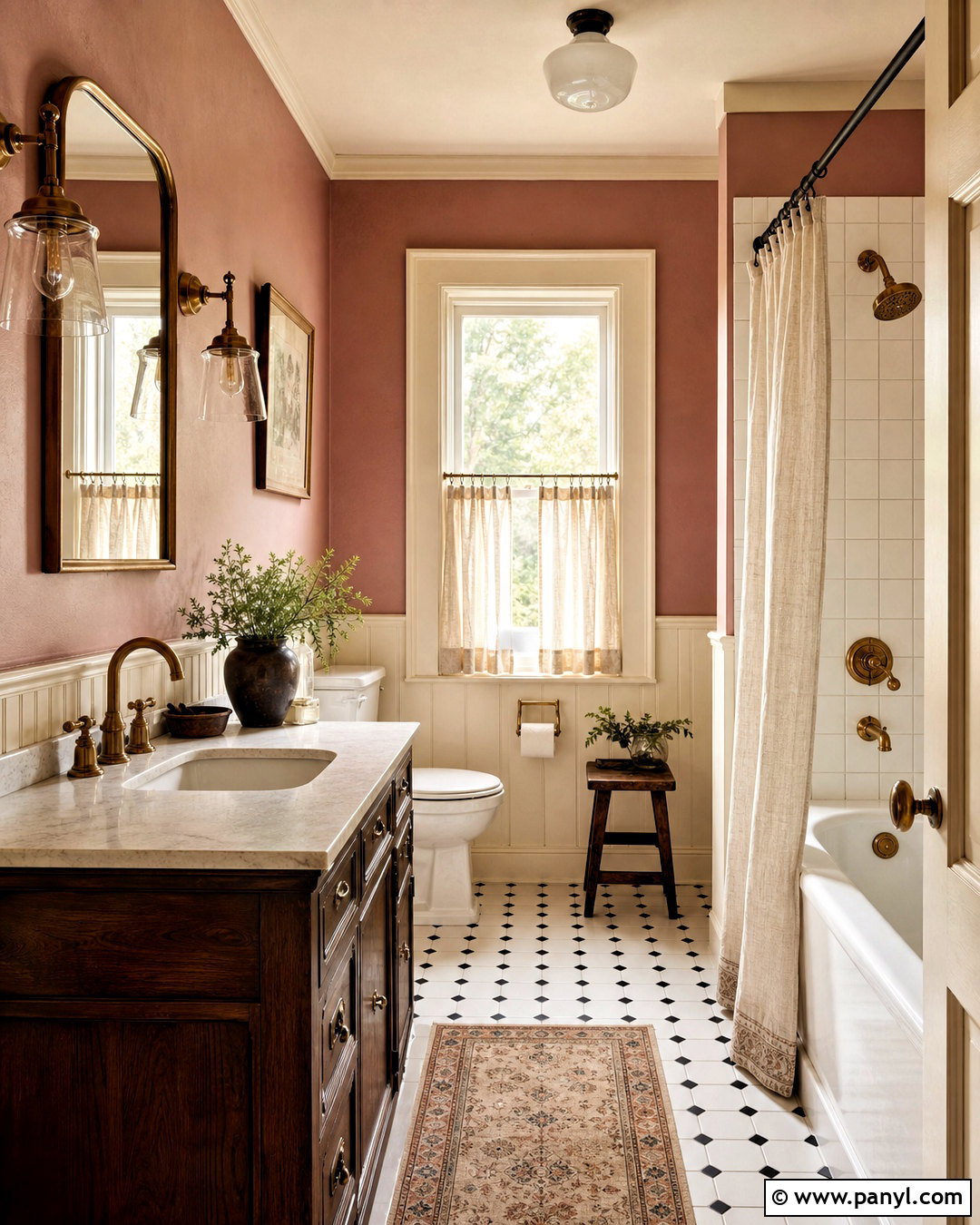
Dusty rose provides a deeper alternative to pale blush and pairs beautifully with vintage farmhouse details. Paint the walls in a muted rose with brown undertones, then use warm ivory on the ceiling and trim. Anchor the room with a dark walnut vanity, creamy stone countertop, and antique brass hardware. White square shower tile keeps the design from becoming too heavy, while small black-and-white floor tile introduces traditional contrast. Add an arched brass mirror, linen café curtain, and off-white towels for softness. A framed botanical print can bring in small touches of green. Since dusty rose is already expressive, avoid adding multiple strong accent colors. The finished bathroom should feel layered and historic rather than overly feminine or decorative, with natural materials balancing the painted walls.
17. Clay Beige Farmhouse Bathroom
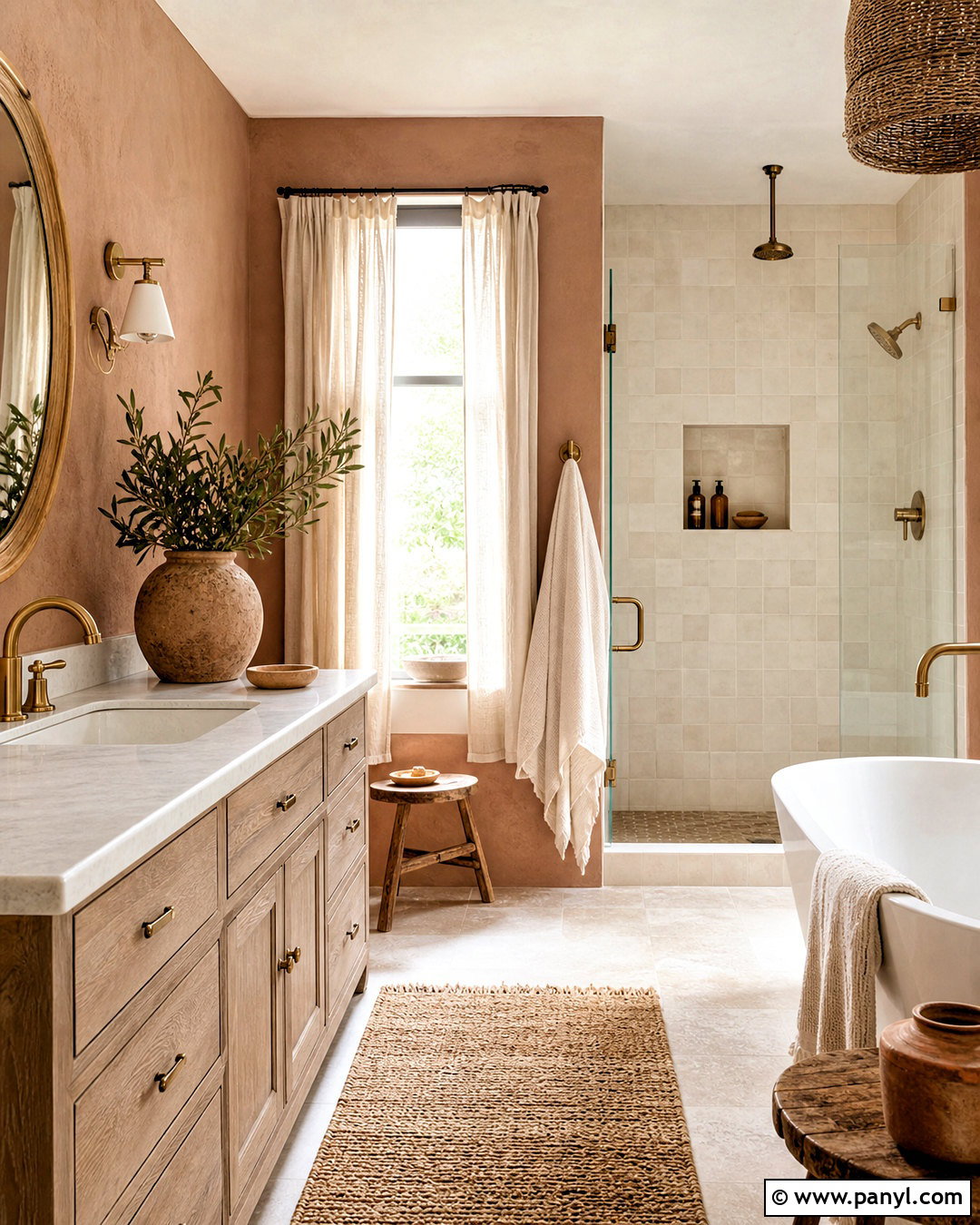
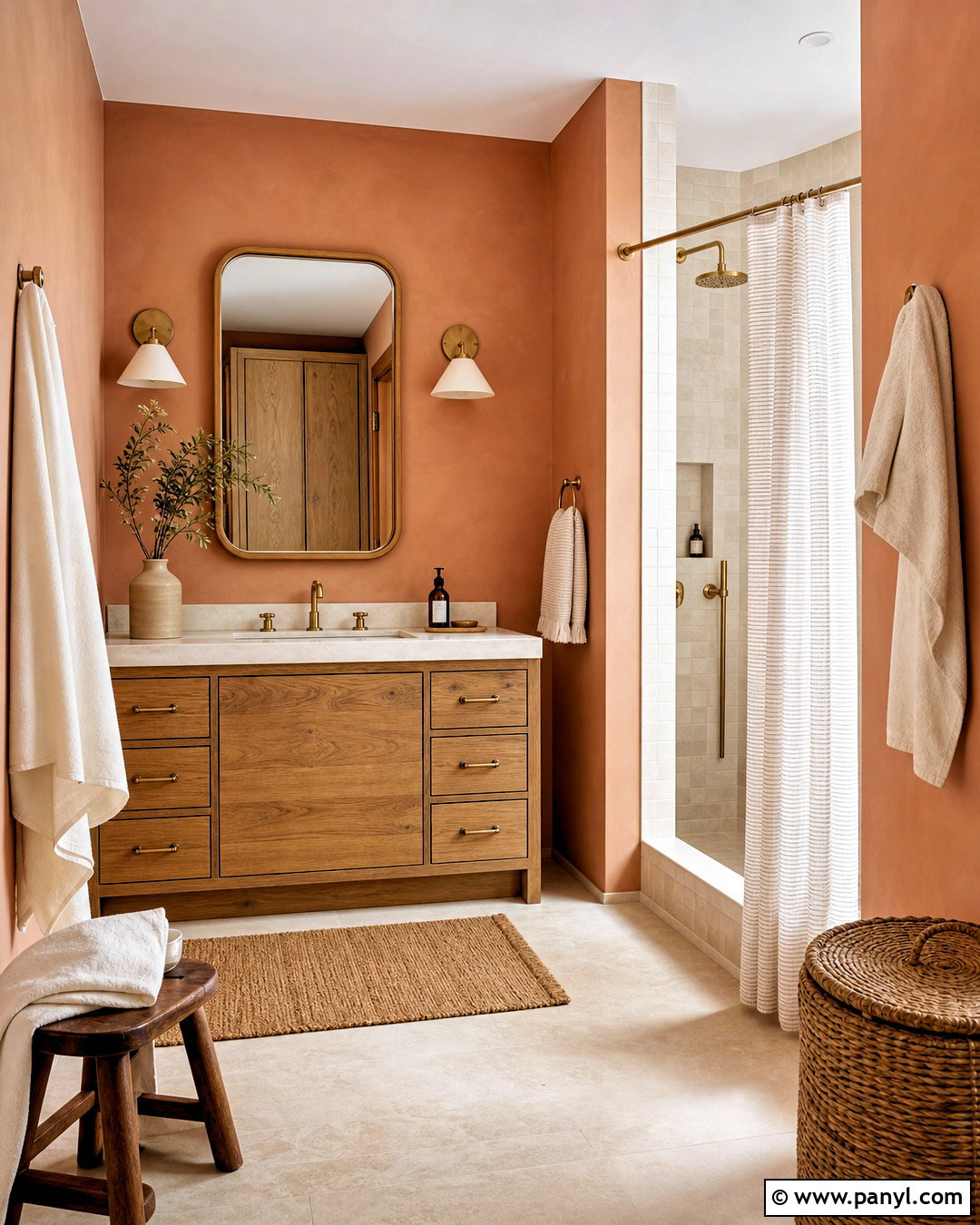
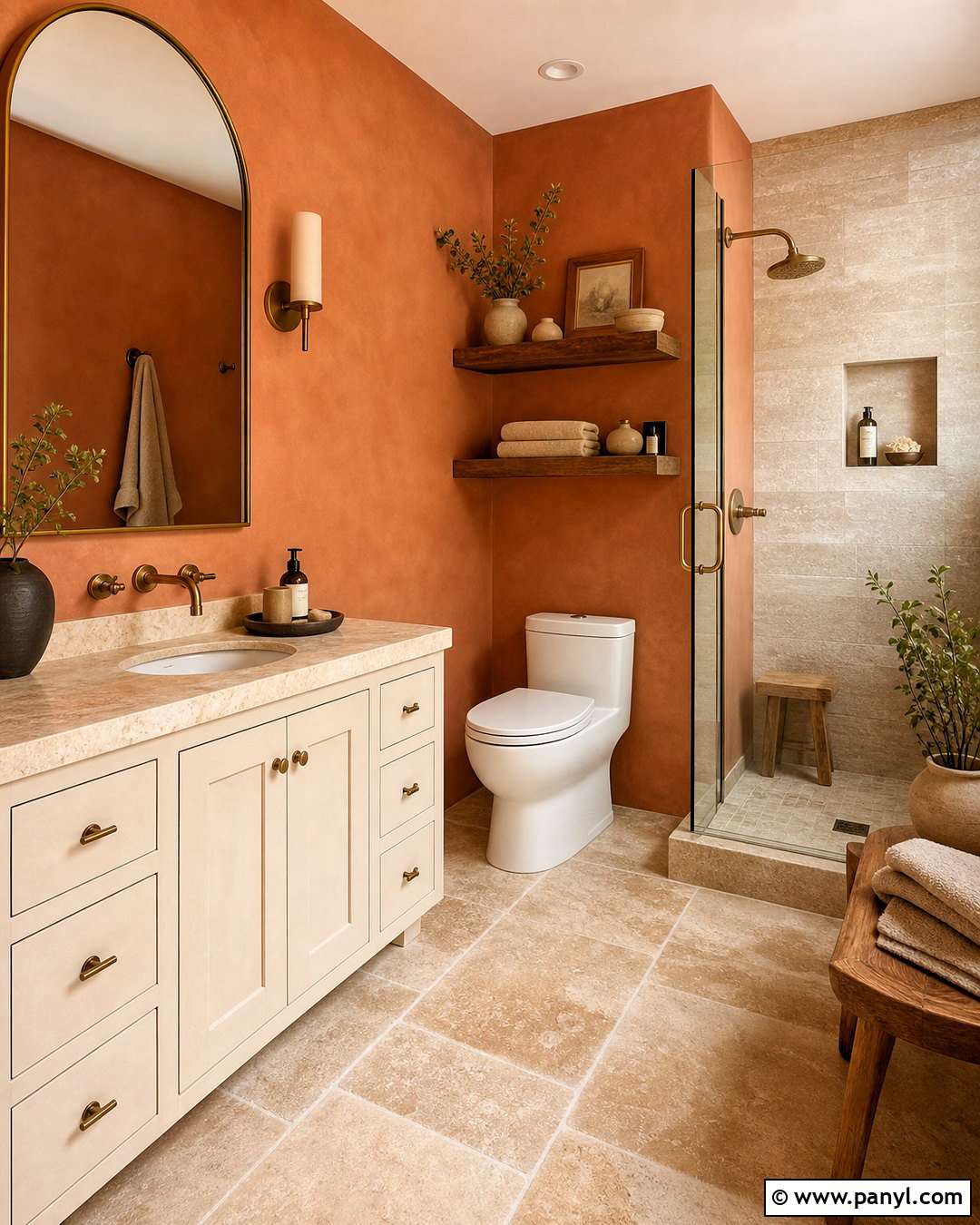
Clay beige gives a farmhouse bathroom sun-warmed color without the intensity of orange or red. Select a subdued terracotta-beige shade and apply it to smooth plaster-style walls. Pair it with a white oak vanity, creamy quartz counter, and brushed brass fixtures for a cohesive earthy design. Use warm white shower tile and sandy porcelain flooring to keep the palette connected. A rounded mirror, linen shower curtain, woven rug, and handmade-look pottery add texture. Black can appear in small doses through cabinet pulls or a ceiling fixture, but brown and brass should remain dominant. Clay beige works especially well with natural daylight and creates an inviting transition between traditional farmhouse and Mediterranean influences. Keep trim soft white so the contrast feels comfortable rather than sharp.
18. Buttercream Yellow Farmhouse Bathroom
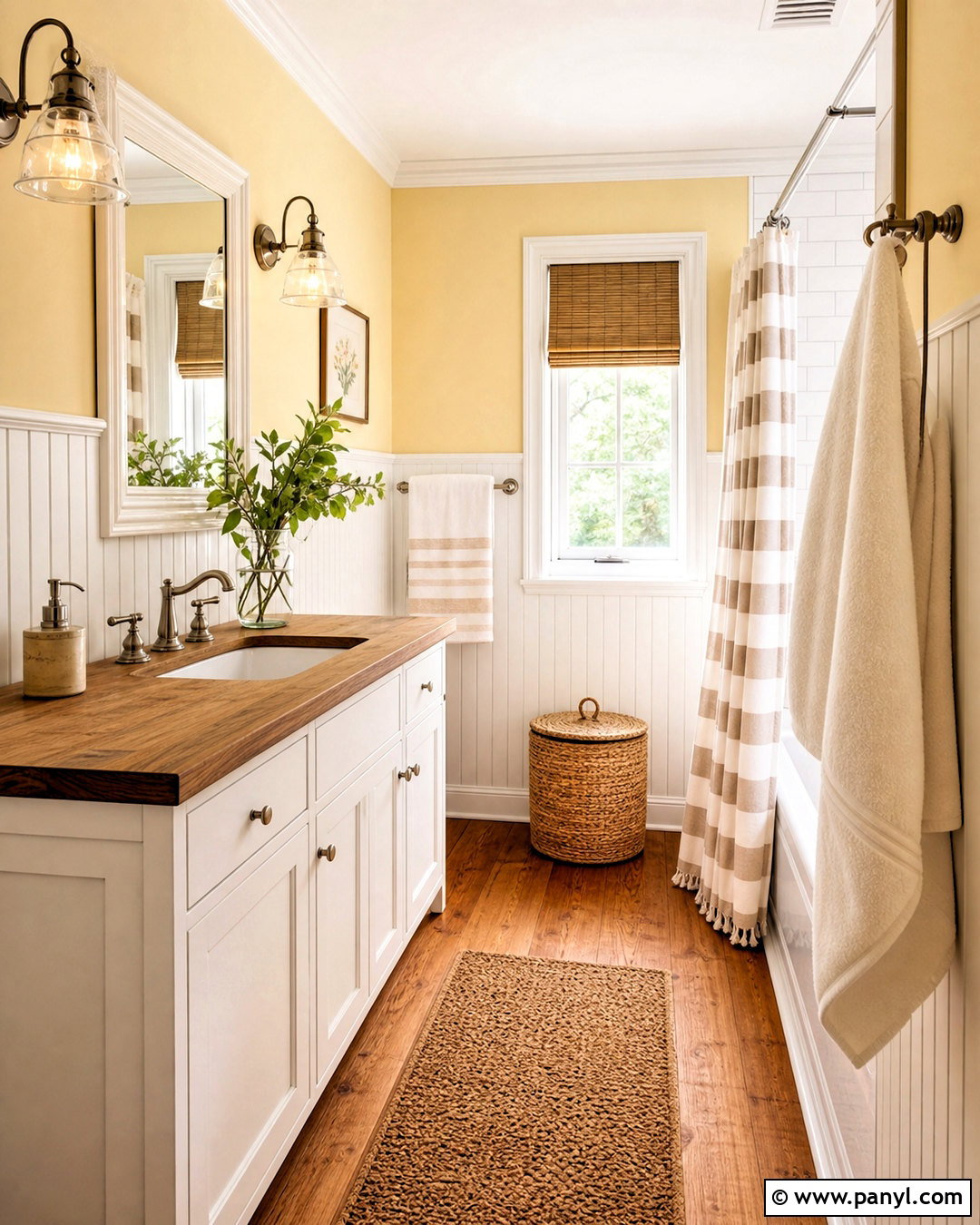
Buttercream yellow brings cheerful warmth to a traditional farmhouse bathroom. Choose a pale, softened yellow with creamy undertones and use it above white beadboard. A painted white vanity, butcher-block-style counter, and brushed nickel faucet create a practical cottage farmhouse look. Include classic white shower tile and warm honey oak flooring to reinforce the sunny palette. A simple gingham or narrow-striped shower curtain can add pattern without overwhelming the small room. Finish with a vintage-inspired mirror, glass sconces, wicker basket, and white cotton towels. Buttercream is best used in a room that needs warmth, particularly one with cool northern light. Avoid pairing it with strong yellow-toned bulbs. Balanced white lighting helps the paint look creamy and fresh instead of overly golden.
19. Soft Black Farmhouse Bathroom
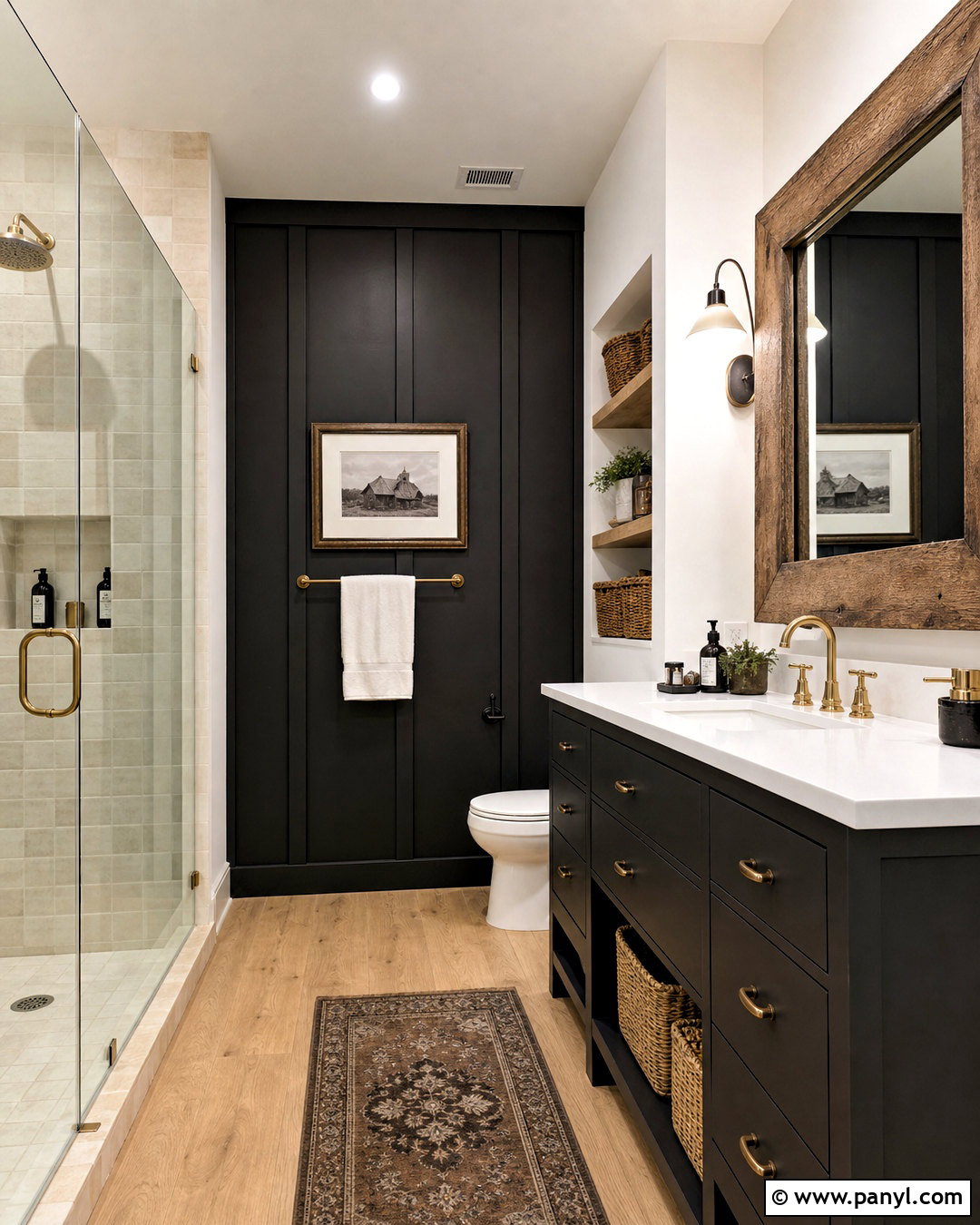
Soft black creates bold farmhouse character when its undertones and surrounding finishes are carefully balanced. Use an off-black or deep charcoal on one board-and-batten wall, the vanity, or the entire powder room. Pair it with warm white trim, a white porcelain sink, and pale wood flooring. A reclaimed oak mirror and woven storage baskets soften the contrast, while unlacquered brass fixtures provide a warm highlight. Keep shower tile light and simple, using creamy white rectangles or squares with matching grout. Add natural linen towels and one small green plant rather than several decorative accents. Soft black is most successful when texture remains visible, so paneled walls are ideal. Bright vanity lighting and a light ceiling prevent the completed room from feeling closed in.
20. Warm Brown Farmhouse Bathroom
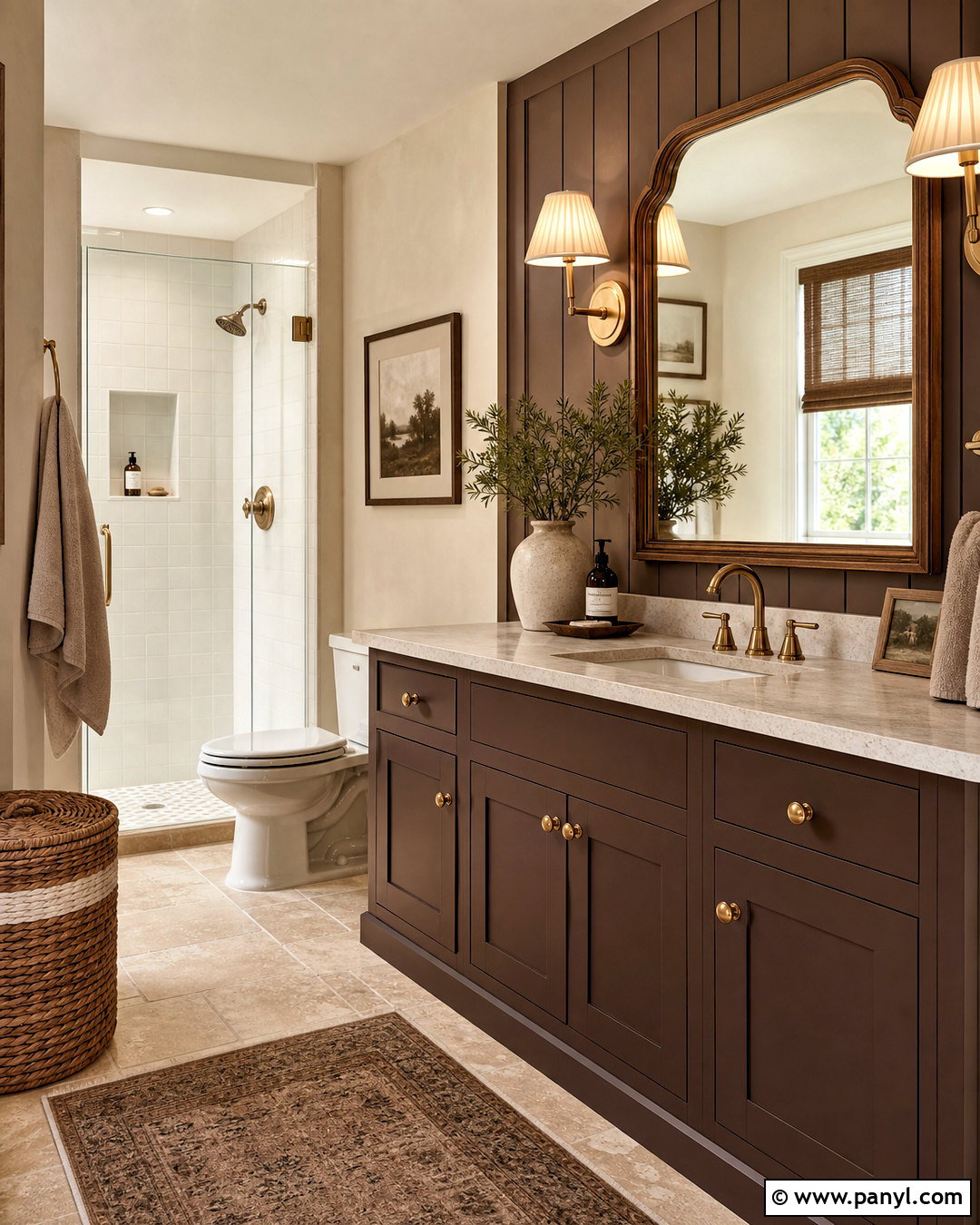
Warm brown creates a rich, nature-focused farmhouse bathroom that feels grounded rather than overly rustic. Paint the vanity and a paneled feature wall in a medium cocoa brown, then balance them with creamy plaster-colored walls. Choose a light quartz countertop, aged brass fixtures, and a large oak-framed mirror. Travertine-look flooring and warm white shower tile continue the earthy palette without making the room too dark. Add oatmeal towels, a woven hamper, and a simple linen window shade. Brown works best when several wood tones are edited carefully, so avoid filling the room with mismatched stained pieces. Keep the ceiling, doors, and most tile light. The finished bathroom will feel comfortable, durable, and connected to the natural materials that define farmhouse design.
Conclusion:
Choosing among these **20 farmhouse bathroom paint colors** becomes easier when you build a complete palette instead of selecting the wall shade by itself. Warm whites, greiges, and putty tones create flexible foundations, while sage, slate blue, clay, and dusty rose introduce controlled color. Deeper charcoal, navy, olive, and brown work well when balanced with pale tile, generous lighting, and natural wood. Always compare paint samples directly with the vanity, flooring, countertop, and metal finishes. Check them during morning, afternoon, and evening light before making a final decision. Most importantly, allow natural textures and practical fixtures to support the color. That thoughtful combination creates a farmhouse bathroom that feels warm, functional, personal, and easy to enjoy.

Related Ideas and Inspiration:
Leave a Reply