
Oak cabinets bring natural warmth, visible grain, and lasting character to kitchens of every size. The best 20 oak cabinet kitchen ideas balance that warmth with thoughtful countertops, backsplashes, flooring, hardware, lighting, and wall colors. Pale white oak can create a calm modern room, while honey or red oak works beautifully with creamy neutrals and stronger contrasts. Dark-stained oak offers another direction, especially when combined with light stone and streamlined details. Whether you are planning a full remodel or updating existing cabinetry, treat every finish as part of one connected palette. Repeating a few colors and materials will make the entire kitchen feel intentional. Use these practical 20 oak cabinet kitchen ideas to find a complete look that fits your home, budget, and preferred design style.
1. White Oak Cabinets With White Quartz
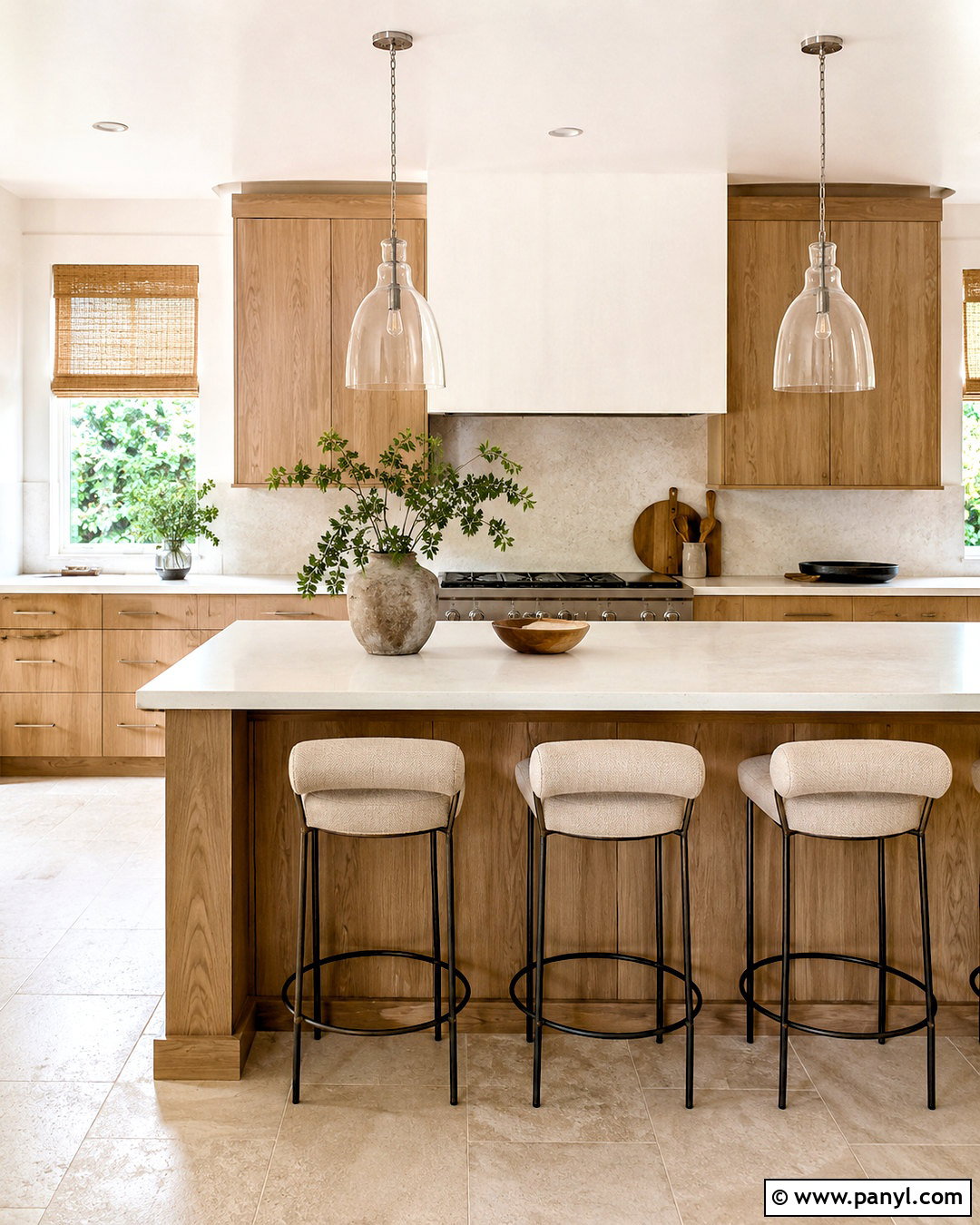
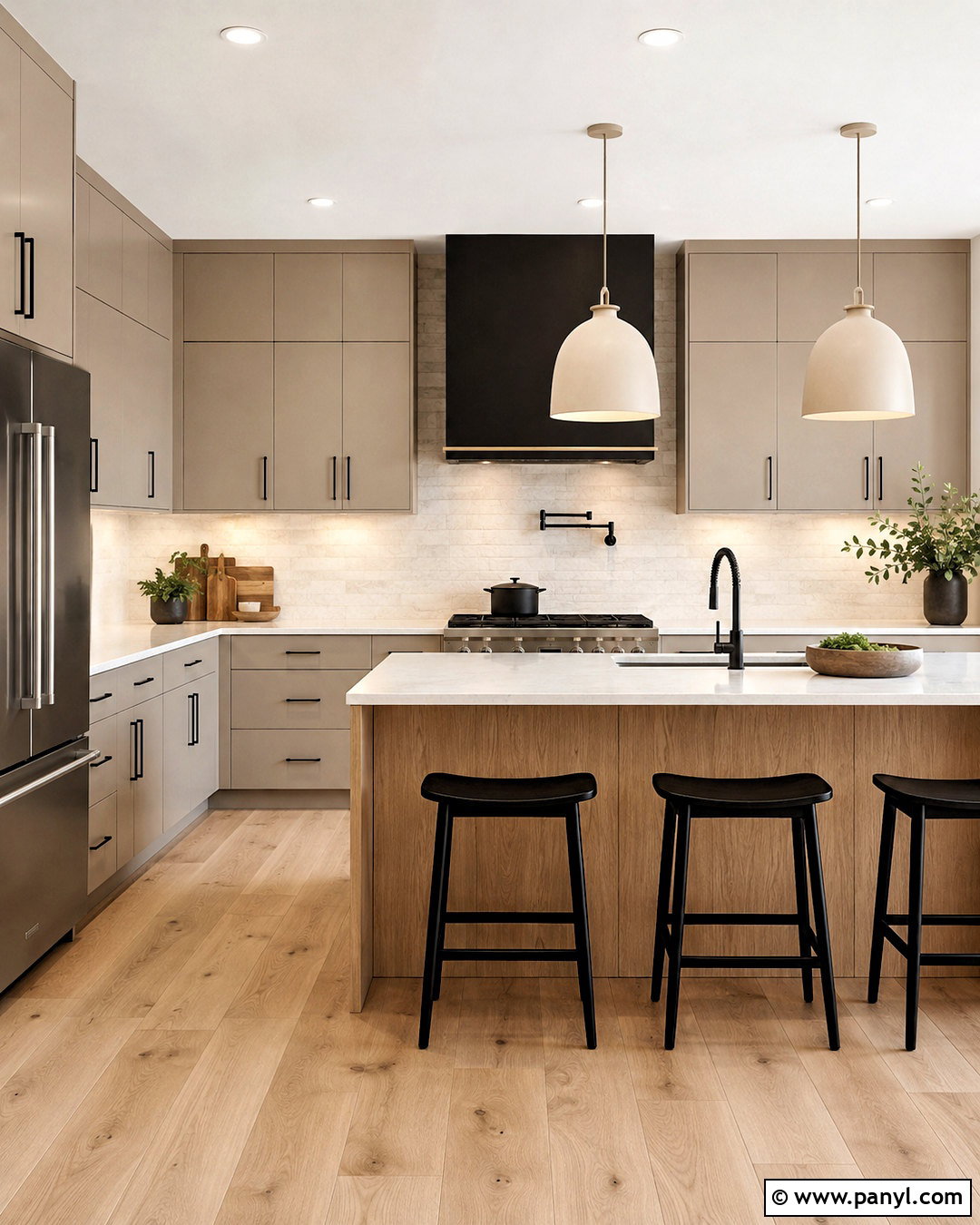
Pale white oak cabinets and clean white quartz create a bright kitchen without making the room feel cold. Choose flat-panel doors with a clear matte finish so the natural grain remains visible. Use warm white quartz with subtle beige veining rather than a stark blue-white surface. Continue the quartz onto a full-height backsplash for a seamless appearance, or install simple creamy white tiles. Light greige walls and large-format limestone-look flooring keep the palette soft. Add brushed nickel pulls, a stainless steel faucet, and minimal glass pendants for quiet shine. A wide island with comfortable taupe stools can provide seating and prep space. Finish the room with woven shades, pale ceramics, and a few leafy plants for gentle color.
2. Honey Oak Cabinets With Cream Countertops
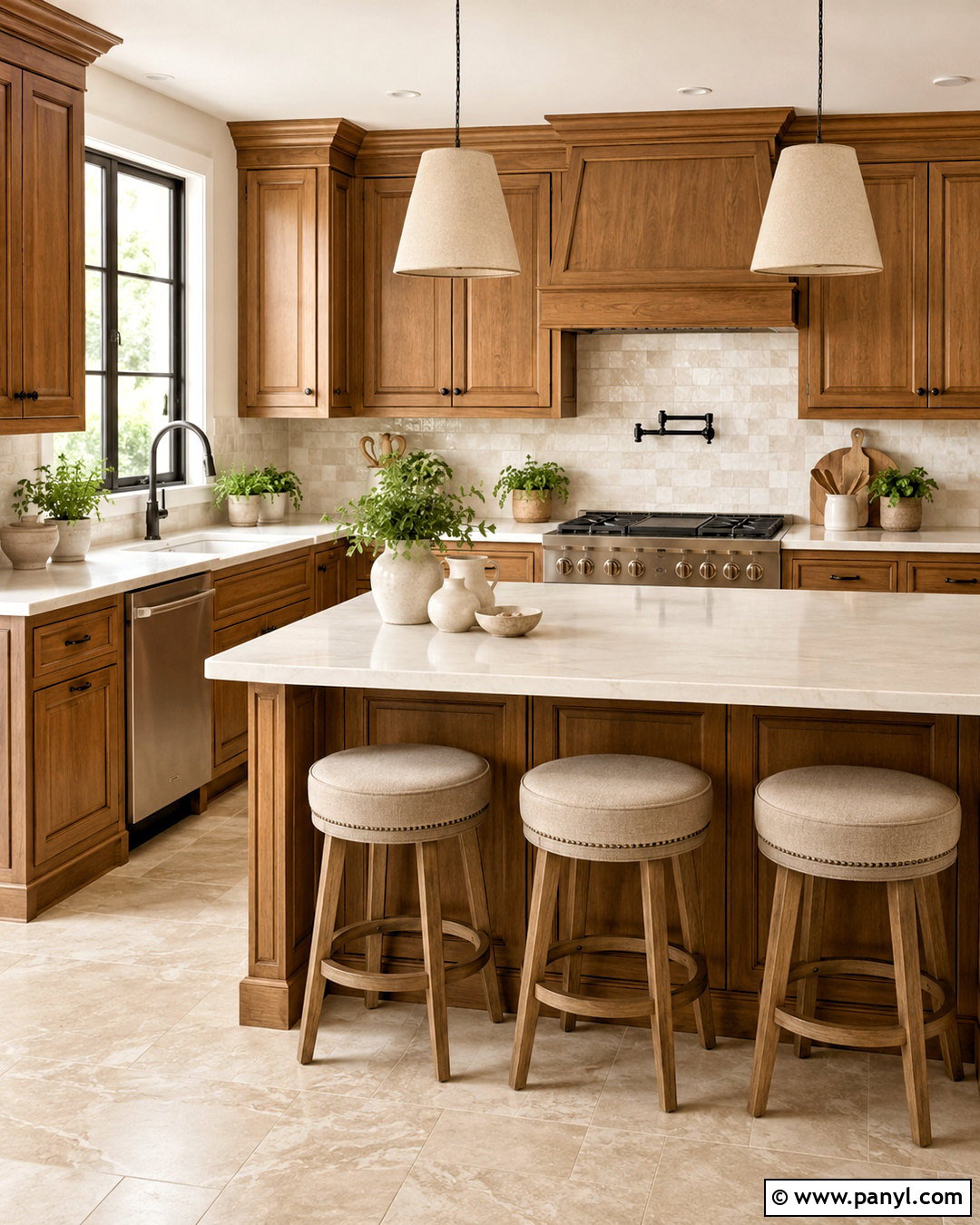
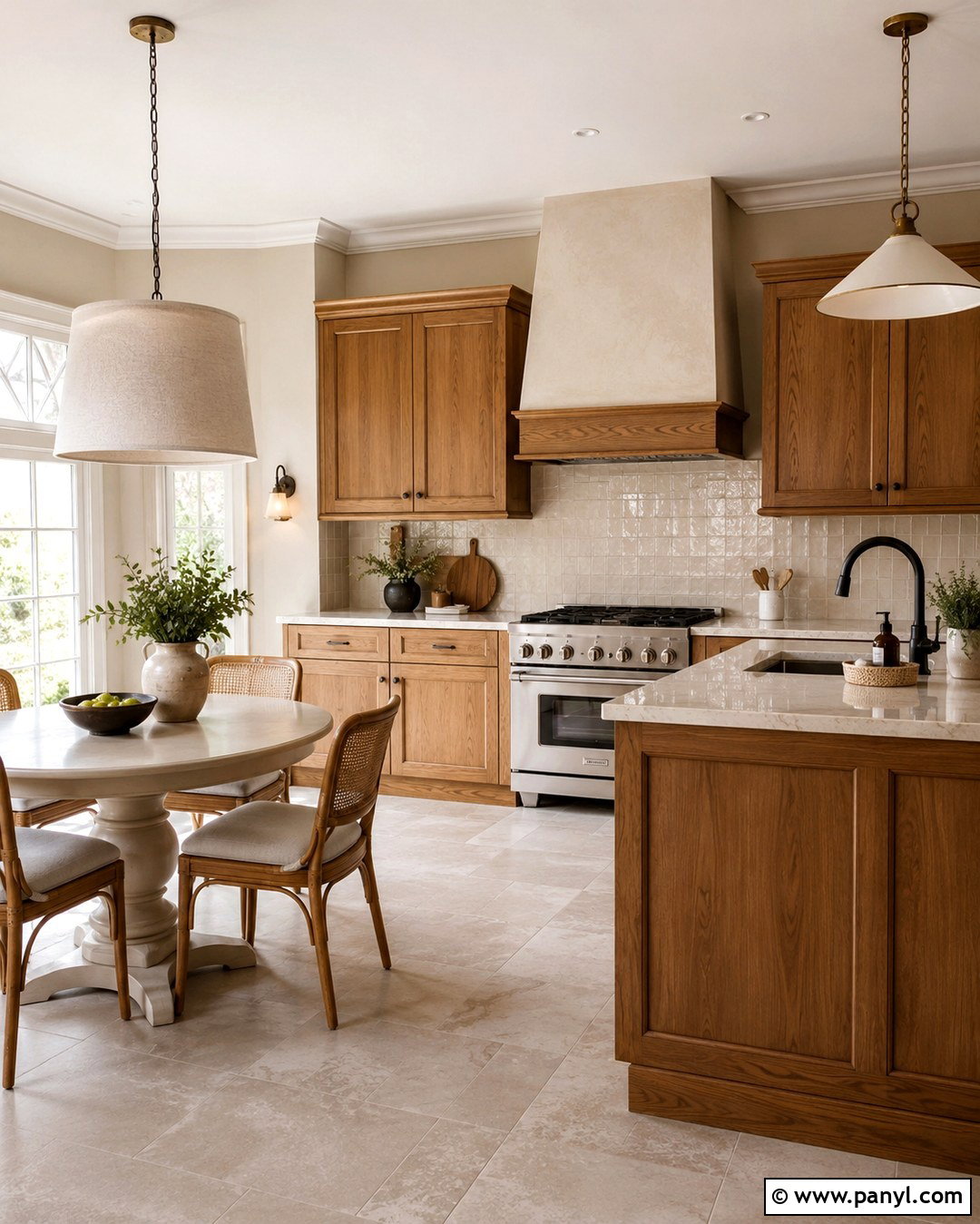
Honey oak cabinets can feel warm and inviting when their golden color is balanced instead of hidden. Pair them with creamy quartz countertops containing delicate tan or caramel veining. An ivory handmade-look backsplash provides texture while avoiding the harsh contrast that pure white sometimes creates. Paint the walls a soft warm greige and introduce light stone-look porcelain flooring to separate the cabinets from similarly colored wood floors. Oil-rubbed bronze pulls give traditional doors a cleaner finish, while a simple bronze faucet repeats the darker accent. Choose oatmeal upholstered counter stools and linen pendant shades for softness. Keep countertop decor restrained, using cream canisters, a wood bowl, and green herbs. The completed kitchen feels updated, comfortable, and naturally connected.
3. Oak Cabinets With Black Hardware
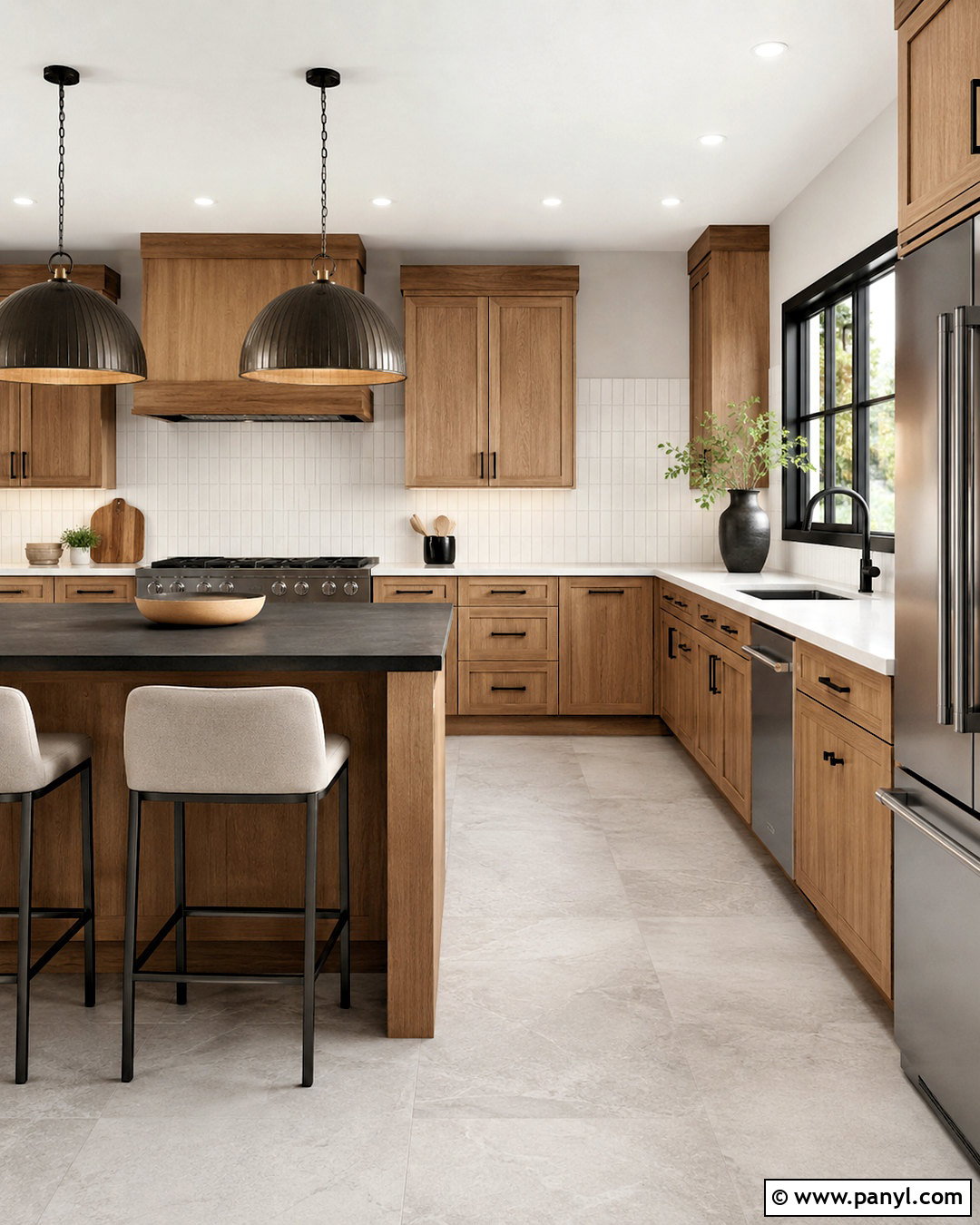
Matte black hardware gives natural oak cabinetry crisp definition and works especially well on simple Shaker or flat-panel doors. Build the entire kitchen around that contrast with warm white quartz counters, an off-white vertical tile backsplash, and matte black window frames. Use black pulls in consistent lengths rather than mixing several shapes. A black bridge faucet and slim metal pendants can repeat the finish without overwhelming the oak. Ground the space with pale gray porcelain tile or lightly whitewashed wood flooring. For the island, continue the oak cabinetry but add a charcoal countertop to create a strong central feature. White walls, neutral stools, and uncluttered open surfaces keep the design fresh. The finished space feels modern while preserving the wood’s natural warmth.
4. Oak Cabinets With Brass Hardware
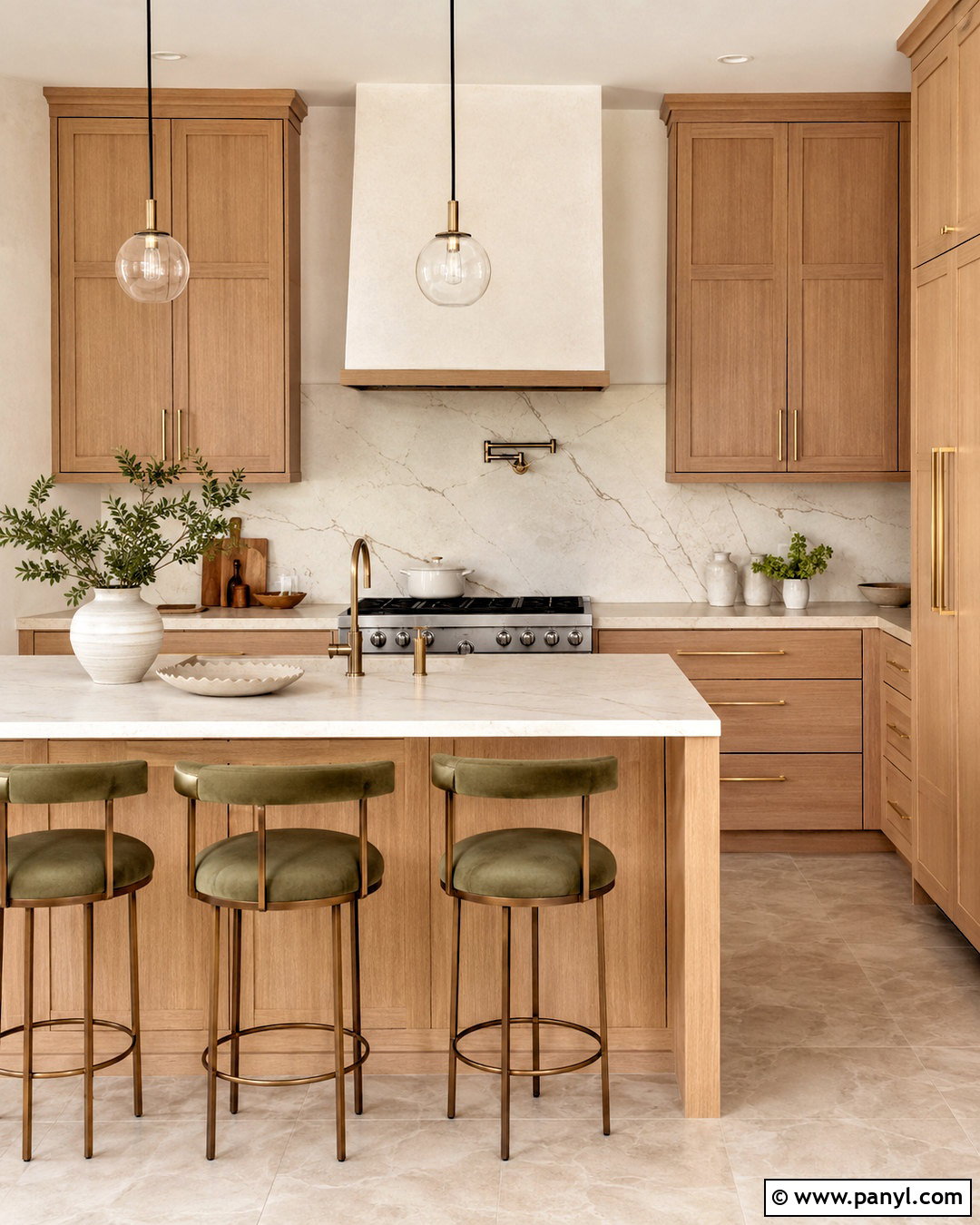
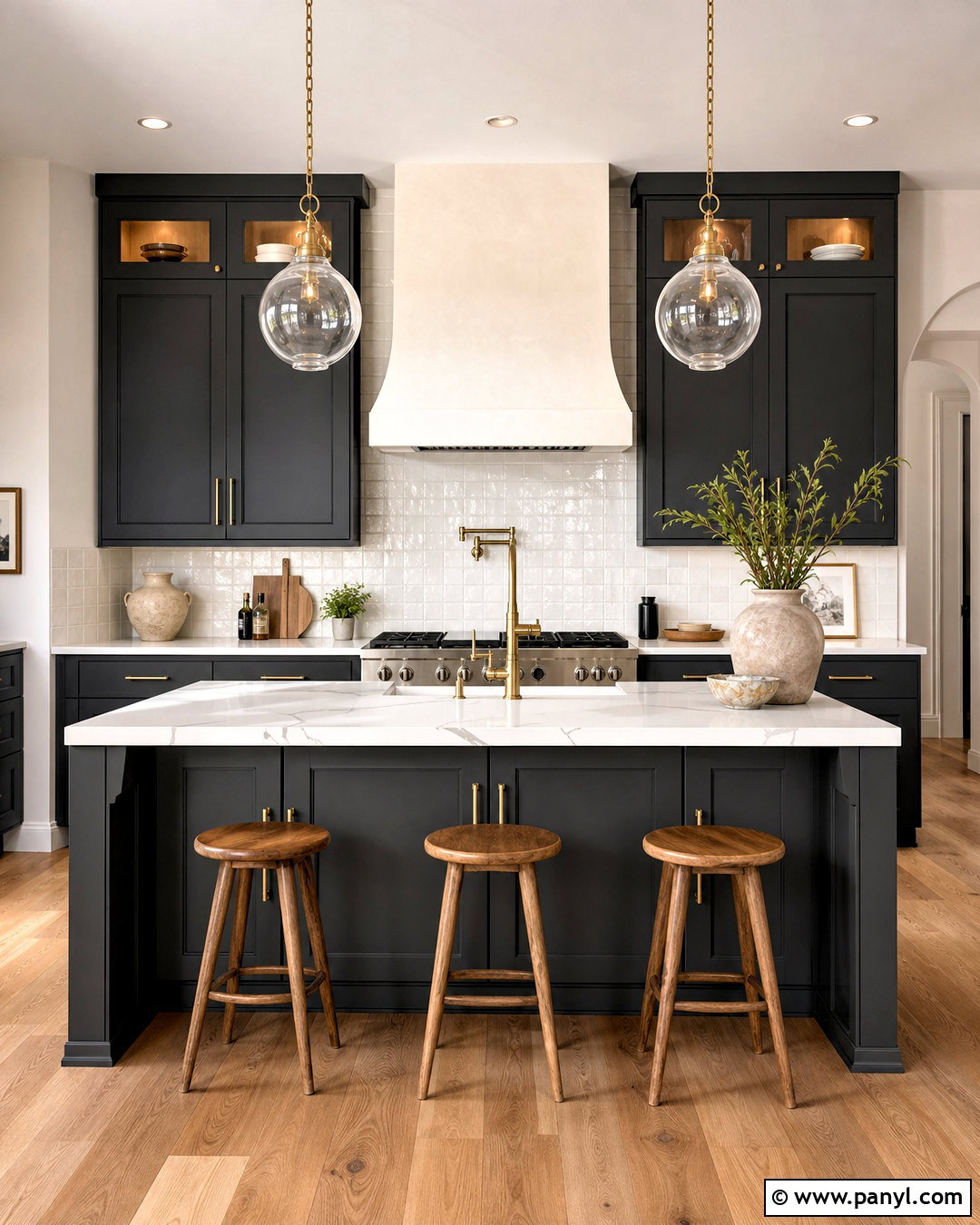
Brushed brass brings a soft golden glow to oak cabinets, but the surrounding palette should provide enough contrast to prevent the room from looking overly yellow. Select pale or medium oak cabinetry with understated slab doors. Add creamy marble-look quartz countertops and a matching backsplash with fine gray veining. Warm white walls create a calm background, while light taupe porcelain flooring introduces a subtle cooler note. Use slender brass pulls, a coordinating faucet, and two simple globe pendants over the island. Upholstered stools in muted olive green add depth without competing with the wood. A plaster range hood can break up a long cabinet wall and offer architectural interest. Finish with white ceramics and minimal greenery for an elegant, balanced kitchen.
5. Oak Cabinets With Green Island
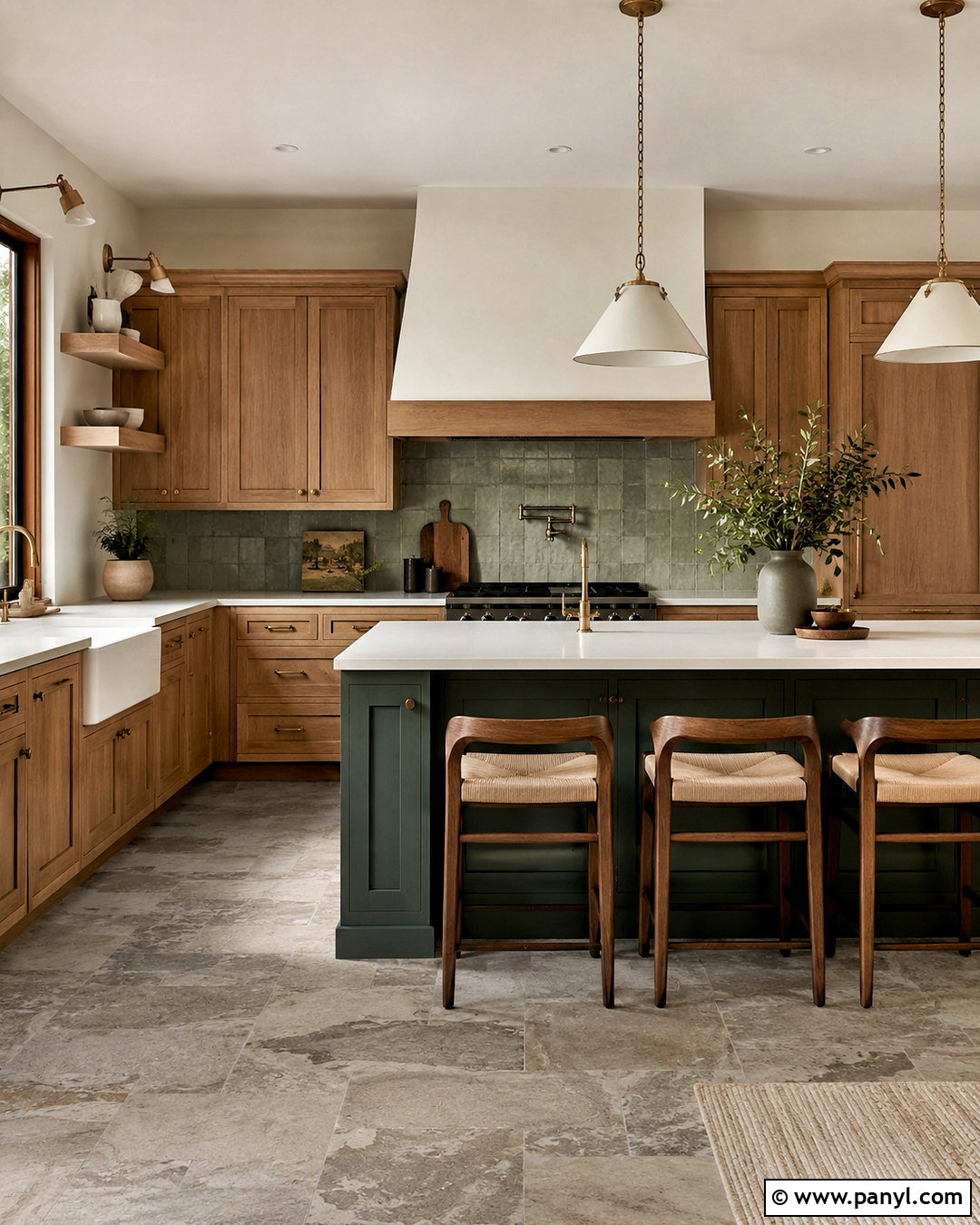
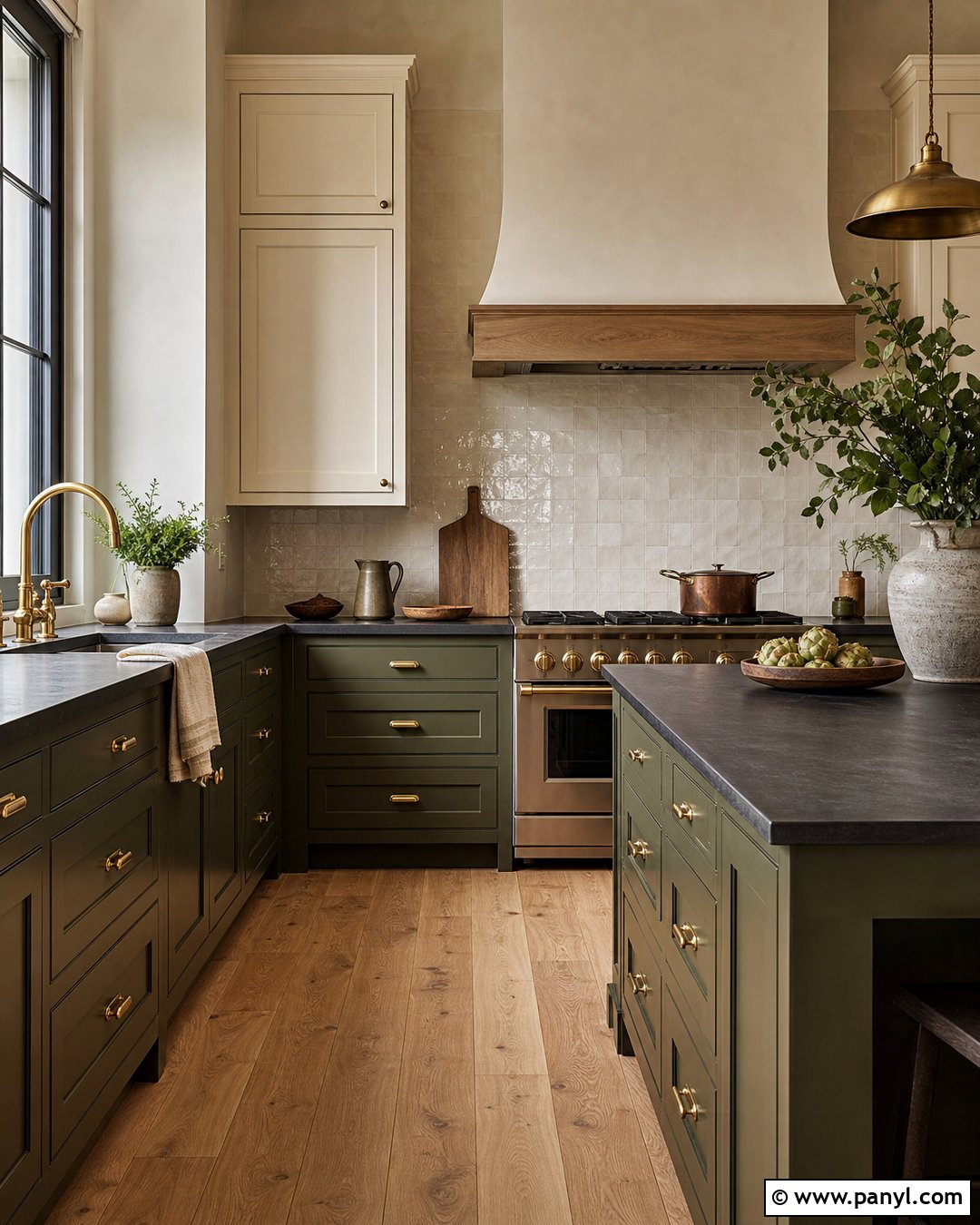
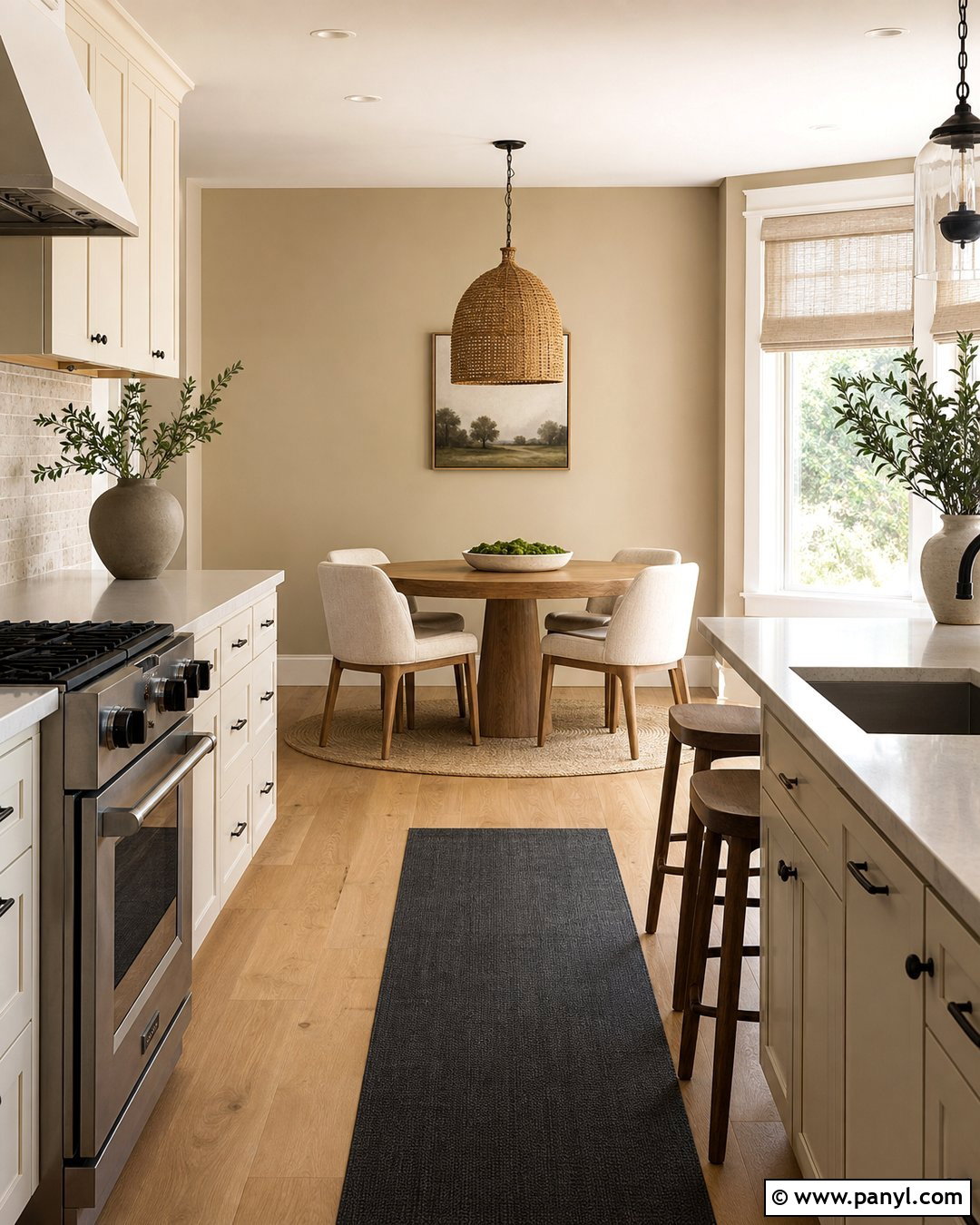
A deep green island creates an earthy focal point among natural oak perimeter cabinets. Choose a muted forest or olive shade rather than a highly saturated green, then repeat it through small accessories or nearby textiles. White quartz counters brighten both cabinet colors, while a soft sage tile backsplash builds a smooth connection between them. Keep the walls creamy white and use medium-tone stone flooring to ground the room. A large island can include drawers, concealed storage, a prep sink, and three comfortable wood-framed stools. Antique brass pulls and shaded brass pendants reinforce the warm organic palette. Complete the kitchen with an oak-trimmed range hood and open shelf. The combined colors feel layered, welcoming, and appropriate for both modern and traditional homes.
6. Oak Cabinets With Navy Backsplash
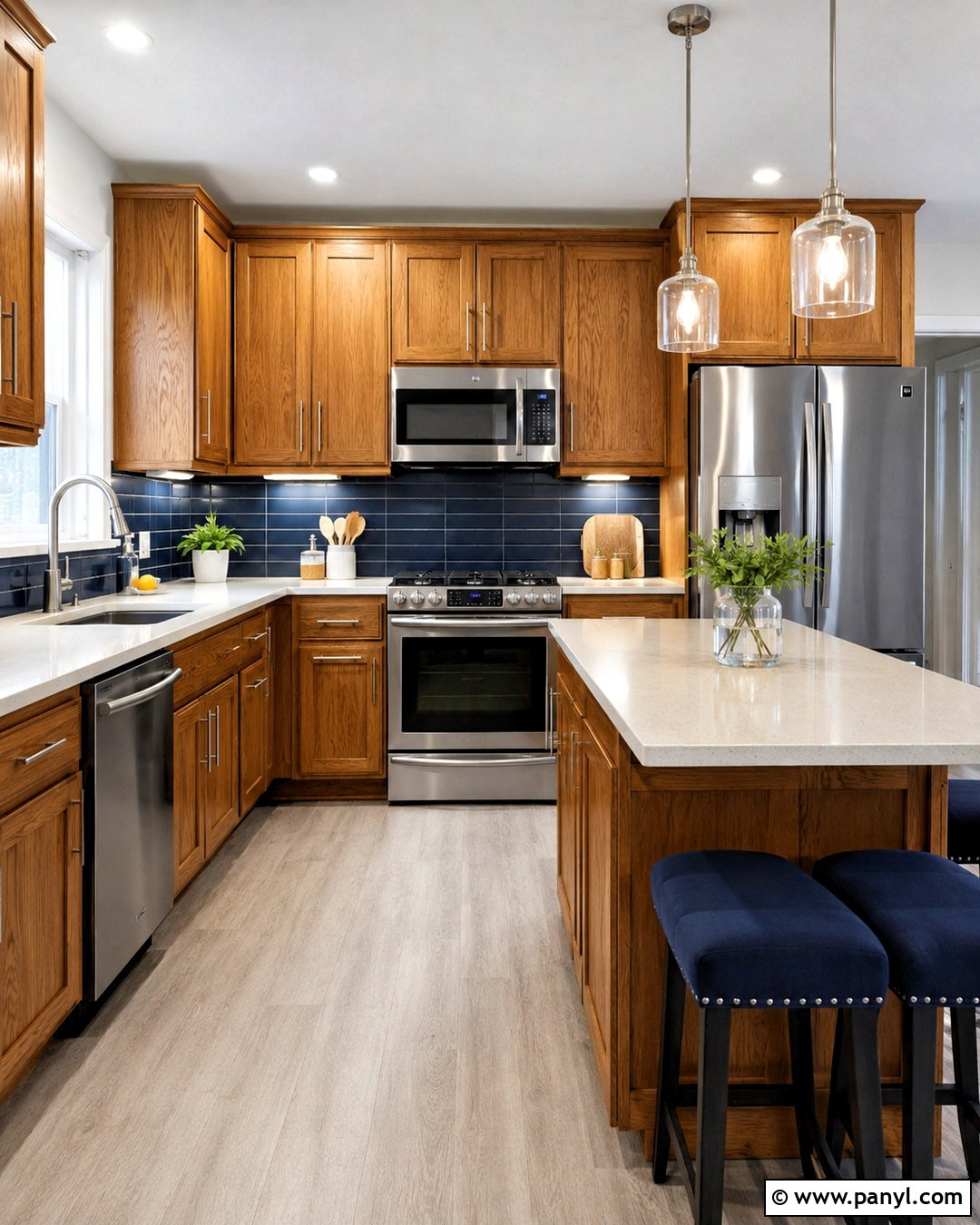
Rich navy tile gives oak cabinets a confident, polished backdrop. This combination works particularly well with medium or honey-toned wood because the deep blue balances its orange and golden undertones. Install glossy navy square tiles or elongated subway tiles from the countertop to the upper cabinets. Use light cream quartz counters to separate the two strong finishes and prevent the workspace from becoming dark. Brushed nickel hardware, stainless steel appliances, and a polished nickel faucet add cooler metallic notes. Choose light gray flooring and soft white walls to brighten the rest of the kitchen. If space allows, include a narrow oak island with navy stools. Clear glass pendants and undercabinet lighting ensure that the backsplash remains vivid, practical, and visually connected to the room.
7. Oak Cabinets With Marble Backsplash
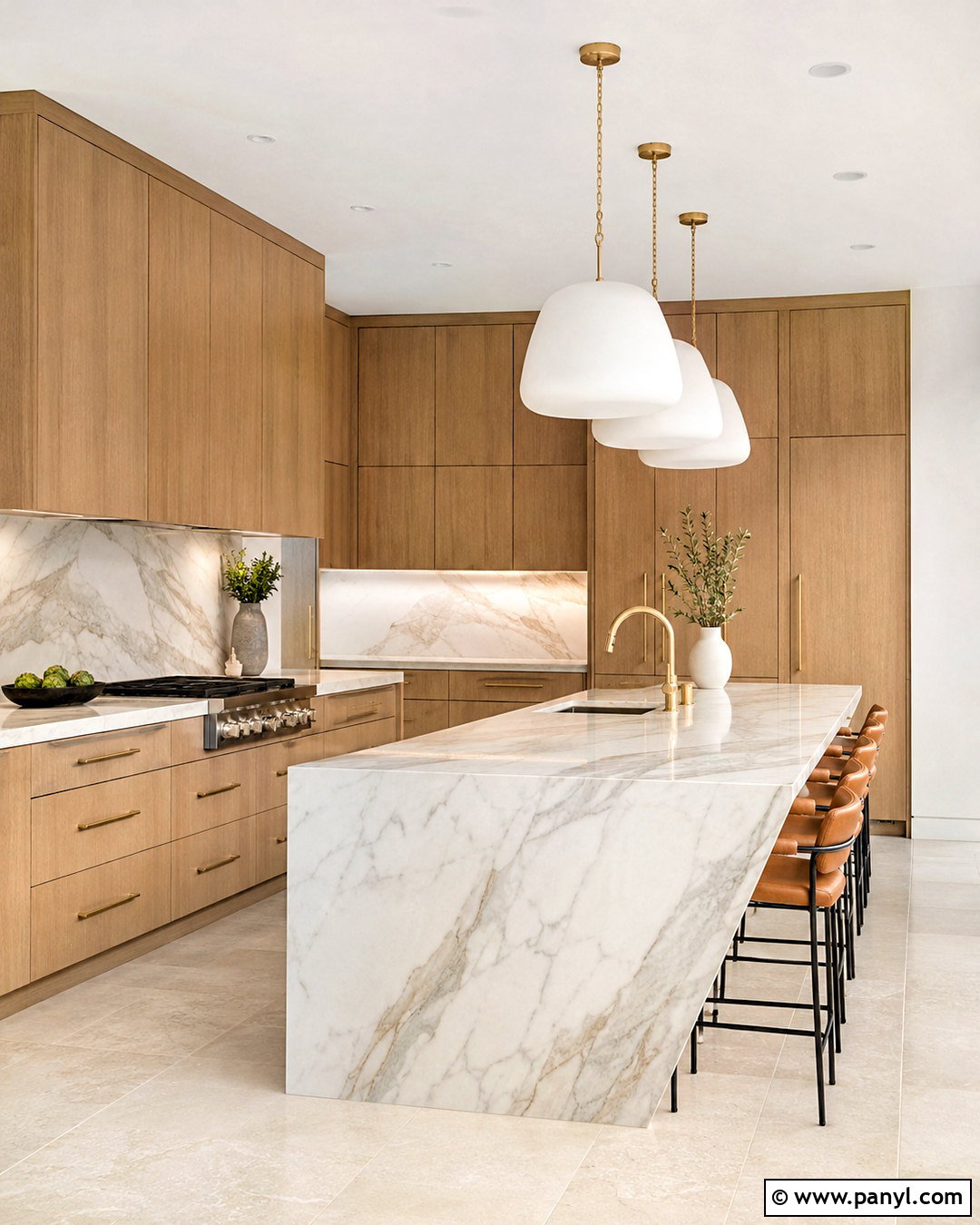
A marble backsplash can make oak cabinetry feel refined while allowing the wood grain to remain the dominant natural feature. Select a white or cream stone with restrained gray and beige veining. Run the marble from the countertop to the upper cabinets, including behind the range, for a continuous finish. Rift-cut white oak slab cabinets give the room a streamlined appearance, while brushed brass pulls introduce gentle warmth. Use pale limestone-look flooring and warm white walls to support the quiet palette. An oak island with a marble waterfall edge can serve as the main gathering area. Choose sculptural white pendants and simple leather stools rather than heavily decorative pieces. This complete scheme combines organic texture, elegant stone, and clean architectural lines without feeling formal or impractical.
8. Oak Cabinets With White Subway Tile
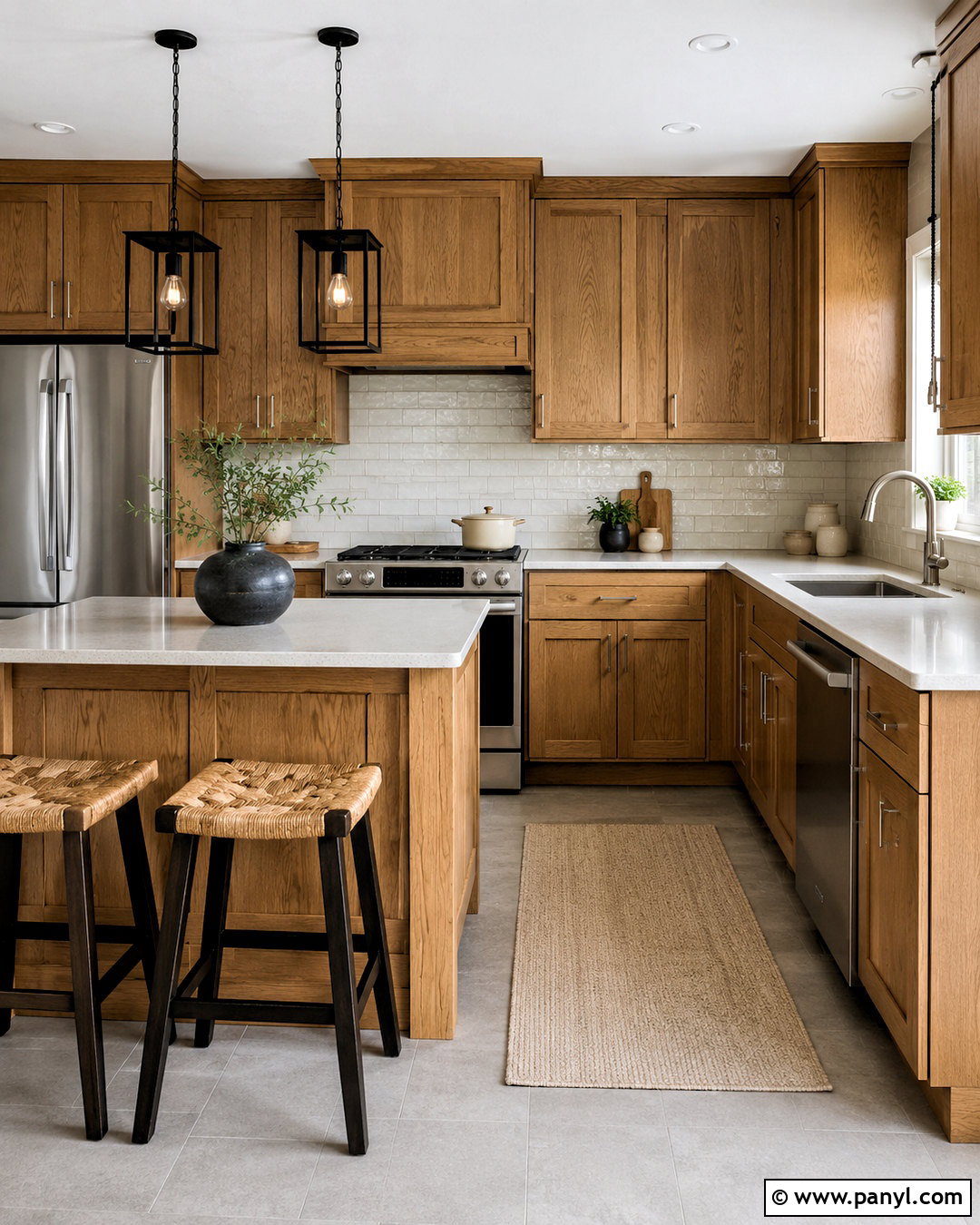
White subway tile provides an affordable, flexible foundation for an oak cabinet kitchen. To keep the finished room from appearing dated, choose a slightly irregular tile with a soft white glaze and install it in a vertical stack or simple running bond. Warm gray grout will outline the pattern without creating harsh lines. Pair the backsplash with off-white quartz countertops and medium oak Shaker cabinets. Add satin nickel pulls, a stainless steel range, and a single-handle chrome or nickel faucet. Large warm gray floor tiles offer contrast and simplify maintenance. A compact oak island with woven counter stools adds storage and relaxed seating. Finish with black-framed pendants, warm white walls, and a few ceramic accessories for an approachable transitional kitchen.
9. Oak Cabinets With Black Countertops
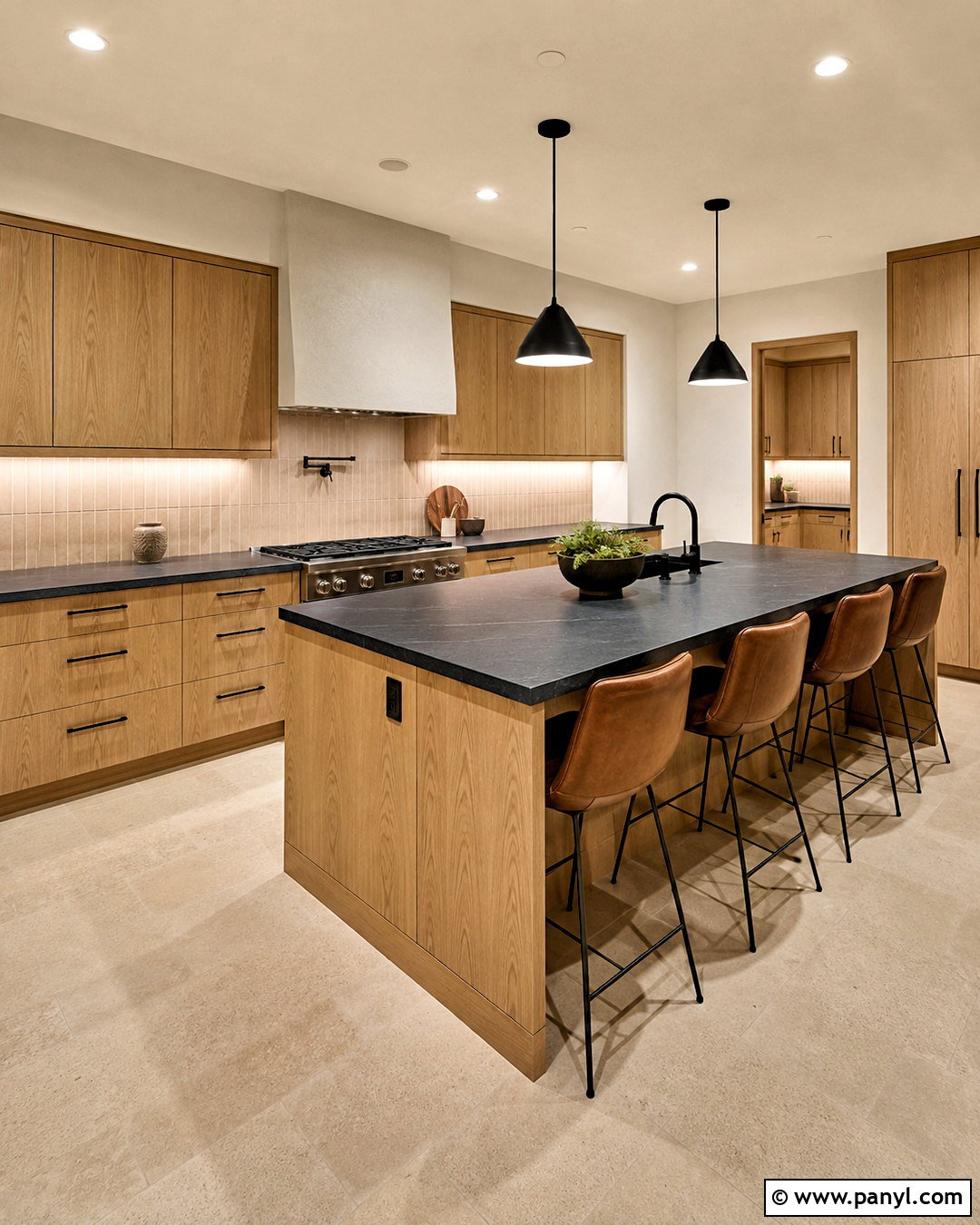
Black countertops create a striking outline against light or medium oak cabinets. Choose a honed finish with subtle movement, such as soapstone, leathered granite, or charcoal quartz, rather than a highly reflective surface. Carry the dark material onto a low backsplash, then add creamy vertical tiles above it to keep the walls bright. Flat-panel oak doors and integrated or slim black pulls reinforce the clean lines. Use light beige porcelain flooring to balance the heavy counter color. Black metal pendants can anchor an oak island, while warm leather stools introduce comfort. Paint the walls a muted ivory and include strong undercabinet lighting over every work zone. This coordinated design feels dramatic and modern but still benefits from the familiar warmth and texture of oak.
10. Oak Cabinets With Greige Walls
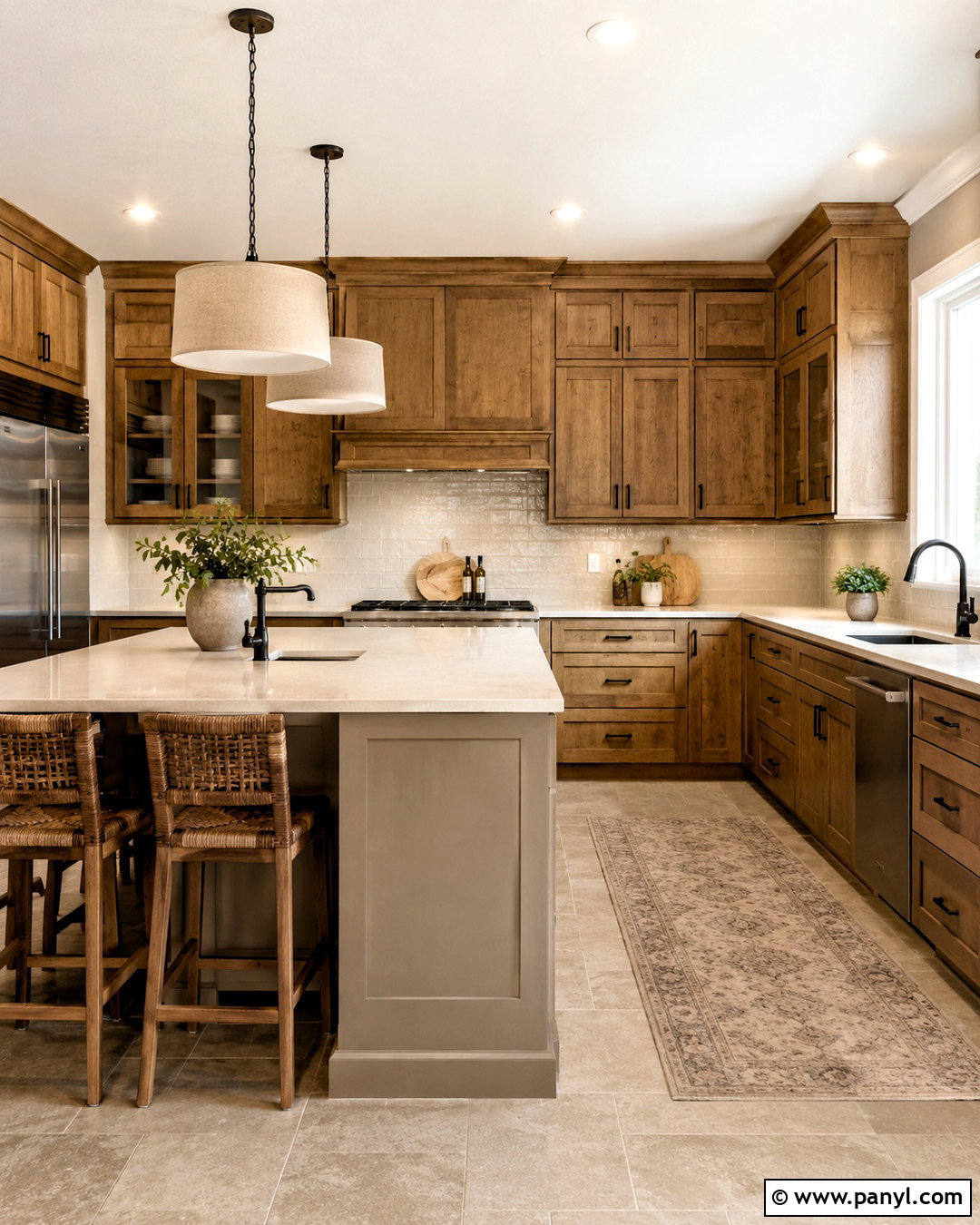
Soft greige walls can quiet the yellow or orange appearance of traditional oak while preserving the cabinets’ natural character. Look for a balanced greige with warm gray undertones rather than a cool, violet-based shade. Pair the wall color with cream quartz counters and a simple ivory backsplash. Existing raised-panel oak cabinets can receive new aged brass or dark bronze pulls for an easy visual update. Replace busy flooring with large-format taupe tile or a durable light stone-look surface. A narrow island painted mushroom beige creates gentle contrast and provides extra workspace. Add linen drum pendants, woven counter stools, and a neutral runner to soften the harder finishes. This low-contrast palette makes the entire kitchen feel calmer, brighter, and more cohesive without requiring cabinet replacement.
11. Scandinavian White Oak Kitchen
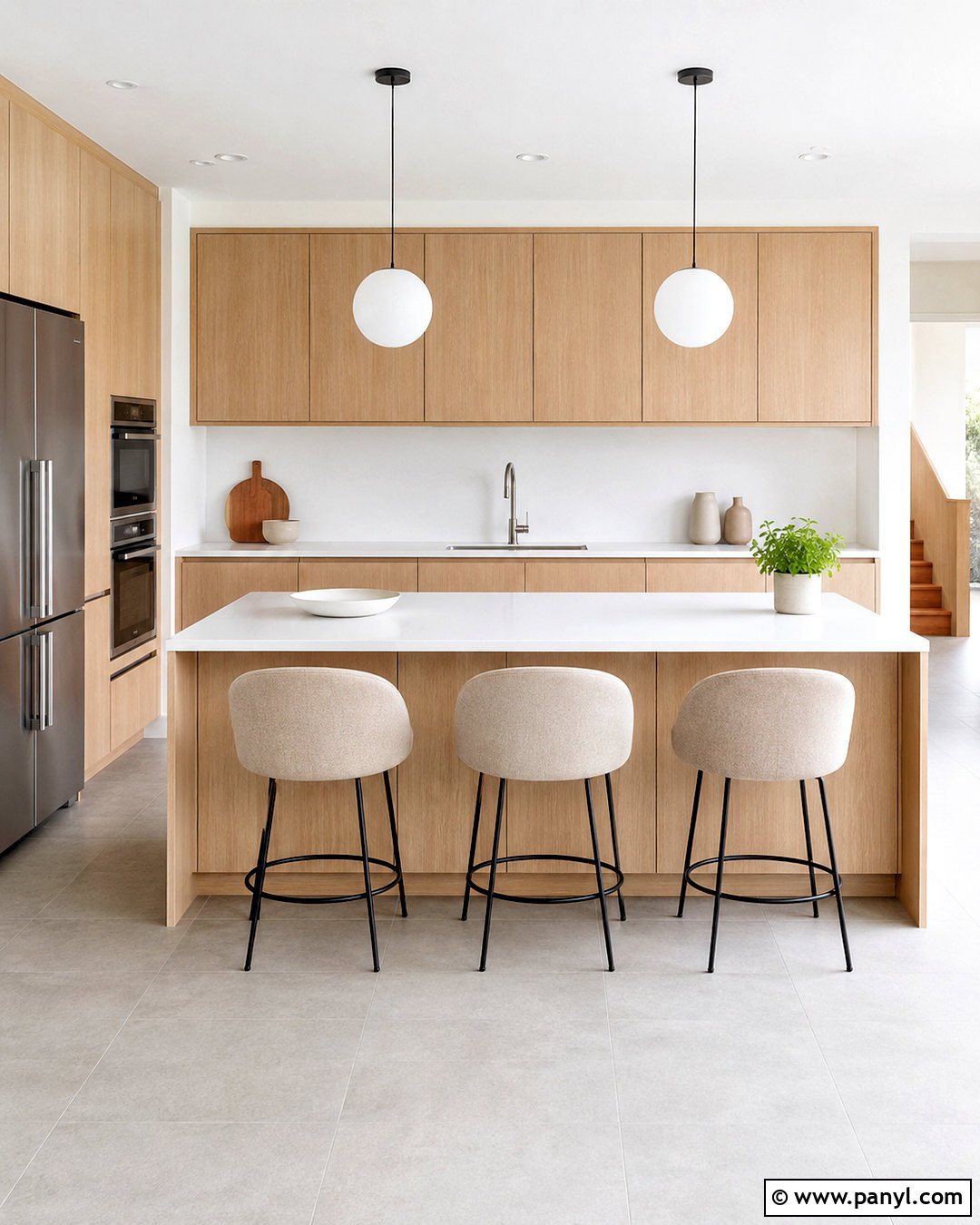
A Scandinavian-inspired kitchen uses pale white oak, practical storage, and an uncomplicated neutral palette. Choose flat-front cabinets with a clear matte finish and discreet edge pulls. White quartz countertops and a plain white slab backsplash reflect light while keeping grout lines to a minimum. Continue pale oak cabinetry onto a streamlined island with deep drawers and open seating on one side. Light gray flooring provides enough separation from the wood without disrupting the airy look. Add white globe pendants, a simple chrome faucet, and softly curved counter stools upholstered in beige. Keep decorative items useful and minimal, such as stacked bowls, a small herb pot, and a wood cutting board. The complete room should feel open, orderly, comfortable, and easy to maintain.
12. Japandi Oak Cabinet Kitchen
Japandi design pairs the clean function of Scandinavian interiors with the natural restraint of Japanese spaces. Start with light oak slab cabinetry and minimal recessed pulls or integrated finger grooves. Use warm beige quartz or honed limestone counters instead of brilliant white. A textured plaster backsplash and warm off-white walls create a soft, uninterrupted envelope around the wood. Choose large pale stone floor tiles, then center the room with a simple oak island and low-profile woven stools. Black accents should be limited to a thin faucet, window frame, and understated pendant lights. Display only a few handcrafted ceramics, wood utensils, and one leafy branch. With concealed appliances and carefully planned storage, the kitchen feels peaceful and uncluttered while remaining highly practical for everyday cooking.
13. Farmhouse Oak Cabinet Kitchen
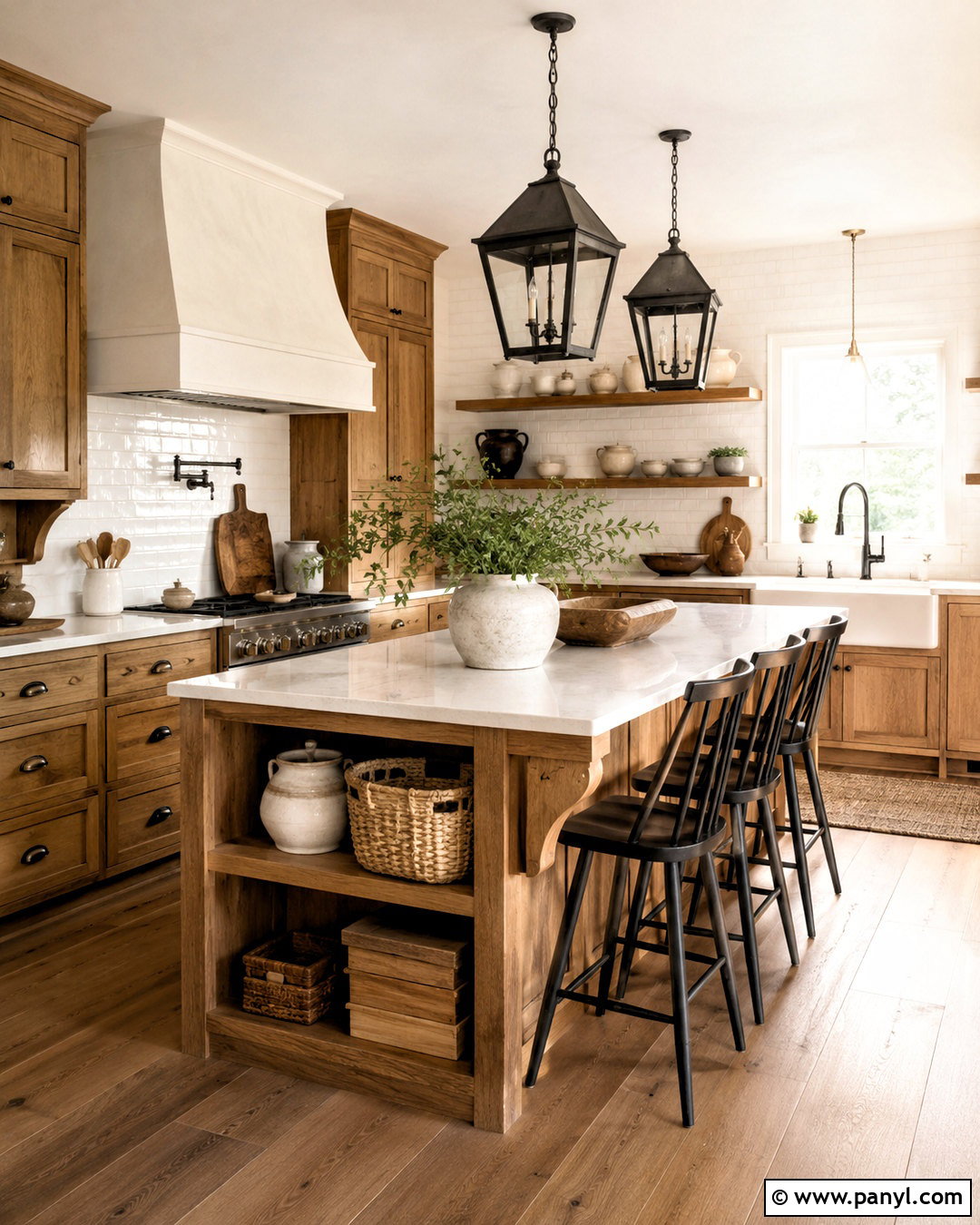
Oak cabinets naturally complement a modern farmhouse kitchen when rustic details are used with restraint. Choose medium-tone oak Shaker cabinets, creamy quartz countertops, and a white fireclay apron-front sink. Install warm white handmade subway tile behind the counters and carry it to the ceiling around a simple plaster range hood. Dark bronze cup pulls and knobs provide traditional character without looking overly ornate. Wide-plank flooring in a muted brown finish grounds the space, while an oak island offers drawers, seating, and a thick light-colored countertop. Add black lantern pendants and spindle-back stools in a soft black finish. A vintage-style runner, stoneware crocks, and woven baskets complete the welcoming room while keeping the work surfaces clean and functional.
14. Coastal Oak Cabinet Kitchen
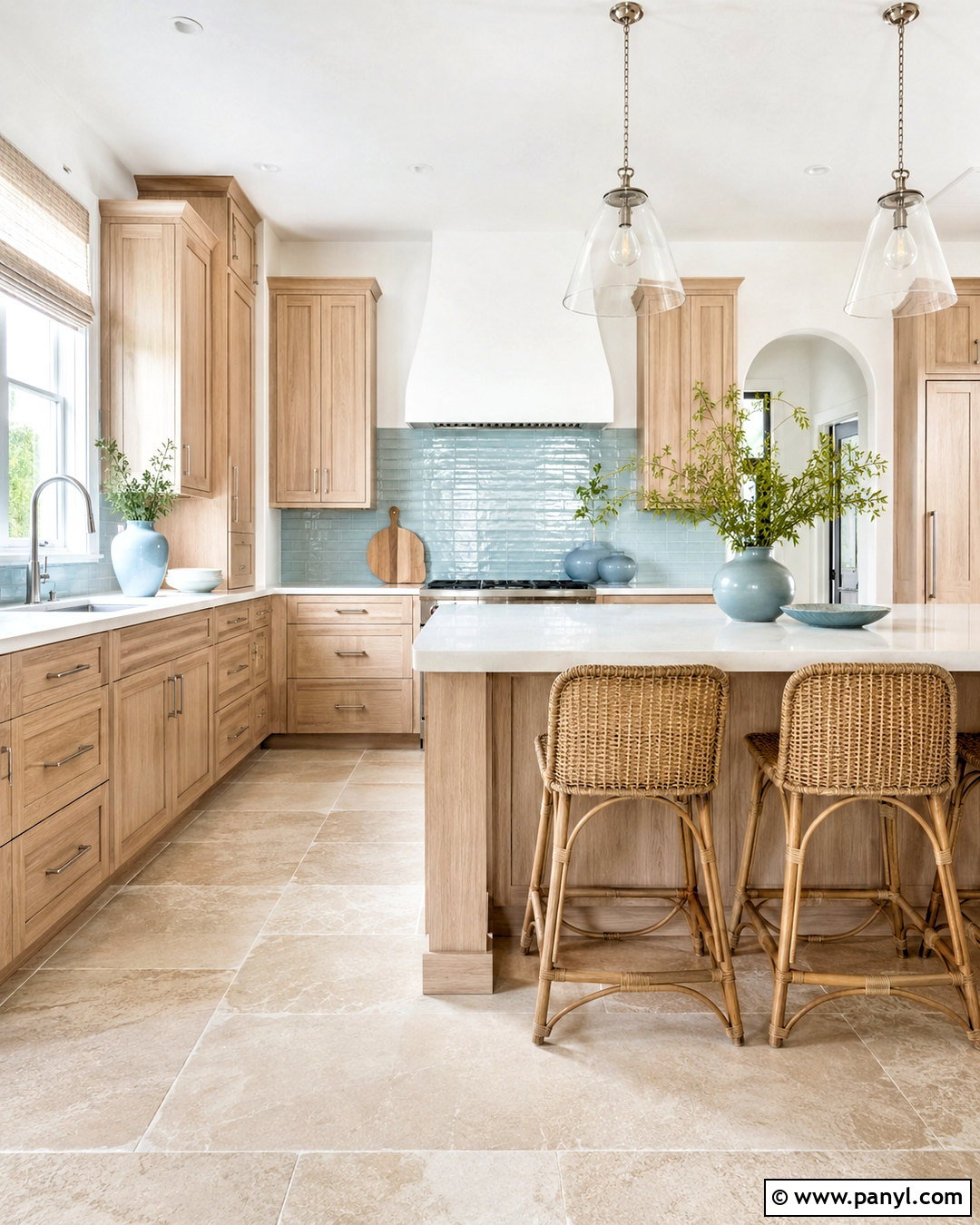
A coastal oak kitchen should feel light and relaxed without relying on obvious nautical decorations. Begin with pale white oak cabinets, soft white quartz counters, and a sea-glass blue backsplash in a glossy rectangular tile. Paint the walls warm white and use light limestone-look flooring for a sun-washed foundation. Brushed nickel pulls and a polished nickel faucet bring a clean, reflective finish. On the island, pair oak cabinetry with woven rattan stools and clear glass pendant lights. A simple white range hood can provide a visual break between upper cabinets. Natural linen shades soften the windows while allowing plenty of daylight into the room. Finish with blue-gray ceramics, a striped runner, and a small arrangement of greenery for subtle coastal color.
15. Midcentury Oak Cabinet Kitchen
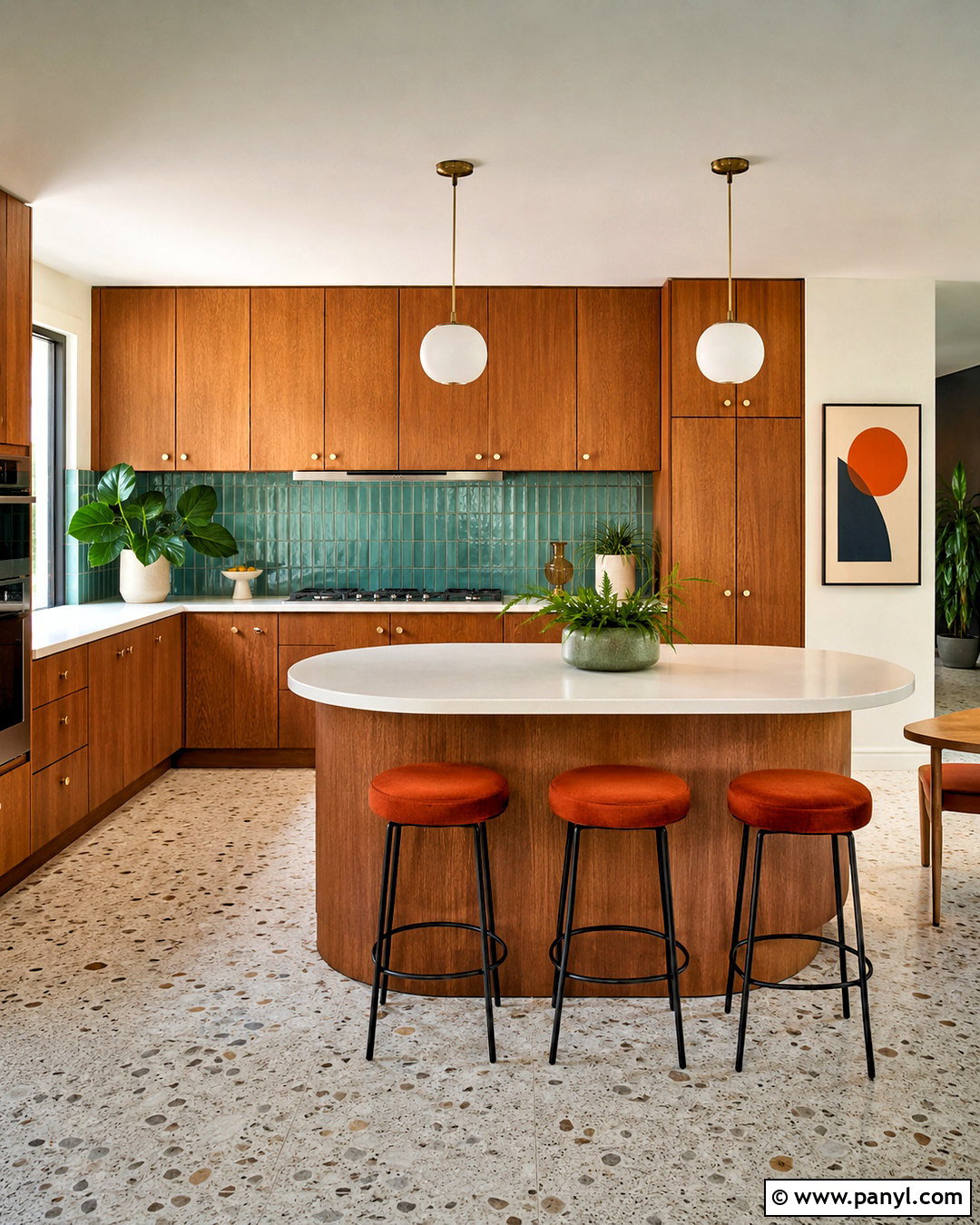
For a midcentury look, combine warm oak slab cabinets with simple shapes, contrasting colors, and a few recognizable period details. Use medium walnut-toned oak rather than orange-heavy stain, then pair it with off-white quartz countertops. A muted teal or moss green stacked-tile backsplash adds color and emphasizes the horizontal cabinet lines. Select small brass knobs or streamlined bronze pulls. Terrazzo-look flooring introduces pattern while remaining practical and bright. A narrow island with rounded corners can include a cream surface and low-backed stools upholstered in rust-colored fabric. Add opal globe pendants and a sculptural wood dining light nearby. Keep decor minimal, using ceramic planters and graphic artwork away from cooking areas to create a functional, character-filled kitchen.
16. Small Oak Cabinet Kitchen
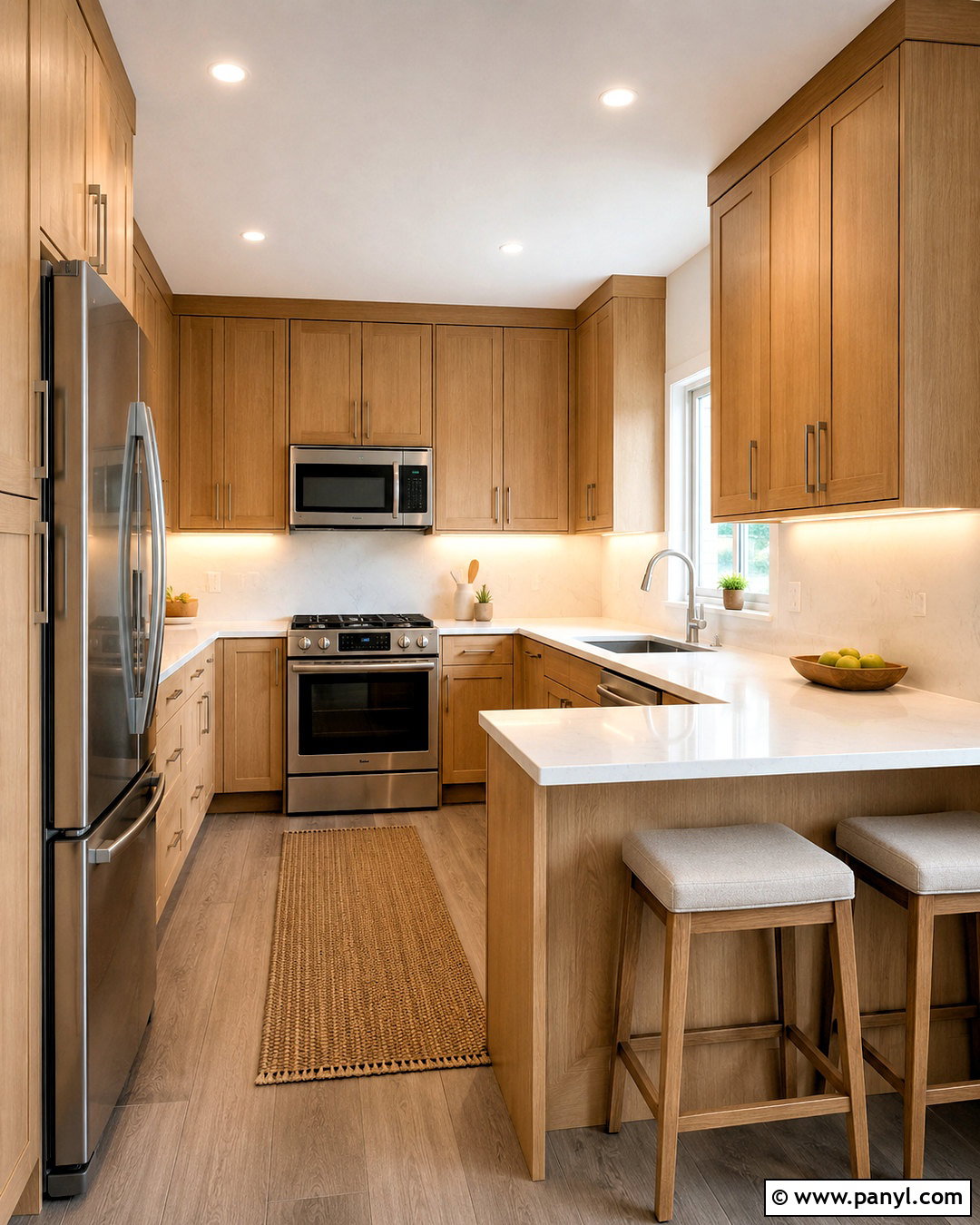
A small kitchen benefits from pale oak cabinetry because the visible grain adds character without requiring extra decoration. Run flat-panel cabinets to the ceiling to maximize storage and eliminate clutter-collecting gaps. Use white quartz countertops and a matching backsplash to visually widen the work area. Keep hardware slim and understated in brushed nickel or matte black. Light warm gray flooring helps define the cabinets while maintaining an open feeling. If an island will not fit, install a short peninsula with two backless stools and storage underneath. Add undercabinet lighting, one compact ceiling fixture, and a reflective stainless steel range. Warm white walls, a small washable runner, and only a few countertop essentials will make the completed kitchen feel organized rather than crowded.
17. Oak Cabinets With Open Shelving
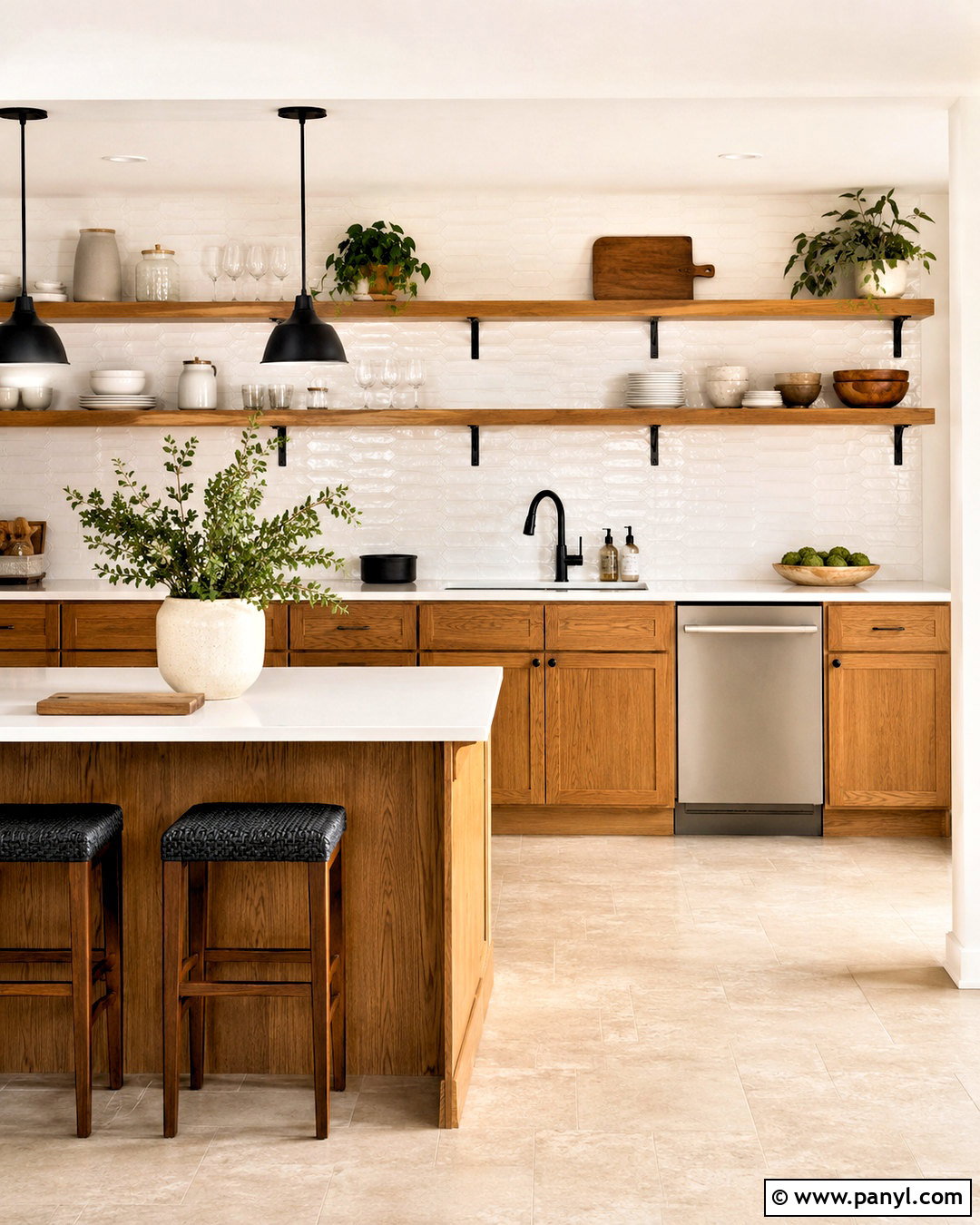
Replacing a limited section of upper cabinetry with oak shelves can make a kitchen feel more open while preserving useful storage elsewhere. Choose shelves that closely match the cabinet stain and install them against a white stone or softly textured tile backsplash. Base cabinets in medium oak provide concealed storage, while white quartz counters keep the working surface bright. Use black metal shelf brackets, a black faucet, and simple black pendants to create continuity. Arrange everyday dishes, glassware, and a few neutral ceramics on the shelves instead of filling them with purely decorative objects. Light beige flooring and creamy walls support the natural palette. A central oak island with drawers and comfortable stools ensures the kitchen remains practical, balanced, and visually uncluttered.
18. Two-Tone Oak And Black Kitchen
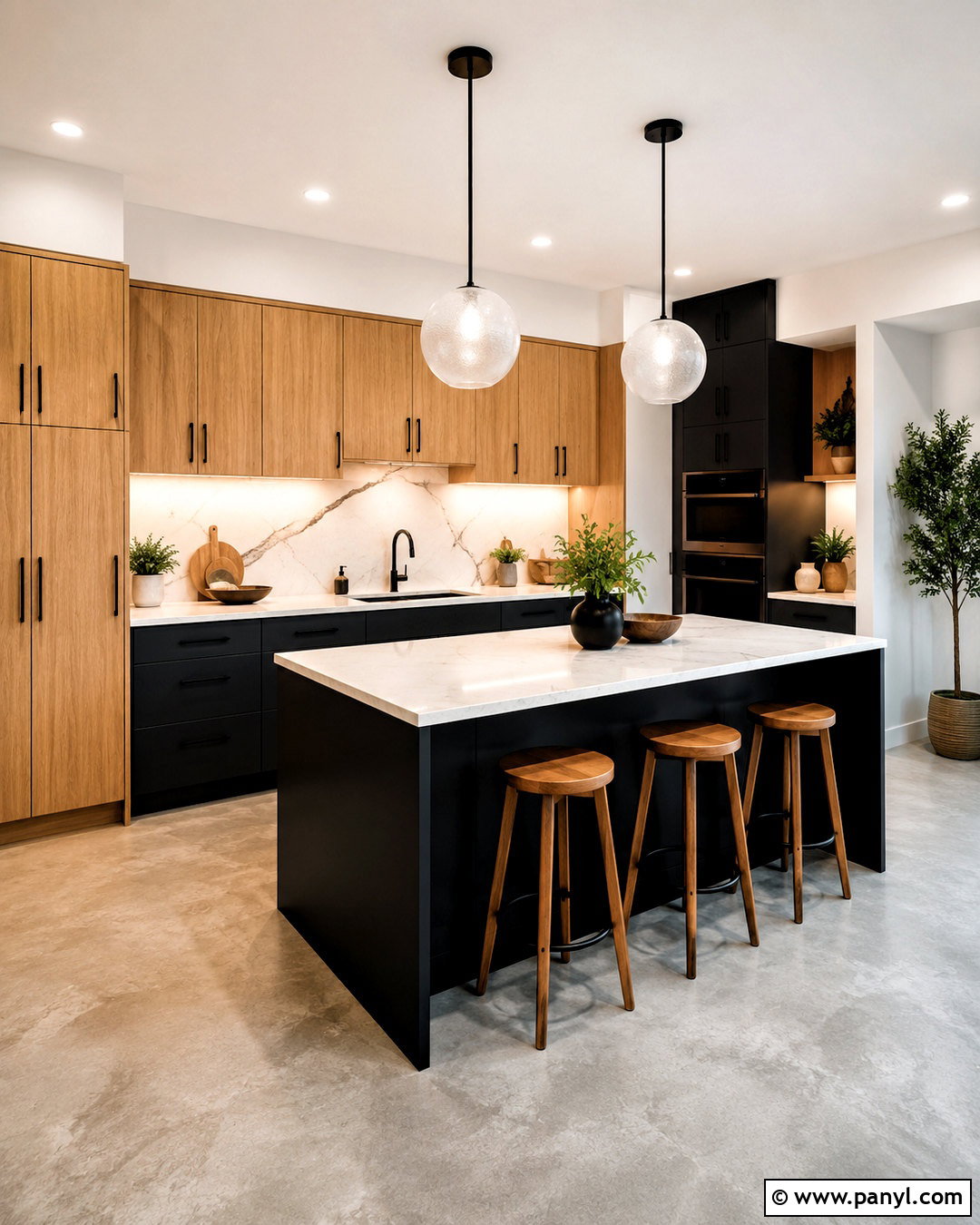
Combining oak and black cabinetry creates a strong contemporary kitchen with plenty of natural warmth. Use oak for tall pantry cabinets and upper cabinets, then apply matte black to the lower cabinets or island. White quartz countertops provide a bright dividing line between the finishes. Add a full-height warm white backsplash with subtle gray veining to soften the contrast. Black pulls can blend into painted cabinets while standing out clearly on the oak doors. Choose pale concrete-look flooring and warm white walls to keep the room from feeling heavy. Over the island, hang simple white or frosted glass pendants rather than more black fixtures. Wood stools, a few green plants, and concealed appliances complete a balanced kitchen that feels graphic but still welcoming.
19. Oak Cabinets With Terracotta Flooring
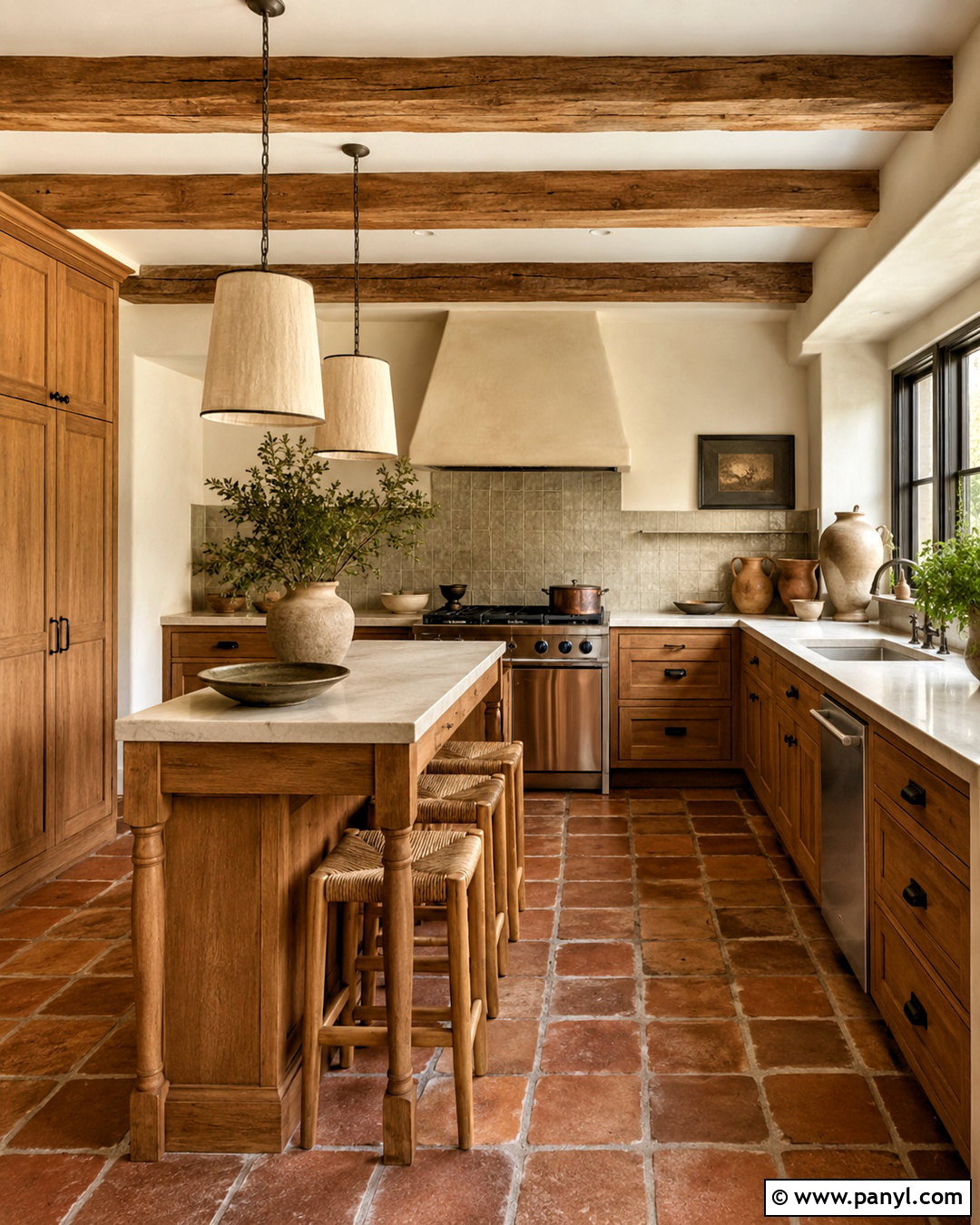
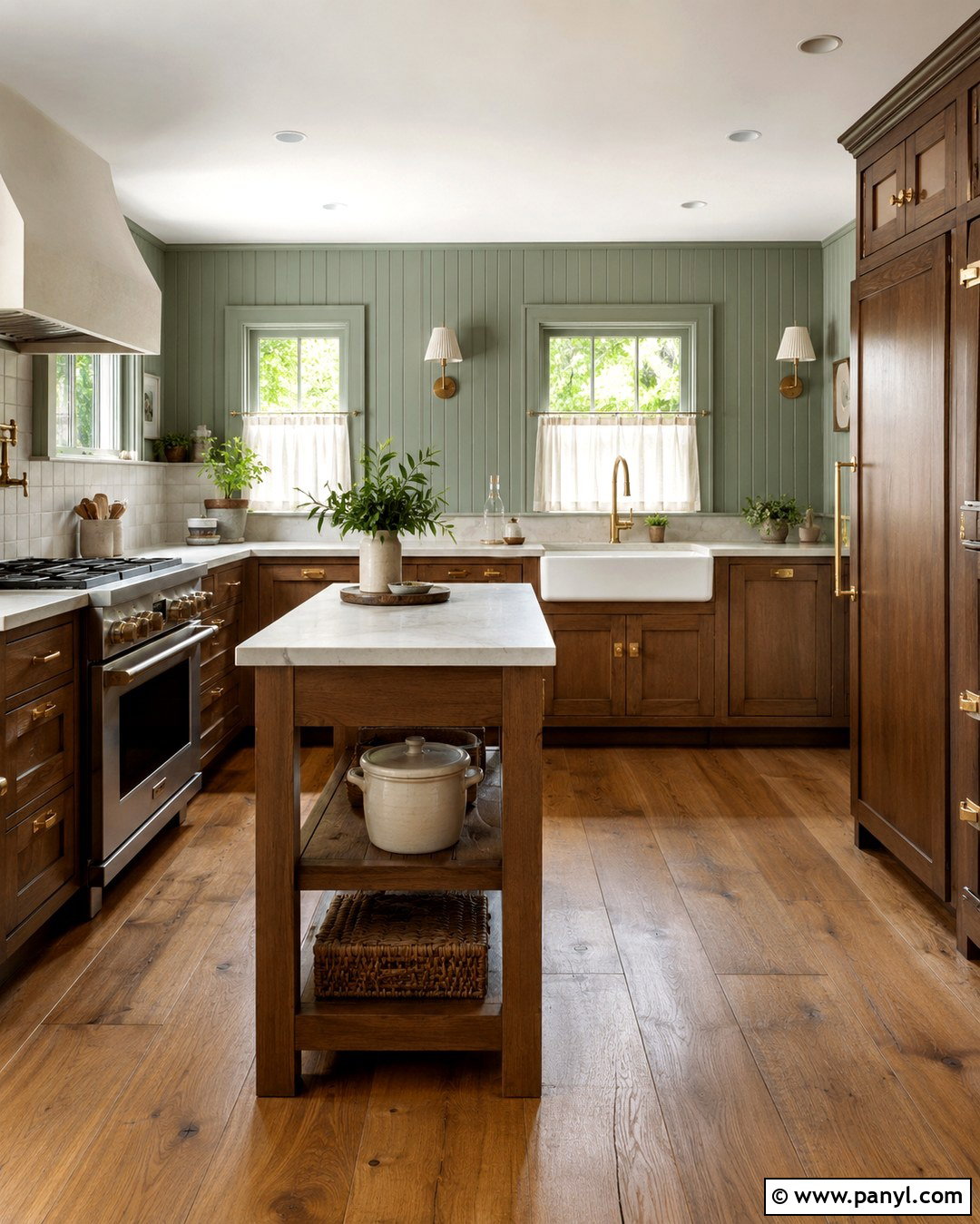
Terracotta flooring brings rustic warmth to oak cabinets, so cooler and lighter surfaces are needed to balance the completed palette. Choose medium oak cabinetry with a natural matte finish and pair it with creamy limestone or off-white quartz countertops. A pale sage backsplash introduces a gentle earthy contrast between the wood and reddish floor tiles. Use unlacquered brass or aged bronze hardware to complement the handcrafted character. Warm white walls and a simple cream range hood prevent the space from becoming visually busy. Center the room with a narrow oak worktable or island topped in light stone. Linen pendant shades, woven stools, and neutral pottery complete the design. The result feels established and welcoming without appearing dark, dated, or excessively rustic.
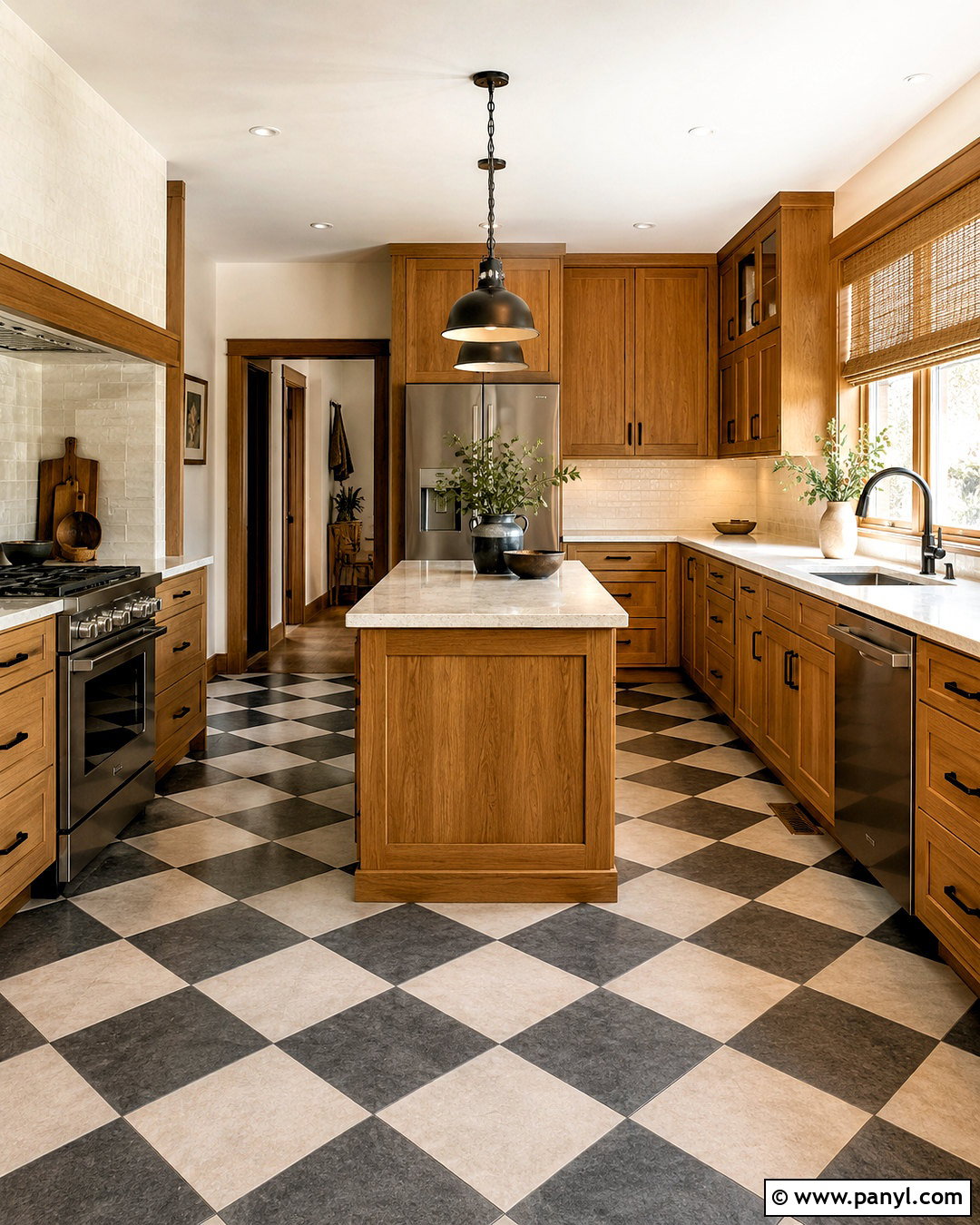
20. Oak Cabinets With Checkerboard Flooring
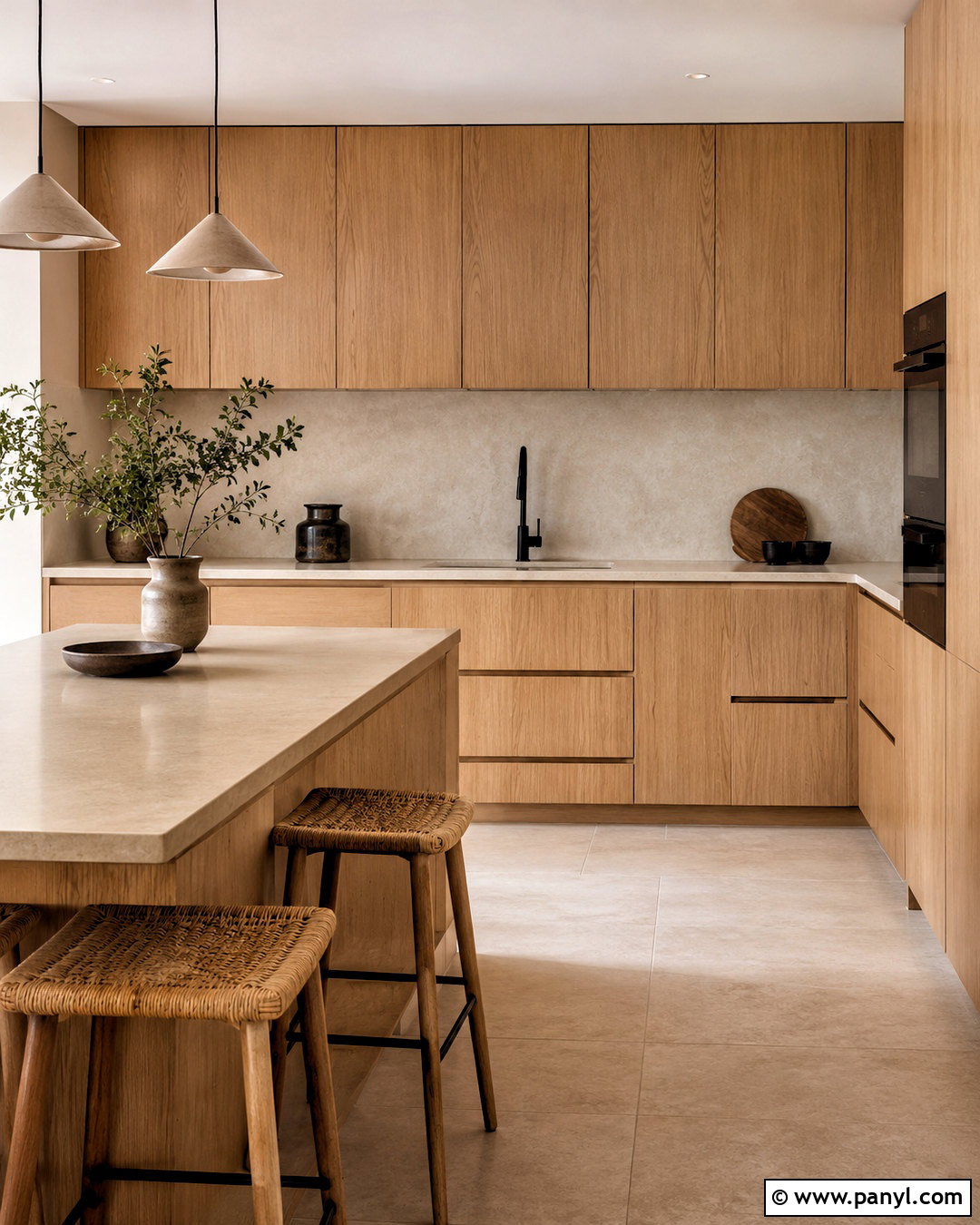
Checkerboard flooring gives oak cabinets a lively, classic foundation while adding contrast to an otherwise neutral kitchen. Select warm white and soft charcoal tiles rather than stark black and white, then lay them diagonally to visually broaden the room. Medium oak Shaker cabinets work well with creamy quartz counters and a simple off-white backsplash. Repeat charcoal through slim cabinet pulls, the faucet, and understated metal pendant lights. A freestanding oak island can include open shelving, drawers, and a pale stone top. Paint the walls warm white and use natural woven shades to soften the geometric floor. Keep accessories simple so the pattern remains controlled. This finished kitchen blends traditional materials with clean details, creating a memorable room that still feels practical and comfortable.
Conclusion:
The most successful 20 oak cabinet kitchen ideas treat cabinetry, counters, walls, flooring, lighting, and hardware as one coordinated design. Start by identifying whether your oak appears pale, golden, reddish, or dark, then choose surrounding finishes that balance those undertones. Light stone can brighten heavier cabinets, while navy, green, or black adds useful contrast. Warm white and greige provide safer choices for a quiet neutral room. Small updates such as new pulls, backsplash tile, pendants, and wall paint can also transform existing cabinets without a full renovation. Whatever look you choose, repeat materials thoughtfully and leave enough visual space for the oak grain to stand out. This approach creates a warm, functional kitchen that feels intentional.

Related Ideas and Inspiration:
Leave a Reply