
The right cabinet color can turn an ordinary bathroom into a polished, welcoming space without requiring a complete renovation. Today’s most appealing palettes include warm neutrals, natural wood tones, earthy greens, deep blues, and expressive clay-inspired shades. These colors feel especially successful when the countertop, flooring, hardware, walls, and lighting support the same overall mood. Current bathroom design guidance also favors choices that suit the room’s materials and natural light instead of following trends alone. () Before painting, test large samples beside the tile at different times of day. Also choose a durable cabinet coating with a washable finish. The complete looks below make it easier to compare and recreate 20 bathroom cabinet color ideas.
1. Warm White Bathroom Cabinets
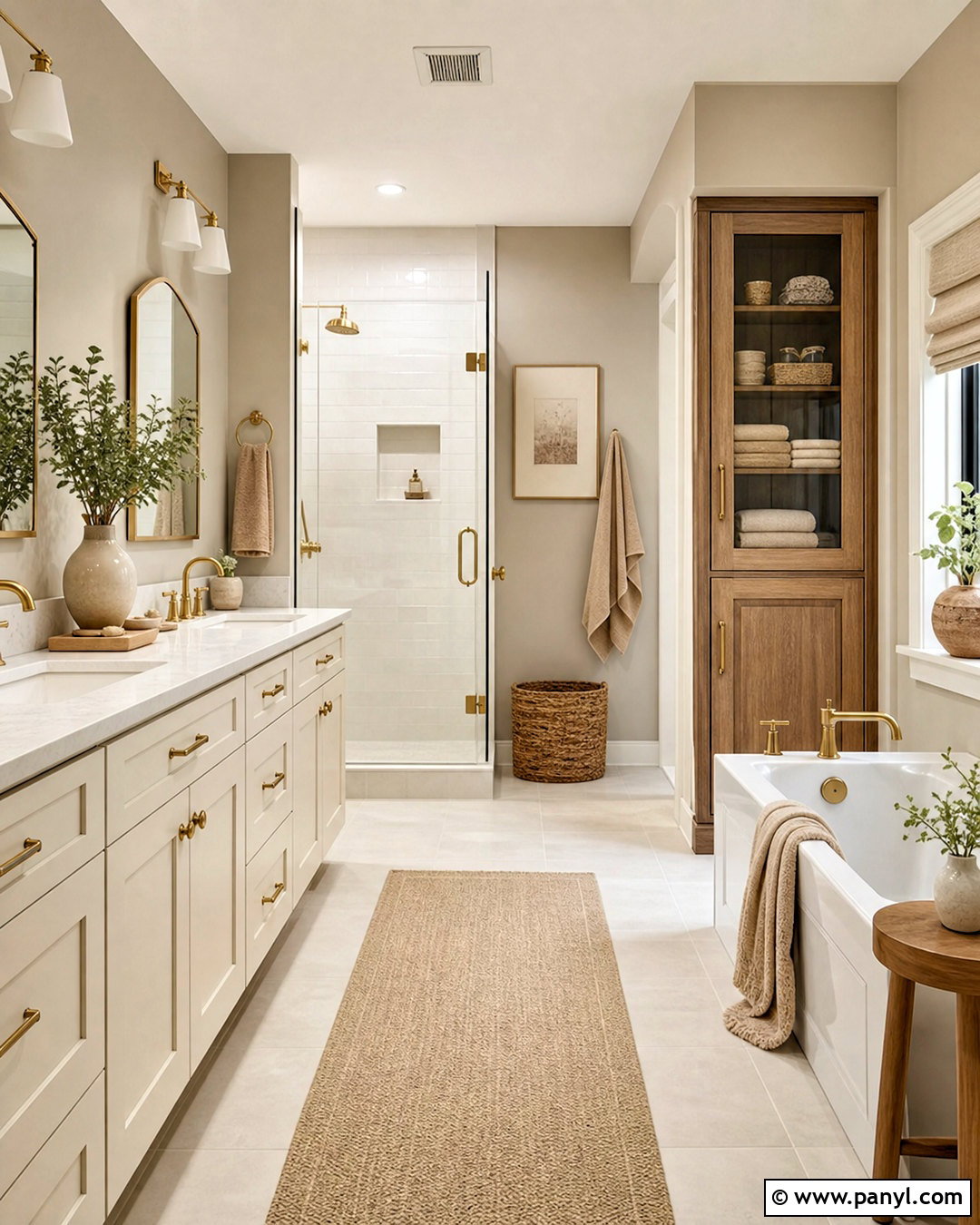
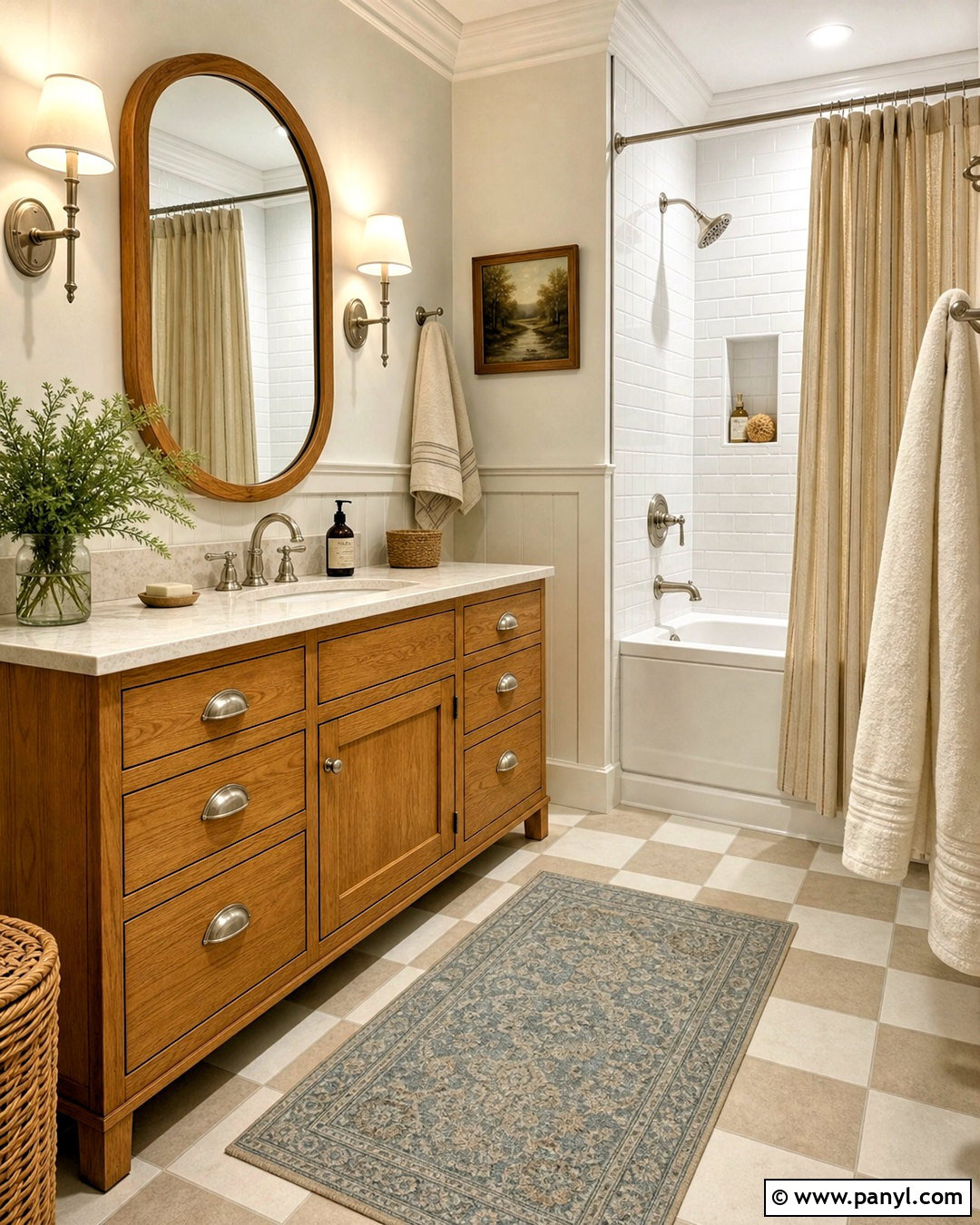
Warm white cabinets create a clean bathroom without making the space feel cold or unfinished. Choose a creamy white with subtle beige or yellow undertones, then pair it with soft greige walls and ivory porcelain floor tile. A white quartz countertop keeps the vanity bright, while faint taupe veining adds gentle movement. Use brushed brass faucets, knobs, sconces, and mirror frames to reinforce the warmth. A medium-tone oak medicine cabinet or floating shelf introduces natural contrast. Finish the room with oatmeal towels, woven baskets, and a washable beige runner. This complete palette works especially well in bathrooms with limited daylight because the cabinet color reflects light while the layered neutrals prevent a flat, overly sterile appearance.
2. Soft Greige Bathroom Cabinets
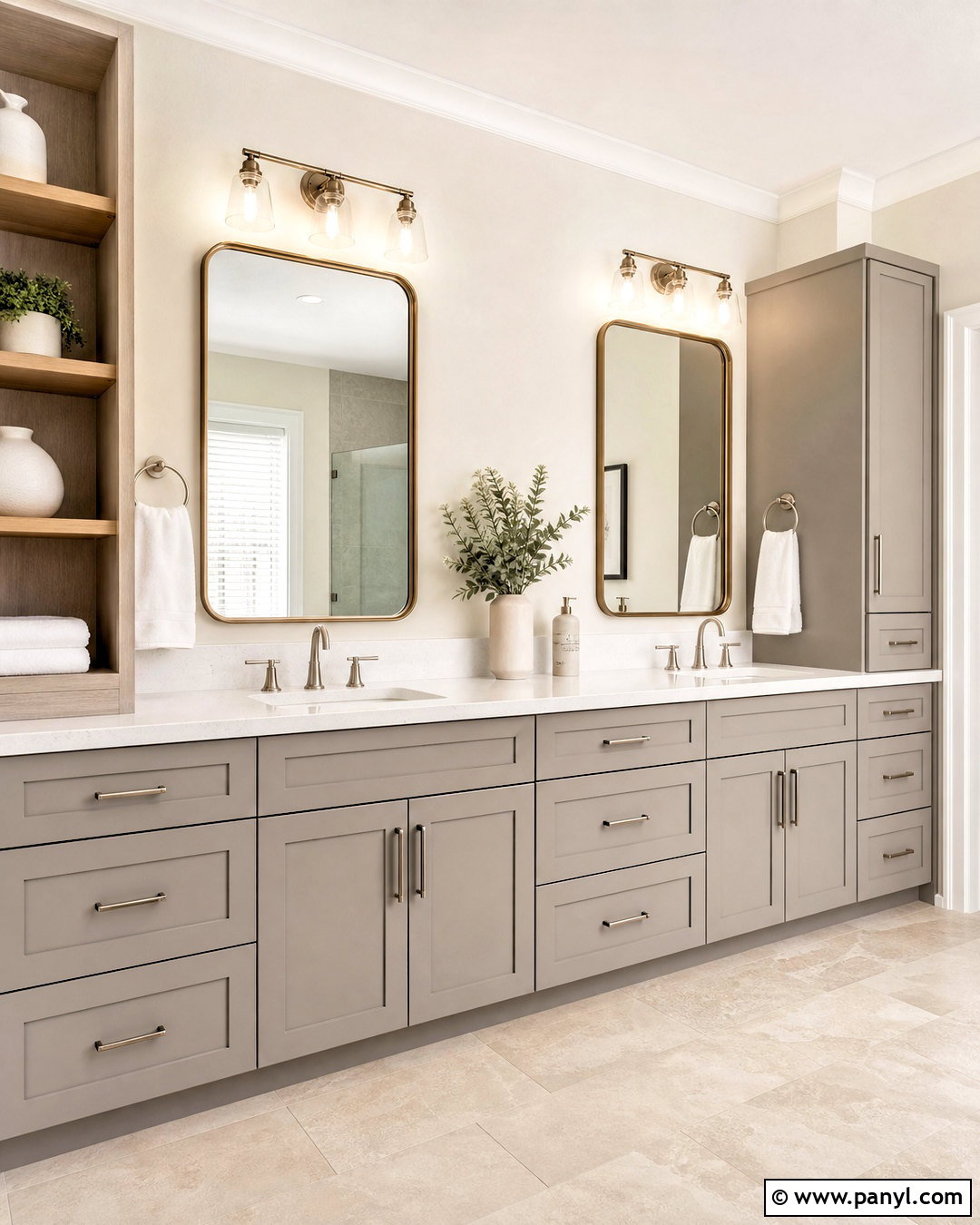
Soft greige bathroom cabinets offer a practical balance between gray and beige, making them easy to coordinate with existing finishes. Select a light greige with warm undertones and combine it with creamy walls, limestone-look flooring, and a white quartz vanity top. Brushed nickel hardware gives the scheme a relaxed, updated finish without creating harsh contrast. Add a frameless mirror or a thin champagne-bronze frame for a slightly warmer accent. Pale oak shelves, folded white towels, and simple ceramic accessories complete the room. For additional depth, use a slightly darker greige on the vanity than on the walls. The tonal variation makes a compact bathroom feel cohesive and spacious while still allowing the cabinet doors and drawer fronts to remain visually defined.
3. Warm Taupe Bathroom Cabinets
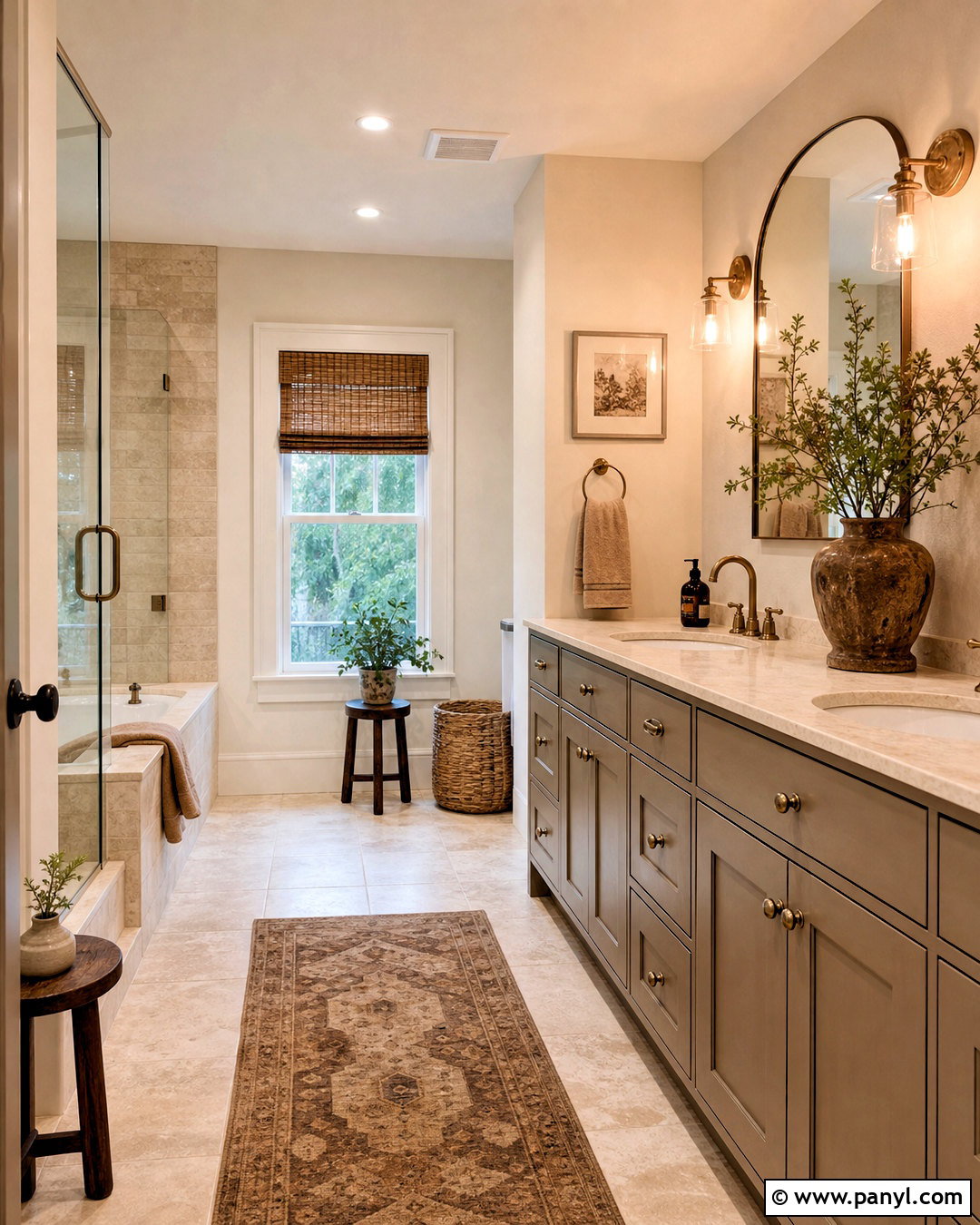
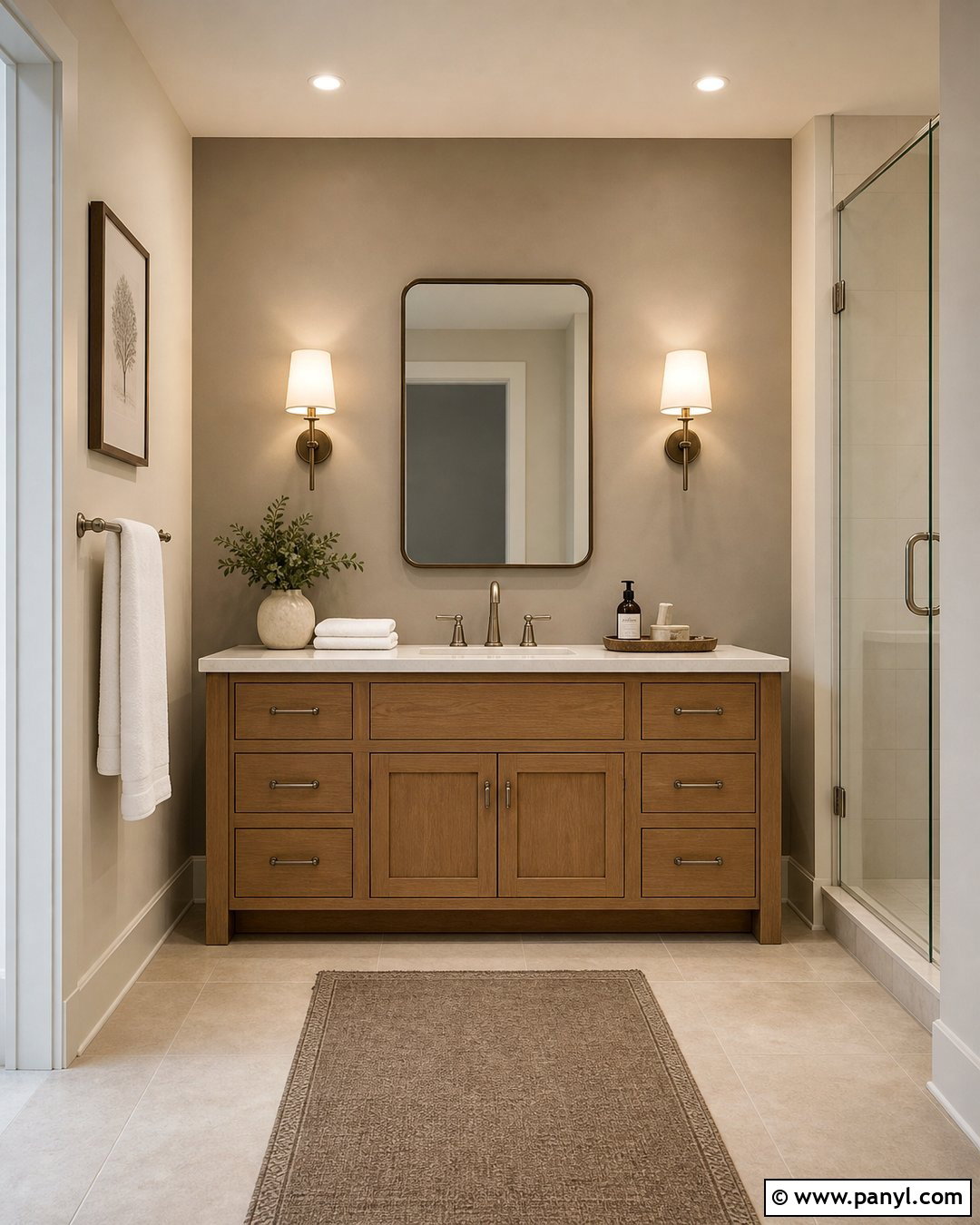
Imagine stepping into a bathroom filled with the quiet colors of stone, sand, and natural linen. Warm taupe cabinets establish that grounded atmosphere while offering more depth than beige. Pair the vanity with cream walls, honed travertine-look flooring, and an off-white countertop with subtle brown veining. Antique brass pulls and a bronze-framed mirror complement the cabinet’s earthy undertones. Choose rounded wall sconces with milky glass shades to soften the straight lines of the cabinetry. A walnut stool, tan hand towels, and woven storage baskets add darker natural notes. Keep the shower tile light and simple so the taupe vanity remains the visual anchor. This complete look feels sophisticated, forgiving, and comfortable in both traditional and modern bathrooms.
4. Light Gray Bathroom Cabinets
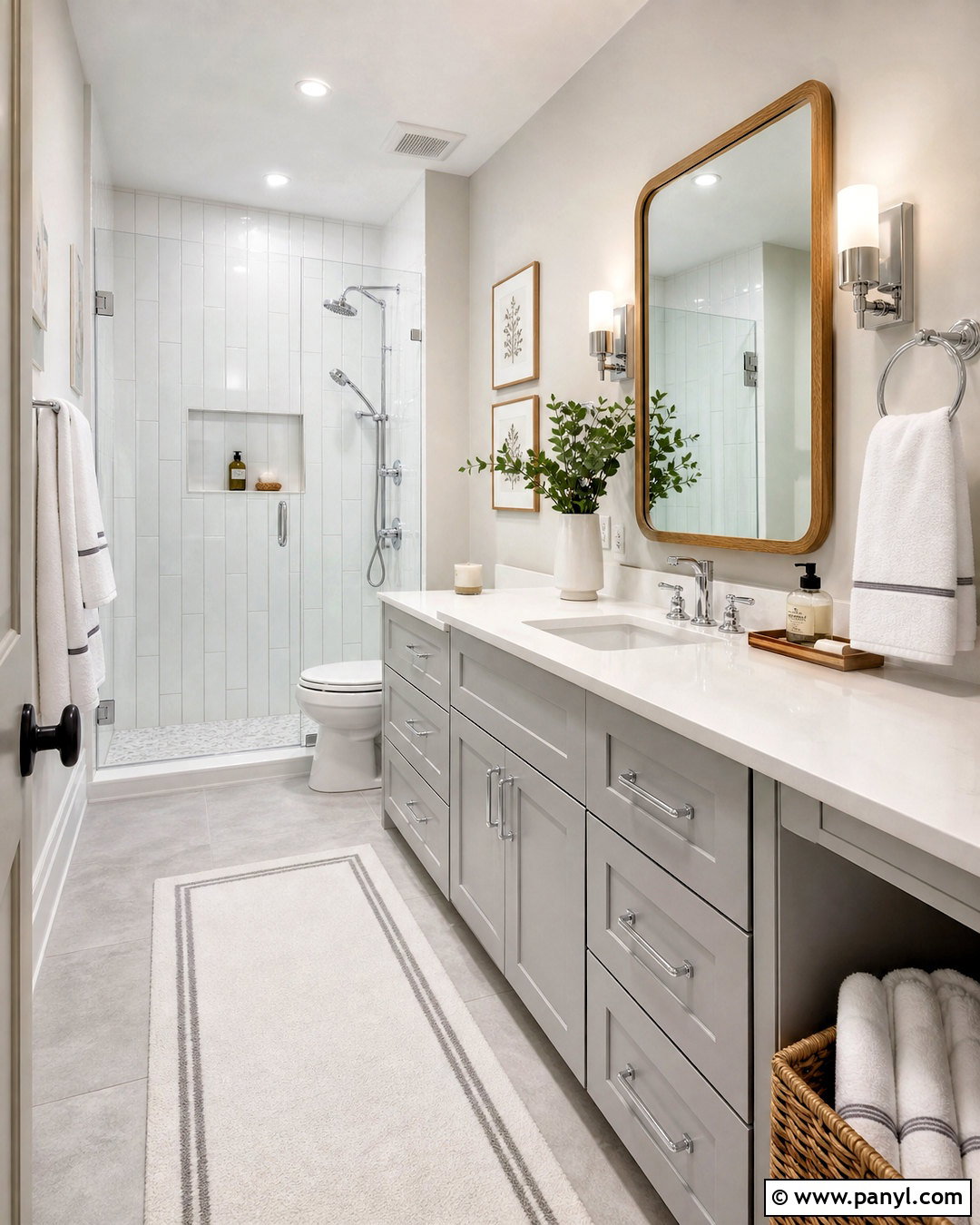
Light gray bathroom cabinets can still feel fresh when the shade has gentle warmth instead of icy blue undertones. Build the room around a pale dove-gray vanity, crisp white quartz countertop, and polished chrome fixtures. White vertical subway tile gives the walls height, while soft gray porcelain flooring connects the vanity to the rest of the space. Introduce warmth with a light oak mirror frame, a wooden bath tray, and natural woven baskets. White towels with narrow charcoal borders add definition without cluttering the palette. In a small bathroom, use reflective sconces and a wide mirror to distribute light around the cabinet. The final design feels bright and tailored, making it a dependable choice for homeowners who prefer calm neutrals and clean architectural lines.
5. Charcoal Bathroom Cabinets
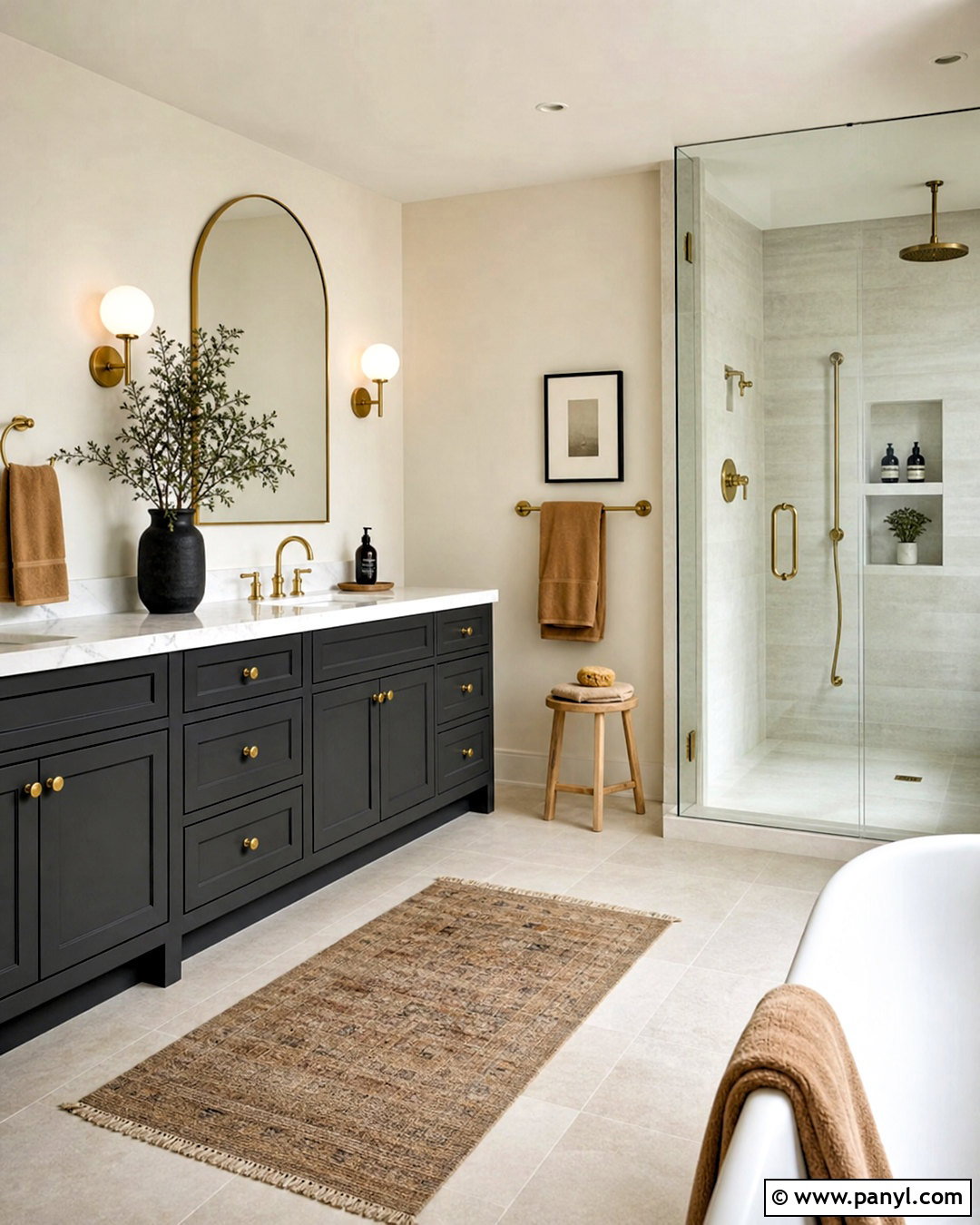
Charcoal cabinets bring depth to a bathroom without the stronger visual weight of pure black. Choose a warm charcoal finish and balance it with pale walls, a white marble-look countertop, and large ivory floor tiles. Brushed brass hardware adds warmth and makes the dark drawer fronts easier to distinguish. Above the vanity, install a large arched mirror with a slim brass frame and simple globe sconces. A frameless glass shower preserves the open feeling, while a light wood stool and camel-colored towels soften the contrast. This look works best when the room has strong overhead and vanity lighting. Keep accessories restrained and surfaces clear. The result is a dramatic but livable bathroom where the cabinets provide a sophisticated foundation rather than making the entire room feel dark.
6. Matte Black Bathroom Cabinets
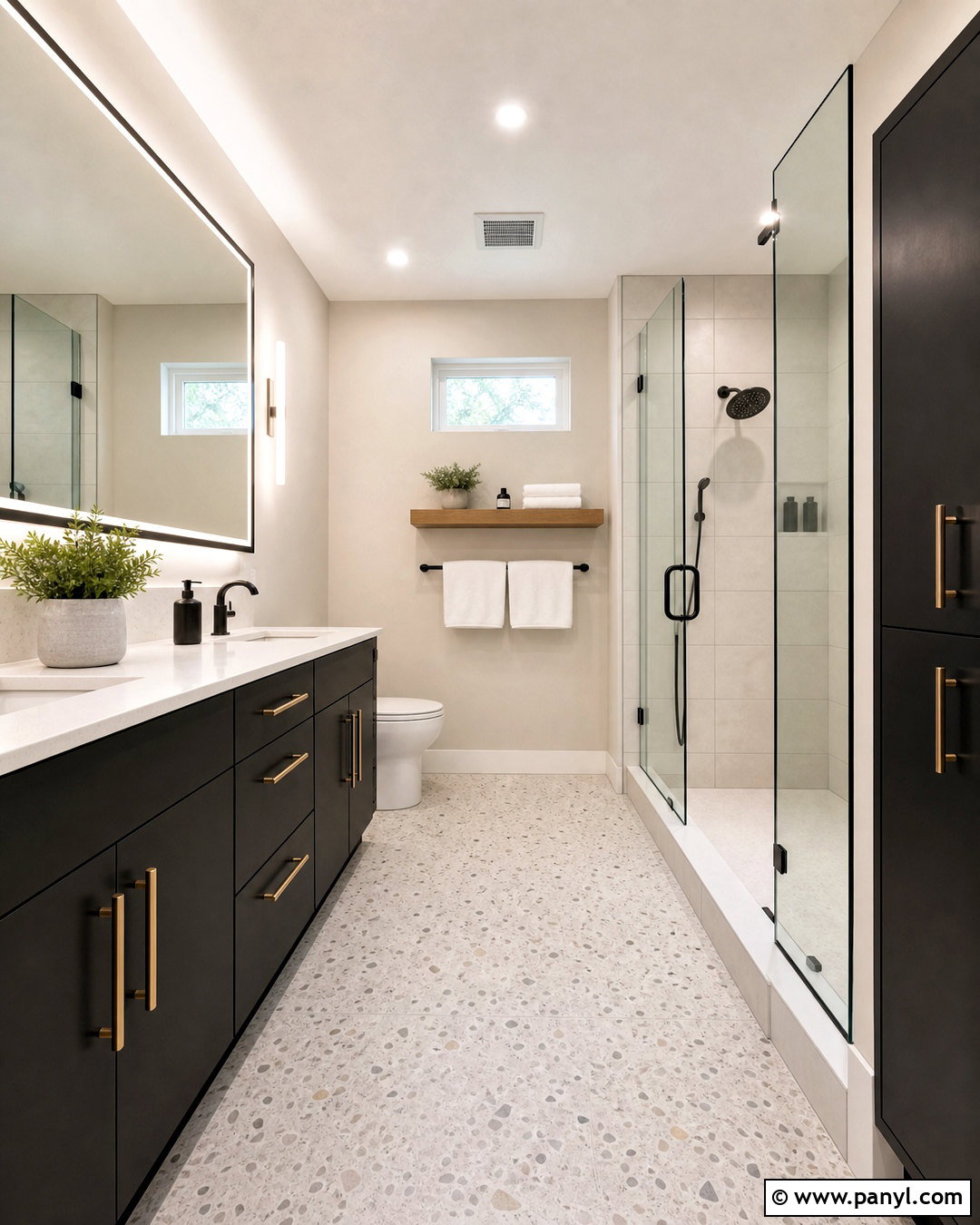
Could a black vanity work in a normal-sized bathroom? It can when the surrounding finishes are bright, simple, and carefully balanced. Select matte black cabinets with streamlined doors, then add a thick white quartz top and an undermount sink. Use warm white walls and pale terrazzo flooring to reflect light throughout the room. Matte black faucets create continuity, while brushed brass cabinet pulls introduce a small layer of warmth. Install a wide backlit mirror so the vanity remains clearly visible during daily routines. A frameless shower, white towels, and one light oak shelf keep the design open. Avoid filling the room with additional dark surfaces. This controlled black-and-white scheme feels modern and graphic while remaining welcoming, functional, and easy to personalize.
7. Navy Blue Bathroom Cabinets
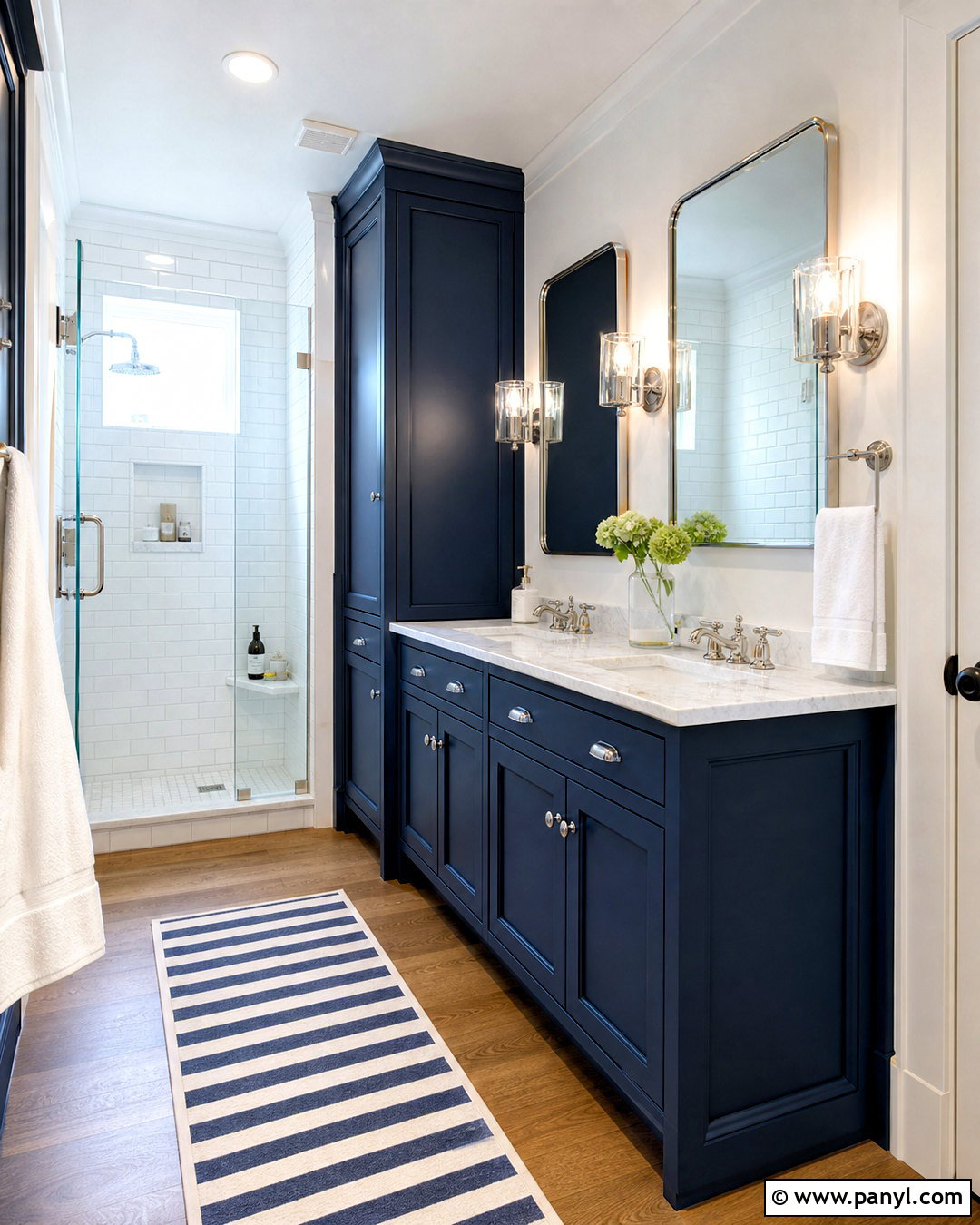
Navy blue cabinets give a bathroom classic color and strong definition, especially against white tile. Use a deep navy vanity with a white marble or quartz countertop and polished nickel hardware. Cover the lower shower walls with glossy white subway tile, then paint the remaining walls a pale warm gray. A medium-tone oak floor or wood-look porcelain tile prevents the blue-and-white combination from feeling too formal. Add a polished nickel mirror, clear glass sconces, and white towels with narrow navy trim. A striped washable rug can repeat the palette without overwhelming the room. Because navy absorbs light, use it on the cabinets rather than every wall. The finished bathroom feels crisp, timeless, and adaptable to coastal, transitional, or traditional home interiors.
8. Powder Blue Bathroom Cabinets
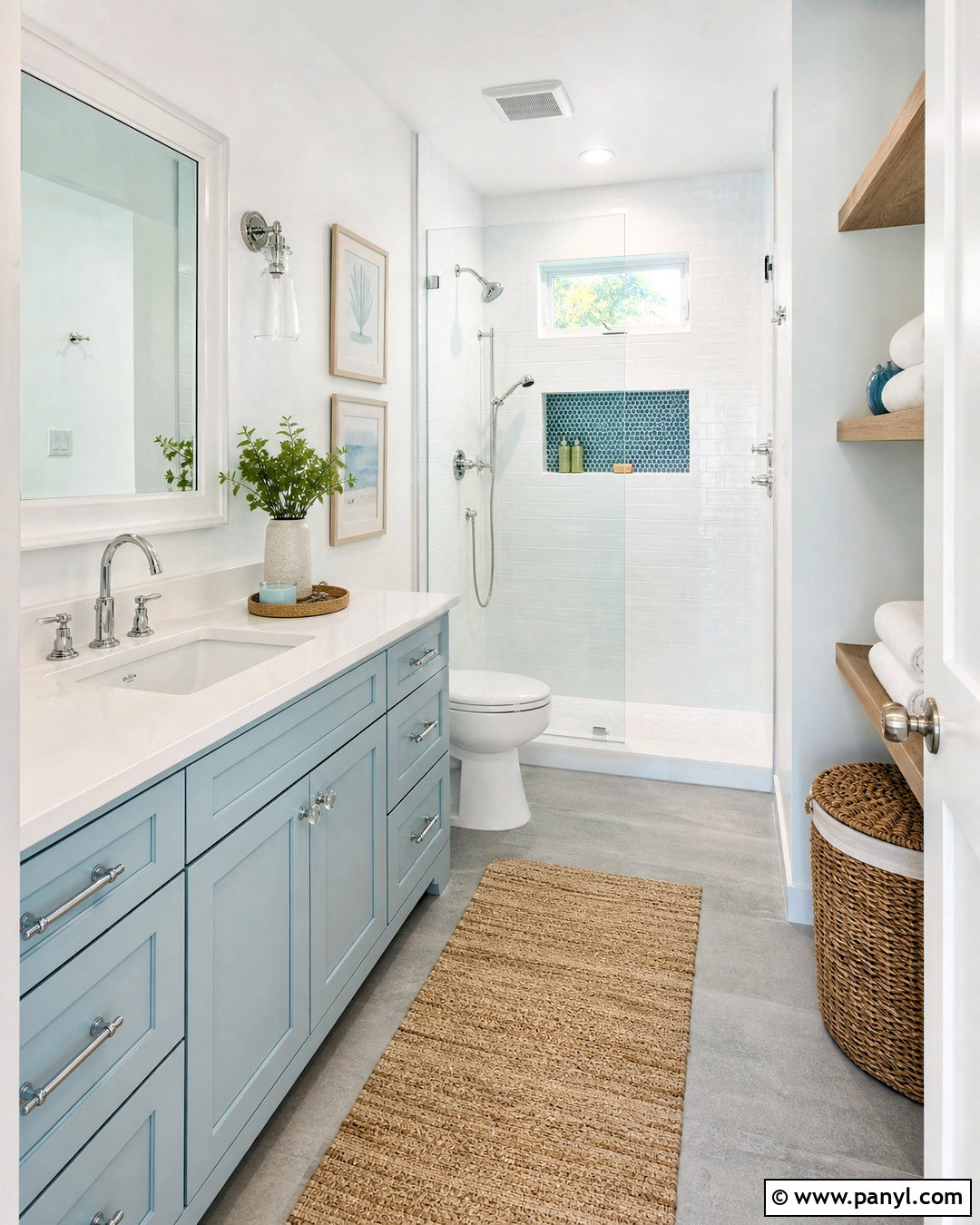
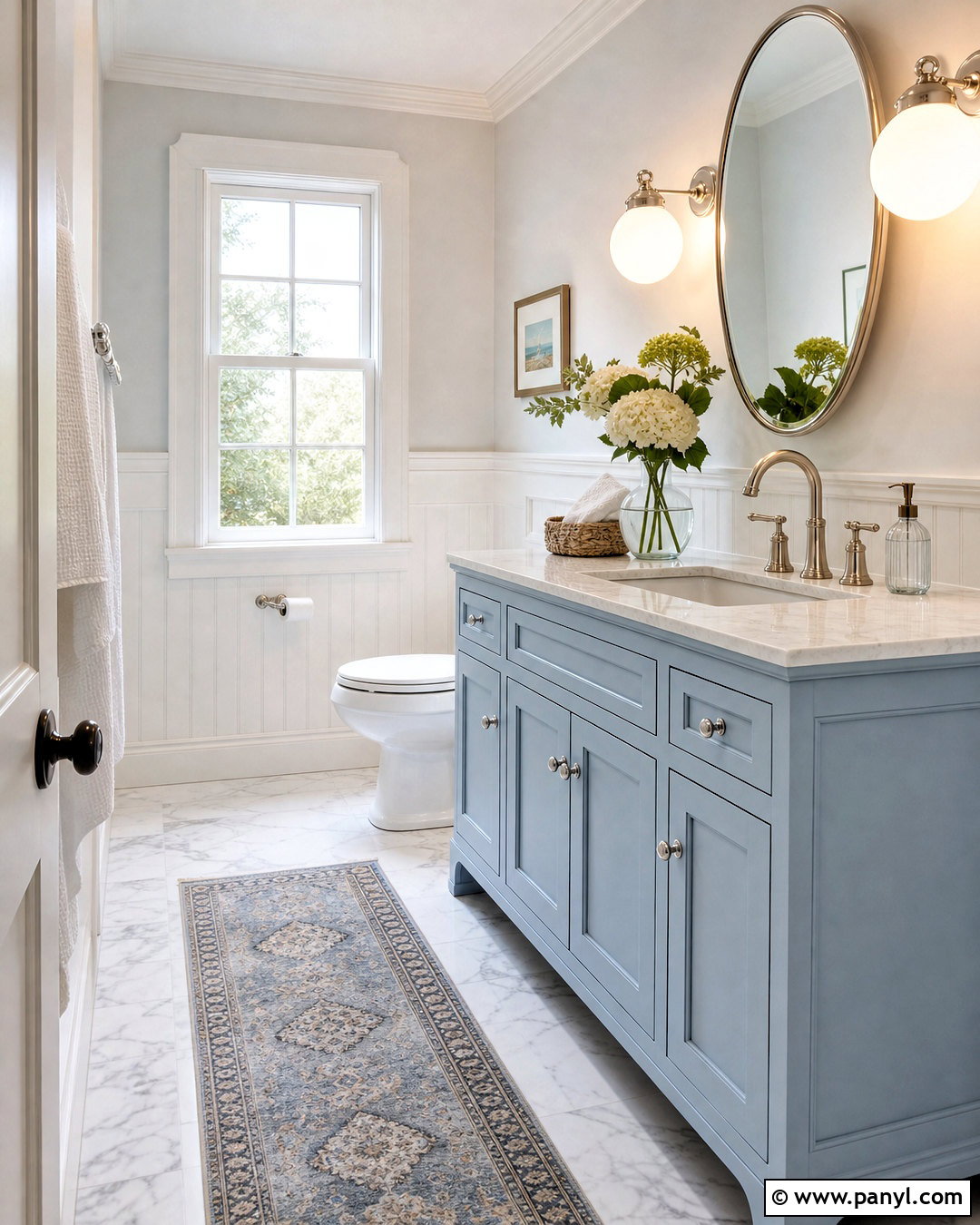
Powder blue cabinets create an airy bathroom that feels colorful but never demanding. Choose a softly muted blue rather than a bright nursery shade, and pair it with white walls, pale gray flooring, and a lightly veined quartz countertop. Polished chrome faucets and simple round knobs keep the palette clean and reflective. Add a white-framed mirror, clear glass sconces, and a frameless shower enclosure to maintain visual openness. A woven hamper, blonde wood shelf, and sandy beige runner bring warmth into the cool scheme. For subtle pattern, use small white-and-blue mosaic tile inside the shower niche. This coordinated look is particularly useful in compact bathrooms because the pale cabinet color adds personality while preserving a bright, spacious impression around the vanity and storage areas.
9. Dusty Blue Bathroom Cabinets
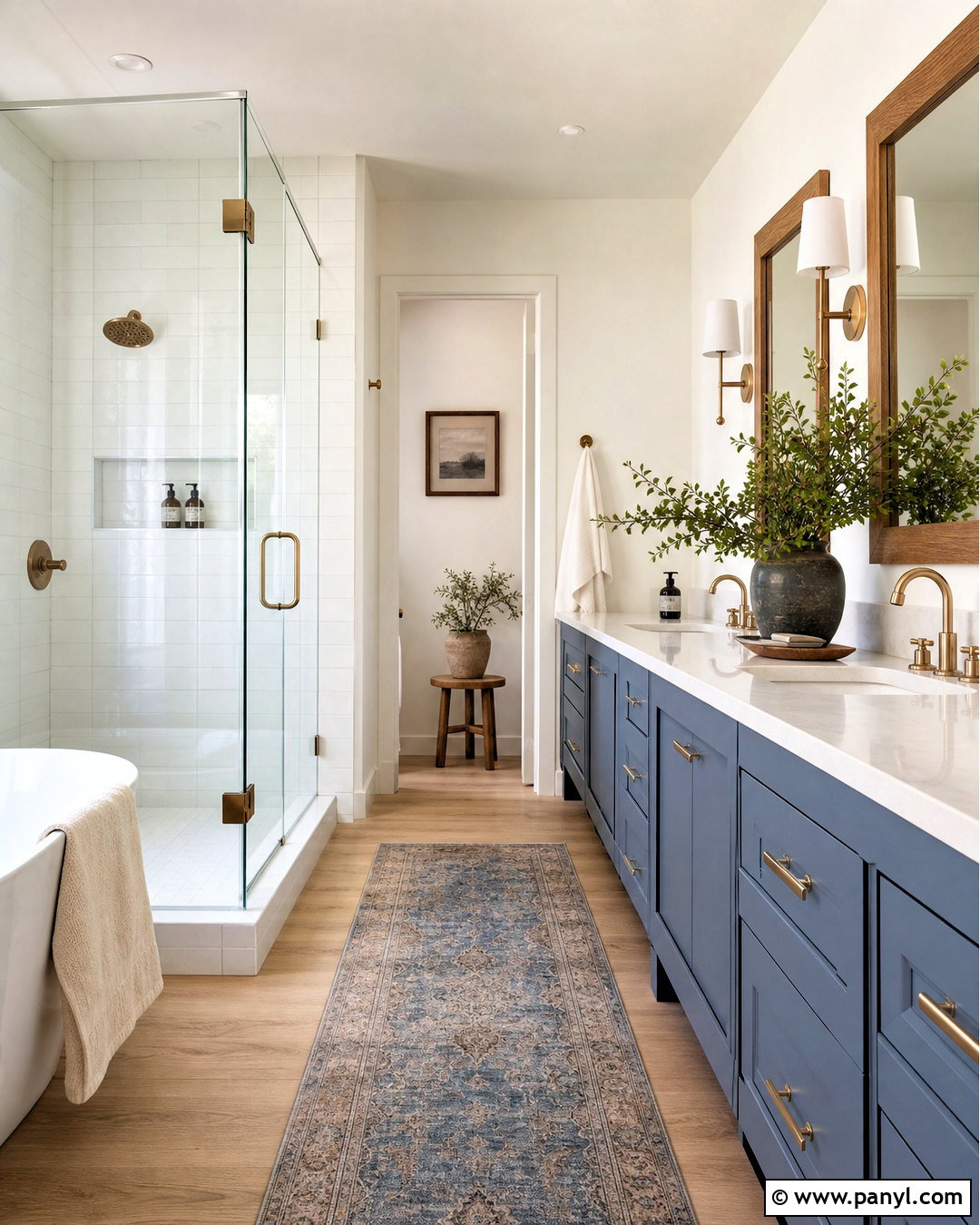
Dusty blue has enough gray in it to feel calm, mature, and easy to combine with natural materials. Paint the bathroom cabinets a medium muted blue, then add warm white walls and a creamy quartz countertop. Brushed brass pulls, faucets, and sconces provide a soft contrast that highlights the cabinet details. Use pale oak-look flooring and a matching wooden mirror frame to connect the cool blue with warmer elements. In the shower, choose handmade-look white tile with slightly uneven surfaces for texture. Complete the room with ivory towels, a faded blue runner, and simple stoneware containers. Rather than adding several competing accent colors, repeat the dusty blue once in a small textile or artwork. The result feels relaxed, balanced, and thoughtfully layered.
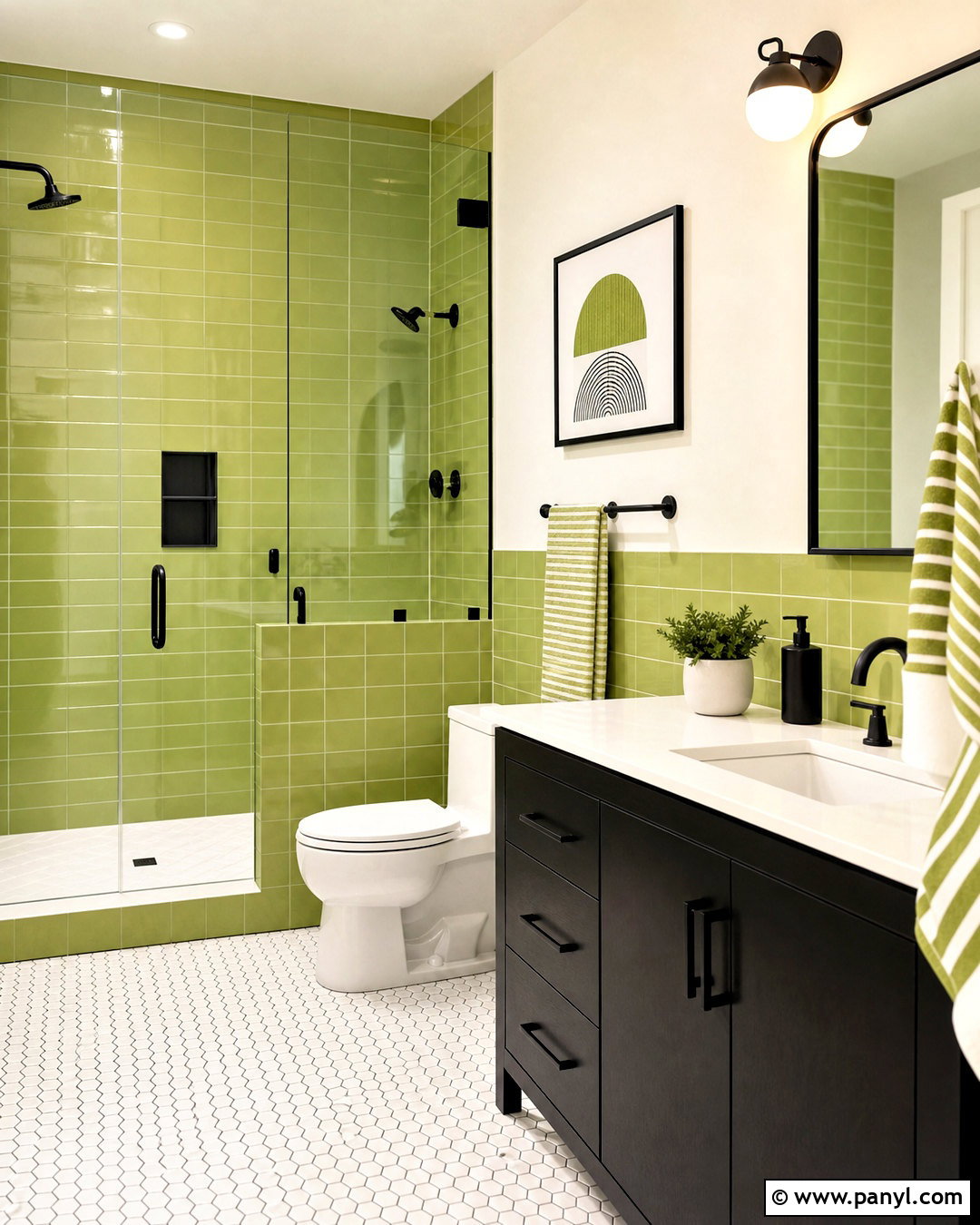
10. Sage Green Bathroom Cabinets
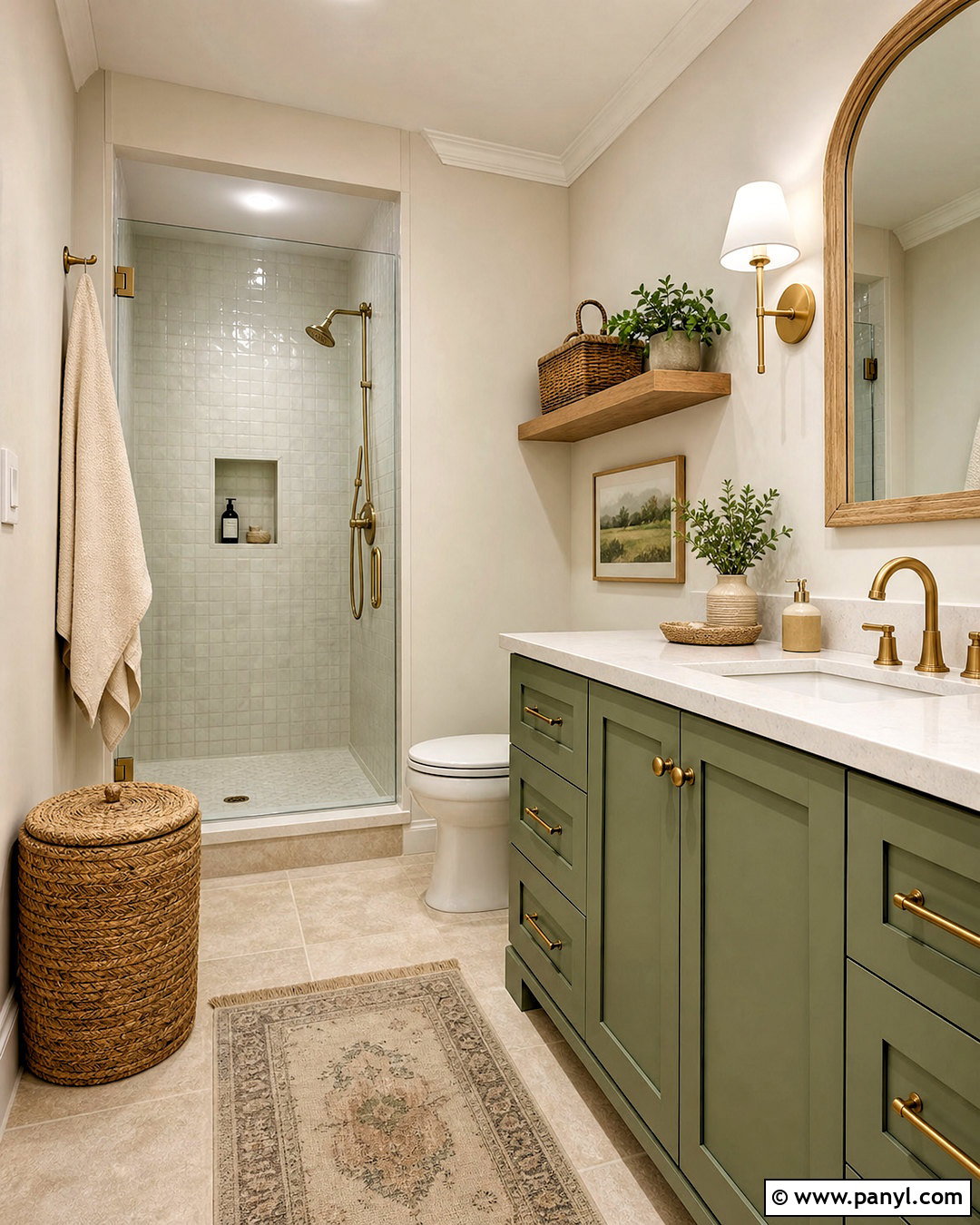
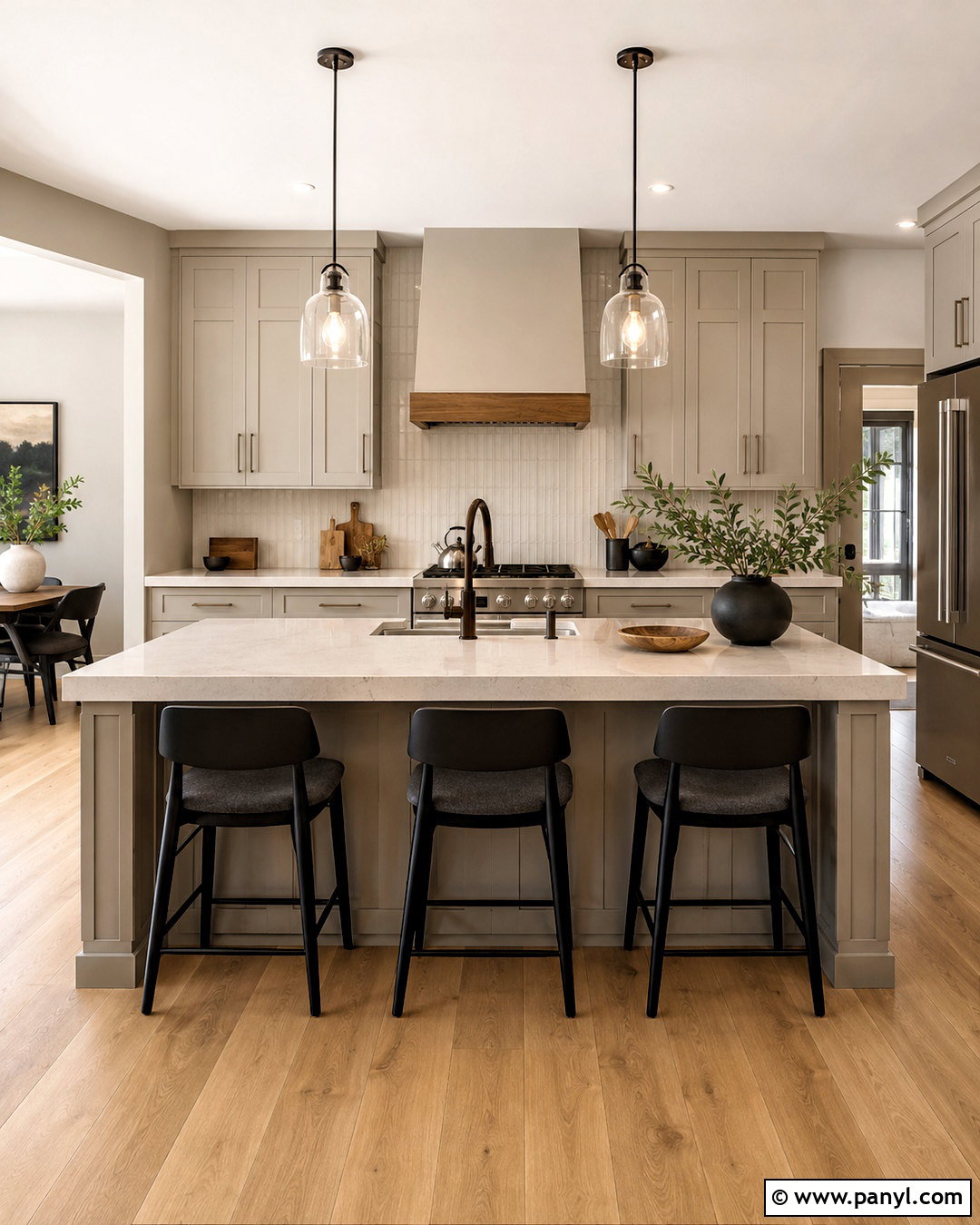
Sage green cabinets bring a natural, restorative character to the bathroom while behaving almost like a neutral. Select a warm, muted sage and combine it with creamy walls, off-white zellige-style tile, and a pale quartz countertop. Brushed brass hardware enhances the green’s yellow undertones, while a white oak mirror and floating shelf add organic warmth. Use beige stone-look flooring instead of cool gray tile to keep the room cohesive. Folded ivory towels, woven baskets, and small ceramic containers finish the vanity without creating clutter. If the bathroom has a window, one moisture-tolerant plant can deepen the botanical connection. This full scheme feels peaceful rather than themed, making sage a versatile choice for farmhouse, transitional, cottage, and understated modern interiors.
11. Olive Green Bathroom Cabinets
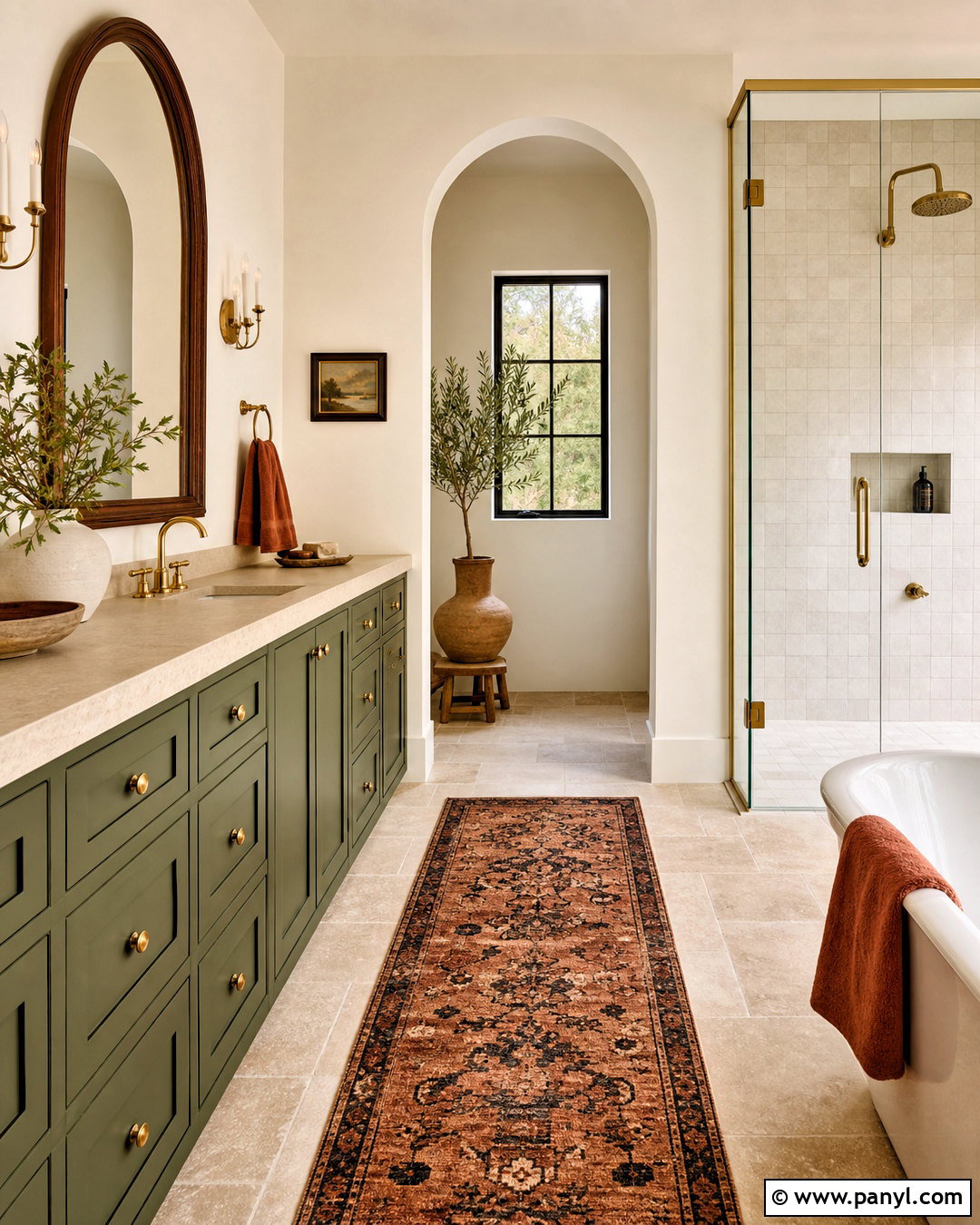
For a bathroom with richer natural color, olive green cabinets create warmth and character. Choose a medium olive that leans earthy rather than yellow, then pair it with warm white plaster-look walls and cream stone flooring. A lightly veined ivory countertop prevents the vanity from appearing heavy. Use aged brass pulls, an antique brass faucet, and a rounded wood-framed mirror to build a collected appearance. Terracotta-colored towels and a vintage-inspired runner complement the green without competing with it. Keep the shower surround simple with matte cream tile and clear glass. This palette is particularly effective in rooms with warm natural light. The completed bathroom feels grounded and distinctive, blending traditional materials with clean cabinetry and practical modern fixtures.
12. Forest Green Bathroom Cabinets
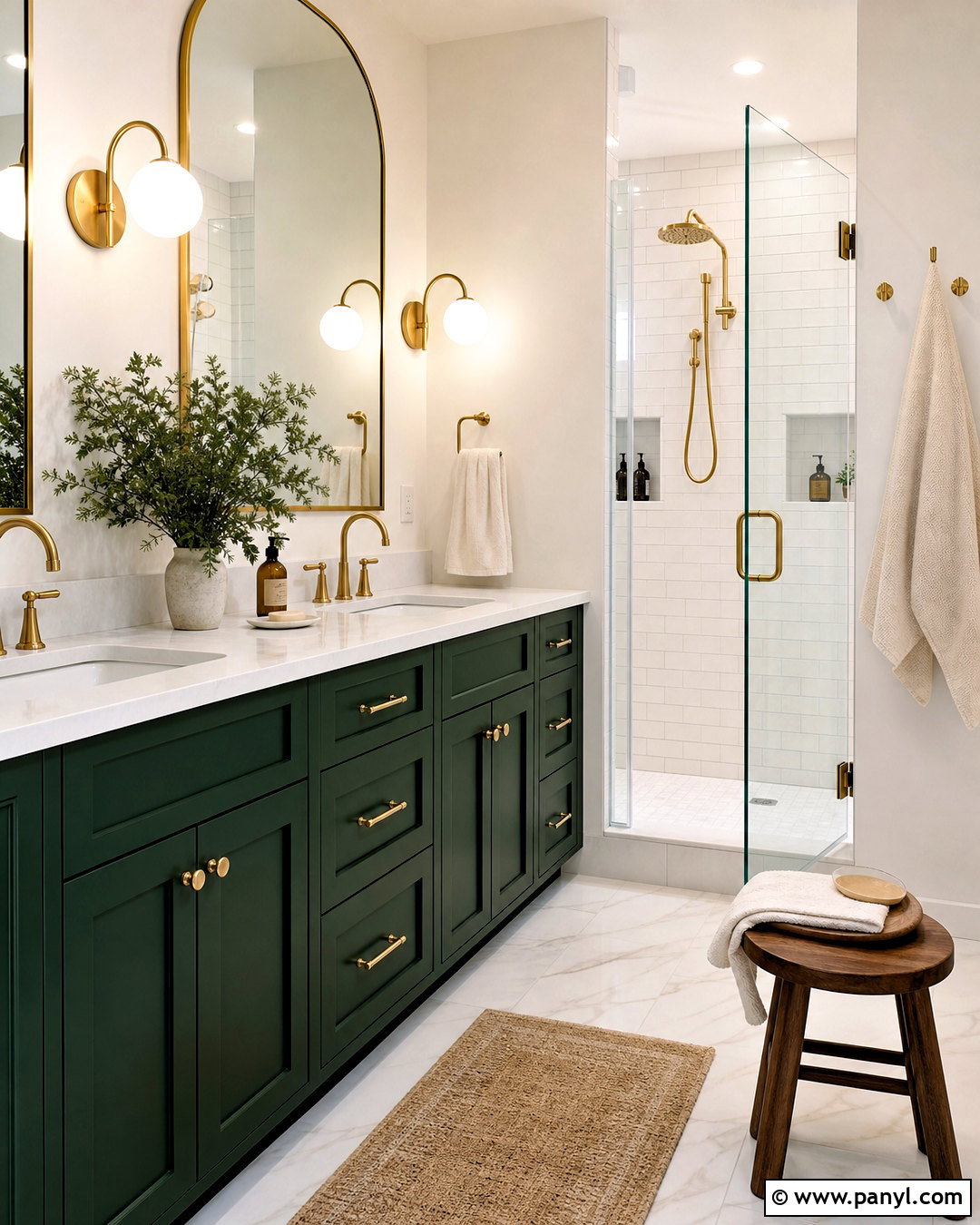
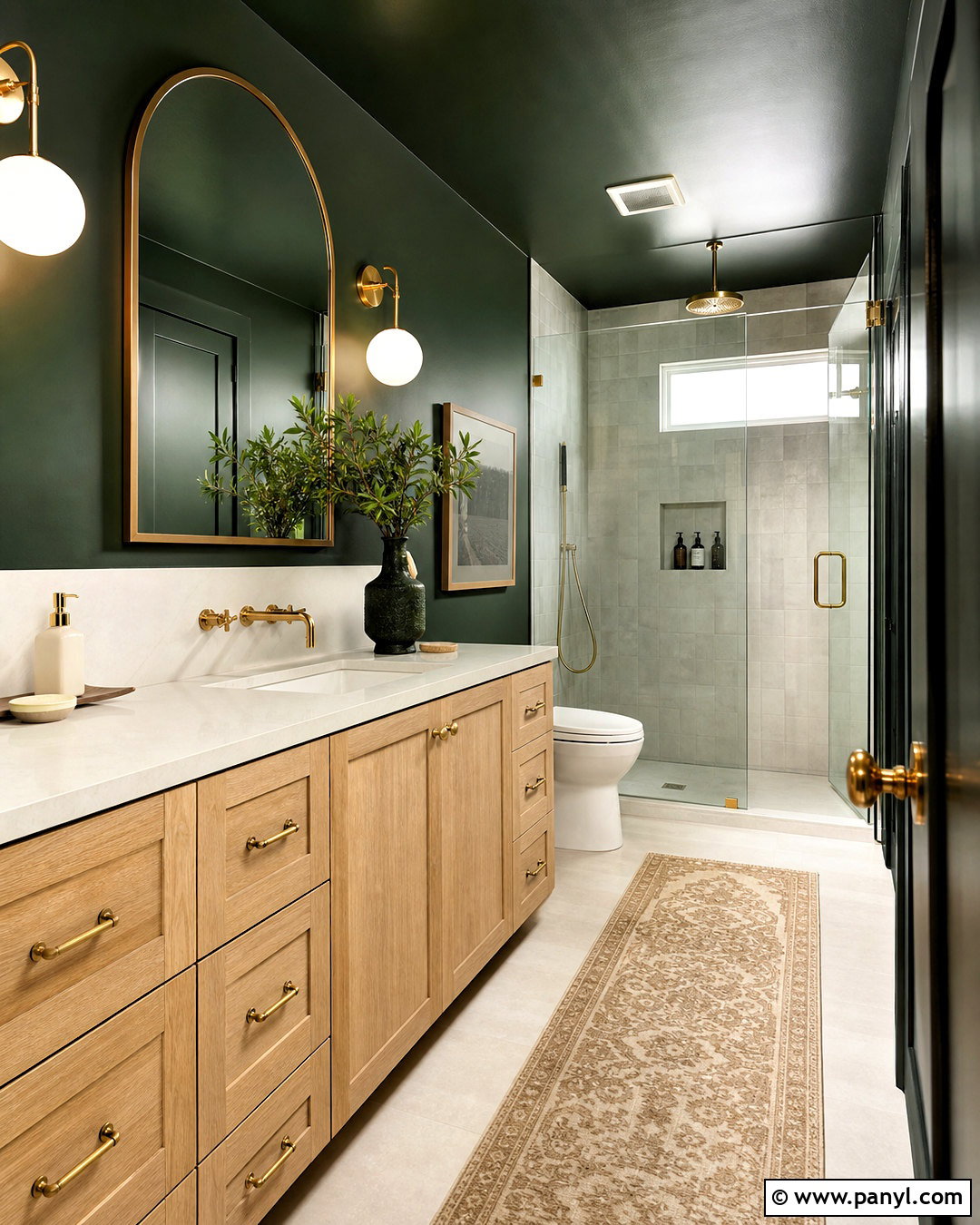
Forest green cabinets can turn a plain bathroom into a dramatic, jewel-toned retreat. Ground the room with a deep green vanity featuring simple shaker doors, then add a bright white quartz countertop for contrast. Brushed brass hardware and faucets emphasize the richness of the cabinet color. Use warm white walls, white vertical tile in the shower, and pale marble-look flooring to keep the overall room bright. An arched brass mirror adds height, while globe sconces provide balanced light on both sides. Bring in walnut through a small stool or shelf, and choose cream towels rather than stark white ones. This complete design works especially well in larger bathrooms or powder rooms where saturated cabinetry can become a memorable focal point without surrounding the user in dark color.
13. Deep Teal Bathroom Cabinets
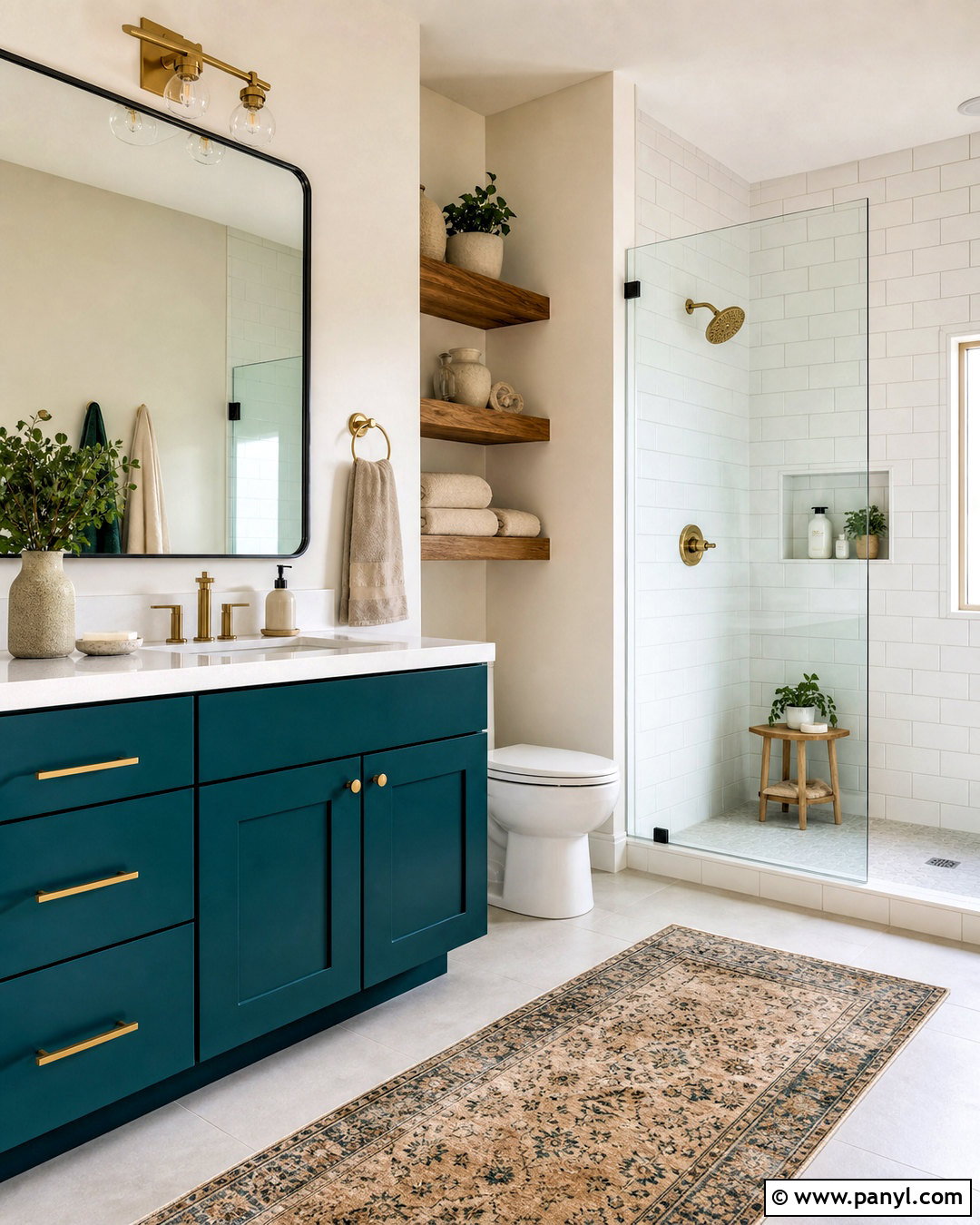
Deep teal combines the calm quality of blue with the organic appeal of green. Use it on a streamlined vanity with flat-panel doors, then balance the saturated color with white quartz, warm ivory walls, and pale neutral floor tile. Brushed gold pulls and a matching faucet give the teal a polished finish, while a thin black mirror frame prevents the palette from becoming overly decorative. Add a walk-in shower with white stacked tile and a clear glass panel. Natural oak shelving, sandy towels, and a subtle patterned rug soften the stronger color contrast. Keep countertop accessories minimal so the cabinetry remains the primary feature. The finished room feels modern, energetic, and sophisticated, making this color especially effective in an otherwise neutral bathroom that needs a clear focal point.
14. Terracotta Bathroom Cabinets
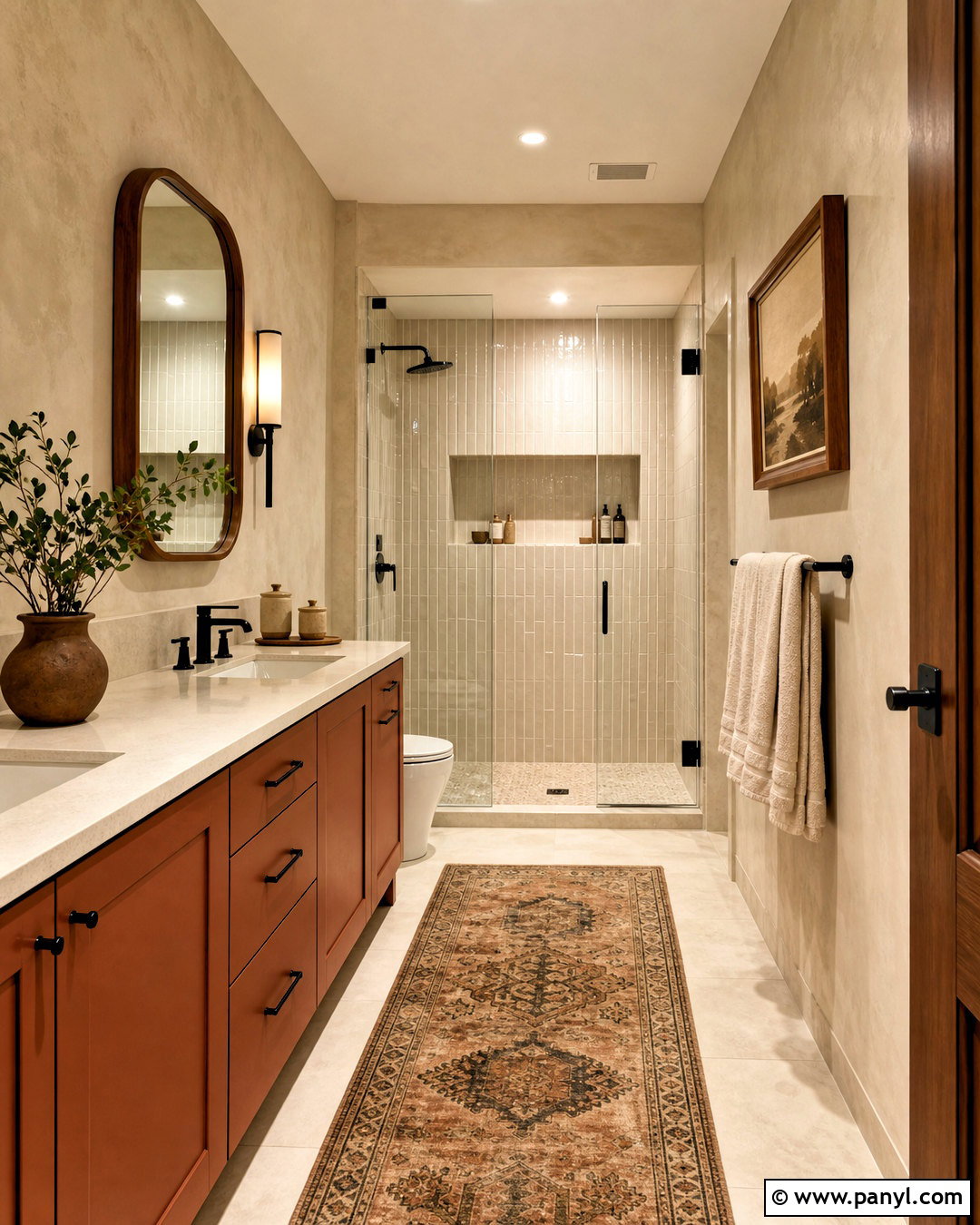
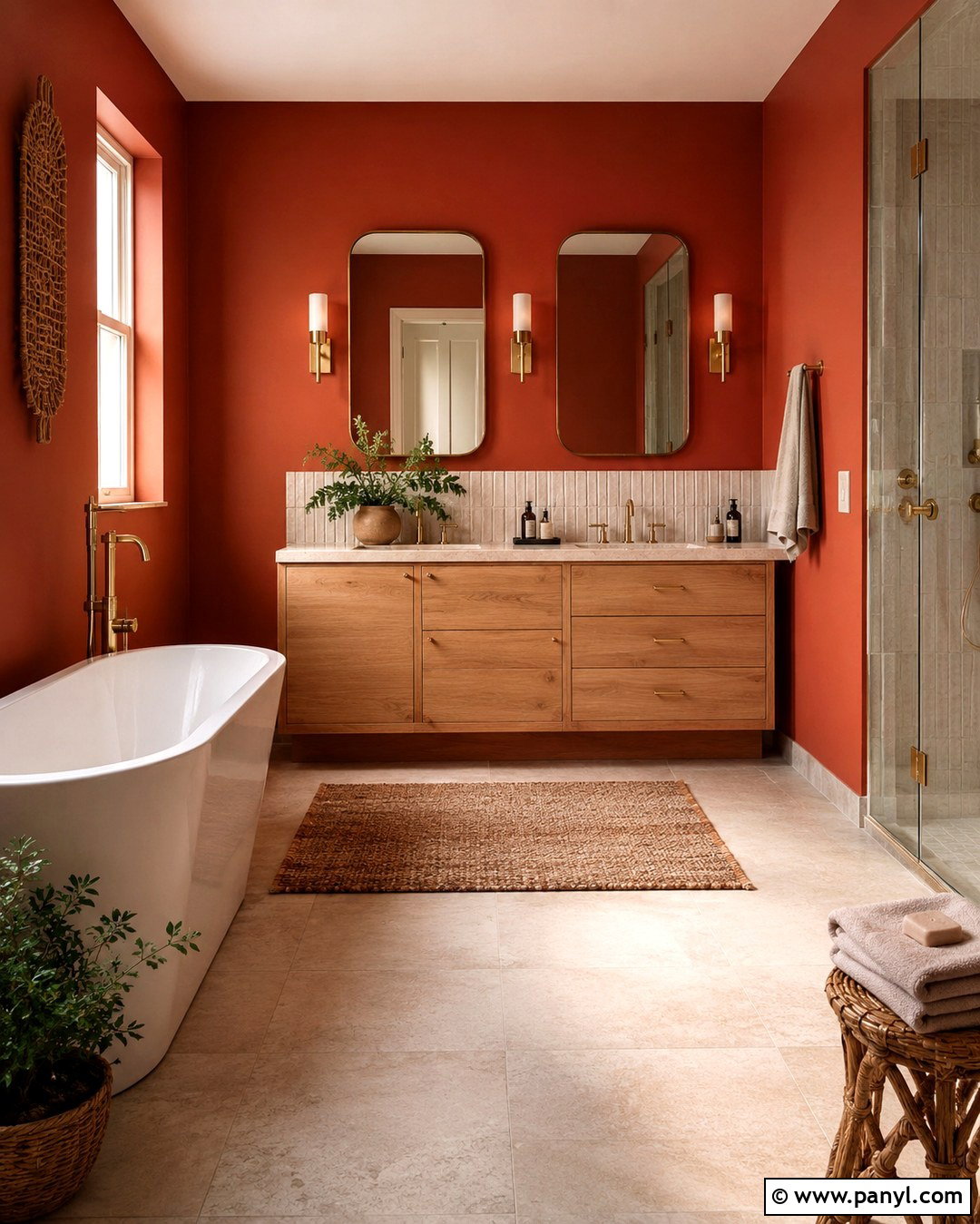
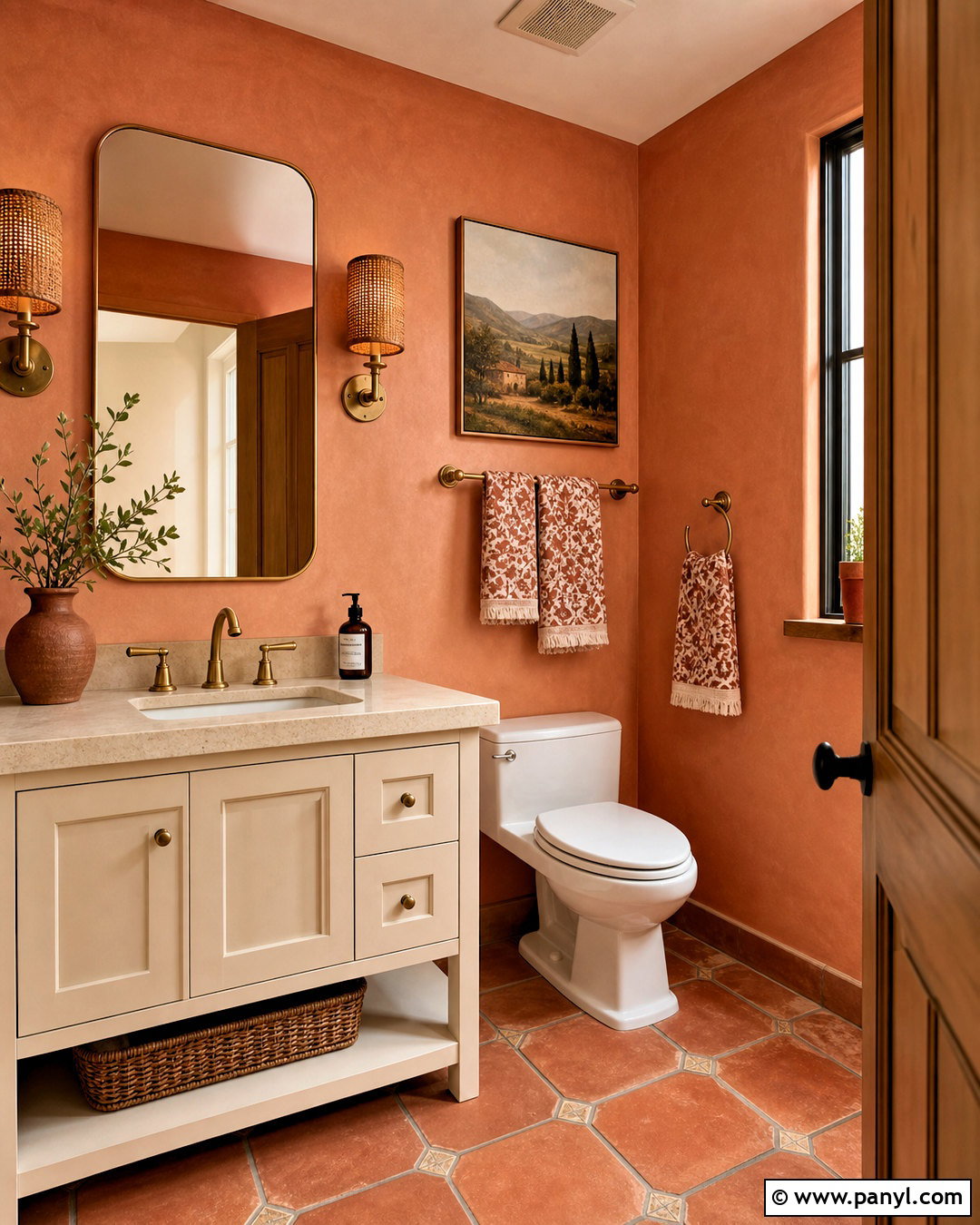
Terracotta cabinets introduce sun-warmed color while giving the bathroom an earthy, inviting atmosphere. Choose a muted clay shade with brown undertones rather than a vivid orange. Pair the vanity with creamy microcement-look walls, ivory quartz, and beige stone flooring. Matte black cabinet pulls and faucets create crisp definition, while a rounded walnut mirror contributes natural warmth. Use simple off-white shower tile and a clear glass enclosure to prevent the palette from becoming visually busy. Linen-colored towels, handmade ceramic containers, and one rust-patterned runner complete the look. Because terracotta already carries plenty of personality, keep surrounding colors quiet and materials tactile. This coordinated design suits Mediterranean, Southwestern, organic modern, and relaxed contemporary bathrooms without relying on decorative themes or excessive accessories.
15. Dusty Rose Bathroom Cabinets
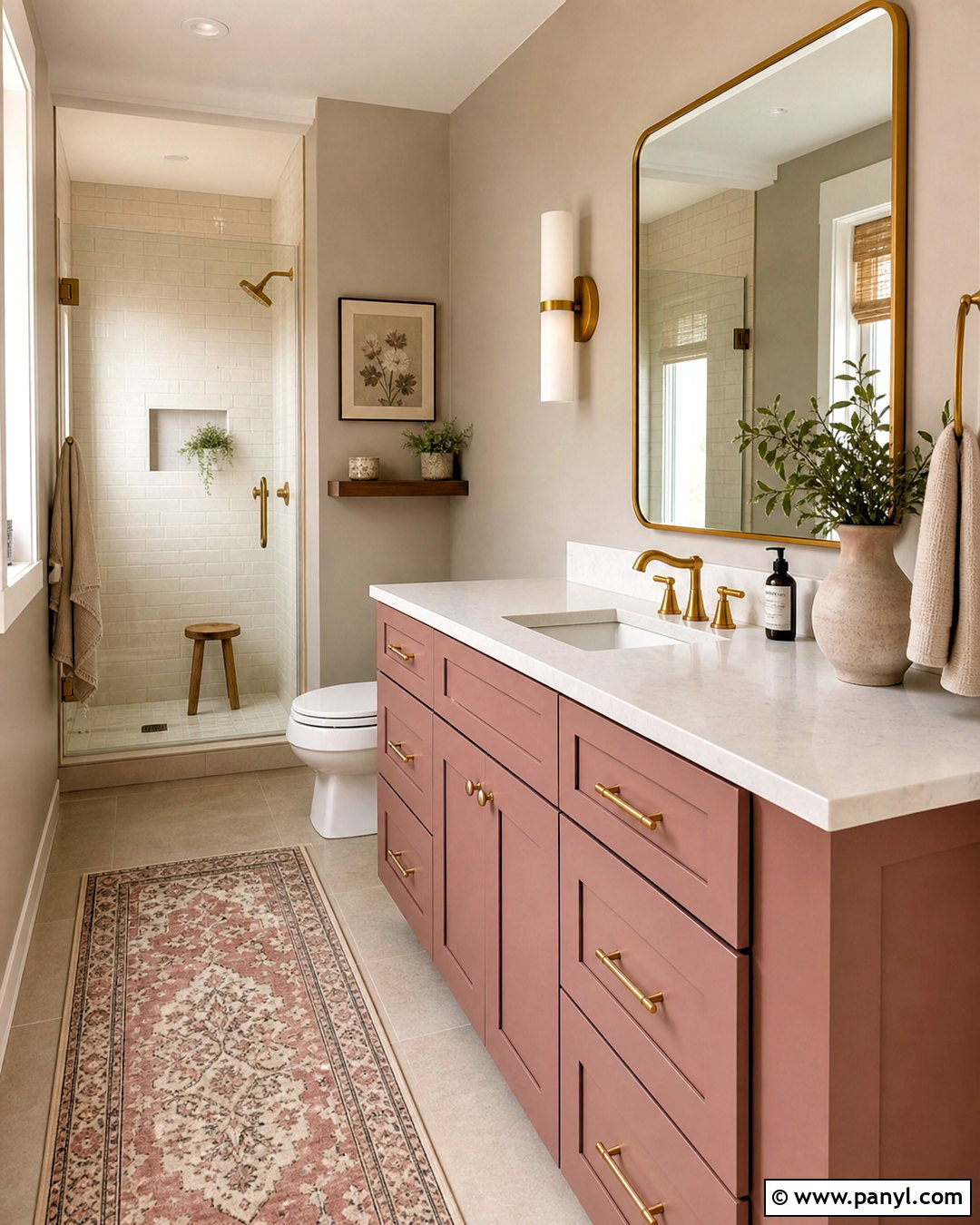
Dusty rose cabinets can feel sophisticated when the color is muted and balanced with stone, wood, and clean architectural finishes. Select a gray-toned rose for the vanity, then add a warm white quartz countertop and light greige walls. Brushed brass pulls, faucets, and a slim mirror frame reinforce the cabinet’s warmth. Use beige porcelain floor tile and simple ivory shower tile to keep the foundation neutral. A small walnut shelf and oatmeal towels prevent the room from becoming overly sweet. For pattern, introduce a restrained vintage-style runner containing dusty pink, taupe, and cream. Avoid bright pink accessories or heavily floral decor. The completed bathroom feels soft, modern, and personal, offering a more expressive alternative to beige while remaining easy to live with.
16. Burgundy Bathroom Cabinets
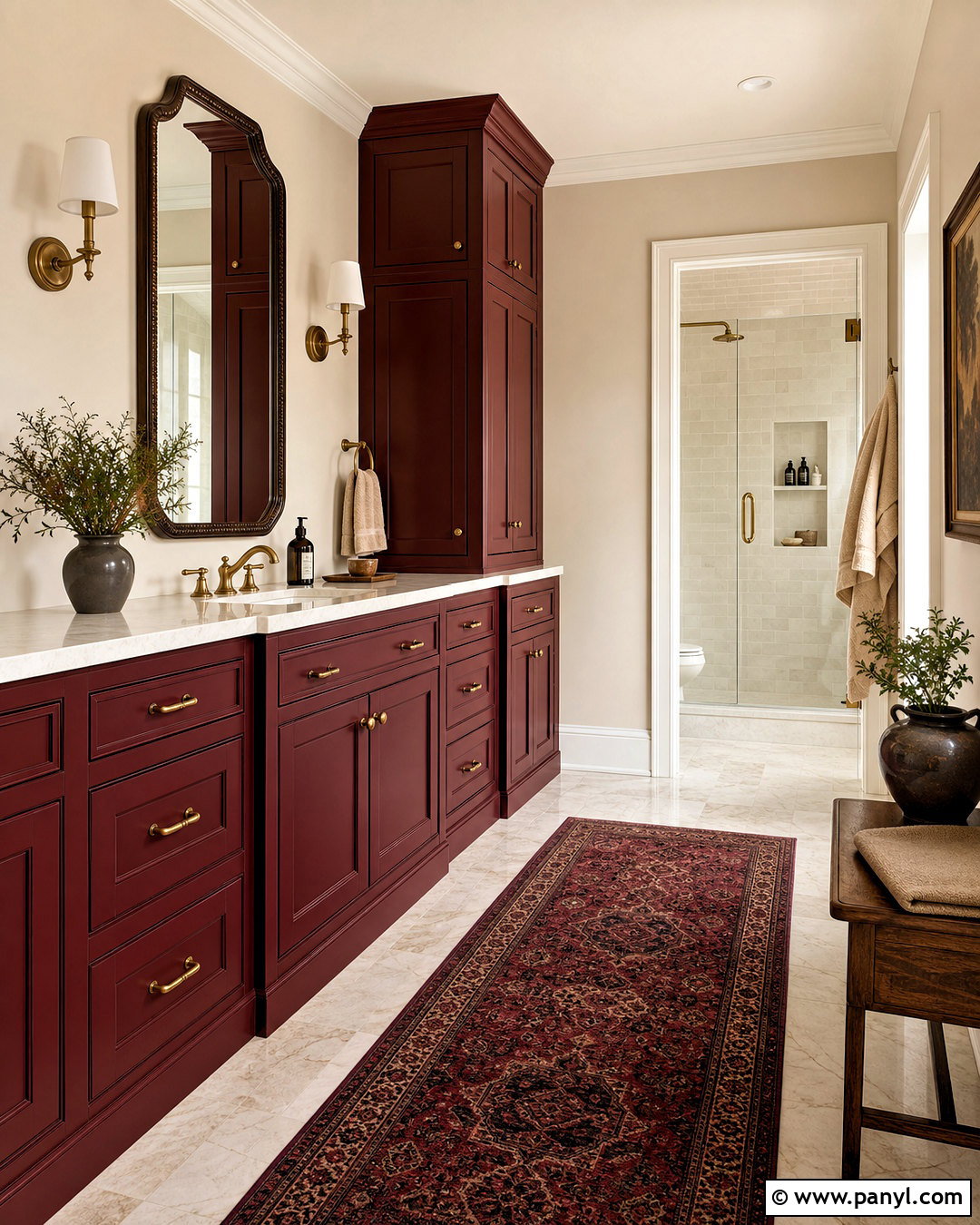
A burgundy vanity creates a bold, tailored bathroom with warmth that black or navy cannot provide. Choose a deep red with brown or plum undertones, then surround it with creamy walls and pale marble-look flooring. A white quartz countertop adds needed brightness, while antique brass pulls and faucets complement the rich cabinet finish. Install a large rectangular mirror with a thin dark bronze frame and balanced sconces on either side. In the shower, use ivory tile with matching grout for a quiet background. Walnut accents, warm beige towels, and a patterned runner containing small burgundy details tie the scheme together. Reserve the strong color for the cabinets rather than the walls. This approach creates an elegant focal point while keeping the overall bathroom approachable and visually balanced.
17. Butter Yellow Bathroom Cabinets
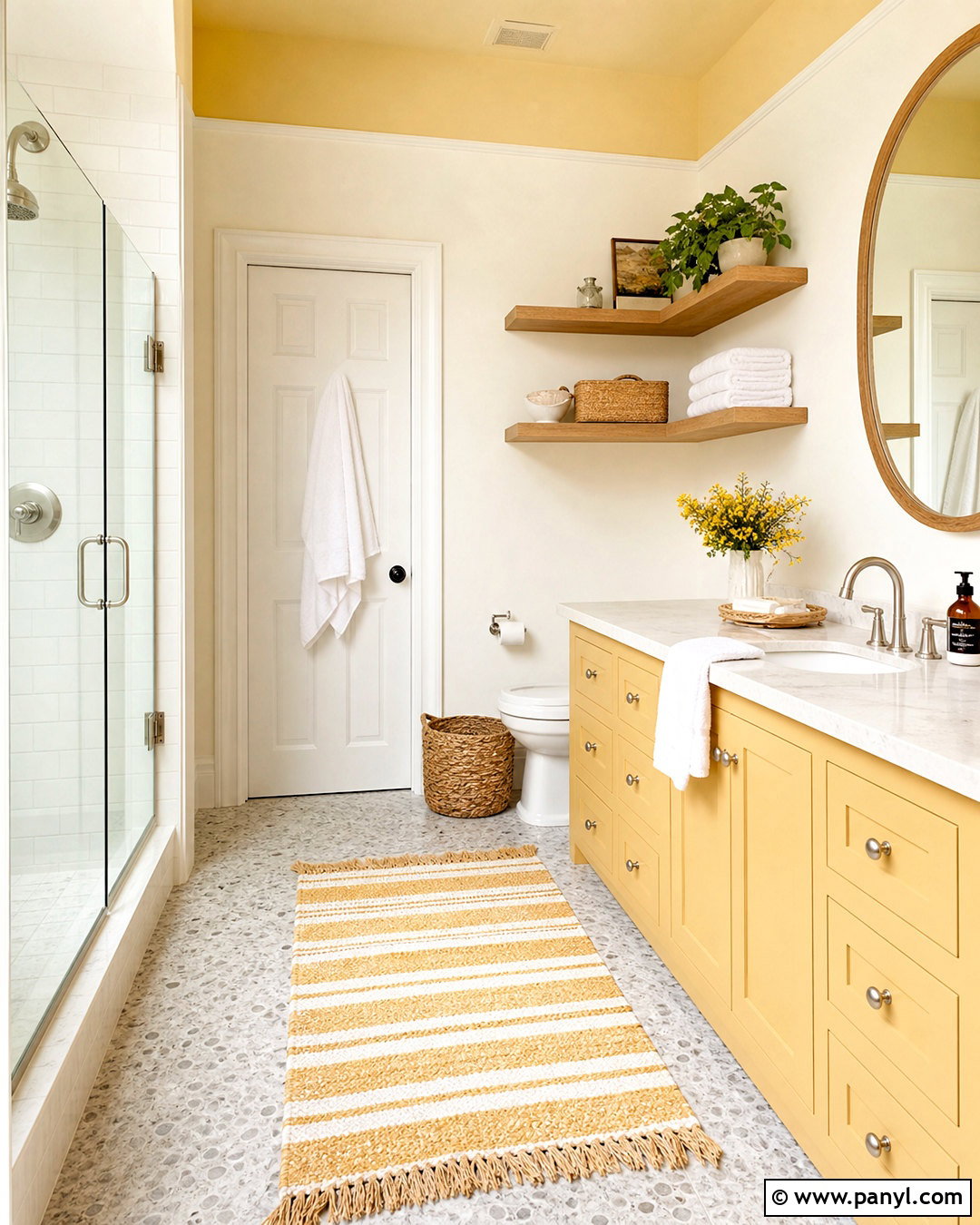
Butter yellow cabinets give the bathroom a cheerful lift without the intensity of a bright primary yellow. Choose a creamy, slightly muted shade and pair it with warm white walls, white quartz, and pale gray terrazzo flooring. Polished nickel hardware keeps the design crisp, while a light oak mirror and floating shelves introduce casual warmth. Use simple white shower tile with a pale yellow niche detail to repeat the cabinet color in a controlled way. Add white towels, woven baskets, and a small striped runner featuring cream, gray, and soft yellow. Natural light makes this palette especially appealing, but strong white vanity lighting can create a similar effect in an interior bathroom. The final look feels sunny, fresh, and suitable for cottage or contemporary homes.
18. Espresso Brown Bathroom Cabinets
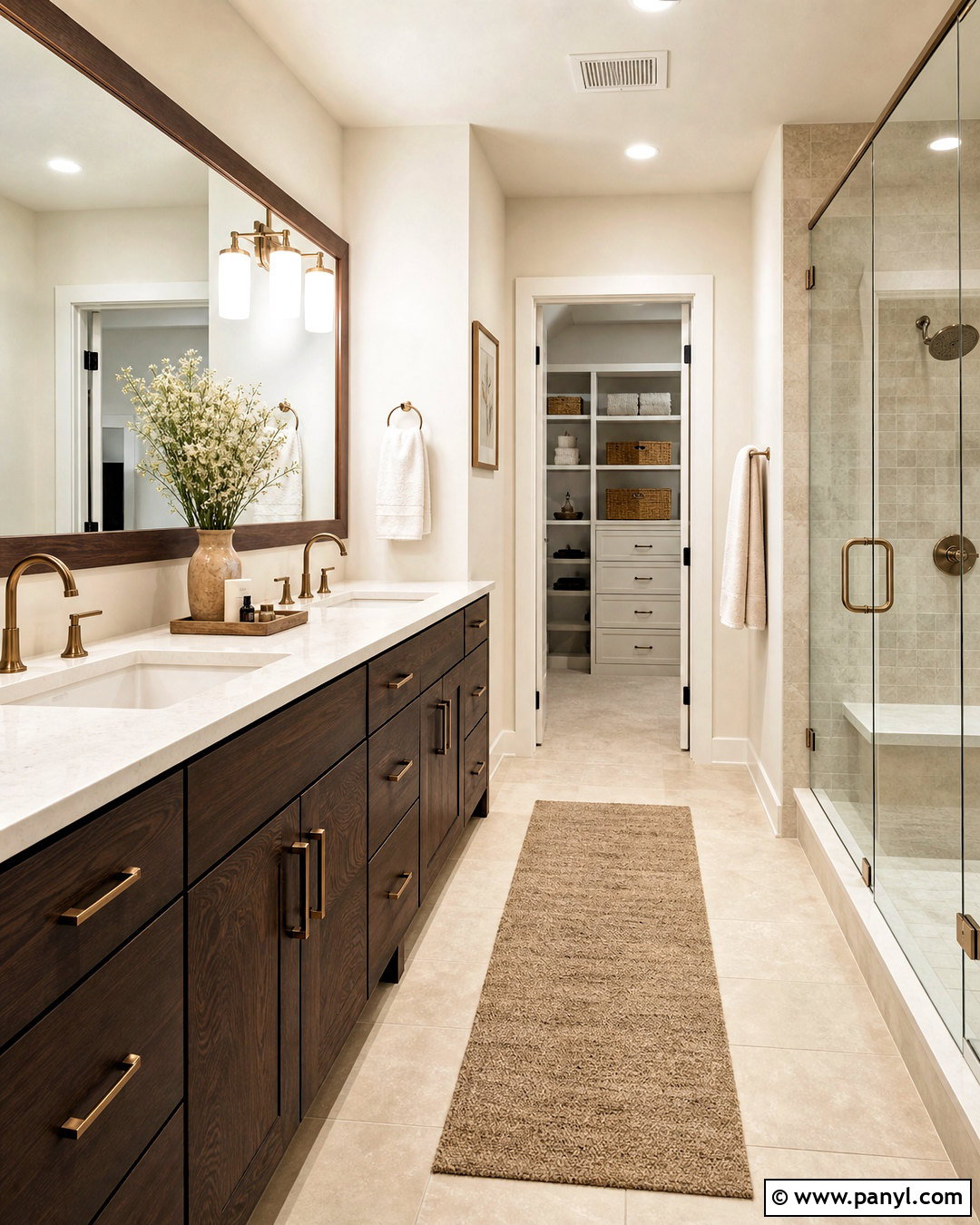
Espresso brown cabinets provide the depth of a dark finish while maintaining the warmth and visible character of wood. Choose cabinetry with a subtle grain rather than a flat brown coating. Pair it with a creamy quartz countertop, warm white walls, and light limestone-look flooring to create contrast. Brushed nickel or soft bronze hardware works well, depending on whether you want a cleaner or more traditional result. Add a large mirror with a medium wood frame, bright vanity lighting, and a clear glass shower enclosure. Ivory towels and a beige textured runner soften the dark base. Keep wall colors light and avoid additional heavy wood furniture. This complete palette makes espresso cabinetry feel intentional and updated instead of dated, particularly in a spacious primary bathroom.
19. Natural Walnut Bathroom Cabinets
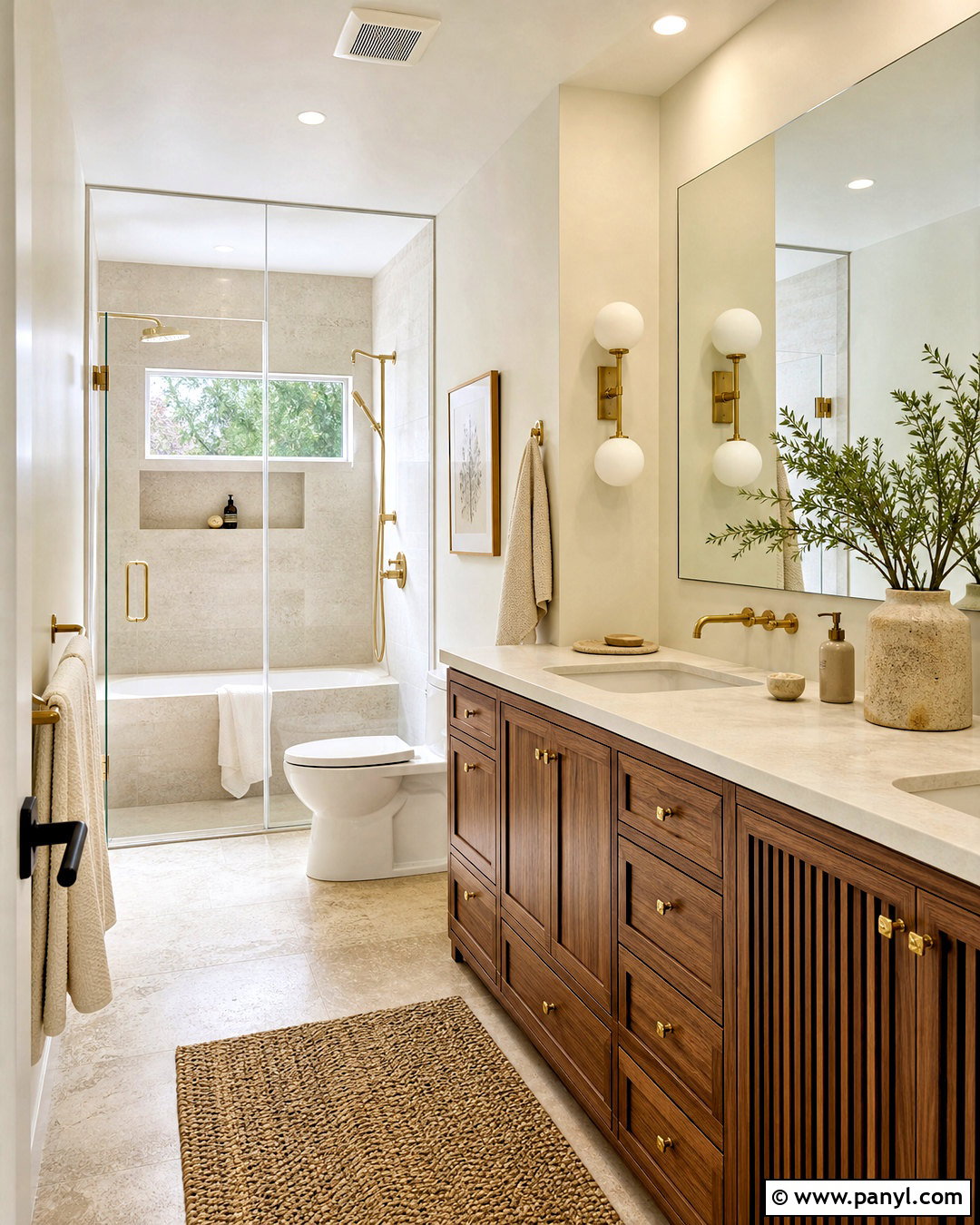
Natural walnut cabinetry brings warmth, variation, and authentic material character into the bathroom. Use a clear sealed finish that displays the wood’s medium-to-dark brown grain rather than covering it with opaque stain. Pair the vanity with warm white quartz, creamy walls, and pale travertine or porcelain flooring. Brushed brass faucets and simple pulls echo the golden notes in the walnut. A frameless mirror keeps the cabinetry visually dominant, while white globe sconces provide clean contrast. Add a vertical slatted detail on the vanity front for a subtle modern touch. Ivory towels, stone accessories, and a woven floor mat complete the organic palette. The room feels warm and contemporary because each element supports the wood without competing with its naturally varied color and pattern.
20. Two Tone Bathroom Cabinets
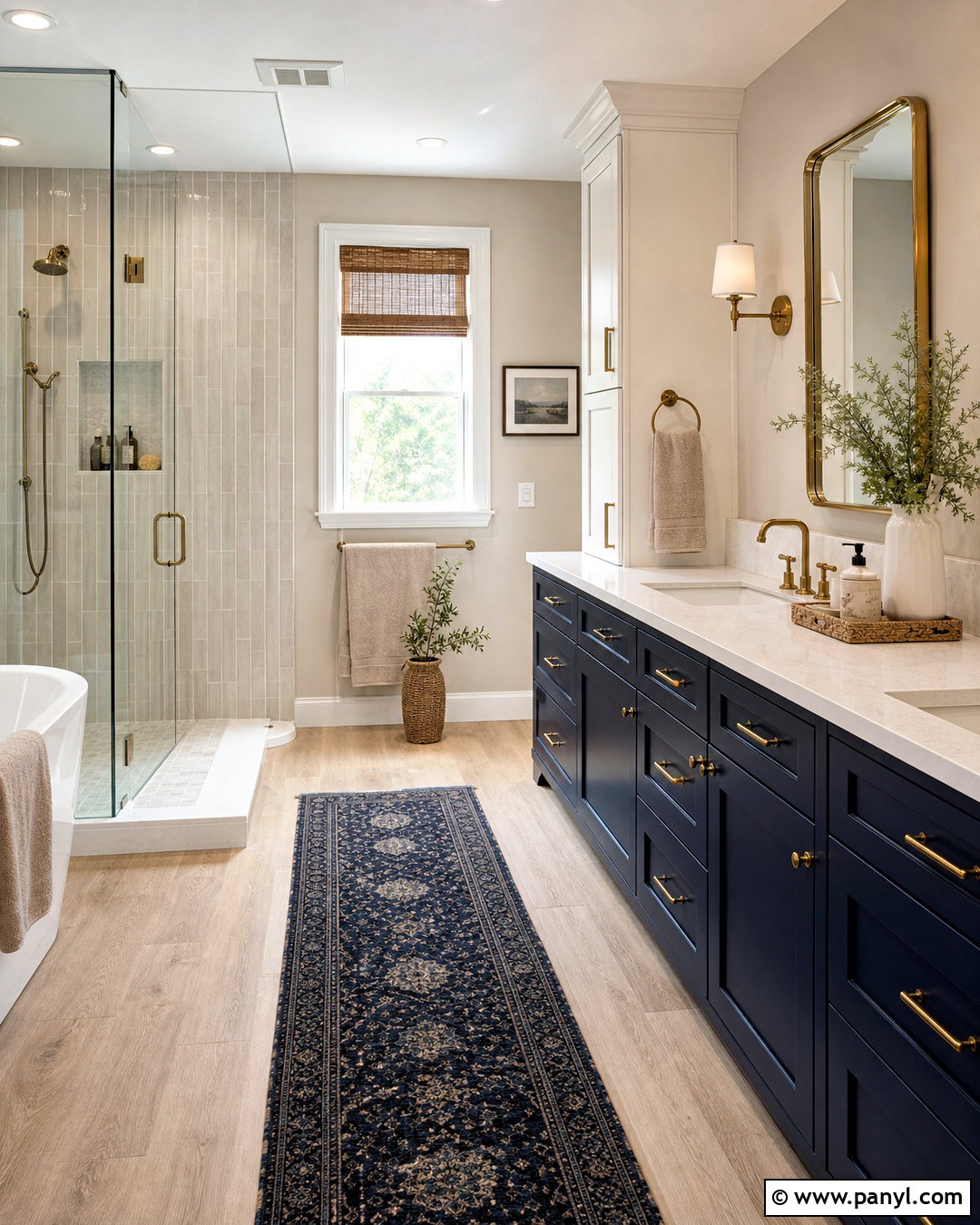
Two-tone bathroom cabinets are useful when you want contrast without committing the entire vanity to one strong color. Paint the lower cabinets deep navy or charcoal, then finish a tall linen cabinet in warm white. Connect both colors with a white quartz countertop, brushed brass hardware, and warm greige walls. Pale oak flooring adds softness, while a wide brass-framed mirror makes the vanity area feel unified. Keep the shower bright with ivory vertical tile and clear glass. Repeat the darker cabinet color in one rug or framed print, but avoid adding more competing hues. This complete arrangement gives larger bathrooms visual structure and can make separate storage pieces feel coordinated. It also allows dark cabinetry to add depth while the lighter cabinet preserves brightness.
Conclusion:
Choosing among these 20 bathroom cabinet color ideas becomes easier when you consider the entire room rather than the vanity alone. Start with fixed finishes such as floor tile, shower surrounds, and countertops. Then select a cabinet shade with compatible undertones. Light neutrals can visually open a compact bathroom, while navy, forest green, charcoal, burgundy, and teal create stronger focal points. Natural walnut, taupe, sage, and terracotta bring warmth through earthy color. Whatever shade you prefer, test it under both natural and artificial light before painting. Complete the design with coordinated hardware, mirrors, textiles, and storage. A thoughtful palette will make even simple bathroom cabinets look intentional, balanced, and beautifully connected to the surrounding space.

Related Ideas and Inspiration:
Leave a Reply