
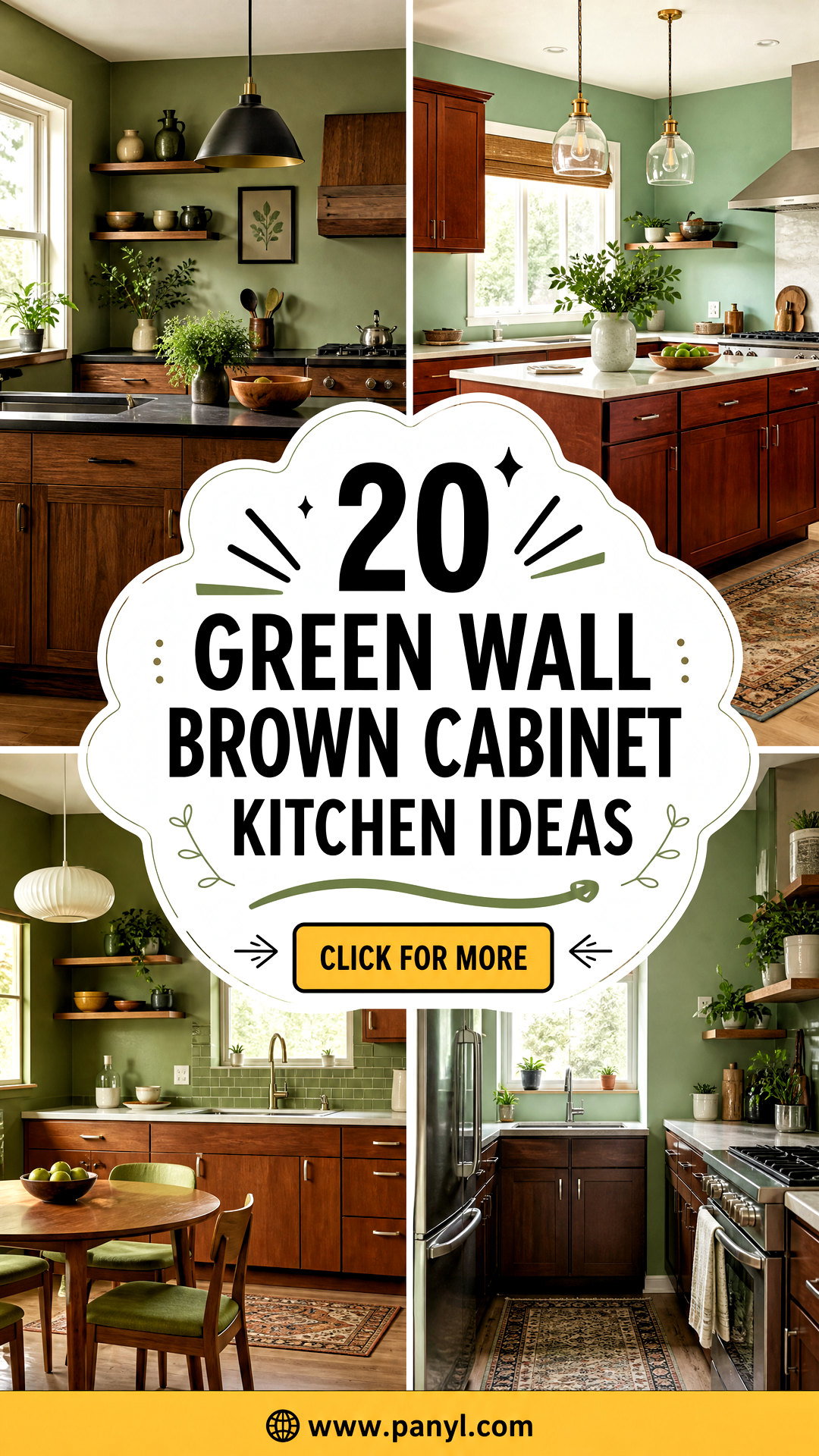
Green walls bring natural color and warmth to a kitchen, while brown cabinets add richness, texture, and an inviting sense of permanence. Together, these earthy tones can suit almost any home, from a traditional farmhouse to a sleek contemporary apartment. The key is choosing green and brown shades with compatible undertones, then balancing them with the right counters, backsplash, flooring, lighting, and hardware. Pale greens can refresh dark wood cabinetry, while deeper greens create a cozy, dramatic setting around lighter brown wood. White, cream, brass, black, and natural stone provide useful contrast. The complete looks below offer practical layouts and coordinated finishes to help you explore **20 Green Wall Brown Cabinet Kitchen Ideas**.
1. Sage Green Walls With Walnut Cabinets
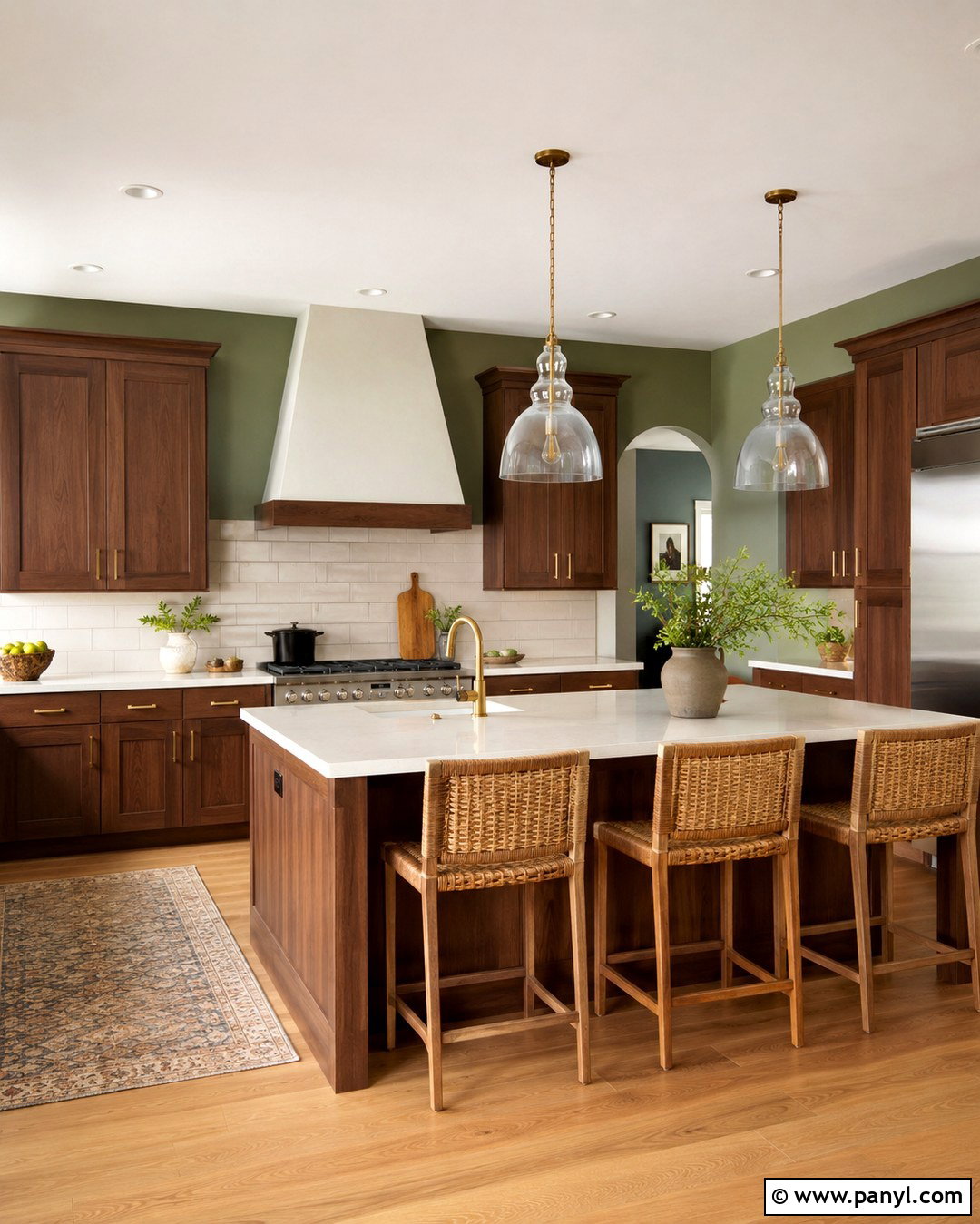
Soft sage green walls create a calm background for walnut cabinets with visible grain and warm chocolate undertones. Choose simple Shaker doors to keep the wood feeling classic rather than heavy. Creamy quartz countertops and an off-white subway tile backsplash brighten the work areas, while aged brass pulls bring gentle warmth to the cabinetry. Continue the natural look with medium oak flooring, woven counter stools, and a linen Roman shade. A compact island in matching walnut can provide storage and casual seating without interrupting the peaceful palette. Finish the kitchen with white ceramic dishes, a few potted herbs, and clear glass pendants. This balanced combination works especially well in transitional kitchens with moderate natural light.
2. Olive Green Walls With Dark Brown Cabinets
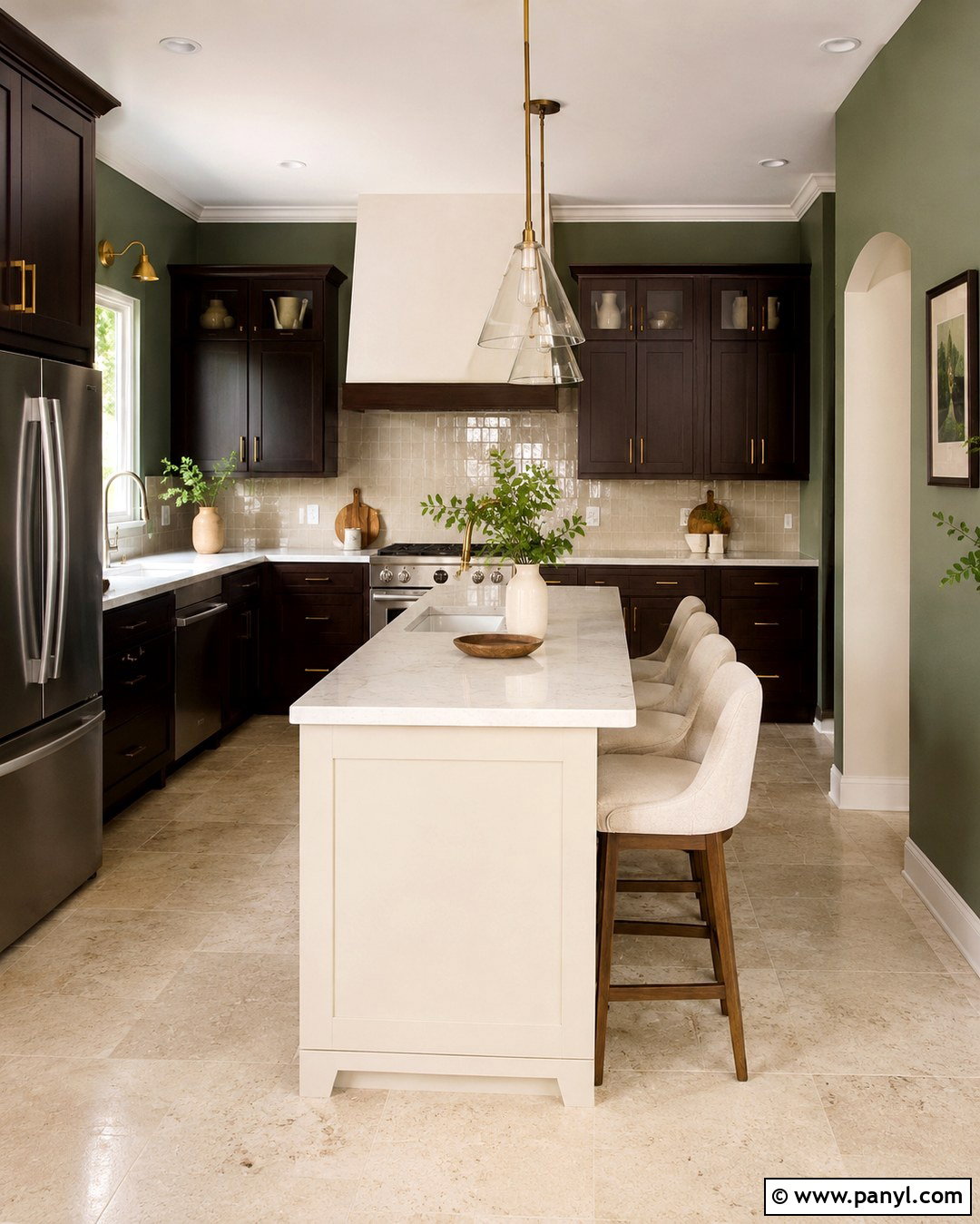
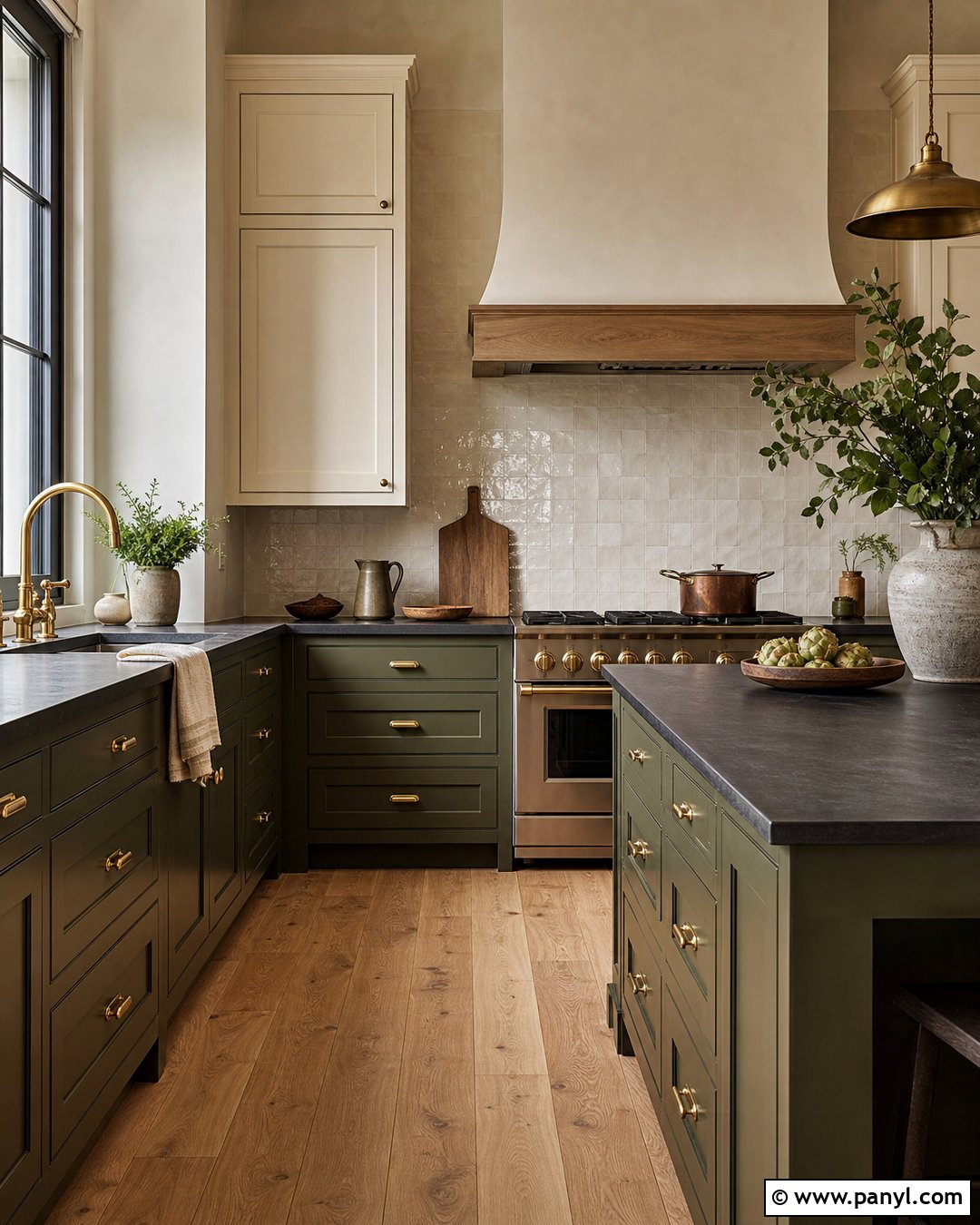
Rich olive green walls can make dark brown cabinets feel intentional, earthy, and sophisticated. Prevent the combination from becoming too dim by using a broad white quartz counter and a backsplash of glossy cream zellige tile. The reflective surfaces distribute light across the kitchen and separate the similar color depths. Select streamlined bronze hardware and a warm stainless steel range for a subtle modern edge. Light limestone-look flooring provides additional contrast underfoot. If the room includes an island, paint its base warm off-white and top it with matching quartz. Open wood shelves near a window can display pale pottery and everyday glassware. Add simple linen pendant shades and a washable neutral runner to soften the deeper wall and cabinet colors.
3. Mint Green Walls With Espresso Cabinets
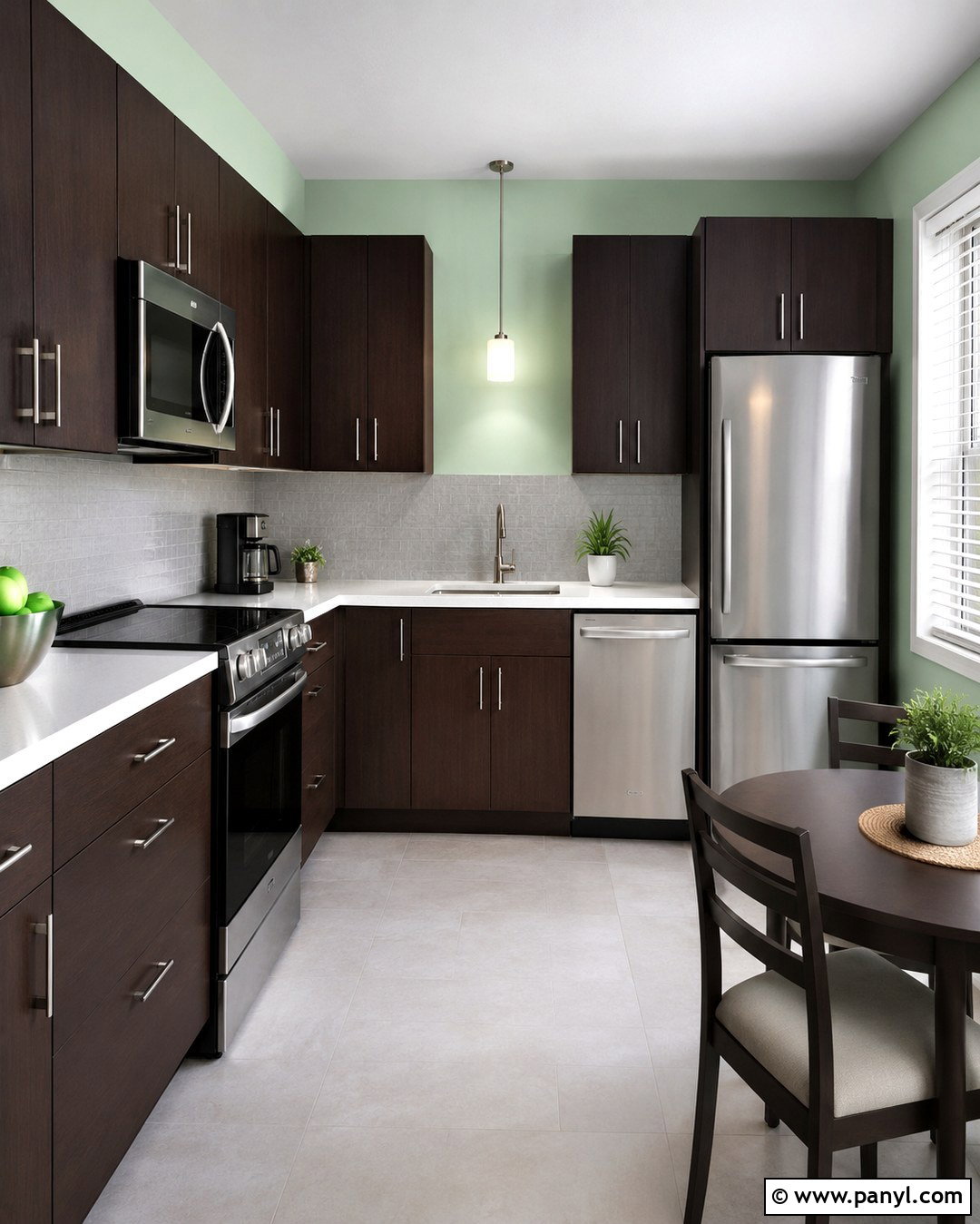
Fresh mint green walls offer a crisp contrast to espresso brown cabinets, making this combination useful for a small or low-light kitchen. Use flat-panel or narrow Shaker cabinet doors so the dark finish appears clean and uncluttered. White quartz counters, a pale gray backsplash, and light porcelain flooring will reflect available daylight. Brushed nickel pulls connect naturally with stainless steel appliances without adding another strong color. Keep upper cabinetry limited around the window, replacing one section with espresso floating shelves for a more open appearance. A small white breakfast table with light wood chairs completes the practical layout. Finish with striped cotton towels, simple framed botanical artwork, and one leafy plant. The result feels bright, casual, and easy to maintain.
4. Forest Green Walls With Medium Brown Cabinets
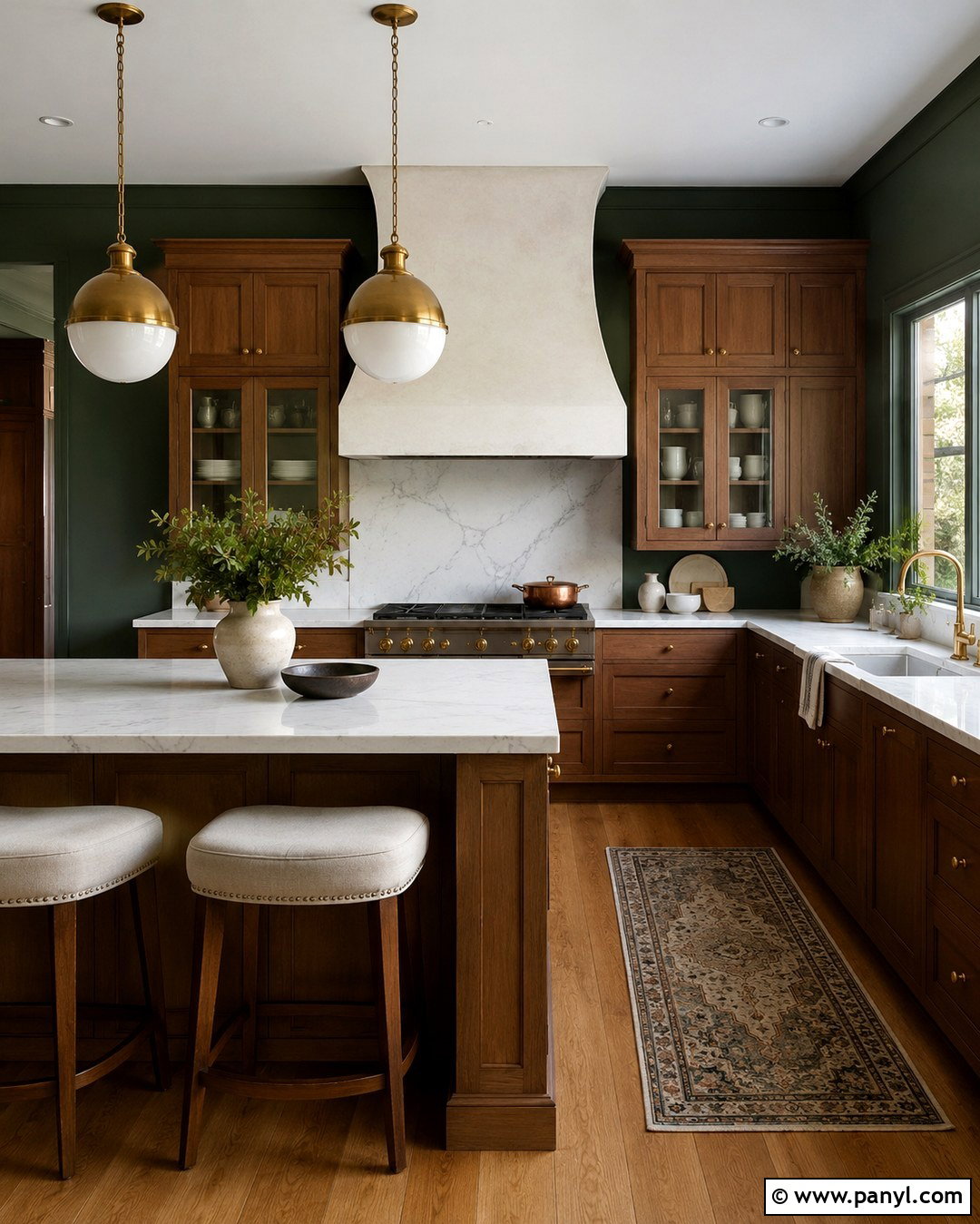
Deep forest green walls create a dramatic envelope around medium brown cabinets without hiding the natural wood grain. This palette works best in a kitchen with generous windows, recessed lighting, or both. Choose warm white marble-look quartz for the counters and backsplash to introduce a clean visual break. Brown Shaker cabinets with blackened bronze knobs support the traditional character, while a large wood island adds preparation space in the center. Use warm oak floors and upholstered cream stools to keep the room comfortable. A plaster range hood in soft ivory can become the light focal point against the green wall. Brass pendants, white serving bowls, and a restrained collection of wood cutting boards complete this layered, welcoming kitchen.
5. Eucalyptus Green Walls With Oak Brown Cabinets
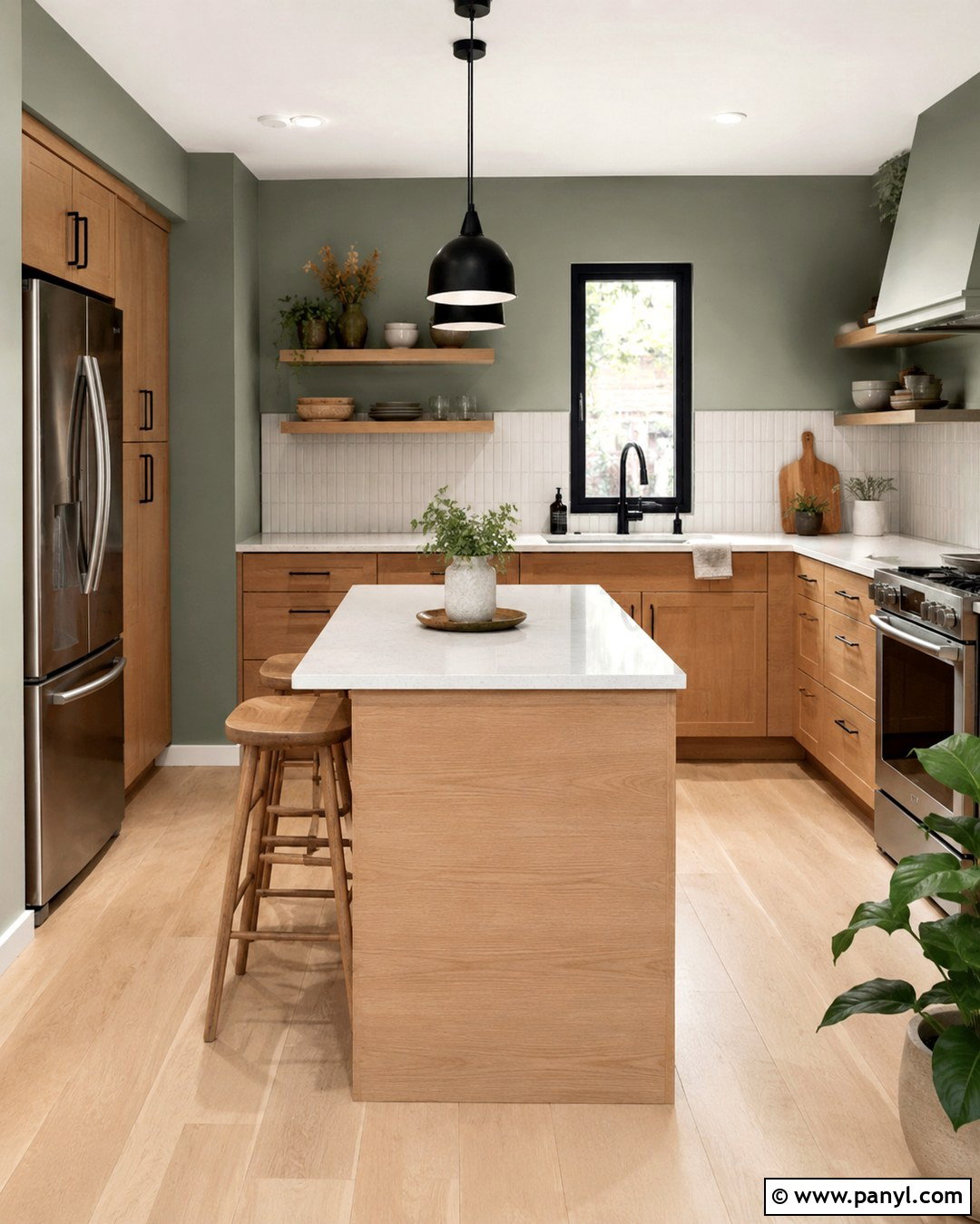
Muted eucalyptus green walls pair beautifully with light brown oak cabinets in a bright Scandinavian-inspired kitchen. Select slab-front cabinetry with minimal hardware to highlight the linear grain of the wood. A thin white quartz countertop and vertically stacked matte white tiles keep the main work zone simple. Pale oak flooring can continue the cabinetry’s warmth, but choose a slightly lighter tone to prevent the surfaces from blending together. Install a narrow island with an oak base, white top, and backless wood stools. Black pendant lights and a matching faucet provide small, defined accents. Keep decor functional with stoneware canisters, wood utensils, and one sculptural branch. This combination feels clean and contemporary while retaining the comfort associated with natural materials and soft color.
6. Moss Green Walls With Shaker Brown Cabinets
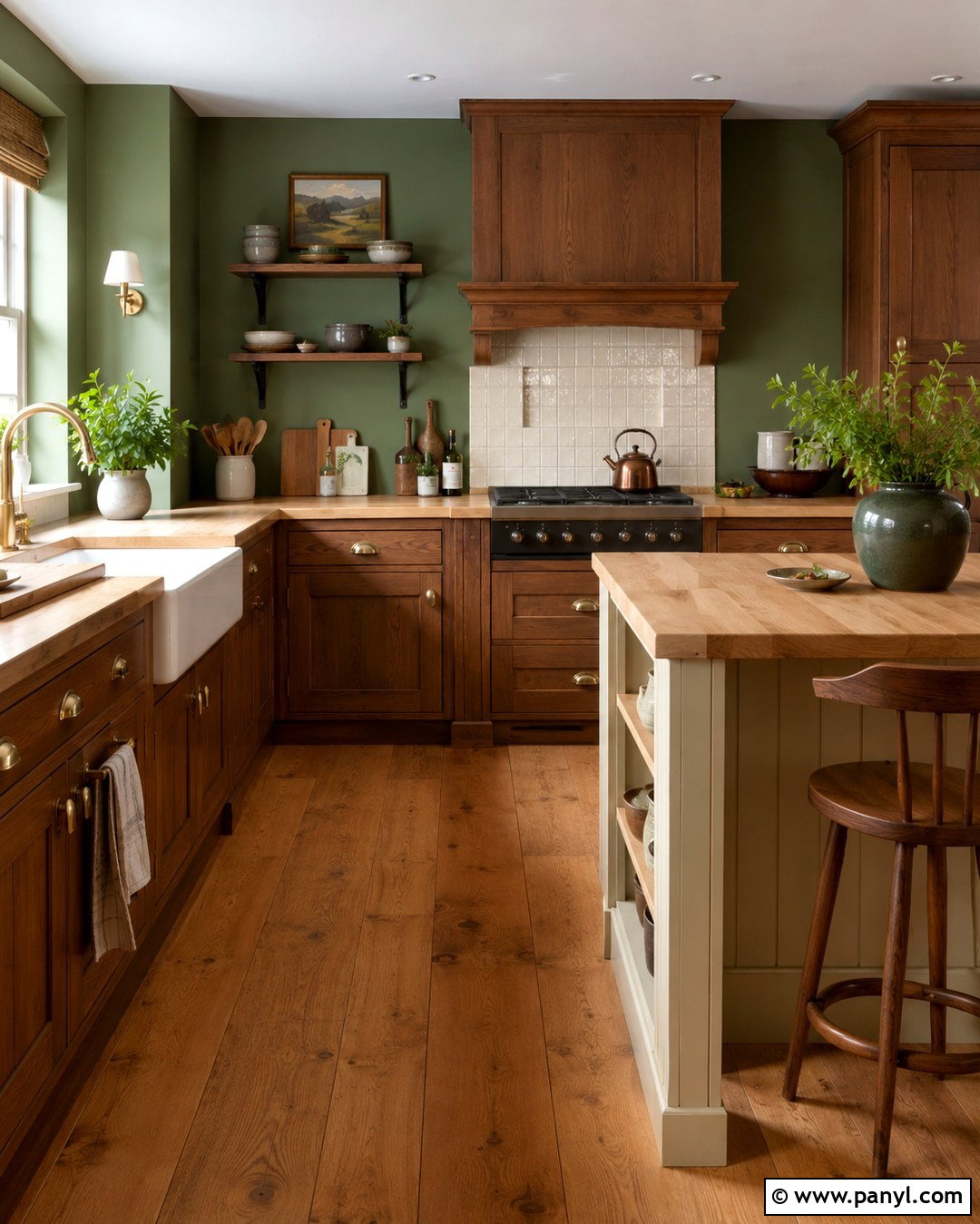
Moss green walls establish a cozy cottage setting when paired with brown Shaker cabinets and handmade-looking finishes. Choose cabinetry in a warm chestnut stain, then add unlacquered brass cup pulls and simple round knobs. Butcher-block counters reinforce the rustic character, while a cream fireclay sink creates a practical focal point beneath the window. Protect the cooking area with an ivory square-tile backsplash and light tan grout. Wide-plank wood flooring, a small vintage-style runner, and a painted cream island make the kitchen feel collected rather than overly matched. Use schoolhouse lights for clear task lighting and hang a simple rail for utensils. Small crocks, woven baskets, and potted herbs complete the room without crowding the work surfaces.
7. Seafoam Green Walls With Cherry Brown Cabinets
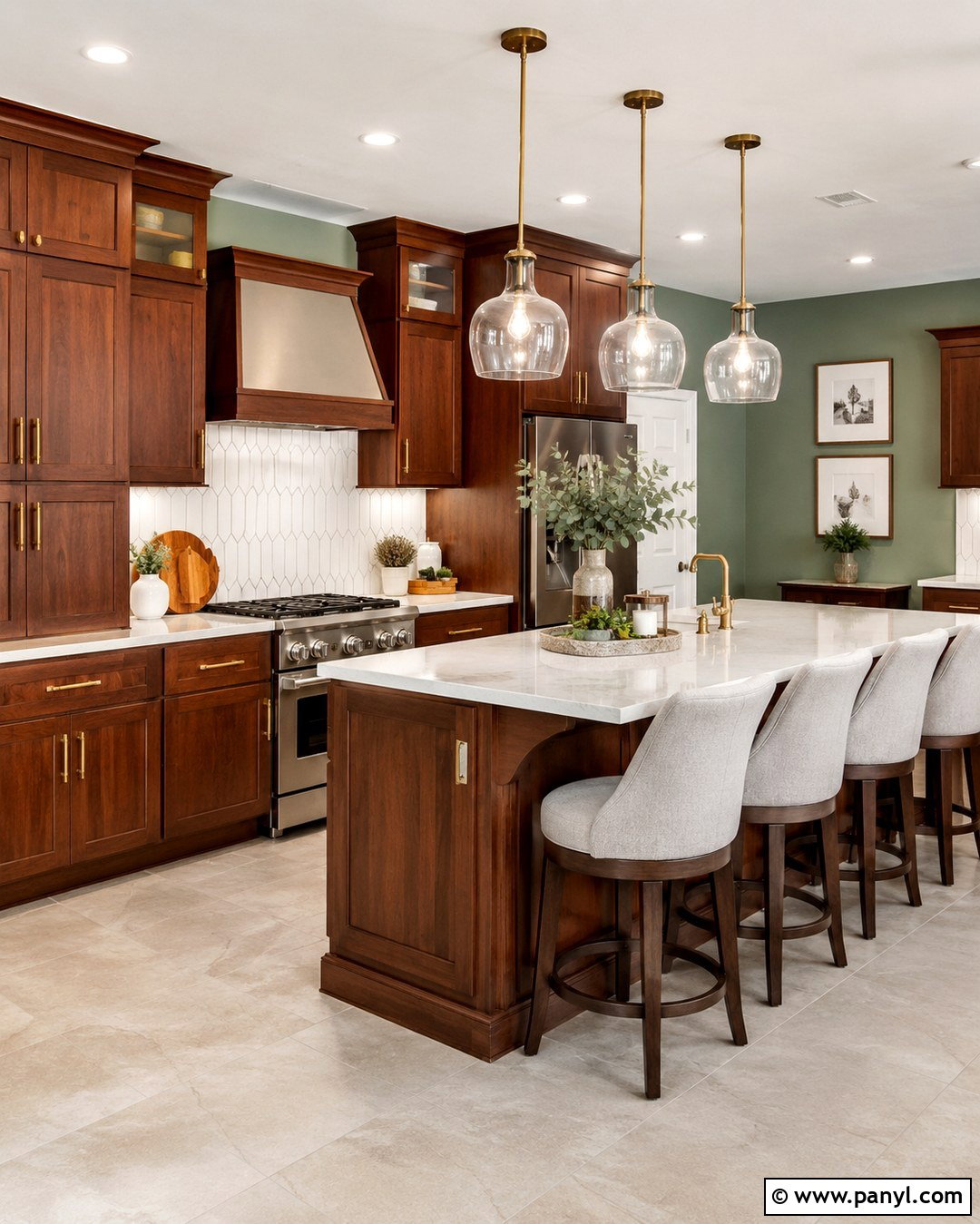
Airy seafoam green walls can update red-brown cherry cabinets by introducing a cooler, cleaner color around them. Choose a soft seafoam with muted gray undertones rather than a bright blue-green shade, which may emphasize the cabinet’s redness. Cream quartz countertops and a backsplash of white elongated hexagon tile provide a neutral transition between both colors. Replace ornate hardware with brushed brass bars for a simpler, more current appearance. Warm beige porcelain flooring helps connect the cabinet stain to the lighter surfaces. Add a compact cherry island with a cream top and pale upholstered stools. Clear pendants maintain an open view through the room. White dishes, neutral textiles, and green glass accessories repeat the wall color in a controlled, cohesive way.
8. Avocado Green Walls With Midcentury Brown Cabinets
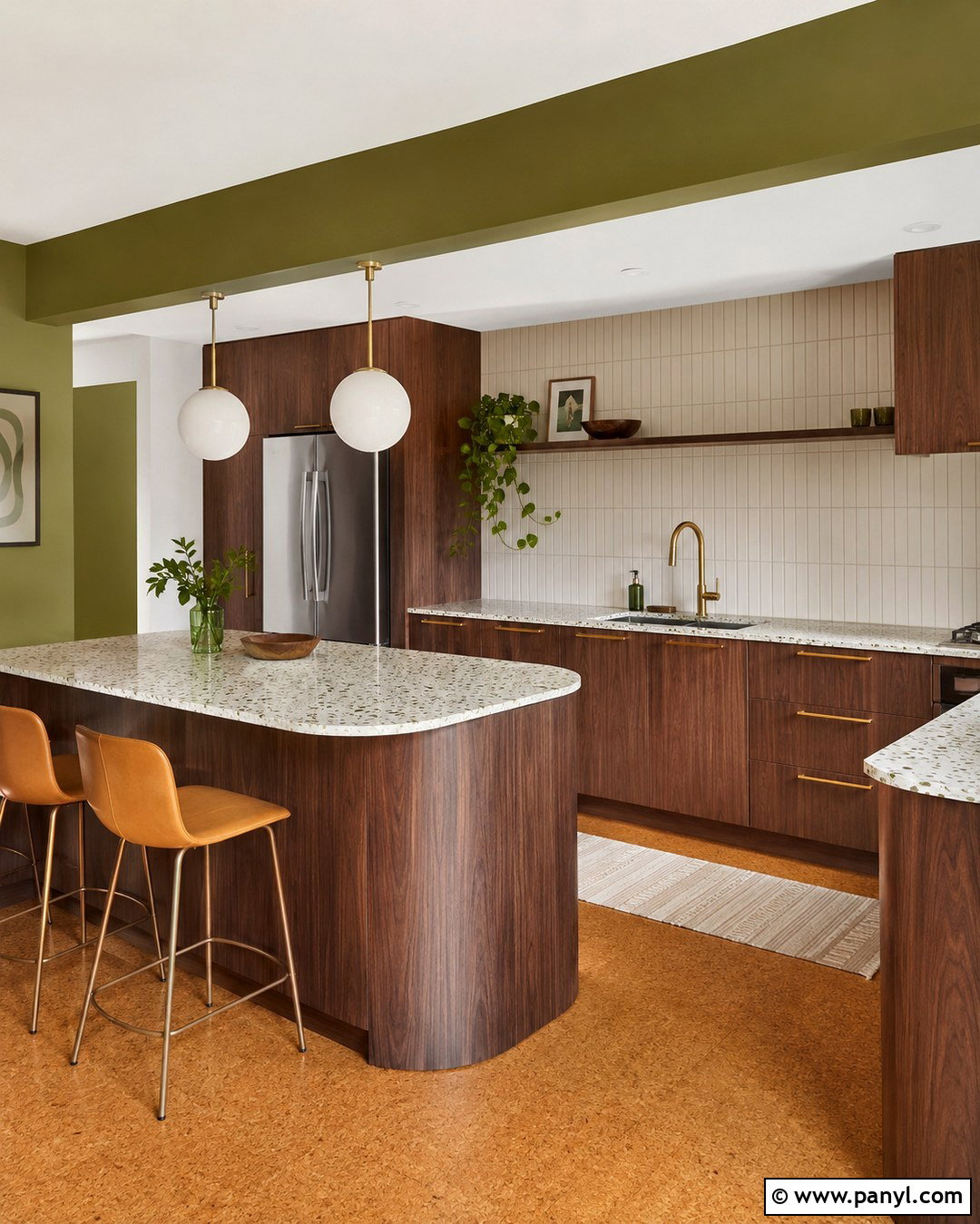
Warm avocado green walls complement walnut slab cabinets in a midcentury kitchen because both colors have strong earthy undertones. Keep the cabinet fronts flat and streamlined, using slim brass edge pulls rather than decorative handles. A white terrazzo countertop with tan and olive flecks connects the entire palette without looking overly coordinated. Use a backsplash of narrow cream tiles in a vertical pattern to add height behind the counter. Cork or light oak flooring provides period-inspired warmth and everyday comfort. An island with rounded corners, walnut panels, and camel-colored stools reinforces the retro influence. Complete the look with globe pendant lights, simple ceramic planters, and graphic artwork in cream, rust, and green. Limit accessories so the architecture and wood grain remain prominent.
9. Deep Teal Green Walls With Walnut Cabinets
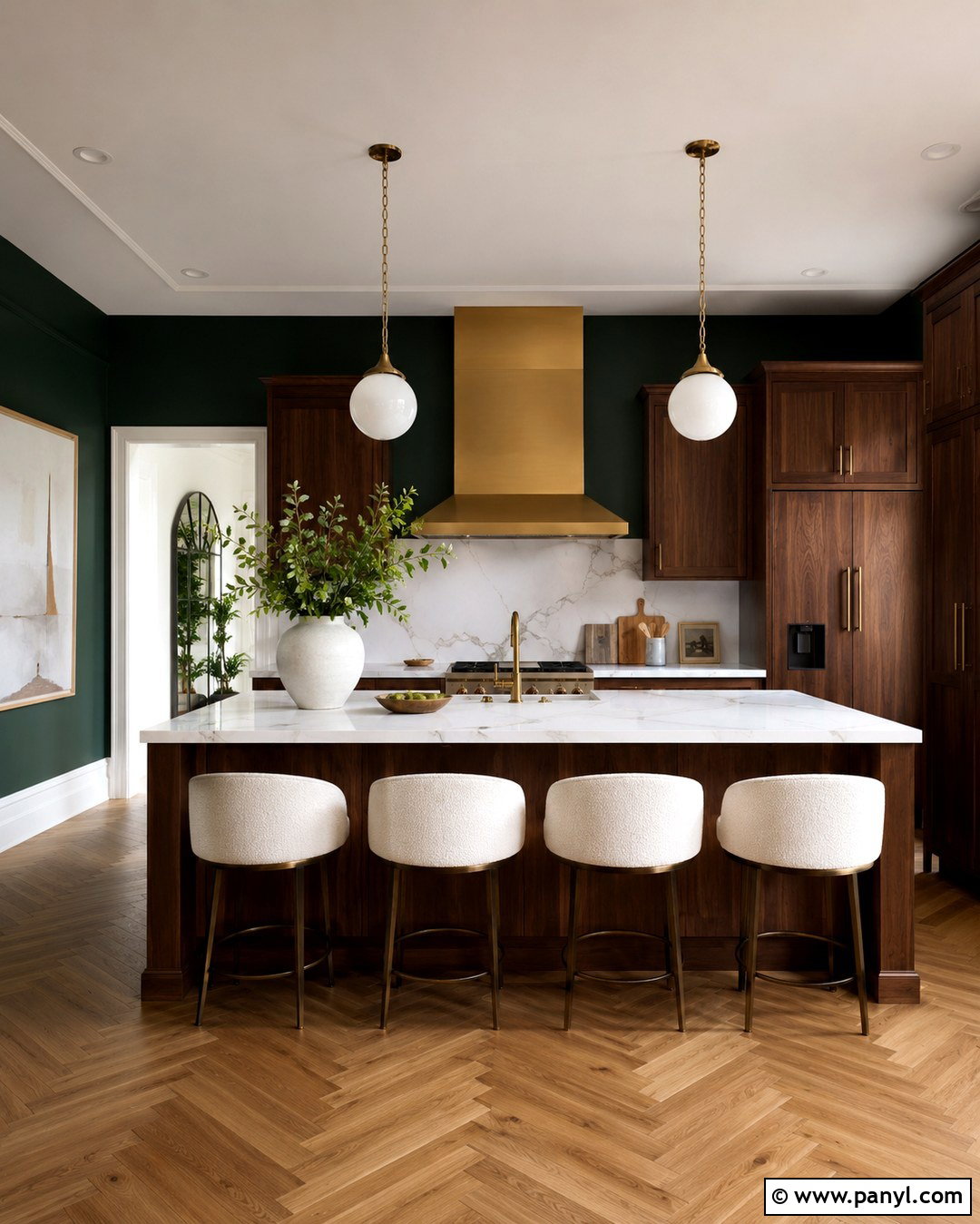
Deep teal green walls bring bold color to a walnut kitchen while preserving an elegant, nature-based palette. Use the teal on every visible wall for an immersive effect, but keep ceilings, trim, and the range hood warm white. Walnut cabinets with simple recessed doors provide rich contrast without competing with the wall color. White marble-look counters and a matching full-height backsplash create a bright work zone. Choose brushed brass hardware, a brass faucet, and opal glass pendants to add controlled shine. Herringbone oak flooring introduces subtle pattern underfoot. A walnut island with a pale counter and cream boucle stools can anchor an open layout. Finish with minimal white ceramics and one oversized vase of green branches for a polished yet approachable result.
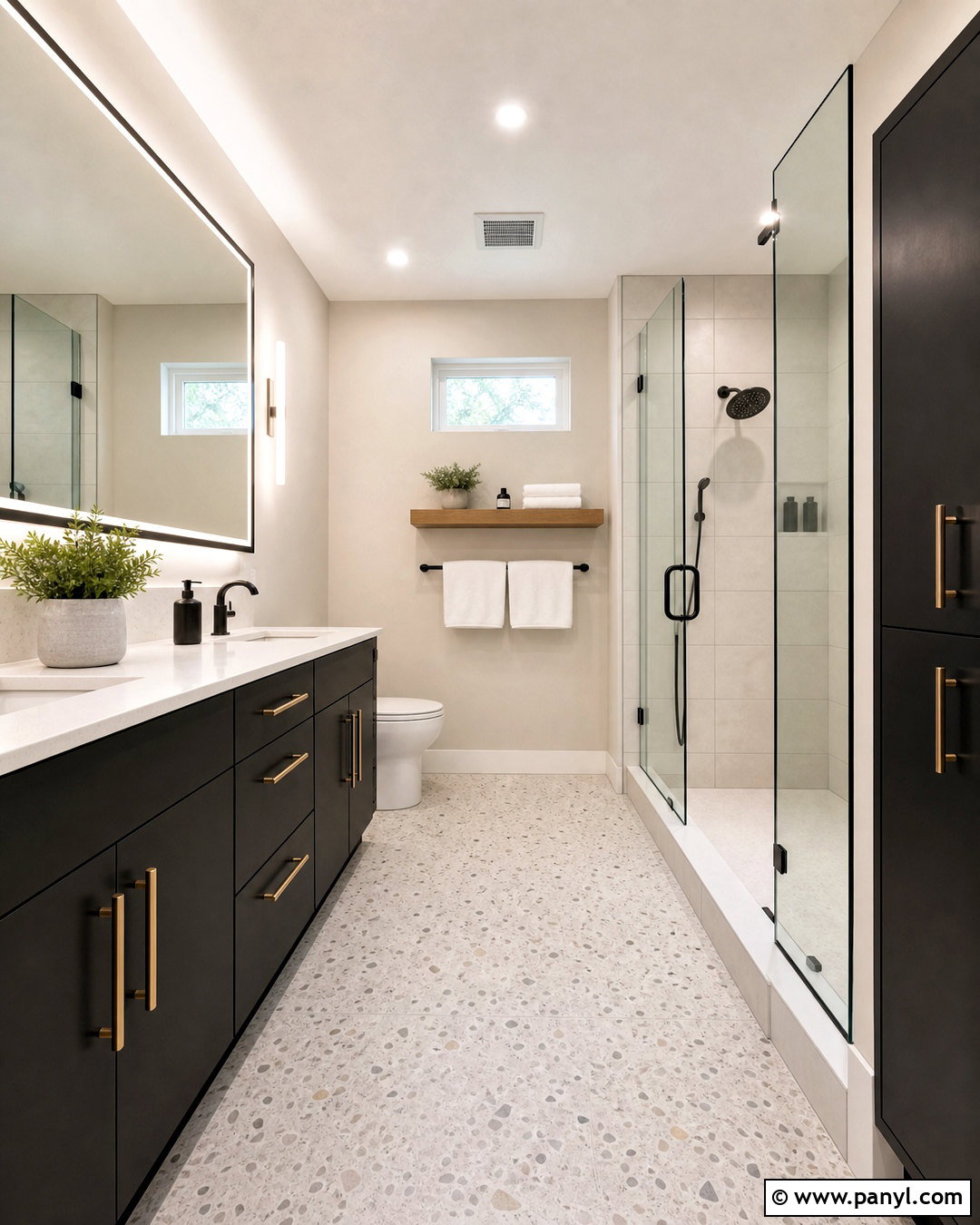
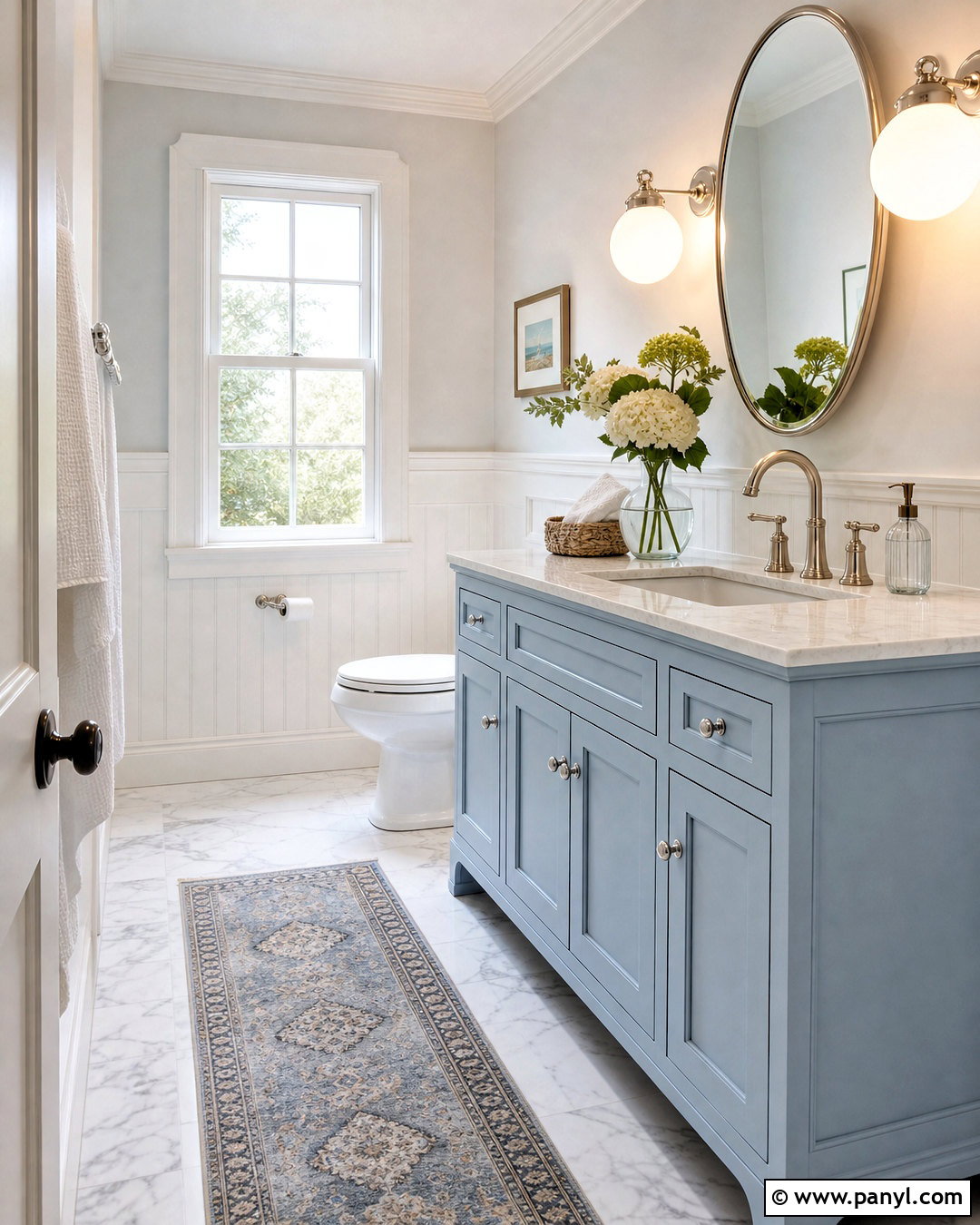
10. Pale Green Walls With Rustic Brown Cabinets
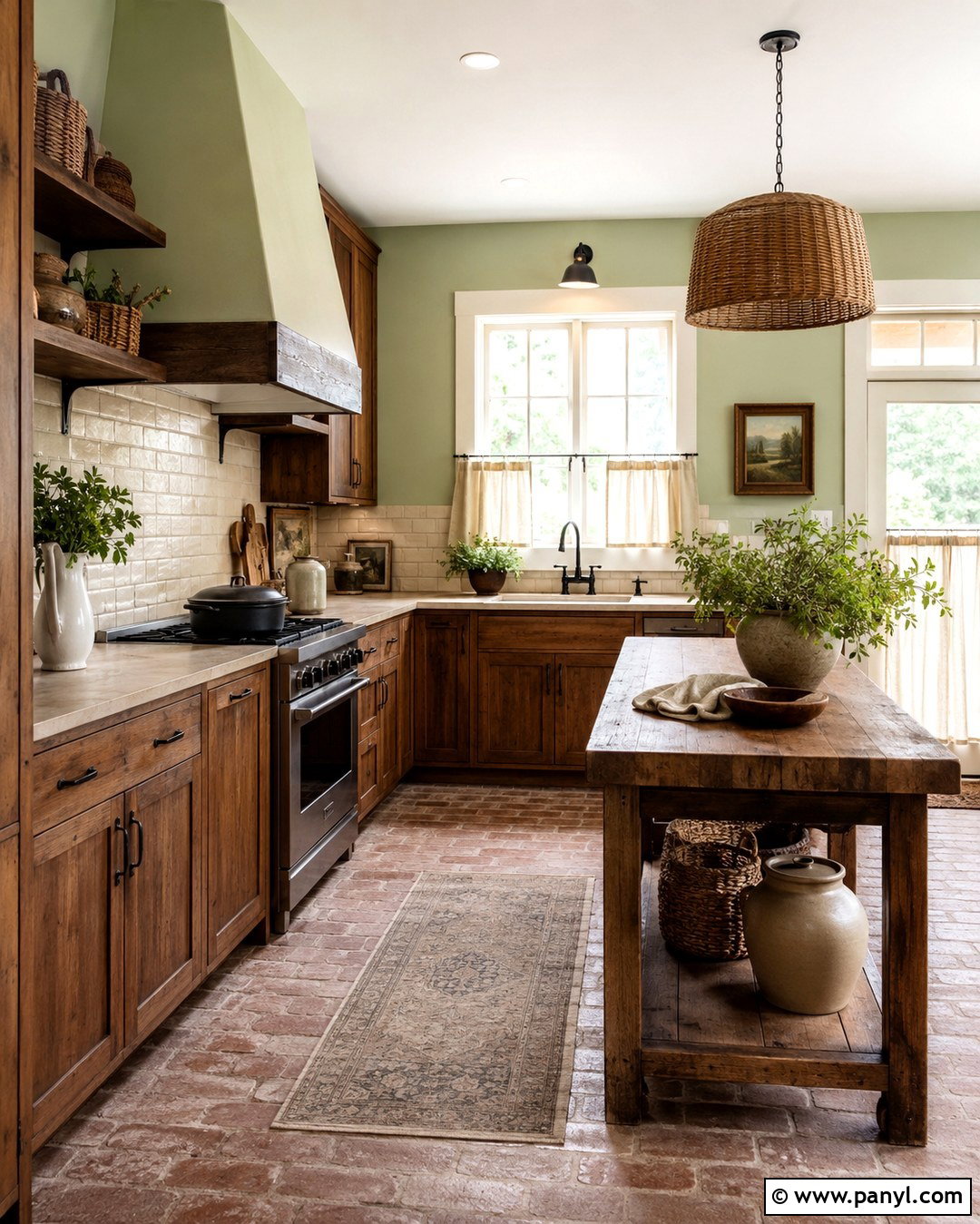
Pale green walls can lighten rustic brown cabinets while preserving the warmth of a country kitchen. Select a soft green with a creamy undertone so it blends comfortably with knotty wood, exposed grain, and darker cabinet edges. Honed beige quartz counters offer a durable neutral surface, while handmade cream subway tiles add gentle texture behind the sink and range. Use black iron hardware in simple shapes to define the cabinet doors. A freestanding brown wood island or worktable gives the room a relaxed, unfitted character. Continue the look with warm brick-look flooring, woven baskets, and linen café curtains. Practical pendant lighting, open plate racks, and neutral stoneware create a complete kitchen that feels rustic without becoming dark, cluttered, or overly themed.
11. Green Beadboard Walls With Brown Cabinets
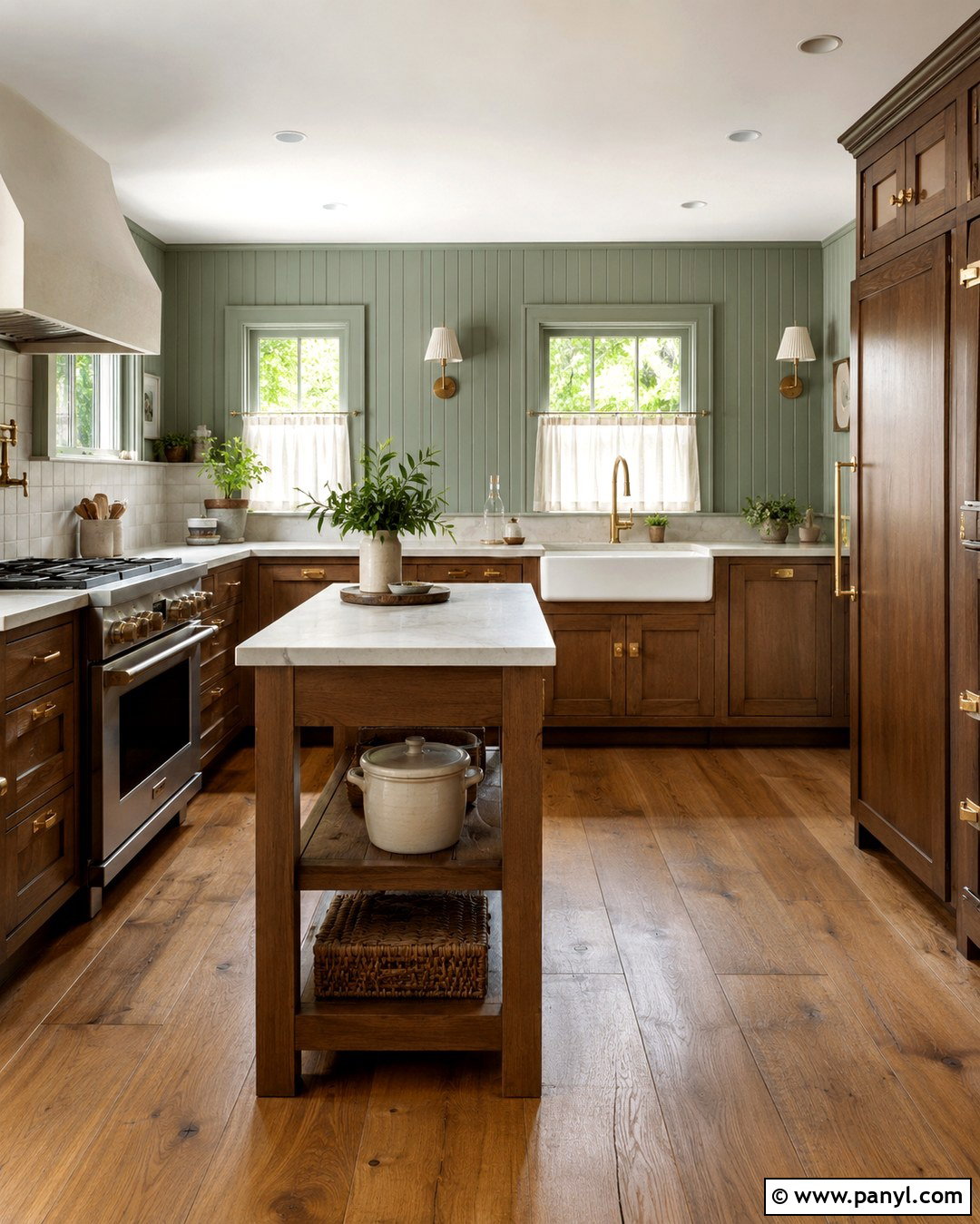
Green beadboard walls add architectural texture behind warm brown cabinets and are especially effective in cottage or farmhouse kitchens. Paint the paneling muted sage and carry it from the countertop to the ceiling on open sections of wall. Use medium brown inset cabinets with simple brass latches for a traditional built-in appearance. Cream soapstone-look quartz counters provide contrast while remaining softer than bright white. A white apron-front sink, bridge faucet, and small shaded sconces strengthen the classic design. Choose natural oak flooring and a narrow brown island with open shelving for baskets and cookware. Keep the backsplash near the range practical with cream ceramic tile. Framed landscape art, white dishes, and striped linens finish the room with restrained, useful decoration.
12. Green Tile Walls With Brown Cabinets
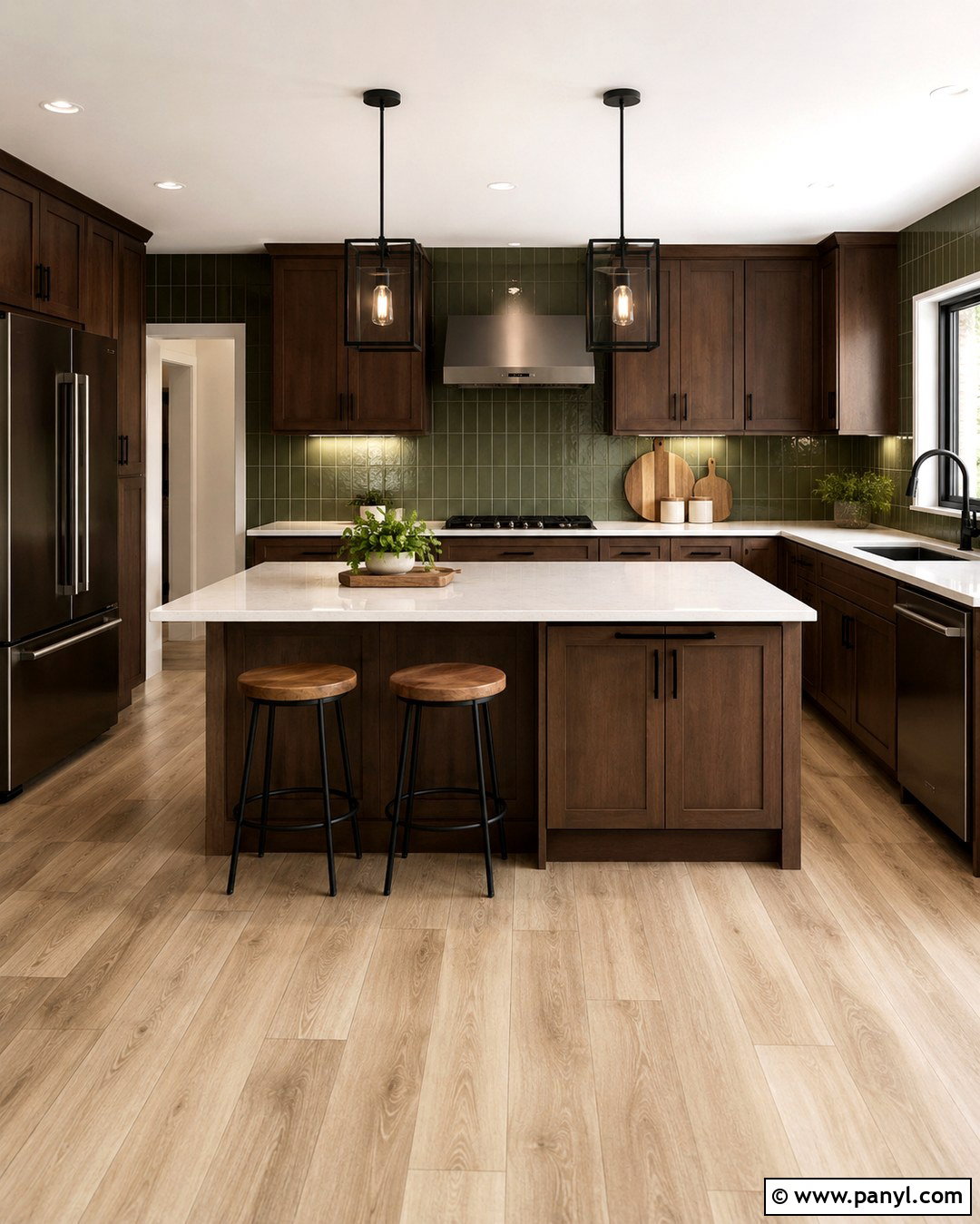
Glossy green tile walls create a durable, colorful background for dark brown cabinetry in a hardworking family kitchen. Choose rectangular tiles in a muted fern green and install them from the counter to the underside of the upper cabinets. Continue the tile behind the range for a seamless finish. Dark brown Shaker cabinets ground the brighter surface, while pale quartz countertops prevent the palette from feeling closed in. Matte black pulls, a black faucet, and black-framed pendant lights add crisp definition. Use light wood-look flooring to balance the darker cabinetry and hide daily wear. A central island with deep drawers, casual seating, and a white counter improves function. Keep accessories simple with wood boards, cream canisters, and a few green plants.
13. Two Tone Green Walls With Brown Cabinets
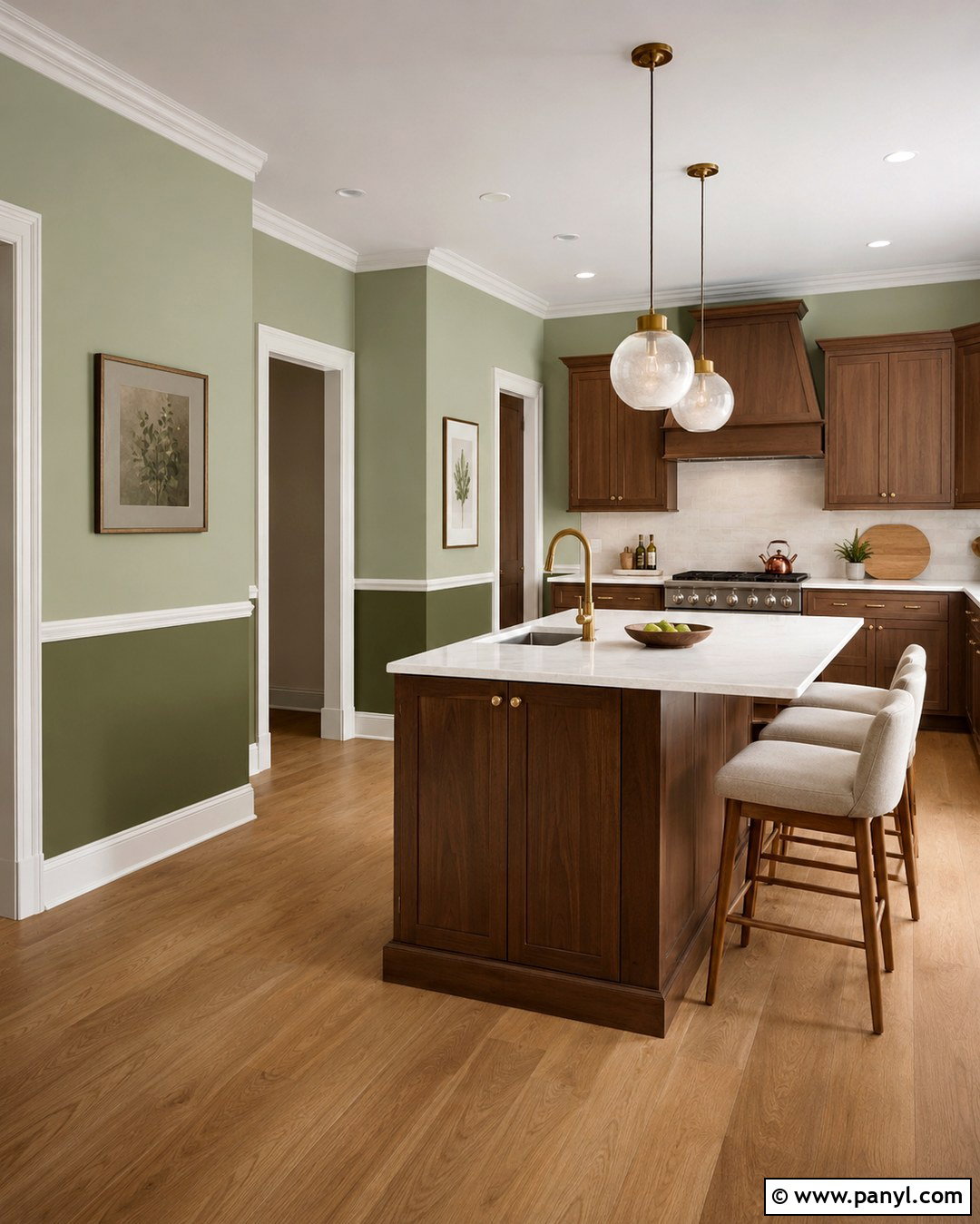
Two-tone green walls can add depth around brown cabinets without requiring extra patterns or costly materials. Paint the lower portion of the walls muted olive and the upper portion pale sage, dividing them with a slim cream chair rail. Medium walnut cabinets bridge the two greens through their warm, natural grain. Choose creamy white quartz counters and a simple matching backsplash to give the eye a quiet resting place. A walnut island with drawers and upholstered tan stools creates a practical center for cooking and gathering. Use aged brass hardware, globe pendants, and a warm white ceiling to unify the room. Oak flooring, neutral curtains, and minimal botanical prints complete the layered palette while keeping the overall kitchen balanced and easy to navigate.
14. Green Accent Wall With Brown Cabinets
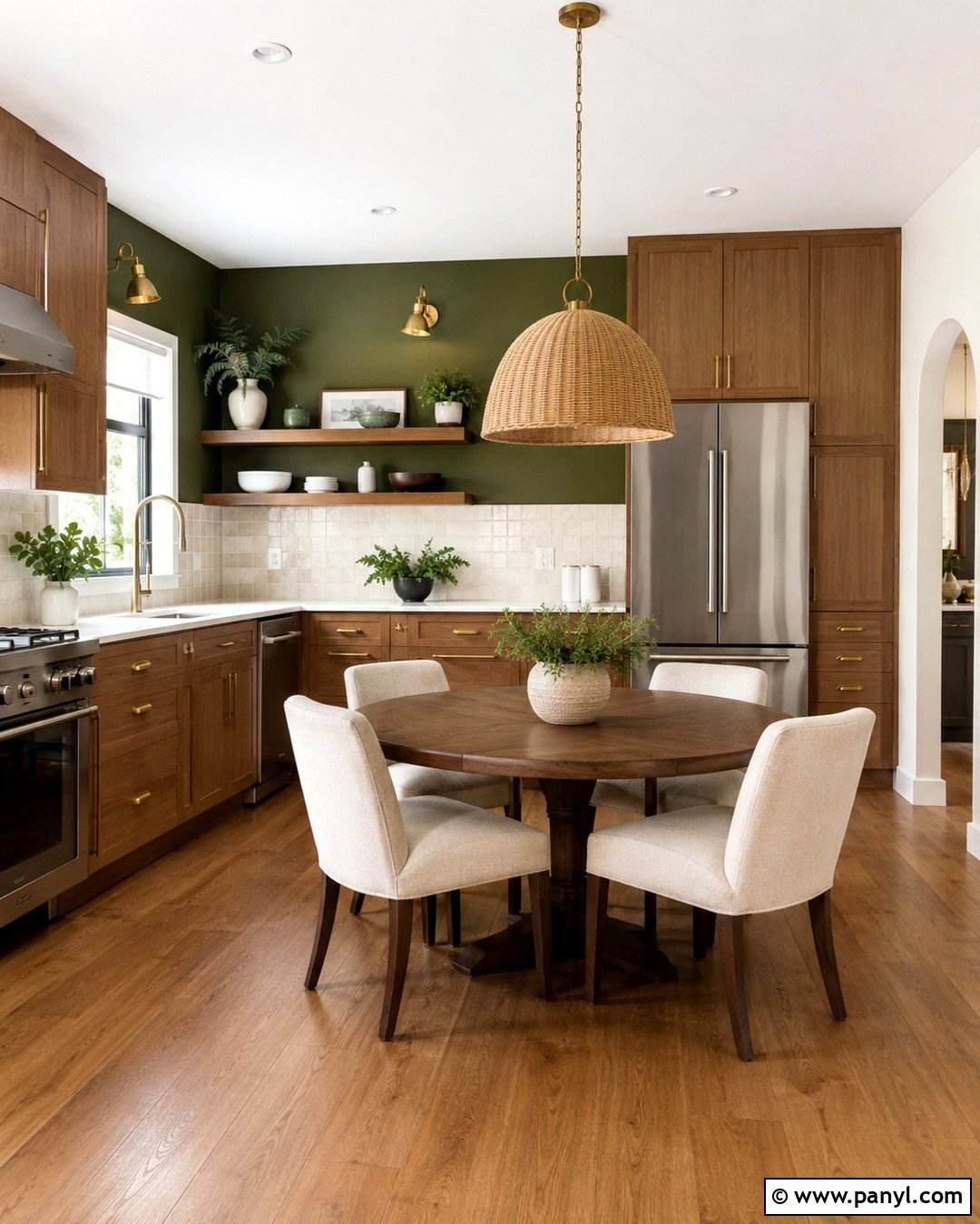
A green accent wall offers a manageable way to add color when an entire green kitchen feels too bold. Place the feature wall behind a breakfast nook or open shelving, where it can be seen without interfering with the main work zone. Choose a rich leafy green and pair it with medium brown cabinets, white quartz counters, and an ivory tile backsplash. Repeat the cabinet wood in floating shelves mounted against the green wall. A round wood table, cream upholstered chairs, and a woven pendant turn the nook into a complete destination. Keep the remaining walls warm white to maximize brightness. Brass hardware, oak flooring, and small green accessories connect the accent wall to the cabinets, creating a deliberate and well-balanced overall design.
15. Farmhouse Green Walls With Brown Cabinets
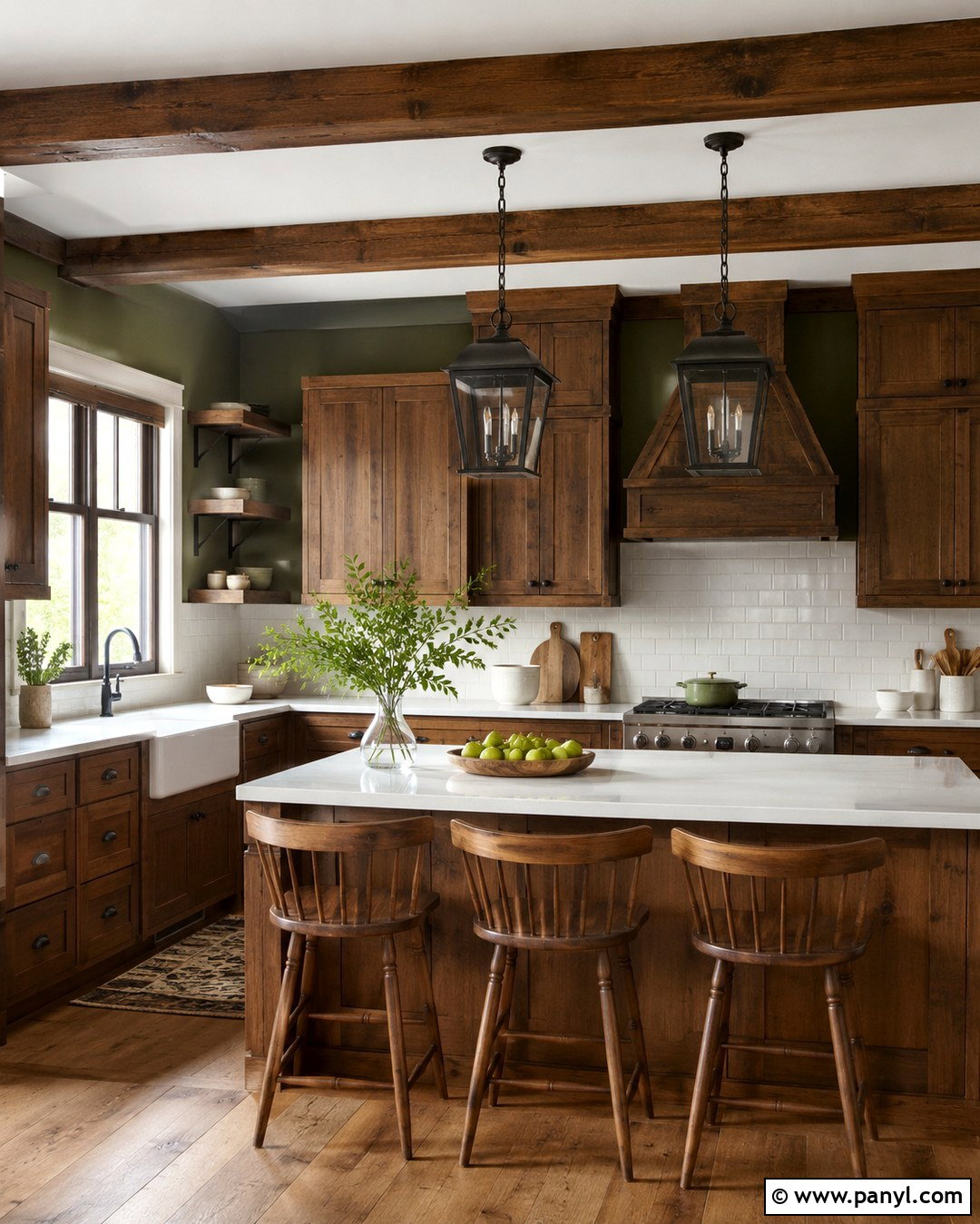
Dusty green walls and medium brown cabinets create a farmhouse kitchen that feels relaxed, warm, and practical. Select Shaker cabinetry with a lightly weathered chestnut stain, then use simple black cup pulls for contrast. White quartz counters and a classic subway tile backsplash keep the work areas bright and easy to clean. Center the layout around a large brown island with deep storage, a butcher-block section, and comfortable spindle-back stools. Warm oak floors and a cream apron-front sink reinforce the natural palette. Add black lantern pendants above the island and a simple wood range hood over the cooking area. Woven baskets, striped café curtains, and a small collection of white stoneware provide character while allowing the green walls and brown cabinetry to remain the main features.
16. Modern Green Walls With Flat Panel Brown Cabinets
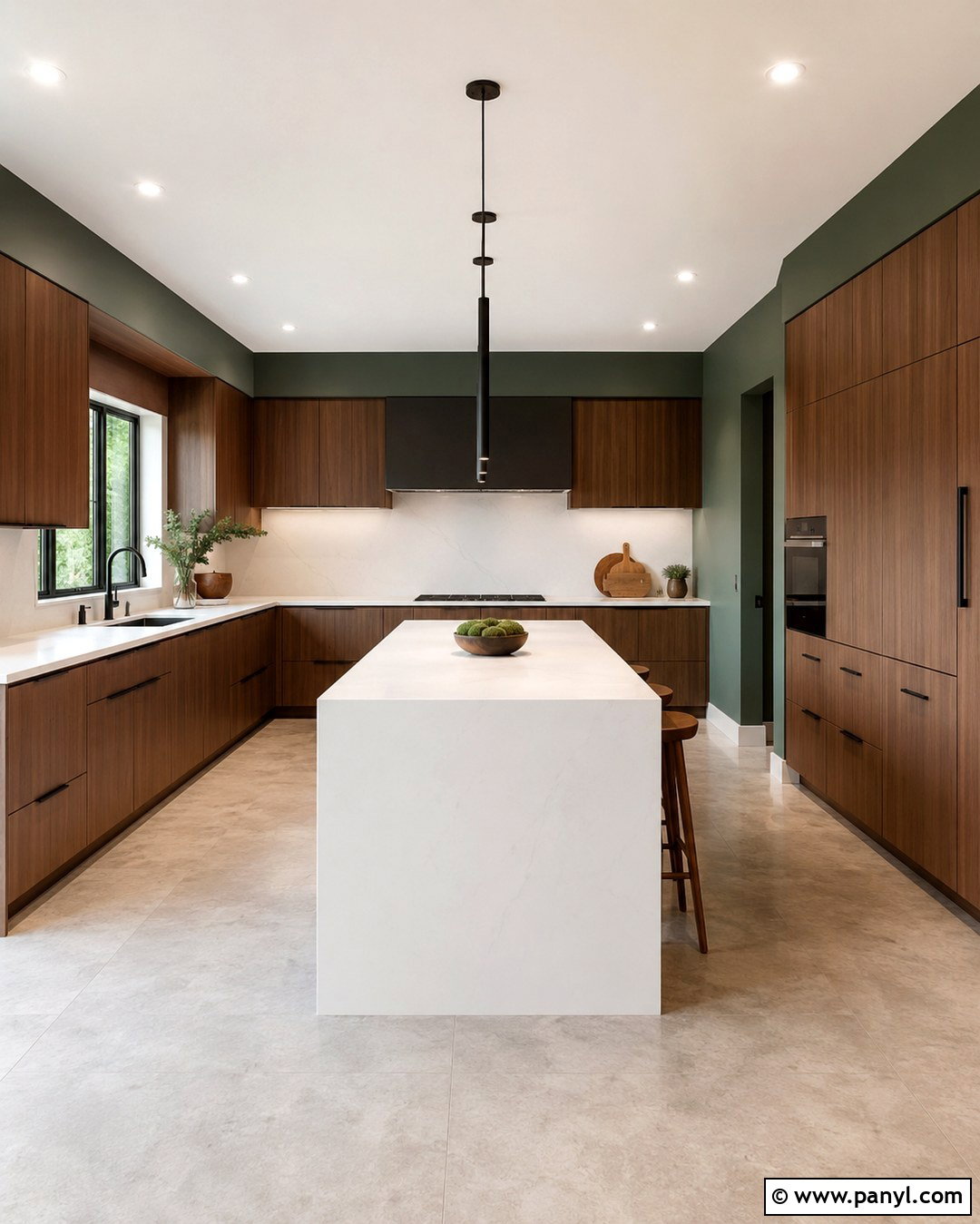
For a streamlined kitchen, combine muted green walls with flat-panel brown cabinets in a consistent walnut or oak veneer. Keep the cabinet layout symmetrical and extend tall units to the ceiling to reduce visual clutter. Thin white quartz countertops and a full-height white slab backsplash create sharp contrast against the wood. Use integrated pulls or narrow matte black channels to preserve the clean cabinet lines. Large-format light gray floor tiles make the room feel open and provide an easy-care surface. A waterfall island with brown panels and a white top can define the center without adding ornament. Install linear pendants, a black faucet, and concealed appliances for a cohesive finish. Limit decor to one ceramic bowl, a wood tray, and simple greenery.
17. Small Kitchen Green Walls With Brown Cabinets
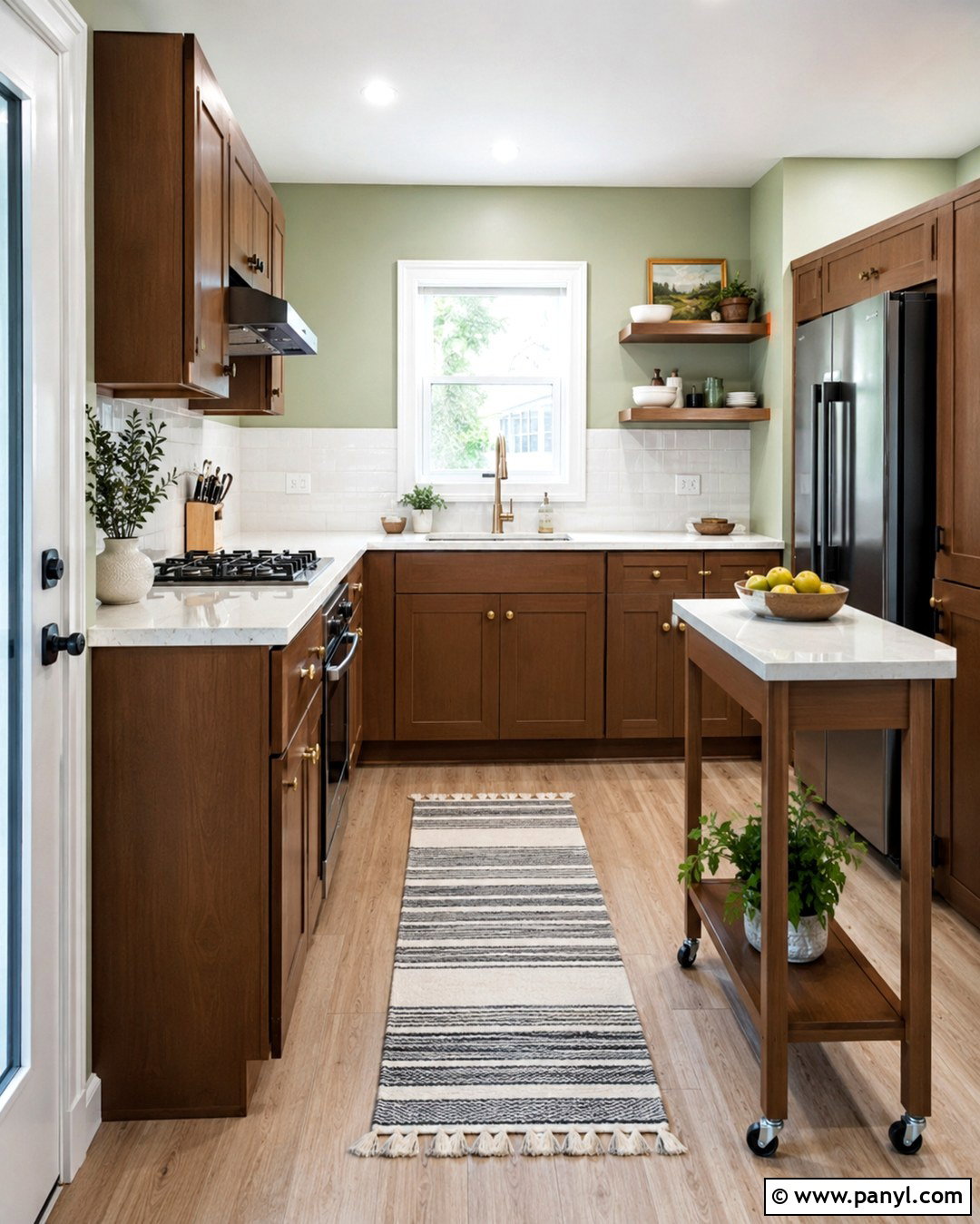
In a small kitchen, light fern green walls can soften brown cabinets without reducing the room’s visual space. Choose medium brown lower cabinets and limit upper units to one wall, allowing the green paint to remain visible. White quartz counters and a glossy white backsplash bounce light through the compact layout. Use small brass knobs rather than long pulls to keep the cabinet fronts visually simple. Pale wood-look flooring laid lengthwise can emphasize the room’s longest dimension. Add a narrow rolling island or wall-mounted breakfast ledge instead of a bulky central island. Under-cabinet lighting will brighten preparation surfaces after sunset. Open shelving, cream dishware, and one washable striped runner provide personality while preserving clear counters and comfortable circulation.
18. Galley Kitchen Green Walls With Brown Cabinets
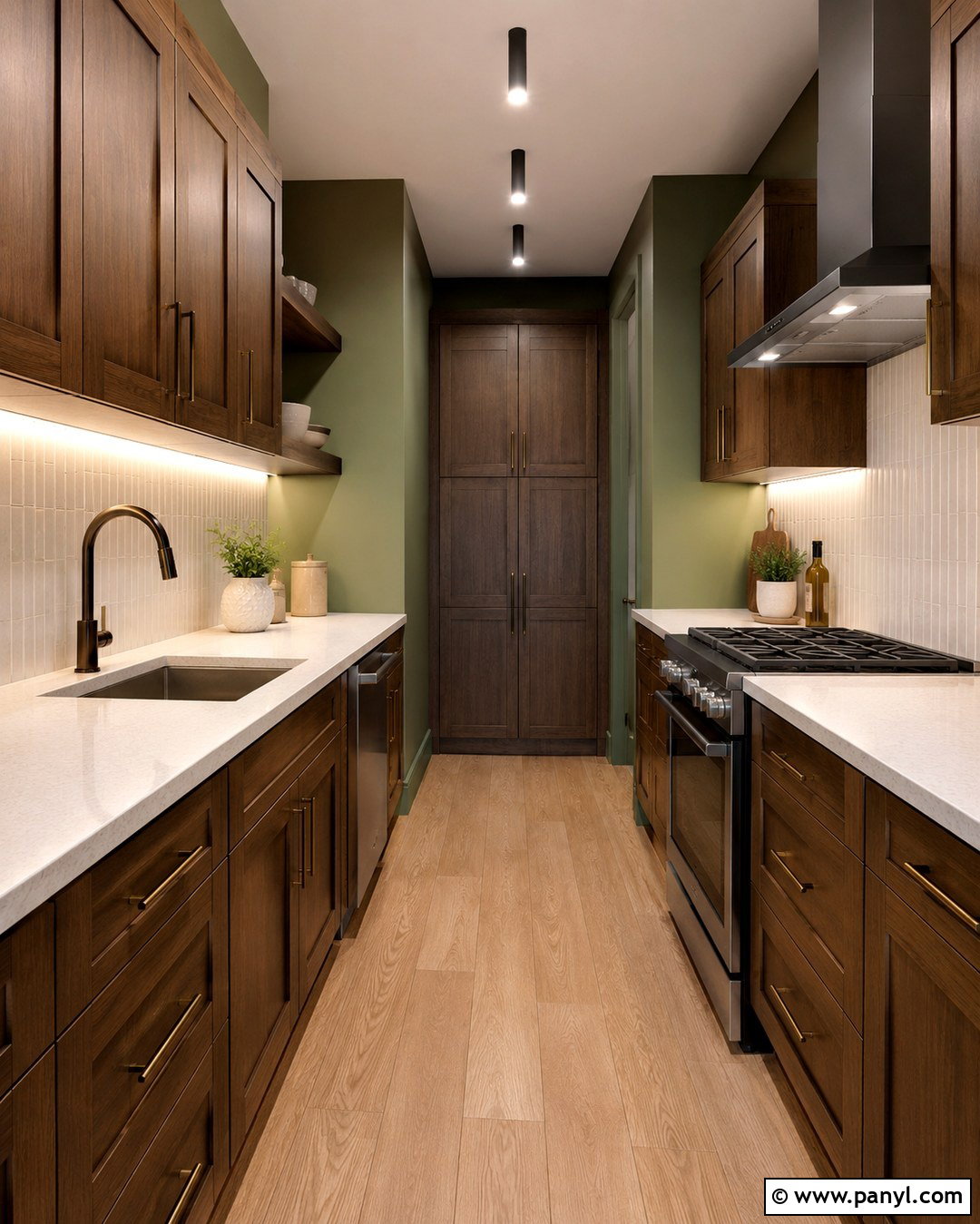
A galley layout benefits from pale olive green walls and medium brown cabinets arranged in clean, uninterrupted runs. Keep tall pantry storage and appliances together at one end so the central walkway remains visually open. Use creamy quartz counters on both sides and a light vertical-tile backsplash to reflect light along the narrow space. Simple bronze pulls add warmth without creating excessive contrast. If possible, place the sink beneath a window and use open wood shelves nearby rather than heavy upper cabinets. Light oak flooring installed toward the window draws the eye through the kitchen. Slim ceiling fixtures and under-cabinet lights provide even illumination. Finish with cream towels, wood utensils, and restrained pottery so the galley remains organized, attractive, and highly functional.
19. Green Walls With Brown Cabinets And Black Accents
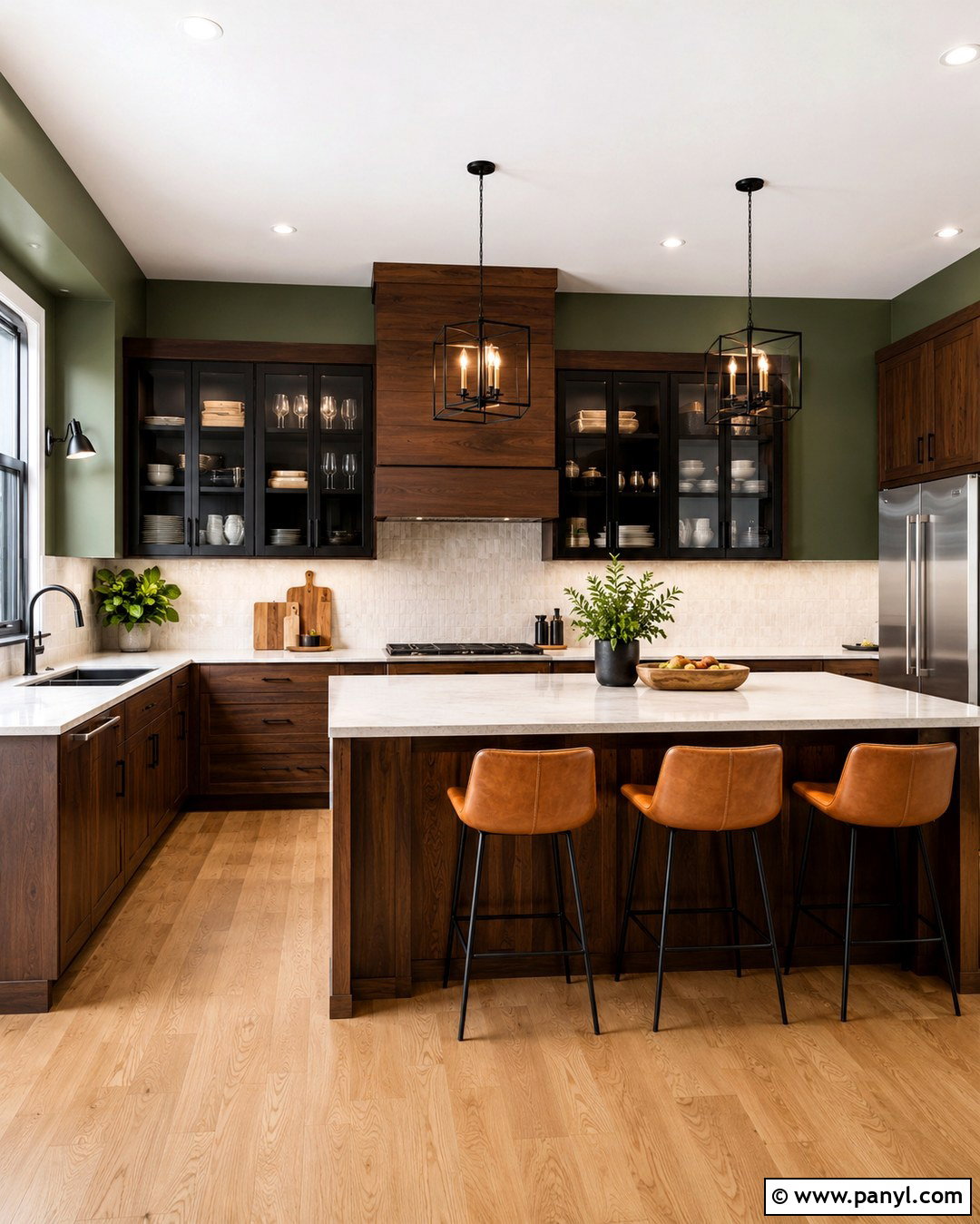
Black accents give green walls and brown cabinets a sharper, more contemporary outline. Start with warm moss green walls and medium walnut Shaker cabinets, then introduce matte black through the cabinet pulls, faucet, window frames, and pendant lighting. Keep the counters bright with white quartz and use a cream backsplash to prevent the black details from dominating. A walnut island with a black base frame and tan leather stools can tie the finishes together. Select medium oak flooring to maintain warmth throughout the room. Black-framed glass cabinet doors offer display space without feeling overly traditional. Complete the kitchen with white dishes, simple wood boards, and one black fruit bowl. The result is grounded and modern, with enough contrast to highlight every surface.
20. Green Walls With Brown Cabinets And Brass Accents
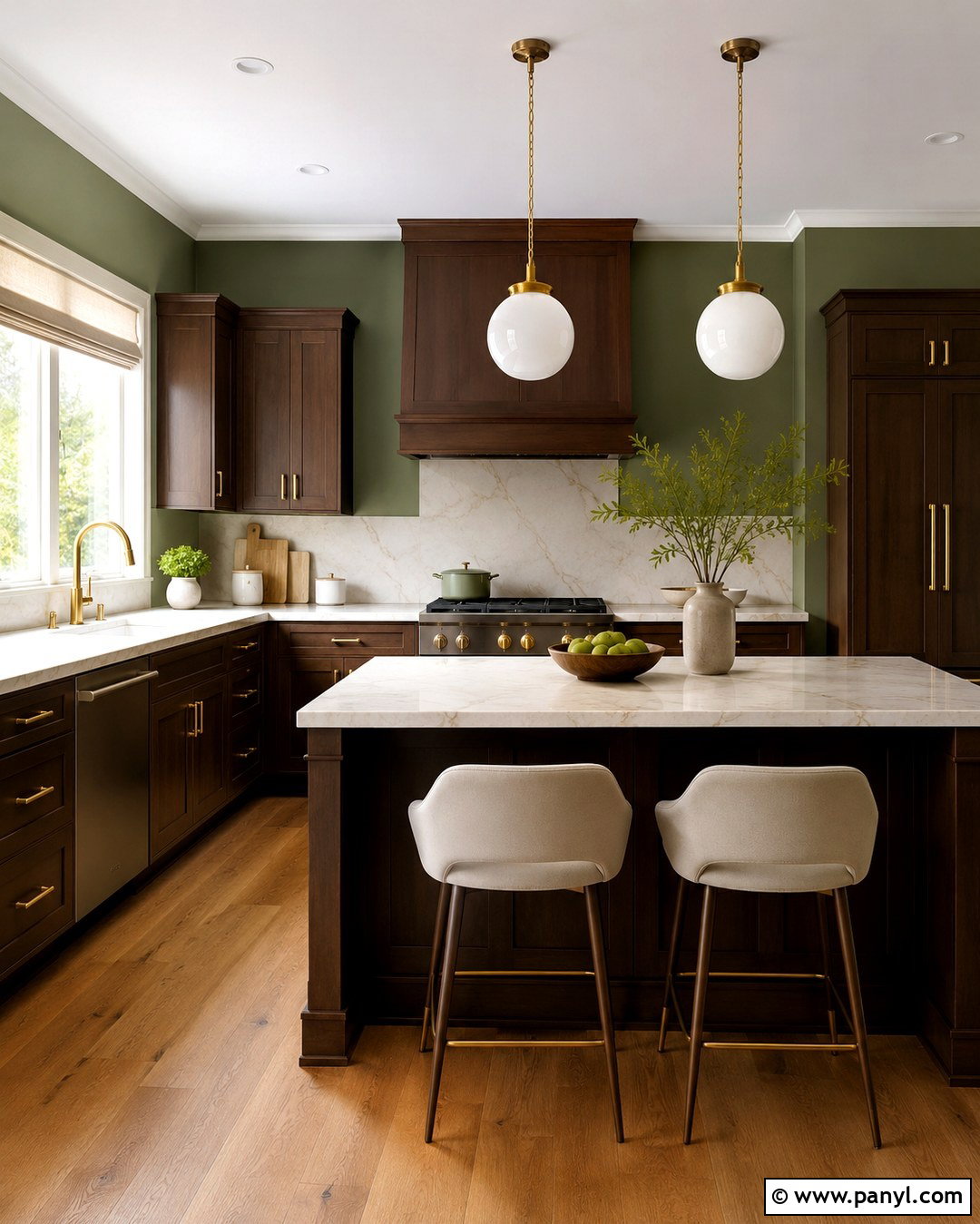
Brass accents bring a warm, polished finish to muted green walls and deep brown cabinets. Choose soft thyme green for the walls and rich walnut for Shaker cabinetry, creating a refined palette that remains comfortable. Install creamy marble-look quartz on the counters and backsplash so the brass details stand out clearly. Use brushed brass pulls, a matching faucet, and two opal globe pendants rather than mixing several metal finishes. A dark brown island with a light counter can provide storage and seating at the center of the room. Warm oak flooring and cream counter stools soften the contrast. Finish with linen window shades, white ceramics, and a shallow brass tray. Every element supports a cohesive kitchen without making the decorative metal feel excessive.
Conclusion:
These **20 Green Wall Brown Cabinet Kitchen Ideas** show how adaptable an earthy kitchen palette can be. Pale sage, fern, eucalyptus, and mint walls brighten darker wood, while olive, forest, and teal green create a richer atmosphere around walnut or oak cabinetry. Successful rooms balance both colors with lighter counters, practical backsplashes, clear lighting, and carefully repeated accents. Cream and white provide freshness, brass adds warmth, and black introduces modern definition. Before selecting paint, compare samples beside the actual cabinet finish during different times of day. Consider the kitchen’s size, windows, flooring, and connected rooms as well. A thoughtful combination will make green walls and brown cabinets feel coordinated, welcoming, and lasting.

Related Ideas and Inspiration:
Leave a Reply