
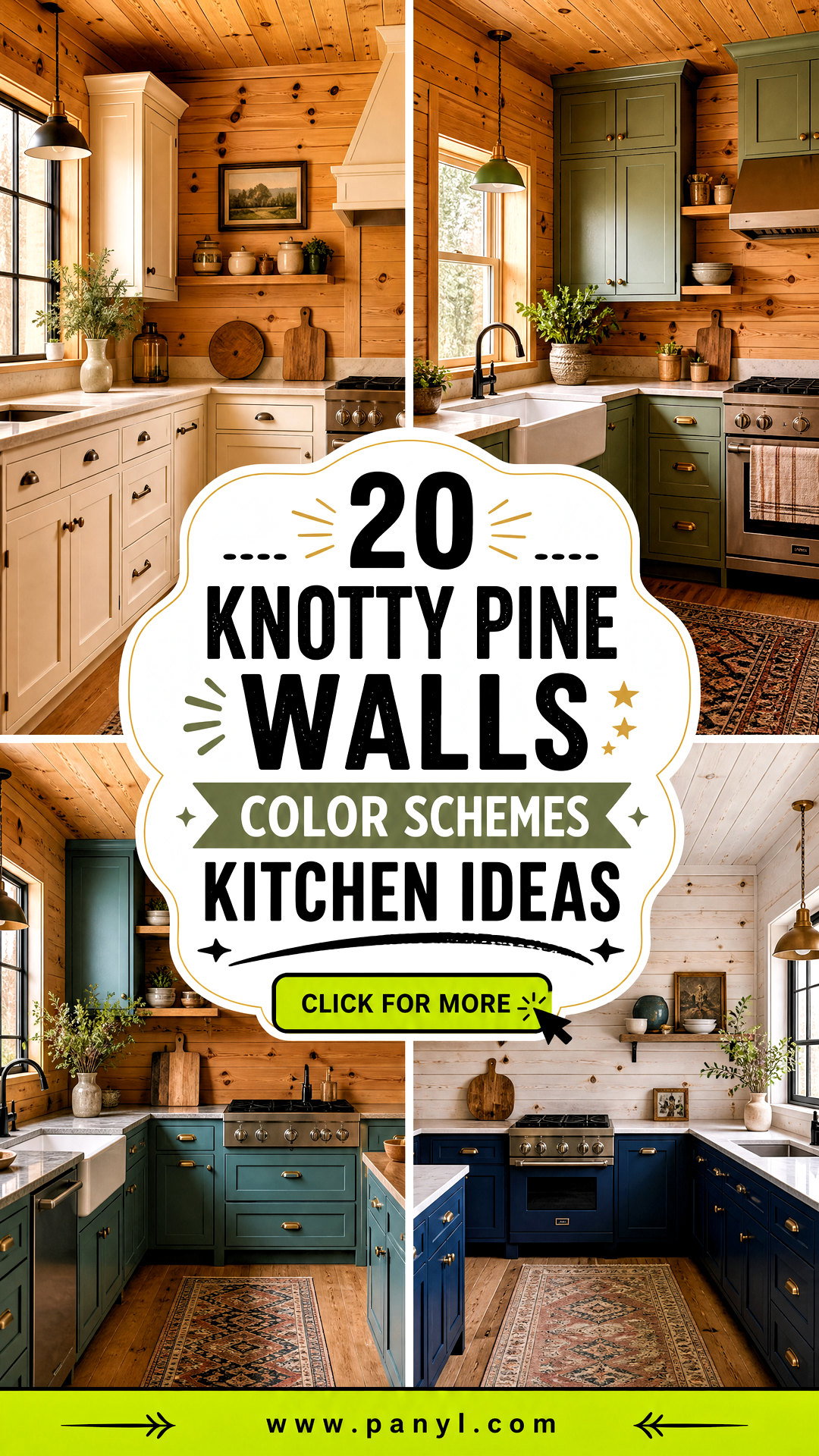
Knotty pine walls bring natural warmth, visible grain, and cabin character to a kitchen, but their yellow or orange undertones can make color selection tricky. The right palette should balance the wood without hiding what makes it special. Cool greens and blues can soften its warmth, while creamy neutrals create a brighter, more blended appearance. Darker shades add structure and prevent a wood-heavy room from looking dated. Before choosing finishes, consider the pine’s undertone, natural light, floor color, and existing stain. Traditional amber pine usually works best with warm whites, earthy greens, muted blues, and grounded charcoal accents. () This guide explores complete, practical looks through **20 Knotty Pine Walls Color Schemes Kitchen Ideas**.
1. Knotty Pine Kitchen With Creamy White Cabinets
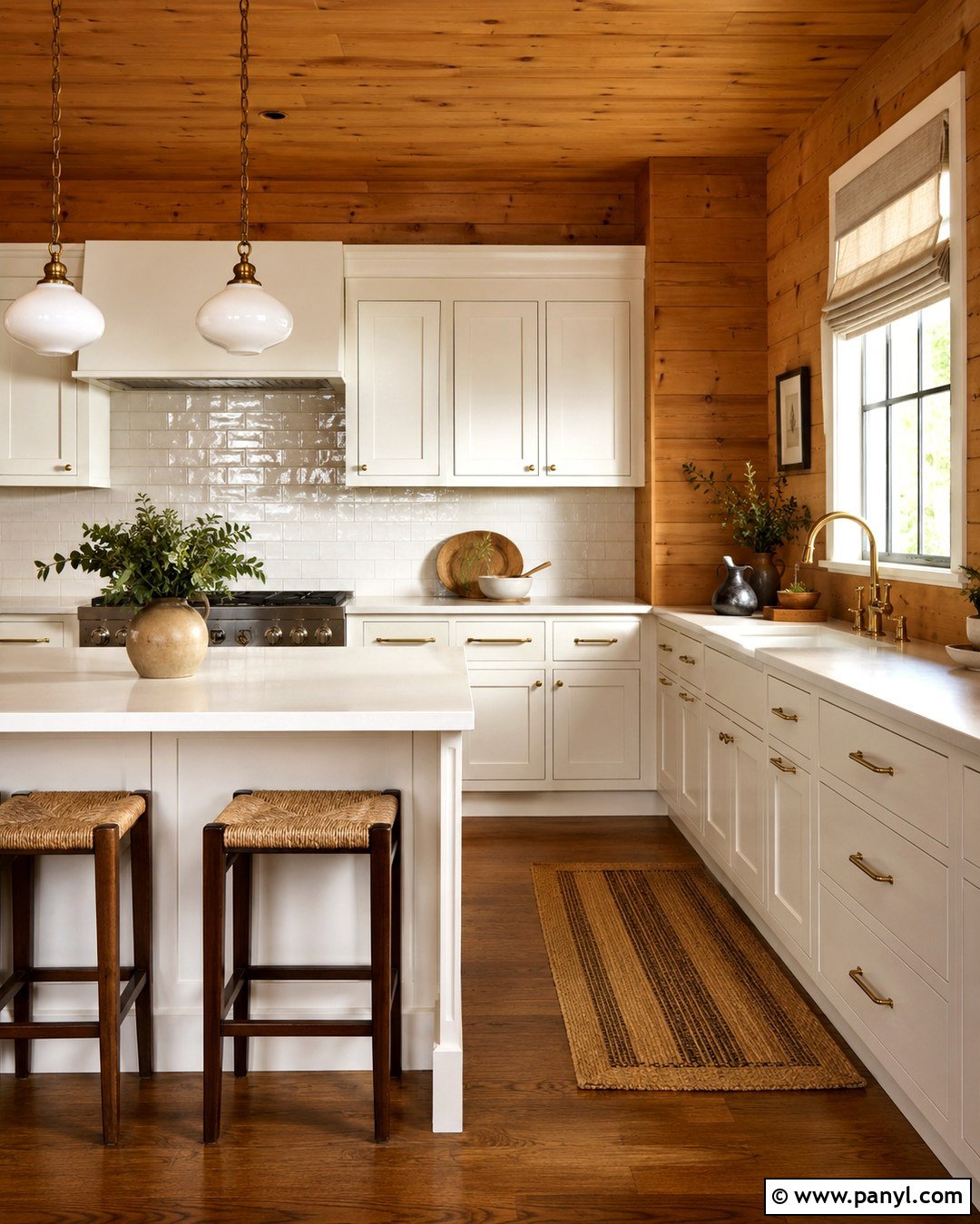
Creamy white cabinets give knotty pine walls a clean update without creating the harsh contrast of brilliant white. Choose a soft white with subtle beige or yellow undertones so it relates naturally to the warm wood. Continue that lighter effect with ivory quartz counters and a backsplash made from handmade cream subway tile. Warm gray grout can define the tile while concealing everyday splashes. Use unlacquered brass cabinet pulls, a white ceramic sink, and simple milk-glass pendants for understated character. Medium brown oak or matte stone flooring grounds the palette. Keep window treatments light and uncomplicated, such as natural linen Roman shades. This complete scheme feels bright, welcoming, and traditional without making the pine walls appear overly orange. ()
2. Knotty Pine Kitchen With Sage Green Cabinets
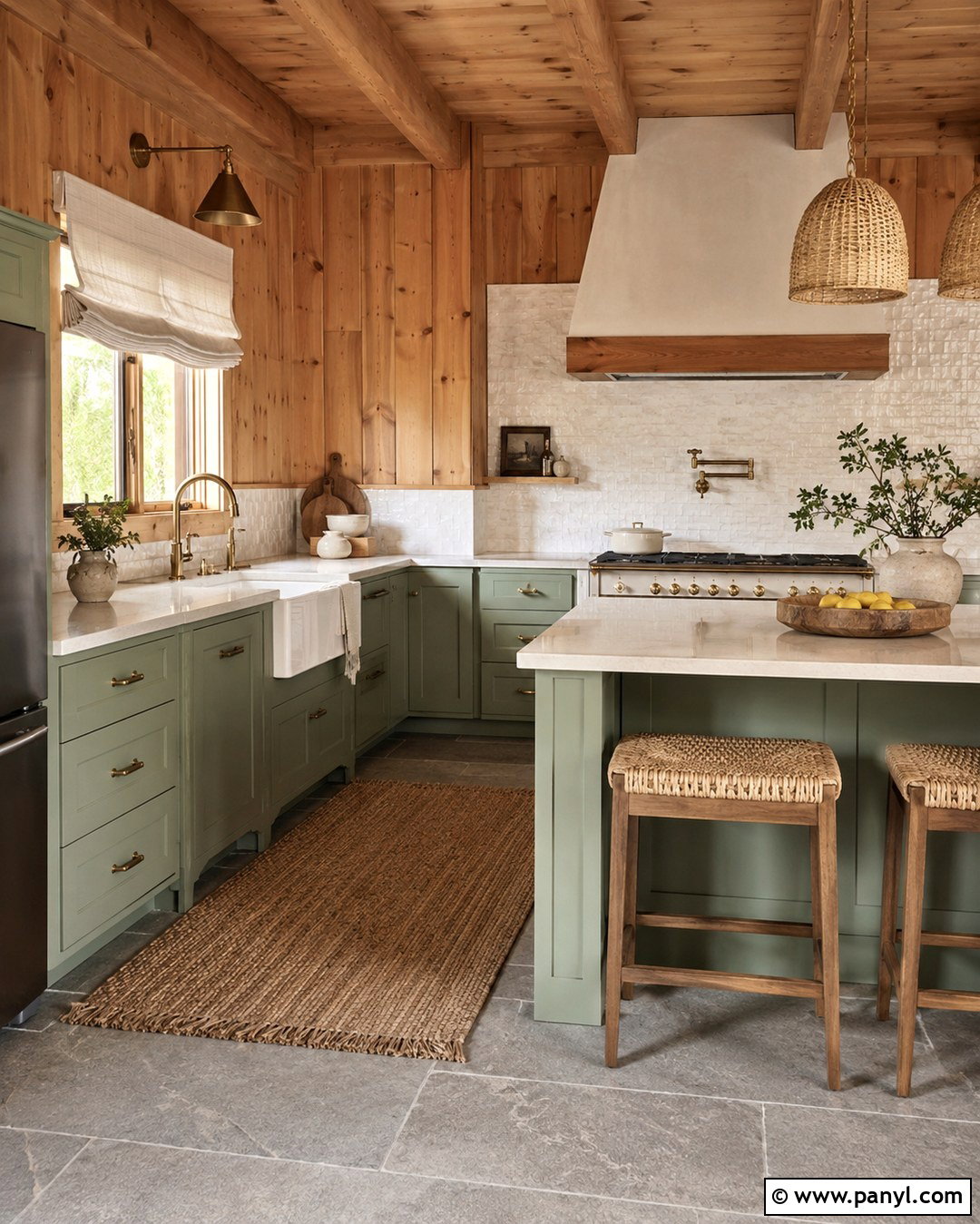
Muted sage green provides a gentle contrast to amber knotty pine while preserving the kitchen’s connection to nature. Cover the lower and upper cabinets in a dusty sage with gray undertones rather than a bright botanical green. Add warm cream quartz counters and a softly textured off-white backsplash to keep the room open. Antique brass hardware works especially well with both the green paint and golden wood. Choose a medium-toned slate or limestone-look floor that introduces quiet gray variation. A farmhouse sink, woven stools, and simple ceramic accessories complete the relaxed design. Avoid adding numerous patterns because the knots and grain already create visual movement. The finished kitchen feels calm, earthy, and thoughtfully updated rather than overly rustic. ()
3. Knotty Pine Kitchen With Country Blue Cabinets
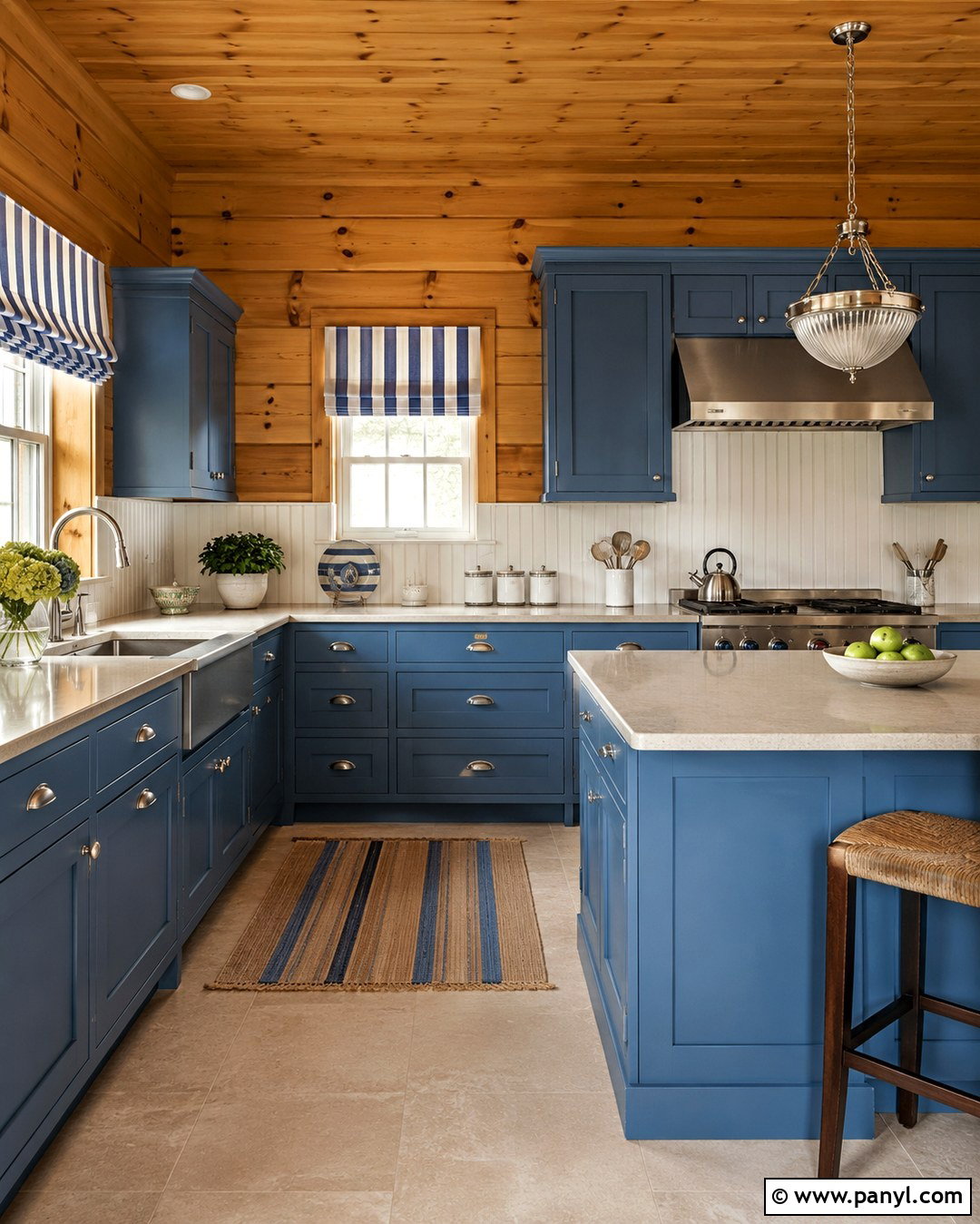
Country blue cabinets bring a cheerful cottage quality to a kitchen surrounded by knotty pine walls. Select a softened medium blue with a slight gray undertone, which will feel more settled than a clear primary blue. Pair it with creamy solid-surface counters and a white beadboard backsplash for a casual, familiar finish. Brushed nickel cup pulls and a stainless steel sink introduce cool metallic details without making the room feel industrial. A pale stone-look floor keeps the foundation neutral and prevents competing wood tones. Complete the layout with a painted blue island, warm white stools, and simple striped cotton shades. The cooler cabinetry visually balances the warmth of the pine, while cream accents connect both sides of the palette. ()
4. Knotty Pine Kitchen With Navy Blue Island
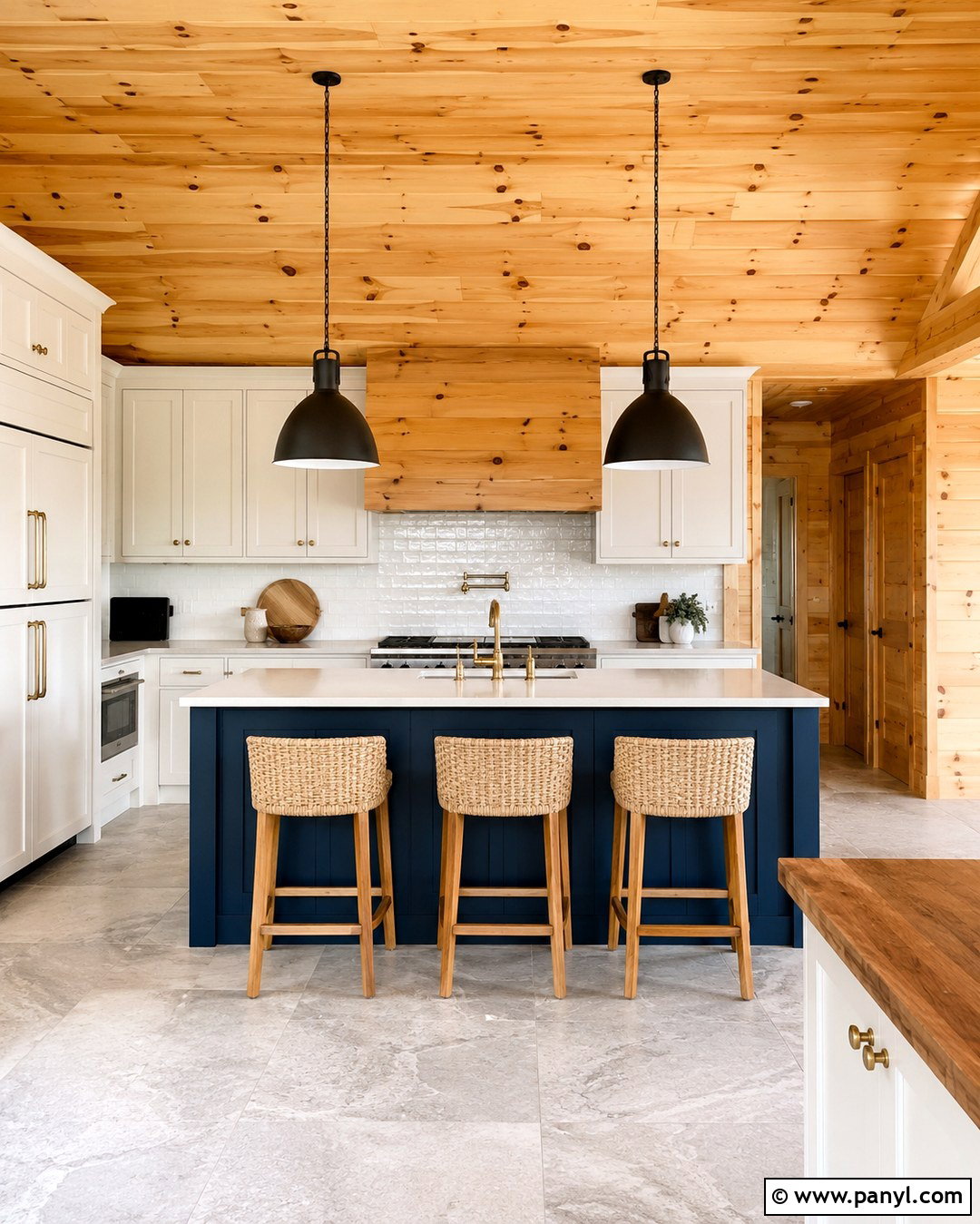
A deep navy island can anchor a knotty pine kitchen without making every cabinet feel heavy. Keep the perimeter cabinets warm white, then paint the central island a rich navy blue with a softly muted finish. Use pale quartz counters throughout, adding a thicker butcher-block section to the island for another natural texture. A backsplash of glazed white tile reflects light against the wood walls. Matte black pendant lights and cabinet knobs provide definition, while a brushed brass faucet adds restrained warmth. Finish the room with natural woven counter stools and light gray stone flooring. Limiting navy to one large feature produces an intentional focal point. It also gives the room stronger visual structure while allowing the distinctive pine grain to remain prominent.
5. Knotty Pine Kitchen With Charcoal Gray Cabinets
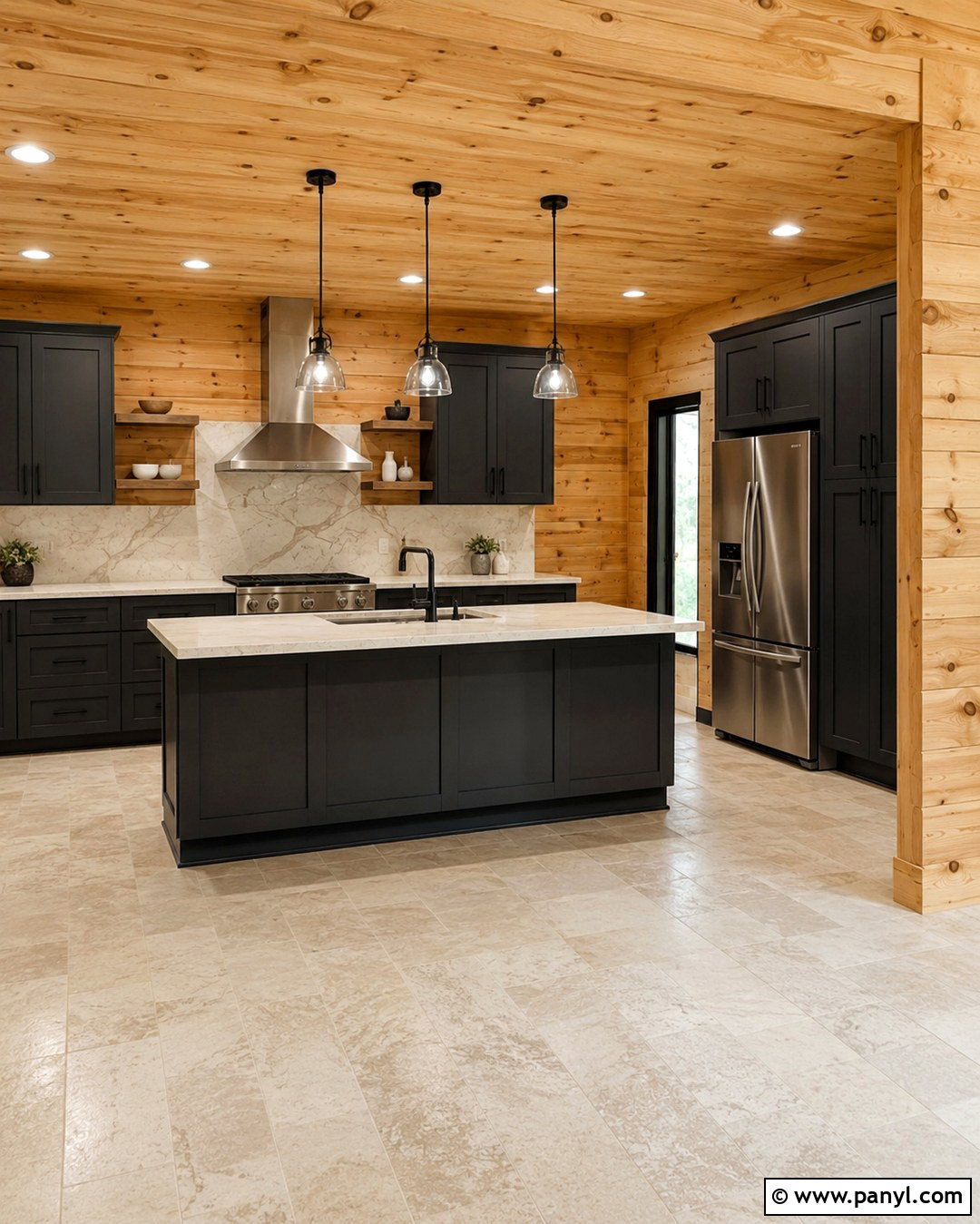
Charcoal cabinets create a modern, grounded look beside strongly colored knotty pine walls. Choose a deep gray with neutral or slightly cool undertones, avoiding brown-gray paint that could make the room feel muddy. Balance the dark cabinetry with off-white quartz counters and a lightly veined cream backsplash. Black hardware can blend quietly into the cabinet fronts, while polished nickel or stainless steel appliances add subtle brightness. Install pale limestone or light concrete-look flooring to prevent the lower half of the room from becoming too dark. Open shelves should match either the charcoal cabinets or the existing pine, but not introduce a third wood finish. The final design feels streamlined and current, with the dark surfaces controlling the pine’s visual intensity. ()
6. Knotty Pine Kitchen With Warm Greige Cabinets
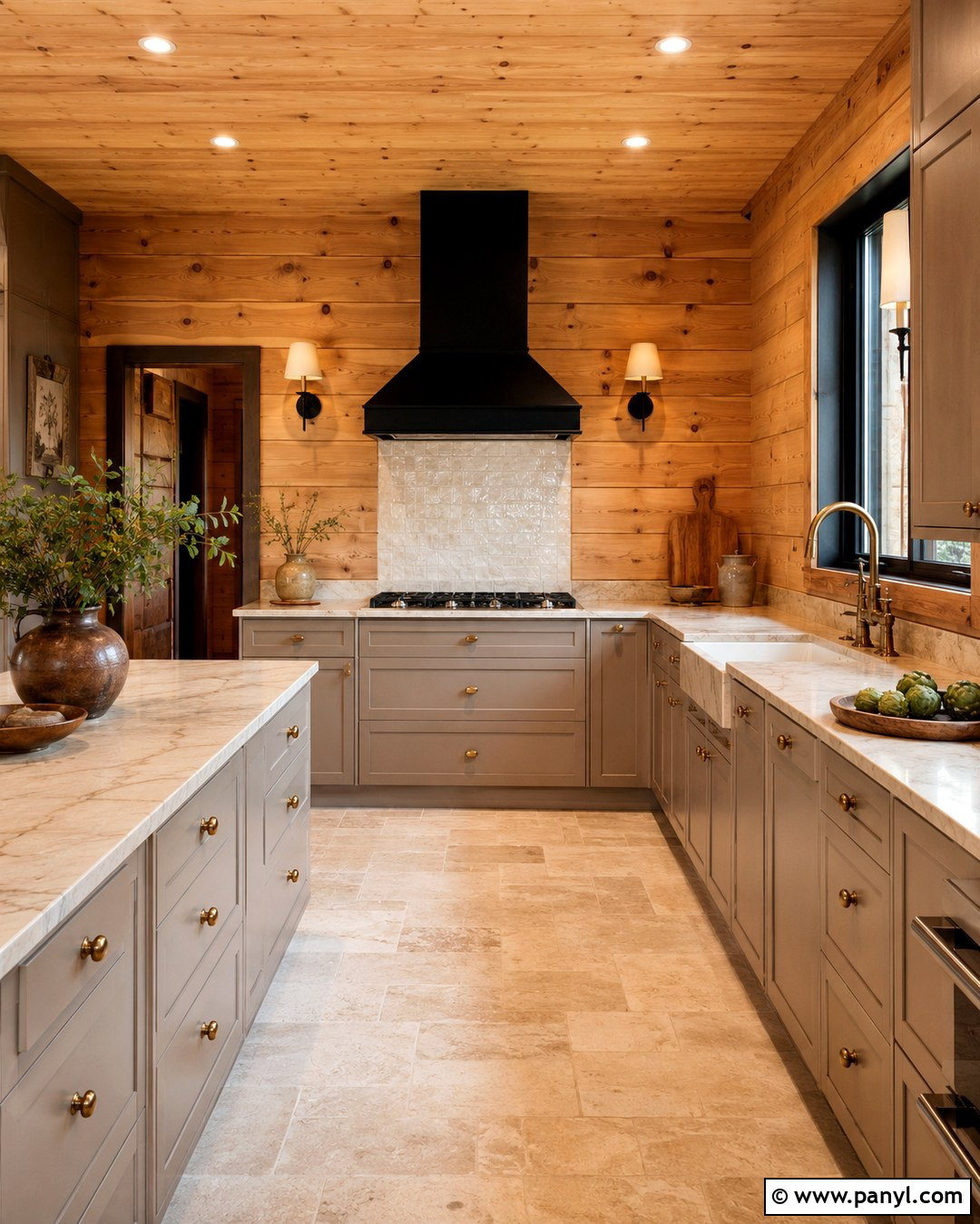
Warm greige cabinets offer an easy transition between golden pine walls and neutral kitchen finishes. Look for a balanced beige-gray that does not turn lavender or icy blue under artificial light. Use the same paint on cabinets and visible trim to create calm, continuous blocks of color. Creamy quartz counters with delicate taupe veining reinforce the palette, while an ivory zellige backsplash brings soft texture and light reflection. Choose aged brass knobs and a simple bronze faucet for warm definition. A natural stone floor in pale beige helps the kitchen feel spacious without introducing another grain pattern. Add black accents sparingly through a range hood or pendant frame. This layered neutral scheme tones down orange undertones while keeping the kitchen comfortable and approachable.
7. Knotty Pine Kitchen With Taupe Cabinets
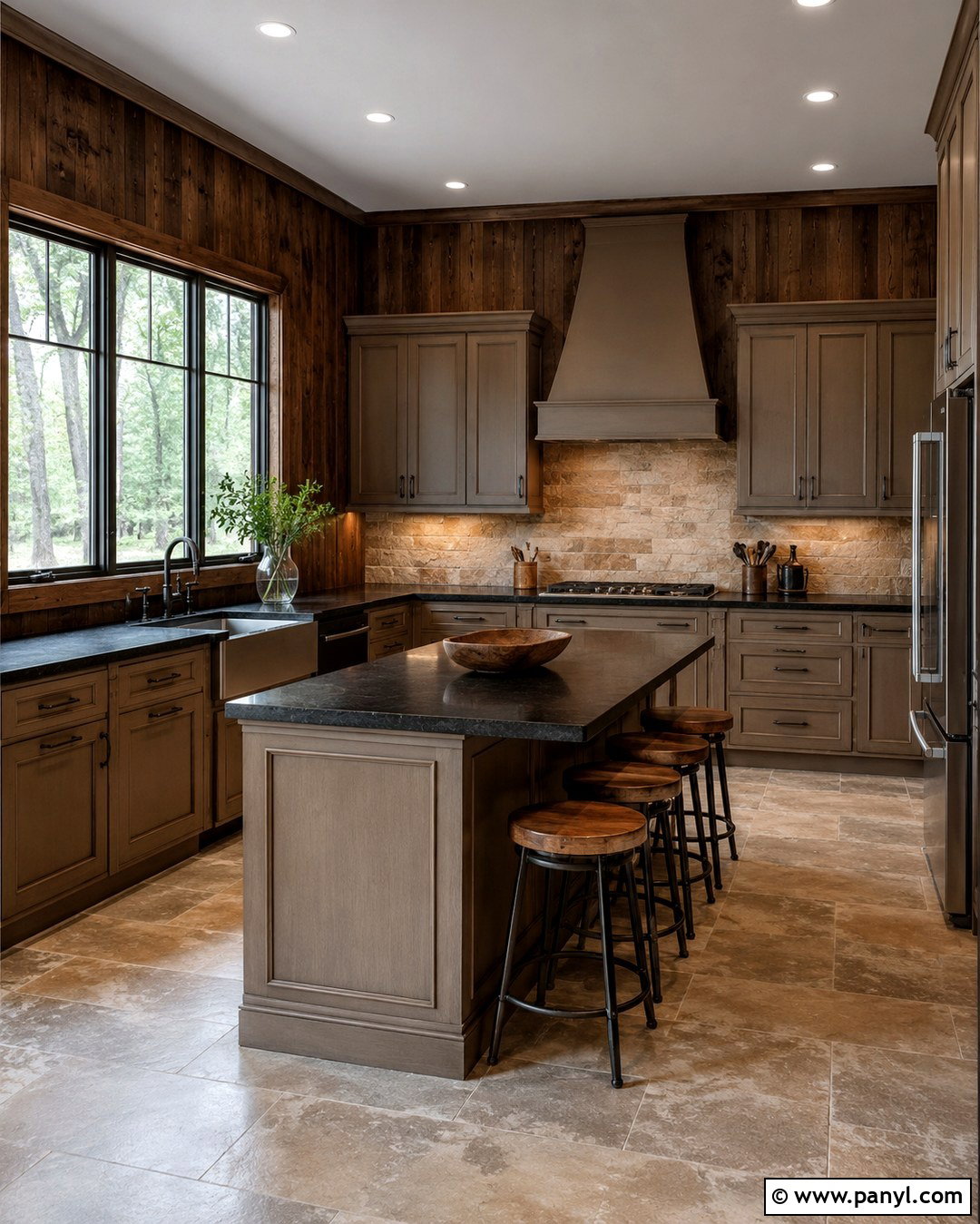
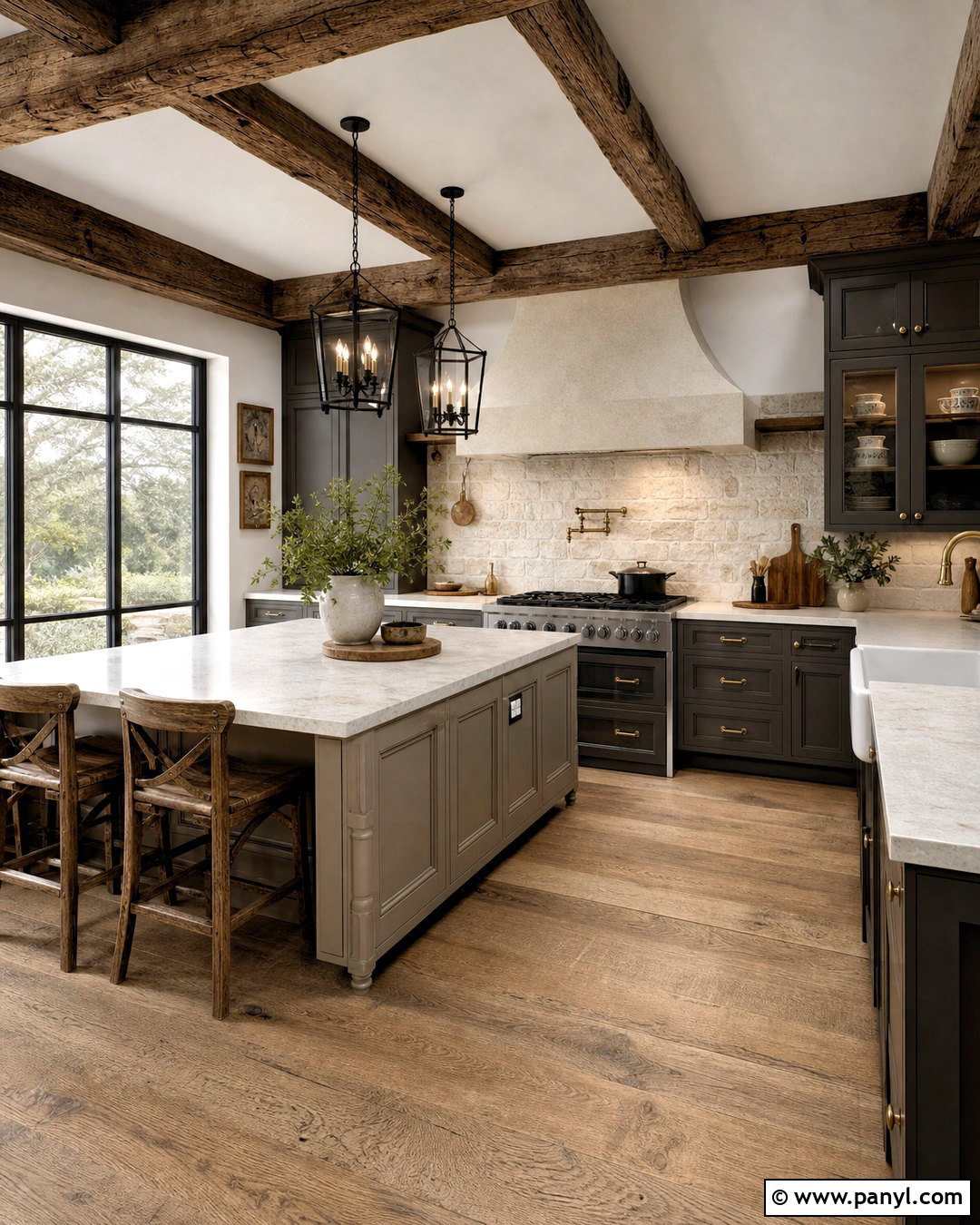
Taupe creates a sophisticated but relaxed partner for darker, aged knotty pine. Paint the cabinetry a medium taupe that contains enough gray to distinguish it from the wood, yet enough warmth to avoid a disconnected appearance. Add honed black granite counters for contrast and a tumbled limestone backsplash containing cream, gray, and faint rust variations. These natural colors quietly repeat shades already visible in the pine. Oil-rubbed bronze hardware and a dark faucet can tie the countertop into the rest of the room. For flooring, choose large-format warm gray tile with minimal pattern. Soft white ceiling paint and simple recessed lighting will brighten the complete composition. The result suits rustic houses, cabins, and traditional kitchens that need refinement without losing their original personality. ()
8. Knotty Pine Kitchen With Olive Green Cabinets
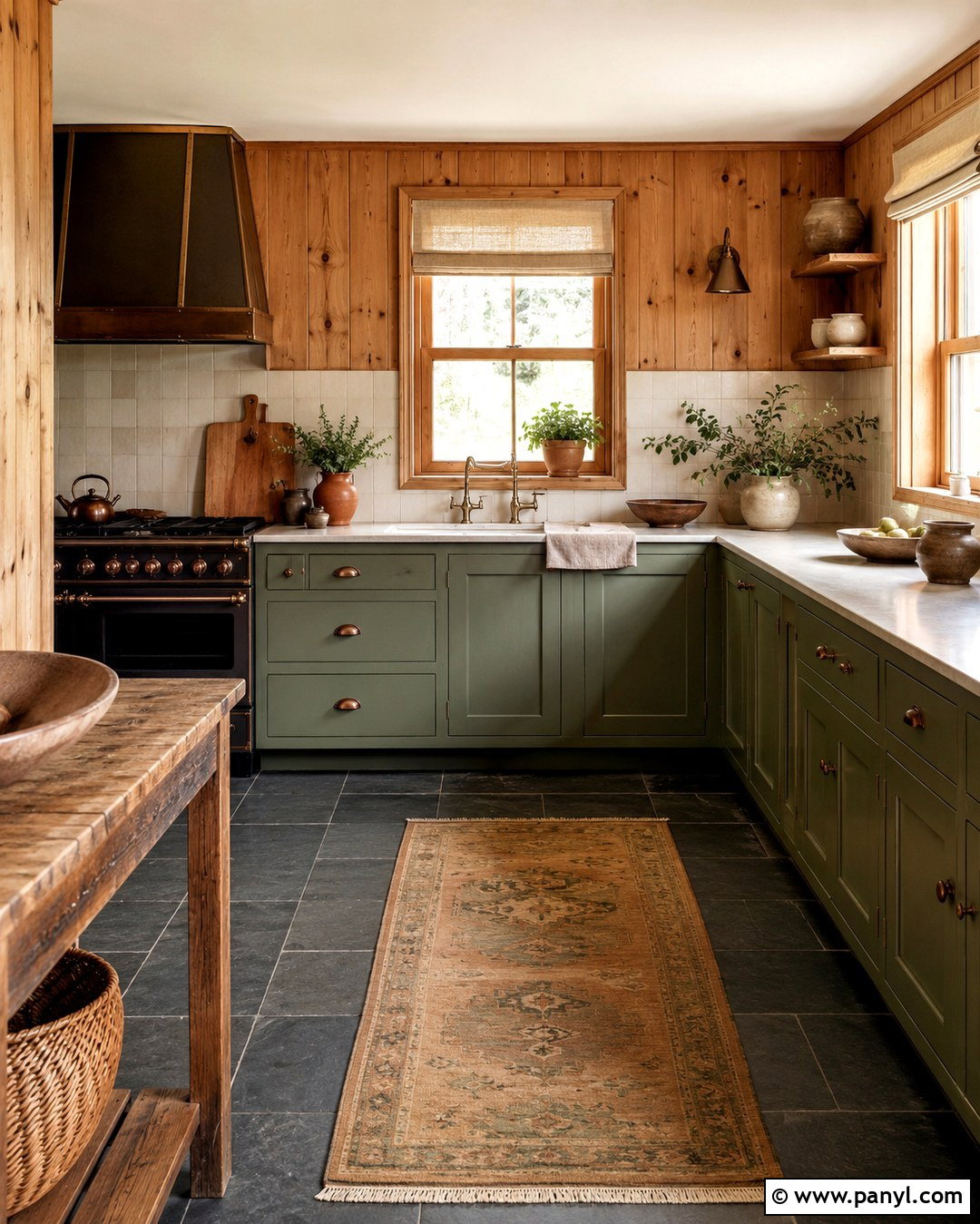
Olive green cabinetry gives knotty pine walls an earthy, collected appearance with slightly more depth than sage. Select a muted olive that leans brown rather than yellow, especially when the pine has a strong amber finish. Pair the cabinets with pale cream counters and a backsplash of warm white square tile. Add aged copper or antique brass pulls to echo the wood’s richness. A dark charcoal slate floor provides needed contrast and makes the room feel grounded. Keep the ceiling white or light cream so the deeper palette does not close in the space. Natural linen shades, simple pottery, and a small vintage-inspired runner can finish the room. This coordinated kitchen feels organic and welcoming, with enough contrast to make every material appear intentional.
9. Knotty Pine Kitchen With Forest Green Cabinets
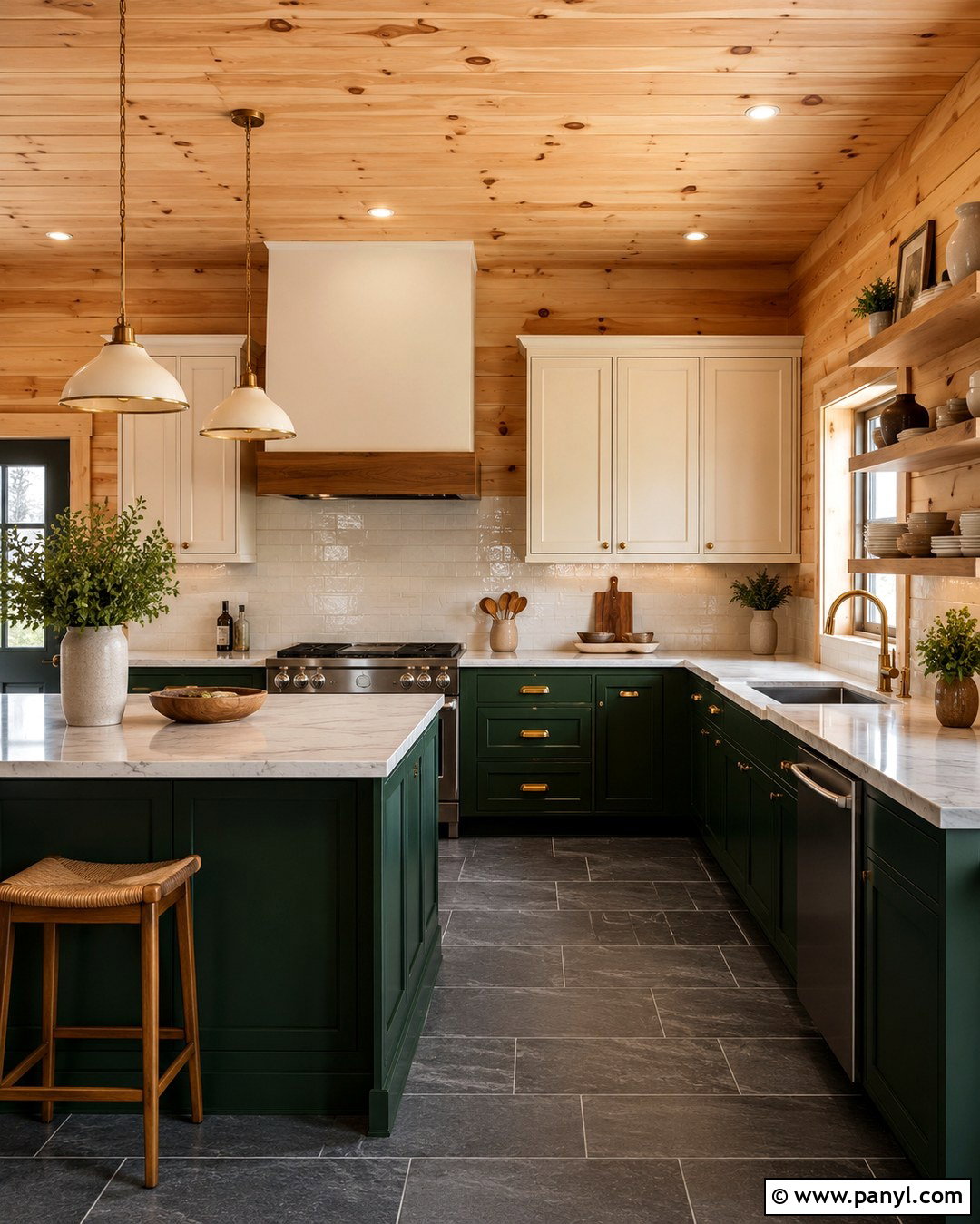
Forest green cabinets can transform a bright knotty pine kitchen into a richer, more dramatic space. This scheme works particularly well in rooms with large windows or abundant overhead lighting. Use the deep green on lower cabinets and a substantial range hood, then keep upper cabinets creamy white or replace some with open pine shelving. Choose light marble-look quartz counters to provide visual relief. A warm white tile backsplash, brass hardware, and cream pendant shades prevent the green from feeling severe. Medium gray slate flooring balances the yellow-orange wood without competing with it. Repeat the green through only one or two small accents, such as a runner or ceramic planter. The overall look feels classic, nature-inspired, and carefully layered. ()
10. Knotty Pine Kitchen With Dusty Blue Cabinets
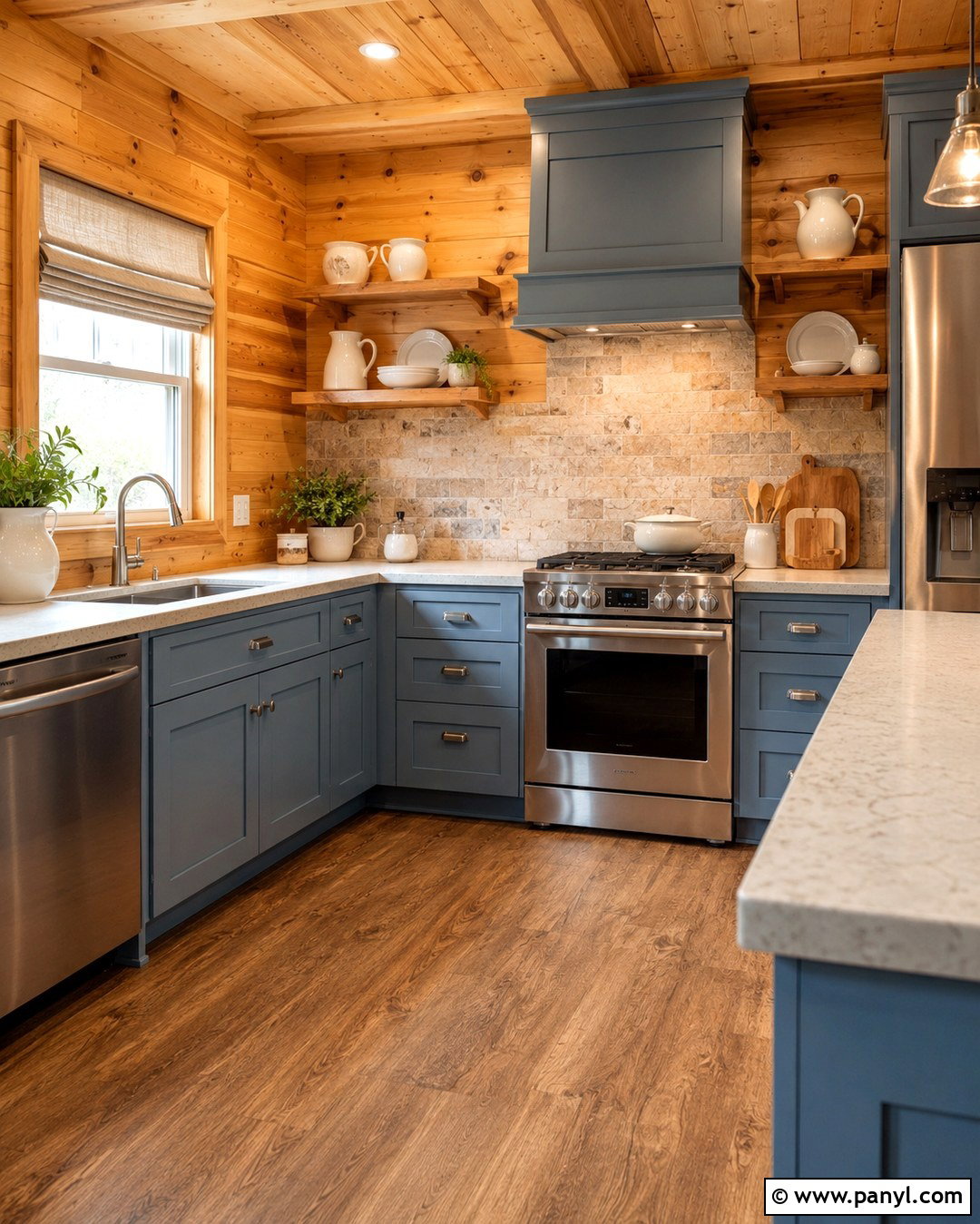
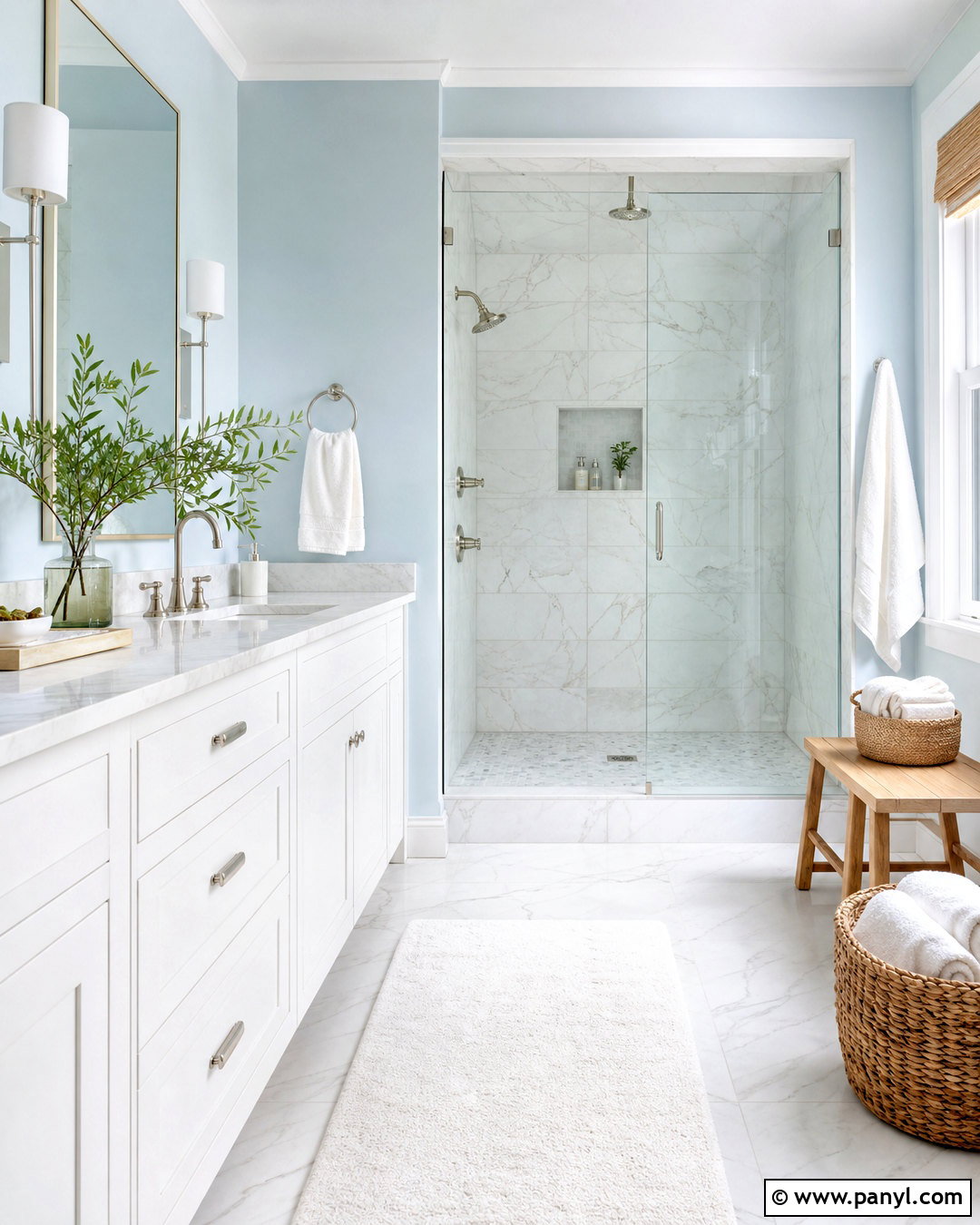
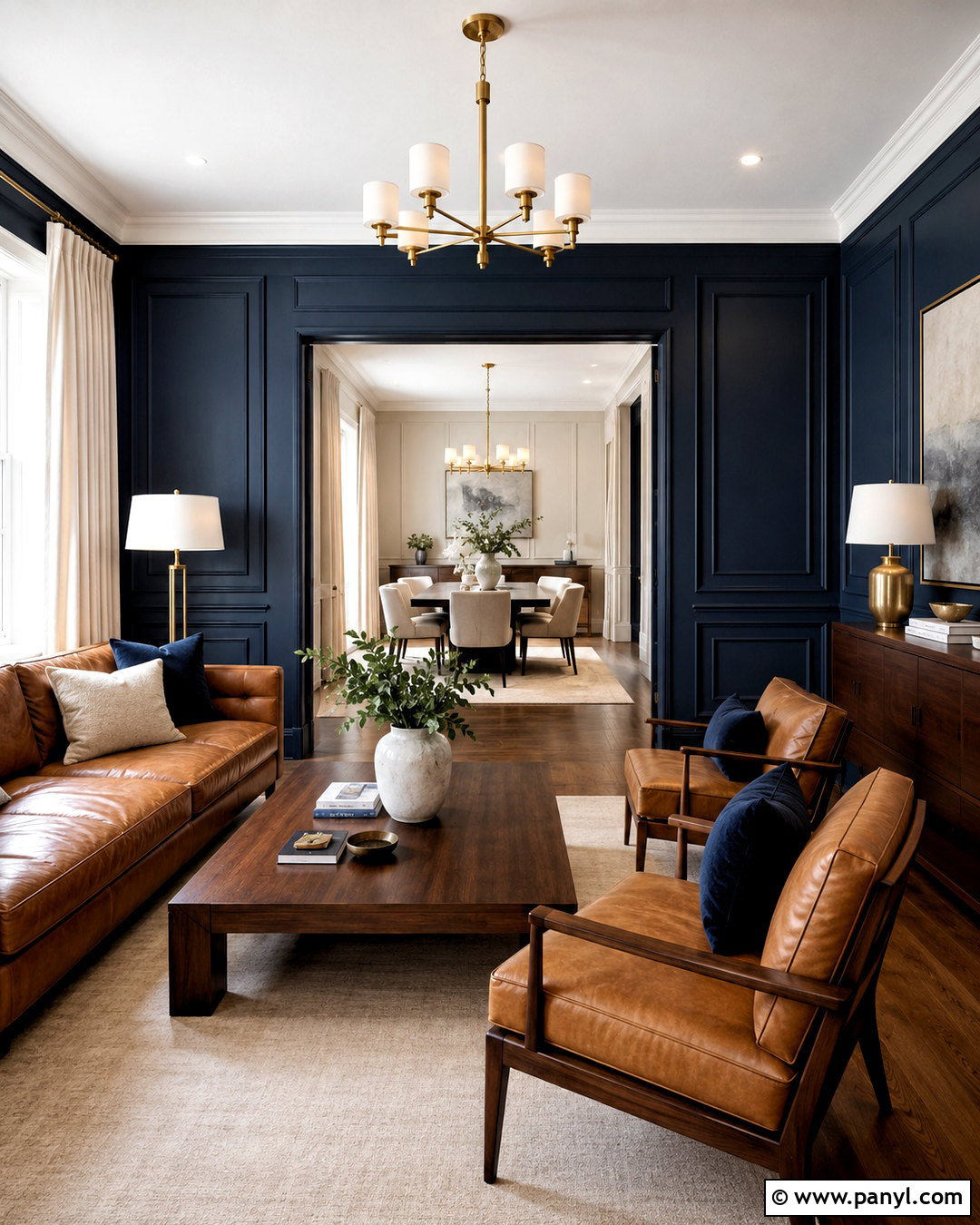
Dusty blue softens the strong warmth of knotty pine while creating a light, relaxed kitchen. Choose a faded blue with gray undertones, similar to a hazy sky rather than a bright coastal aqua. Cover all cabinets in this shade and use warm white quartz for the counters. A backsplash of pale stone tile introduces natural texture without adding strong color. Brushed nickel pulls, stainless steel appliances, and a simple chrome faucet continue the cool side of the palette. Ground the design with medium brown flooring that is quieter and less orange than the walls. Add natural linen shades and a few cream ceramic pieces for softness. This balanced combination works especially well in cottage kitchens where comfortable colors and practical finishes matter more than dramatic contrast. ()
11. Knotty Pine Kitchen With Muted Teal Cabinets
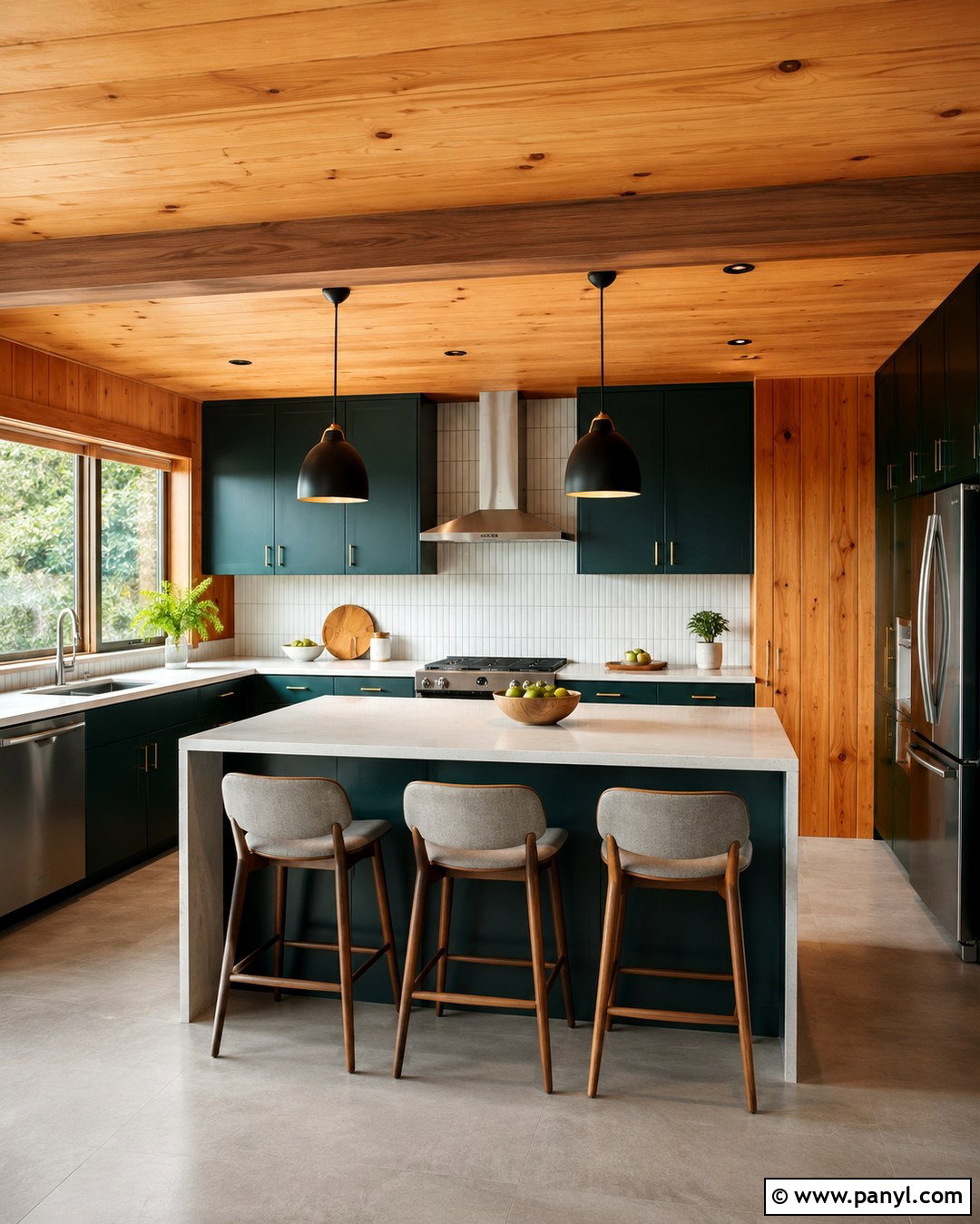
Muted teal provides a lively counterpoint to knotty pine without pushing the kitchen into an overly colorful theme. Select a deep blue-green softened with gray, then use it on streamlined cabinets or a large island and pantry wall. Pair the color with simple white quartz counters and an off-white tile backsplash. Brushed brass hardware adds warmth, while matte black pendant lights offer a crisp modern outline. Use pale gray porcelain flooring to separate the cabinets from the golden walls. Keep chairs, textiles, and countertop accessories neutral so the teal remains the main painted feature. This palette can give a midcentury knotty pine kitchen a fresh identity while respecting its vintage roots. Clean cabinet fronts and uncluttered surfaces are essential to making the complete room feel current. ()
12. Knotty Pine Kitchen With Black And Cream Cabinets
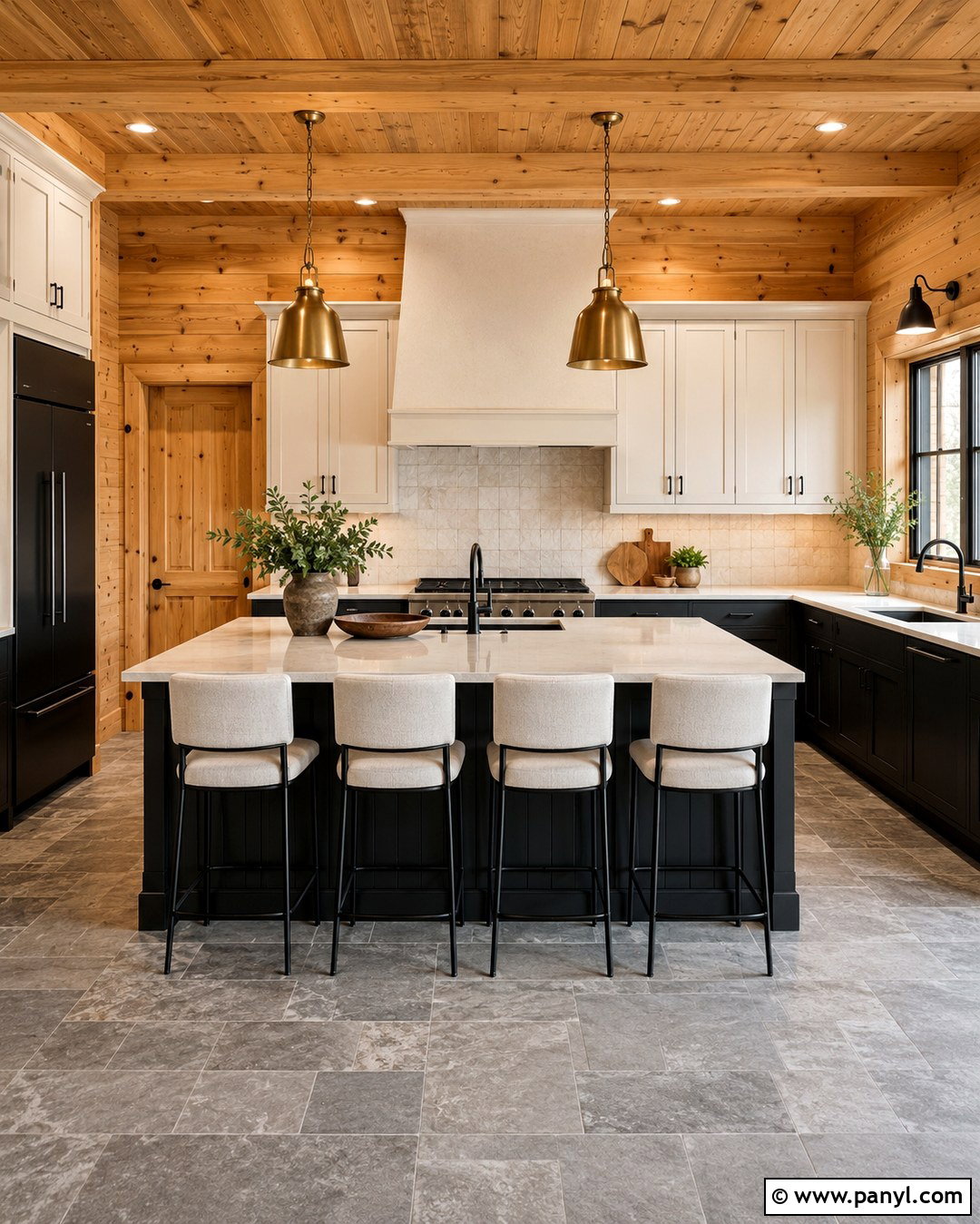
Black and cream cabinetry creates strong definition in a kitchen where knotty pine covers most of the walls. Paint lower cabinets soft black and upper cabinets a warm cream, allowing the lighter color to open the room near eye level. Continue cream across the backsplash with handmade rectangular tile and light grout. Choose a durable pale quartz counter with restrained gray veining. Matte black hardware will disappear into the lower cabinetry, while brass pendants add a warmer highlight above the island. A medium gray stone floor prevents the design from becoming too brown. Use black-framed stools and cream upholstery to repeat the two-tone treatment. The finished kitchen looks balanced and structured, with the pine acting as a warm background instead of dominating every surface. ()
13. Knotty Pine Kitchen With Terracotta Accents
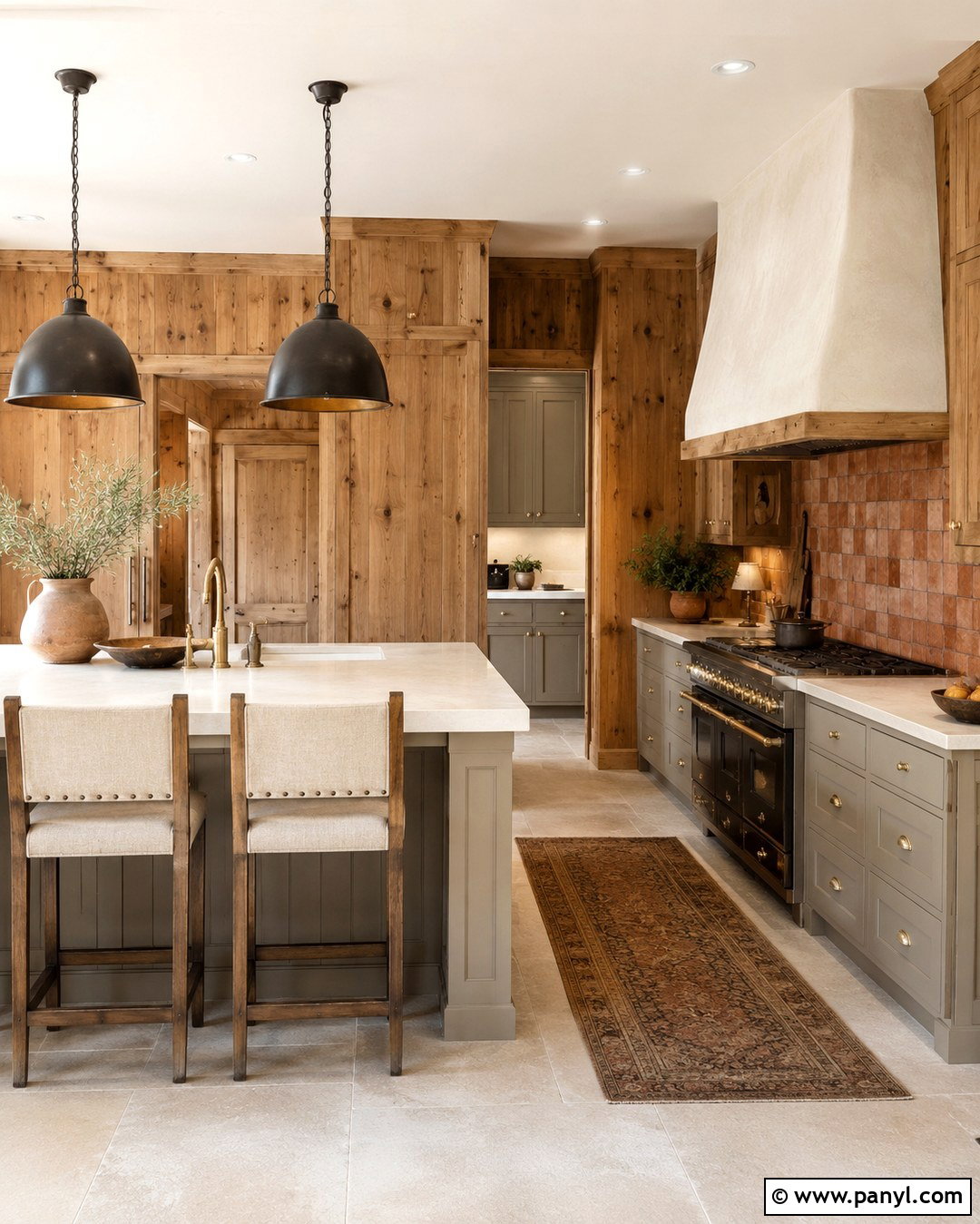
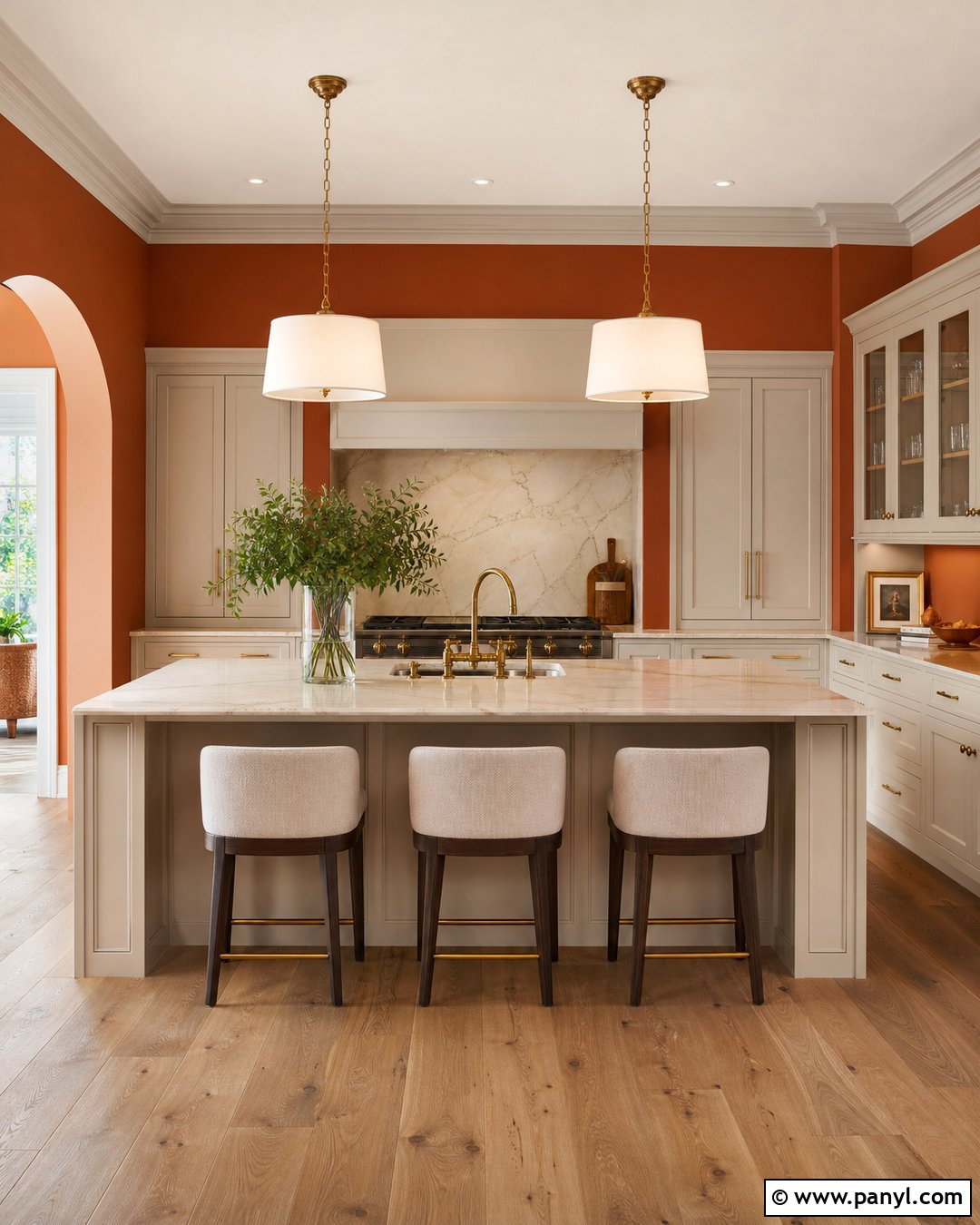
Terracotta can complement knotty pine when it is used in measured amounts and balanced by quiet neutrals. Start with soft taupe cabinets and creamy white counters, then introduce terracotta through a handmade tile backsplash containing natural variations. Limit the tile to the range wall or sink area so the warm tones do not overwhelm the room. Aged brass hardware and a plaster-style cream range hood create a relaxed Mediterranean influence. Choose pale limestone flooring to lighten the foundation. Black window frames or dark bronze pendants provide an essential break between the pine and reddish tile. Keep linens and stools neutral, using oatmeal, flax, or warm gray. This complete scheme celebrates warm color while maintaining enough contrast to keep each surface clearly defined. ()
14. Knotty Pine Kitchen With Buttery Yellow Cabinets
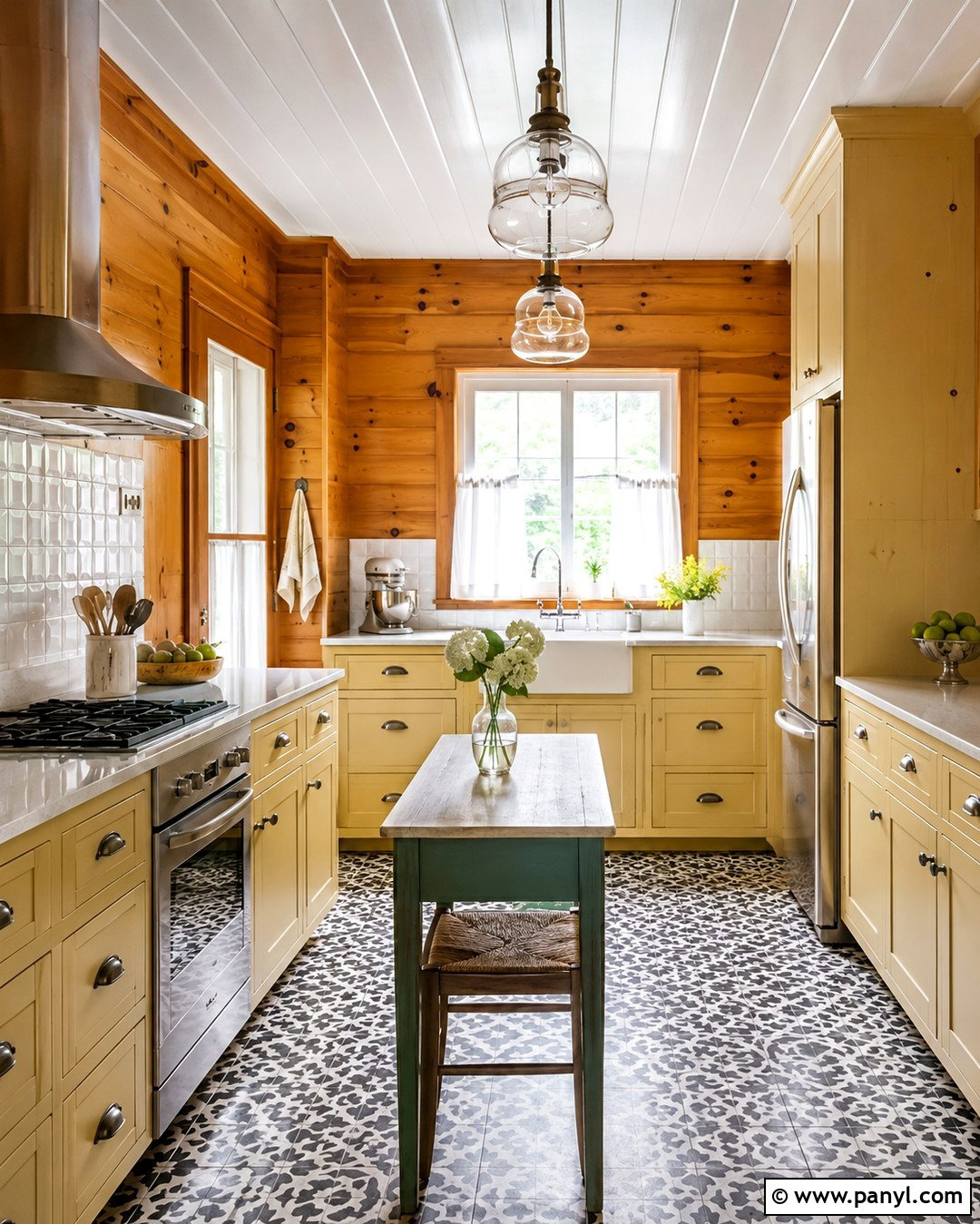
Soft buttery yellow can produce a cheerful vintage kitchen when the shade is noticeably lighter than the knotty pine walls. Choose a creamy, muted yellow rather than a saturated golden paint that would blend into the wood. Use it on simple shaker cabinets paired with white quartz or pale laminate counters. A white square-tile backsplash and chrome fixtures bring freshness to the nostalgic palette. Add black-and-white patterned flooring in a small-scale design for lively contrast, or choose plain charcoal tile for a calmer effect. White café curtains, clear glass pendants, and a compact painted table complete the friendly setting. This color scheme works best when the pine has medium warmth and the room receives good daylight, keeping the yellow surfaces light rather than overly amber. ()
15. Knotty Pine Kitchen With Soft Gray Cabinets
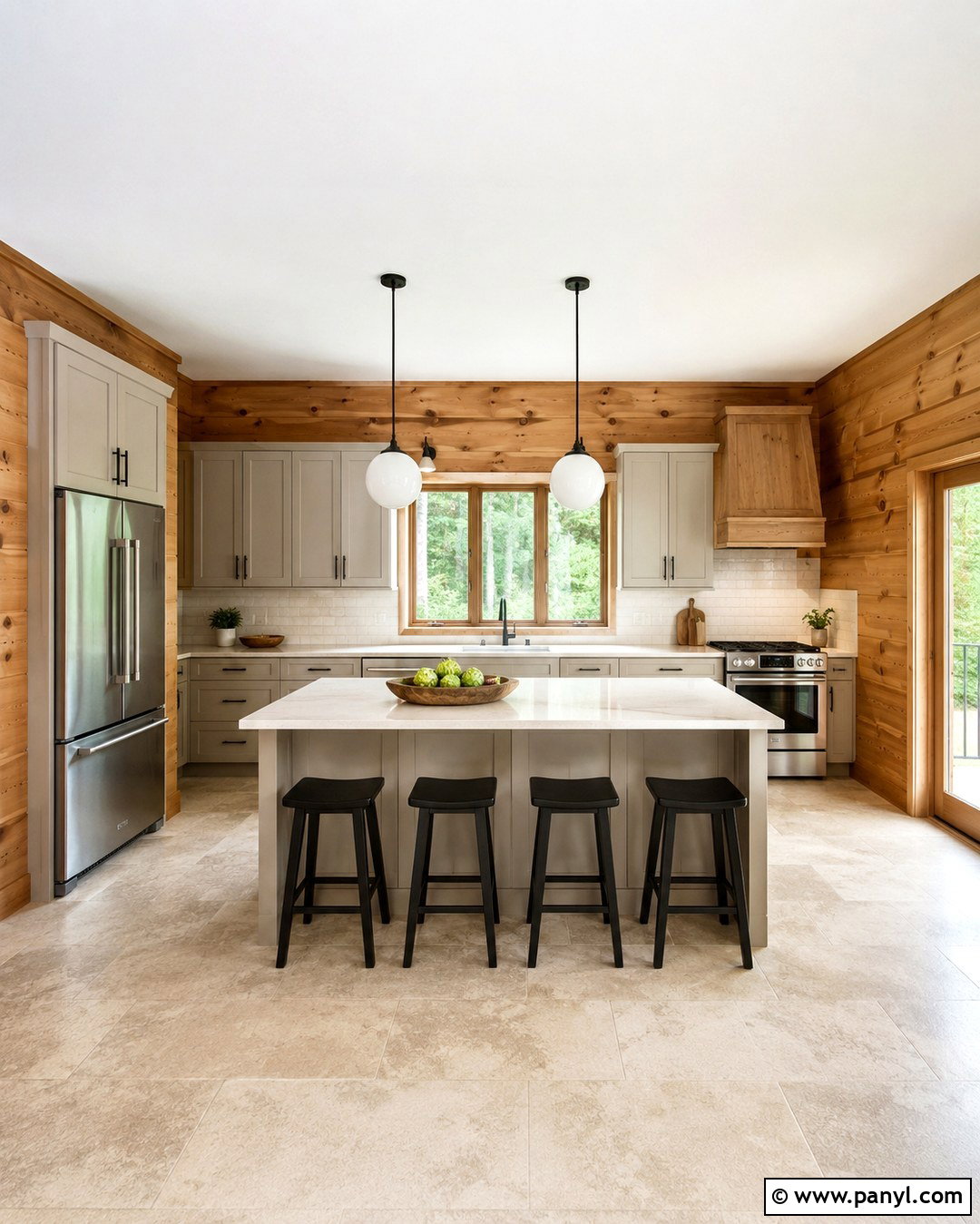
Soft gray cabinets can calm busy knotty pine walls, but the undertone must be selected carefully. Choose a light, balanced gray that leans slightly warm instead of icy blue or purple. Pair it with creamy quartz counters so the transition from gray paint to golden wood does not feel abrupt. Use an off-white backsplash with subtle gray grout and introduce matte black hardware for a modern edge. Light oak-look flooring can work if its grain is quiet and its tone is less orange than the pine. Otherwise, select pale stone tile to avoid mixing woods. A white ceiling, simple globe pendants, and minimal countertop decor help the room feel open. The finished palette is understated, practical, and suitable for both traditional and updated cabin kitchens. ()
16. Knotty Pine Kitchen With Pale Aqua Cabinets
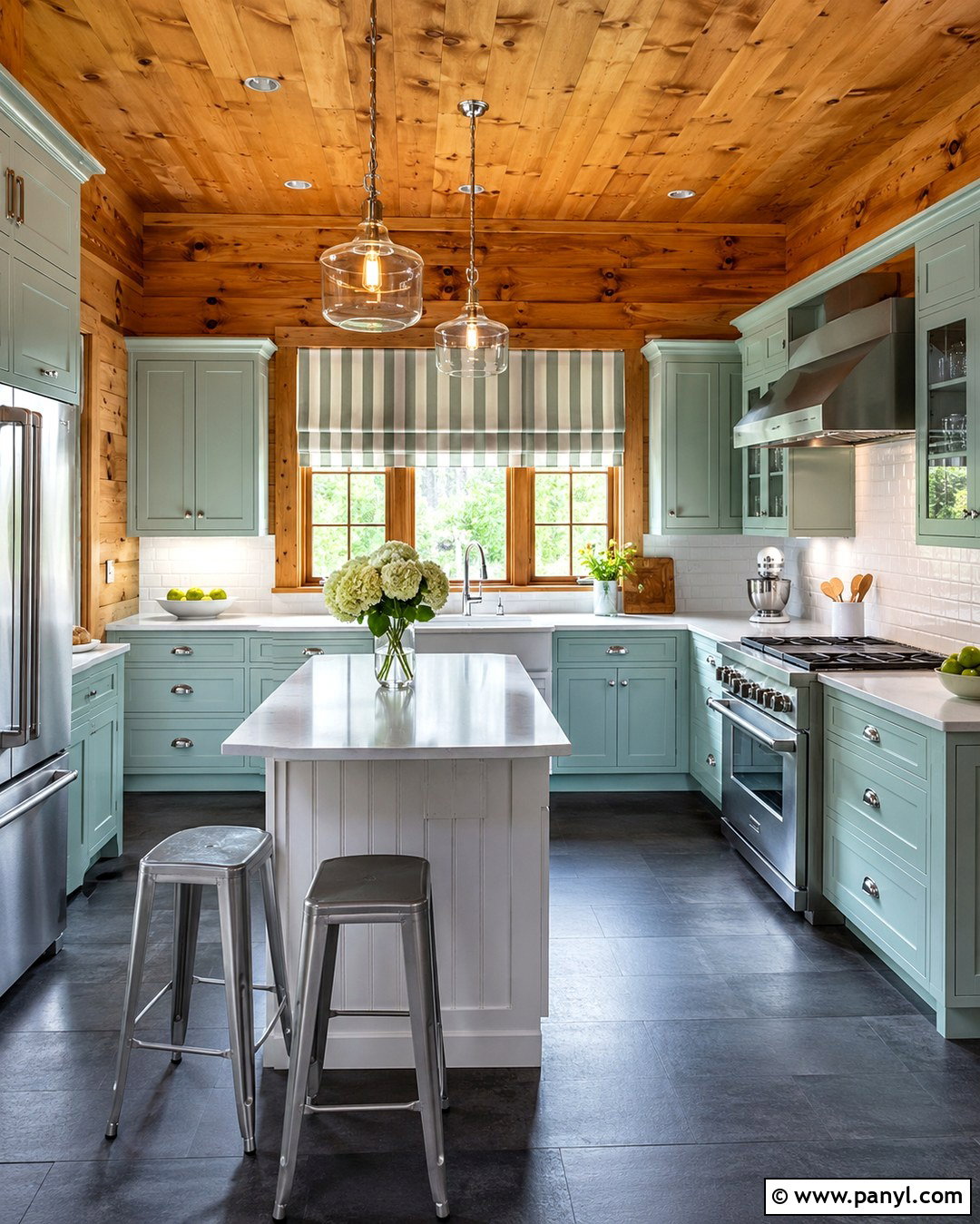
Pale aqua cabinets create a playful retro look against warm knotty pine walls. The best shade is softened and slightly gray, avoiding bright turquoise that might overpower a compact kitchen. Pair the aqua cabinetry with crisp white counters and a glossy white backsplash to increase reflected light. Chrome cabinet pulls, a stainless steel range, and clear glass fixtures support the vintage-modern character. Choose dark charcoal flooring to anchor the lighter colors and provide separation from the wood walls. A white-painted island can offer another bright surface if the room contains extensive pine paneling. Finish with simple striped shades and a few understated aqua accessories. This coordinated scheme respects the kitchen’s midcentury personality while making it feel cleaner, lighter, and far more intentional. ()
17. Whitewashed Knotty Pine Kitchen With Deep Blue Cabinets
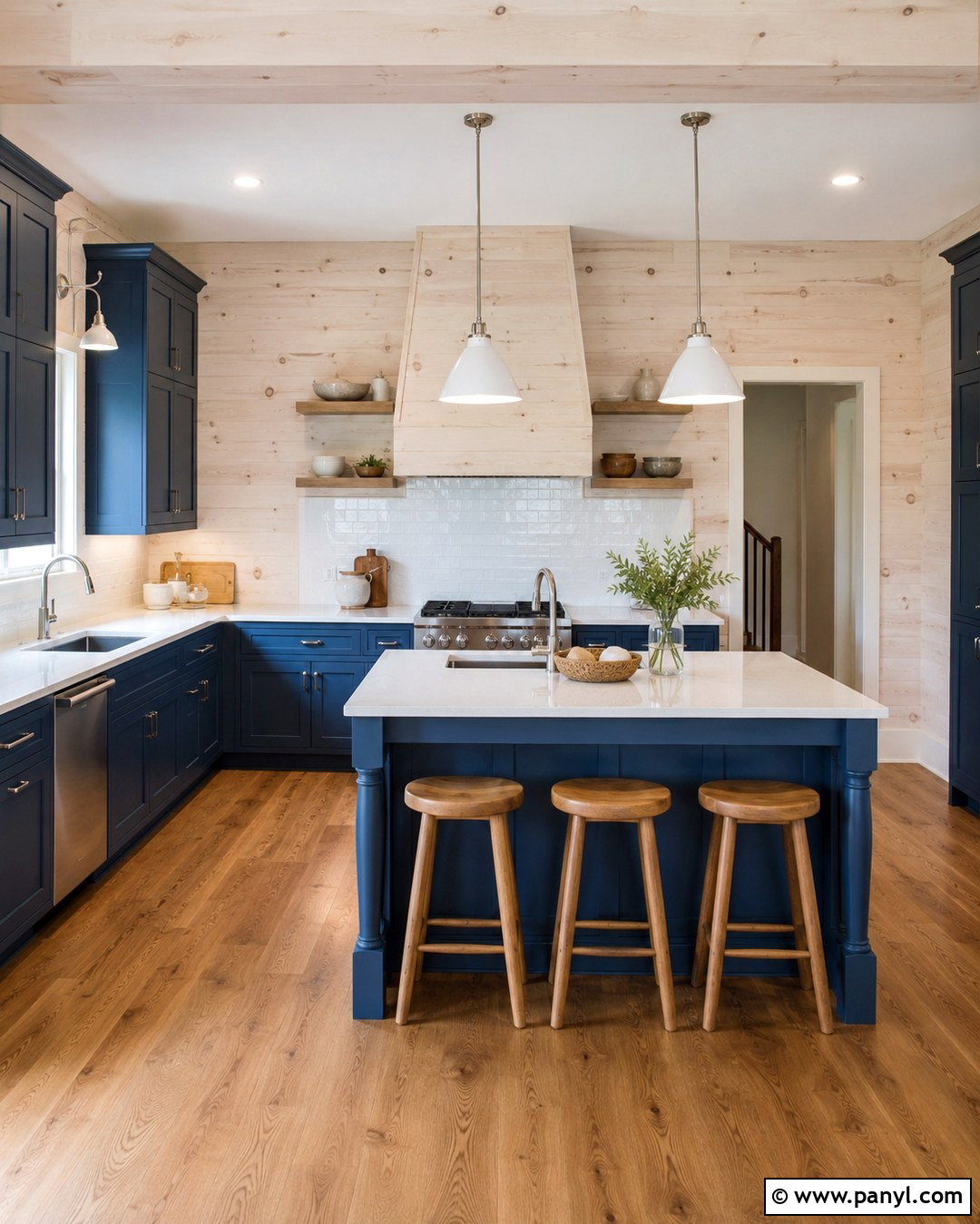
Whitewashing knotty pine walls softens their orange cast while retaining visible knots and grain. Pair the lighter walls with deep blue cabinets for a crisp, high-contrast kitchen that still contains natural texture. Use a translucent wash rather than opaque paint if preserving the pine character is important. Add pale quartz counters, a white ceramic backsplash, and brushed nickel hardware. Medium oak flooring introduces gentle warmth without recreating the strong amber tone of the original walls. A matching blue island can include natural wood stools and simple white pendants. Keep window coverings minimal to maximize daylight across the whitewashed boards. This treatment is especially useful when wall-to-wall pine makes a smaller kitchen feel enclosed, yet completely removing or painting the wood is not the preferred solution. ()
18. Knotty Pine Kitchen With Natural Stone Colors
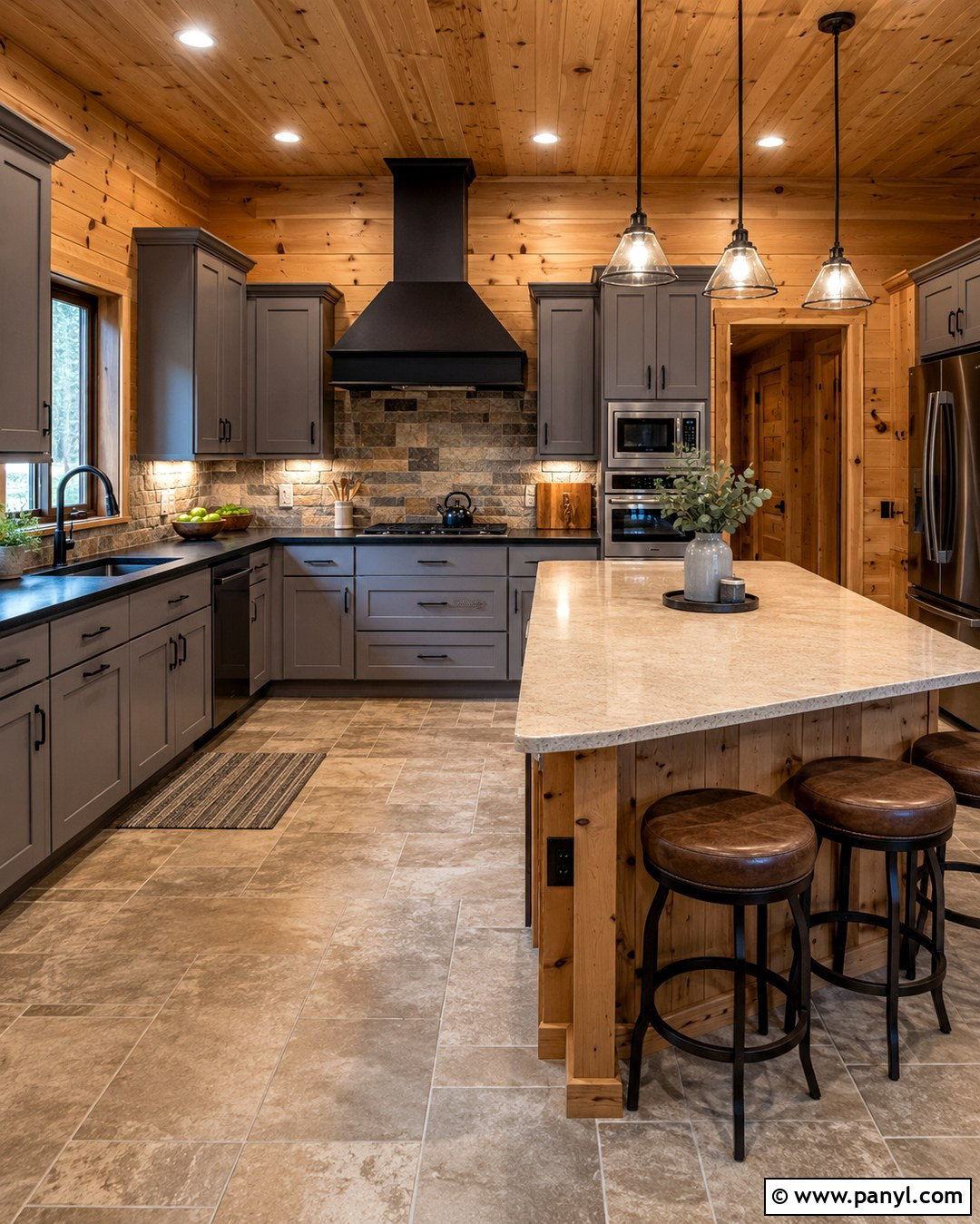
A stone-inspired palette strengthens the natural character of knotty pine without turning the kitchen into a themed cabin. Choose warm gray cabinets, honed black granite counters, and a backsplash made from irregular limestone or slate in cream, charcoal, and subtle rust tones. These materials create depth while relating to the knots and color variation in the wood. Use dark bronze hardware and a simple black range hood for definition. Large-format beige-gray floor tile will keep grout lines to a minimum and make the room feel broader. Add an island with a smooth cream countertop to break up the darker surfaces. Restrained lighting, plain linen shades, and minimal decor complete the design. The result feels rugged but polished, practical, and appropriate for an everyday family kitchen. ()
19. Knotty Pine Kitchen With Burgundy And Warm White
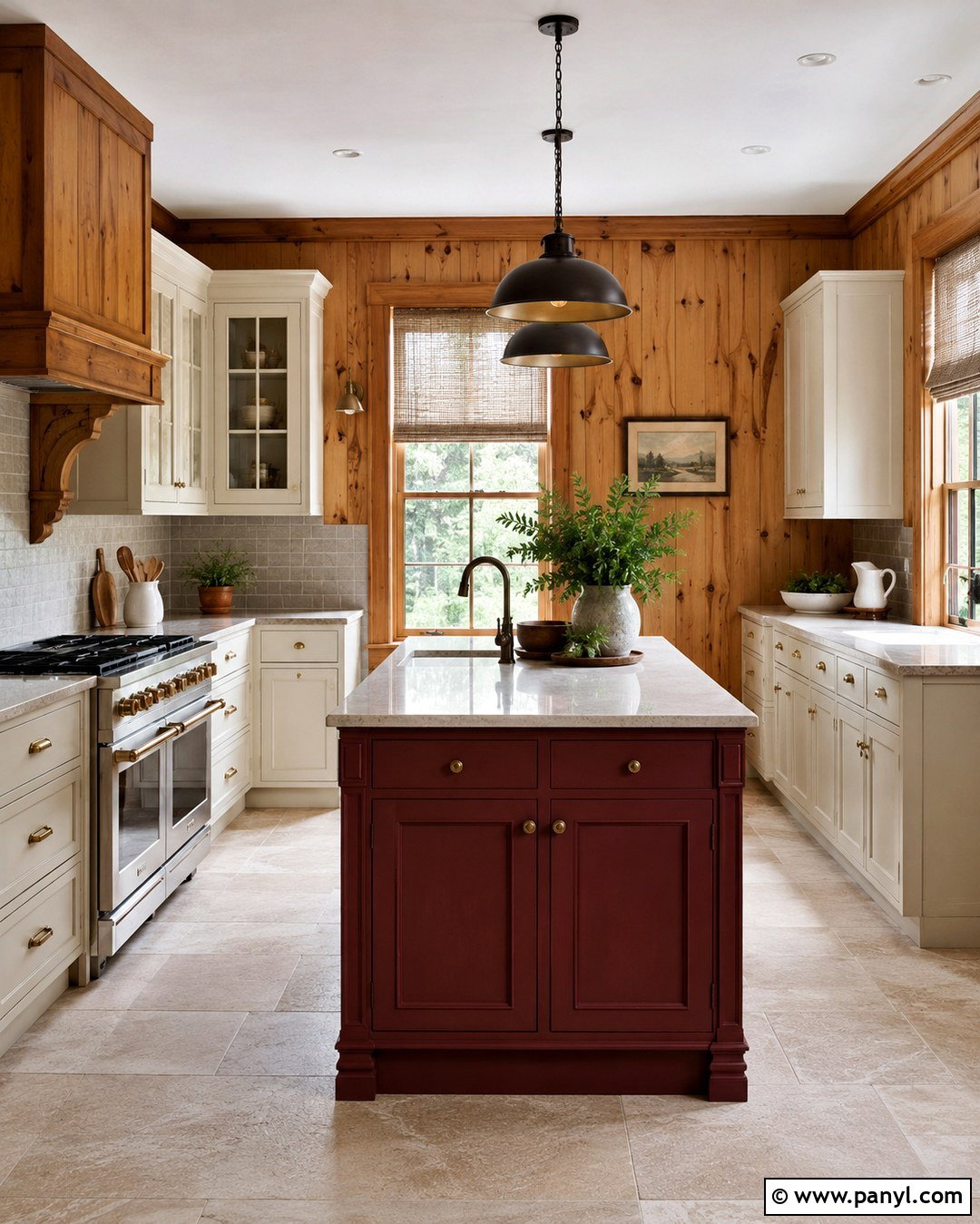
Burgundy can work beside knotty pine when it appears as one controlled feature rather than across every cabinet. Paint the island or a tall pantry bank a deep, muted red with brown undertones. Keep the remaining cabinets warm white and add light cream quartz counters throughout. A pale taupe backsplash provides a quiet transition between the burgundy, white cabinetry, and golden walls. Antique brass hardware complements the traditional palette, while dark bronze lighting prevents it from becoming overly formal. Use neutral stone flooring and natural linen window treatments to calm the stronger colors. Avoid orange-red accessories because they may exaggerate the pine’s warmth. This carefully balanced kitchen feels distinctive and heritage-inspired, with the burgundy adding depth while warm white surfaces preserve brightness.
20. Knotty Pine Kitchen With Black Cabinets And White Counters
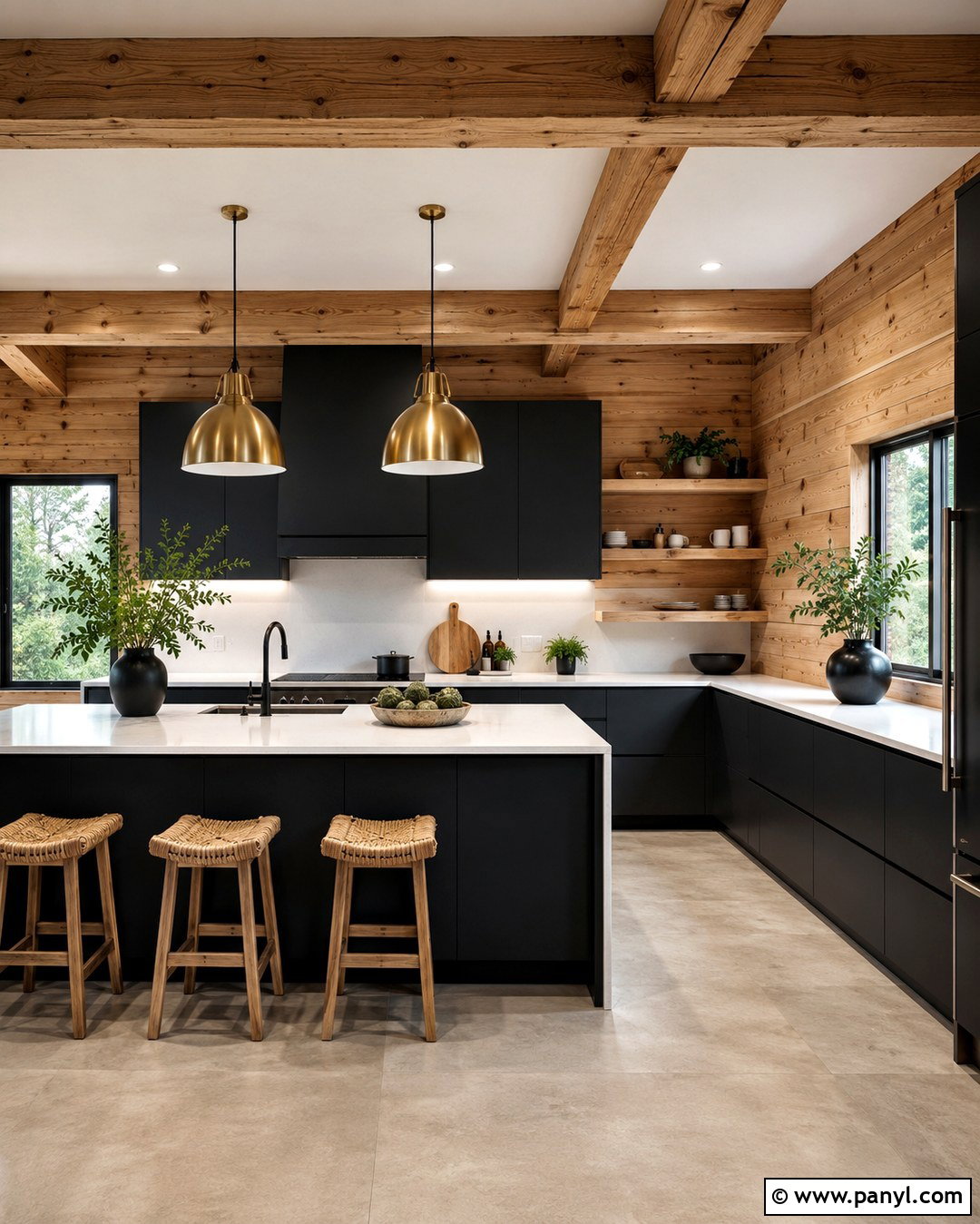
Black cabinets deliver a clean contemporary contrast against knotty pine walls, particularly when the room has plenty of daylight. Choose simple slab or narrow shaker fronts in a soft matte finish. Bright white quartz counters create a defined horizontal break, while a warm white backsplash prevents the contrast from becoming too severe. Use black hardware for a seamless cabinet appearance and add brushed brass pendants for a controlled touch of warmth. Pale concrete-look flooring balances the visual weight of the cabinetry and avoids introducing more wood grain. Keep open shelving limited and match it to the existing pine. White dishes, woven stools, and a few green plants complete the composition. The overall kitchen feels modern and organized while preserving the walls as its defining natural feature.
Conclusion:
Successful **20 Knotty Pine Walls Color Schemes Kitchen Ideas** begin by treating the wood as an active color rather than a plain neutral. Warm whites and taupes create a soft transition, while sage, blue, teal, and charcoal provide clearer contrast. Dark cabinets can modernize the room, provided counters, floors, and lighting keep the overall design balanced. Before committing, compare large paint samples against the pine during morning, afternoon, and evening light. Also check how each shade relates to the floor, countertop, backsplash, and wood finish. By limiting extra patterns and repeating a few colors across the room, you can create a cohesive kitchen that celebrates knotty pine without allowing it to feel visually heavy or outdated.

Related Ideas and Inspiration:
Leave a Reply