
Blue can make a bathroom feel crisp, calming, dramatic, or cheerful, depending on the shades and materials around it. Today’s most appealing blue bathrooms move beyond predictable coastal decor. They pair navy with warm wood, powder blue with marble, teal with terracotta, and denim tones with soft neutrals. Blue also works beautifully through painted cabinetry, patterned wallpaper, glossy tile, or a full color-drenched treatment. () The key is creating balance with thoughtful lighting, durable finishes, and accents that support the room’s overall mood. Whether you are updating a powder room or remodeling a primary bath, every scheme below offers a complete, practical look. Use these combinations as your guide to 20 bathroom color schemes blue ideas.

1. Navy Blue And White Bathroom
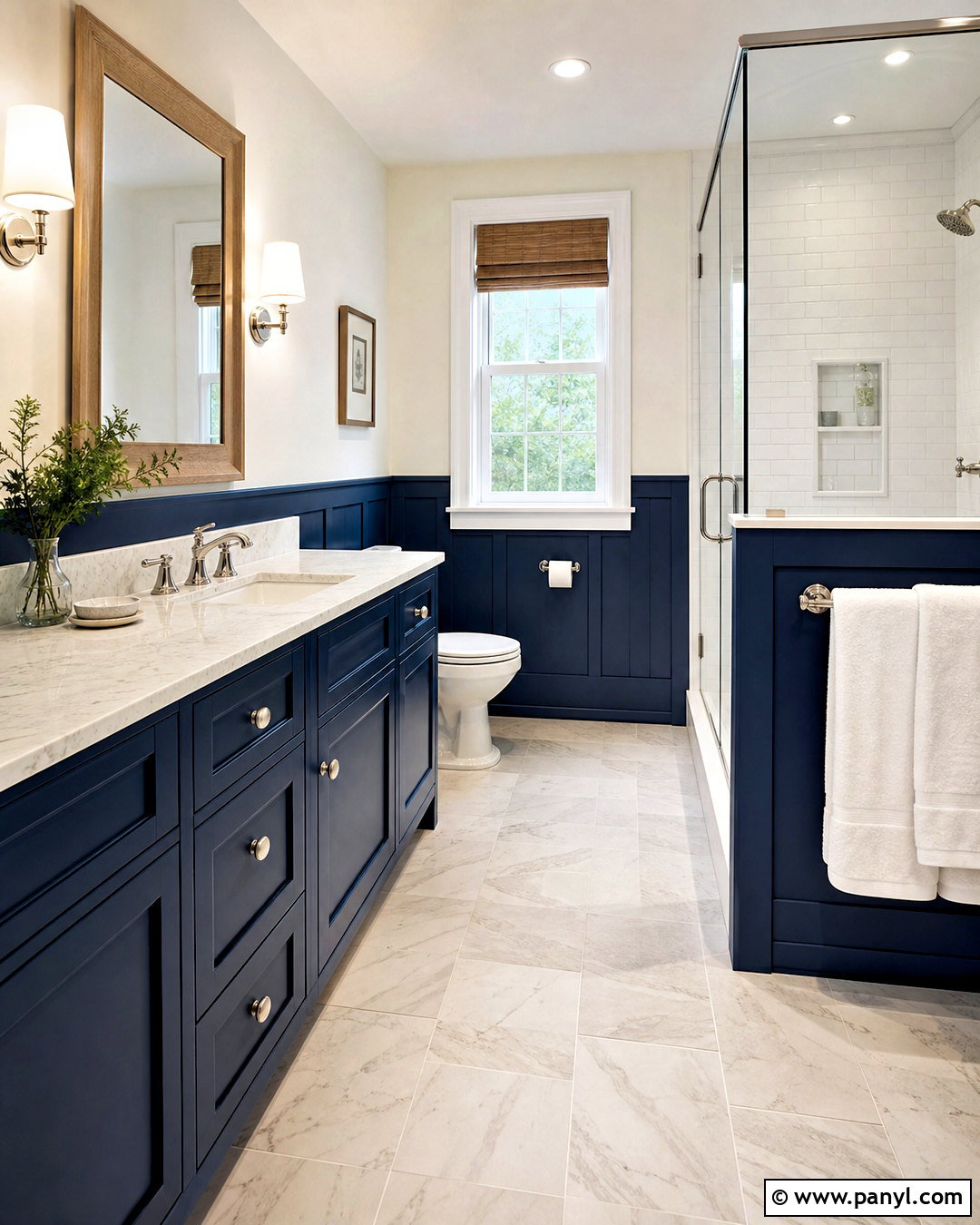
Navy blue and white create a clean bathroom with strong contrast and timeless character. Use navy on the vanity and lower wall paneling, then keep the upper walls warm white to prevent the room from feeling heavy. White marble-look countertops and large-format shower tiles add brightness without making the design too plain. Choose polished nickel faucets for a classic finish, or brushed brass for extra warmth. A white oak-framed mirror can soften the formal palette. Continue navy through a narrow border in the floor tile, towels, or simple artwork. Good overhead lighting is important, especially in a windowless bathroom. This complete scheme works particularly well in traditional, transitional, and updated coastal homes.
2. Powder Blue And Warm White Bathroom
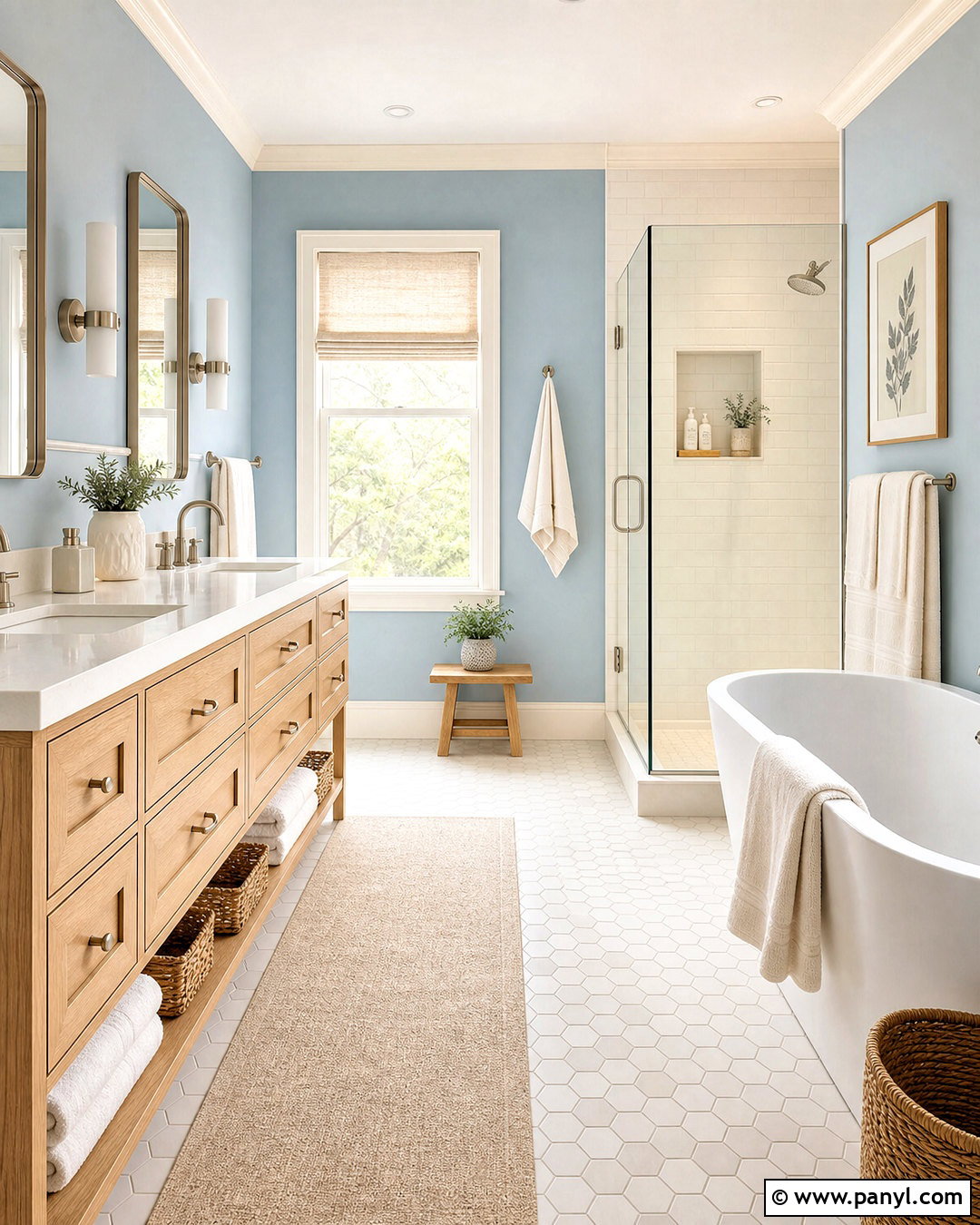
Soft powder blue gives a bathroom an airy feeling without looking cold when it is balanced with warm white. Paint the walls powder blue and use creamy white for the ceiling, trim, shower tile, and fixtures. A light oak vanity grounds the pale palette and introduces natural texture. Select a white quartz countertop with subtle beige veining rather than sharp gray markings. Woven baskets, ivory towels, and a small linen Roman shade continue the relaxed look. Brushed nickel hardware keeps everything light and understated. For the floor, try warm white porcelain tile in a small hexagon or basketweave pattern. This soothing combination is especially effective in small bathrooms because the gentle contrast helps the space feel open and connected.
3. Blue And Gray Bathroom
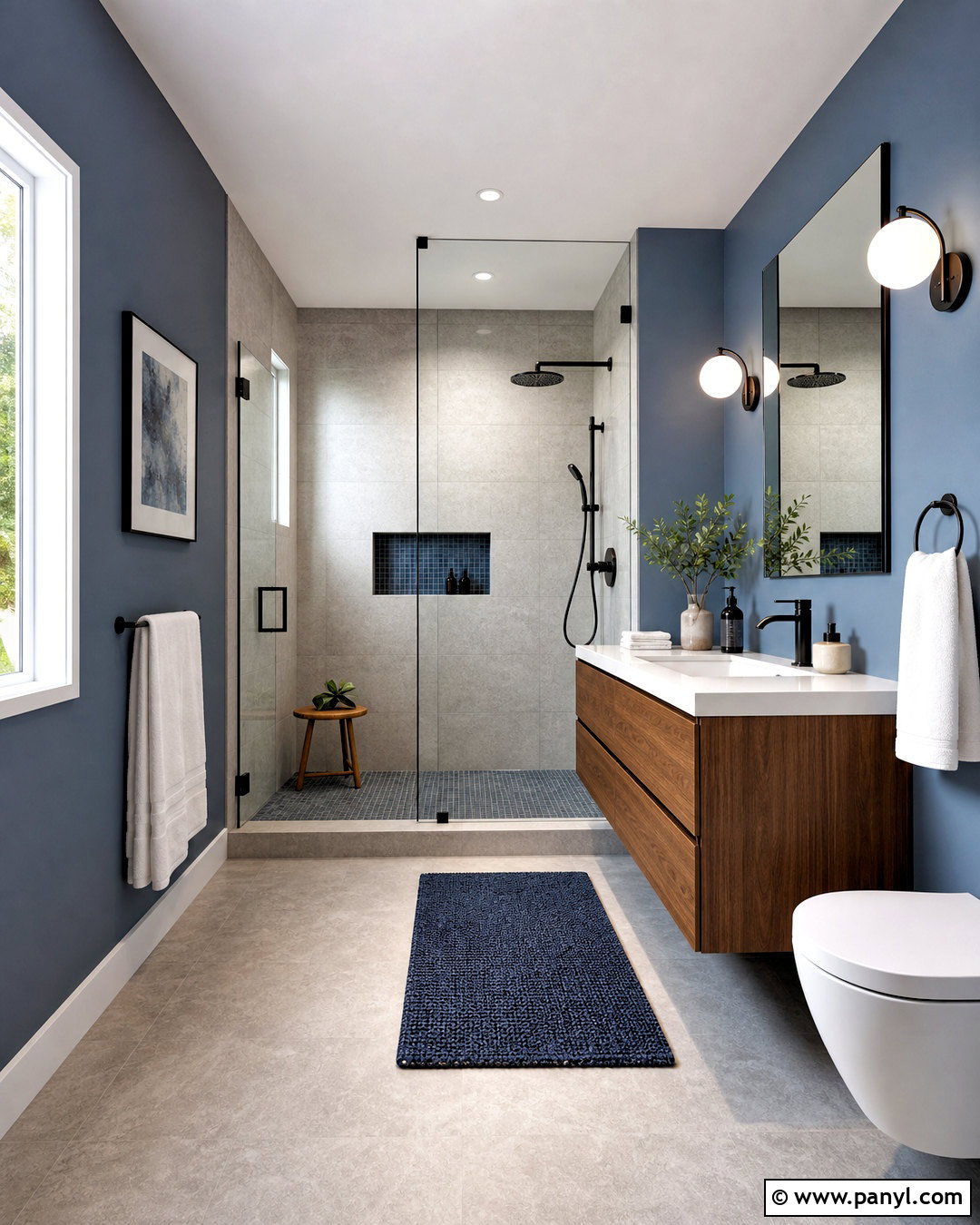
What if you want a blue bathroom that feels quiet and modern rather than colorful? Pair muted denim blue with a soft, warm gray. Use blue-gray wall paint, medium gray porcelain floor tile, and a floating walnut vanity to add visual warmth. The shower can combine large pale gray tiles with a denim blue mosaic niche. Choose matte black fixtures for definition, but use them sparingly so the room does not become too industrial. A frameless mirror and simple globe sconces maintain the streamlined design. Finish with white towels, charcoal accessories, and one textured bath mat. This layered scheme works best when the blue and gray share similar muted undertones, creating a smooth transition between surfaces.
4. Teal Blue And Terracotta Bathroom
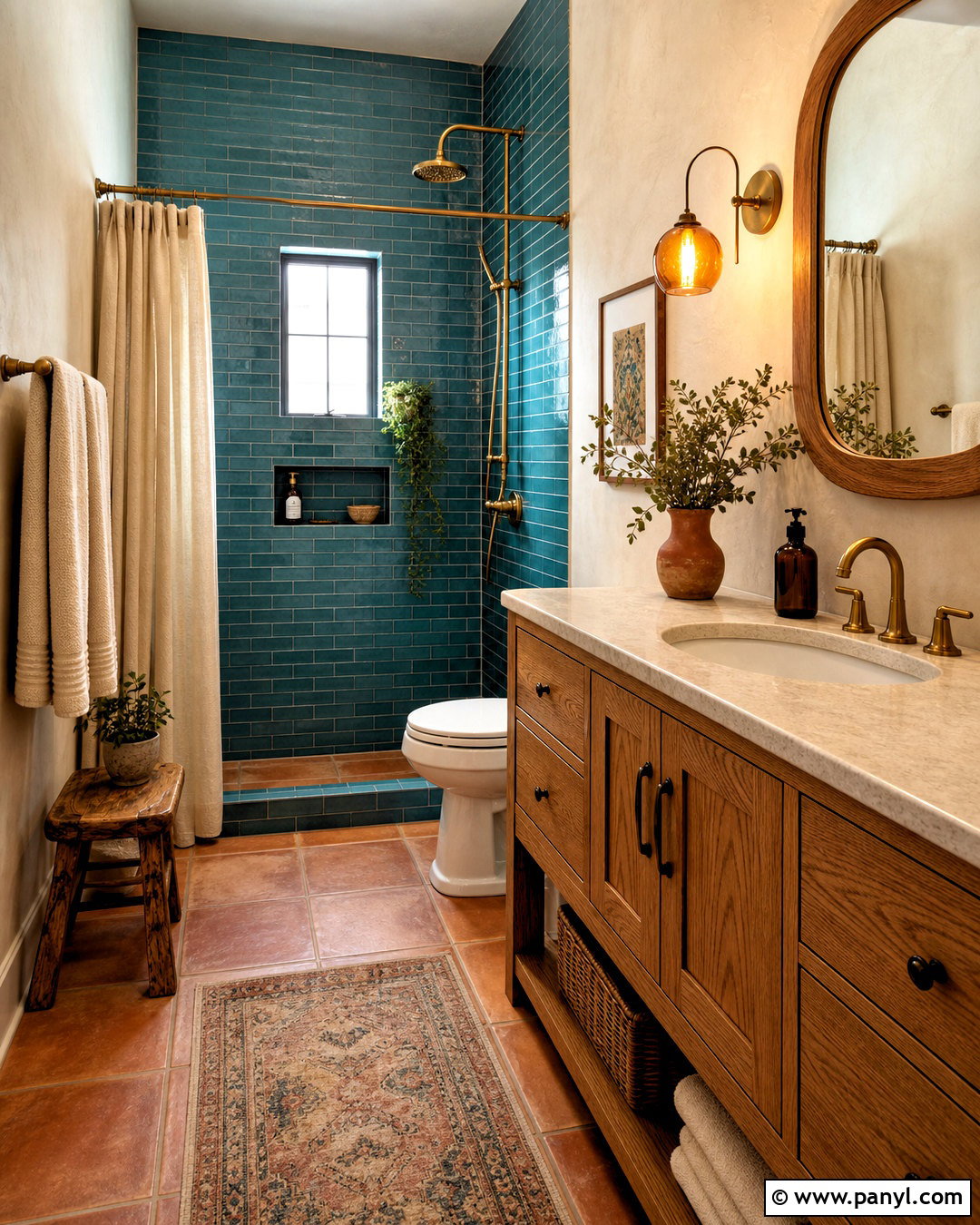
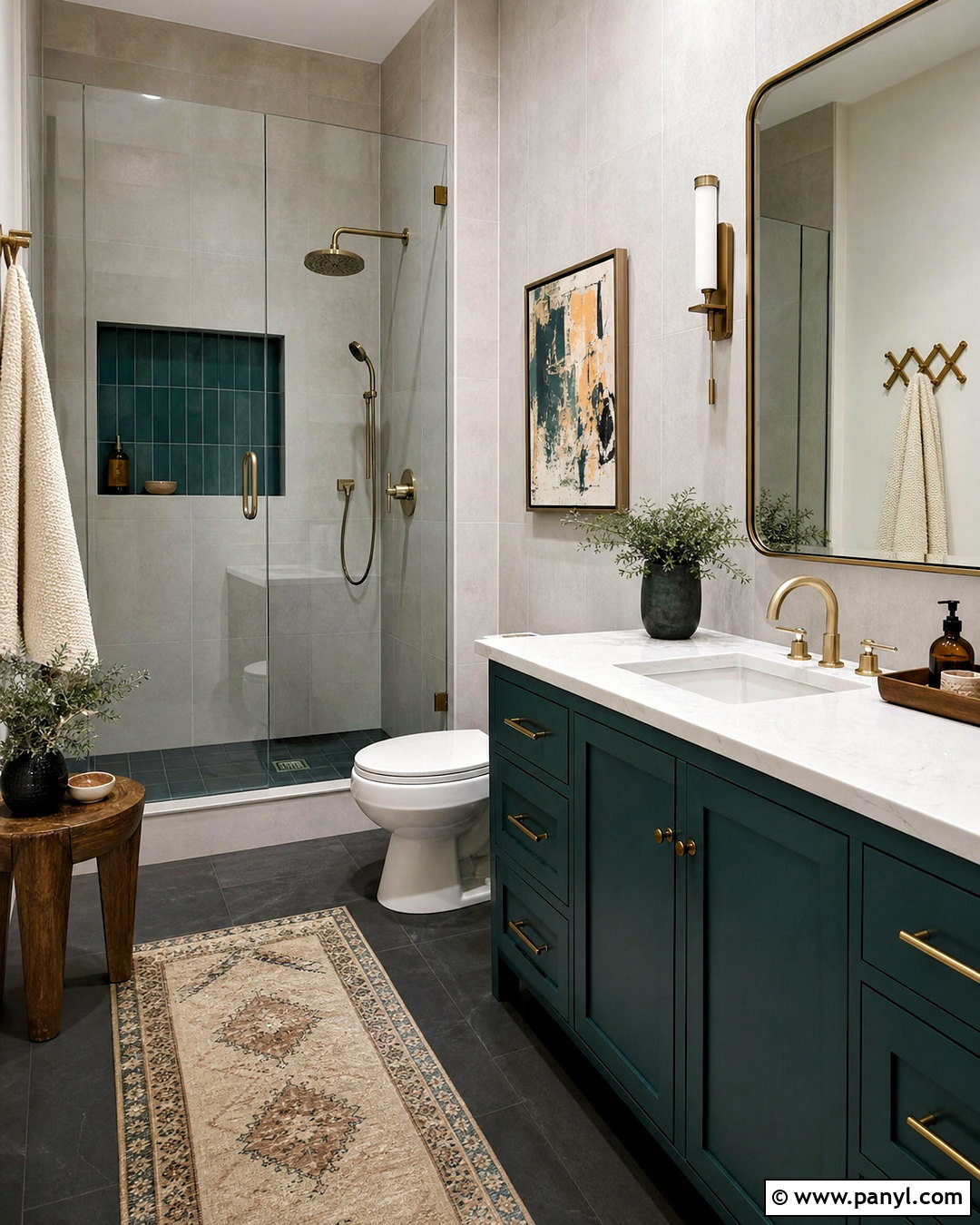
Rich teal blue and earthy terracotta make a bathroom feel warm, expressive, and grounded. Cover the shower walls with glossy teal subway tile, allowing slight color variation to create movement. Use terracotta-look porcelain on the floor for the appearance of handmade clay with easier maintenance. A natural oak vanity and off-white plaster-style walls give the saturated colors room to breathe. Add aged brass faucets, amber glass sconces, and a rounded wood mirror to reinforce the warmth. Ivory towels and a cream shower curtain offer necessary visual relief. Keep decorative accessories simple because the tile and flooring already provide plenty of personality. This complete palette suits Mediterranean, eclectic, and relaxed modern interiors without becoming overly themed.
5. Sky Blue And Sand Bathroom
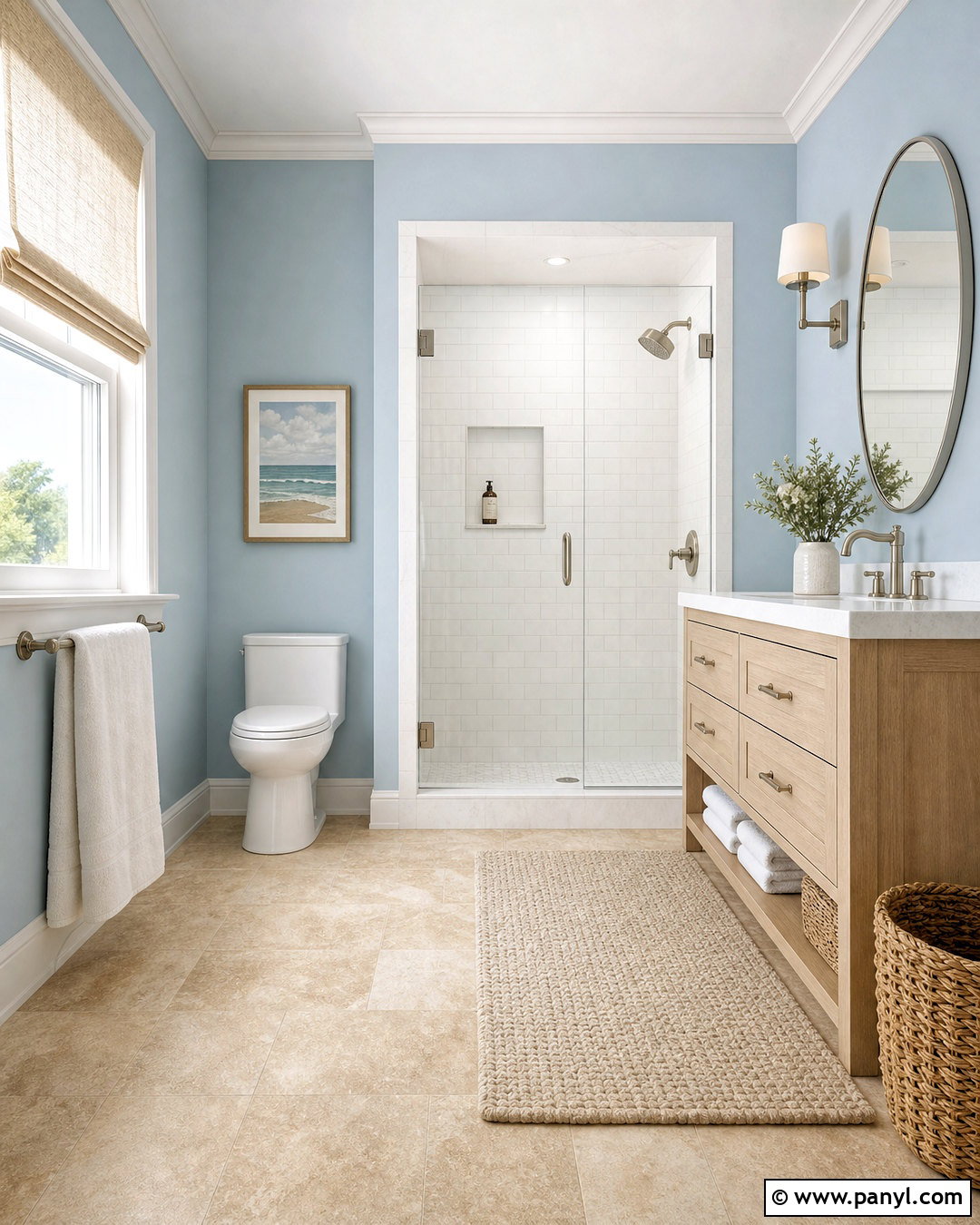
A sky blue and sand bathroom captures a light coastal mood without relying on obvious nautical decorations. Paint the walls a clear sky blue, then introduce sandy beige through limestone-look flooring and a pale wood vanity. Use crisp white tile inside the shower to keep the bathing area bright and easy to coordinate. Brushed nickel fixtures provide a clean finish that does not compete with the gentle colors. Add a woven laundry basket, natural linen window treatment, and oatmeal-colored bath mat for softness. A frameless oval mirror makes the design feel current. Avoid filling the room with shells or seaside signs. Instead, let the blue, beige, white, and organic textures establish a subtle connection to the coast.
6. Cobalt Blue And Bright White Bathroom
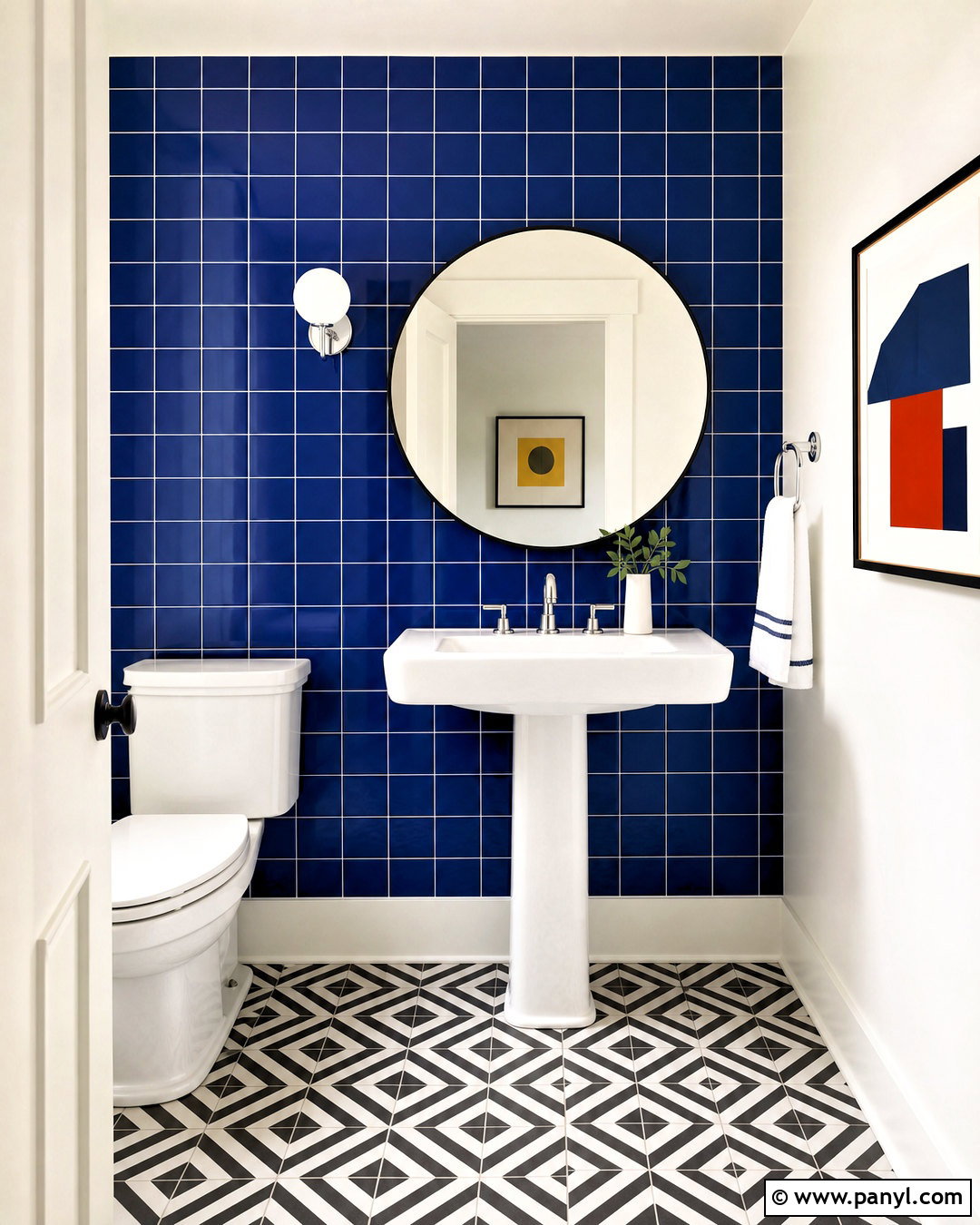
Cobalt blue delivers energy and works particularly well in a compact powder room. Create a bold focal point with cobalt blue square wall tiles behind a streamlined white pedestal sink. Paint the remaining walls bright white and use white grout to emphasize the tile grid. Black-and-white geometric flooring adds another graphic layer without introducing competing colors. Choose polished chrome fixtures because their reflective surfaces suit the crisp palette. A round mirror, compact globe sconce, and one piece of colorful framed art complete the room. Keep towels and storage containers solid white. Since cobalt is highly saturated, limit it to one main surface or repeat it only in small accessories. The finished bathroom should feel confident, fresh, and carefully edited.
7. Blue Green And White Bathroom
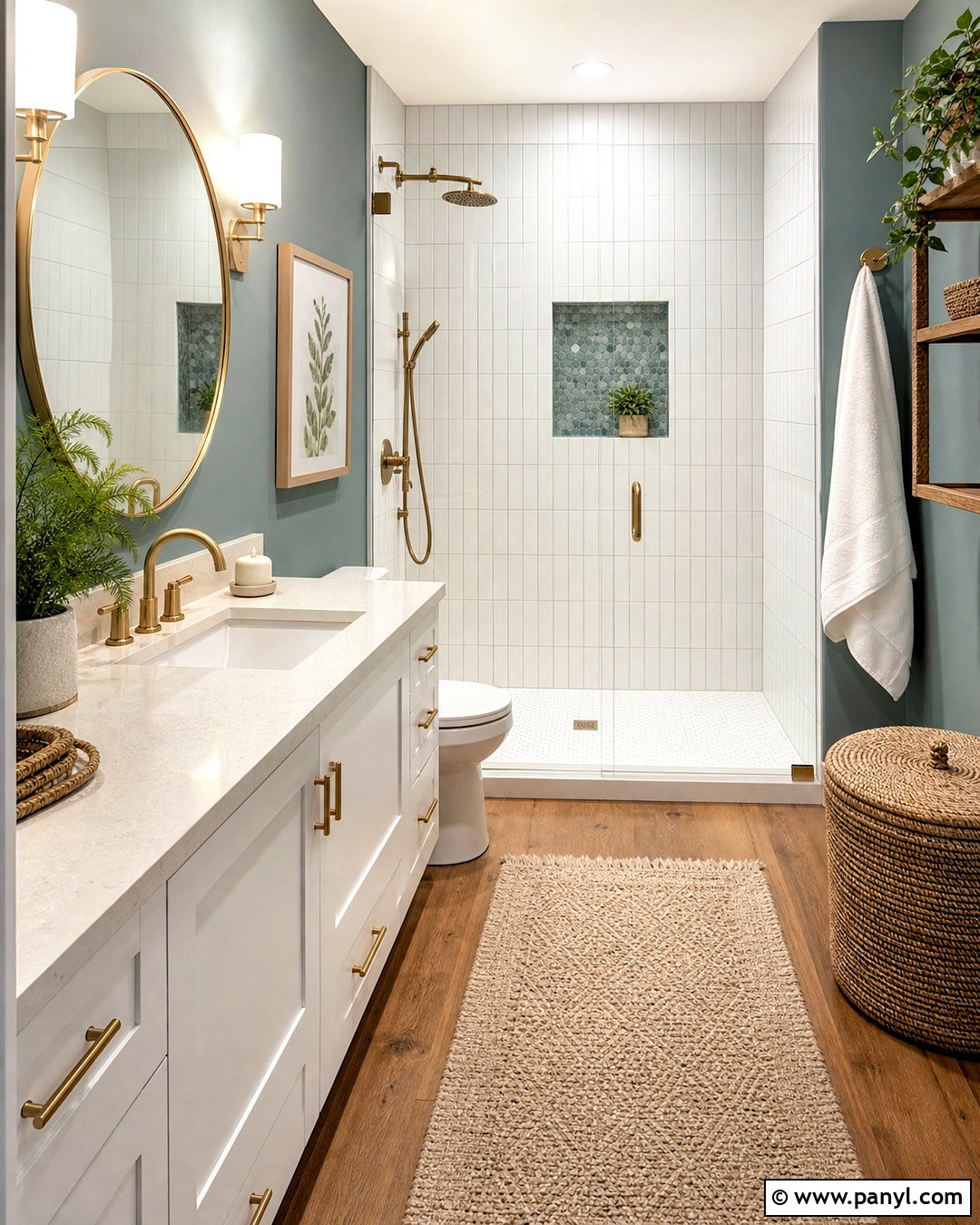
Blue-green shades can bring the calming qualities of both water and foliage into a bathroom. Use muted blue-green paint on the walls and a white vanity with a pale quartz countertop. Line the shower with vertically stacked white tiles, adding a narrow blue-green mosaic niche for continuity. Warm oak flooring or wood-look porcelain prevents the palette from becoming too cool. Pair the cabinetry with brushed brass knobs and a brass-framed mirror. White towels, a natural fiber basket, and leafy plants reinforce the fresh atmosphere. If the room lacks natural light, select a lighter blue-green with a gentle warm undertone. This balanced scheme offers color without overwhelming the room and complements modern farmhouse, transitional, and nature-inspired interiors.
8. Midnight Blue And Brass Bathroom
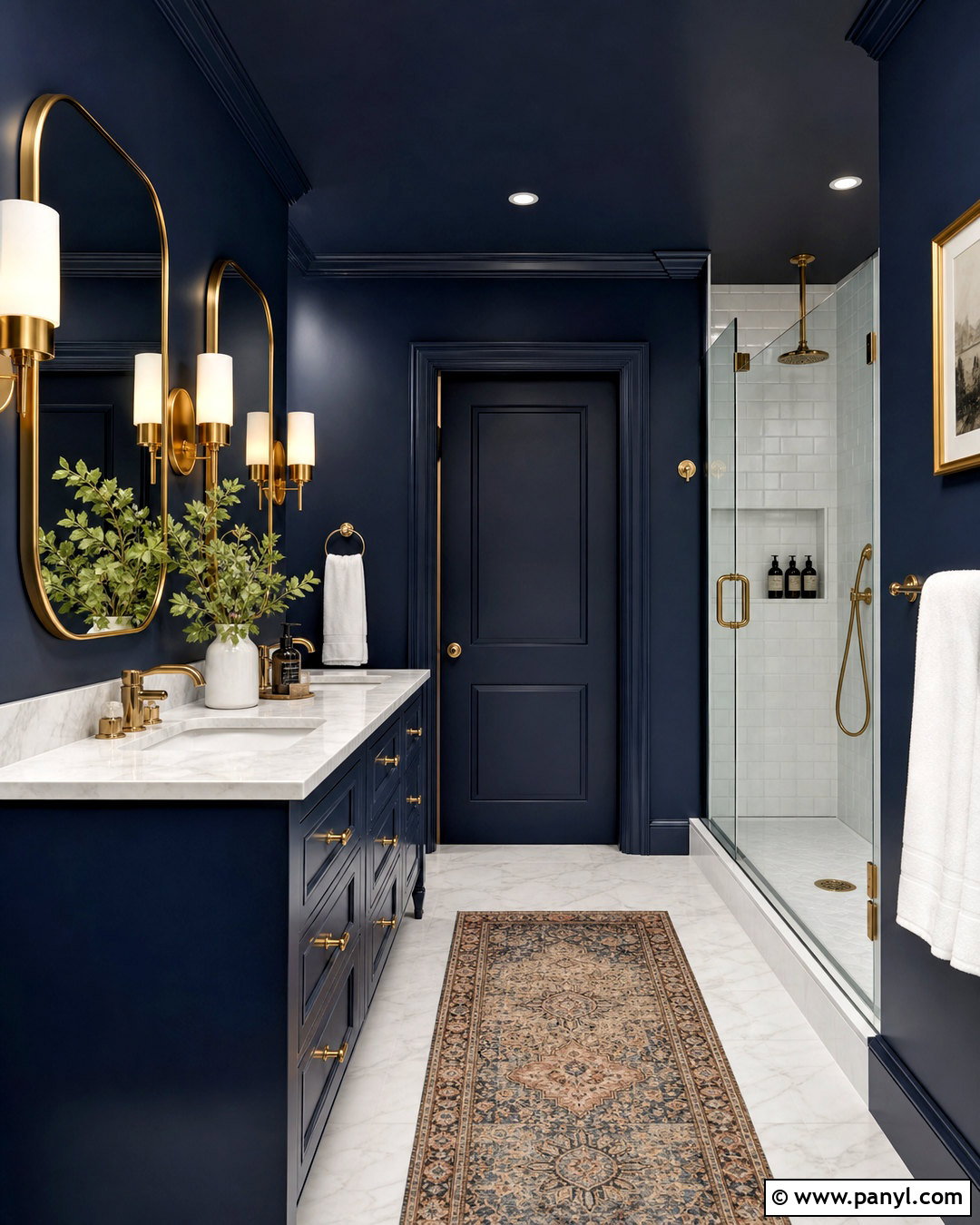
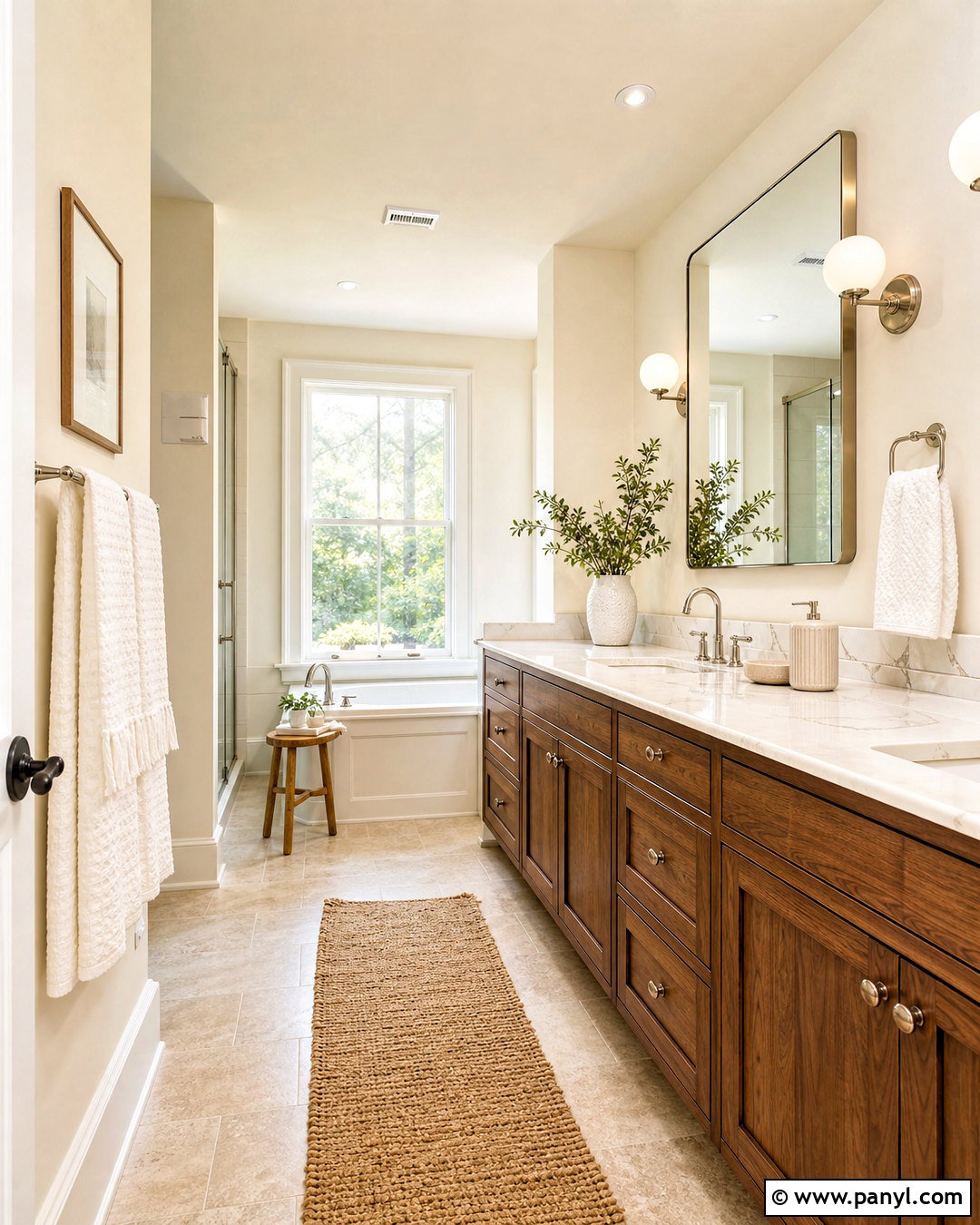
For a dramatic bathroom, surround warm metallic accents with deep midnight blue. Paint the walls and ceiling in the same moisture-resistant midnight finish to create a seamless, enveloping effect. A white marble-topped vanity provides a bright break in the dark palette, while brass faucets, cabinet pulls, sconces, and mirror edging bring warmth. Use pale marble-look flooring to reflect light throughout the room. Inside the shower, combine white tile with midnight blue grout or a dark blue niche. Layer the lighting with ceiling fixtures and sconces instead of relying on one source. Plush white towels and a small vintage-style rug soften the contrast. The finished room feels luxurious, intimate, and polished without requiring an oversized floor plan.
9. Dusty Blue And Natural Wood Bathroom
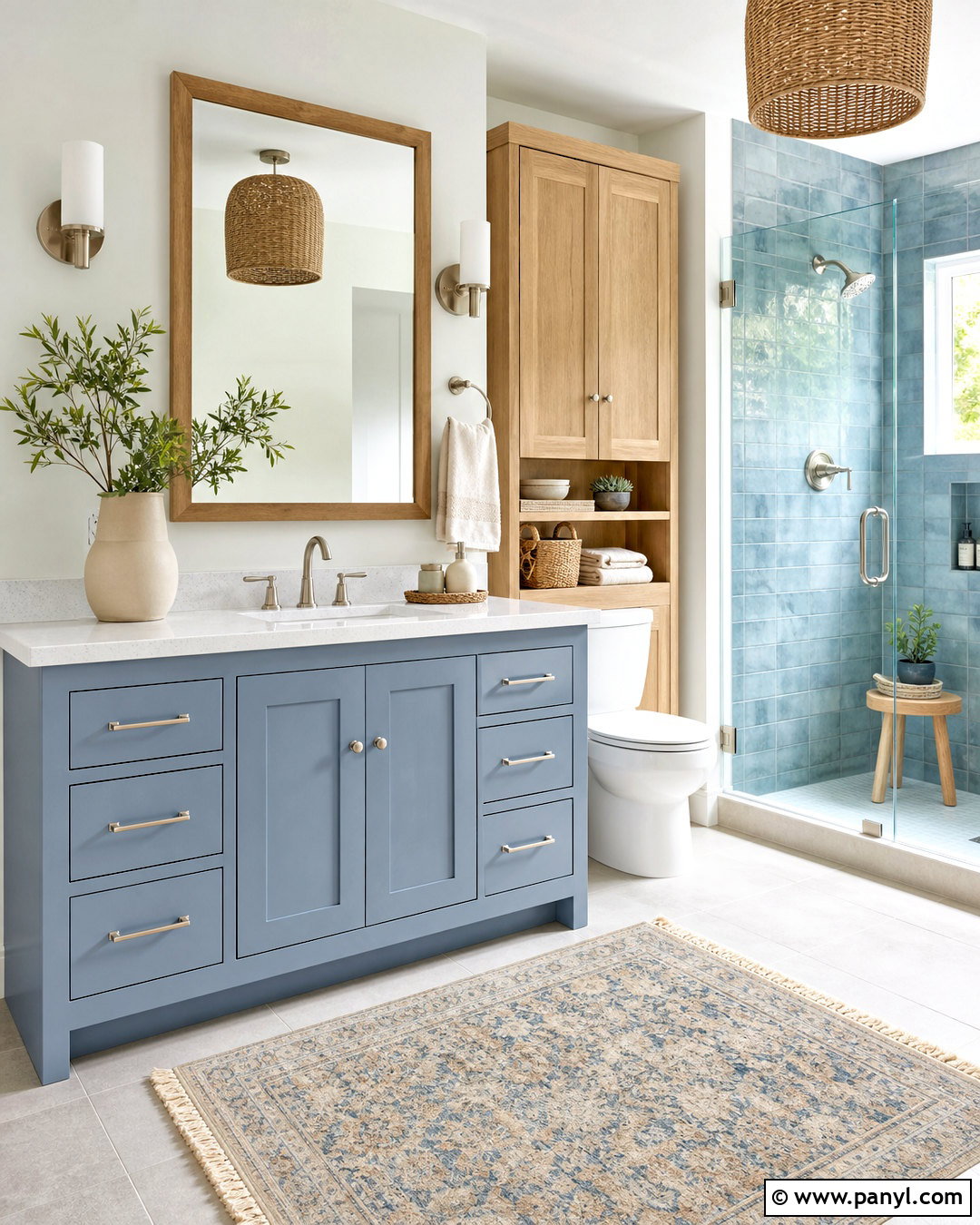
Dusty blue looks relaxed and livable when paired with visible wood grain. Paint a Shaker-style vanity dusty blue and complement it with a white quartz countertop. Use pale oak for a tall storage cabinet, mirror frame, and open shelf, creating a warm connection across the room. The walls can remain soft white, while blue handmade-look tiles define the tub or shower surround. Choose light greige floor tile to bridge the cool blue and warm wood tones. Brushed nickel hardware keeps the design understated, although muted brass also works well. Add ivory towels, ceramic accessories, and a simple woven shade. This approachable combination fits family bathrooms because it feels fresh and colorful while remaining easy to update over time.
10. Blue And Blush Pink Bathroom
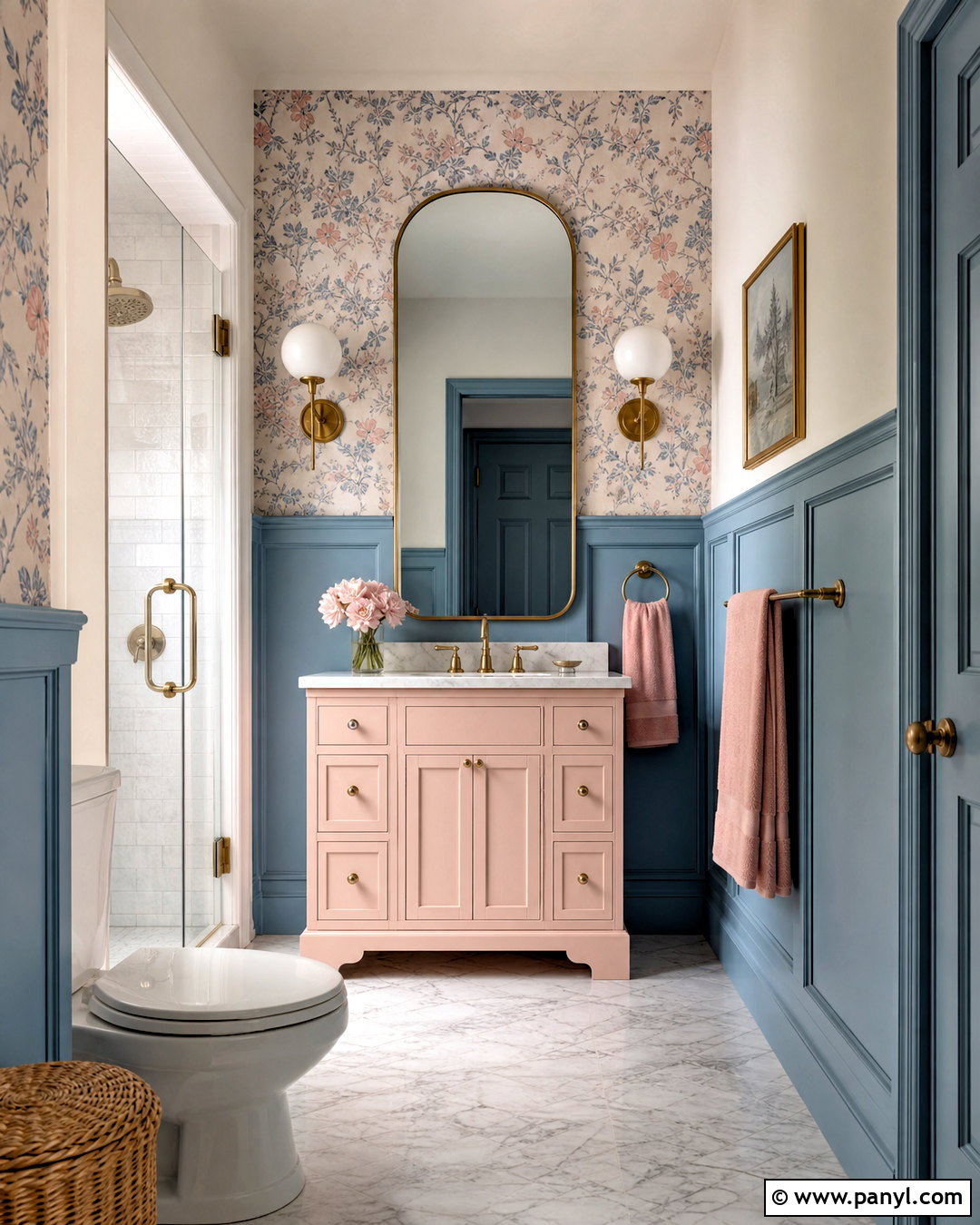
Blue and blush pink can feel sophisticated when both colors are slightly muted. Start with dusty blue wall paneling and soft white paint above it. Use a pale blush vanity or introduce pink through a patterned wallpaper containing blue, cream, and gentle rose tones. White marble-look flooring gives the palette a clean foundation. Brushed brass hardware adds warmth and helps the two colors feel intentional rather than playful. Select a simple white sink, curved mirror, and opal glass sconces to maintain a refined appearance. Towels should stay ivory, dusty blue, or muted rose. Avoid overly bright pink accessories. With restrained shades and classic fixtures, this complete color scheme works beautifully in powder rooms, guest bathrooms, and vintage-inspired homes.
11. Blue And Sage Green Bathroom
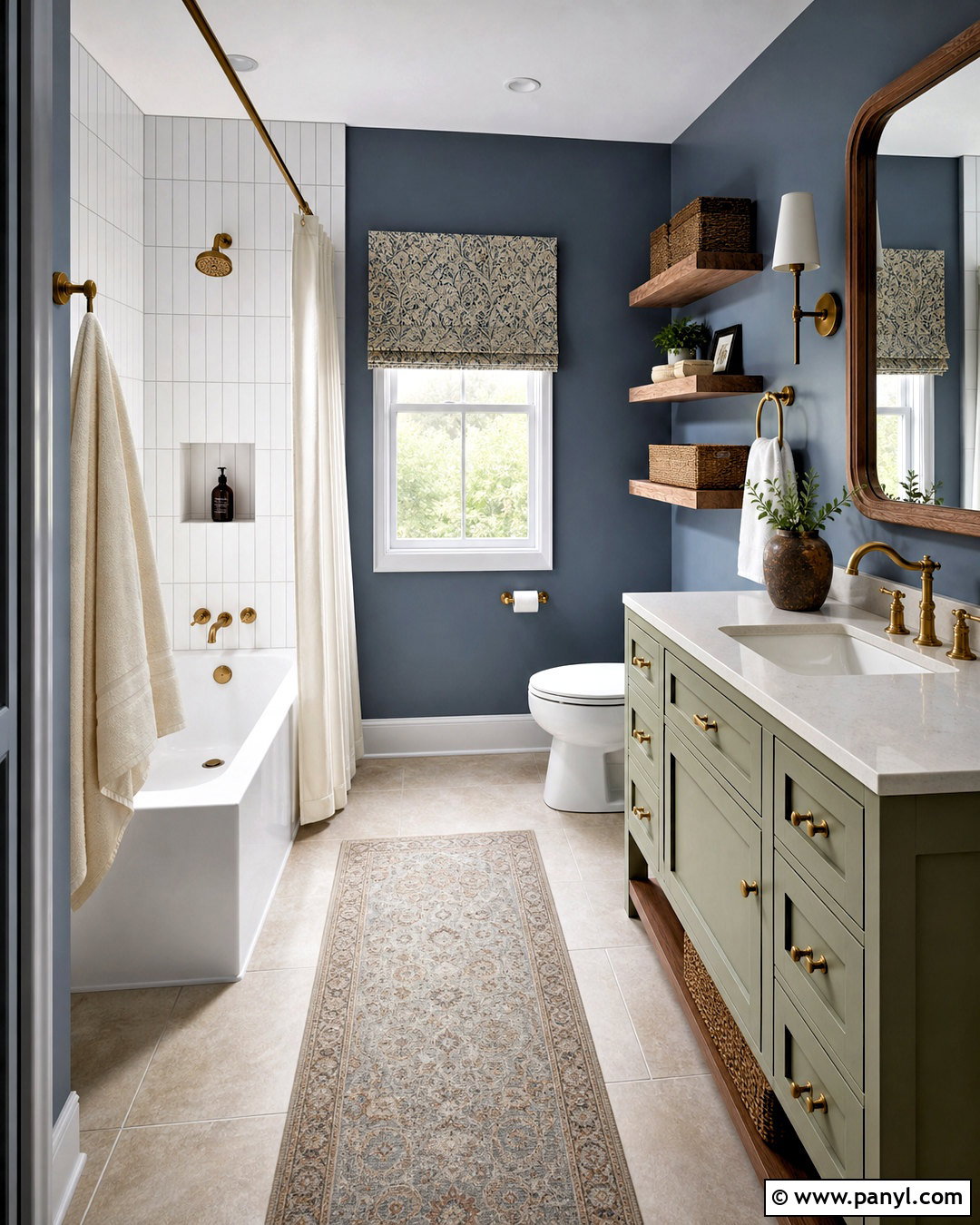
Muted blue and sage green create a layered bathroom inspired by natural landscapes. Use sage green on the vanity and soft slate blue across the upper walls. White vertical tiles around the tub provide separation between the two colors and prevent the design from feeling busy. Choose a warm beige stone-look floor to ground the cool palette. A walnut-framed mirror, wood shelves, and woven storage bring in organic texture. Antique brass faucets and knobs add a gentle aged finish. Repeat blue and green through a small patterned Roman shade or understated artwork. Because the colors sit close together visually, vary their depth enough to maintain contrast. The finished bathroom feels restorative, comfortable, and more distinctive than a simple neutral space.
12. Blue And Mustard Yellow Bathroom
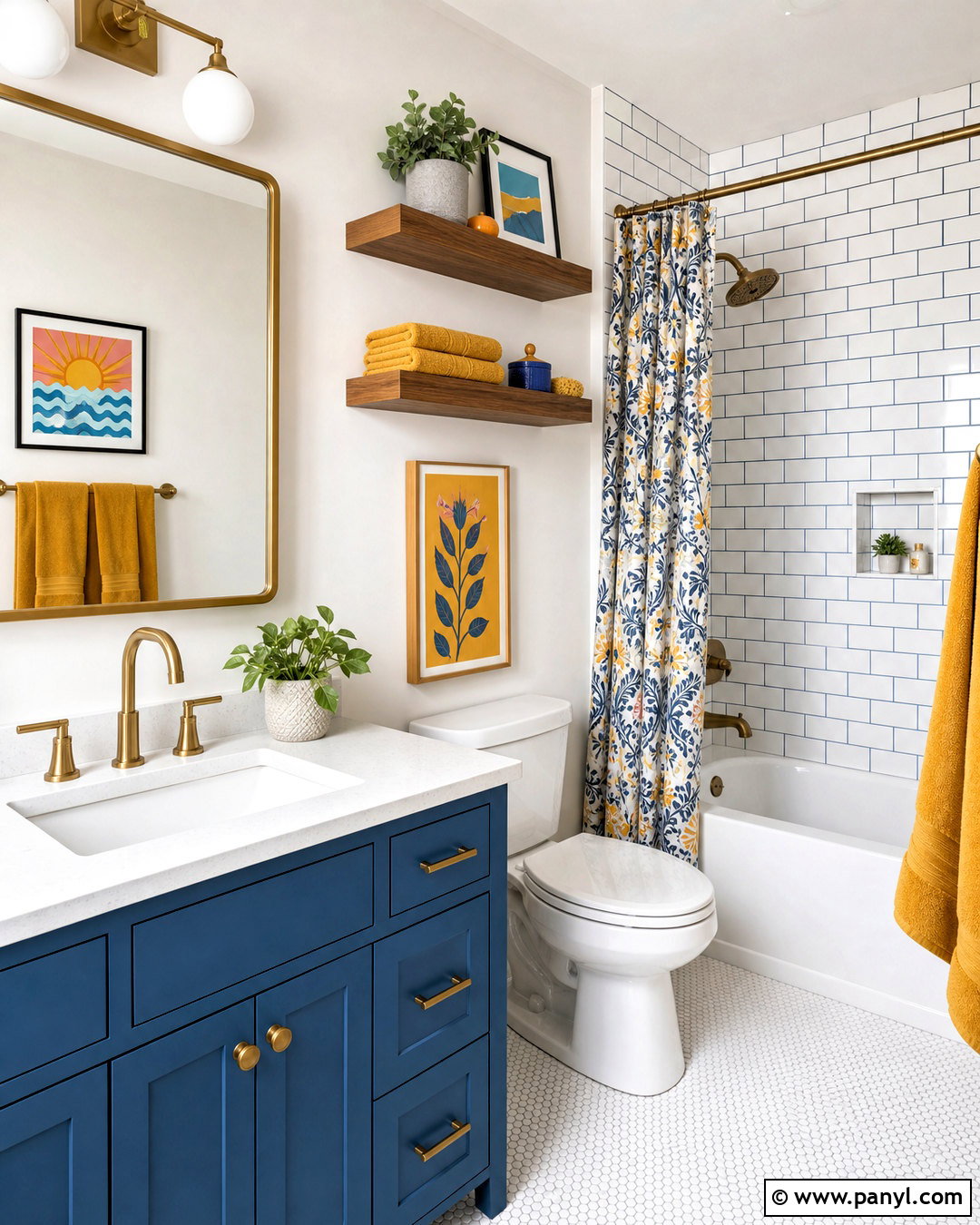
A touch of mustard yellow can brighten a blue bathroom while keeping the design warm and grown-up. Paint the vanity a medium ocean blue and use warm white across the walls. Introduce mustard through a patterned shower curtain, framed print, and one set of towels rather than covering a permanent surface. A white penny-tile floor with dark blue accents can connect the scheme. Choose walnut shelves and brushed brass fixtures to echo the yellow’s warmth. Inside the shower, use simple white subway tile with medium blue grout. Keep most accessories neutral so the contrast remains controlled. This colorful bathroom works especially well for children, guests, or anyone who wants an upbeat look that can be refreshed easily.
13. Blue And Black Bathroom
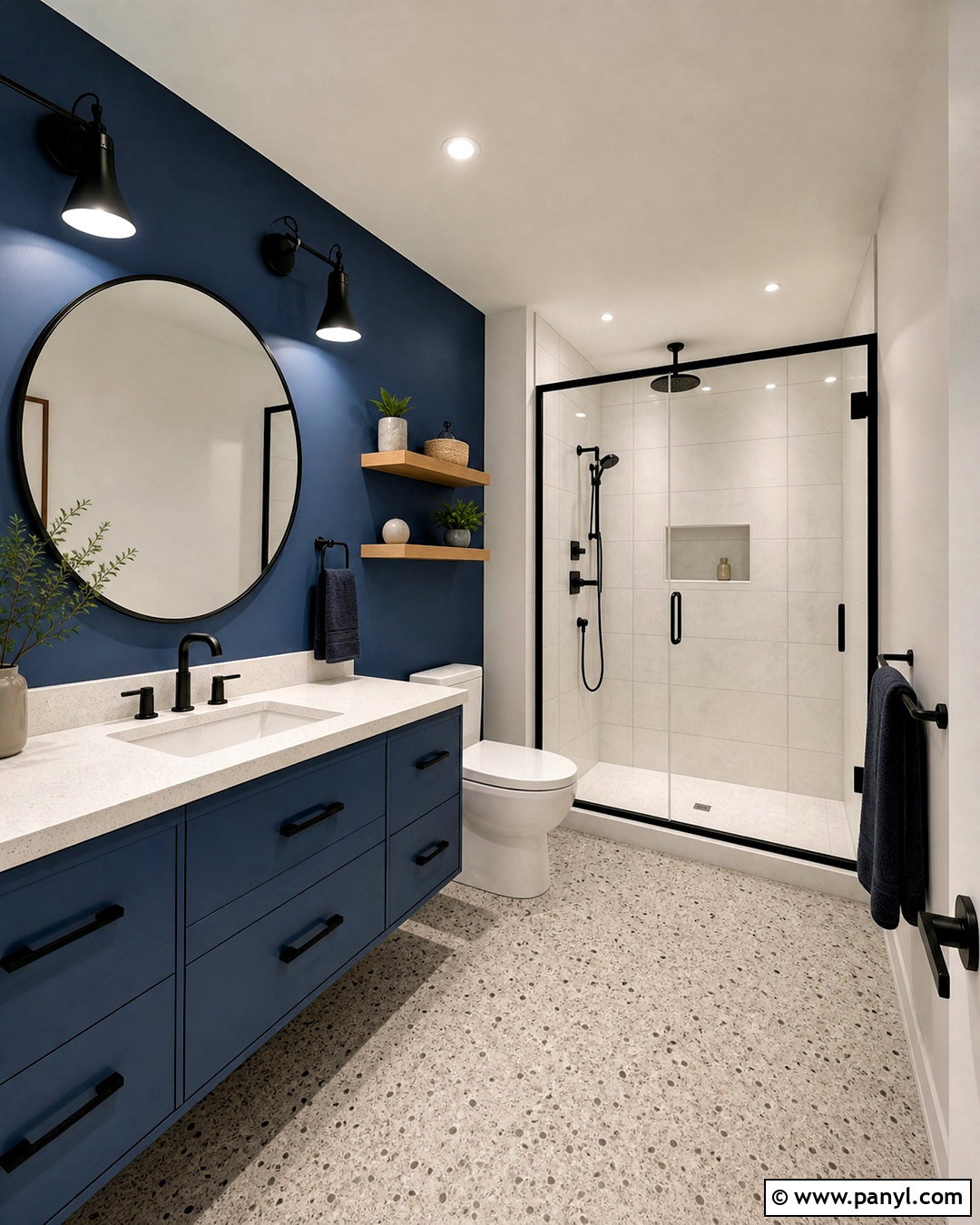
Blue and black create a sharp contemporary bathroom when lighter surfaces are included for balance. Use a medium steel blue on the vanity and one accent wall, then add matte black faucets, shower framing, cabinet hardware, and lighting. Large white shower tiles and a white quartz countertop prevent the dark accents from dominating. For the floor, choose pale gray terrazzo with small black and blue fragments. A frameless rectangular mirror keeps the room streamlined, while oak shelving introduces a little warmth. Repeat black in thin lines rather than large blocks. Soft gray towels and clear glass accessories complete the restrained look. This scheme delivers structure and depth, making it suitable for modern bathrooms with simple cabinetry and uncluttered layouts.
14. Aqua Blue And Coral Bathroom
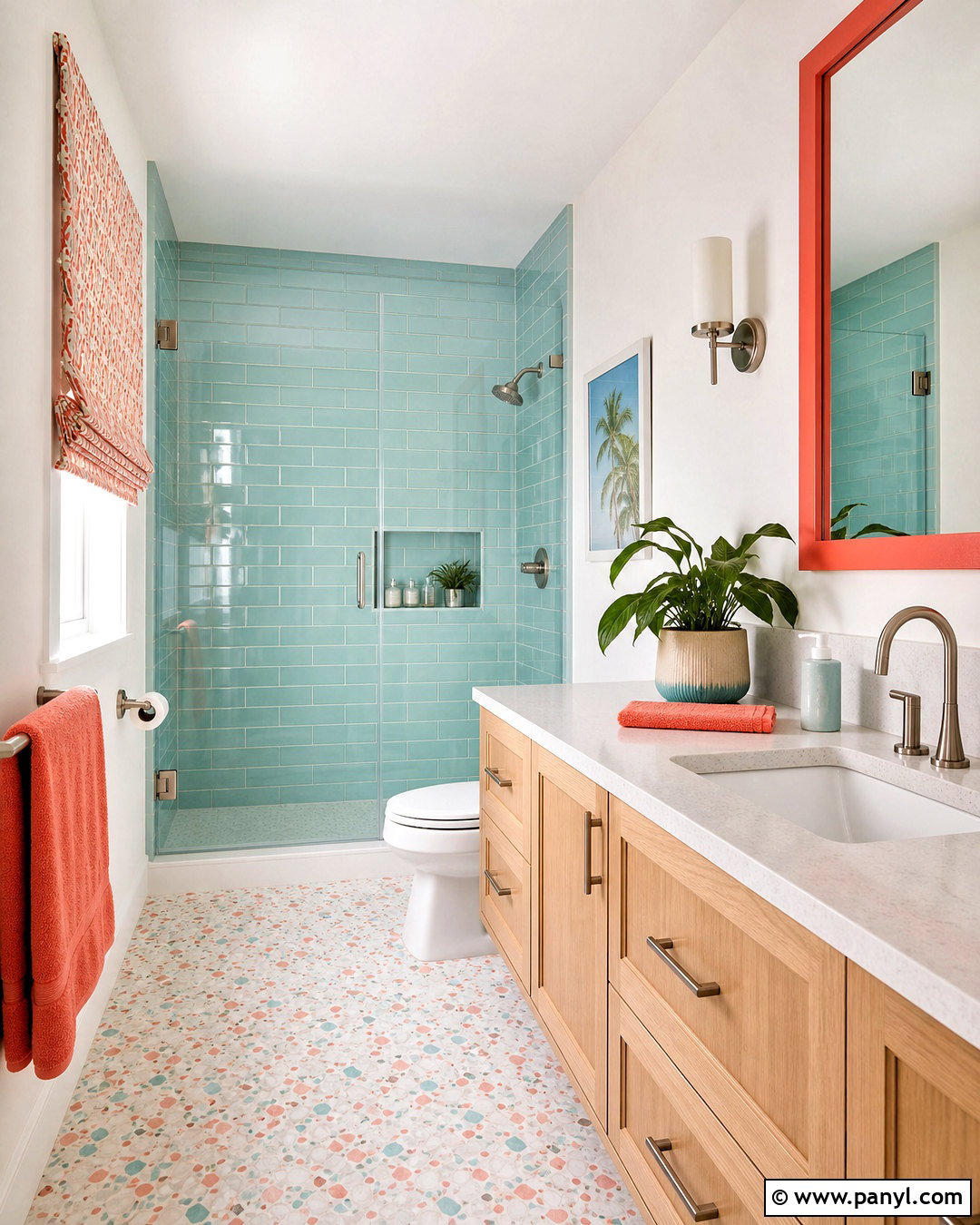
Fresh aqua blue and muted coral can make a bathroom feel cheerful without becoming childish. Use aqua glass tile in the shower and keep the remaining walls warm white. A light oak vanity with a white countertop creates a neutral anchor. Introduce coral through a painted mirror frame, patterned window shade, towels, and one ceramic planter. Choose brushed nickel fixtures for a light finish that supports the watery blue. A warm white terrazzo floor with small peach and aqua flecks can unite the palette. Limit decorative patterns to one or two surfaces so the room stays restful. This combination works well in sunny bathrooms, guest spaces, and casual homes where a bright, welcoming atmosphere is more important than formal elegance.
15. French Blue And Cream Bathroom
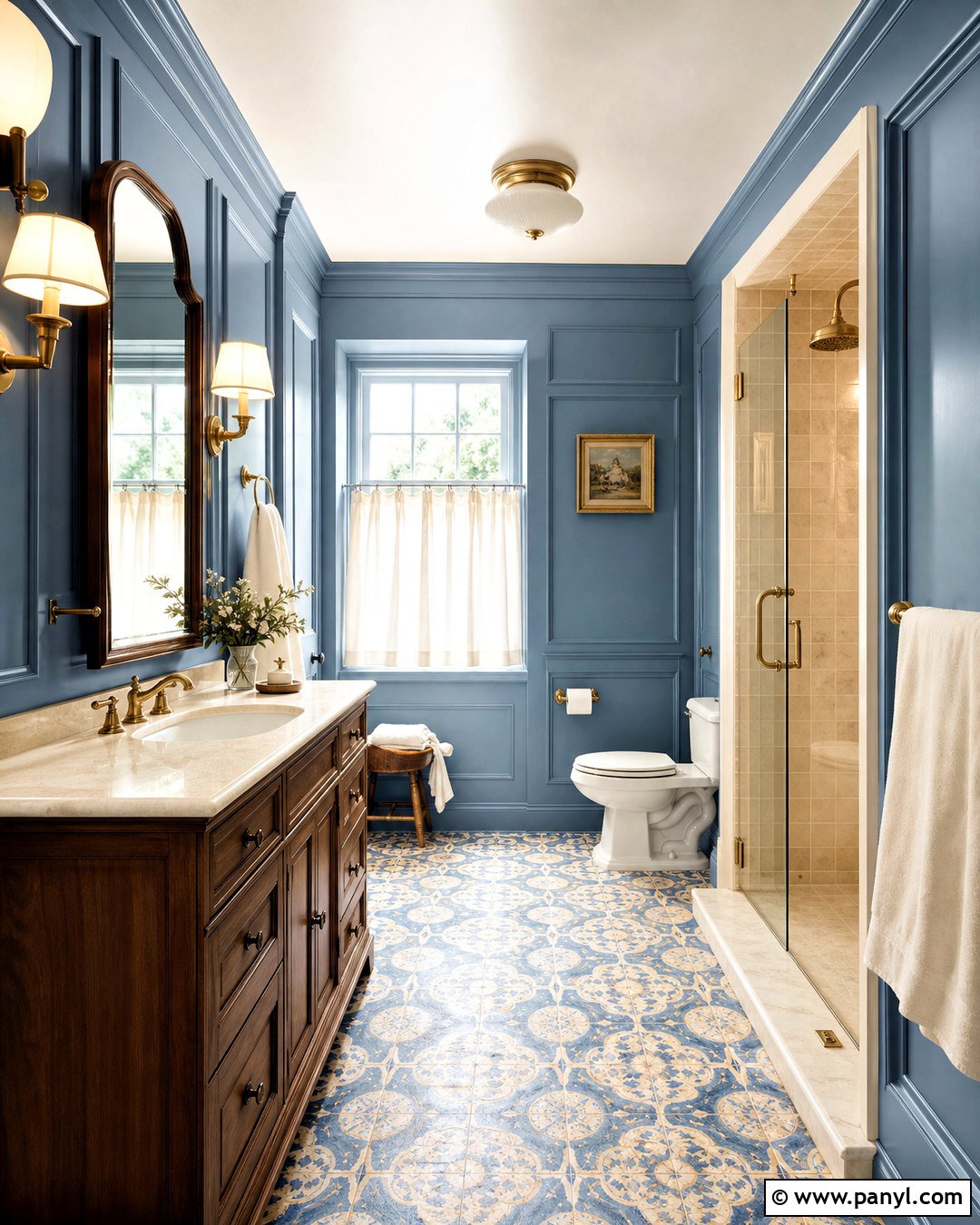
French blue and cream produce a graceful bathroom that feels softer than a traditional blue-and-white palette. Paint paneled walls in a muted French blue and use creamy ceramic tile around the bathtub or shower. A furniture-style walnut vanity adds depth, while a warm ivory countertop maintains the gentle contrast. Select antique brass faucets, curved sconces, and an ornate but simple mirror for classic character. Patterned floor tile can combine French blue, cream, and a small amount of warm gray. Add white or ivory linens instead of stark white textiles. A linen café curtain provides privacy without blocking natural light. This coordinated design feels established and comfortable, making it especially appropriate for traditional, cottage, and European-inspired bathrooms.
16. Blue And Greige Bathroom
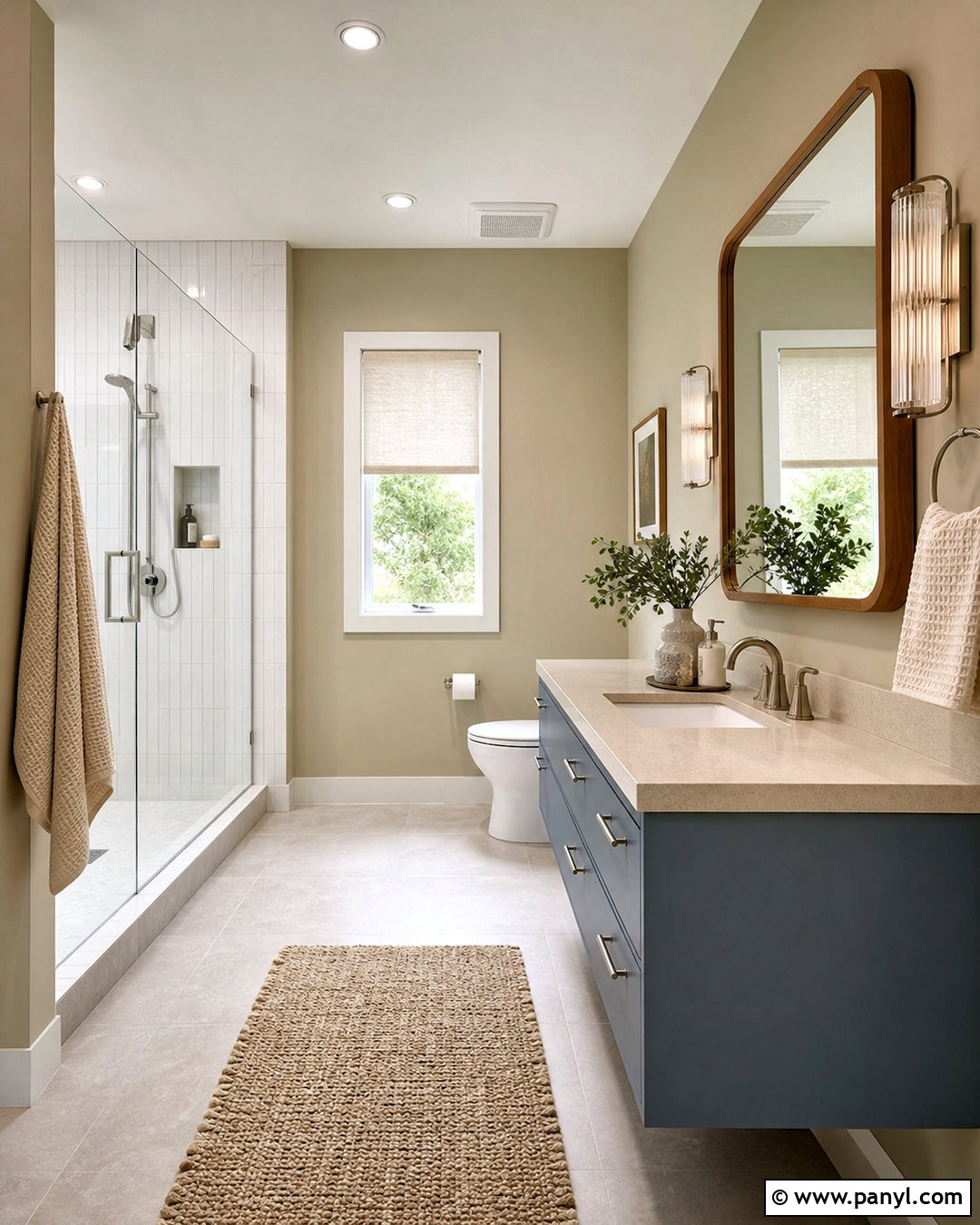
Do you prefer a neutral bathroom but still want noticeable color? Combine blue-gray cabinetry with warm greige walls and flooring. A floating vanity in muted blue creates the main focal point, while a pale greige quartz countertop keeps the transition subtle. Use large warm white tiles inside the shower and continue greige porcelain across the floor for visual consistency. Brushed nickel faucets and a frameless glass enclosure support the understated palette. Add a light oak mirror, ribbed glass sconces, and textured cream towels to prevent the room from looking flat. The balance of warm and cool tones makes this scheme adaptable to changing decor. It is also a practical choice for homeowners seeking a calm, resale-friendly bathroom with personality.
17. Indigo Blue And Walnut Bathroom
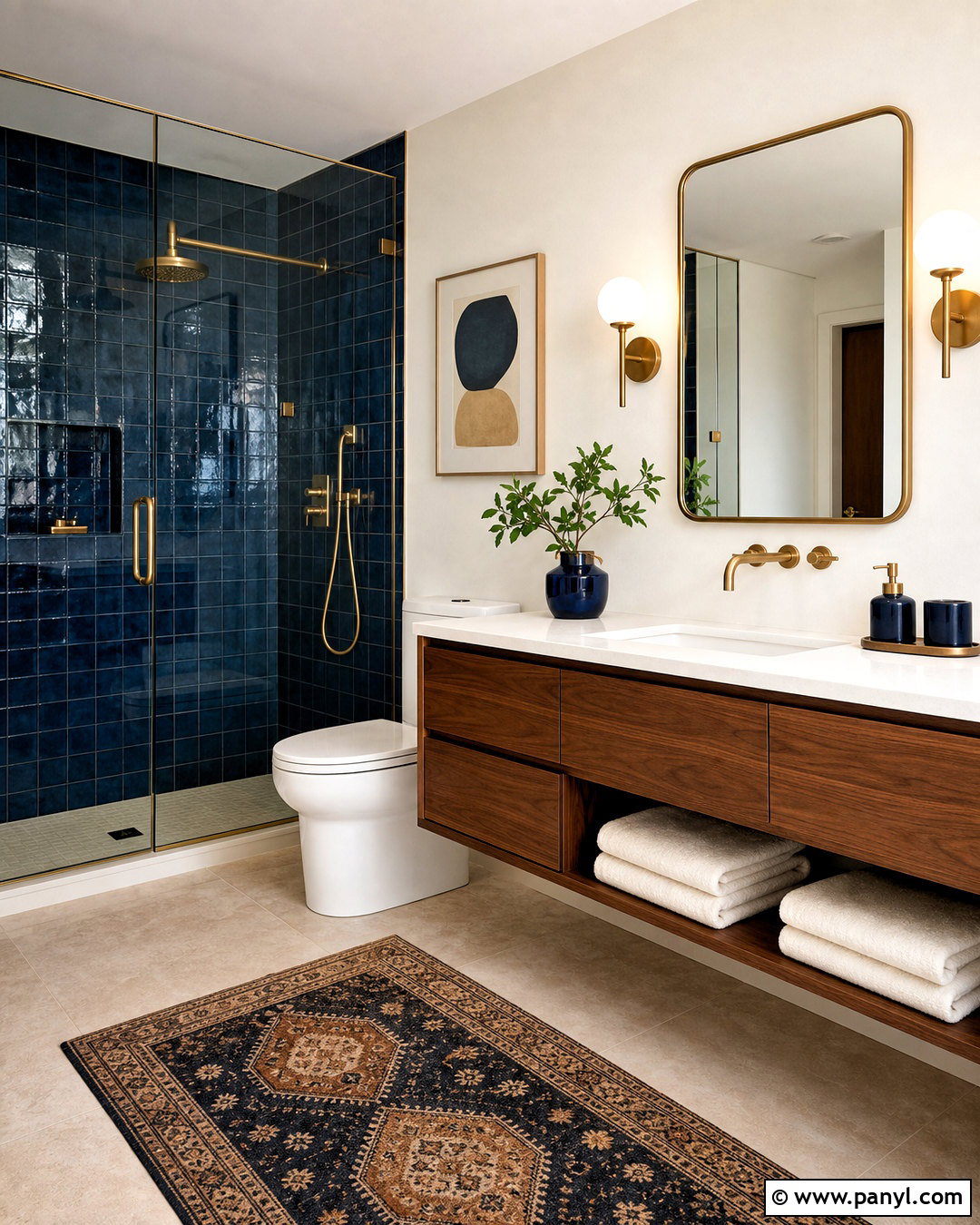
Deep indigo becomes warmer and more inviting beside rich walnut wood. Use indigo tile on the vanity wall or across the walk-in shower, choosing a glossy finish that reflects light. Install a walnut floating vanity with simple slab doors and a creamy white countertop. Warm beige floor tile creates a softer transition than cool gray would. Add brushed brass fixtures, a thin brass mirror, and understated globe sconces for warmth and definition. Keep the remaining walls ivory to avoid making the room feel enclosed. Folded cream towels and dark blue containers provide quiet finishing touches. This sophisticated palette suits midcentury modern and contemporary bathrooms, especially when clean lines allow the natural wood grain and saturated blue to stand out.
18. Pale Blue And Marble Bathroom
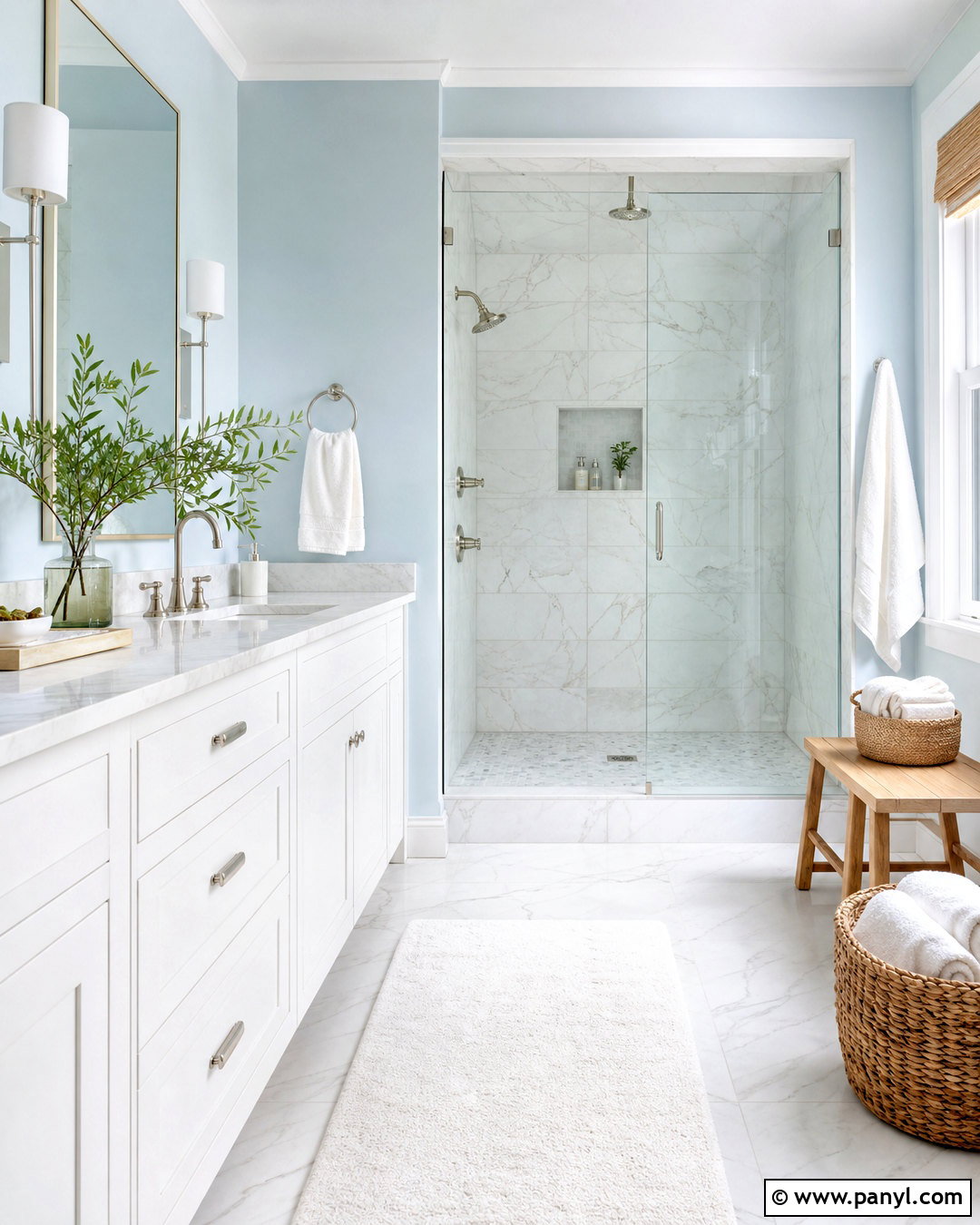
Pale blue brings a gentle layer of color to a bathroom built around elegant marble surfaces. Paint the walls a misty blue and use white marble-look porcelain for the shower, floor, and countertop. Select veining with soft gray and beige notes so the scheme does not feel icy. A white vanity keeps the room bright, while polished nickel faucets add a subtle reflective finish. Introduce warmth with a light oak stool, woven storage basket, and off-white towels. A large mirror and clear glass shower enclosure help natural and artificial light travel through the room. Keep accessories minimal to let the marble pattern remain visible. This complete palette creates an open, spa-like bathroom with a classic foundation and a delicate wash of color.
19. Blue Monochromatic Bathroom
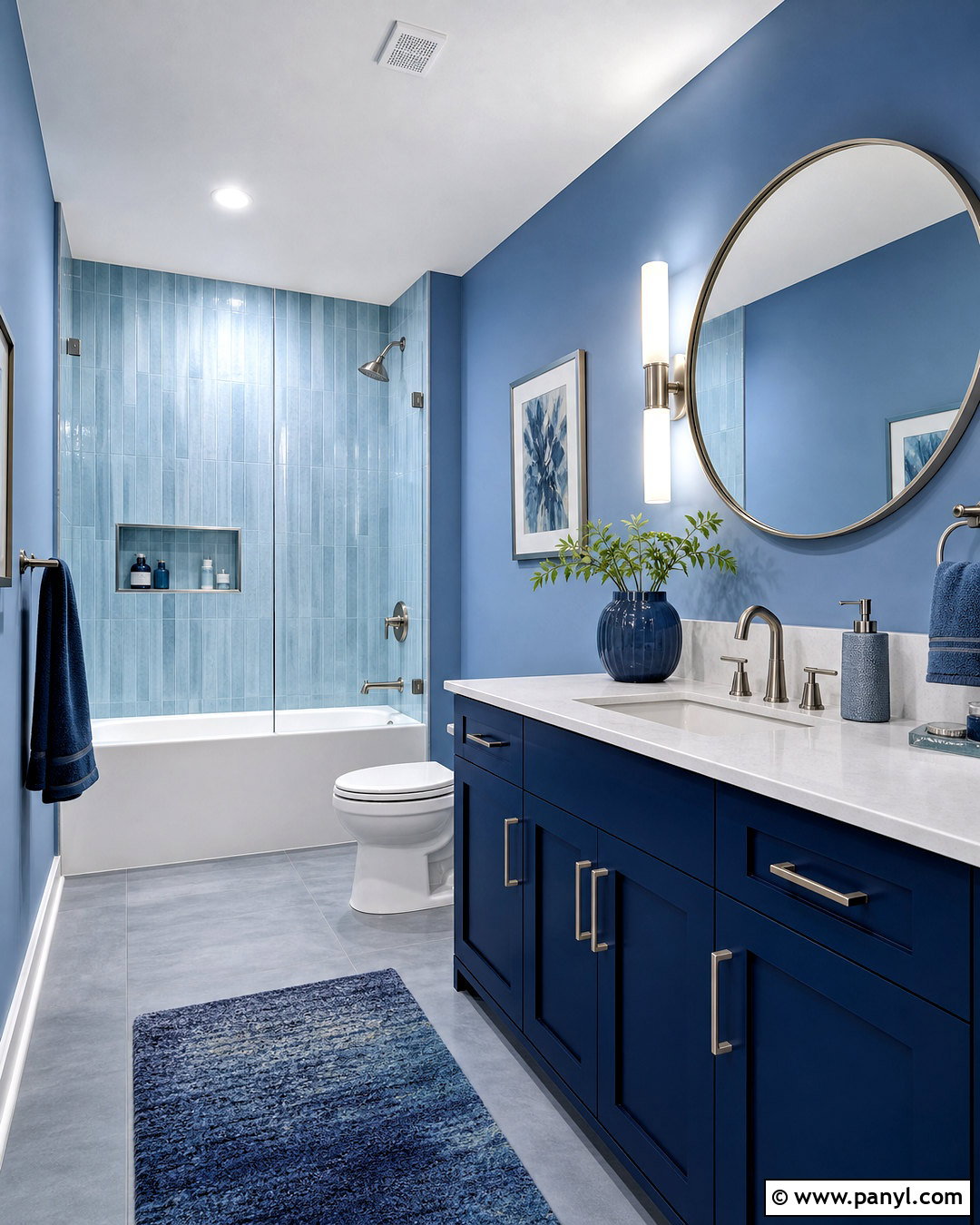
A monochromatic blue bathroom feels intentional when several shades and textures are layered carefully. Begin with medium blue wall paint and use deeper navy on the vanity. Add pale blue vertical shower tiles, blue-gray floor tile, and a patterned textile containing all three shades. White fixtures and a white quartz countertop create essential breathing room. Choose brushed nickel hardware for a cool, unified finish. Varying surface sheen is equally important: combine matte paint, glossy tile, smooth stone, and plush towels. If the room is small, keep the ceiling white and place the lightest blue on the largest surface. This tonal approach creates depth without introducing competing colors, resulting in a coordinated bathroom that feels immersive rather than visually crowded.
20. Blue And Copper Bathroom
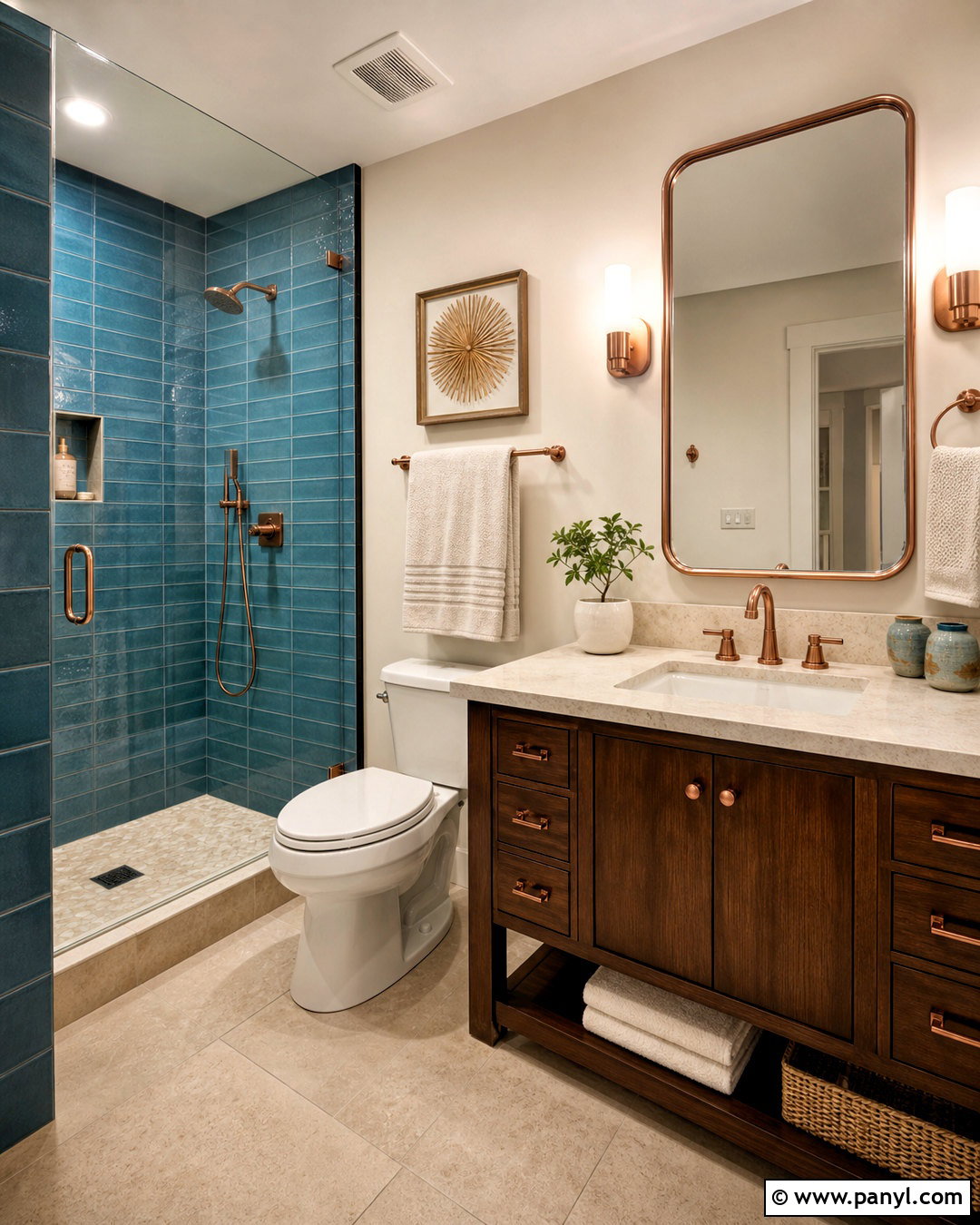
Blue and copper form a warm, memorable palette that works especially well with handcrafted materials. Cover the shower with deep turquoise-blue tile and use soft cream paint across the remaining walls. A dark wood vanity grounds the bold tile, while a pale stone countertop adds necessary lightness. Introduce copper through faucets, cabinet pulls, mirror edging, and a small wall sconce, but keep the metal finish consistent. Warm beige porcelain flooring helps connect the cream walls, dark wood, and copper accents. Add neutral towels and simple ceramic containers so the metallic details remain special. Because copper can develop a natural patina, select bathroom-rated fixtures and follow proper care instructions. The final room feels rich, welcoming, and distinctly personal.
Conclusion:
Blue offers enough variety to create nearly any bathroom mood, from bright and breezy to deep and dramatic. The most successful designs treat the room as one complete composition. Wall color, tile, cabinetry, flooring, fixtures, lighting, and textiles should support the same visual direction. Test blue samples beside permanent surfaces and view them under daytime and evening lighting before deciding. Warm materials such as wood, brass, terracotta, and beige stone can soften cooler shades, while white and marble bring clarity to darker palettes. Whether you prefer powder blue, teal, navy, or indigo, these 20 bathroom color schemes blue ideas provide practical starting points for building a cohesive, comfortable, and visually balanced bathroom.

Related Ideas and Inspiration:
Leave a Reply