
Choosing paint becomes much easier when you plan the entire room as one coordinated palette. These 20 living room paint ideas color schemes combine wall colors, trim, furniture, flooring, textiles, and finishes into complete looks you can recreate. Current color directions favor warm whites, earthy neutrals, powder blues, muted teals, and nature-inspired greens, along with immersive color-drenching techniques. () Still, the best palette should suit your natural light, existing furniture, and preferred atmosphere. Test large paint samples beside the sofa, flooring, and windows before committing. Observe them throughout the day because undertones can shift noticeably. Whether you want something airy, cozy, colorful, or dramatic, the following 20 living room paint ideas color schemes offer practical inspiration.

1. Warm White Living Room Paint
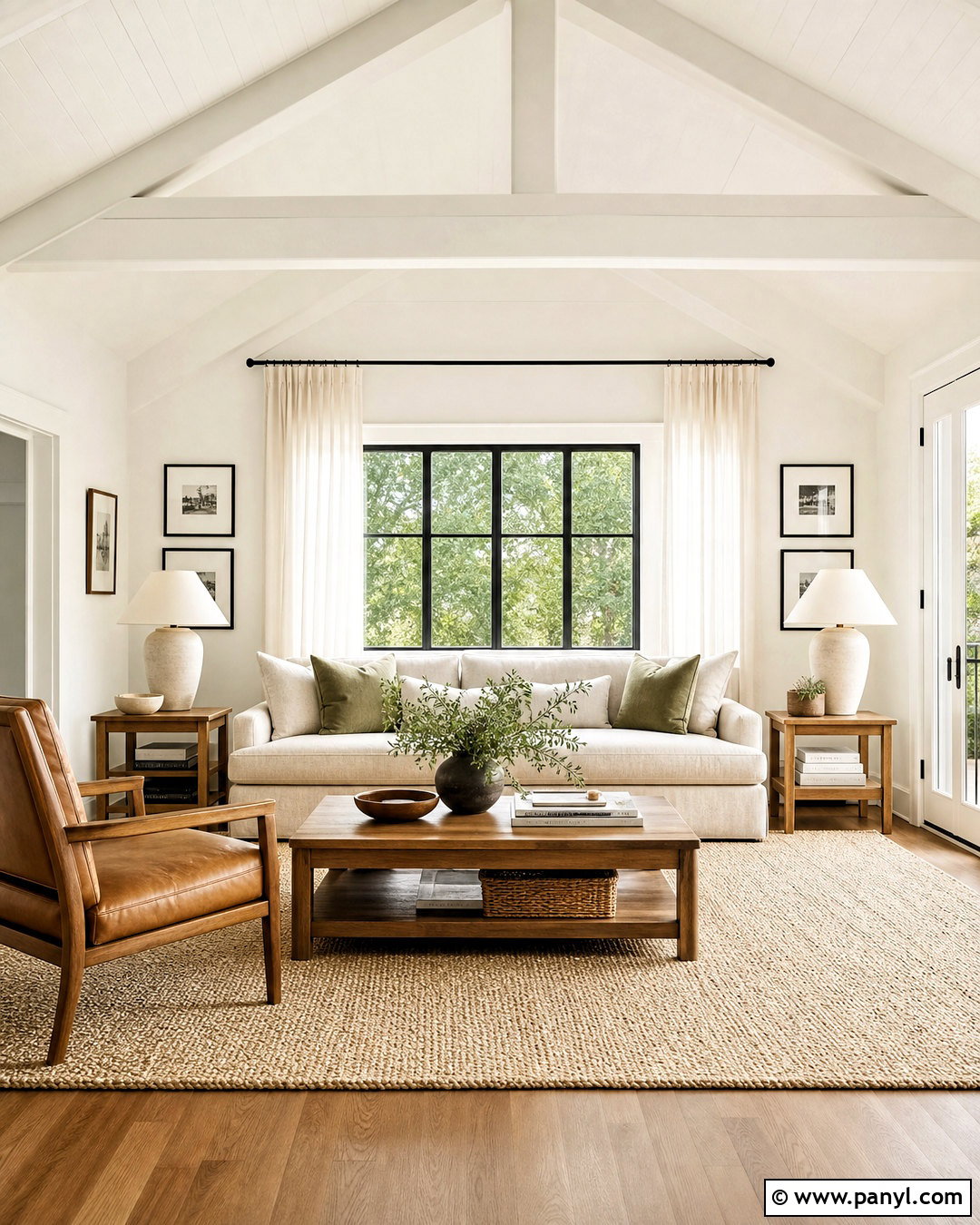
Warm white walls create a bright foundation without making the living room feel cold or unfinished. Choose a creamy white with subtle beige or yellow undertones for the walls, then use a slightly cleaner white on the ceiling and trim. Build warmth with an oatmeal linen sofa, cognac leather chair, and medium-tone oak coffee table. A woven ivory rug softens the flooring while preserving the light appearance. Add muted olive pillows, ceramic lamps, and black picture frames for gentle contrast. This scheme works especially well in rooms with northern exposure because the creamy base balances cooler daylight. Keep window treatments simple with full-length natural linen curtains. The completed room feels relaxed, open, and layered rather than stark.
2. Greige And Soft Taupe Living Room Paint
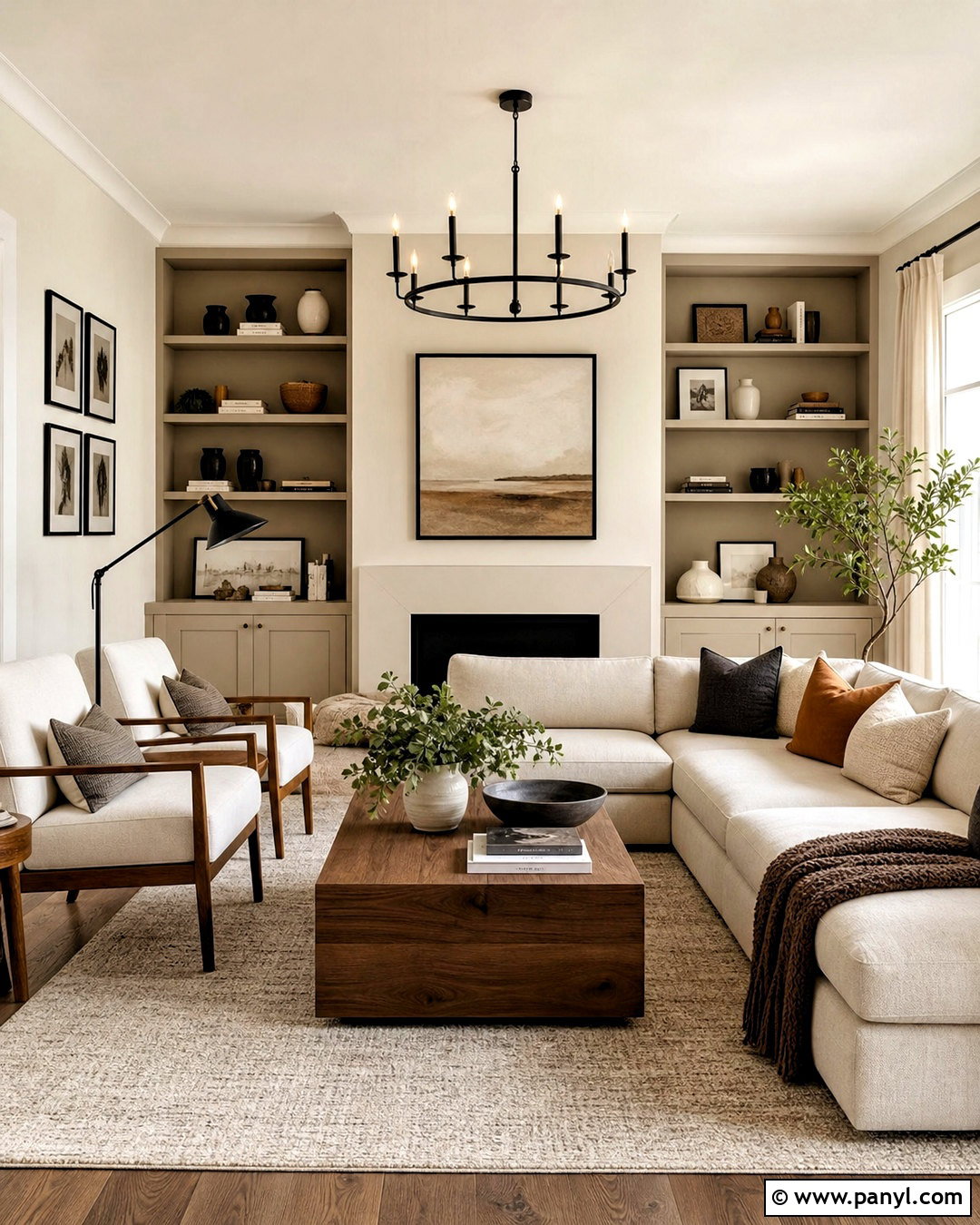
If beige seems too warm and gray feels too cool, greige offers a balanced middle ground. Paint the main walls a light greige and use soft taupe on built-in shelves or the fireplace surround. Warm white trim gives the architecture a clean outline without creating excessive contrast. Complete the palette with a pale beige sectional, walnut coffee table, and textured cream rug. Charcoal pillows and matte black lighting provide definition, while rust-colored accents prevent the neutral room from looking flat. Choose natural fabrics such as linen, wool, and cotton to introduce subtle variation. This living room paint scheme is particularly useful in open layouts because it connects easily with wood kitchens, neutral hallways, and adjoining dining spaces.
3. Beige And Olive Living Room Paint
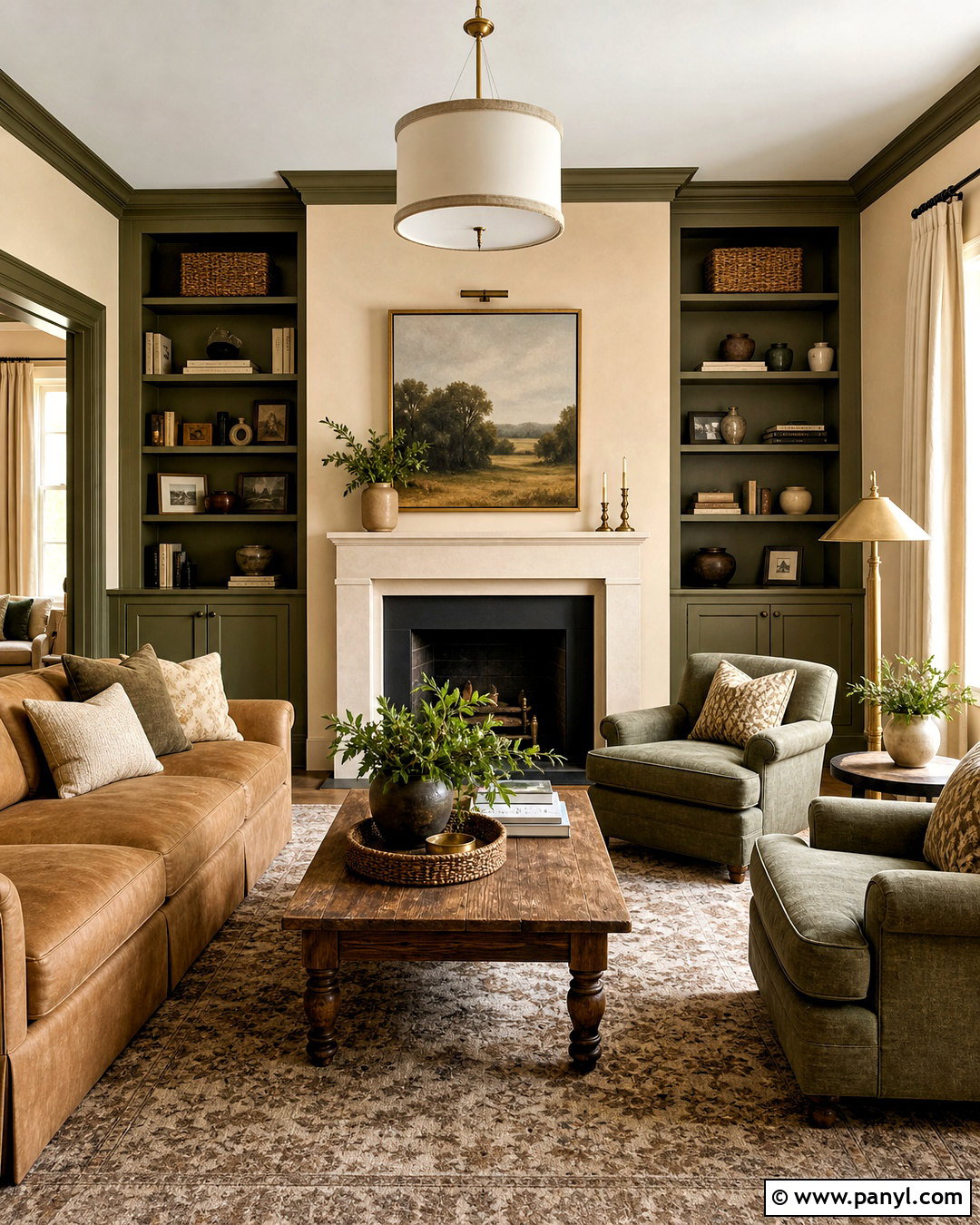
A soft beige wall color becomes more distinctive when paired with earthy olive green. Use warm beige across the main walls and paint the fireplace, built-in cabinetry, or lower wall paneling a muted olive. Keep the ceiling creamy white to maintain a bright, comfortable feeling. Furnish the room with a camel-colored sofa, olive accent chairs, and an aged oak coffee table. A vintage-style rug containing beige, faded red, and green ties the palette together. Add antique brass lamps, woven baskets, and landscape artwork in dark wood frames. This combination looks especially natural beside hardwood flooring and leafy outdoor views. The finished design feels grounded and welcoming, with enough color to be memorable but enough neutrality for everyday living.
4. Sage Green And Cream Living Room Paint
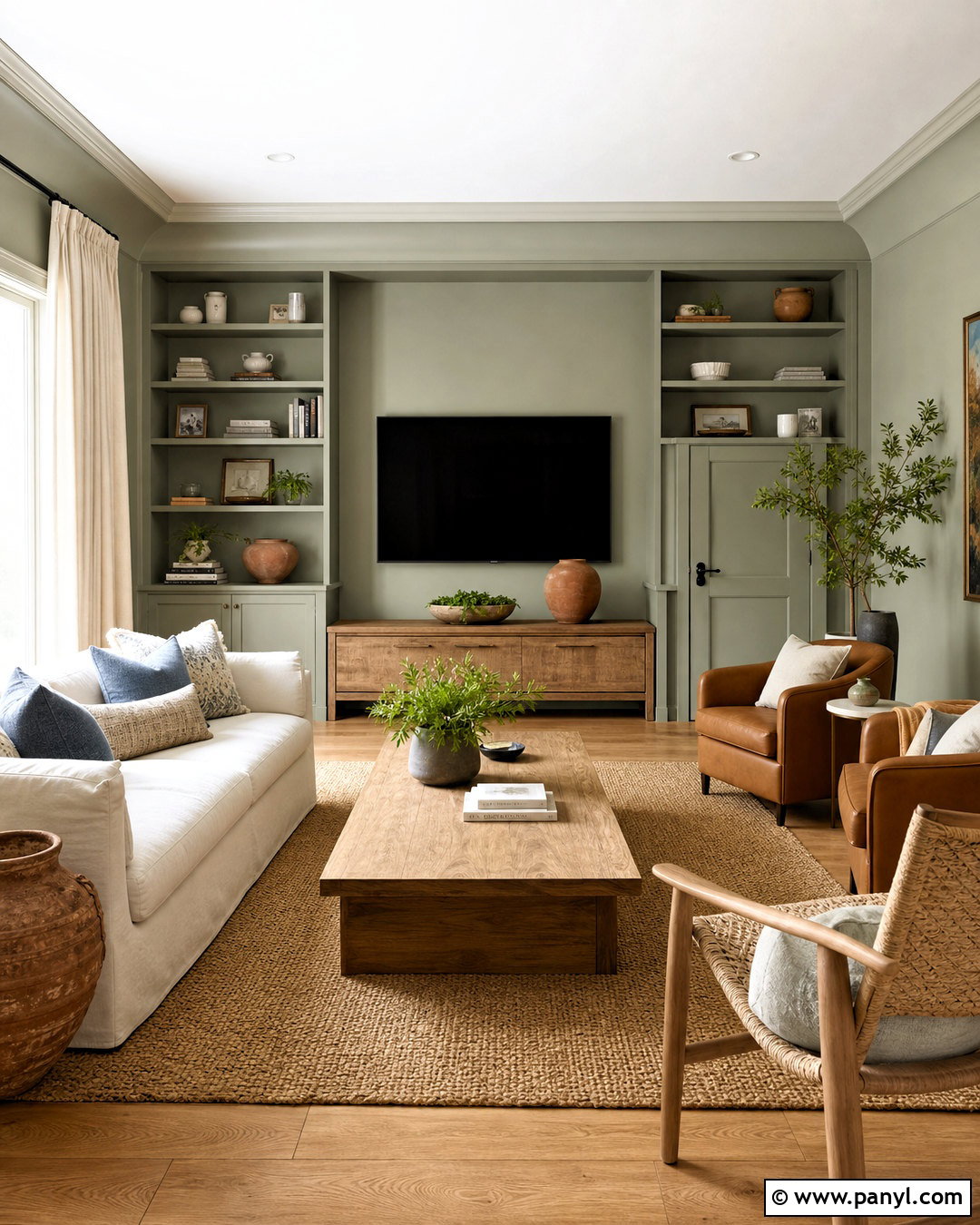
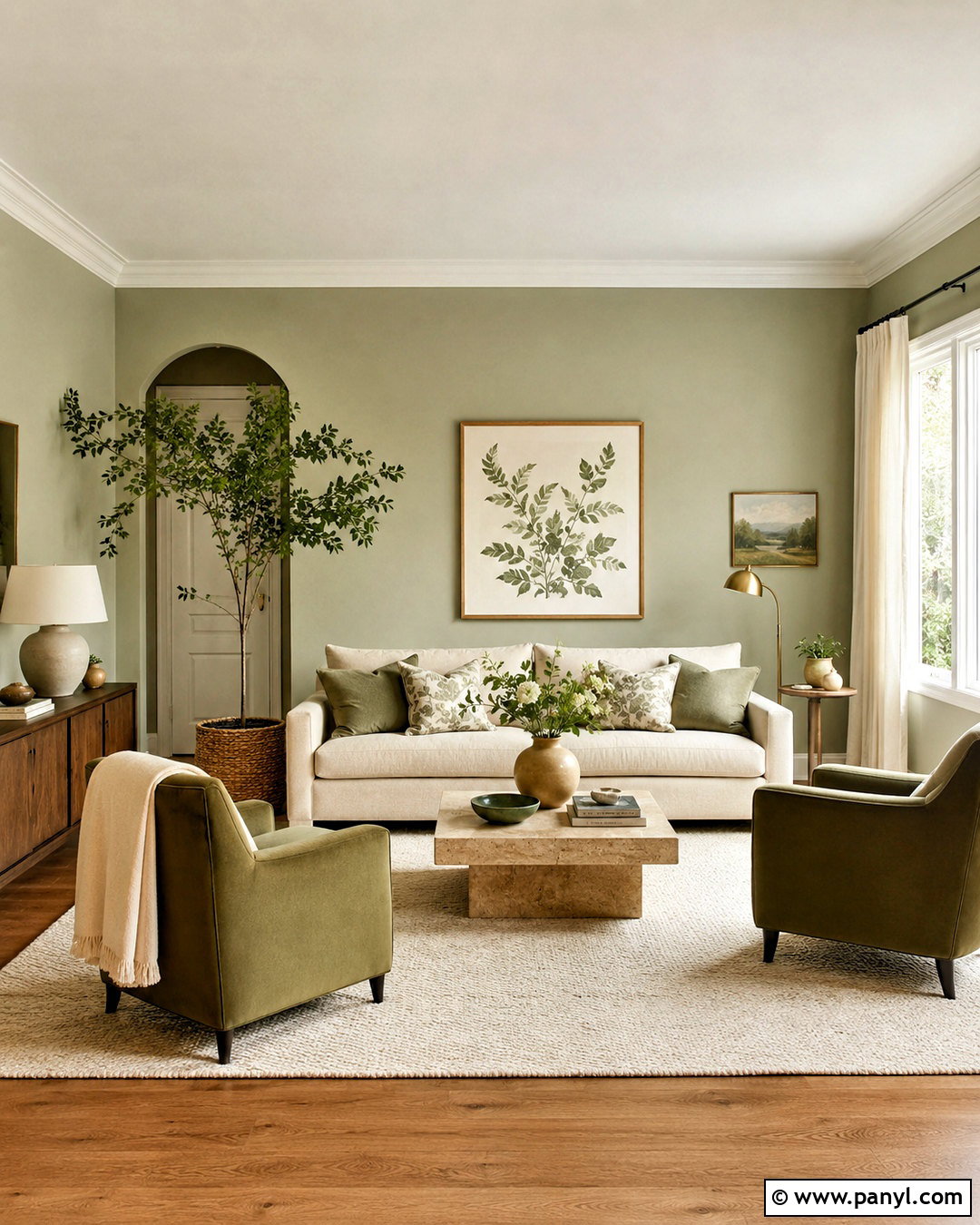
Gentle sage green walls can bring a calm, natural quality to a busy family living room. Select a softened sage with gray undertones instead of a bright botanical green. Pair it with creamy trim, a warm white ceiling, and light oak flooring. An ivory slipcovered sofa keeps the space airy, while a pair of tan leather chairs adds durability and contrast. Include a natural jute rug, simple linen curtains, and an oak media console for an organic foundation. Terracotta pottery and muted blue pillows introduce small amounts of warmer and cooler color. Paint built-ins the same sage as the walls for a streamlined effect. This complete palette feels casual, fresh, and easy to update as furniture or accessories change.
5. Olive Green And Clay Living Room Paint
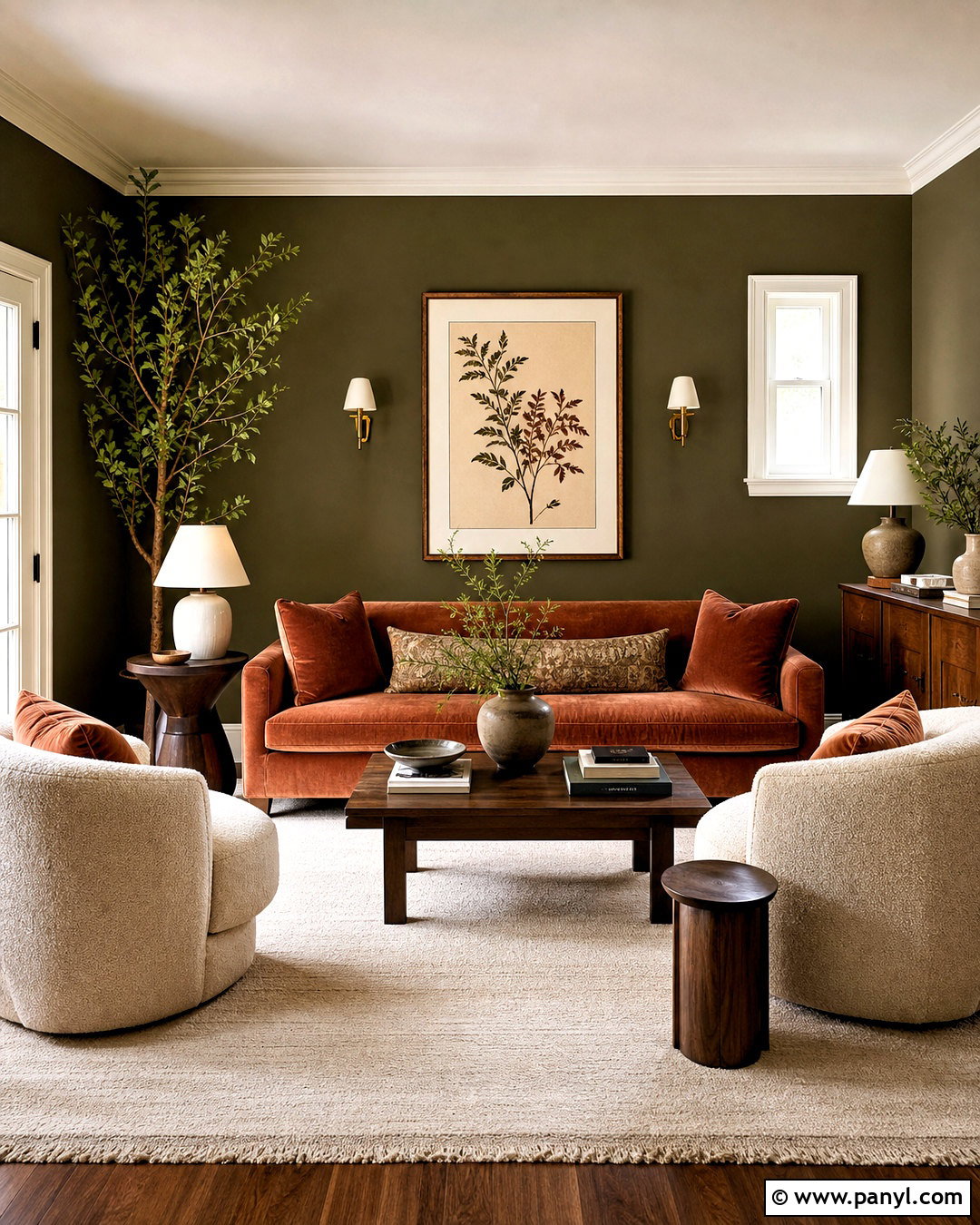
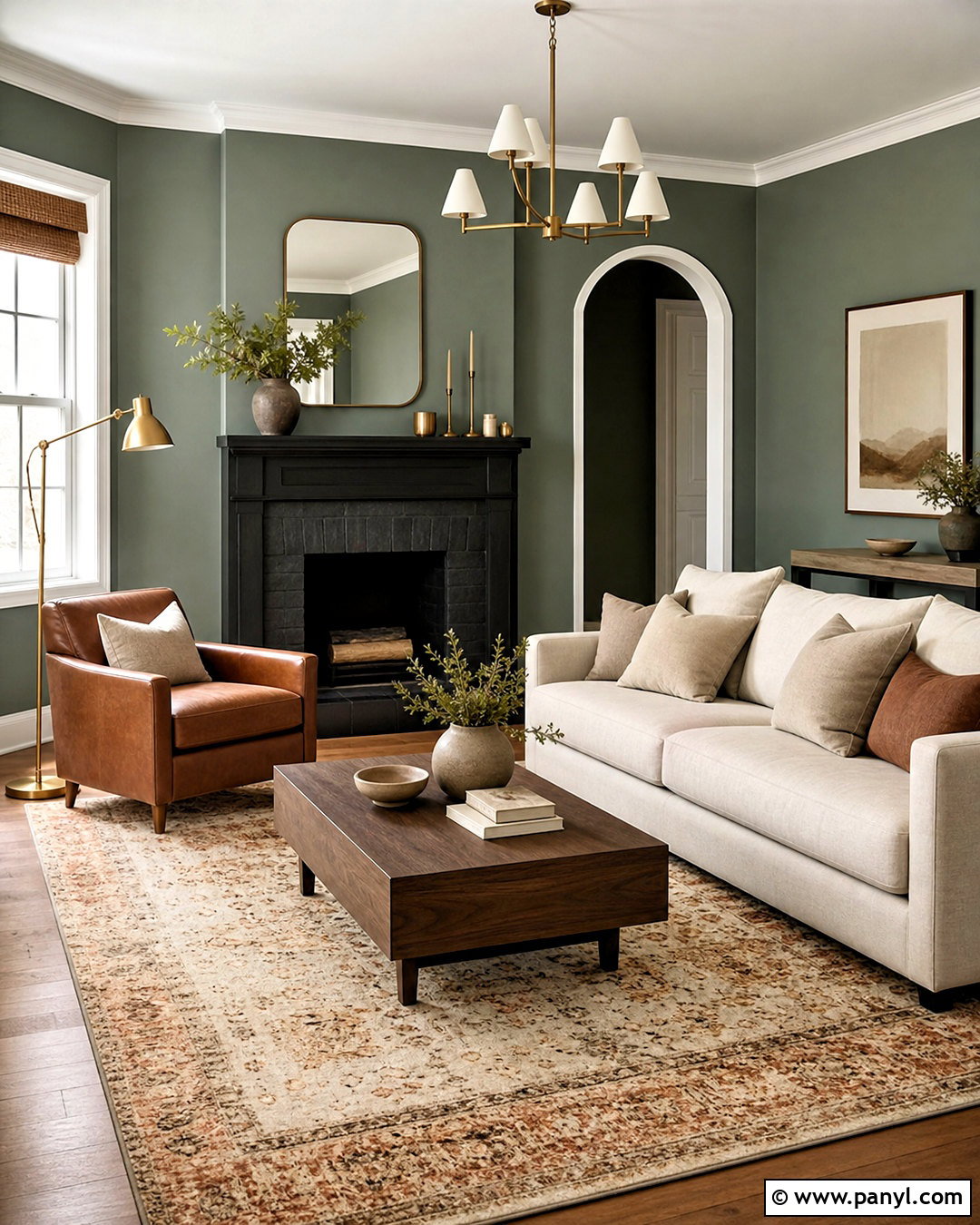
Deep olive walls and warm clay accents create an enveloping living room inspired by natural landscapes. Paint all four walls an earthy olive, then choose warm ivory for the ceiling and woodwork to stop the room from becoming too heavy. Place a clay-colored velvet sofa against the green background and balance it with cream boucle chairs. Medium walnut furniture strengthens the rich palette, while an ivory wool rug provides essential brightness underfoot. Use aged brass sconces, rust-patterned pillows, and large botanical artwork to connect the colors. Natural daylight is helpful for this deeper scheme, although layered table and floor lamps keep it comfortable after sunset. The result is dramatic, grounded, and suitable for both traditional and modern homes.
6. Muted Teal And Caramel Living Room Paint
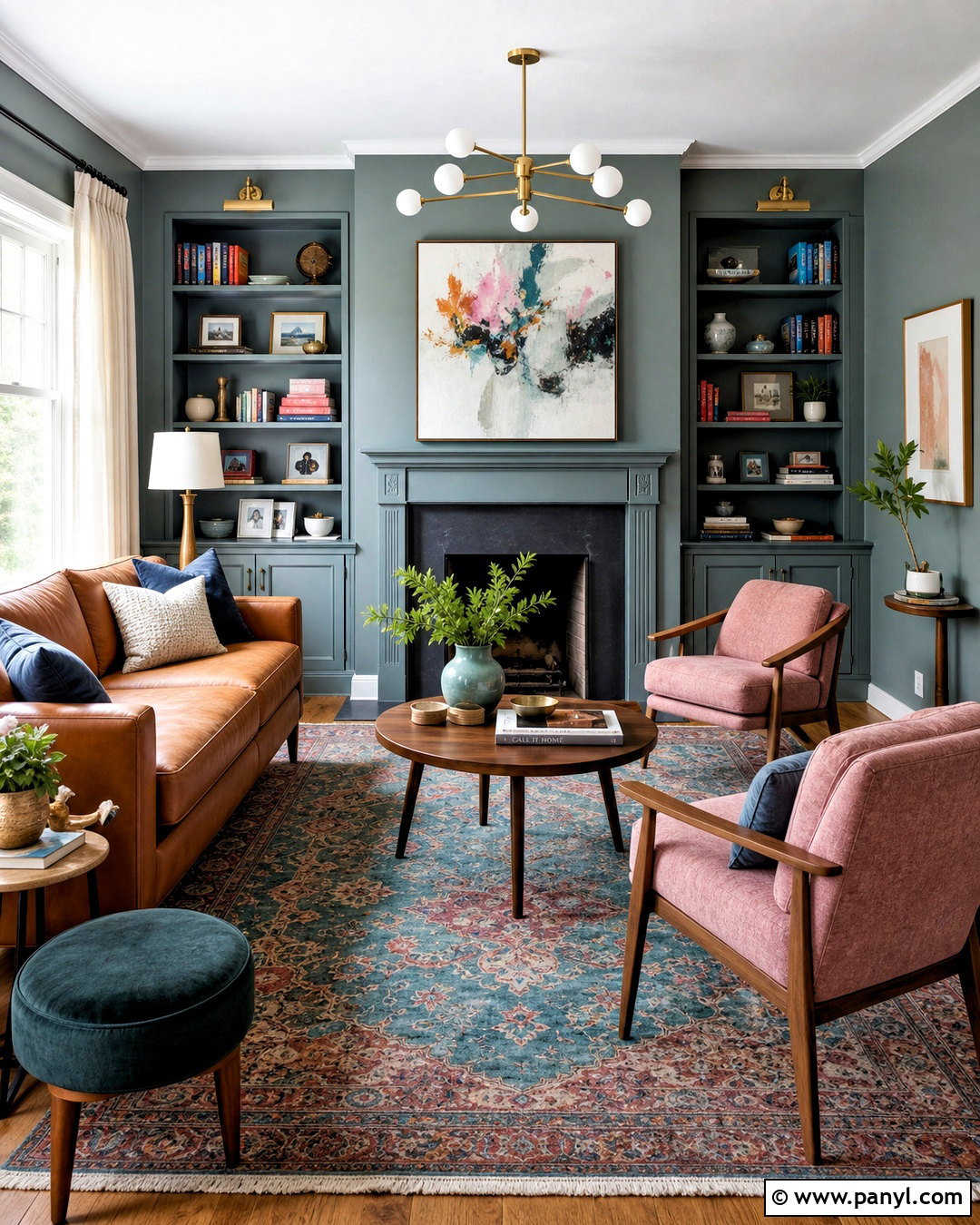
Muted teal gives a living room noticeable color while remaining sophisticated and easy to layer. Choose a teal with gray undertones for the walls and continue it onto built-in shelves for a cohesive background. Use soft cream on the ceiling and trim to frame the richer color. A caramel leather sofa adds warmth, while dusty pink chairs soften the contrast between blue and green. Ground the seating area with a vintage rug featuring teal, rose, tan, and ivory. Walnut tables, brushed brass lighting, and cream curtains complete the room without competing with the paint. Arrange colorful books and ceramics sparingly inside the shelves. This balanced palette feels collected and expressive, yet the muted finishes keep it comfortable for daily use.
7. Powder Blue And Coral Living Room Paint
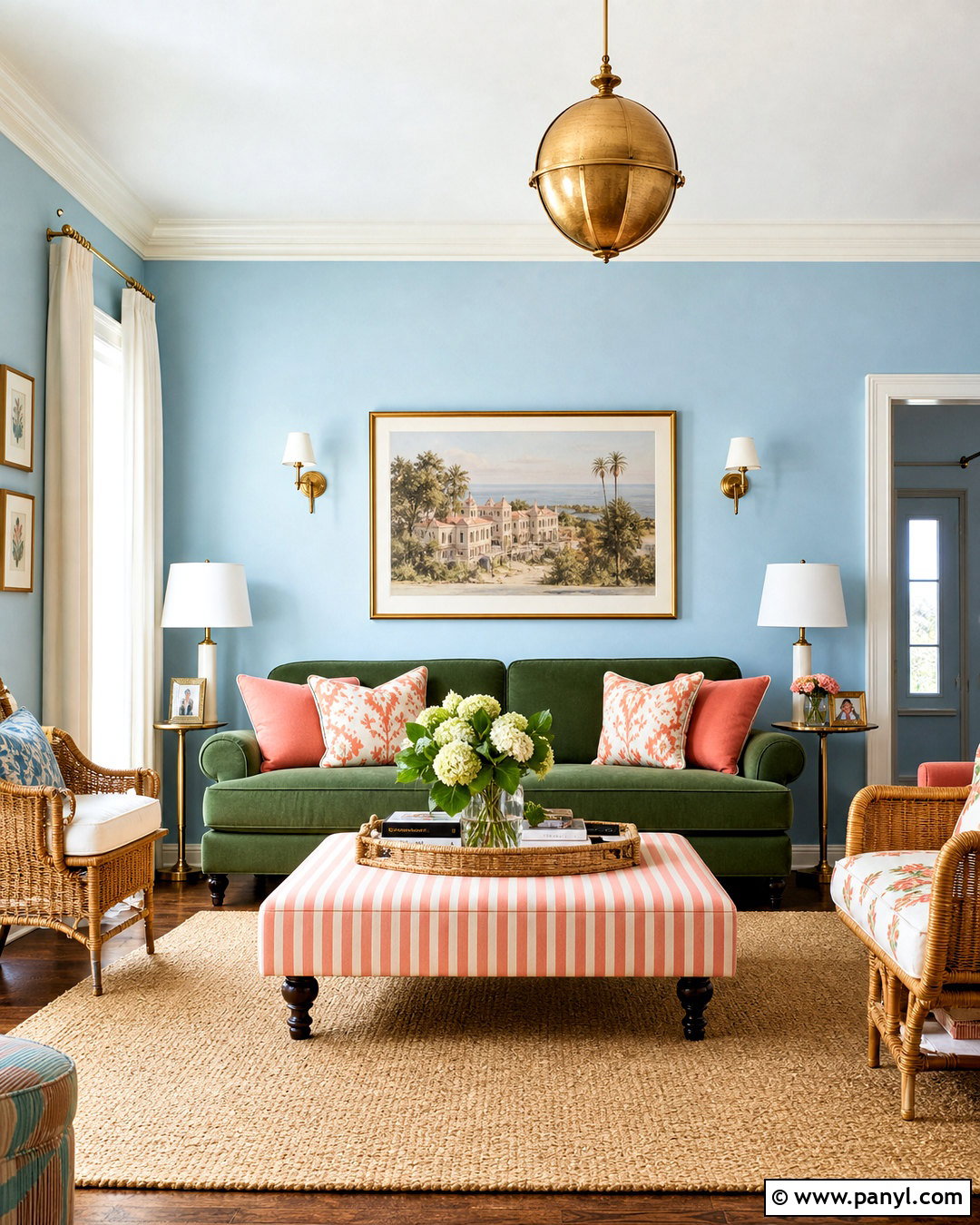
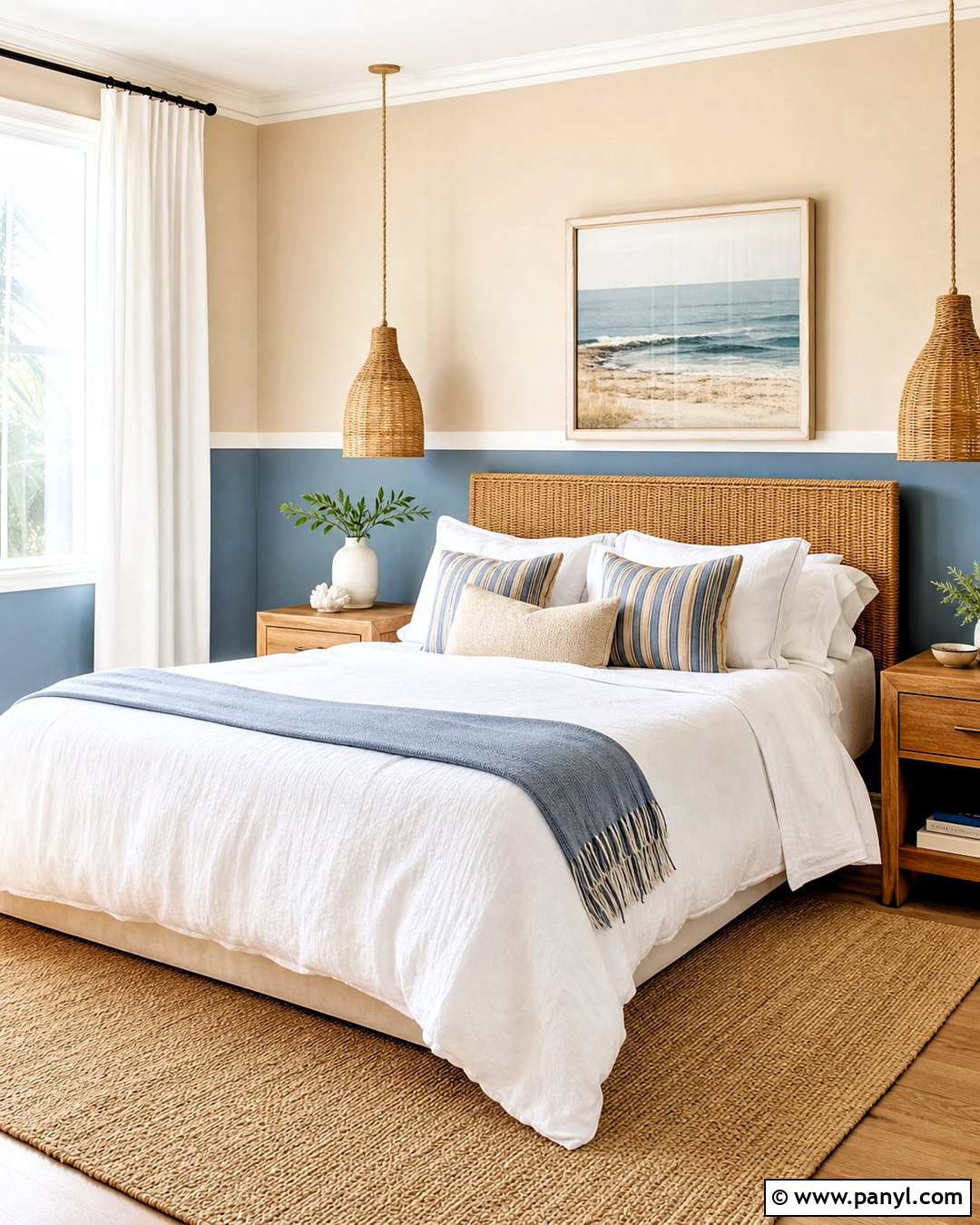
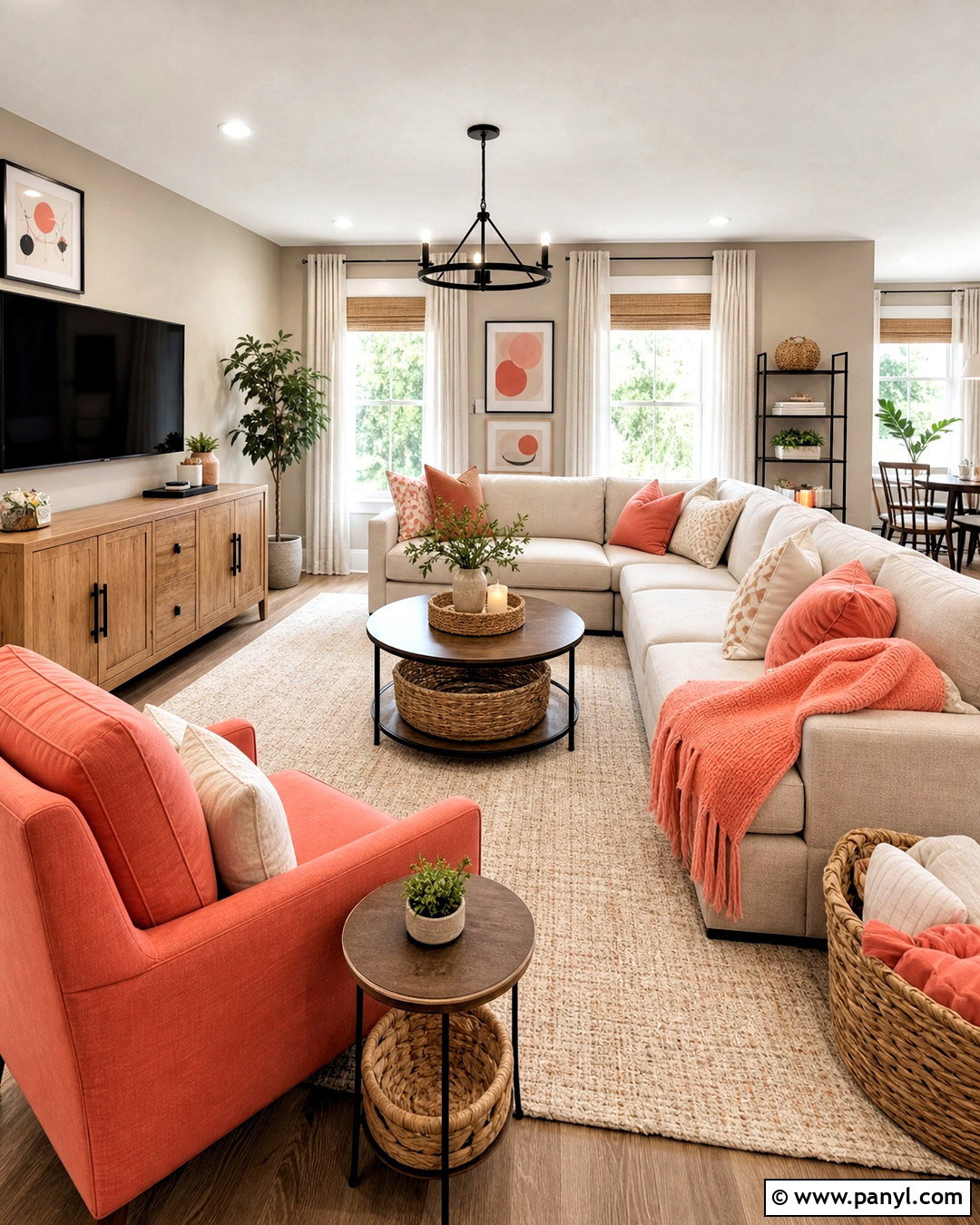
Powder blue walls offer a refreshing alternative to predictable gray or beige. Look for a light blue with a slightly warm, dusty undertone so the room feels comfortable rather than icy. Pair it with crisp ivory trim and a ceiling painted one shade lighter than the walls. A deep green sofa gives the pale background more weight, while coral pillows and a coral-striped ottoman add energetic warmth. Use a rattan coffee table, natural linen curtains, and a light wool rug to maintain an airy appearance. Small brass accents bring polish without making the palette formal. Display artwork containing blue, green, and coral to reinforce the combination. The finished room feels cheerful, balanced, and relaxed throughout the year.
8. Navy Blue And Cream Living Room Paint
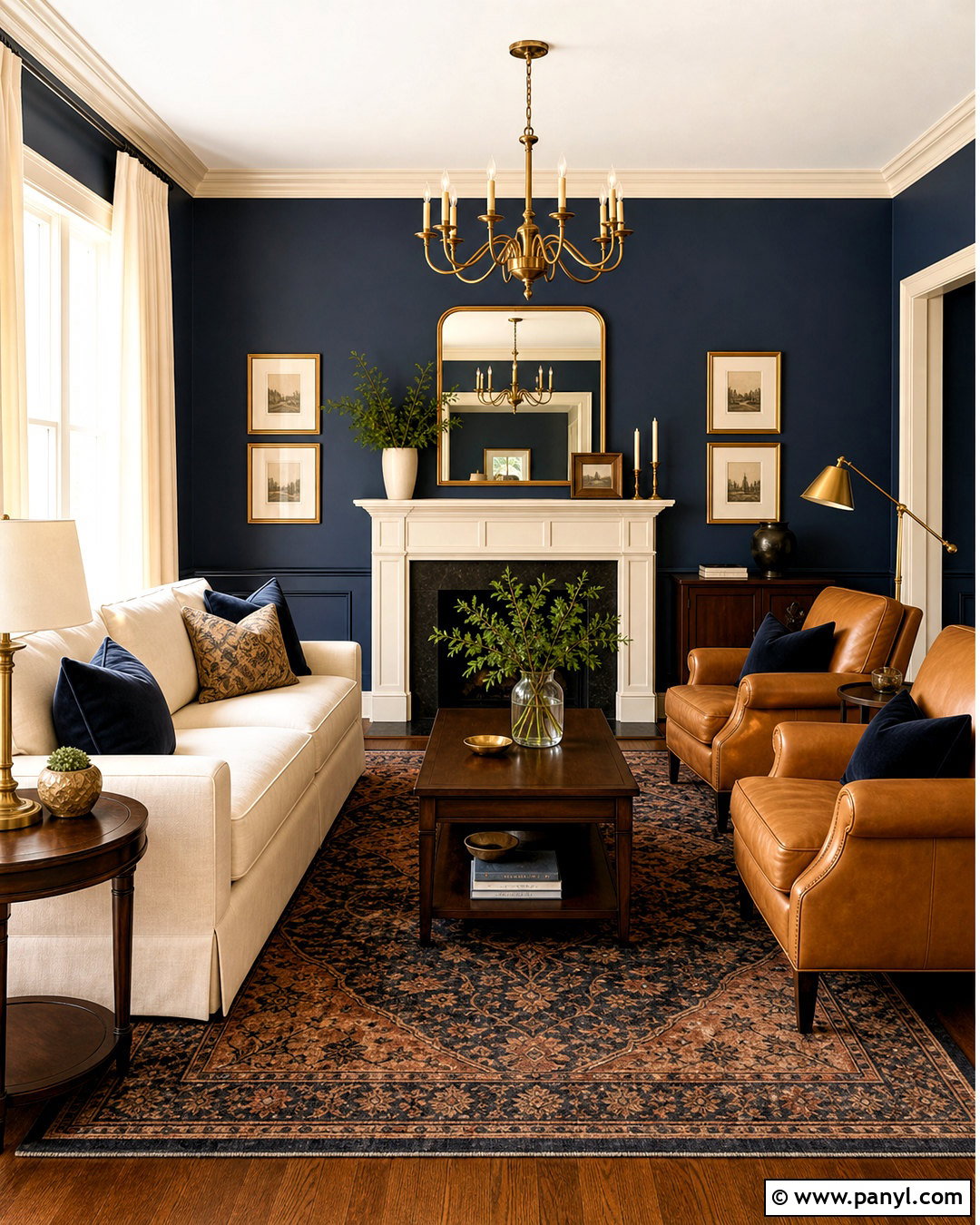
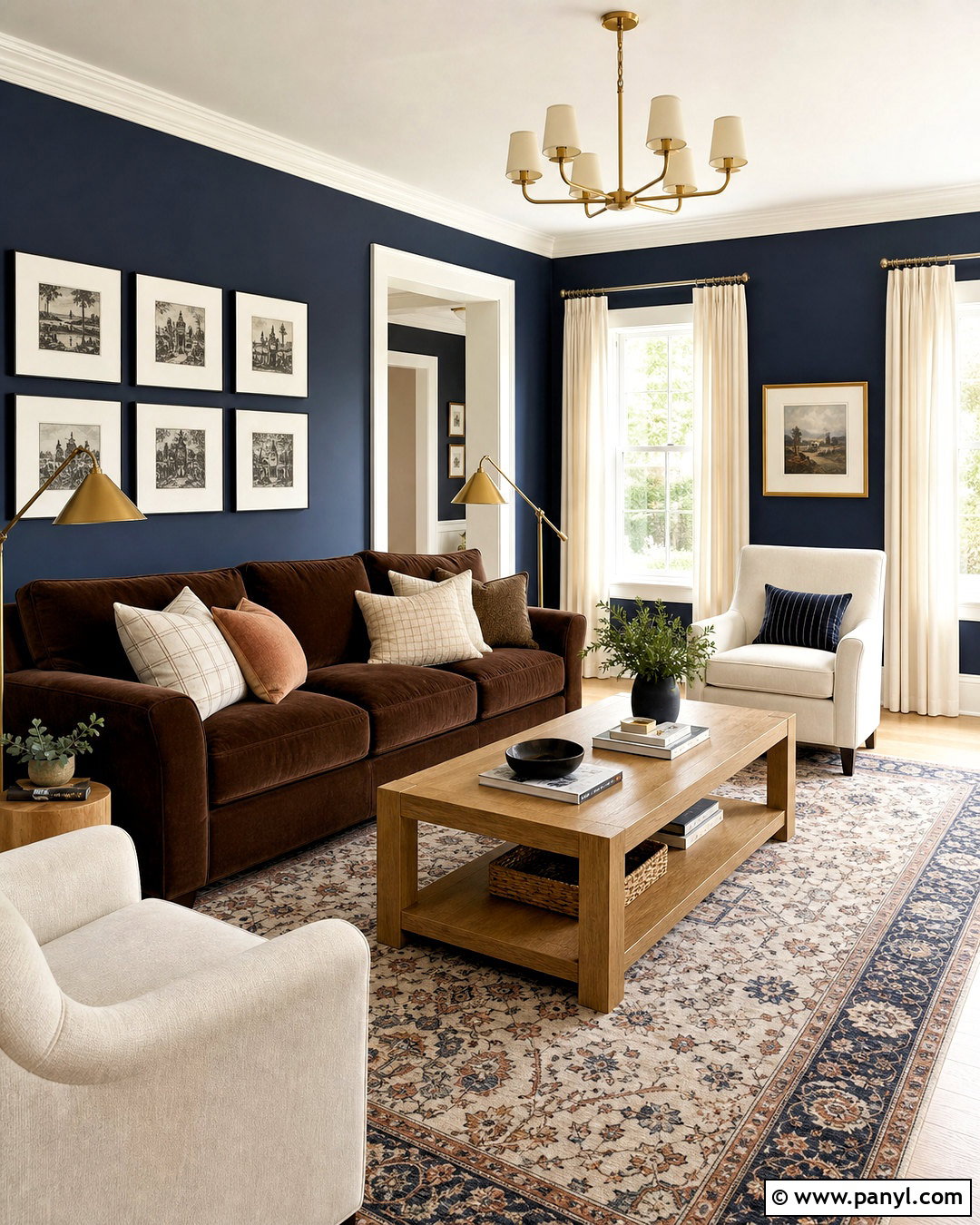
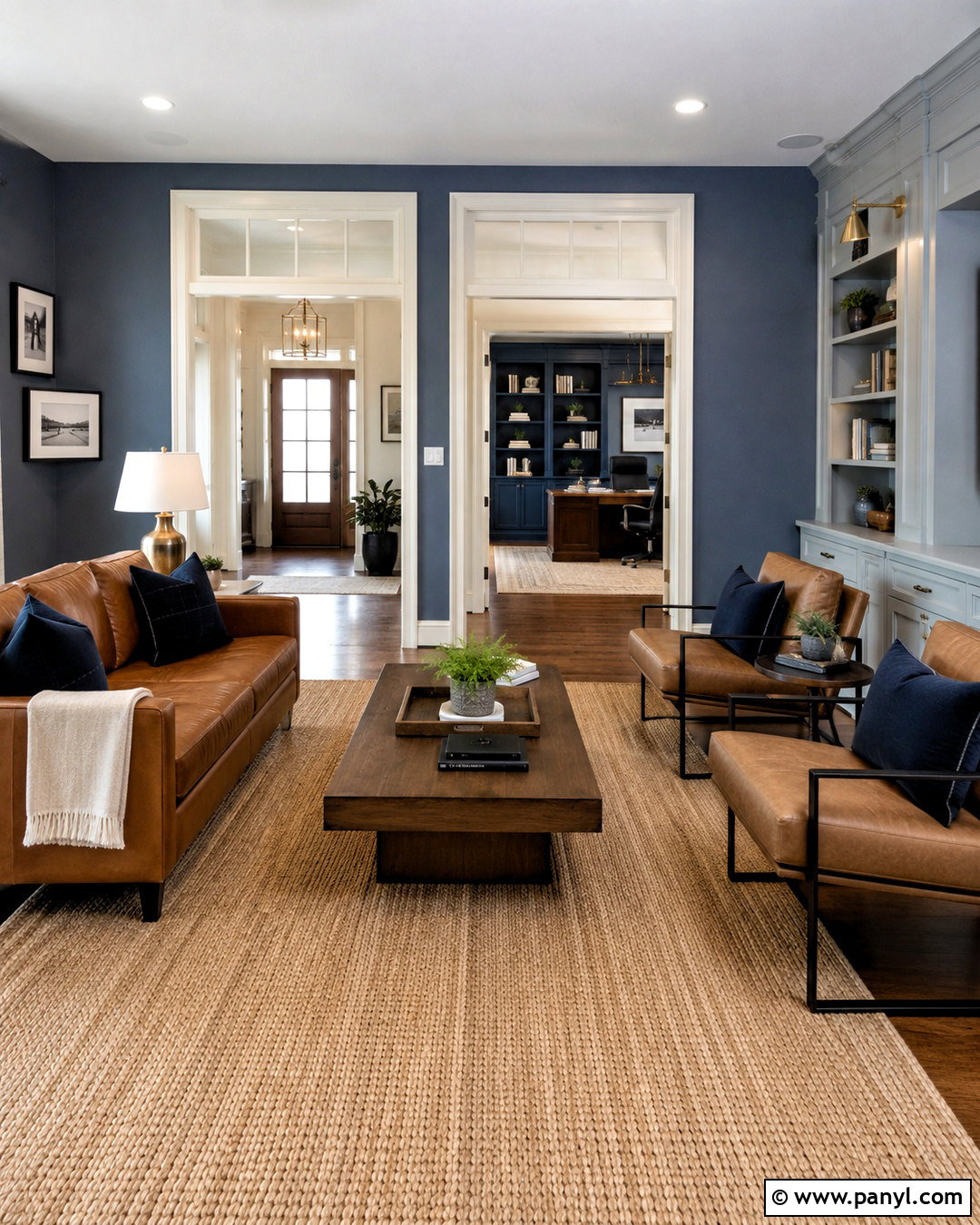
Navy blue walls can make a living room feel intimate, polished, and surprisingly comfortable. Choose a softened navy rather than an almost-black shade, and use it on every wall for consistency. Cream trim and a warm white ceiling provide clear architectural contrast. Position a large ivory sofa against the navy background, then add camel leather chairs and a walnut coffee table. A traditional rug with navy, cream, and faded rust connects the furniture to the wall color. Brushed brass lamps, framed artwork, and a large mirror reflect light around the room. Keep curtains light and full length to prevent the windows from appearing small. This complete scheme works particularly well in evening-oriented rooms designed for conversation, reading, and entertaining.
9. Dusty Pink And Burgundy Living Room Paint
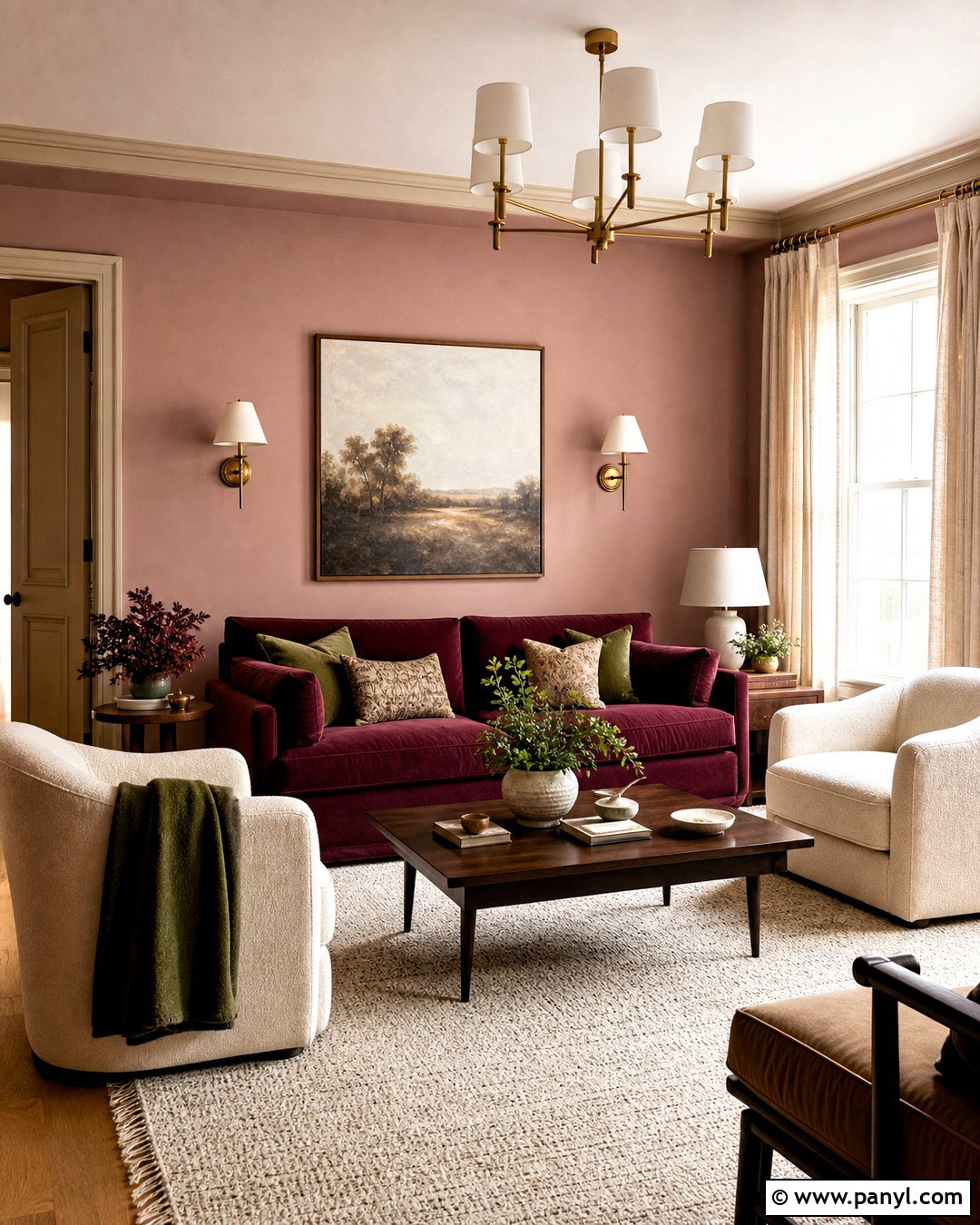
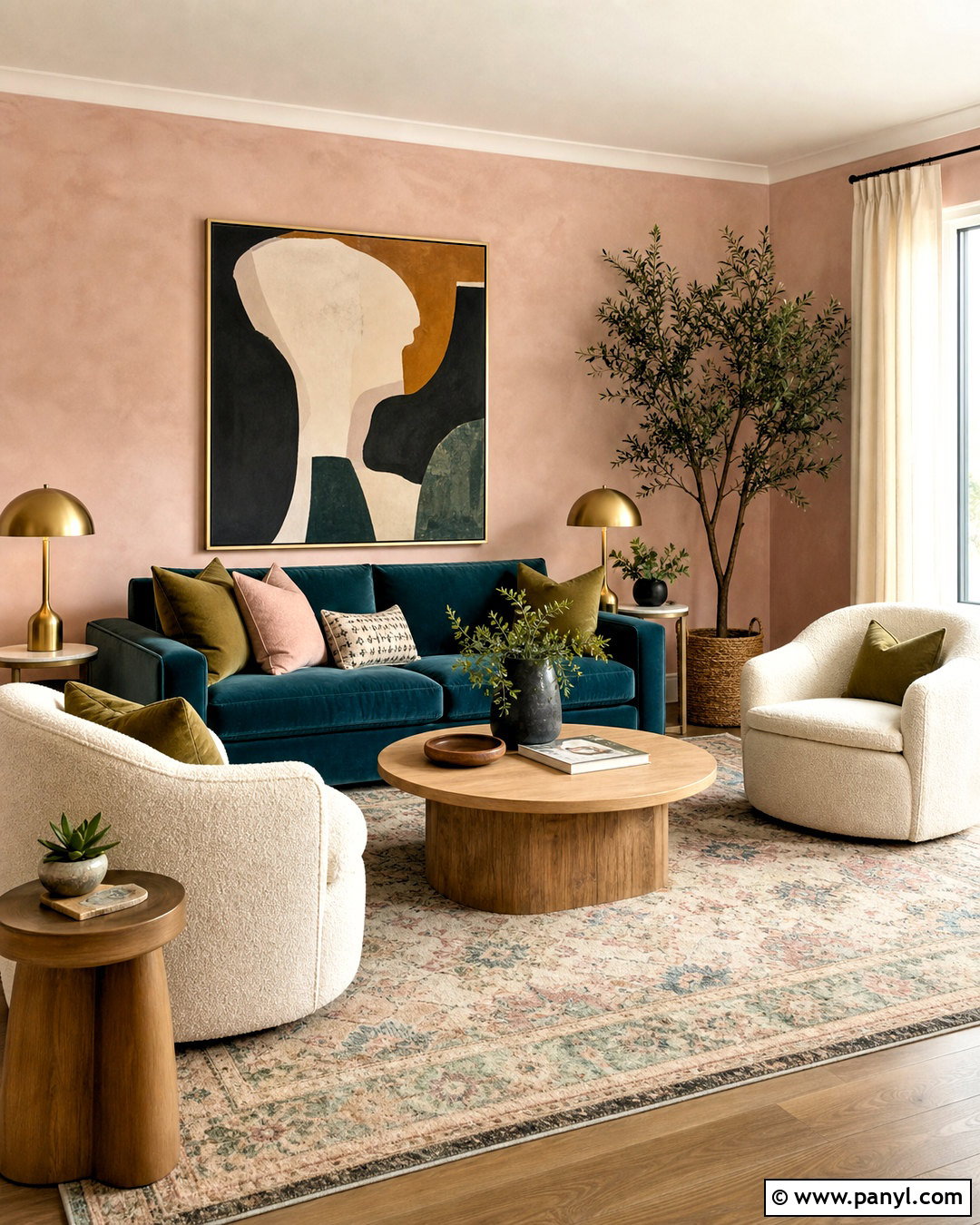
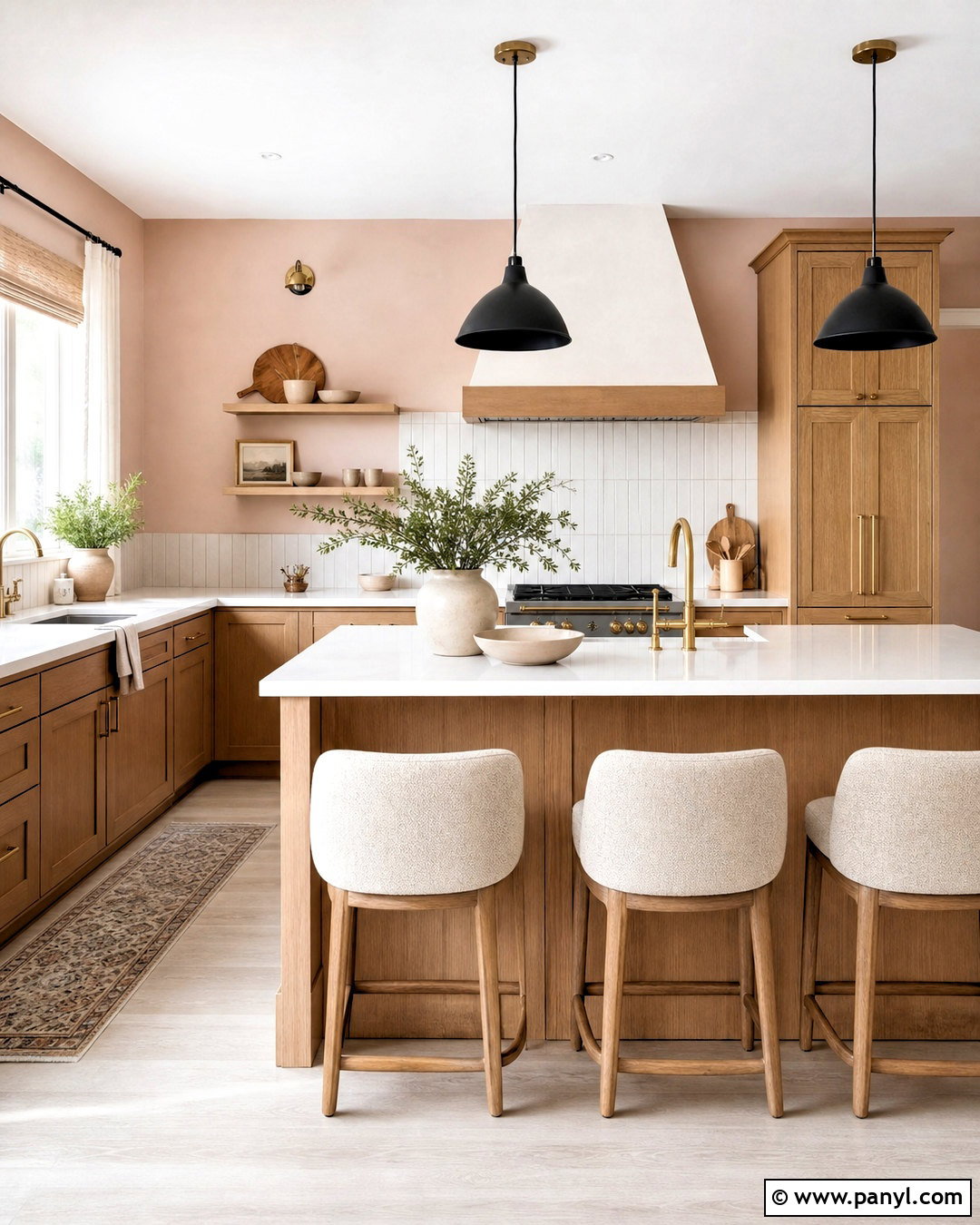
Dusty pink paint can appear mature and architectural when supported by deeper, earthier colors. Cover the walls in a muted plaster pink with brown or gray undertones, then use creamy beige on the trim and ceiling. Anchor the room with a burgundy velvet sofa and add two oatmeal armchairs to balance its visual weight. Dark walnut tables, an ivory rug, and linen curtains create a warm neutral framework. Introduce small touches of moss green through pillows, plants, or patterned upholstery. Antique brass lighting complements the rosy walls without looking overly glamorous. Avoid bright pink accessories, which can weaken the sophisticated effect. The completed living room feels warm, expressive, and layered, with a welcoming palette that changes beautifully under natural and artificial light.
10. Terracotta And Sand Living Room Paint
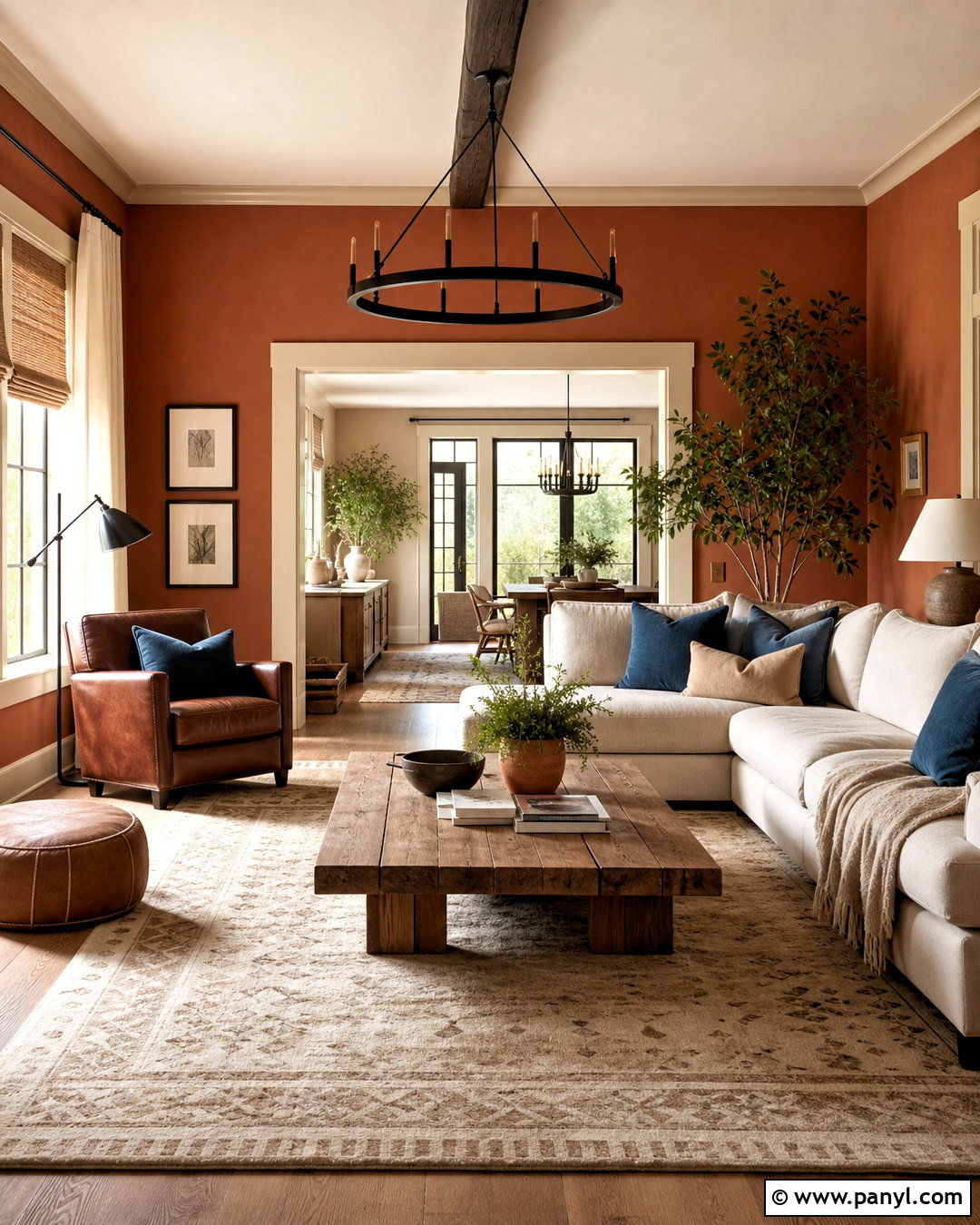
Sun-warmed terracotta walls can turn an ordinary living room into a cozy, inviting retreat. Select a muted clay shade rather than a bright orange, and balance it with sandy beige trim and a soft cream ceiling. Furnish the space with a flax-colored linen sofa, dark brown leather chair, and chunky oak coffee table. An ivory and tan patterned rug lifts the deeper wall color while defining the seating arrangement. Add woven window shades, off-white curtains, matte black lighting, and handmade ceramic decor. Touches of dusty blue in artwork or cushions introduce a cooling counterpoint. This paint scheme works beautifully with warm wood floors and abundant texture. The full room feels earthy, relaxed, and visually rich without relying on excessive decoration.
11. Chocolate Brown And Ivory Living Room Paint
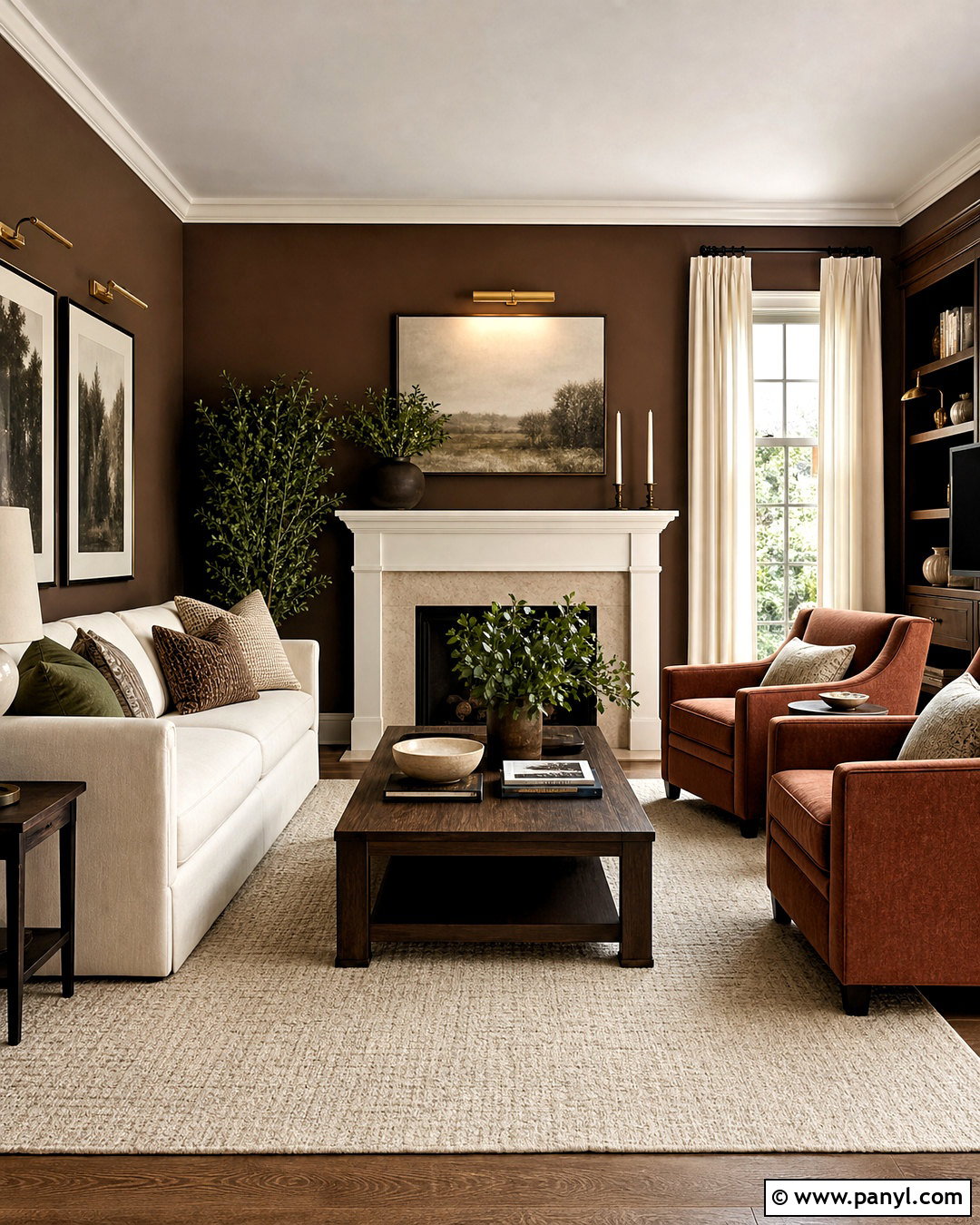
Chocolate brown paint creates depth when the rest of the room includes enough lightness and texture. Use a warm, medium-dark brown on the walls, keeping the ceiling and substantial trim a creamy ivory. Choose a large ivory sofa as the brightest element, then add rust-colored lounge chairs and a dark oak coffee table. A pale wool rug separates the furniture from wood flooring and prevents the palette from becoming visually heavy. Layer linen curtains, boucle pillows, and woven baskets for tactile variation. Brass picture lights and framed neutral artwork look especially striking against brown walls. Add a few olive green accents for a natural finishing touch. This complete scheme feels cozy and refined, especially in living rooms used most often during the evening.
12. Charcoal And Camel Living Room Paint
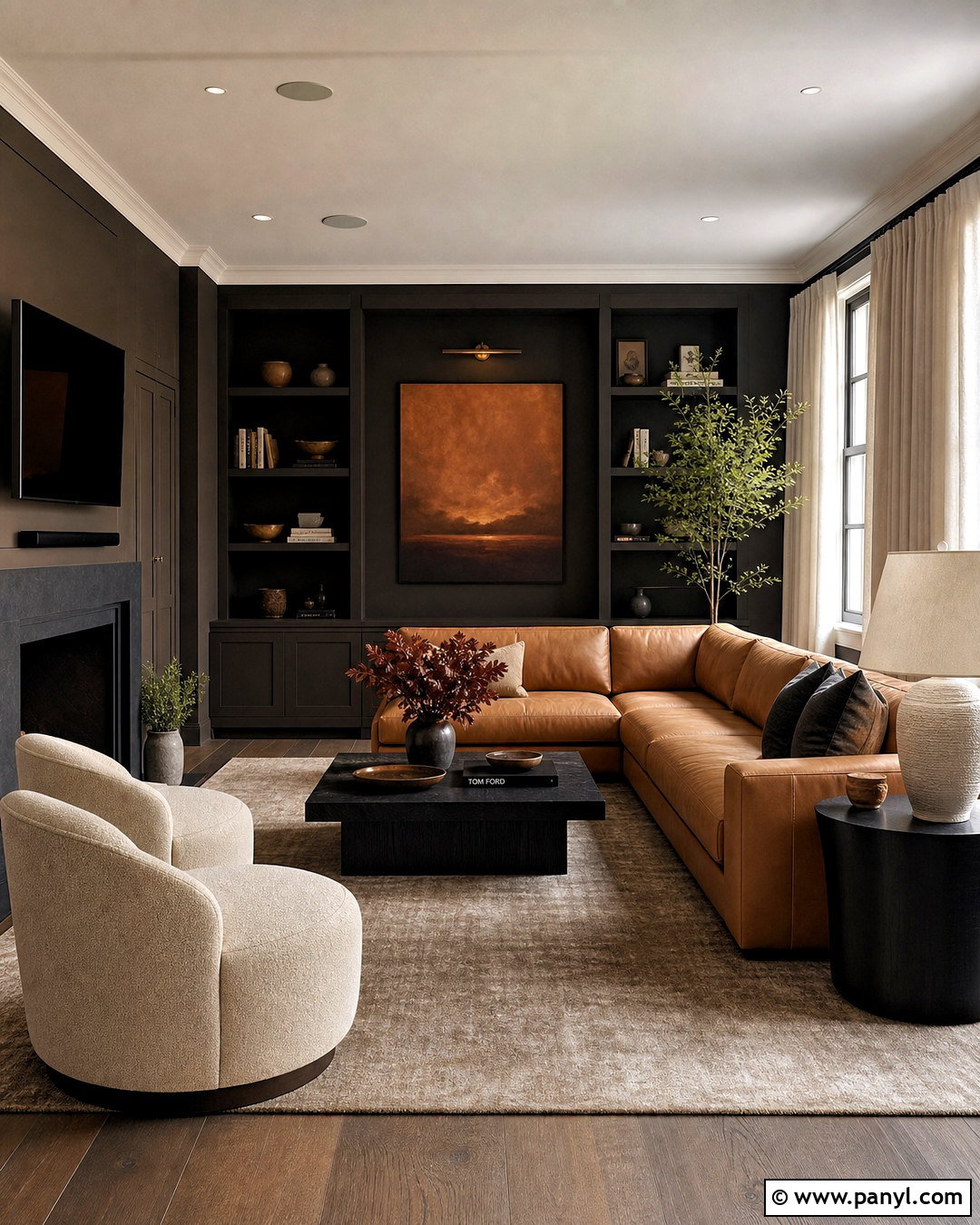
A charcoal living room can look modern without feeling severe when paired with warm camel and cream. Paint the walls a softened charcoal with brown undertones, and use the same color on built-in cabinetry for continuity. Keep the ceiling warm white, but consider charcoal trim for a more streamlined finish. Arrange a camel leather sectional opposite two cream upholstered chairs, with a blackened oak coffee table at the center. A large beige rug brightens the floor and visually expands the seating area. Add off-white curtains, sculptural ceramic lamps, and simple abstract artwork containing tan, rust, and gray. Warm bulbs and several light sources are important in this darker room. The result is tailored, comfortable, and practical for contemporary homes.
13. Black And White Living Room Paint
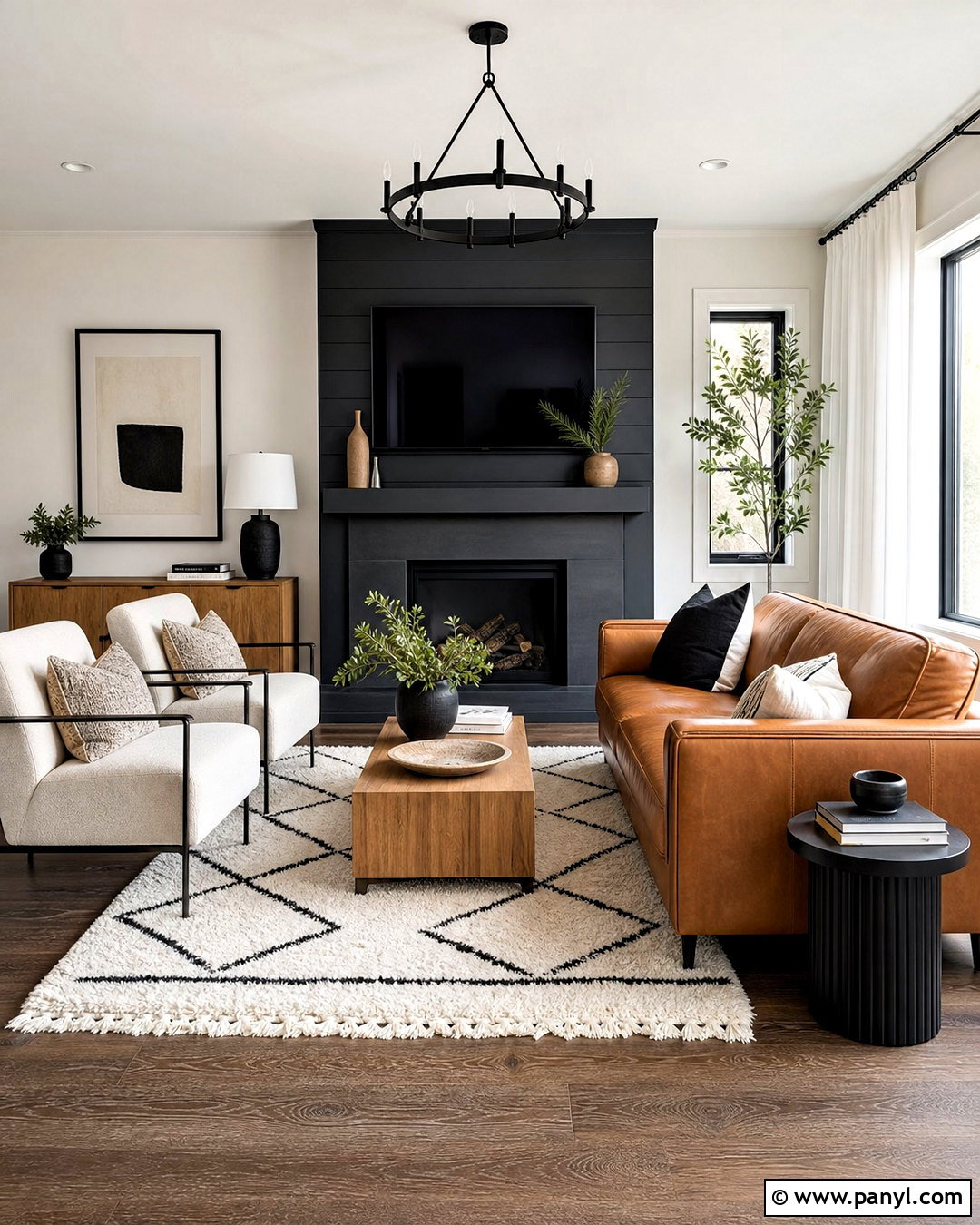
Black and white paint can produce a clean, high-contrast room that still feels livable. Use soft white on three walls and paint the fireplace wall or built-in media wall a rich matte black. Repeat black on interior window frames or select trim details, but avoid outlining every surface. Introduce warmth with a cognac leather sofa, ivory boucle chairs, and a medium oak coffee table. A cream rug with a subtle black pattern connects the opposing wall colors. Choose full-length white curtains, black metal lighting, and large neutral artwork in thin frames. Green plants keep the scheme from appearing overly graphic. The complete room feels crisp and modern, while the wood, leather, and textured fabrics add the warmth needed for everyday comfort.
14. Pale Yellow And Blue Living Room Paint
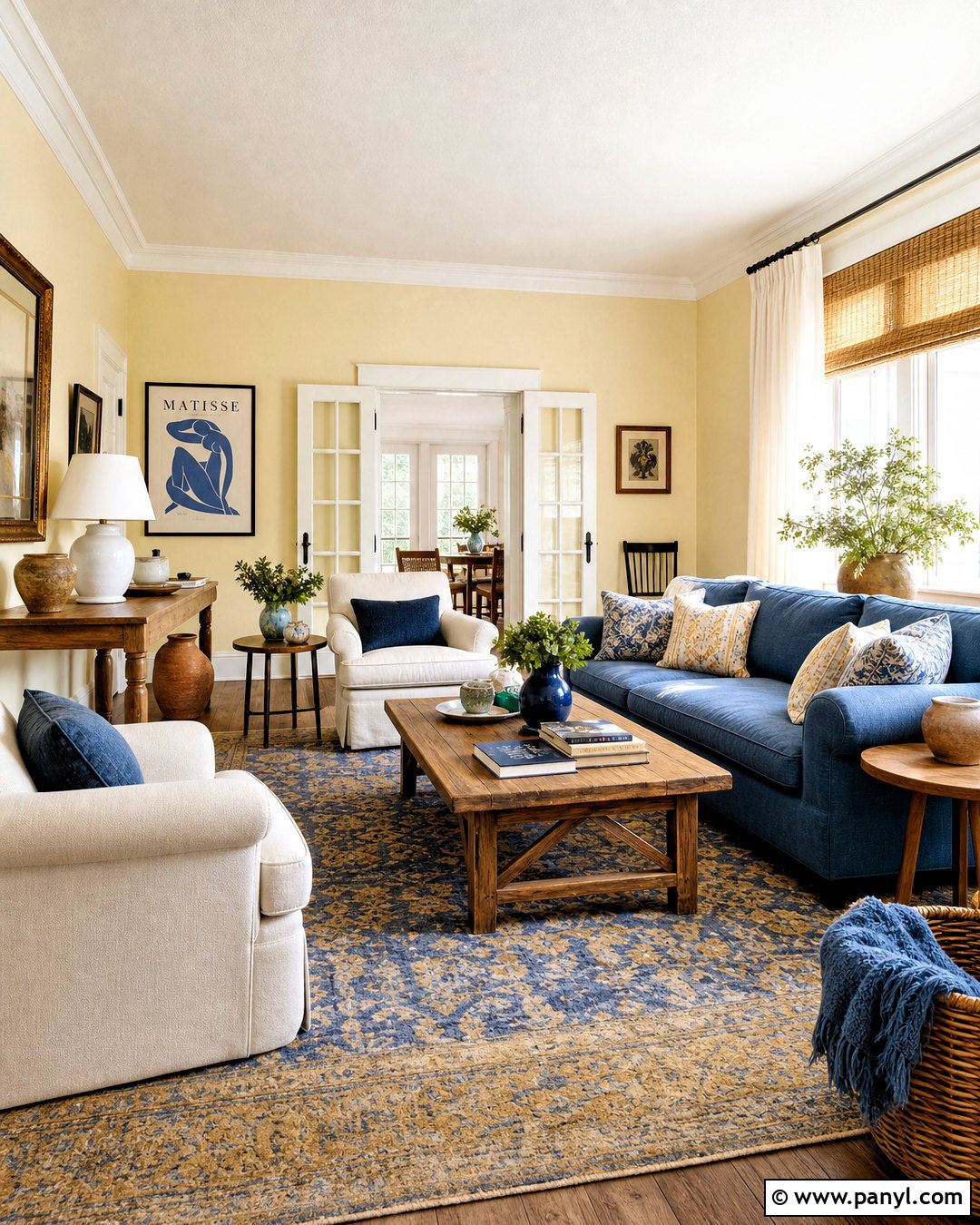
Soft buttery yellow walls can brighten a living room without becoming loud or overly traditional. Choose a pale, slightly muted yellow and pair it with warm white trim and ceiling paint. Ground the cheerful background with a denim blue sofa and two cream armchairs. A patterned rug containing faded blue, tan, and golden yellow brings the seating area together. Use medium oak furniture, woven shades, and white linen curtains to create a casual, sunlit atmosphere. Small navy accents offer definition, while terracotta pottery adds natural warmth. Keep large furniture shapes simple so the yellow remains fresh rather than decorative. This complete palette suits cottages, family homes, and rooms with limited daylight, producing an inviting look that feels bright in every season.
15. Mustard And Navy Living Room Paint
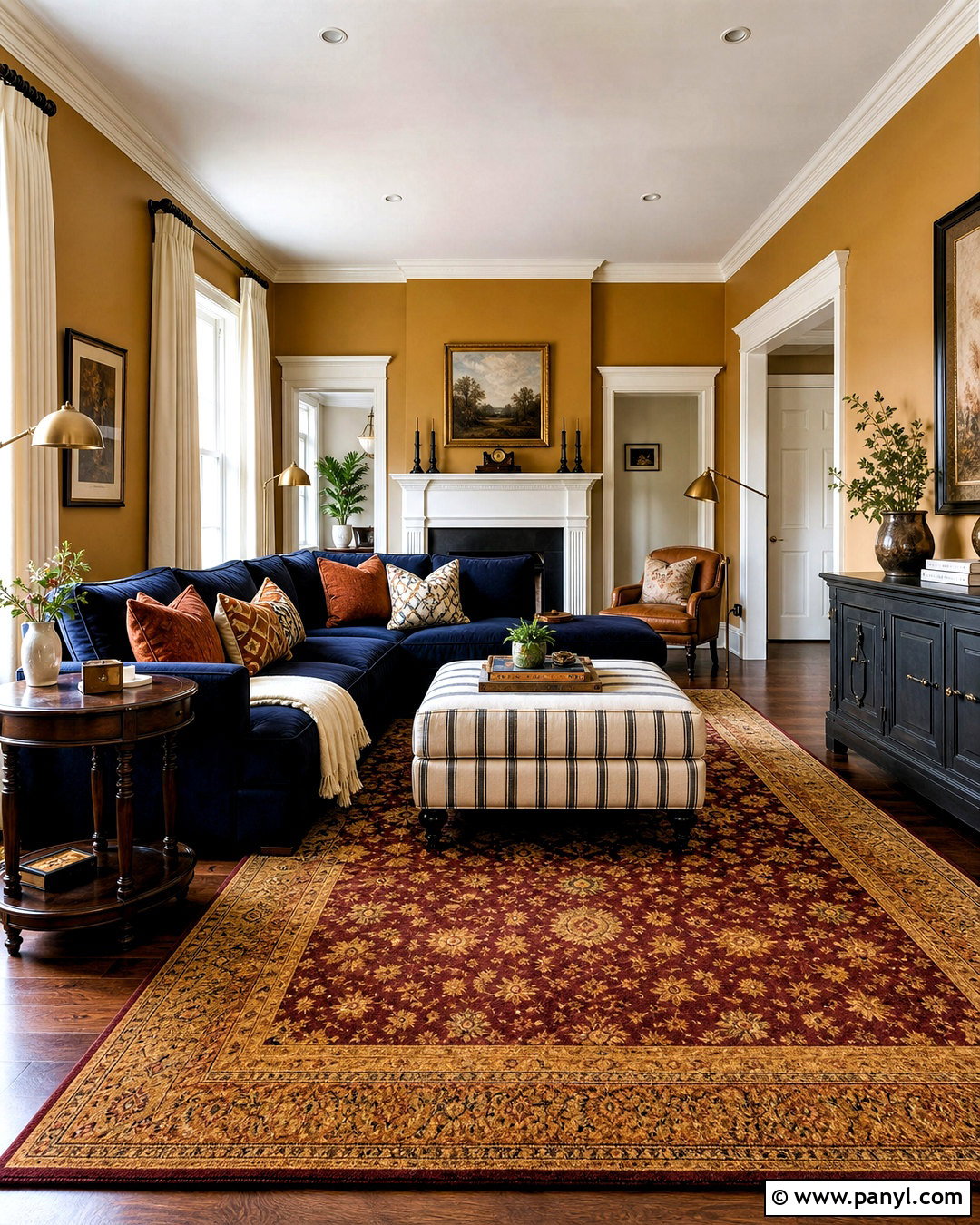
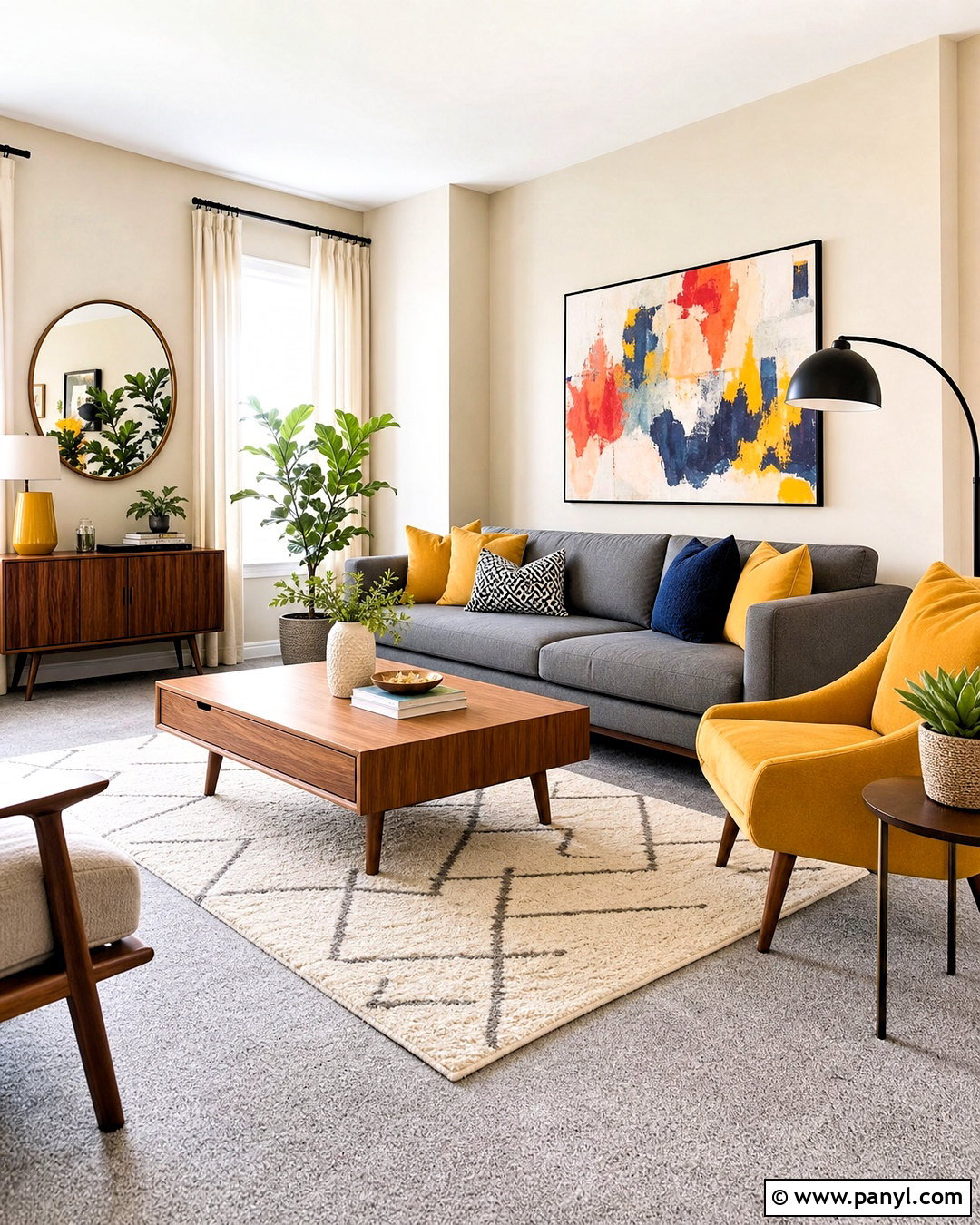
Mustard paint delivers warmth and personality, especially when balanced with deep navy furniture. Use a muted ochre-mustard on the walls and creamy white across the ceiling, doors, and trim. Place a navy sectional against the warm background, adding ivory and rust pillows to bridge the main colors. A striped or geometric ottoman can serve as the coffee table while reinforcing the layered palette. Choose a vintage-style rug with navy, gold, burgundy, and cream, then add dark wood side tables and brass floor lamps. Hang an assortment of artwork in simple wood and black frames for a collected appearance. The finished living room feels energetic but grounded. It works best when the mustard has earthy undertones rather than a sharp, lemon-yellow finish.
16. Lavender Gray And Plum Living Room Paint
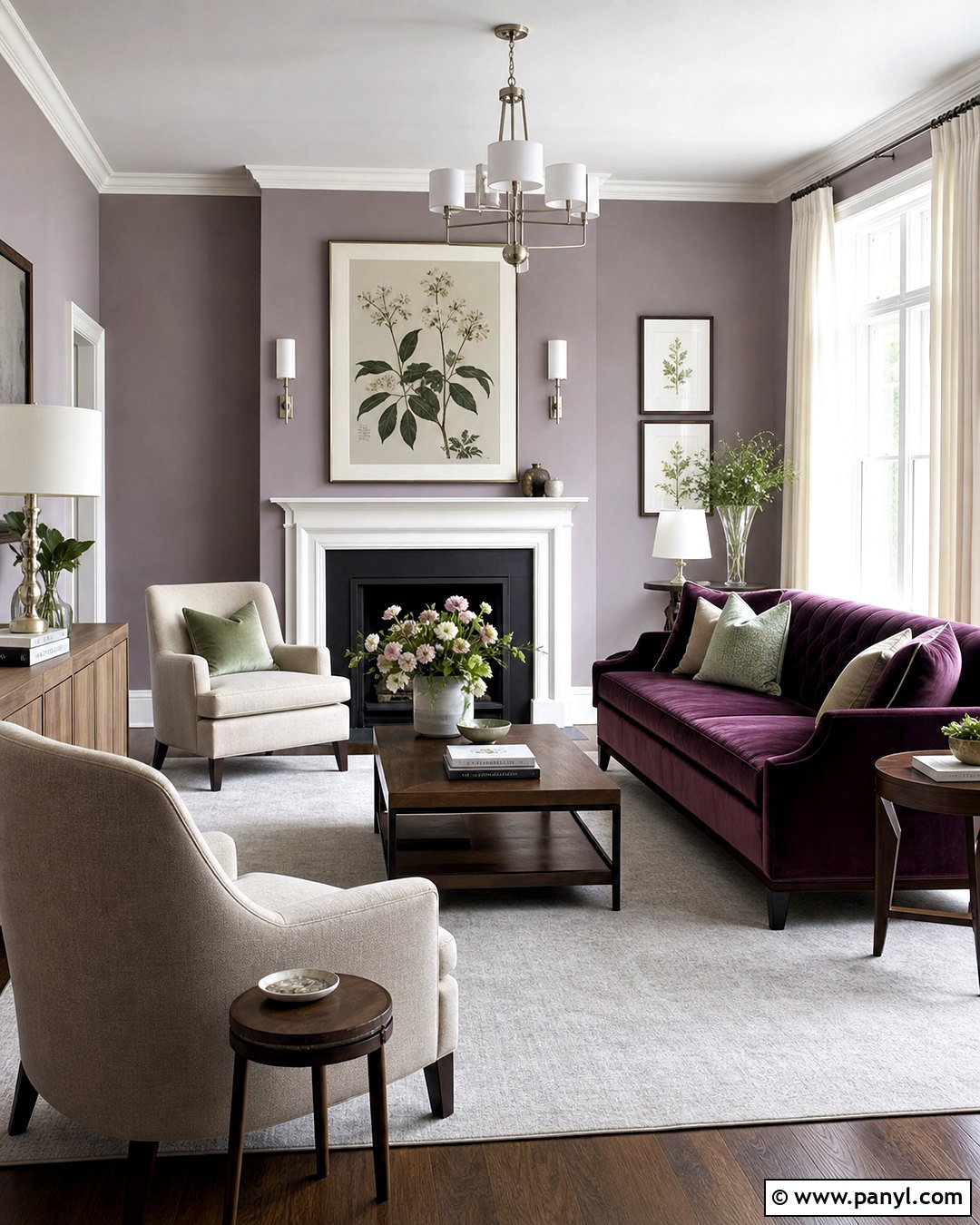
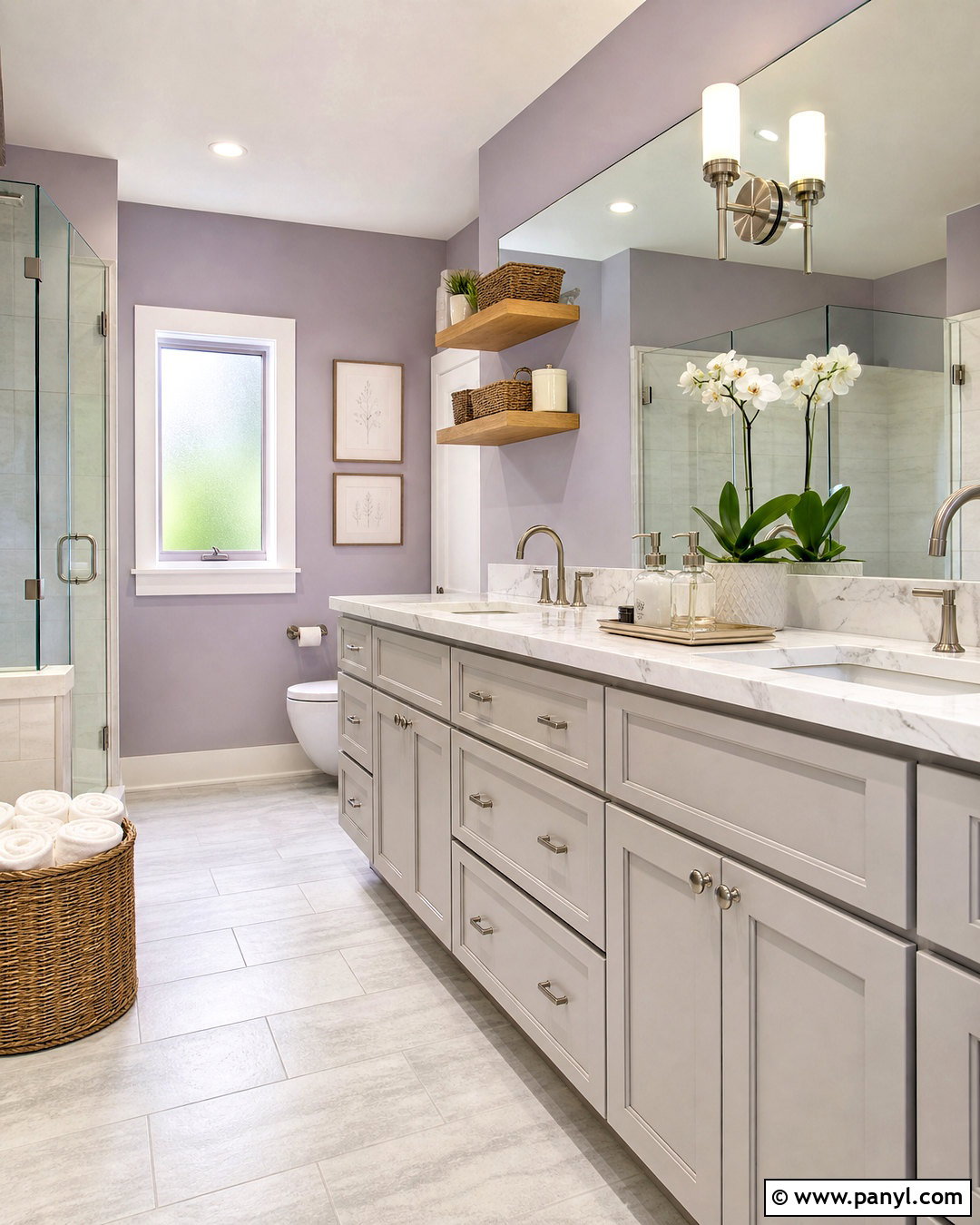
Lavender-gray walls introduce subtle color while behaving much like a sophisticated neutral. Choose a muted shade that appears gray at first glance, with a gentle violet undertone visible in changing light. Pair it with soft white trim and a pale ceiling. A plum velvet sofa creates a deeper focal point, balanced by oatmeal chairs and a light gray wool rug. Use dark walnut tables, polished nickel lighting, and off-white curtains for a clean finish. Muted green pillows or botanical artwork keep the purple palette from feeling overly coordinated. Avoid bright lavender accessories and instead layer mauve, charcoal, cream, and natural wood. The complete room feels calm, elegant, and distinctive without requiring a dramatic or highly saturated wall color.
17. Blue Gray And Rust Living Room Paint
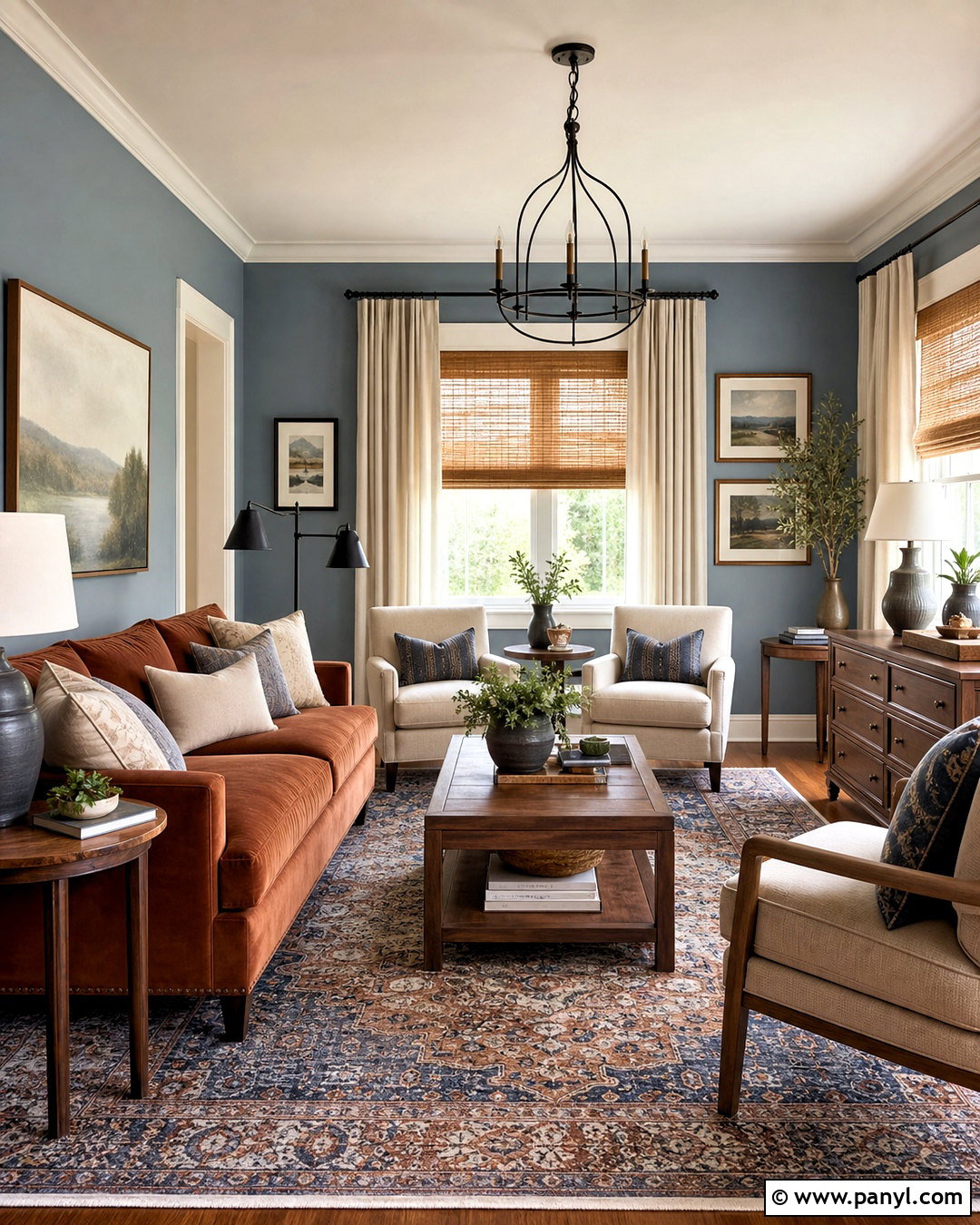
Blue-gray walls provide a cool, restful background that comes alive beside warm rust and brown accents. Select a softened blue-gray that retains visible color under both daylight and lamplight. Use warm white for the trim and ceiling to keep the room crisp. Furnish the space with a rust-colored sofa, cream accent chairs, and a medium walnut coffee table. A faded Persian-style rug containing blue, rust, beige, and charcoal creates a natural bridge between the warm and cool elements. Add woven bamboo shades beneath simple ivory curtain panels. Black metal lamps and framed landscape prints provide structure. This complete living room scheme feels balanced and timeless, making it suitable for traditional architecture, contemporary furniture, or a comfortable combination of both.
18. Forest Green And Blush Living Room Paint
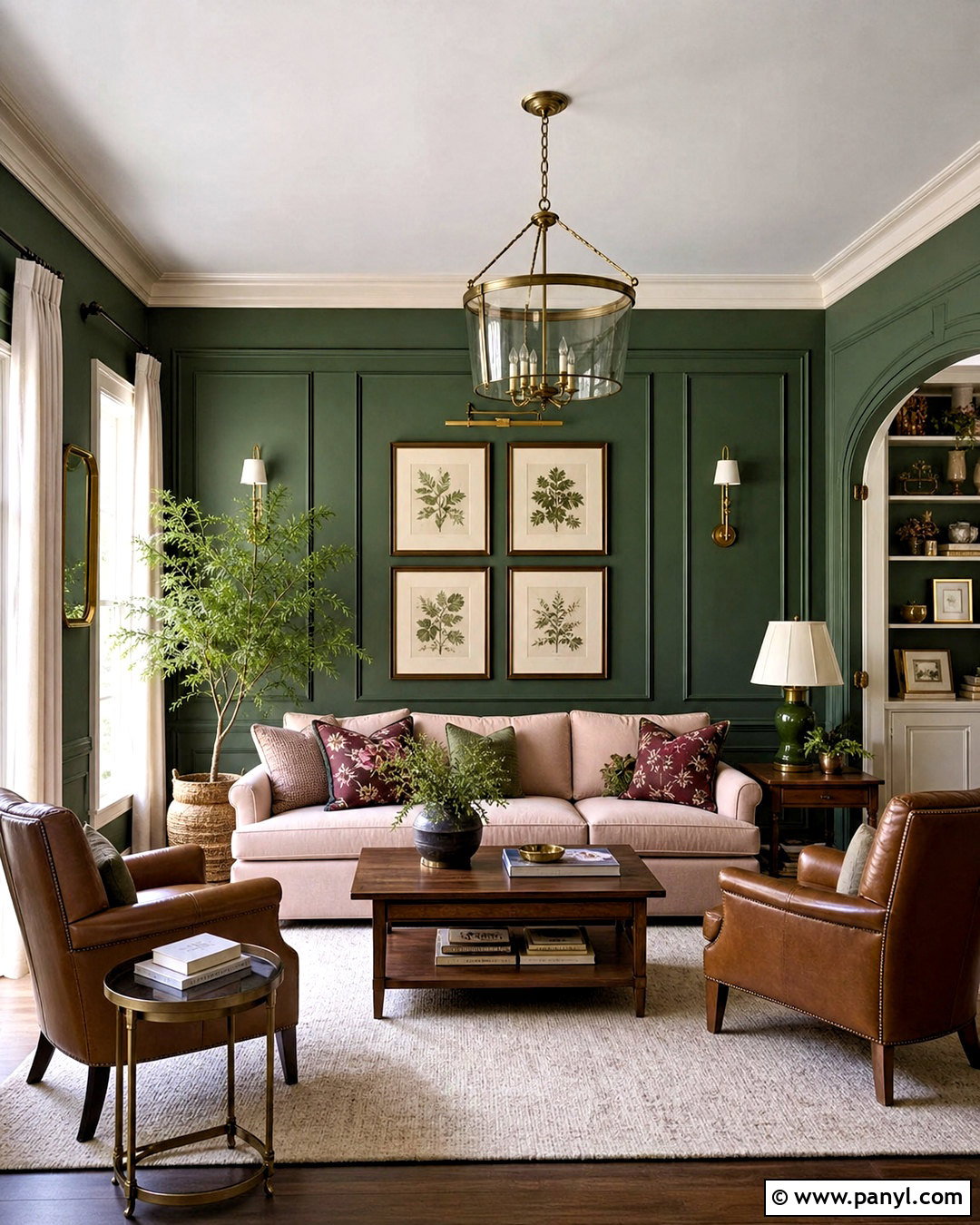
Forest green creates a rich backdrop, while blush pink keeps the finished room from appearing too dark or formal. Paint the walls a deep, slightly muted green and continue the color across built-ins or wall paneling. Use warm cream on the ceiling and trim for contrast. Center the room around a pale blush sofa, then add tan leather chairs and a walnut coffee table. An ivory rug with subtle green details lightens the floor. Incorporate antique brass lighting, linen curtains, and botanical artwork with hints of pink and cream. A few dark red or burgundy accents can add further depth. The complete palette feels bold but balanced, combining traditional color with softer contemporary furniture and approachable natural materials.
19. Dusty Blue Color Drenched Living Room Paint
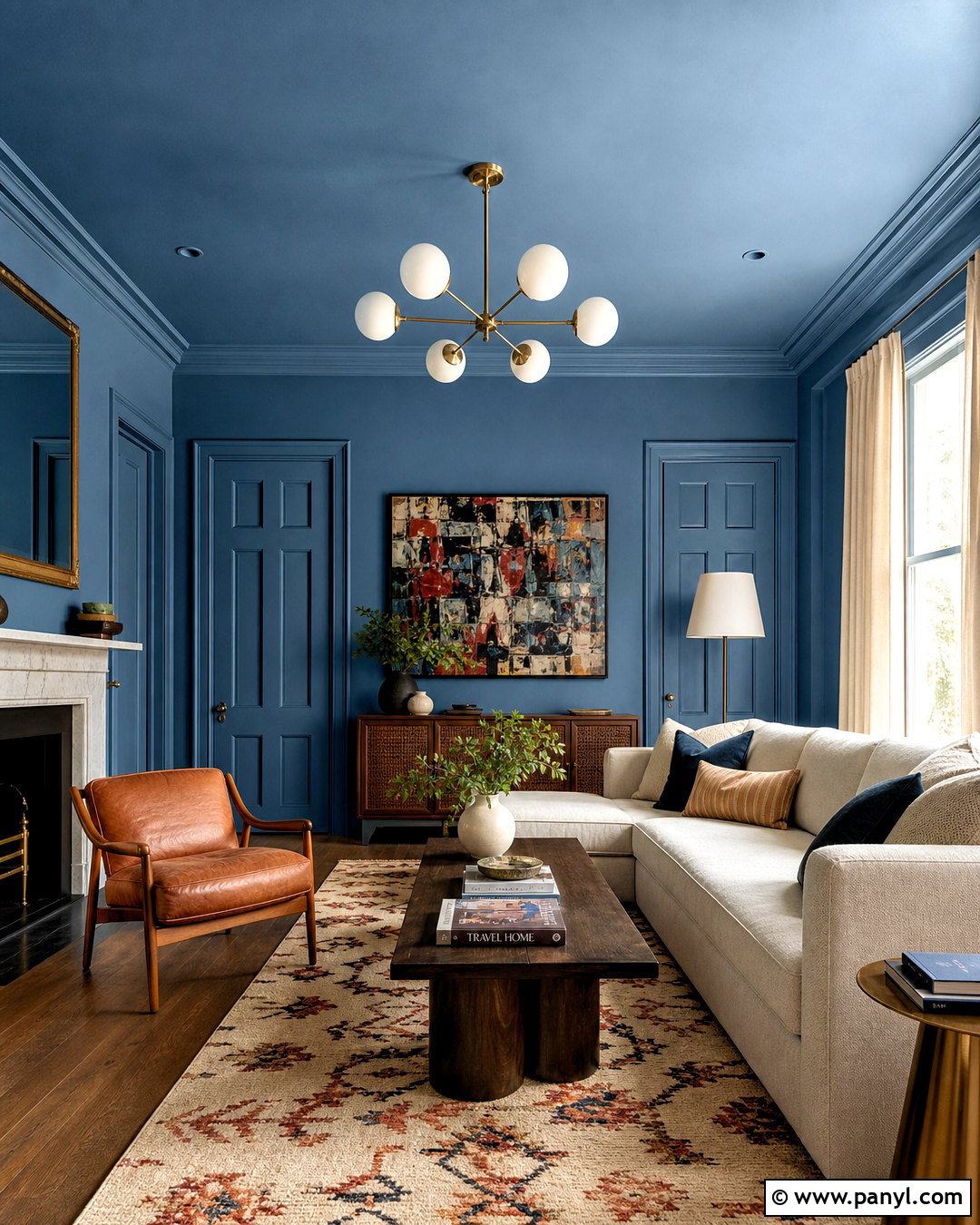
Color drenching creates a unified living room by carrying one shade across the walls, trim, doors, and ceiling. Use a dusty medium blue with gray undertones so the effect feels immersive rather than overpowering. Vary the paint finish slightly, choosing matte walls and satin woodwork to create gentle depth. Add a warm ivory sofa, cognac leather chair, and dark wood coffee table to contrast with the blue envelope. A patterned rug featuring cream, rust, and muted green introduces additional warmth. Choose oatmeal curtains that nearly match the sofa instead of repeating the wall color. Brass lighting and colorful artwork provide small highlights. The completed room feels cohesive, intimate, and architectural, even when the space itself has relatively simple details.
20. Mushroom And Deep Green Living Room Paint
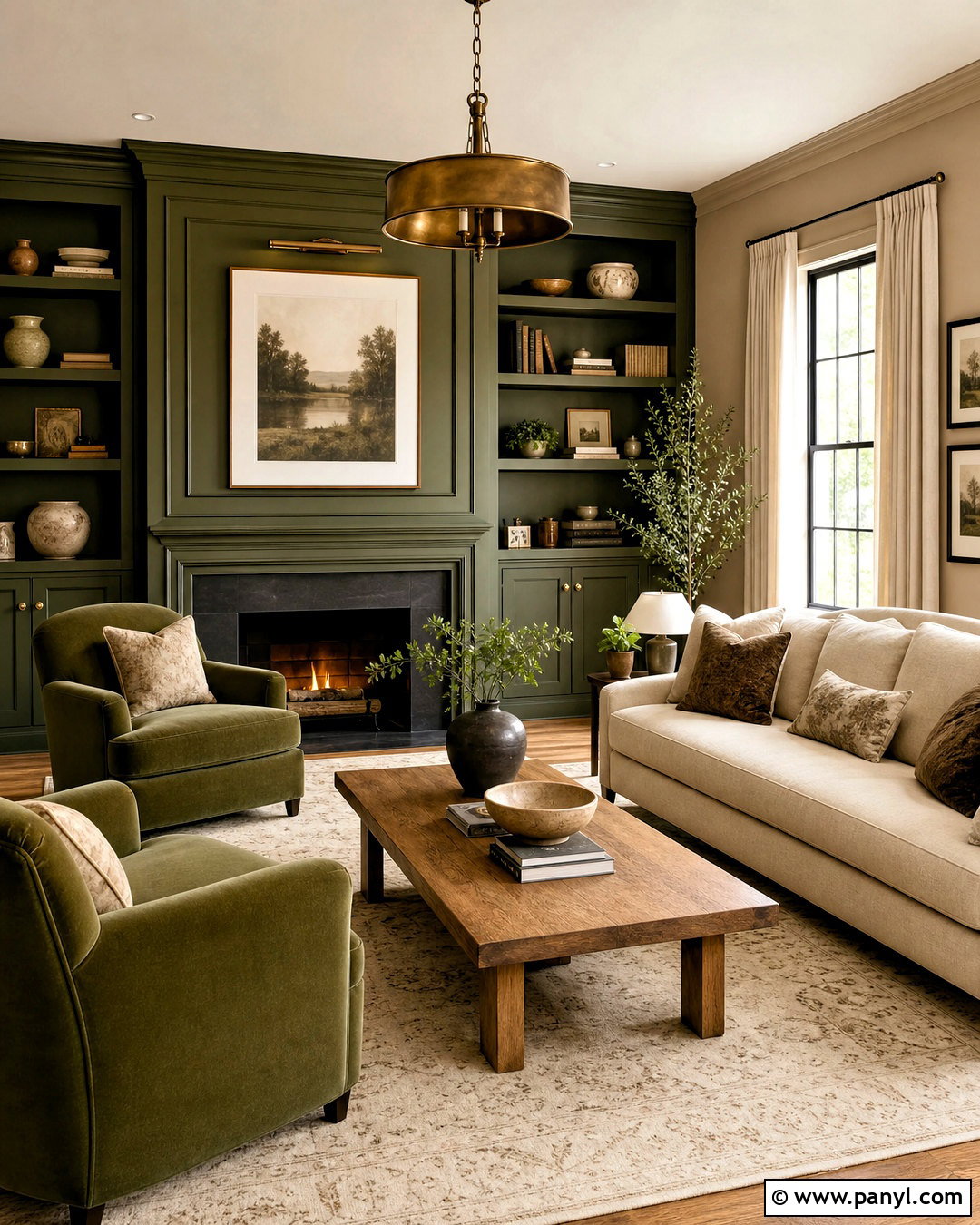
A two-tone mushroom and deep green scheme can add architecture to a plain living room. Paint the upper walls a warm mushroom neutral and apply dark green to lower paneling, built-ins, or the entire fireplace wall. Use creamy white on the ceiling while repeating mushroom on the remaining trim for a soft transition. Select a light beige sofa, olive lounge chairs, and a solid oak coffee table. A cream rug with brown detailing keeps the floor visually quiet. Complete the room with linen curtains, bronze lighting, earthenware decor, and landscape prints. Keep the dividing line consistent with existing windows or chair-rail height. This finished design provides richness at eye level while the lighter upper walls preserve an open, comfortable atmosphere.
Conclusion:
The most successful 20 living room paint ideas color schemes treat paint, furniture, lighting, flooring, and decor as parts of one complete design. Warm whites and nuanced neutrals create flexible foundations, while sage, teal, blue, terracotta, and brown add stronger personality. Darker colors become easier to use when balanced with pale upholstery, reflective accents, and layered lighting. Before painting the full room, apply large samples to several walls and study them in morning, afternoon, and evening light. Compare each option directly with your permanent finishes and largest furniture pieces. With thoughtful testing and a coordinated palette, your chosen living room color scheme can feel comfortable, intentional, and personal for years.

Related Ideas and Inspiration:
Leave a Reply