
If you are searching for **20 bathroom paint ideas colour schemes**, start by looking beyond the wall color alone. A successful bathroom palette connects the paint with the vanity, tile, flooring, fixtures, lighting, and textiles. Current bathrooms are moving away from cold, stark combinations toward warmer neutrals, nature-inspired greens, softer blues, earthy clay tones, and carefully balanced dark colors. () The right combination can make a small powder room feel intentional, give a family bathroom a fresh identity, or turn a primary bathroom into a relaxing retreat. Always test samples beside your existing tile under daytime and evening light before committing. The complete looks below make it easier to recreate **20 bathroom paint ideas colour schemes** with confidence.

1. Sage Green Bathroom Paint Scheme
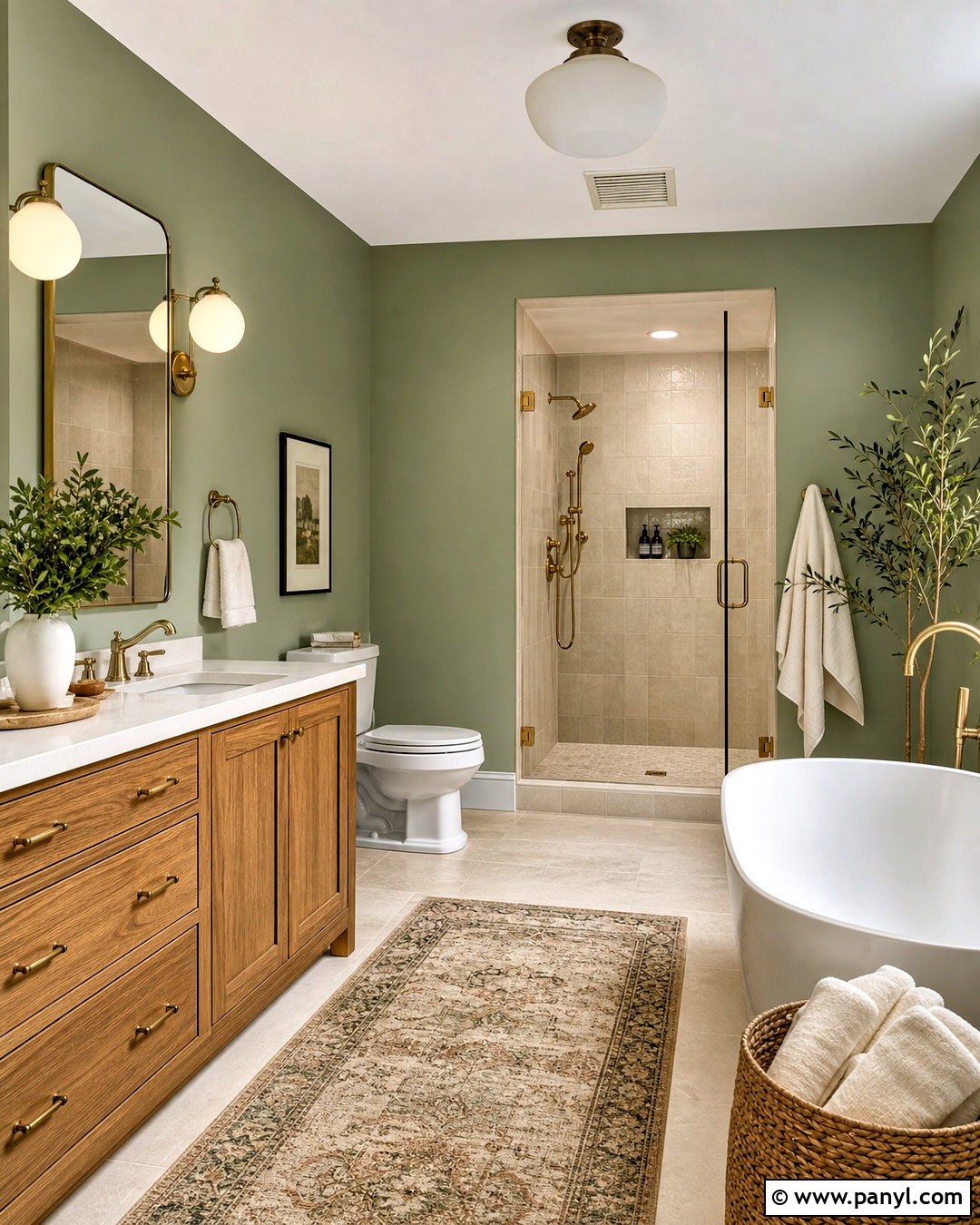
Soft sage green creates a calm bathroom that feels fresh without becoming cold. Paint the upper walls sage and use creamy white tile around the shower or bathtub. A medium-tone oak vanity adds warmth, while a white quartz counter keeps the room bright and practical. Choose brushed brass faucets, simple globe sconces, and a thin brass mirror frame for gentle contrast. Pale limestone-look floor tile supports the natural palette without competing with the walls. Finish the space with ivory towels, woven storage baskets, and one or two small plants suited to humid conditions. This complete scheme works especially well in bathrooms with good natural light, but a lighter sage can also soften a windowless room when paired with bright vanity lighting.
2. Warm White Bathroom Paint Scheme
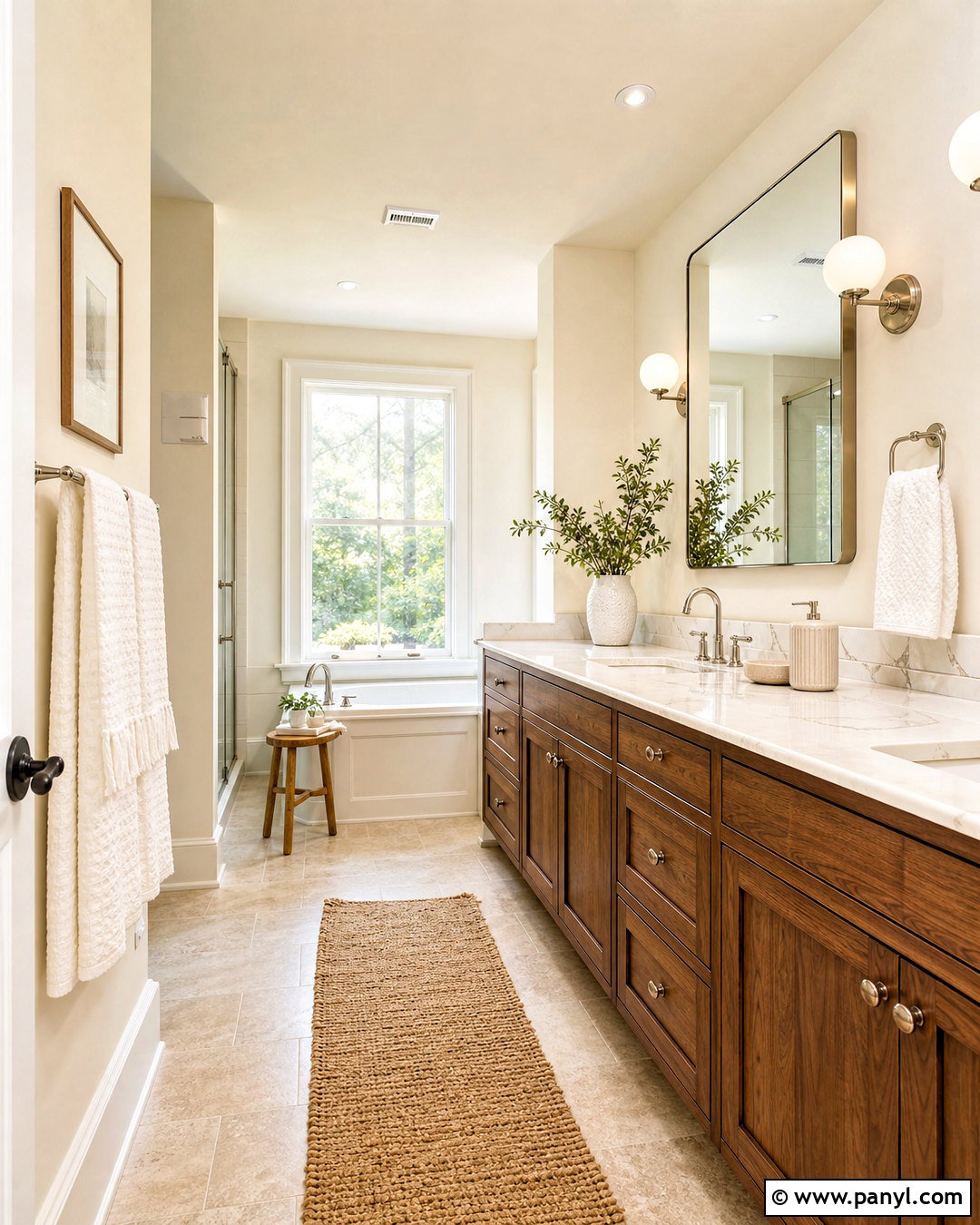
Warm white paint gives a bathroom a clean foundation without the clinical appearance of a blue-toned white. Carry the color across the walls, ceiling, and trim, using slightly different finishes to create subtle depth. Pair it with an oak or walnut vanity, creamy marble-look counters, and beige stone floor tile. Polished nickel fixtures provide a classic touch, while white globe lights distribute clear, even illumination around the mirror. Add texture through waffle-weave towels, a natural fiber bath mat, and ribbed ceramic accessories. This low-contrast palette suits small bathrooms because every surface feels connected. To prevent the room from looking plain, mix smooth tile, visible wood grain, brushed metal, and soft fabric rather than adding several unrelated accent colors.
3. Navy Blue And White Bathroom Paint Scheme
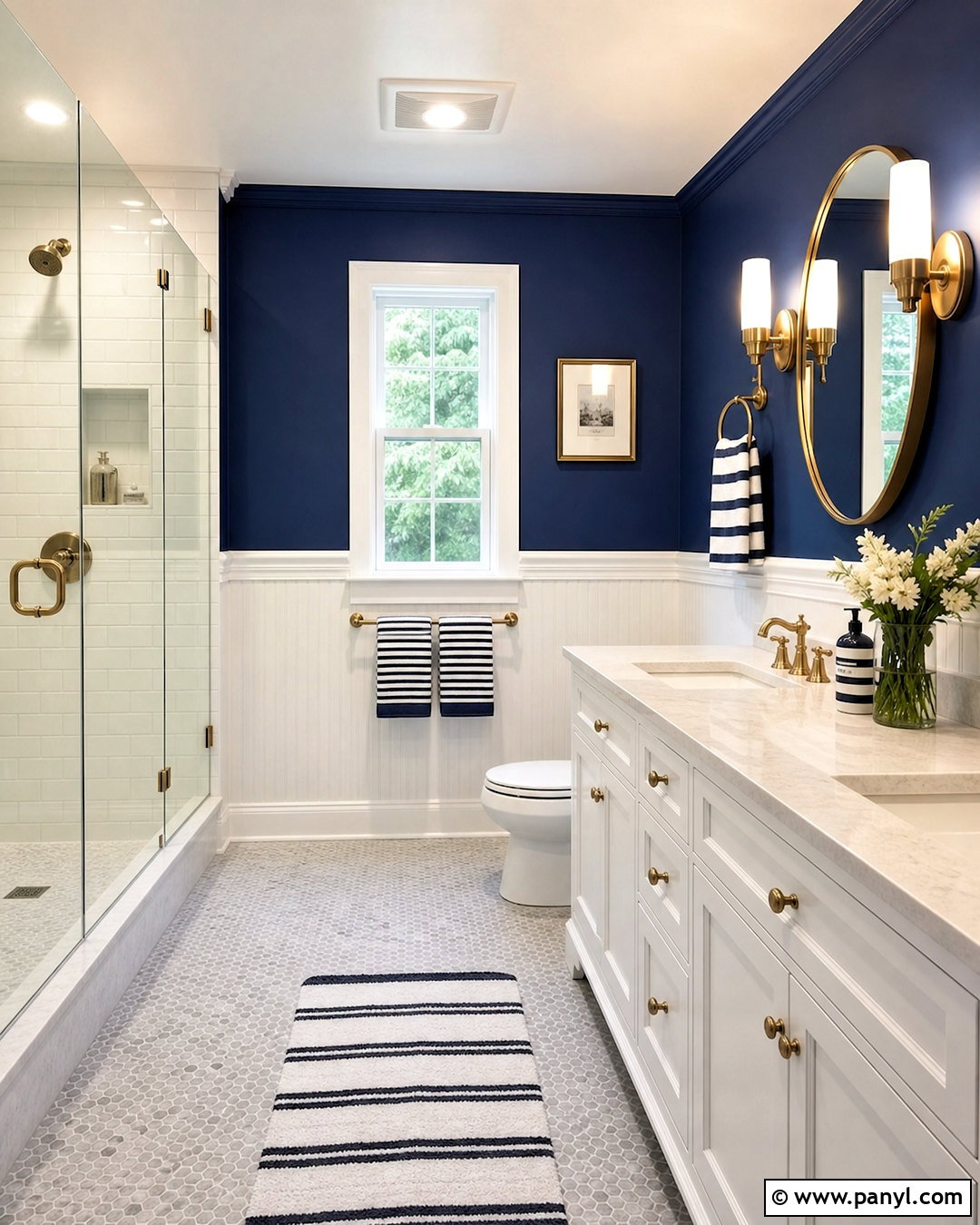
Deep navy walls can make a bathroom feel tailored and dramatic, especially when balanced with generous areas of crisp white. Use navy above white beadboard or rectangular wall tile to keep the lower half bright and easy to maintain. A white vanity with a pale quartz counter reinforces the contrast, while warm brass hardware prevents the palette from feeling too cool. Continue the navy through a framed mirror or linen cabinet for a coordinated look. White-and-gray mosaic flooring adds pattern without introducing another dominant color. Clear glass shower panels preserve sightlines and help the room feel open. Complete the design with white towels, one striped textile, and bright layered lighting. The result is bold, polished, and suitable for traditional or transitional homes.
4. Soft Blue And Warm Wood Bathroom Paint Scheme
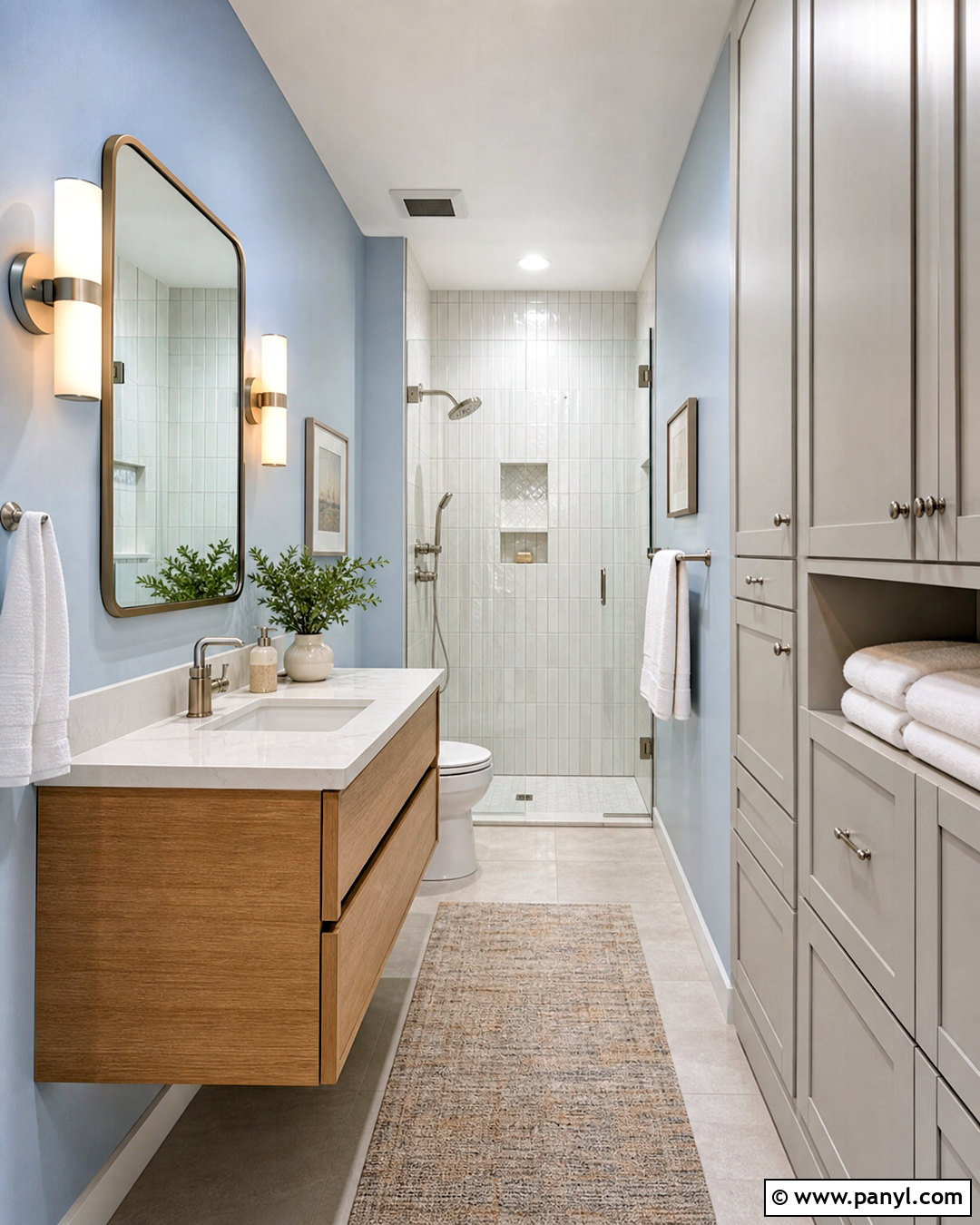
A misty blue bathroom can feel airy and restful when it is grounded by warm wood. Paint every untiled wall in a pale blue with a slightly muted undertone, then install a floating oak vanity to keep the floor visually open. White quartz, vertical white shower tile, and a frameless glass enclosure create a simple backdrop. Use brushed nickel faucets and streamlined wall sconces for a clean finish. Large beige porcelain floor tiles bring warmth underfoot and connect naturally with the vanity. Keep accessories quiet with white towels, pale gray storage containers, and a soft blue bath mat. This scheme is ideal for narrow bathrooms because the cool walls appear to recede, while the uninterrupted vanity and glass shower maintain an easy visual flow.
5. Terracotta And Cream Bathroom Paint Scheme
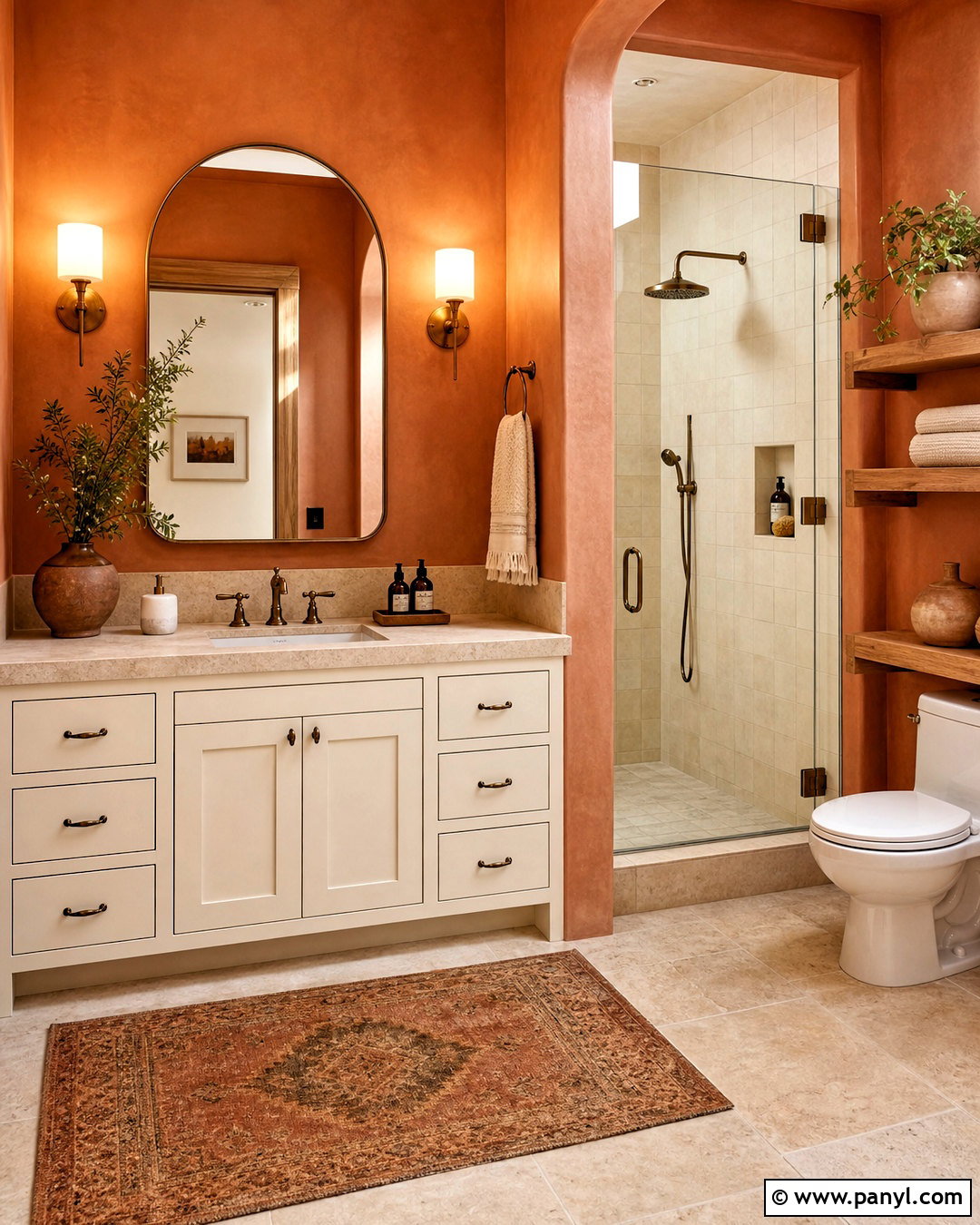
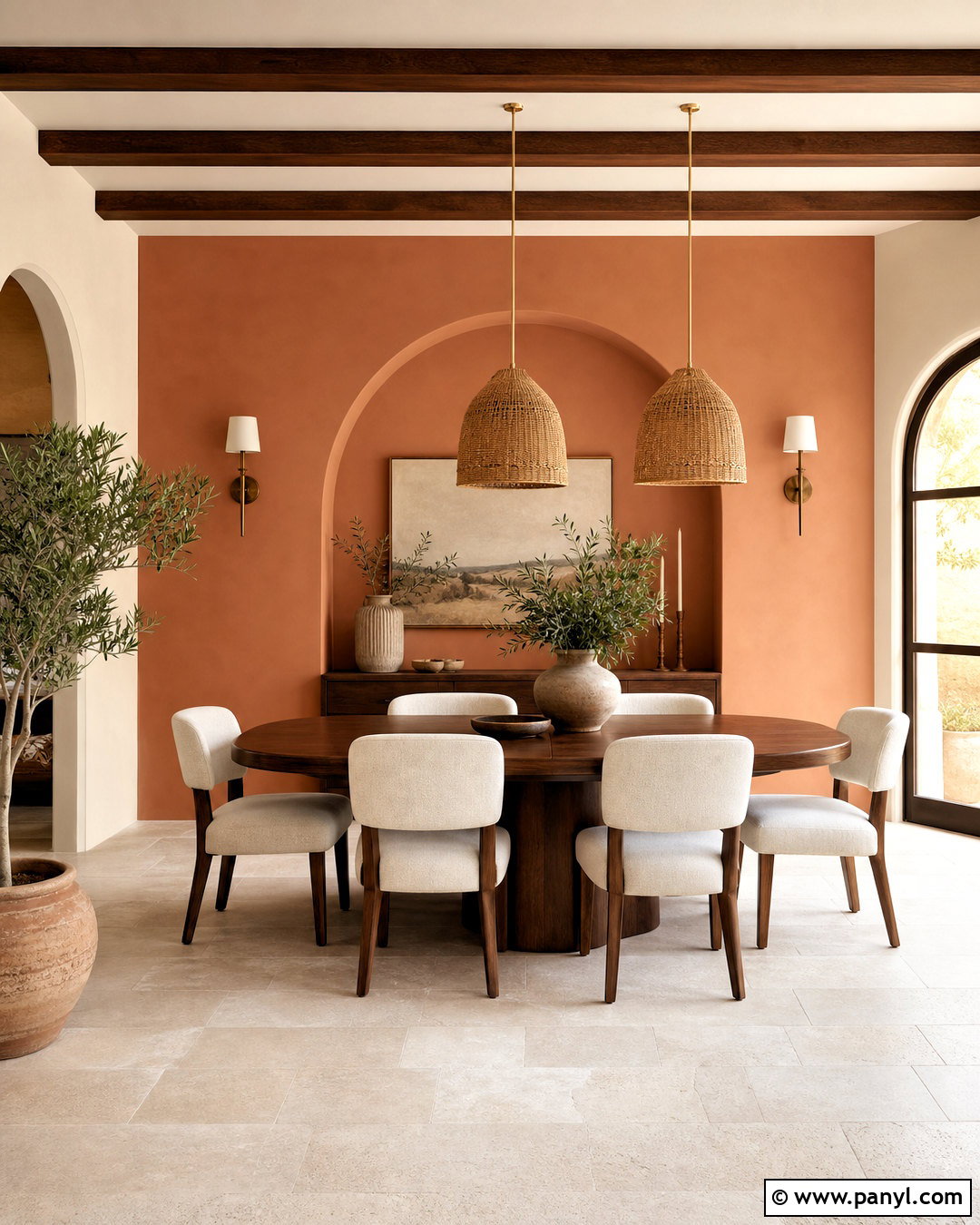
Sun-warmed terracotta paint brings character to a bathroom while cream surfaces keep the color approachable. Apply the terracotta to the walls above ivory tile, or use it throughout a powder room for a more immersive effect. A cream-painted vanity with a beige stone counter provides gentle contrast rather than stark separation. Choose aged brass fixtures, an arched mirror, and warm white sconces to support the earthy atmosphere. Matte limestone-look flooring works better than cool gray tile in this palette. Introduce medium-tone wood through shelves or a small stool, then finish with oatmeal towels and handmade-looking ceramic accessories. The completed room should feel warm and collected, with enough light surfaces to balance the rich paint and keep the bathroom welcoming throughout the day.
6. Blush Pink And Burgundy Bathroom Paint Scheme
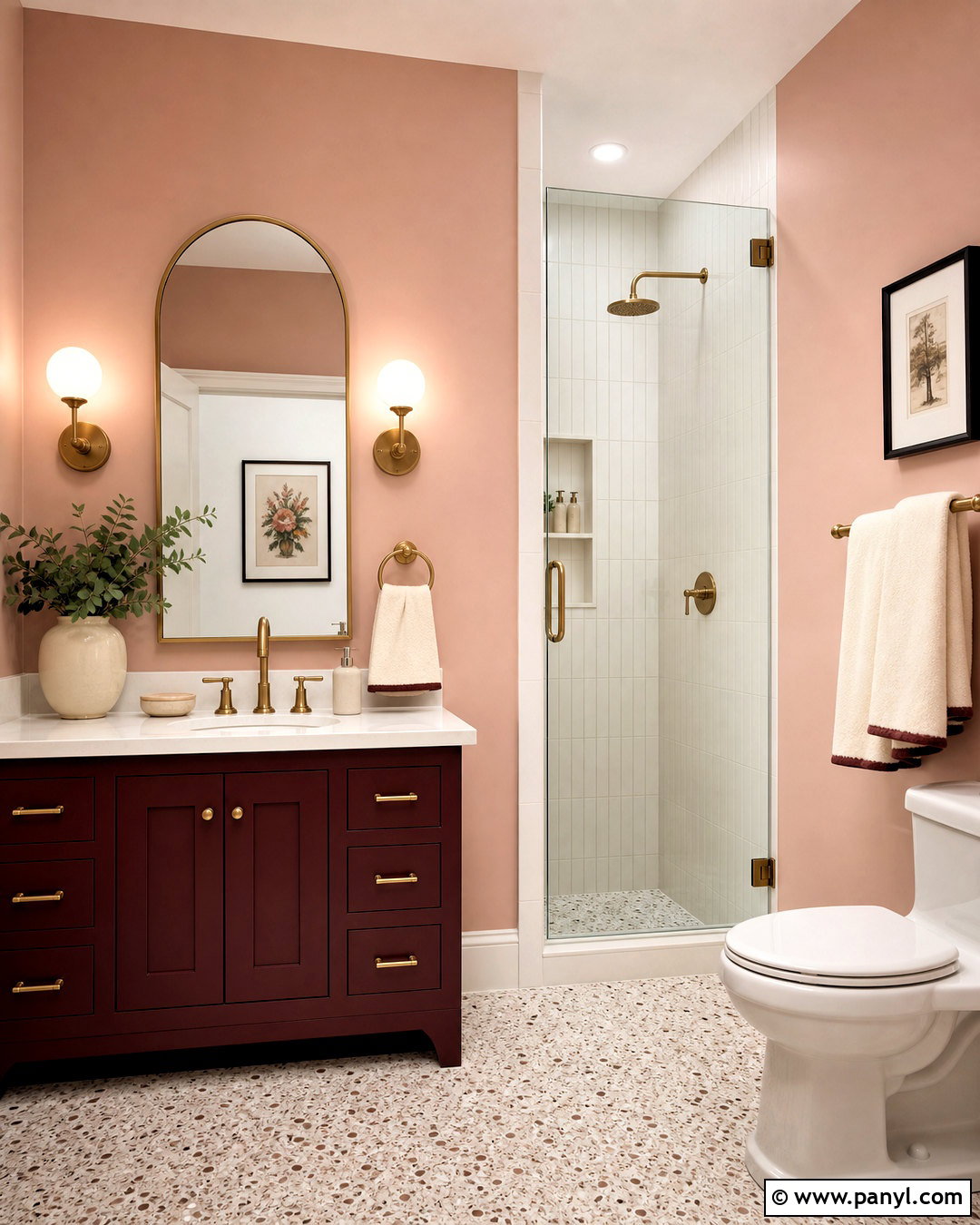
Blush pink becomes more sophisticated when paired with controlled burgundy accents instead of sweet pastel accessories. Use muted blush paint on the walls and install a burgundy vanity as the focal point. A creamy quartz top, off-white shower tile, and pale terrazzo flooring will lighten the deeper cabinet color. Select brushed brass hardware and rounded lighting to complement the warmth of the palette. An arched mirror can soften the vanity wall, while burgundy-edged towels subtly repeat the cabinetry. Keep decorative objects limited to cream, amber, and dusty rose tones. This full bathroom scheme works particularly well in vintage-inspired spaces, but clean cabinet lines and modern fixtures can make it feel contemporary. The contrast is colorful, balanced, and more versatile than an entirely pink room.
7. Charcoal Gray And White Bathroom Paint Scheme
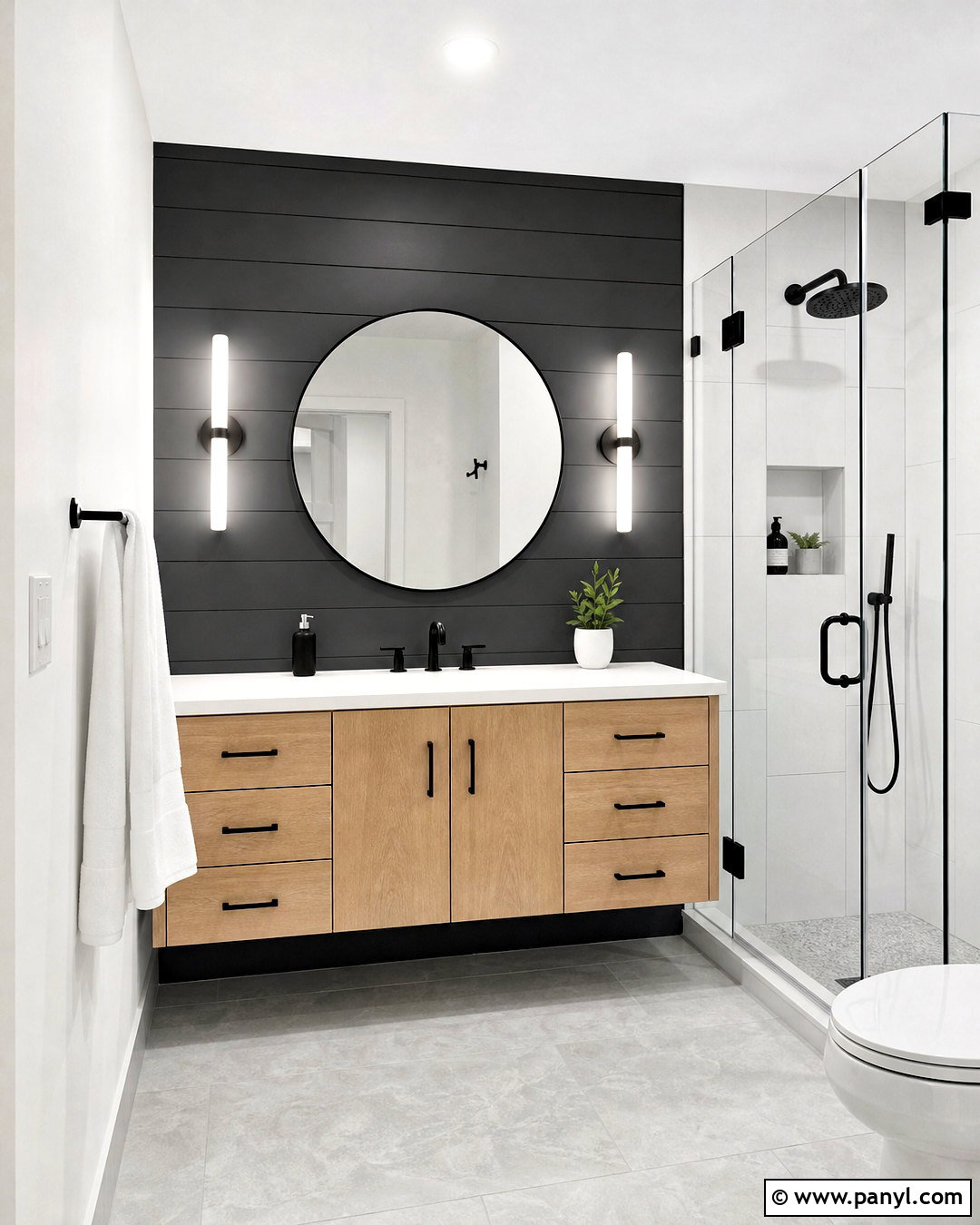
Charcoal gray produces a crisp, architectural bathroom when white surfaces and strong lighting are used strategically. Paint the vanity wall charcoal, then repeat the shade on a freestanding cabinet or interior door. Keep the remaining walls warm white to avoid closing in the room. A white oak vanity, solid white counter, and large white shower tiles provide clean relief against the dark color. Matte black fixtures can create a seamless modern look, although brushed nickel will produce softer contrast. Choose pale gray floor tile with minimal pattern and use a clear shower enclosure to maintain openness. White towels and a light woven bath mat brighten the lower part of the room. This scheme feels strongest when the lines are simple and unnecessary decorative clutter is removed.
8. Olive Green And Beige Bathroom Paint Scheme
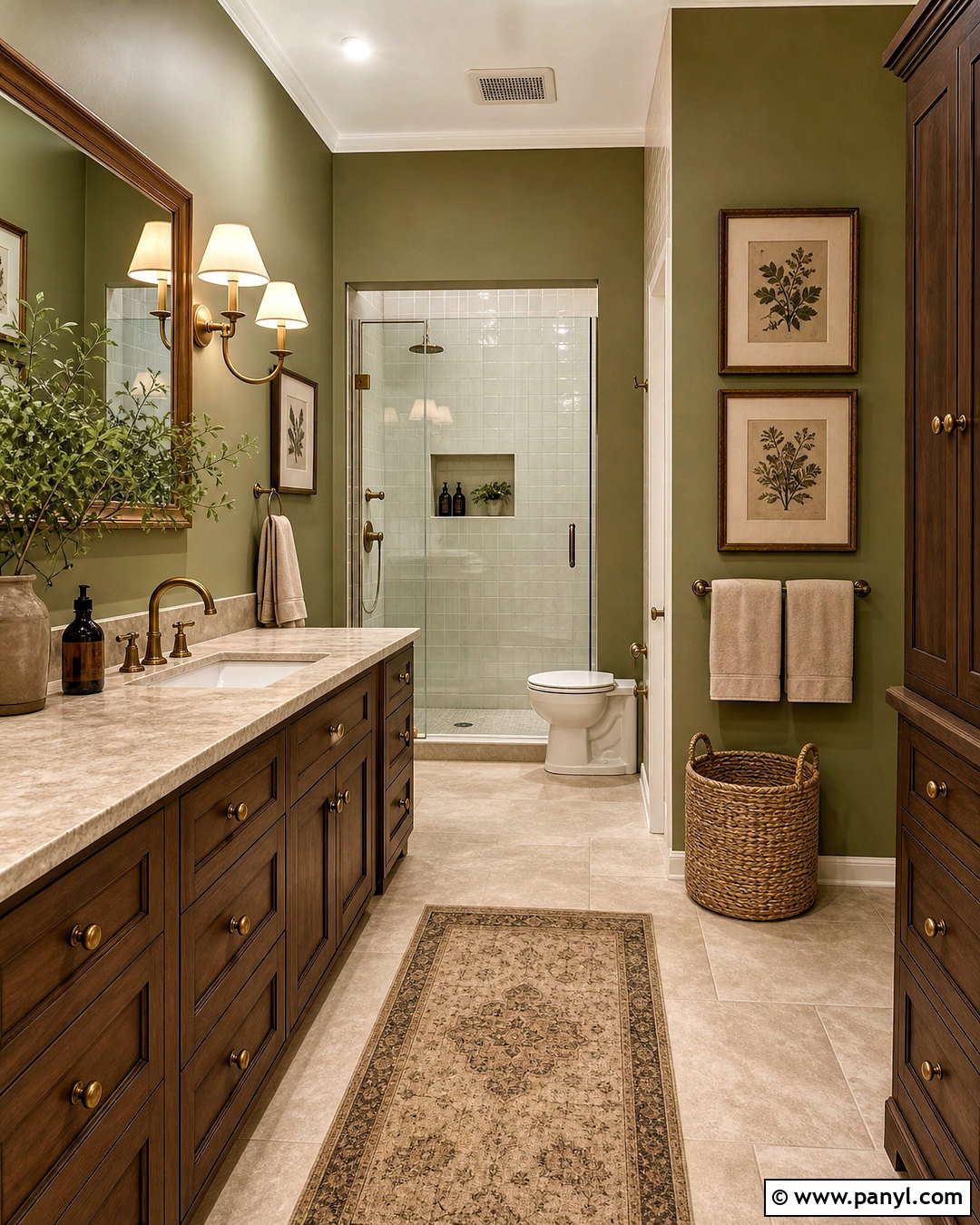
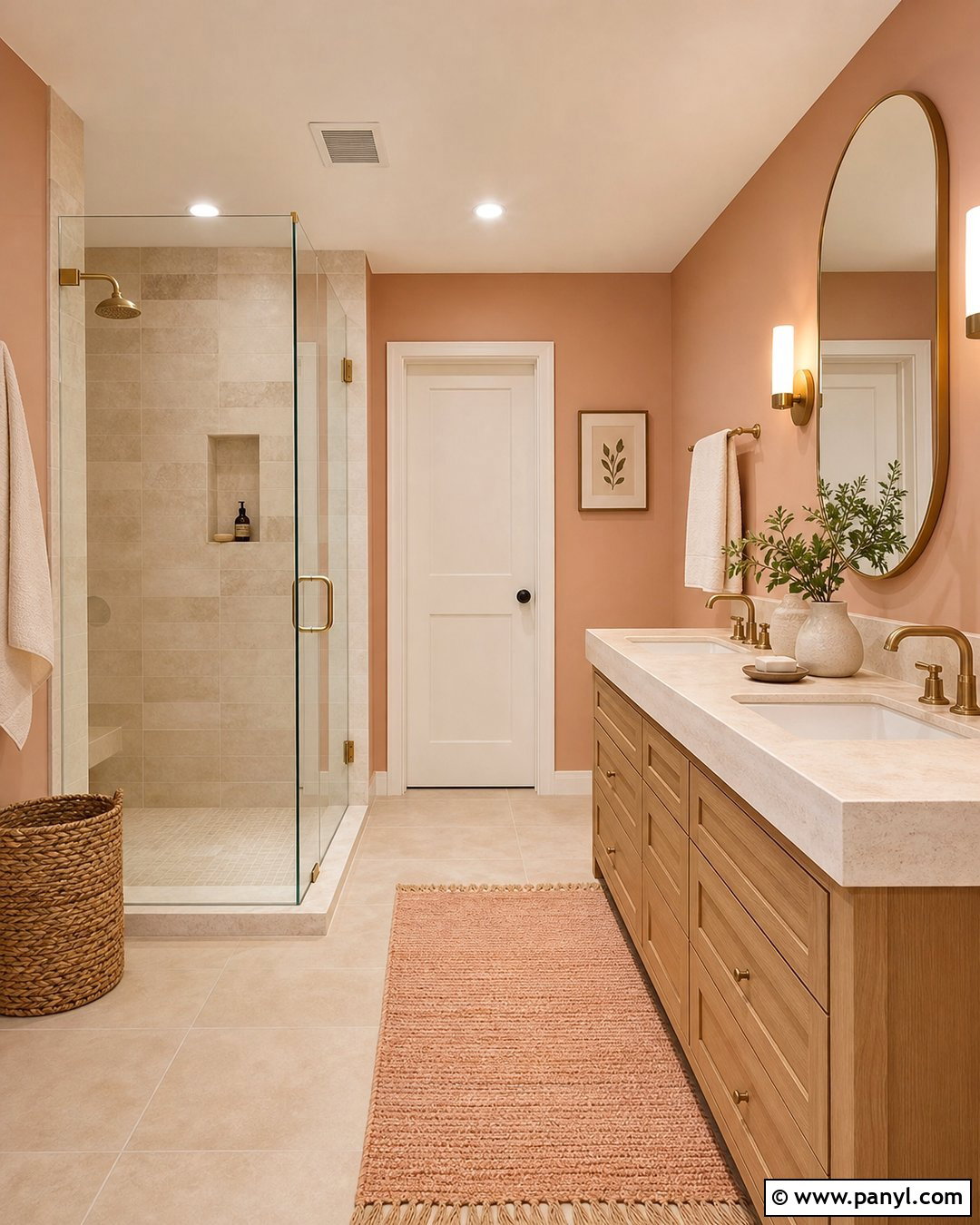
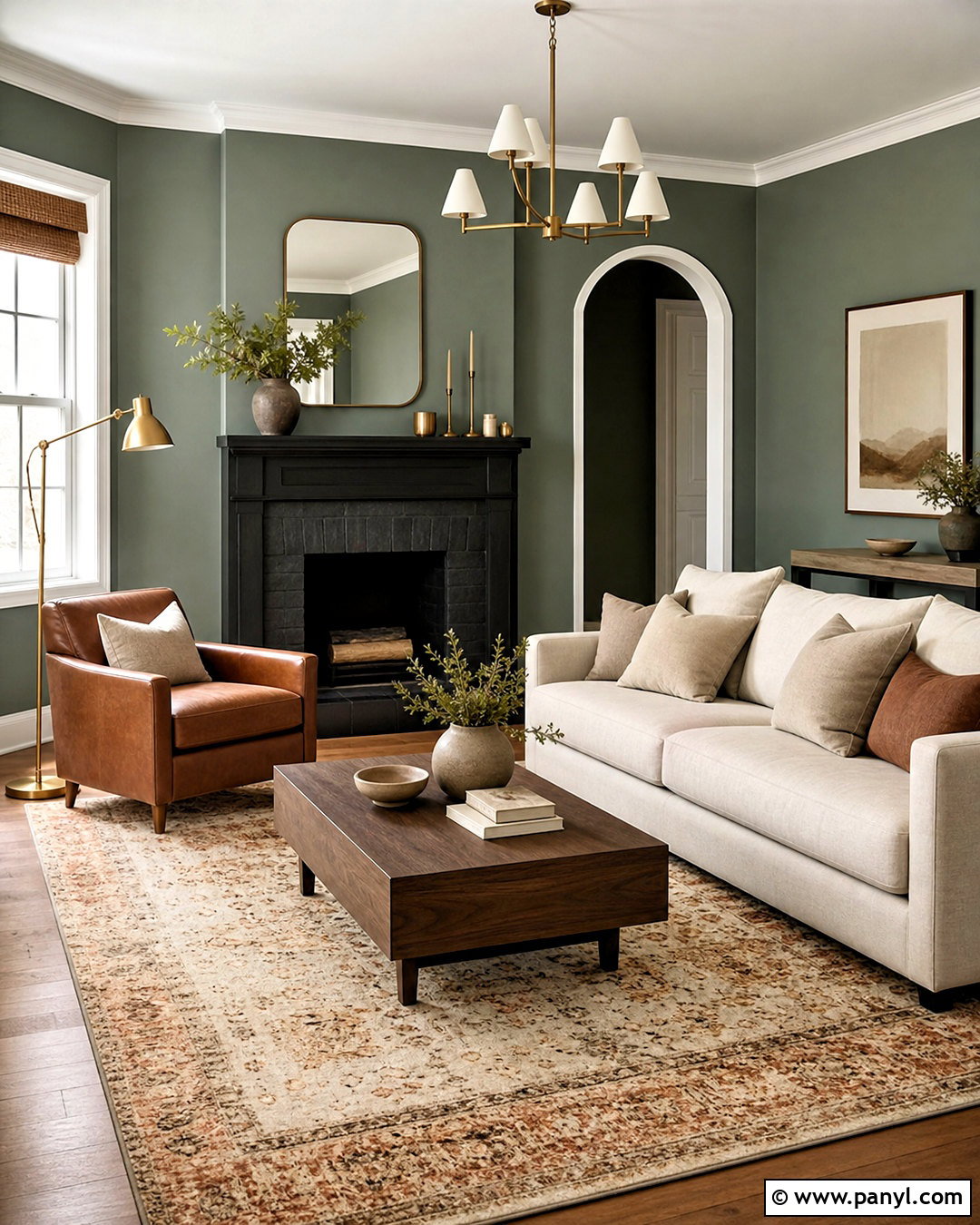
Olive green and beige create an earthy bathroom that feels comfortable, grounded, and easy to live with. Paint the walls a muted olive rather than a bright yellow-green, then introduce beige through limestone-look floor tile and a lightly veined vanity counter. Walnut cabinetry gives the room richness, while antique brass faucets complement both the wood and green paint. Use an off-white shower surround to break up the deeper tones and reflect light. A rectangular wood-framed mirror and fabric-shaded sconces can make the space feel less formal. Finish with sand-colored towels, a woven basket, and restrained botanical artwork. Because the colors sit close together in warmth and intensity, the complete room feels layered rather than high contrast, which is ideal for a relaxed primary bathroom.
9. Pale Yellow And White Bathroom Paint Scheme
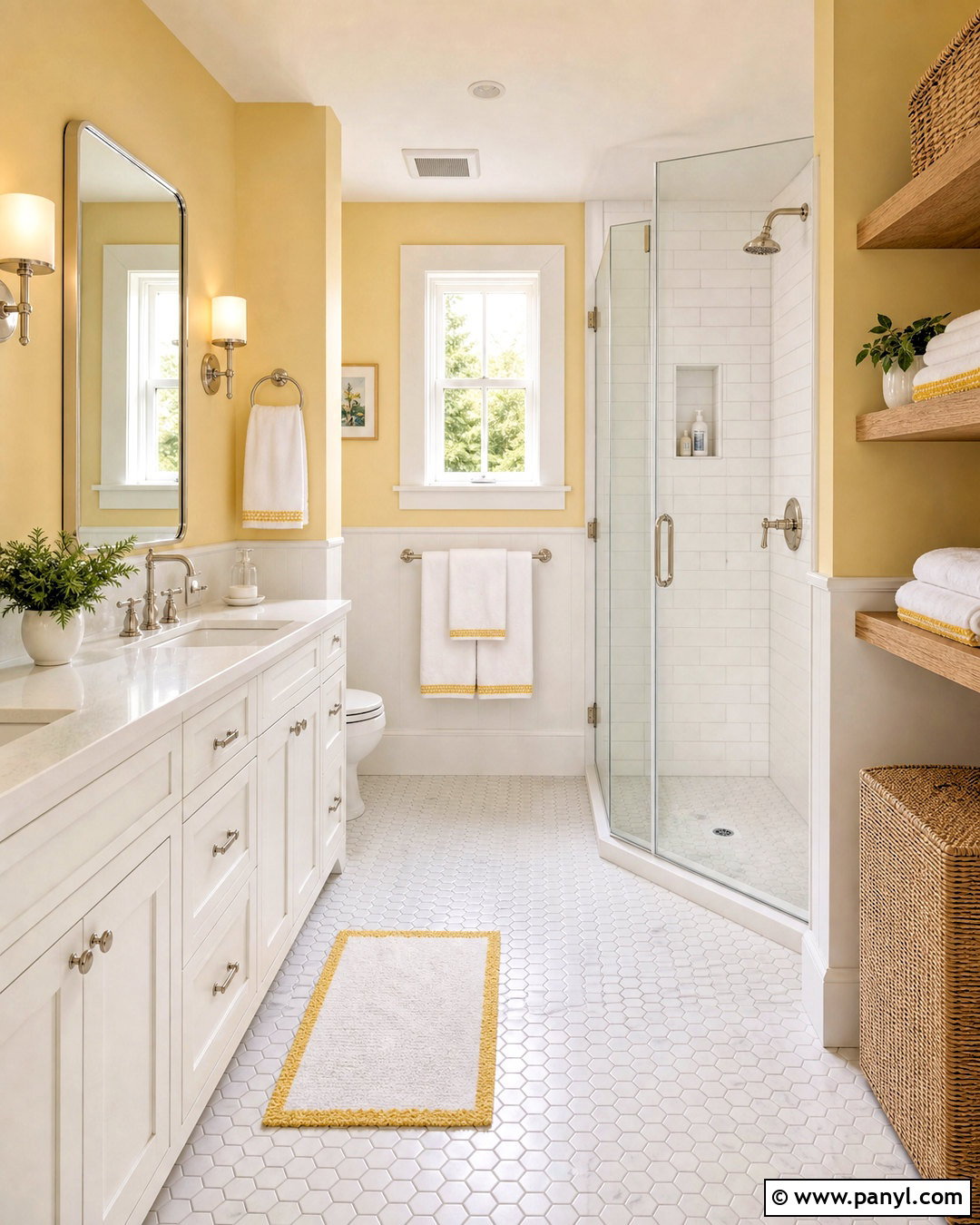
Pale yellow paint can brighten a bathroom without overwhelming it when the shade is soft, creamy, and slightly muted. Pair yellow walls with white-painted trim, glossy white shower tile, and a simple white vanity. A light oak mirror and matching shelves add natural warmth, while polished nickel fixtures keep the room looking fresh. Consider small white hexagon floor tiles with light gray grout for a classic base. Use clear glass around the shower so the sunny wall color remains visible across the room. White towels with narrow yellow or blue borders add a measured decorative touch. This cheerful combination works especially well in bathrooms with limited daylight. Bright, neutral vanity lighting will keep the yellow from appearing muddy and help the white surfaces retain their clean appearance.
10. Teal And Walnut Bathroom Paint Scheme
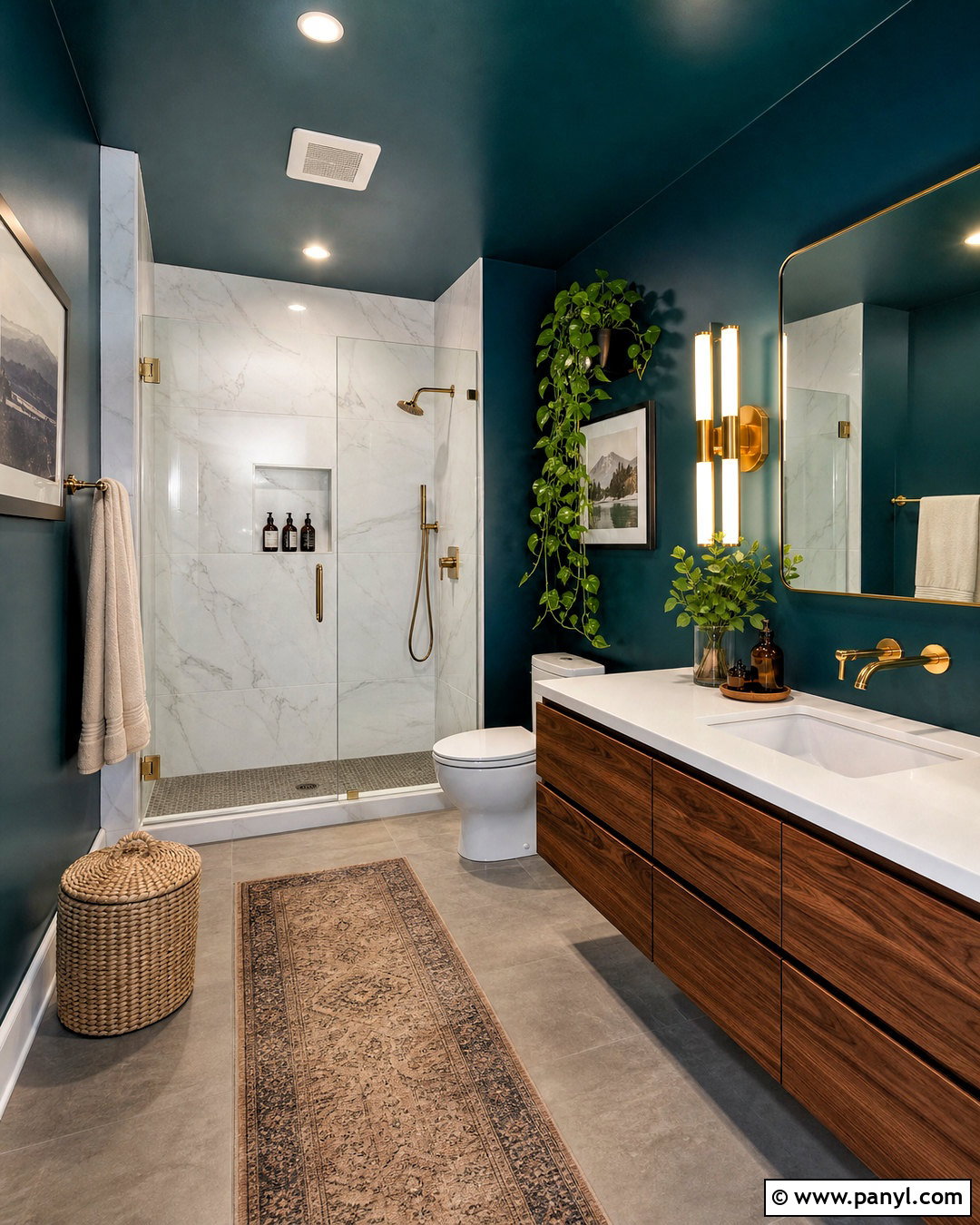
Rich teal walls paired with walnut cabinetry create a bathroom that feels colorful, polished, and deeply inviting. Use teal on the upper walls and ceiling for a cocooning effect, then balance it with white marble-look tile inside the shower. A floating walnut vanity introduces strong grain and warmth without making the room feel heavy. Brushed brass faucets, cabinet pulls, and wall lights enhance the jewel-toned paint. Choose a restrained floor, such as warm gray porcelain or small cream mosaic tile, so the teal remains the main feature. A large frameless mirror will reflect light and break up the painted wall. Finish with ivory towels, amber glass containers, and one simple plant. This palette is particularly effective in powder rooms and well-lit primary bathrooms.
11. Taupe And Travertine Bathroom Paint Scheme
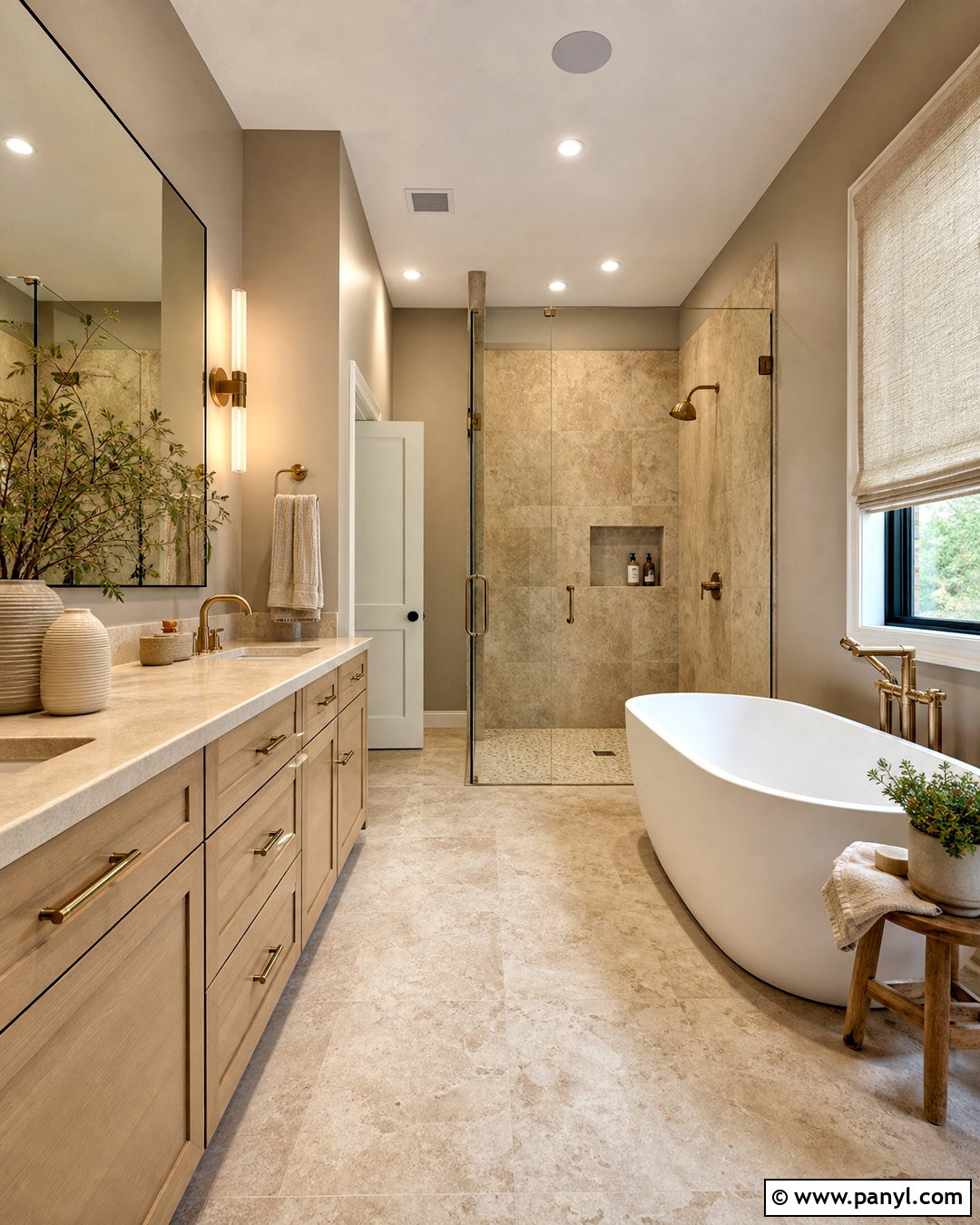
A taupe bathroom gains depth from layers of stone, wood, and cream rather than sharp color changes. Select a warm taupe paint that relates closely to travertine-look wall and floor tile. Use the tile around the bathtub or shower, allowing the painted walls to soften the harder surfaces. A light oak vanity with a cream counter maintains the low-contrast effect. Choose brushed nickel or muted brass fixtures depending on whether you want the room to feel cooler or warmer. An oversized mirror and simple linear sconces will keep the design current. Add off-white towels, ribbed ceramic accessories, and a natural linen shade at the window. This cohesive palette is practical for a long-term renovation because its interest comes from texture and tonal variation rather than a short-lived accent color.
12. Dusty Blue And Brass Bathroom Paint Scheme
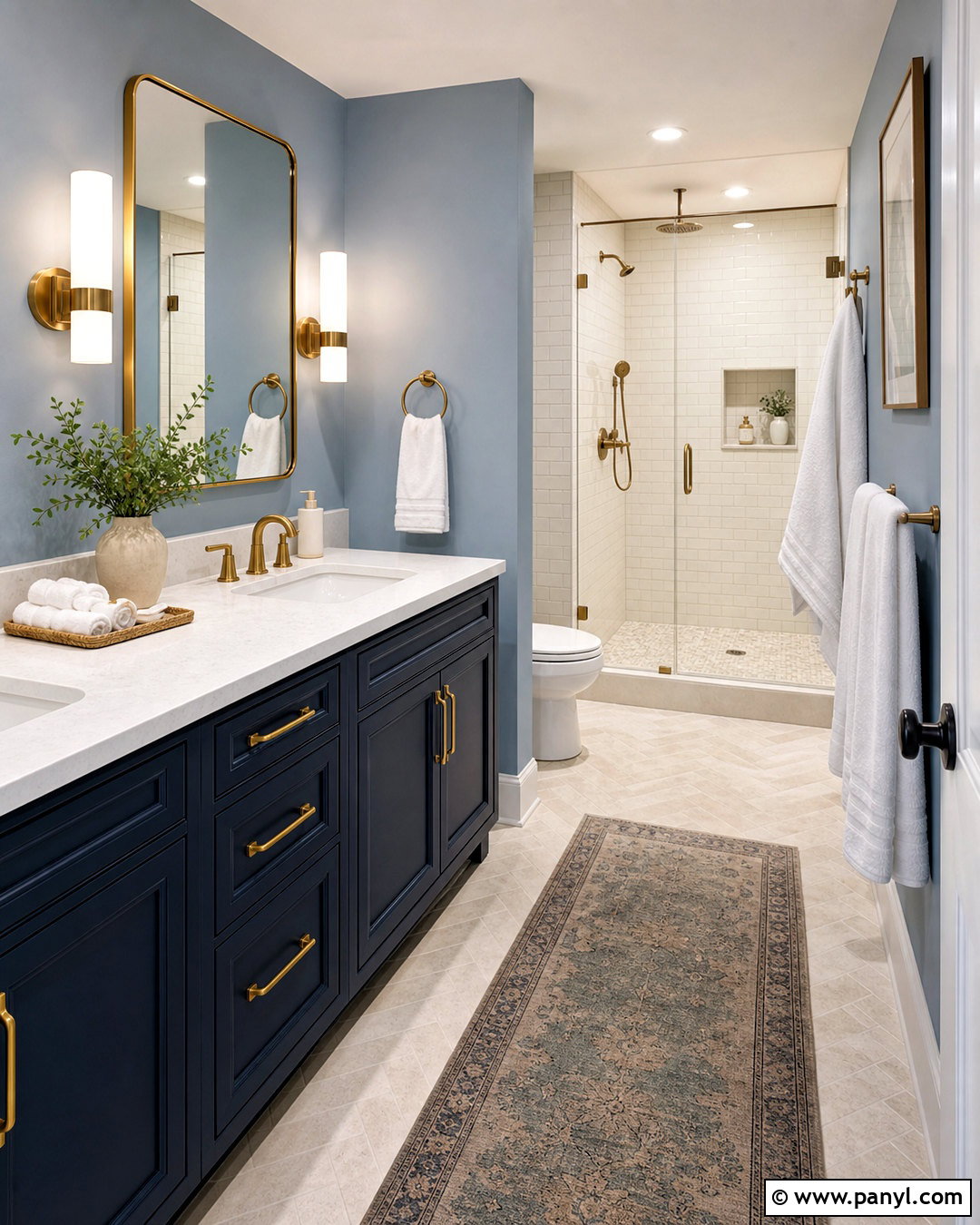
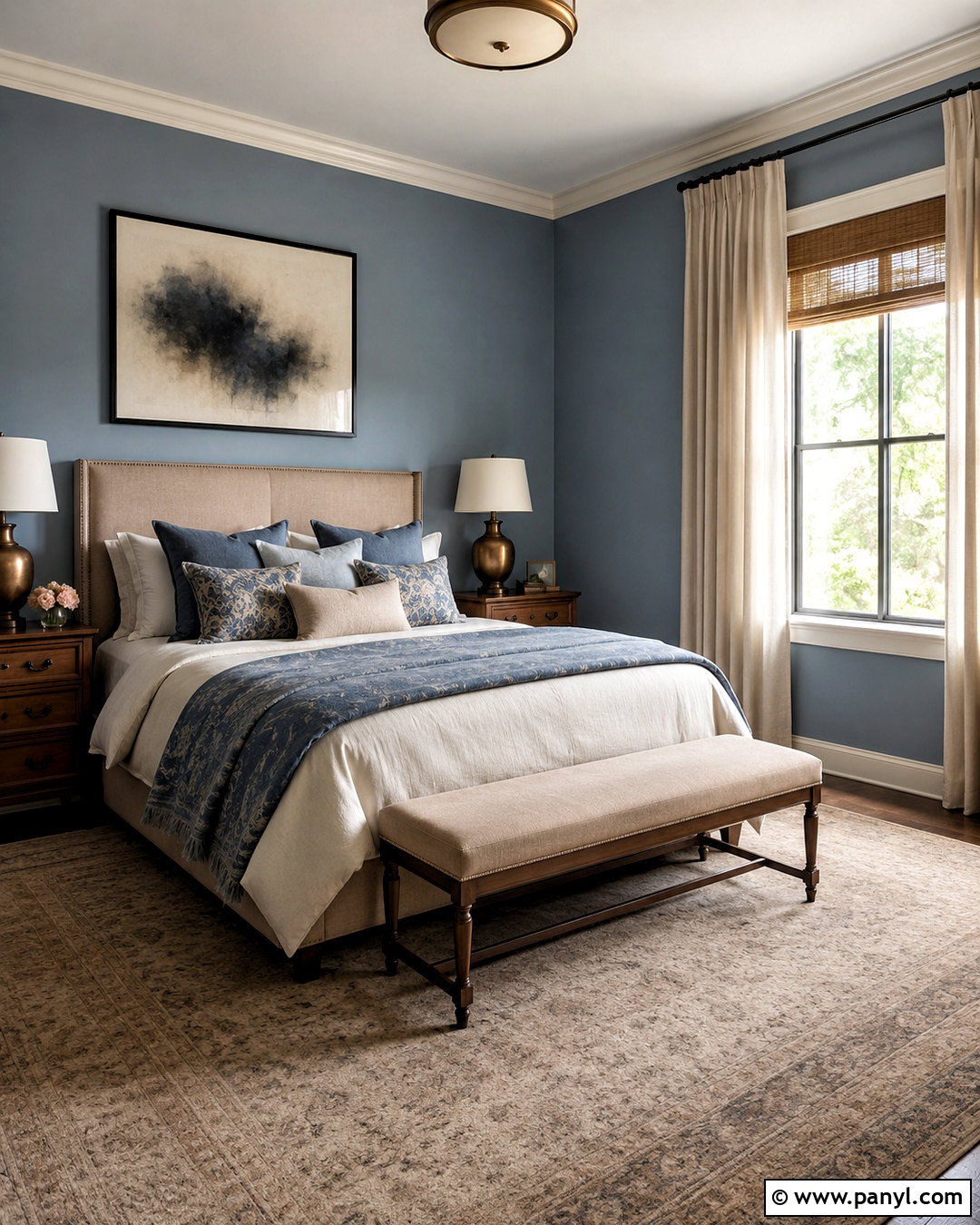
Dusty blue walls create a peaceful foundation, while brass fixtures give the room warmth and definition. Choose a blue with gray undertones so it works comfortably with white, cream, and natural wood. A navy-painted or medium oak vanity can anchor the design beneath a white quartz counter. Continue the blue on the ceiling in a lighter shade for a gently enveloping effect. Use warm white shower tile, pale stone flooring, and an unframed glass enclosure to keep the space open. Brass faucets, mirror edging, and slim sconces should share a similar finish for consistency. Add white towels, a muted patterned runner, and a few ceramic containers. The completed bathroom feels calm and classic, yet the warm metal details stop the cooler paint from looking flat or overly formal.
13. Deep Brown And Sand Bathroom Paint Scheme
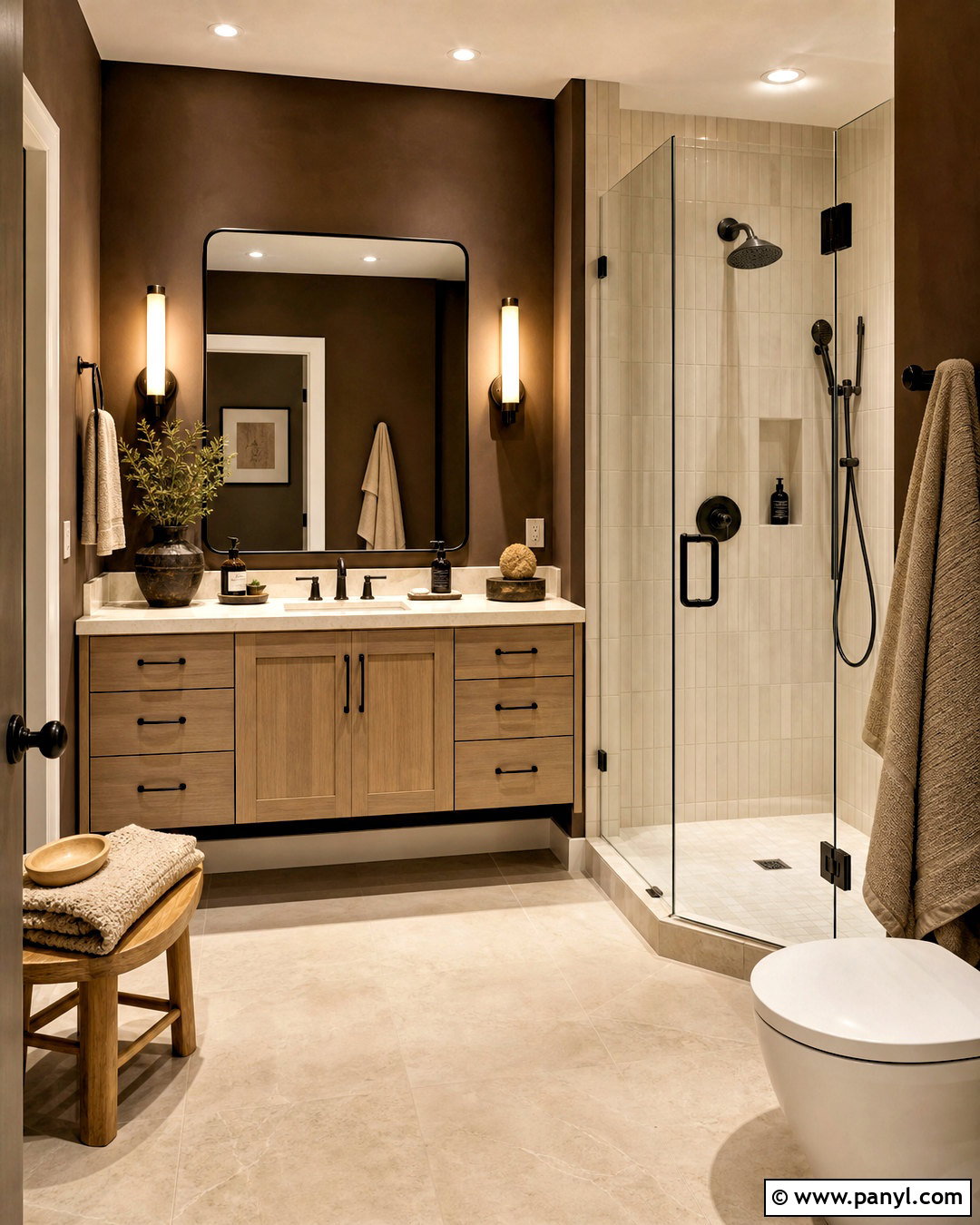
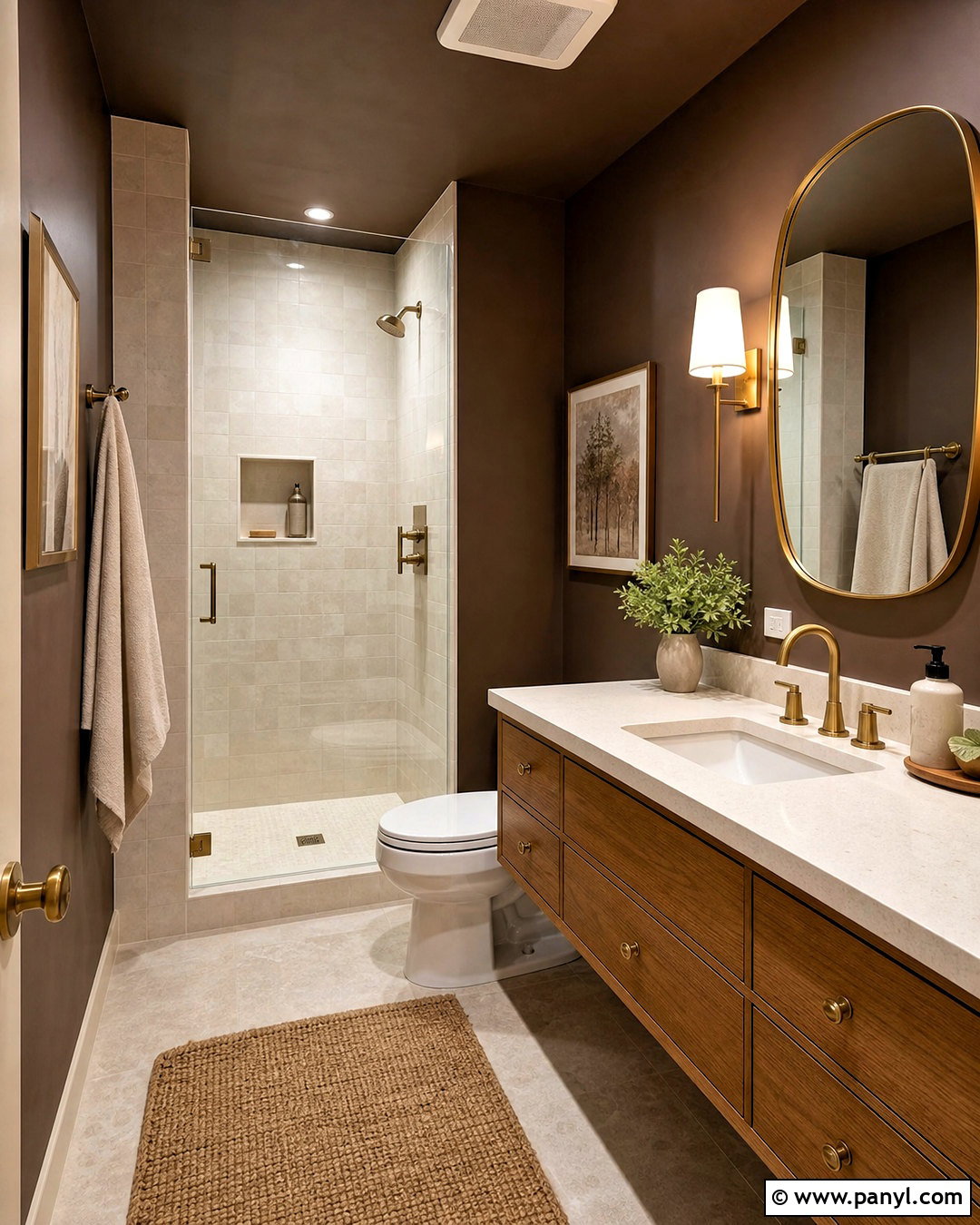
Chocolate brown paint can create a surprisingly relaxing bathroom when it is paired with sandy neutrals and abundant light. Use the brown on one or two walls, or carry it across a compact powder room for greater impact. Balance it with a sand-colored vanity, creamy counter, and beige porcelain flooring. Brushed bronze hardware works naturally with the palette, while a wide mirror prevents the dark walls from dominating the room. Add vertical ivory shower tile to introduce height and reflect clean light. Textured oatmeal towels, a pale wood stool, and simple stone accessories complete the earthy design. Avoid bright white accents, which may look harsh beside deep brown. Instead, select warm whites and light beiges that create a softer transition between the dark paint and functional surfaces.
14. Lavender And Soft Gray Bathroom Paint Scheme
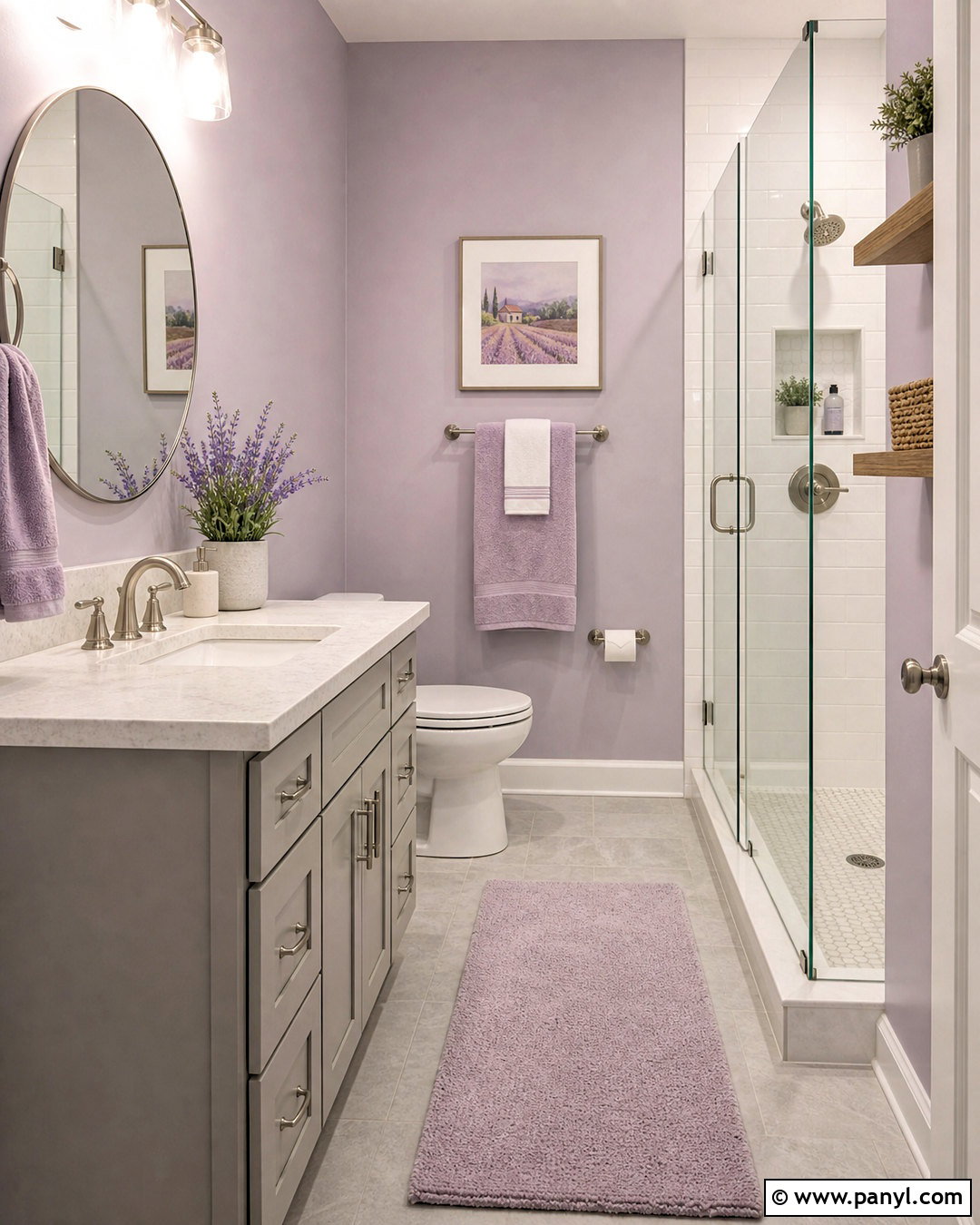
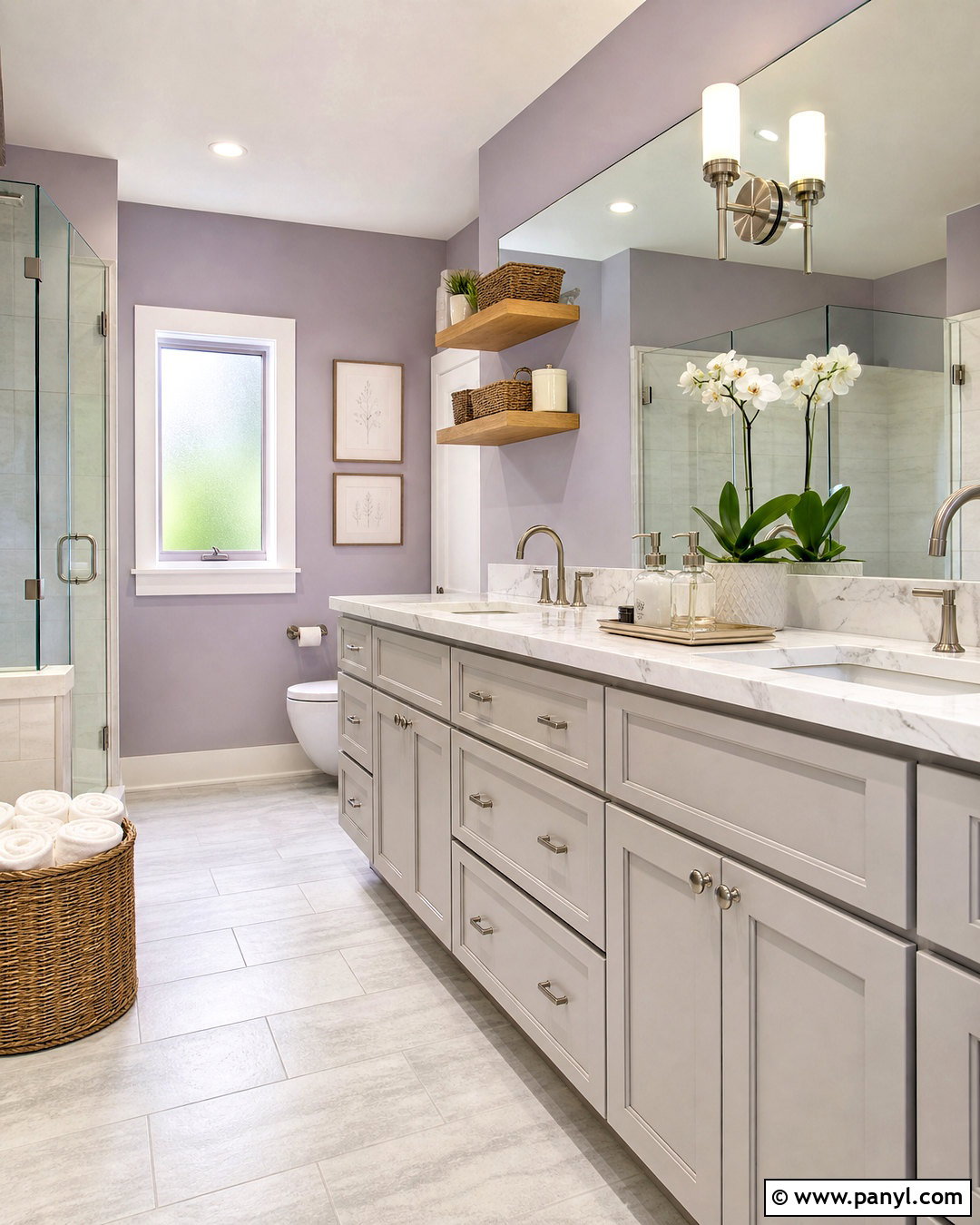
Muted lavender offers gentle color without making a bathroom feel overly decorative. Choose a gray-based lavender for the walls, then pair it with soft gray floor tile and warm white shower surfaces. A pale gray vanity with a white quartz counter creates a smooth tonal transition. Polished nickel fixtures and clear glass add brightness, while a round mirror softens the room’s straight edges. Introduce warmth through a light oak shelf, woven basket, or small wood stool. White and pale lilac towels can repeat the wall color in controlled amounts. This complete scheme suits guest bathrooms because it feels welcoming and distinctive without relying on strong contrast. Test the paint carefully under the vanity lights, since lavender can shift noticeably toward pink or blue depending on the bulb temperature.
15. Black And Warm White Bathroom Paint Scheme
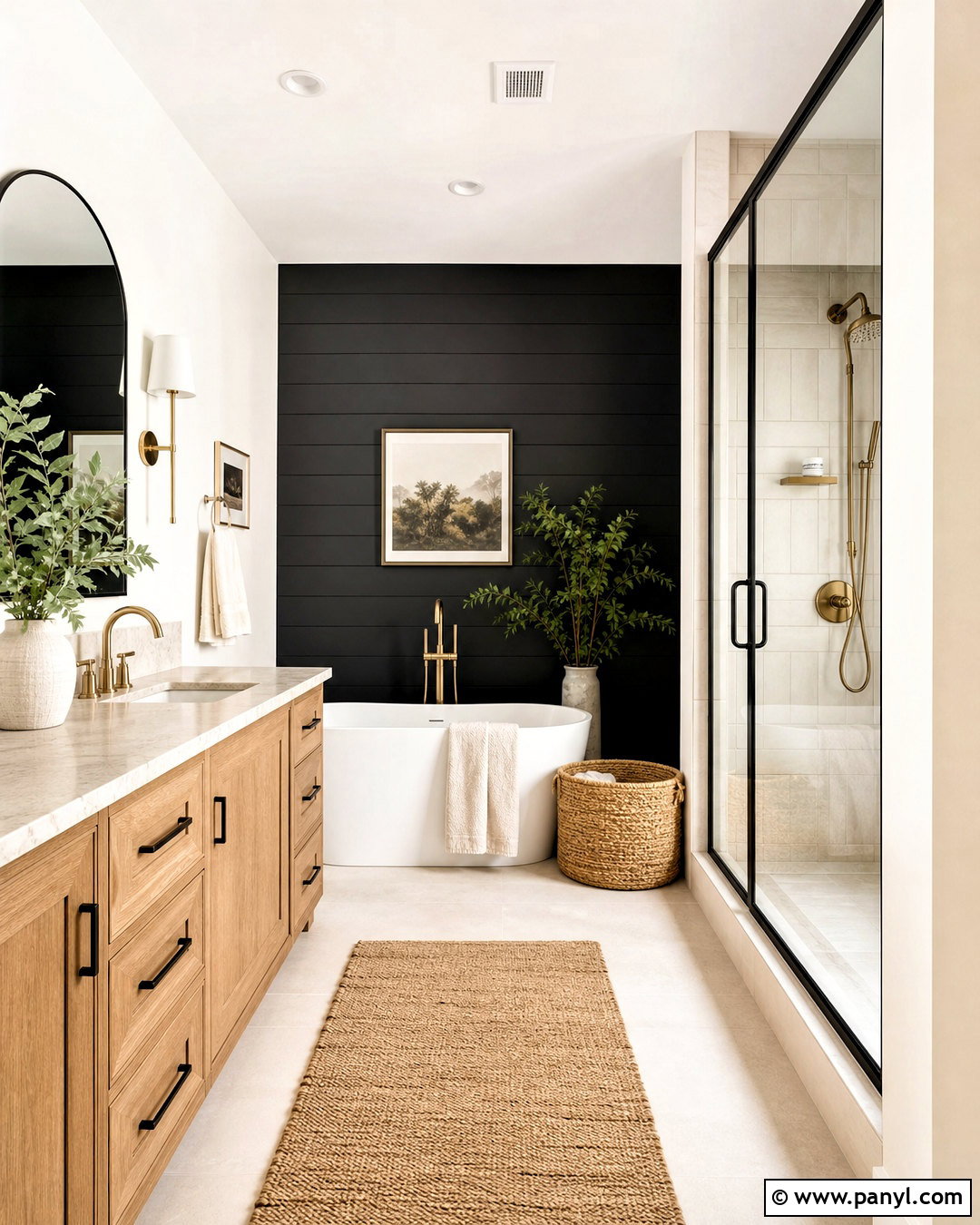
Black and warm white form a graphic bathroom palette that remains inviting when natural materials soften the contrast. Paint one wall matte black, preferably behind a light wood vanity or freestanding tub. Keep the other walls warm white and use matching white tile in the shower to preserve brightness. A white oak vanity, pale stone counter, and lightly textured beige floor prevent the room from looking severe. Repeat black through the mirror frame, shower enclosure, and cabinet hardware, but avoid making every fixture dark. Brushed nickel or brass faucets can introduce a more layered finish. Add cream towels, a woven laundry basket, and minimal greenery. Balanced lighting is essential, so combine ceiling fixtures with face-level sconces rather than relying on a single overhead light.
16. Coral And Pale Blue Bathroom Paint Scheme
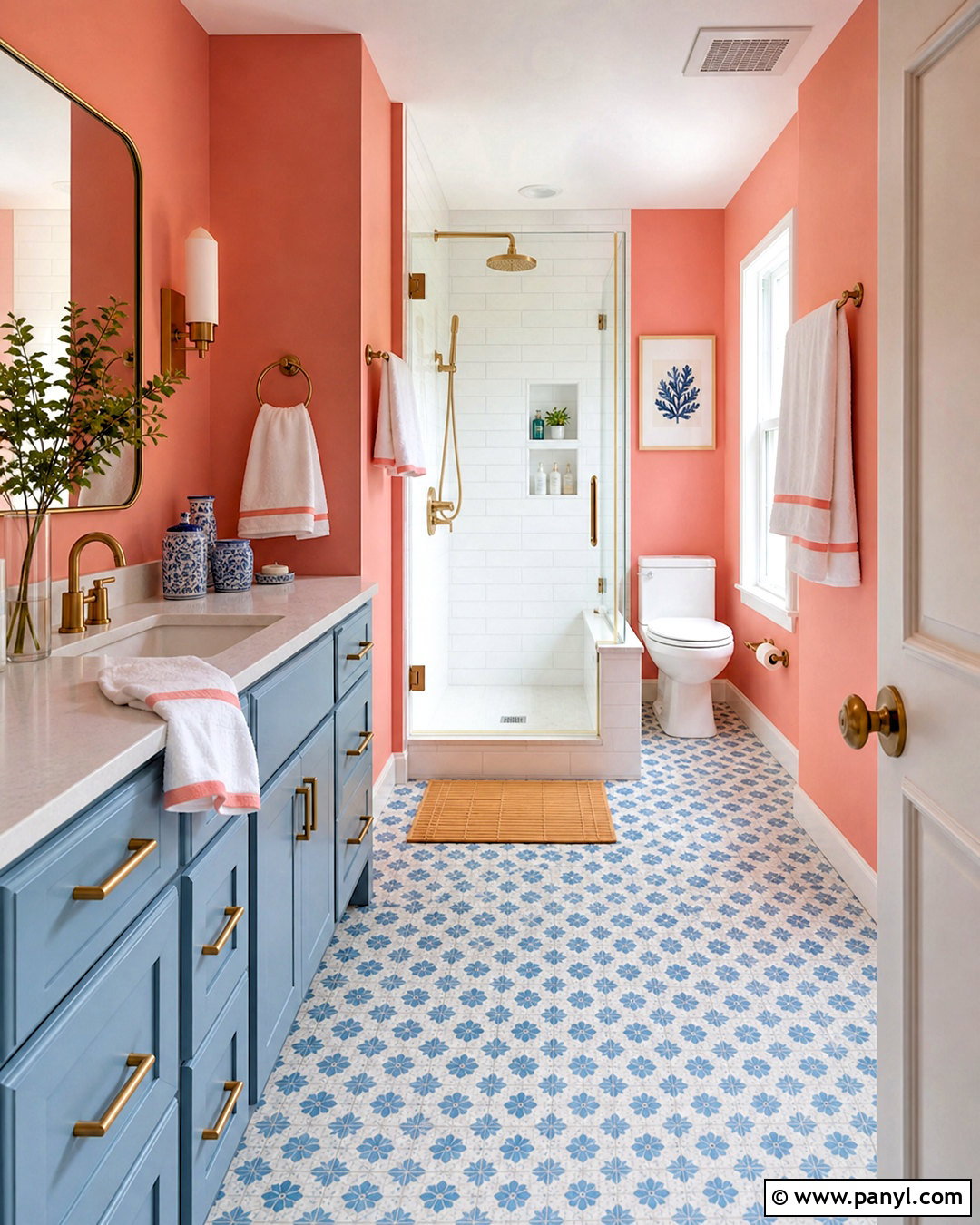
Coral and pale blue create an upbeat bathroom with enough balance to remain practical and grown-up. Paint the walls a softened coral and use pale blue on the vanity, built-in storage, or interior door. White quartz counters and clean white shower tile will separate the two colors and prevent visual competition. Brushed brass hardware emphasizes the warmth of the coral, while small blue-and-white floor tiles tie the palette together. Choose a simple mirror and streamlined sconces so the color combination remains the focus. White towels with coral edging, pale blue containers, and a natural wood bath mat complete the room. This design works well in children’s or guest bathrooms, but muted versions of both colors will also suit an expressive, modern primary bathroom.
17. Greige And Matte Black Bathroom Paint Scheme
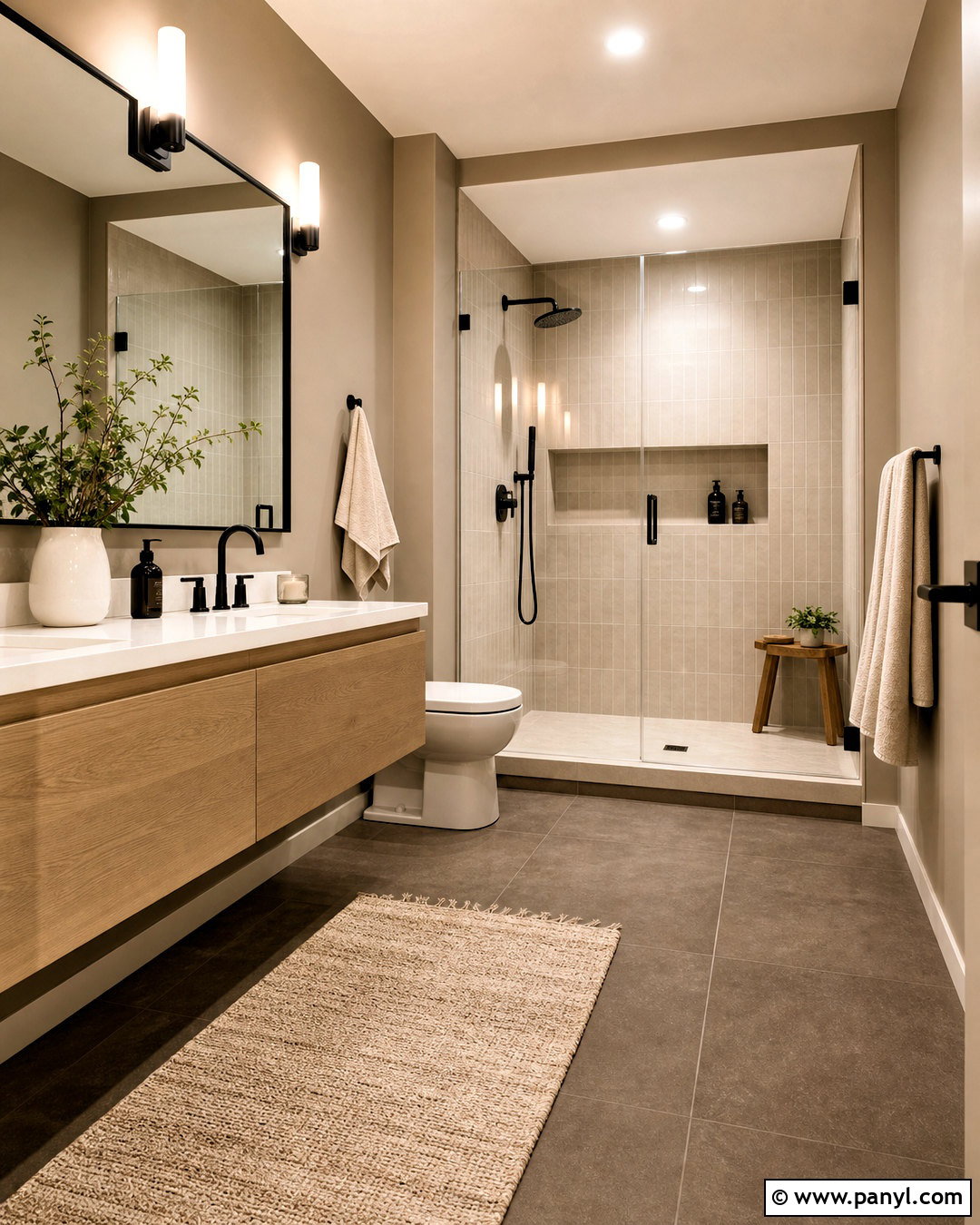
Greige walls offer a flexible background for a modern bathroom with matte black details. Select a warm greige that blends beige and gray, then repeat it in slightly deeper floor tiles. Install a floating white oak vanity with a clean white counter to keep the room light. Matte black faucets, cabinet pulls, sconces, and shower framing provide definition, but their slim profiles should not overwhelm the neutral palette. Use large warm white wall tiles in the shower and clear glass to create an uninterrupted view. A wide mirror, cream towels, and a textured neutral rug will finish the space without introducing unnecessary colors. This coordinated look is especially useful when existing tile contains both warm and cool tones, since greige can visually bridge those different undertones.
18. Forest Green And Marble Bathroom Paint Scheme
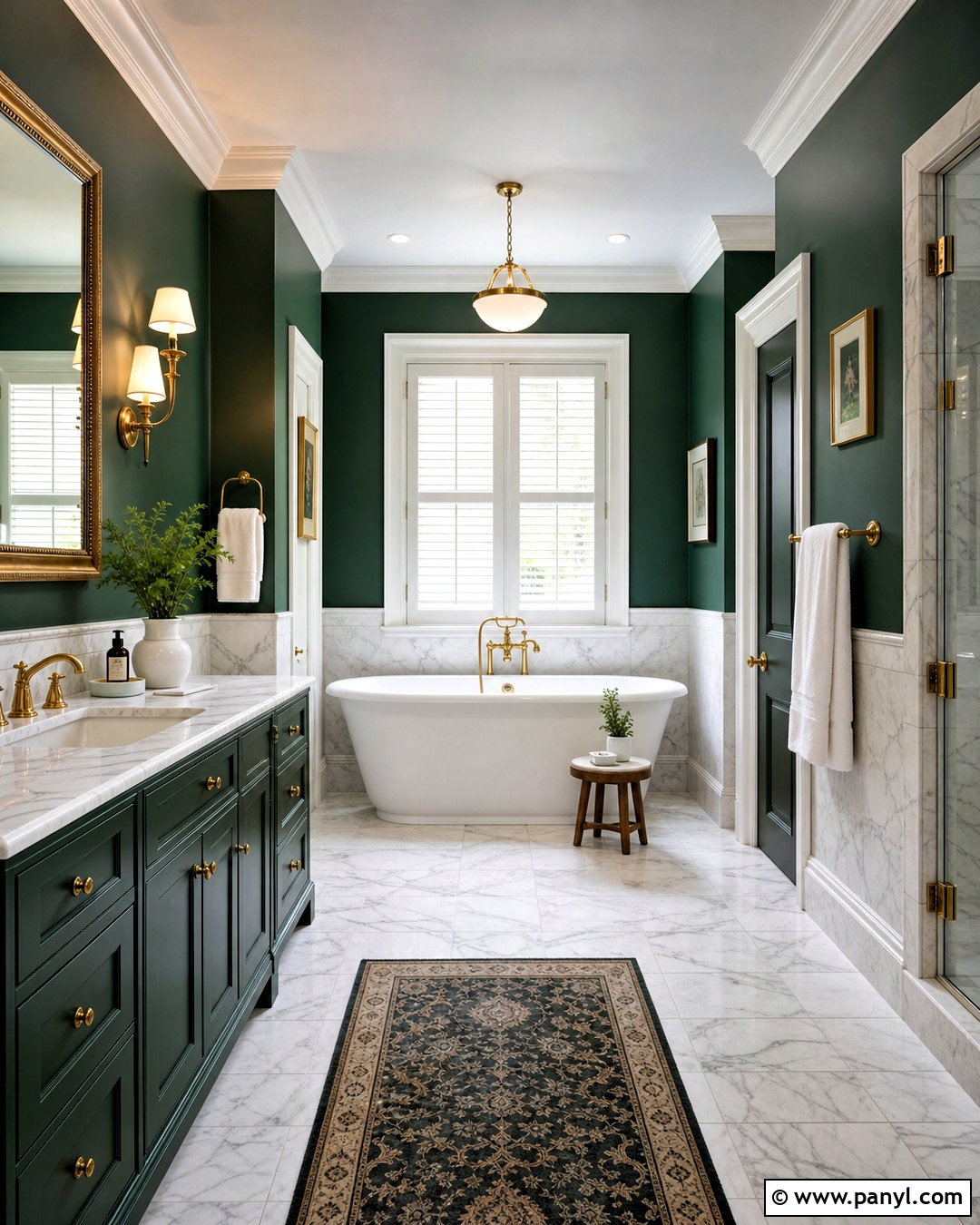
Forest green walls create a luxurious bathroom when balanced with bright marble surfaces and warm metallic details. Apply the green above marble wainscoting or use it around a freestanding white bathtub. A dark green vanity can continue the color story, while a white marble counter offers crisp separation. Choose brass faucets, traditional wall sconces, and a framed mirror to reinforce the rich palette. Marble-look porcelain flooring provides the appearance of stone with easier upkeep, and white shower tile can keep the bathing area from becoming too dark. Add white towels, a small wood stool, and minimal botanical decor. This complete scheme needs strong lighting, particularly in a compact bathroom. Layer ceiling lights with mirror lighting so the deep green remains vibrant instead of appearing nearly black.
19. Powder Blue And Checkerboard Tile Bathroom Paint Scheme
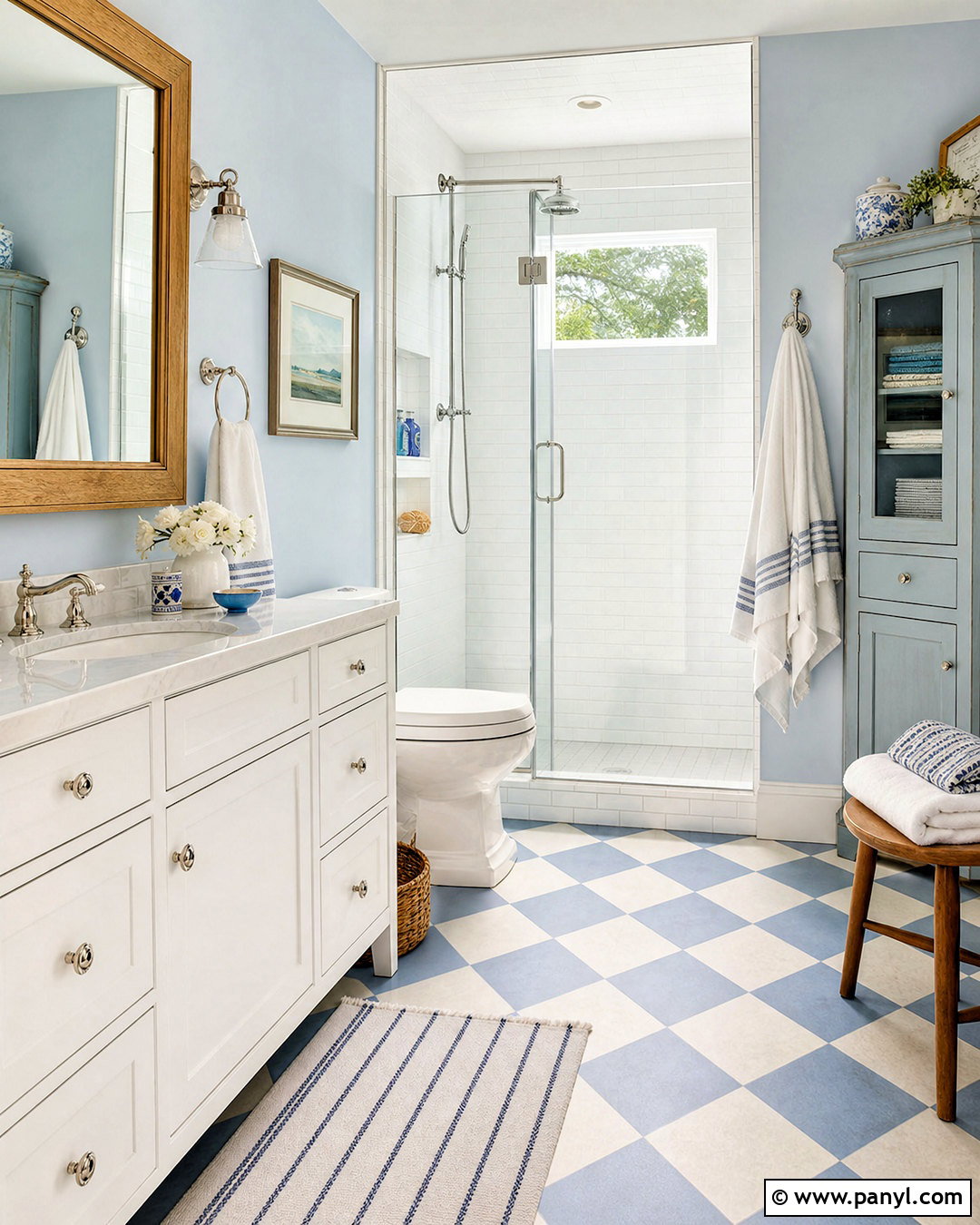
Powder blue paint looks fresh and nostalgic when paired with checkerboard flooring and simple white fixtures. Cover the walls in a clear, soft blue, then use small cream-and-blue or cream-and-gray checkerboard tiles underfoot. A white vanity with polished nickel hardware keeps the room crisp, while a medium oak mirror introduces warmth. Continue white subway tile around the bathtub or shower, using grout that relates to the darker floor squares. Add clear glass where possible so the patterned flooring remains visible across the room. White towels, a striped shower curtain, and one pale blue storage cabinet complete the palette. This bathroom feels playful but organized because the wall color is repeated thoughtfully and the remaining surfaces stay within a controlled range of white, wood, and blue.
20. Color-Drenched Clay Bathroom Paint Scheme
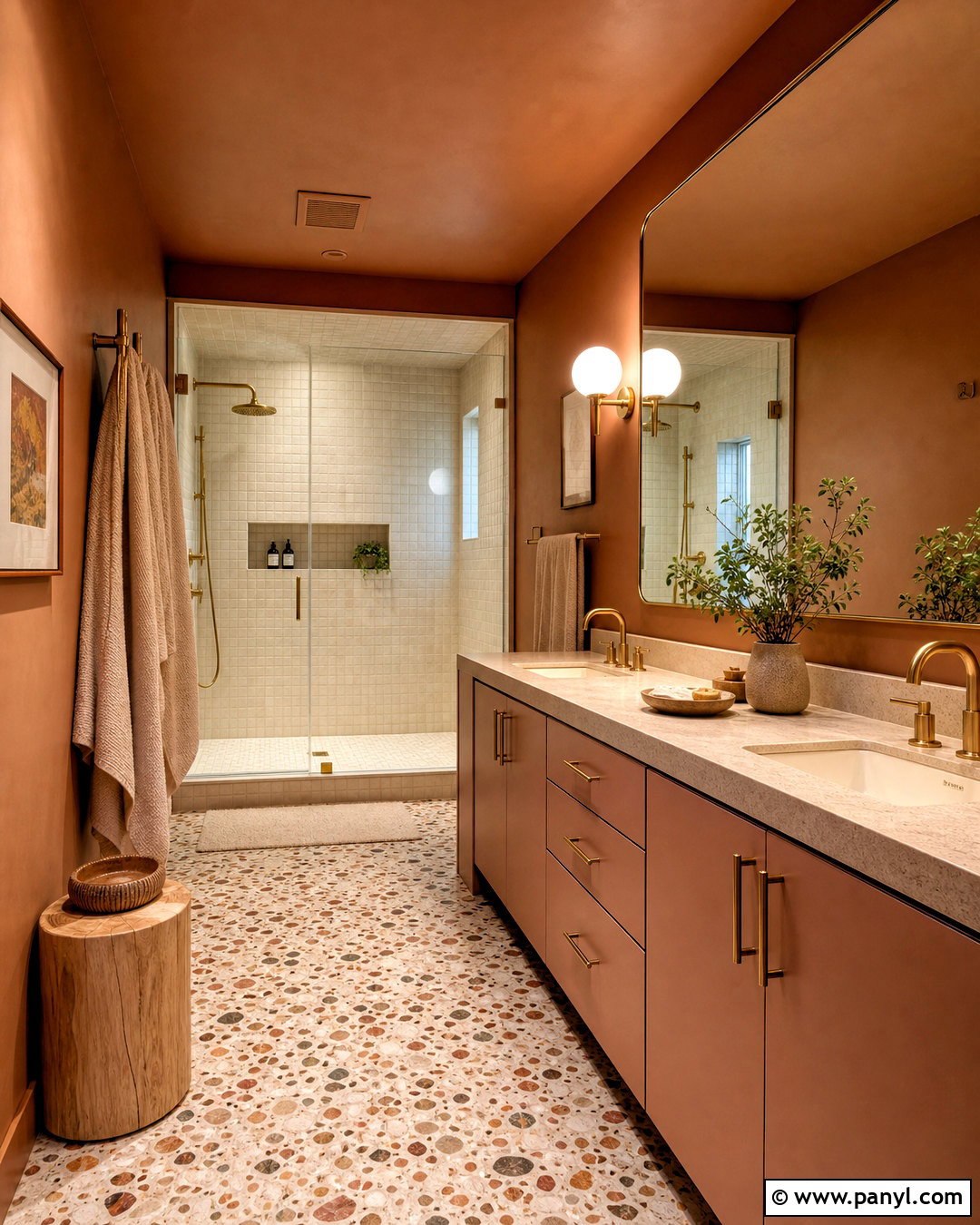
A color-drenched clay bathroom uses one earthy shade across several surfaces to create a cohesive, immersive look. Paint the walls, ceiling, trim, and vanity in closely related clay or muted rust tones, varying the finish rather than the color. Break up the paint with creamy wall tile in the shower and a pale stone vanity counter. A terrazzo floor containing rust, beige, and off-white fragments will connect every element. Use brushed brass fixtures and warm white globe lights to enhance the natural warmth. An oversized mirror can provide visual breathing room, while oatmeal towels and light wood accessories soften the saturated palette. This approach works beautifully in a powder room or windowed bathroom where bold color can feel intentional rather than heavy.
Conclusion:
These **20 bathroom paint ideas colour schemes** show how paint can guide every design decision in the room. Instead of selecting a wall shade in isolation, connect it to the tile, vanity, flooring, metal finishes, lighting, and textiles. Warm whites and greige offer flexibility, while sage, dusty blue, and taupe create a calm retreat. Navy, forest green, teal, and clay deliver stronger character when balanced with reflective or light-colored surfaces. Before painting, place large samples beside permanent finishes and observe them at several times of day. Choose a durable bathroom-appropriate finish, prepare the walls carefully, and keep undertones consistent. A coordinated palette will make even a modest bathroom look finished, comfortable, and thoughtfully designed.

Related Ideas and Inspiration:
Leave a Reply