
Choosing a bathroom palette is about more than finding a pretty paint color. The walls, tile, vanity, flooring, fixtures, lighting, and textiles should create one complete look. These **20 bathroom colour ideas** include soft neutrals, nature-inspired greens, restful blues, and richer shades for homeowners who want more character. Each scheme also considers practical details, such as balancing dark surfaces, warming cool tile, and helping a small bathroom feel open. Test finishes under both daylight and vanity lighting before making a final choice, since undertones can shift throughout the day. Whether you are planning a full remodel or a simple refresh, these complete color combinations offer a clear starting point. Explore the sections below to find your favorite among these **20 bathroom colour ideas**.

1. Sage Green Bathroom
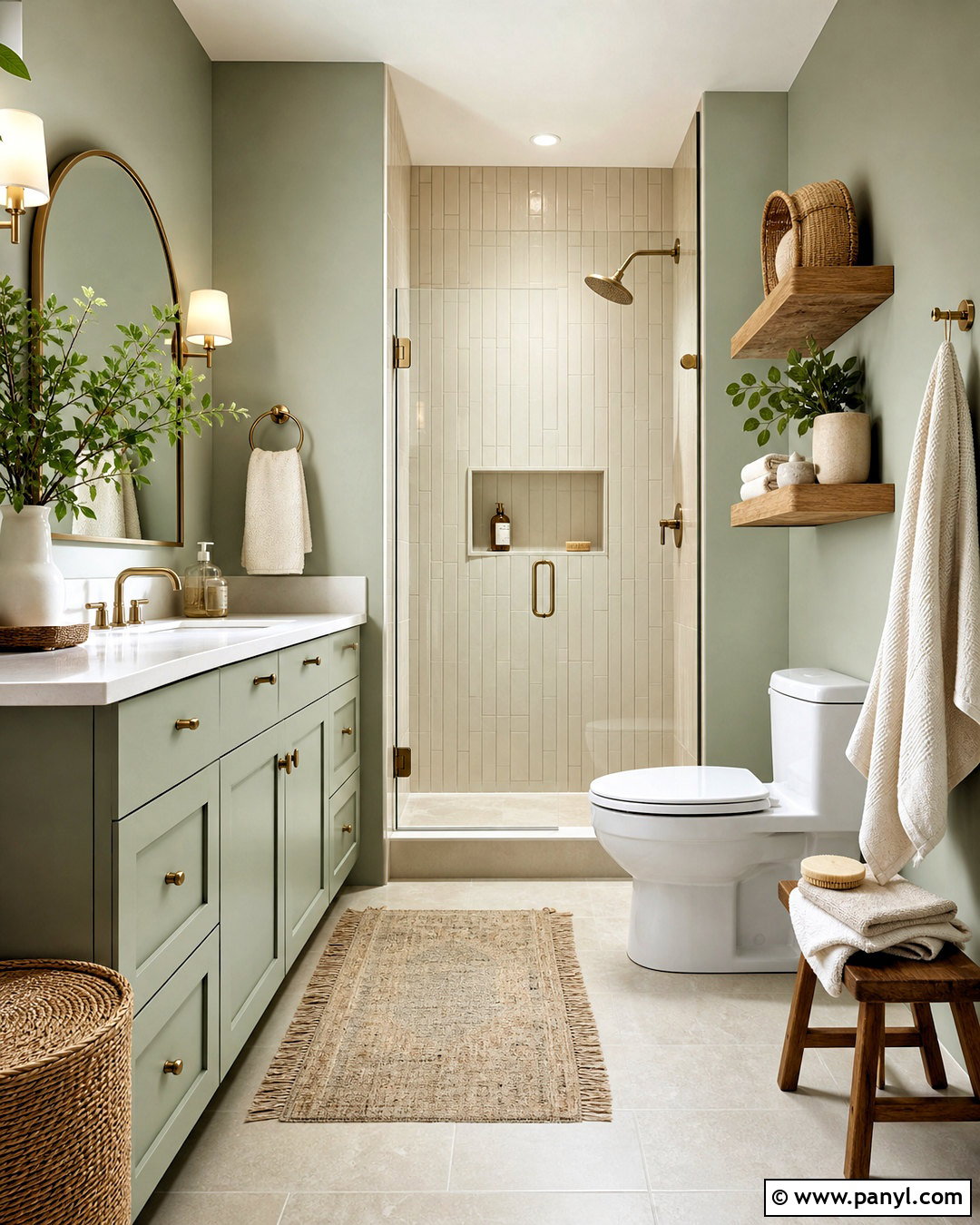
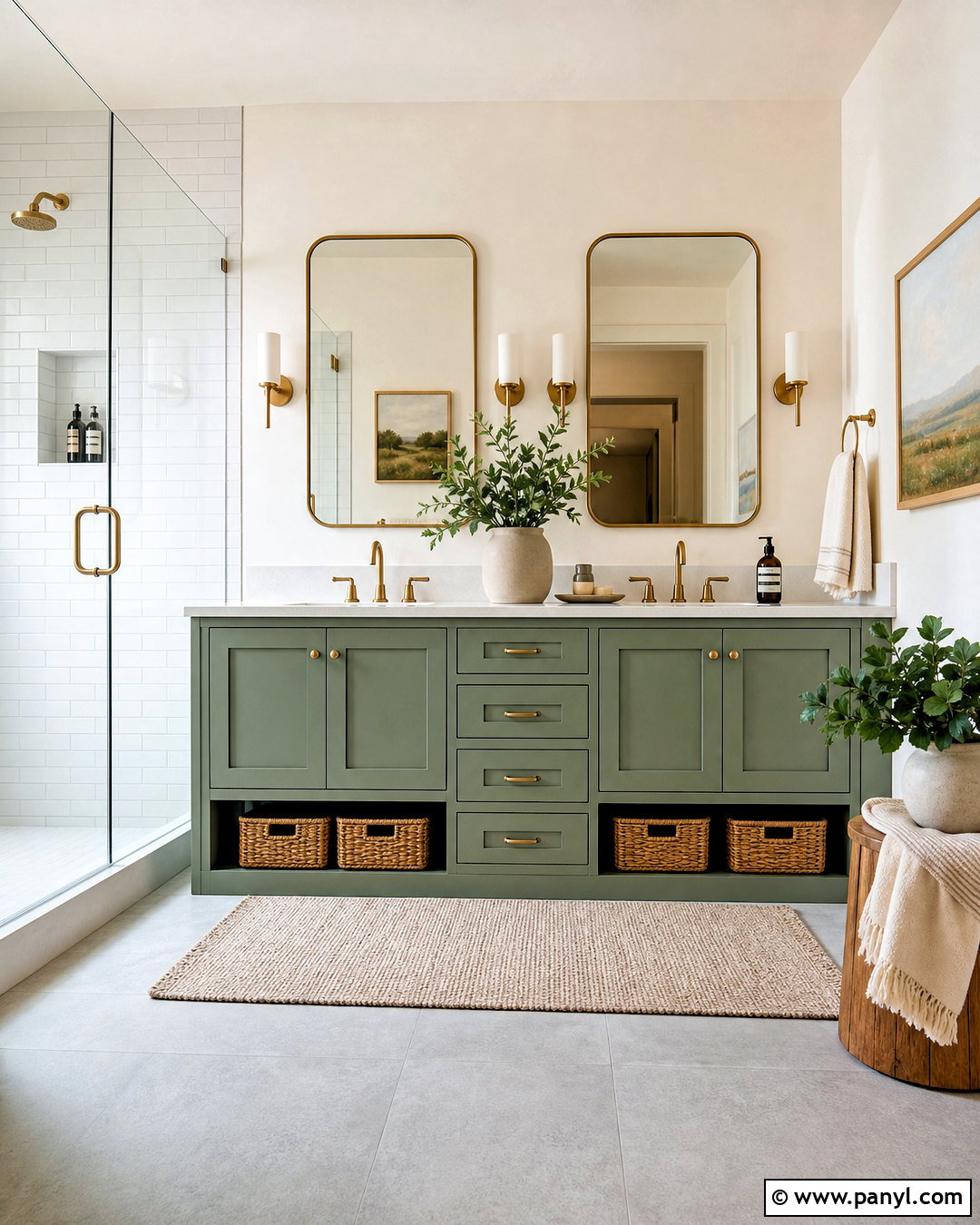
Soft sage green creates a restful bathroom that feels fresh without looking cold. Use sage paint above warm white vertical wall tiles, then repeat the green on a simple shaker vanity for a connected look. A pale limestone floor adds natural texture while keeping the room light. Choose a white quartz countertop, brushed brass faucets, and an arched brass mirror to introduce gentle warmth. An oak stool and woven storage baskets prevent the palette from becoming too polished. Finish the room with ivory towels, a cream shower curtain, and one leafy plant near the window. This complete scheme works especially well in a small family bathroom because the muted green adds personality while remaining easy to coordinate with practical white fixtures.
2. Warm White And Oak Bathroom
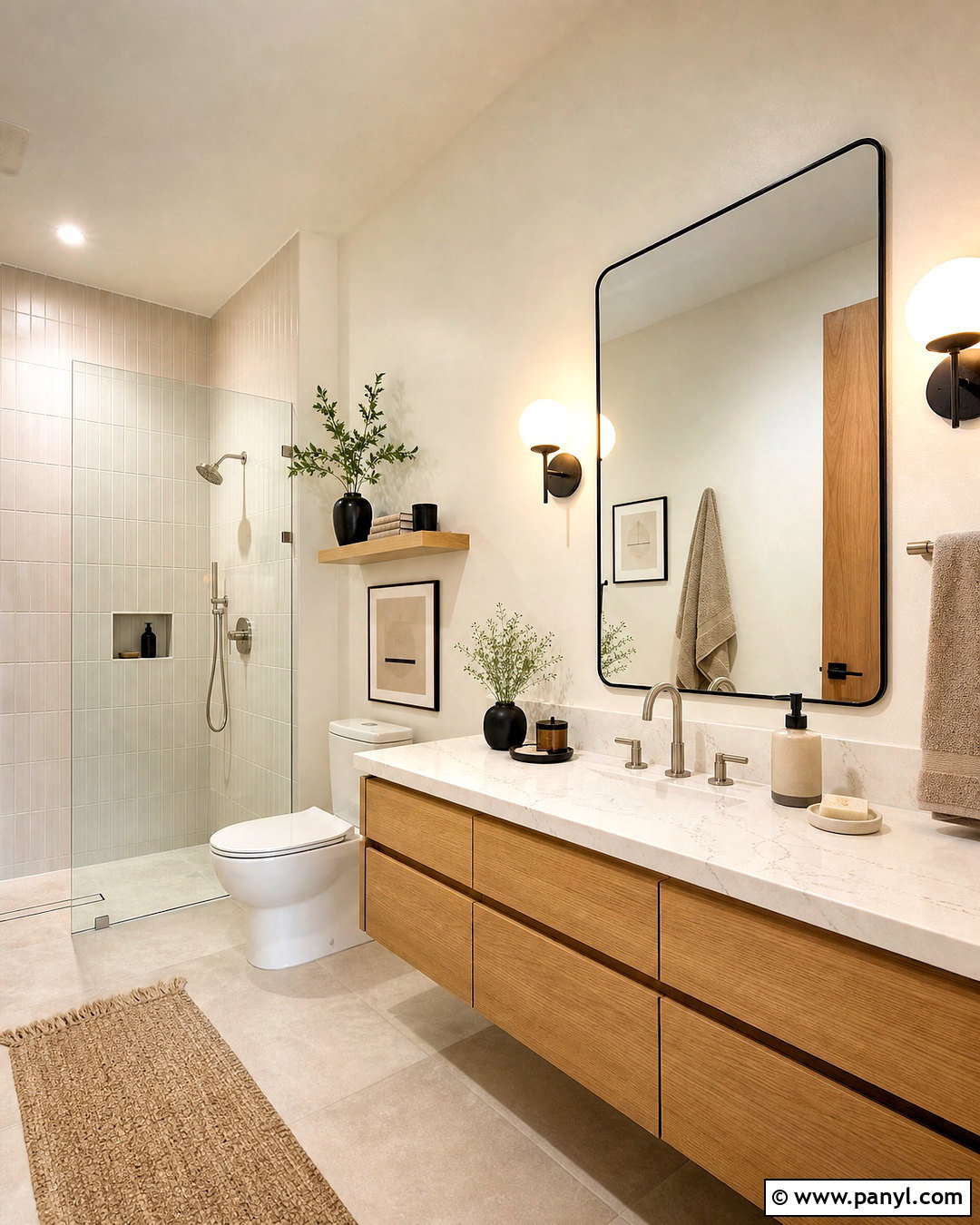
Want a bright bathroom that does not feel harsh or clinical? Cover the walls in creamy warm white and use slightly deeper ivory tile inside the shower. A floating white oak vanity becomes the main source of warmth, especially when paired with a softly veined quartz countertop. Continue the natural look with light beige porcelain floor tile and a matching recessed shower niche. Brushed nickel fixtures keep the palette clean without creating a sharp contrast. Add an oversized frameless mirror, simple globe sconces, and oatmeal-colored towels for a calm finish. Small accents of matte black can appear in a tray or picture frame. The result is an airy, modern bathroom that feels comfortable, balanced, and timeless rather than plain.
3. Powder Blue Bathroom
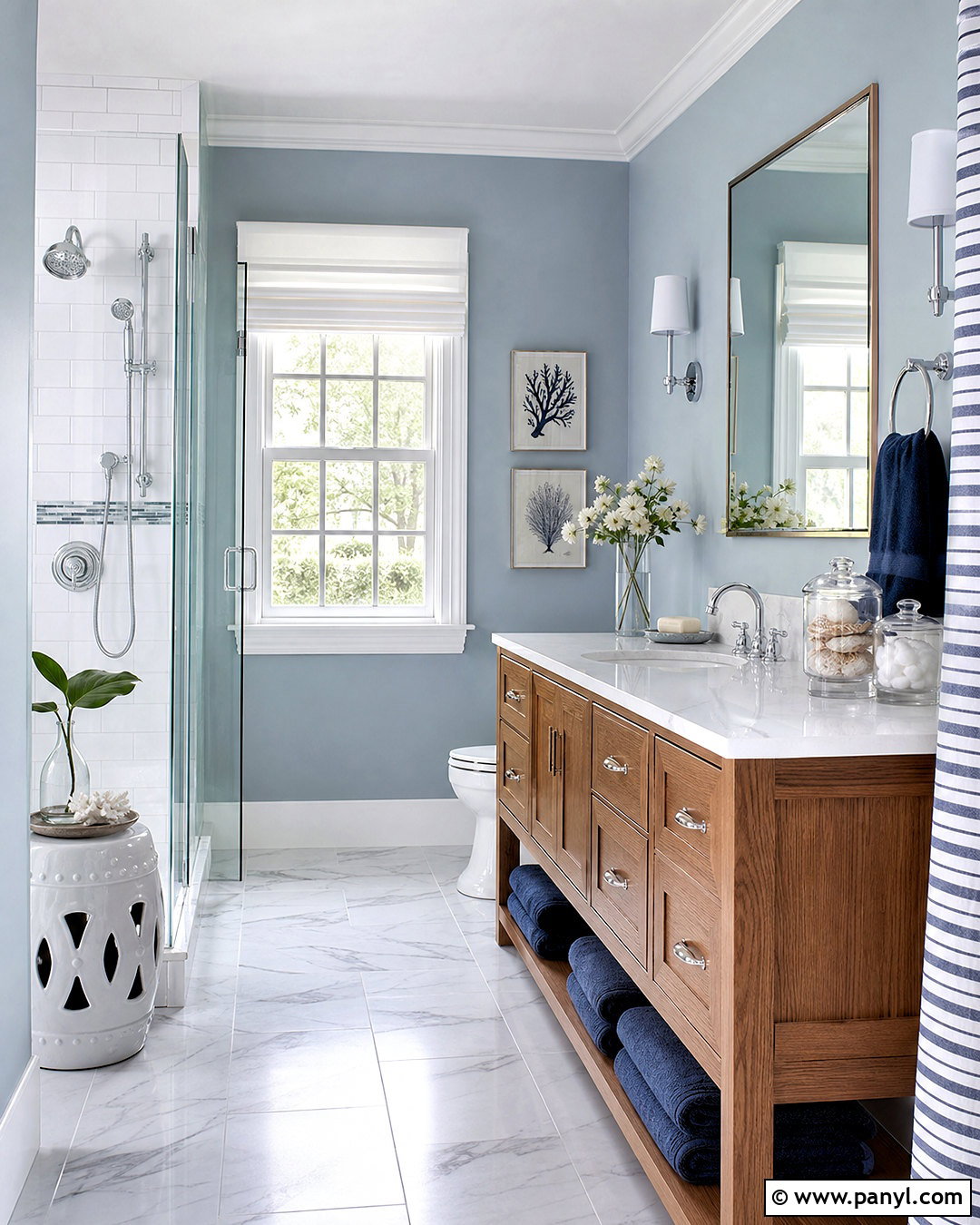
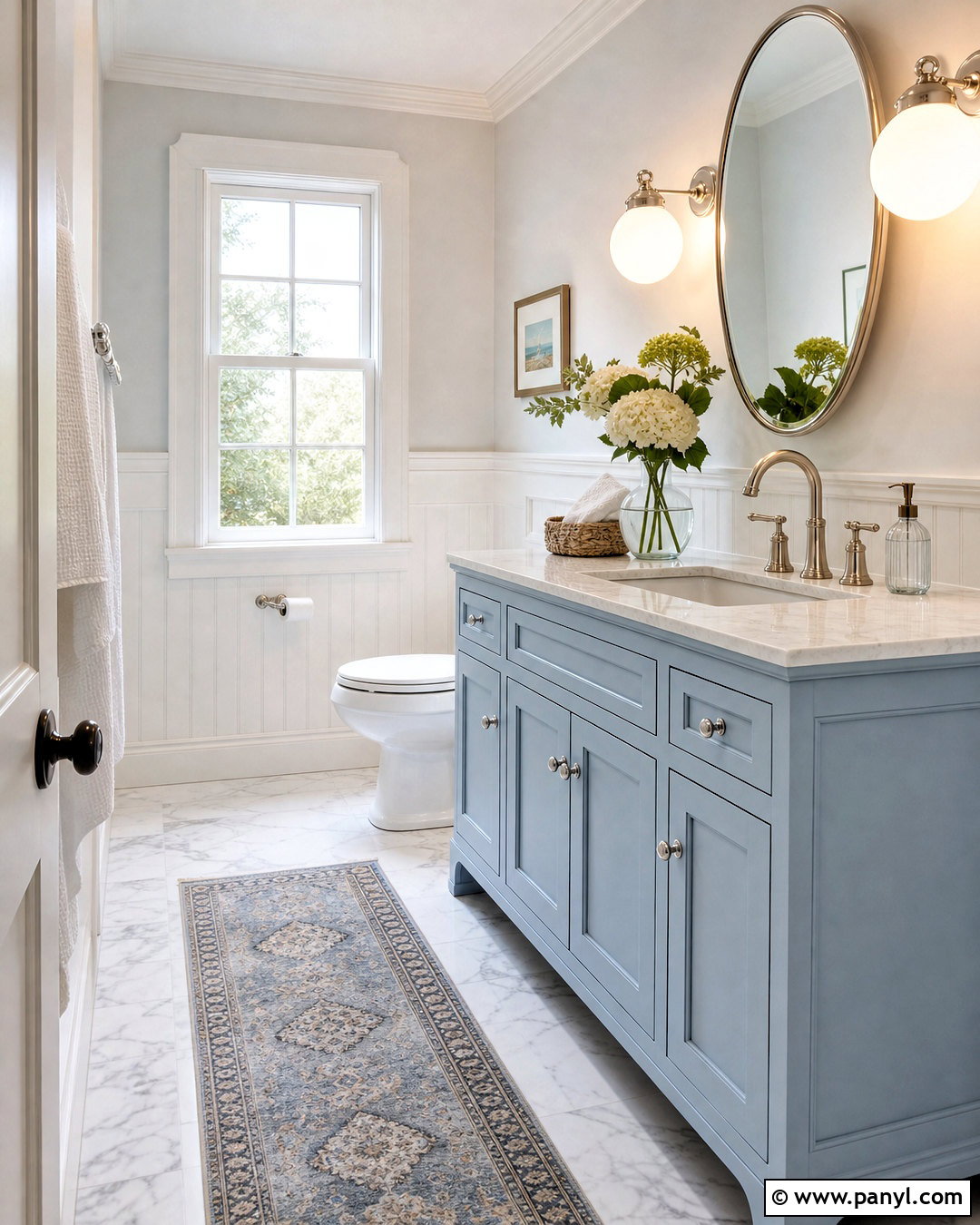
Powder blue gives a bathroom a clean, relaxed character that suits traditional and coastal homes. Paint the upper walls in a soft blue with a slightly gray undertone, then install glossy white subway tile around the tub and lower walls. A medium-tone oak vanity grounds the pale colors and adds enough contrast to define the layout. Use white marble-look flooring, polished chrome fixtures, and a round chrome mirror to reflect light around the room. Navy hand towels and a narrow striped shower curtain introduce a deeper blue without overwhelming the scheme. Complete the space with a white ceramic stool and small glass accessories. This palette feels particularly effective in bathrooms with good natural light, where the blue remains clear and refreshing throughout the day.
4. Navy Blue Bathroom
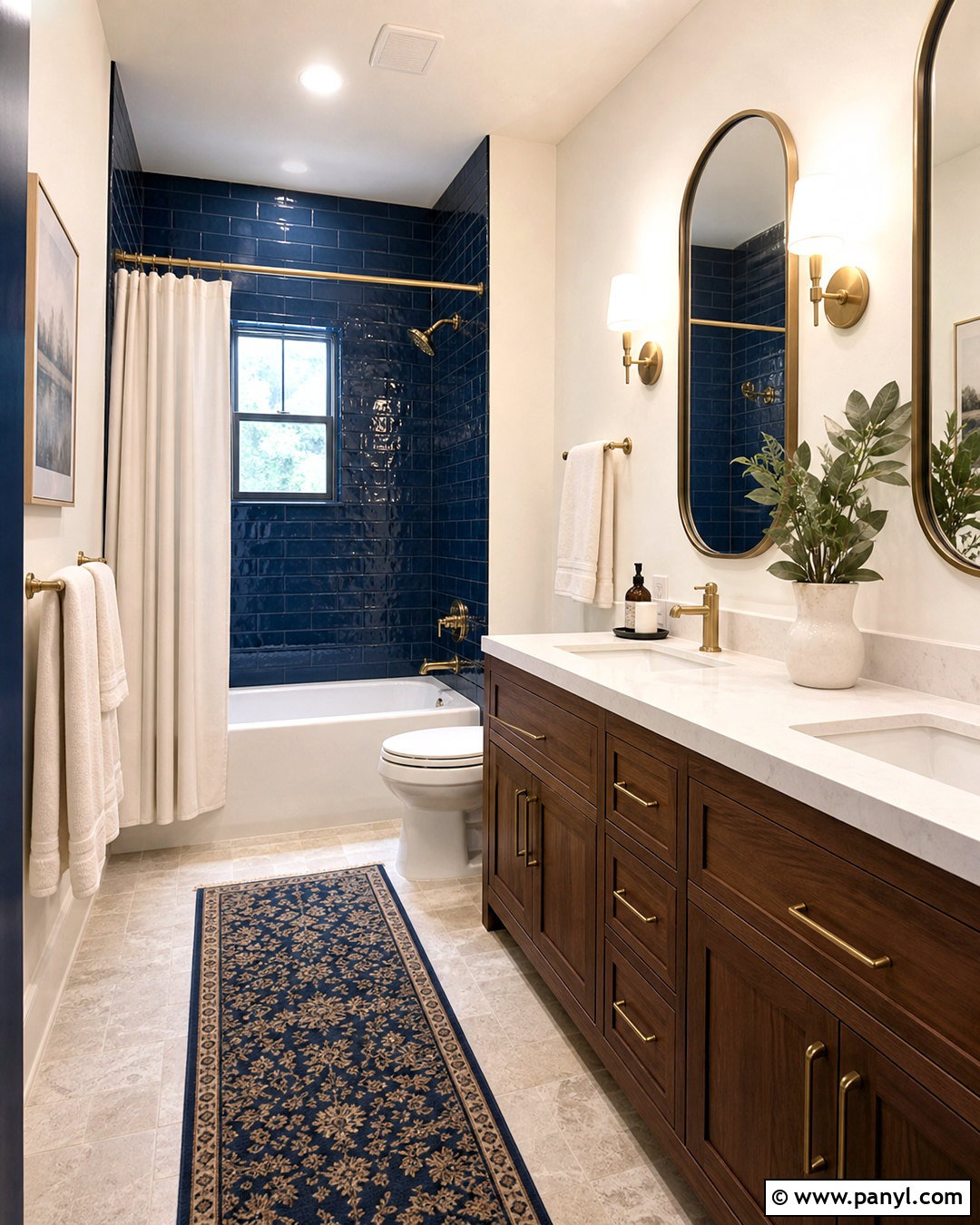
Deep navy can make an ordinary bathroom feel polished and architectural. Use glossy navy tiles across the main vanity wall so their reflective finish keeps the color from appearing flat. Paint the remaining walls a warm off-white and choose a pale stone floor to provide visual breathing room. A walnut vanity adds richness, while a white quartz countertop creates a crisp break between the dark surfaces. Brushed brass faucets, sconces, cabinet pulls, and mirror trim bring warmth to the blue. Keep the tub, sink, and shower surround bright white for balance. Finish with ivory towels and a simple patterned runner that combines navy, tan, and cream. Strong layered lighting is essential, particularly if the room has limited windows or a compact floor plan.
5. Blush Pink Bathroom
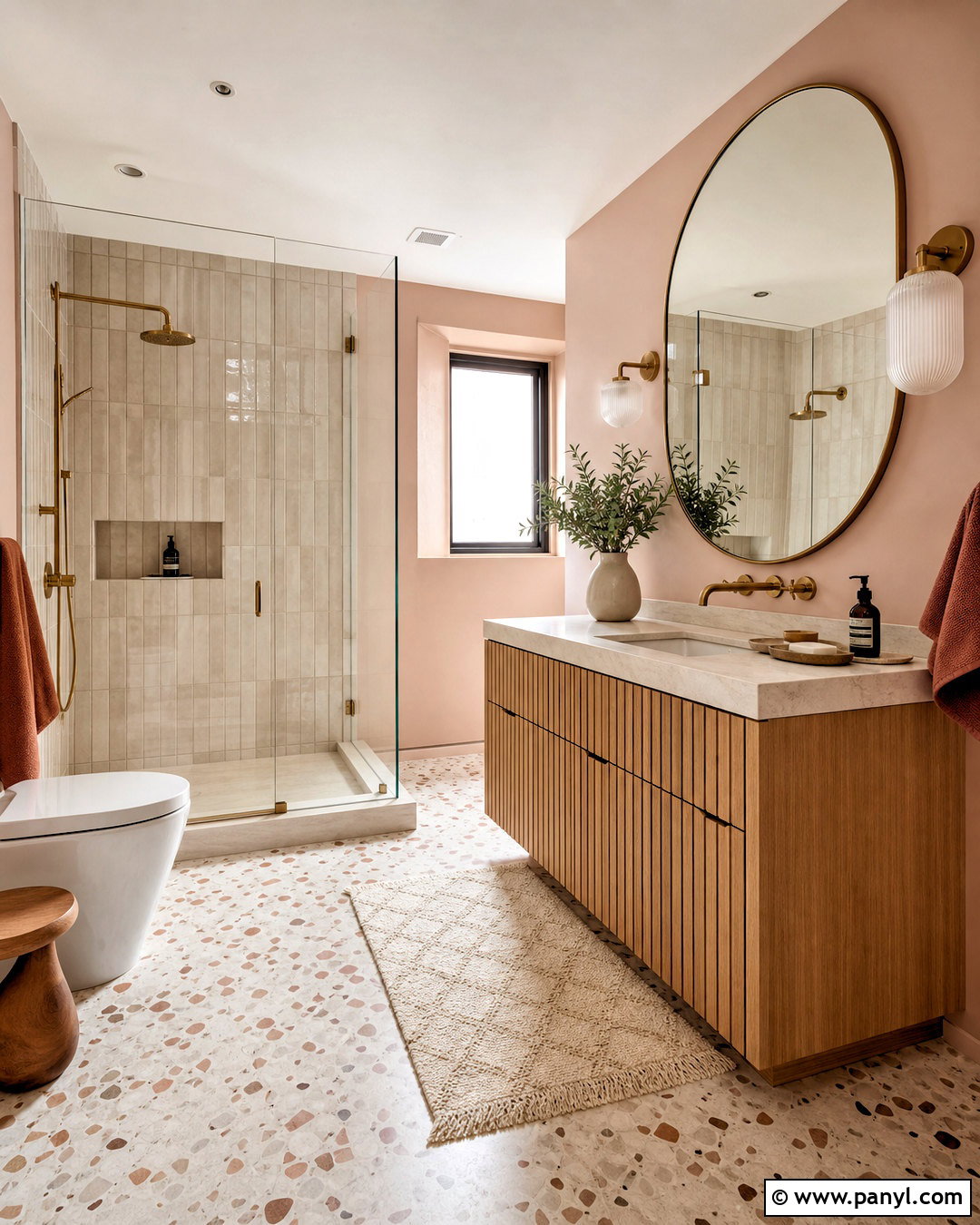
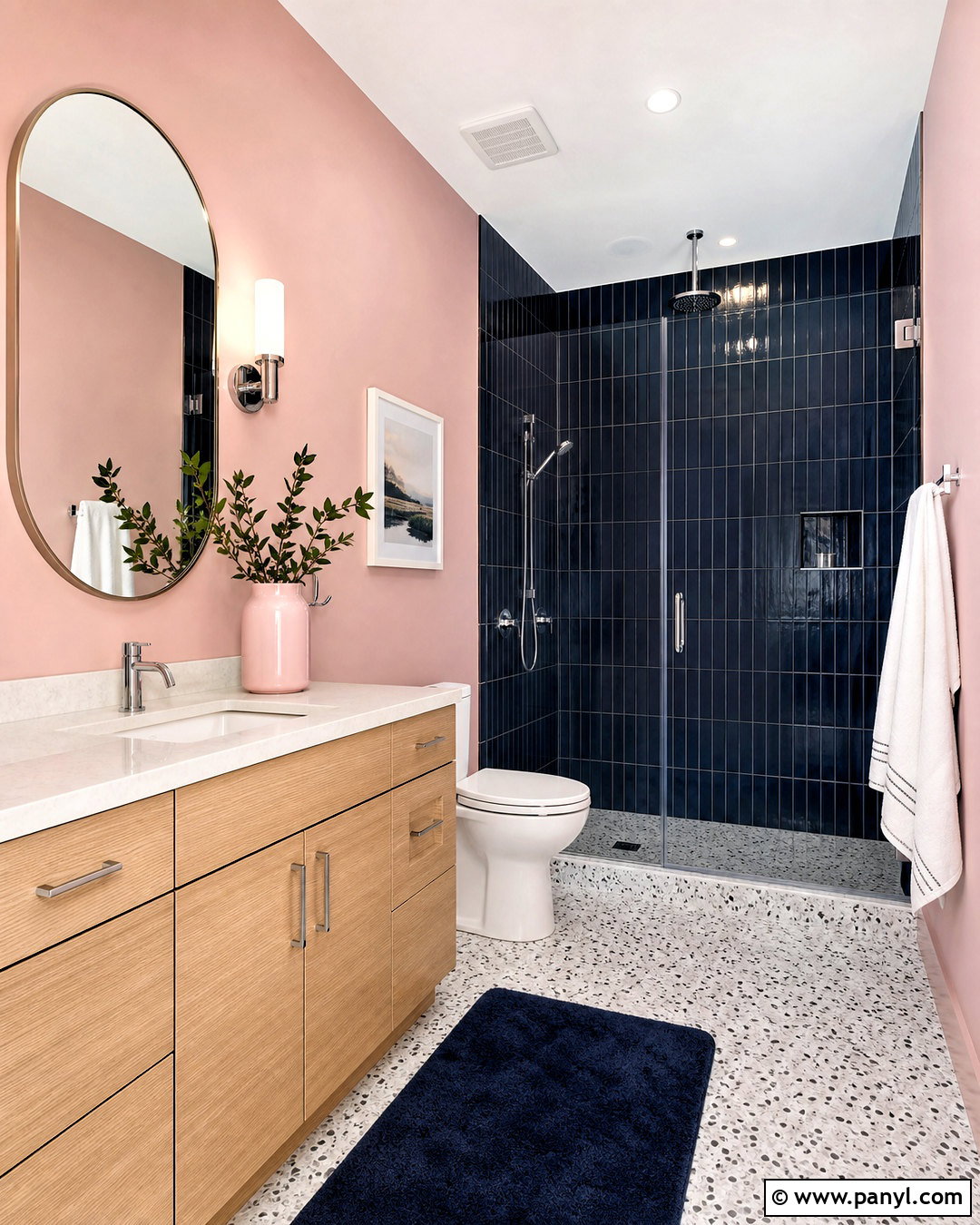
A blush pink bathroom can feel sophisticated when the color is dusty rather than sugary. Apply muted pink paint to the walls and pair it with cream zellige tile around the shower or bathtub. A fluted oak vanity adds texture, while an off-white stone countertop keeps the scheme soft and practical. Choose unlacquered brass fixtures and a rounded rectangular mirror to reinforce the warm undertones. Beige terrazzo flooring with small pink and brown chips connects every color in the room. Add rust-colored hand towels, an ivory bath mat, and minimal ceramic accessories. Instead of filling the space with decorative objects, let the varied tile surface and warm materials provide interest. This welcoming palette works beautifully in powder rooms, guest bathrooms, and softly styled primary suites.
6. Terracotta Bathroom
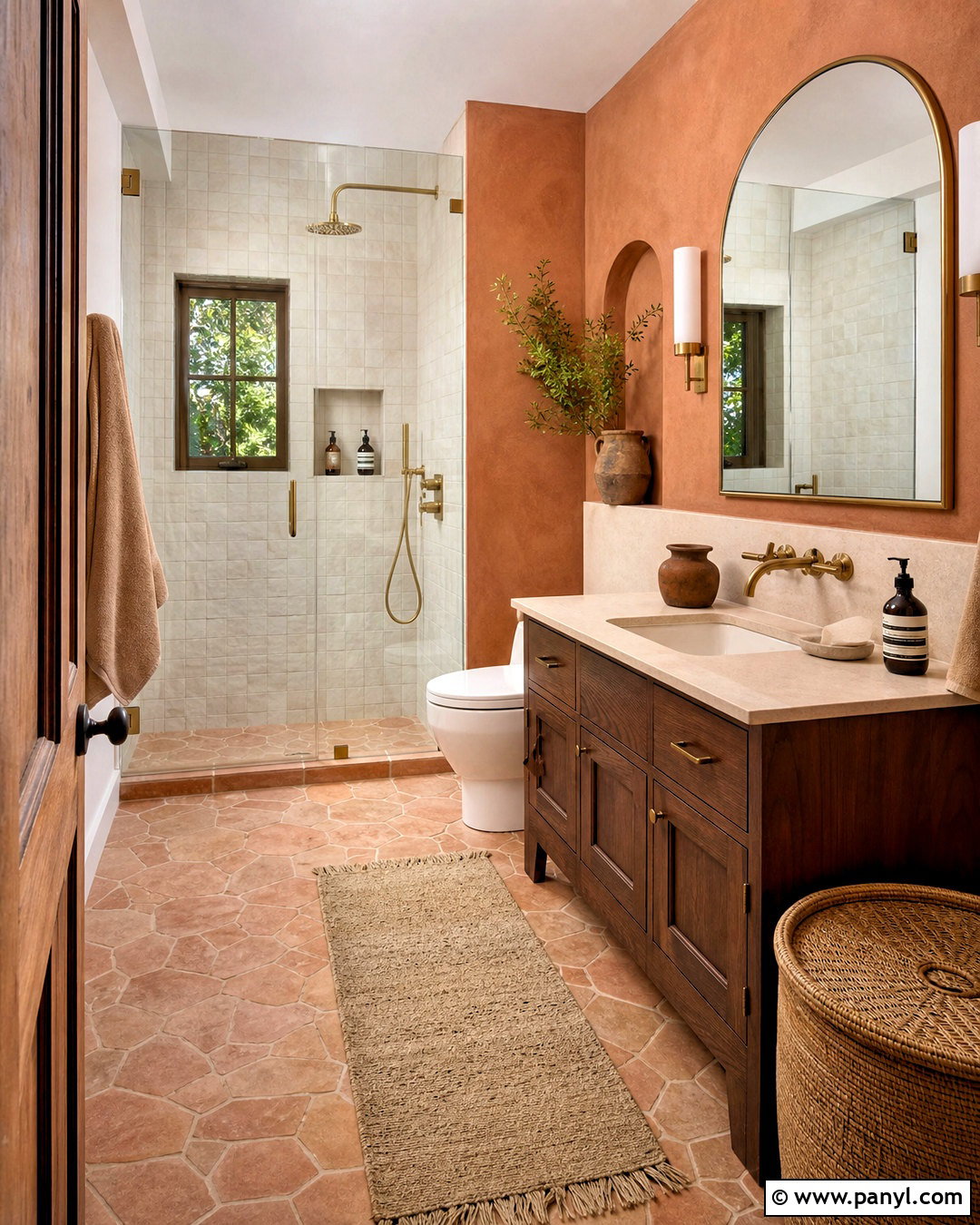
Sunbaked terracotta tones bring warmth and an earthy Mediterranean feeling to the bathroom. Begin with handmade-look terracotta floor tile and repeat the color on a plaster-effect accent wall behind the vanity. Keep the shower walls creamy white so the stronger orange-brown shade does not dominate the entire space. A dark oak vanity, beige limestone countertop, and aged brass hardware complement the natural palette. Choose an arched mirror and simple wall sconces with opaque white shades. Sand-colored towels, a woven hamper, and a small clay pot complete the layered look. Because real terracotta can require regular sealing, porcelain tile that copies its color and variation may be easier to maintain. The finished bathroom feels sunny, comfortable, and full of texture without becoming overly rustic.
7. Olive Green Bathroom
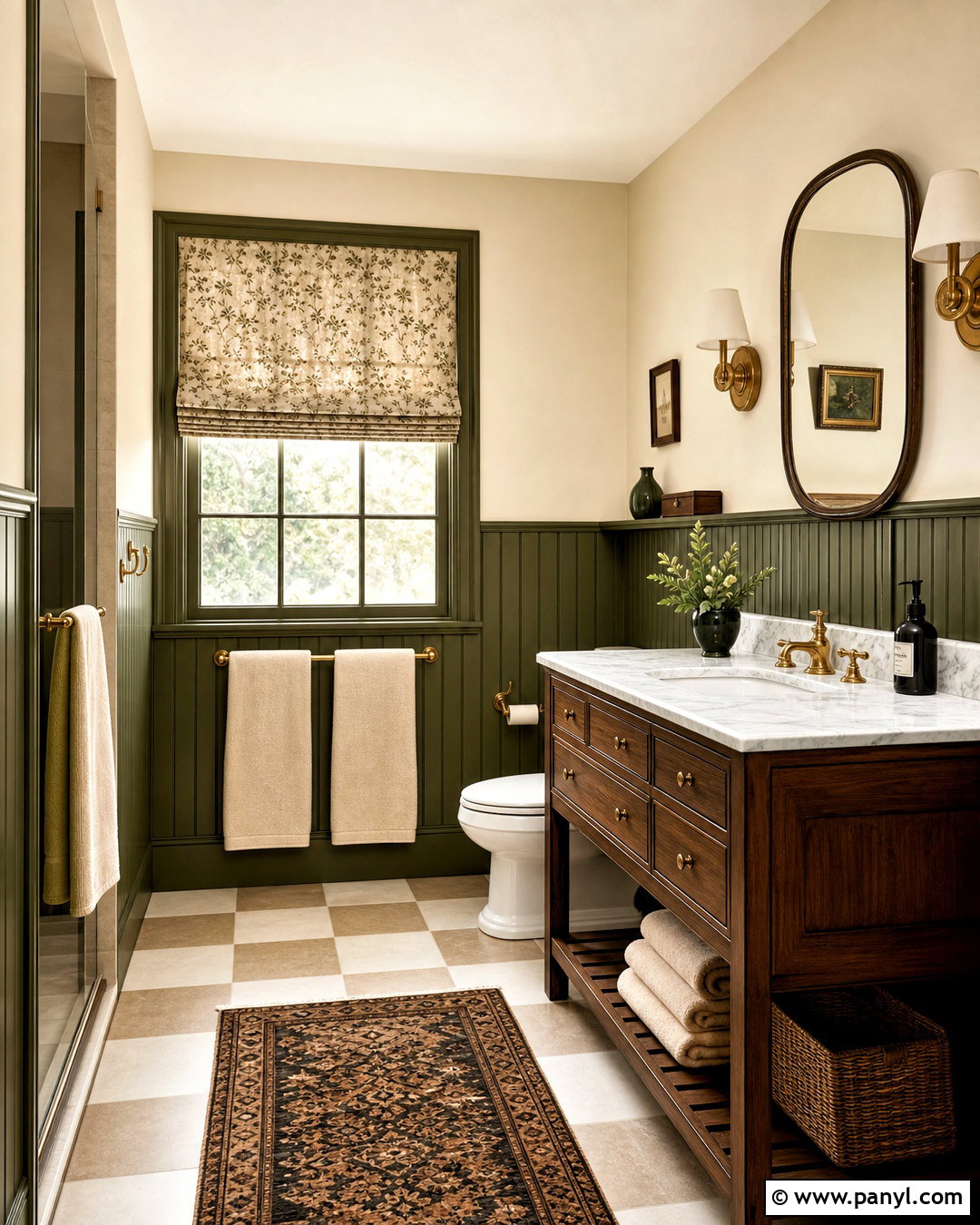
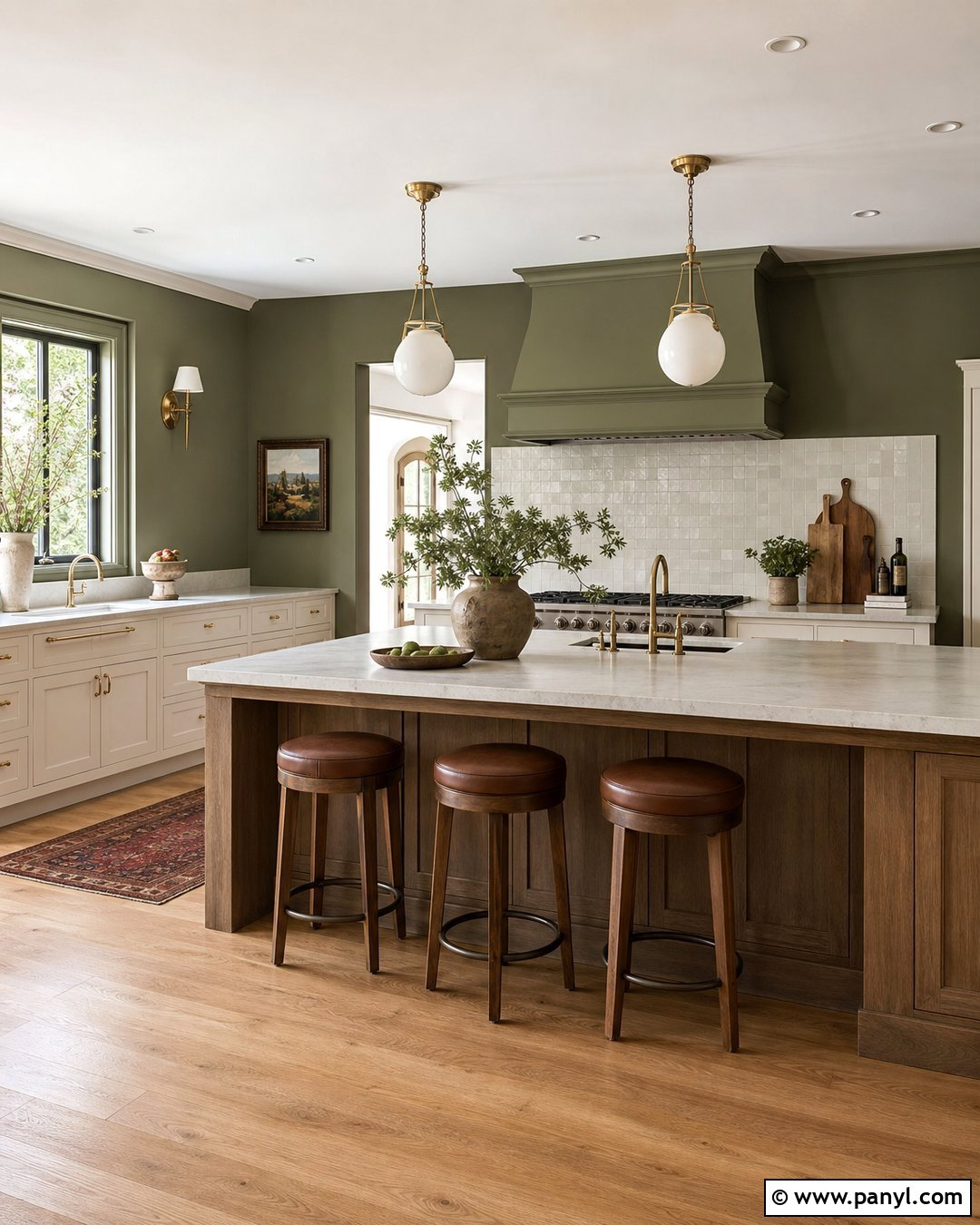
Muted olive green creates a grounded bathroom with more depth than pale sage. Use olive-painted wall paneling around the lower half of the room and warm ivory paint above it. Cream and tan checkerboard floor tile gives the space a subtle vintage influence, while a walnut vanity adds another rich natural tone. Install a white marble countertop and backsplash to brighten the center of the scheme. Aged brass fixtures, a slim oval mirror, and pleated glass sconces support the classic character. Finish with cream towels, a small patterned window shade, and dark green ceramic accessories. Keeping the ceiling, tub, and main shower surfaces light prevents the olive from closing in the room. This balanced palette suits cottage, Craftsman, and traditional bathroom interiors especially well.
8. Charcoal And Walnut Bathroom
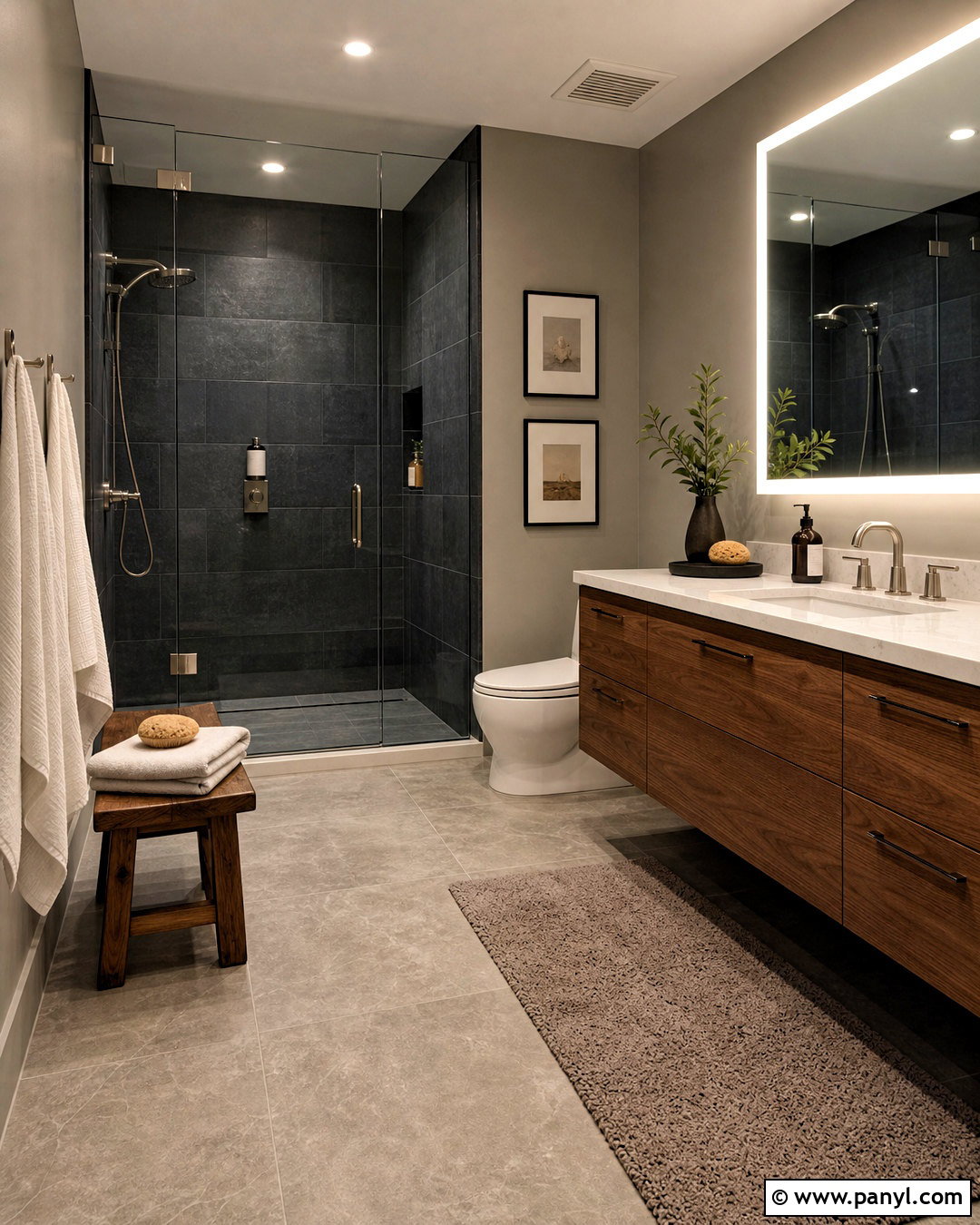
Charcoal gray can look warm and inviting when it is layered with walnut and creamy stone. Cover the shower wall in large charcoal porcelain tiles, then use a softer mushroom-gray paint on the remaining walls. A floating walnut vanity provides a strong natural focal point and visually lightens the floor area. Select a creamy quartz countertop, warm gray floor tile, and brushed nickel fixtures for a smooth transition between dark and light surfaces. An illuminated mirror and two ceiling fixtures ensure the deep colors remain clear. Add ivory towels, a taupe bath mat, and one textured wood stool beside the tub. Avoid cool blue-gray paint, which may make the palette feel severe. The completed bathroom is contemporary, streamlined, and comfortable enough for everyday use.
9. Teal And Peach Bathroom
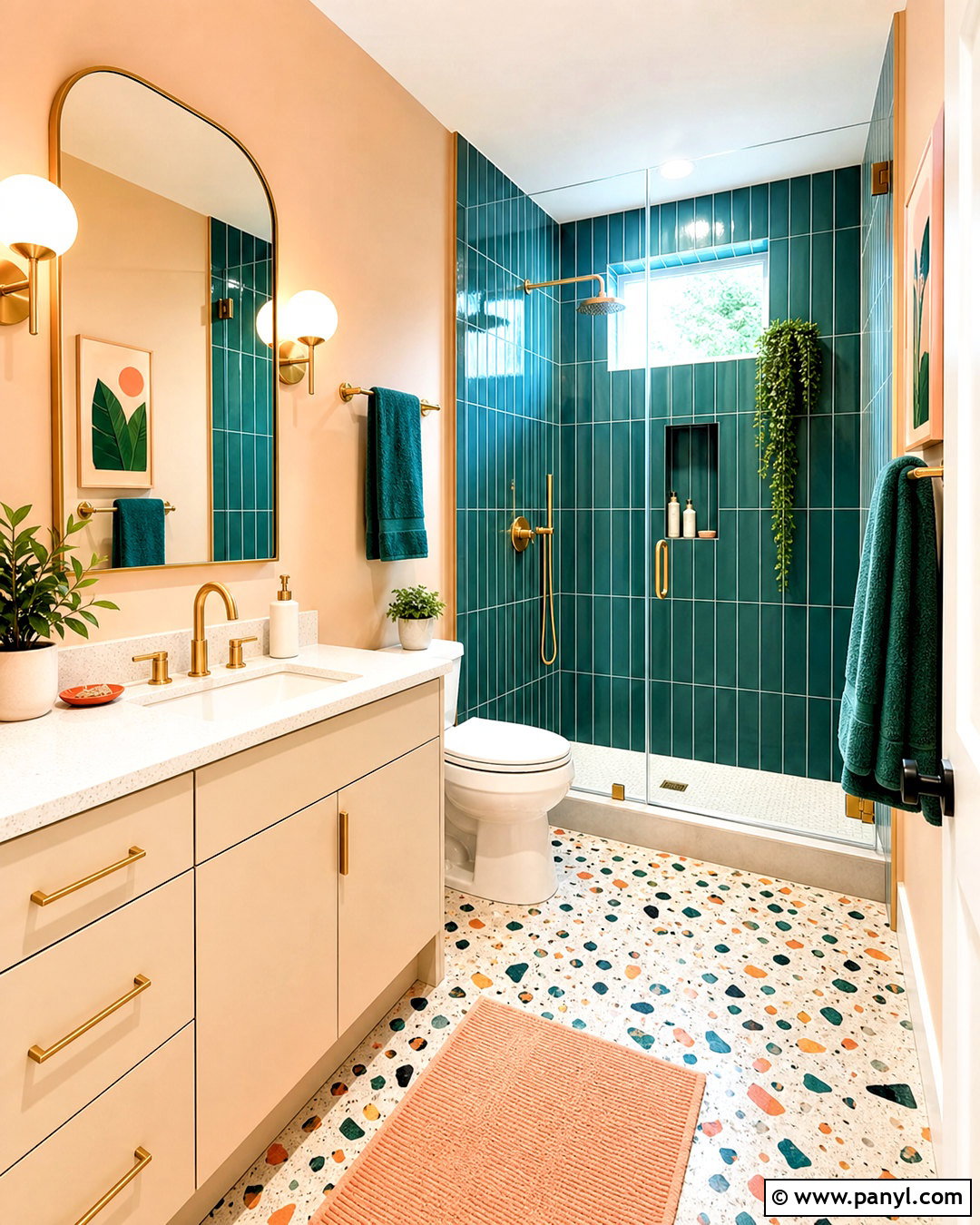
Teal and peach create a lively bathroom palette when both colors have softened, earthy undertones. Use deep teal vertical tile inside the shower and paint the remaining walls a light peachy beige. A cream vanity with simple slab doors keeps the combination from becoming overly busy. Choose terrazzo flooring that contains small teal, coral, tan, and white fragments to connect the room visually. Brushed brass fixtures and a thin brass-framed mirror add warmth without competing with the colorful surfaces. Repeat the teal in hand towels and use a pale peach bath mat near the tub. White sanitary fixtures and a white countertop provide necessary contrast. This complete scheme is playful enough for a powder room but refined enough for a compact guest or family bathroom.
10. Butter Yellow Bathroom
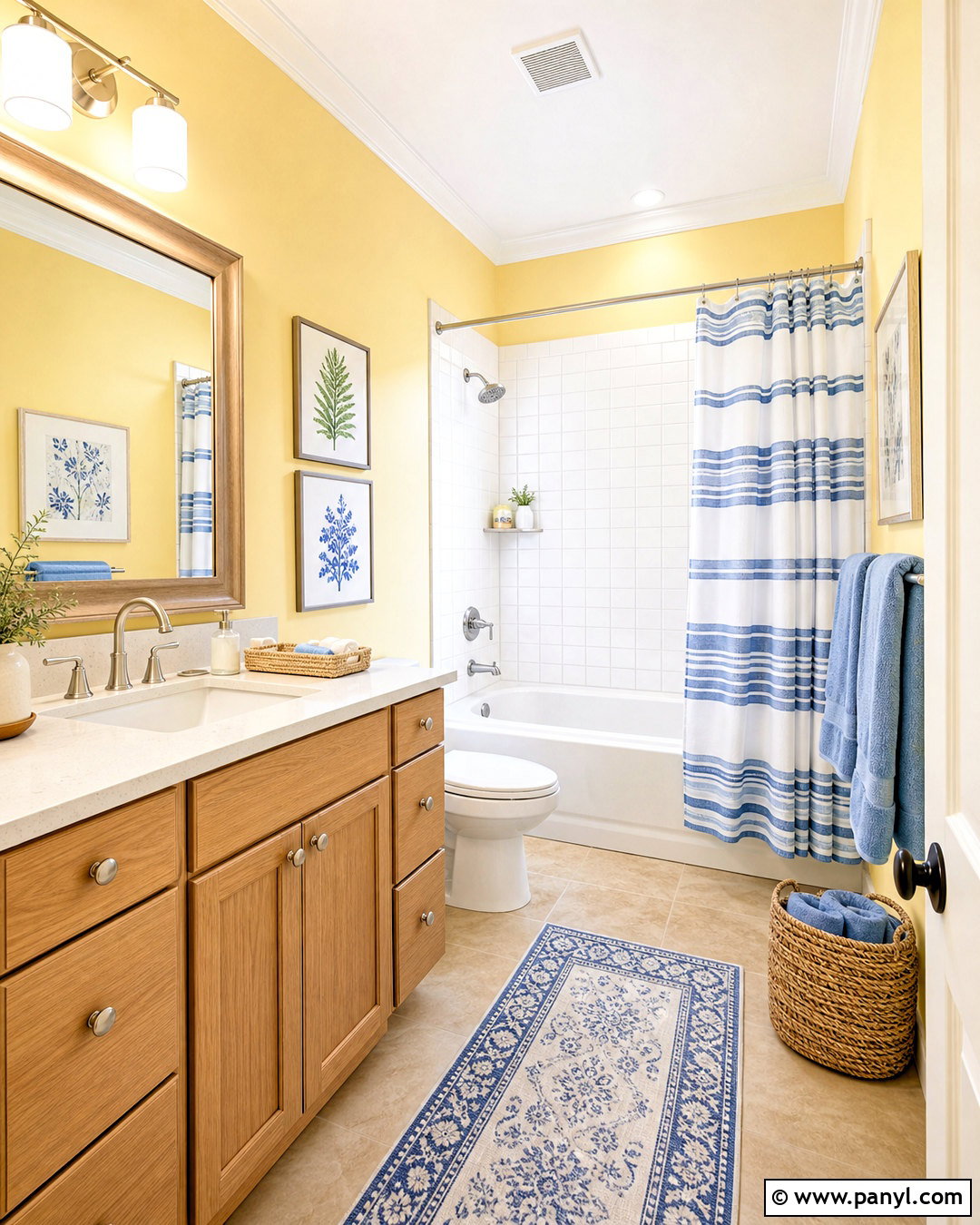
Gentle butter yellow brings cheerful warmth to a bathroom while remaining softer than bright lemon. Paint the walls a creamy yellow and use glossy white square tile around the tub to keep the room crisp. A light oak vanity and pale beige floor tile reinforce the sunny palette without adding another strong color. Select a white quartz counter, polished nickel fixtures, and a broad rounded mirror that reflects natural light. Soft blue towels or a blue-and-white striped shower curtain provide a small cool contrast. A woven basket and simple botanical print make the room feel lived in. For the most flattering result, choose a yellow with muted cream undertones. The completed scheme feels bright in the morning, welcoming in the evening, and suitable for bathrooms of many sizes.
11. Taupe Bathroom
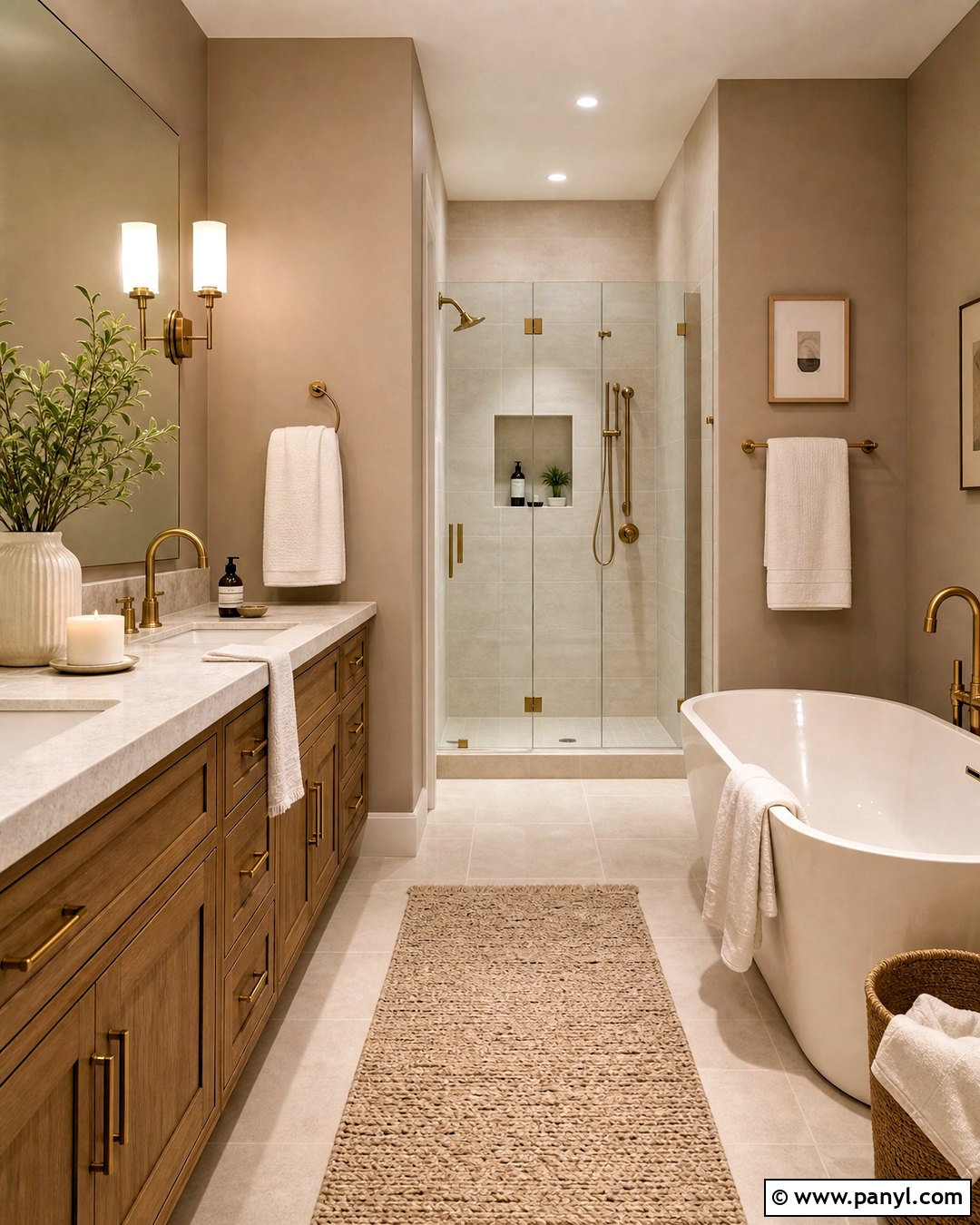
Layering taupe creates a peaceful bathroom with more depth than a single beige finish. Start with mushroom-taupe walls, then use slightly lighter greige tile across the shower and backsplash. A medium oak vanity introduces visible grain, while a creamy stone countertop adds a smooth, refined surface. Continue the tonal approach with warm beige porcelain flooring and an oatmeal runner. Champagne bronze fixtures offer subtle warmth without looking overly bright. Choose a large frameless mirror and understated wall lights to preserve the room’s quiet appearance. Ivory towels, ribbed ceramic containers, and one dark brown tray provide restrained contrast. Varying the textures is important because the colors are closely related. Together, matte paint, stone-look tile, wood, glass, and soft textiles create a soothing spa-like bathroom.
12. Black And White Bathroom
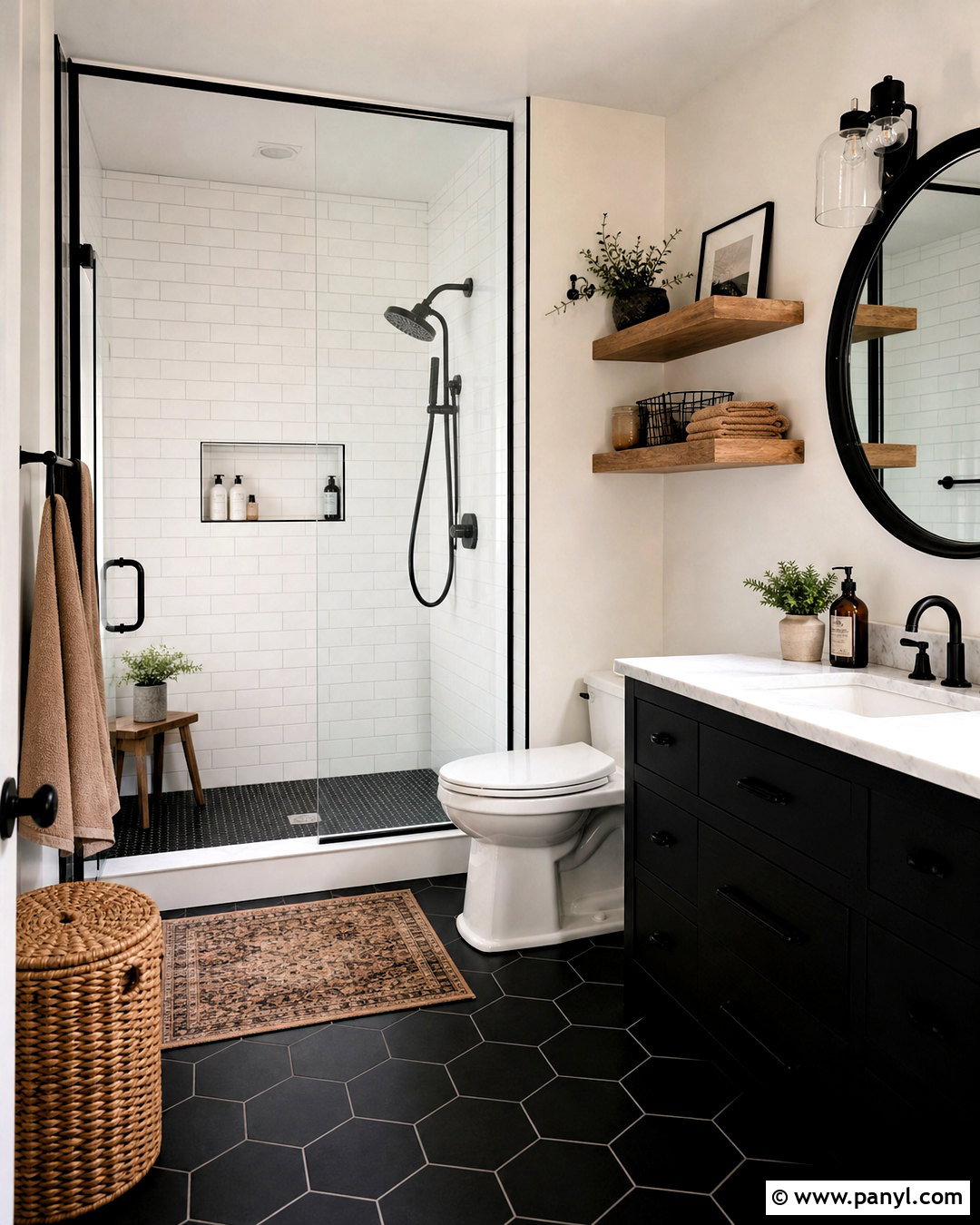
A black and white bathroom feels timeless when the contrast is balanced rather than overly sharp. Install white subway tile with pale gray grout around the shower, then paint the upper walls a soft off-white. Use black hexagonal floor tile to anchor the room and repeat black on a compact vanity, mirror frame, faucets, and shower enclosure. A white marble countertop softens the graphic palette with gentle gray veining. Warm the space through natural oak shelves, tan towels, and a woven hamper. Clear glass shower panels help the bathroom remain open, while bright sconces prevent black details from appearing heavy. This complete scheme can support modern, farmhouse, or traditional architecture. Adjusting the shapes of the tile and vanity is enough to change its overall character.
13. Lavender Gray Bathroom
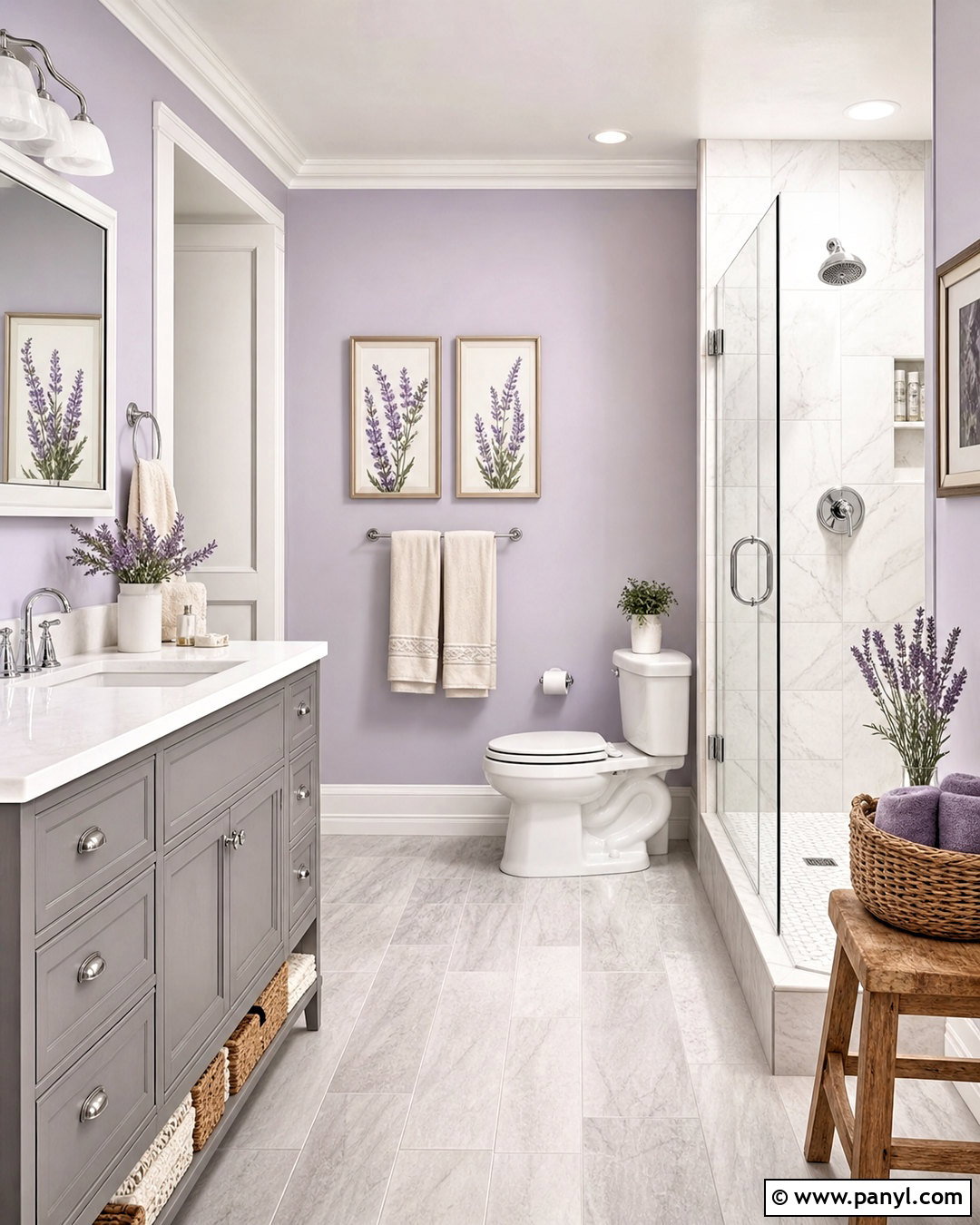
Pale lavender gray adds a quiet hint of color while maintaining the flexibility of a neutral. Cover the walls in a muted lavender with cool gray undertones and pair it with white marble-look shower tile. A soft gray vanity provides gentle definition without creating a hard contrast. Choose a white countertop, polished chrome fixtures, and a frameless oval mirror to keep the room bright. Light gray porcelain flooring allows the wall color to remain the main feature. Warm the cooler palette with cream towels, a natural wood stool, and woven storage baskets. A small botanical print can introduce touches of green and dusty purple. This finished look is especially useful in a small bathroom, where stronger purple shades might feel enclosed but a pale lavender can appear light, calm, and surprisingly versatile.
14. Forest Green Bathroom
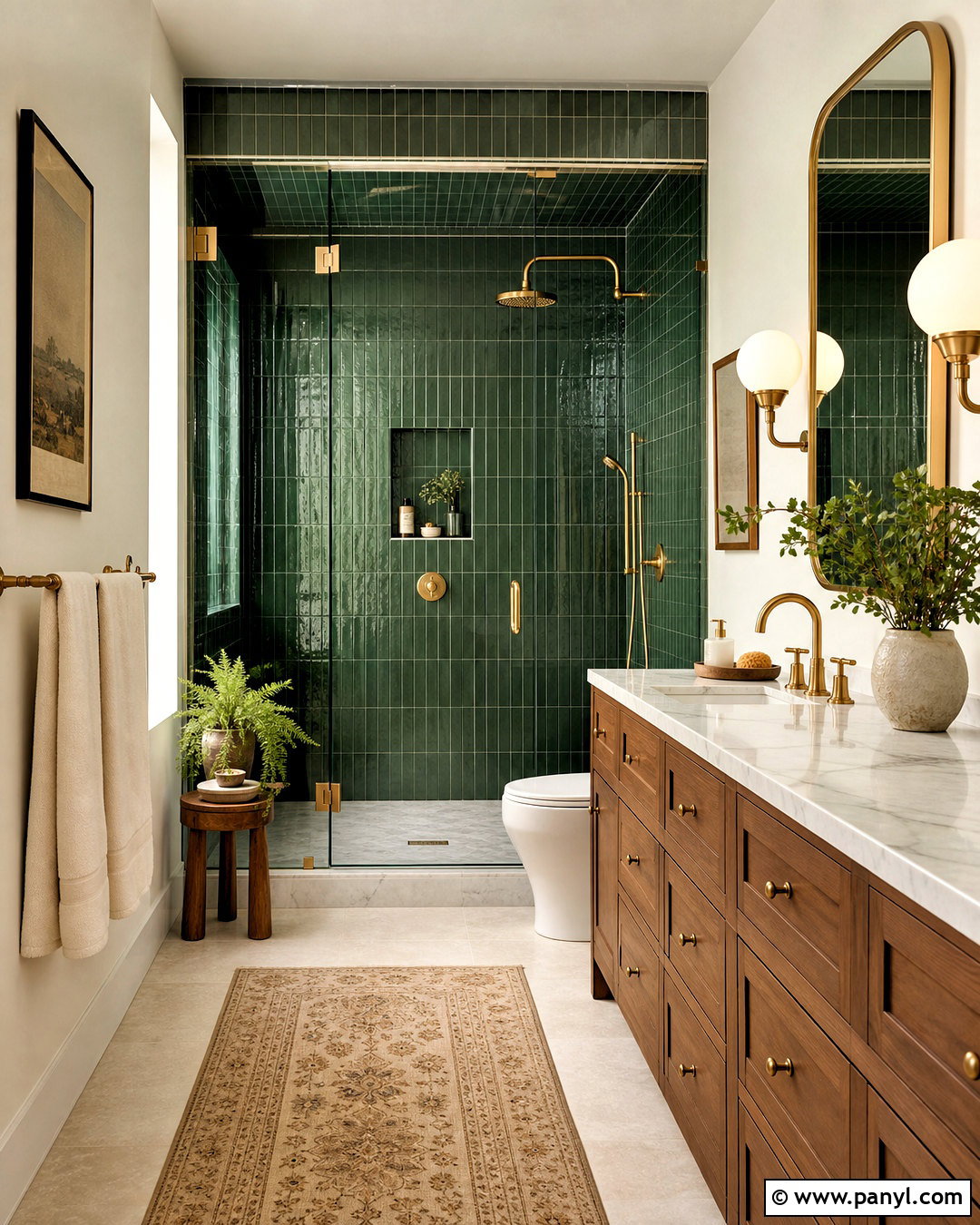
Rich forest green turns a bathroom into a dramatic retreat, particularly when balanced with light stone and reflective finishes. Use glossy green tile on the vanity wall and inside the shower, allowing the slight surface variation to create movement. Paint the ceiling and remaining walls warm white to prevent the deep shade from surrounding the entire room. A natural walnut vanity, white marble countertop, and pale limestone floor introduce contrast and warmth. Add brass faucets, an oversized brass mirror, and bright globe sconces. Cream towels and a simple beige runner keep the accessories quiet. If the bathroom is windowless, increase overhead and vanity lighting so the green reads as saturated rather than nearly black. The full scheme feels luxurious, nature-inspired, and appropriate for both modern and classic homes.
15. Burgundy And Blush Bathroom
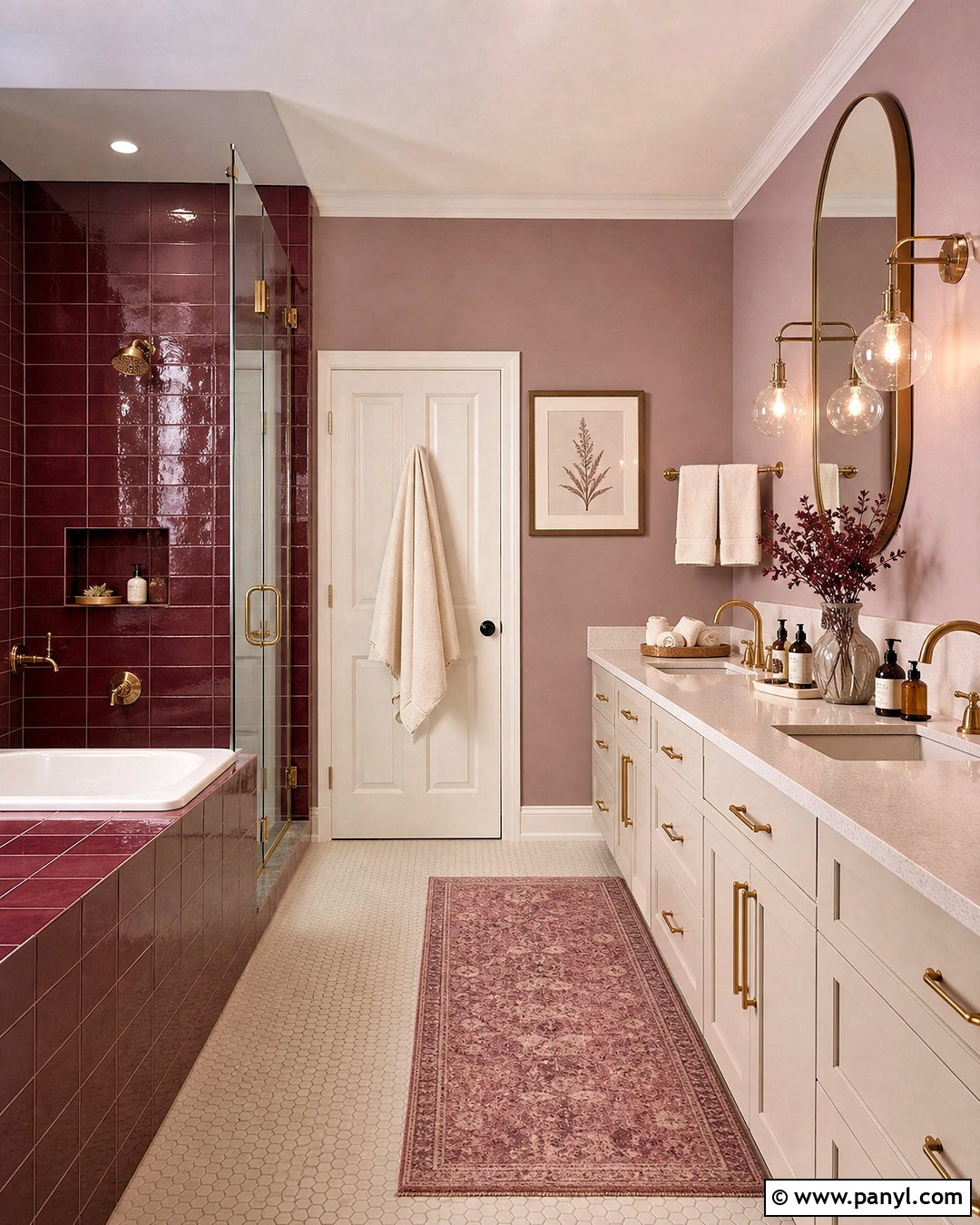
Burgundy creates an elegant bathroom when it is softened with blush, cream, and warm metal finishes. Use wine-free deep red ceramic tile behind the vanity and inside the shower, then paint the remaining walls a dusty blush pink. A cream vanity and pale quartz countertop provide a light central feature. Choose small cream floor tiles with burgundy grout or accents to connect the darker wall surfaces. Brushed brass fixtures, a pill-shaped mirror, and simple glass sconces enhance the warmth of the palette. Add ivory towels and one muted rose bath mat rather than introducing more competing colors. Bright white lighting will help the burgundy retain its red character. This complete design works particularly well in a powder room or guest bathroom where a memorable color statement feels intentional.
16. Cobalt Blue Bathroom
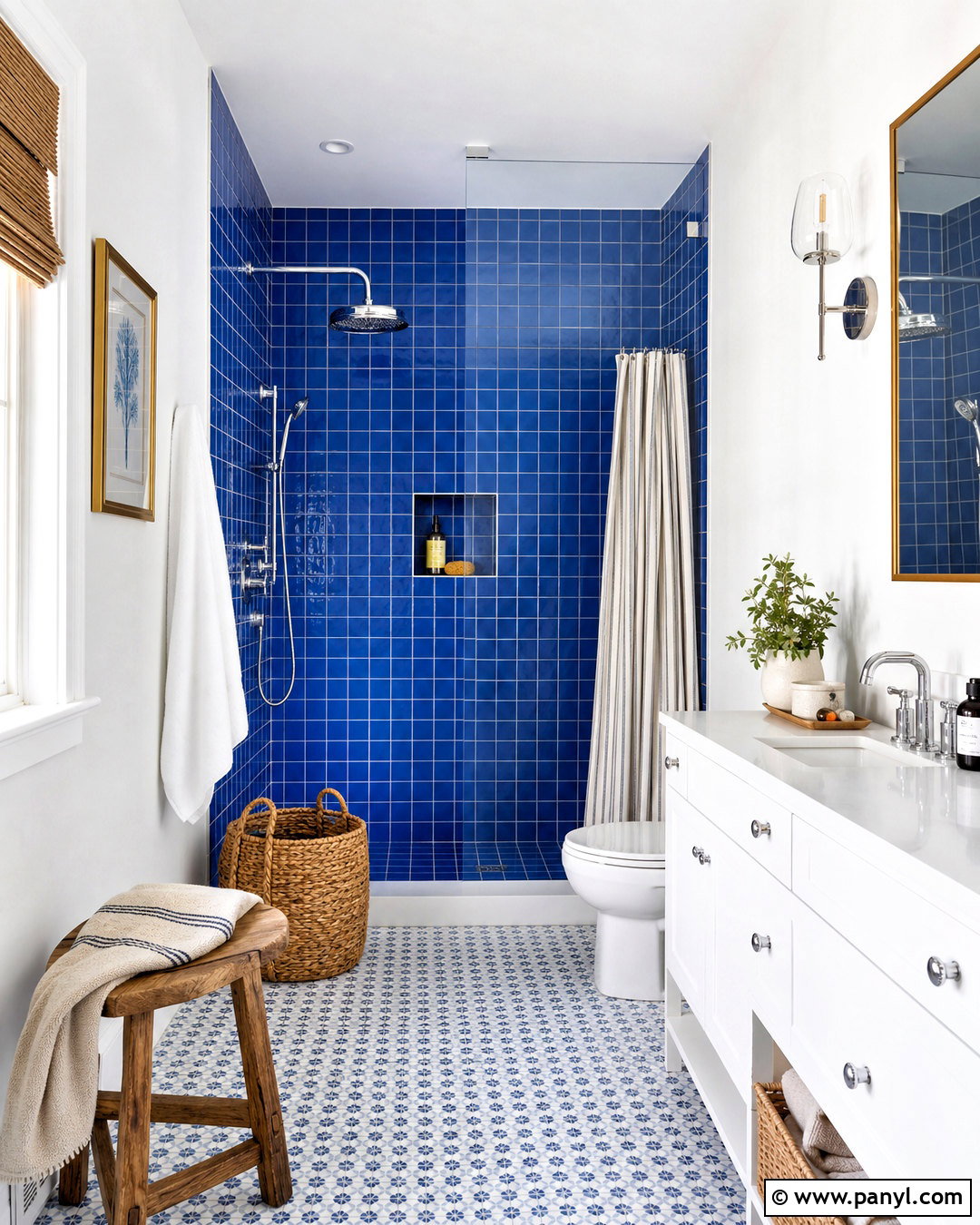
Clear cobalt blue delivers energetic color while classic white keeps the bathroom fresh and familiar. Install cobalt blue square tiles across the shower walls or behind the vanity, using white grout to emphasize their shape. Paint the other walls crisp white and choose a white vanity with a simple quartz countertop. Small white and blue mosaic floor tiles extend the color story without making the room feel solid blue. Polished chrome fixtures and a frameless mirror support the bright, clean appearance. Introduce natural warmth through an oak stool, woven baskets, and sand-colored towels. A striped shower curtain can add movement if the bathroom does not have glass doors. The resulting scheme feels cheerful and graphic, making it a strong choice for children’s bathrooms, beach homes, or colorful modern interiors.
17. Coral And Sand Bathroom
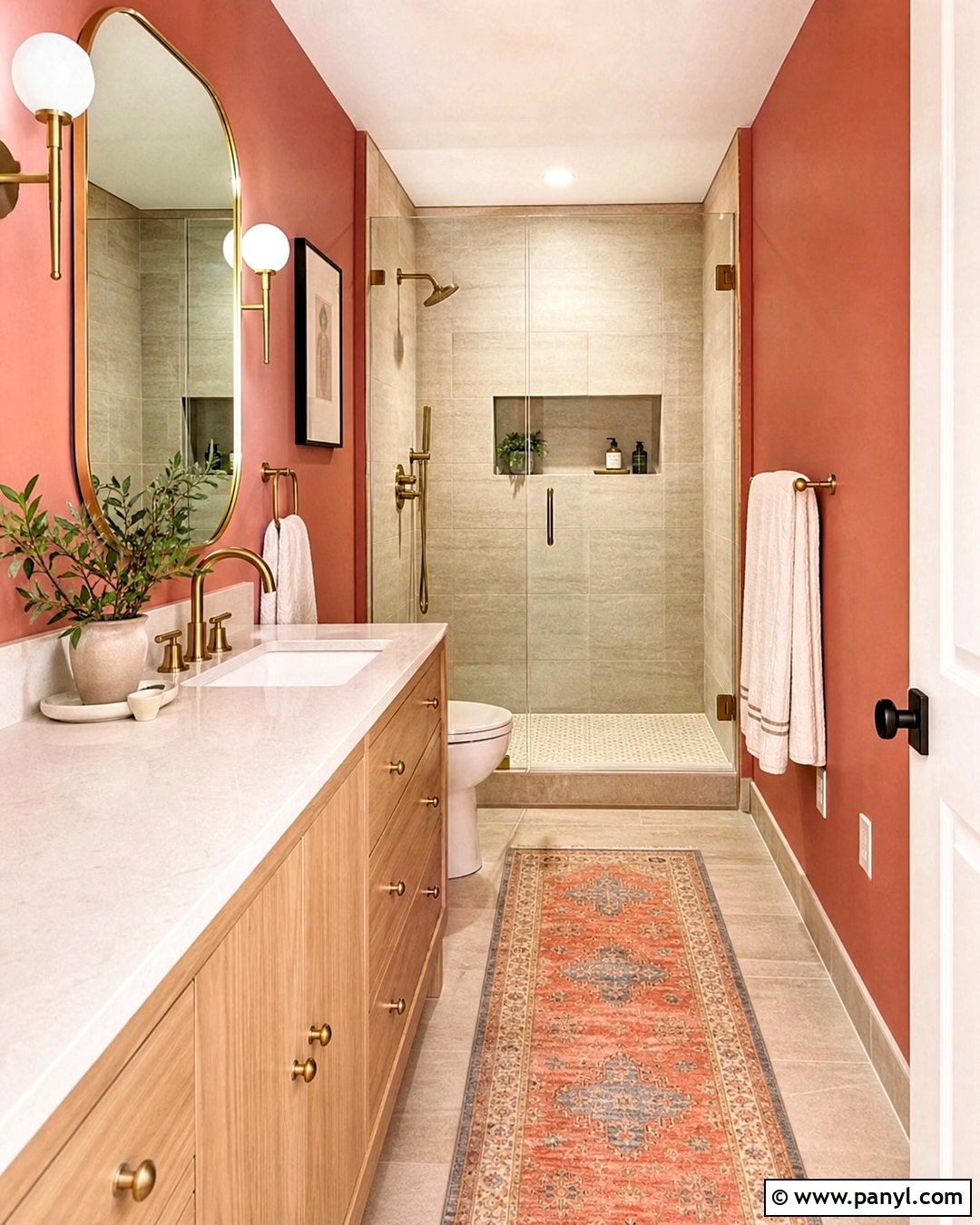
Warm coral walls can make a bathroom feel bright, flattering, and full of personality. Choose a muted coral that sits between pink and orange, then balance it with sandy beige shower tile and light travertine-look flooring. A pale oak vanity supports the relaxed palette, while a creamy white countertop keeps the sink area clean and practical. Use brushed brass fixtures, a rounded mirror, and white globe sconces for a soft modern finish. Ivory towels and a patterned runner containing coral, tan, and dusty blue add gentle layers. Keep the tub, toilet, and ceiling white so the wall color remains controlled. This combination suits bathrooms that receive warm natural light, but it can also brighten an interior powder room when paired with clear, high-quality artificial lighting.
18. Clay Brown Bathroom
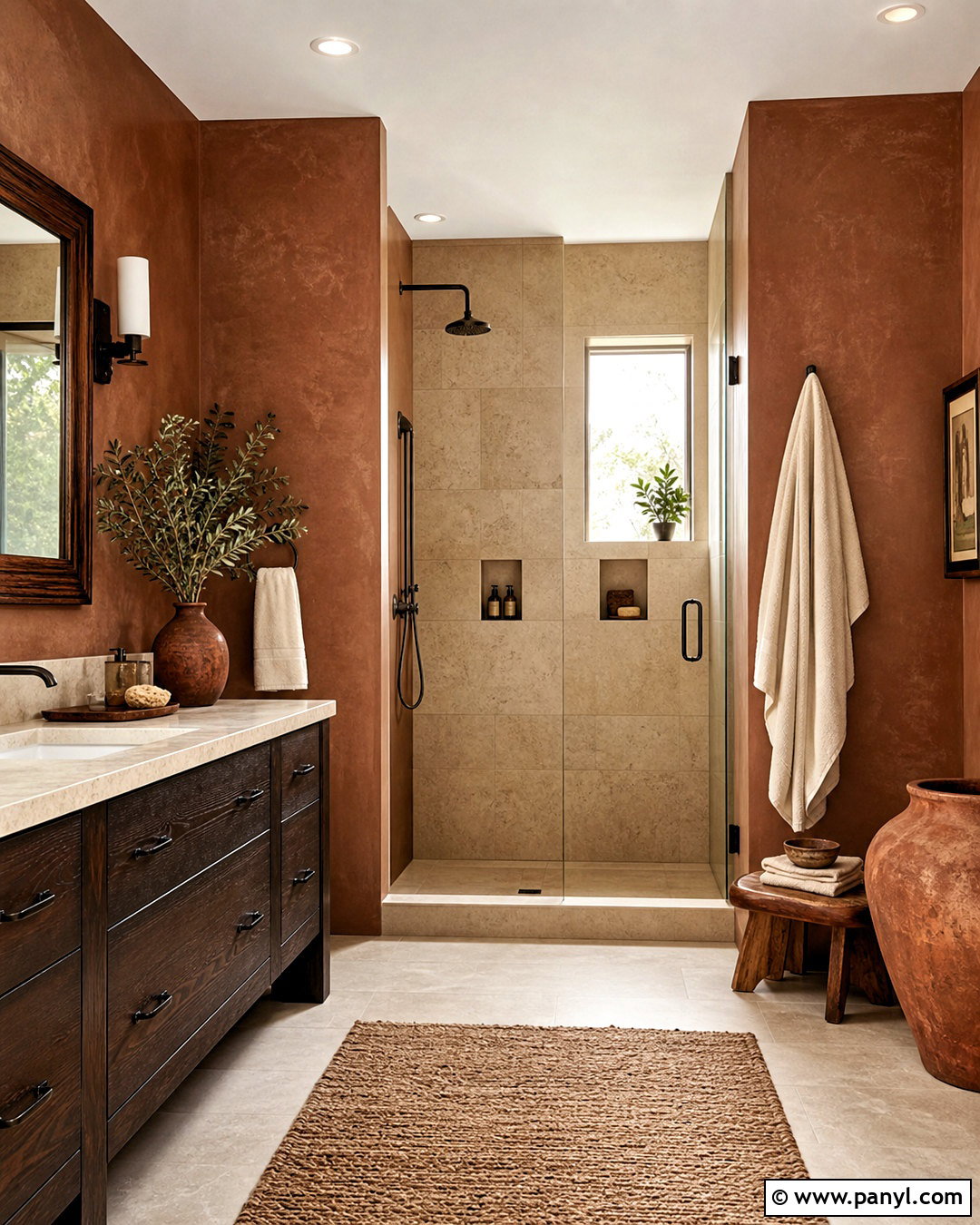
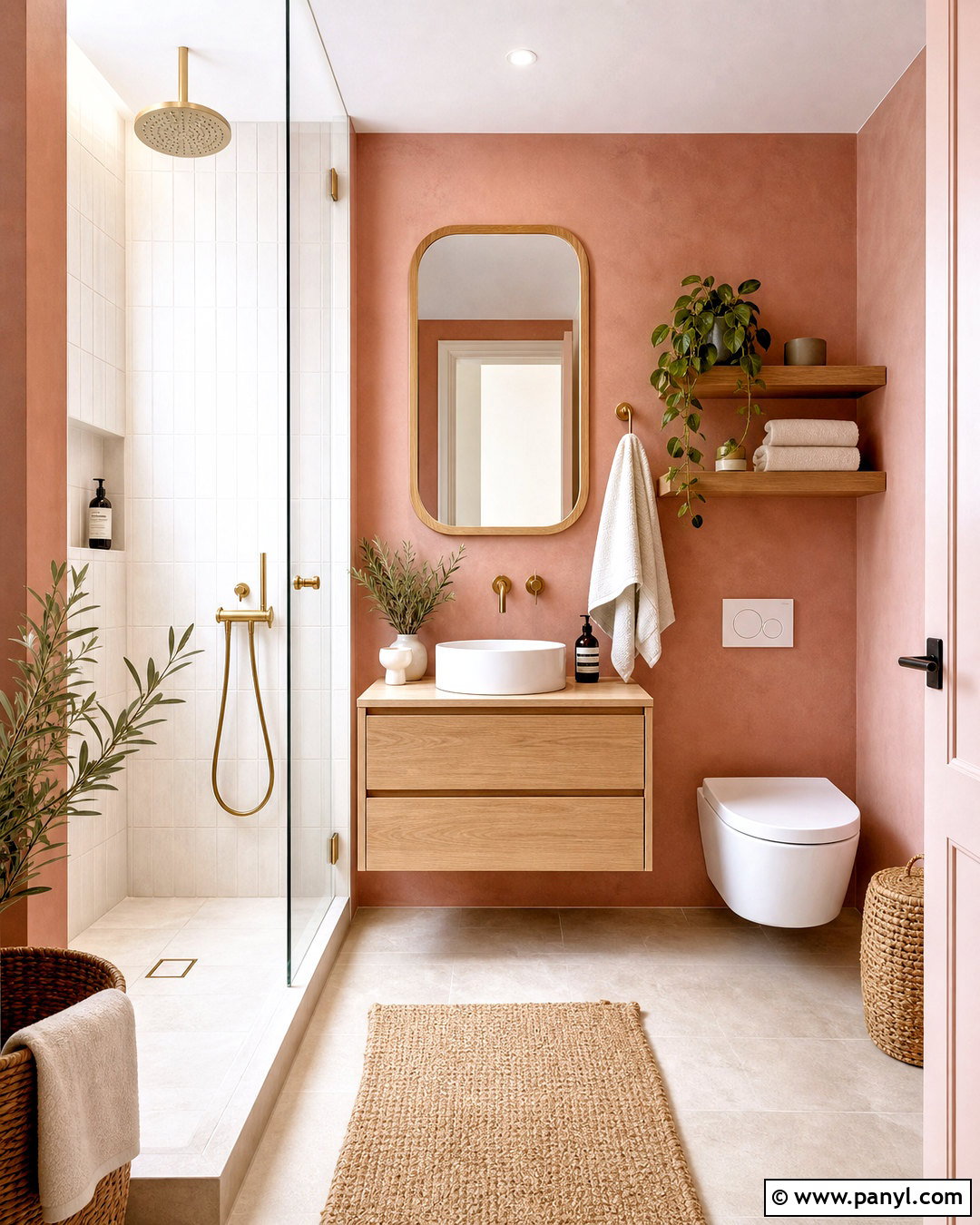
A soft clay brown palette surrounds the bathroom with earthy warmth without relying on traditional beige. Apply a medium reddish-brown paint or waterproof plaster finish to the main walls. Use tonal brown porcelain tile in the shower, selecting a shade slightly lighter than the paint for subtle separation. A dark walnut vanity and honed cream stone countertop create a grounded, furniture-like focal point. Choose aged bronze fixtures, a wood-framed mirror, and linen-shaded sconces to support the natural character. Pale beige flooring, cream towels, and a light woven bath mat keep the lower part of the room from becoming heavy. Add minimal ceramics in rust and off-white. With bright layered lighting and contrasting pale surfaces, this cocooning color scheme feels calm, modern, and highly textured.
19. Seafoam Green Bathroom
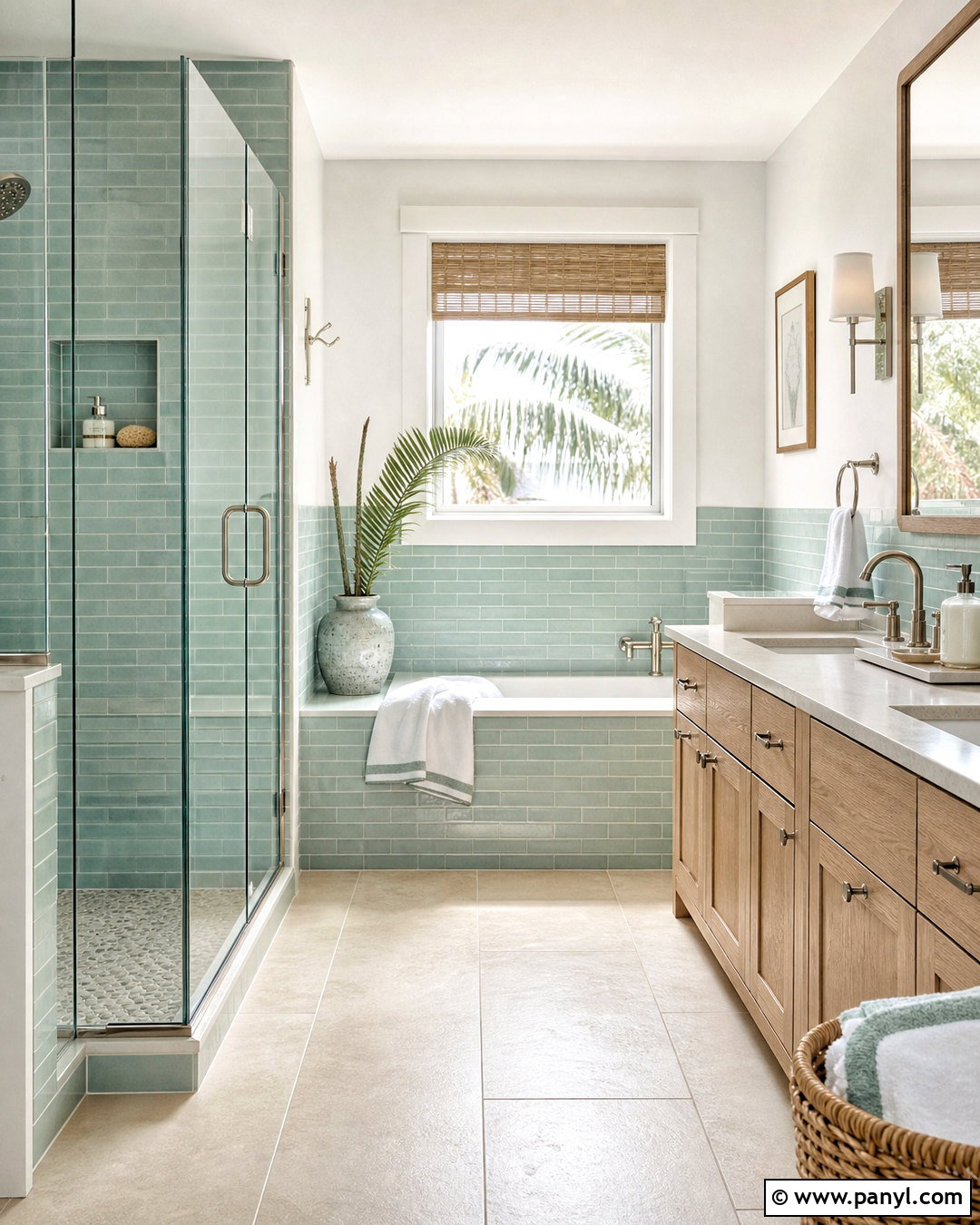
Seafoam green gives a bathroom a light coastal quality without requiring themed decorations. Use glossy seafoam tile around the bathtub and vanity backsplash, then paint the upper walls a warm white. A white oak vanity and pale stone countertop introduce gentle natural color. Choose sand-toned porcelain floor tile, brushed nickel fixtures, and a wide frameless mirror to maintain an airy finish. White towels edged with soft green provide an easy way to repeat the main shade. Add a woven basket, a clear glass shower panel, and one simple ceramic vase rather than obvious beach accessories. The green should have a slightly muted blue undertone, not a bright mint appearance. This complete scheme makes a narrow bathroom feel open, restful, and connected to water and nature.
20. Ochre And Blue Bathroom
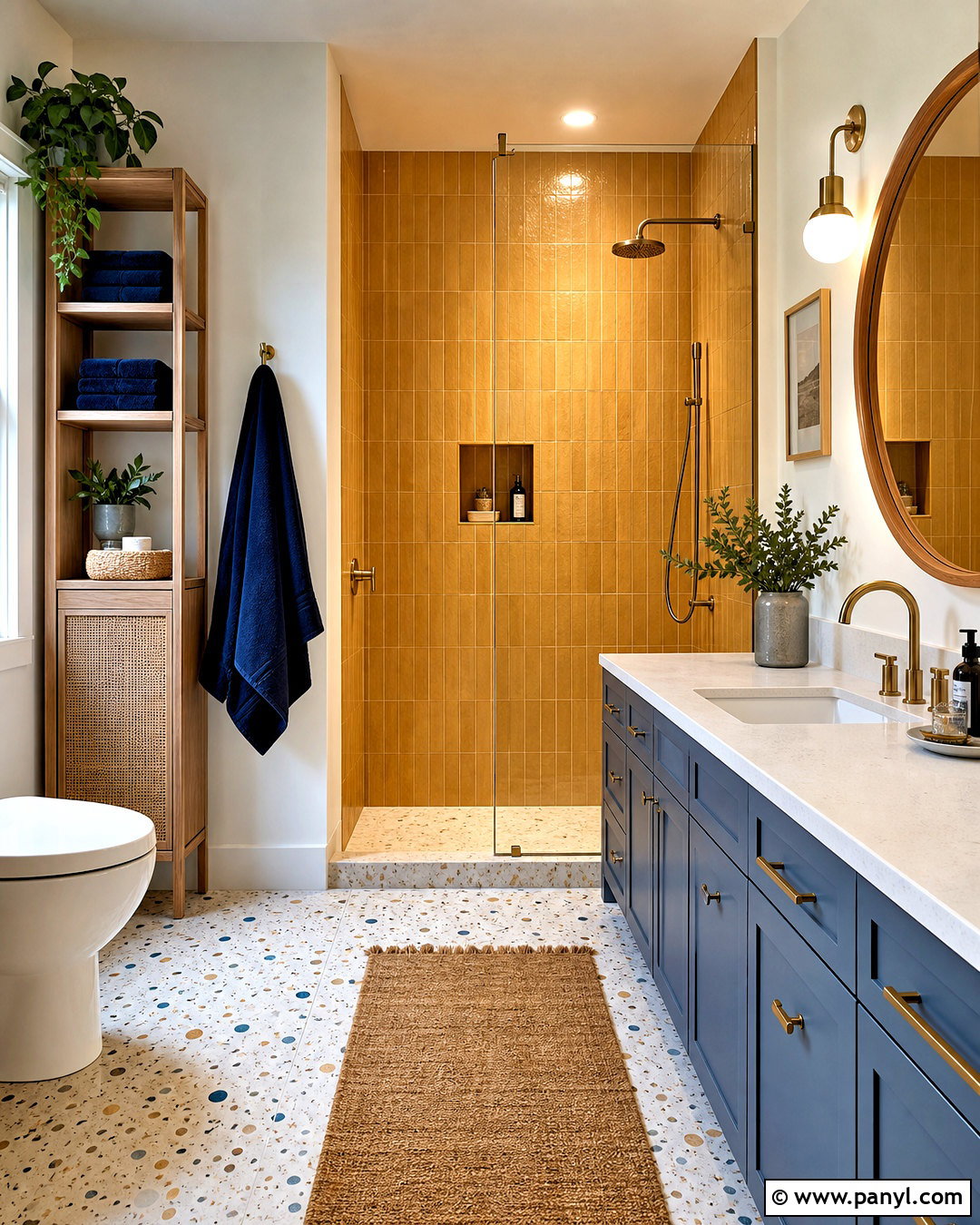
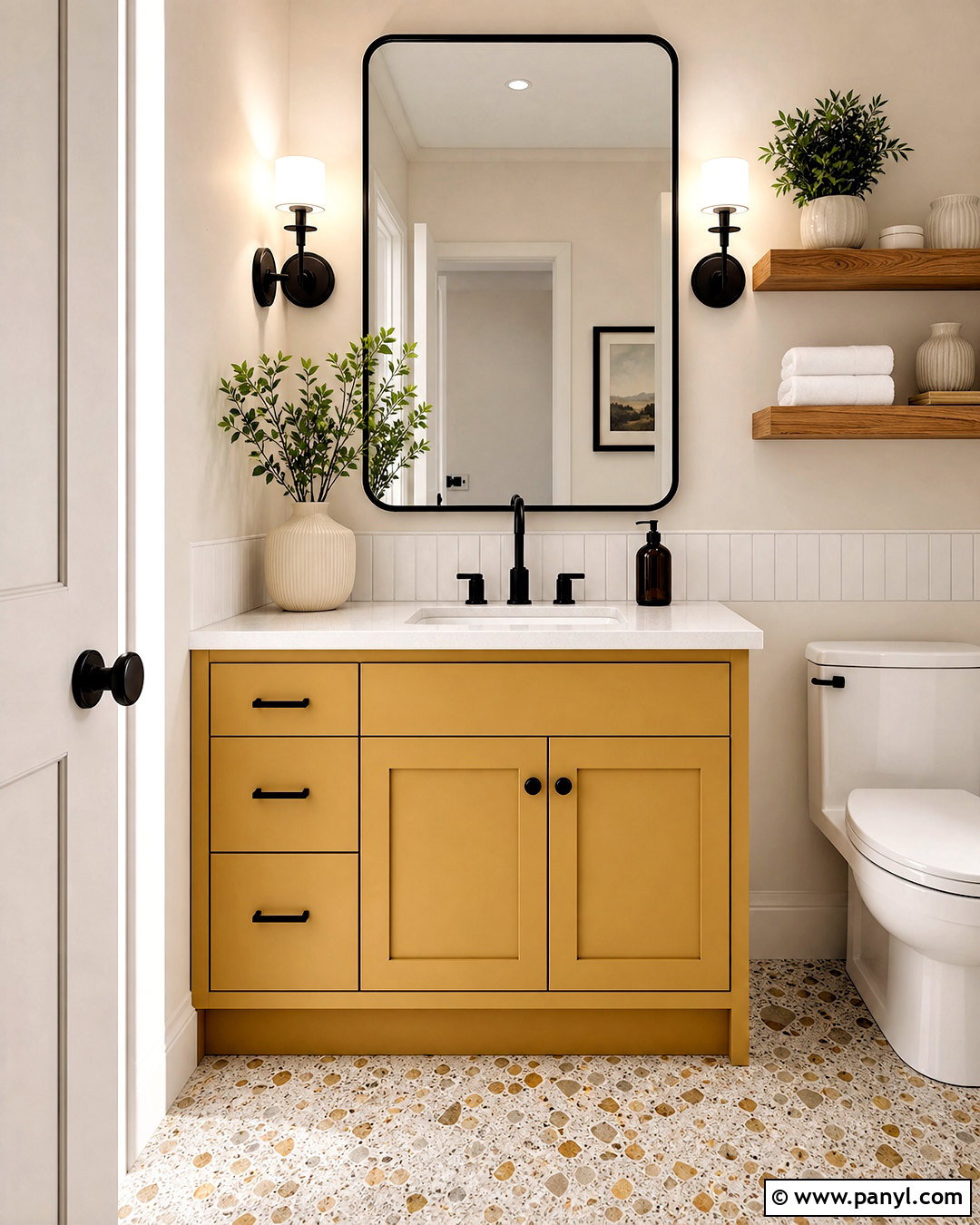
Ochre and muted blue form a warm, balanced palette that gives the bathroom distinct character. Paint the vanity a deep dusty blue and use golden ochre tile across the backsplash or shower wall. Warm white paint on the remaining walls creates space between the two stronger colors. Select a cream terrazzo floor containing small gold, blue, and brown chips to bring the combination together. A white quartz countertop, brushed brass fixtures, and a simple round mirror keep the main elements polished. Finish with navy towels, a tan bath mat, and a light wood storage cabinet. The blue grounds the cheerful ochre, while the ochre prevents the blue from feeling cool. This coordinated bathroom looks colorful and current but still relies on practical, easy-to-maintain surfaces.
Conclusion:
The best bathroom palette connects every visible surface rather than treating paint, tile, and fixtures as separate decisions. These **20 bathroom colour ideas** show how warm neutrals, softened pastels, earthy shades, and bold jewel tones can all create a practical and inviting room. Before purchasing materials, place paint samples beside the actual tile, countertop, flooring, and metal finish you plan to use. Check them during the morning, afternoon, and evening because bathroom lighting can change their appearance. Lighter surfaces can balance dramatic colors, while wood and warm metals can make pale schemes feel more comfortable. Once the undertones and proportions work together, even a modest bathroom can look thoughtful, cohesive, and uniquely suited to your home.

Related Ideas and Inspiration:
Leave a Reply